The predictions of rain continue not to come true, which is great for tourists walking around, and terrible for river levels. We had a brief shower today while we were in the museum, but nothing significant.
Temperatures continue in the low to mid 20s Celsius, also known as “”perfect”.
We started our day with the hotel’s included breakfast. One thing about breakfast in German hotels is that they have very little in common with North American included hotel breakfast. Here a standard breakfast buffet typically has eggs done a couple of different ways, sausages, several kinds of cold cuts, several kinds of cheeses, fresh fruits and vegetable, cereals, yogurt and muesli, breads galore, and always something sweet as well in the way of a coffee cake or chocolate brioche. The NH collection hotels take all that up a notch and then add things like a dozen varieties of loose-leaf tea supplementing the myriad coffee choices, fresh juices and smoothies, regional dishes served hot in red Staub (the German version of Le Creuset) casseroles, items cooked to order and brought to the table, and – in the case of this particular hotel – honey fresh from the hives in the wildflower courtyard just outside the door of the breakfast room.
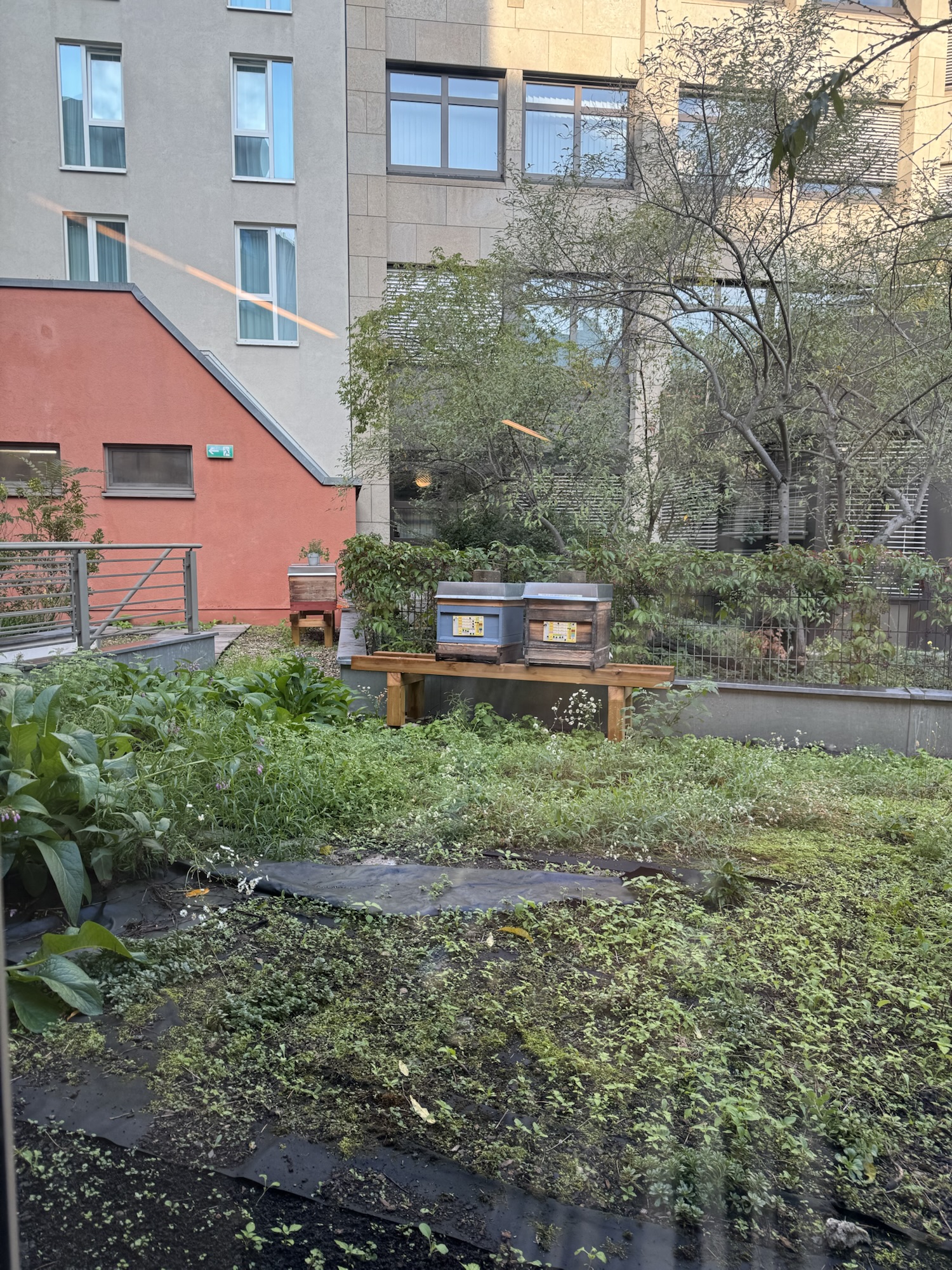
Of course the there is smoked salmon garnished with dill in tiny chilled glass containers, condiments in individual jars, and tiny cups made of ice cream cone waffle into which spoonfuls of one of 6 marmalades or Nutella can be taken back to the table. The cheese selections go beyond the typical thinly sliced and herbed Emmentaler and on to herbed Brie, and spreadable goat cheeses.
I’m sure I’ve missed several things, but I didn’t want to be the gauche tourist snapping iPhone pictures of the buffet. Snapping pics of one’s own plate is a completely different story.
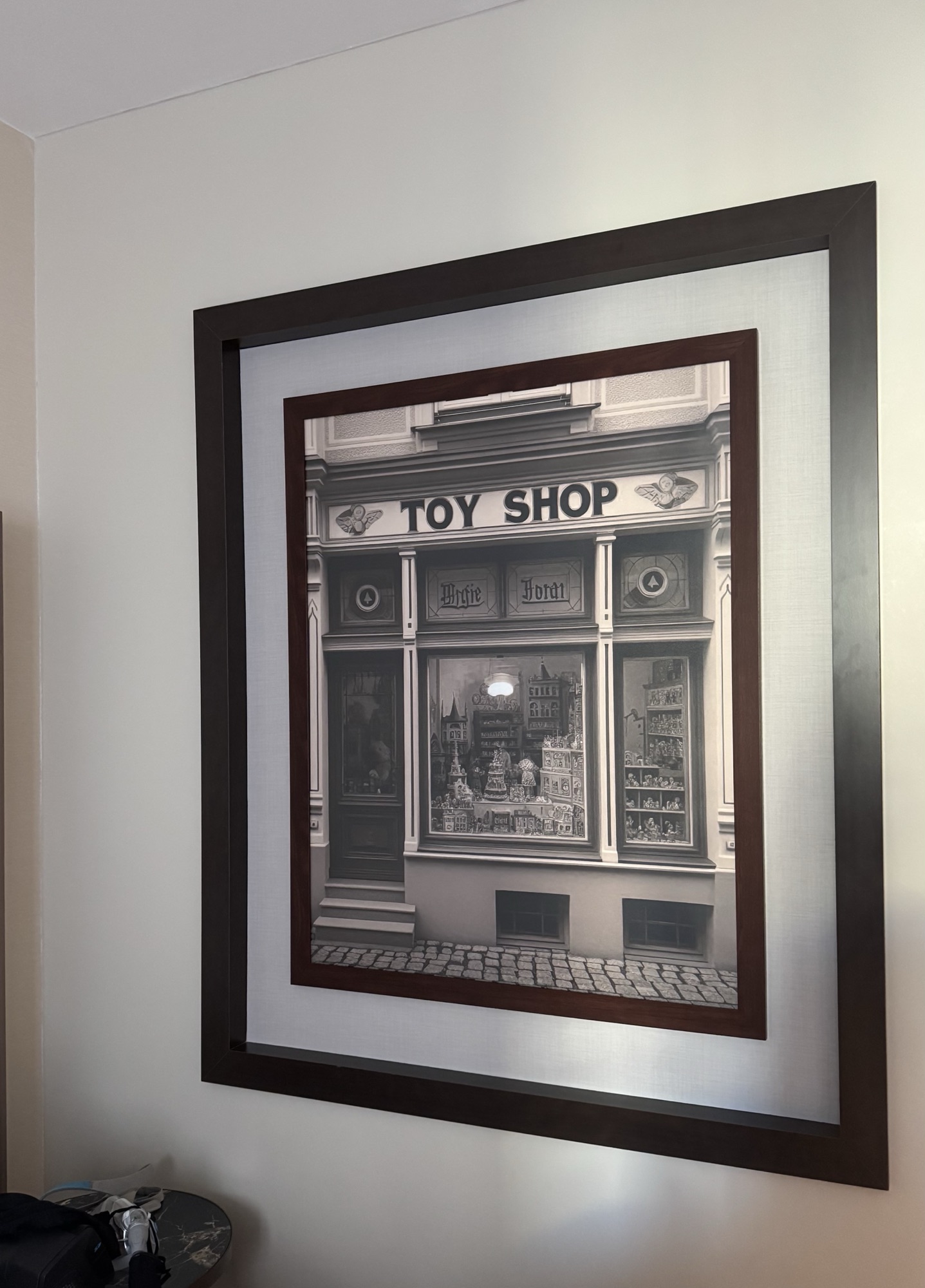
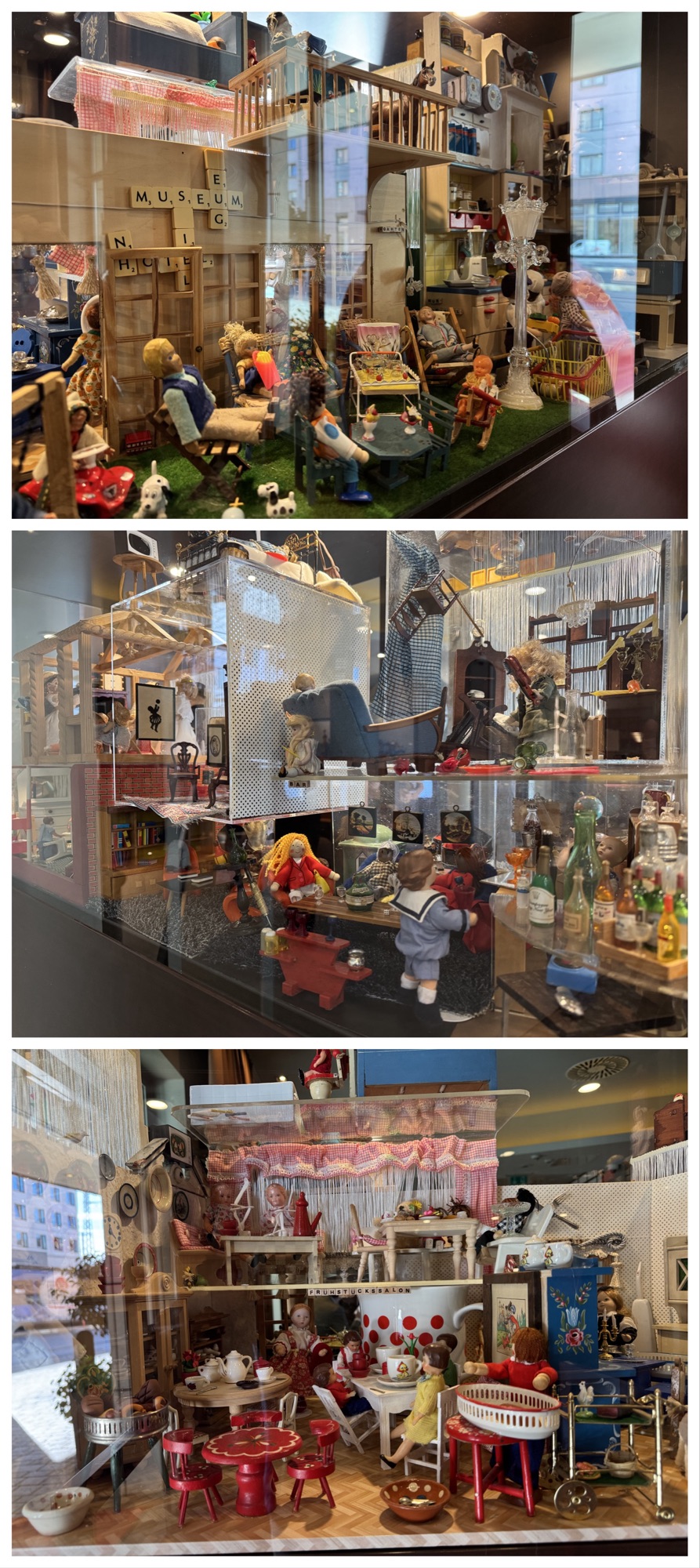
Nuremberg is the city of toys, and our hotel’s decor carries out that theme, even in our room’s decoration.
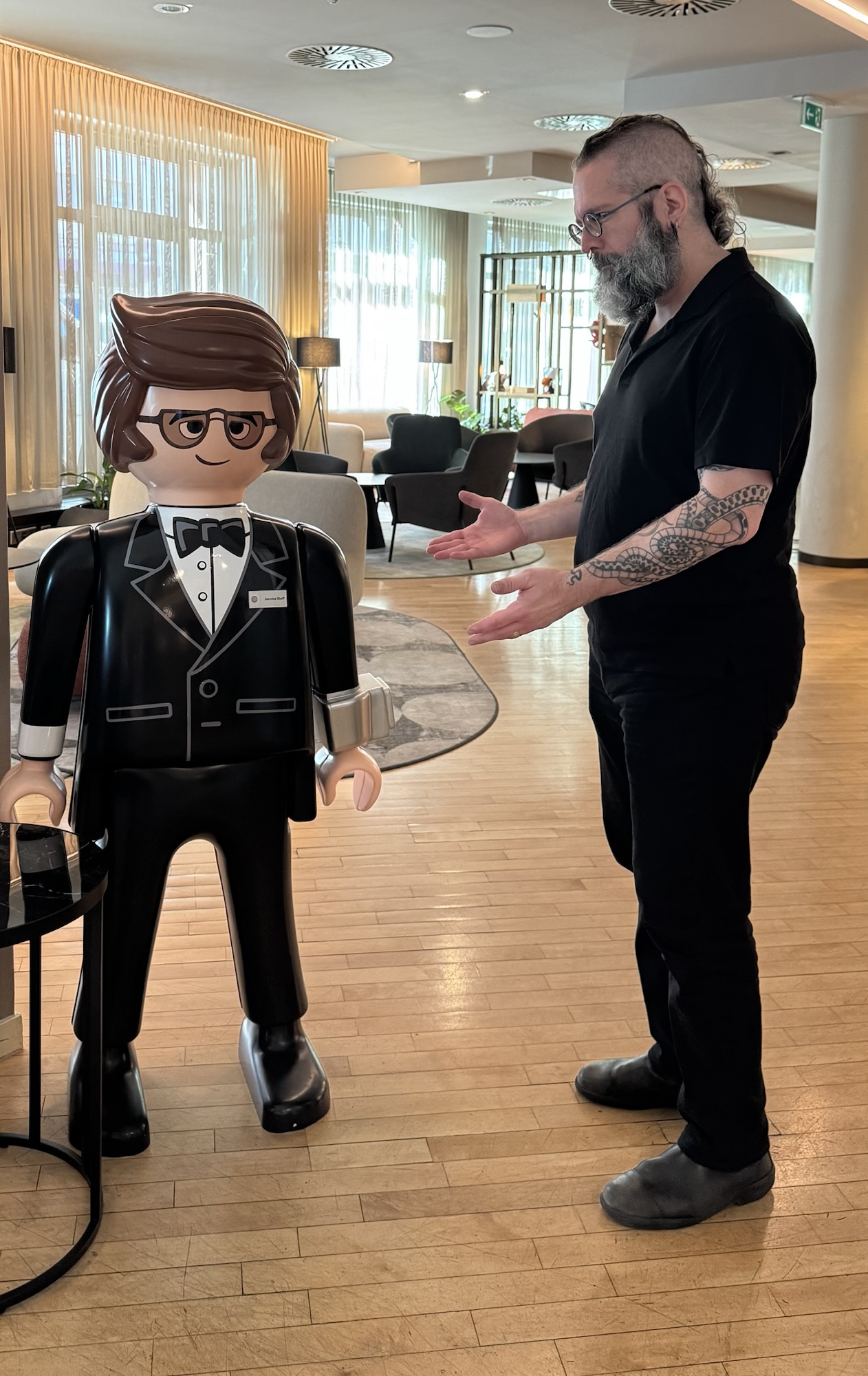
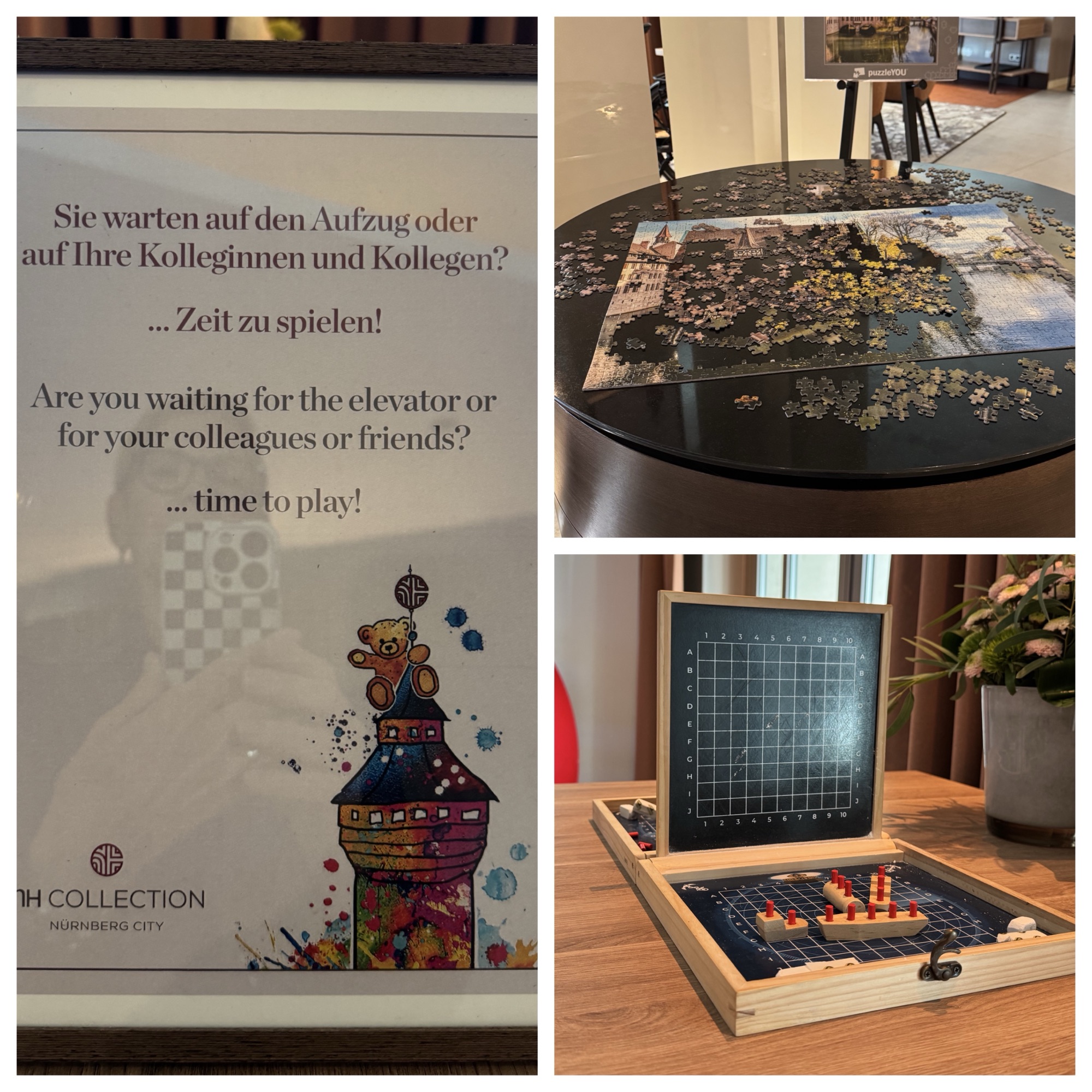
The lobby, in addition to fresh fruit, jars of candy, and carafes of cold water with either citrus or cucumber, features a very special Concierge, and a selection of games to play while waiting for a cab or your group.
In the entryway from the street, before reaching the lobby, are glass cases filled with vintage toys.
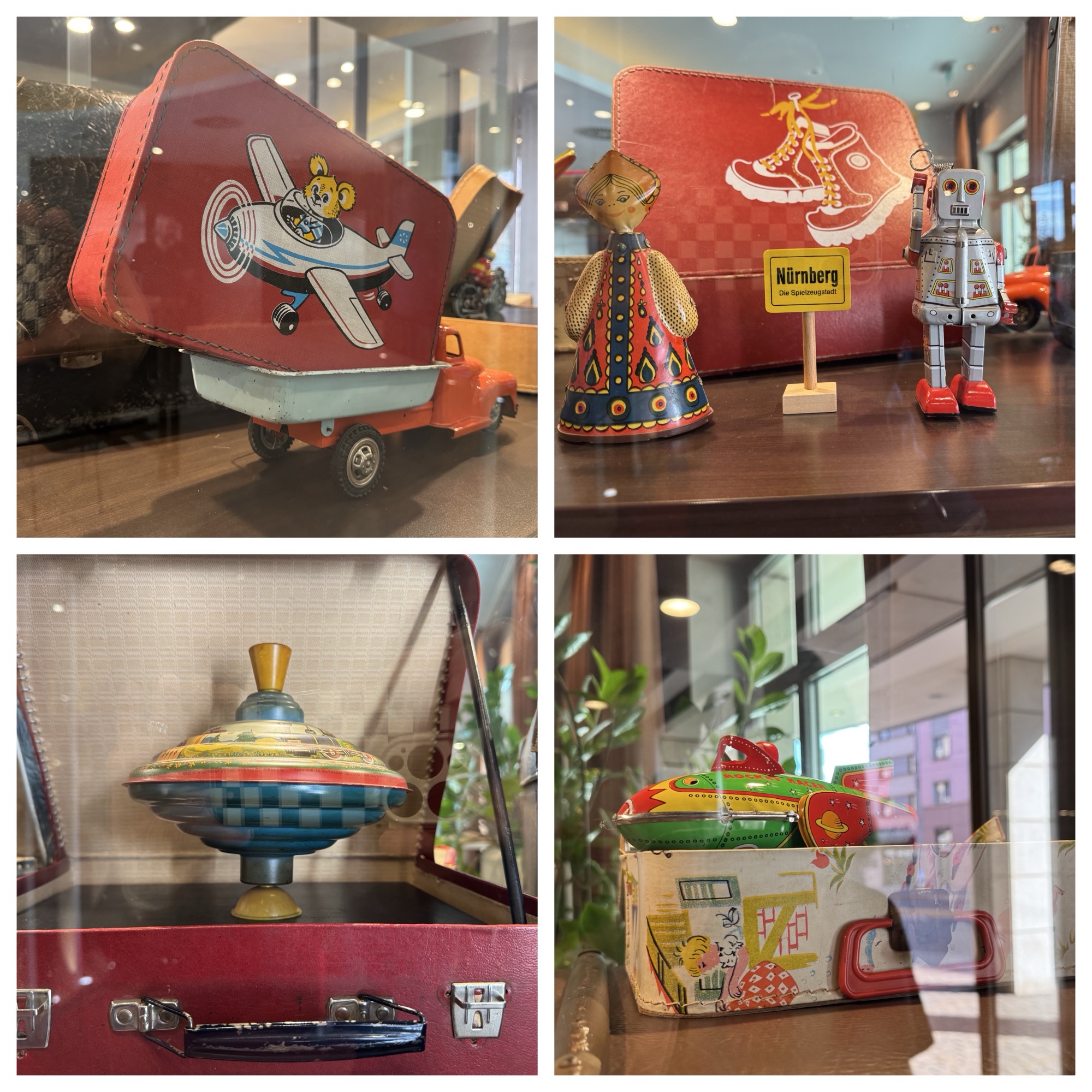
Who doesn’t remember being a child who wanted to bring their favourite toys on vacation, no matter how impractical?
Having made our way past the toys, we strolled to our destination for the day: the Germanisches National Museum, “the largest cultural history museum in the German-speaking area”.
There’s an important distinction being made by the museum’s name. It is a museum related to the Germanic tribes, not “Germans”. Germany as a nation as we currently define it has only existed since 1871. The earliest kingdom of Germany was created through a split of the Frankish lands in about 843CE.
The GNM was established in 1852, before the unification of German states.
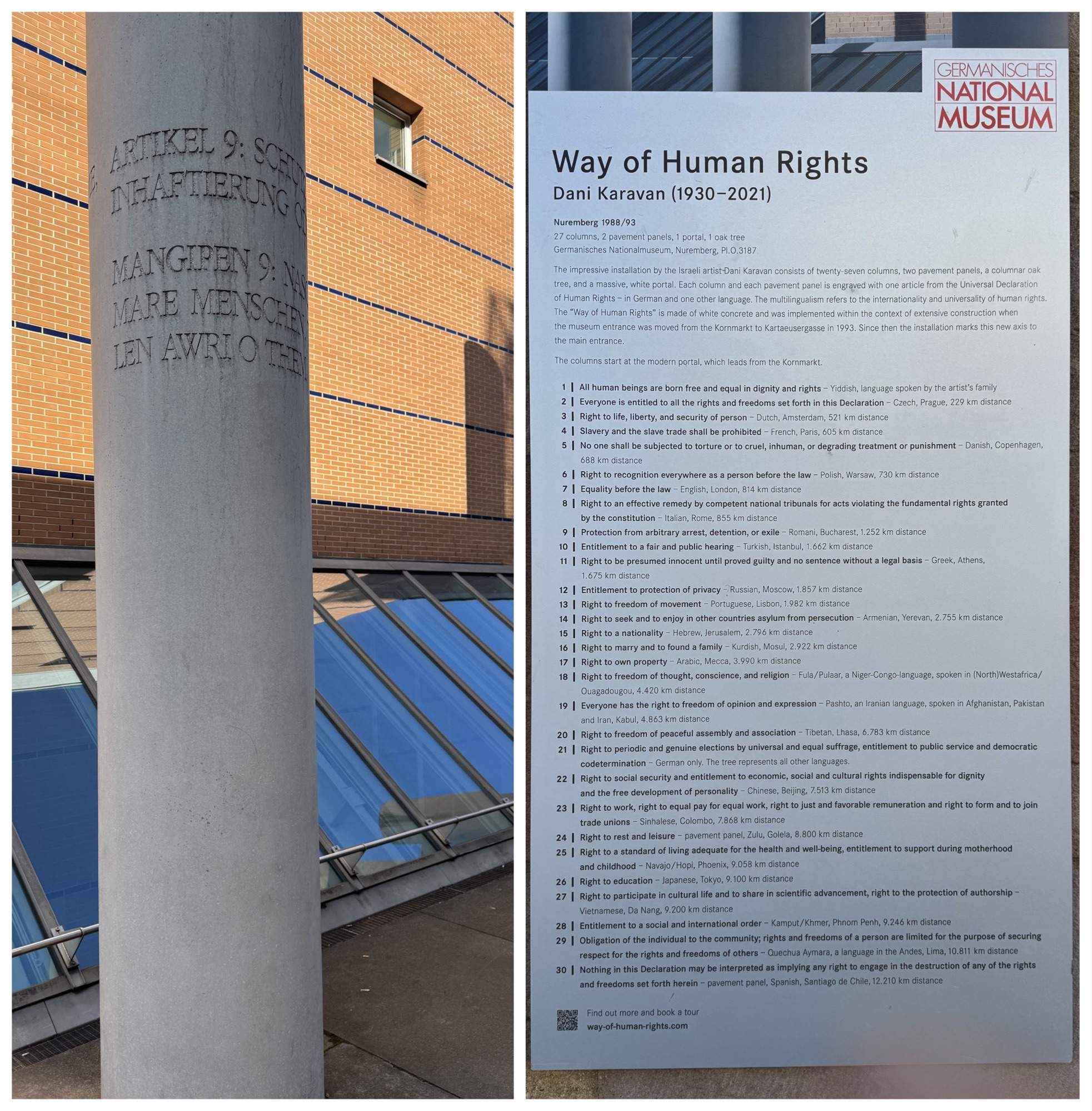
Entry to the huge museum is through a long approach called The Way of Human Rights.
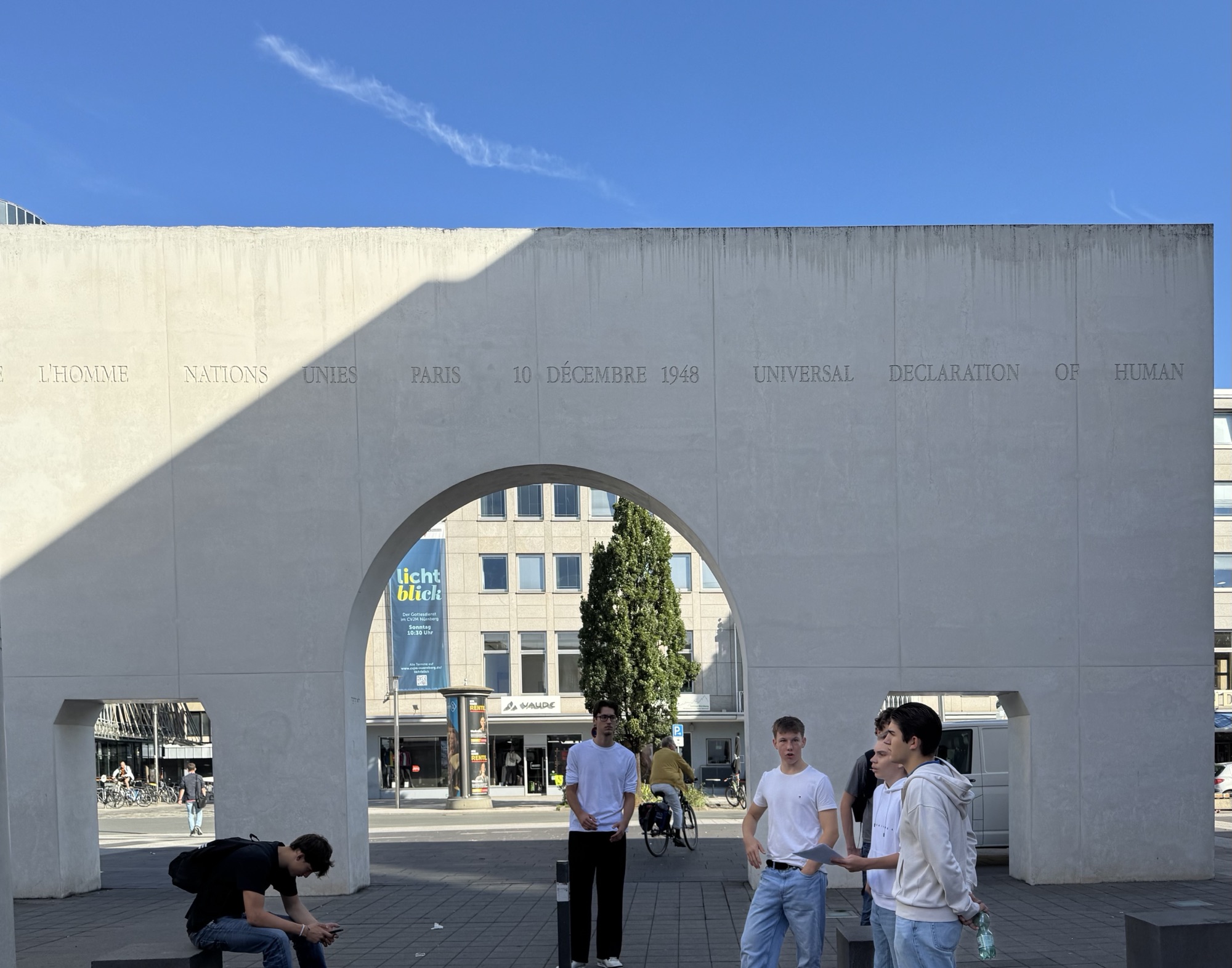
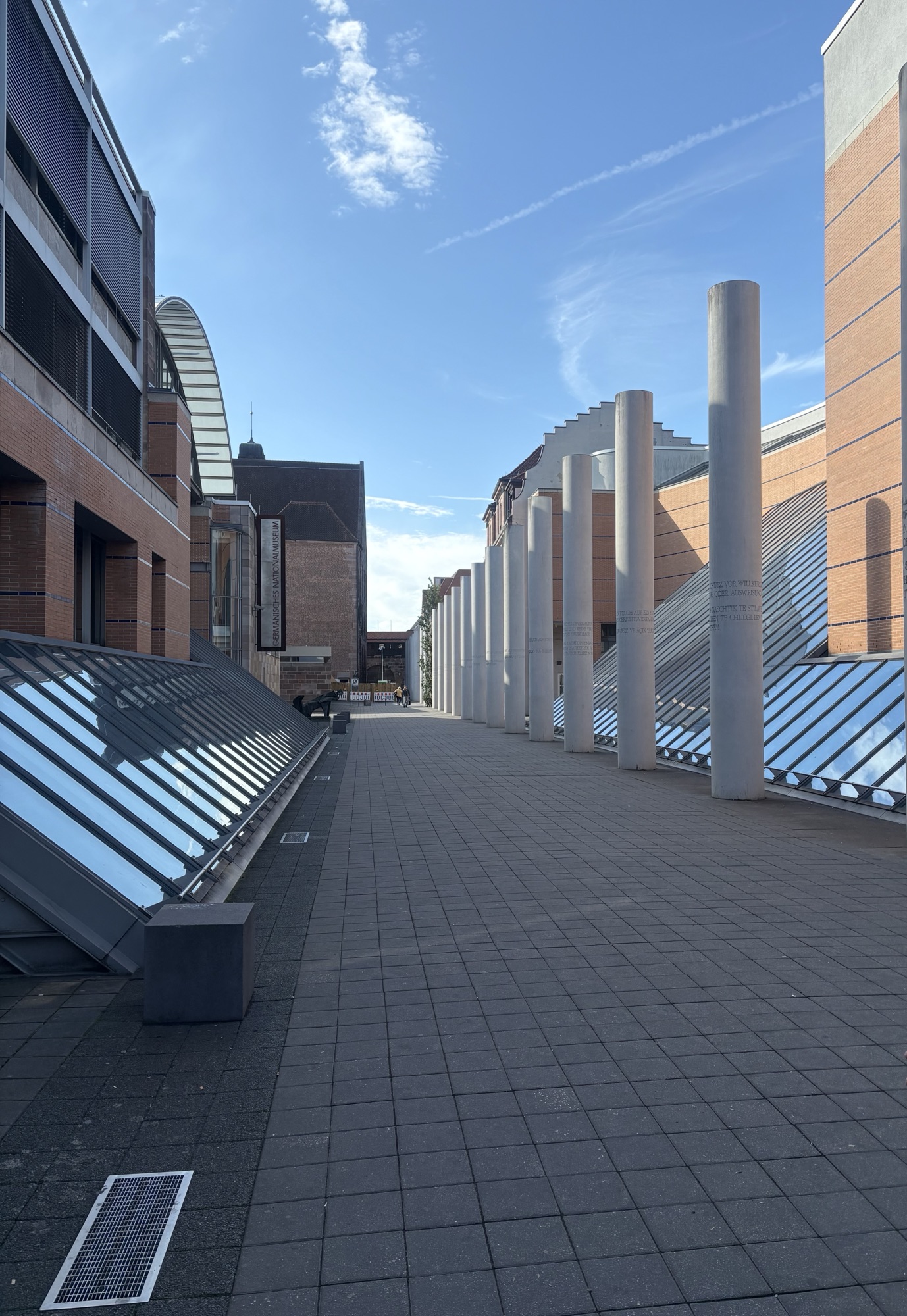
The GNM itself encompasses 27,000 square metres (291,000 sq ft) housing around 1.3 million objects, with about 25,000 artifacts exhibited at any given time. Over half of the building is post WWII beautiful modern brick and glass, but that is juxtaposed with the galleries housed in the remaining structures of the former Nuremberg Charterhouse (what we would call a cloister) whose monastic order dissolved in 1525. The buildings were used for a variety of purposes until bring given to the museum in 1857 in a dilapidated state.
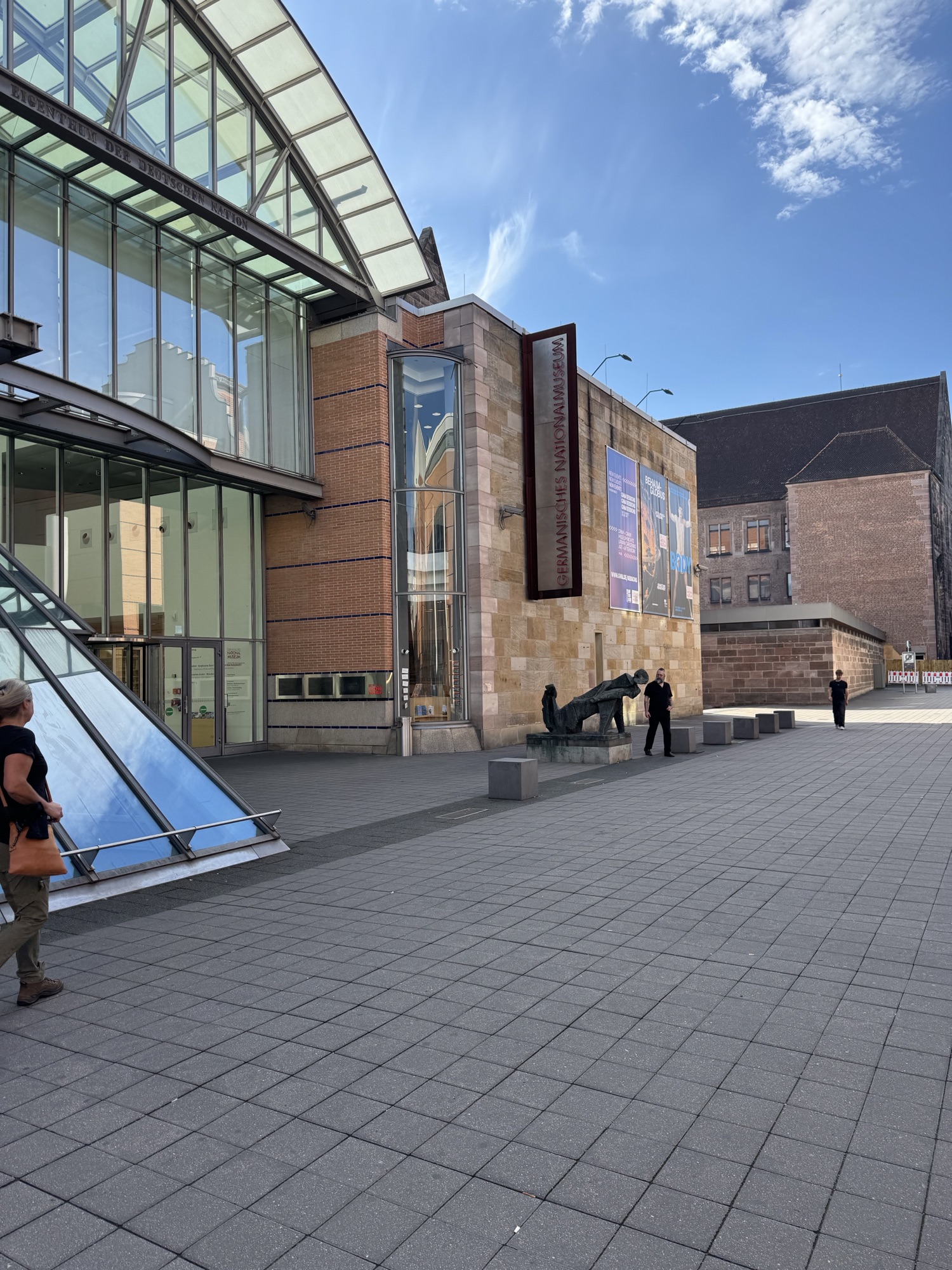
The GNM’s displays cover art and cultural history from prehistoric times to the present day. Its website mentions “600,000 years” of history, and the Pre-History galleries do legitimately go back to the Stone Age.
Even with some areas inaccessible due to renovation works, there were still more than 80 individual galleries for us to visit.
Ted would say that it is typical of my travel style to want to conquer every site, but in this case it was son #1 who wanted to keep going … and going … and going. There’s a bit of Energizer Bunny about them.

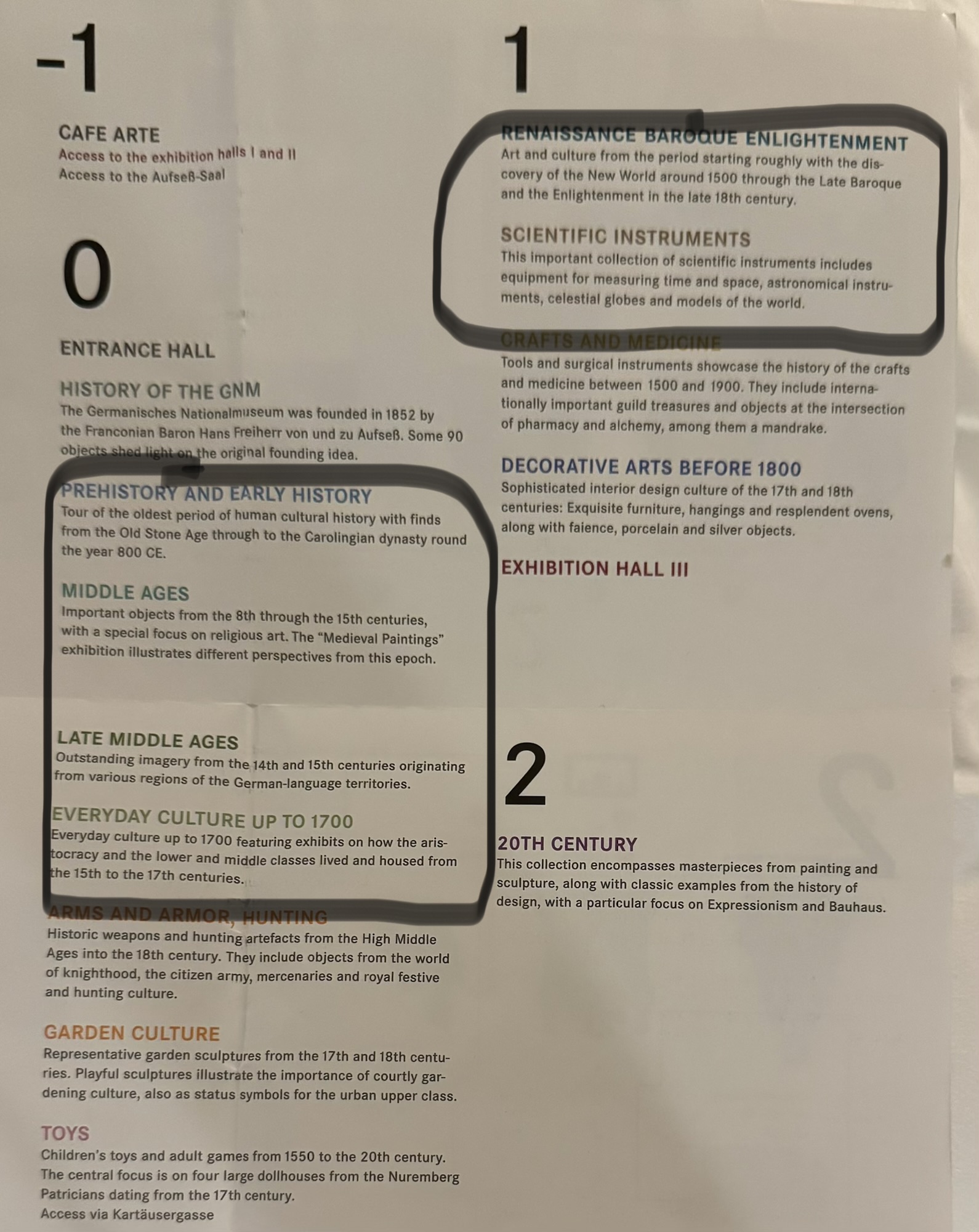
In just under 8 hours, with a 40 minute lunch break in the museum café, we only made it to the areas circled below. This is not a museum to be conquered in a single visit.
I took over 400 pictures, draining my phone battery twice (thanks to Ted and not having packed it on my shoulder bag I have a small power bank with me). A lot of what I took were the interpretive signage, so that once I decided which photos to use I’d know what they were.
I’ve tried to choose either my favourite photos in each area, or the ones that I’ll want to be able to come back to, or tell people about, later.
Pre and Early History was certainly the area in which we doing the most time, 3-1/2 hours. There was a lot to see and learn.
The timeline charts were particularly helpful, because we really knew nothing about how the different eras were designated here.
The exhibition was prefaced:
Pre- and Early History are divided into periods known as the Stone Age, Bronze Age, Iron Age (made up of the Hallstatt, La Téne, Germanic and Roman phases), the Migration Period, and the Merovingian and Carolingian Periods.
Within a space of some 600000 years, our ancestors developed most of the basic crafts and skills still used today. The cultural evolution through the Middle Ages up to our Modern Era would not have been possible without this foundation.
It is the aim of this exhibition to illustrate the rich diversity of cultural evolution within the various regions of German-speaking Central Europe, and to display the specific ranges of material goods used by women and men throughout the ages.
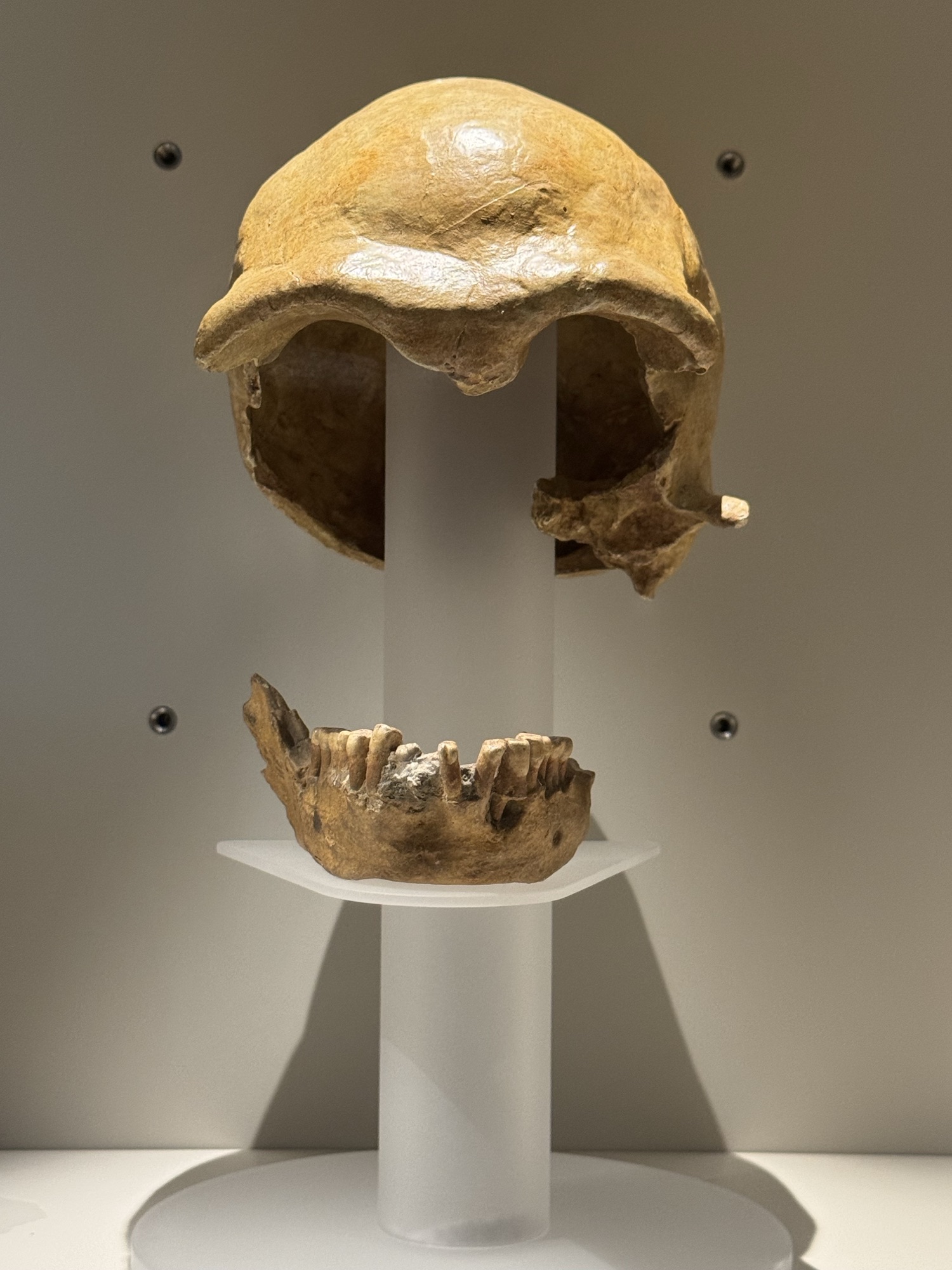
This cranium of a young Neanderthal woman, Homo sapiens praesapiens, is a copy of the actual find made in Ehringsdorf in 1925.
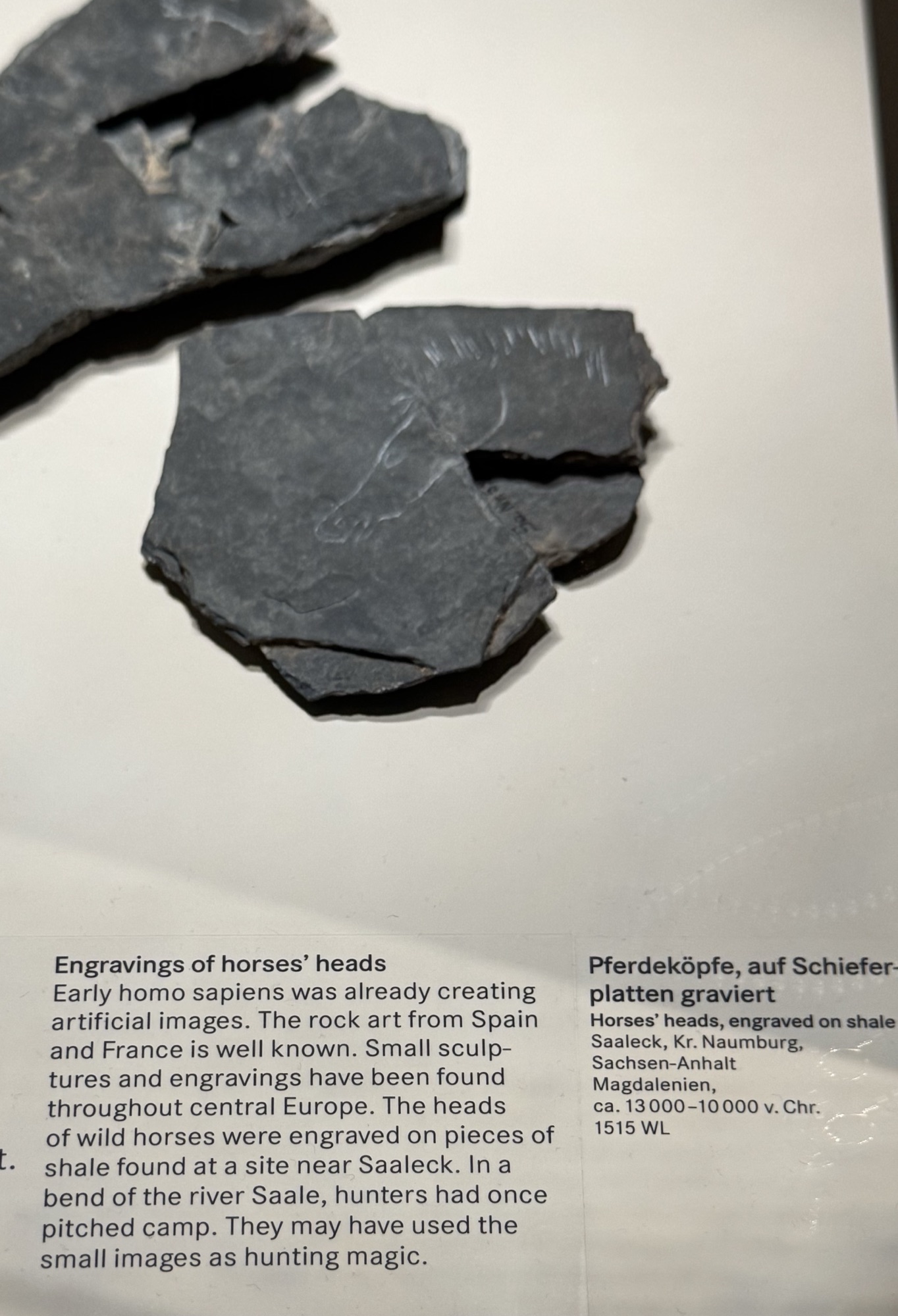
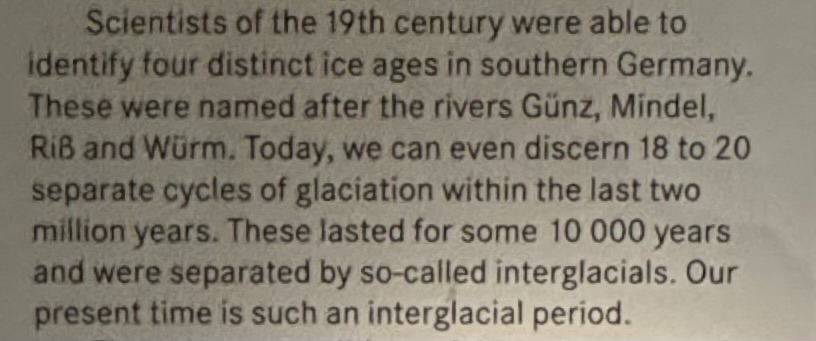
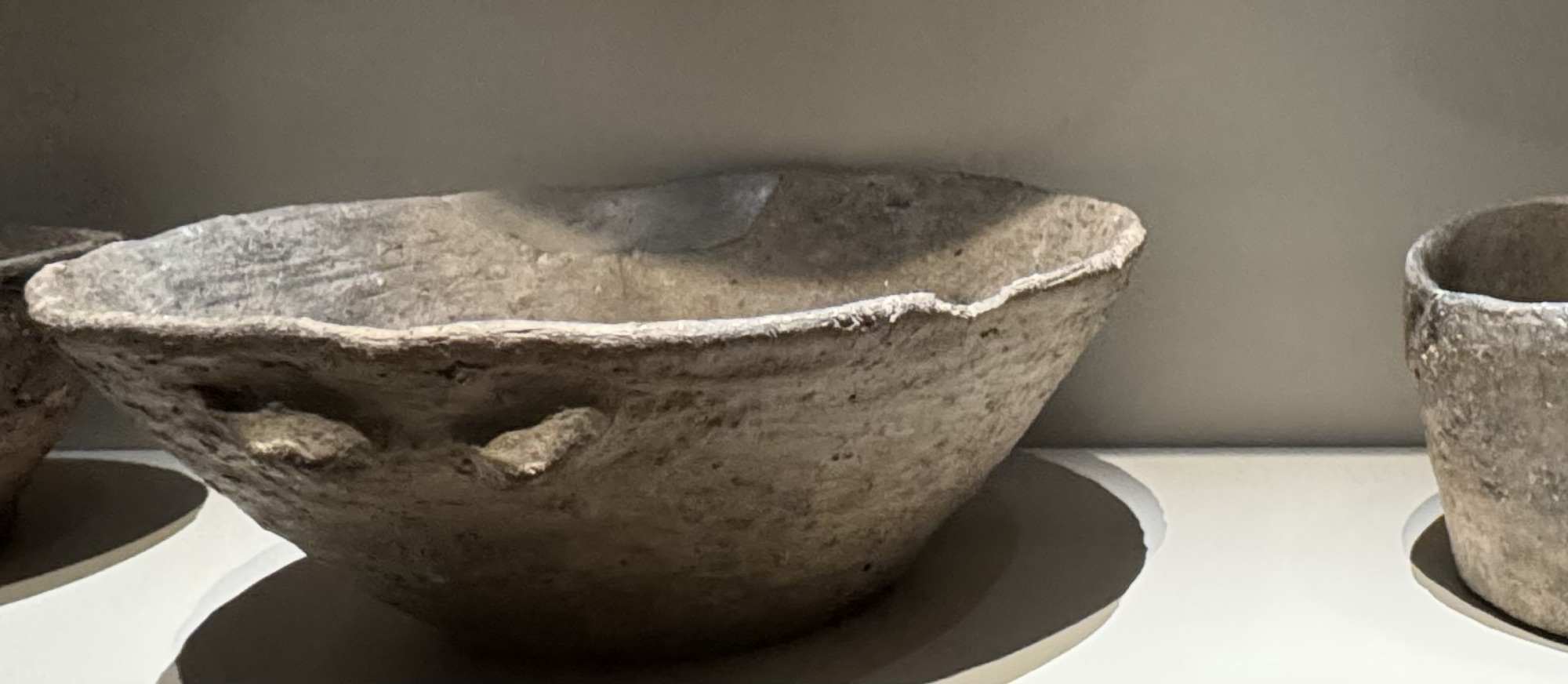
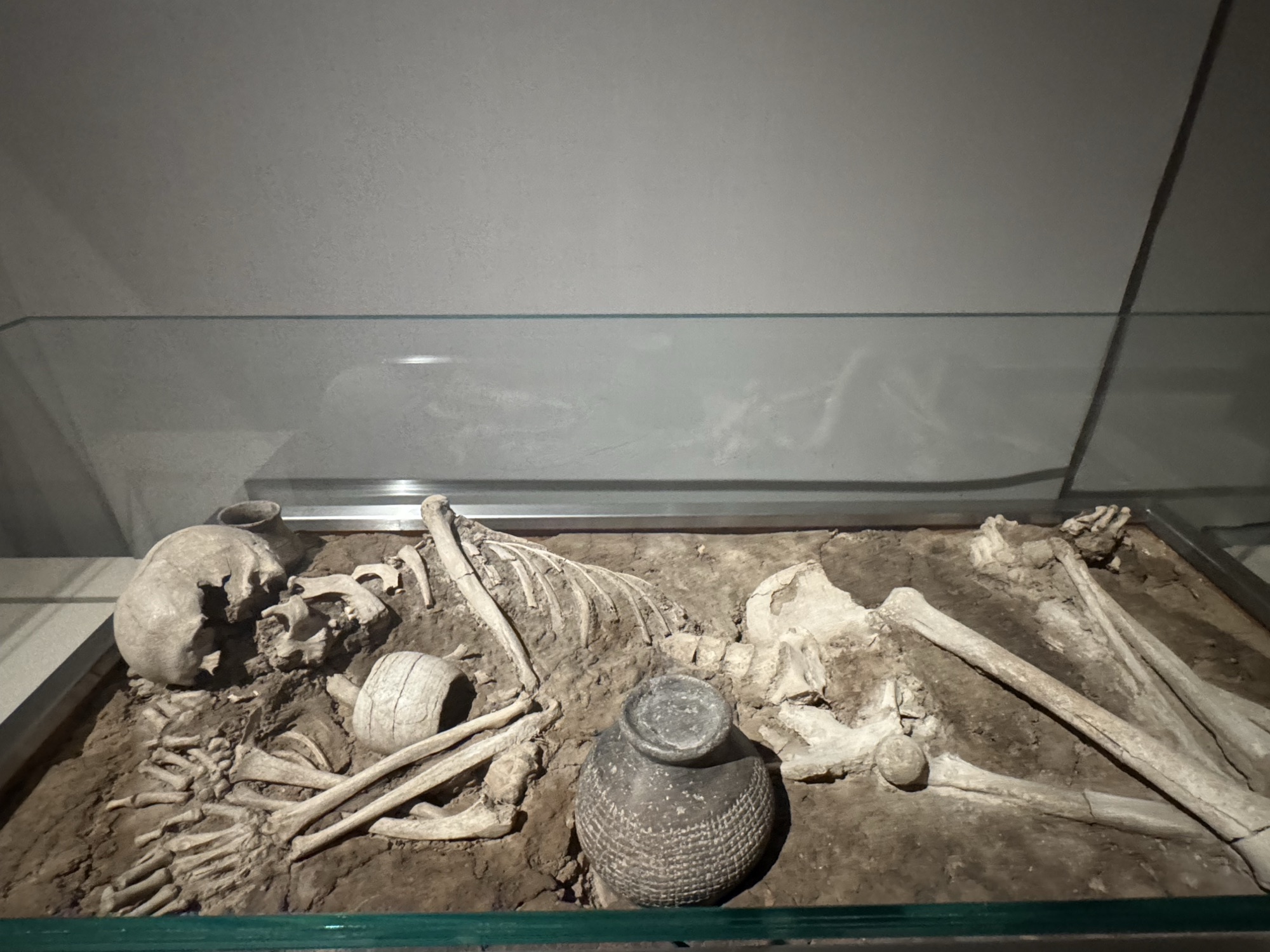
Truly fascinating: Lakeside settlements of the Late and Final Neolithic 4400-2800 BCE abounded in the Alpine region. More than 500 of these sites are known today. Organic remains of buildings kept well in the waterlogged conditions of these locations. Constructive elements, such as floor beams or collapsed walls, can be dated by dendrochronology and thus ascribed to distinct building phases.
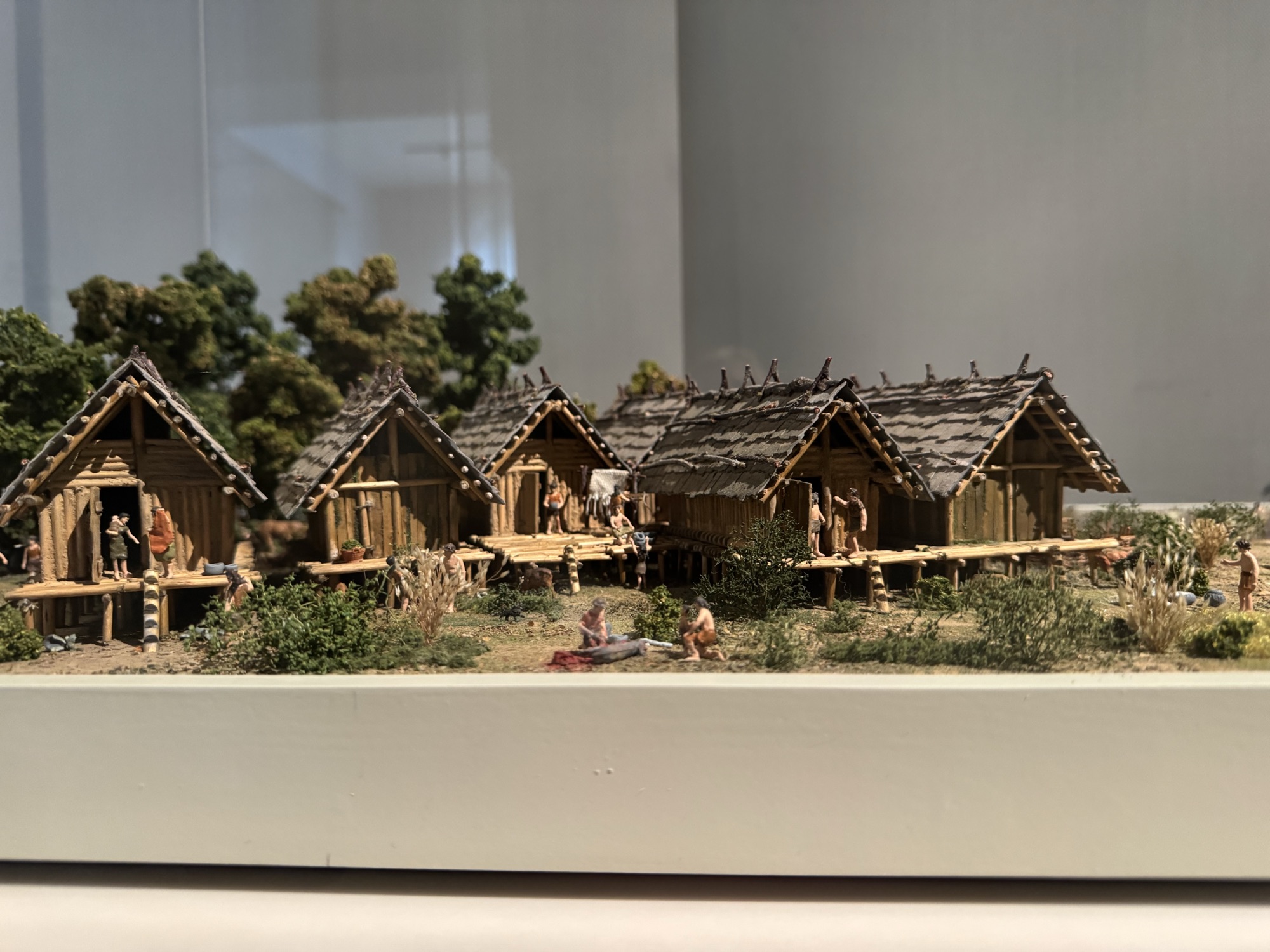
Bleiche No. 3
A partial view of the settlement from the Swiss side of Lake Constance is shown. It is dated by dendrochronology to 3384-3370 BC. Excavations took place here in 1983 and 1993-95.
Timeline of the Bronze Age in what is now Southern Germany:
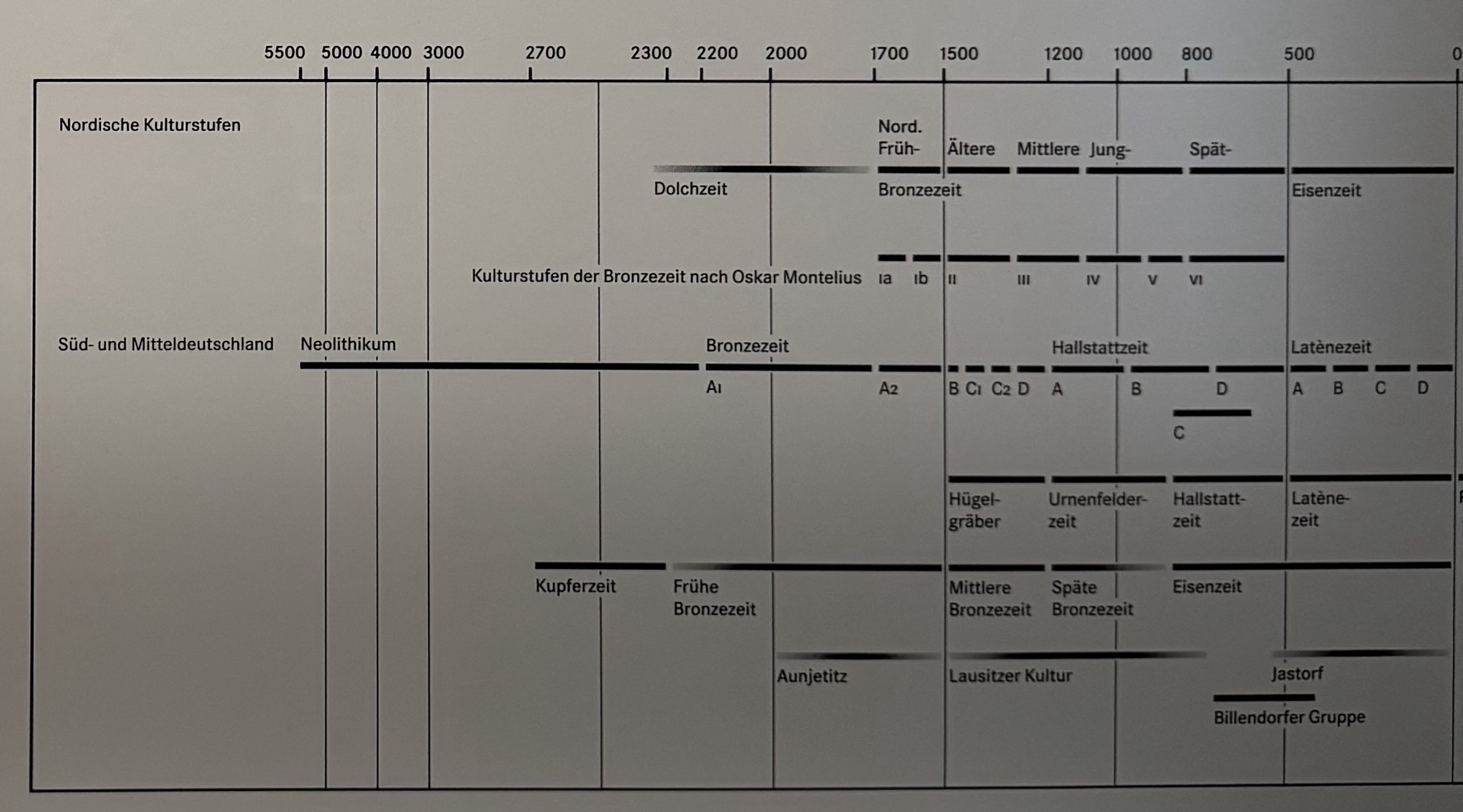
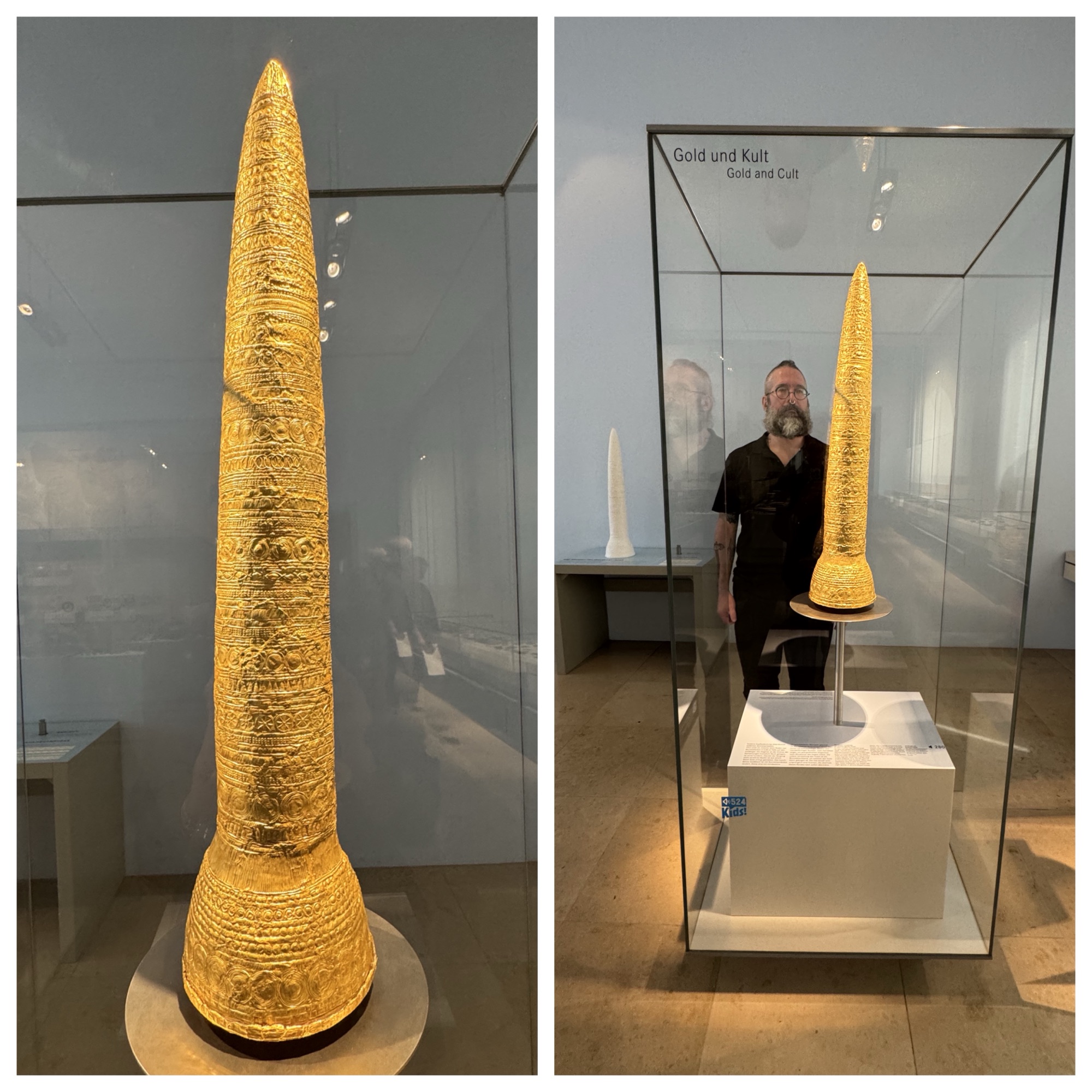
The Hallstatt culture was not a term we’d heard before. It relates to the period from around 1500-500BCE. The Hallstatt Period (or “Early Iron Age”) was named after the site of Hallstatt, a large cemetery on the Hallstatt Lake in Austria. Sone of the finds from that site were on display.
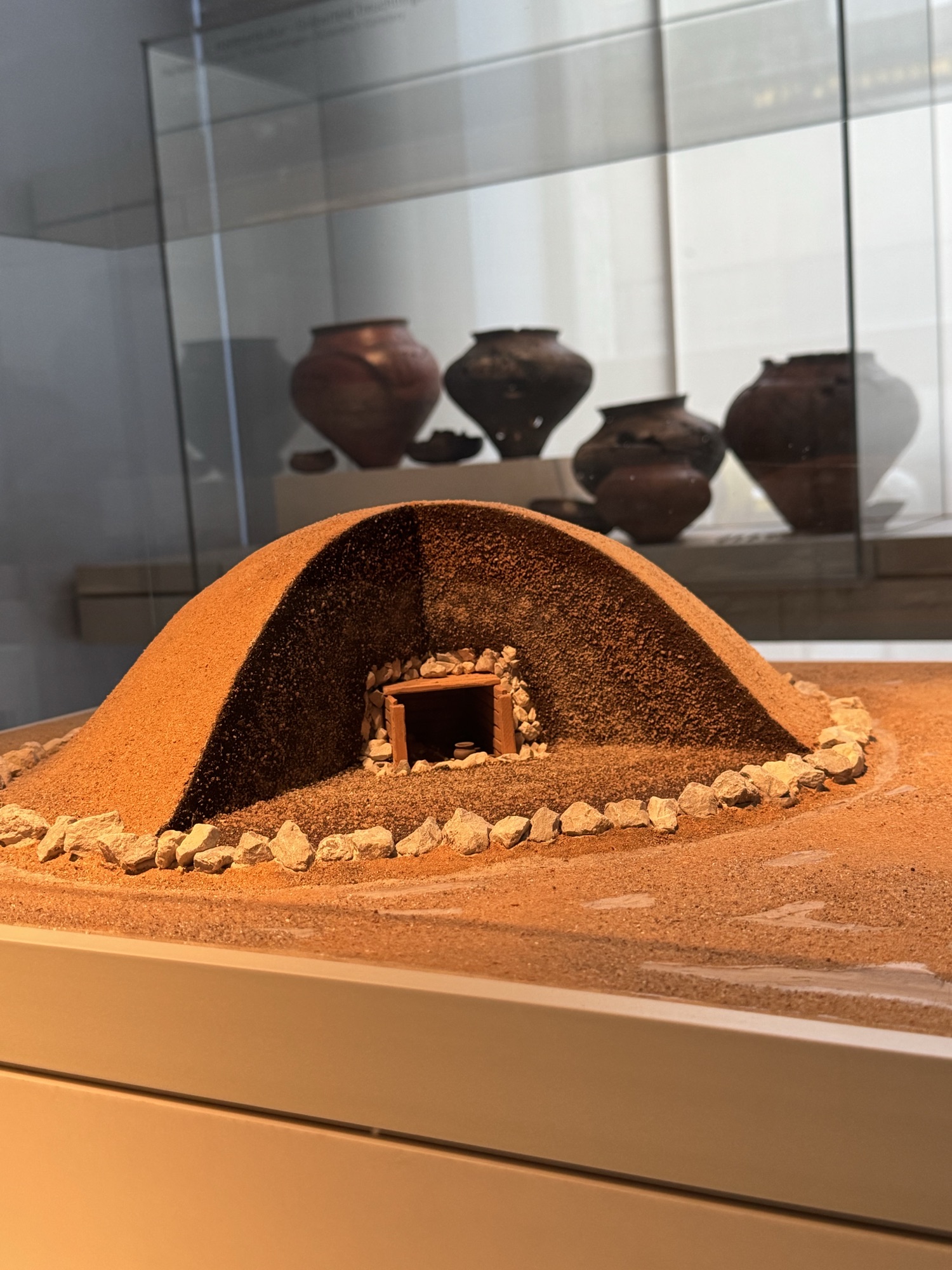
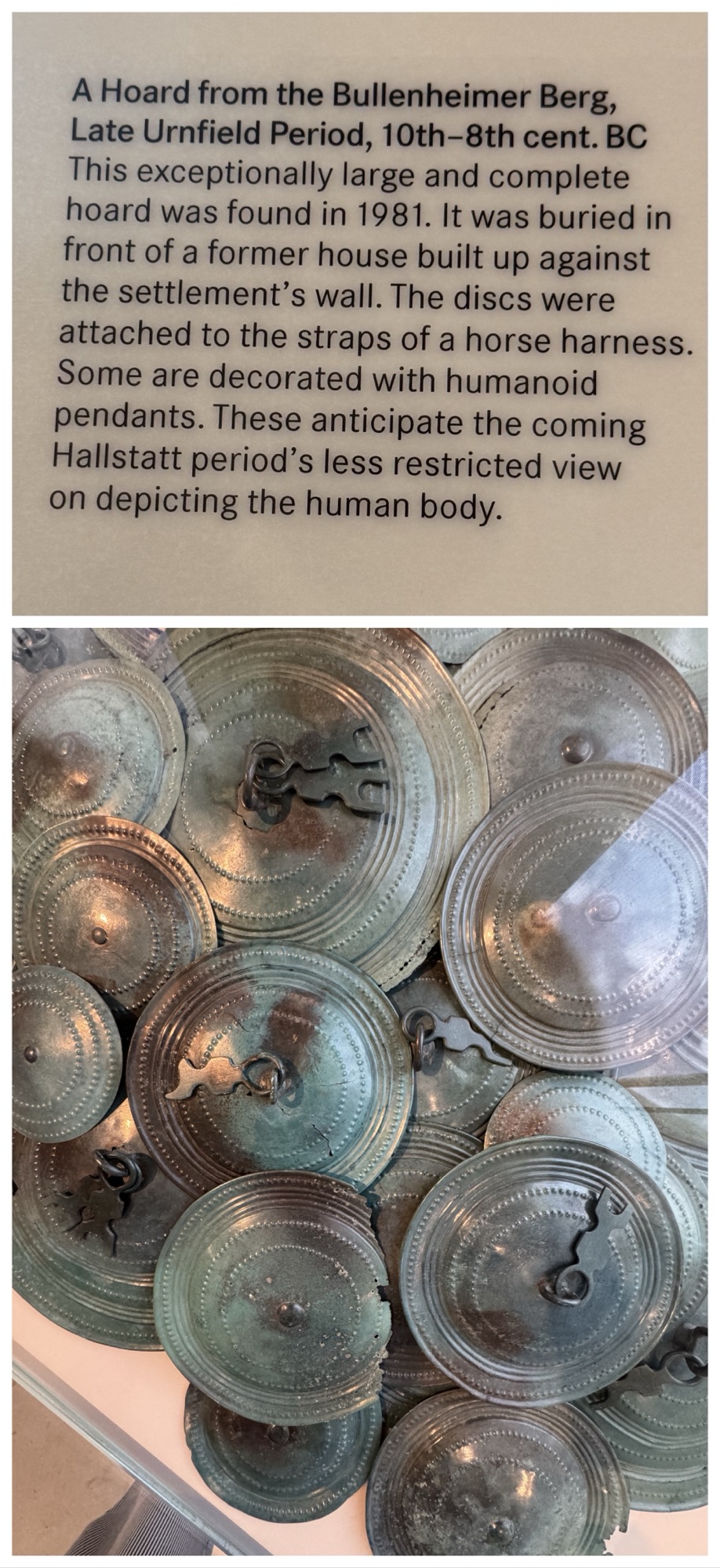
We eventually got to the Roman years spanning the first 5 centuries CE.
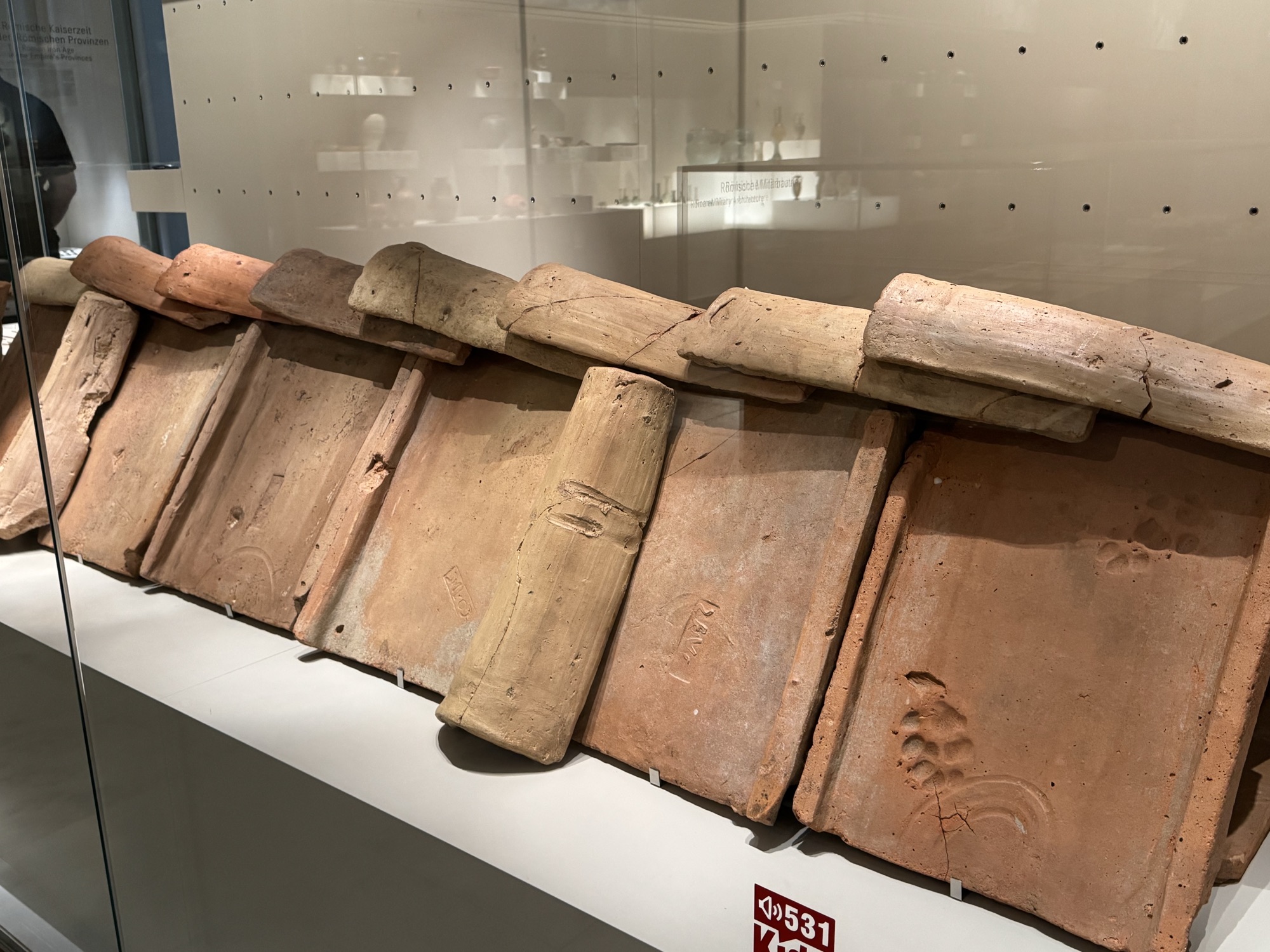
This reconstructed grave comes from a Late Roman cemetery in Rheinzabern, Rhineland-Palatinate. The roof tiles bear stamps of Late Roman border troop units: Cornacenses (CORNC), Portisienses (PORTC) and Secunda Flavia (SECUN). The paw marks were left by a dog.
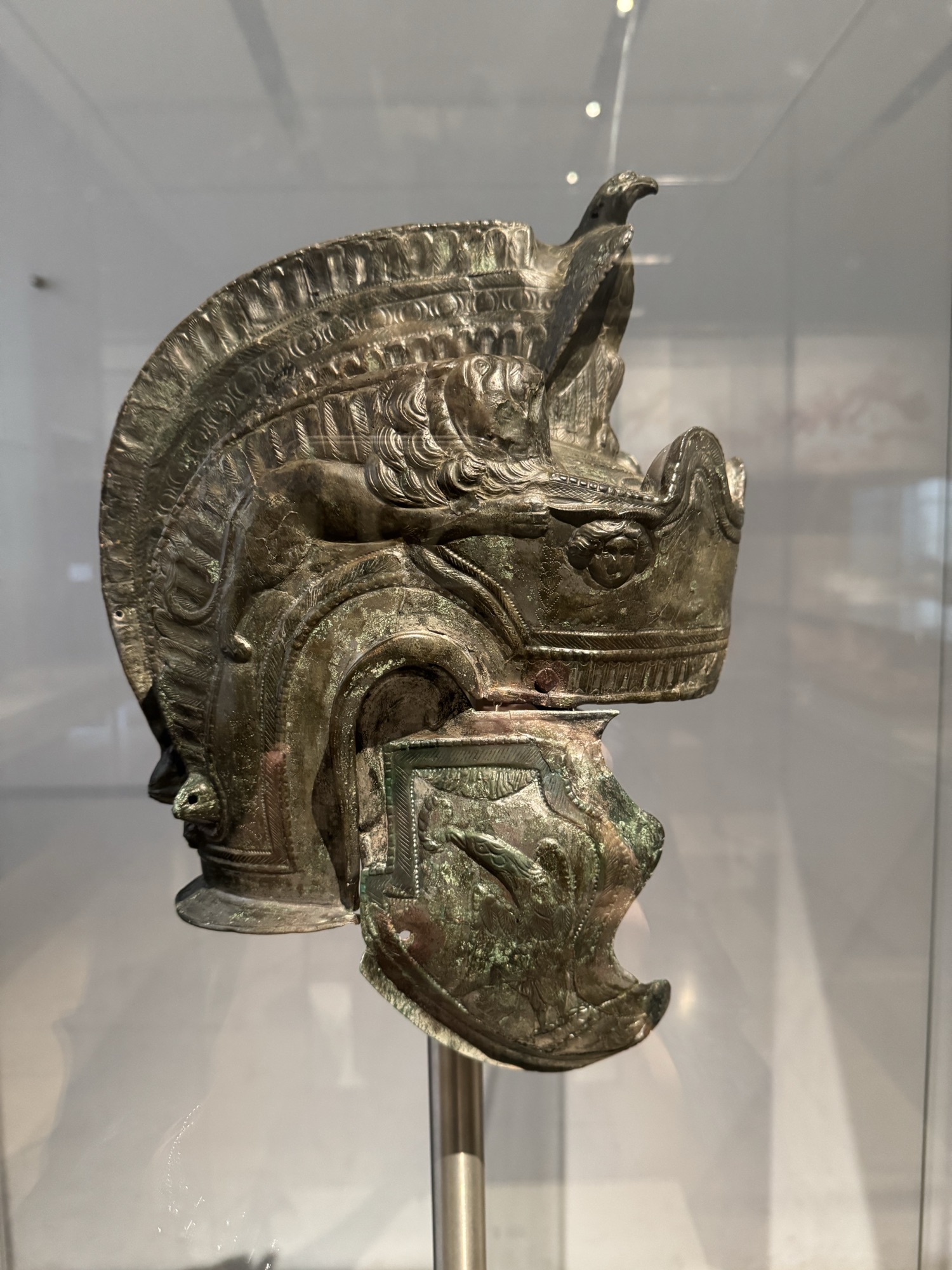
After the Romans, the periods started having unfamiliar names based on which Germanic tribe was in power and who their leaders were.
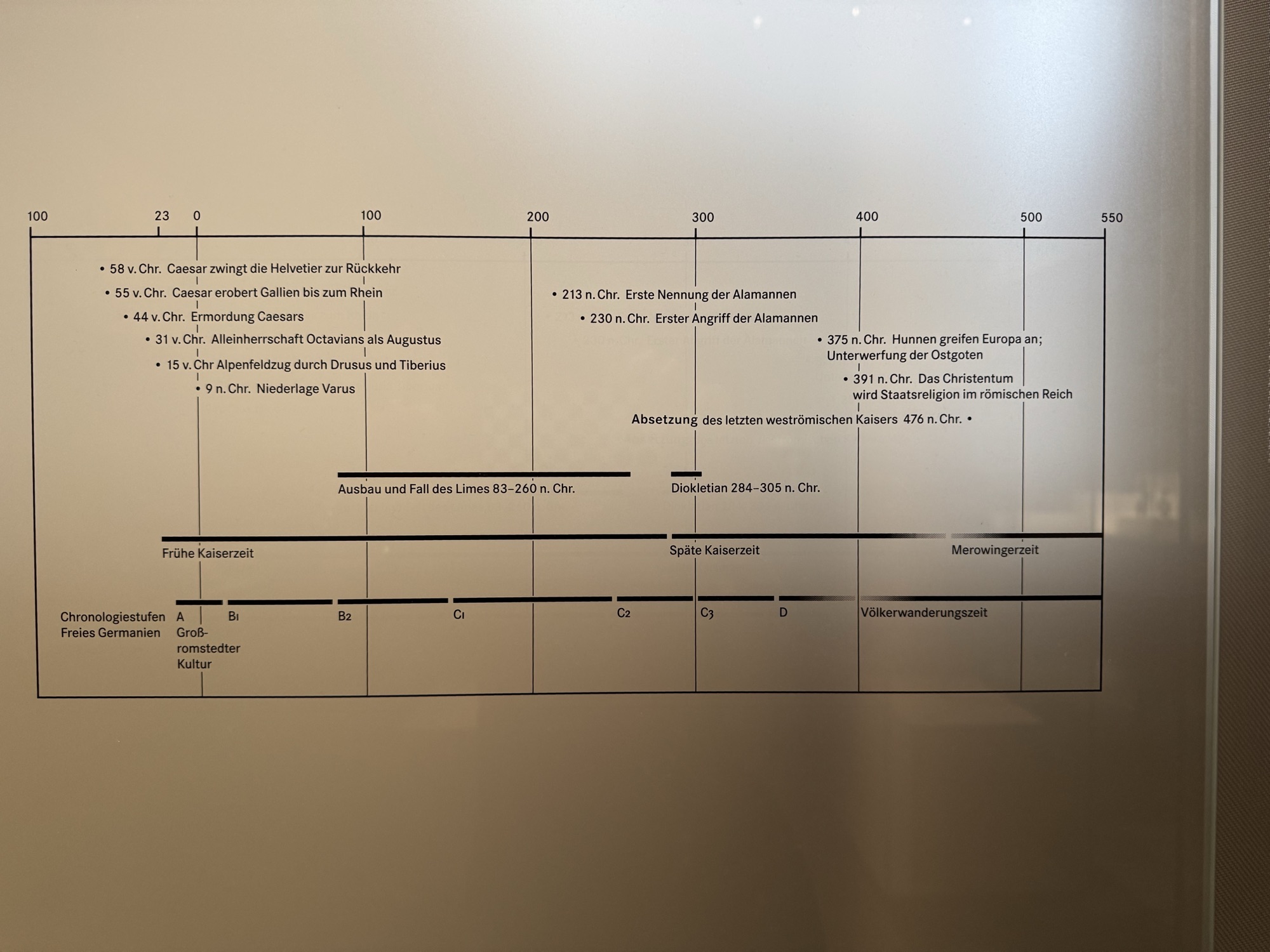
In the mid 5th century it’s the Merovingian era. The Carolinians ruled from the late 8th century. Complicating things further, this was also an era of migration, so there were Goths, Visigoths, Thuringians, Franks, Alamanni (which sounds suspiciously like the French word for German, “Allemagne”), Huns, Vandals, and Celts.
I was so busy trying to understand the chronology that I took no worthwhile photos until we moved into the Early Middle Ages.
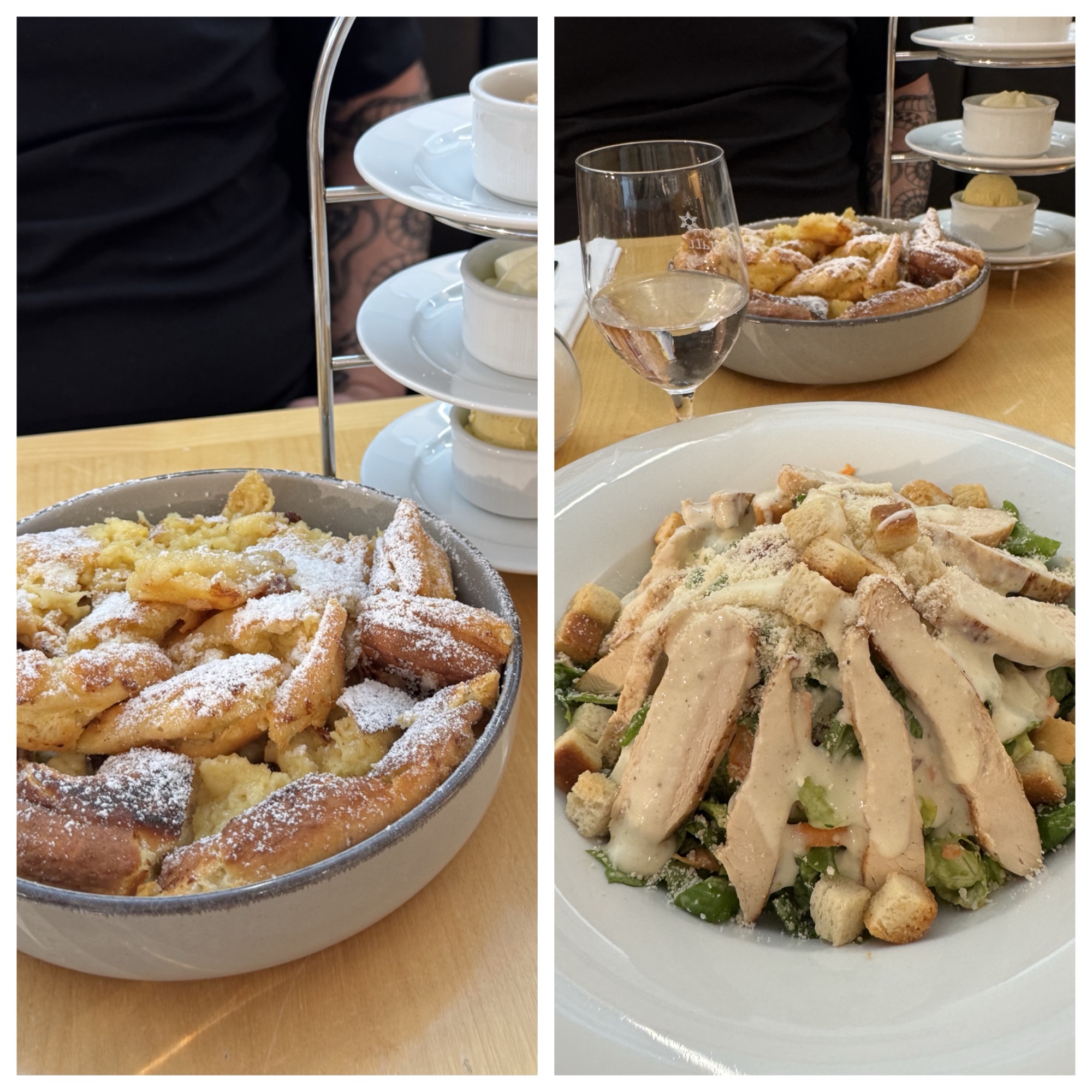
Besides that, by the time we’d completed the galleries focussed on the earliest history, we needed a short break. The museum has a lovely full service café restaurant on its lower level that we really enjoyed.
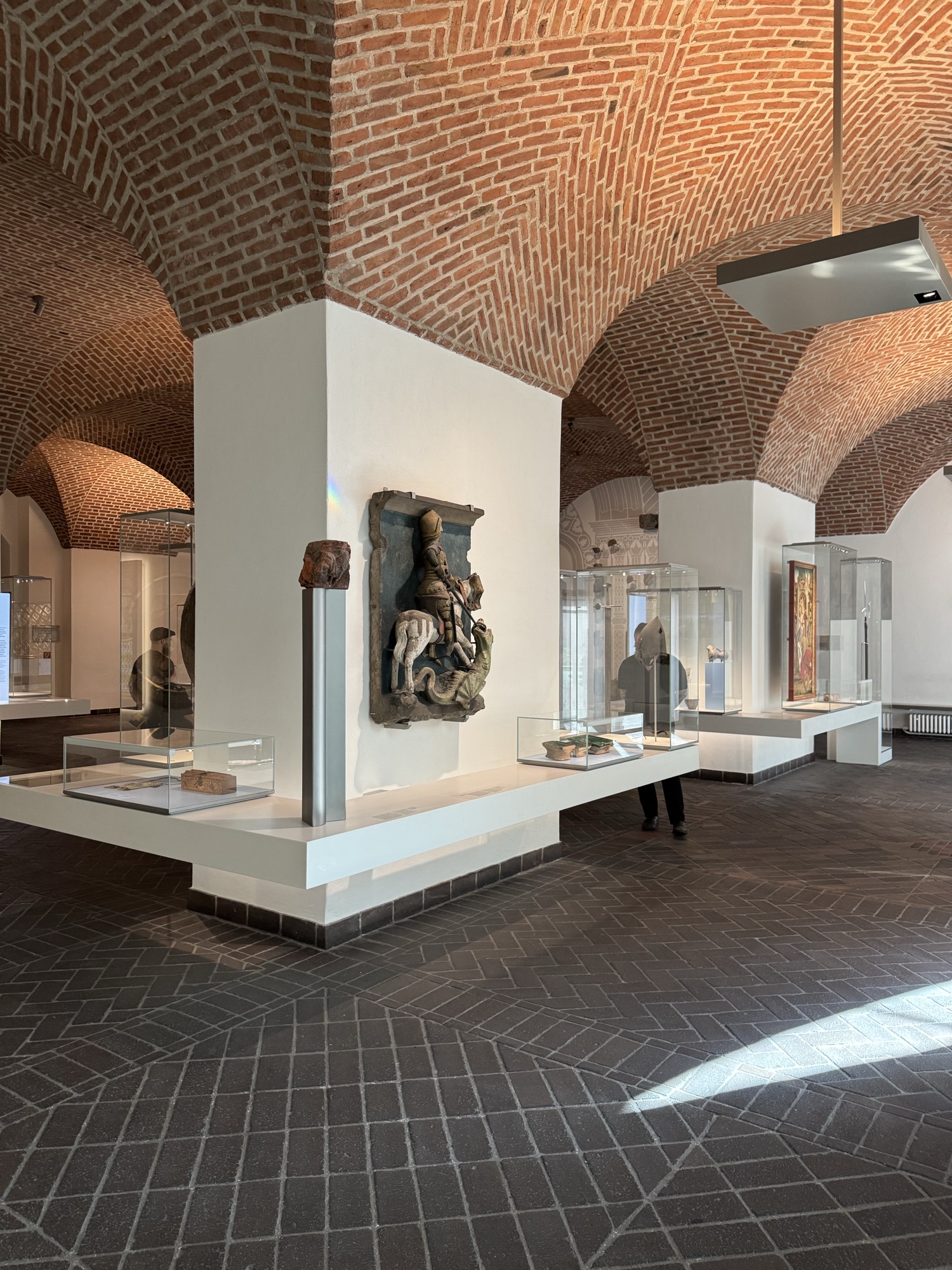
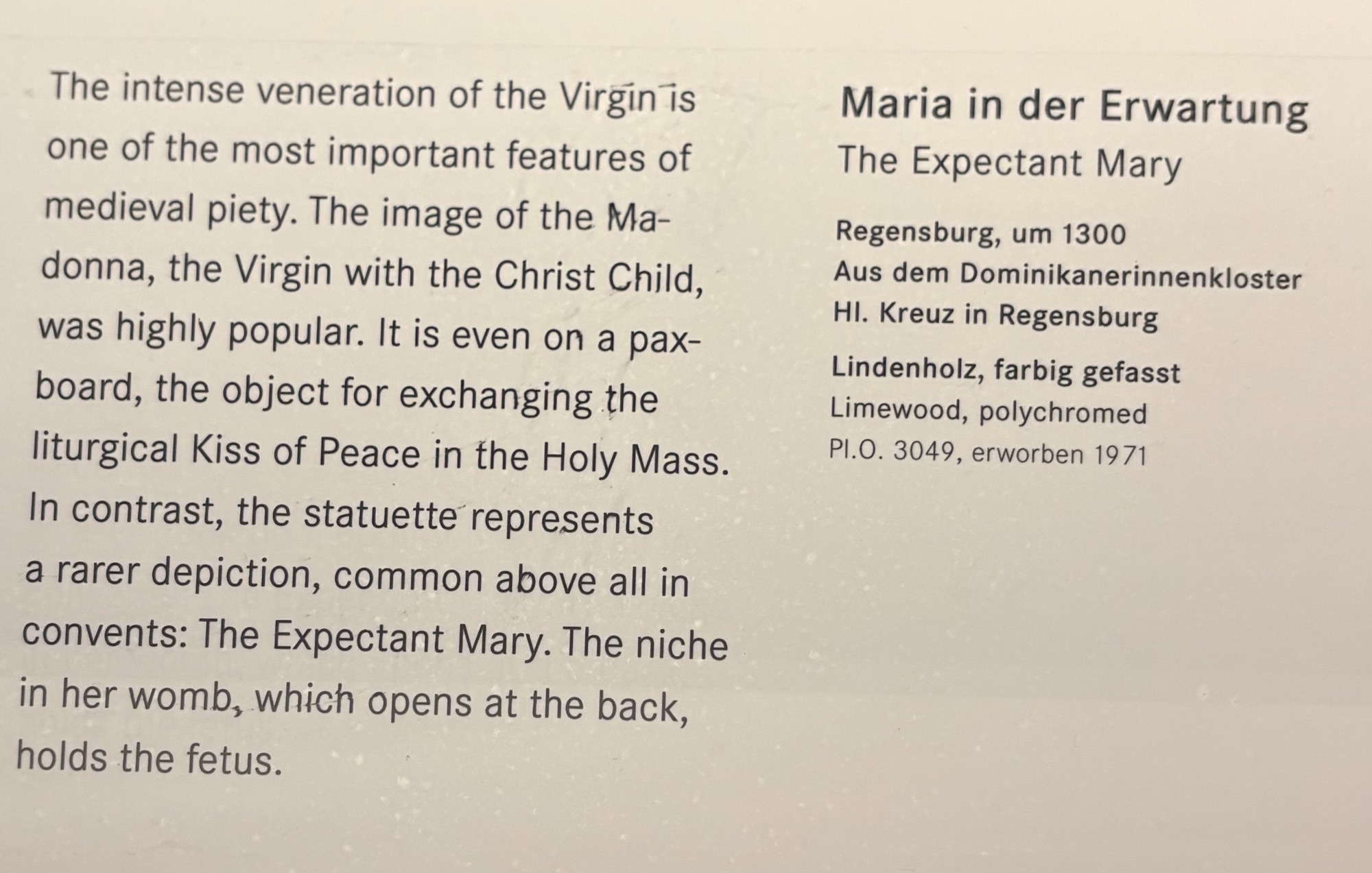
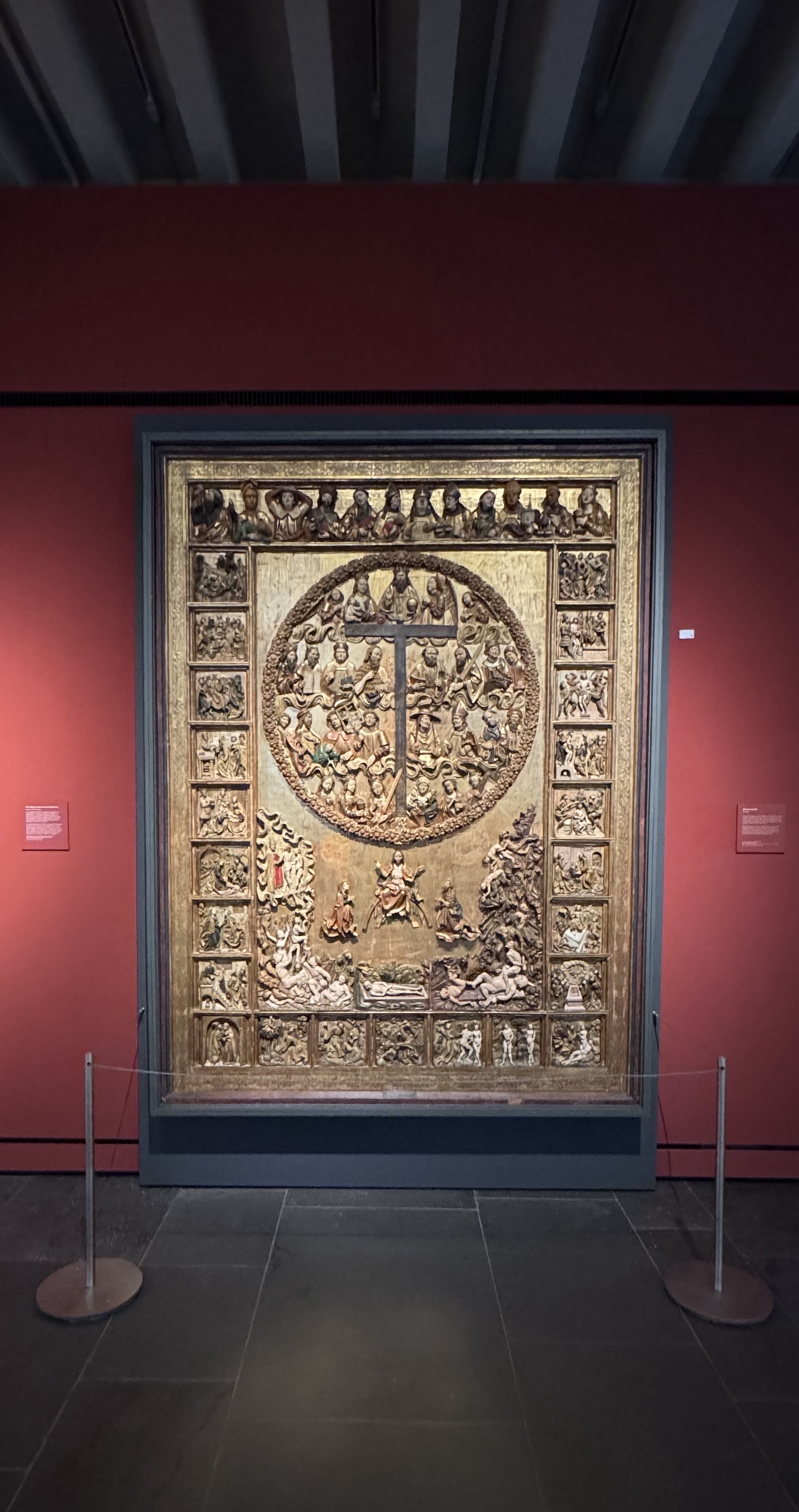
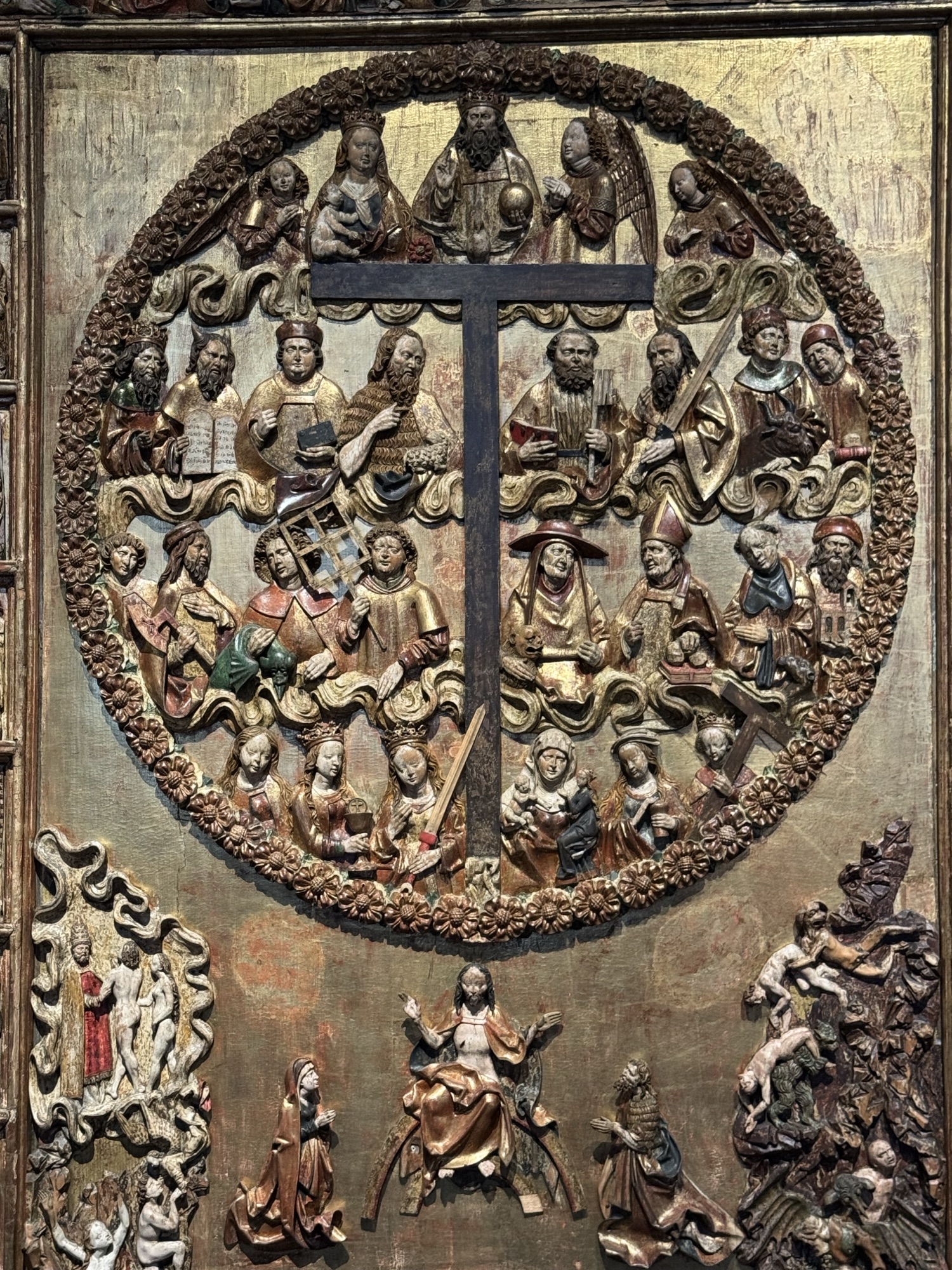
When we got to the galleries covering the Middle Ages, so much of the history was tightly tied to the church. After spending yesterday in mediaeval churches, we were able to move through these galleries a bit more quickly. There was still lots to look at though.
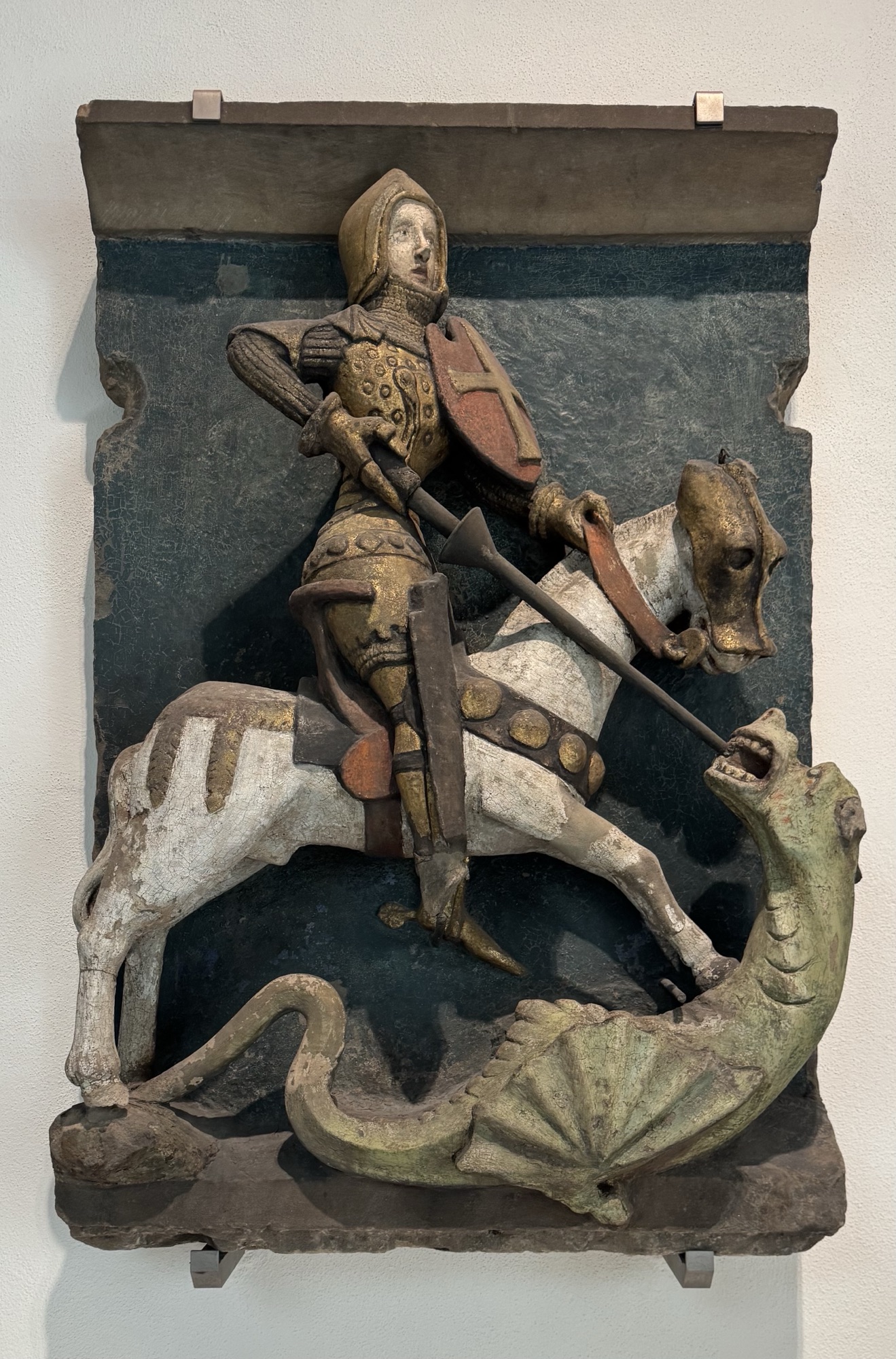
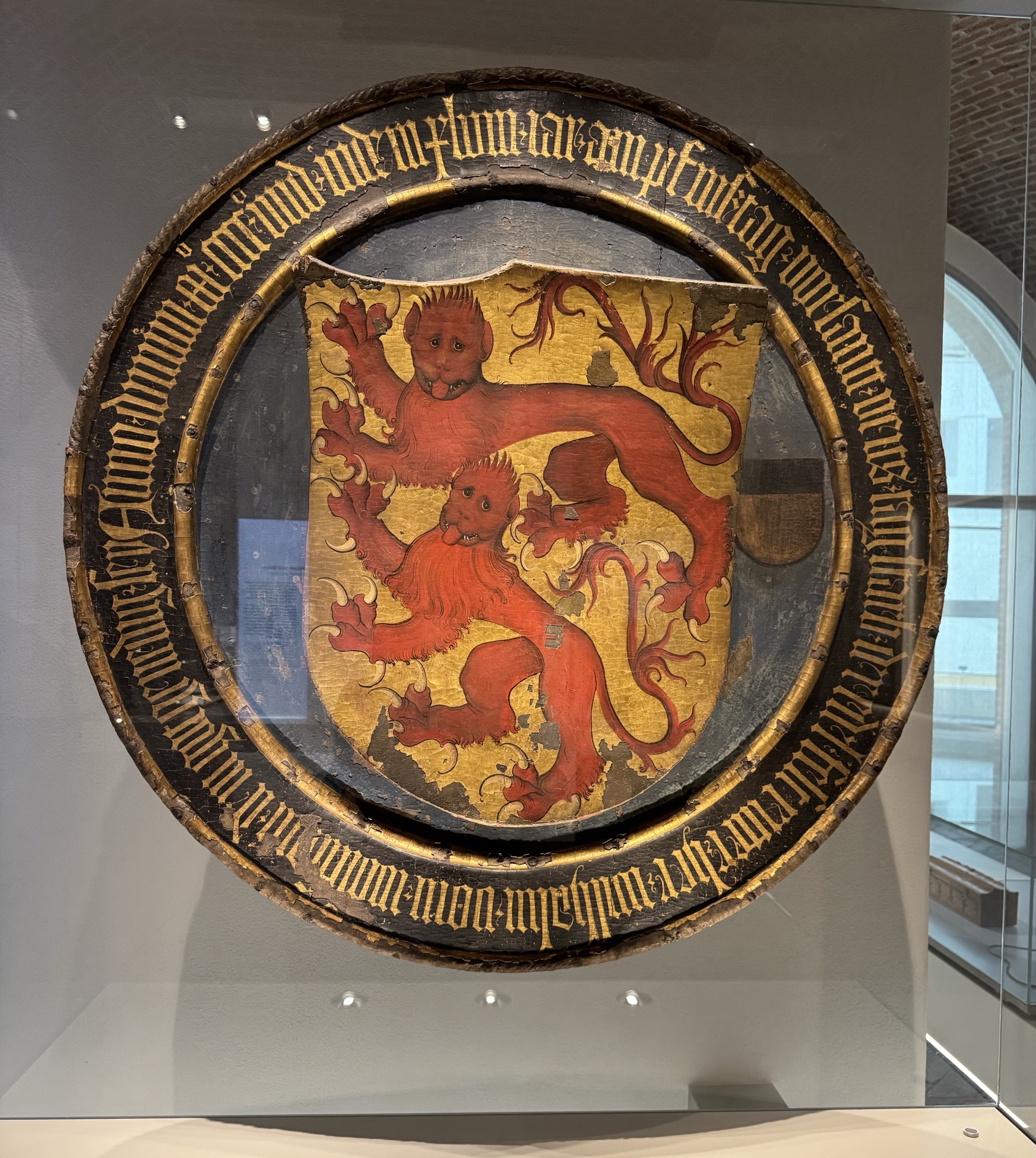
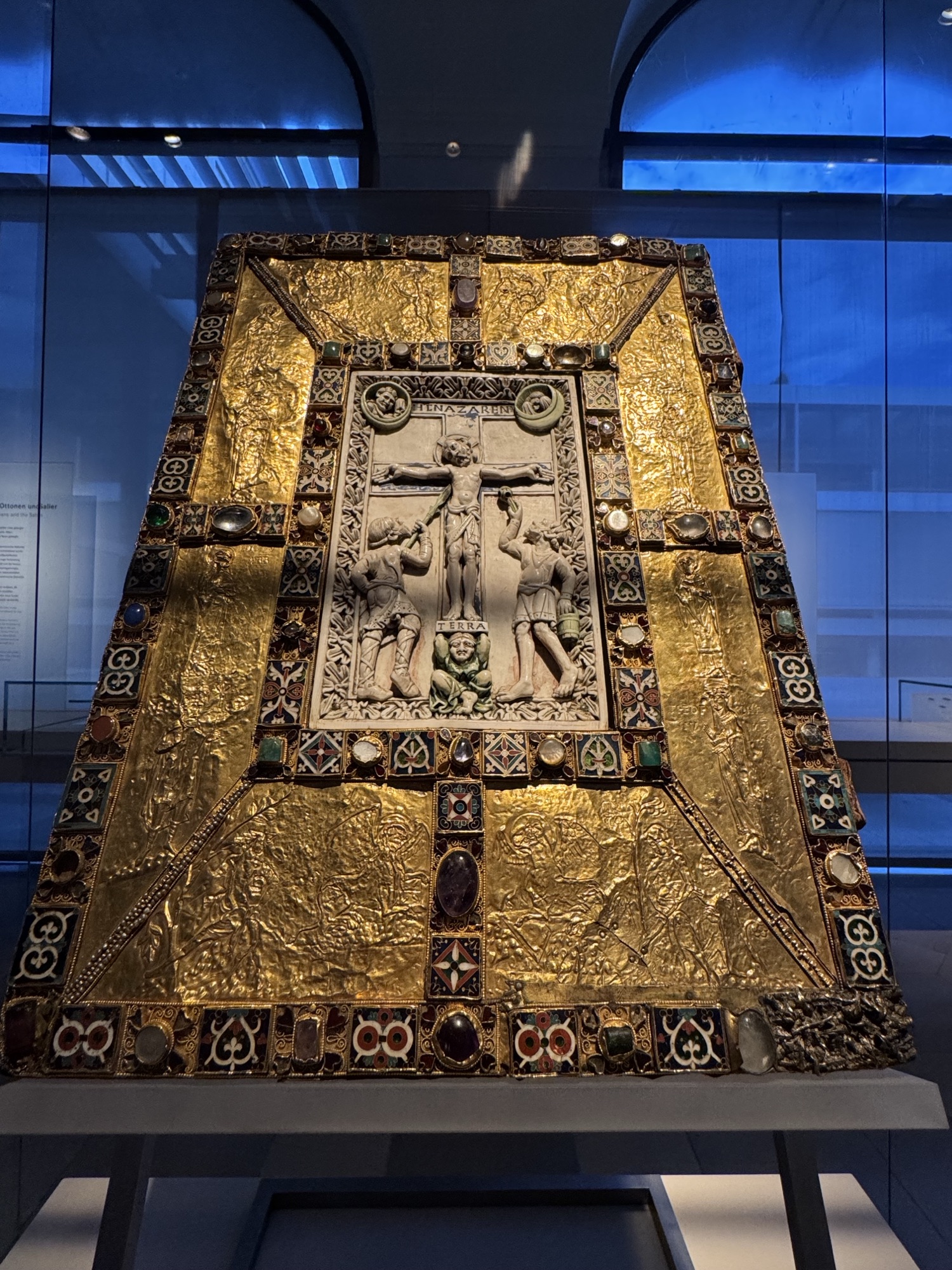
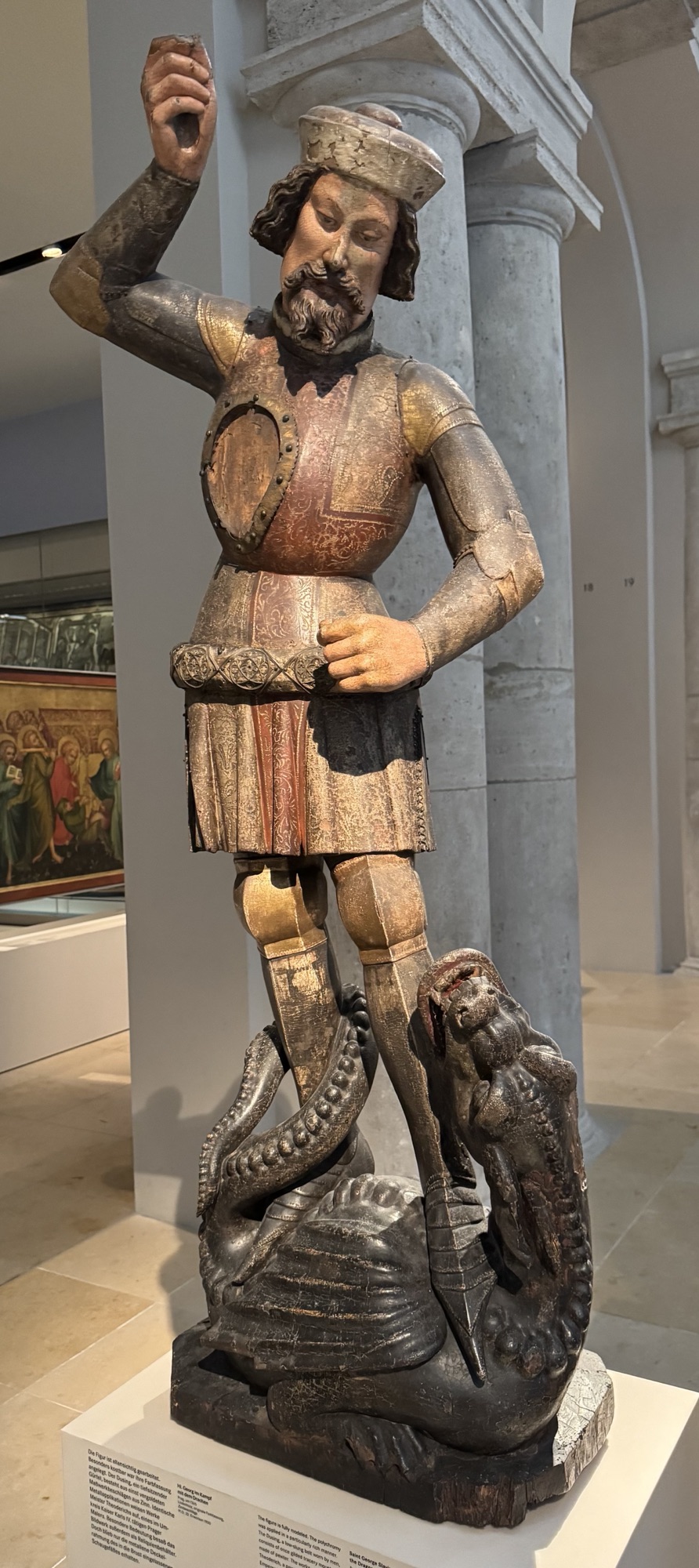
Regensburg, mid 15 century,
from the Cistercian Cloister in Seligenporten
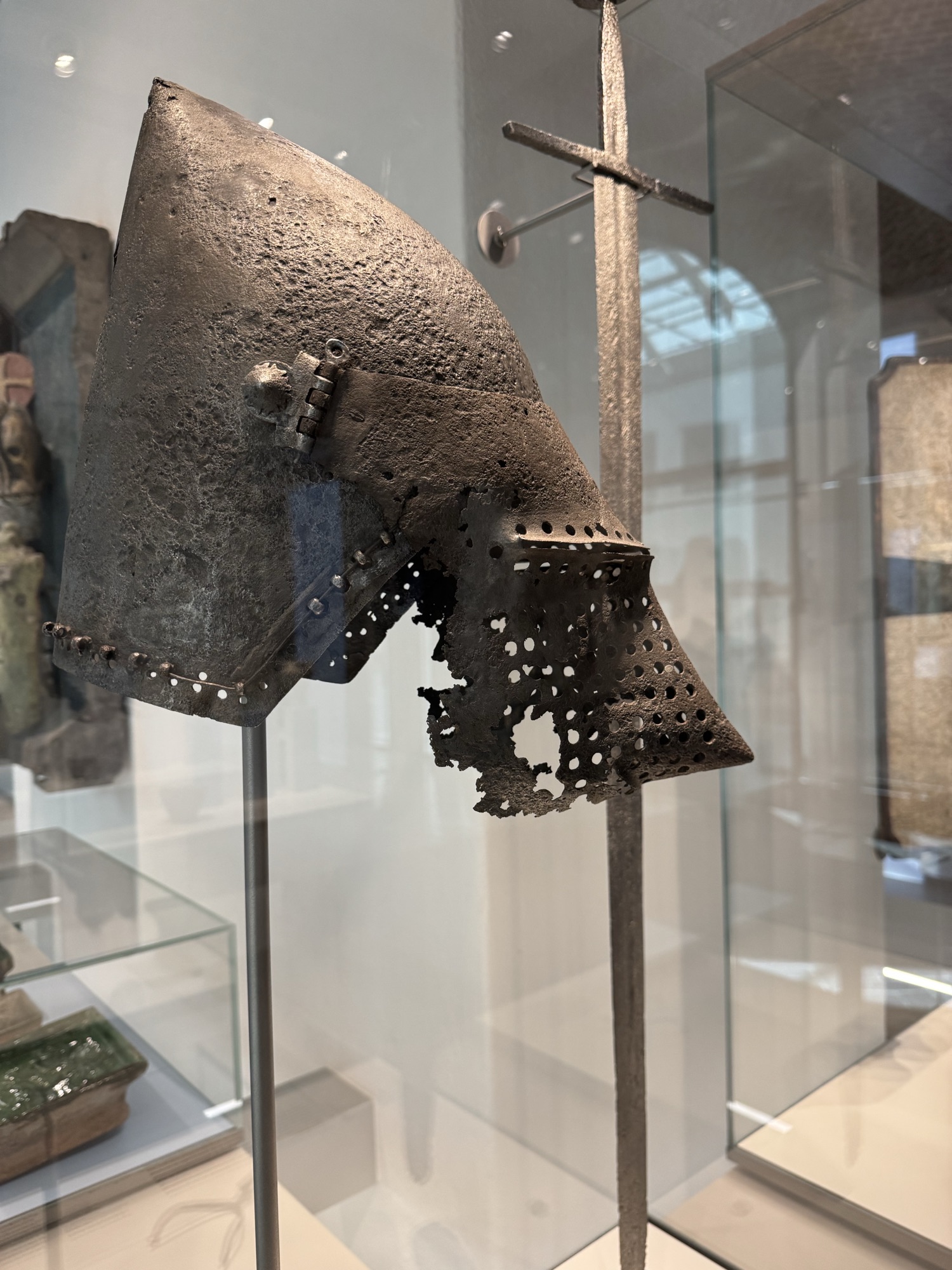
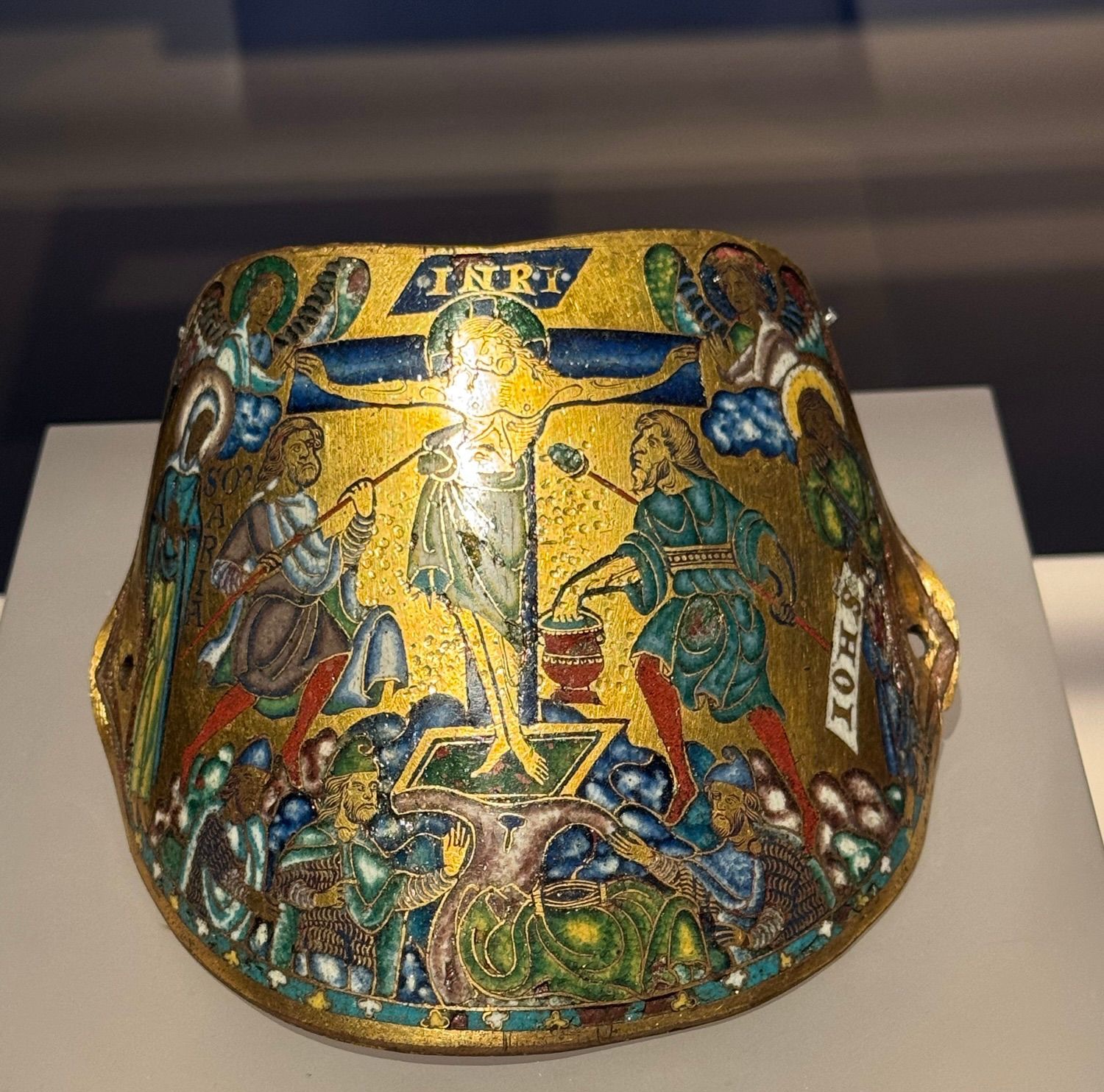
Its counterpart depicting the Resurrection of Christ is found in Paris. The pair represent the only surviving examples from the Middle Ages.
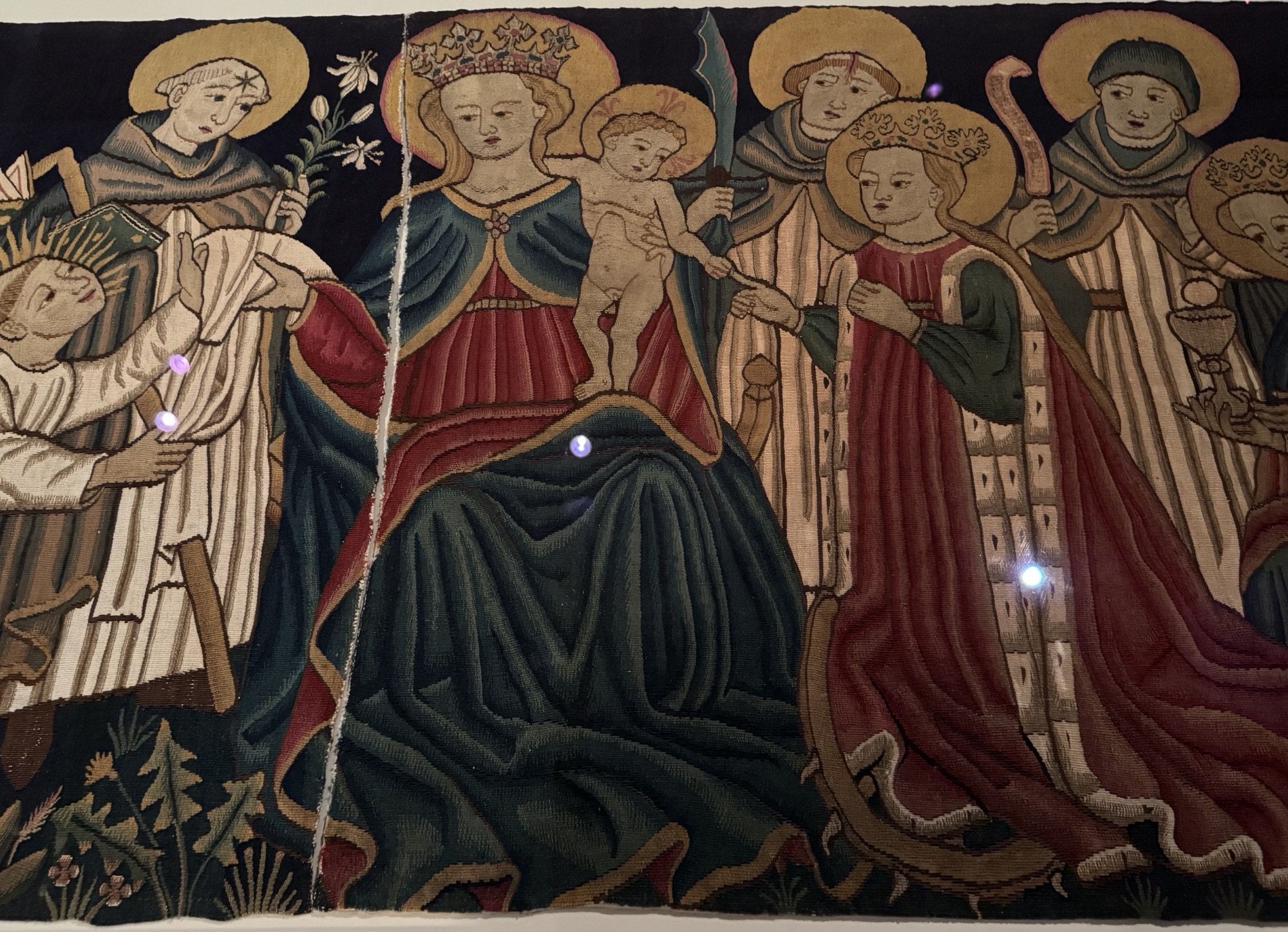
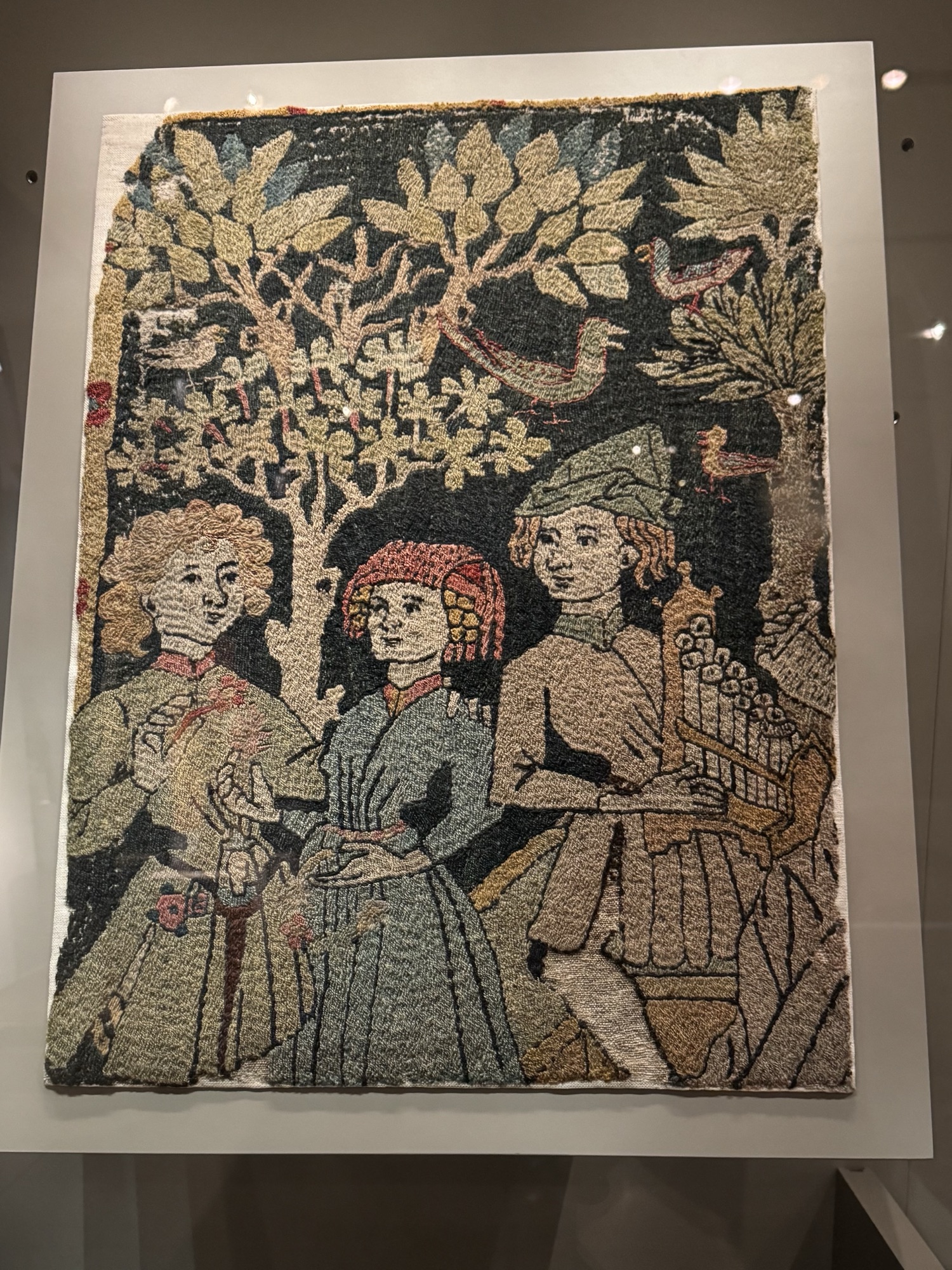
Although I’d already seen the world’s largest collection of mediaeval tapestries at Wawel Castle in Krakow last year (Episode 876), I was nonetheless wowed by the colours and workmanship in the Nuremberg Tapestries, almost all of which date to the mid 15th century.
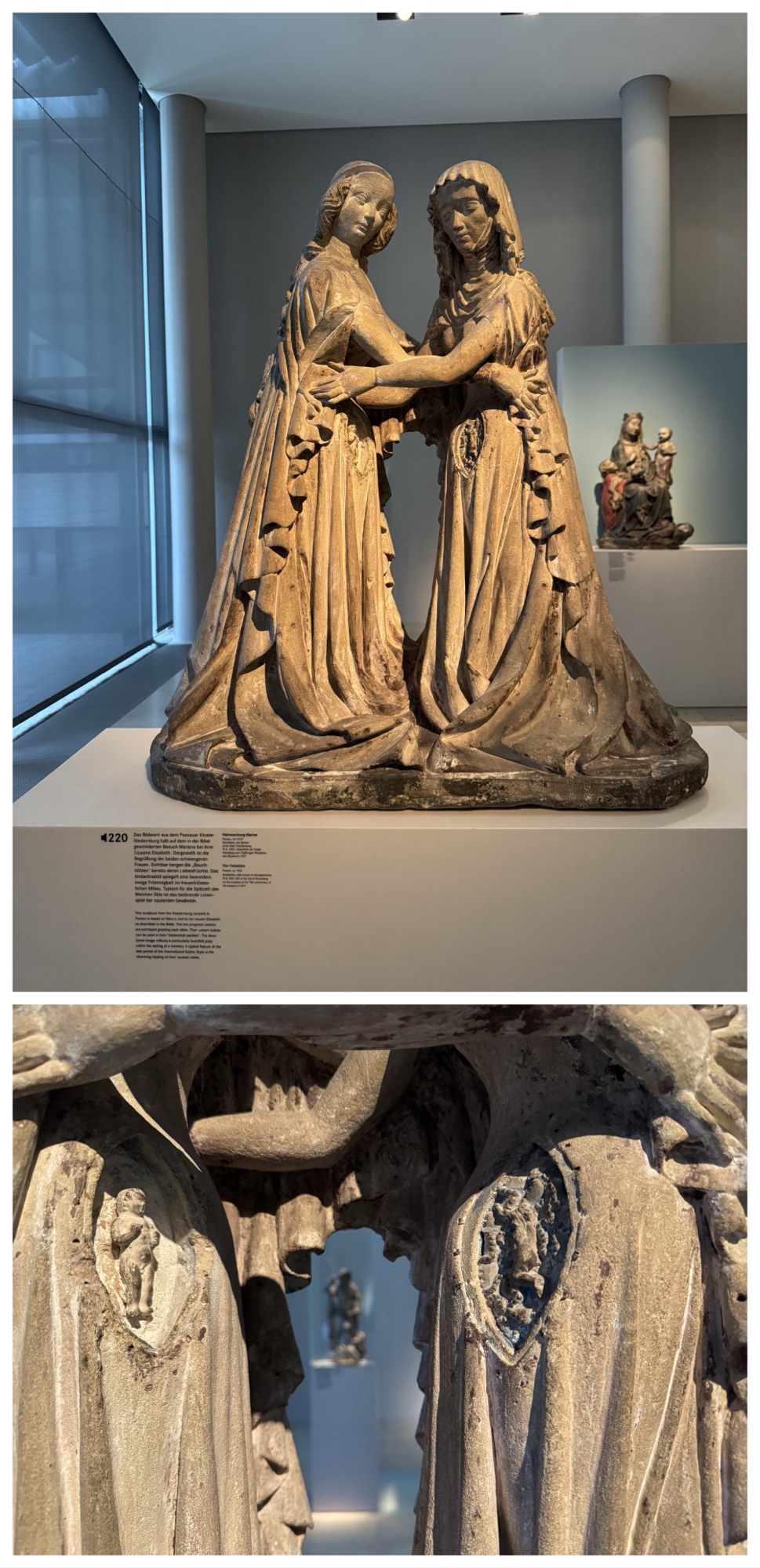
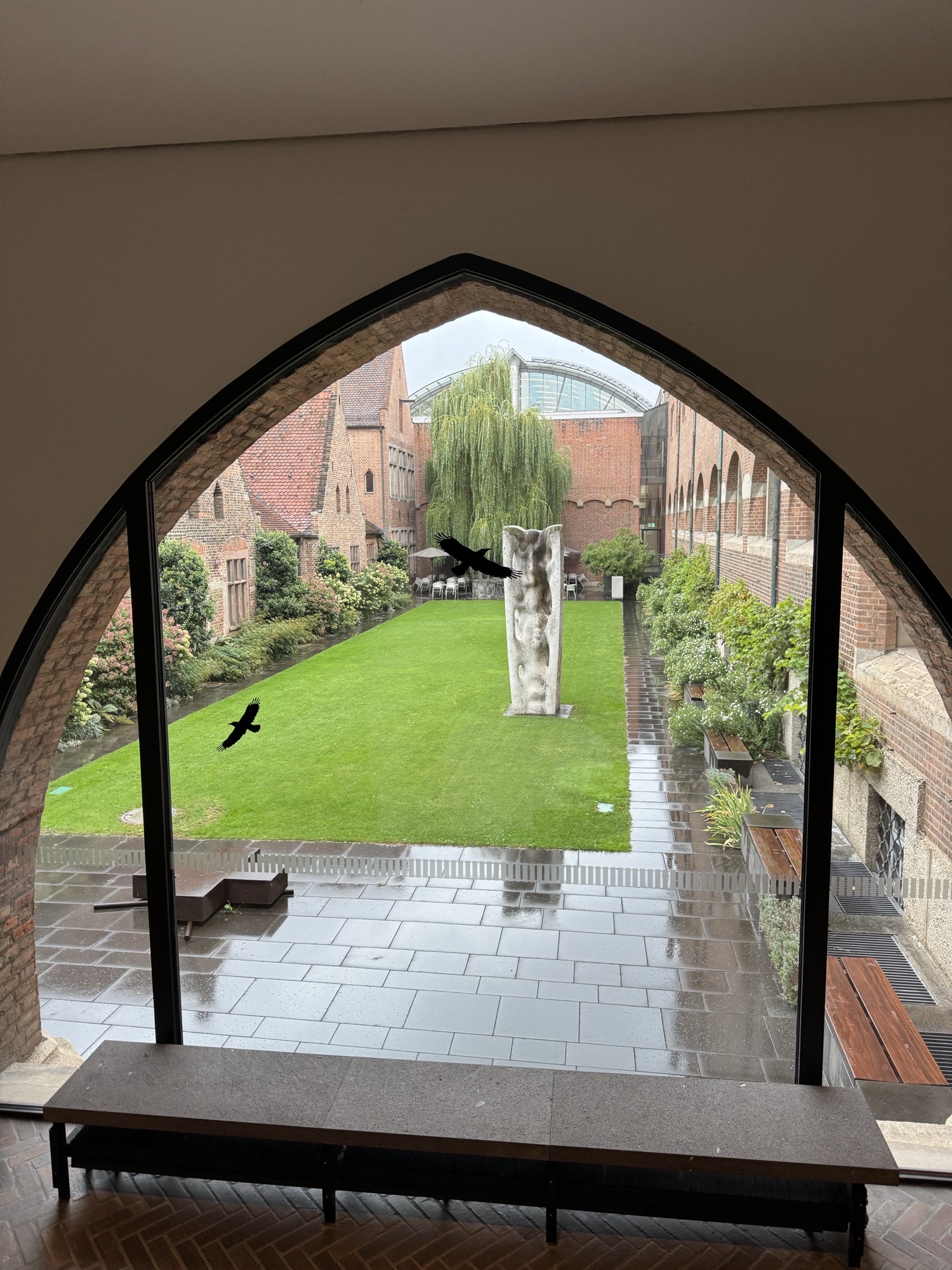
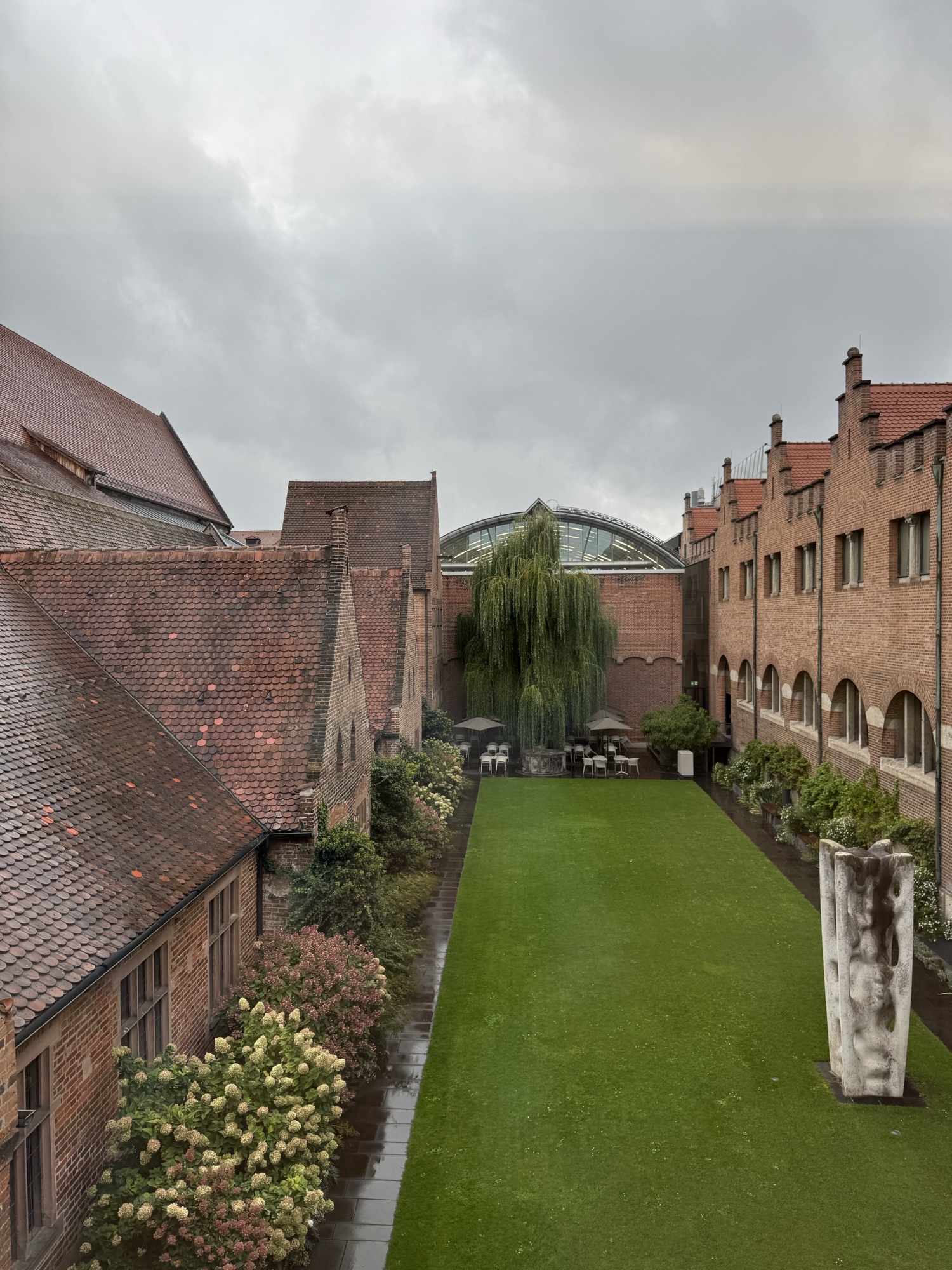
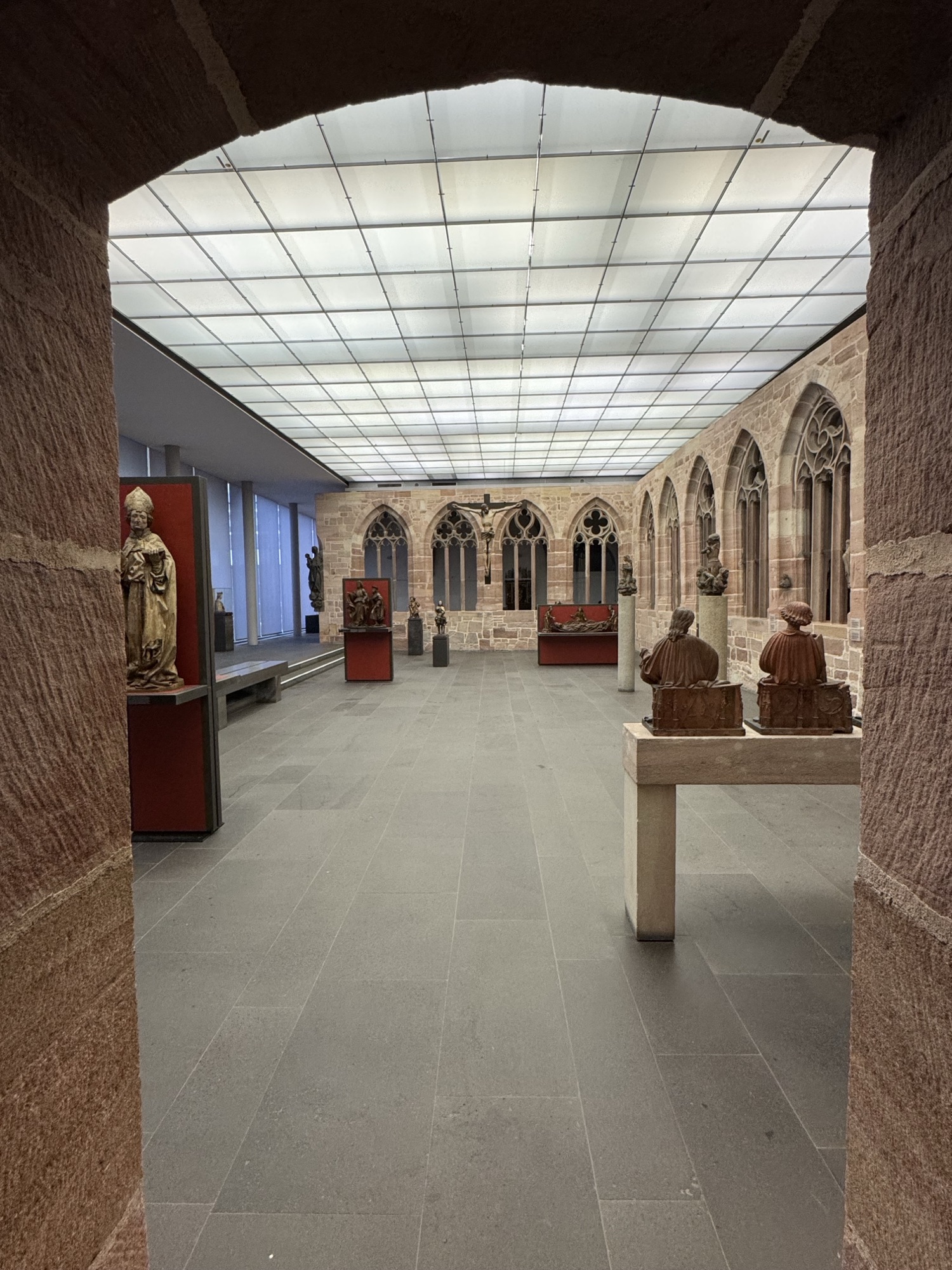
We walked through the area connecting to modern portion of the museum building to the old cloisters to reach the Late Middle Ages and Everyday Culture exhibits. It makes a fabulous exhibit space.
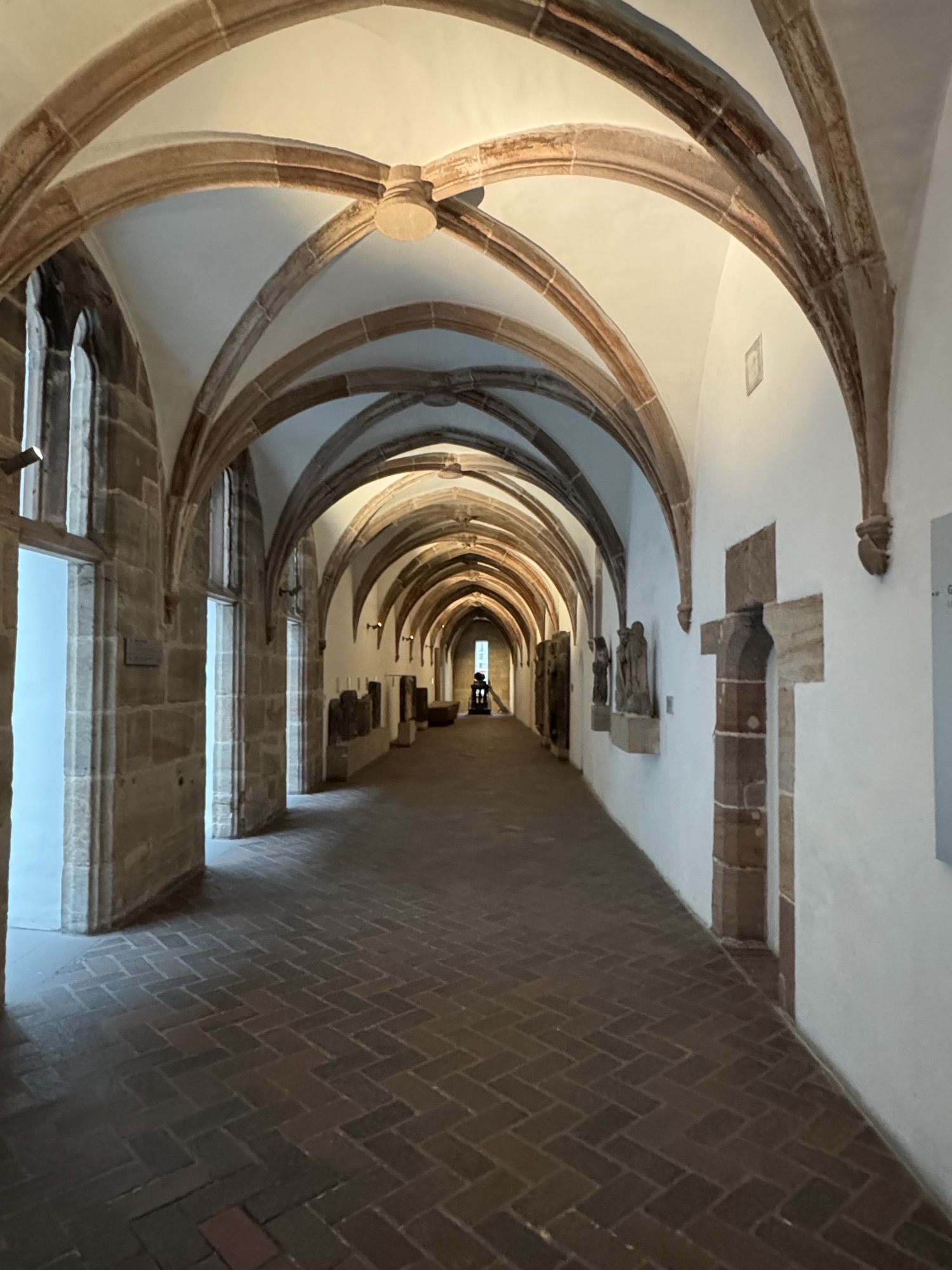
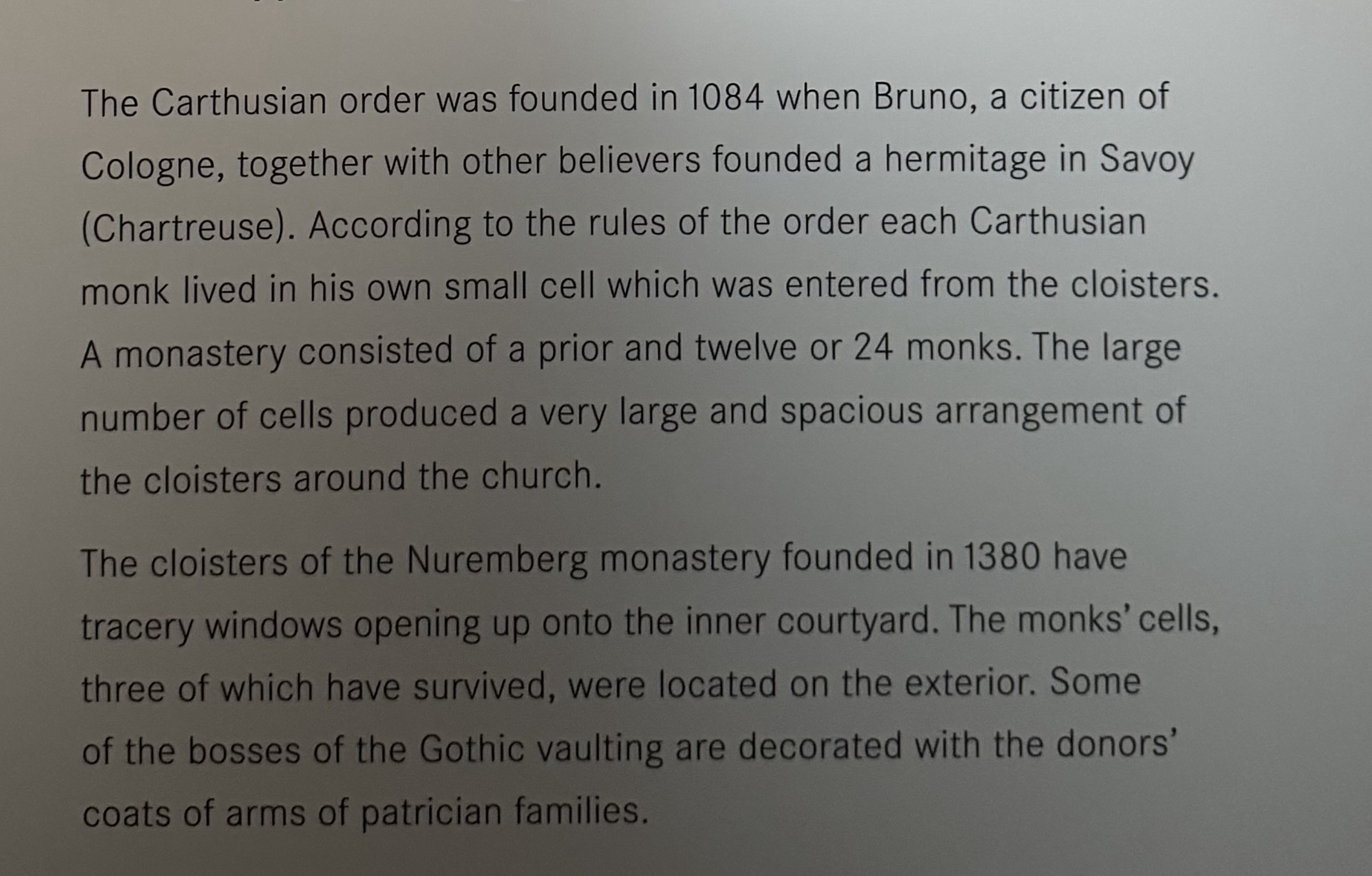
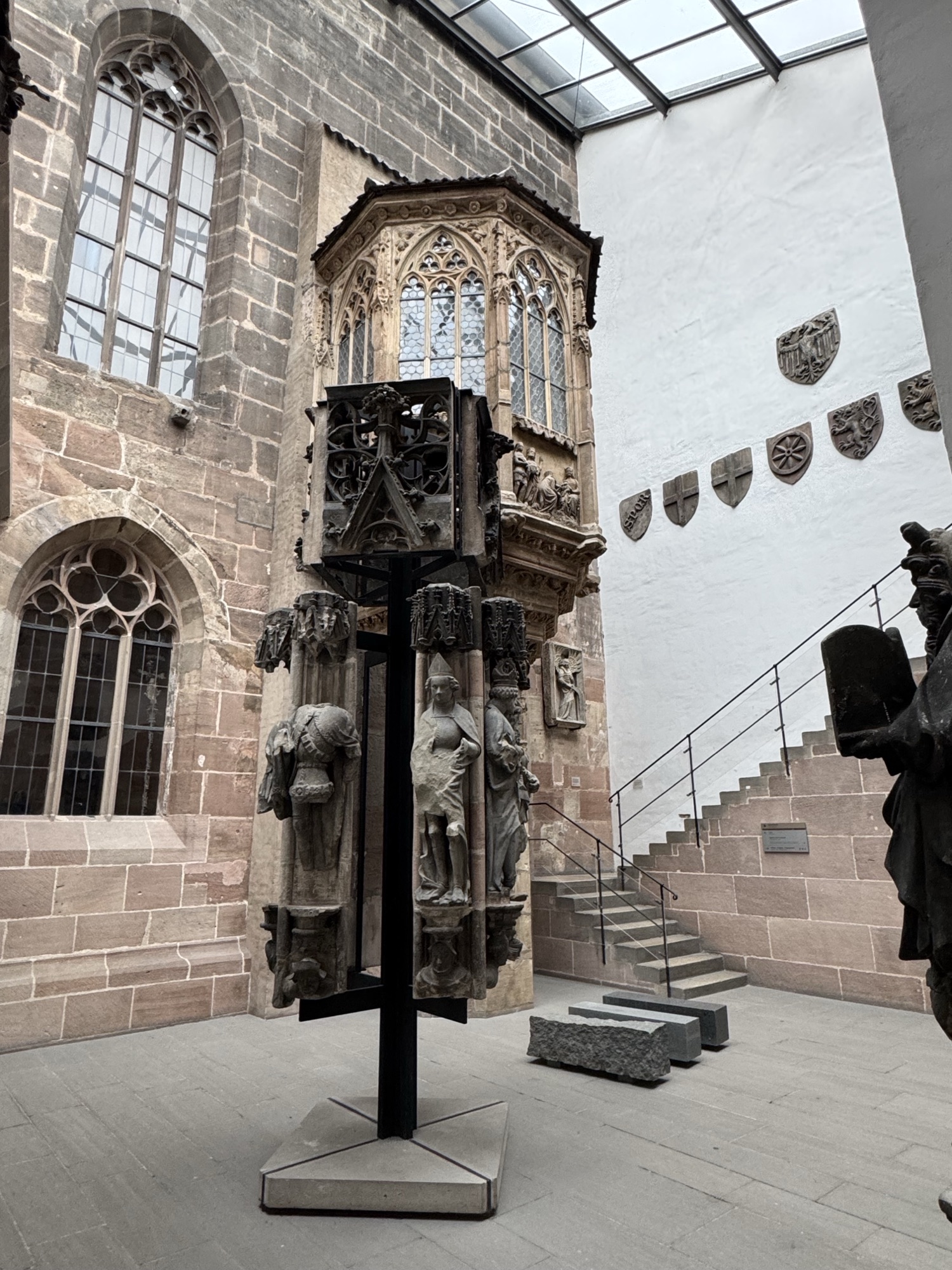
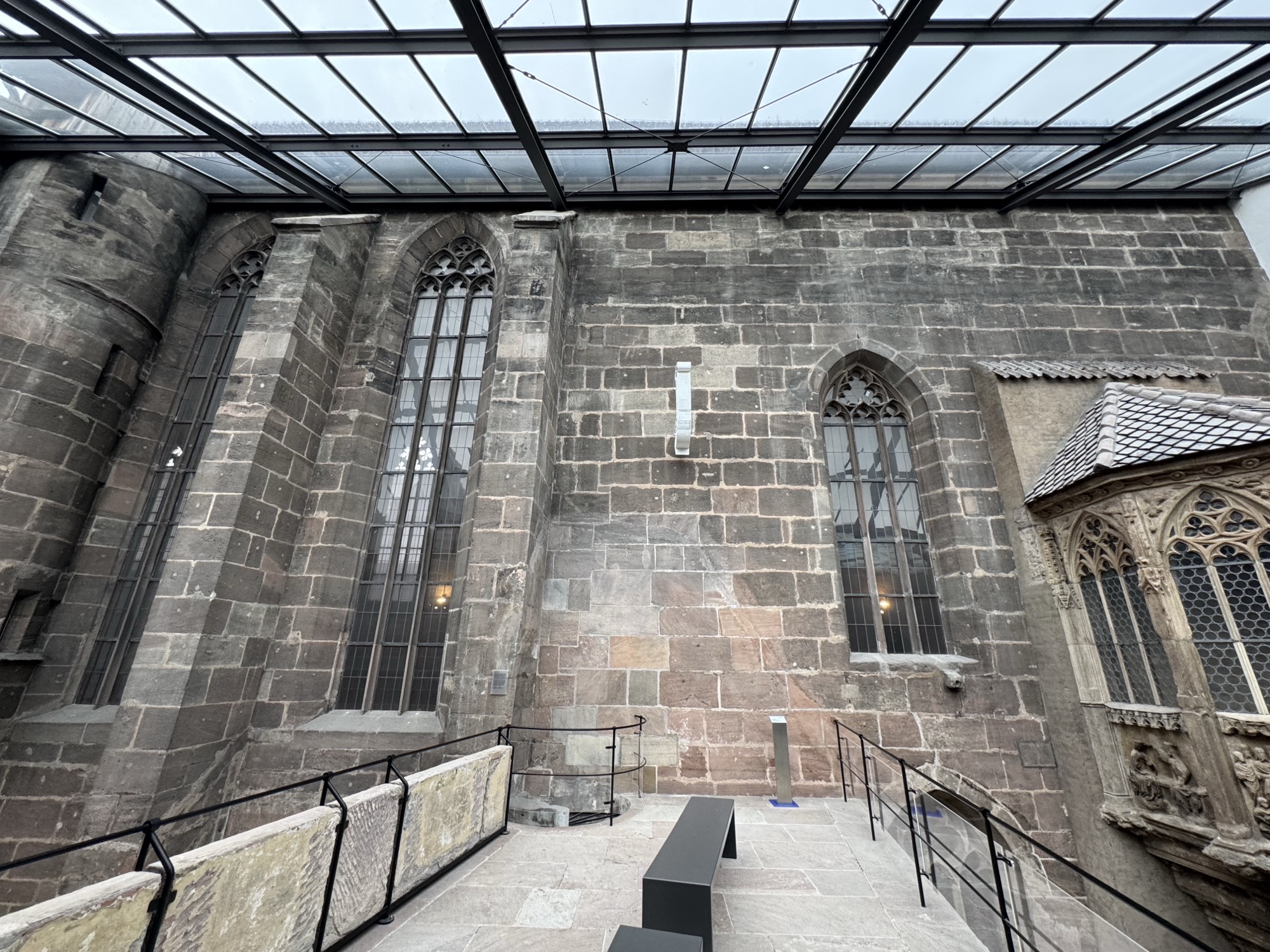
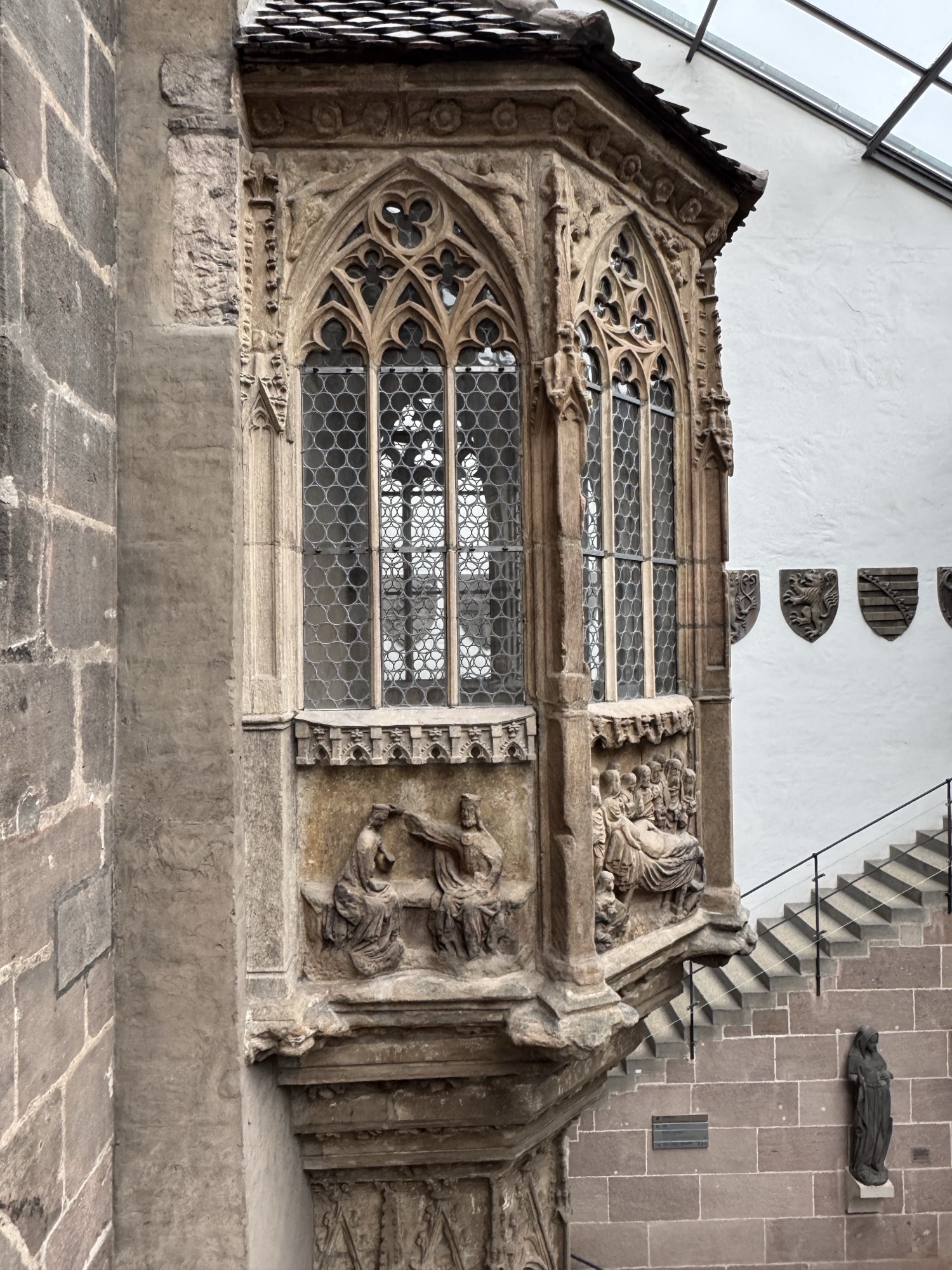
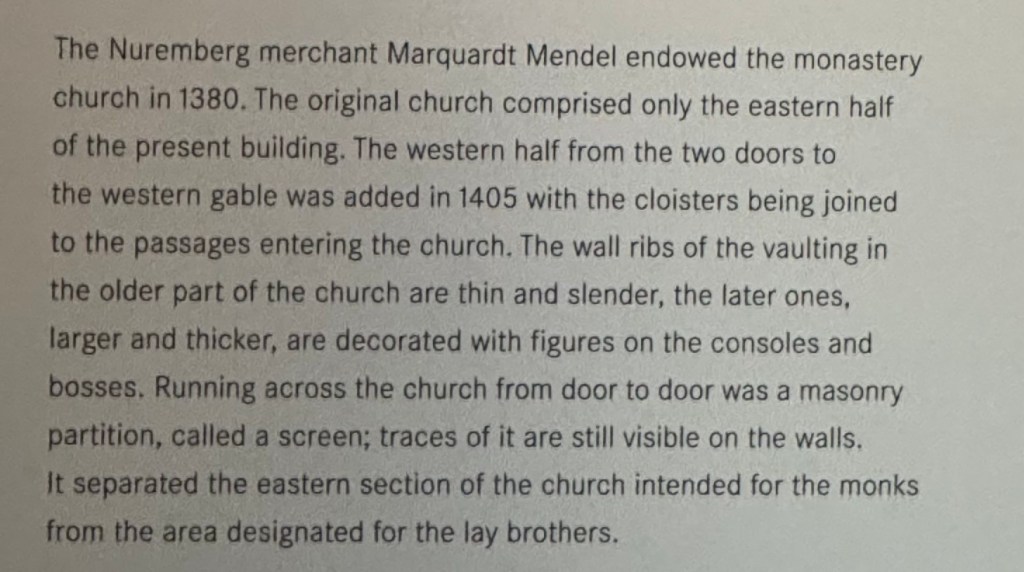
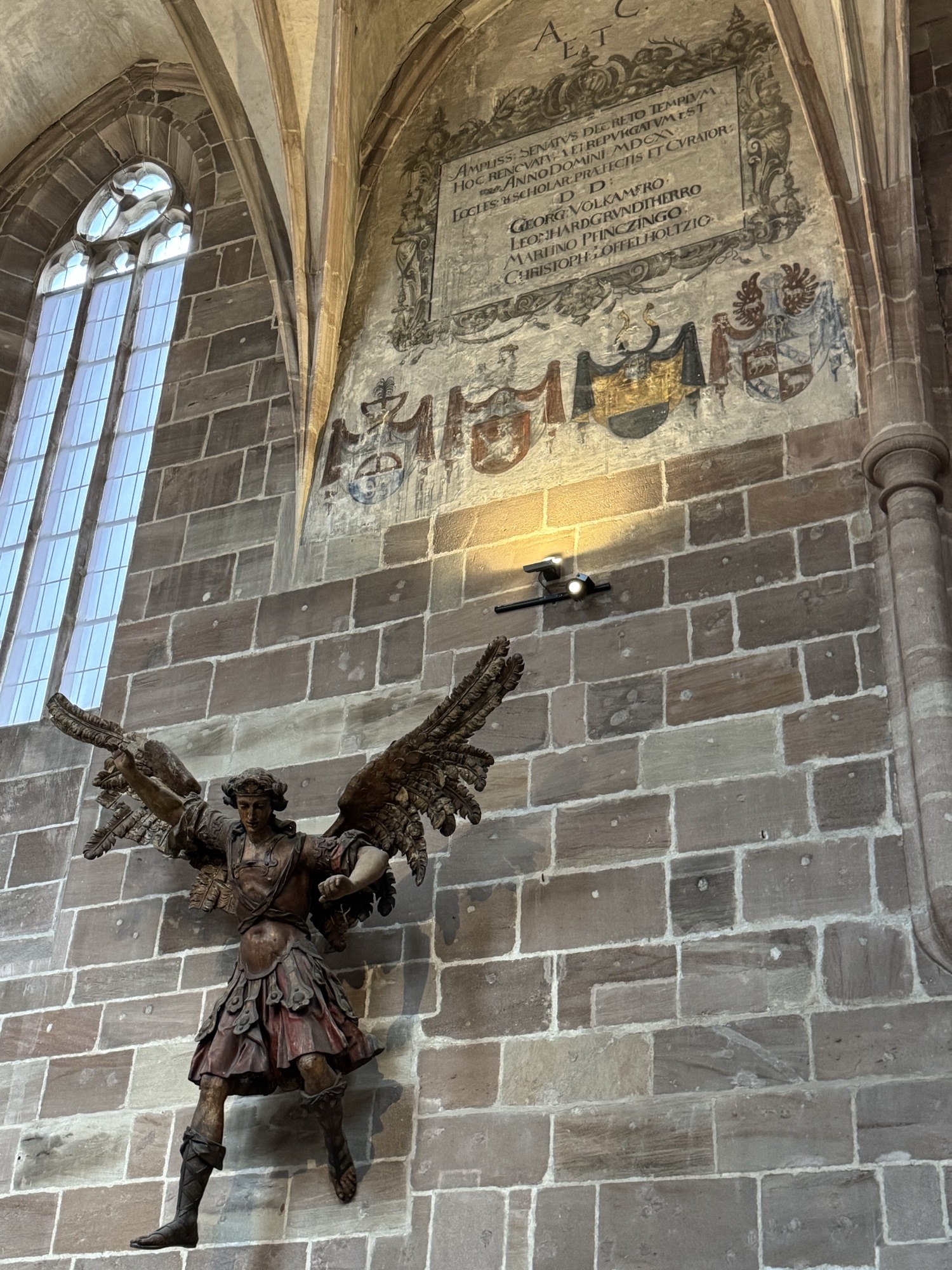
In the long cloister halls were epitaphs and gravestones.
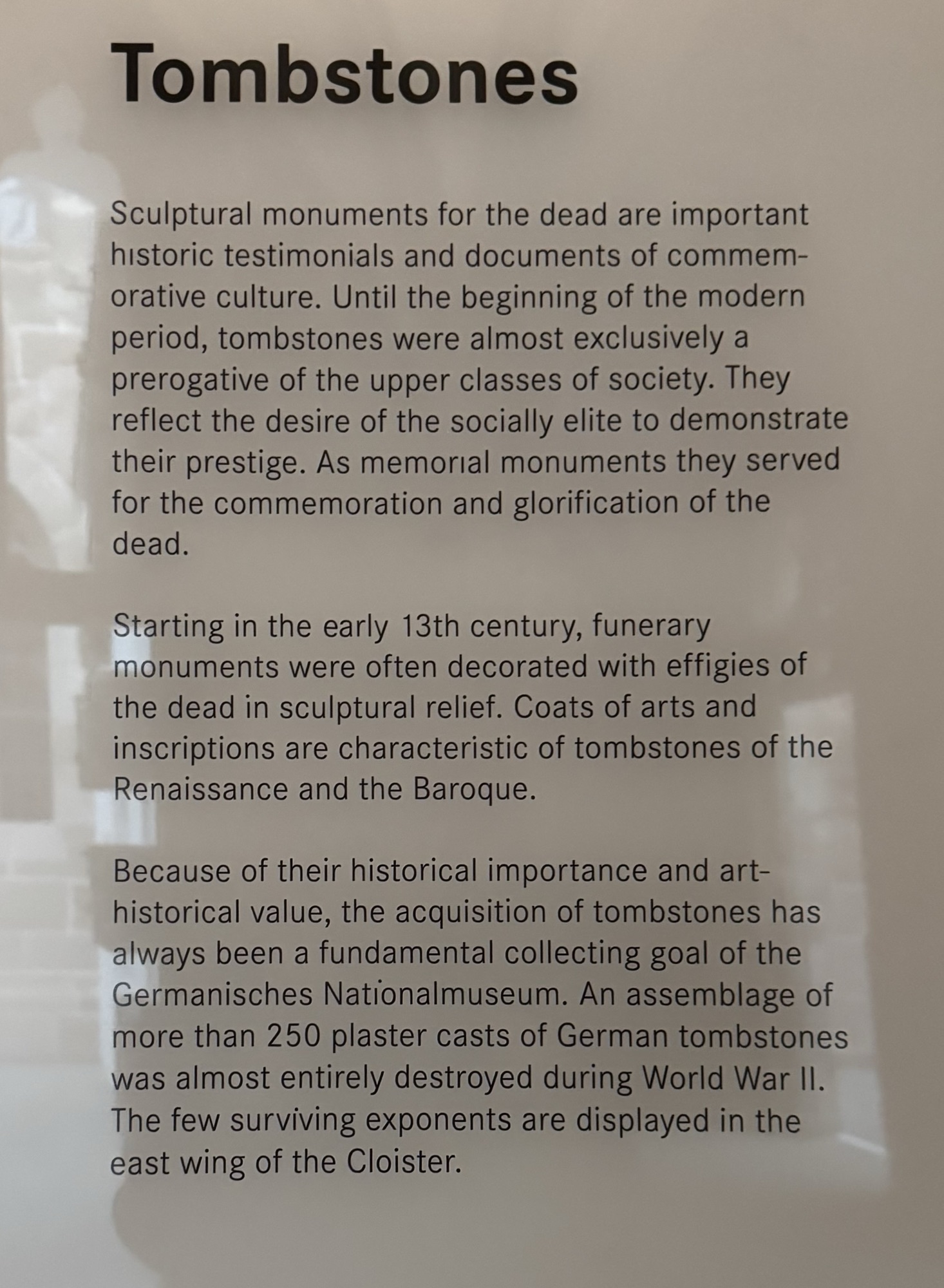
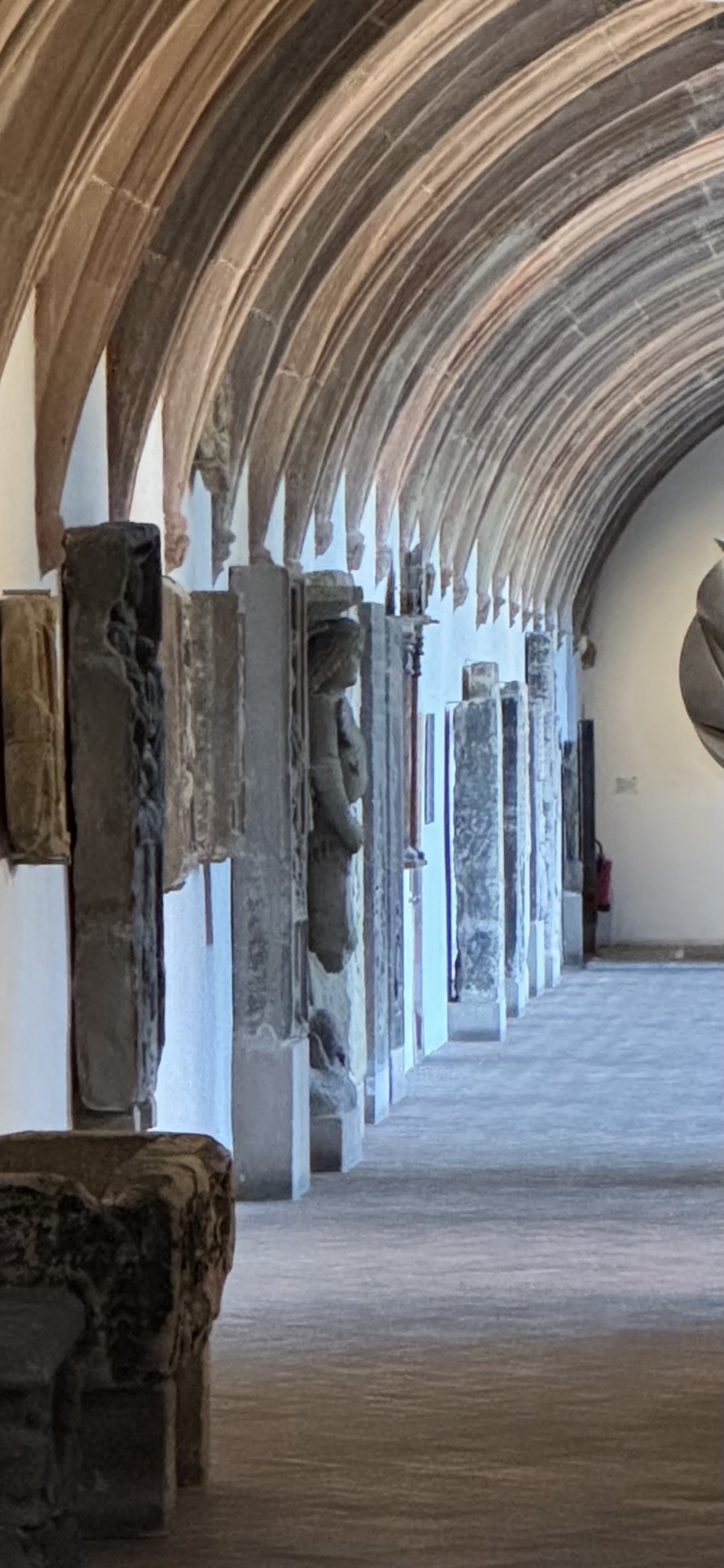
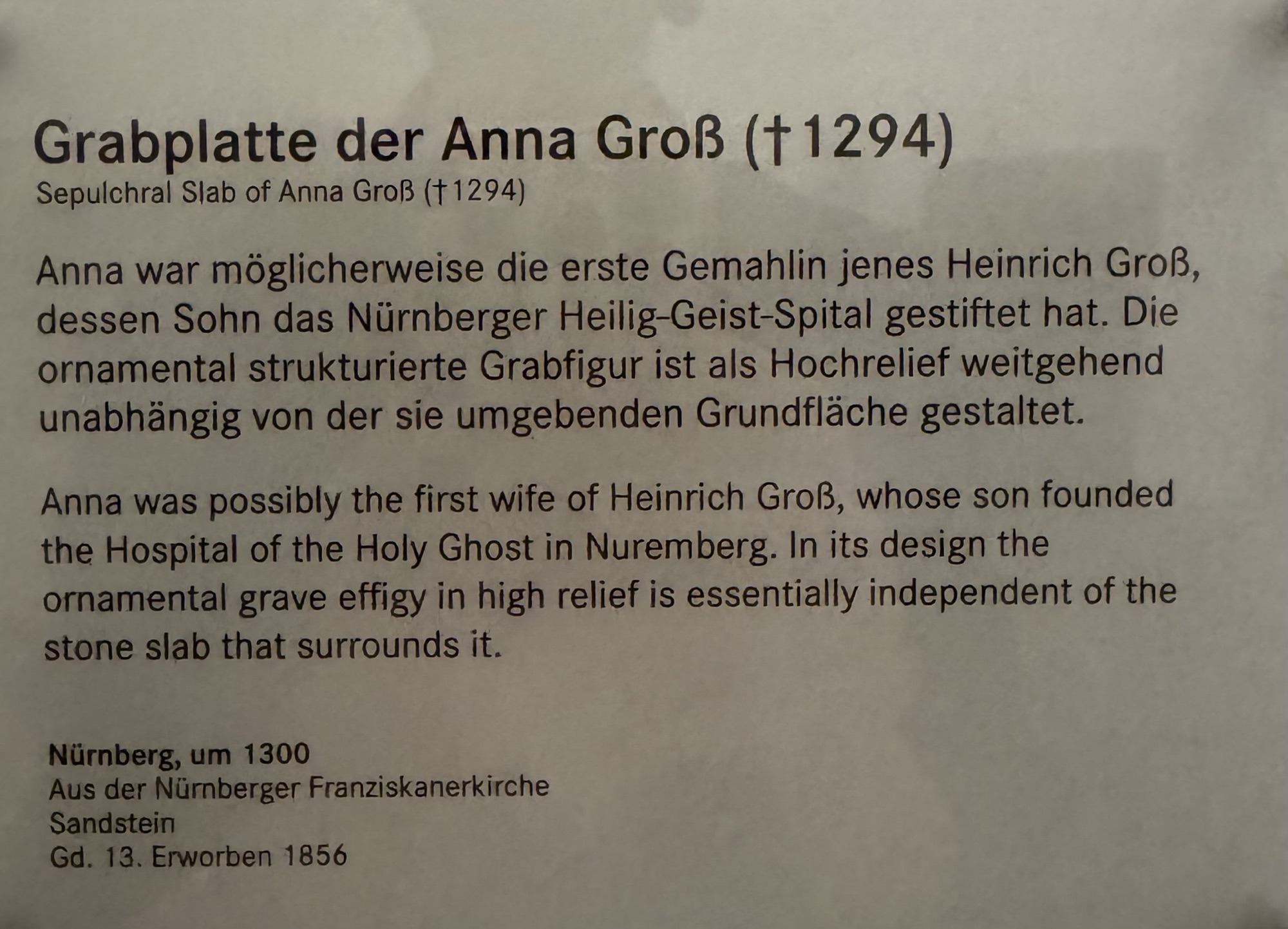
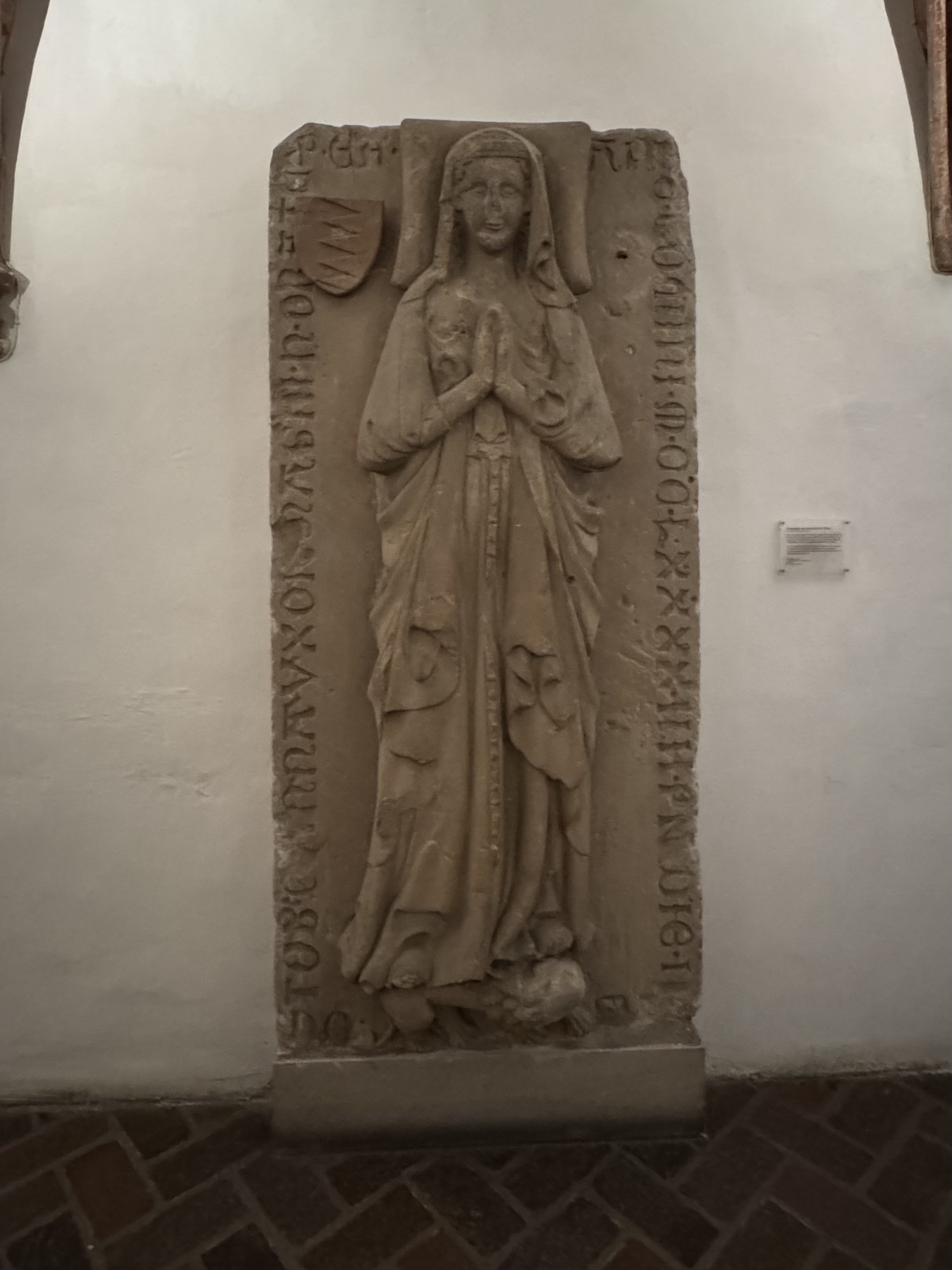
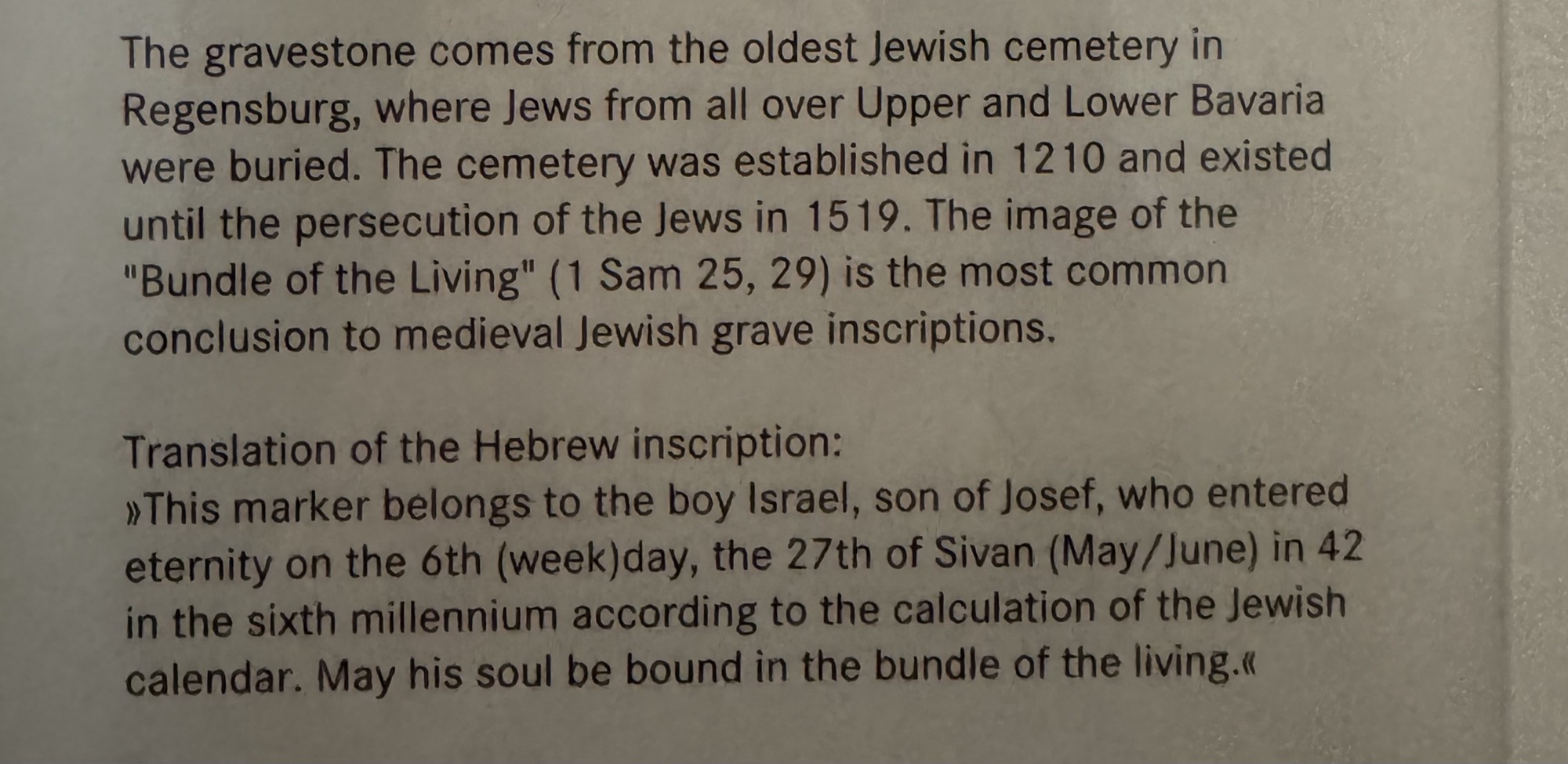
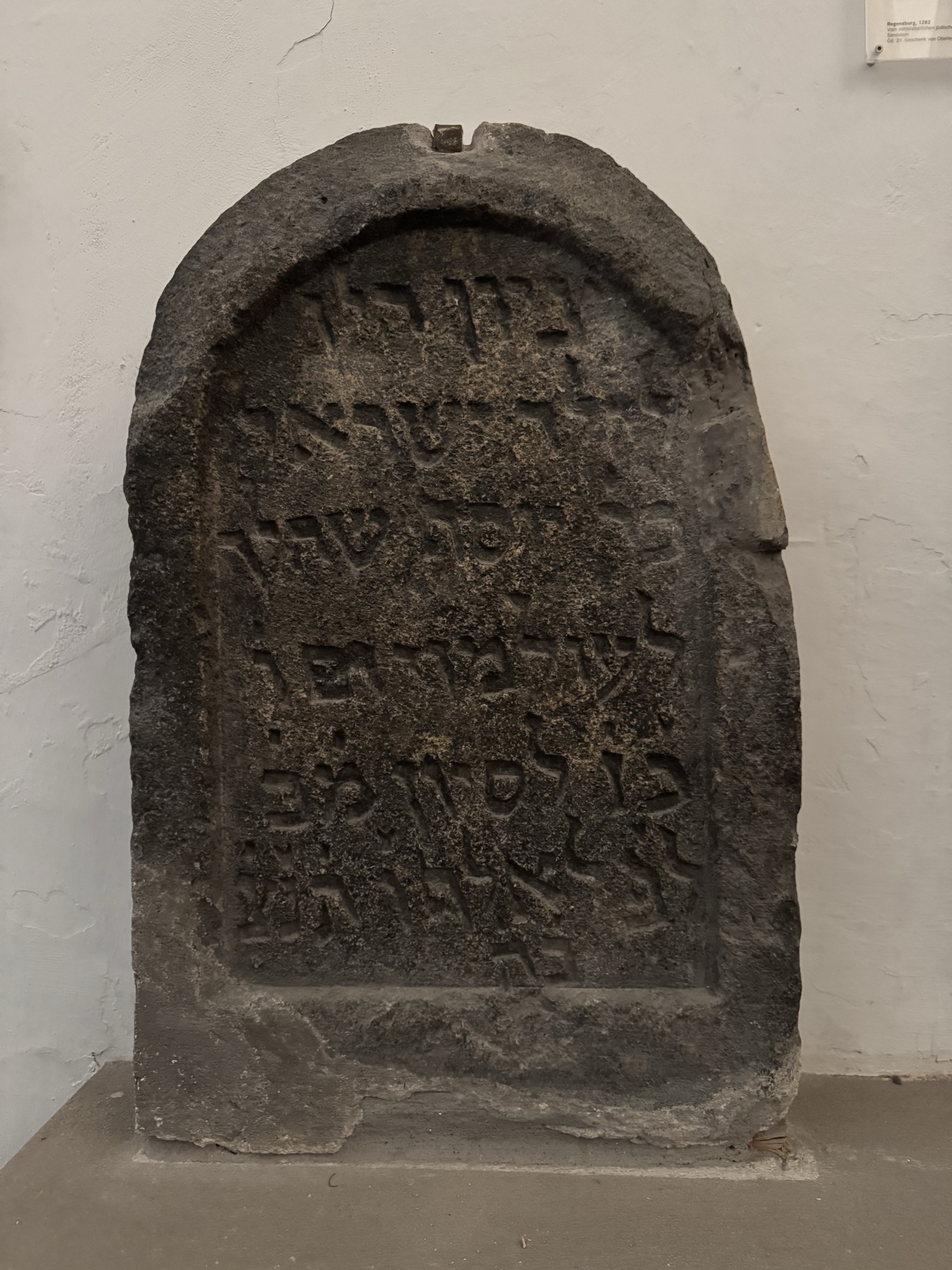
There are also 6 Jewish gravestones dating to the 13th century.
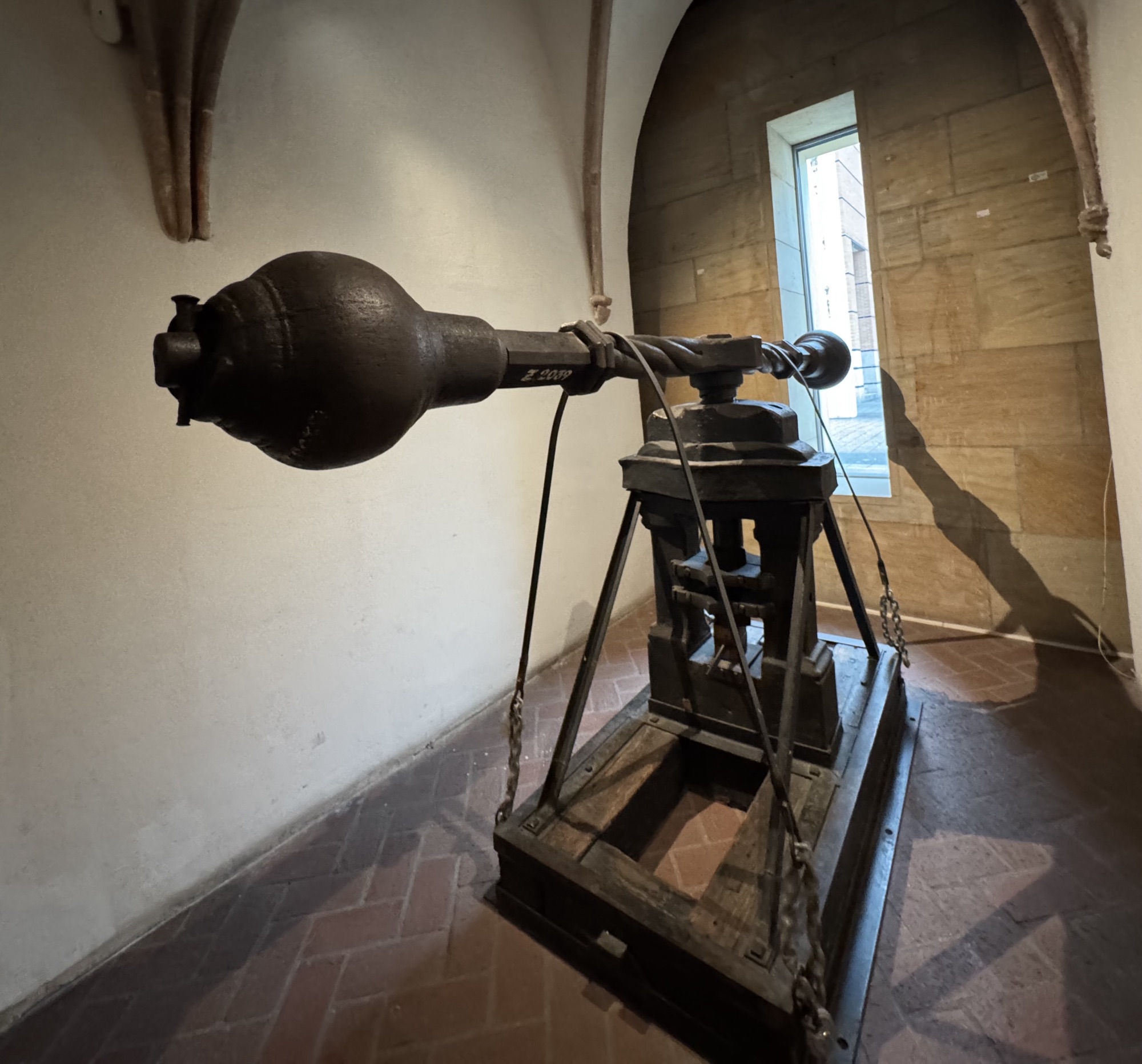
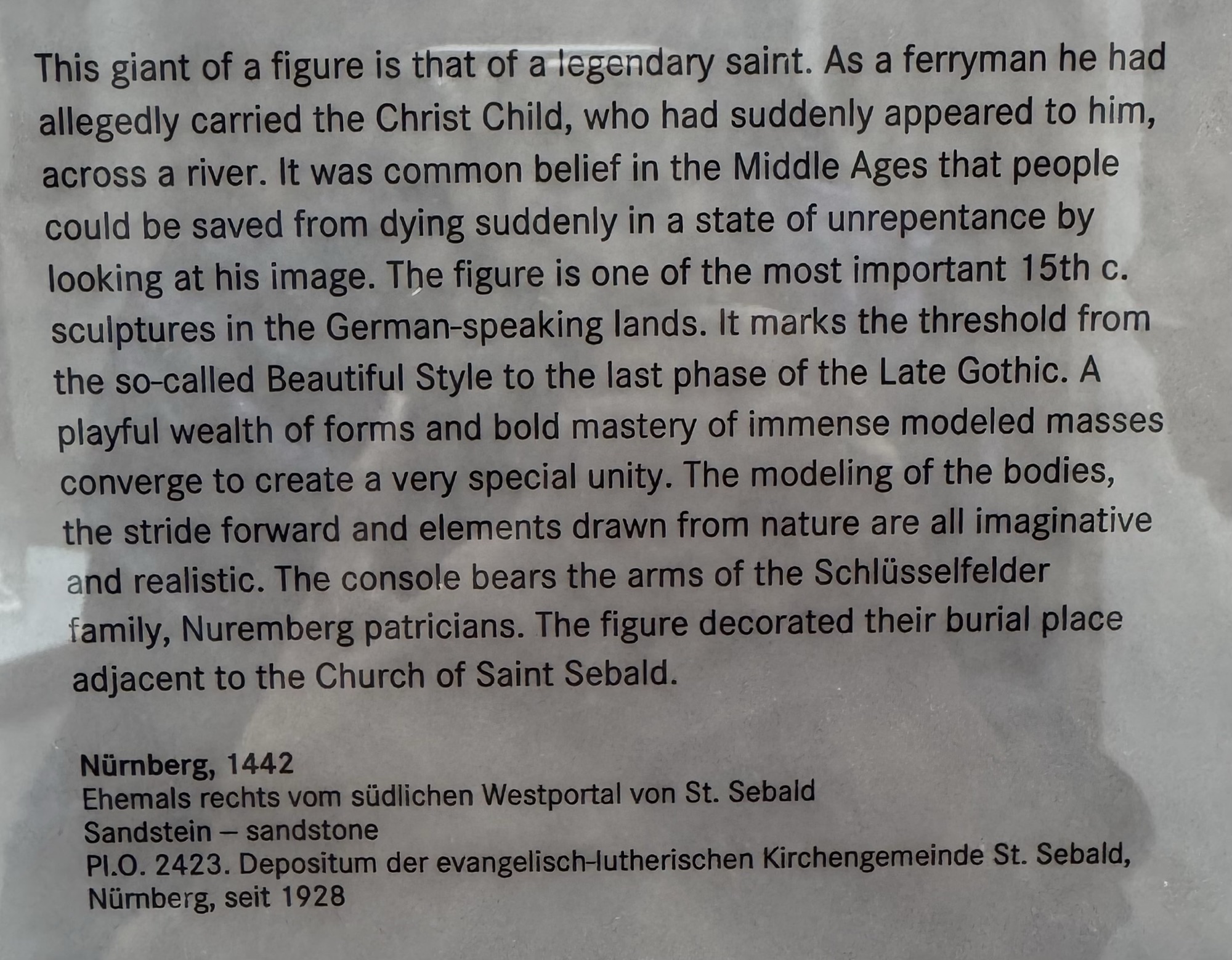
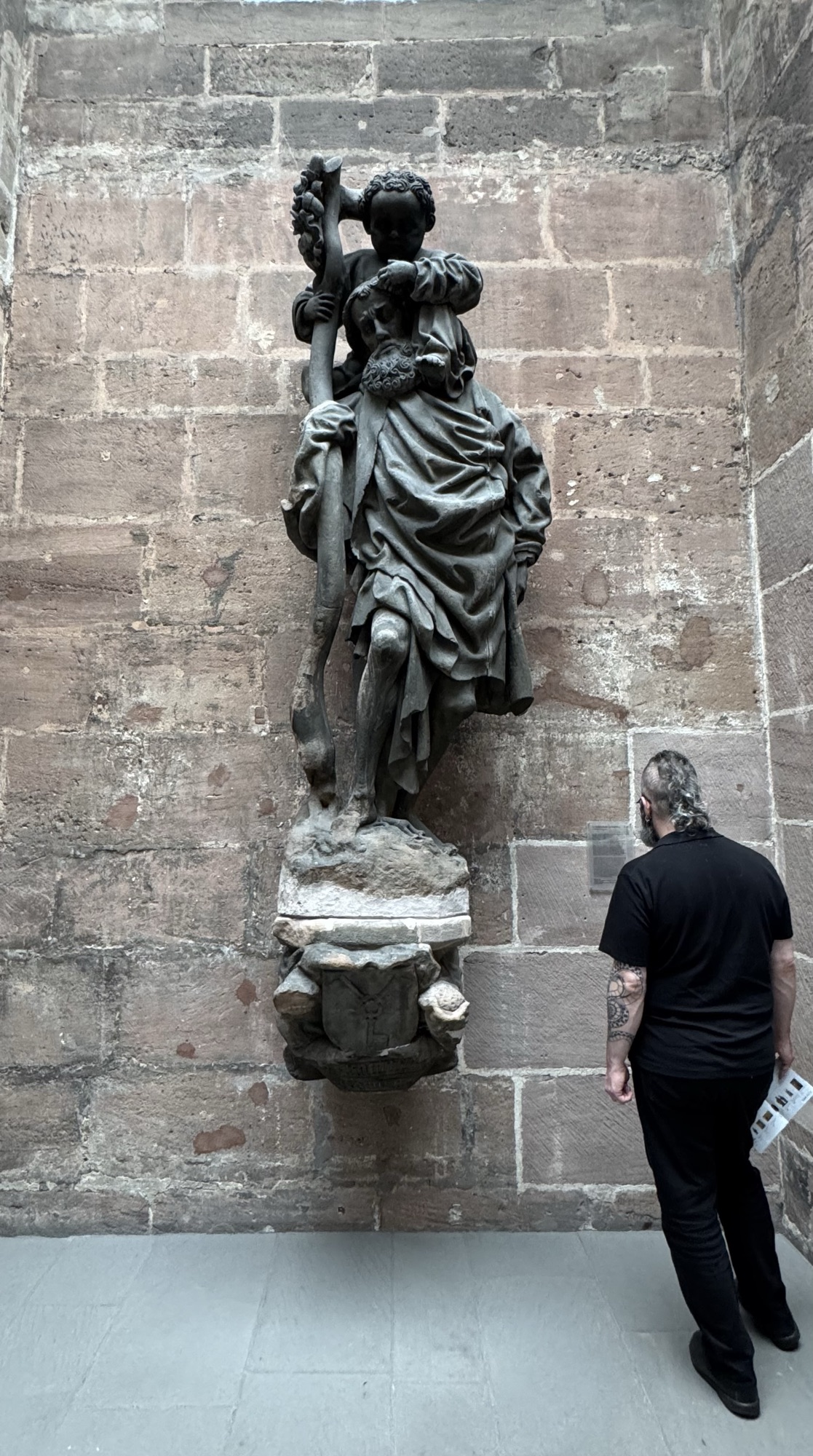
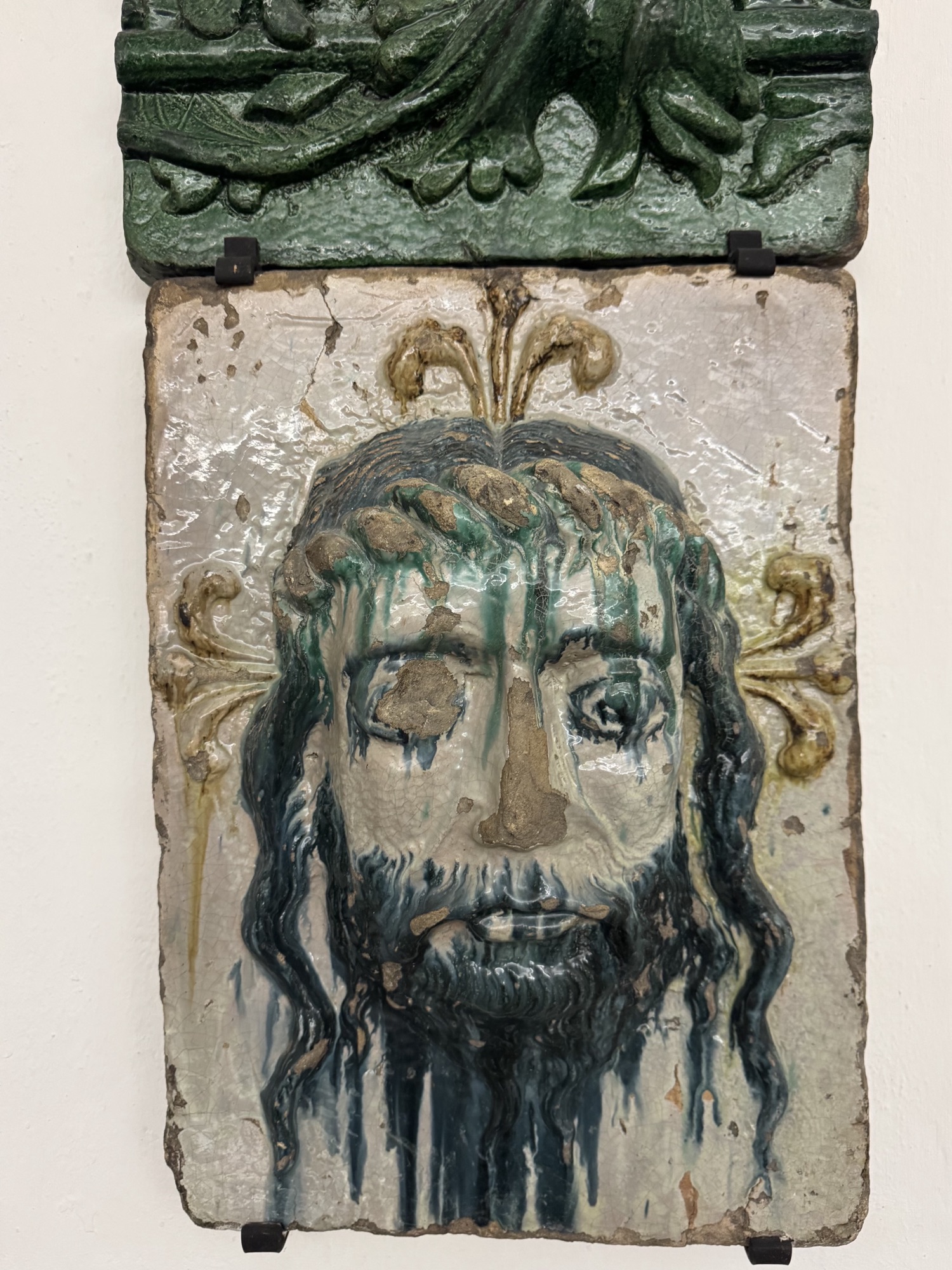
The Late Middle Ages galleries continued to have a lot of ecclesiastical items, but at least they were not repetitive to our other experience.
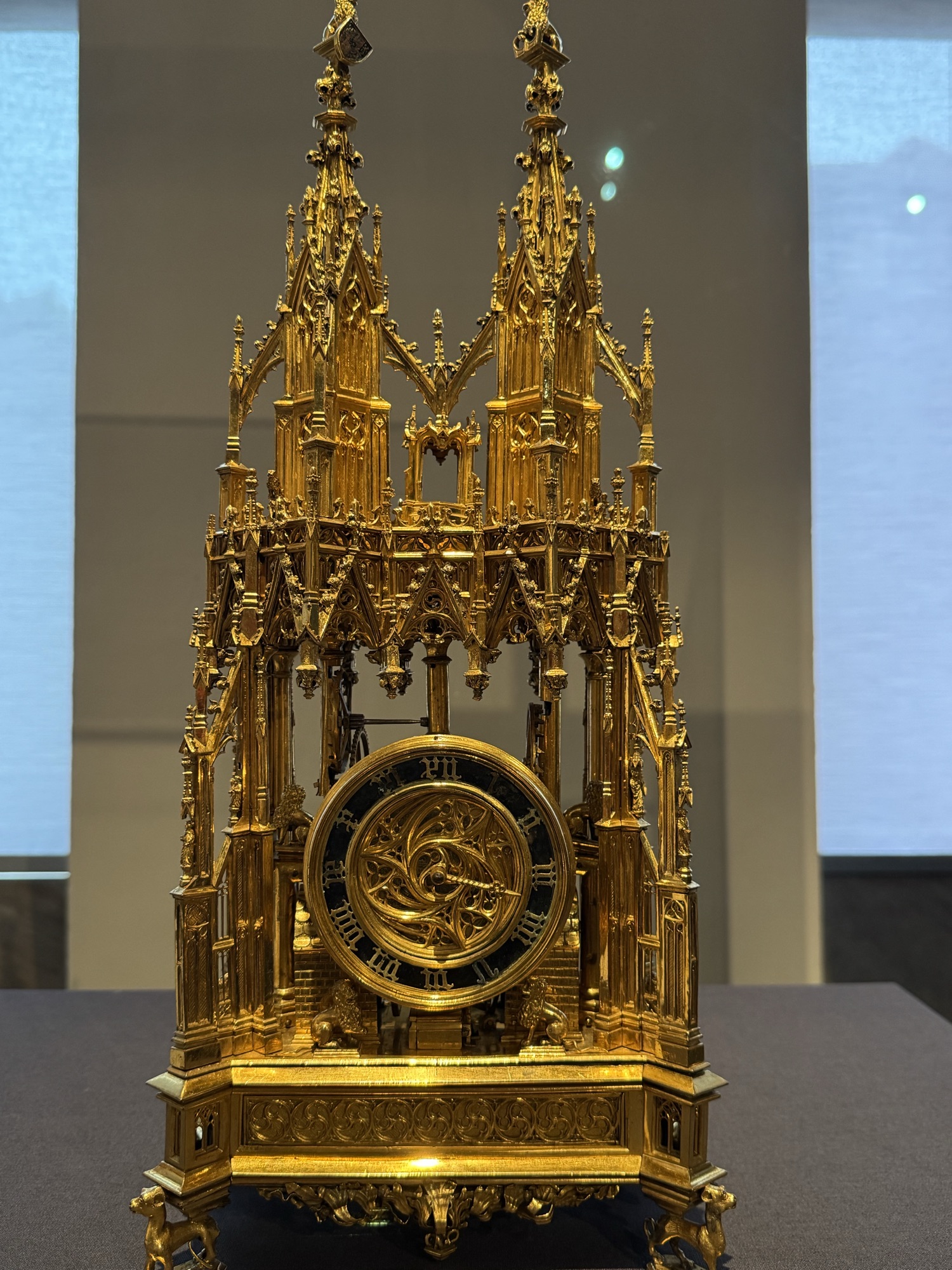
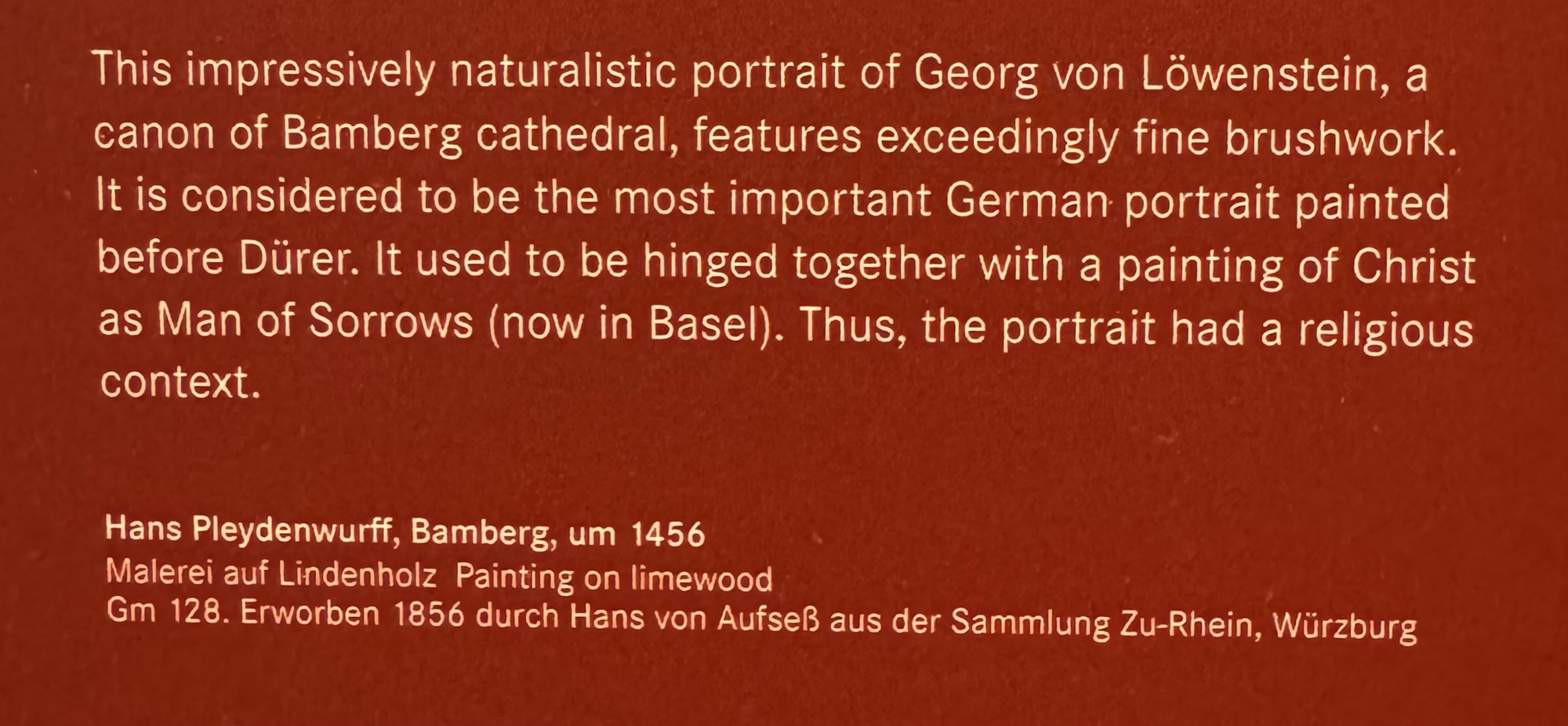
In the Late Middle Ages galleries we started to see references to Albrecht Dürer, whose house we’ll visit tomorrow. The sign below put Dürer’s influence on German art into perspective.
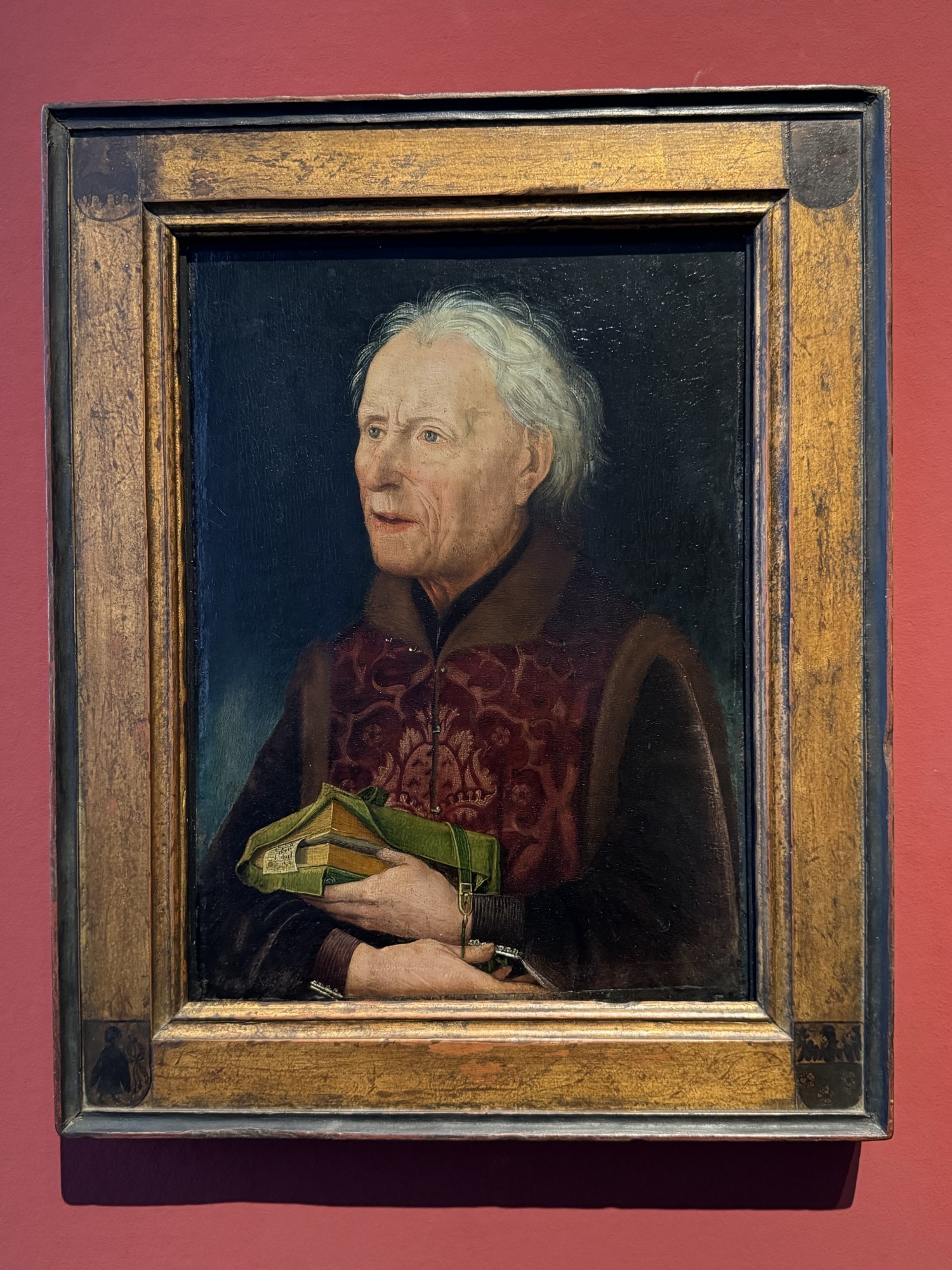
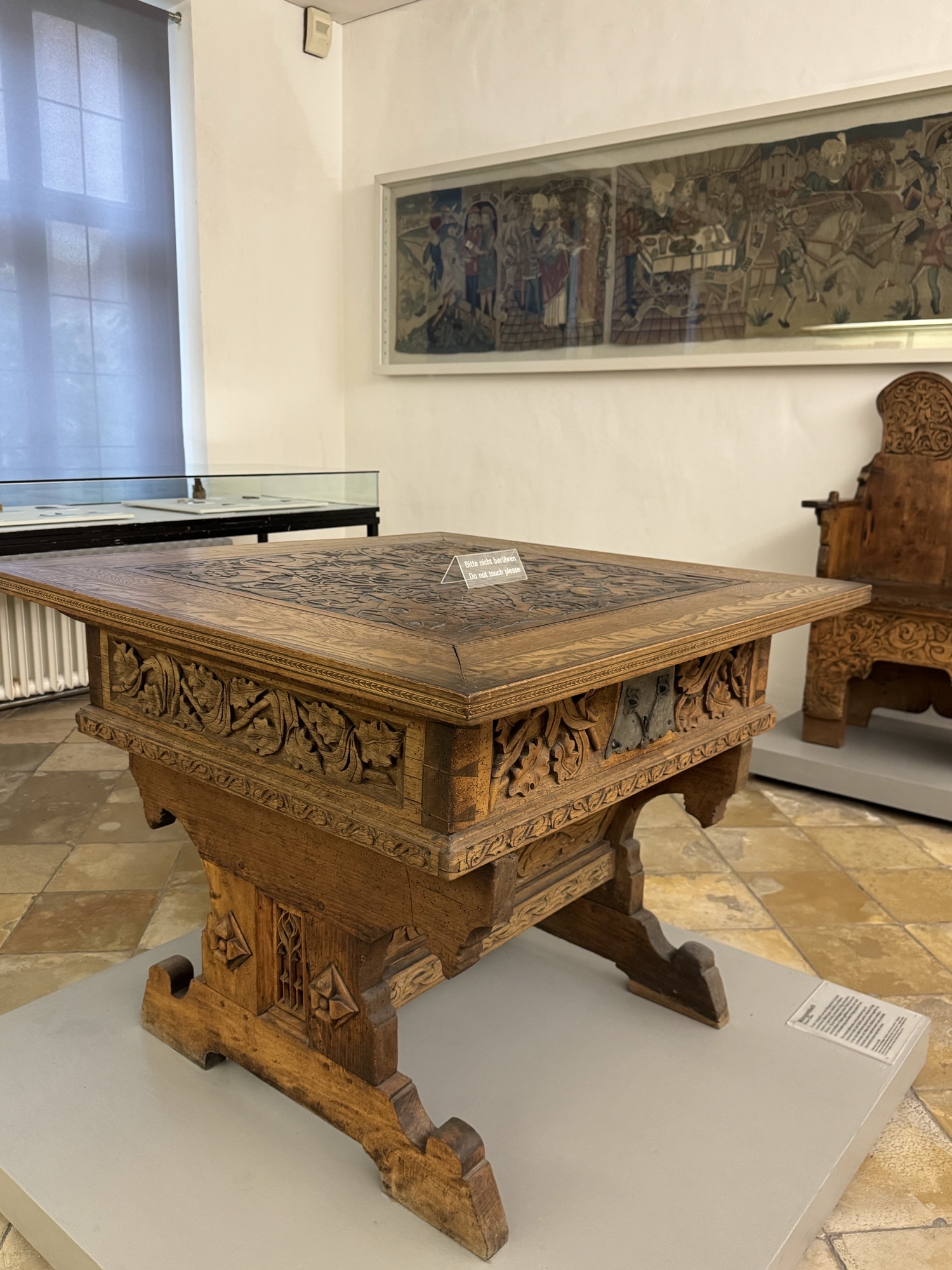
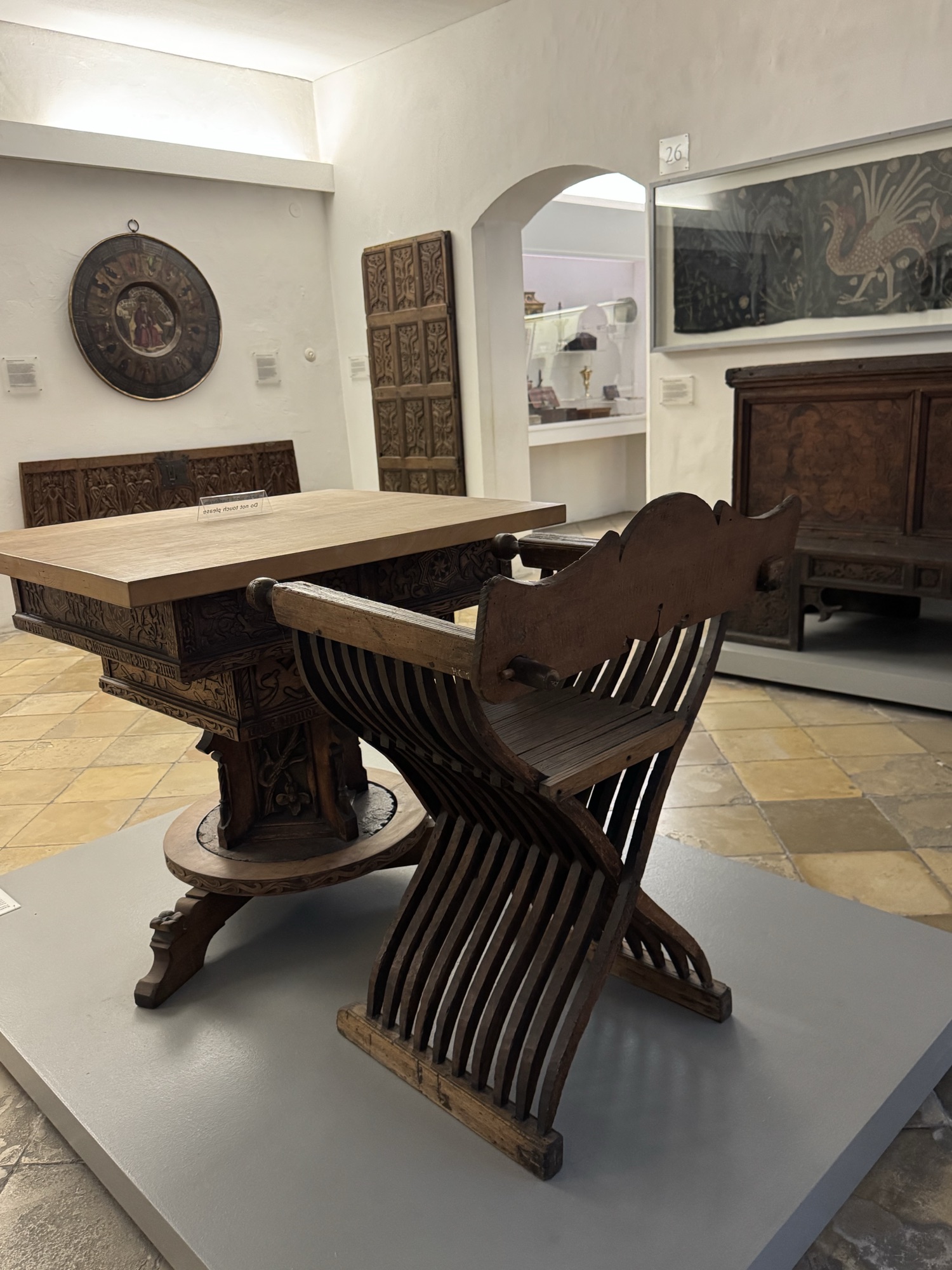
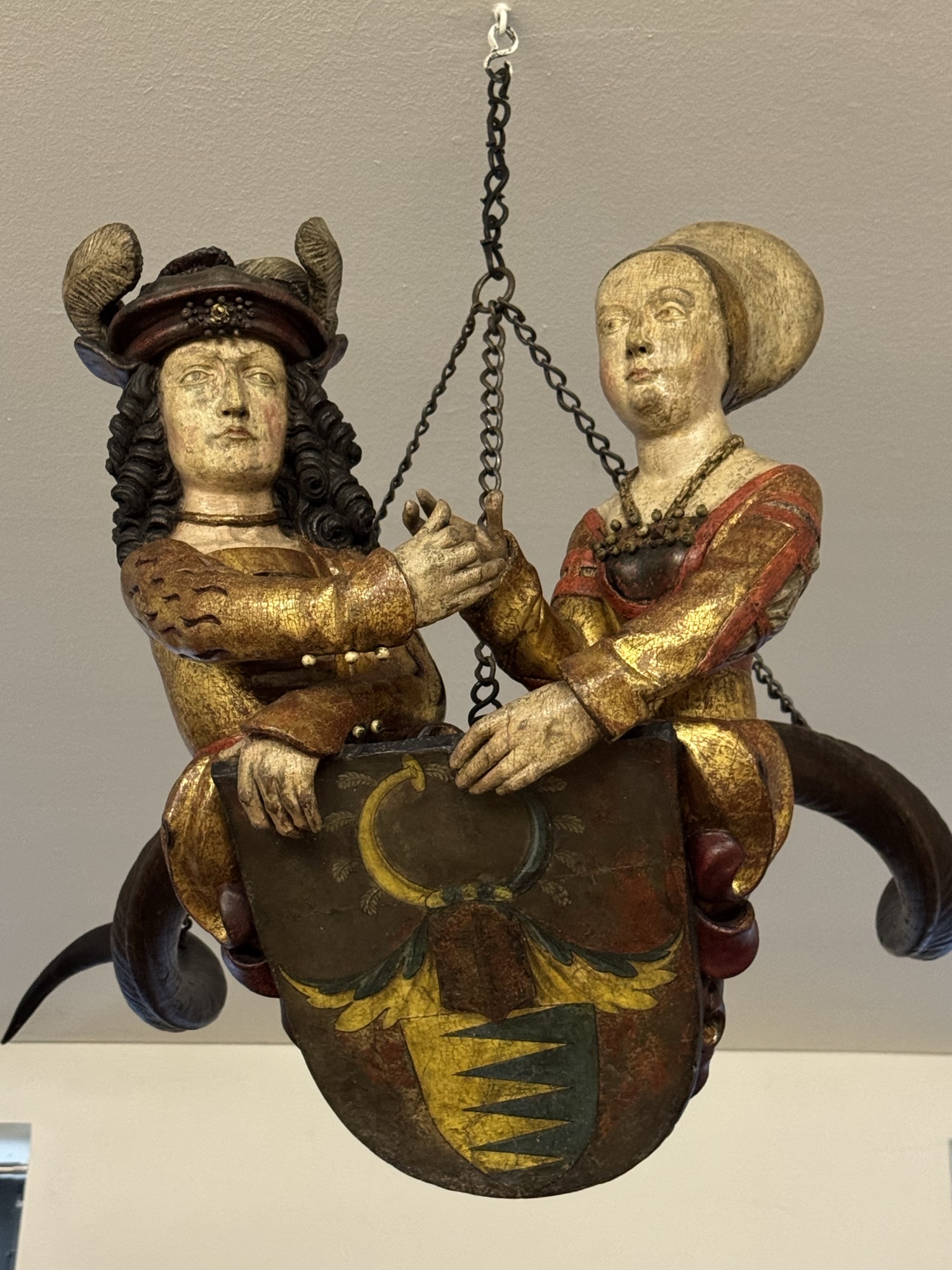
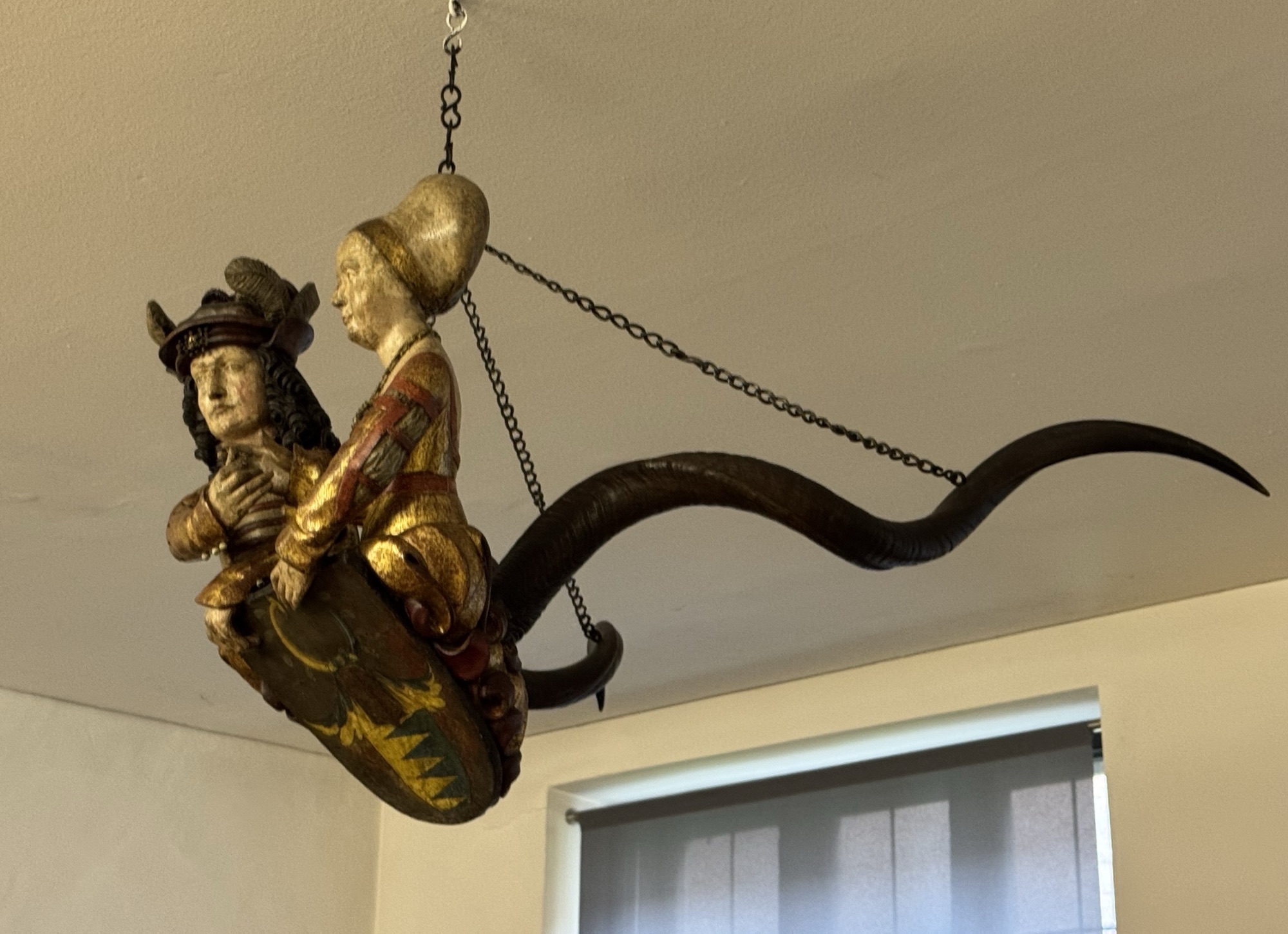
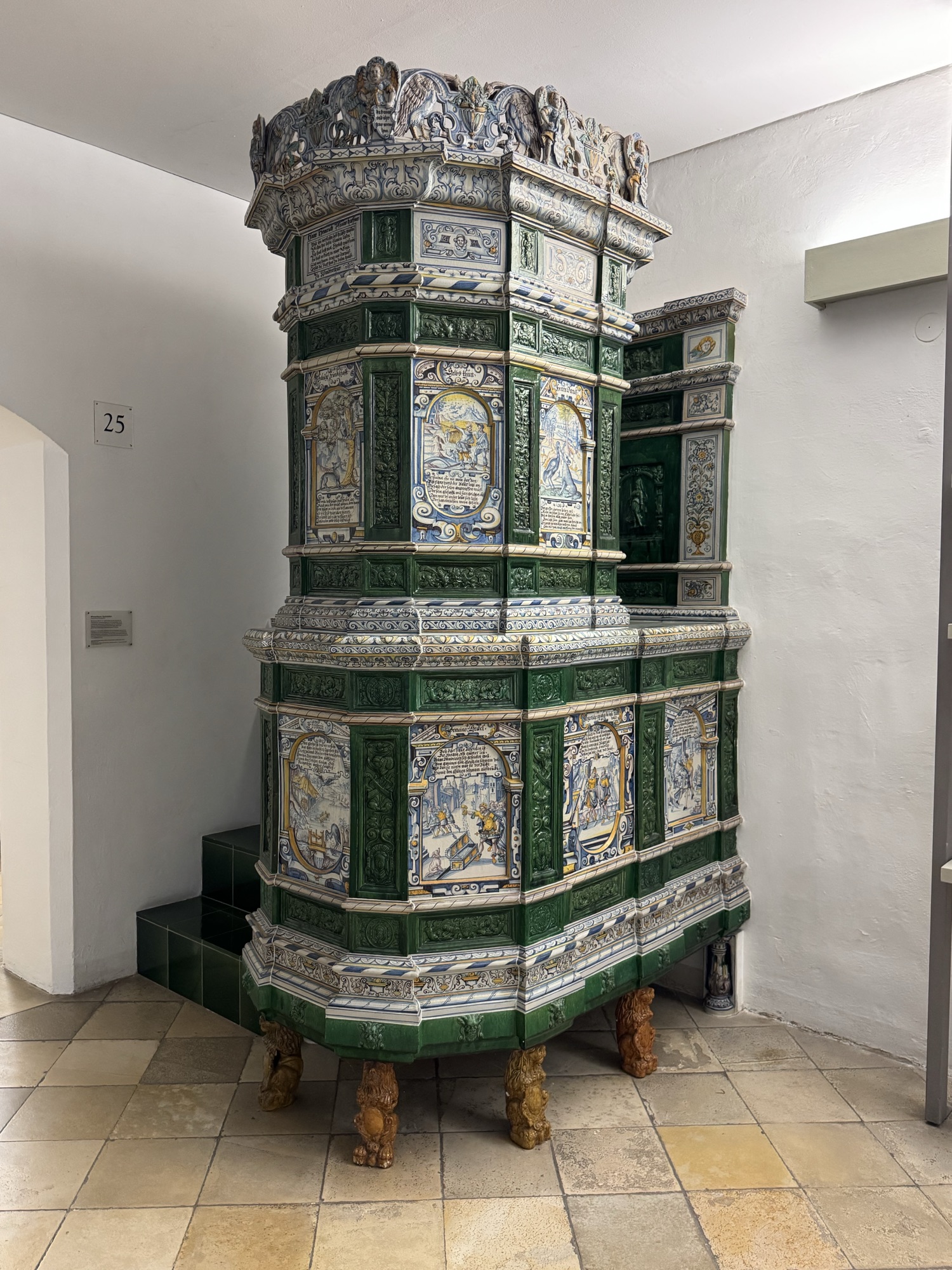
In Everyday Culture to the 1700s it was interesting to see furniture and household goods from middle and upper class households which have survived and tell a story about life for those classes. It seems clear that the possessions of the “average” folk were not of high enough quality to survive the test of time.
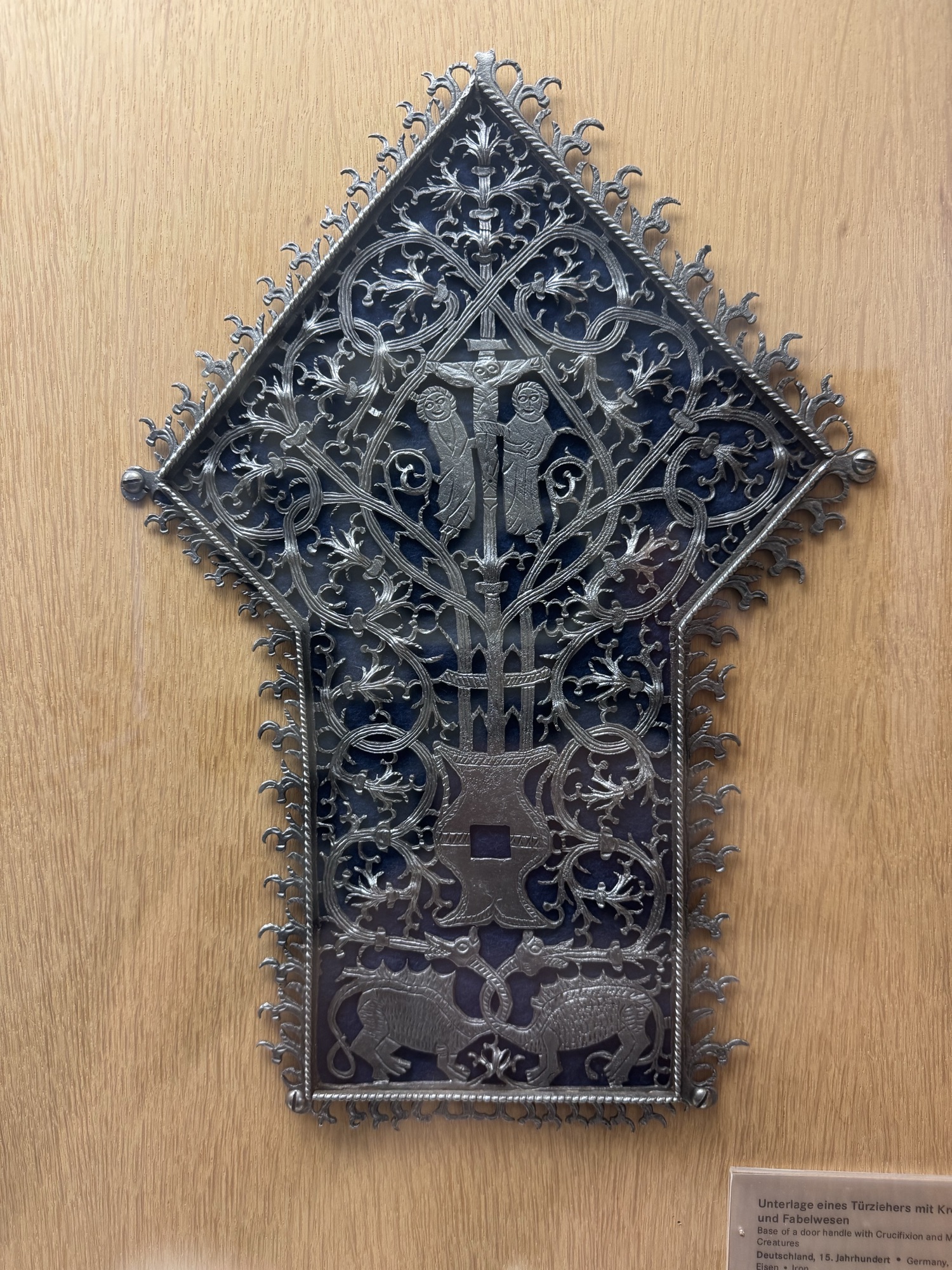
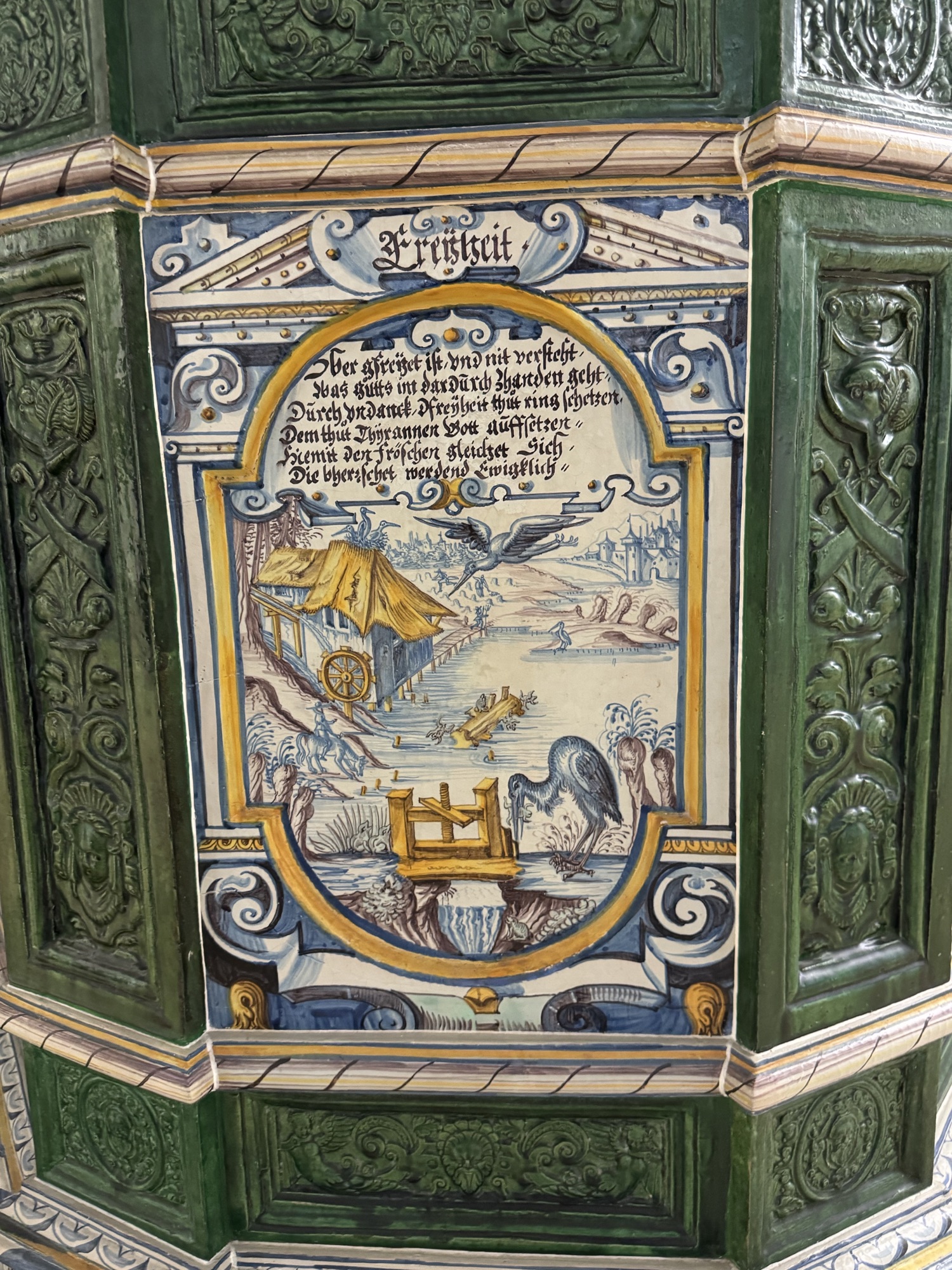
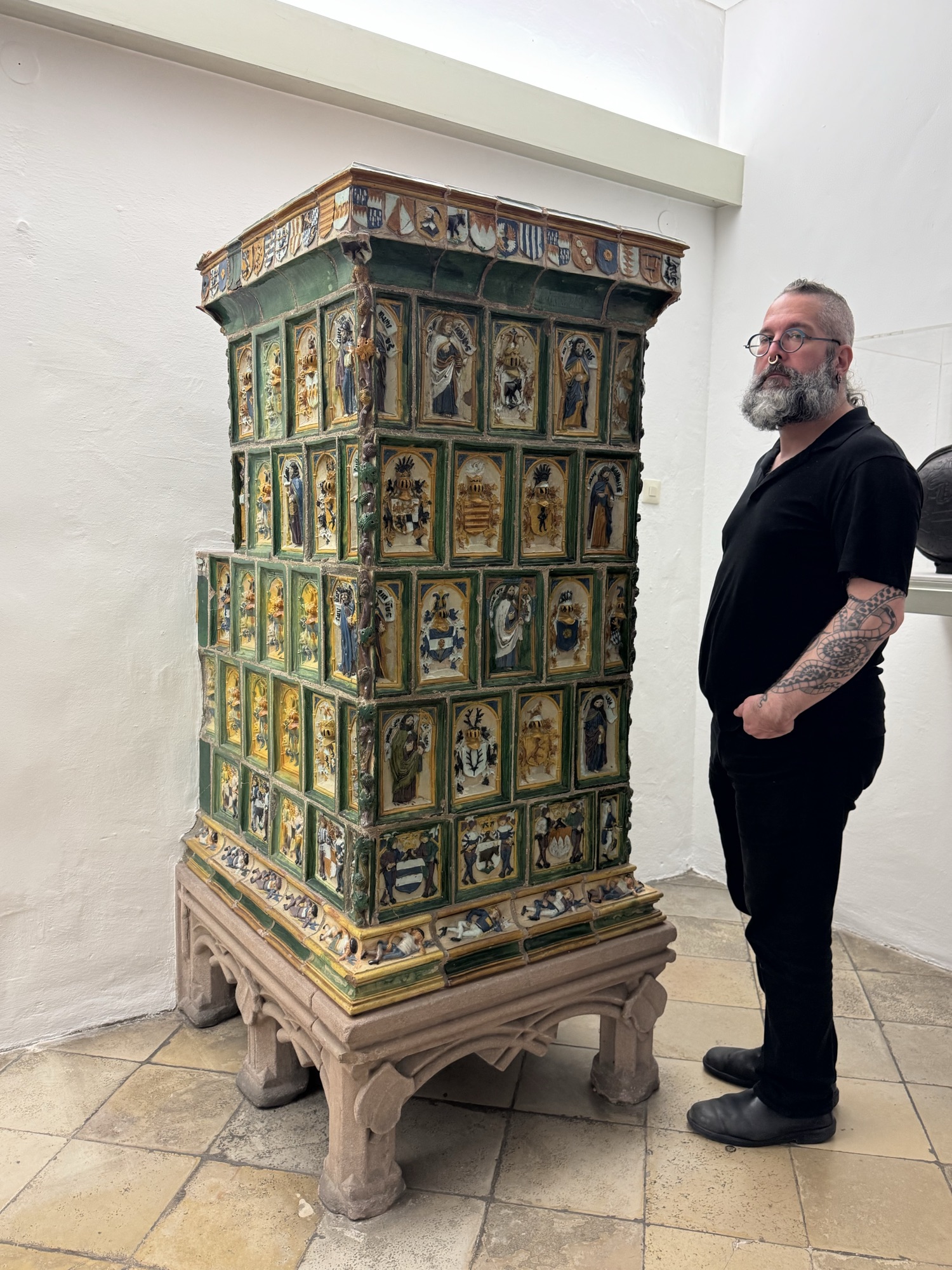
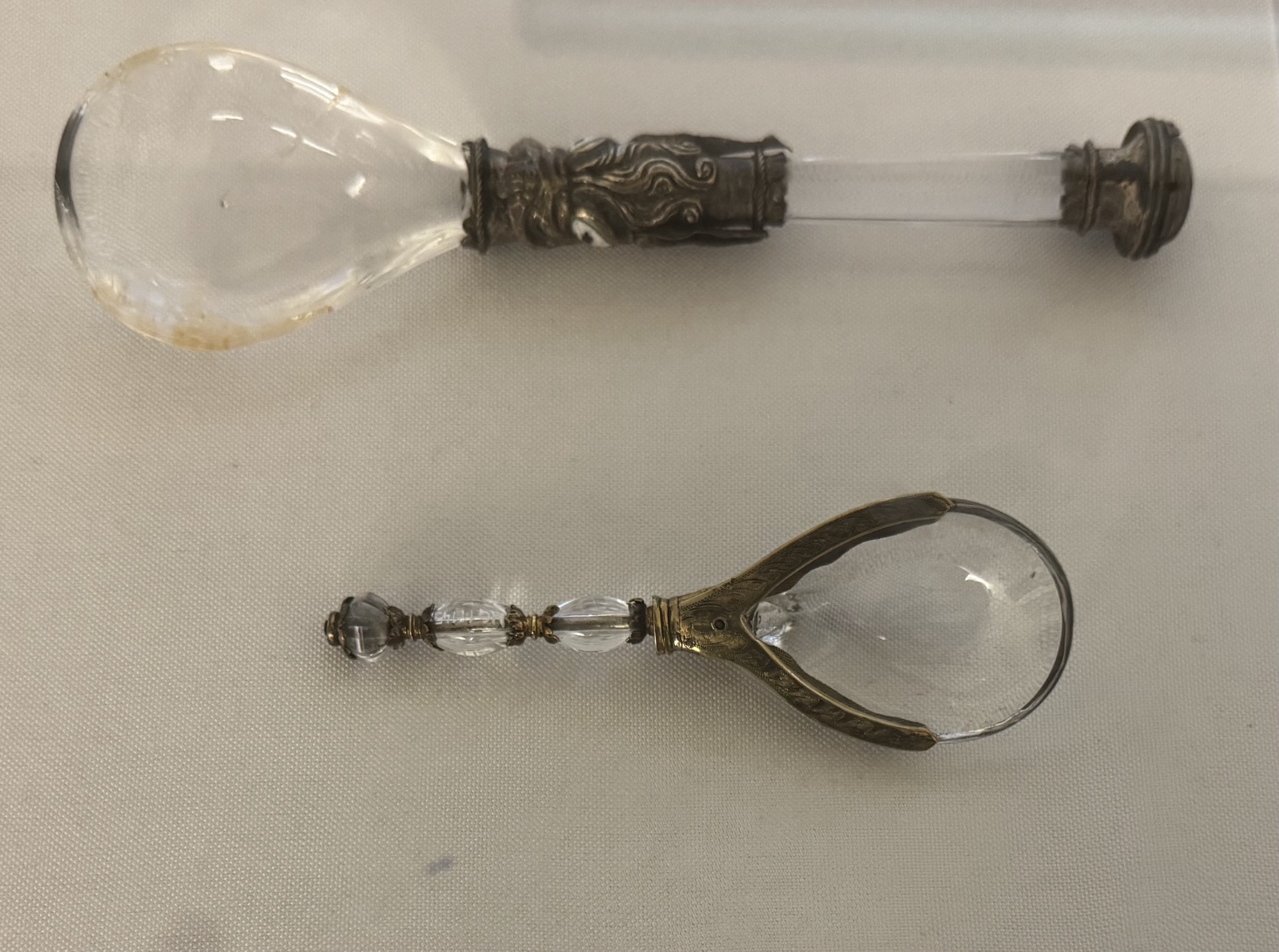
At that point we were done with the available galleries on the GROUND floor. Had the galleries being restored not been inaccessible, we might never have made it upstairs at all, despite today (a Wednesday) being extended hours until 20:30. As it was, we’d arrived at 10:00 and didn’t leave until just before 18:00.
The galleries for the Renaissance and Baroque Enlightenment periods were essentially an art museum. Although I’m a huge fan of renaissance art, by this point my already recharged once phone’s battery was facing fast. I managed to capture just a few favourite images,
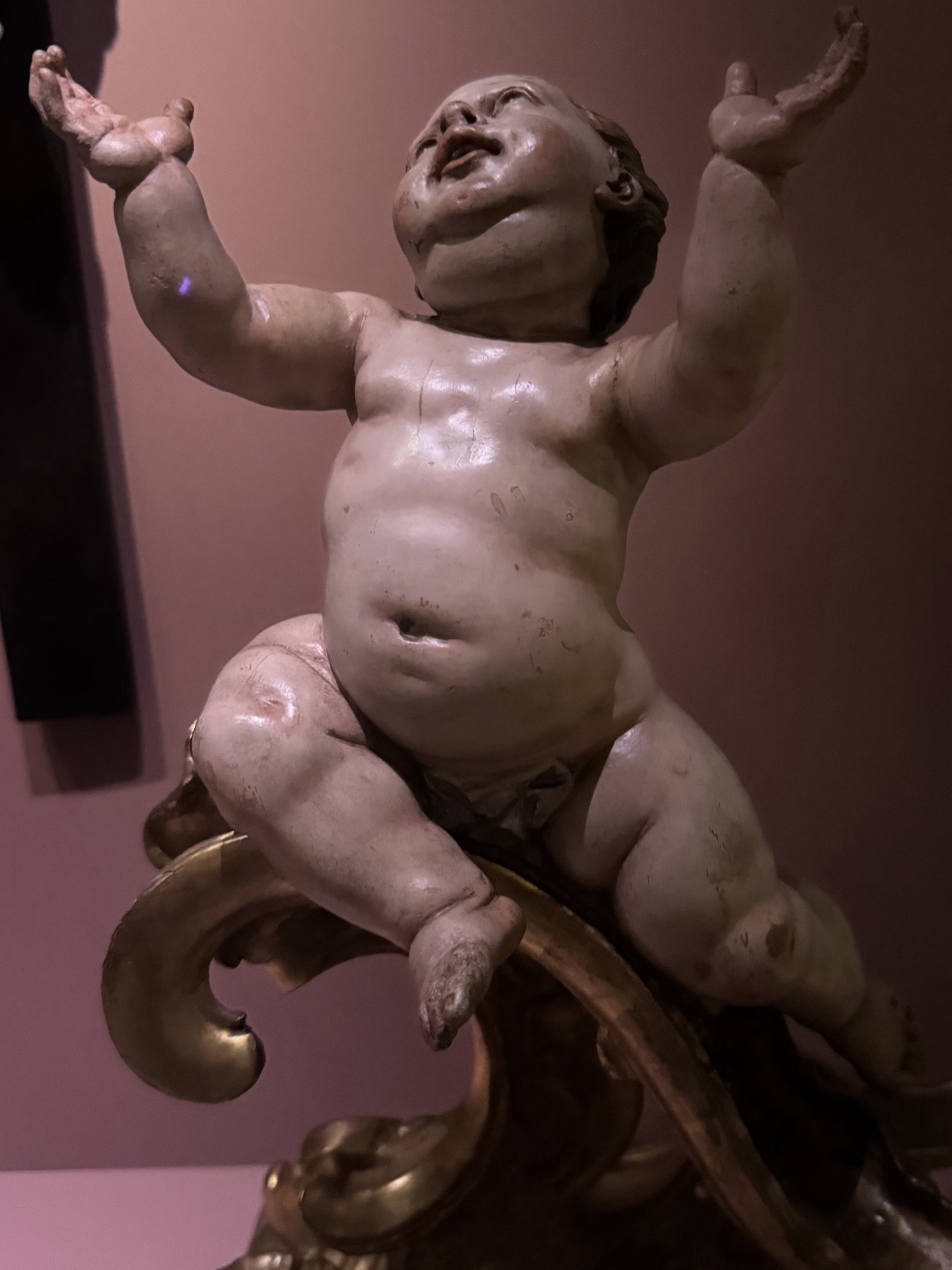
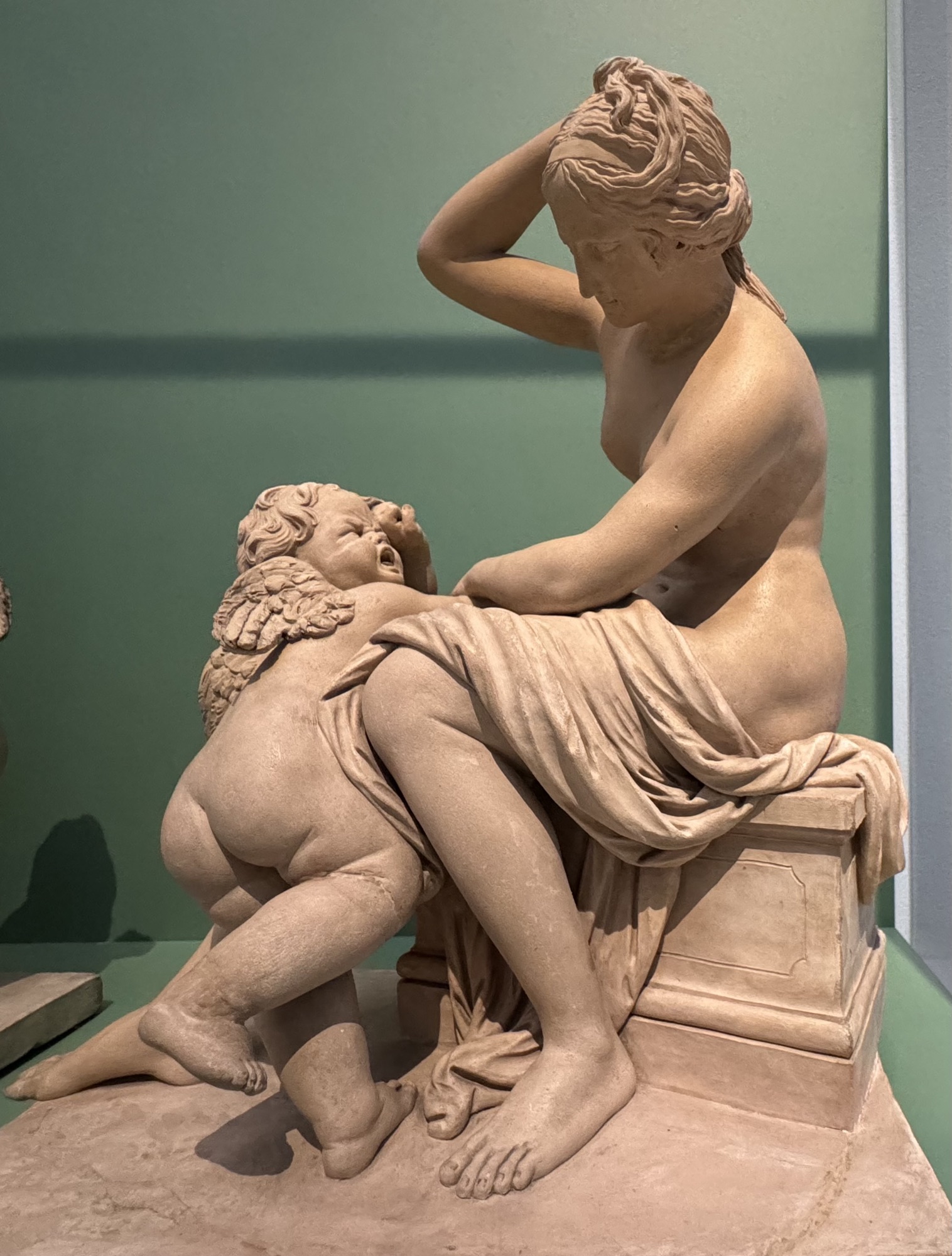
Venus Punishing Cupid, white clay sculpture by Gottfried Knöfler, Dresden, 1757. In mythology, Cupid was notoriously mischievous, and Venus was constantly trying to control him.
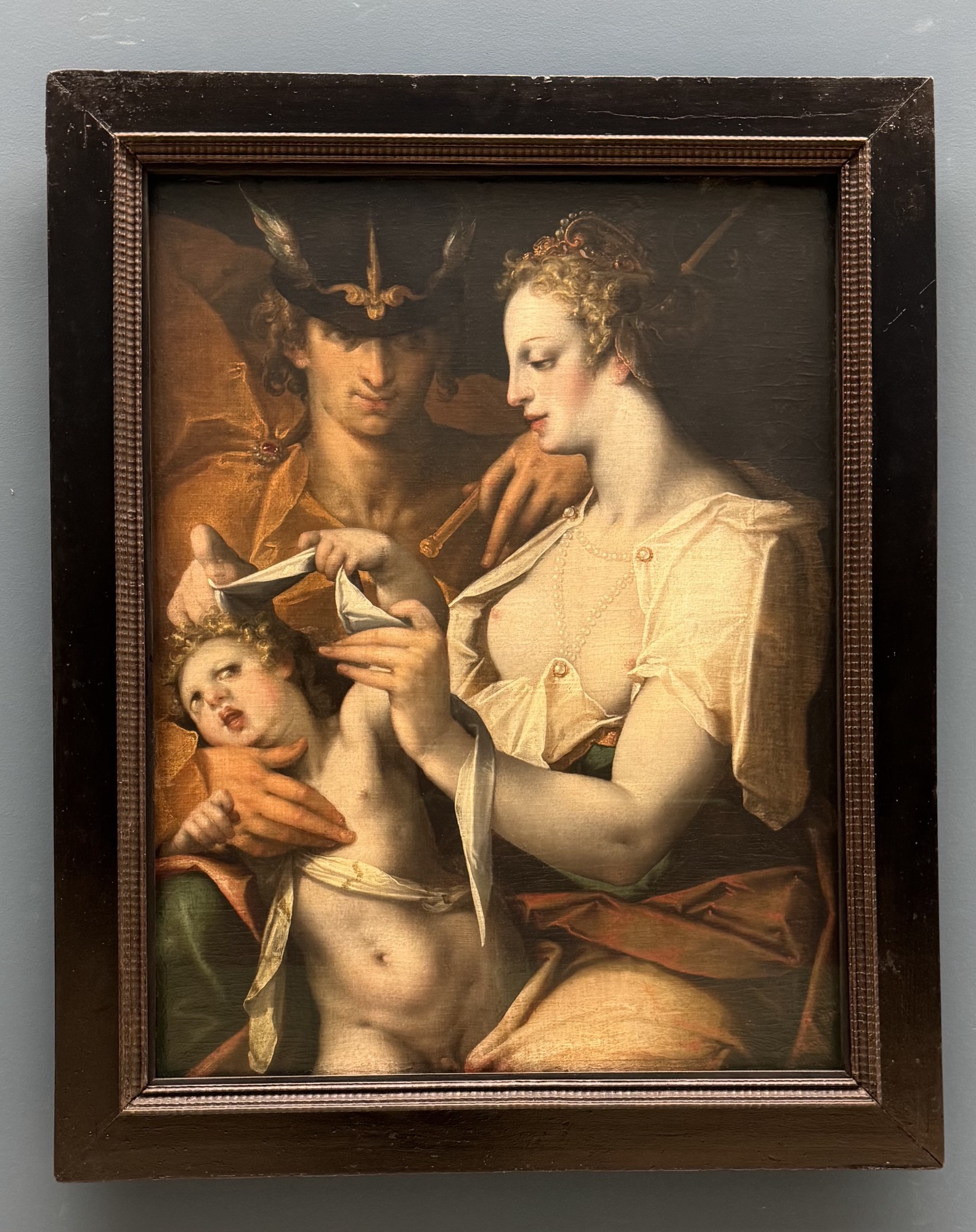
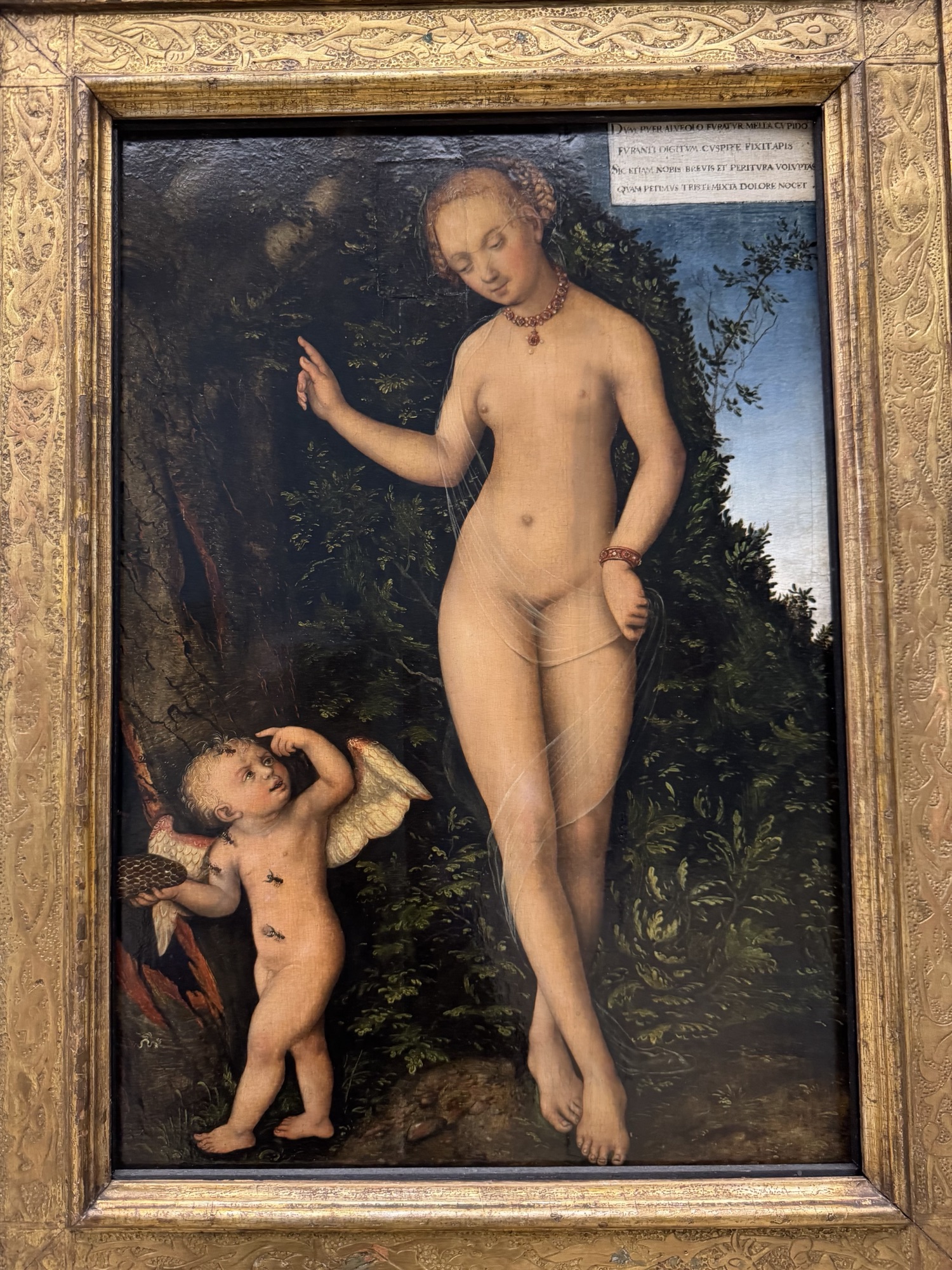
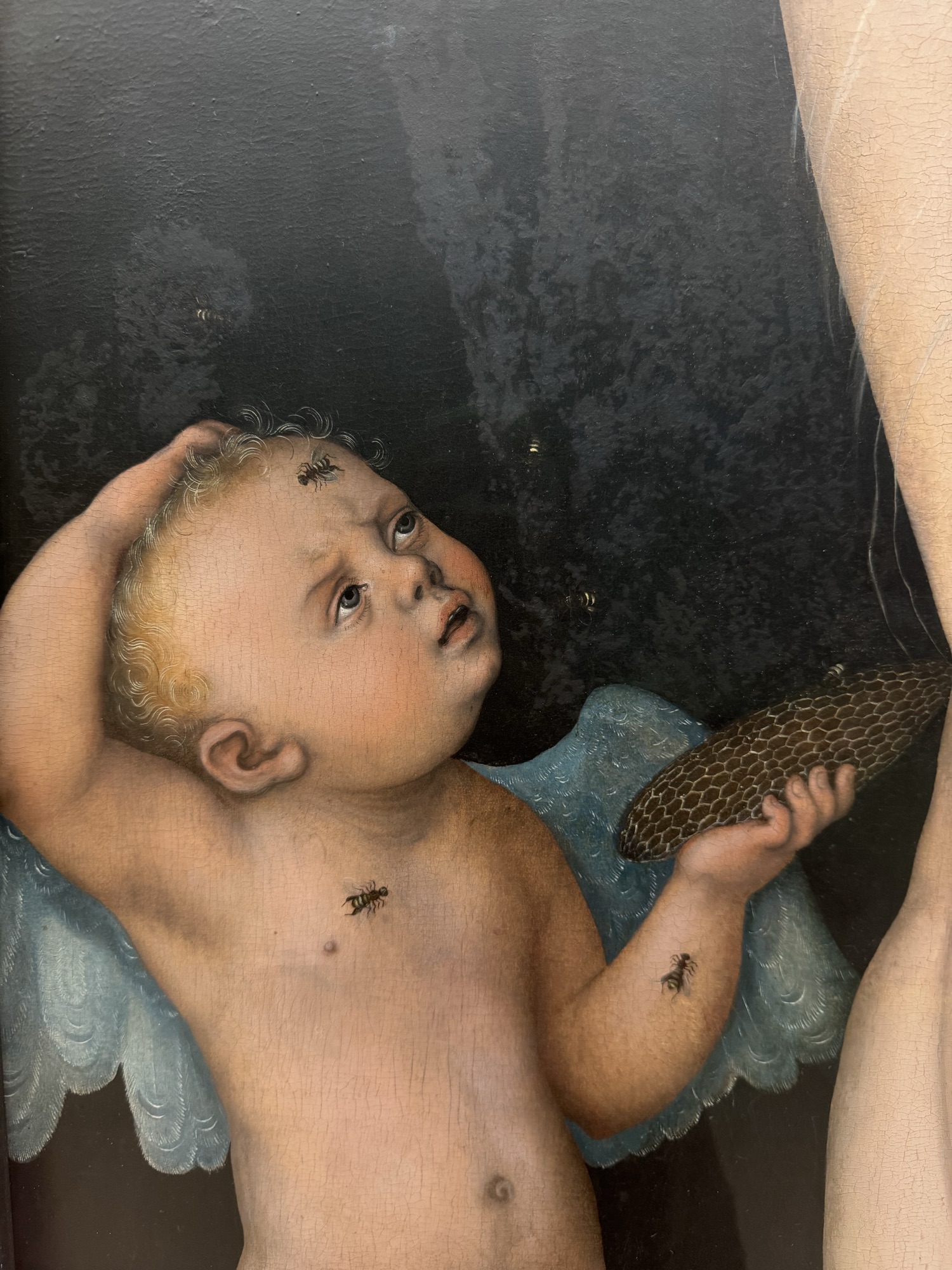
Later in the exhibit, we were amused by two paintings with a similar theme:
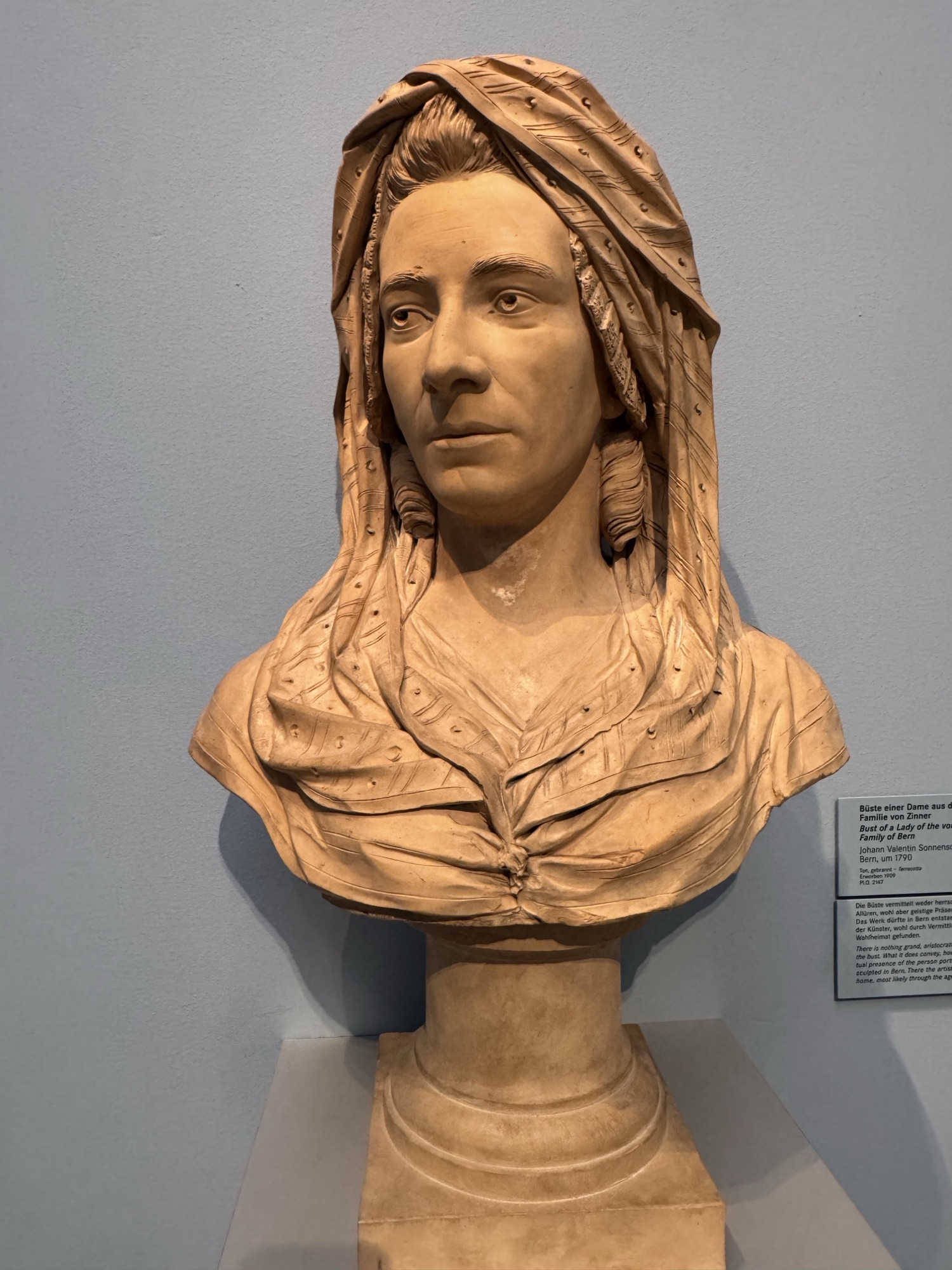
I particularly liked this bust of a Lady of the von Zinner Family of Bern by Johann Valentin Sonnenschein in 1790. As the accompanying plaque explained, “There is nothing grand, aristocratic or fashionable about the bust. What it does convey, however, is the intellec-tual presence of the person portrayed.”
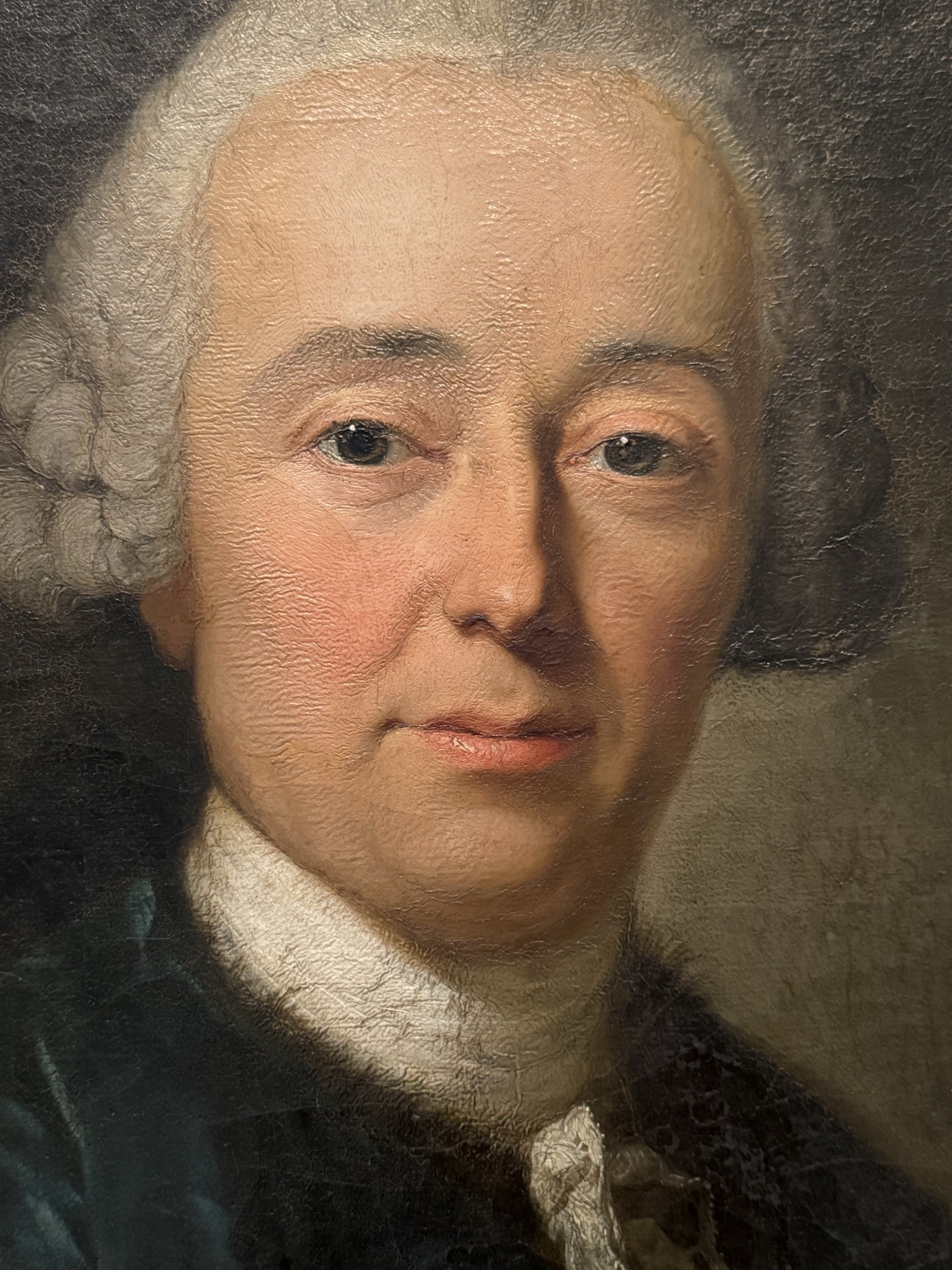
What I especially like about paintings of this period is the hyper realism. I am always amazed that even up close I cannot see brushstrokes.
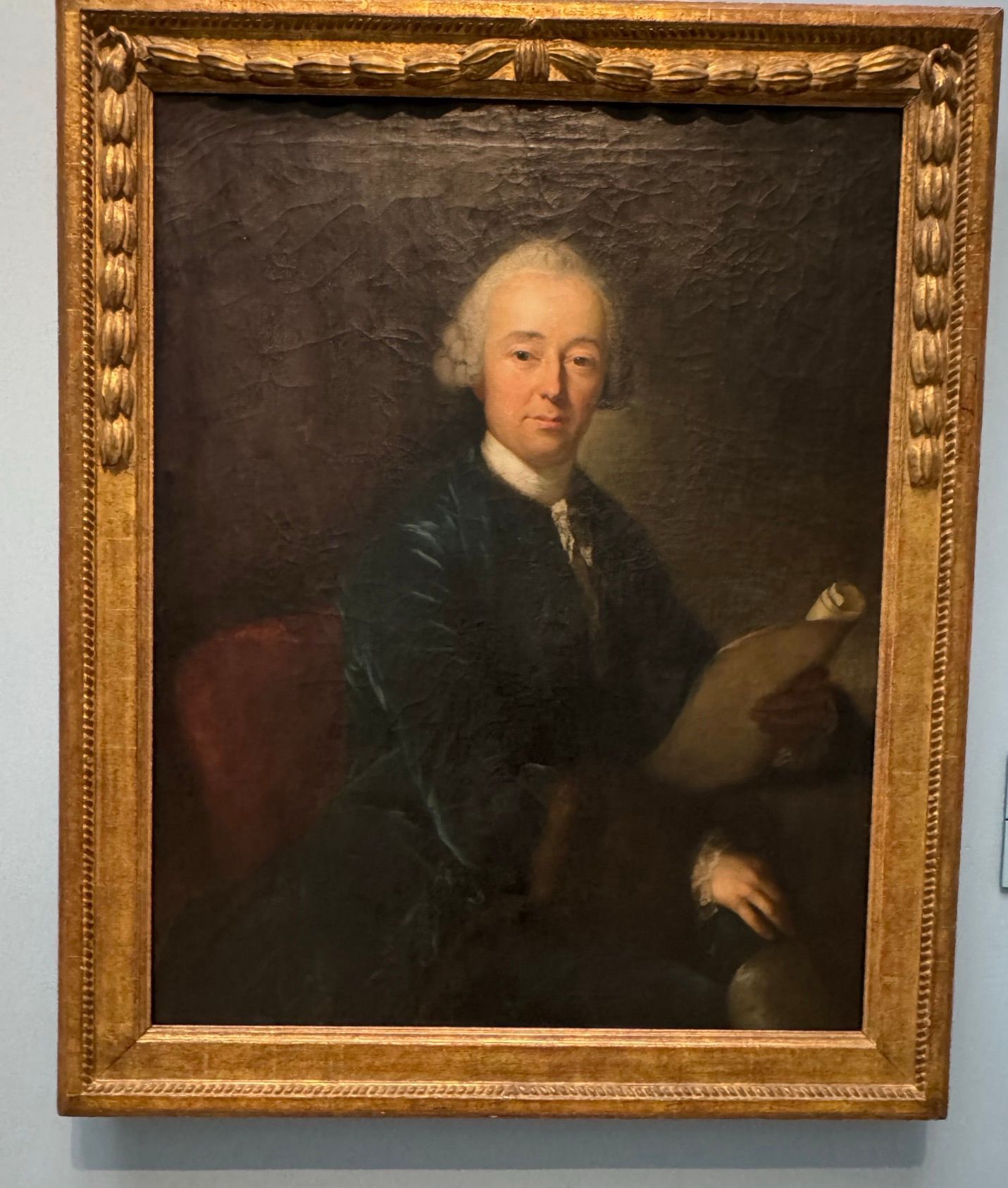
(1732-1791), painted by Anton Graff.
Dresden, around 1775
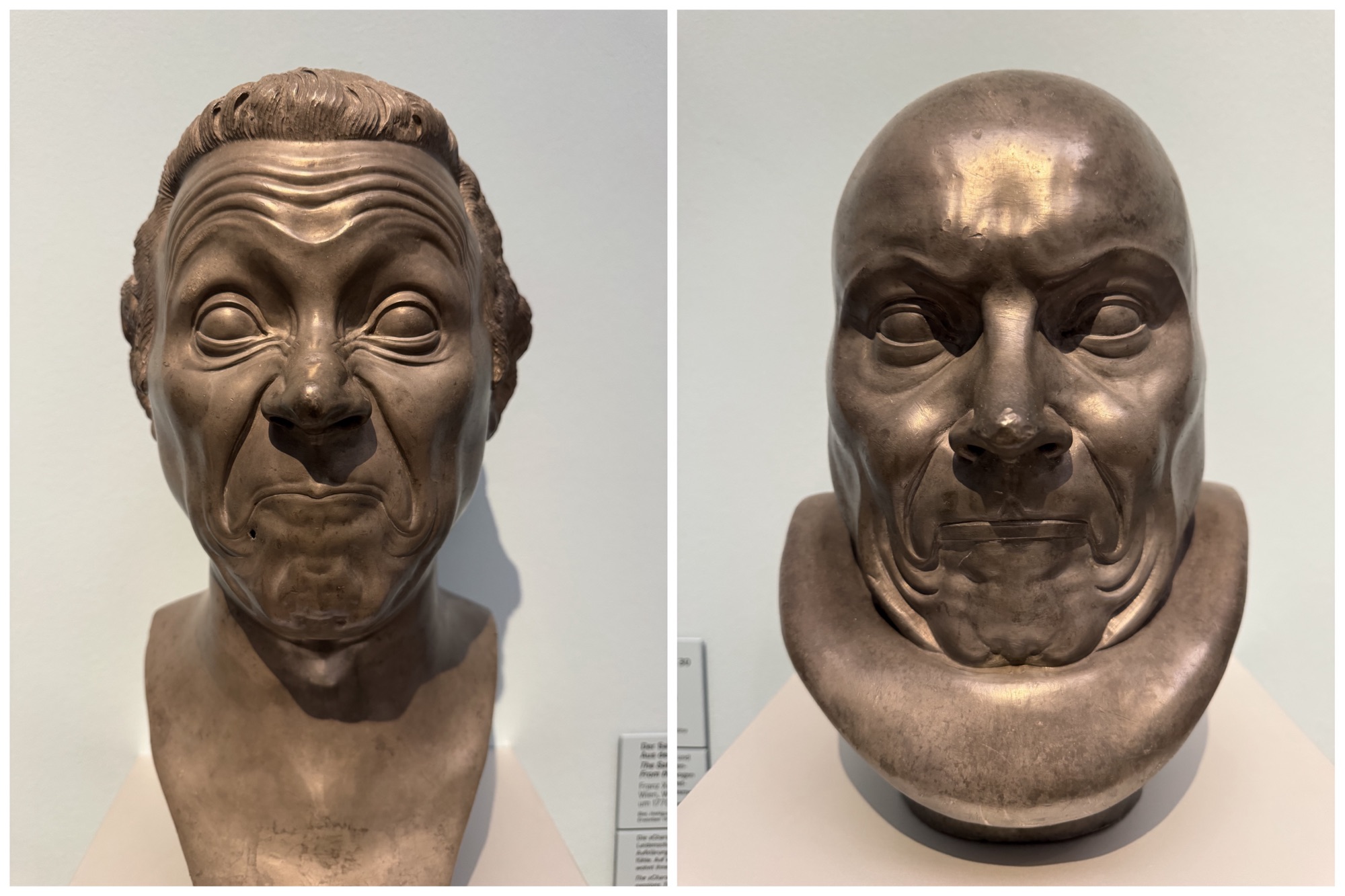
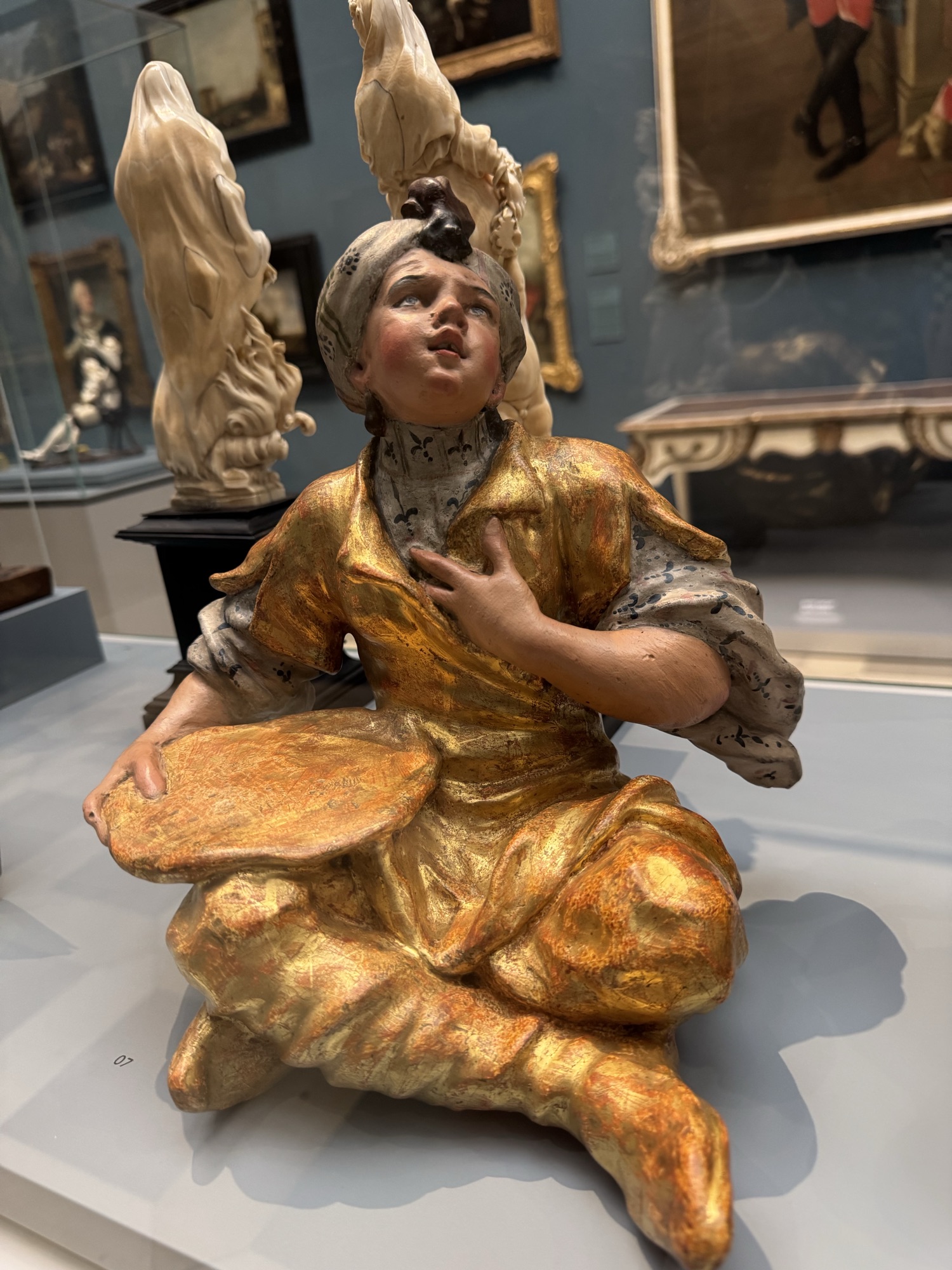
Of course there was still lots of ecclesiastical art in this period too.
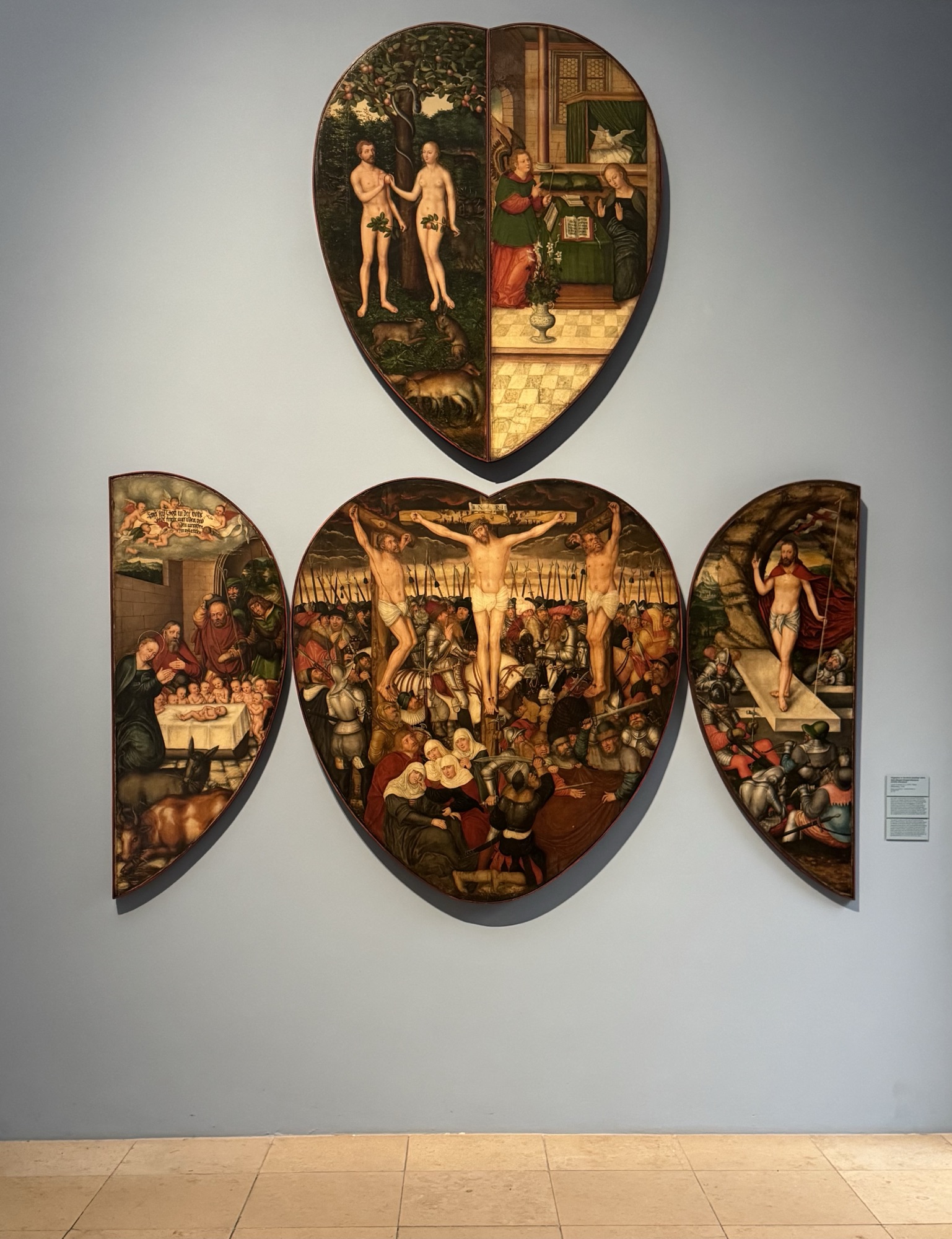
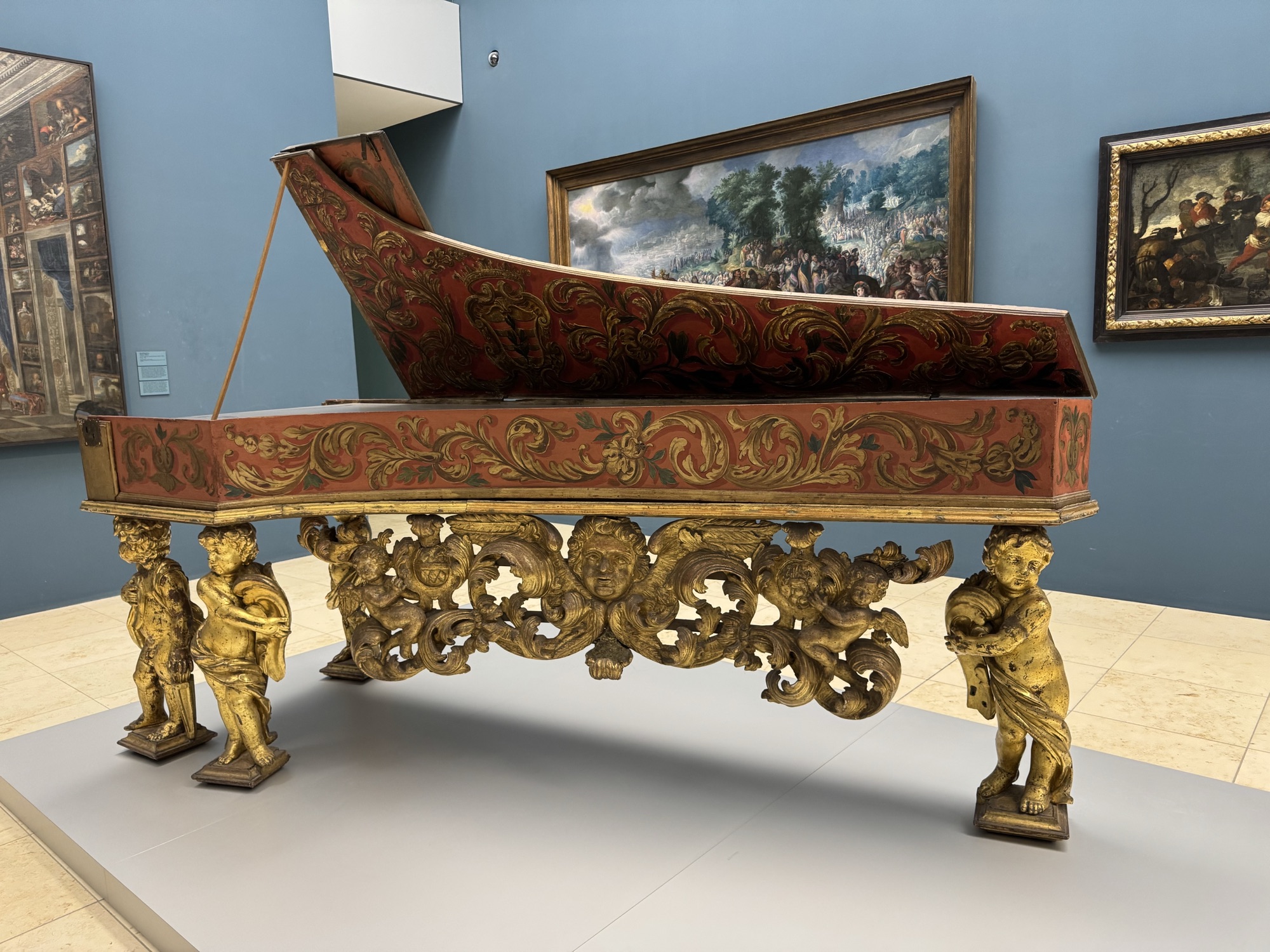
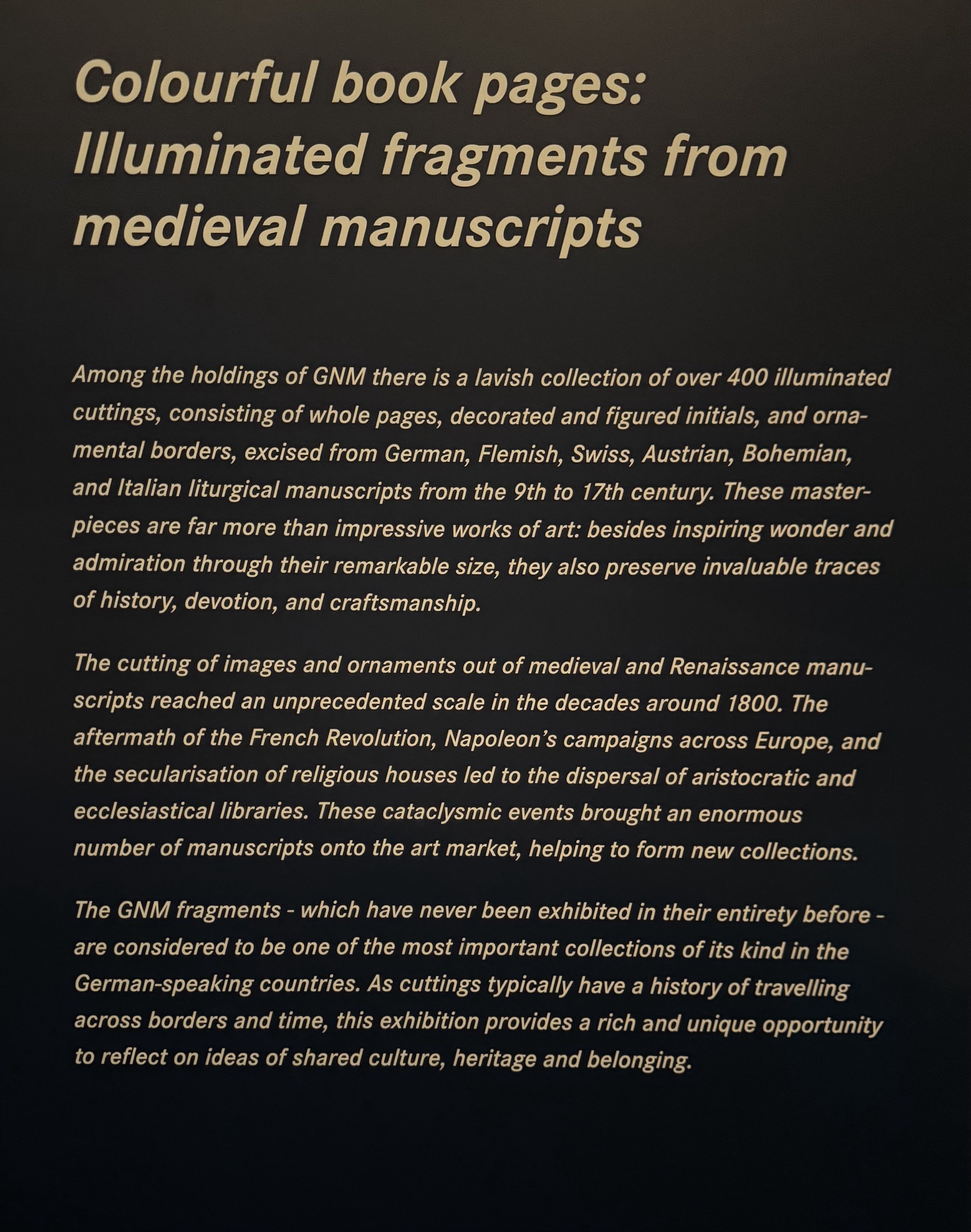
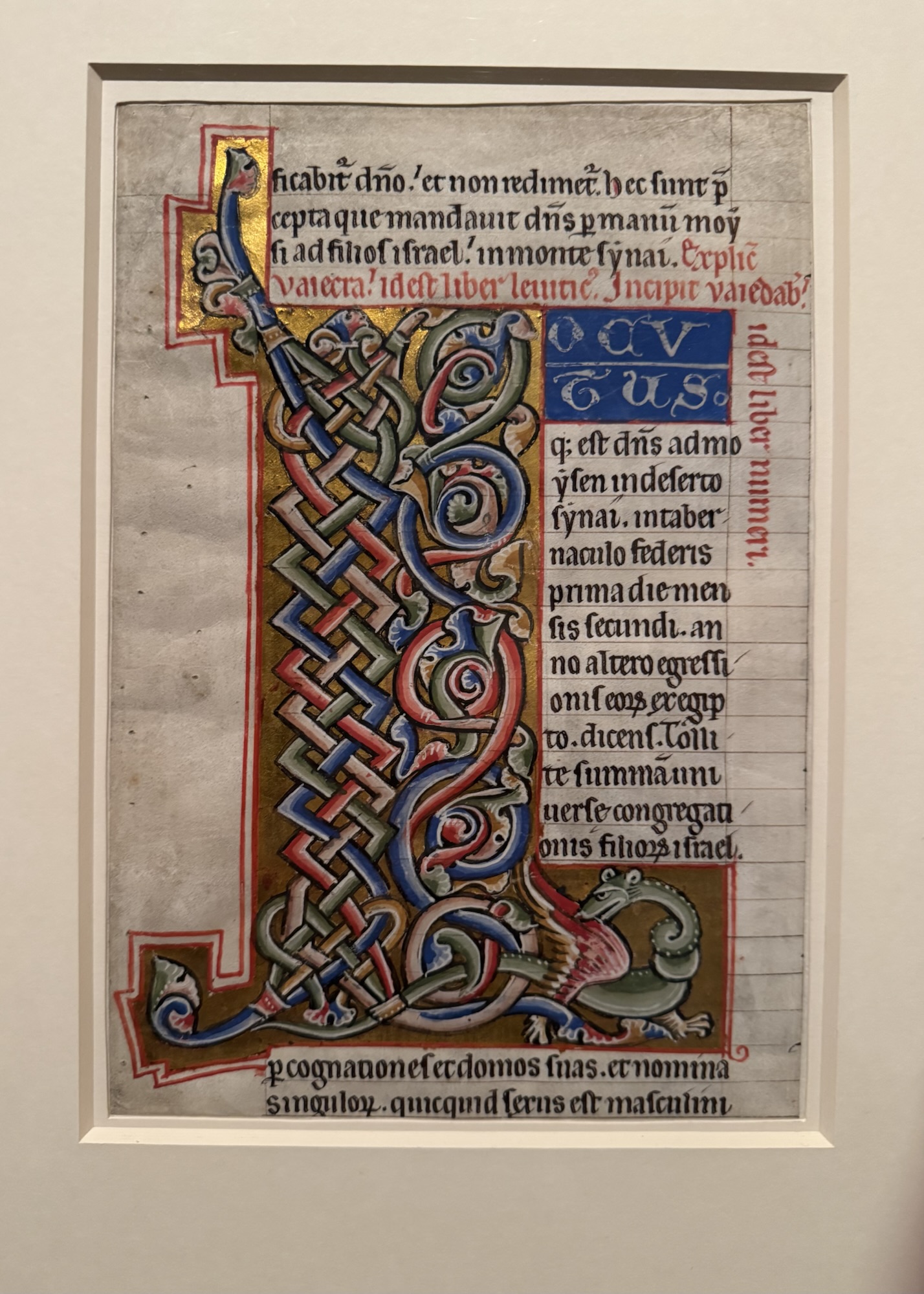
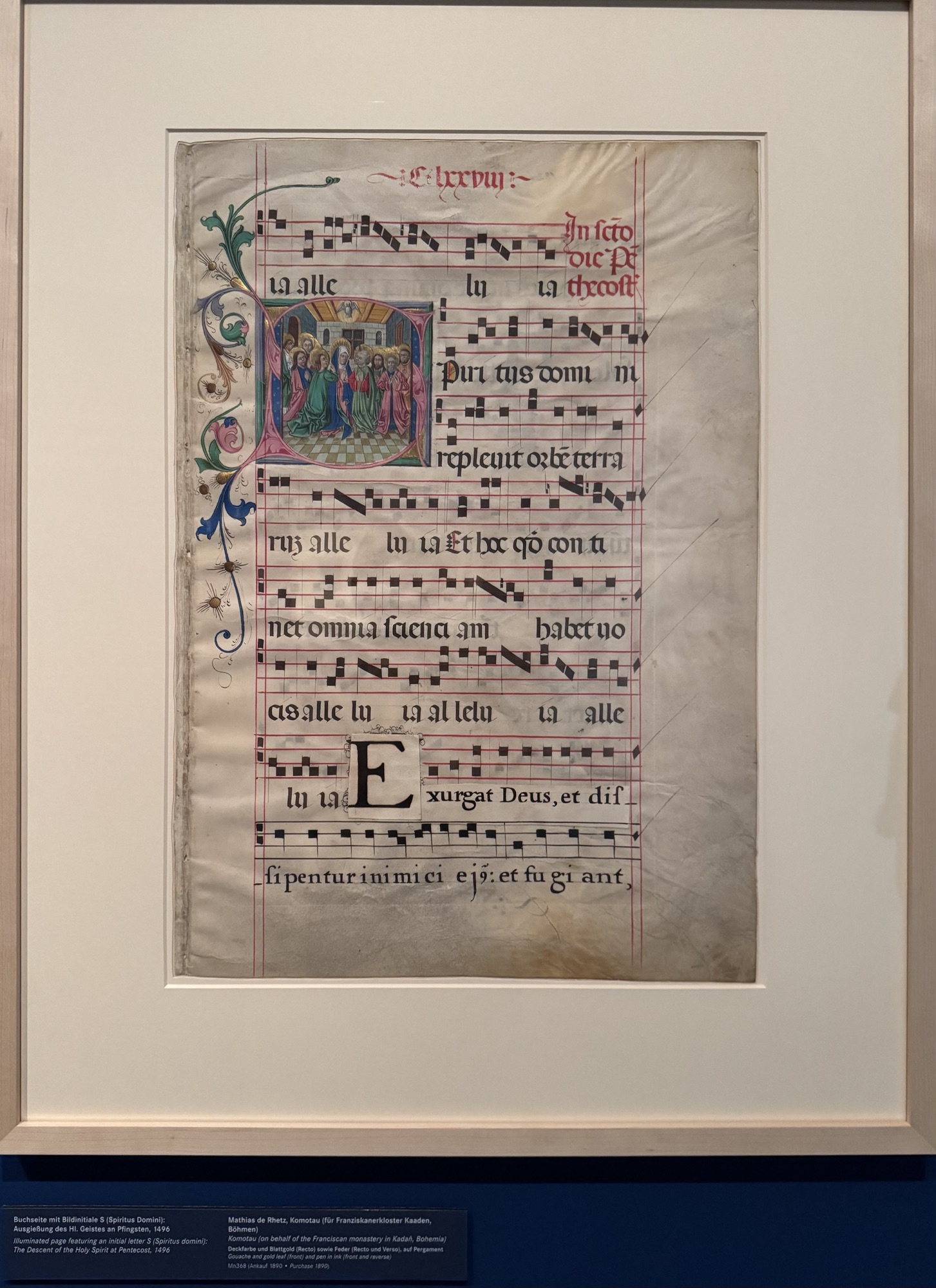
There was a wonderful exhibit of illuminated pages.
Although Albrecht Dürerwas a Nuremberg native, and created thousands of works, very few originals remain in Germany – they are in the Louvre, the Prado, the Tate, and major galleries all over the world. The GNM has several, including one of his most iconic: Dürer’s painting of his mother Barbara, done in 1490CE.
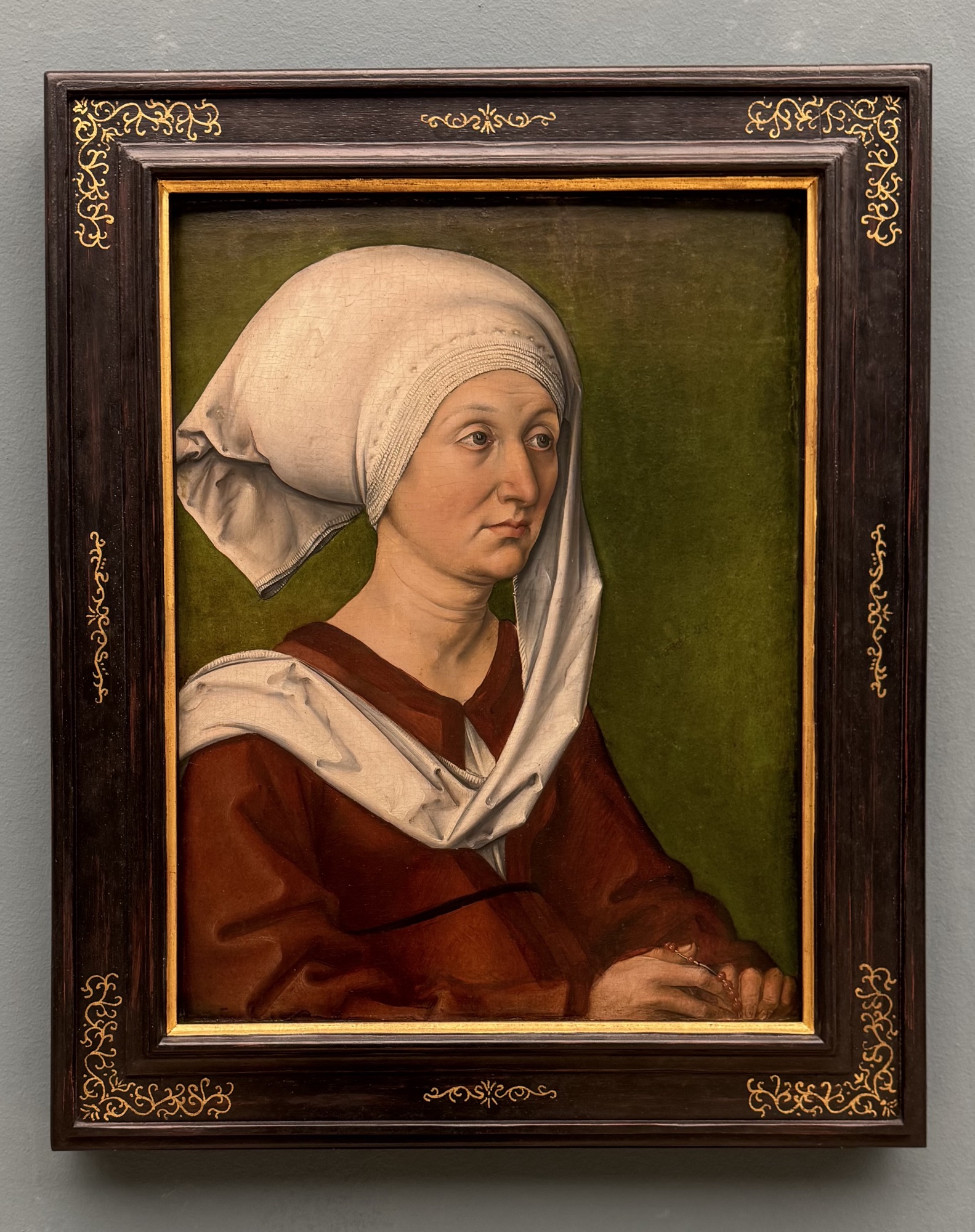
Dürer painted his mother before setting out on his travels as a journeyman. This and the complementary portrait of his father remained the personal property of Dürer until his death. In 1628 the Medici acquired the portrait of the father for their collection.
Tomorrow we’ll be visiting Dürer Haus to learn more about the artist.
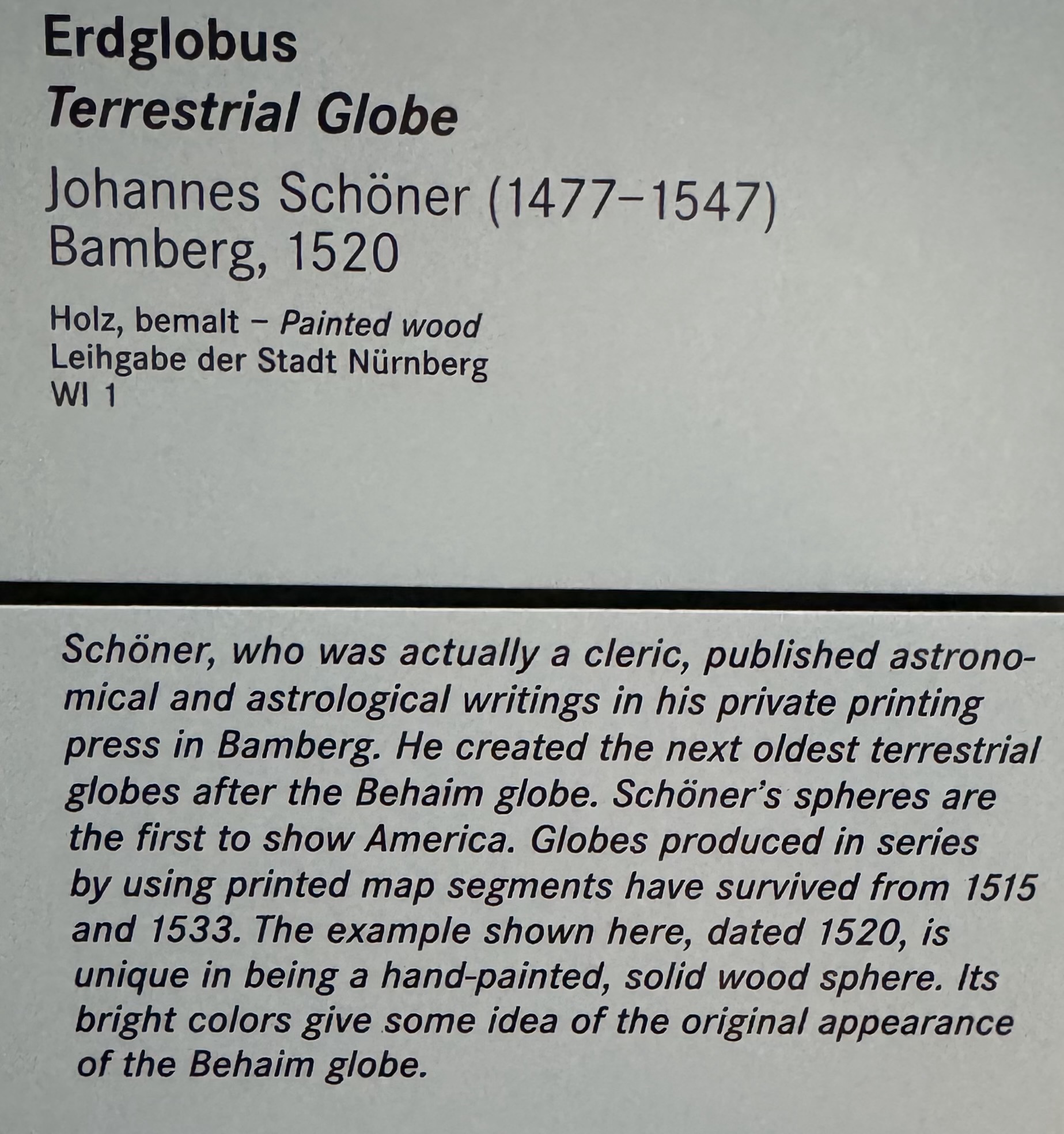
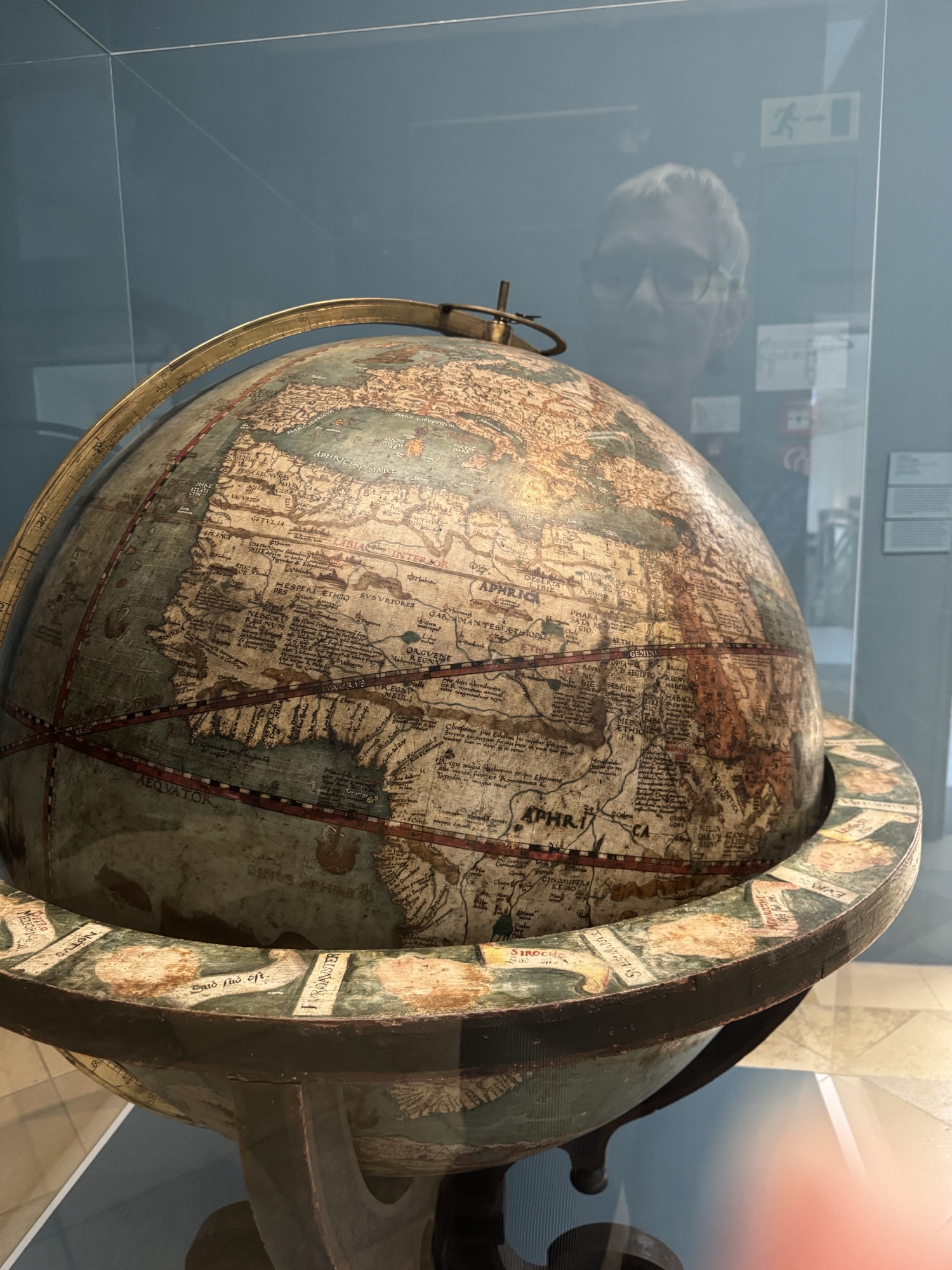
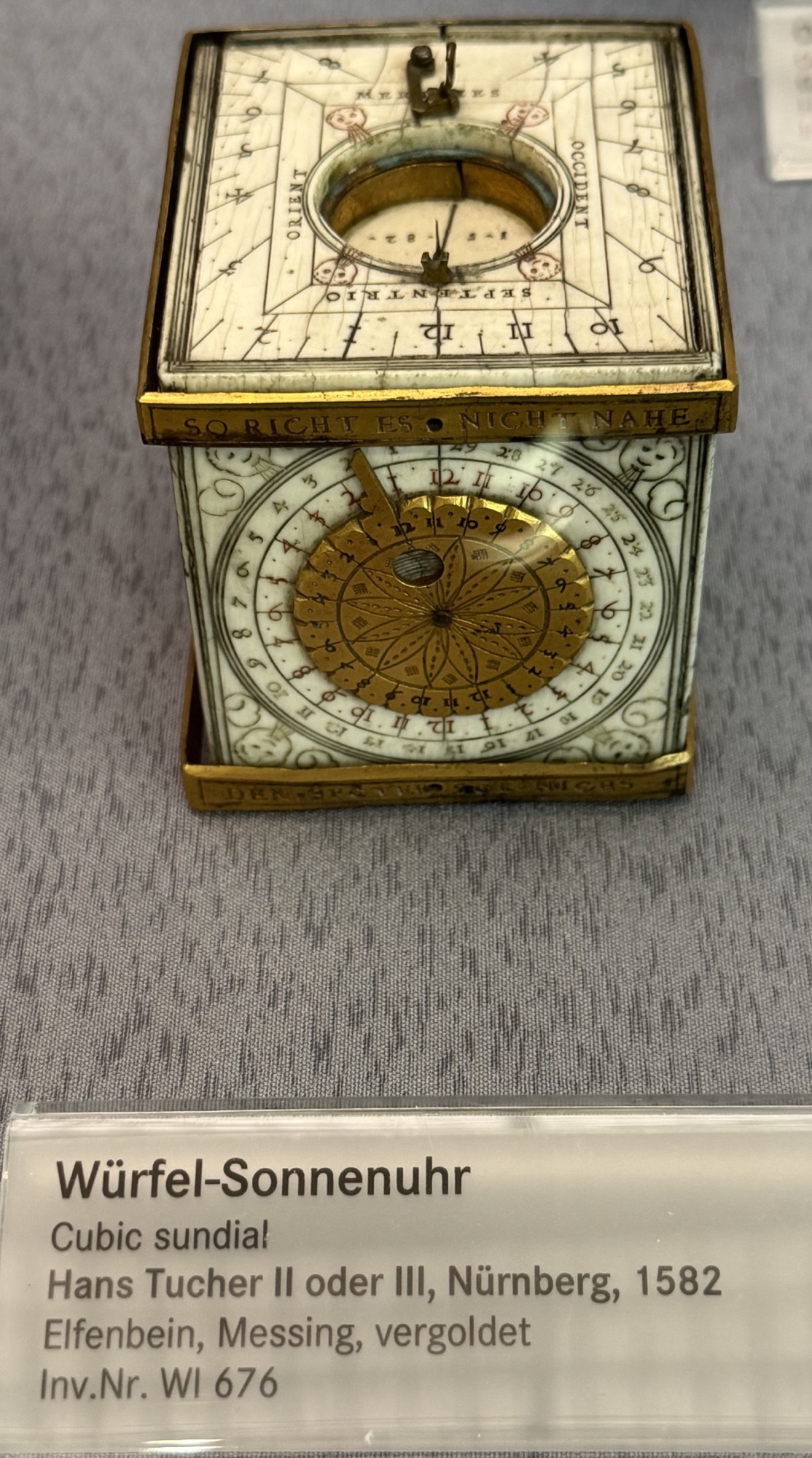
The last area we visited was the display of Scientific Instruments.
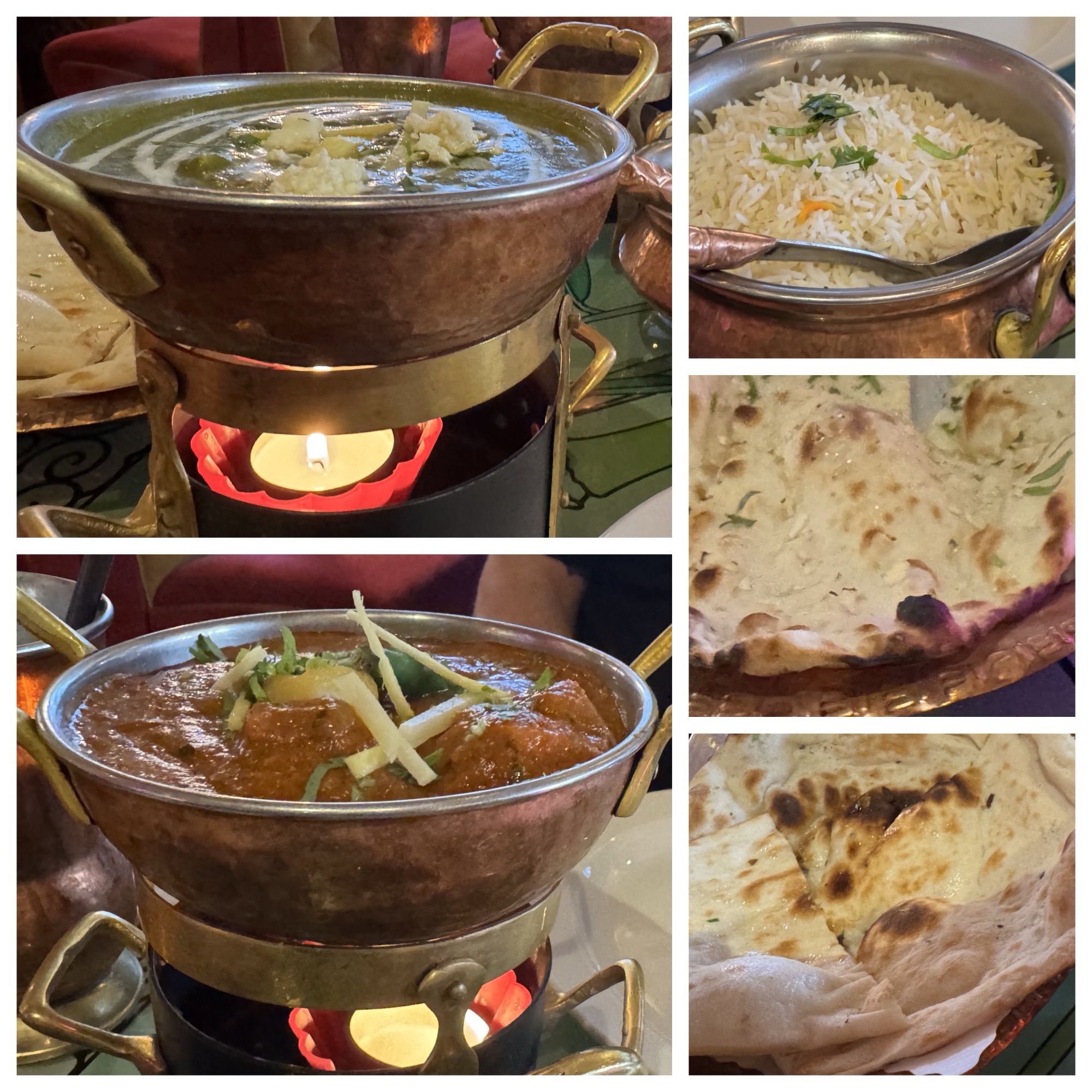
A really full day deserved an easy dinner, so we ate at Kohinoor, the Indian restaurant beside our hotel. Chicken vindaloo, saag paneer, basmati rice, plain and garlic naan made a lovely meal.