Kraków still seems to have a tiny chip on its shoulder about the fact that it is no longer the capital of Poland. I’d foolishly assumed that was a fairly recent (maybe post WWI) move, but that’s not the case.
Poland’s capital was moved from Kraków to Warsaw in 1596, over 400 years ago!
The King of Poland and Lithuania at the time, King Sigismund II Vasa wanted the move for mostly logistical reasons. Warsaw was strategically located between the Polish capital of Kraków and Vilnius in Lithuania, was closer to Sweden (where he was also king), closer to the political and economic powerhouse of Gdańsk, and had access to the important trade route along the Vistula River.
A fire in 1595 that damaged the Wawel Royal Castle in Kraków provided a convenient excuse for relocating.
Kraków’s historic centre (including the castle) and Wieliczka and Bochnia Royal Salt Mines, were in the very first group of UNESCO World Heritage Sites, declared in 1978.
Today we visited the castle and the Royal Cathedral. Later this week we’ll be down in the Wieliczka Royal Salt Mine.
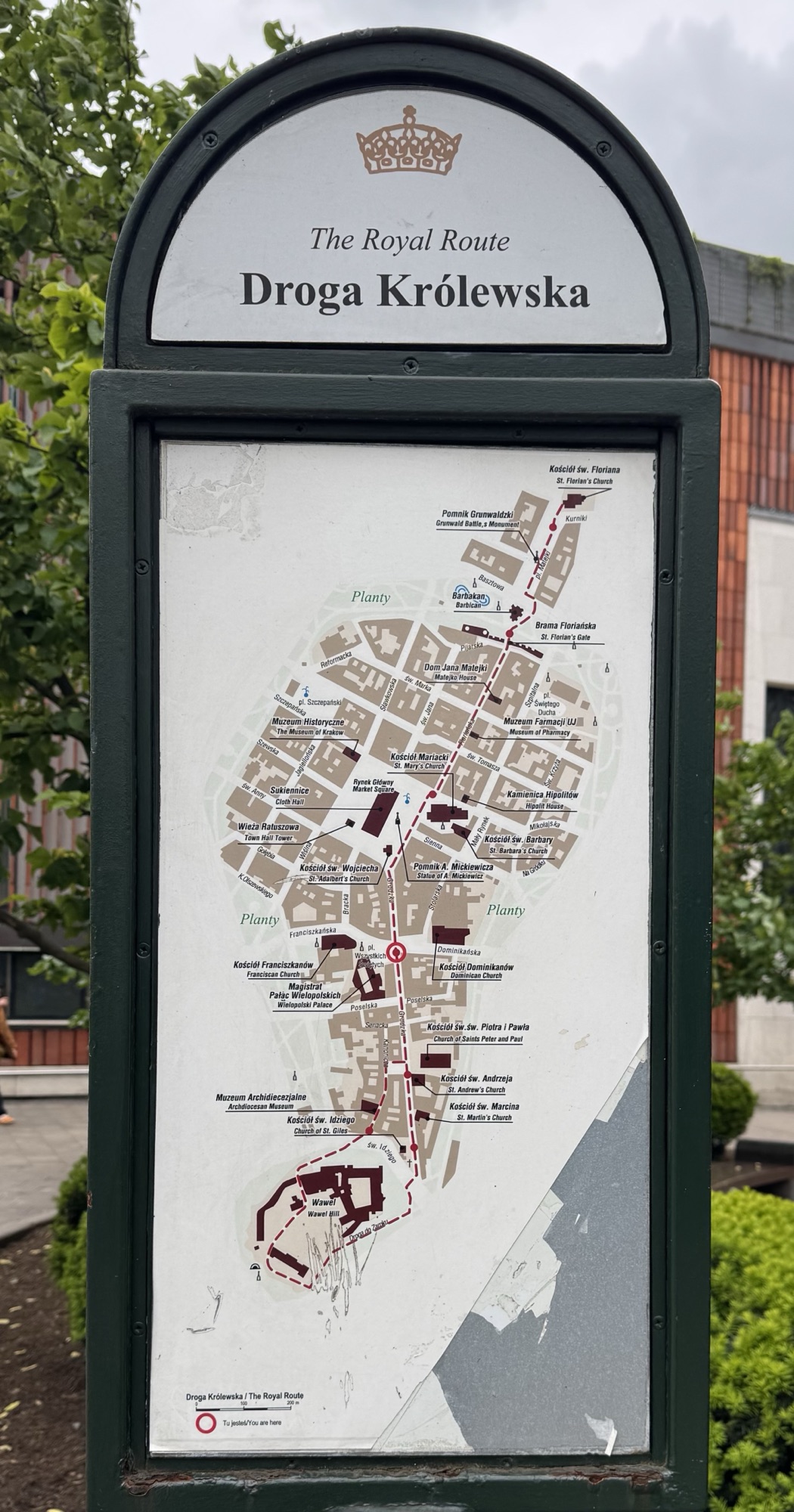
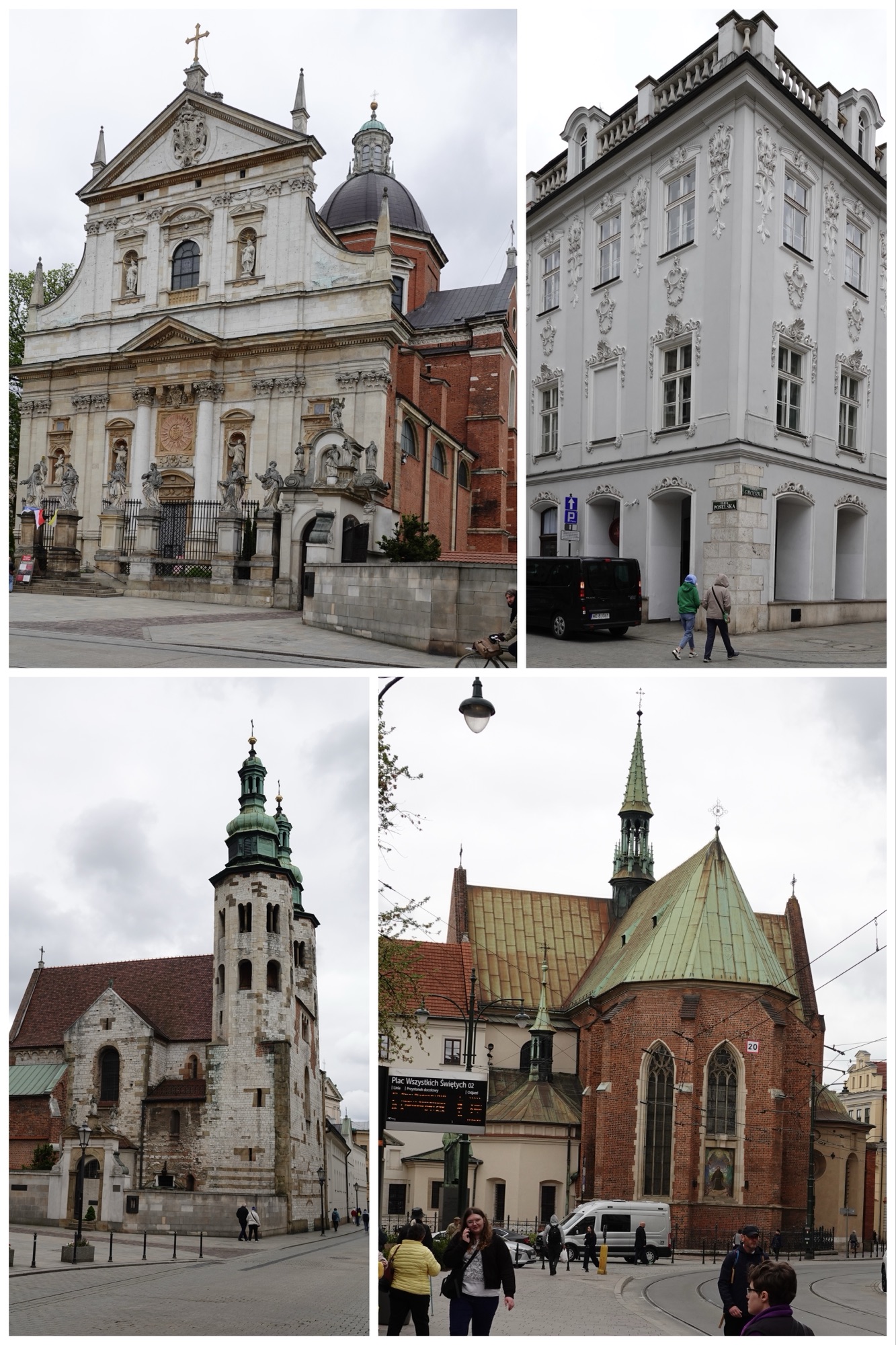
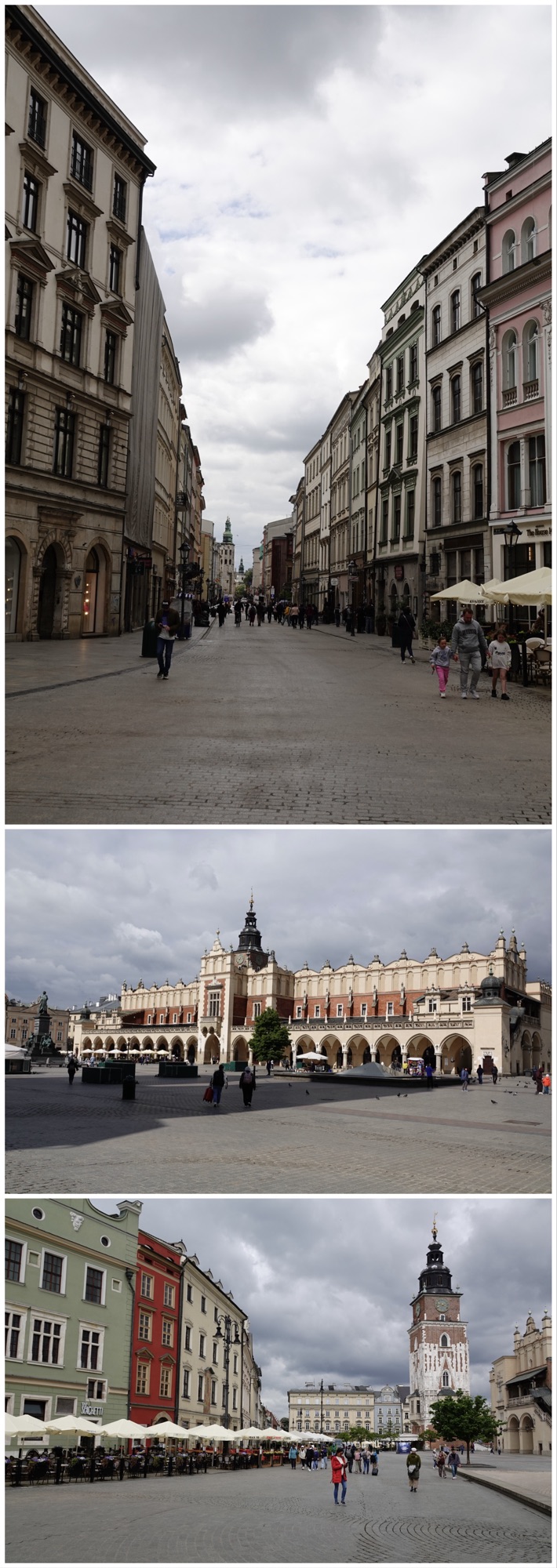
We did, of course, make it to the castle in time for our 10:30 a.m. timed entry.
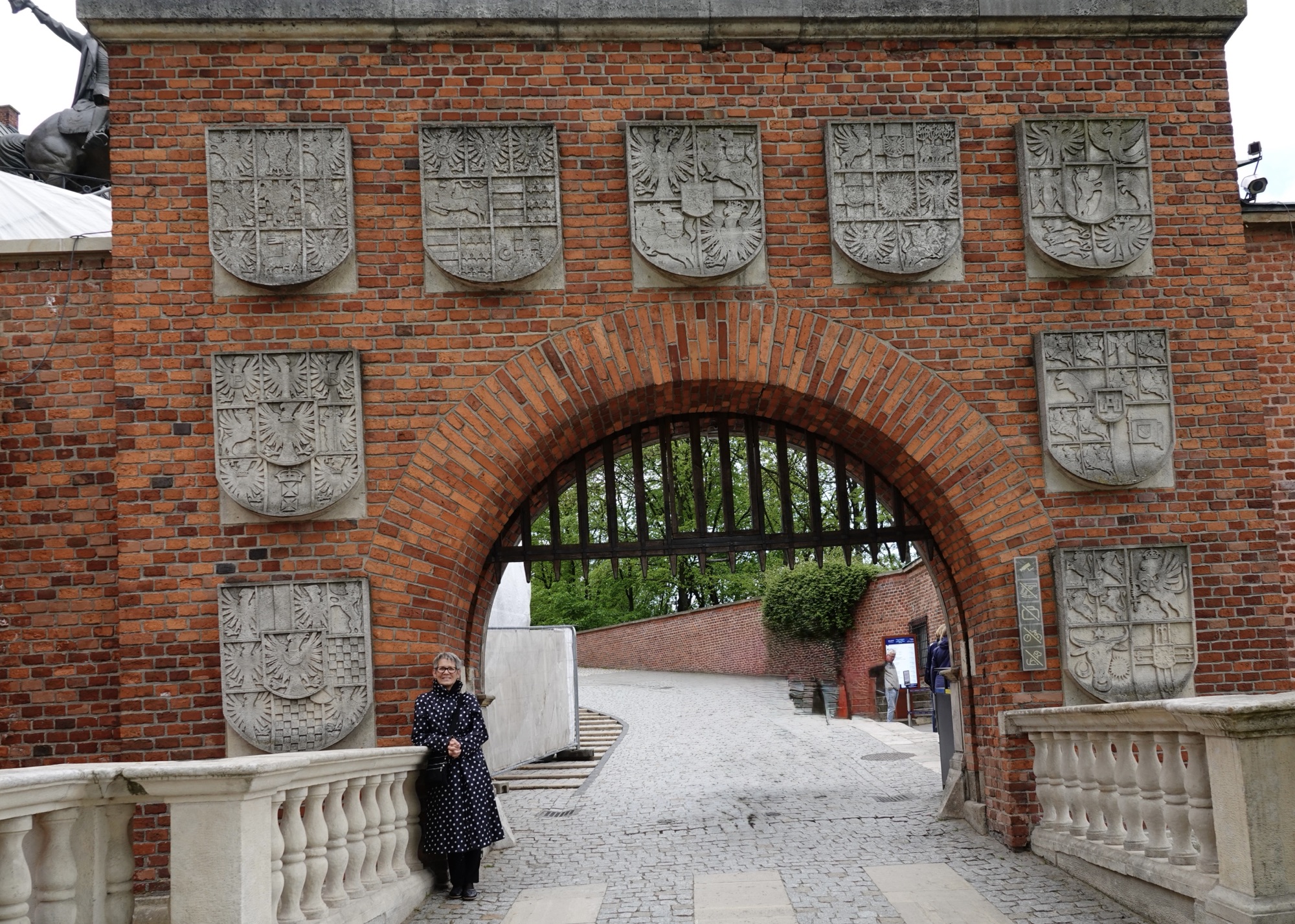
The castle is huge, with stone remnants of the original 970CE building being excavated on site, and the oldest portions of the castle dating to the 11th and 12th centuries. Most of the existing castle dates to the 15th, but the extended period of expansion means that it incorporates elements of Romanesque, Gothic, Renaissance, and Baroque. That explains why its exterior has such an eccentric feeling.
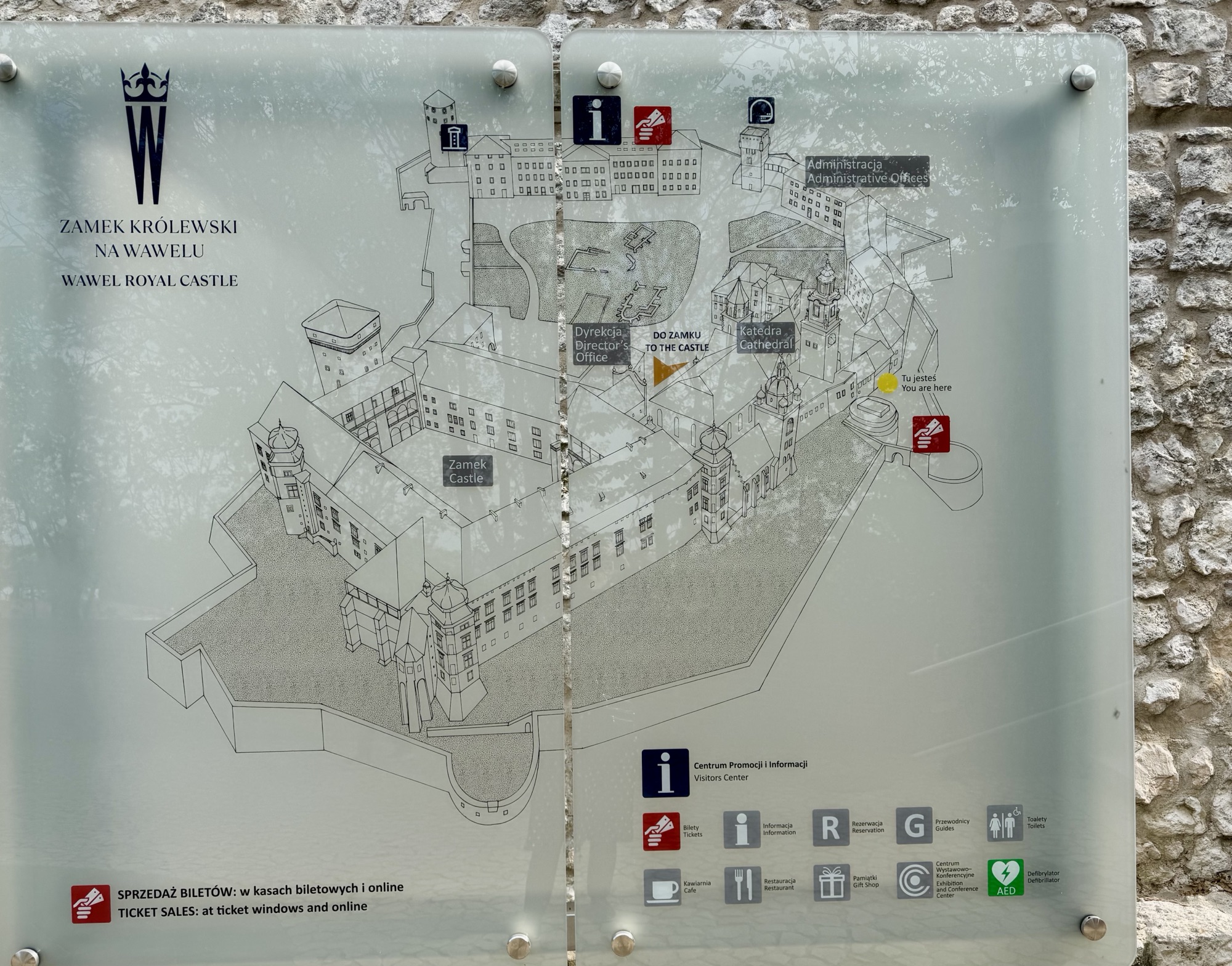
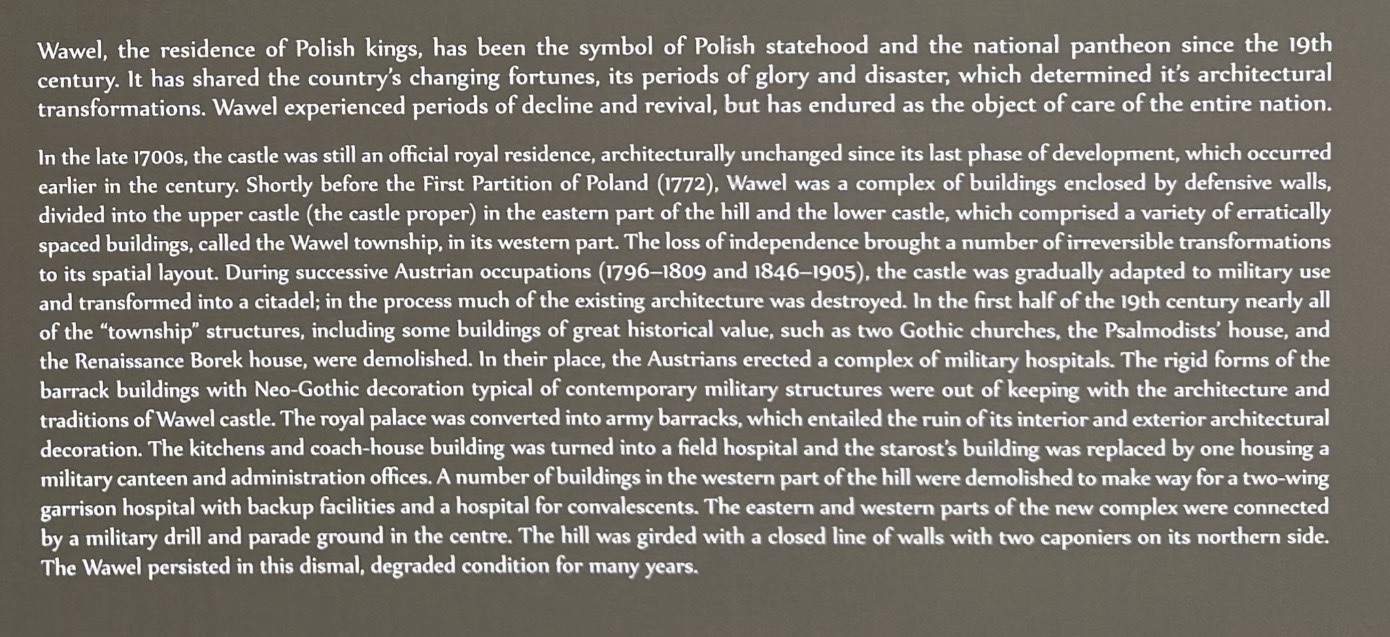
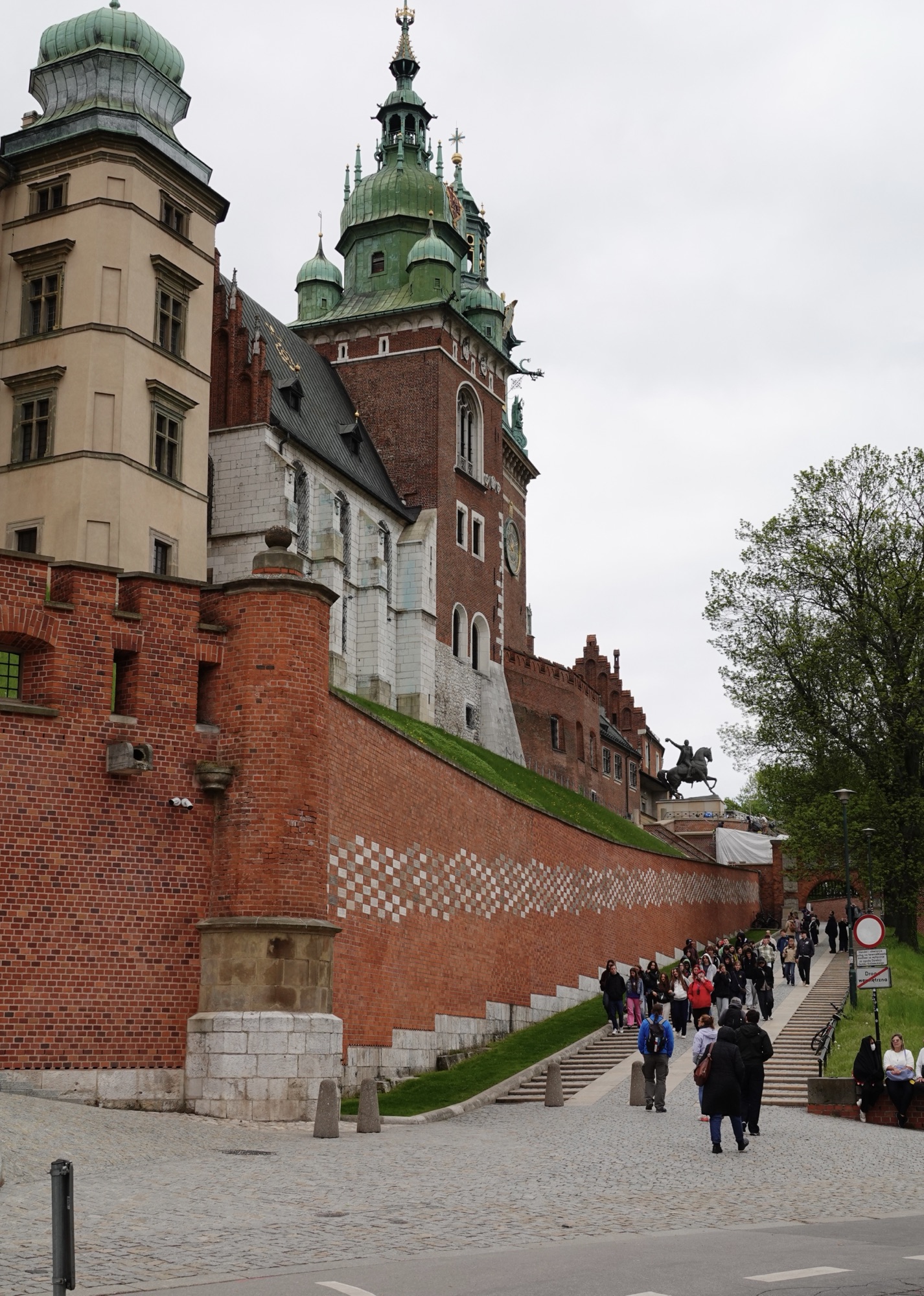
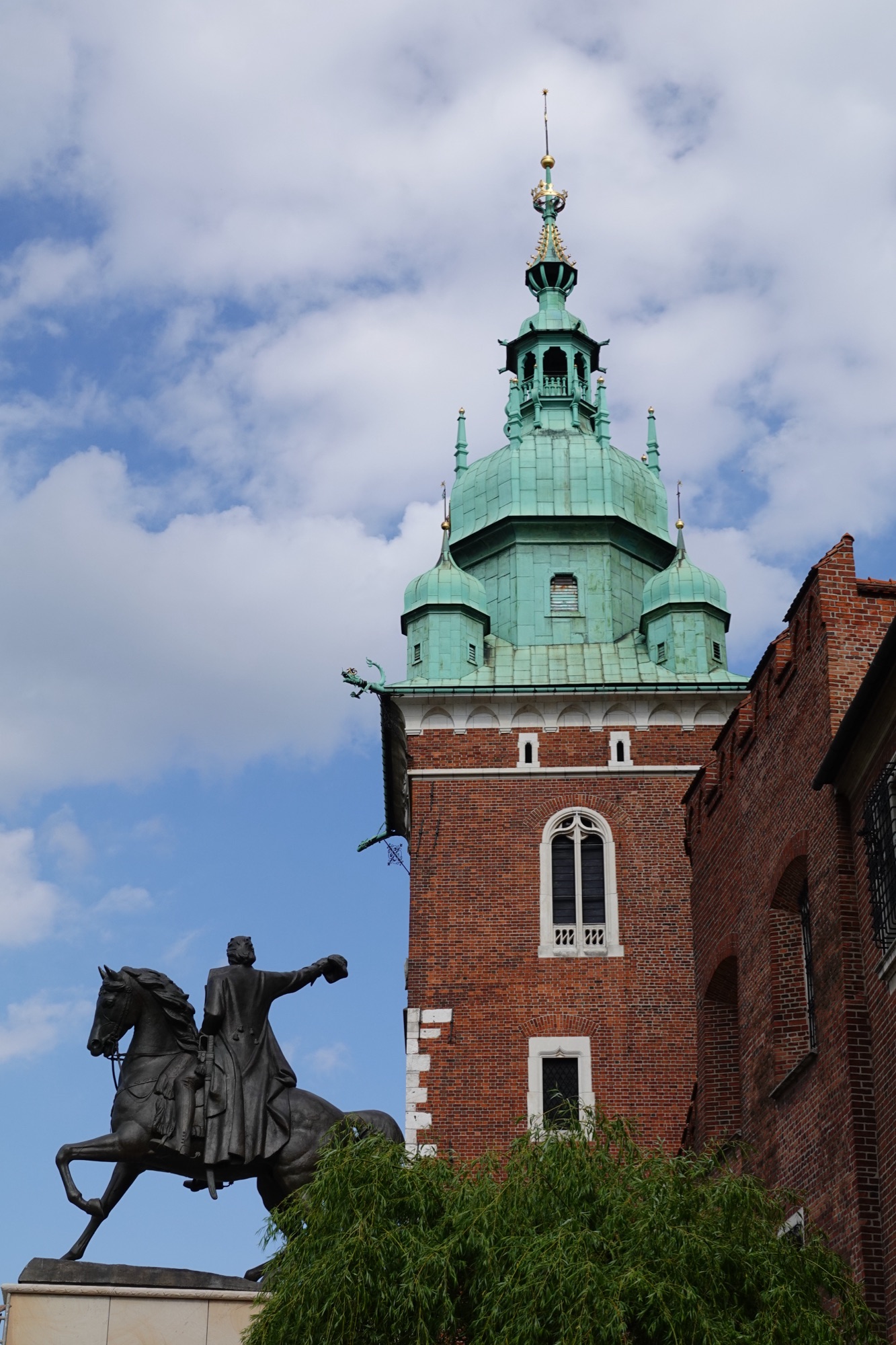
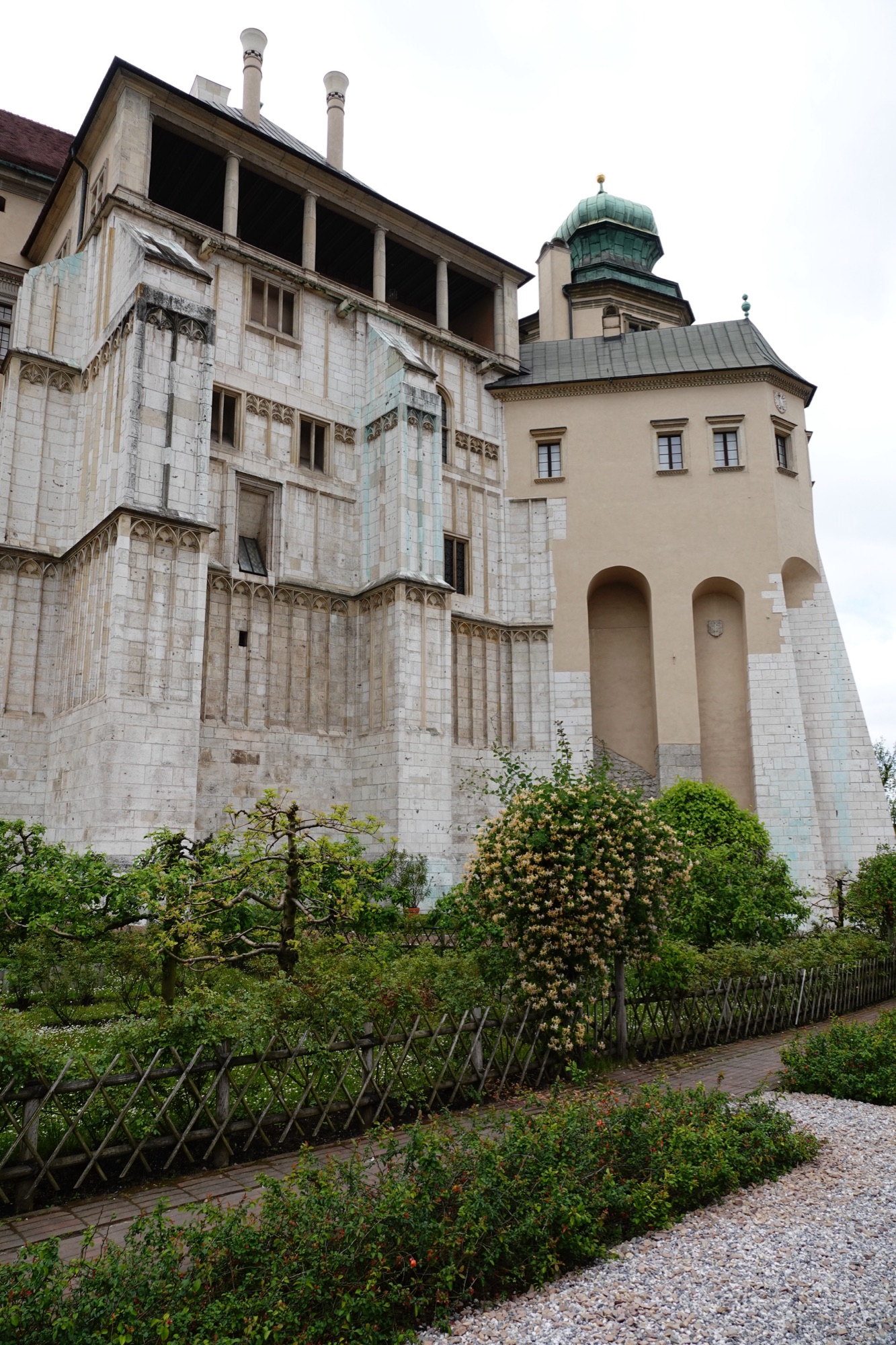
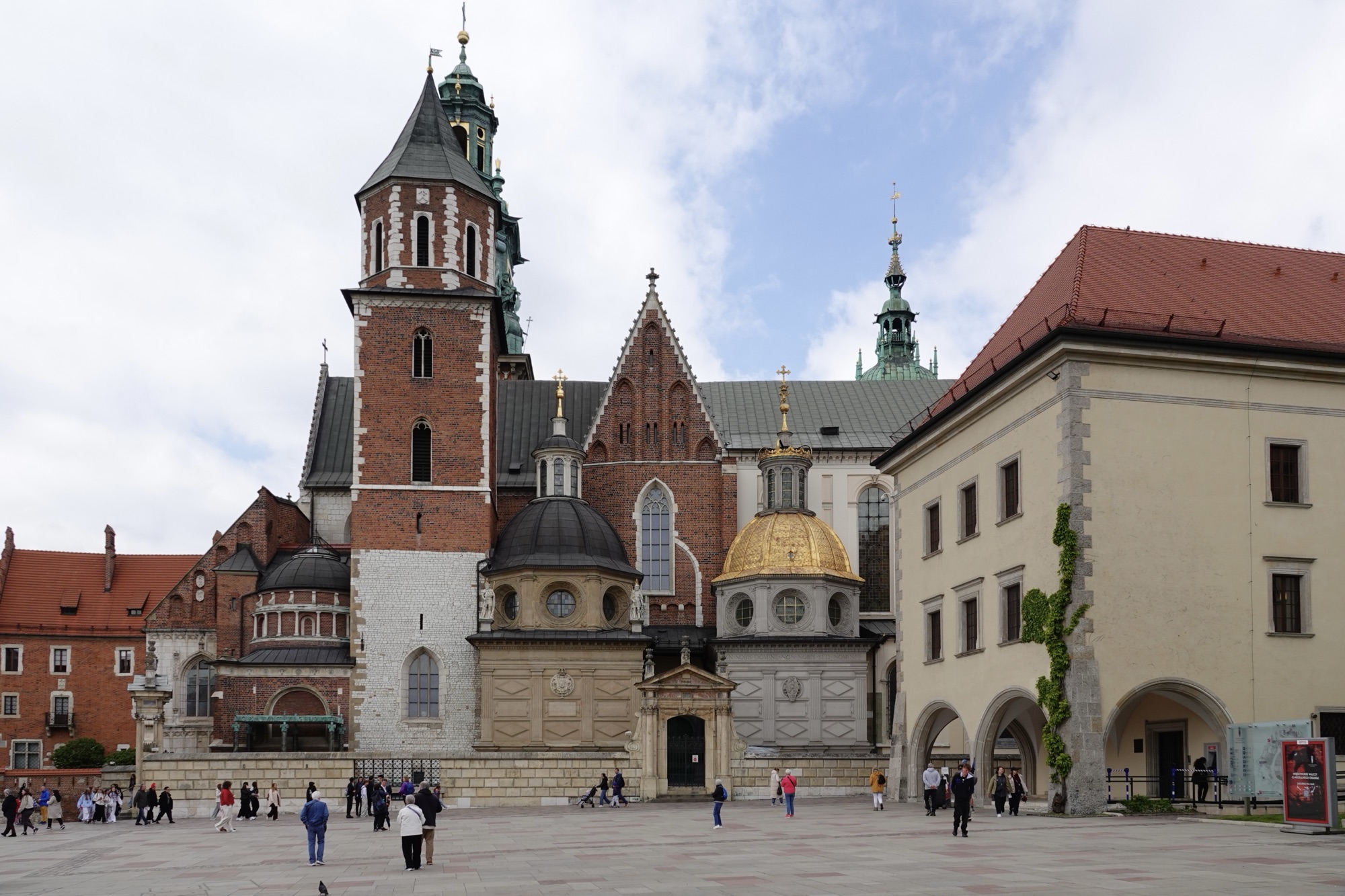
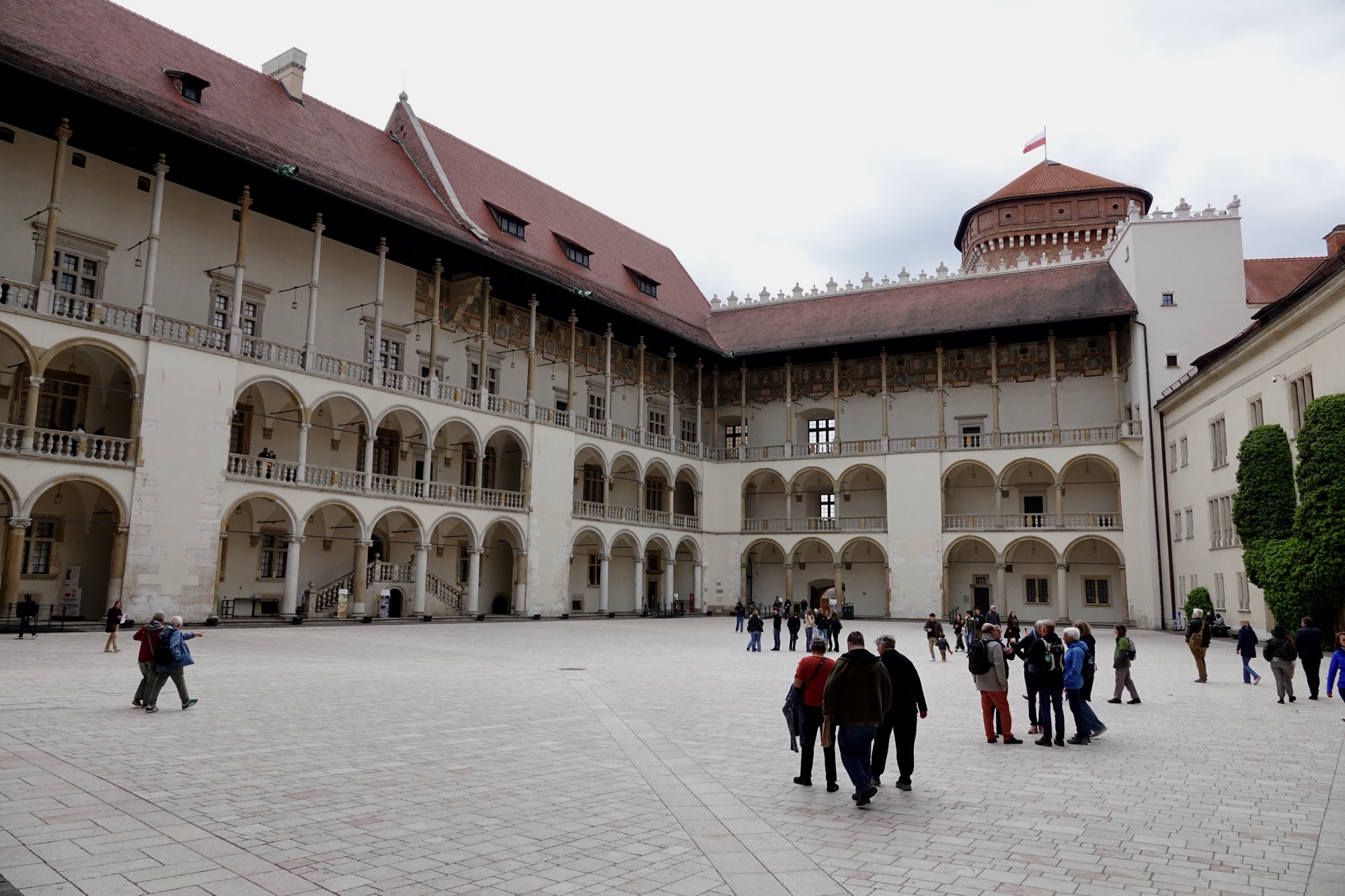
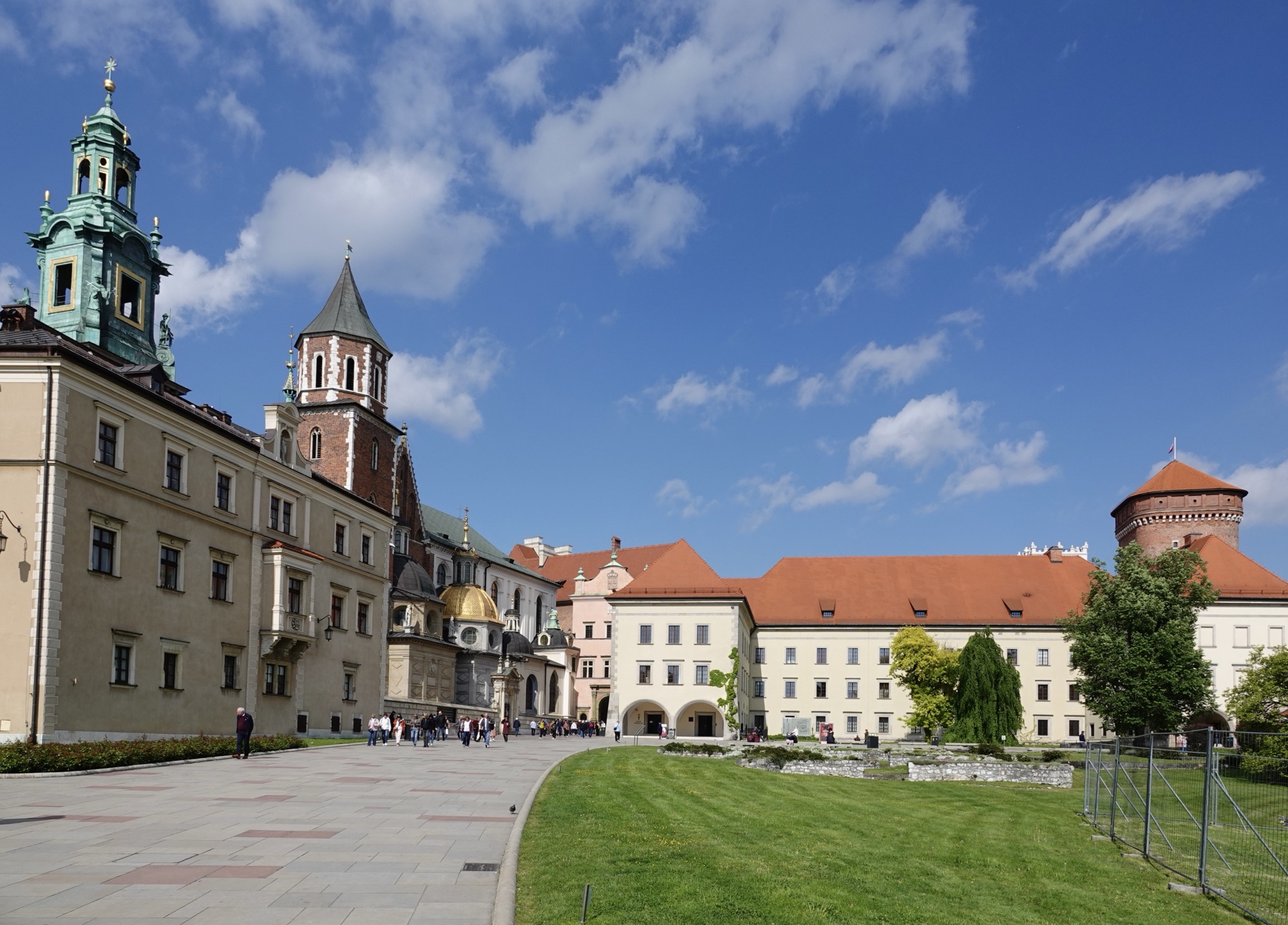
Since 1945 the castle has been a Kraków city archive and a massive museum for art and artifacts. It also has a garden accessible with the first and second floor admission ticket.
Our tickets included an audio tour that was one of the best I’ve experienced. I can say “I” here and not mean “we” because Ted, encumbered by both glasses that open at the front for easy on/off and a camera strap, never takes the audio headsets. There was a ton of information for the more than 30 rooms we toured over our 4 hours on the first and second floors of the castle, with the audio ensuring we didn’t miss any of the highlights. There were also signs in each room with simpler overviews.
We had not paid to go into the treasury or the lapidarium castle underground, but frankly we were so overwhelmed with information and visual stimuli after the castle tour that we decided not to add either option.
As it was, Ted took almost 400 photos, and I took another dozen or so with my phone.
The tour began with a bit of an explanation as to how the art and furniture we would be seeing was able to survive. Kraków was the first major Polish city to surrender to the Germans, in 1939, so instead of being damaged it simply had its treasures looted. Many items went to Vienna, and from there were sold or given to high-ranking Nazis and their friends. In the 1990s, many items were returned to the castle after the successful lawsuit by the Rothschild family to retrieve their looted art set a precedent requiring the return of items stolen by the Nazis.
This was almost the first thing we saw upon entering the castle:
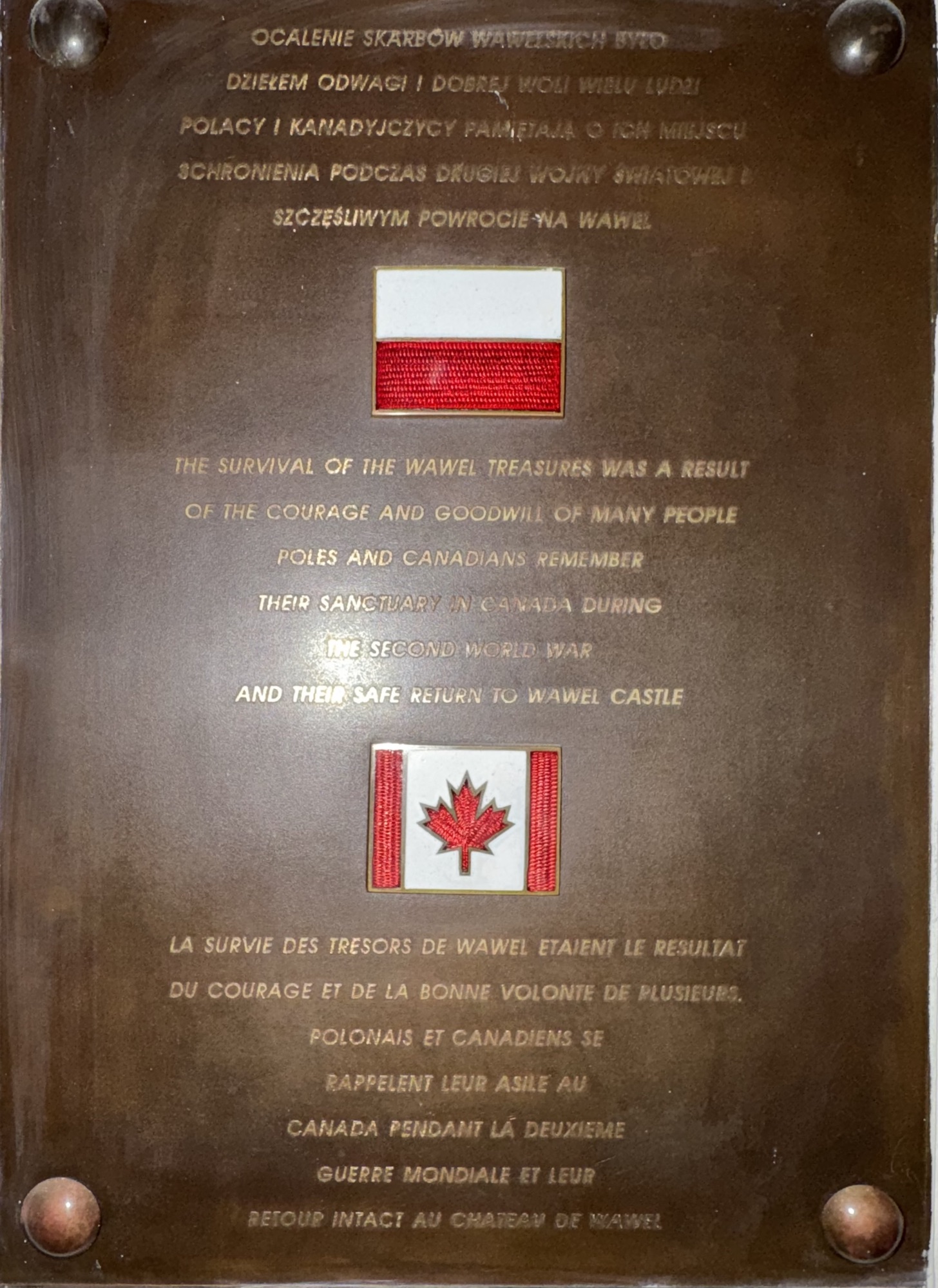
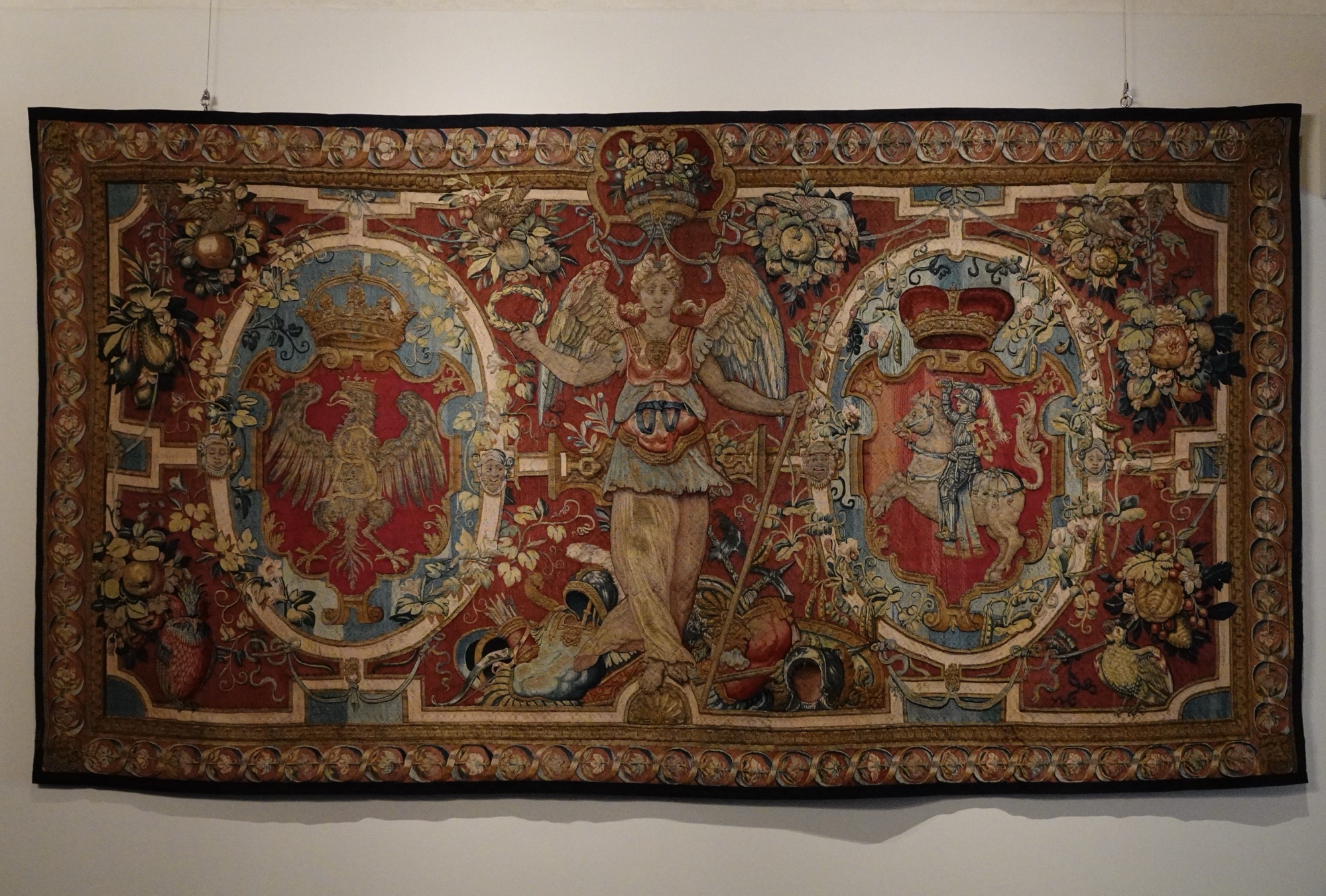
Wawel Castle once had over 365 16th century Dutch tapestries, commissioned by Kings Sigismund I and II. Over the centuries many ended up in Russia and in other European countries, sometimes as gifts, and sometimes as payments. The remaining hundred and fifty of them, along with many of the Wawel’s other treasures, spent the war years, for safety, in Canada. The 136 currently in the castle constitute the largest and best collection of Mediaeval/Middle Age tapestries in the world. We saw a large selection of them on our tour, where we also learned that they were not used as insulation, as might have been the case in early mediaeval castles, but for decoration, and that they were valuable enough even when they were originally bought that they were only hung for special occasions – state dinners or royal weddings. We felt pretty special getting to see them.
Here is our tour in a very large nutshell, with many many photos (although not all 400!) of things I’m going to want to remember from our visit.
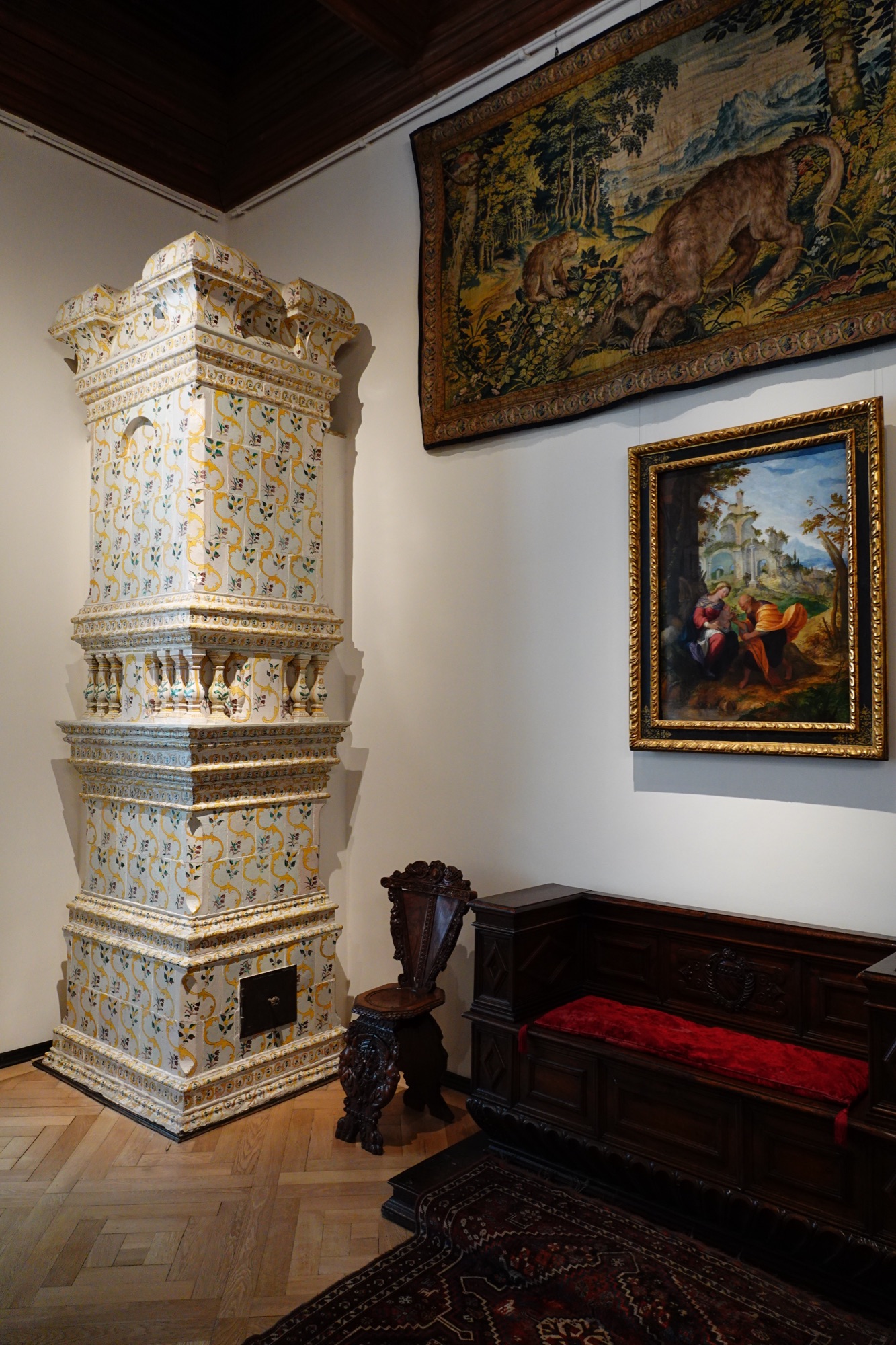
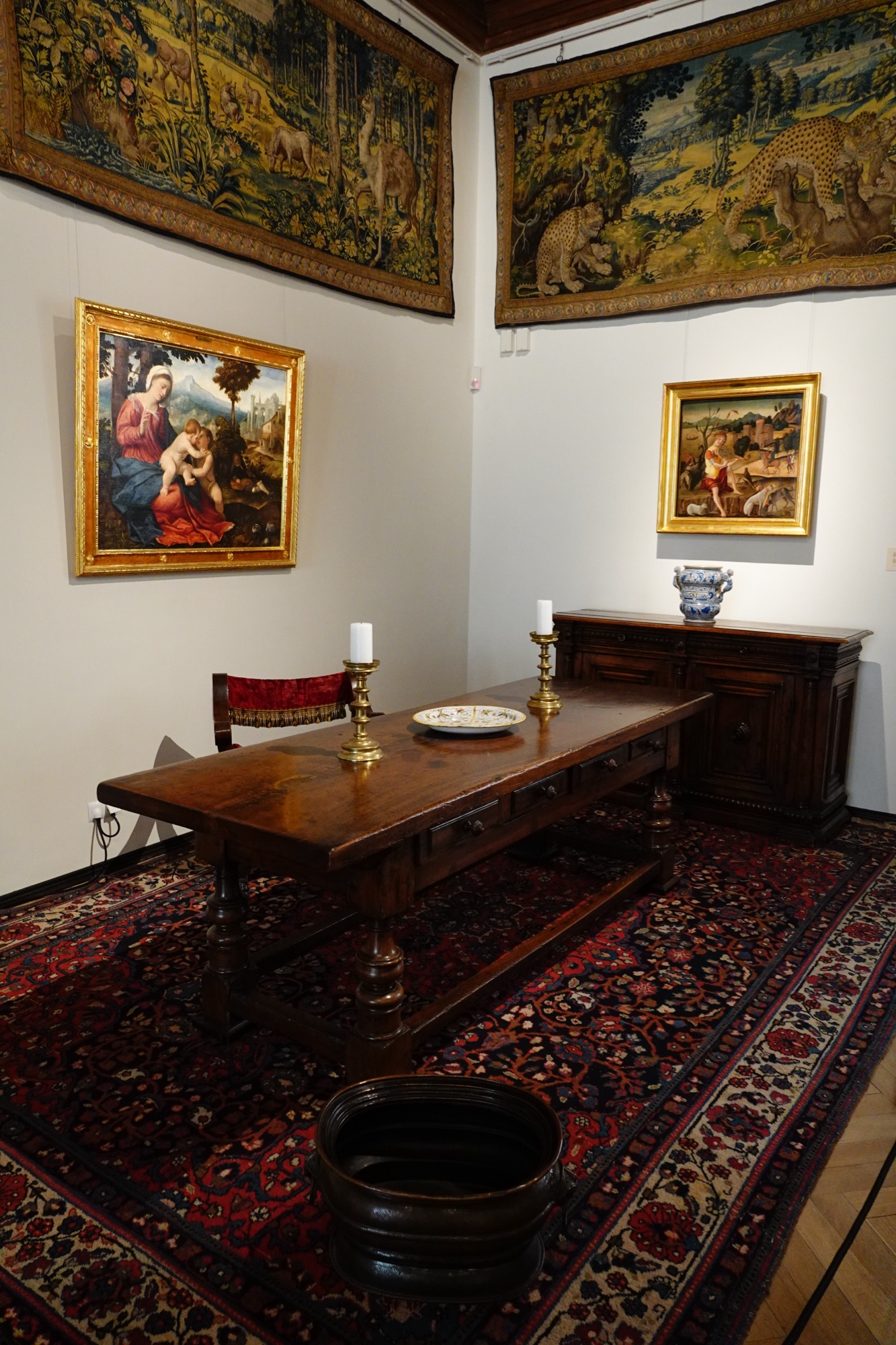
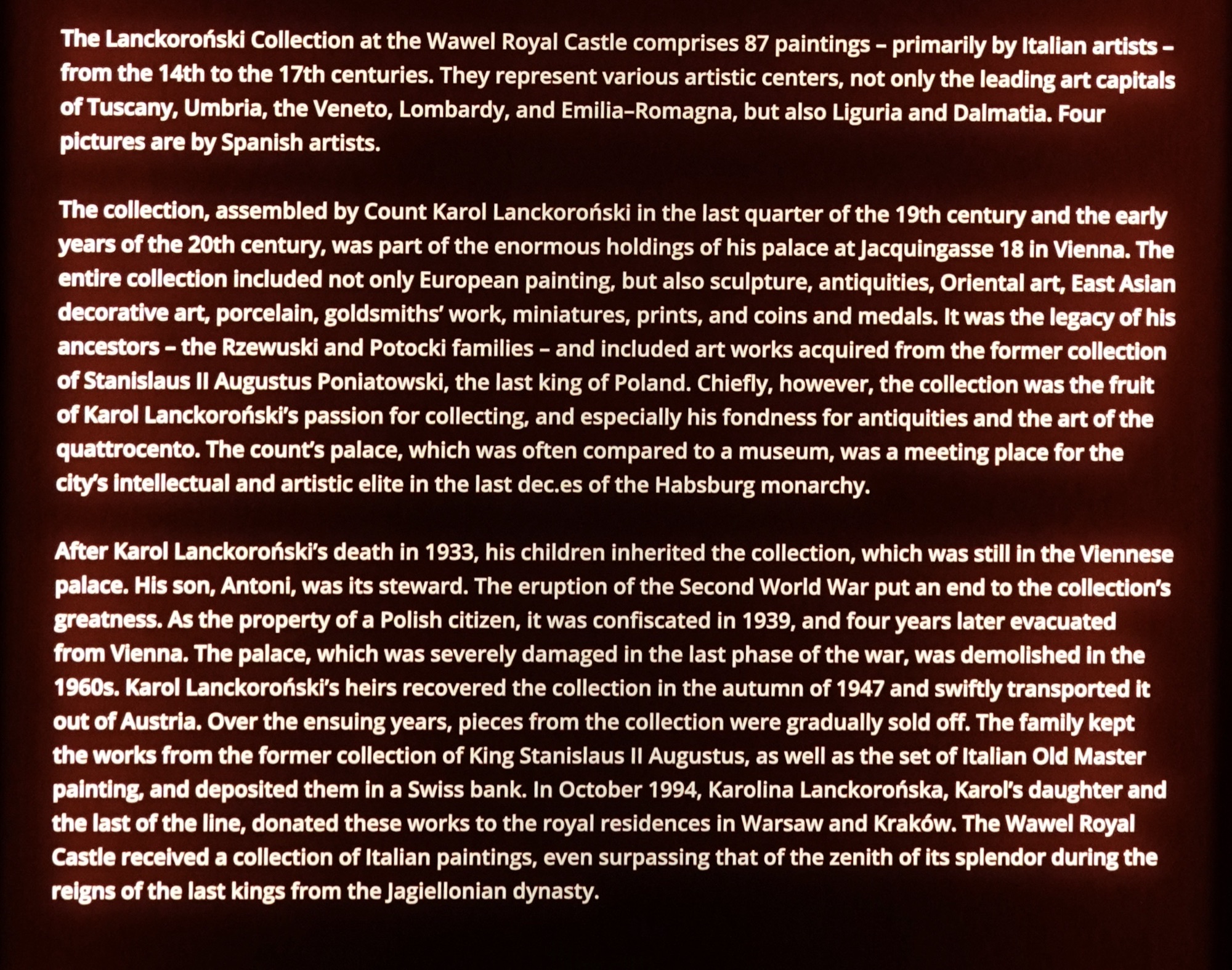
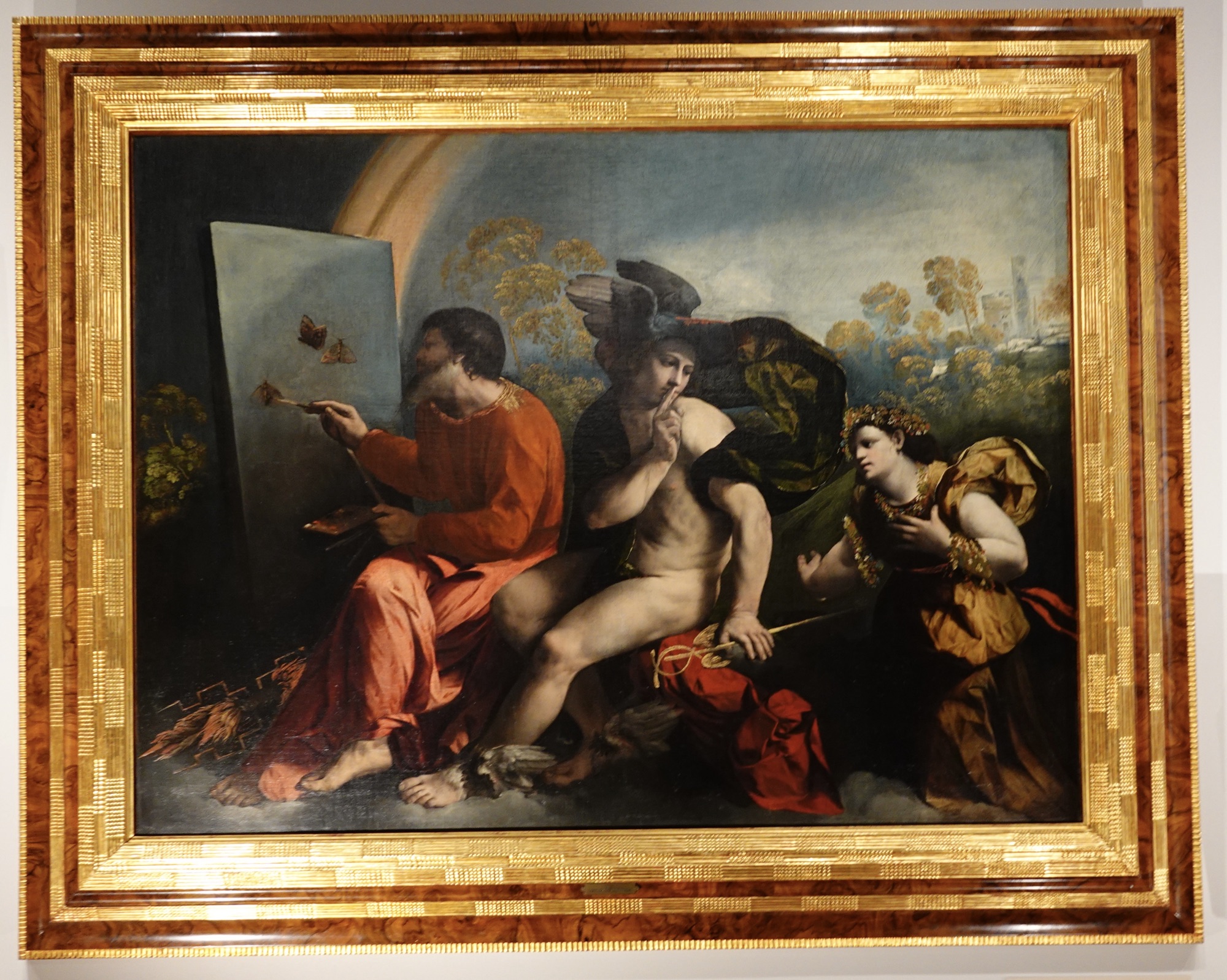
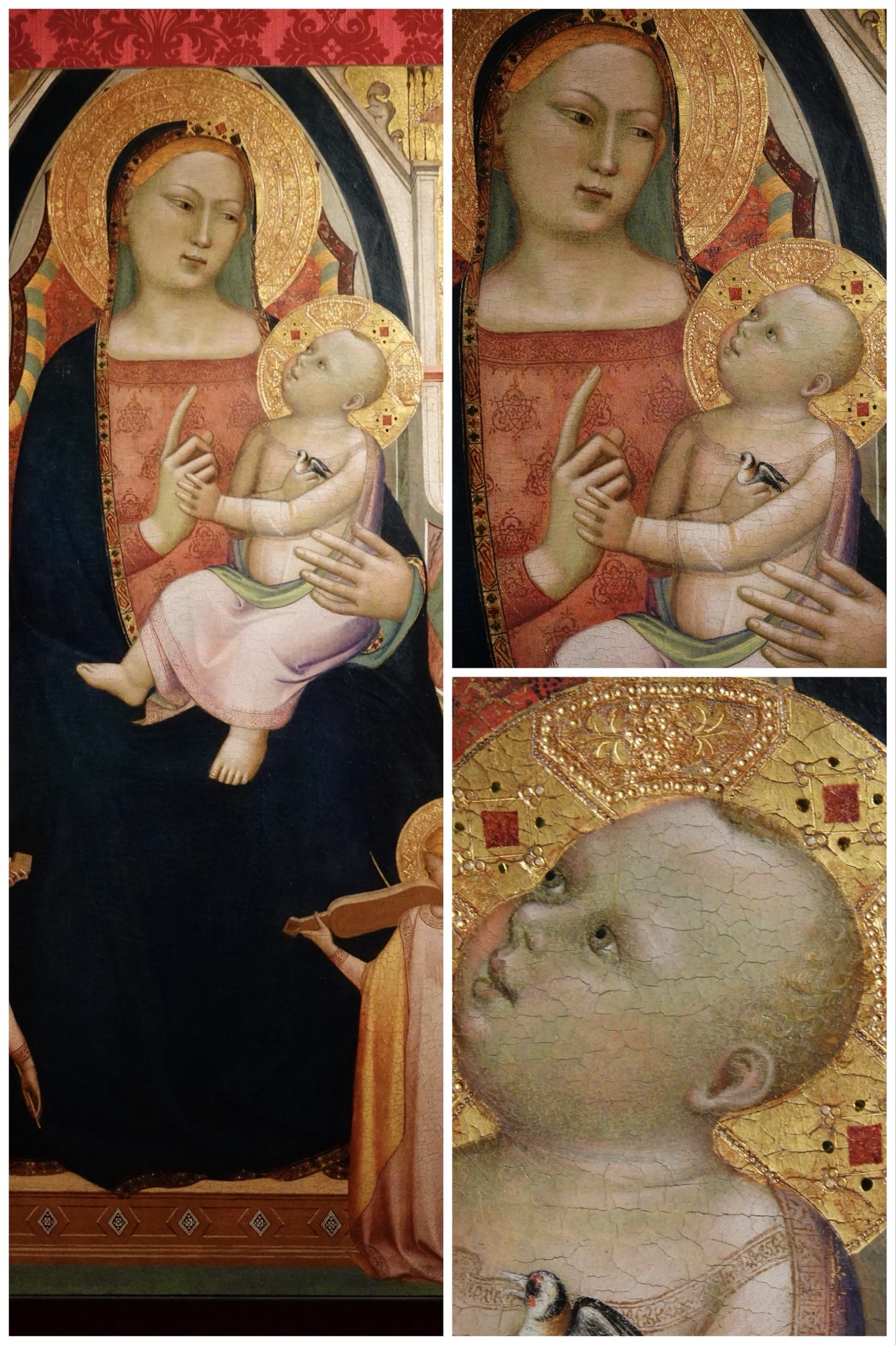
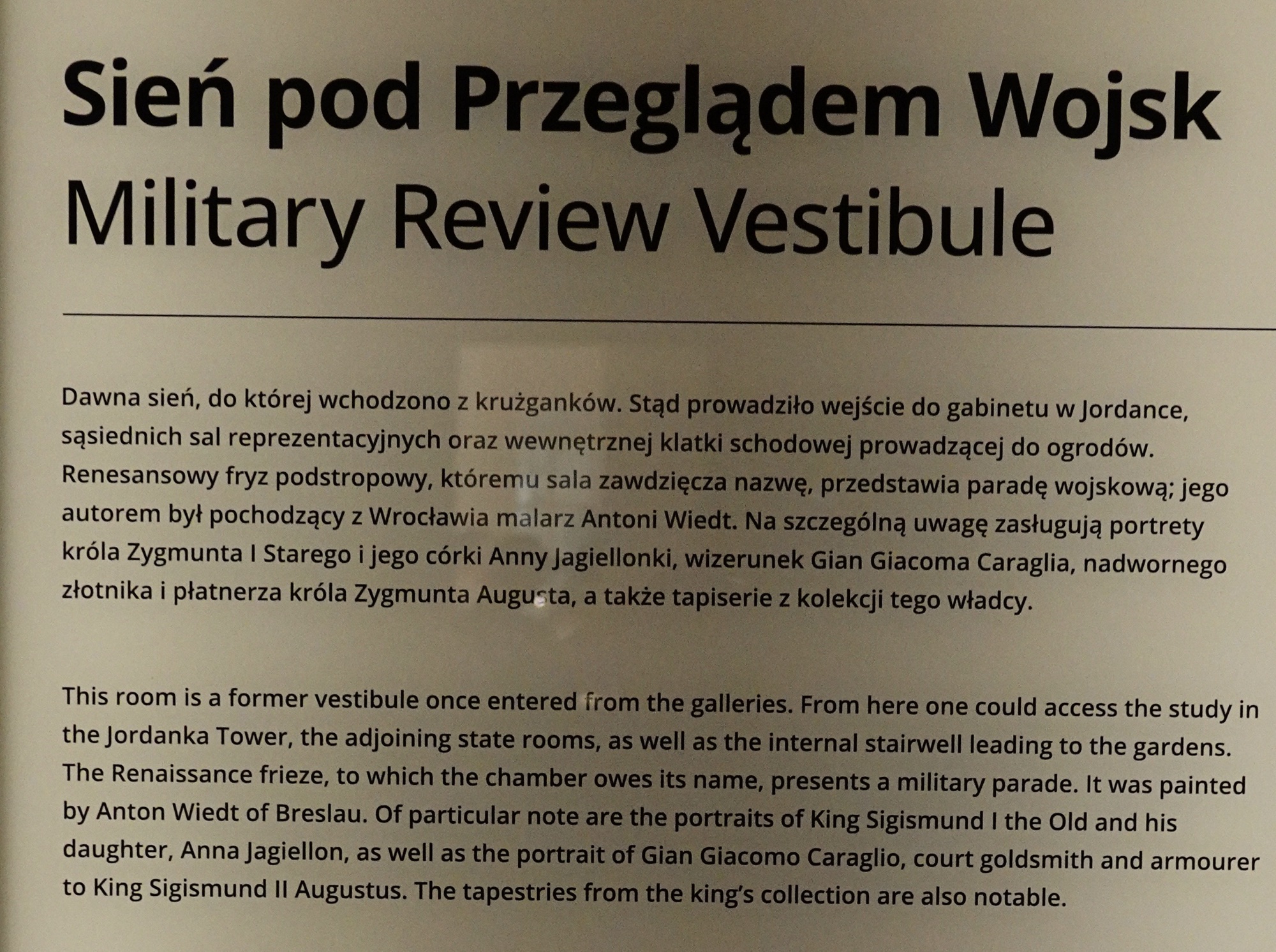
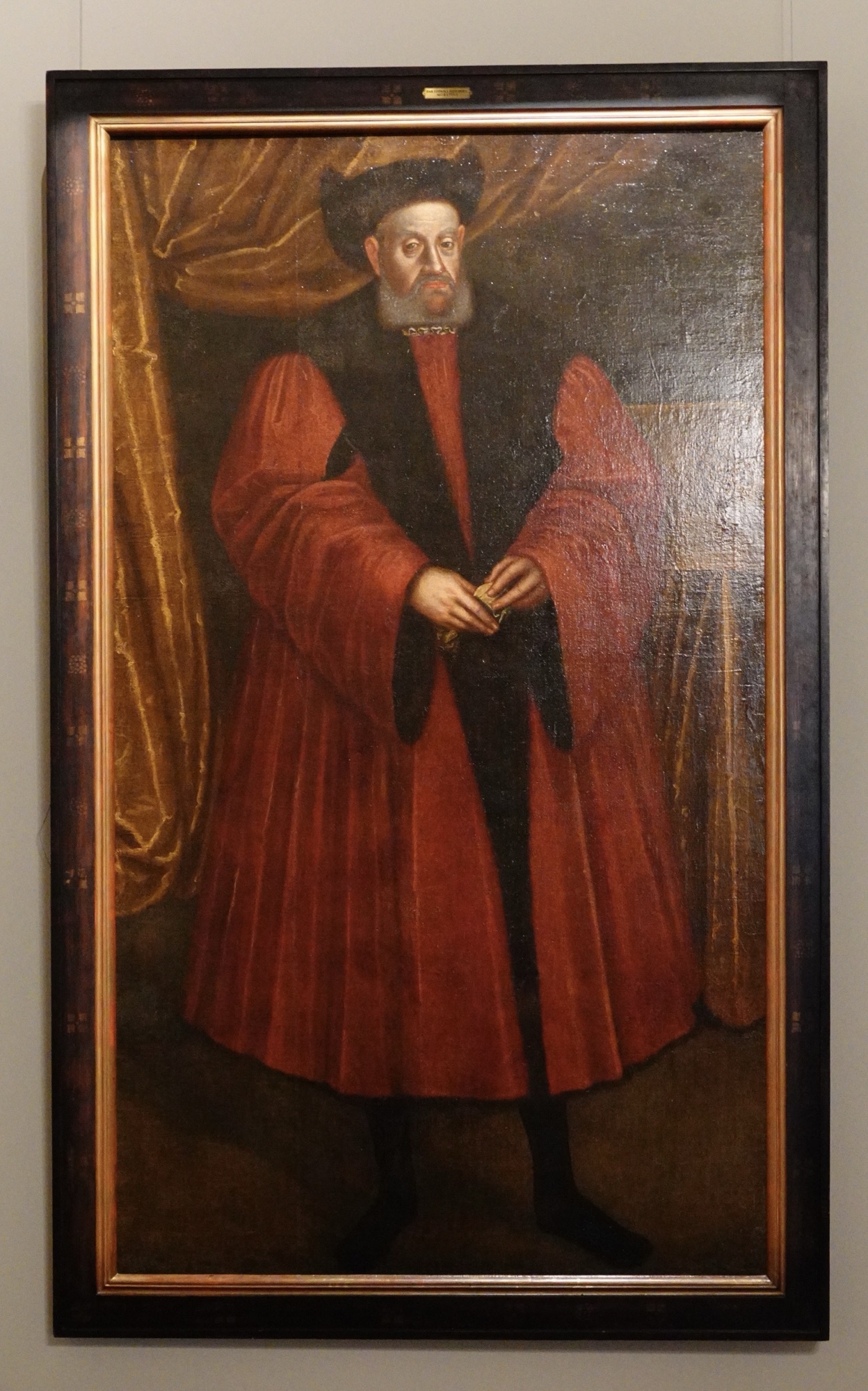
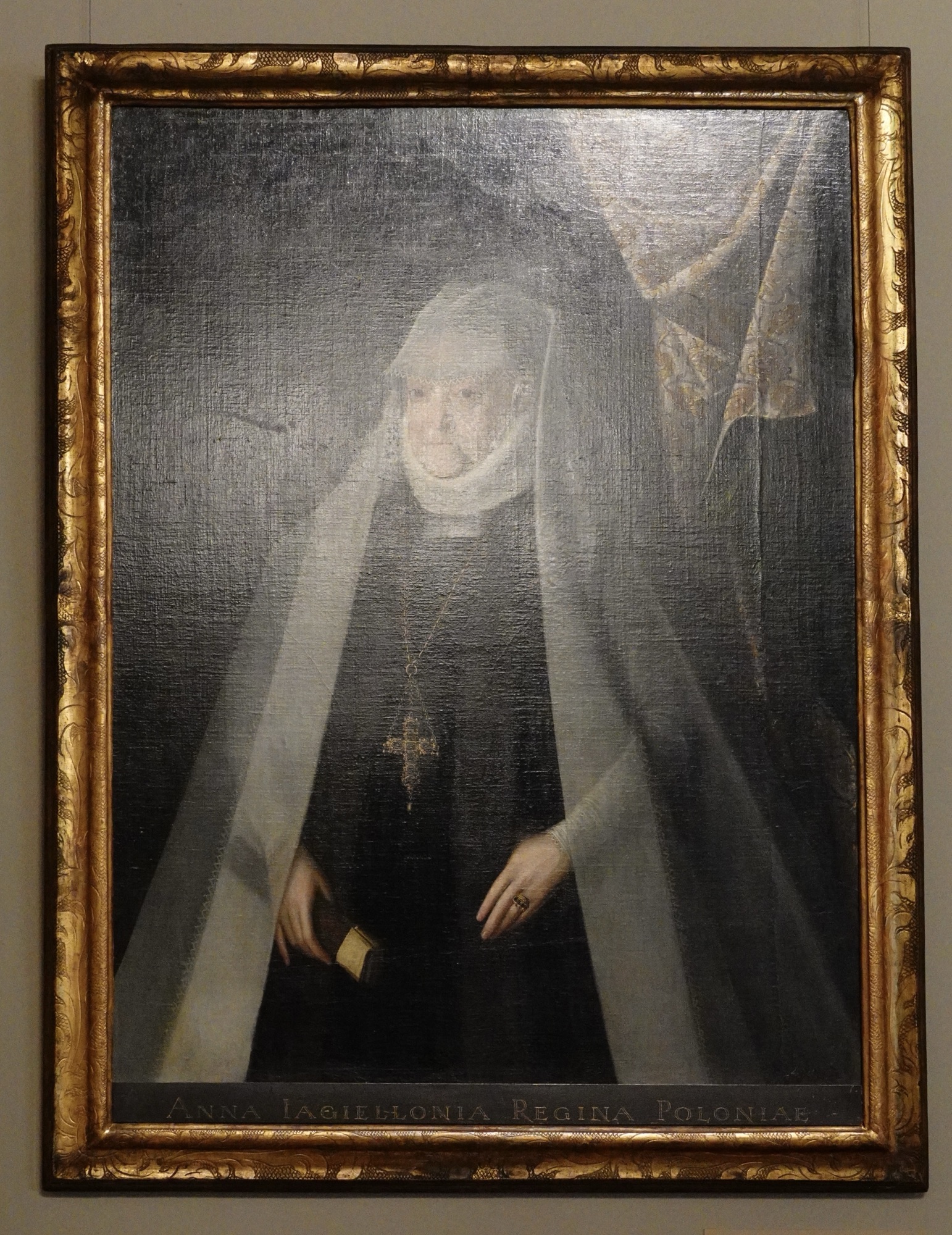
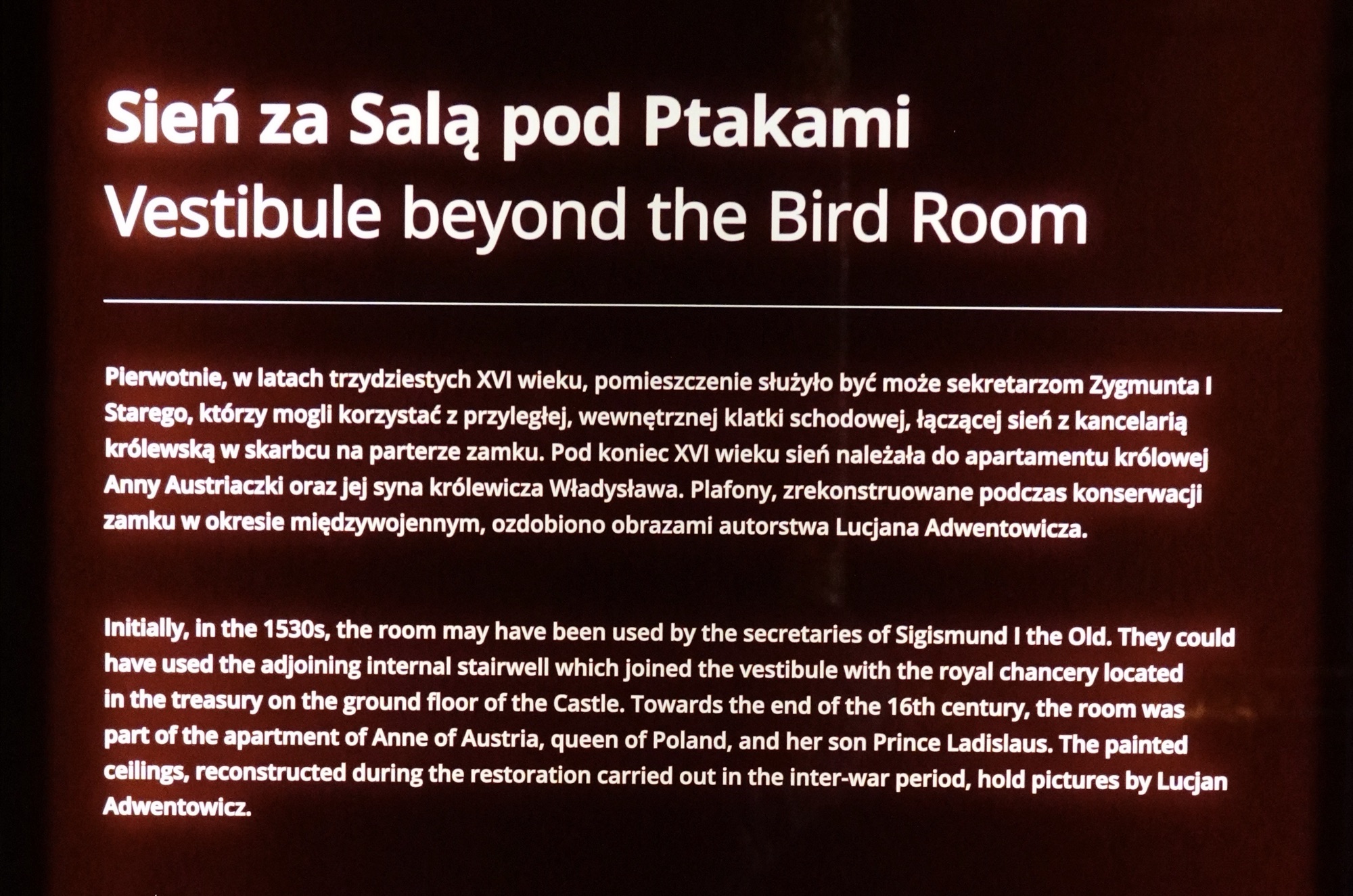
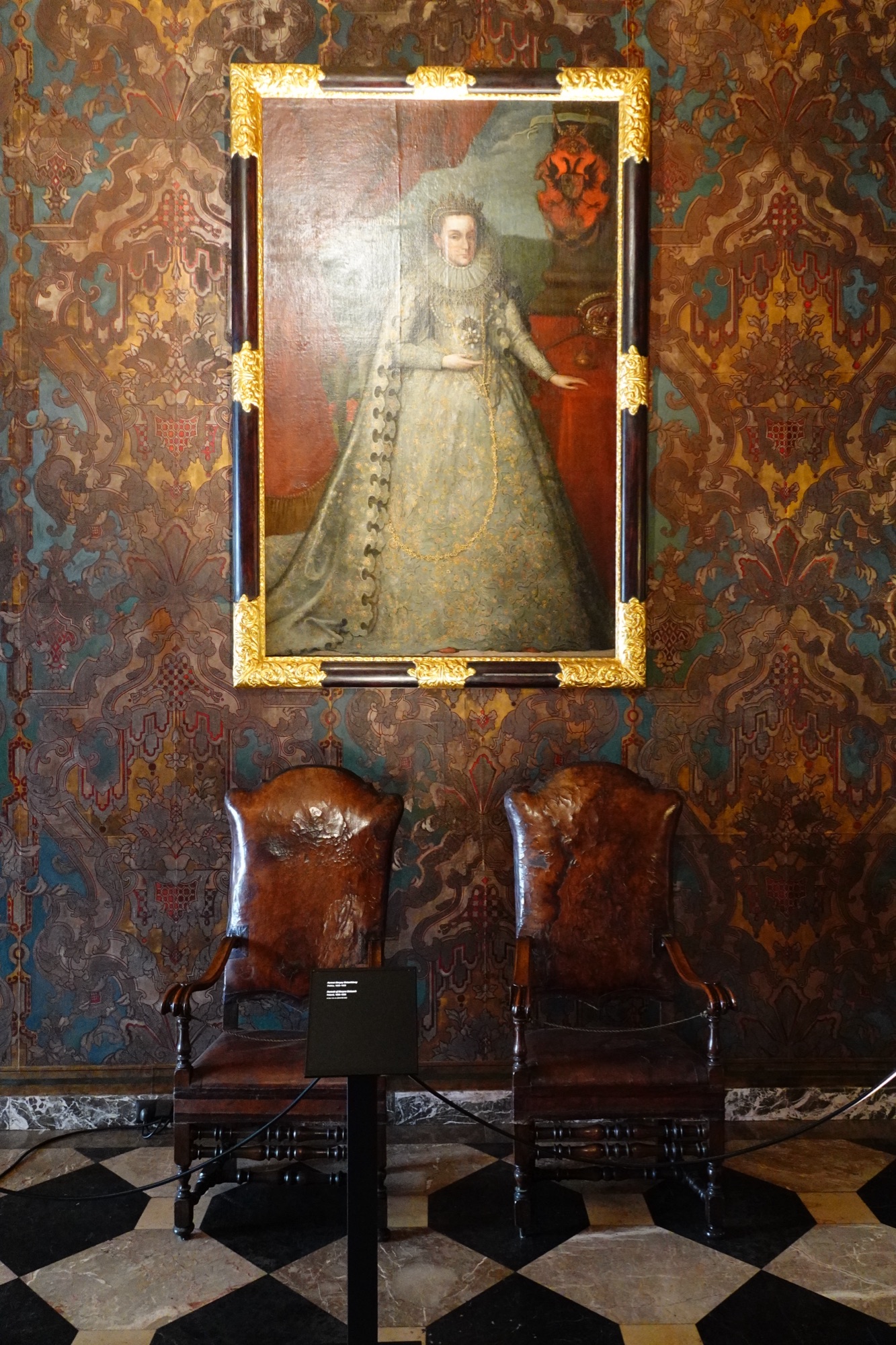
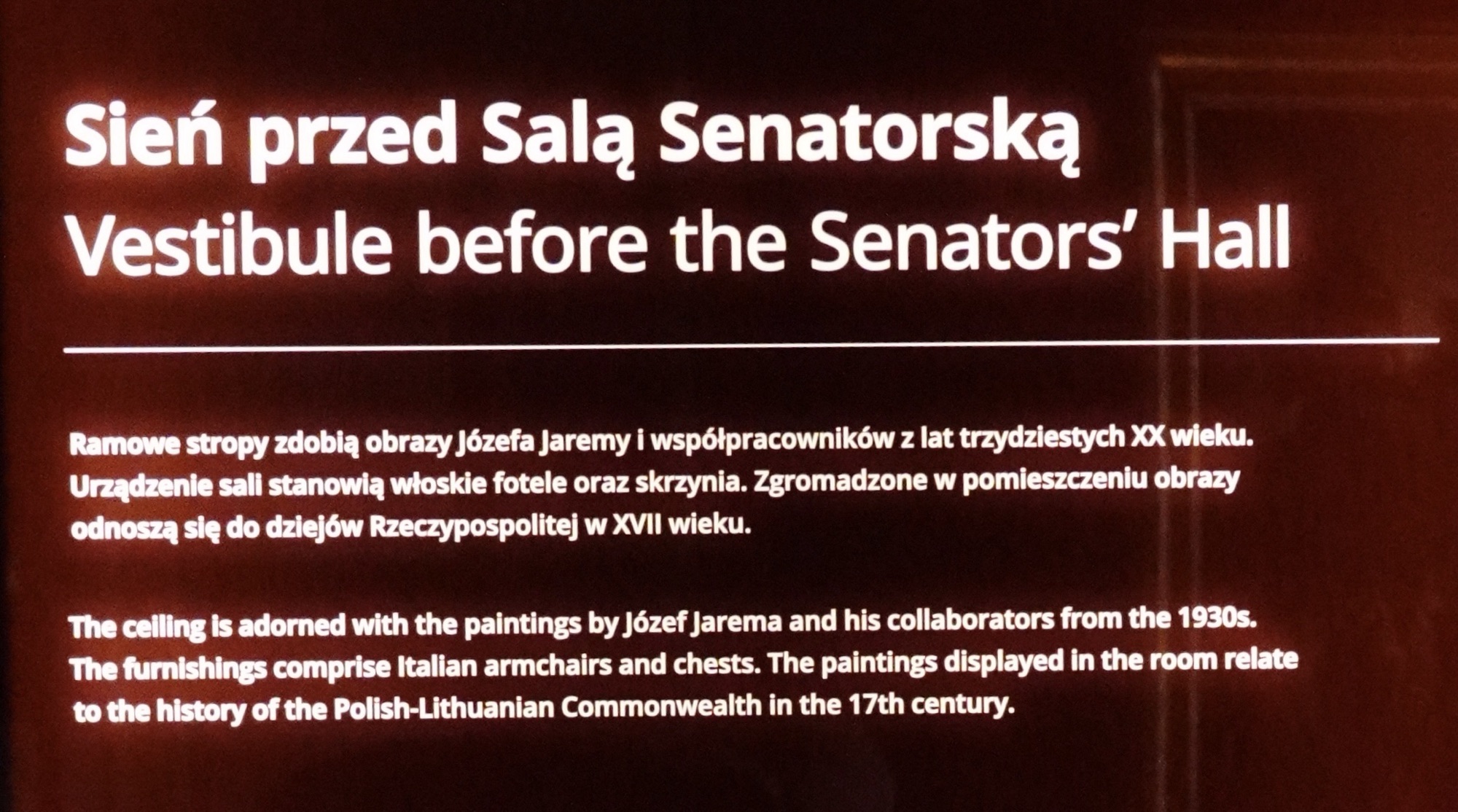
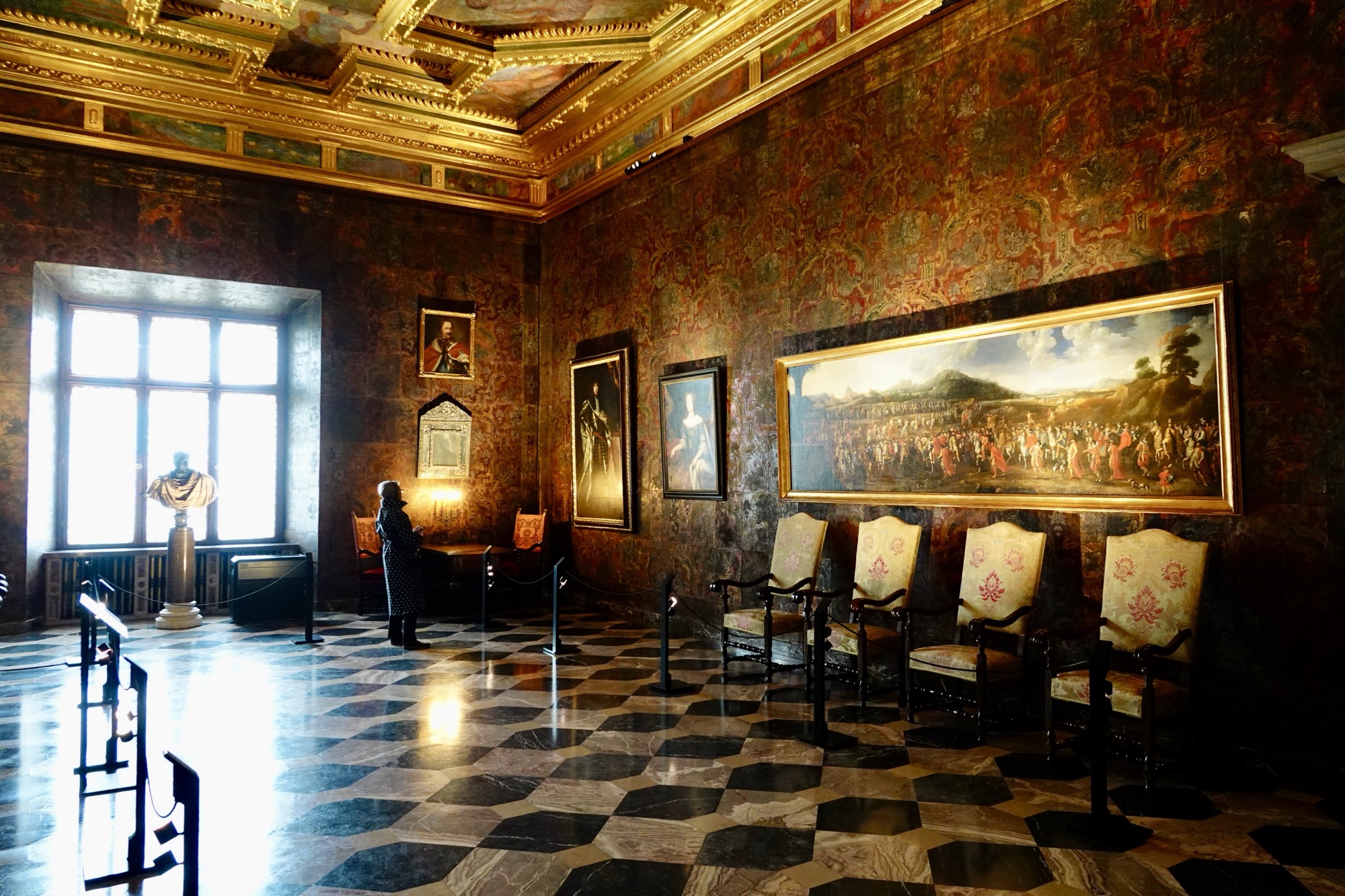
The first items of the painting collection were hung in the “Vestibule”
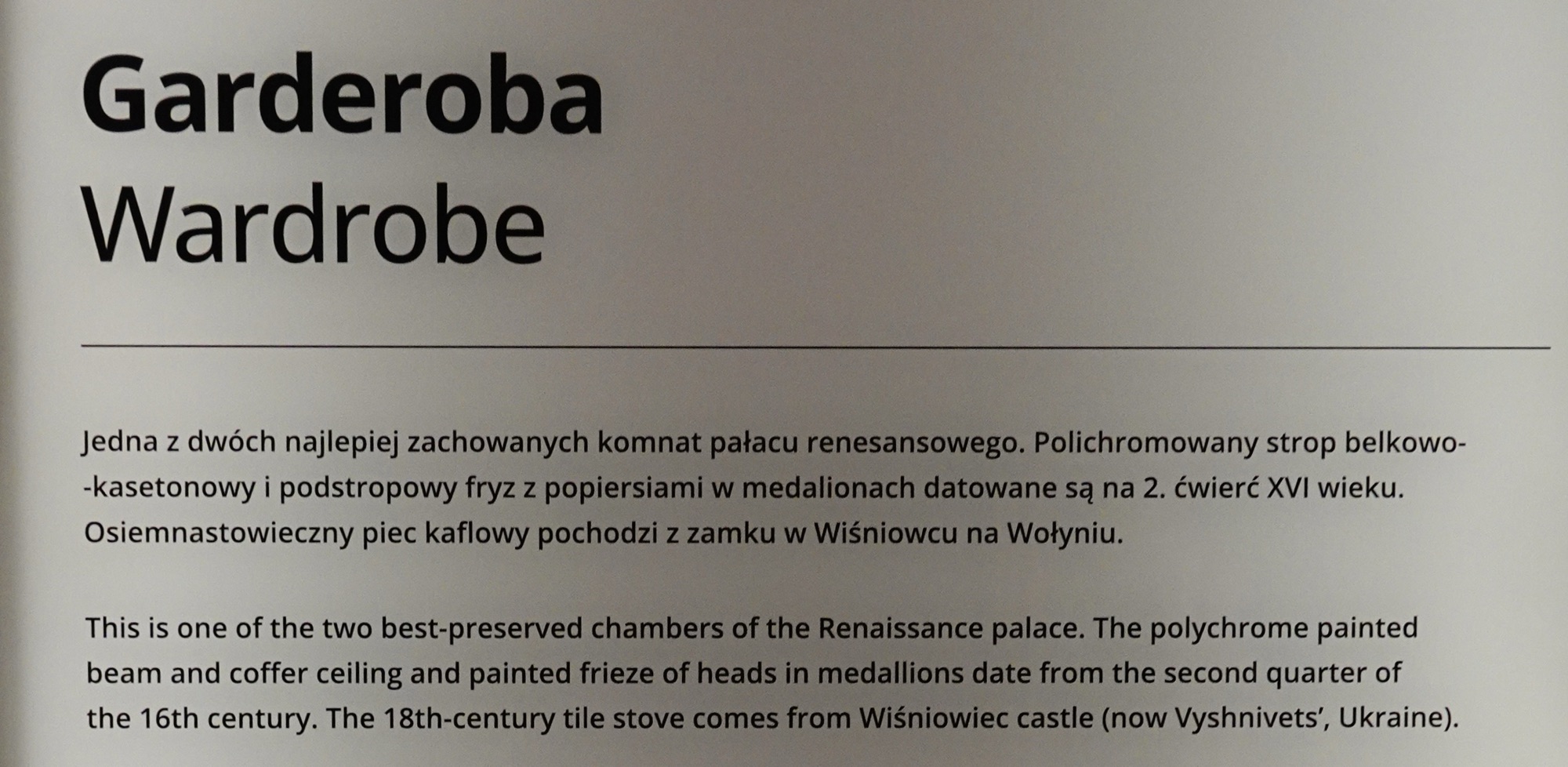
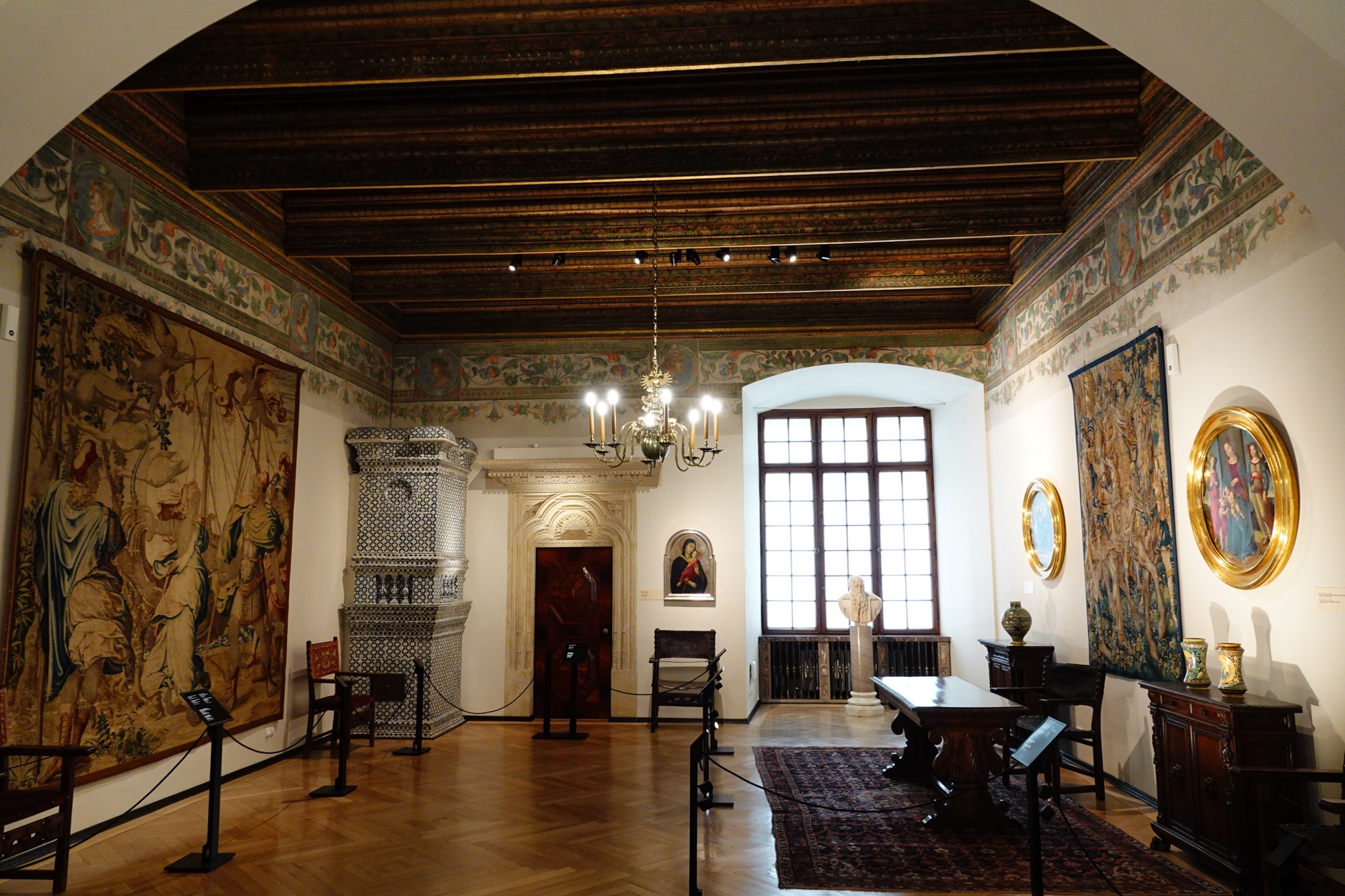
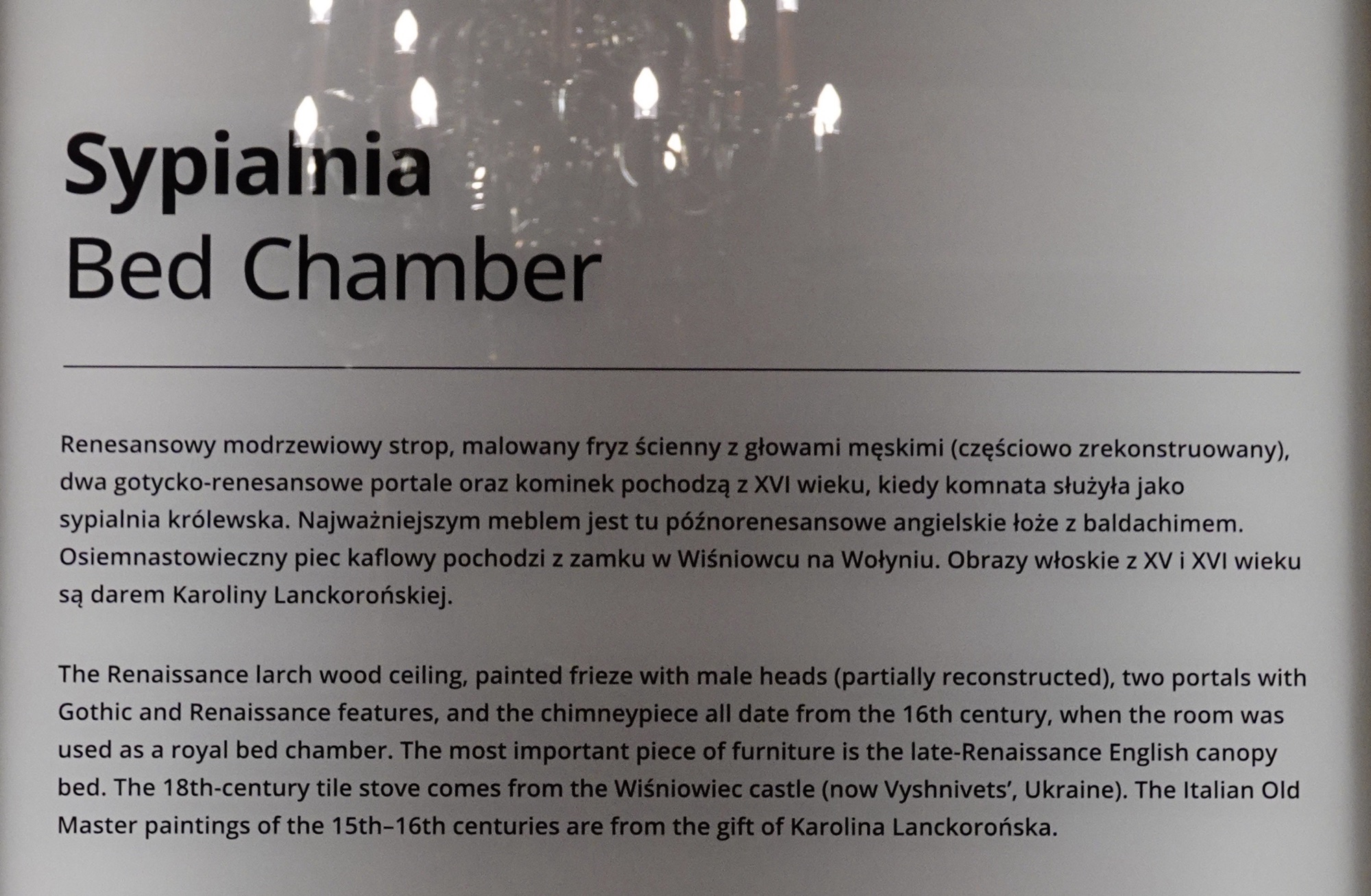
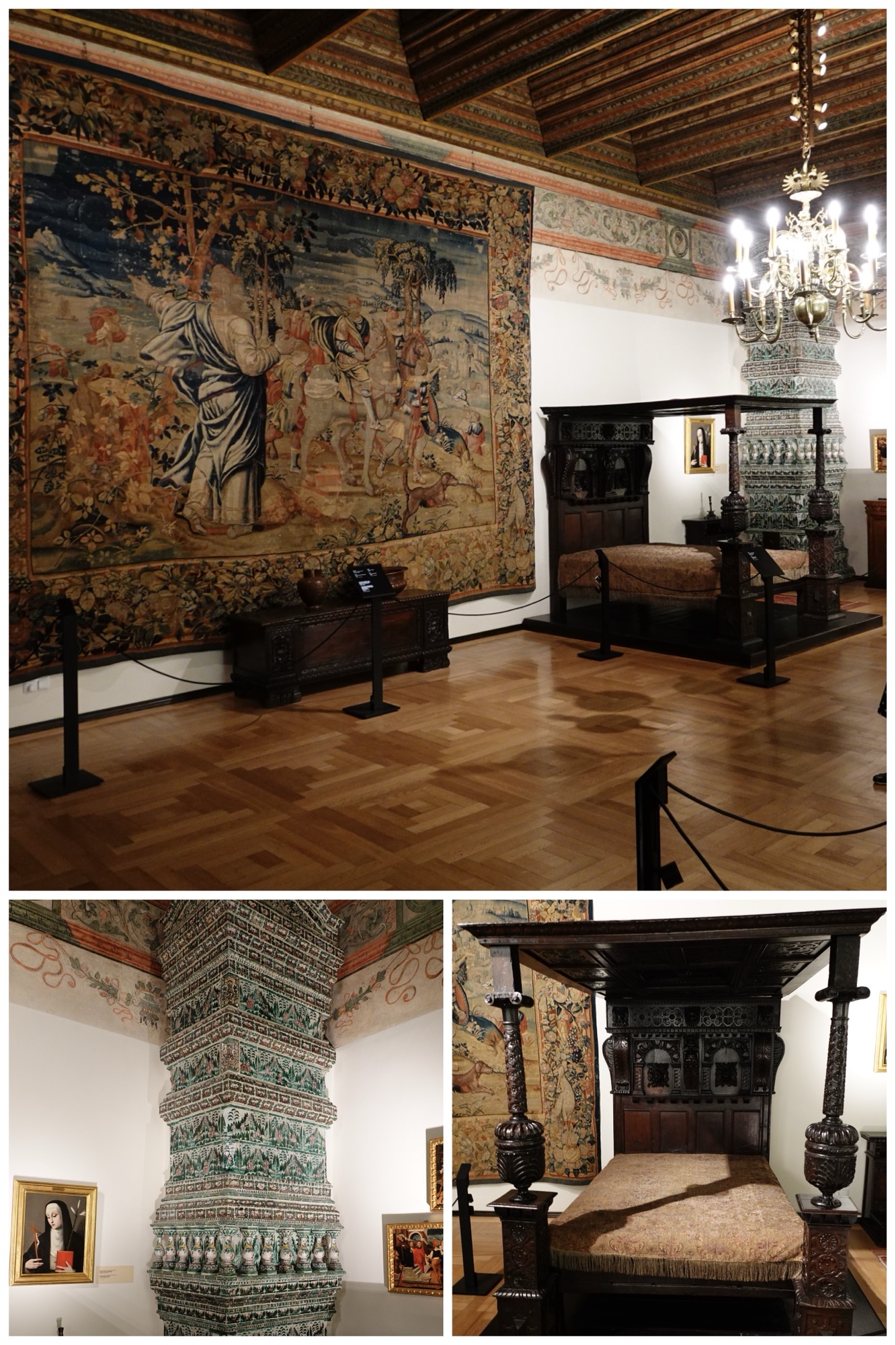
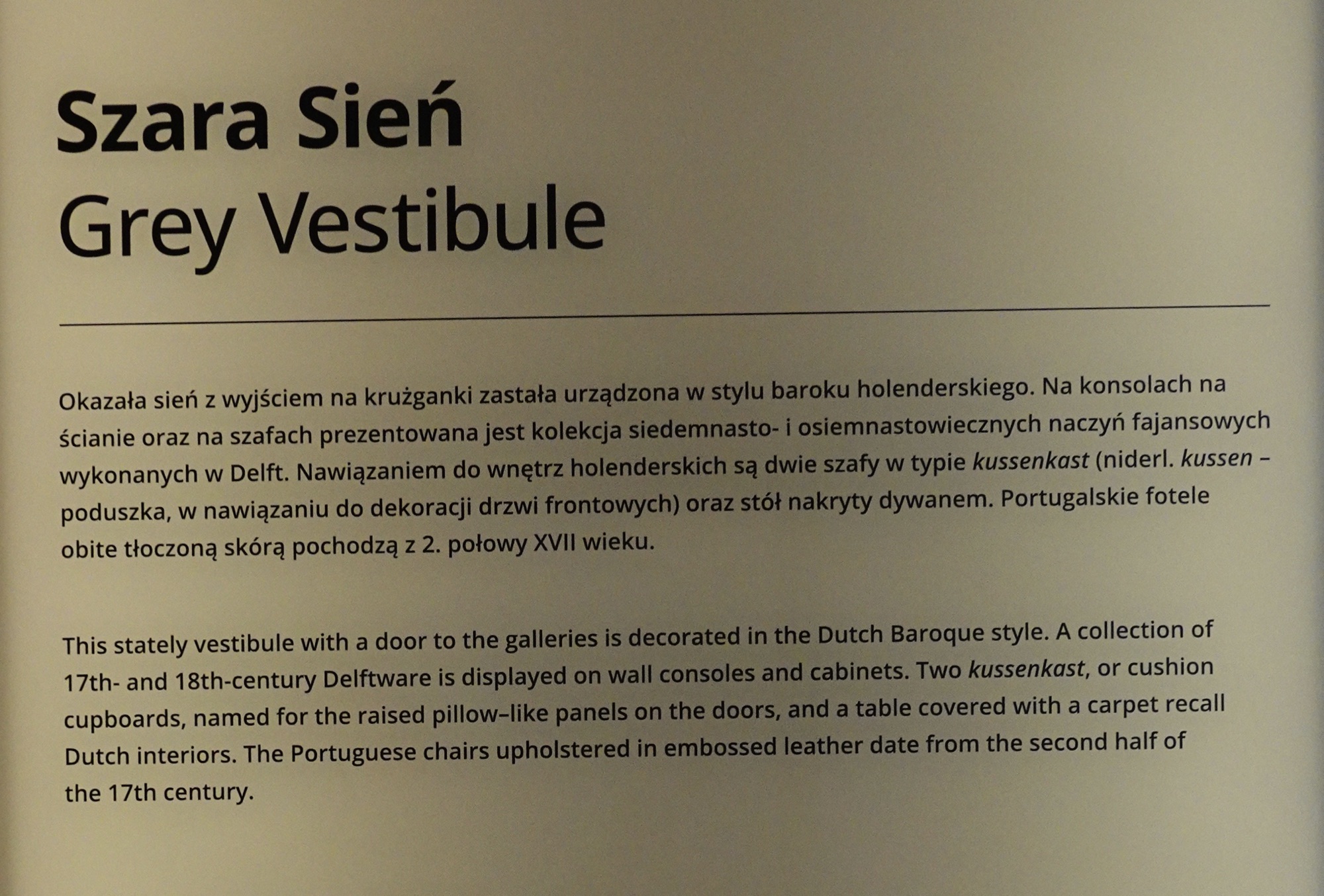
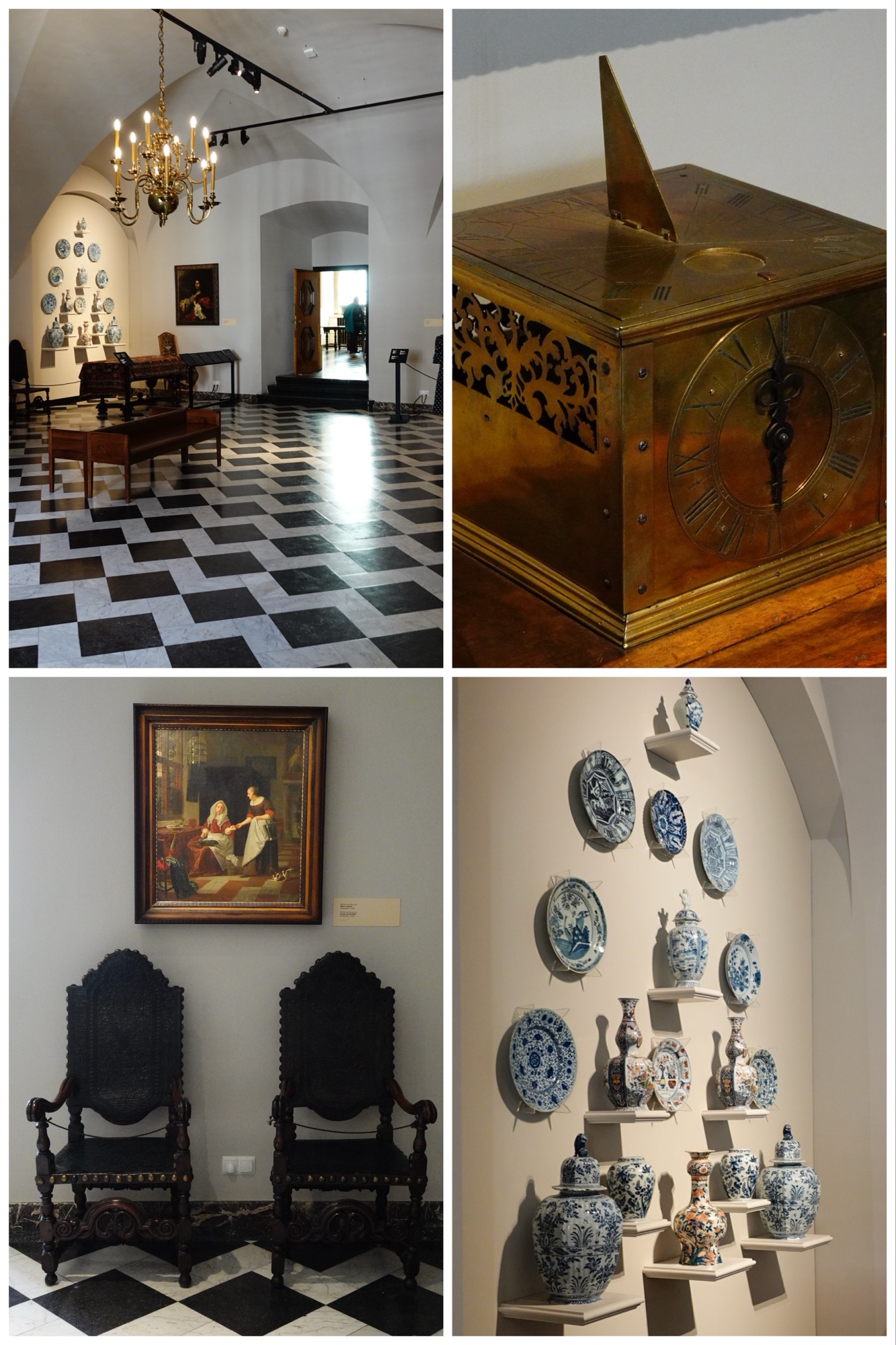
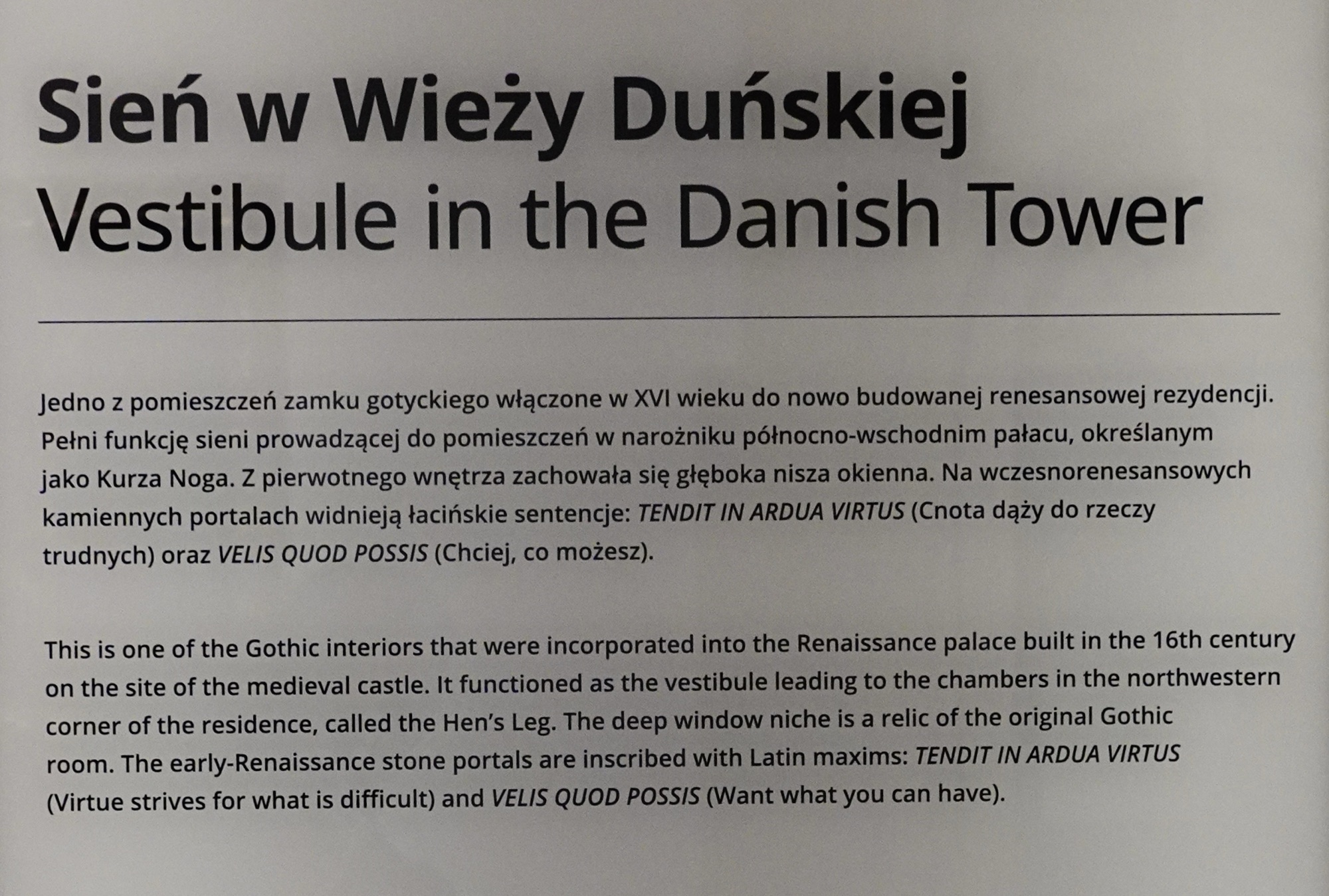
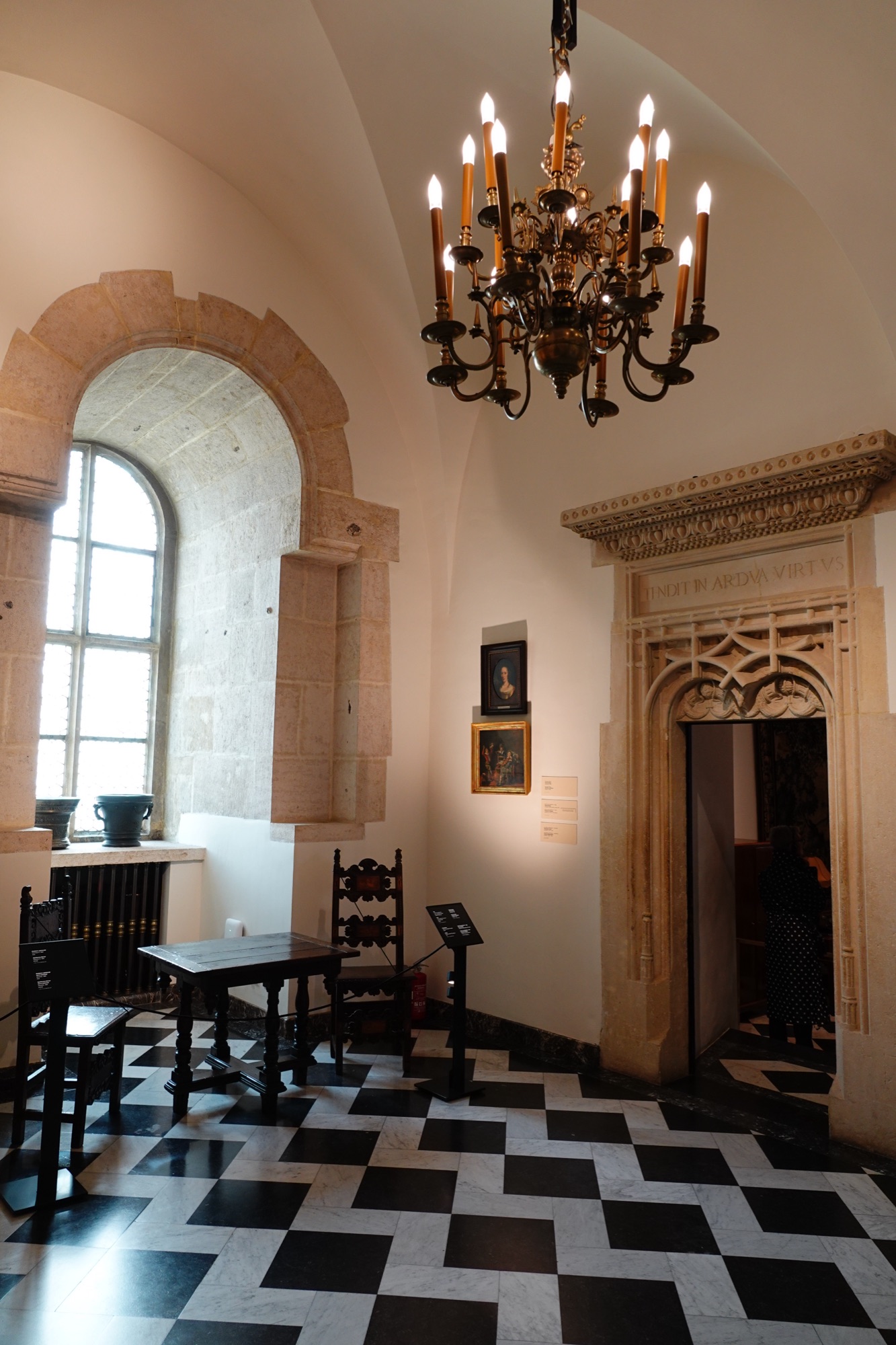
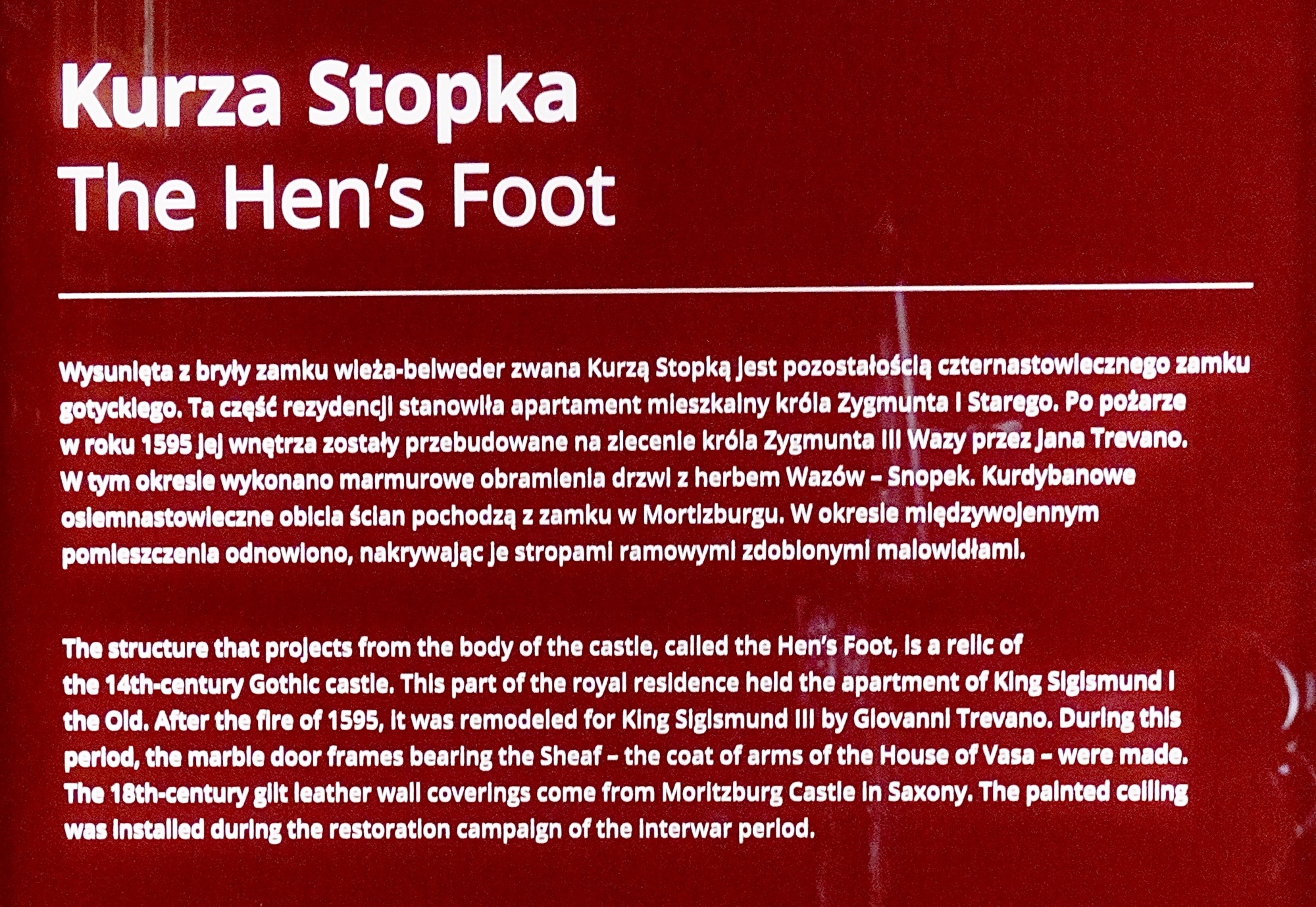
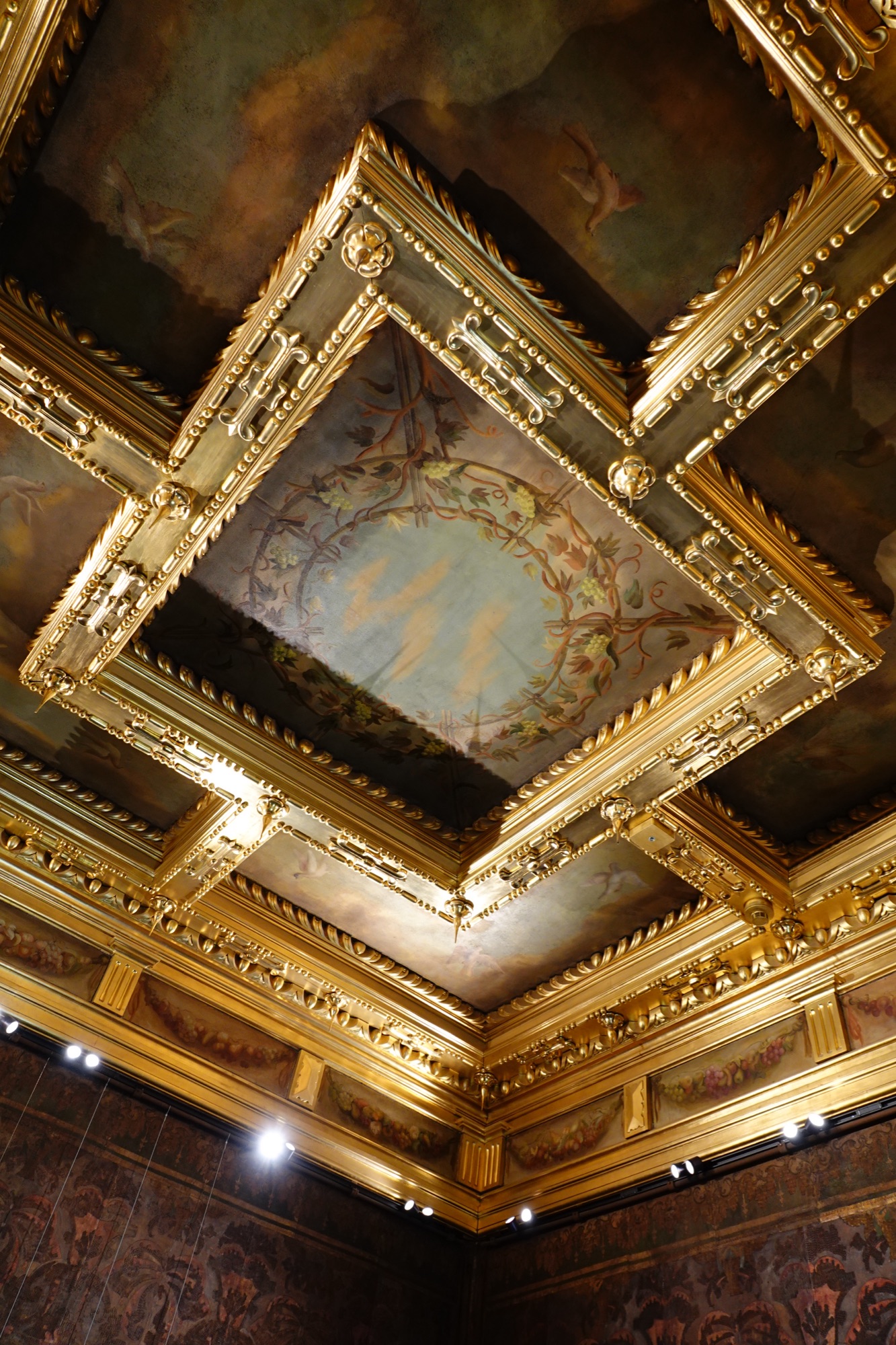
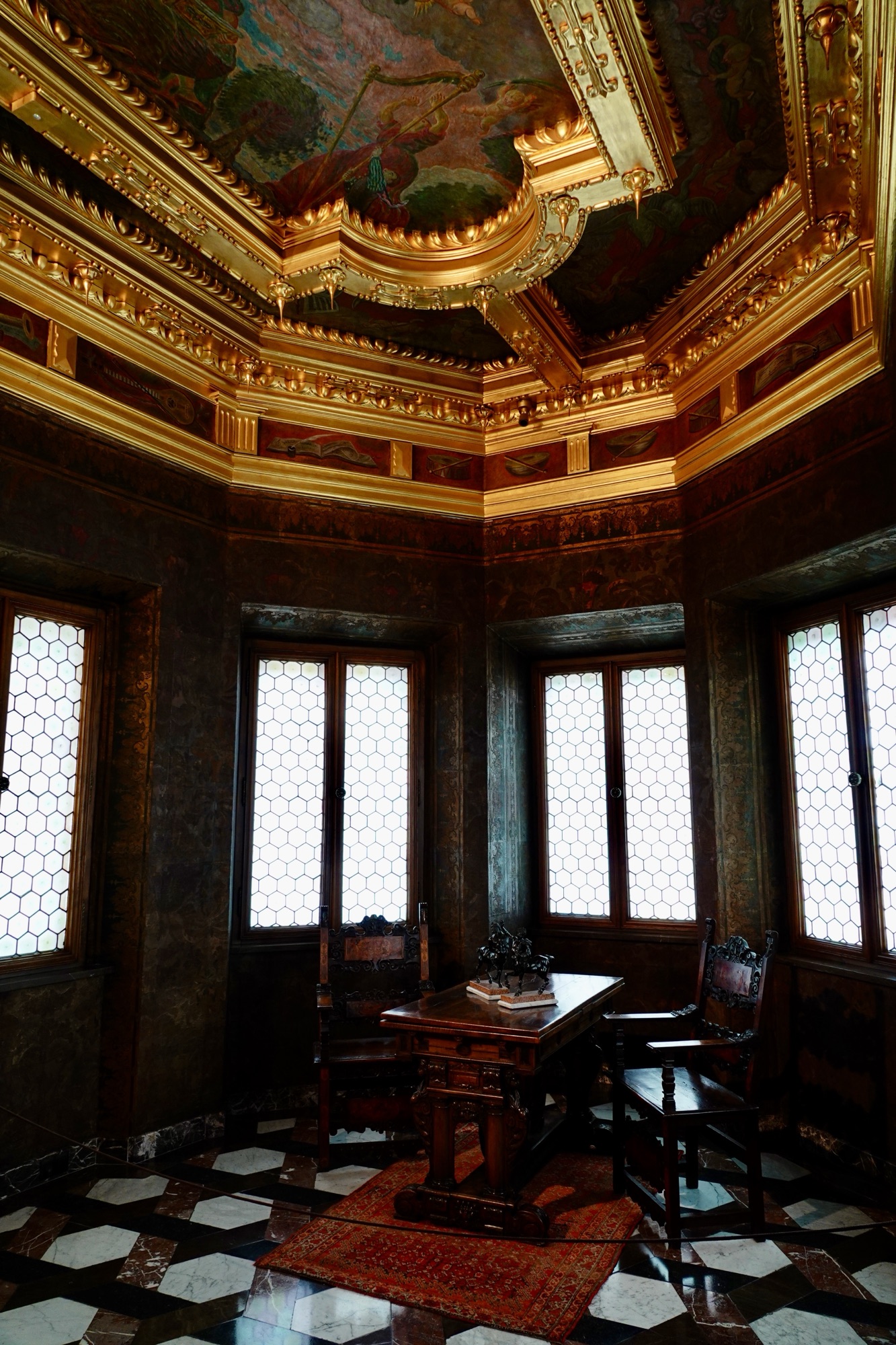
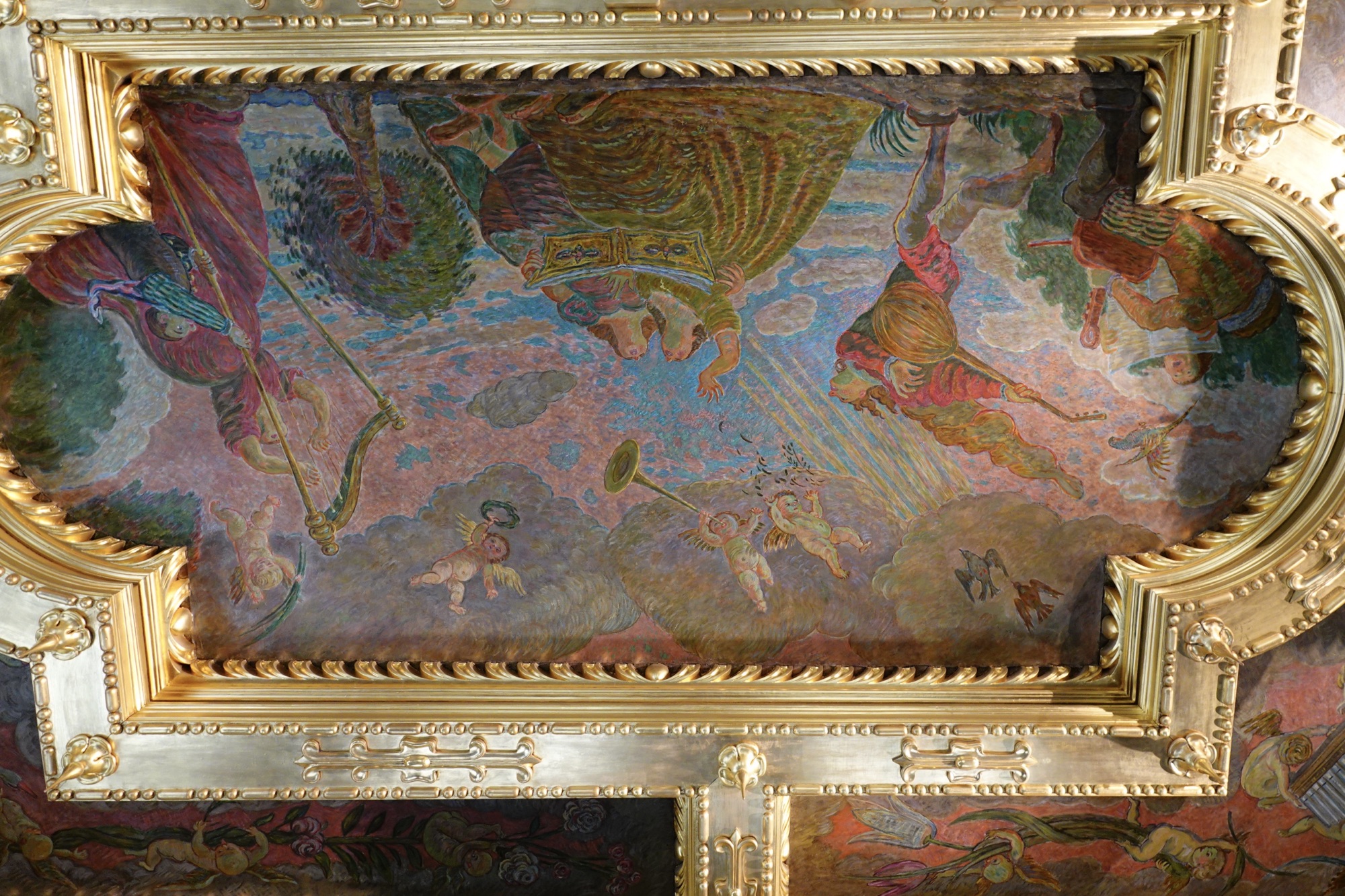
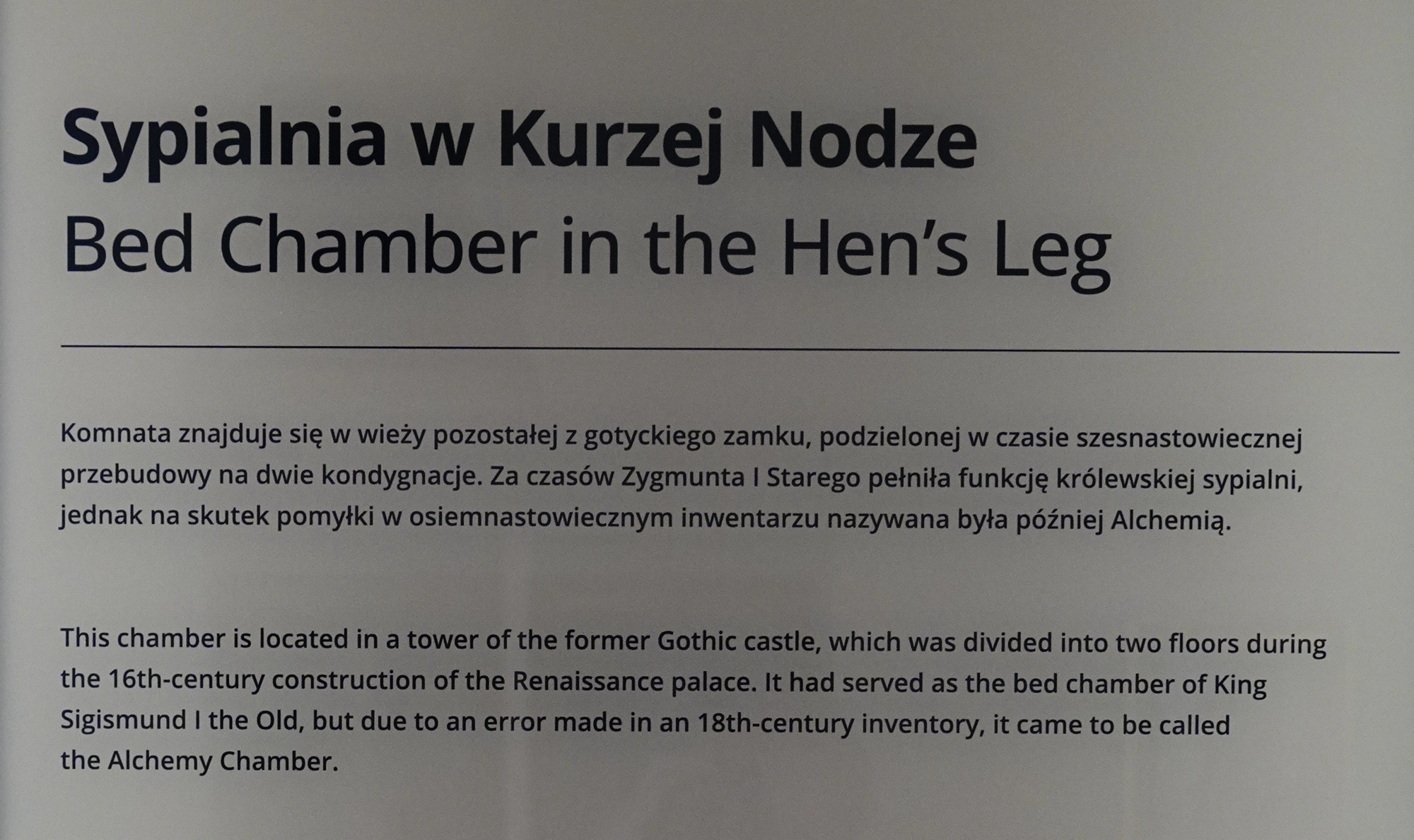
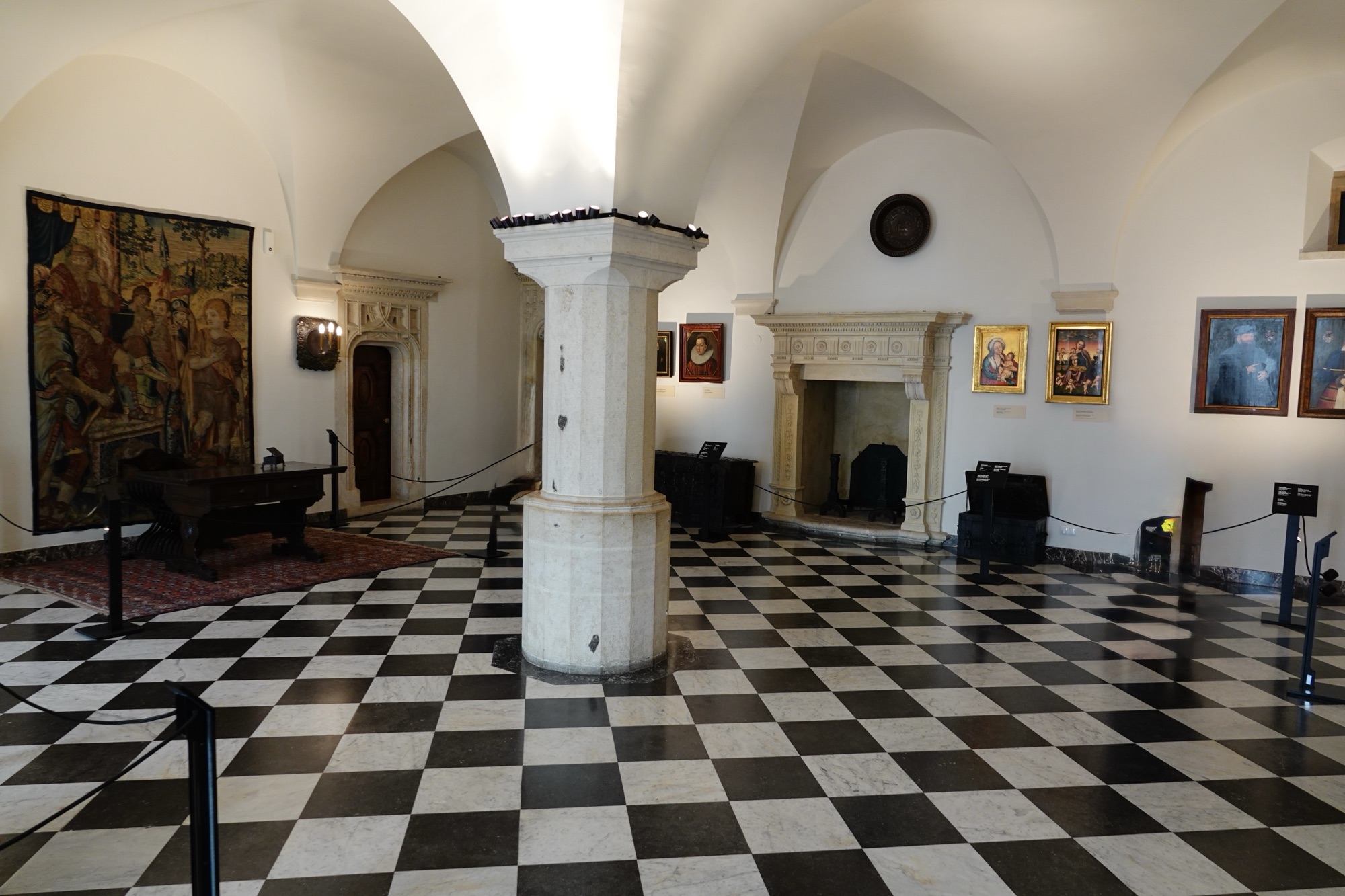
In the 16th century King Sigismund I the Old used the intimate space below as a study. In the period between the two World Wars it was part of Polish President Ignacy Mościcki’s apartment and was used as a small sitting room. The modern painted ceiling with a concert scene was executed in 1935-1936.
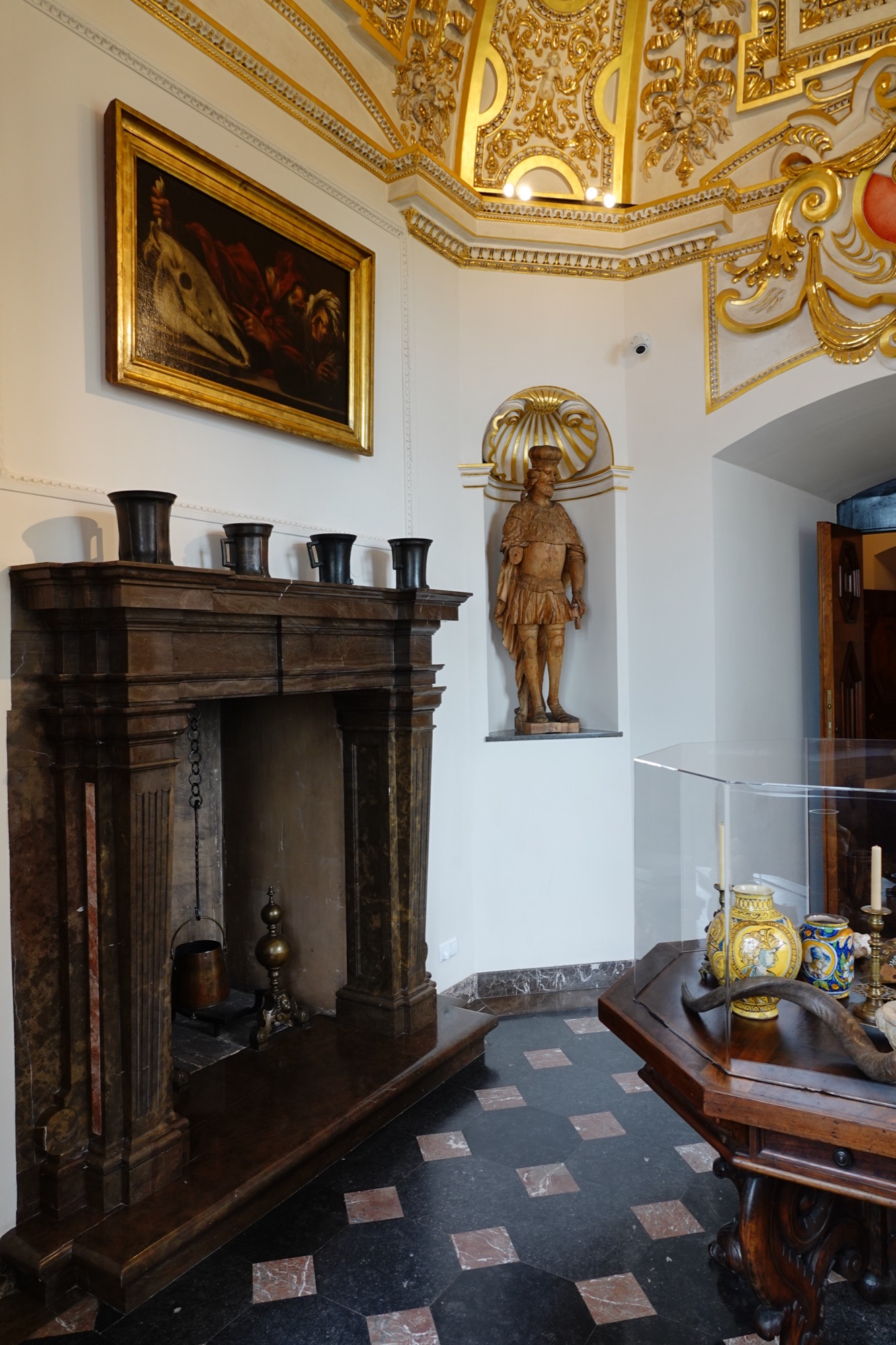
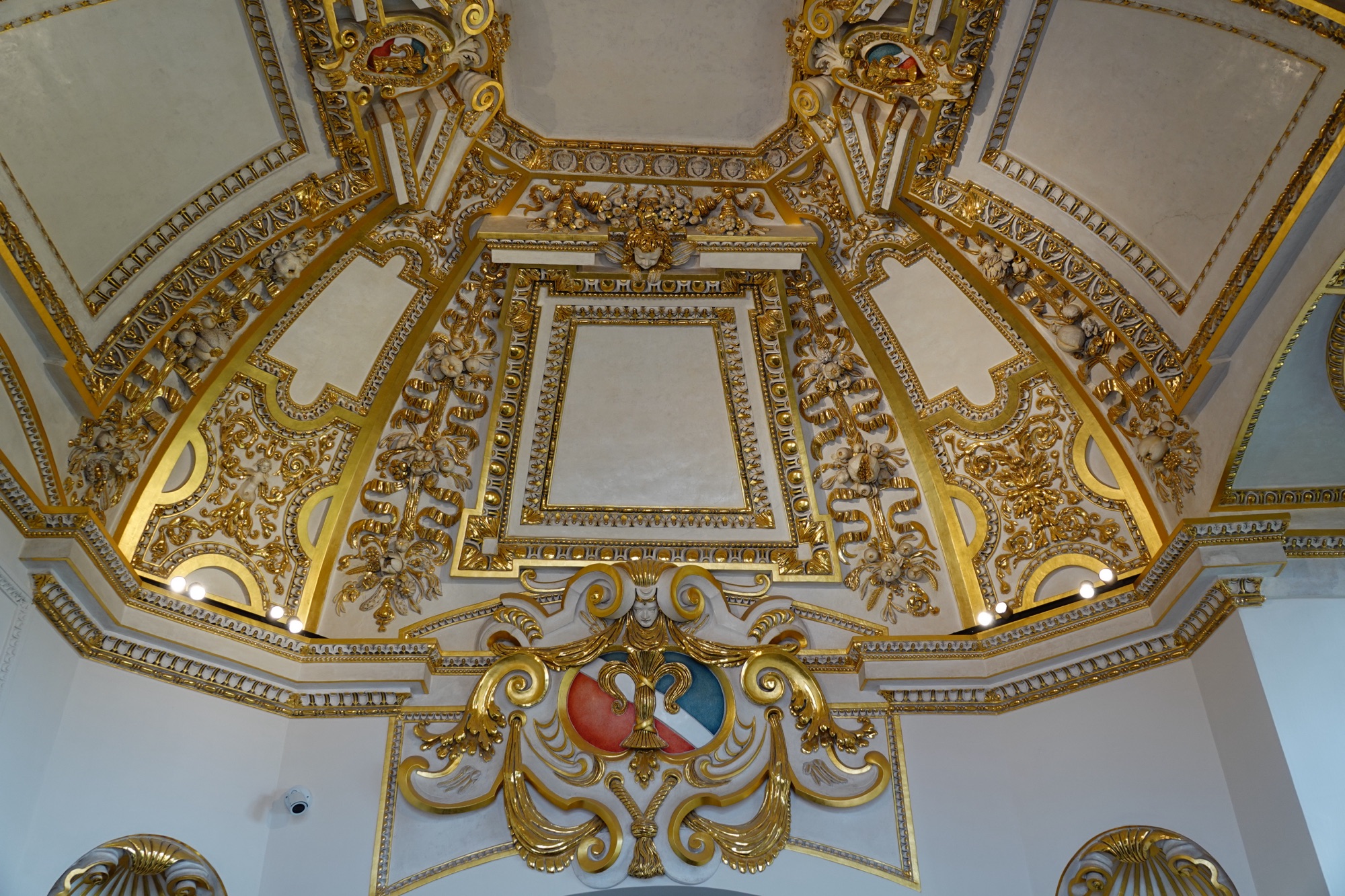
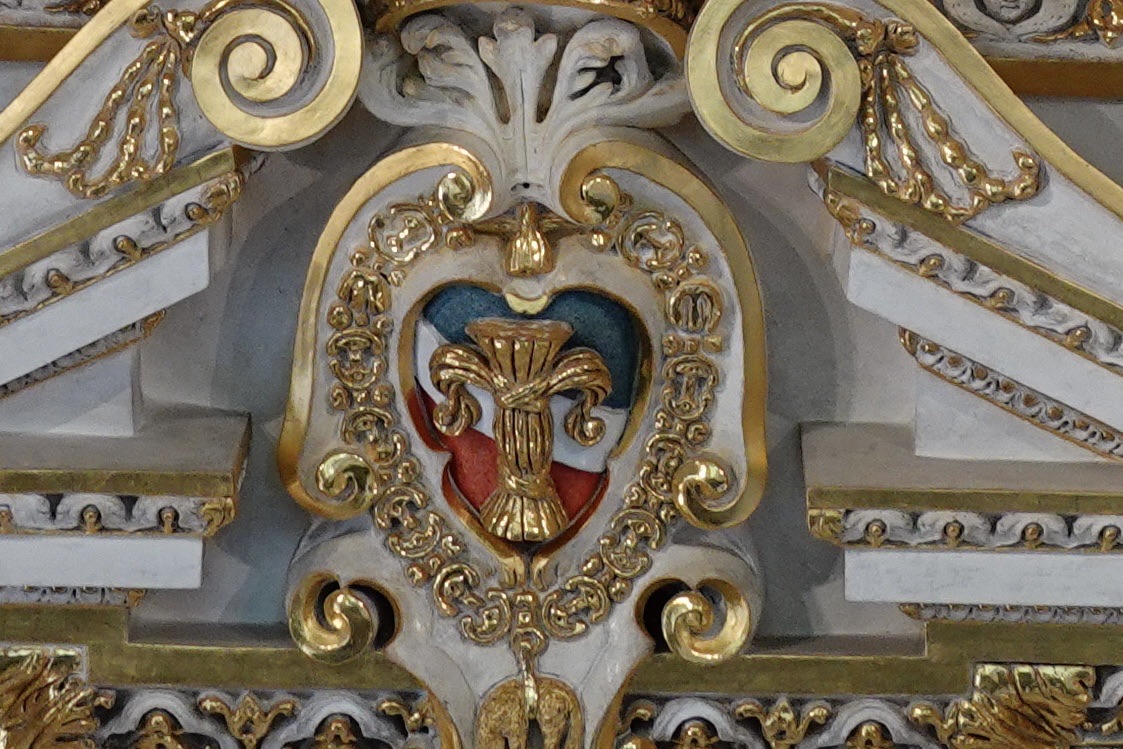
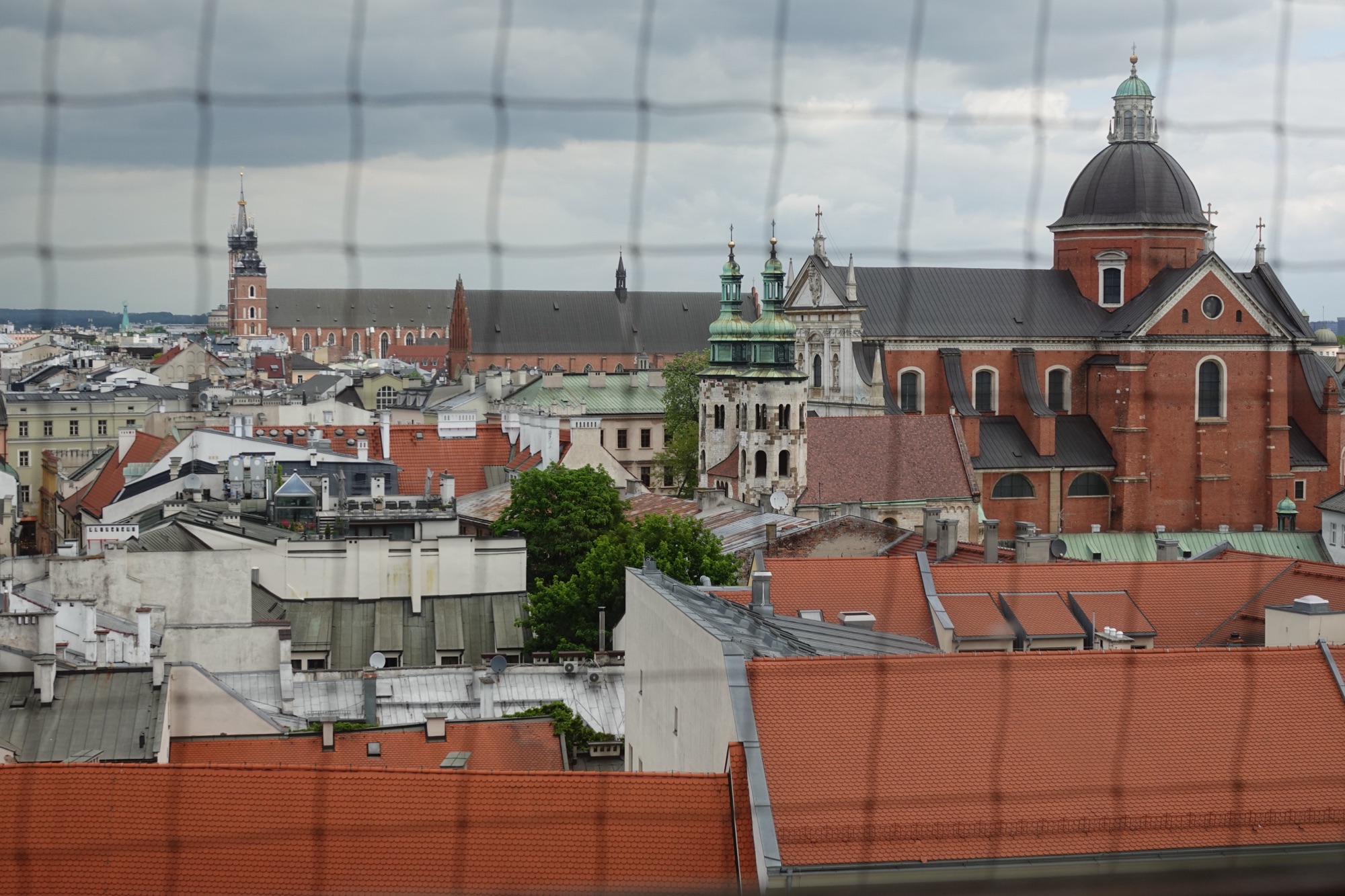
And what a view the King had from his study! (There would have been no wire mesh back then to obstruct it either.)
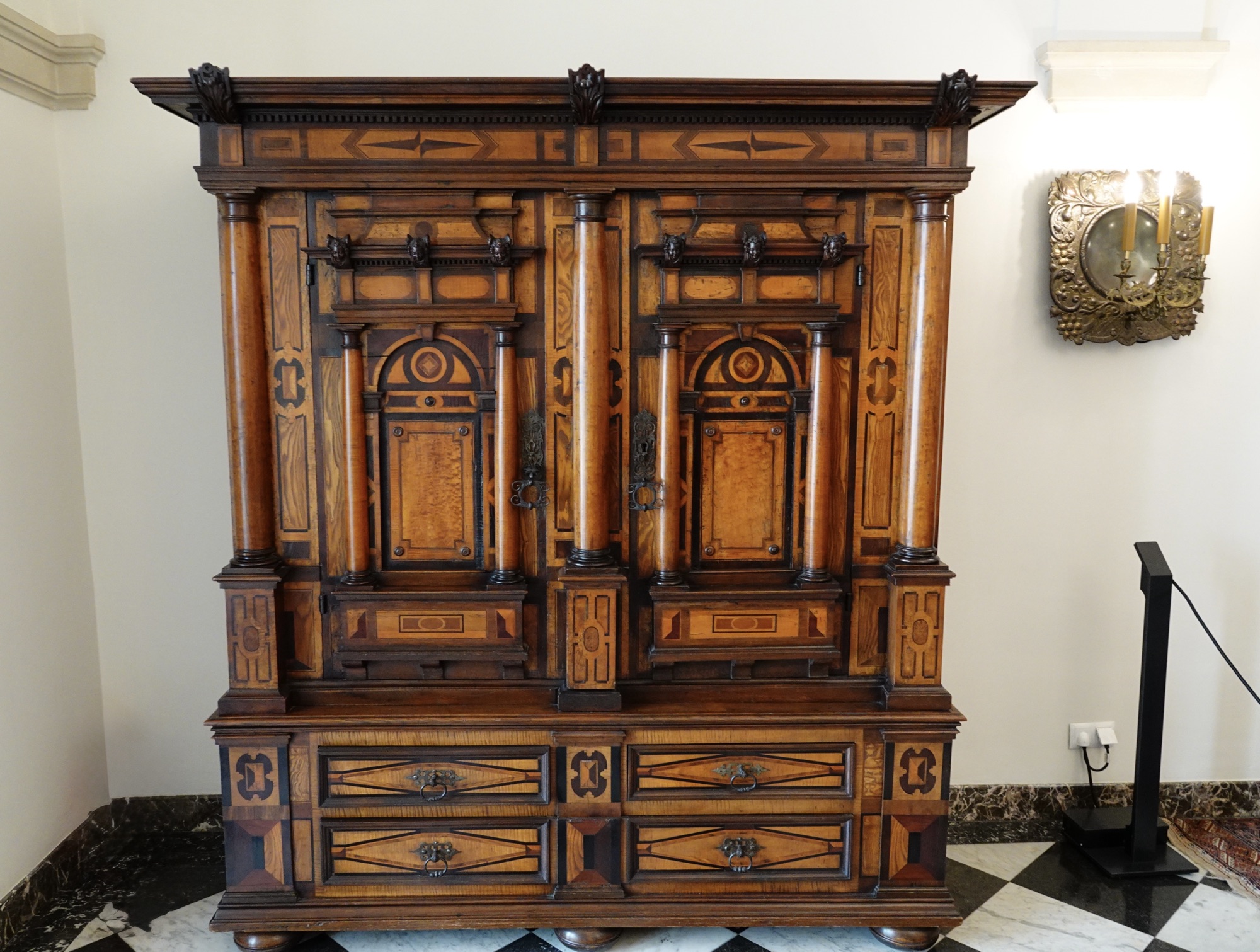
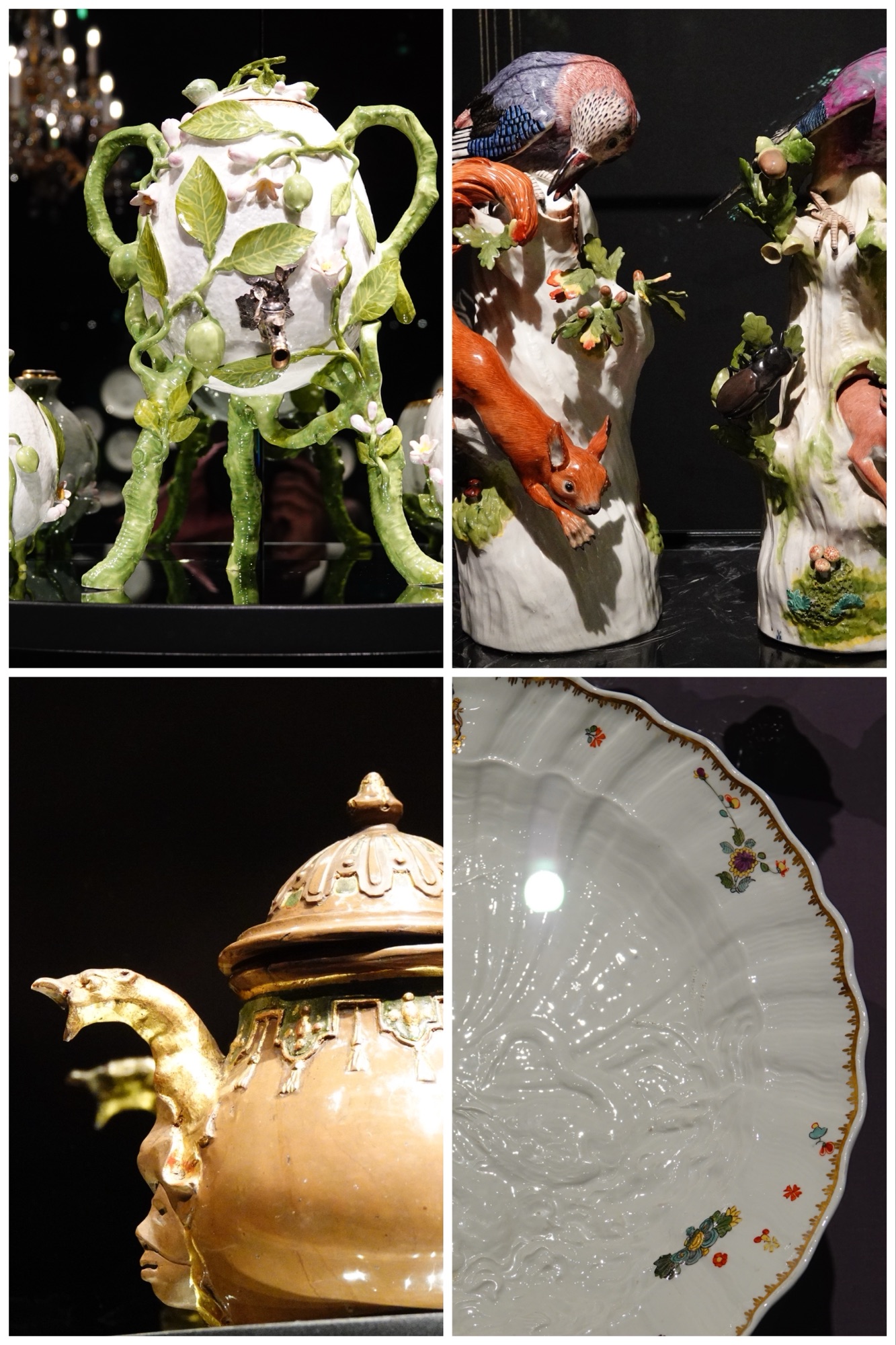
Meissen was Europe’s oldest porcelain factory, the first to create the kind of beautiful works that previously were only known to come from China and Japan. There is an entire room here filled with stunning Meissen pieces, including a huge sculpture of a wolf capturing a bird (behind glass too reflective for a good photo, sadly) . it was actually King Augustus II of Poland who founded the Meissen factory at the beginning of the 18th century!
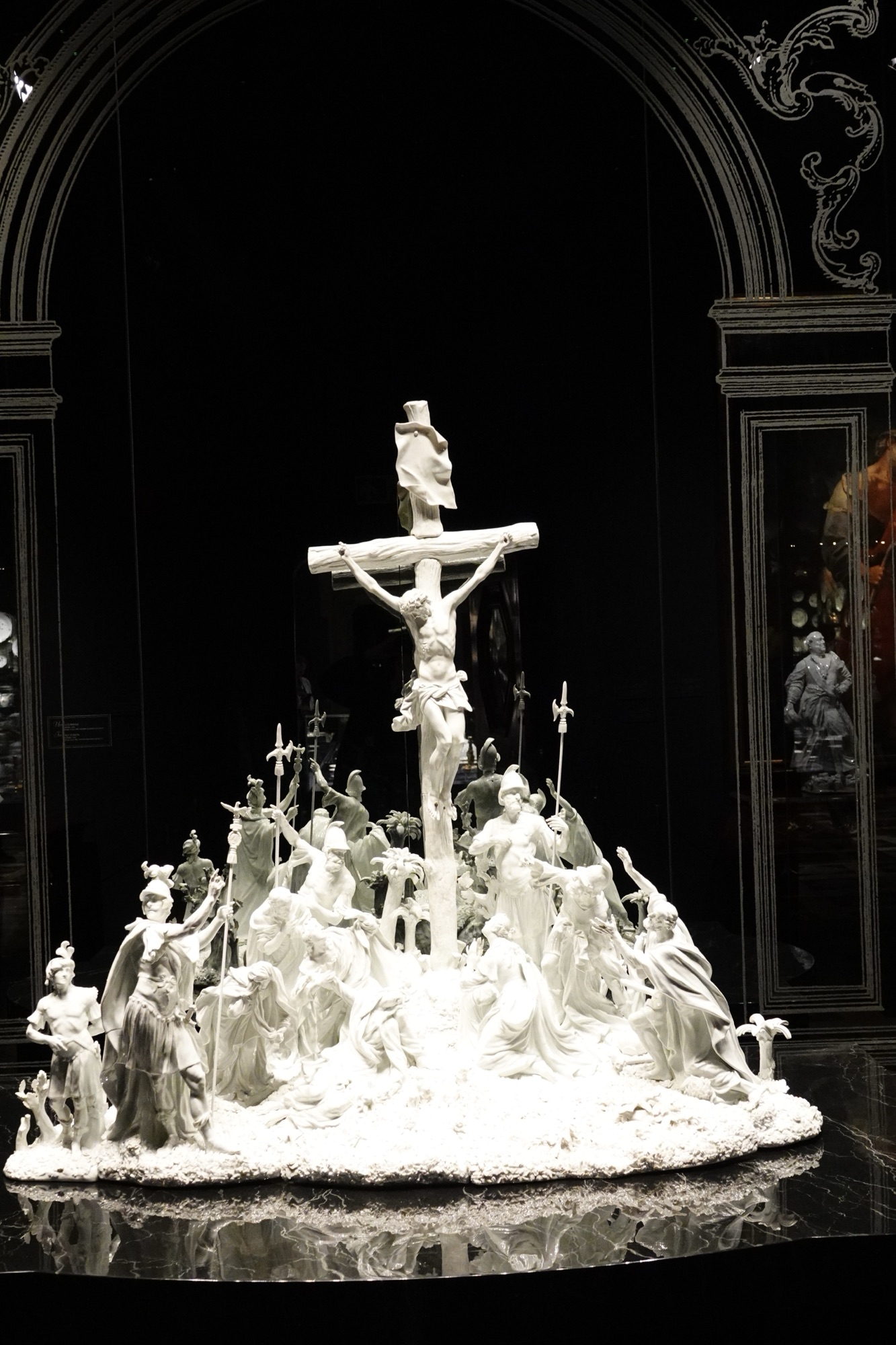
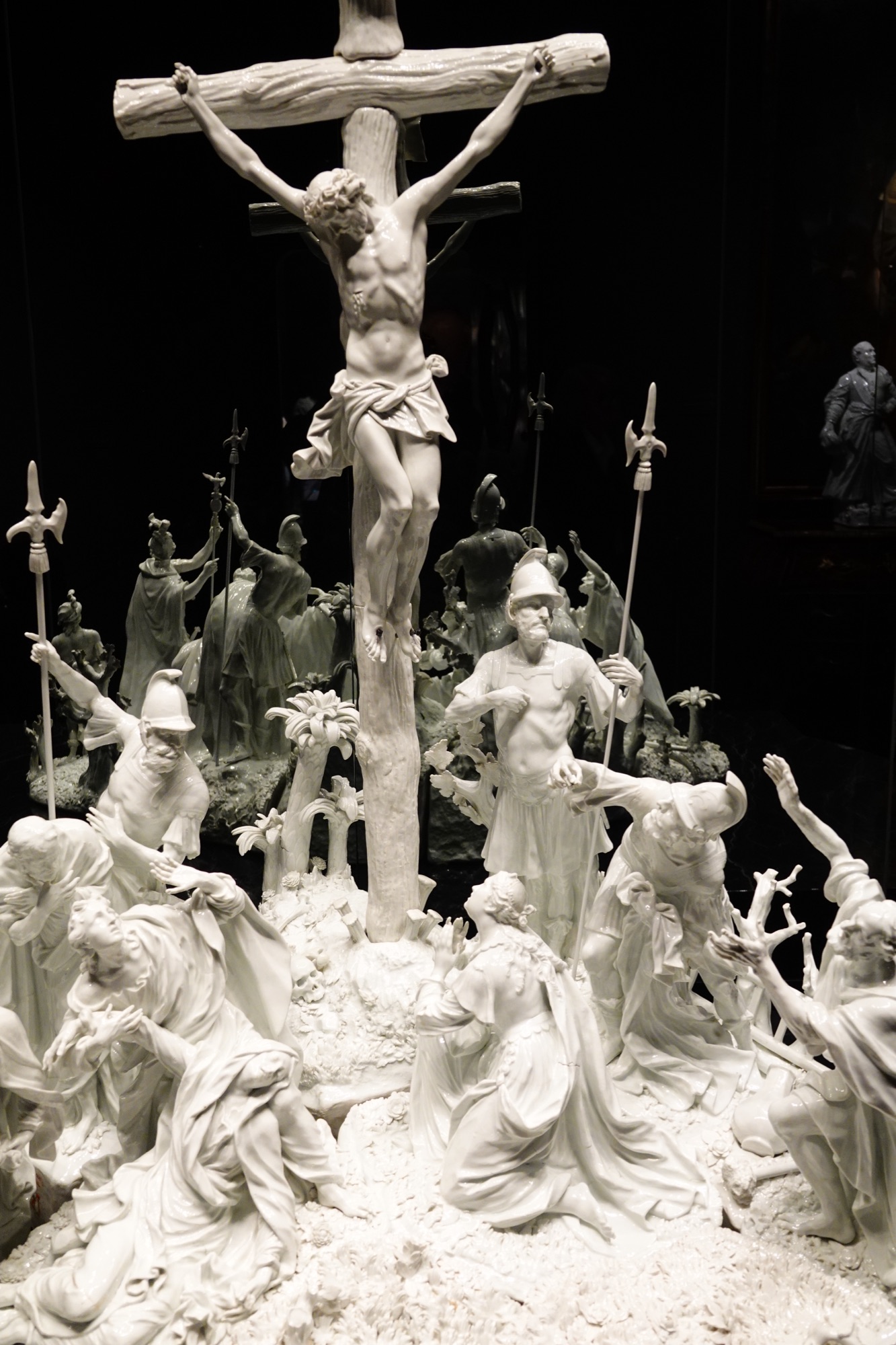
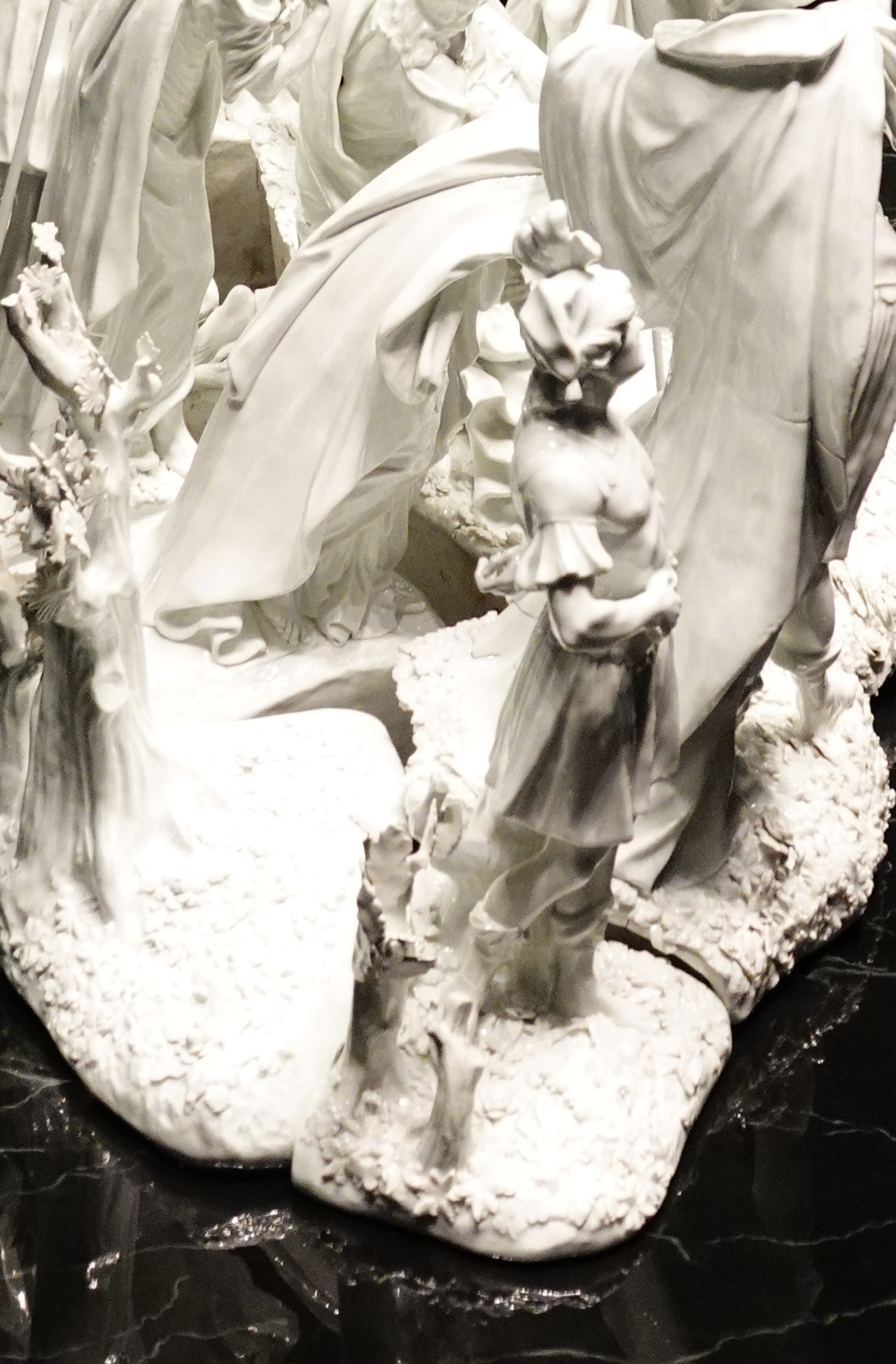
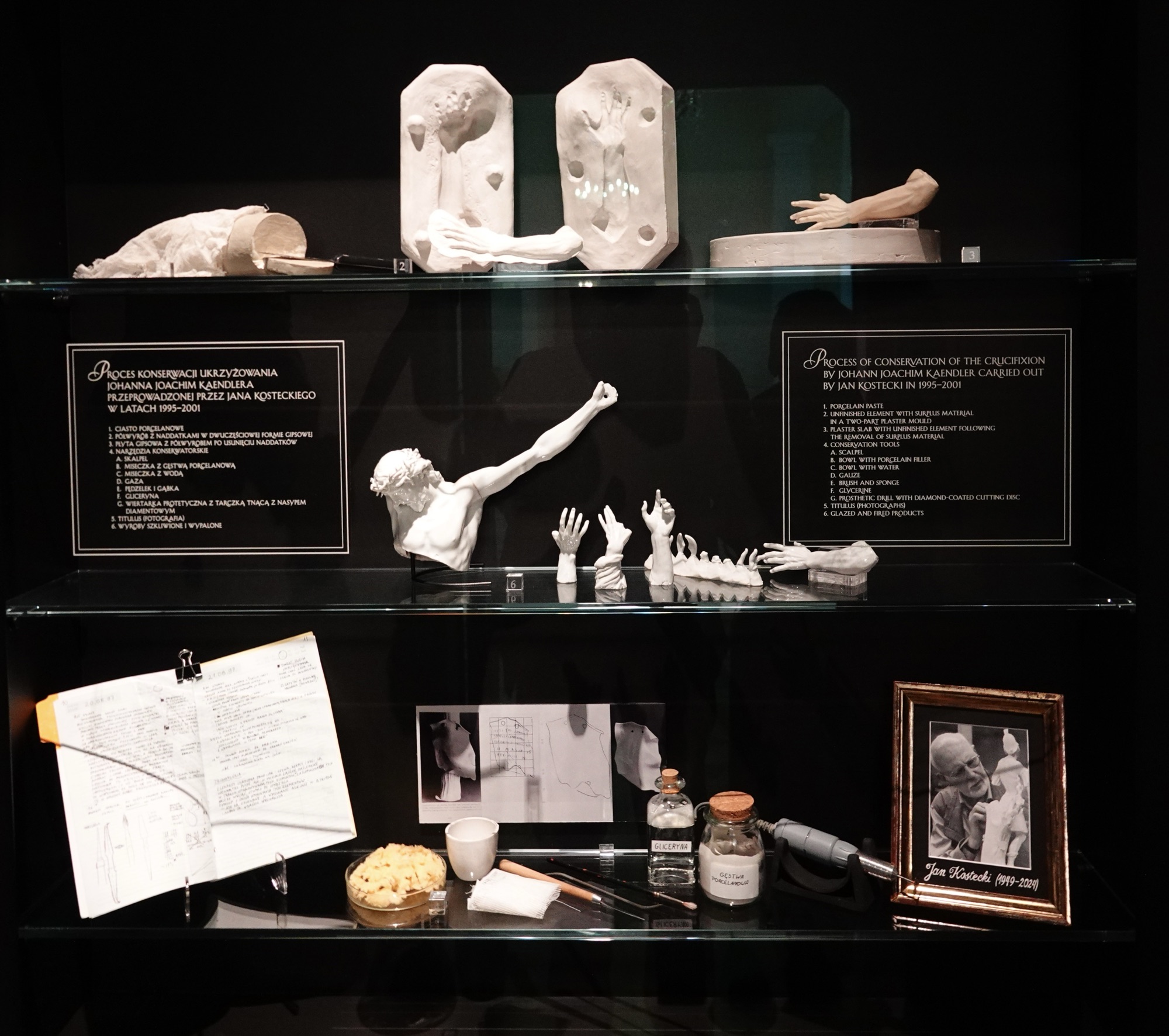
The most impressive Meissen porcelain on display was a huge multi-piece creation from 1744CE that came together to depict Christ’s crucifixion. There was also a small explanation of the 6-year restoration project required to bring it back to its original magnificence.
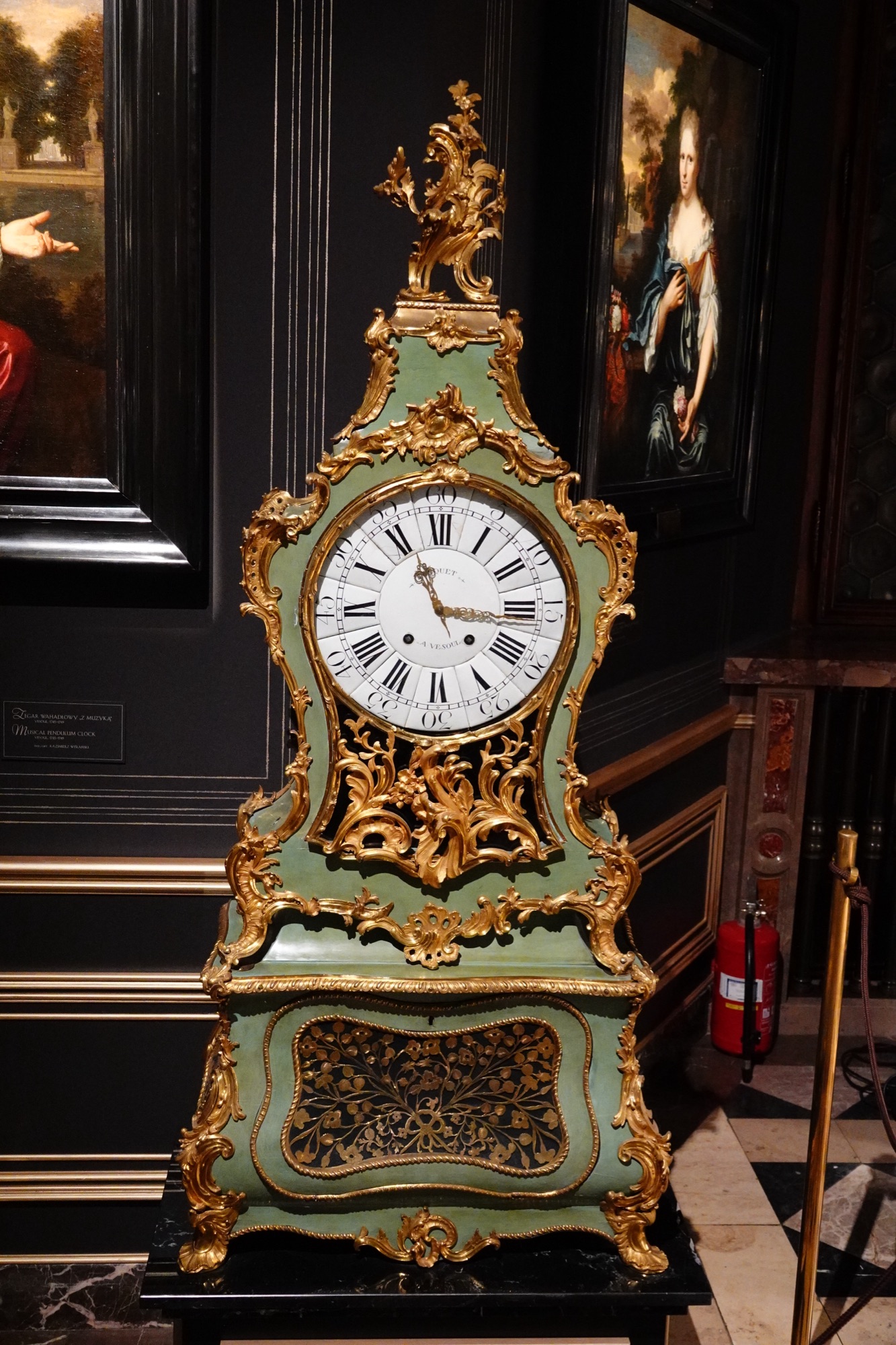
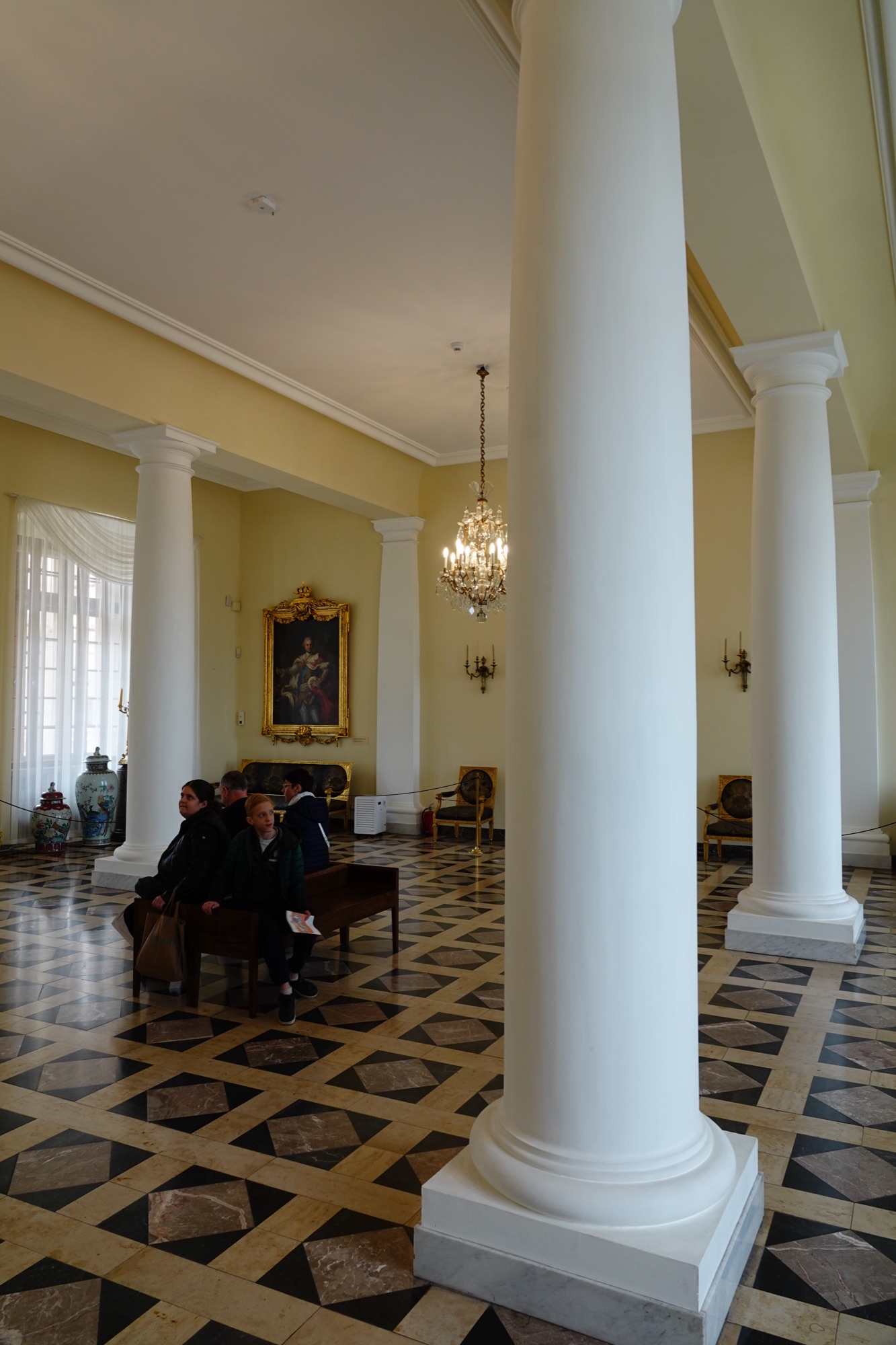
The COLUMNED HALL had an interesting story. In the 16th century, this room was called the great hall (stuba magna), and served as the dining room of Sigismund I the Old, but after King Sigismund II Vasa moved the capital to Warsaw in 1595, the castle fell into a state of some disrepair.
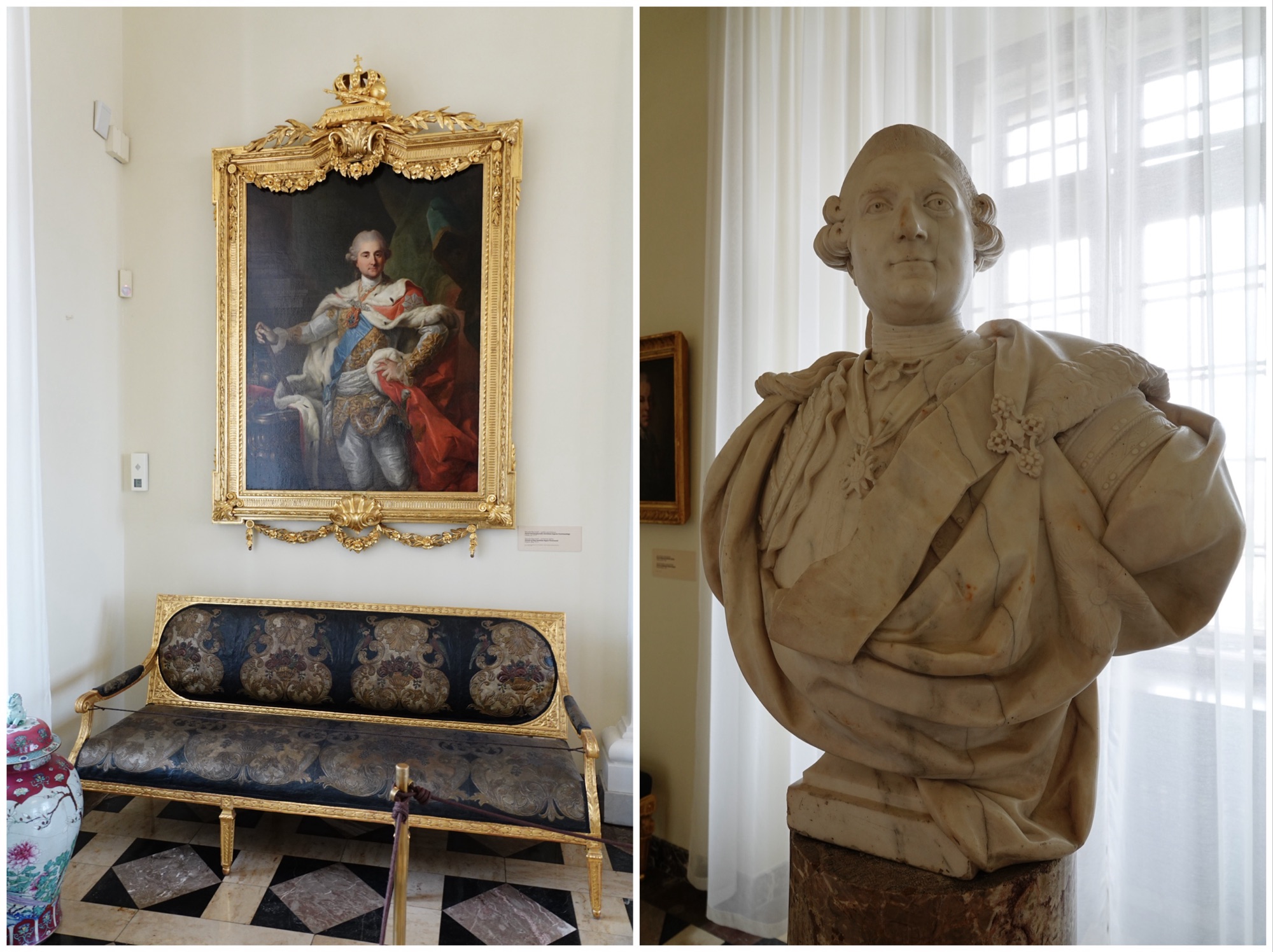
Then, almost 200 years later, in 1787, Stanislaus I Augustus Poniatowski, the last king of Poland, on his way back from a meeting with Catherine the Great of Russia, decided he would like to visit the old royal seat in Kraków. A degree of panic ensued to make the castle suitable for a royal visit. The room’s present form and furnishings are inspired by that event. A suite of Neoclassical Polish furniture with gilt leather upholstery and a set of gilt bronze sconces and candelabra were made by the fashionable Parisian sculptors Philippe Caffi and Pierre-Philippe Thomire. Additionally, classical pillars, a very popular architectural affectation in the late 18th century, were added. (It’s just possible they were also needed to support a sagging ceiling.)
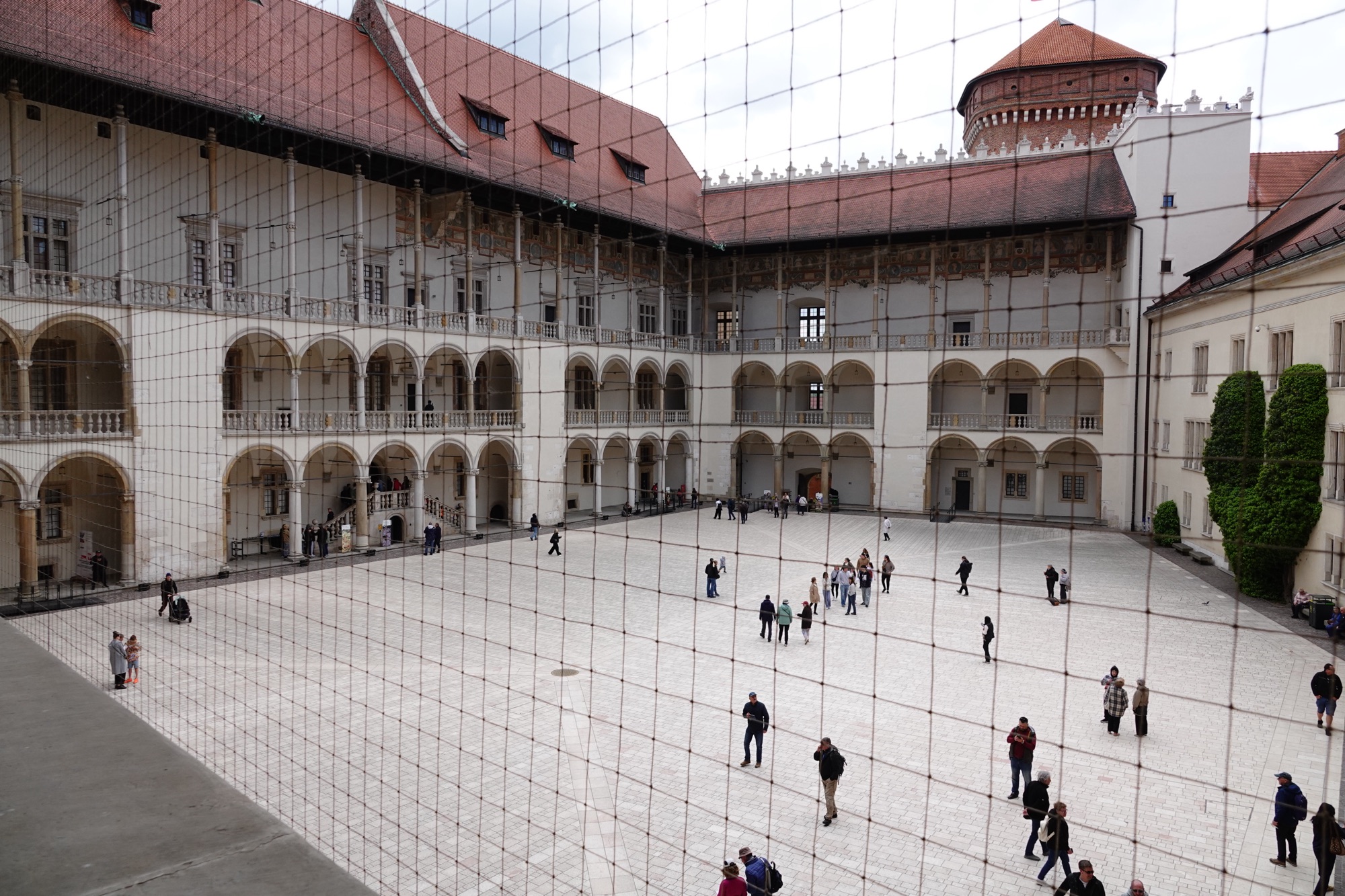
As we moved between wings of the castle, we got another view of the courtyard, where once upon a time tournaments were held.
We climbed a lot of stairs in the castle complex, even before climbing into the Royal Cathedral’s bell tower.
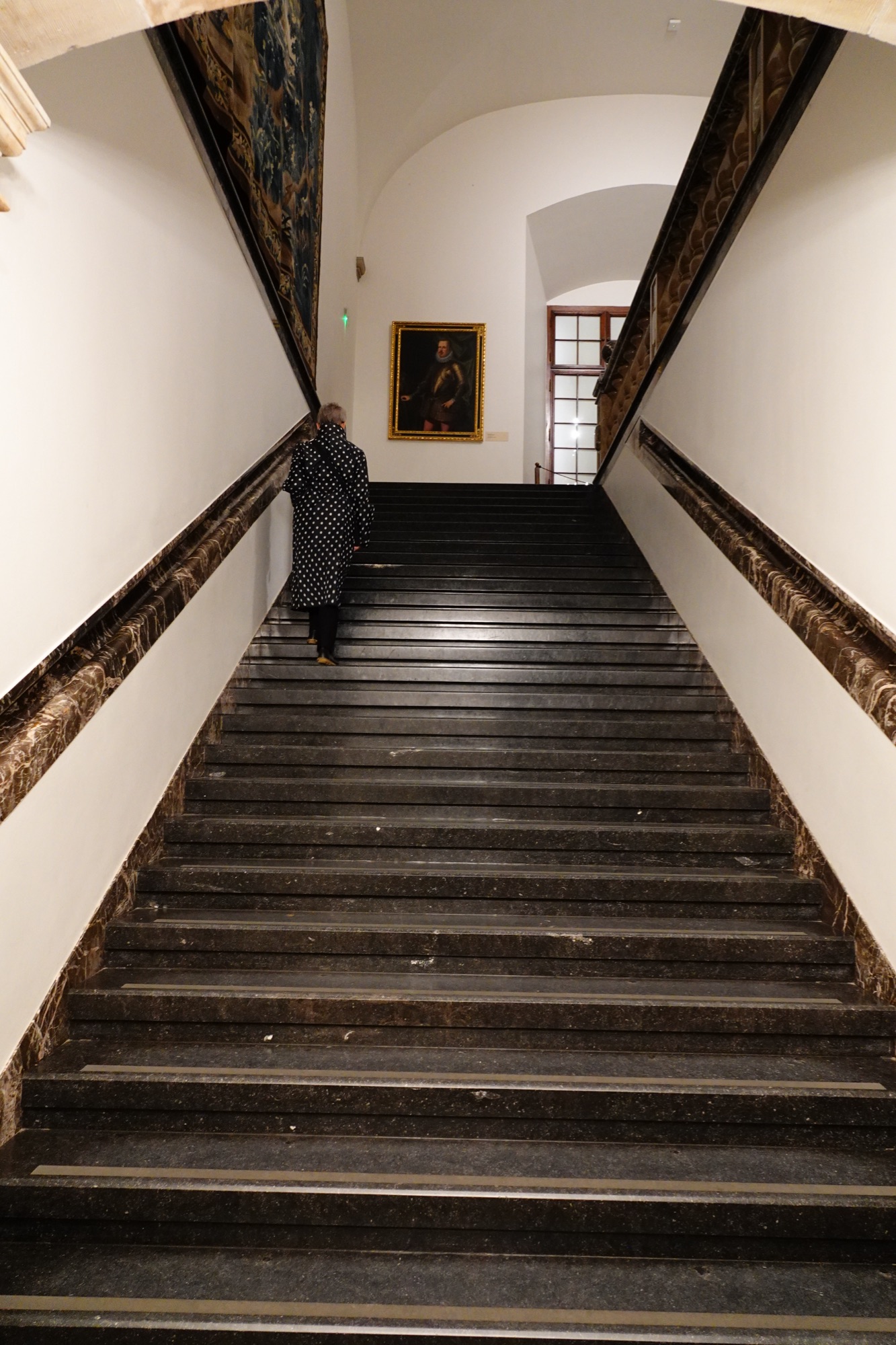
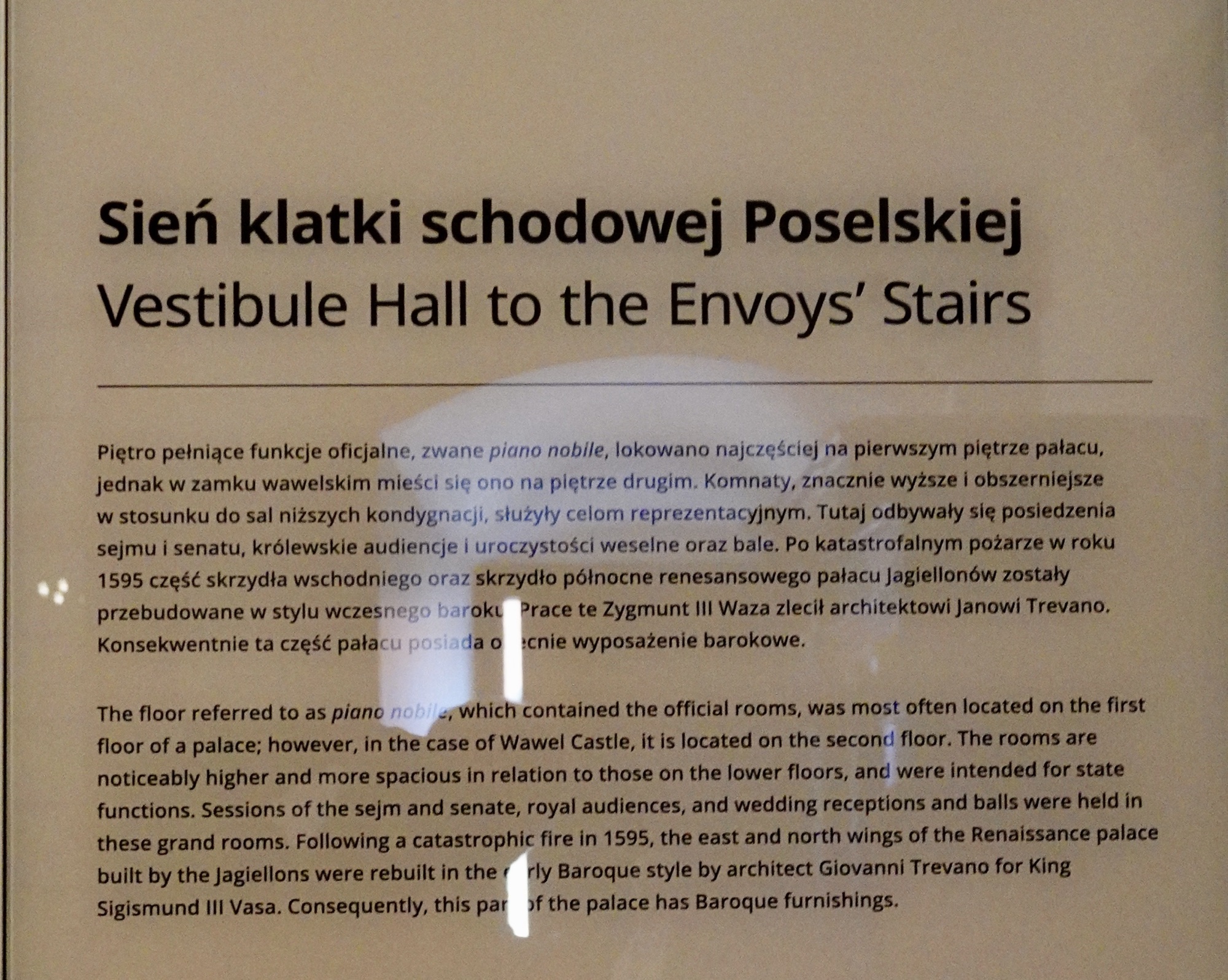
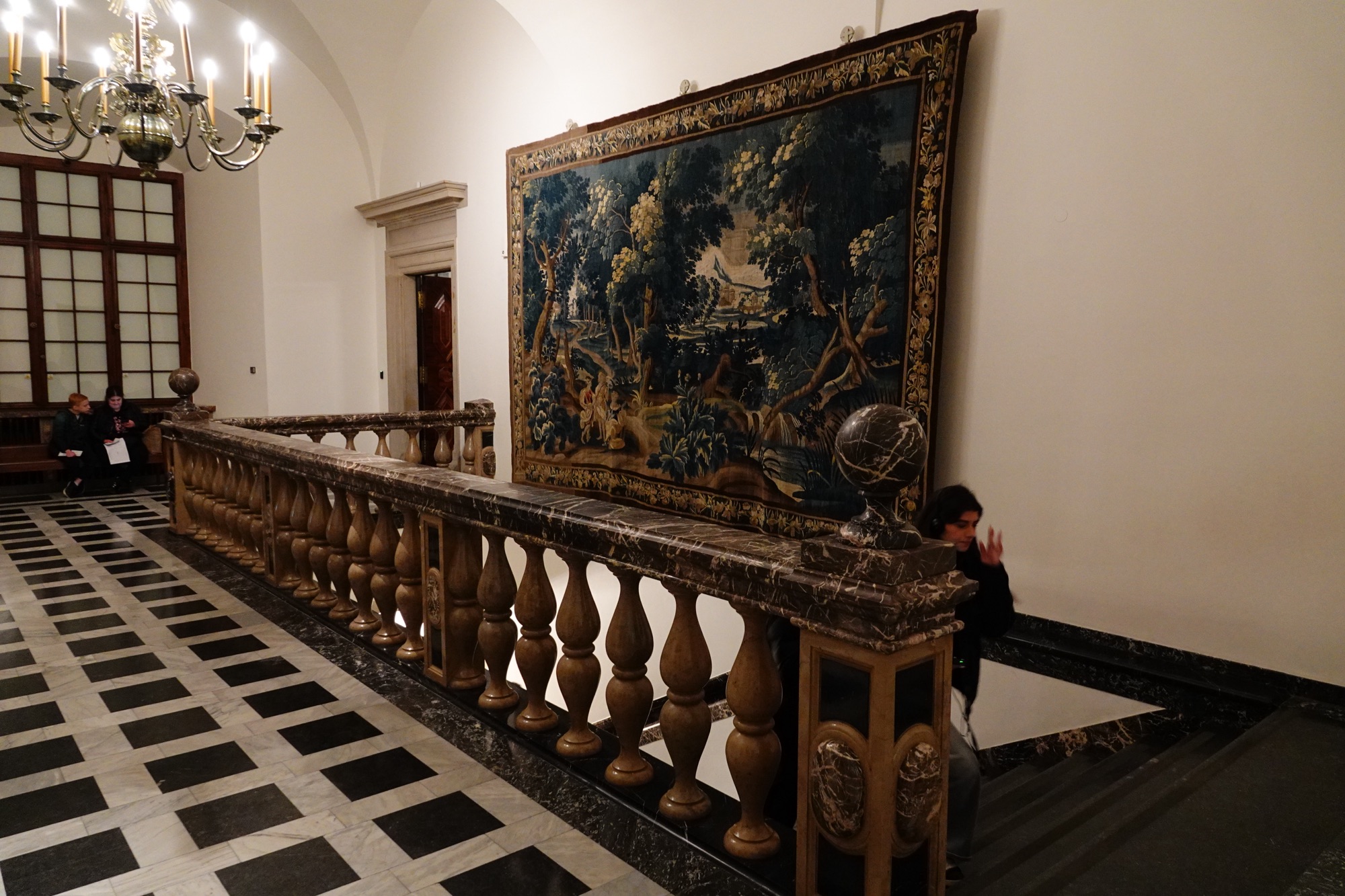
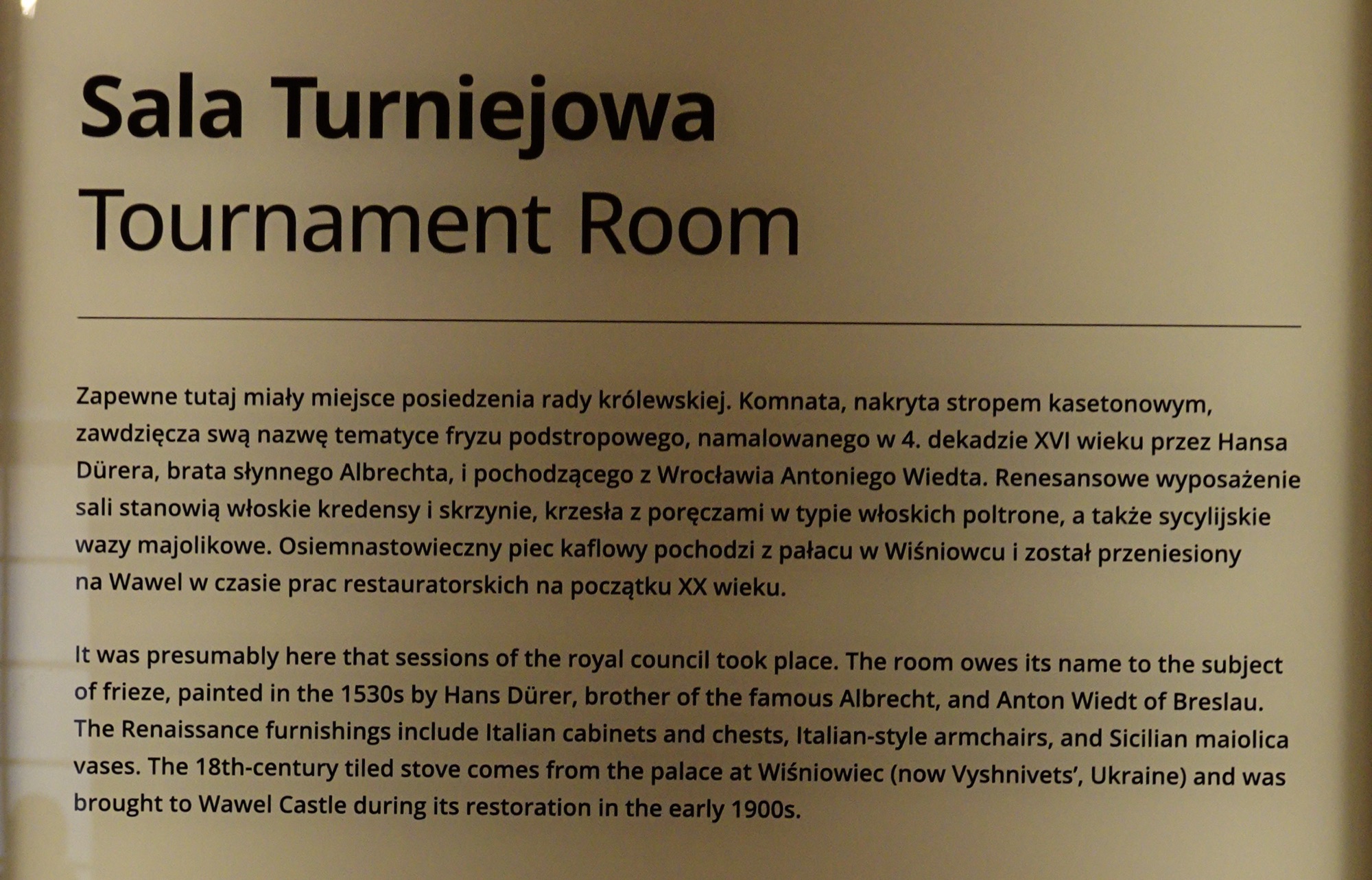
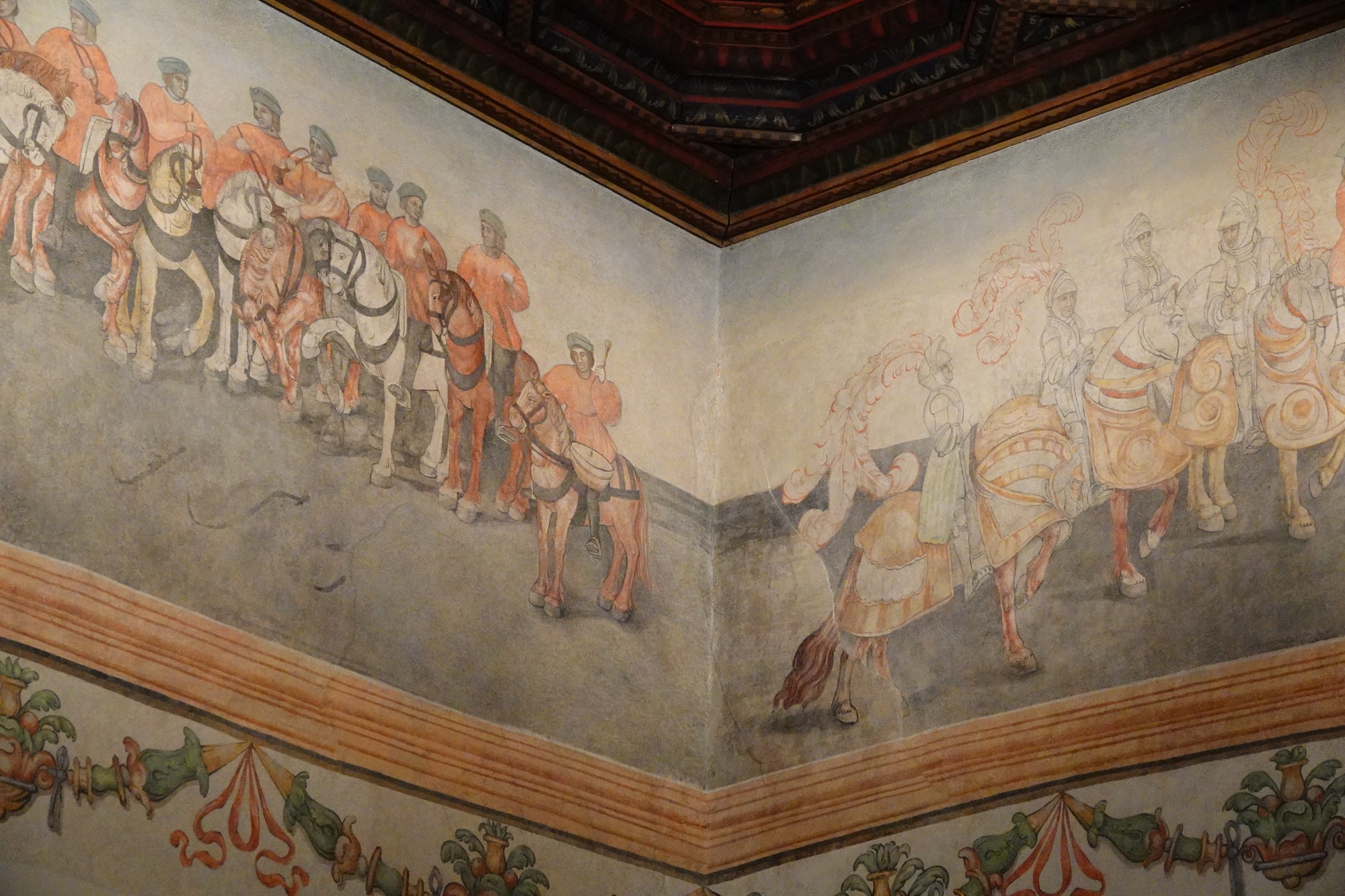
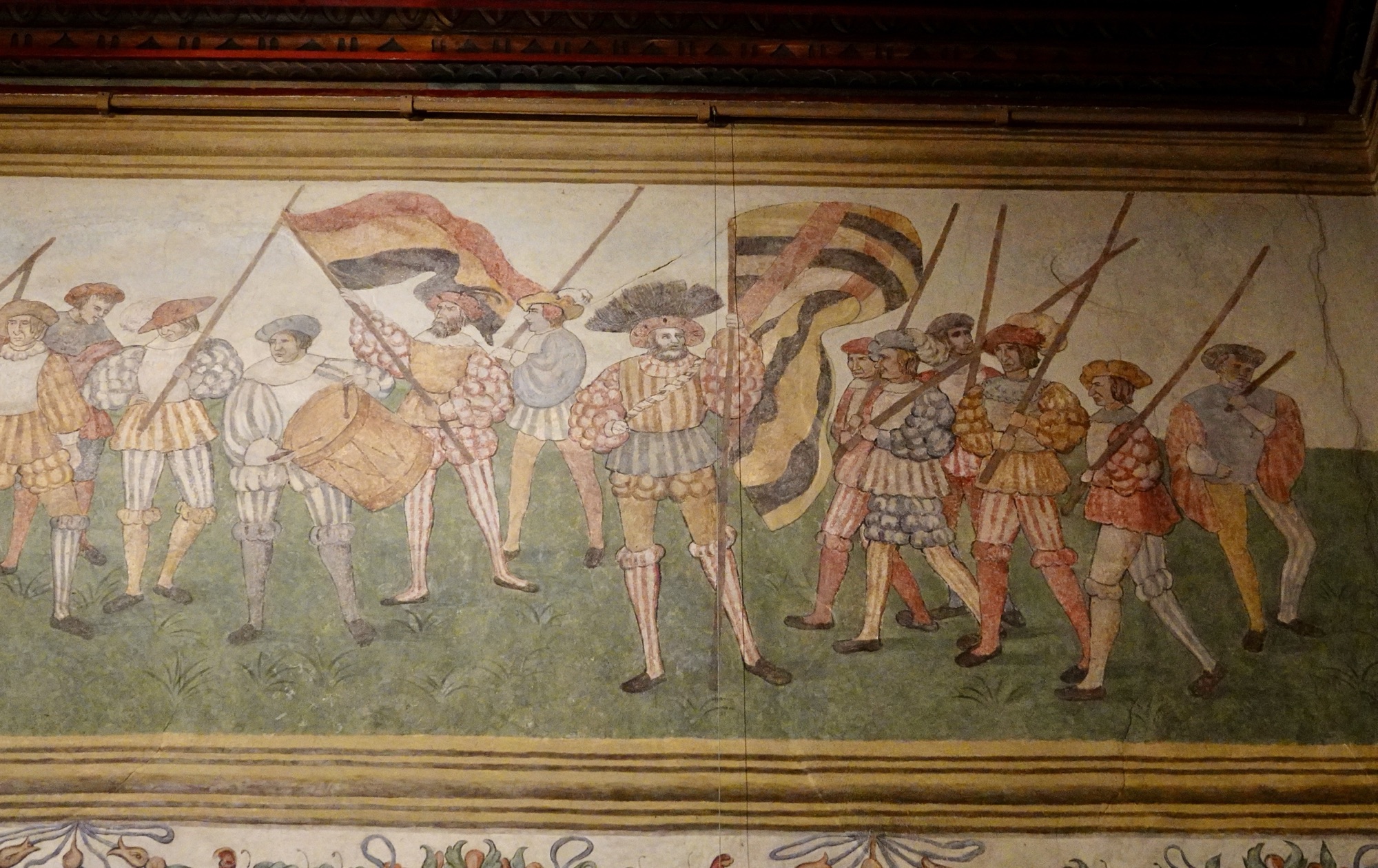
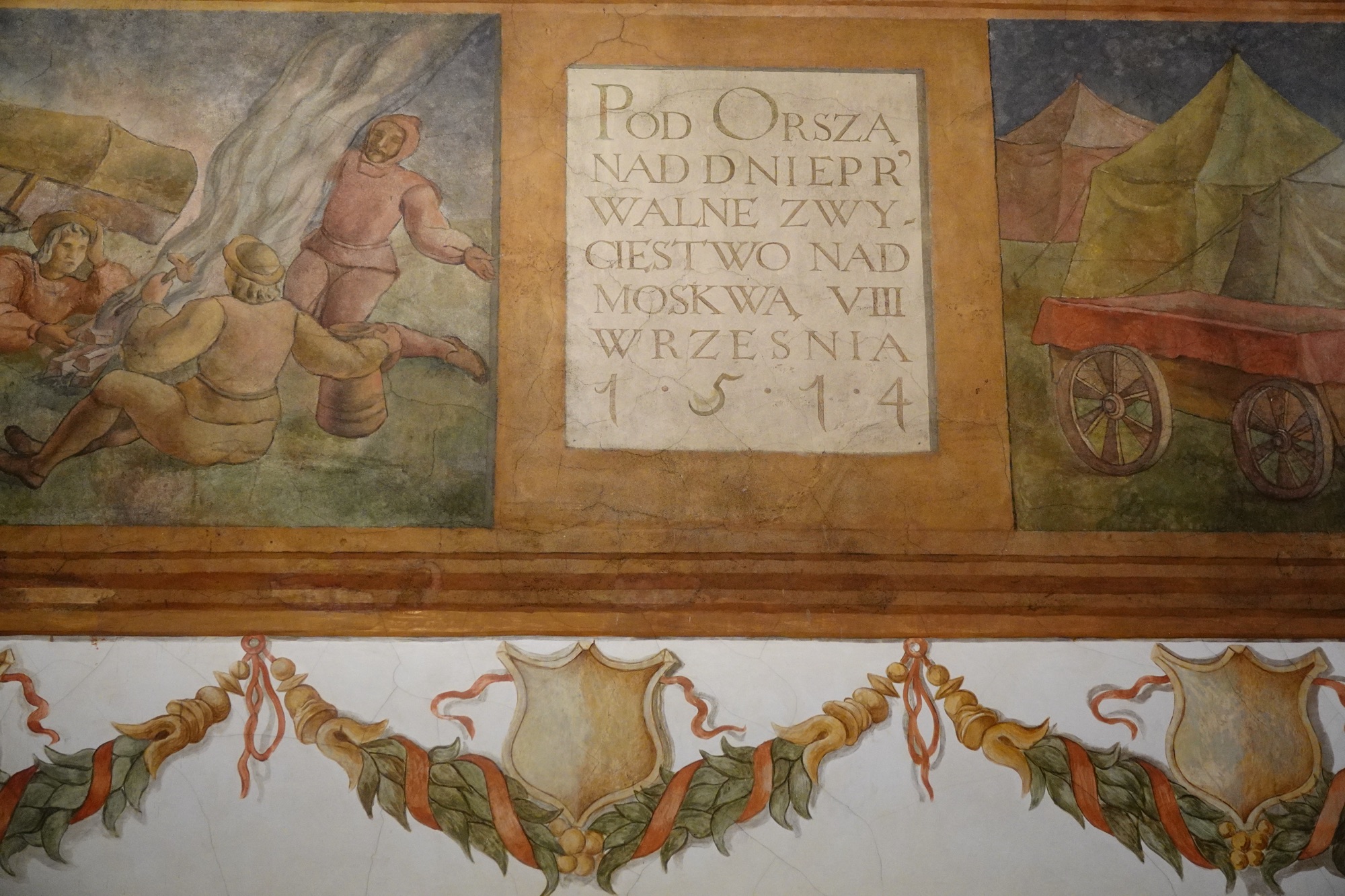
On the piano nobile level, many of the public rooms with their high ceilings and ornate decorations have been named after the themes of the friezes painted on the walls around the entire room just below the ceilings.
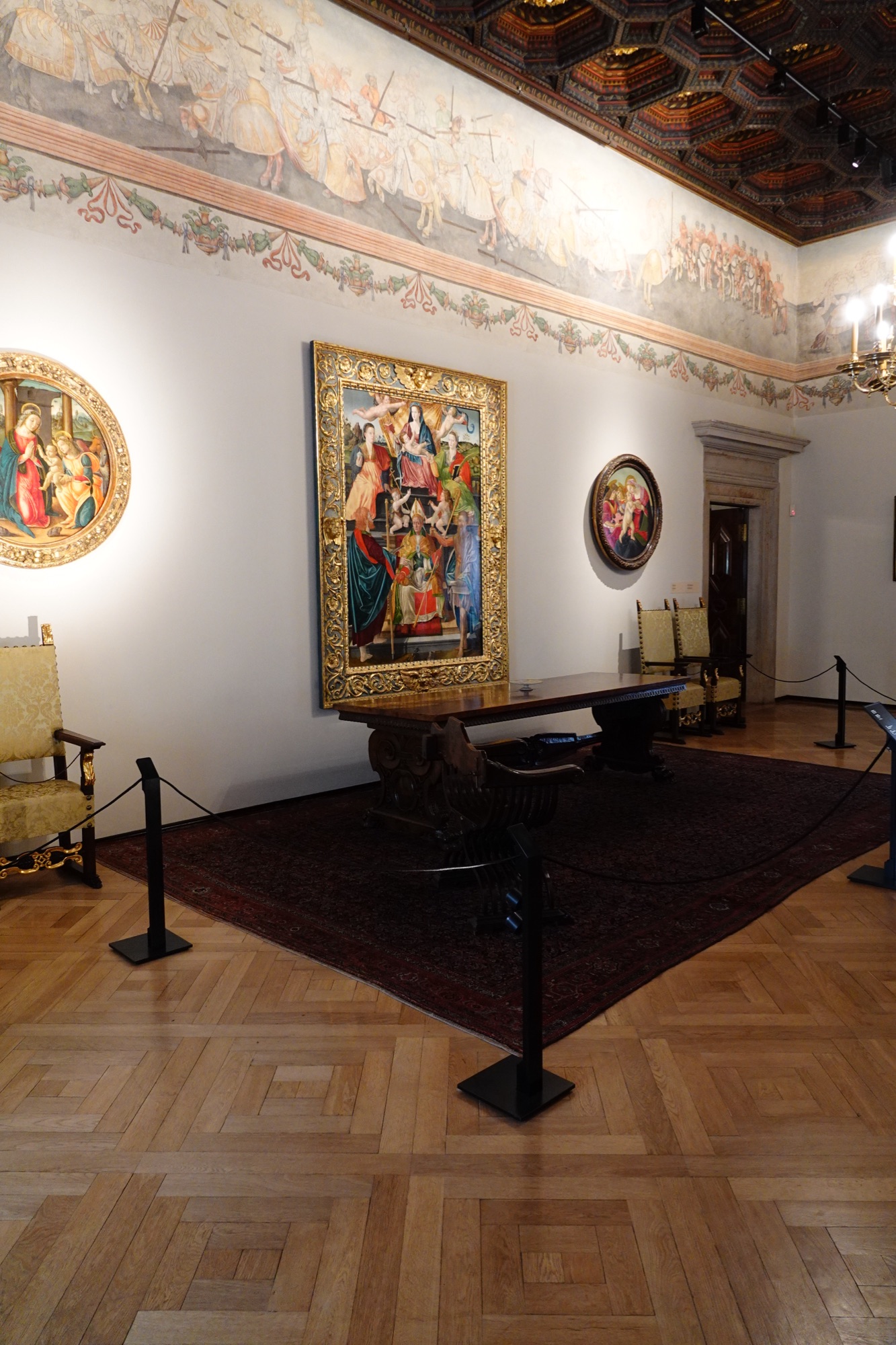
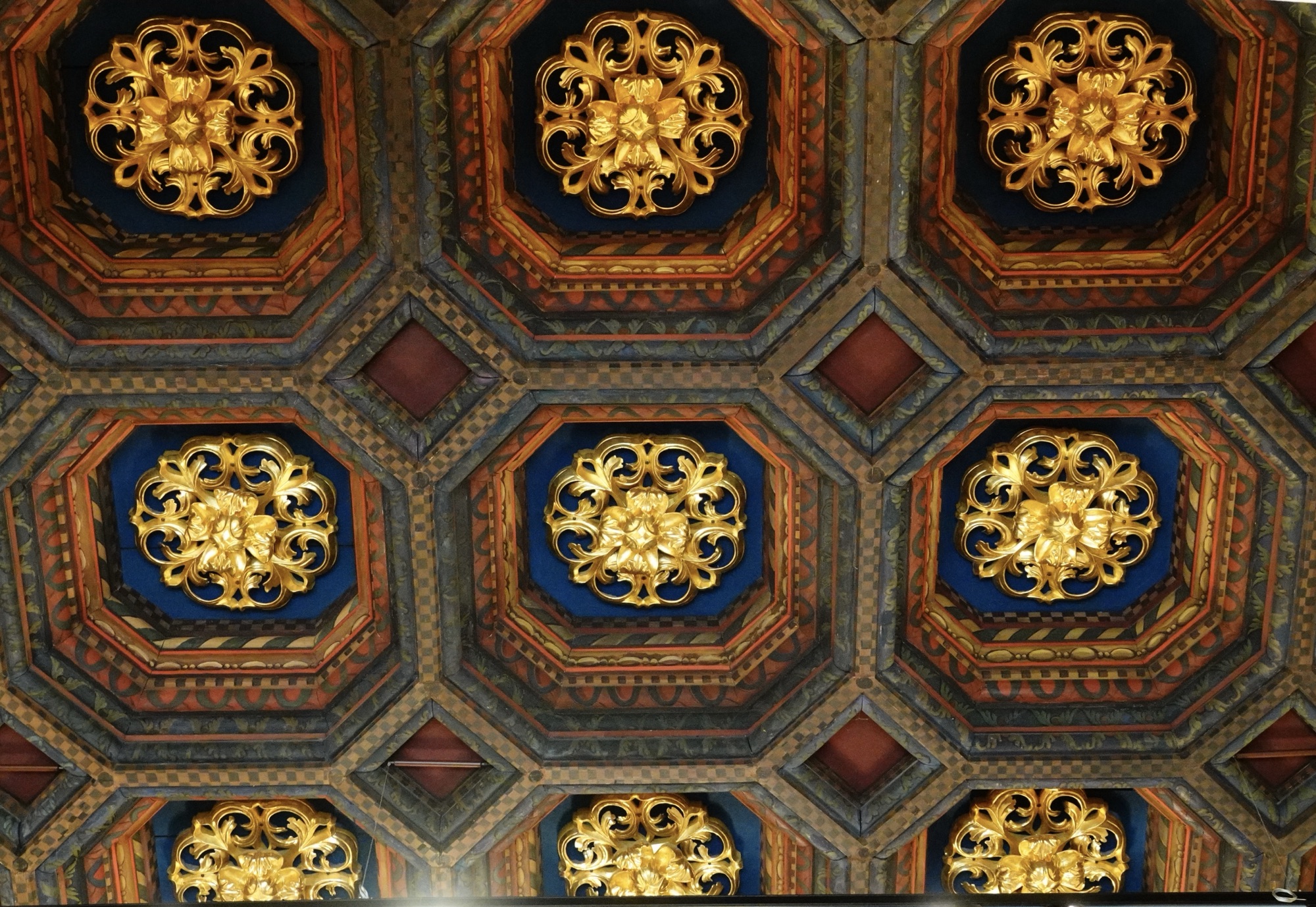
The rosettes in the multicoloured wooden ceiling are themselves just gilded wood.
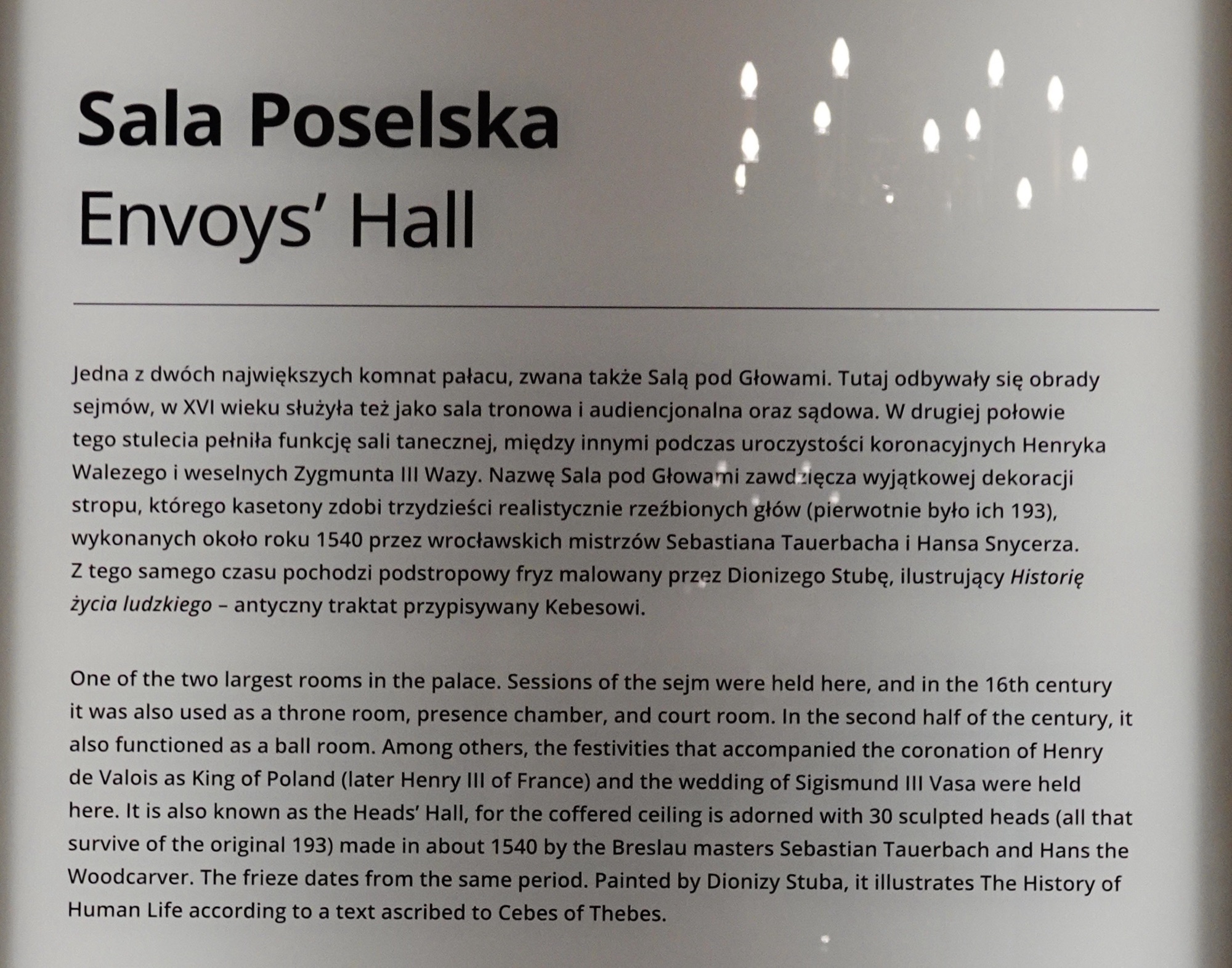
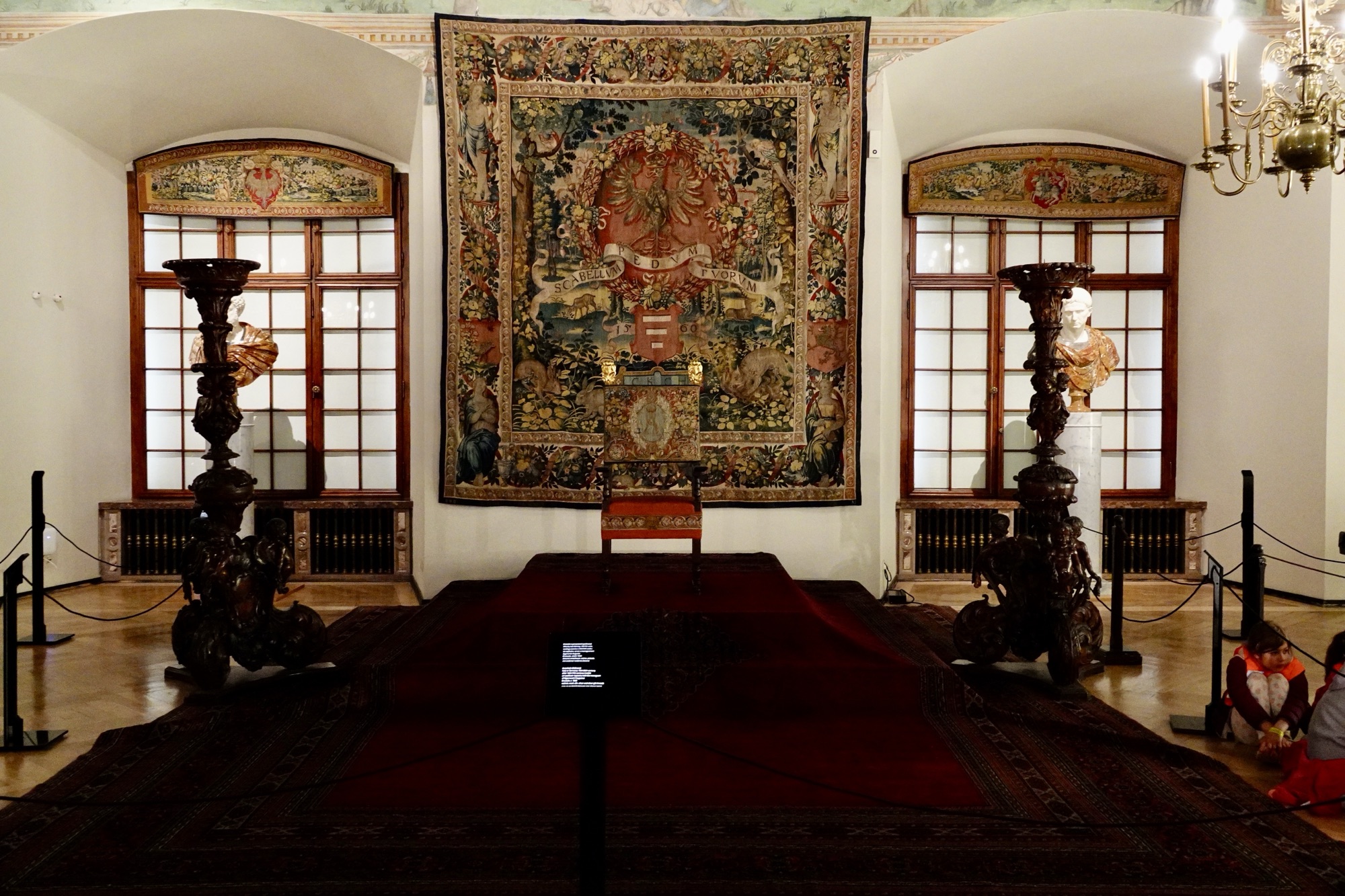
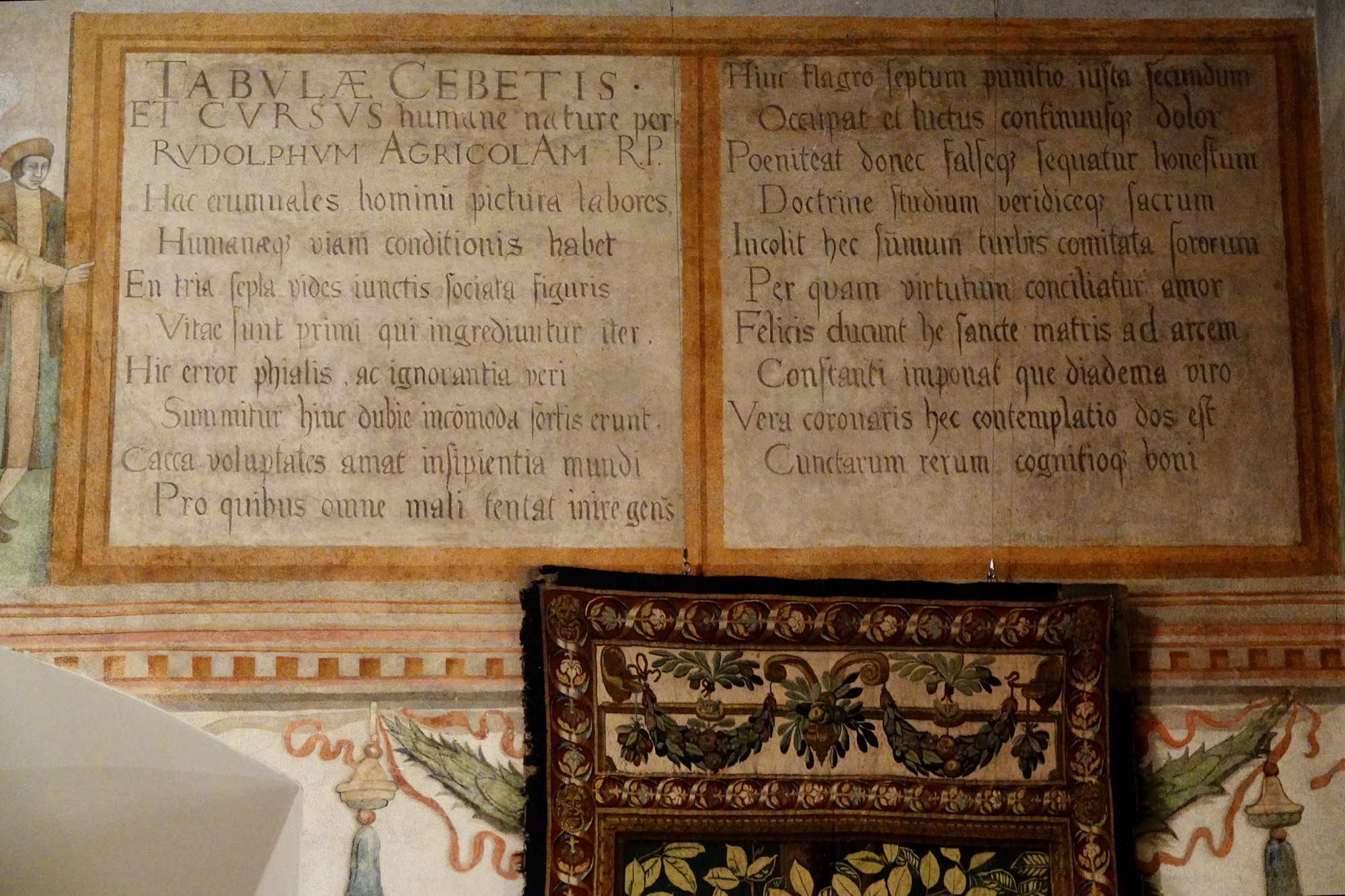
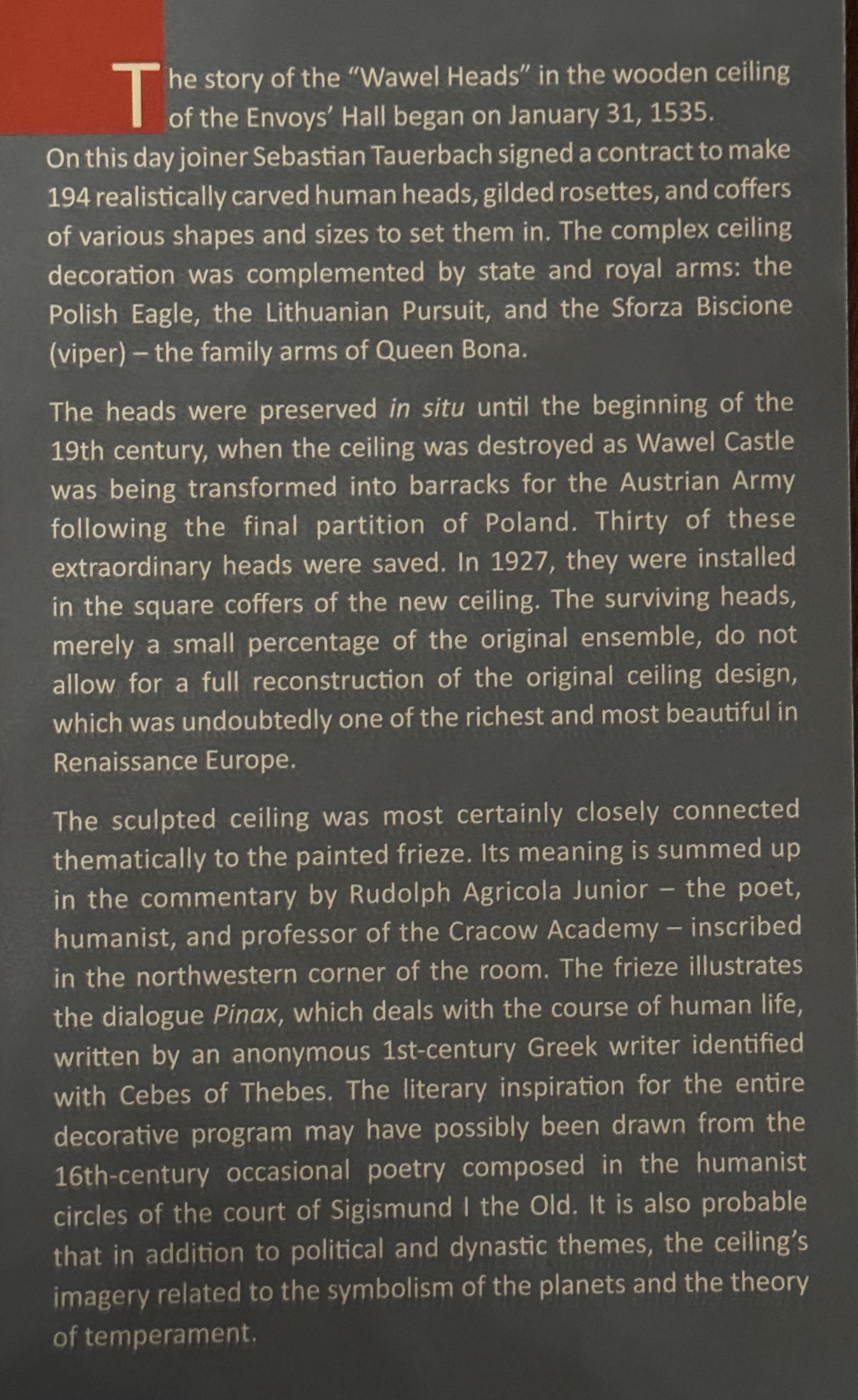
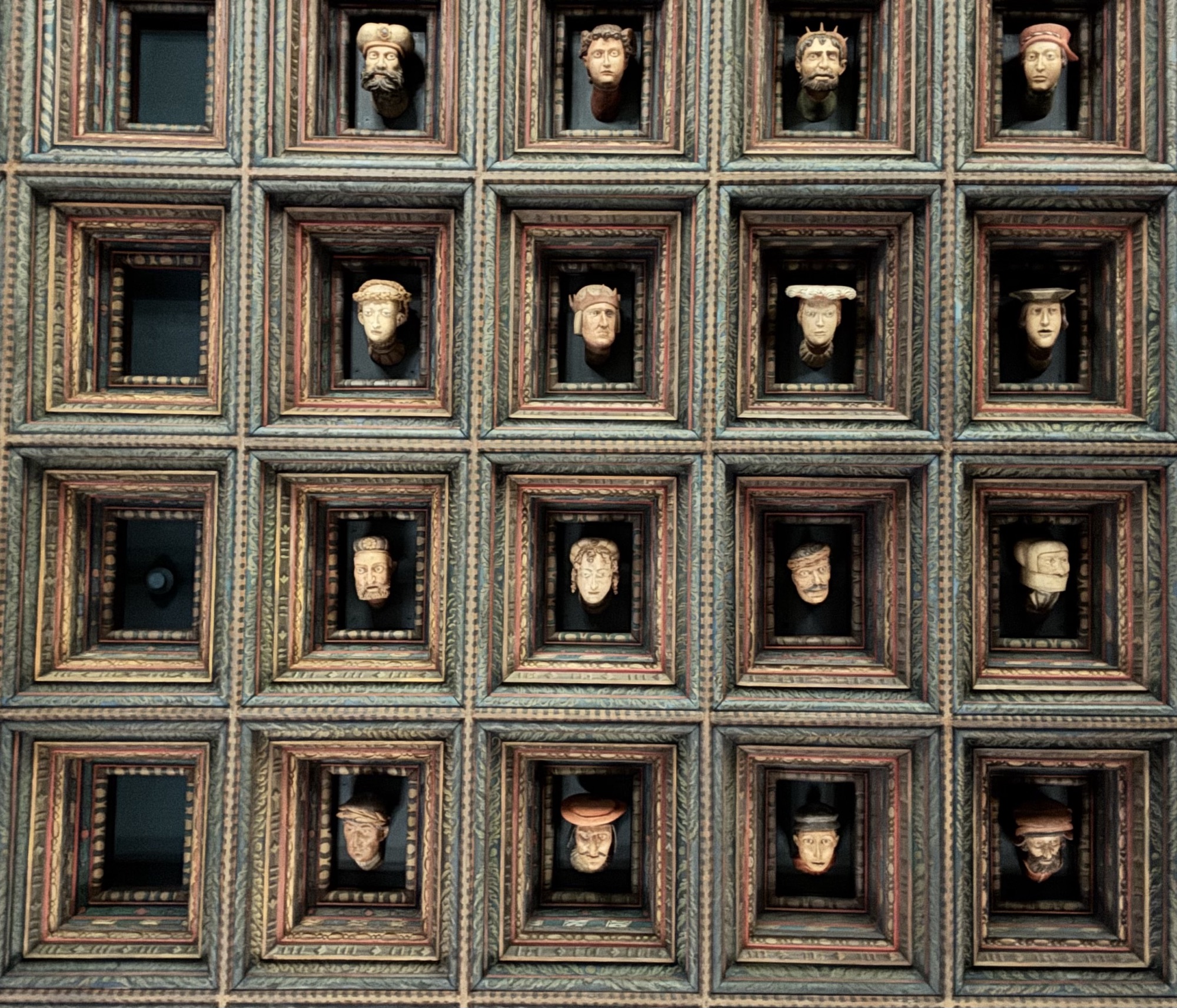
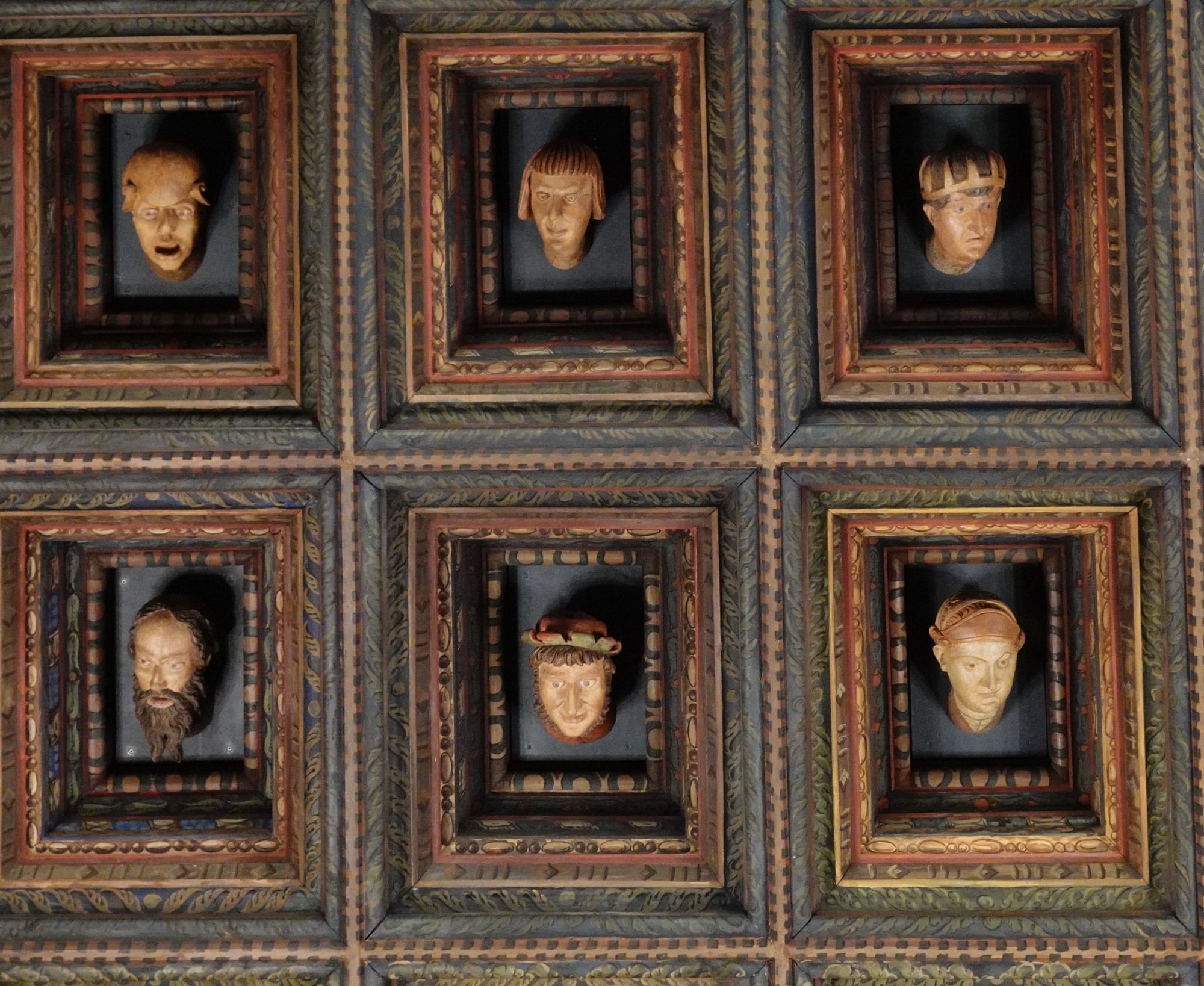
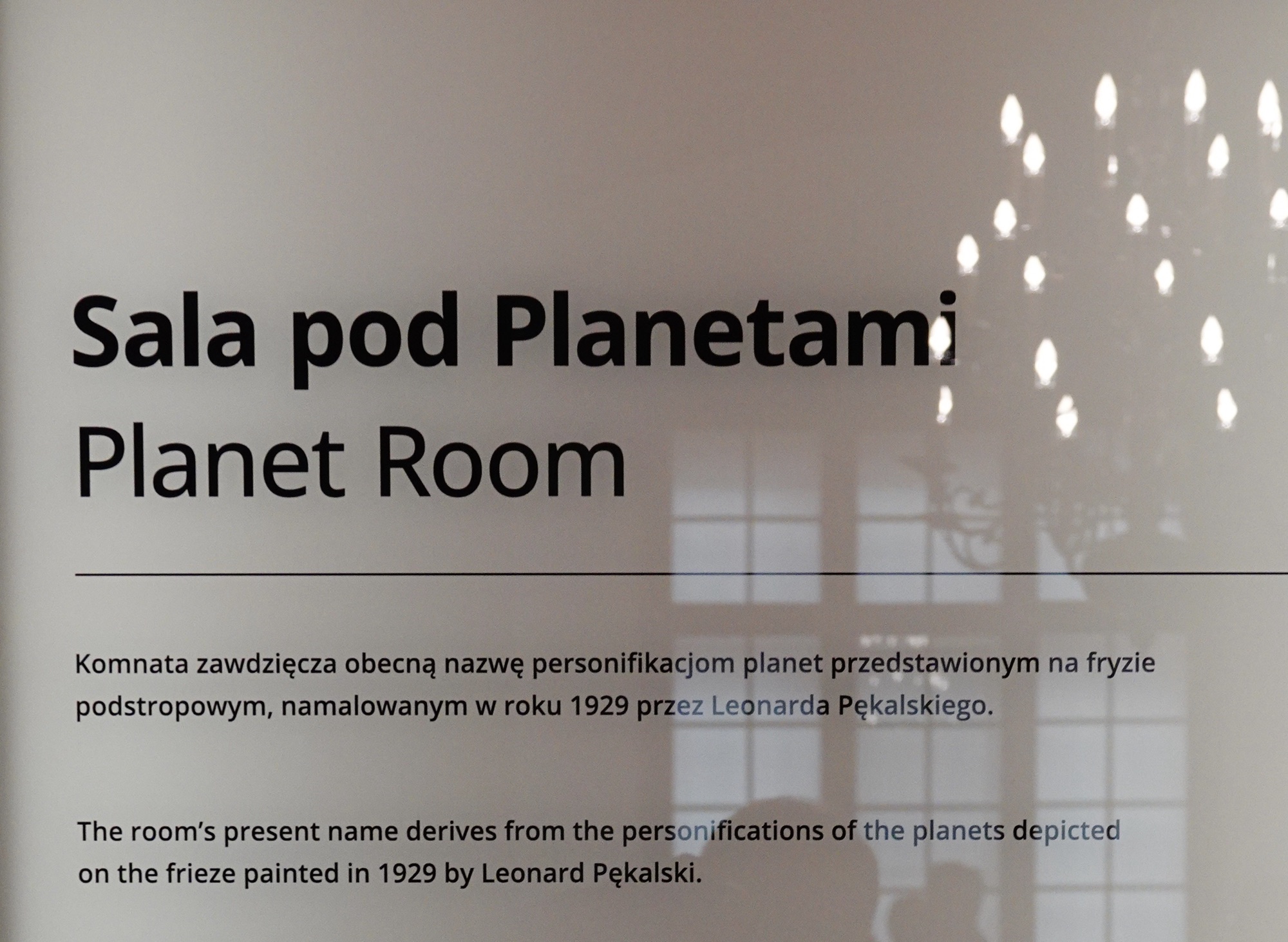
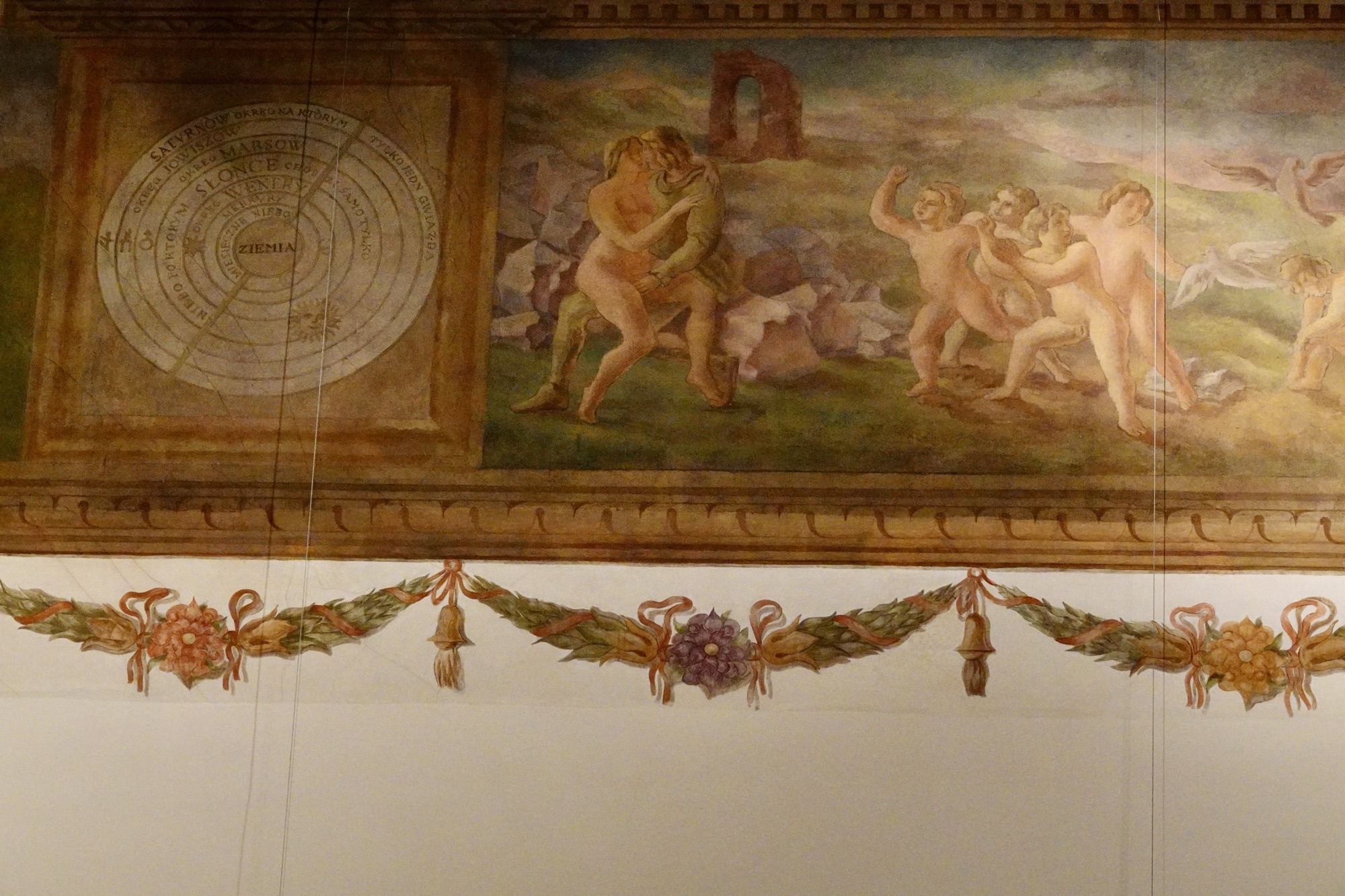
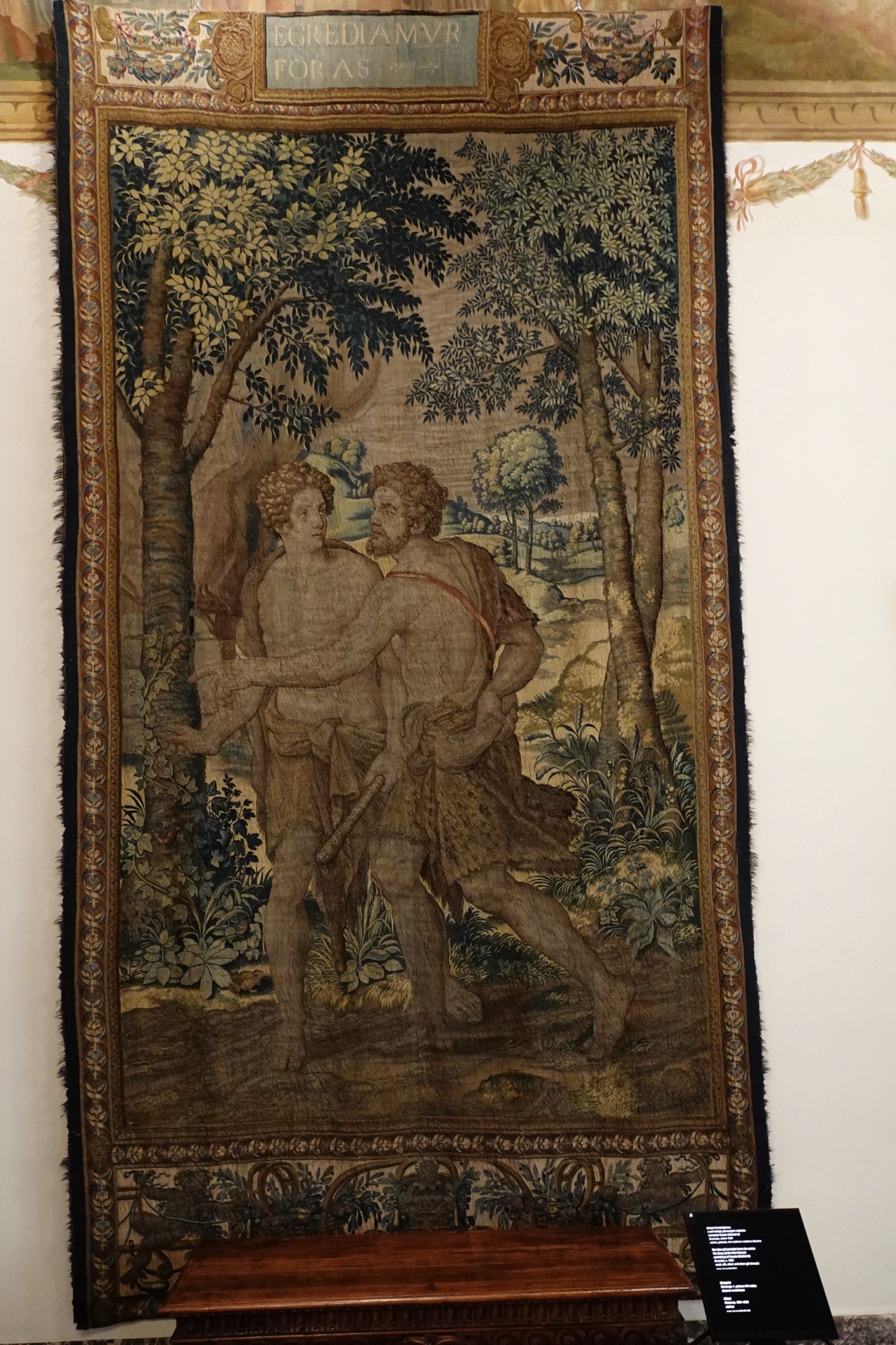
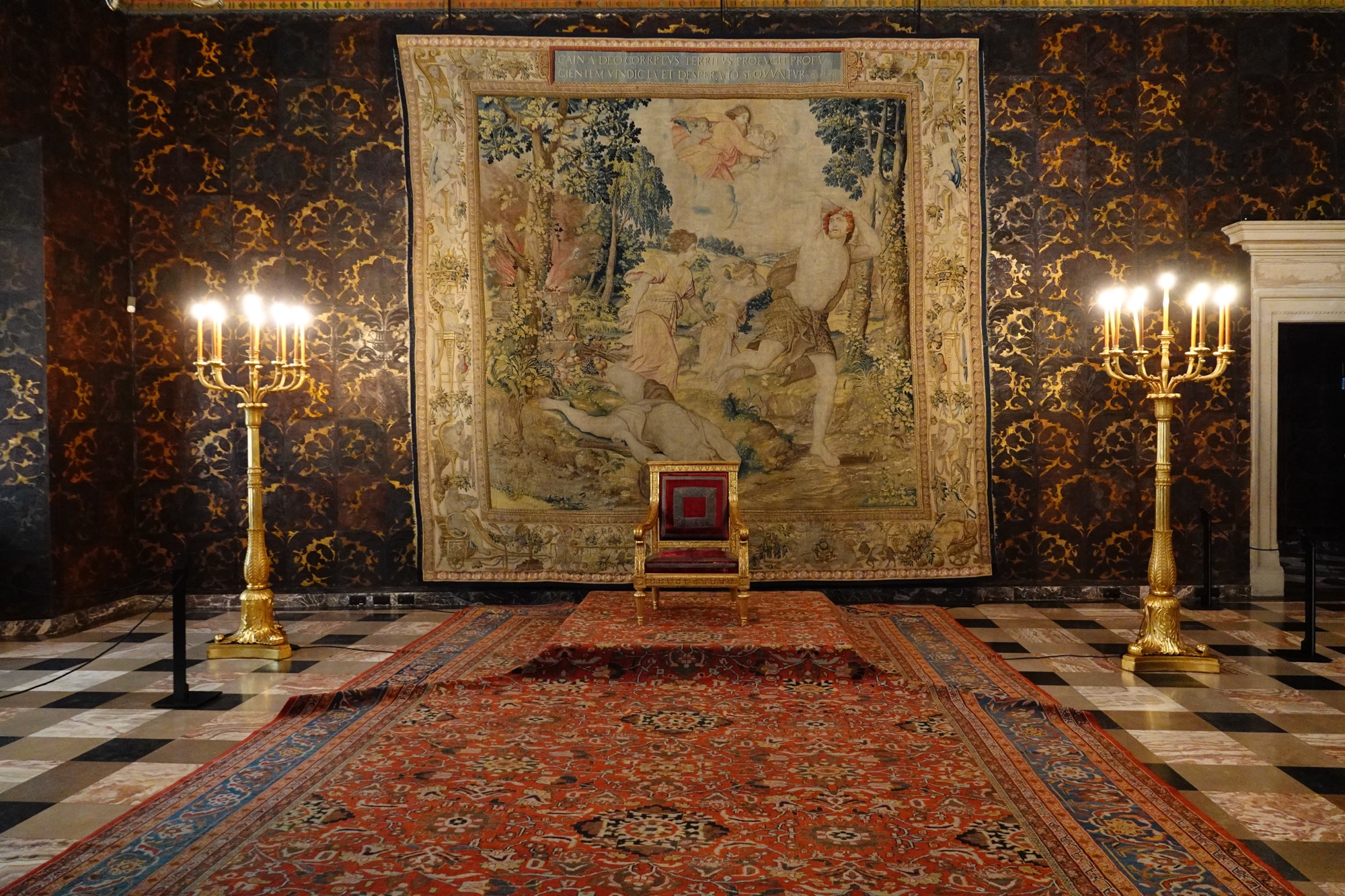
Many of the Wawel tapestries depict bible stories, which is not surprising considering how devout the Polish royal families were. This one in the Planetarium Room is part of a series called “the first parents” and features Cain and Abel heading off on what Abel thinks is a brotherly excursion, but the hand behind Cain’s back belies his intent.

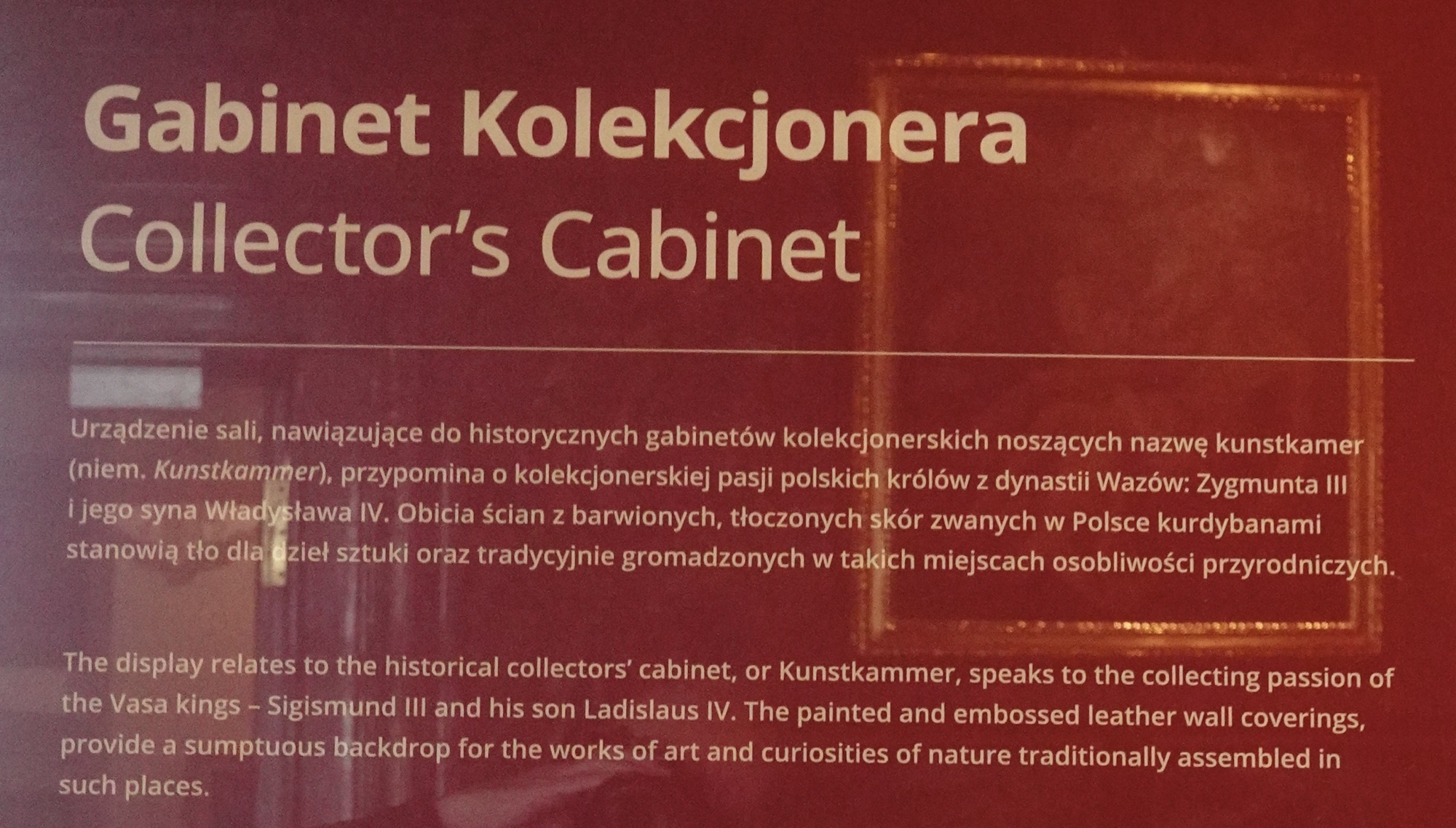
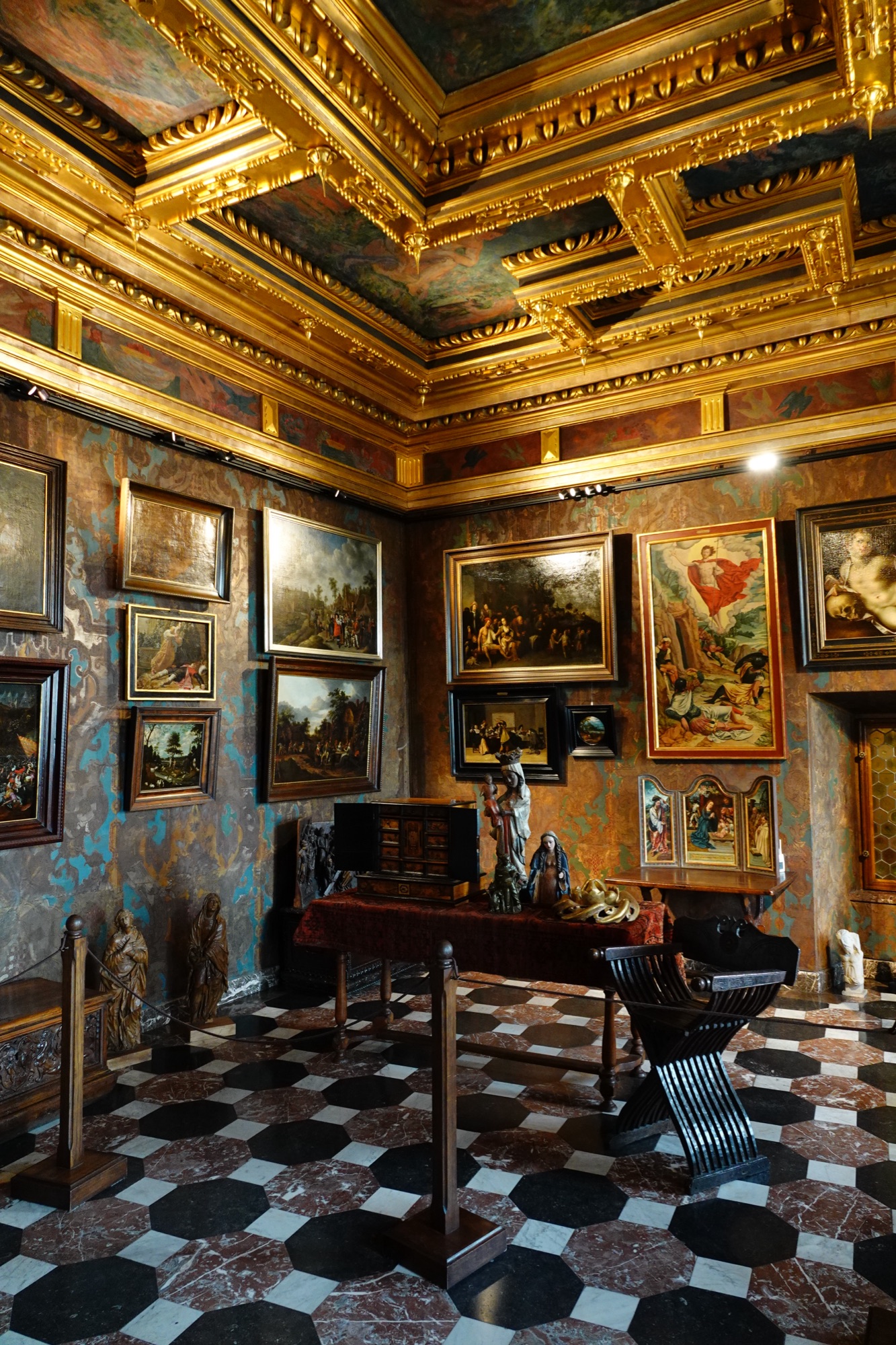
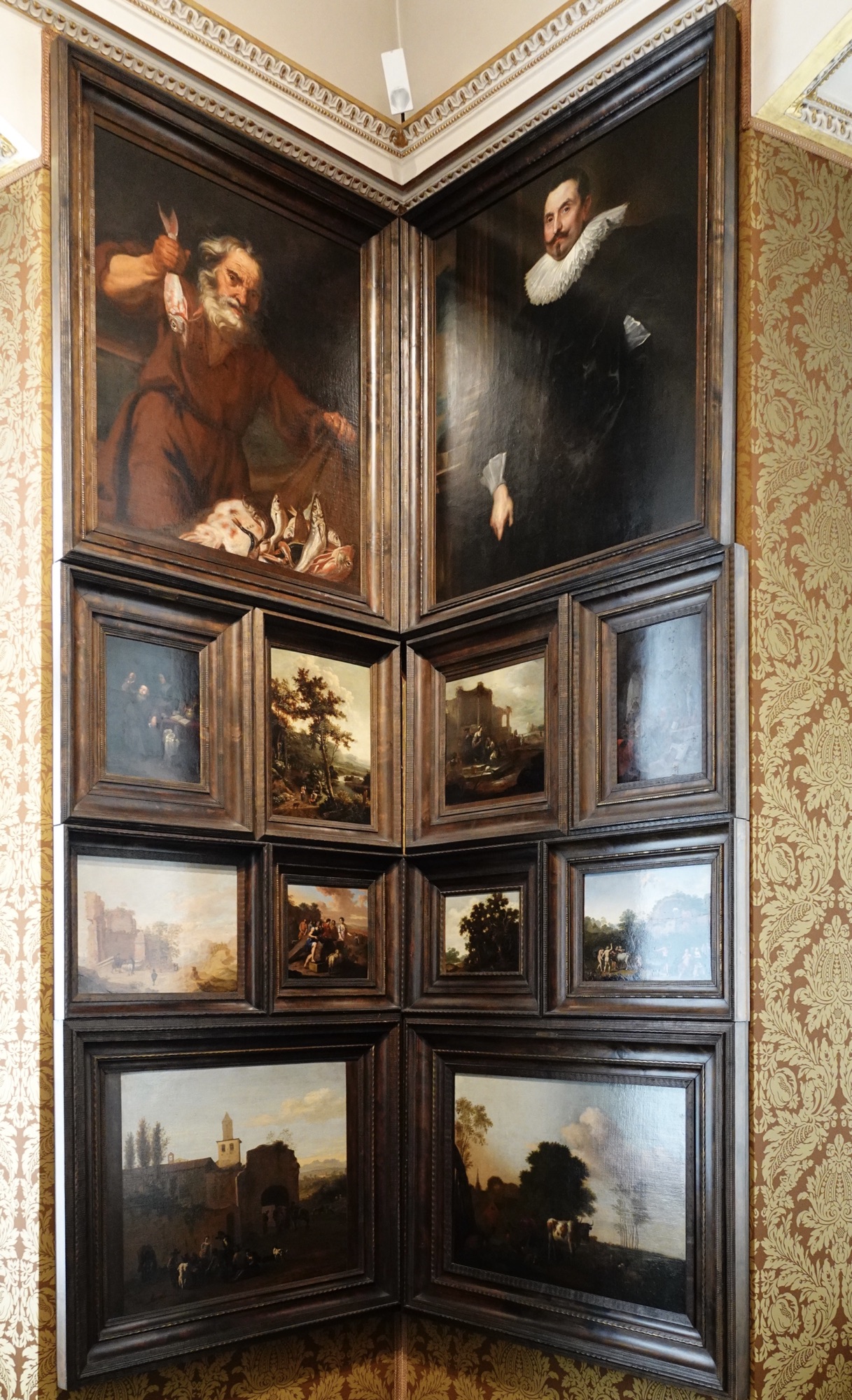
Somehow we missed the sign identifying this most wonderful little room with its collection of Dutch masters hung tightly together to almost completely cover the wallpaper.
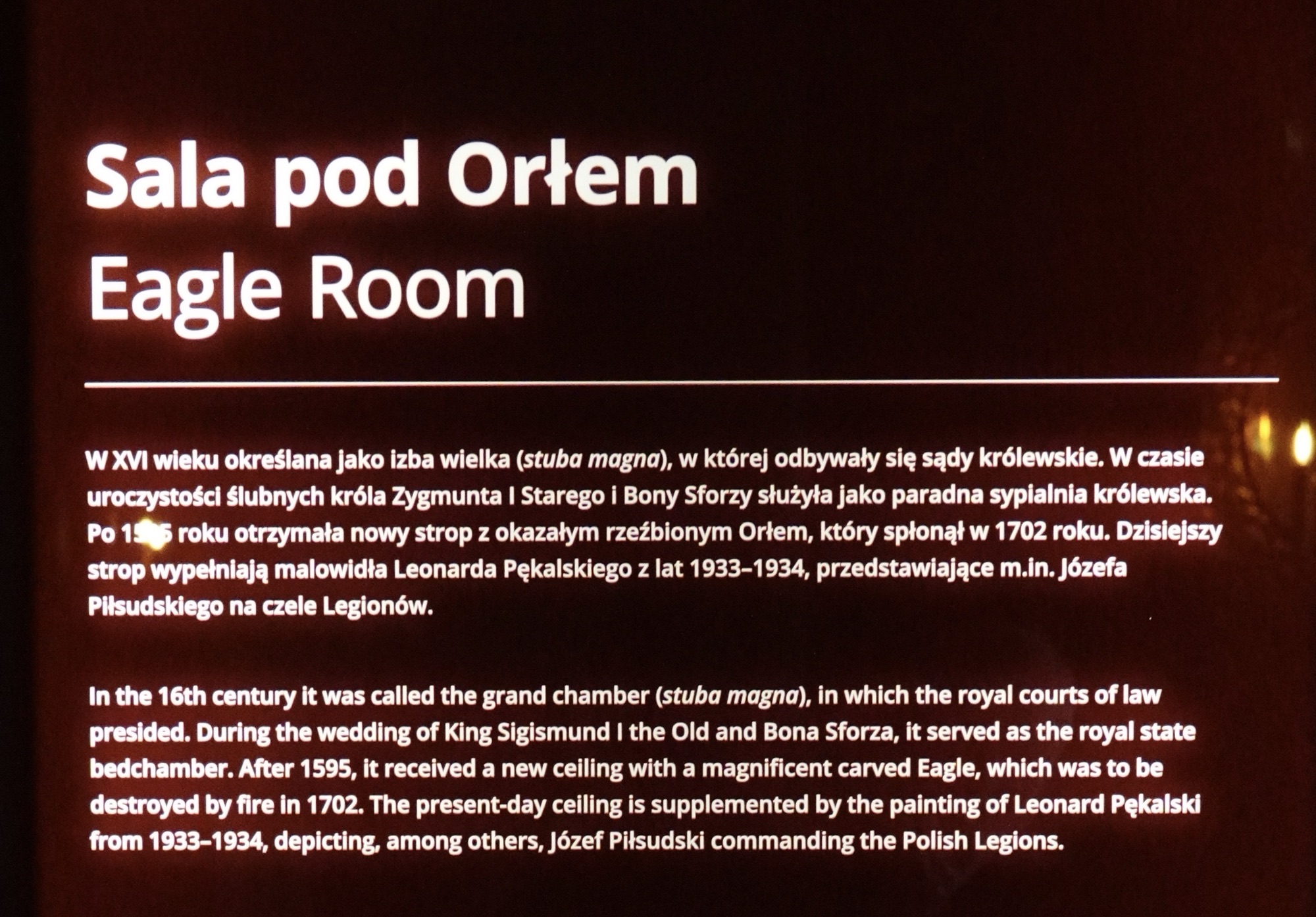
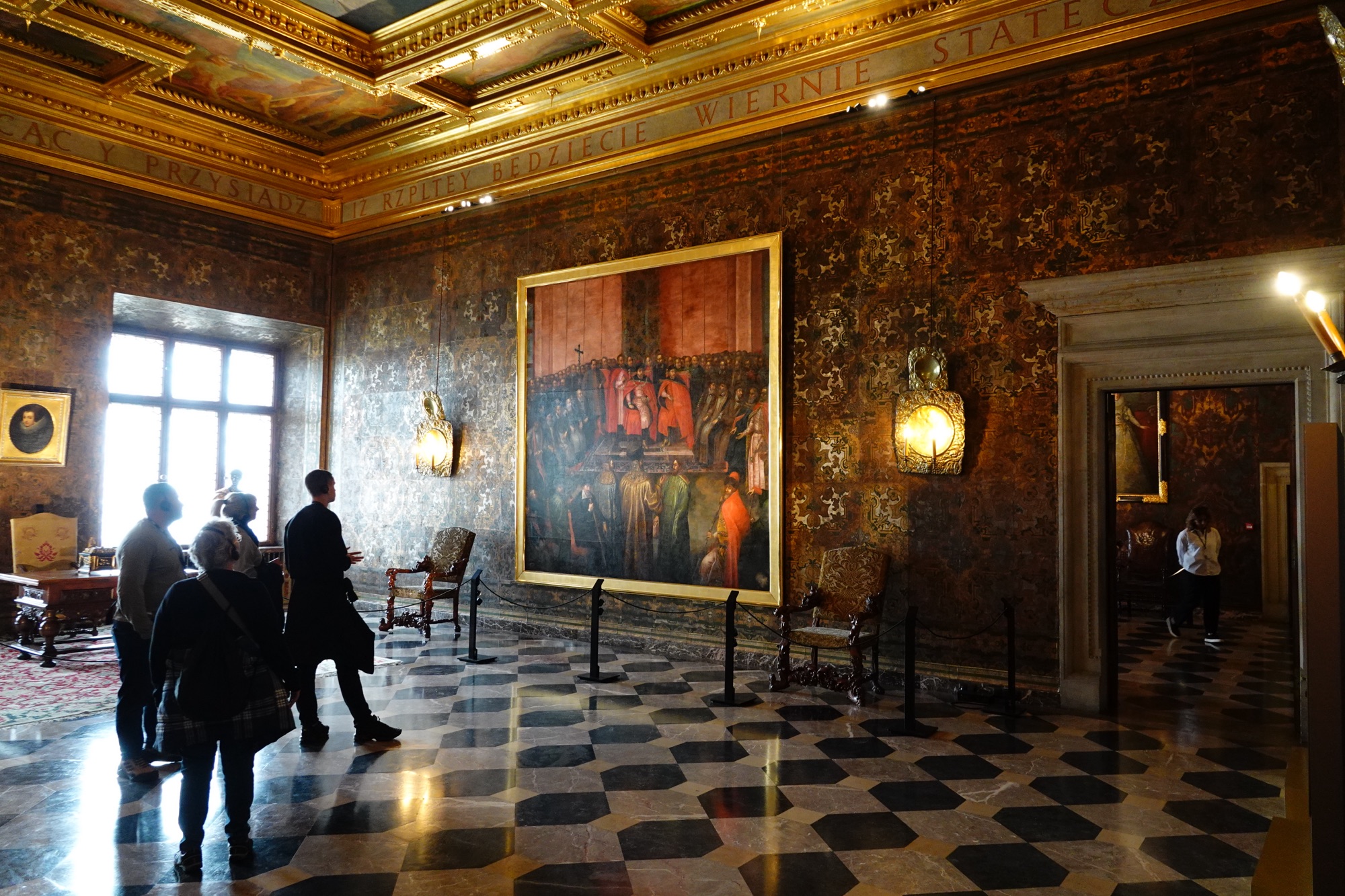
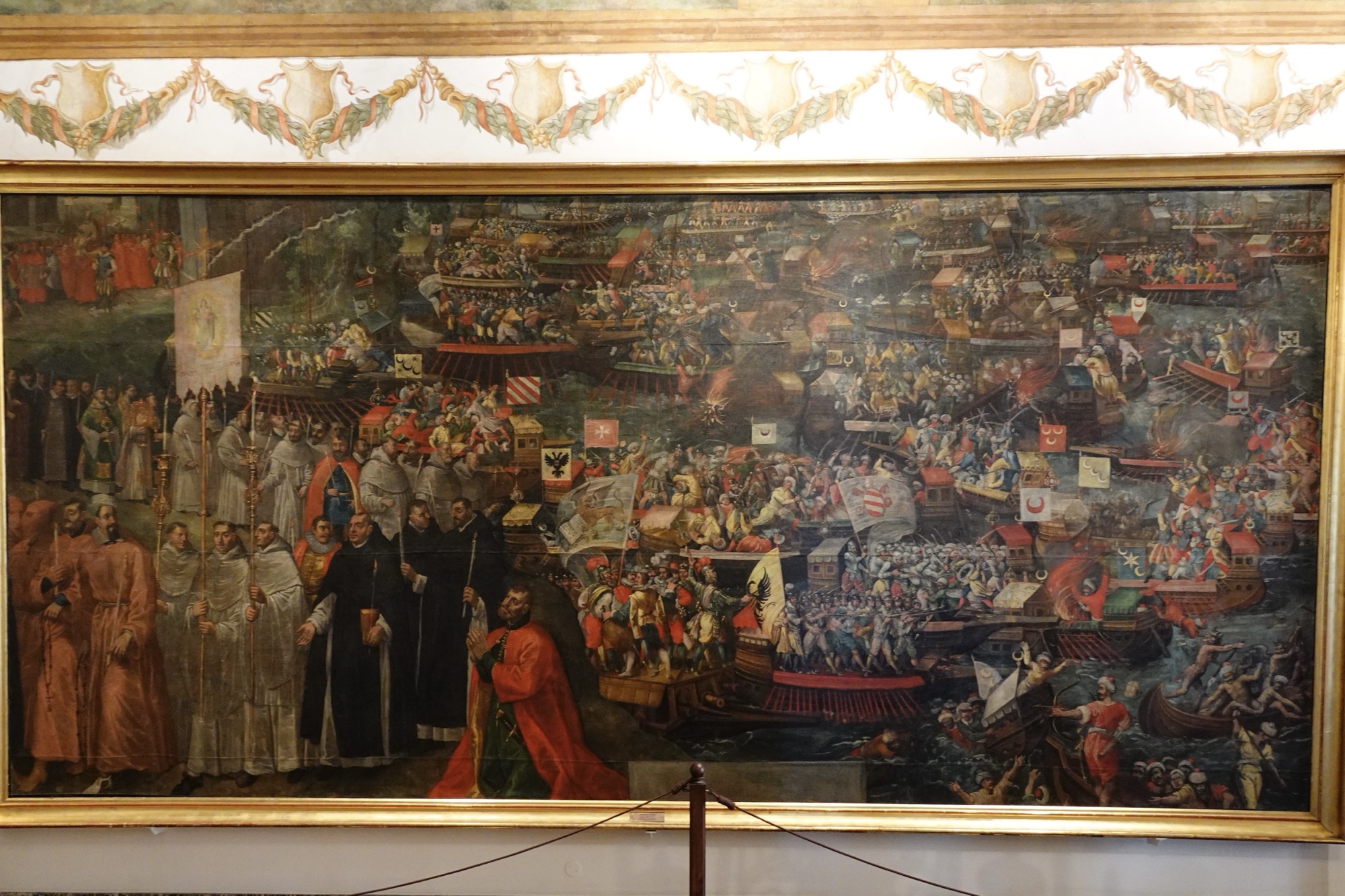
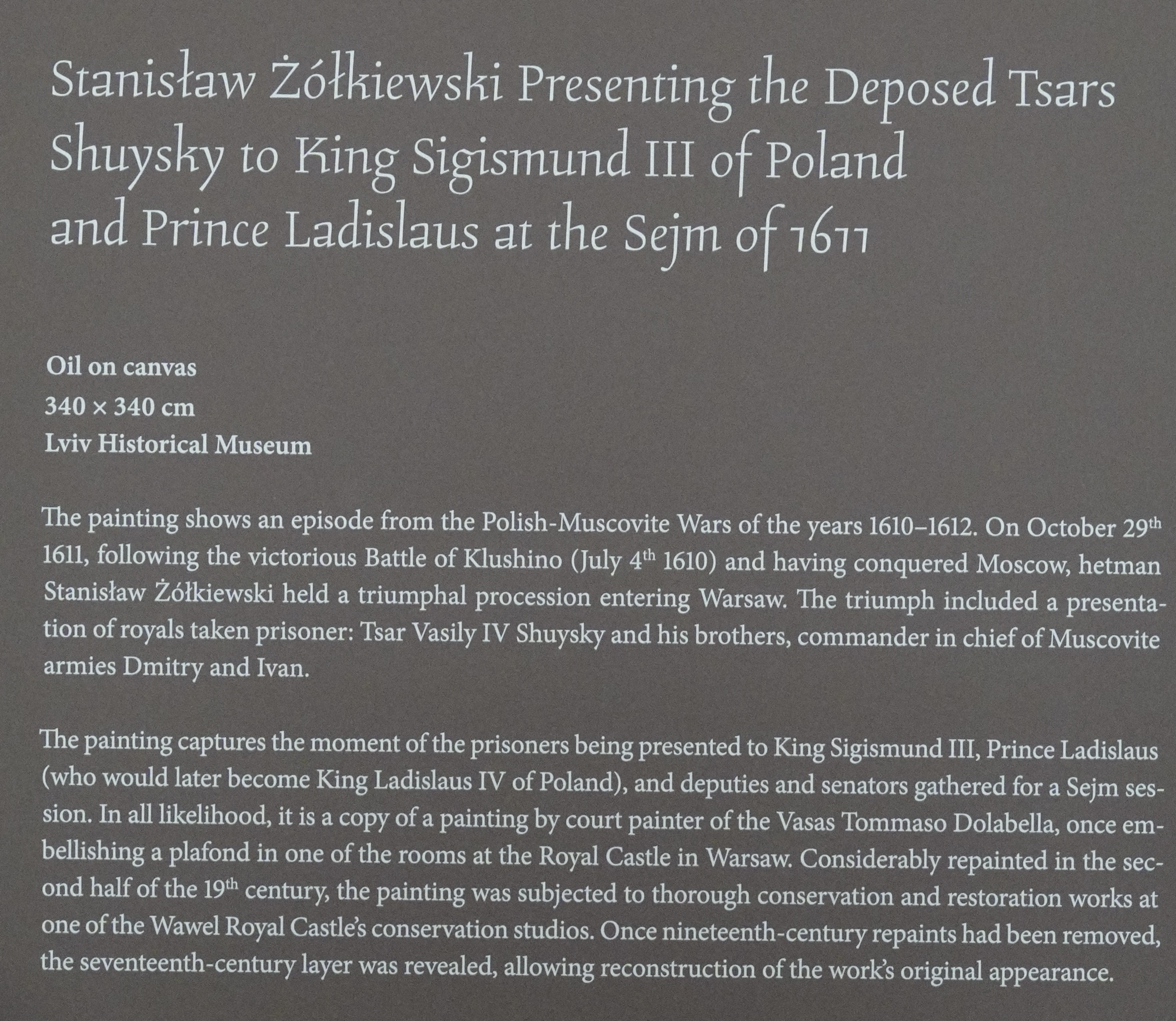
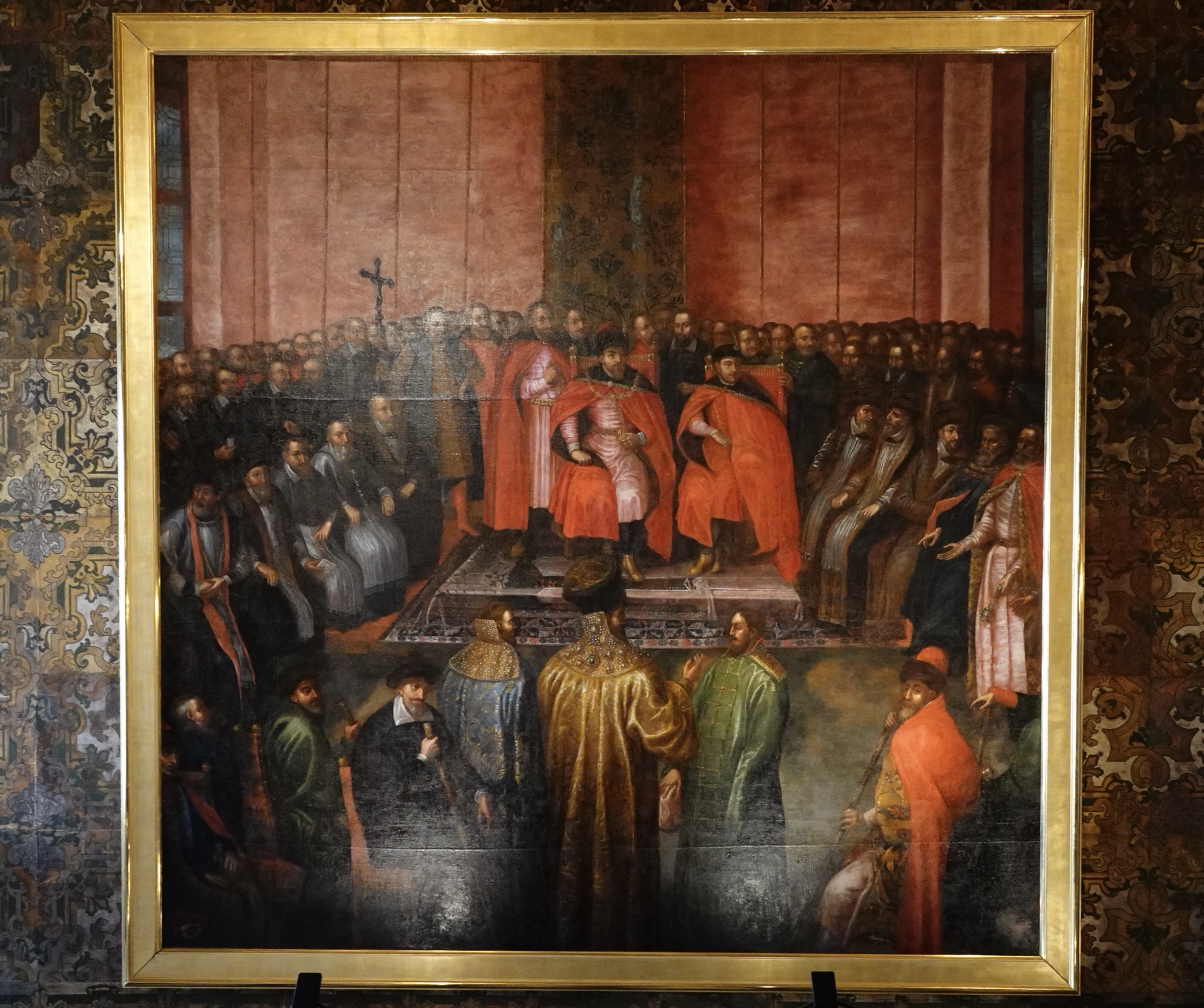
The large painting in the Eagle Room depicts a time in the 1600s when the Kingdom of Poland defeated Moscow. “Sjem” is the Polish word for Senate.
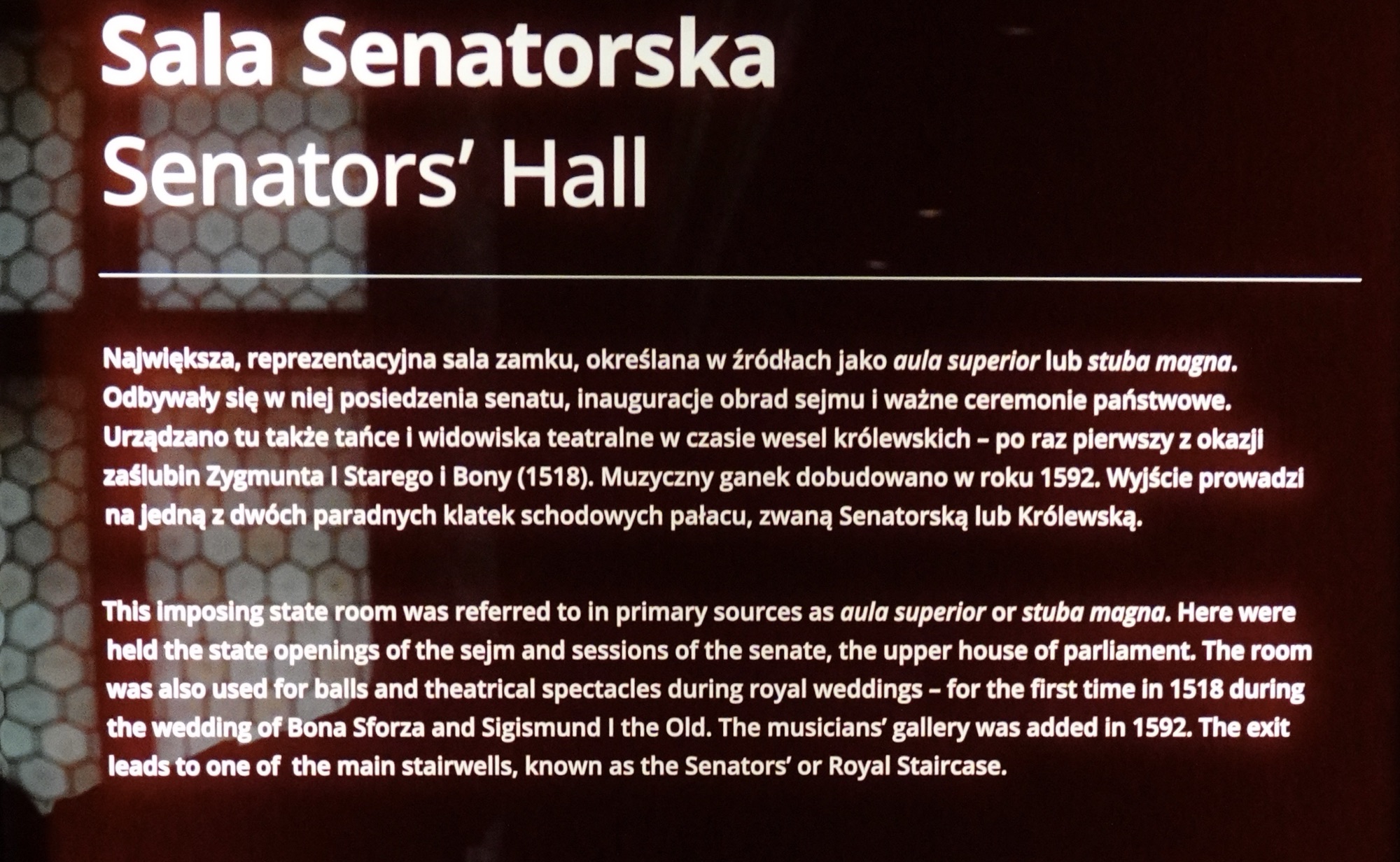
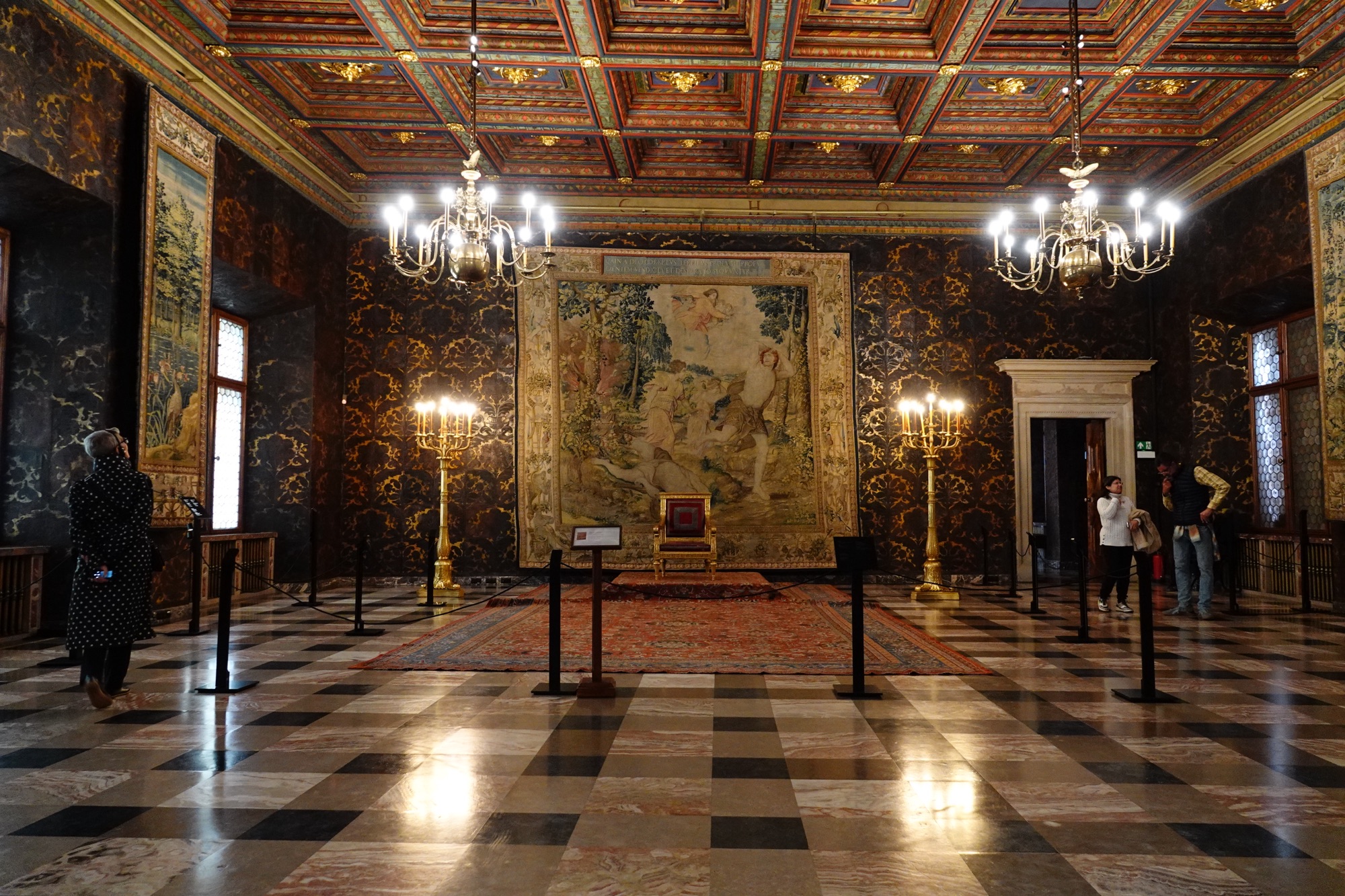
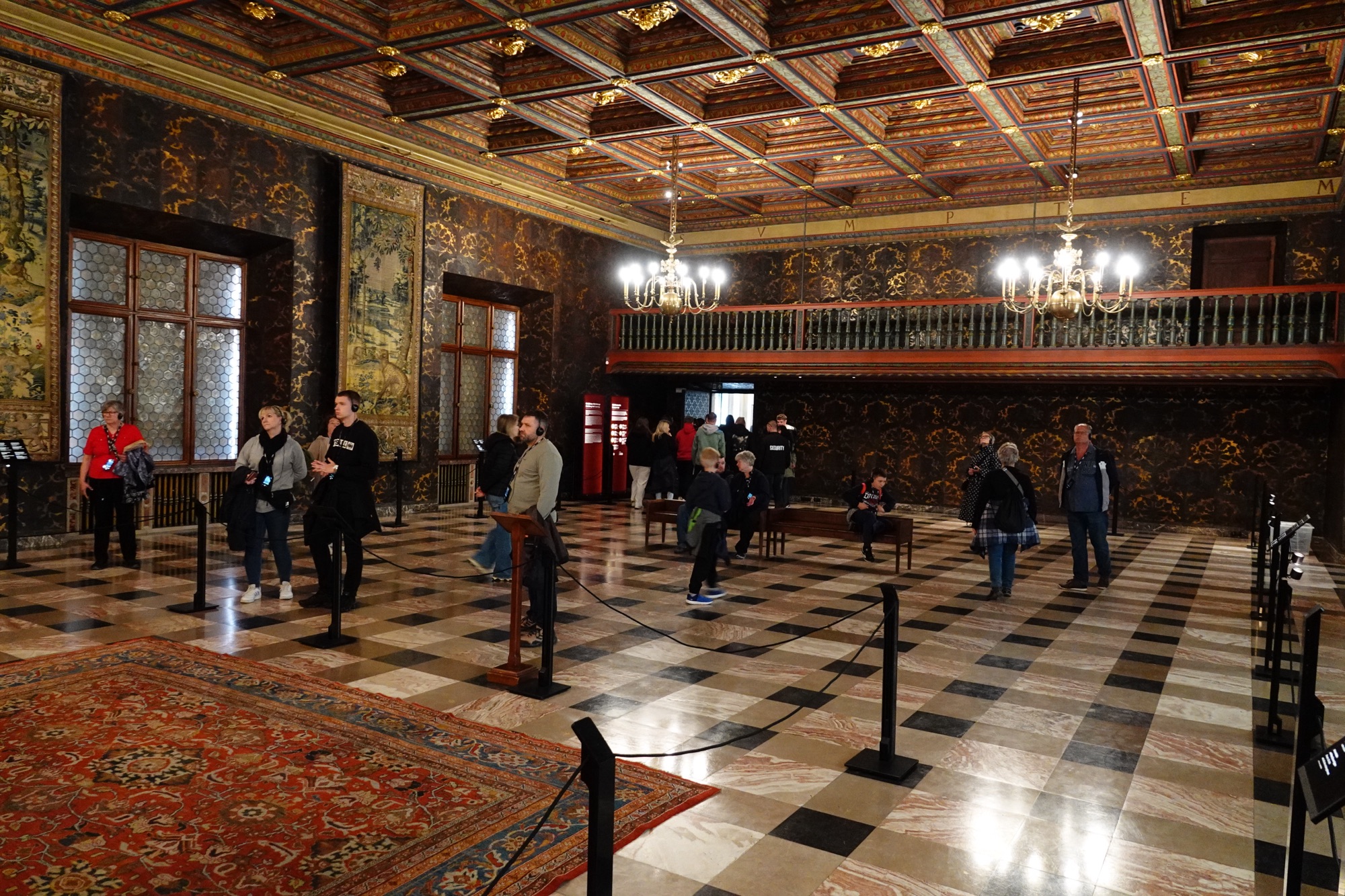
The largest public room in the castle, and our last stop on the guided portion of the tour was the Senators’ Hall.
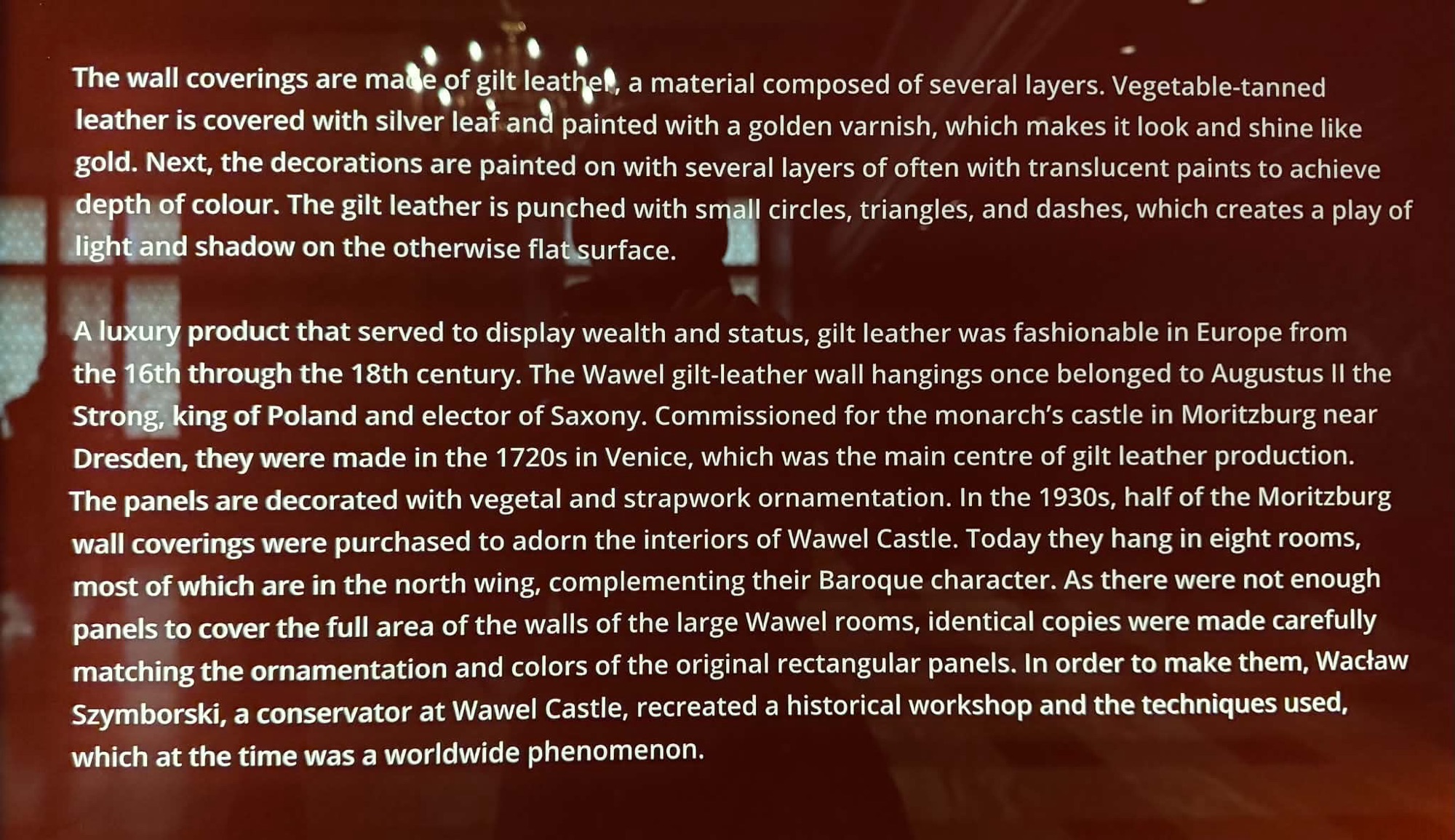
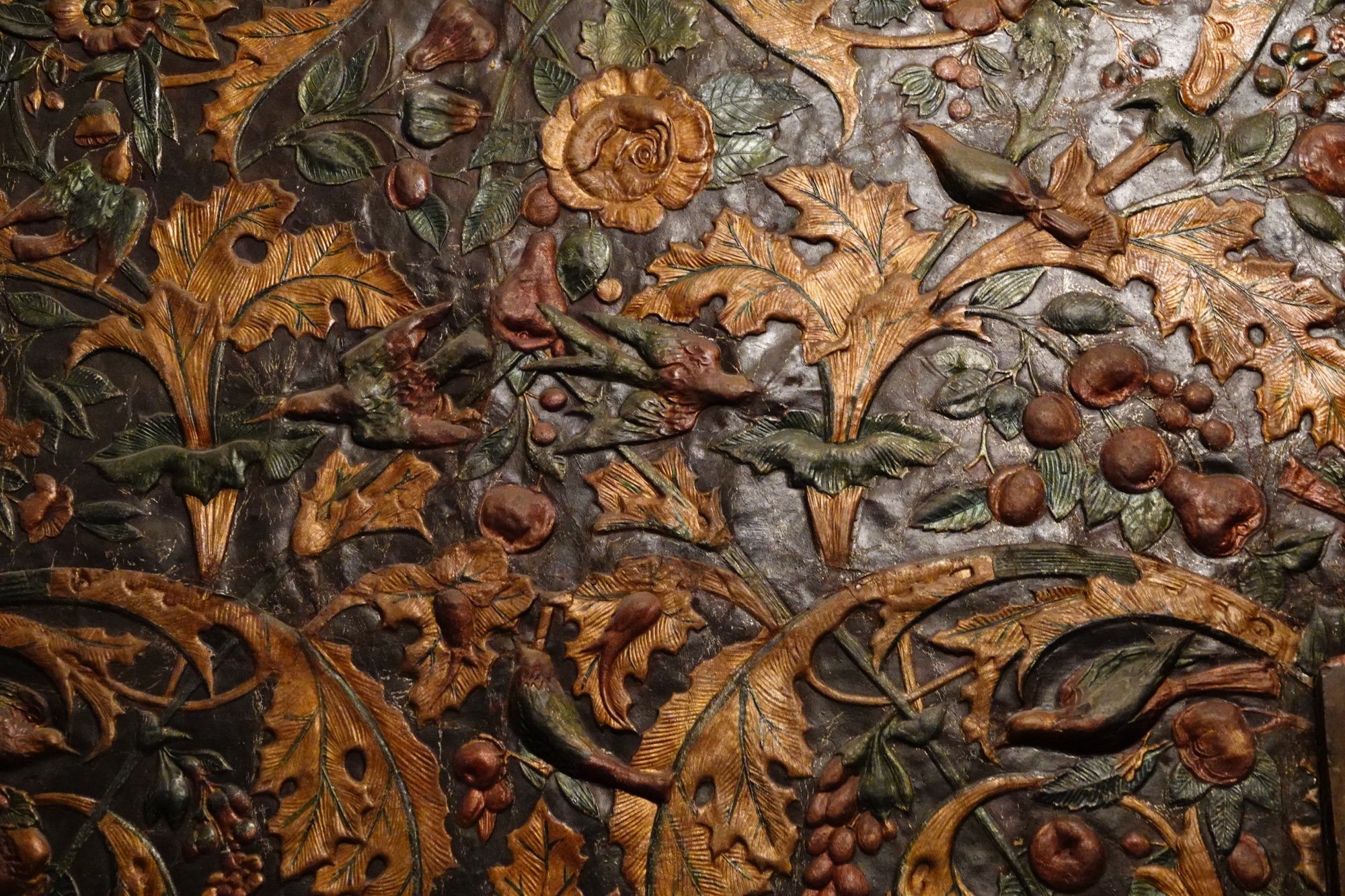
Several of the castle’s rooms had wall coverings protected at visitor height behind plexiglass. This led to probably my favourite trivia fact of the tour:
There was still a special exhibit of Turkish tents to go through, as well as touring the Royal Cathedral (another two hours!), but that will be our next Episode.
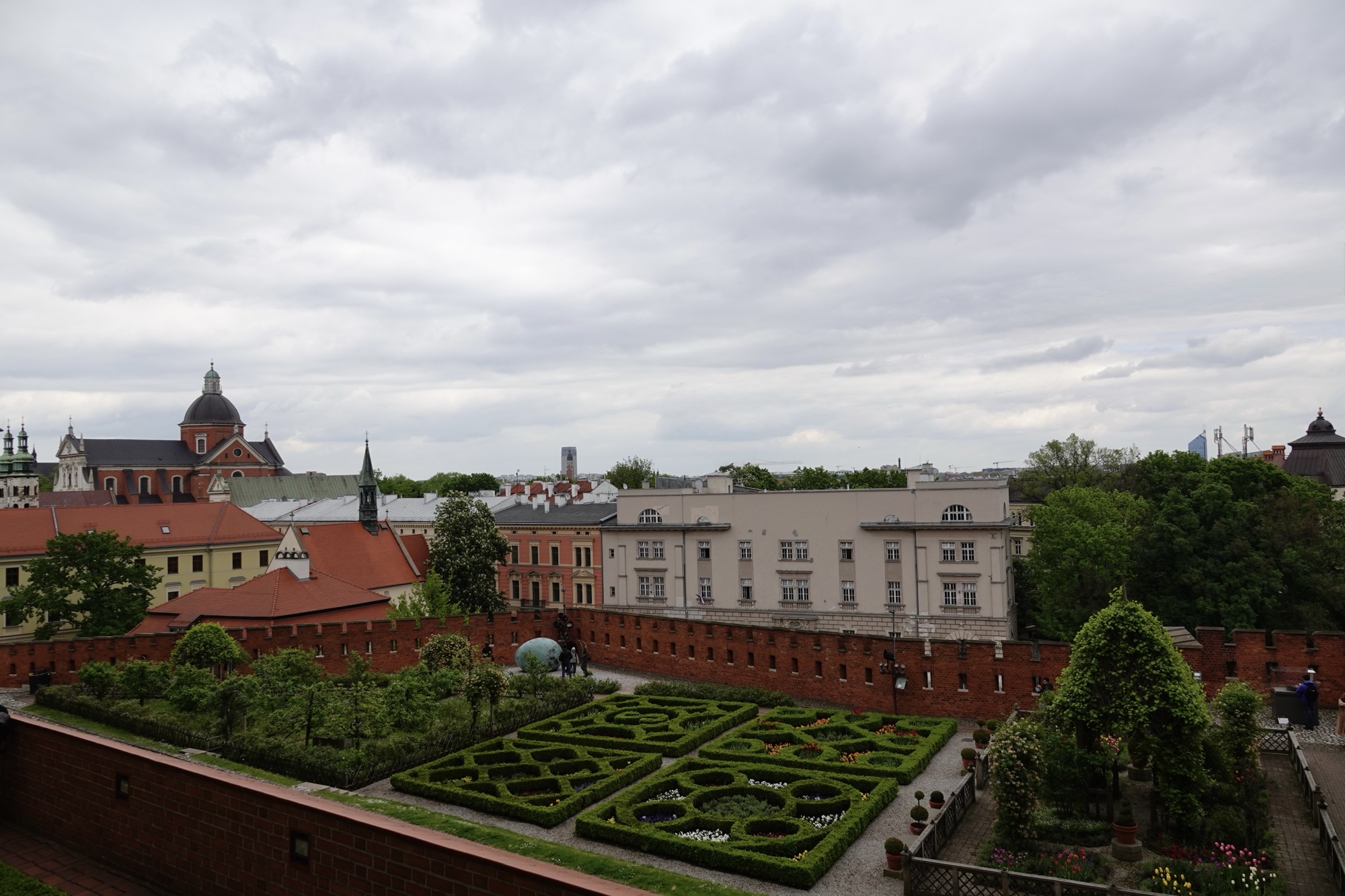
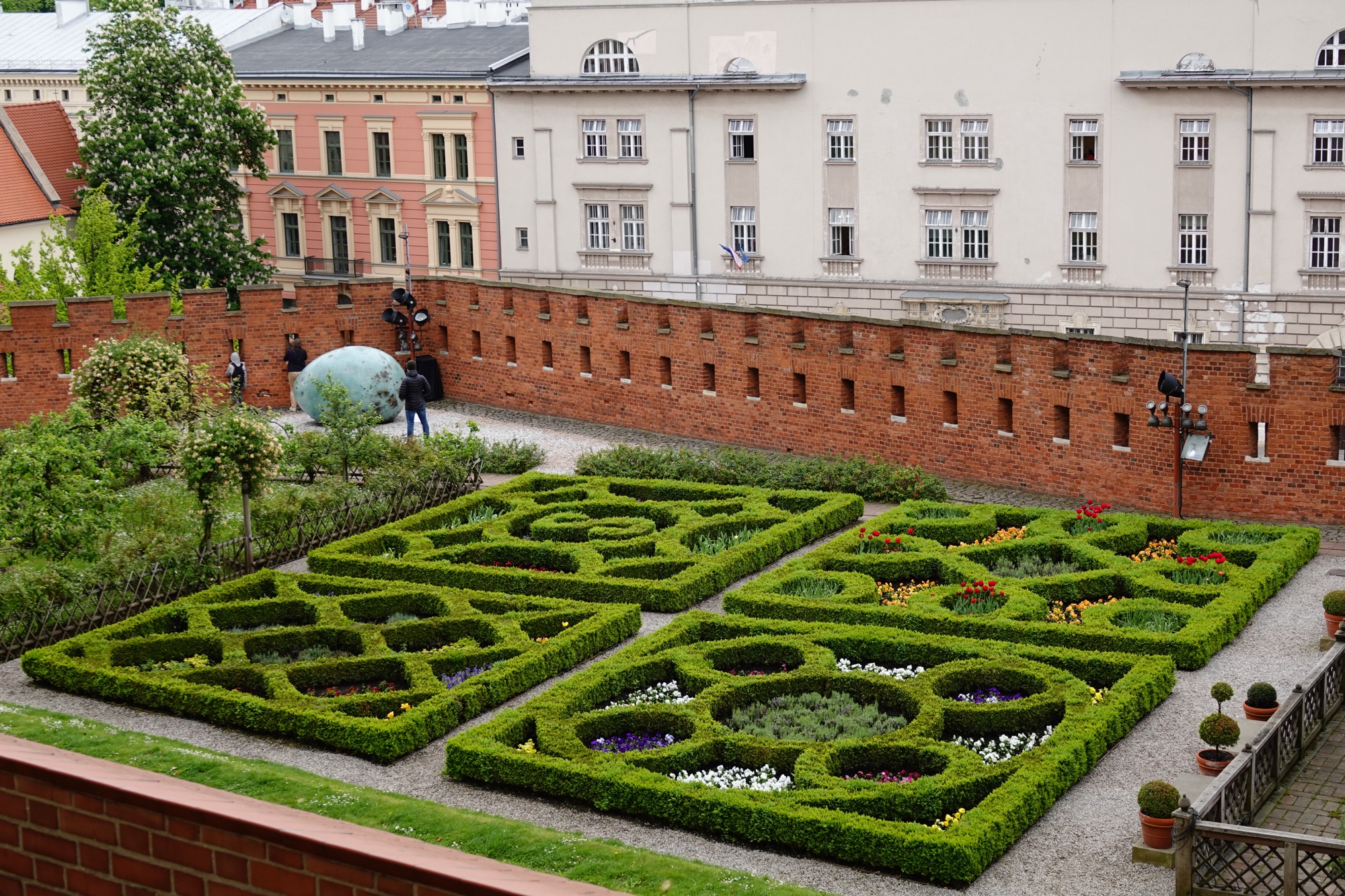
For now, a few pictures of the small castle garden and the view over the city from Wawel Castle Hill that we got before our coffee break.
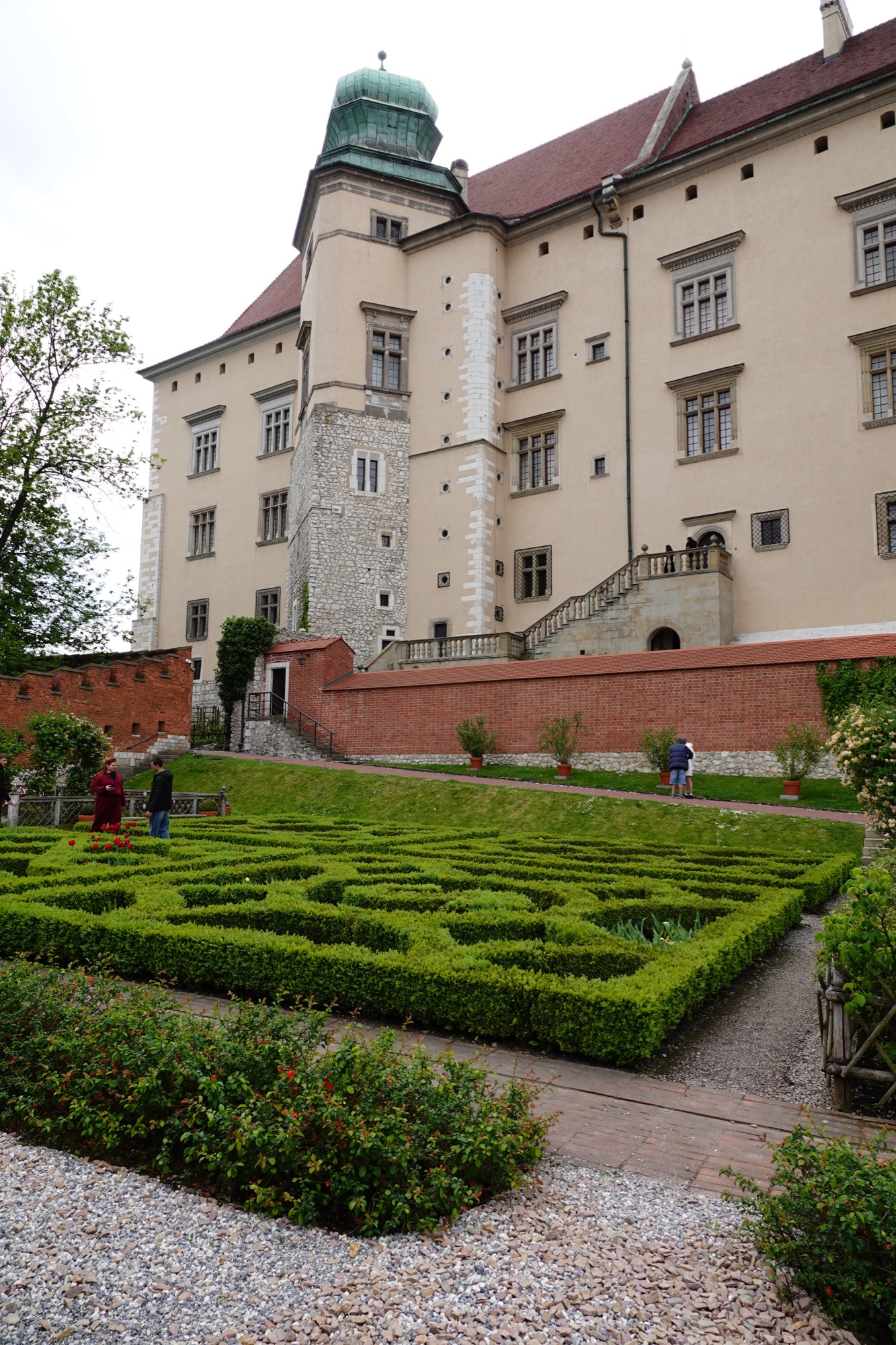
Wawel Castle makes a glorious backdrop to and site of a historical art museum. It’s not a snapshot in time of a monarchy the way that Schönbrunn in Vienna is for the Habsburgs, but it was an interesting glimpse into the Kingdom of Poland, about which we previously knew very little.


I guess I know next to nothing of Polish history before WWII — but there was clearly a great deal of wealth in the hands of the aristocracy. Did you get a sense of any proletarian pushback over the centuries? We are increasingly aware of the concentration of wealth here at the moment and we know how WE feel about it! It’s wonderful that the beauty and craftsmanship of the castle interiors was preserved and/or restored — they are stunning. Do ordinary Poles visit and feel pride in these places? I read that the Monarchy was abolished there in 1795 and that there is no shred remaining. Interesting. Thanks for taking us along as usual!
LikeLiked by 1 person
I have no doubt that the 14th to 18th century serfs knew they didn’t have the wealth of kings, but we’ve seen no references to any kind of rebellion /revolution until the 20th century move toward socialism and workers rights (think Lech Walesa and SOLIDARITY).
The abolishment of the Monarchy had more to do with external forces (The Partition of Poland by Russia, Prussia, and Austria at the very end of the 18th century) and a dysfunctional senate (remember, kings were elected).
Poles definitely visit the castle and museums, especially school groups. Even during tourist season (now) the visitors are at least 50% Polish. Especially after WWI and WWII they look back fondly – and proudly – at their centuries as a Kingdom.
LikeLiked by 1 person
Thanks so much for this capsule history — just the reminder that the Kings were elected helps clarify — though who had the vote matters! Our current situation in the US has me seeing history through a new lens.
LikeLiked by 1 person
Indeed – elected by the nobles. But any elections at all in the 15-17th centuries were pretty rare!
LikeLike
Oh… and there are still a couple of pretenders to the Polish throne floating around the world, but since it wasn’t a hereditary position …
LikeLiked by 1 person