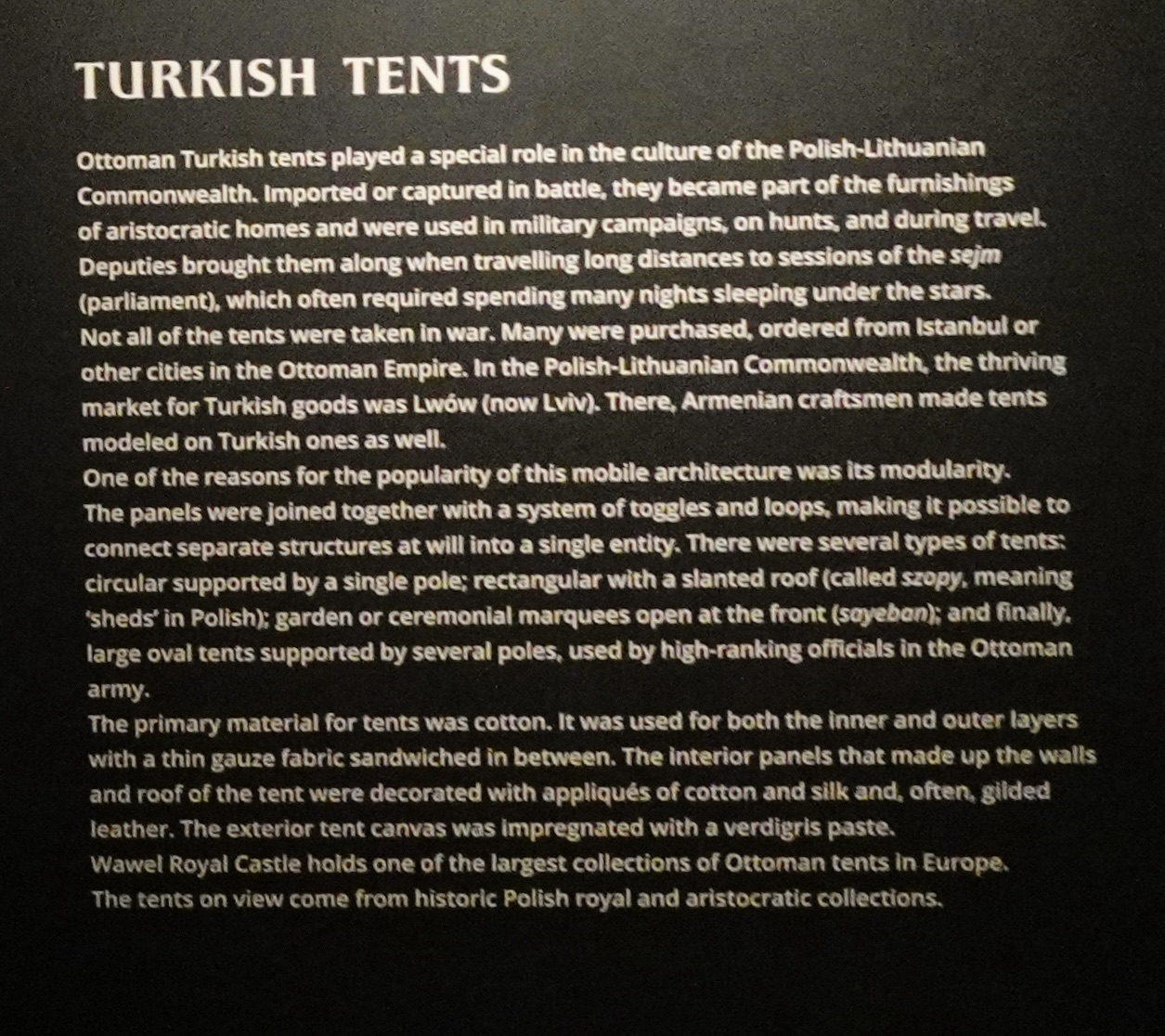
This year, there is an exhibit in Wawel Castle of Turkish tents.
At first, I was a bit puzzled as to why, but it soon became clear through the excellent displays with their multi-language texts.
As was so vividly demonstrated to us on Crete, the Ottoman Turks were a force to be reckoned with. In Europe, they effectively captured most of the Balkan states, Greece, Central Hungary, parts of Romania, Cyprus, Croatia, coastal Ukraine, and even made inroads into Austria.
That they didn’t, despite trying, conquer Poland is largely due to the Poles move to offensive rather than defensive strategies. The Polish–Lithuanian Commonwealth fought numerous wars with the Ottomans throughout the 15th-17th centuries, with King John III Sobieski leading them to a decisive victory at the Battle of Vienna in 1863.
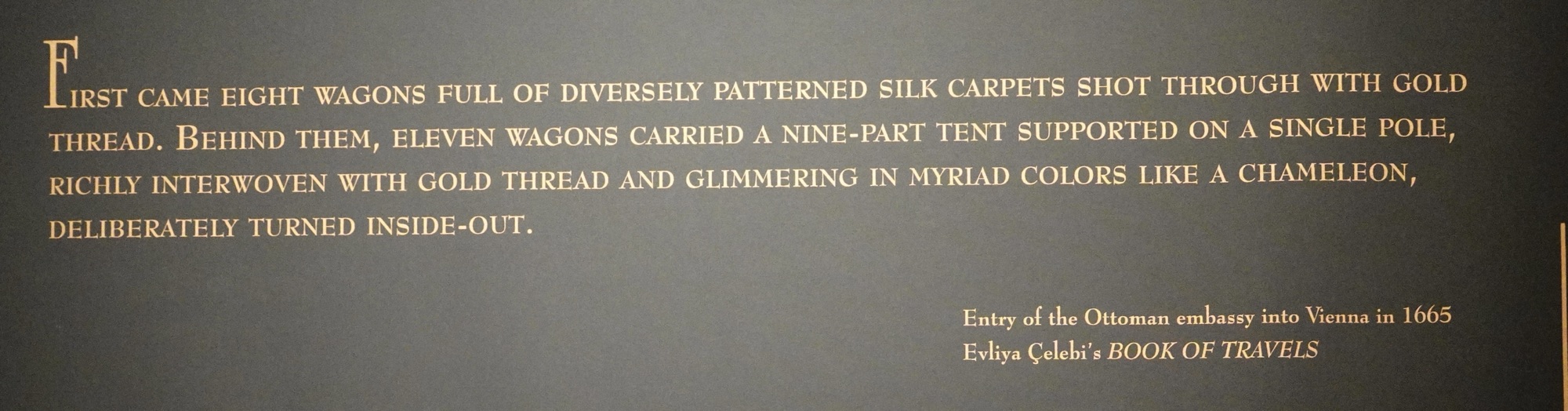
There was a time, though, when the Poles and Ottomans were trading partners.
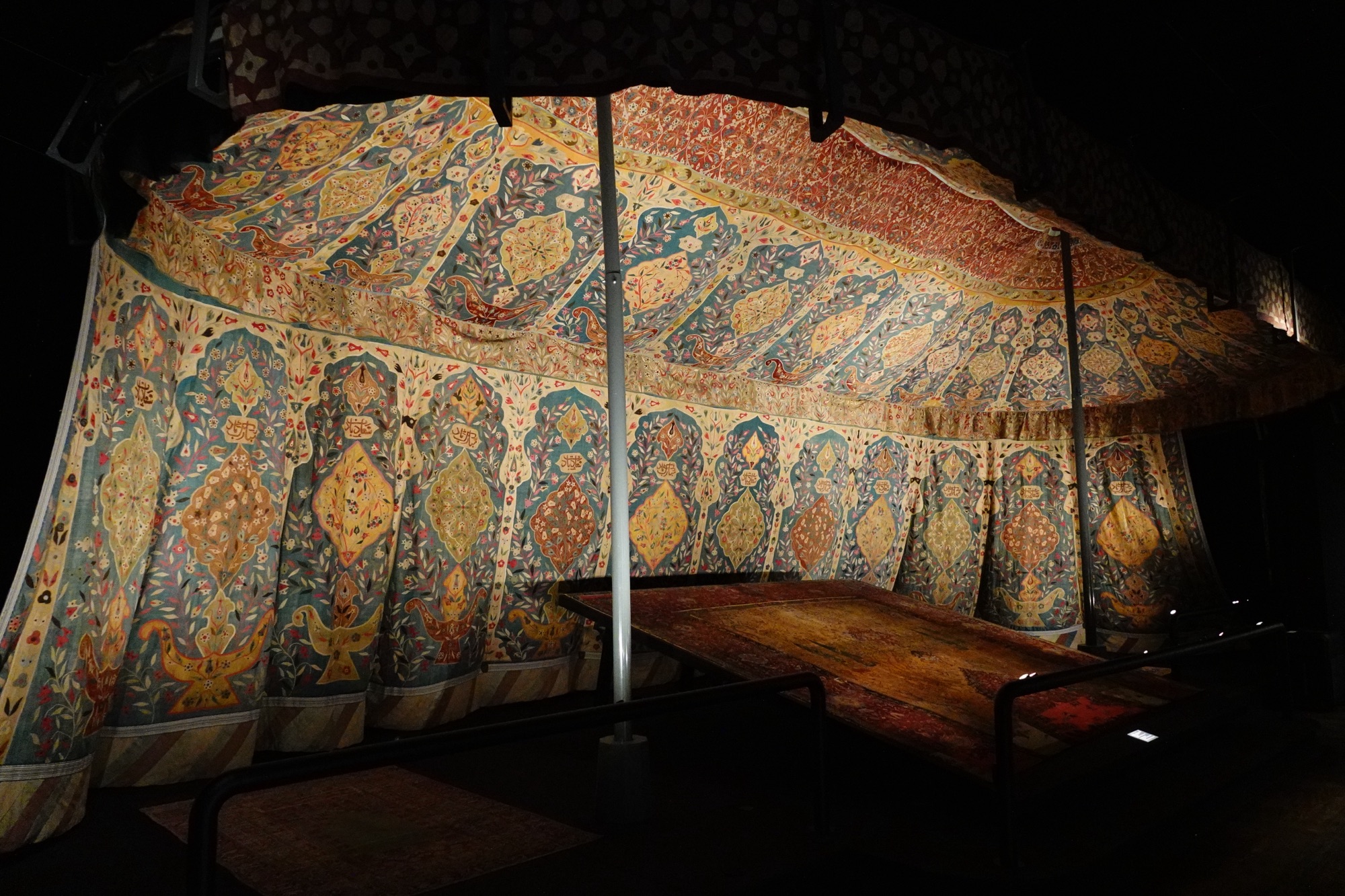
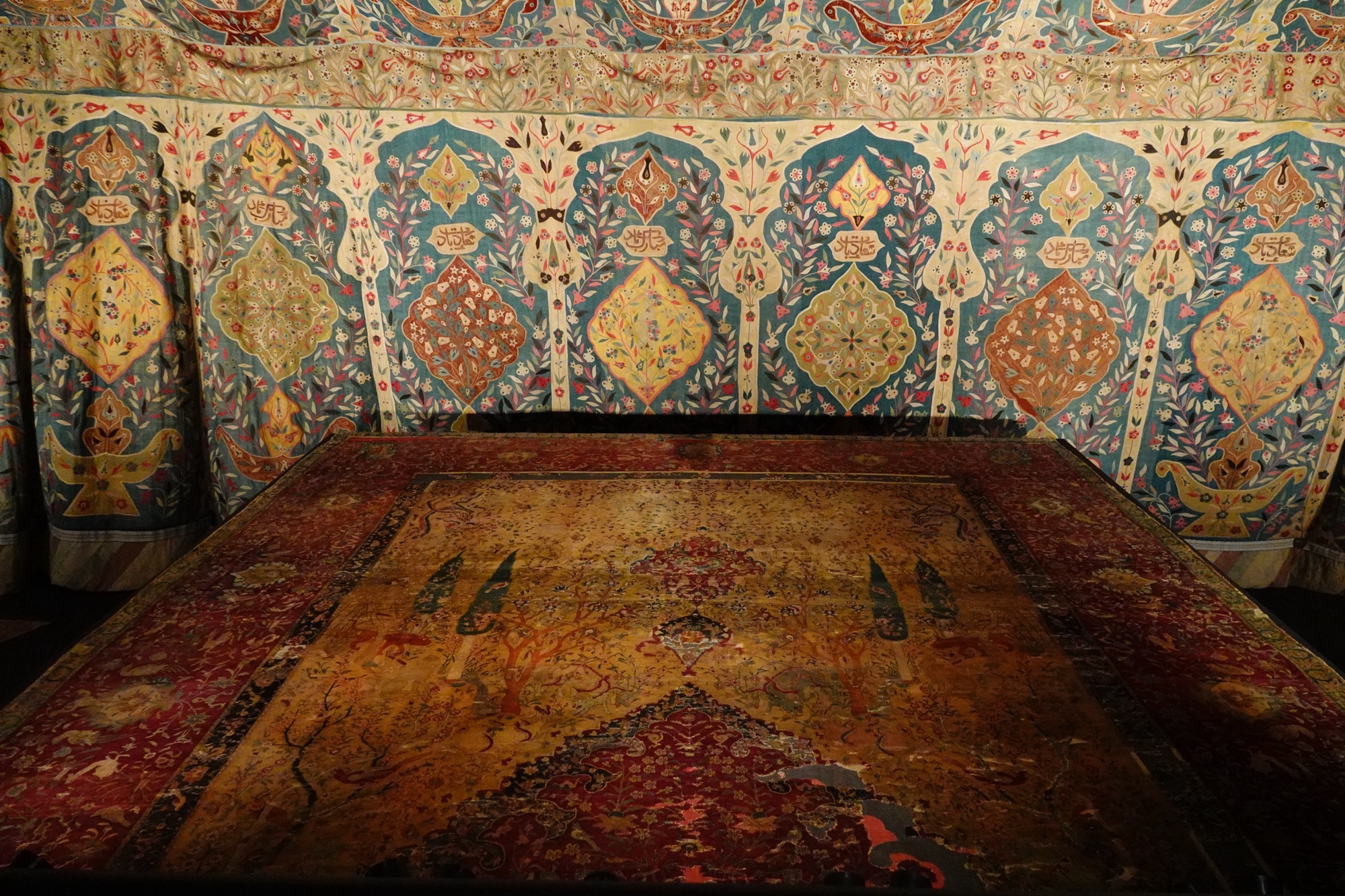
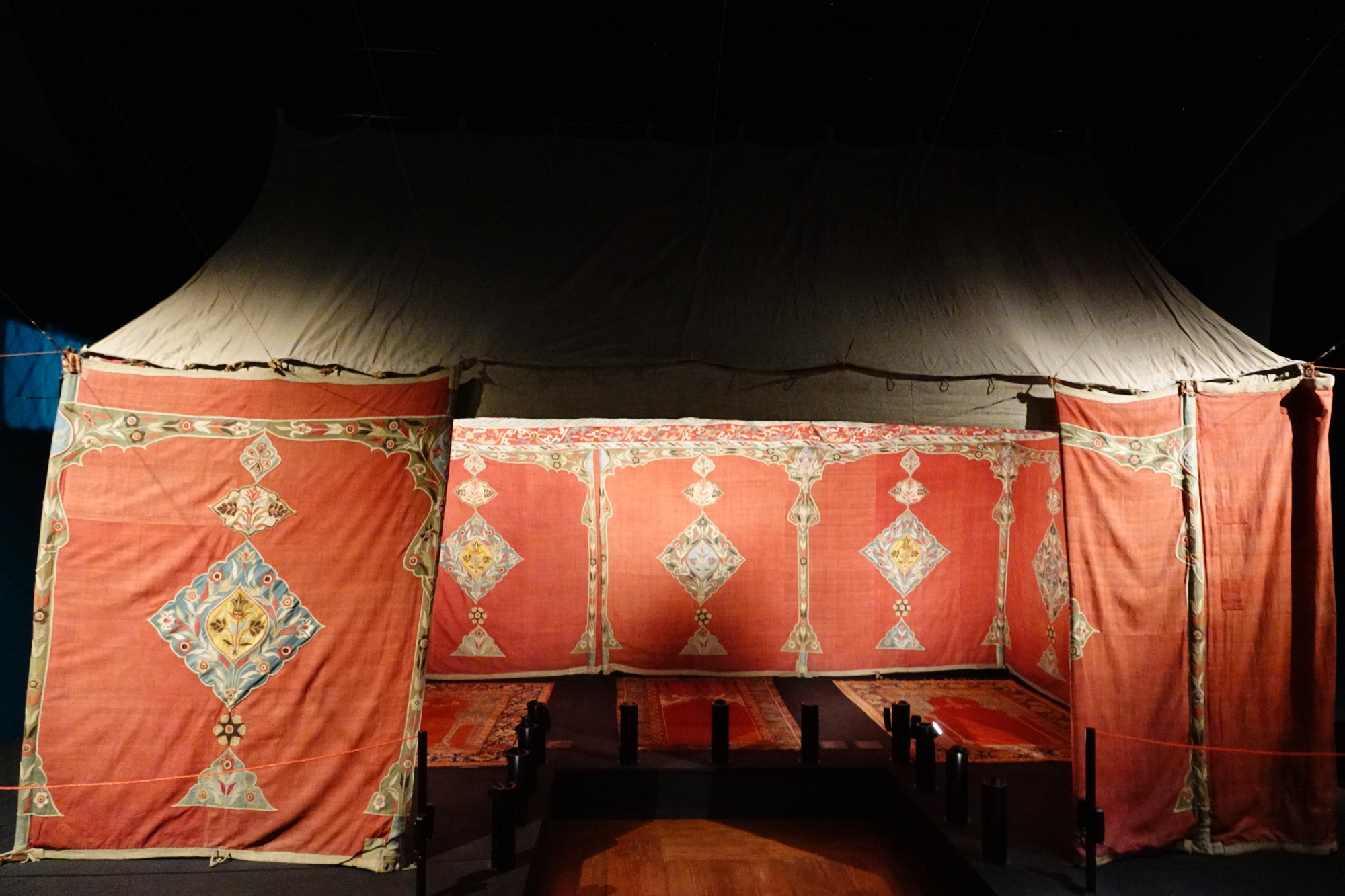
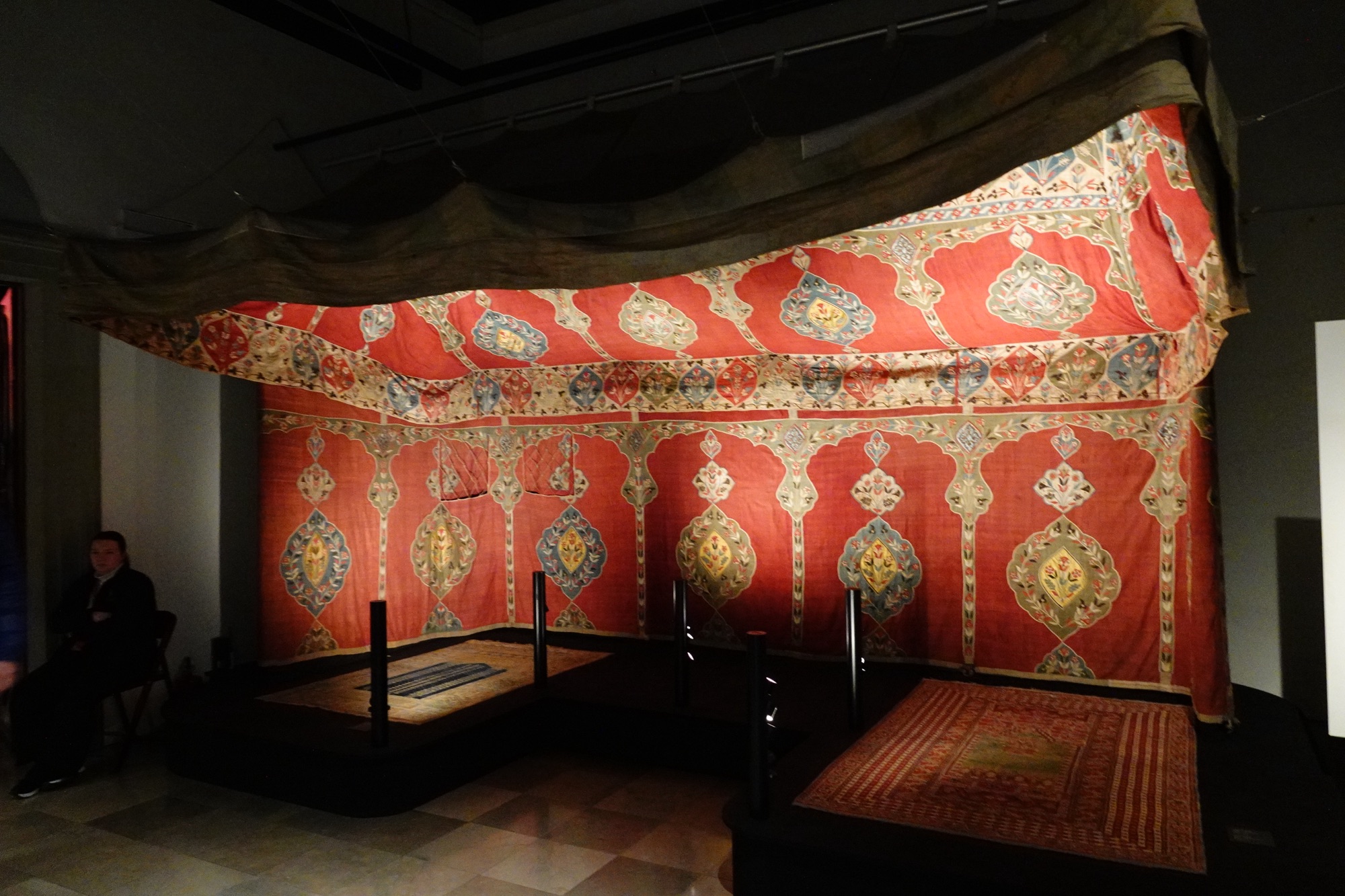
The 17th century linen, cotton, silk and gilded leather tent below was part of the set of trophies captured by King John III Sobieski during the Vienna Campaign of 1683. In 1729, it was taken from Warsaw to Dresden by King Augustus II the Strong to be used in the military pleasure and parade encampment, the Lustlager, at Zeithain (1-26 June 1730). Szymon Szwarc, a Polish antiques dealer, purchased it from the Wettin collection and donated it to Wawel Castle in 1933.
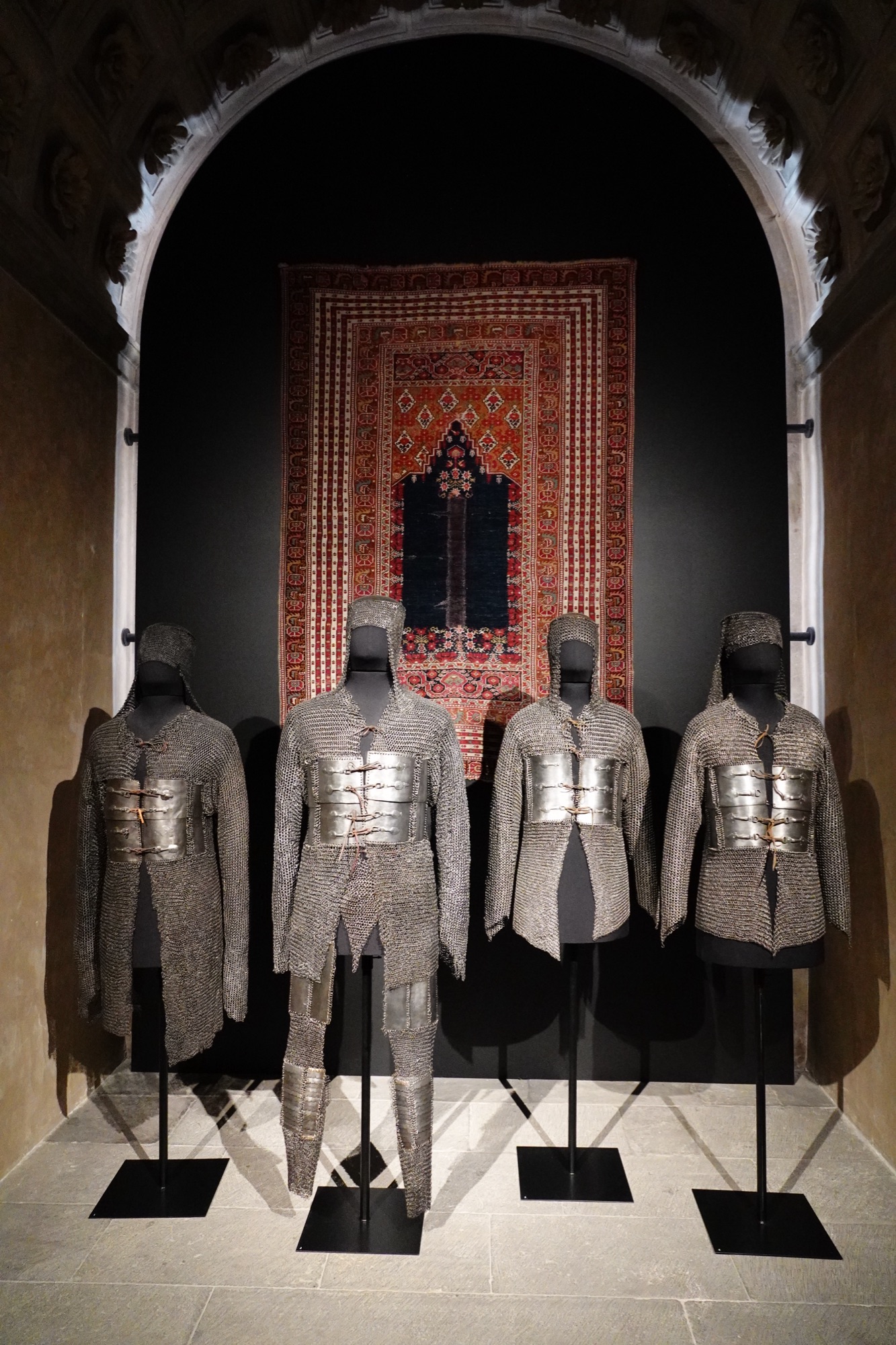
There were also displays of Ottoman armour.
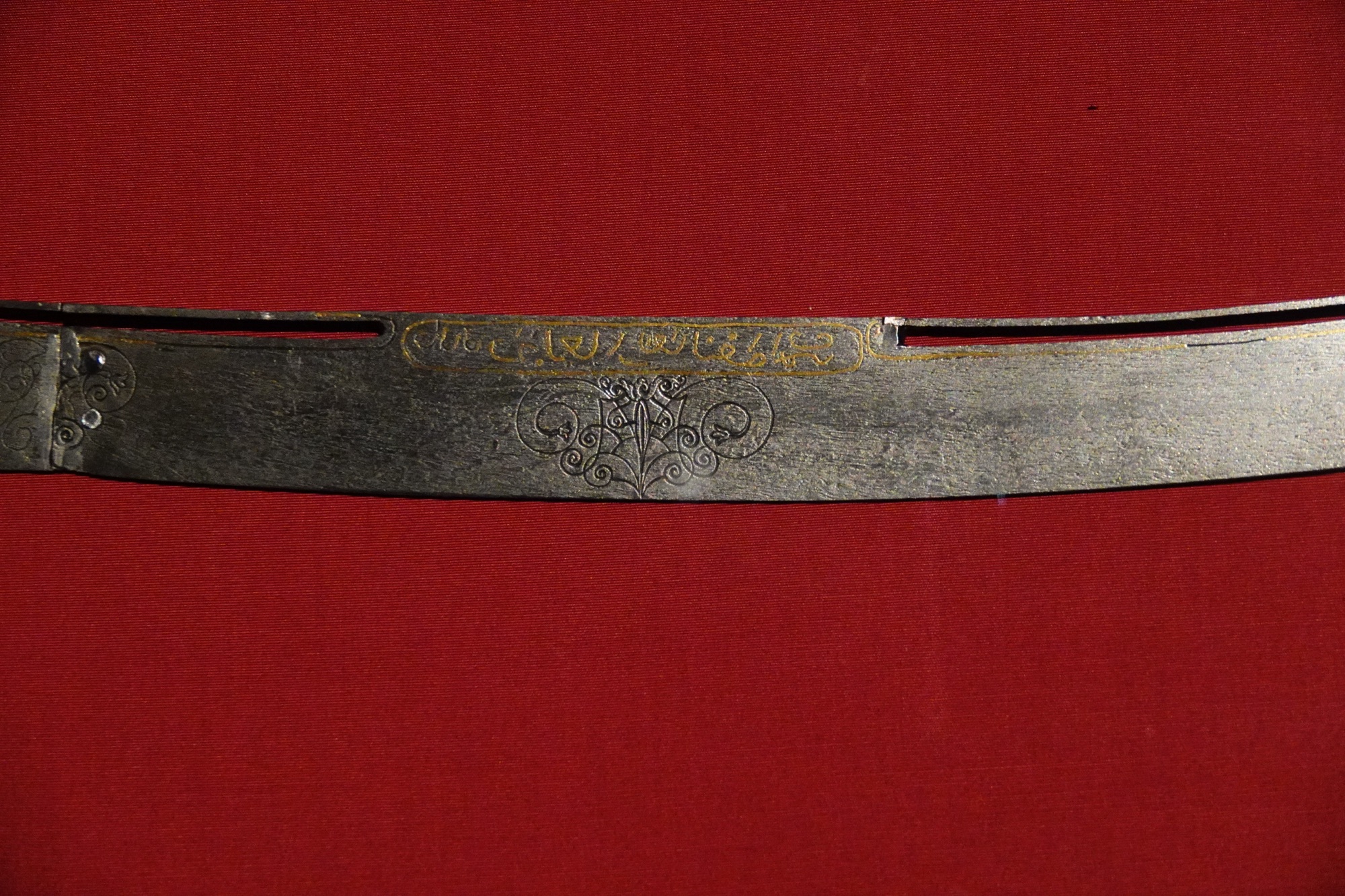
The blade comes from the votive treasury in Loreto. Nineteenth-century tradition links it to the Battle of Vienna and Grand Vizier Kara Mustafa, the commander of the Ottoman army. The earliest mentions date from the Napoleonic period, when the Polish Legions fighting under Napoleon Bonaparte were operative in Italy. Their commander, General Jan Henryk Dabrowski, received the blade of the saber, missing its costly hilt, on the Capitoline Hill on 20 June 1798. In 1799, he sent it to Tadeusz Kościuszko in Paris. In 1817, Kościuszko gave the blade to Anna Jadwiga Sapieha née Zamoyska, for her son Leon. Throughout the years that followed, it was a treasured object in the Sapieha collection at Krasiczyn castle. In 1939, shortly after the outbreak of World War Il, it was hidden in the Bishop’s Palace in Kraków.Confiscated by the communist authorities in 1952, it was transferred to Wawel in 1954. In 1998 Michat Sapieha, heir to the family collection, donated the blade to Wawel Royal Castle.
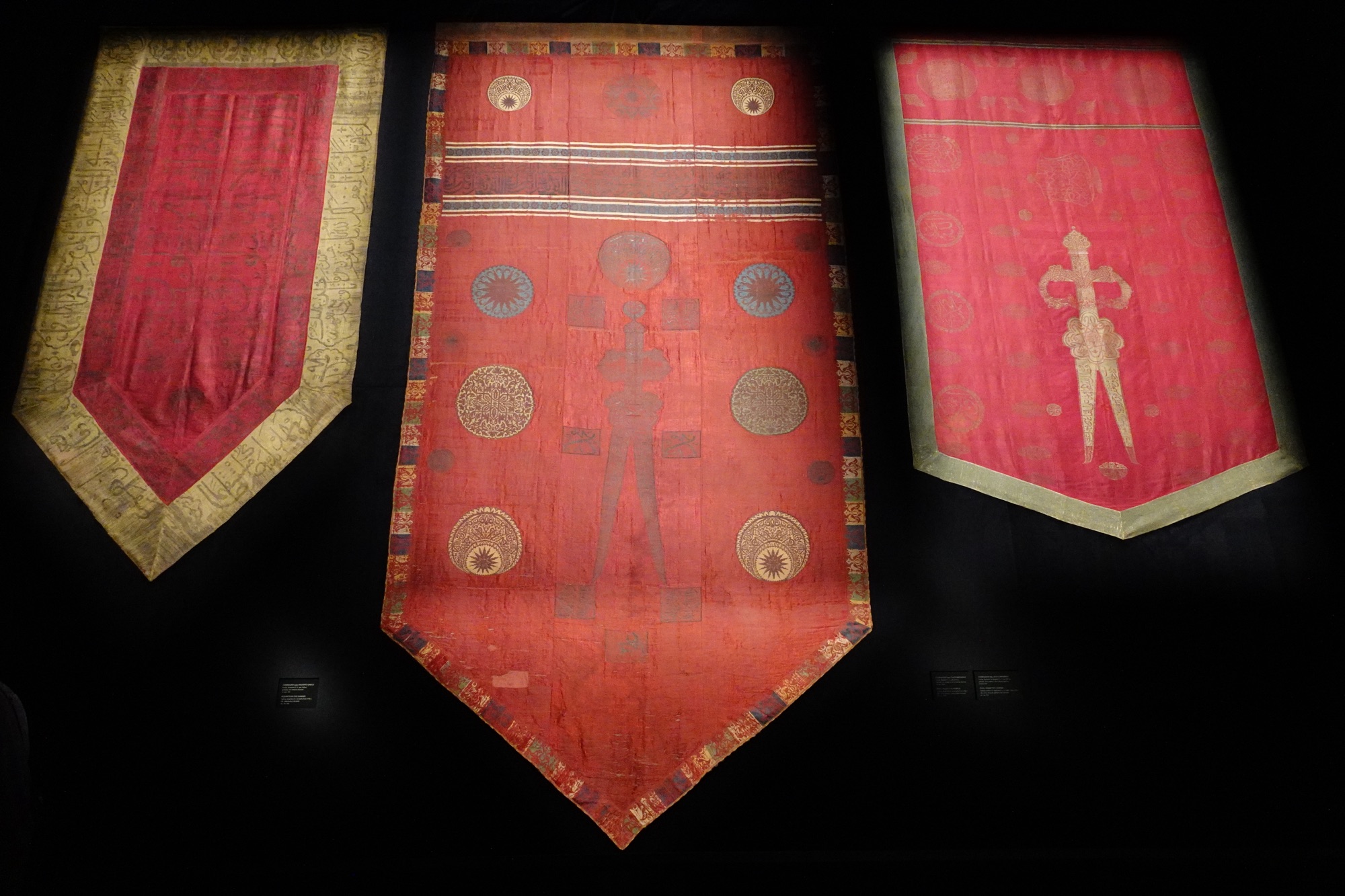
Ted said the unexpected exhibition was a “Turkish delight”.
From the castle itself we headed outside to the Royal Cathedral, where we toured the chancel and climbed the bell tower.
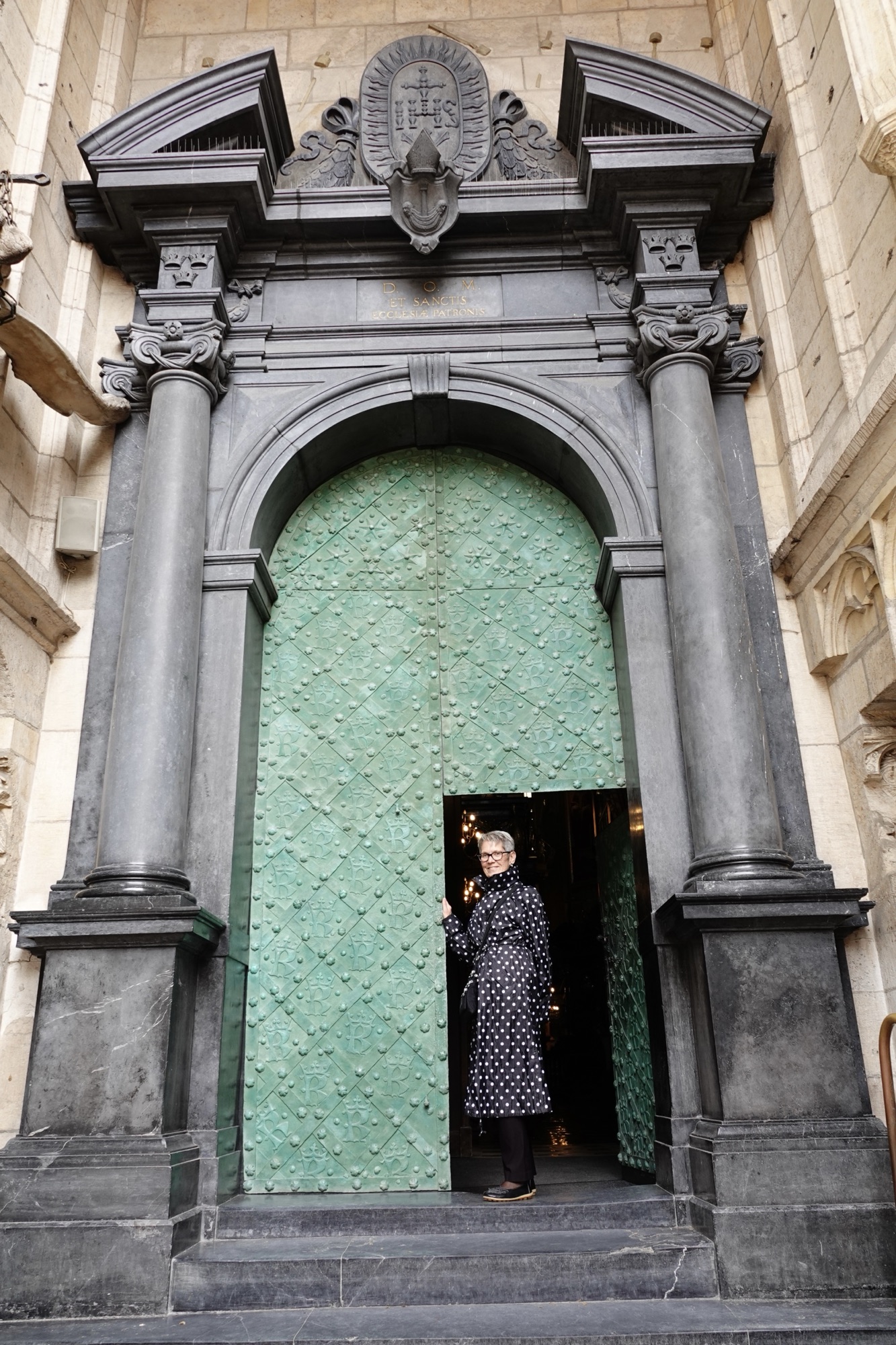
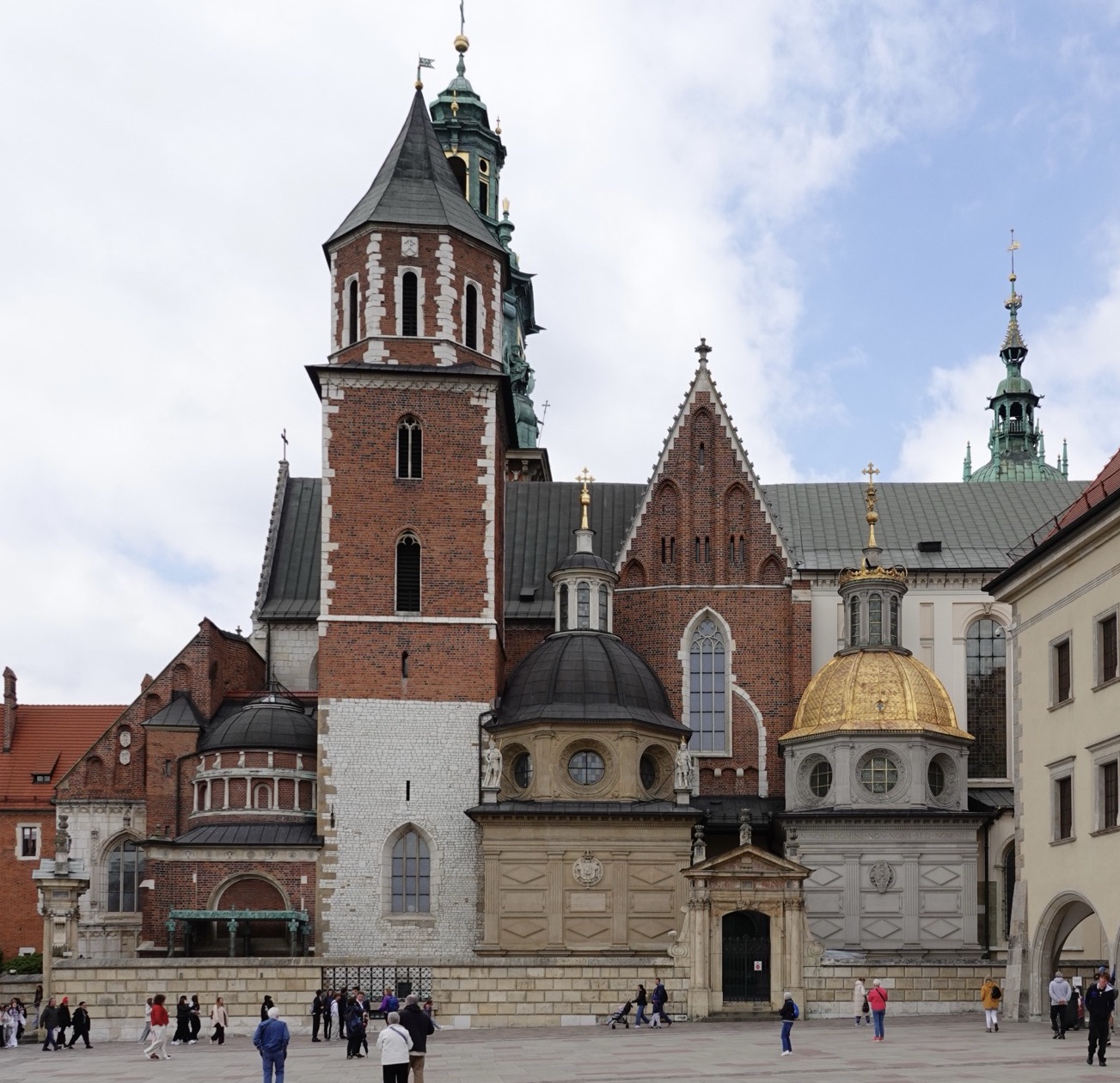
Wawel Cathedral, which is the Archcathedral Basilica of St Stanislaus Bishop and Martyr and St Wenceslaus Martyr, is a special place for the Poles, a testimony of the history of the Polish nation and centre of religious reflection. Its history dates back to the very beginning of Polish statehood. Due to its unique historic, artistic and patriotic value, Wawel Cathedral is considered one of the most important sacred buildings in Poland.
The first cathedral on Wawel Hill was built after the bishopric of Kraków was established during the Gniezno convention in the year 1000CE. The second Wawel Cathedral, which was consecrated in 1142, is connected with the reign of Duke Władysław Herman, so it is known as the Herman Cathedral. It was destroyed by a fire in 1305. Sadly, only St Leonard’s crypt and the lower section of the Tower of the Silver Bells have survived. Shortly afterwards, the Bishop of Kraków, Nanker, initiated the construction of the third Wawel Cathedral. The construction of this Gothic church, which has survived to this day, began in 1320 and was completed and consecrated on the 28th of March 1364.
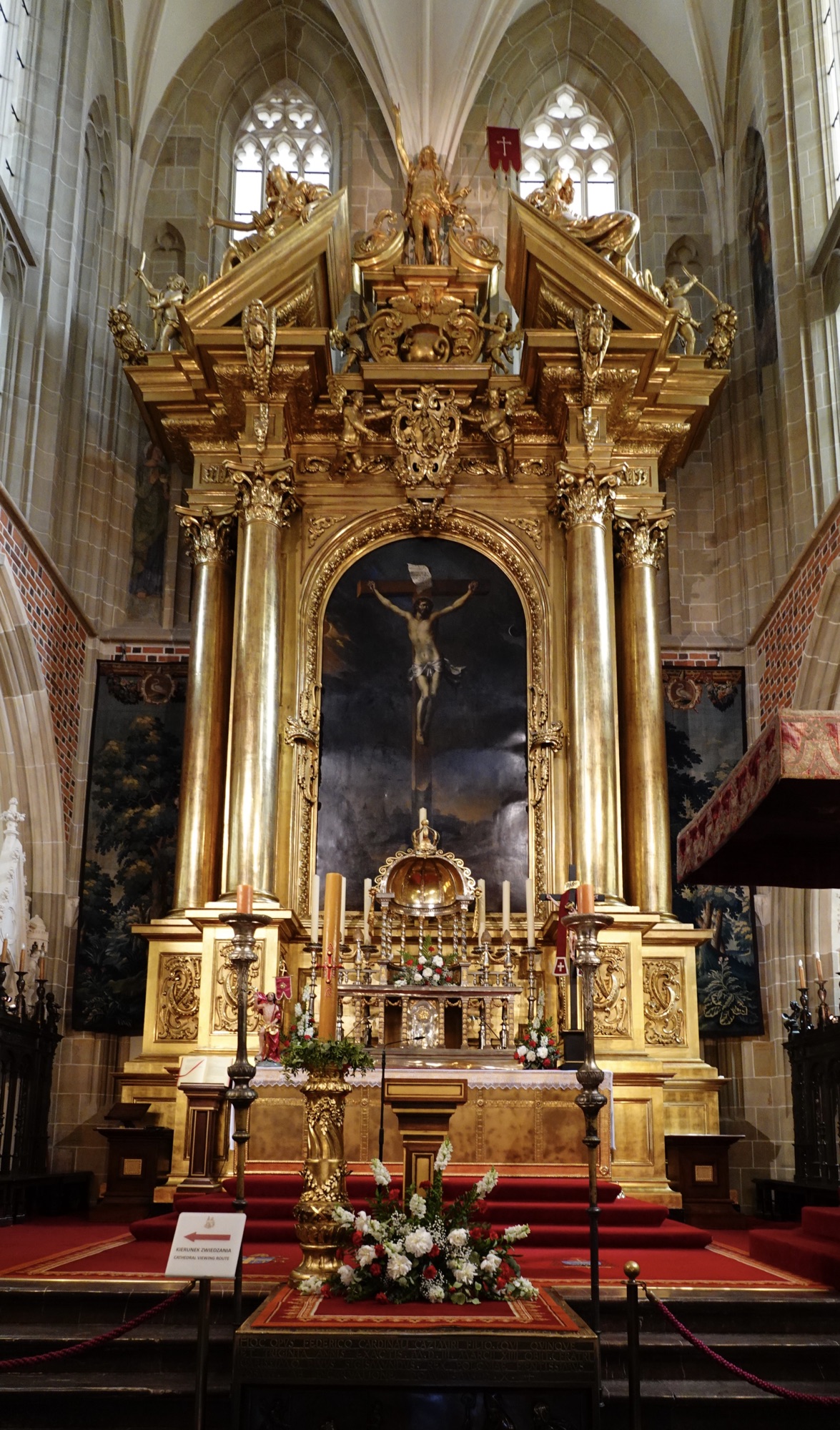
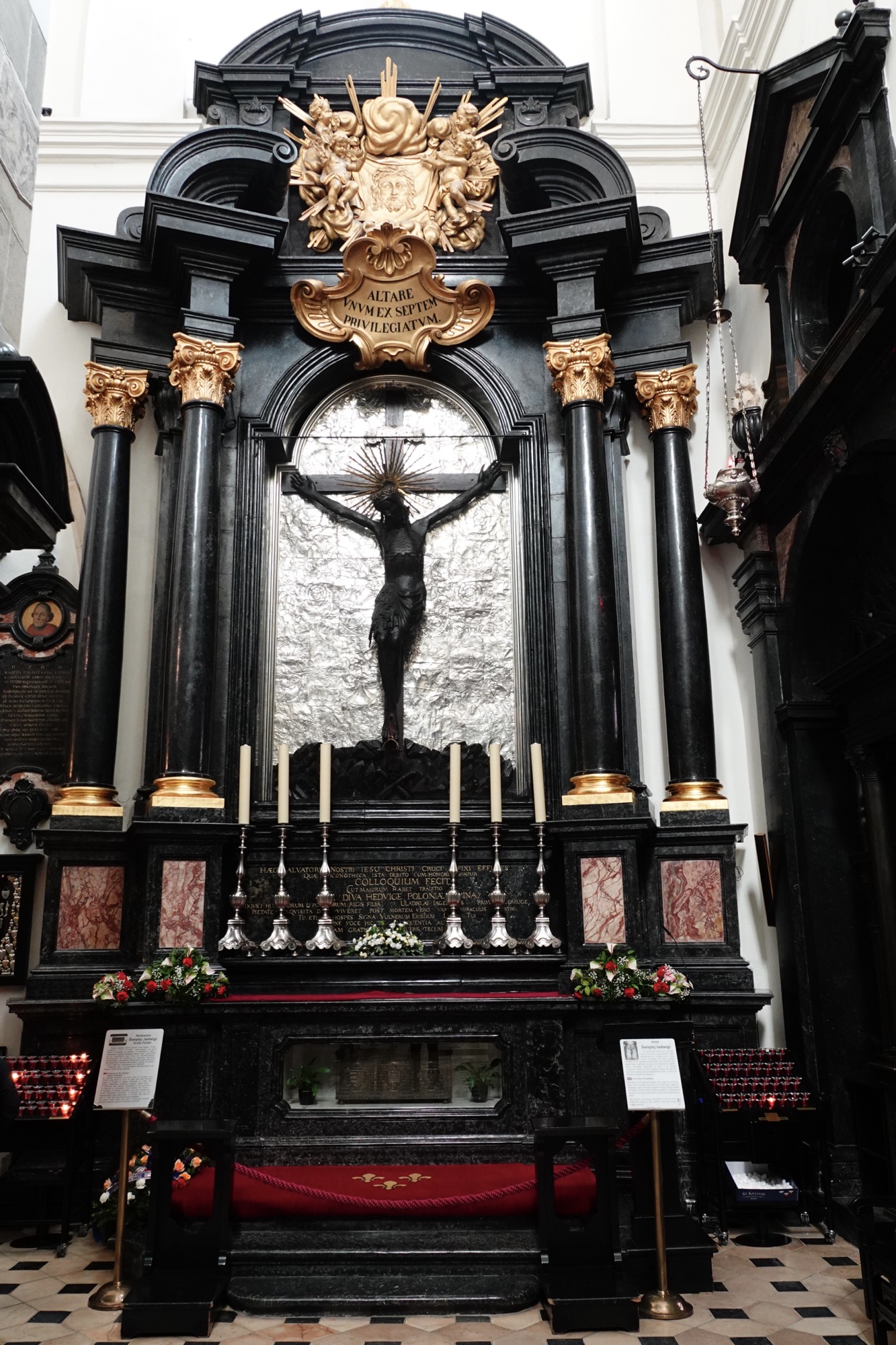
The High Altar of Wawel Cathedral was the coronation altar of Polish kings for four hundred years. Starting with Wadystaw the Short on the 20th of January 1320, all Polish kings, except Stanisław Leszczyński and Stanisław August Poniatowski, were crowned here.
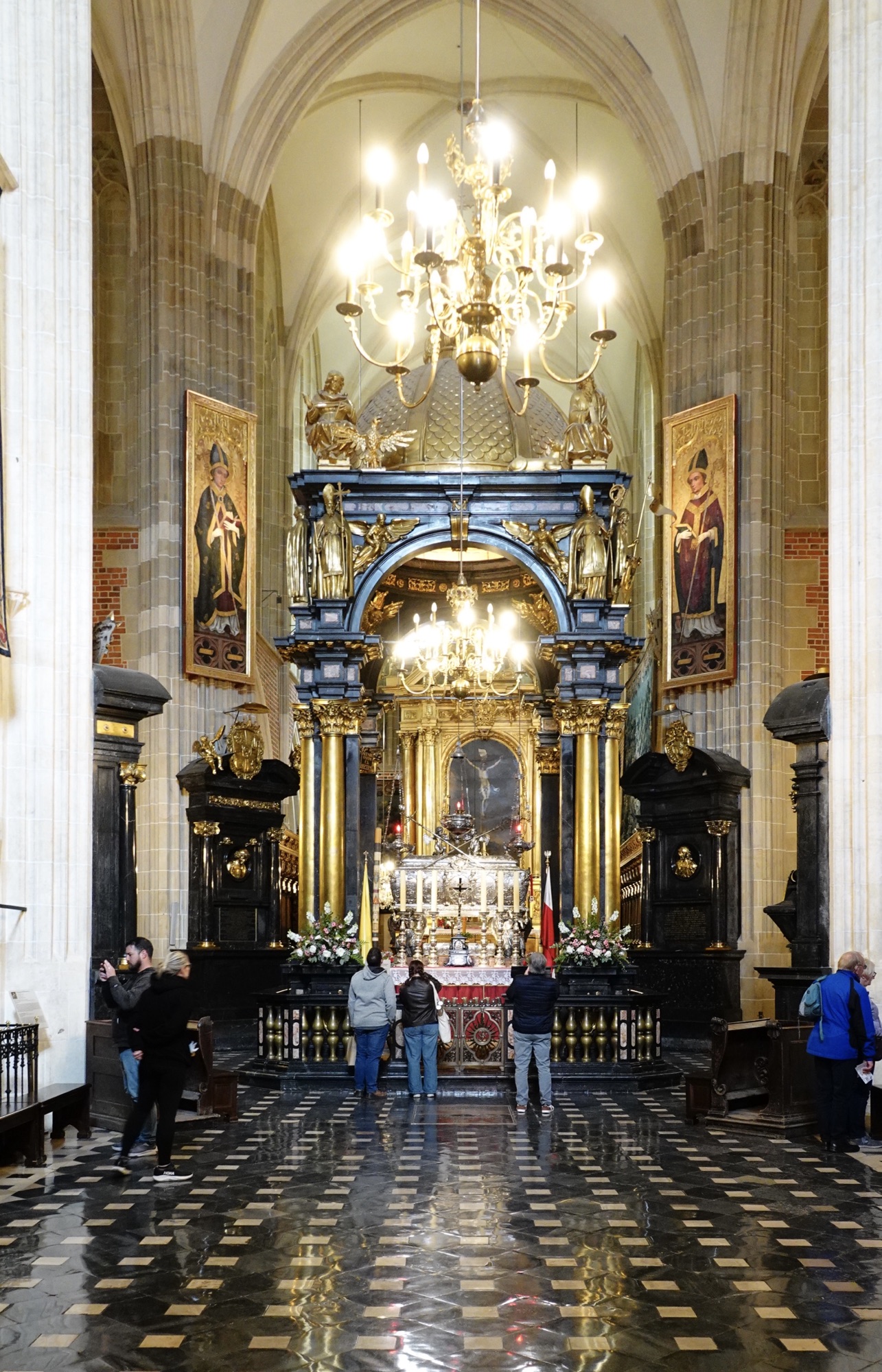
The monumental Baroque altar that we see today with the painting of Christ Crucified was commissioned by Bishop Piotr Gembicki ca. 1649 and designed by the Italian architect Giovanni Battista Gisleni.
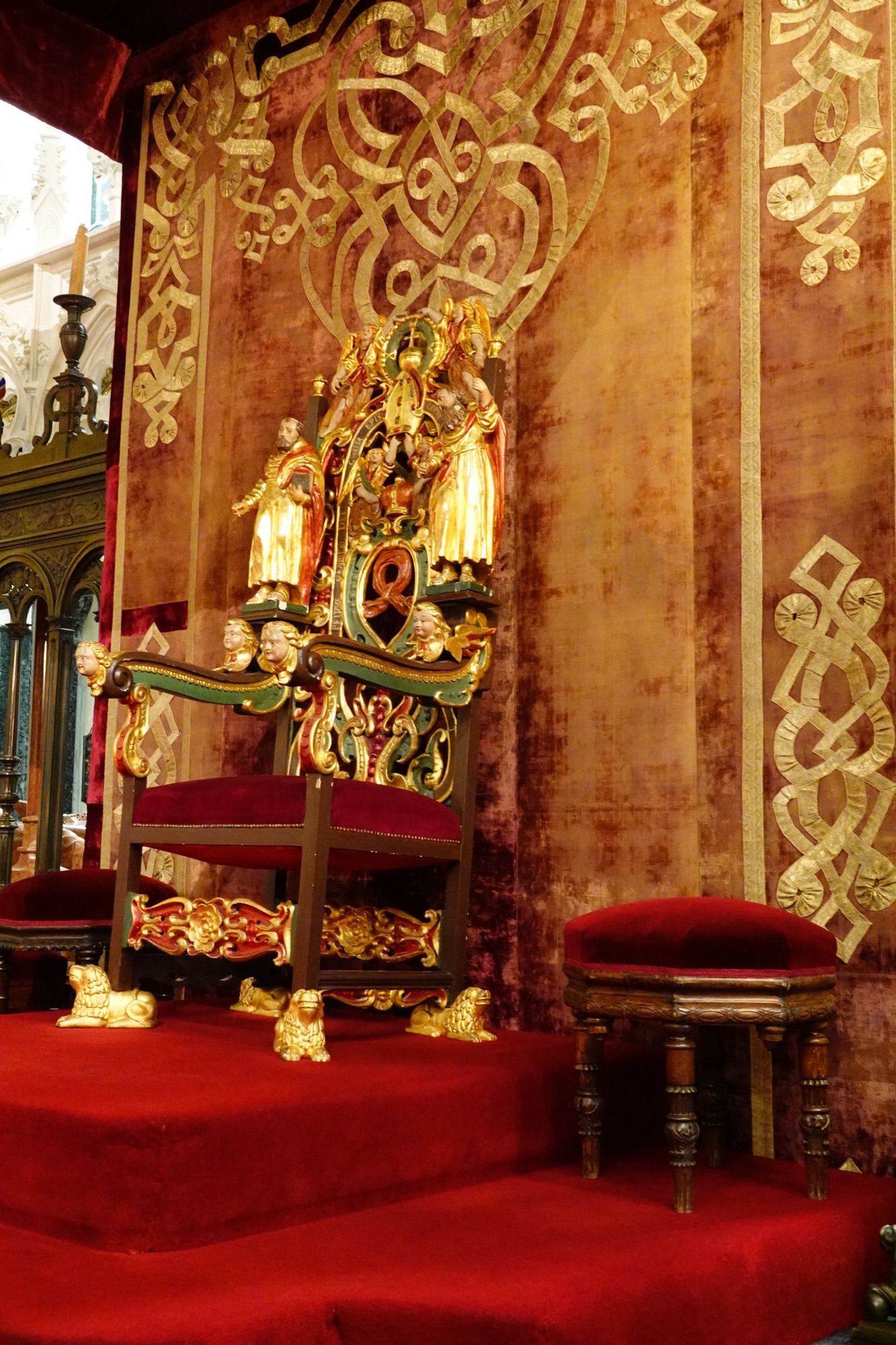
The royal throne used to stand on the right side of the altar, but when Poland lost its sovereignty it was replaced by the seventeenth-century throne of the bishop of Kraków. Over that throne is a canopy, which was erected on the occasion of the coronation of August III of Saxony in 1734.
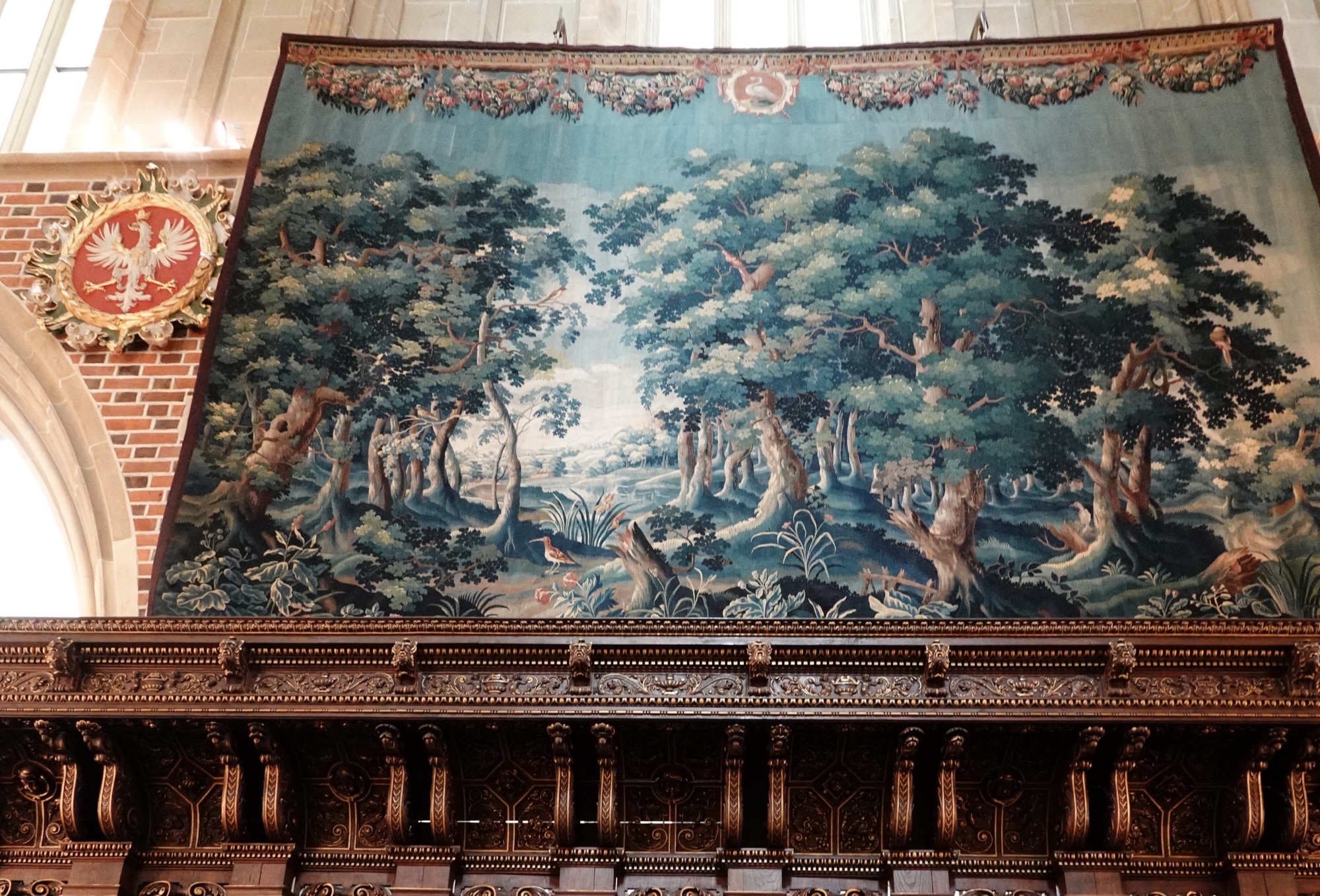
There were several very impressive mid 17th century tapestries in the cathedral.
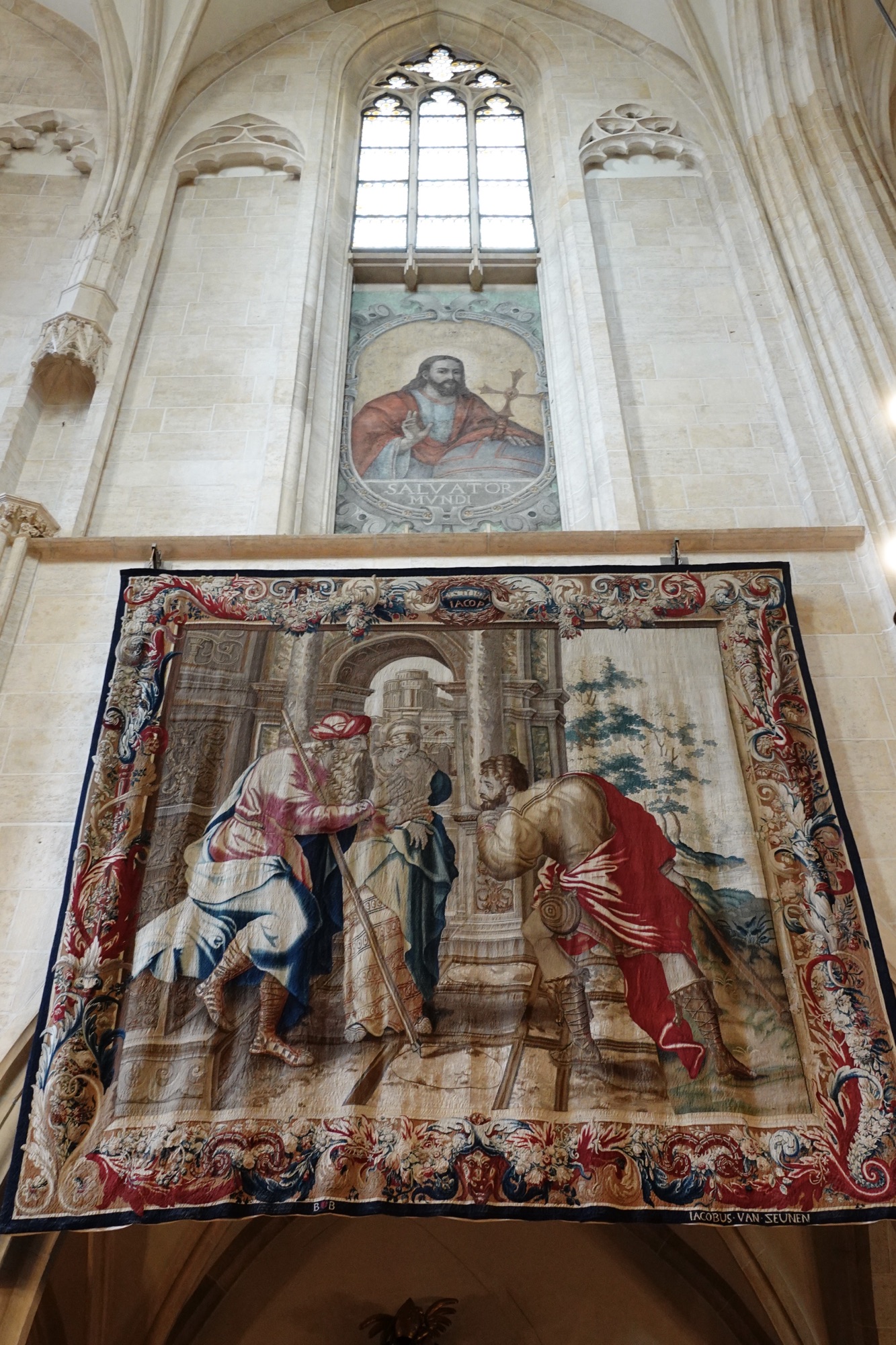
The Meeting of Abraham and Melchisedek
As lovely as the cathedral was, the highlight of our visit for me was the collection of sarcophagi, cenotaphs, and the crypts containing the Polish monarchs, some of whom were canonized.
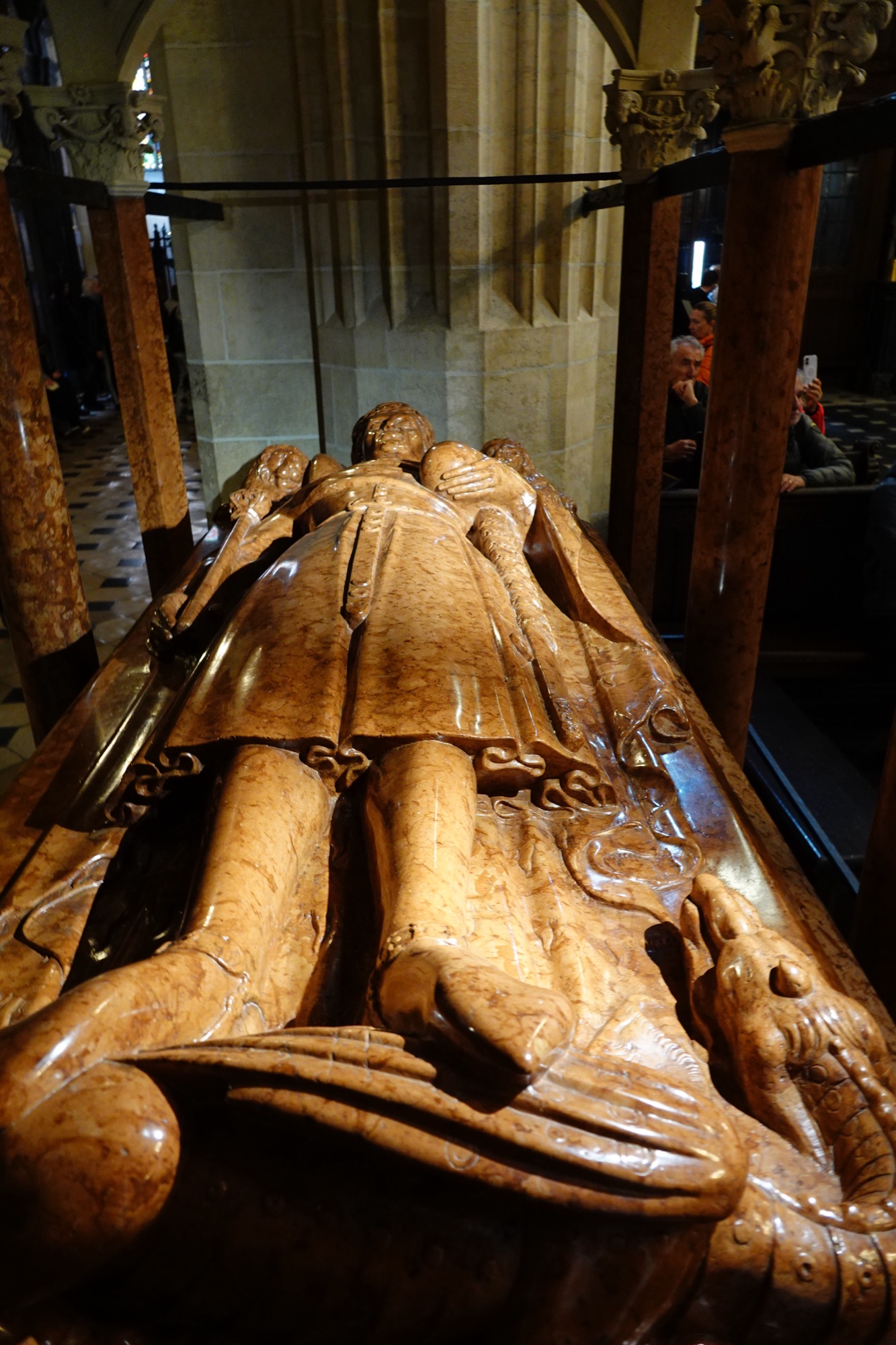
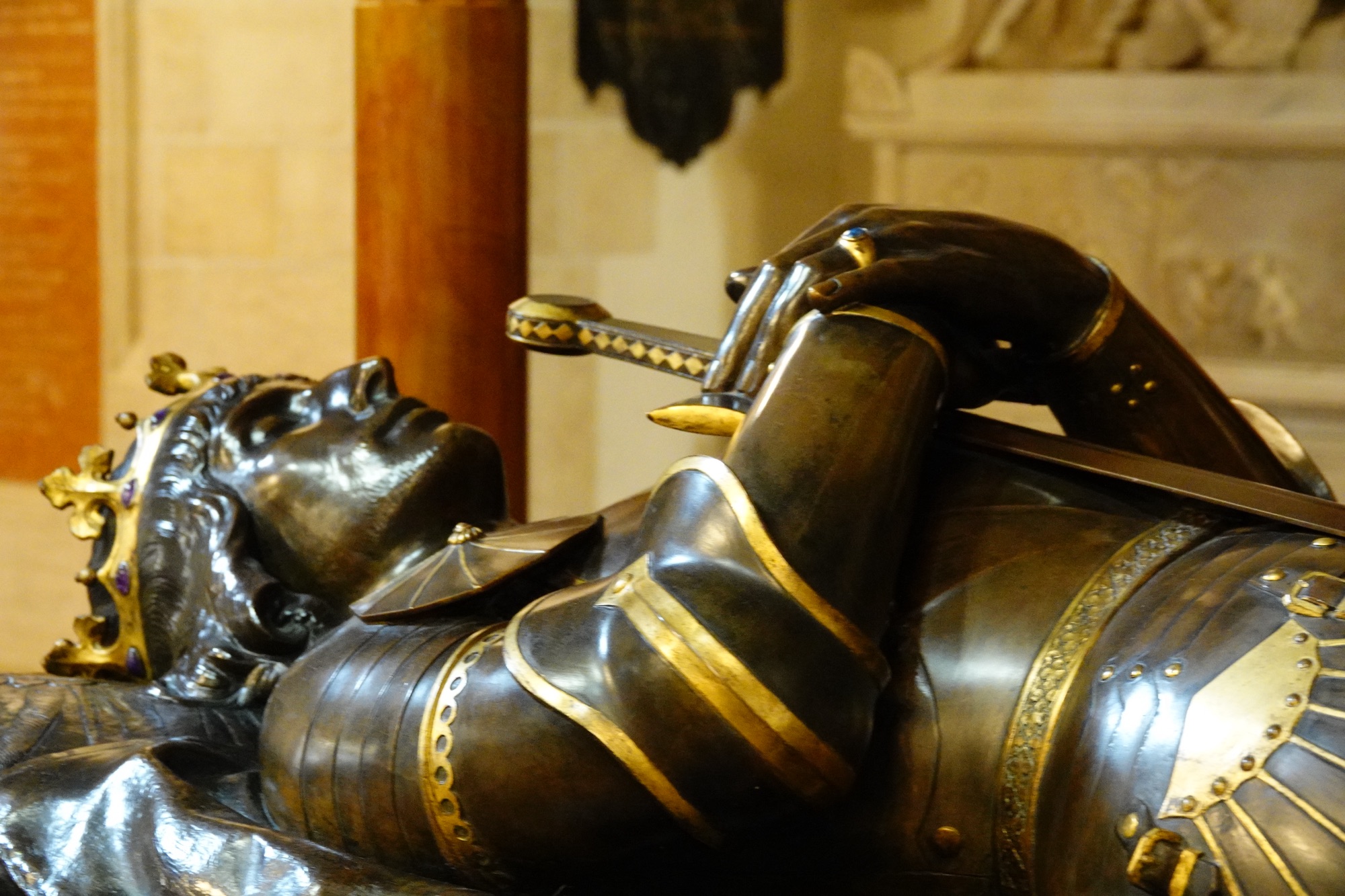
The sarcophagus of King Władysław II Jagielto, who died in 1434, was made in a Florentine or Burgundian workshop out of Hungarian marble. The bi-coloured marble canopy was later commissioned by King Sigismund I the Old, and made by Jan Cini of Siena 1519 – 1524.
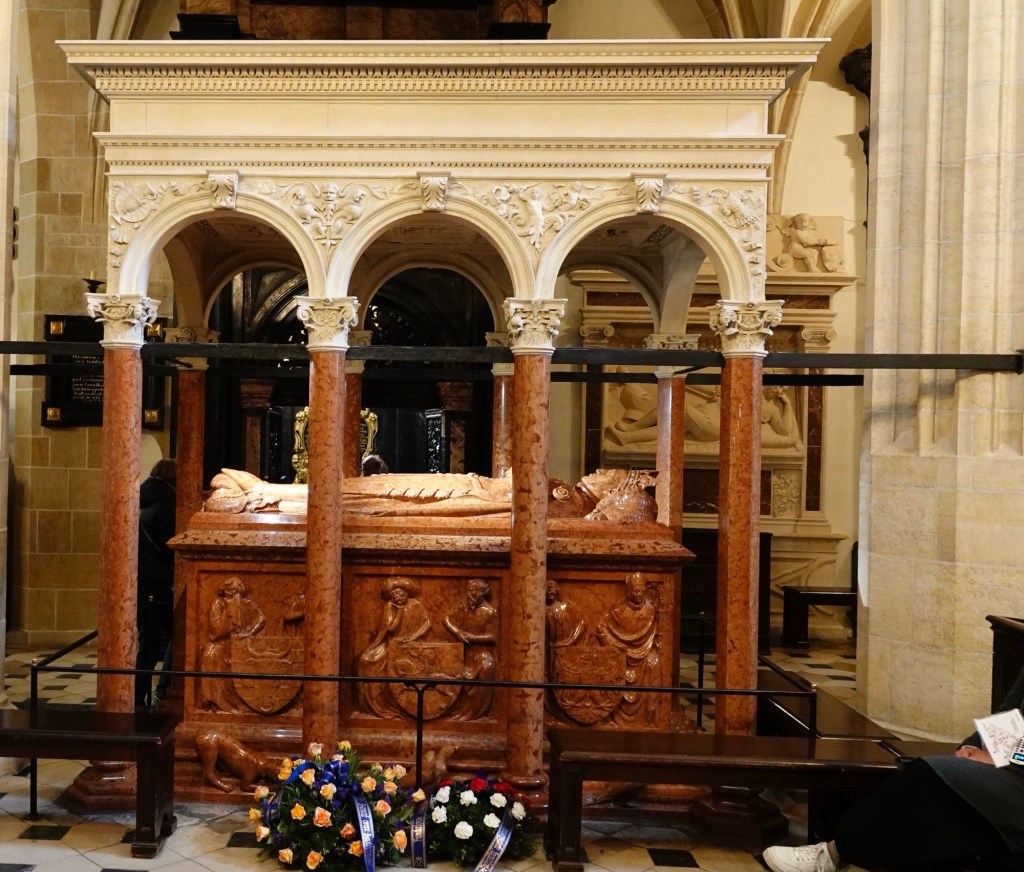
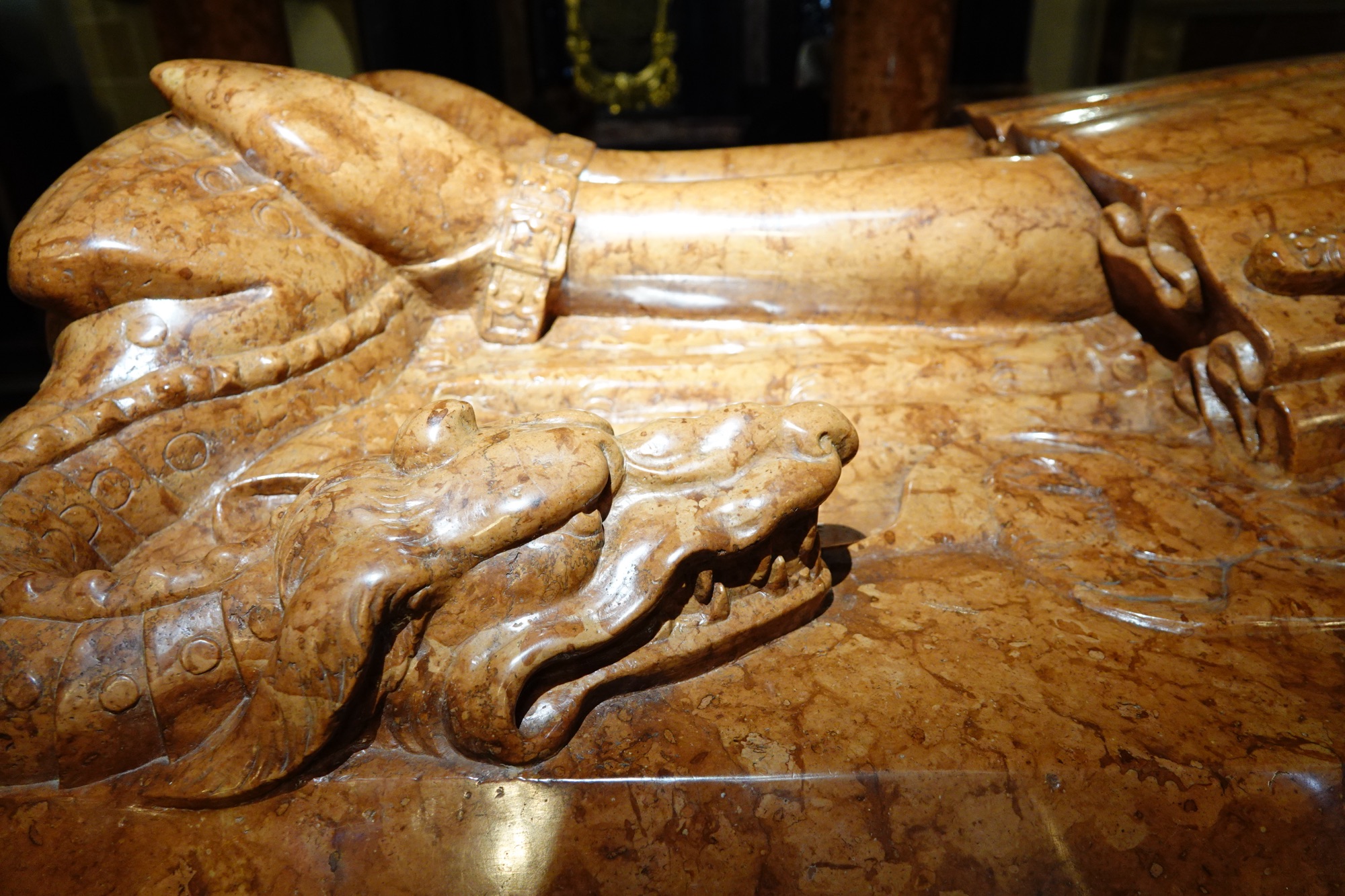
There is a winged dragon at his feet, and a lion at his head.
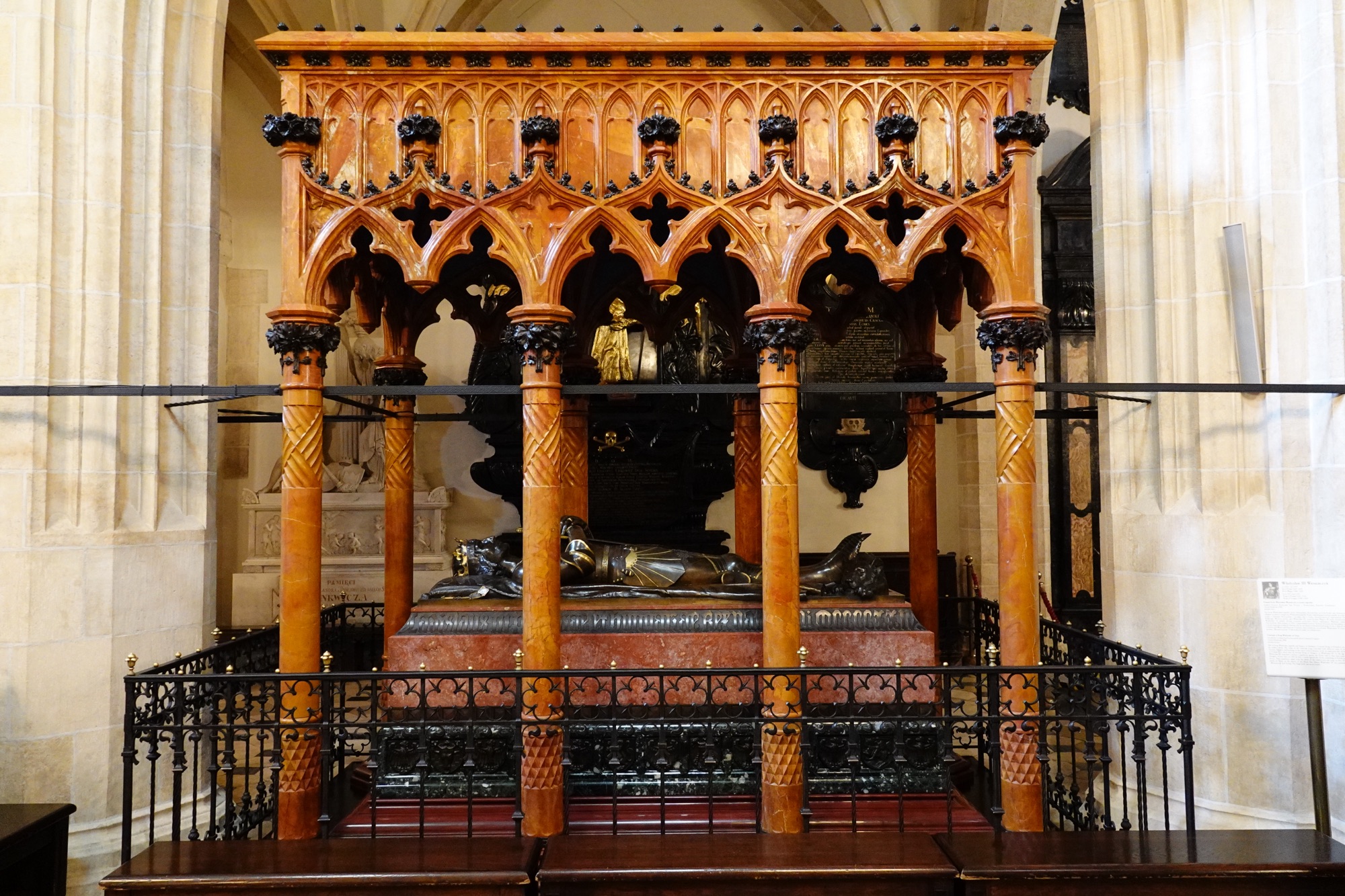
Władysław III Warneńczyk died during a crusade against the Turks consisting of Polish and Hungarian forces. This expedition ended with the death of the twenty-year-old king on 10 November1444 in the battle of Varna on the shores of the Black Sea. The king’s body was never found, so this cenotaph (empty tomb) was created from marble and bronze more than 4 centuries later, in 1906.
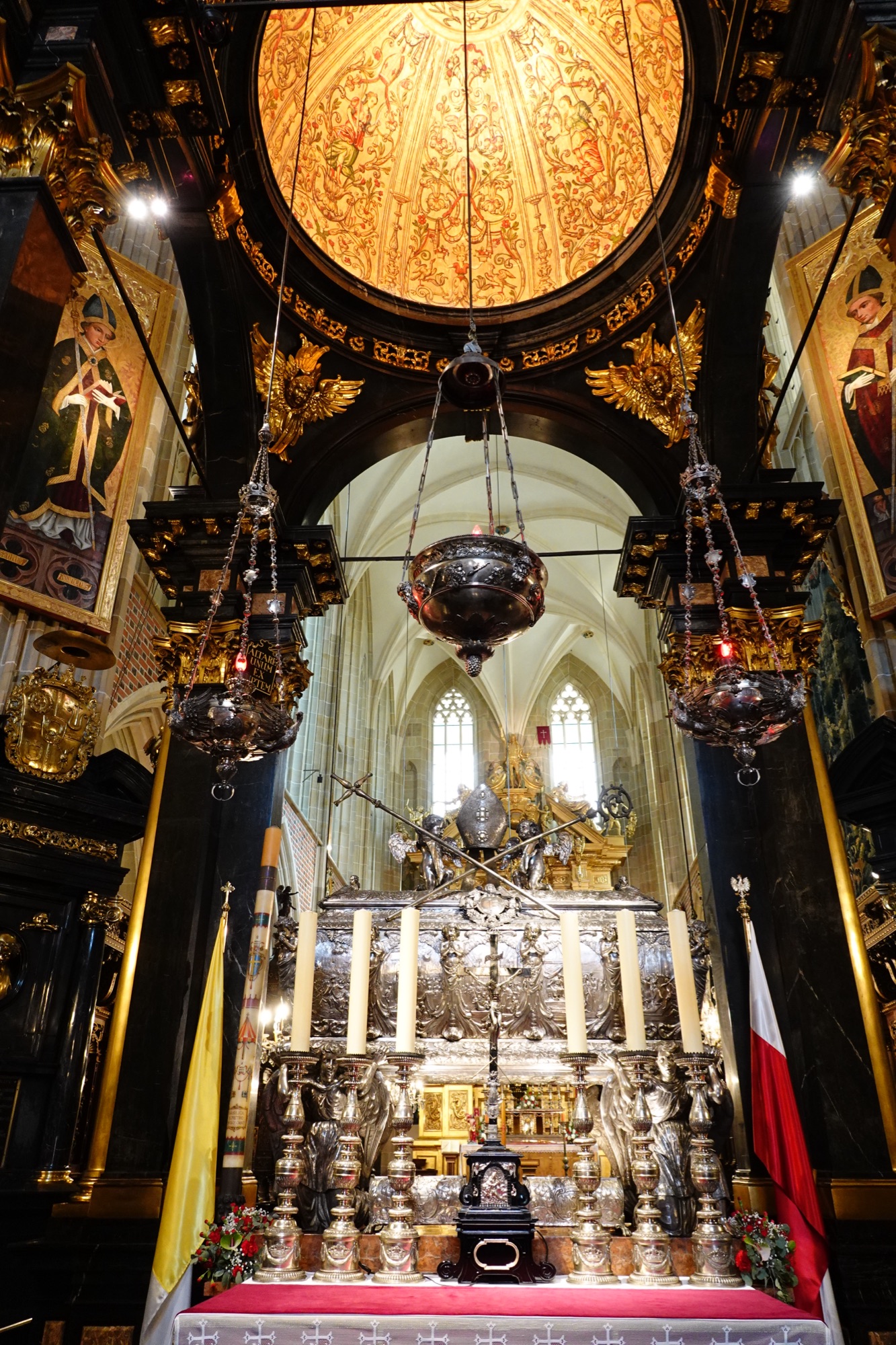
In the foreground below is the Reliquary of St Stanislaus of Szczepanów, Bishop and Martyr, who was put to death in 1079CE in Skałka Church (we’ll end up there later in the week) on the orders of King Bolesław Śmiały “the Bold” for speaking about justice and challenging the king. He was canonised in 1253 and his tomb was placed here in the 13th century. The gleaming repoussé decorated coffin and the canopy were added in the 17th century.
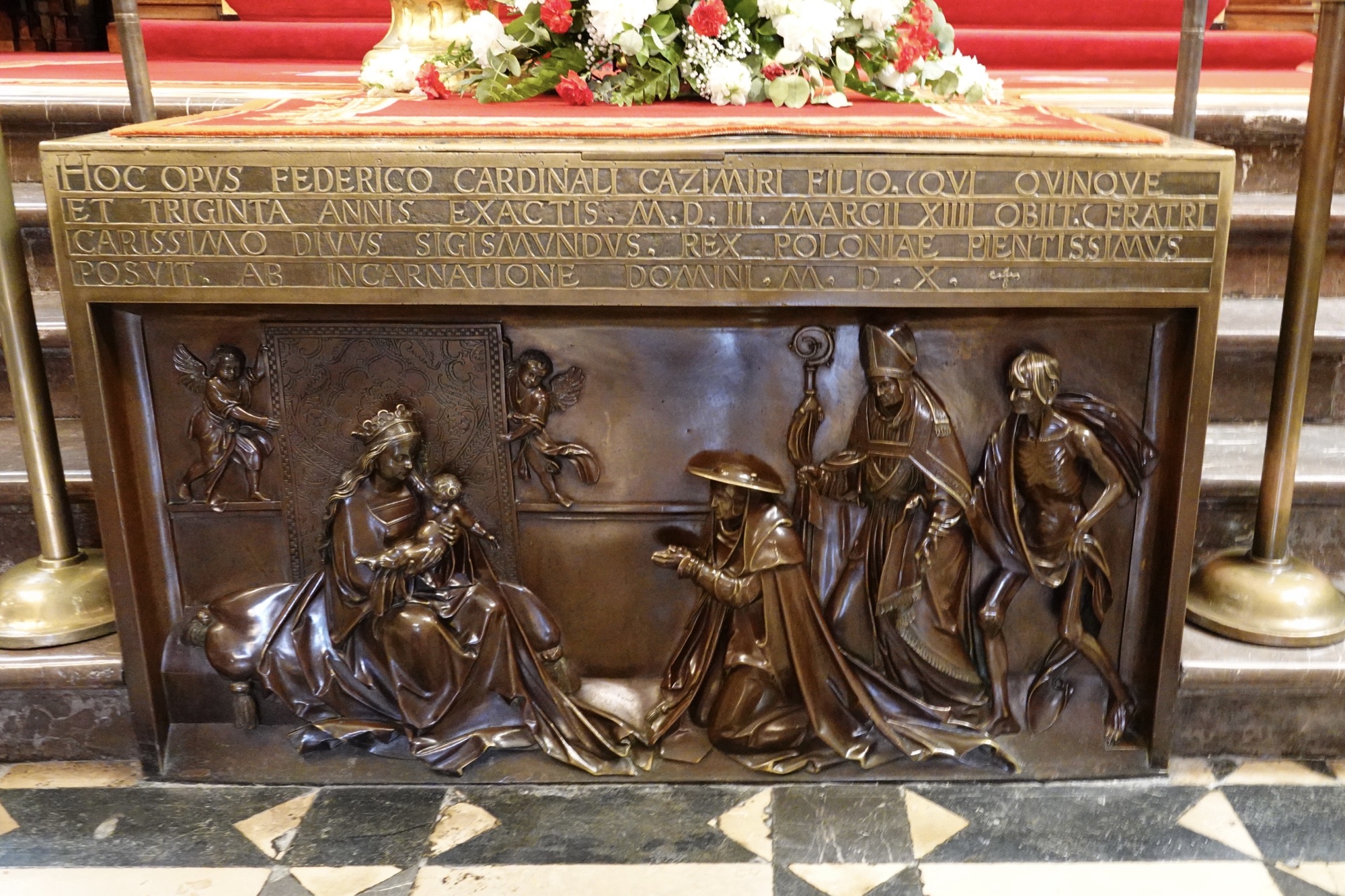
To the right of the altar is this marker, which reads: THIS WORK IS FOR FREDERICK, SON OF CARDINAL CASIMIR, WHO DIED EXACTLY AT THE AGE OF THIRTY-FIVE ON THE 13TH OF MARCH 1503. HIS DEAREST BROTHER, THE MOST PIOUS SIGIMUND, KING OF POLAND, PLACED IT, FROM THE INCARNATION OF THE LORD IN 1510.
On the left of the altar, an engraved marble panel: HEDWIGE, DAUGHTER OF LOUIS, KING OF HUNGARY AND POLAND, GRANDDAUGHTER of CASIMIR THE GREAT, WIFE OF WLADISLAI JAGIELLO, DIED IN THE YEAR OF THE LORD 1399. BEHIND THIS MARBLE SHE WAITS FOR THE LAST DAY. TRANSLATED 14• VII A.D•1949
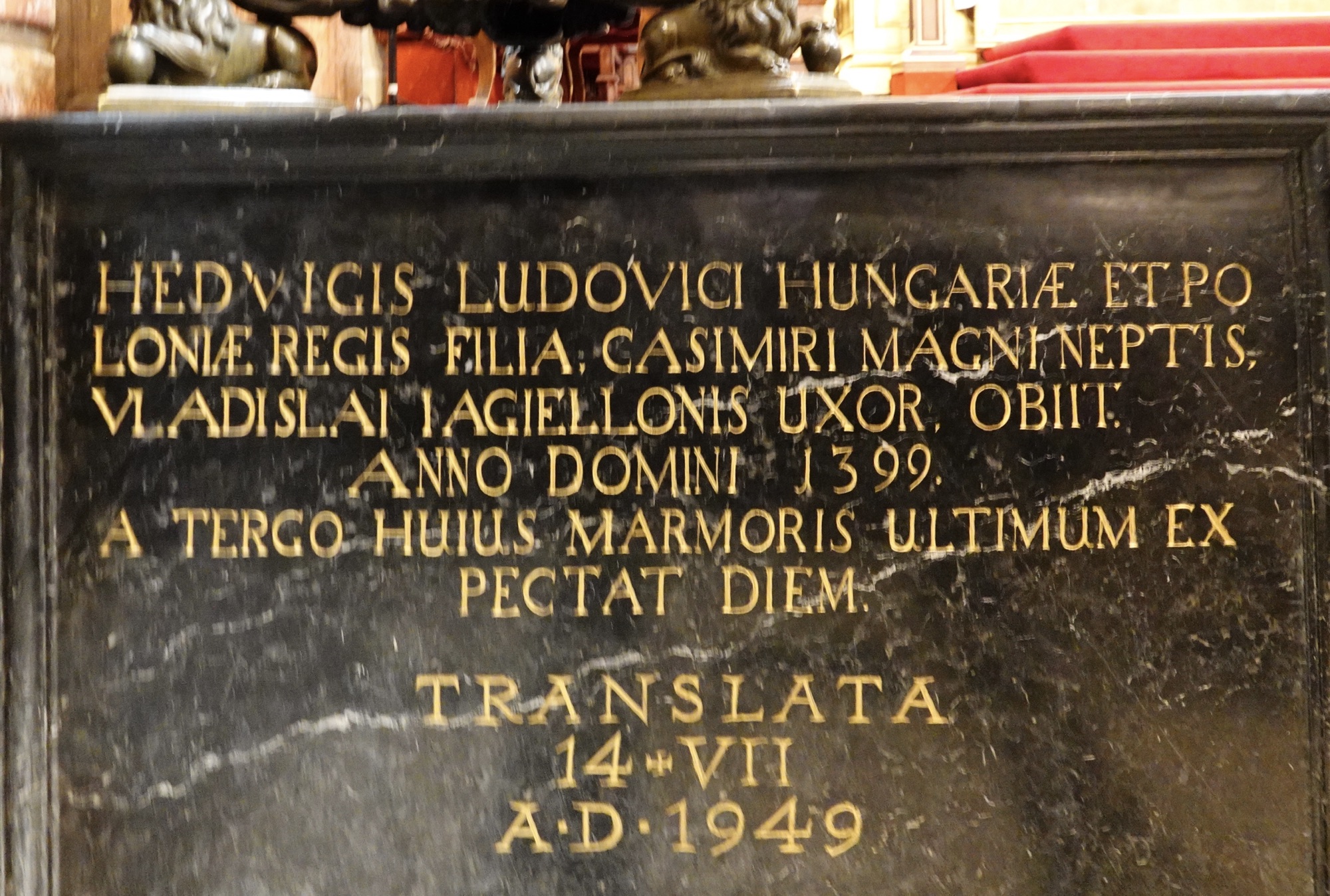
Hedwigis in Latin and Hedwige in Hungarian is Jadwiga in Polish.
The sign we saw later beside her cenotaph explained that “ Jadwiga was born in 1374. In 1384, she was crowned Queen of Poland in Wawel Cathedral. In 1386, she married Władysław (Ladislaus) Jagiełło, Grand Duke of Lithuania, and thereby contributed to the conversion of Lithuania to Christianity. In mediaeval times a 12 year old monarch could have great influence. She founded the Faculty of Theology at Kraków university, and also contributed to the university’s restoration. Throughout her life, she demonstrated great generosity to the poor. She died on July 17, 1399, in childbirth (at the age of 25) and was buried at this cathedral. On June 8, 1997, Pope John Paul II canonised Jadwiga during an open-air mass on Kraków’s commons.”
In this case the word “translated” in the inscription means “moved”, because in 1949 her remains were placed in a gorgeous Carrara marble sarcophagus.
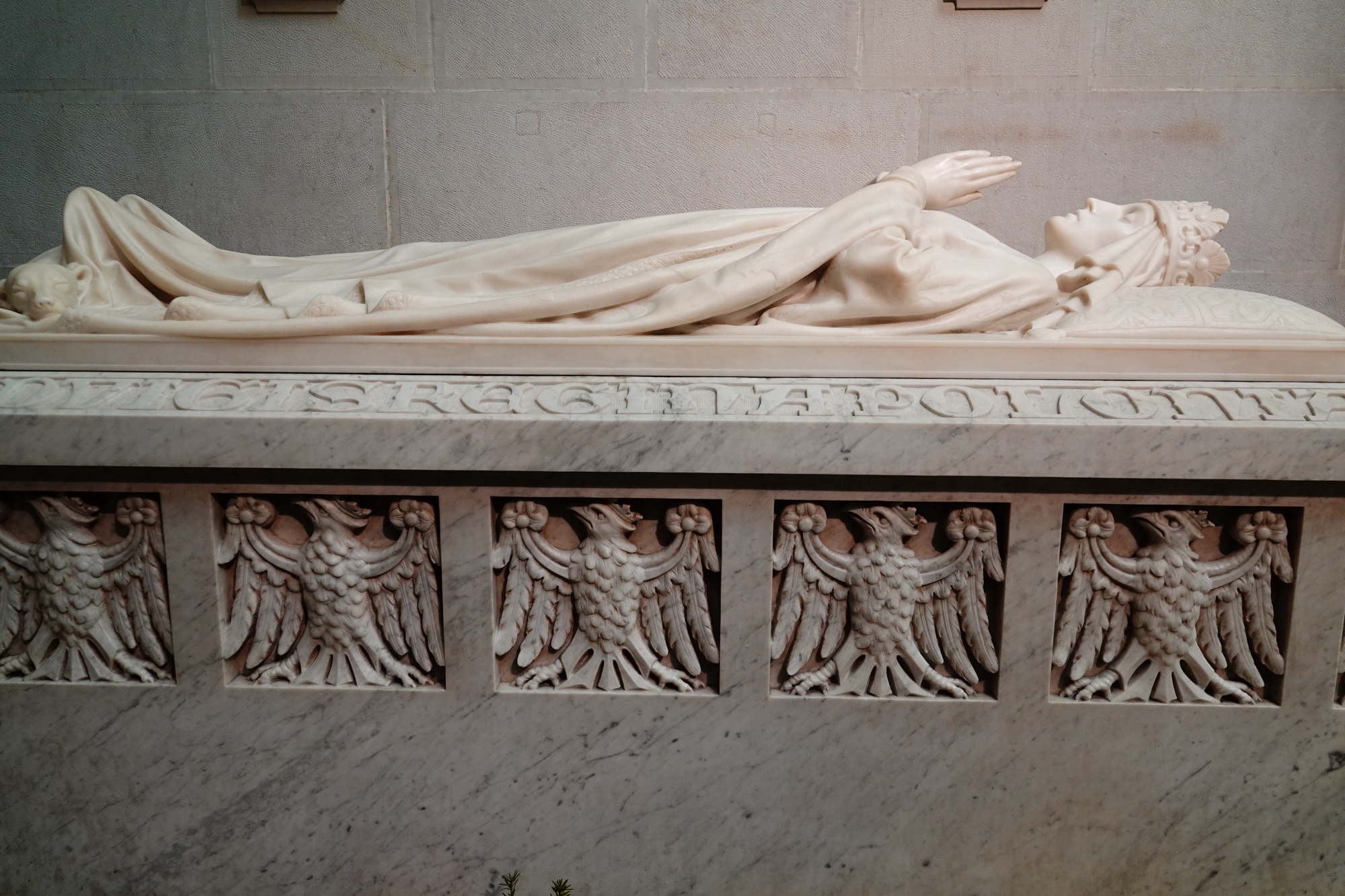
We continued our walk around the main floor of the cathedral to the altar currently containing the reliquary of St Jadwiga.
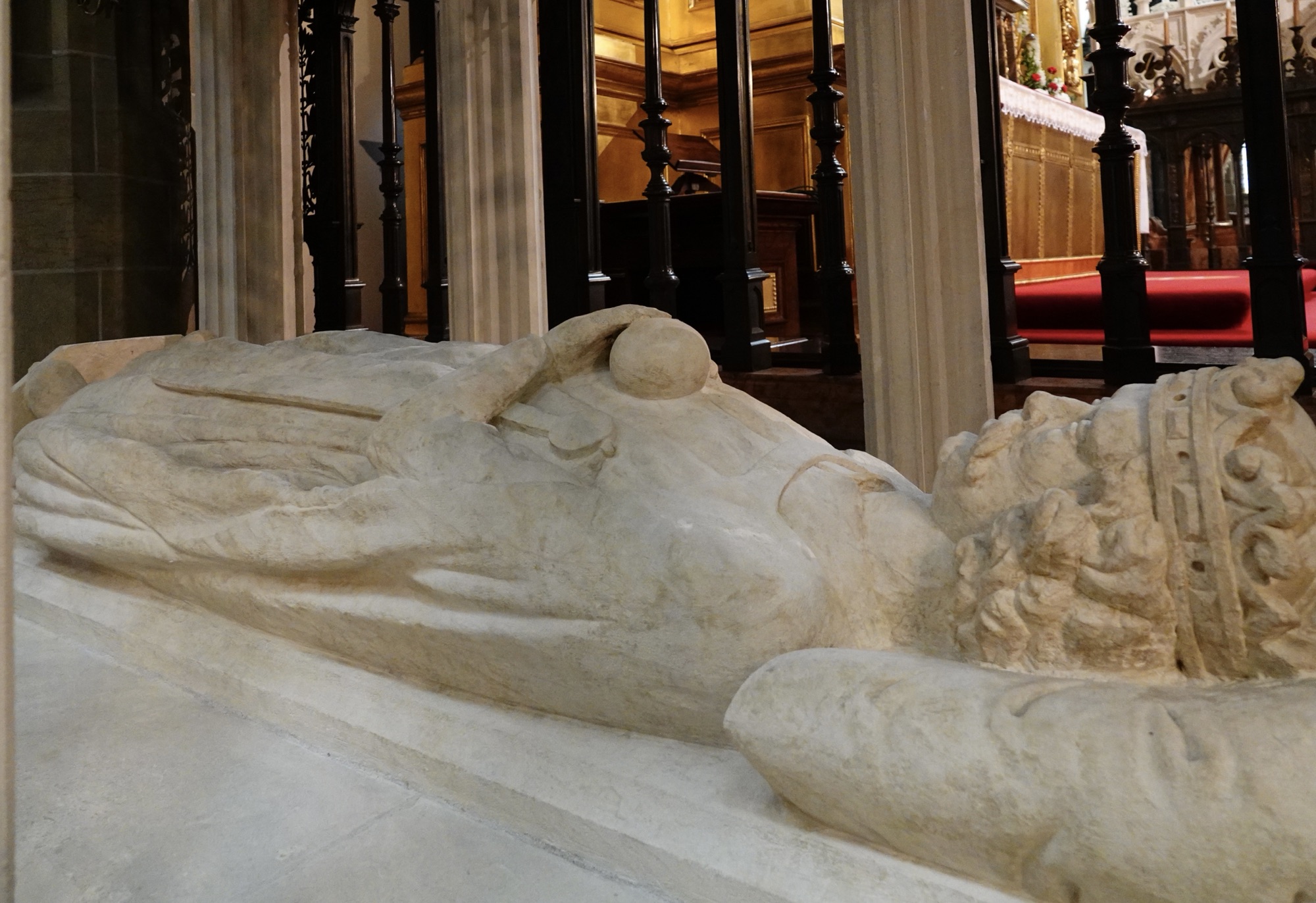
The Sarcophagus of King Władysław I the Short, who died in 1333CE, was commissioned by King Casimir III the Great from a Hessian workshop. It is made of Pińczów limestone. The canopy dates to 1902. This king’s tomb in the Wawel Cathedral was the first in what was to become the necropolis of Polish sovereigns in Kraków.
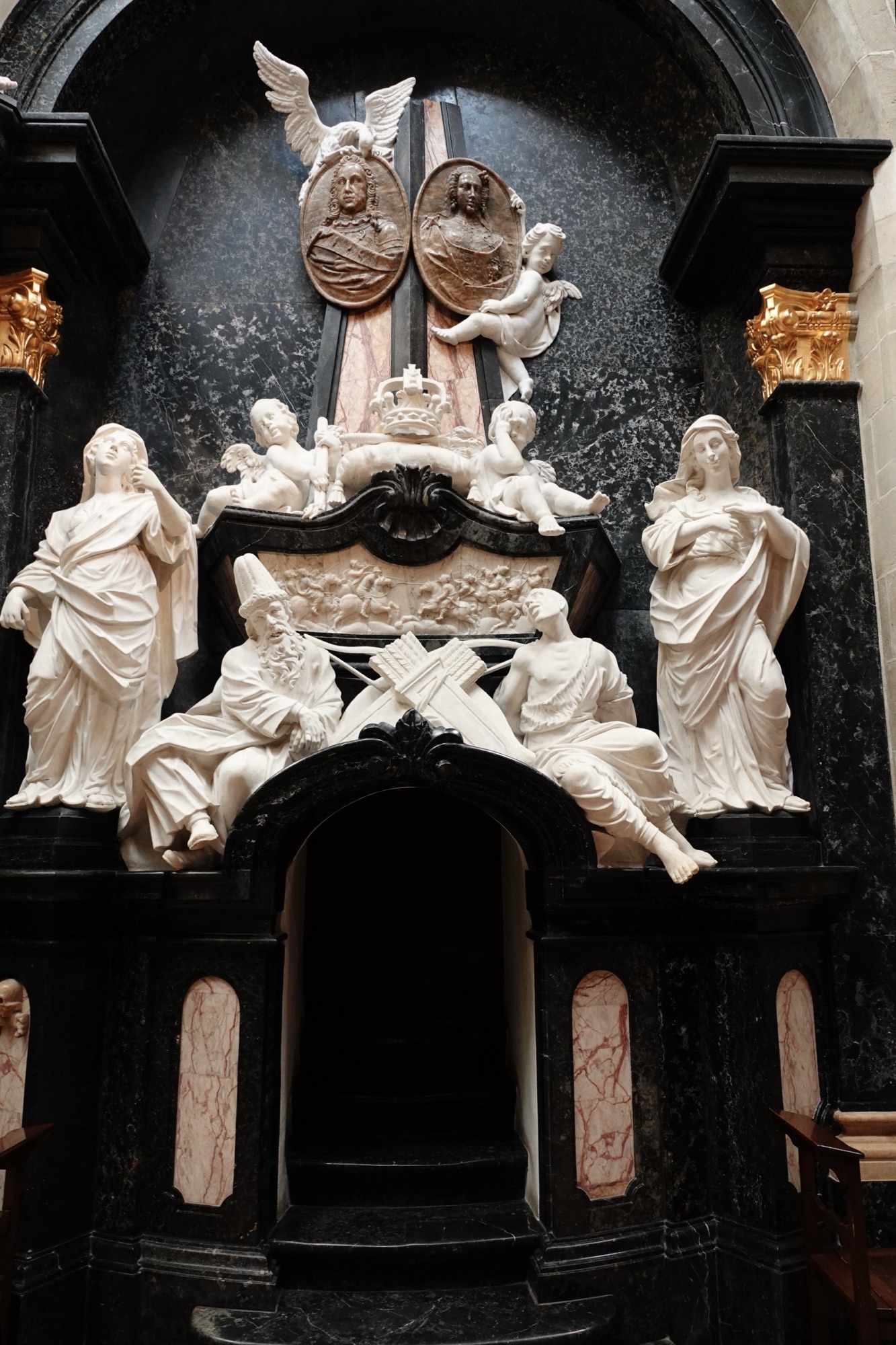
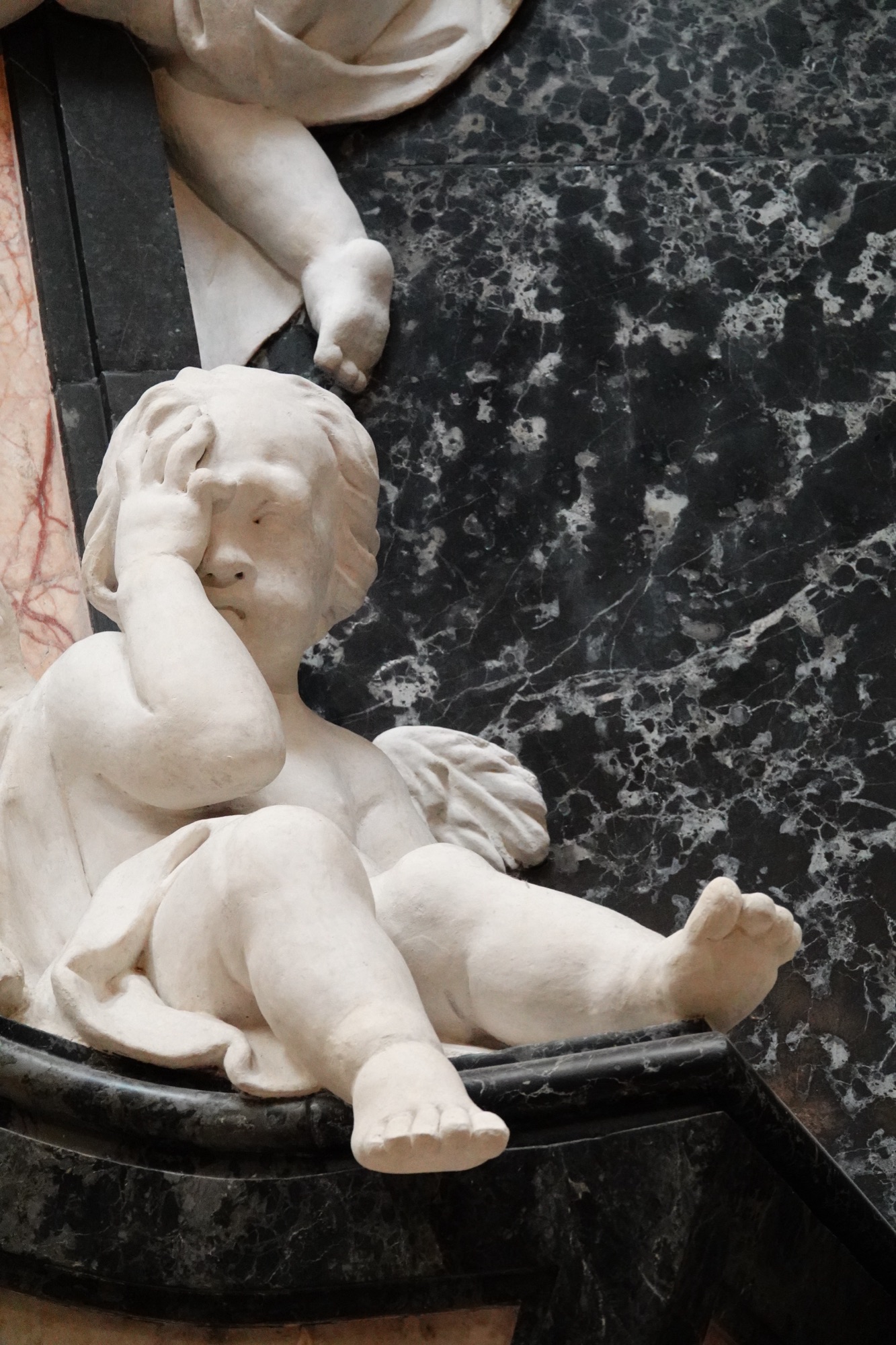
What attracted me most to this monument was the one cherub on the right who just looked exasperated.
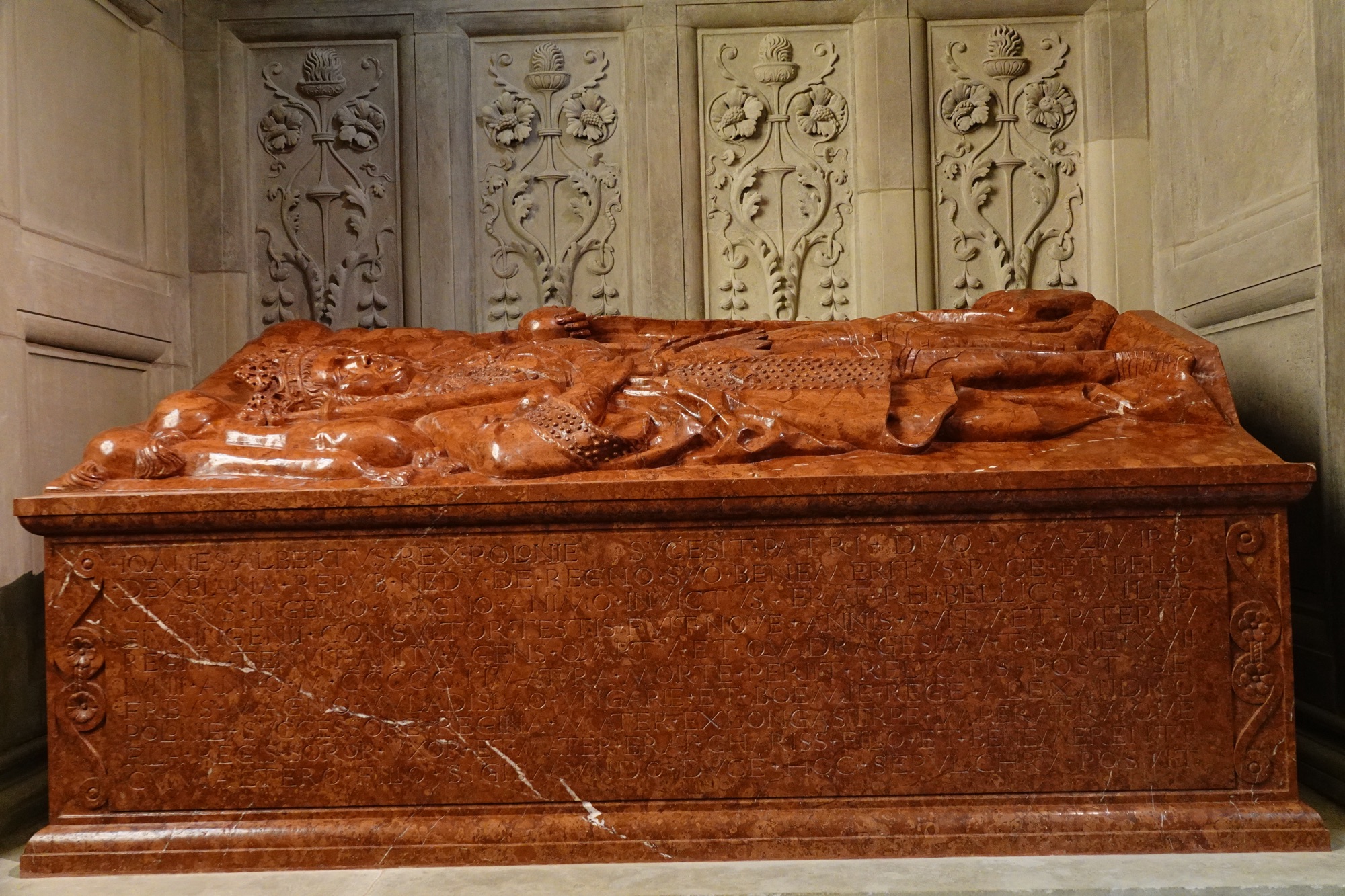
The 16th century Sigismund Chapel (the portion of the cathedral with the golden dome exterior) houses the marble tombs of its founder King Sigismund, as well as King Sigismund II Augustus and Anna Jagiellon.
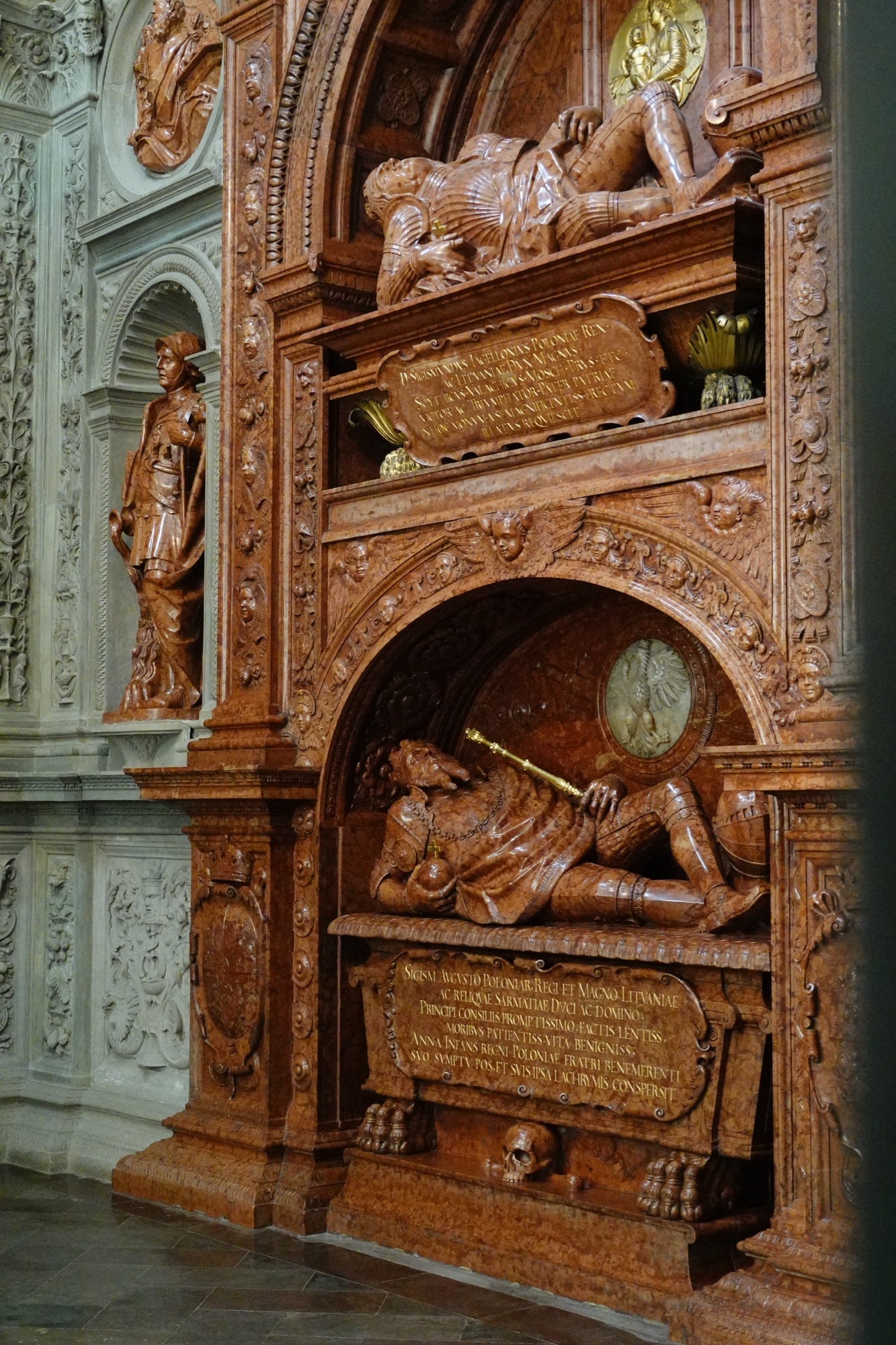
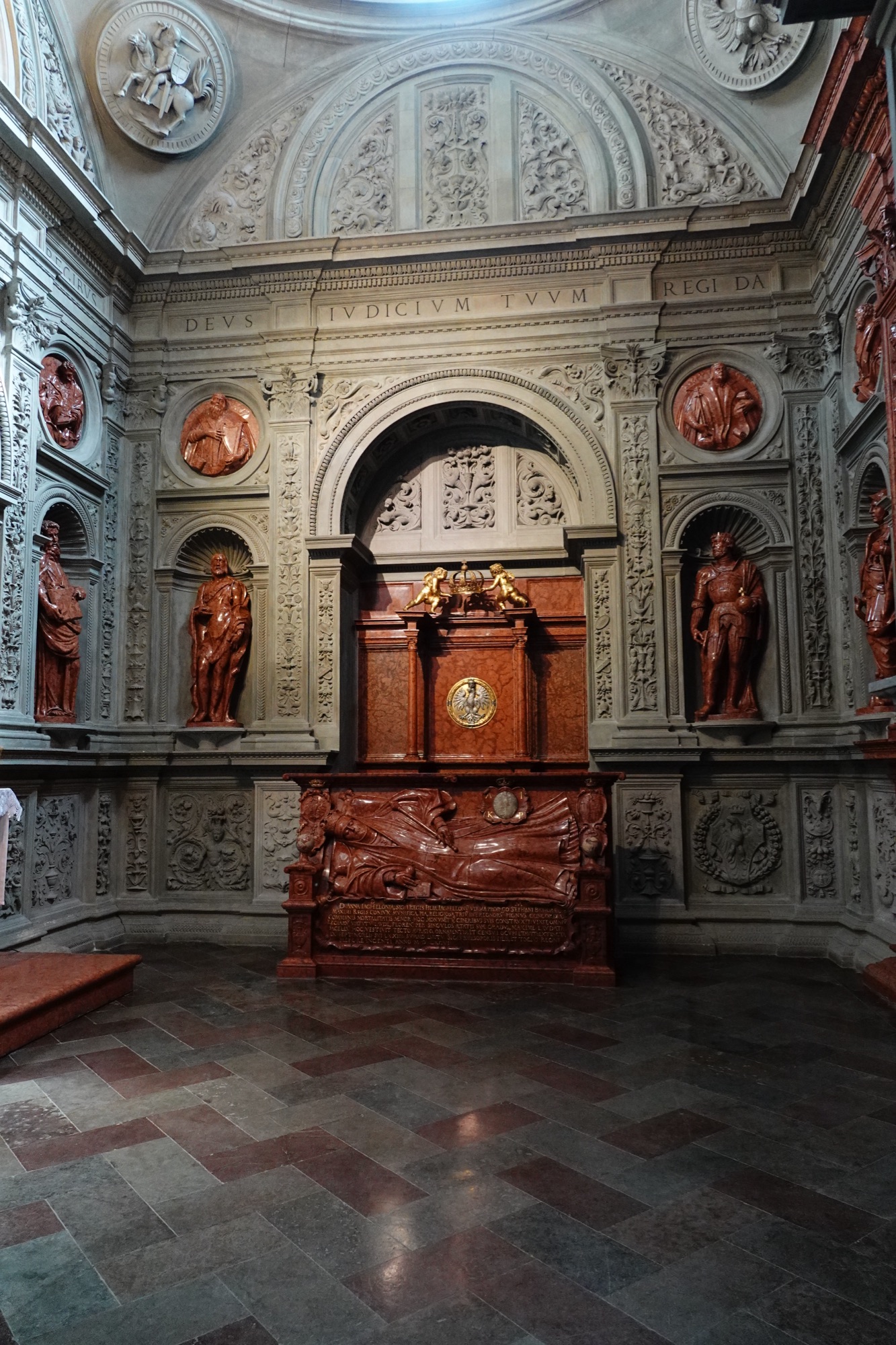
We took photos of particularly interesting parts of a few of the other ground level chapels/tombs.
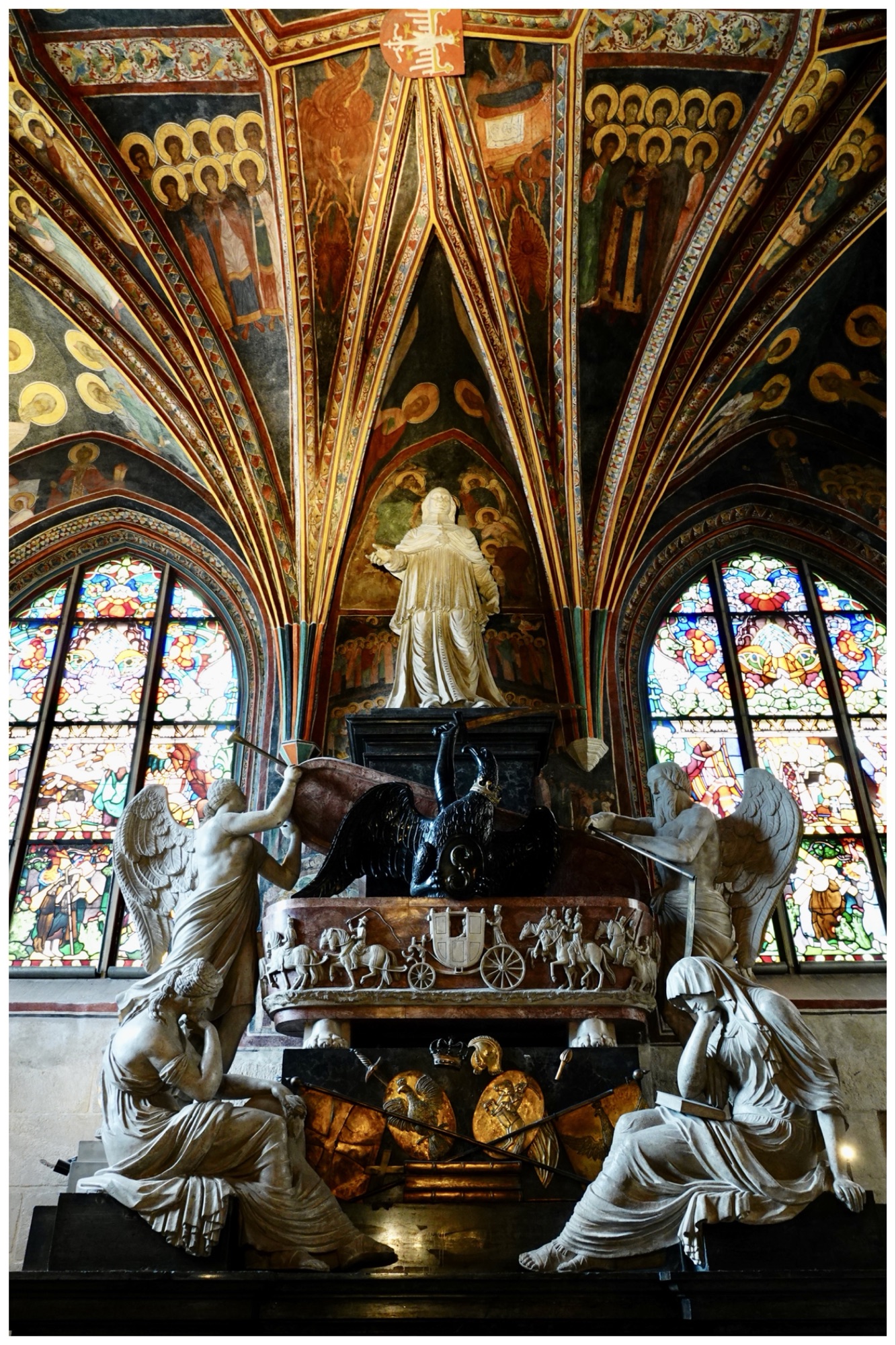
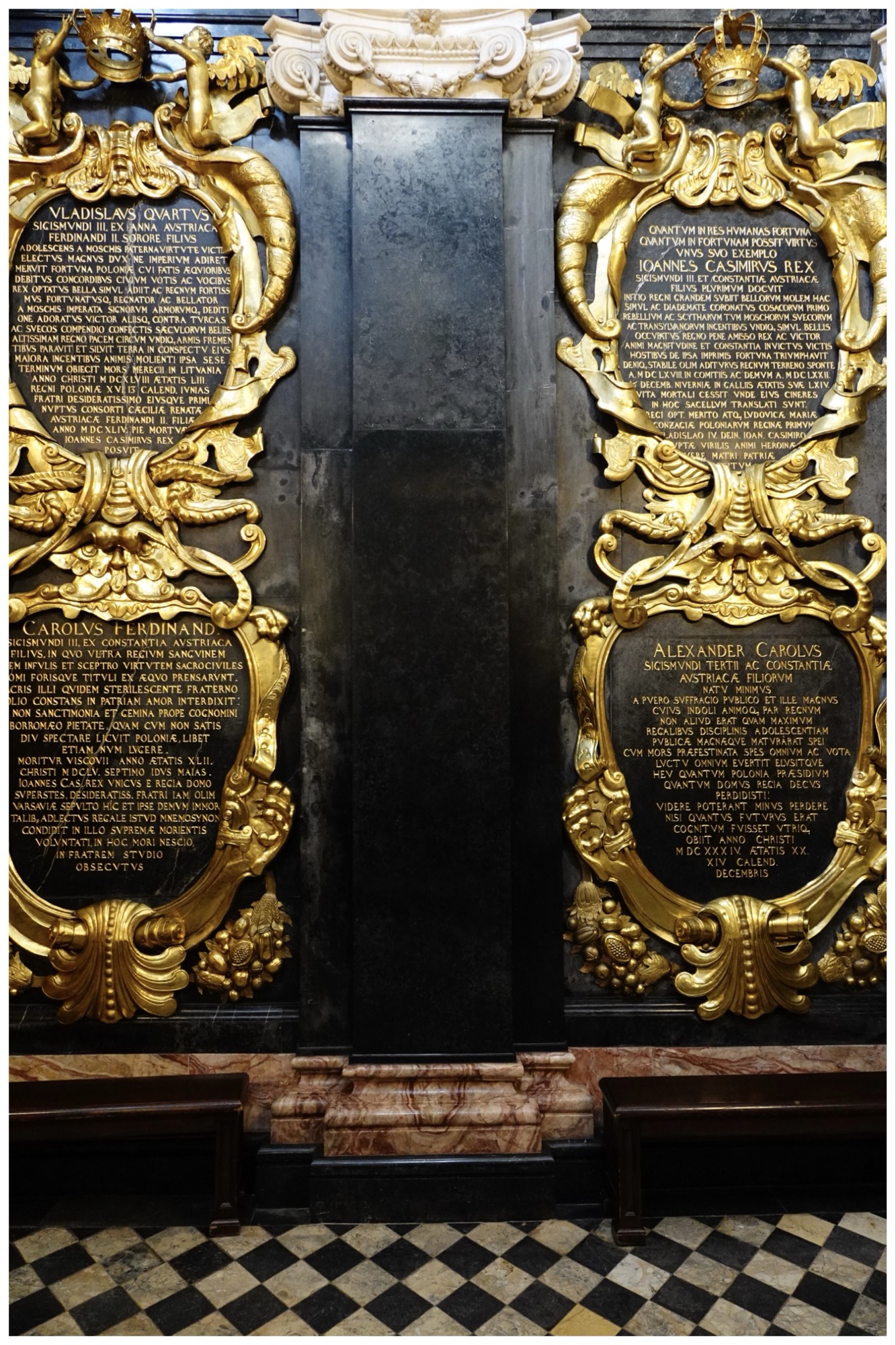
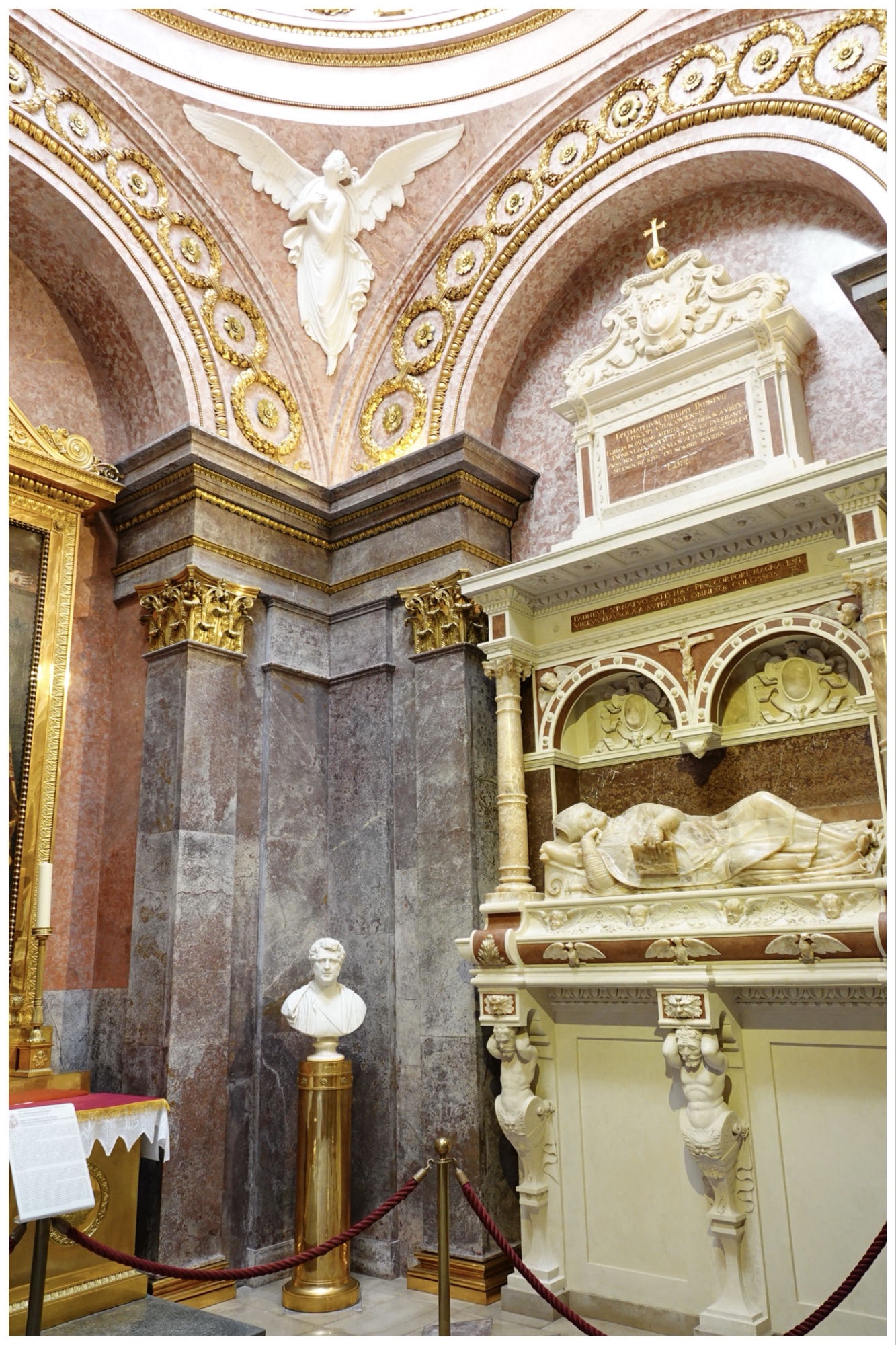
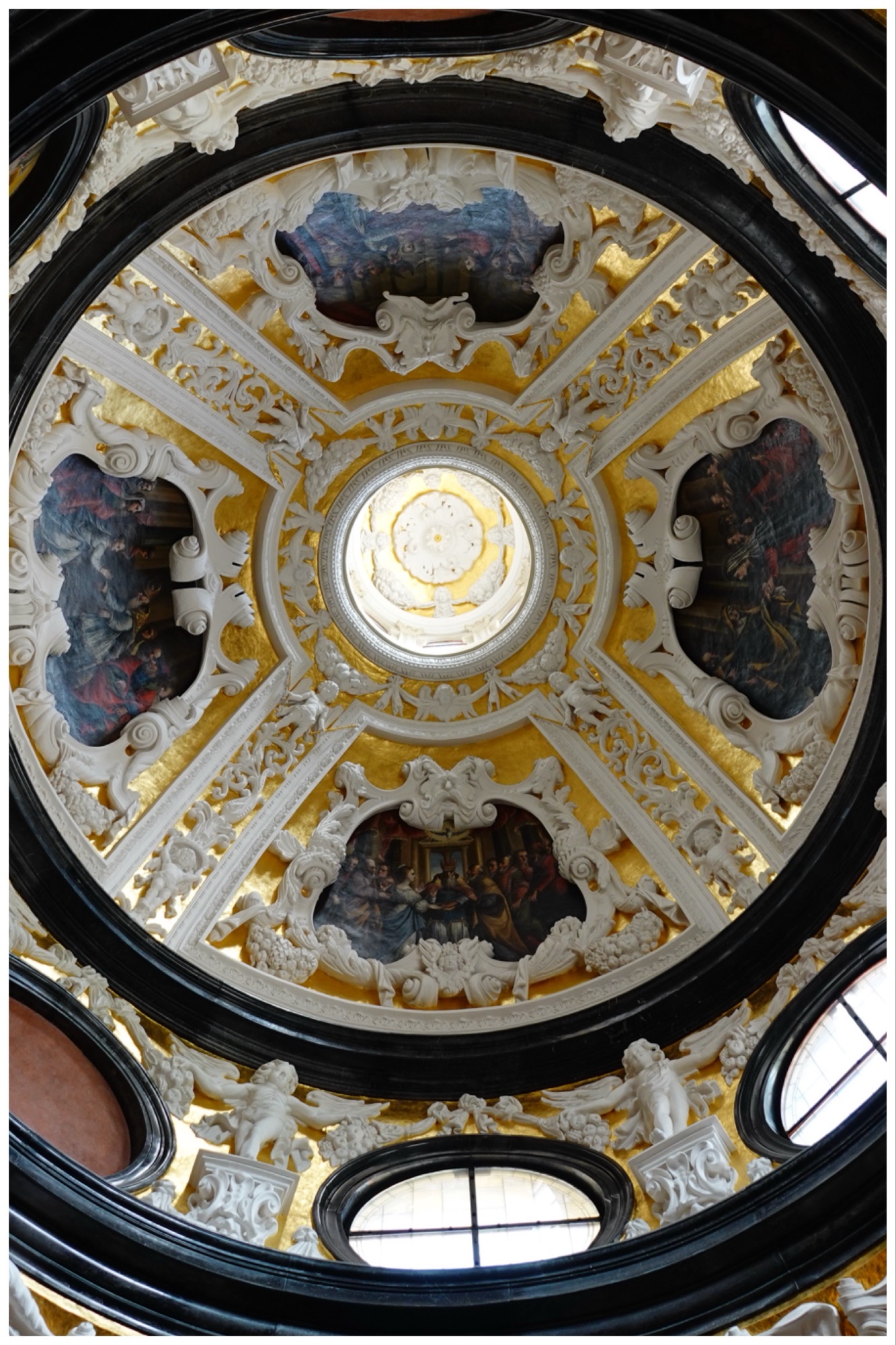
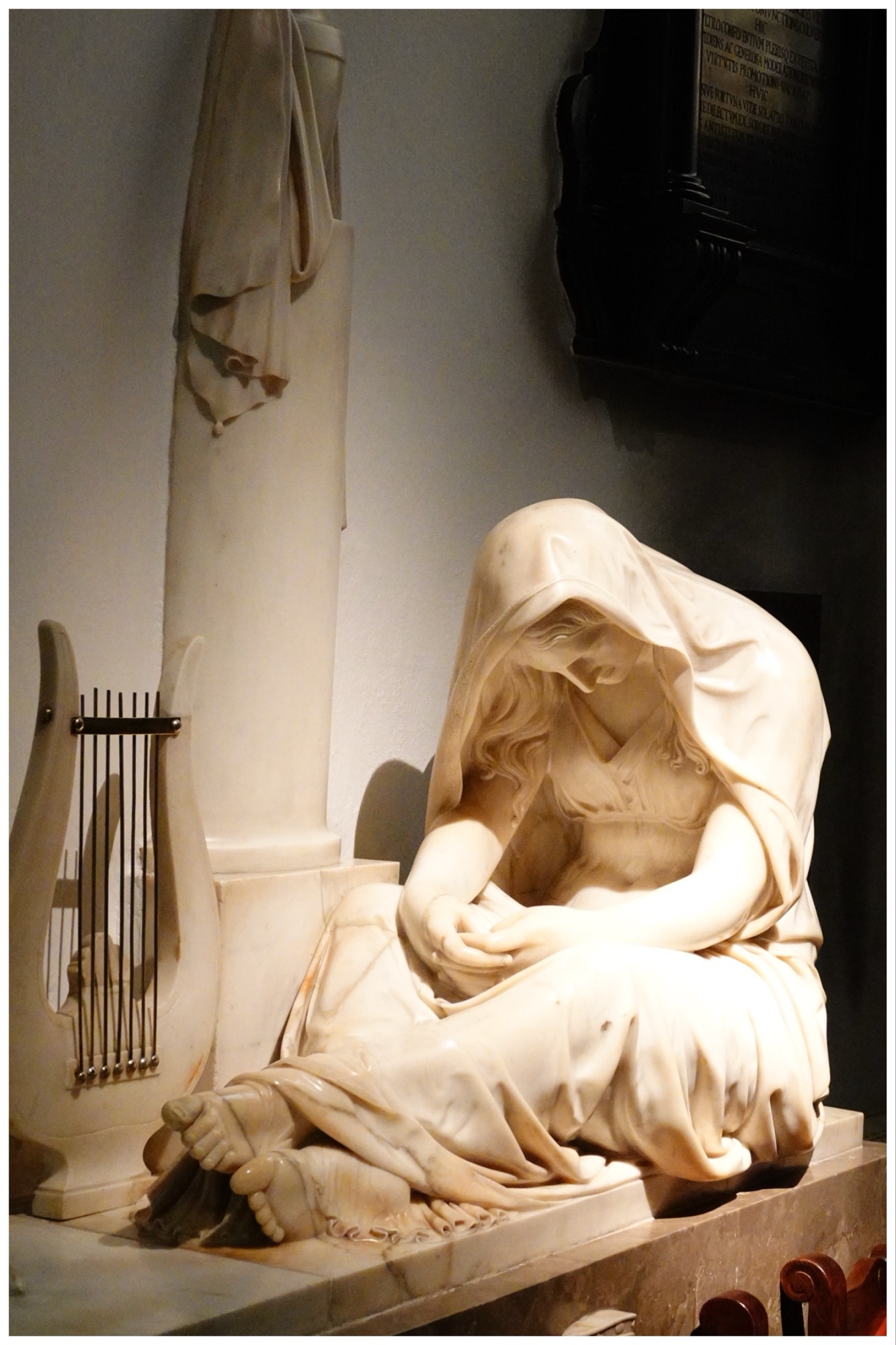
Before heading down into the Royal Crypts, we were able to climb up into the bell tower.
(From the cathedral’s brochure) Since the very beginning, Wawel Cathedral has resounded with the sound of bells. Currently, there are nine bells in two bell towers. The bells were built one after another from the 12th to the 21st century.
Five larger bells, including the most famous Sigismund Bell, are hung in the Sigismund Tower. Four smaller bells are hung in the Tower of the Silver Bells. The third tower – the Clock Tower – houses the clock mechanism and two gongs which strike every hour and quarter of an hour.
Access to the Sigismund Tower is via 144 thick wooden steps and sturdy smooth railings, but the stairways are narrow and steep, often turn a full 180° via tiny landings, and there are lots of places where anyone taller than my 168cm(5’7”) has to duck to avoid massive wooden beams.
It was worth it though!
Bell # 1 of 5: GLOWNIK.
This bell was commissioned (“founded”) by the Cathedral Chapter and its prelate Jakub of Sienno in 1460 and dedicated to Wenceslaus, the first patron saint of the Cathedral. Nicknamed “Głownik” (“Beheader”) in 1462 because it rang on the occasion of beheading of six burghers condemned for the killing of voivode Andrzej Tęczyński.
It is the smallest of the tower’s bells, weighing “just” 1800 kg (3960 lbs).
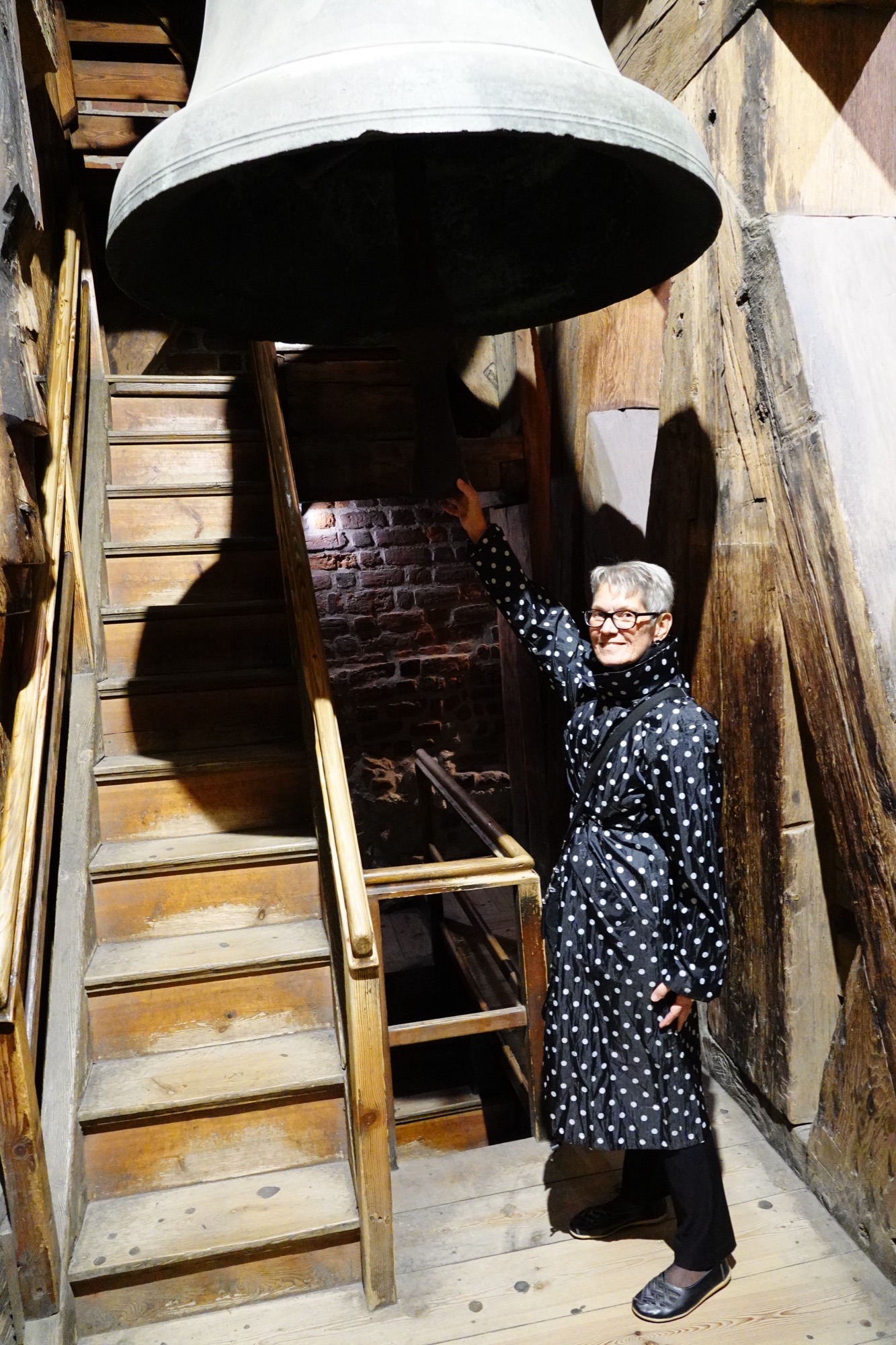
Bell # 2 of 5: CARDINAL
Commissioned in 1455 by the Kraków Cathedral Chapter. Dedicated to cardinal Zbigniew Oleśnicki who as a young knight was one of the heroes of the Battle of Grunwald (Tannenberg) in 1410, and saved the King’s life on the occasion.
The bell suffered substantial damage in the 19″ century, when it was hit by a shard of the broken clapper of the bell “Zygmunt”.
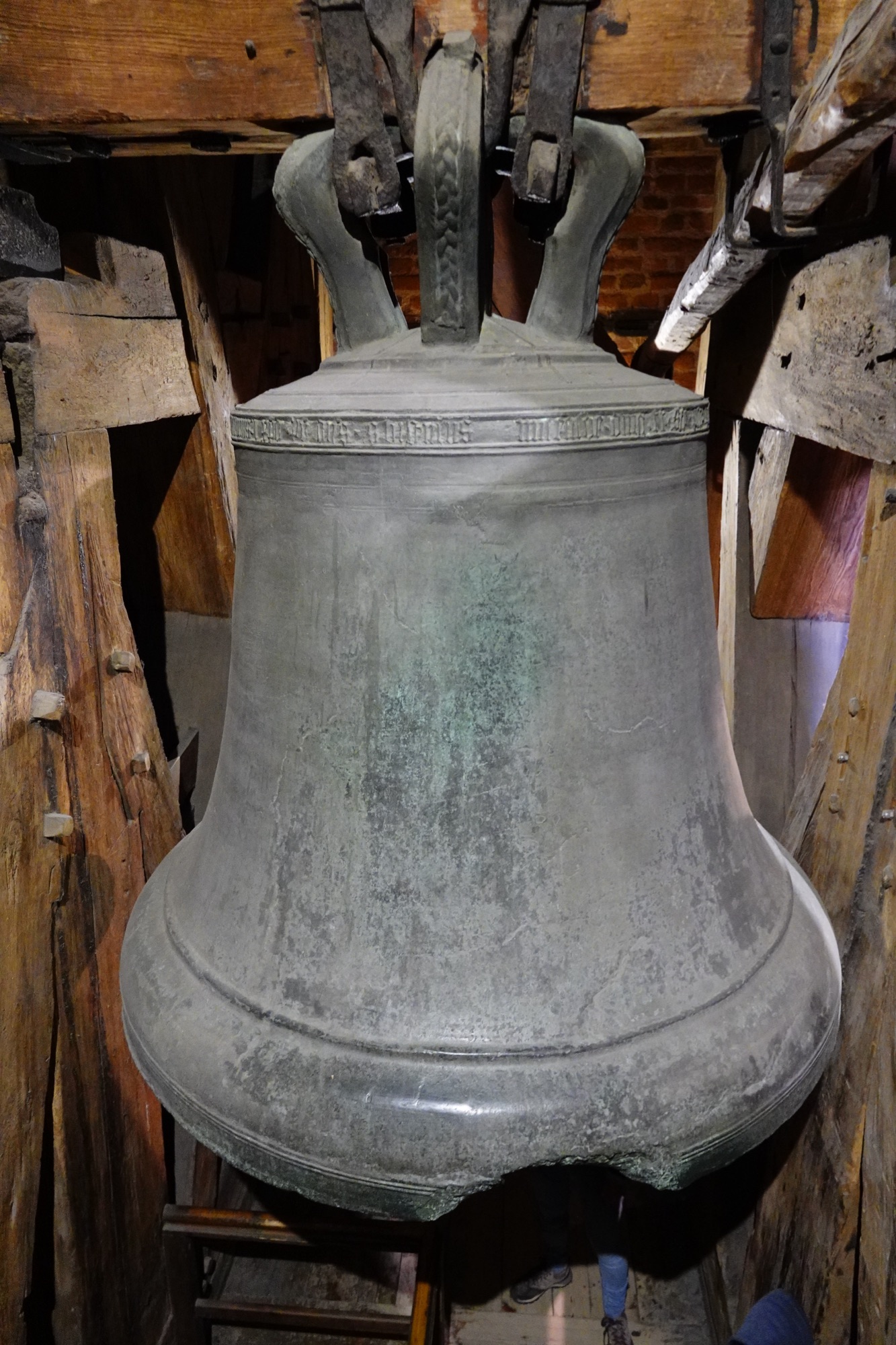
The bell’s body weighs around. 3000 kg (6600 Ibs).
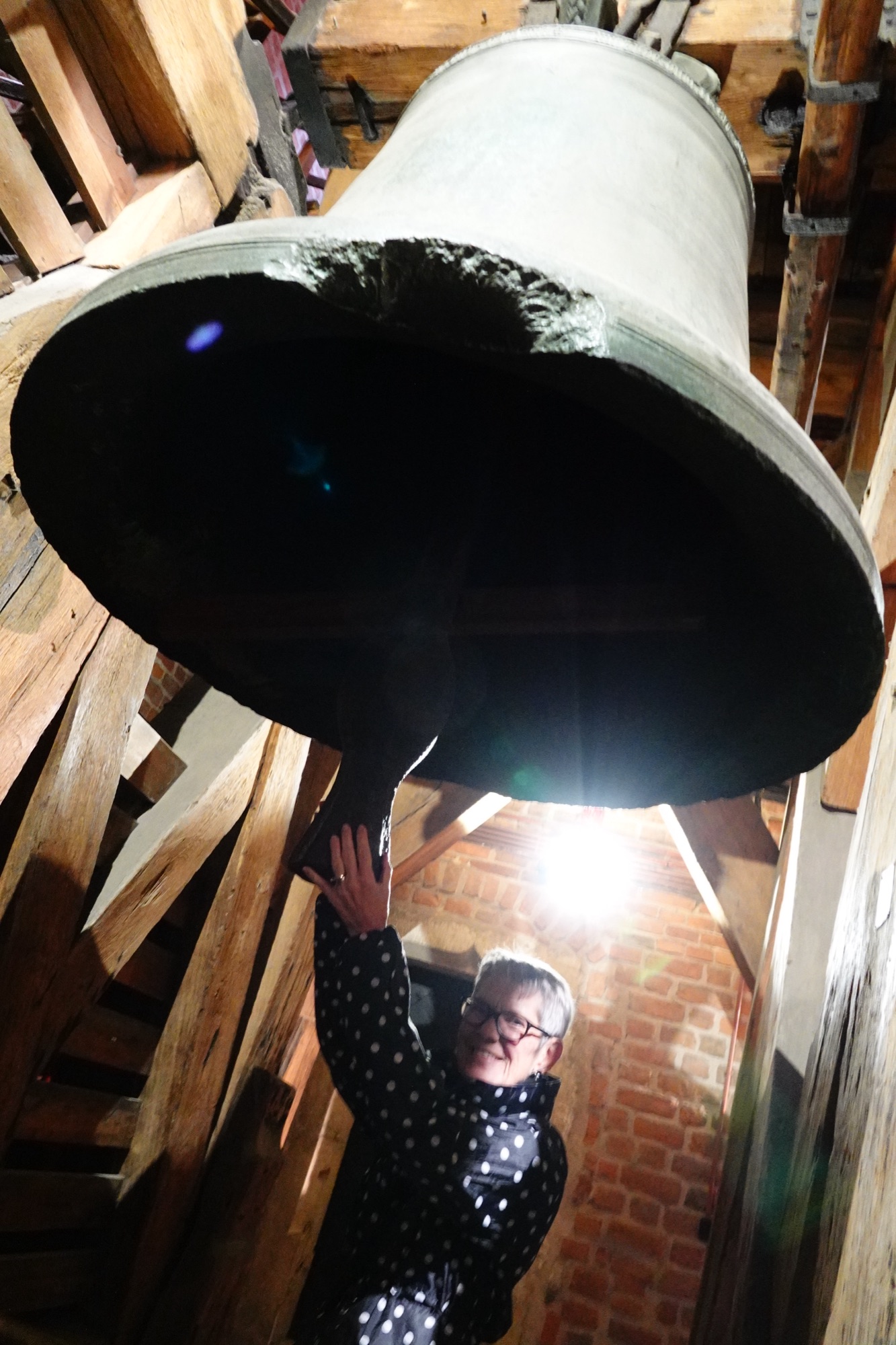
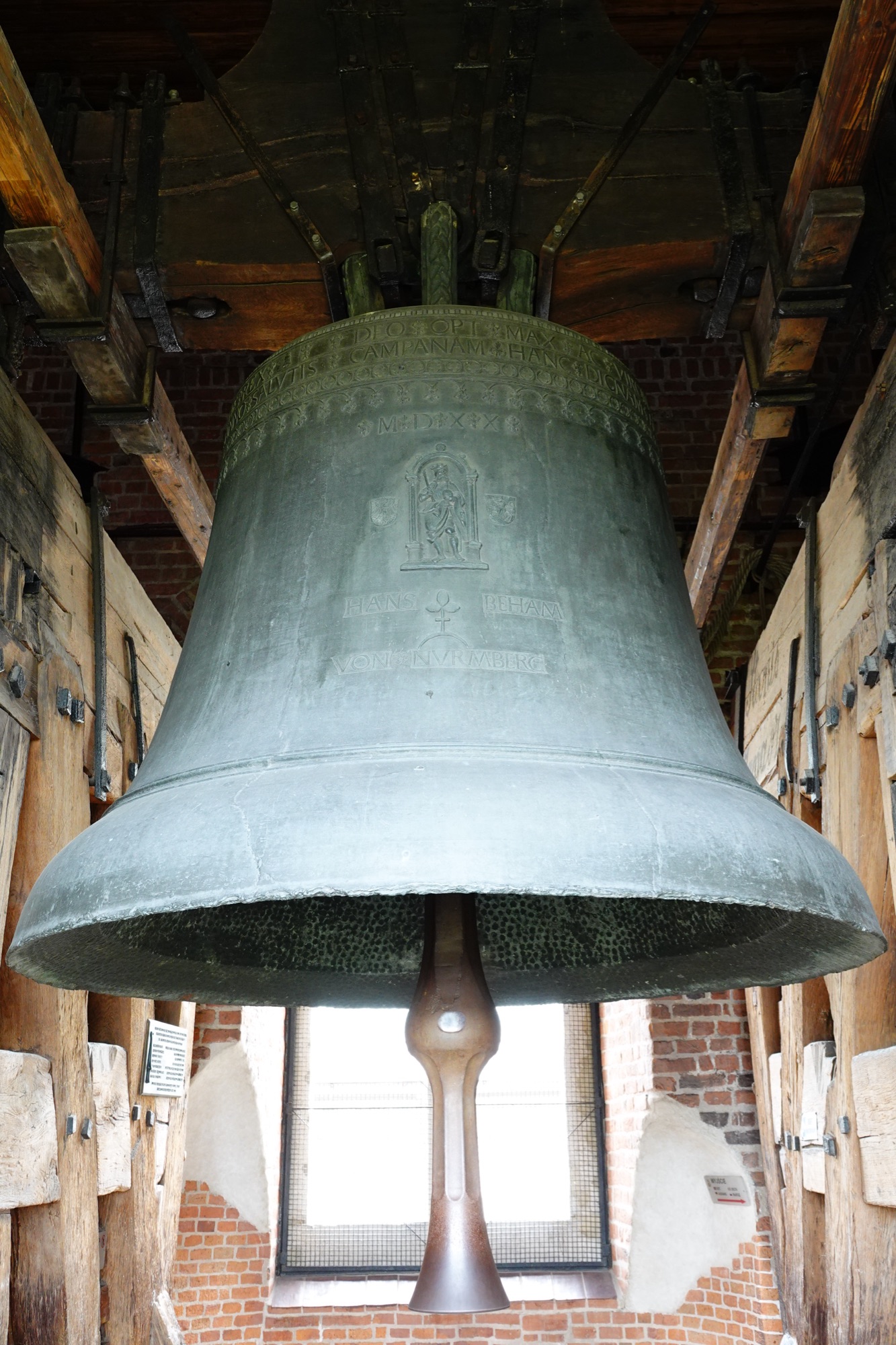
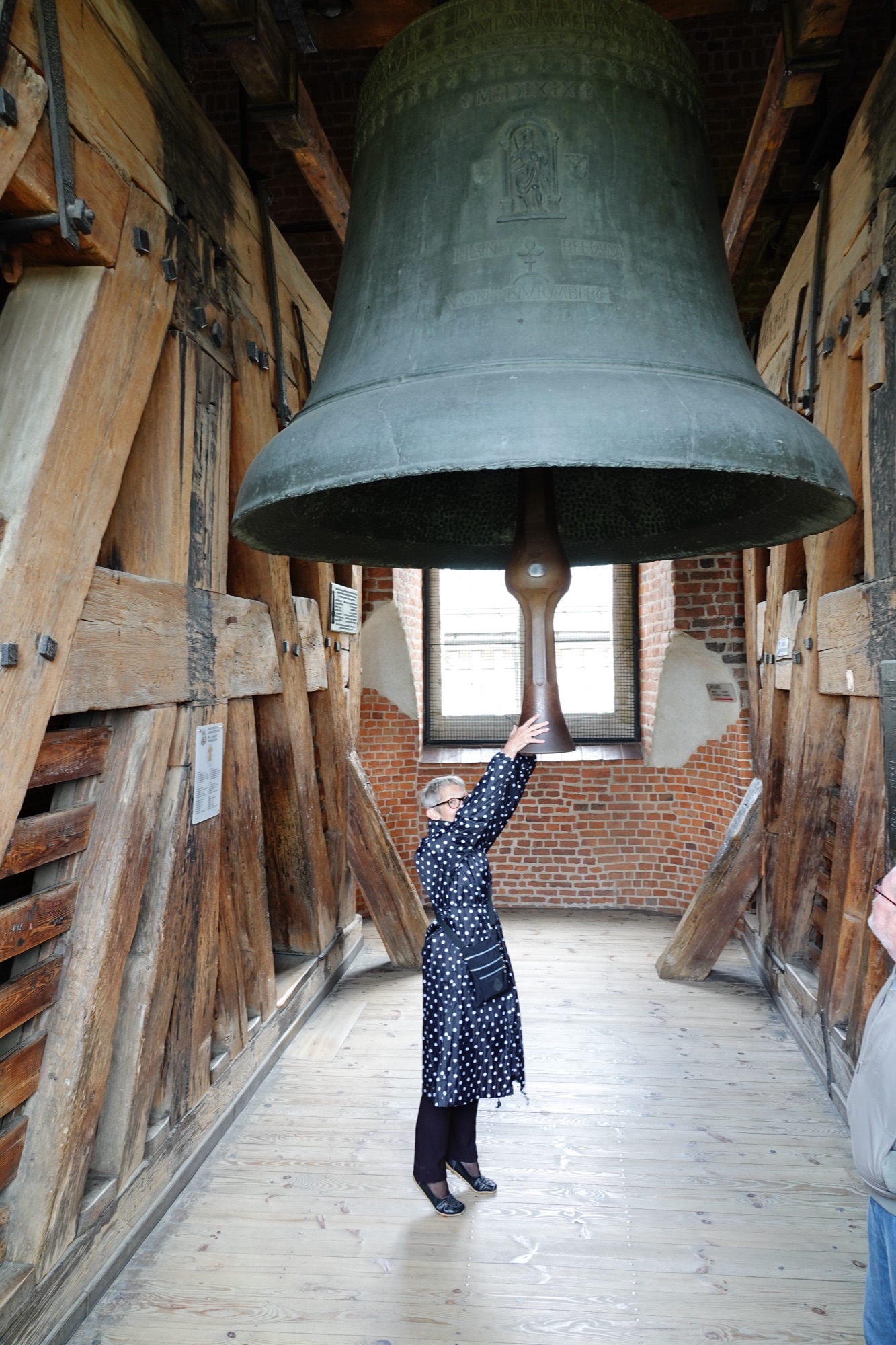
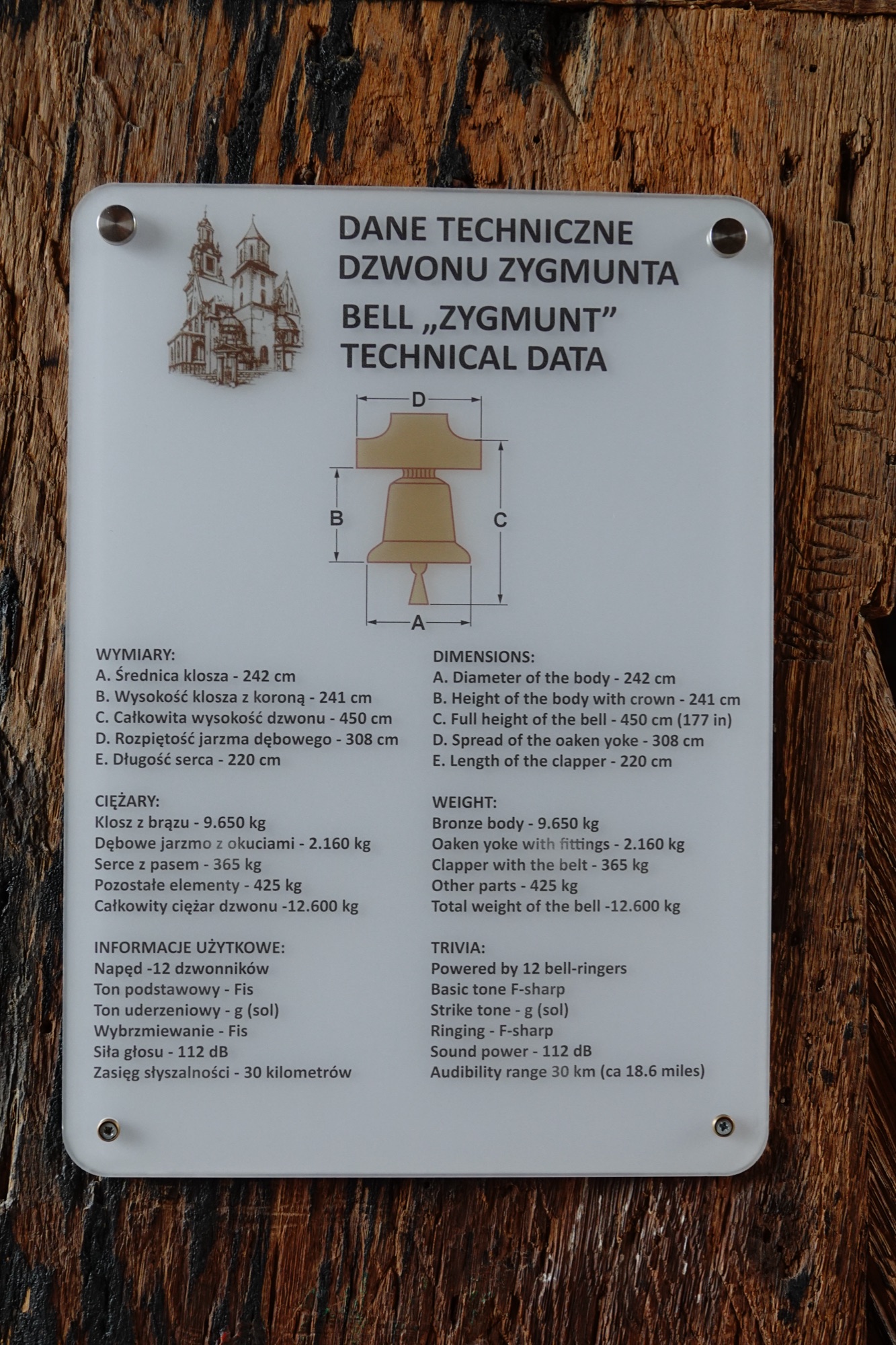
Bell # 3 of 5: ZYGMUNTA – THE SIGISMUND BELL (in English)
This is the largest of the old bells in Poland, commissioned by King Zygmunt (Sigismund) the Old in 1520CE. Special ceremonies at Wawel Cathedral are accompanied by the sound of this magnificent bell.
Bell # 4 of 5: URBAN.
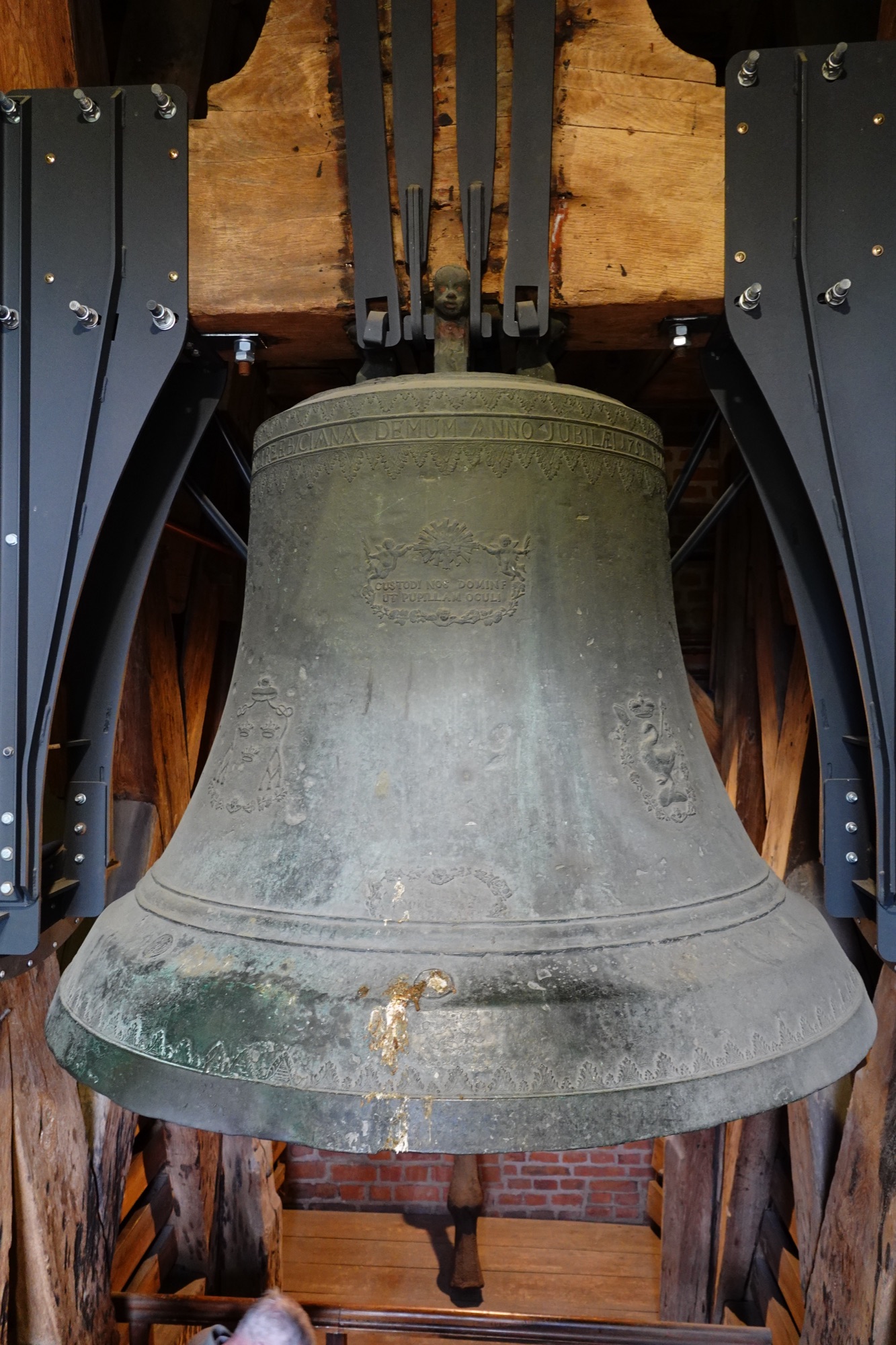
Commissioned about 1364 by the King Casimir III the Great as a votive offering of gratitude for the pope Urban V for his permission to establish the Kraków University. It originally hung in a church in Niepotomice, but around 1450 cardinal Oleśnicki moved the bell to the Cathedral. For centuries “Urban” has been the most frequently used bell of the Wawel Cathedral. It broke and was reforged three times, for the last time in 1757.
In its present form the bell’s body weighs 3000 kg (6600 1bs).
Bell# 5 of 5: STANISŁAW
Commissioned in 1463 by the castellan of Kraków, Jan Tęczyński, brother of Andrzej Tęczyński, who was murdered by the burghers of the city. Dedicated to St. Stanislaus, Bishop and Martyr, patron saint of the Wawel Cathedral as a votive offering for the salvation of the soul of the founder’s brother and for mitigation of the conflict with the King Casimir IV Jagiellon.
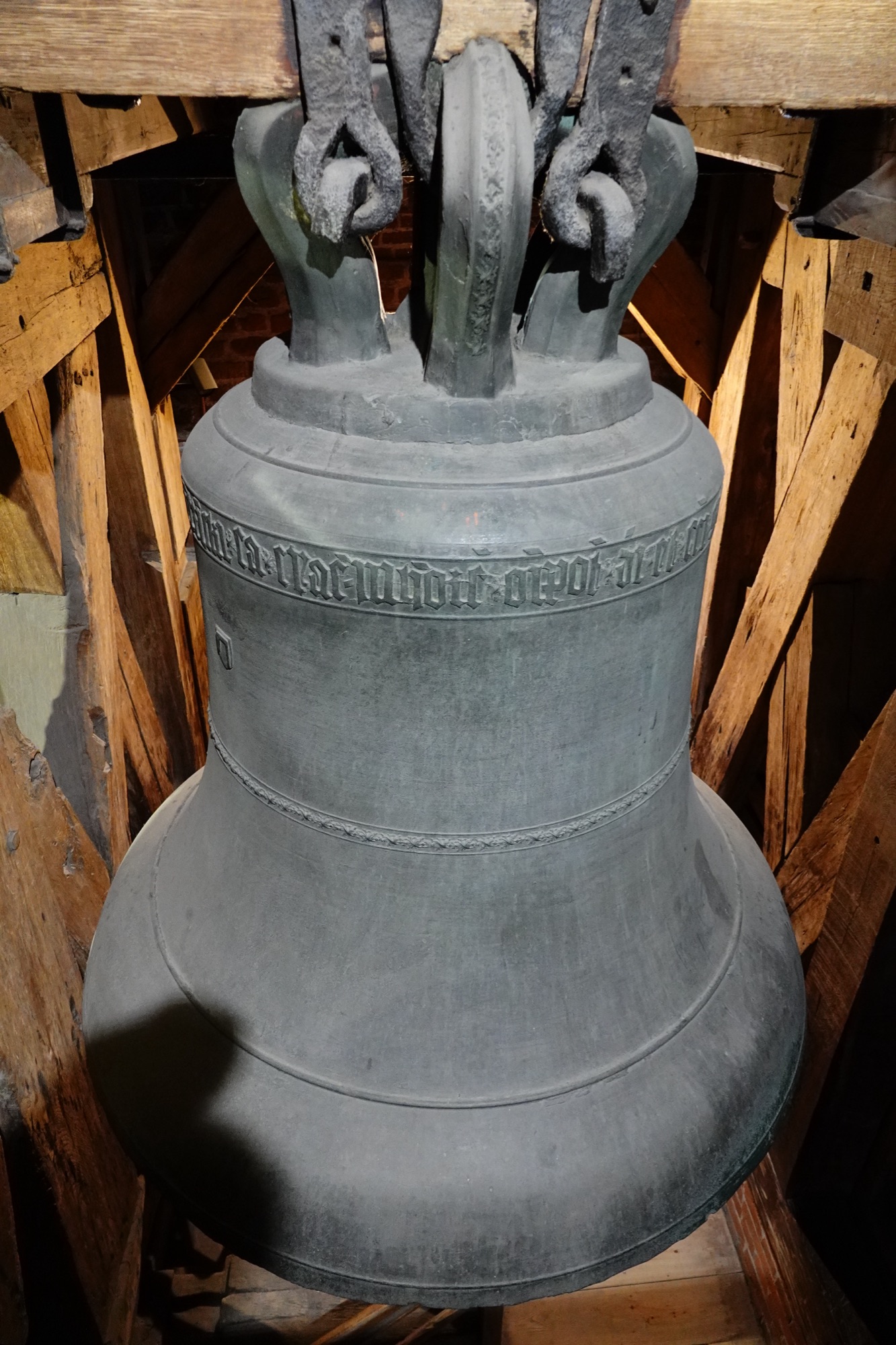
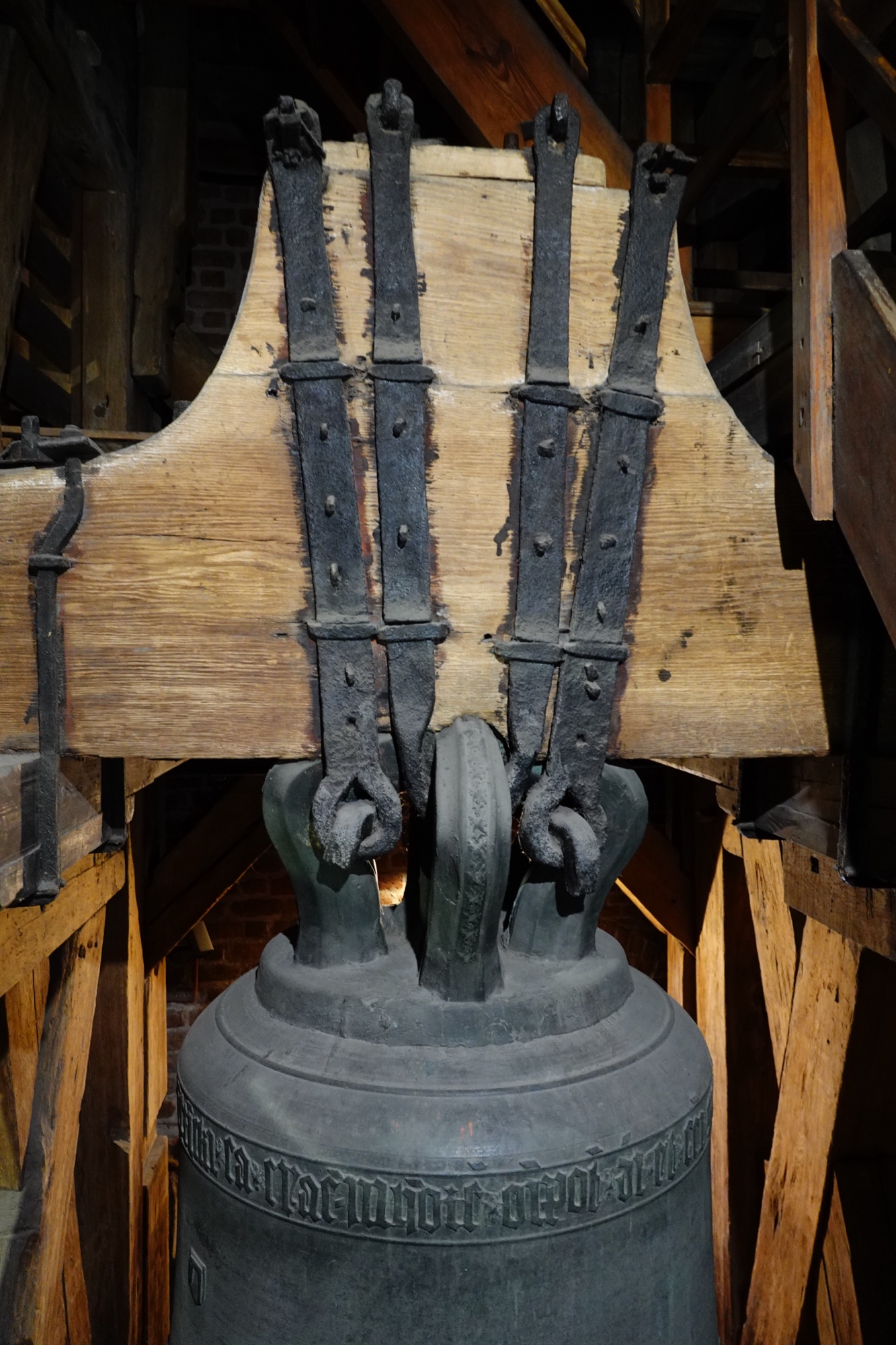
To make it, the metal of an older bell, called “Nawoja”, was used.
The bell’s body weighs about 6000 kg (13200 Ibs).
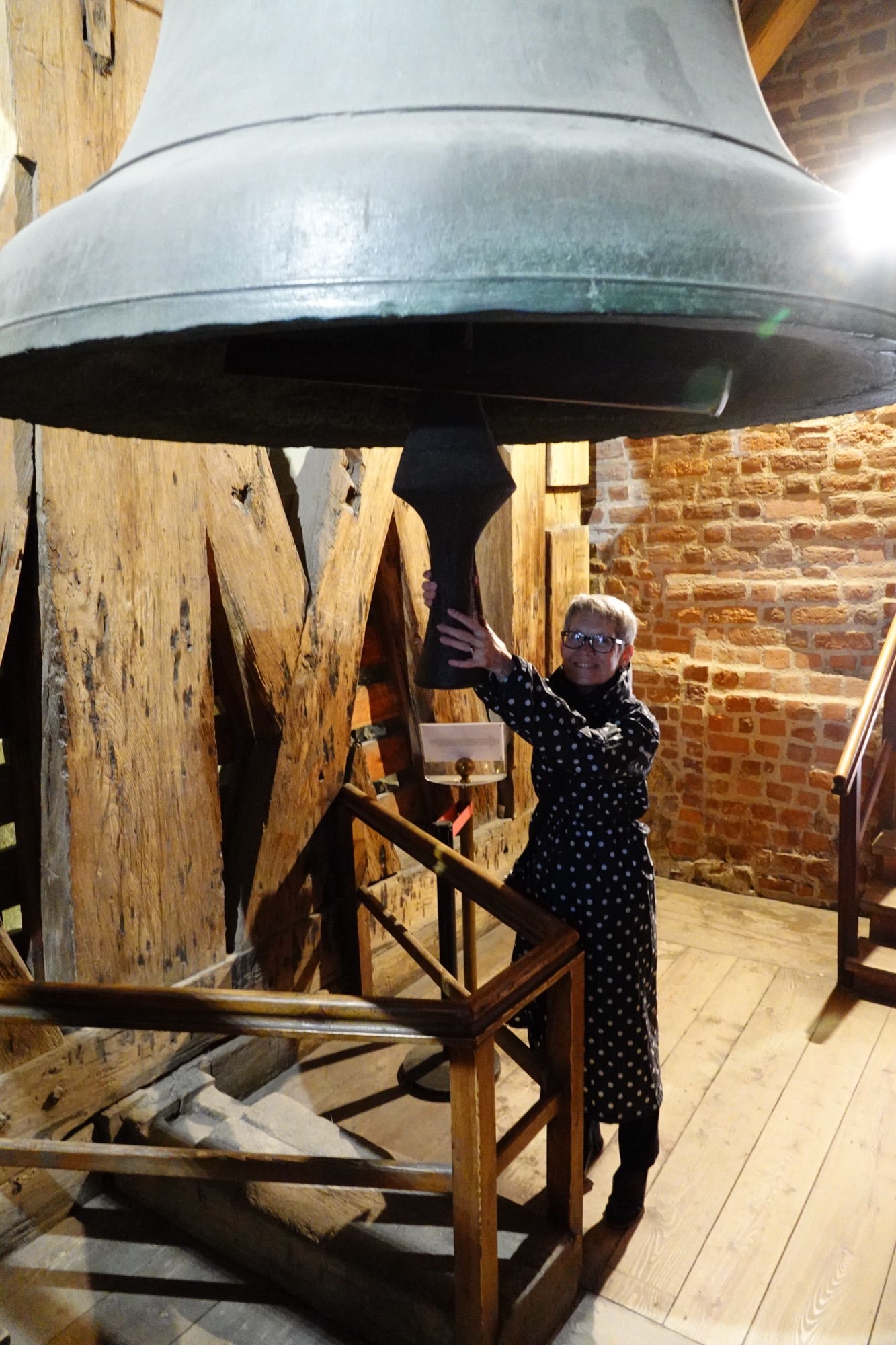
Since we were descending 144 steps anyway, why not a few more into the Royal Crypt?
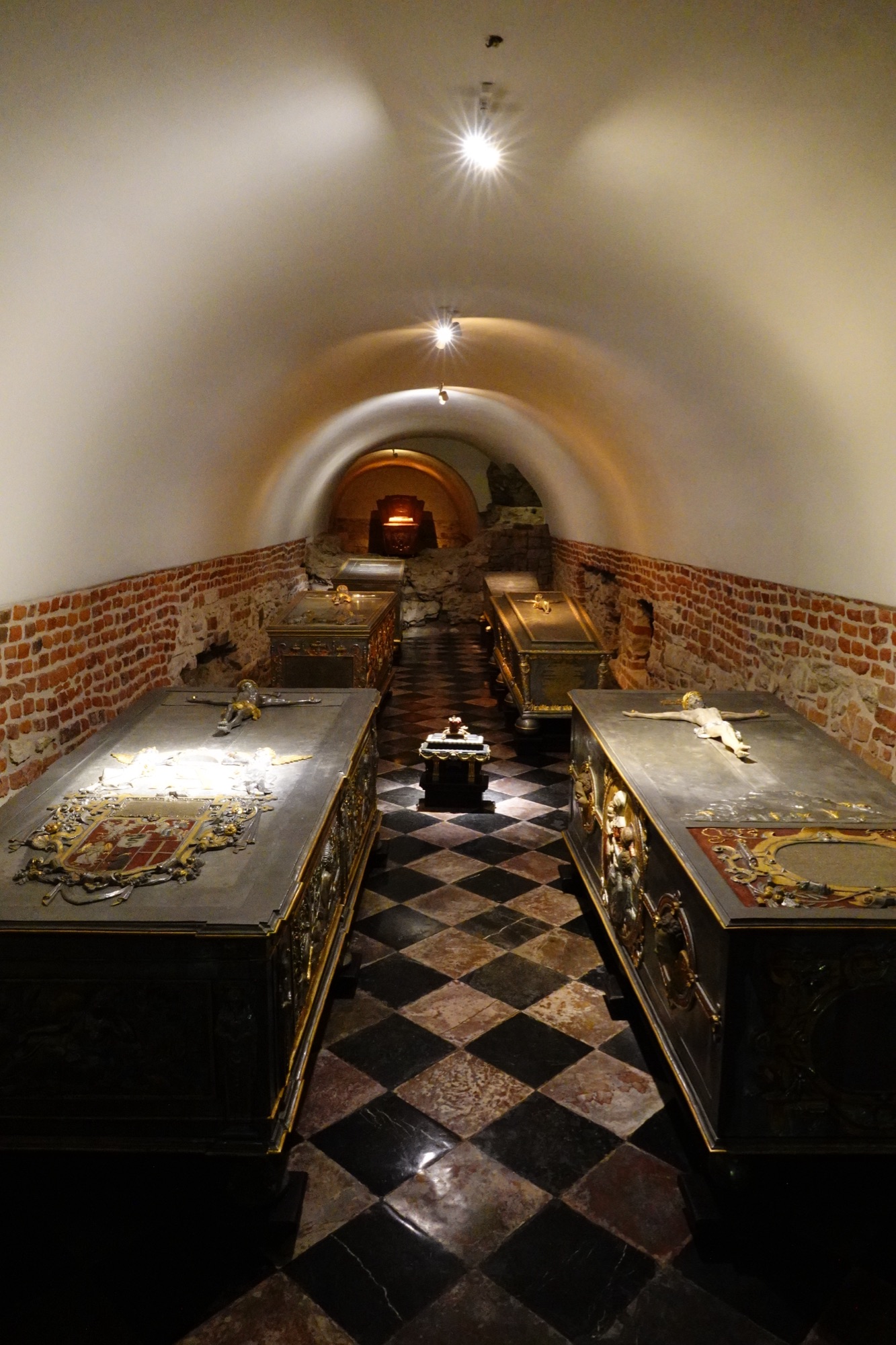
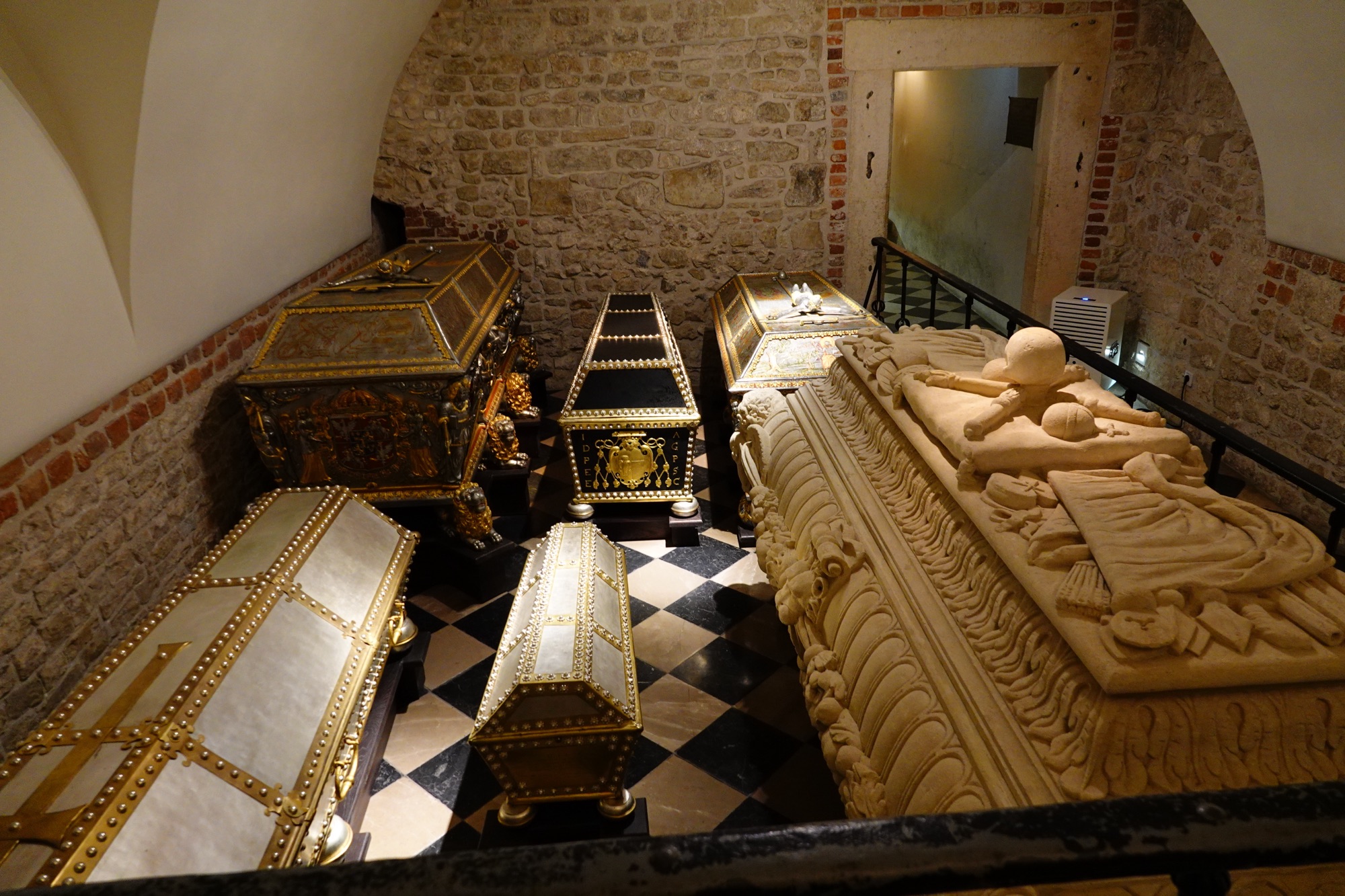
There are no ornate chapels in the crypt, just ornate sarcophagi arranged in family/dynastic groupings in a series of bright, clean stone-walled rooms. The map of the Royal Tombs looks like something we could have seen in Egypt’s Valley of the Kings, with long passages and multiple chambers.
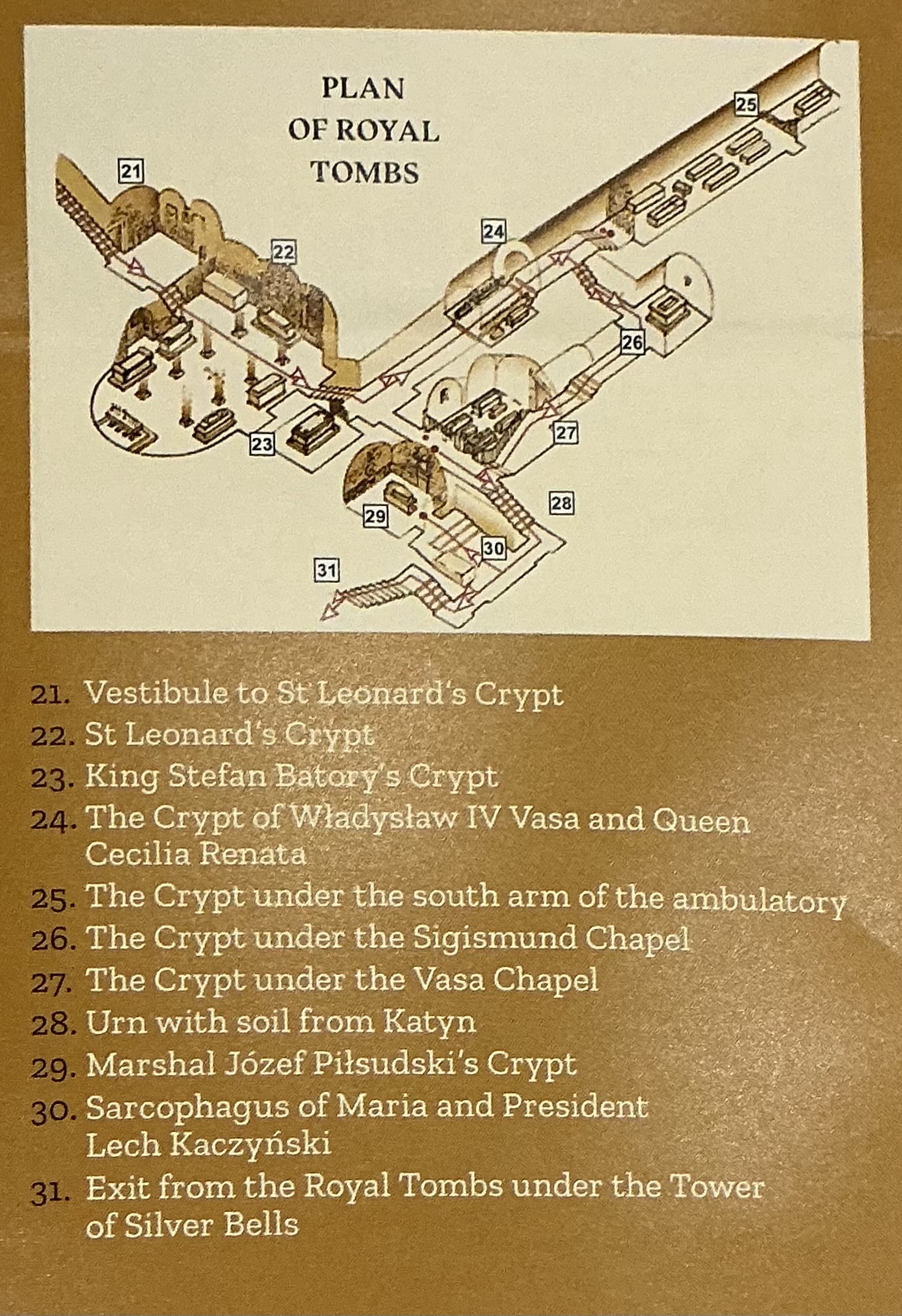
The names and nationalities of the Polish monarchs buried in the Cathedral and crypt confused me, so I resorted to an AI overview to explain what we were seeing. There’s a much more thorough and no less confusing explanation in Wikipedia Here.
- Hereditary (10th–14th Centuries): Dukes, Princes, and Kings.
- Elective (14th–18th Centuries): After the death of Queen Jadwiga in 1399, the “Crown of the Kingdom of Poland” was recognized as the true sovereign, and the king who wore it was viewed as an elected ruler, often chosen from the Jagiellonian dynasty.
- Free Election (1572–1791): After the Jagiellonian line died out, Poland adopted the wolna elekcja system, where the entire nobility was empowered to vote on the next king, with the election often taking place on fields near Warsaw.
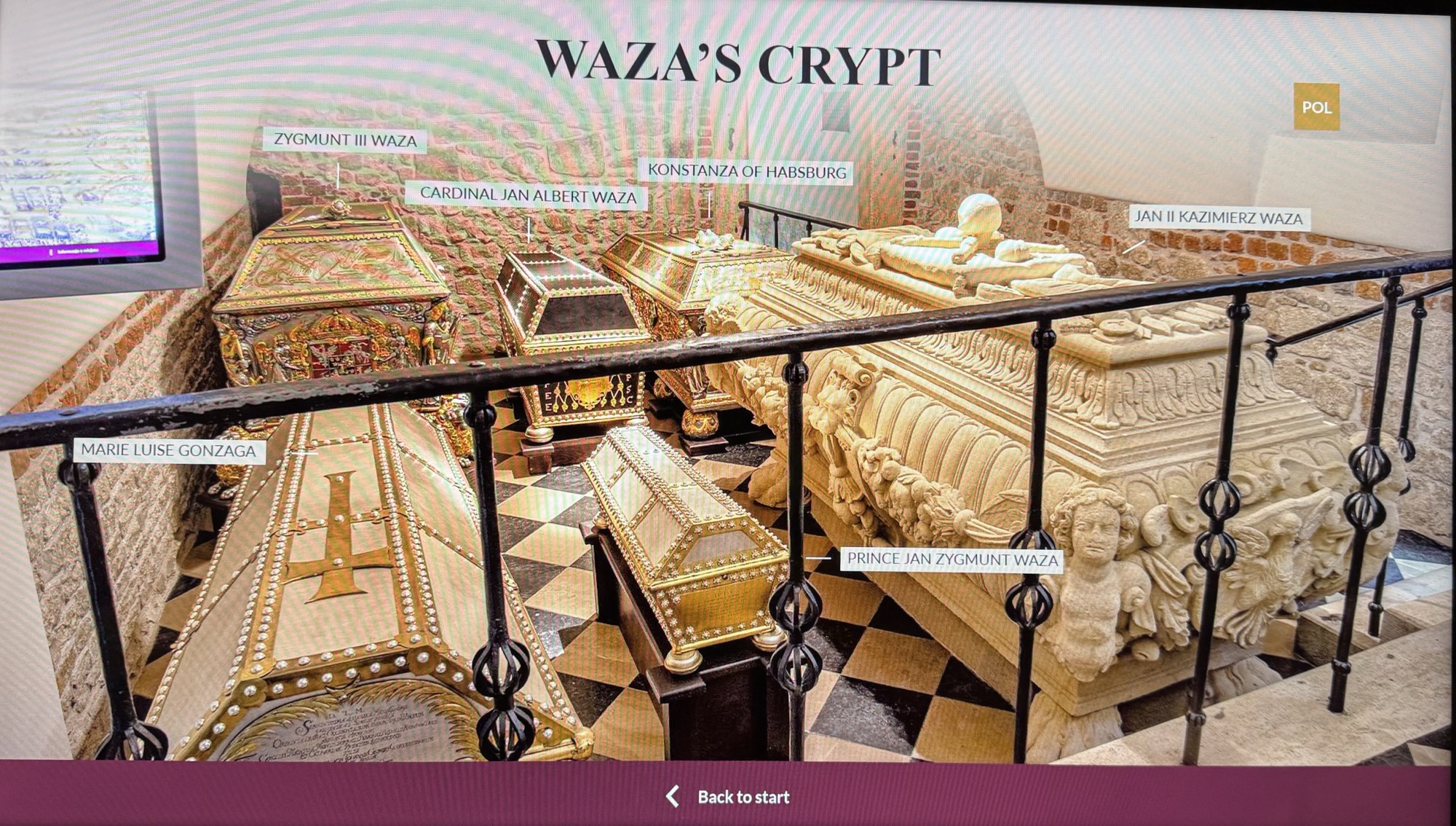
The fascinating thing about this particular crypt is that it has been updated with touch screens that have explanations about the history and significance of each individual – royal or military – entombed here.
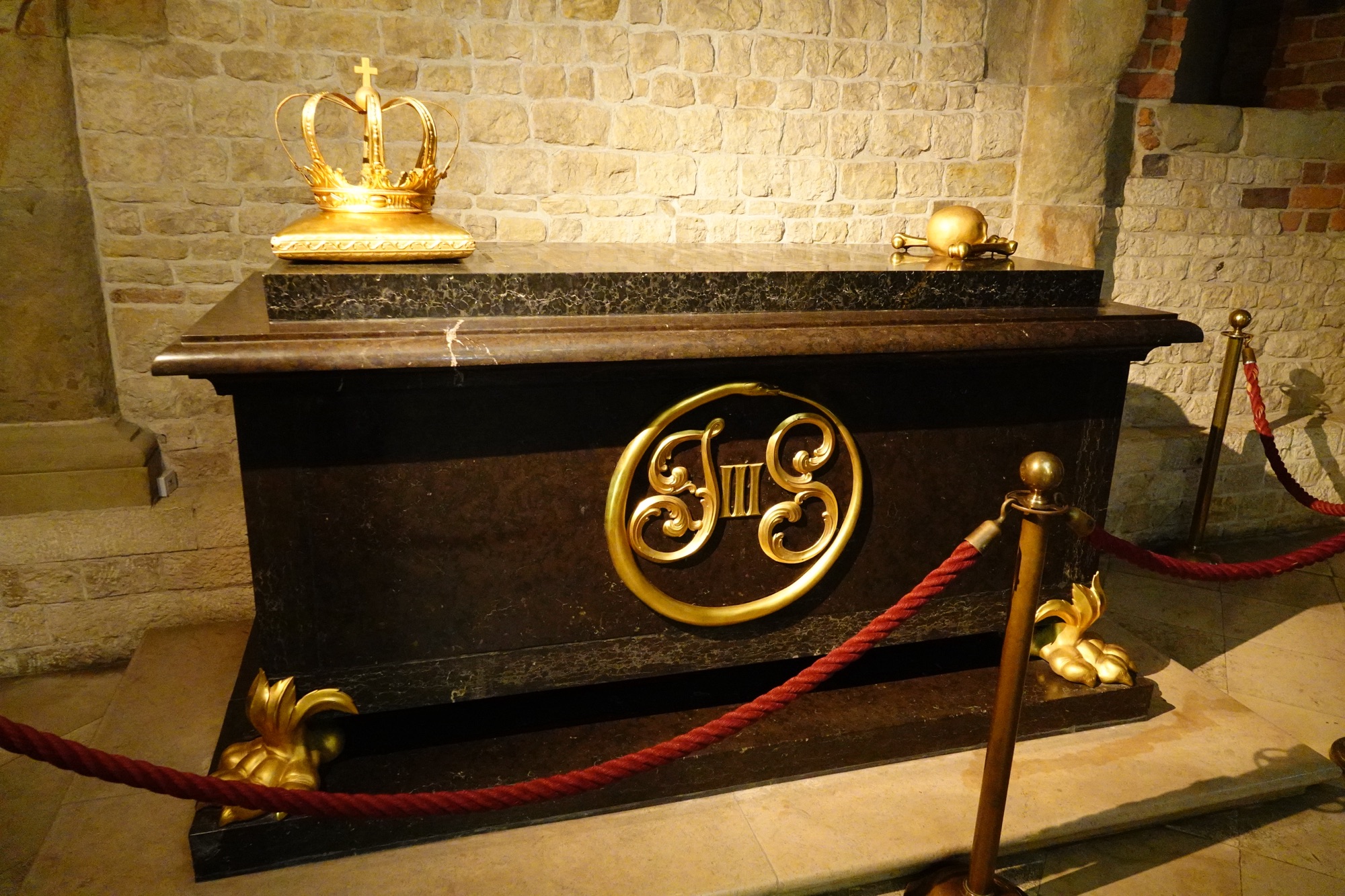
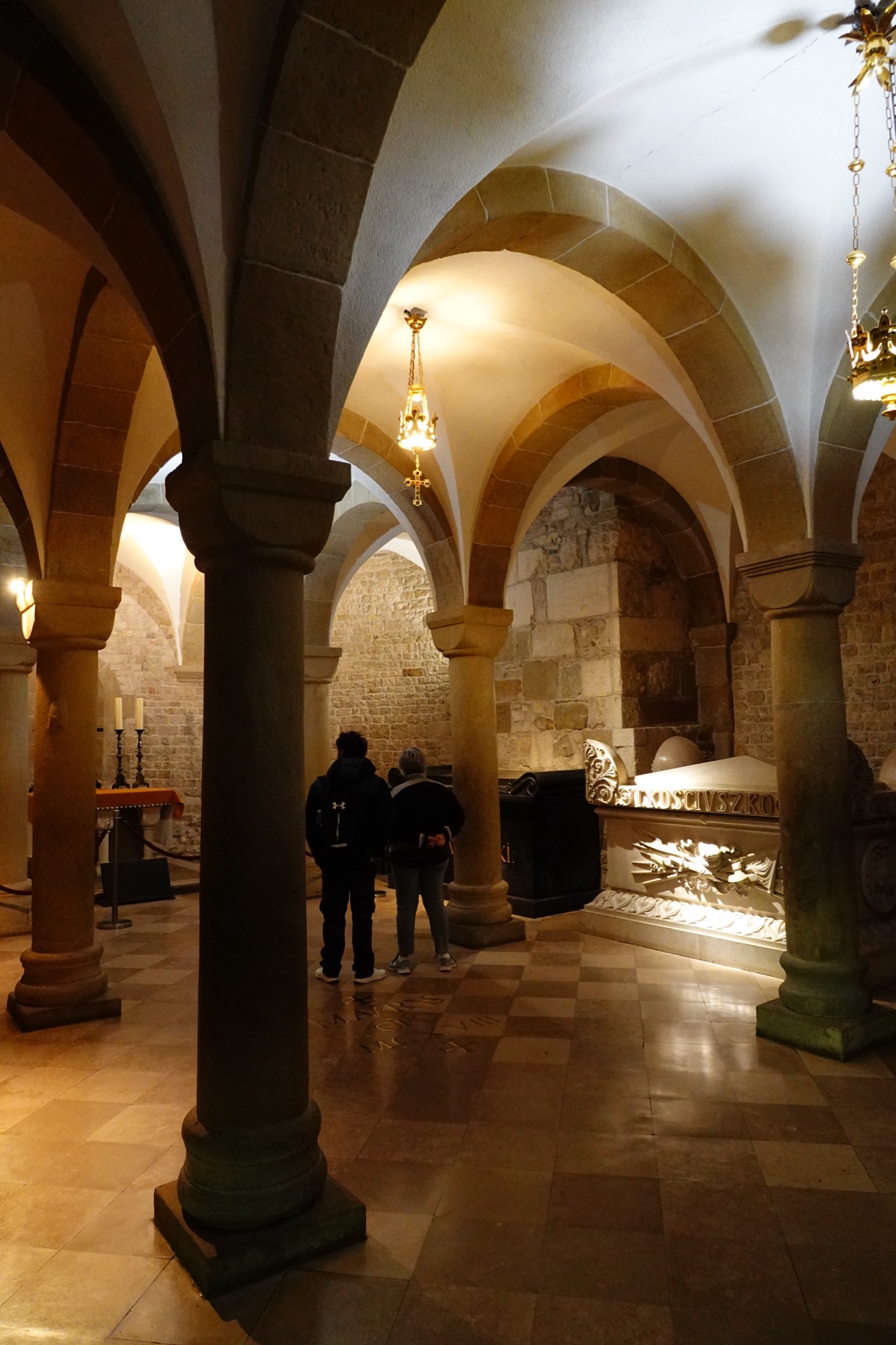
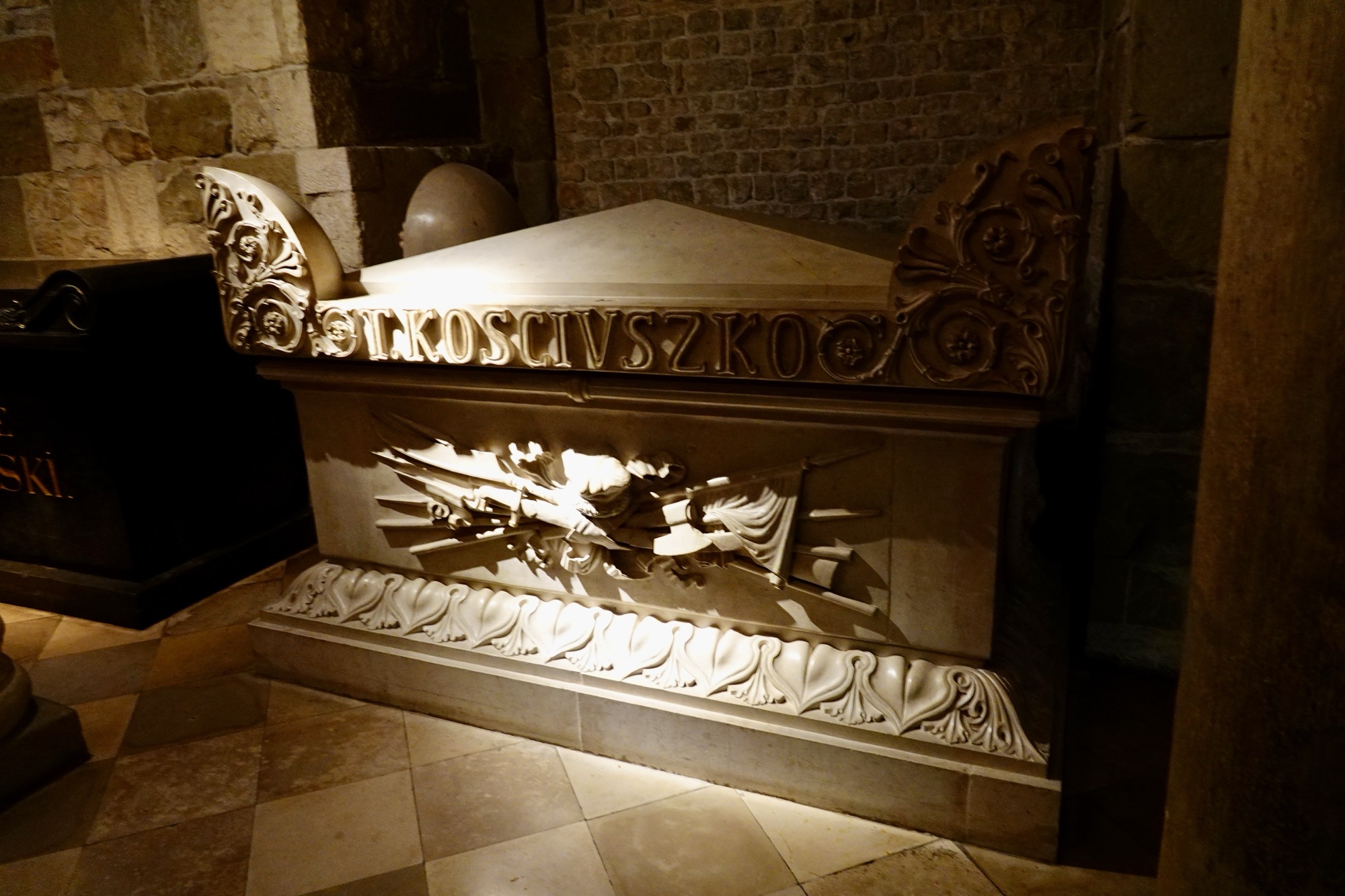
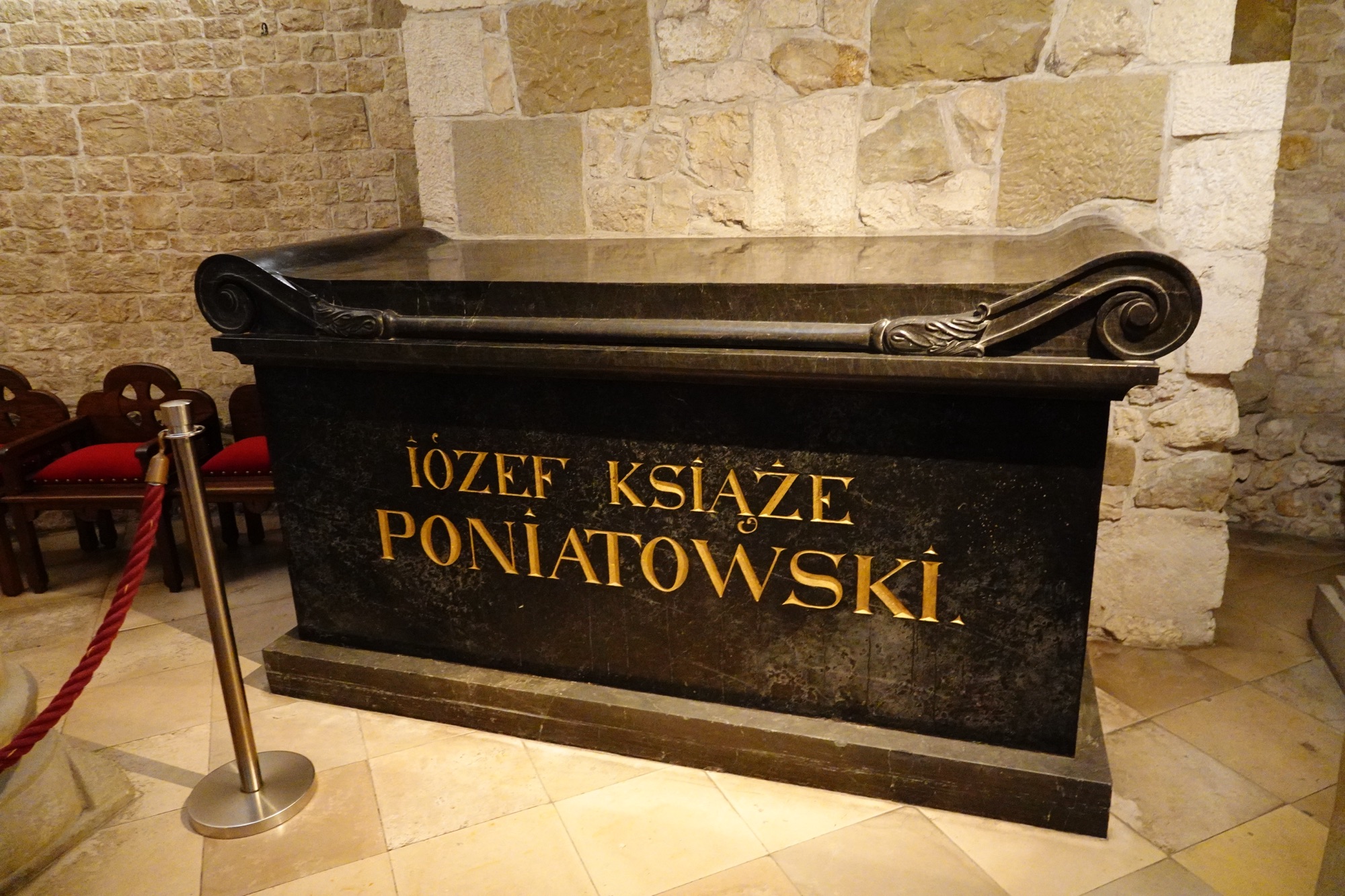
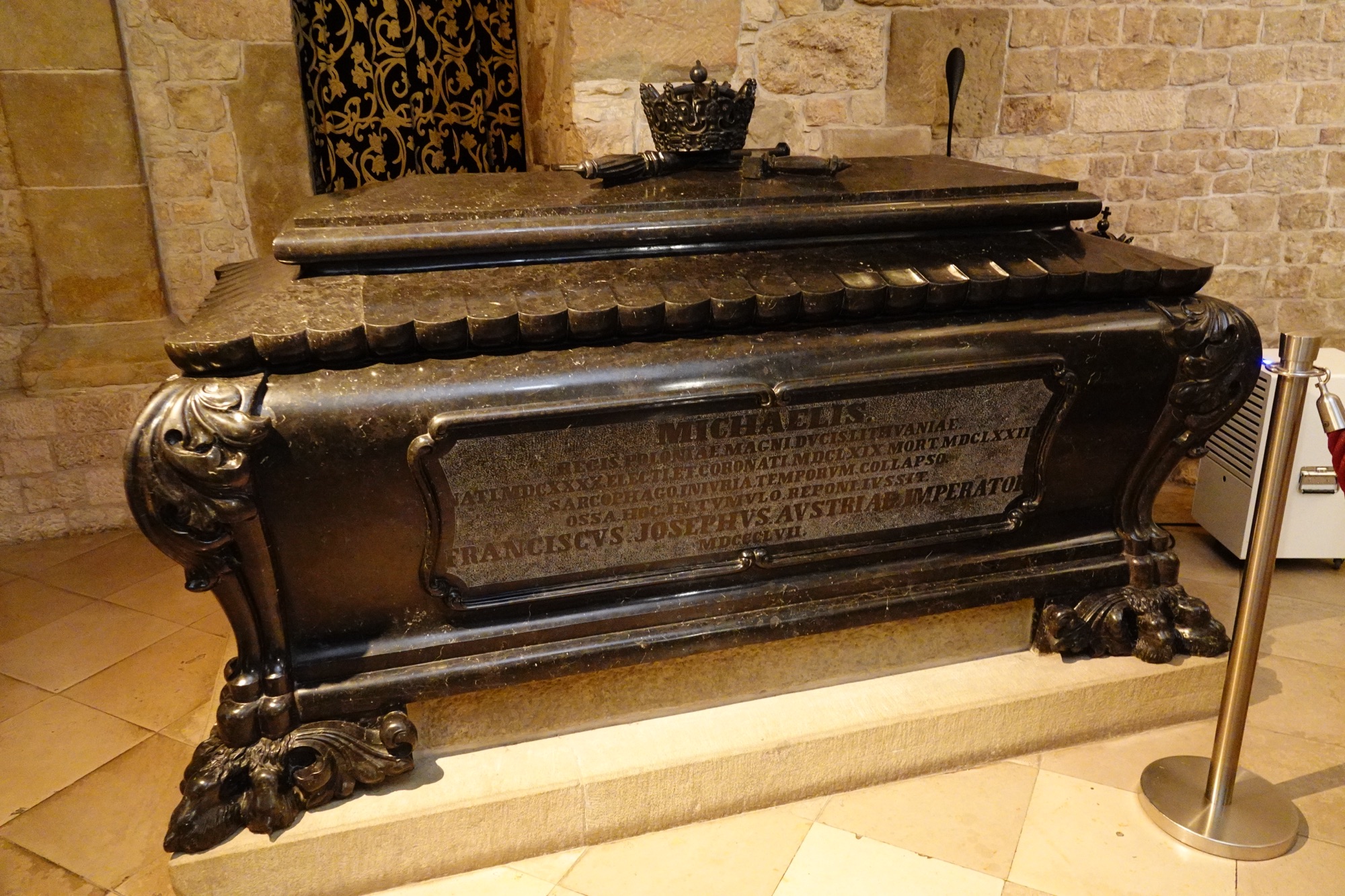
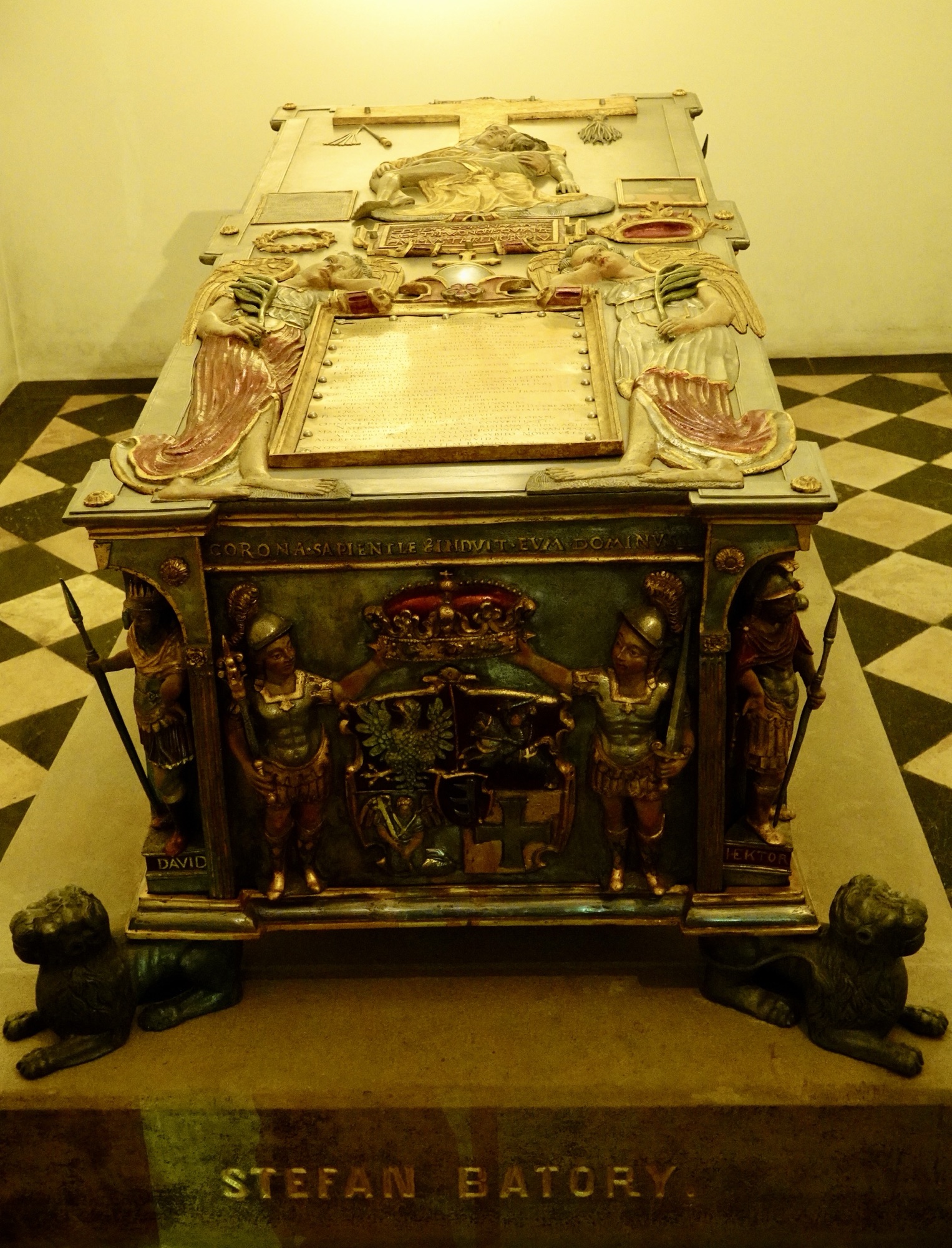
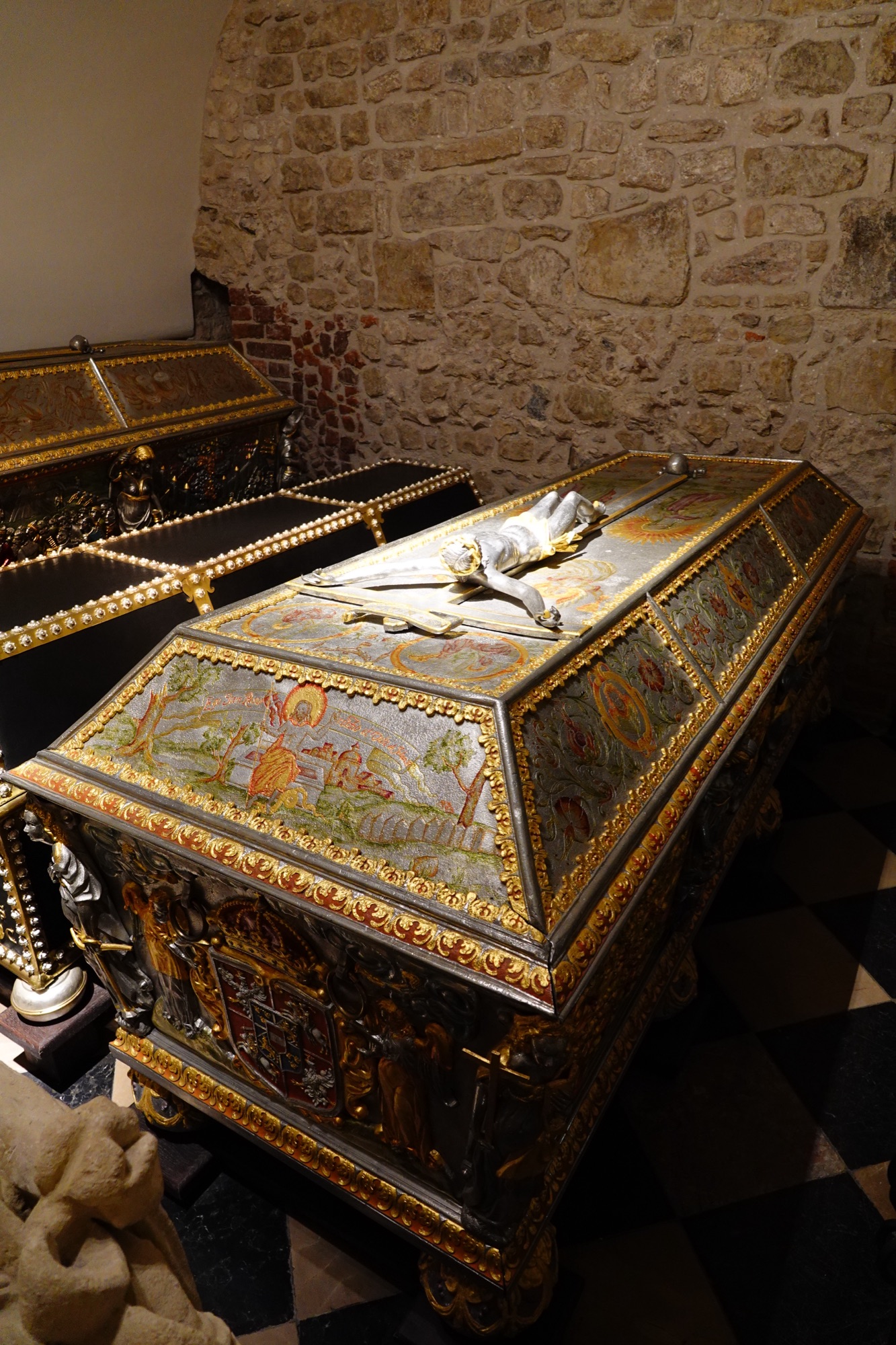
The coffins of royal children were much less ornate, as can be seen by comparing the 17th century gilded black copper sarcophagus of King Władysław IV Vasa with that of his 7-year-old son Prince Sigismund Casimir Vasa
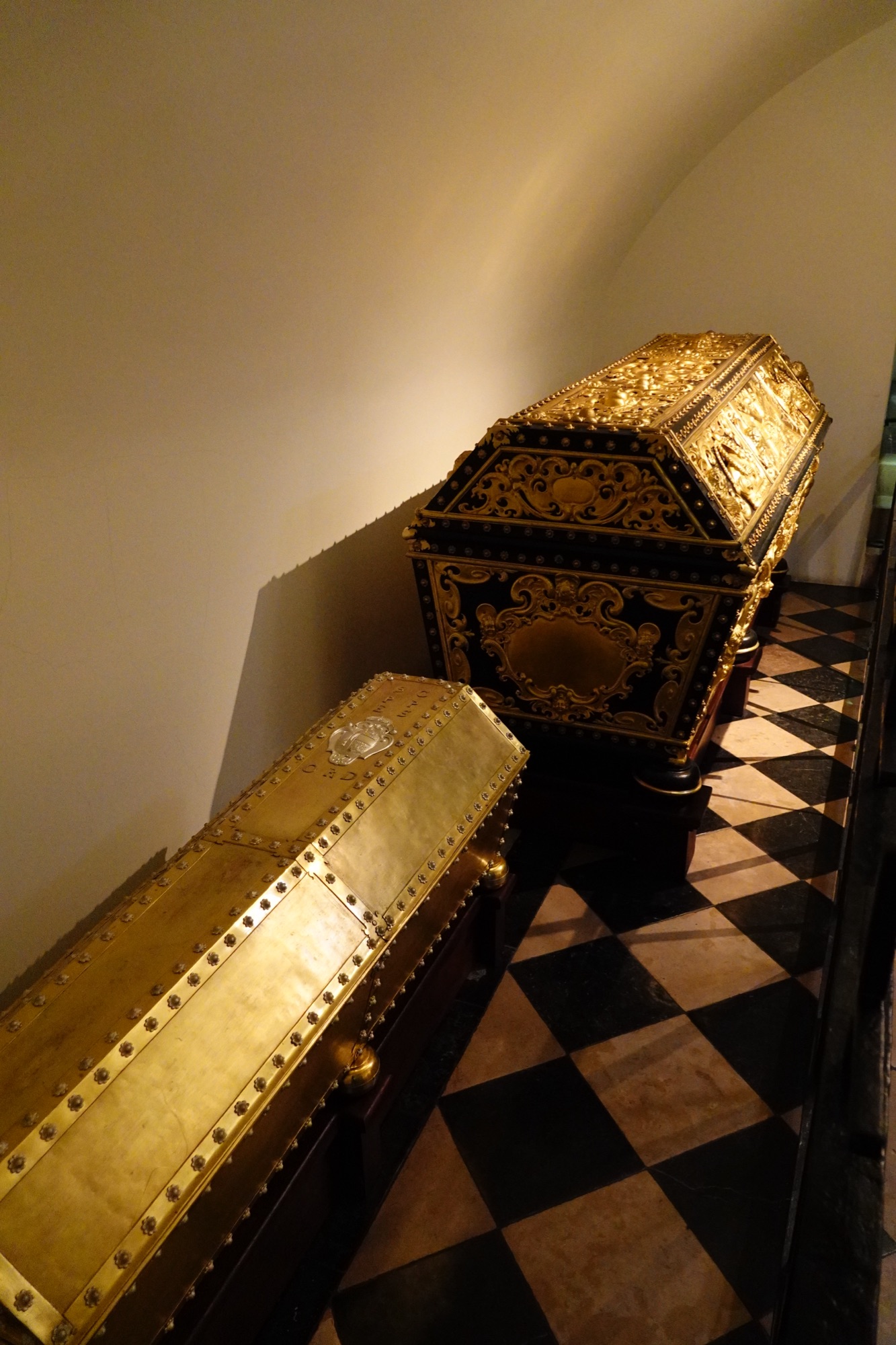
The interactive screen explained who was in the crypts into which we could not wander freely.
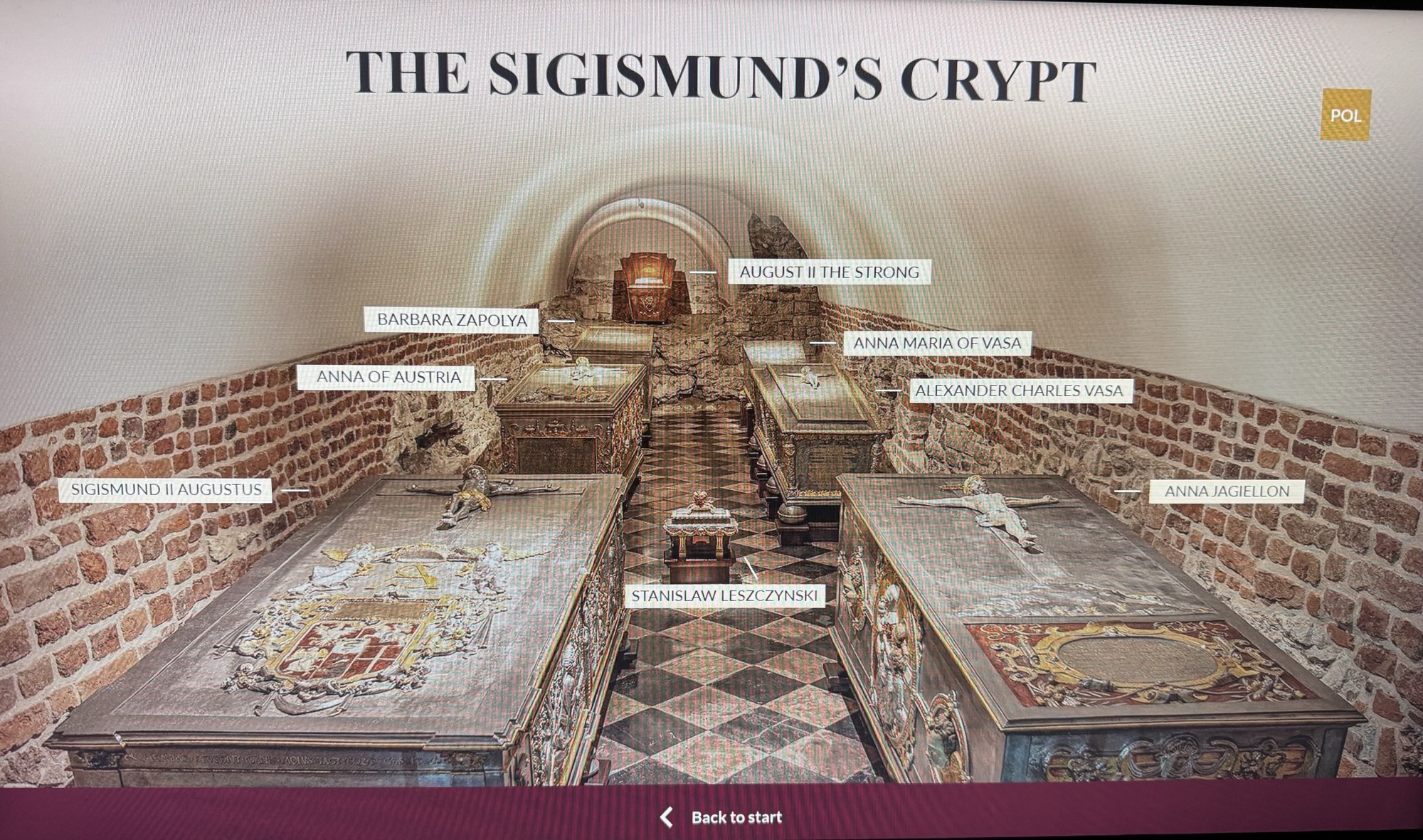
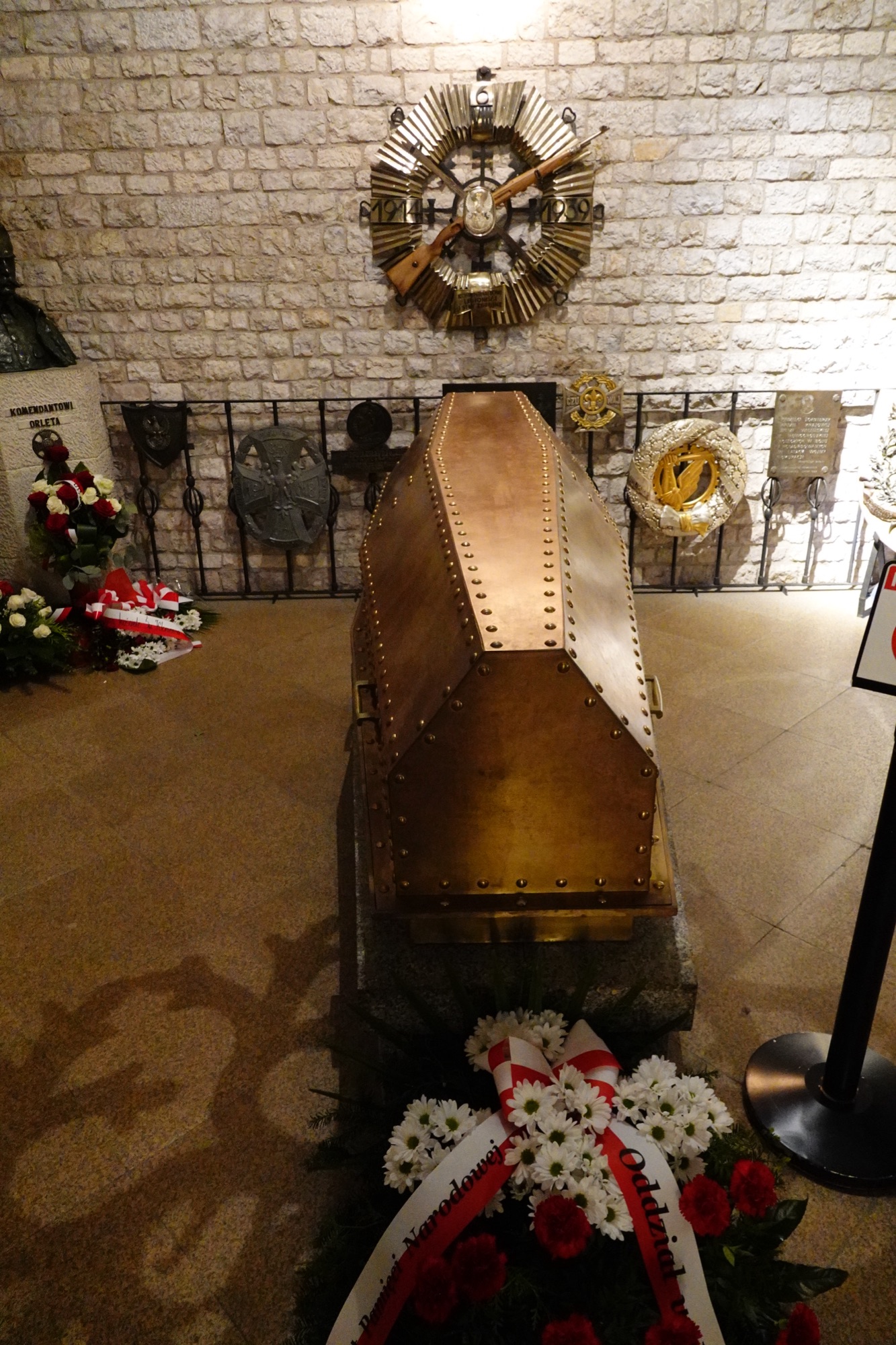
More modern sarcophagi also exist, and there is space still available as Poles are deemed worthy of interment here. Below is the brass sarcophagus of Józef Piłsudski, who died in 1935. From Wiki because I didn’t photograph the sign in the crypt: He served as the Chief of State(1918–1922) and first Marshal of Poland (from 1920). In the aftermath of WWI he became an increasingly dominant figure in Polish politics and exerted significant influence on shaping the country’s foreign policy. Piłsudski is viewed as a father of the Second Polish Republic which was re-established in 1918, 123 years after the final partition of Poland in 1795.
Between the castle and the cathedral we spent over 6 hours taking in a ton of information about Poland’s history. We were, frankly, too tired to go far for dinner. Fortunately, our little boutique hotel’s charming breakfast room is a public restaurant at night, so we simply walked downstairs!
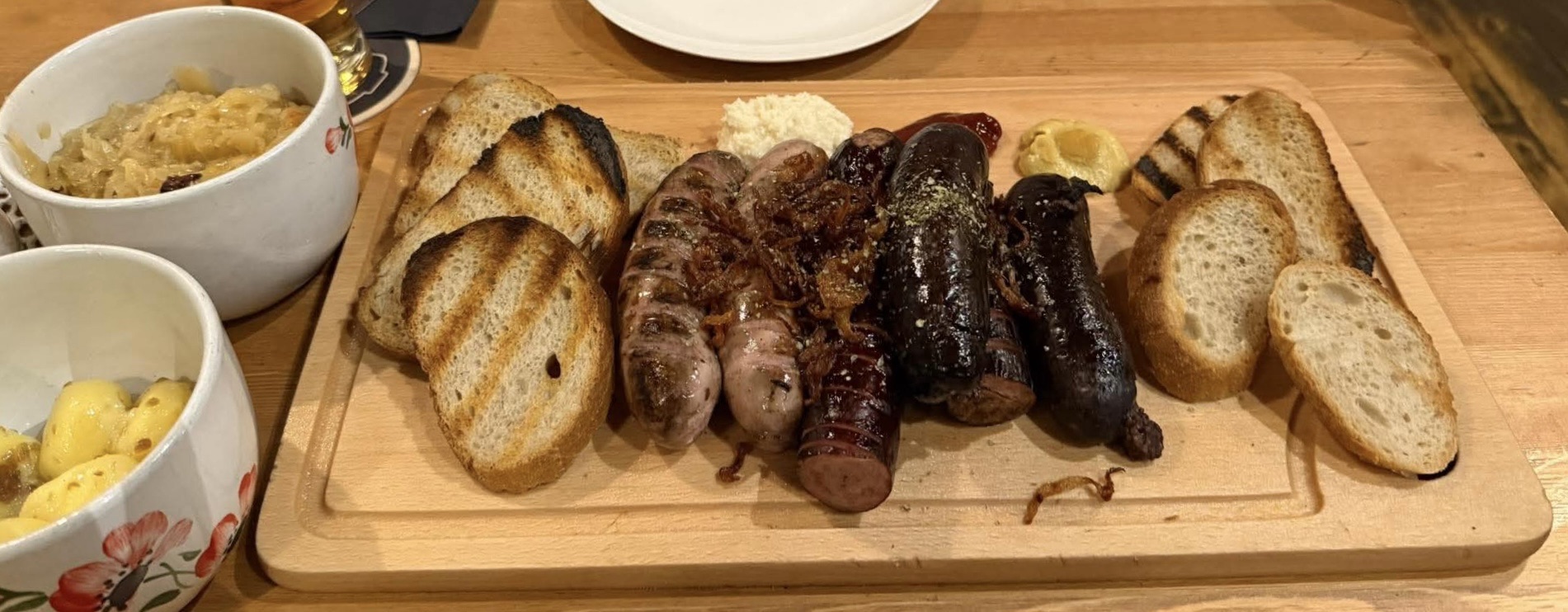
A couple of draught beers, a platter of Polish sausages grilled over a wood fire, some braised sauerkraut, and a few Silesian dumplings really hit the spot.
We’re hoping the predicted several days of rain don’t materialize, although that’s selfish on our part since this area has been suffering drought conditions.
Rain or not, we have more to explore.


Gotta love Ted’s Turkish Delight comment though!
LikeLiked by 1 person
I love your blogs. You have way more patience and endurance than I do for exploring castles and churches. I used your Viking Capitals of Eastern Europe blogs to skip some of the included tours and juts follow your directions – Thanks!
LikeLiked by 1 person
Glad to be useful! 😂
LikeLike