The breakfasts at nH Collection hotels feature not only a wide-ranging buffet but also items made to order. This morning son #1 enjoyed Kaiserschmarrn with his fruit, yogurt, and coffee, while I had an absolutely delicious and perfectly spiced Shaksuka.

We felt well prepared for our day, but while not a particularly long day, today was a very intense one.
Nuremberg is a city that Ted and I have visited before (Episode 94 & Episode 359), but it has an incredible amount to offer. Son #1 has never been here before, so through his reactions I get to relive the sights and sounds anew.
I have no idea what my mom did or saw here when passing through in 1949, but were she here today at 99 years old it is likely the sites of the churches and the city wall that she would recognize. Much of the city would have been in the midst of being repaired after extensive bombing damage.
We spent a large part of our day in the city’s three most significant churches, all in close proximity to each other.
I found researching these churches before our visits sobering, and touring them a combination of awe-inspiring and depressing (the former related to architecture, snd the latter because of having done the research). Nuremberg has a centuries long history of virulent antisemitism, much of it actively sanctioned by the churches.
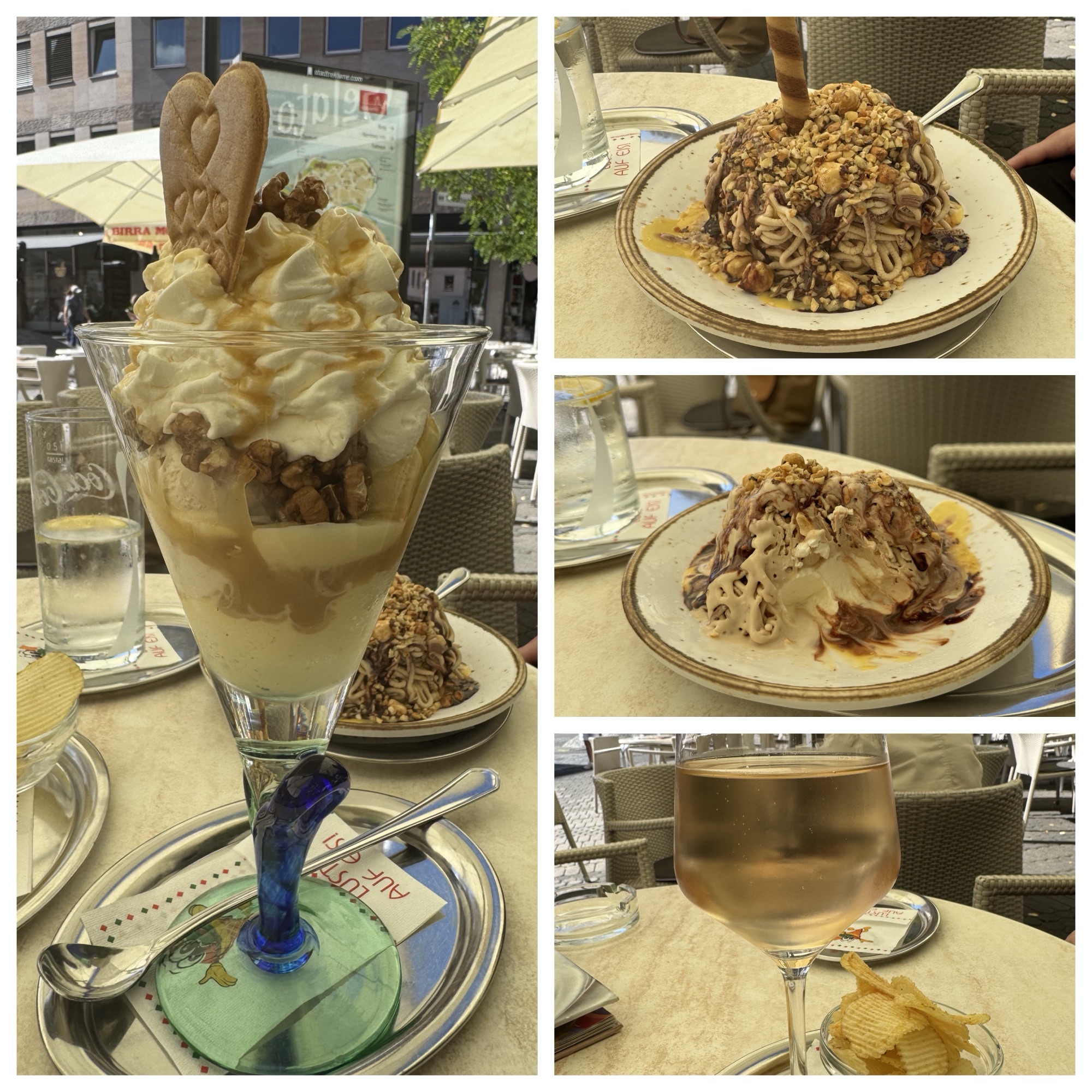
We took a break after the churches to enjoy ice cream, reset ourselves, and just breathe. This trip is supposed to be a journey of discoveries, but also a holiday for son #1.
Because I pre-loaded my research notes, the order in which the churches are presented here does not match the order in which we visited them, which was St Lorenz, St Sebald, and then the Frauenkirche in time for the noon glockenspiel. Writing in the blog app on my phone means moving things around isn’t easy to do, so the narrative order simply is what it is, which feels like a very Kölnisch sentiment.
The Frauenkirche
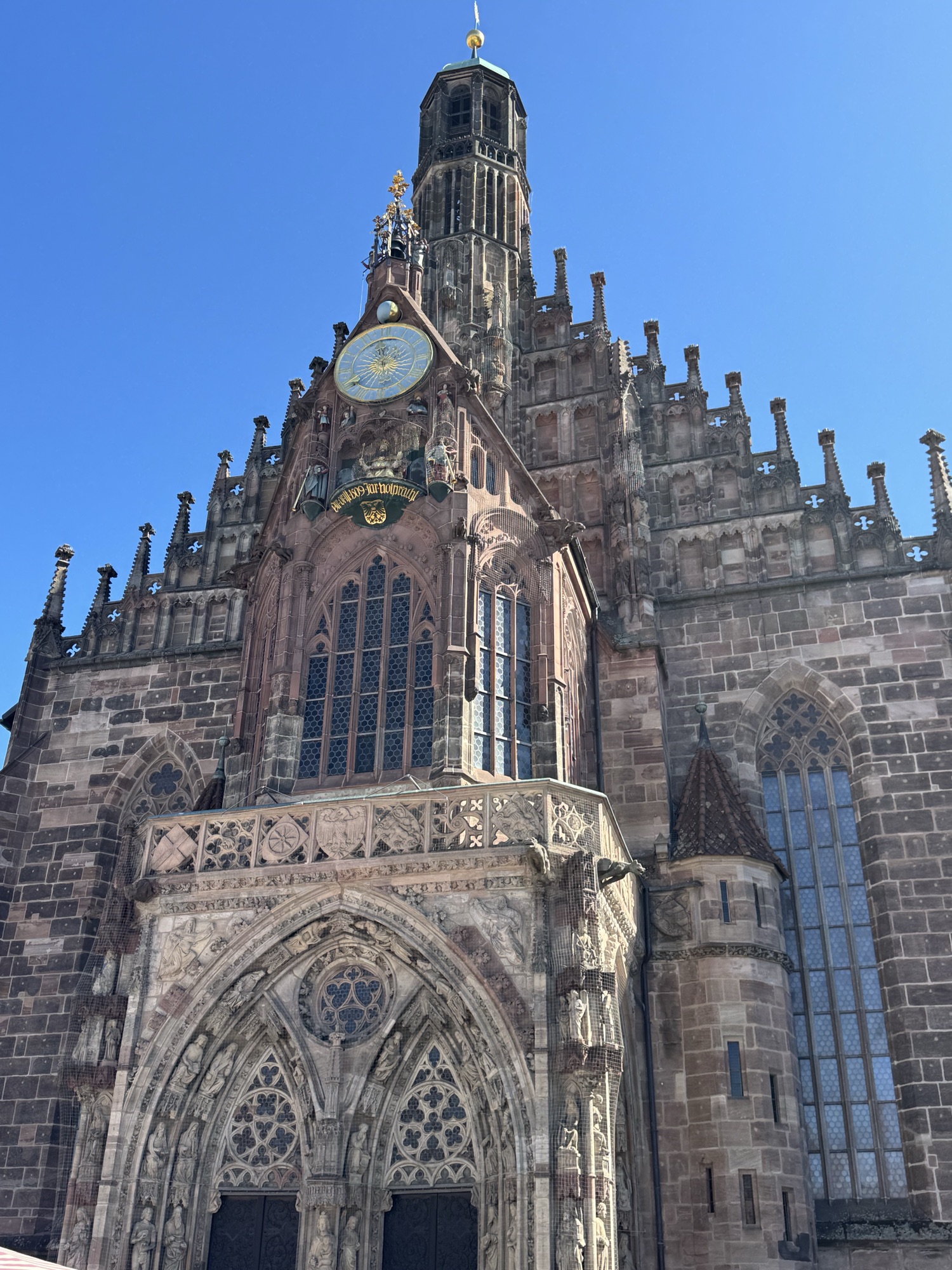
The establishment of the Frauenkirche here has a particularly nasty history. Today’s Hauptmarkt was originally the site of the Synagogue of Nuremberg, but Holy Roman Emperor Charles IV found a convenient scapegoat for the outbreak of the Black Death in 1349 in the Jewish community, resulting in a Christian pogrom of the Jews, their expulsion from the city, the destruction of their synagogue, and the construction of the Frauenkirche on the rubble. Christianity as a religion has much of which to be ashamed.
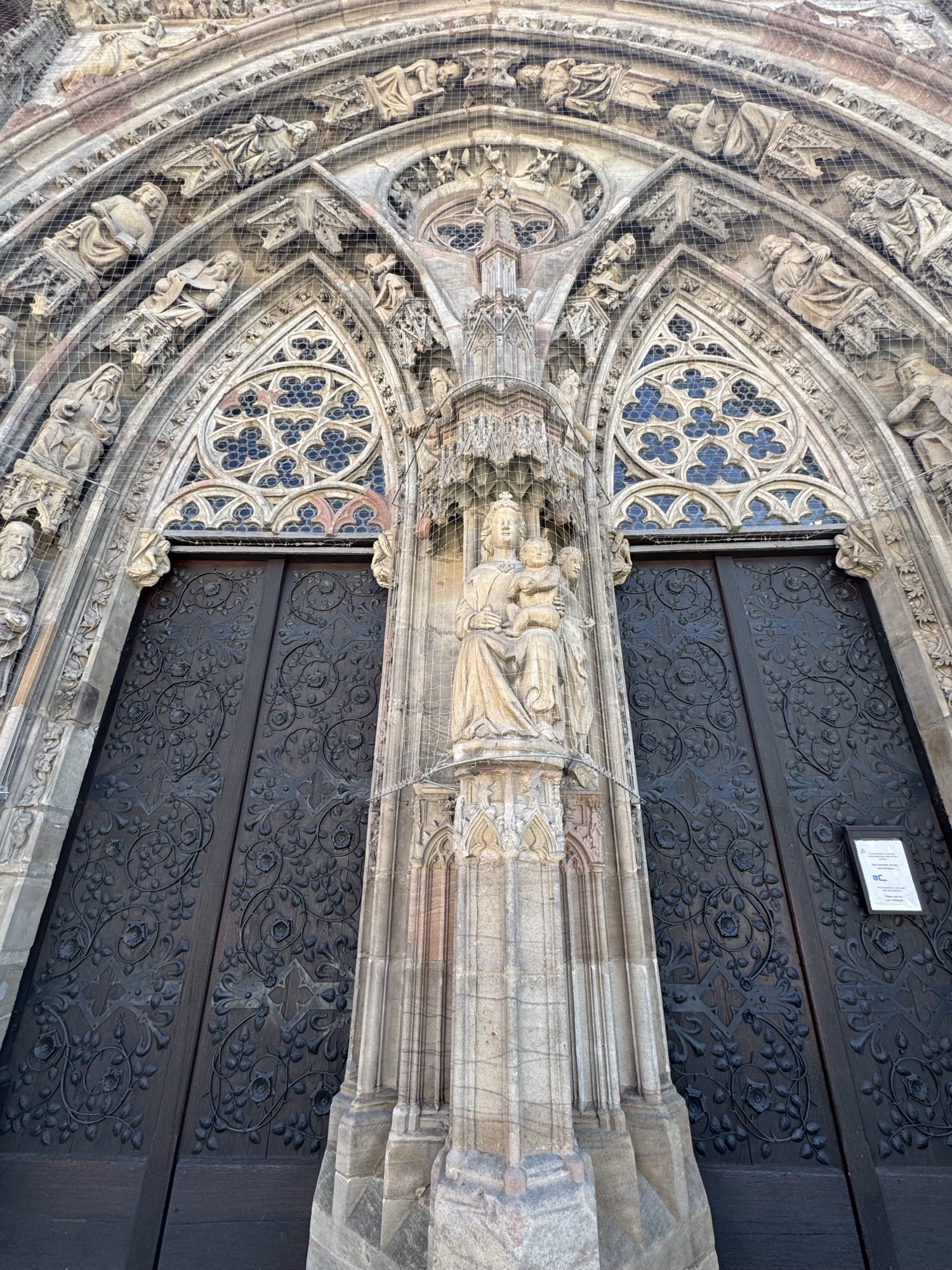
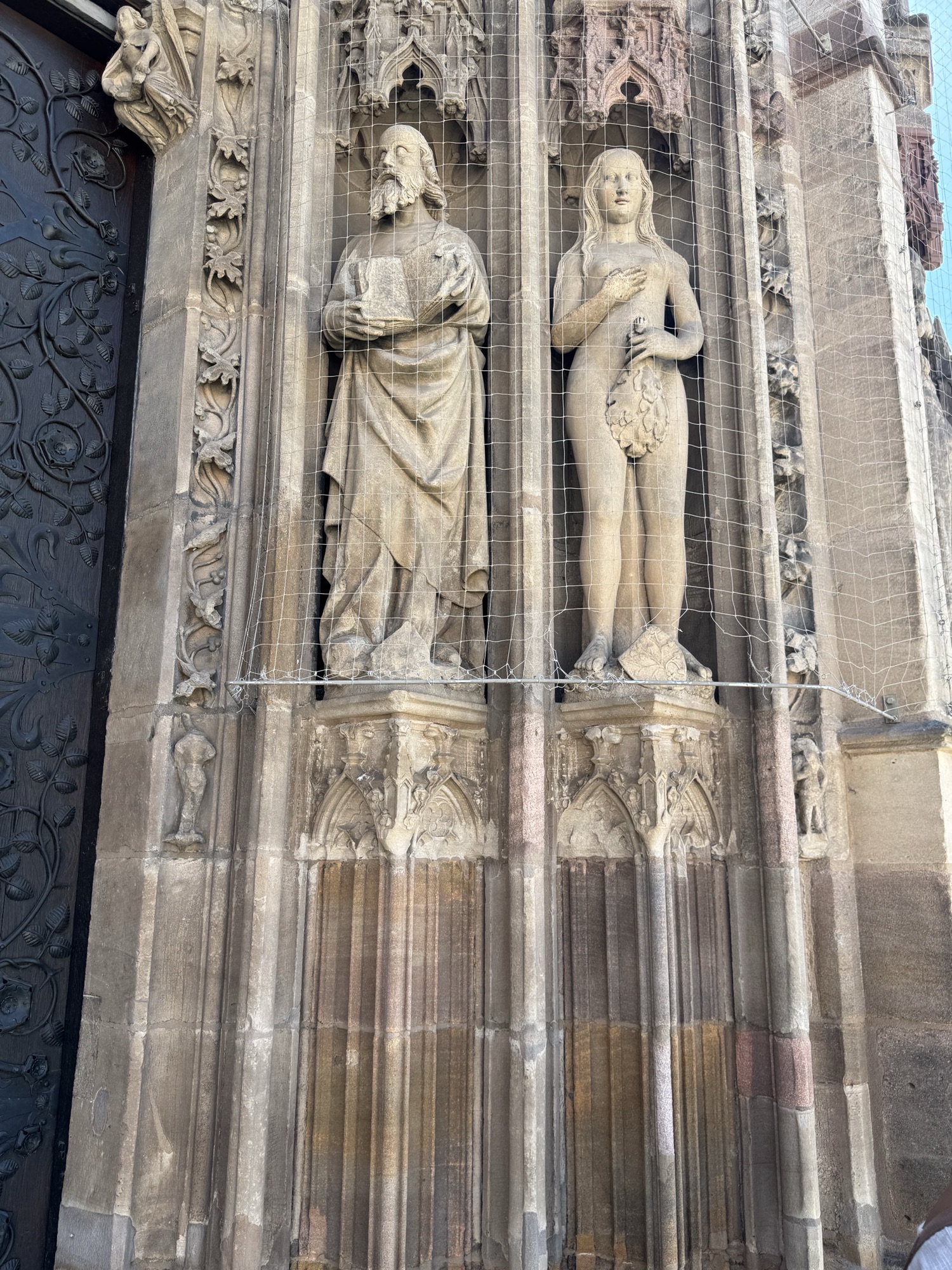
There are prominent plaques here acknowledging the wrongs done to the Jewish community in WWII, but very few visitors to the Frauenkirche see beyond its magnificent architecture to its reprehensible roots.
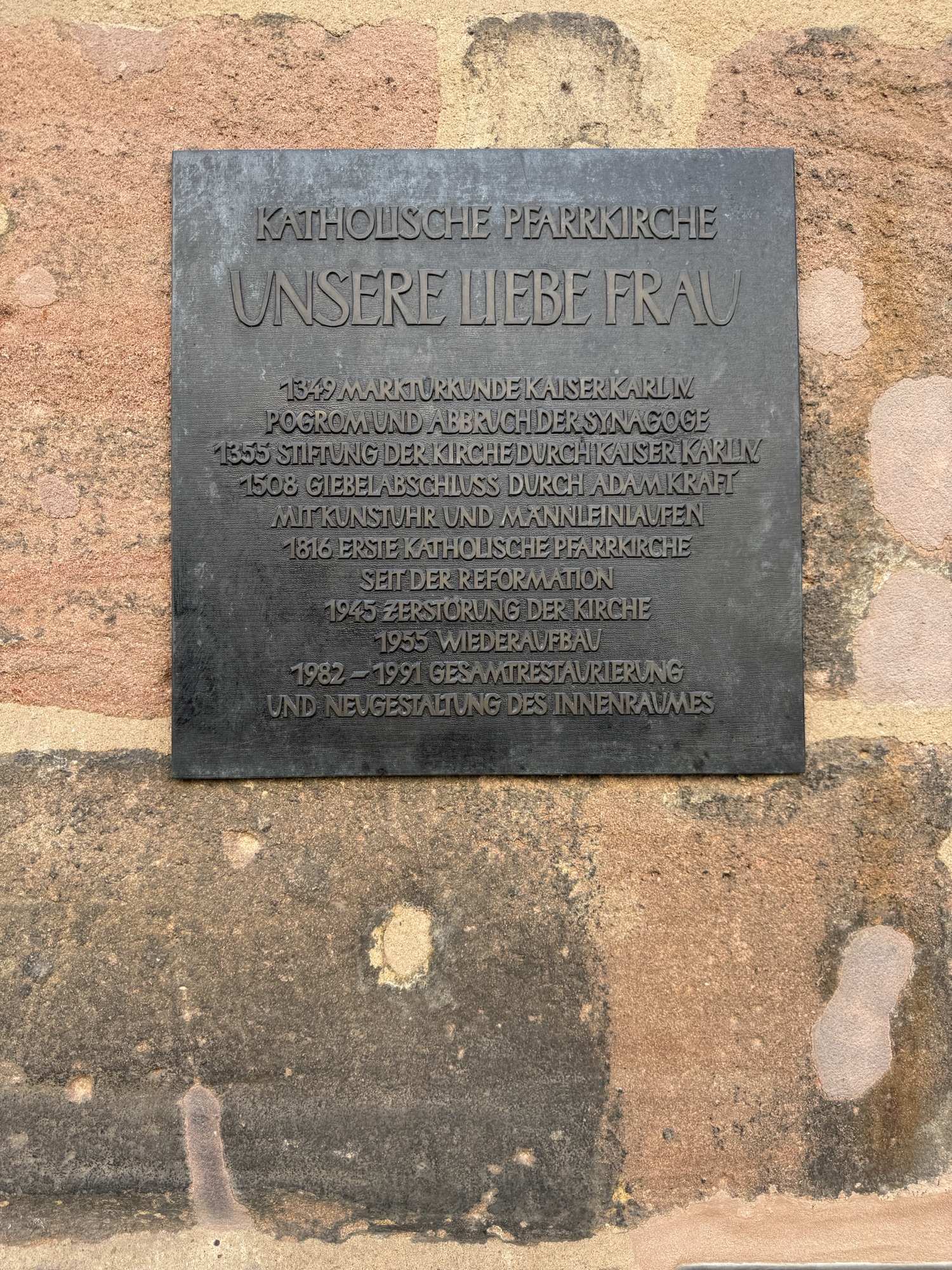
1340: Pogrom and destruction of the synagogue under Emperor Charles
1355: Church consecrated by Emperor Charles
1508: Gable completed by Adam Krafl, featuring an artistic clock and mechanical figures
1816: First Catholic parish church
(Post-Reformation)
1945: Destruction of the church
1955: Reconstruction
1982–1991: Complete restoration and redesign of the interior
The church was almost completely destroyed in WWII; only the nave walls and facade remained. In 1949 major reconstruction would have been underway.
The exterior of the church features the Männleinlaufen (procession of little men), installed around 1506CE. When not moving it shows the seated Holy Roman Emperor with the Prince-Electors around him.
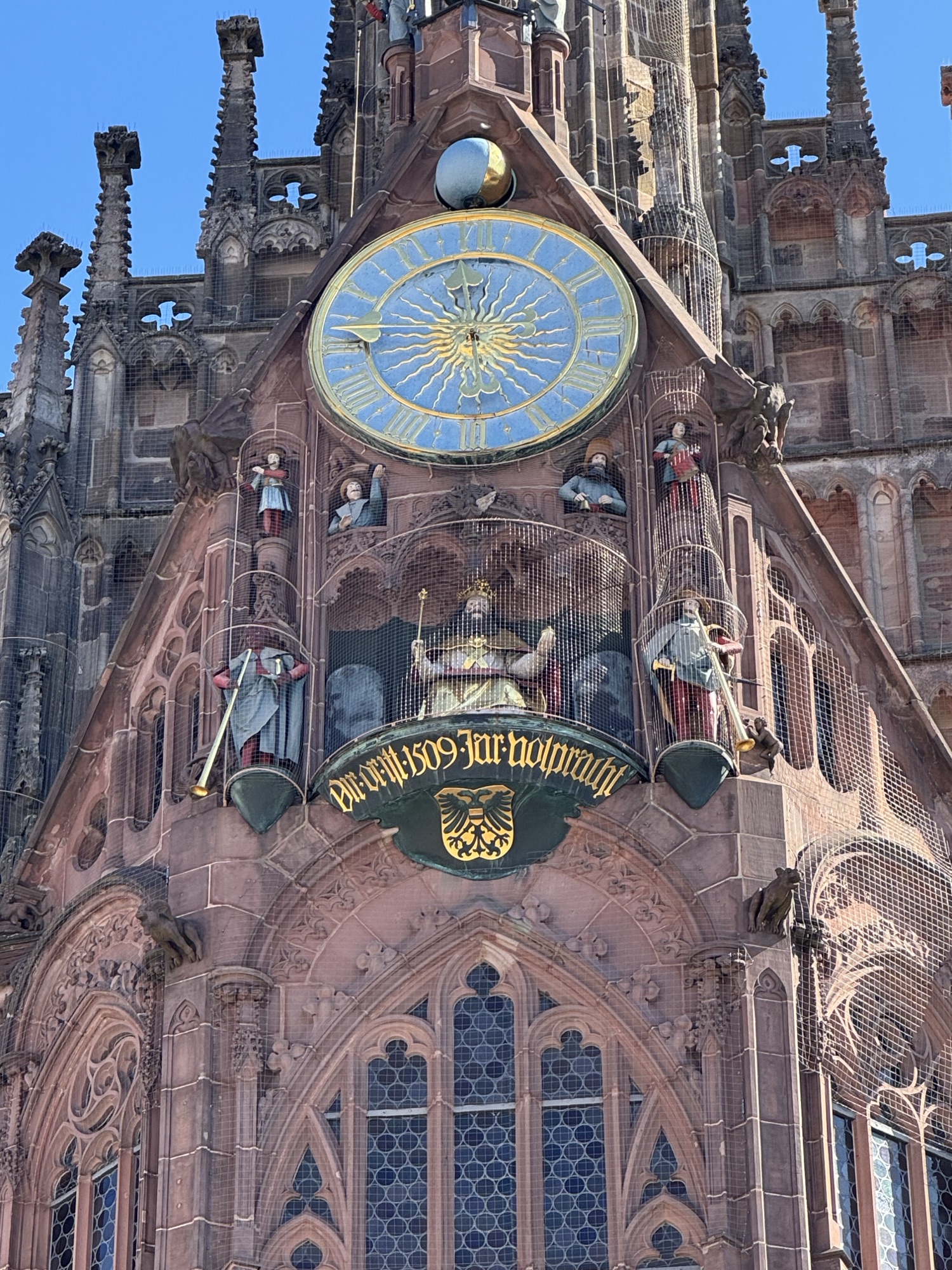
Each day at noon the clock mechanism is activated, and a bell rings, followed by trumpeters and drummer. The electors walk in procession around the figure of the Holy Roman Emperor.
Son #1 videoed it, and with their help I put it into a shared cloud drive for Ted to process.
Since 1948, the balcony of the church below the Männleinlaufen has been used for the opening ceremony of the Christkindlesmarkt.
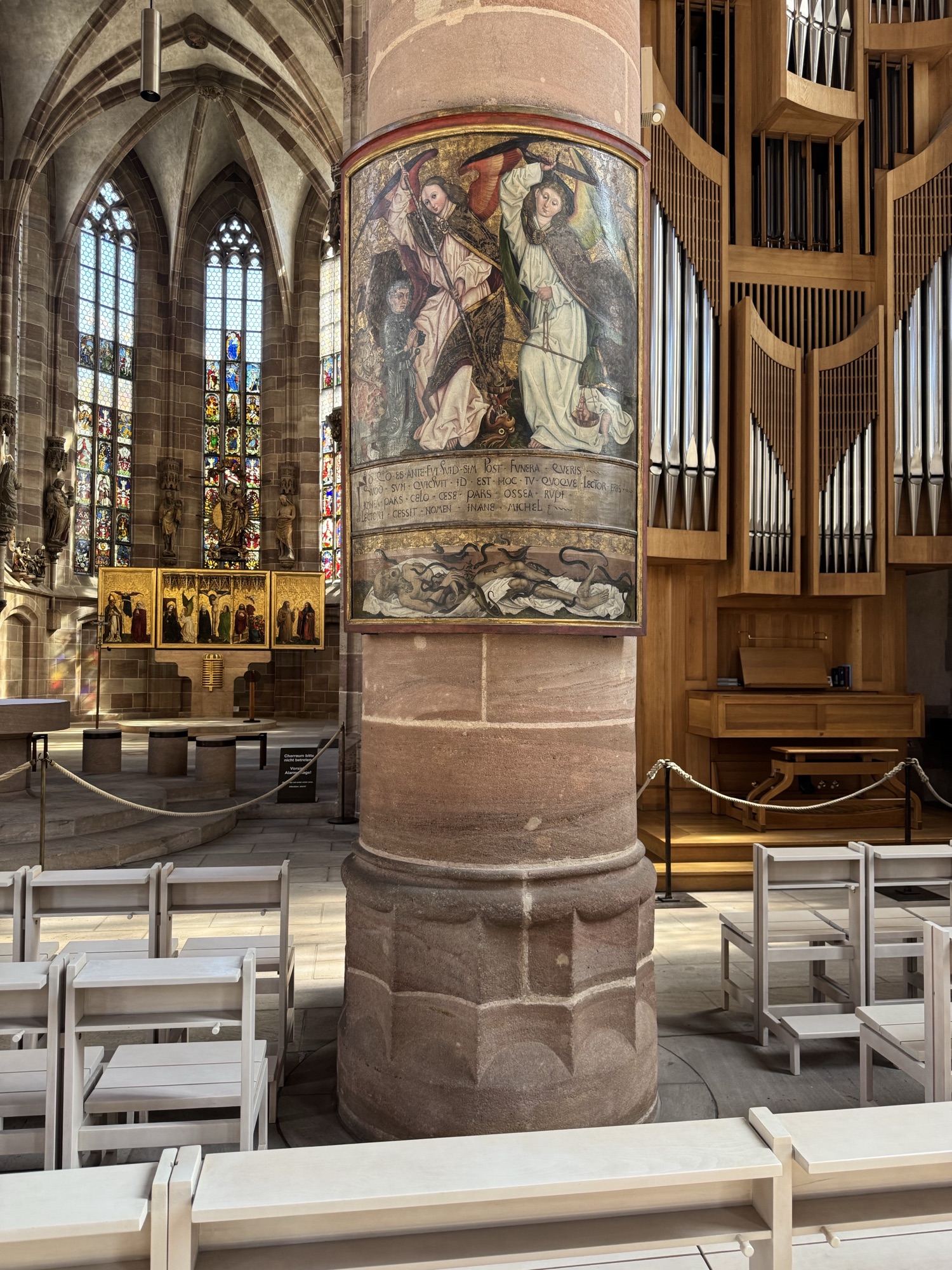
The Frauenkirche, although it is the biggest Catholic church in the city, is not a cathedral; the city belongs to the archdiocese in Bamberg. After the Reformation the Frauenkirche became Protestant; only around 1810 was it reconsecrated as a Roman Catholic parish church, and the interior redecorated in that style with mediaeval Roman Catholic-themed art from other locations.
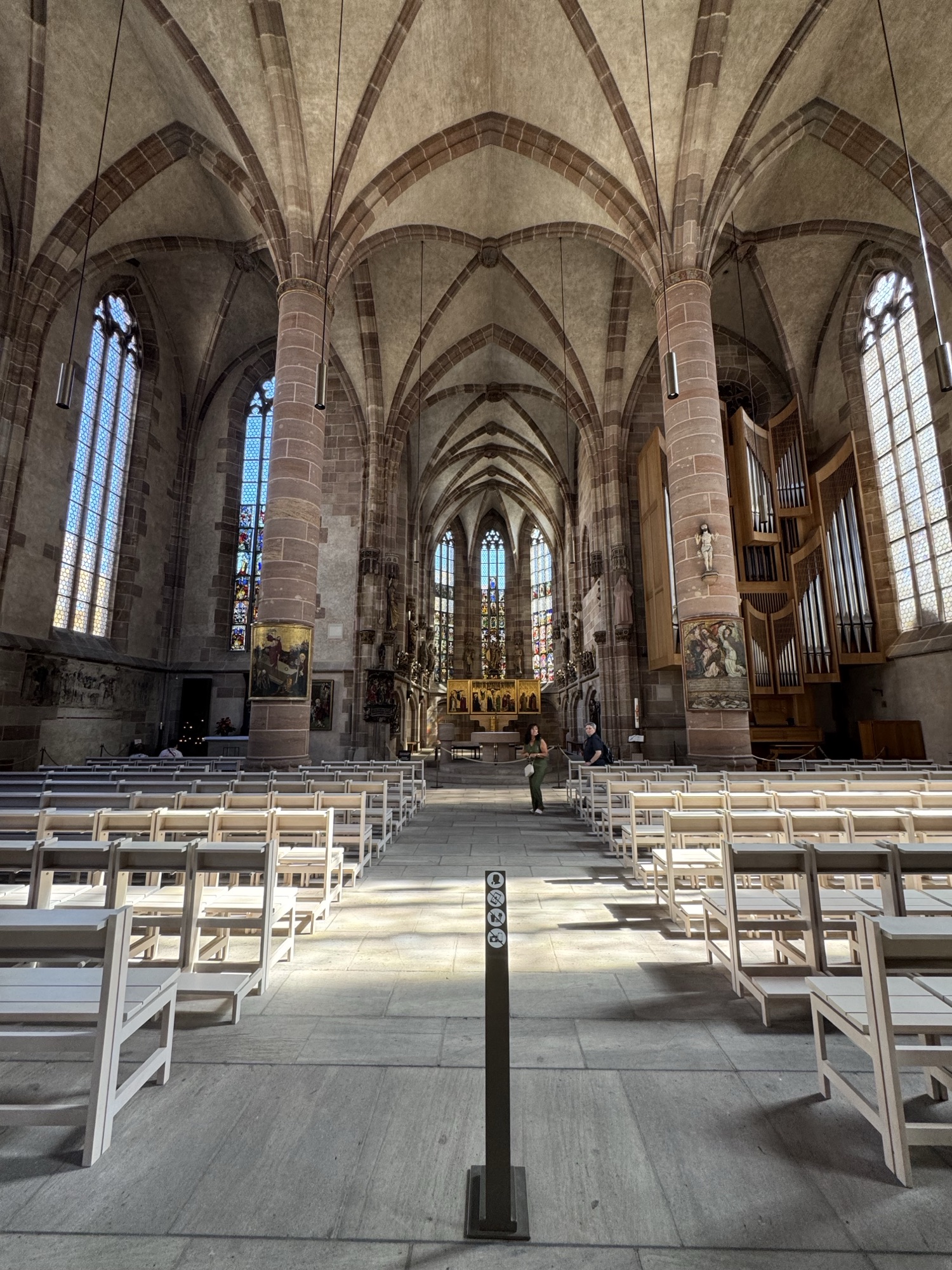
In fact, belying the huge impressive facade, the church interior is quite small.
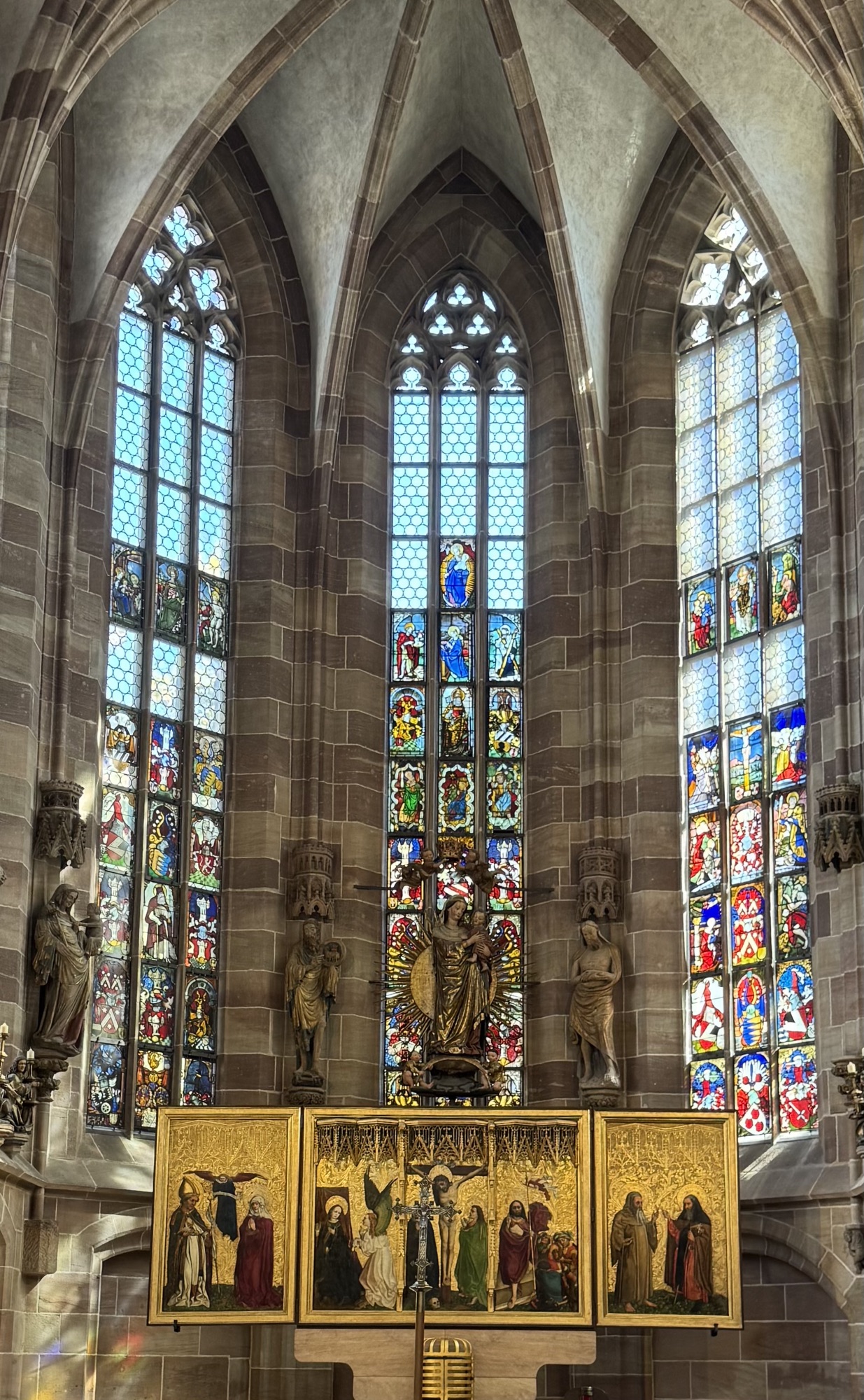
The stained glass in the choir dates from 1519, and depicts saints and the crests of nobility.
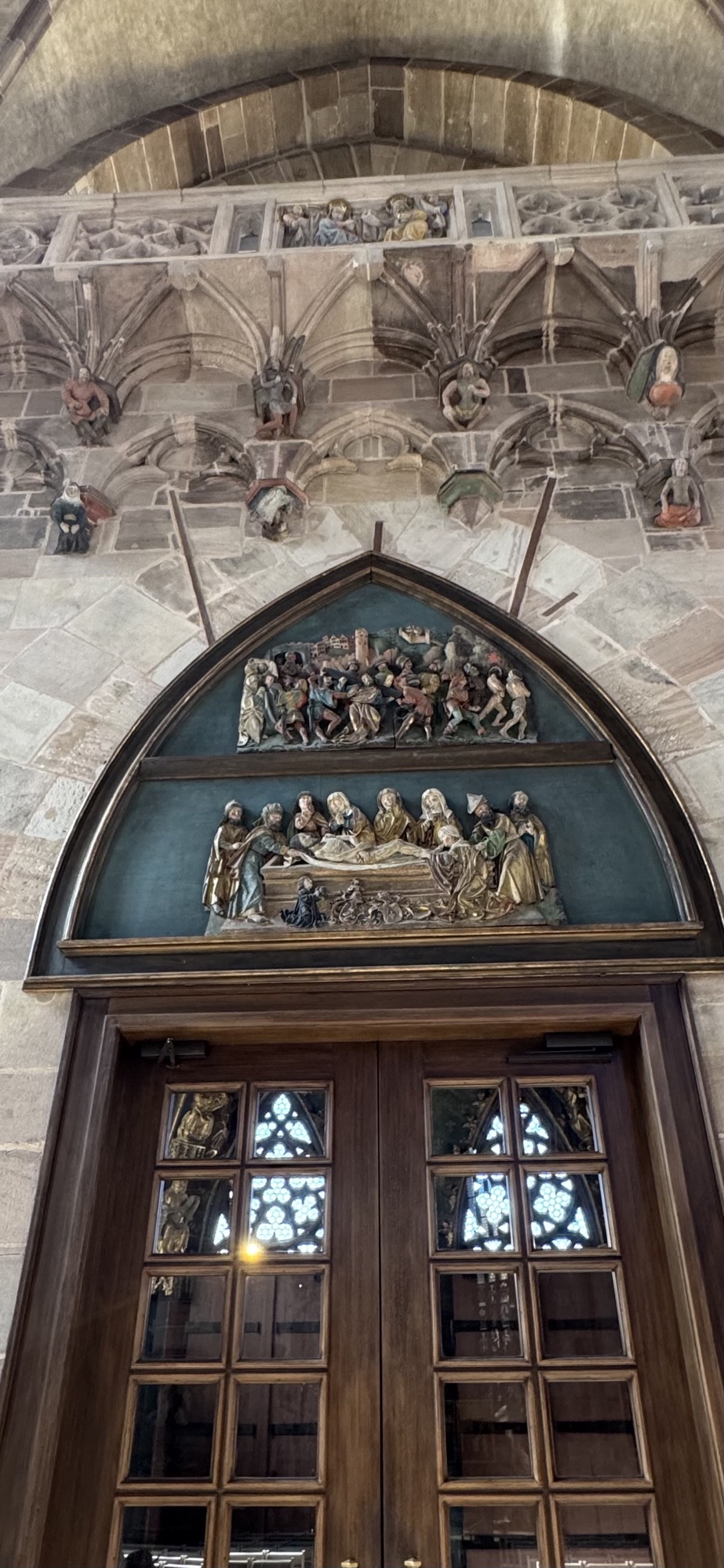
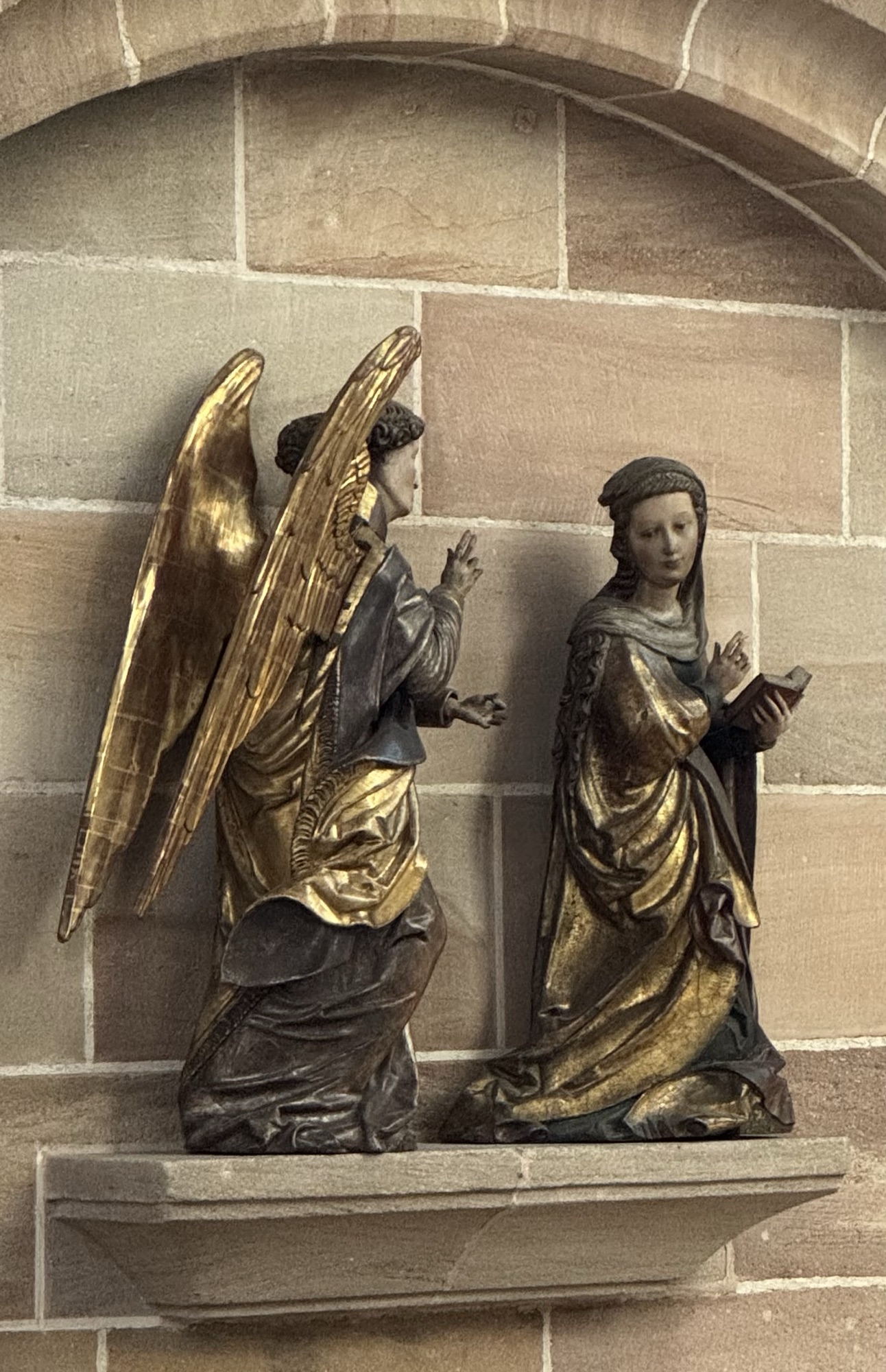
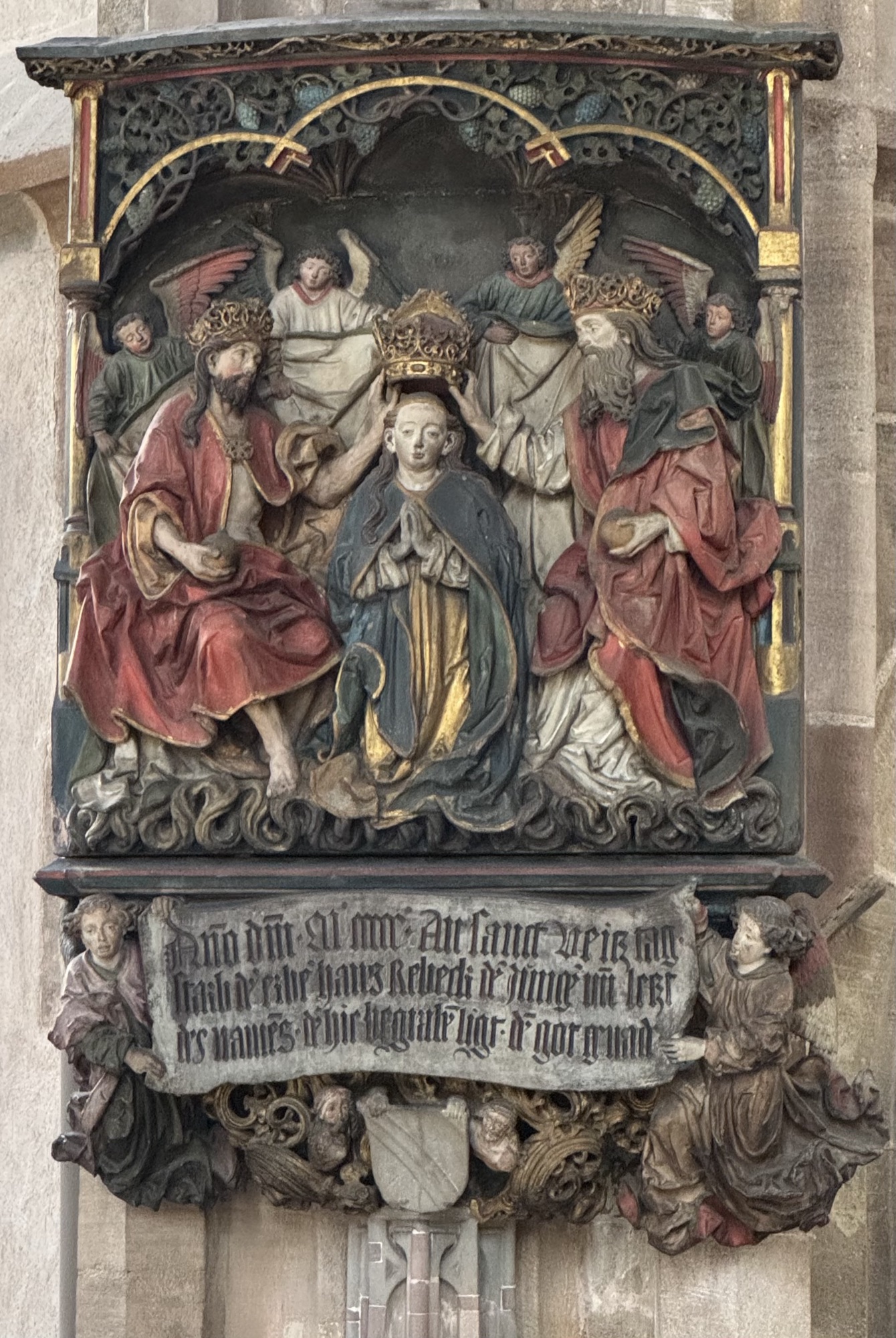
After we left the Frauenkirche (remembering we’re out of order and it was actually our last stop) we were physically and emotionally spent. 10,000 plus steps and too much of man’s inhumanity to their fellow man. It was time for a late lunch, but what we needed by this time was quite something different.
Saint Lorenz
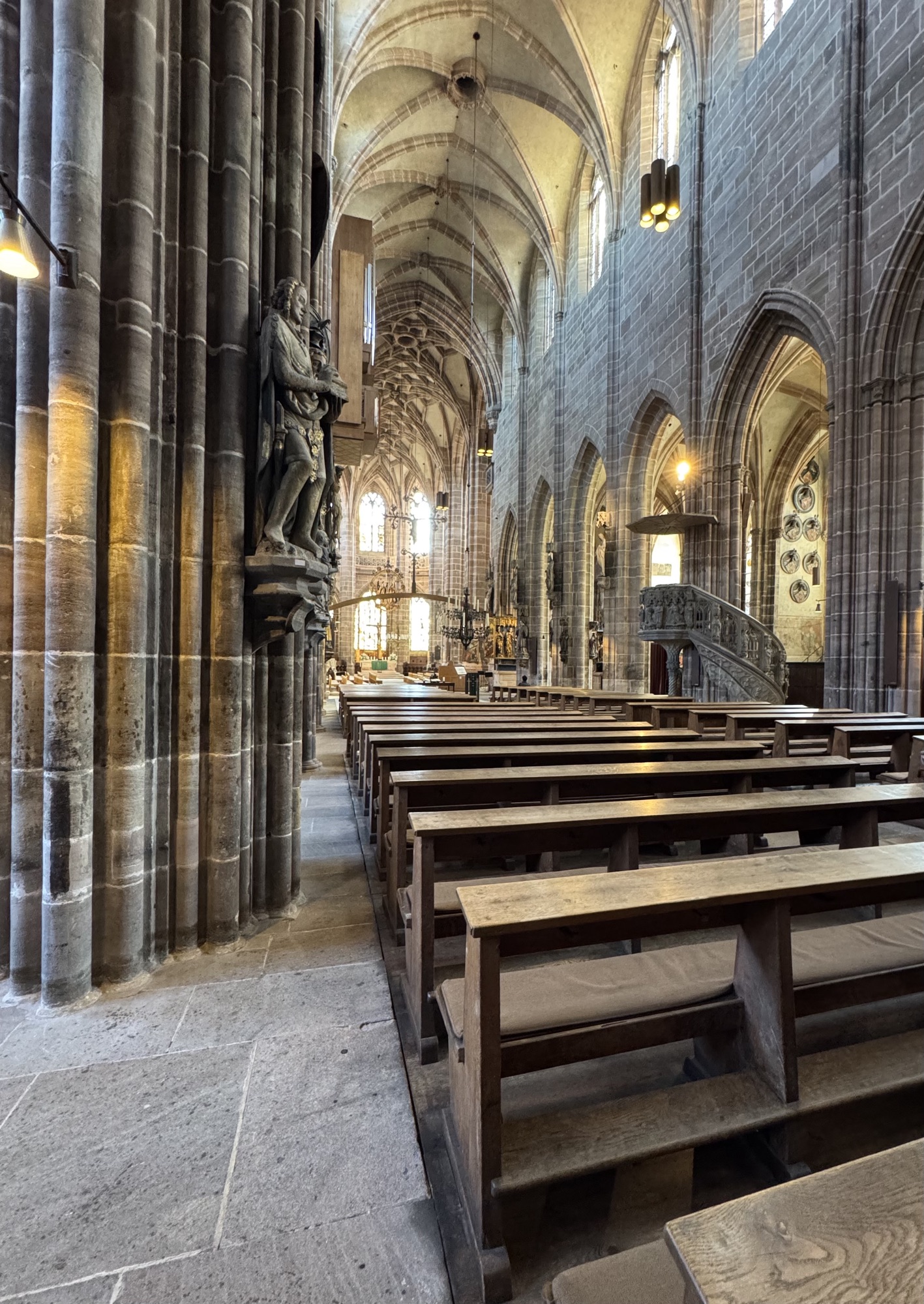
If a German city is large enough, there will be a Protestant equivalent of a Catholic cathedral, and often it started life as a Catholic cathedral prior to the Reformation in 1517 (when Martin Luther Martin Luther nailed his 95 Theses to the Castle Church door in Wittenberg to protest church abuses like selling indulgences).
Here the huge Protestant church is St Lorenz Evangelical (a word which in Germany denotes Lutheran), but despite its size it was never the seat of a bishop.
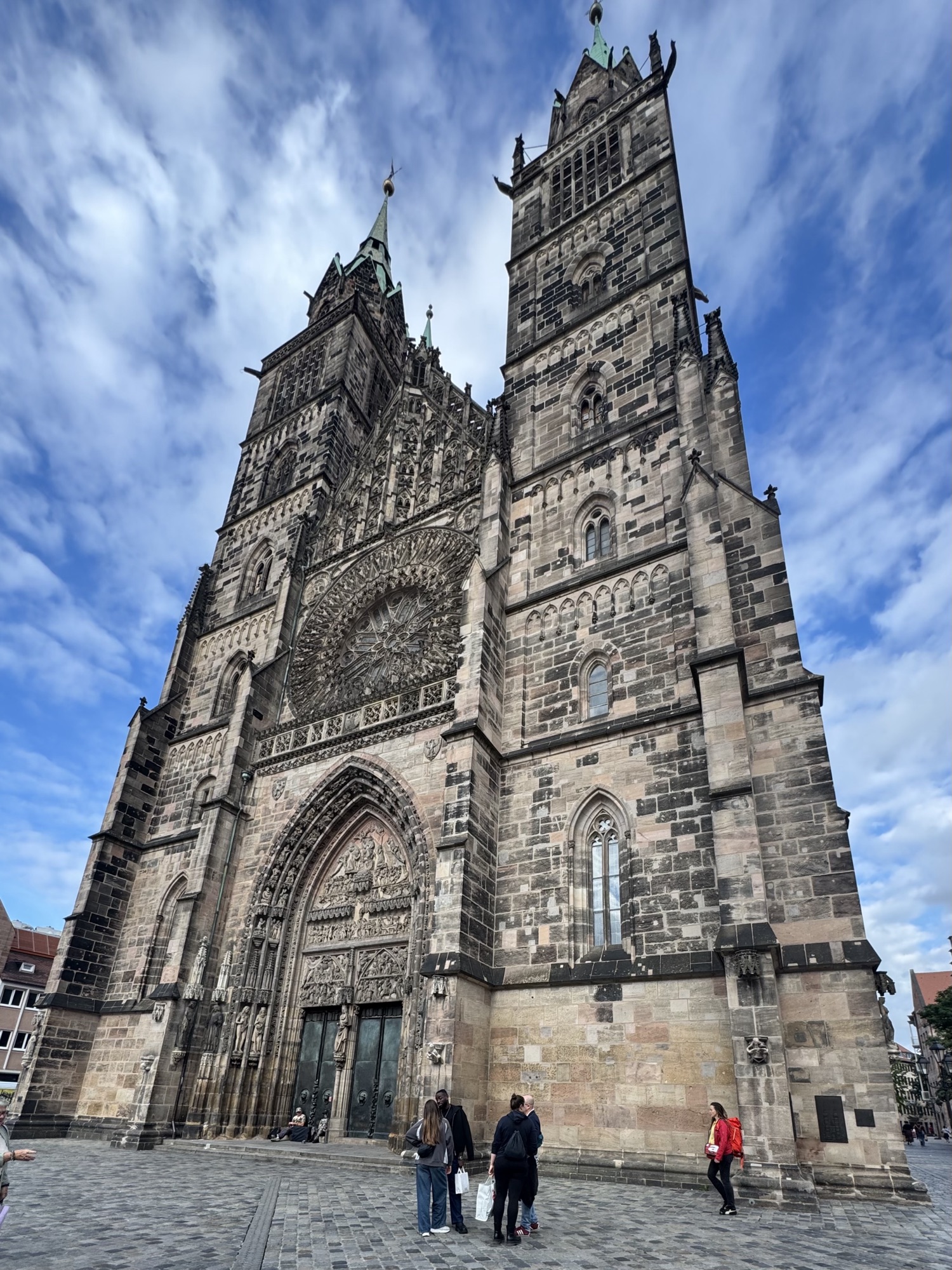
Like most of its compatriots, St Lorenz started life as a Catholic Church and was reconsecrated as Lutheran.
The original building was begun in 1250CE and completed in 1477.
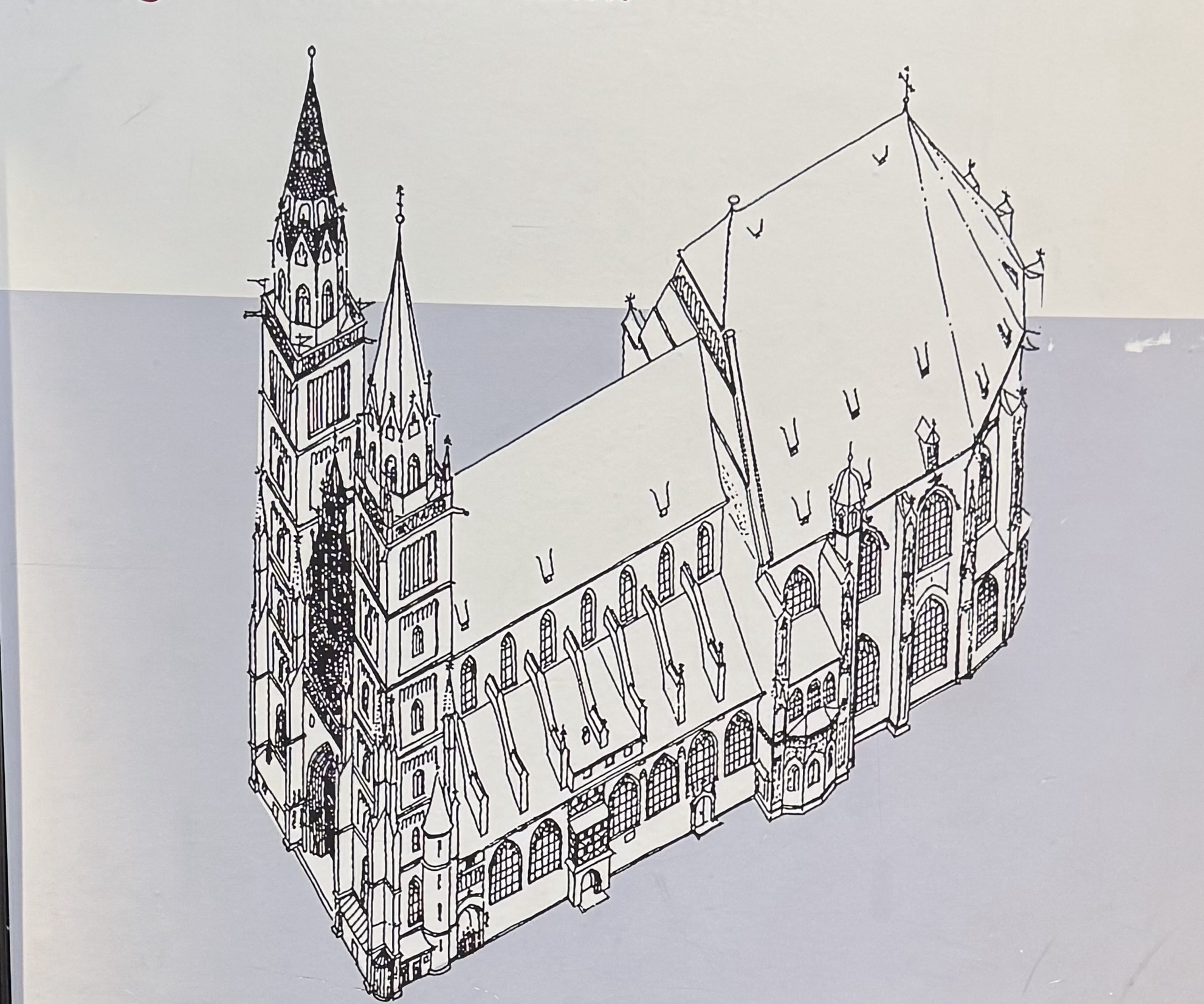
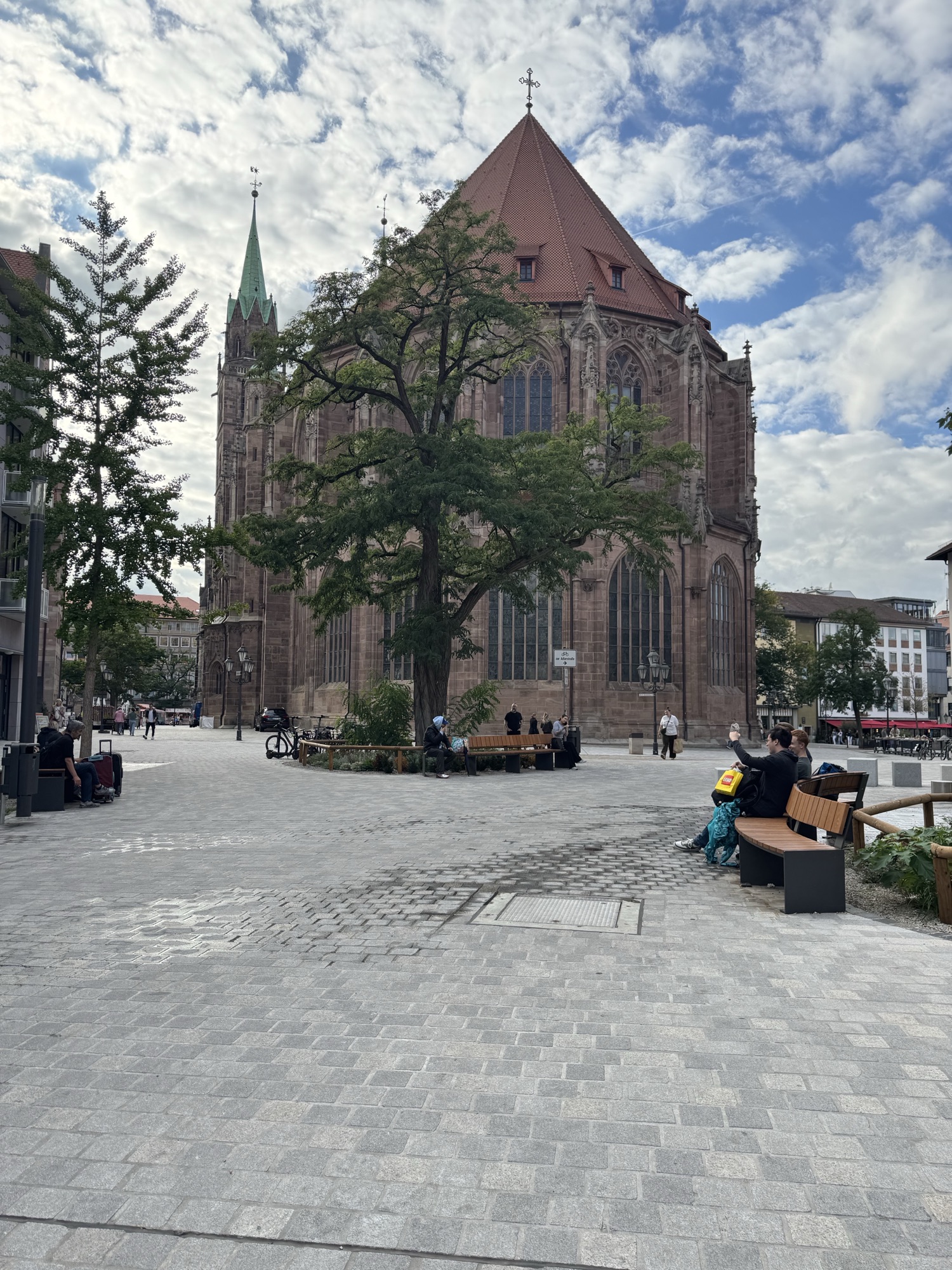
It’s impossible, short of using a drone, to get the entire church into one photo, so I took a picture of a drawing of the church, and then a few different external angles. While it is nowhere near as large as the Kölner Dom, it is nonetheless huge.
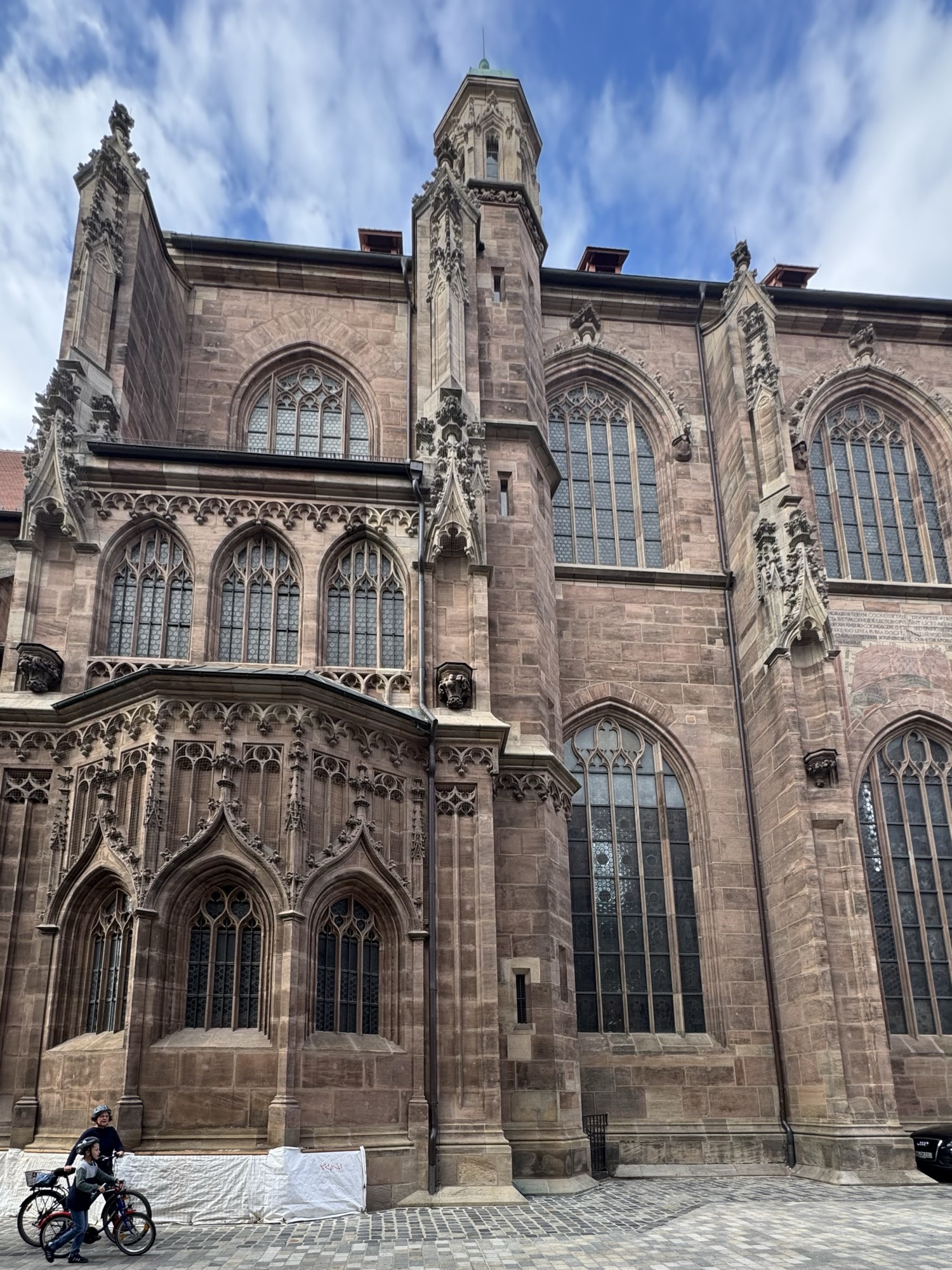
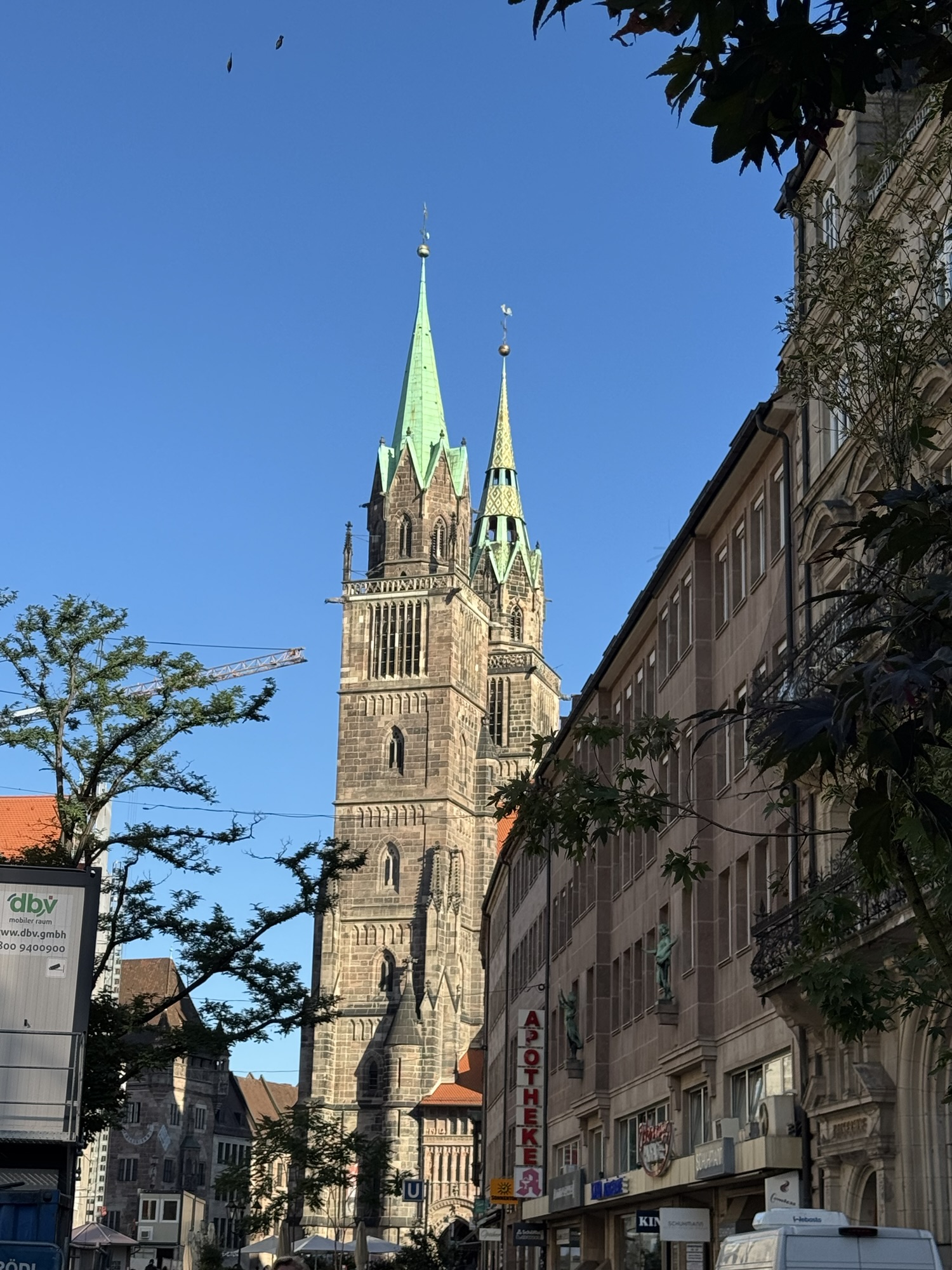
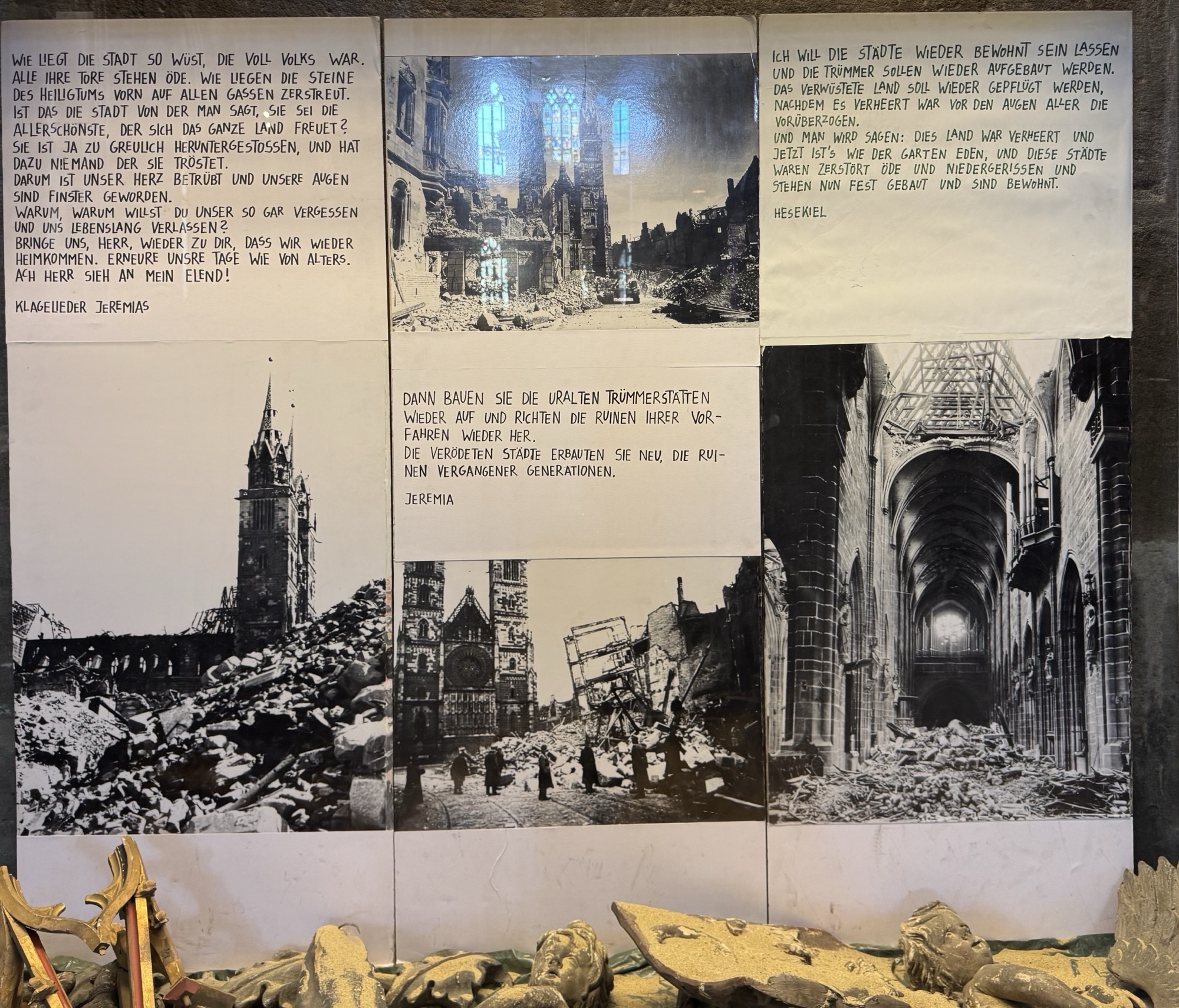
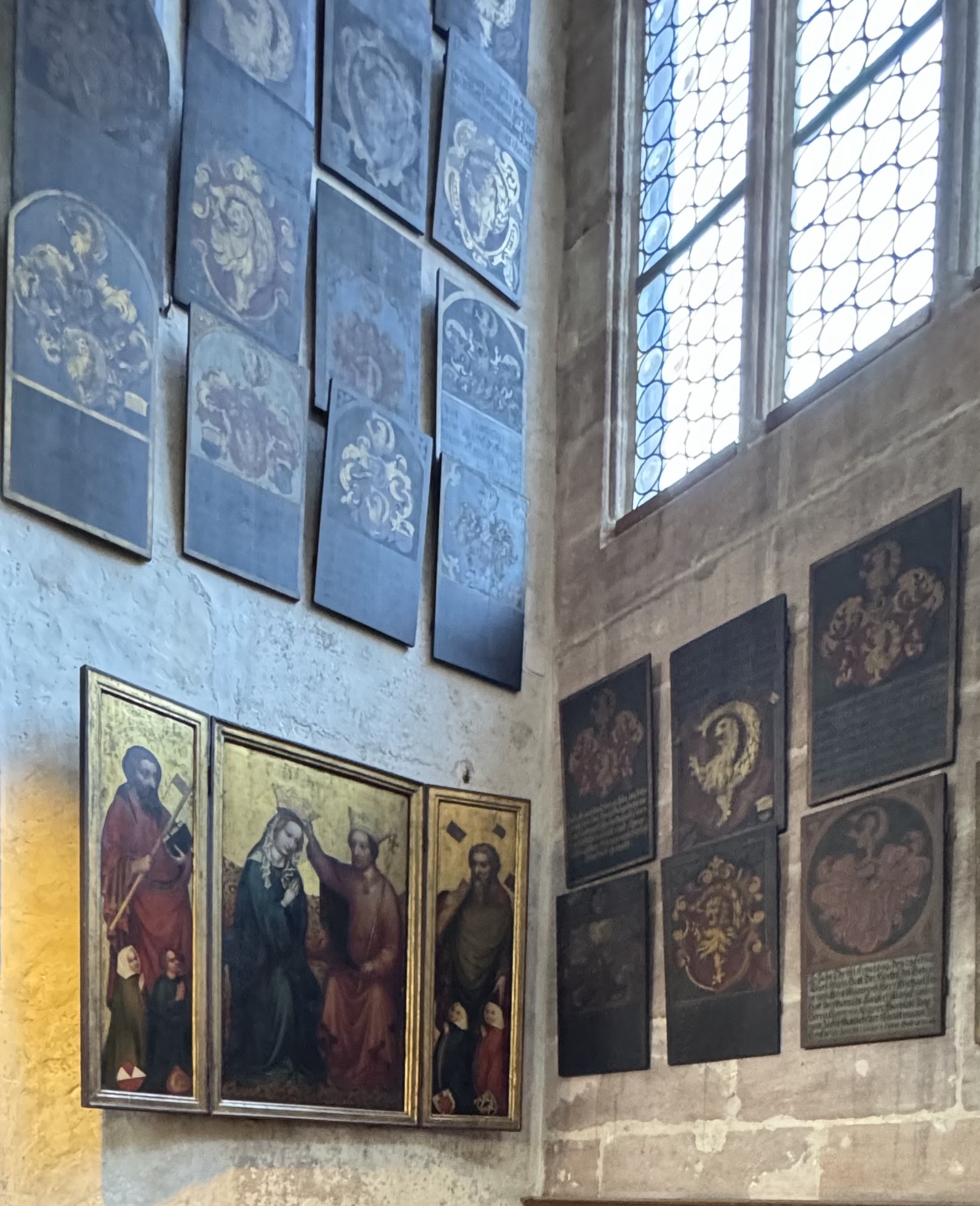
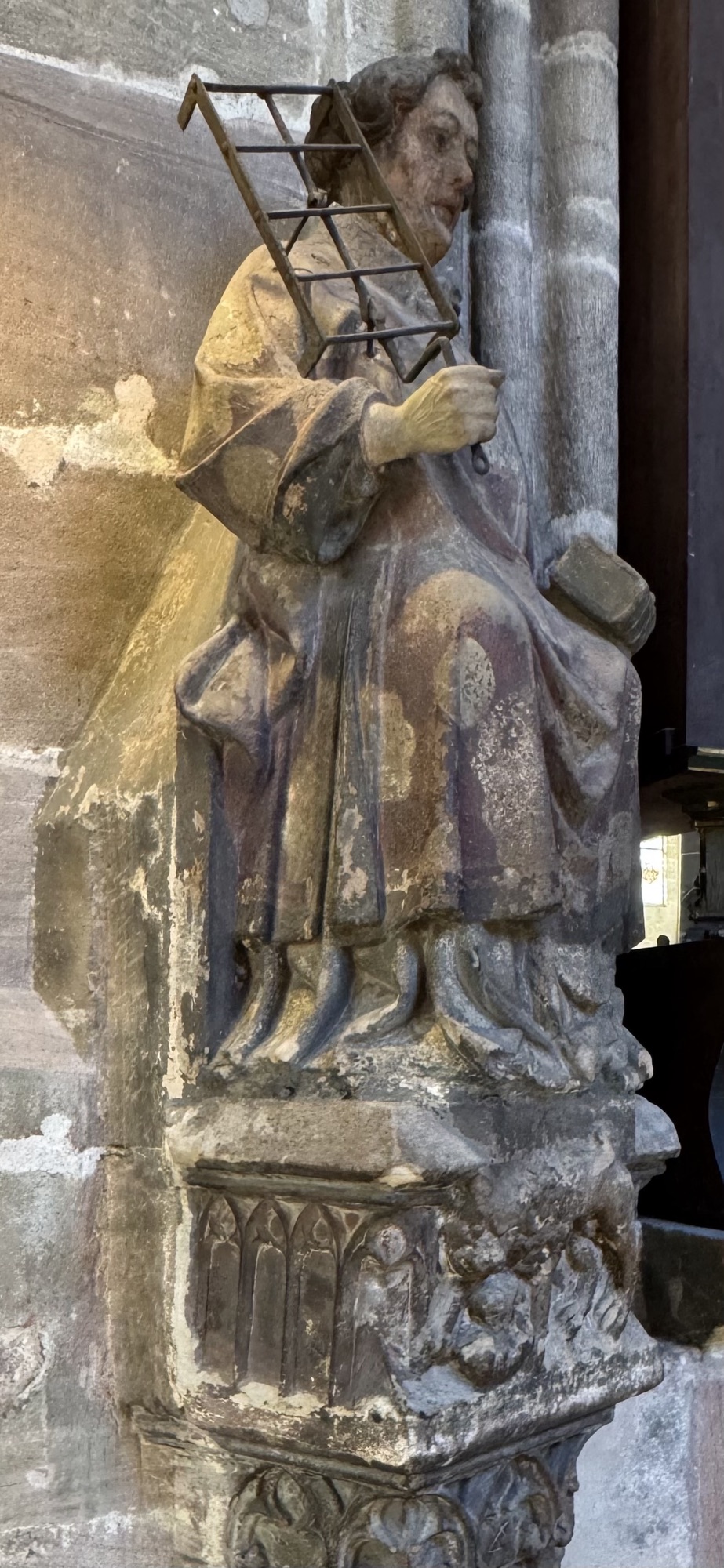
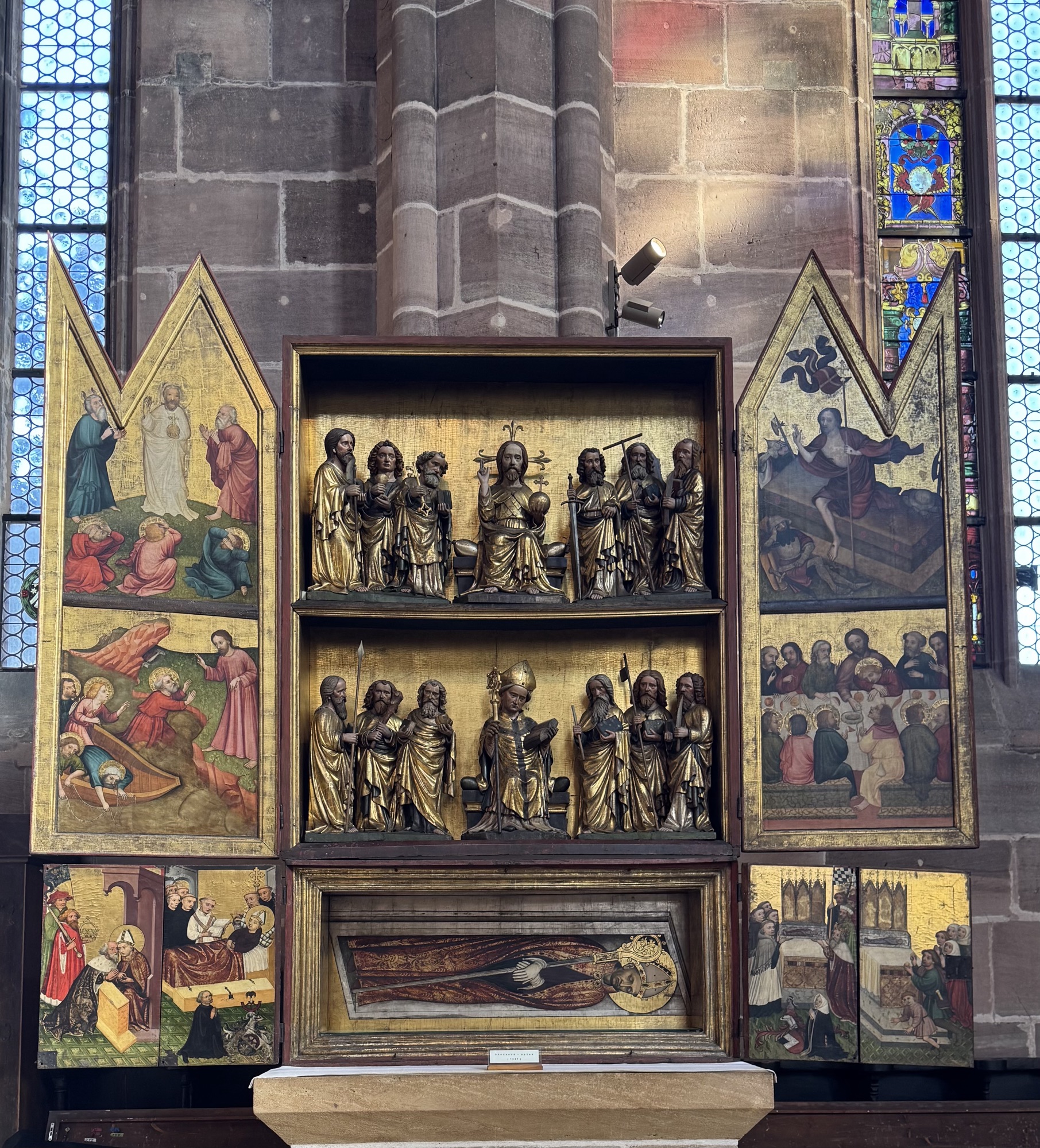
While most Catholic Churches had their icons destroyed during the Reformation’s iconoclasm, St Lorenz’s interior survived almost completely intact until WWII. That was apparently because although St. Lorenz was one of the first churches in Germany to become Lutheran (1525CE), the wealthy citizens of Nuremberg wanted to preserve the memory of their ancestors and so refused the removal of the donated works of art. Money, as always, talks.
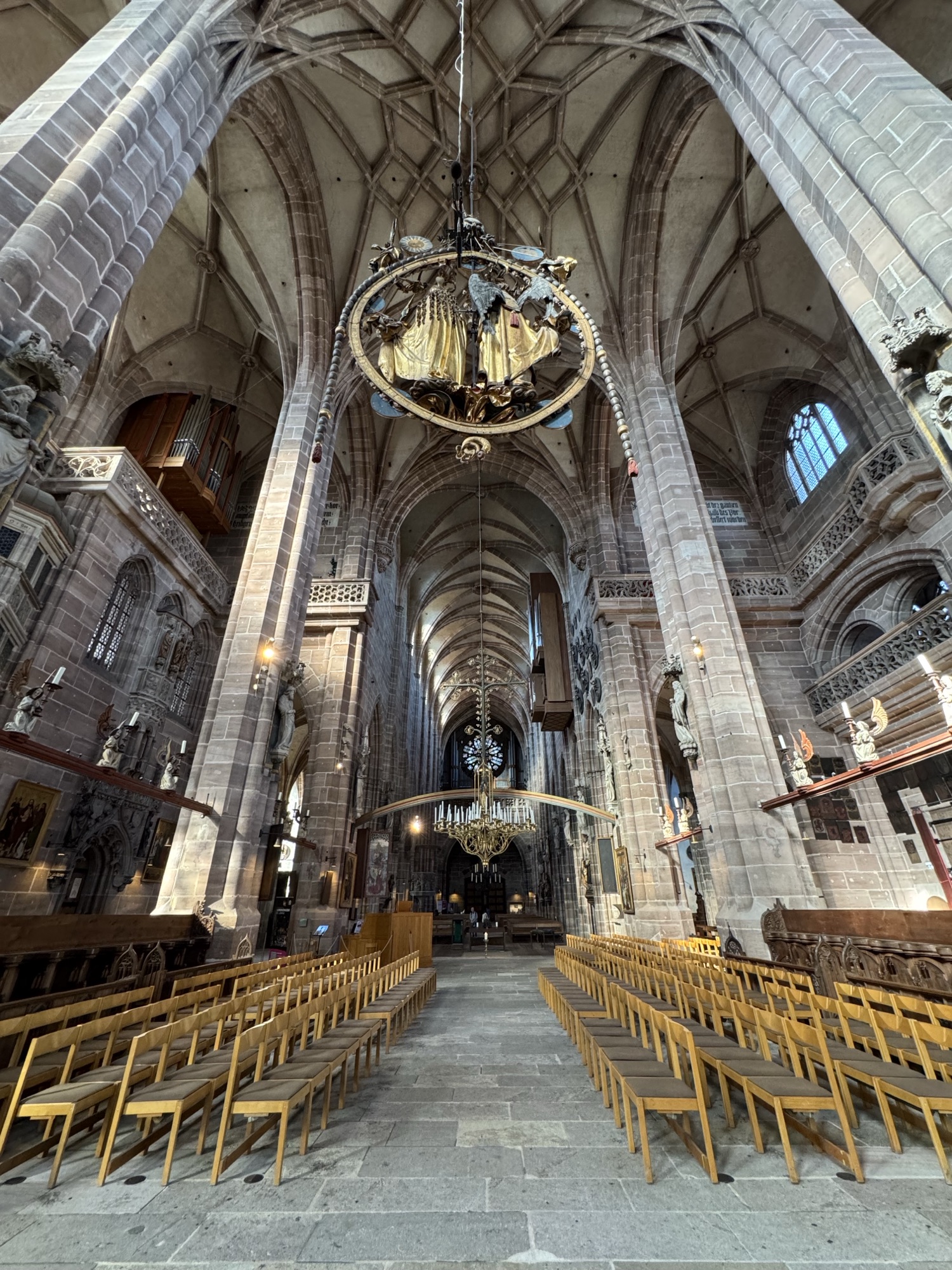
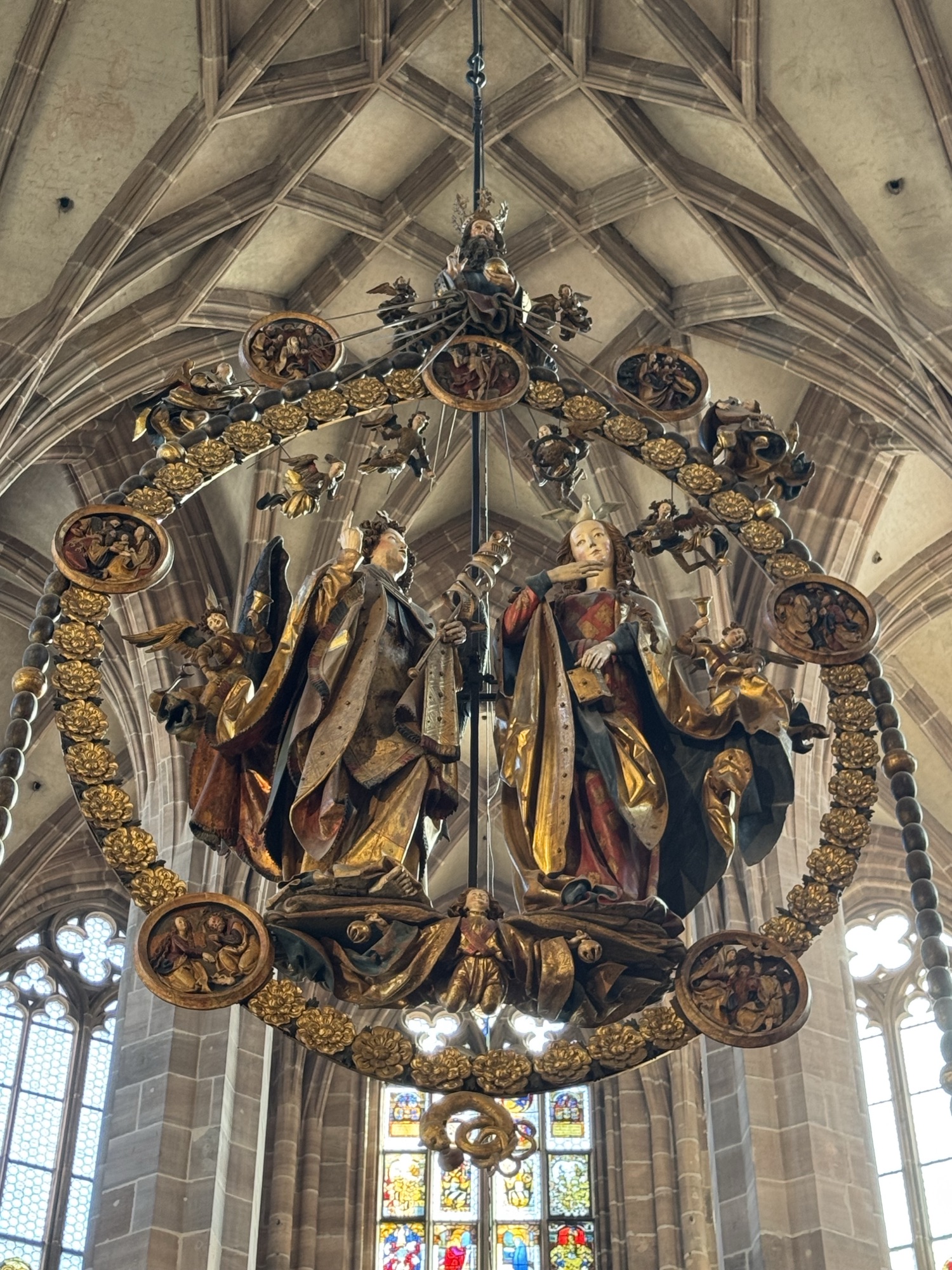
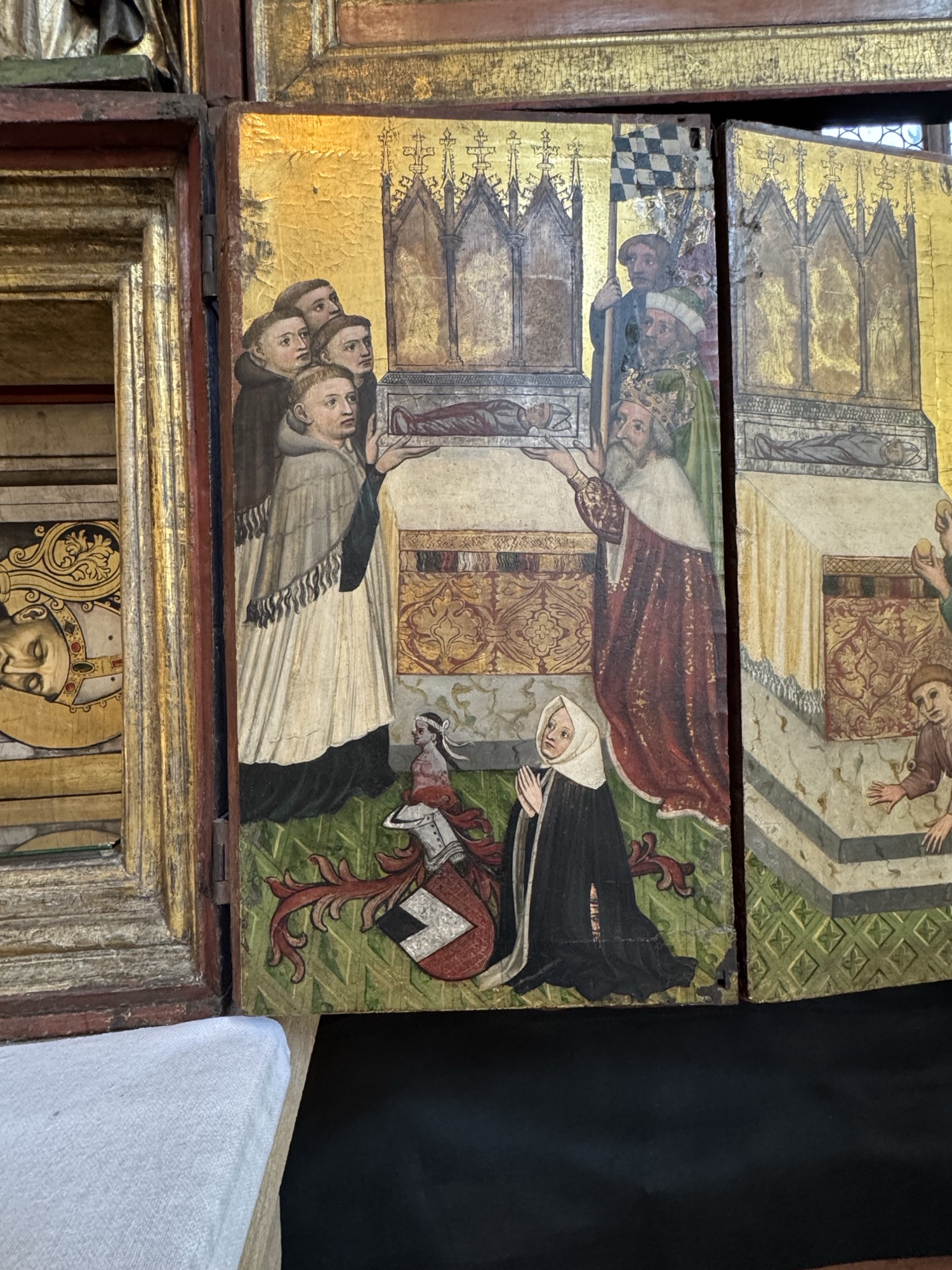
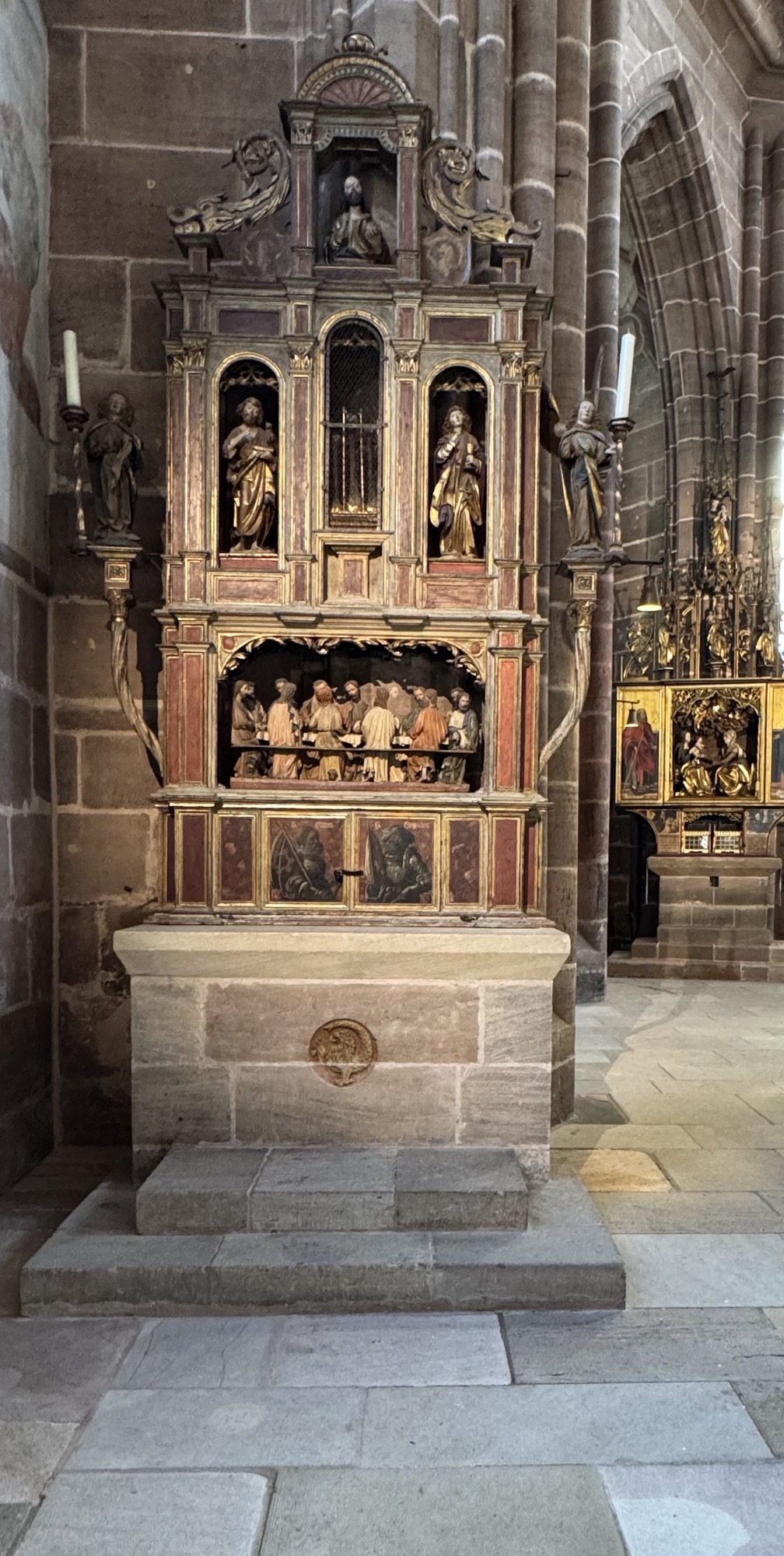
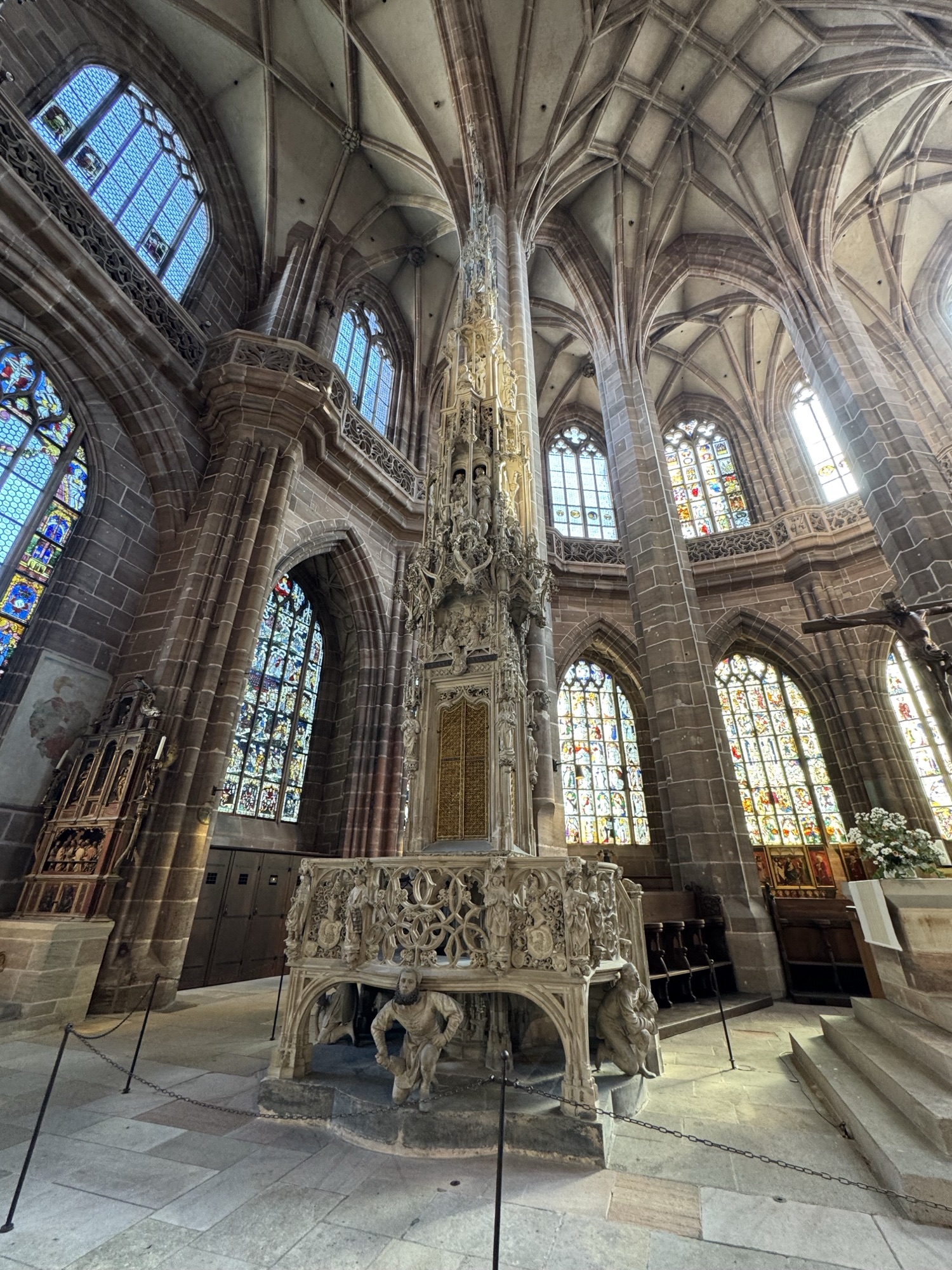
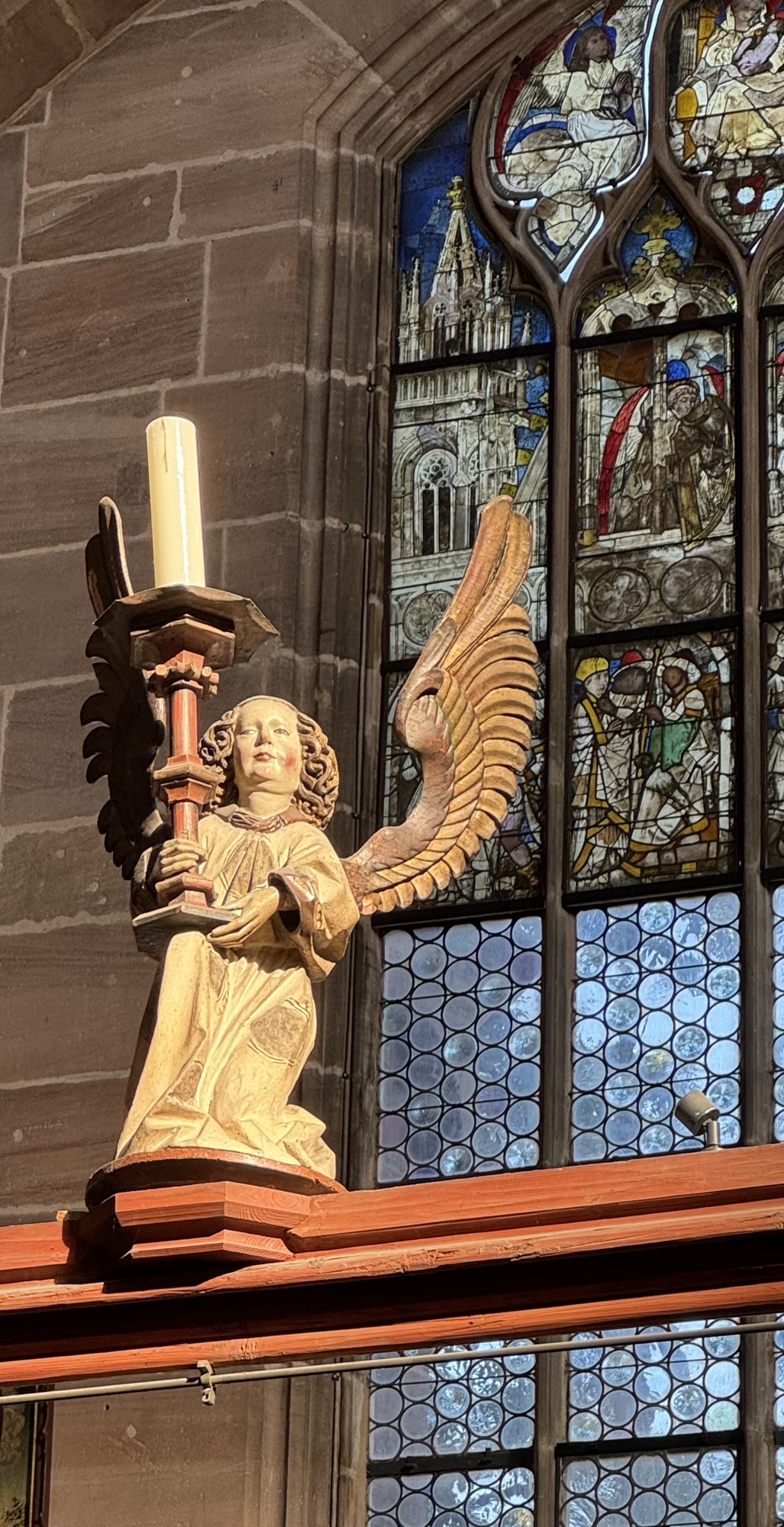
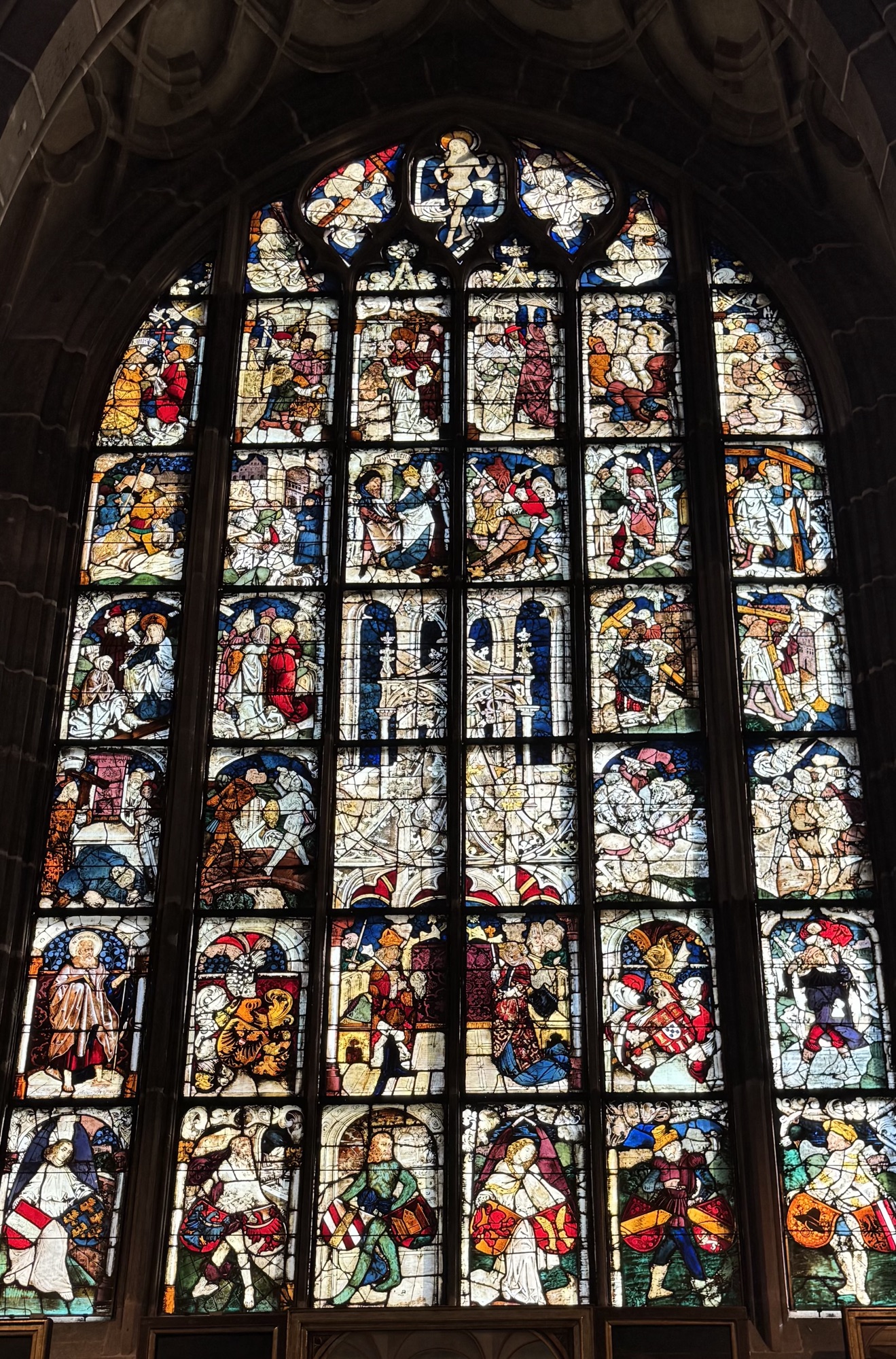
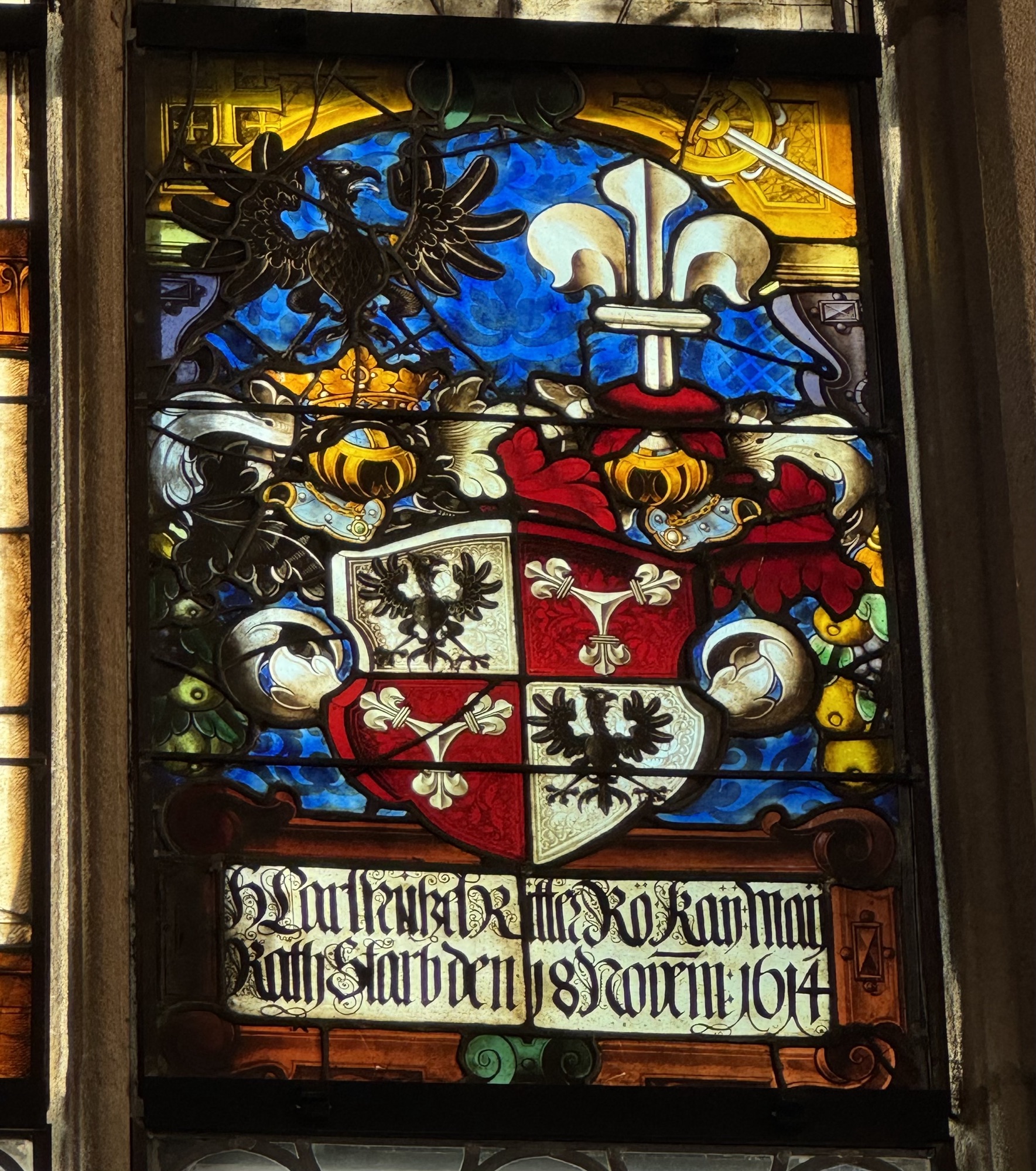
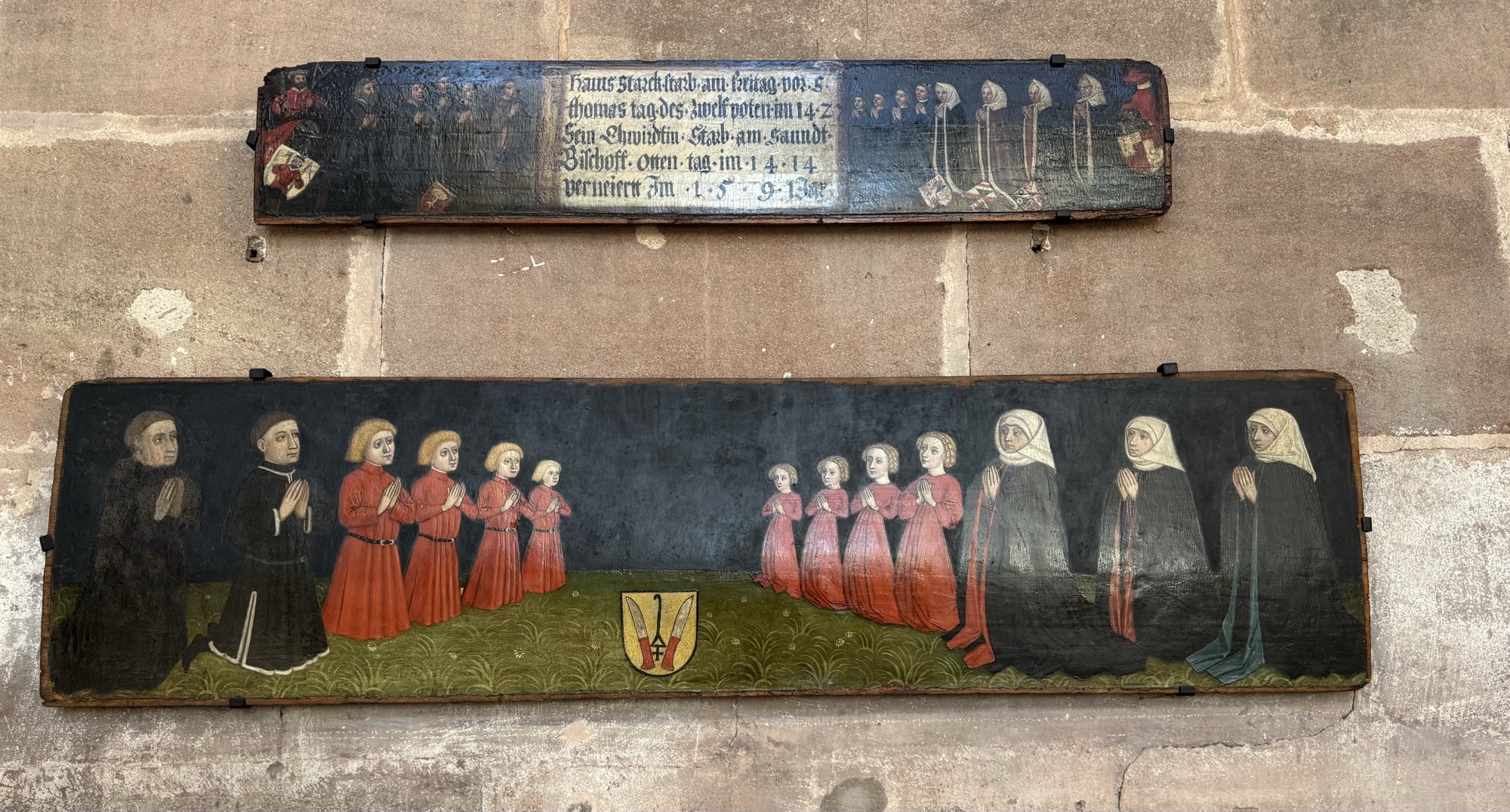
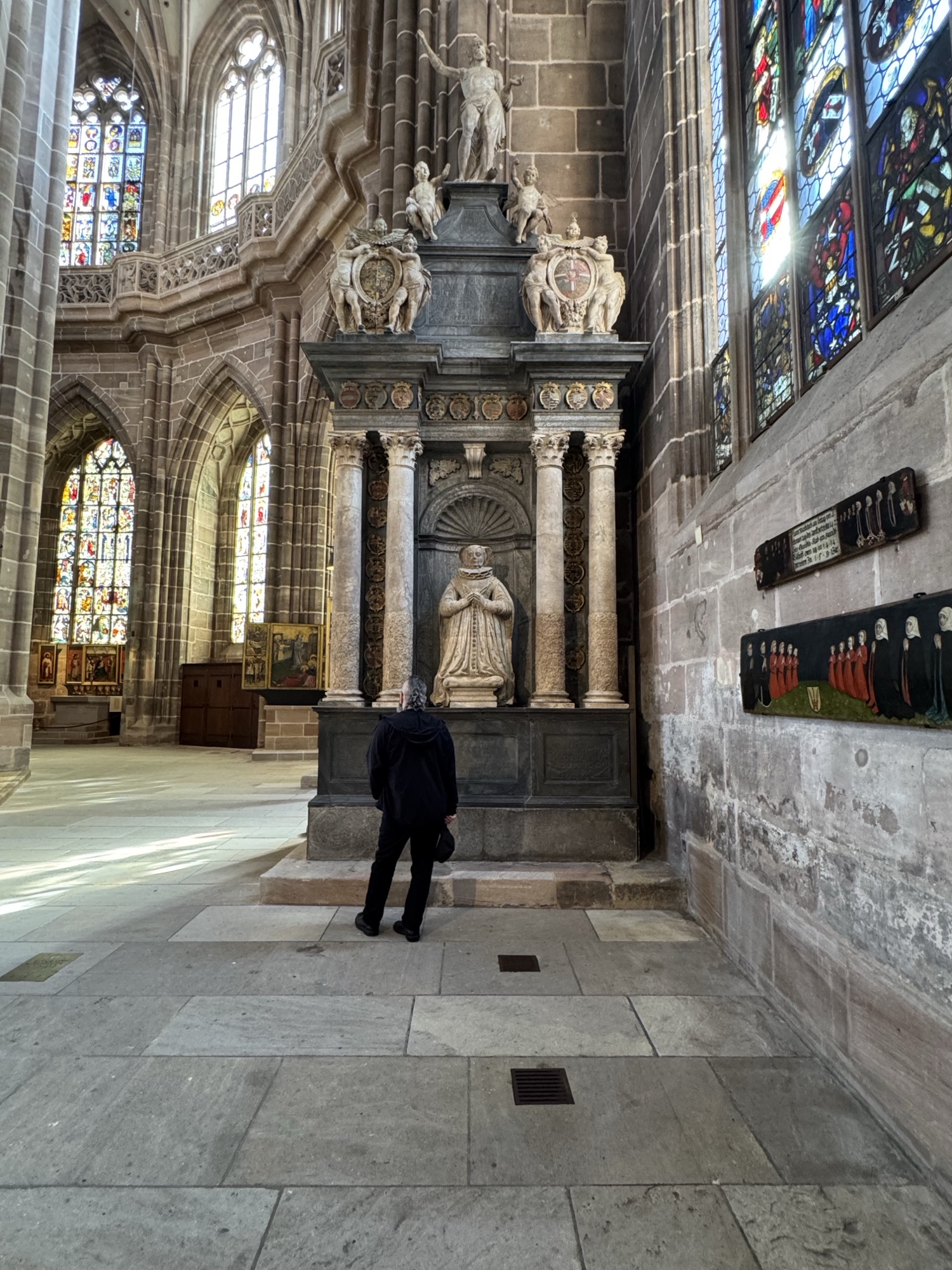
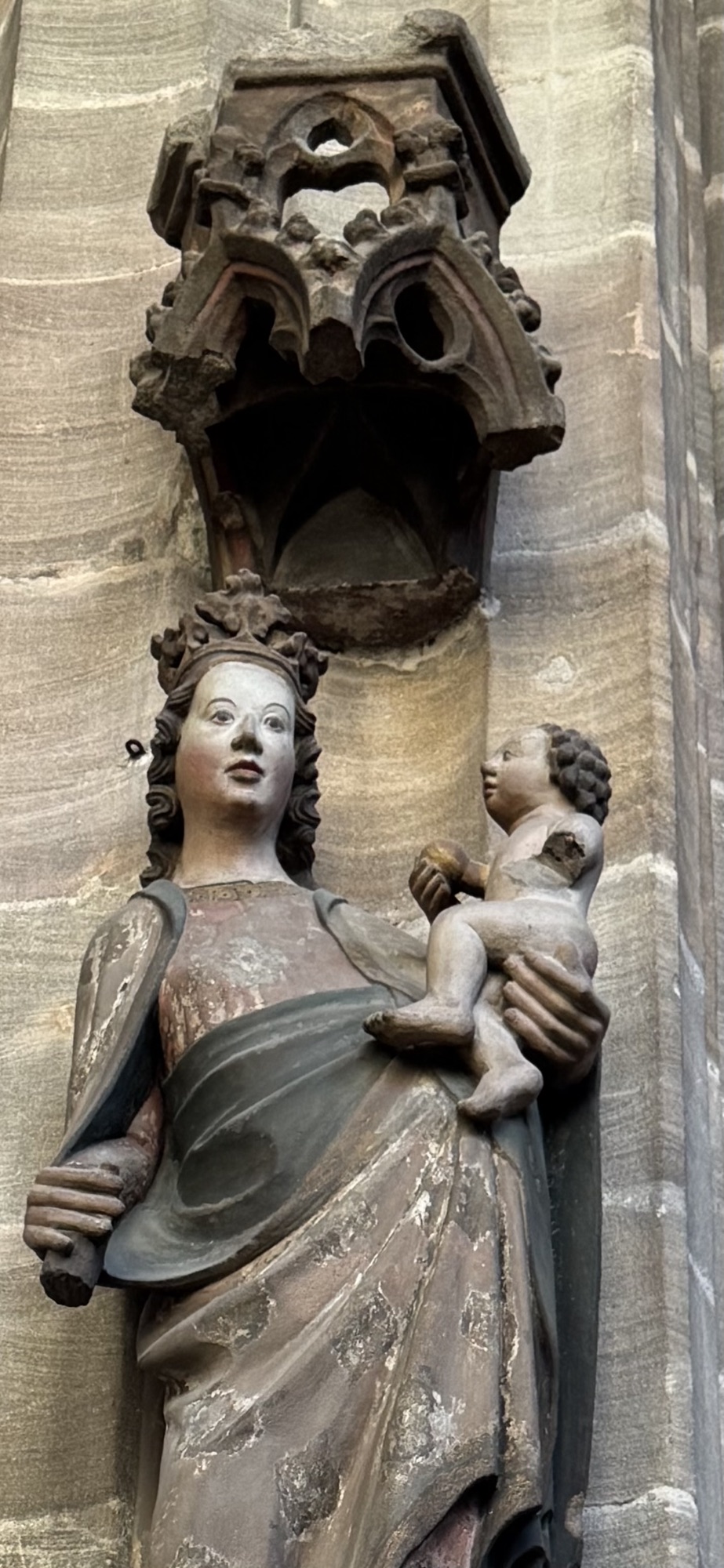
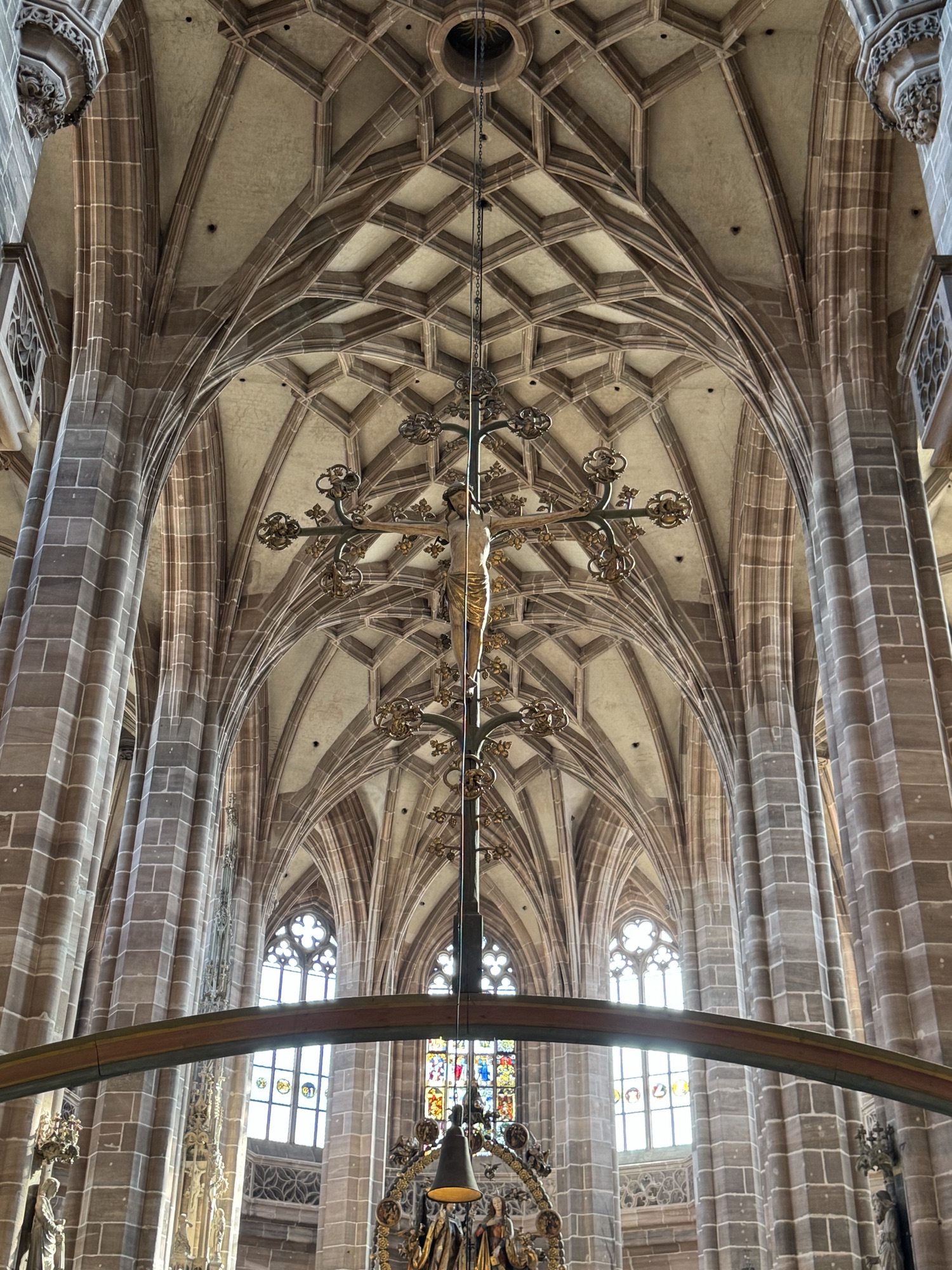
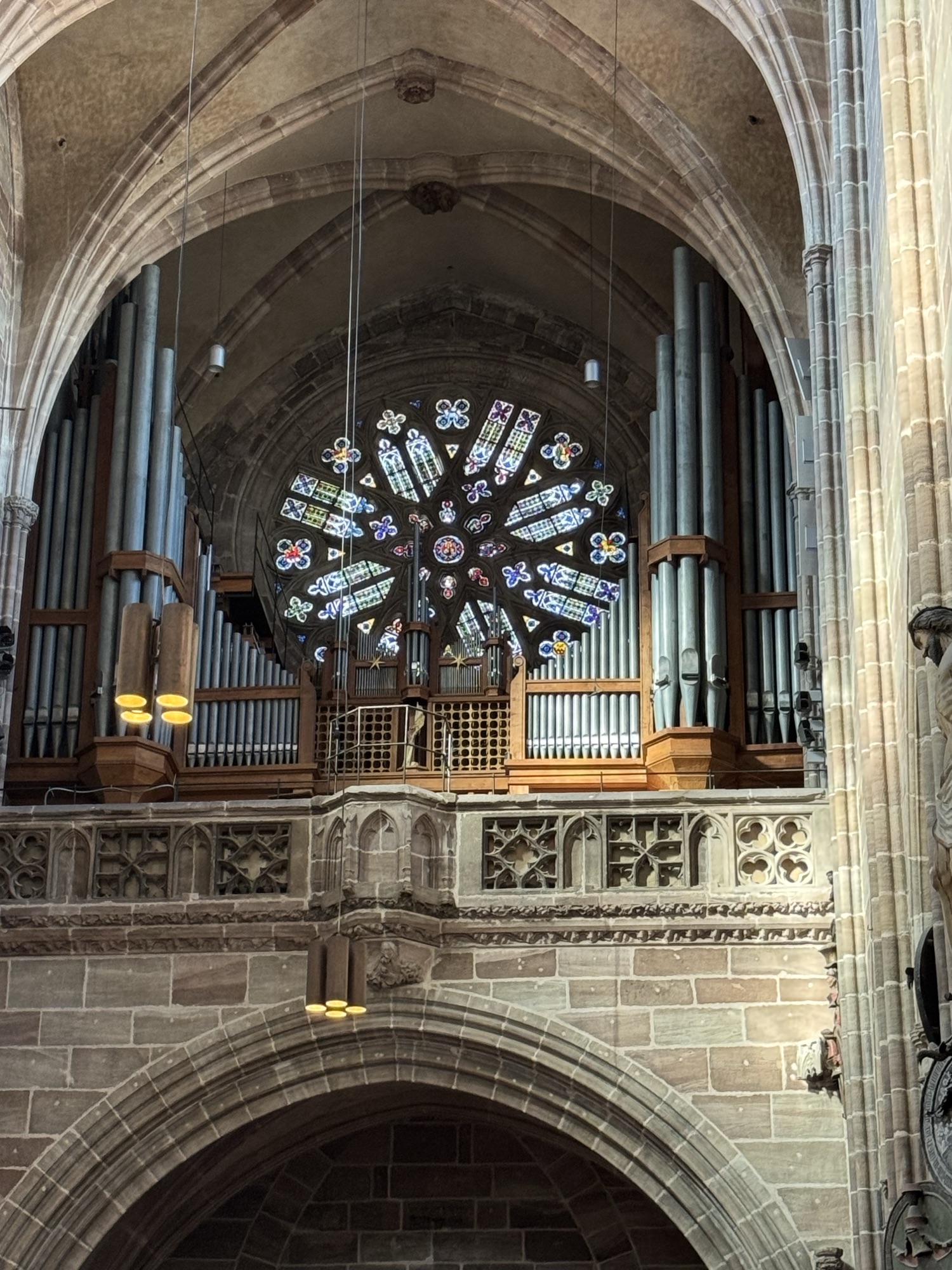
While I didn’t specifically notice it, son #1 noted the painting referred to as the “Murder of the Young Children in Bethlehem” that formed part of the Altar of the Three Kings, depicting a racially stereotyped Jewish man slaughtering puzzlingly white babies, presumably at the behest of King Herod. Antisemitism was obviously not only accepted but an integral part of mediaeval Christianity.
Saint Sebald’s
Saint Sebald (Sebalduskirche) is the city’s oldest church, built in 1215CE. Unlike the Frauenkirche and St Lorenz, which are both Gothic architecture, Saint Sebald is Late Romanesque.
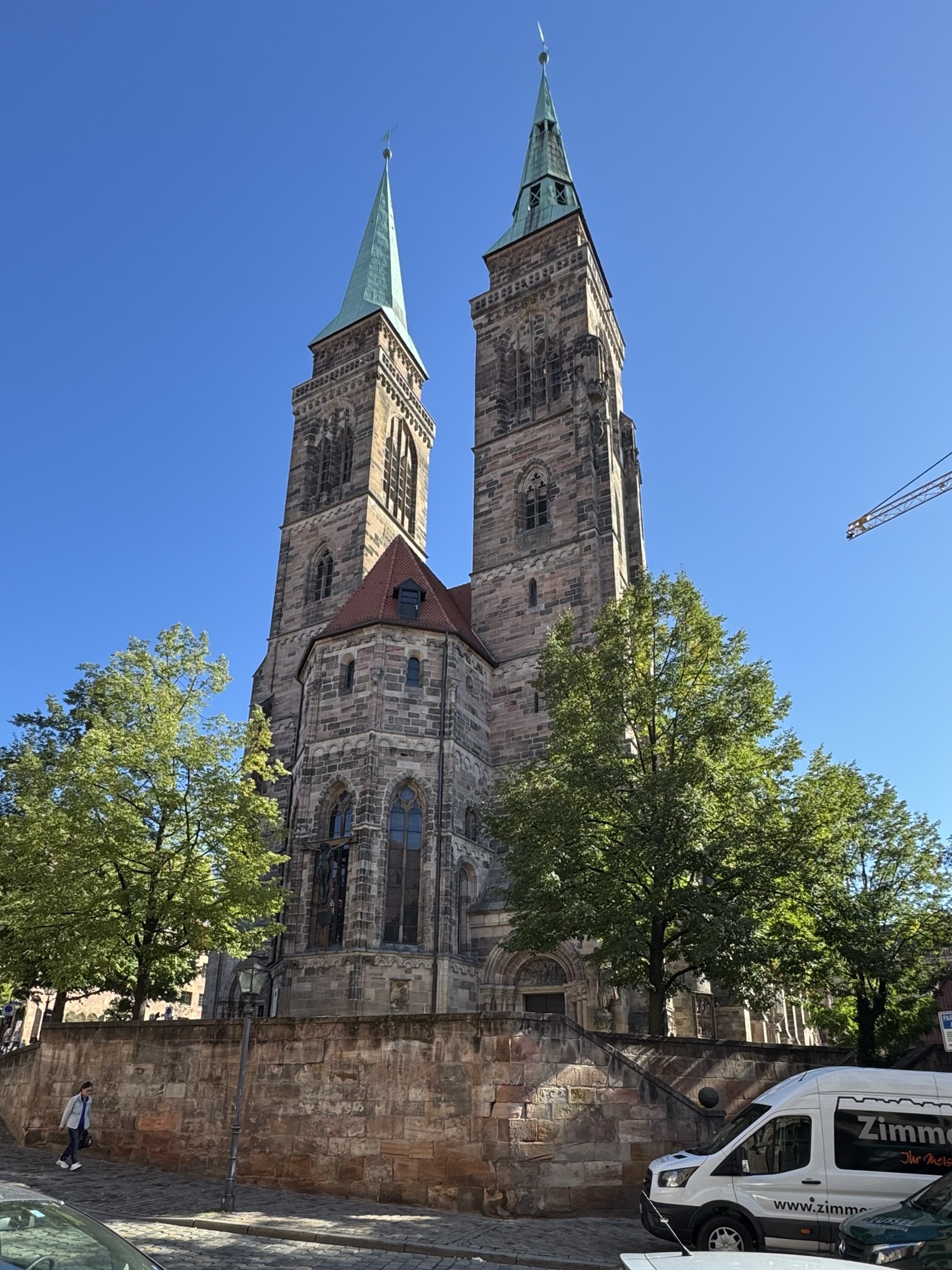
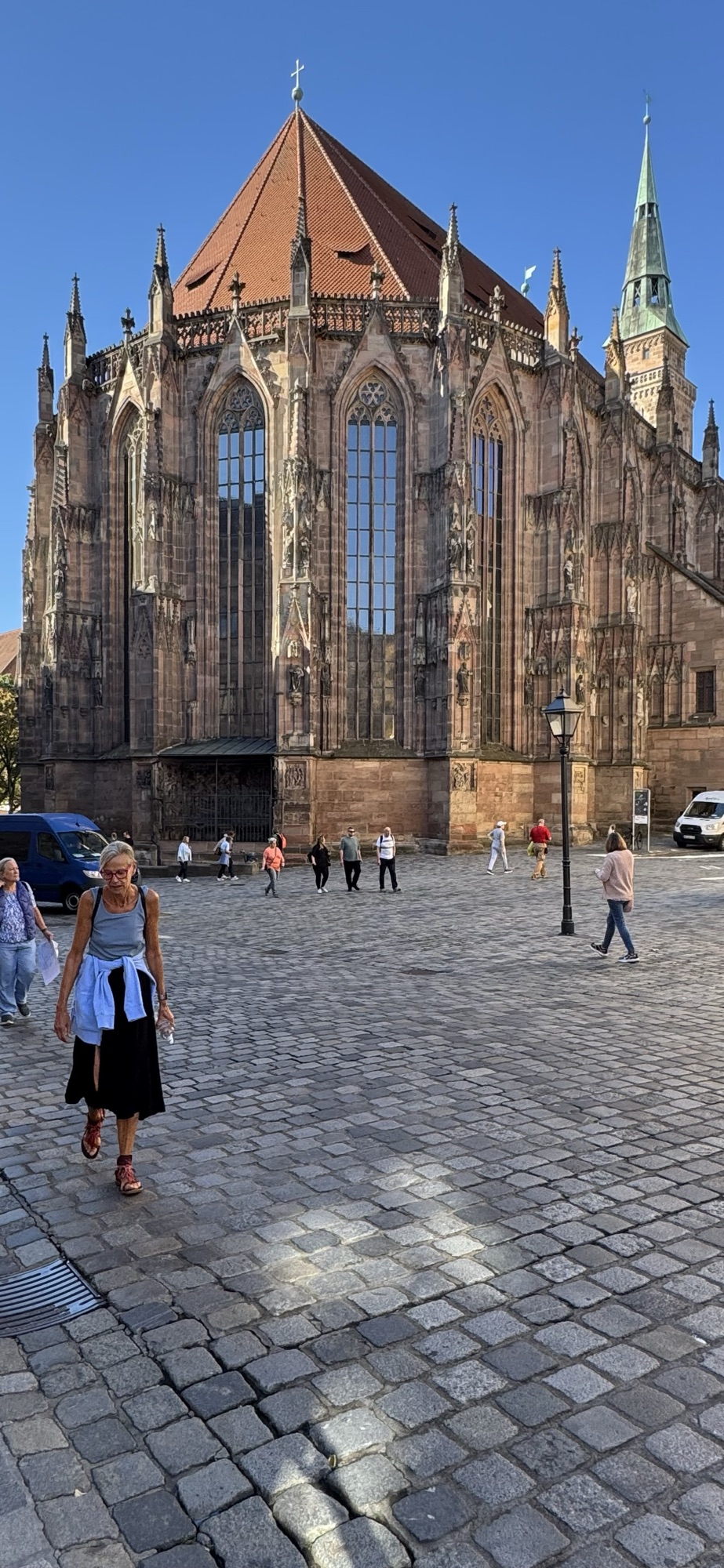
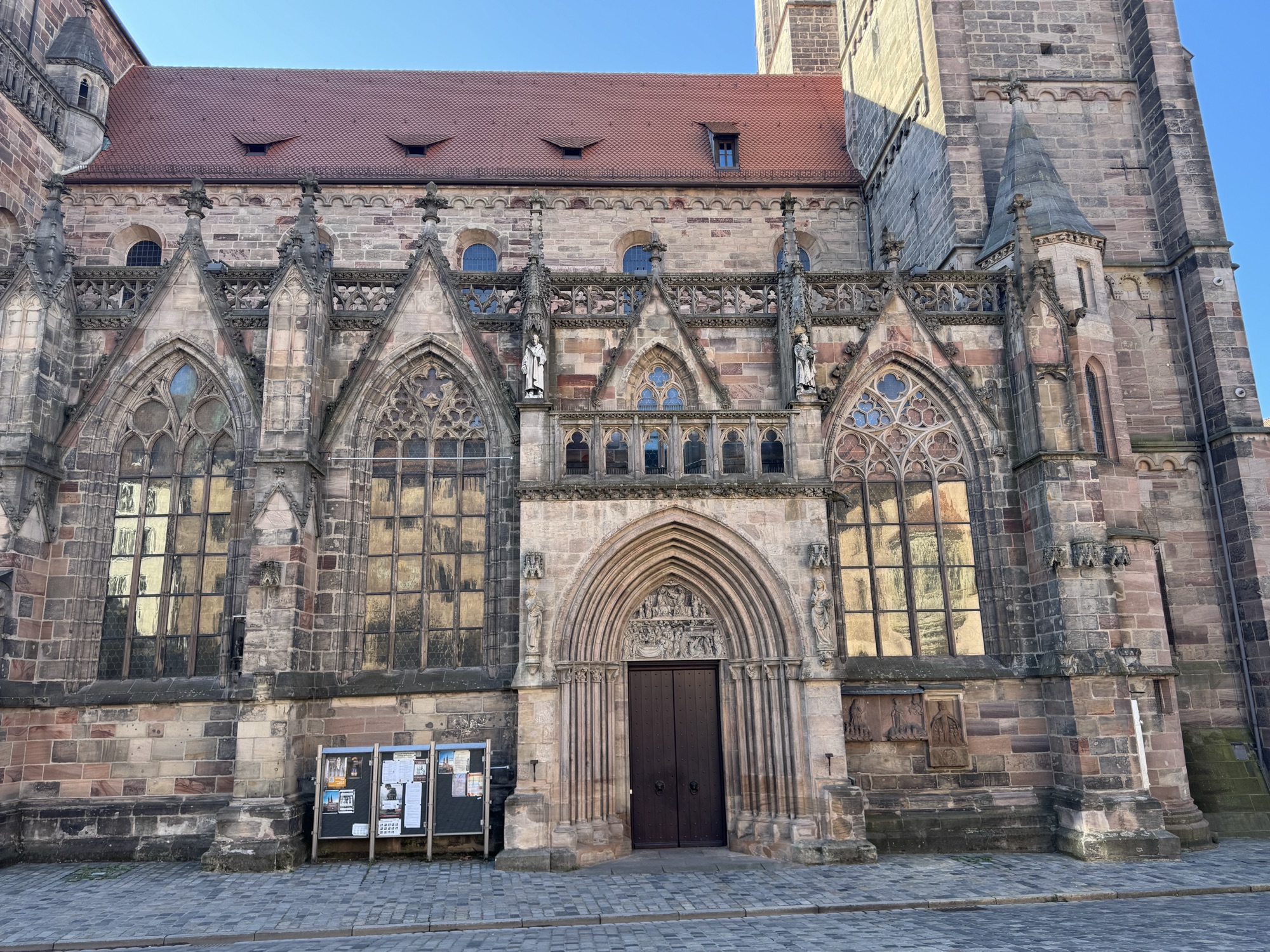
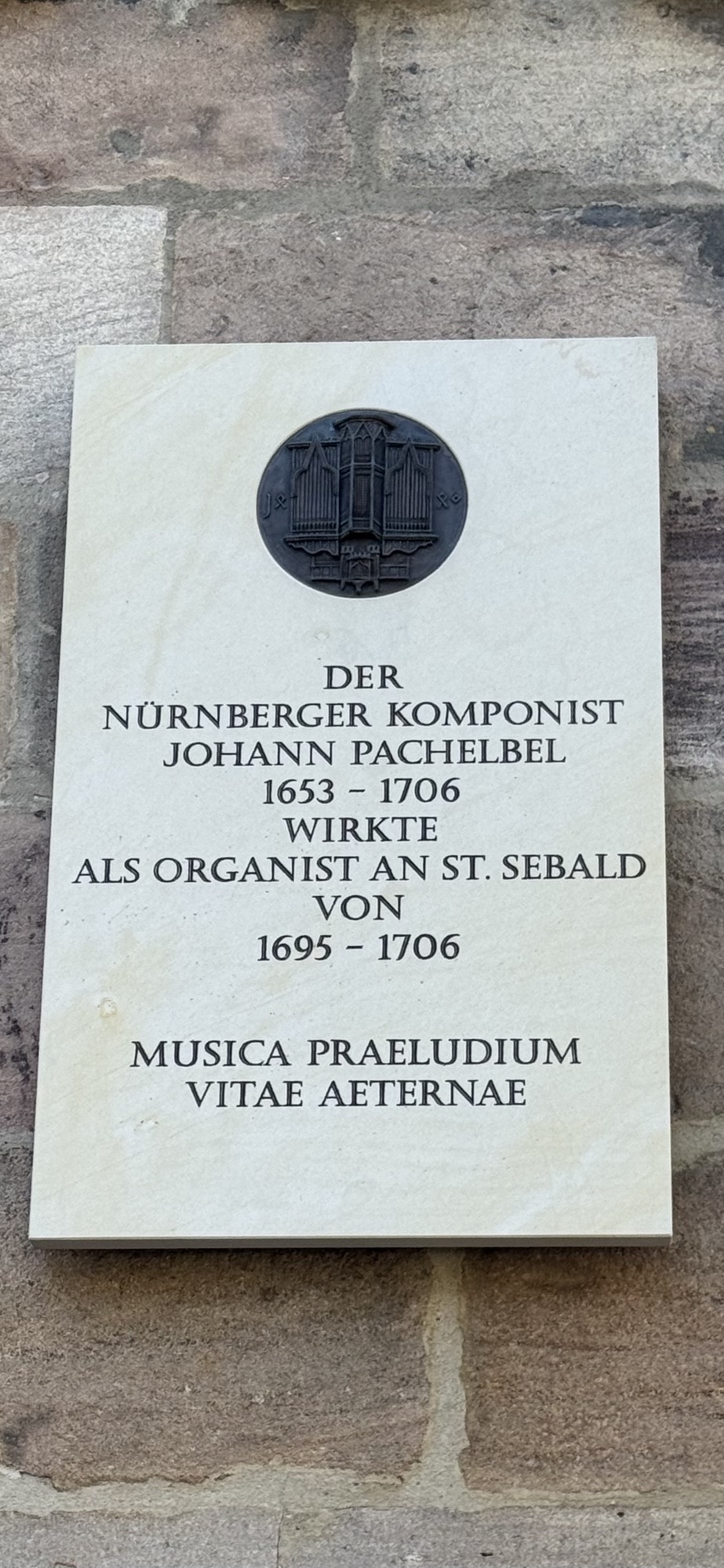
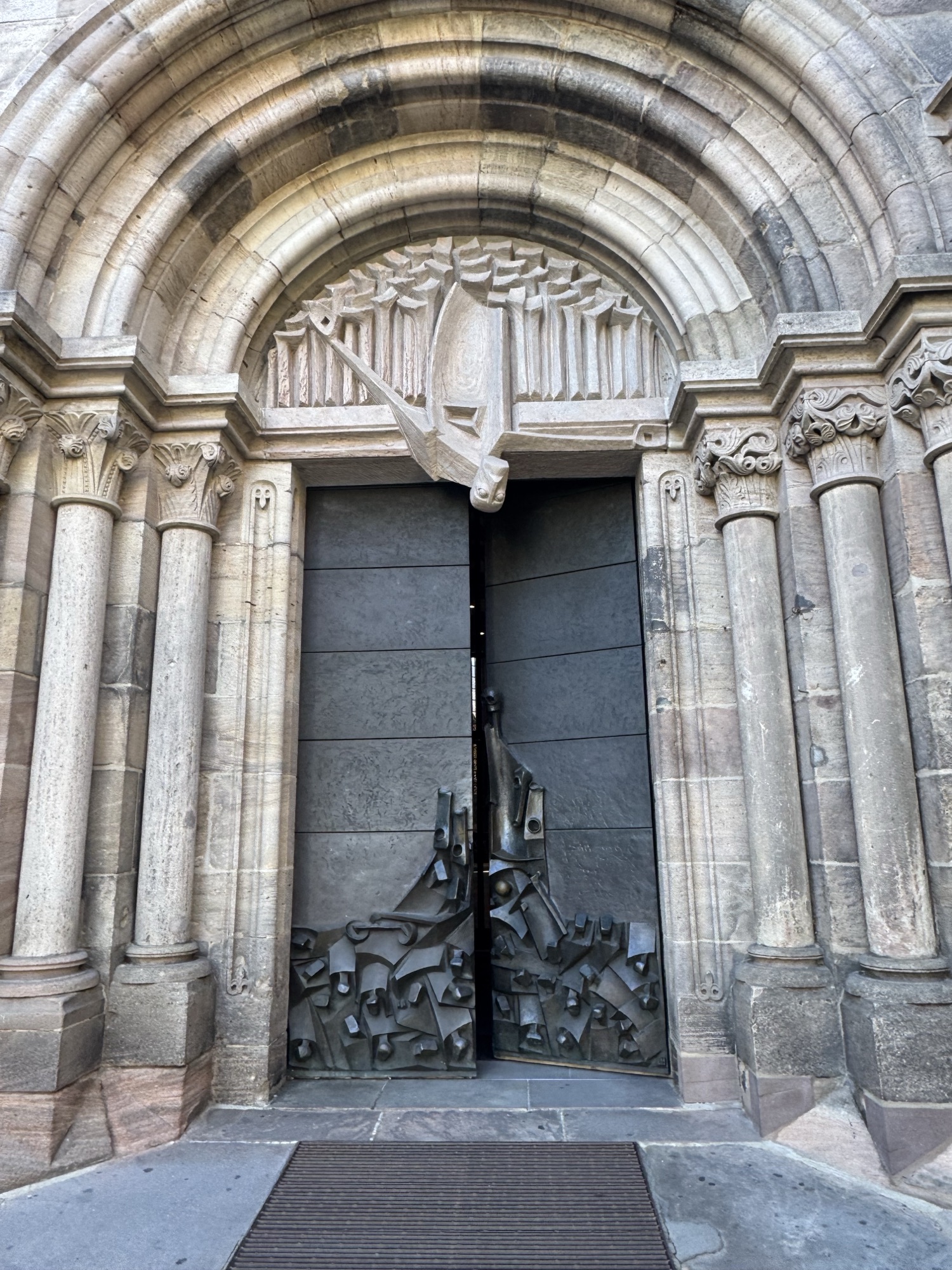
Nuremberg’s official tourism site reads: Destroyed during World War II like the rest of the city, St. Sebald was reconstructed in 1957 and reconsecrated. The reliquary shrine (ca. 1397) in the tomb cast in bronze by Peter Vischer and his sons (1508-1519) is prominently located in the interior of the church. The bones of Nuremberg patron saint Sebaldus are presumed to rest in the silver embossed “casket”.
Today was the official first day of term for university students here, which meant that hundreds were gathered for a dedication service. We were not allowed to walk around the church interior, except to view it from the lobby
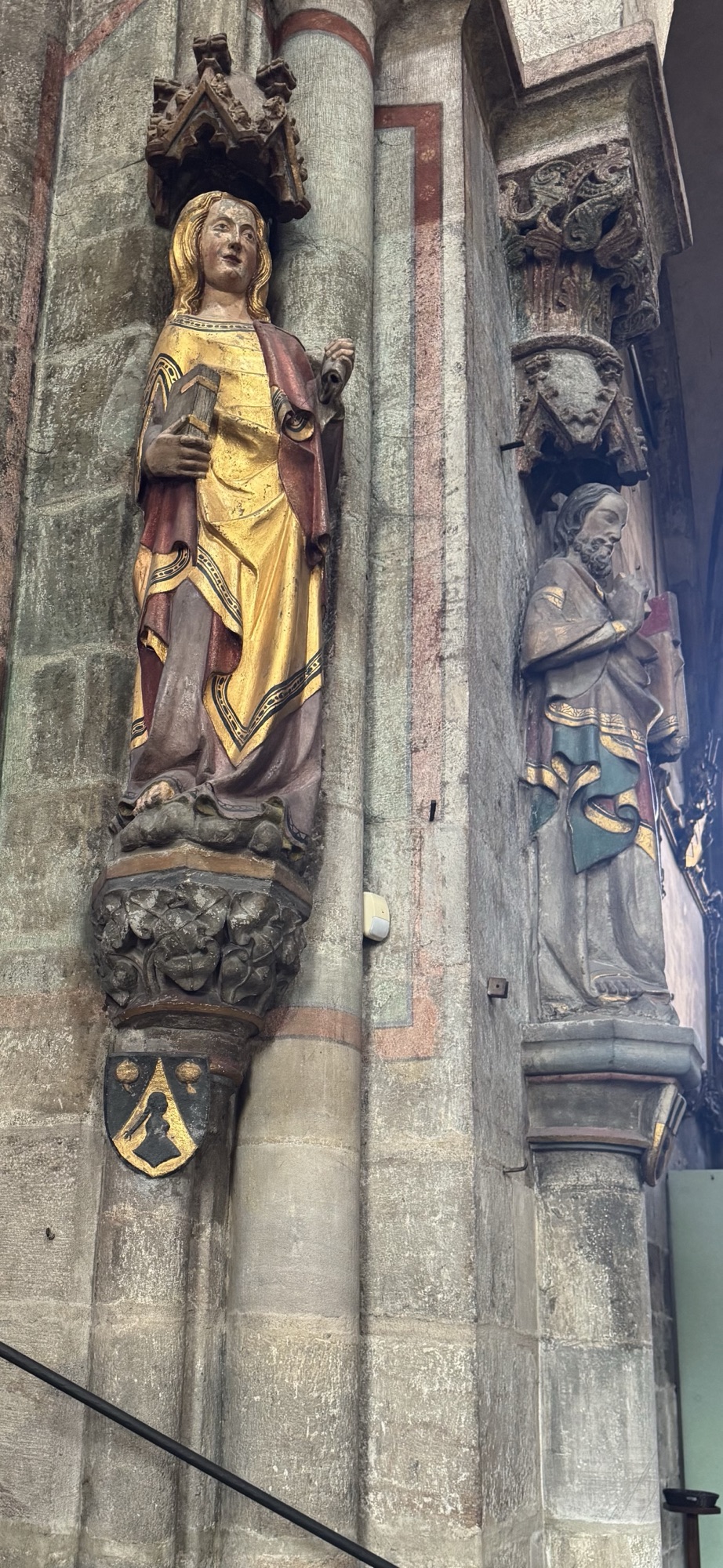
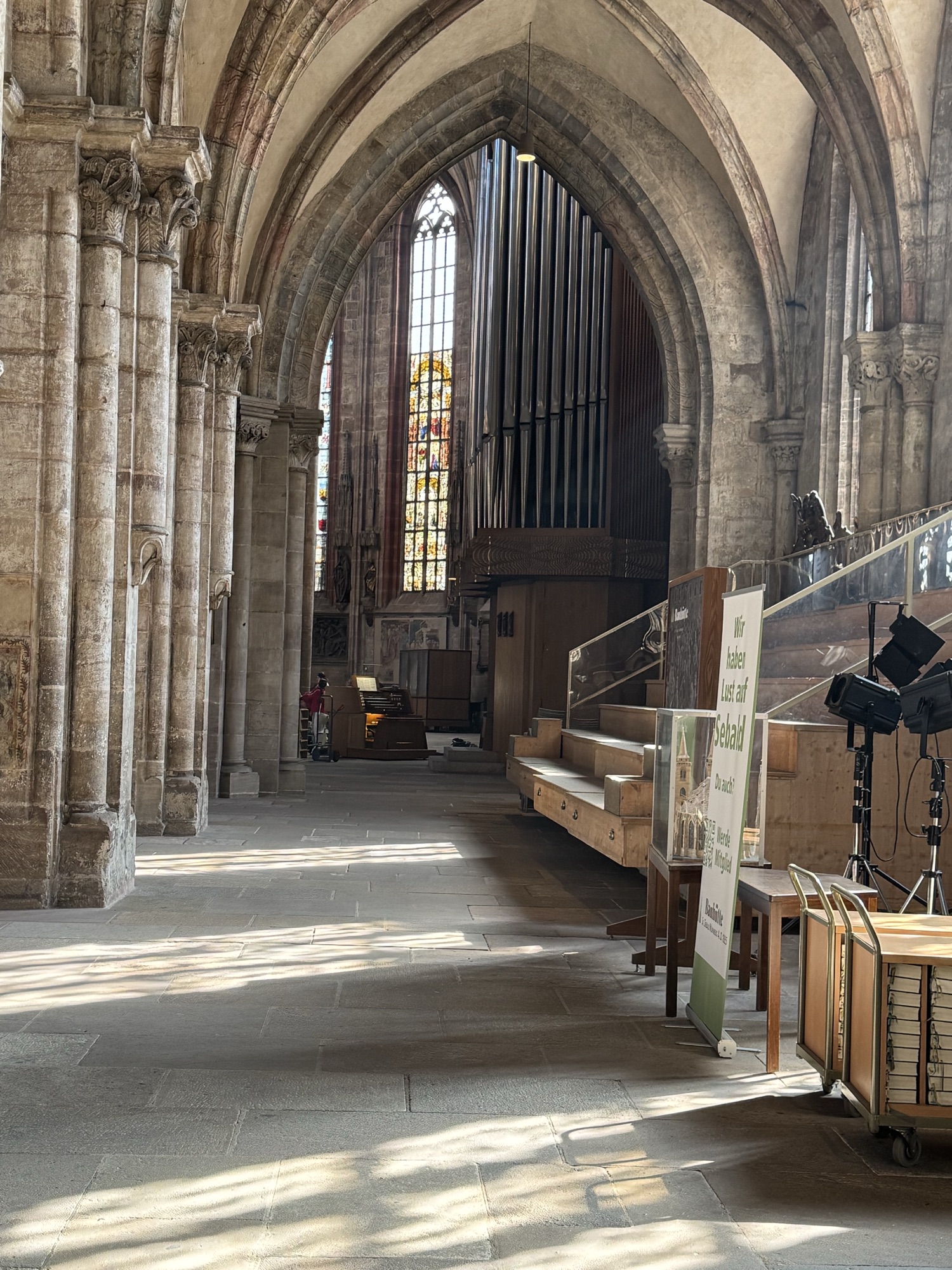
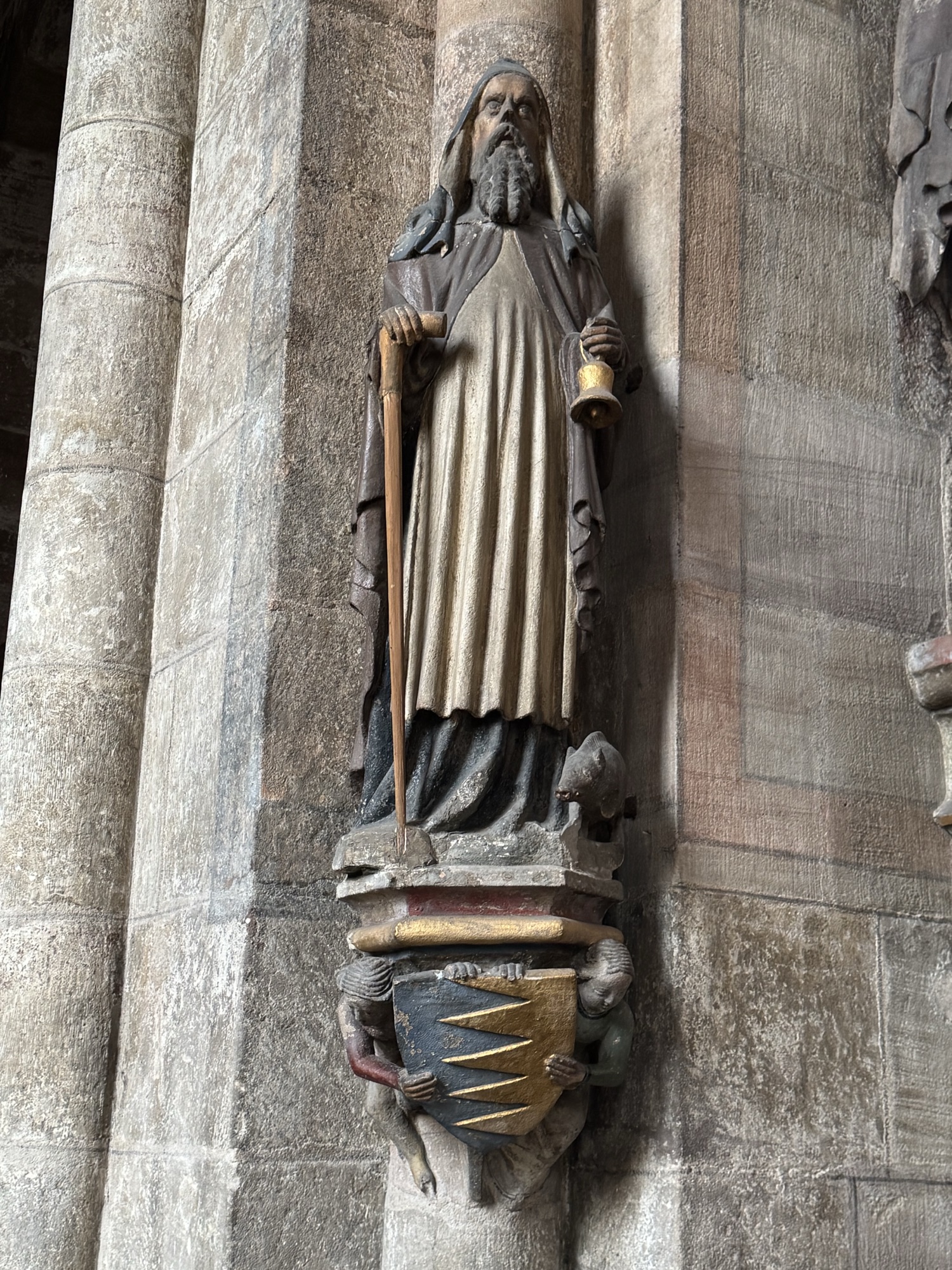
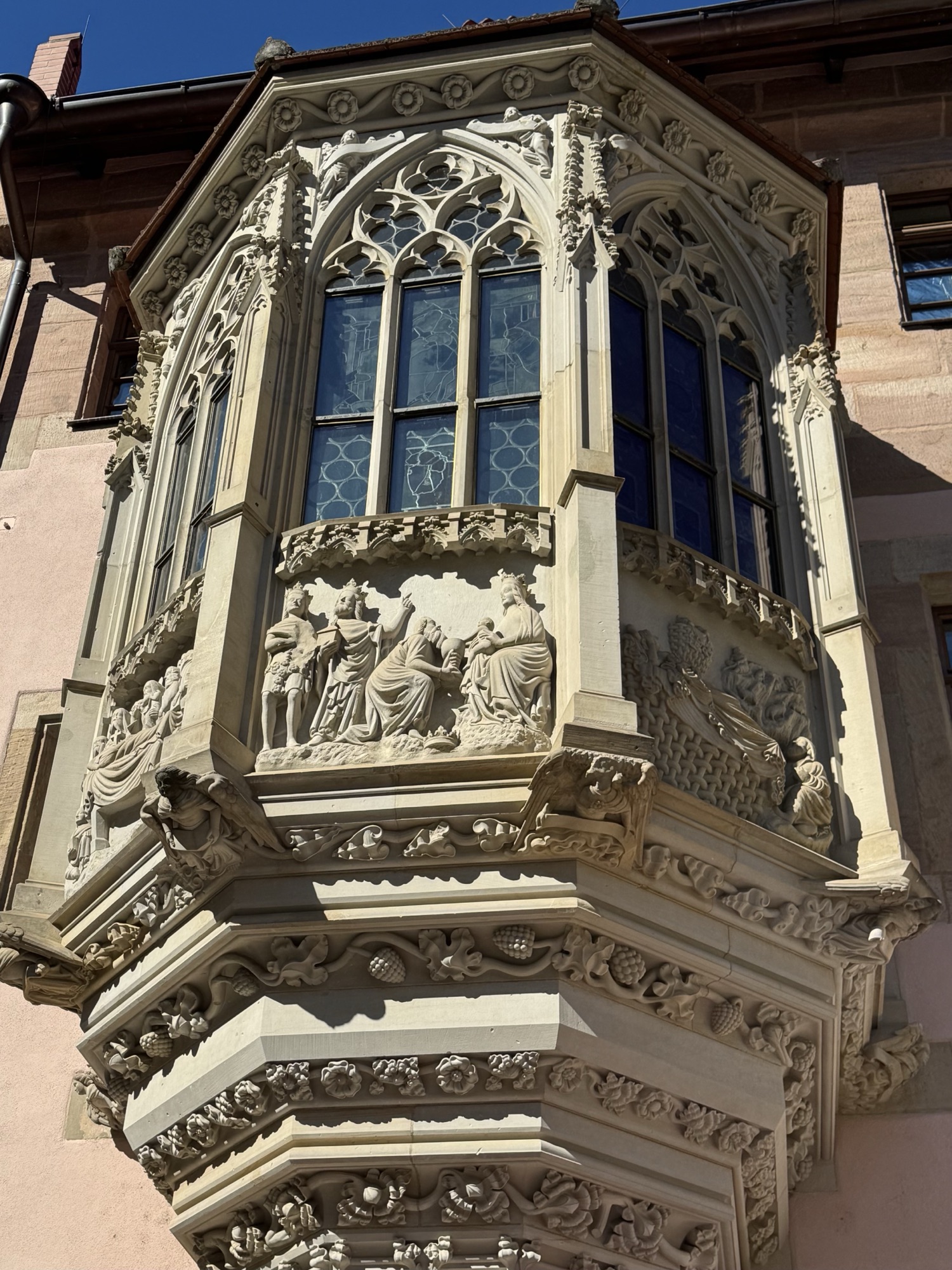
But it is the exterior of this church, with its hundreds of statues and friezes, that is both the main attraction and the thing for which it is most notorious.
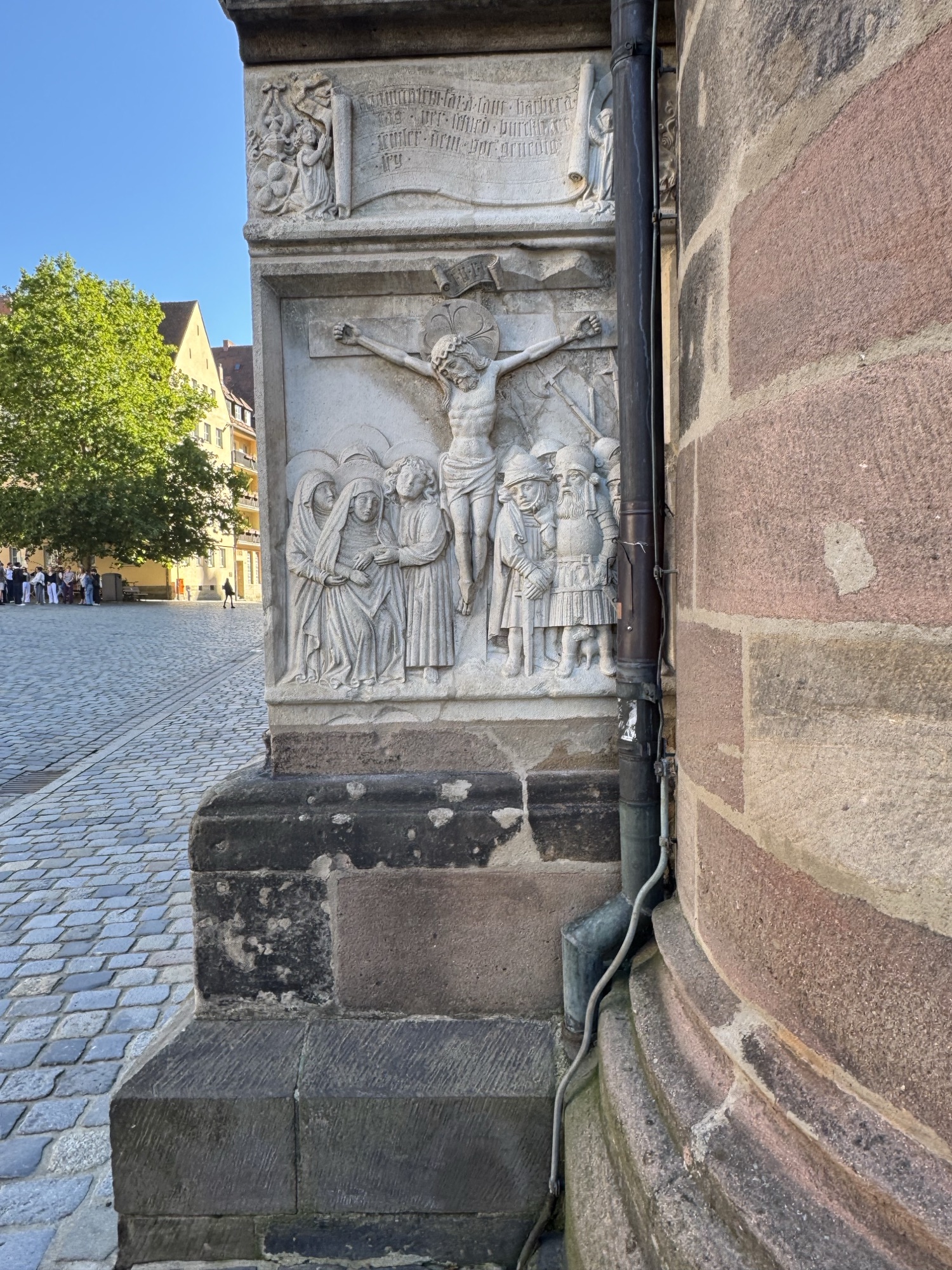
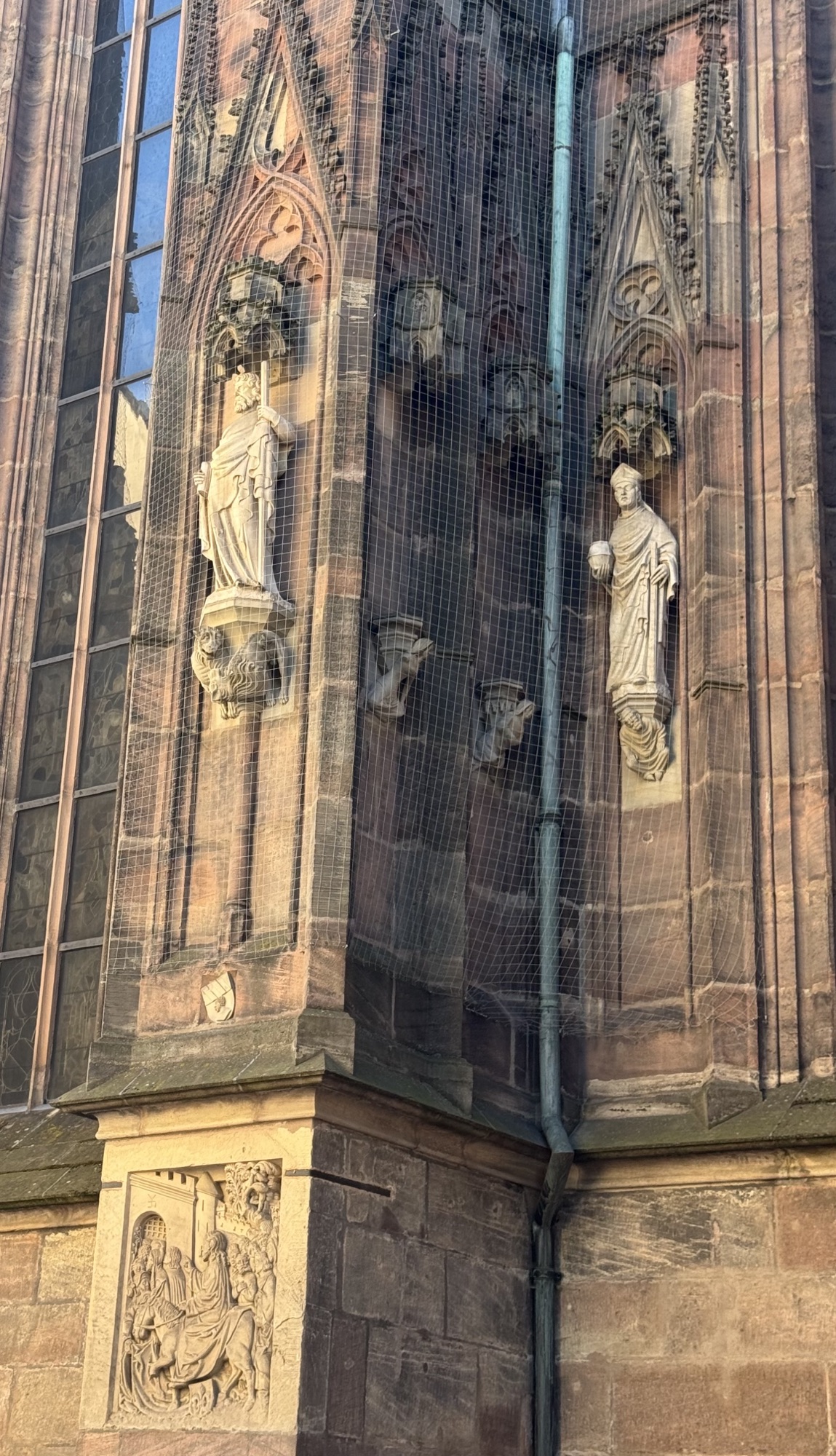
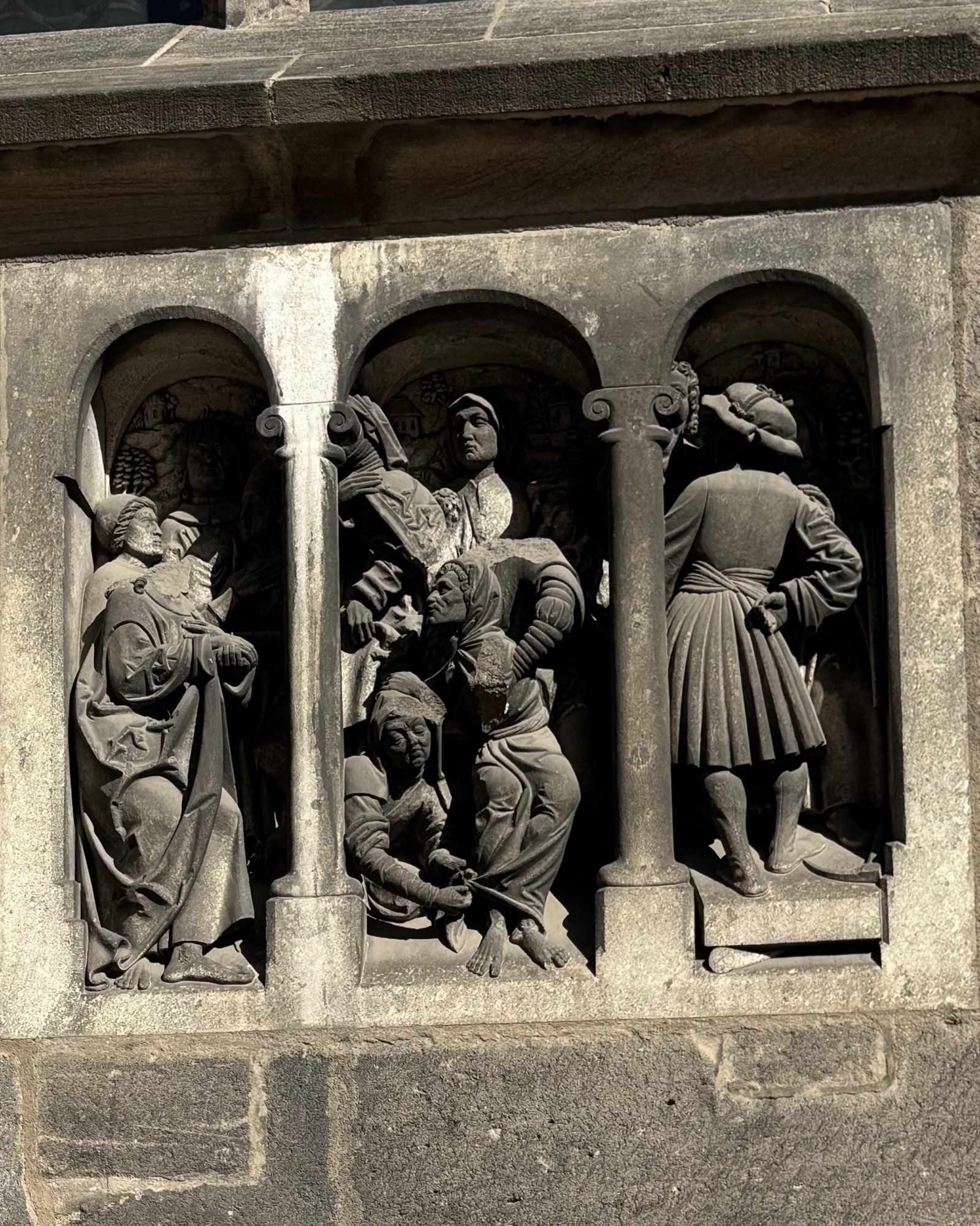
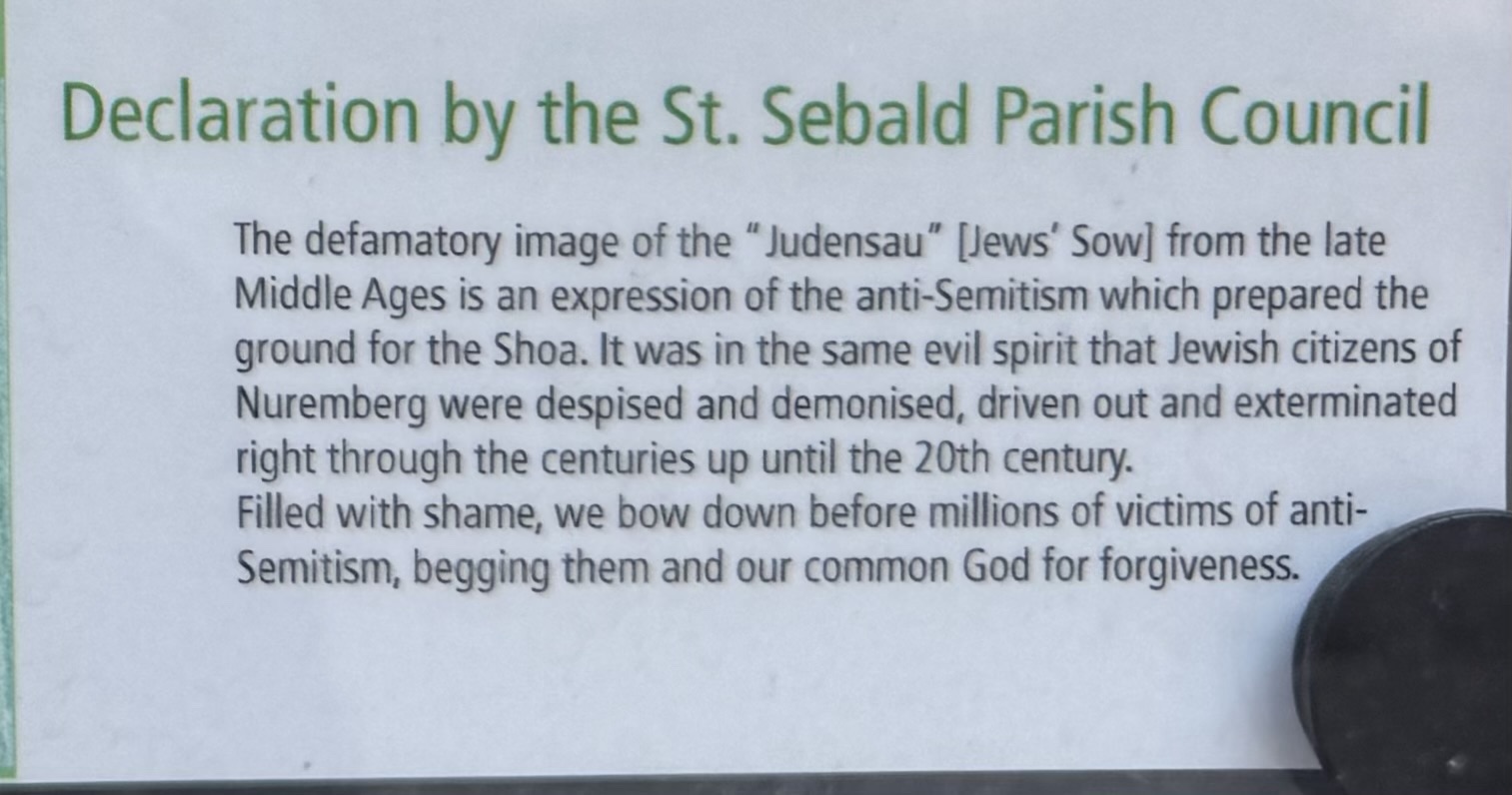
From my last visit here with Ted I remember seeing the disturbing Judensau (“Jewish sow”) an incredibly antisemitic sculpture depicting a large sow, with two stereotypically depicted Jews hanging on the teats, a third feeding the sow on the left side, and a fourth collecting the excrement on the right. The sculpture was made in the 1380s and is placed at a height of about 7 meters/23 ft up on the church wall. St first glance, today, its meaning is not immediately evident; it could just be another weird bible scene, but a sign outside the church explains the historical context and why it has been left there as a reminder of hate that should not be repeated. It is chilling. (I did not take a photo).
More chilling is the fact that this image appears or appeared on hundreds of churches throughout the mediaeval Germanic world.
The current congregation of St Sebald is actively engaged in ensuring that past wrongs are acknowledged and never repeated.
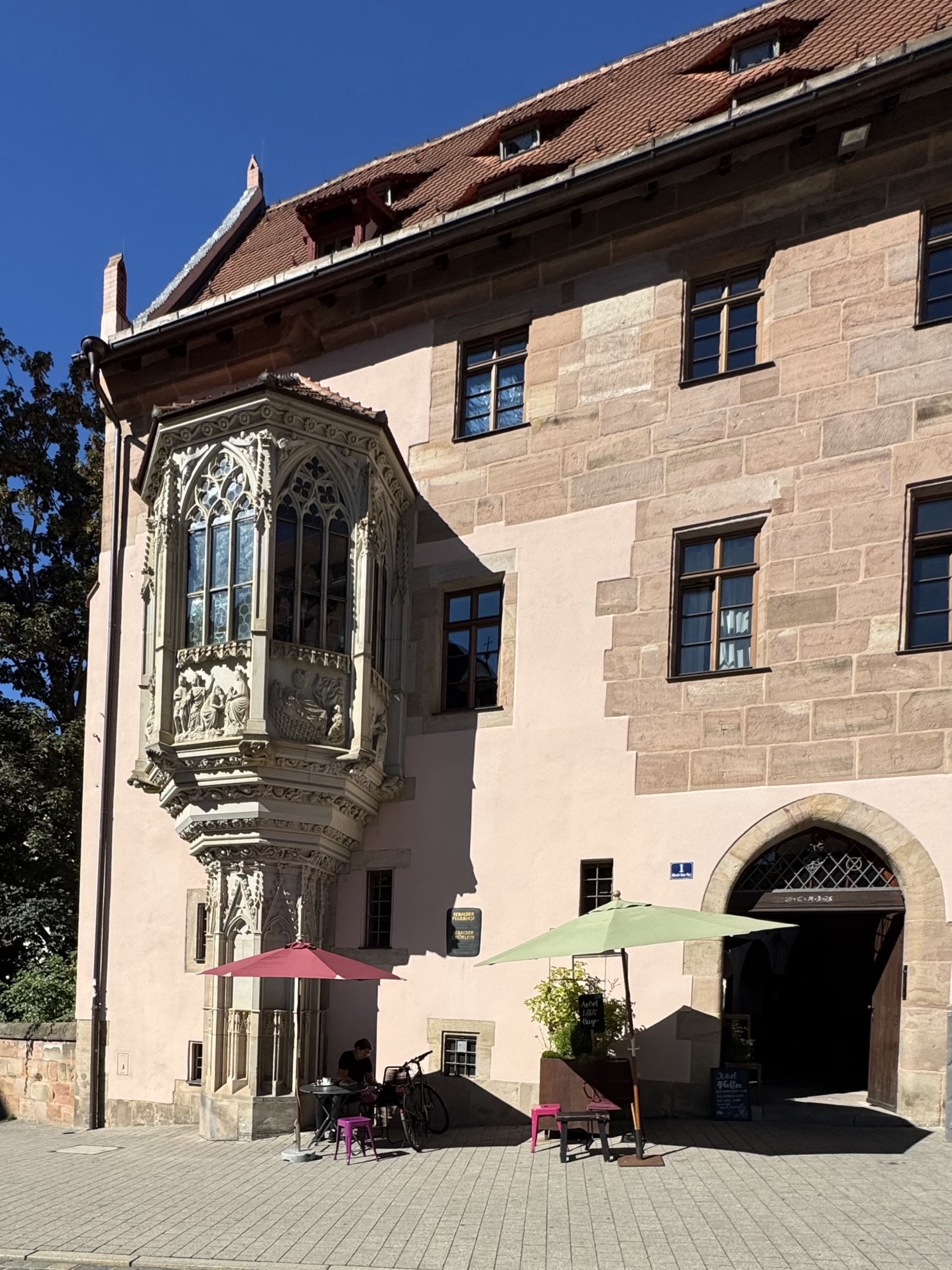
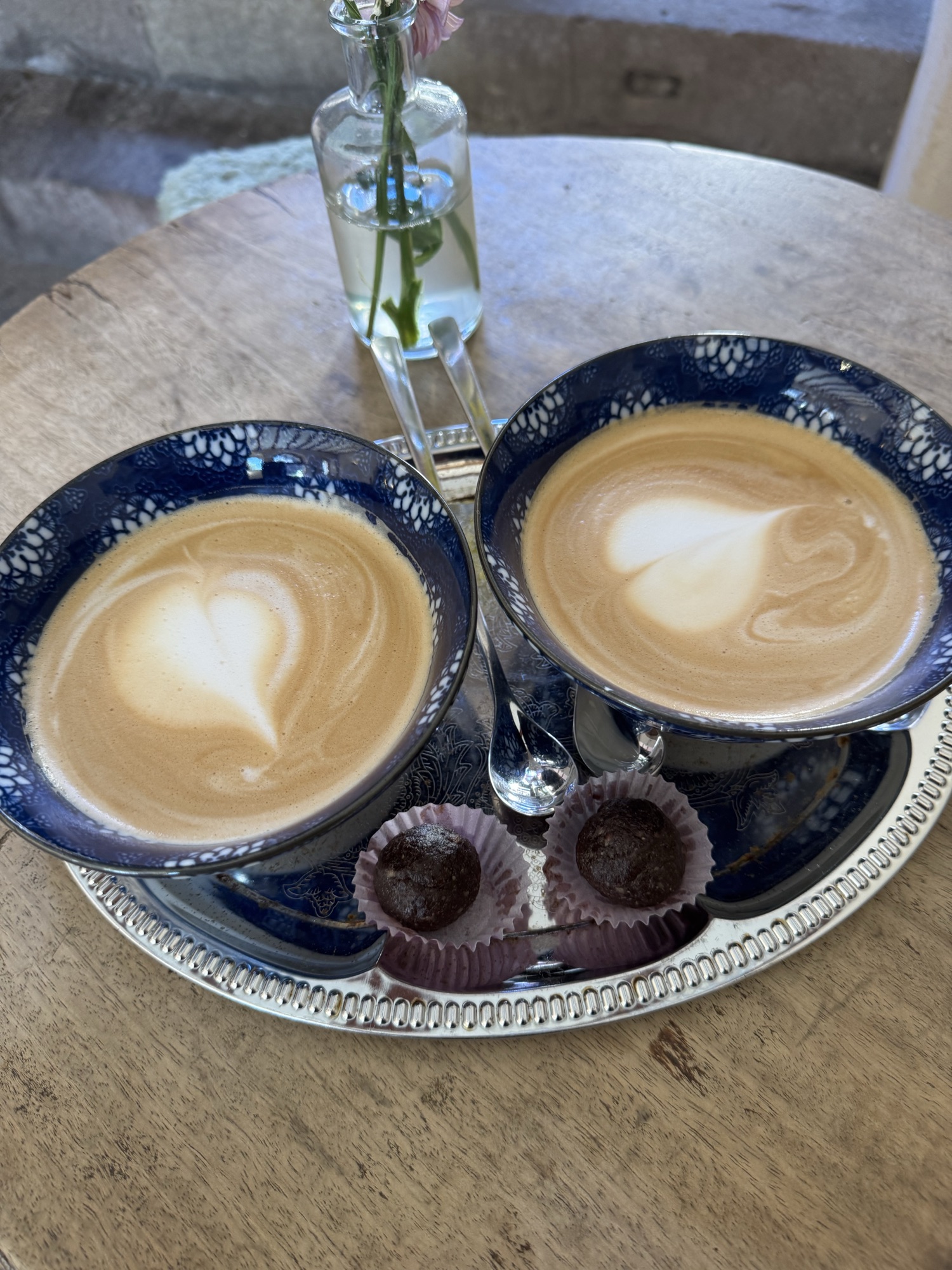
Because we were emotionally drained, we took a coffee break. In a serendipitous turn of events, the nearest café happened to be located in St Sebald’s onetime Pfarrhof (rectory), where a small museum installation called Stein & Tür (Stone & Door) was located.
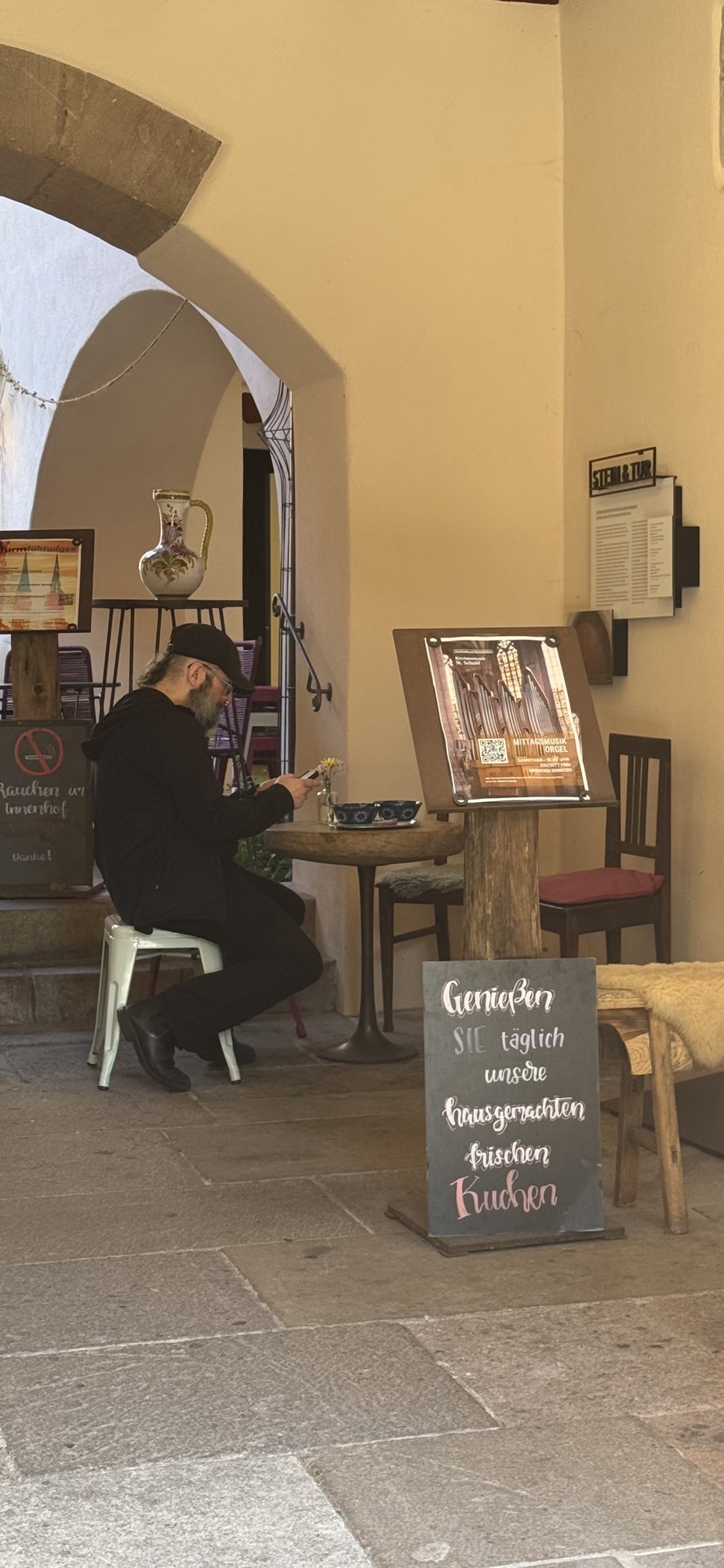
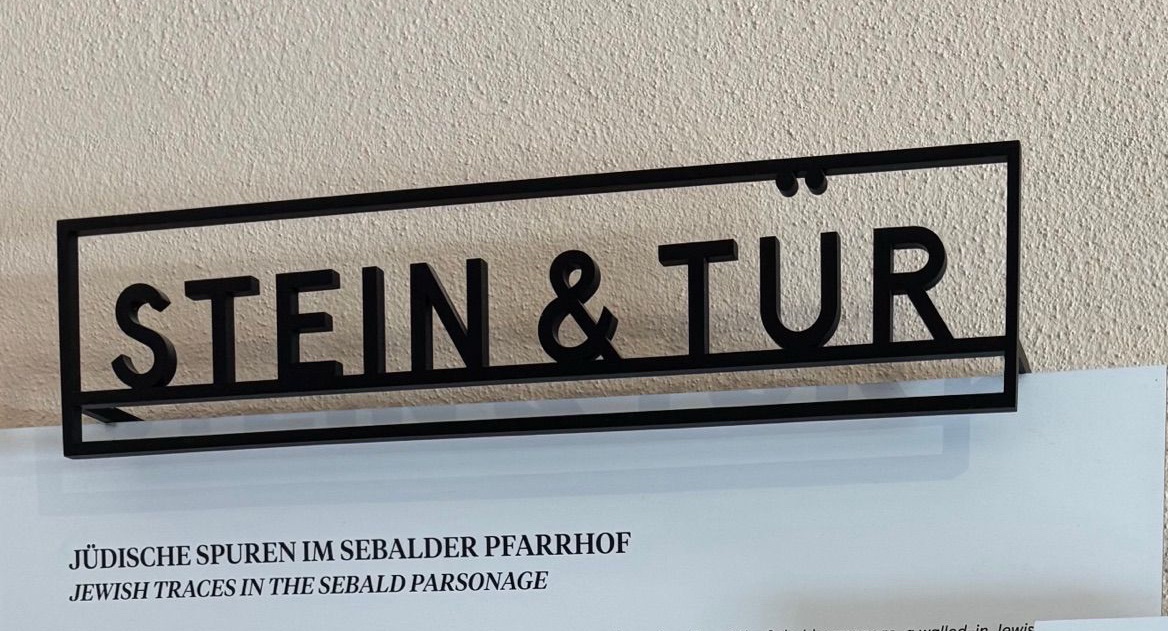
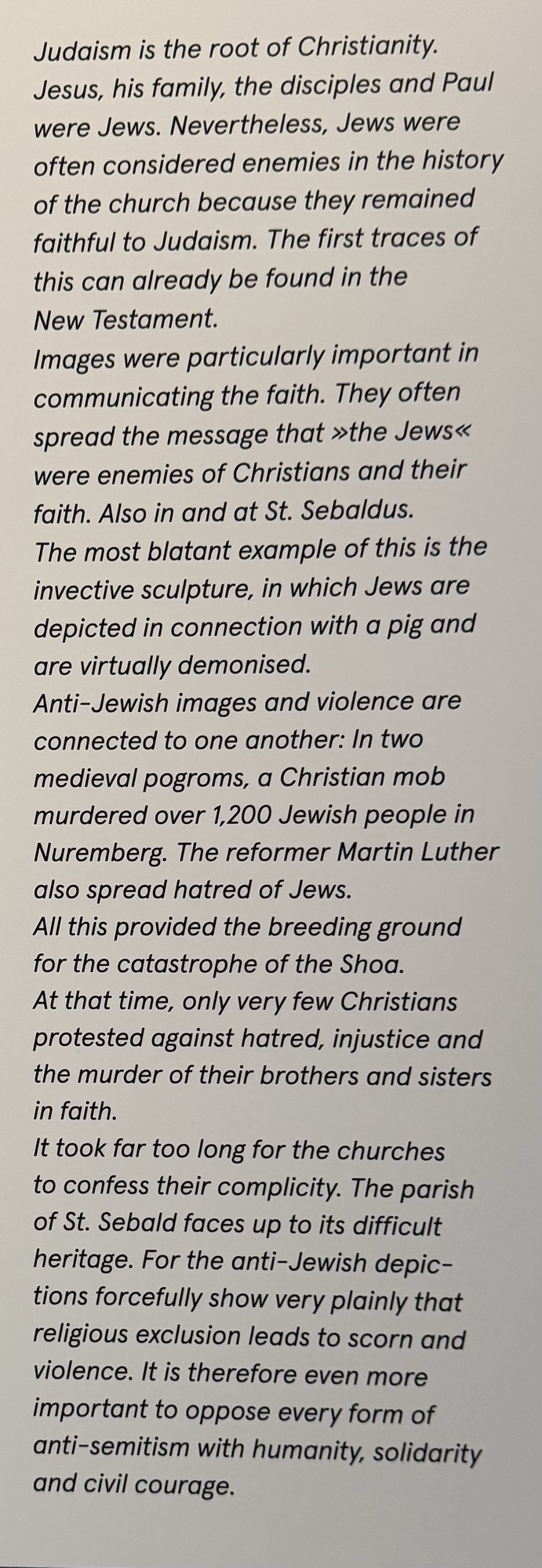
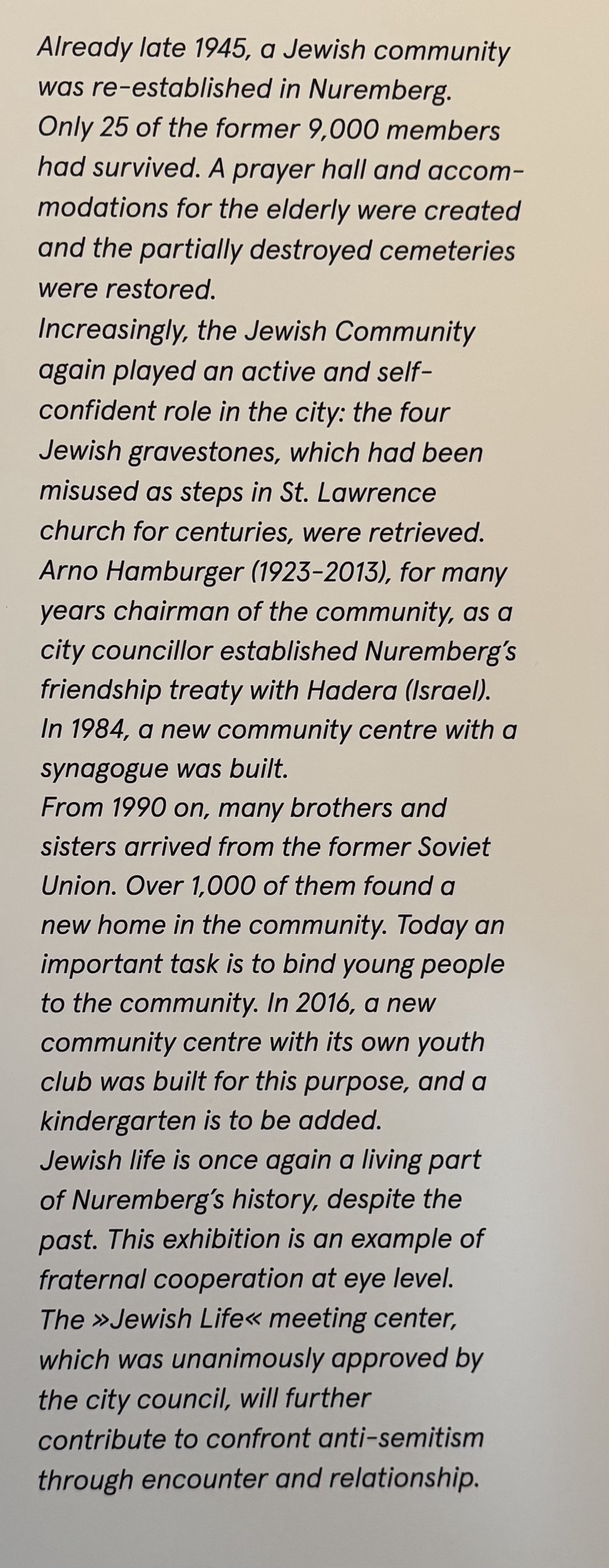
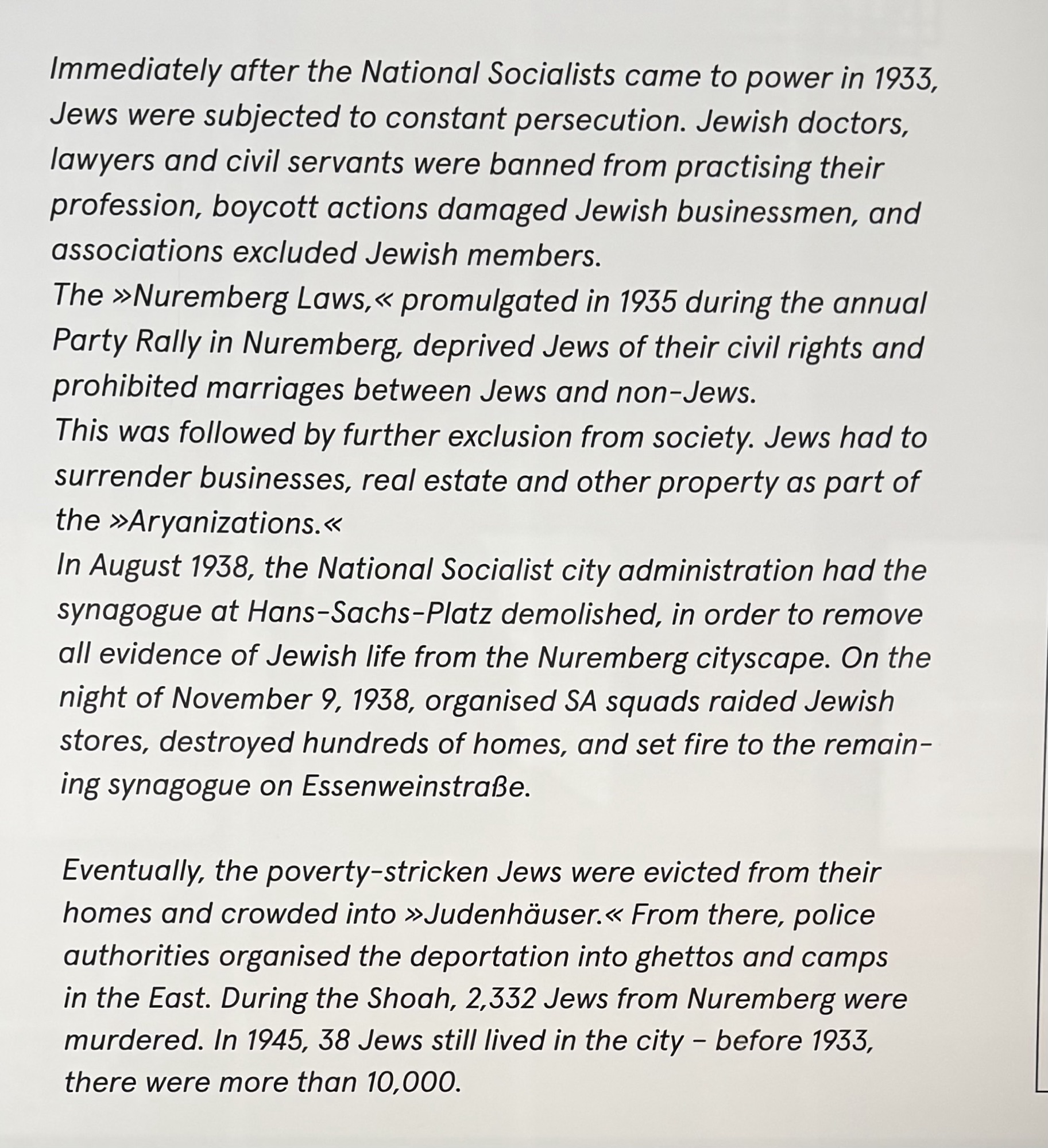
Rather than do the exhibit the injustice of just paraphrasing, I decided that I wanted to keep all of the information archived here.
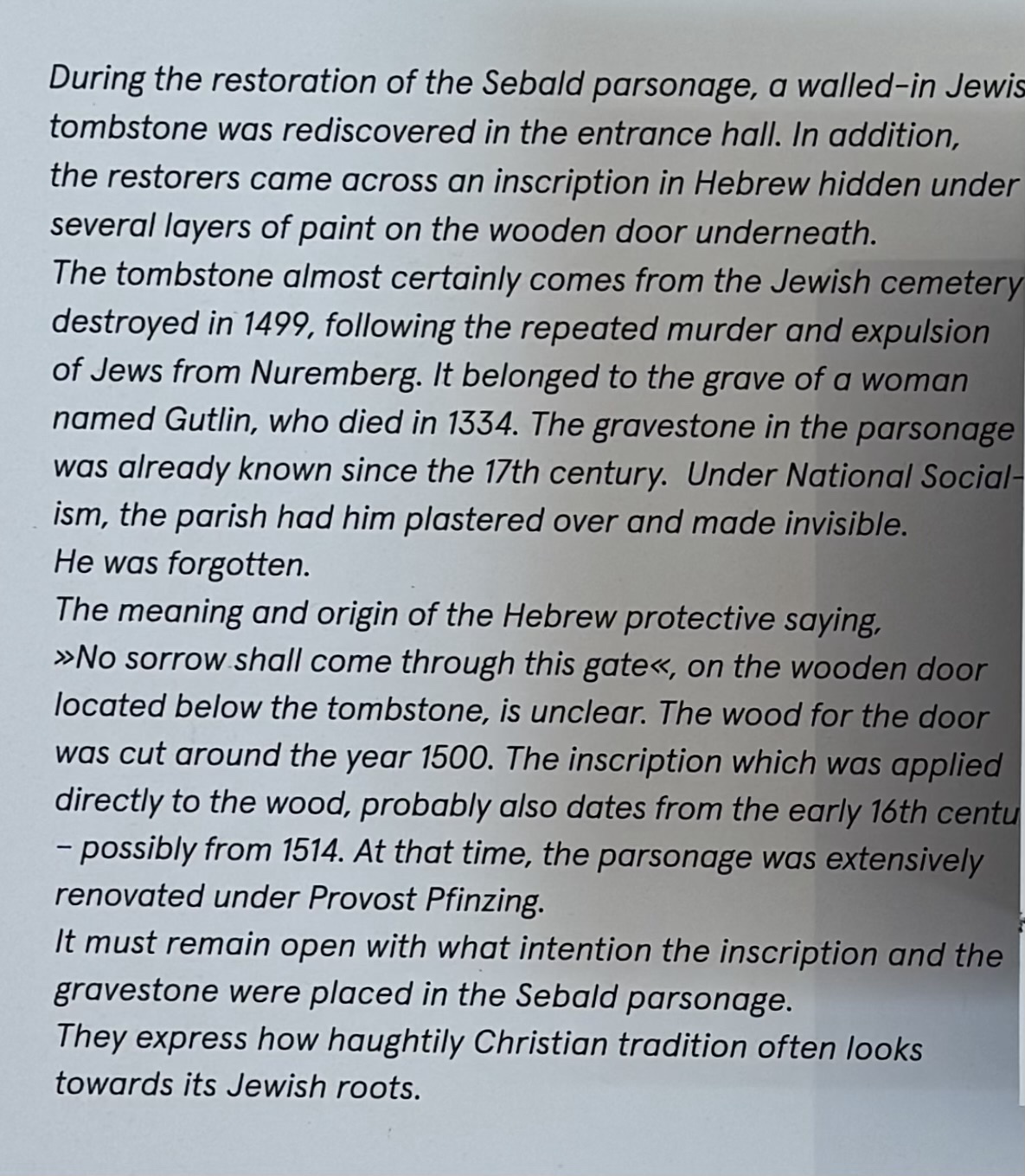
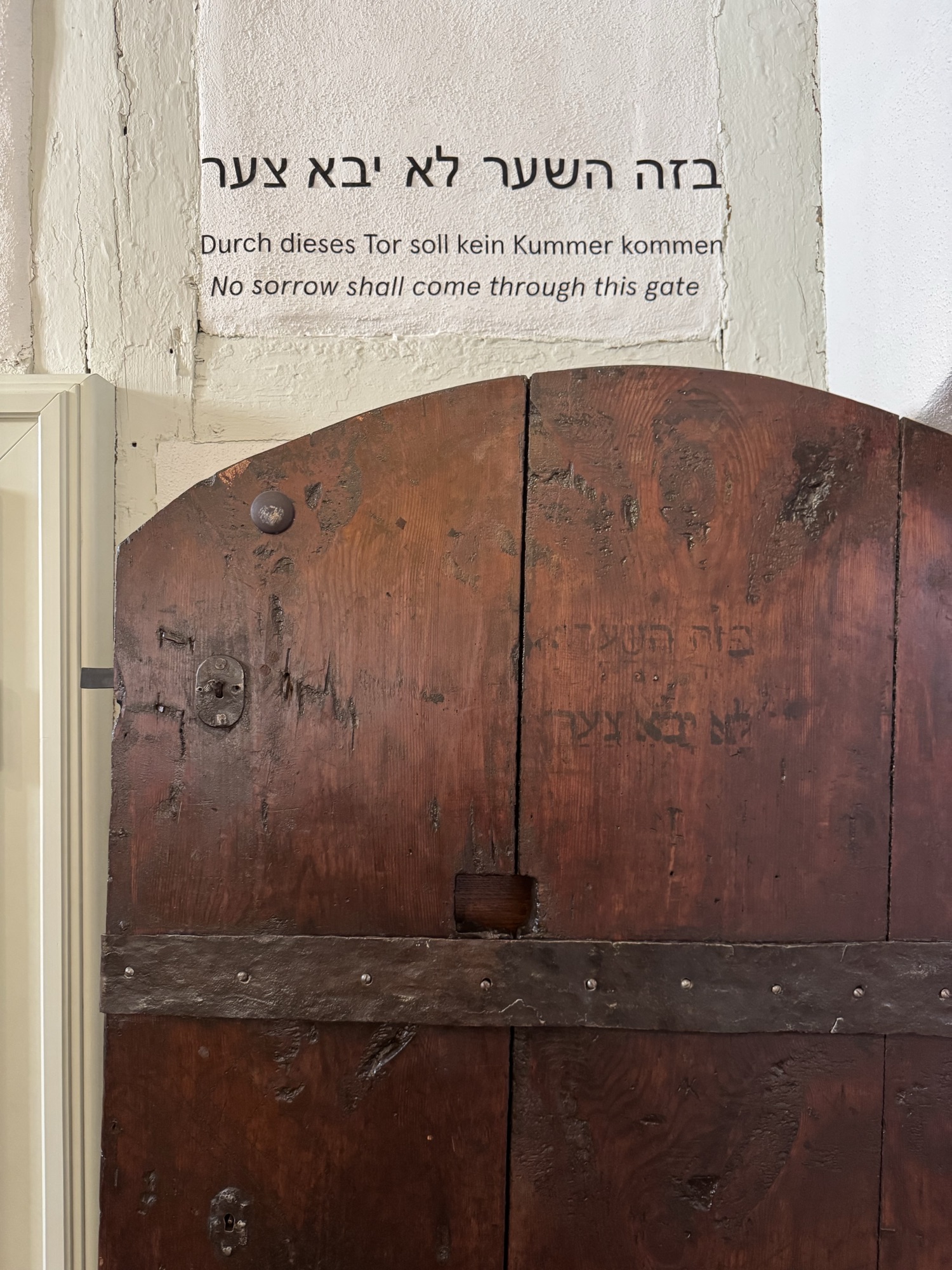
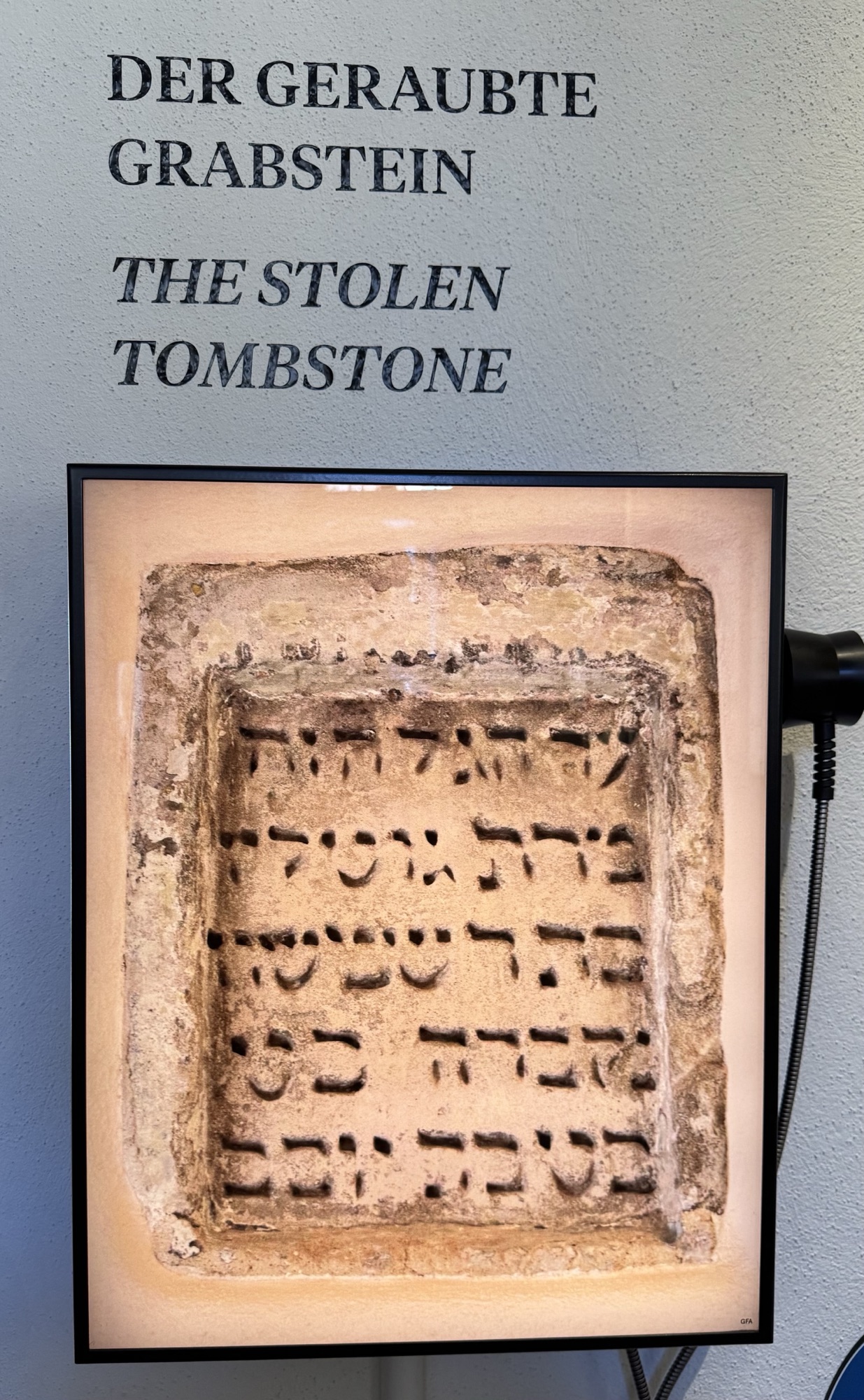
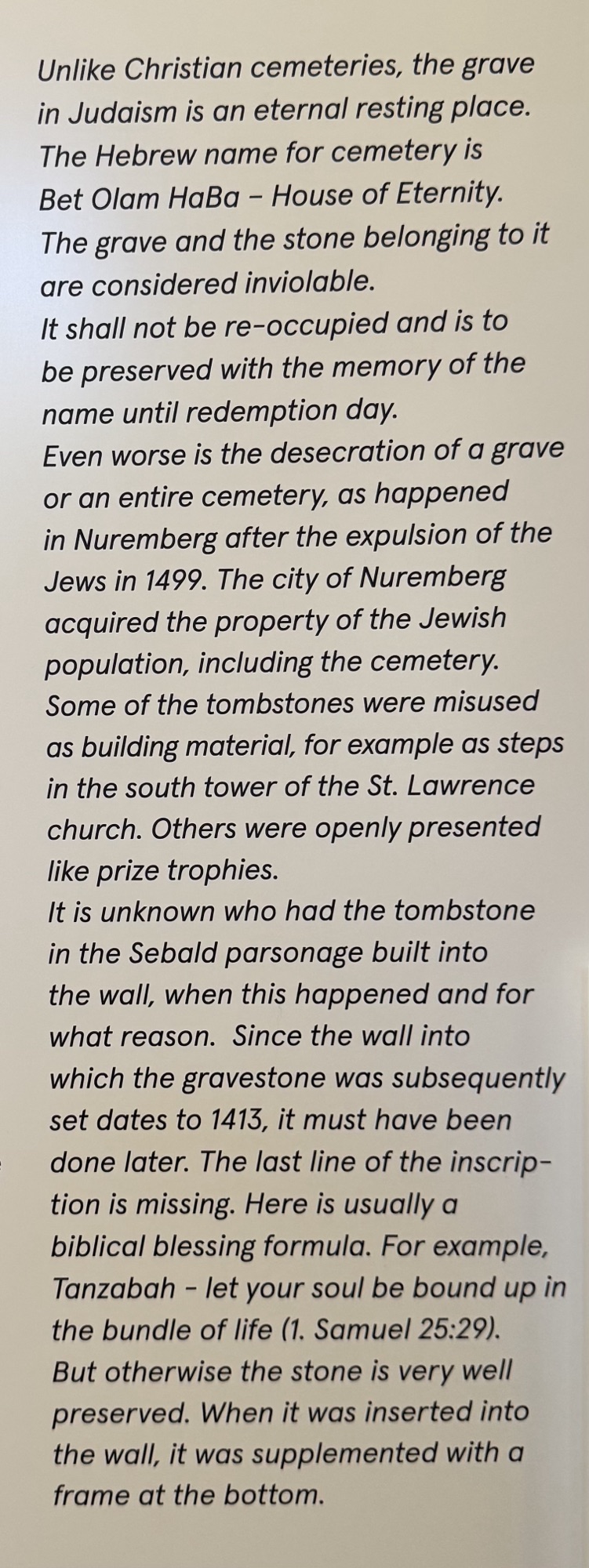
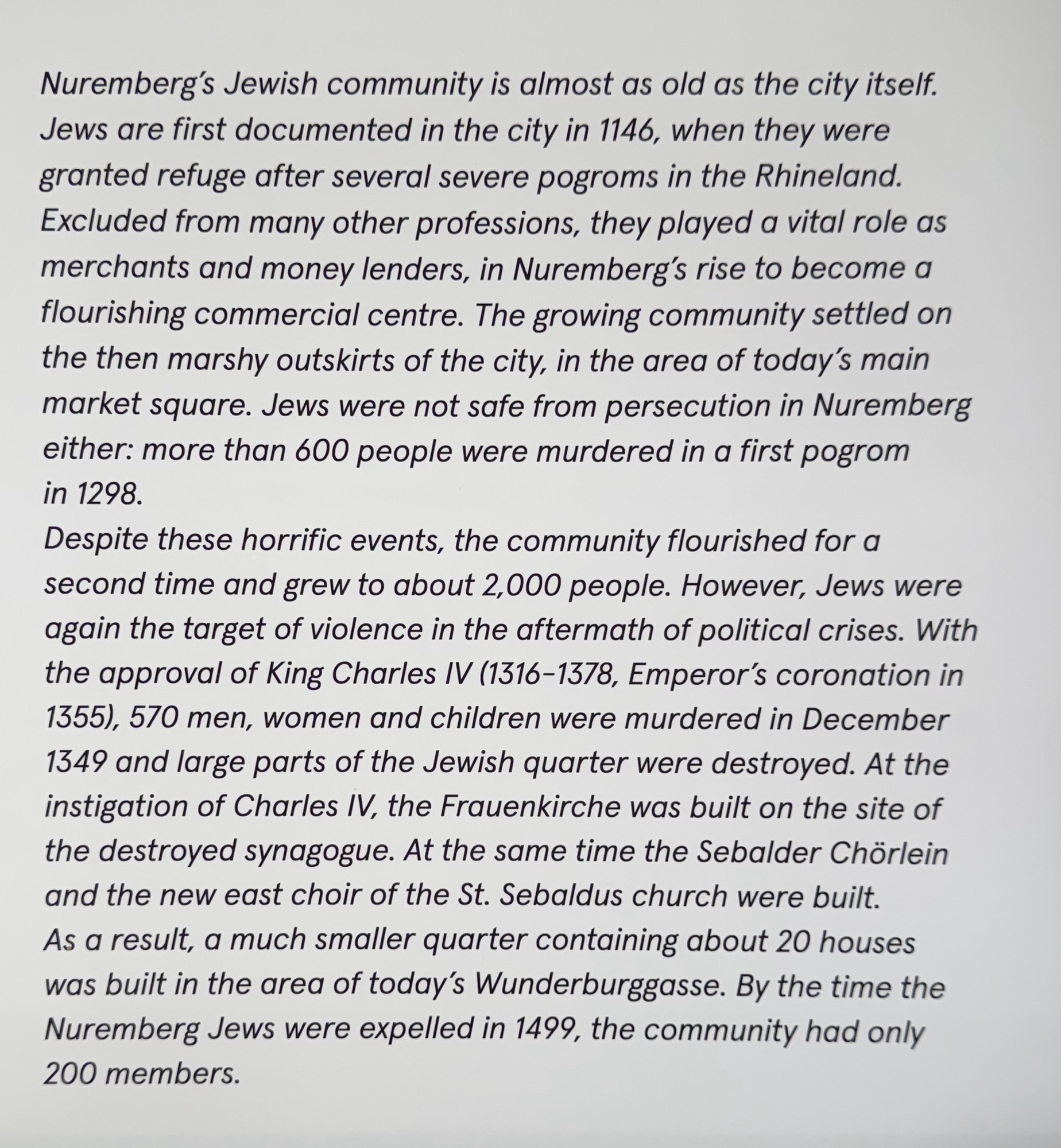
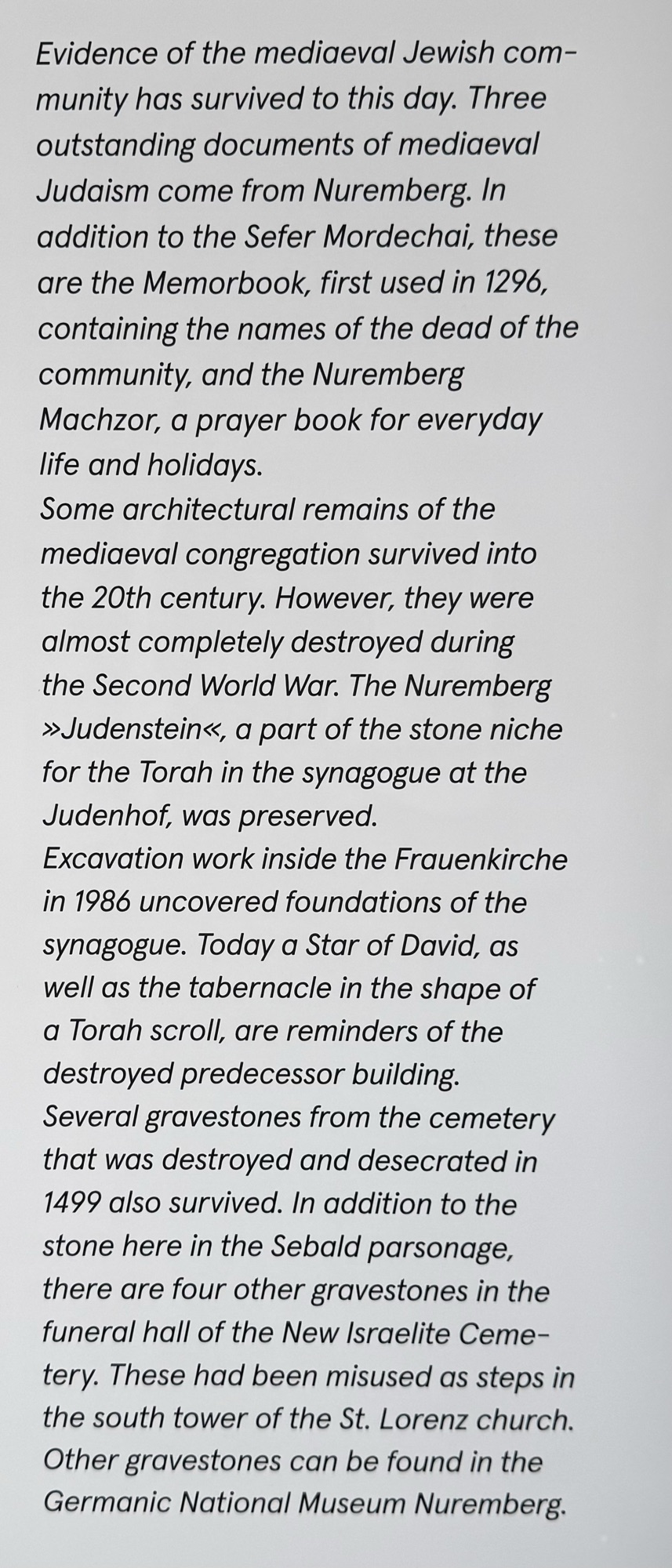
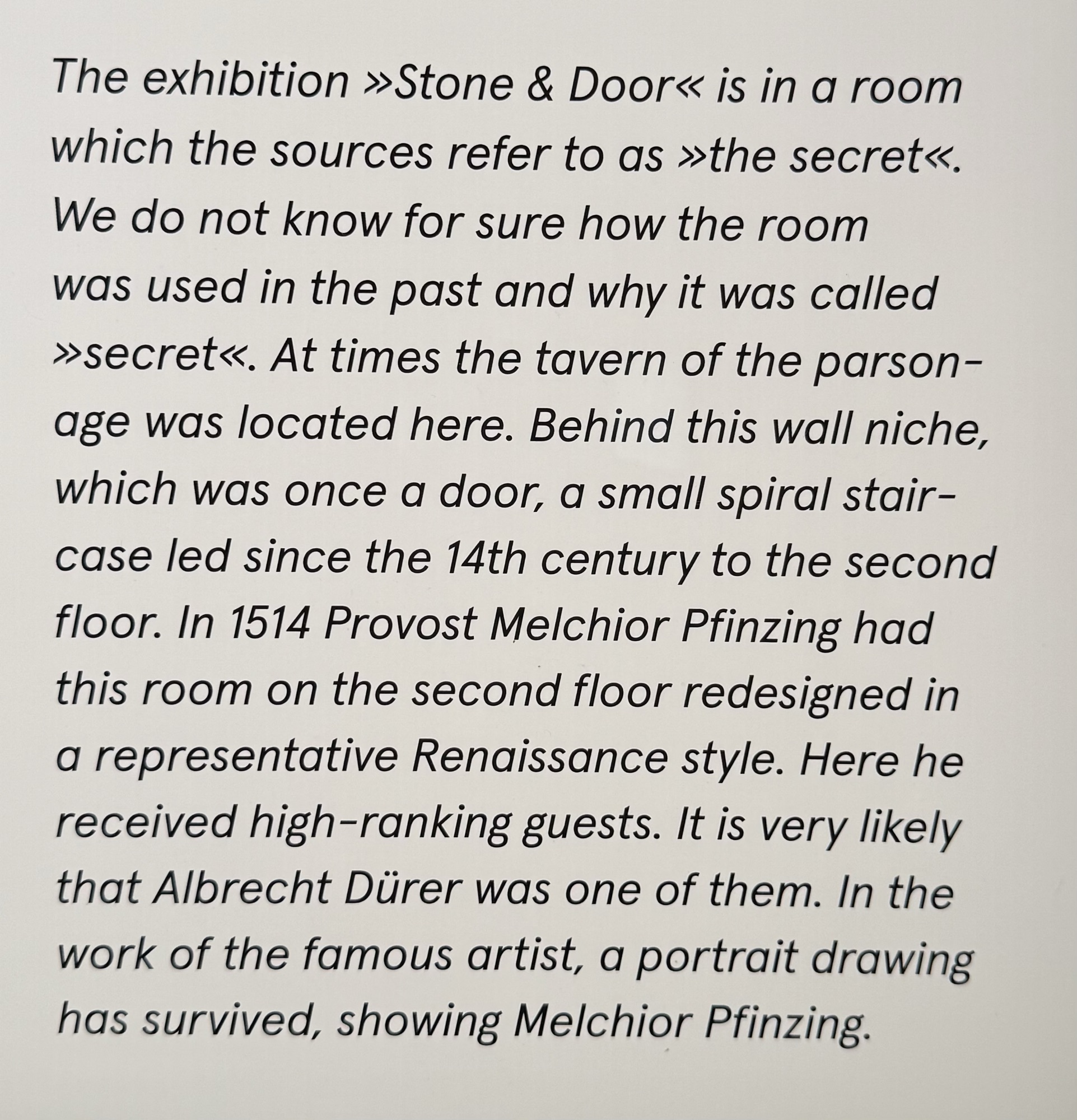
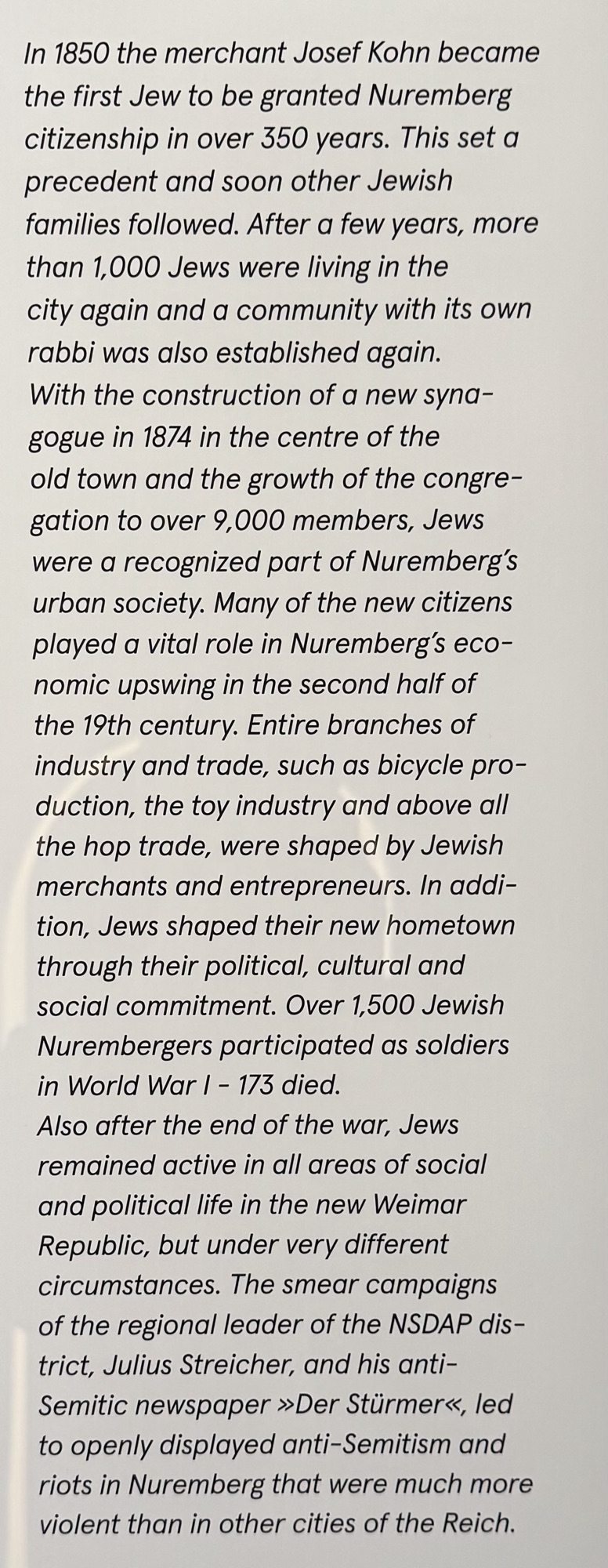
The next plaque was under the heading: ST. SEBALD STELLT SICH SEINER MITSCHULD (ST. SEBALD FACES UP TO ITS COMPLICITY)
The Nuremberg Synagogue
Dating back to the Middle Ages, significant cities would also have had a synagogue. We’d already found out what happened to Nuremberg’s: its remains lie under the Frauenkirche and Hauptmarkt. But despite their expulsion in the Middle Ages, the Jewish people remained resilient and optimistic, reestablishing a communities here. They must have had more faith in their fellow man than I sometimes feel, although it proved to be misplaced. A second synagogue was established on Wunderburggasse in the 15th century, but in 1499 the Nuremberg city council expelled the entire Jewish population from the city, demolished the synagogue, and legally barred Jews from permanently settling in Nuremberg for more than 350 years.
In the mid 19th century Jewish families slowly returned. In 1874 the beautiful Moorish Revival style Grand Synagogue of Nuremberg, able to seat nearly 1,000 people, opened on the banks of the Pegnitz River.
All that remains of the beautiful synagogue is this riverside memorial.
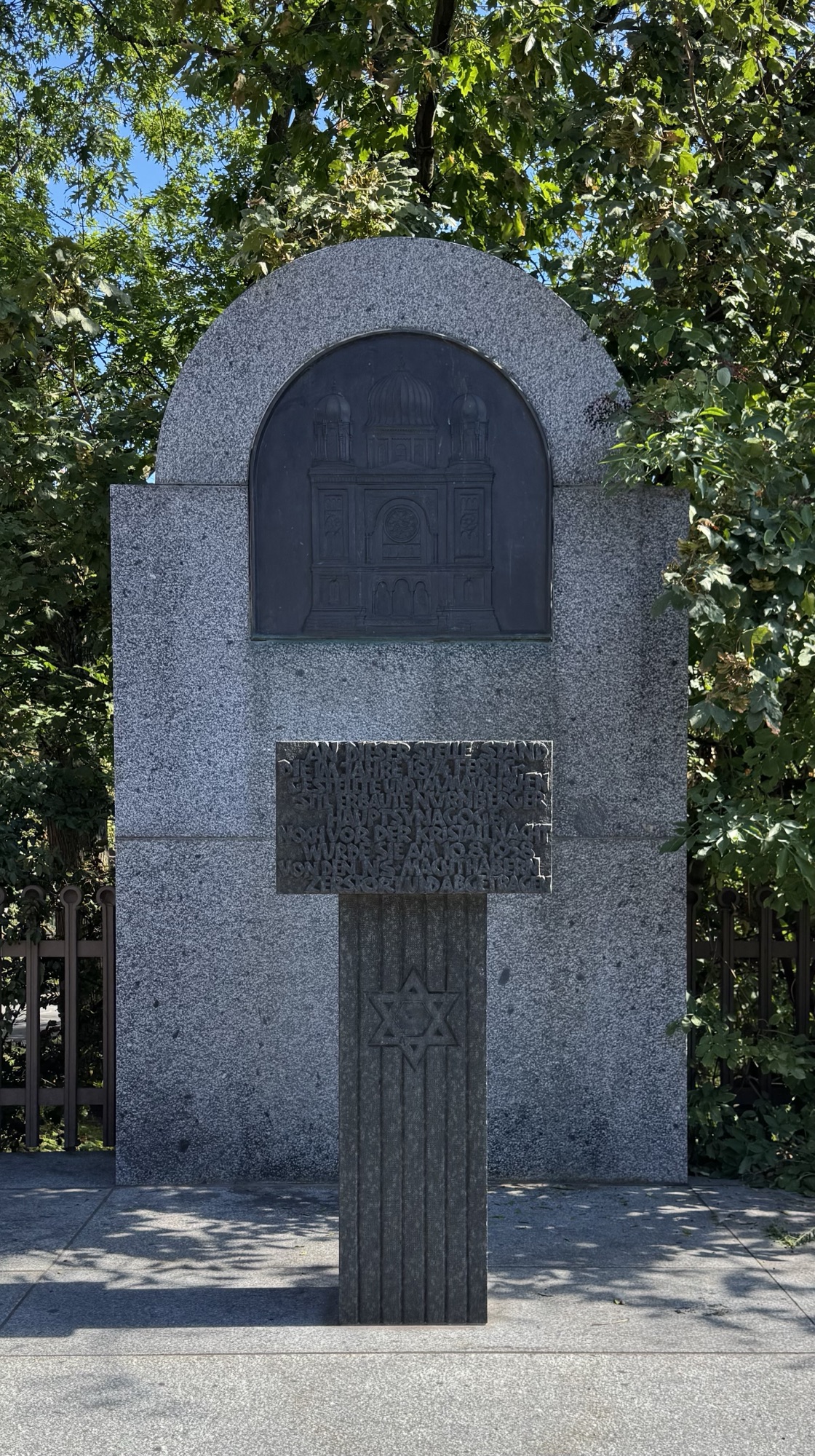
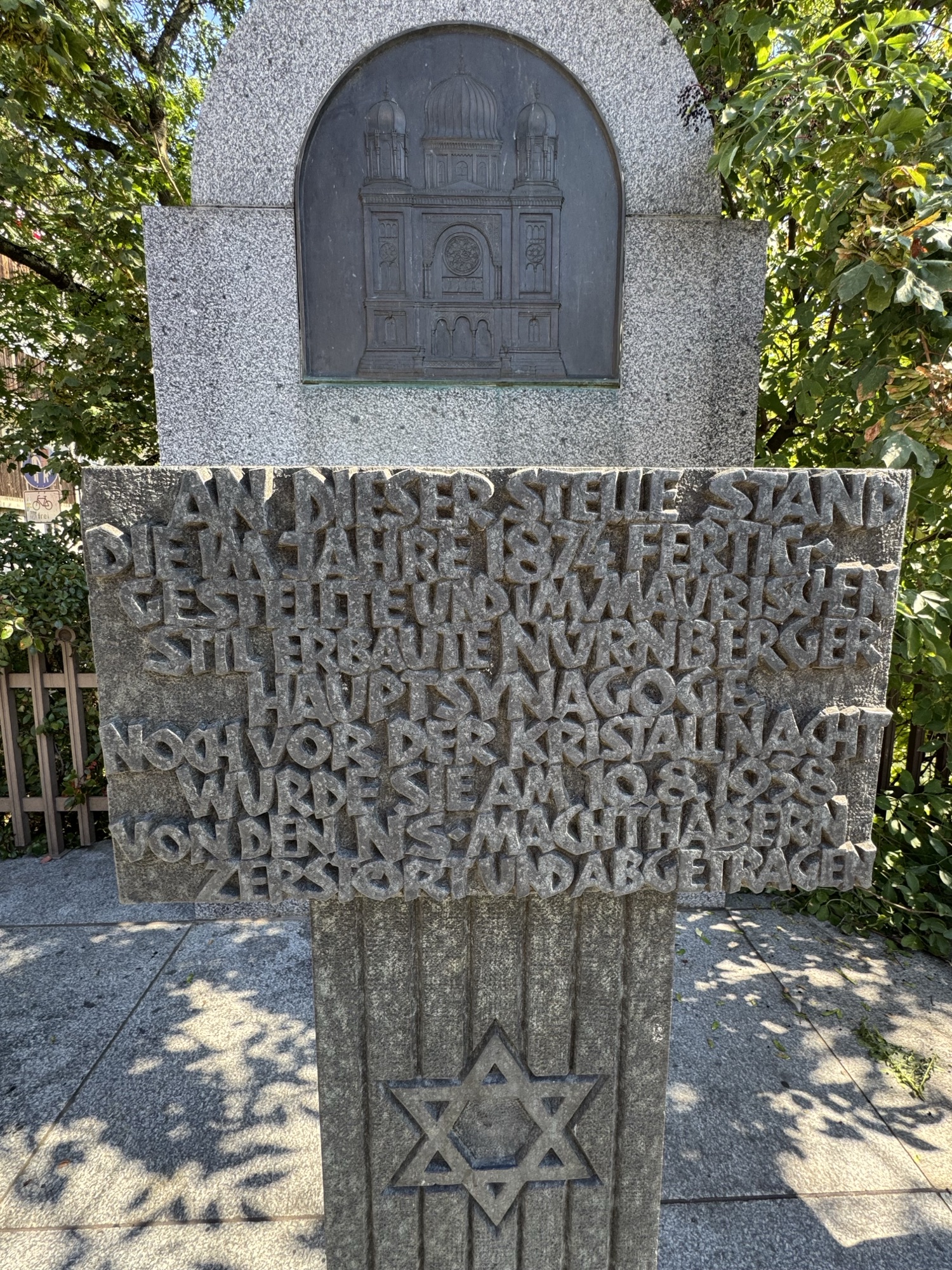
An dieser Stelle stand die im Jahr 1874 fertig gestellte und im maurischen Stil erbaute Nürnberg Haupt Synagoge Noch vor der kristallnacht wurde sie am 10.8.2938 von den N-S Machthaber zerstört und abgetragen
The Nuremberg Main Synagogue, completed in 1874 and built in the Moorish style, stood on this site.It was destroyed and demolished by the Nazi regime on August 10, 1938, before Kristallnacht.
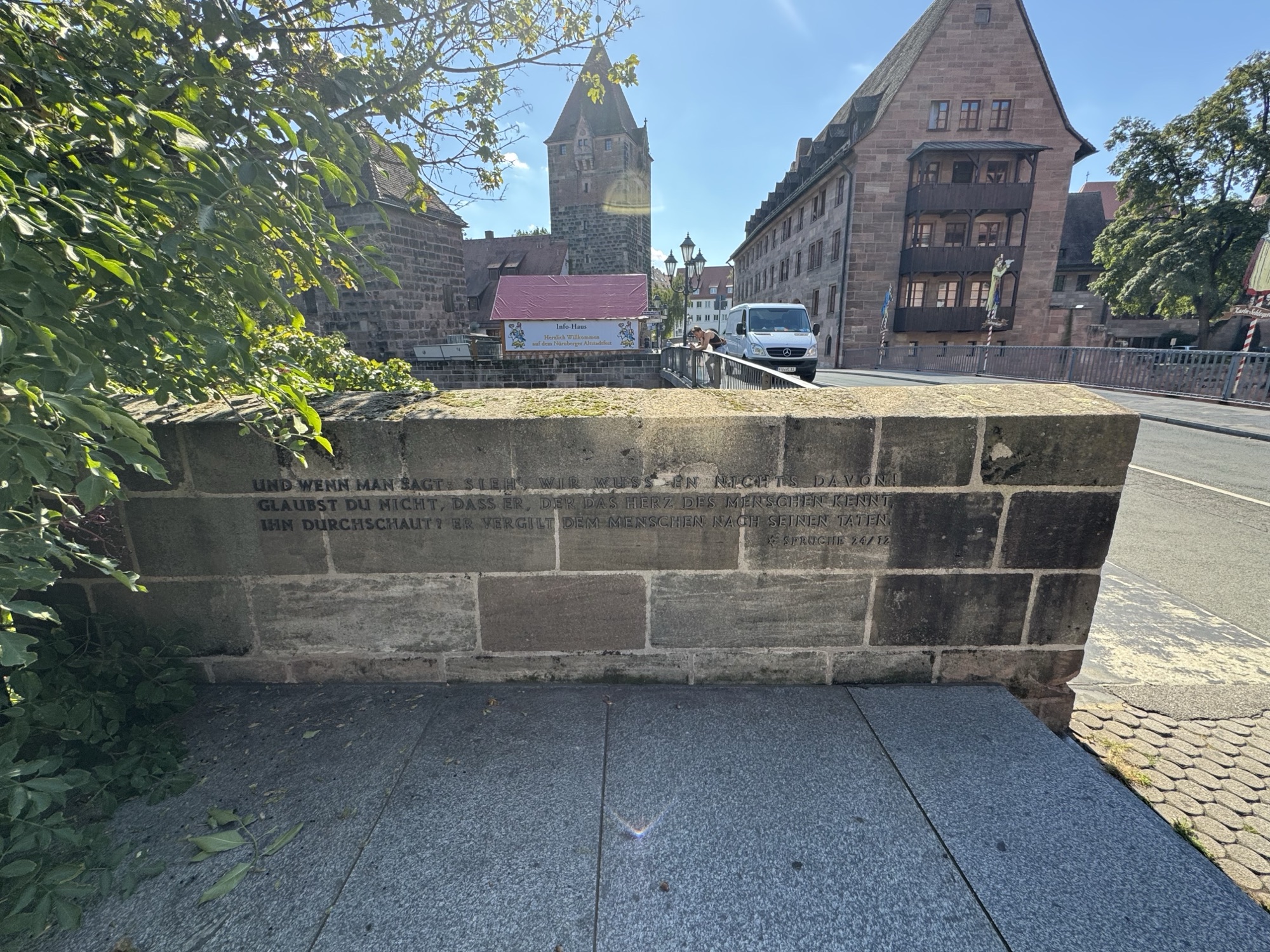
Beside the marker, on a low stone wall, are the words:
UND WENN MAN SAGT: SIEHWIR WUSS’N NICHTS DAVON!GLAUBST DU NICHT, DASS ER, DER DAS HERZ DES MENSCHEN KENNT, IHN DURCHSCHAUT? ER VERGILT DEM MENSCHEN NACH SEINEN TATEN. – SPRÜCHE 24/12
Translated:
AND IF YOU SAY: “LOOK, WE KNEW NOTHING OF THIS!” DO YOU NOT THINK THAT HE WHO KNOWS THE HUMAN HEART SEES THROUGH IT? HE REPAYS A PERSON ACCORDING TO THEIR DEEDS.
- PROVERBS 24:12
Why do we visit churches in every old European city? Because through them we can experience not only the history of the art , music, and architecture of the area, but also discover evidence of the best intentions and worst instincts and behaviours of that culture’s people.
My mother was raised a Protestant; originally a practicing Presbyterian, and then Lutheran after she and my dad married. In her 40s she turned to the Christian television evangelists, then later explored both Mormon and Seventh Day Adventist beliefs. In her 50s she learned to read and write Hebrew so that she could join a group of her Jewish friends in studying the Torah and the Old Testament. For many years before dementia robbed her of her curiosity, her “leisure” hours were spent in exploration of religious texts and tracts and, while she could, attending various churches’ services with acquaintances of multiple faiths. My dad, a lifelong Lutheran, was (not always quietly) frustrated with the whole thing.
She never managed to find a sense of peace.
The more I learn during our travels about what lengths people have gone to (and continue to go to) to vilify religions not their own, the more I understand my mom’s state of mind. After all, she grew up during one of the most intolerant times in recent history.
There is no doubt that on the surface Nuremberg is a lovely city. There is also no doubt that it has a complicated past.
I asked son#1 to write a few words about what we’d seen today. Here they are, in italics:
Mom and I discussed having me write a paragraph about today’s adventures while we were talking about the presence of a really wide variety of antisemitic images in and around the churches we viewed today. I think I was originally going to talk about the approach Germany seems to be taking with dealing with this history post-1945, which I think is generally a well-considered one of providing context and acknowledging guilt but not whitewashing the institutions at the centre of things, but honestly – that sums it up on that front.
What struck me today was that the full weight of history in Nuremberg is loaded onto a cycle of expulsion and limited welcoming of Jews. The edifices and monuments that stand in this city, the things that were rebuilt after the war, all have an explicit and acknowledged history of being built literally on top of Jewish history. From the synagogues being destroyed and churches built on top of them to the houses decorated with the gravestones of Jews as wall art or as stairs, it’s just everywhere. There are limited monuments and memorials to the Jewish people that lived here, and those are powerful, but it frankly doesn’t seem like nearly enough.
The Jews have been expelled from this city, either forced to leave their homes and property behind or outright killed, at least four times in the recorded history of the place. Once they were excluded from residence and citizenship by law for a period of three hundred and fifty years. And even now that they have legal rights and their persecution is being acknowledged, the amount of public art that simply demonizes them without context – because that was before the Nazis and that’s not the specific history currently being apologized for – is egregious.
The institutions that orchestrated the persecution of the Jews still hold money and power and still have a central place in society. I agree that simply outlawing them or tearing down the statues isn’t the correct course of action – we must learn from history in order to avoid repeating it – but my feeling after today is that so much more needs to be done to establish understanding in the minds of the people of the depth and pervading influence of antisemitism on modern society in order to move towards a just future. I don’t know whether hoping for that is naive or just optimistic.
Yes, we also had a delicious dinner, and spent much of our evening discussing the day.
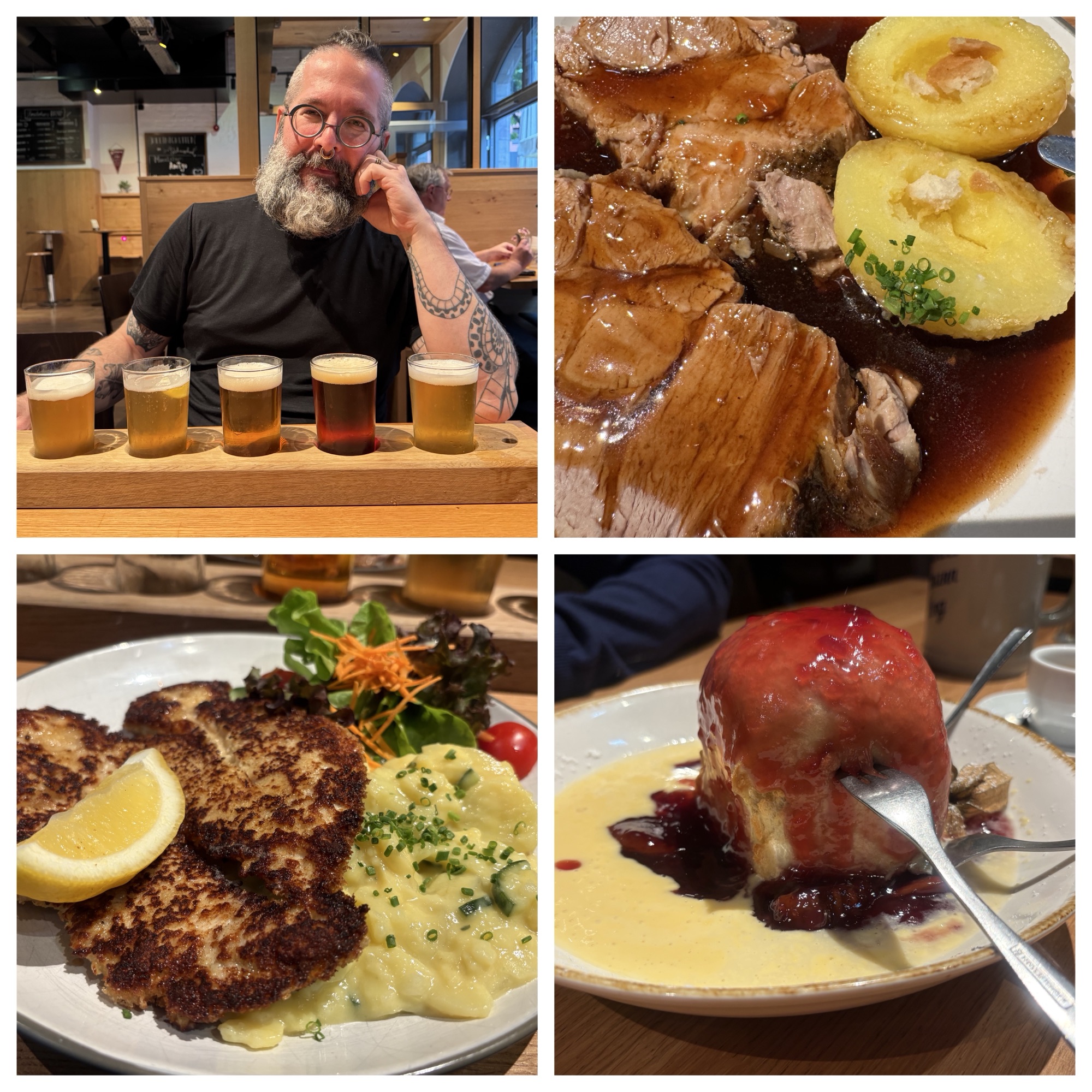
Bottom: chicken schnitzel with potato salad; warm Dampfnudel (steamed yeast dumpling) with vanilla sauce and plum compote and glaze;
Addendum: Next July, Ted and I are taking part in the week-long “Discover Week 2027 – Encounter World Religions” course in Toronto. We decided that, having toured so many incredible places of worship around the world, we’d like to learn more about the commonalities that should bring us together instead of separating us. As completely secular people, I expect it to be eye-opening and maybe even enriching.


I so love following your blog. and have been for years. As a Jew I so appreciate your caring and concern for the history of the Jews. They say we should never forget the Holocaust, or 9/11 for that matter, but as time goes by and new generations come it seems we do forget. History does seem to repeat itself. Safe travels.
LikeLiked by 1 person
At the very least I can make sure my own circle never forgets. Today made me quite sad. I continue to hope that someday humans will learn to treat each other with kindness and respect.
LikeLiked by 1 person