Ted and I have been here twice, in 2013 and again in 2020 (Episode 87 and Episode 306).
My mother was here sometime between 1946 and 1948, and spoke often about how wonderful it was. I think it was her most positive post-war memory; the idea that at least most of something beautiful had survived.
Months ago I booked the Classic Plus ticket giving us admission to the grounds, an audio tour of the palace, entry to the Privy Garden and orangerie, access to the top of the Gloriette, and entry to the zoo, the huge glass palm house, and the desert house. Six and one half hours and 15,000 steps later we’d done it all. There were certainly more paths we could have taken, and more statues we could have admired, but I think we both felt we’d done enough.
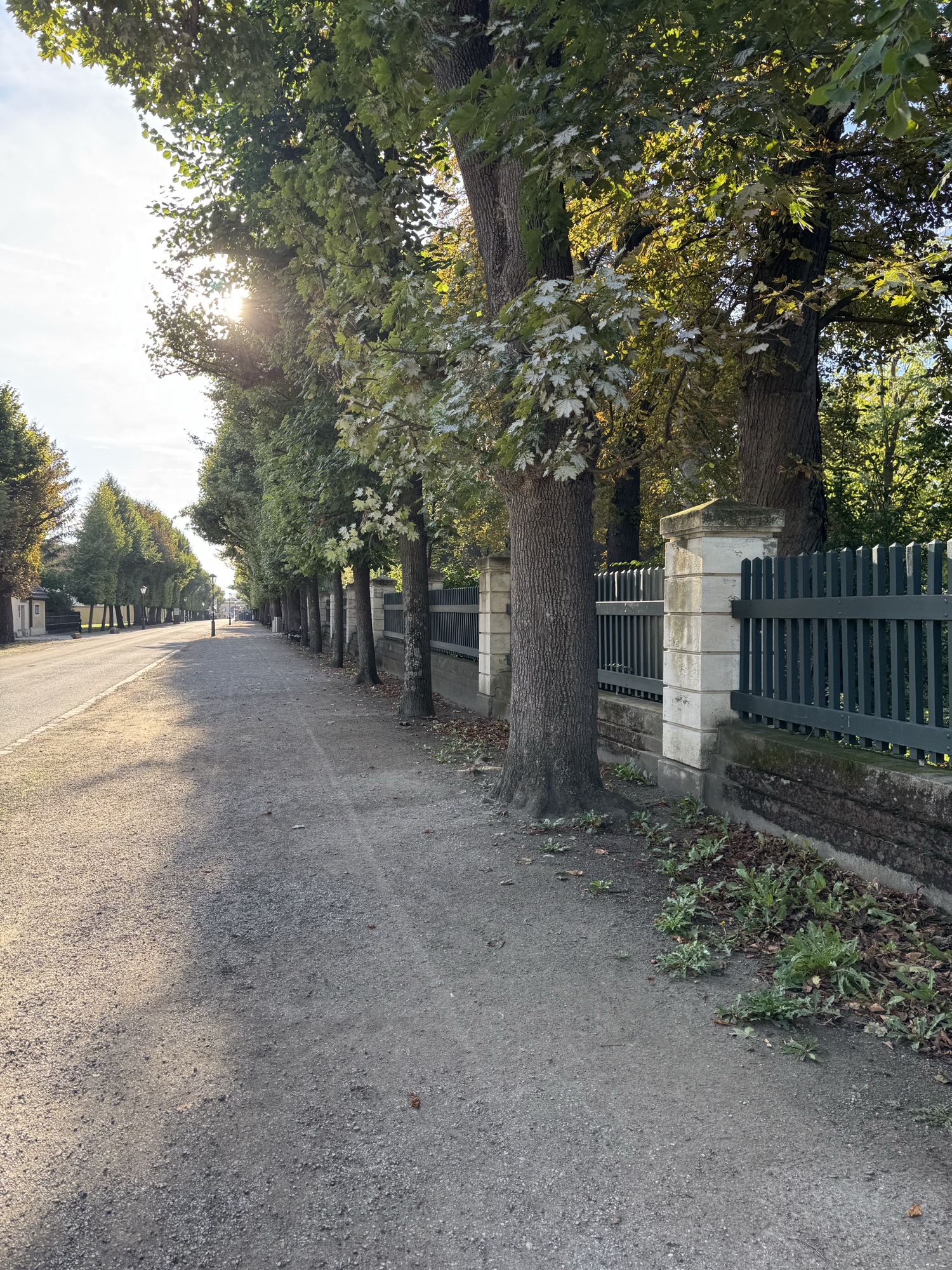
It was just a short stroll to the front gates along a tree-lined portion of the road across from our hotel.
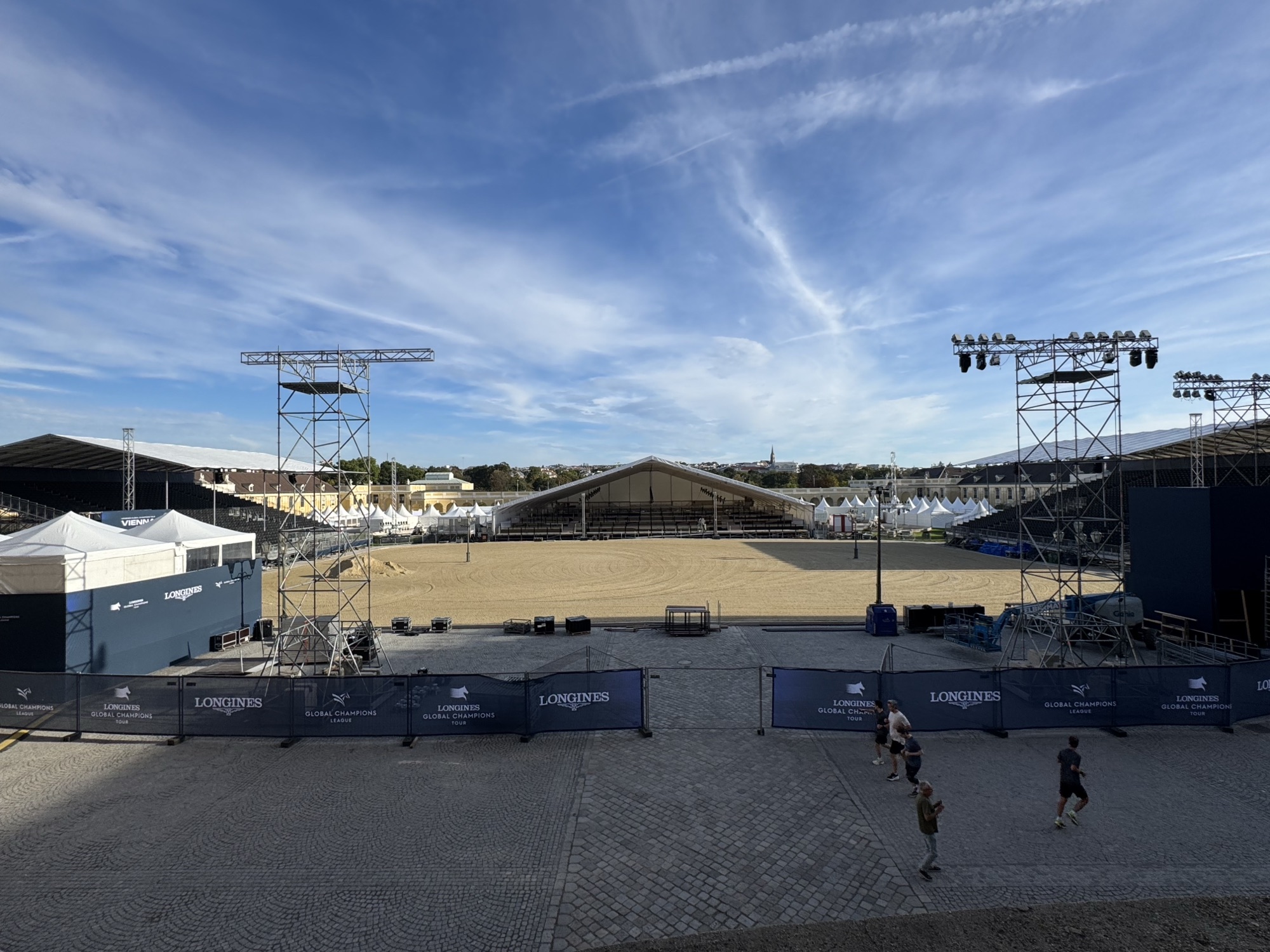
The usual huge courtyard entrance to the palace was not accessible. In fact, the cobblestones had been covered with a deep layer of sand, and three huge grandstands set up for the upcoming Longines Global Champions Tour, where top international riders competed against each other in high-caliber show jumping events and a 4-star dressage tournament.

The palace tour was very different from the one Ted and I did over a decade ago. It now begins with a history of the palace and its inhabitants, done using a combination of audio guide and projections. Once we entered the apartments and state rooms, the other difference was that non-flash photography was allowed, so #1 took photos as we went through the 30 rooms open to tour. Unfortunately, I don’t remember much about what each one was now that I’m looking back at room after room of gilded rococo.
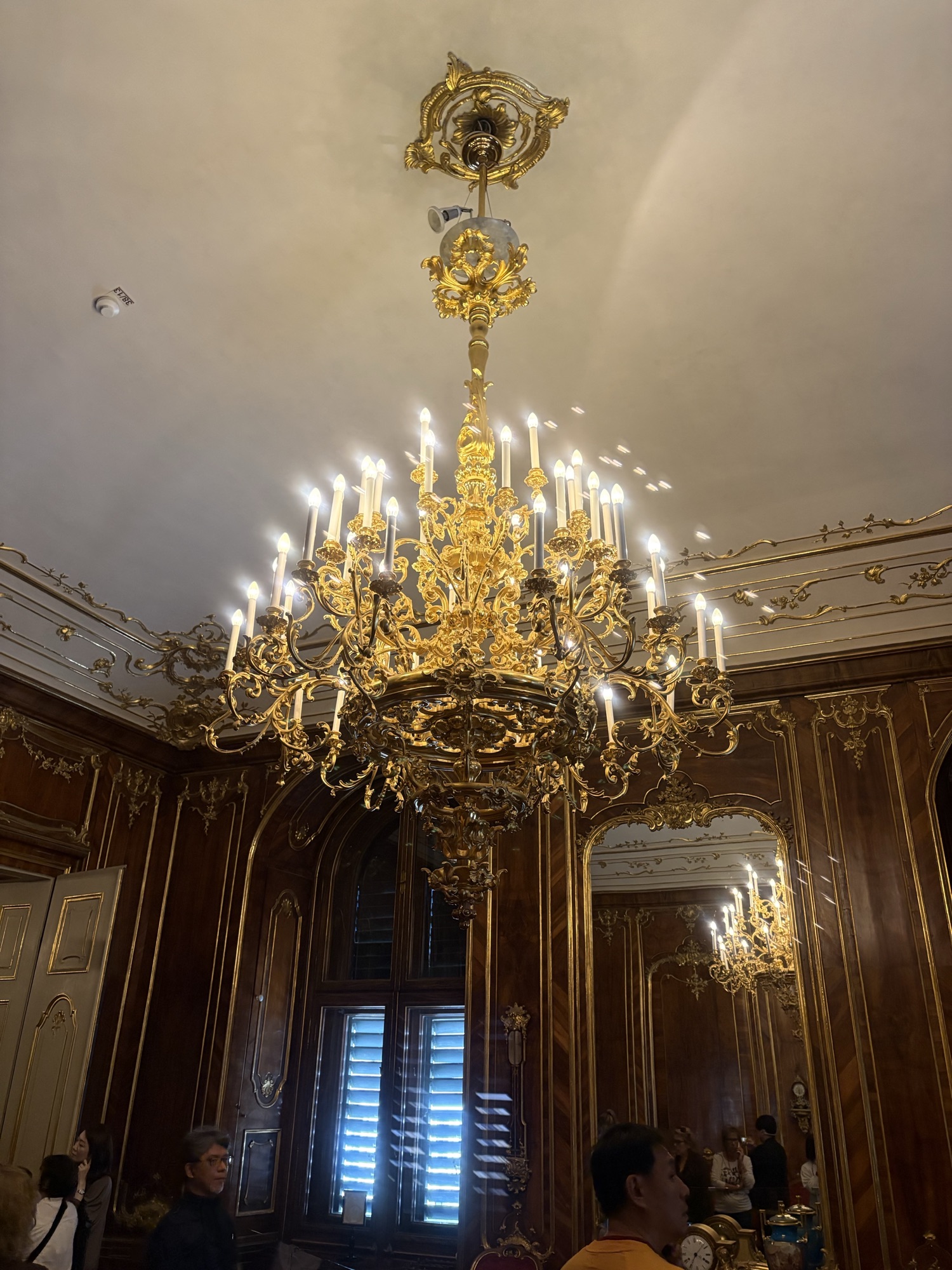
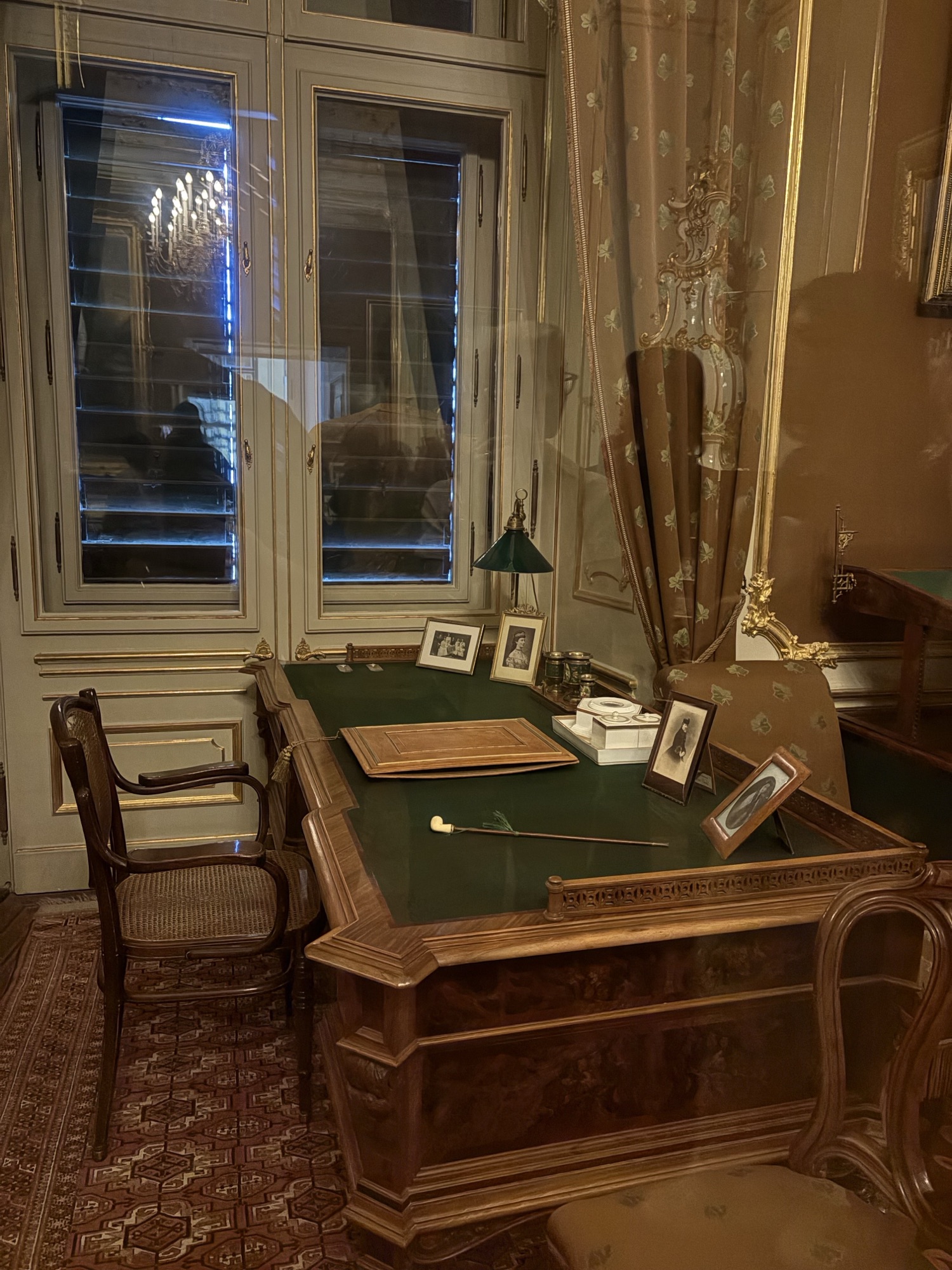
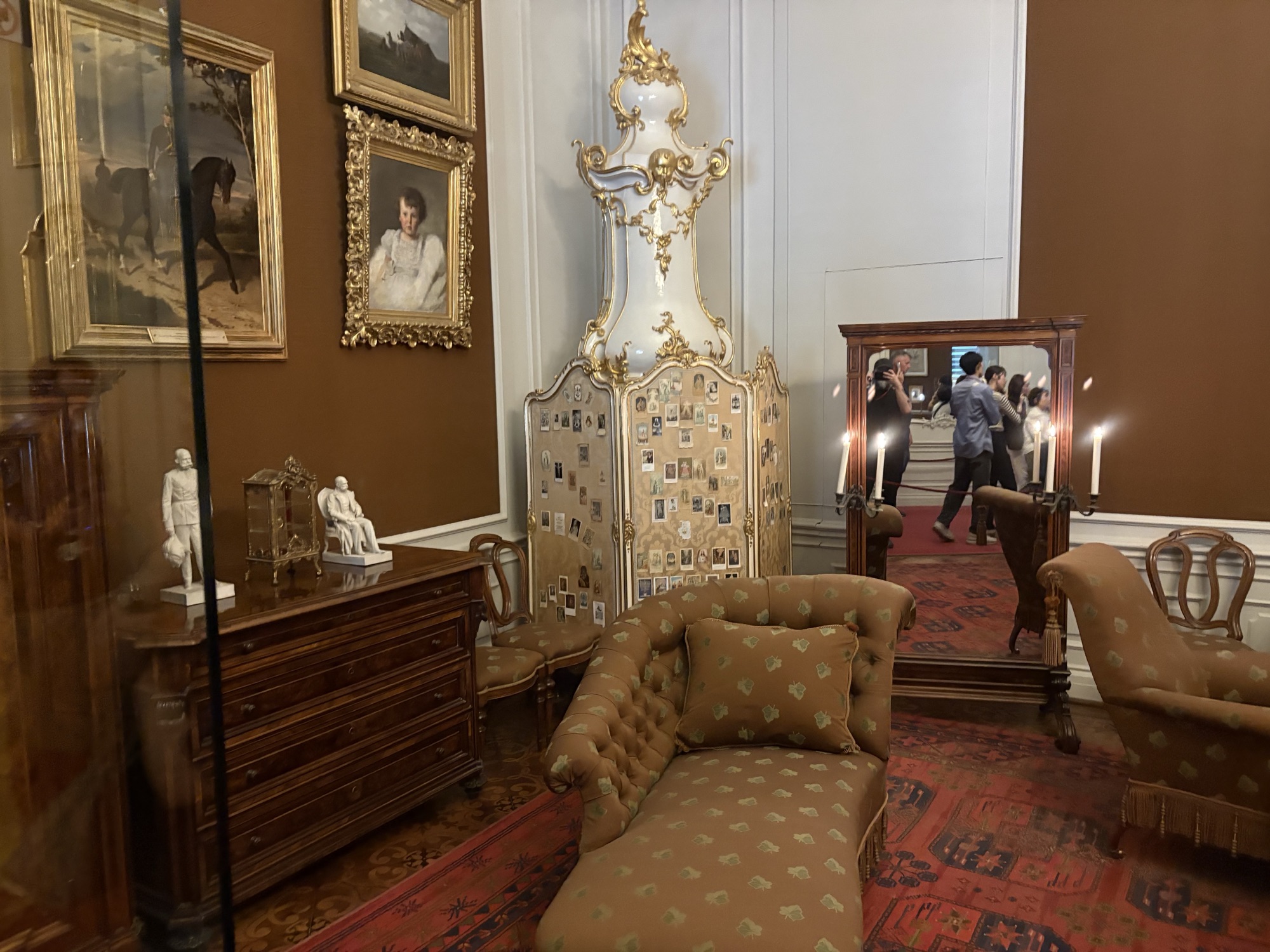
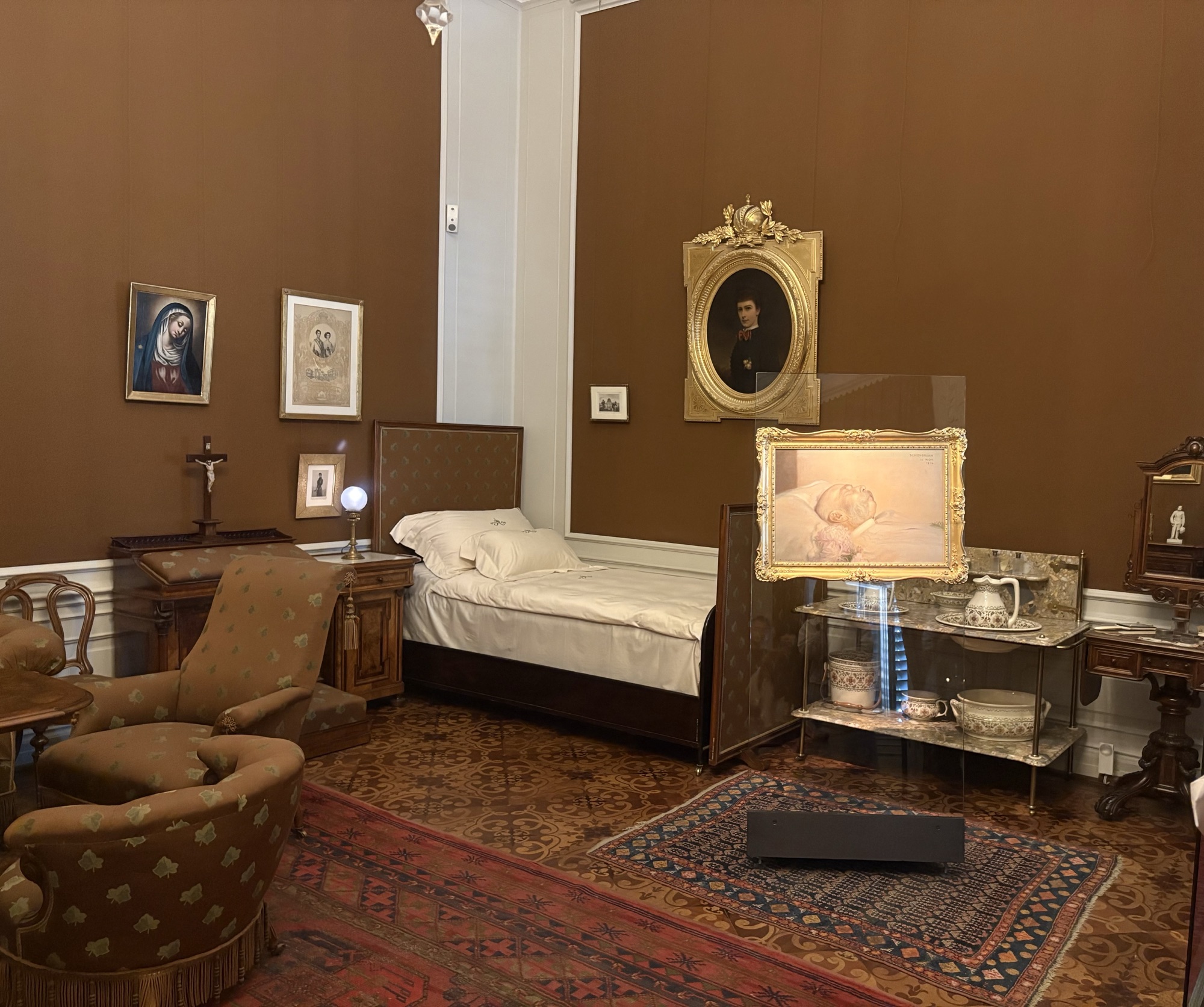
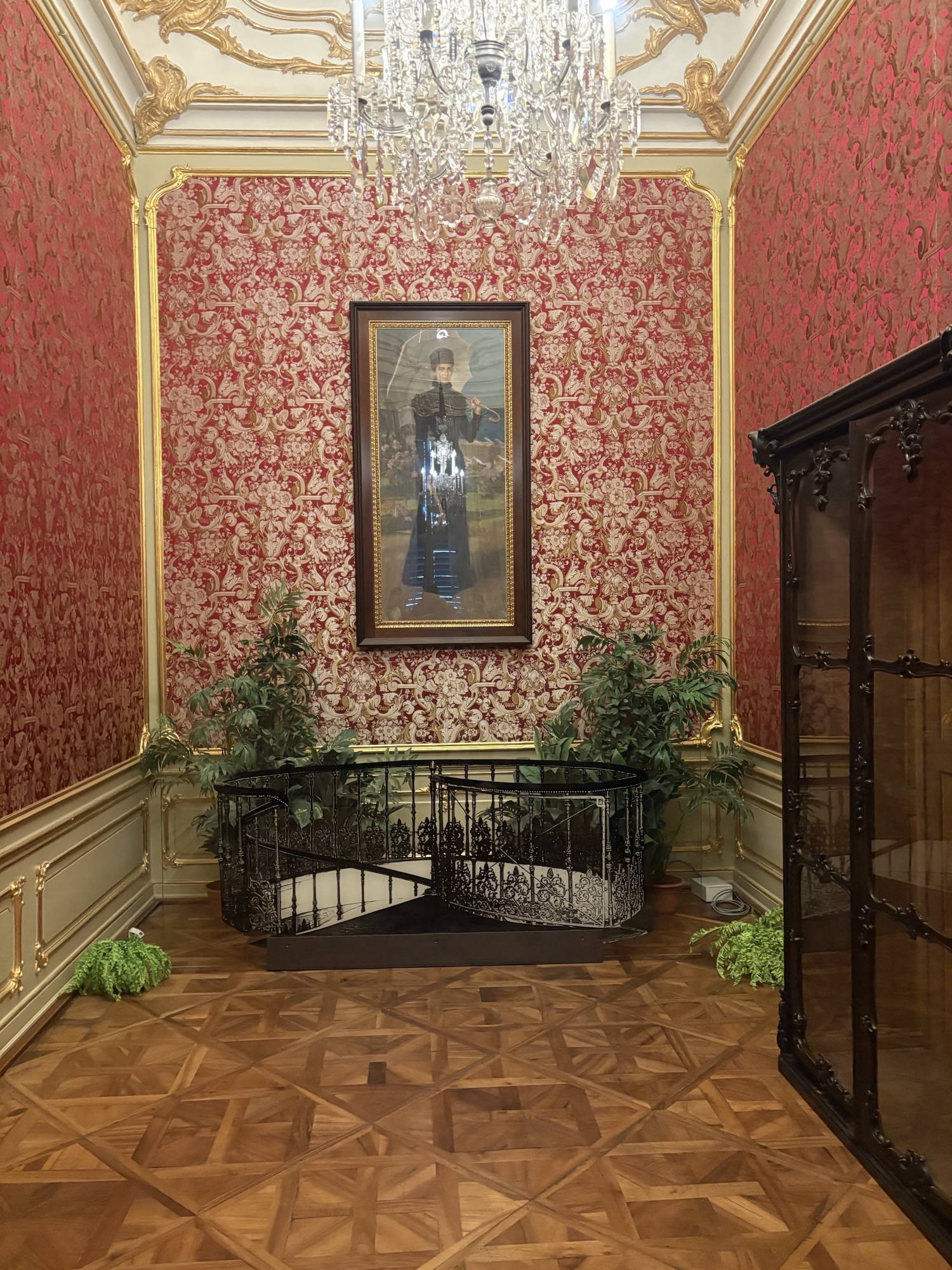
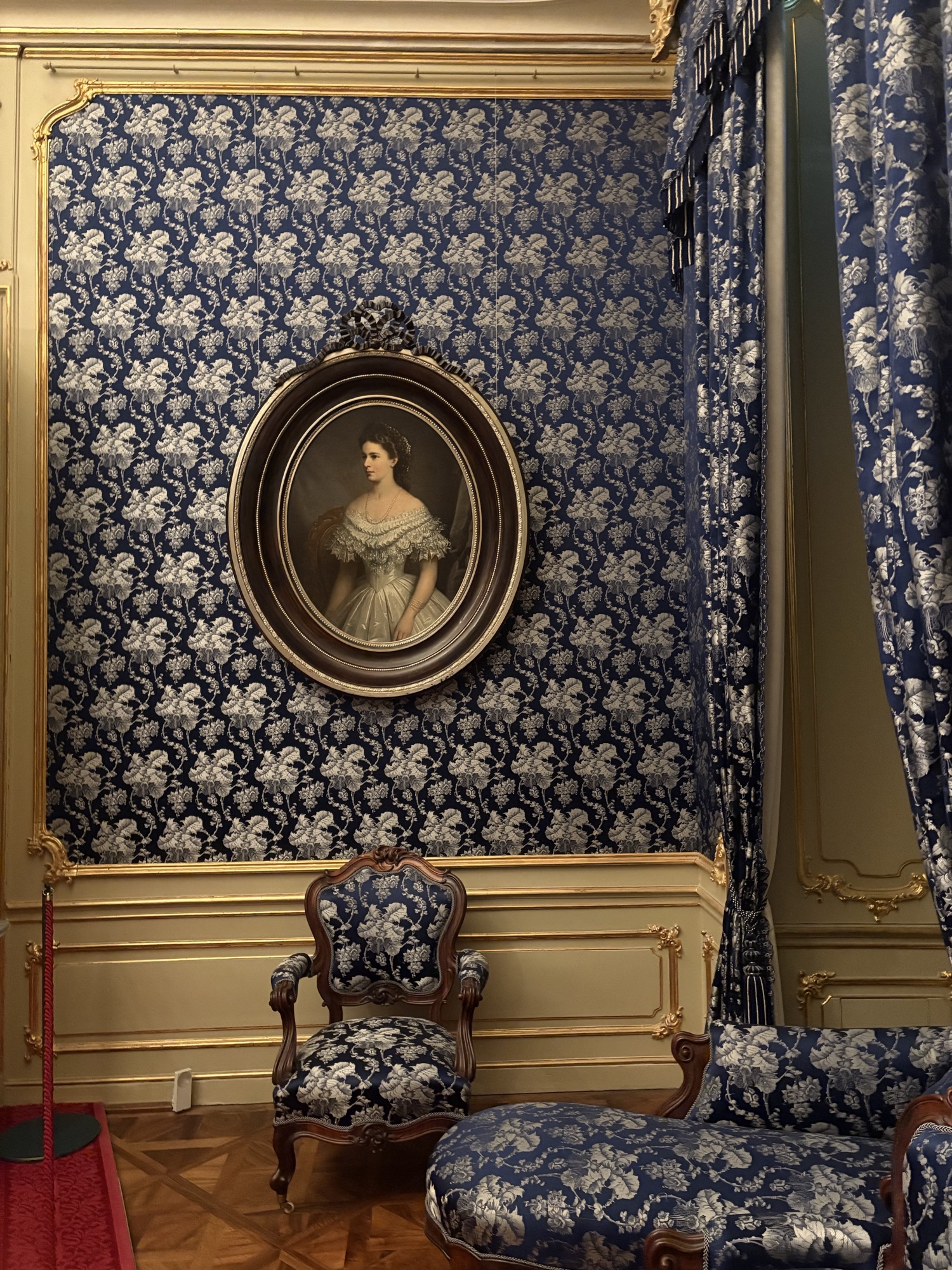
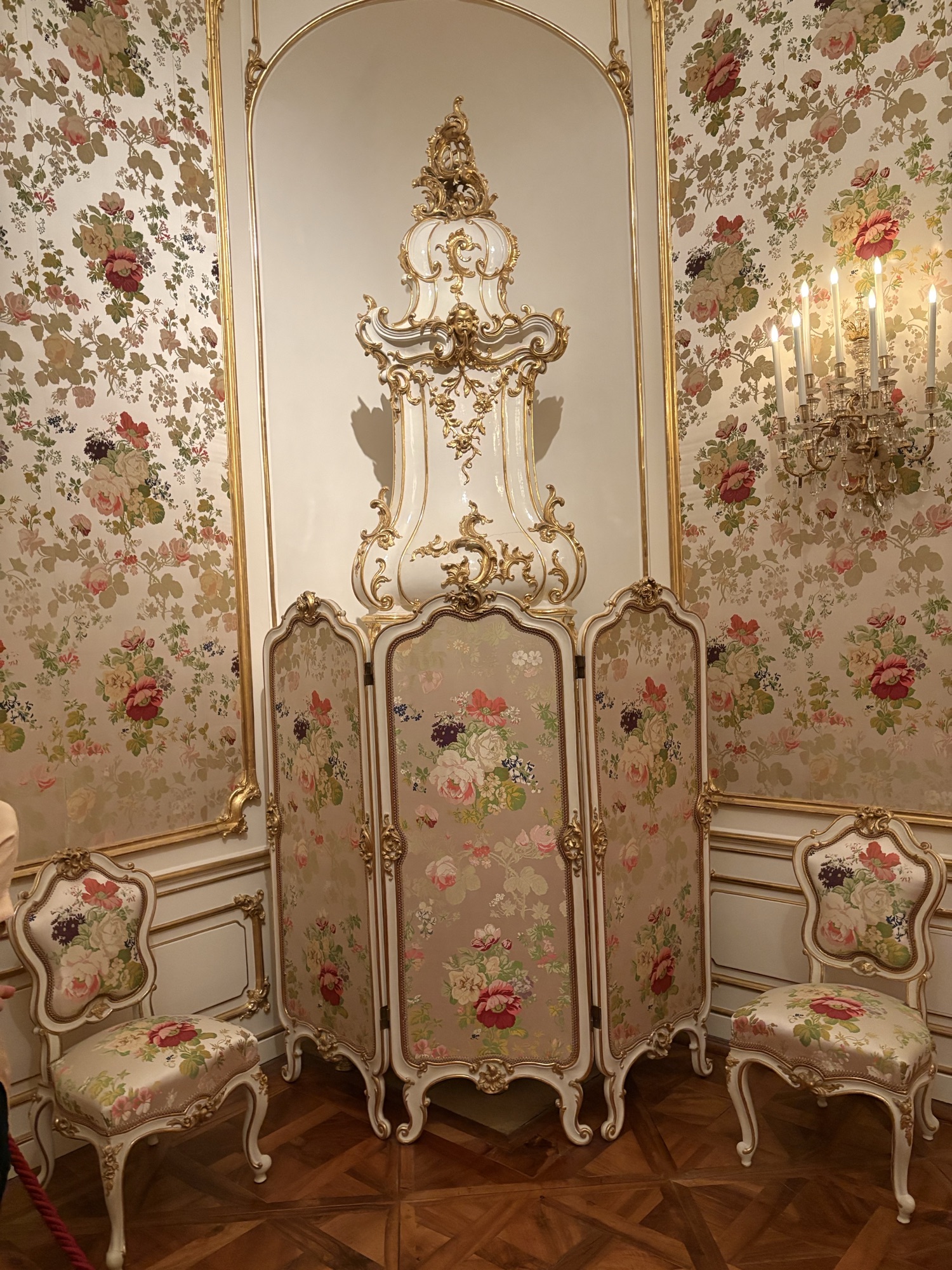
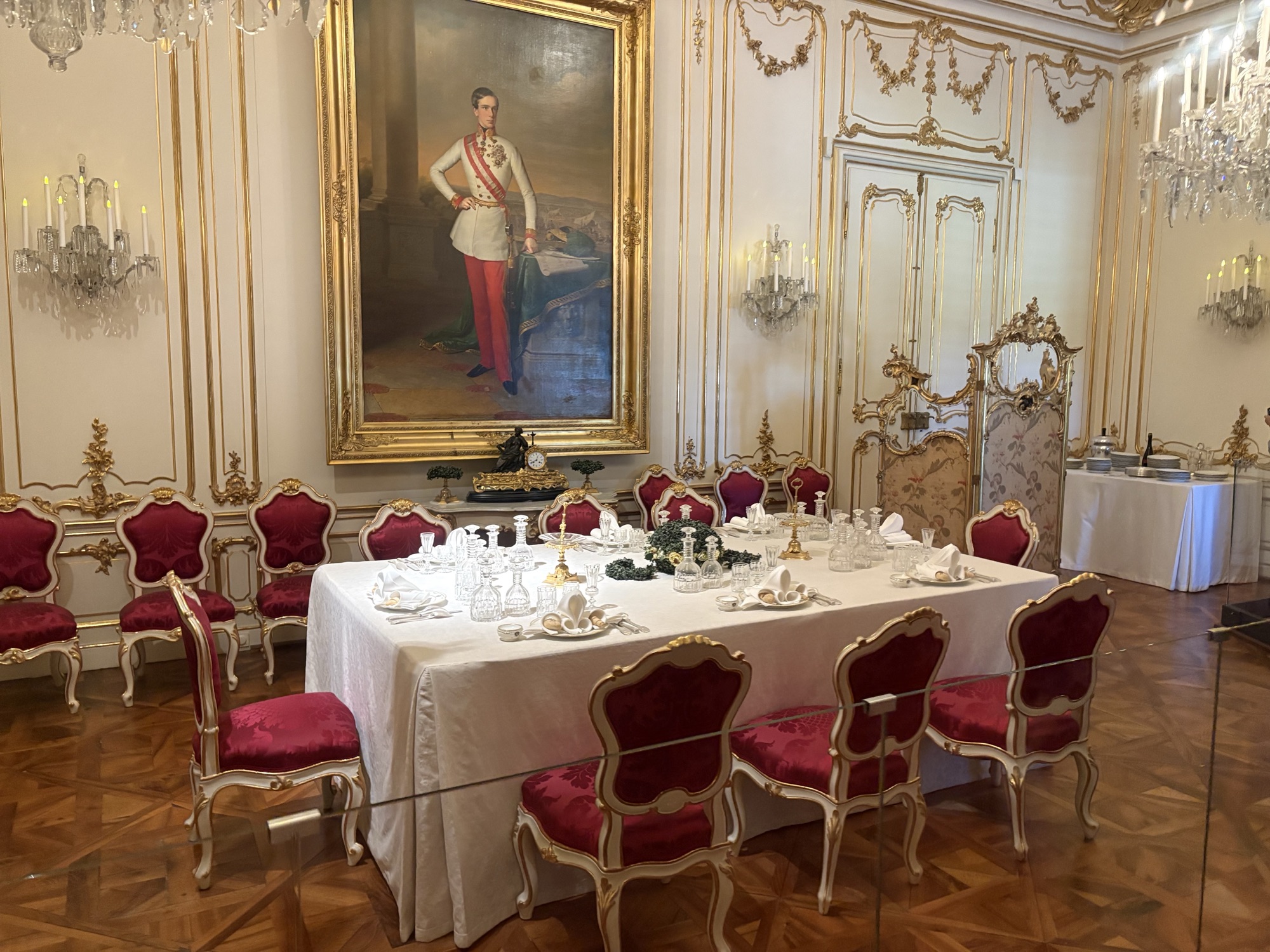
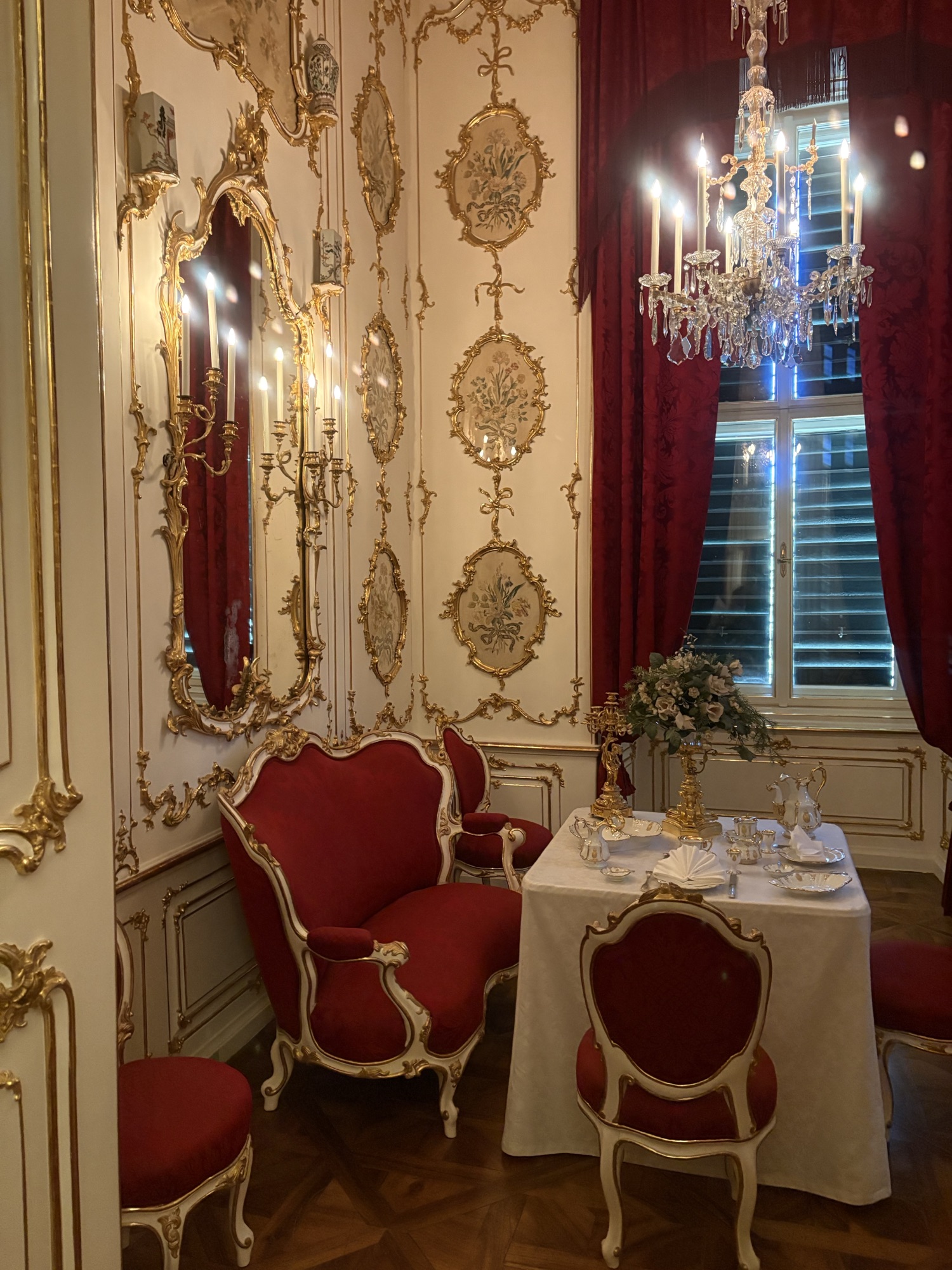
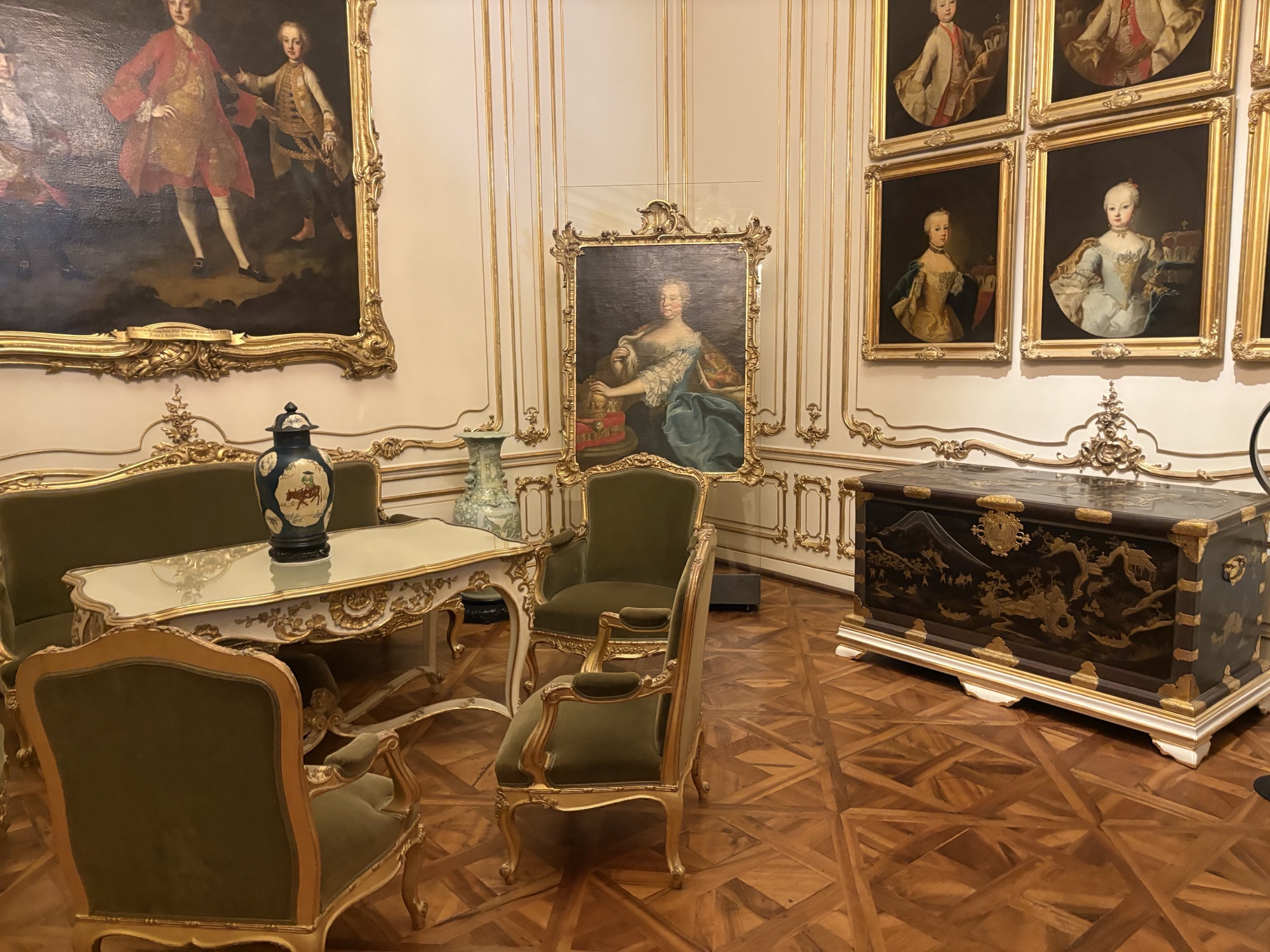
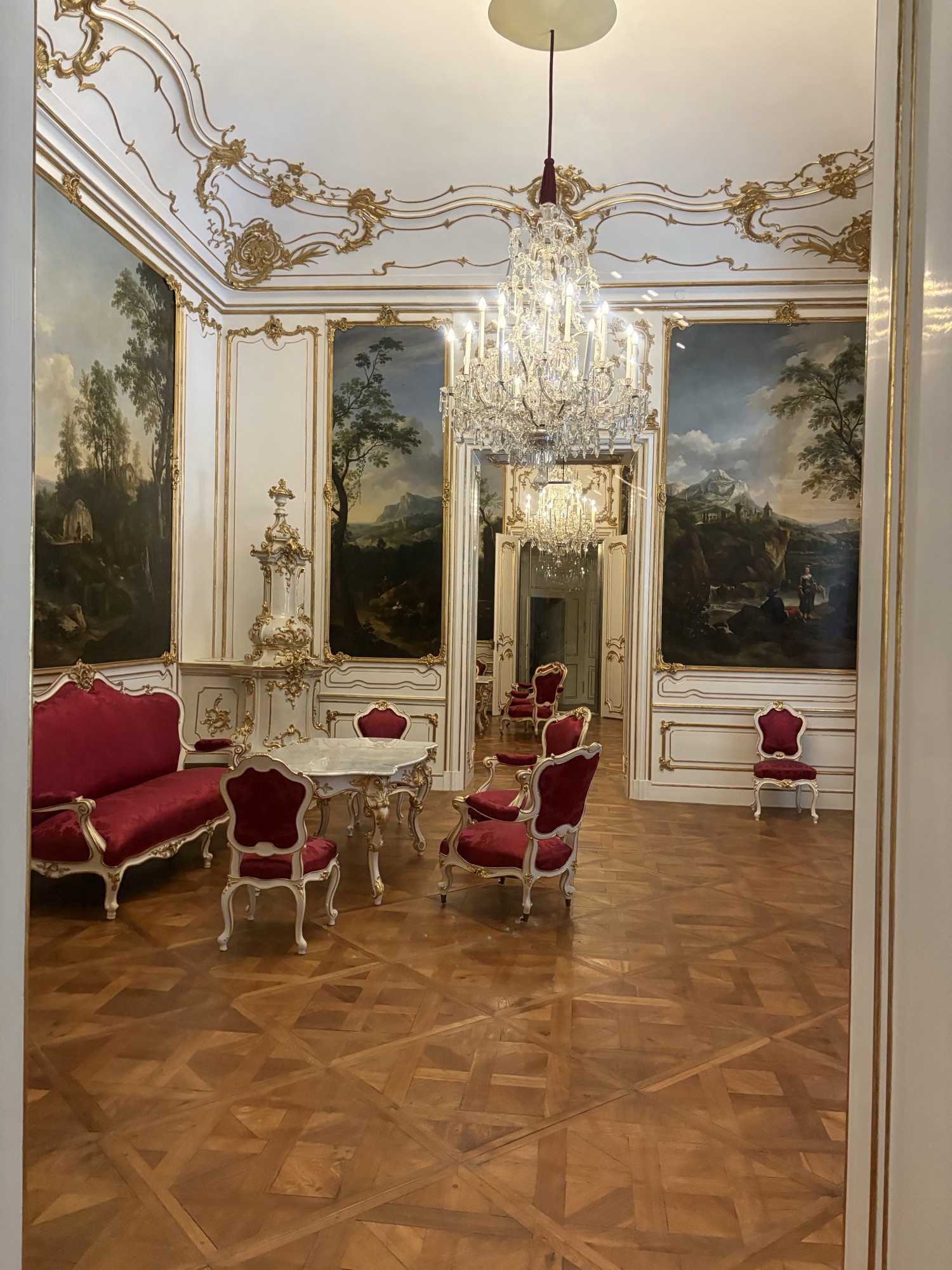
The palace was quite crowded with a couple of guided tour groups in the rooms at the same time as we were, so it was difficult to take pictures over them. Son #1 did an amazing job!
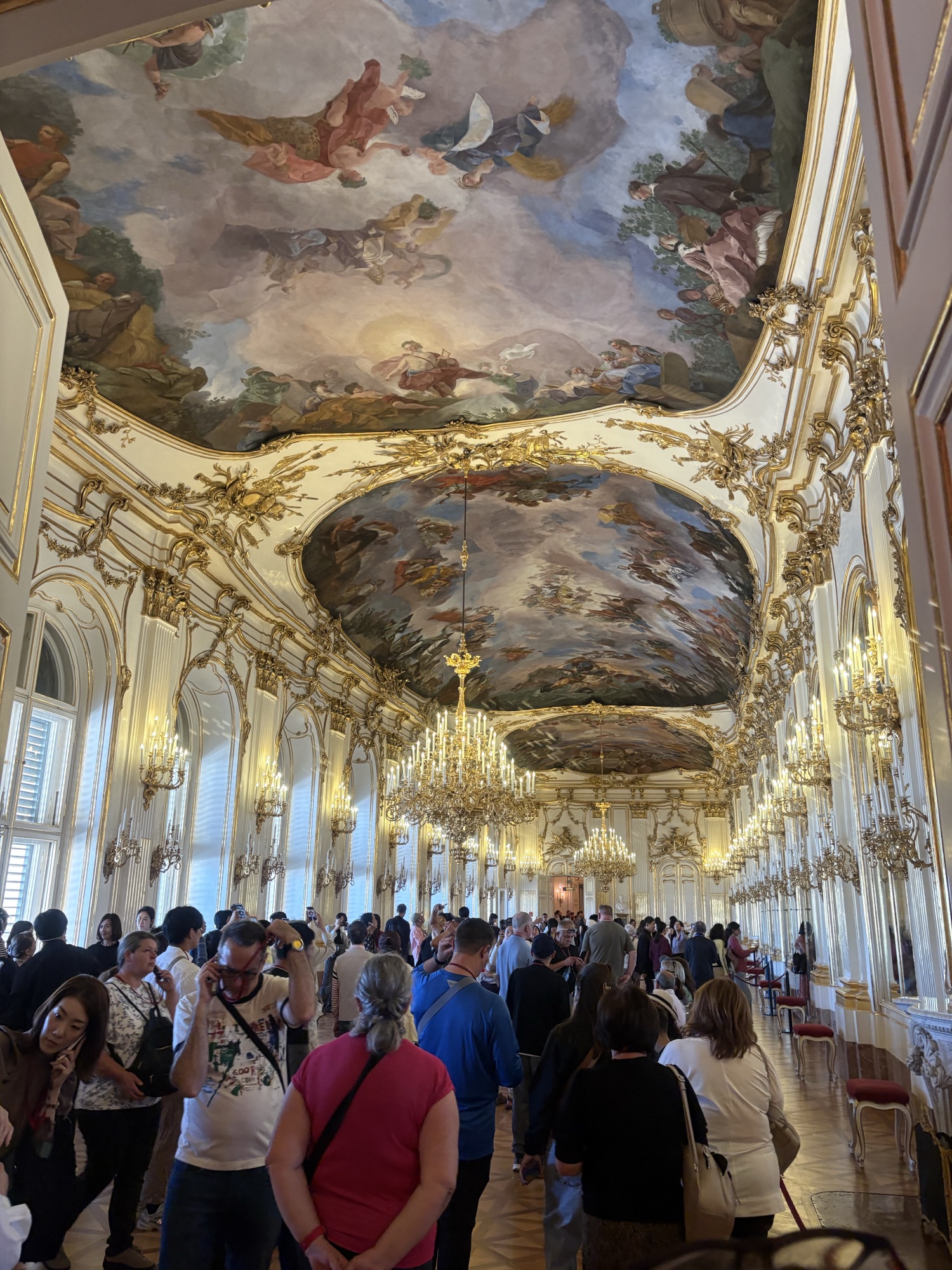
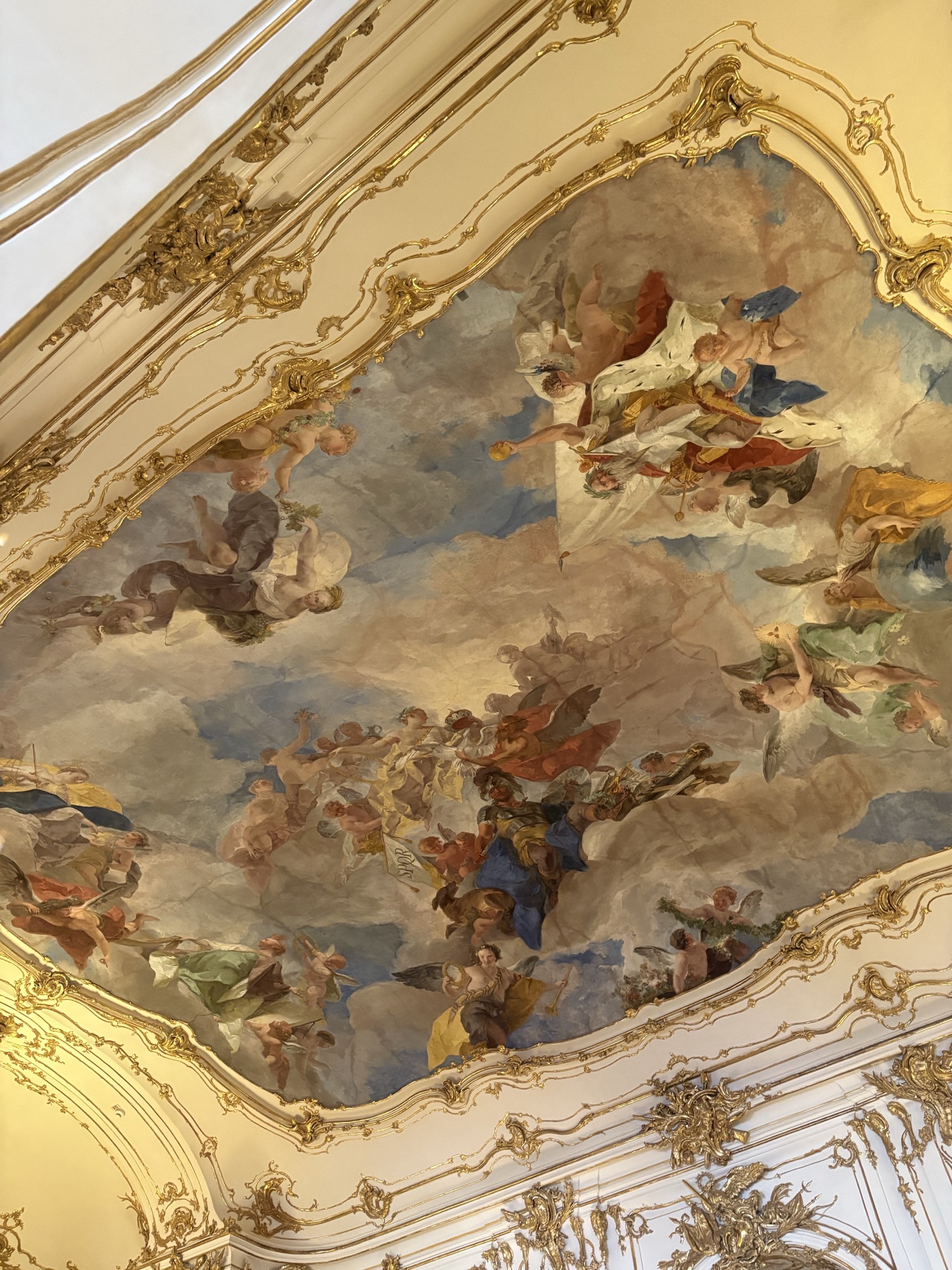
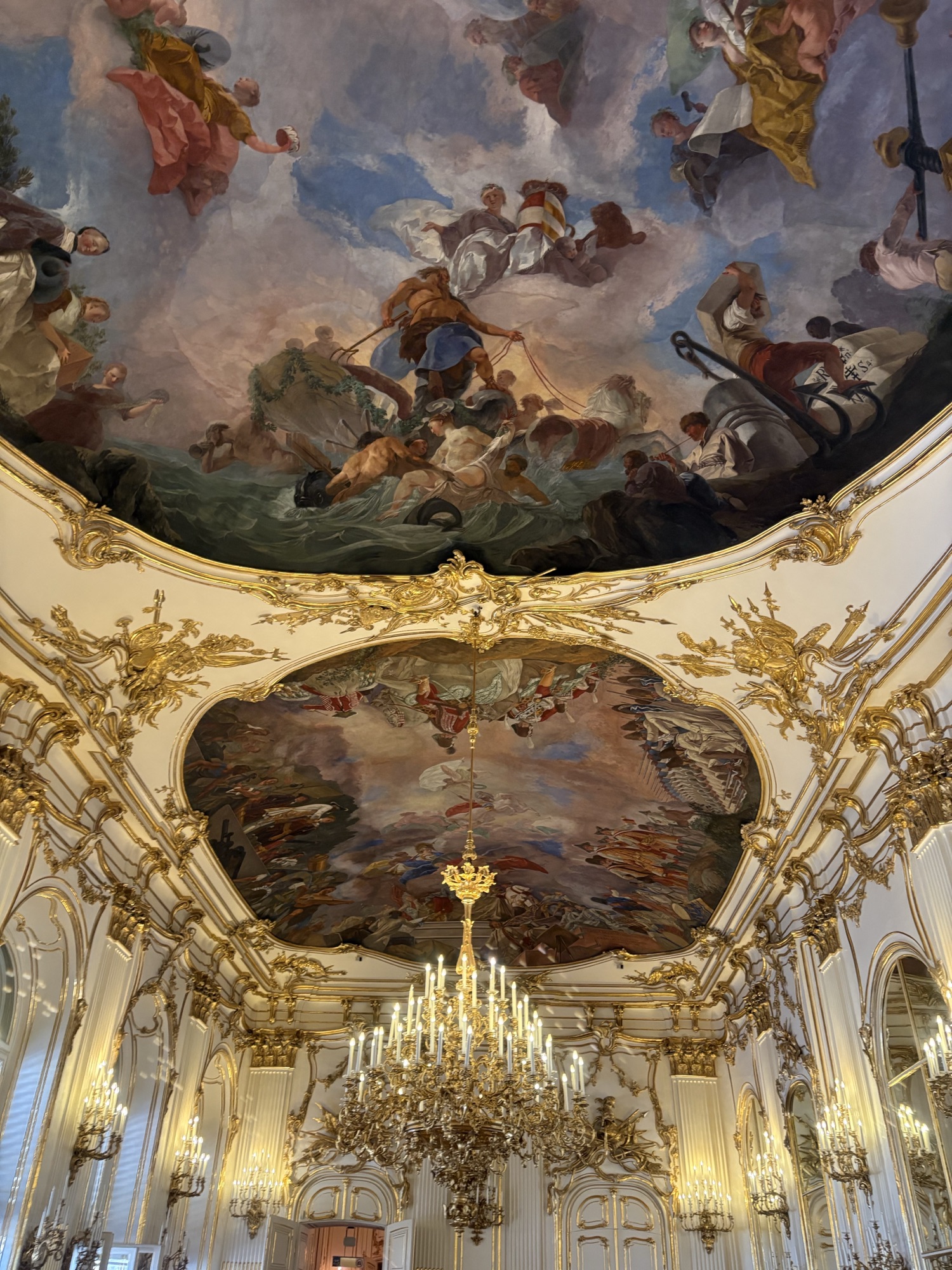
Then came the wow moment: the ballroom with its myriad chandeliers and Italian frescoed ceiling depicting Empress Maria Theresa and allegories of all the Habsburg territories.
One of the next rooms had hand-painted Chinese rice paper wall coverings.
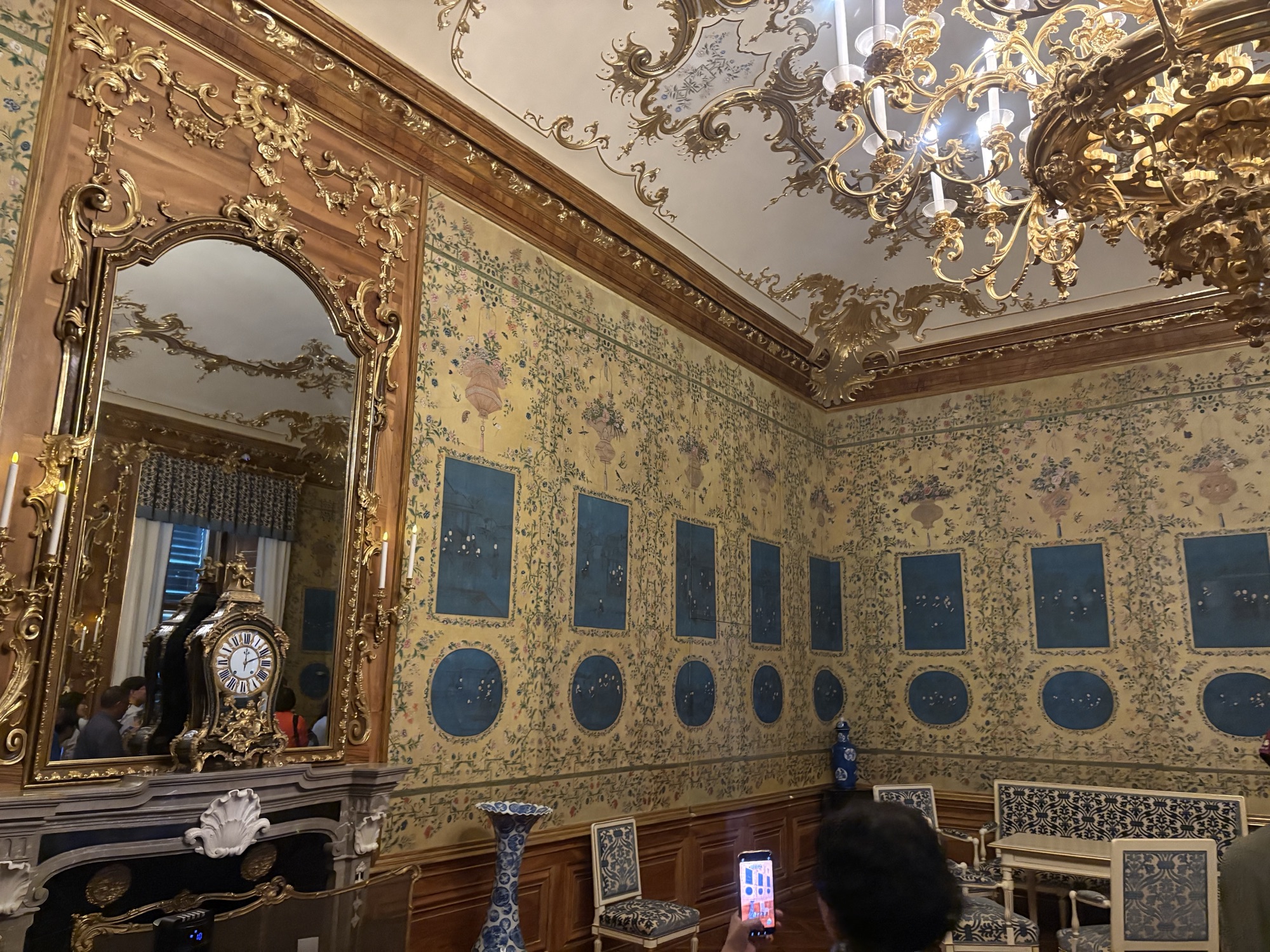
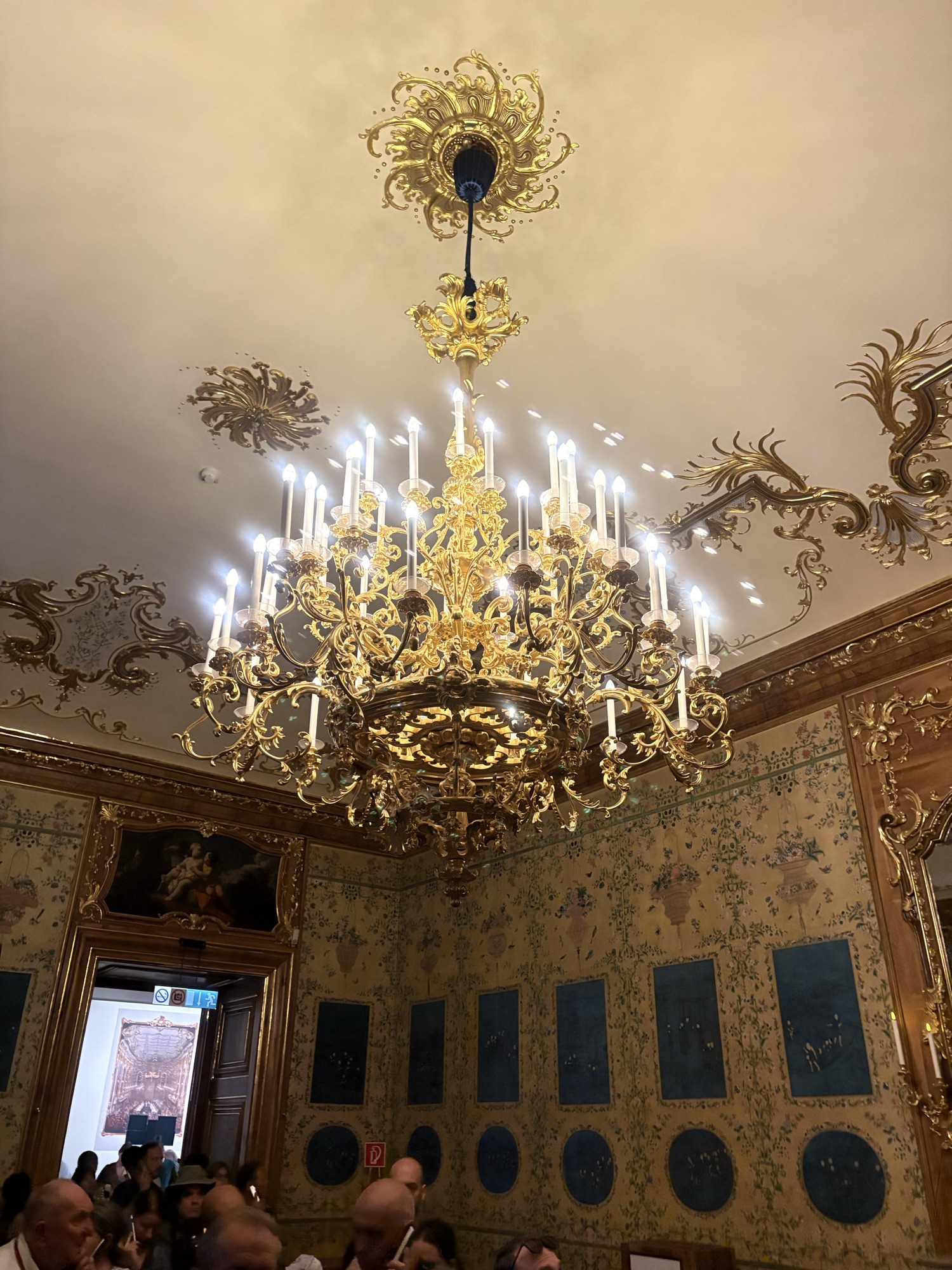
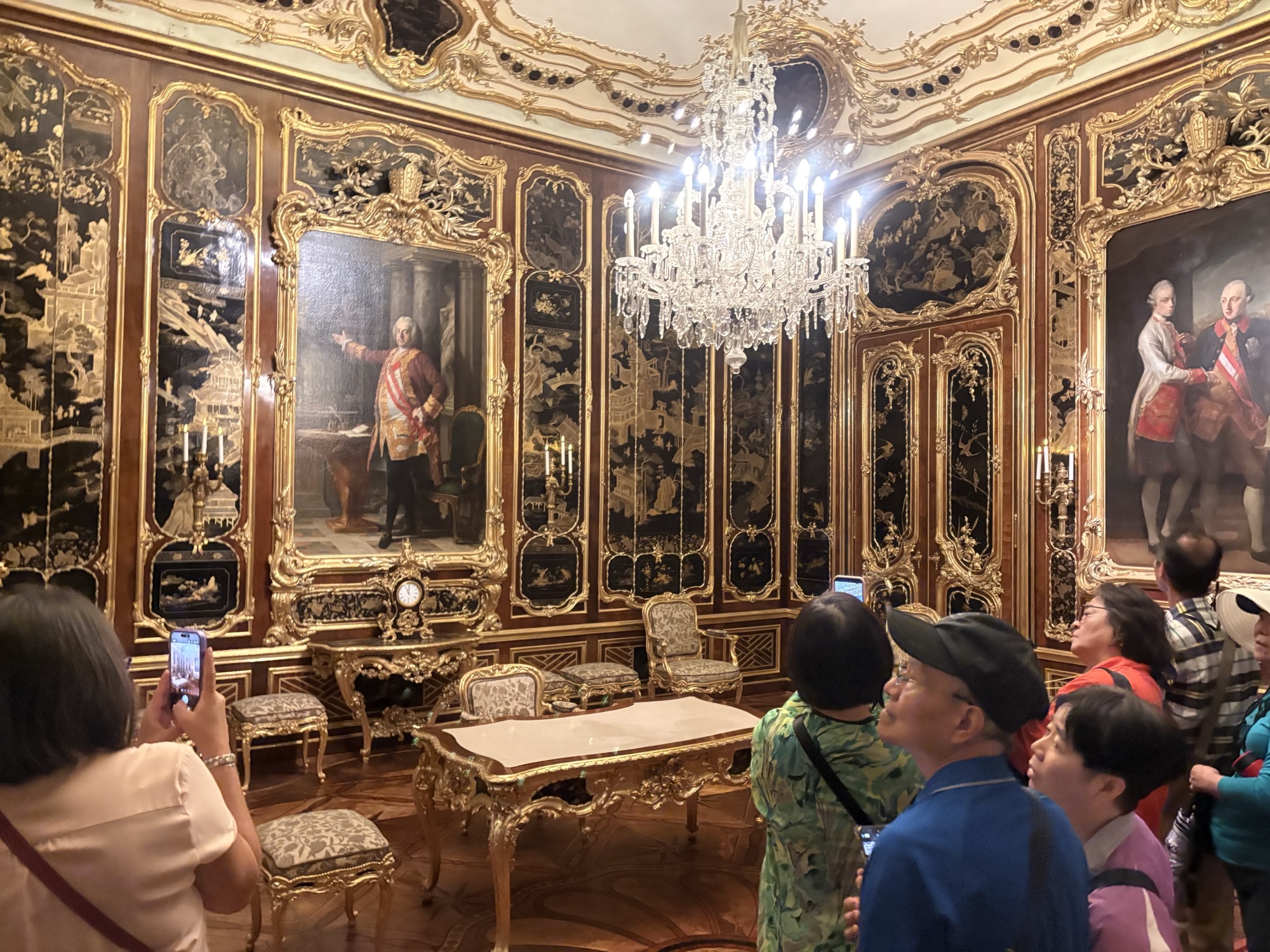
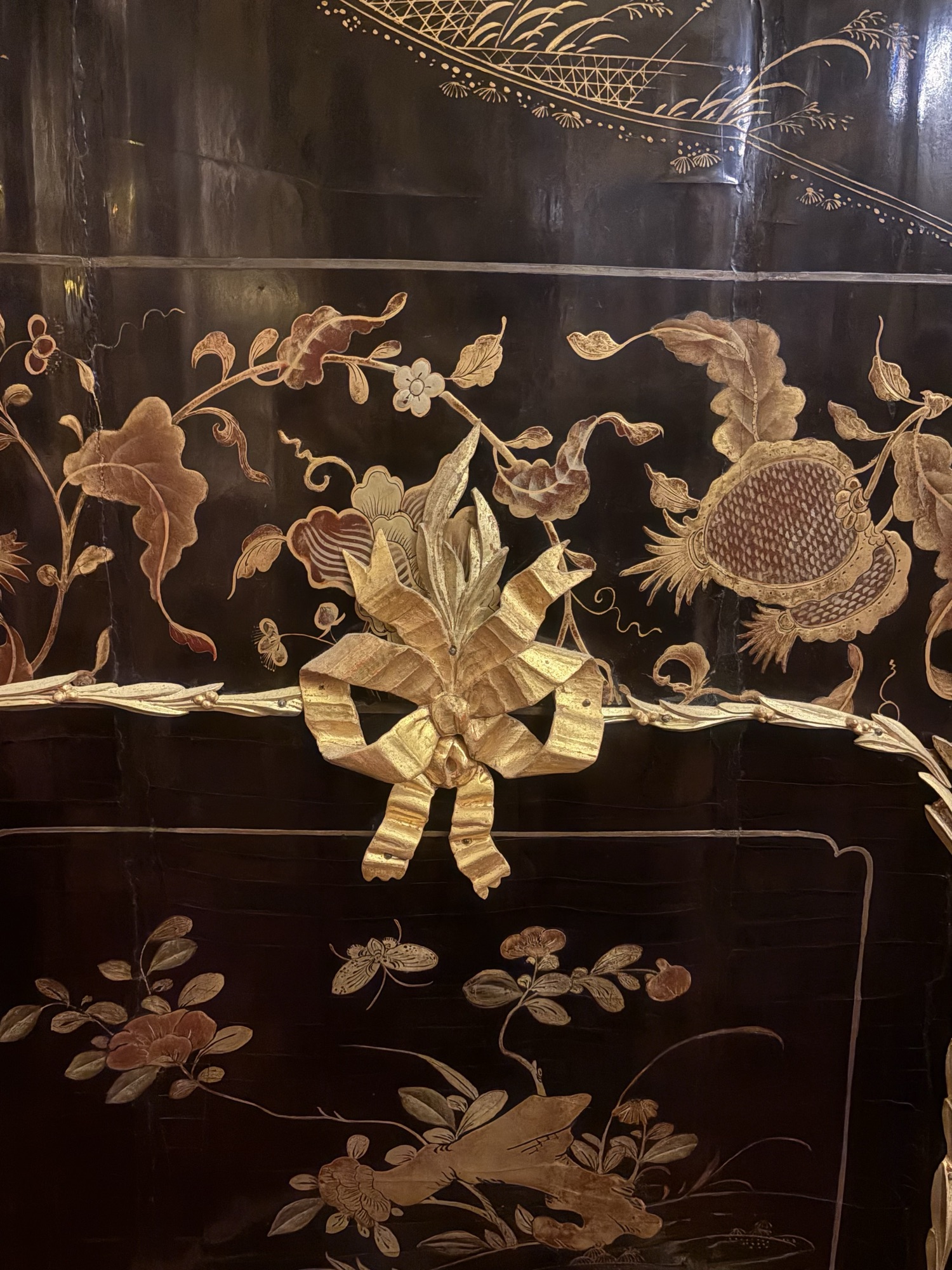
Another featured Chinese lacquer with gilding.
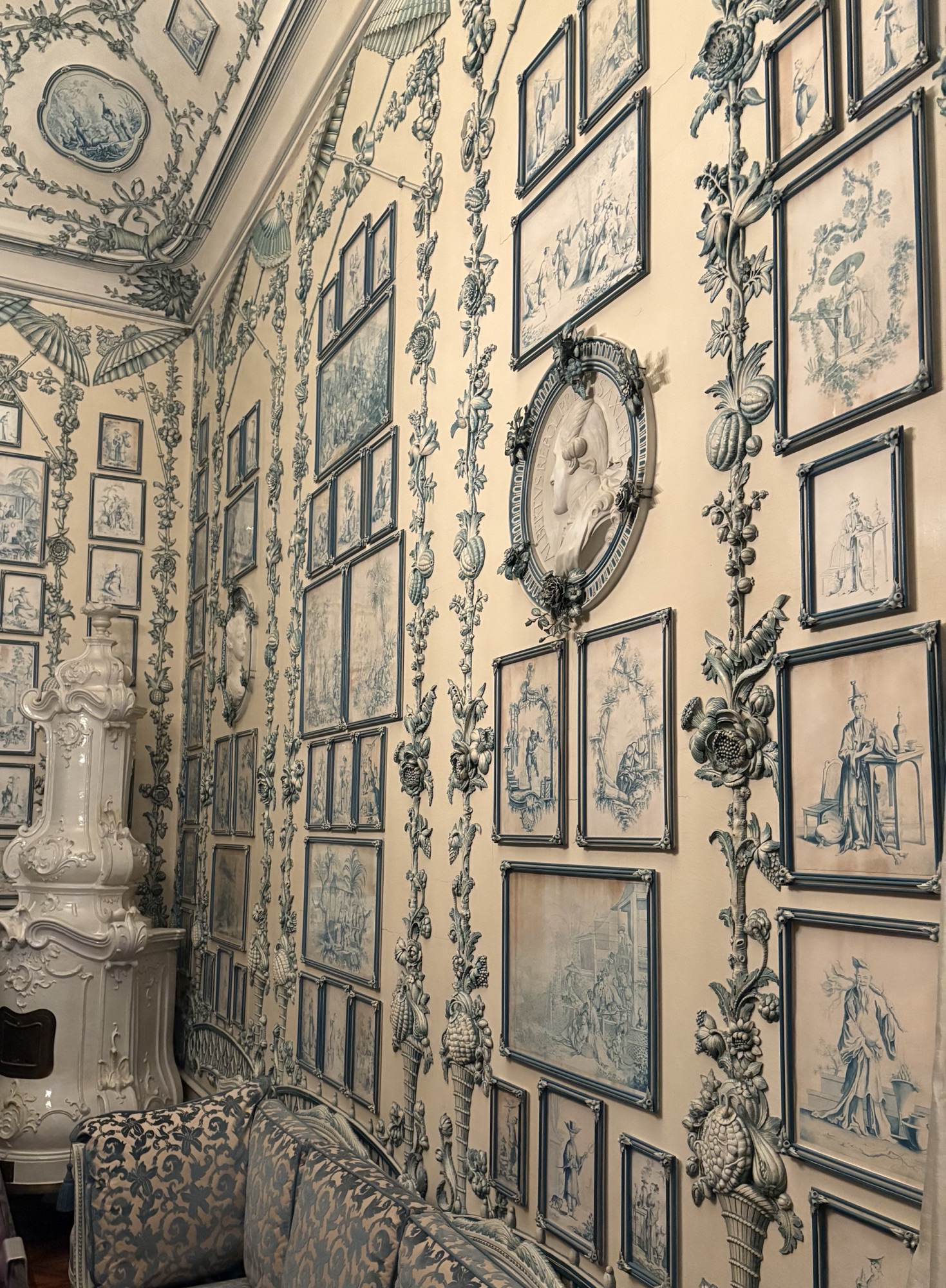
Then there was one with hand painted medallions in a blue that almost made the room look as if it were made of Delftware.
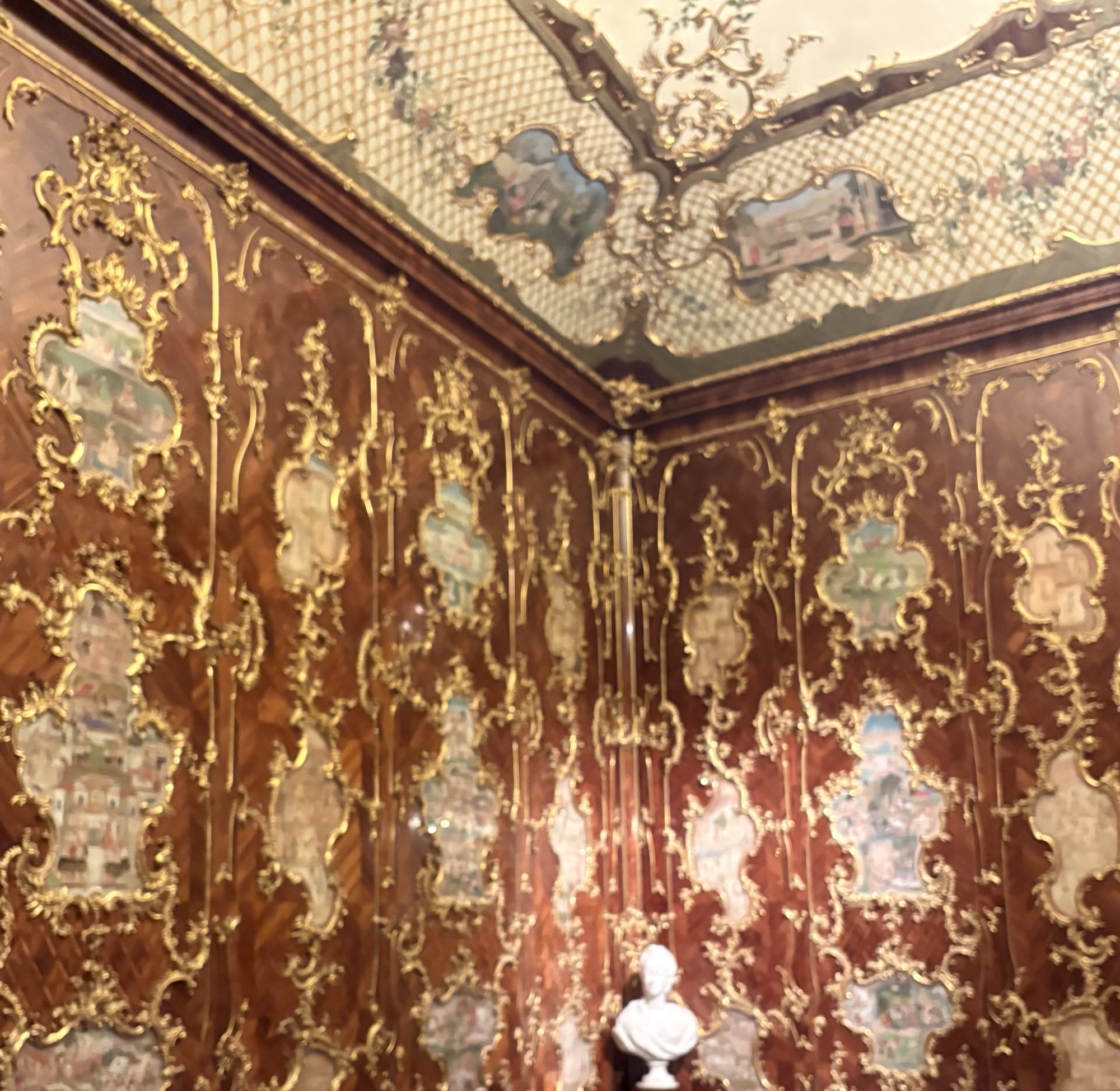
The decor of the “millions” room below is described on the palace website as sixty collages of Indo-Persian miniatures set into richly gilded rocaille cartouches in the wall panelling. The watercolour miniatures depict scenes from the life of the Mughal rulers in India during the sixteenth and seventeenth century. The elaborate wall panelling provides an appropriate setting for the miniature paintings. It is made of an exotic palisander wood that was historically known as ‘Feketin’ or ‘Vicatin’ – hence the original name Feketin Room from the time of Maria Theresa.
On to details of more rooms the functions of which I don’t remember, but which were beautiful.
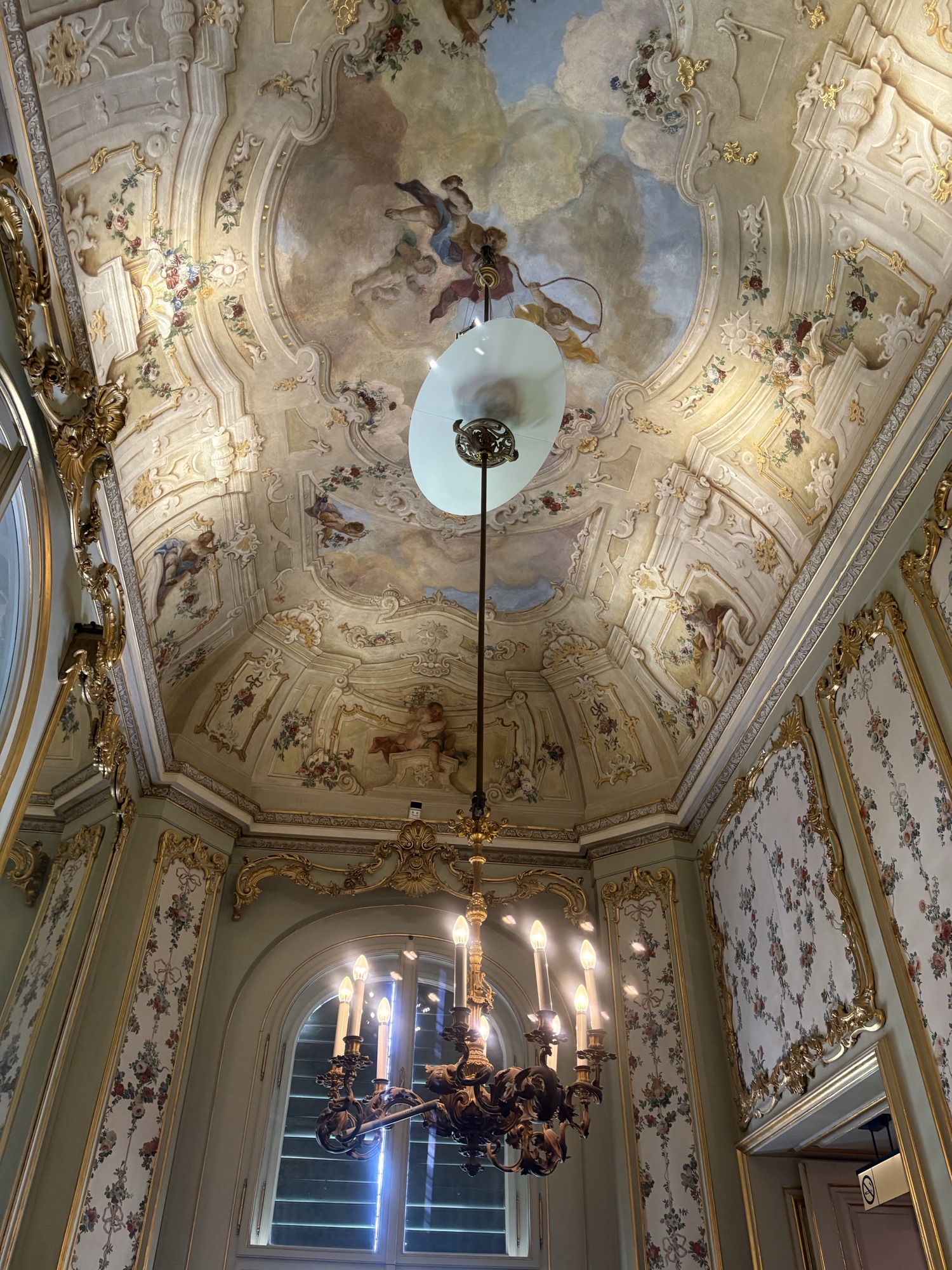
And with one last glance back at over-the-top imperial taste, we were out into the sunshine and 27°C/80°F weather that belies the fact it is fall as of today.
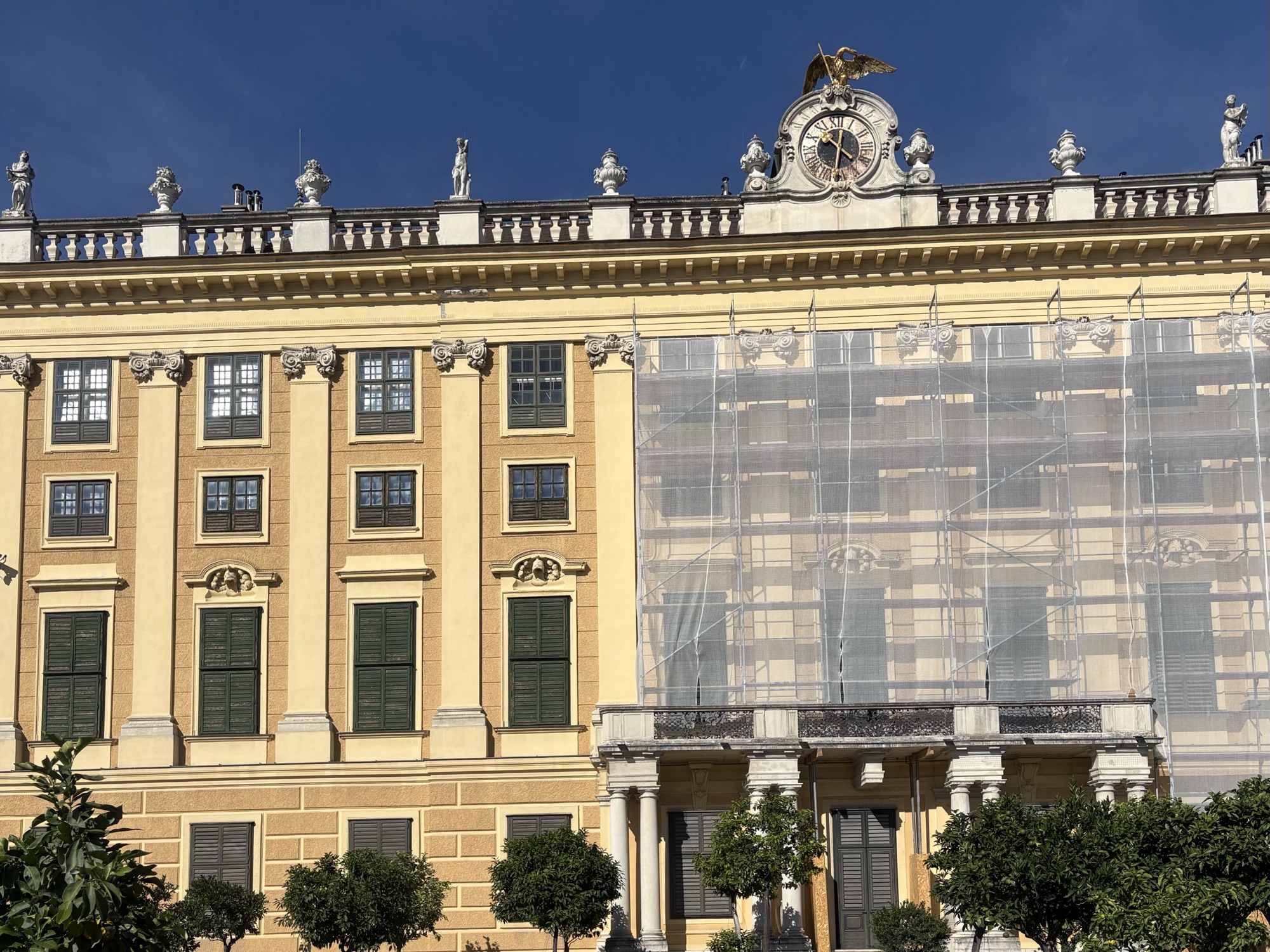
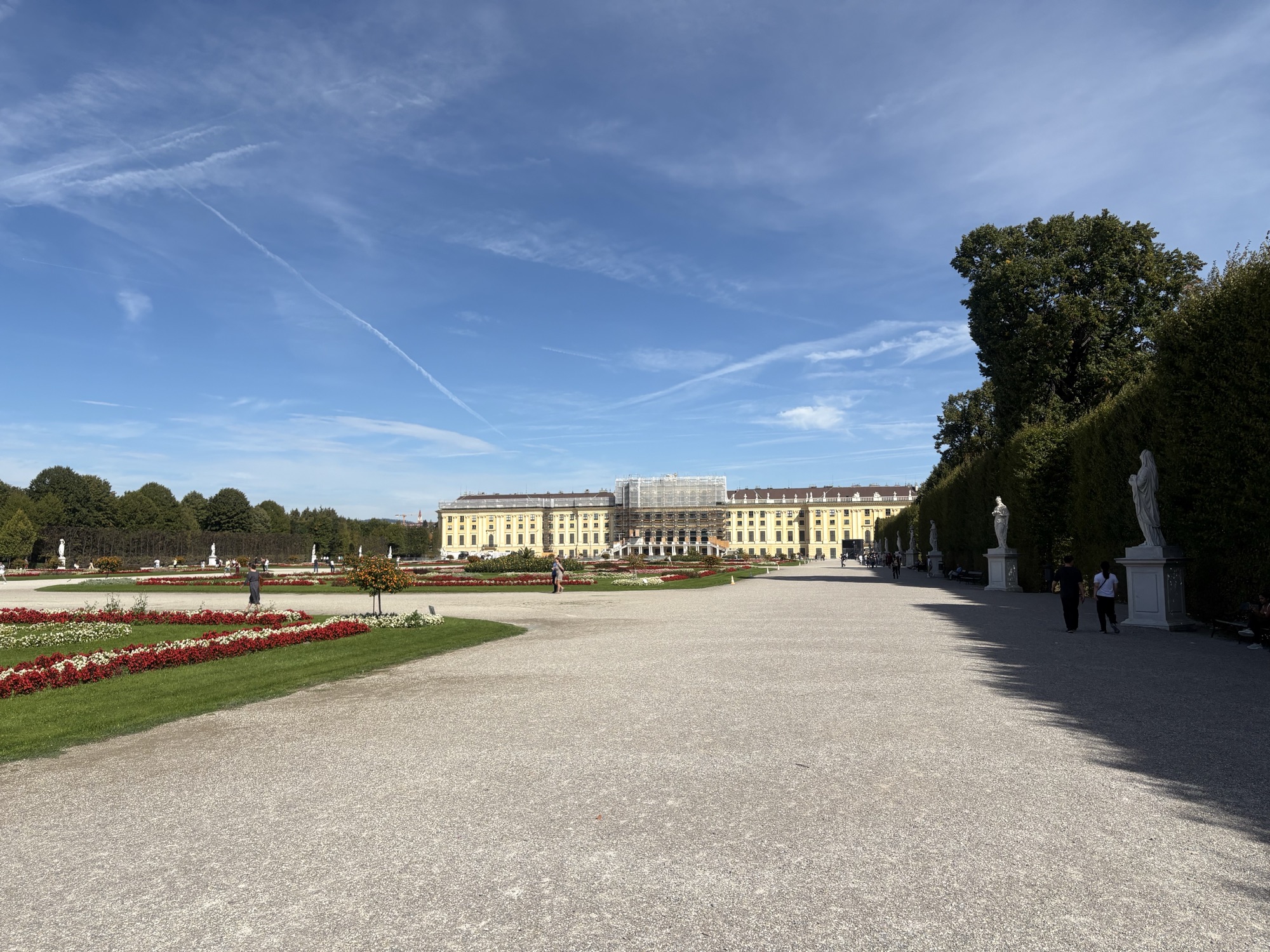
Several parts of the palace were obscured by scaffolding and netting. Our next stops were the Privy Garden and the Orangerie.
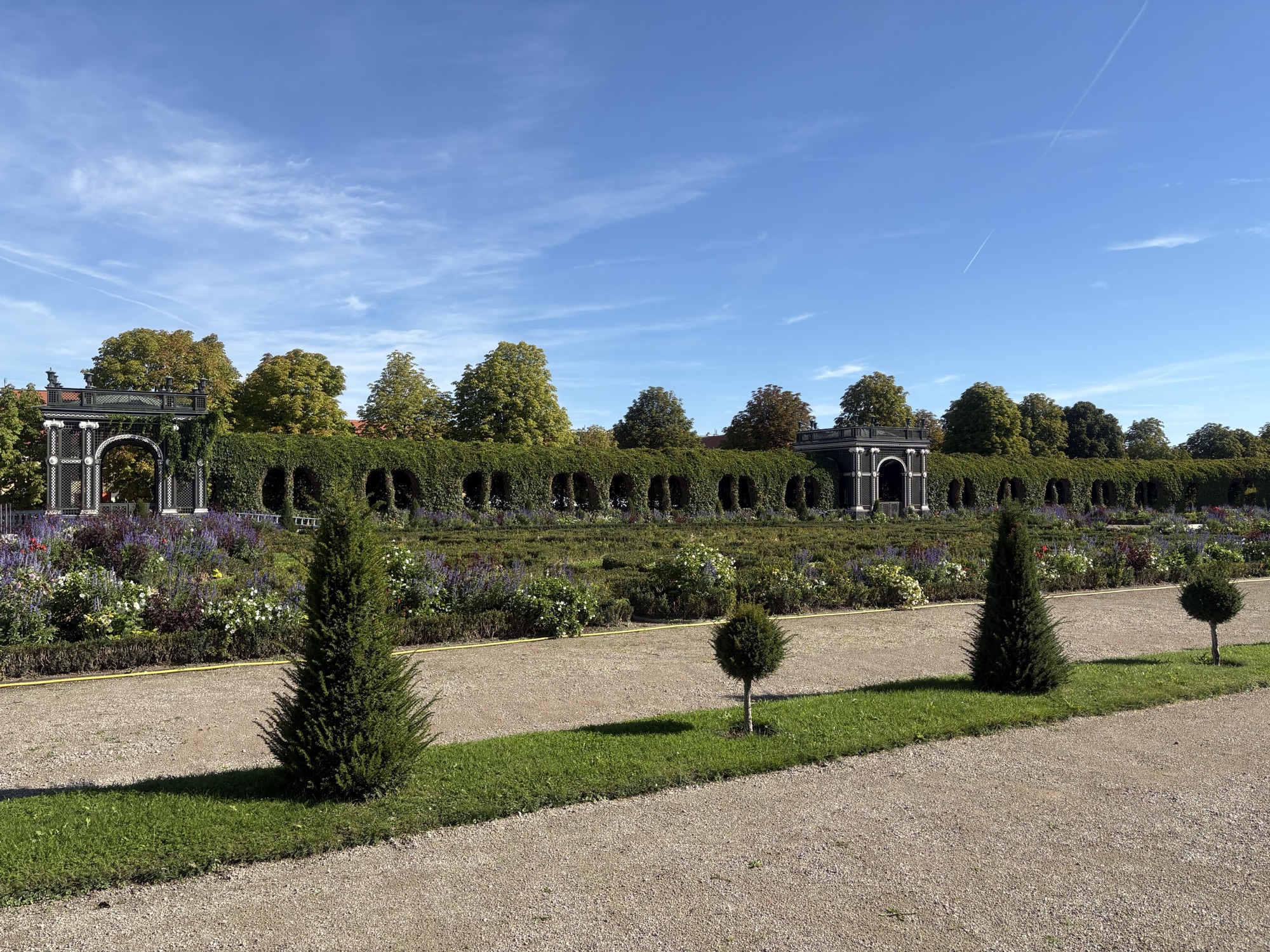
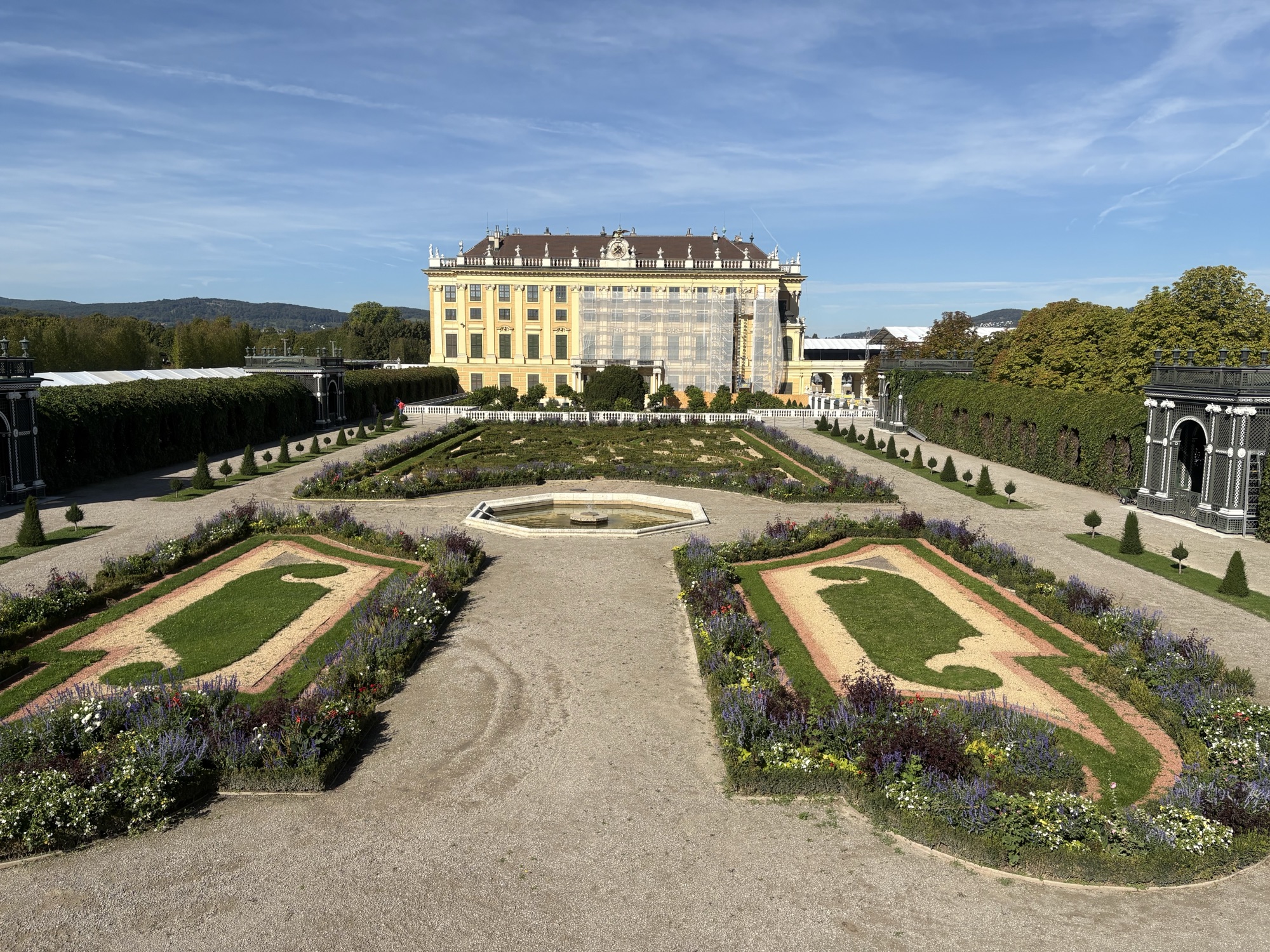
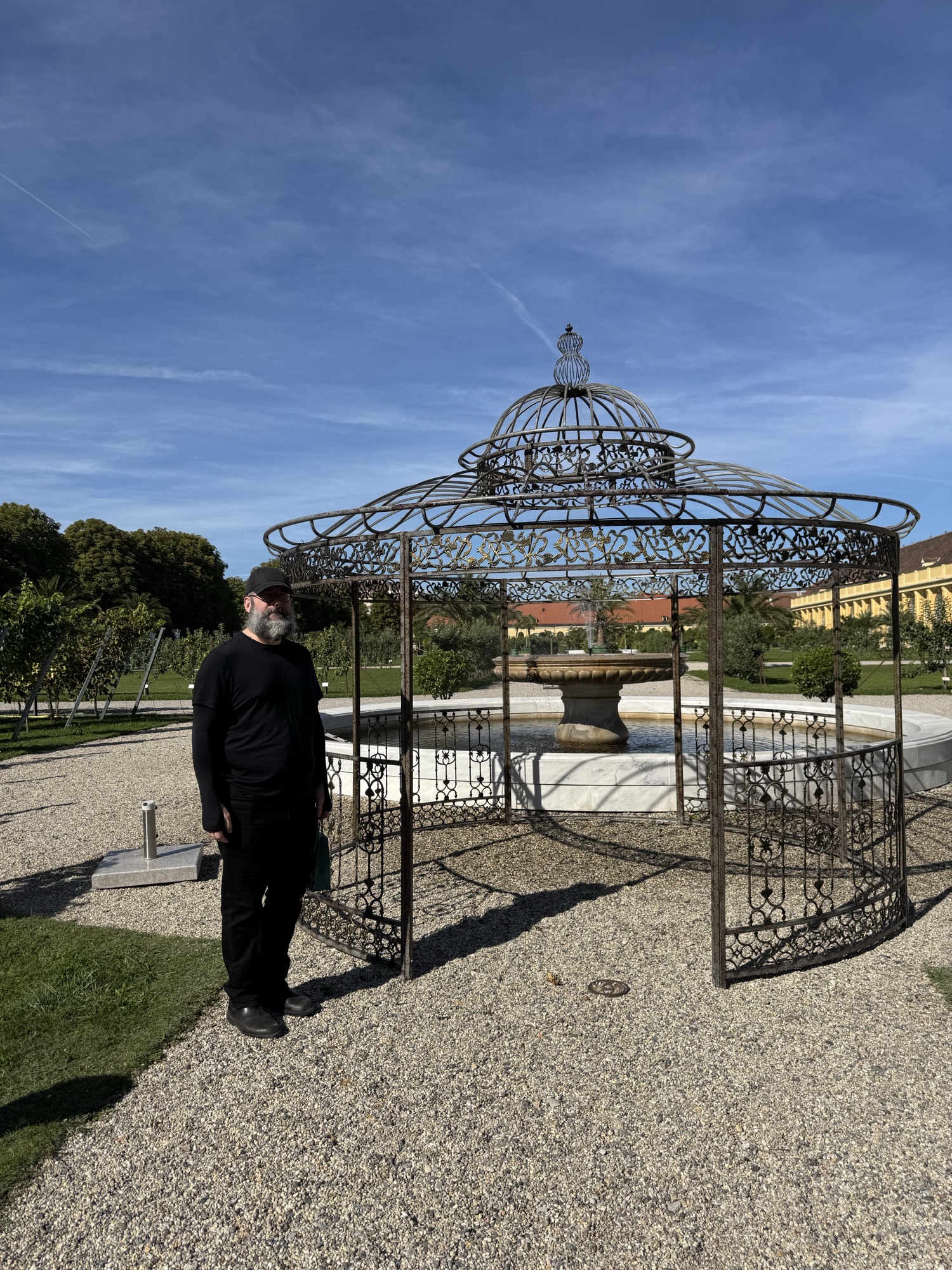
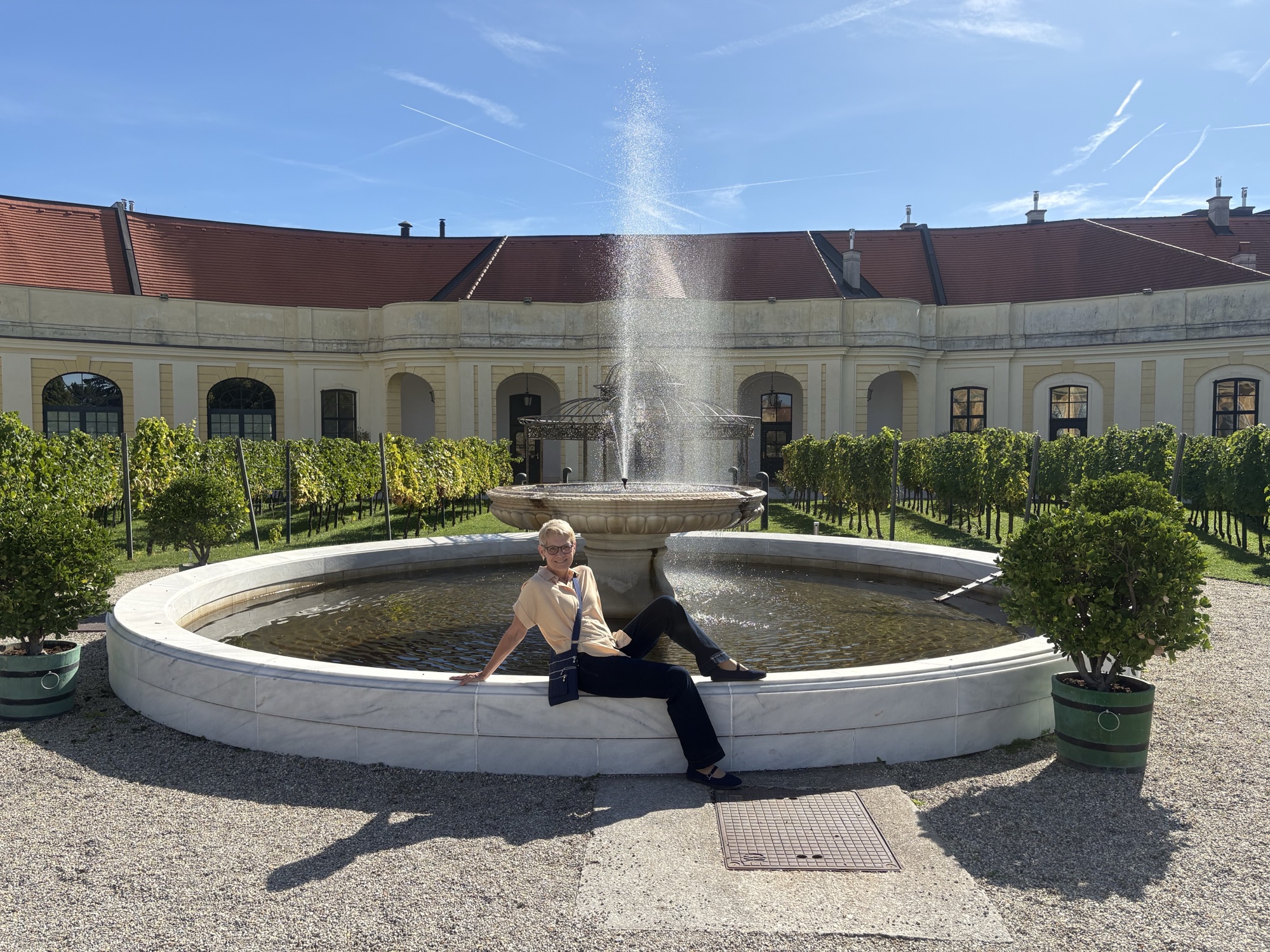
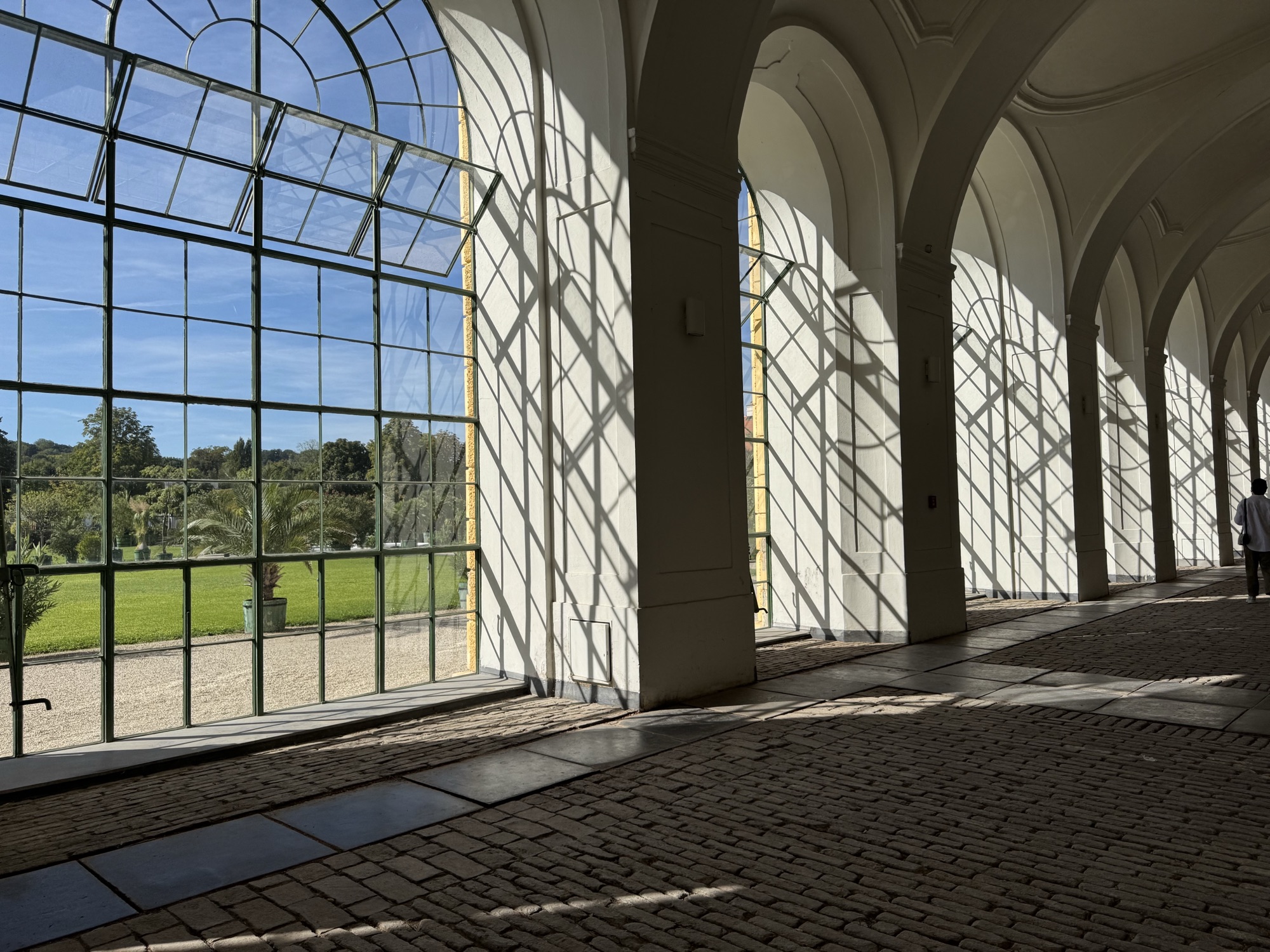
Once we entered the Orangerie, which is empty of plants in the summer months, we might have thought it was a pretty boring space had we not seen this photo and description of the kinds of events held here.
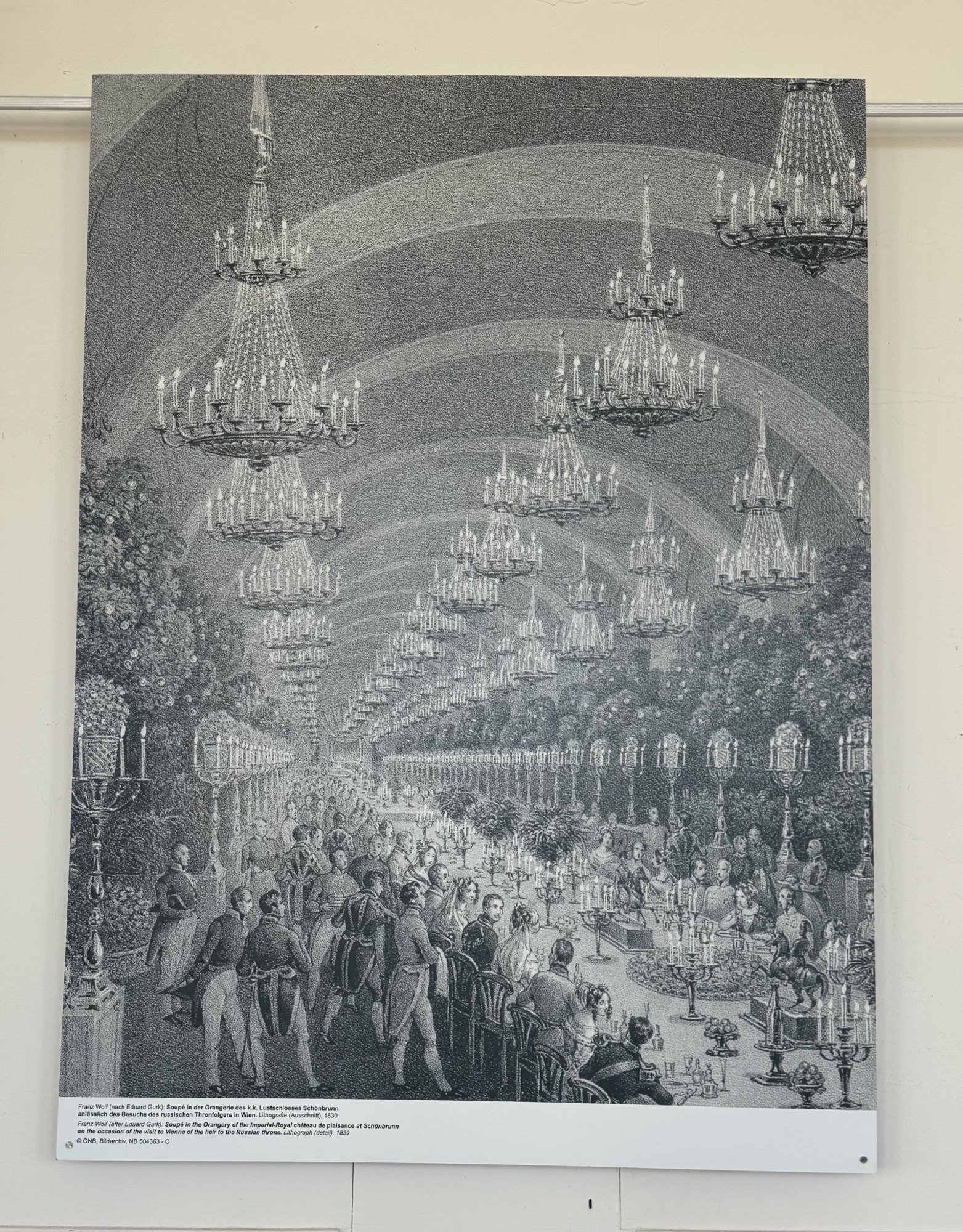
At one event, Mozart played at one end of the building while Salieri played at the other!
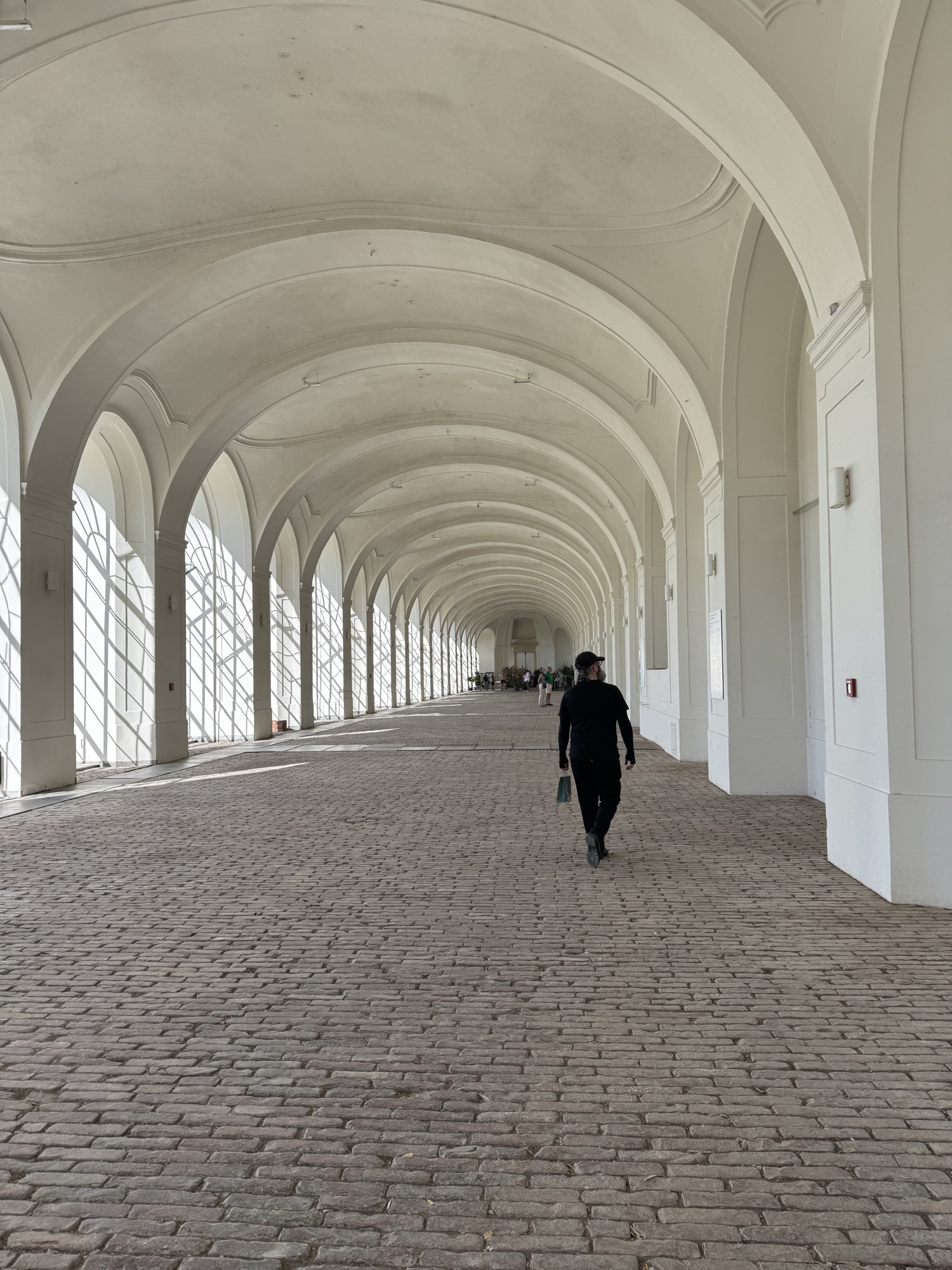
For winter events, the citrus, palm, and fruit trees would have provided a sense of the exotic.
Another small fountain. I feel obligated. At the same time, I kept telling my don that there were many more and much better fountains to come.
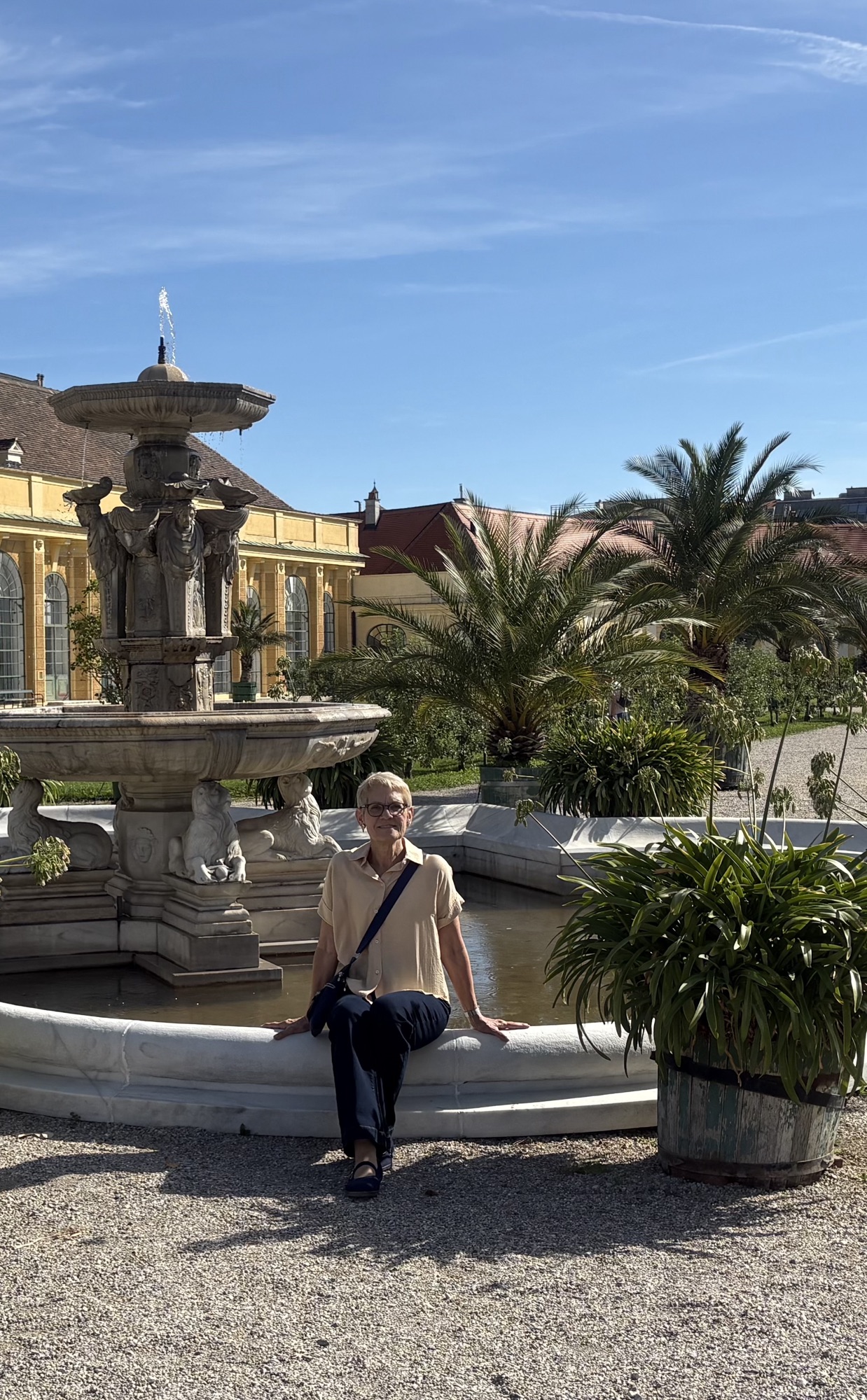
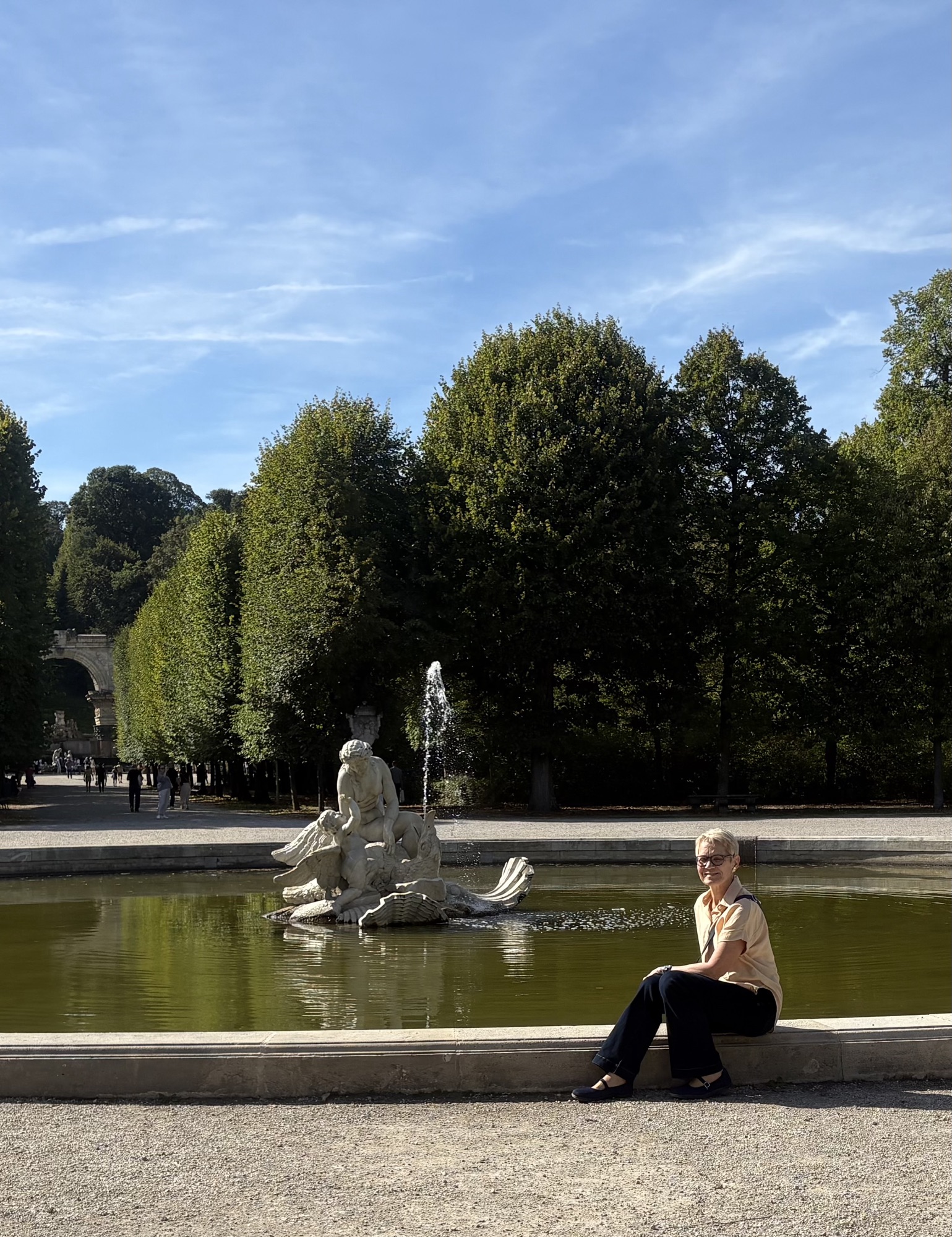
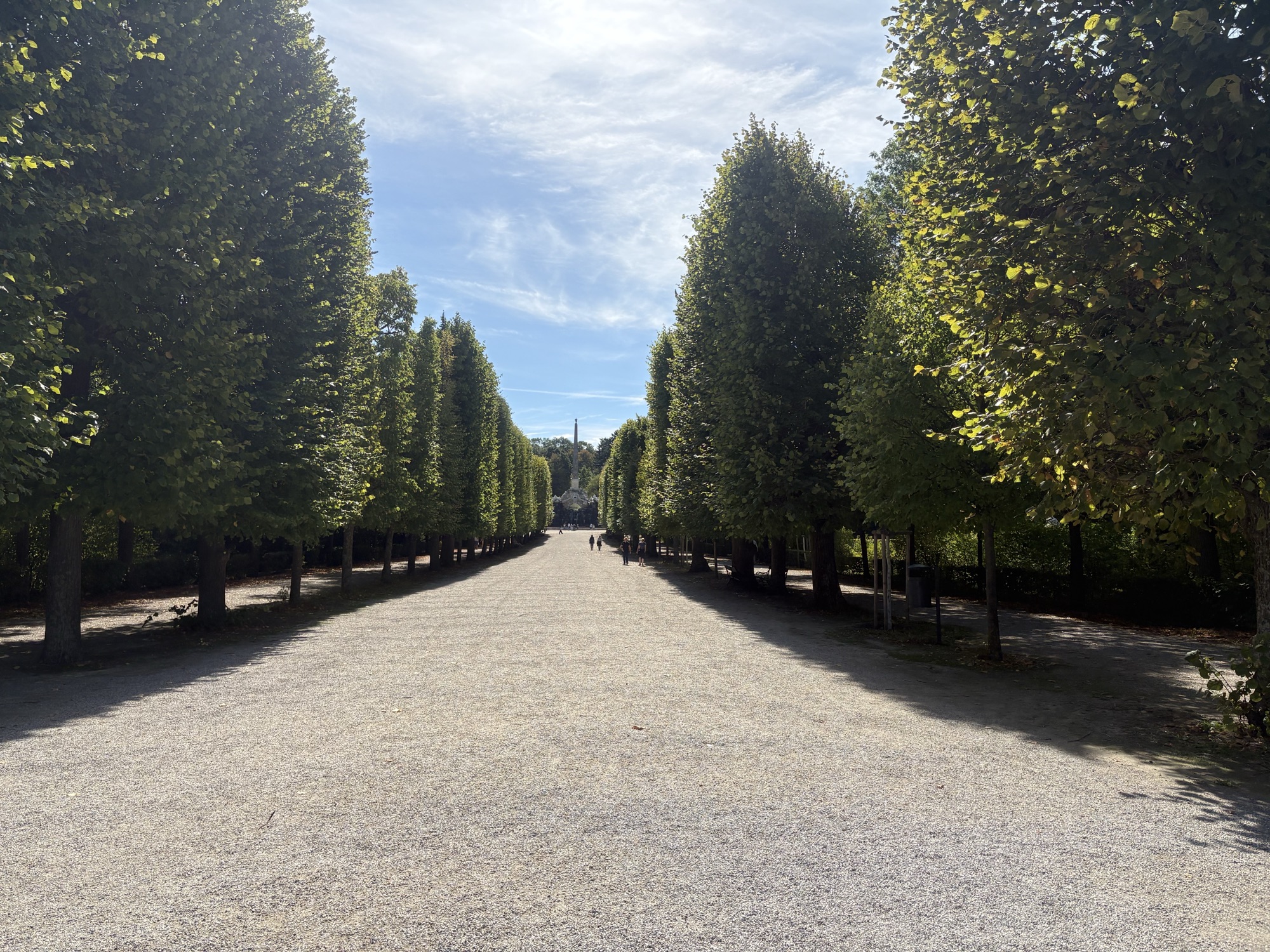
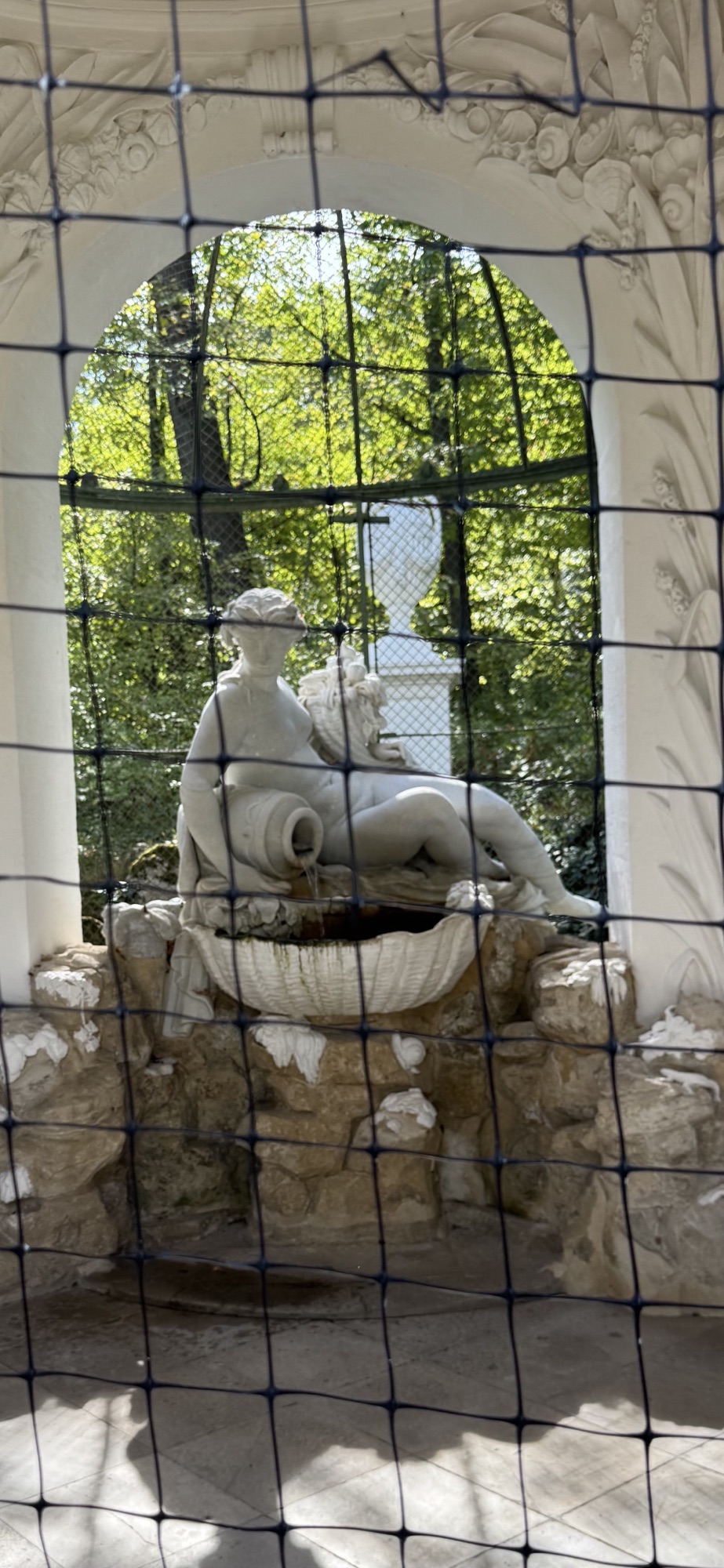
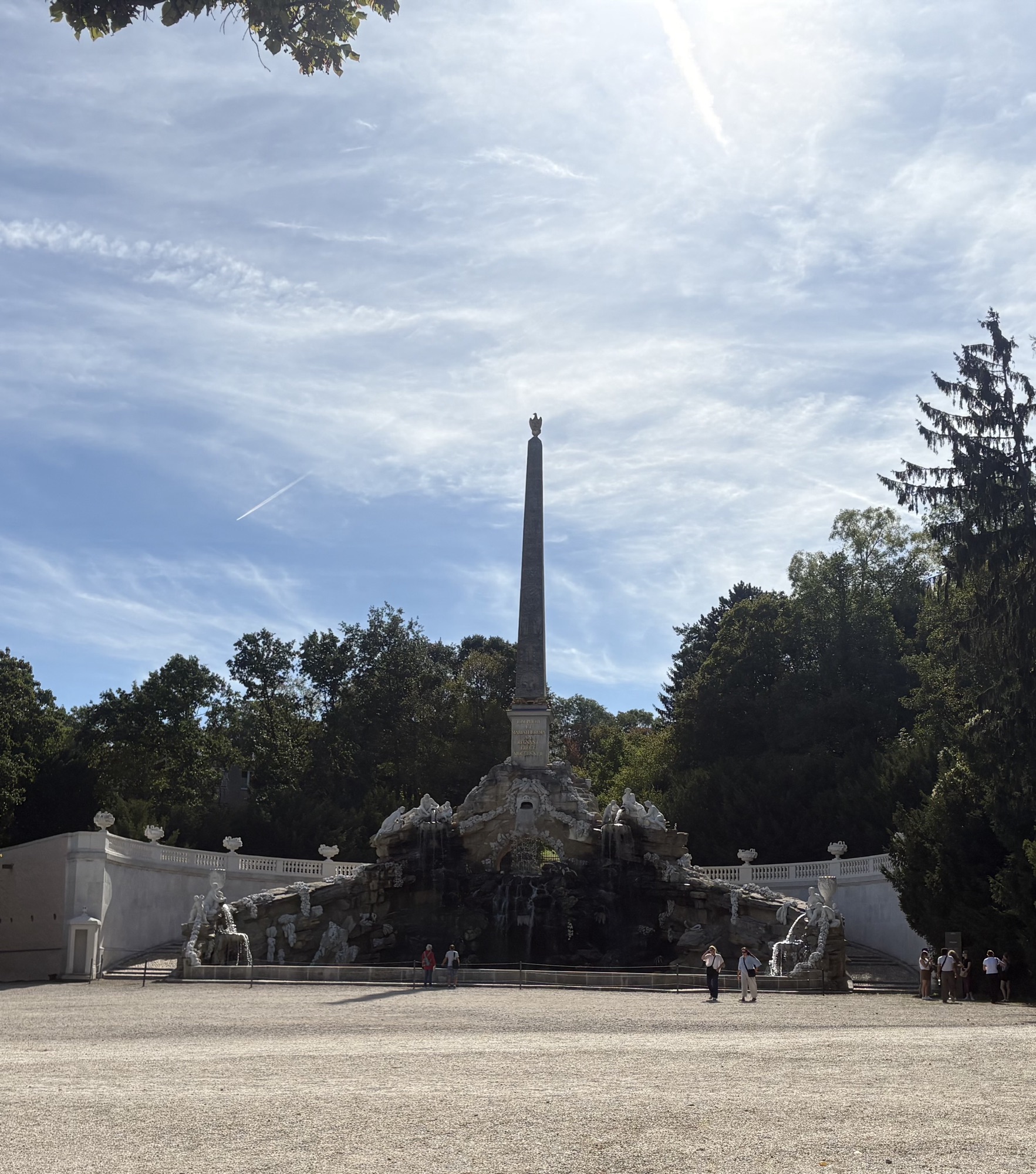
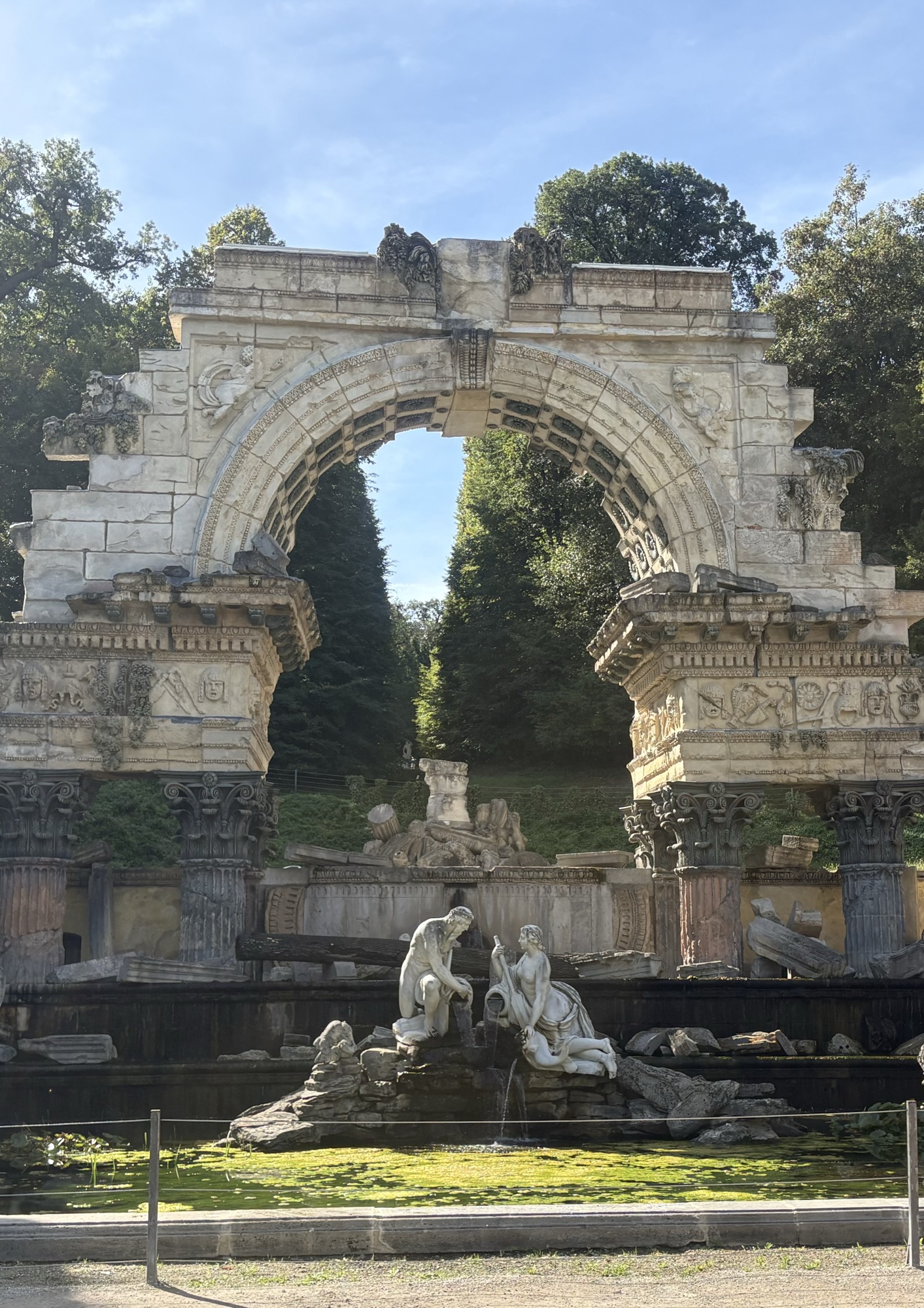
So off we went in search of my absolute favourite fountain, maybe even more so than the Trevi, but first we walked past the “Roman Ruins”, which – in the same way that English estates have Greek Parthenon follies – is simply a decorative element. I suppose the hidden message that the Habsburgs had been closely tied to the Holy Roman Empire might have been implied.
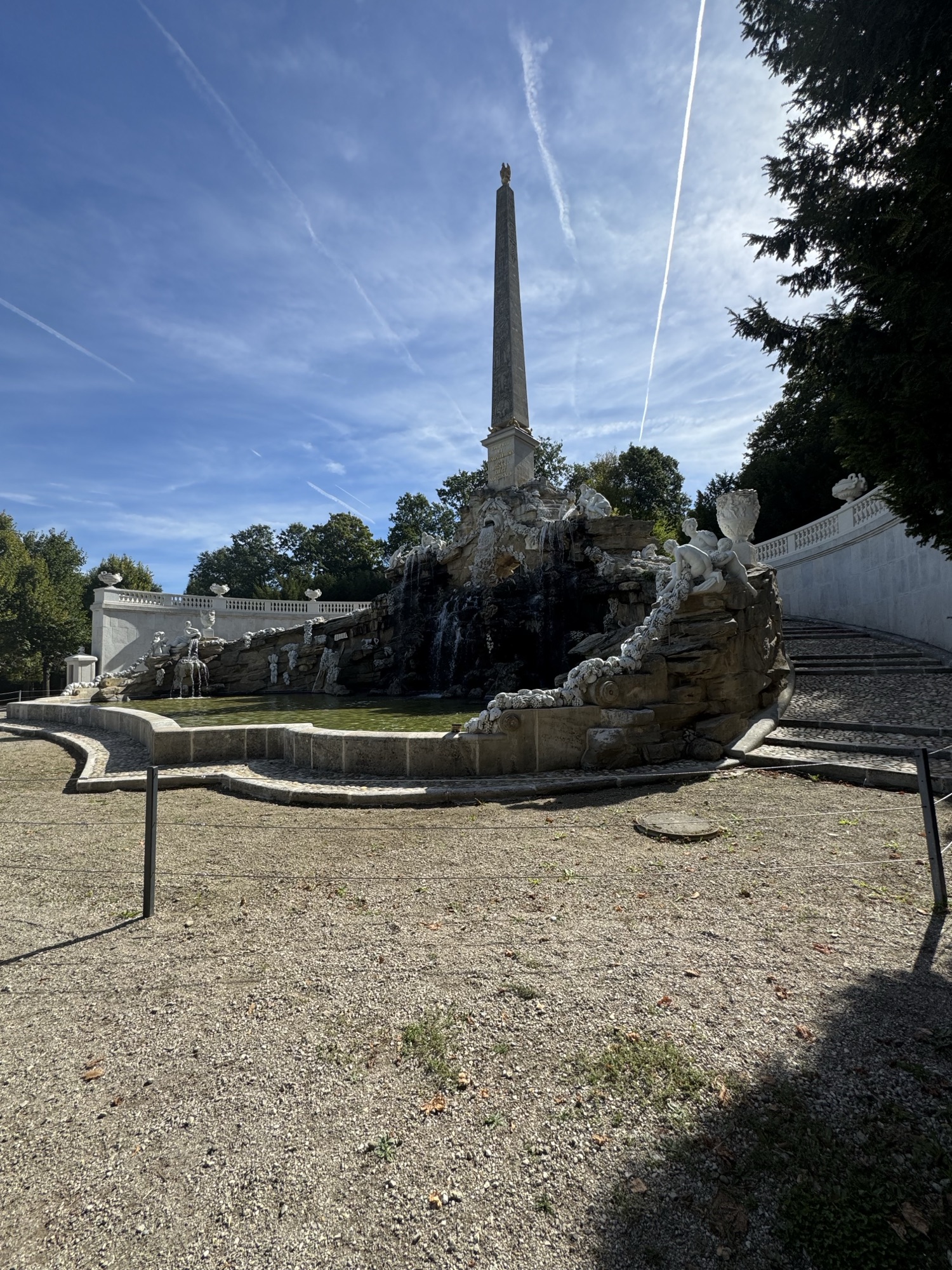
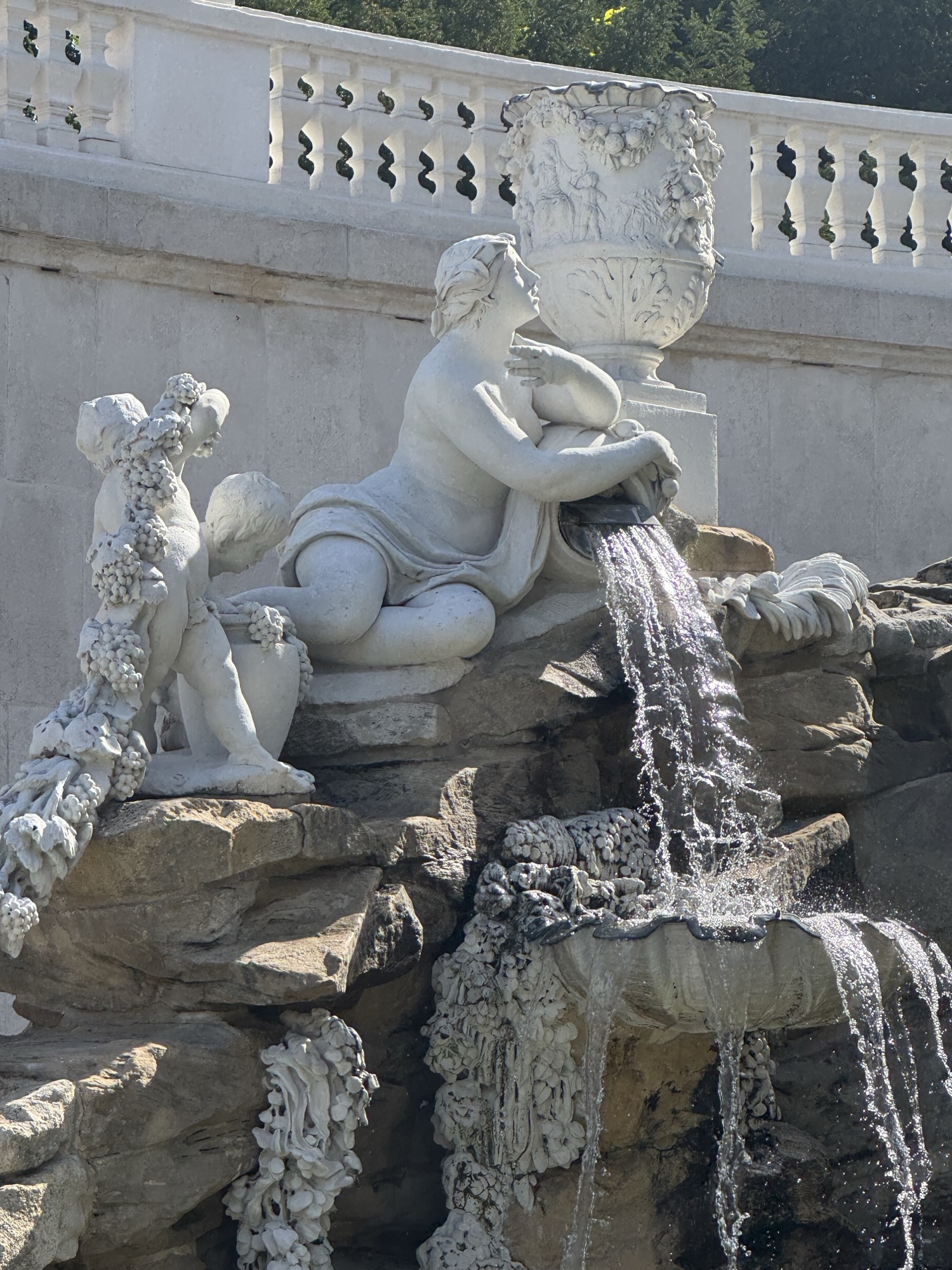
Our route had brought us back to the centre of Schönbrunn’s “backyard”. Looking one way, the palace. Looking the other, the Neptune fountain and beyond that at the top of a hill the Gloriette, the Empress’ tea house.
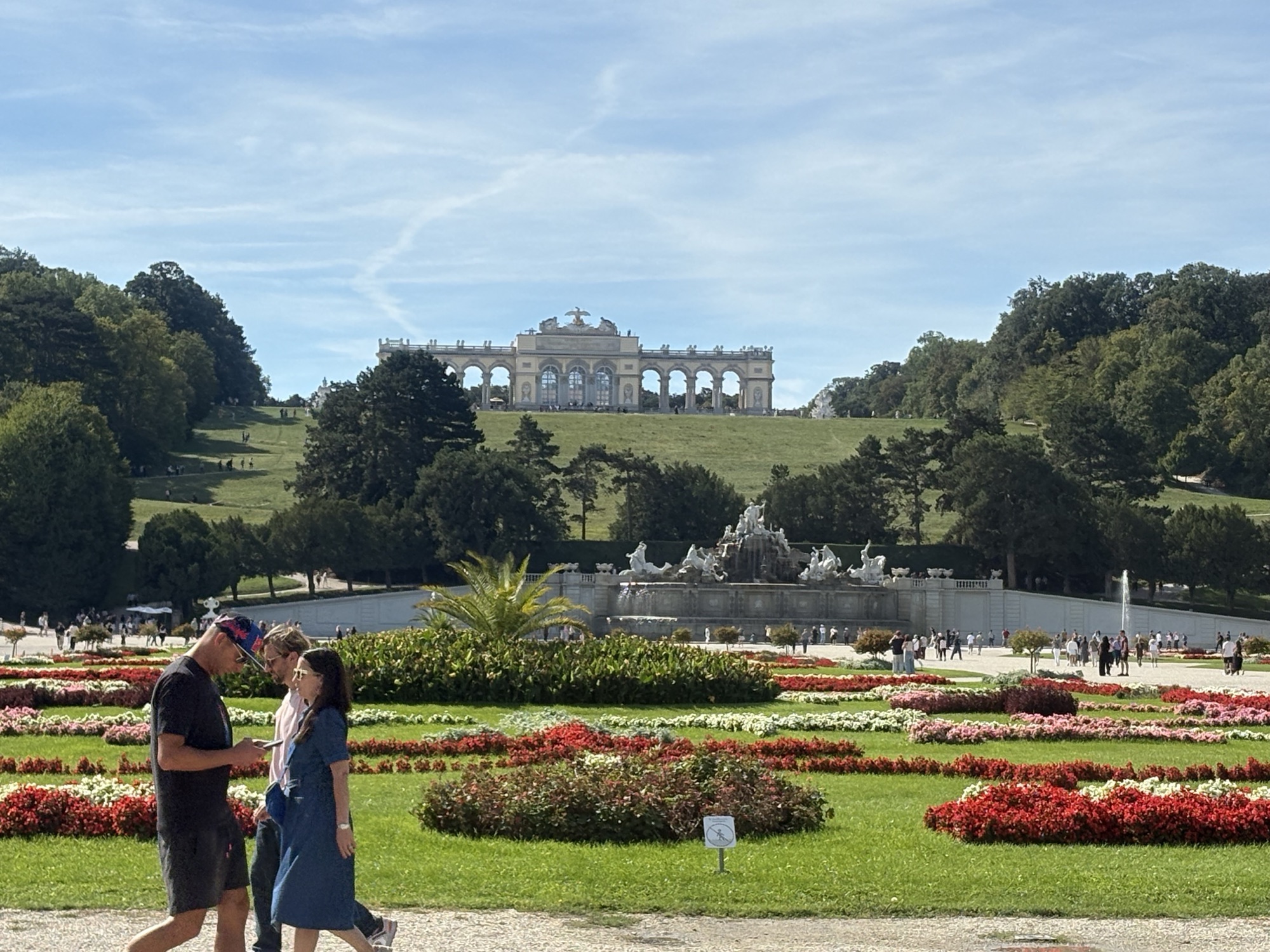
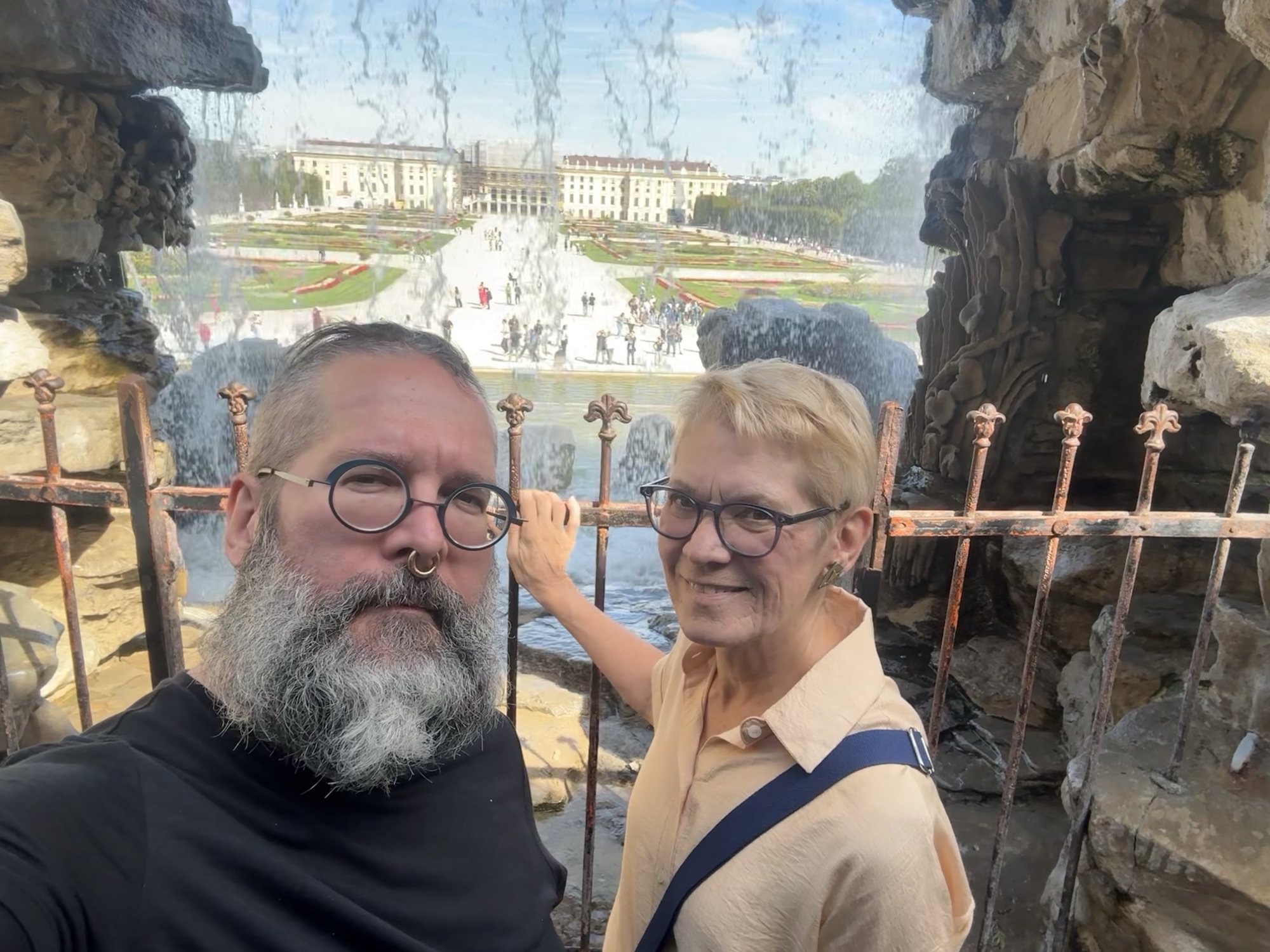
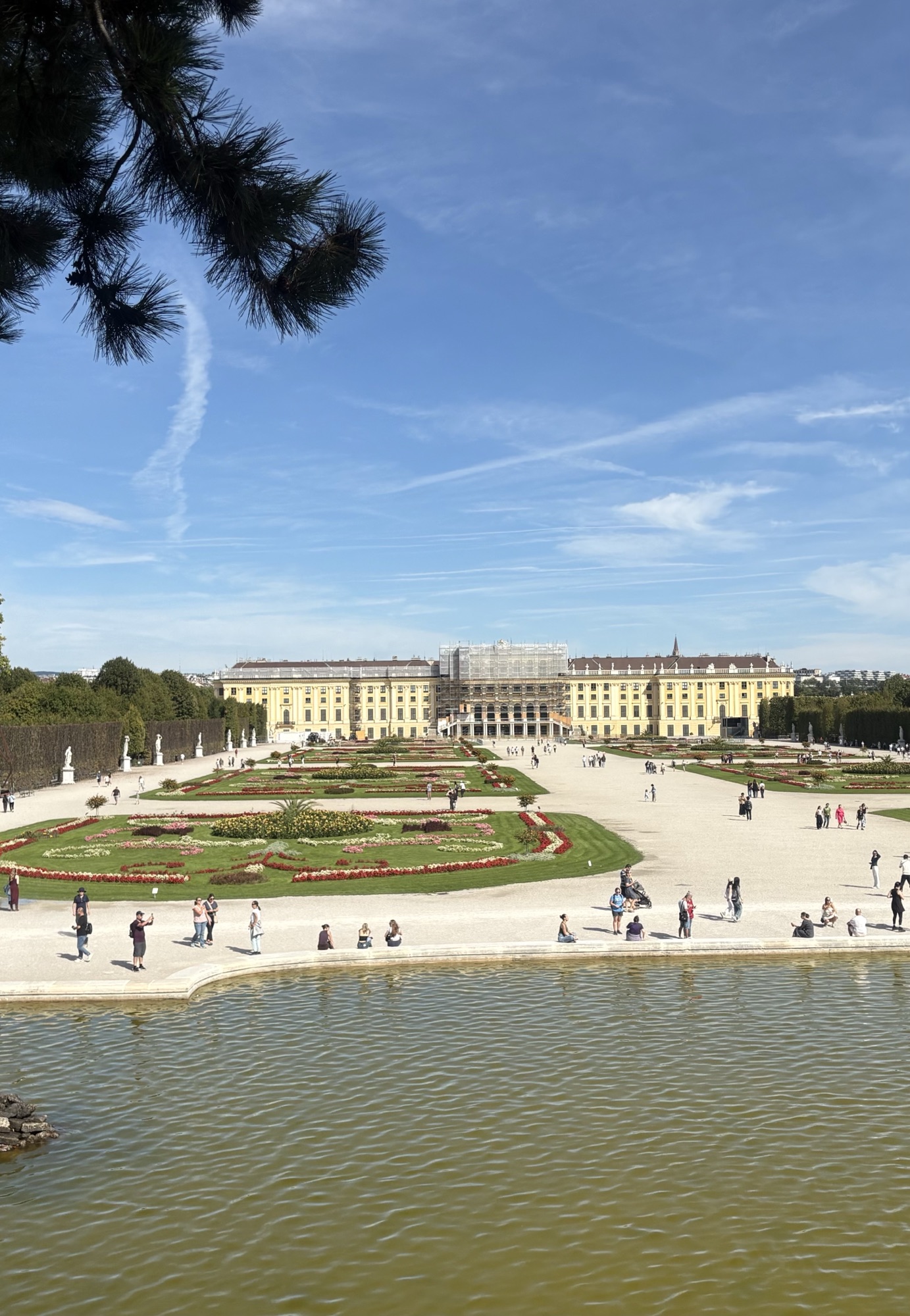
The front pool of the Neptune fountain is on the same level as the palace gardens. There is a slight climb to allow standing behind its waterfall, but from that vantage point there is a wonderful view of the gardens and palace.
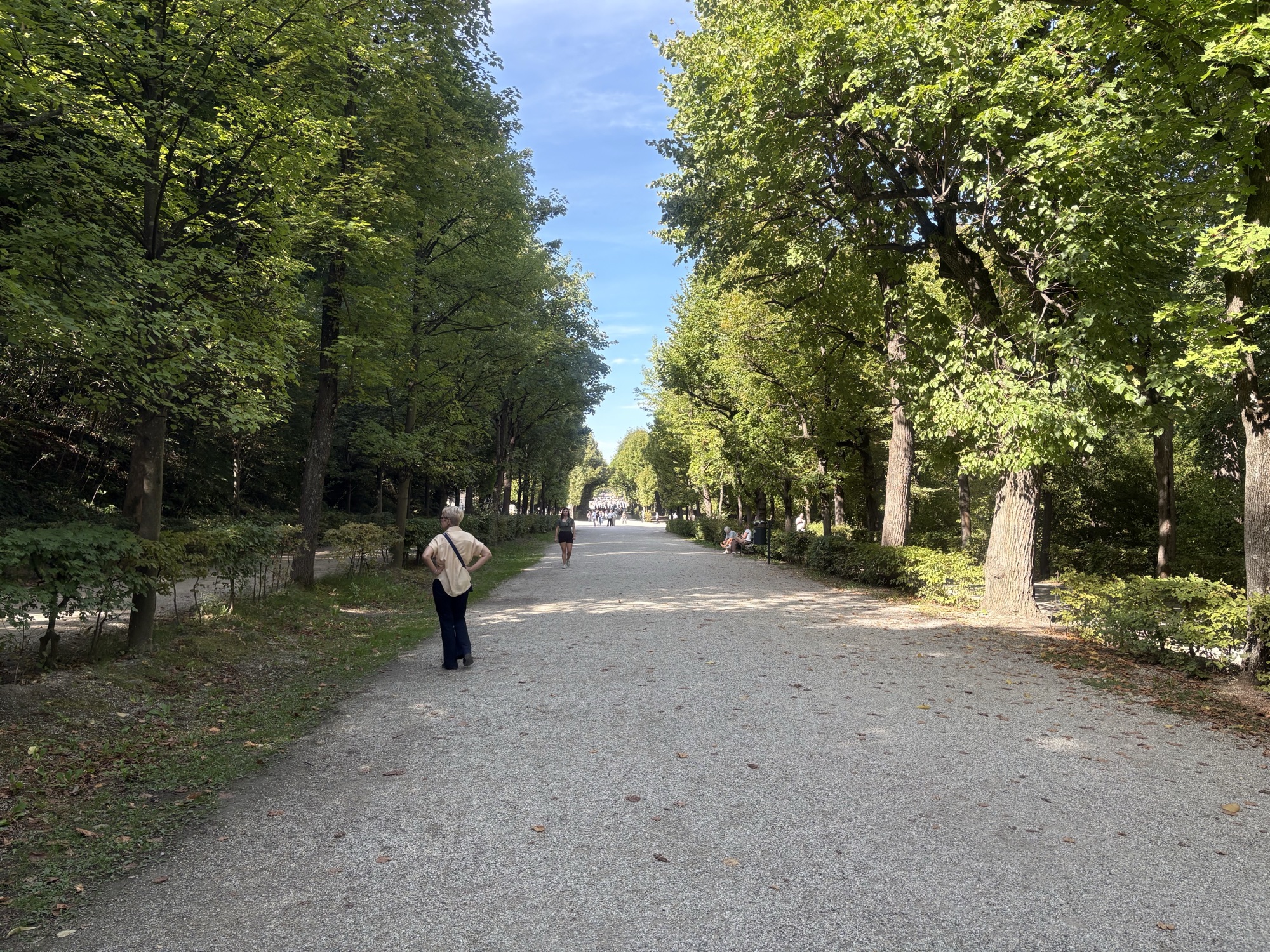
From the fountain it is steep climb to reach the Gloriette. The Empress would never have walked it; the almost switchback style paths are made for horses, and carriages carrying picnic baskets and tea sets.
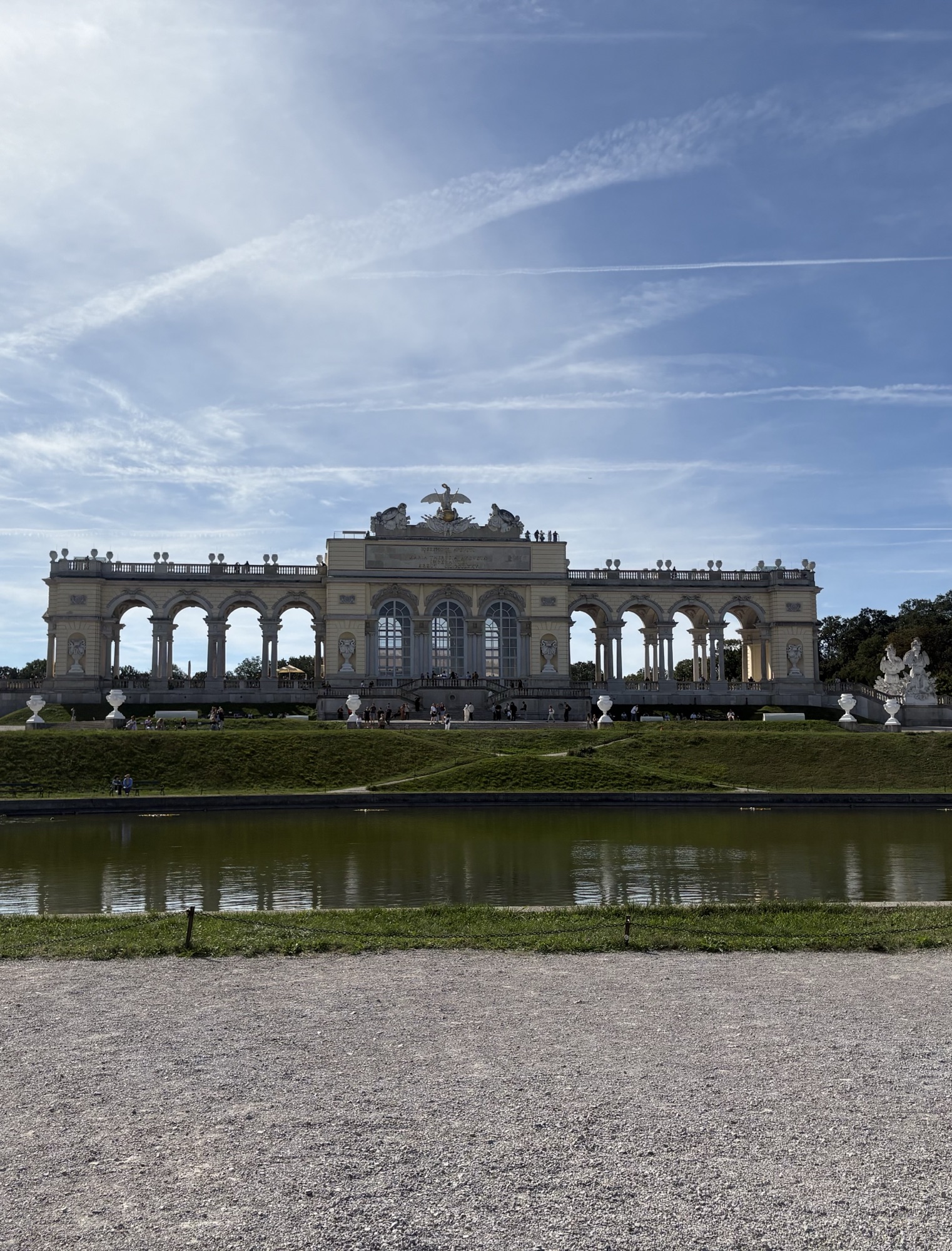
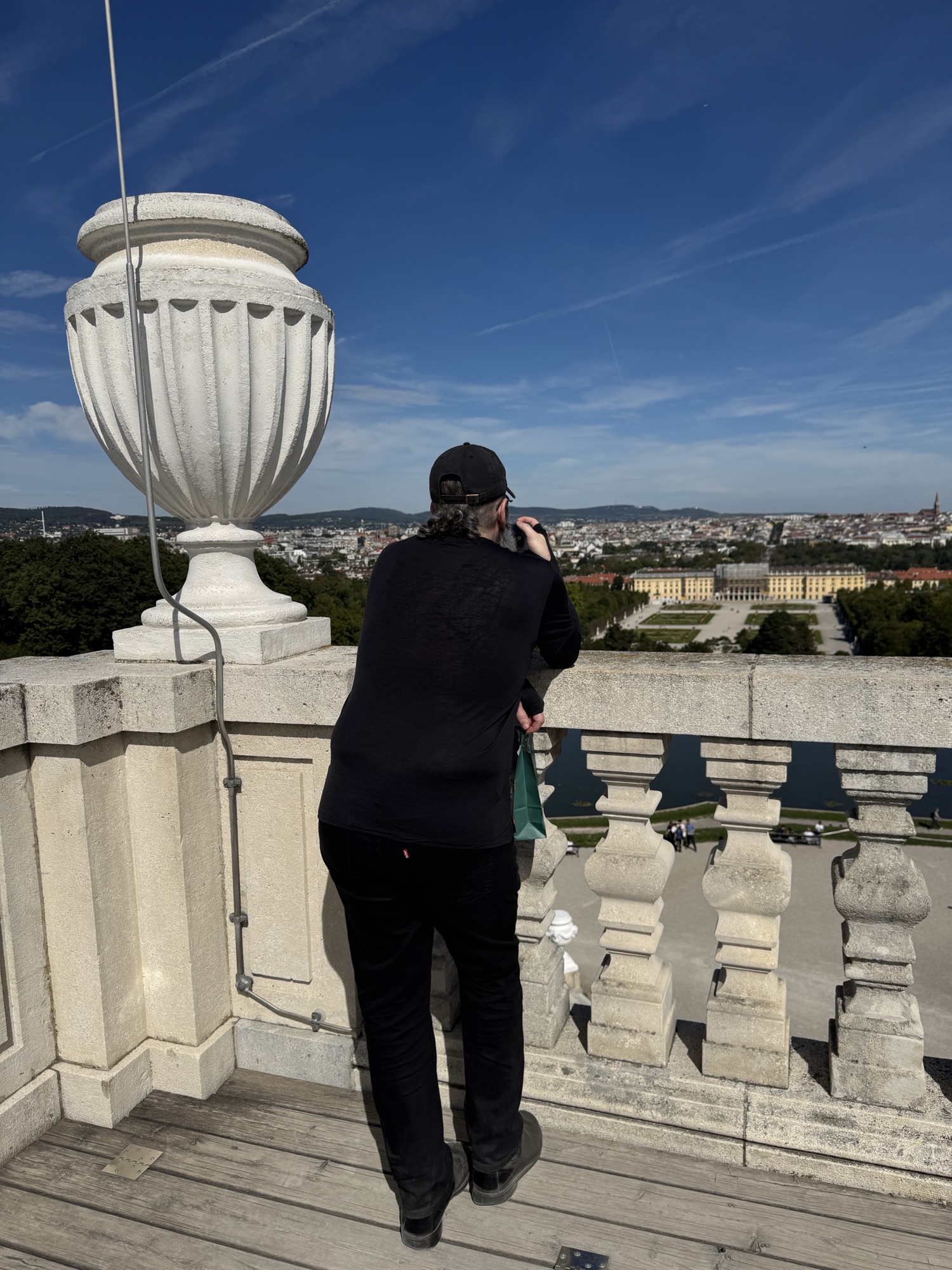
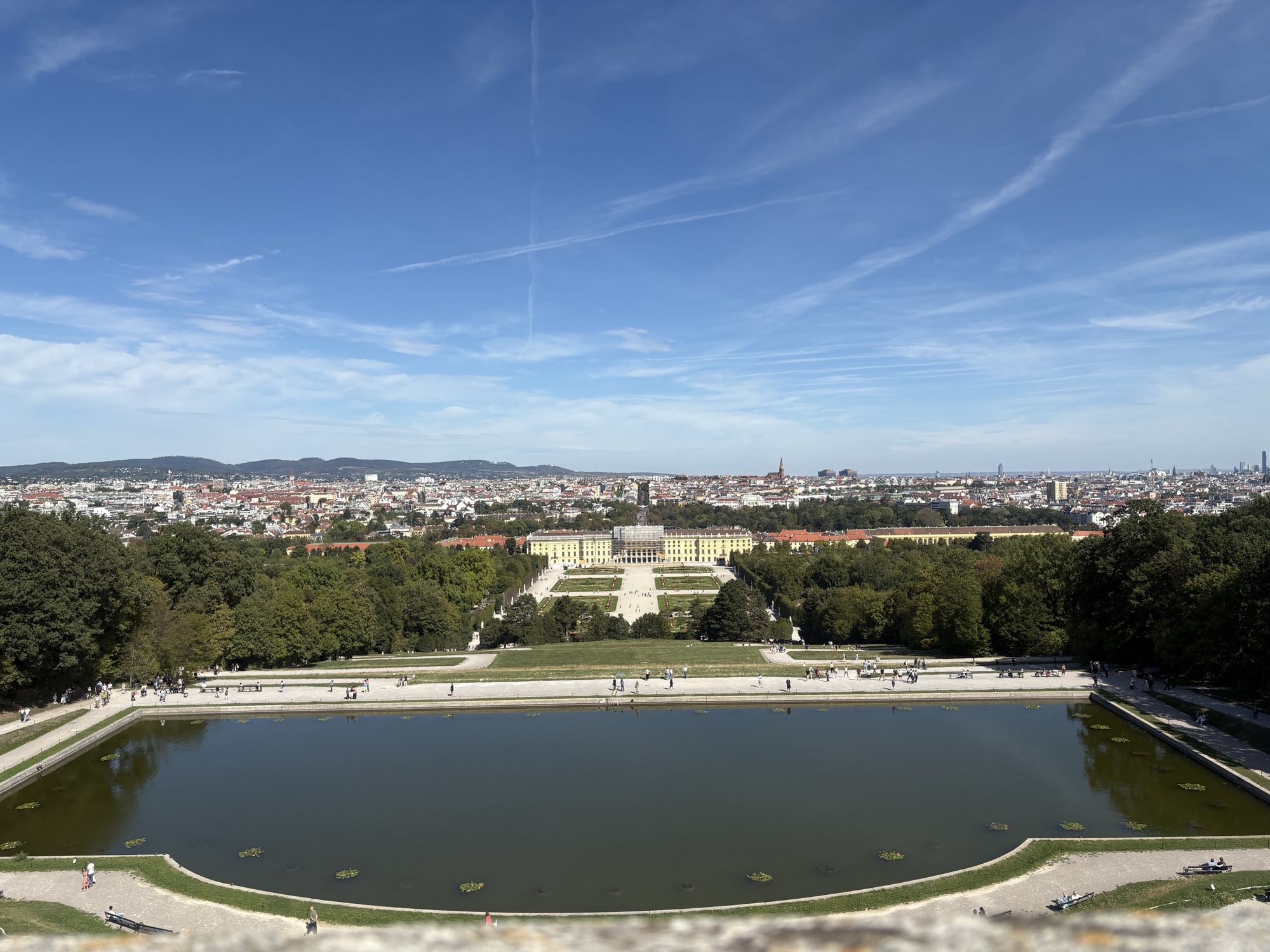
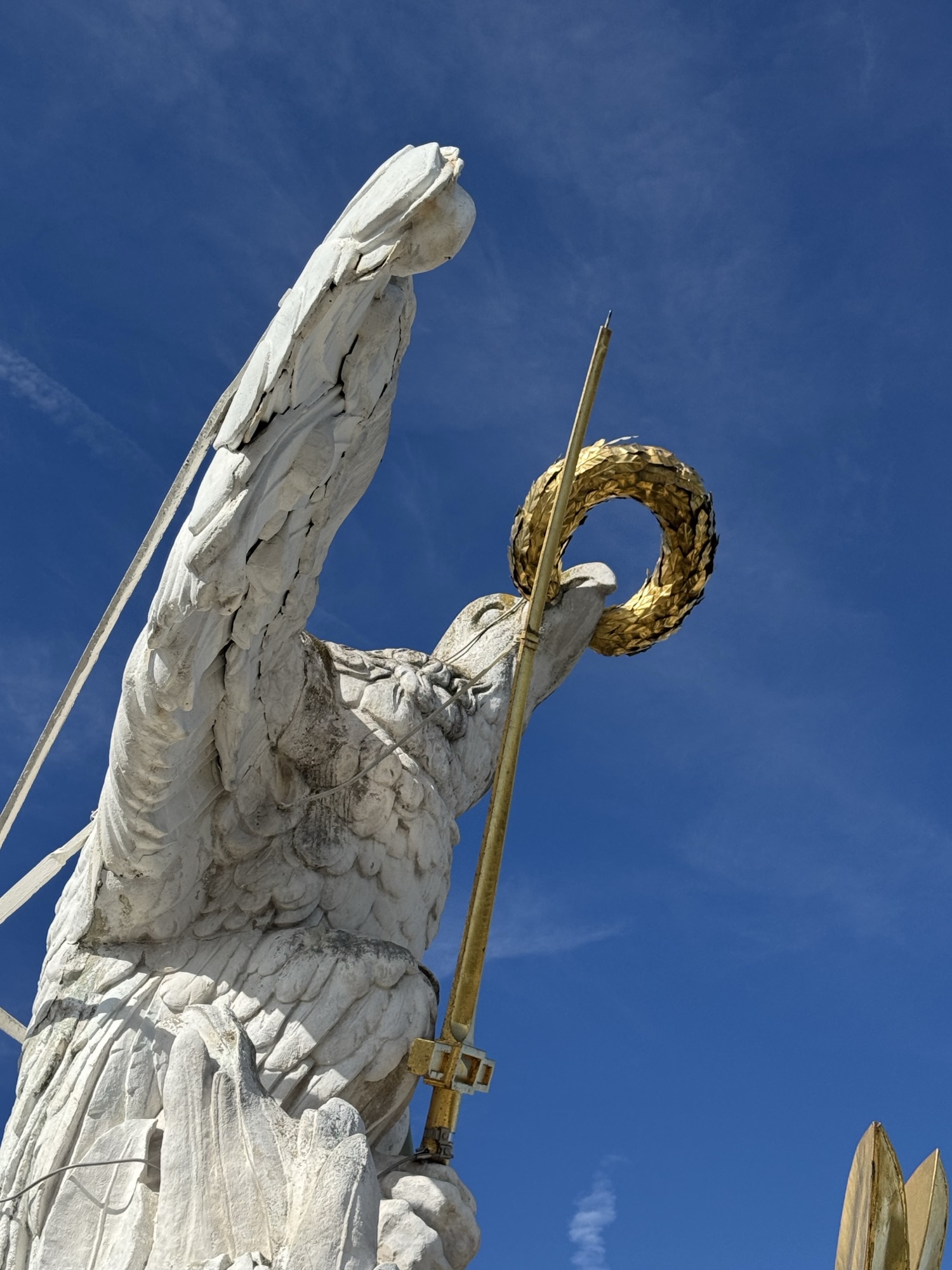
Once we reached the Gloriette, there were stairs to climb to reach the level of the imperial eagle. The view of Vienna was worth it.
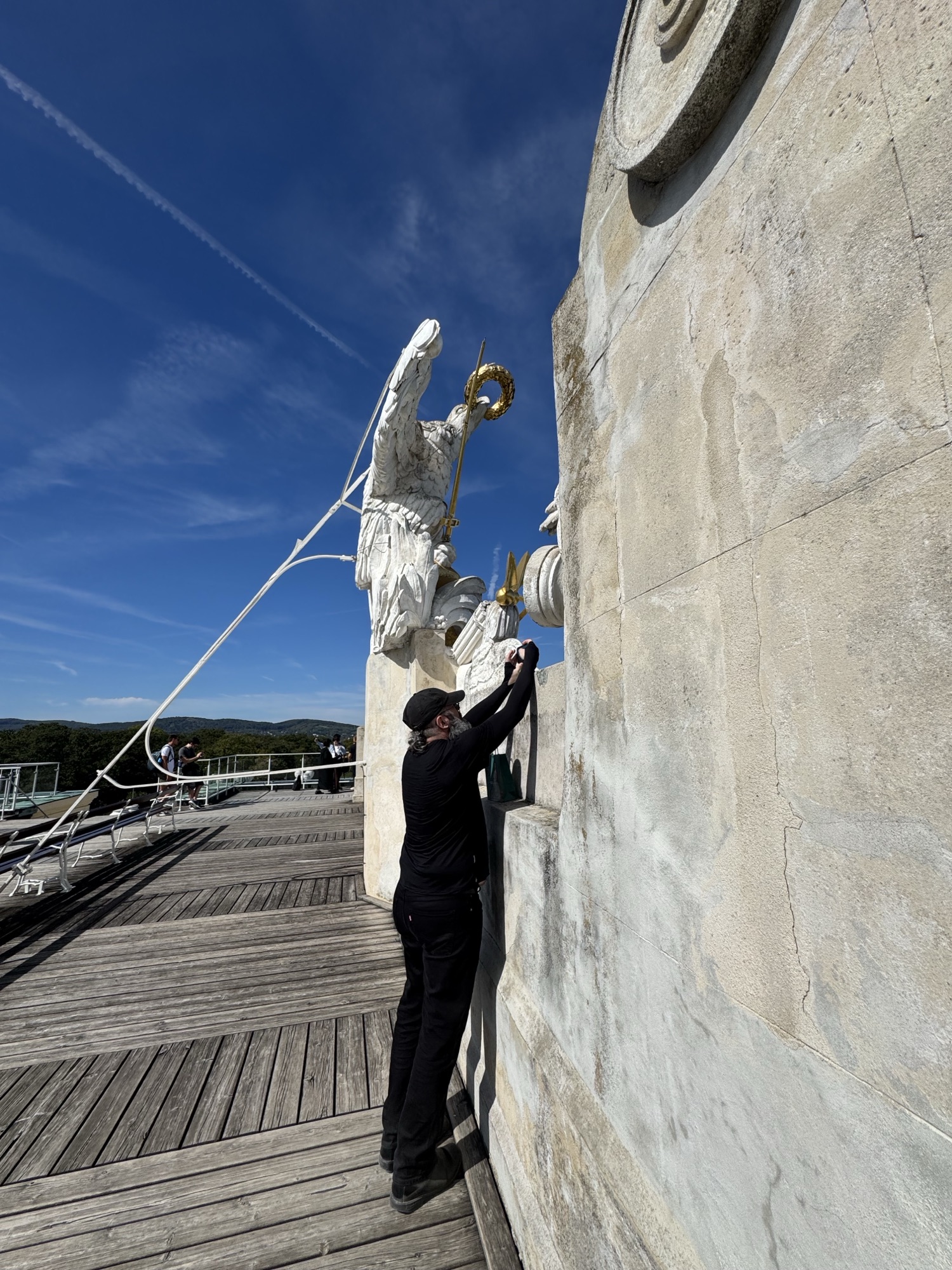
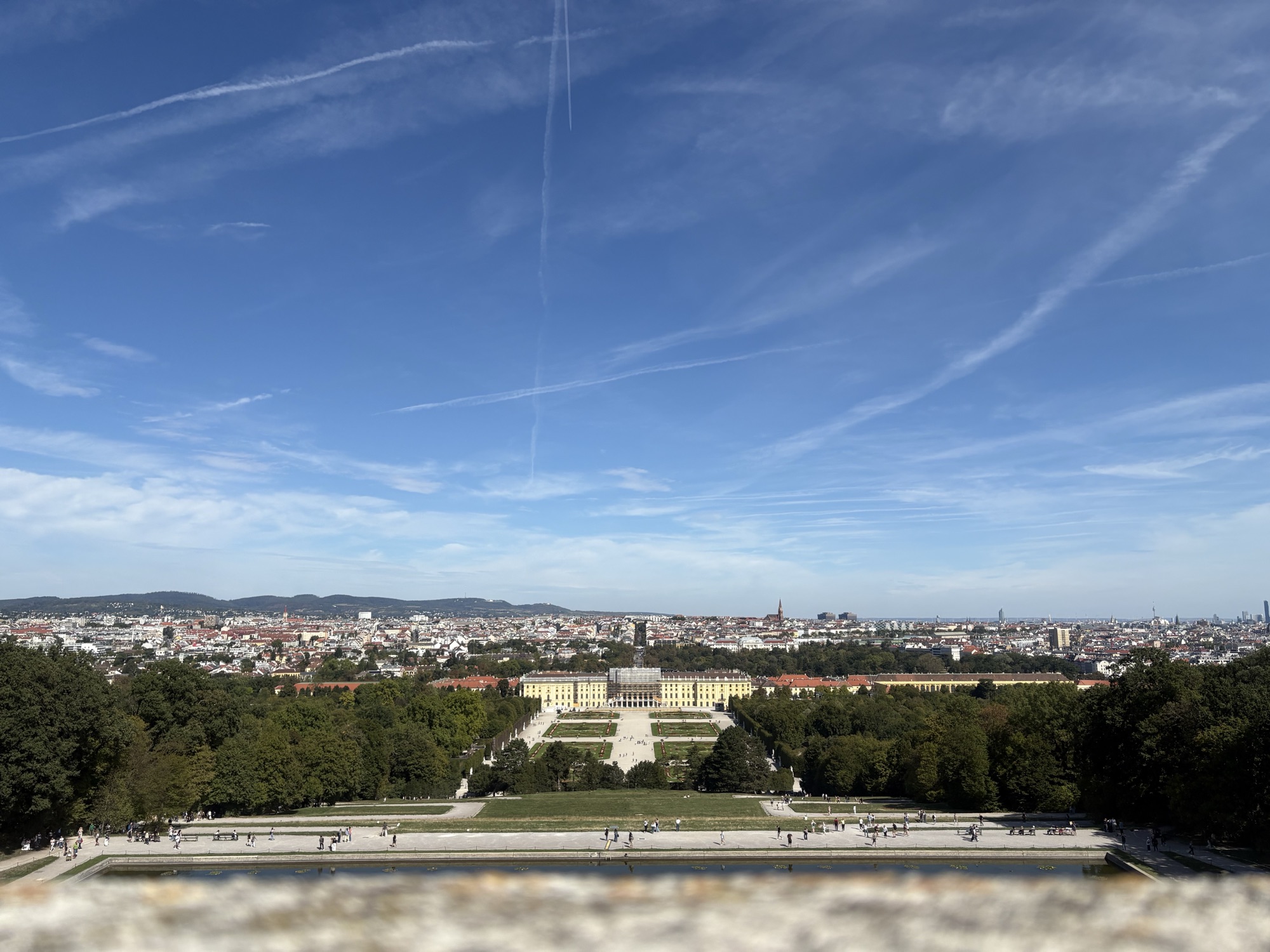
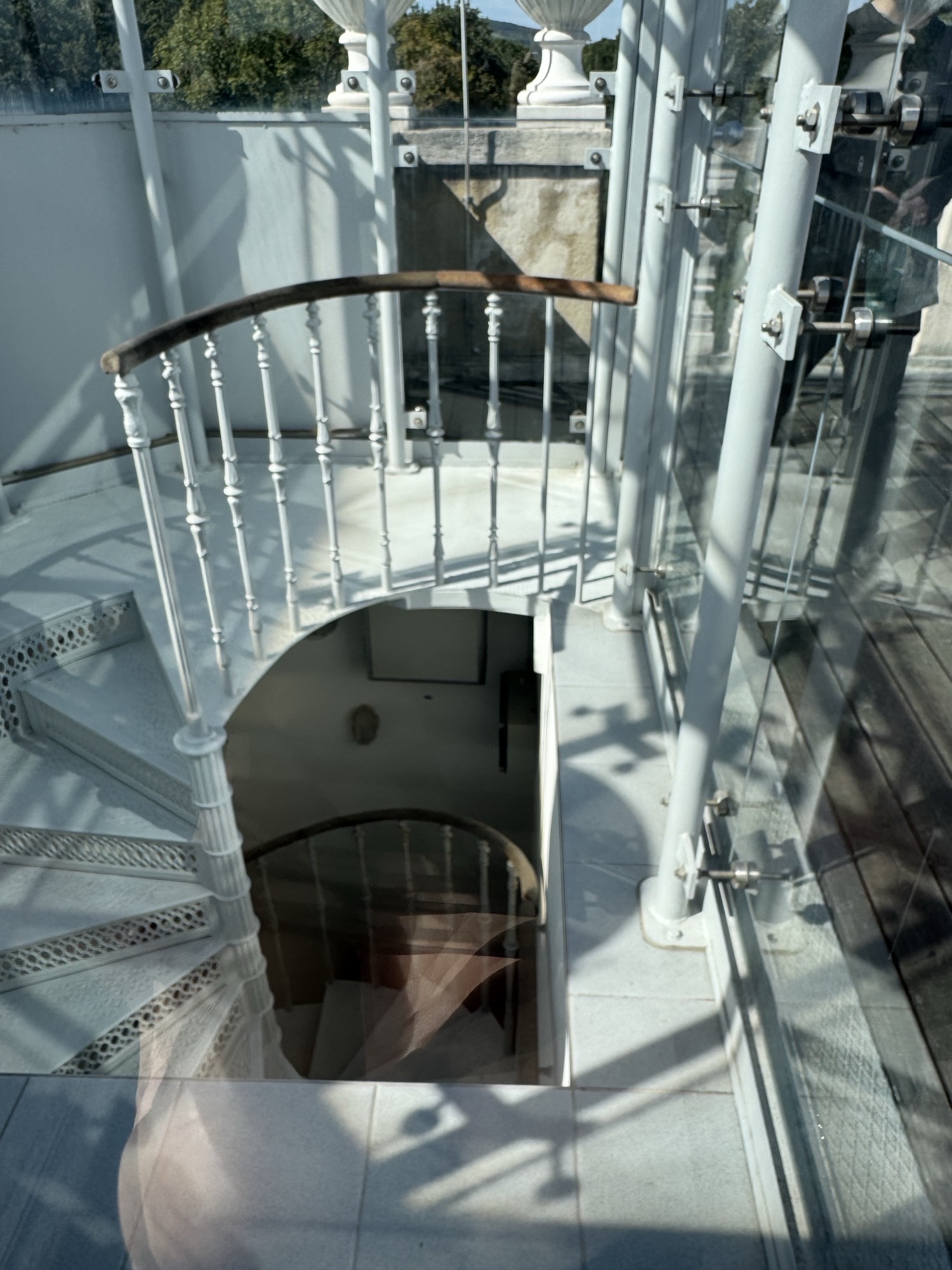
Once we were back down the stairs of the Gloriette we sought out a shaded path to Schönbrunn’s Tiergarten (Zoo), the oldest continuously operating zoo in the world, established in 1752 as the imperial menagerie and opened to the public around 1779.
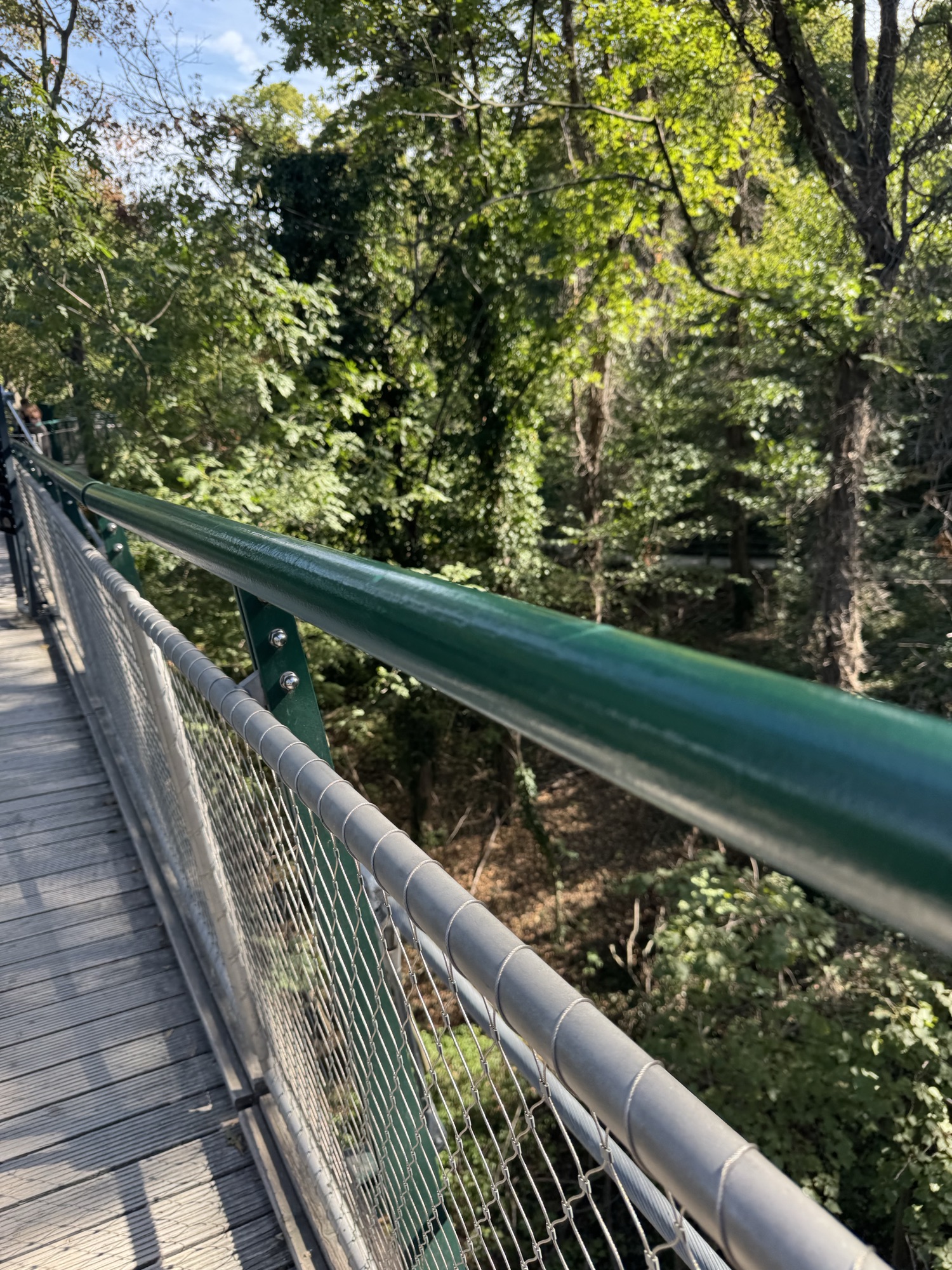
The zoo is home to nearly 8,000 animals across around 700 species, including giant pandas, Siberian tigers, and polar bears, but we were really there for a cold drink, lunch, and a pleasant stroll; any animals foolish enough to show themselves in the heat (the lions, tigers, cheetahs, and pandas were clearly too smart) were a bonus.
This being Vienna, the umbrella-shaded sit-down restaurant’s menu was limited to pork schnitzel, chicken schnitzel, or pork or chicken schnitzel Cordon Bleu, delivered by a server moving so fast that they commented this eatery is their own personal gym. We both opted for the pork, and I added a cold Radler, which made for a hearty lunch.
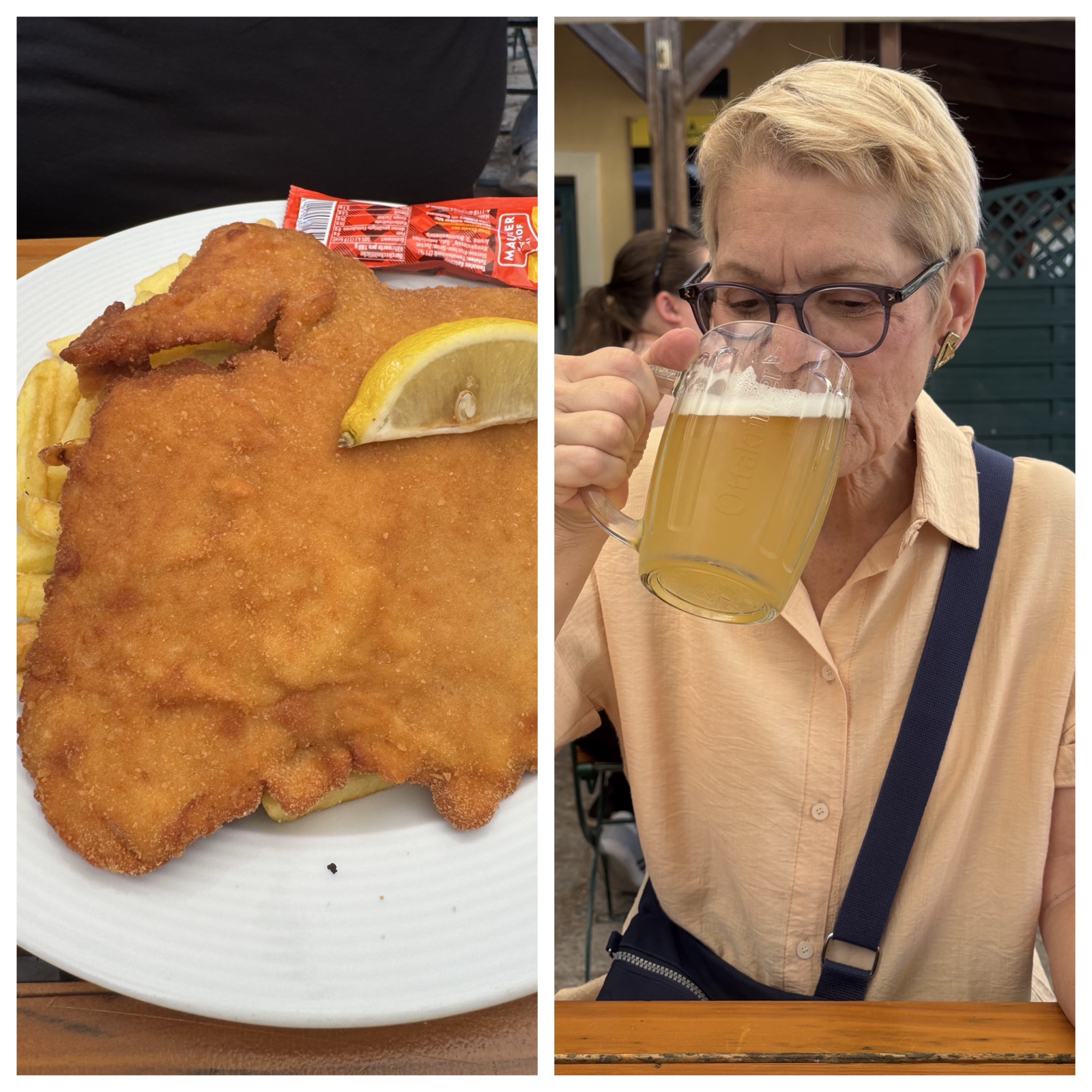
Once fed and refreshed we continued to stroll through the zoo until we reached the exit nearest the Palm House.
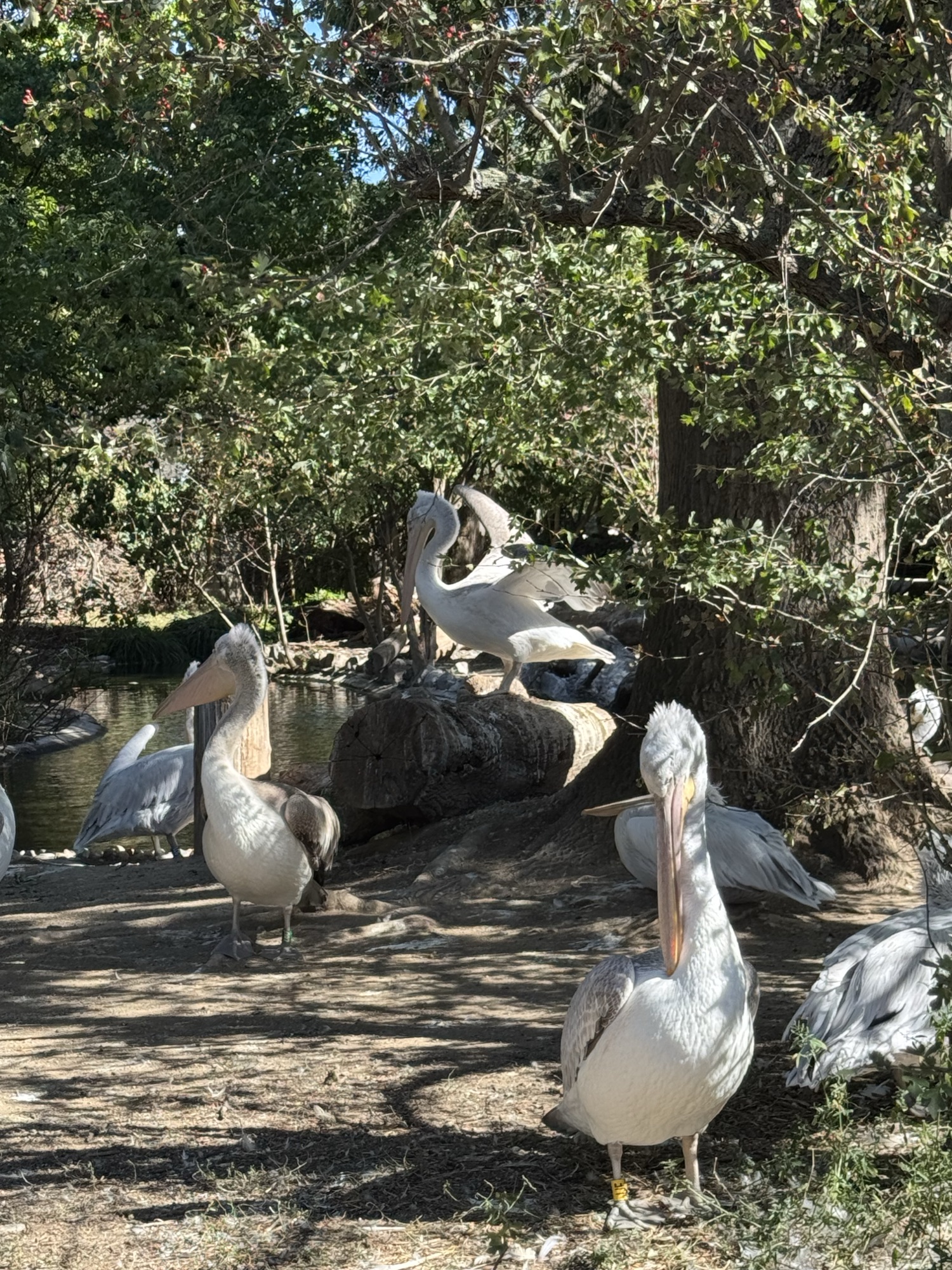
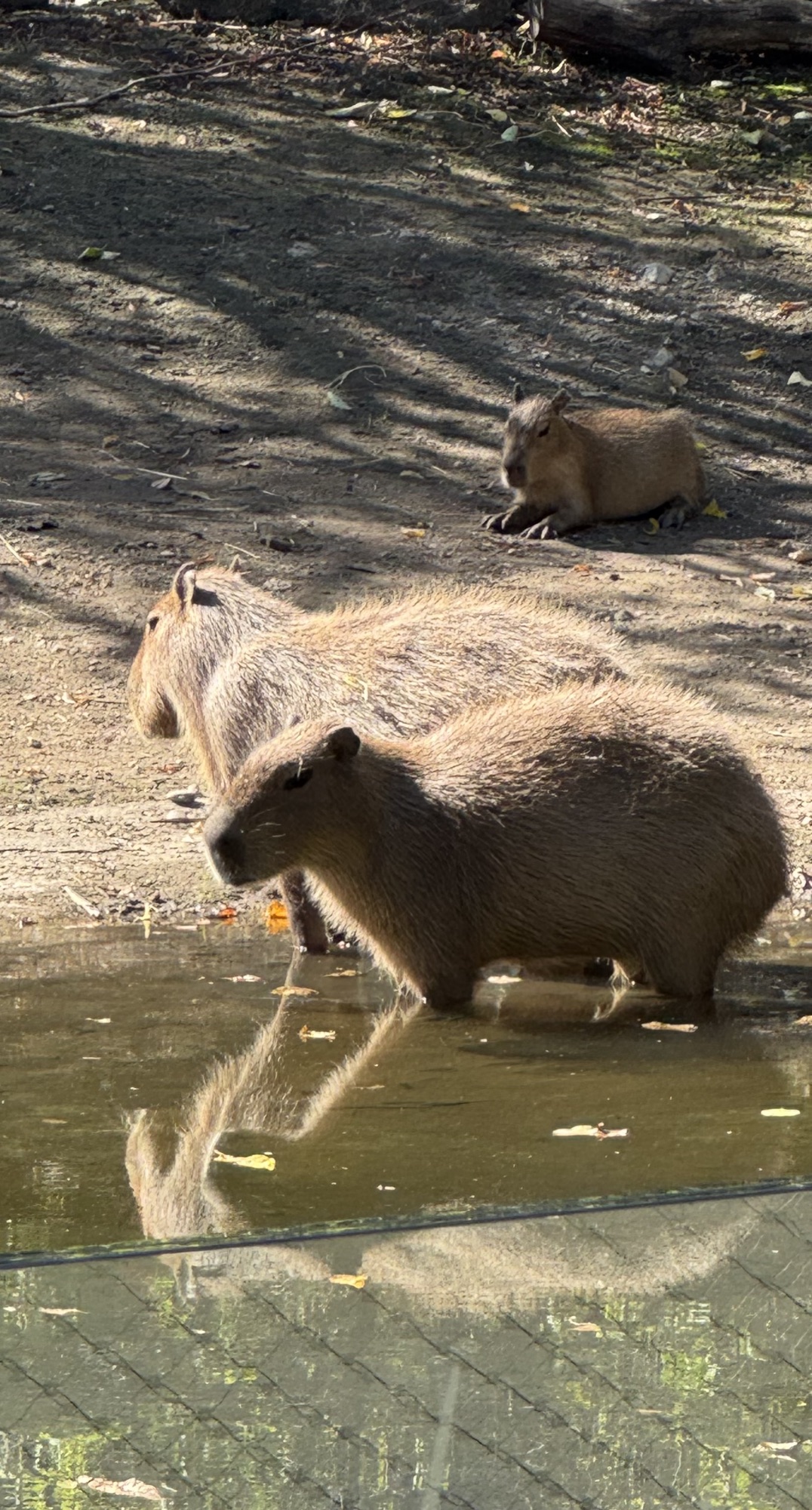
We passed the Emperor’s tea house/pavilion, which certainly doesn’t compare to that of the Empress. That said, I recall from having had cake and coffee there with Ted years ago that I actually preferred it.
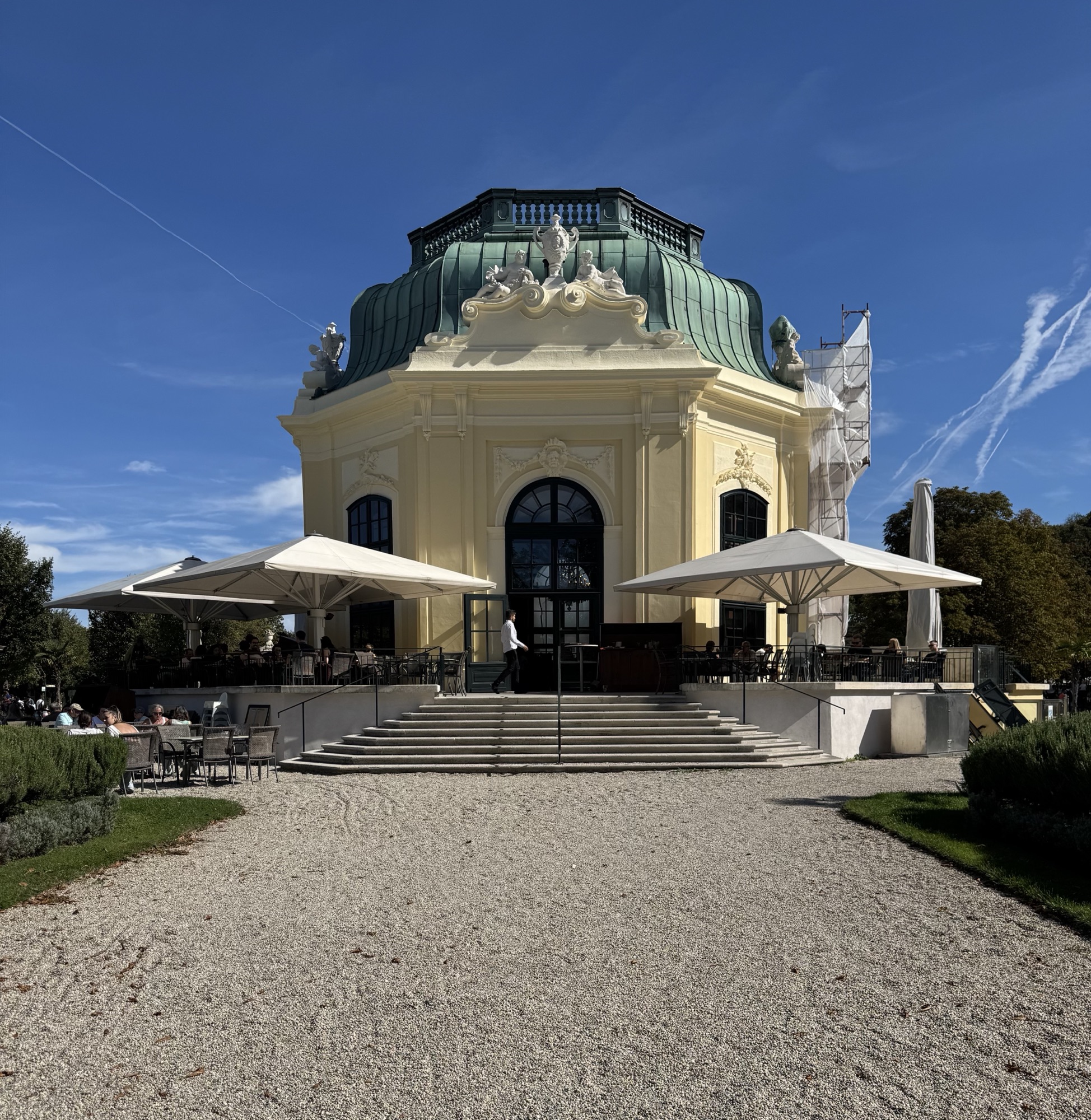
And then there it was, the Palm House.
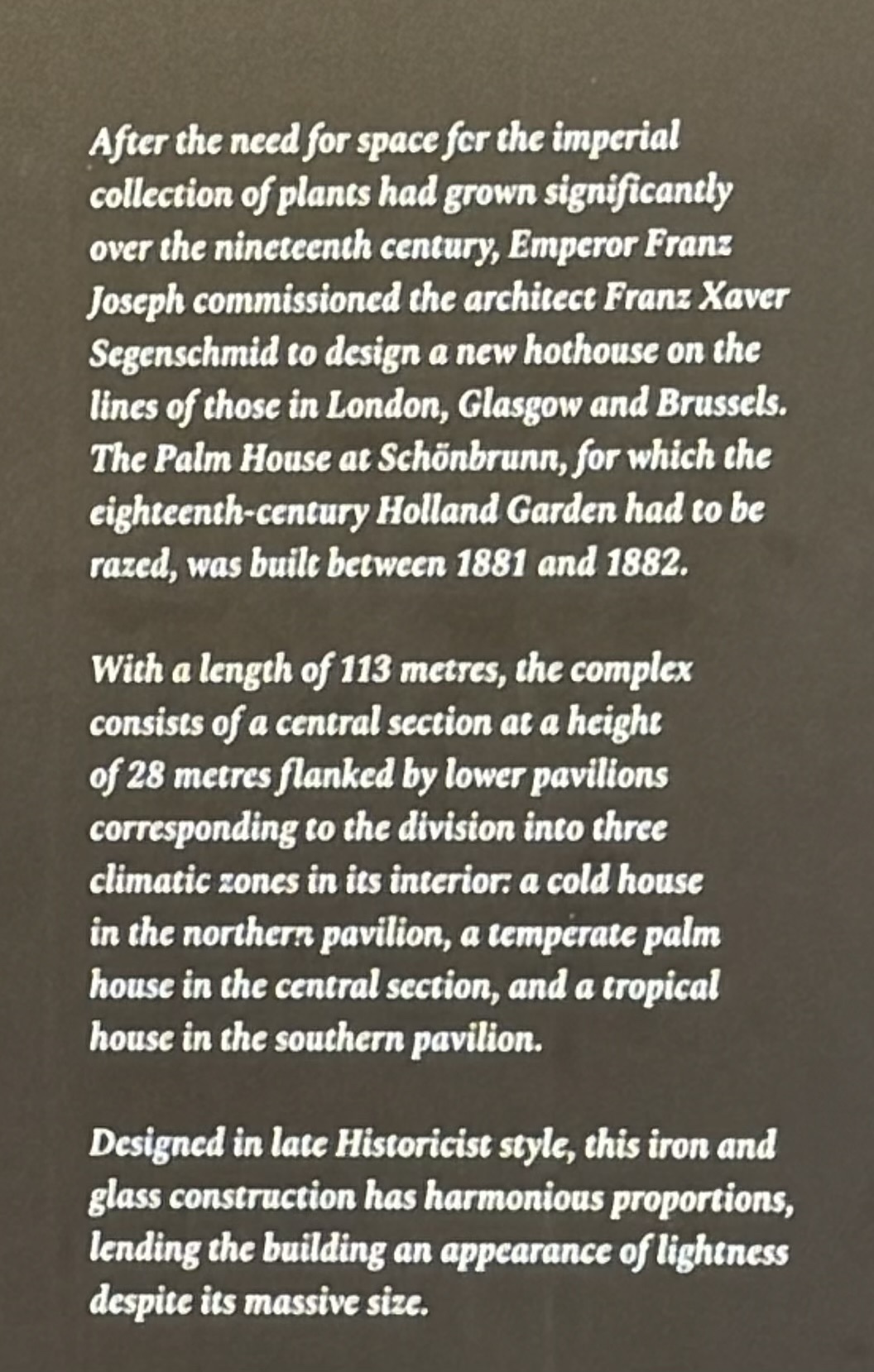
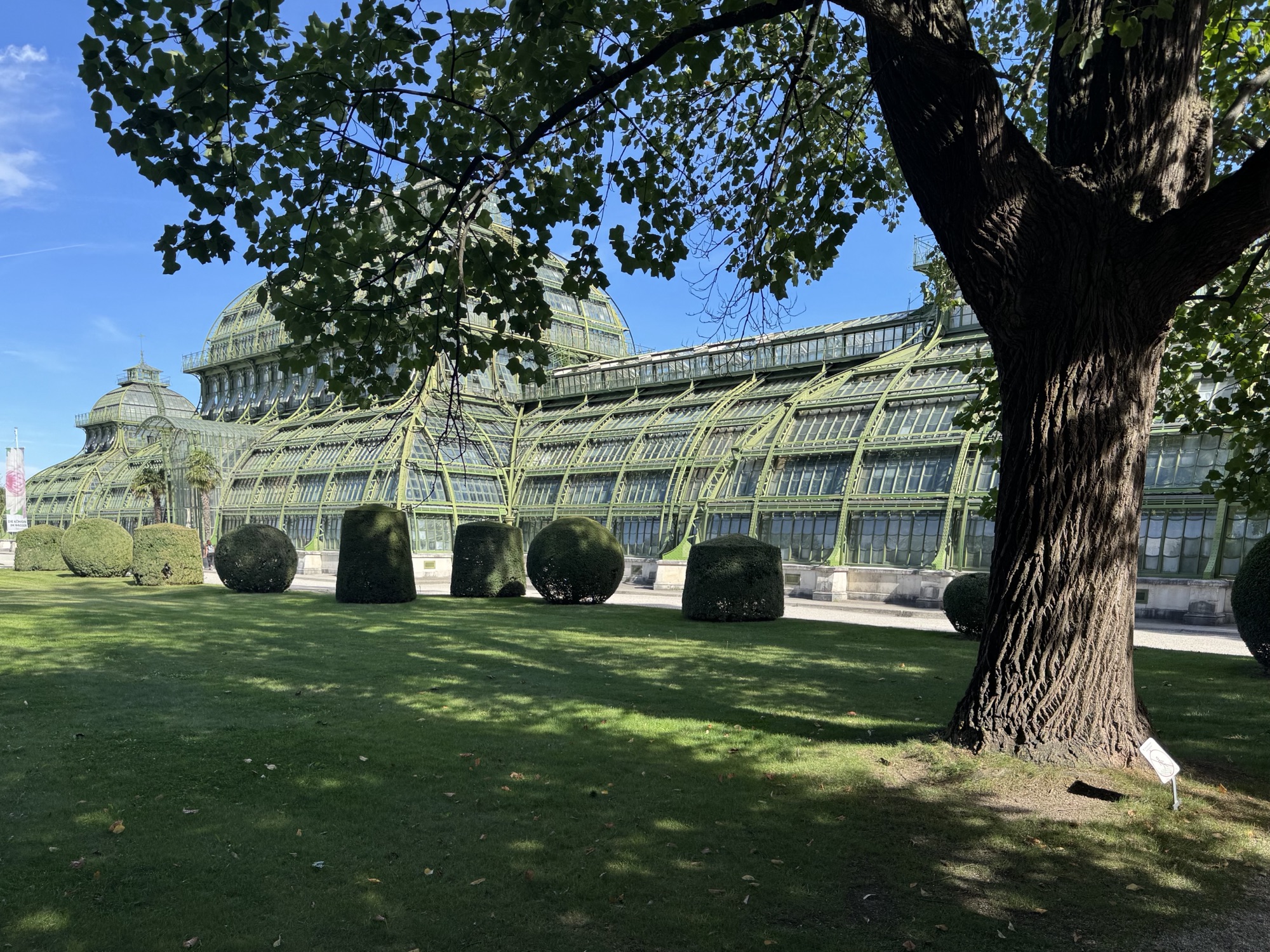
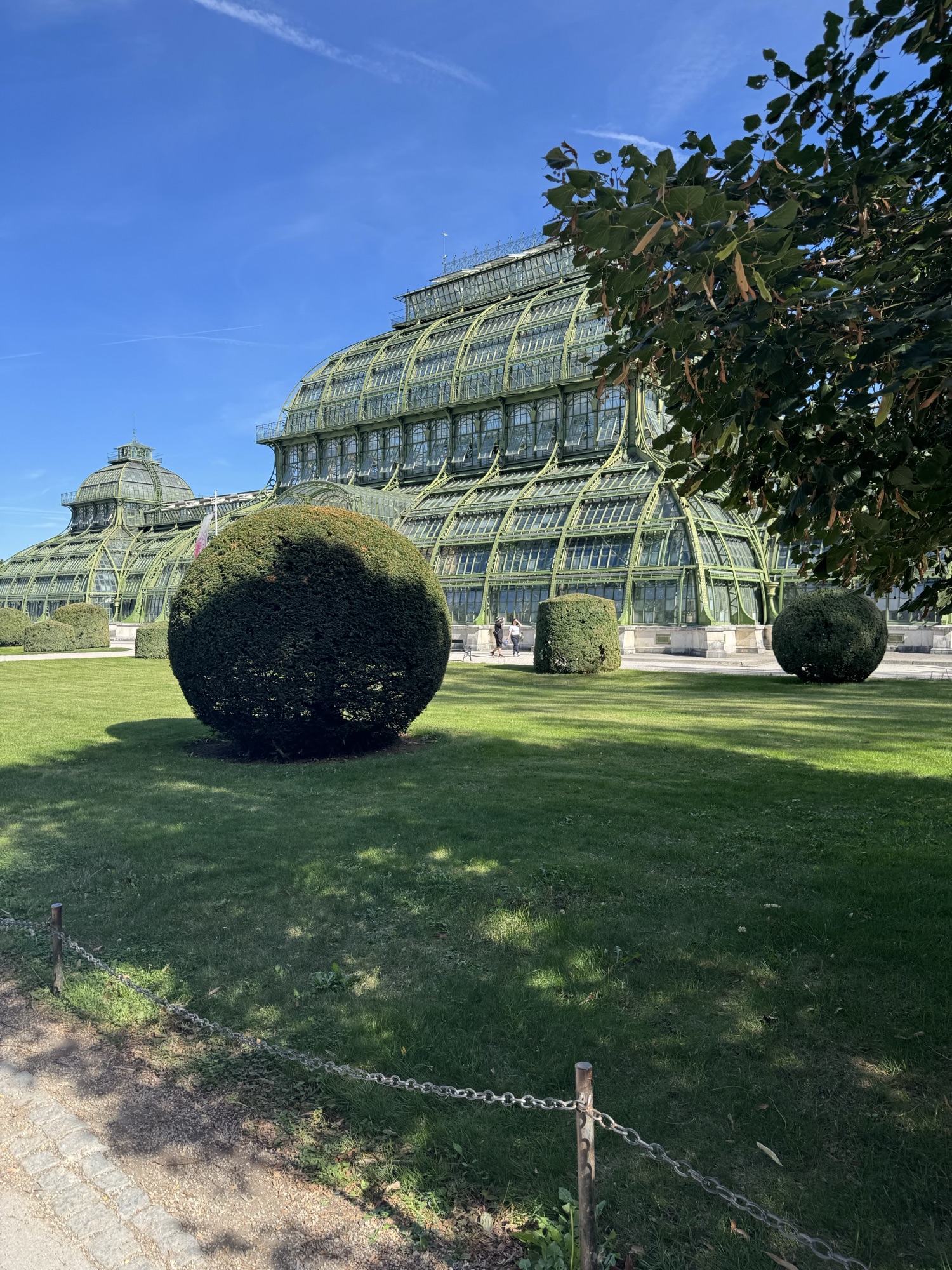
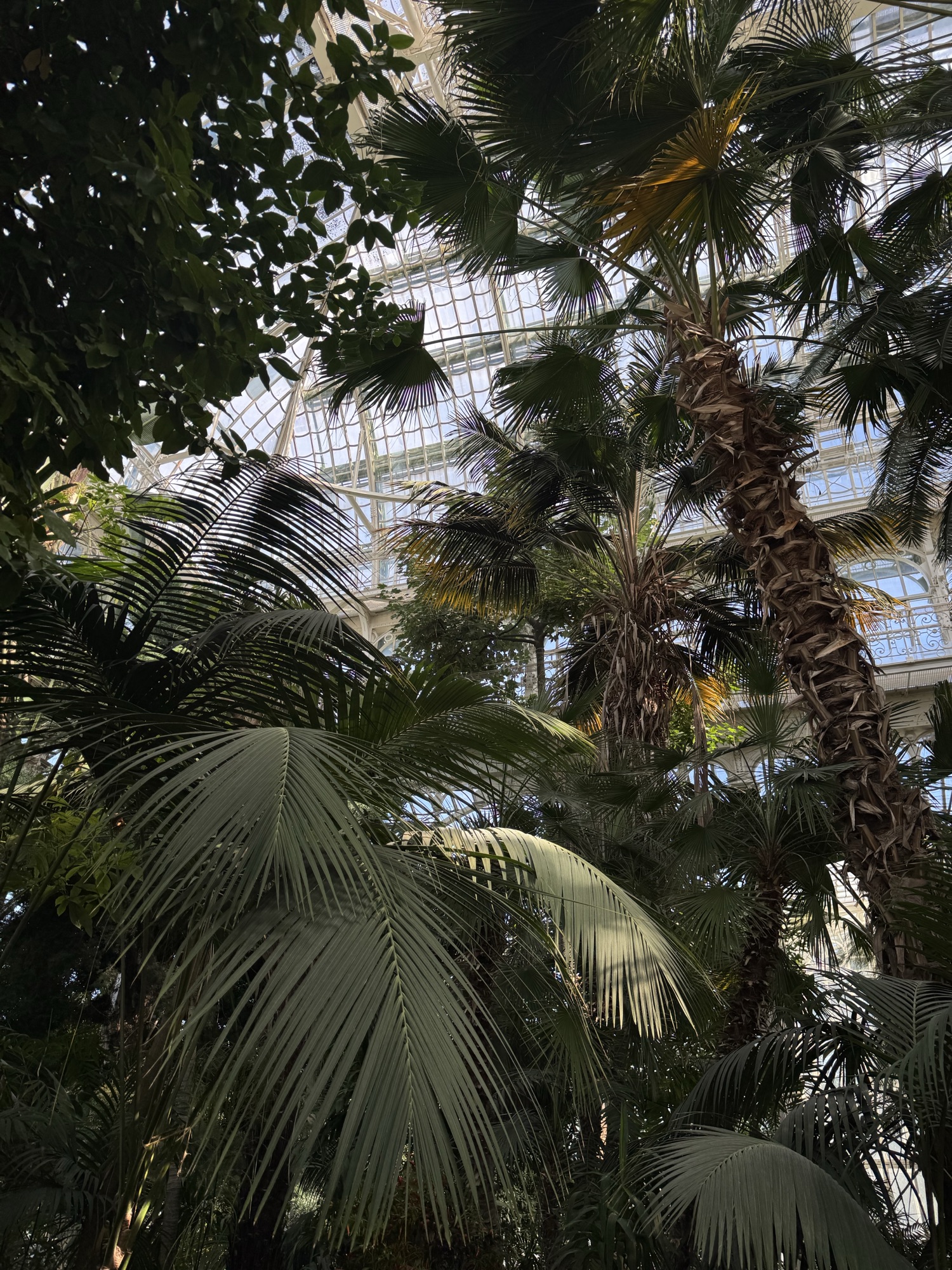
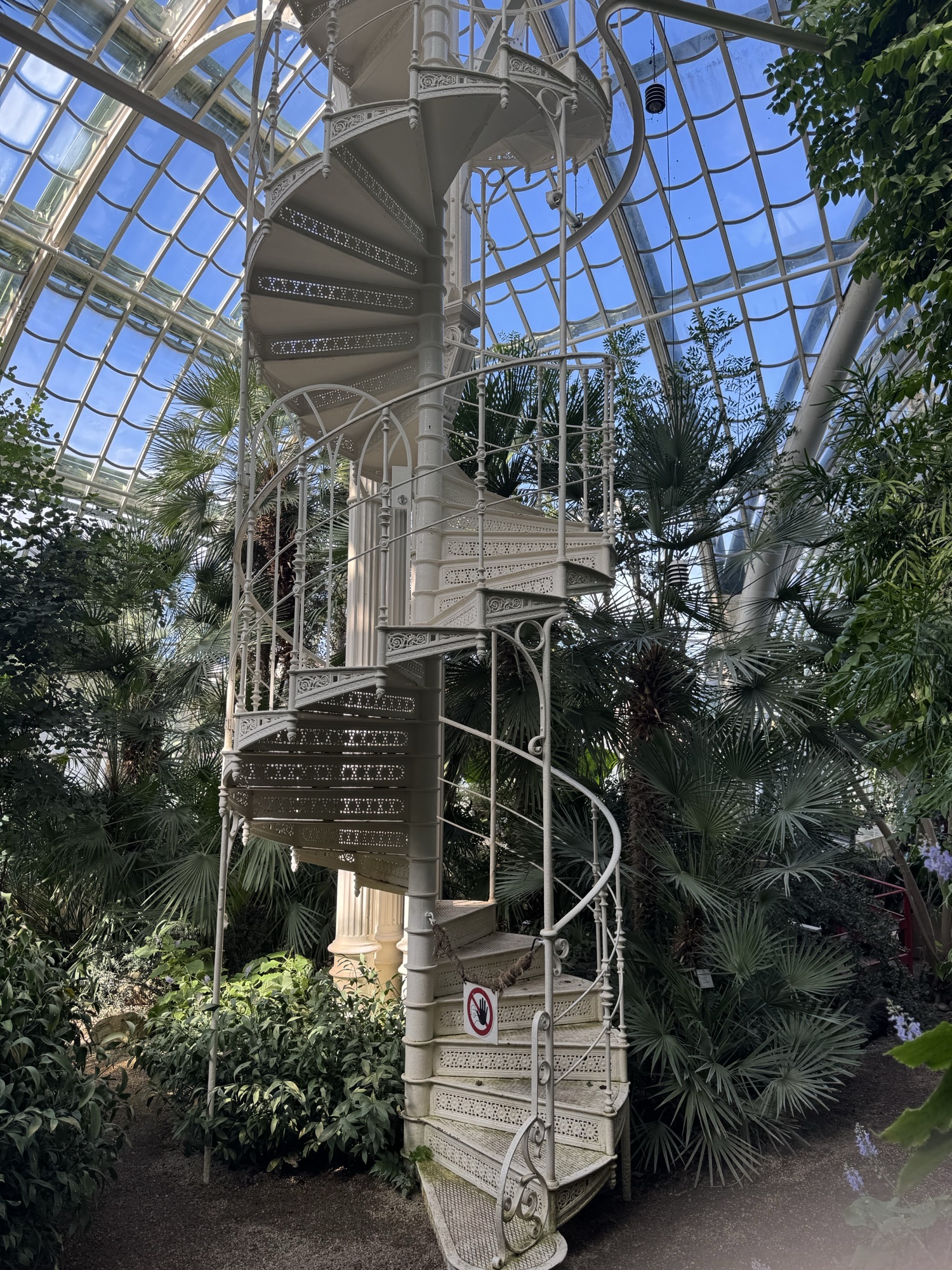
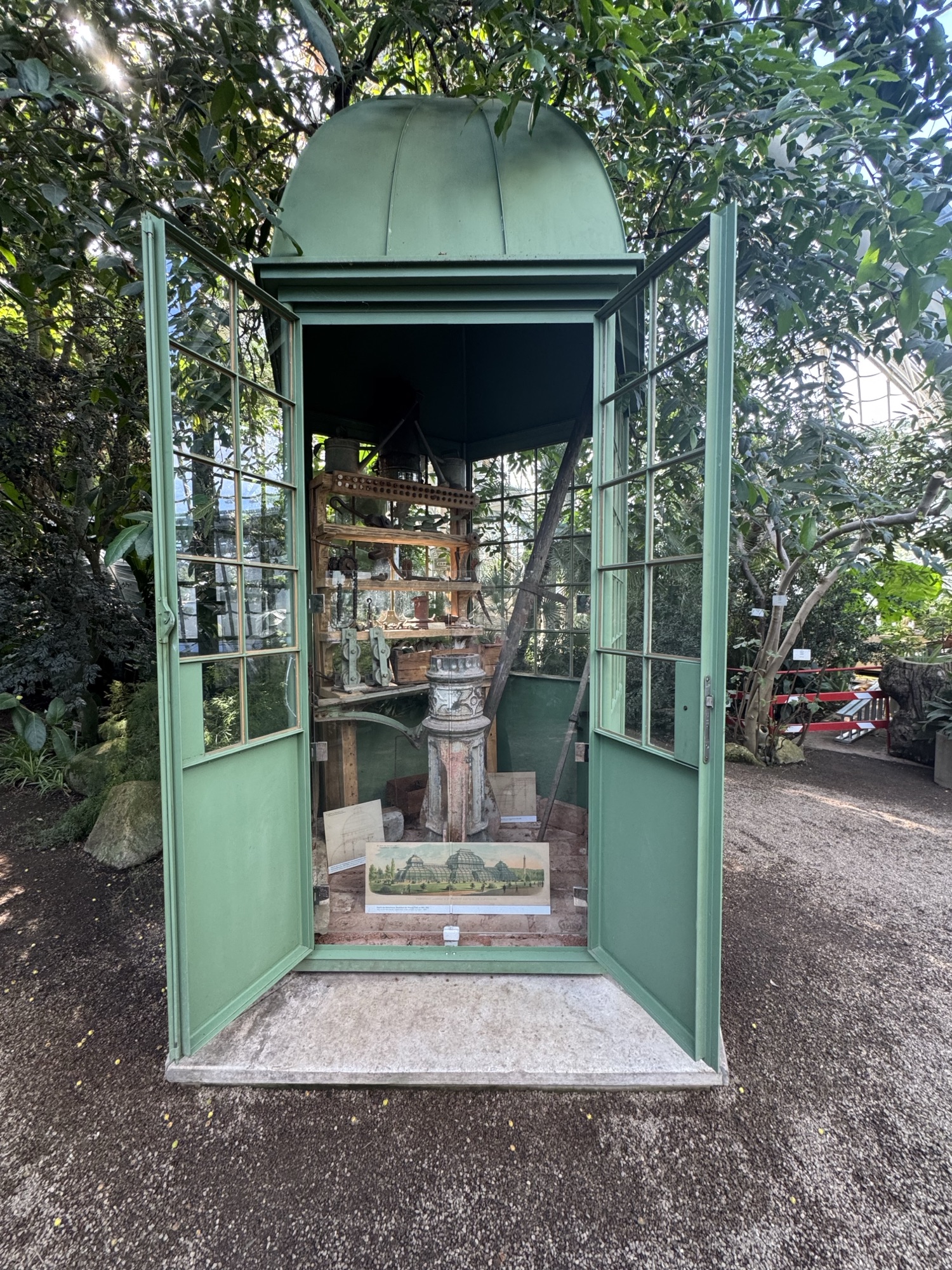
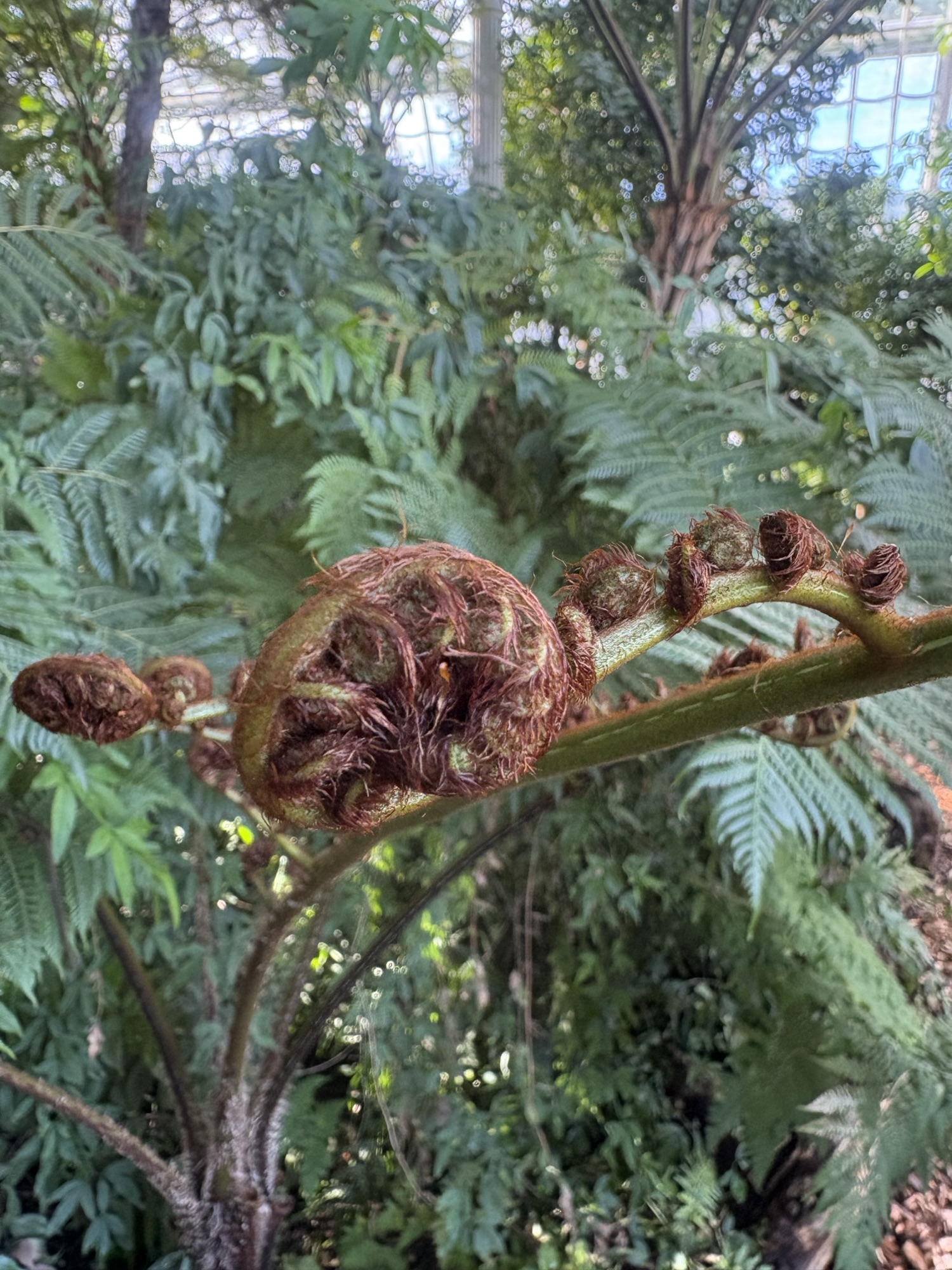
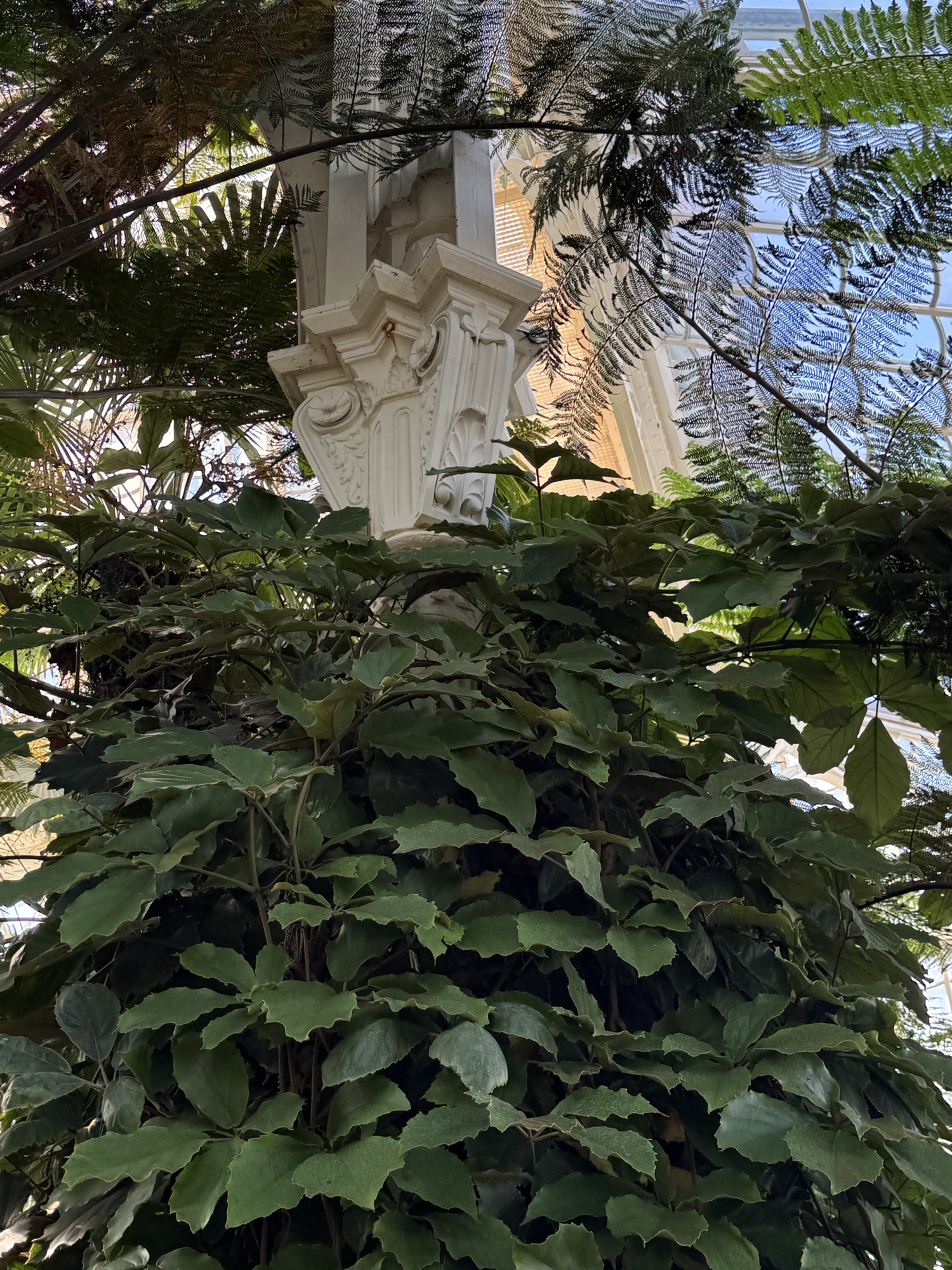
We noticed that the pillars which were white in the Cold House were covered in green moss in the Warm House.
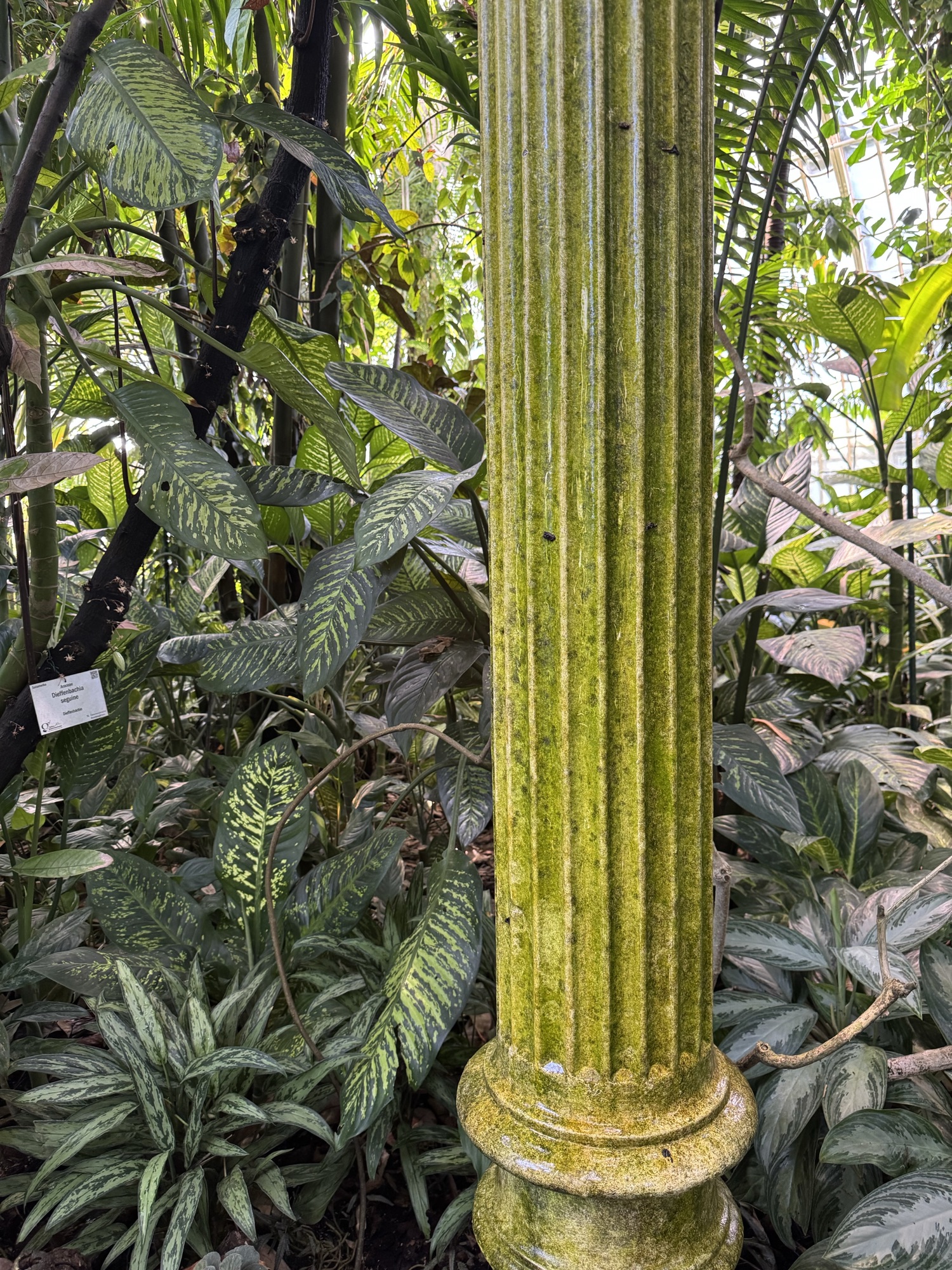
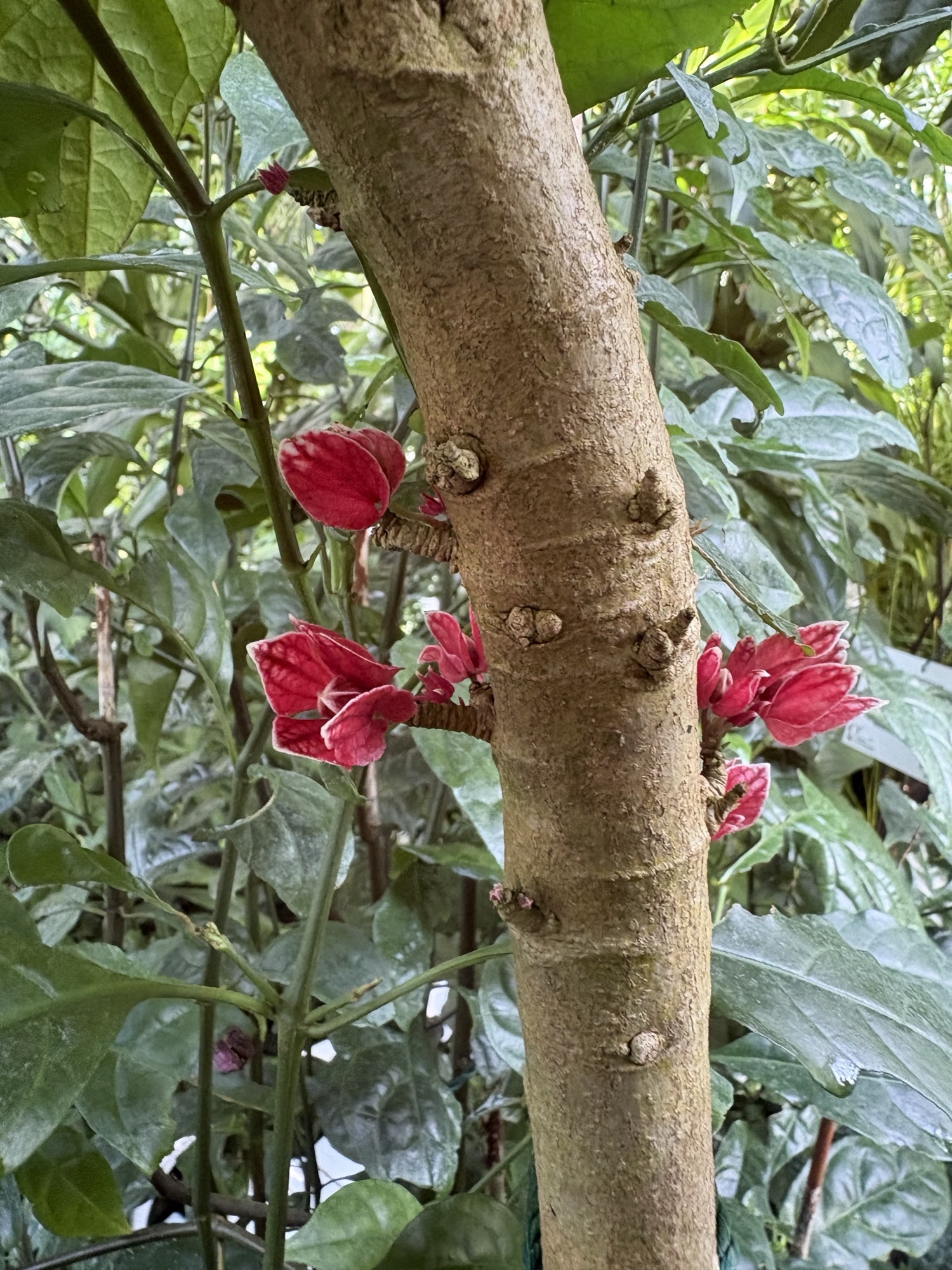
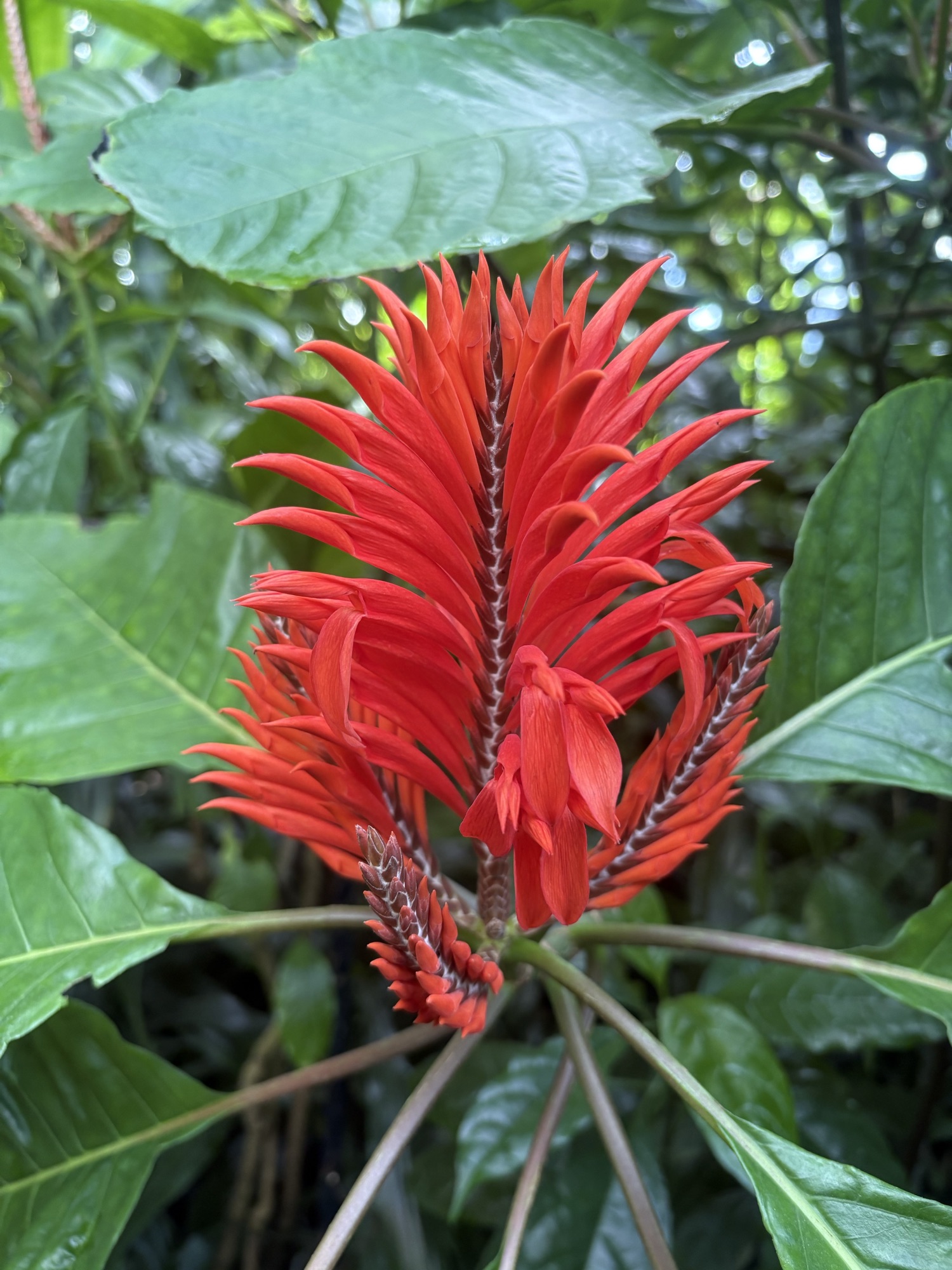
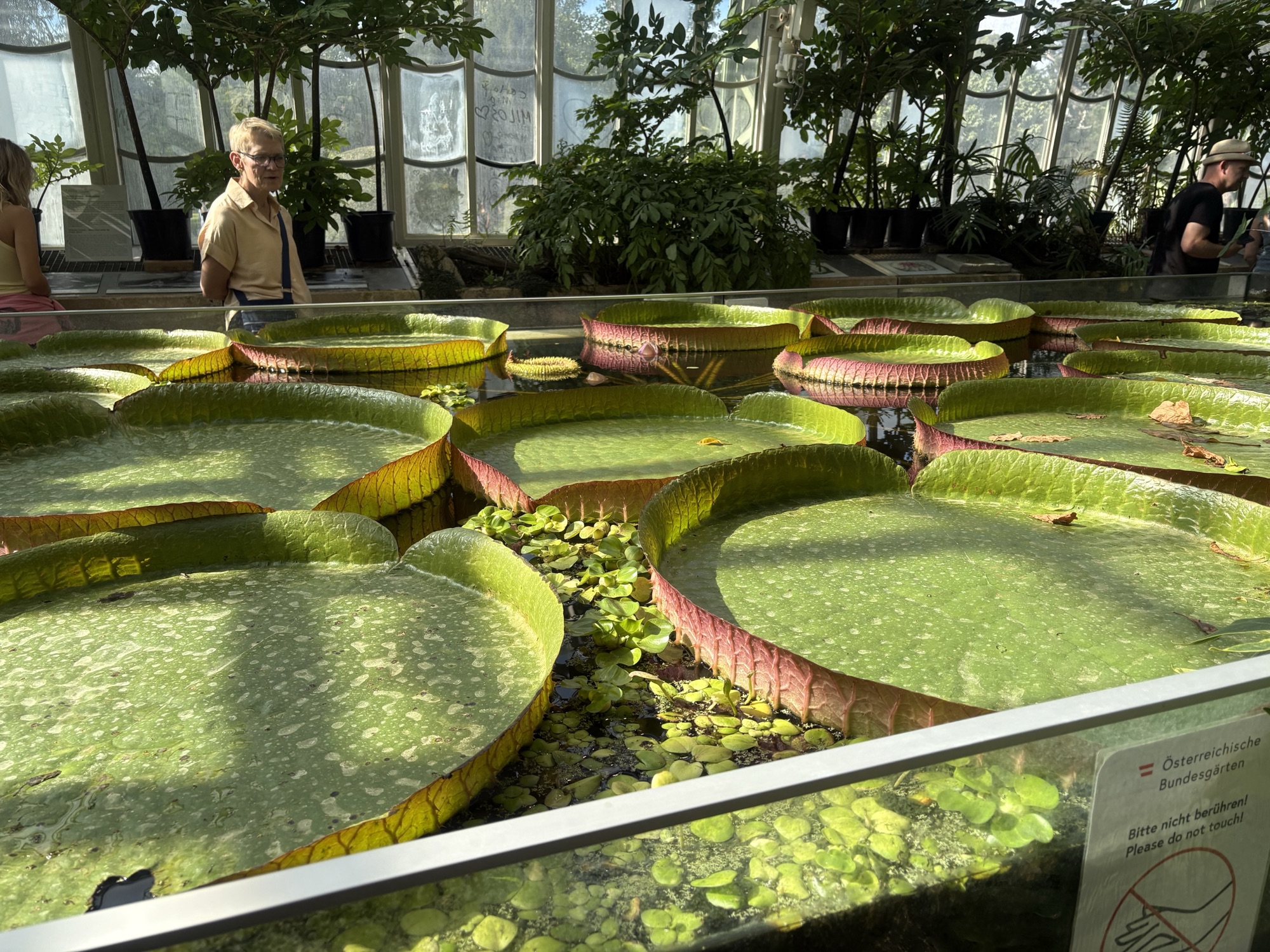
That left just the Desert House a bit further along the path to visit. It had both an “underground” and above ground area to demonstrate the different kinds of things that live in a desert environment where the temperatures below and above the surface can vary as much as 50°C/120°F.
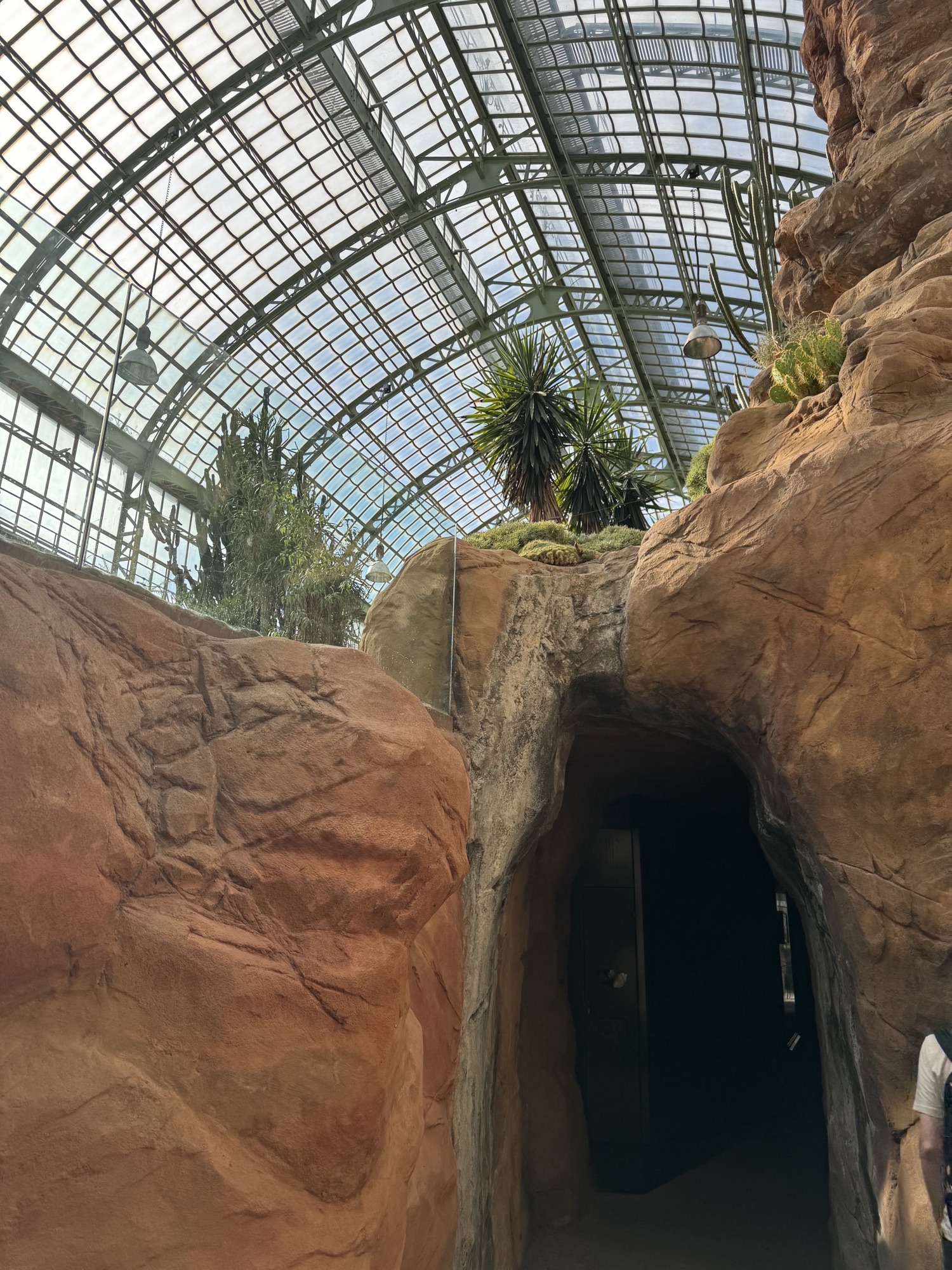
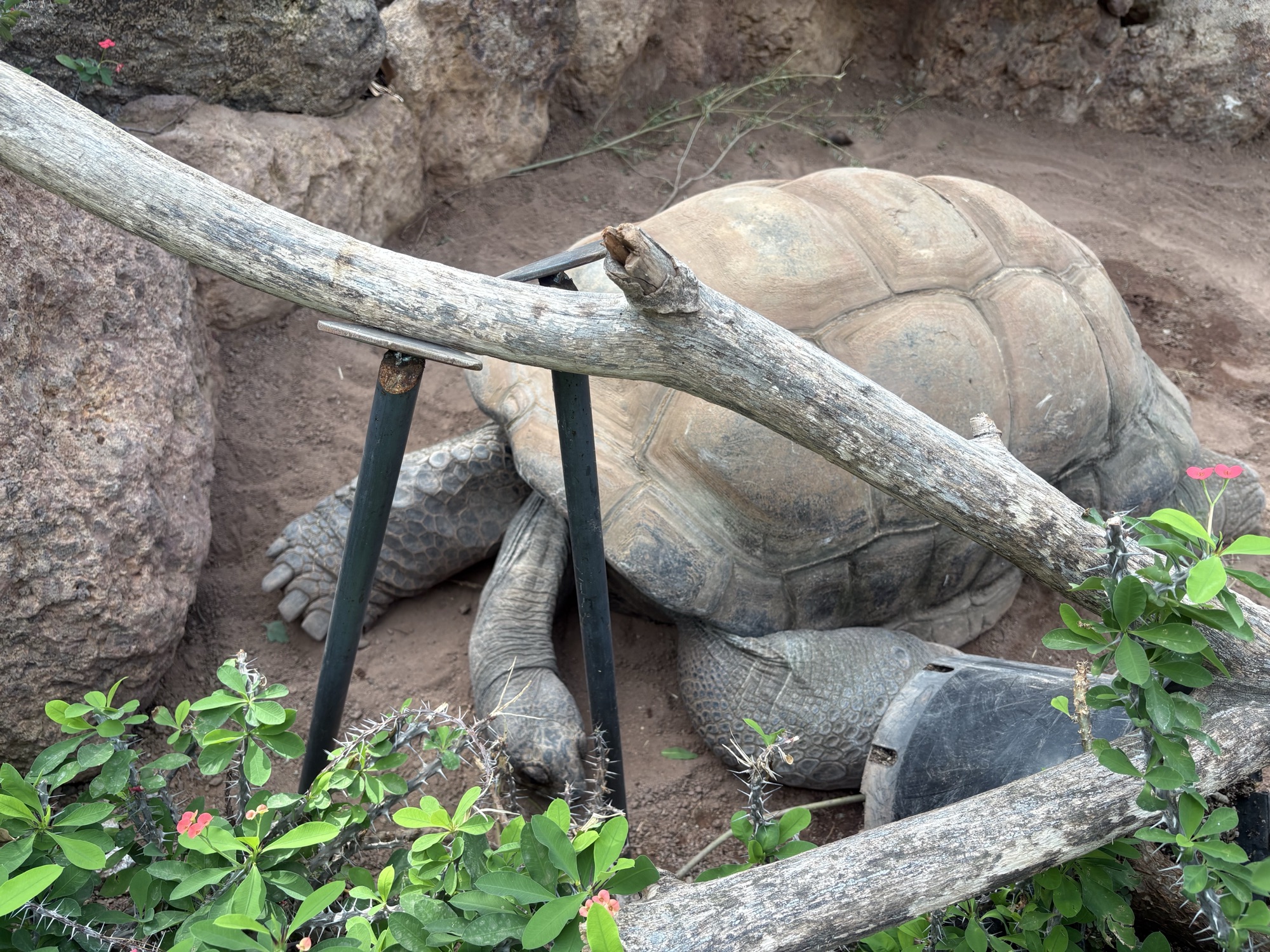
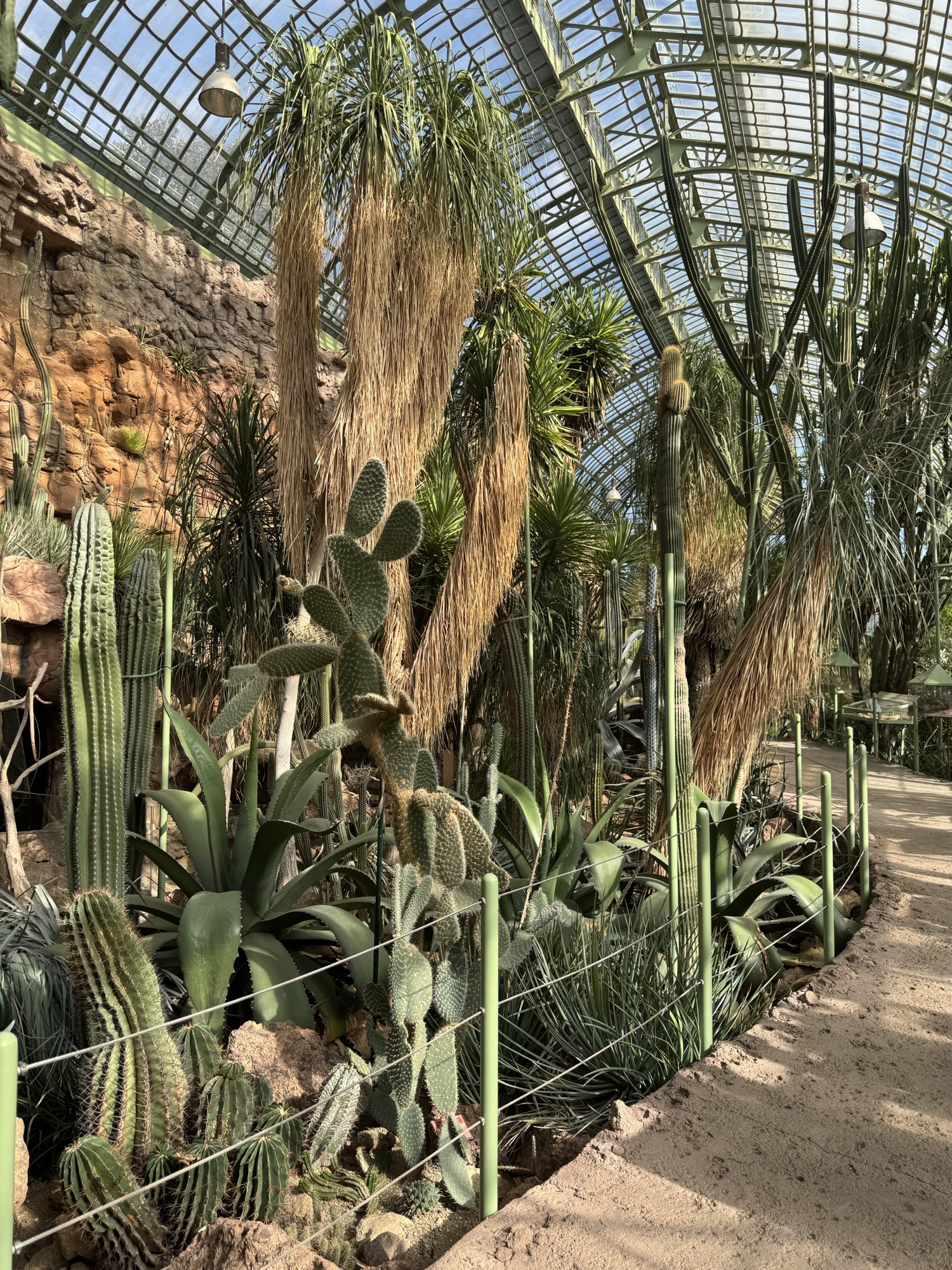
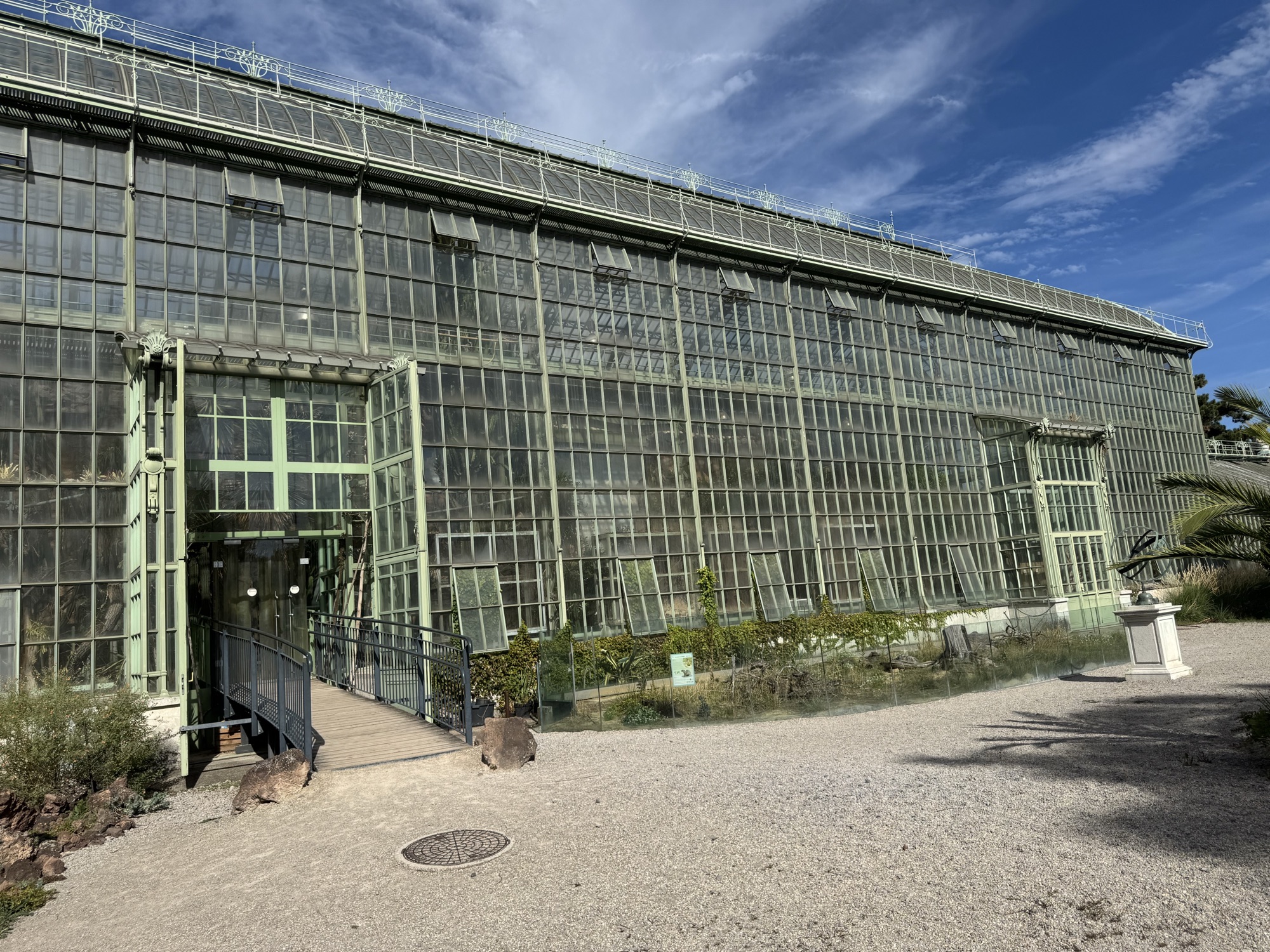
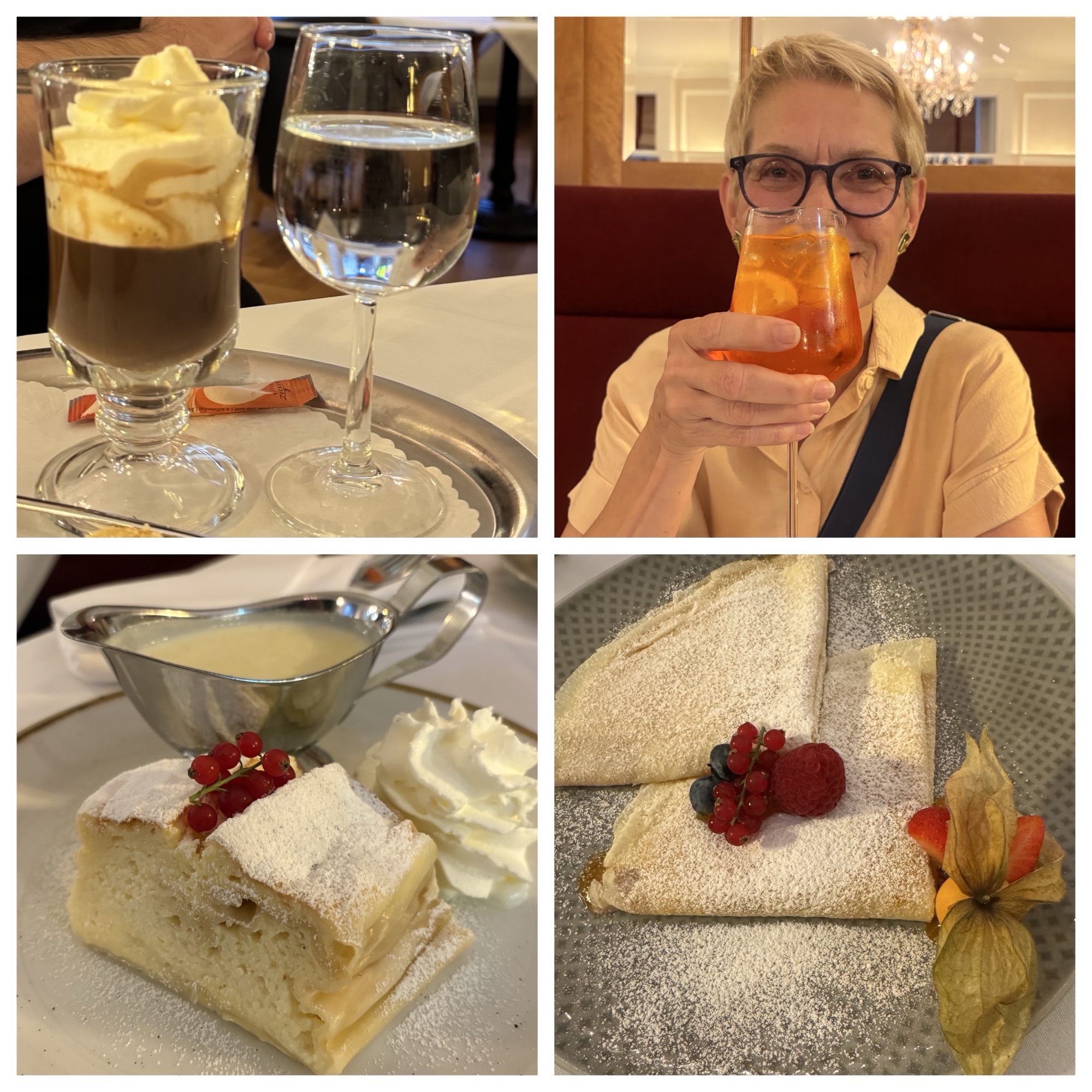
That completed our Schönbrunn Classic Plus Pass day. It was only late afternoon but we agreed we were both content to walk back to the hotel and read/write/relax until it was time to have dessert for dinner, which we did in our hotel’s very nice Schloss Café restaurant.
We’ve joked that since tomorrow is our final day in Vienna we’ll just take it easy – starting by climbing both towers of St. Stephen’s Cathedral.
You only live once!


I’m a little jealous! When I went to the palace in 2018, we weren’t allowed to take any photos at all. I remember being in that HUGE hall and just being totally amazed at the scale of it.
LikeLiked by 1 person