Episode 737 from 2005 talked about the fact that Vienna is my happy place. Somehow it didn’t mention how tired I always end up by the time I leave the city, because I always try to do too much.
Son #1 is not doing one single thing to convince me to slow down.
At least they acknowledge the need for protein to start their days at this pace.
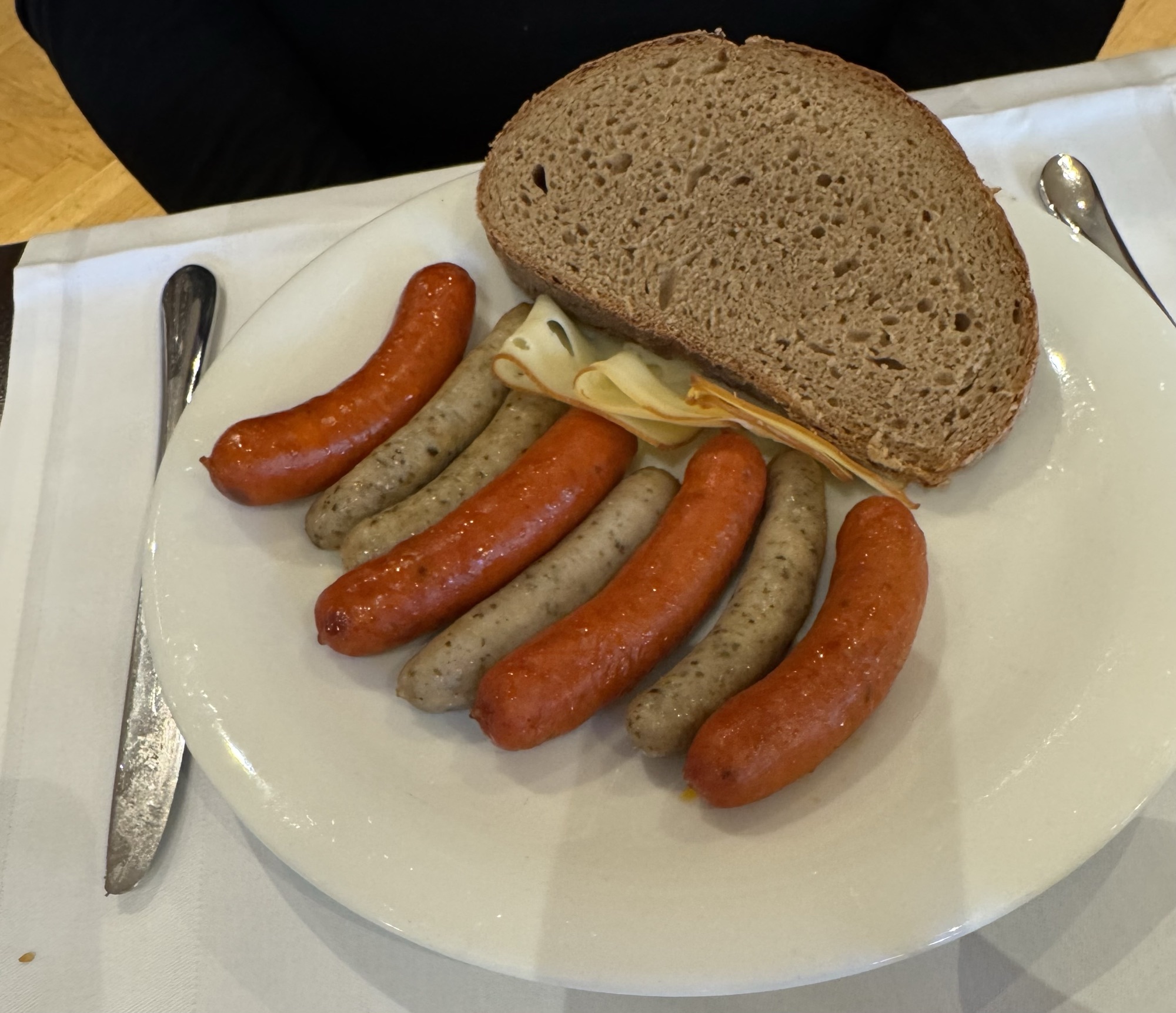
Today was supposed to be our quieter day, but there’s a cathedral in the city, with two towers that can be ascended.
Plus there are unexplored (for #1) art galleries and markets, and a bit of souvenir shopping to be done for their family members not lucky enough to be me.
It was not a “slow day”.
We began by taking the Ubahn to Karlsplatz and walking up Vienna’s famous Kärntnerdtrasse to Stephansplstz (Stephen’s Square), using the walk as an opportunity to suss out the best place to buy Mozartkugeln to take back to Canada. Everyplace seems to sell them, but prices and packaging do differ.
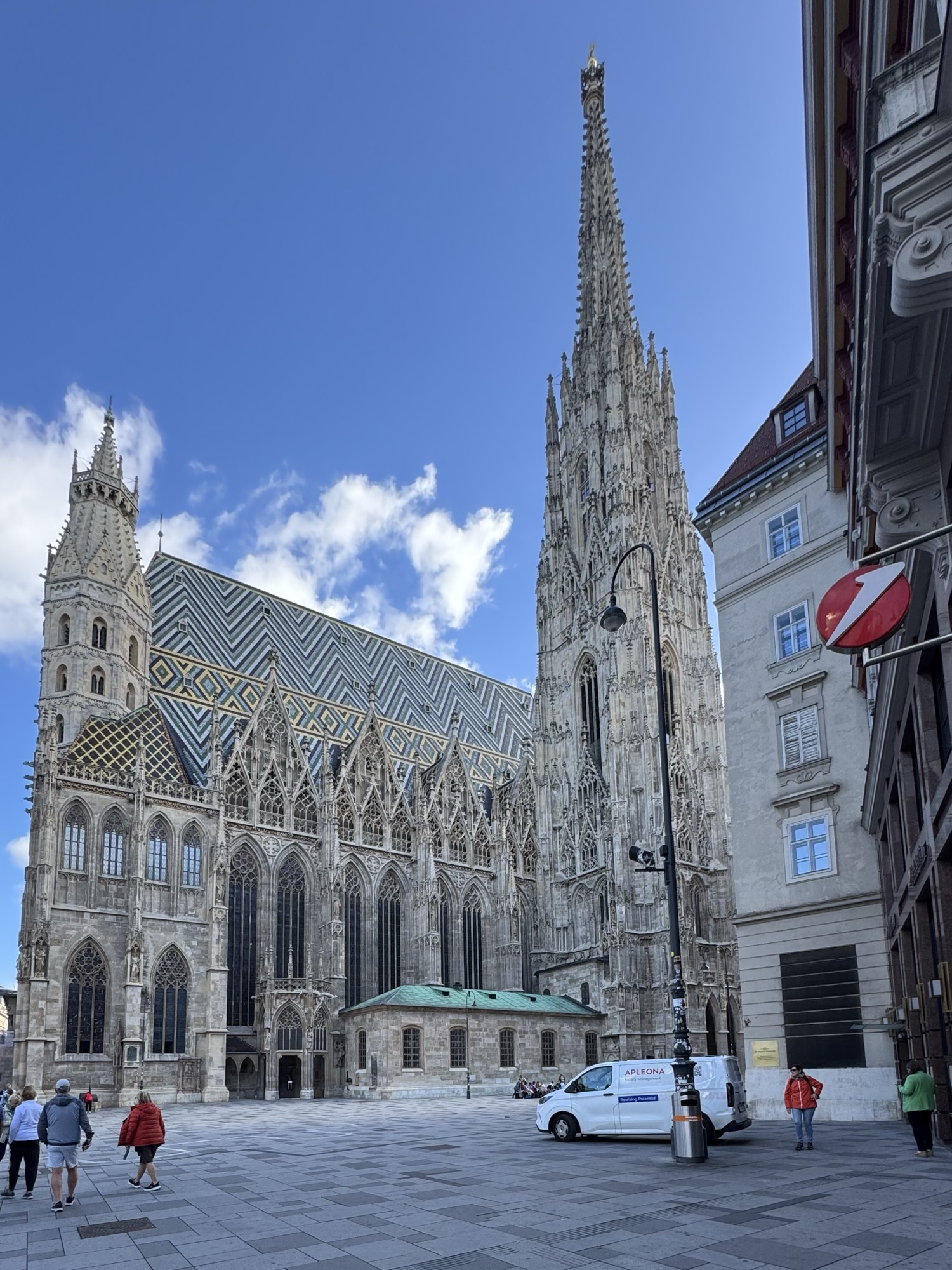
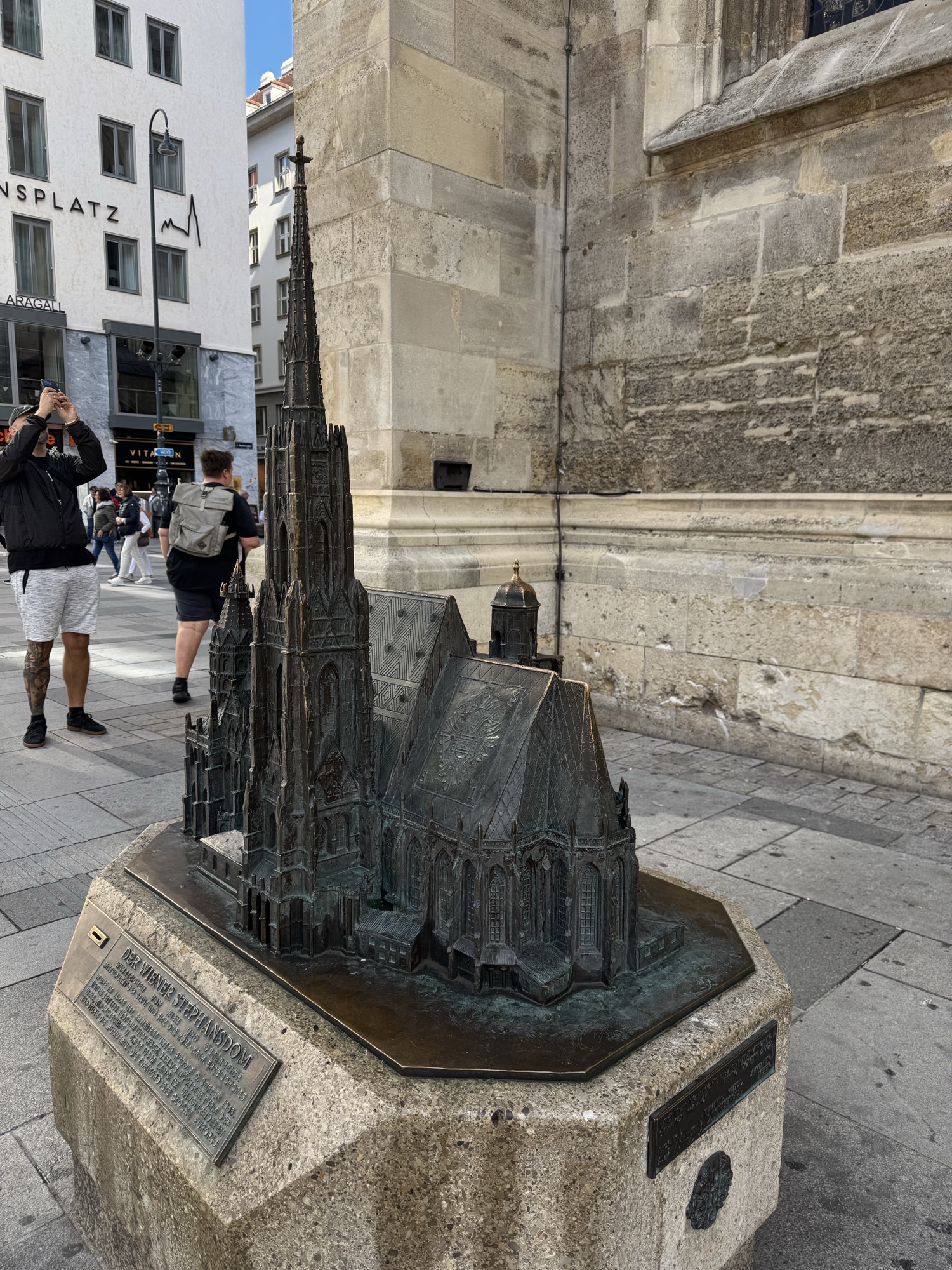
We reached the cathedral around 10:00 and were able to join the English guided tour at 10:30.
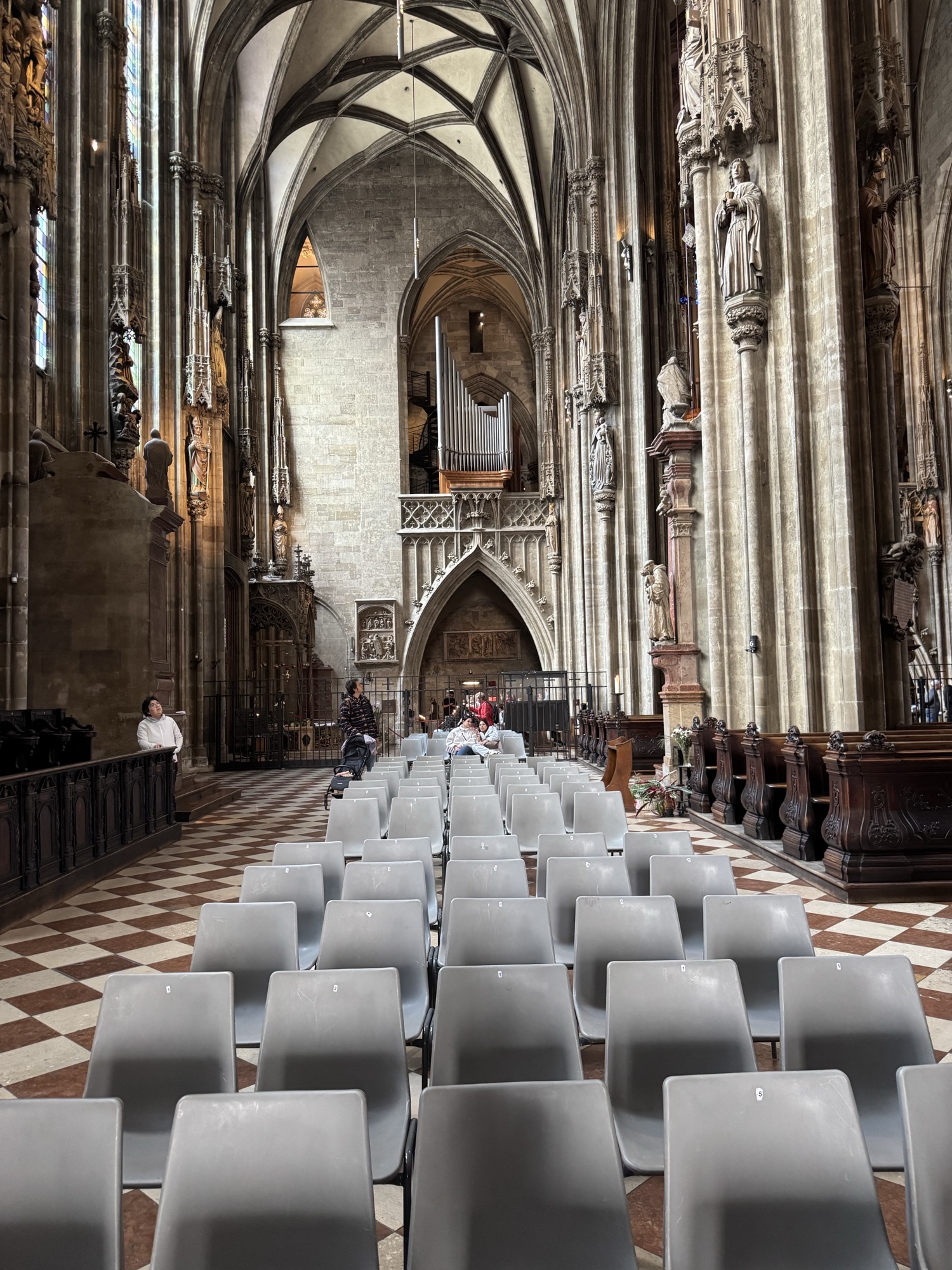
Our very droll guide, Florin, brought the cathedral’s stories to life for 45 minutes. Instead of focussing on the big things, he chose a few specifics for us.
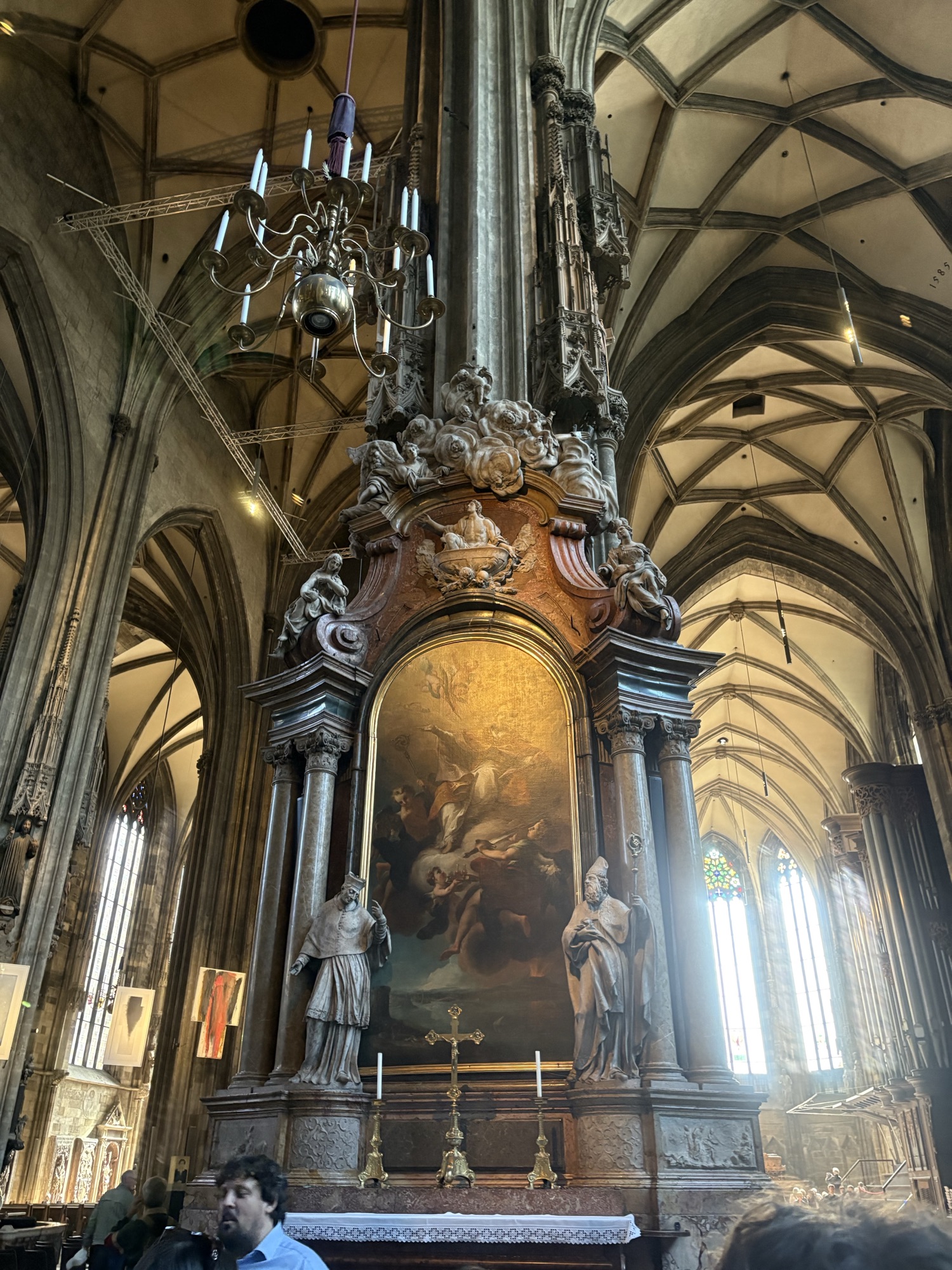
The altar above is one of 18 altars in the cathedral and dates to 1711. The painting is credited to Martino Altomonte , whose real name was Martin Hochberg. Hochberg is German for high mountain; Altomonte is the Italian equivalent. In the 18th century if you were an Italian artist you got paid more.
Our guide pointed out several other works by “Italian” artists and sculptors.
Florin showed us the memorial commemorating the end of the Turkish siege of Vienna.
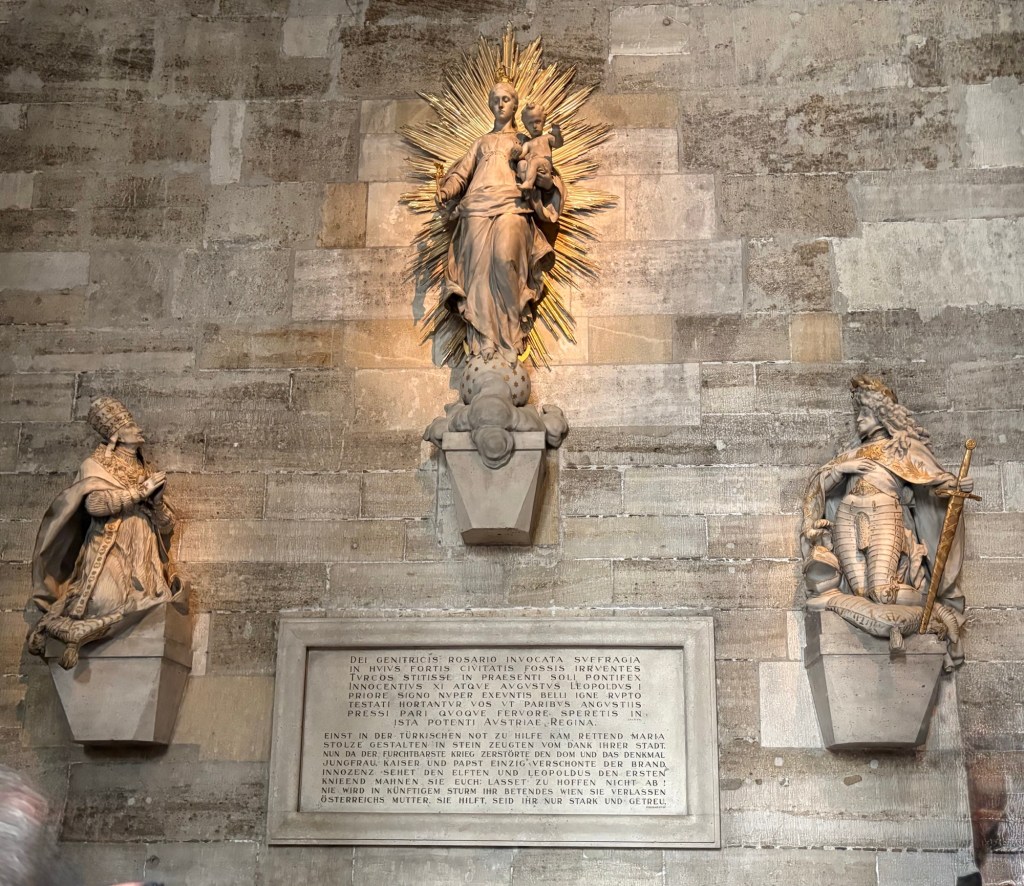
The memorial reads (translated): Once, in the hour of Turkish peril, Mary came to the rescue; proud figures in stone bore witness to the city’s gratitude.
Now that the most terrible war has destroyed the cathedral and the monument, the fire spared only the Virgin, the Emperor, and the Pope; behold Innocent XI and Leopold I kneeling—they exhort you: do not cease to hope!
Never, in storms to come, will she forsake her praying Vienna—Austria’s Mother. She brings aid; only be strong and steadfast.
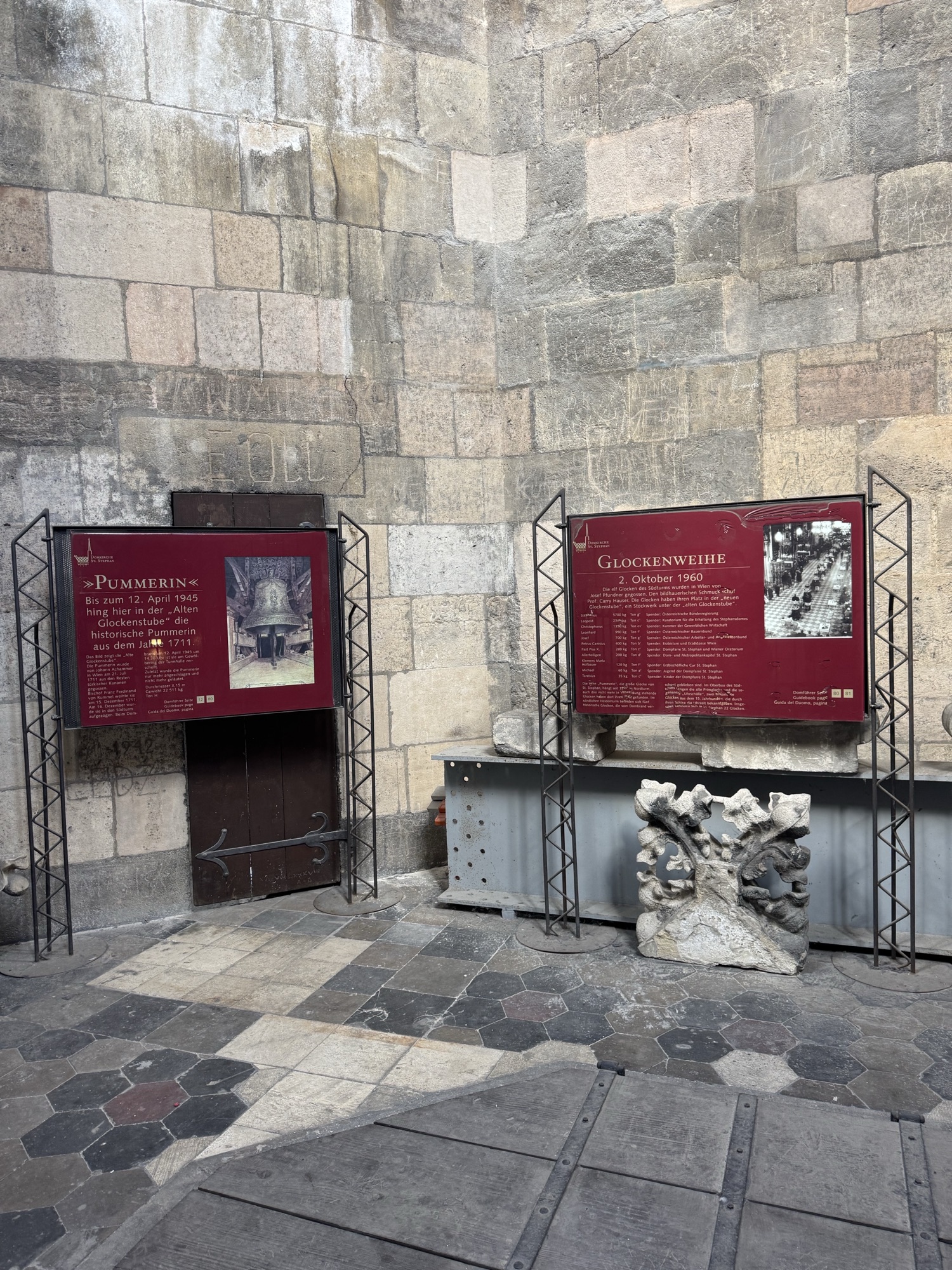
After the initial war, 280 Turkish cannons were melted down to create the 22,000 kg Pummerin, the largest of St Stephen’s bells. When the South Tower collapsed during the 1945 fire the Pummerin fell onto the Turkish memorial. Ironic? (The bell was never returned to the South Tower, where ringing it actually made the spire sway a bit. It was recast from its broken parts and is now in the shorter North Tower.)
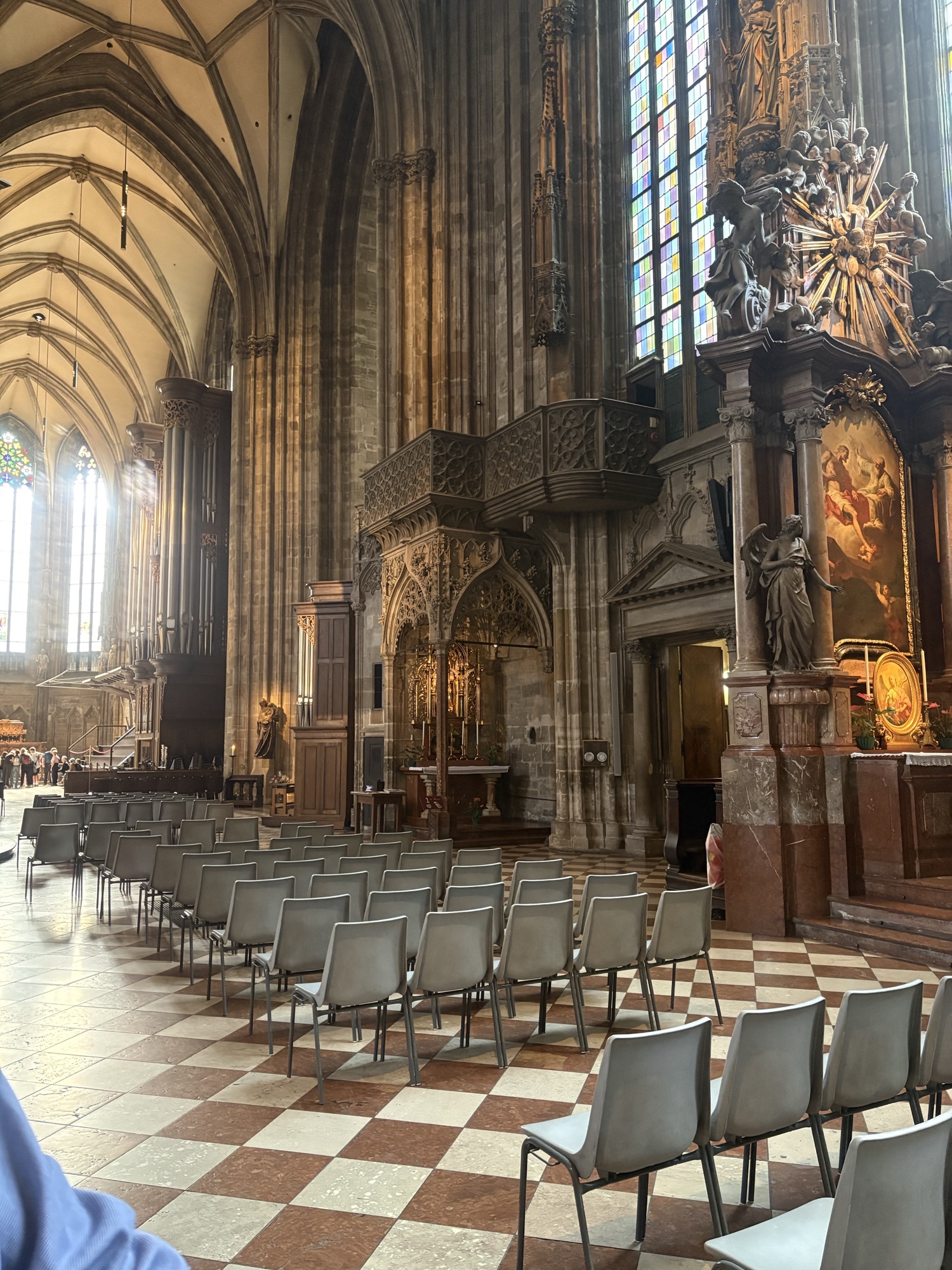
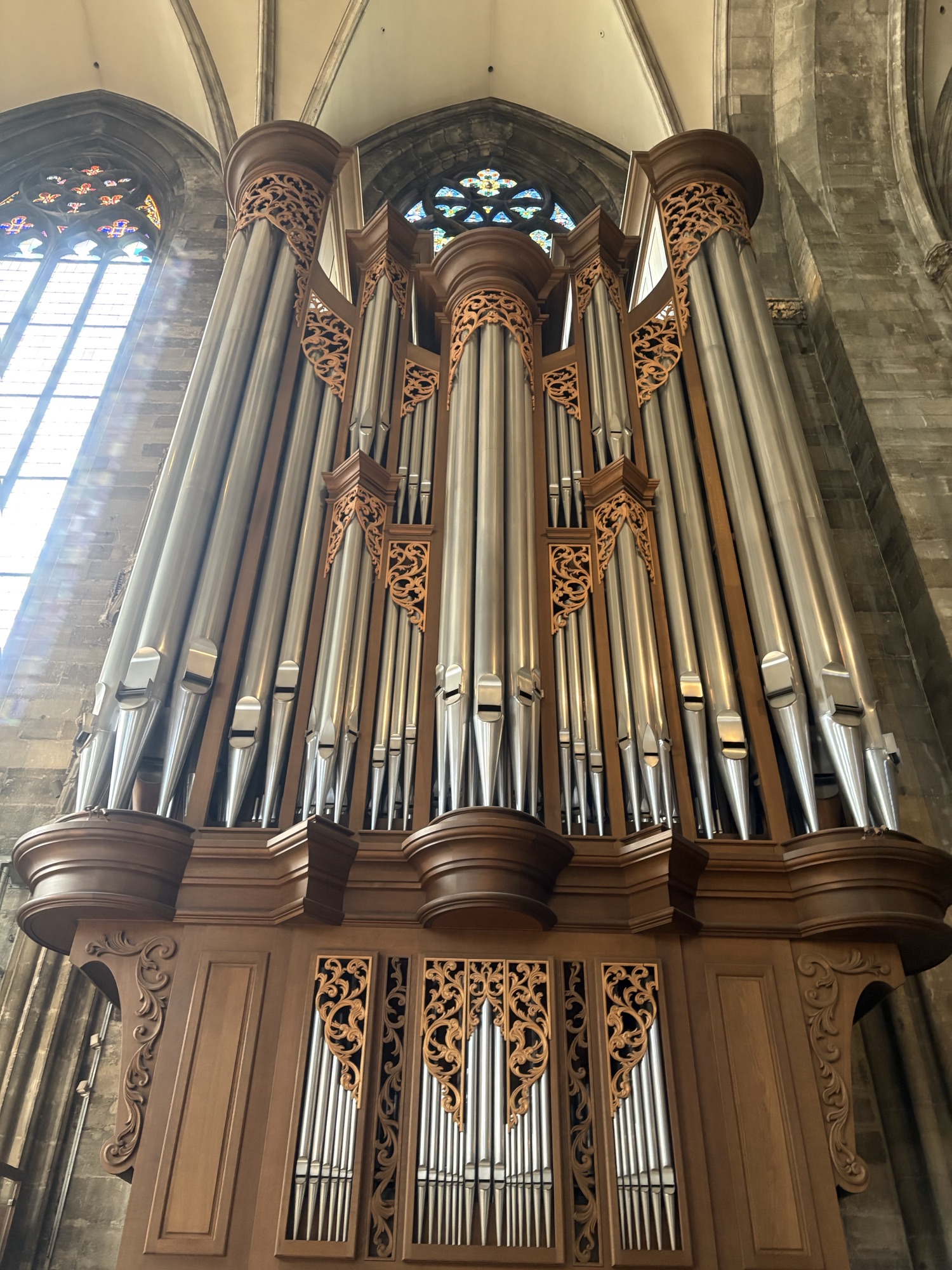
The pipe organ with its over 12000 pipes is late 19th century.
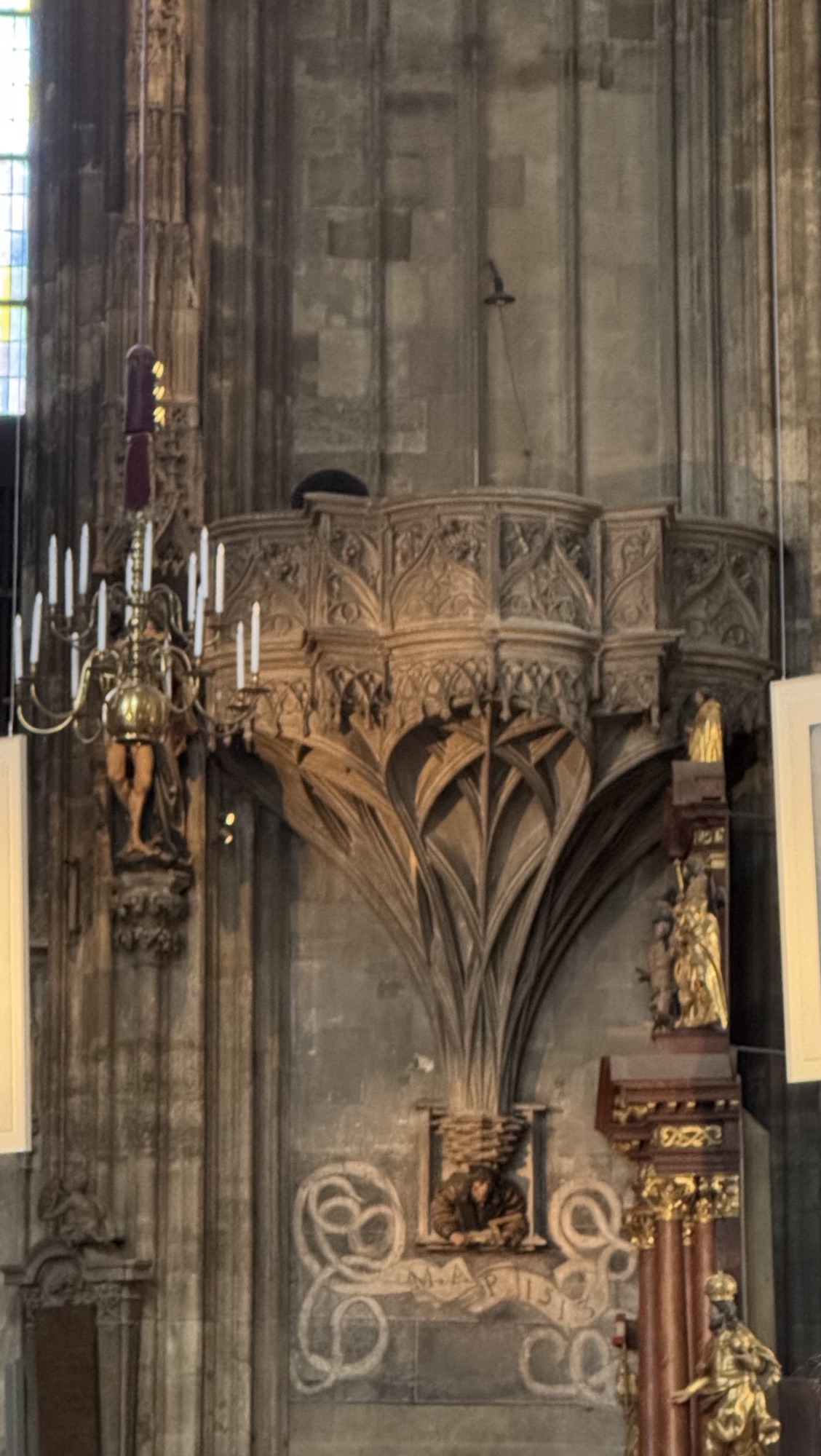
The original organ would have been much smaller, and mounted in this stone balcony on one wall of the nave. The artist who made it depicted himself at the bottom.
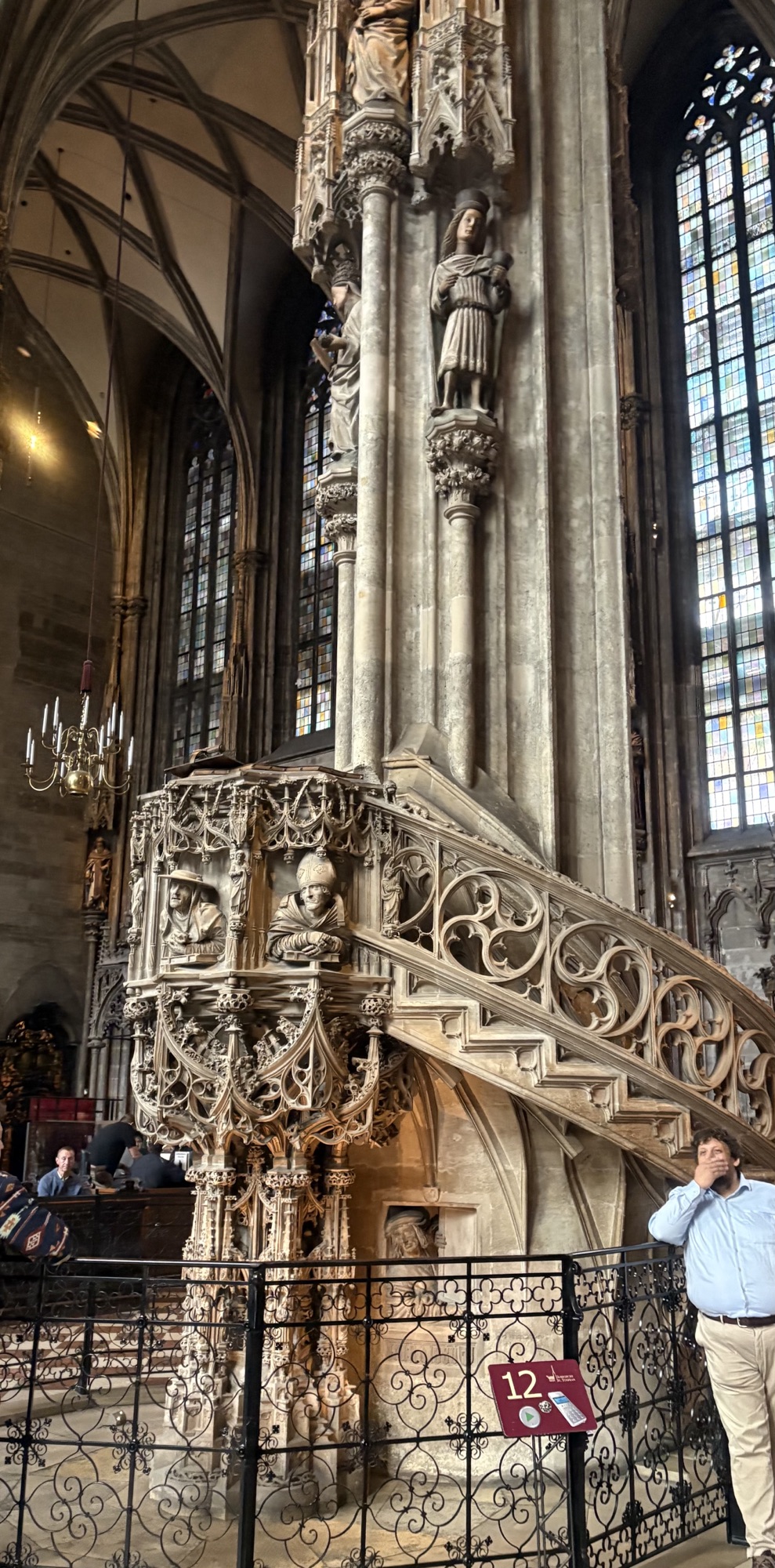
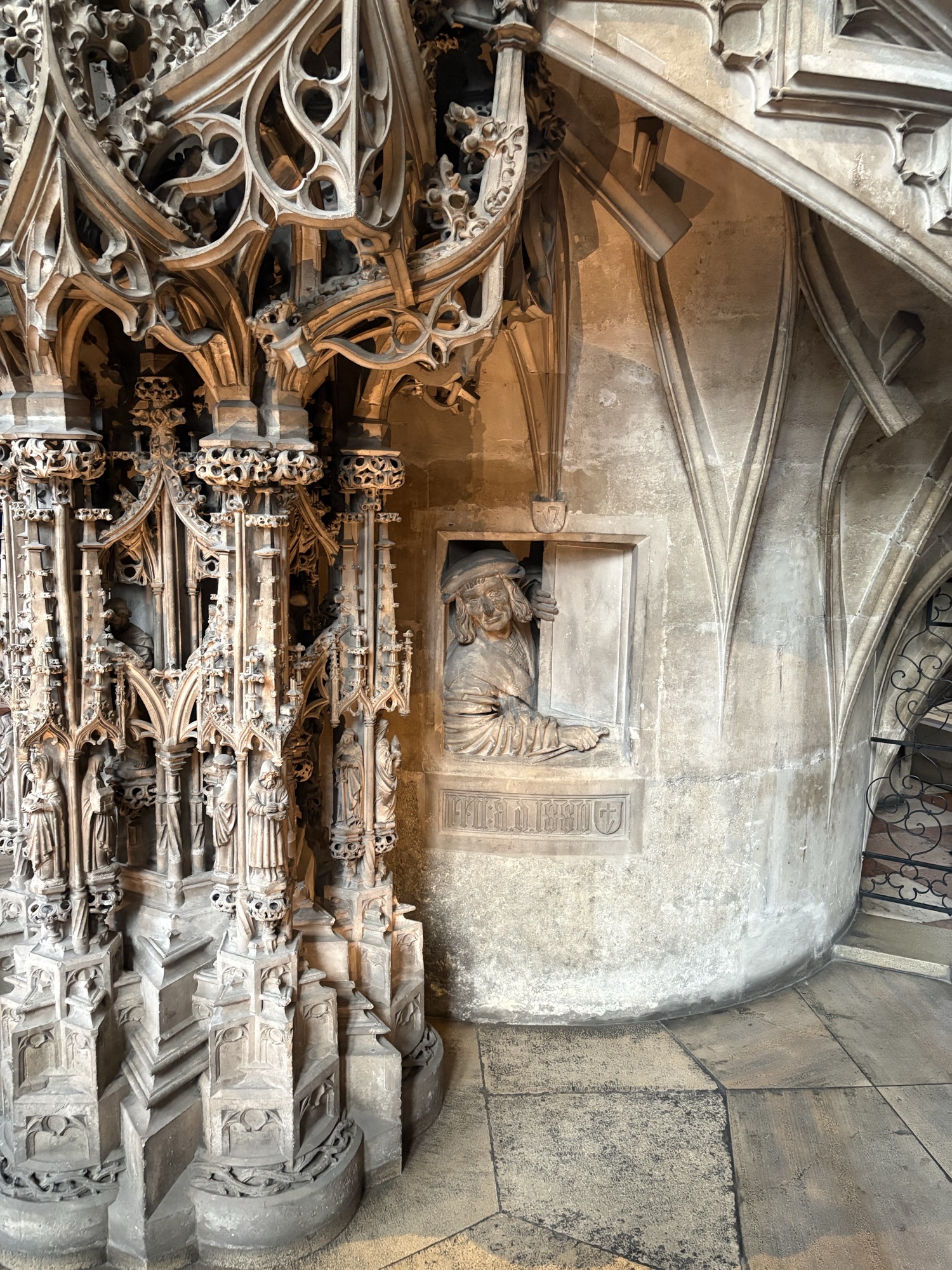
Similarly, the sculptor responsible for the cathedral’s incredible lecture perks out from a window carved into it. Florin explained that this was very much a baroque convention, not a gothic one.
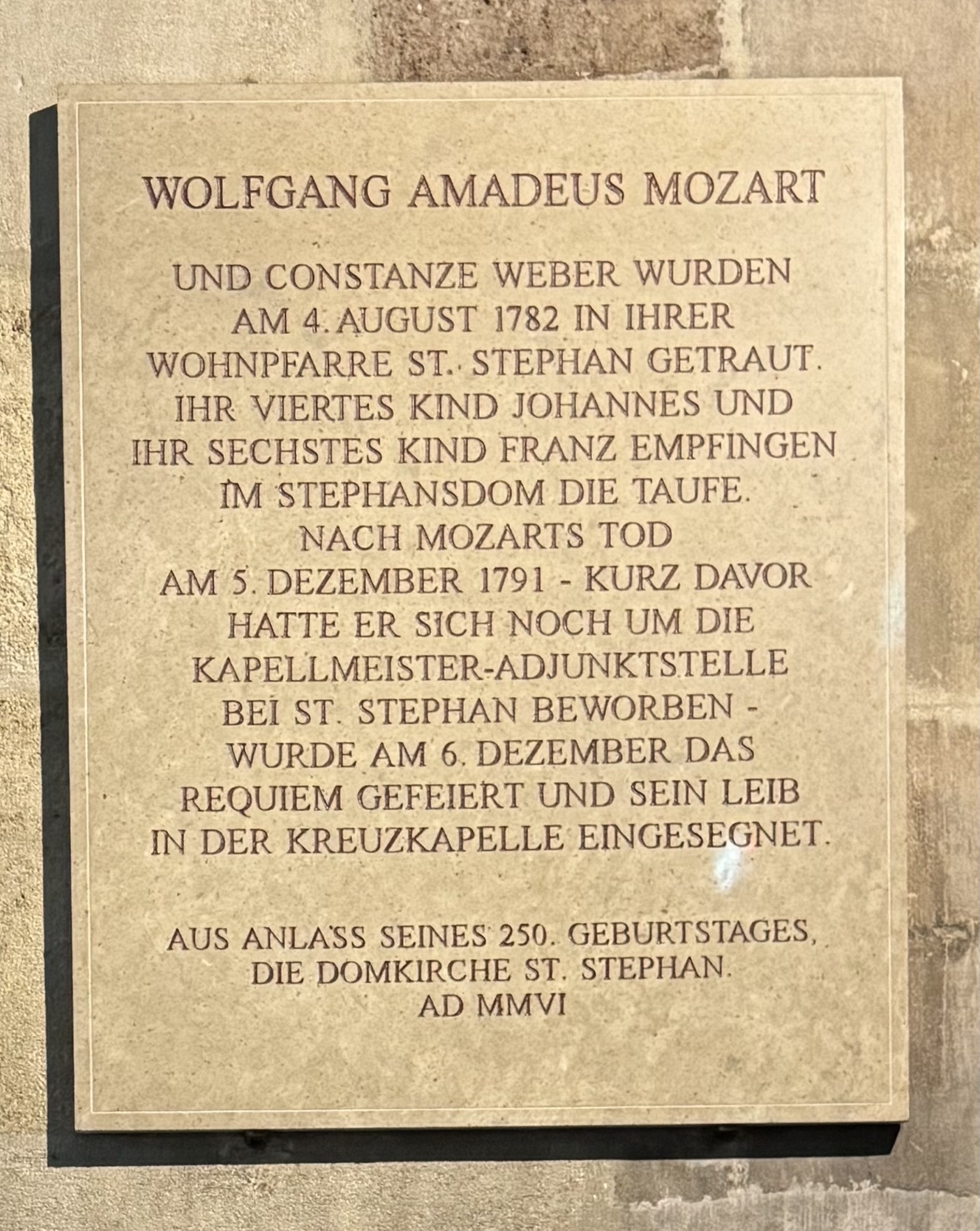
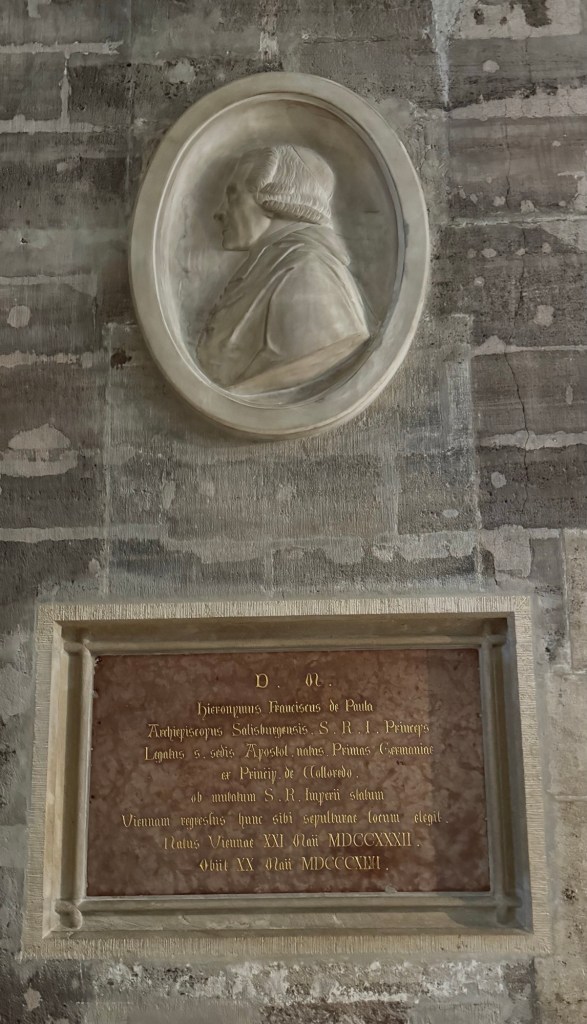
The cathedral is home to famous tombs, but was also the site of many joyous occasions like the baptism and later the wedding of Mozart. Florin explained that the plaque commemorating Mozart’s wedding (placed on the 250th anniversary of his death) is in the worst possible place because it is directly opposite the Archbishop of Salzburg whom he vehemently disliked. Funnily enough, the archbishop’s carved face is turned away from Mozart’s plaque.
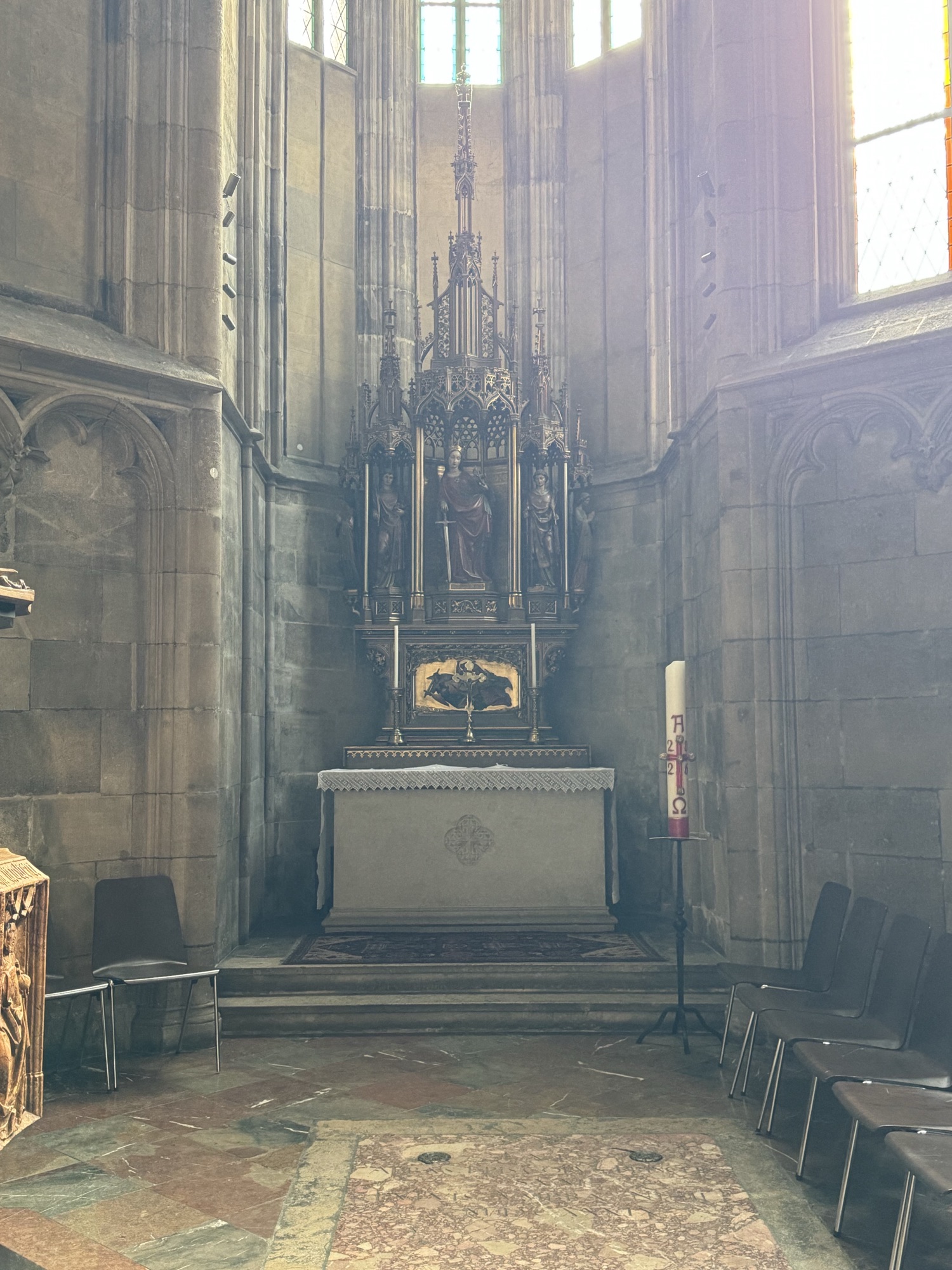
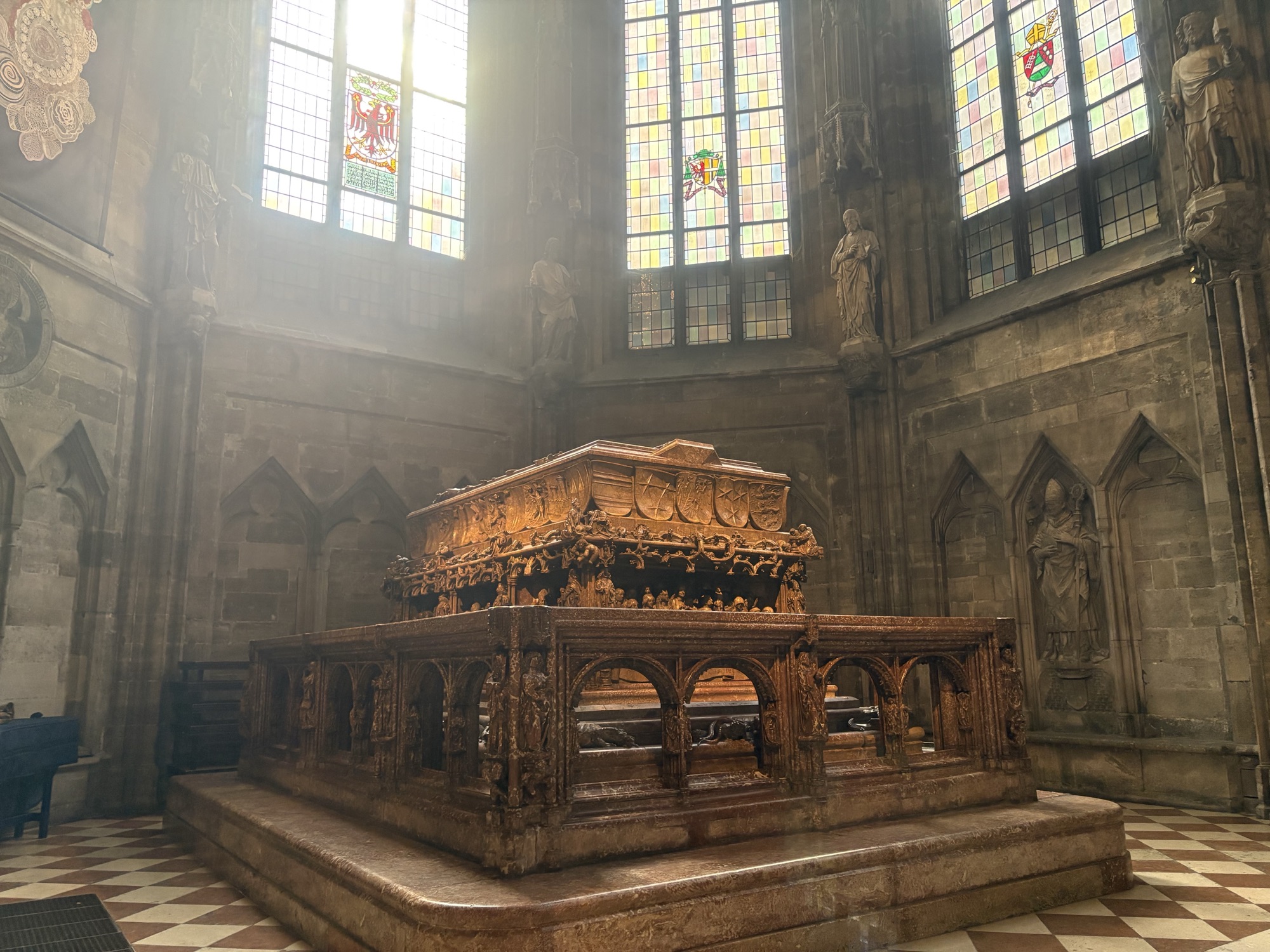
The biggest and most important tomb in the cathedral is not in the catacombs but near the altar. Emperor Frederick III was responsible for Vienna becoming the seat of a bishop in 1469, and the church thus becoming a cathedral.
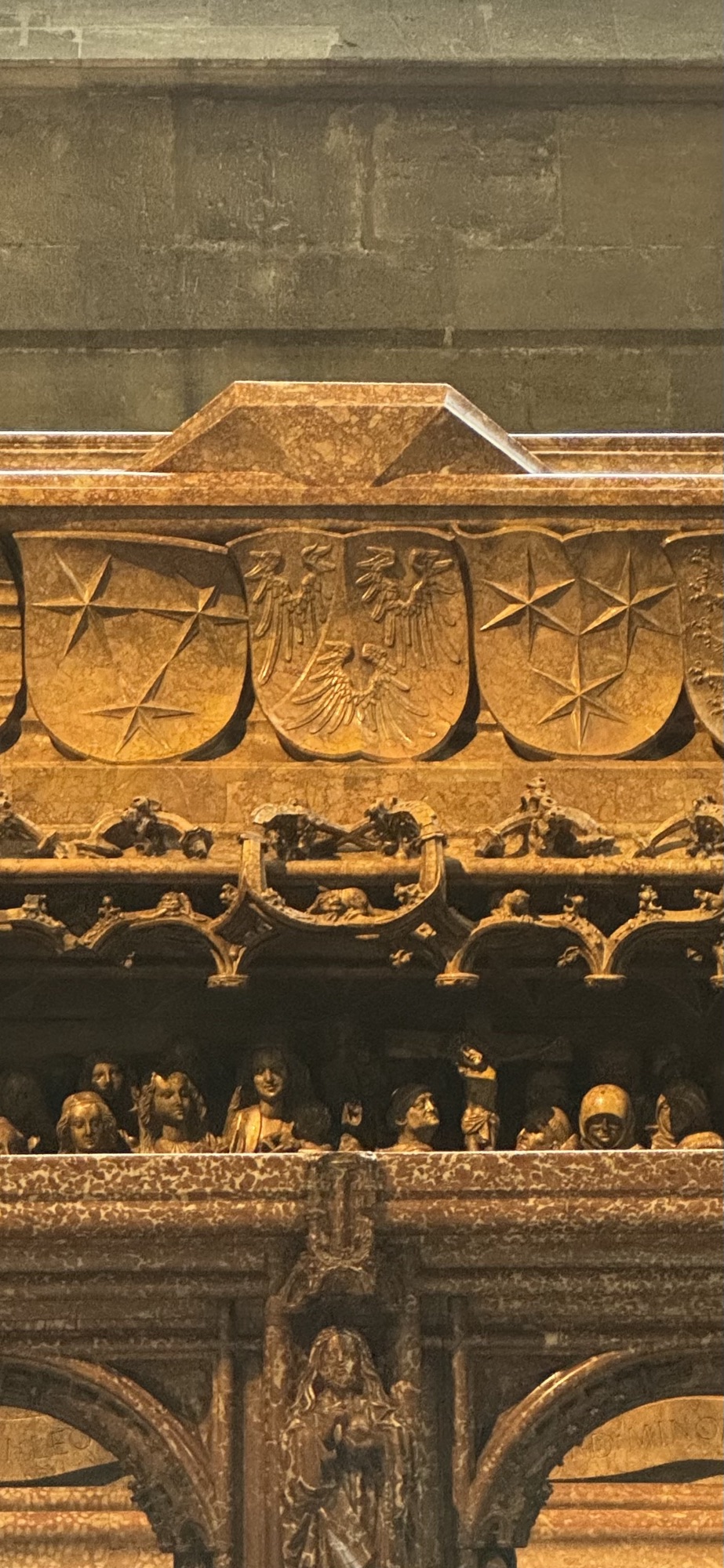
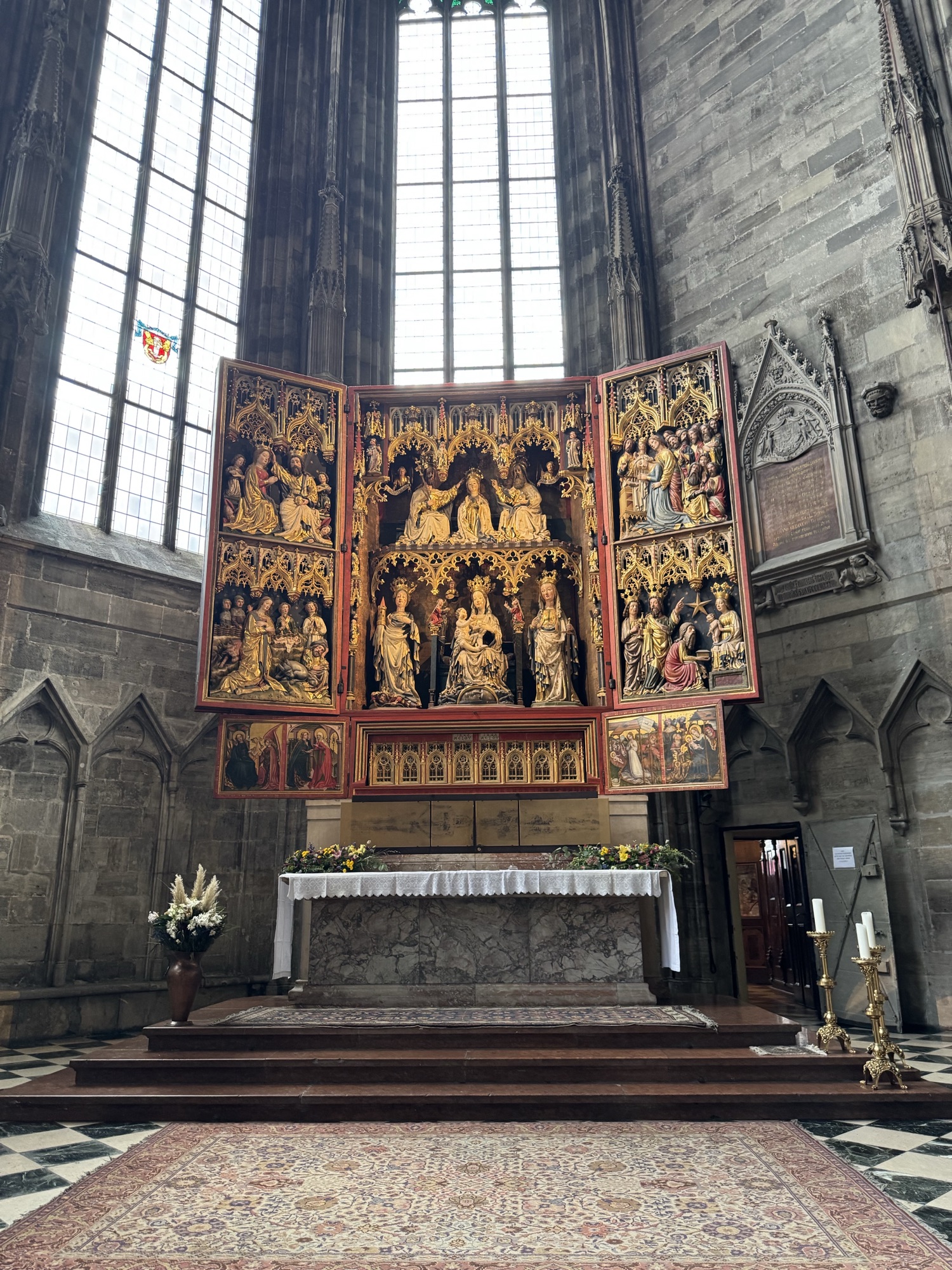
The only original gothic altar that exists in the cathedral is in the Chapel of the Eucharist, which is not open for tours. The gothic altar we could see was purchased by the Emperor for this cathedral from a monastery, because he specifically wanted a grand altarpiece. The way Florin put it was that “the monastery had an altar and no money, and the Emperor had money and no altar”.
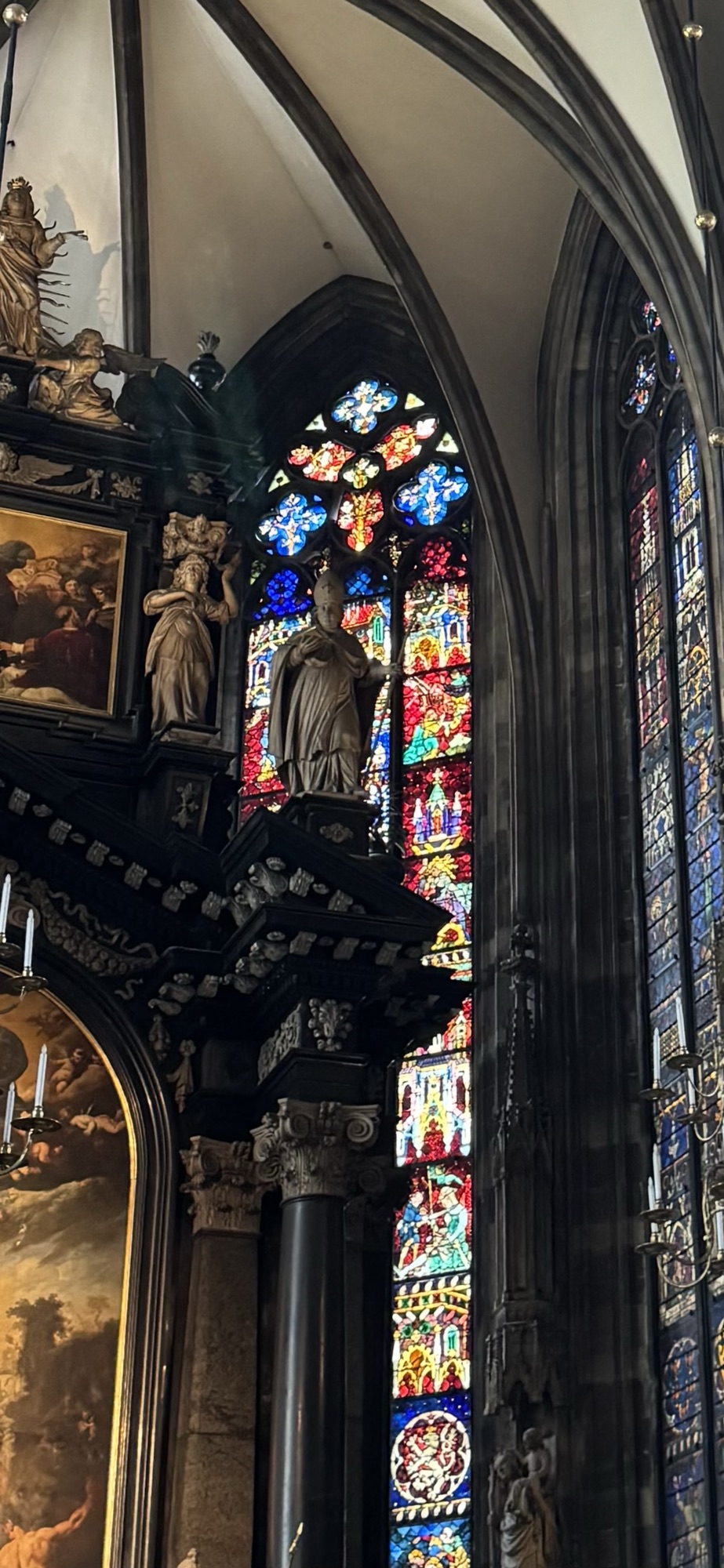
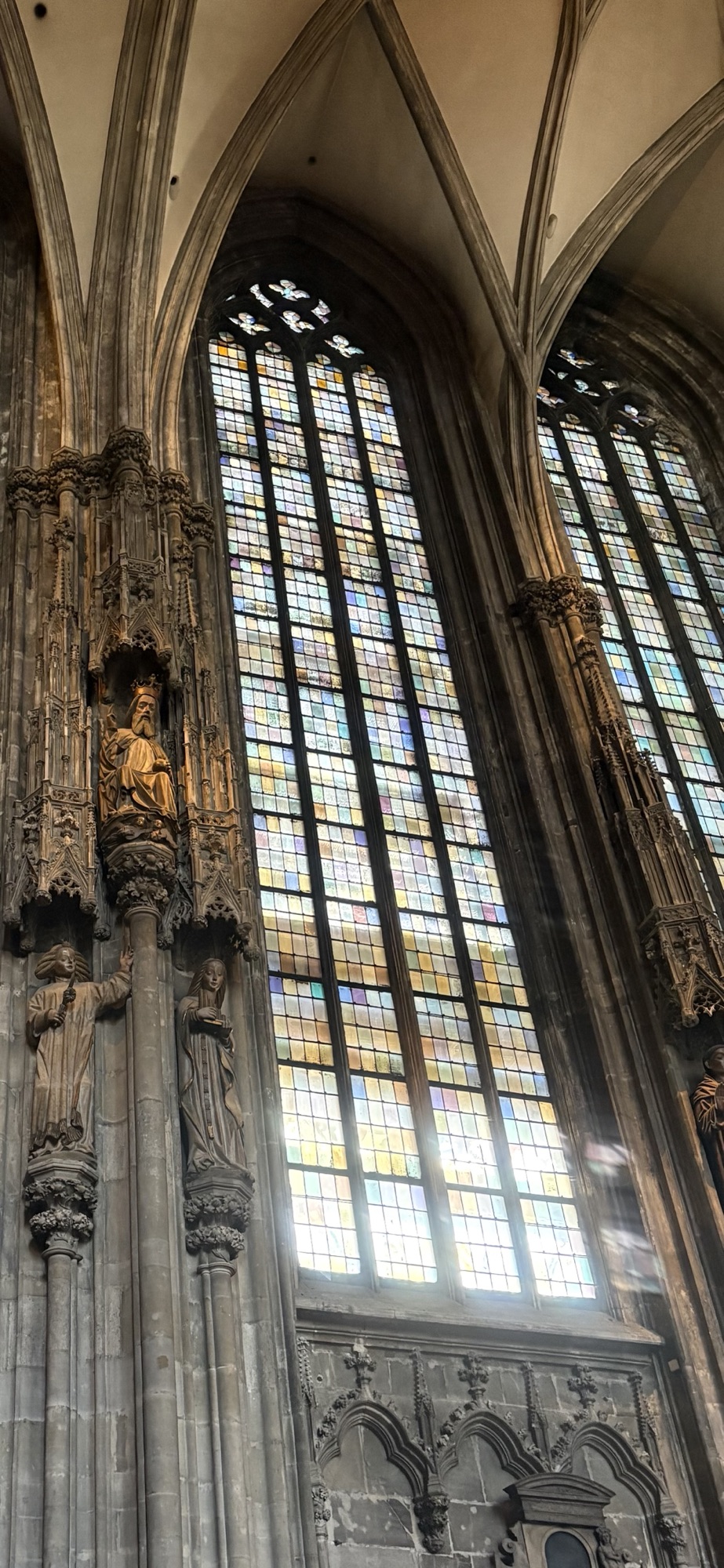
There were many more stories told; unfortunately not remembered by the time we called it a day.
Tour over, it was time to tackle the towers.
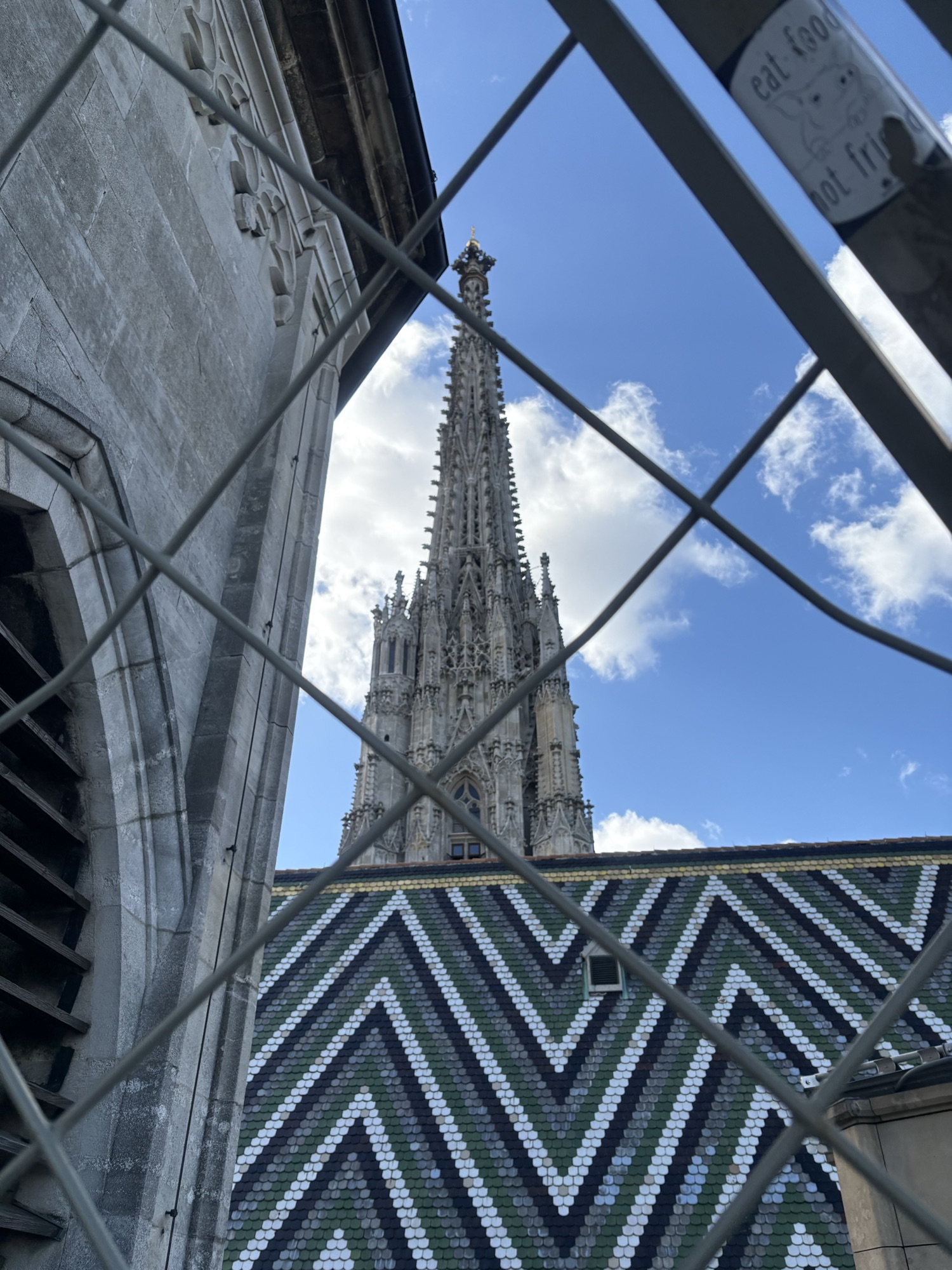
St Stephen’s is somewhat unique for a gothic church in having mismatched towers. The South Tower looks like a traditional gothic spire, and reaches a height of 136.7m/448 ft. It was completed in 1433CE. While the foundation for the North Tower was laid in 1450, money ran out and construction was abandoned in 1511. By the time it resumed in 1578 , gothic style was out and renaissance style was in, so the tower was simply topped with a renaissance cap.
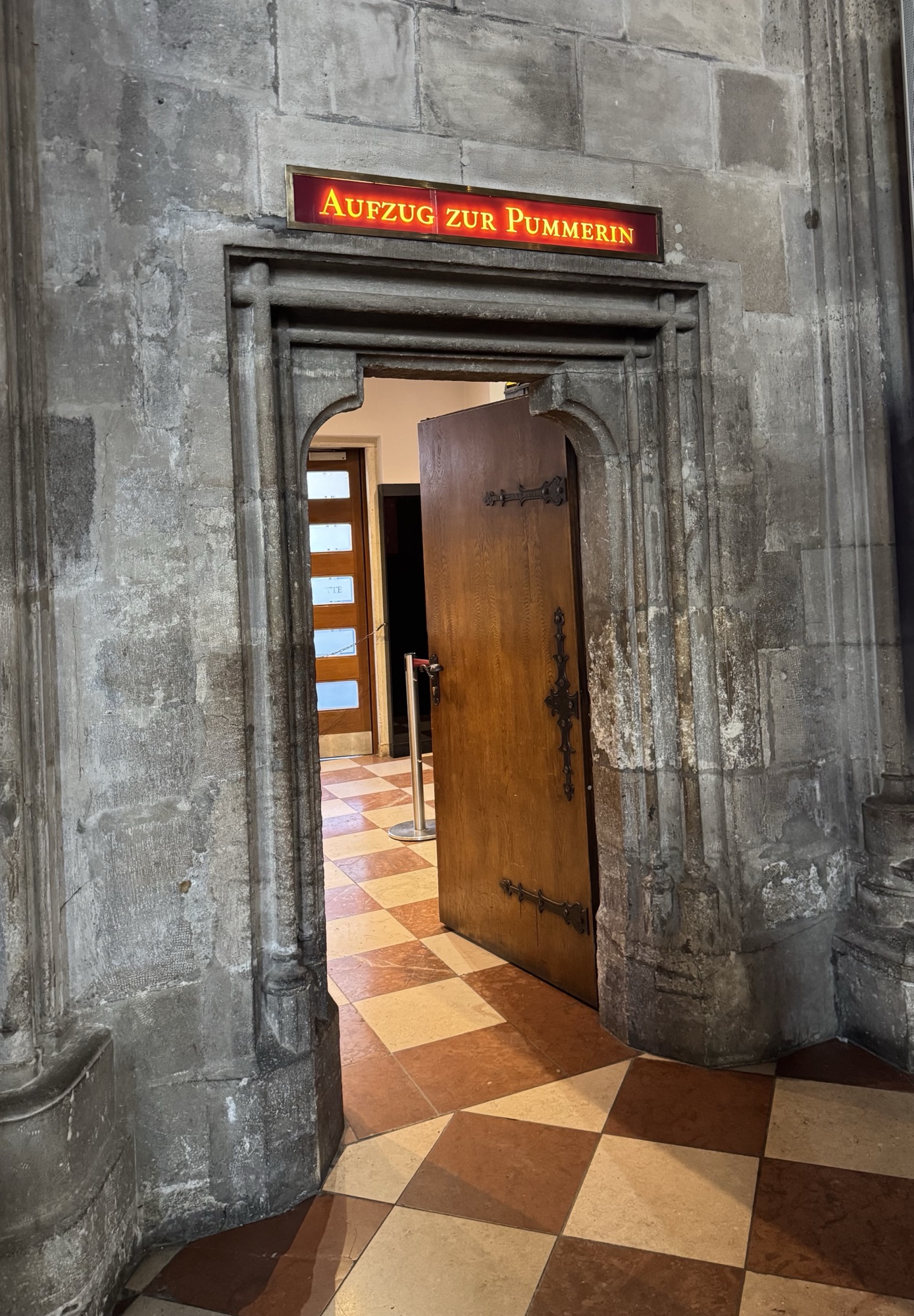
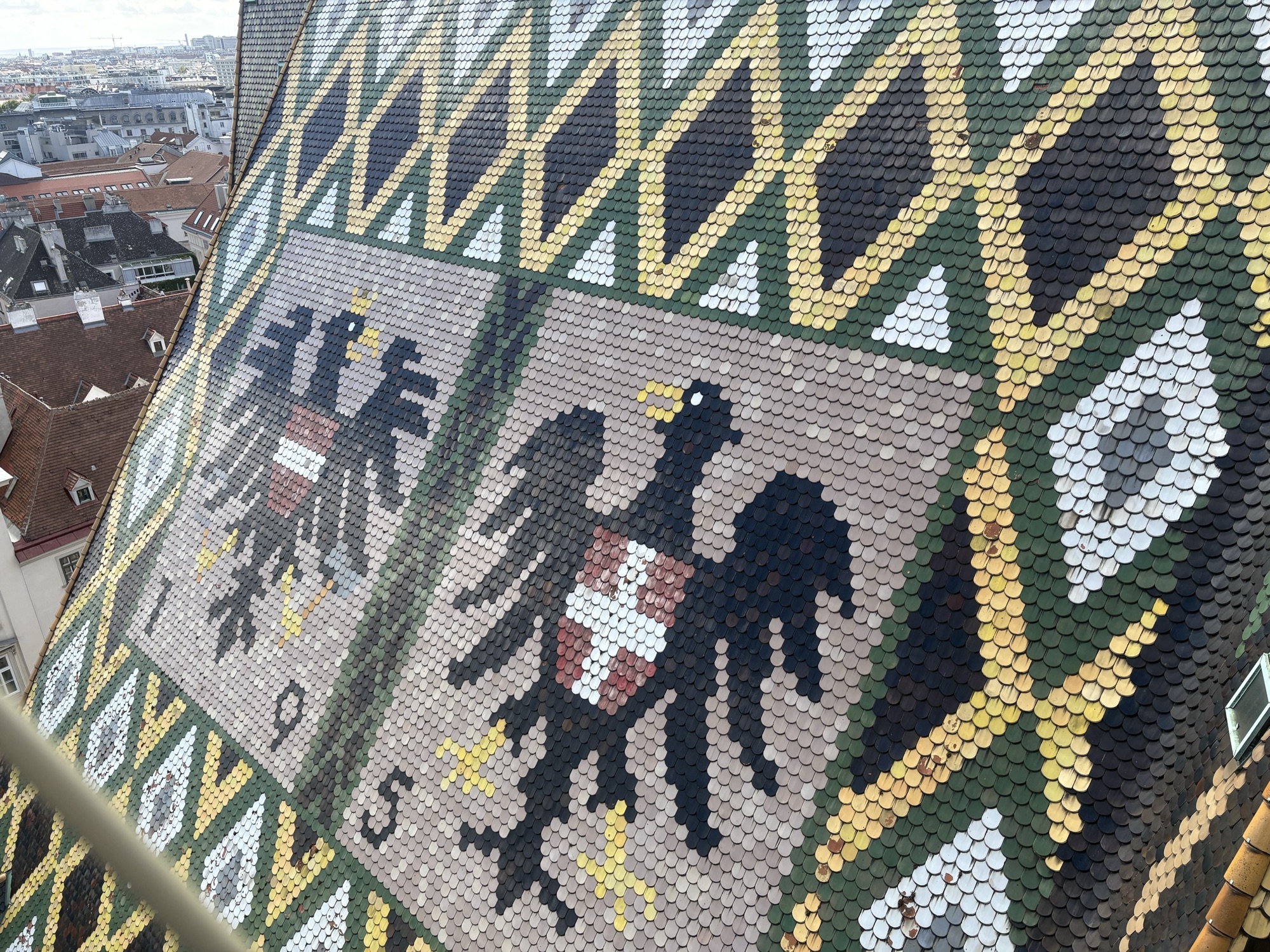
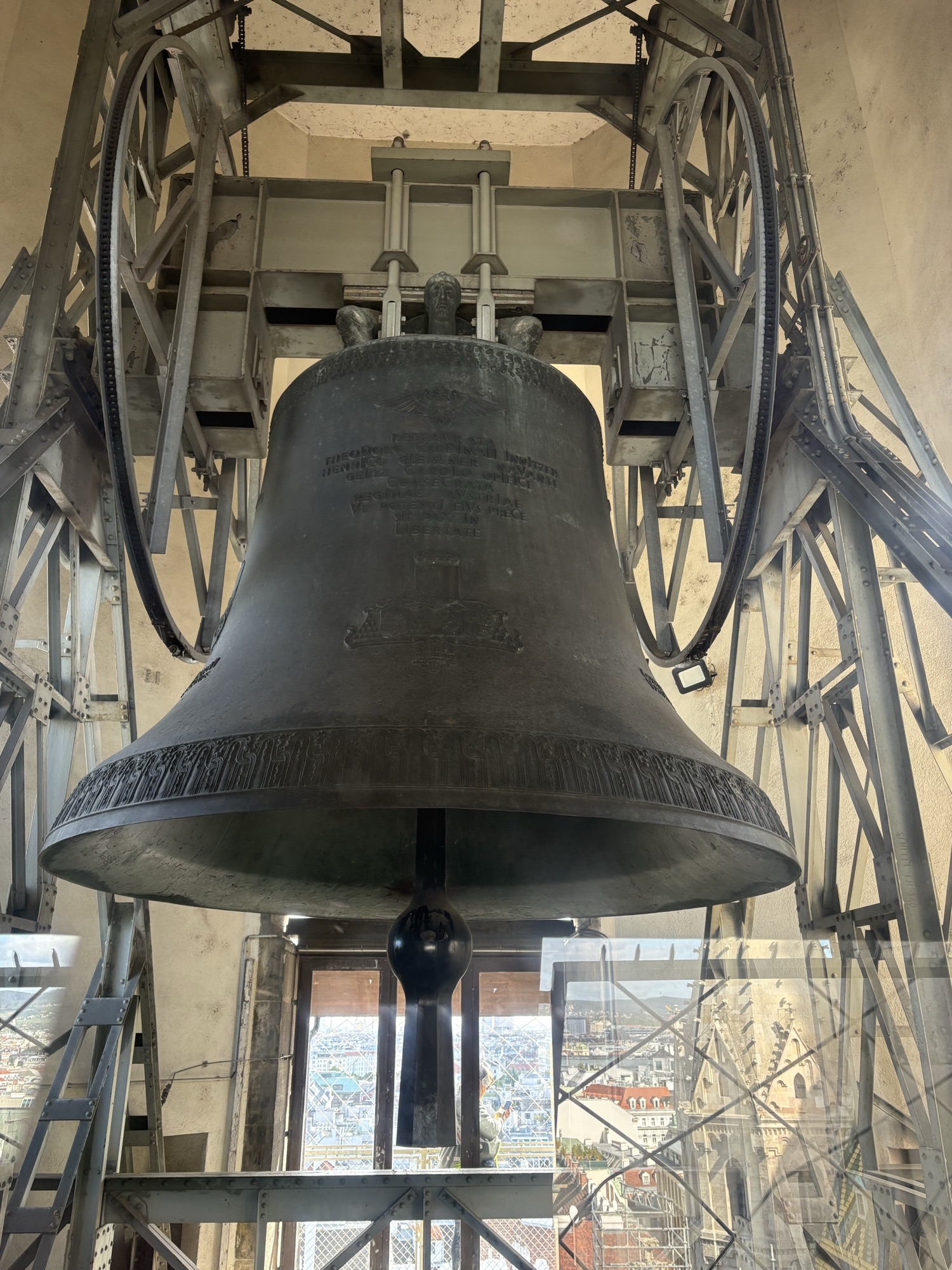
Accessing the top of the shorter 68m/233ft North Tower is via a small cylindrical elevator. It felt a bit like being in a mailing tube. From the top we had a perfect view of the roof’s restored Imperial eagles, and a peek at the almost 22000 kg Pummerin, the cathedral’s largest bell.
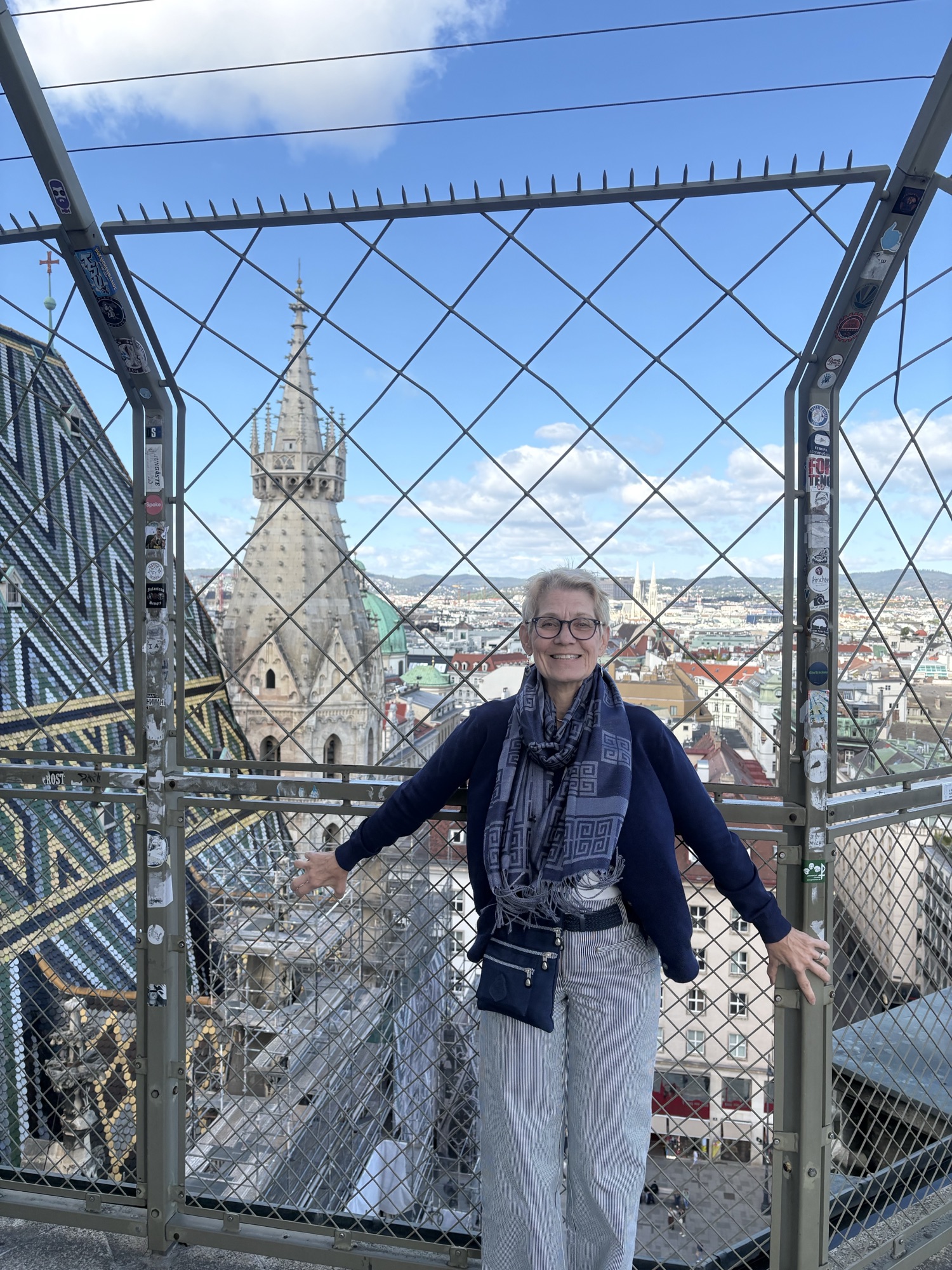
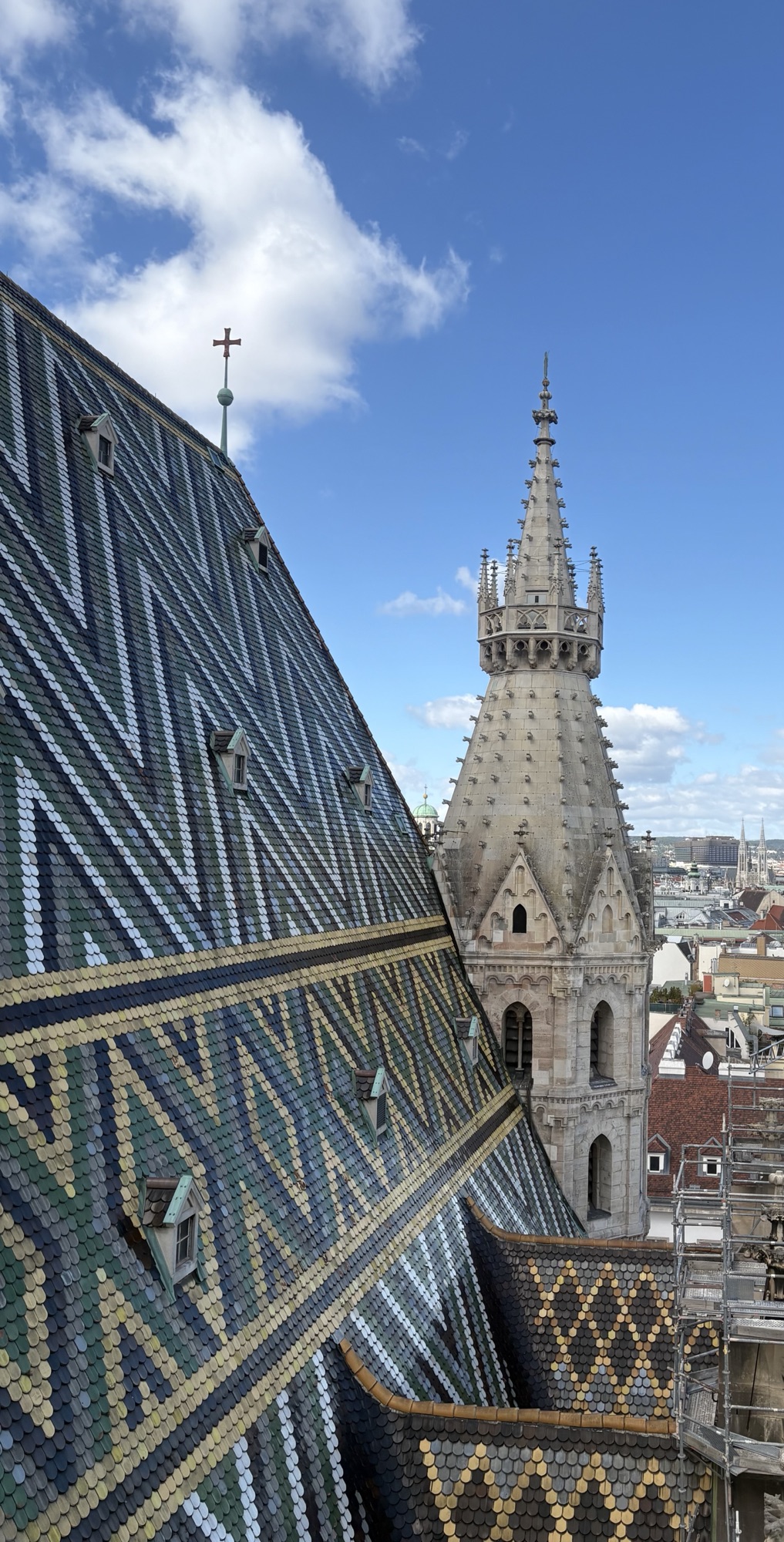
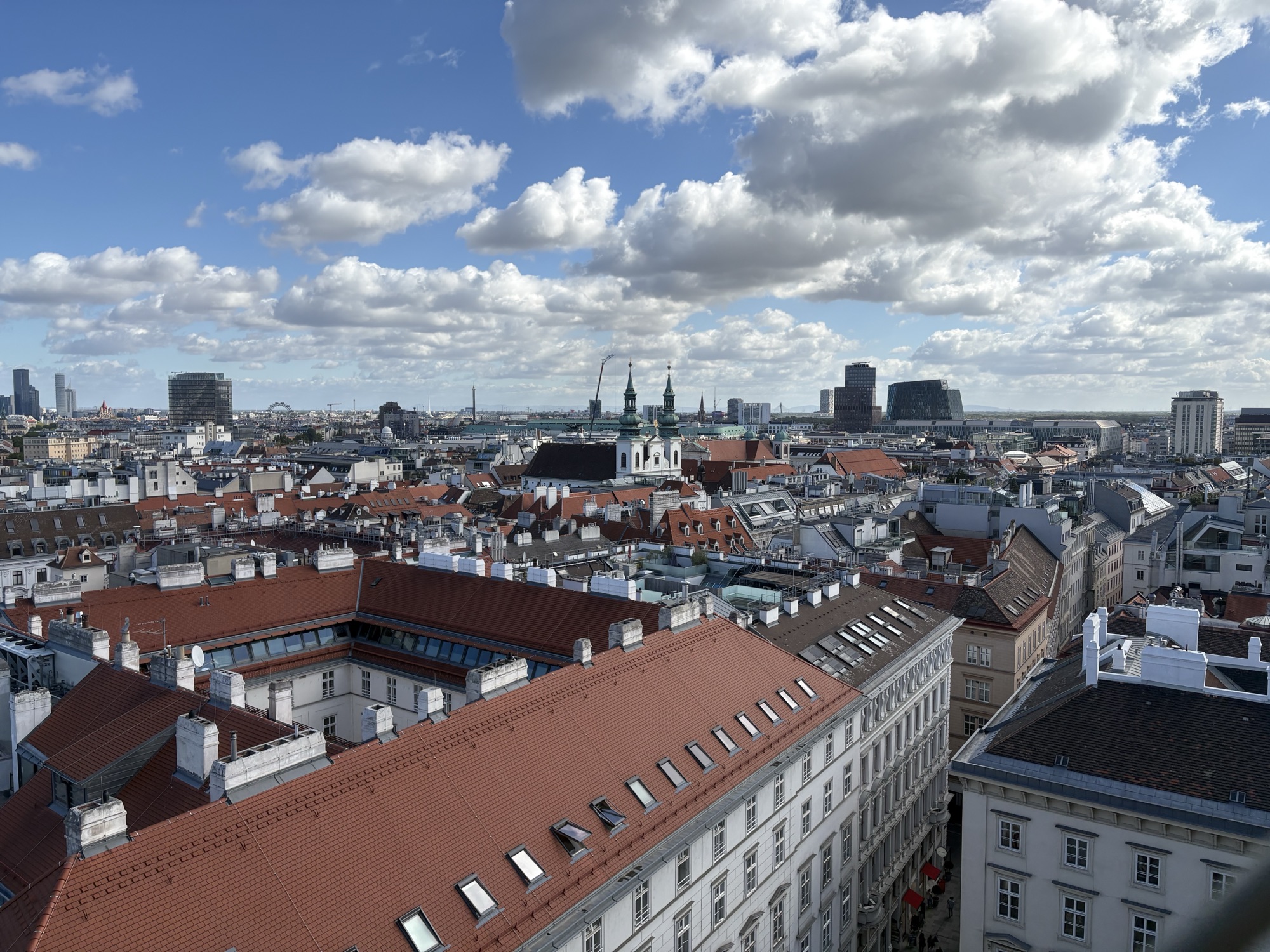
Besides a view over the city centre, we also got a view of the South Tower.
Next it was up the 343 narrow winding stone stairs to the top of that South Tower, a climb Ted and I made when I felt much younger and fitter.
It started out looking easy.
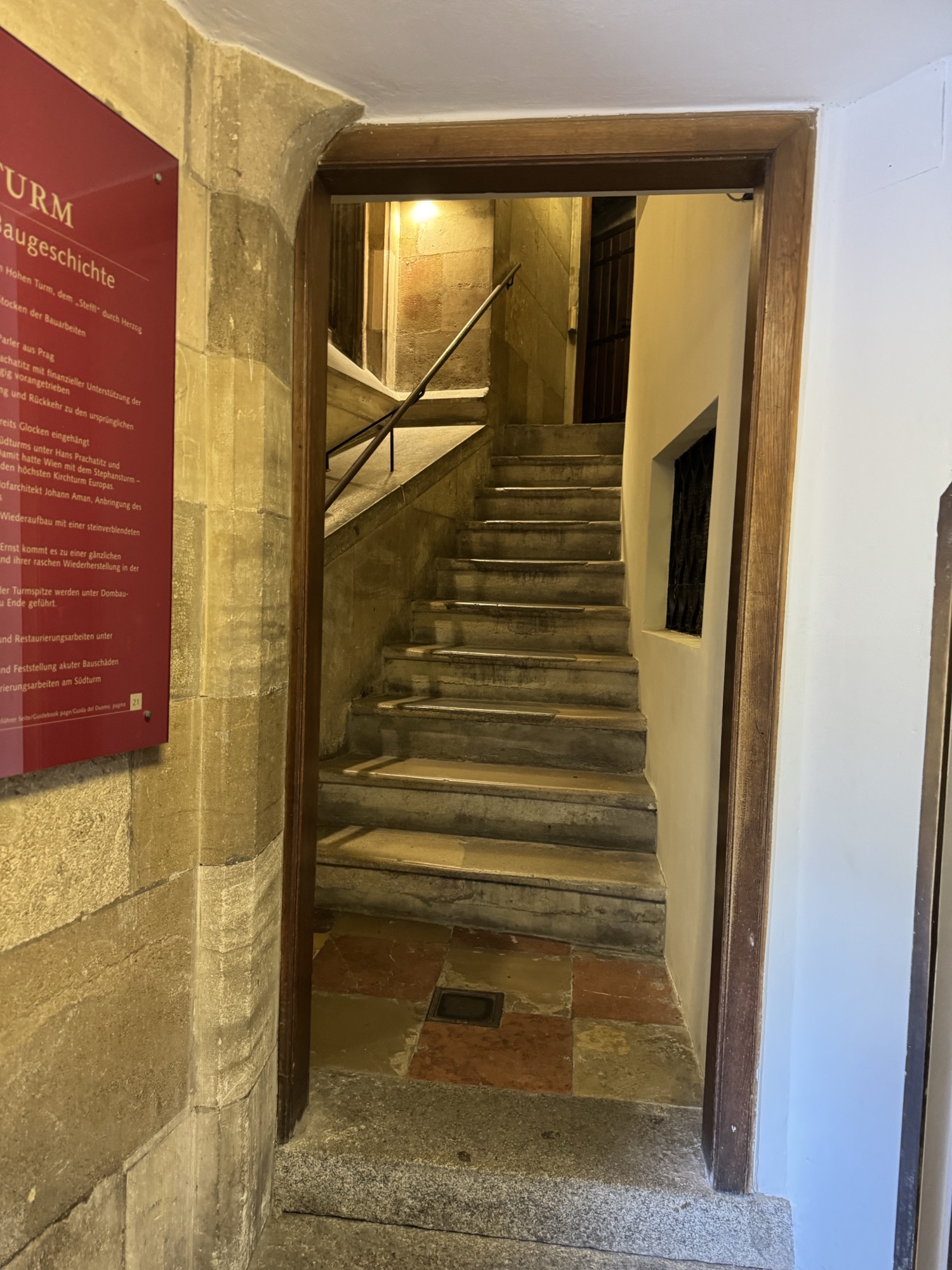
But then the steps started to spiral, and there were no landings for over 250 steps. No railings either.
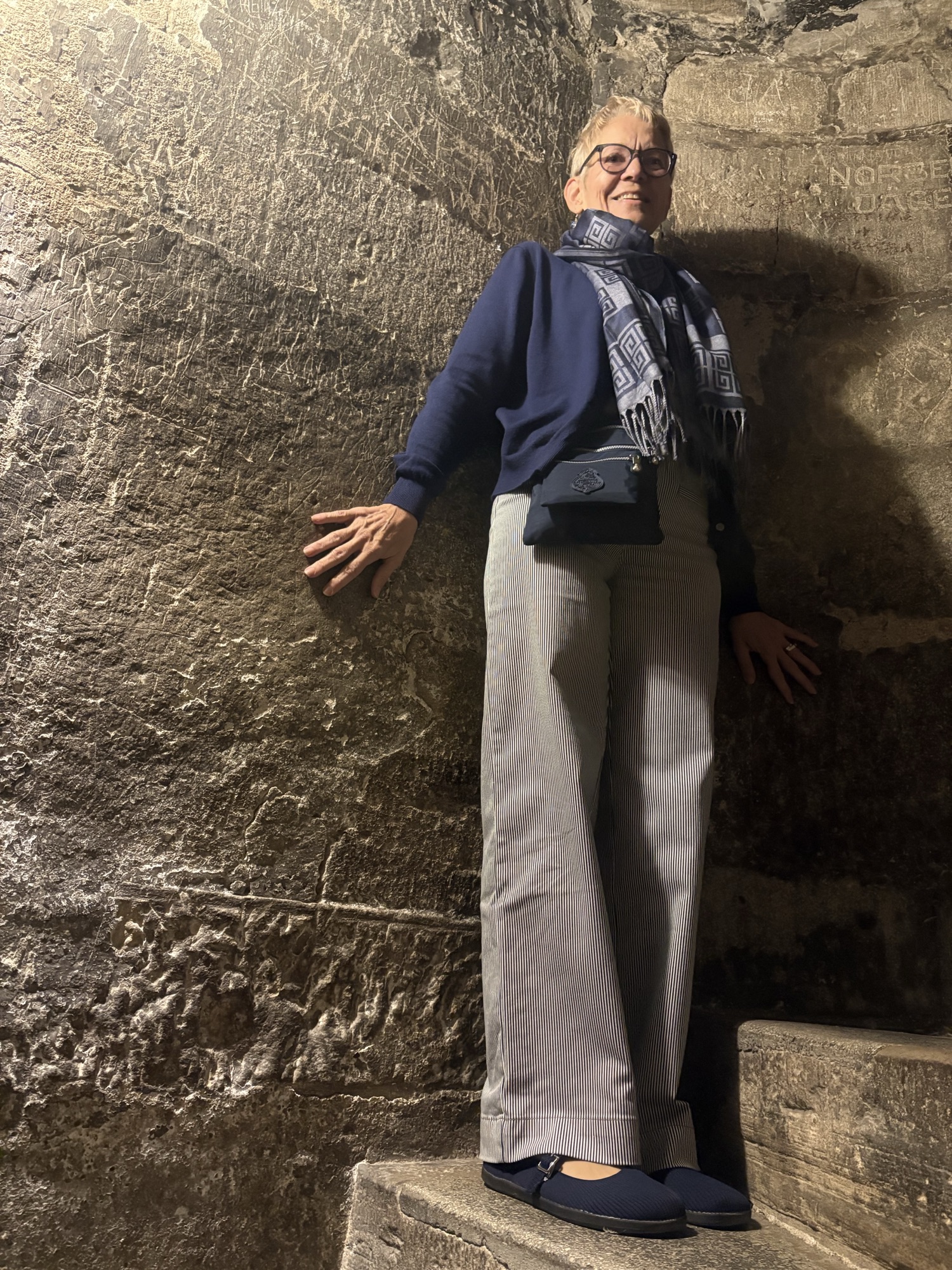
Eventually we reached the room where the Pummerin used to be located, were able to take a breather while the noon bells rang.
But then there were more stairs.
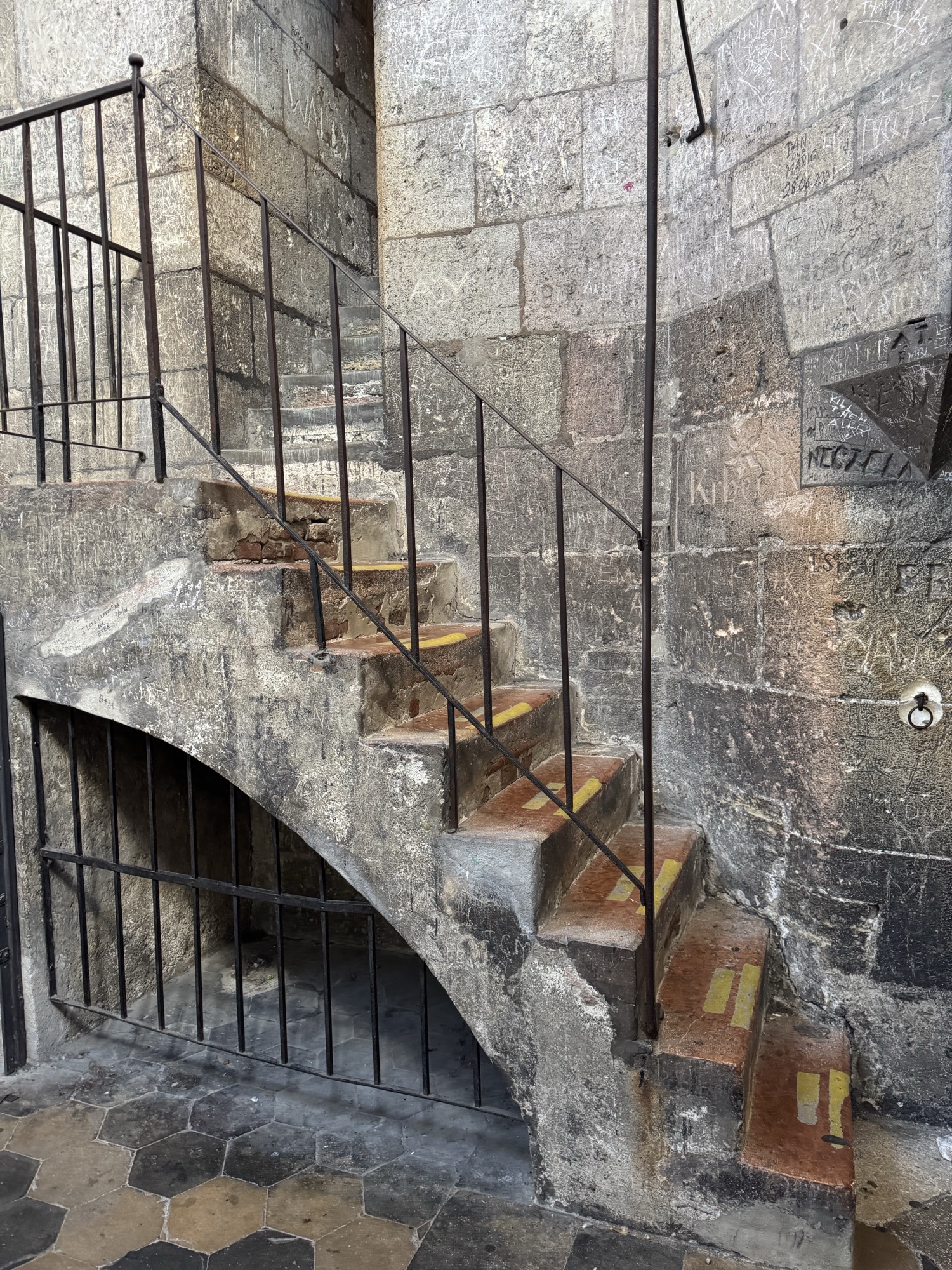
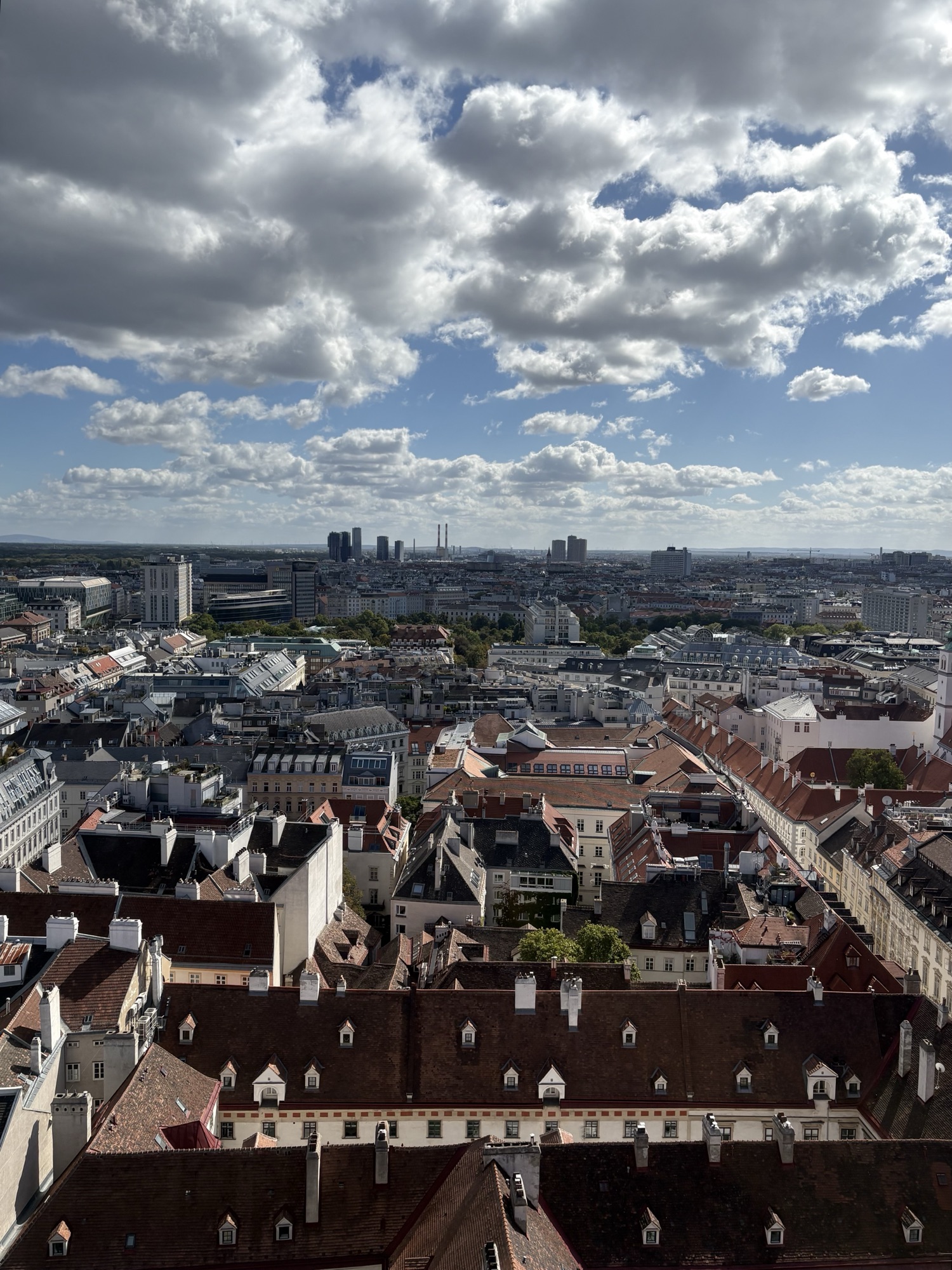
And more beyond those. But the views from the Watchman’s room at the top (unlike on the North Tower, this time we were indoors looking out barred windows) were worth the climb.
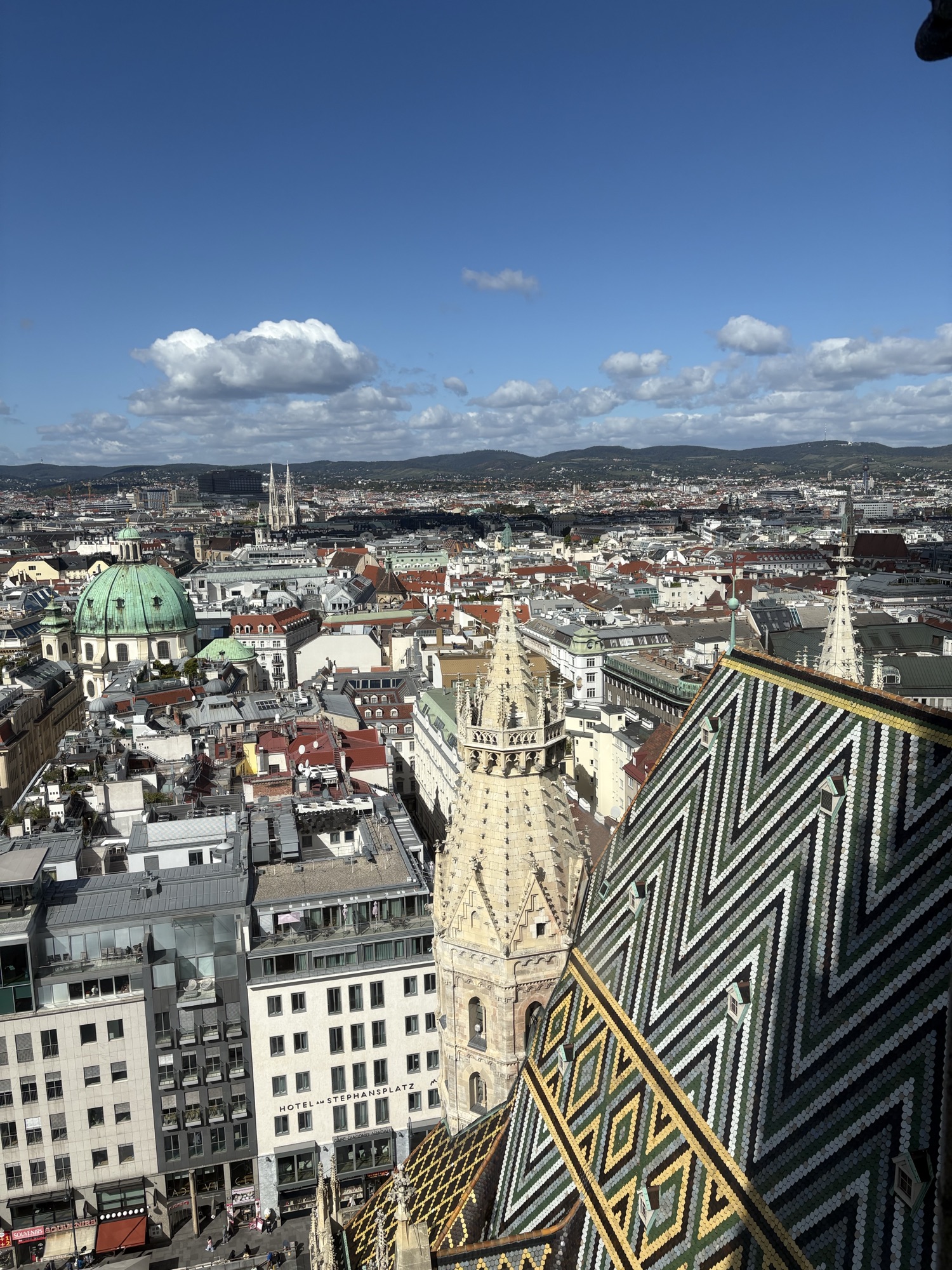
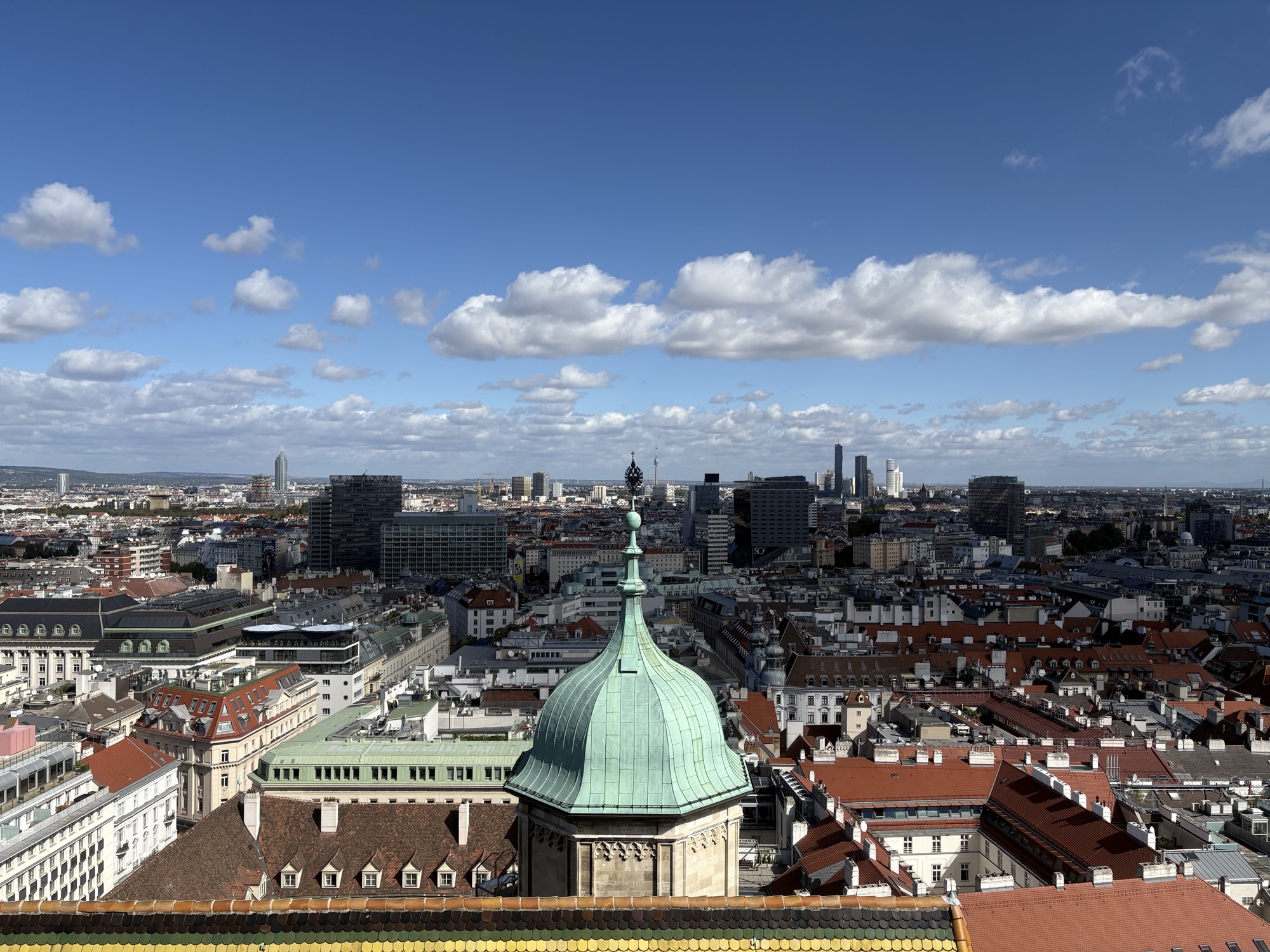
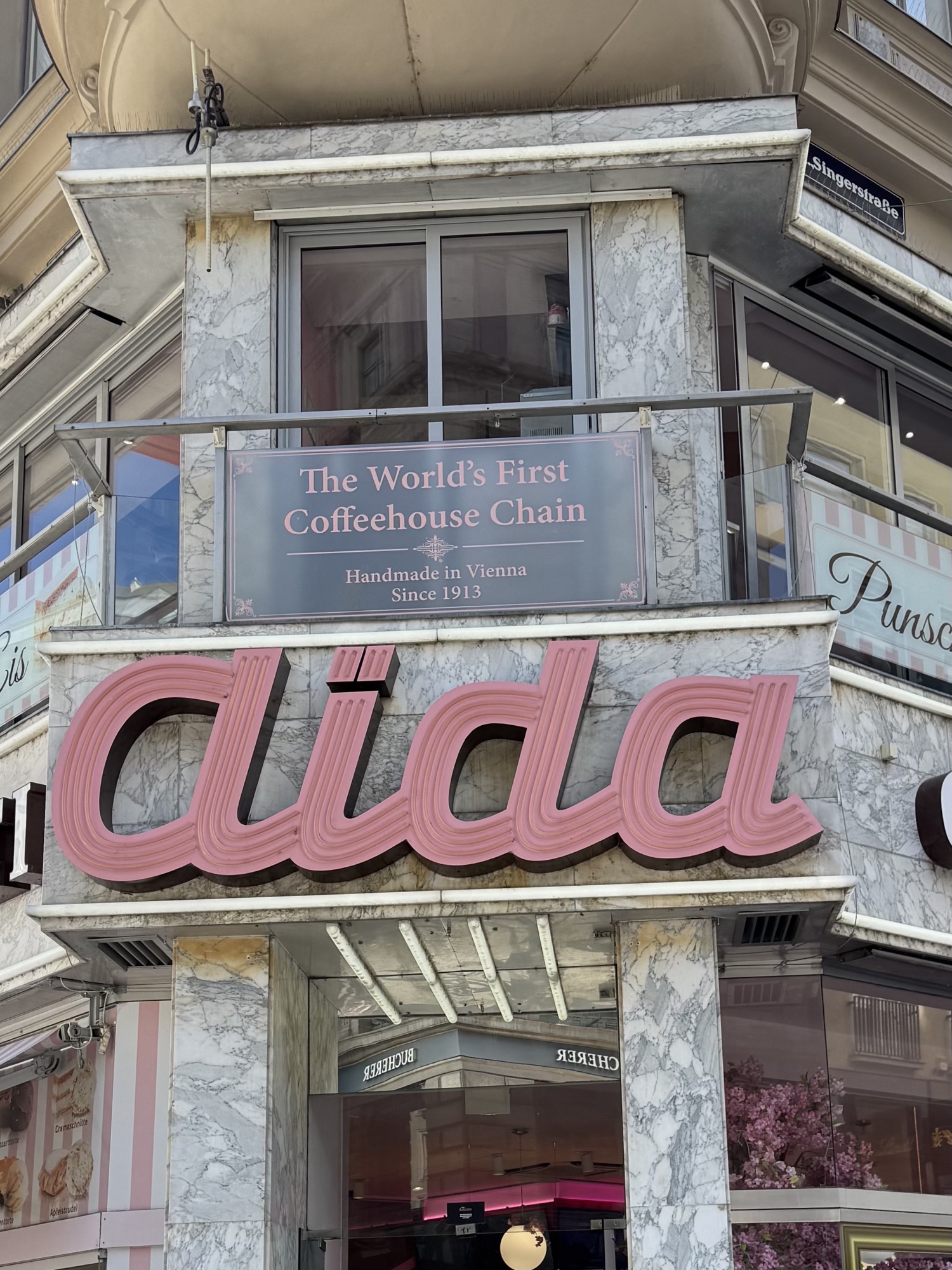
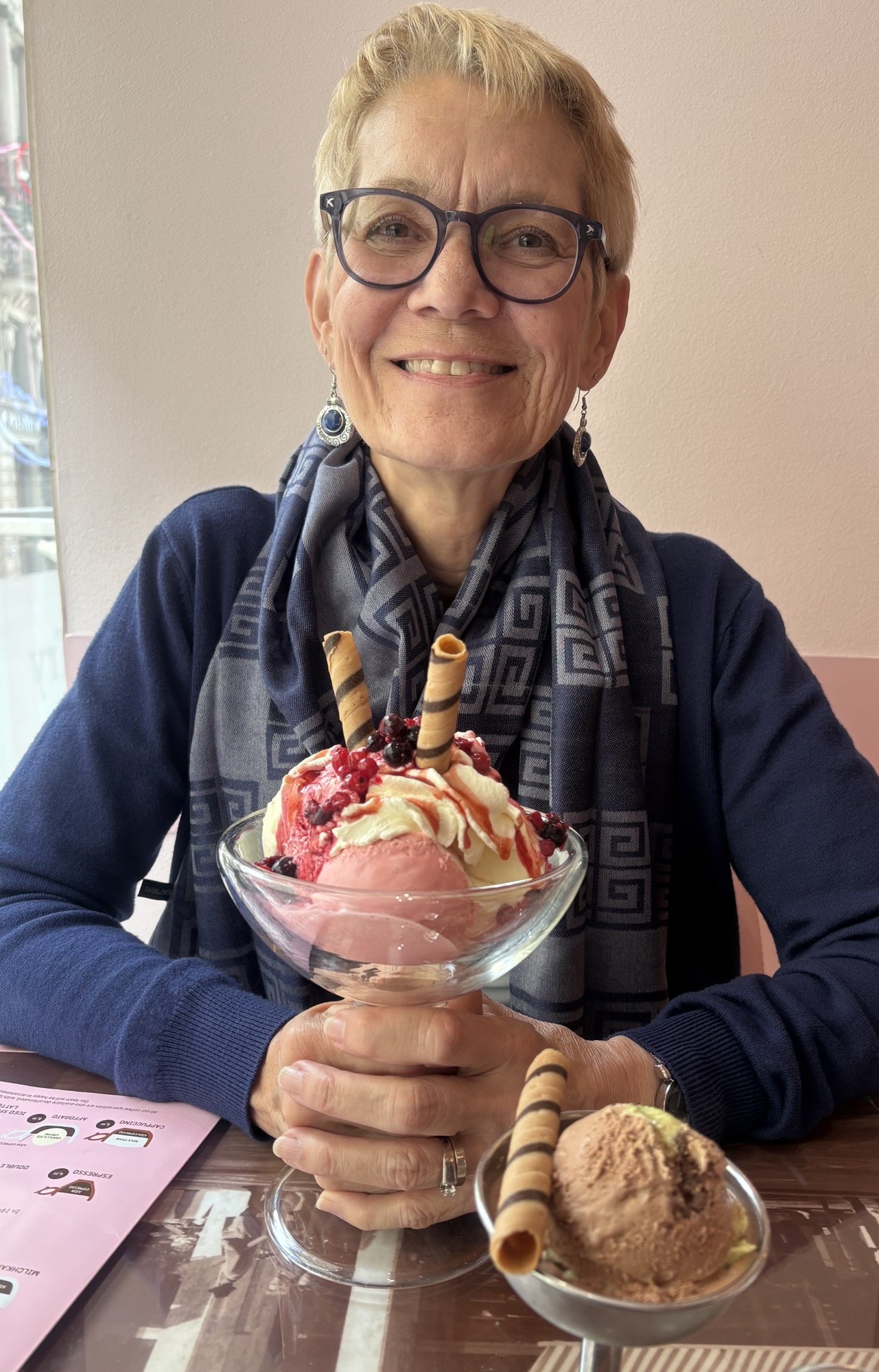
343 steps up meant 343 steps down, which we agreed absolutely deserved ice cream at Aida, which claims to be the world’s first coffeehouse chain.
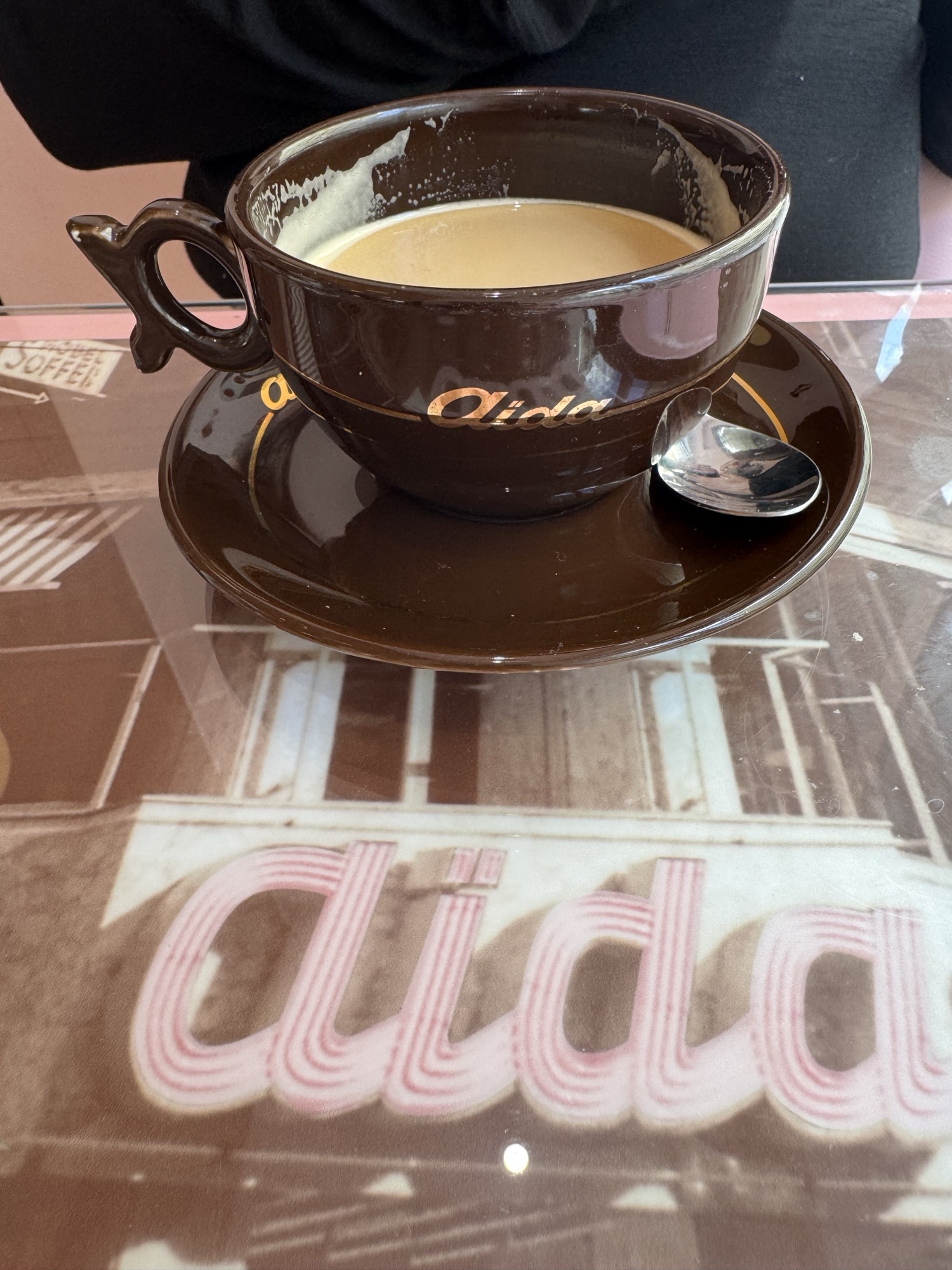
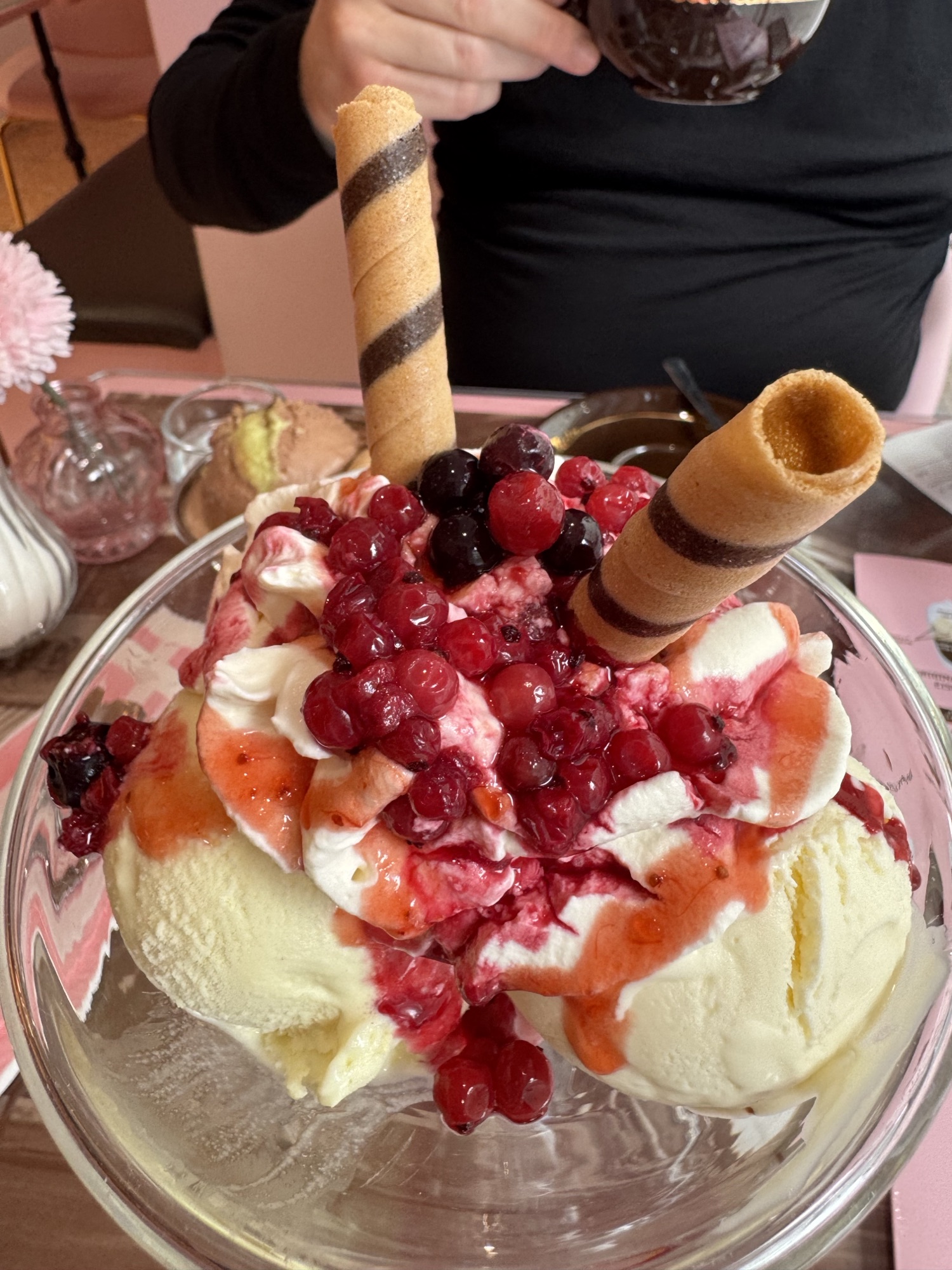
Son #1 virtuously chose an espresso with heavy cream, and a single scoop of Mozart ice cream (rich chocolate and pistachio), which was a good thing since my Viennese Summer Dream had generous scoops of cheesecake ice cream, vanilla ice cream, tart raspberry ice cream, whipped cream, strawberry sauce, red and black currants, and two Piroulines. They helped me finish it.
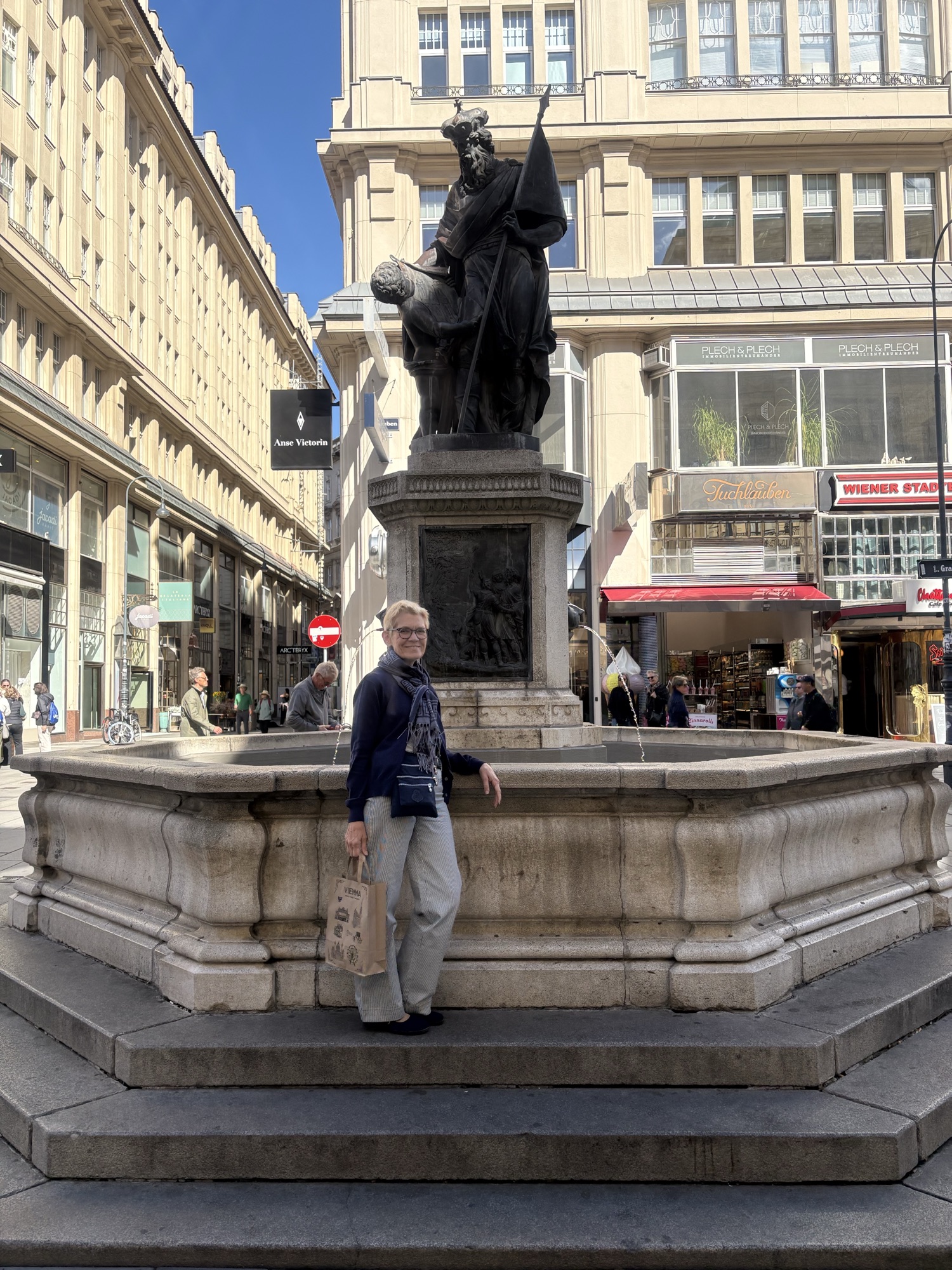
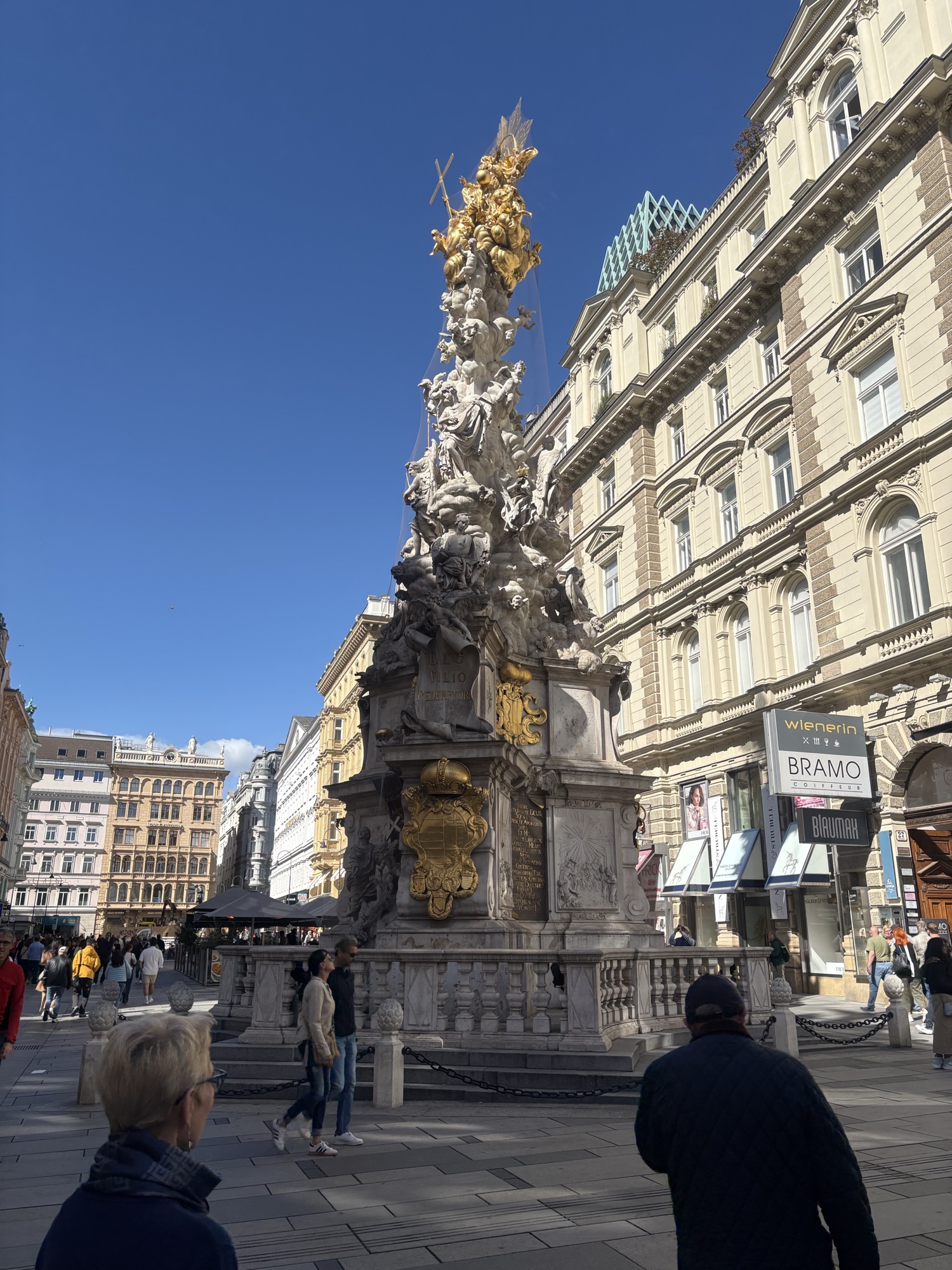
We strolled a wee bit so that son #1 could take in some more of the city’s magnificent Habsburg architecture before spending the rest of the afternoon in the Albertina.
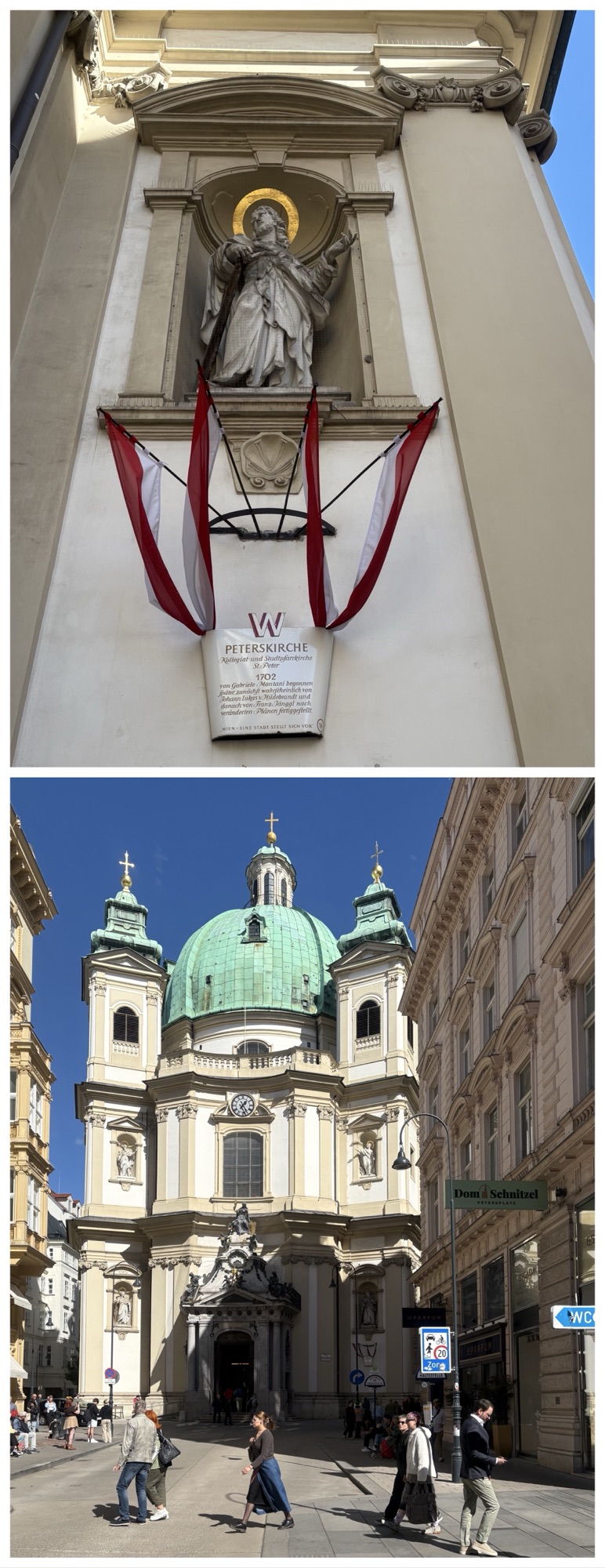
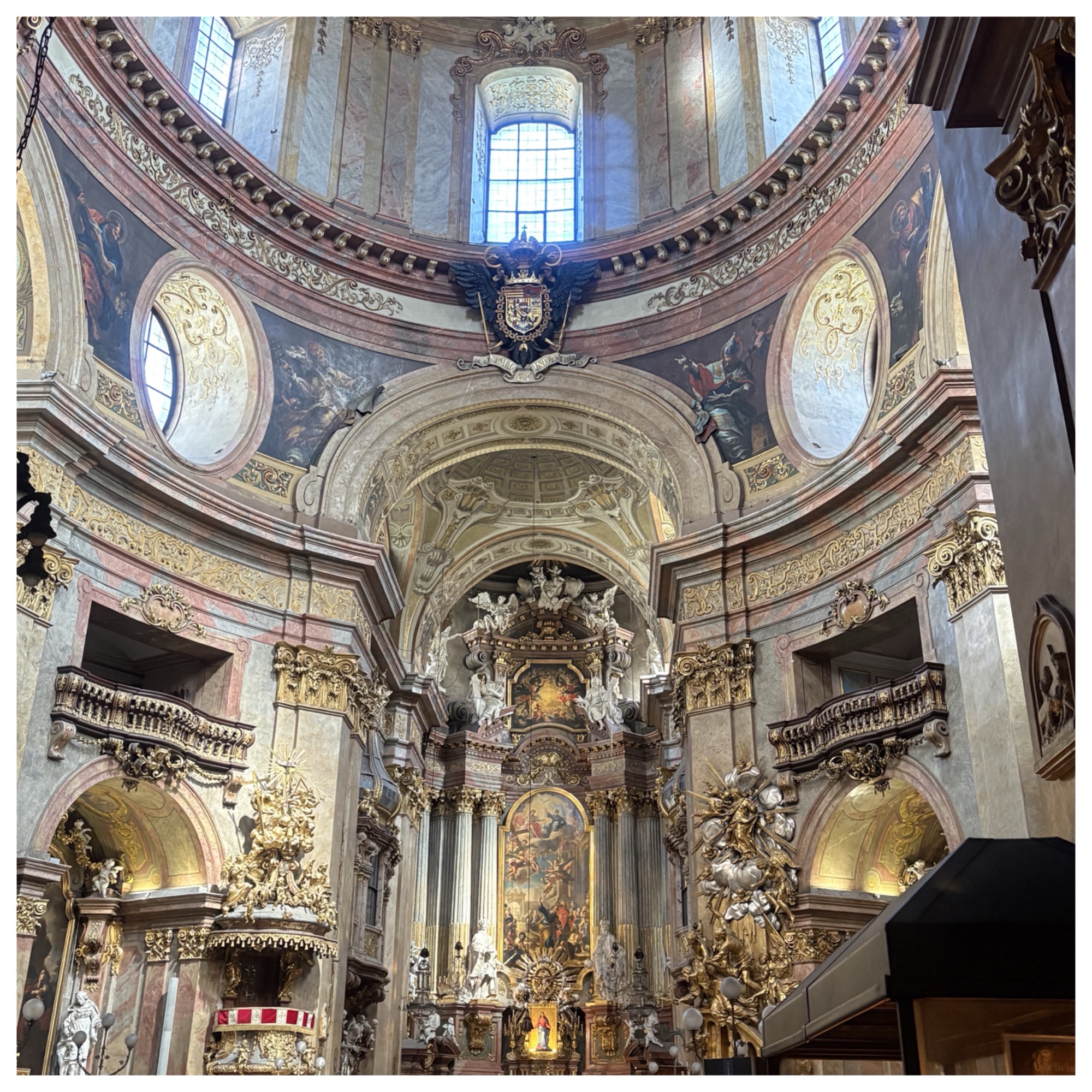
We took a quick peek into St Peter’s as we passed it.
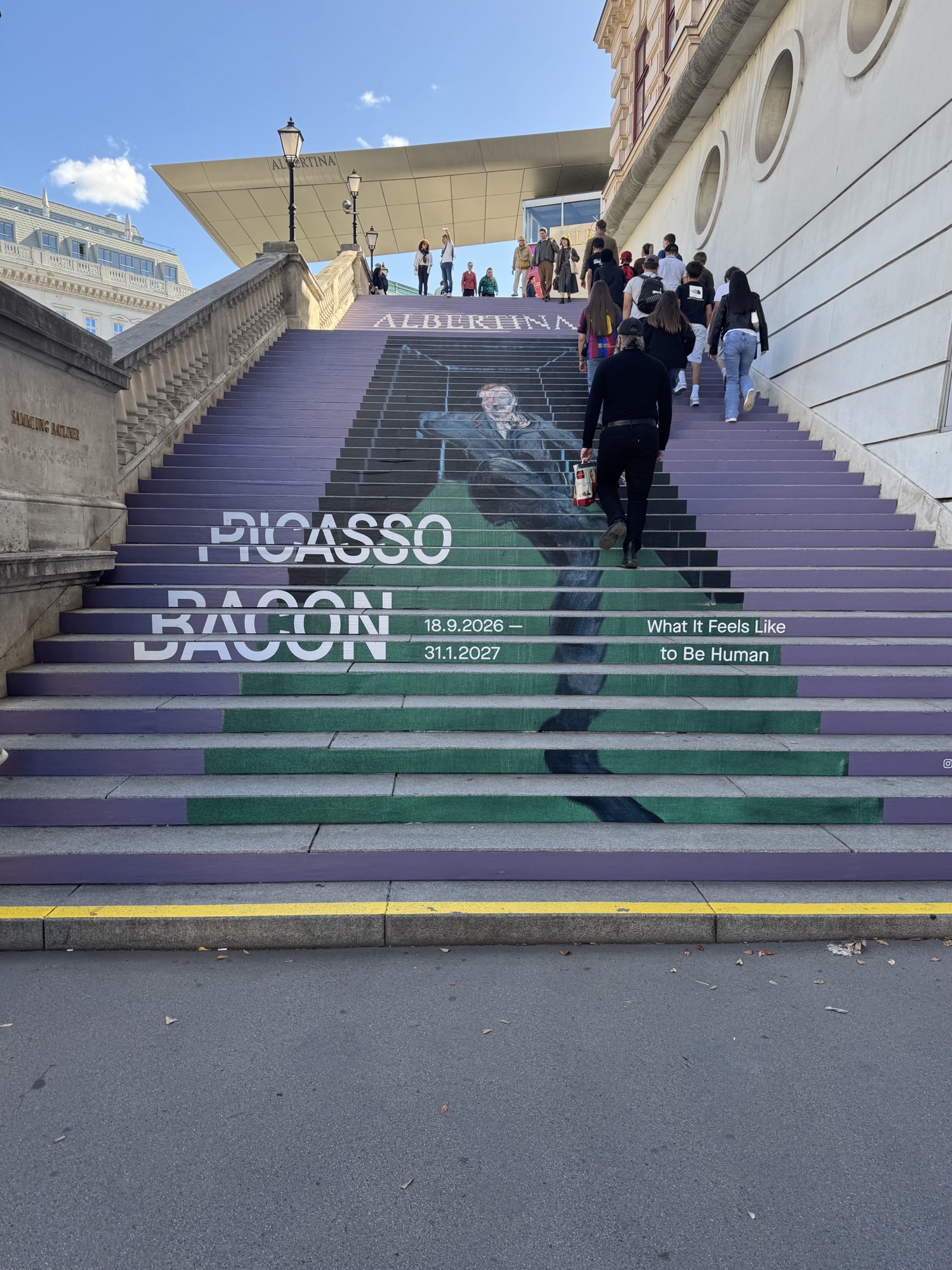
The current special exhibition at the Albertina is of surrealist paintings by Pablo Picasso and Francis Bacon. Photos were not allowed, but since I’m really not a fan of either artist that wasn’t disappointing.
Ted and I were here last in September 2025, and while the permanent exhibits are largely the same, much has changed in just one year.
The Albertina is celebrating its 250th anniversary this year, so there is a large curated exhibit taking visitors through the history – and into the future of – the collection.
Entering the retrospective the hallway alcoves featured inscriptions outlining the museum’s philosophy.
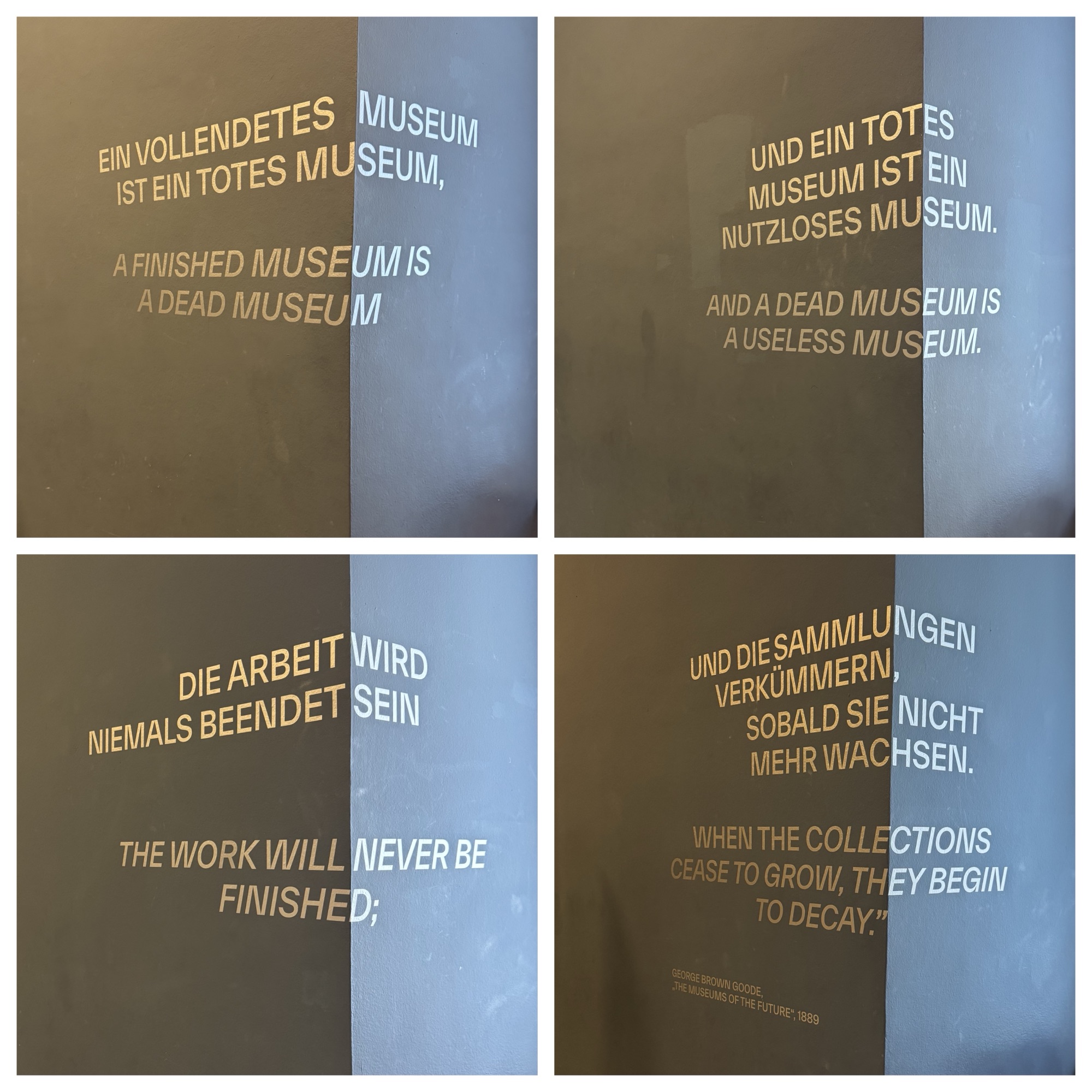
It was interesting to see some of the very early graphic arts that inspired the imperial collection that founded the Albertina, and to learn more about its first 250 years. I took photos of the information I’ll want to remember.
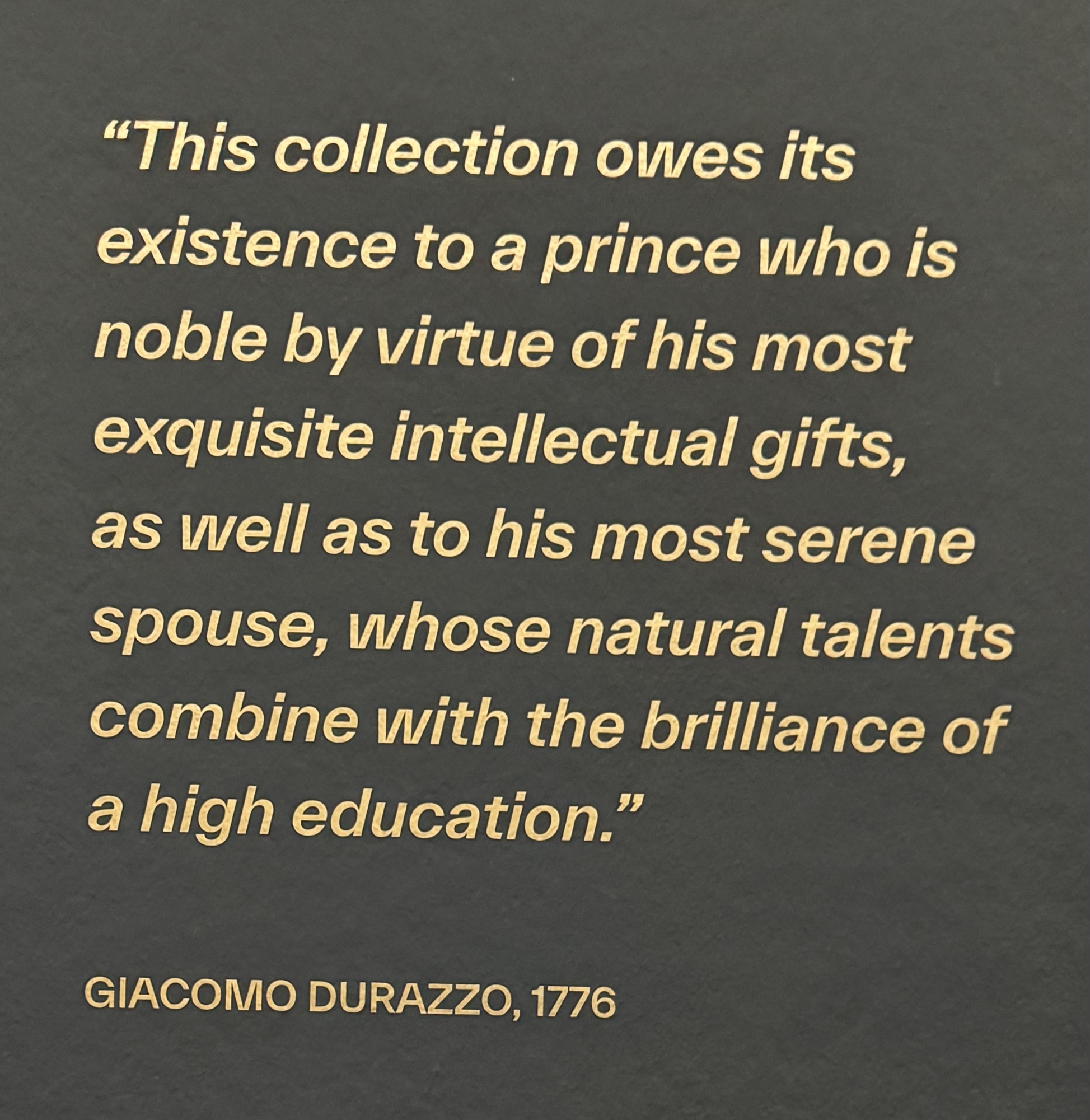
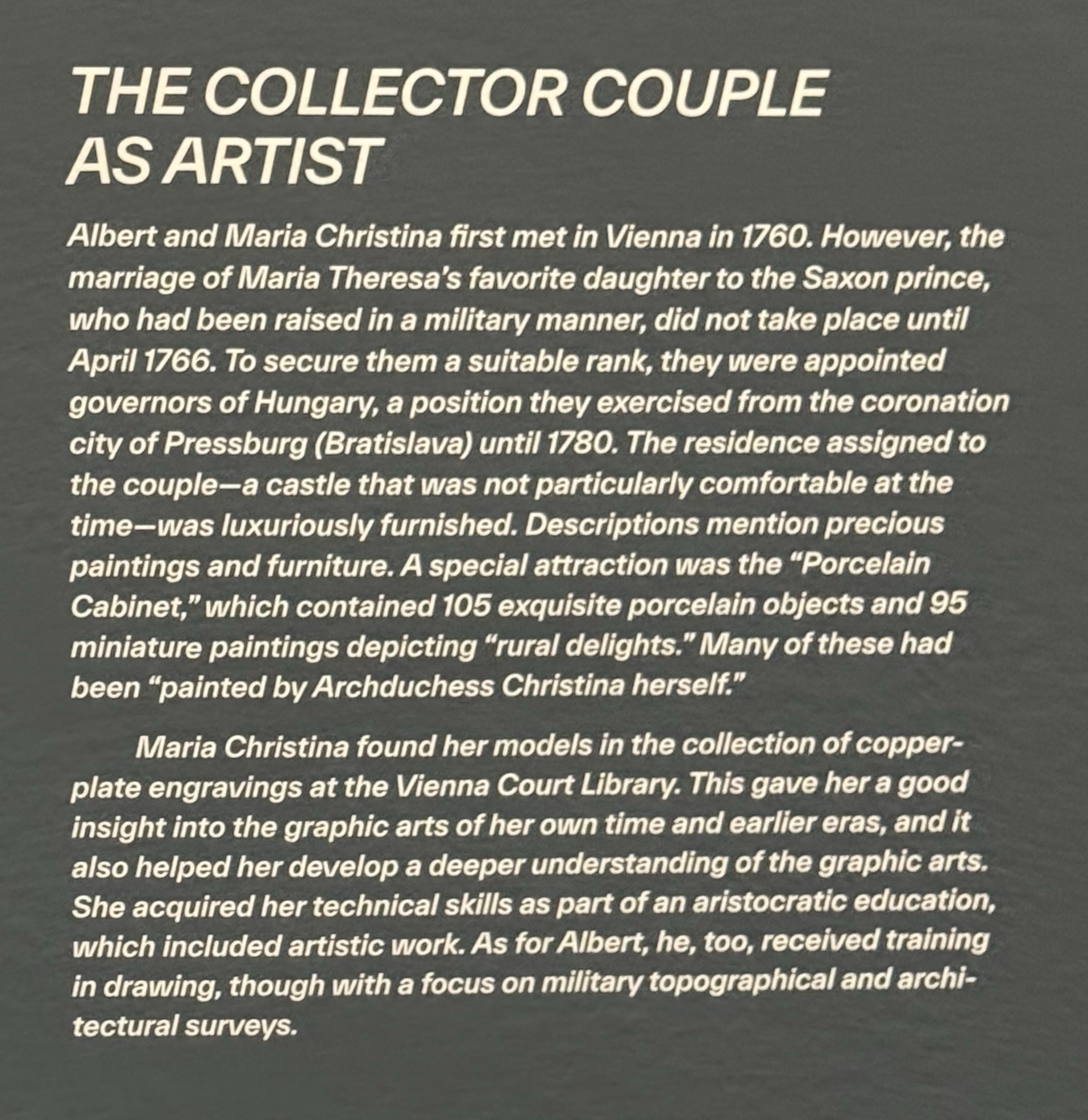
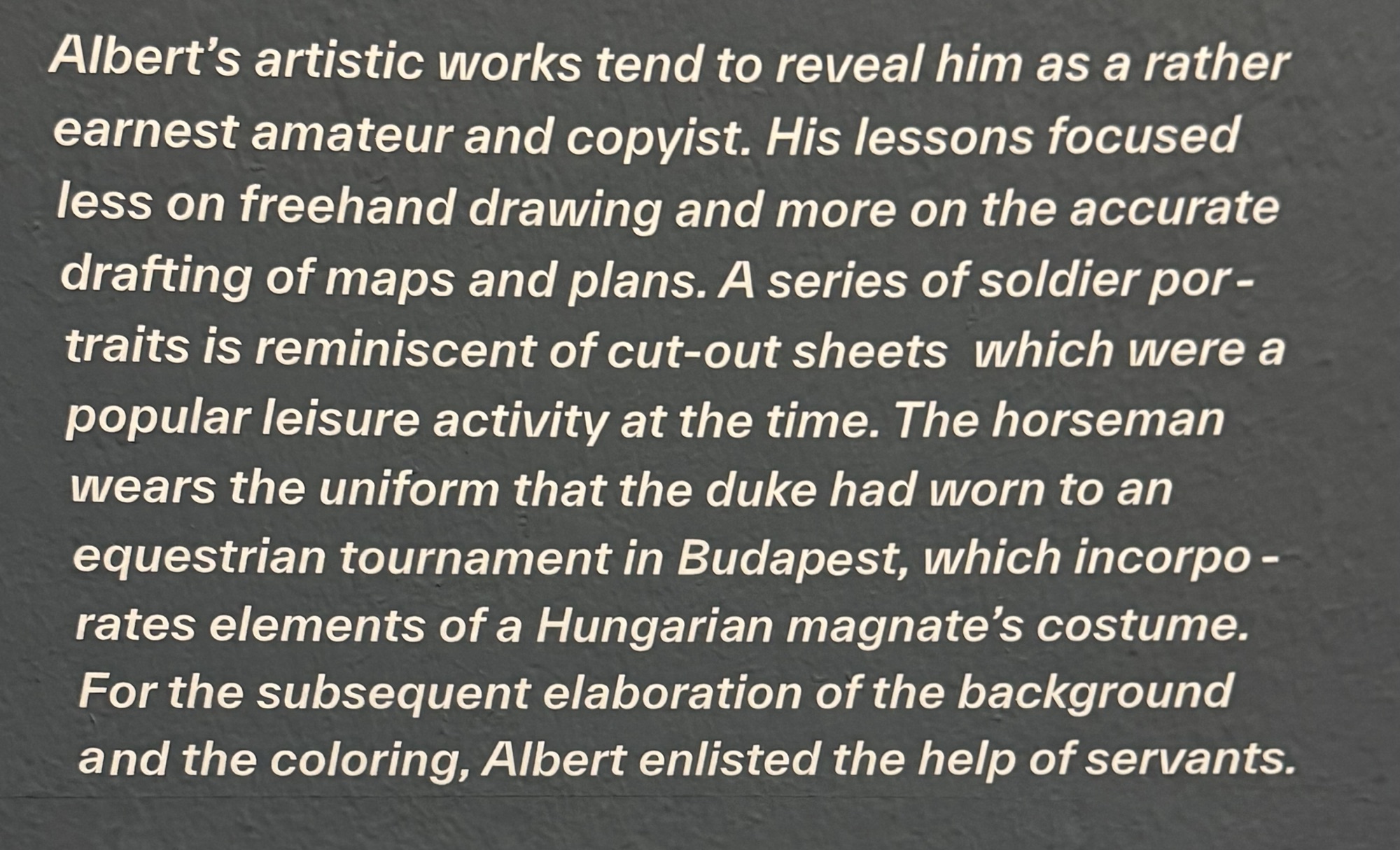
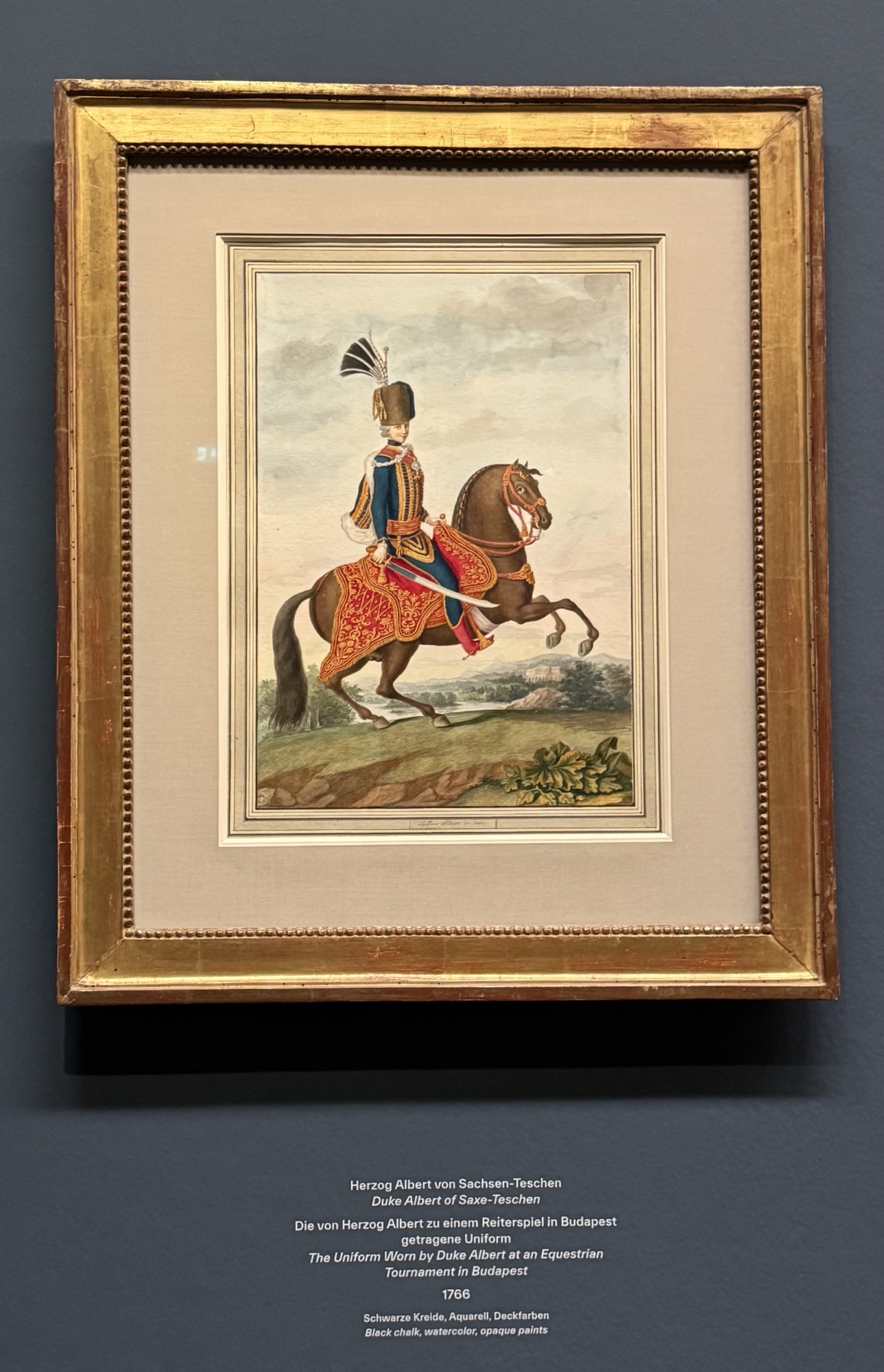
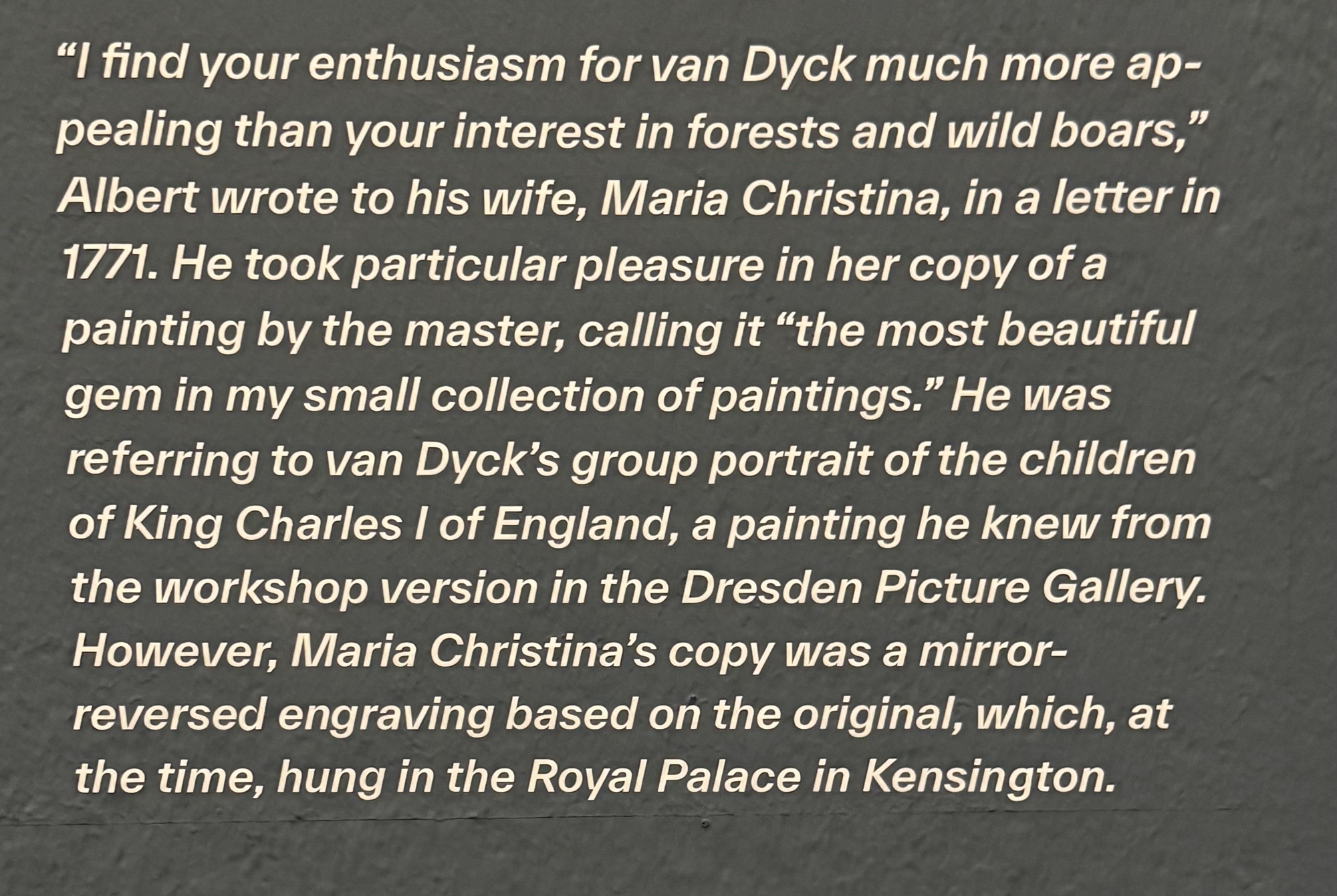
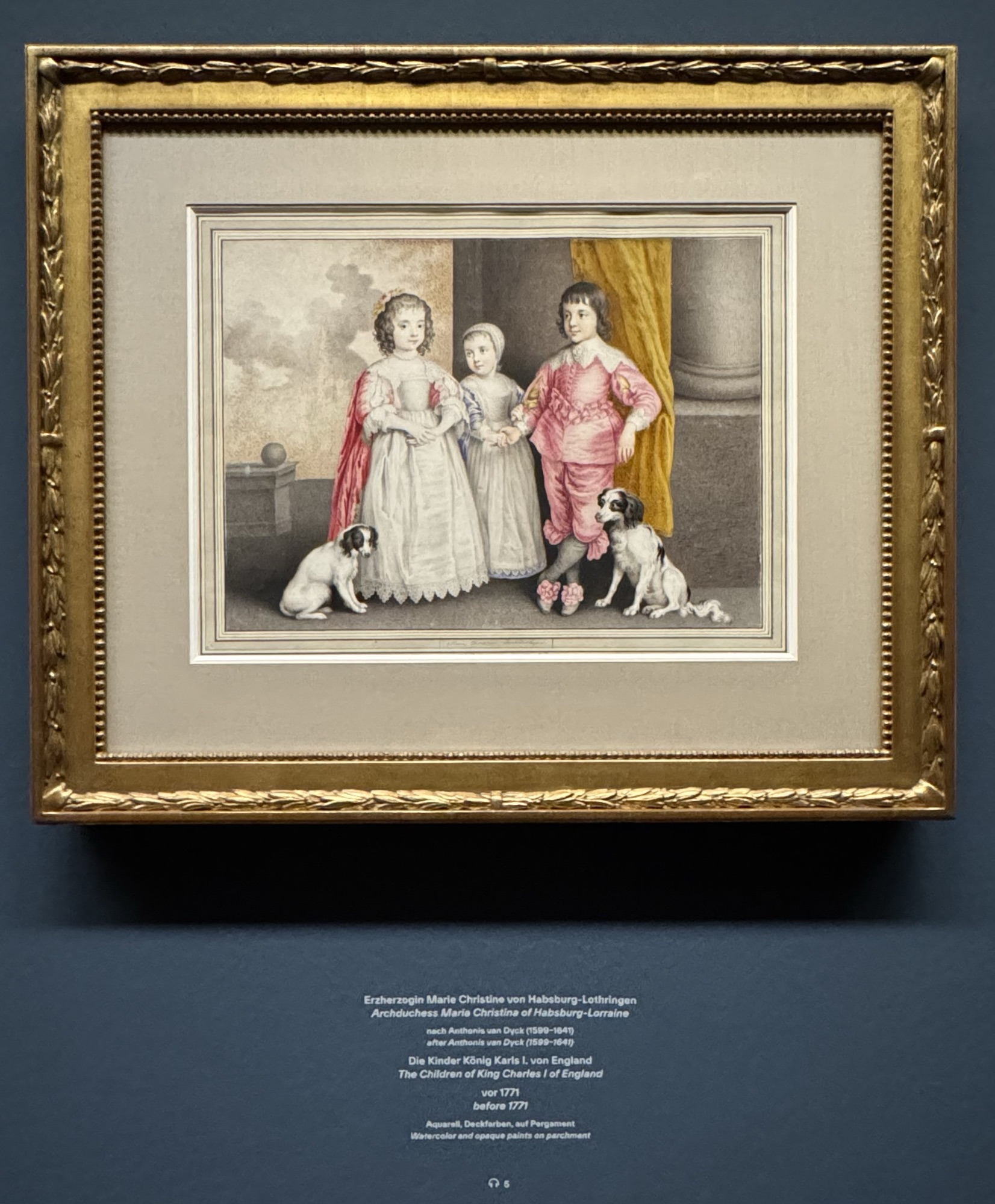
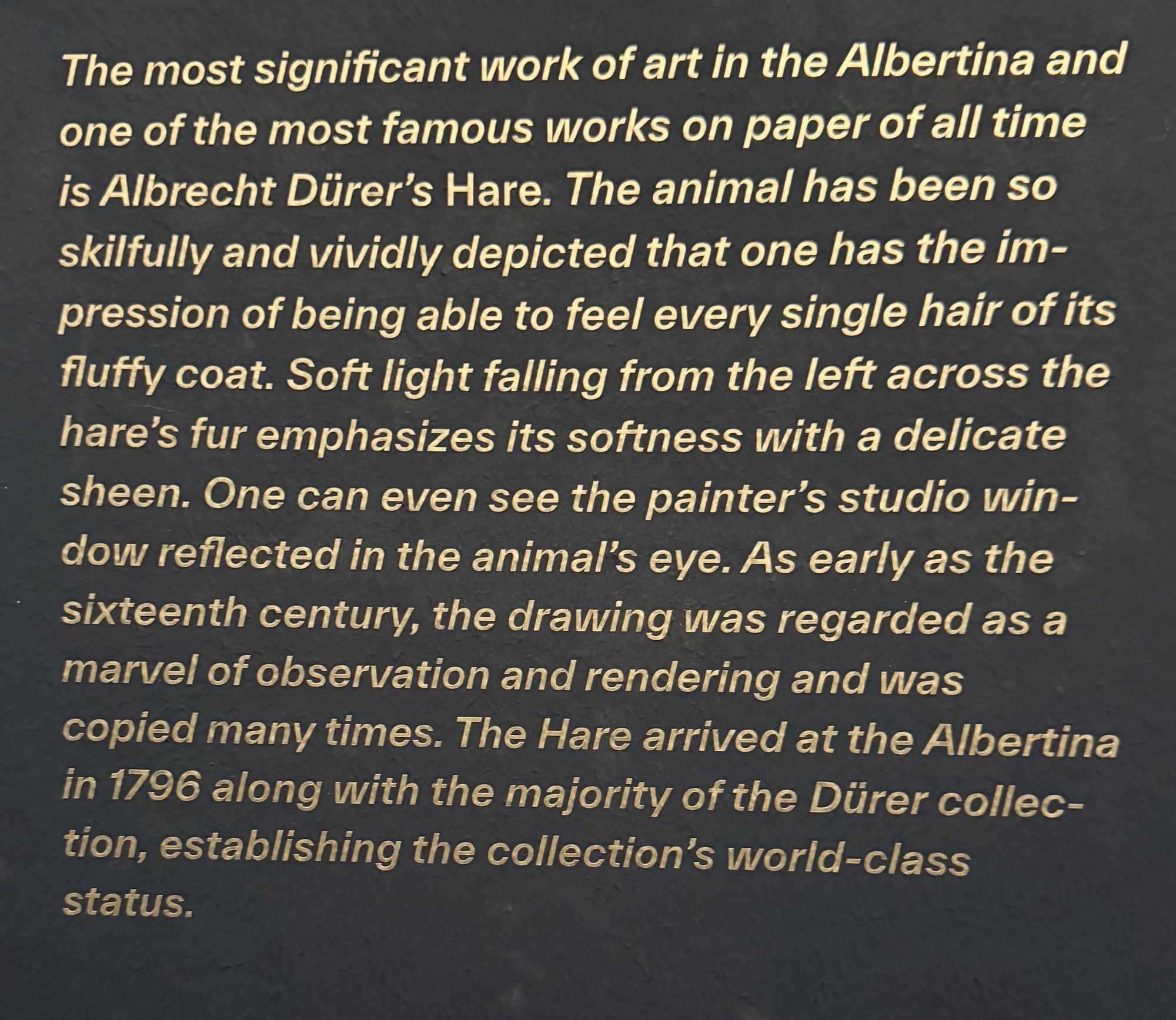
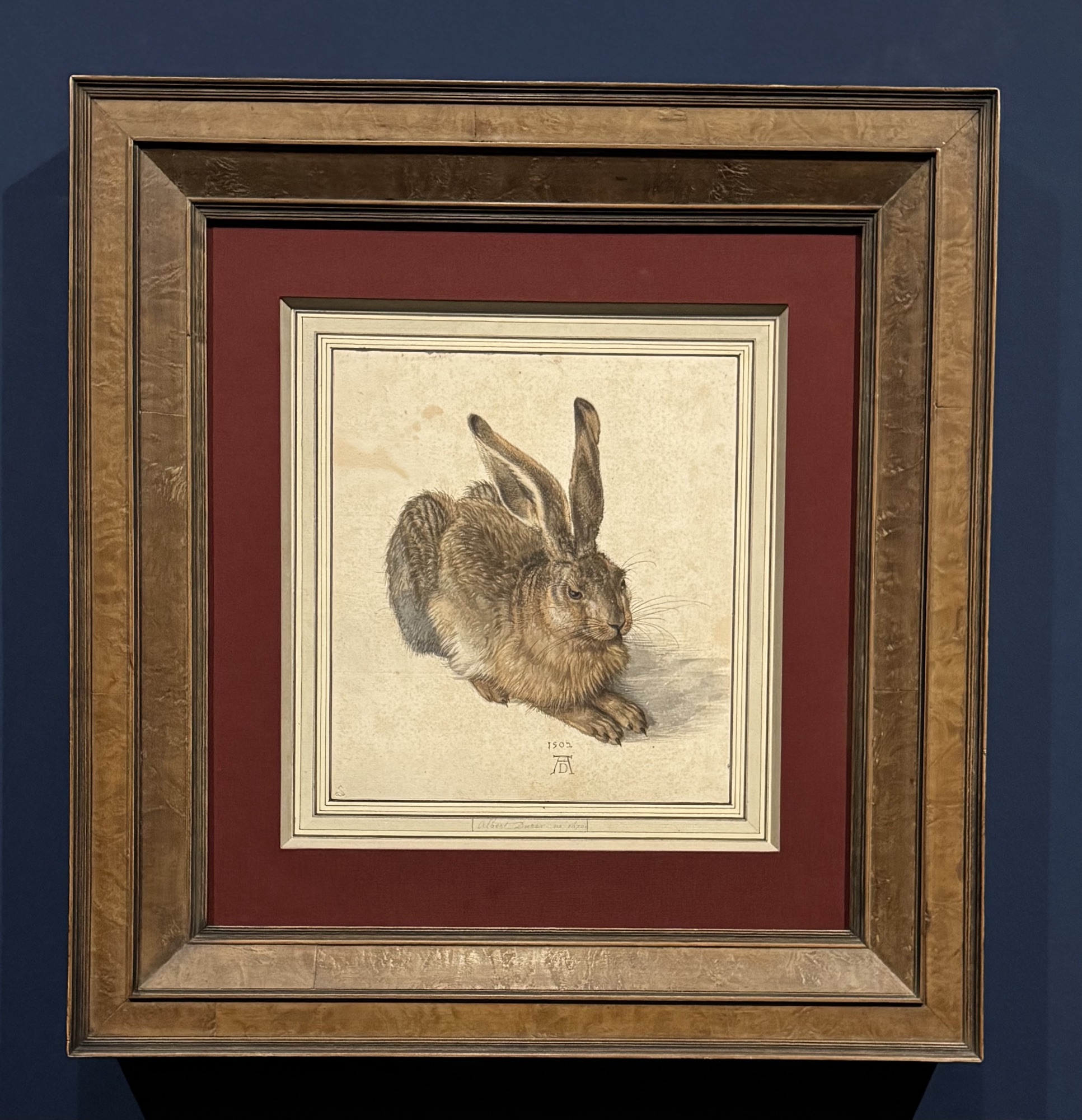
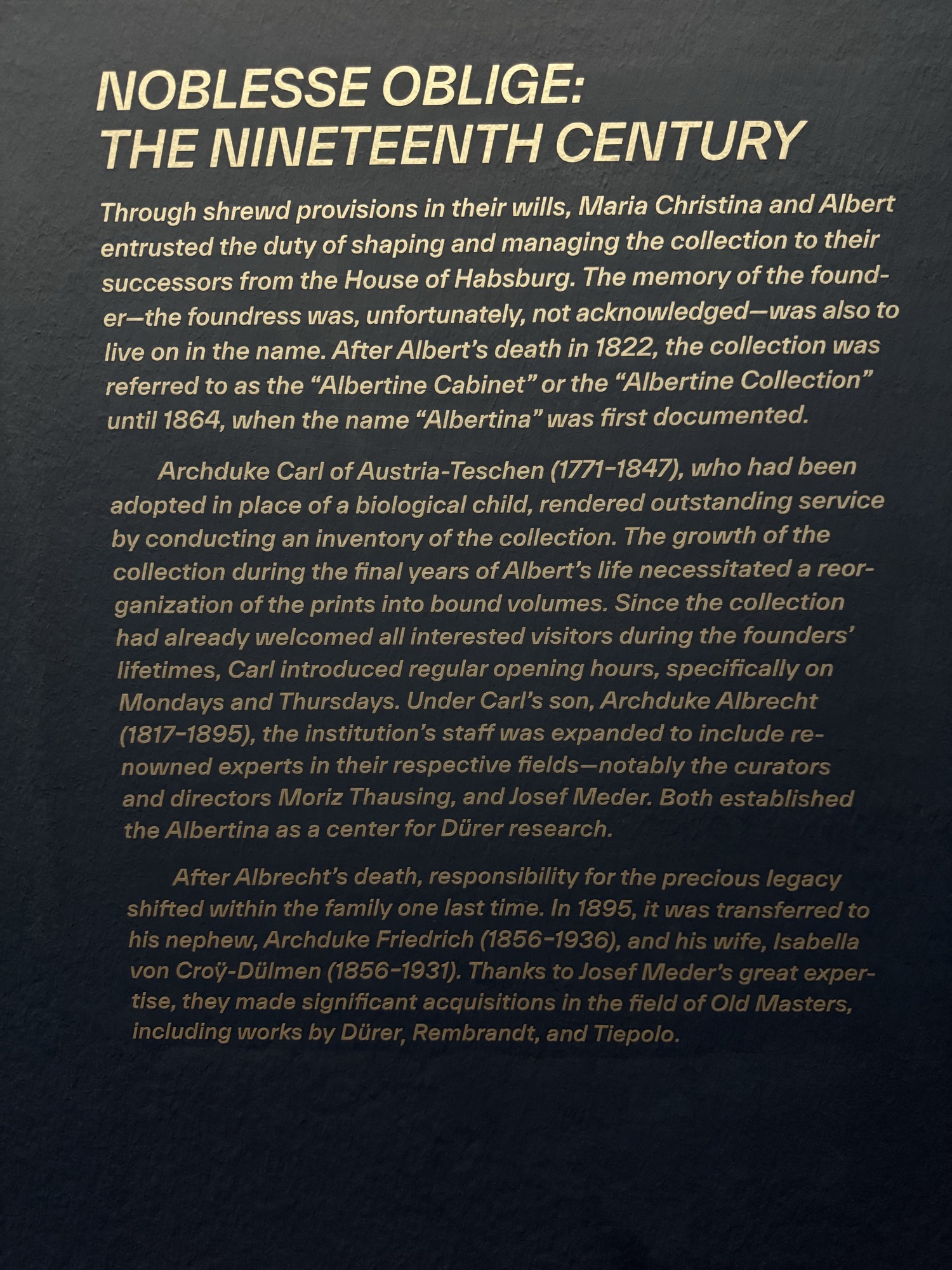
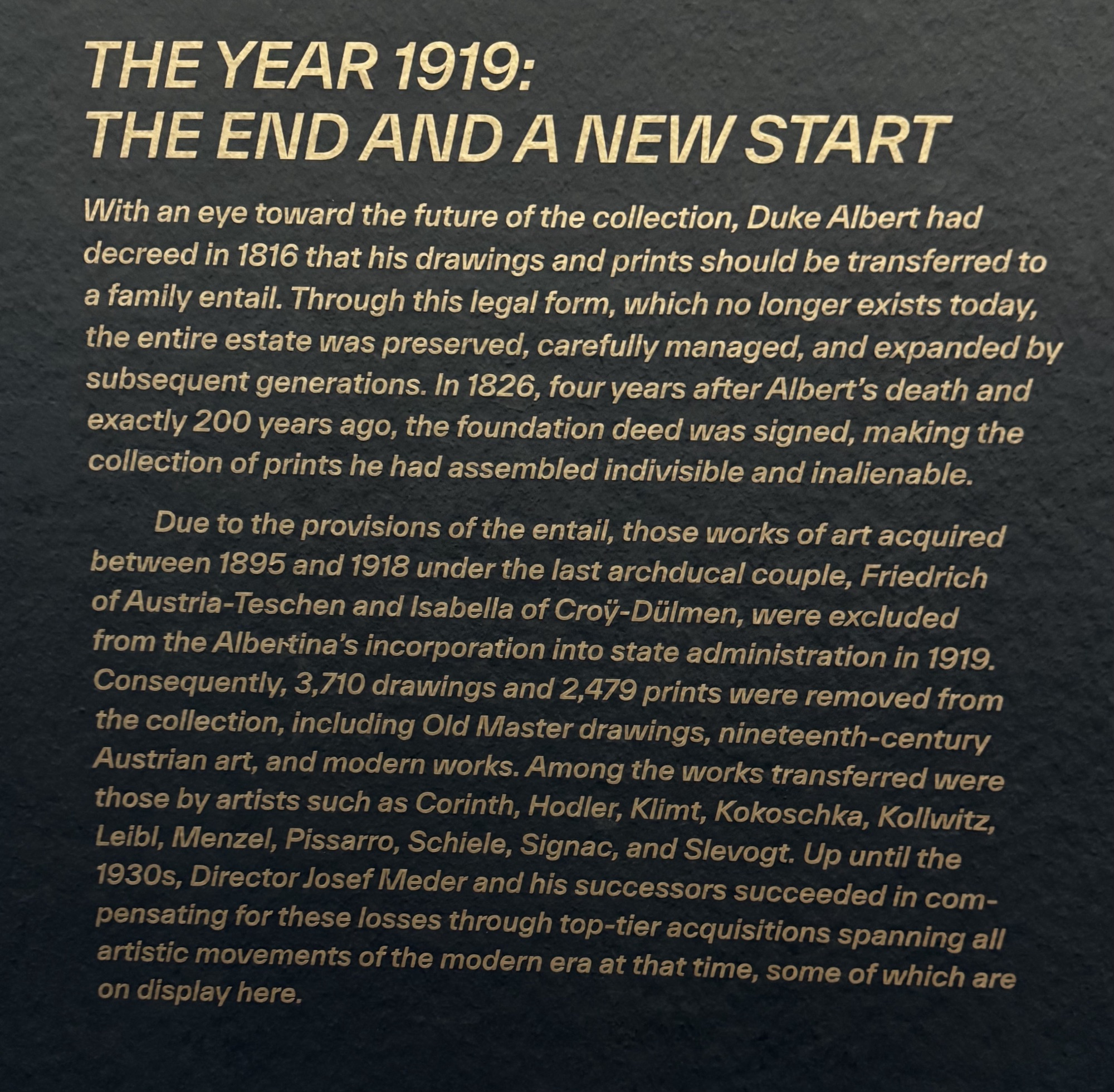
The collection includes sketches by Rubens, Michelangelo, Canaletto, Tiepelo, Frye, Goya, plus many more familiar and unfamiliar names.
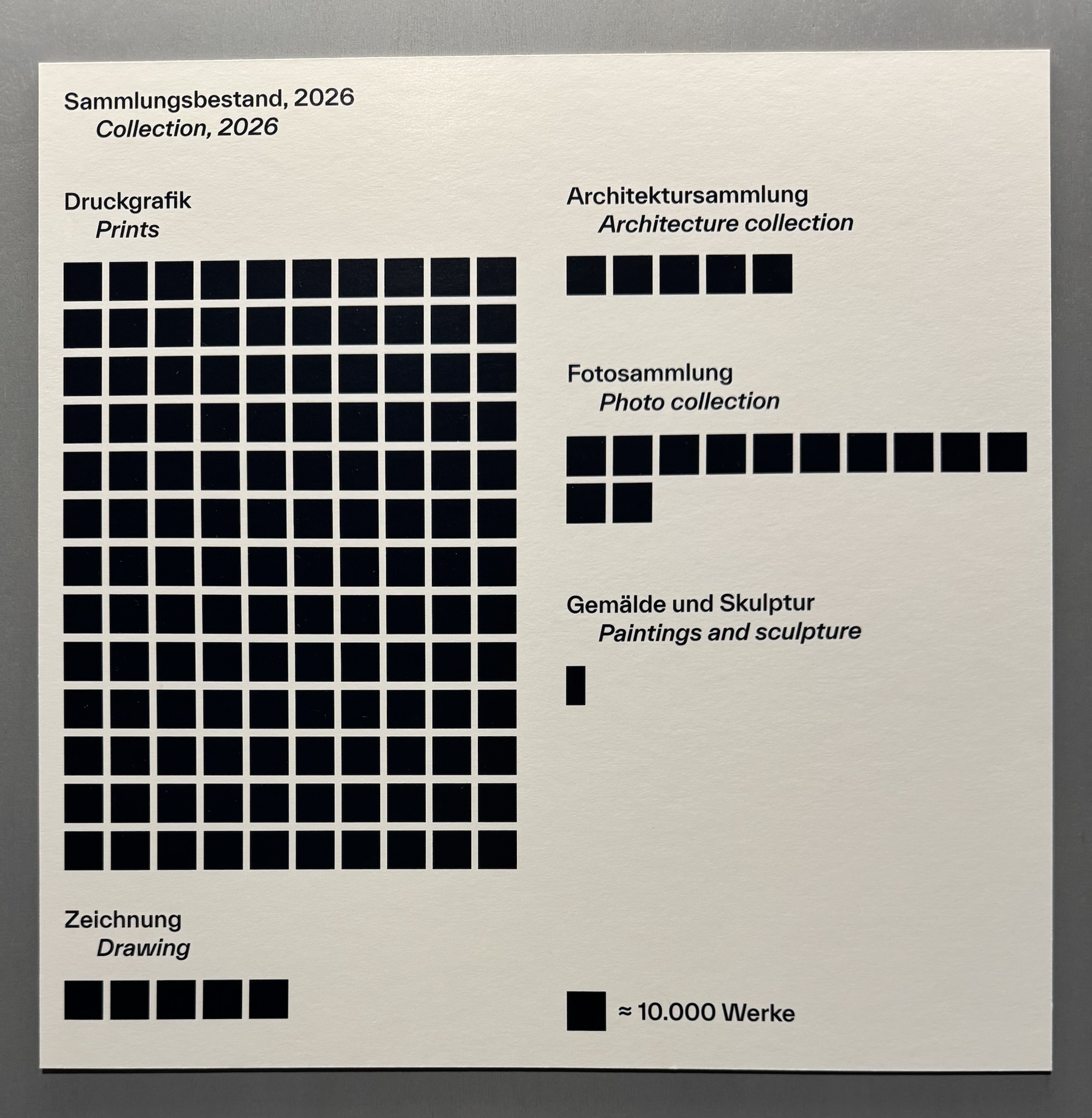
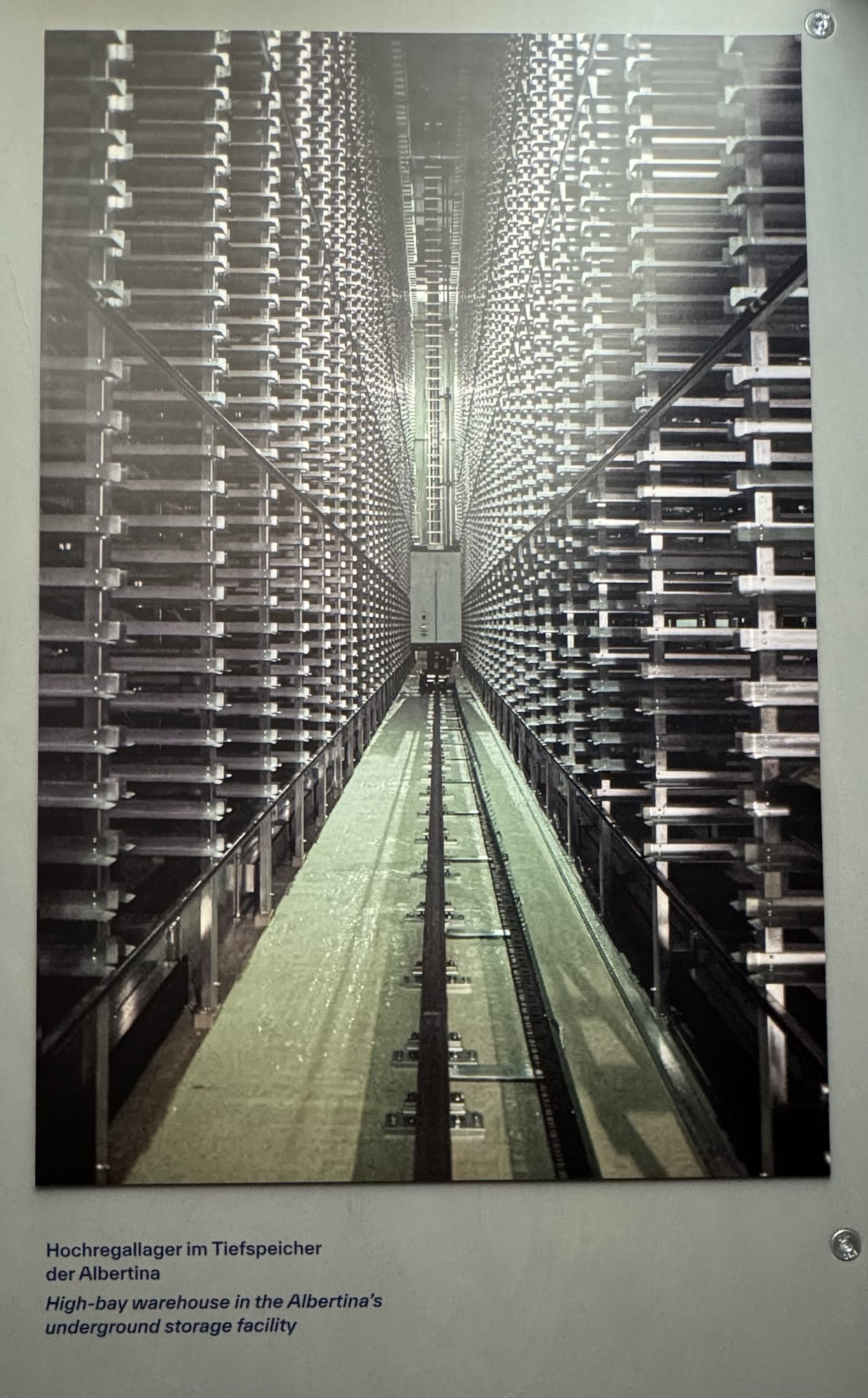
Near the end of the exhibit was a chart which depicted the Albertina’s current holdings. Each square represents 10,000. Count just the squares for prints – the etchings, copperplates, etc that are the main focus of the museum. There are currently 130 squares, representing 1.3 million items.
The State Rooms were closed for a private event, but we were still able to walk through the permanent exhibits.
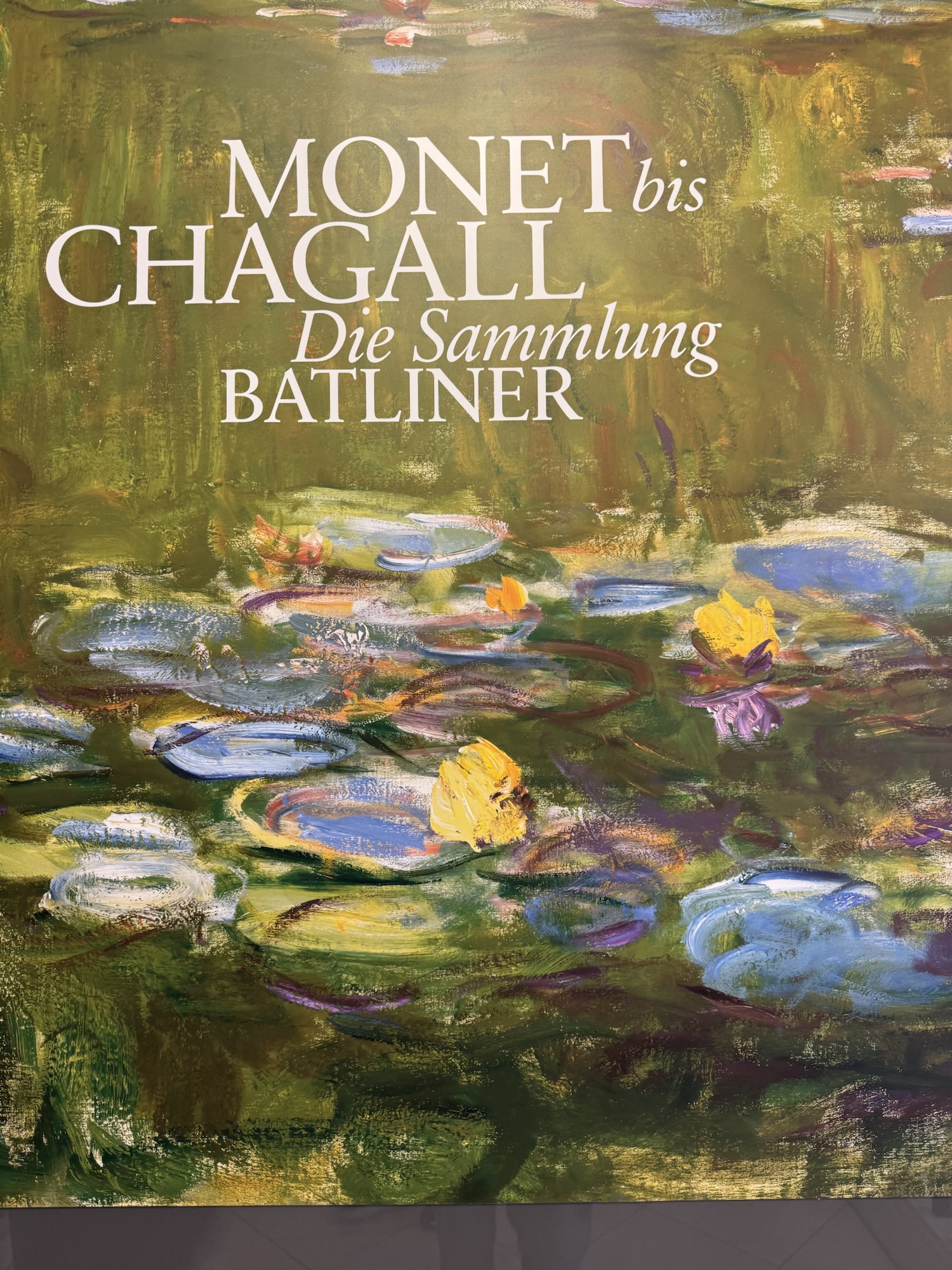
I realized when we got back to the hotel that almost every one of the photos I took were of the same things I’d loved on my last visit, so I’m not re-posting them. I’ll just look back via the link embedded the beginning of this episode.
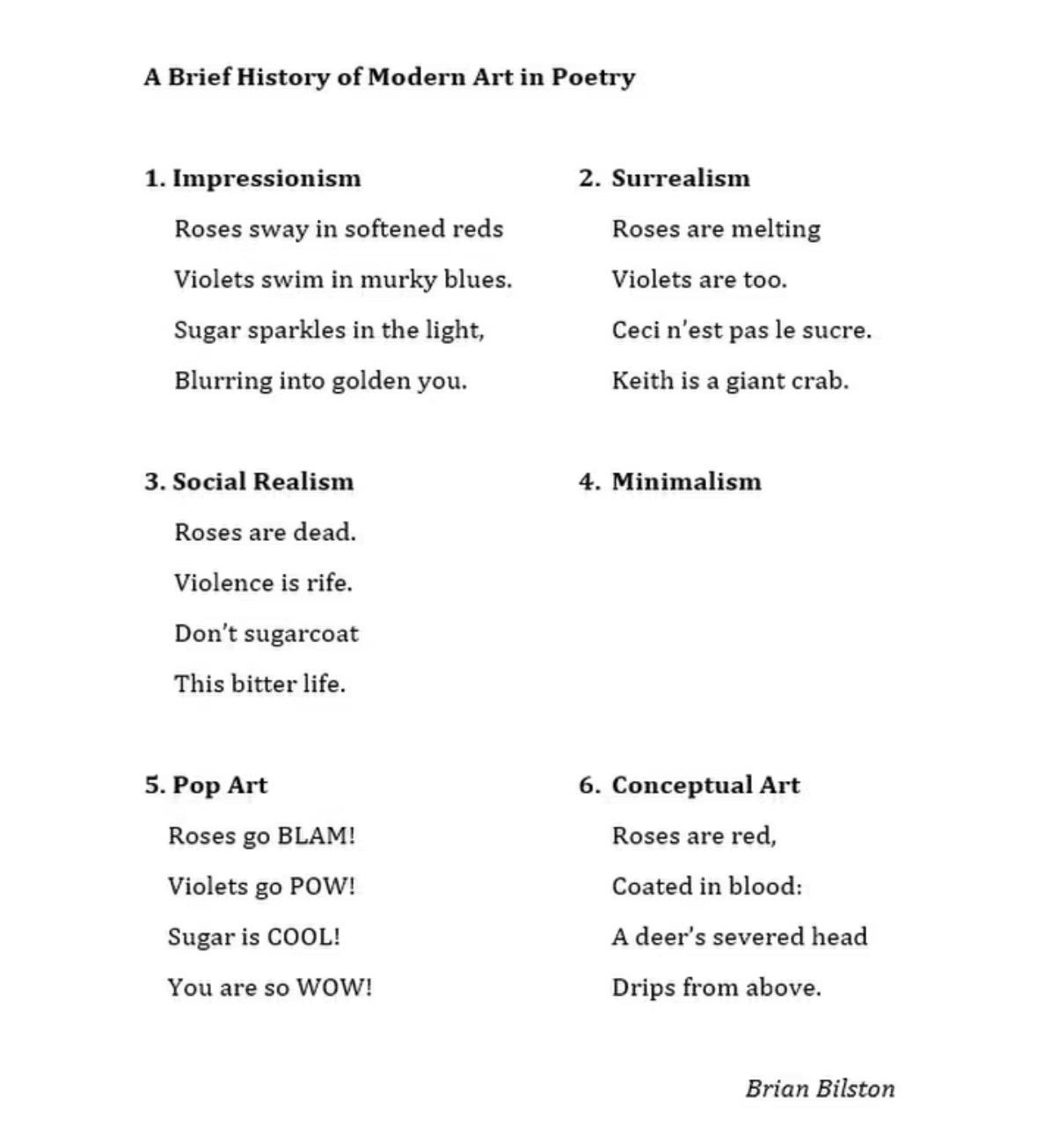
After today’s gallery experience I felt absolutely obligated to include Brian Bilston’s poem in this episode:
We also walked briefly through a photography exhibit about travel photography from its earliest days through to slide shows, which led to some shared memories of slide shows Ted and his friends may have inflicted on our children in the early 1980s.
Since we needed to pack up tonight fur tomorrow’s journey to Passau, we decided on a relatively early dinner in Vienna’s iconic Naschmarkt at erzherzogtum.
The restaurant’s motto is on their umbrellas:
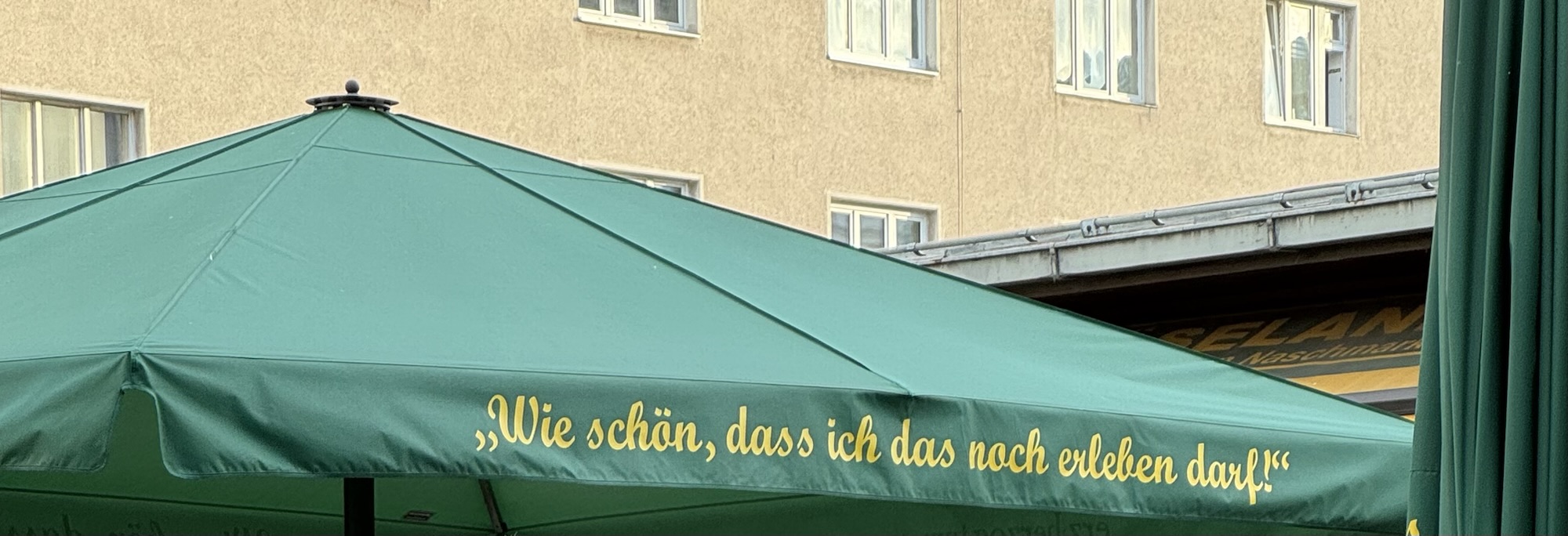
I’m grateful that that pretty much sums up my life.
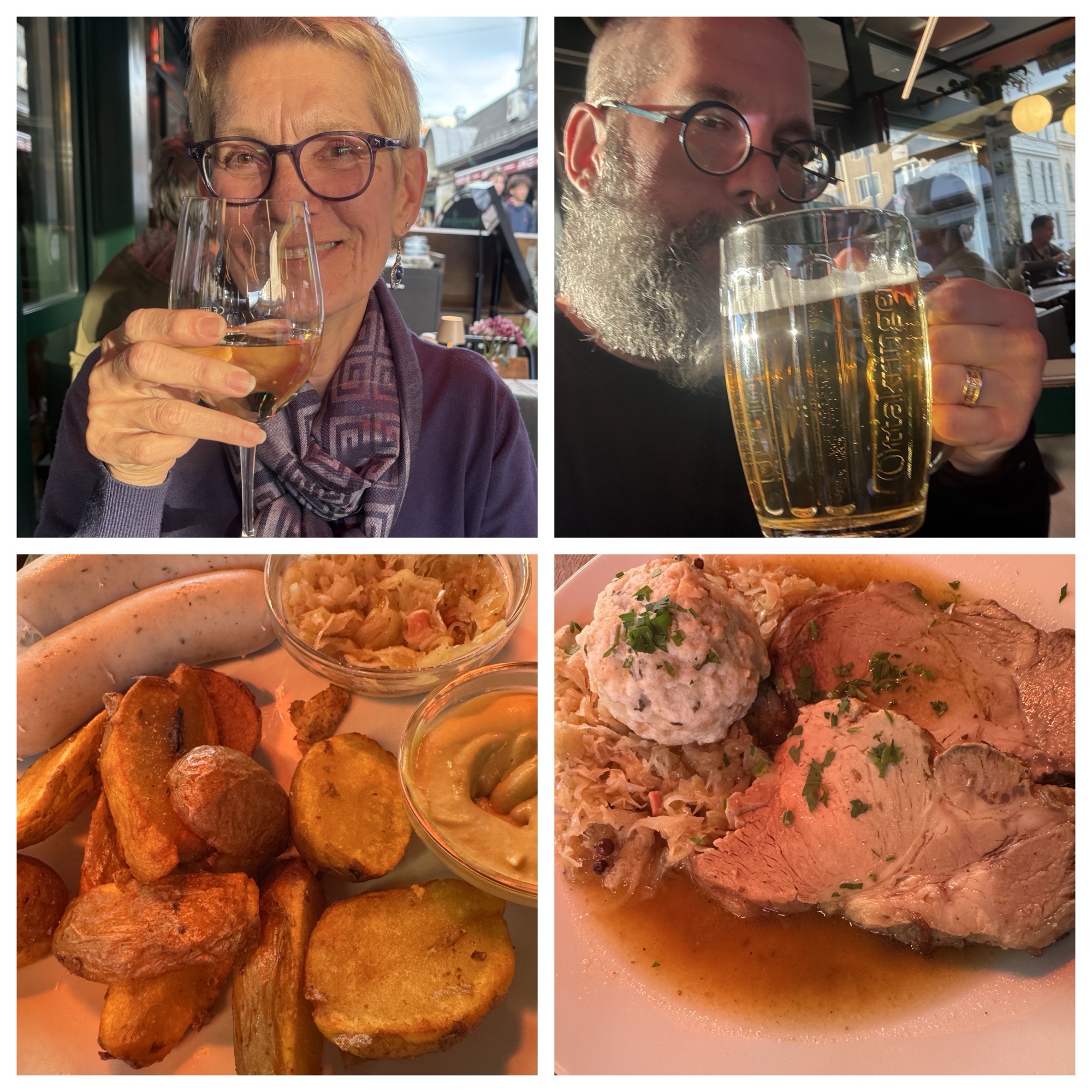
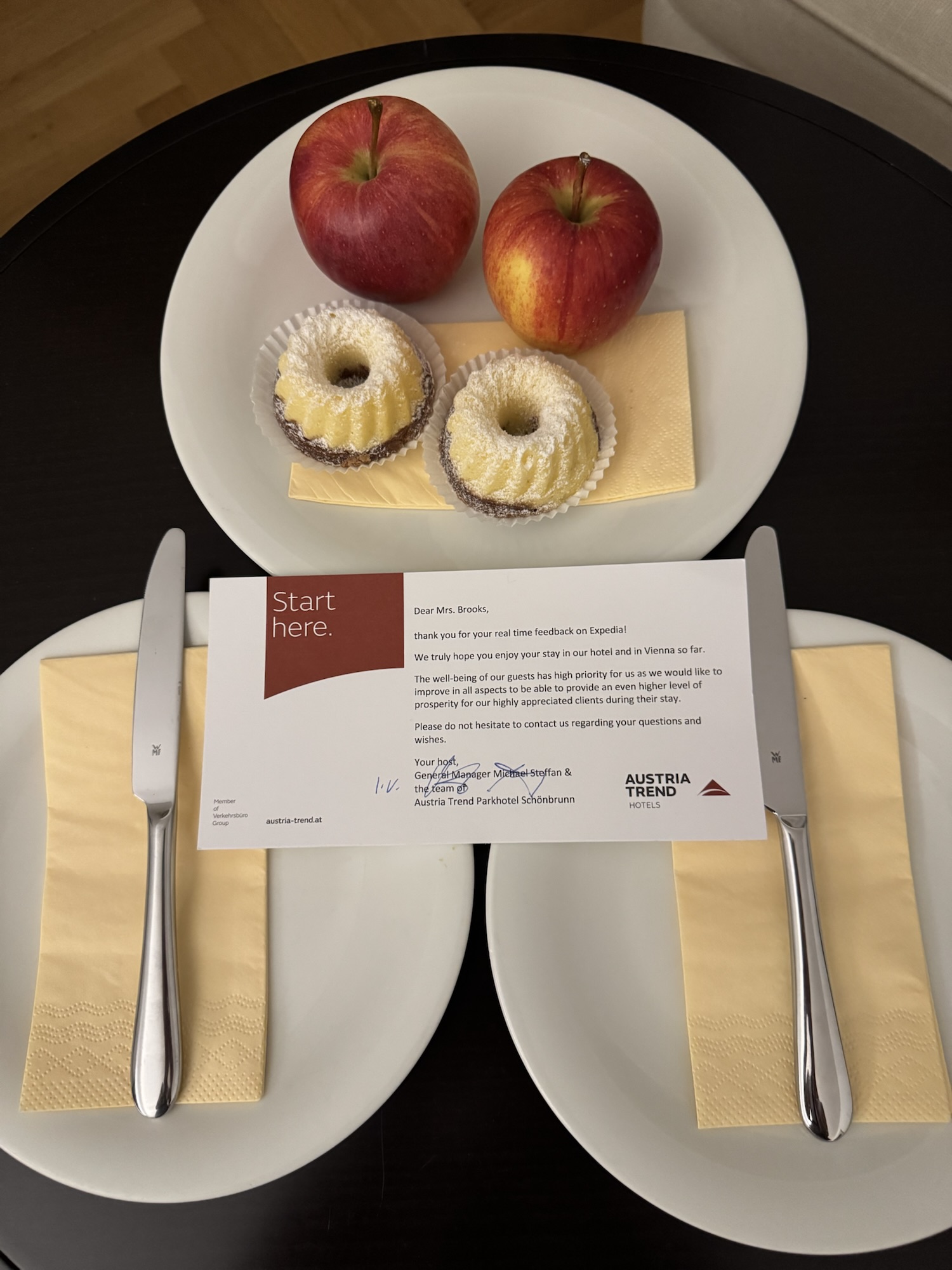
Upon our return to our hotel, we found this lovely little thank you in appreciation of our stay. It was a gracious Viennese way of saying goodbye (until next time).


Aaaah Vienna. One of our favorite cities. We stayed a month back in 2022. But before that I co-hosted a celebration of the late Carl Djerassi who donated half of his collection of work by Paul Klee in those staterooms you couldn’t access. He also donated the large rotating sculpture on the courtyard.
Our favorite restaurant is Bretzelgolb (sp?) near Judenplatz. And the tram to Grinzling and up to the vinyards! And the museums. And the midnight showing of The Third Man. And shopping in Billa must be what grocery stores in heaven are like
Your post has me longing to return
LikeLiked by 1 person