Today we visited the amazing Natural History Museum in the morning and early afternoon, toured the Vienna Opera House in the late afternoon, and took in a concert at the Musikverein in the evening.
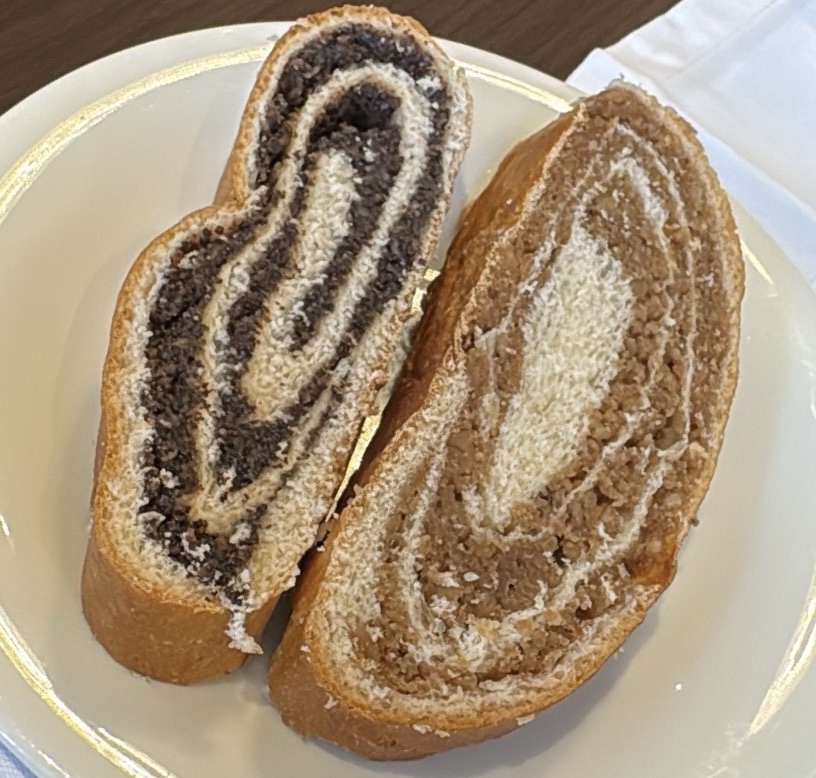
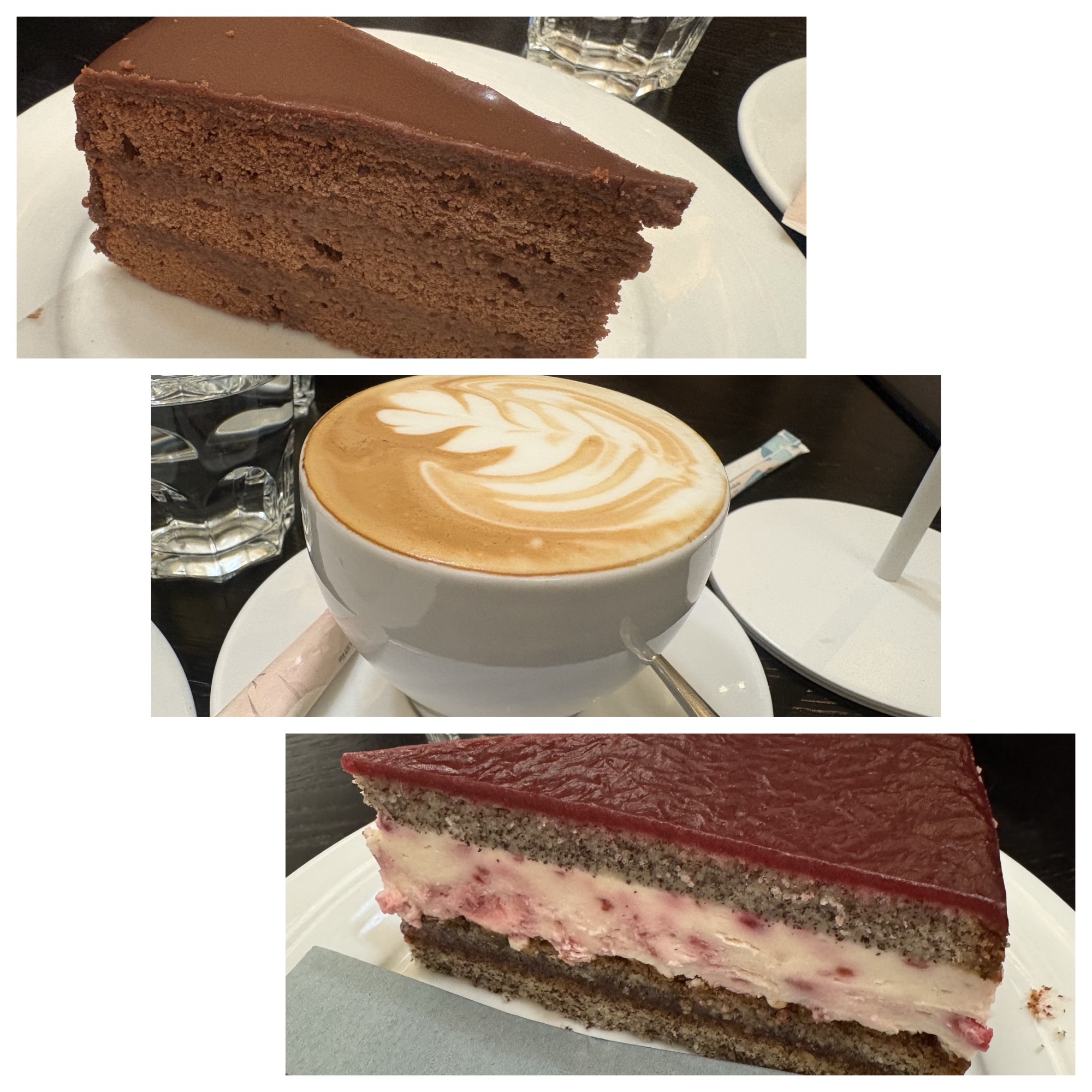
It was another very full day, beginning with a nutritious Viennese breakfast of walnut and poppyseed pastries and coffee.
I’m not posting a lot of pictures from the Natural History Museum, because I covered it very thoroughly in Episode 305 in August of 2022 when Ted and I spent the better part of a day here. However, son #1 was every bit as enchanted by the fastidious organization of the museum as I had been.
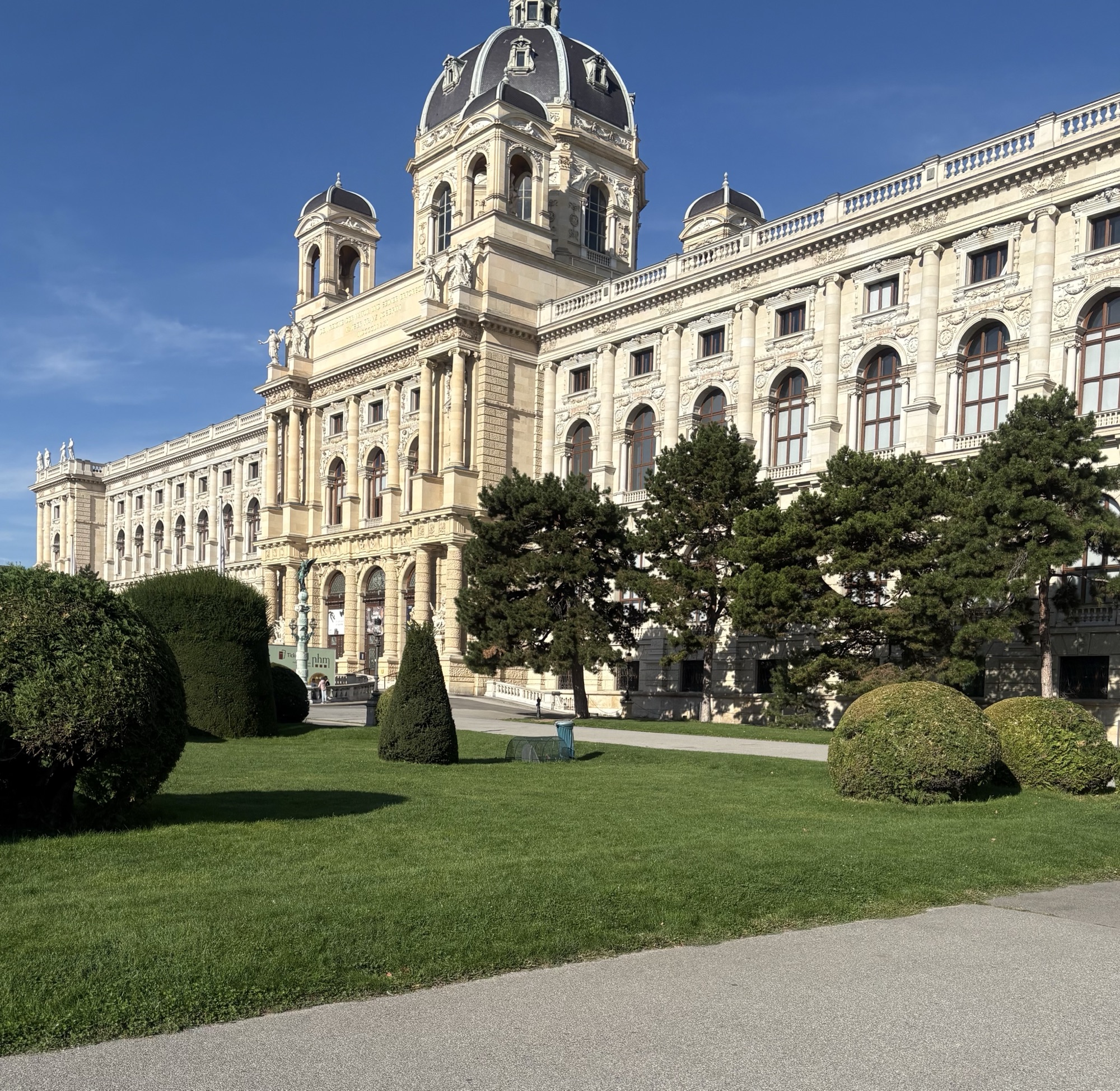
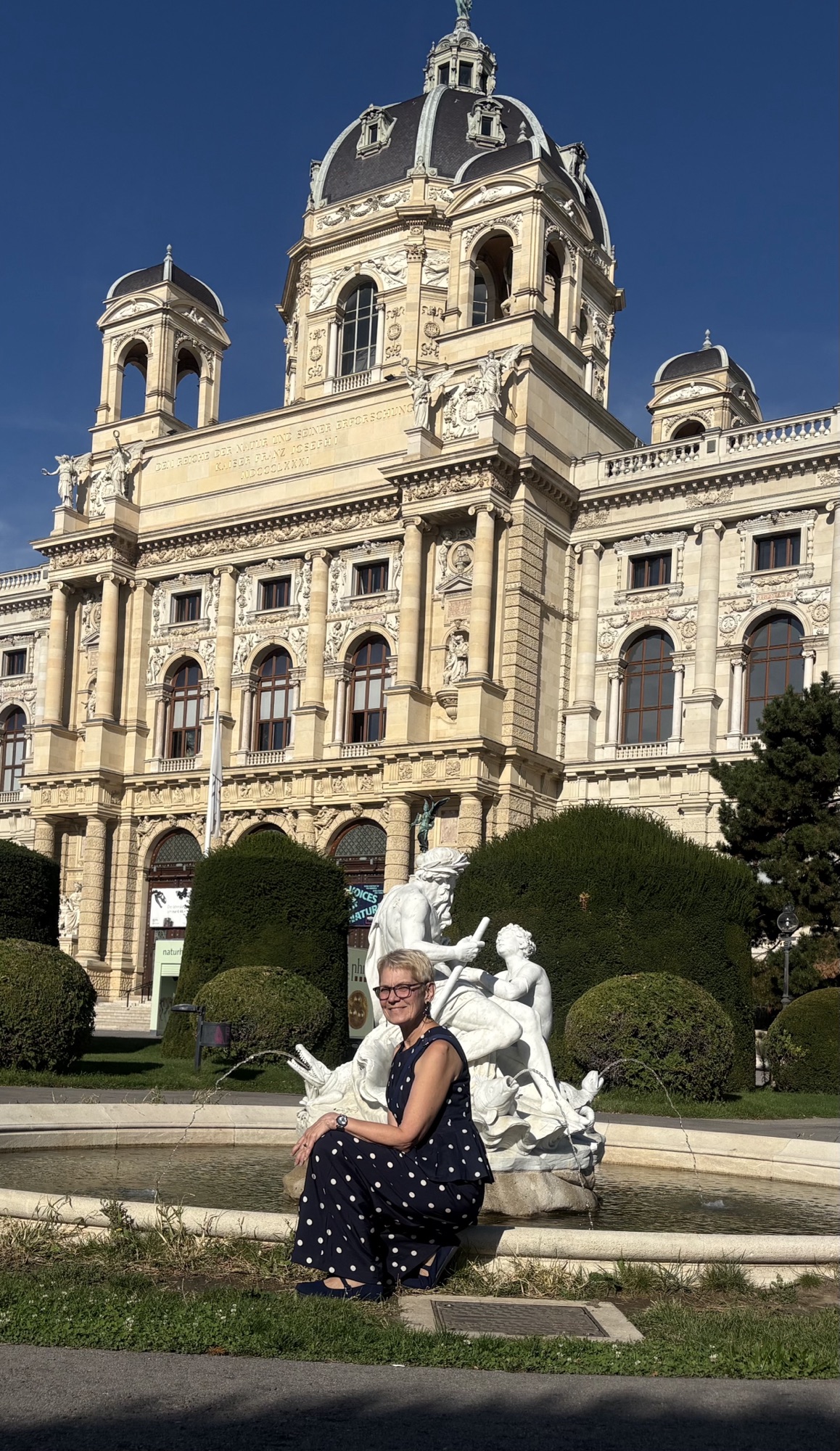
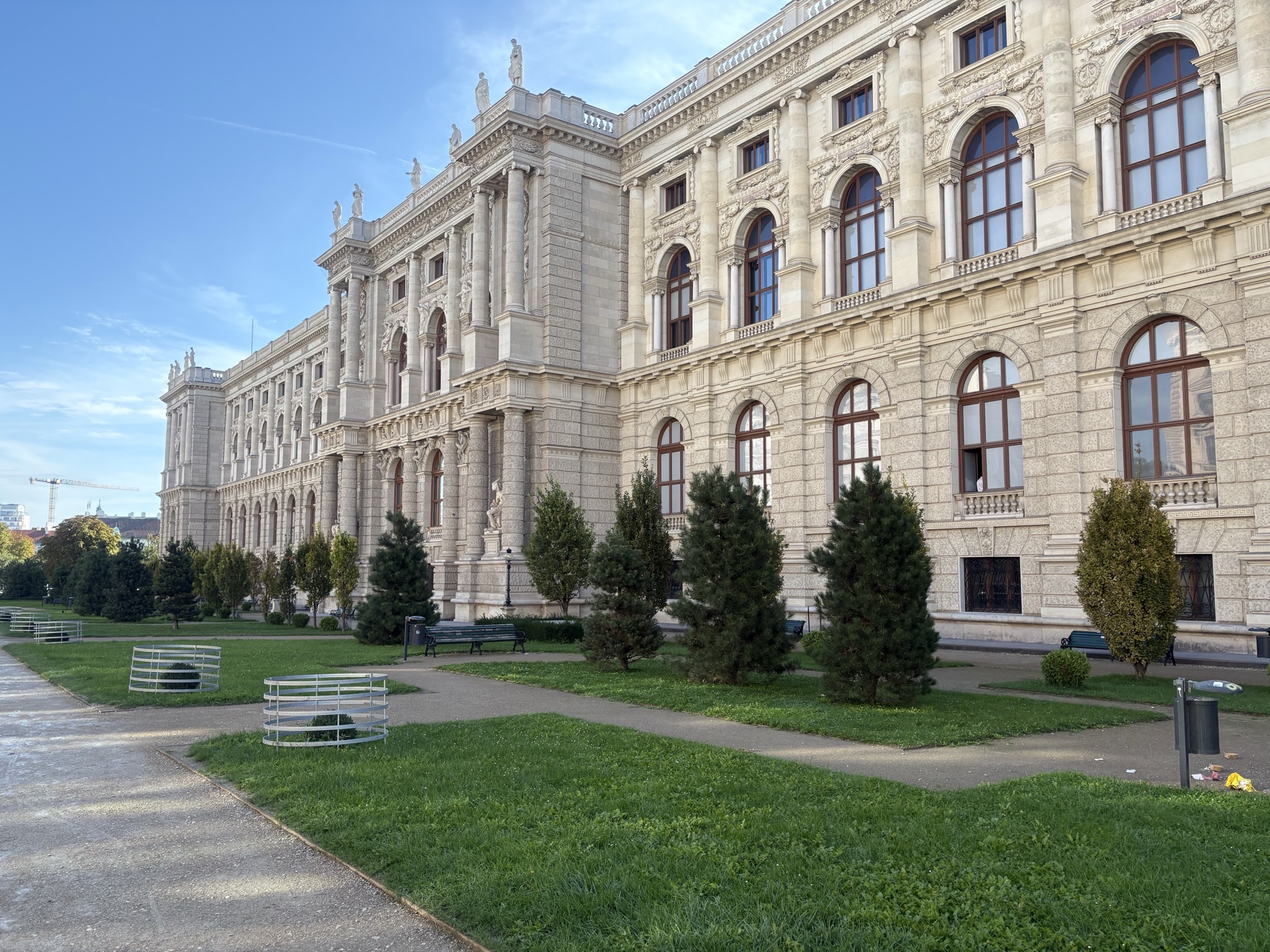
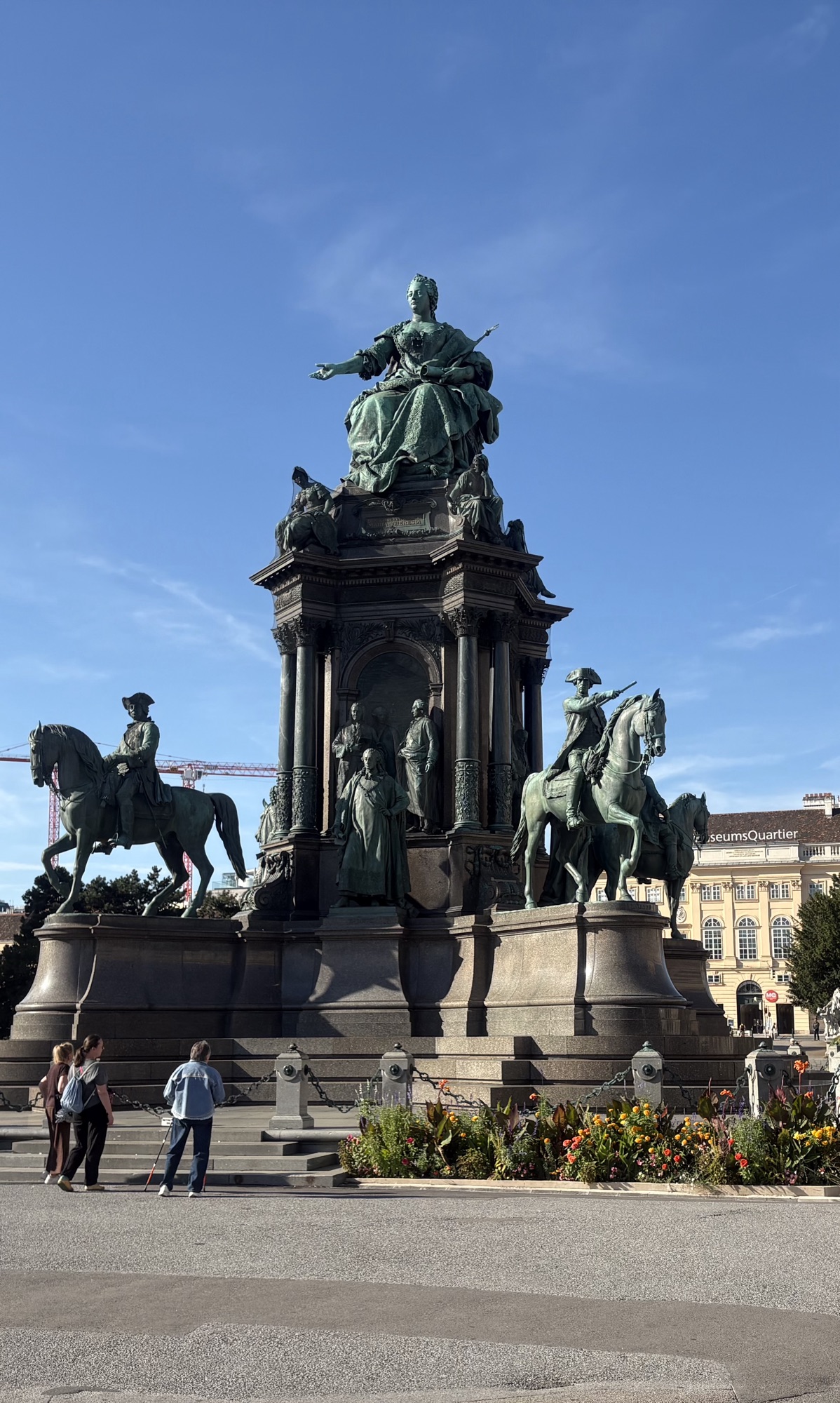
The museum has 39 halls (gallery rooms). At our pace of 40 minutes per hall we managed 9 rooms plus a coffee and cake break, arriving as the museum opened at 9:30 a.m. and leaving at 2:30 p.m. to get to our opera house tour on time.
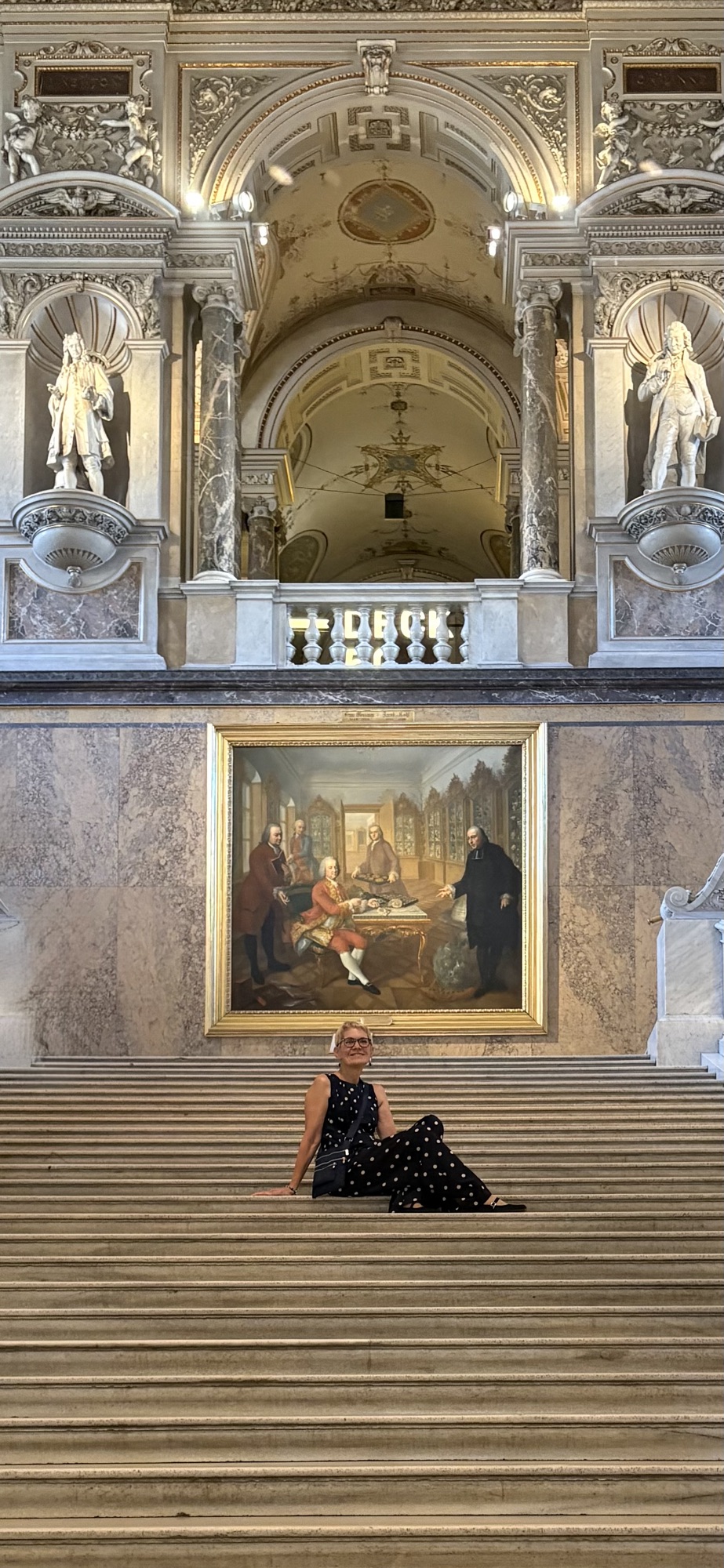
#1 was in charge of photos, so here are a few of his, and one of mine (which will be obvious)
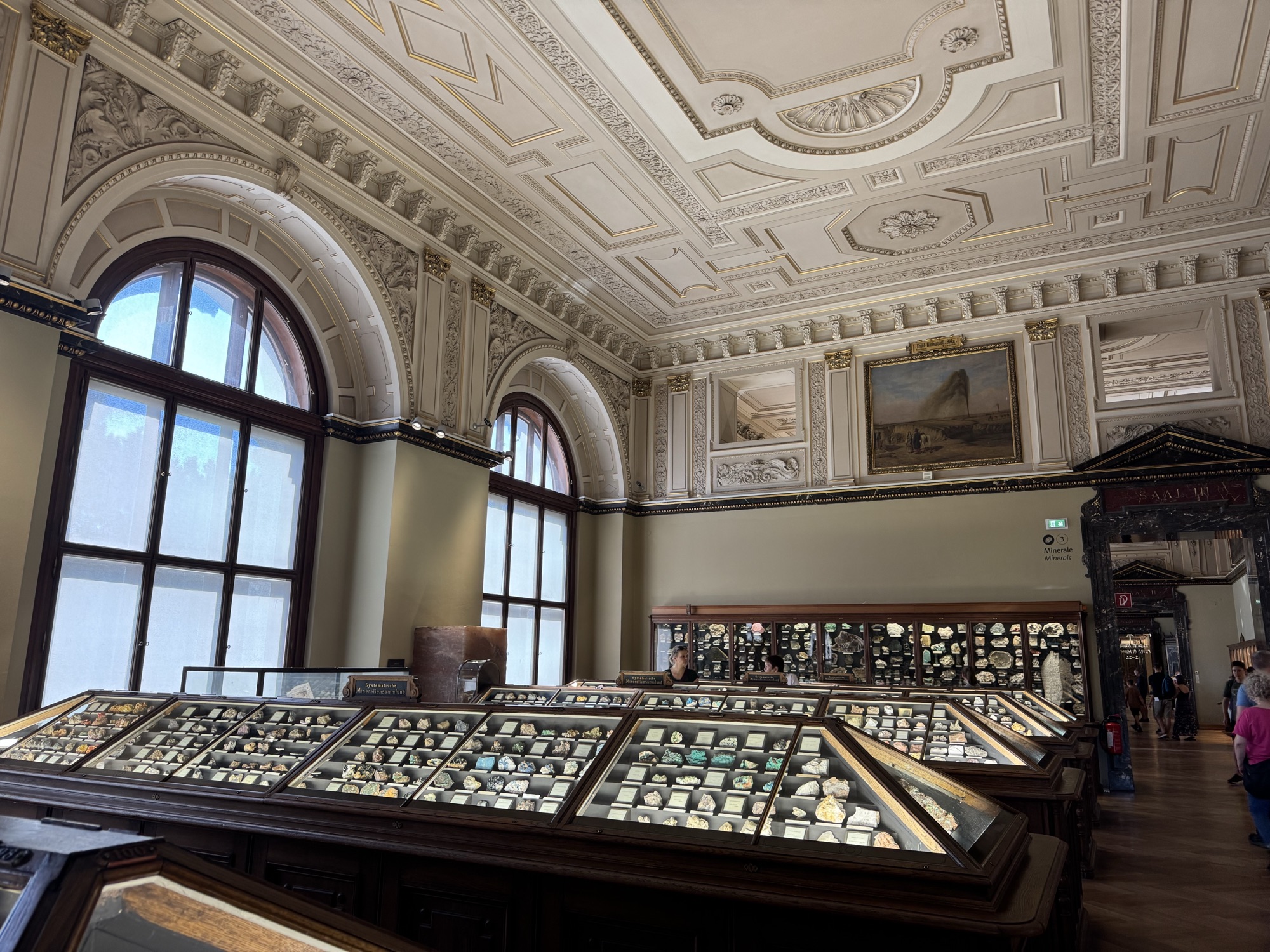
The NHM Vienna’s mineral collection is one of the largest and most important in the world. It traces its origins back to the private collection established by Emperor Franz I Stephan of Lorraine in the 18th century, though the collection also includes some objects from the 16* century. The minerals are arranged according to their chemical composi-tion and crystal structure, starting with the elements in Hall 1 and finishing with the silicates in Hall 4. The collection comprises objects drawn from all over the world and is still being added to today.
We spent our first 2-1/2 hours just in those first 4 halls, each highly decorated and set up with wooden display cases having slanted glass panels through which to view the specimens.
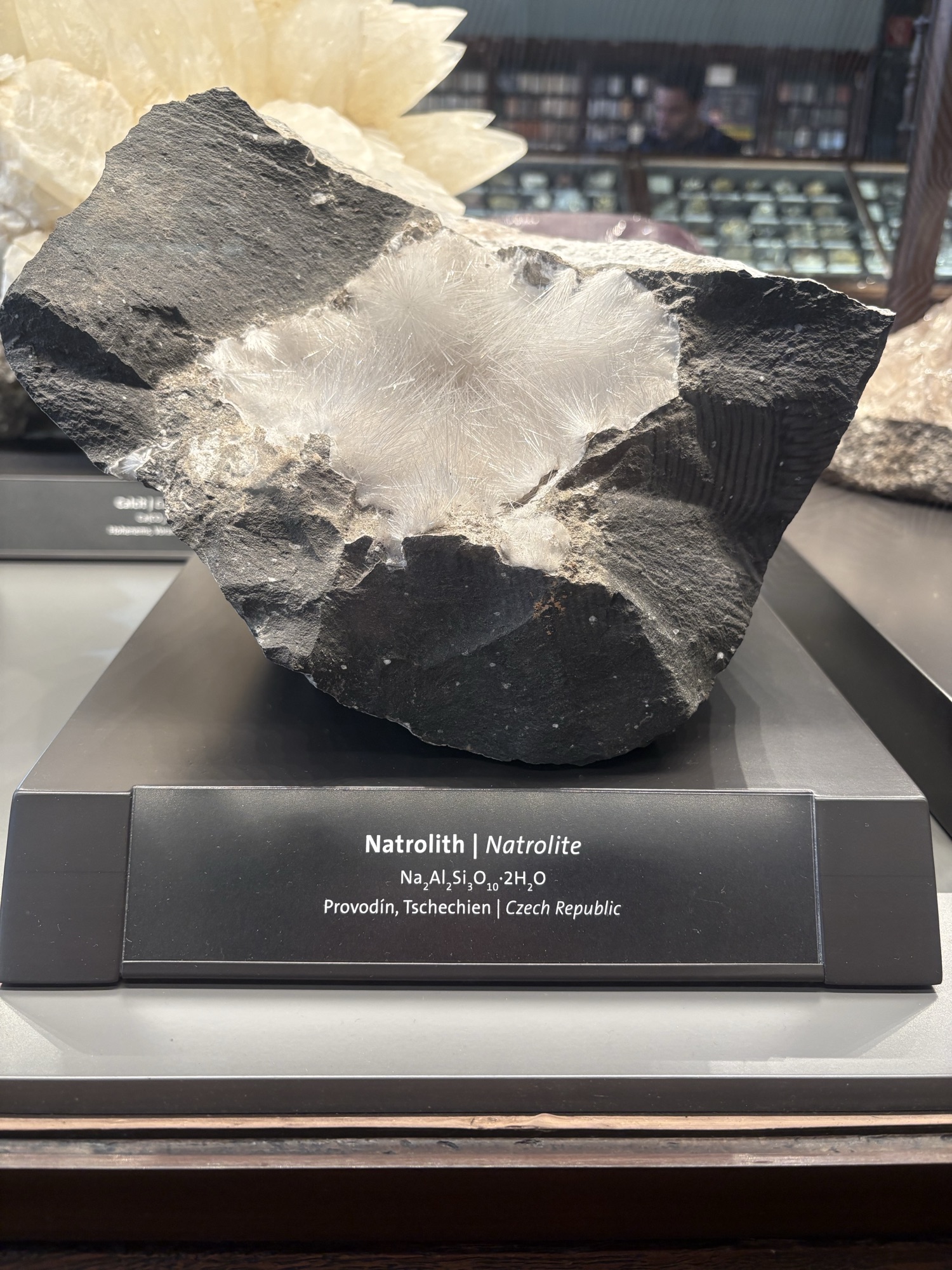
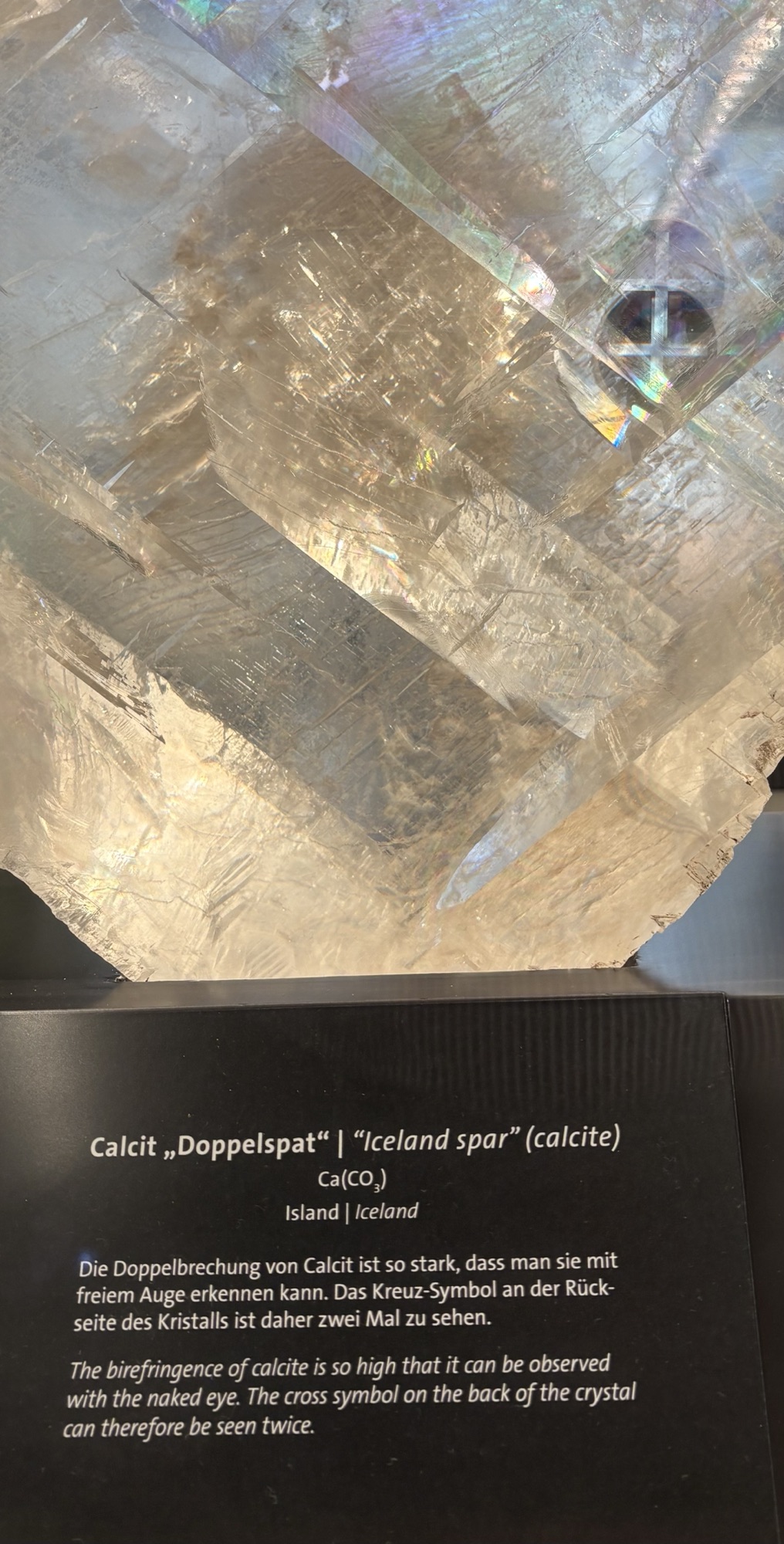
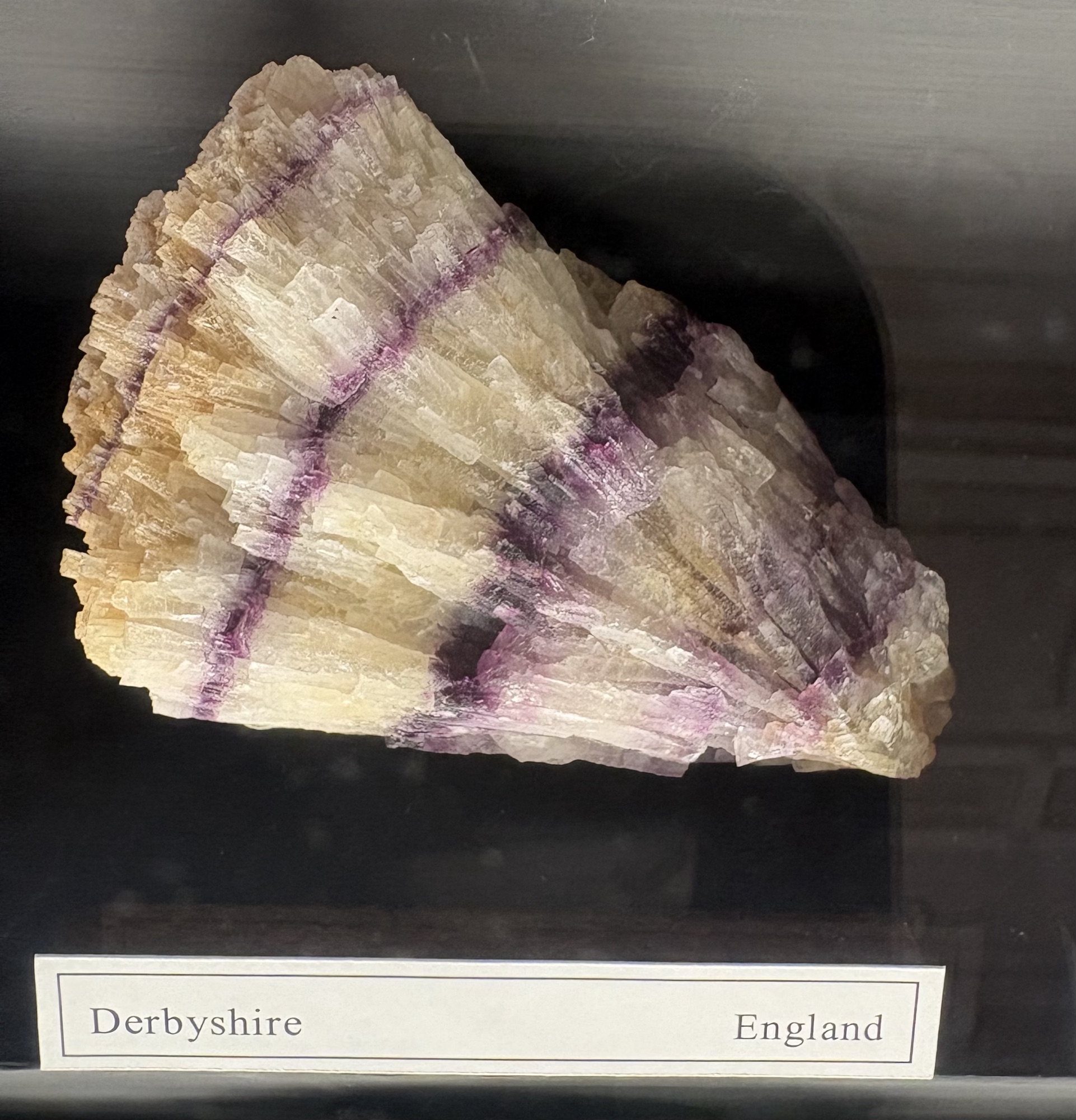
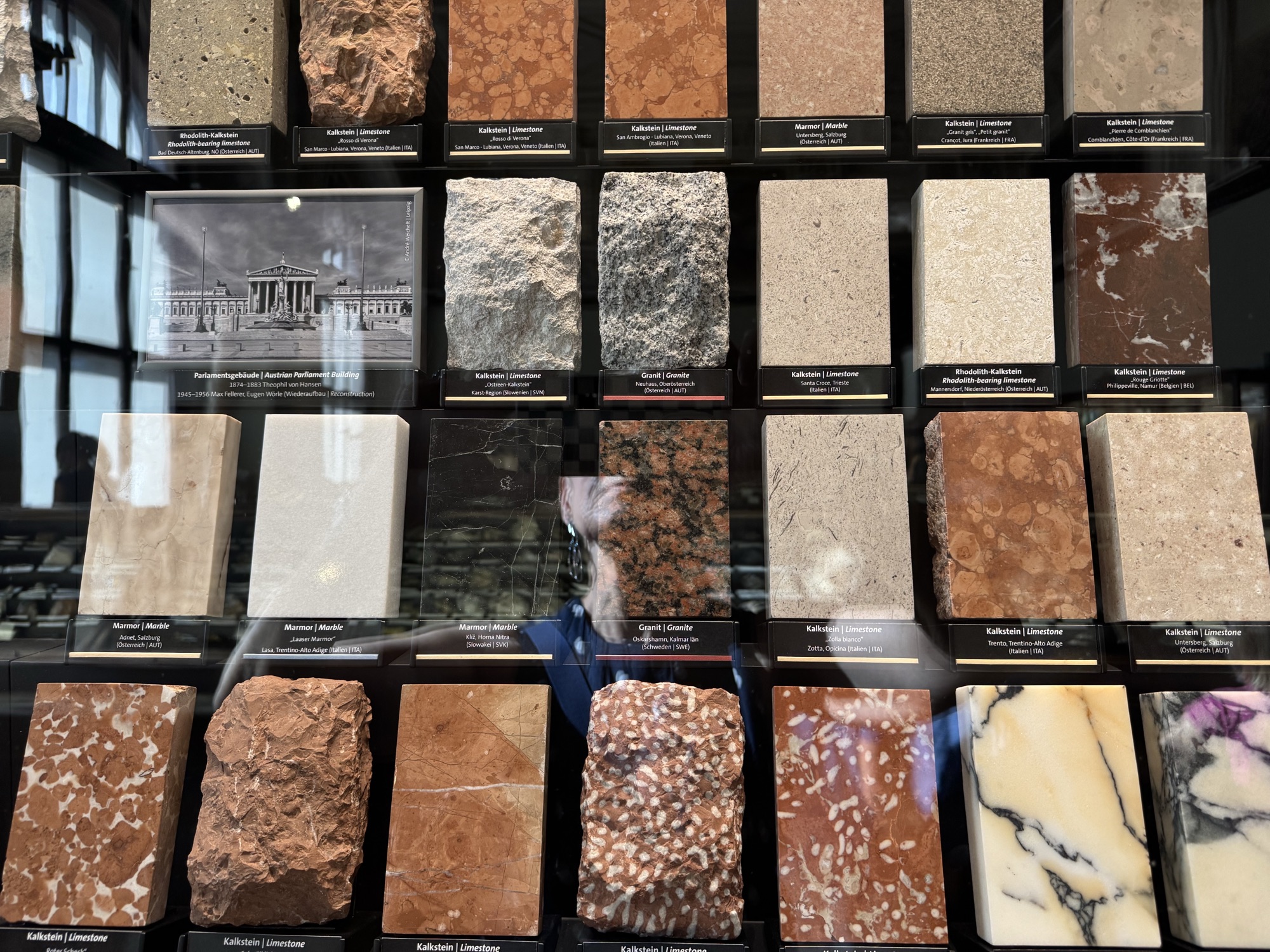
A large proportion of the different types of natural rocks that were used for the construction of the buildings of the Ringstraße Boulevard came from various regions of the former crown lands of th Austro-Hungarian Empire, but also from Italy, France, and Germany. They were mainly used for th foundations and masonry facades, but also for flooring and architectural elements, such as staircases, columns, balustrades, and sculptures. A large amount of artificial material was also used, including hundreds of millions of bricks for the masonry and various types of stucco for the interior decoration.
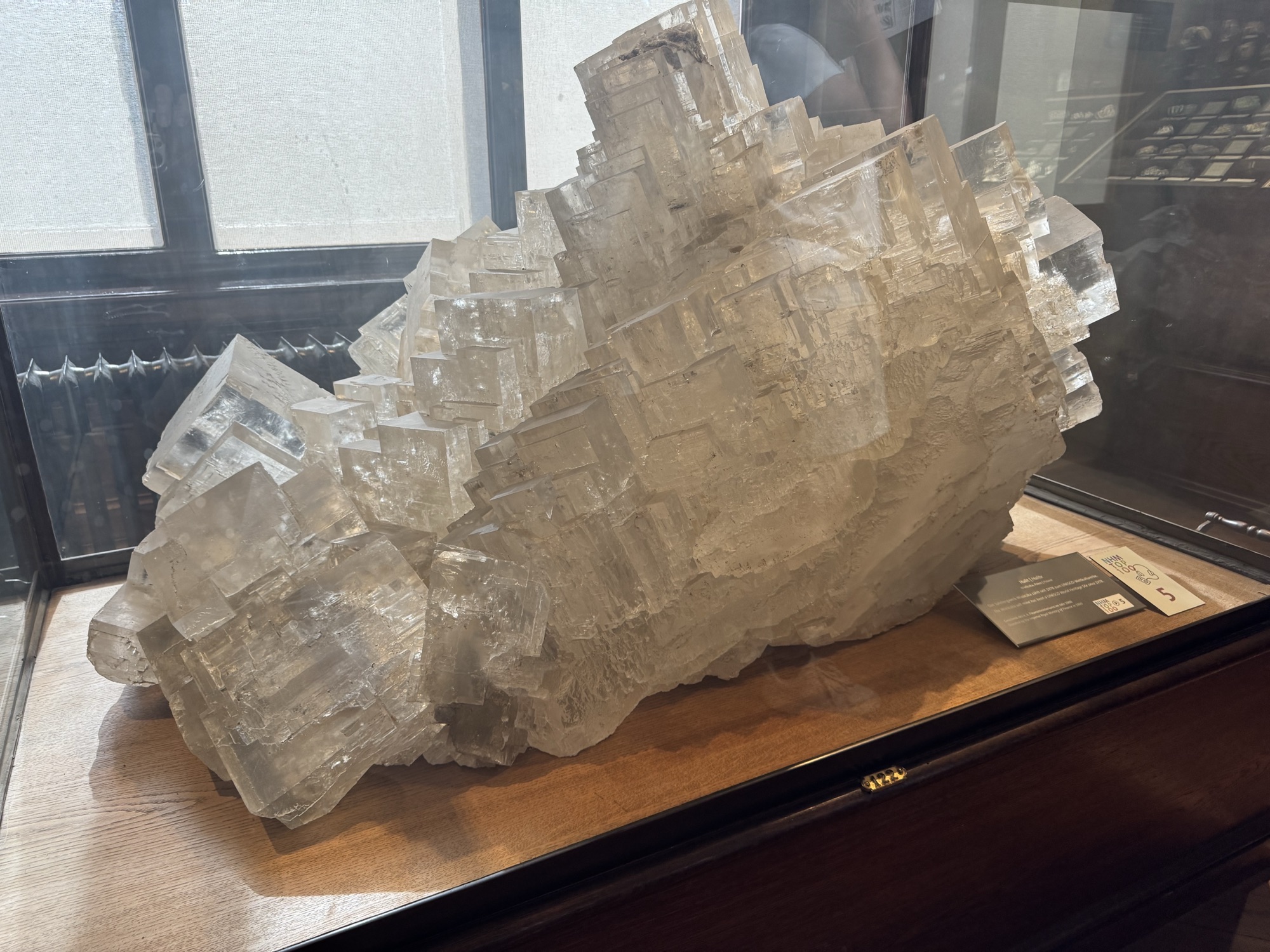
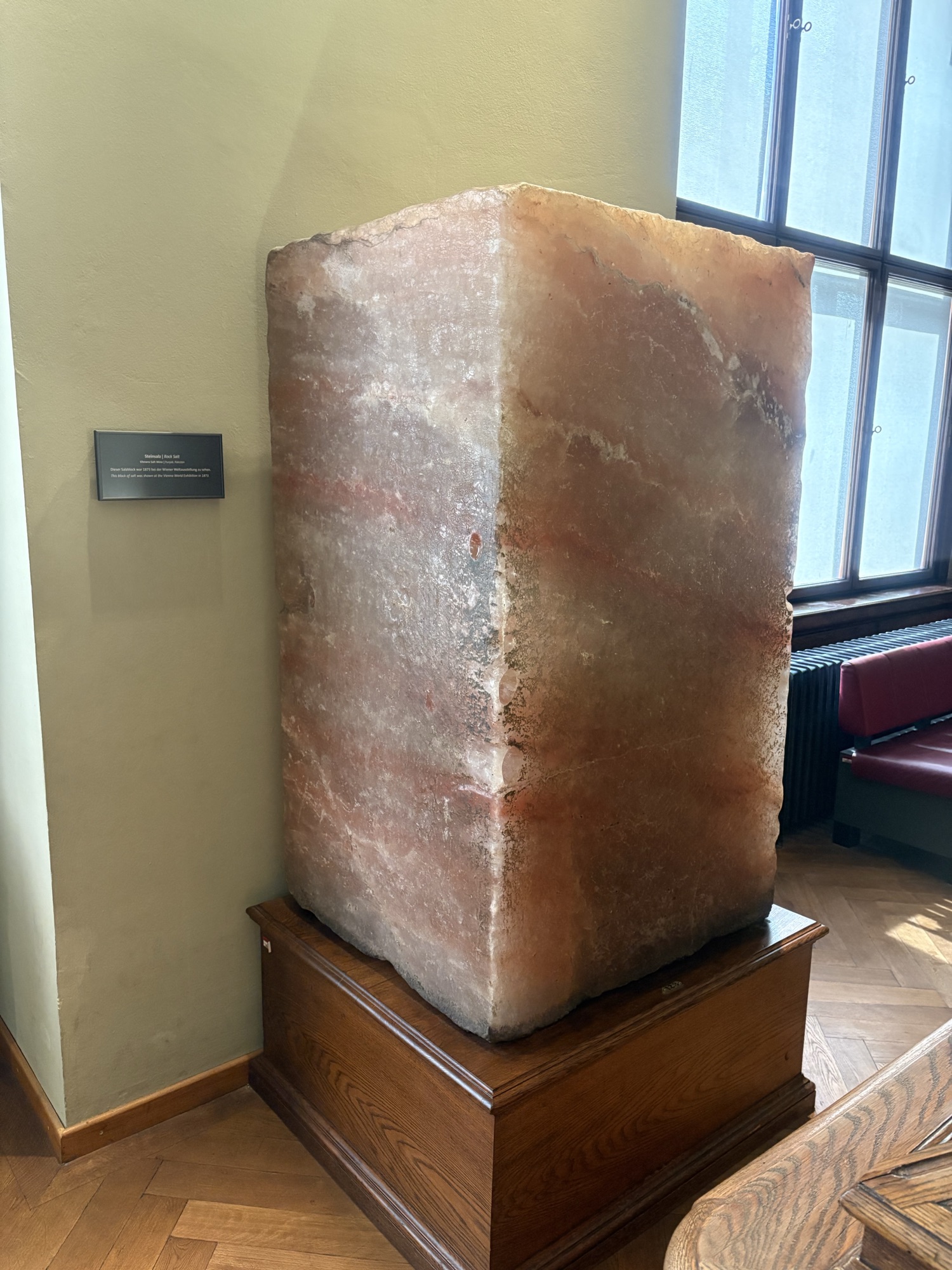
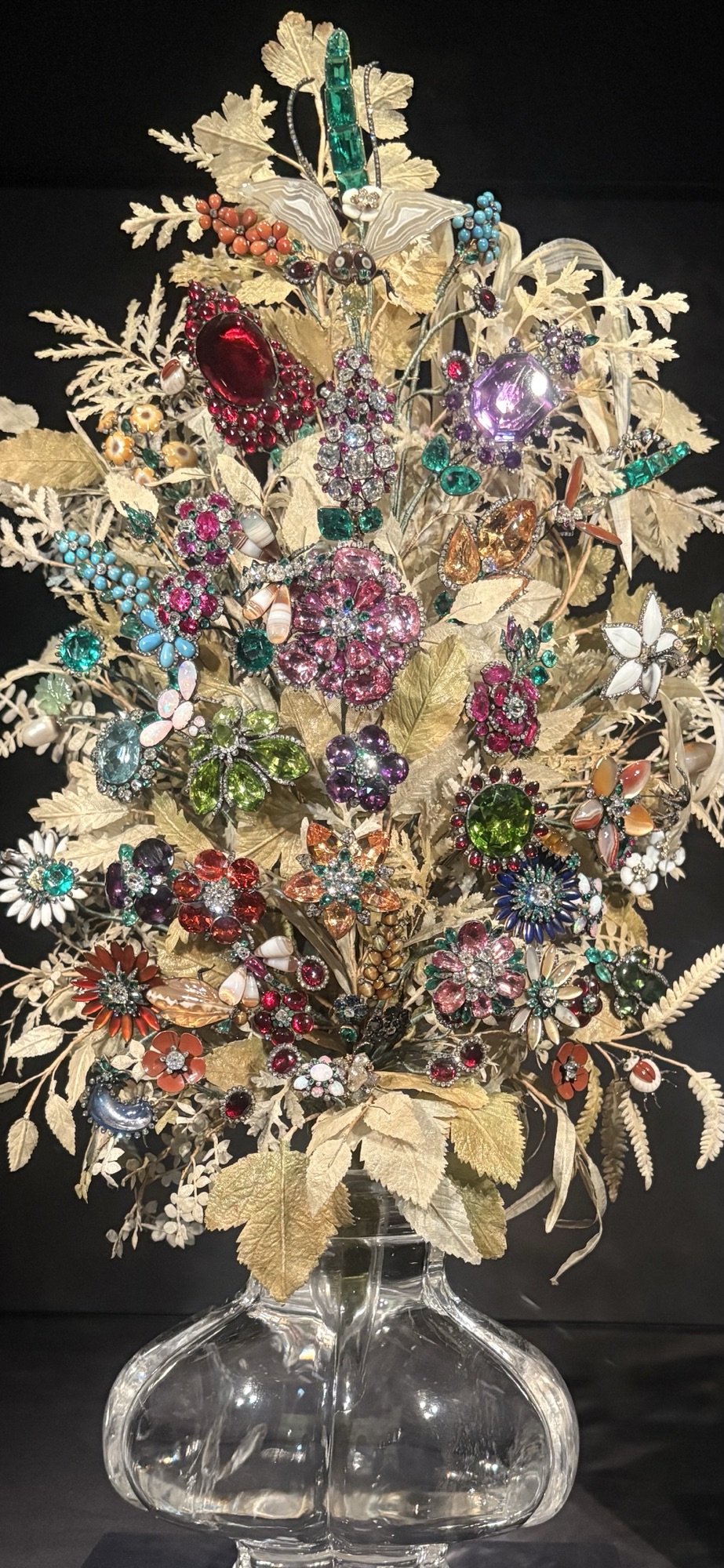
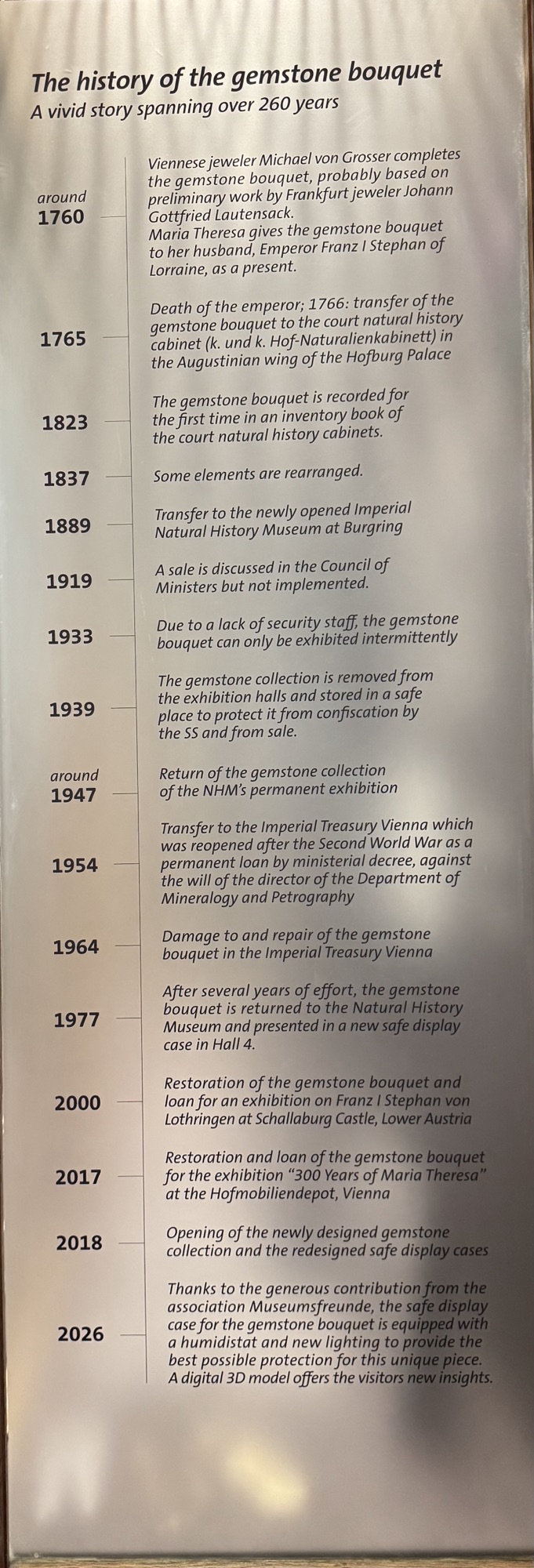
It wasn’t just hundreds of interesting rocks and minerals; there were gemstones too, including this incredible gemstone bouquet.
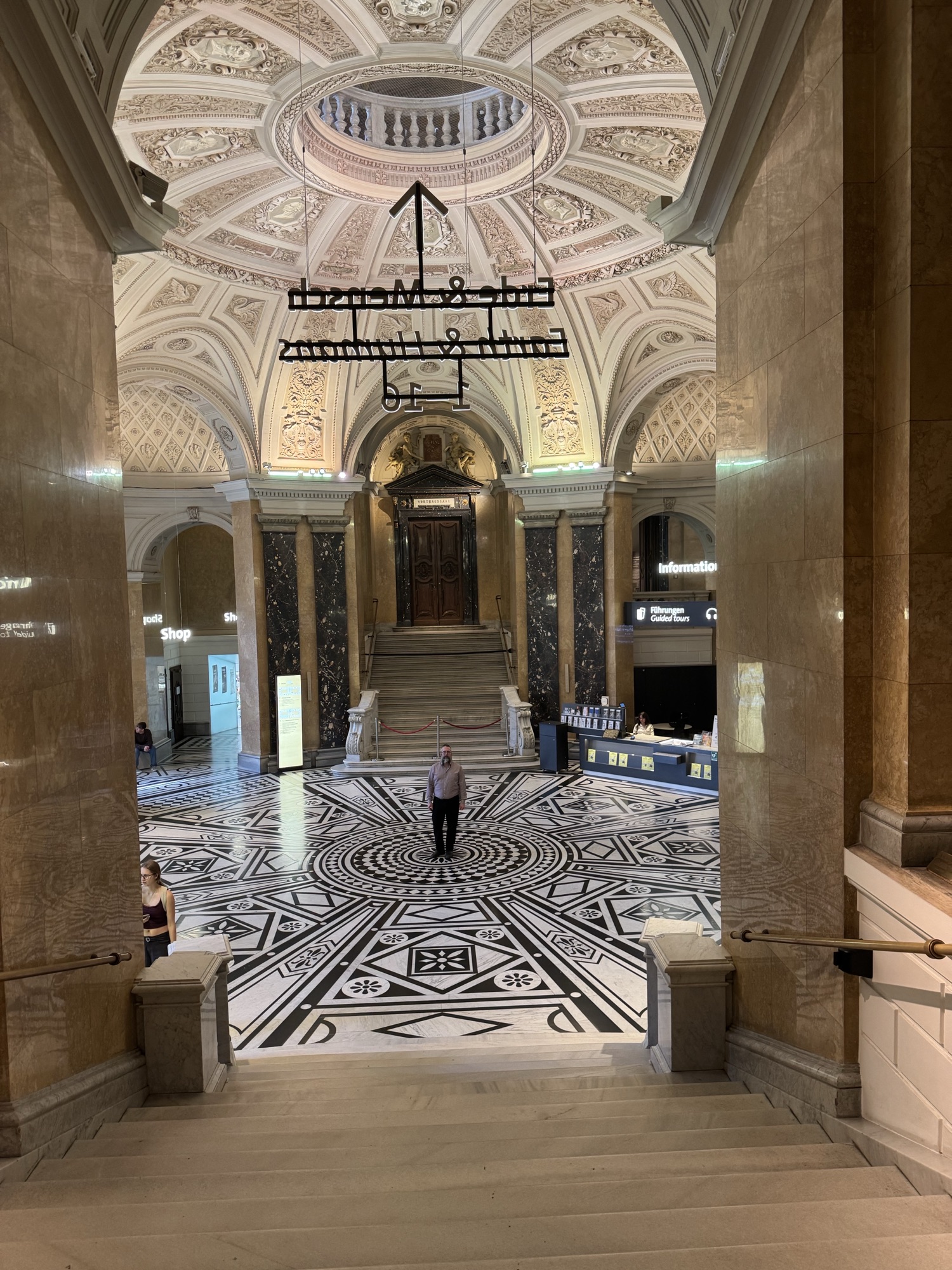
After exploring the first four galleries we were ready for a coffee break, which involved transmitting the grand entry hall and going up the marble main staircase to the café on the upper level, from which vantage point we could look down three floors to the entry hall and up into the museum’s dome.
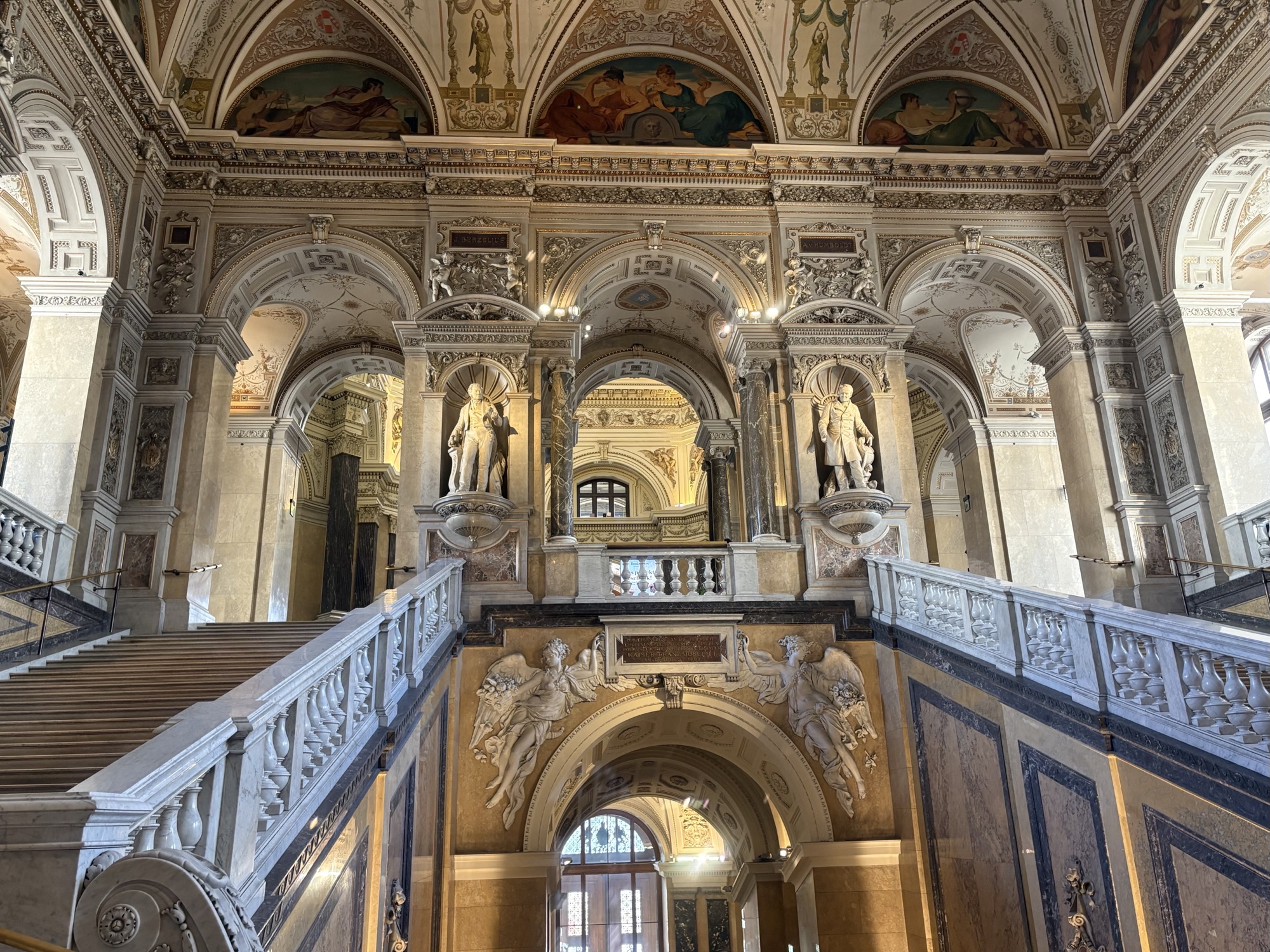
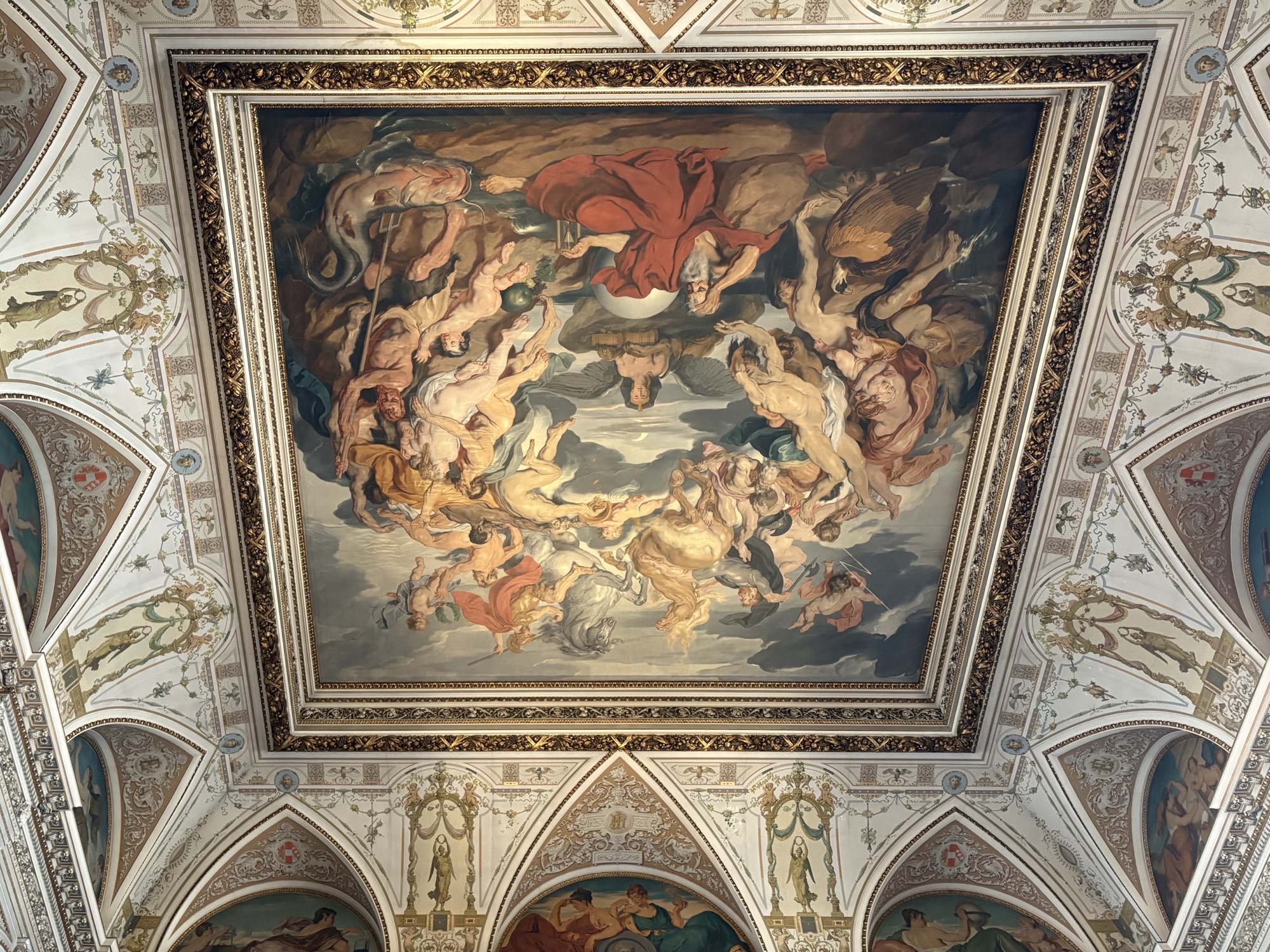
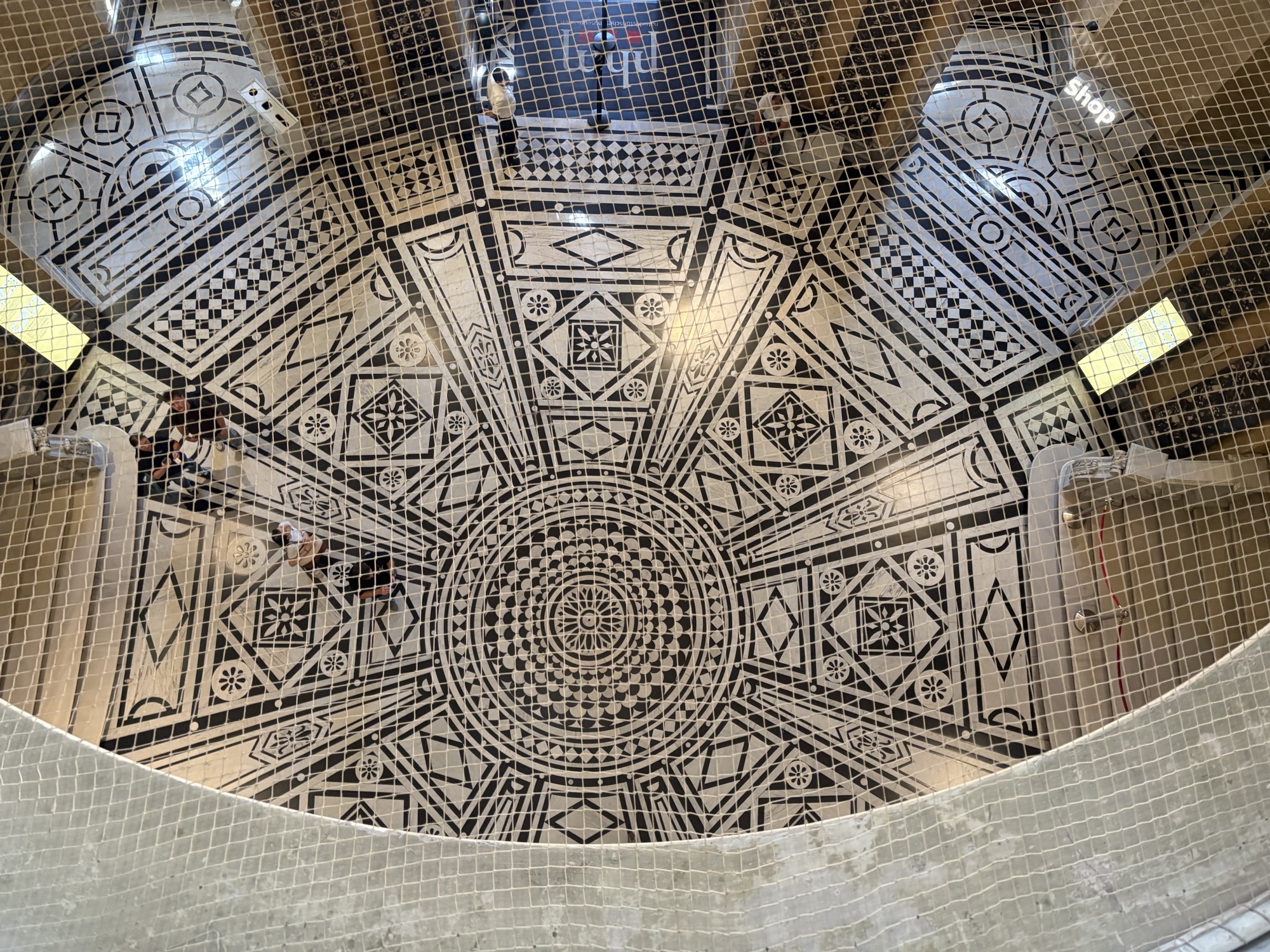
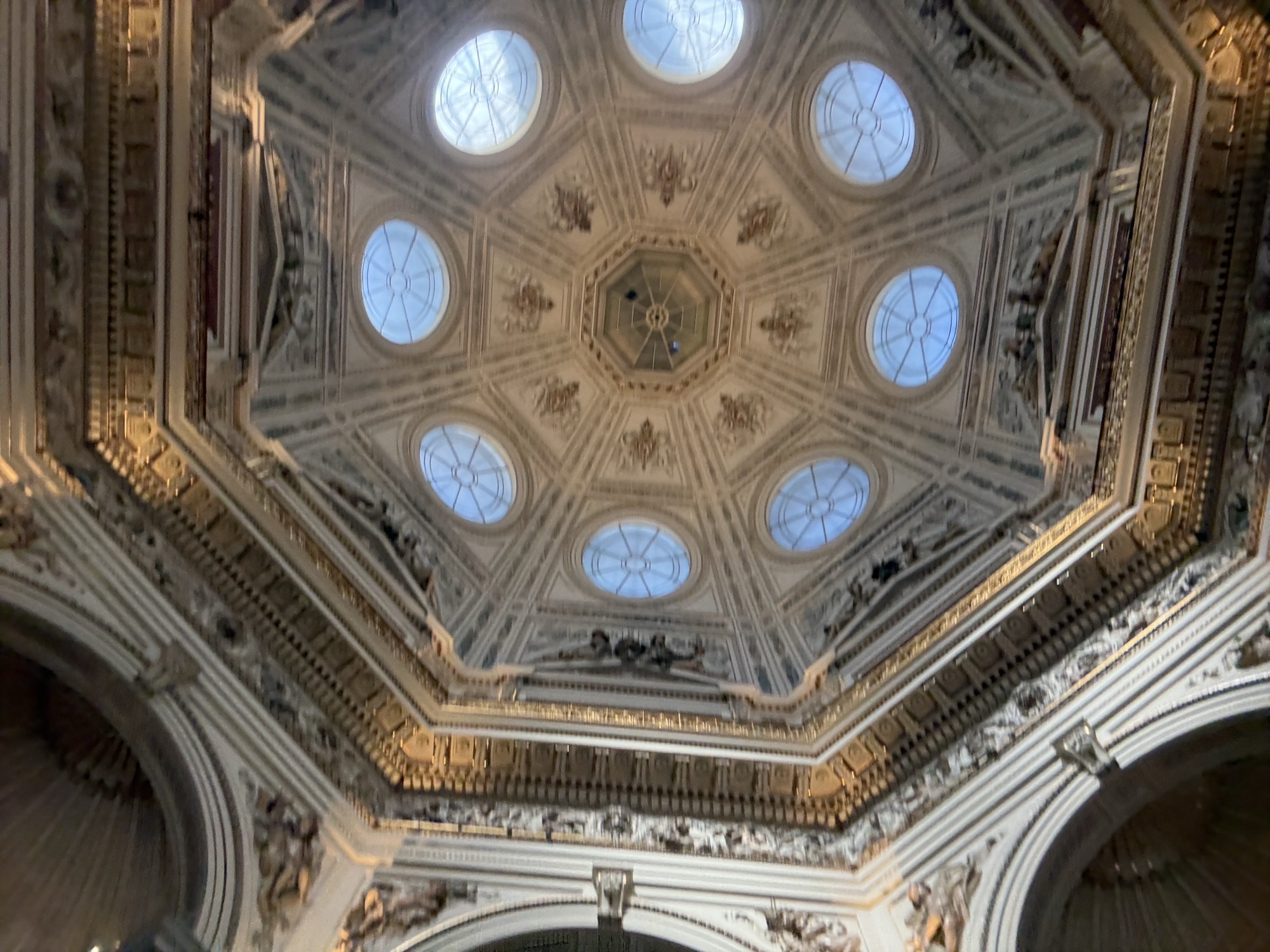
After lunch we switched things up a bit and walked through 5 zoological halls, making it from microbes and invertebrates all the way to fish and reptiles.
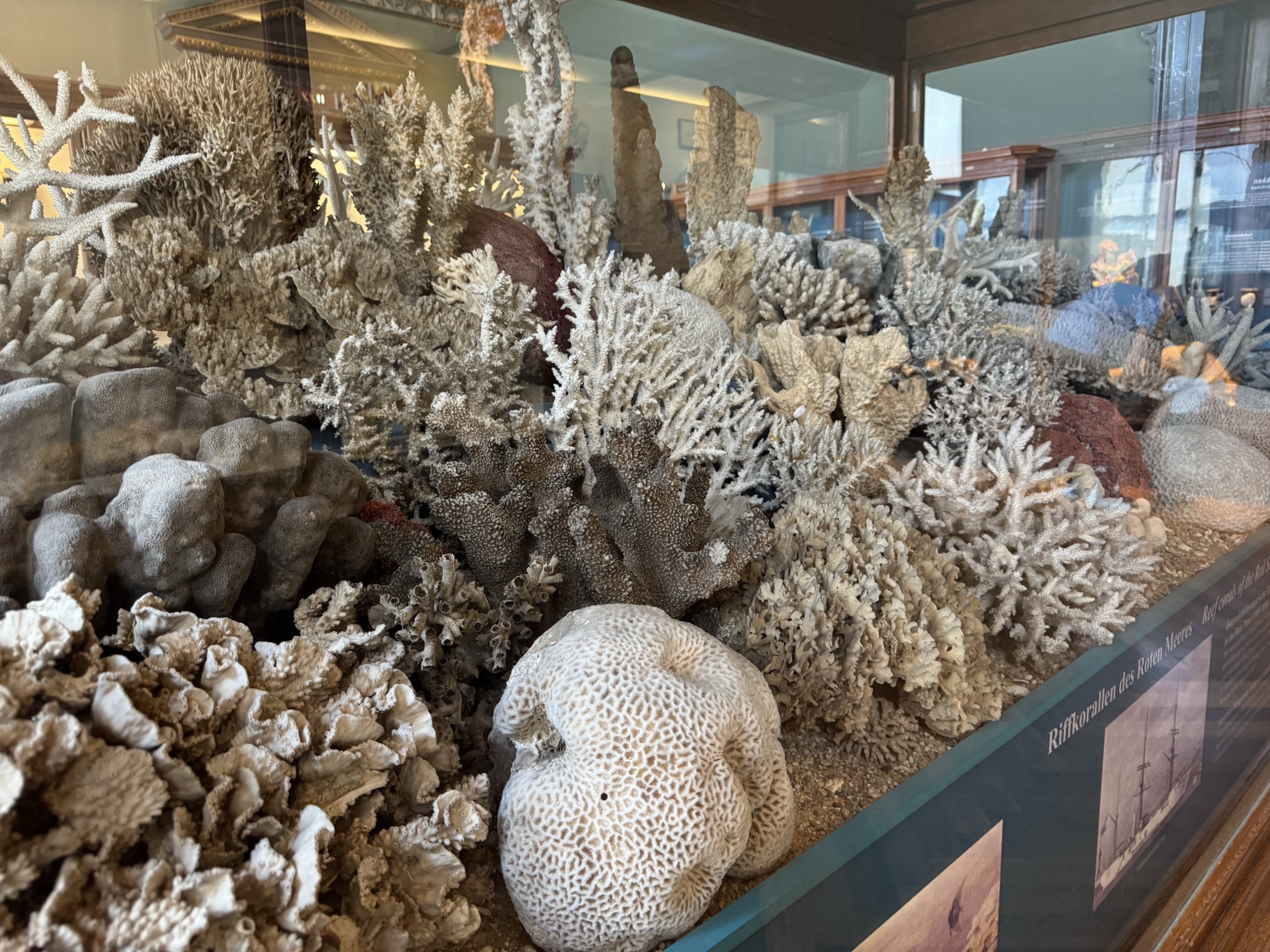
collected them in 1862 in Al Tor at the Gulf of Suez with those collected on Austrian-Hungarian deep-sea expeditions in the Red Sea by the steamship Pola (1895-1898)
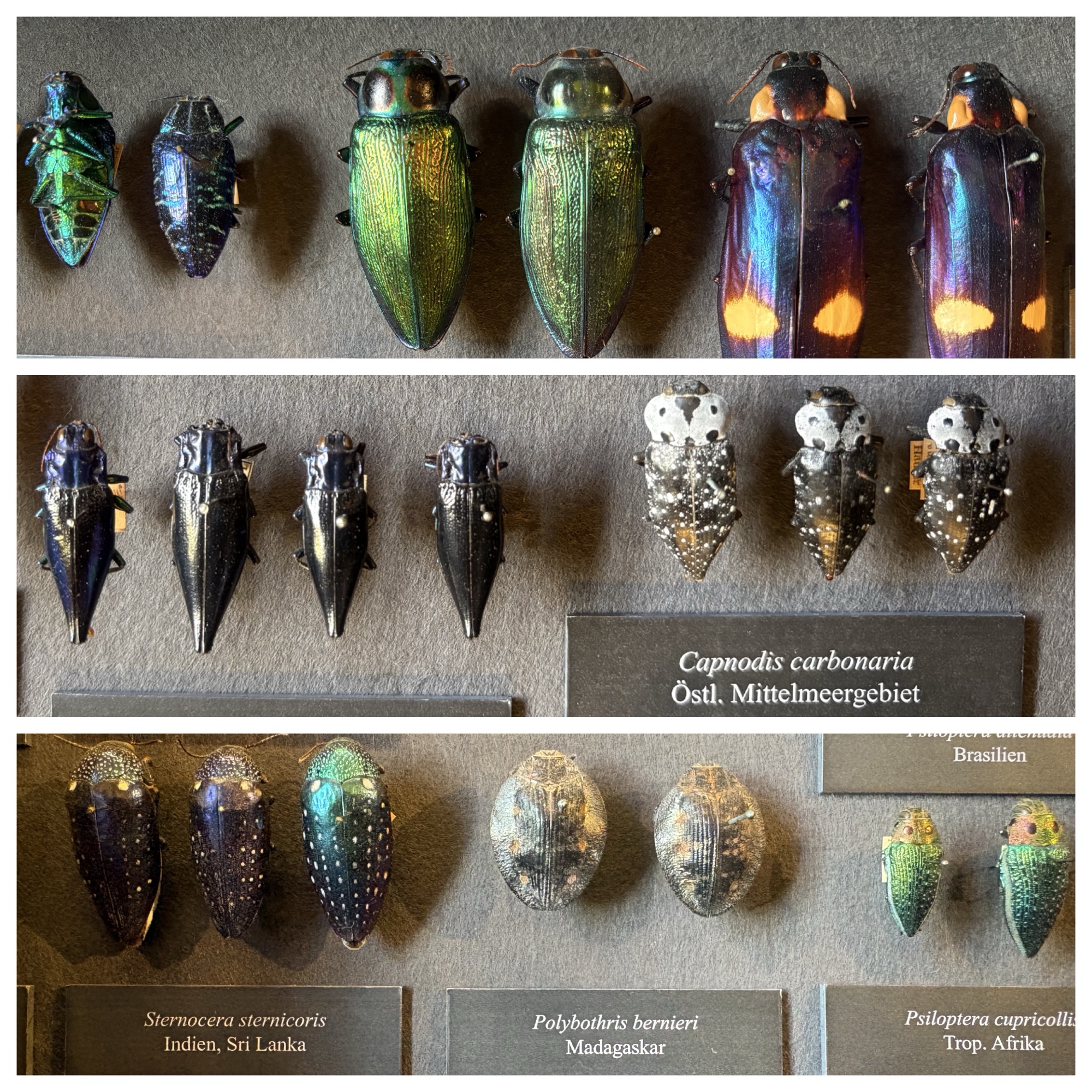
There were hundreds of insects including butterflies from all over the world and jewel-toned beetles mounted in such a way that they looked like cases of beautiful cloisonné enamel earrings.
As we exited the museum to the Ringstrasse headed for the Opera House there was a huge parade going by, with a large police escort. Later research explained that it was the March for Jesus and we were right in thinking it was big. Apparently the crowd was around 20,000 Christians from “over 100 Christian churches, denominations, and organizations (Catholic, Protestant, Orthodox, and Free Churches) united for the public display of faith.” (Quoted from the Austrian news site meinbezirk .at)
The Vienna “March for Jesus” was part of an international movement that originated in London in 1987. Given our past two weeks inundated with Germanic history, and Austria’s reputation for asserting N-S WWII victimhood instead of complicity, we felt somewhat uncomfortable despite the joyous tone of the march.
Our Vienna State Opera House tour was at 3:30 pm, with a group of about 20 other English speakers.
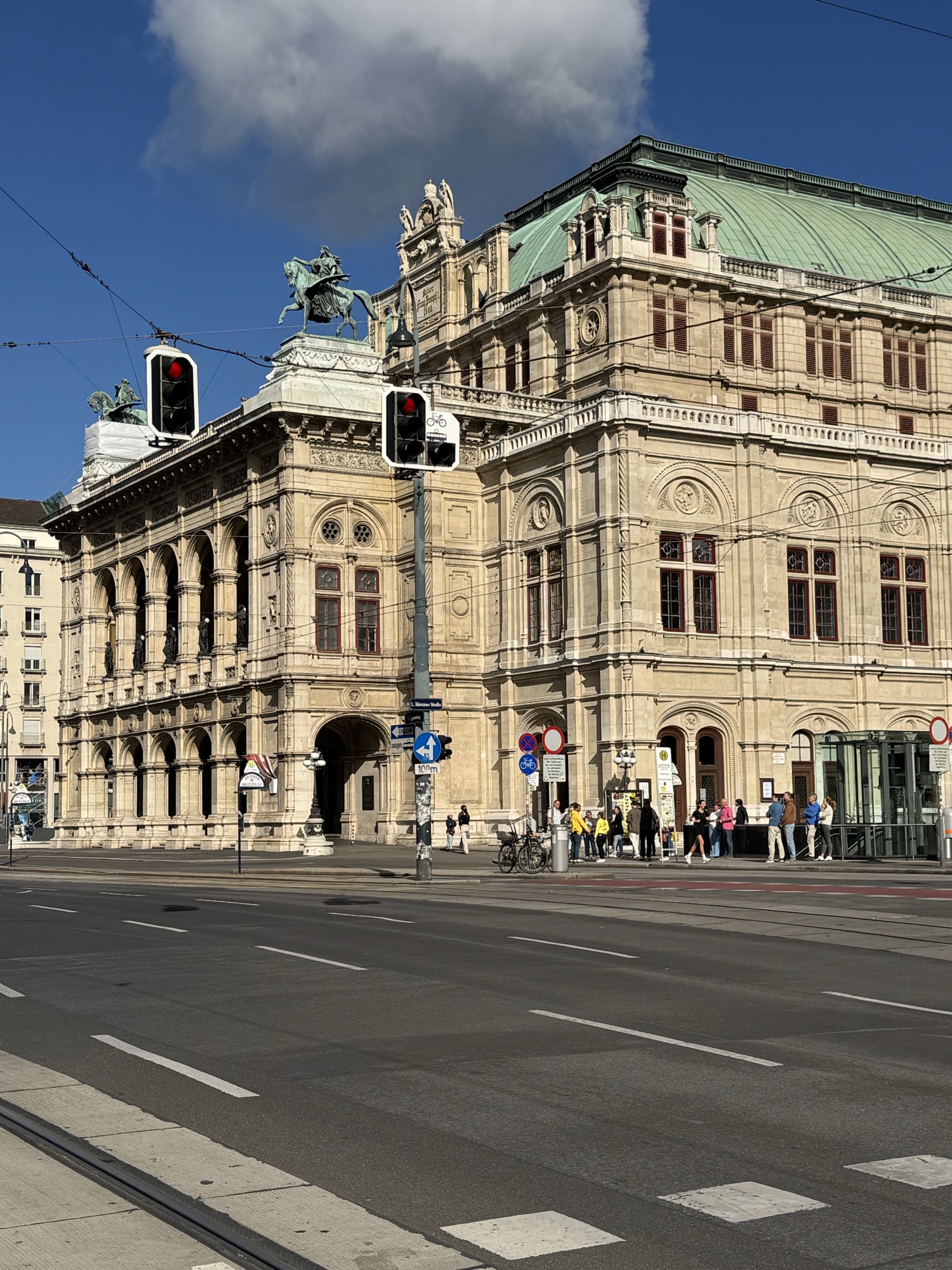
I realized after we got back that neither of us had taken a photo of the opera house exterior. I retrofit one here after we walked by again.
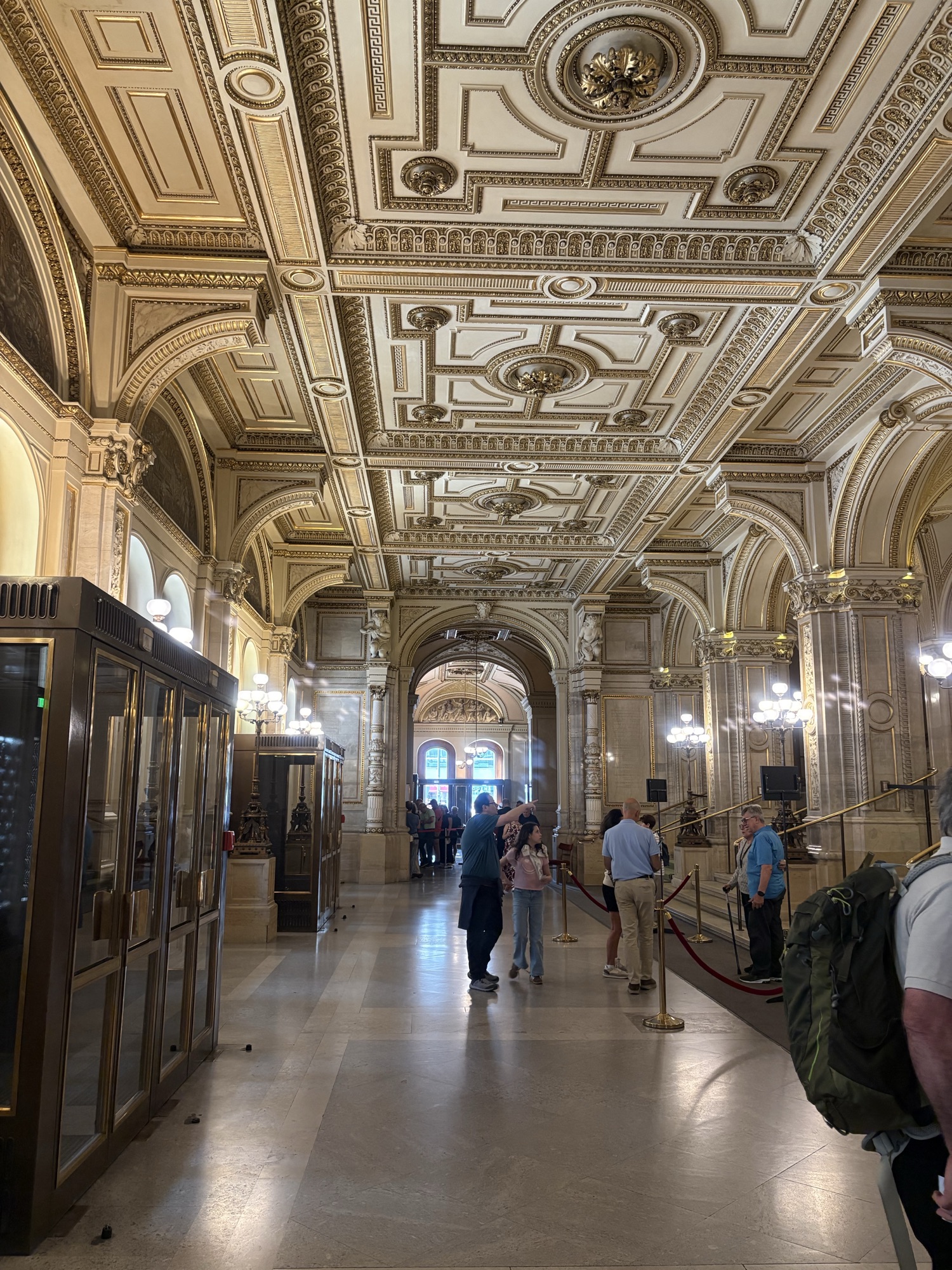
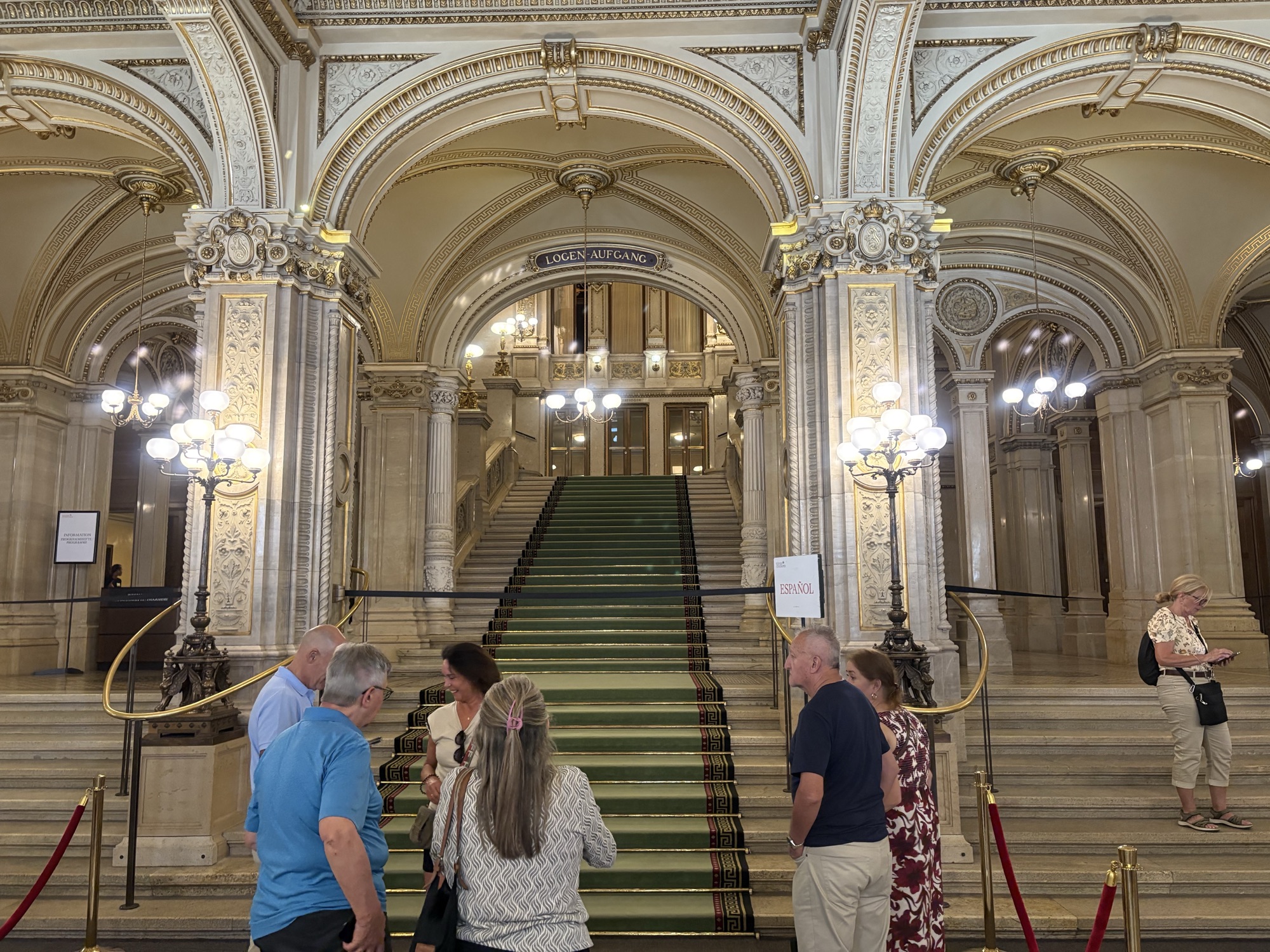
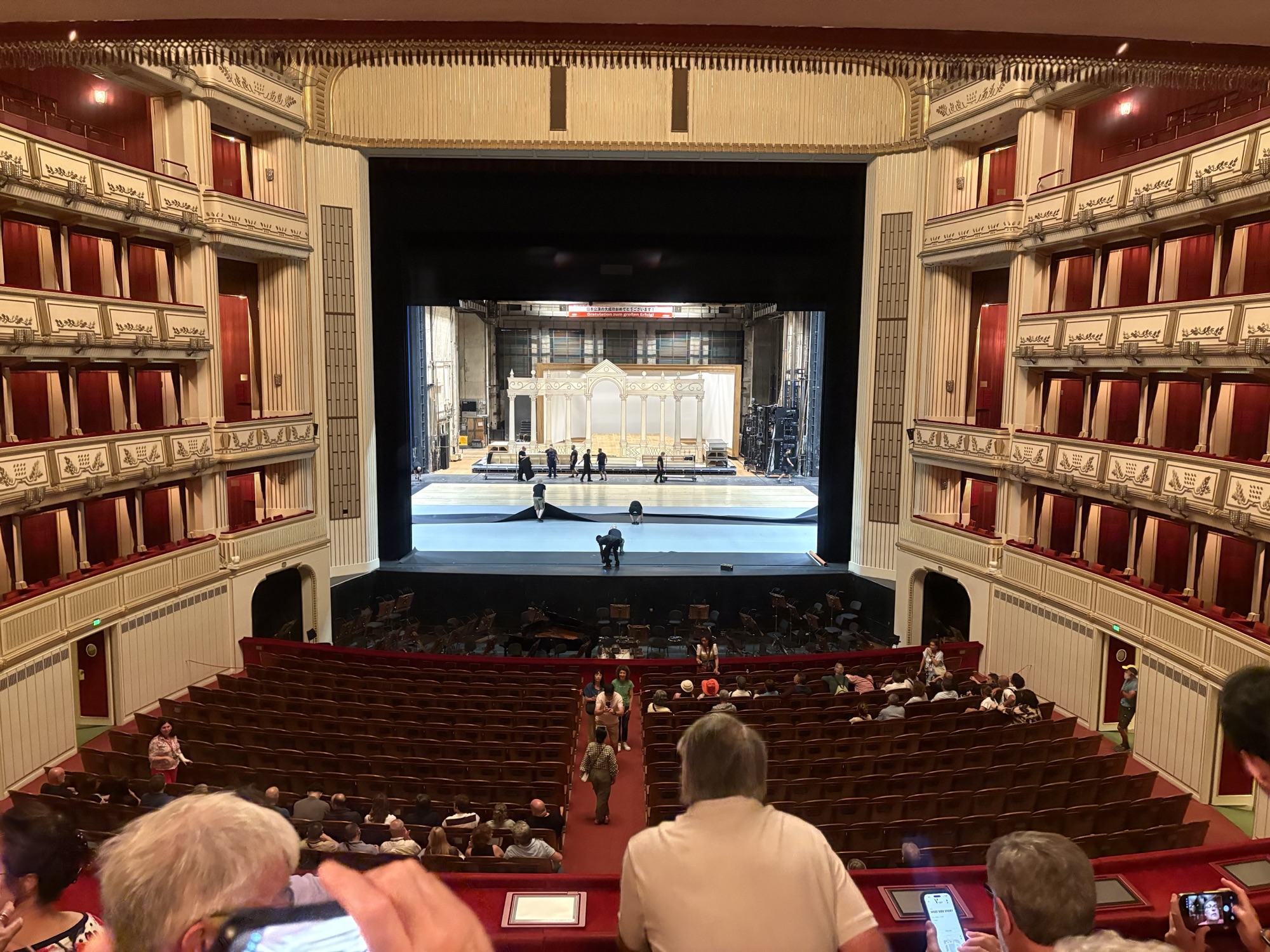
Because the opera season has started, we did not get to go backstage as Ted and I did when we visited during the summer of 2015, but we did get to see the backdrop being erected and the dance floor being laid over the stage for the evening’s ballet performance.
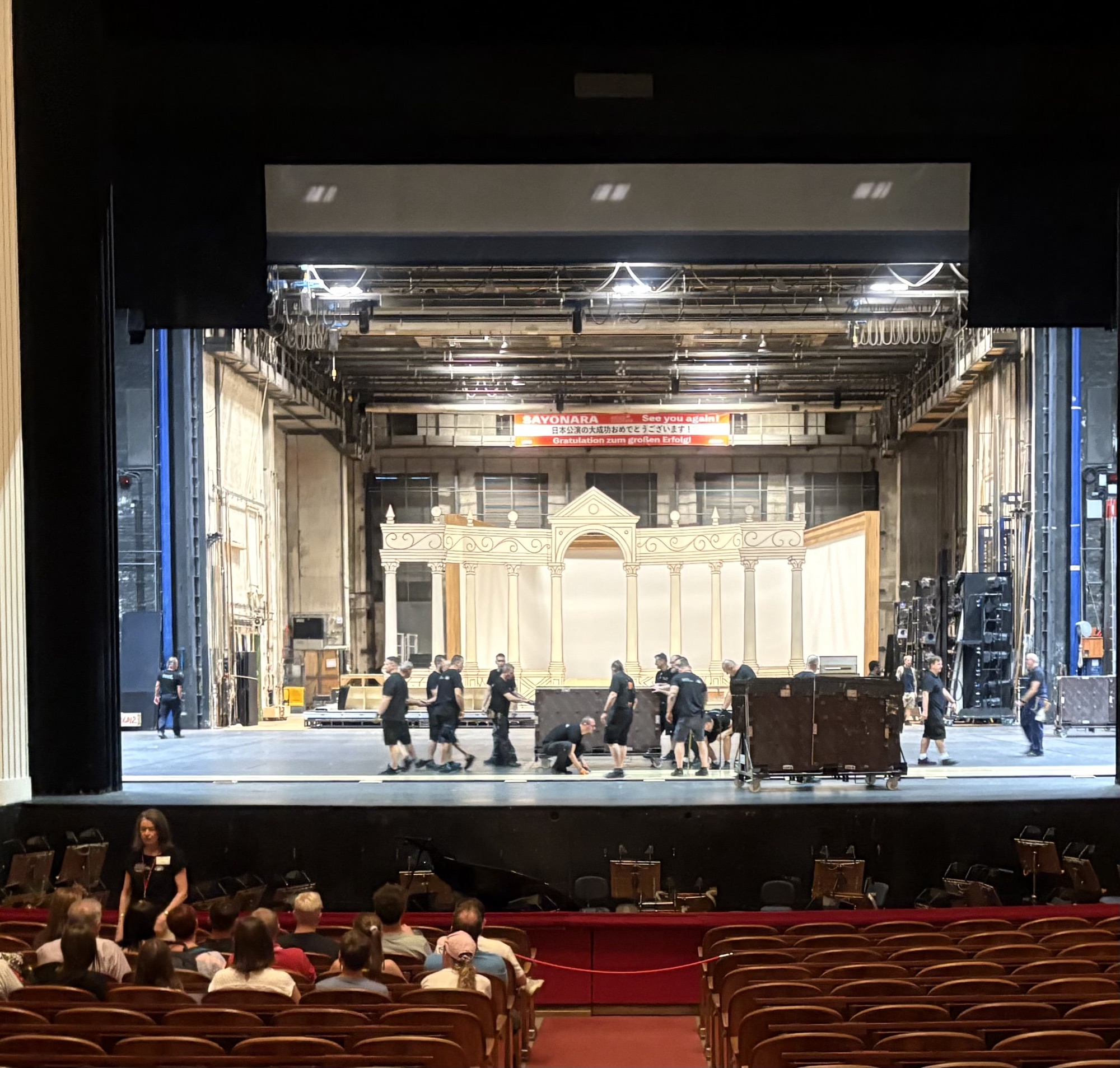
The stage is 50m deep, with only the front 25 used as performance space. The back half, in combination with 5 levels beneath the stage, allows sets to be changed quickly. The Vienna Stage Opera has a rotating repertoire of about 150 operas, and none is ever run two nights in a row. Sets are brought in from an offsite warehouse by as many as 80 trucks, although the average is closer to 10 trucks. Setup typically takes 5-8 hours. The opera also has an entire adjacent multi storey building for its more than 250,000 costume elements, which are brought into the opera house through a connecting tunnel.
The only opera whose set is permanently on site is for Tosca, the “emergency opera” which can be substituted in almost on a moment’s notice.
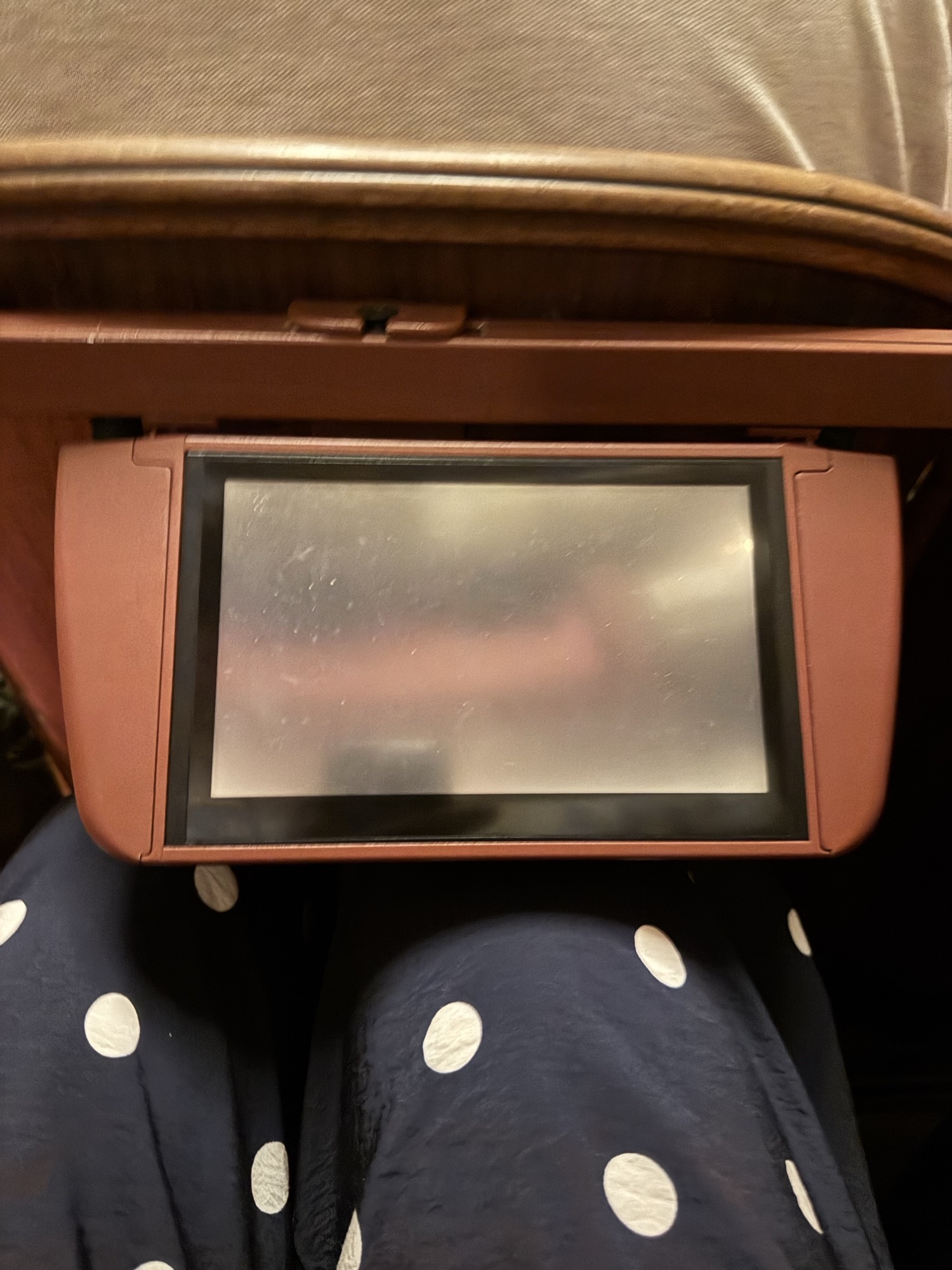
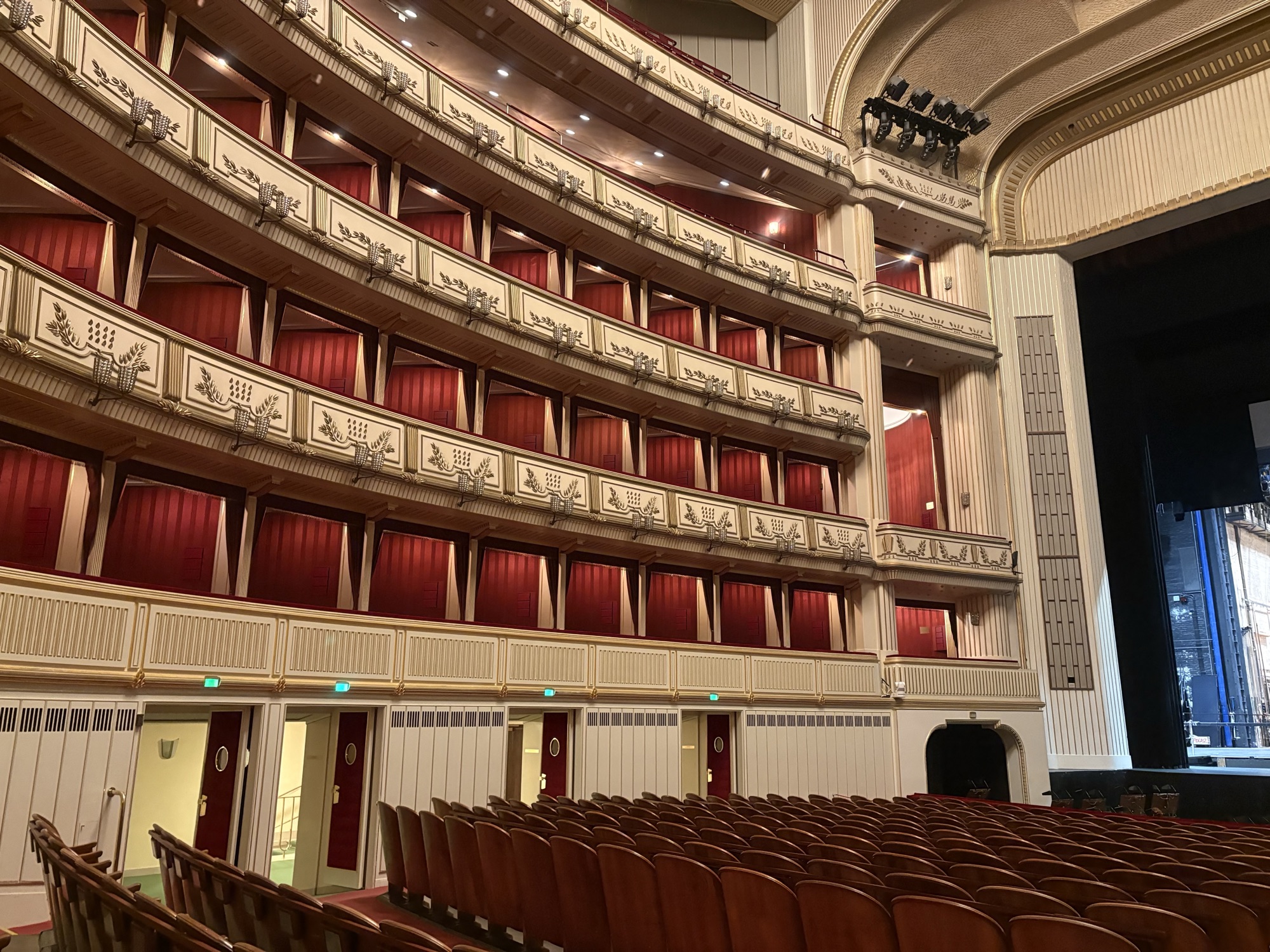
We sat first in the orchestra, where our guide explained that since operas here are always presented in their original language, every seat has a screen that folds fine from the seat back in front of it, like an airplane tray table, on which translations in multiple languages are available .
The opera house can hold 2200 patrons, including standing room, which is sold on the day of each event at €20 per person. For €30, you can sit in a balcony only level box beside the stage with a very obscured view; the hall’s horseshoe shape was designed specifically for acoustics as opposed to sight lines. Related to that, we learned that until Gustav Mahler became the opera house director, going to the opera was about socializing: eating, drinking, talking – they didn’t even bother dimming the lights because then no one would have been able to show off their fine clothes!
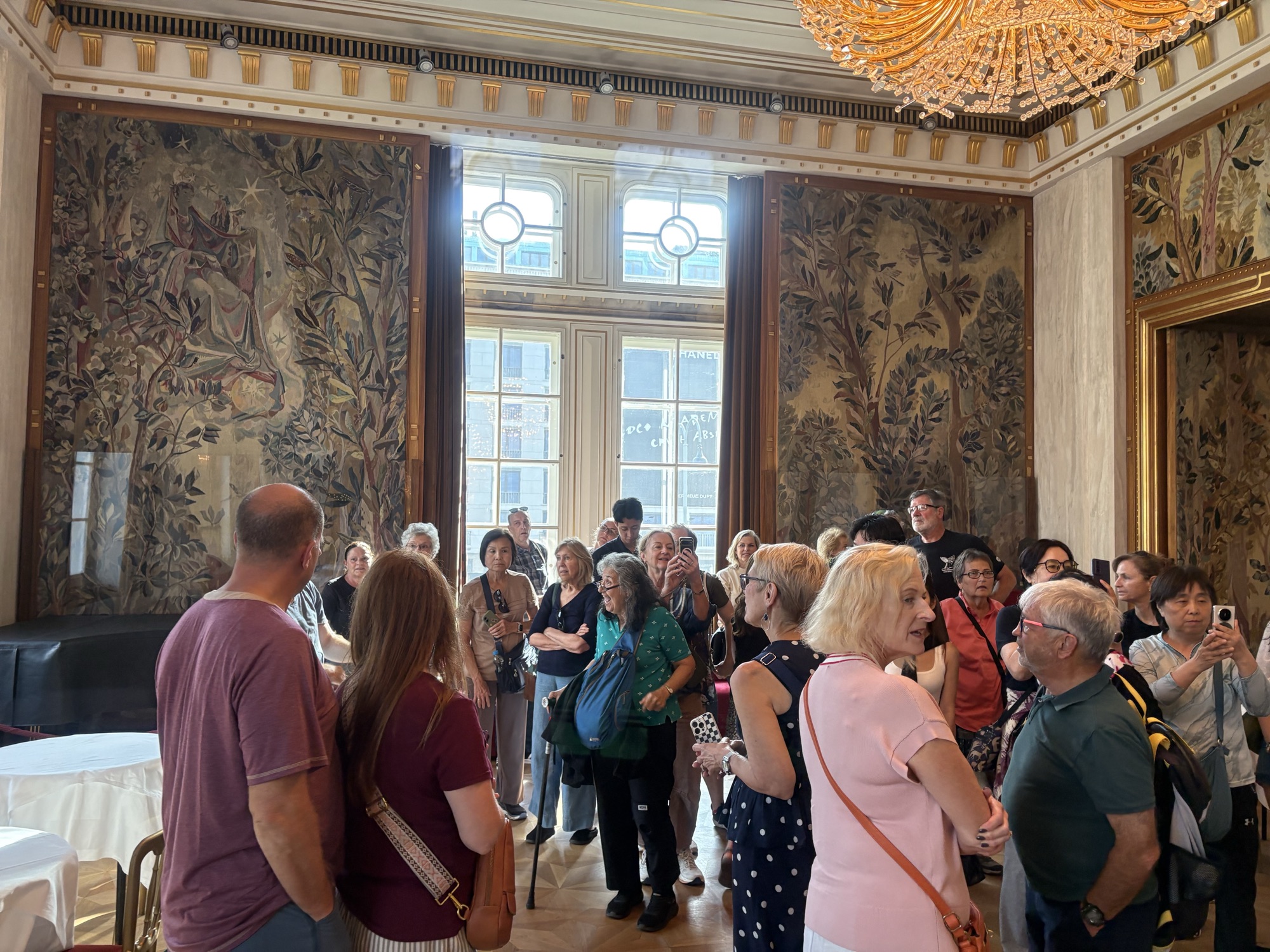
We walked through rooms that were once administrative but since Mahler were transformed into intermission lounges to mitigate his “no eating and no talking during the performance” rules.
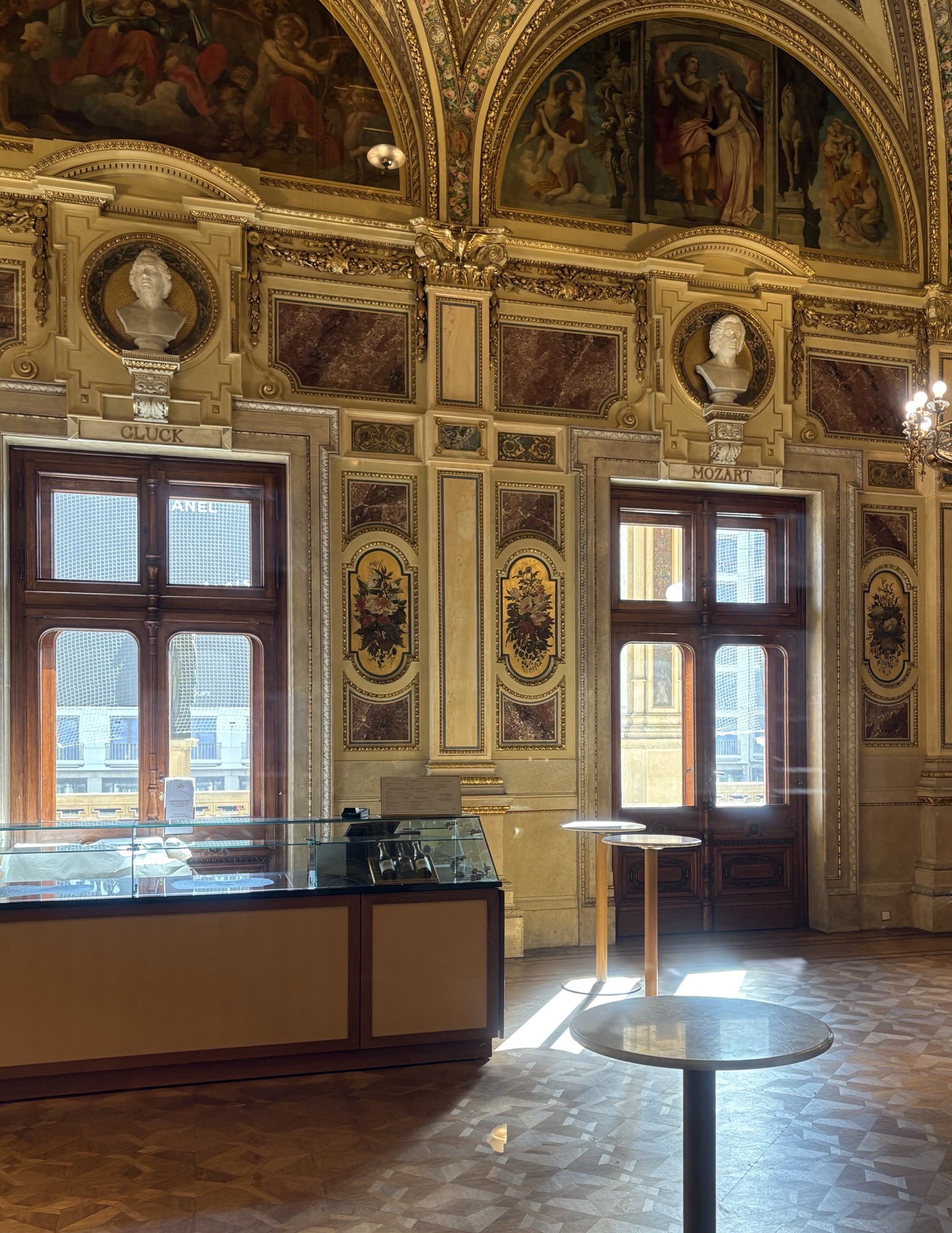
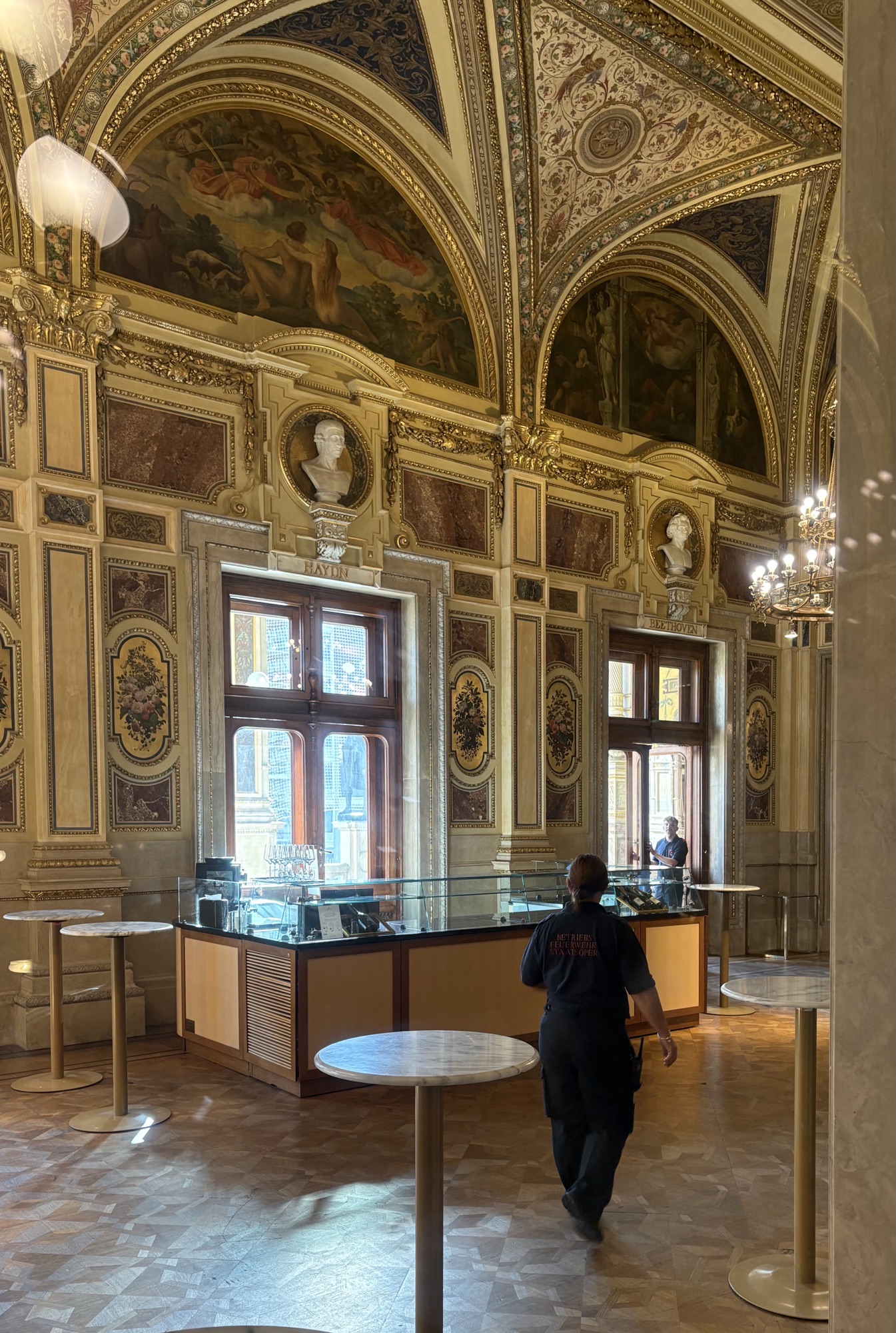
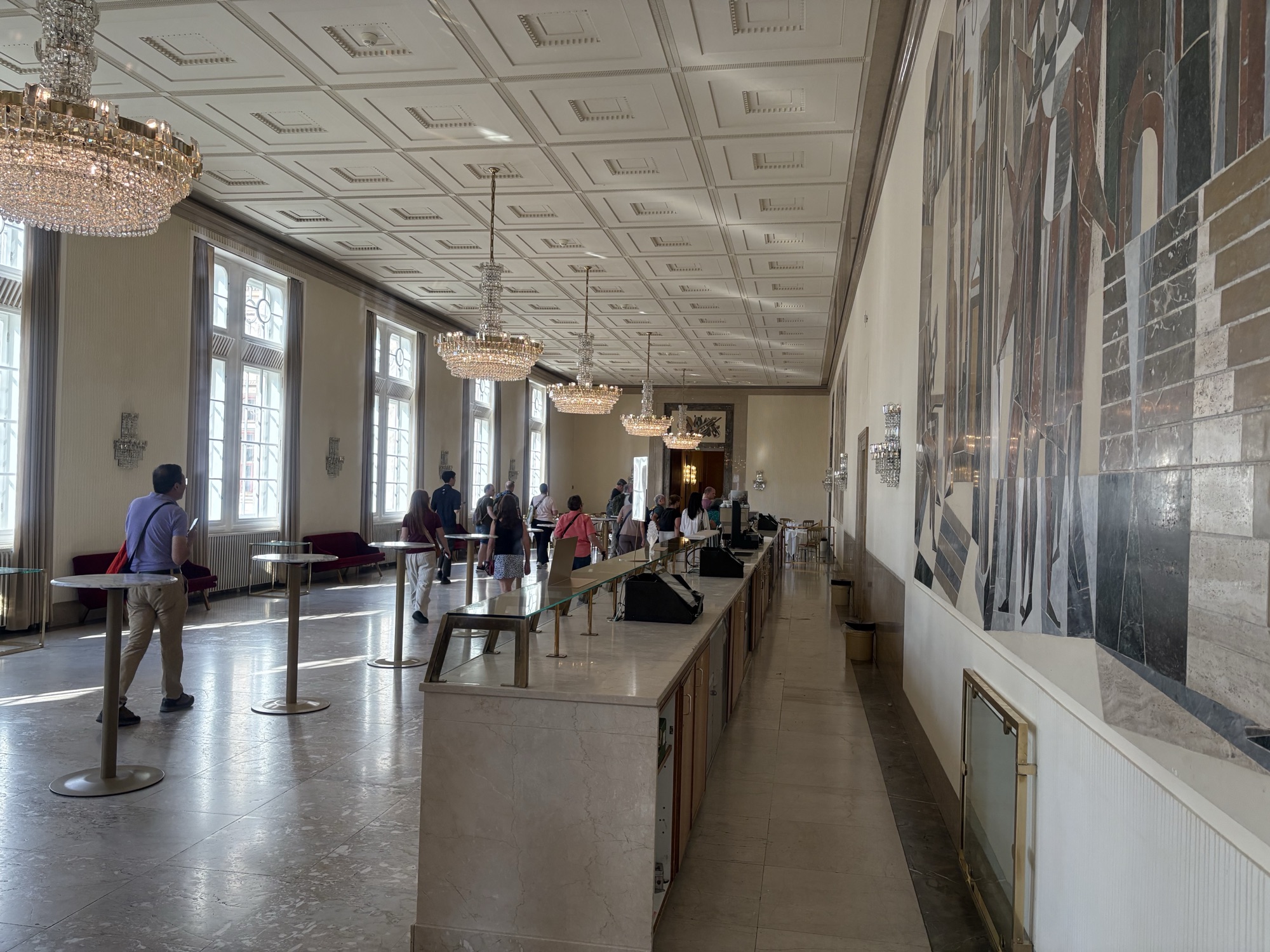
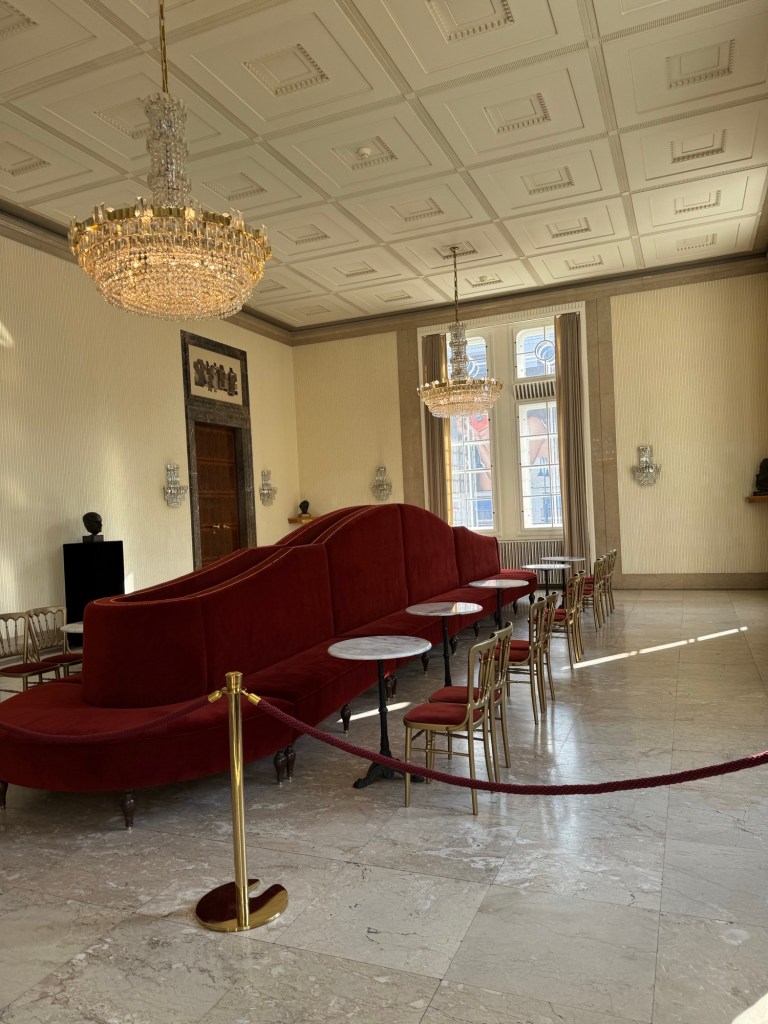
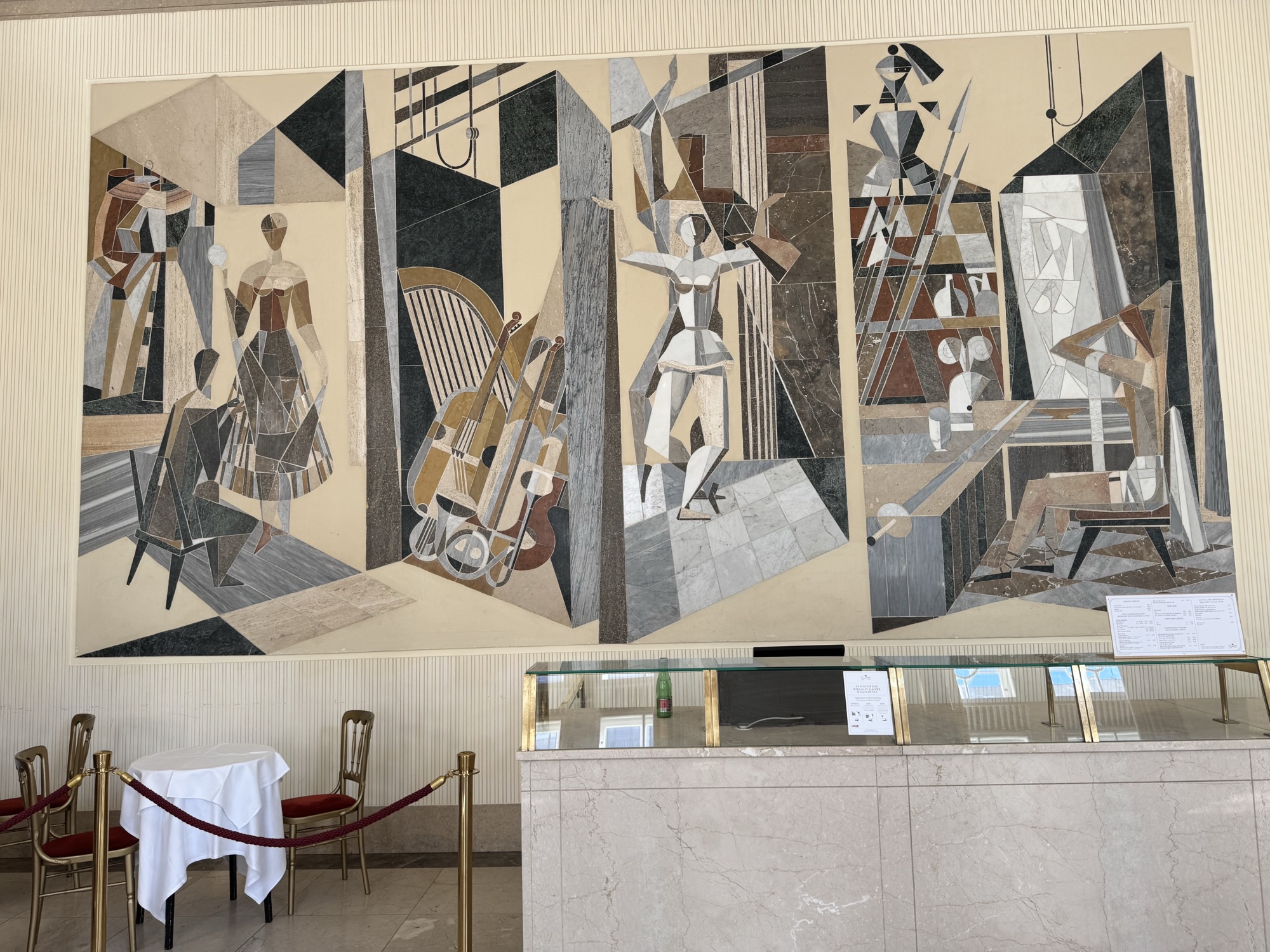
The largest of the intermission rooms featured a long bar and red velvet banquettes, as well as a very modern mosaic.
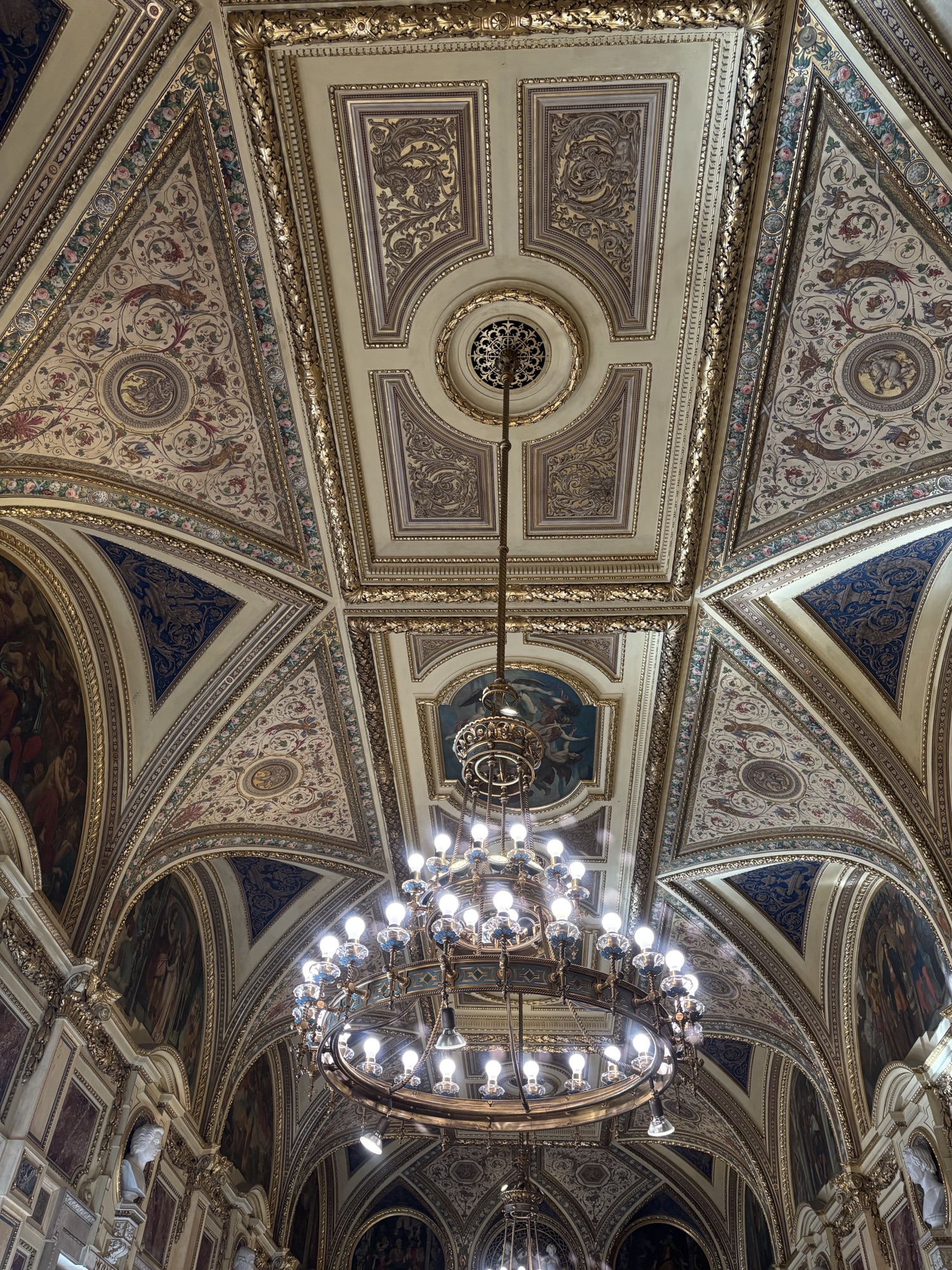
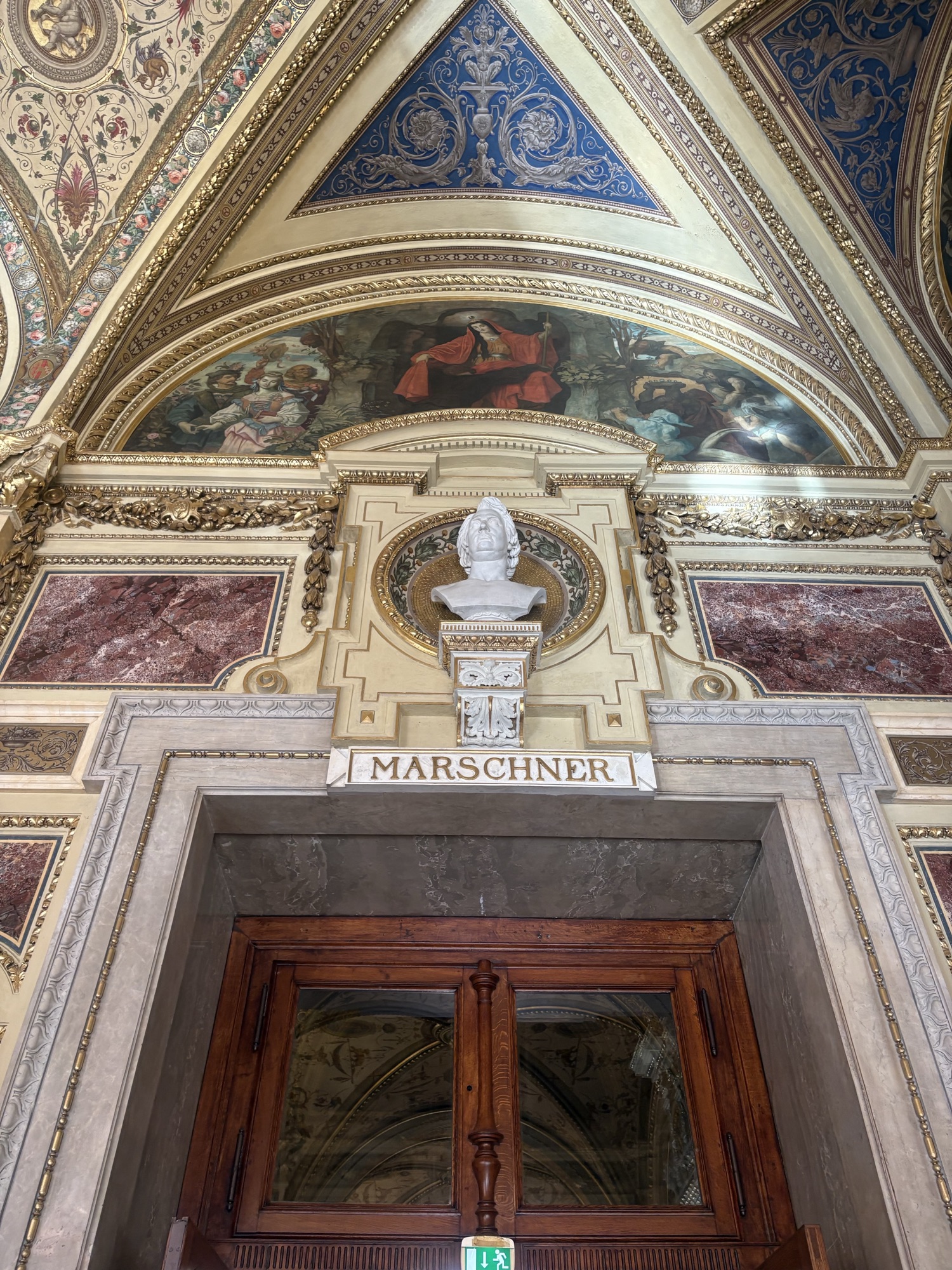
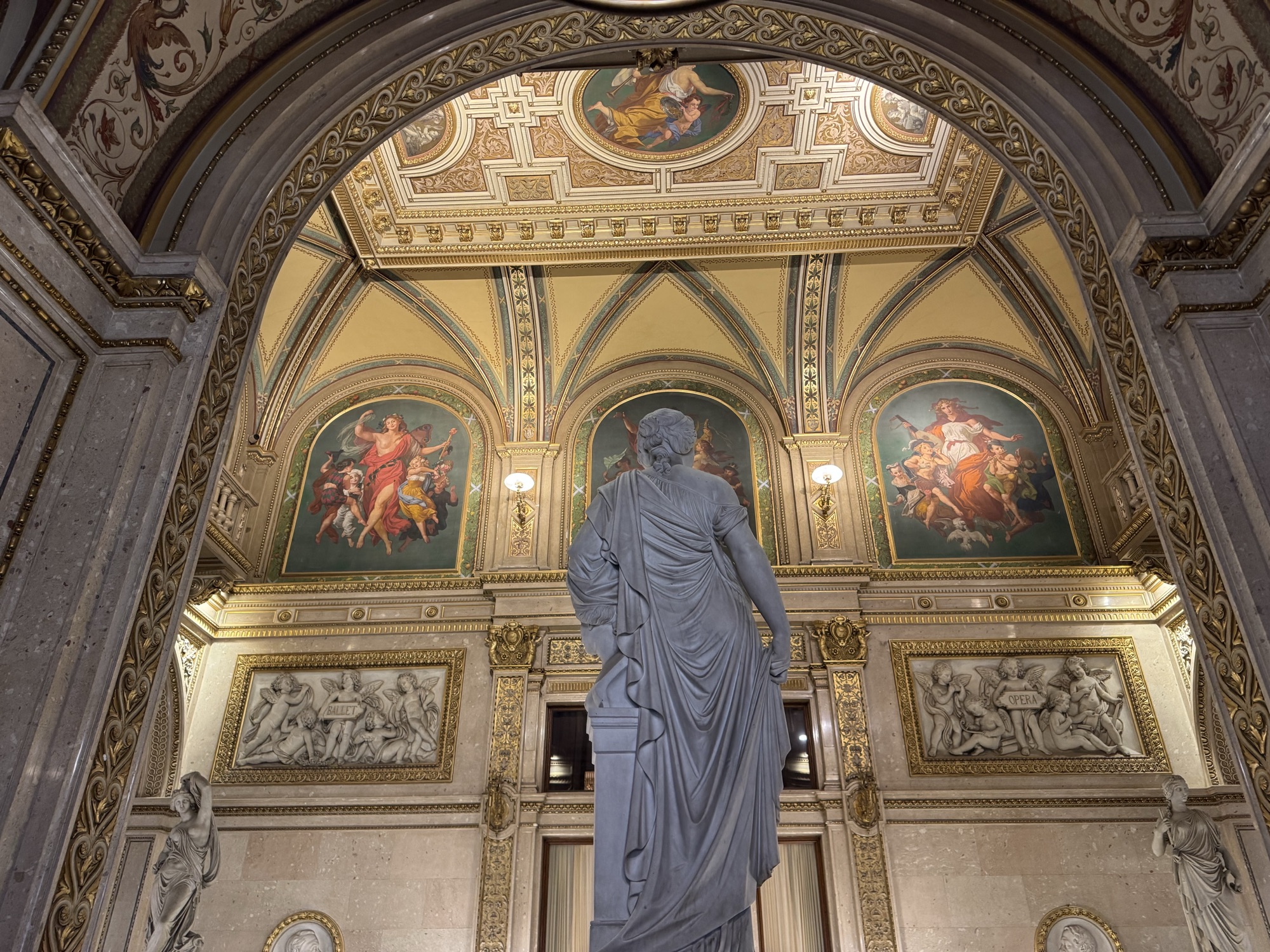
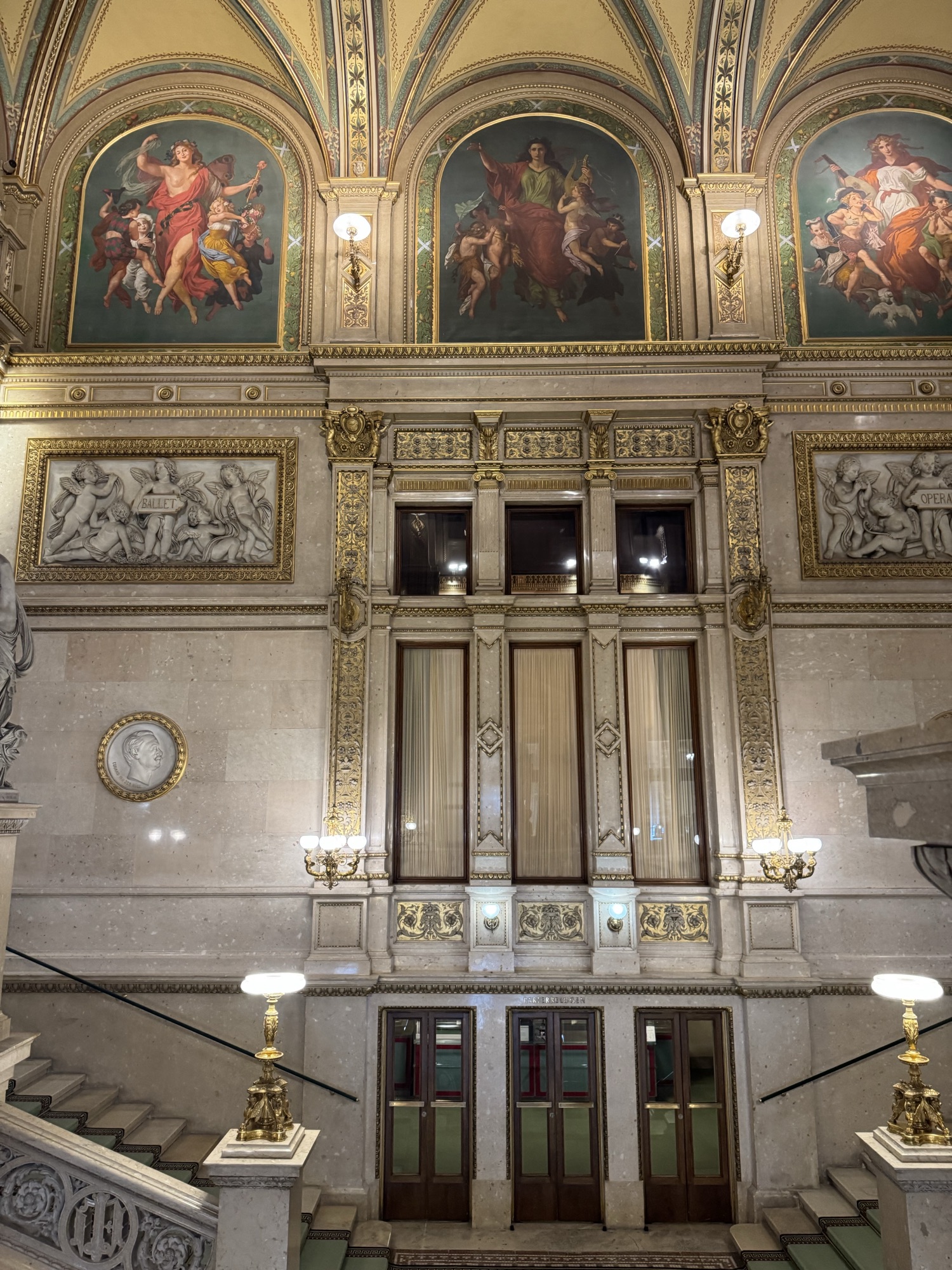
Once we were upstairs, we were able up get a closer look at the lobby ceiling, and also peek into the Emperor’s box and tea room. Apparently Franz Stephen was not an opera fan, so once he had made an appearance in his box and been “seen” he would simply withdraw to drink tea and entertain friends.
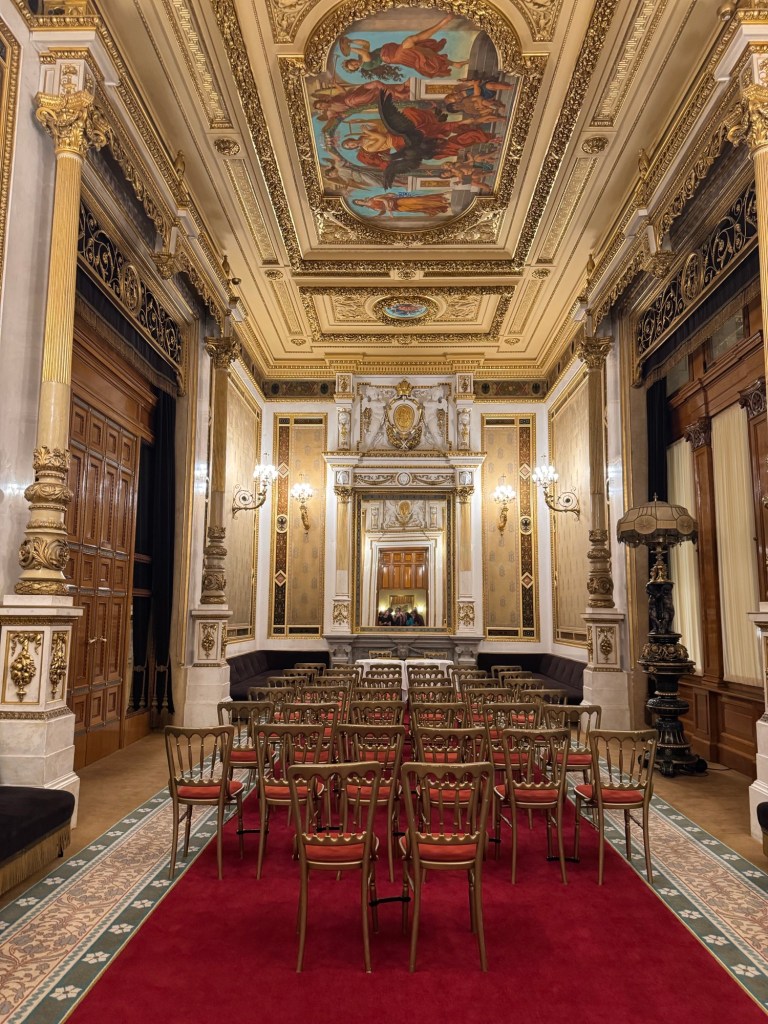
The Emperor’s tea room (below) can be rented for weddings, but they have to be completed within the 25 minute intermission time. Cost:£800
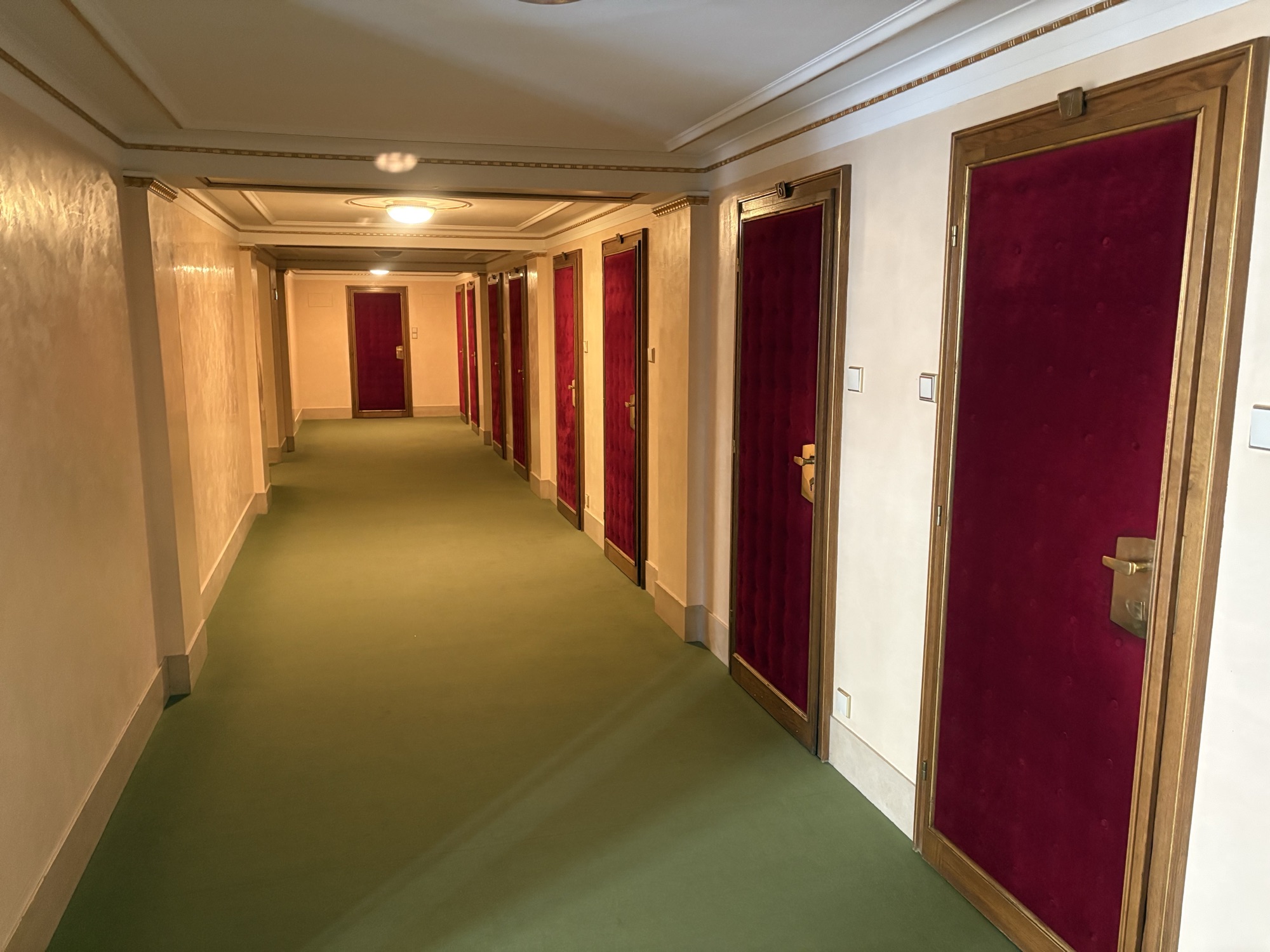
Back in the hallway , each box has its own red velvet door.
And with that, we were escorted back outside.
We had enough time between the opera house tour and our evening concert to fit in another site. Son #1 was interested in the Kapuzinergruft, the Capuchin Crypt where 400 years of Habsburg sarcophagi are located.
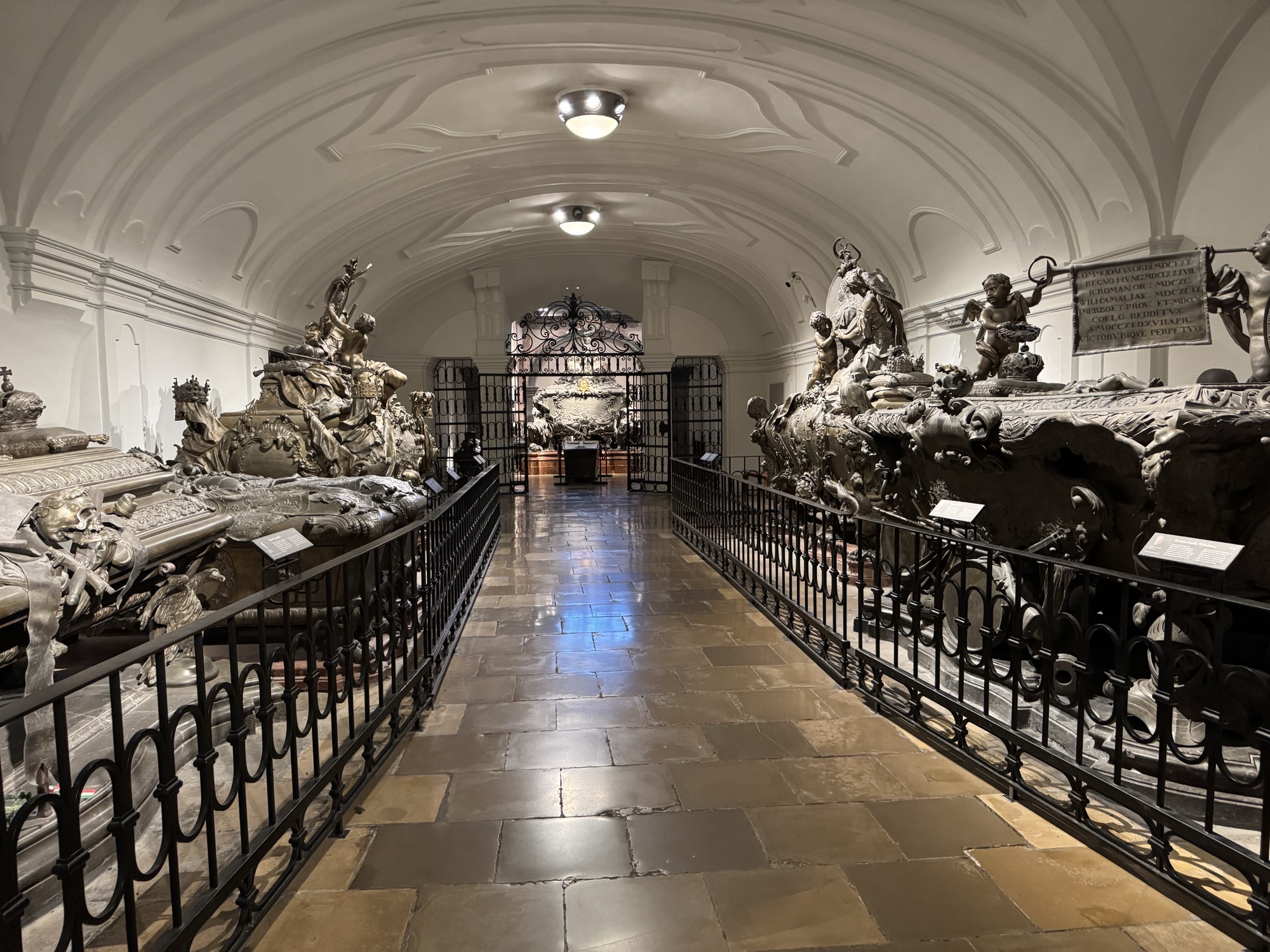
The initial vault dates to 1628CE, and there are now 150 Habsburgs buried here, the most recent in 2023.
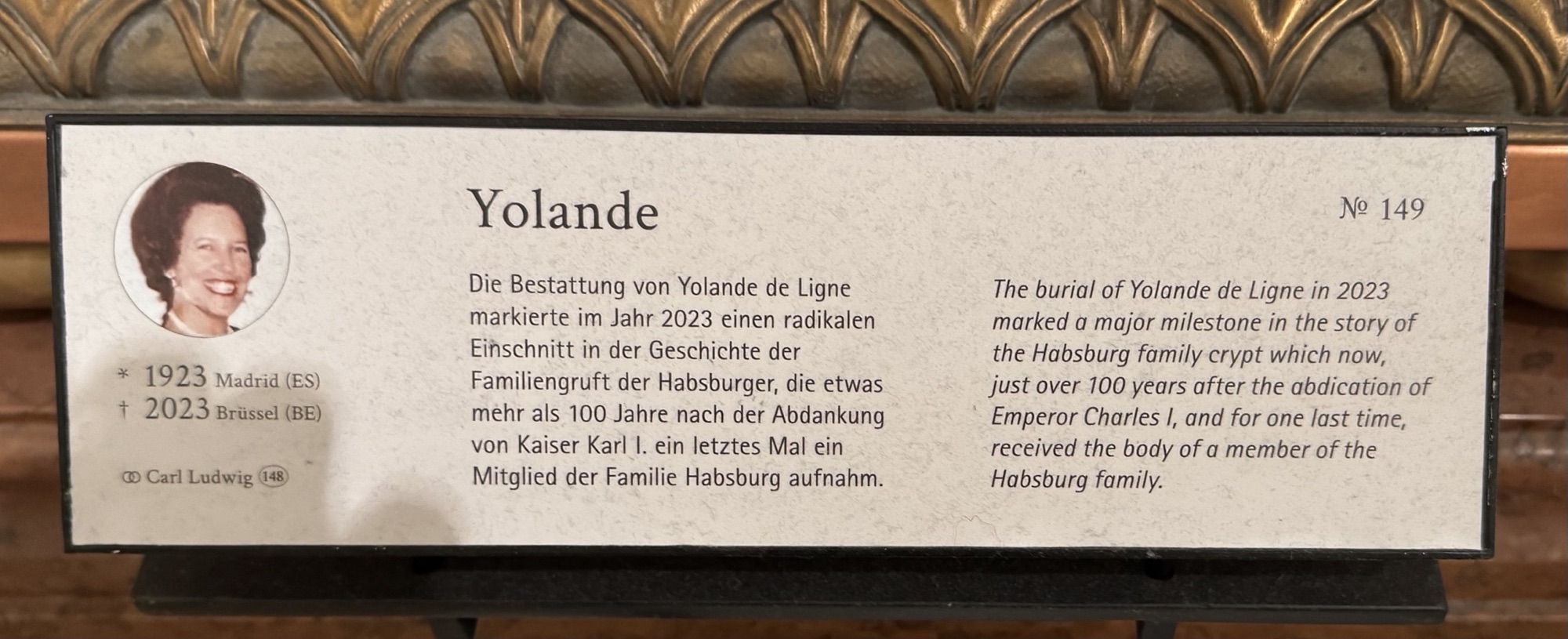
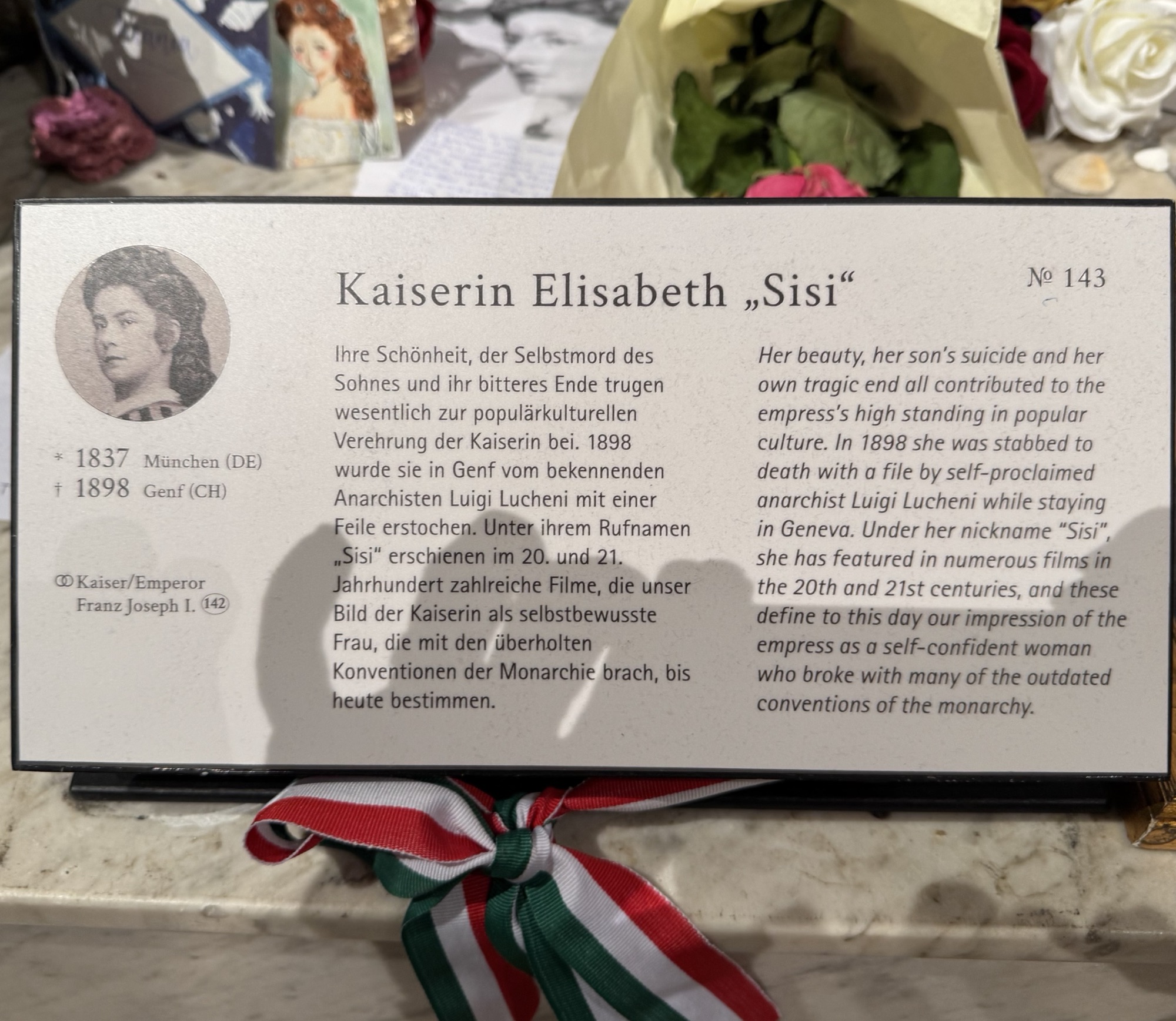
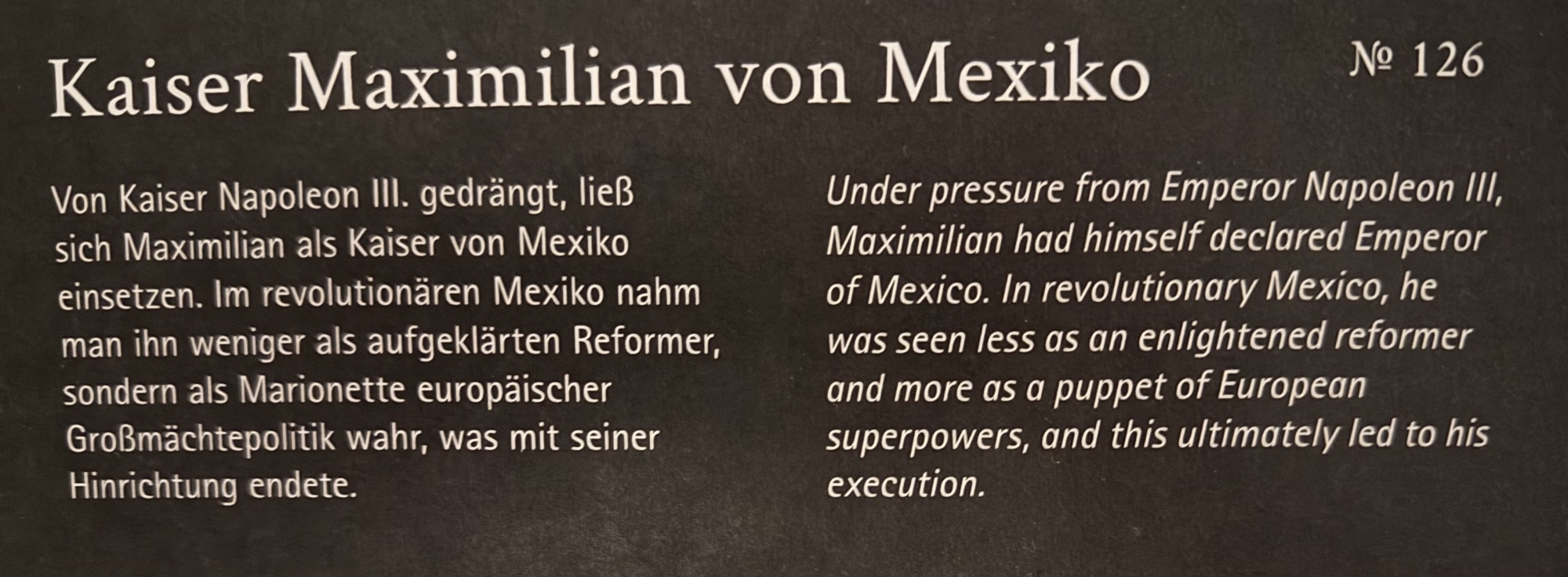
The ornate and sometimes huge and somewhat creepy sarcophagi are only part of the story. Each one has a plaque that gives the historic relevance of the person interred, as in the example below:
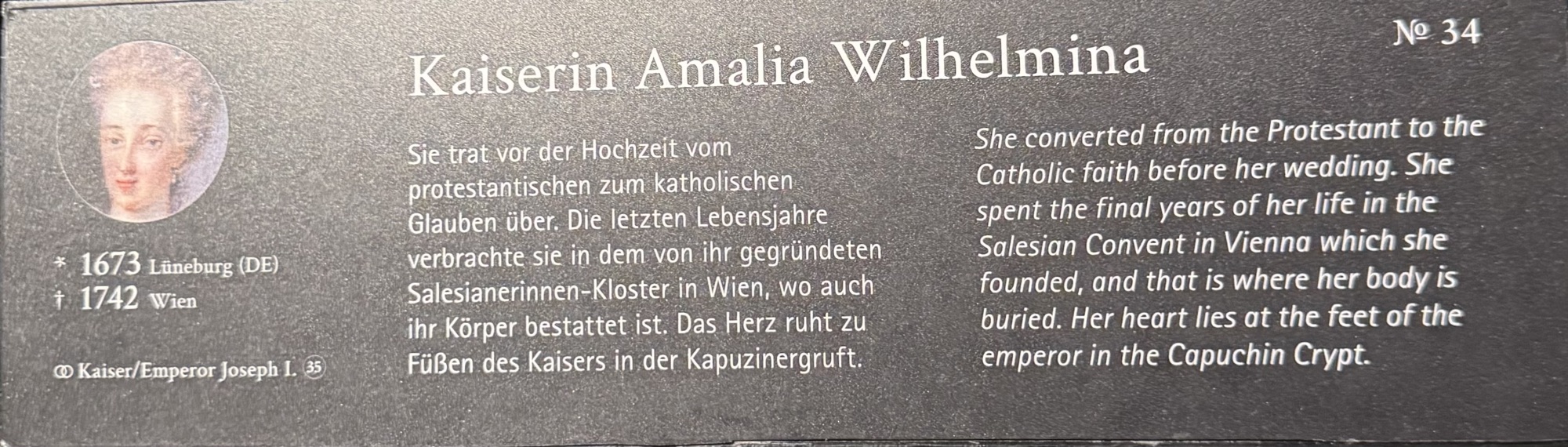
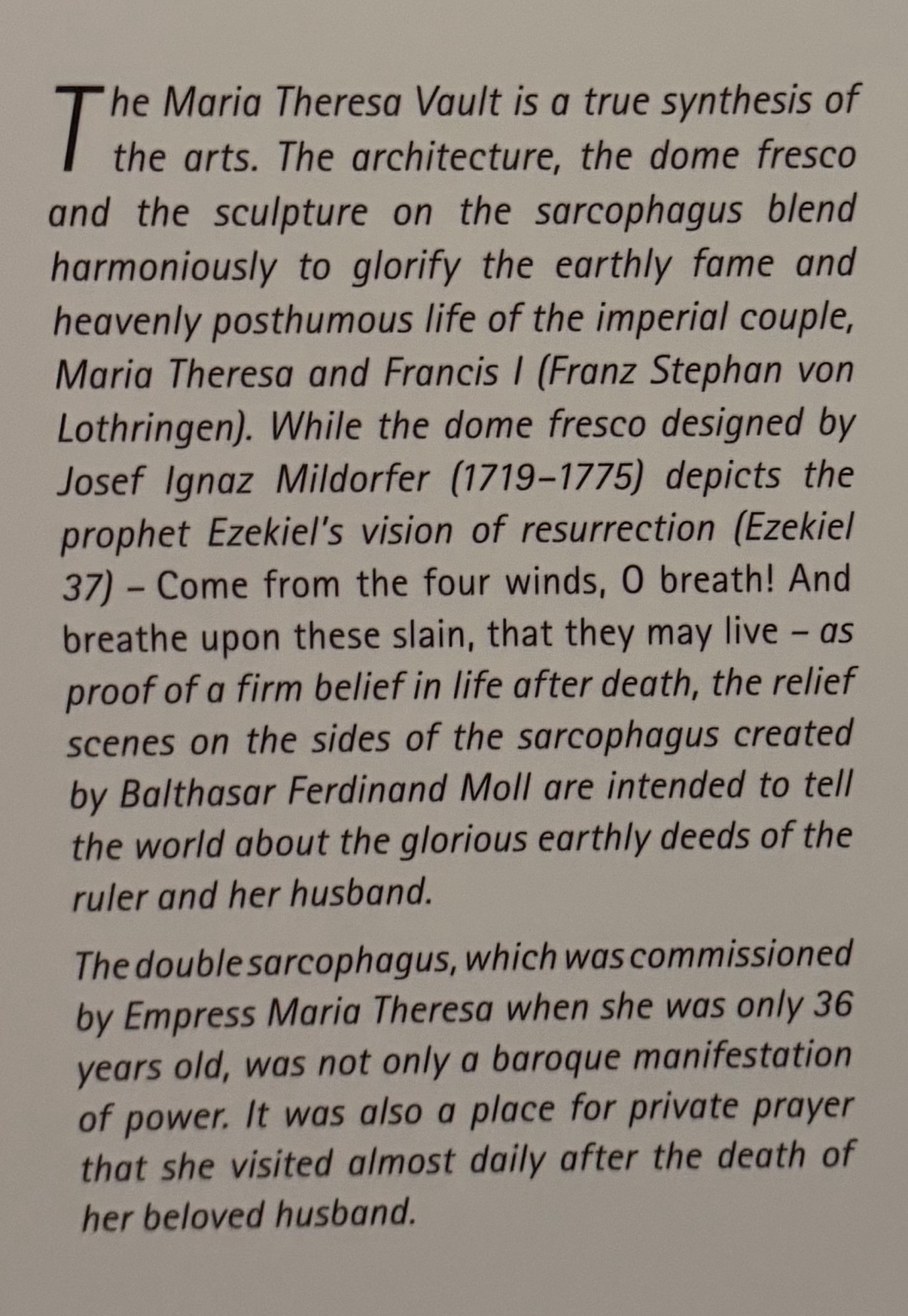
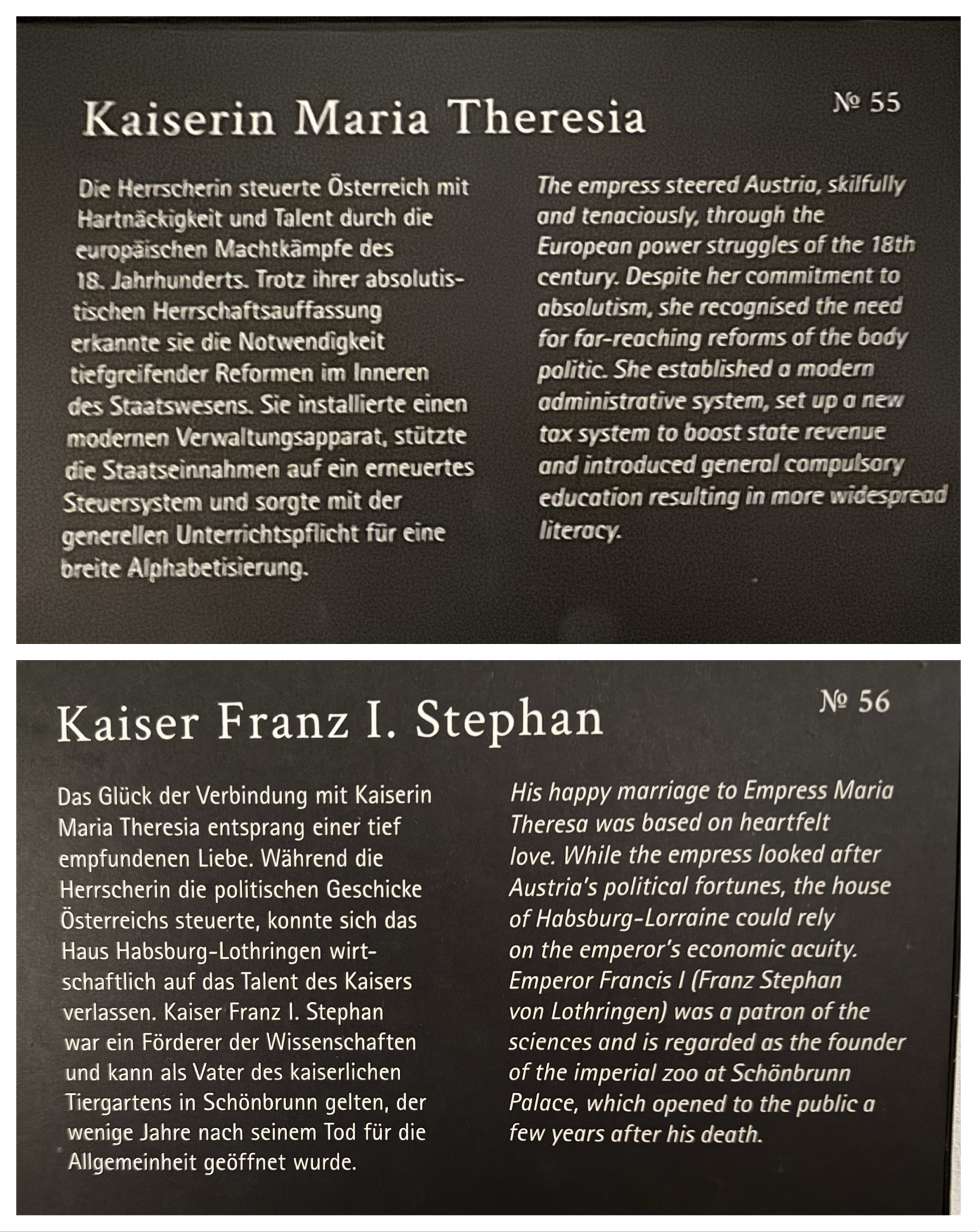
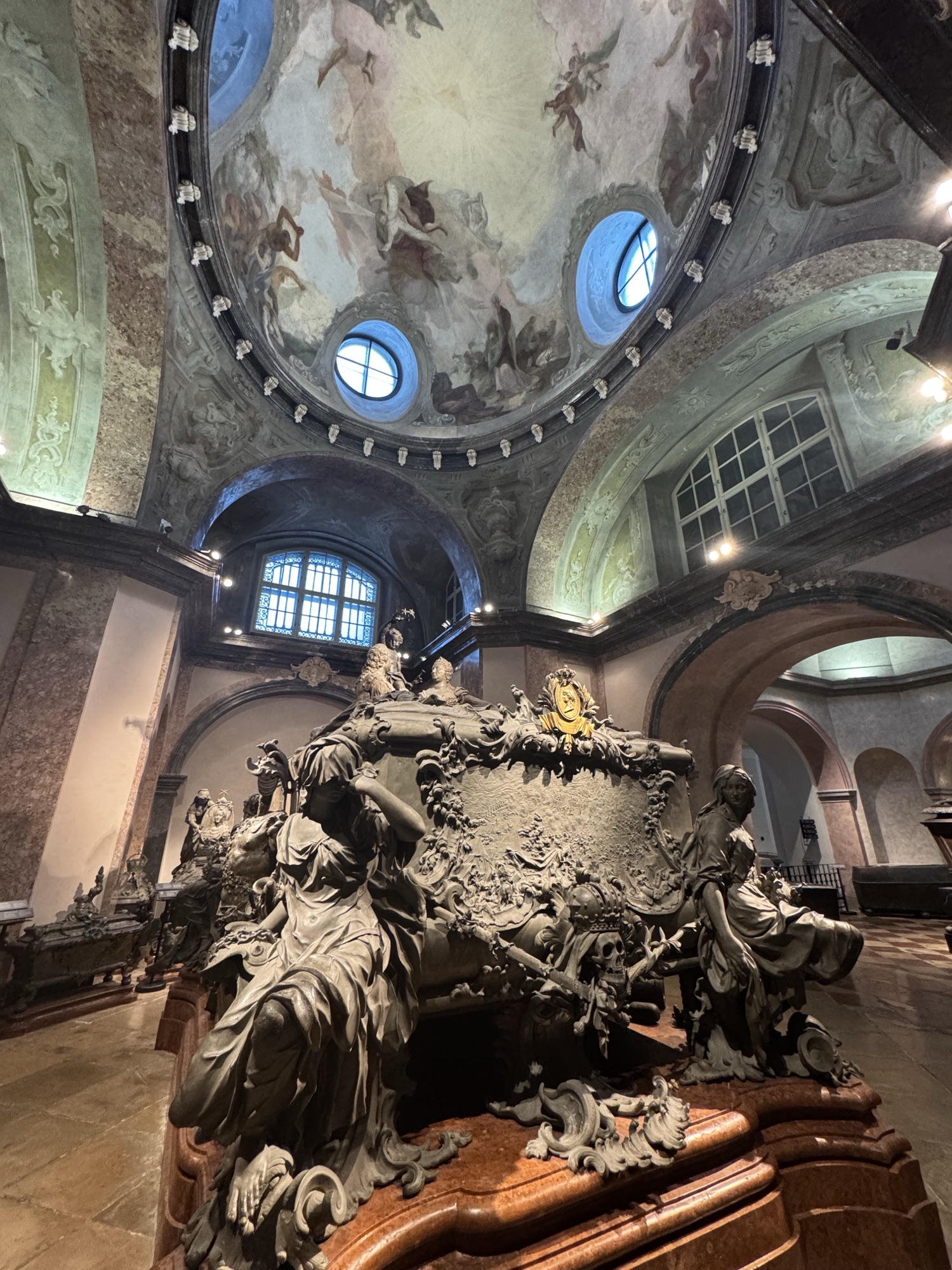
Certainly the biggest and most ornate sarcophagus was that of Empress Maria Theresa, in a vault containing other members of her immediate family.
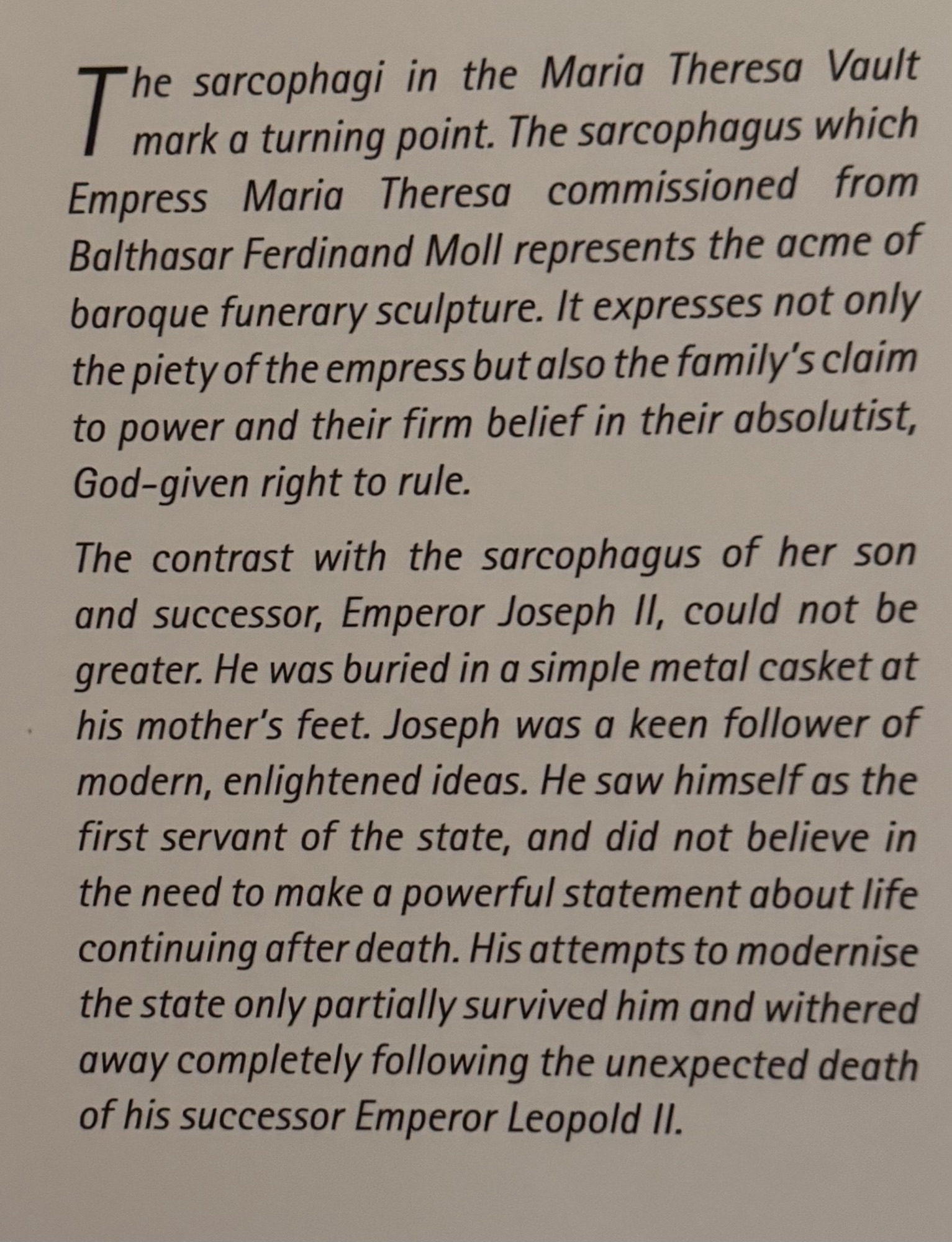
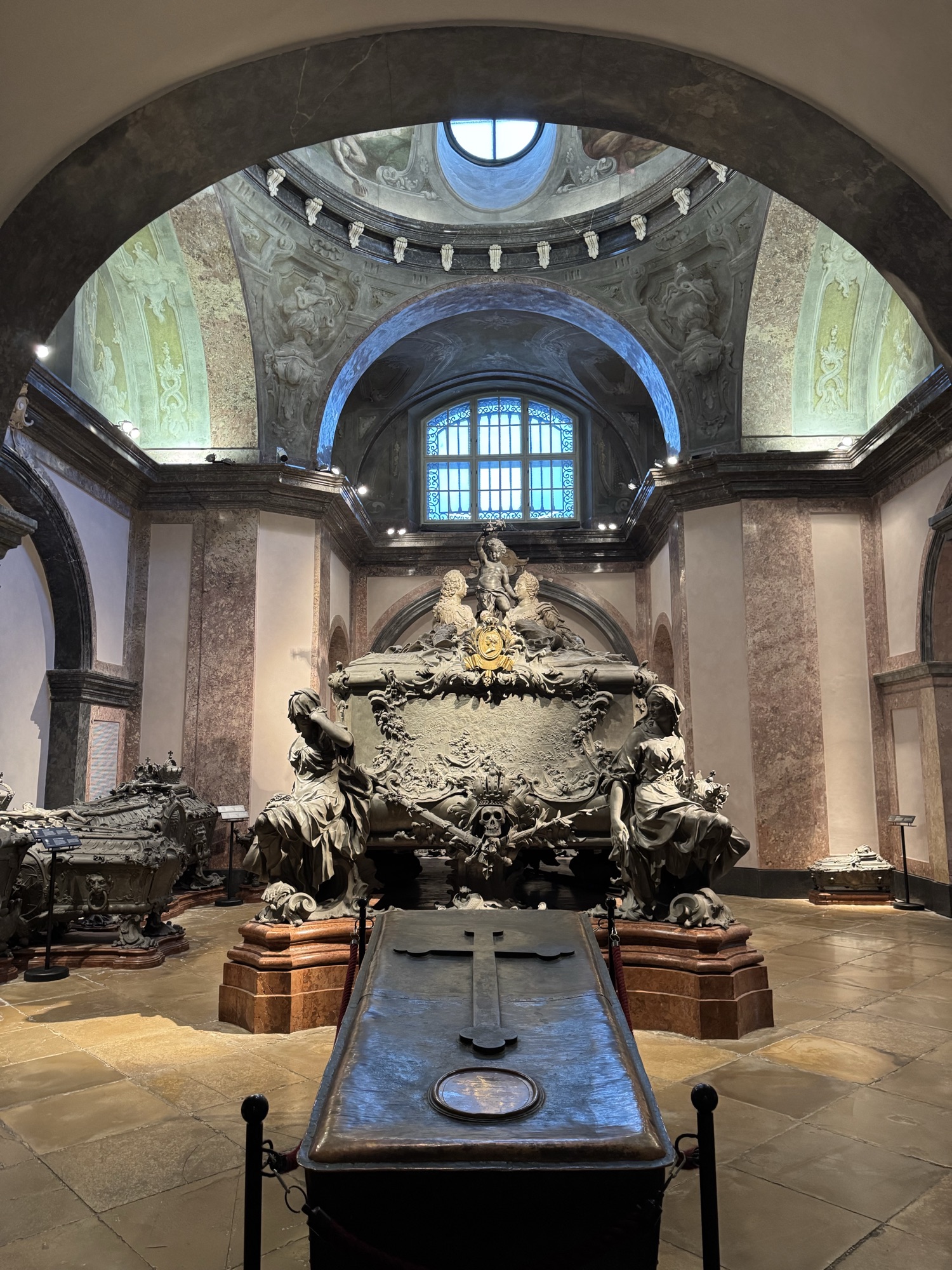
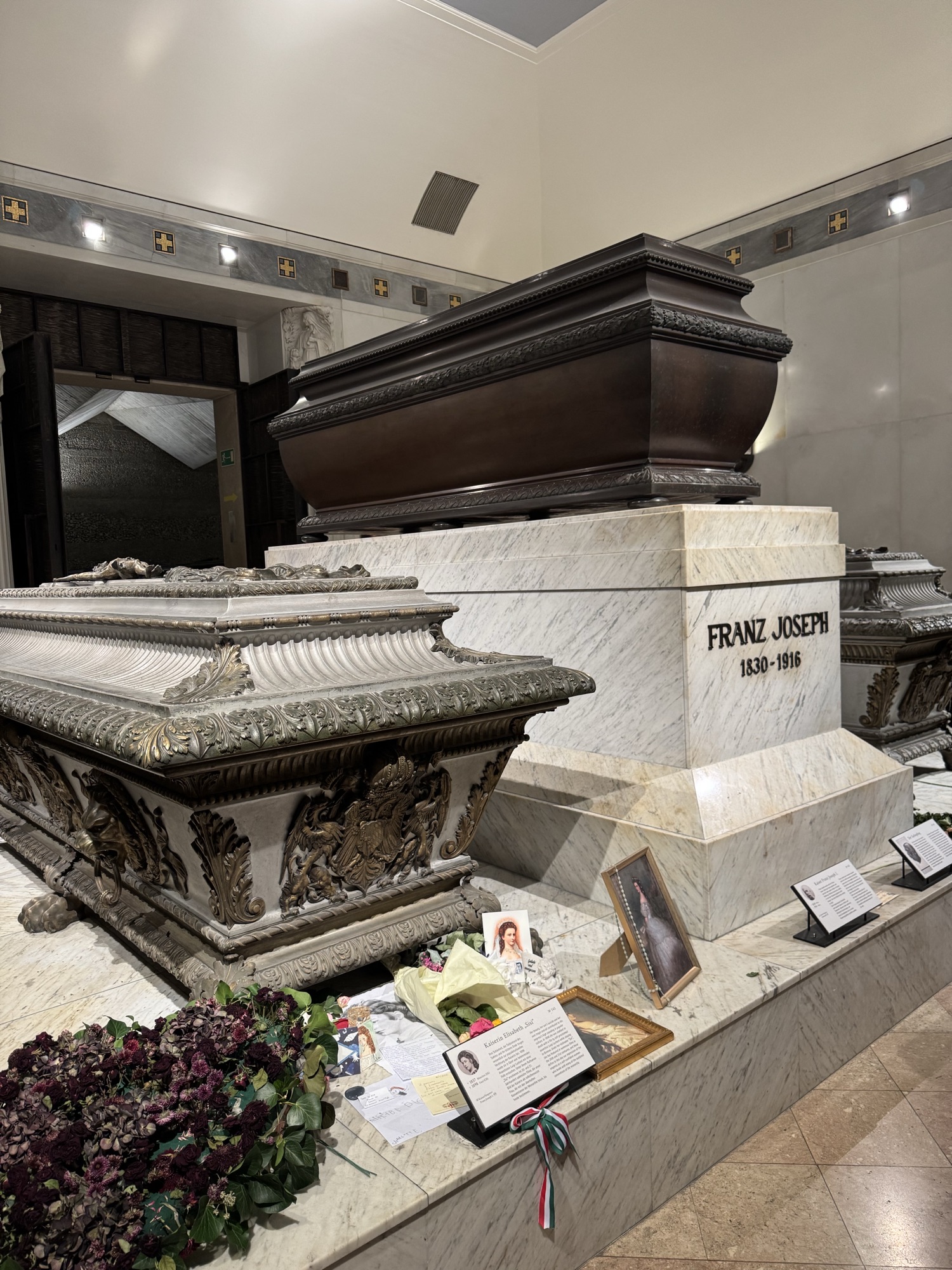
Unsurprisingly, the sarcophagus that gets the most attention, and flowers left almost daily, is the relatively small one holding Empress Elisabeth (Sisi).
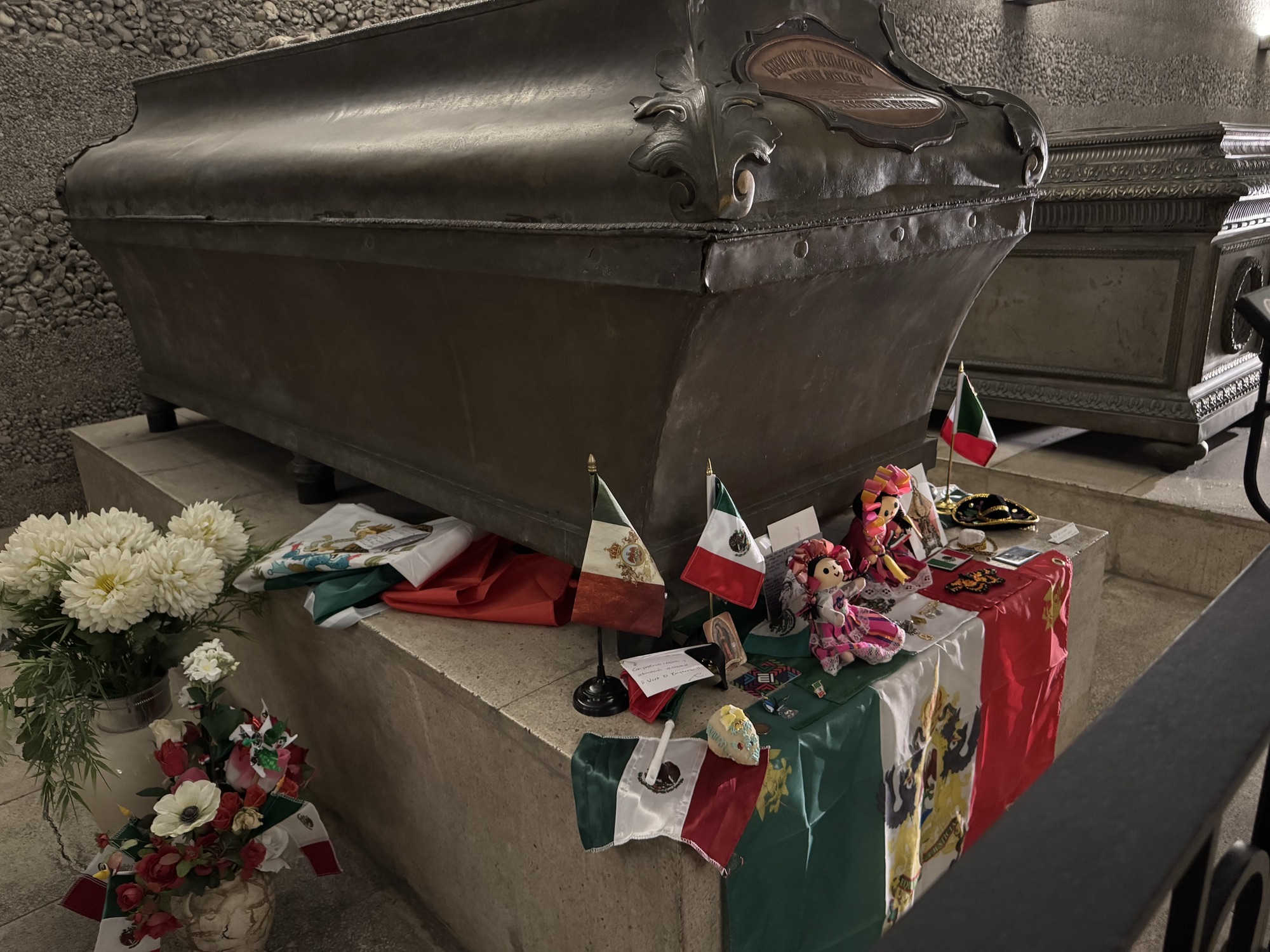
Most surprising to me were the tributes left on Emperor Maximilian’s tomb.
Between our crypt tour and the evening concert, we needed a light meal. I had my heart set on eating at the Café Museum on Operngasse, where in the past we found the waiters as formal as the food was delicious.
The waiters are now less formal, but we enjoyed our meal.
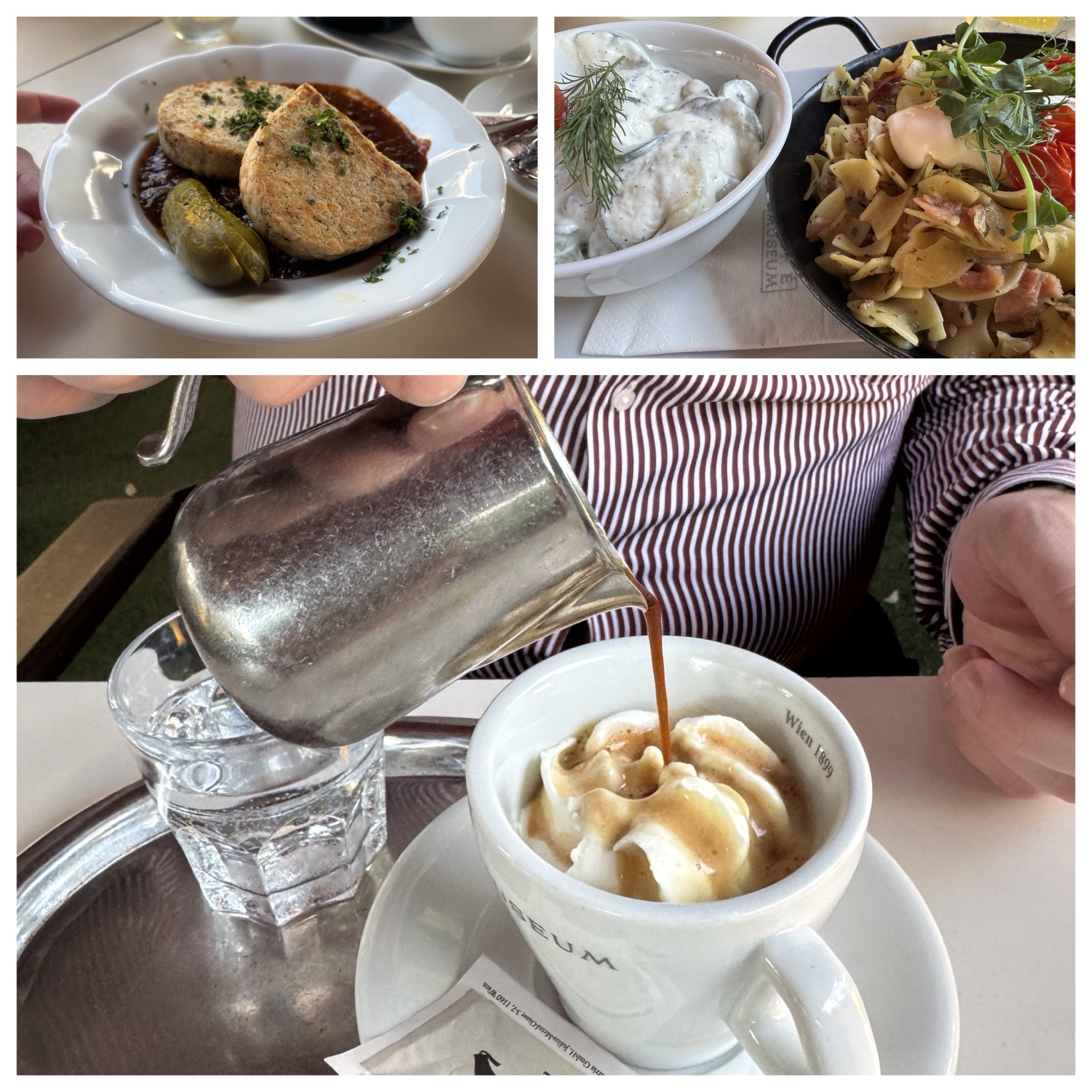
Top right: Schinkenfleckern (“ham spots”, egg noodles with ham) and cucumber salad. Bottom: literally a cup of unsweetened whipped cream over which to pour a double espresso
Then it was on to our concert.
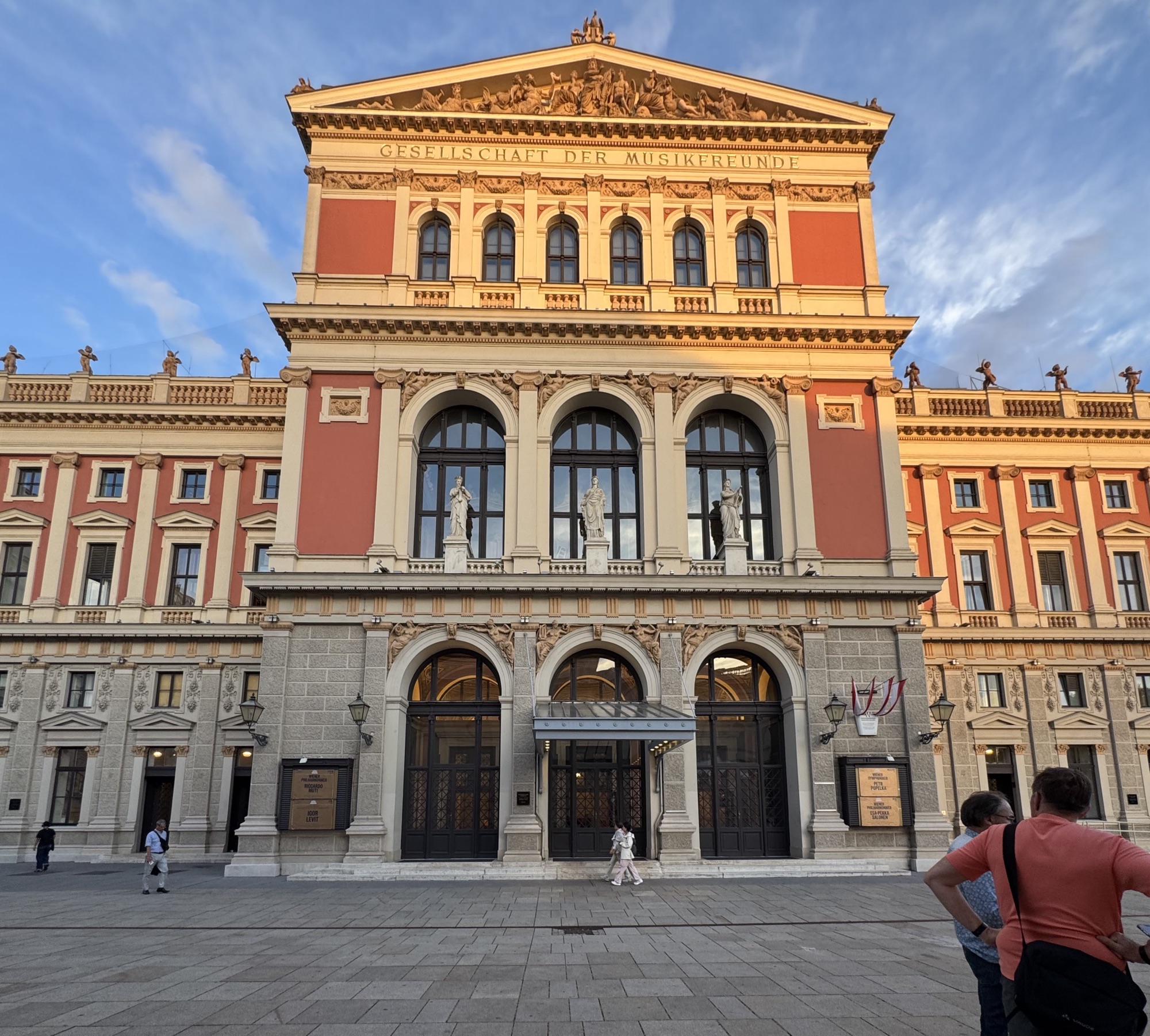
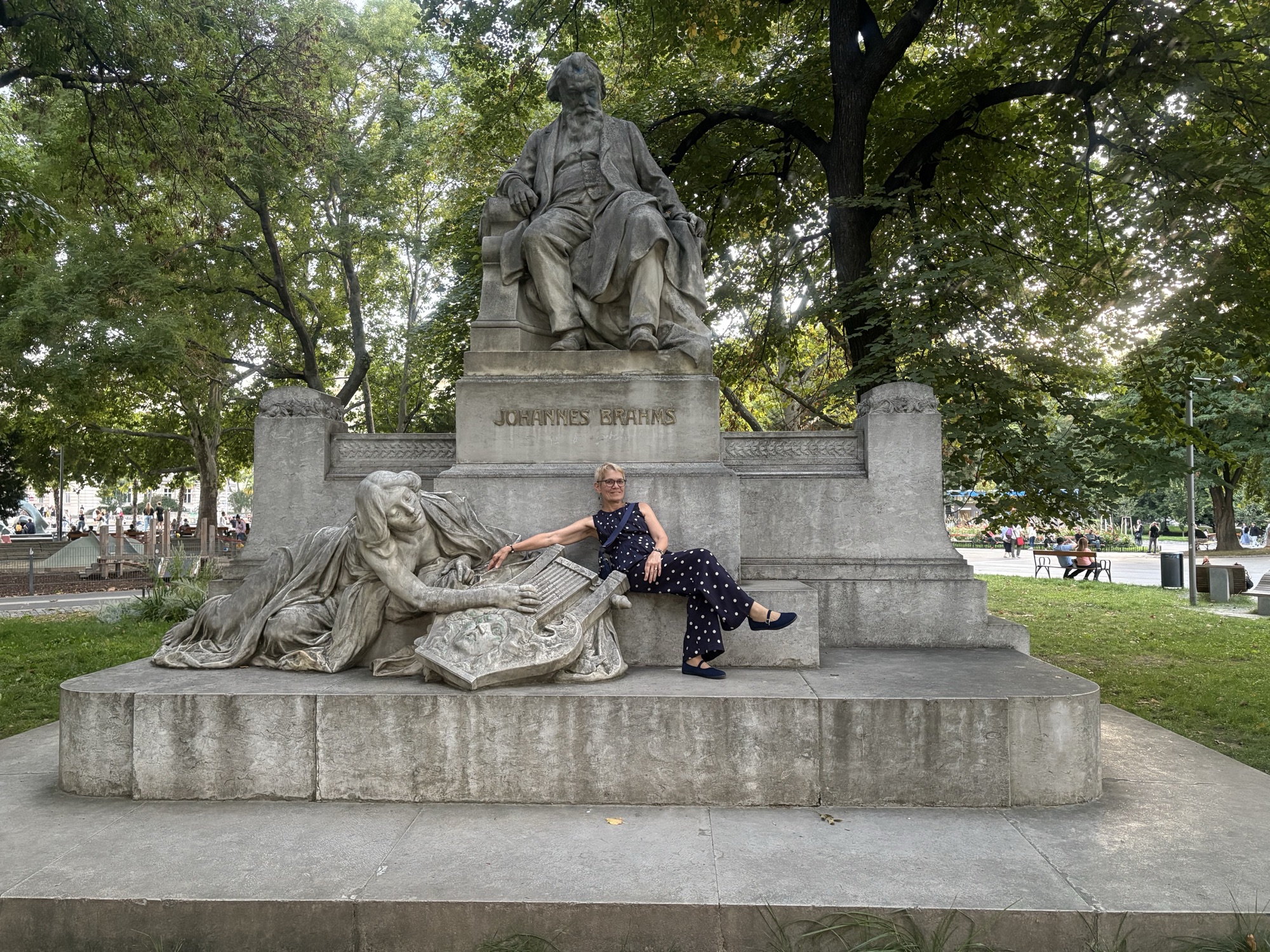
Opposite the Musikverein is a statue of Johannes Brahms whose composition just begged to be lounged upon.
The original Wiener Mozart Konzert has taken place since 1986 in the Vienna Musikverein or the Vienna State Opera – tonight our event was in the Musikverein. A 33-member orchestra plus two operatic soloists present Mozart’s best-known works in the original instrumentation for which they were composed, and while wearing historical costumes and wigs.
The venue is called the “Golden Hall”. For obvious reasons.
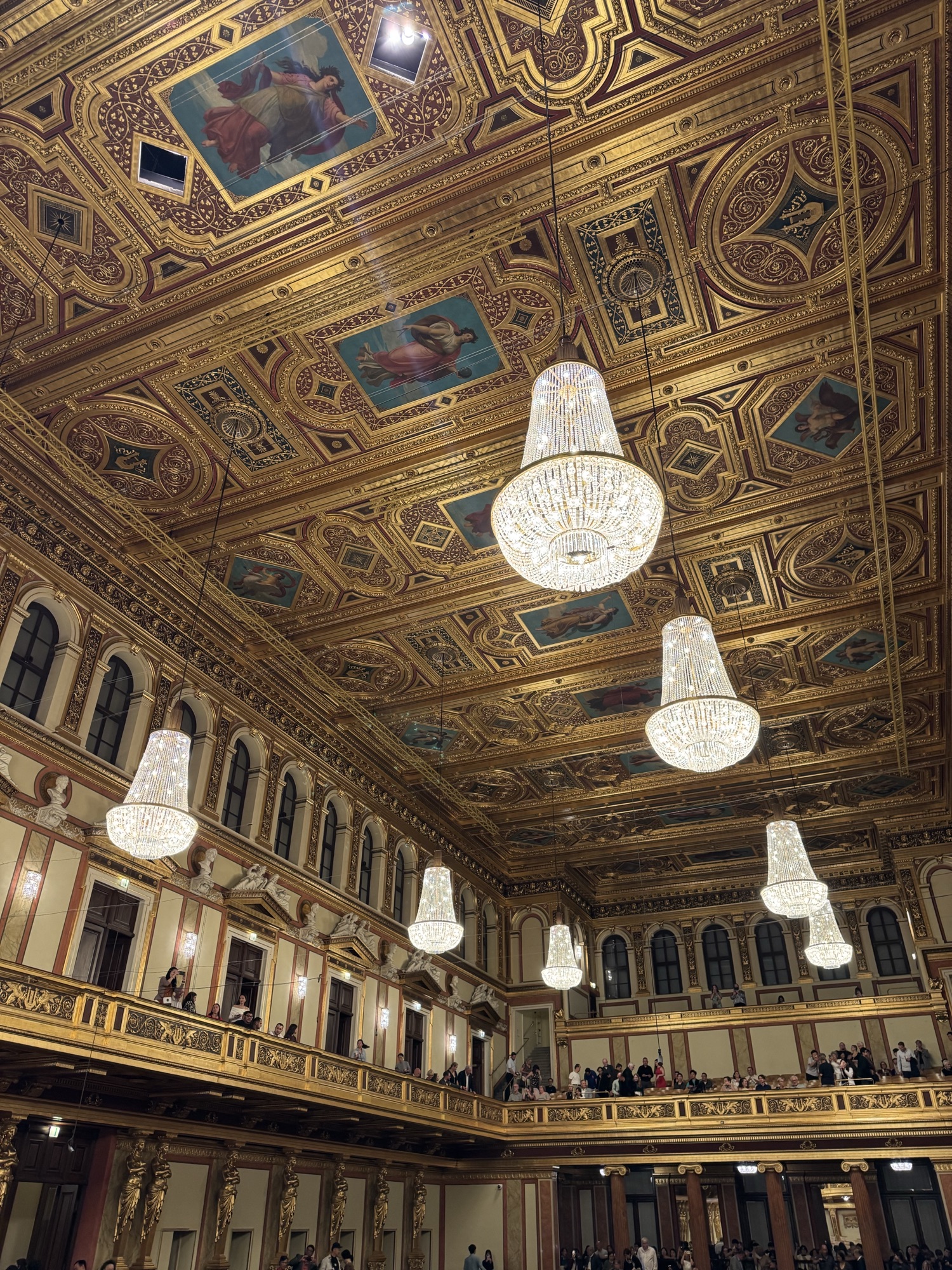
No photography or video is allowed during the performance.
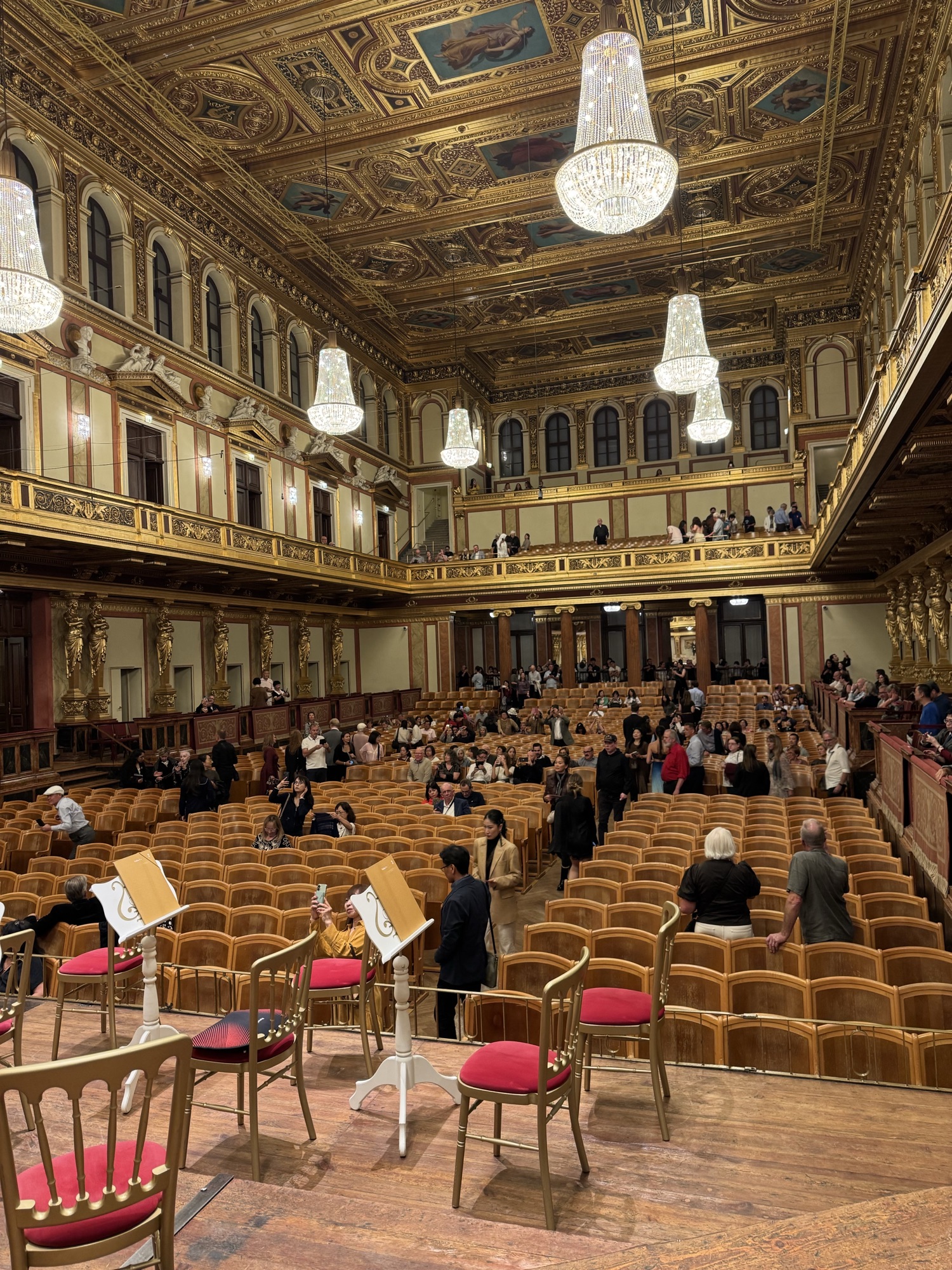
Our seats were “Orchestra Left”, which unexpectedly turned out to be literally to the orchestra’s left – front row, ON THE STAGE.
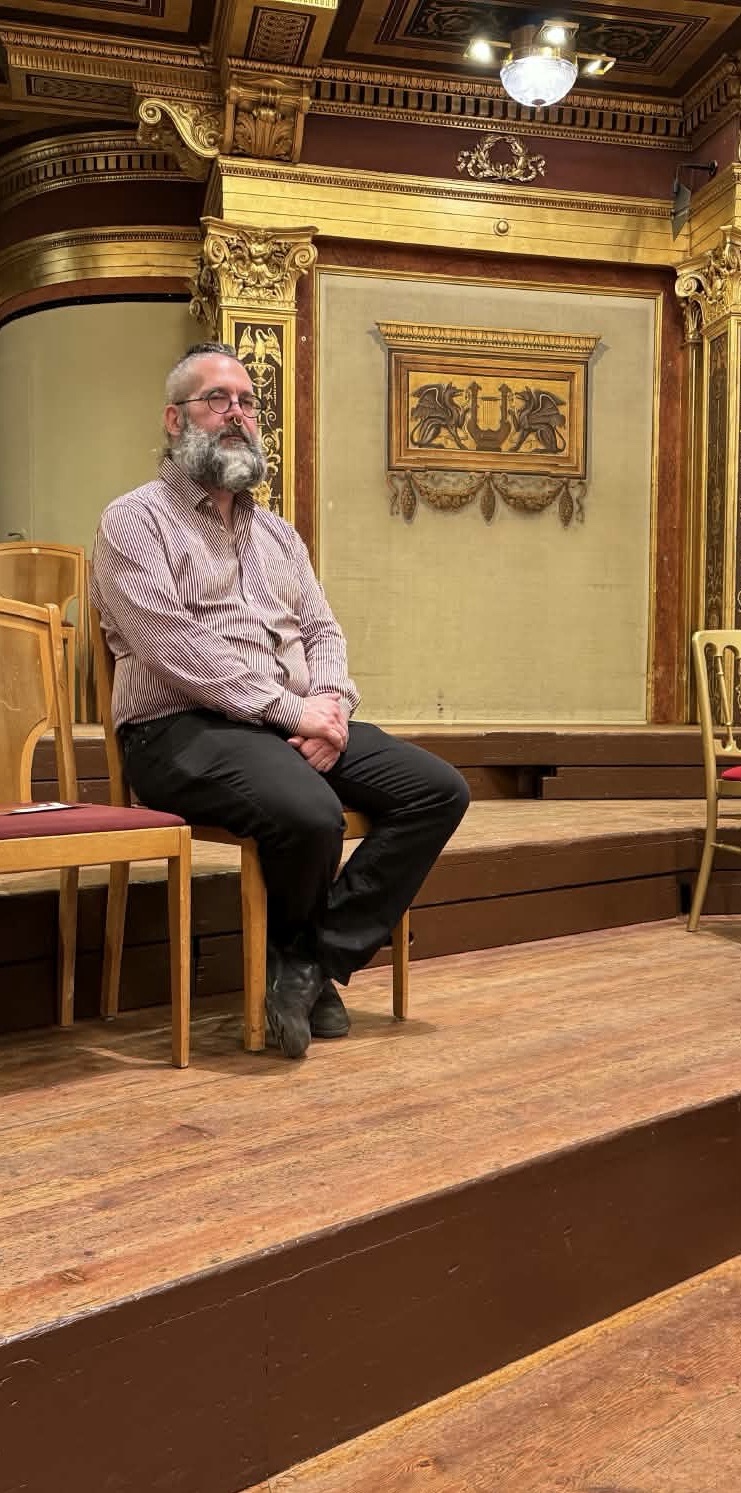
We watched the conductor and could read the musicians’ scores (additionally #1 got to experience the delightful bonus of watching and hearing the French horn player beside him take his instrument apart and dump the accumulated spit onto the wooden stage floor). The audience, since lights are not dimmed for these concerts, watched us (as a fellow concert patron told us on the Ubahn platform as we were waiting for our train back to our hotel).
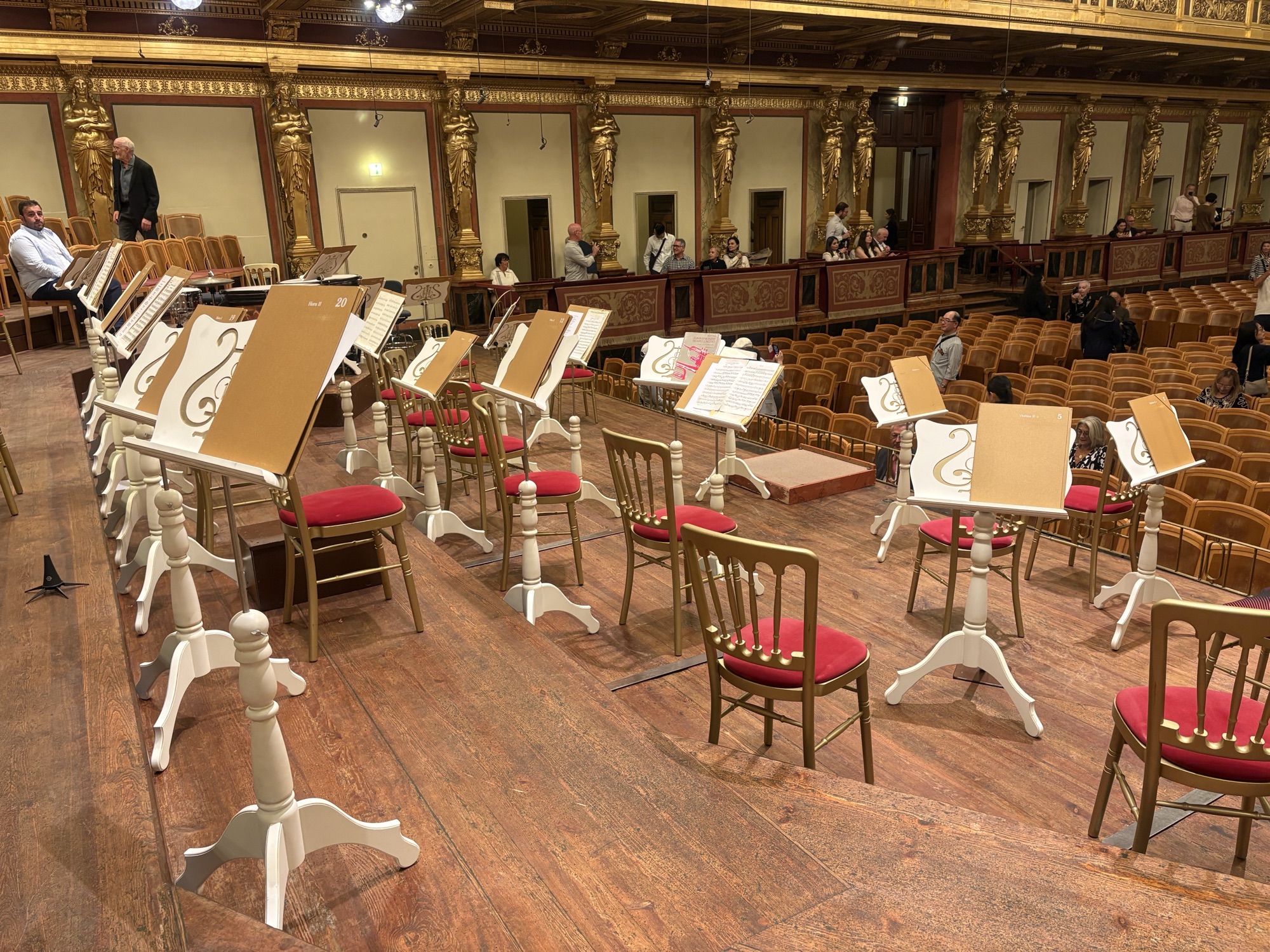
The program lasted just under 2 hours with a 15 minute intermission. There was some Hayden thrown in, but the program was almost exclusively Mozart, and included familiar numbers from The Magic Flute, The Marriage of Figaro, and Fon Giovanni, as well as the standards Eine Kleine Nachtmusik and the Rondo à la Turca. No concert in Vienna would be complete without Strauss’ Blue Danube Waltz and a rousing finale of the Radetzky March.
It was a lovely Viennese ending to our day.
TODAY’s FUN FACT: It takes between 18,571 and 19,474 pictures (averaging 700 KB each) to reach 13 GB, which is the amount of storage my WordPress account had. Last night, half way through this post, I could not upload even my next photo because I was completely out of storage. A wee panic, a not so wee credit card transaction to upgrade my blog plan, and I’m back in business only having used 25% of my new plan’s media capacity. Onward…..


That photo limit is why I had to stop blogging and move to Instagram ClayFollow and keep up with our retirement adventuresInstagram: @ClaynMikeOn Sep 20, 2026,
LikeLiked by 1 person
I get it, but I’m writing so that I’ll have it to look back on for years until I export the whole lot, so felt I had to bite the bullet
Sigh
LikeLike