Today our friend Stella came to “our” side of the Mersey to share some of her favourite Liverpool sites.
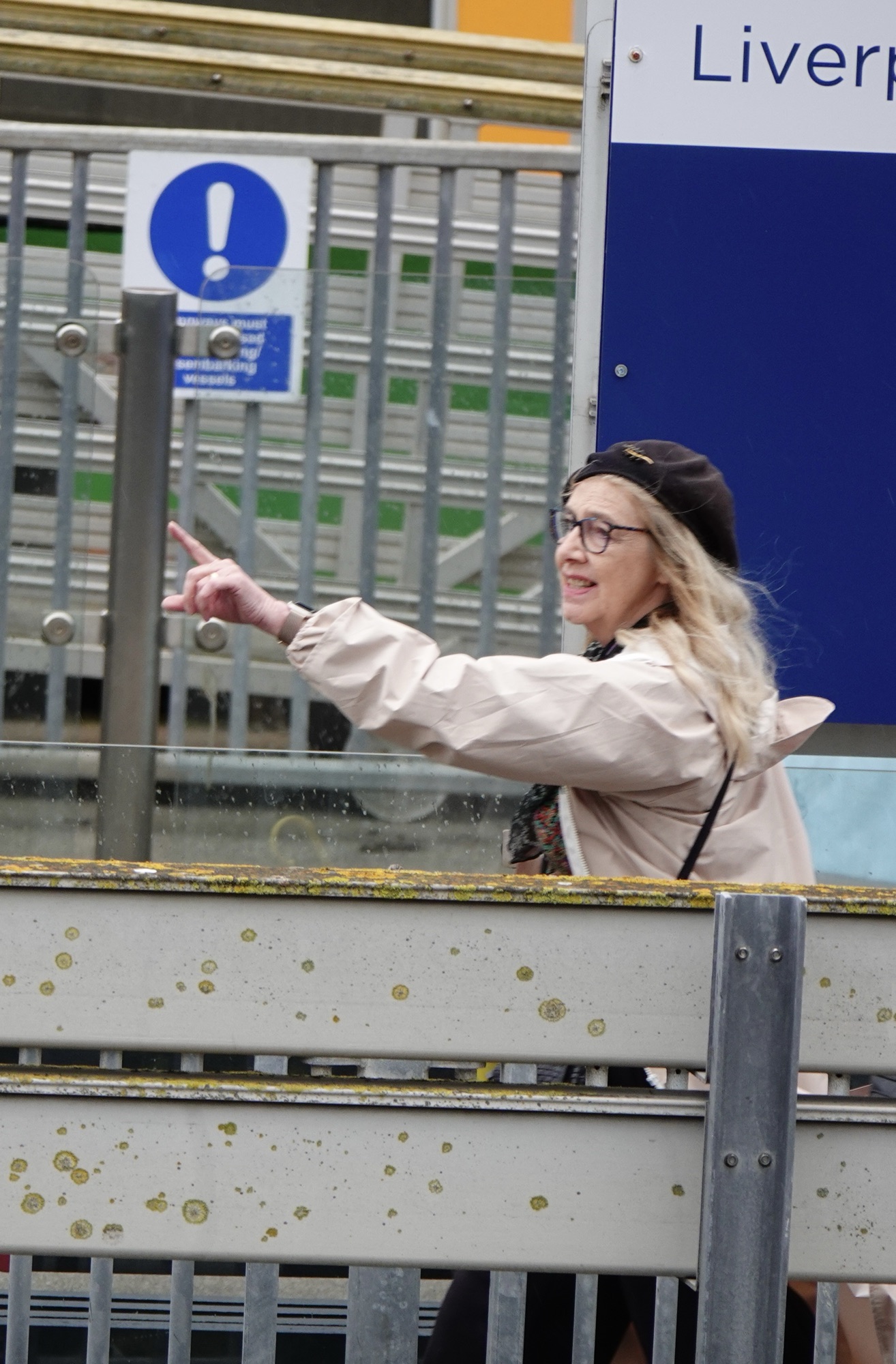
It was a drizzly overcast day, but we had umbrellas and undampened spirits.
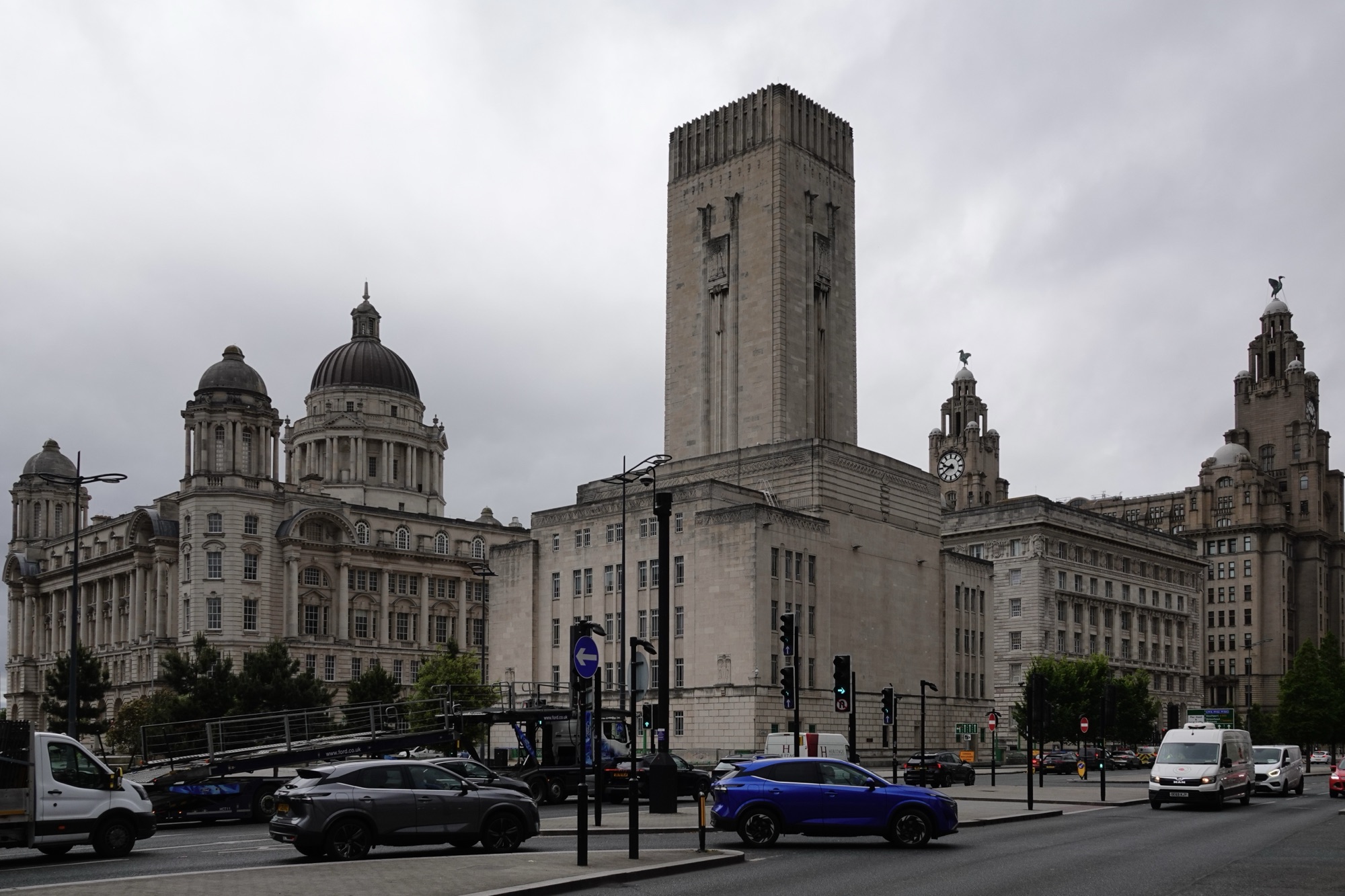
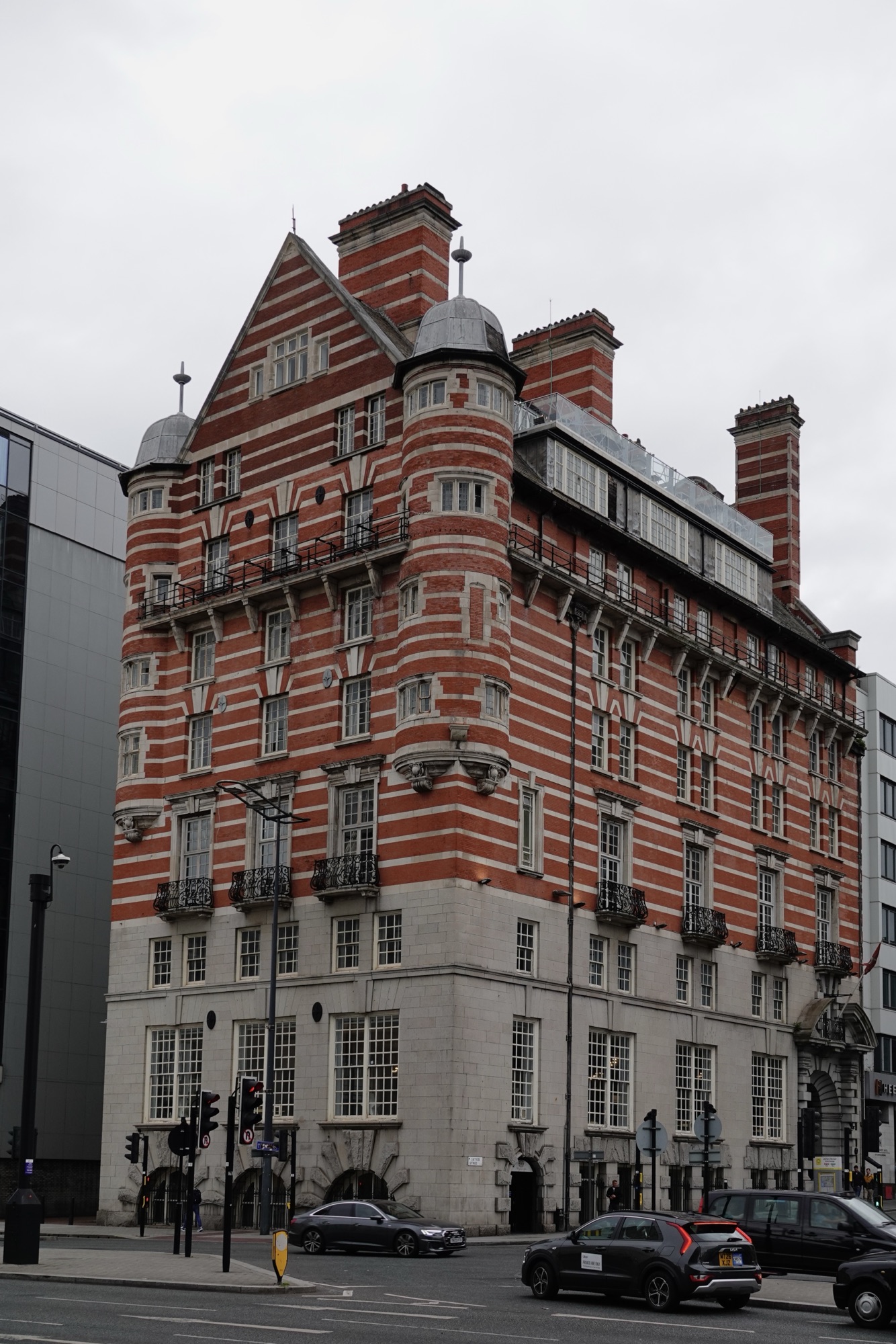
Albion House, a Grade II listed building designed by Richard Norman Shaw built between 1896 and 1898, known as the “Streaky Bacon Building“ due to its distinctive alternating horizontal red brick and white stone facade.
Historically, it served as the headquarters for the White Star Line, the shipping company that owned the RMS Titanic. It was from the centre balcony that the list of names of those lost in the sinking was read out.
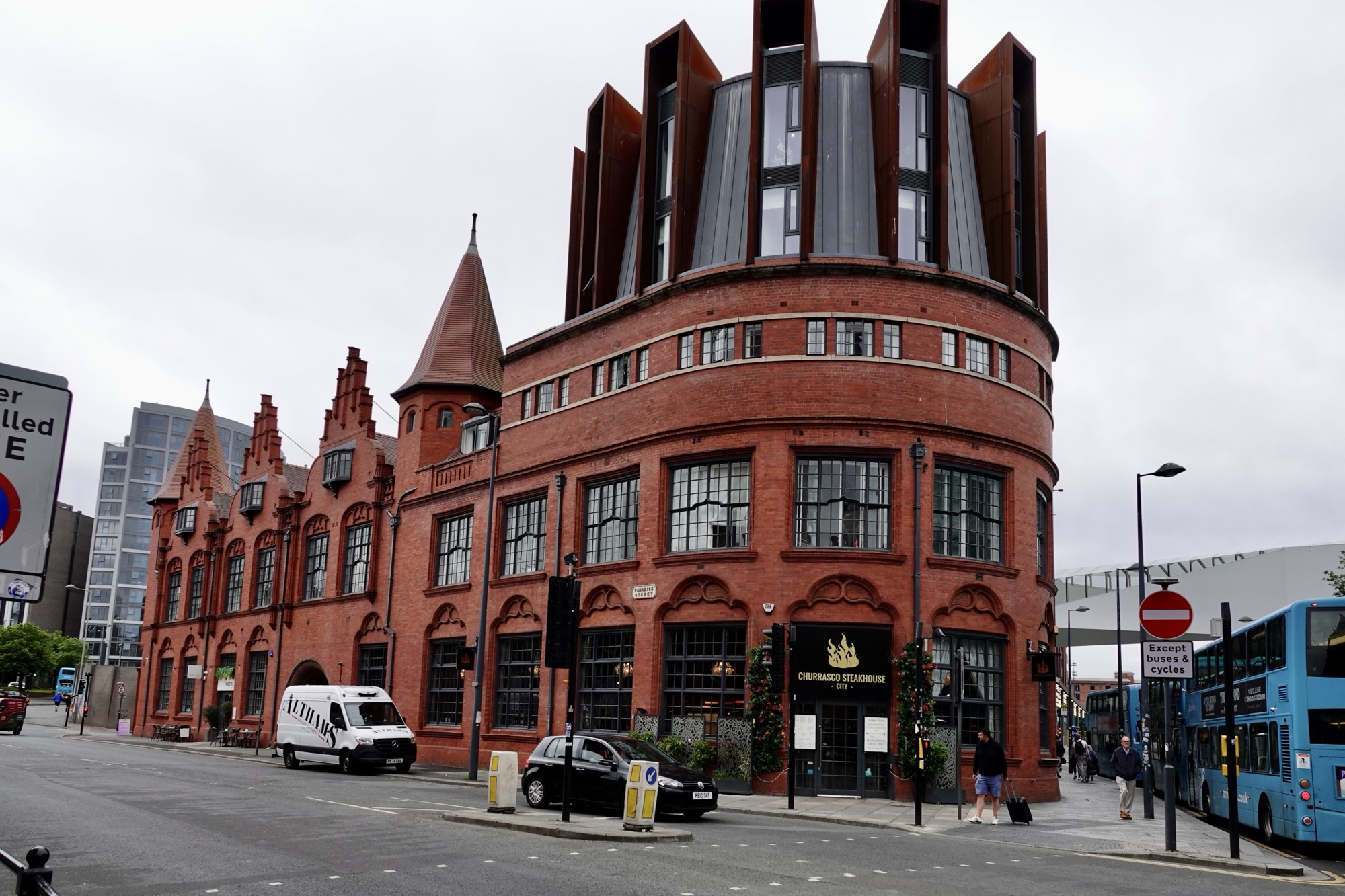
Our main destination was Liverpool Cathedral, the largest religious building in Britain, designed by architect Sir Giles Gilbert Scott in the Gothic Revival style.
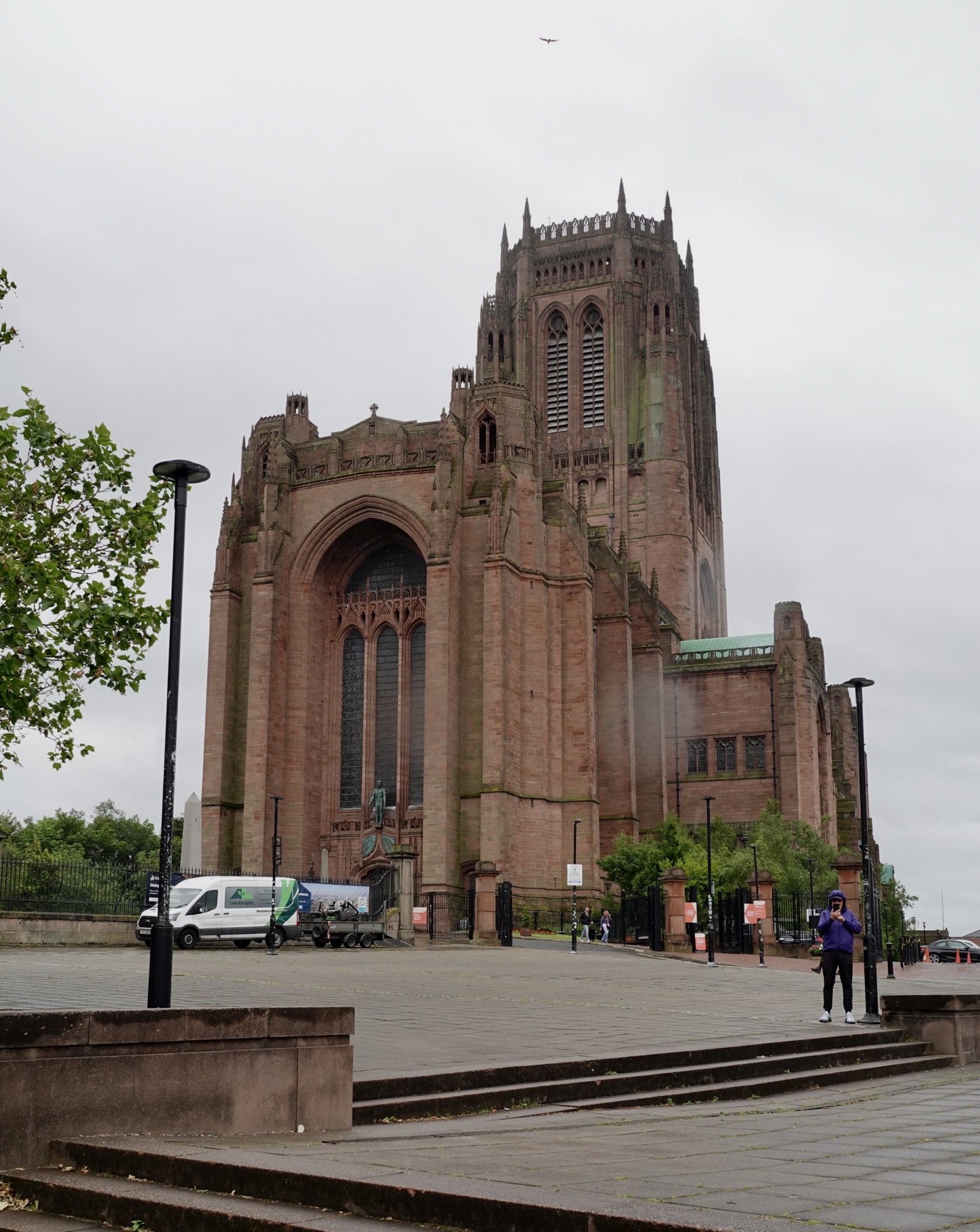
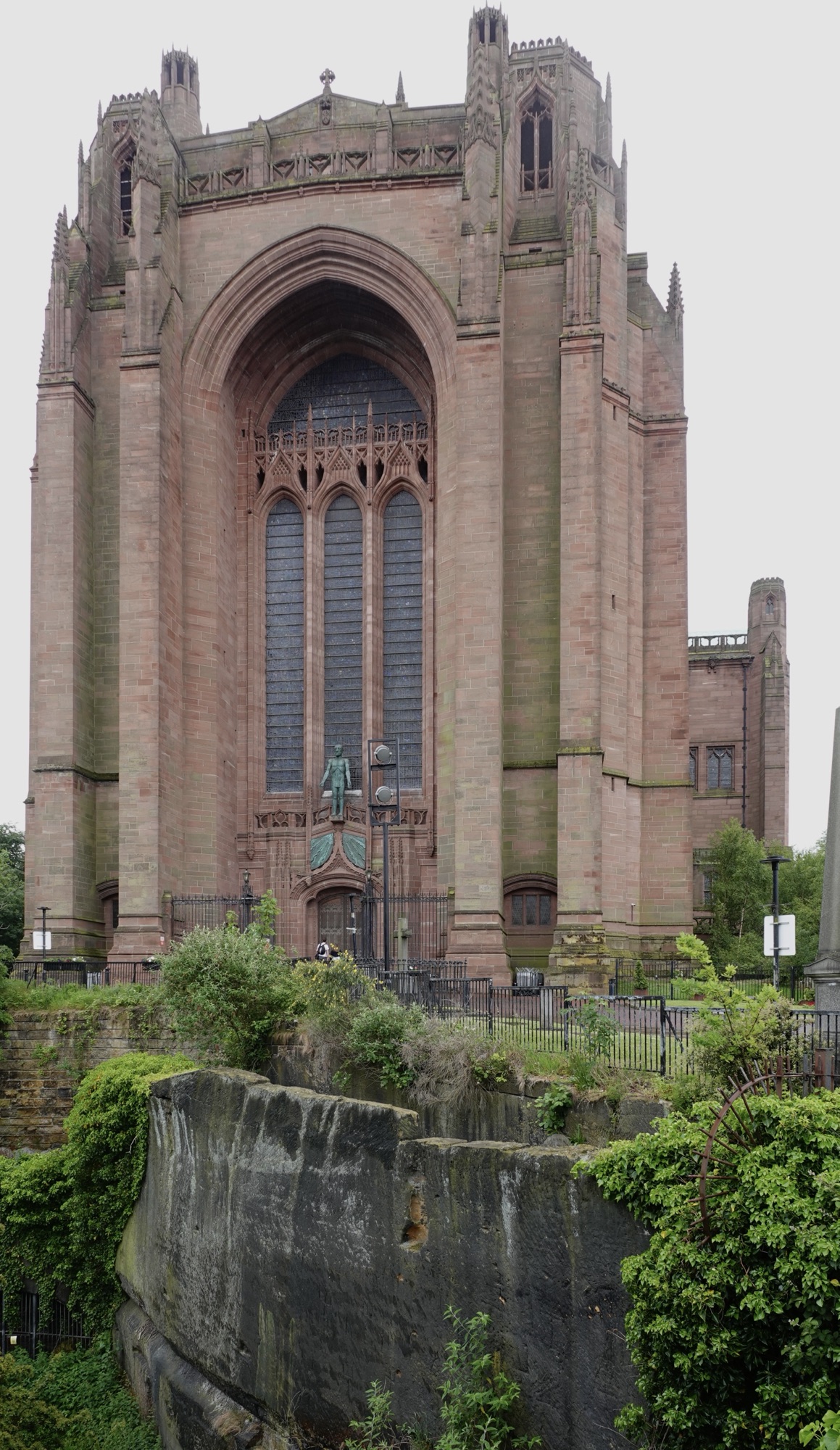
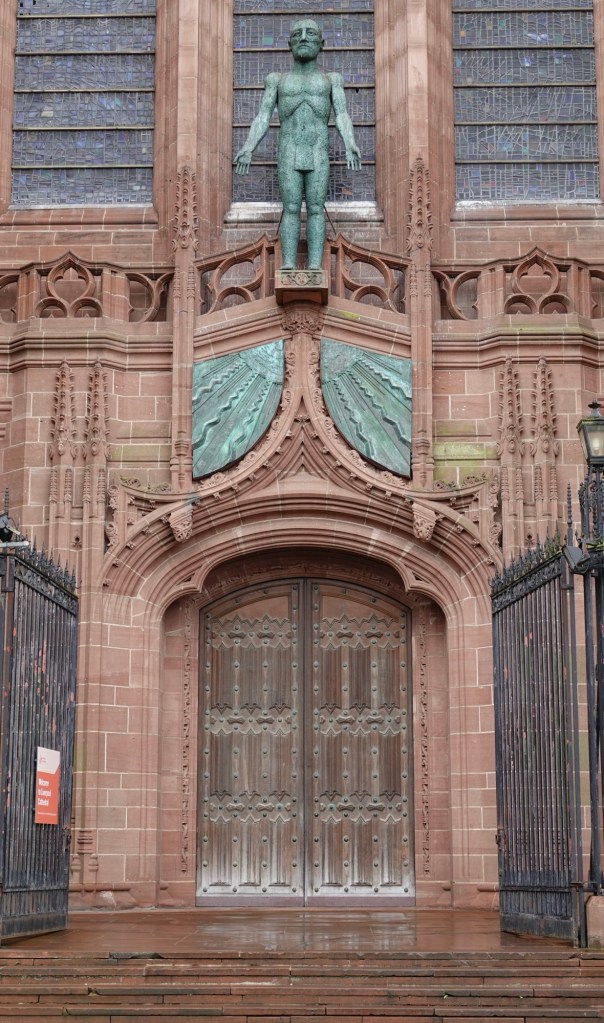
Construction of the cathedral spanned from 1904 to 1978, although entering it felt like walking into a much older building.
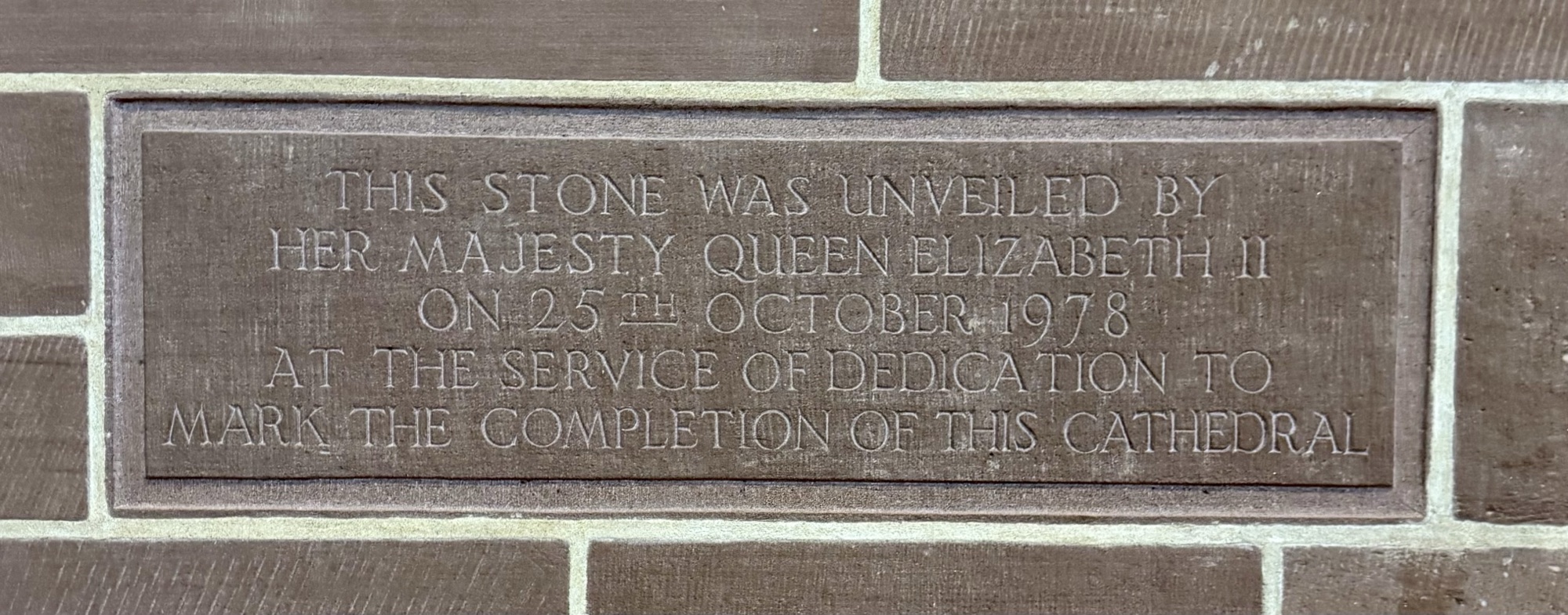
When the cathedral was begun, King Edward VII and Queen Alexandra laid the foundation stone. By the time it was completed, Queen Elizabeth II was on the throne.
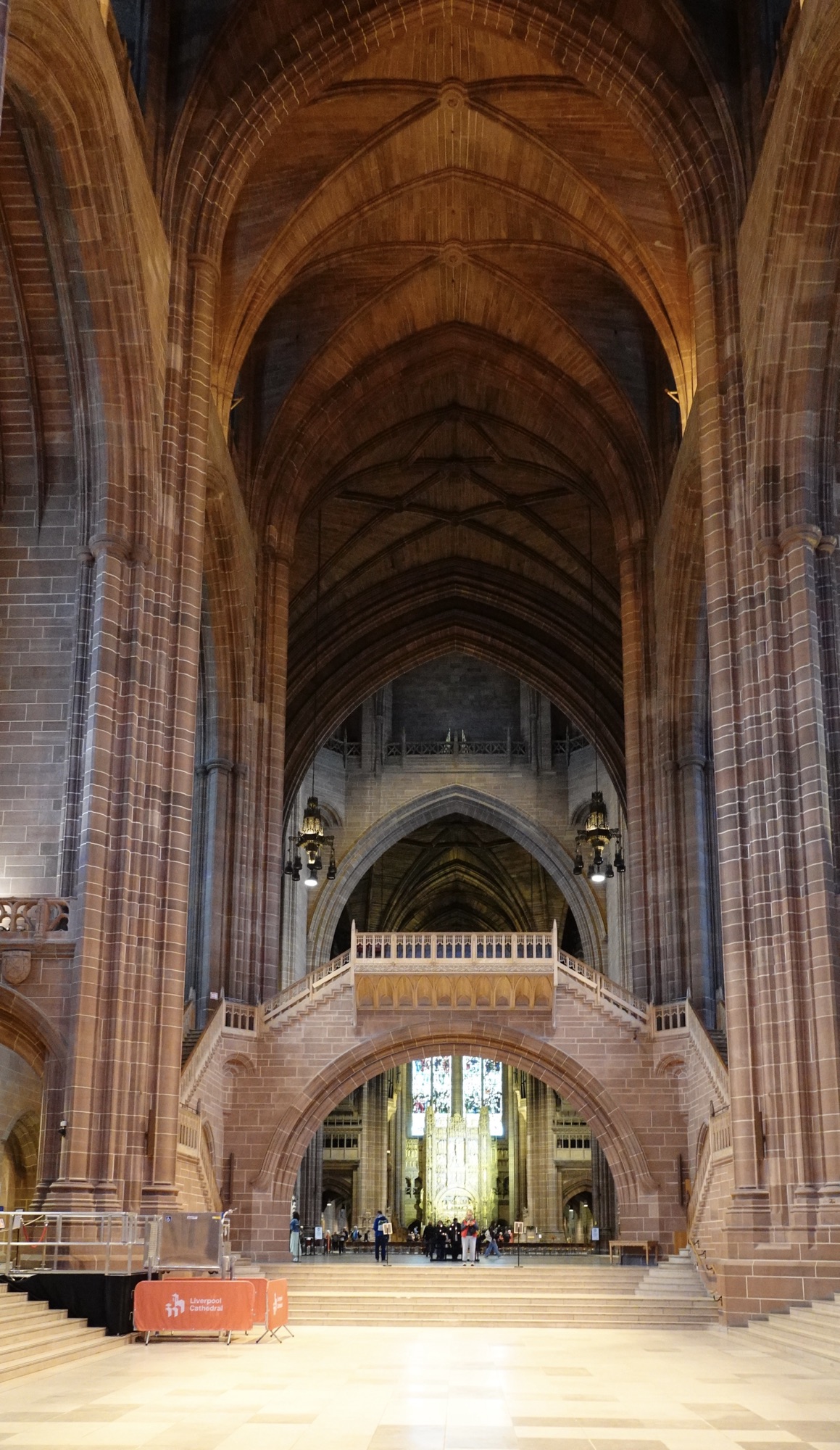
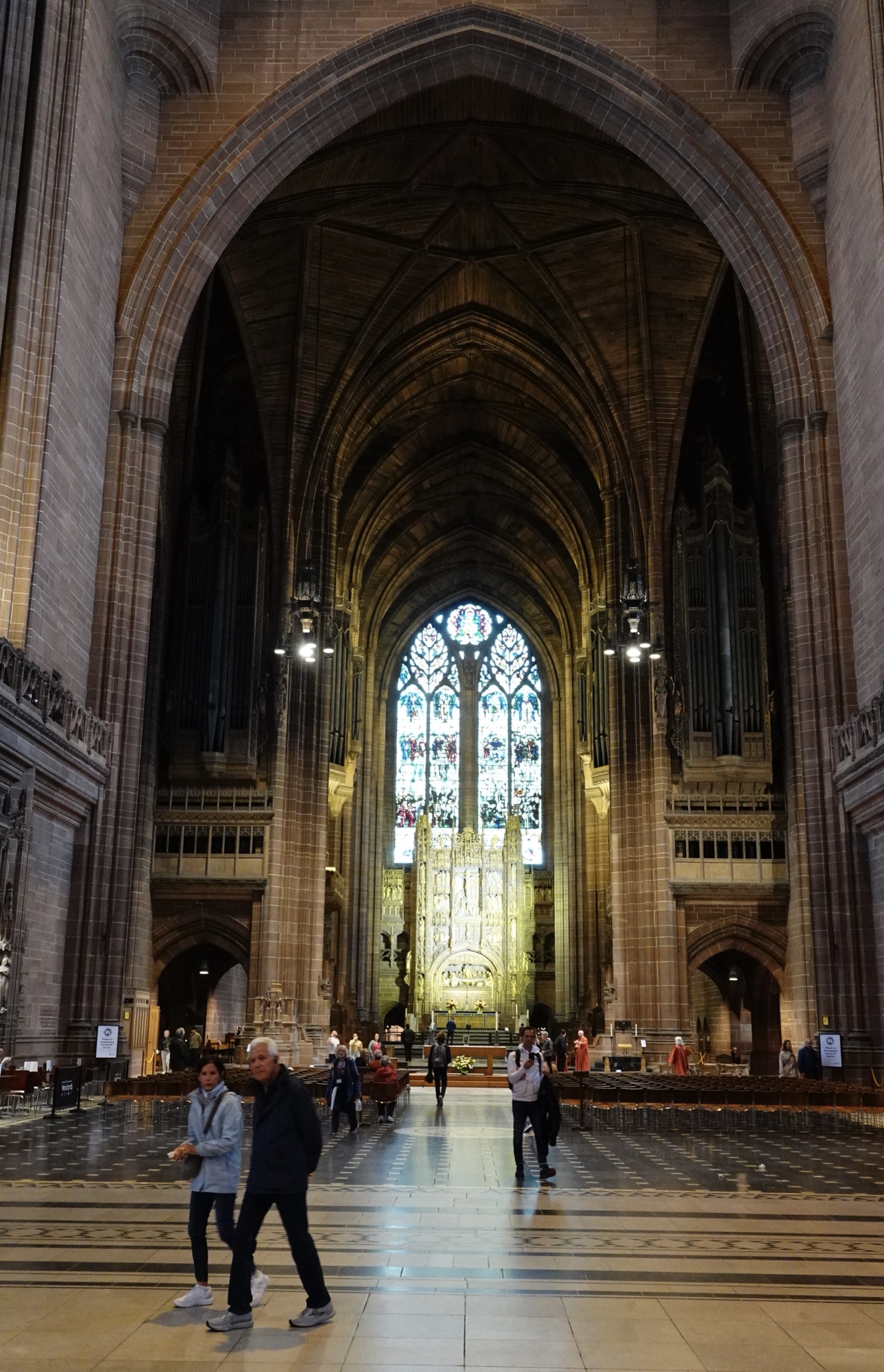
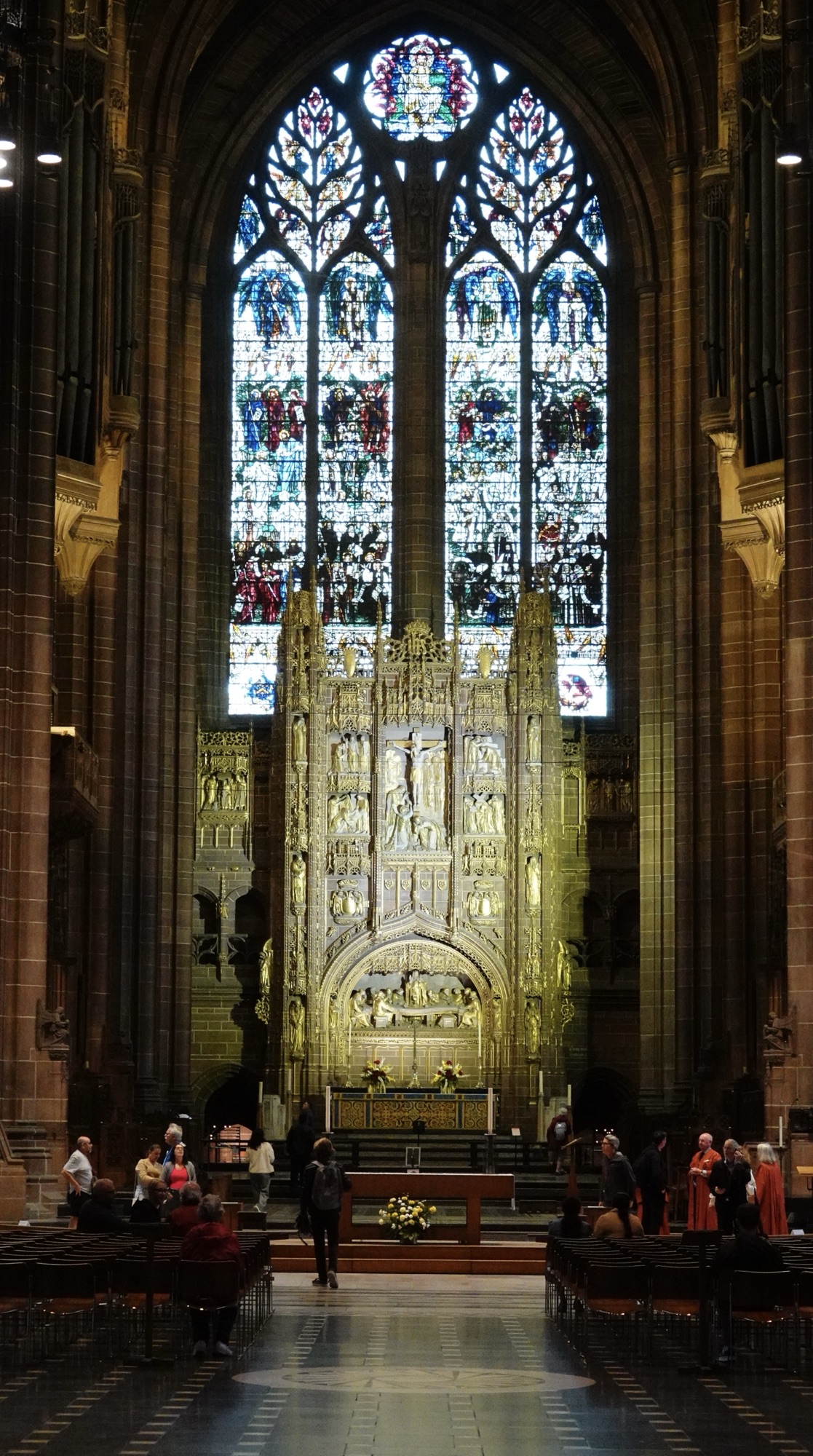
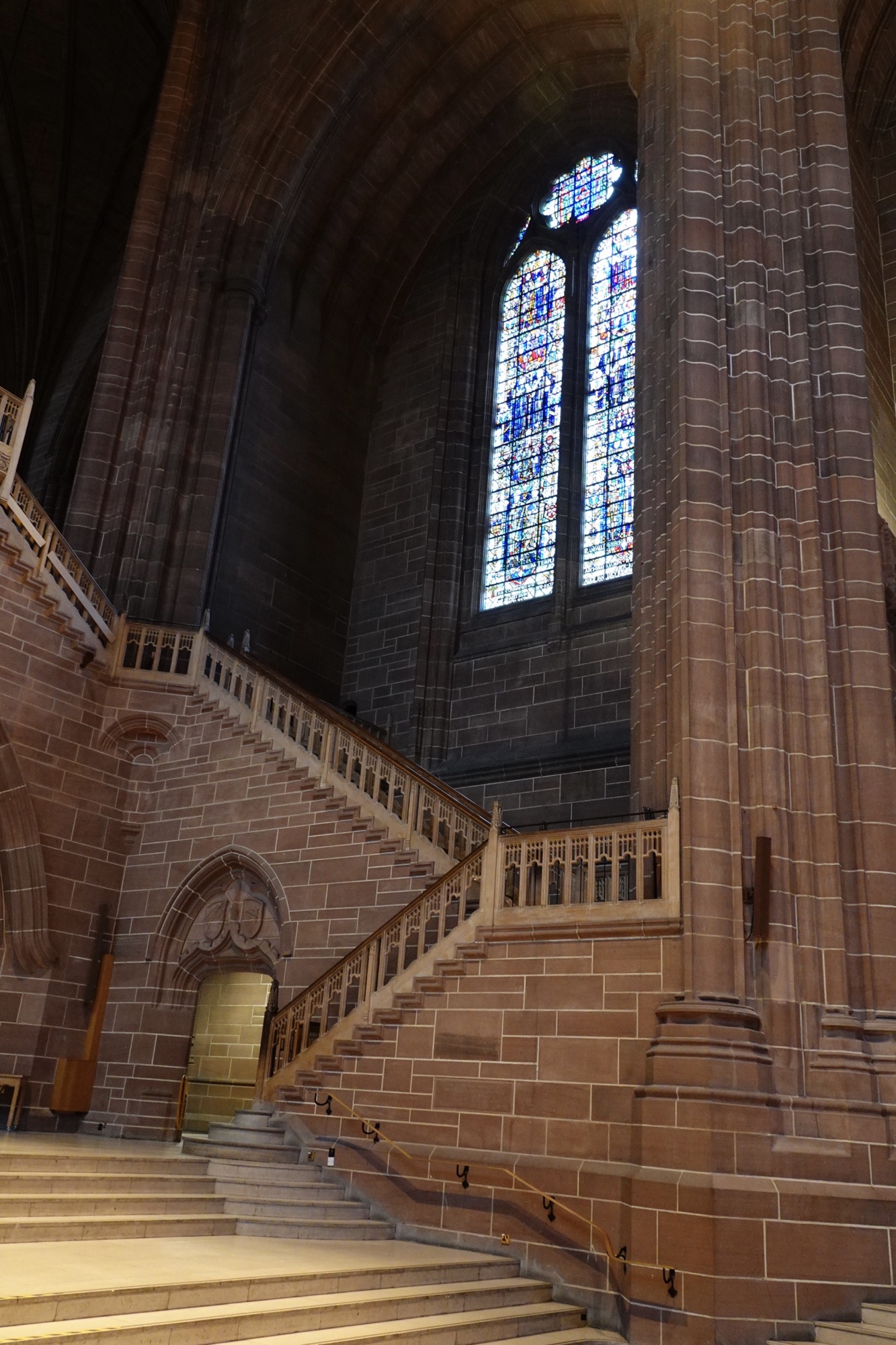
We weren’t on a guided tour, but I had questions. Fortunately there were wonderful, enthusiastic, and well-informed gowned volunteers readily accessible. While Ted wandered about taking photos, Stella and I monopolized Bruce McDougall, who answered all our questions and shared some hidden gems we’d not have found on our own.
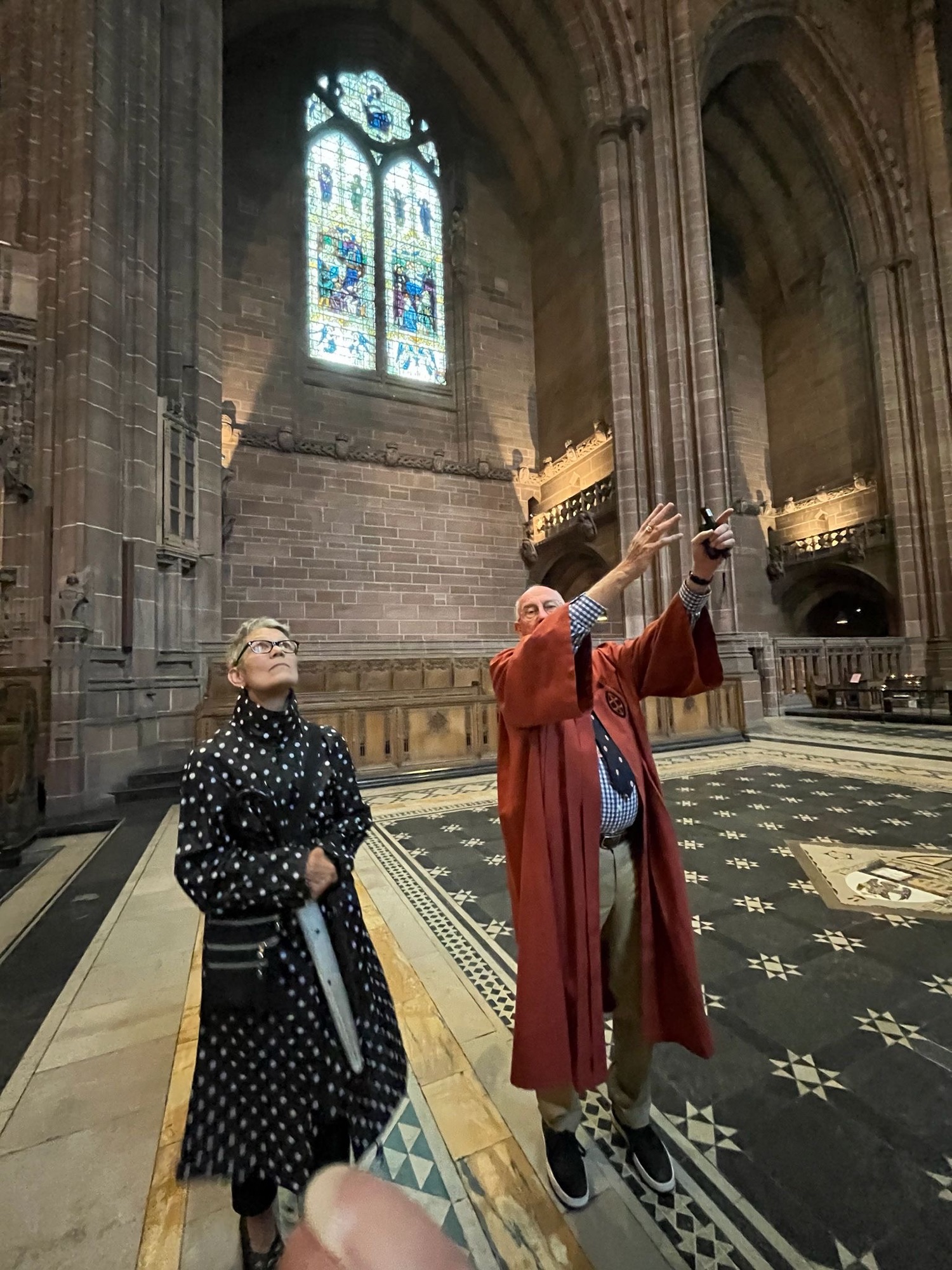
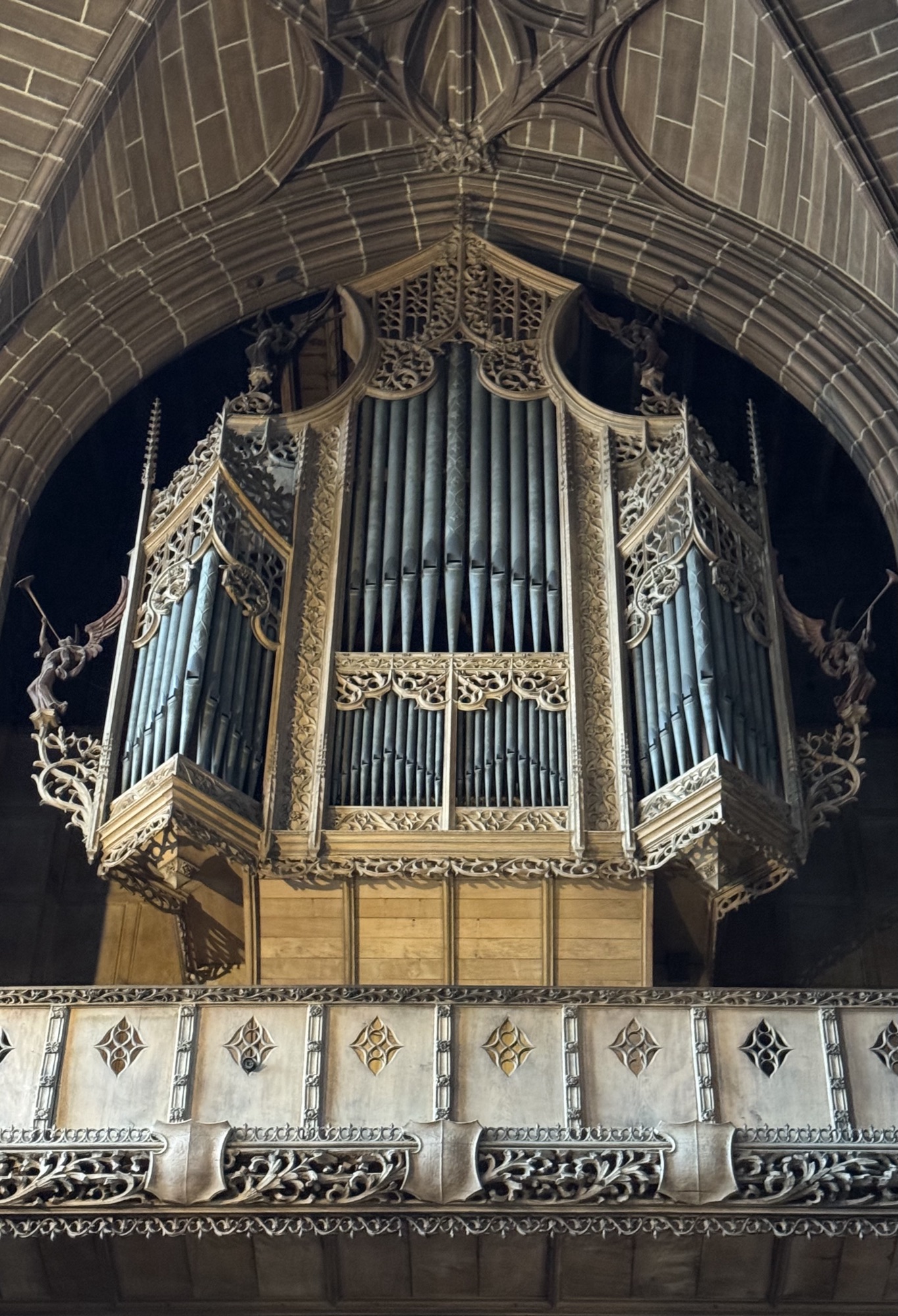
For instance, reading that the 1926 organ here with its 11,000 pipes is the largest pipe organ in the United Kingdom, where are all the pipes? Most of them are located in the two cases on either side of the Quire above the choir stalls, but there are also pipes above the Rankin Porch, high above the floor of the central space in the Corona Gallery, and in the North Choir Triforium.
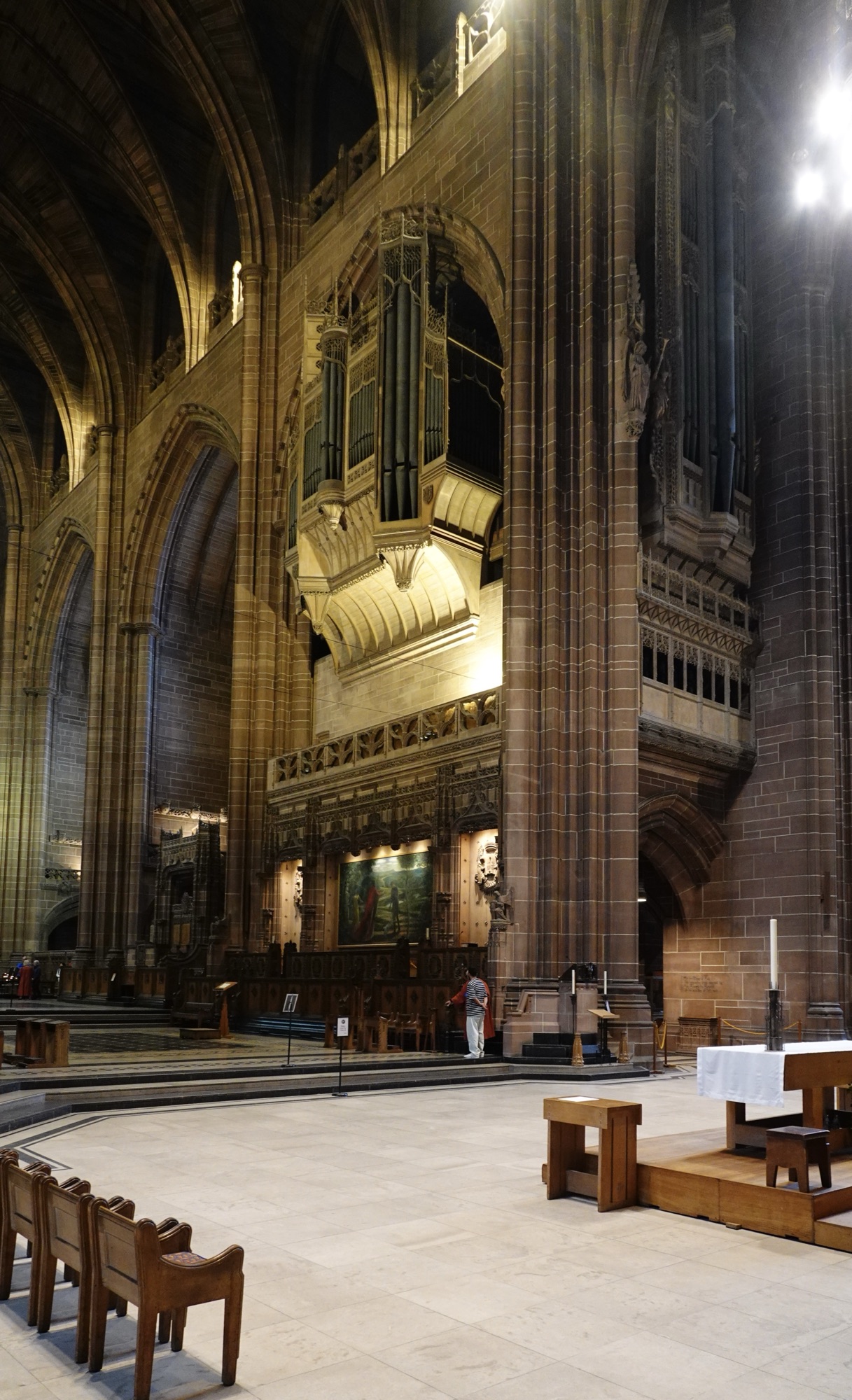
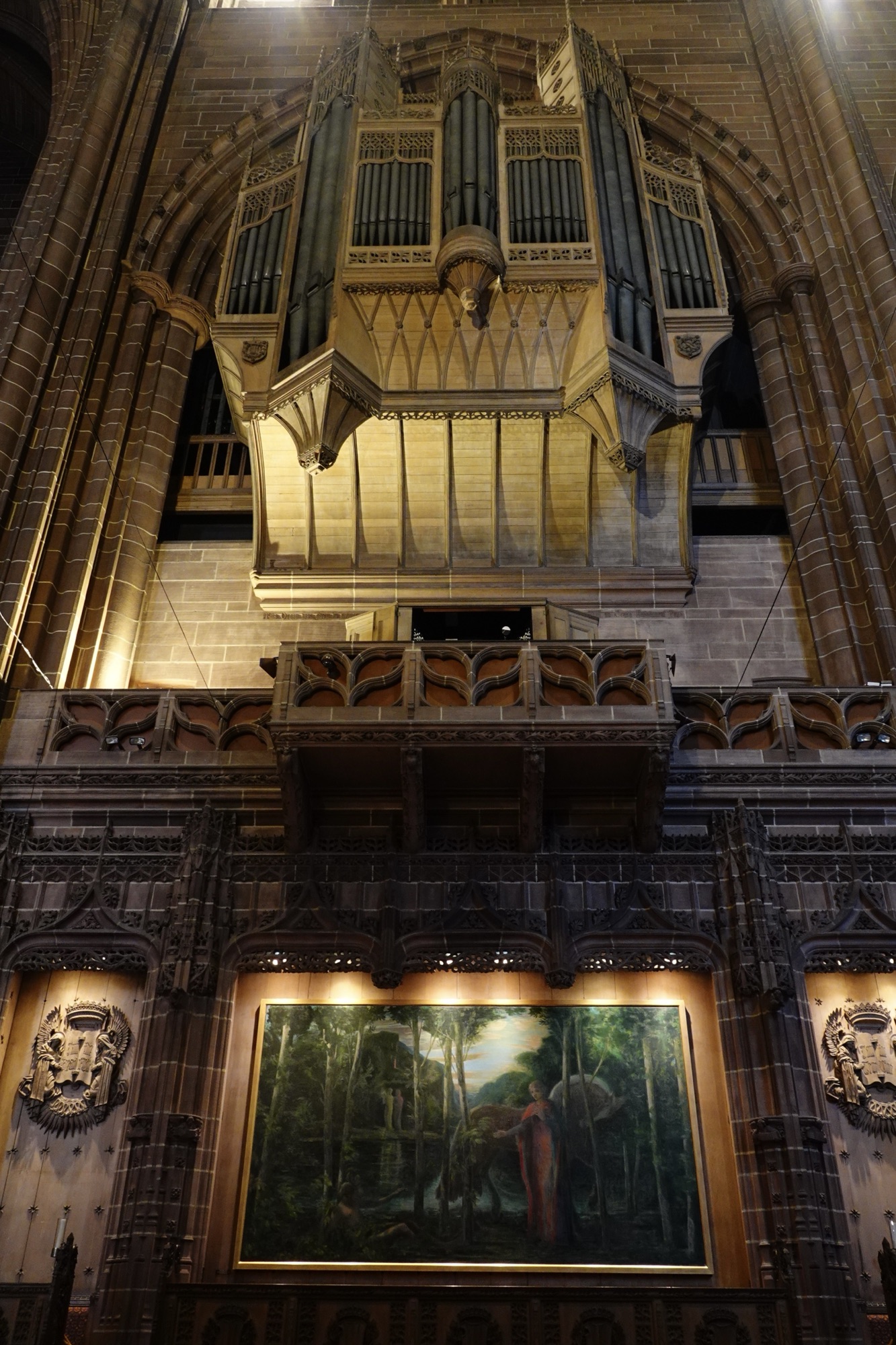
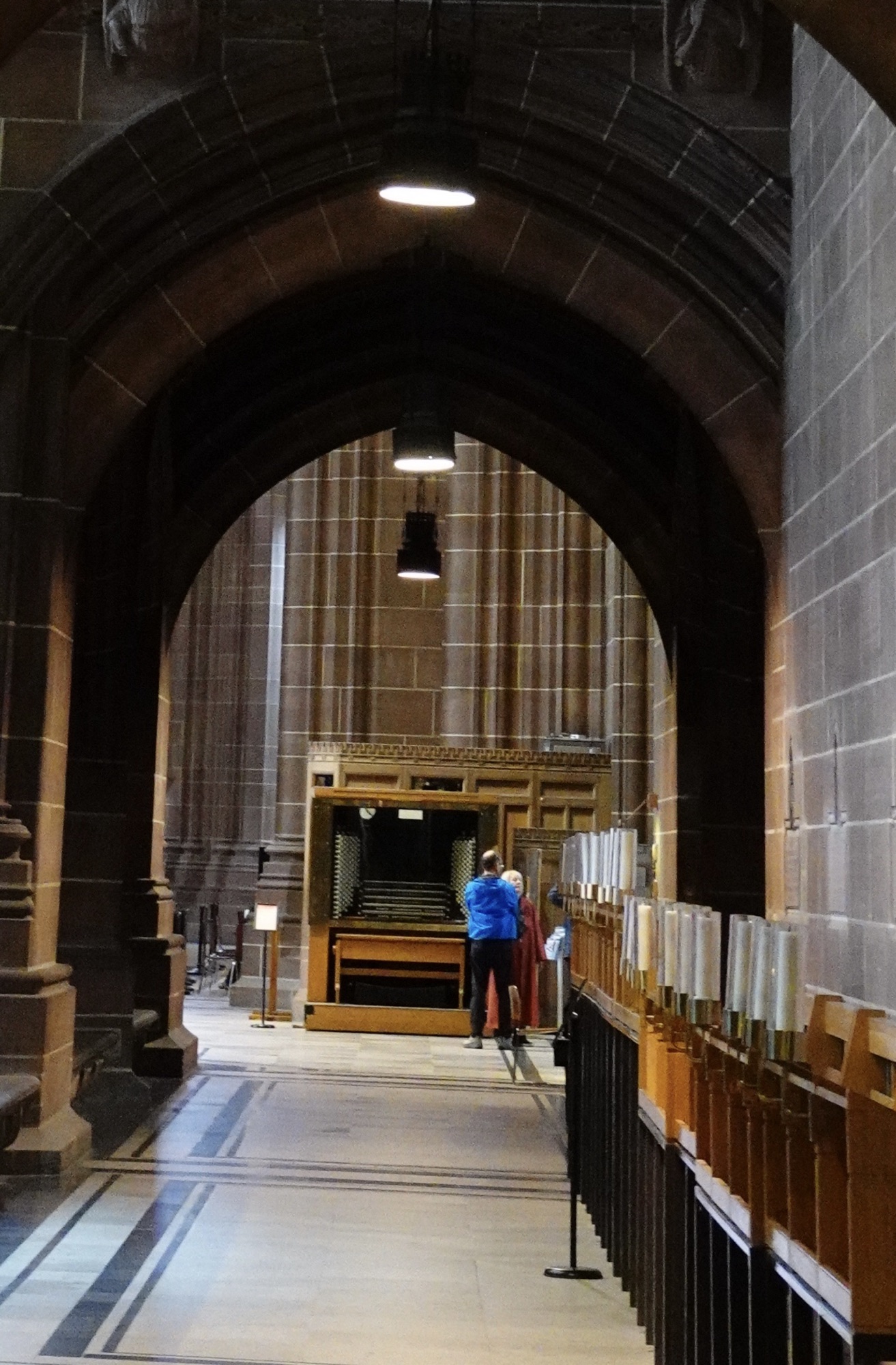
The organ itself can be played from two consoles; one located underneath the north case on a purpose built gallery, and another which can be moved around the cathedral.
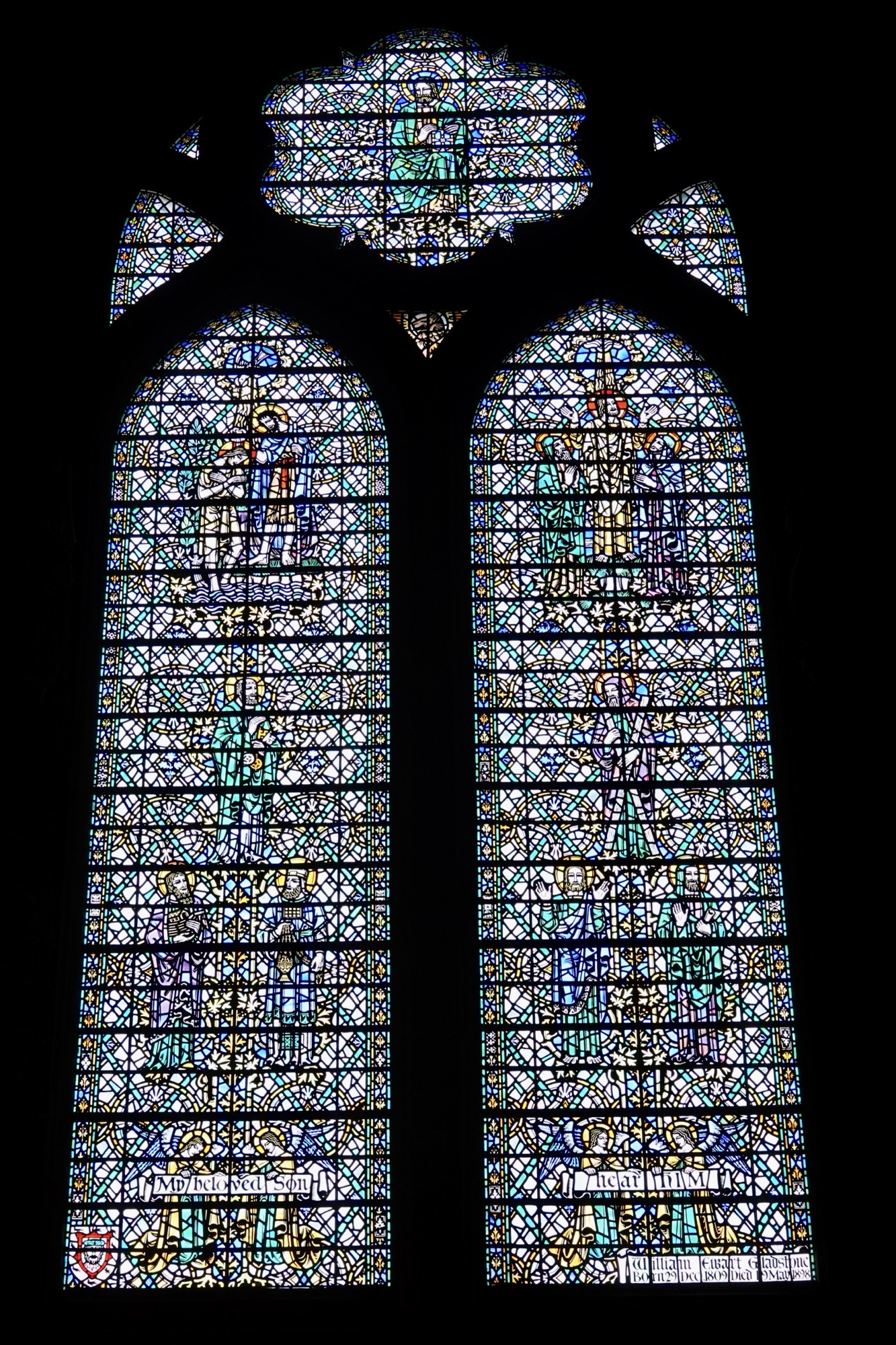
The oldest of the cathedral’s windows date to about 1912.
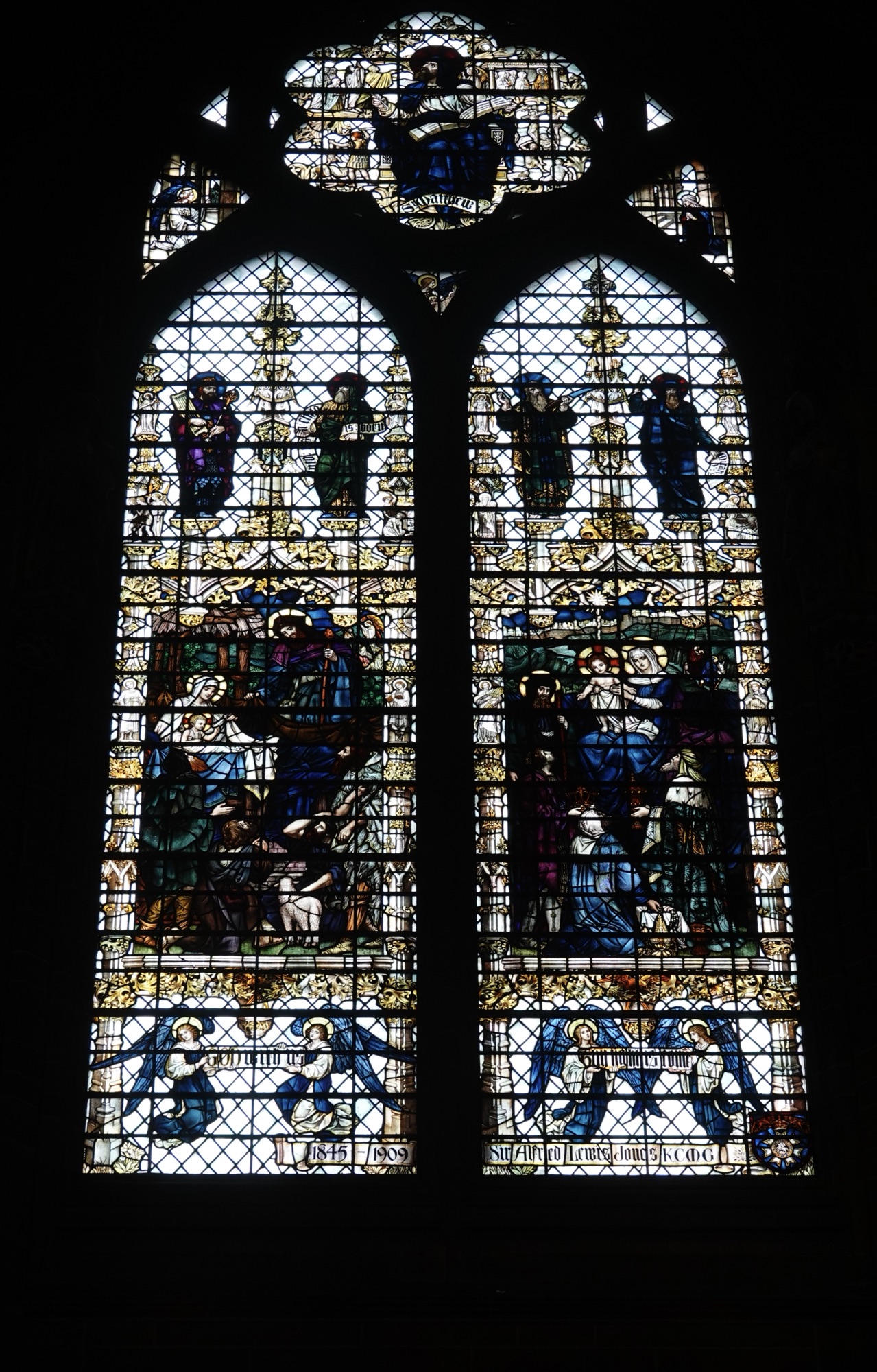
Only one window was destroyed during the two world wars. The window that replaced it is significantly brighter than the original.
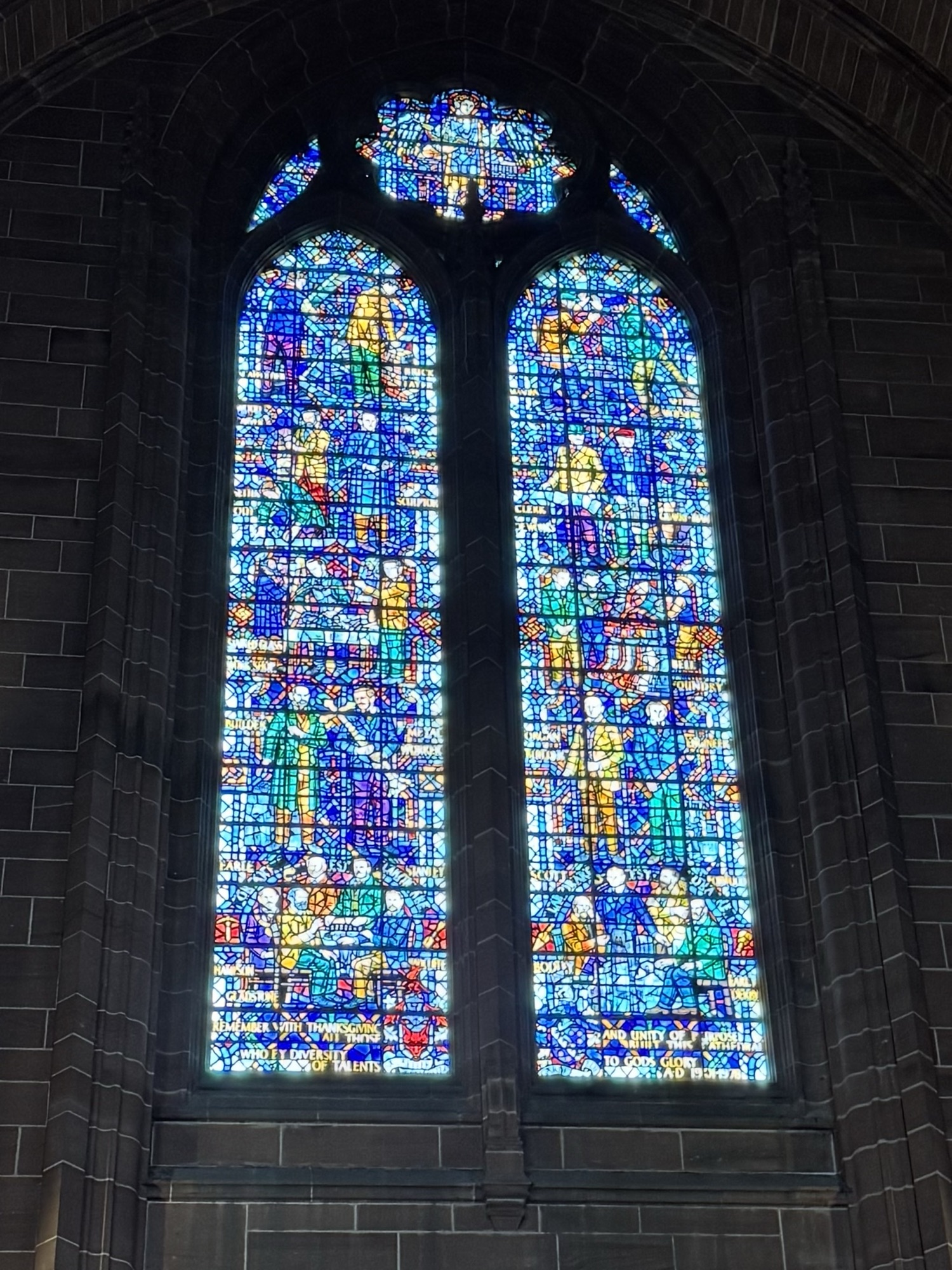
Bruce showed us his favourite window, known as “the layman’s window” because it recognizes the people involved in building this grand church. It features metal workers, bricklayers, stonemasons, and more.
Since the cathedral is relatively new, there are not a lot of tombs, but the black marble sarcophagus of Sir Frederick Arthur Stanley, featuring a recumbent bronze effigy of the 16th Earl of Derby, is prominent.
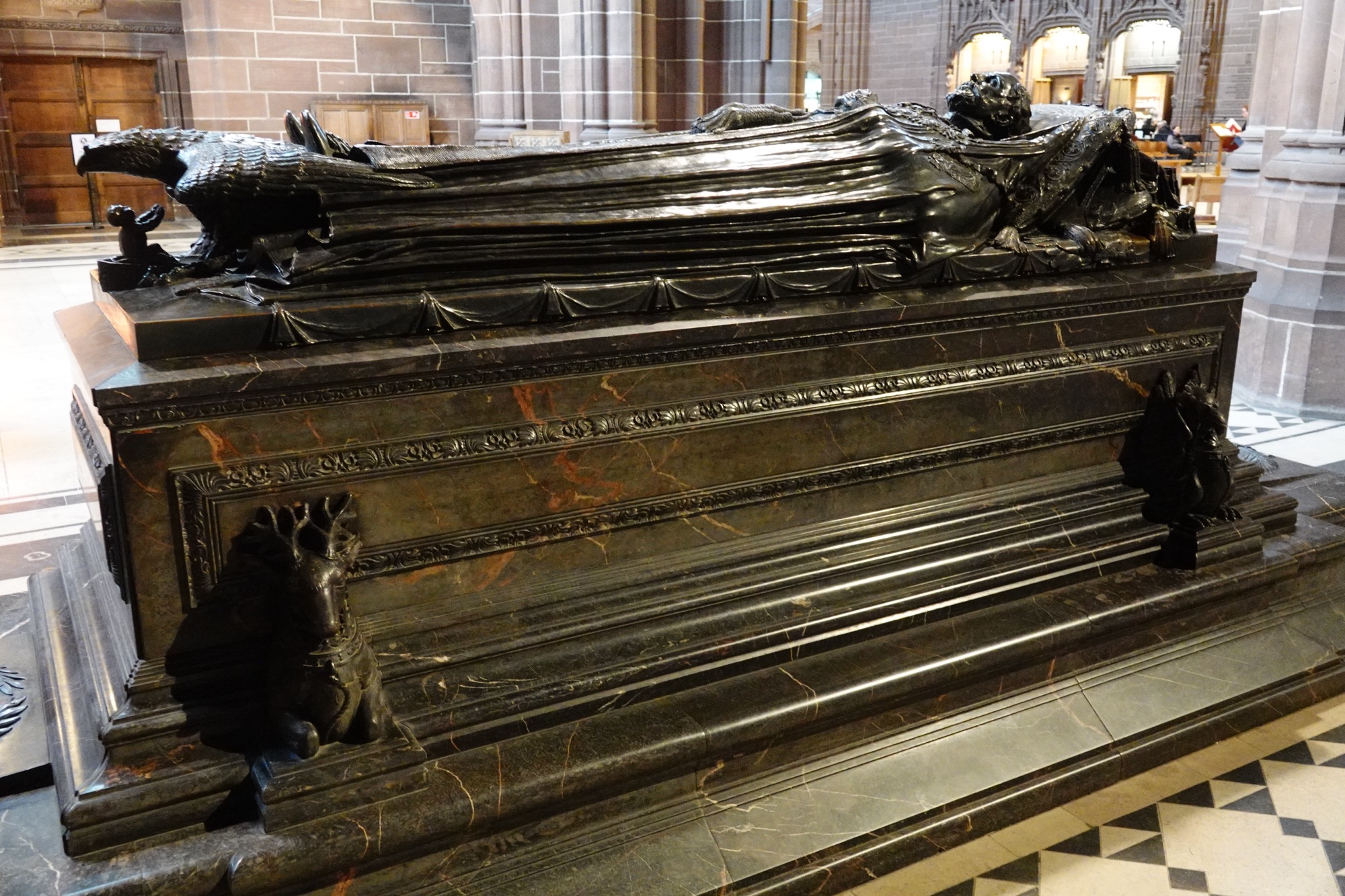
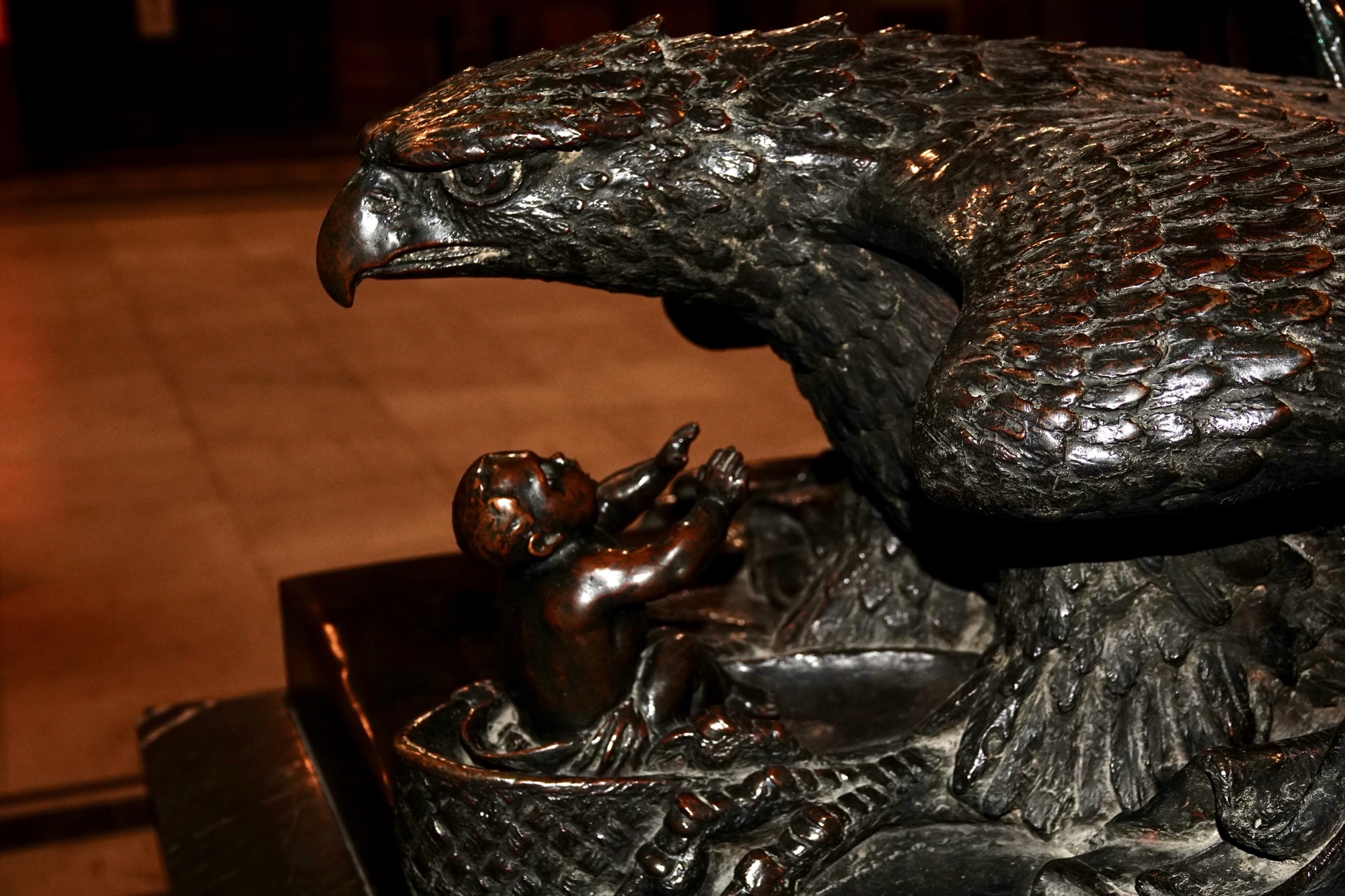
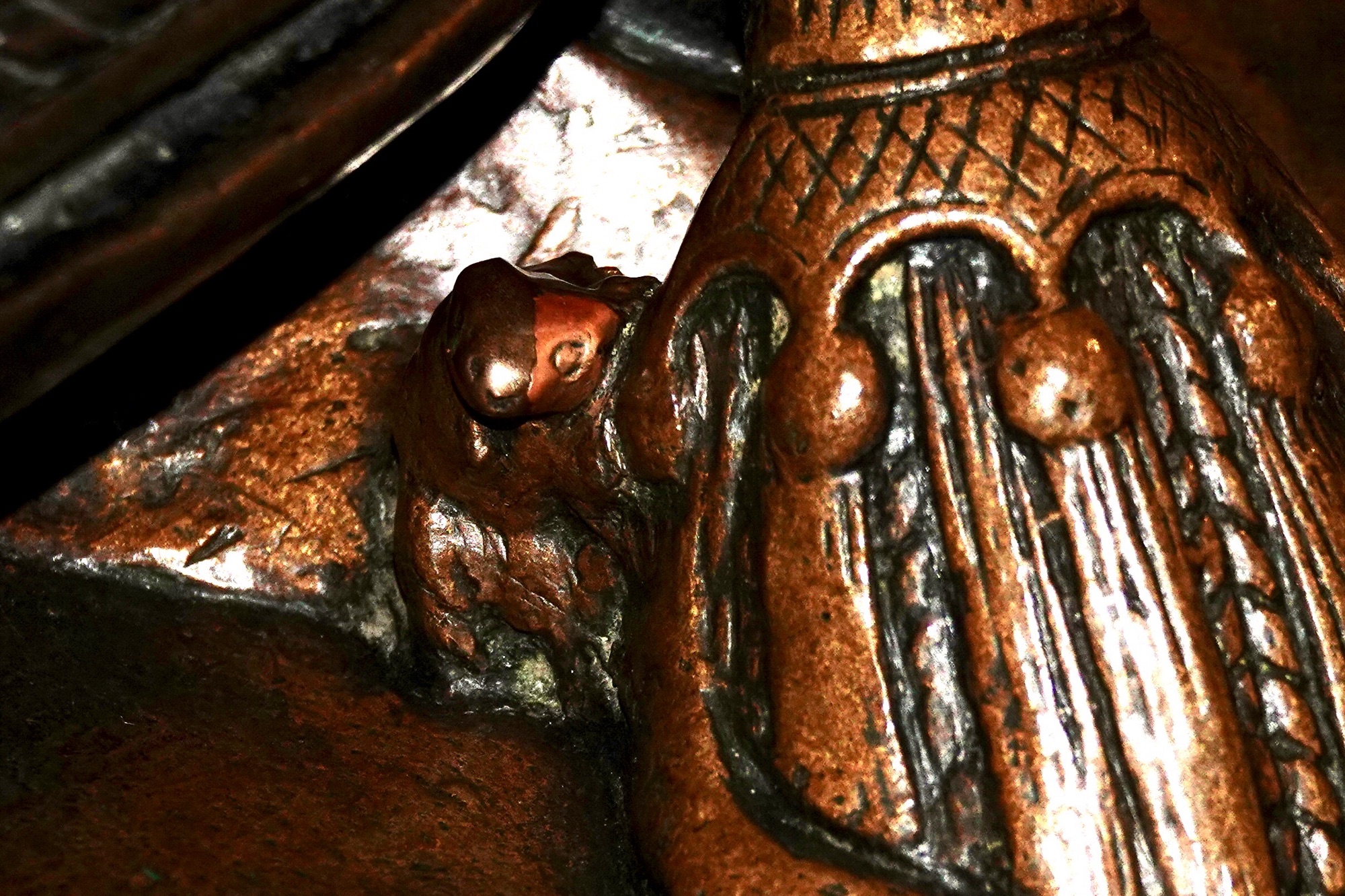
The tomb features specific family heraldry, including an eagle and child crest, and a small bronze mouse hidden on the left side.
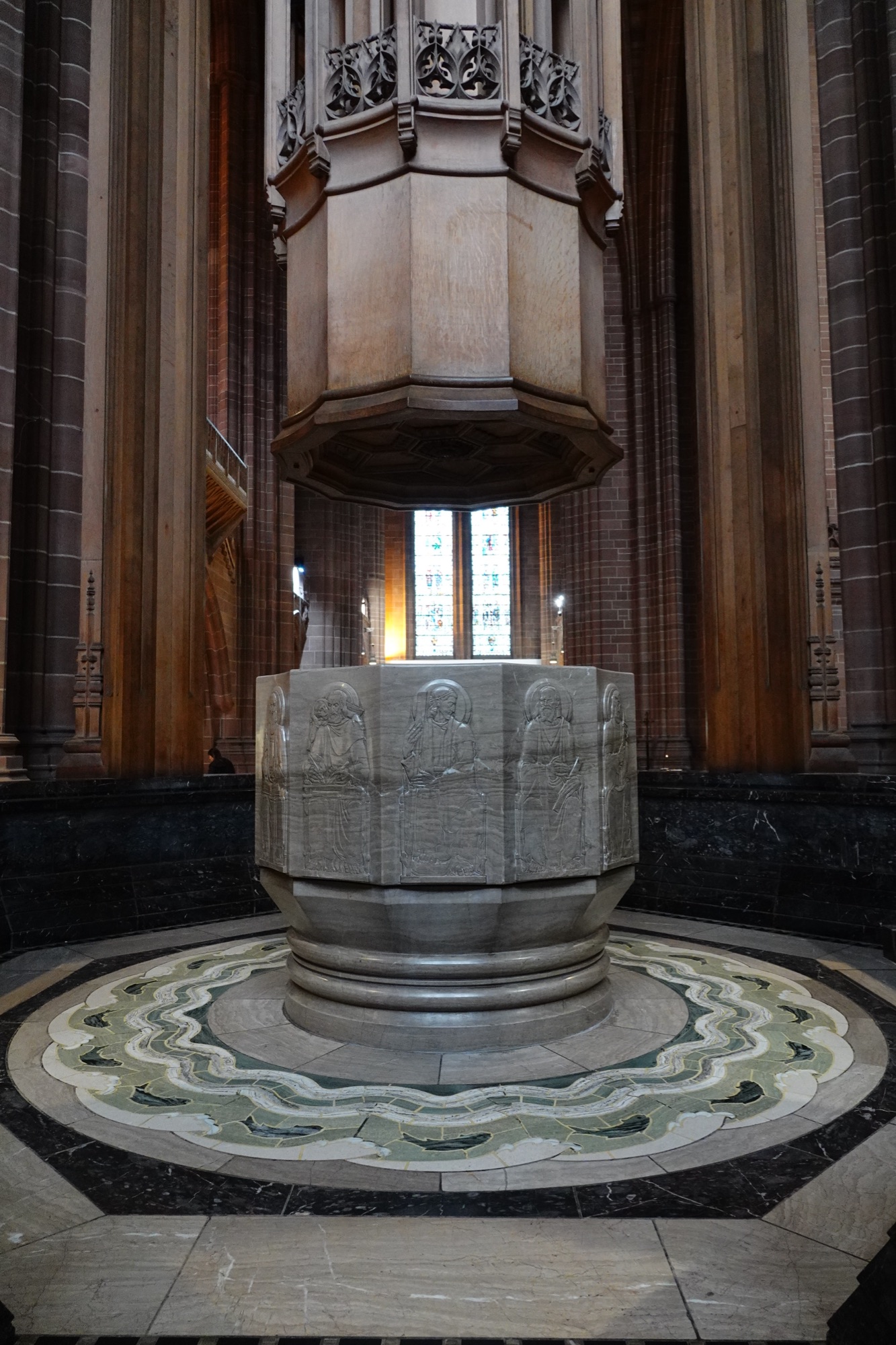
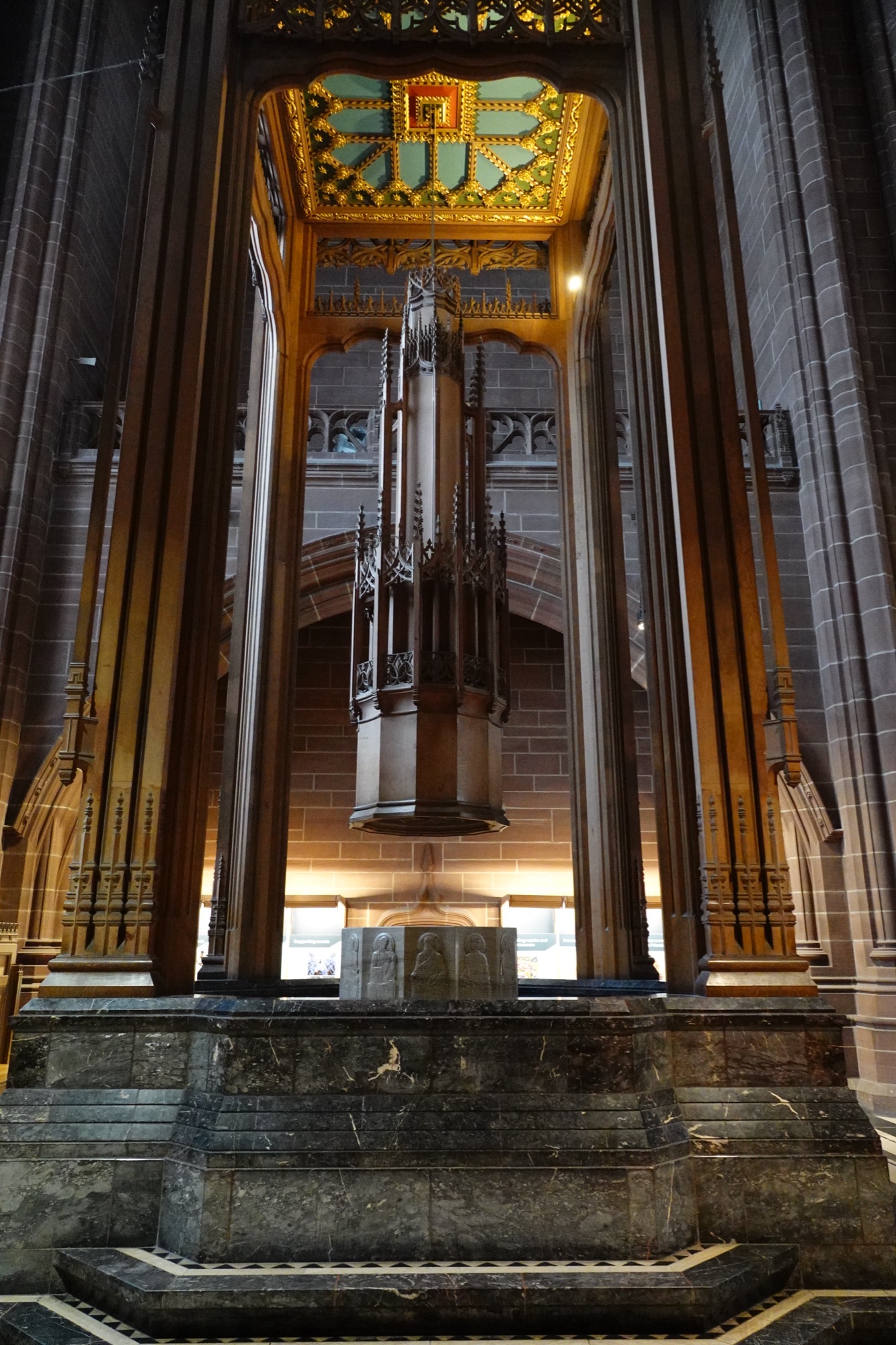
The cathedral’s baptismal font stands in the south west transept, known as the Baptistry. It is made of buff-coloured French marble and has the figures of an apostle carved in relief on each of its twelve sides. The floor surround is made of marble, inlaid with breaking waves and a circle of green fishes – the fish being a symbol of Christianity.
Arguably the cathedral’s most beautiful area is the Lady Chapel.
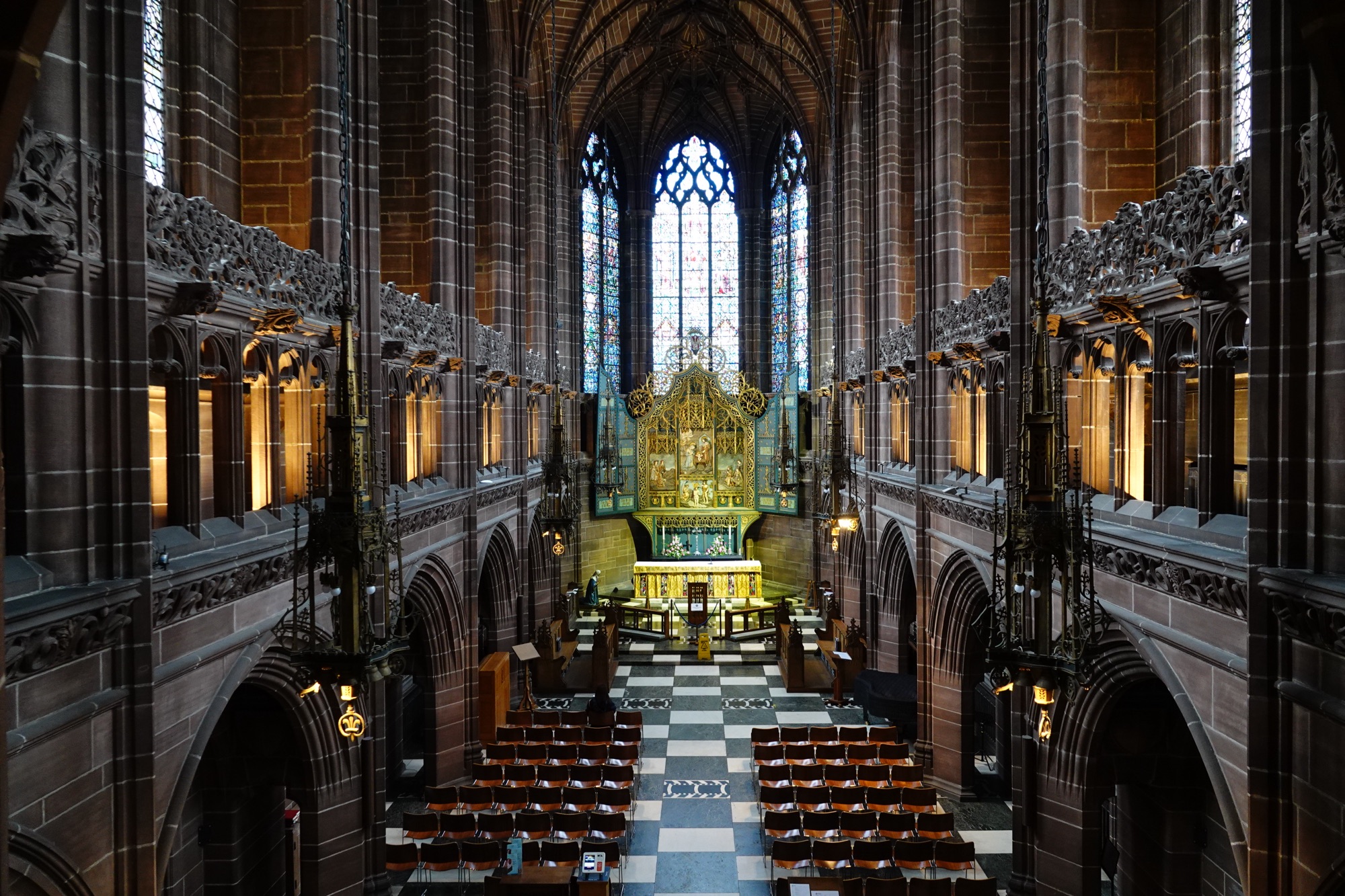
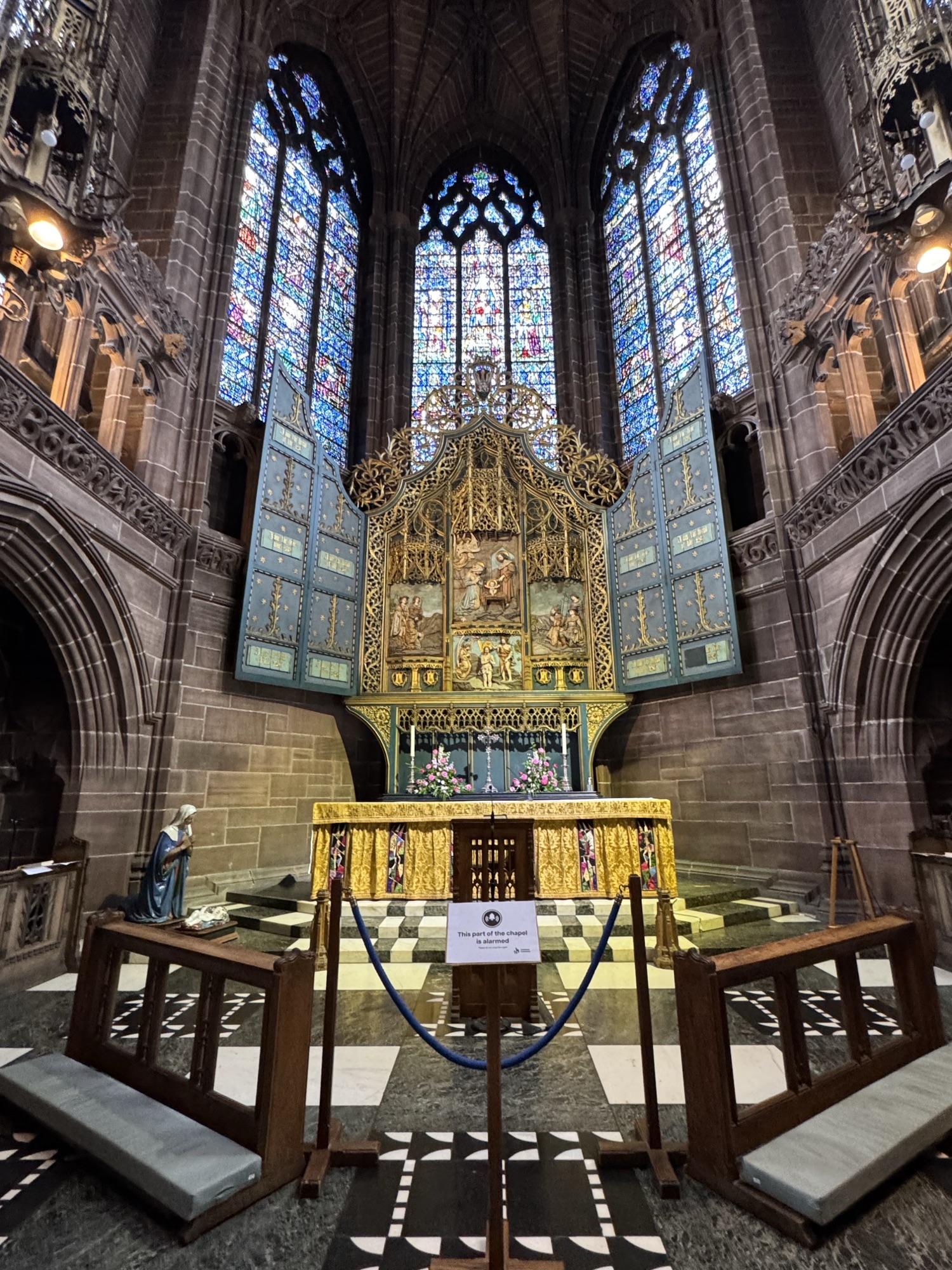
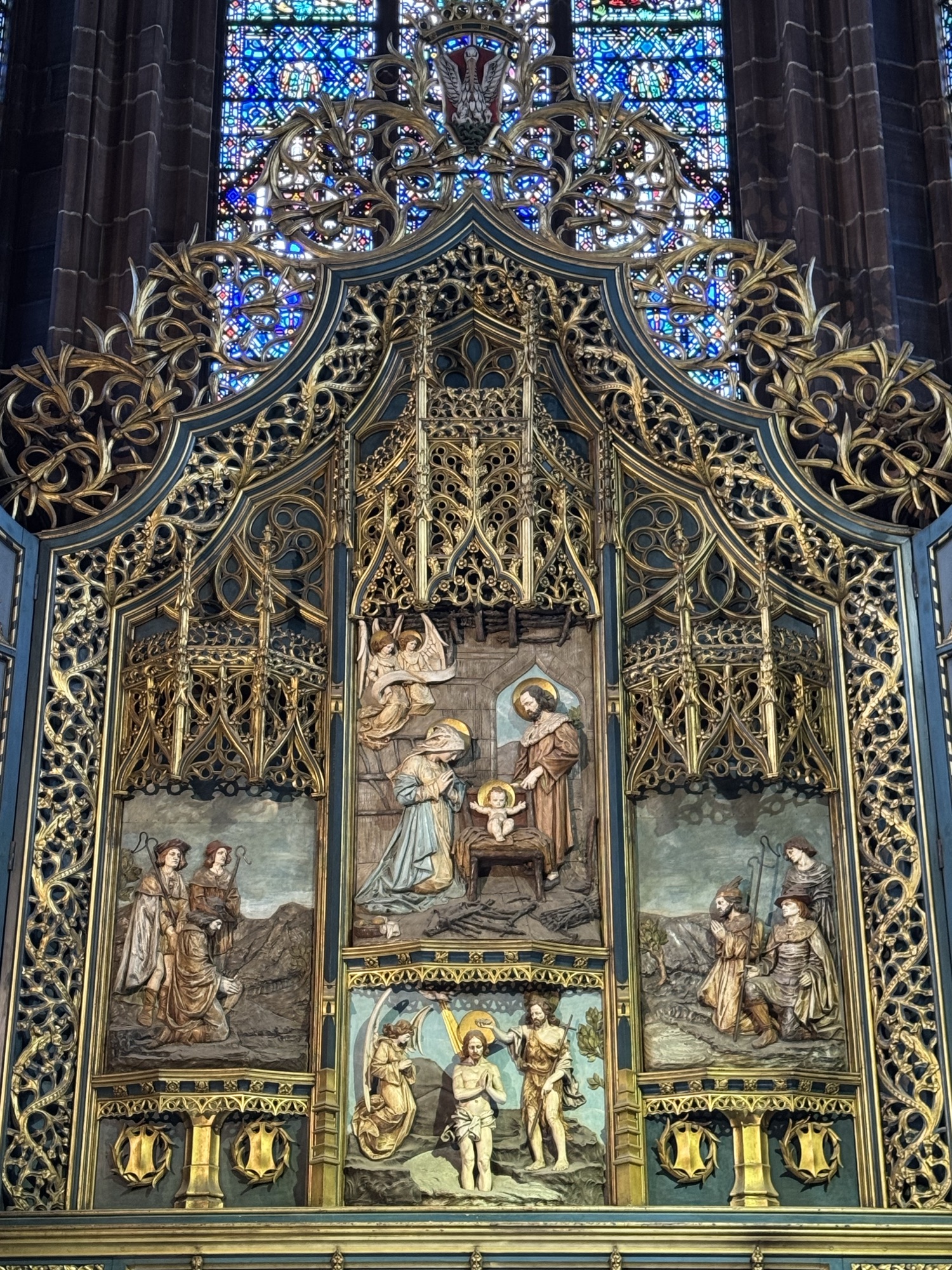
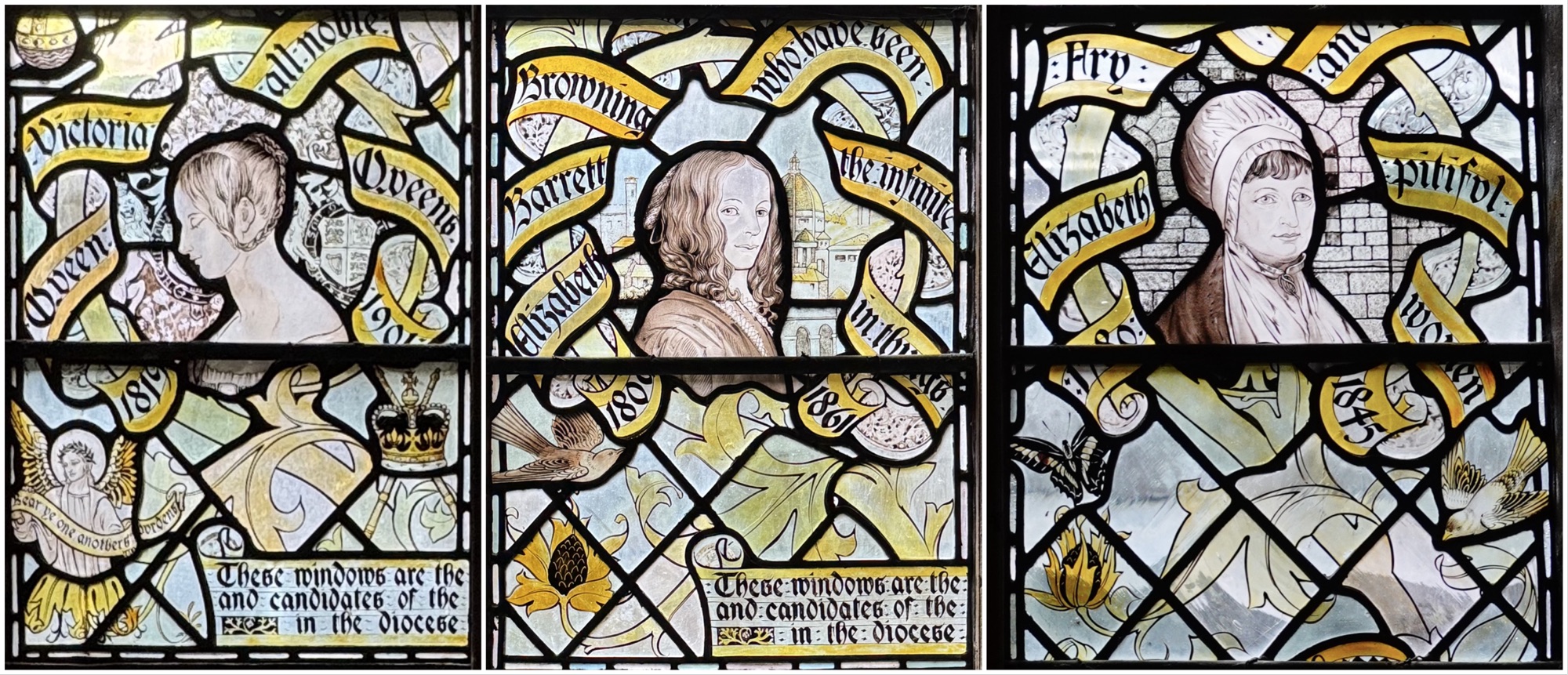
As well as being dedicated in honour of Mary, the Mother of Jesus, the chapel also celebrates the work of many “godly women” (the cathedral sign’s wording) through centuries.
Female saints are depicted in the high-level windows, and local women of faith in the windows at the rear of the Chapel.
A memorial commemorates British women who died on the battlefield, caring for those injured as a result of war. All these women gave of their best as they served others, often at great cost to themselves.
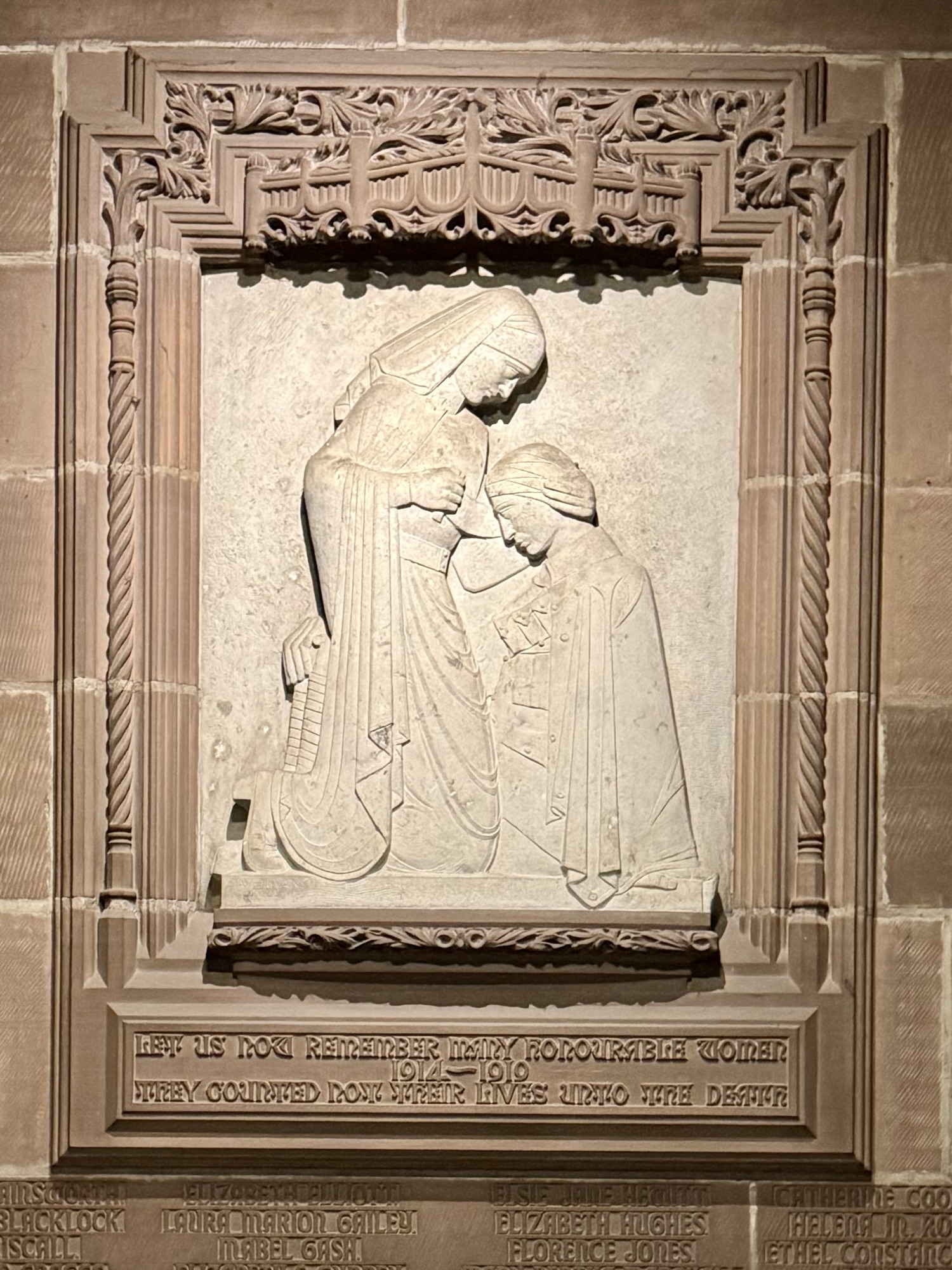
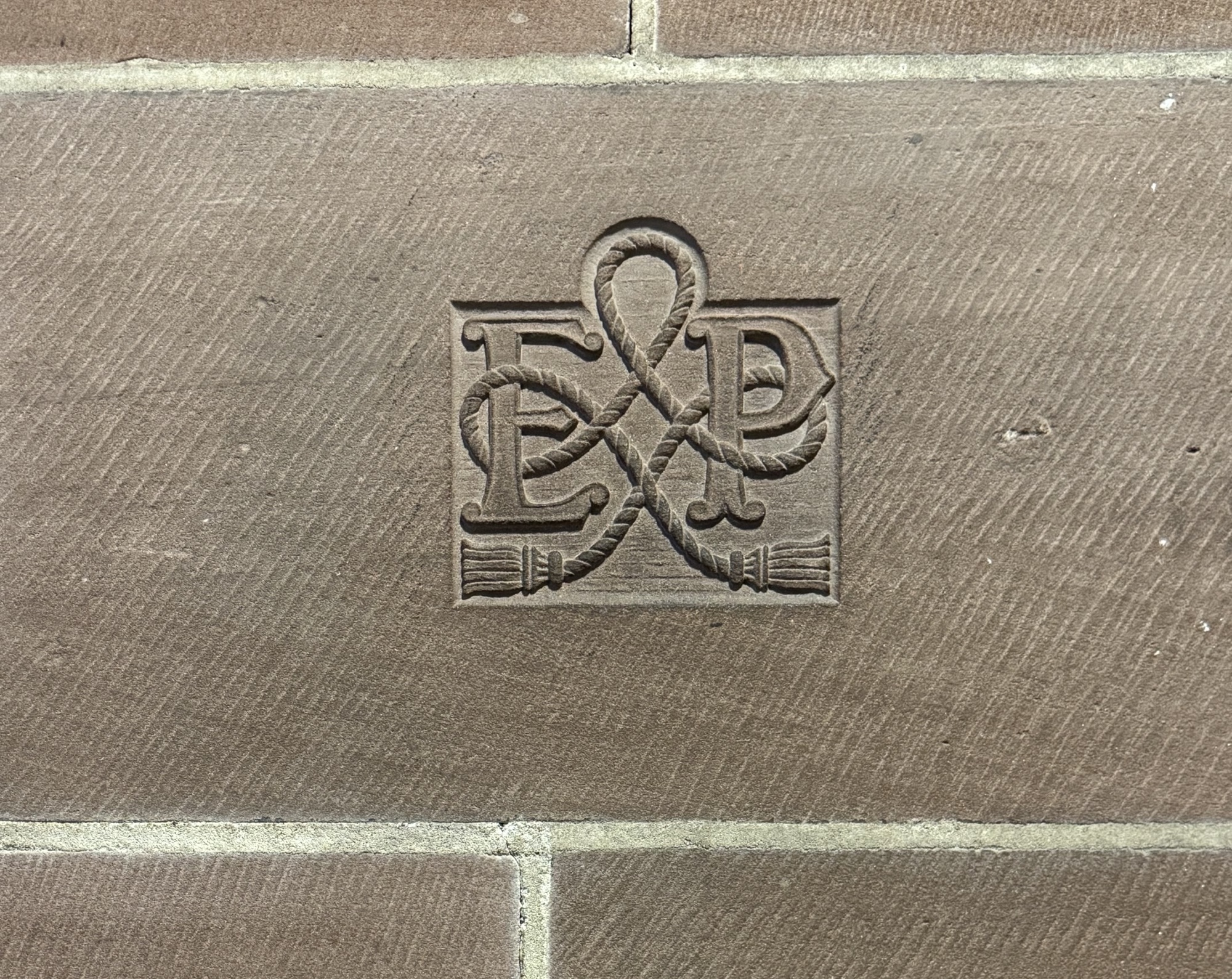
Before we left the cathedral Bruce made sure we noticed two interesting things.
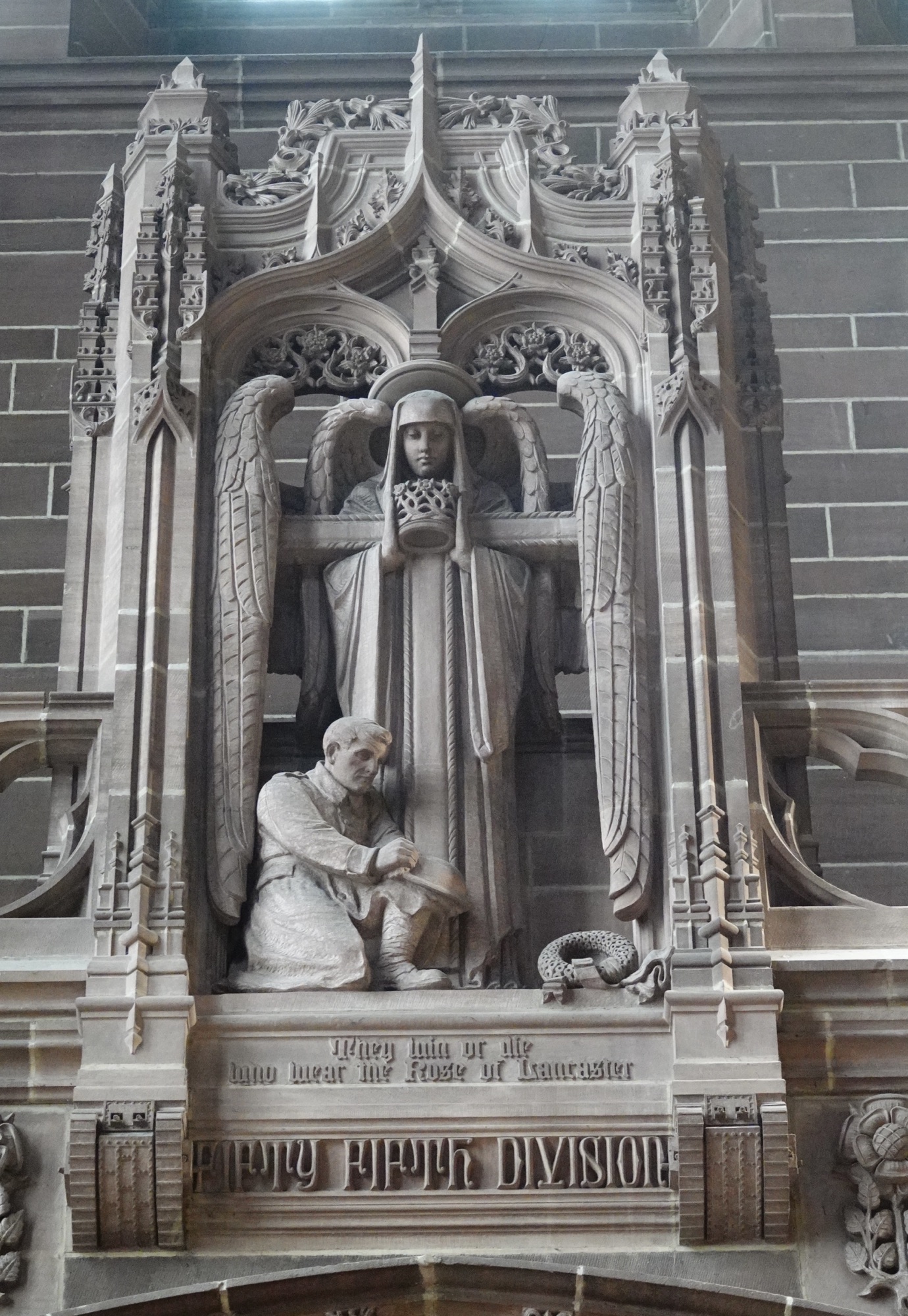
“They win or die who wear the Rose of Lancaster”
The unobtrusive matrimonial knot with the initials E and P was created during Elizabeth II and Prince Phillip’s visit to the cathedral early in their marriage.
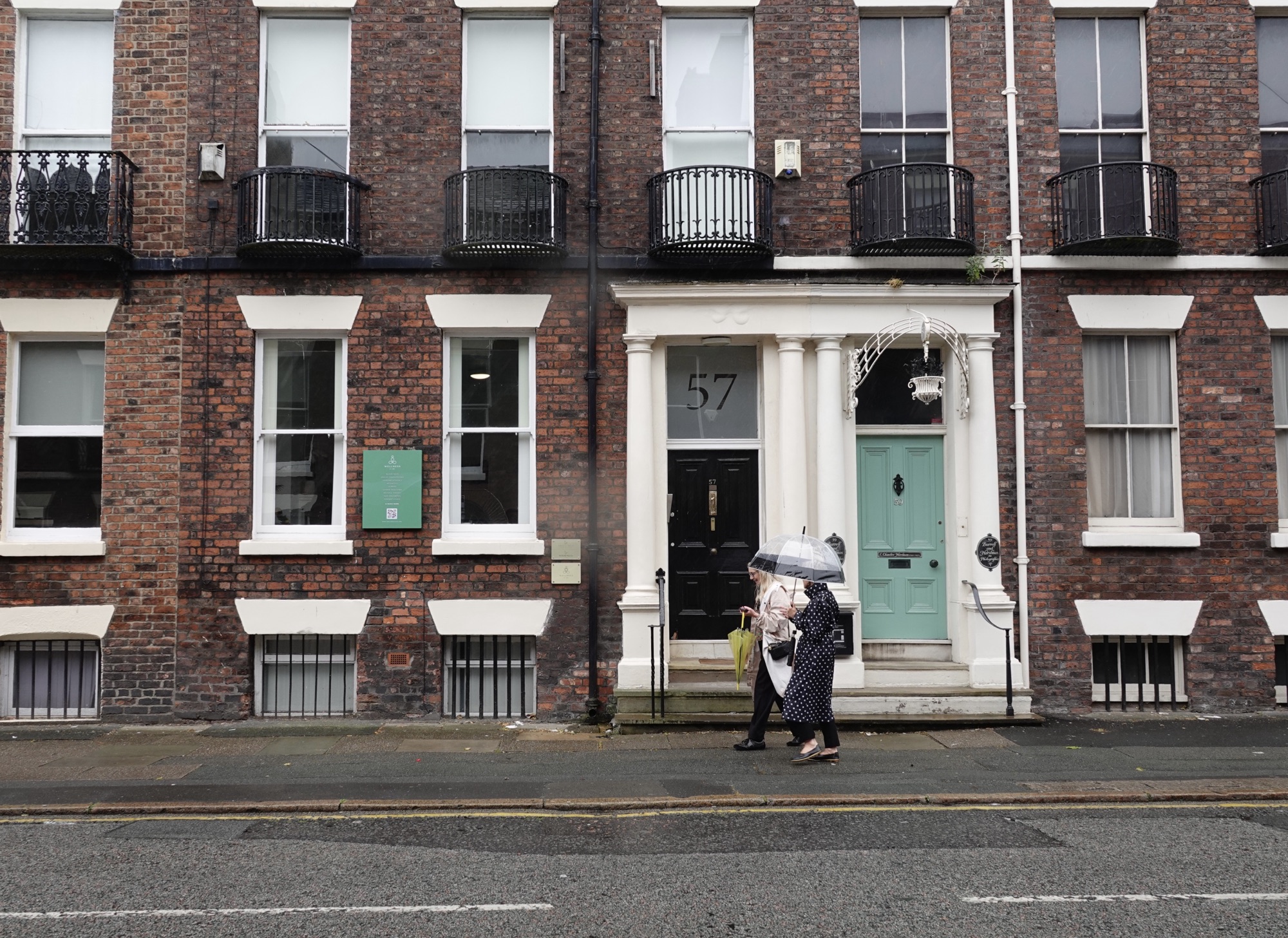
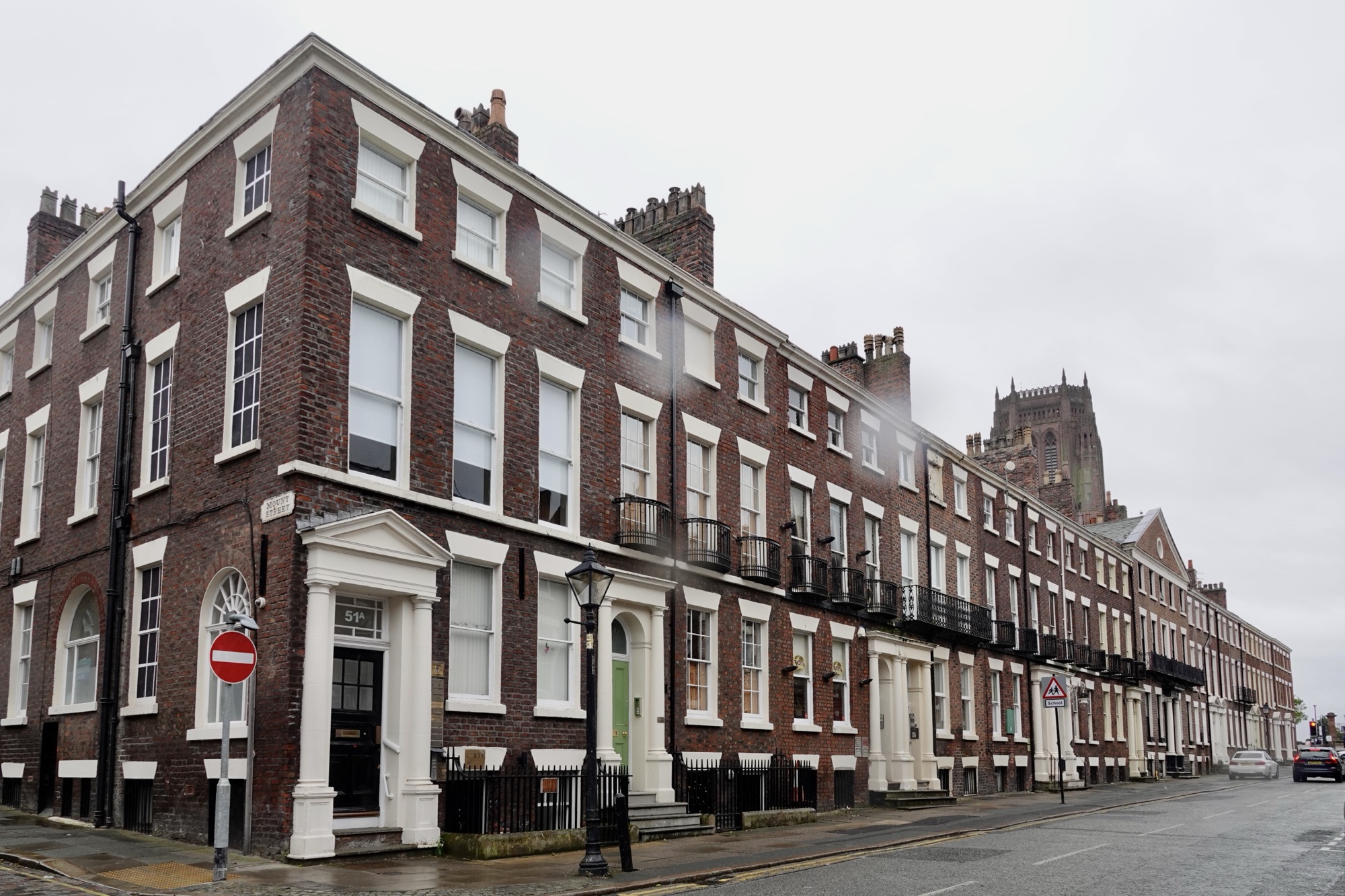
We walked along streets lined with Georgian row houses.
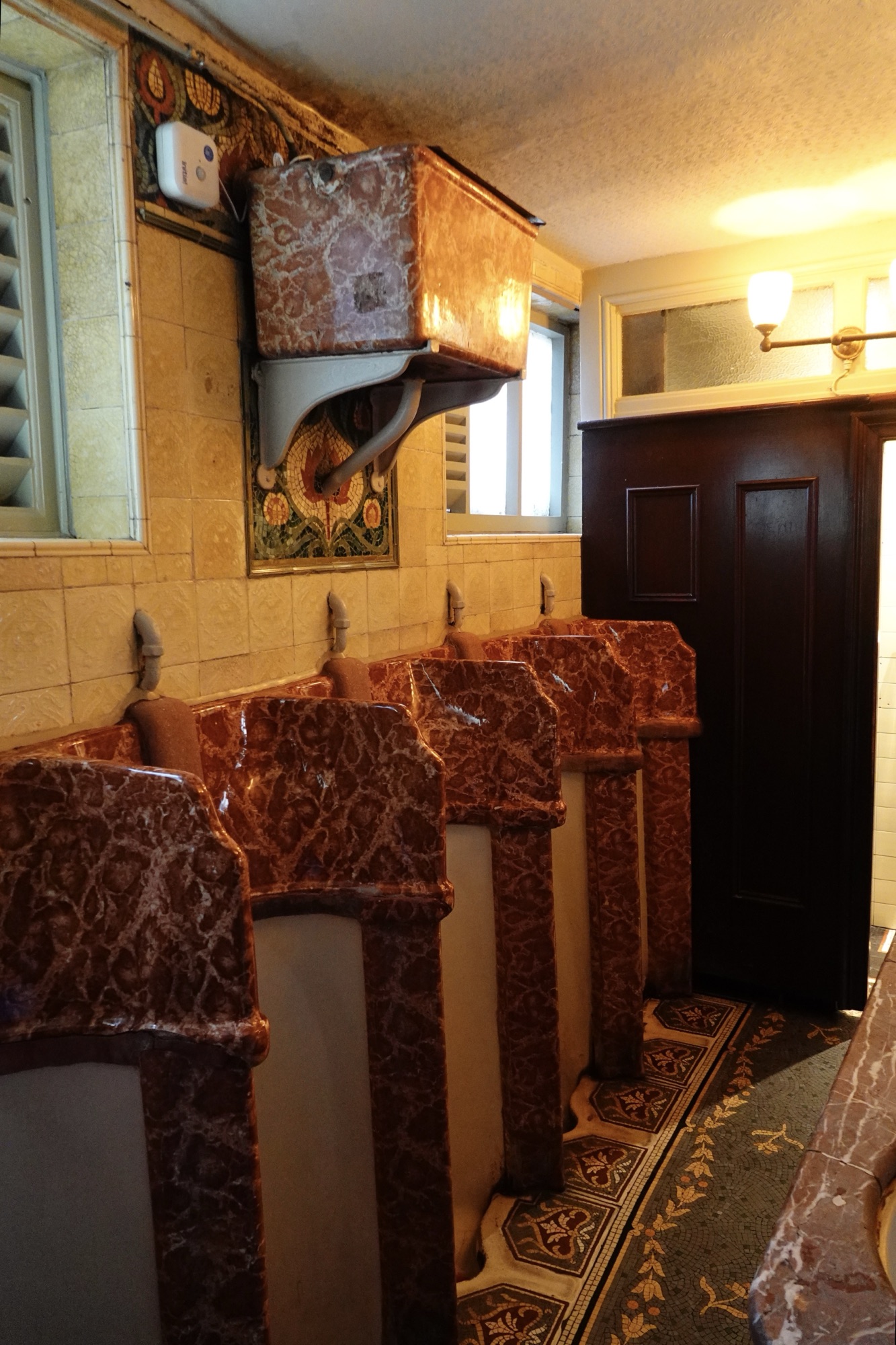
We made a stop at the iconic Philharmonic Pub.
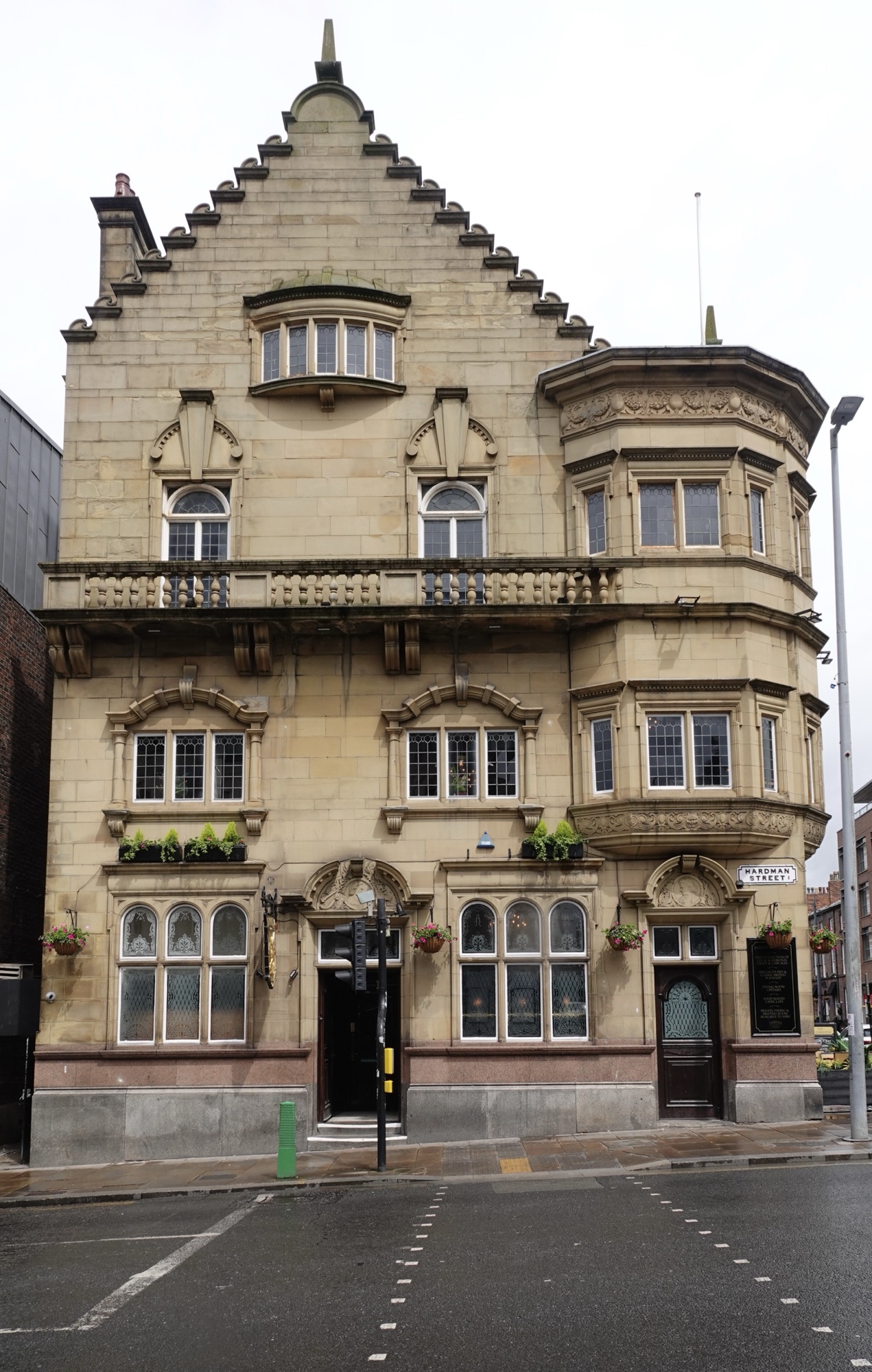
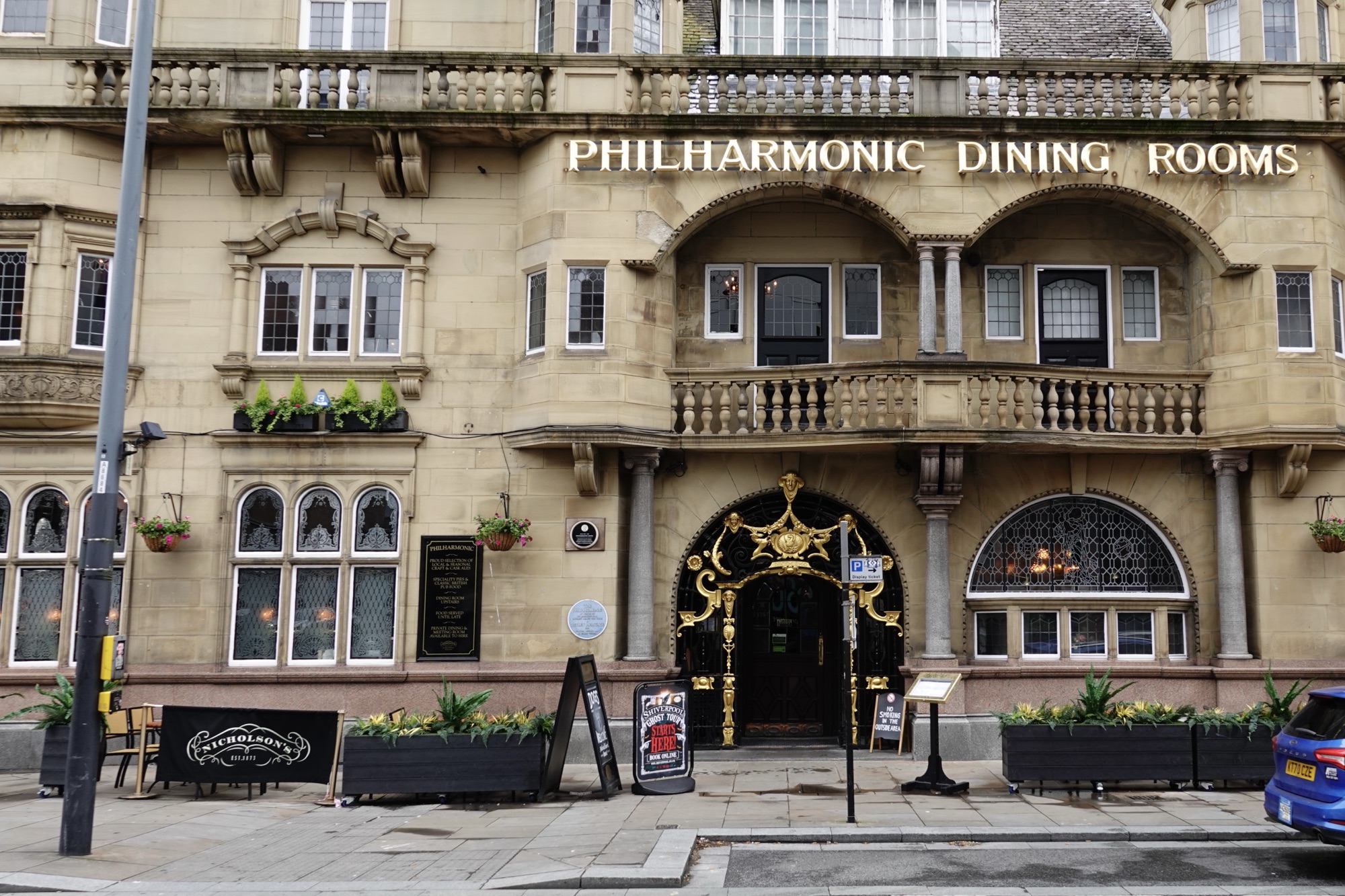
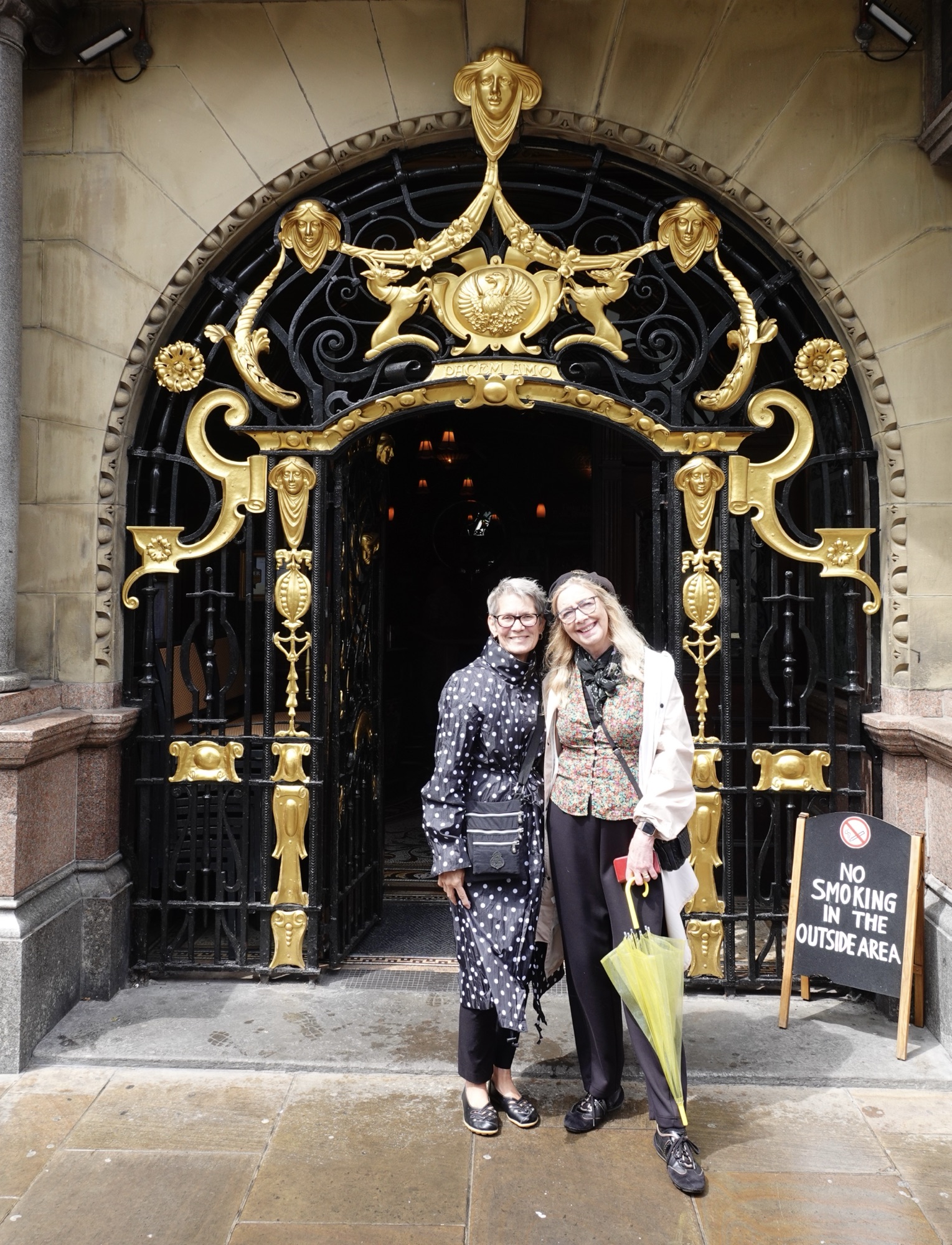
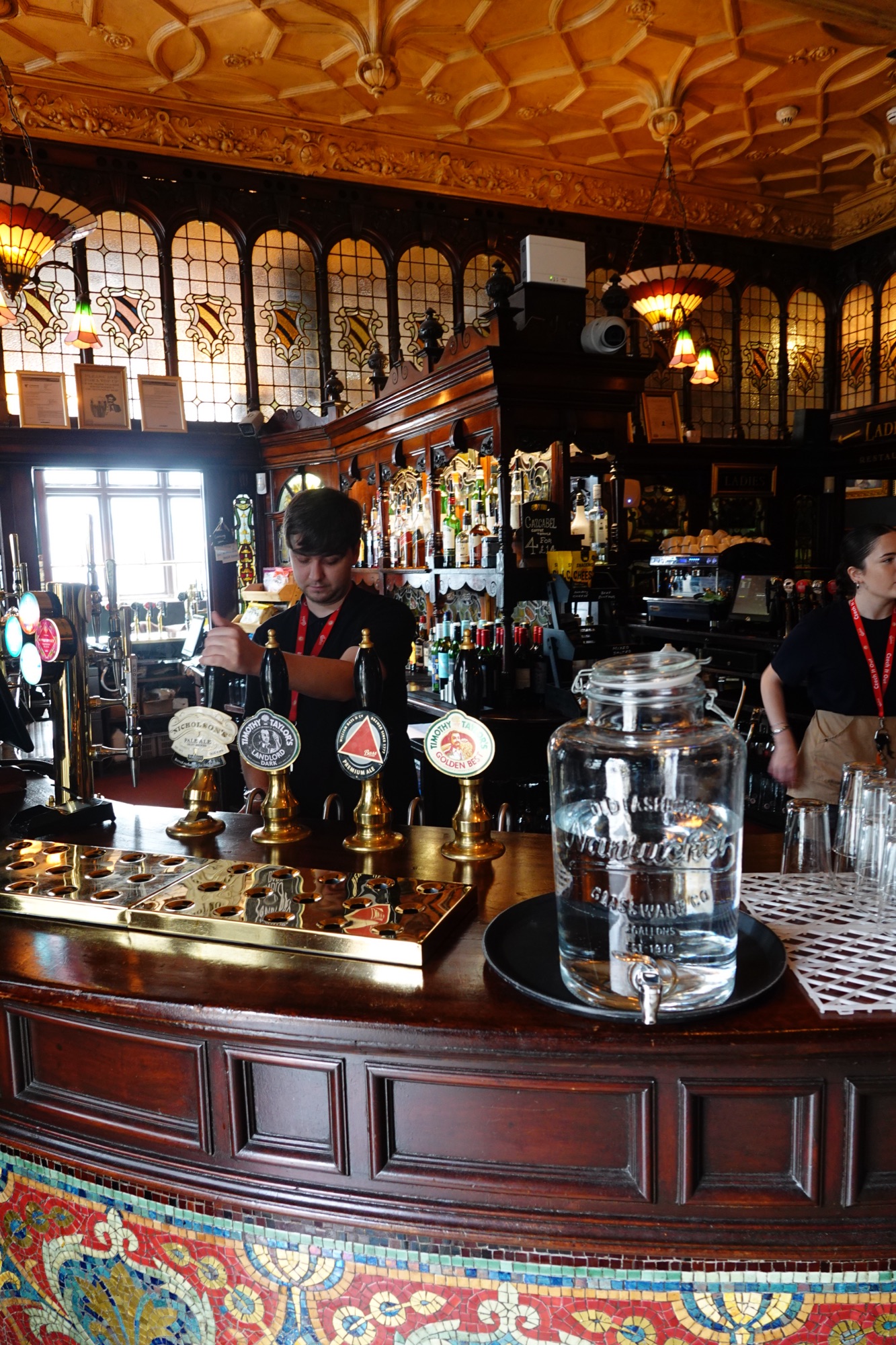
The pub is known for its gorgeous decor, rooms named for classical composers, and marble urinals in the gent’s toilet.
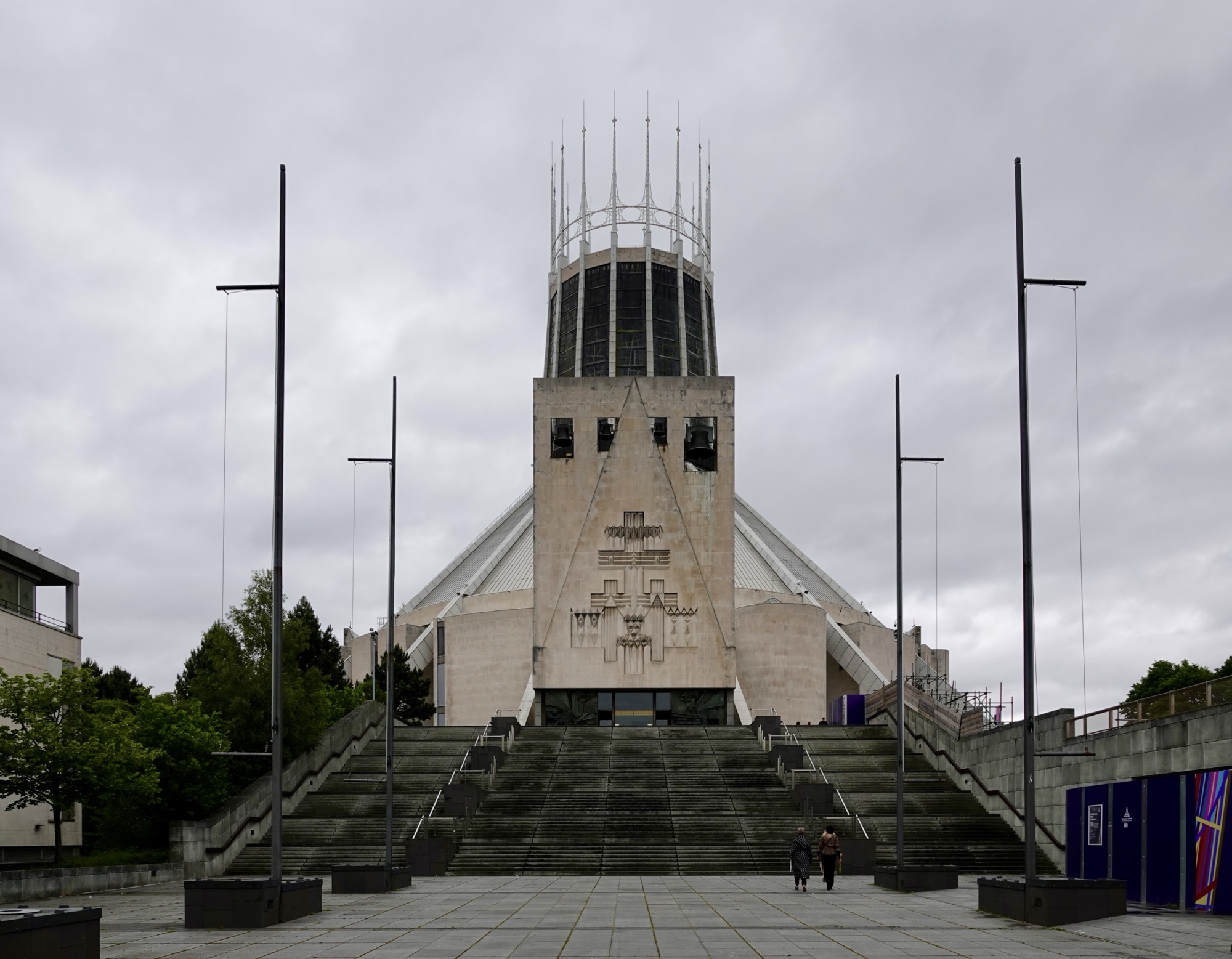
A couple of gin and tonics helped our transition from the sublime of the Anglican Cathedral to the decidedly less sublime (in our combined opinions) Catholic Cathedral, colloquially and somewhat irreverently known as “Paddy’s Wigwam”.
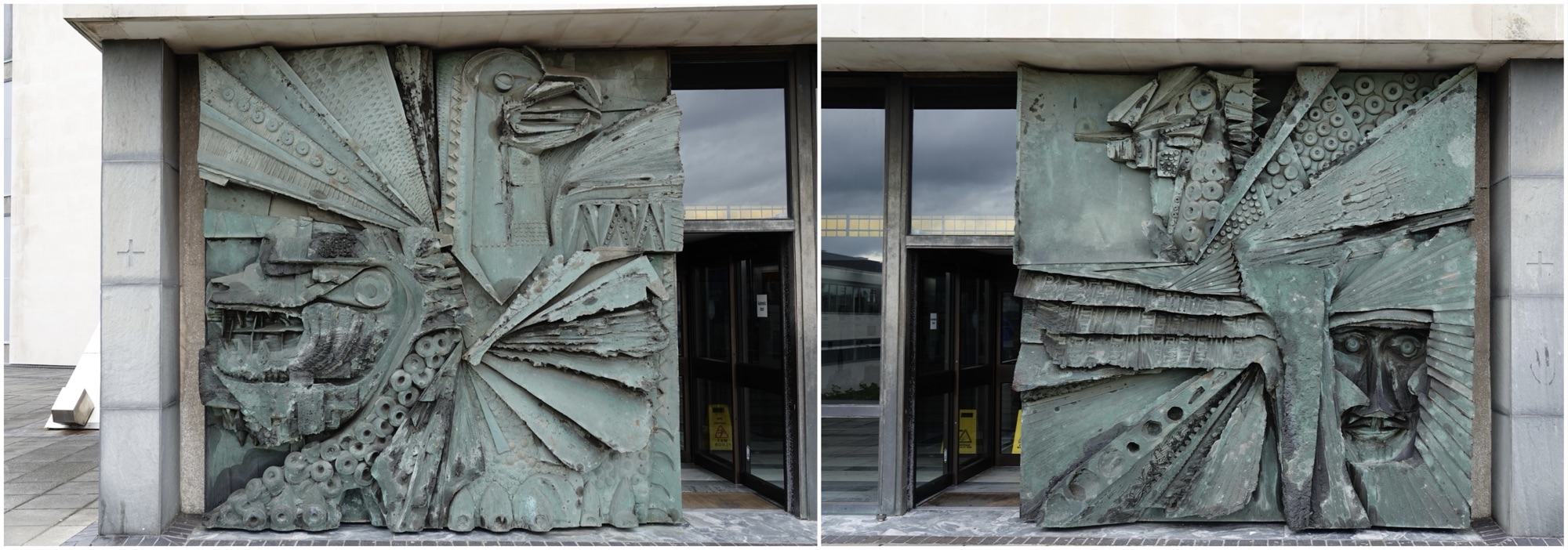
We found the imagery on the entry doors somewhat disturbing.
Inside, the huge open space with the altar almost centrally located had us thinking of the massive U.S. evangelical churches. There was no logical focal point, although the central skylight was impressive.
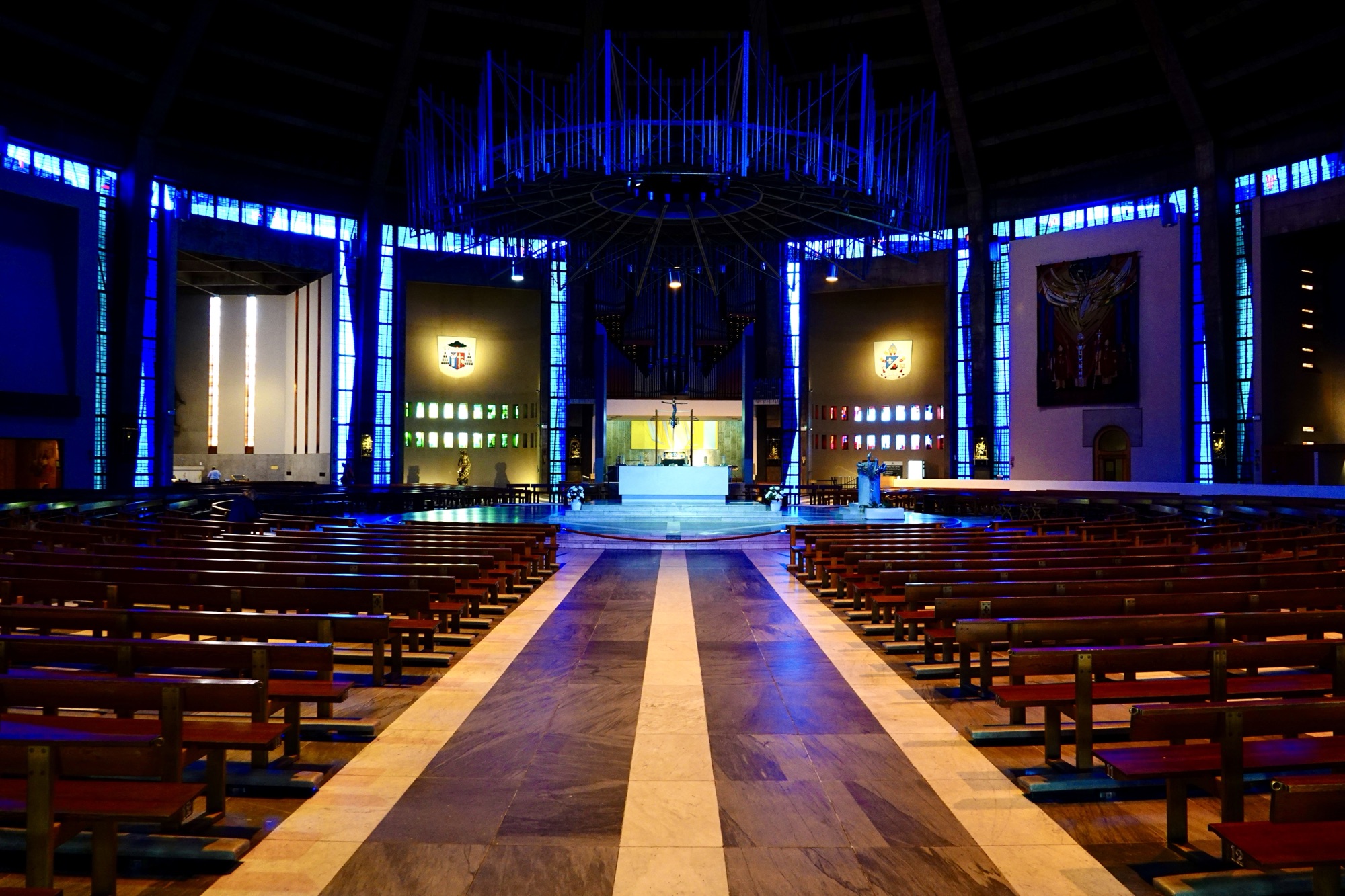
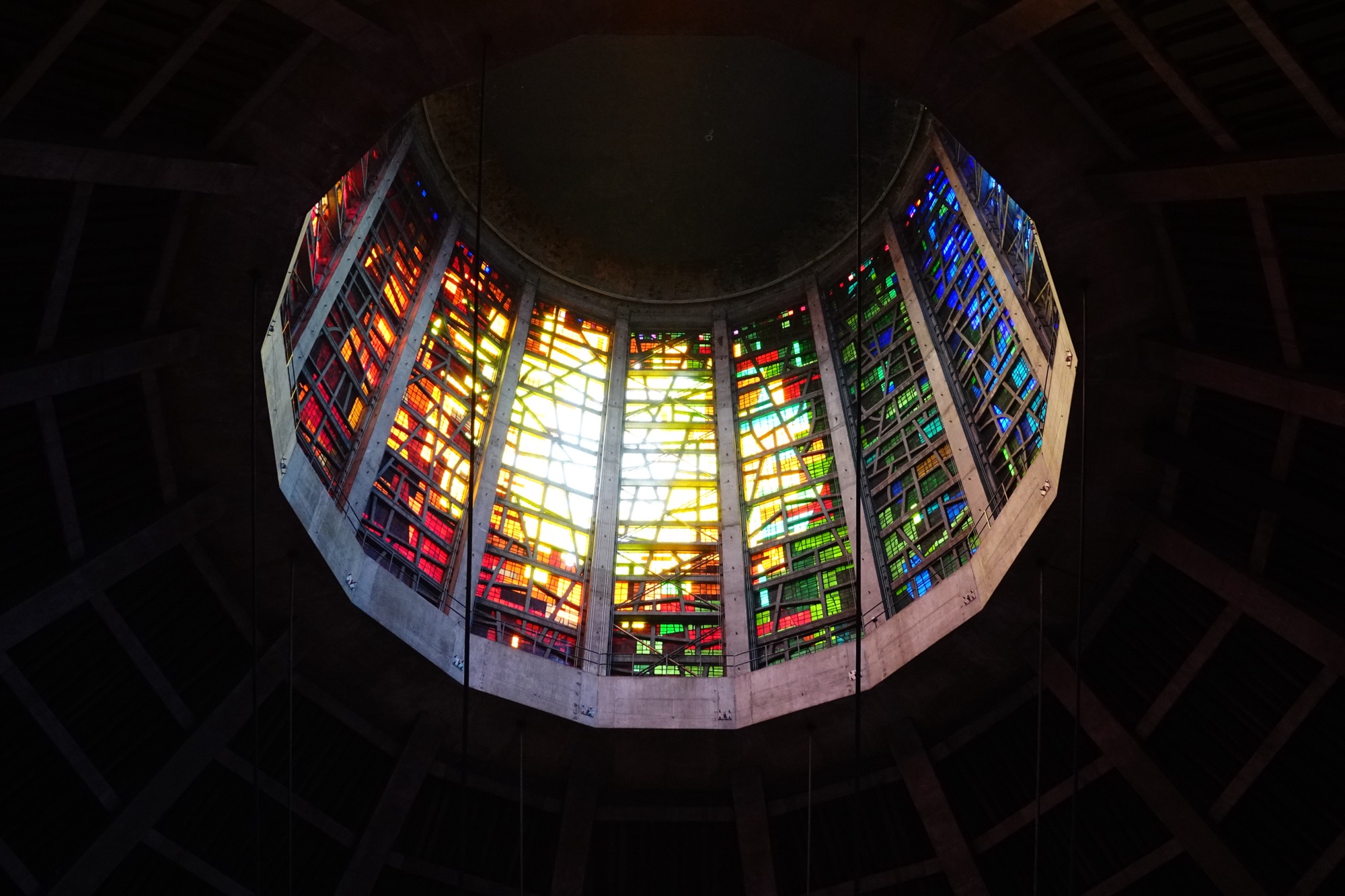
It definitely did not create the visceral feeling of awe that we’ve come to expect from grand churches, but we also realize that is quite subjective.
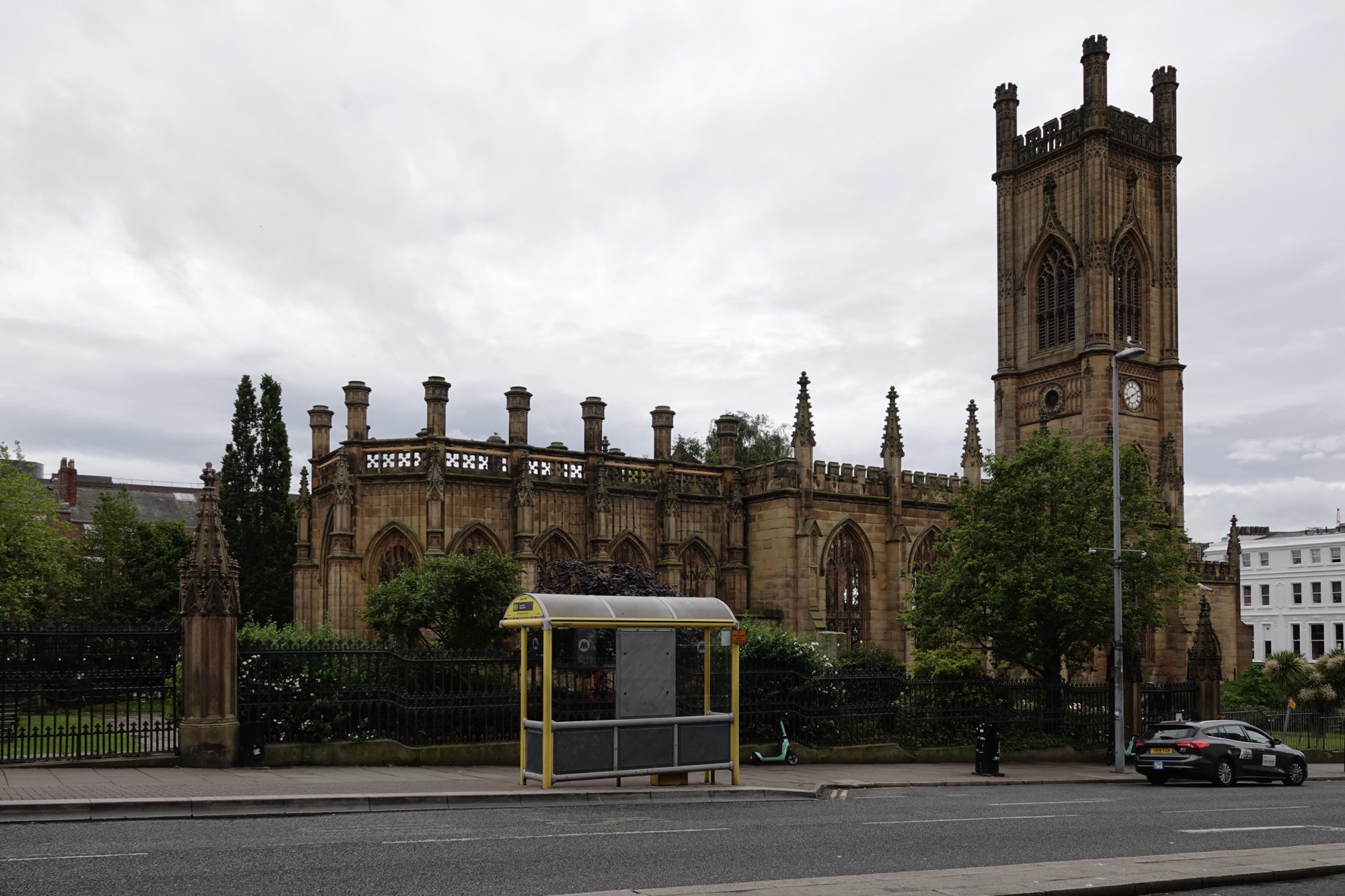
Before heading to lunch, we detoured past the hollow remains of the Church of Saint Luke, bombed during WWII and left as a shell as a memorial to peace, in the same vein as the Kaiser Wilhelm Memorial Church in Berlin. Here there was a return to emotional connection,
On the grounds of the church is a memorial commemorating the Christmas Truce of 1914 on the Western Front.
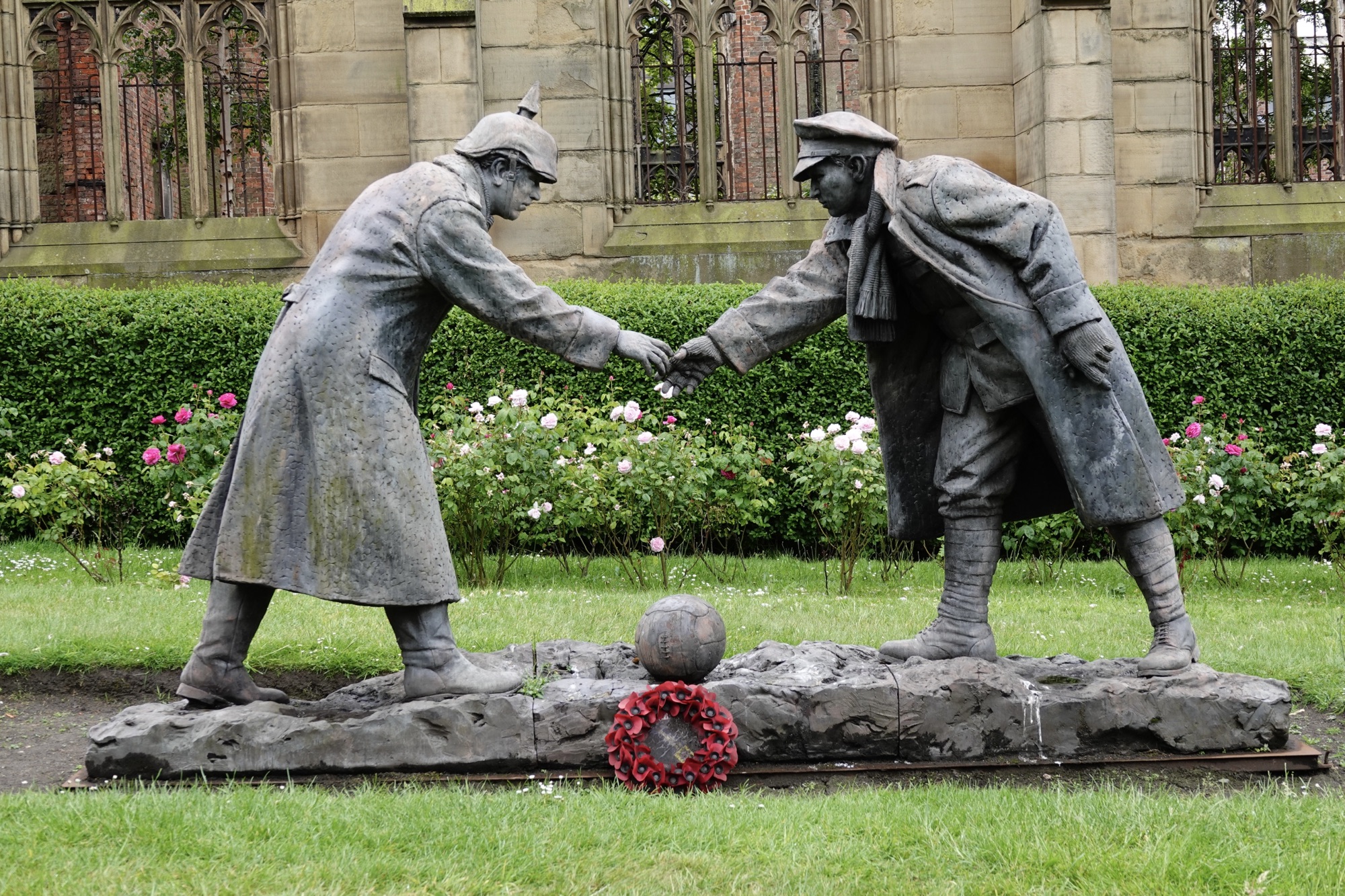
The memorial brought to mind Scottish-Canadian tenor John McDermott’s moving “Christmas in the Trenches”.
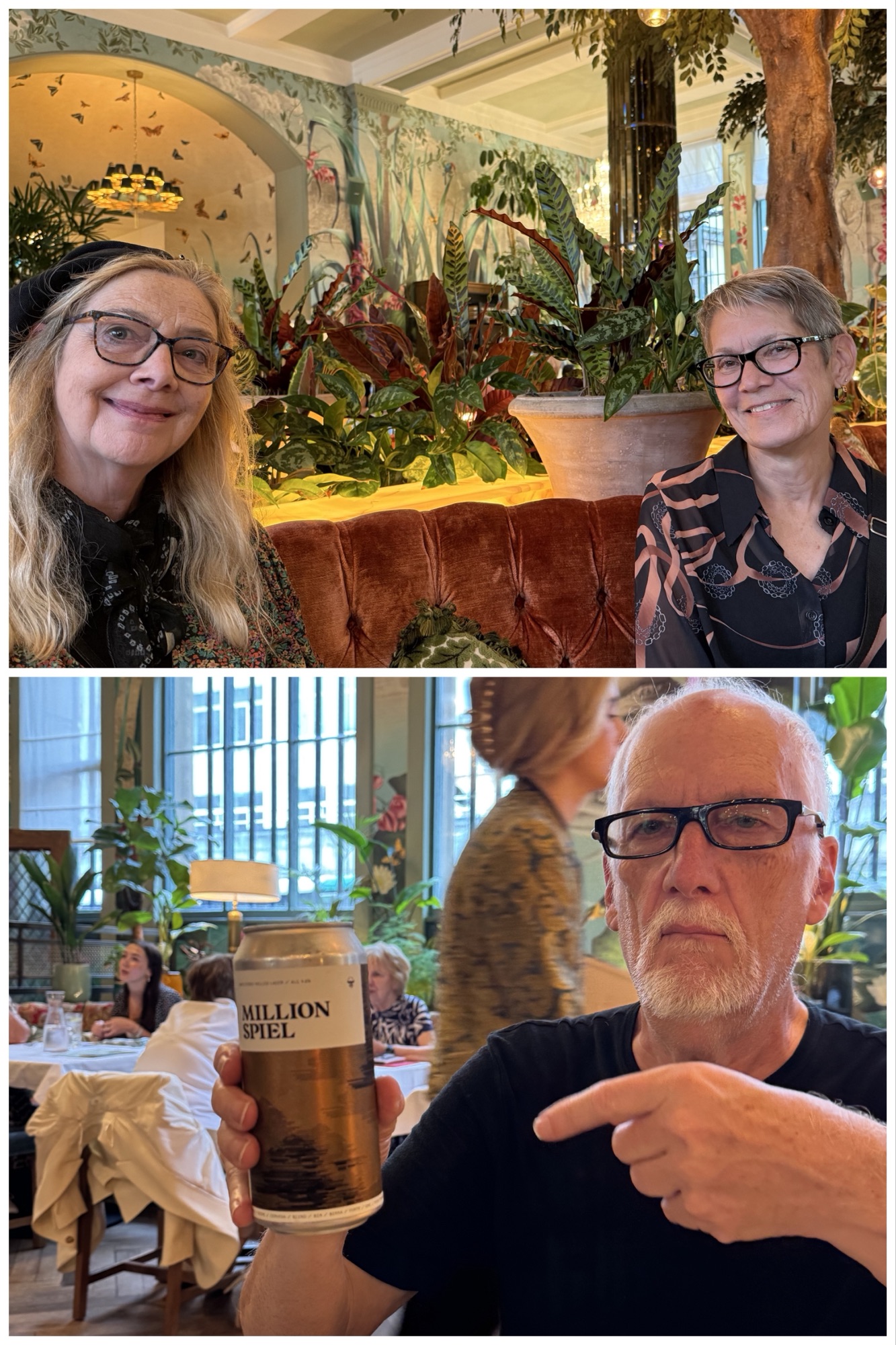
Stella had made lunch reservations for us at a favourite restaurant, the Ivy Liverpool Brasserie on Castle Street. The restaurant’s interior is spectacular: crystal chandeliers and full-sized trees set among walls lushly wallpapered in a tropical foliage pattern. It’s like being in a Victorian glass house. Excellent service and food match the tone set by the decor.
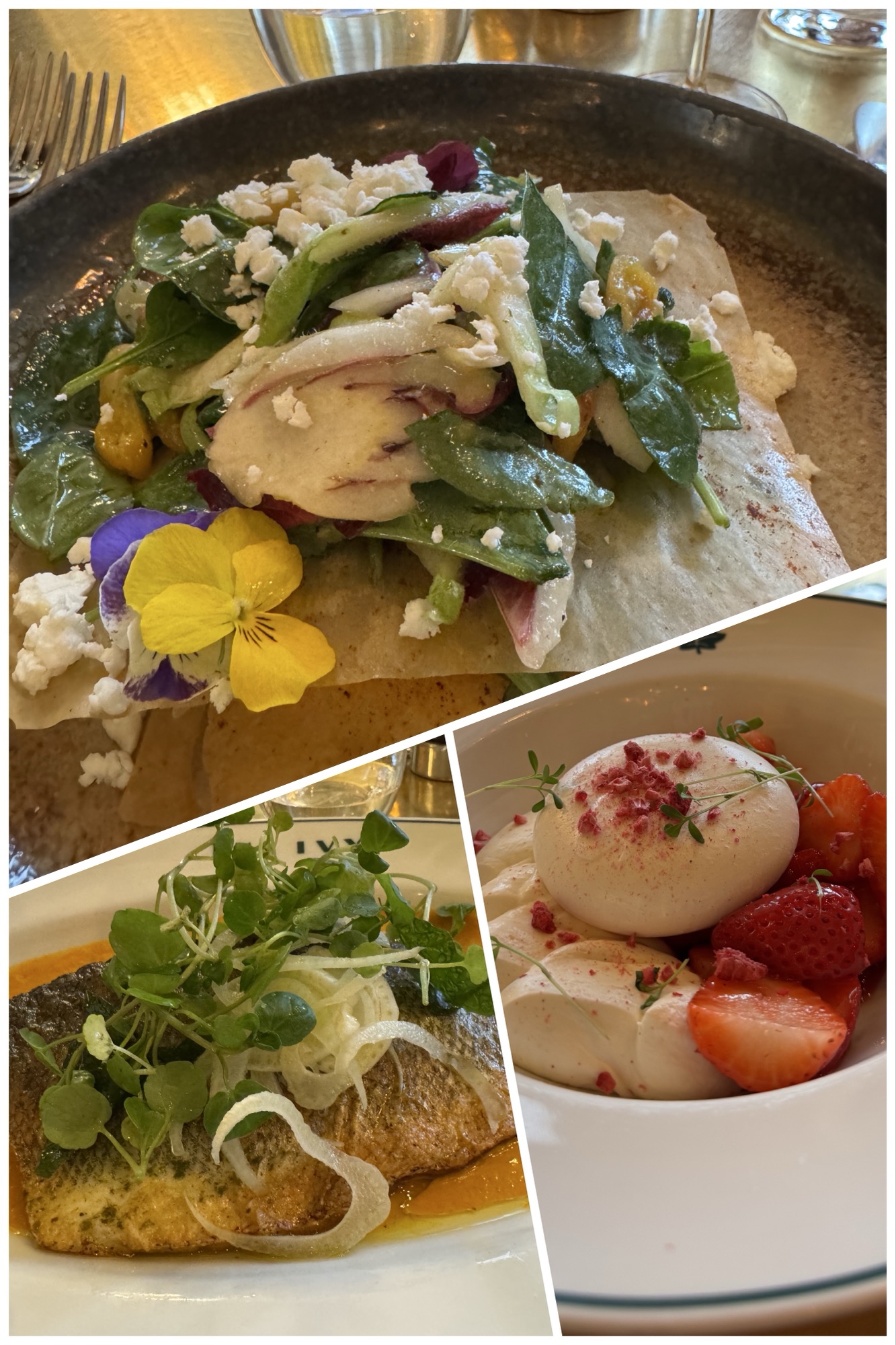
(Coconut, cumin and turmeric sauce, shaved fennel and spinach); Strawberries and Cream (Freeze-dried raspberries, meringue, strawberry sauce and lemon balm).
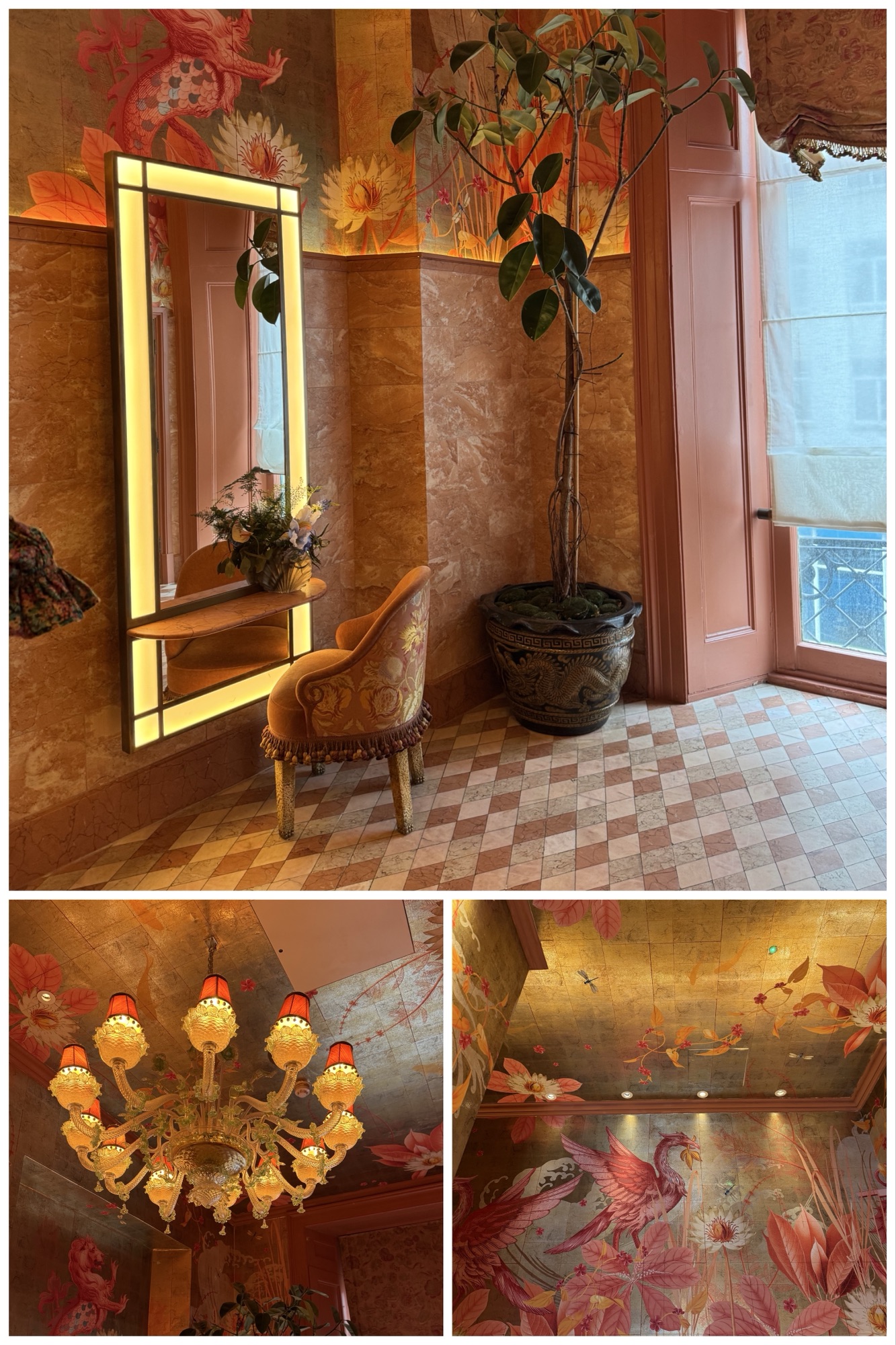
Before leaving Stella insisted we visit the ladies’ room. Wow!
Ted decided he’d head back to our hotel, leaving Stella and I to spend the rest of the afternoon strolling, window-shopping, drinking tea and coffee, and chatting. It was a lovely opportunity to get to know each other better and grow toward becoming “proper” friends.
Ted and I feel very lucky to have had two days with such a proud Liverpudlian and genuinely warm person. It has made our Liverpool visit extra special.


Have been following your travel blogs since your first Viking world cruise – fascinating. Thank you for all the insights. Glad that you finally made it to Liverpool – the city where I was born and bred.
I wonder whether Ted took a photograph of my old school, Blackburne House, on Hope Street when you walked from one cathedral to the other?
LikeLike
Unfortunately we didn’t walk past it, not realizing it was on a little side street off Hope. Wouldn’t that have been neat though?
LikeLike