Stella planned an absolutely fabulous day Merseyside for us, the highlight of which was a tour of Port Sunlight Village, a place we would not even have known had existed without her.
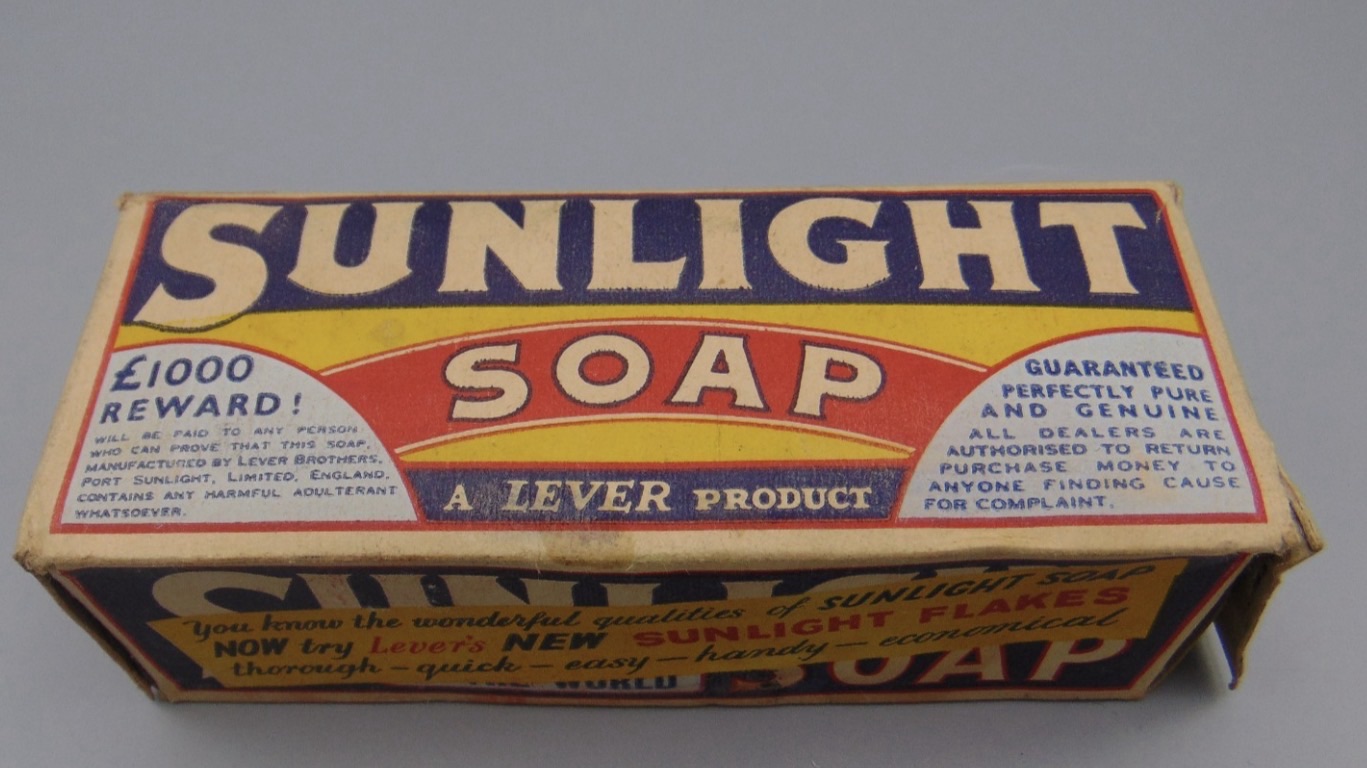
Remember Sunlight soap? While the box in the UK looked like the one above, the one on the ledge beside my mom’s basement laundry sink looked more like the one below.

I don’t suppose I ever thought about who invented the soap, and having heard the name “Lever Brothers” I don’t suppose I ever wondered who they were.
Today we learned about William Lever, later Viscount Lever Hulme, and the incredible village he designed and built for his employees.
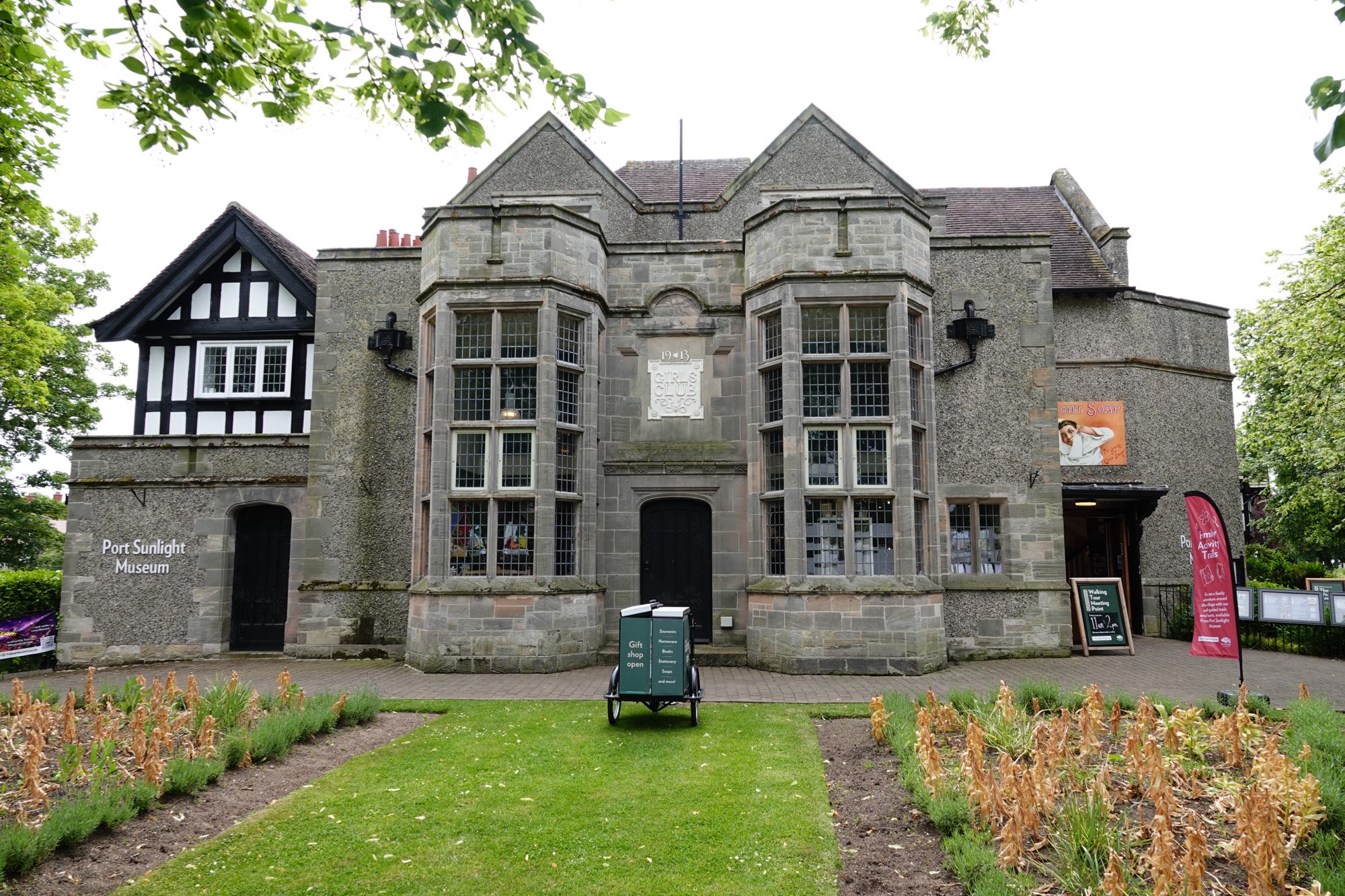
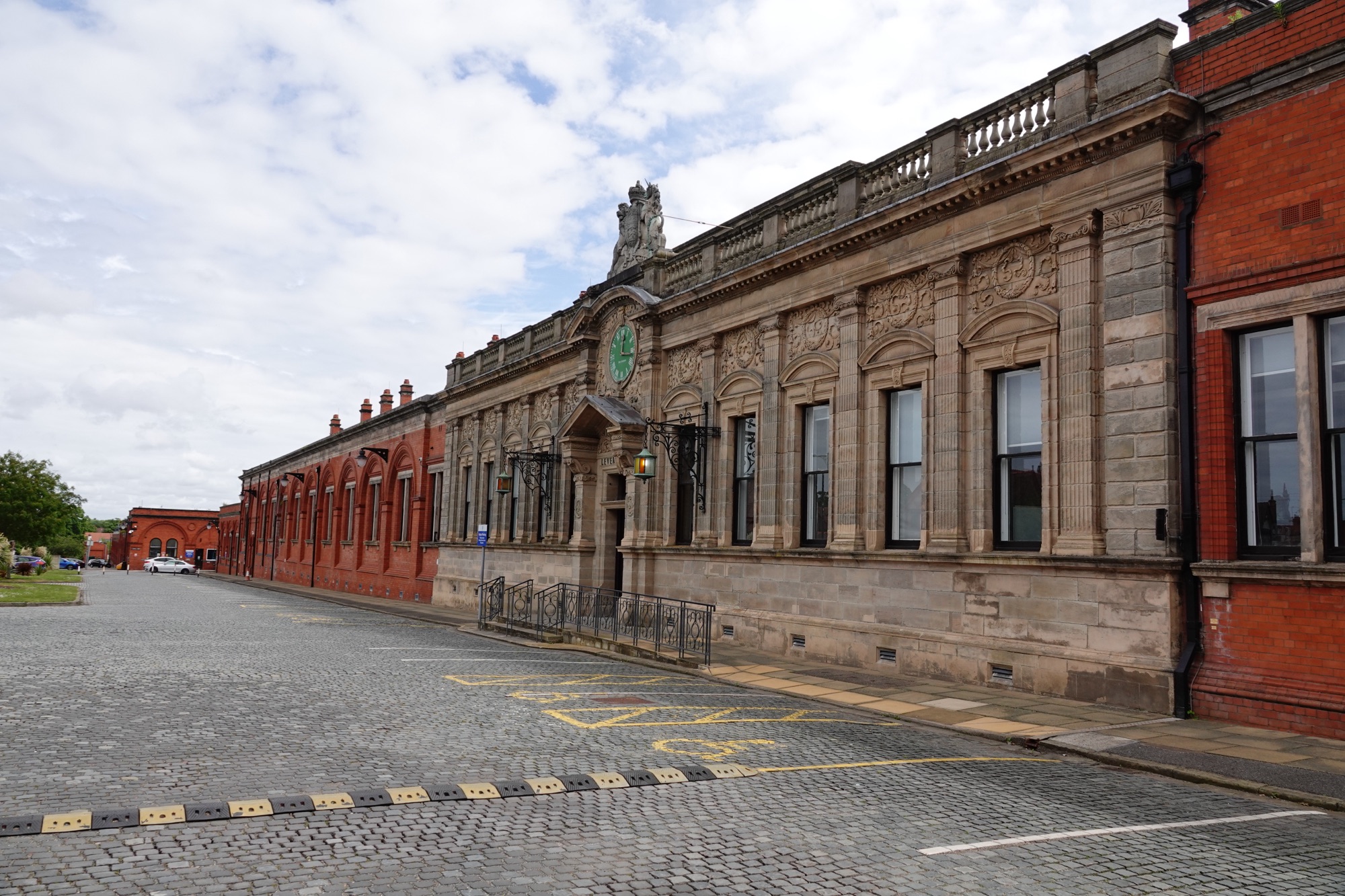
We met our knowledgeable enthusiastic guide, Alison, at the Port Sunlight Museum, originally built in 1913 as a Girls Club.
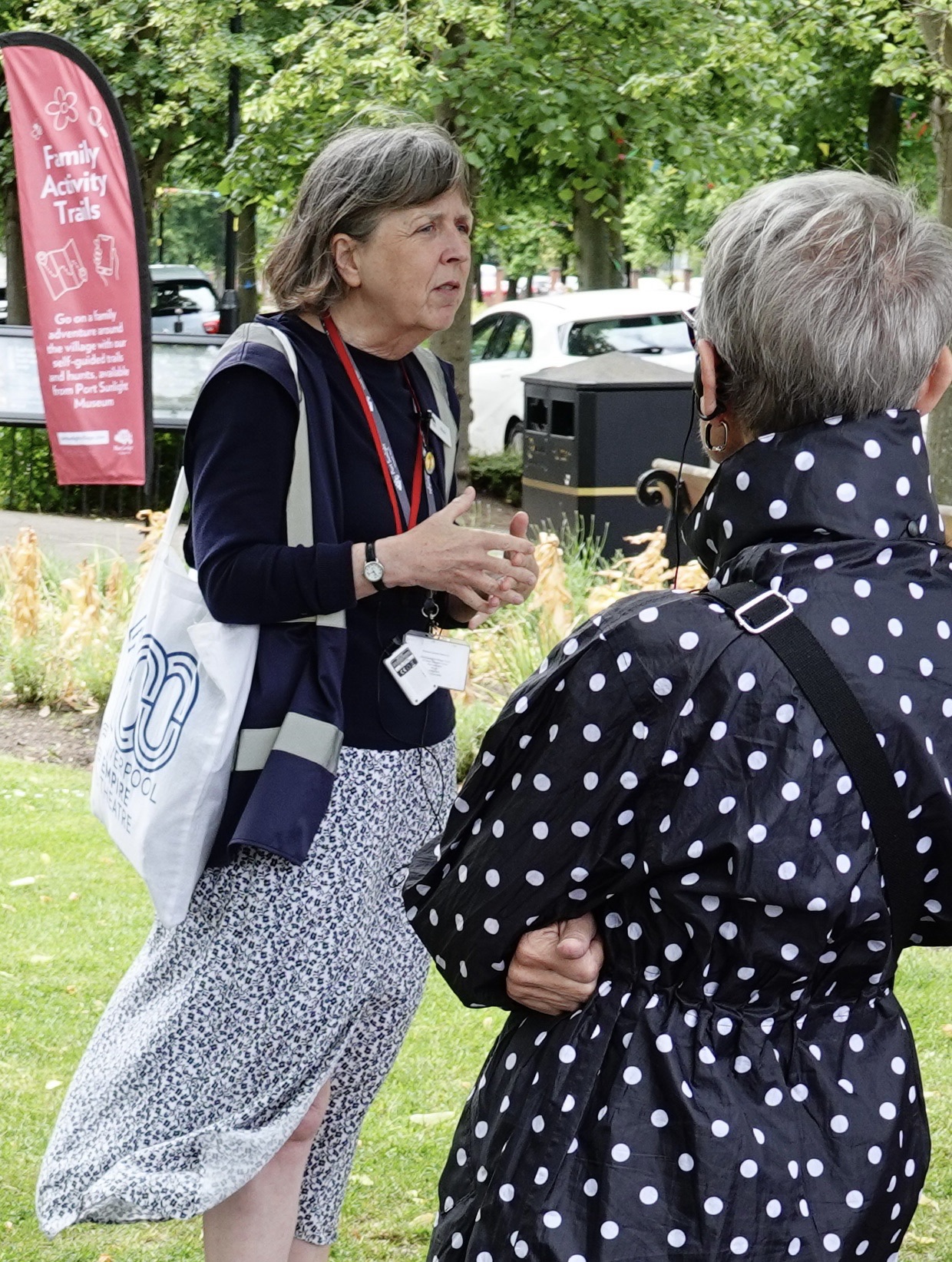
Alison began our tour with information about how this village came to exist here.
William Lever was the 8th child but eldest son in a family who owned a wholesale grocer. After completing his education, he joined the family business and proved such a successful salesman that the family opened a second location.
One of William’s earliest duties was cutting large slabs of soap into bars for sale, at a time when soap was made with animal fat that made it a pretty nasty cleaner. William worked with his younger brother James to develop a vegetable oil-based soap, which was a more pleasant texture, but smelled bad due to oxidization of the bars’ surface when stored longterm. William soon discovered that the “rot” could be prevented by wrapping the soap in waxed paper. We weren’t told exactly when, but eventually paper wrapping gave way to the iconic Sunlight soap box.
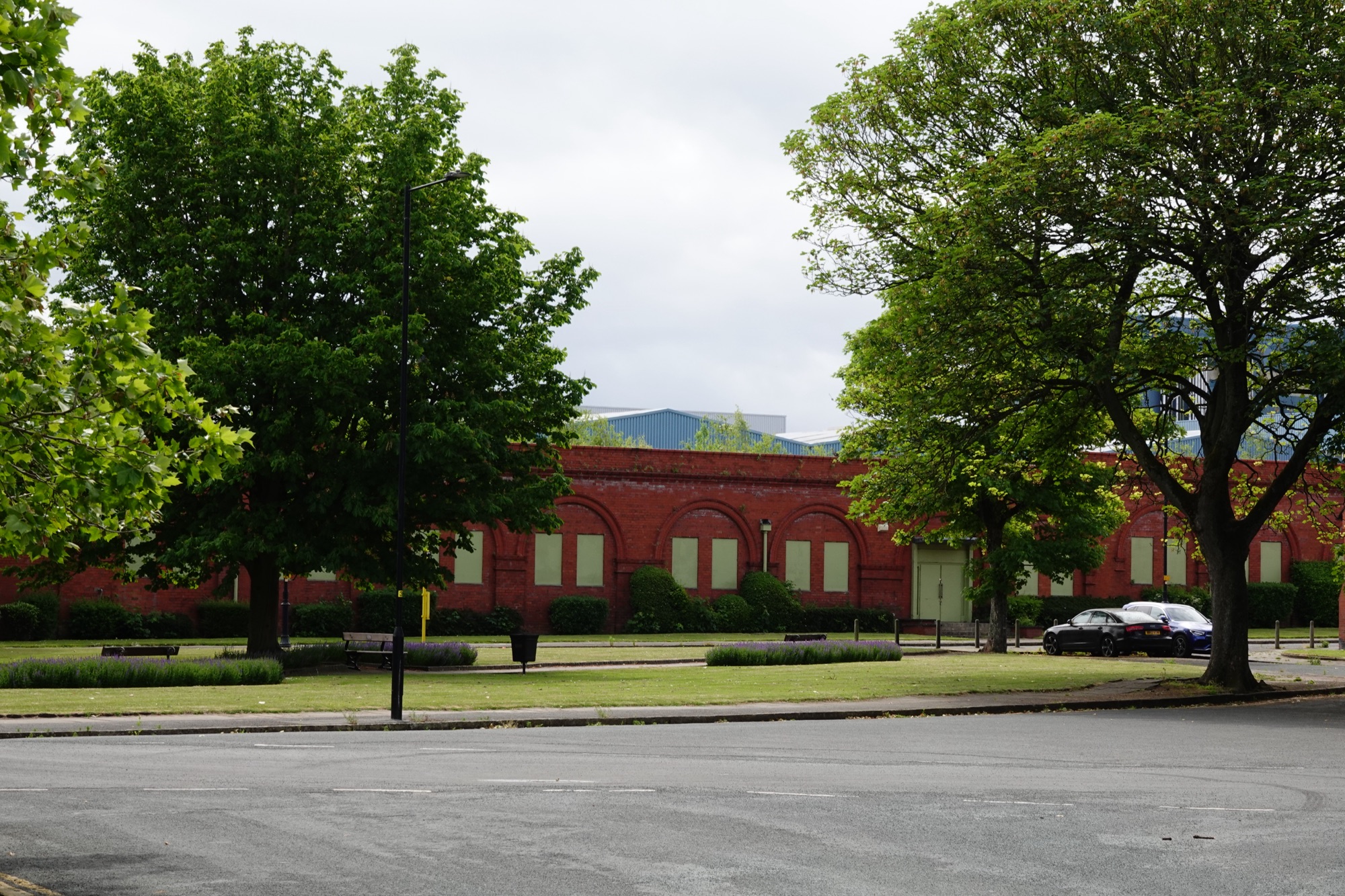
That the business was a raging success is evidenced by the need for a dedicated factory, built here on land that was formerly marsh, criss-crossed with tidal creeks leading to the Mersey. Lever dammed, and later filled in, those creeks to create an area large enough to build a village of 900 homes for his employees.
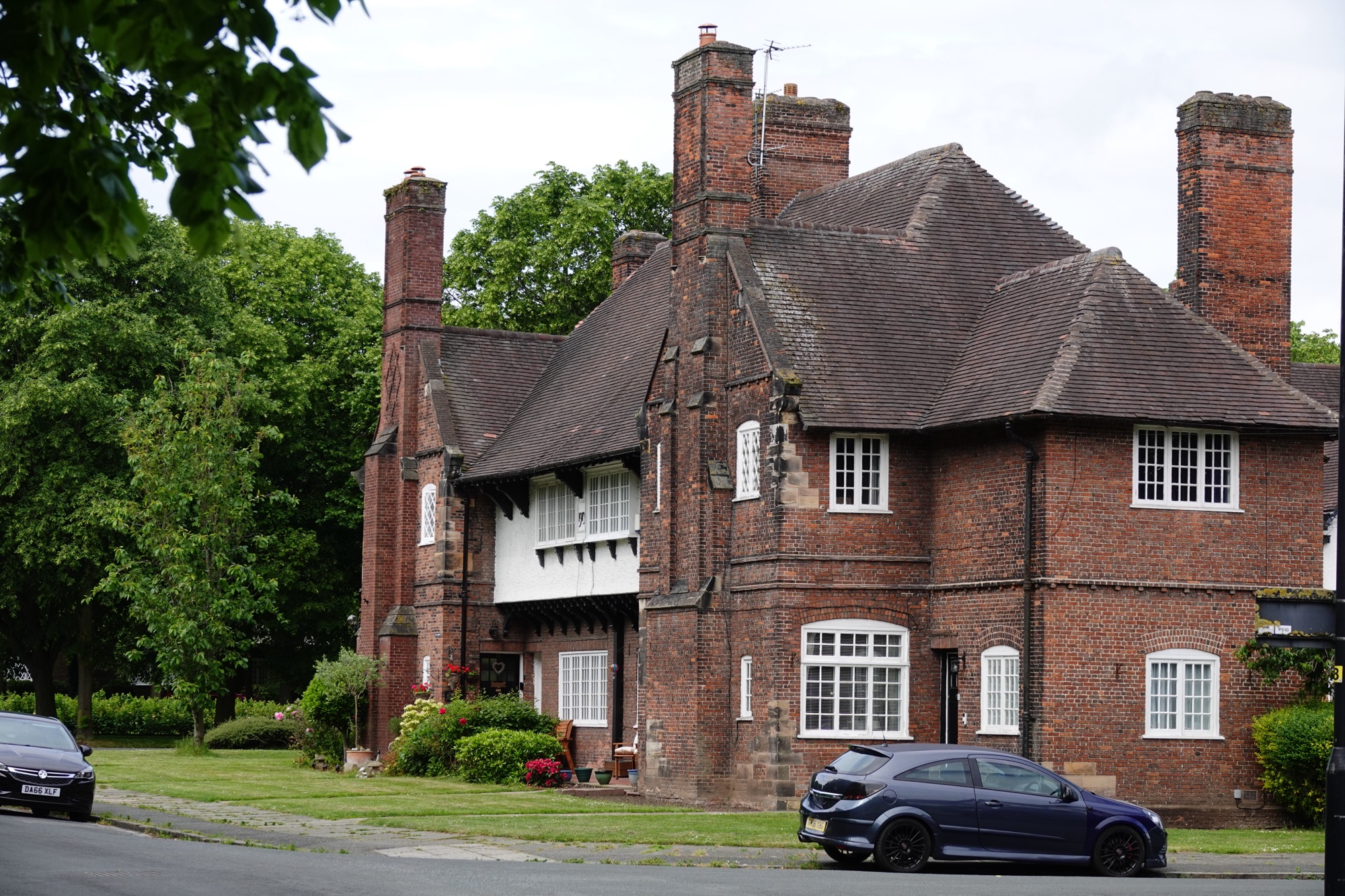
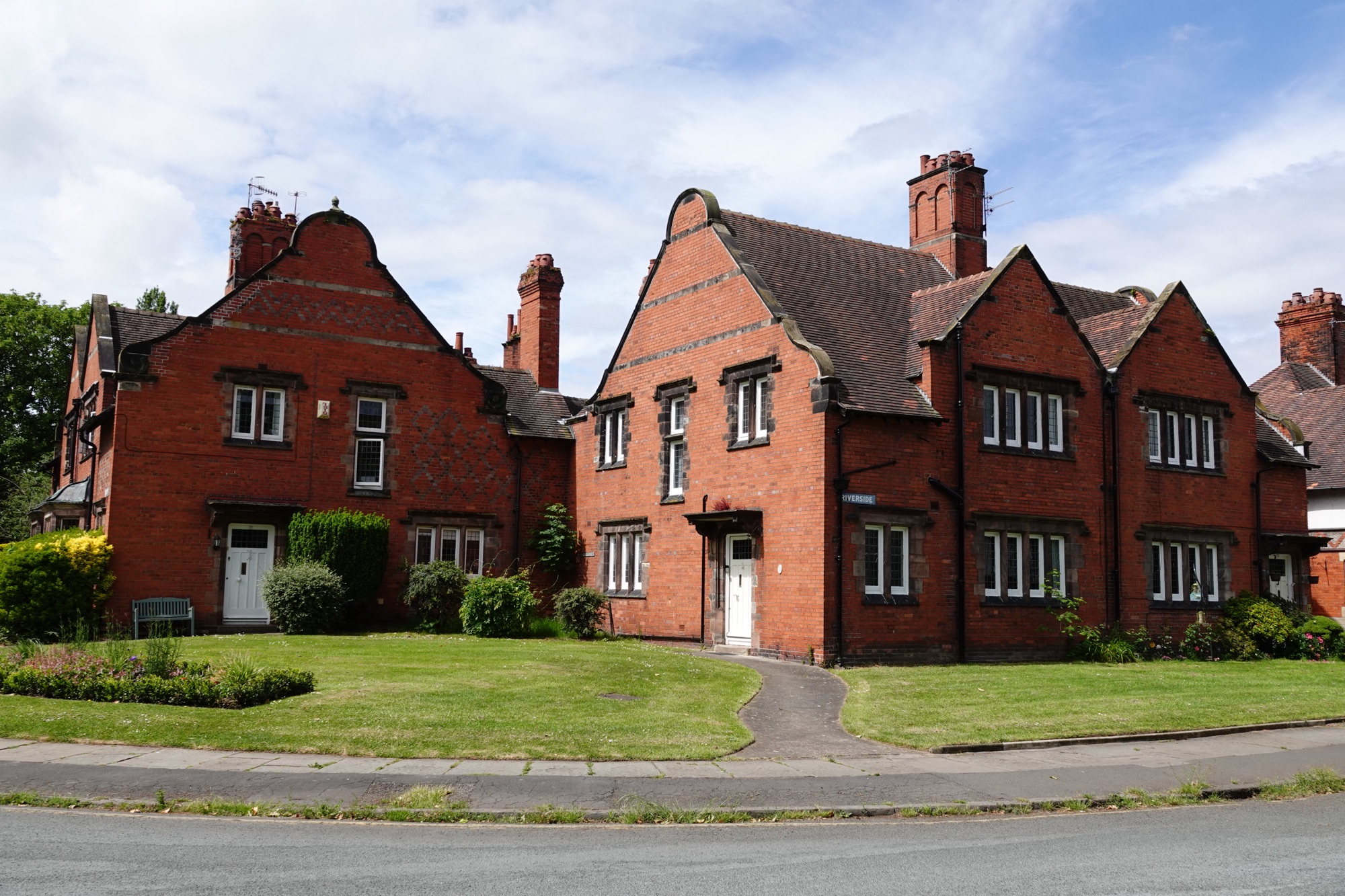
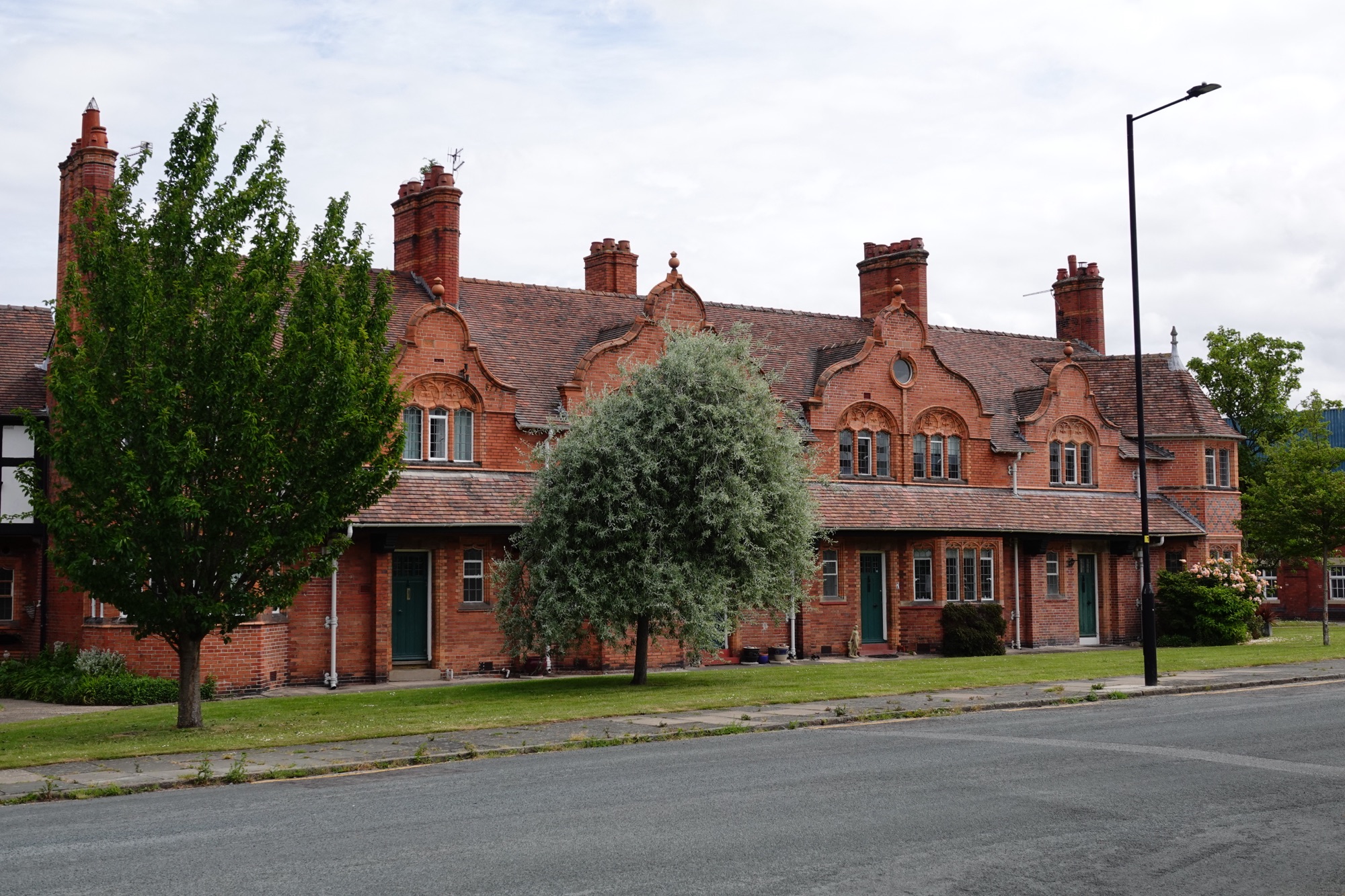
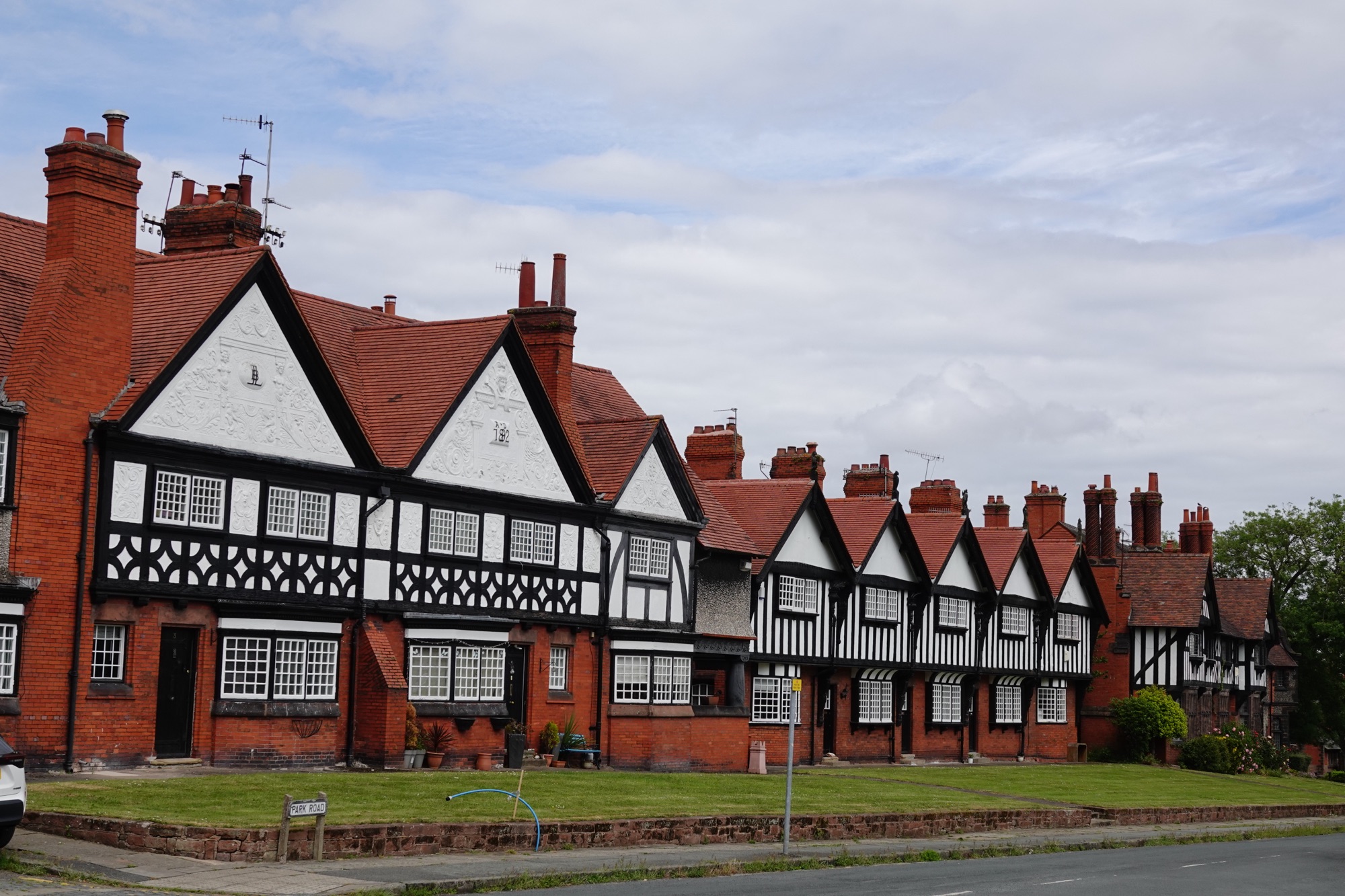
There are many things that are impressive about this village, but perhaps the most striking is its beauty.
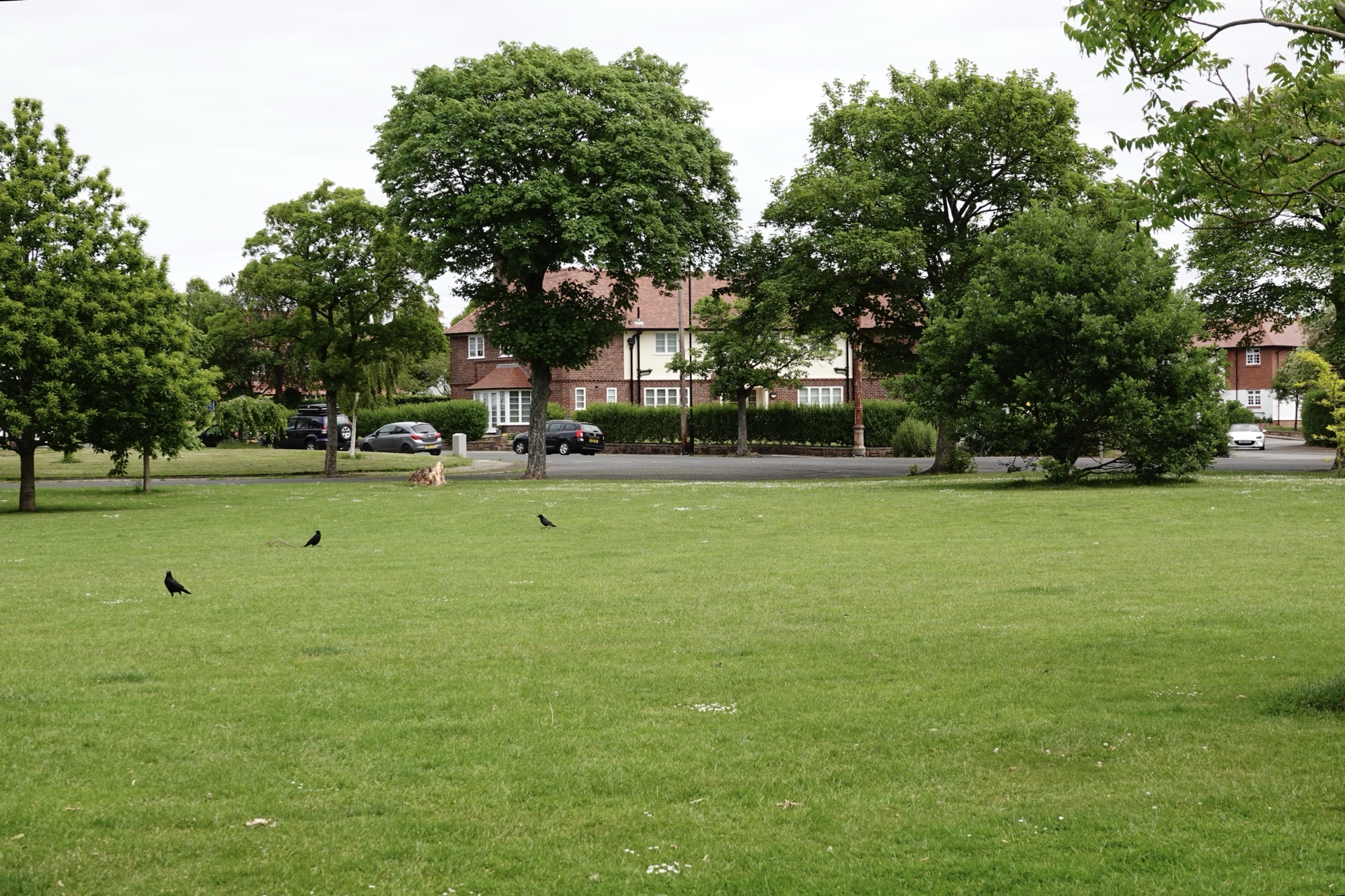
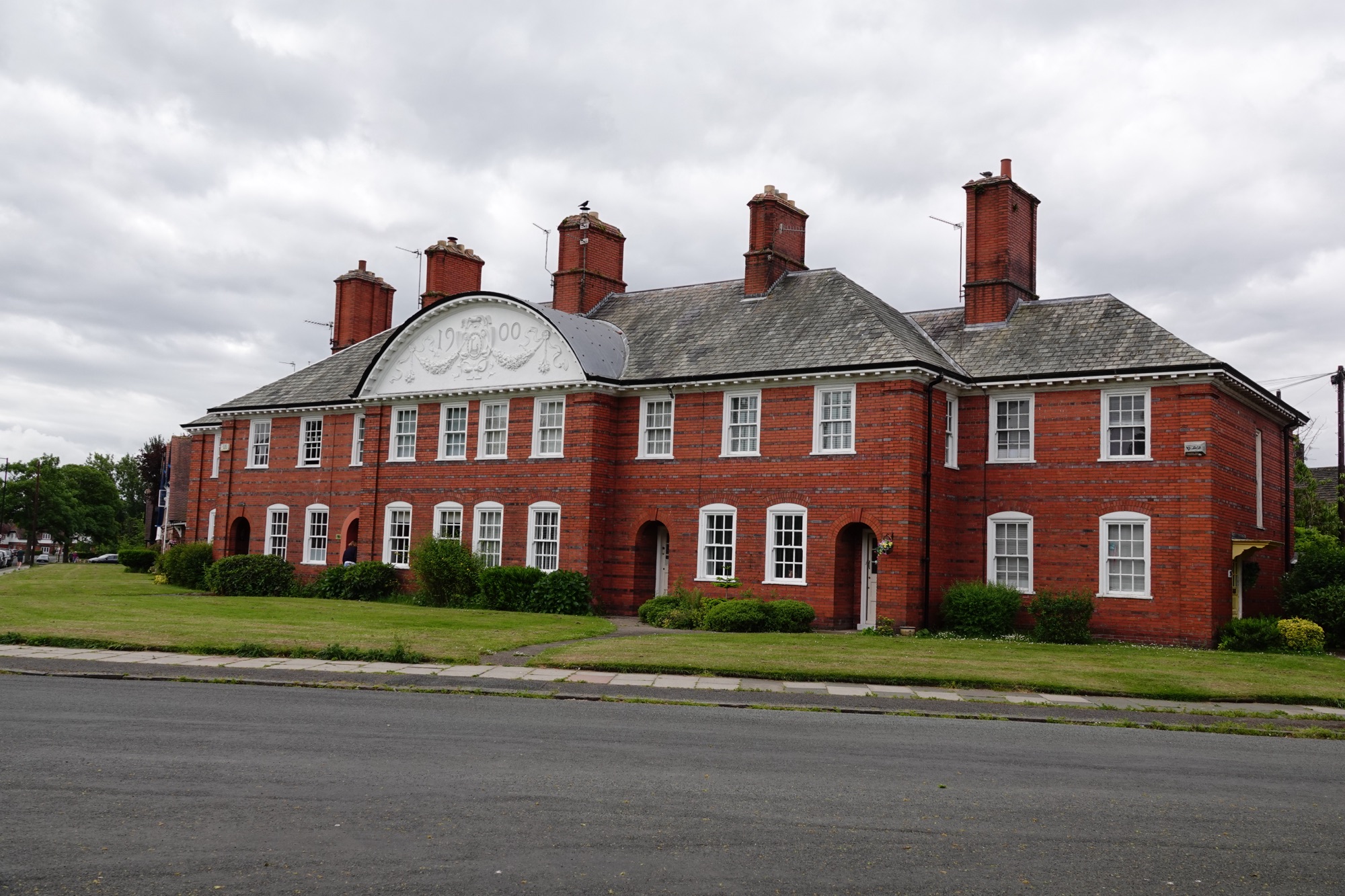
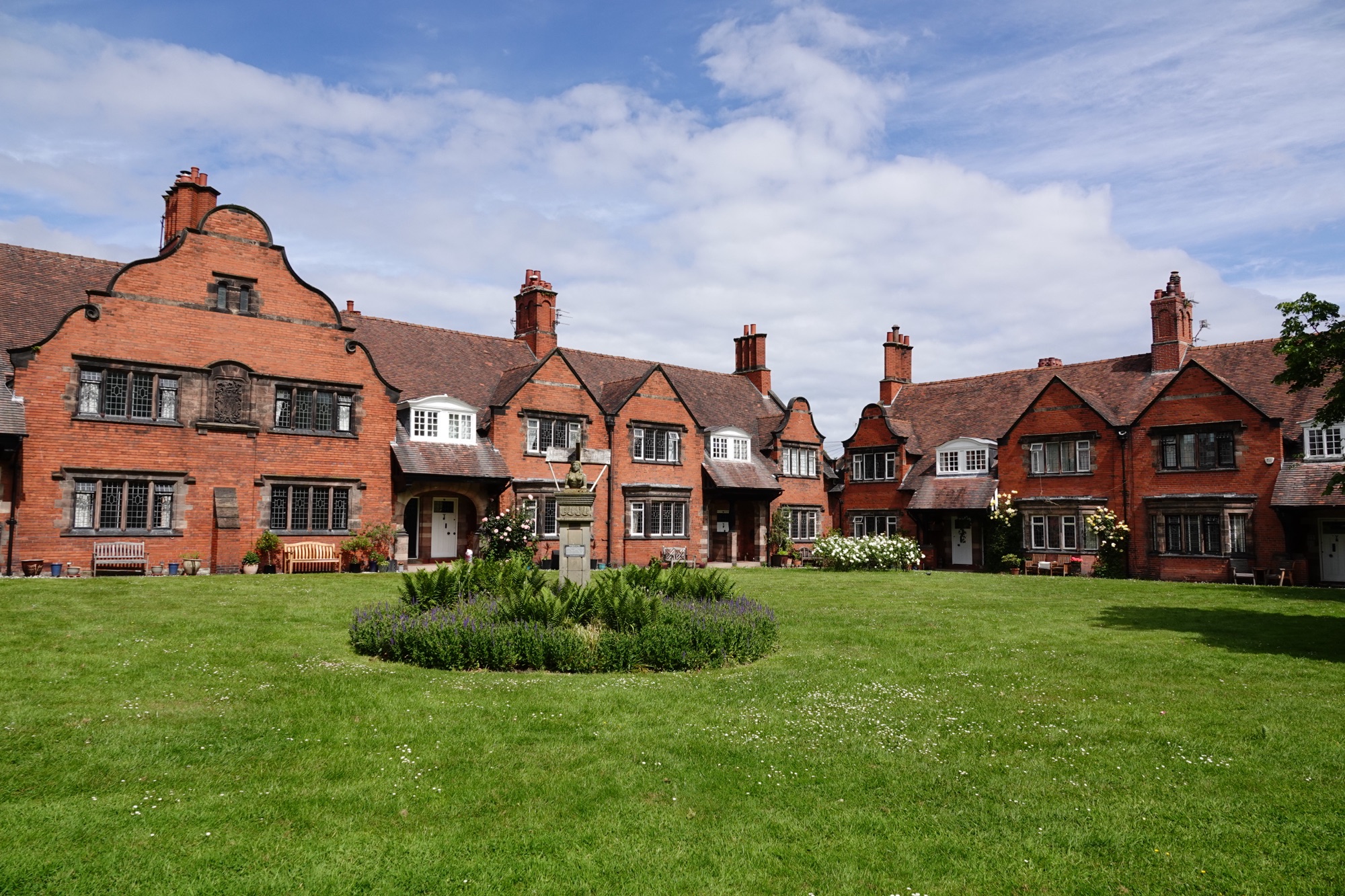
We’ve seen “company towns” before, most recently through photographs of miners’ cottages in County Durham. And today we saw photos of typical working-class houses in Victorian England: overcrowded row houses, squalid tenements, and tiny poorly built cottages.
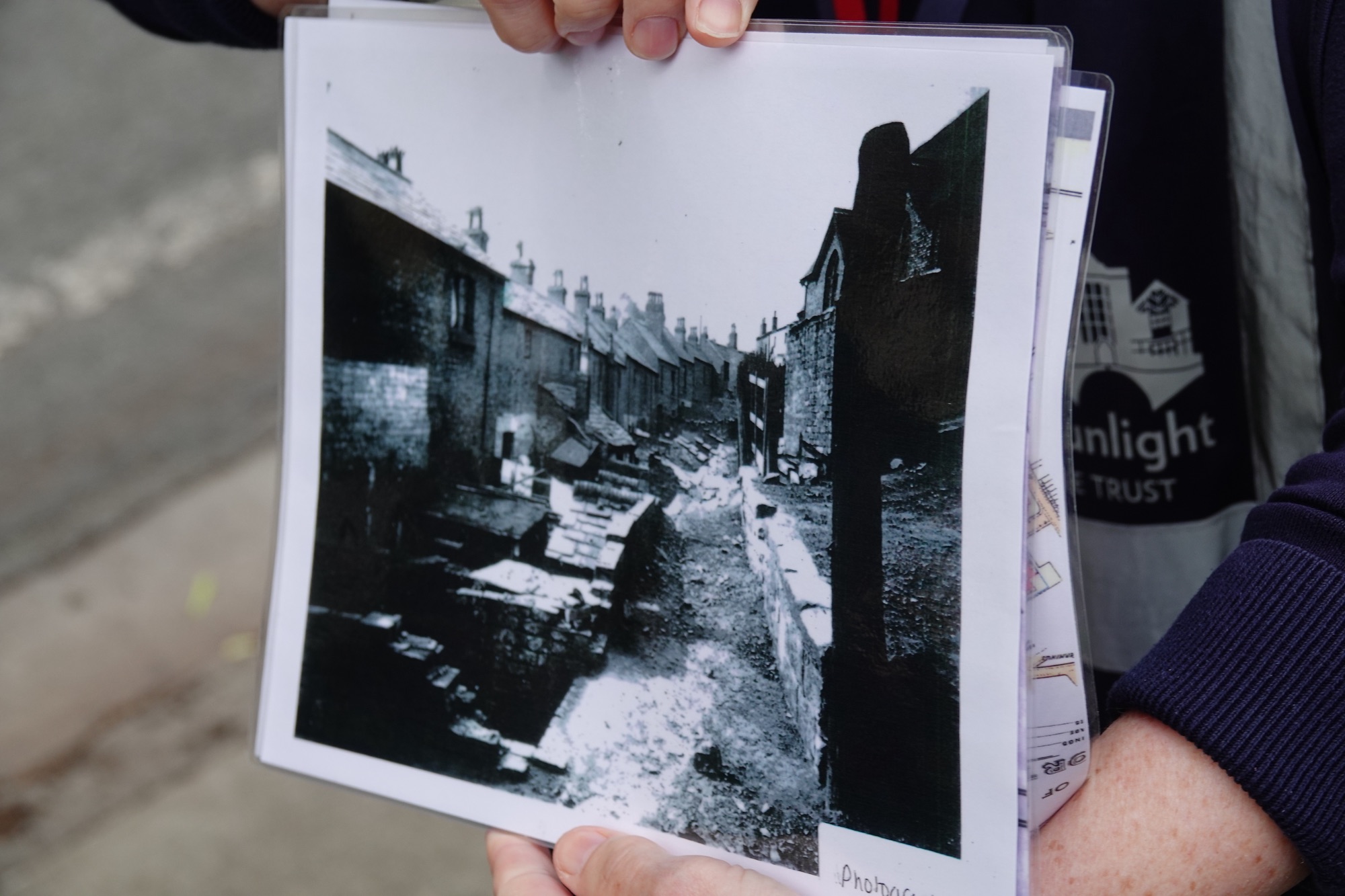
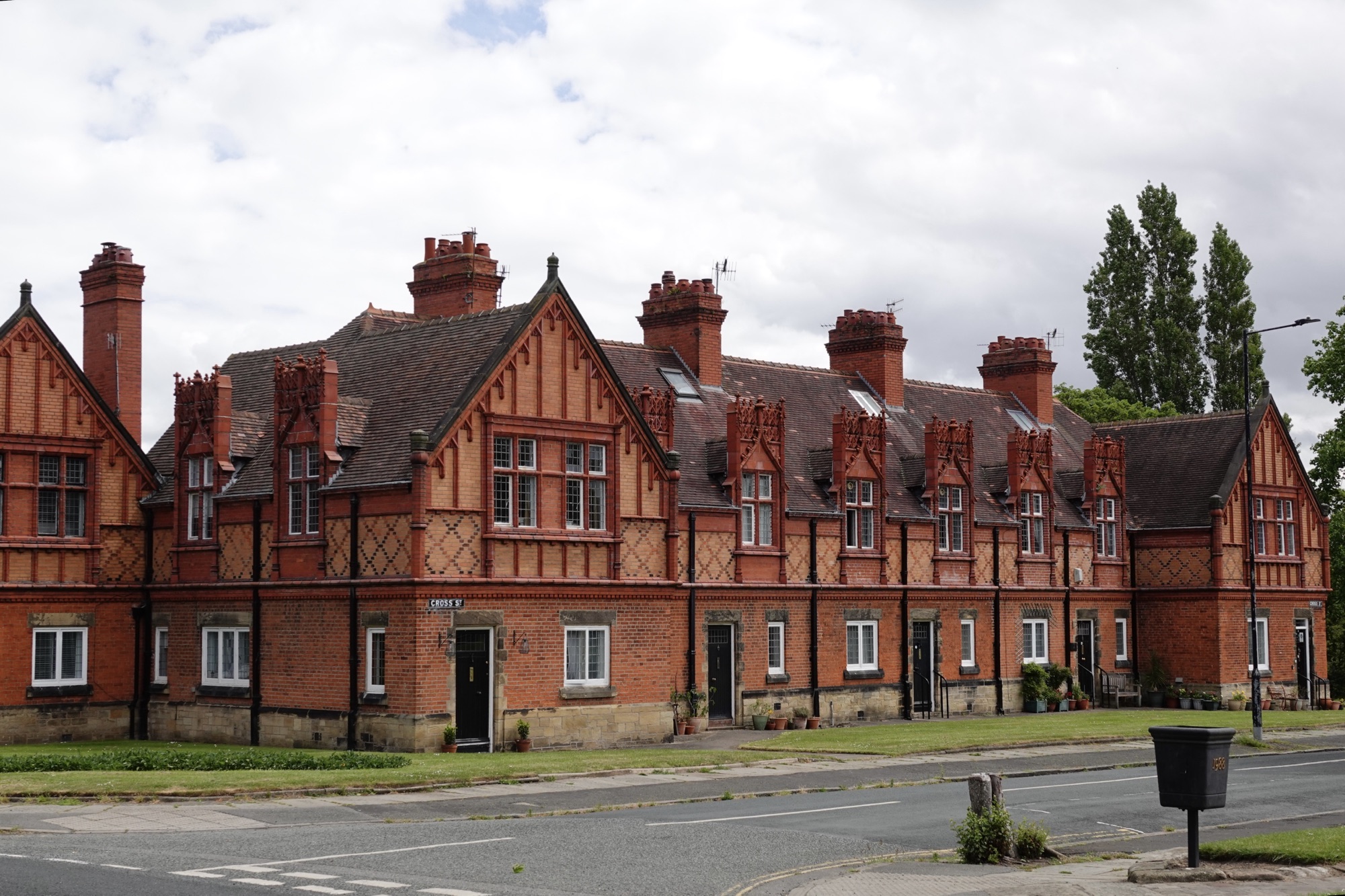
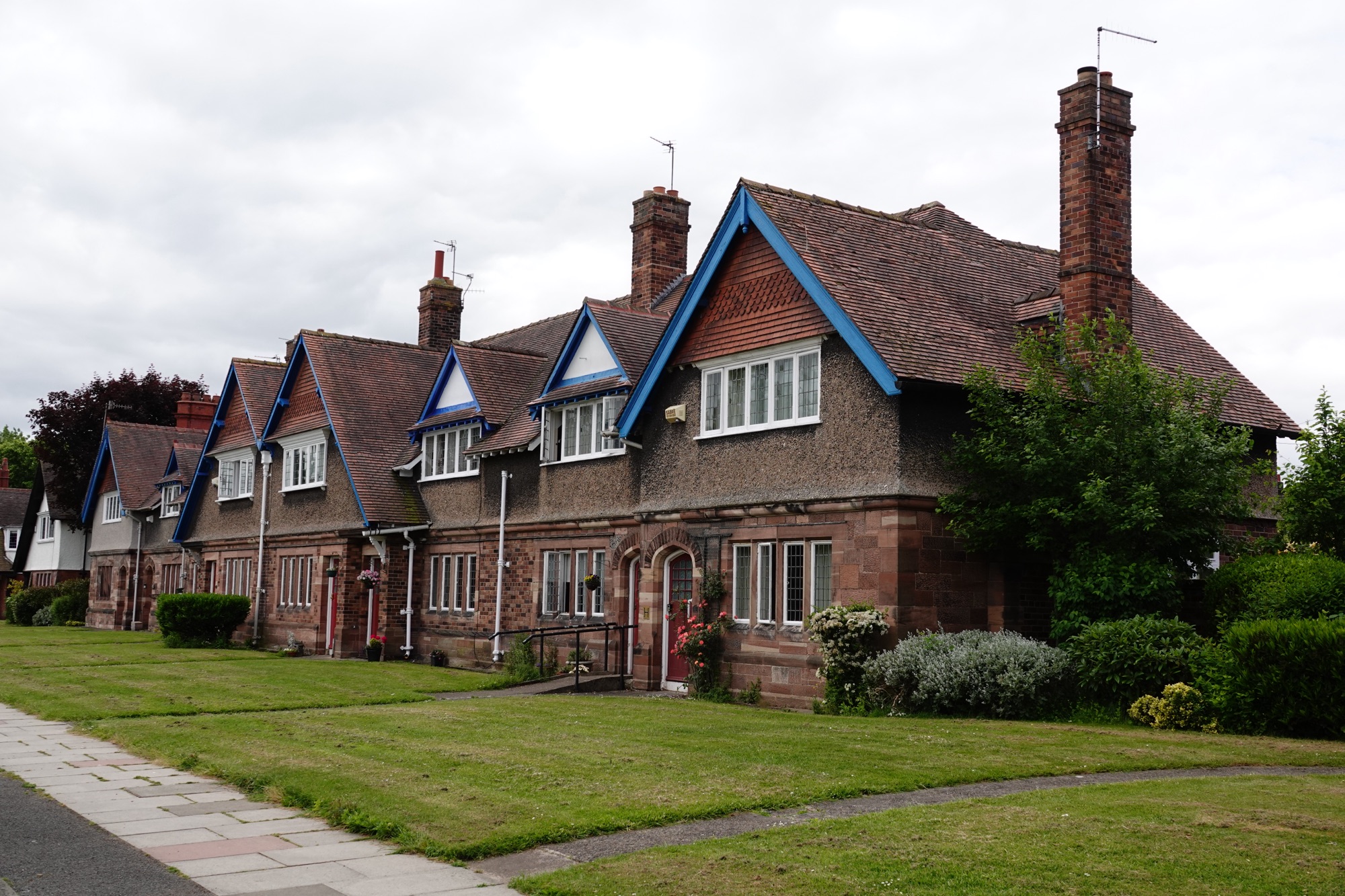
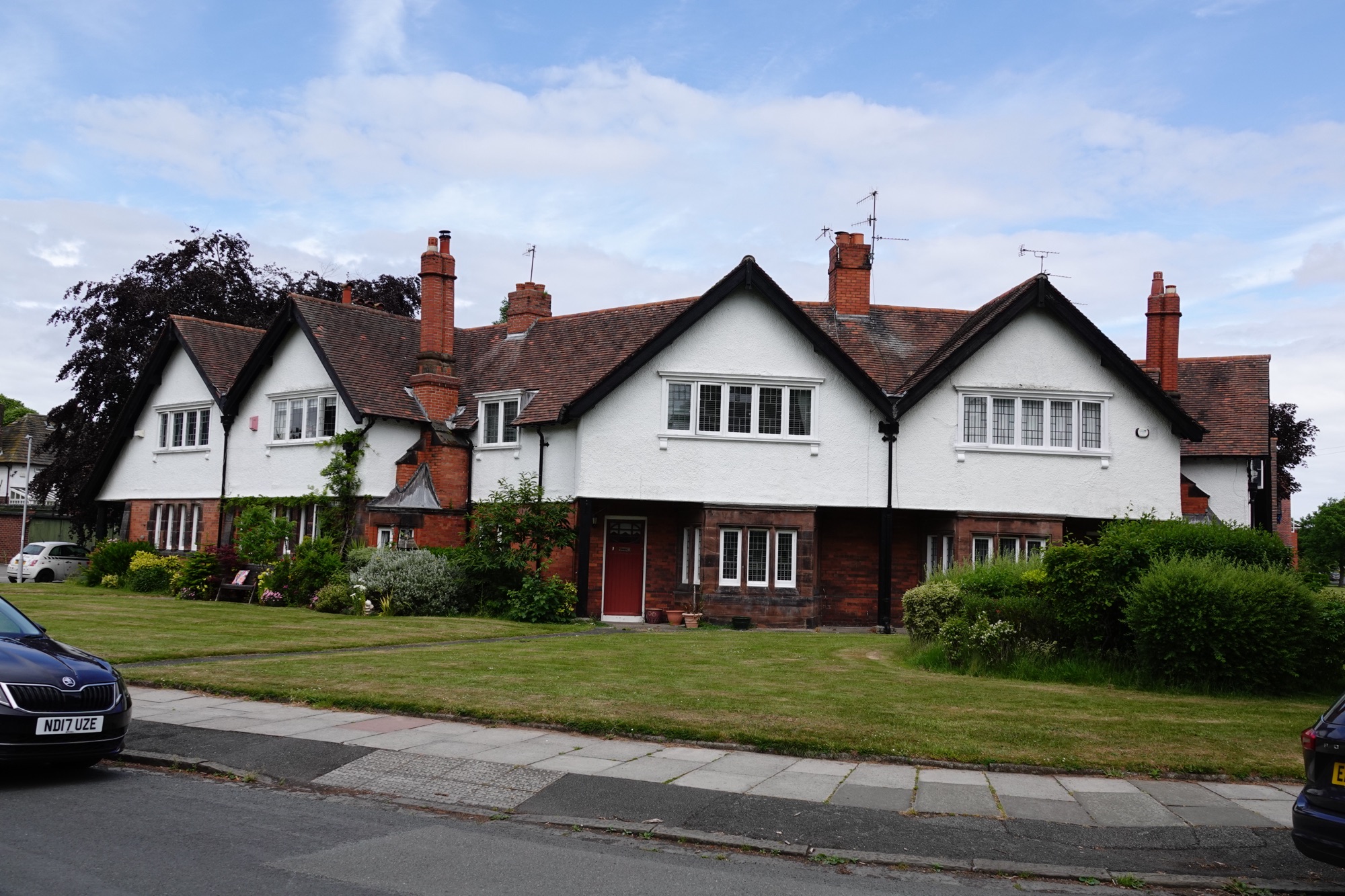
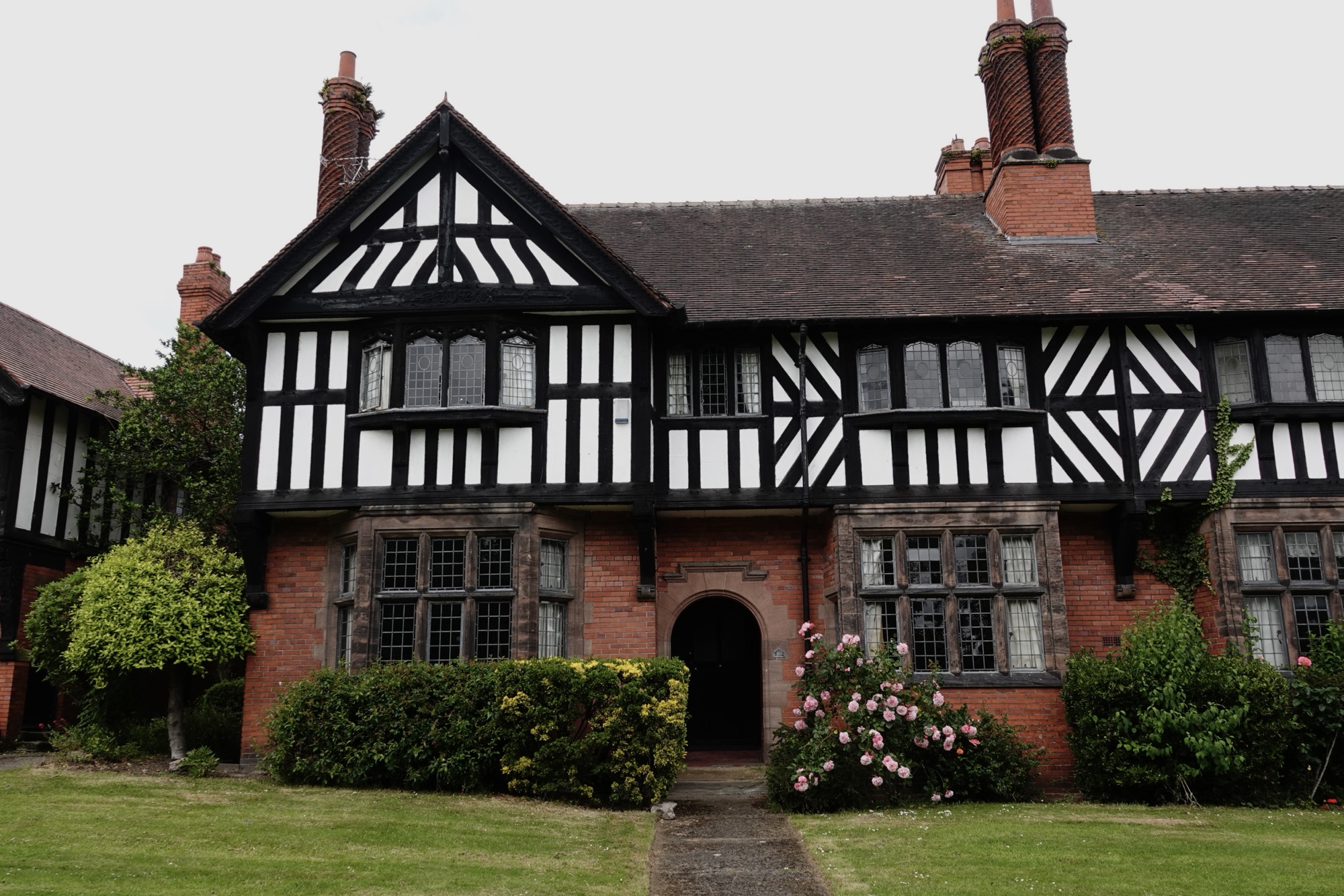
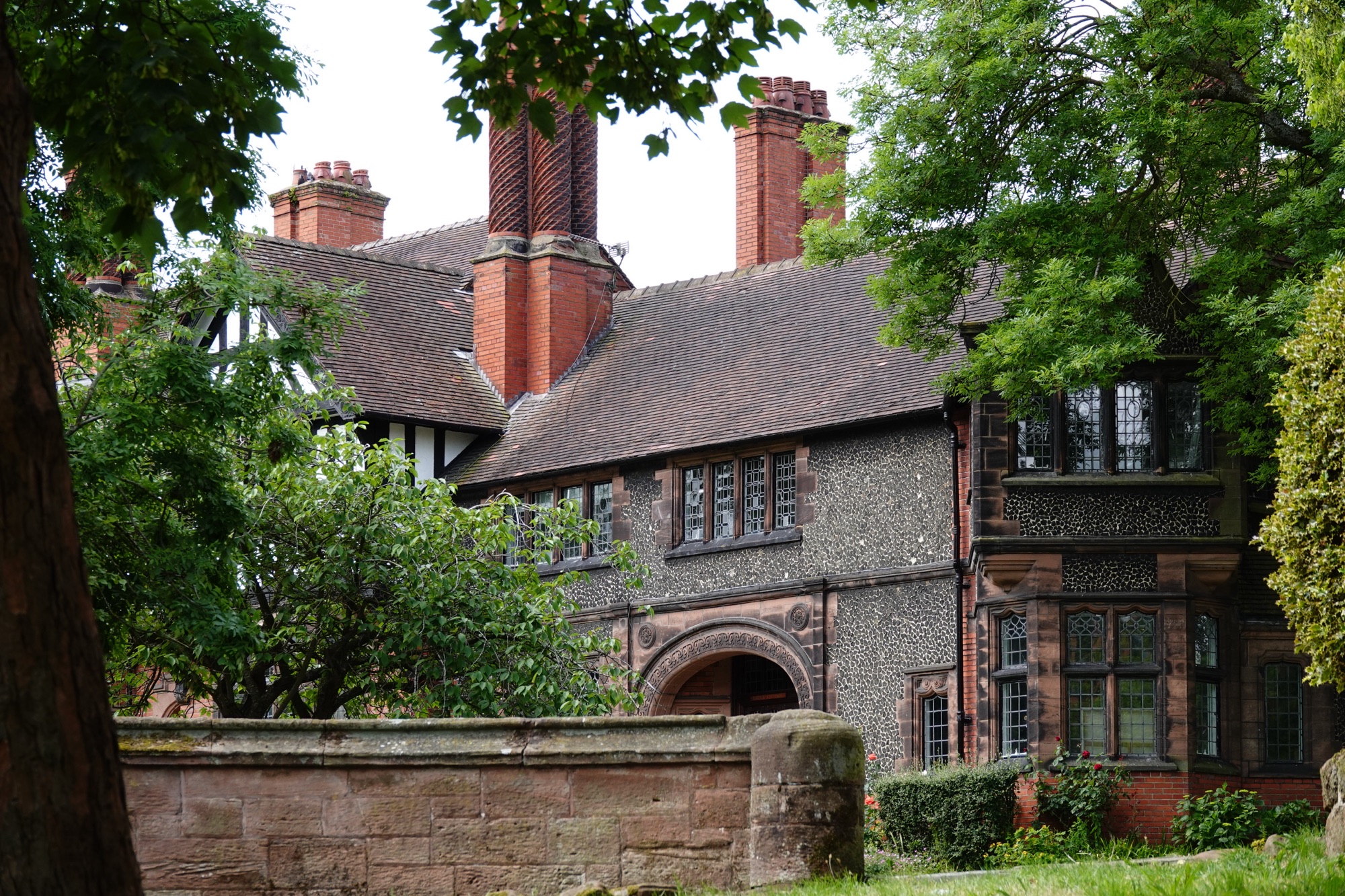
What we saw today were brick homes, in varied styles, with limestone trim, decorative quoined corners and brickwork, copper window lintels, and allotment gardens – assigned and rented to workers based on family size, not job description – and surrounded by parkland. It wasn’t idyllic, because there were certainly rules that had to be followed, but it was revolutionary for its time.
The homes were privatized in the 1960s. About 600 are privately owned, and the other 300 operated by the Port Sunlight Trust as rentals. They are still considered a very attractive prospect, despite being Grade 2 listed properties which cannot be modified externally, or have any architectural interior changes made (like moving/removing walls).
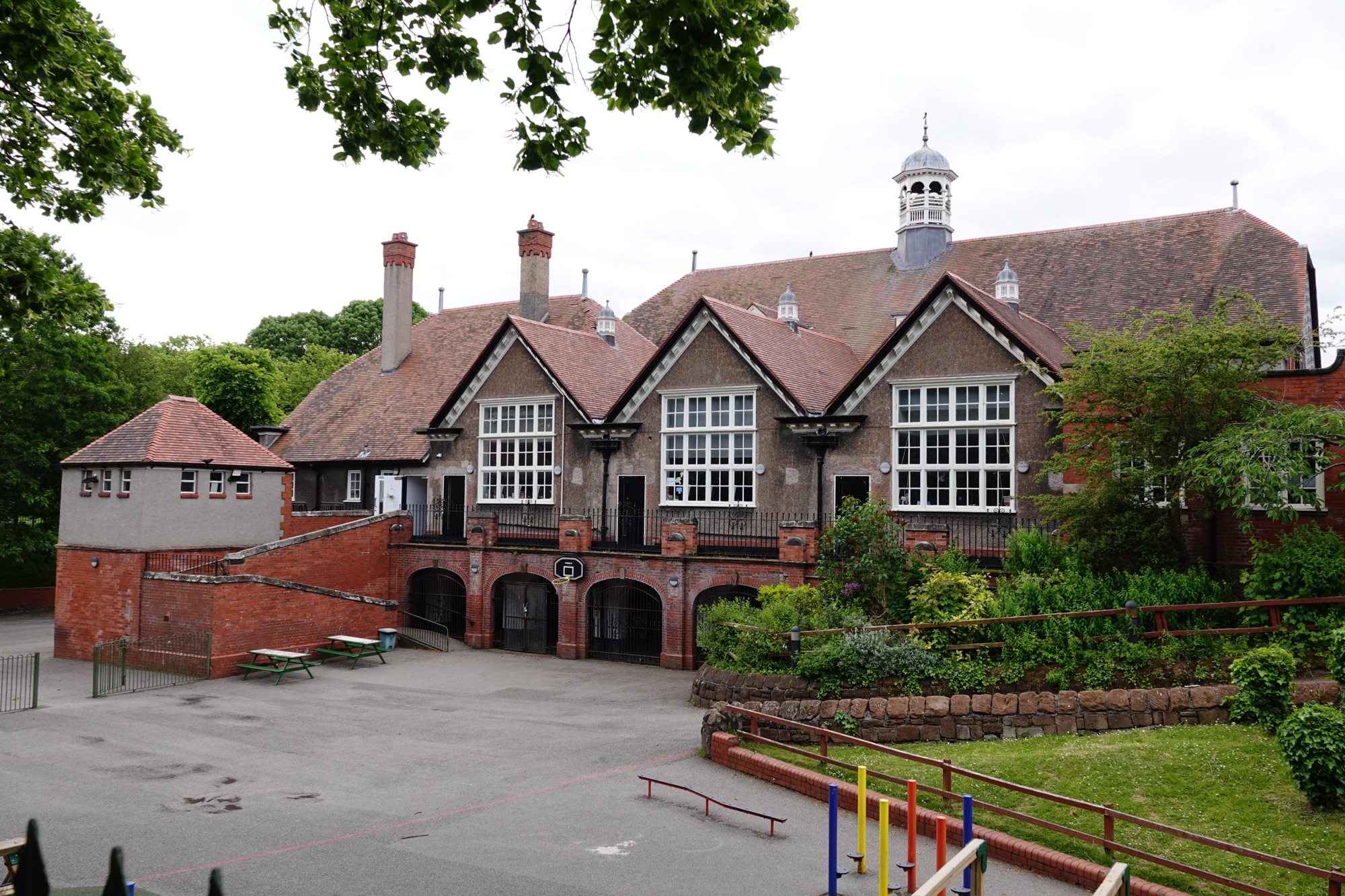
Lever used 30 different architects for the 900 homes, because he wanted variety. His goal was a place that looked like an English country village.
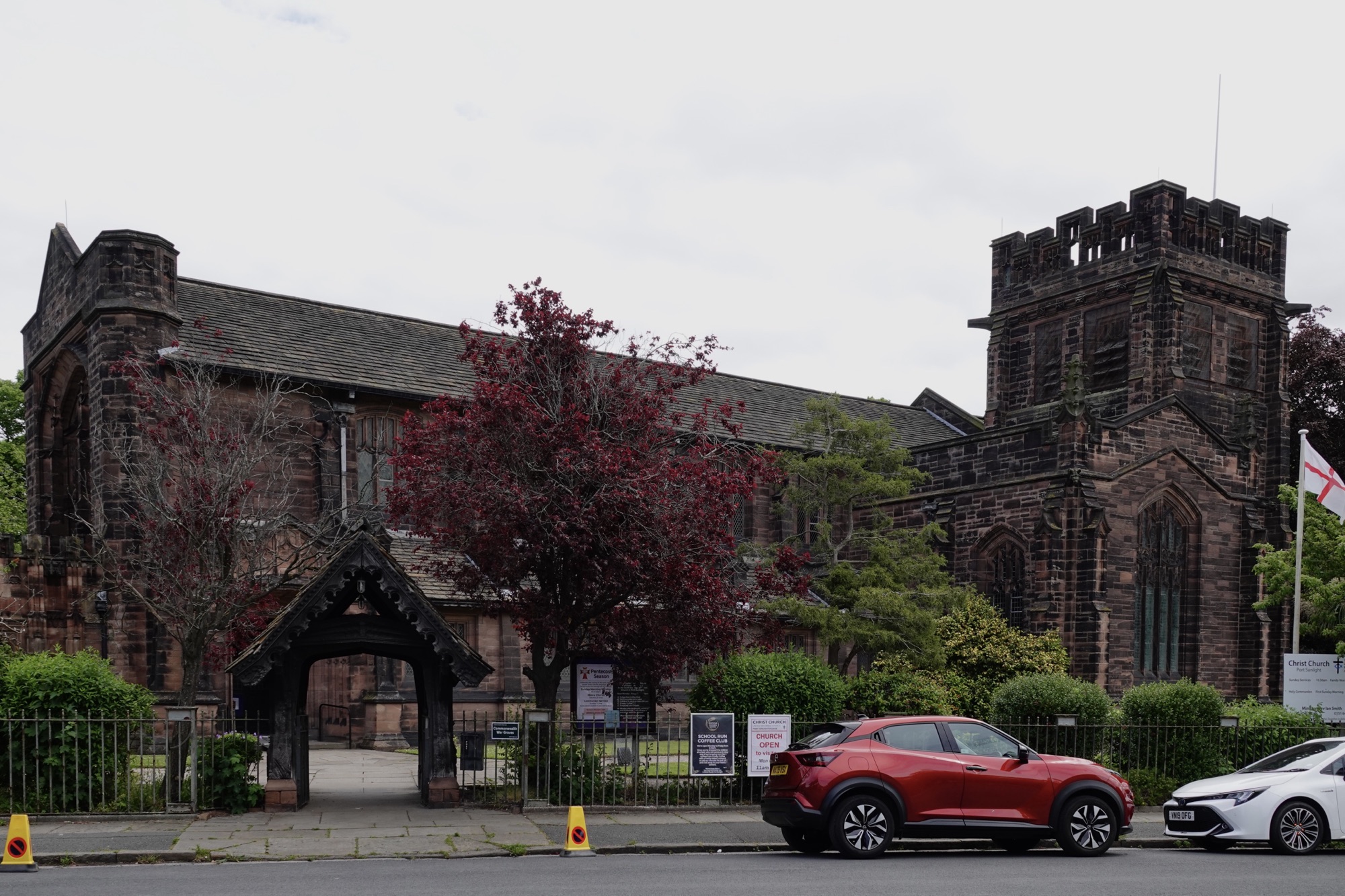
Lever had a church built for the village, big enough to seat 900. Because he wanted people to attend church, but did not assume a single denomination, he named it Christ Church (no saint name) and invited Catholic, Anglican, and other ministers to take turns doing Sunday services.
I don’t remember which specific buildings they were, but there was also a school and a hospital. Comprehensive health insurance (medical, dental and vision, plus prescriptions) was offered via a very small payroll deduction to all Lever employees, not just those living in the village.
The stores in the village were owned and operated by Lever families independently – they were not “company stores” like those more common in “company towns”.
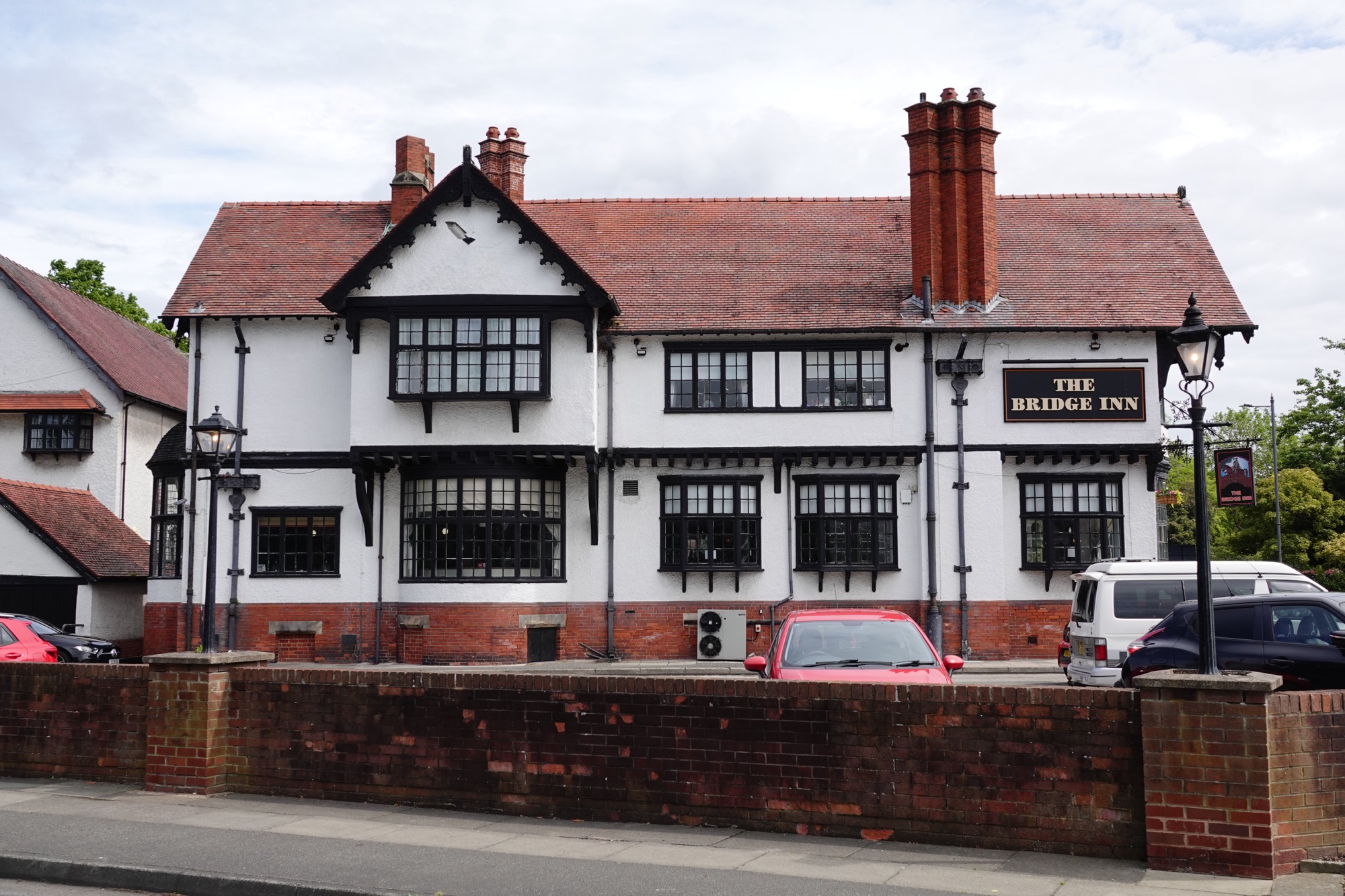
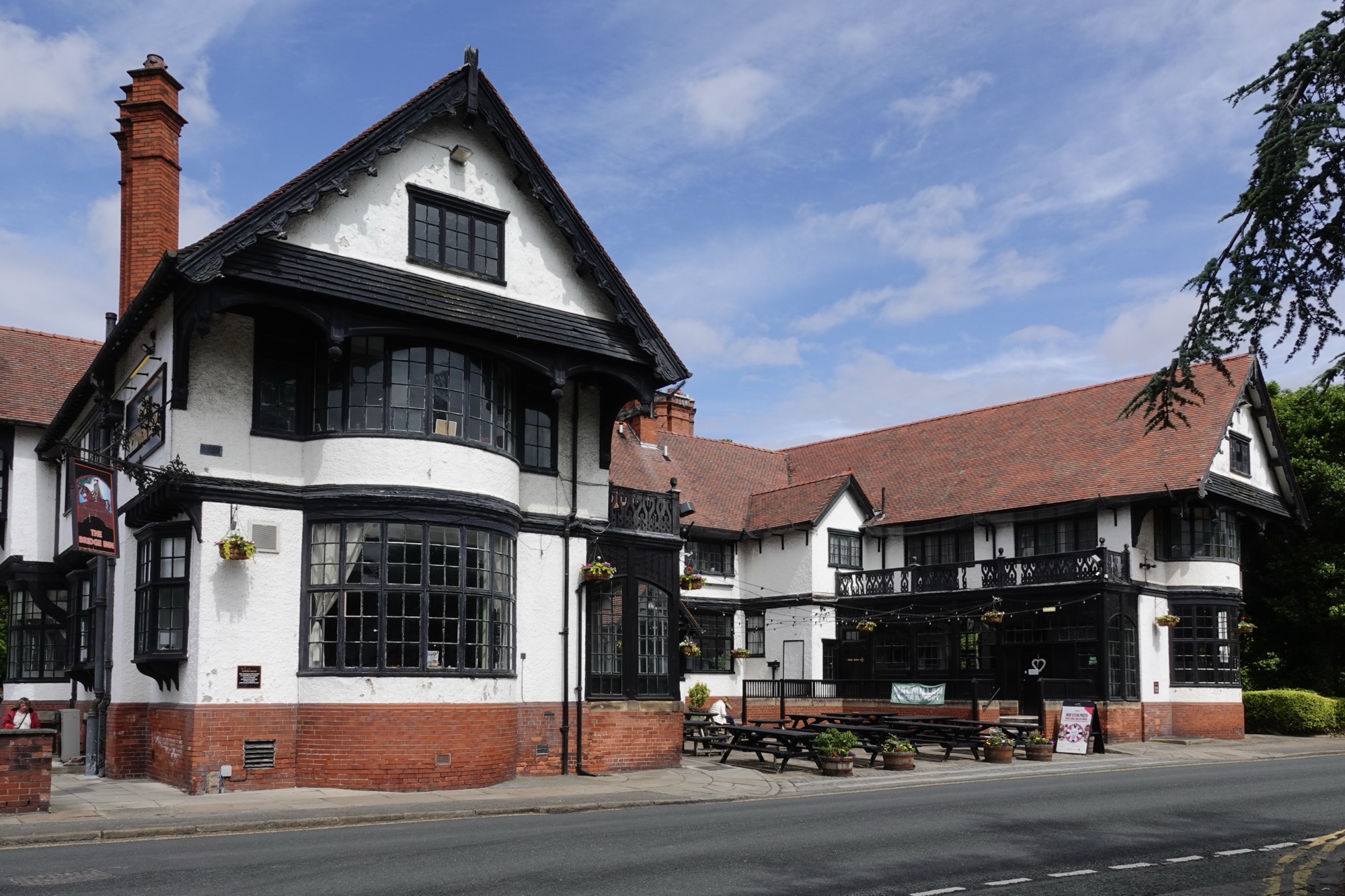
He also built an inn, as a place for visitors to stay, but it served no alcohol since Lever believed in temperance. However, he later allowed a vote by all the village’s adults – including the women, prior to British suffrage coming into effect – as to whether alcohol should be served and abided by their decision.
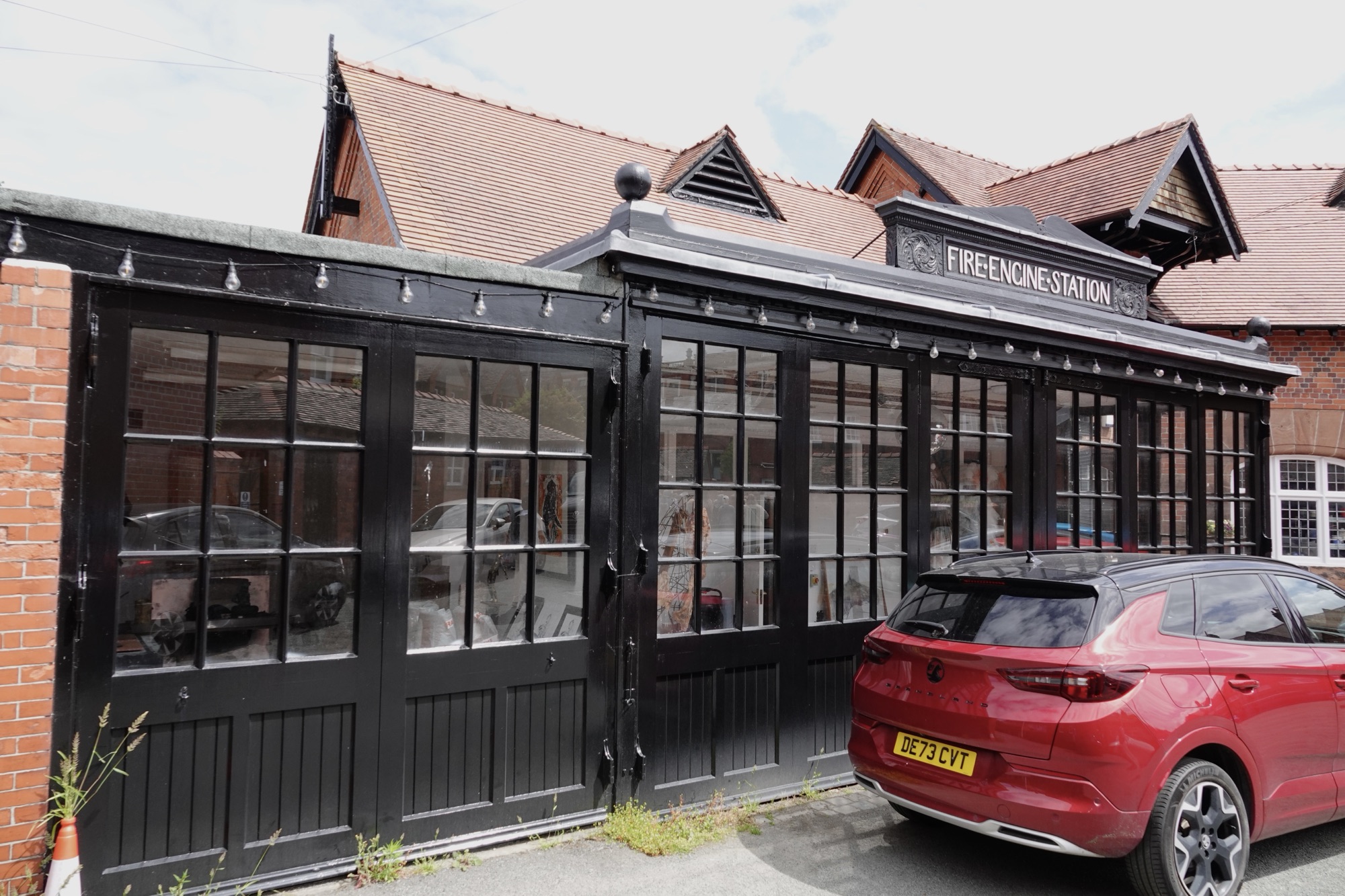
There was a village fire station. Factory workers could choose to do a year-long stint training to be a firefighter; if they enjoyed it they could assume it as their full-time job, and if they did not they were guaranteed their factory position back.
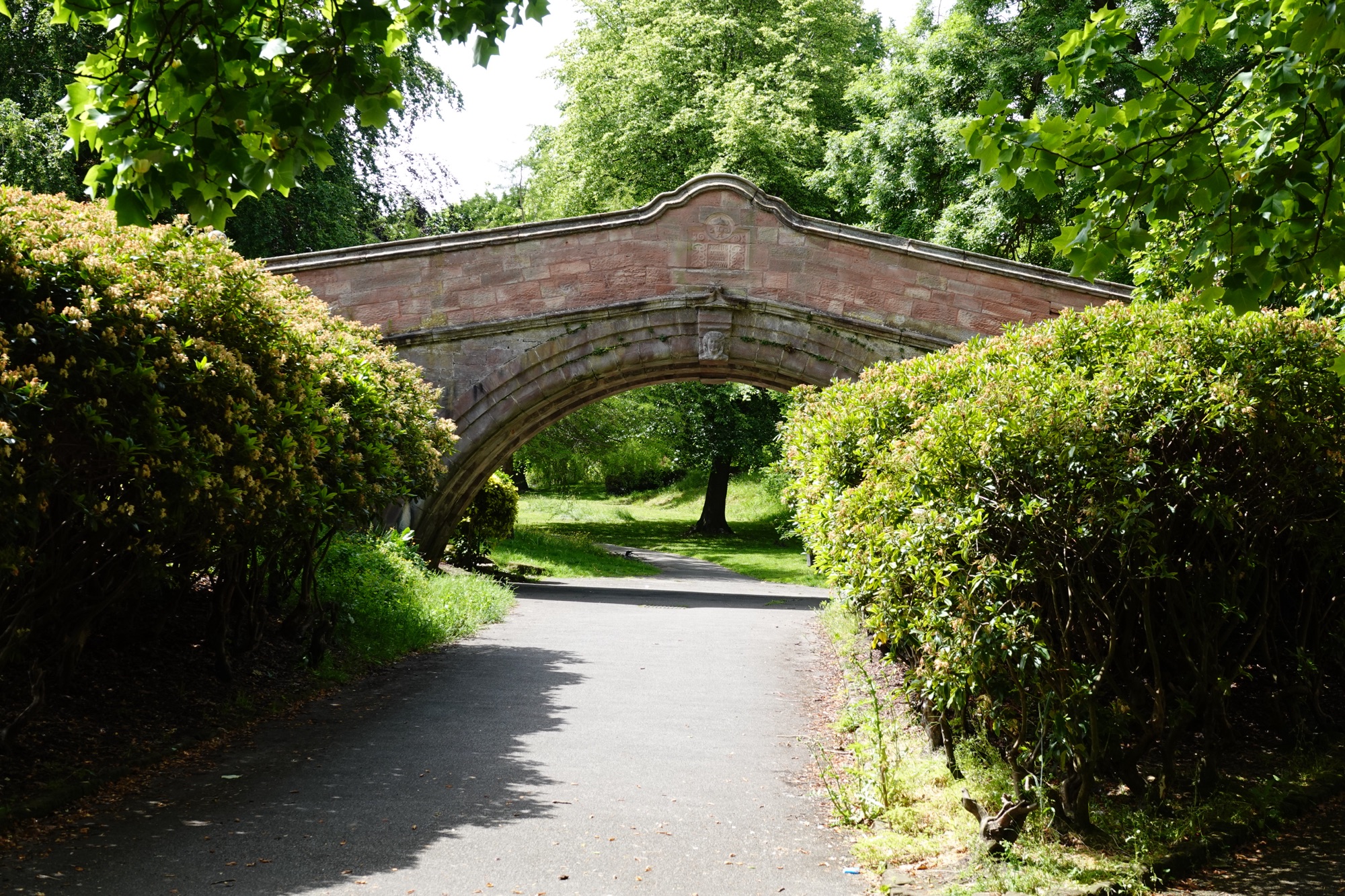
There was a purely decorative stone bridge leading from the house in the village where William Lever lived for three years to the factory.
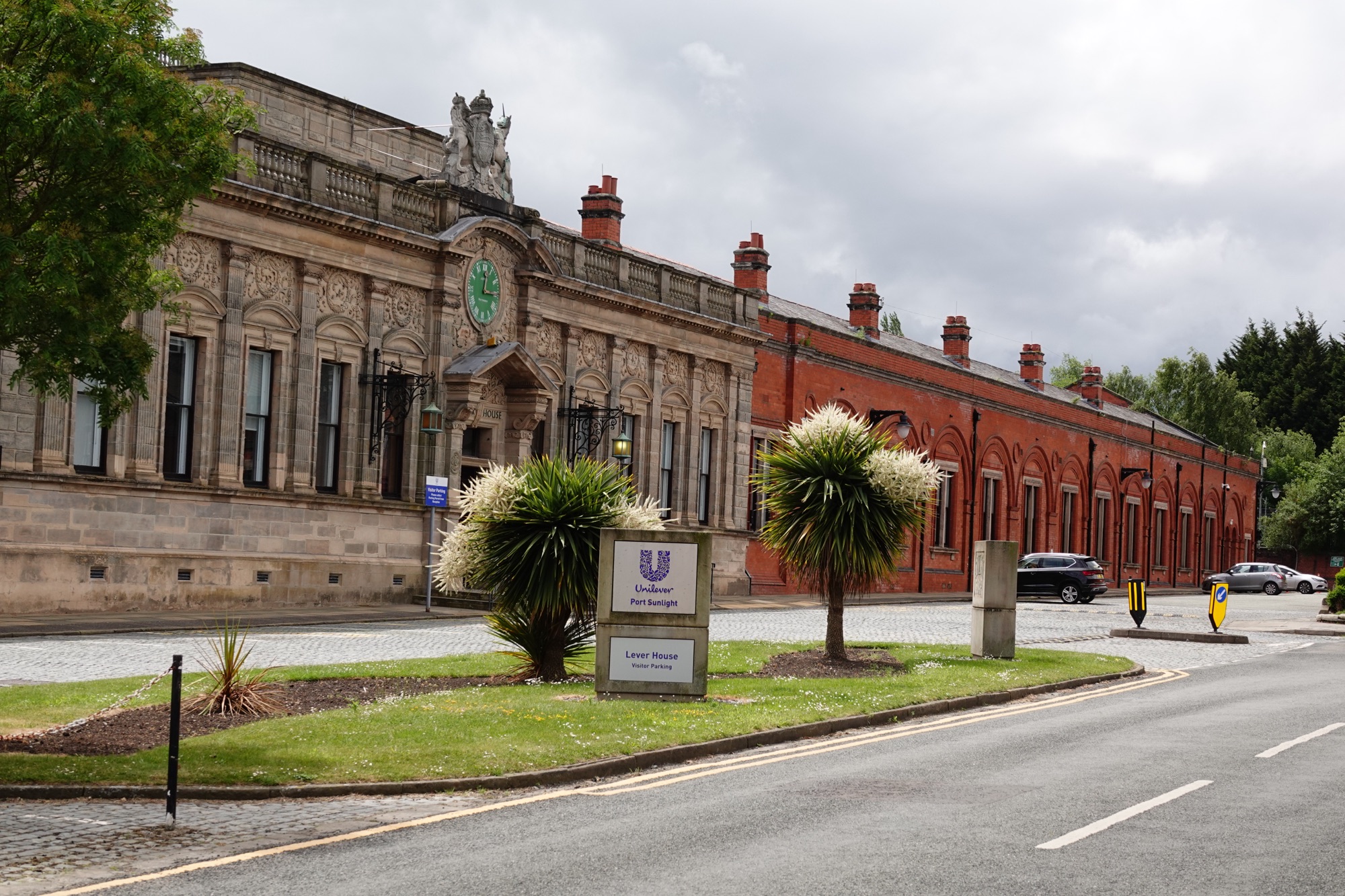
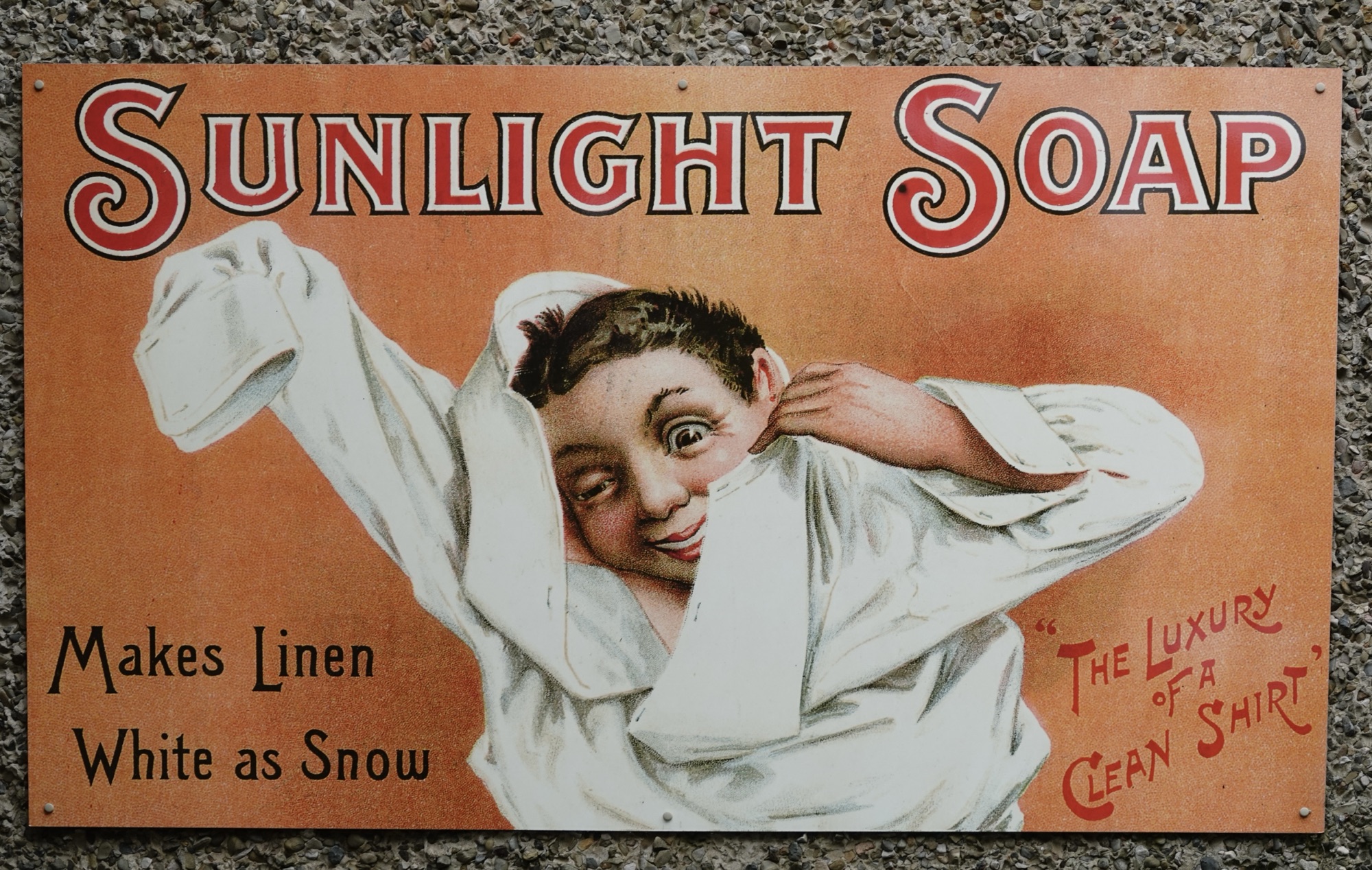
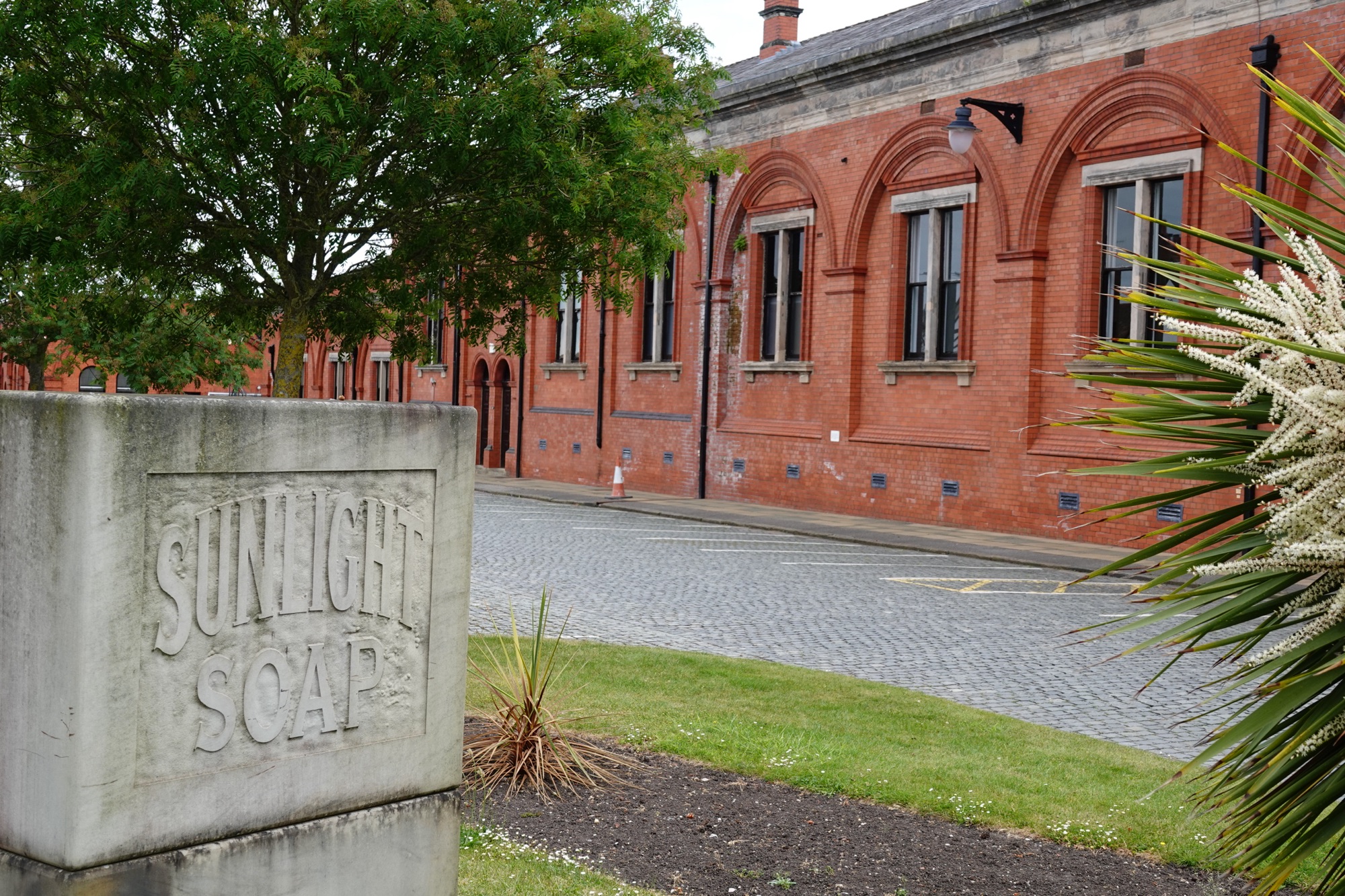
On the reverse of the stone Unilever sign, an homage to how it started:
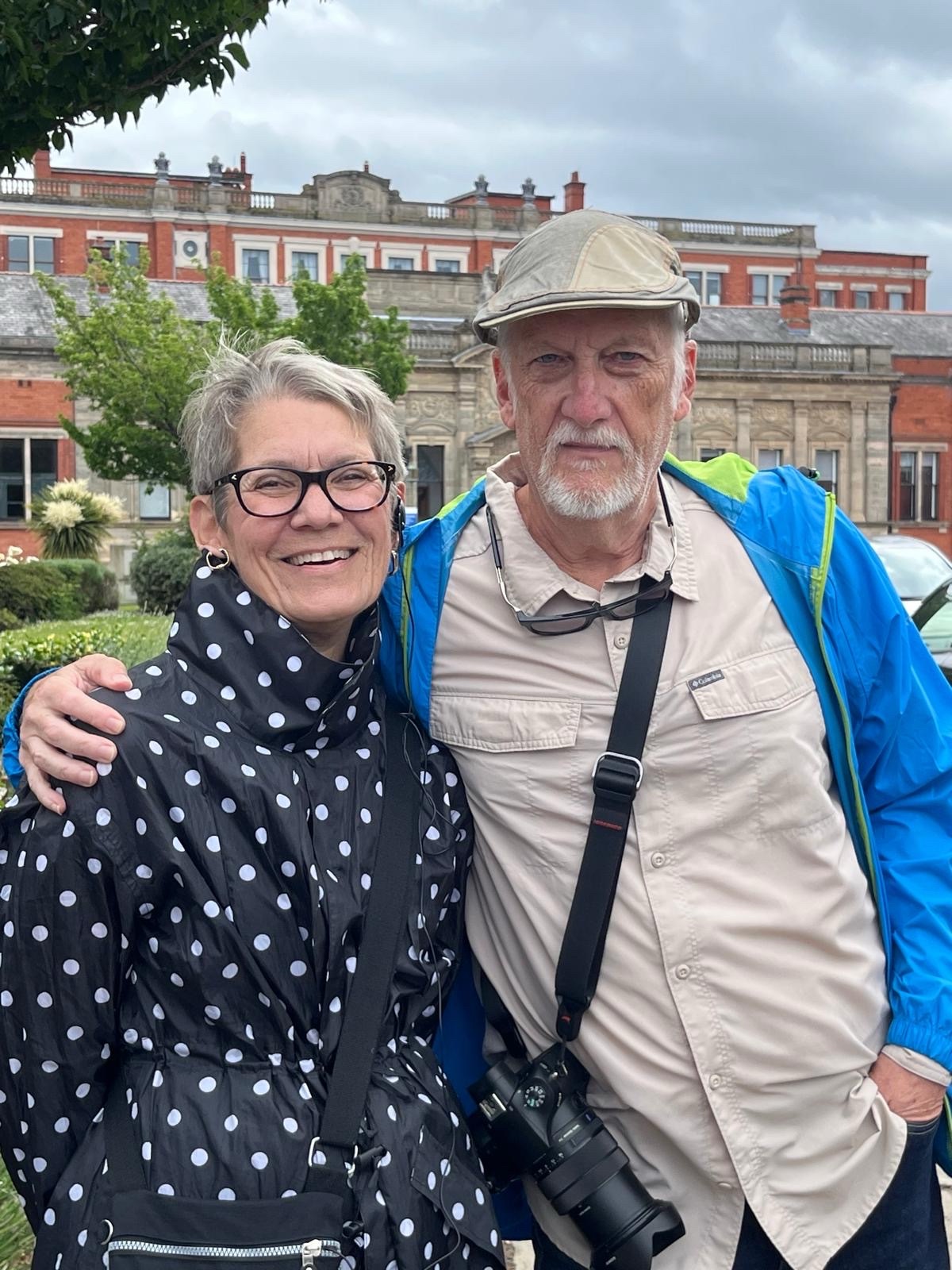
Stella caught a rare photo in which both Ted and I appear. We look pretty happy about something. Maybe soap?
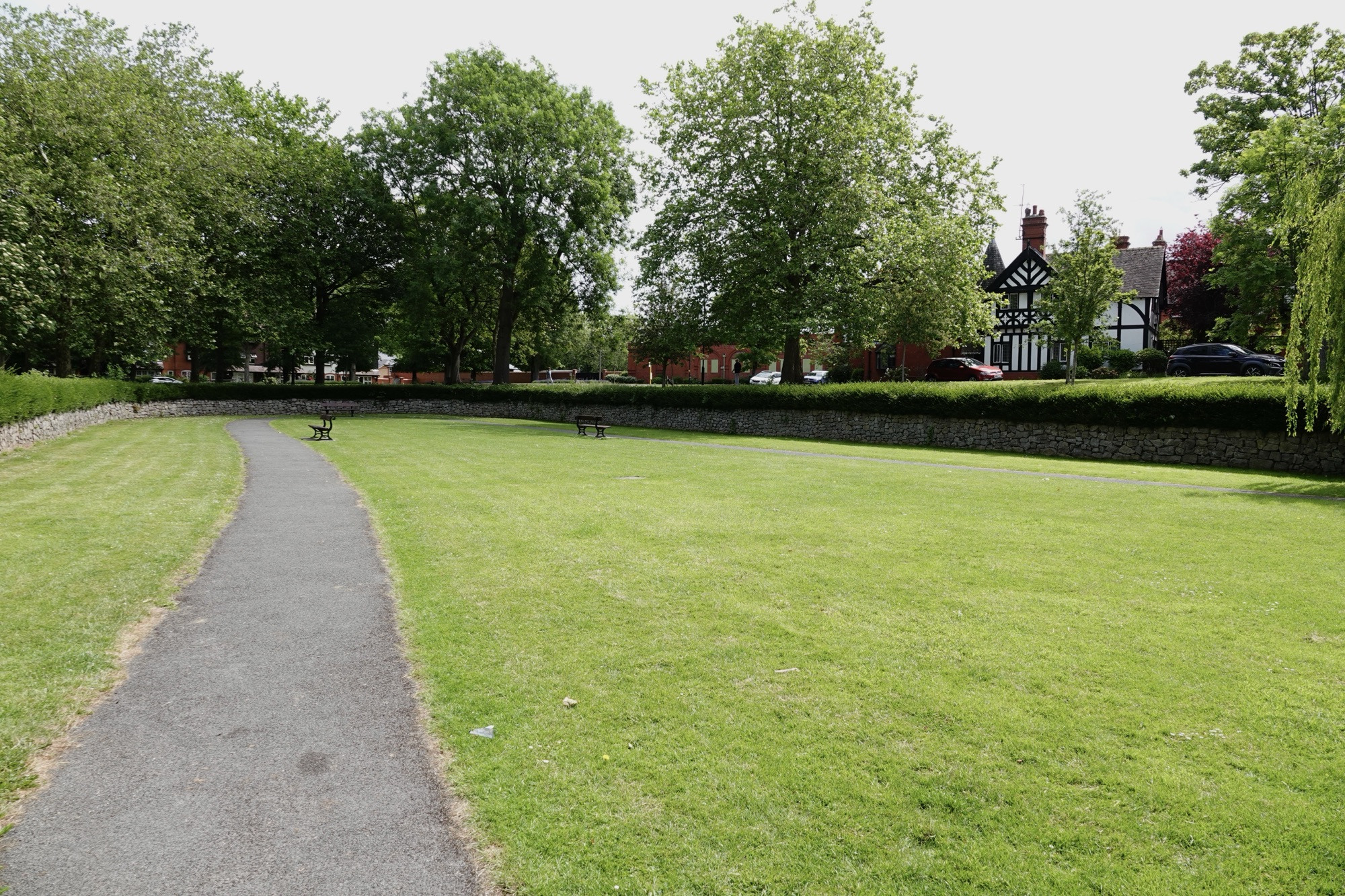
In the field below there was once a 2500-seat outdoor Greek-style theatre, initially open to the elements, and later roofed and tiled. It eventually proved too heavy for the reclaimed marshy riverbed, crushing the drainage pipe underneath, and had to be removed.
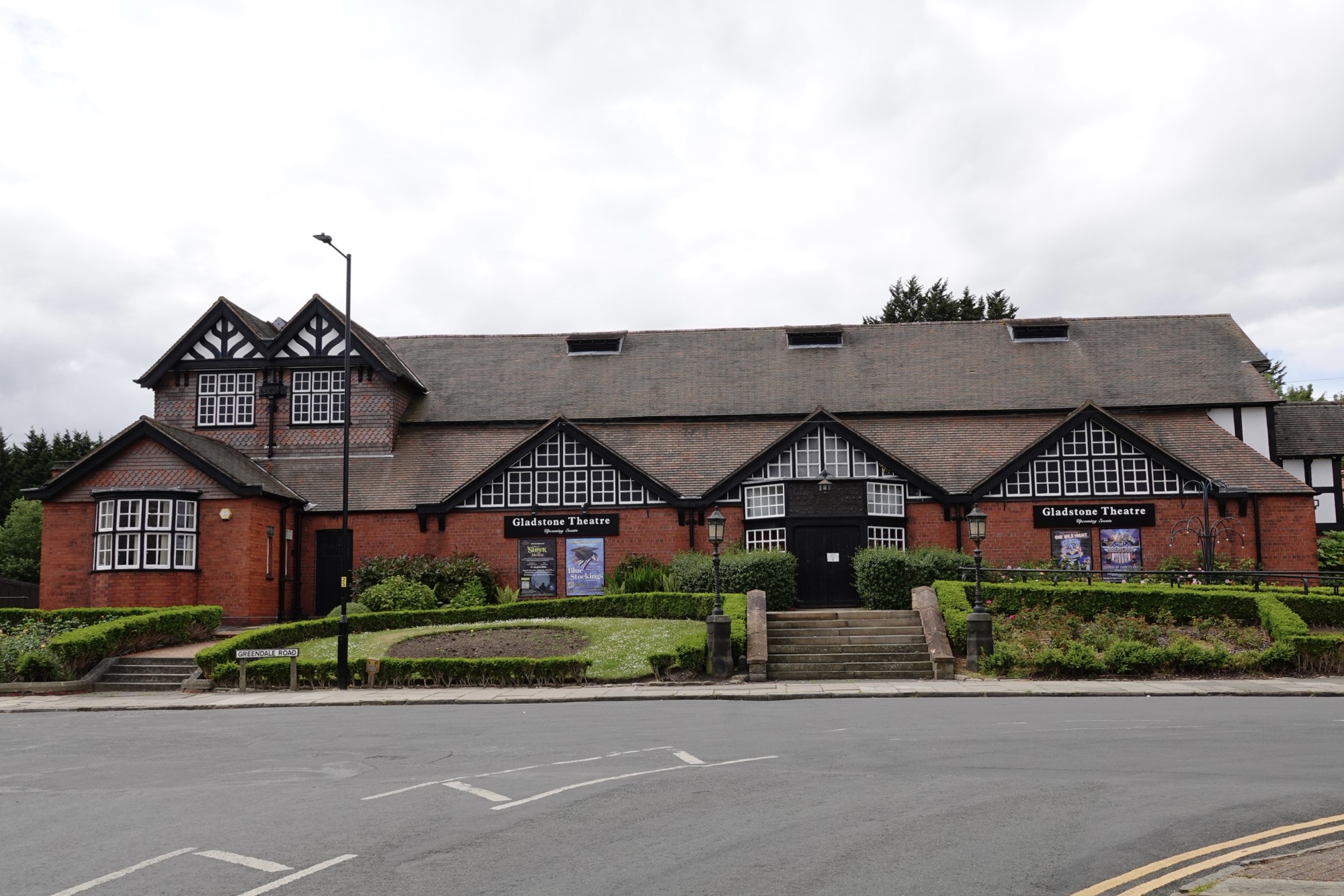
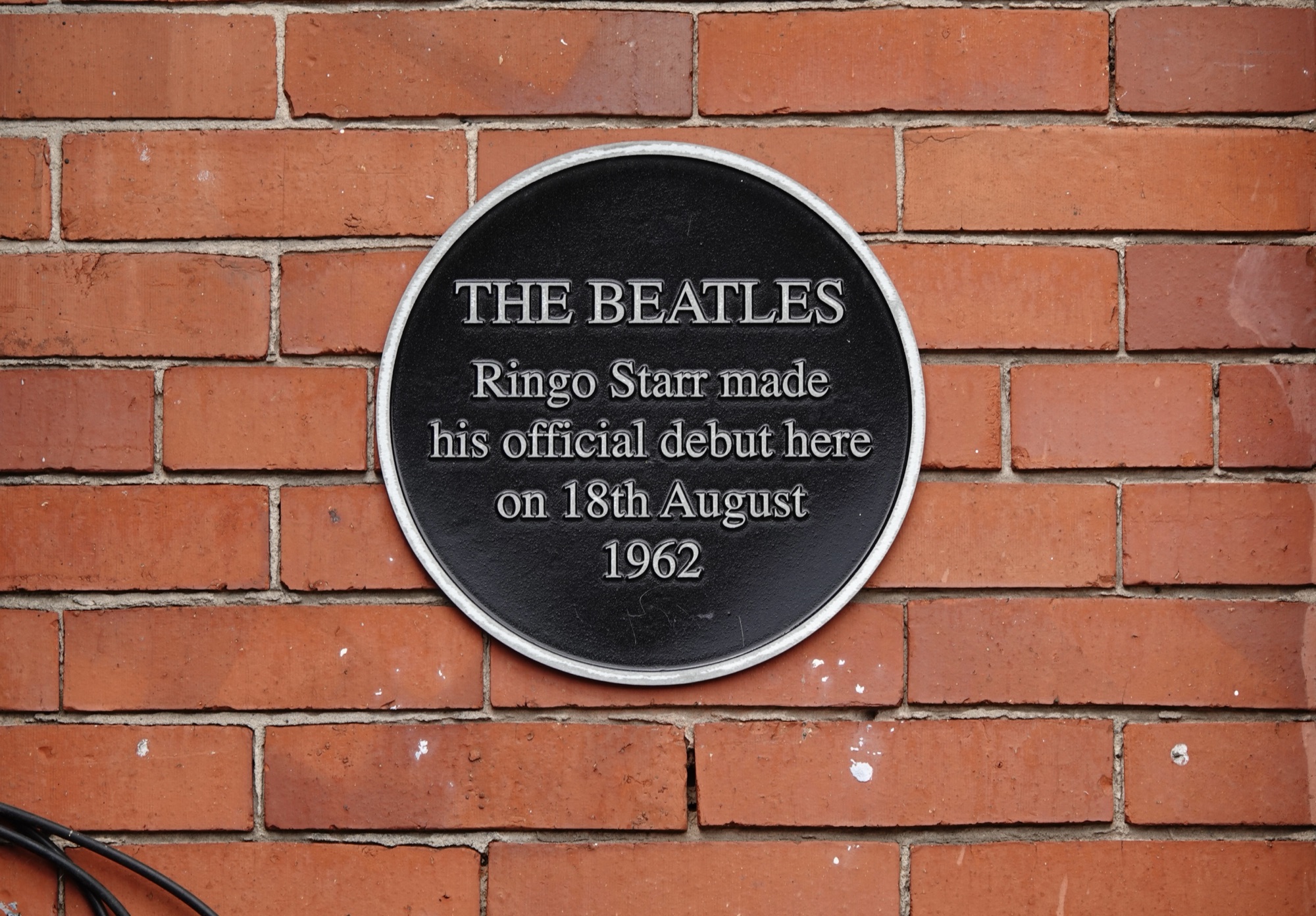
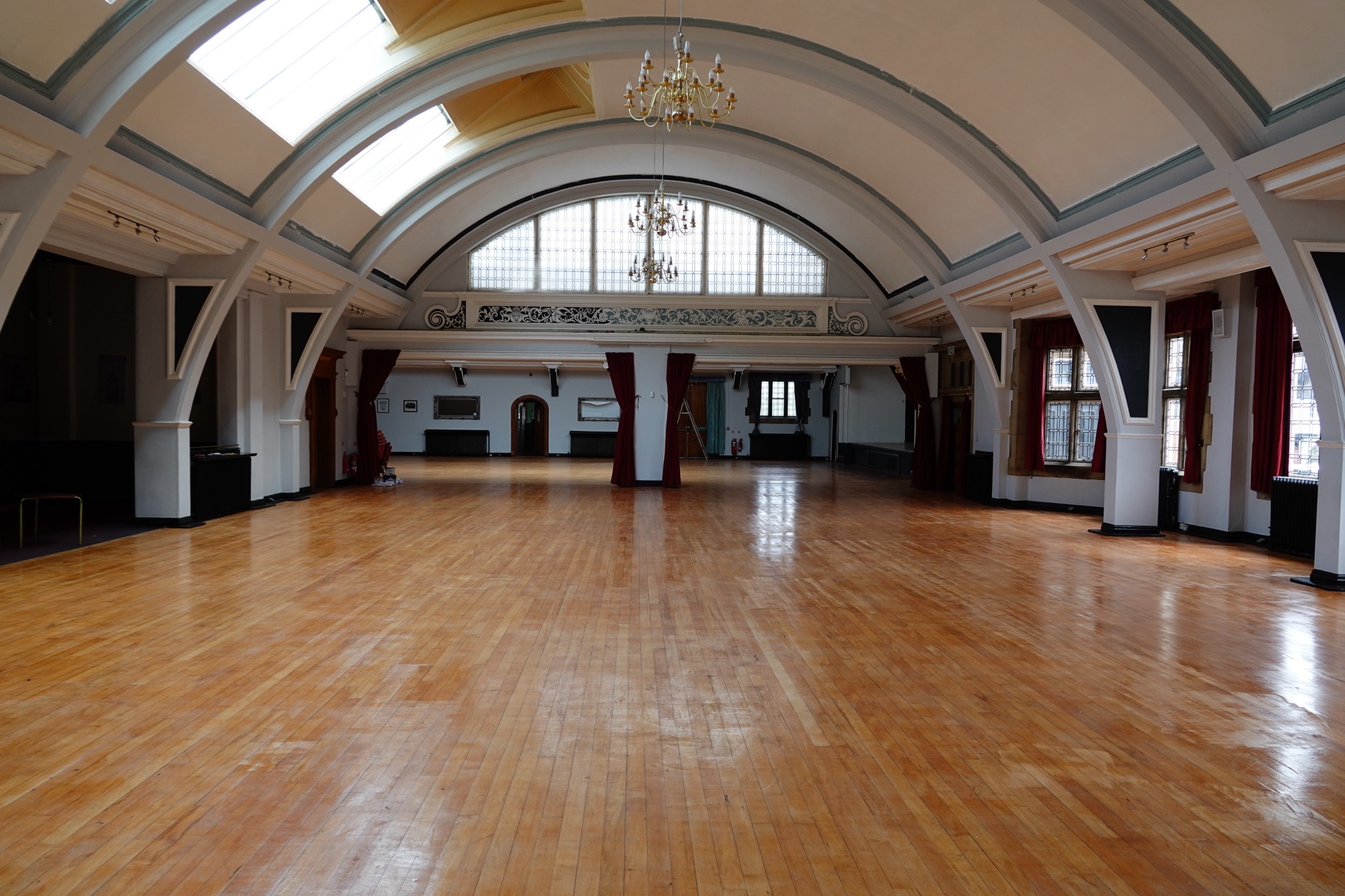
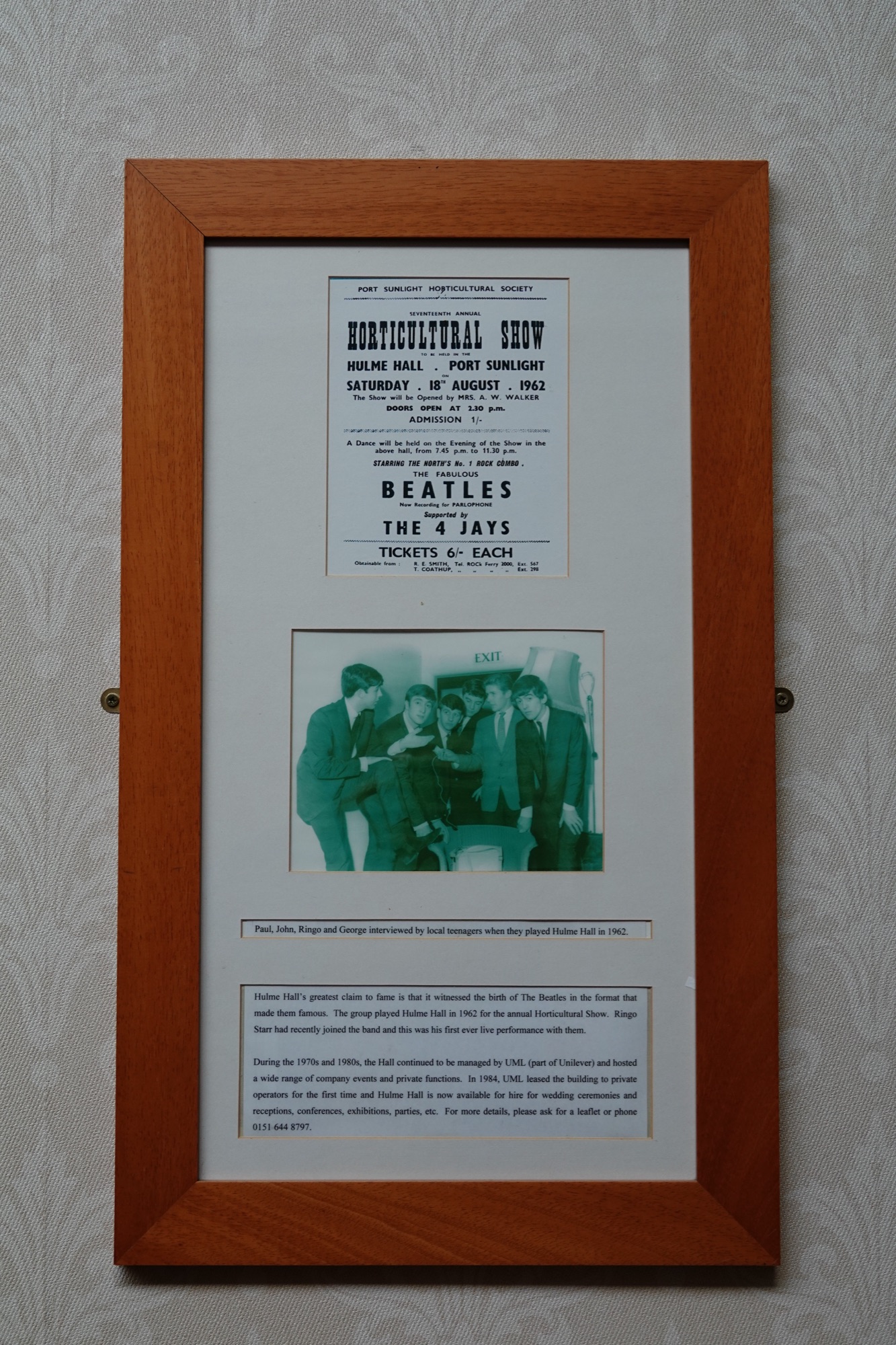
The huge dance hall , called Hulme Hall after Lever’s wife Elizabeth Hulme, provided entertainment for the Lever staff, and hosted some quite memorable acts!
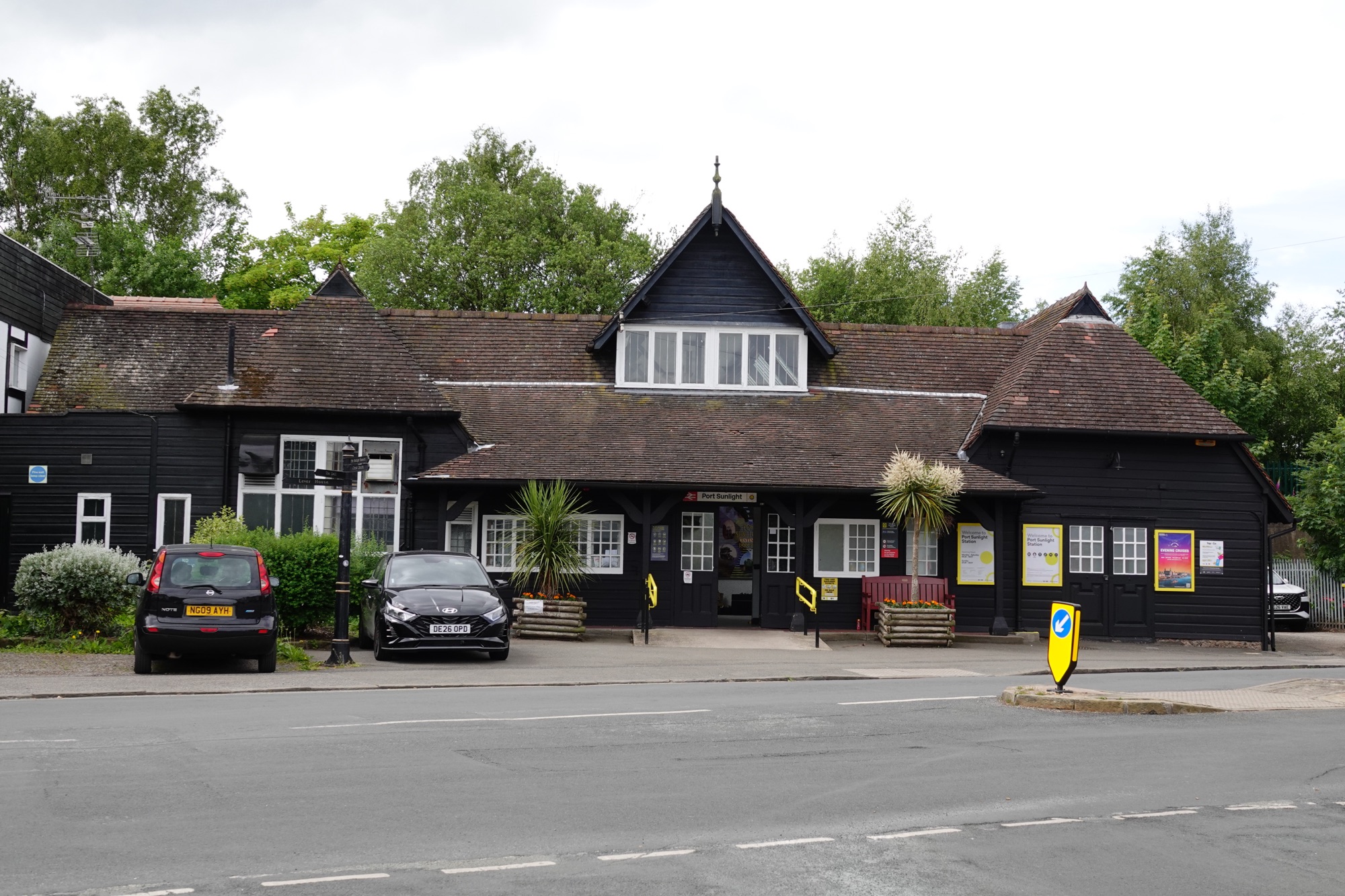
Port Sunlight did not initially have a train station, but one was built specifically for the visit by King George V snd Queen Mary when they came to lay the foundation stone for the Lady Lever Art Gallery, which Lord Lever built as a memorial to his wife.
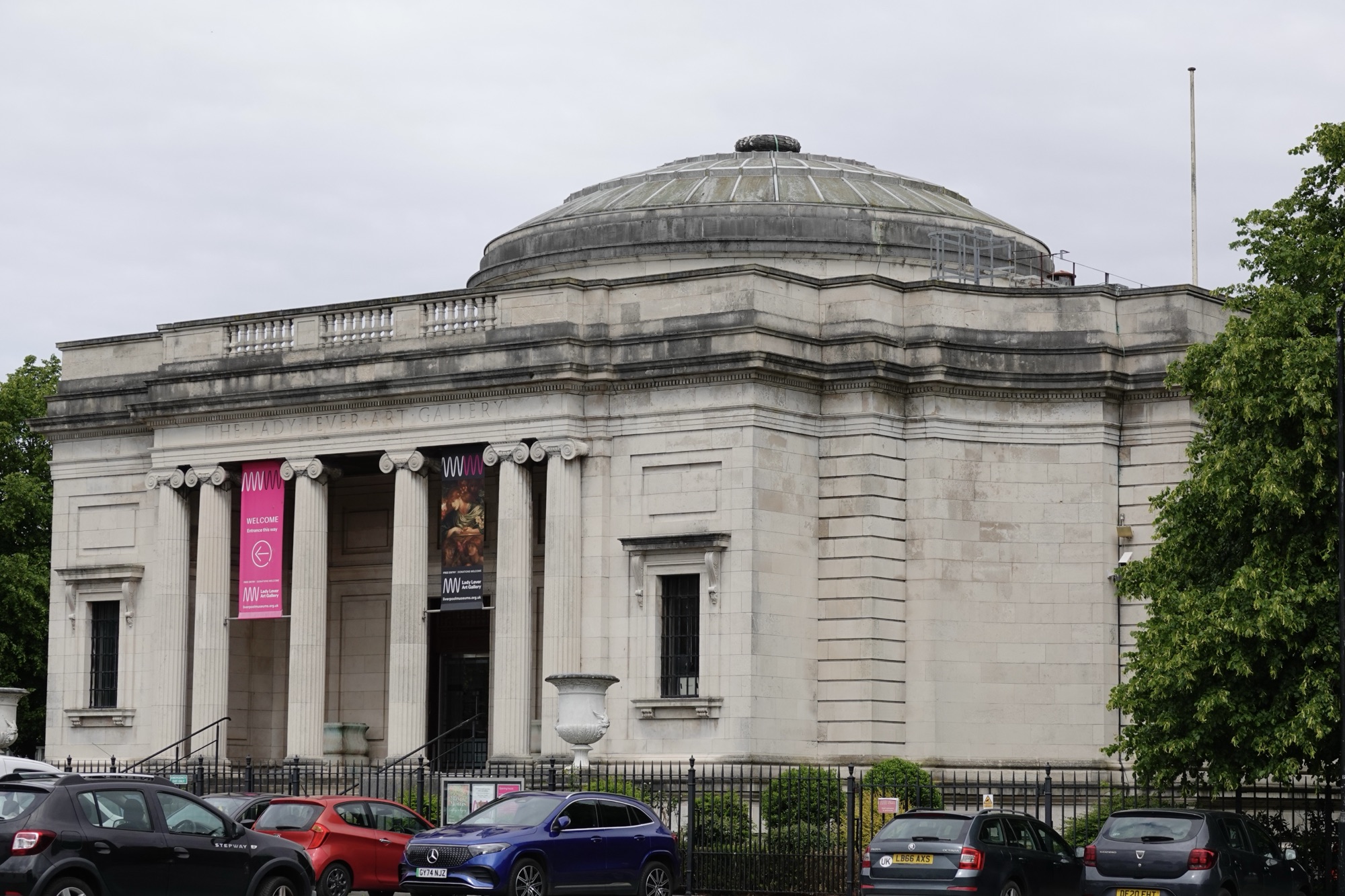
The Lady Lever Gallery, below. We peeked in after our tour.
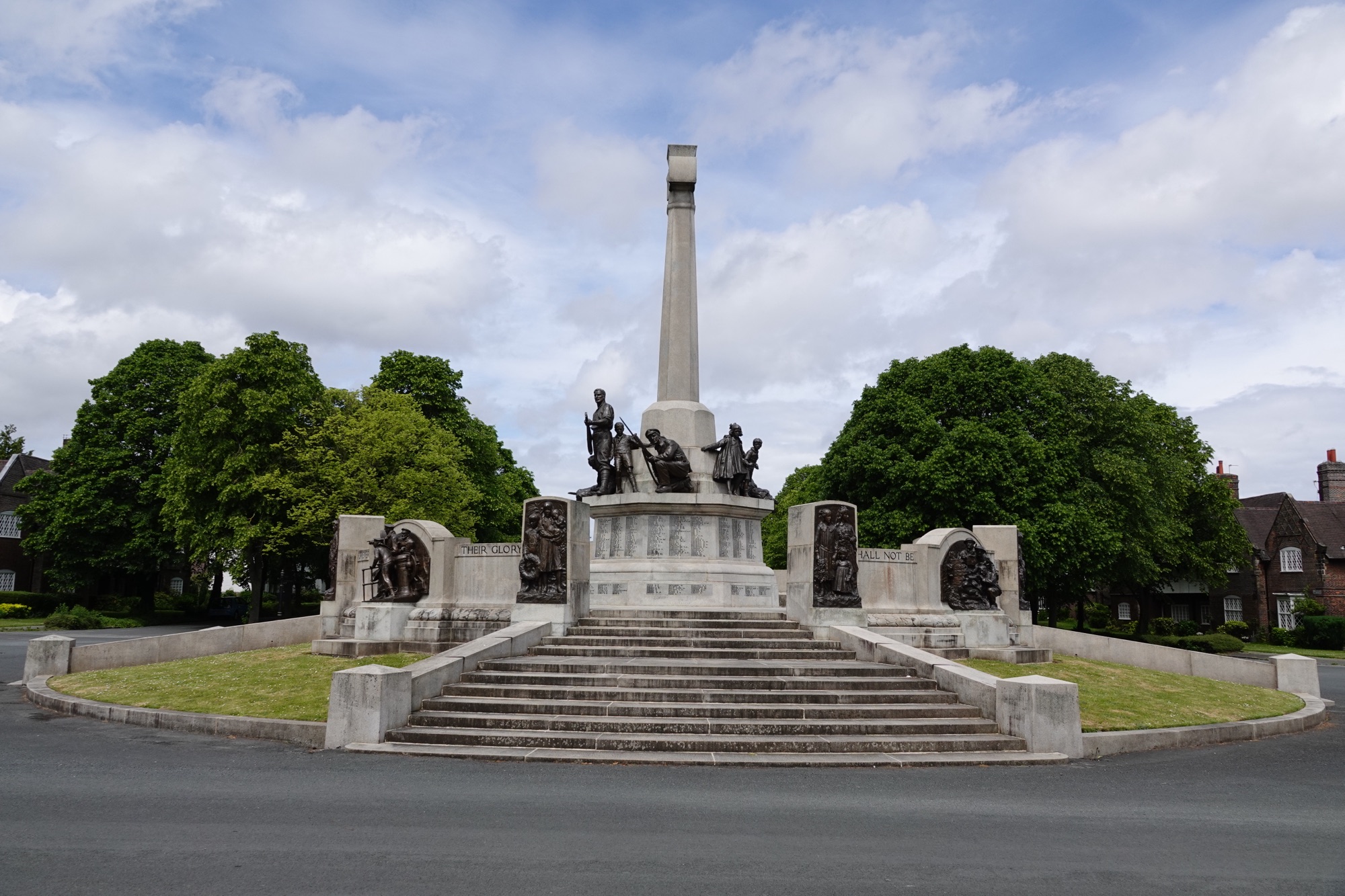
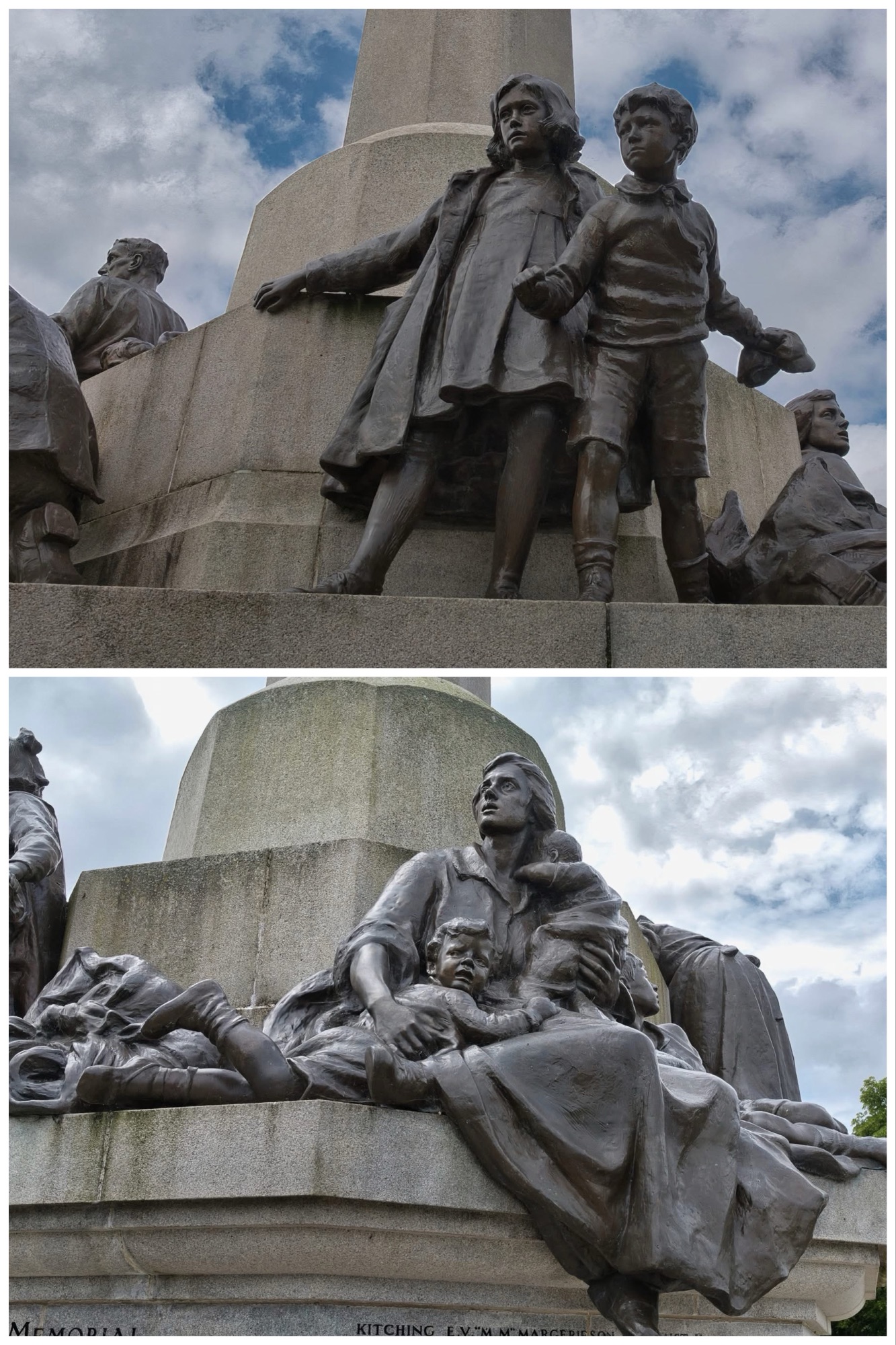
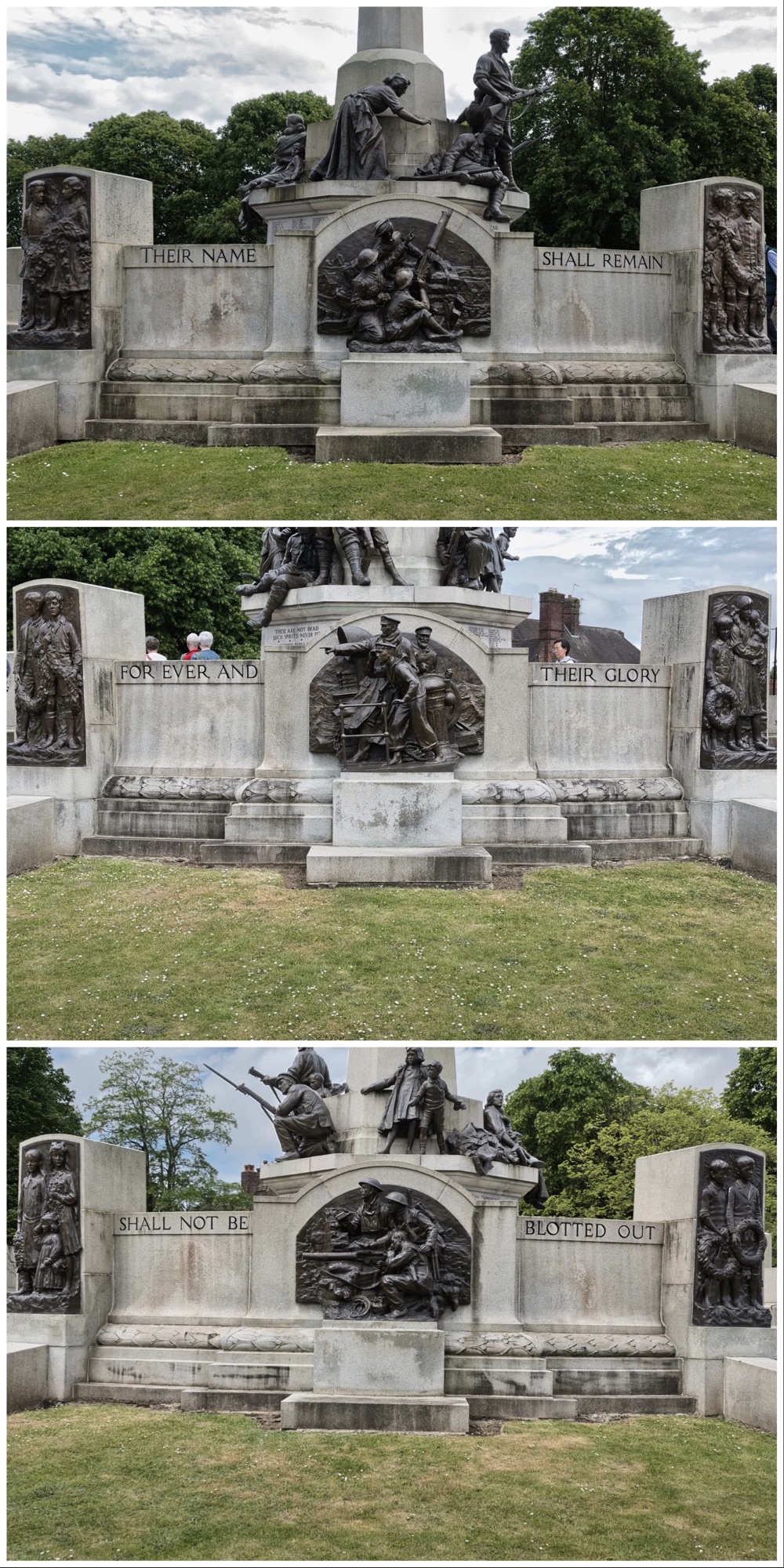
At the edge of the village, this gate frames the Hillborough Monument, erected in memory of England’s largest ever football tragedy, and the much larger war memorial.
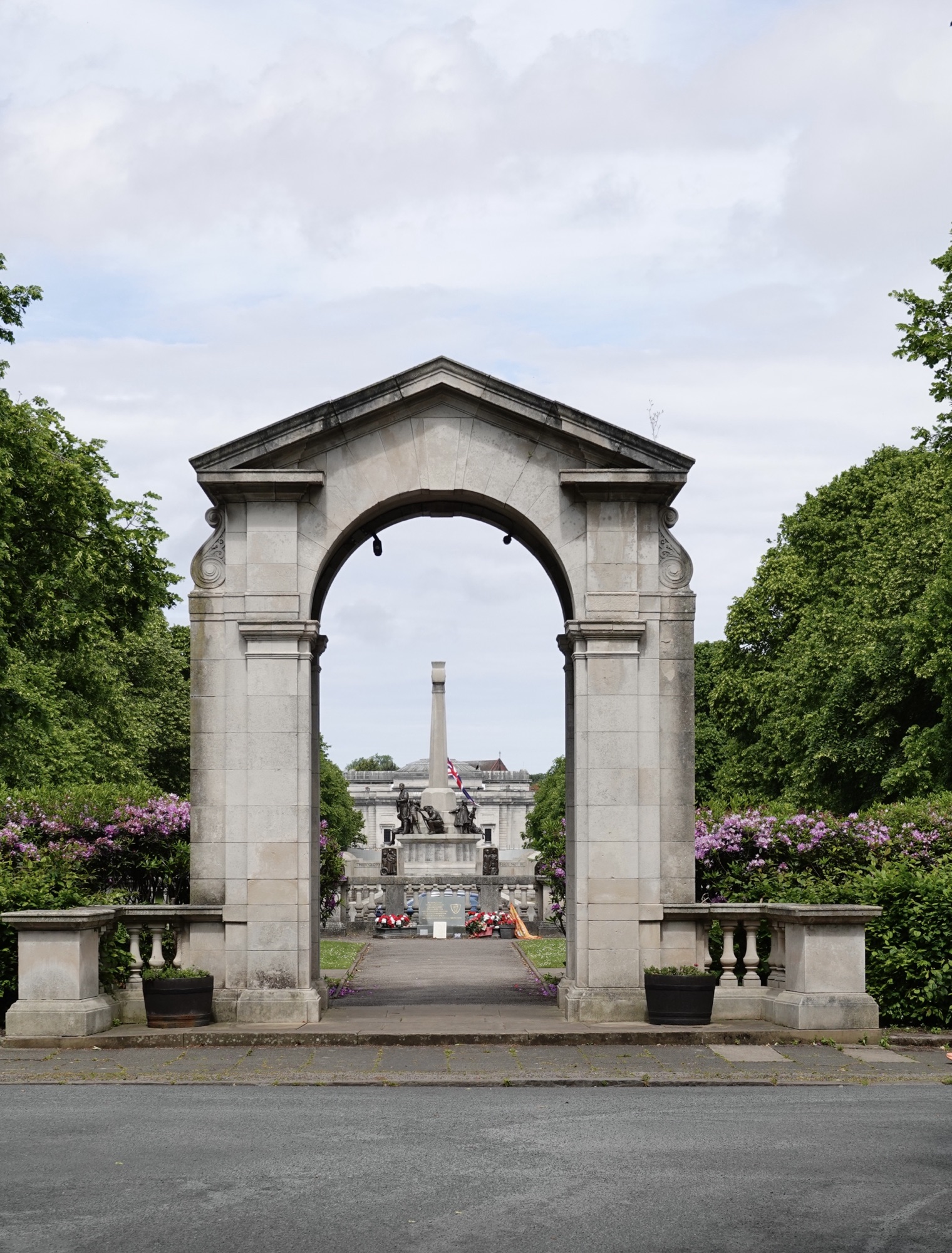
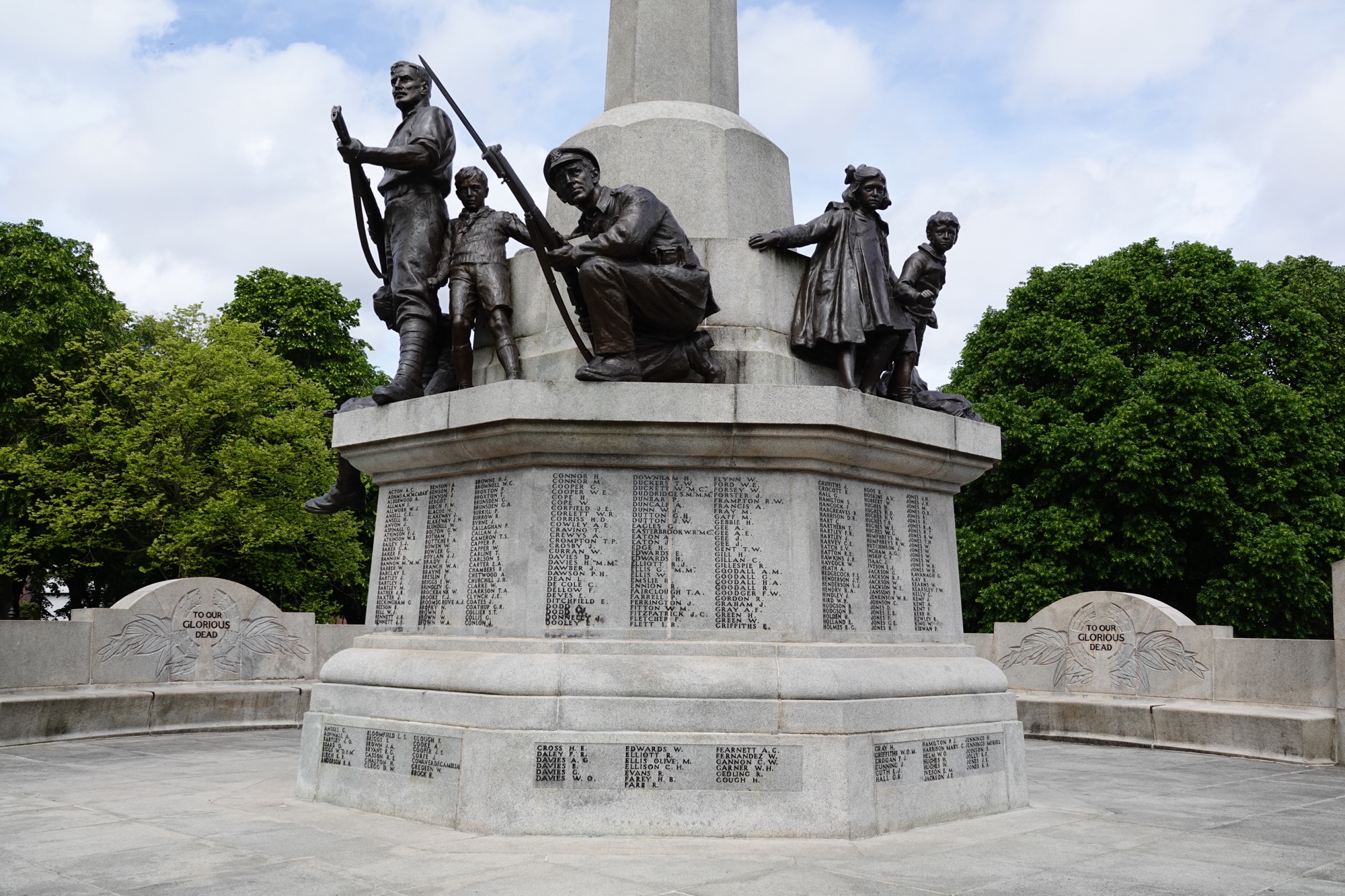
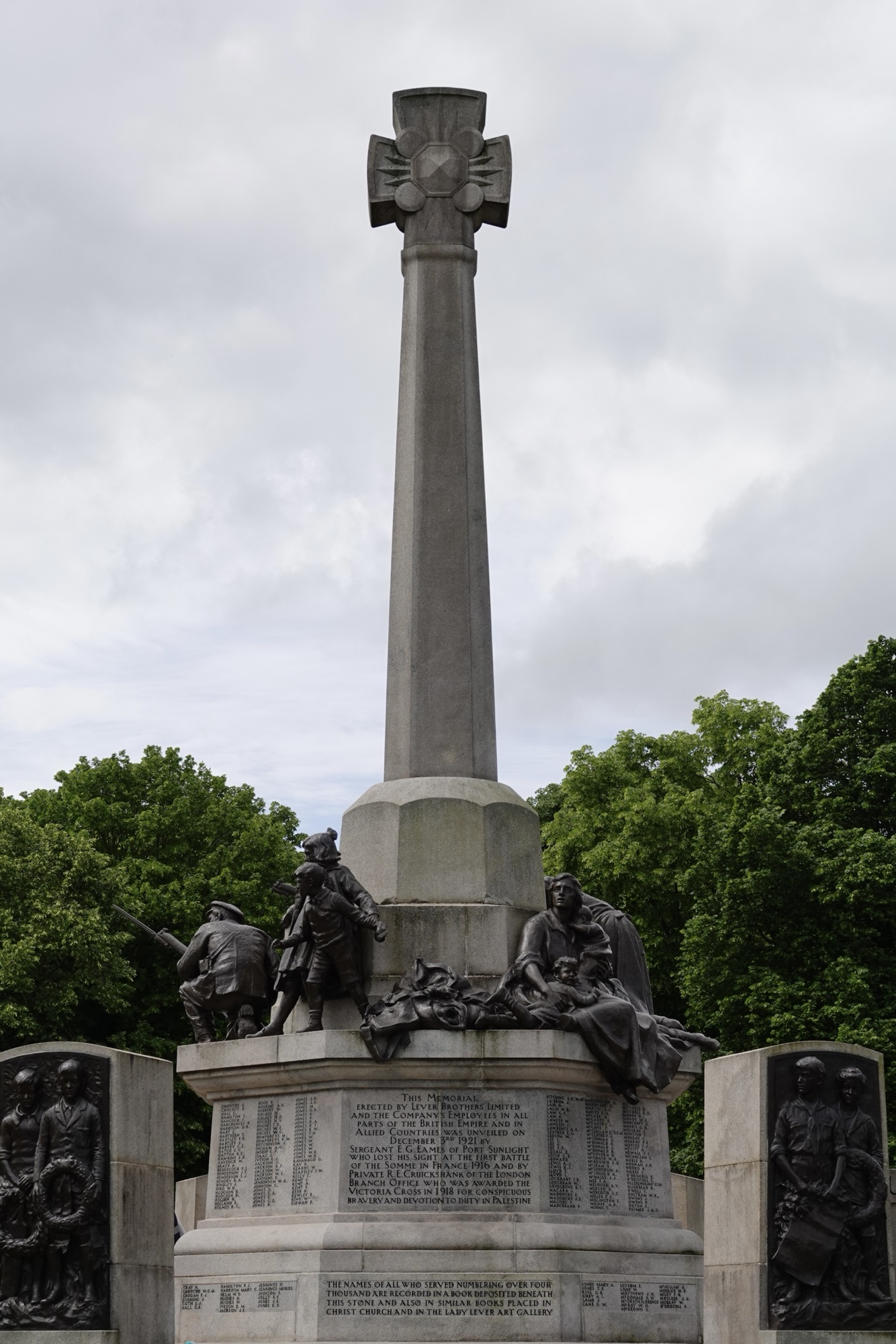
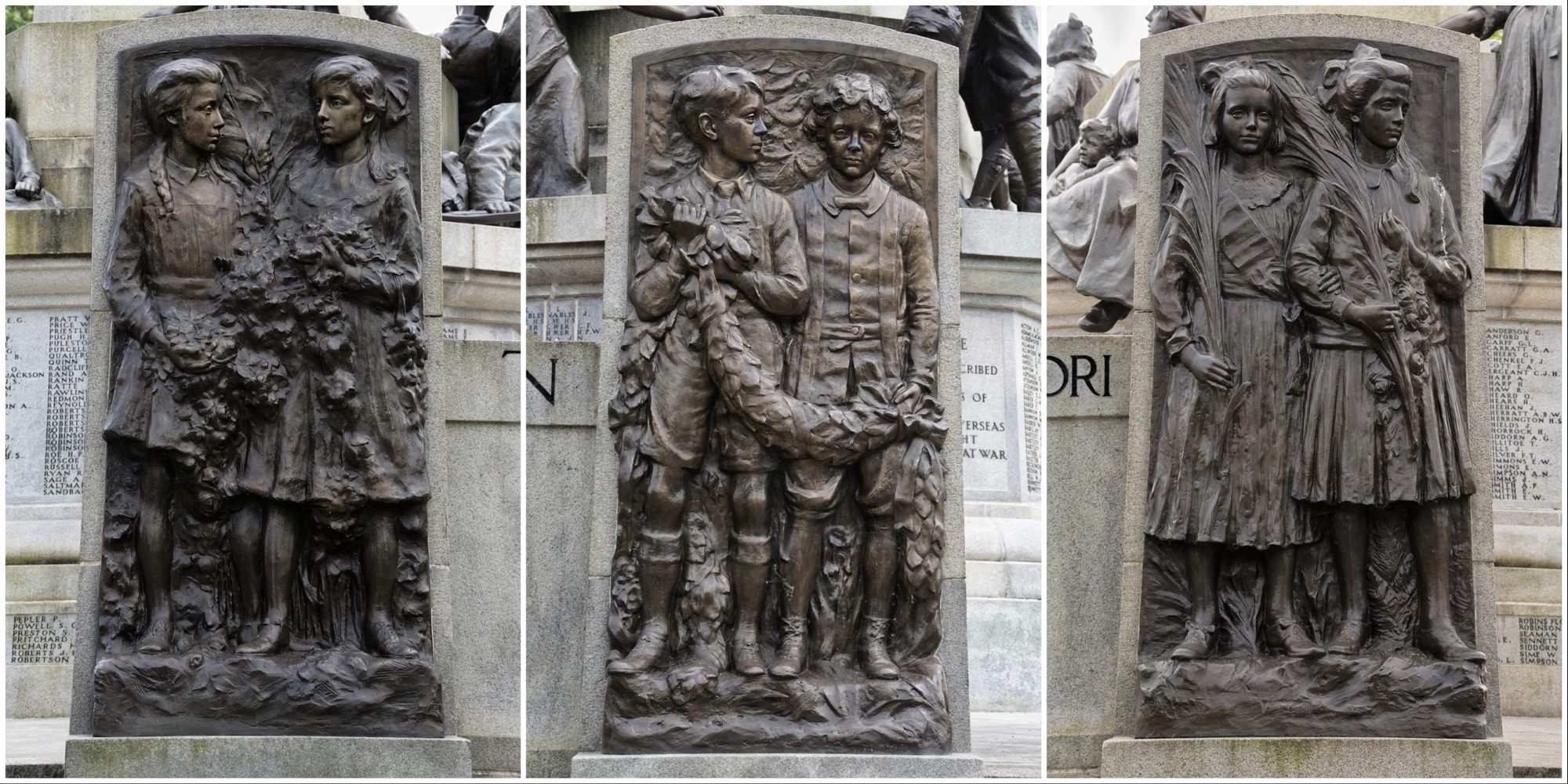
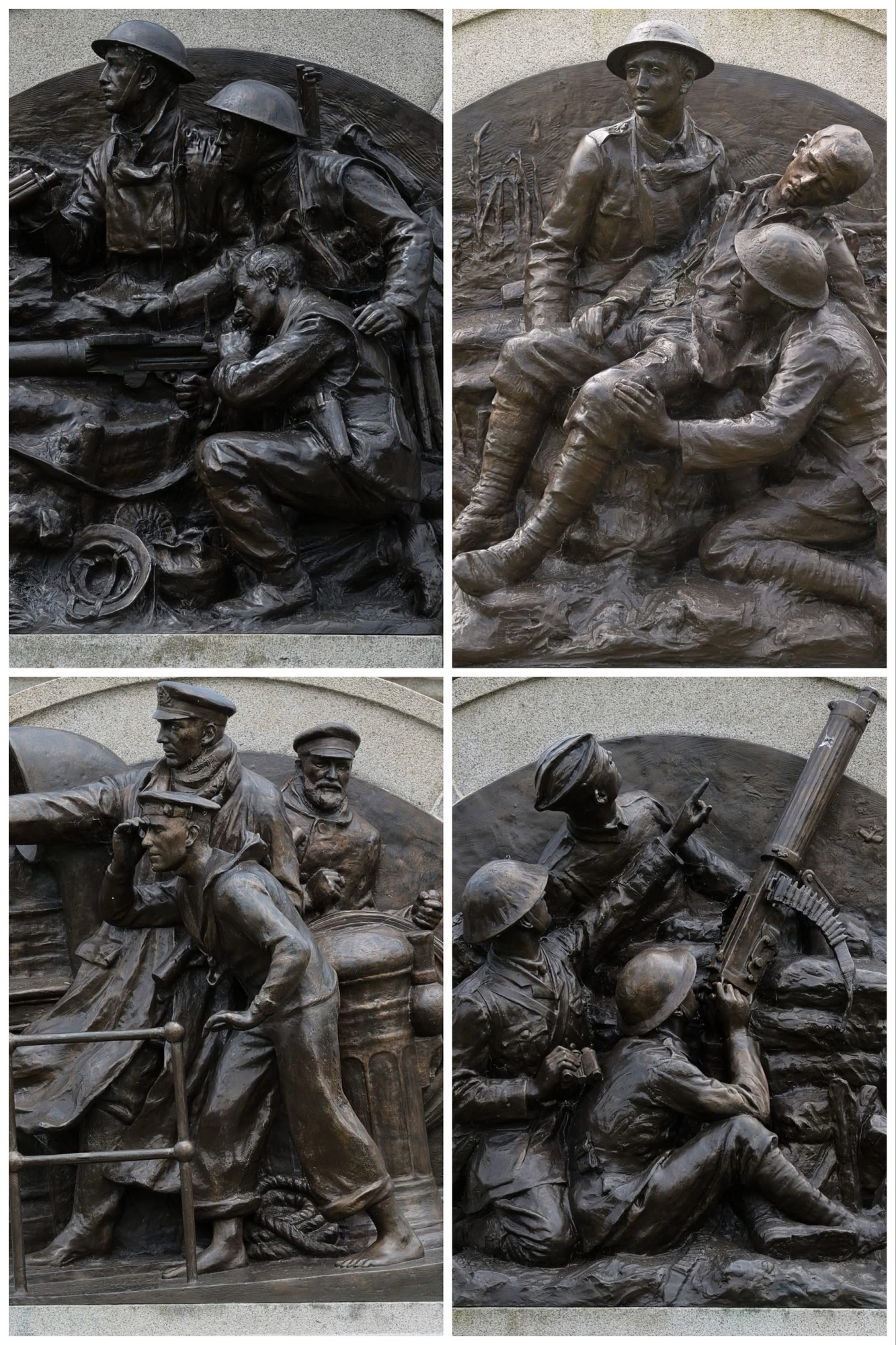
When William Lever commissioned a war memorial, the war was not yet over, but he knew it would be needed. Within the first week of WWI, 700 men from Port Sunlight had enlisted. By the end of the war, 512 were lost in this community of 900 homes.
The memorial engendered a lot of criticism from the local government of the time for not being “warlike” enough, but Lever intentionally wanted to show the cost of war to families. We all felt it was beautifully done.
After William Lever died, workers from his factories erected a statue dedicated to him. An inscription on the plinth explains that the figures at the bottom are the embodiments of the things about which he cared passionately: “Industry, Education, and Charity in its wider meaning.” At the top, Inspiration, “the foundation of all human progress”. .
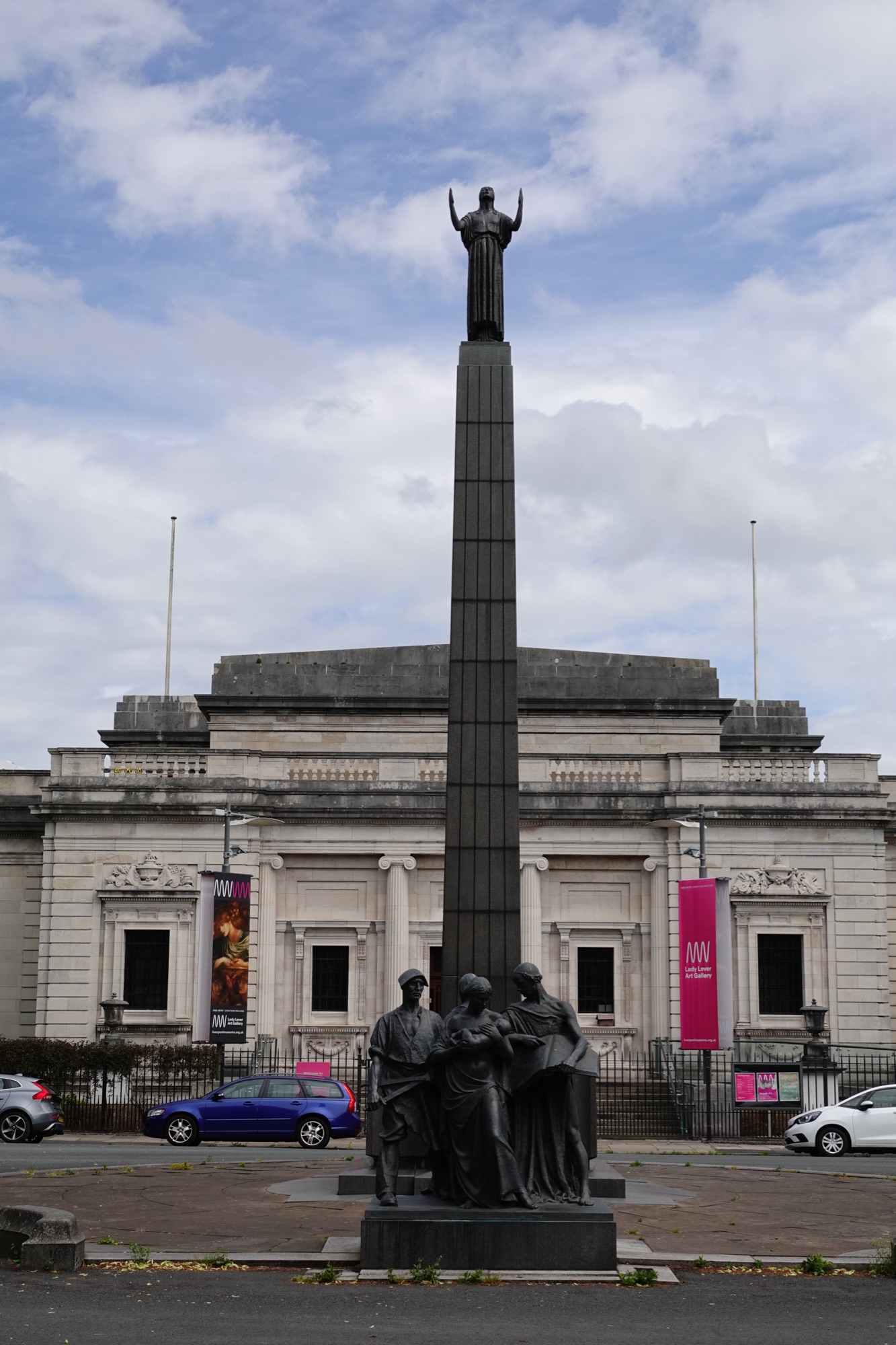
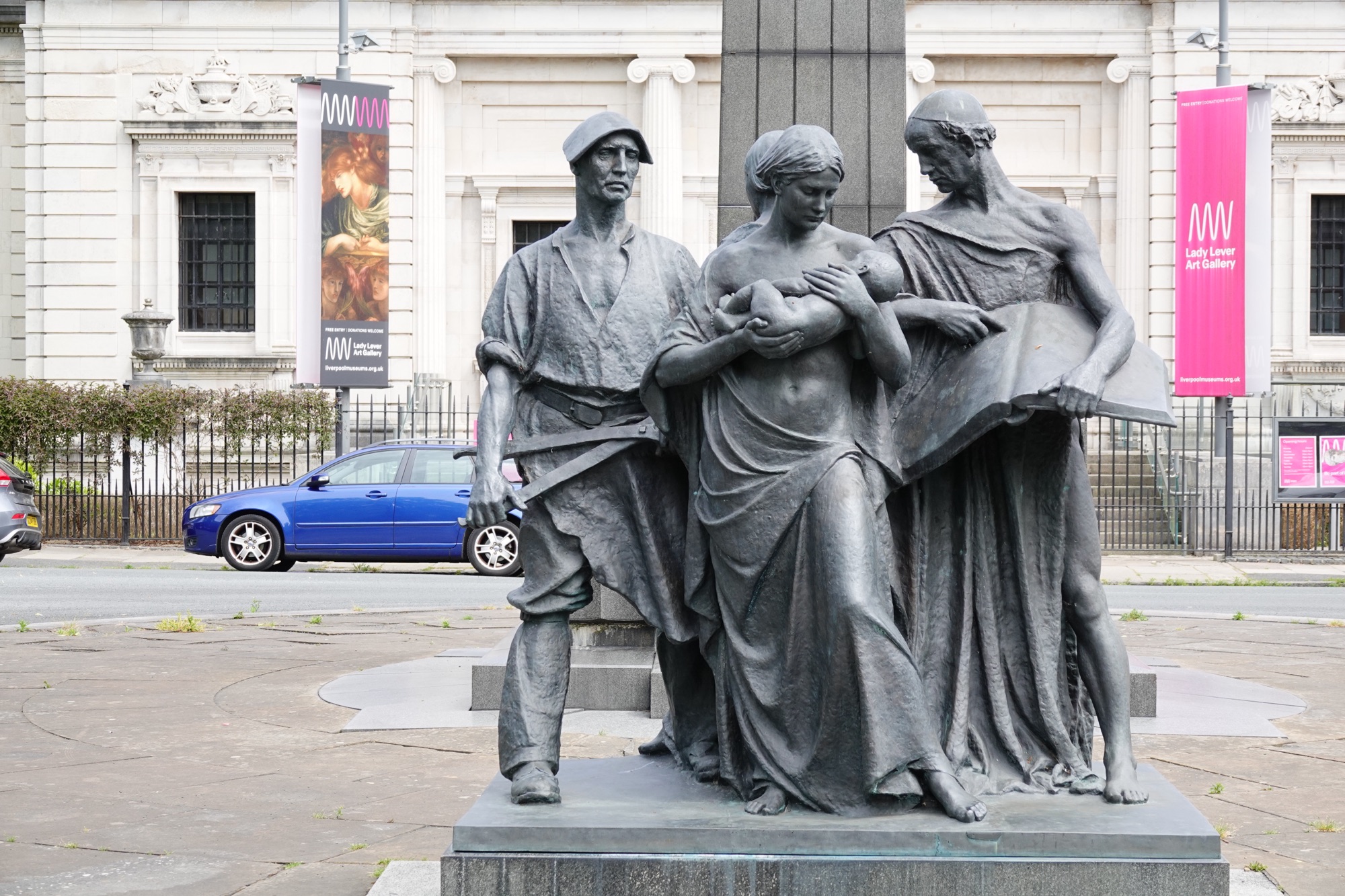
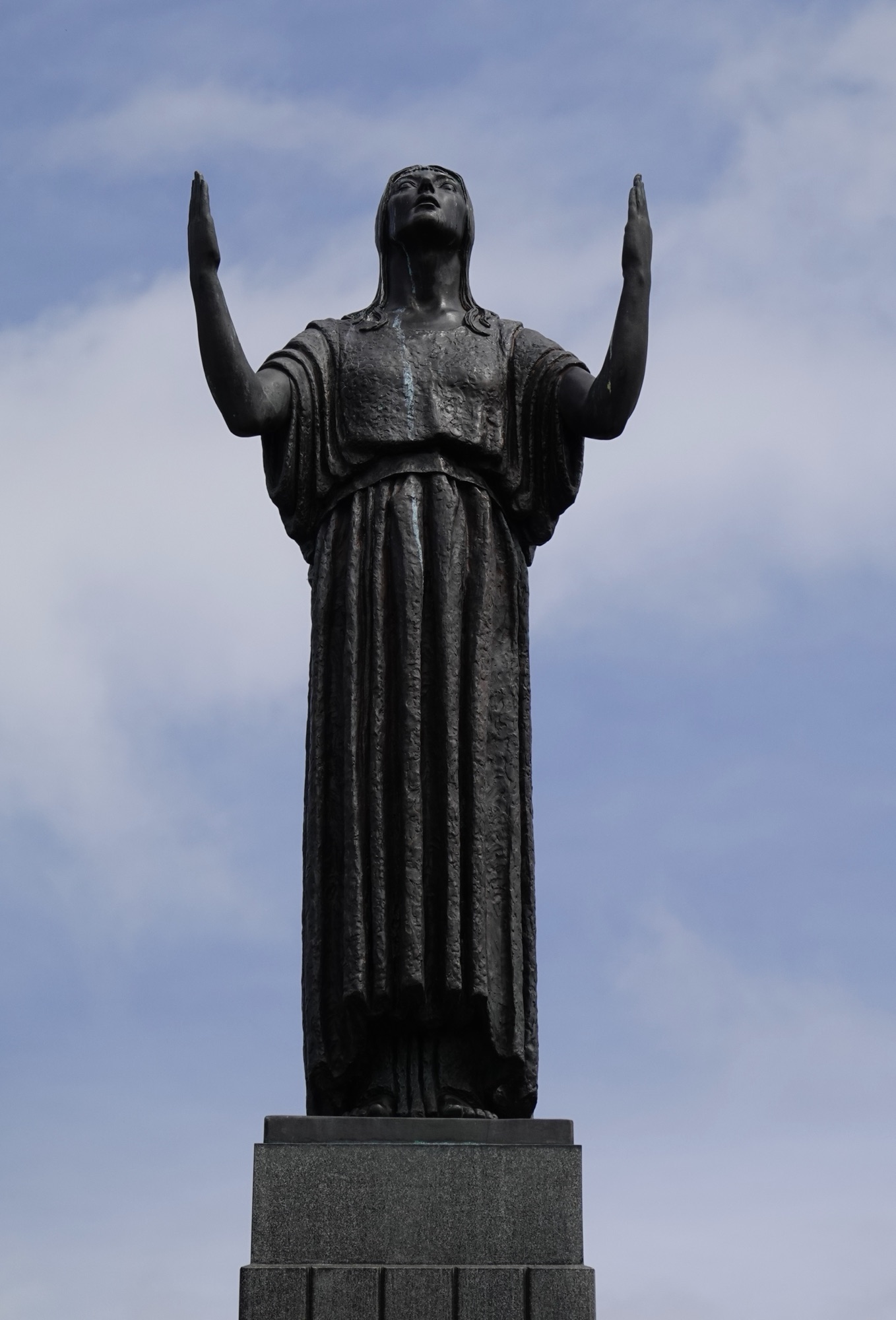
Our guide commented that a statue was redundant, because Port Sunlight itself was a tribute to the man.
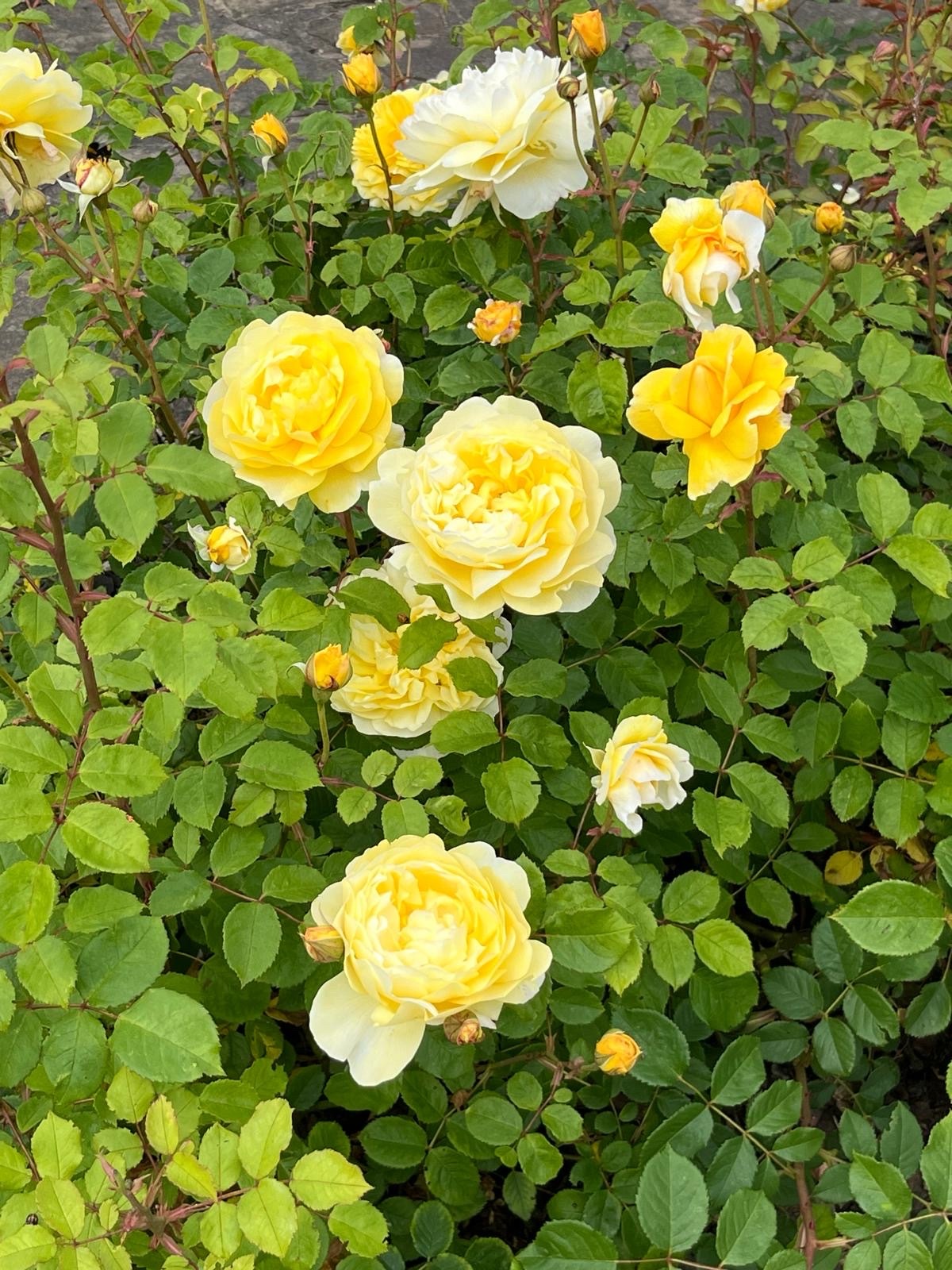
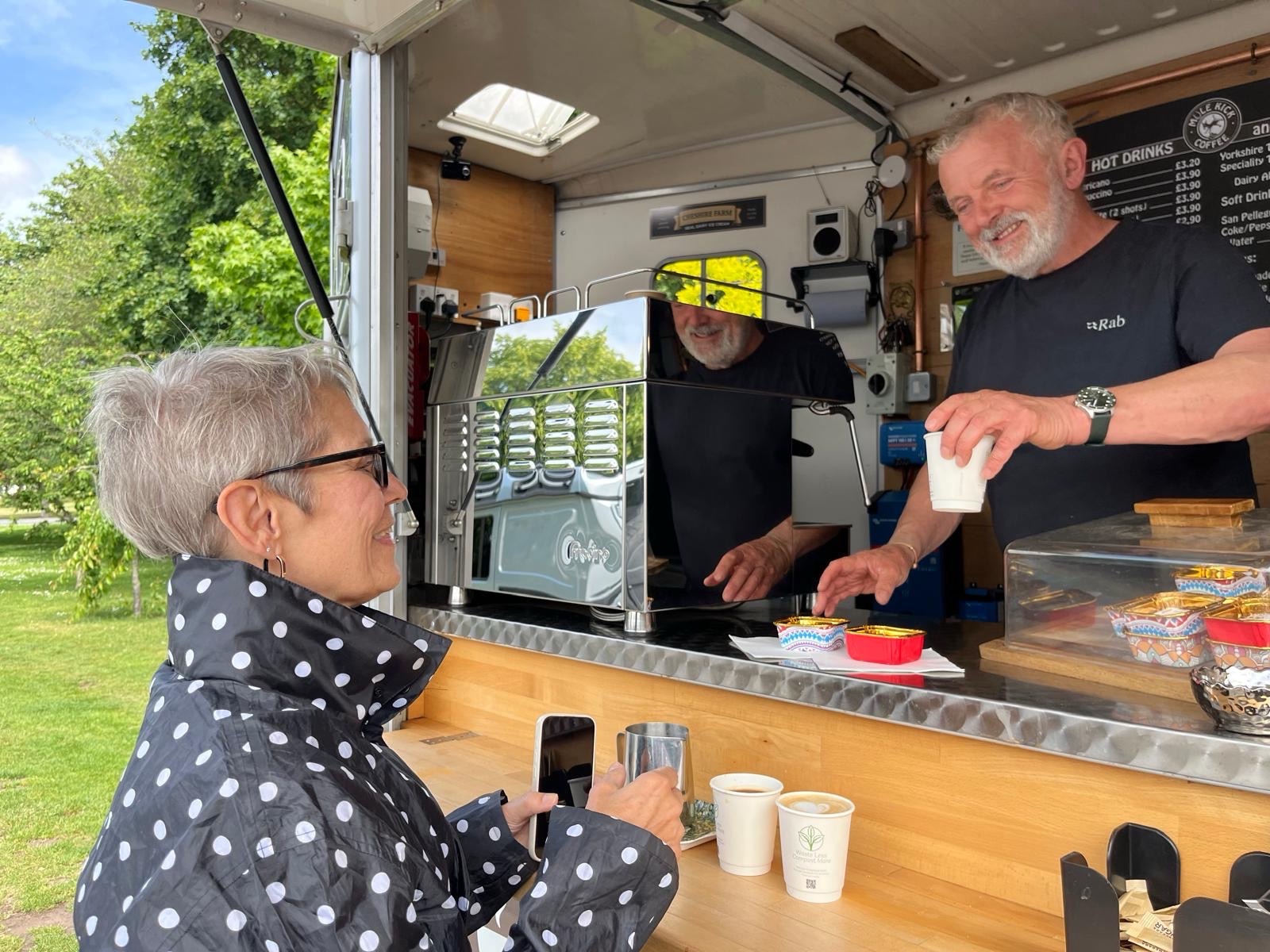
We stopped for a lovely cup of coffee and some sweets in the park, and then Stella and I did a much-too-fast run through a couple of rooms of the Lady Lever Gallery. We had lunch reservations to get to, but I’m glad I got at least a quick peek. I certainly understand why Stella likes this small gallery so much.
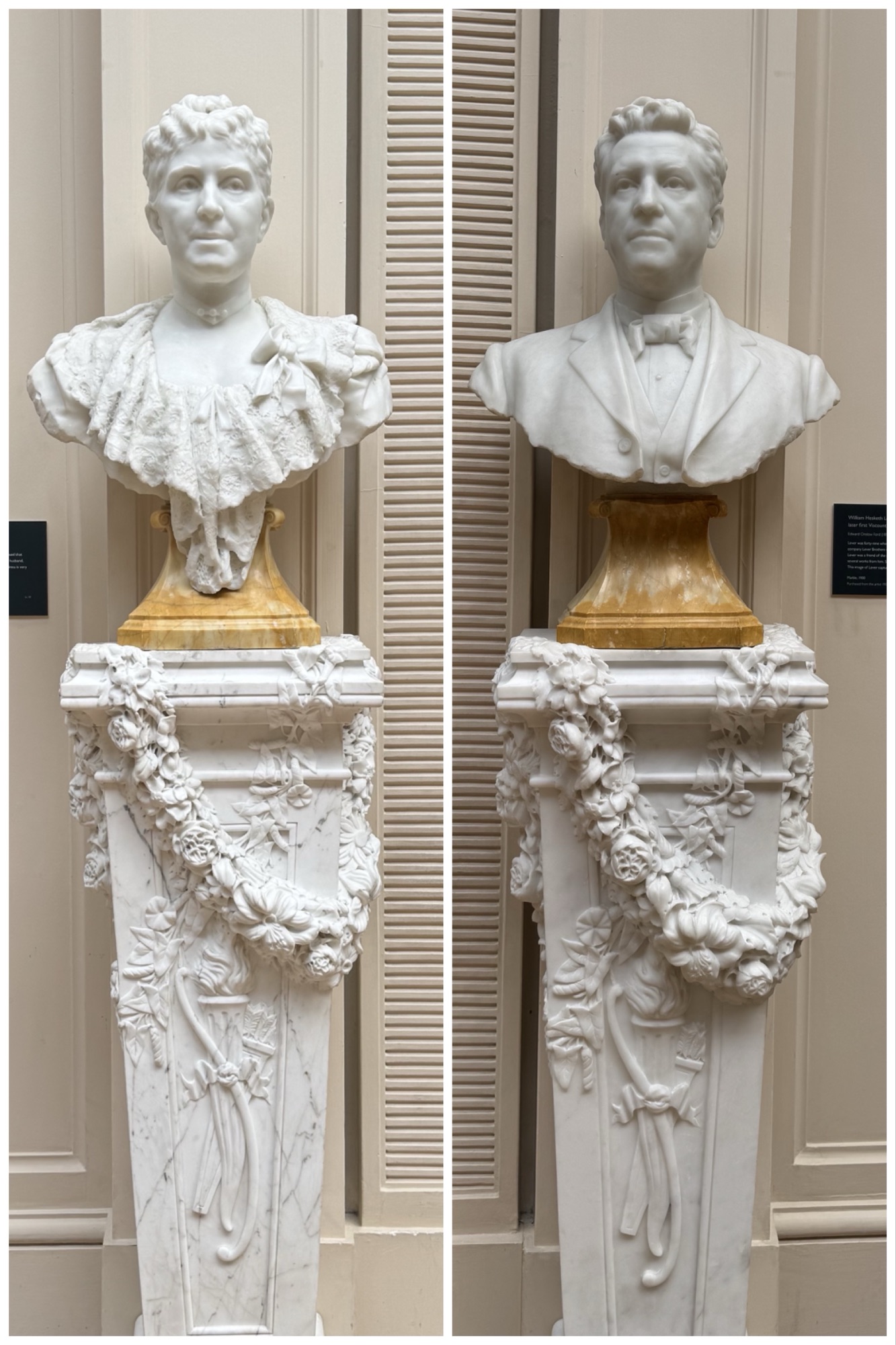
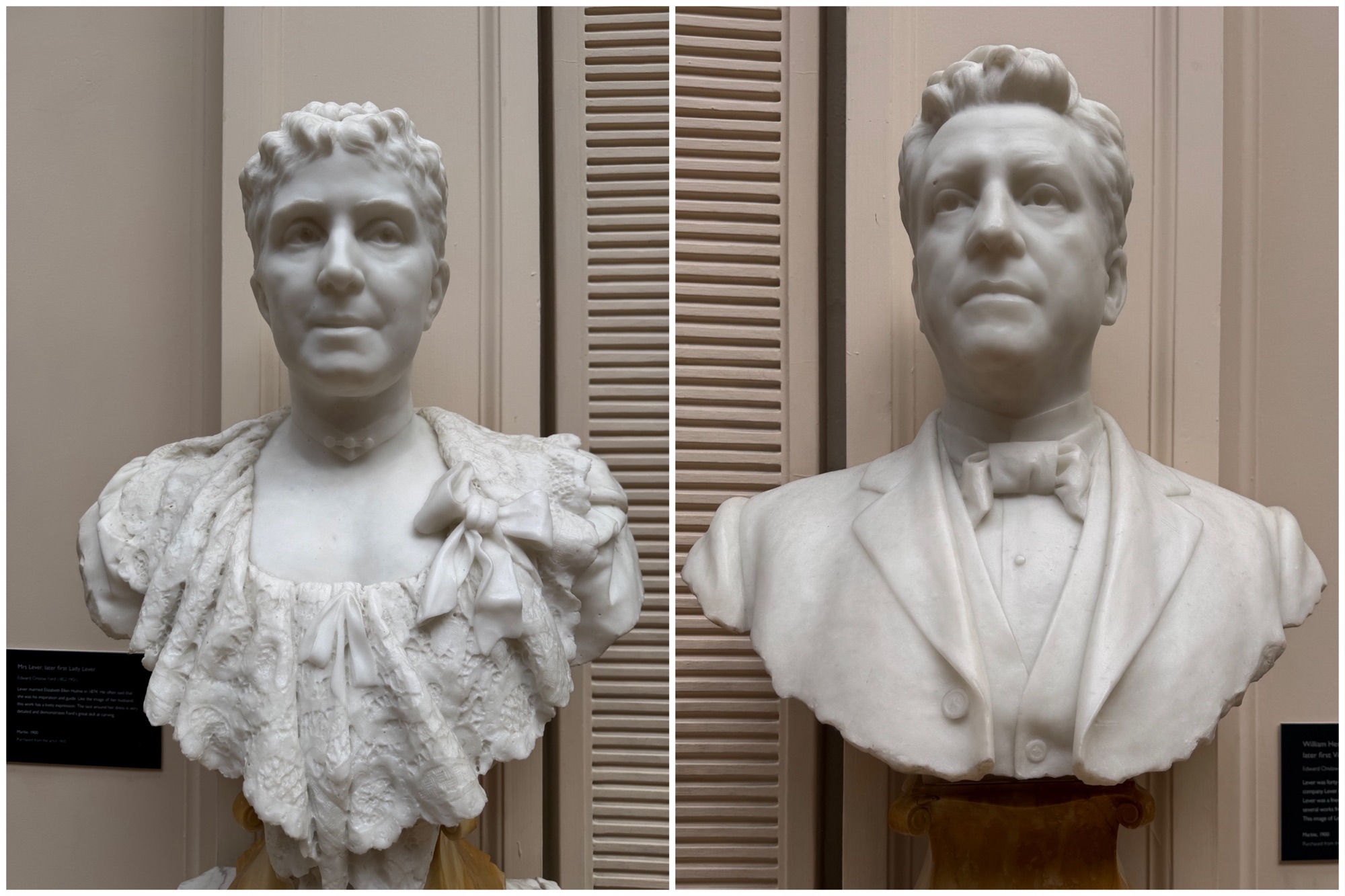
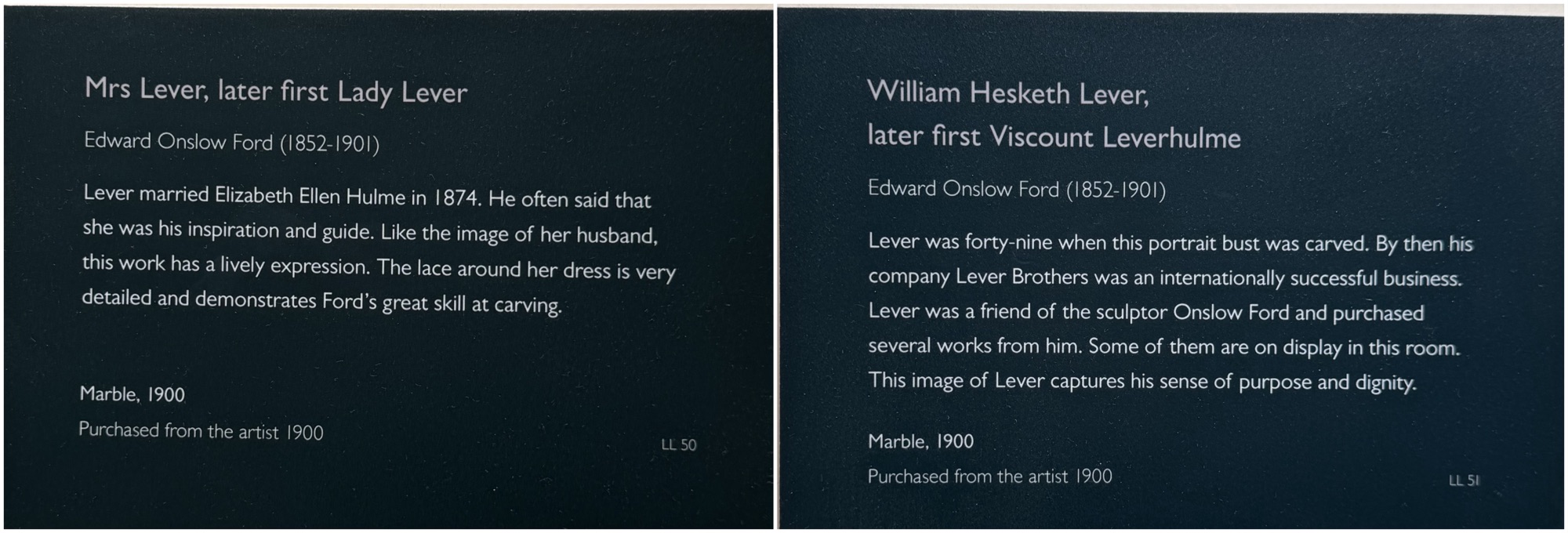
Without Ted at my side, I only took a couple of quick phone pictures of the couple who designed all of what we’d been admiring..
We saw all of this before lunch!
Ted and I are so appreciative of the experience Stella gave us Merseyside today. We can hardly wait to spend another day together tomorrow in Liverpool.
 Rose and Ted’s Excellent Adventure