About 19km southwest of Durham lies the town of Bishop Auckland, which we would have completely bypassed had the manager at the guesthouse at which we’re staying not have suggested visiting it.
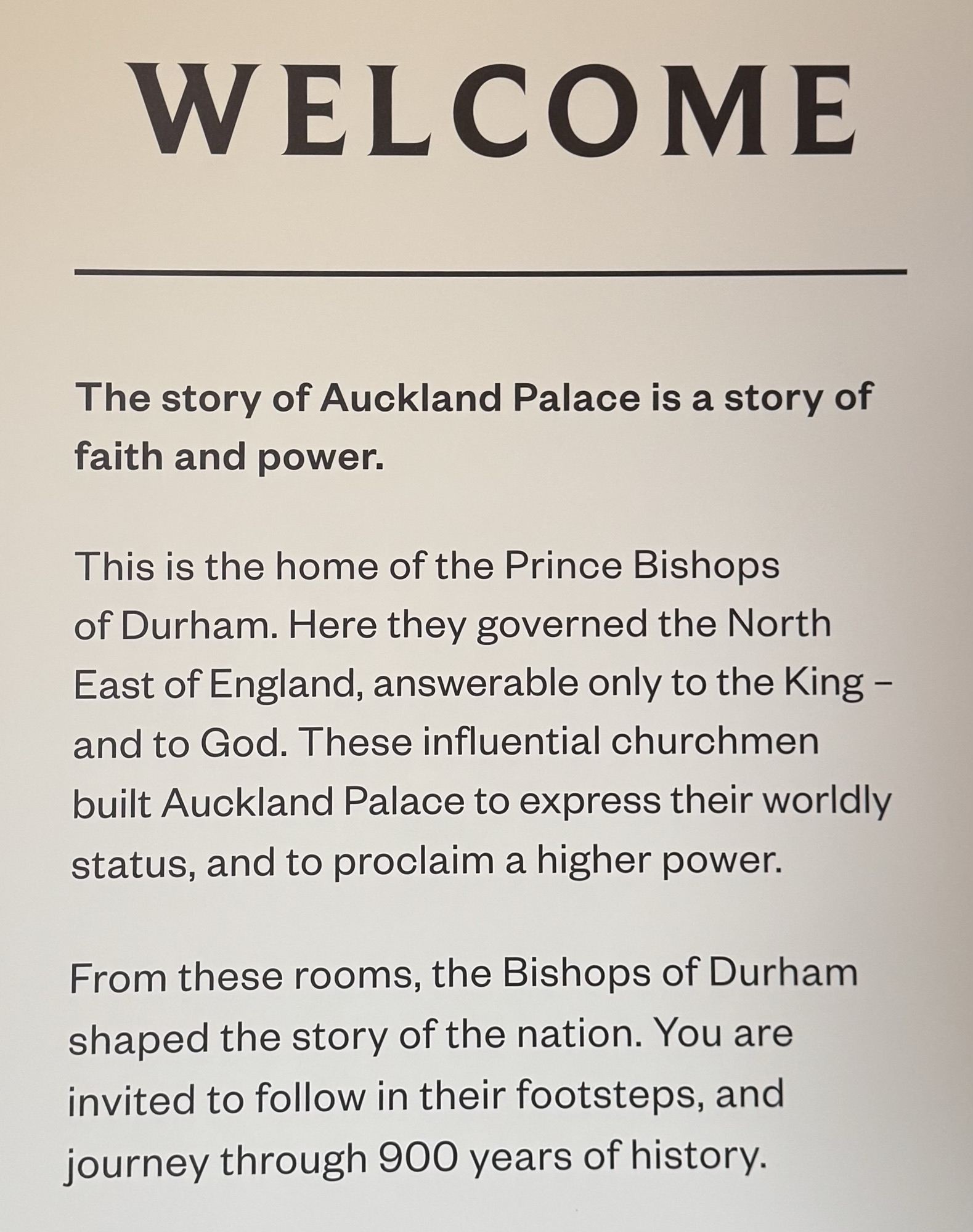
The town’s early claim to fame, besides being almost right beside the Roman fort at Binchester, was as the location of the first Prince-Bishop of Durham’s country home, which morphed into the residence of consecutive Prince Bishops until that title was abolished during Henry VIII’s Protestant Reformation era. After that, it continued to be the home of the Bishops of Durham.
The advent of the railway in the 1800s turned Bishop Auckland into a thriving mining town – “the heart of the Durham coalfields” – since its coal could now be transported to cities in the south. In the second half of the 1800s there were up to 60 collieries operating simultaneously in Bishop Auckland. By the turn of the twentieth century 16,000 people were employed in the area’s mining industry.
After the last deep mine closed in 1968, the town’s unemployment rate soared, and drug and alcohol abuse increased. Like many former coal towns, it began a long period of decay.
Enter Jonathan Ruffer and The Auckland Project.
Ruffer, a stockbroker/barrister/investor/philanthropist and art collector, was interested in an important collection of 16th century Spanish art that resided in the Prince Bishops Palace. More importantly, he was interested in reviving County Durham through philanthropy. (He was famously quoted as saying, “No one needs more than £20 million”)
The statistics on his philanthropy are impressive.
In 2012, he donated an initial £1 million to the Durham Foundation.
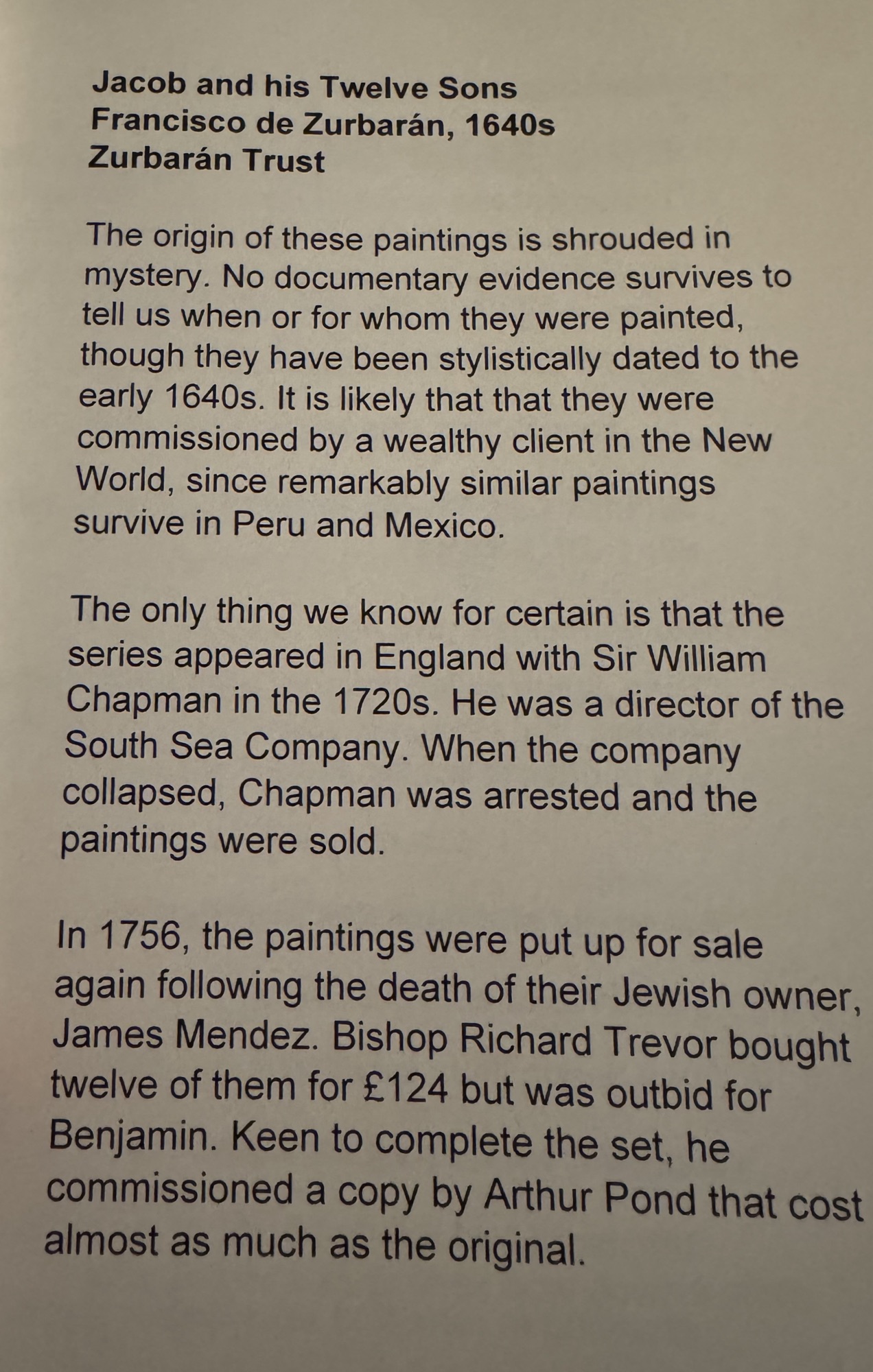
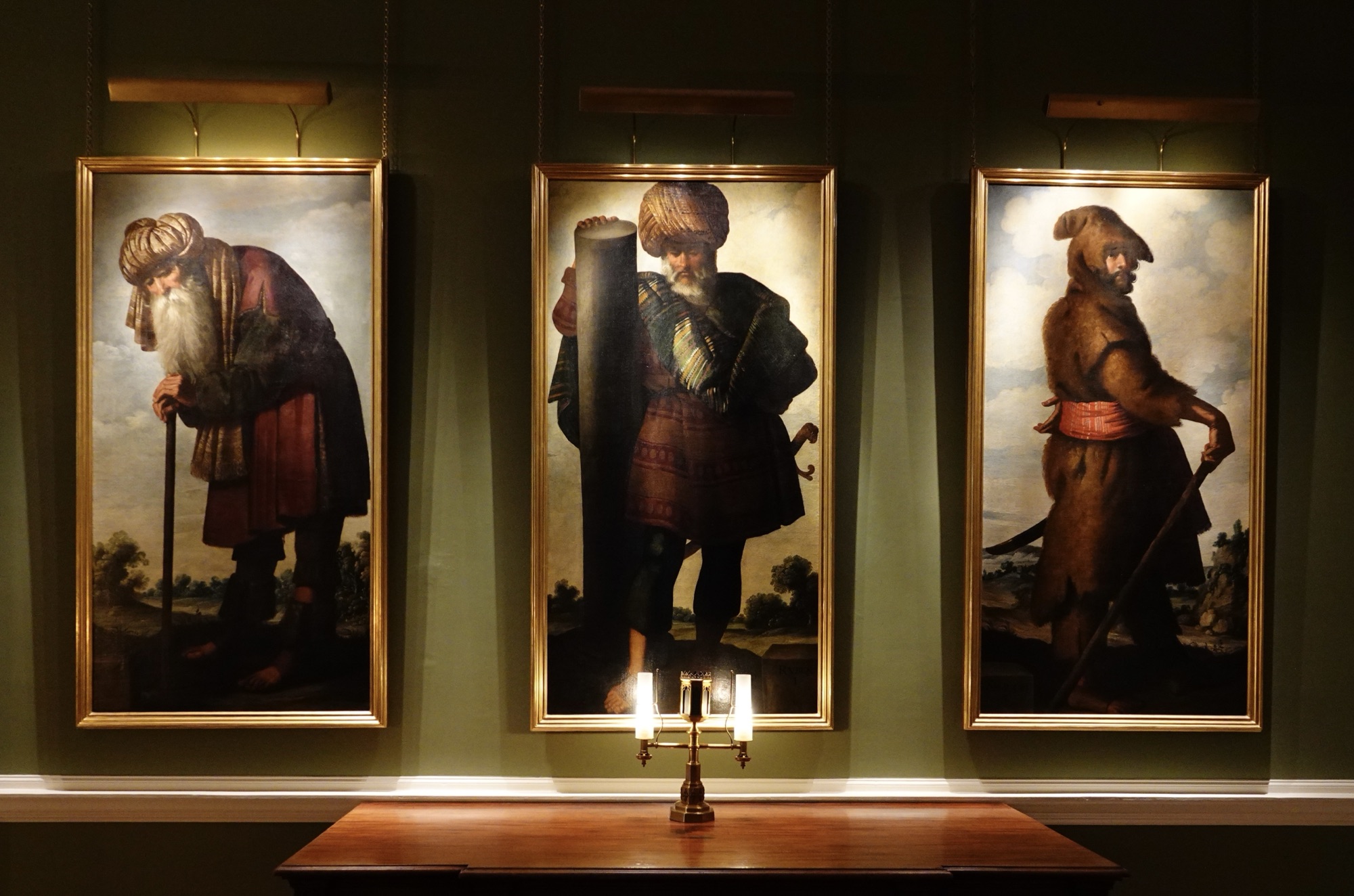
In 2013, he spent £15 million to purchase Auckland Castle (the Bishop of Durham’s residence) specifically to save 12 important paintings by Spanish Golden Age painter Francisco de Zurbarán which had been in the palace since 1756, and were going to be sold. The paintings alone required a multi-million pound restoration project, funded partly by Ruffer and partly by the National Lottery.
That same year he donated a further £18 million to restore the Prince Bishop’s Palace and create a Museum of Faith housing exhibits on the history of Christianity and faith in Britain.
Those donations were to be the seed for putting Bishop Auckland on the tourism map.
As of 2014, he had an estimated wealth of £380 million. As of 2020, Ruffer was worth “only” £159 million according to the Sunday Times Rich List. That difference is largely because he gave an estimated £160 million to the development of Bishop Auckland in 2020.
By 2025, The Daily Telegraph reported that he had given at least £200 million to the Auckland Project to develop the town.
This 2012 article about Ruffer is worth a read: Ruffer, as is visiting the website for The Auckland Project.
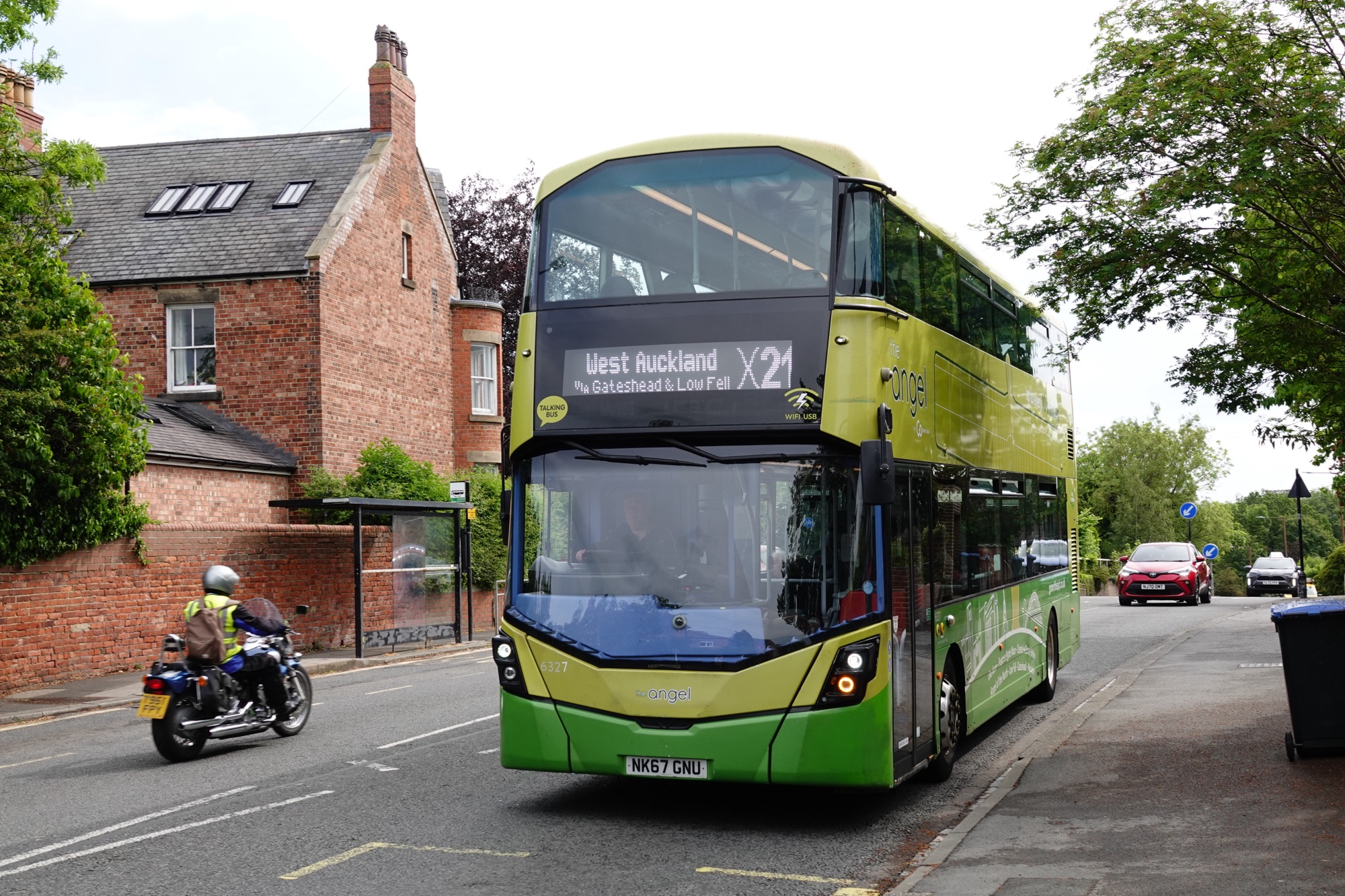
All of that is as background to the fact that today we took the bus to Bishop Auckland and were completely wowed by what we saw, and the potential of things to come.
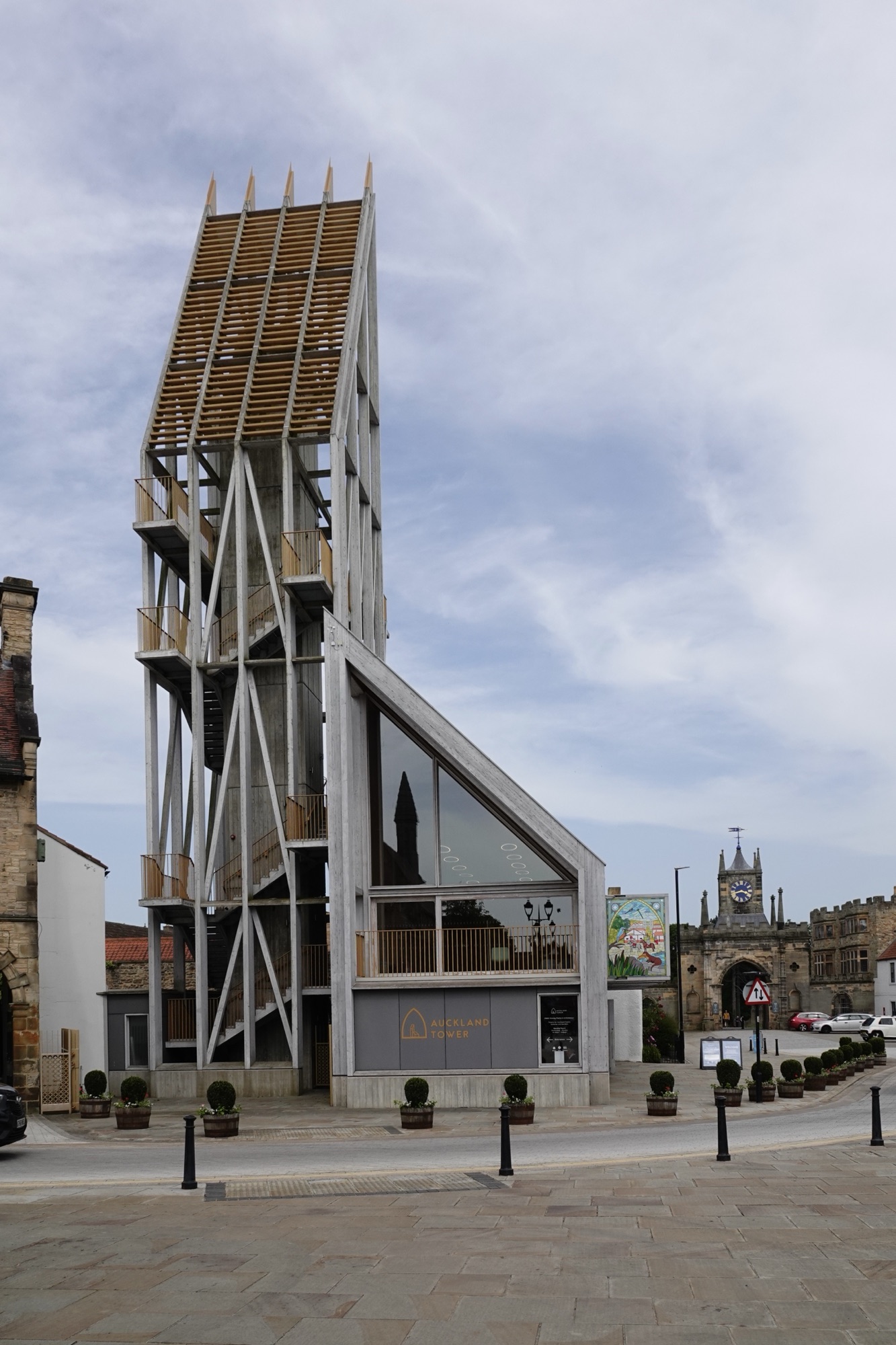
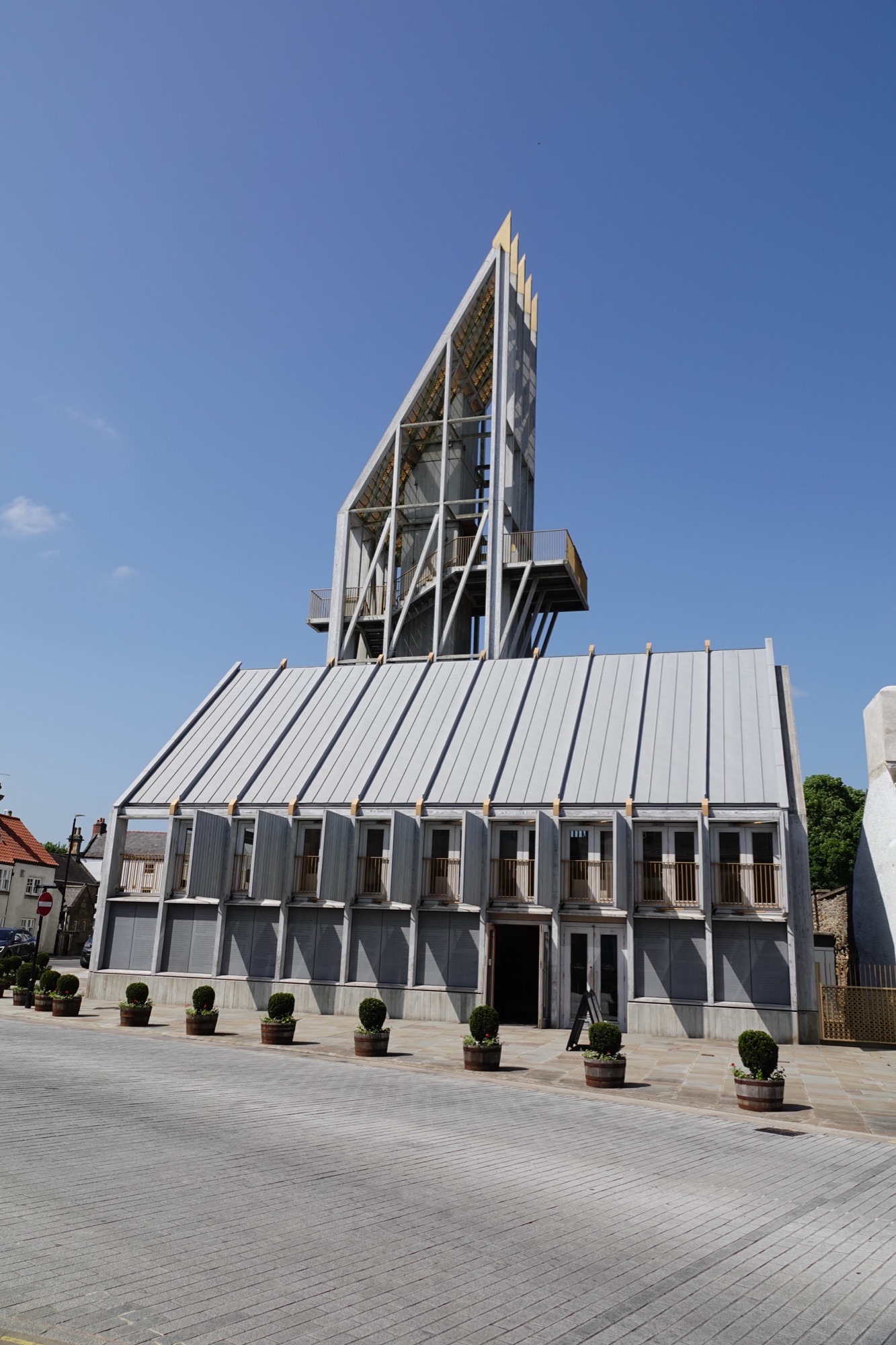
We got off the bus in Market Square and, after an initial “wow” headed directly to the Auckland Tower to get our tickets for the day. The tower’s architecture is out of synch with the mediaeval palace and the miners’ pubs. An Auckland Trust volunteer (there are many, and they are all incredibly well-informed and enthusiastic) explained that the design has been chosen by competition, and was meant to resemble a mediaeval siege engine, pushed up against the palace wall as a symbol of the battle between wealth and poverty: the Prince Bishops’ power and the people’s subjugation.
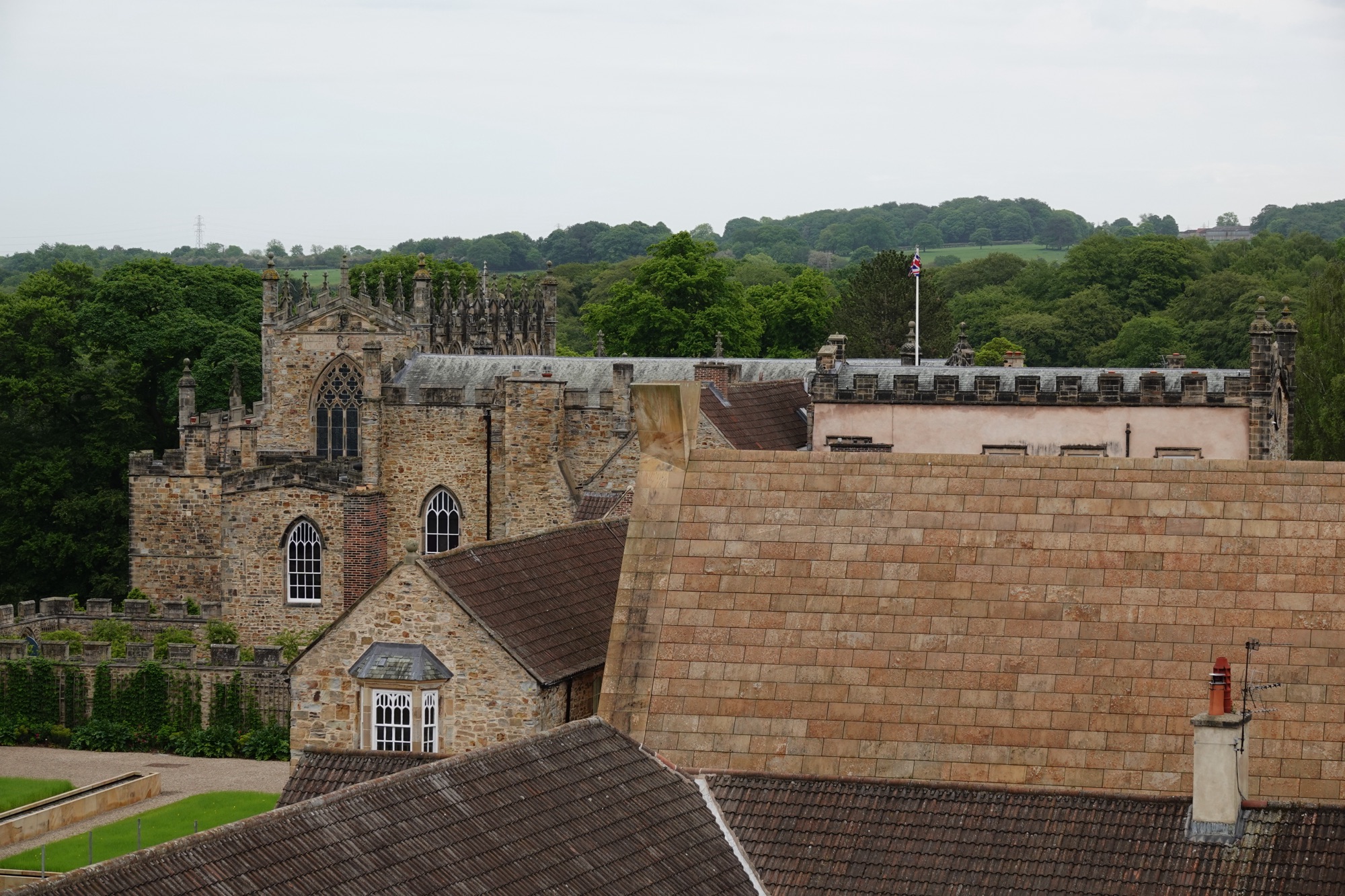
The views in every direction from the tower’s platform were breathtaking.
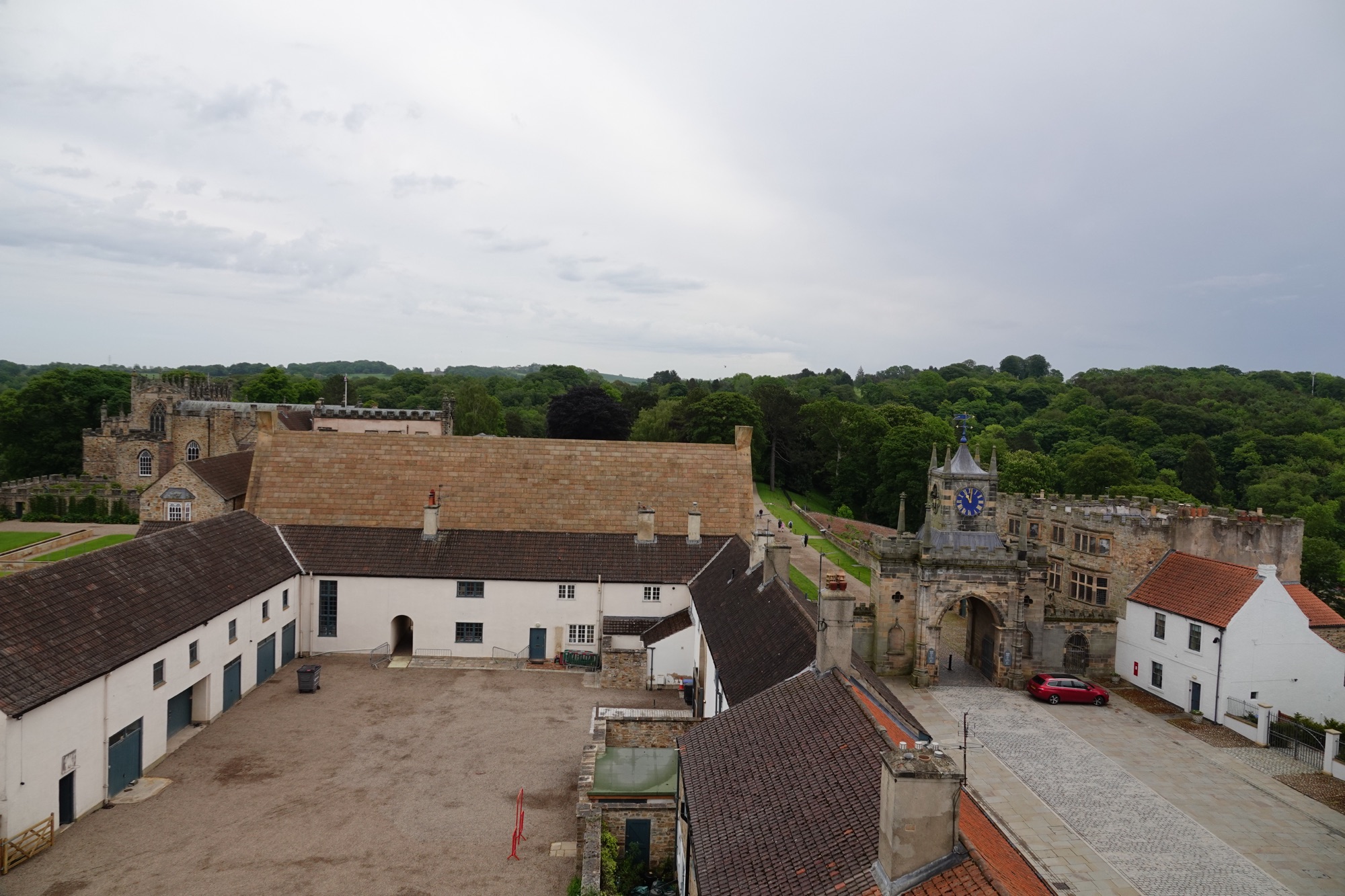
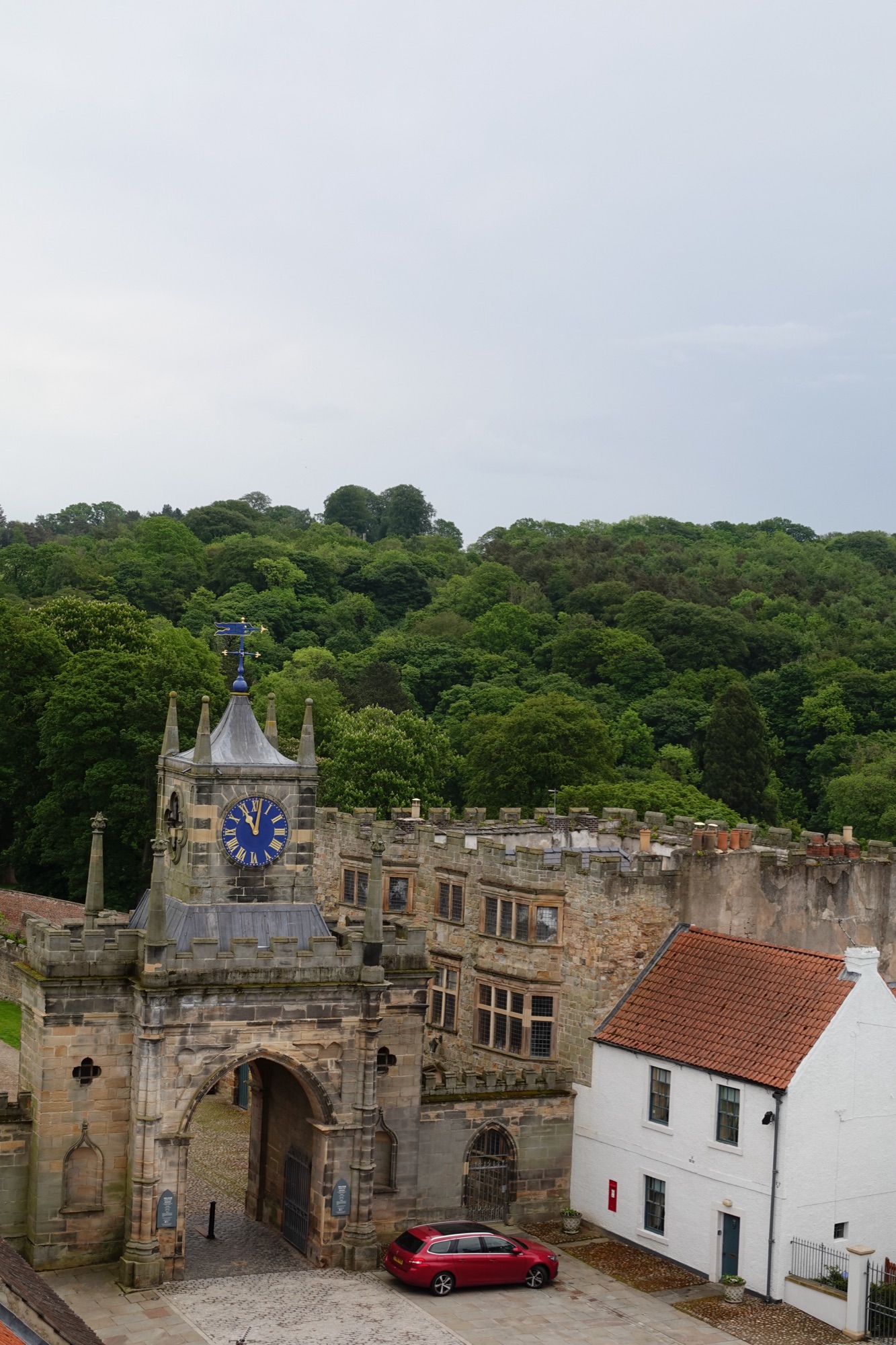
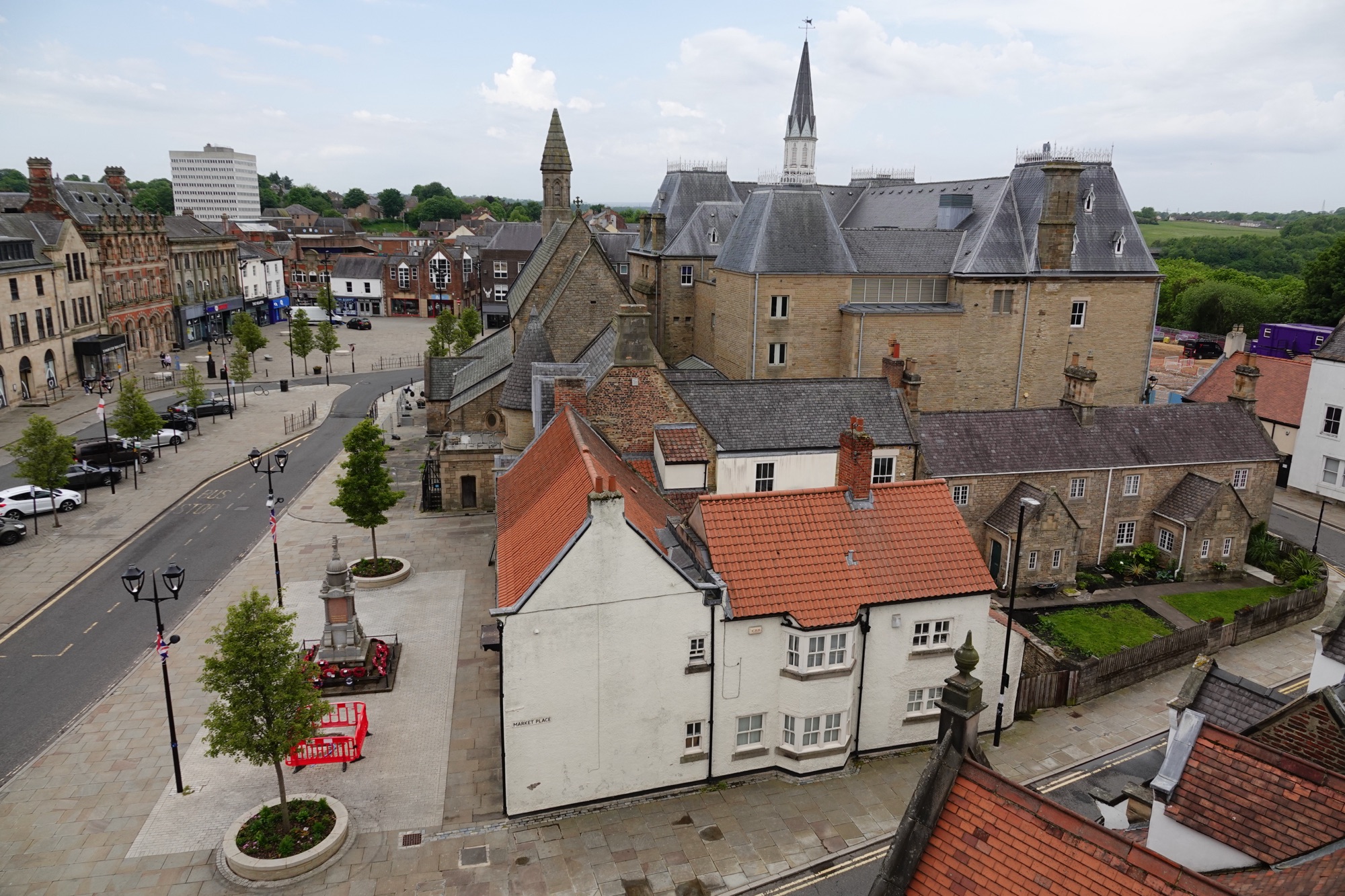
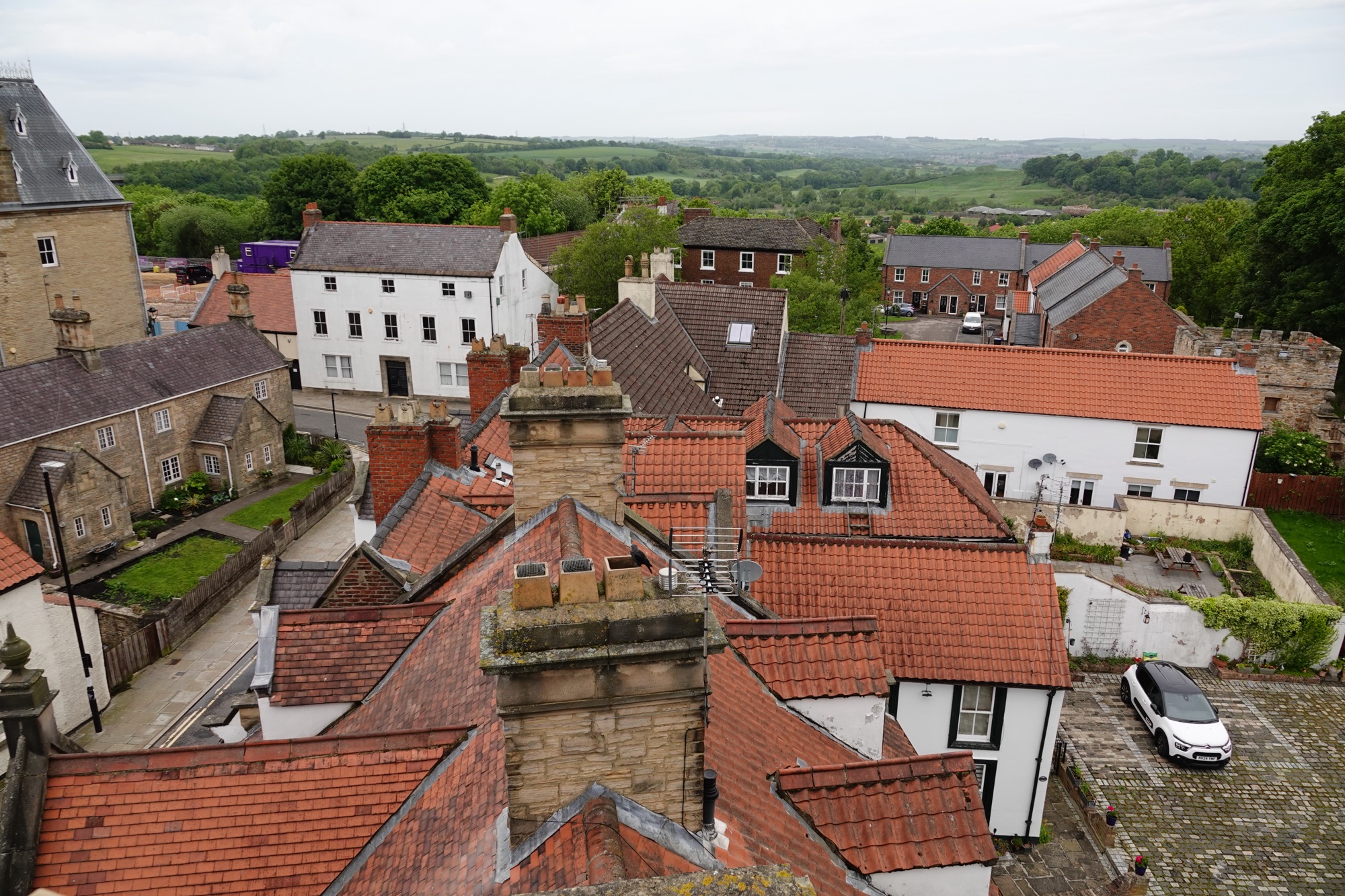
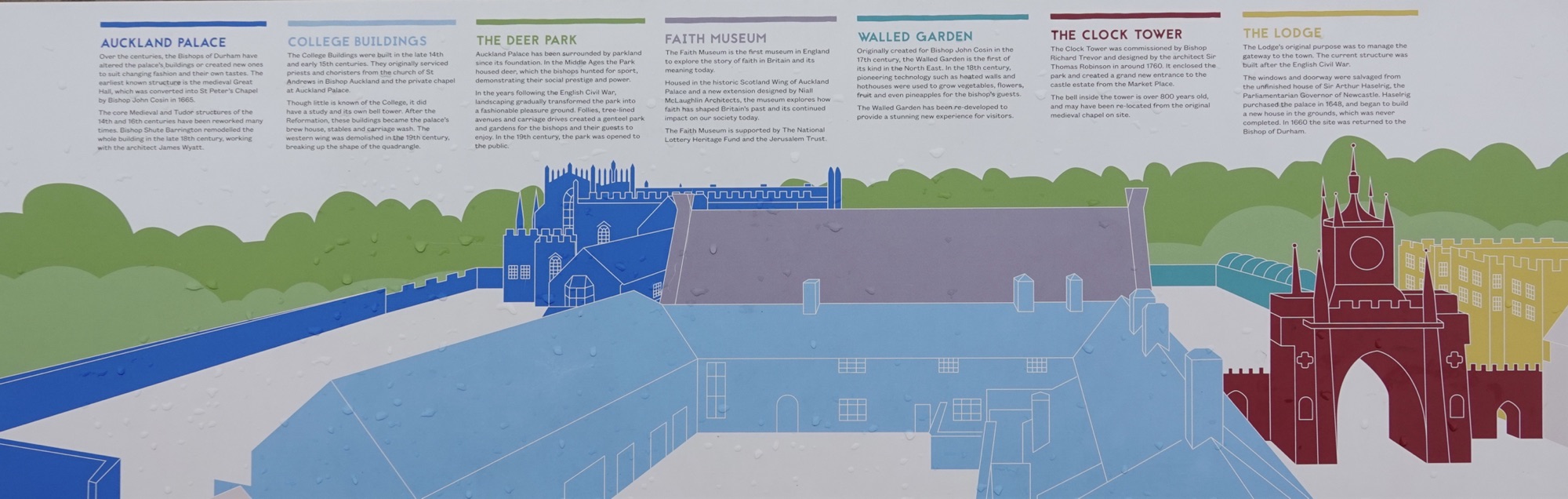
There was an overview of what we could see just on the Palace grounds. In our 5 hours (the site is only open 10:30 – 16:00) we didn’t manage to see it all, partly because we also wanted to get to the Auckland Project’s Spanish Gallery and Miners’ Art Gallery. That meant we skipped the Walled Garden and the Deer Park.
Our tickets are good for a full year, but we aren’t.
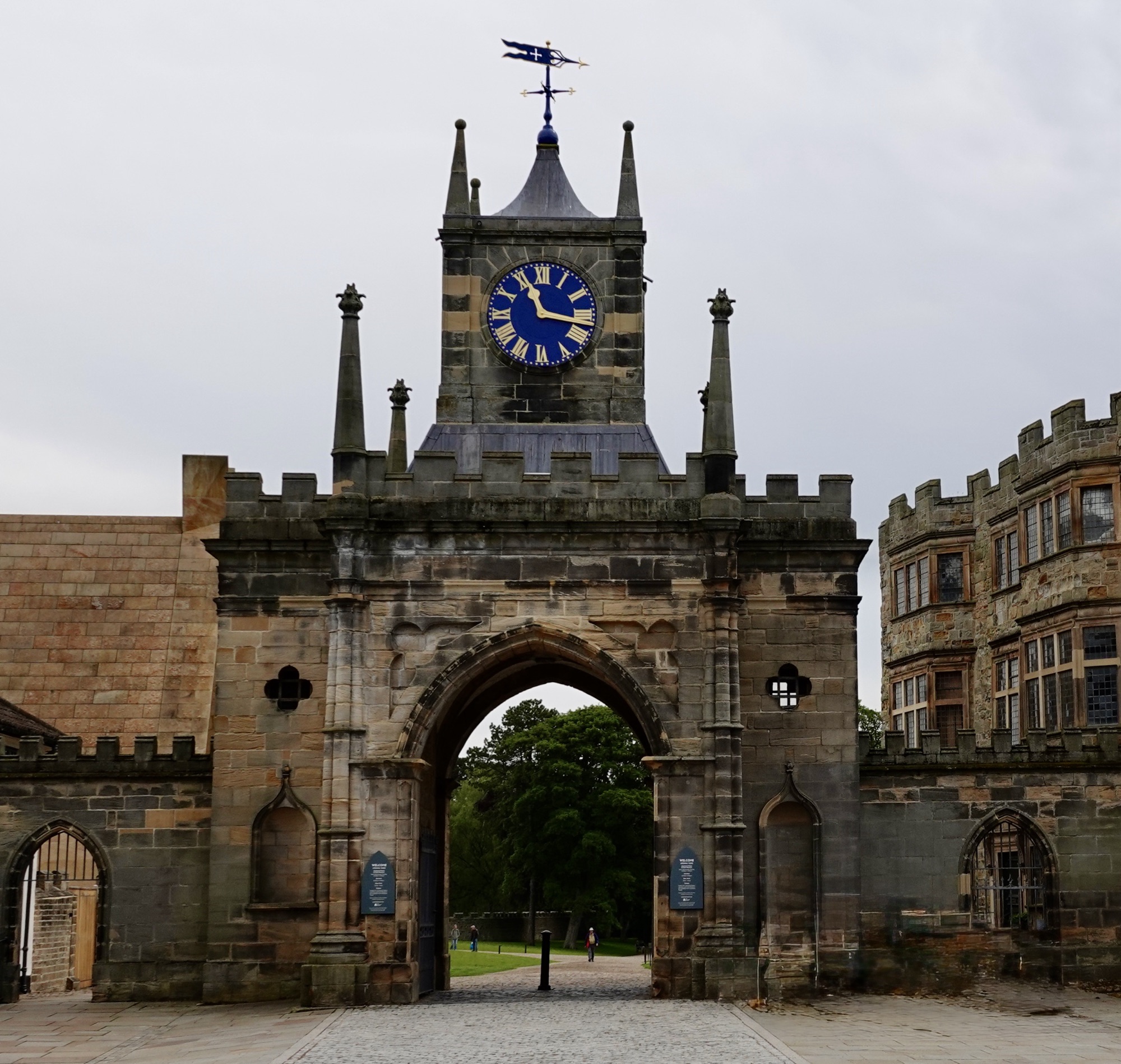
We entered the Palace yard through the Clock Tower Gate.
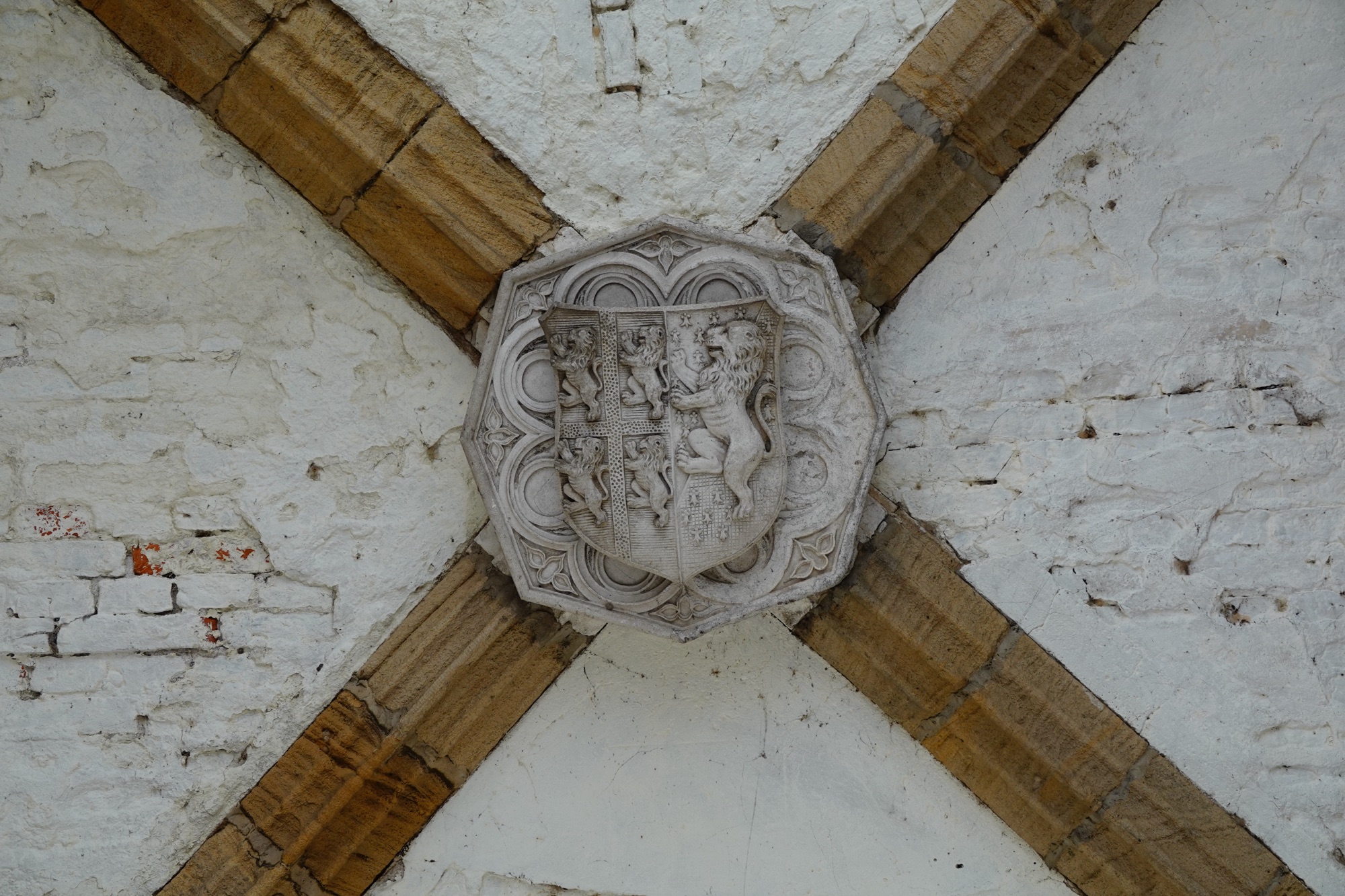
The arches in the walls, while Norman in time period, resemble Gothic peaked arches only because the Prince Bishop wanted them to look like Bishops’ mitres. That’s also the case in the chapel.
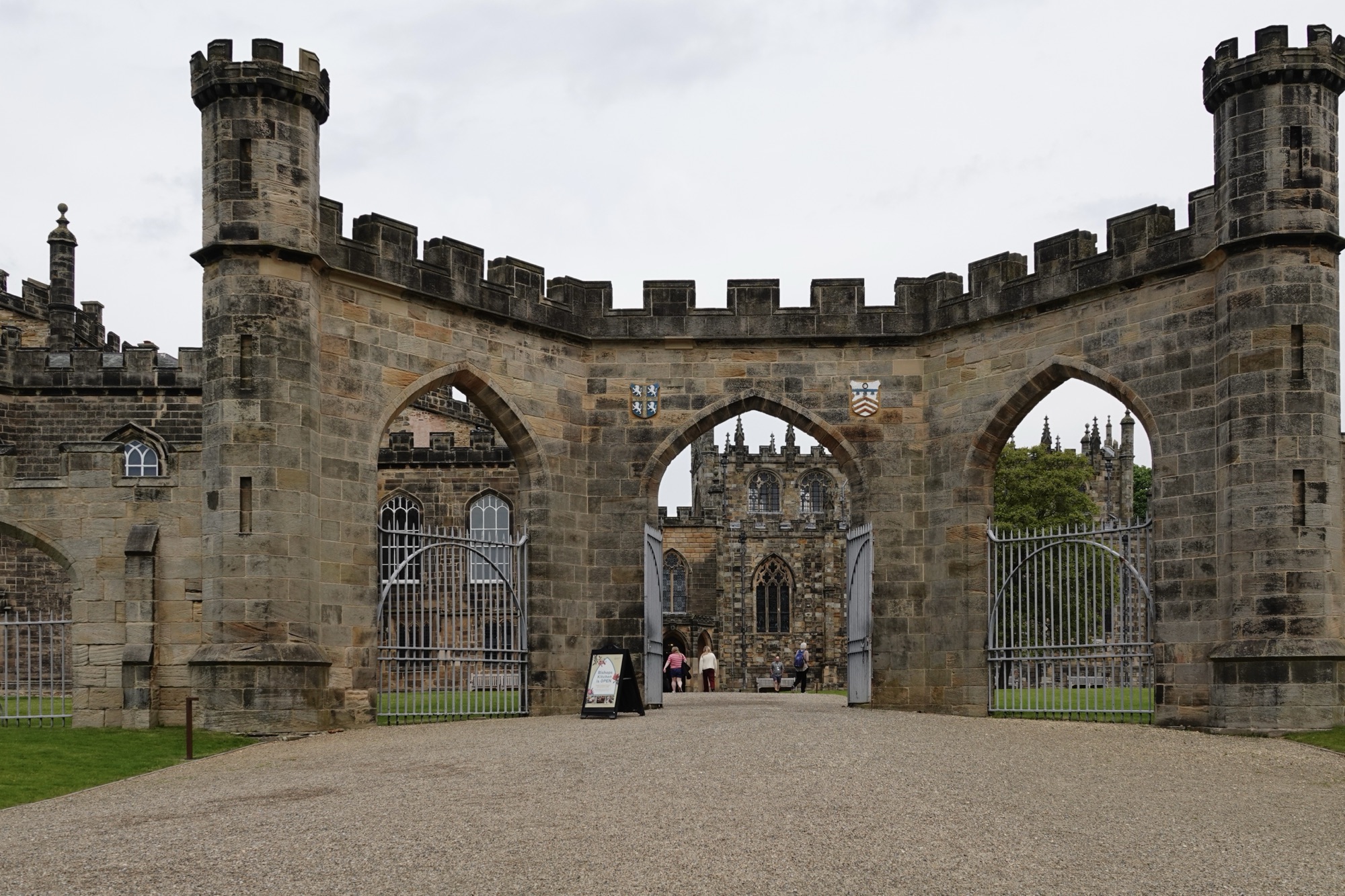
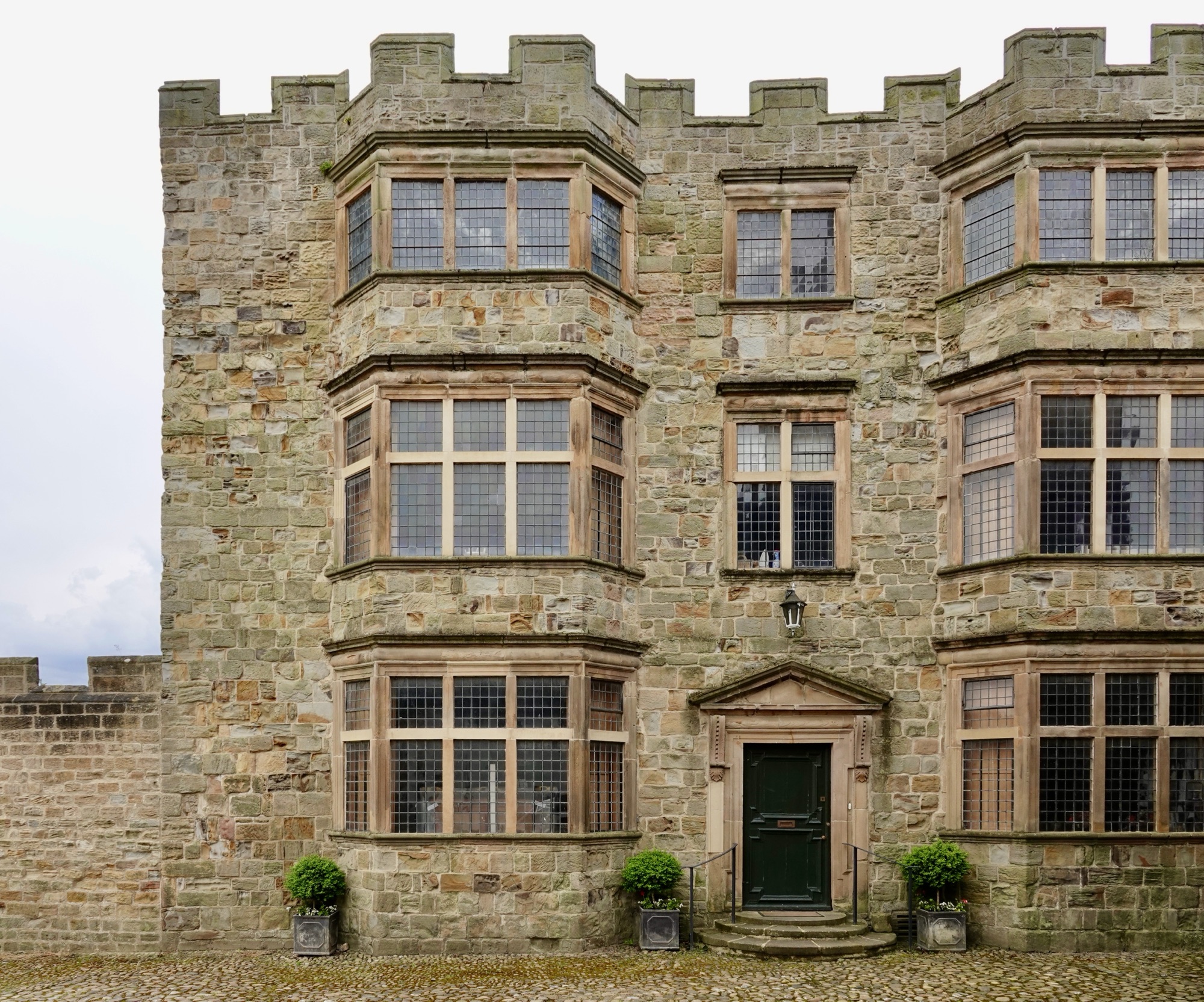
The Lodge immediately to the right as we walked through the gate is the current Bishop of Durham’s home. It has been empty since the last Bishop retired in 2024, but the newest Bishop of Durham has been consecrated and will be officially installed in his role at Durham Cathedral on June 7, 2026. That might explain the unhung pictures we could see leaning against the ground floor windows, and the iron and cleaning solutions on an upper window sill.
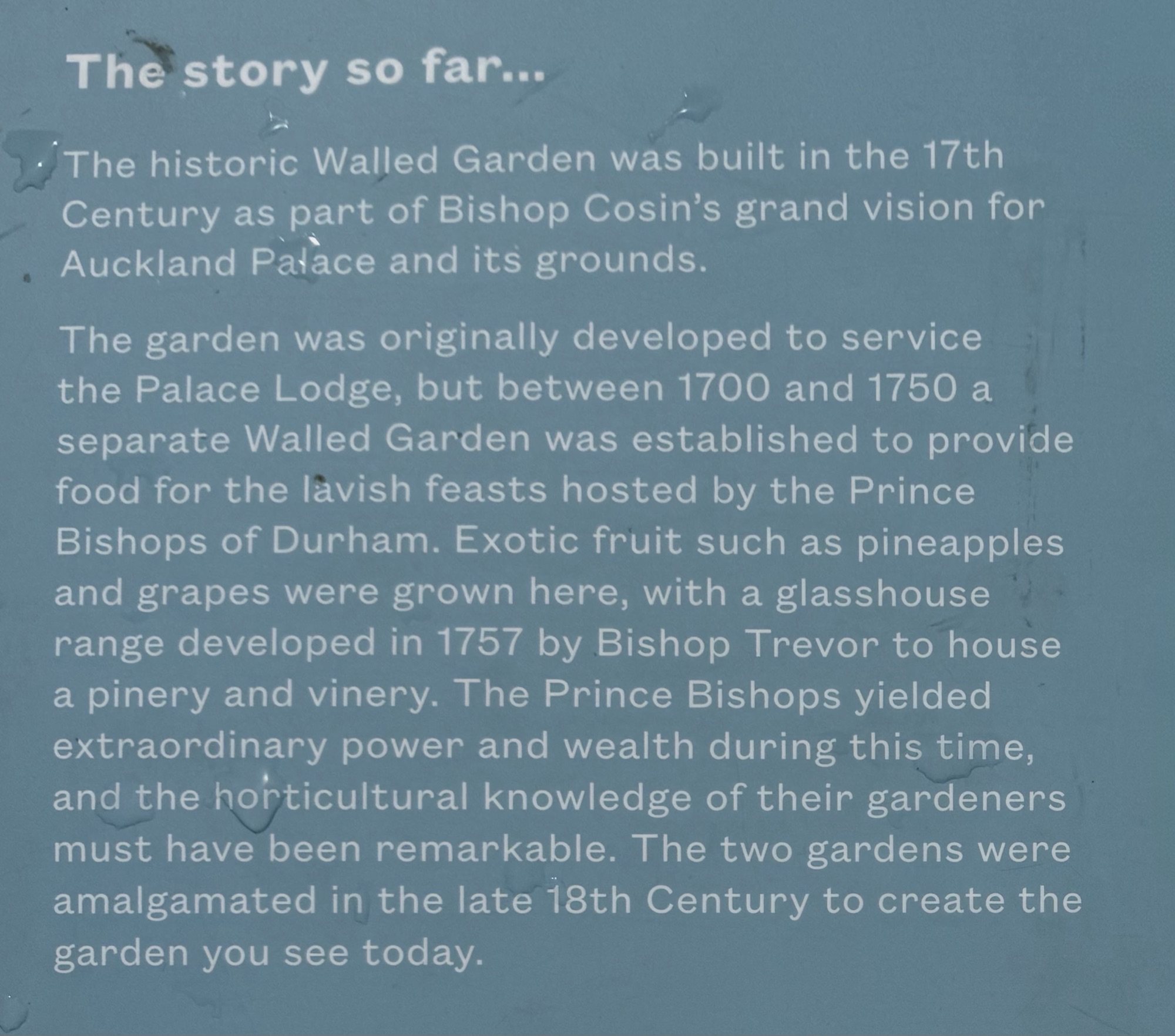
We didn’t go into the Walled Garden because we needed to prioritize our time, but Ted took a couple of overview photos and, of course, we read the descriptive plaque.
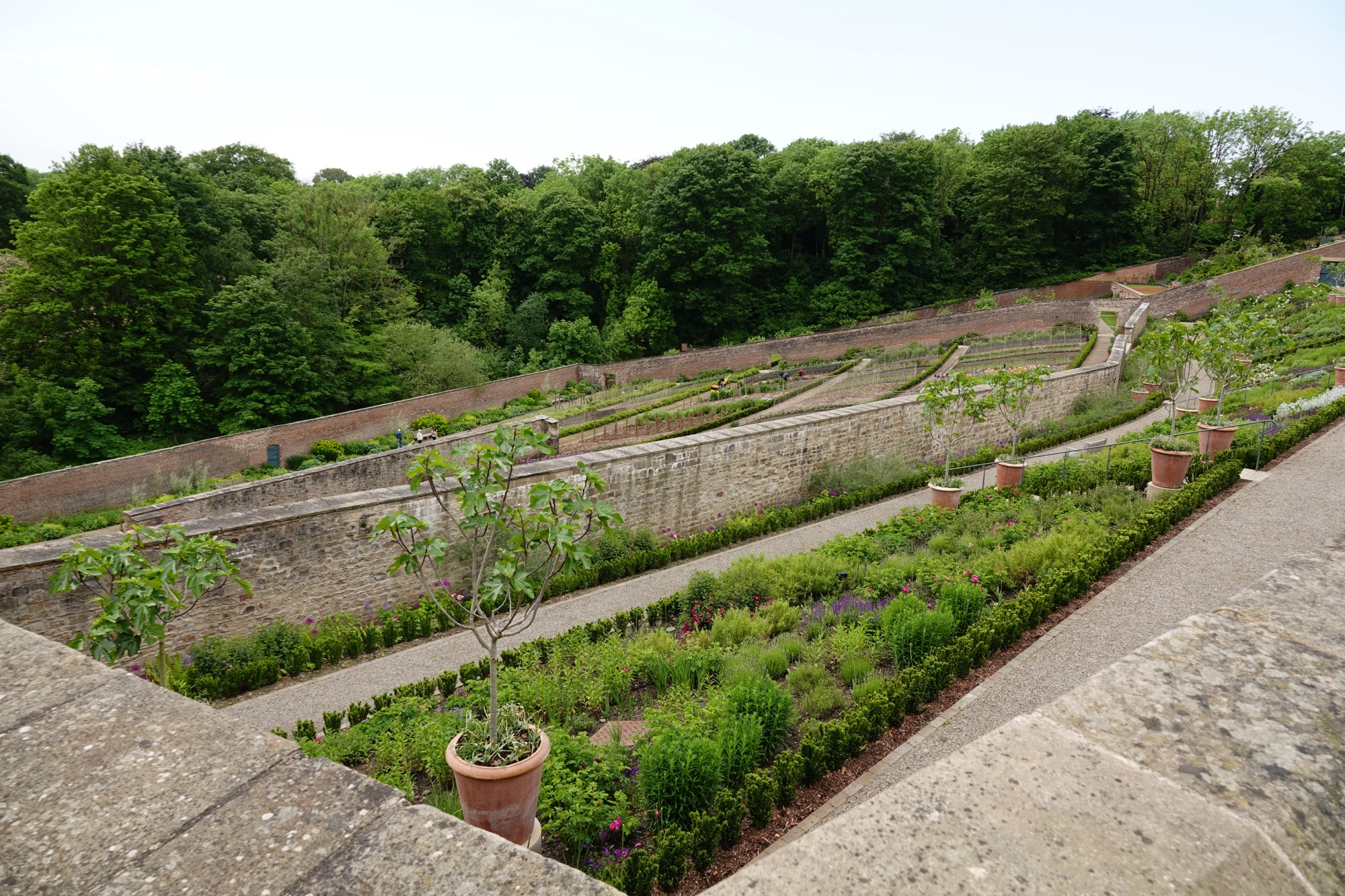
There was also a secondary “paradise garden” where melons and pineapples were grown. Pineapples were so exotic that they were regularly rented out to grace dinner tables – as if the Prince Bishops needed yet another income stream.
Turning from the garden, we got our first look at one of the best-preserved bishops’ palaces in all of Europe and the UK.
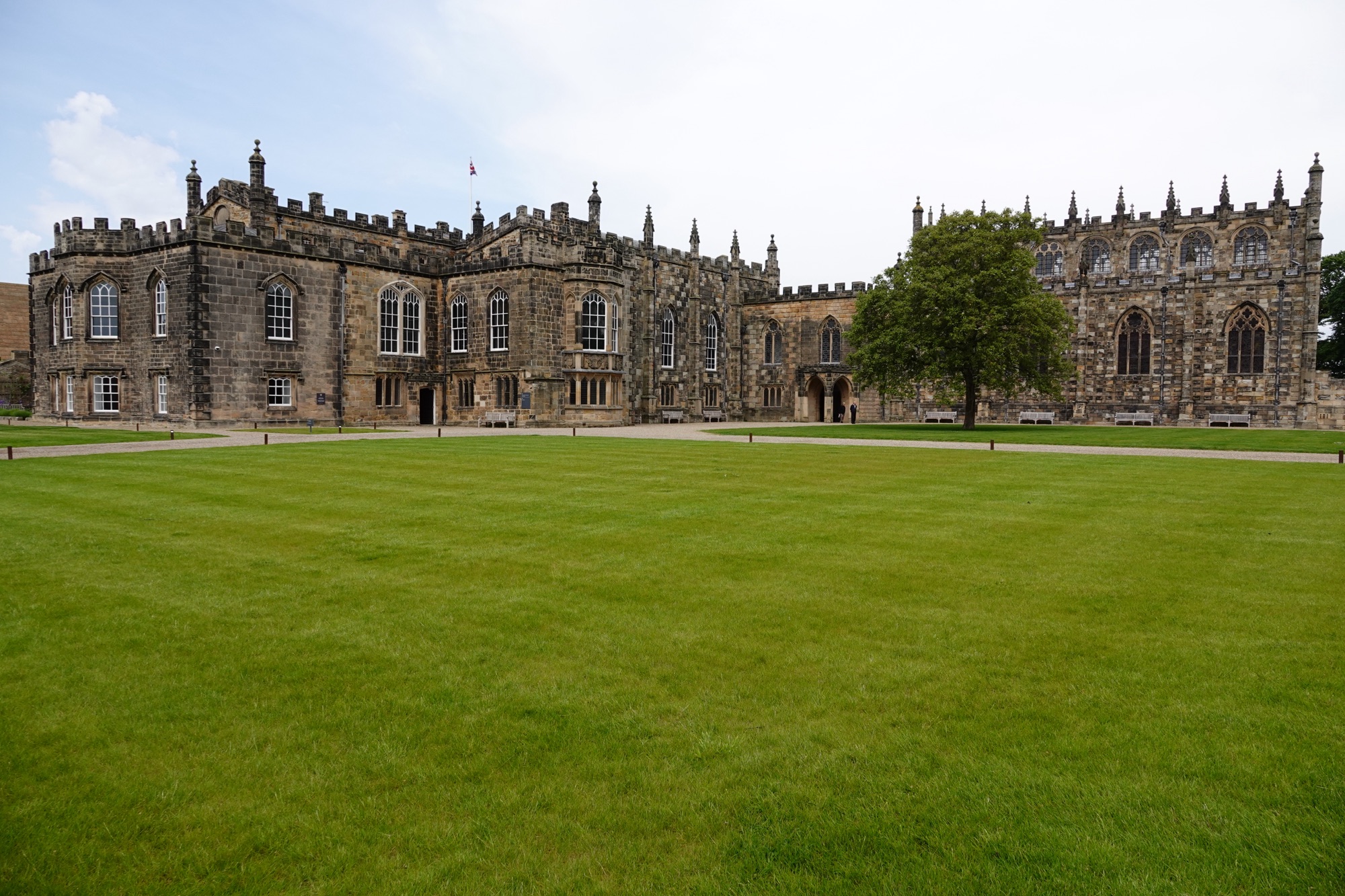
The stonework around each window is a work of art.
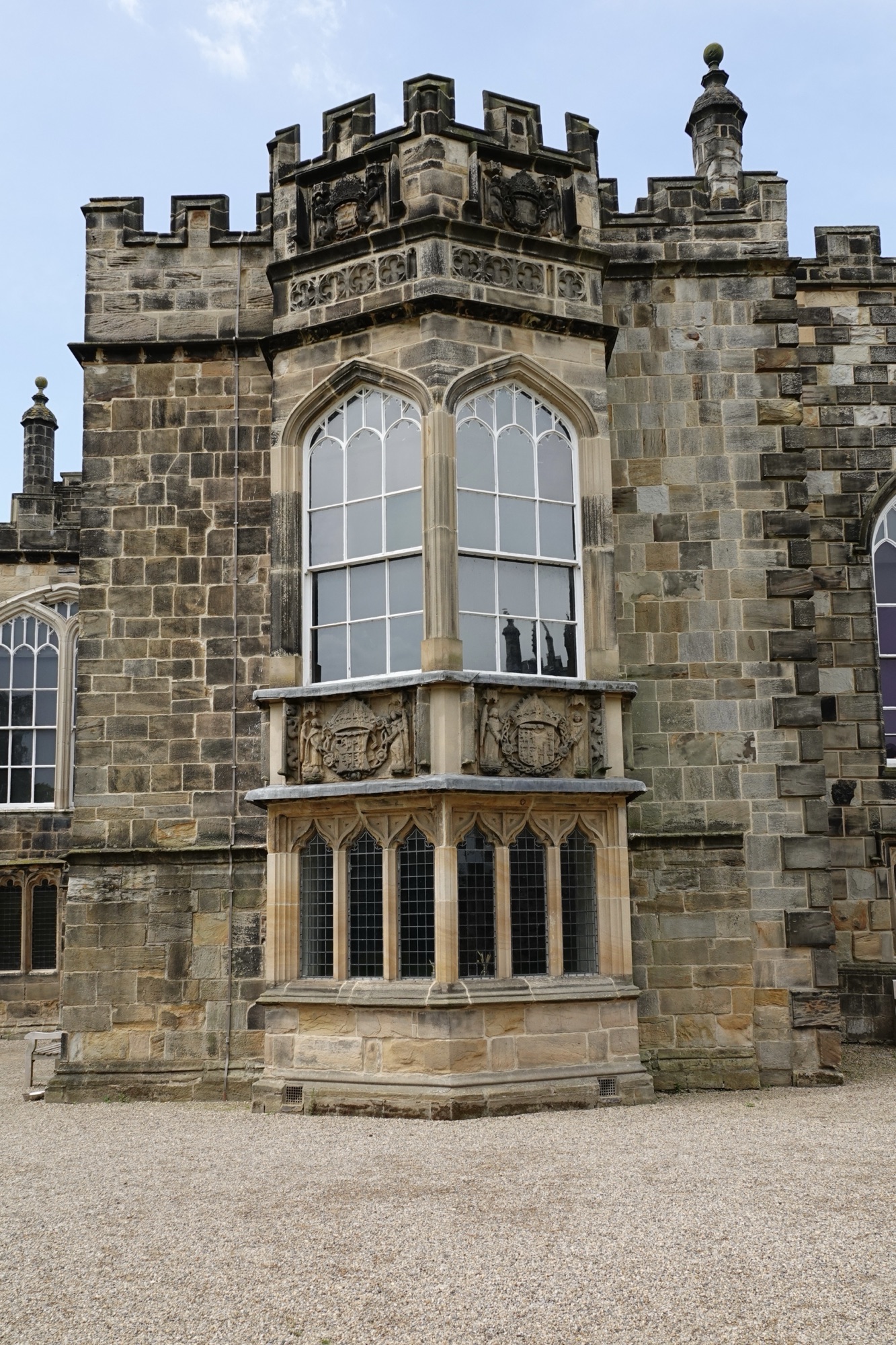
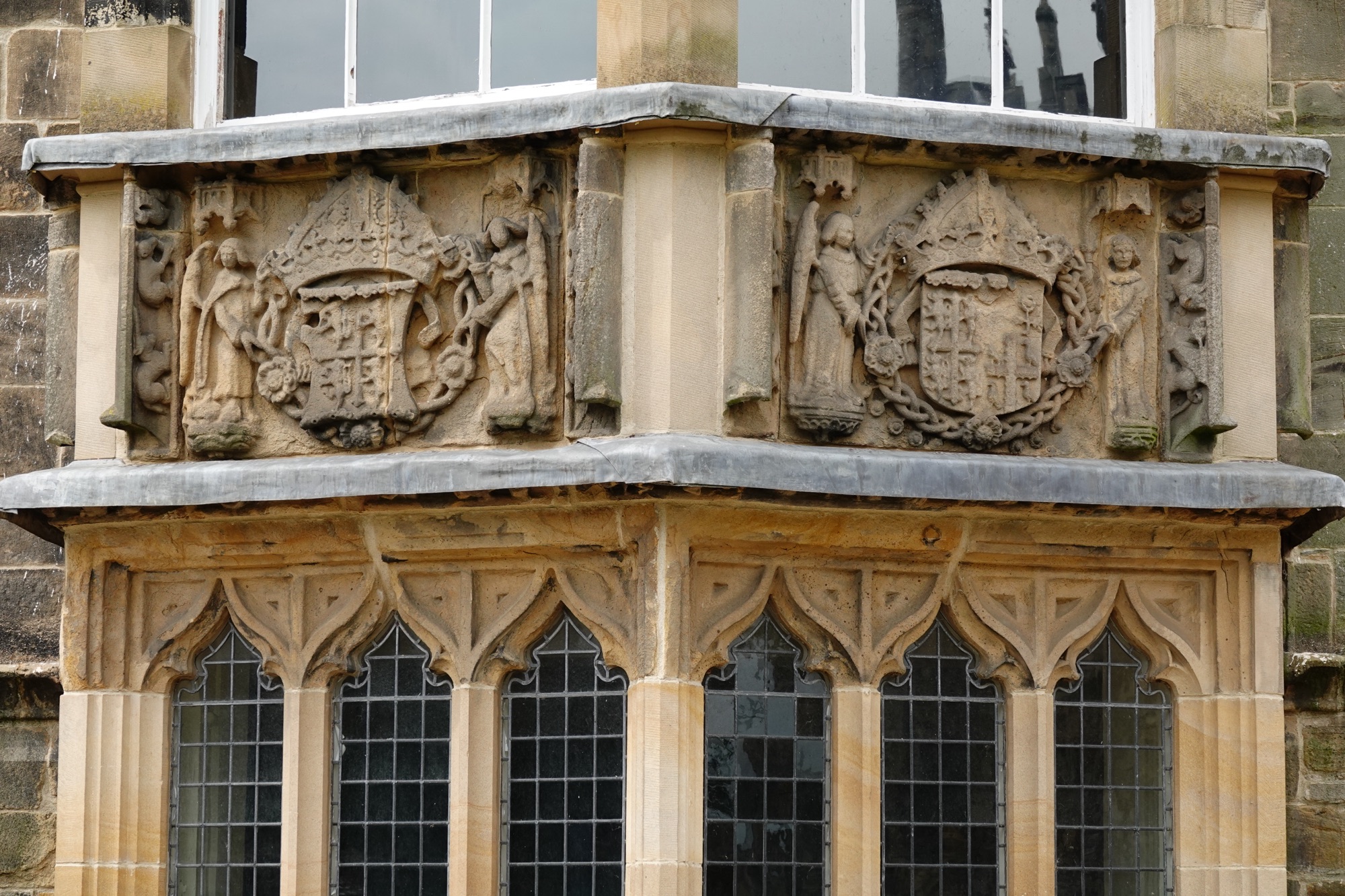
In the 1100s, when this building was first occupied, it was the “country house” of Prince Bishop Hugh de Puiset, surrounded by hunting grounds, complete with a huge banquet hall and a smaller chapel, priorities being what they were.
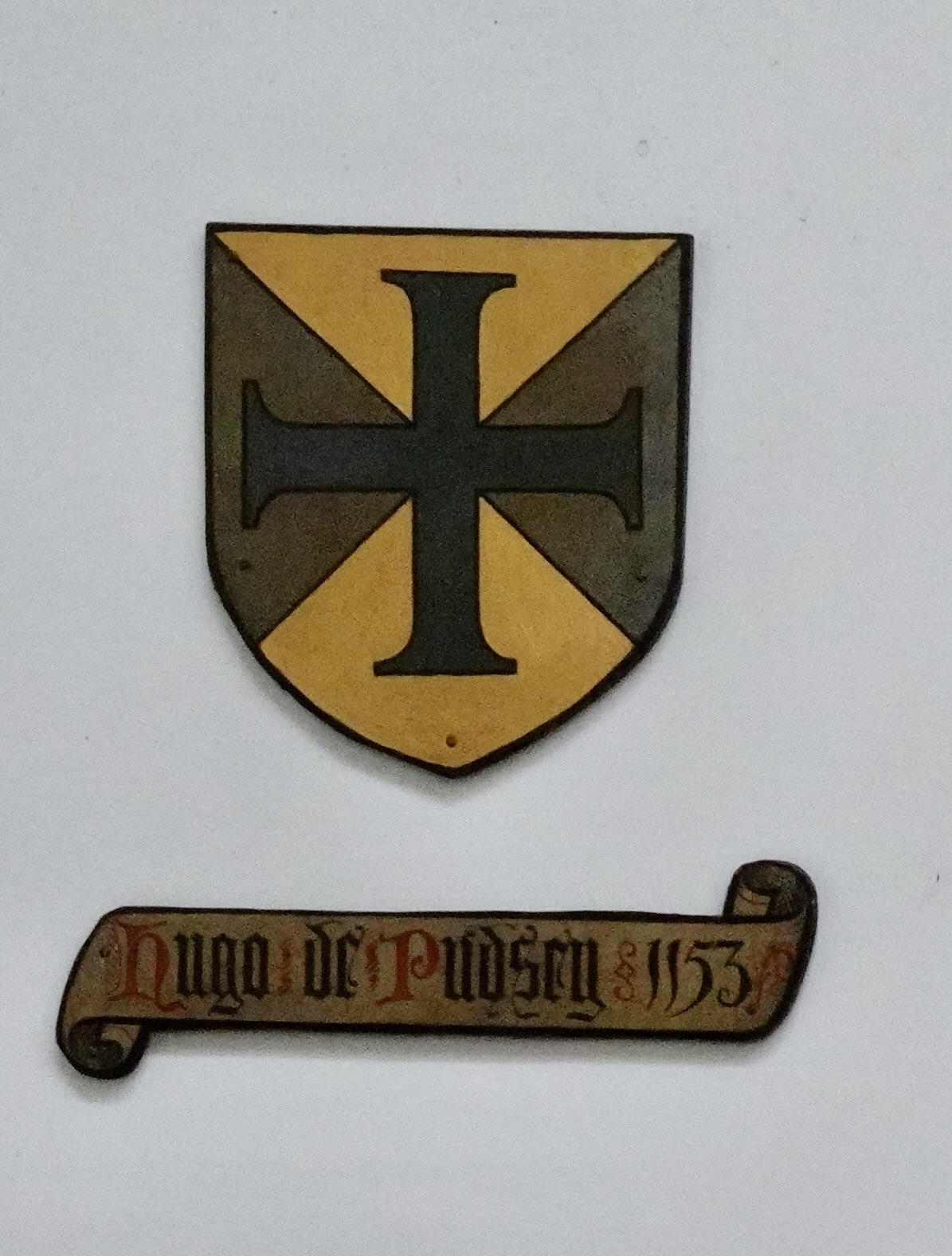
Prince Bishops used the property as their residence for hundreds of years until their role was abolished in 1836.
In between those two dates the Protestant Reformation and the English Civil War both affected the church and the role of the Prince Bishops.
As a loyal supporter of King Charles I, Bishop John Cosin had spent the Civil War in exile. When the King was restored, Cosin became Bishop of Durham. He arrived in triumph, only to find Auckland Palace’s ancient chapel in ruins. When Parliament defeated King Charles I, prominent Parliamentarian Sir Arthur Haselrig bought the castle and blew the 14th century medieval chapel up with explosives, using the foundation pillar stones and recycled masonry as rubble to build a new mansion on the estate.
We could see the outline of the original chapel, laid out in paving stones after its discovery by archeologists between 2018 and 2025, through an upstairs window later on our tour.
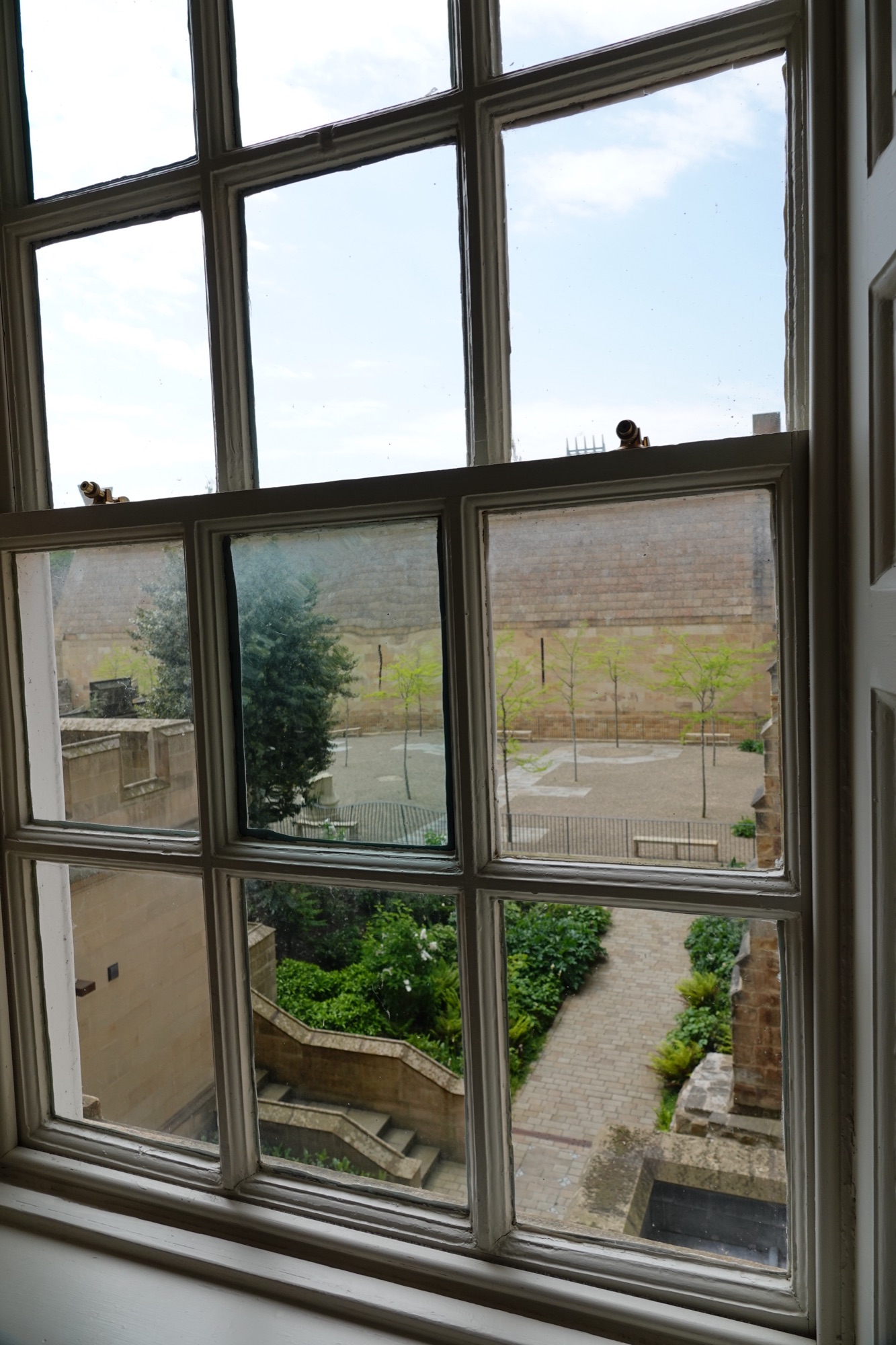
Instead of building an entirety new chapel, Cosin spent five years transforming the mediaeval great hall into a new chapel, completing it in 1665. This was where we began our tour, in what is even now one of the largest private chapels in Europe. Saint Peter’s Chapel has been in continuous use for 350 years.
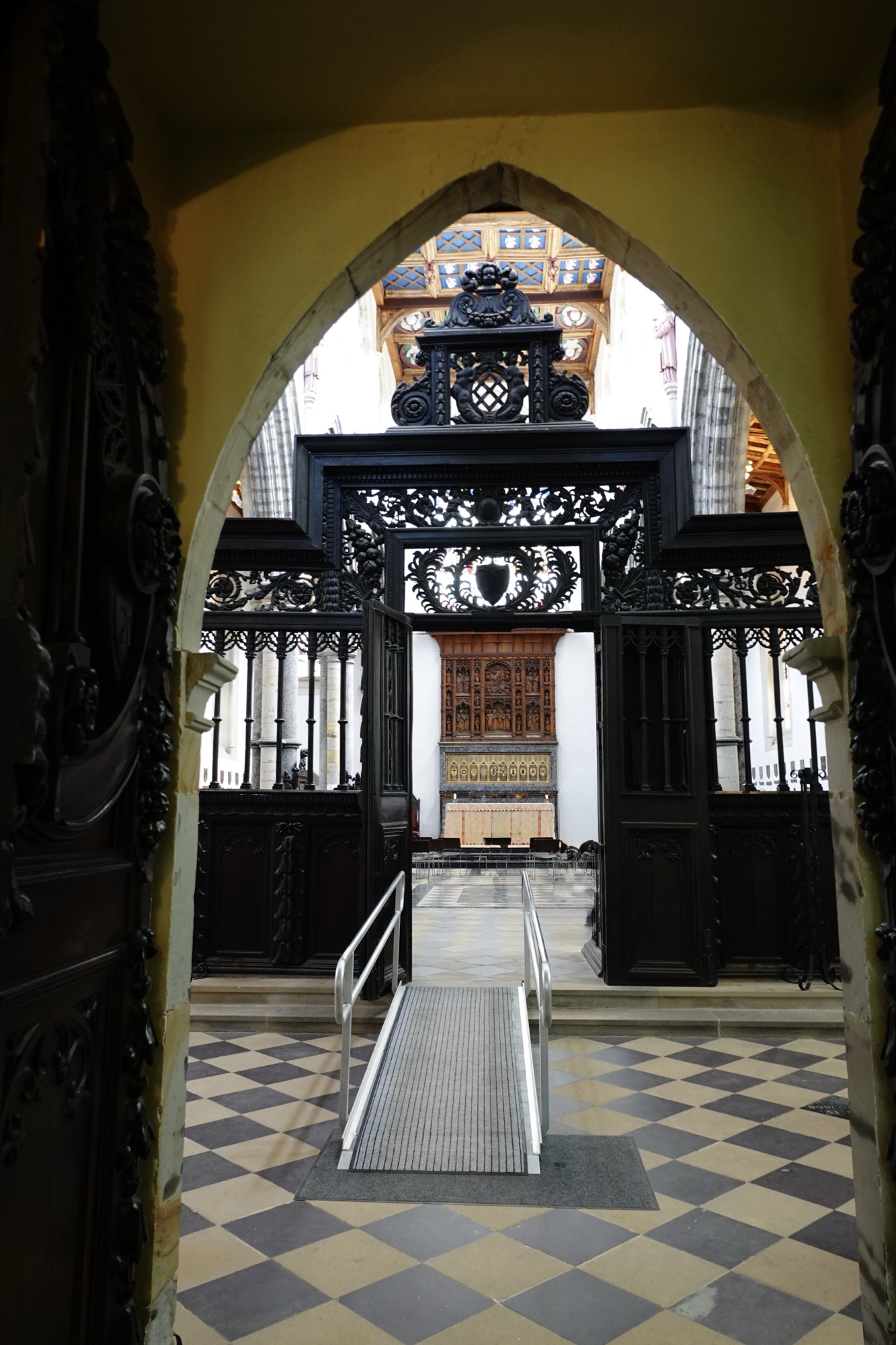
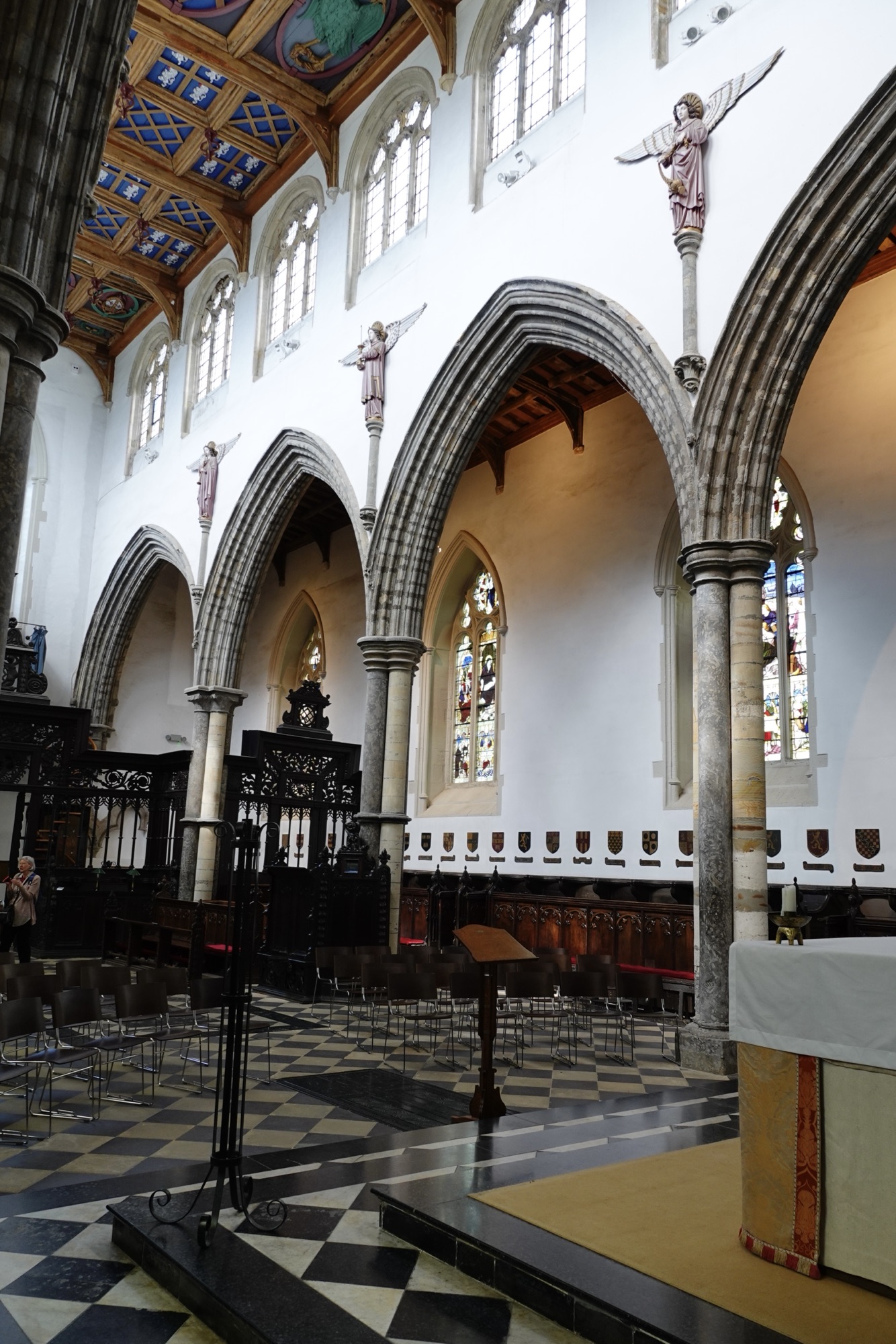
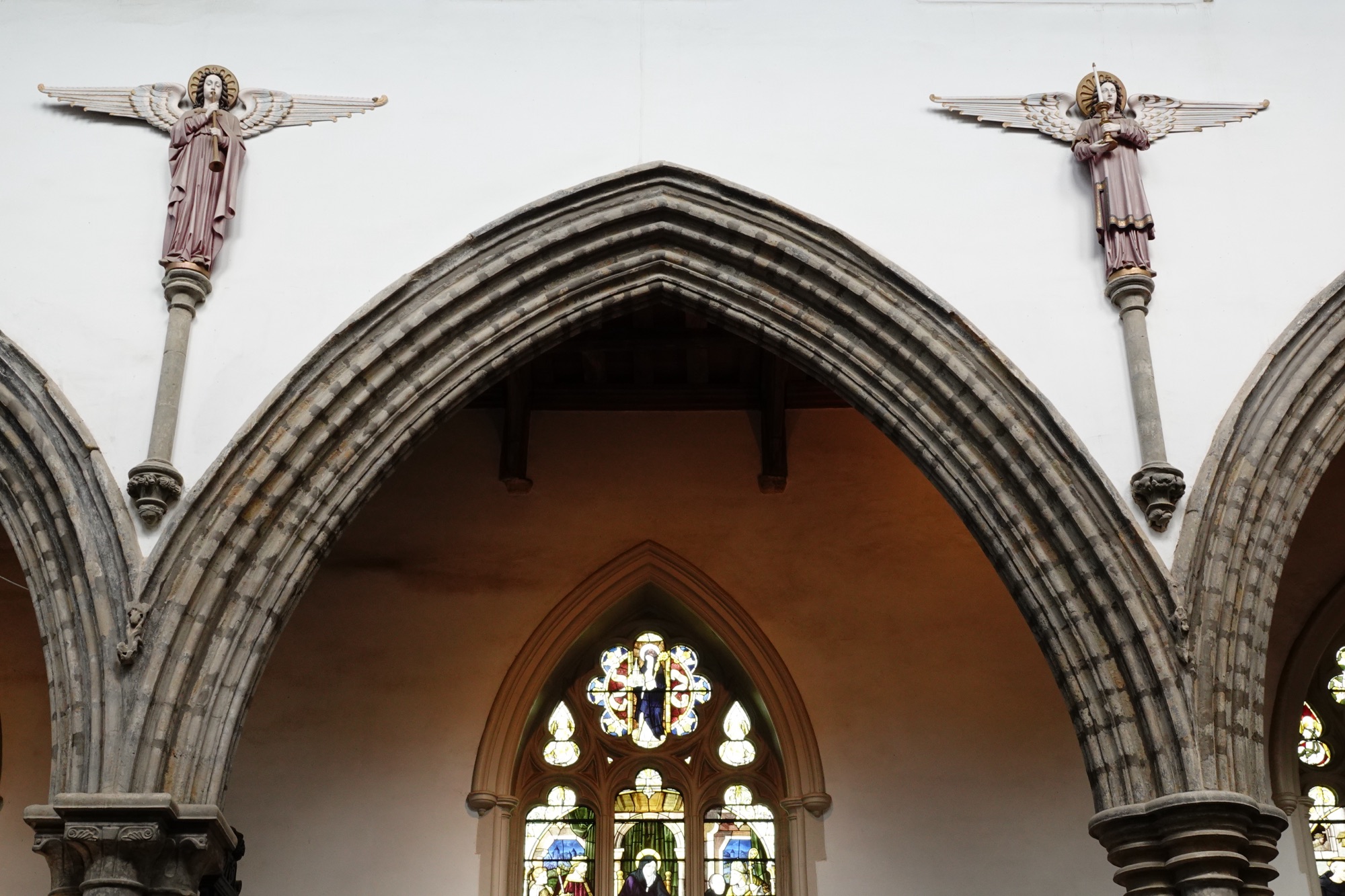
When Bishop John Cosin created the chapel he transformed the ceiling, raising it to a height of nearly 20 metres. The crowning glory is the vividly painted woodwork, which forms a visual display of the authority and power of the Prince Bishops. It’s quite impressive.
In the centre, Cosin’s arms of gold fretwork on blue appear accompanied by two great eagles, possibly in reference to St John, Cosin’s patron saint and namesake. These eagles were originally painted in life-like colours.
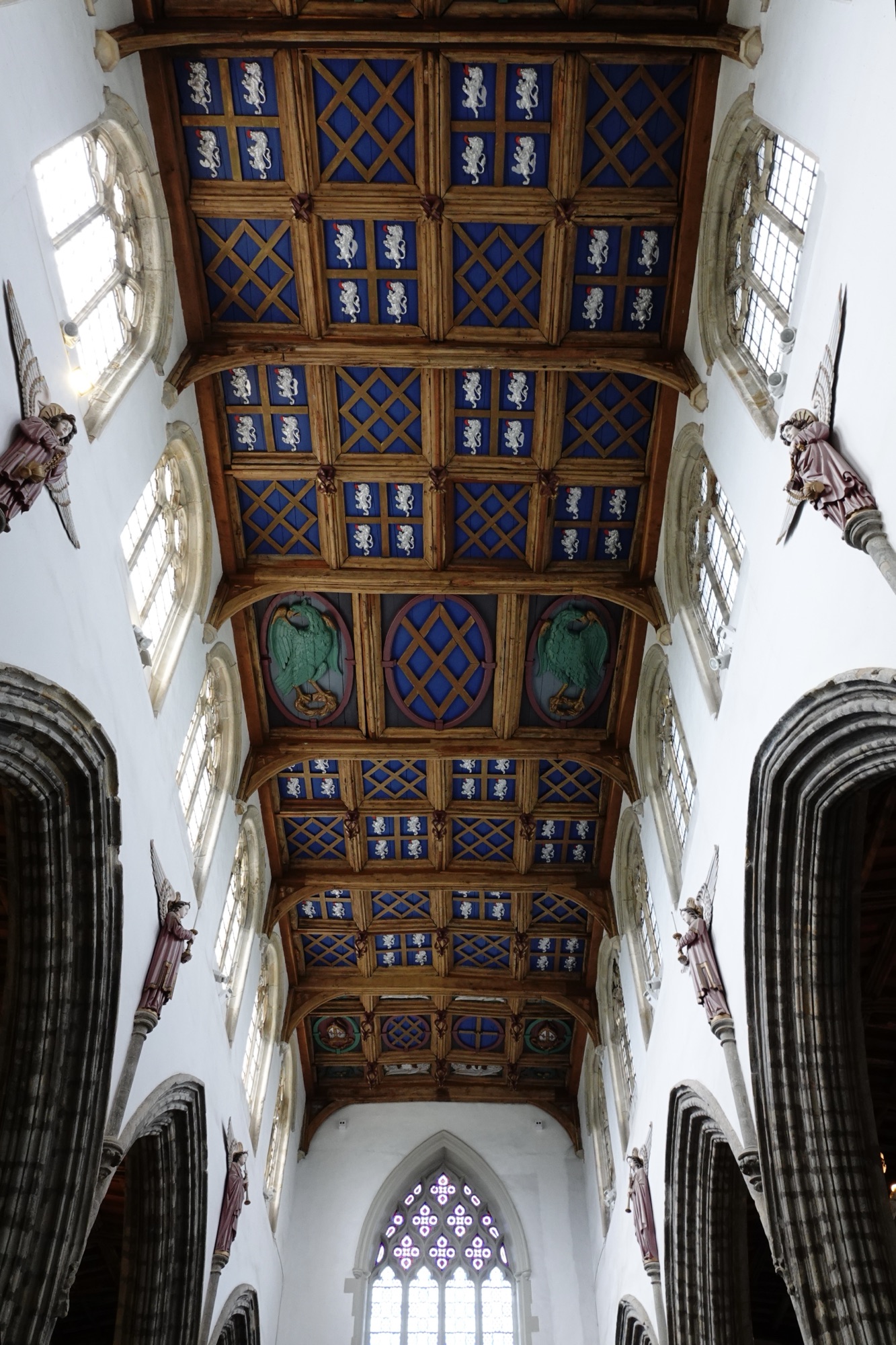
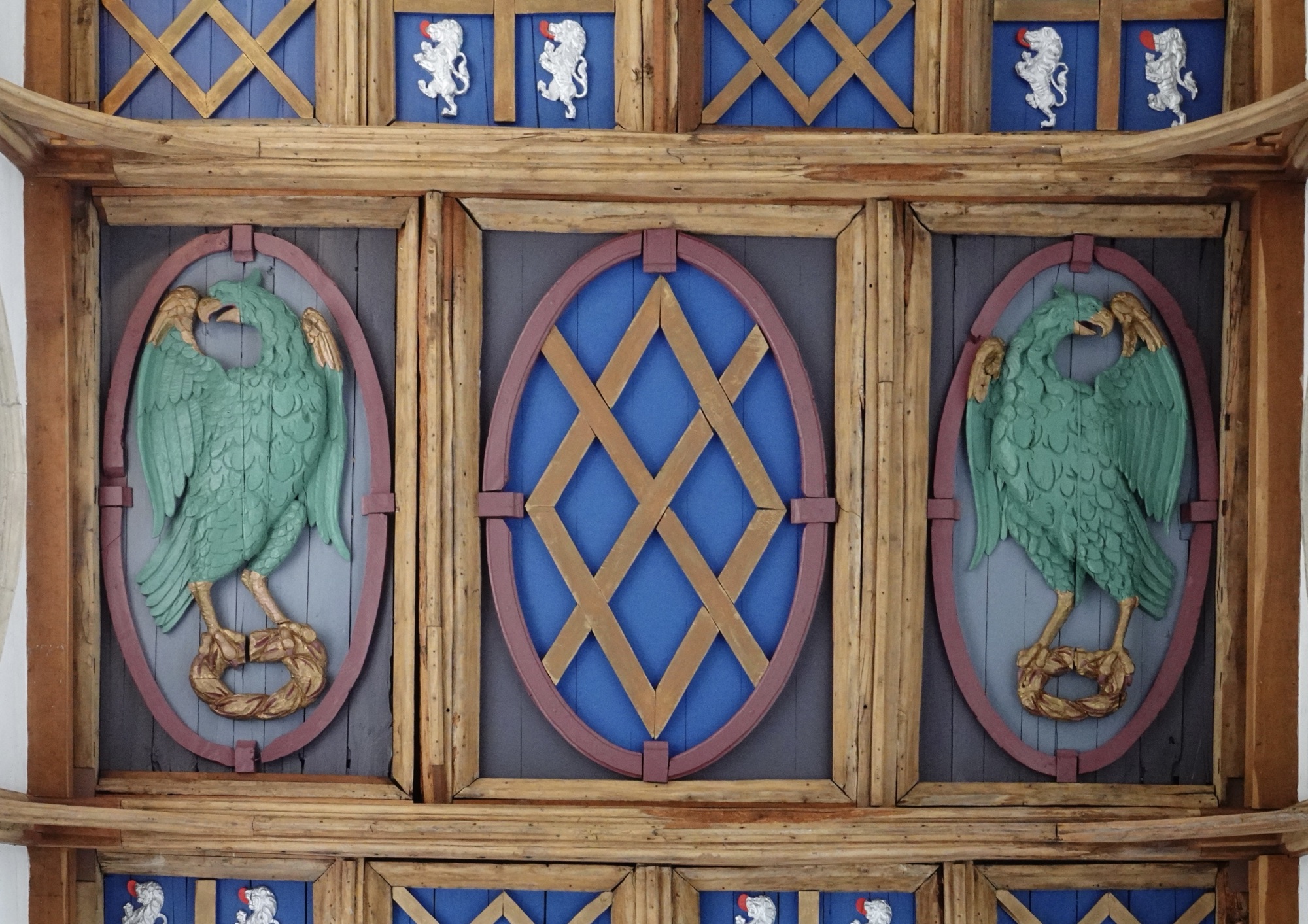
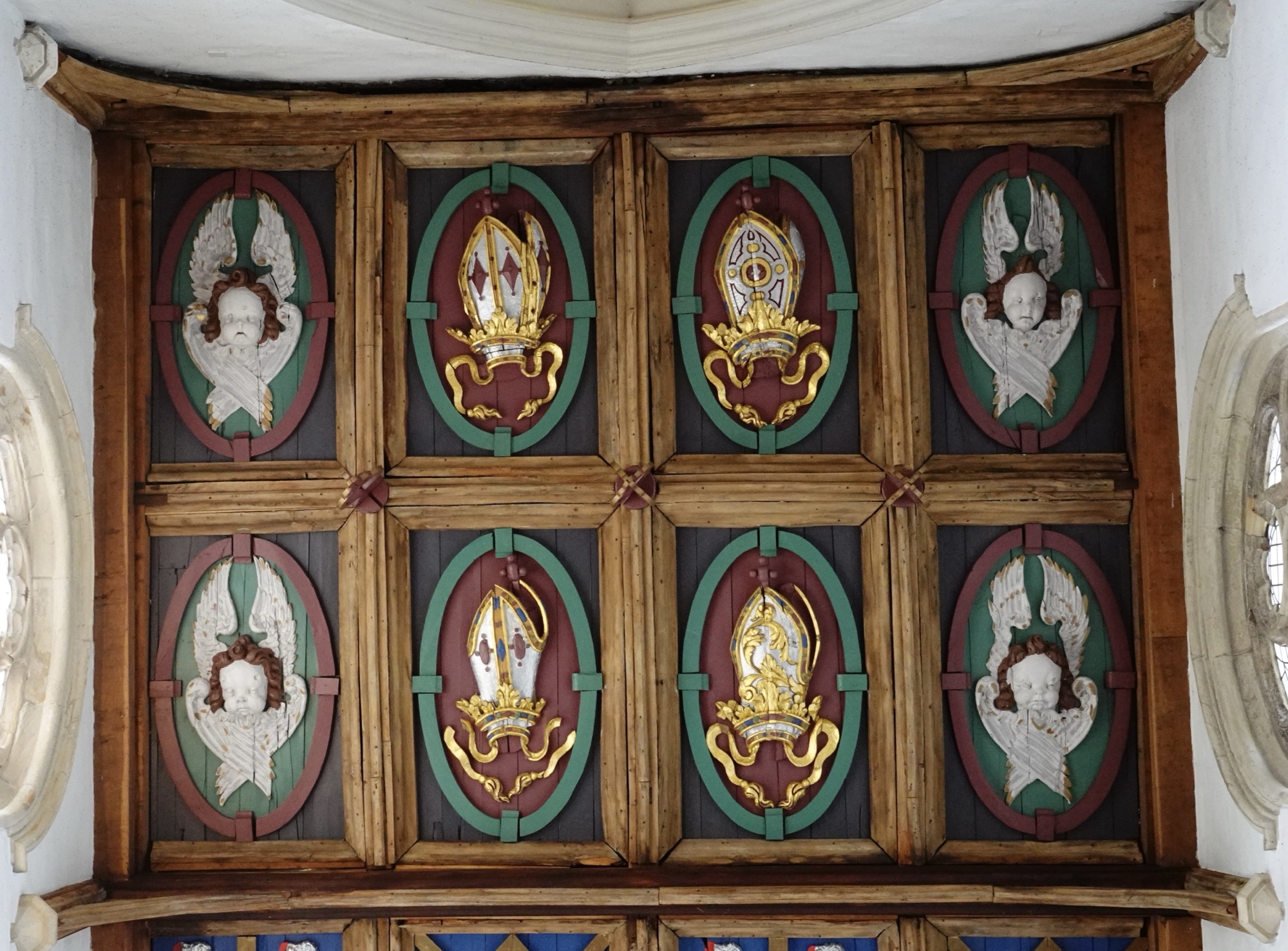
When Cosin converted it, all of the stained glass windows featured his coat of arms; now only the window above the organ does.
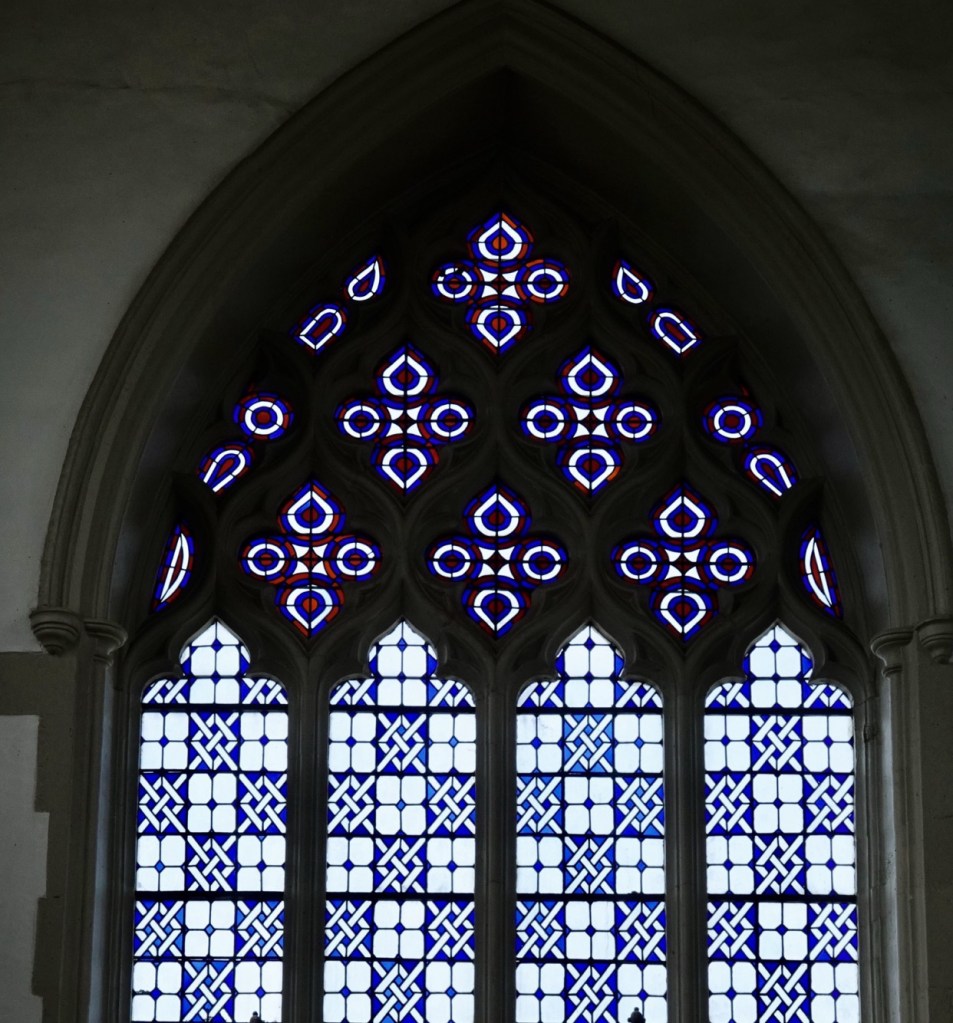
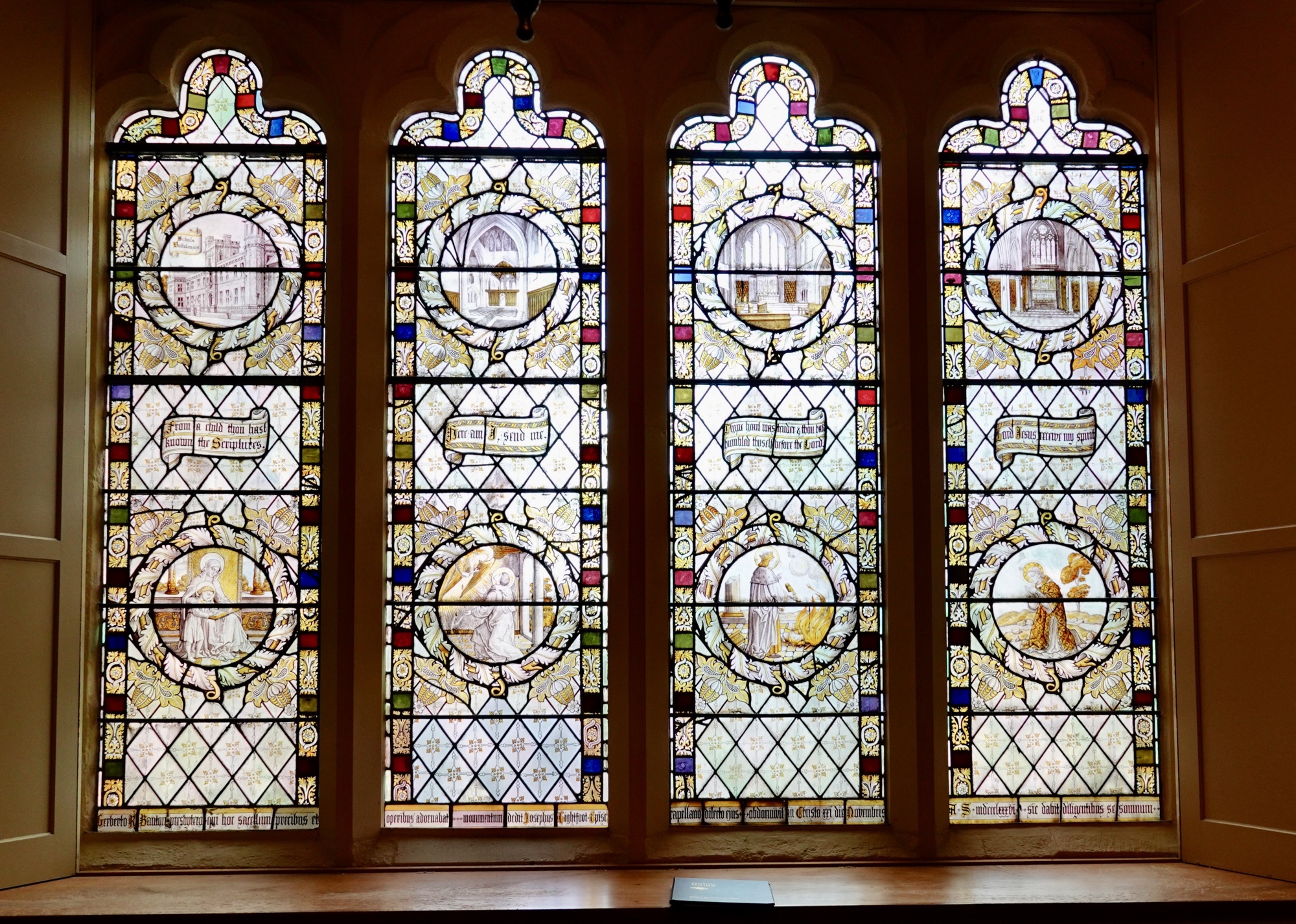
The other windows are mostly Victorian, and feature “more appropriate” biblical themes.
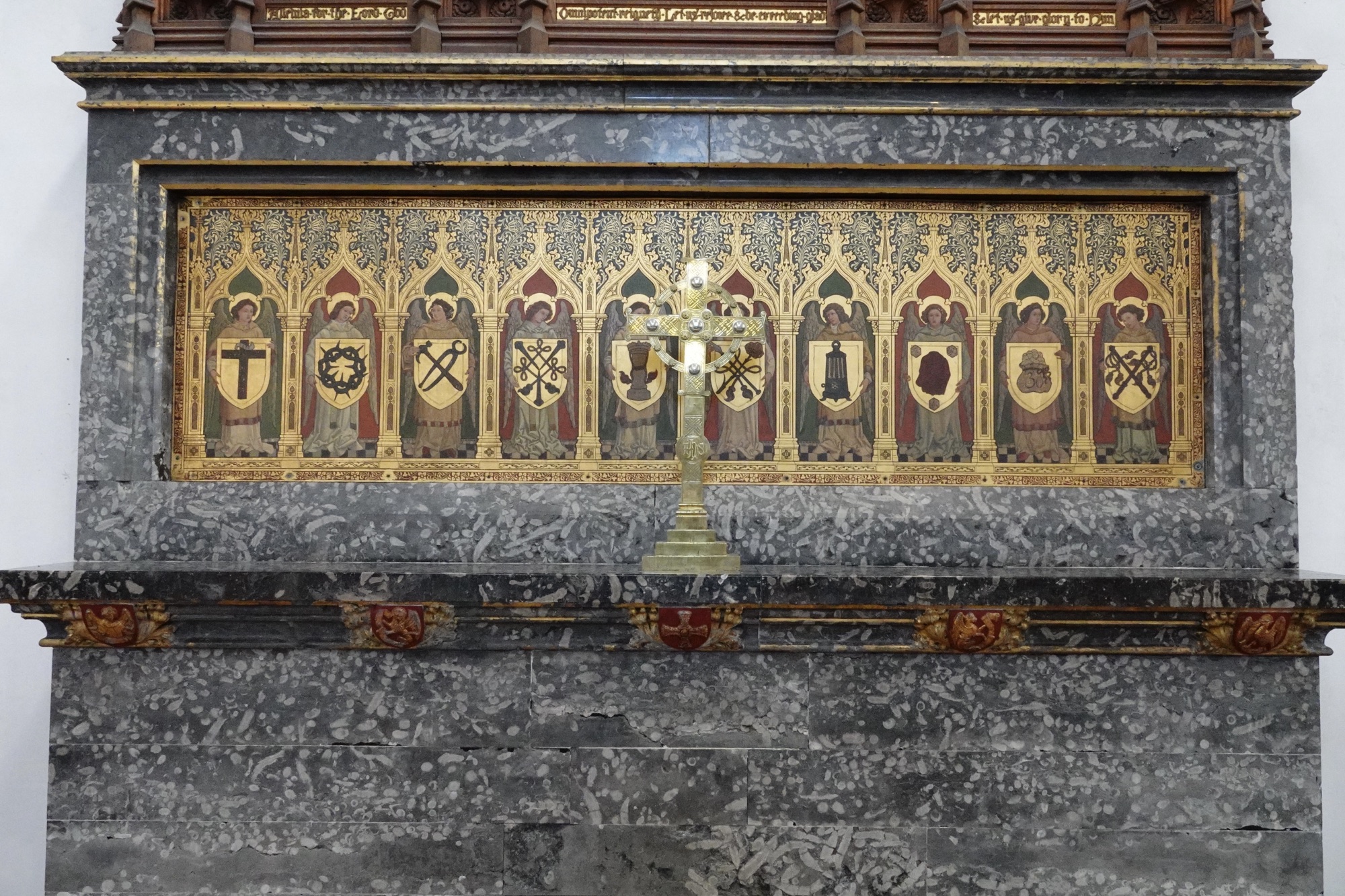
Bishop Joseph Lightfoot installed a new ornamental altar screen when he renovated the chapel in the 1880s. The lower part (below) is Frosterley marble (not really marble at all, but polished local stone) with a recessed panel made of copper. Painted angels bear shields showing symbols associated with Christ’s death on the cross, including a crown of thorns, a hammer and pincers, and a bag with 30 pieces of silver.
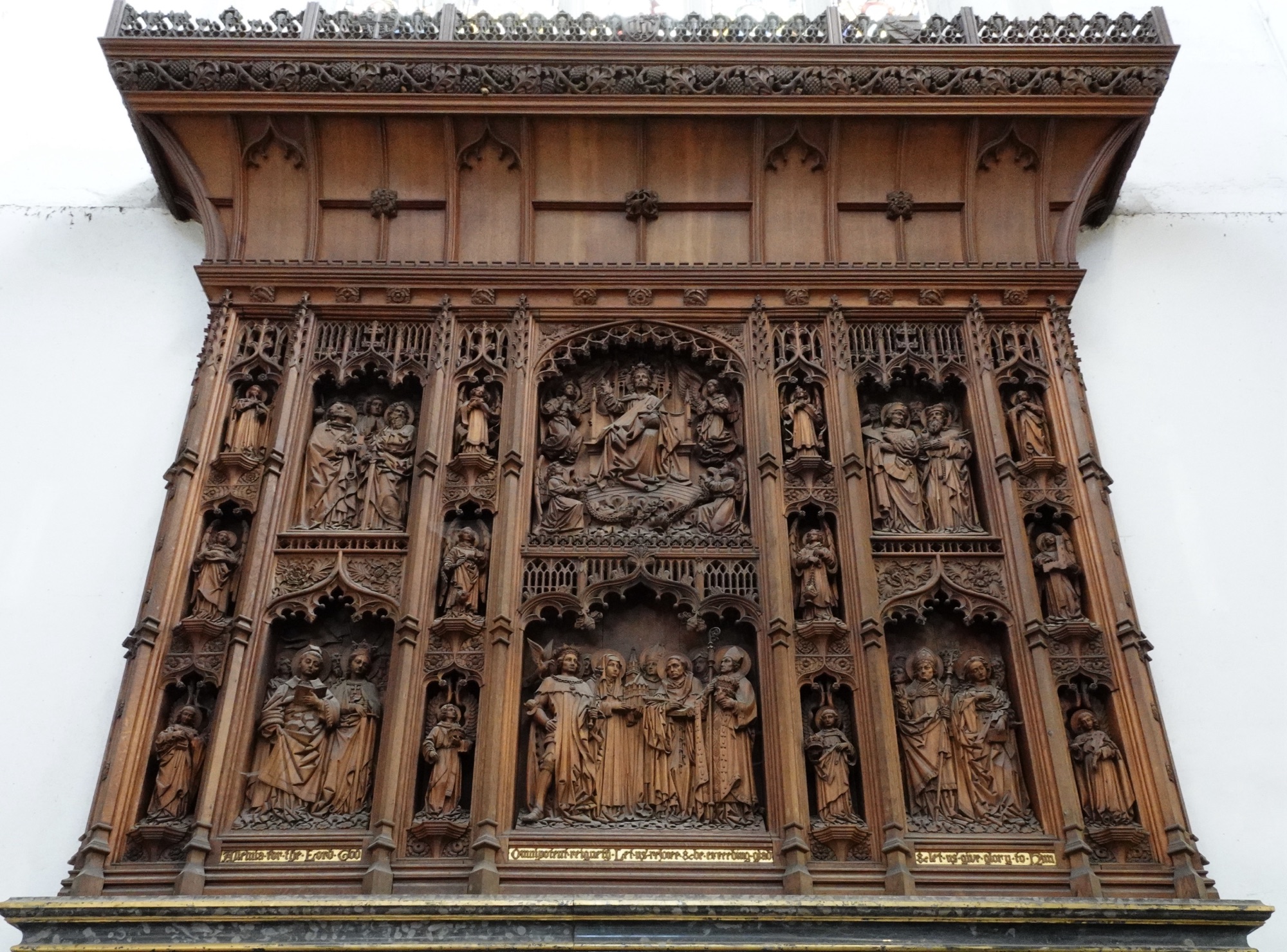
On the oak upper part Christ is enthroned at the top, surrounded by angels and with St Peter and St Paul and other New Testament figures.
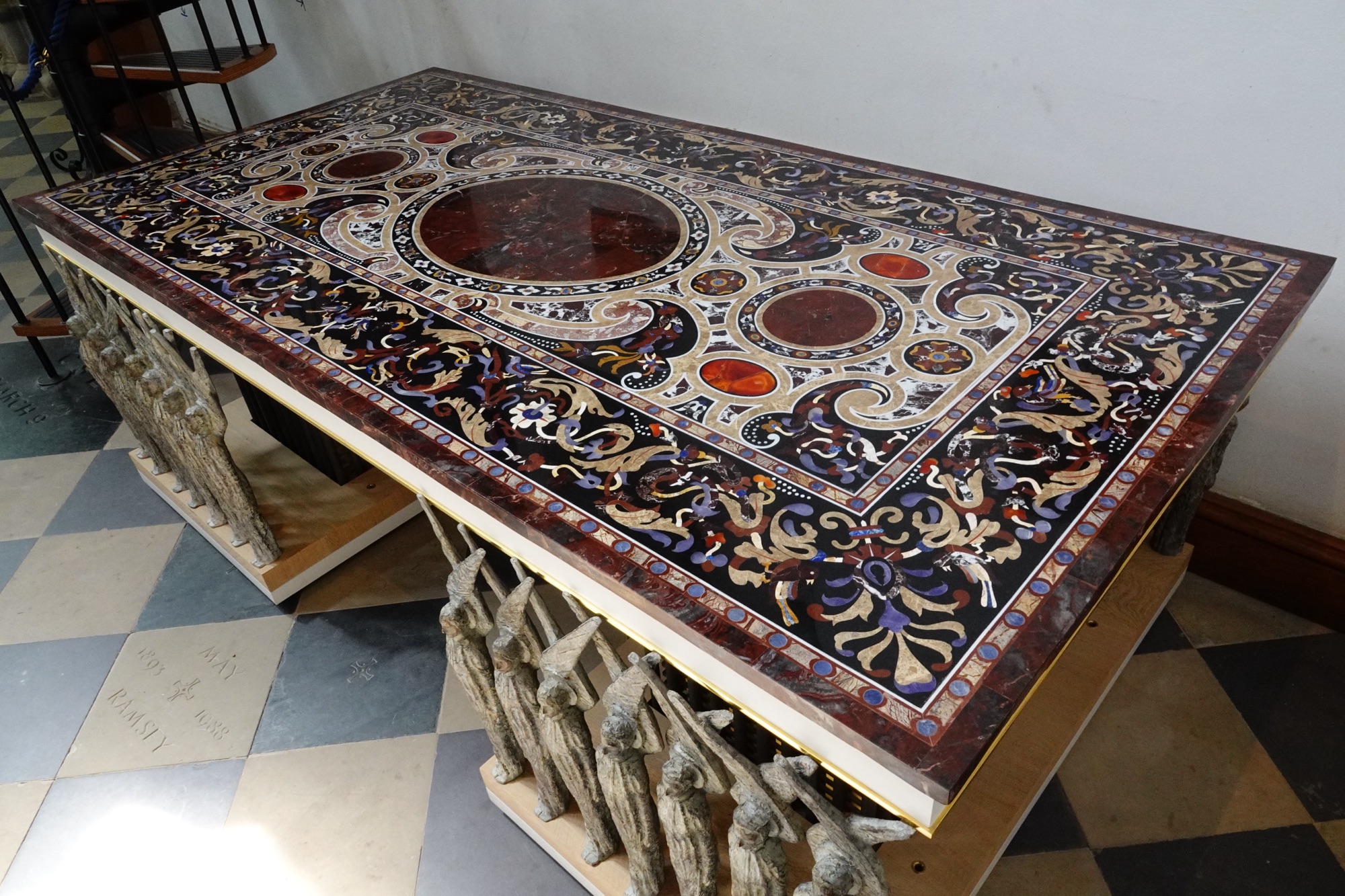
The 17th century Florentine table top is made of red marble and pietra dura, literally ‘hard stone’, a kind of mosaic made with precious and semi-precious stones.
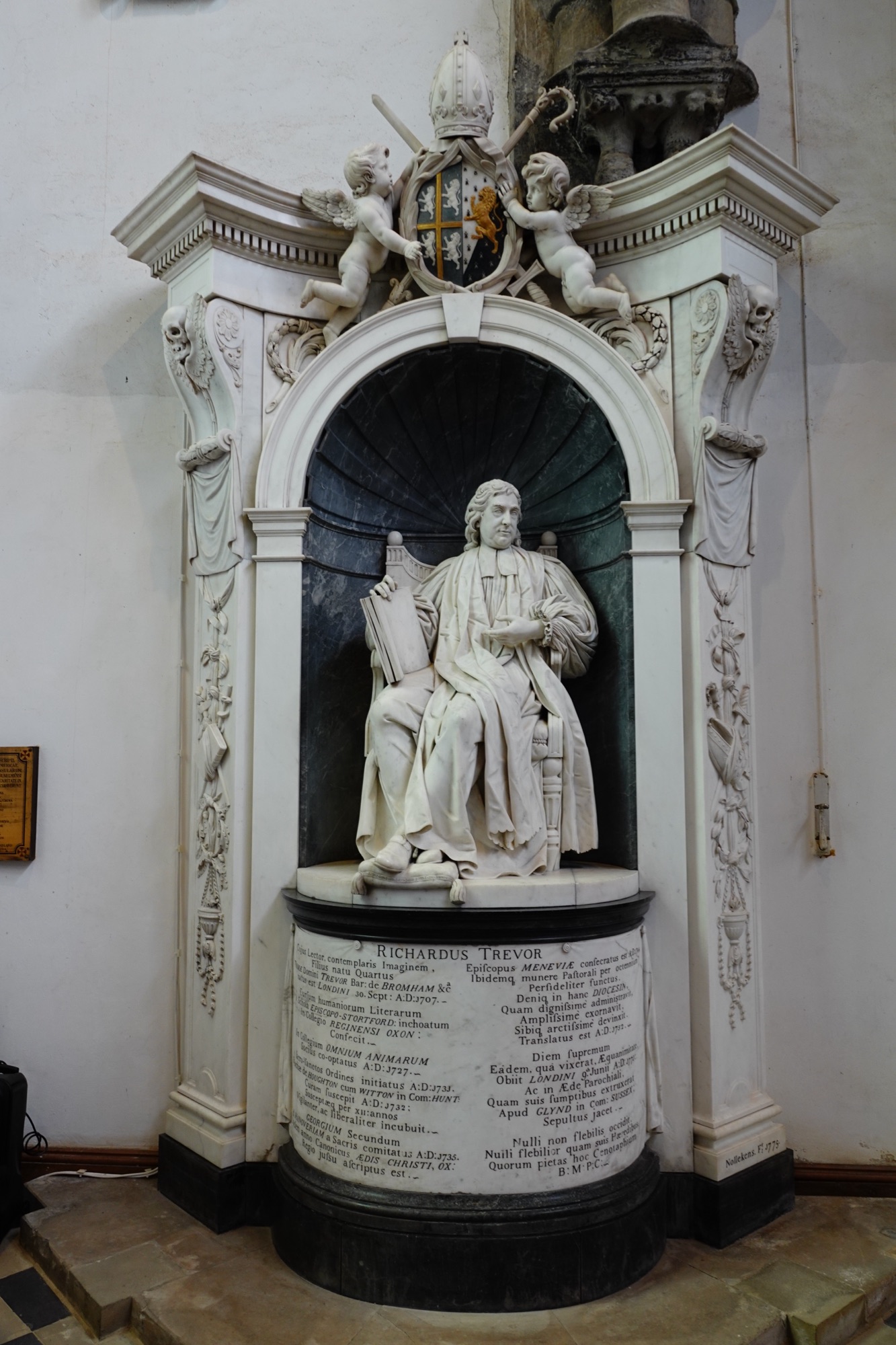
The Prince Bishops were definitely not self-effacing personalities. The memorial below was designed by the person it memorializes. It was added to the chapel in 1775, four years after Trevor’s death.
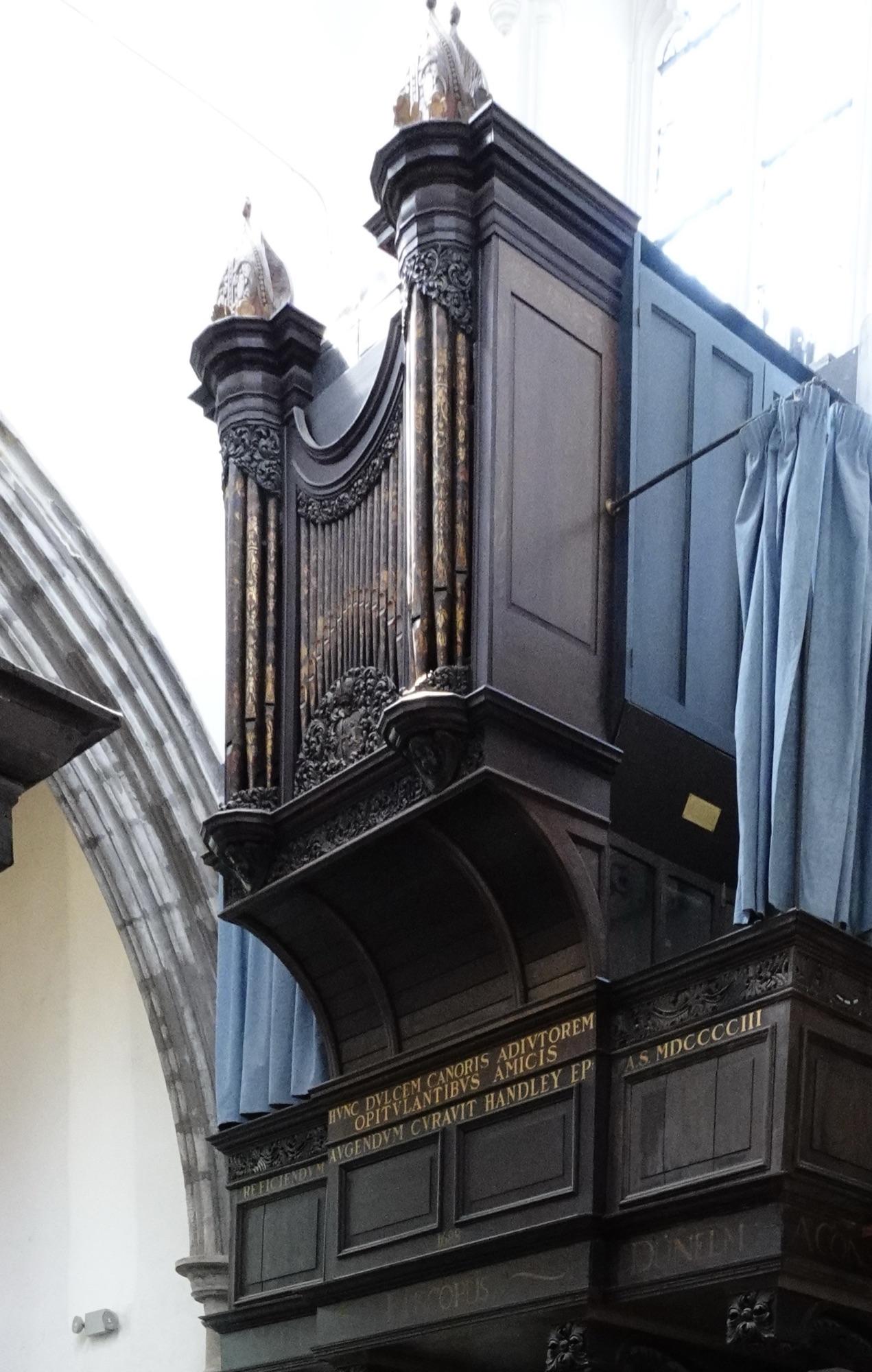
Renowned organ maker Bernard ‘Father’ Smith originally made the chapel’s organ for Bishop Nathaniel Lord Crewe in 1688. Smith was organ maker to Charles Il and later keeper of the King’s organs (which when I read it sounds quite rude, but that’s what the sign said). The organ was enlarged in 1903 but the original ornate case kept intact.
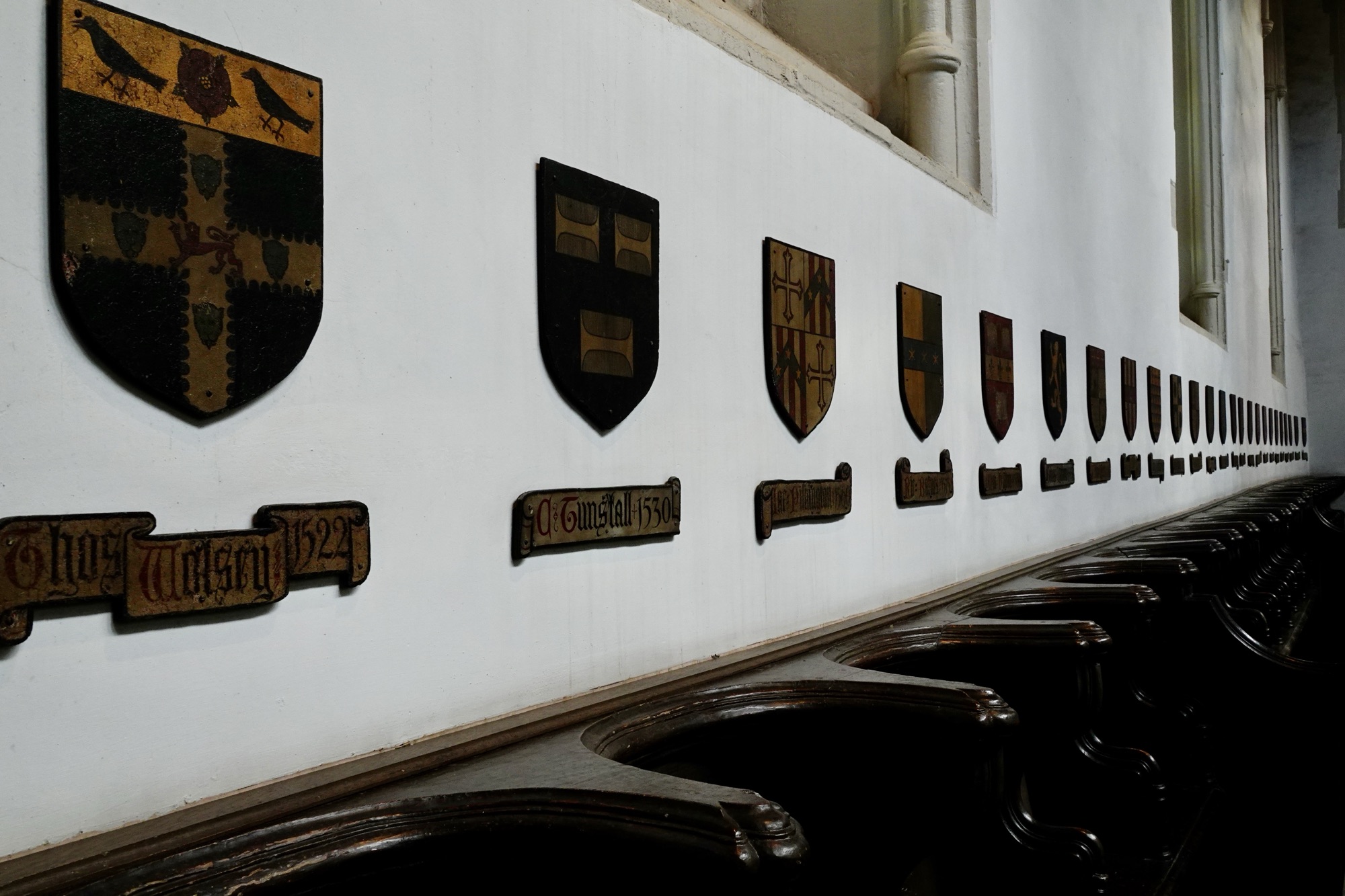
Before moving on, we looked at more of the Bishop’s crests around the chapel, noting especially Thomas Wolsey’s (far left).
As we moved through the palace, the various rooms reflected specific time periods and events, making the building an interesting history lesson.
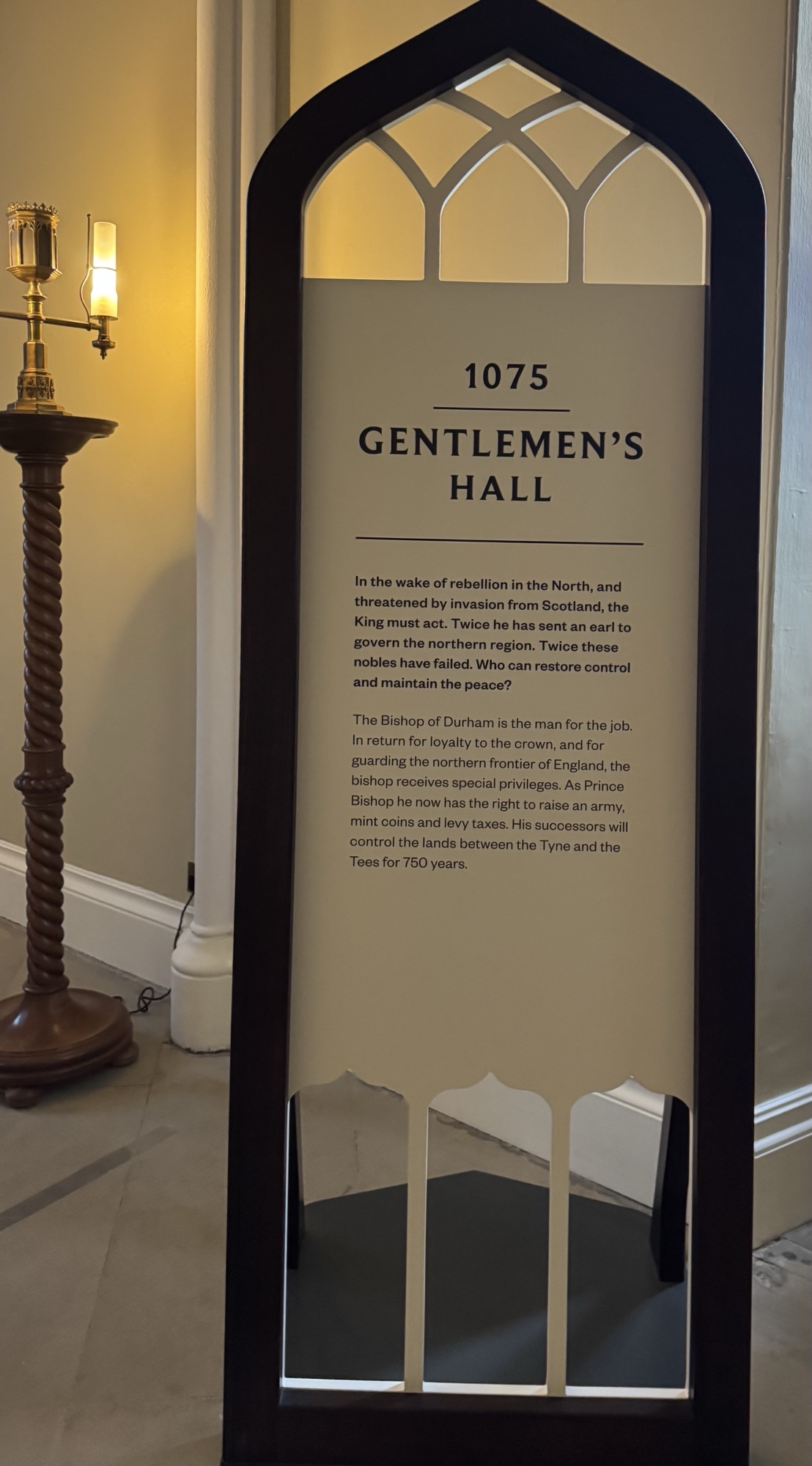
In the Gentlemen’s Hall we were reminded of why the role of the Prince Bishops was created in 1075CE, and got a look at some examples of their wealth.
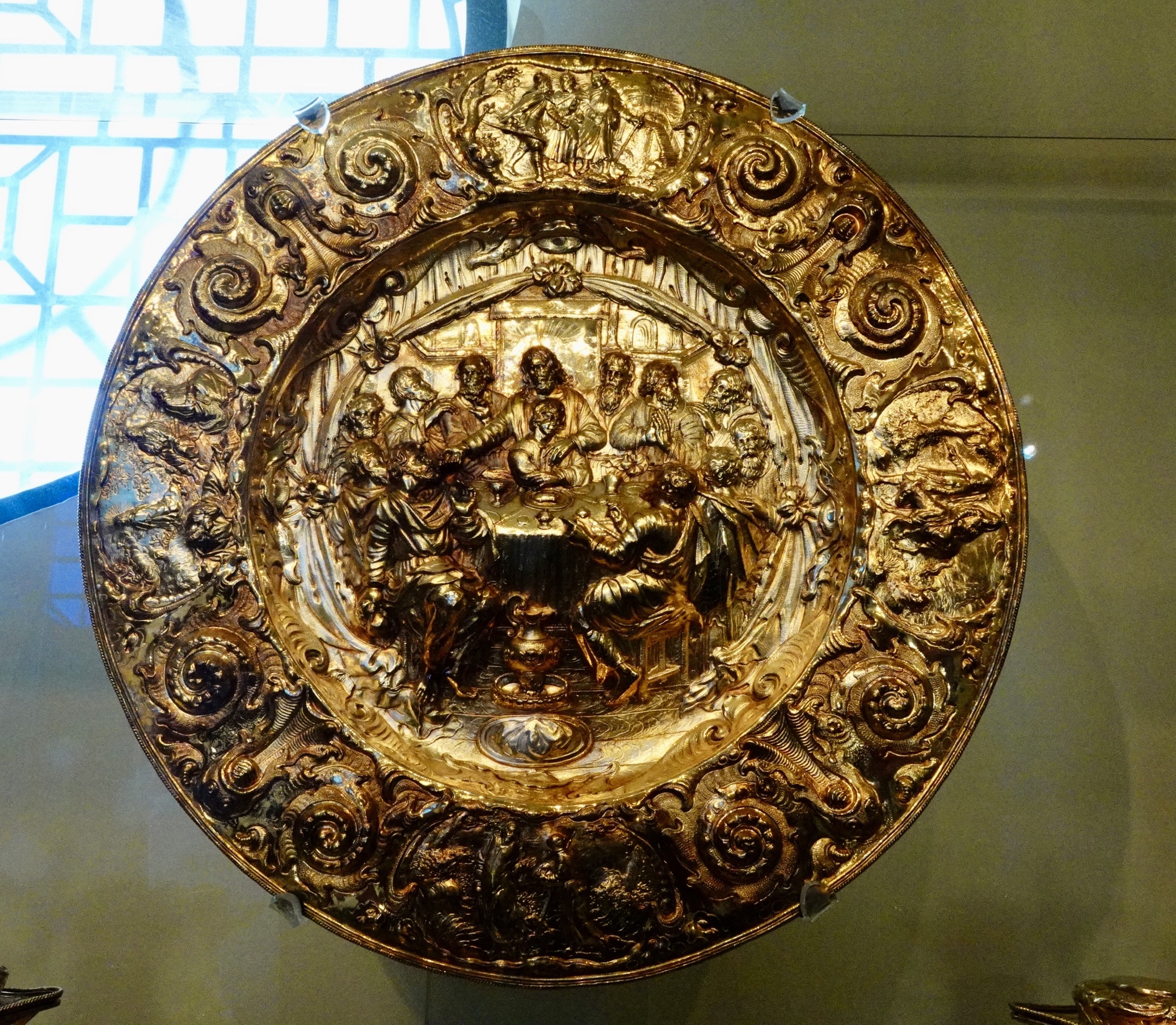
This might be the best example from the room: an Almsdish, made around 1662, of solid silver coated with gold, and almost identical to the one used for the coronation of Charles II. On it is an image of the Last Supper.
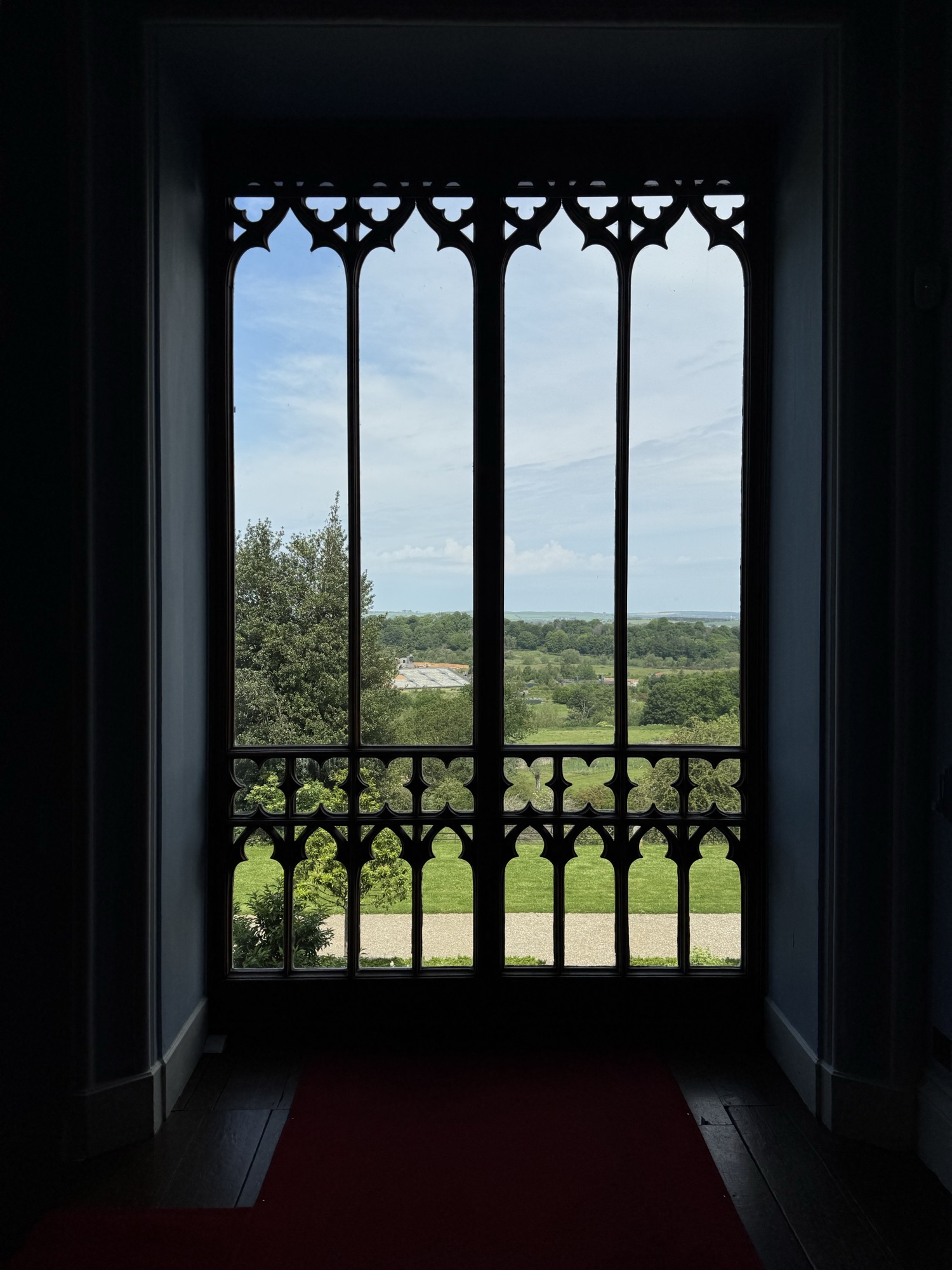
On the staircase landing we were able to admire the views of the bast land holdings of the Prince Bishops.
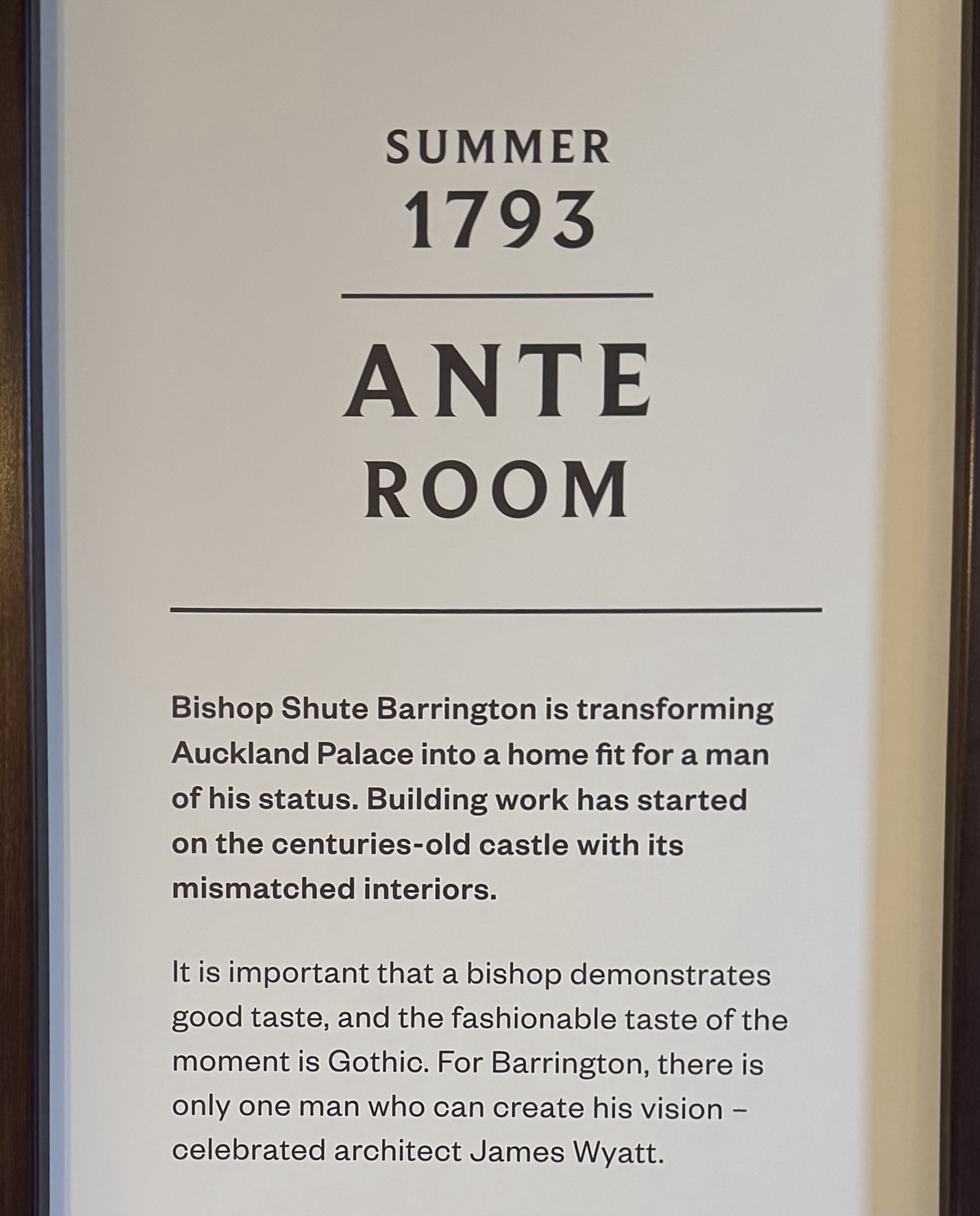
The signs in the palace don’t sugarcoat the vanities of the inhabitants.
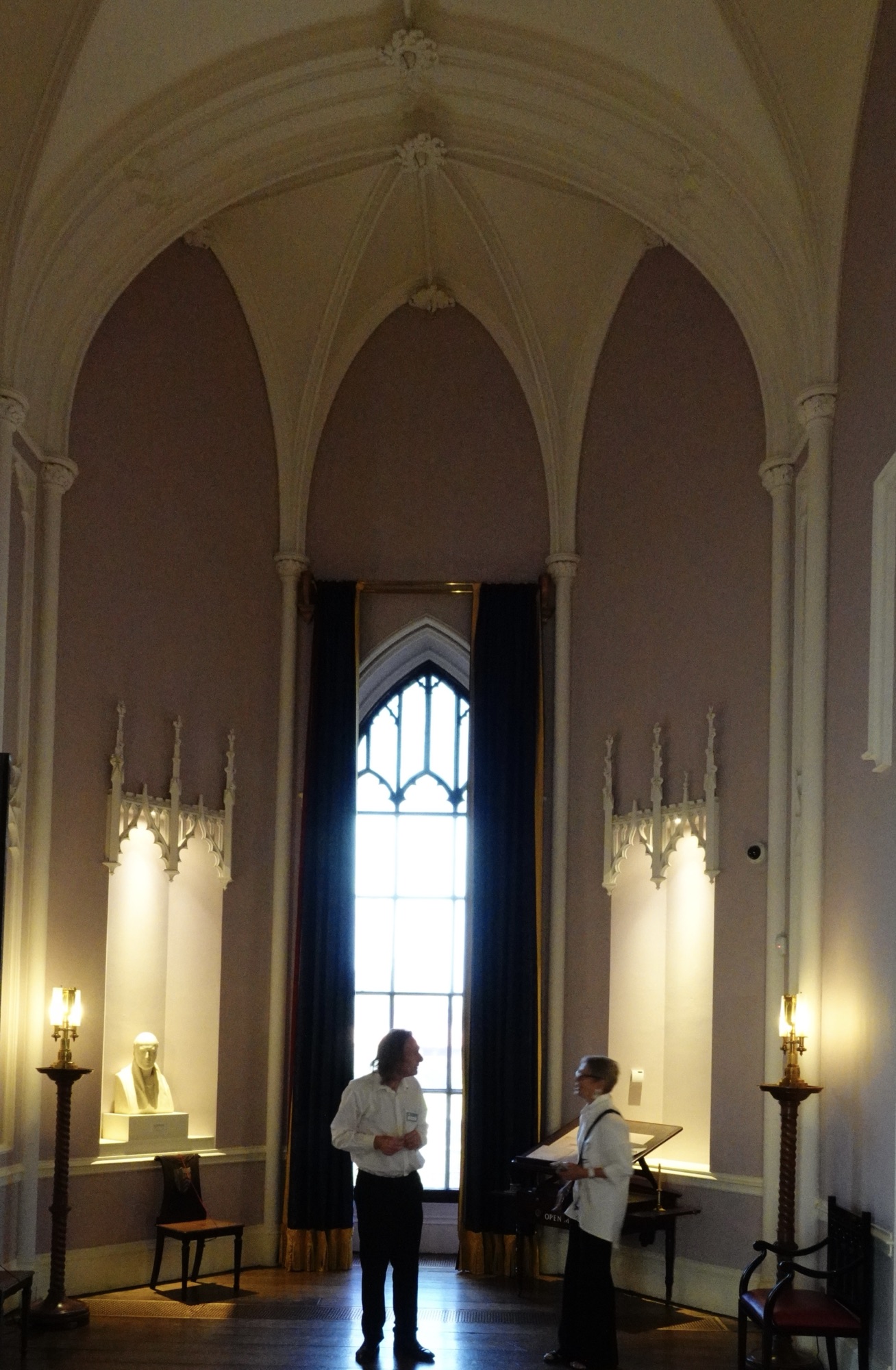
And yet, the Bishop had redeeming qualities too.
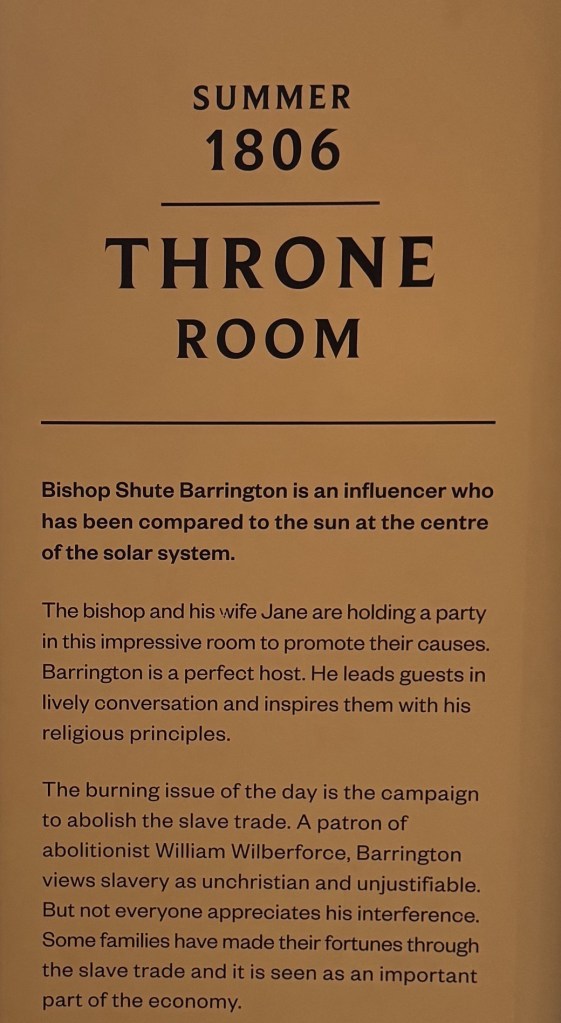
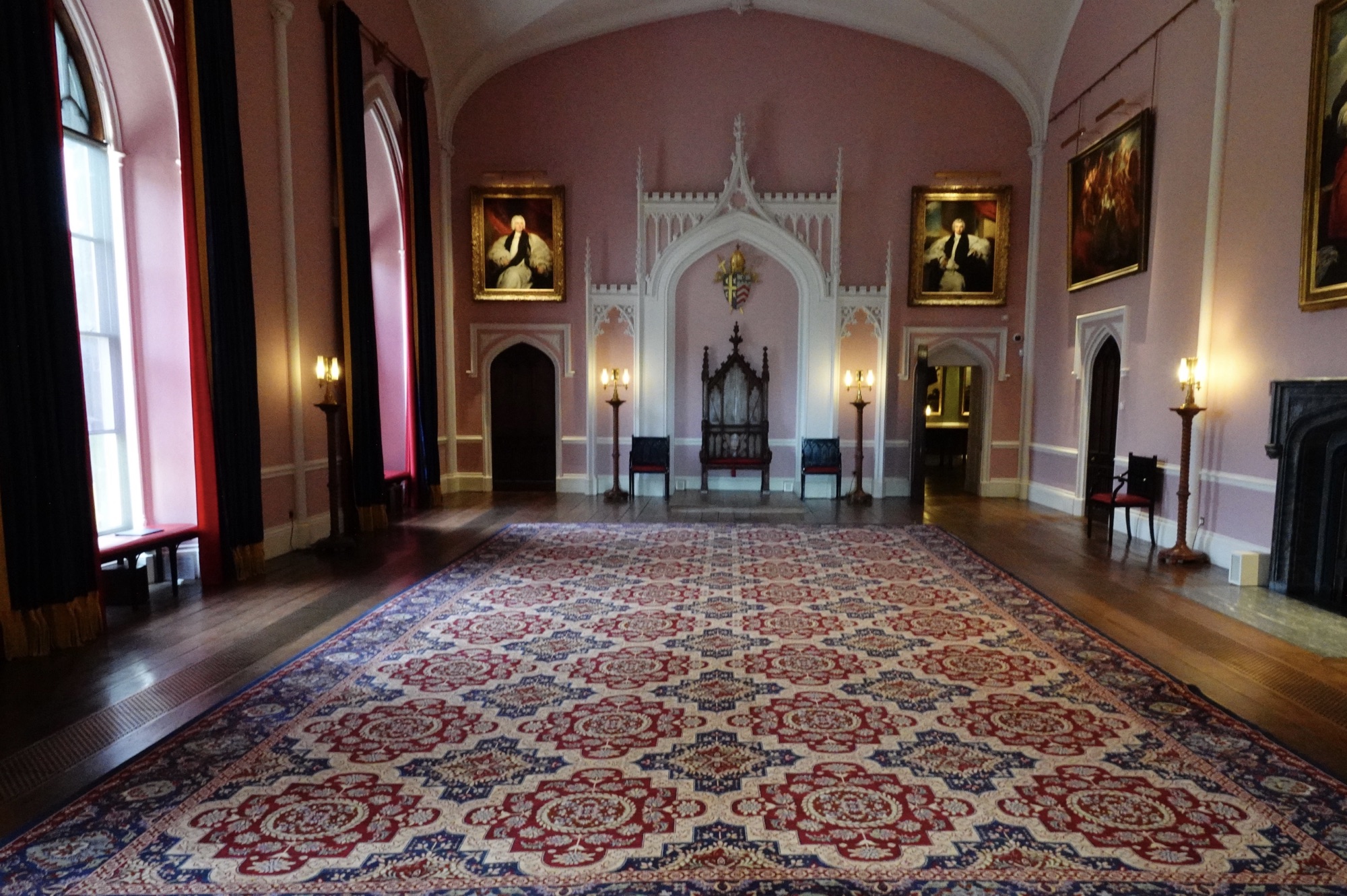
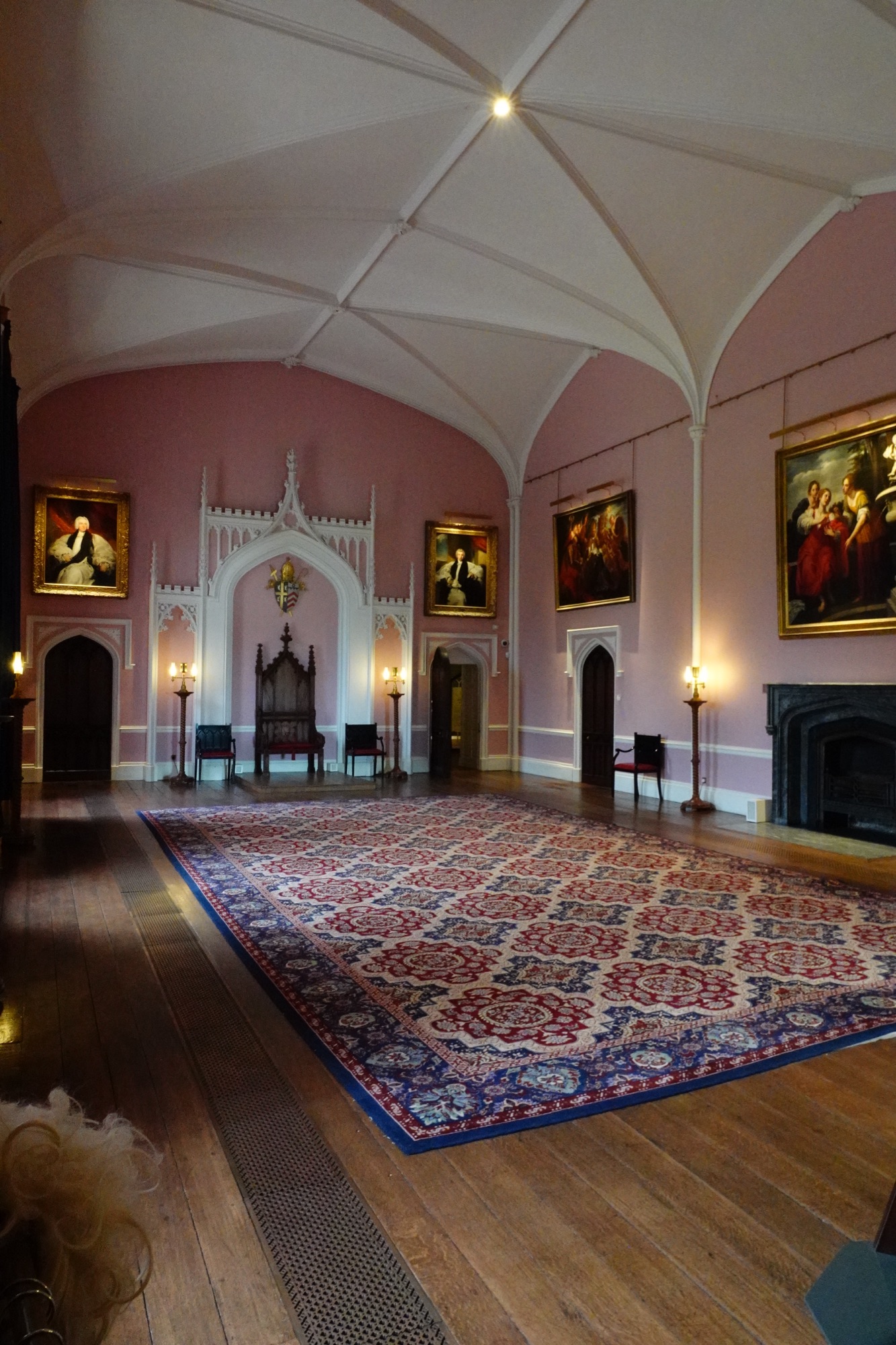
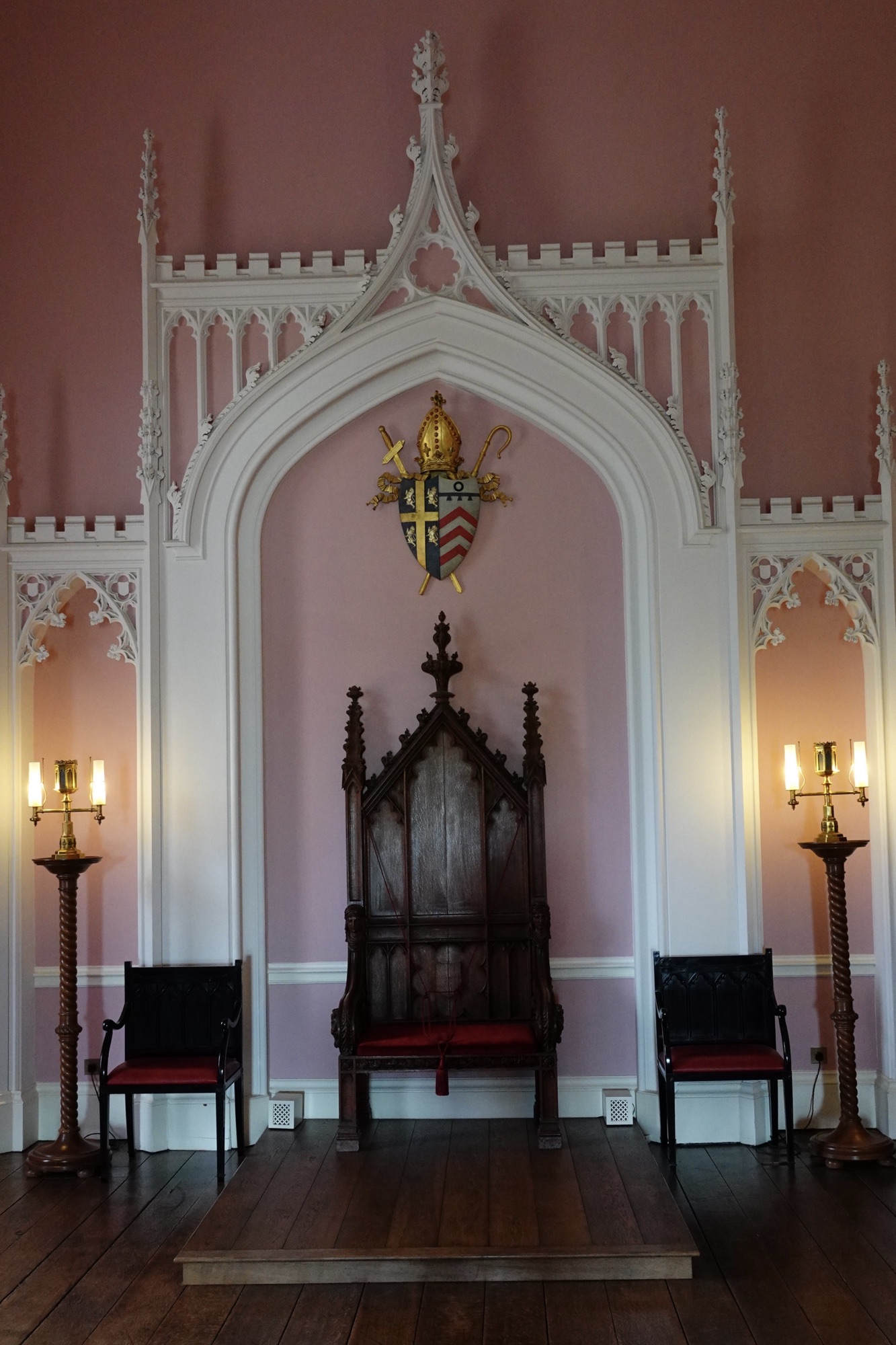
The dining room of the palace is arguably its jewel, largely because of the Zubaran paintings of Jacob and his sons.

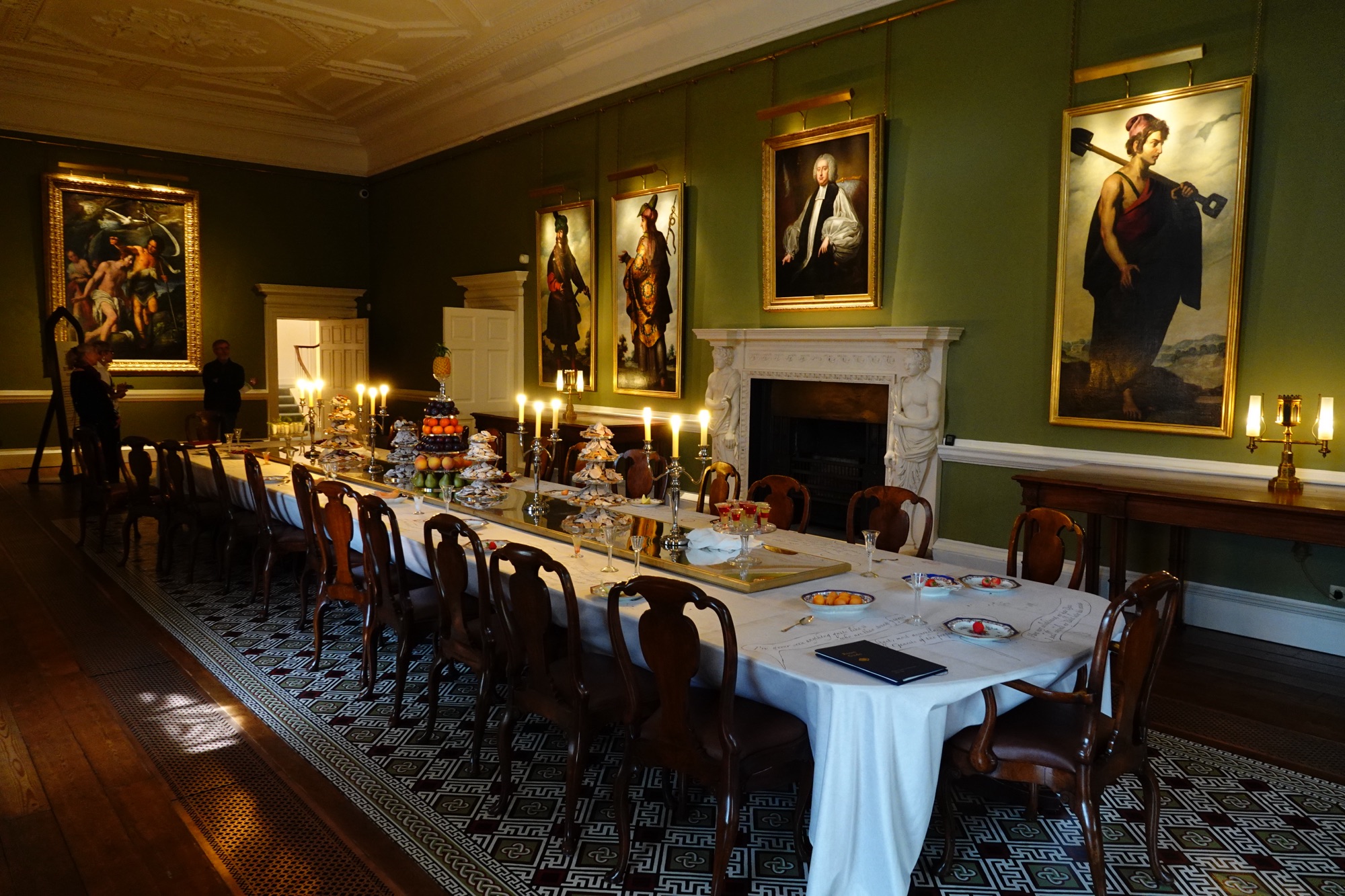
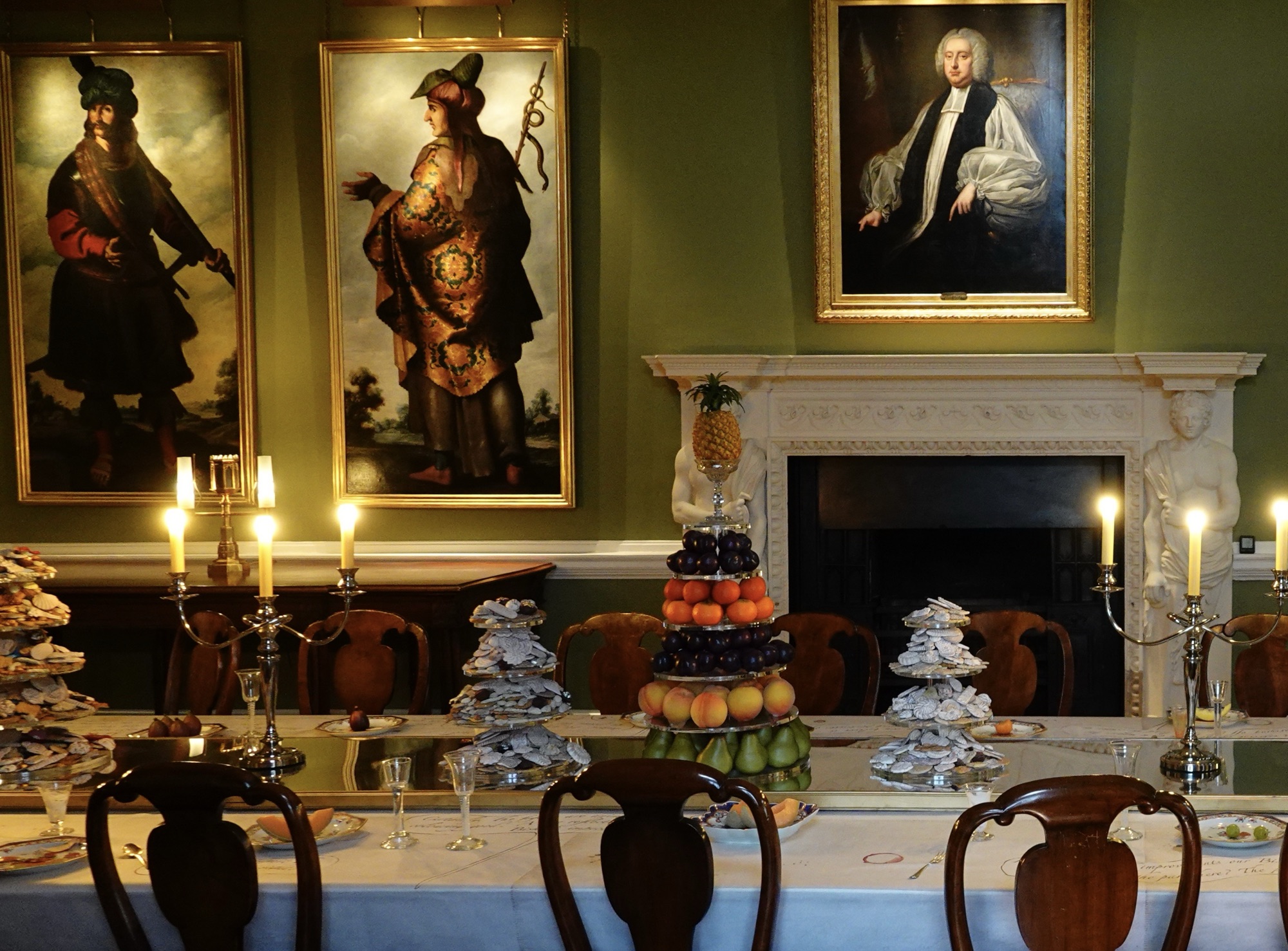
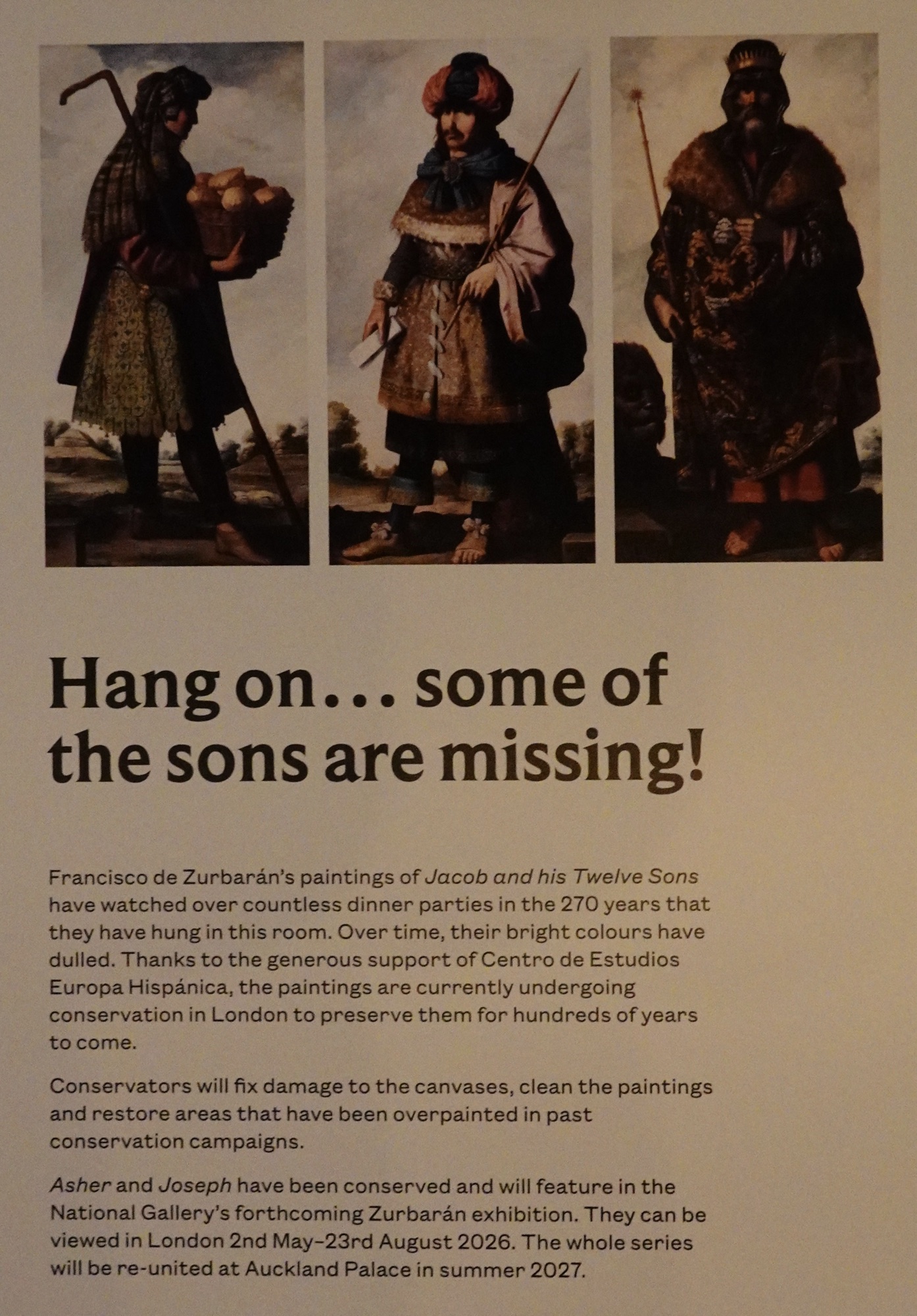
The Breakfast Room dates to the time of the last Prince Bishops of Durham before the role is abolished.
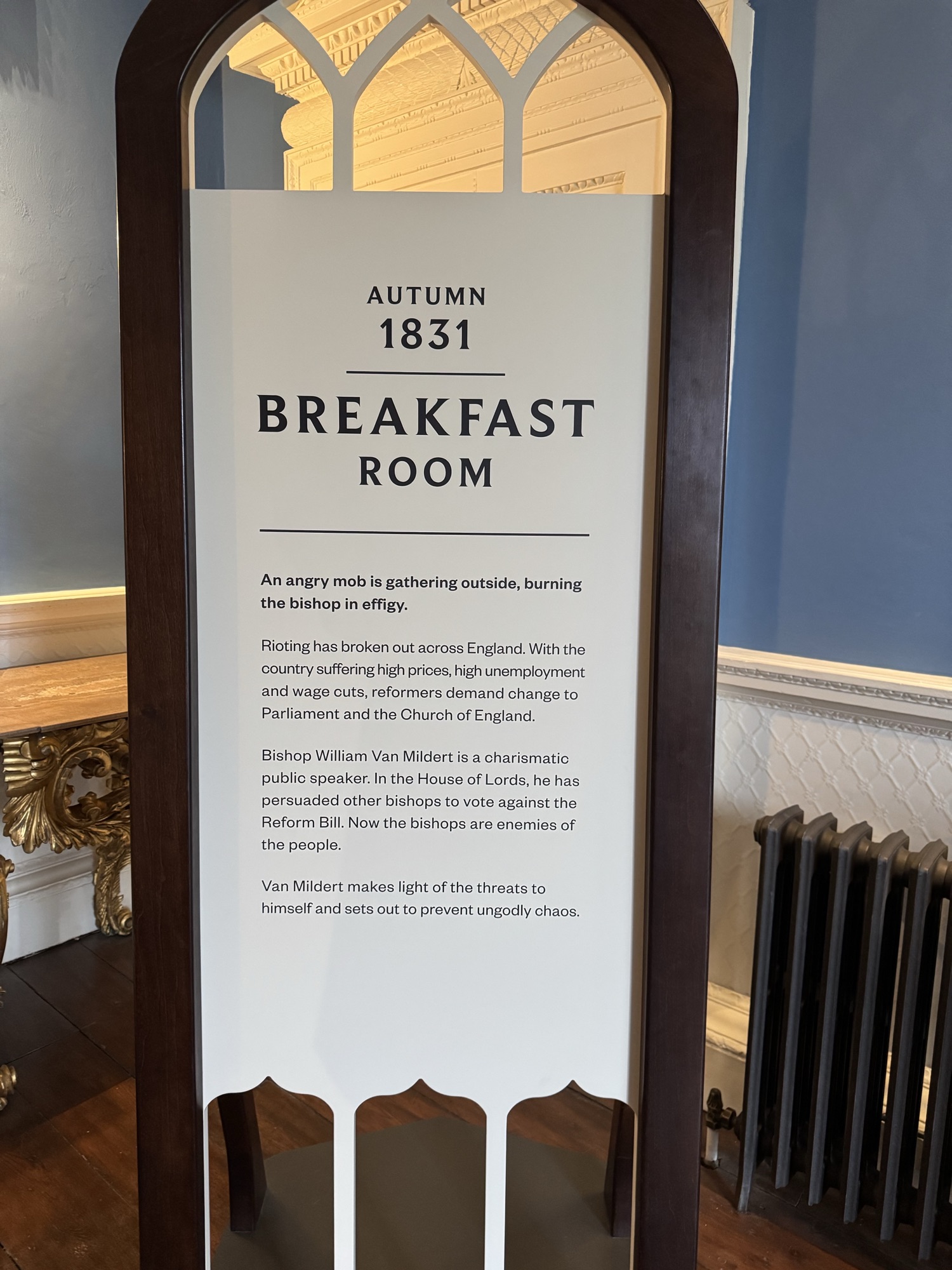
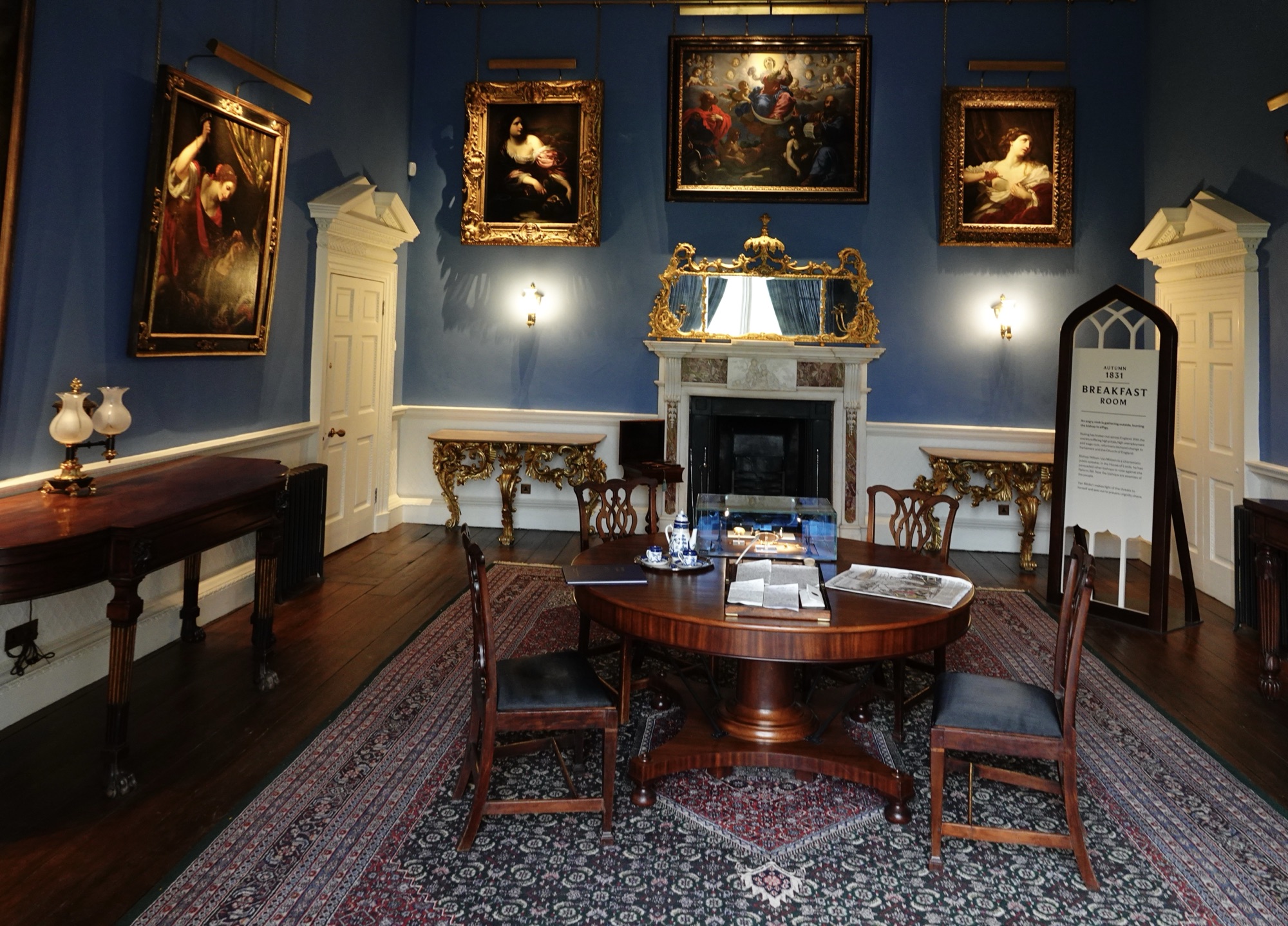
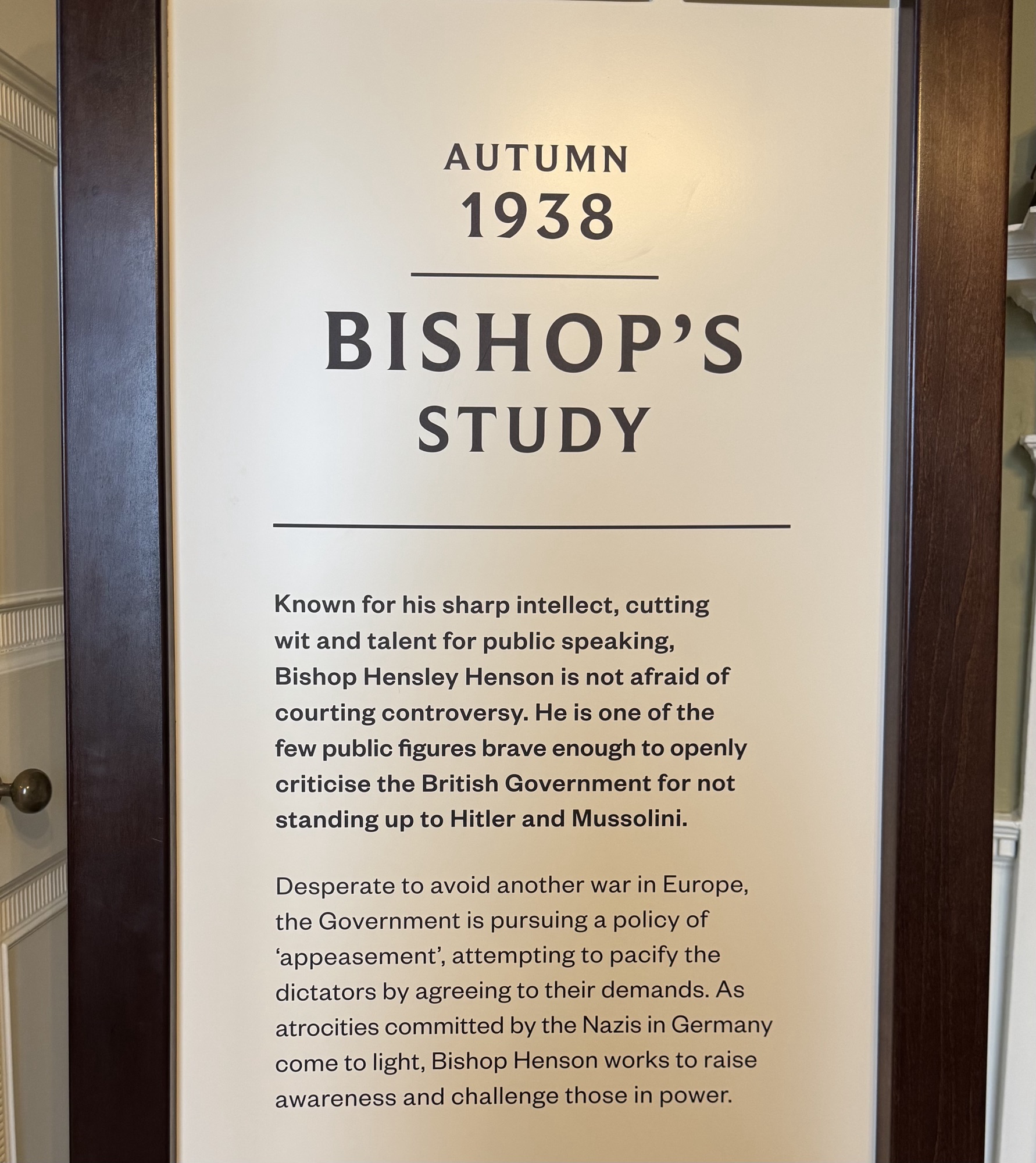
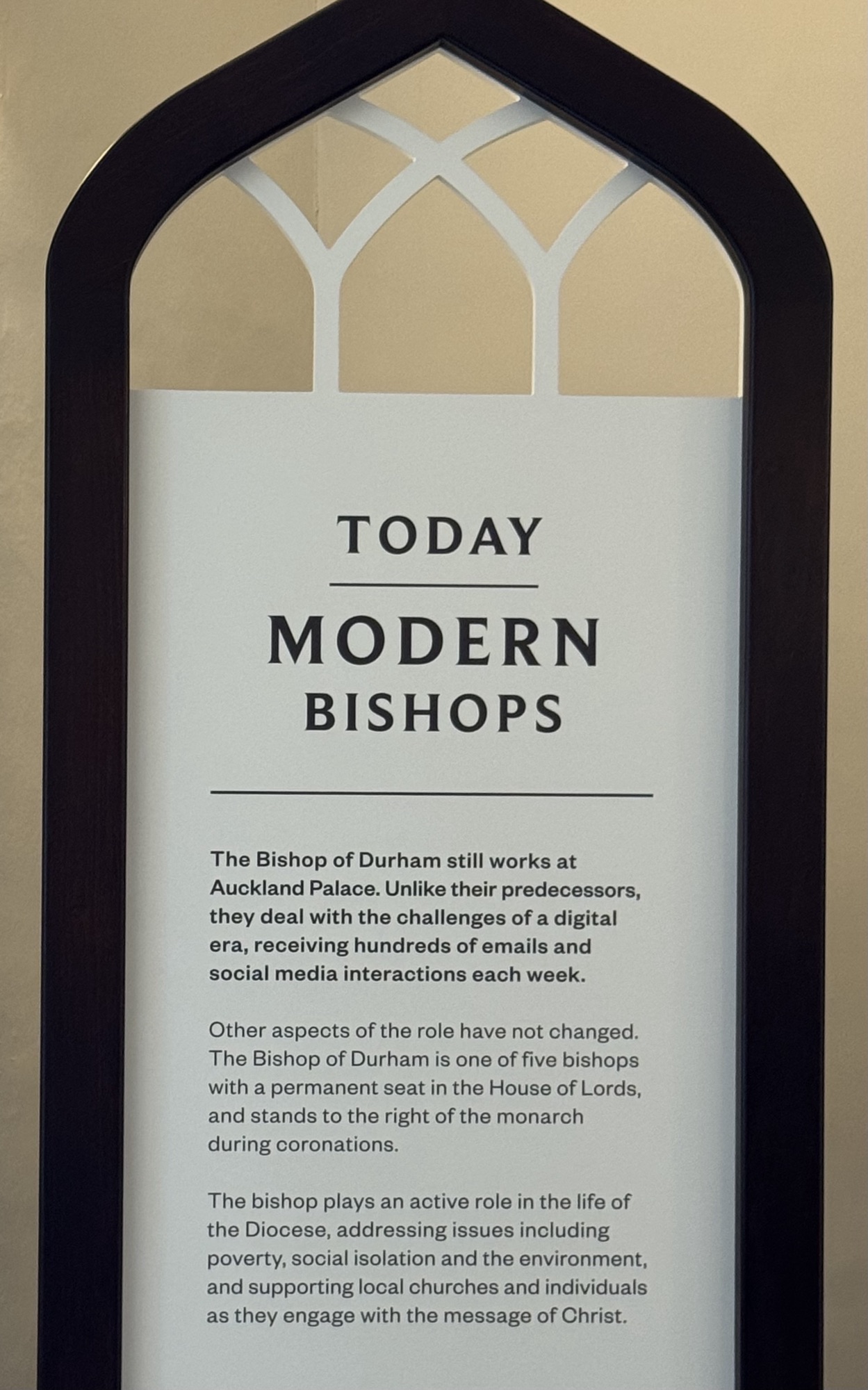
Bishop PRINCES may have been abolished, but Bishops of Durham remain, and continue to be seen even today as figures of moral authority.
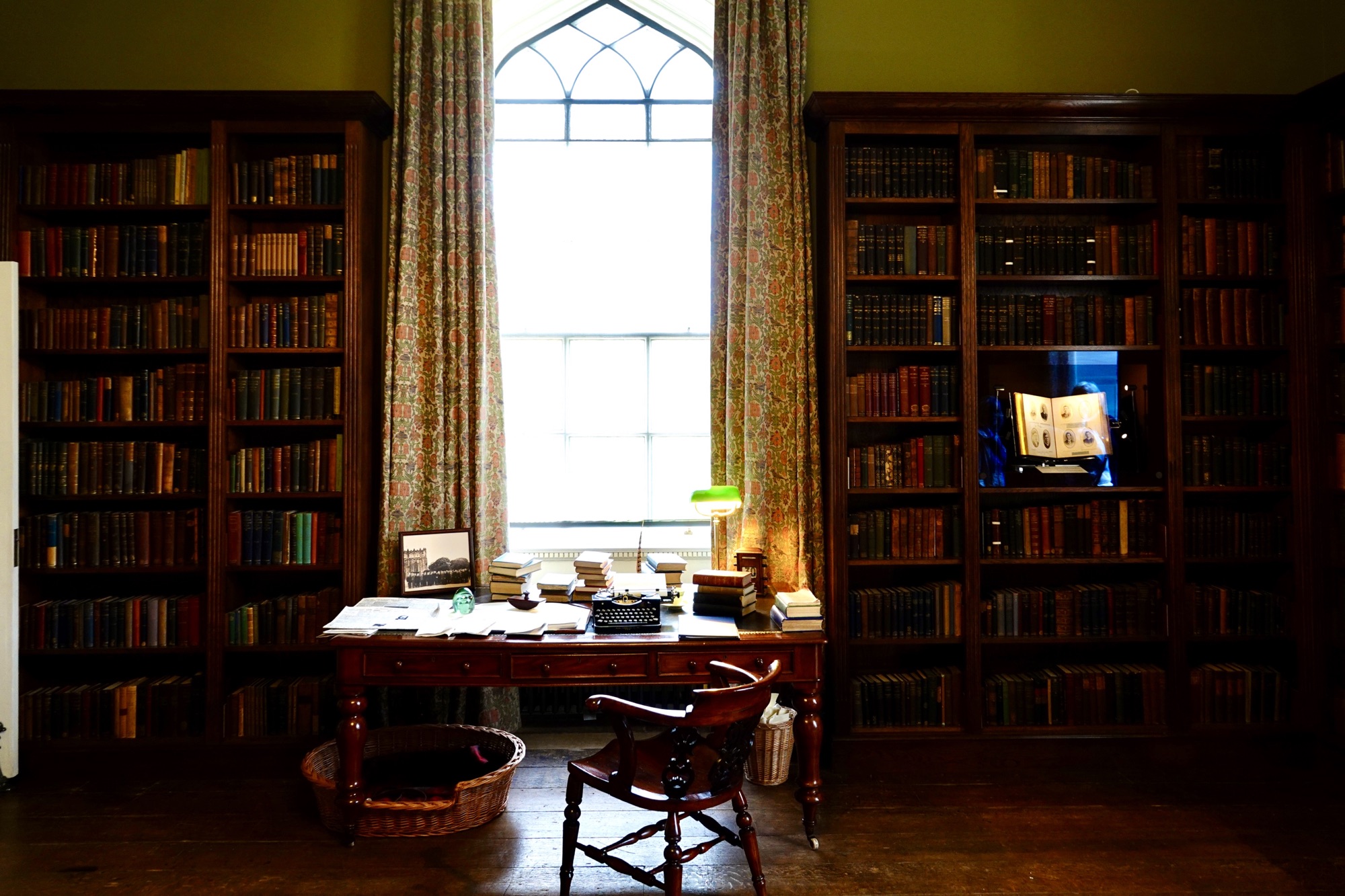
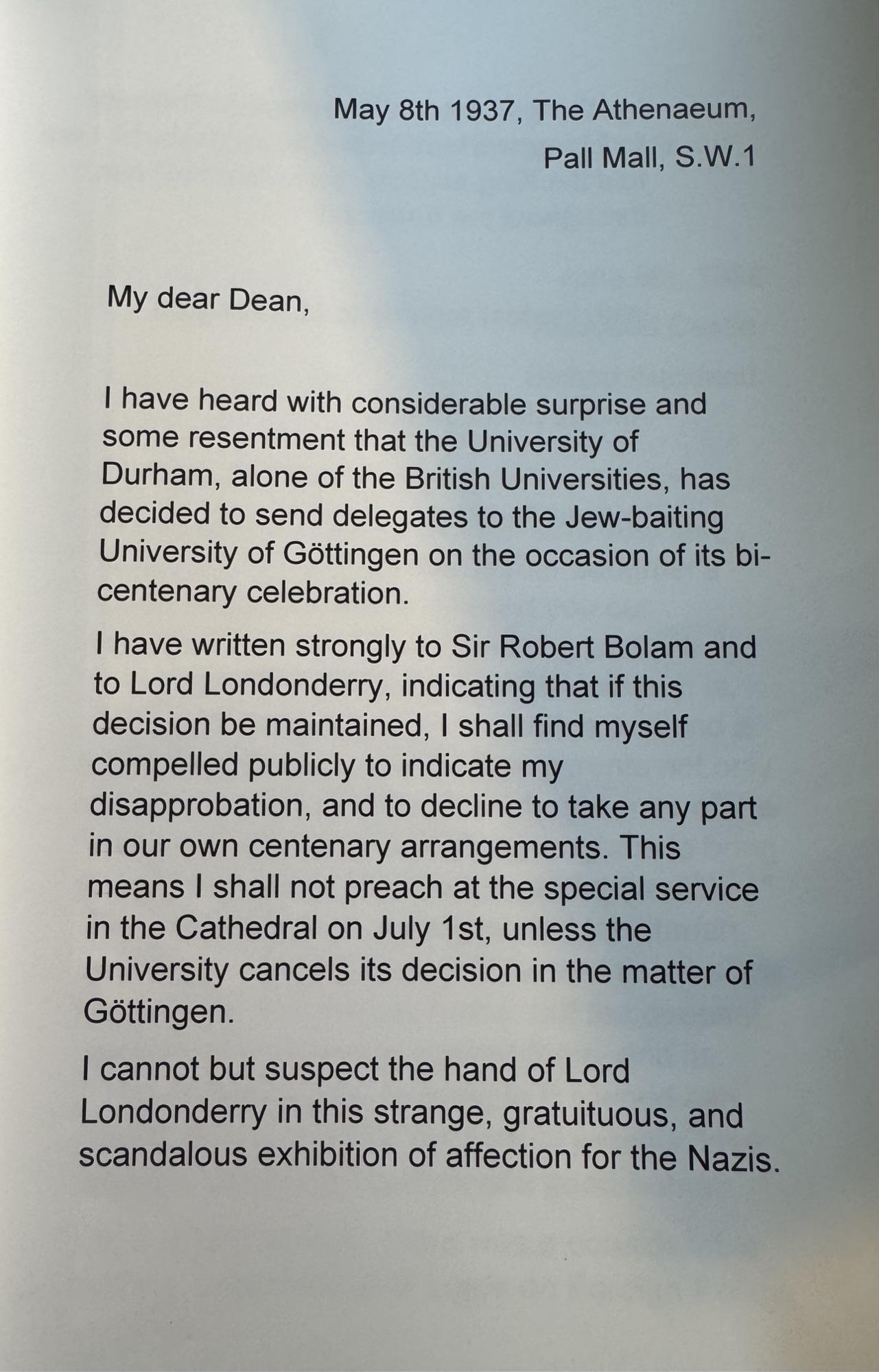
As the world was hurtling toward a second World War, the Bishop of Durham was one of the few public voices willing to speak out against fascism .
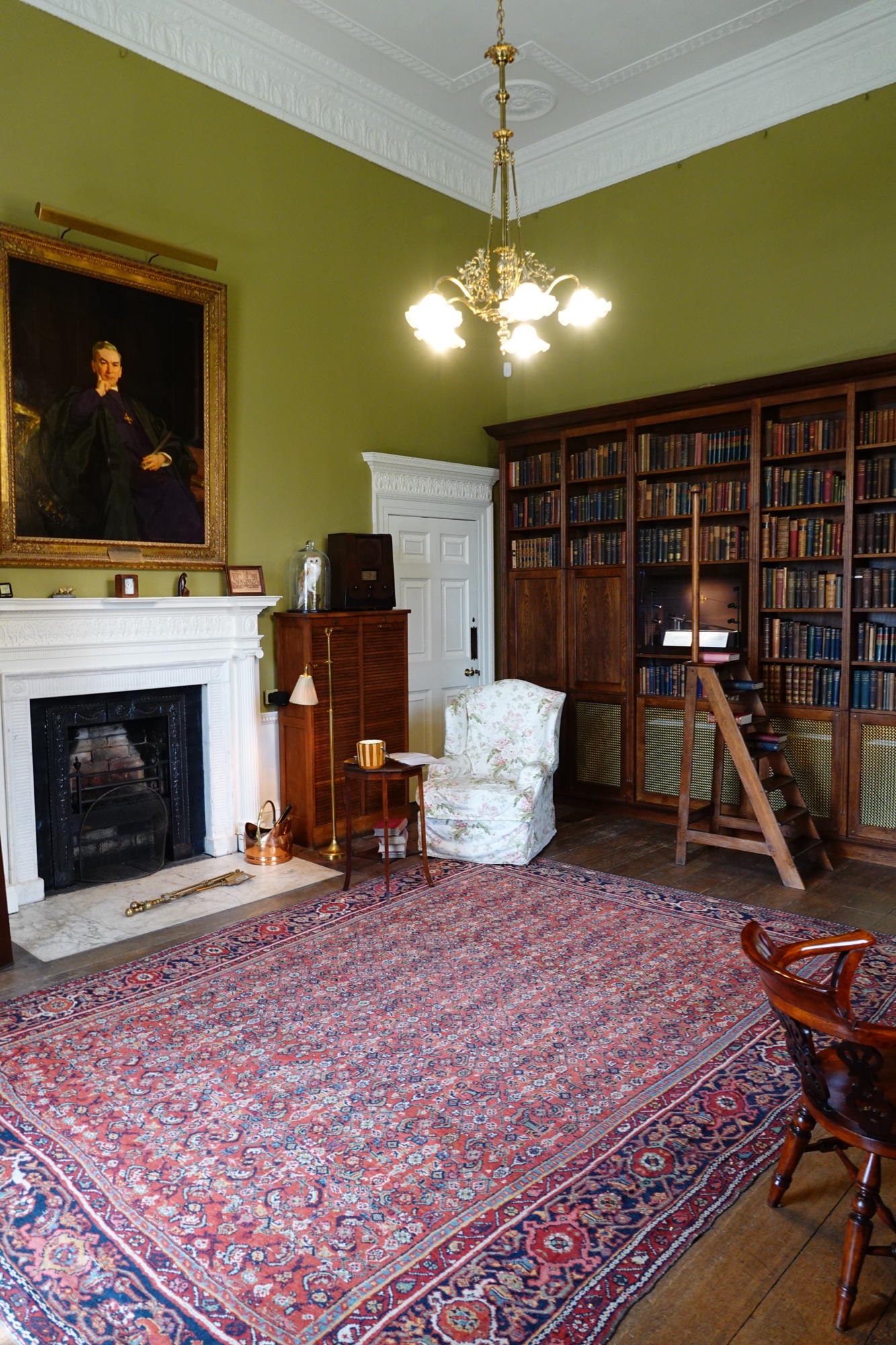
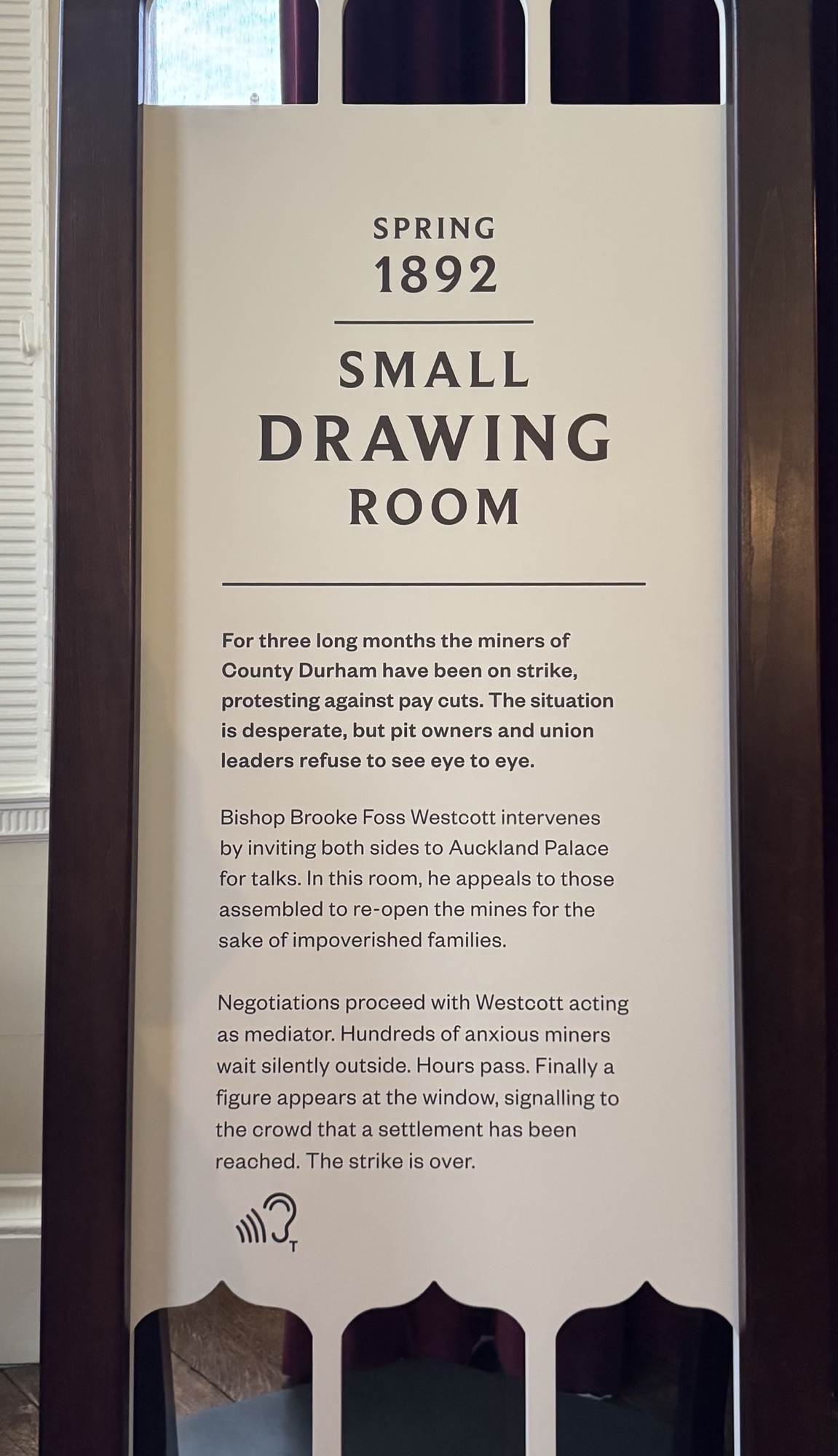
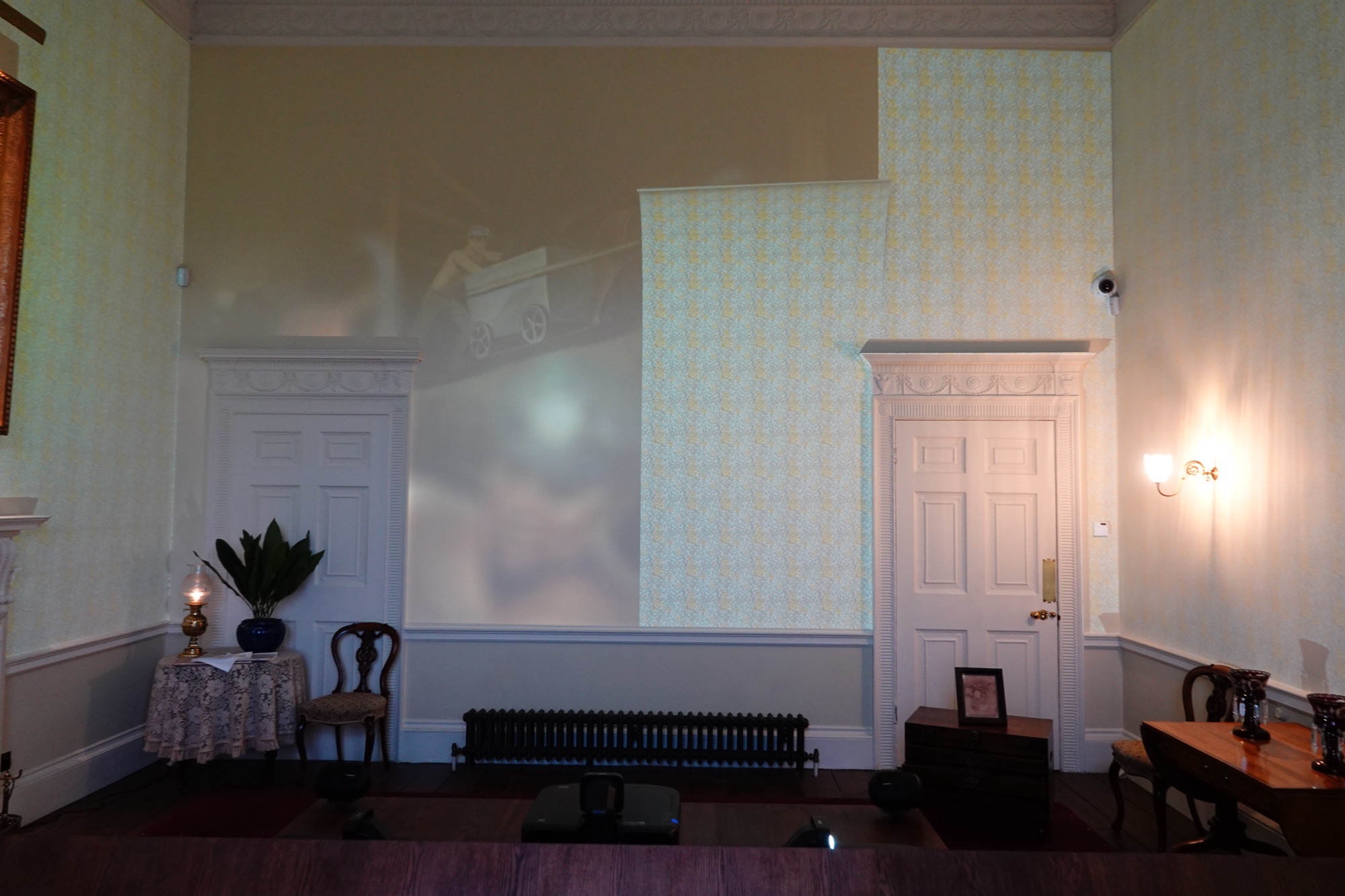
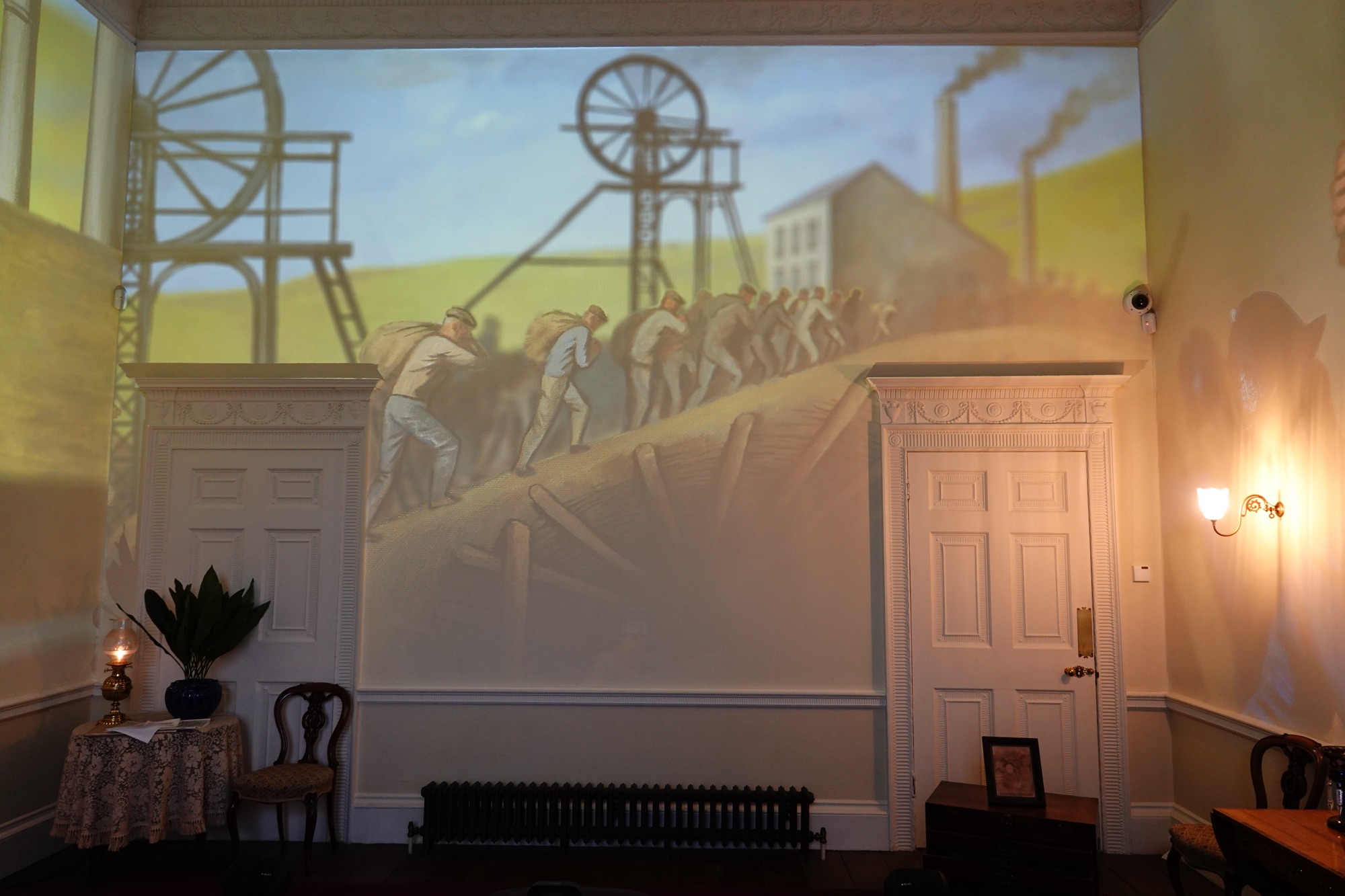
In the drawing room we went back in time again, to an instance when a Bishop was instrumental in ending a miners’ strike. The visual display in this room was striking, as the wallpaper seemed to peel back to reveal the miners.
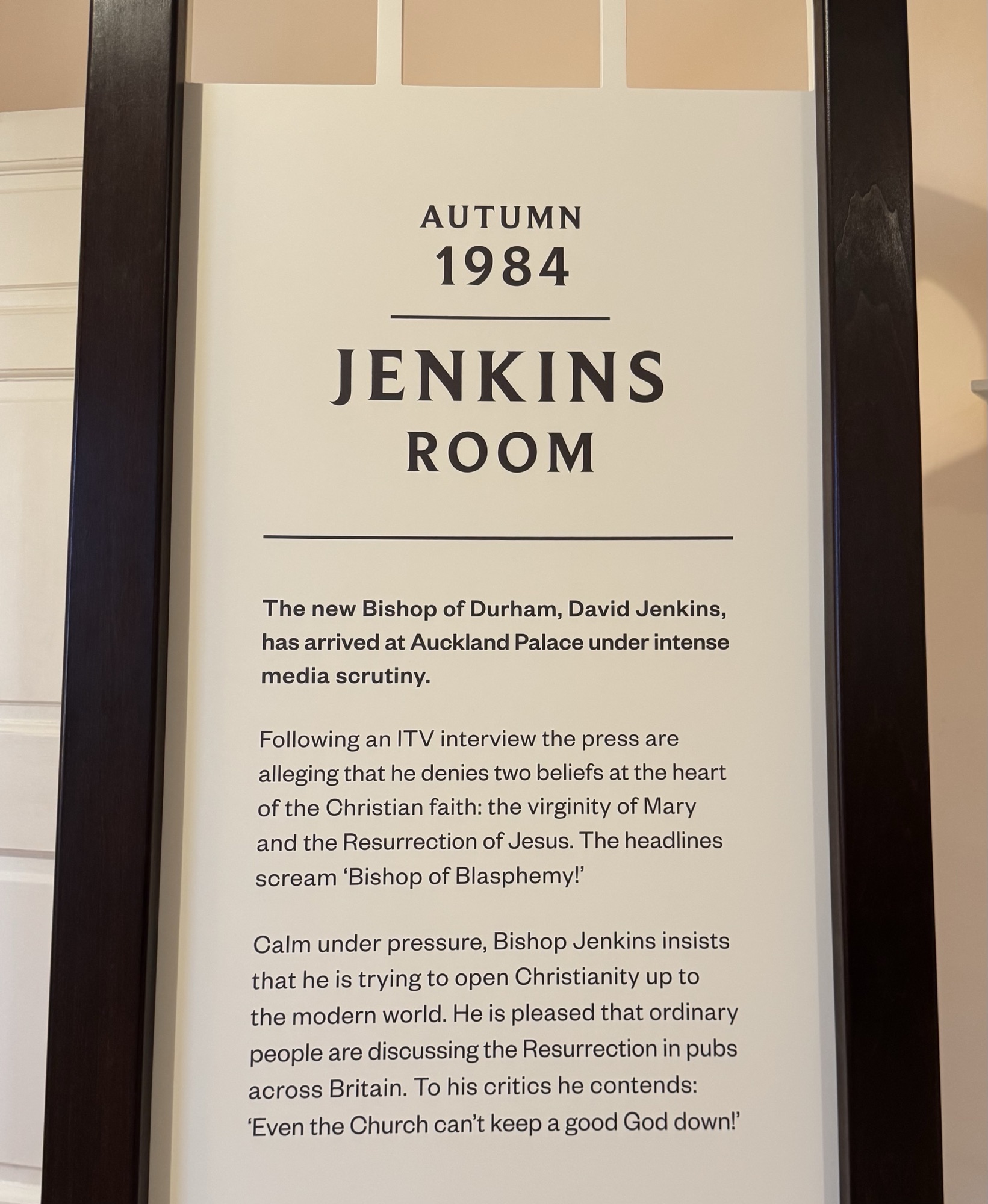
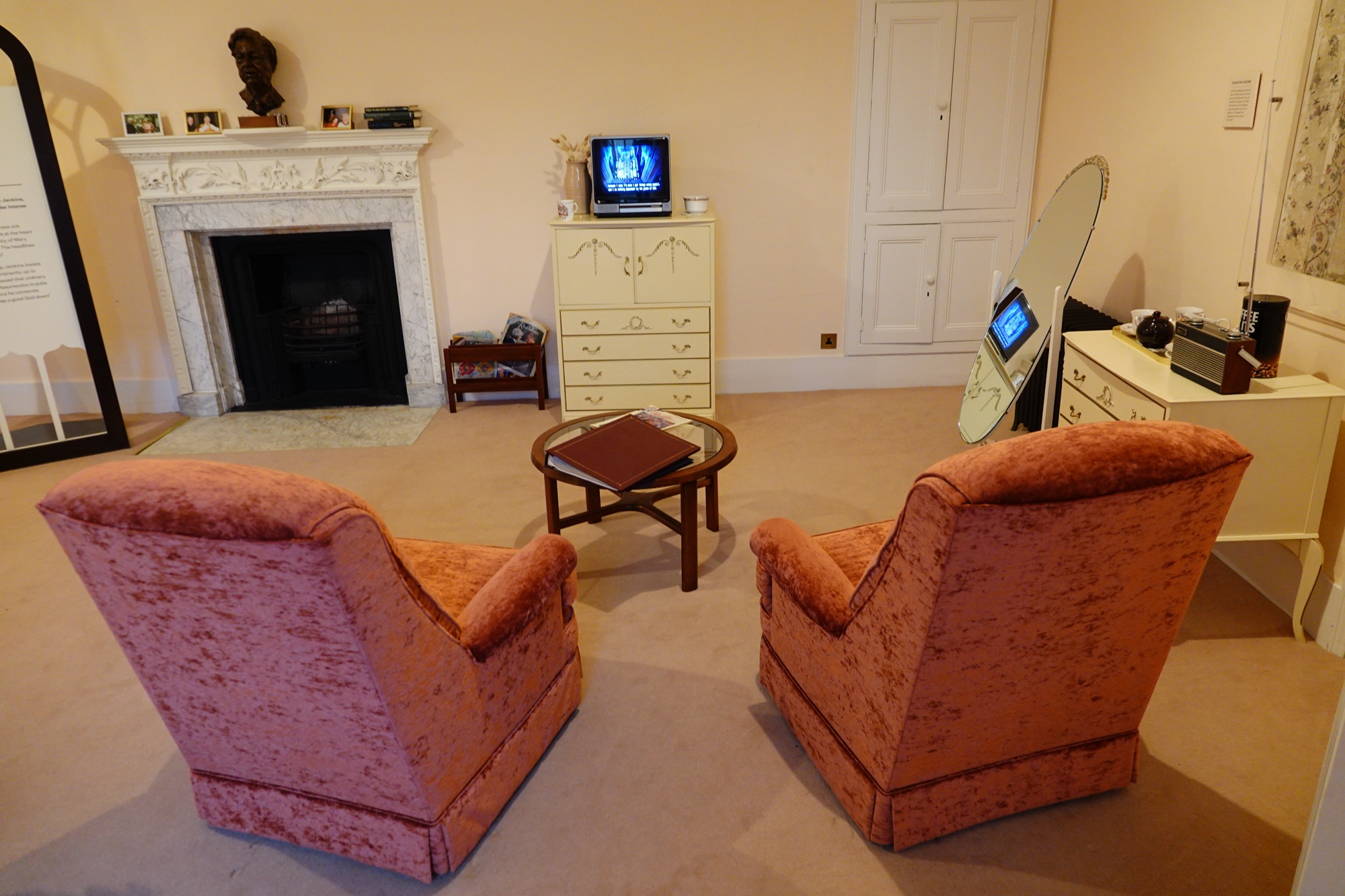
Jump forward again by almost 100 years and a Bishop of Durham is upsetting the status quo again.
The Auckland Palace tour was interesting architecturally, historically, and from the point of view of learning about how the role of church leadership changed over the centuries. It’s worth visiting for amyone interested in any of those things.
I’ve separated the rest of the buildings we toured, the Faith Museum, Spanish Gallery, and Miners’ Art Gallery, into Part 2 of our day.
There was so much more we could have done had we known about Bishop Auckland sooner. The town and nearby Roman fort are well worth visiting, and in the summer there is also adjacent Kynren.

