Well known in the United Kingdom, English Country Gardens was originally a Morris tune, usually played on the accordion or violin to accompany traditional English Morris dancing. I remember singing it in the choir in about grade 4, and it sprang to mind today.
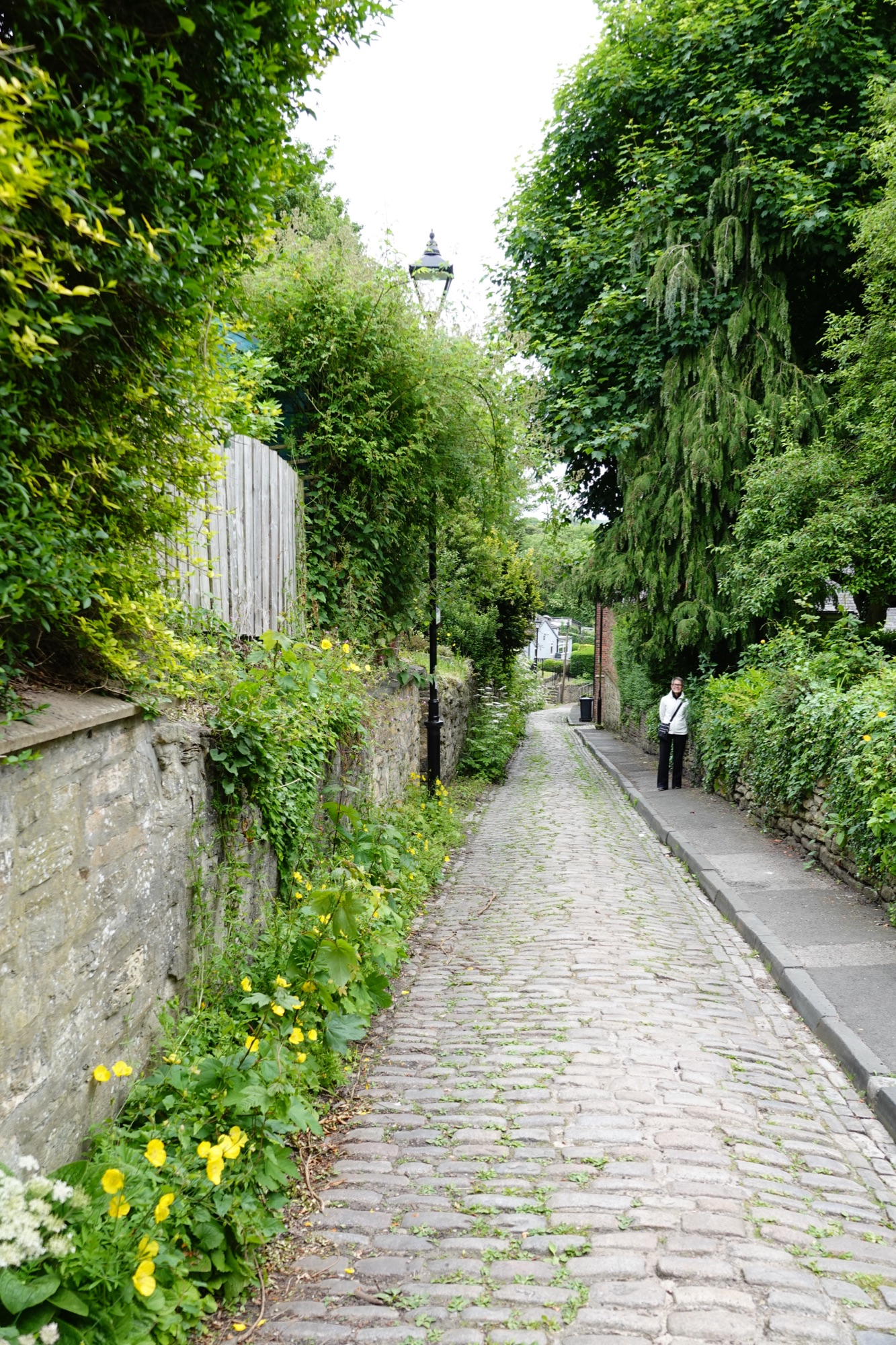
We began our day with another lovely walk to and along the Wear River (pronounced to rhyme with dear, not pear) to Crook Hall Gardens, a National Trust property.
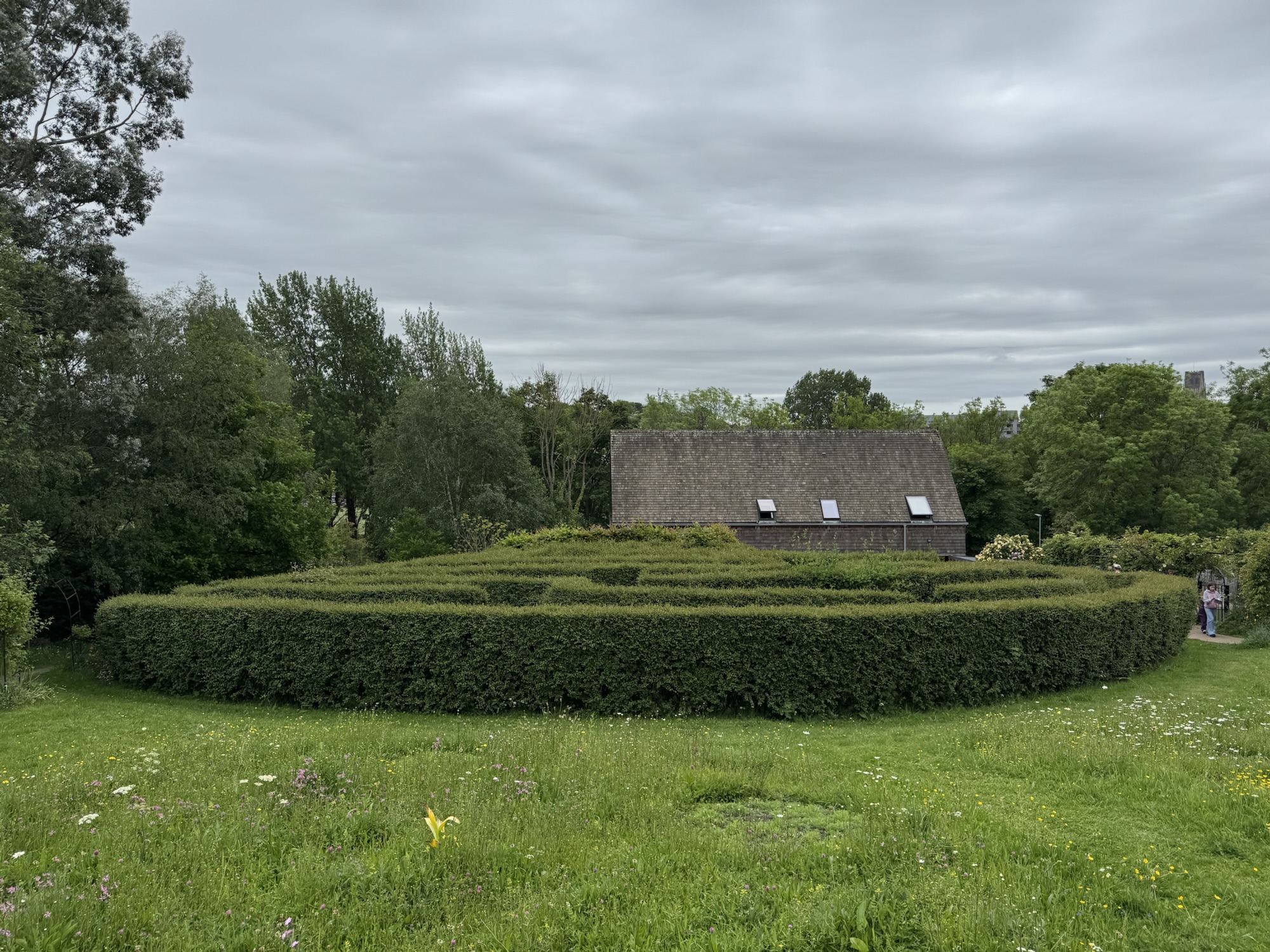
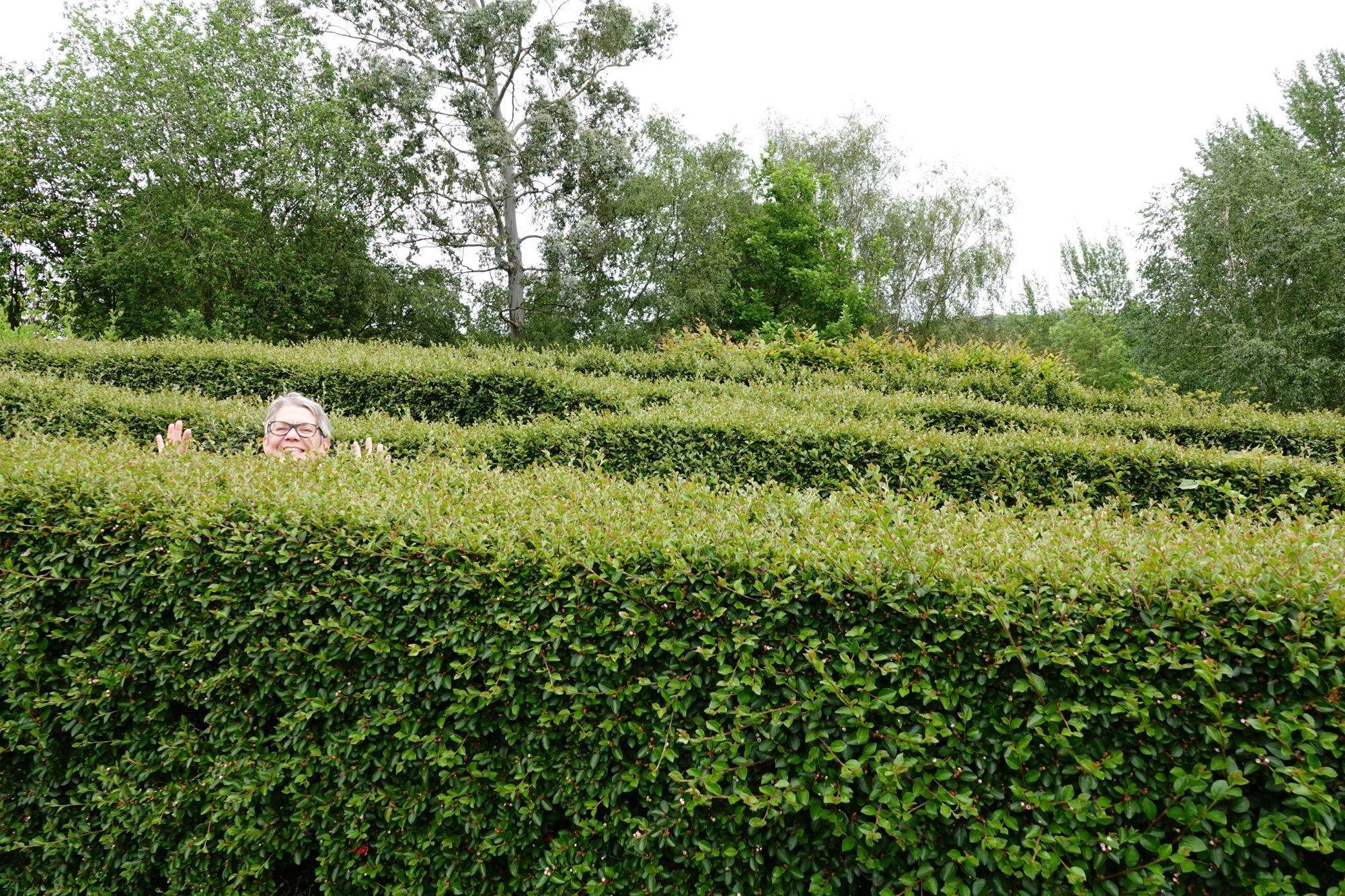
Any self-respecting English manor house garden must have a maze.
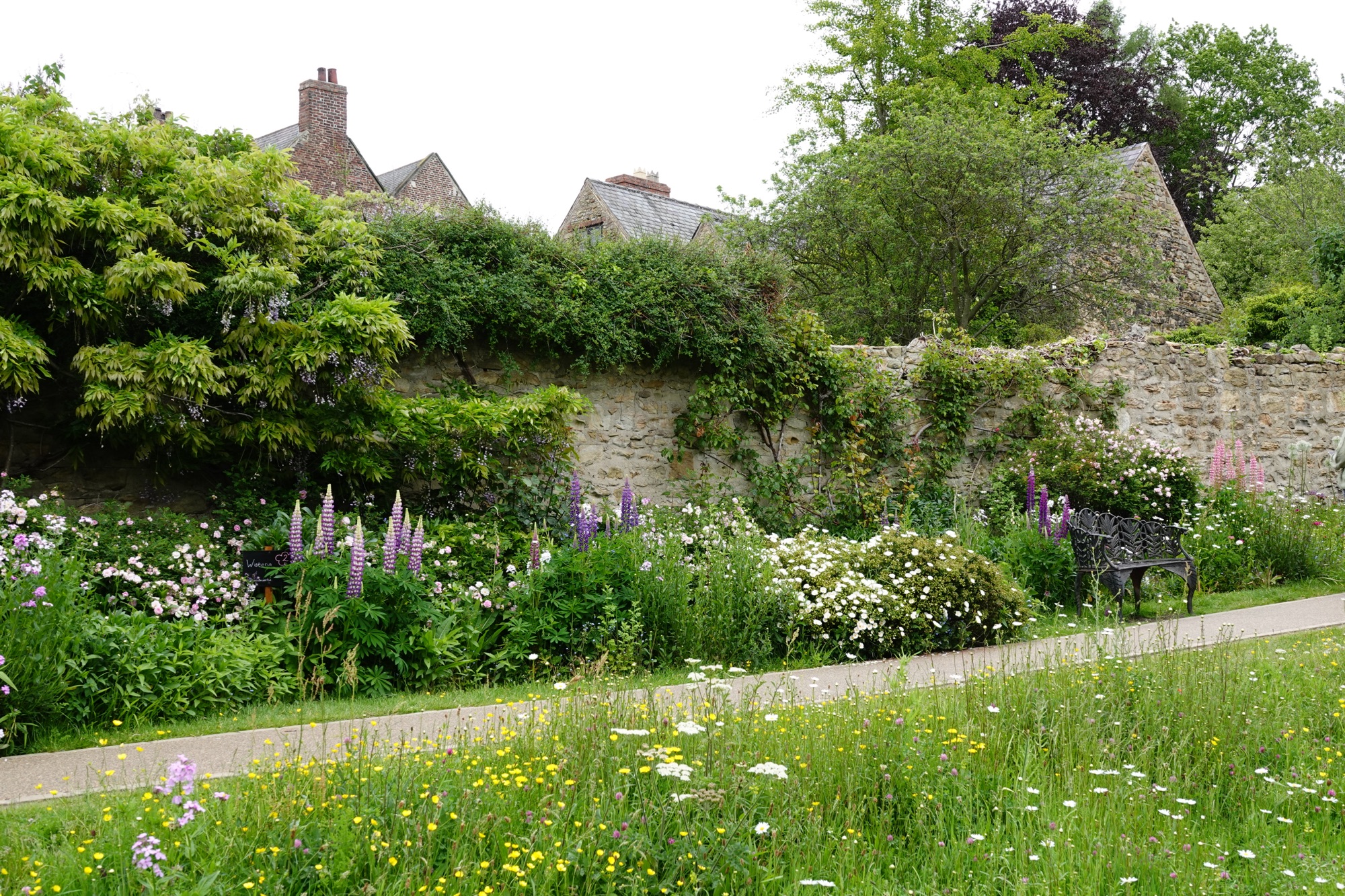
There should also be lots of places to sit and look at the flowers, listen to the bees, and relax.
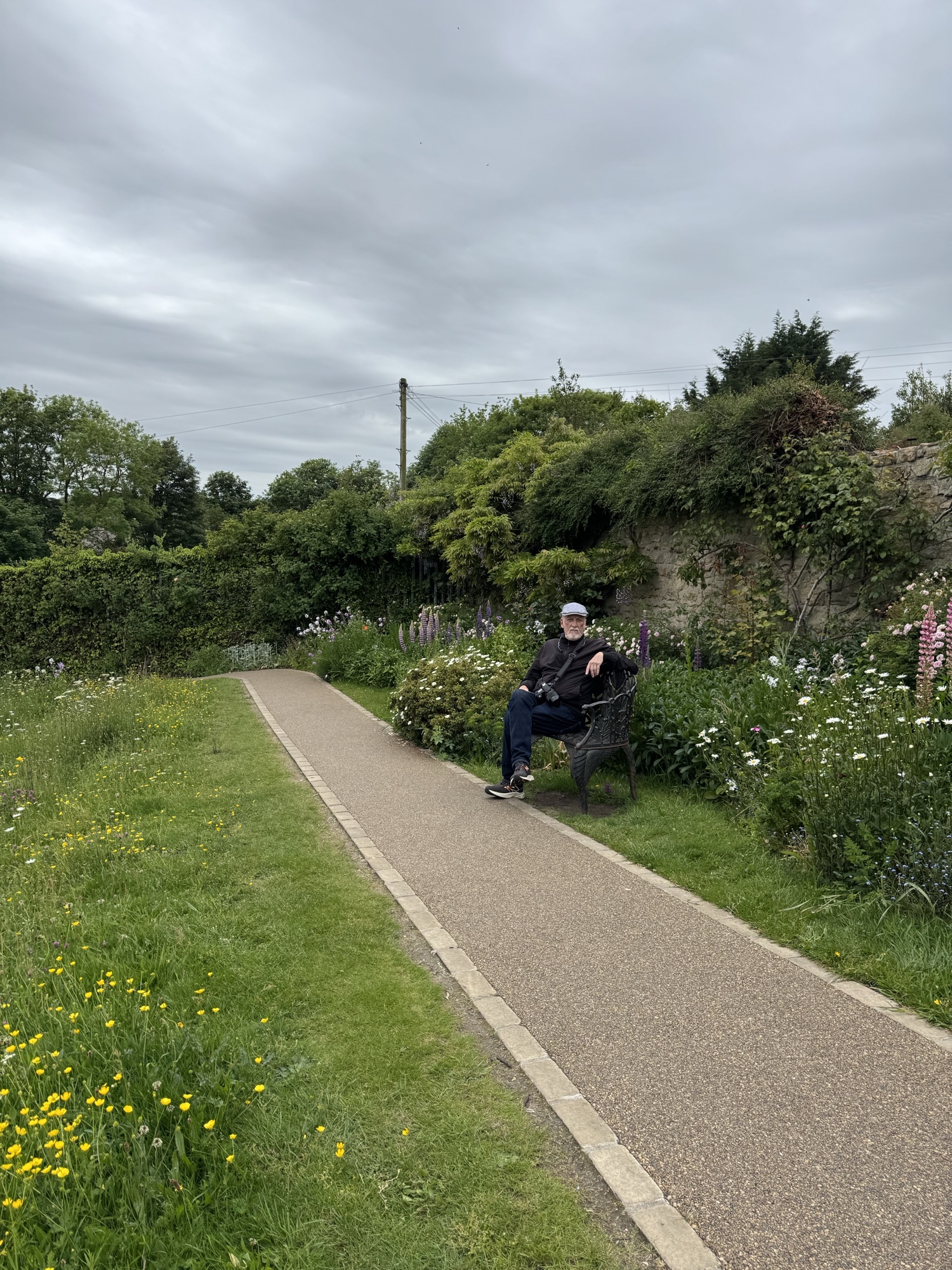
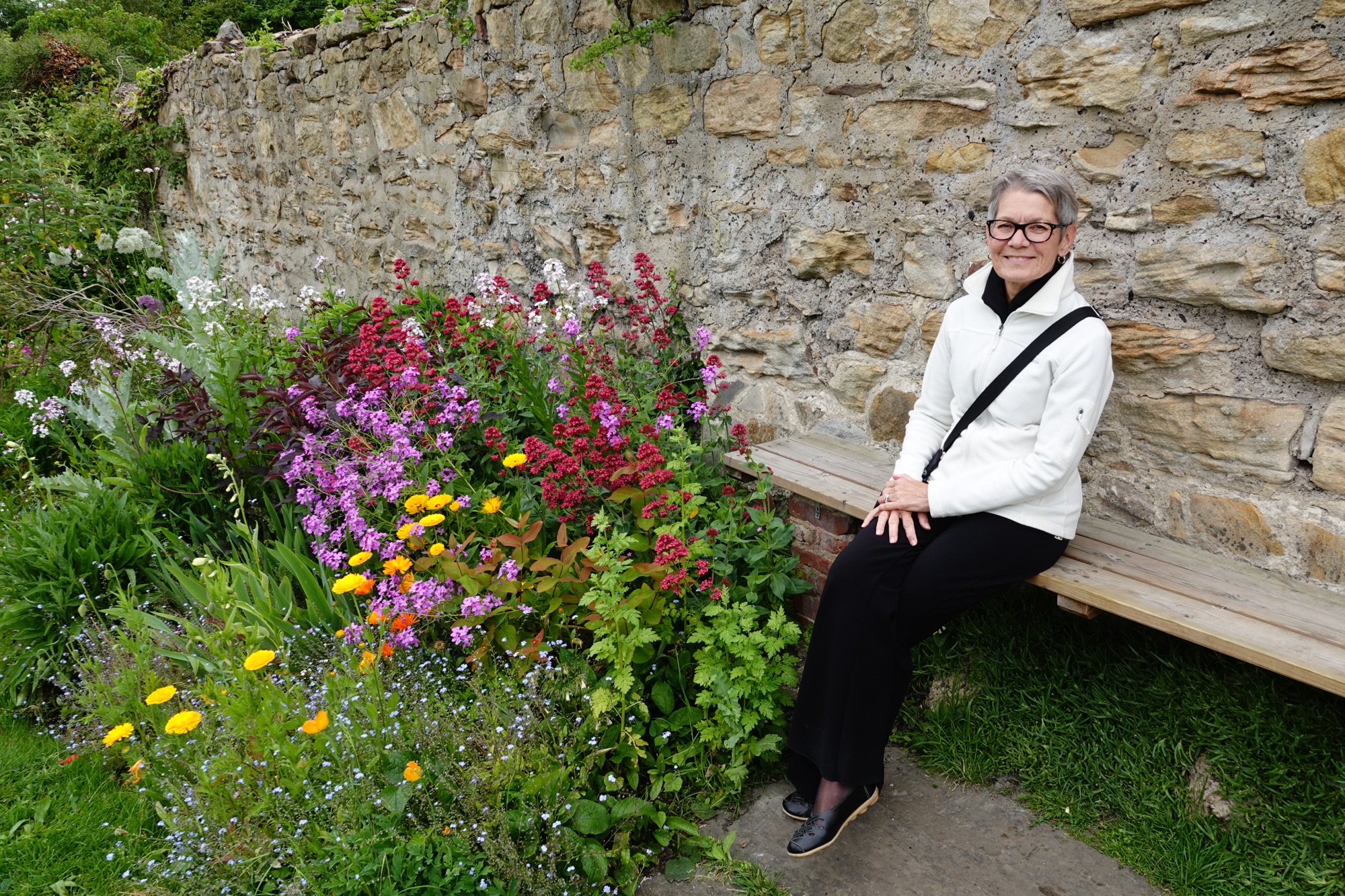
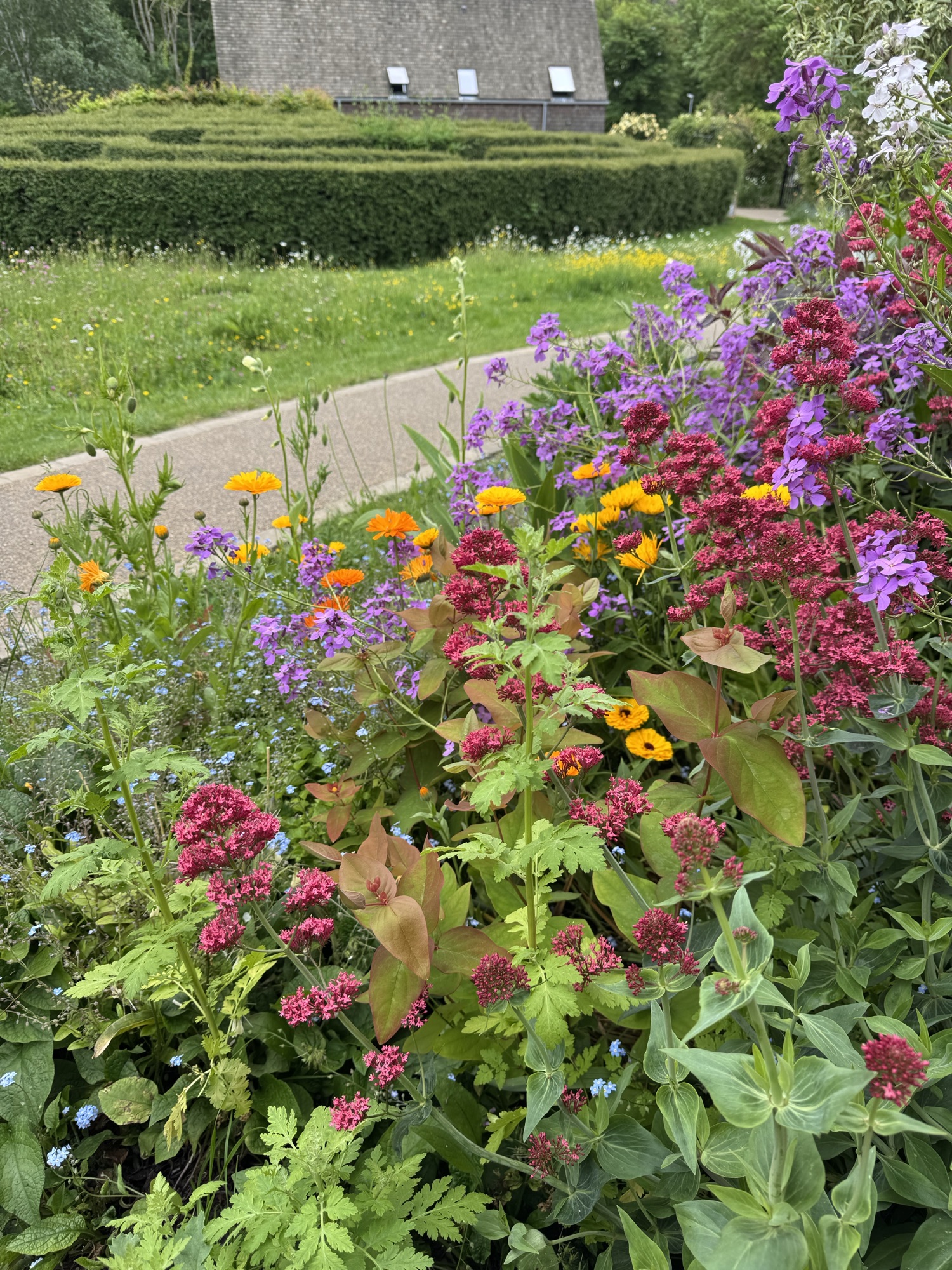
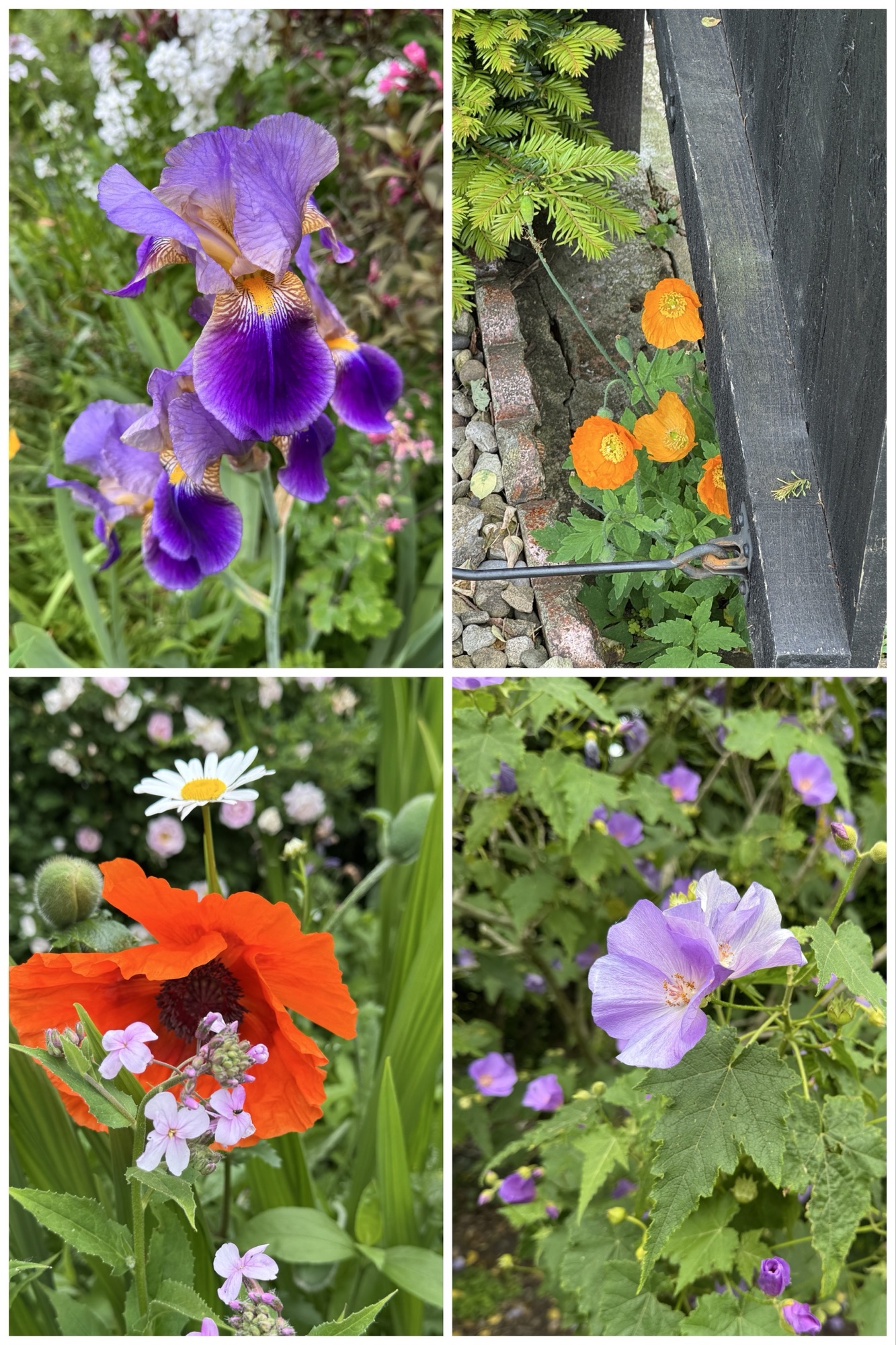
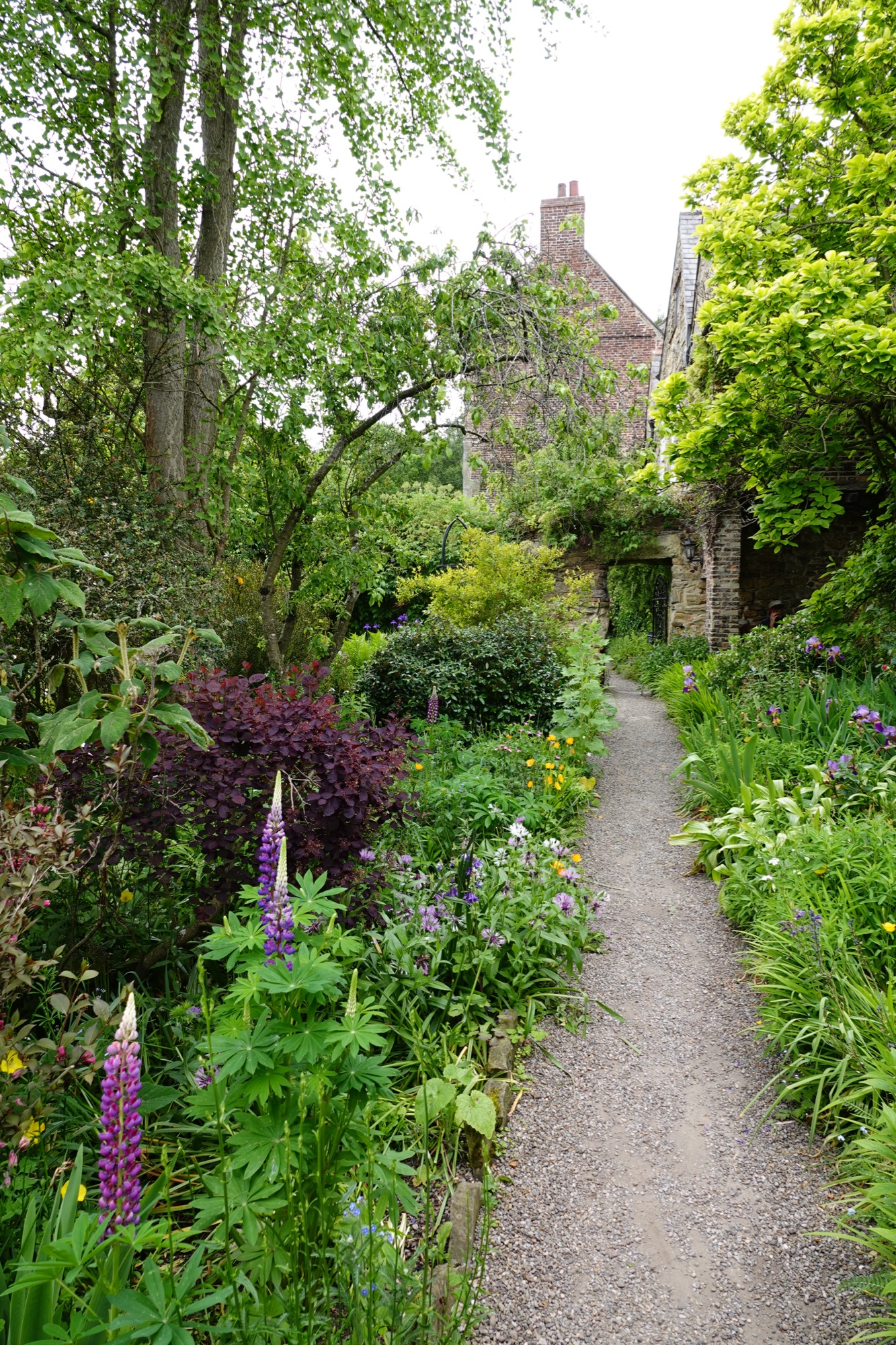
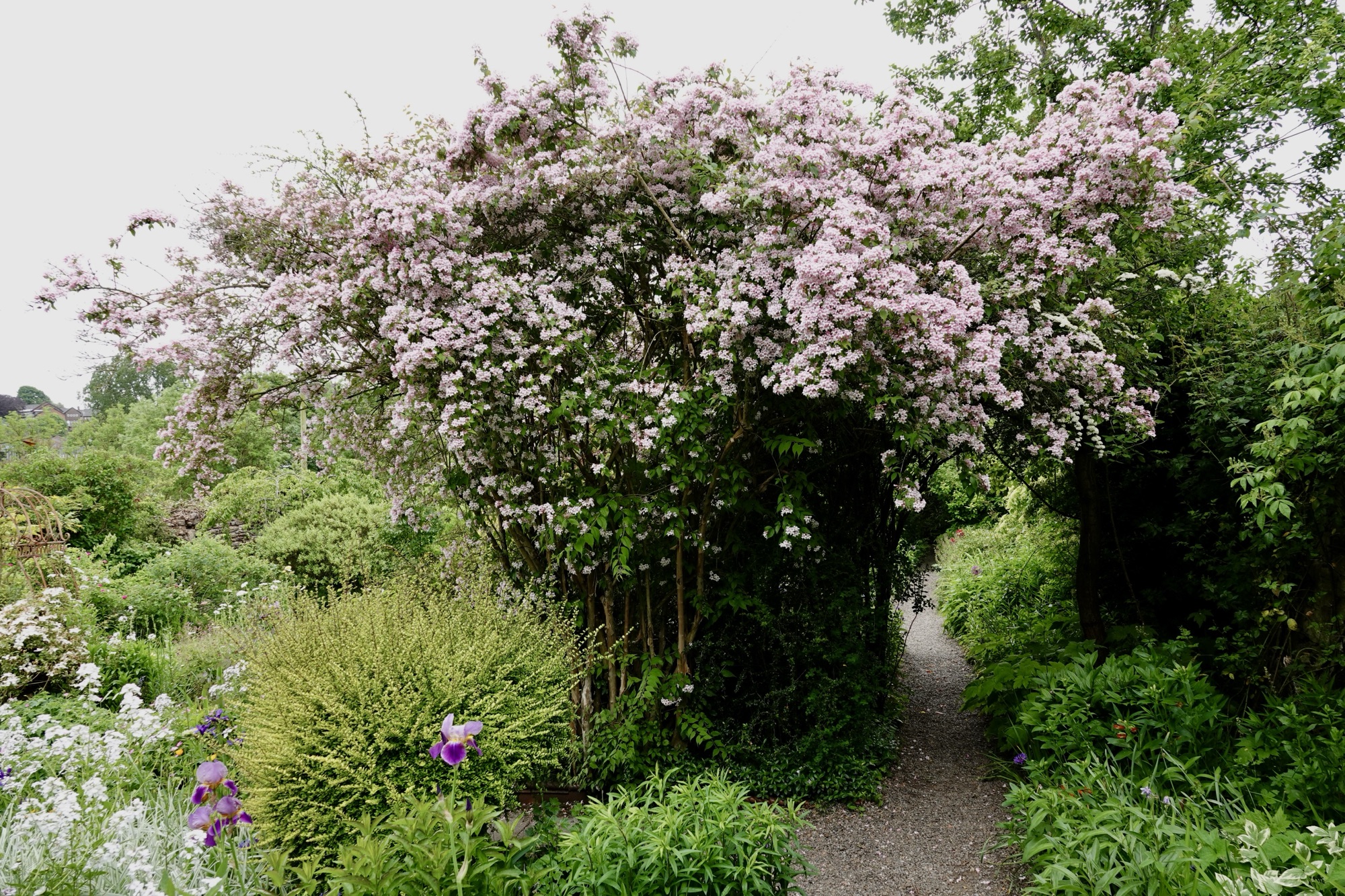
There should be a glorious profusion of colour to awaken the senses…
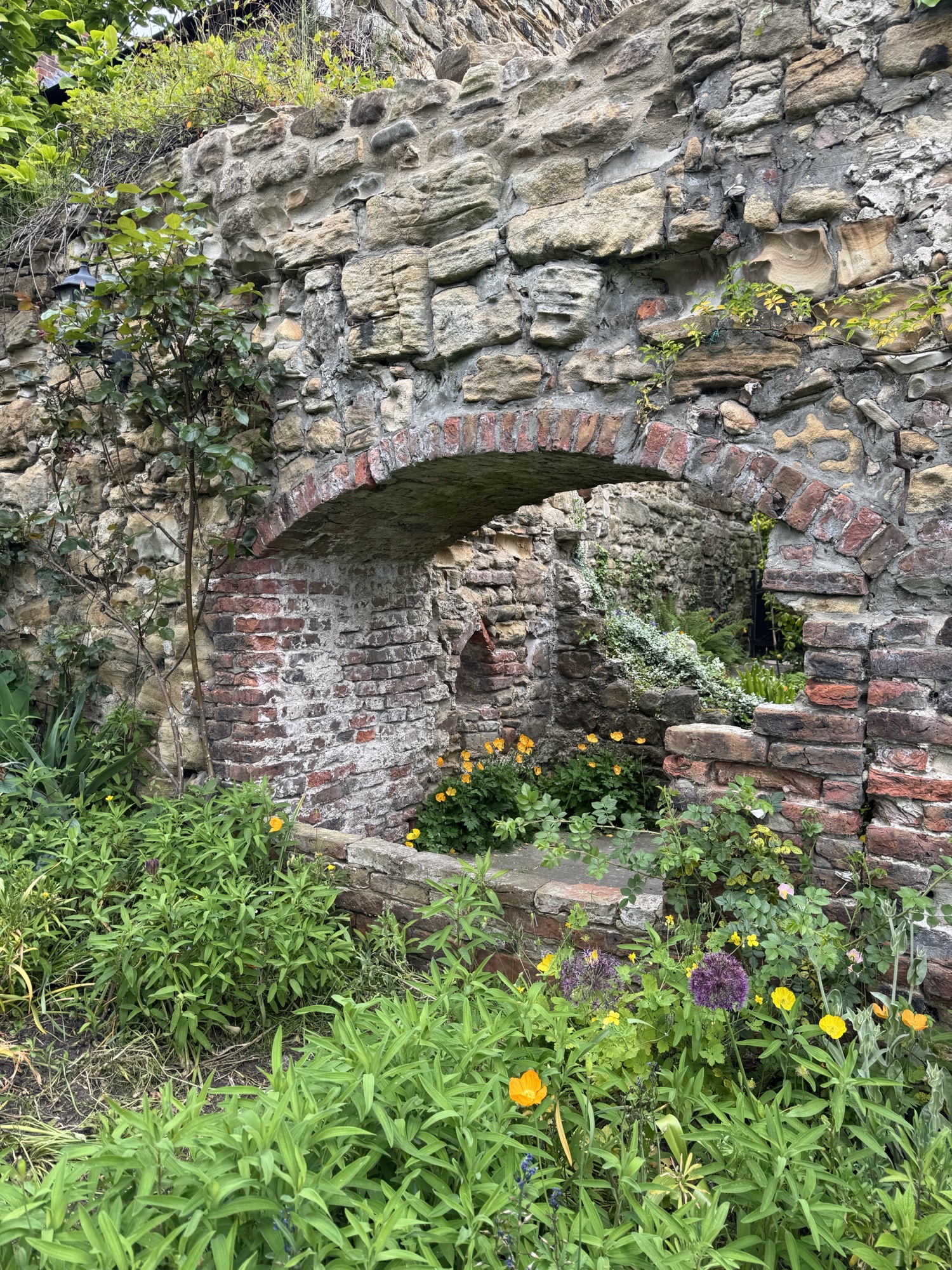
…and interesting architectural backdrops.
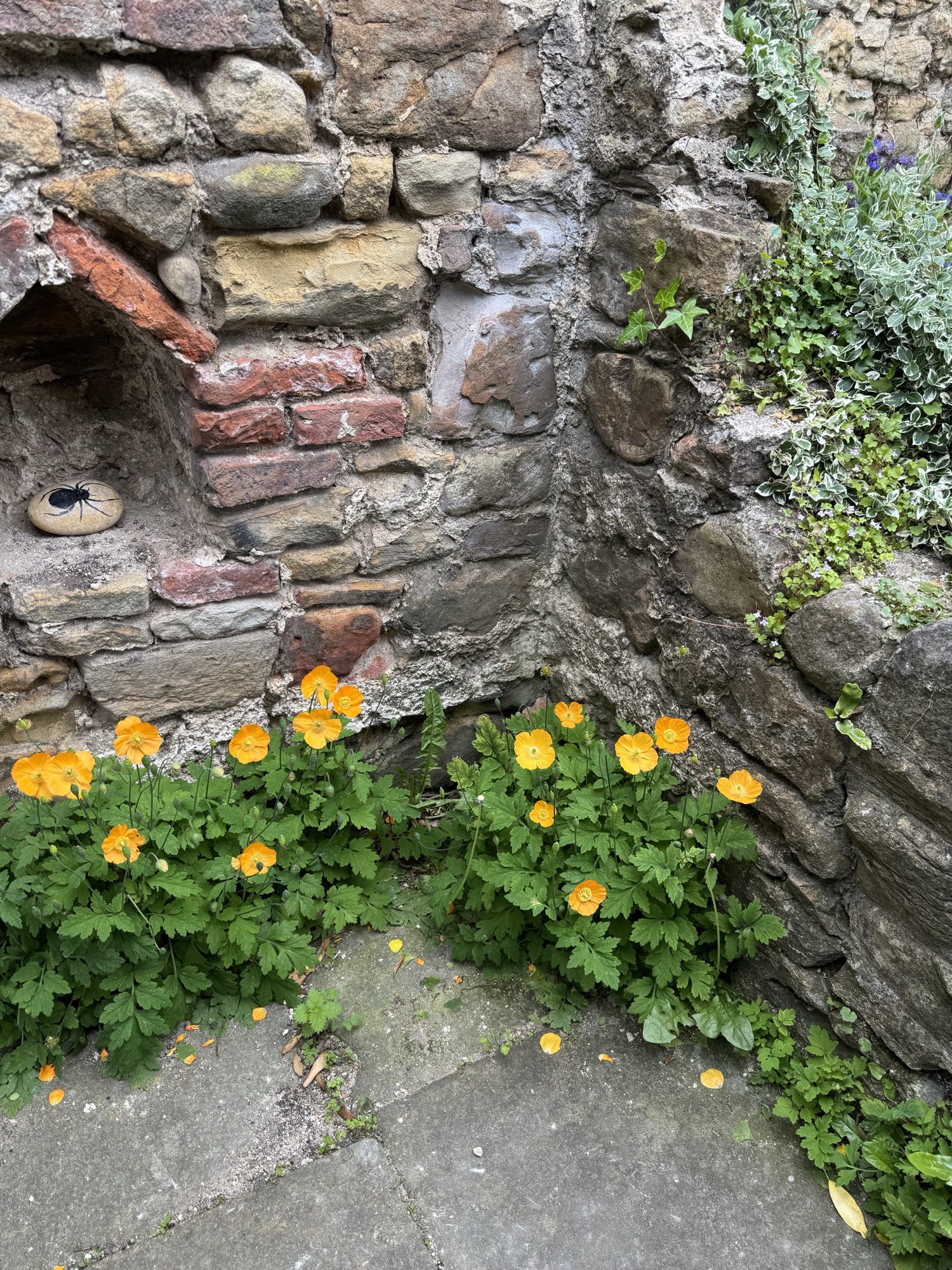
The Walled Garden is believed to be over 700 years old and visited by poet William Wordsworth and famous English polymath John Ruskin.
Of course a English garden of this size needs a grand English house.
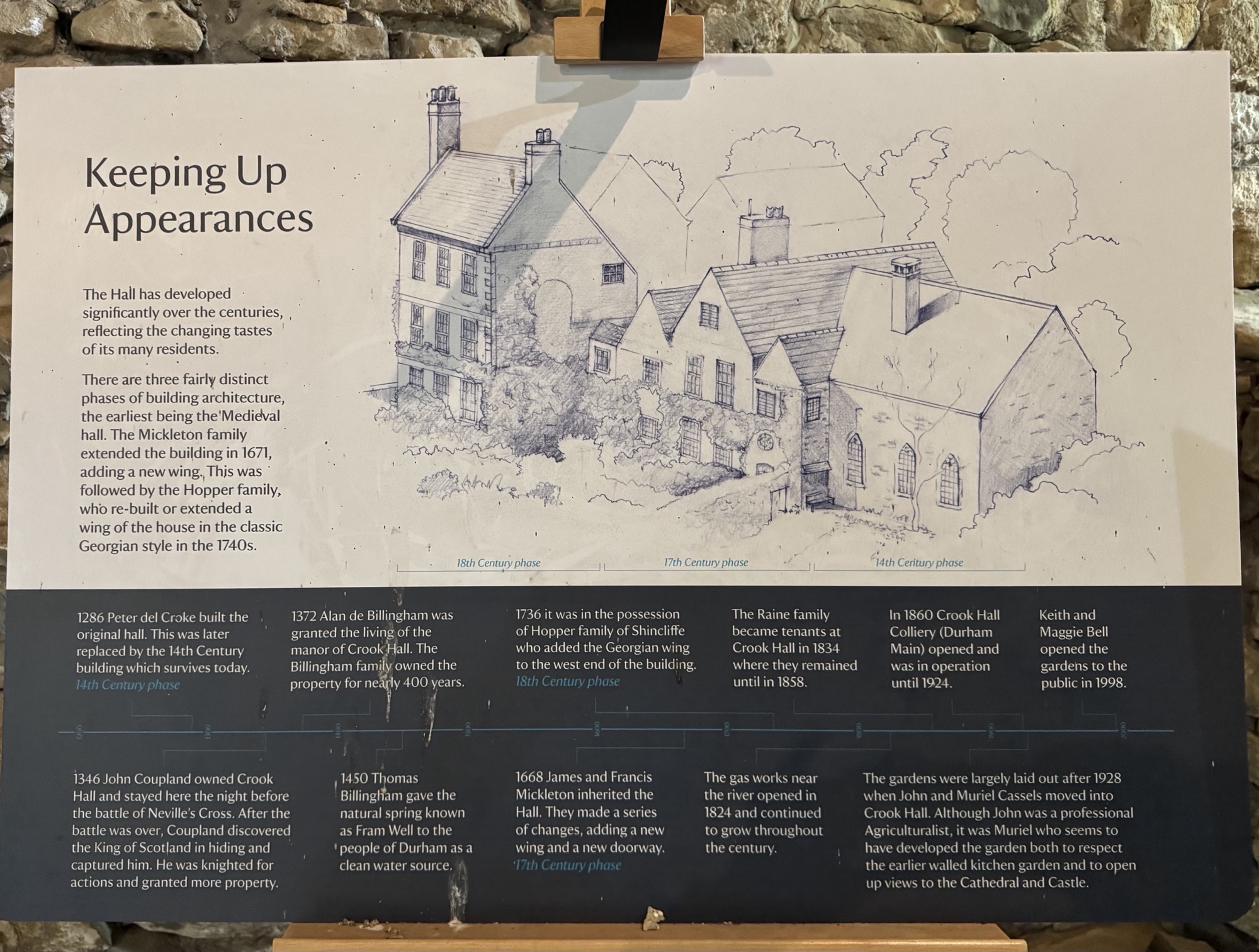
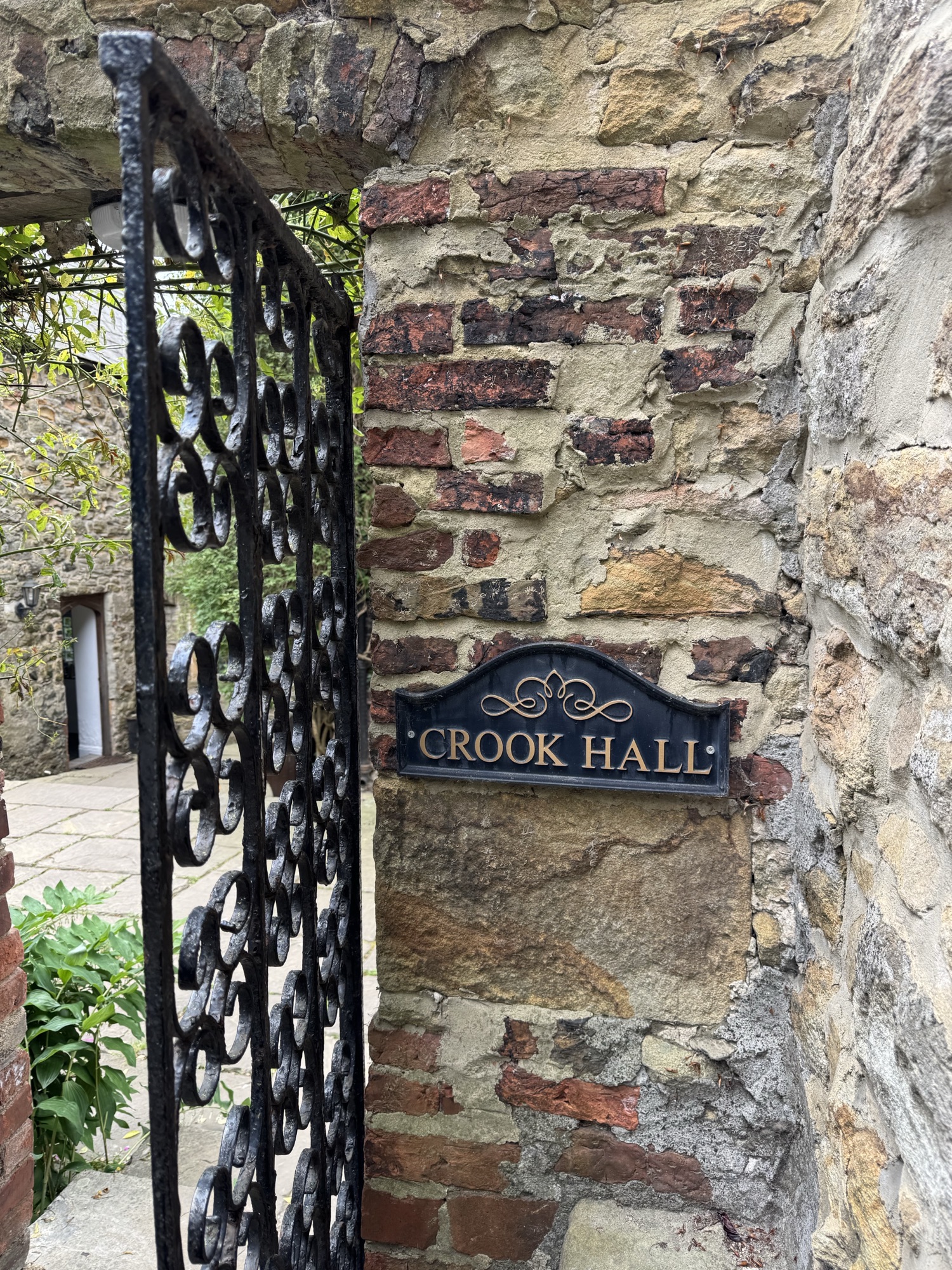
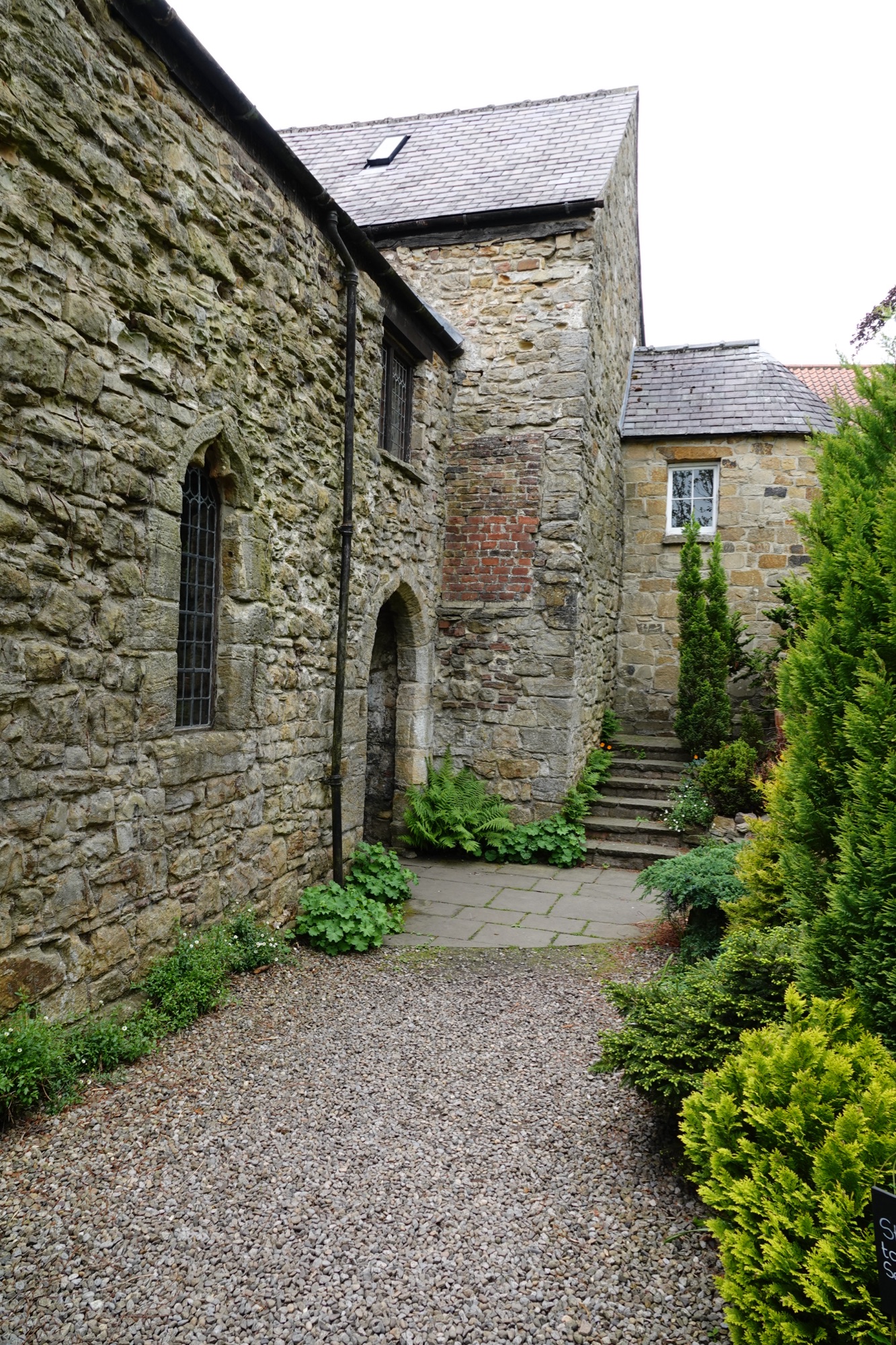
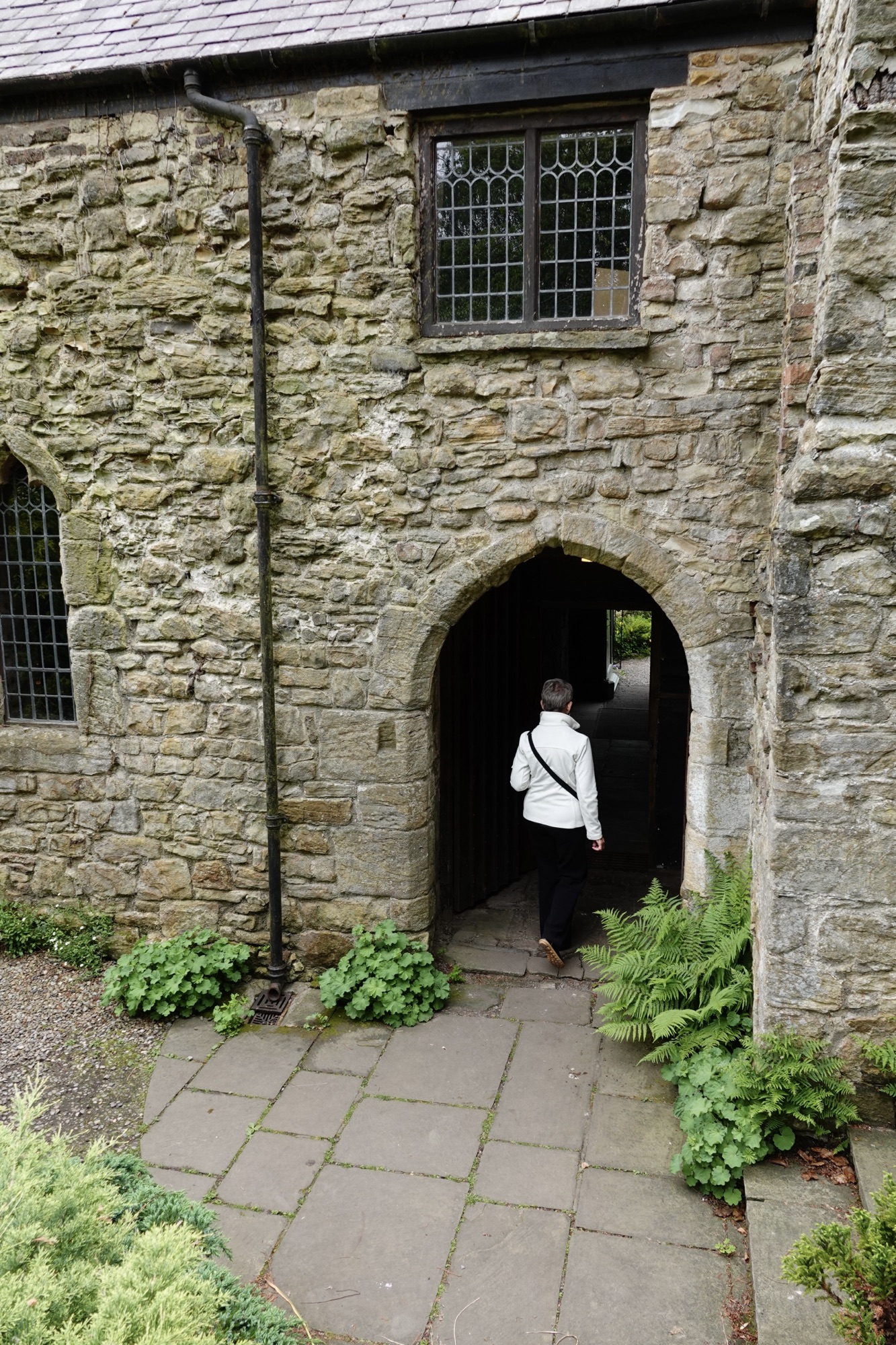
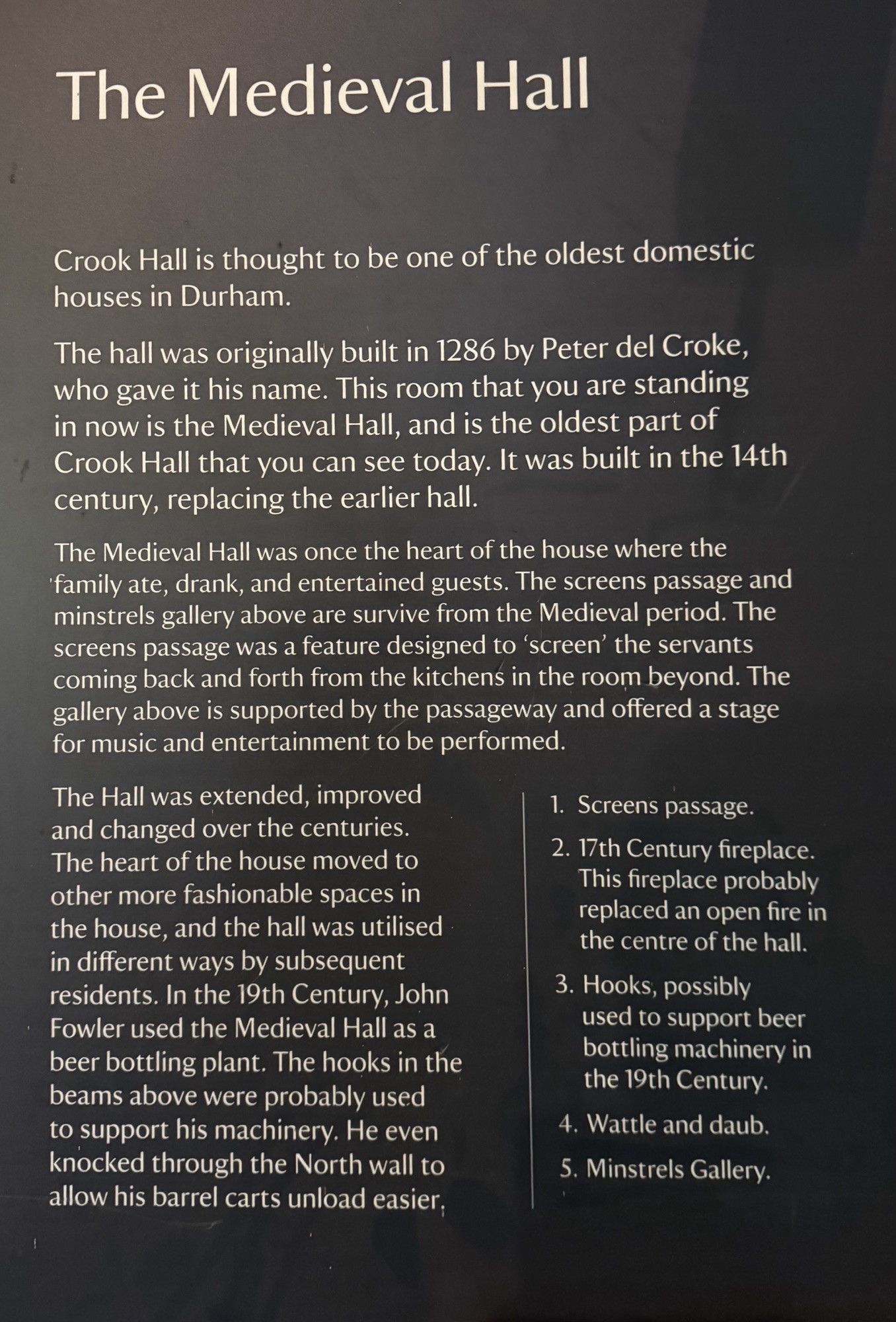
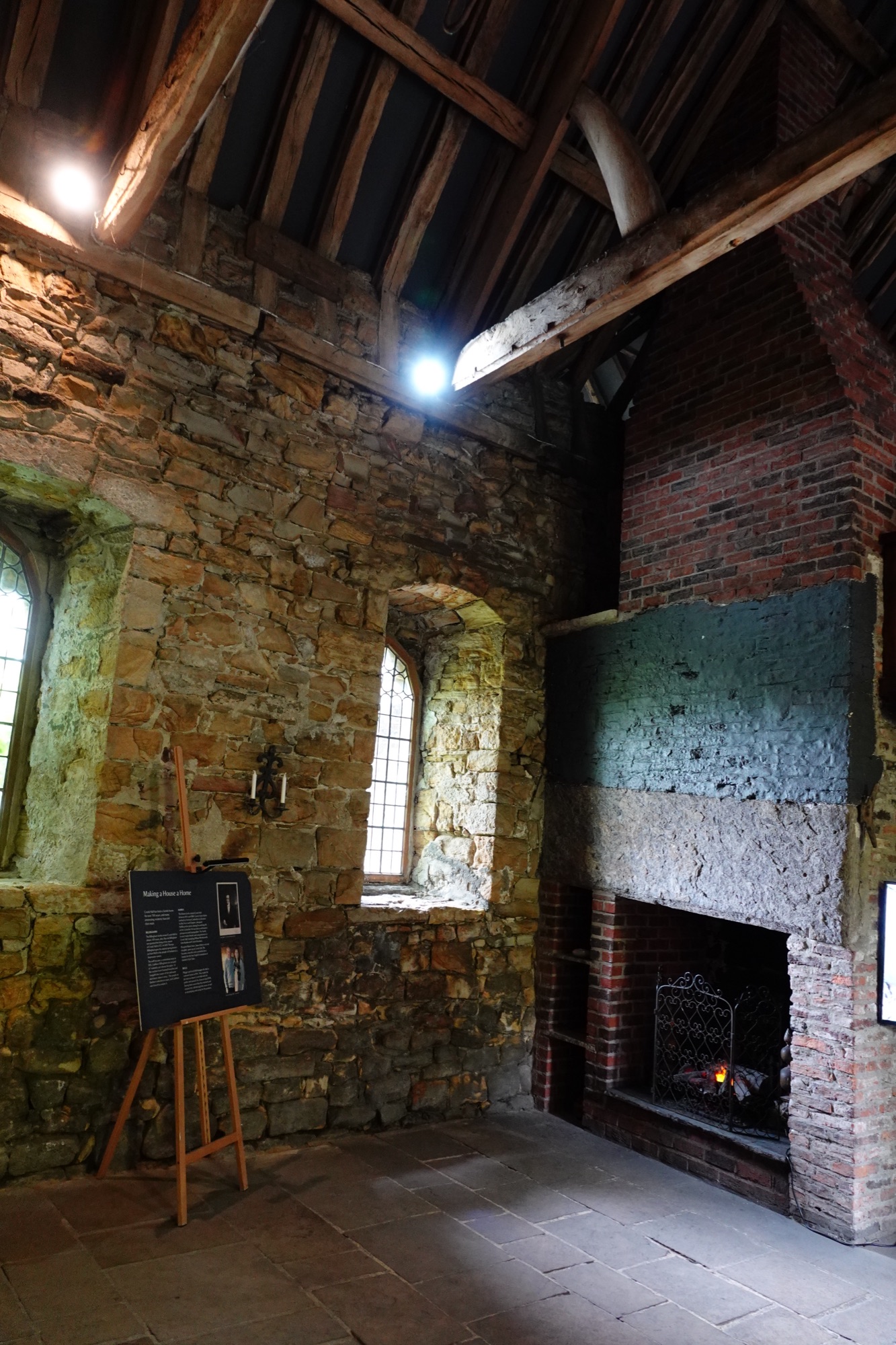
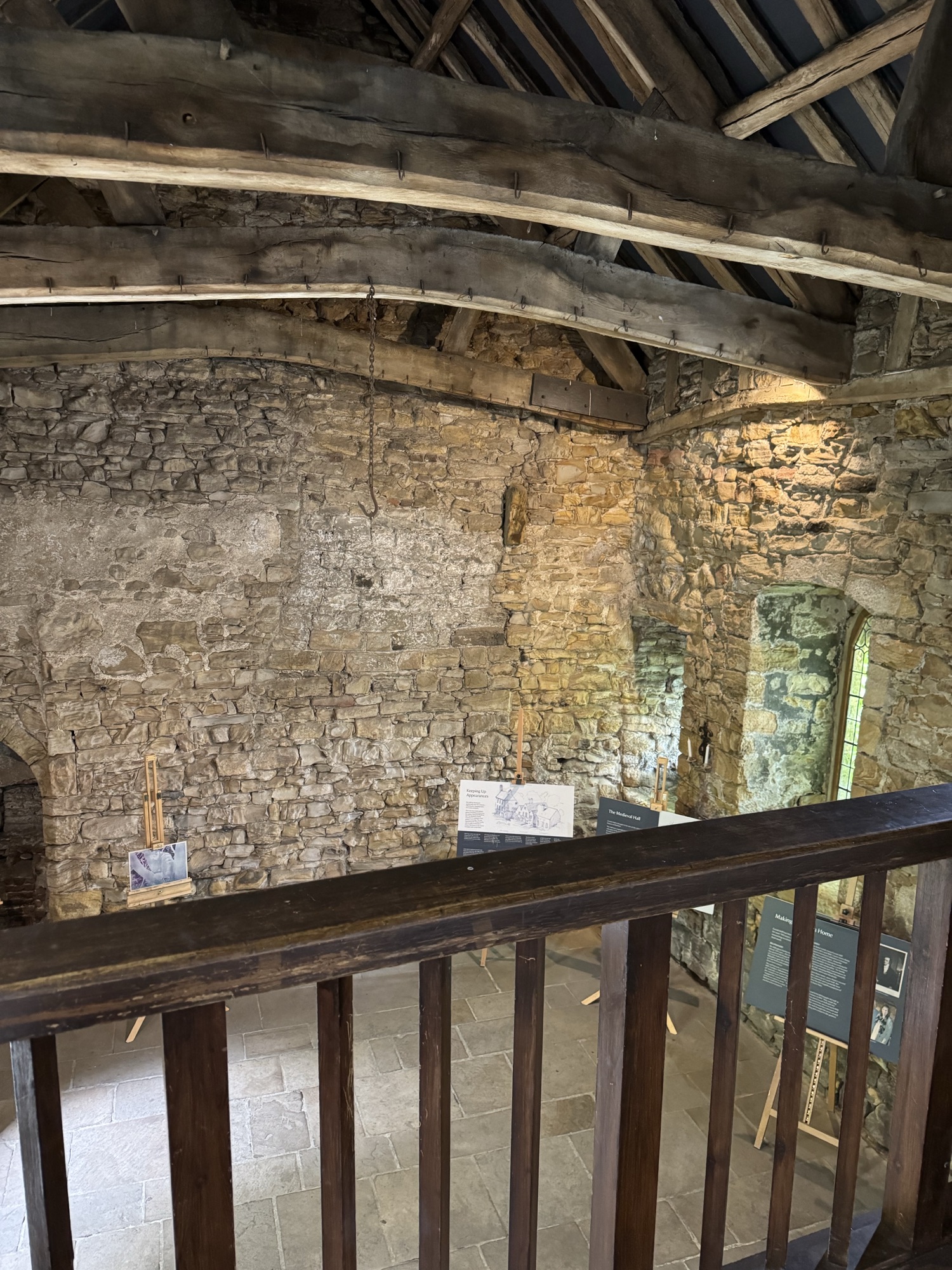
We saw the exterior areas of the Hall from several other angles.
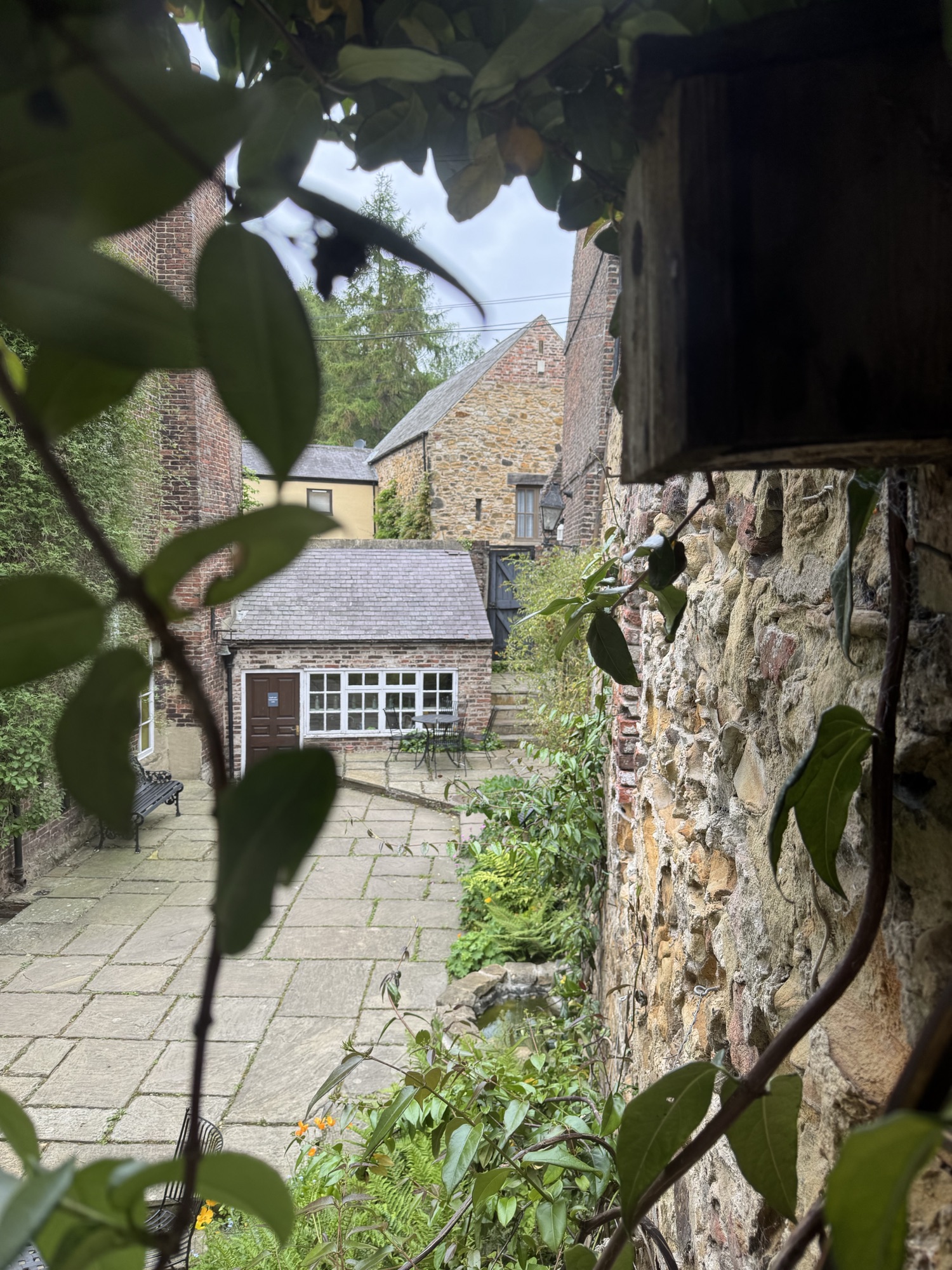
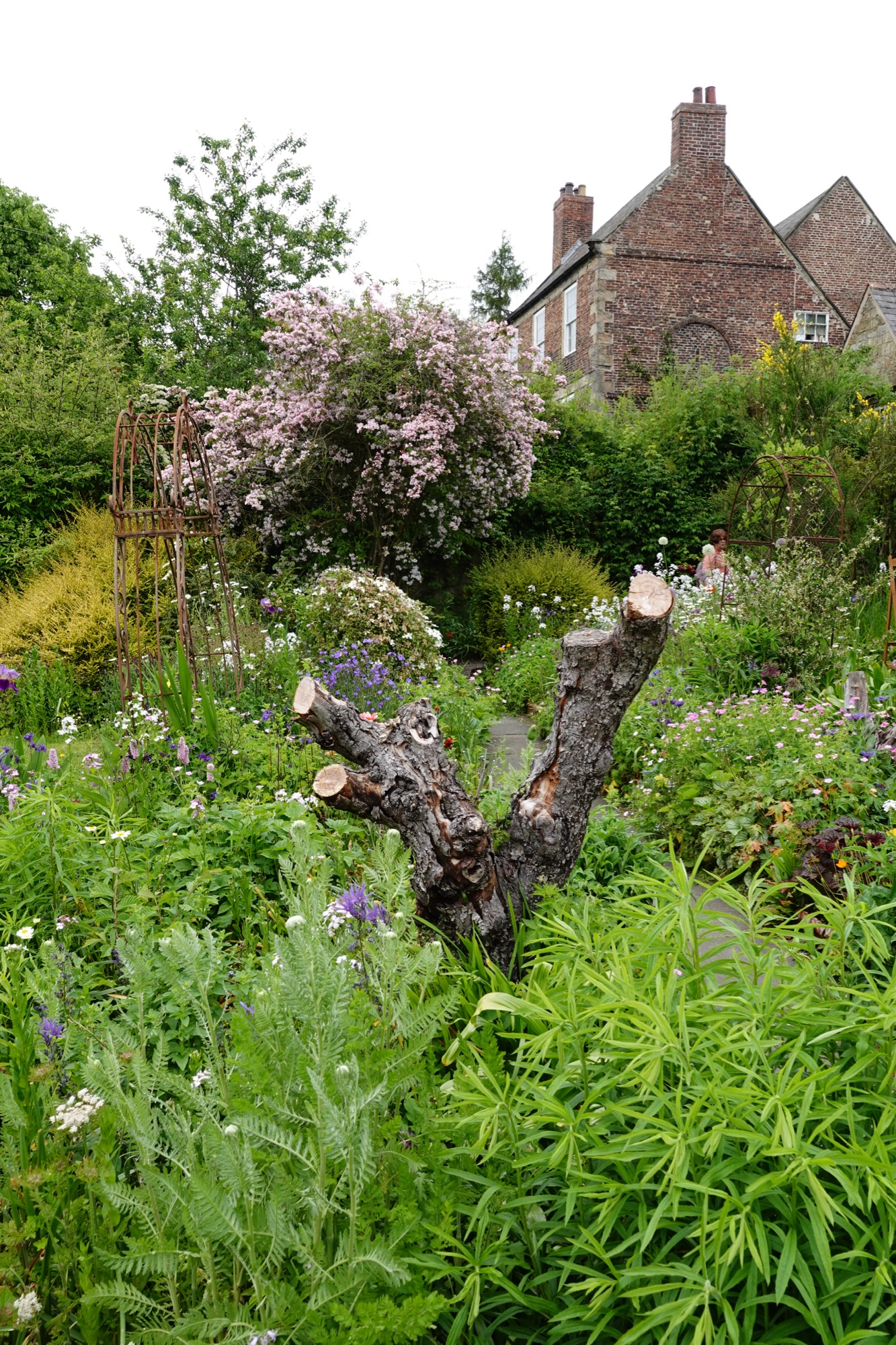
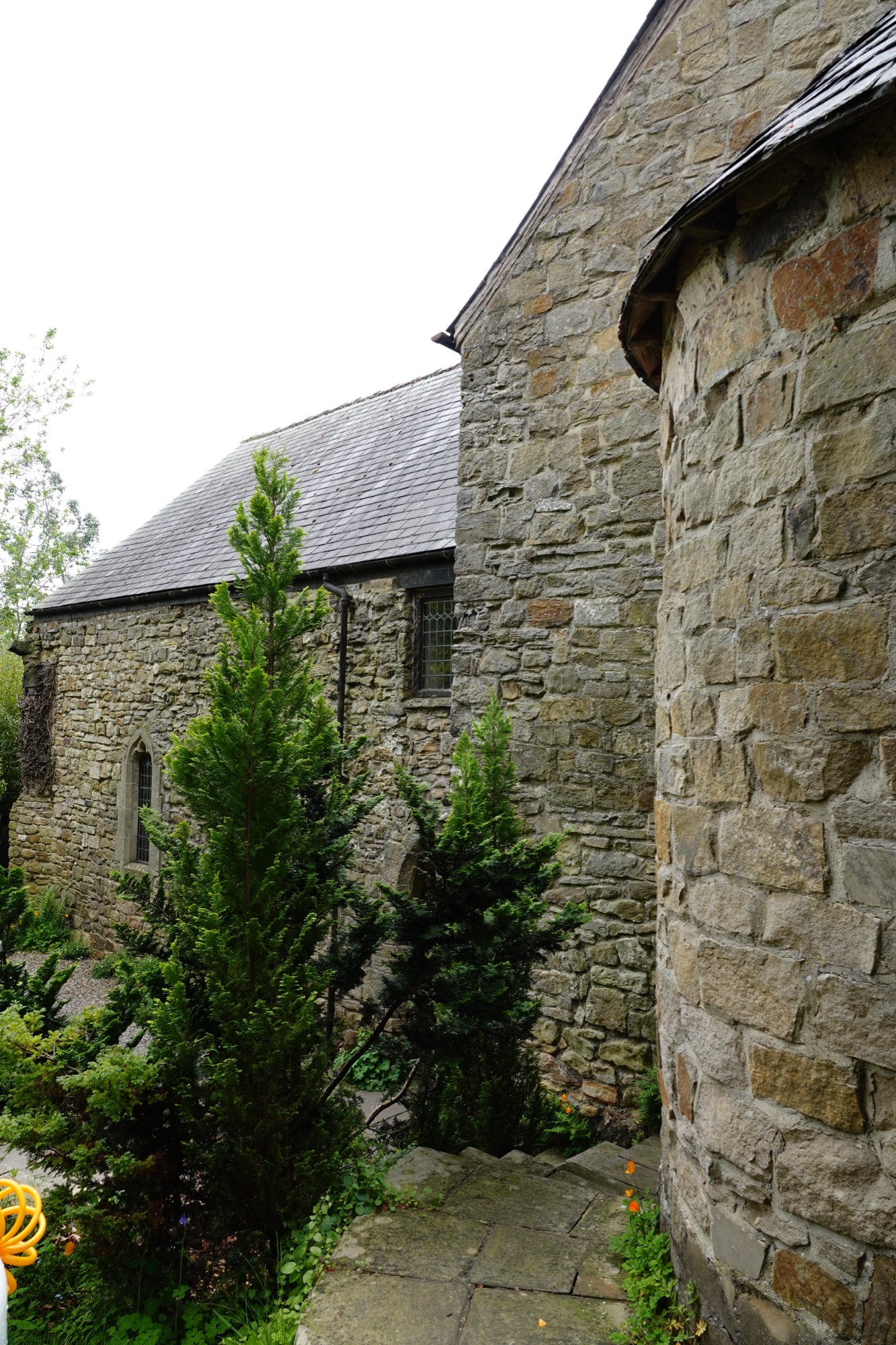
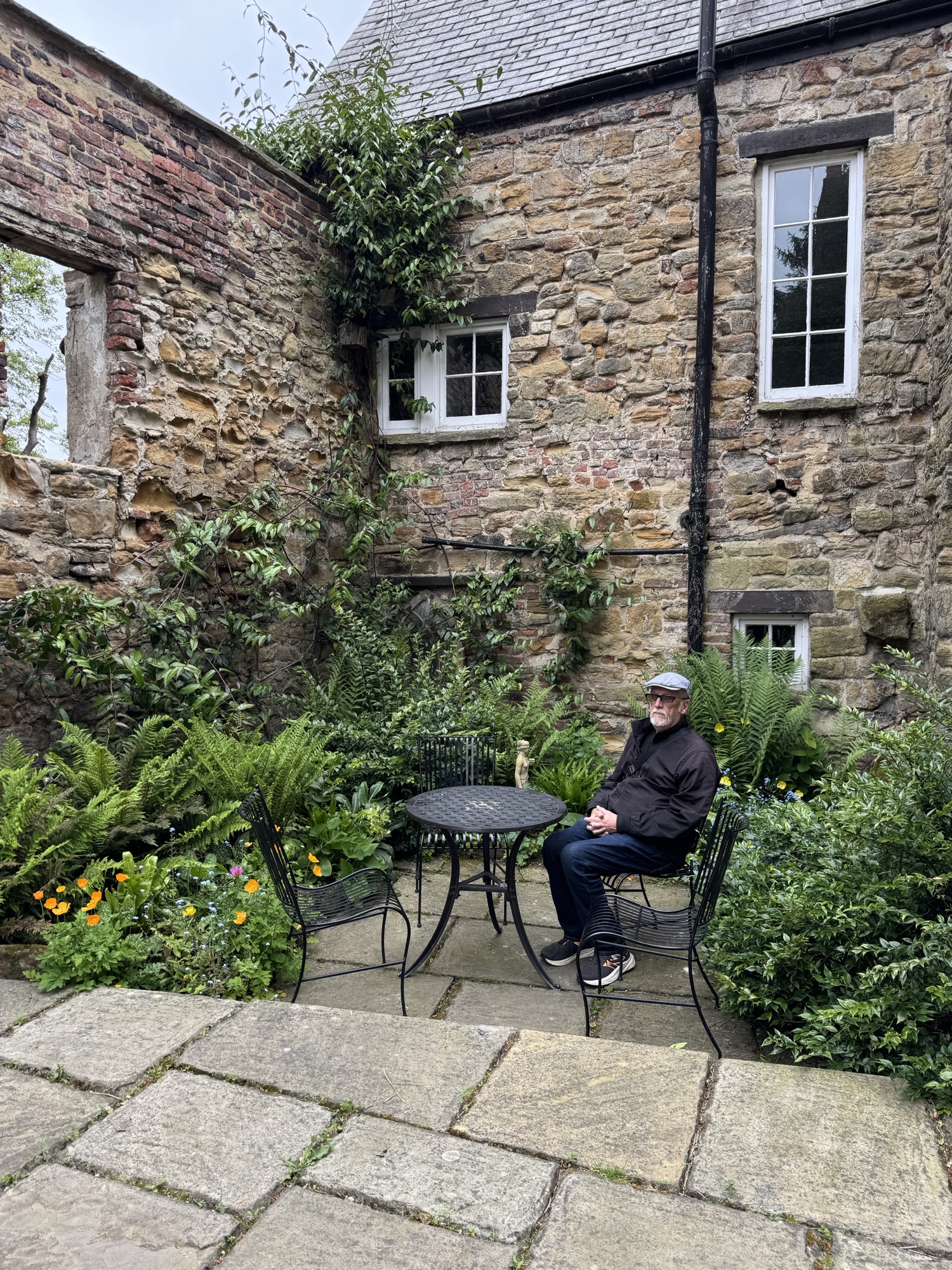
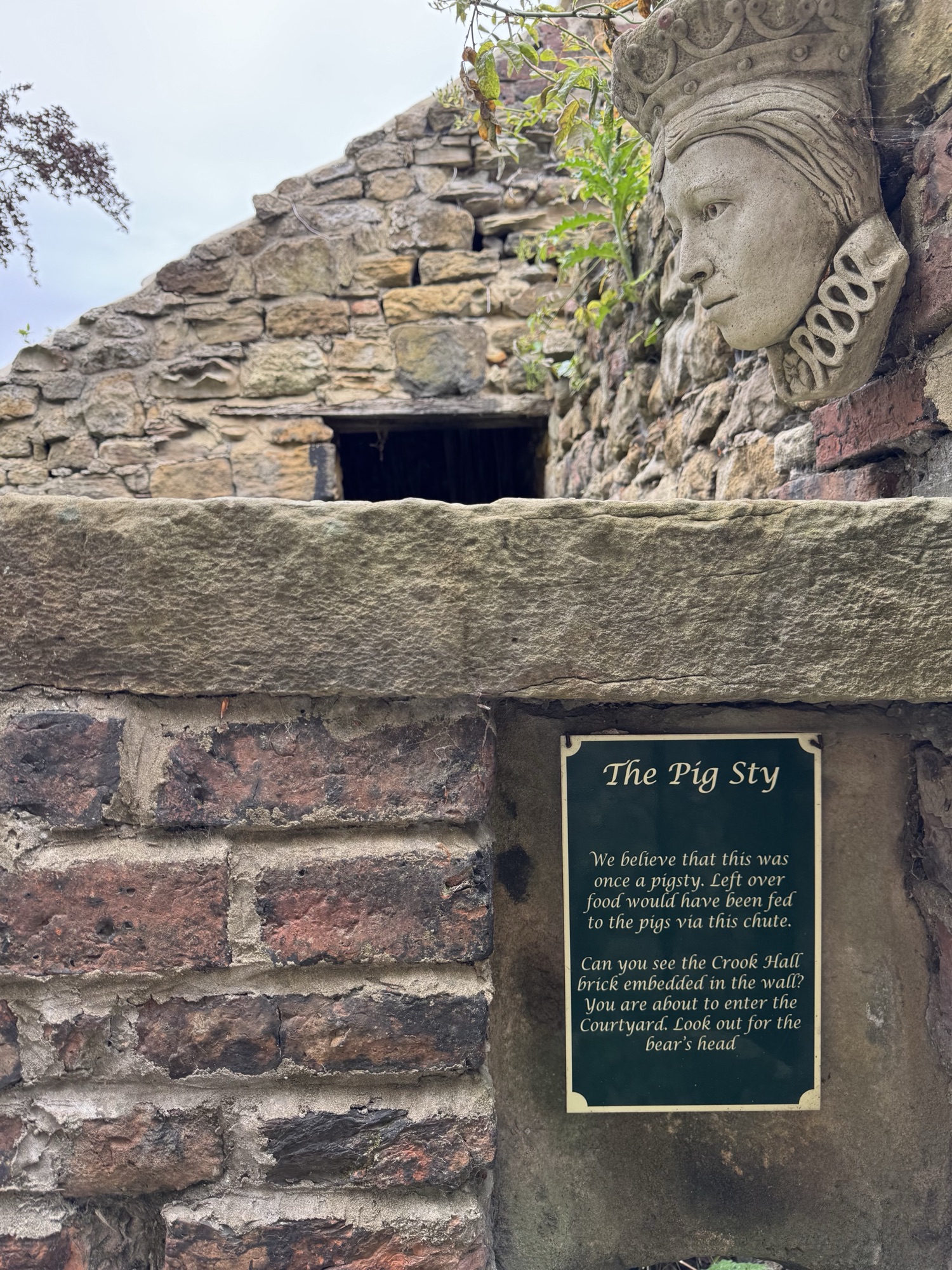
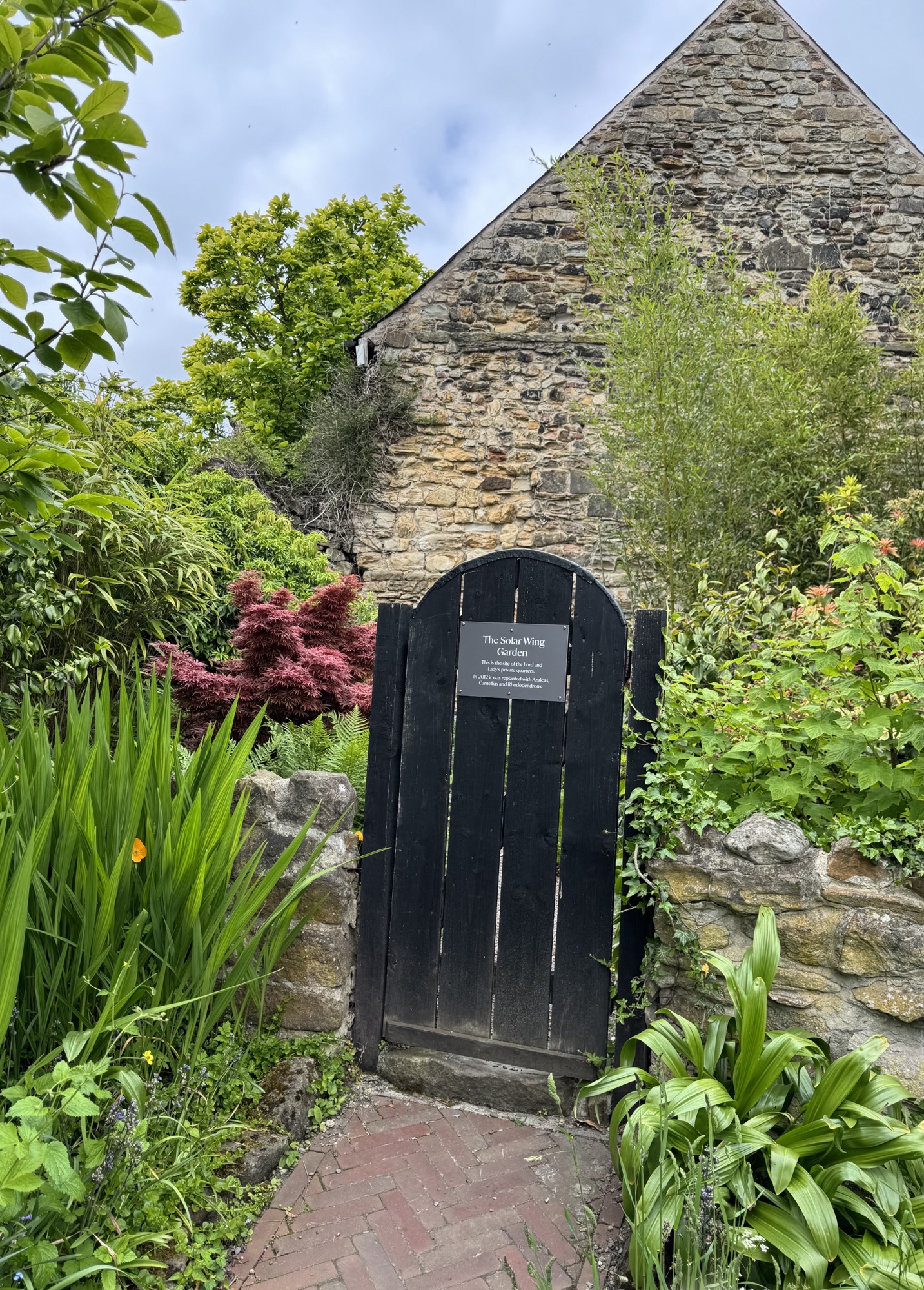
The garden was separated into themed areas, each offering visitors to the hall something different.
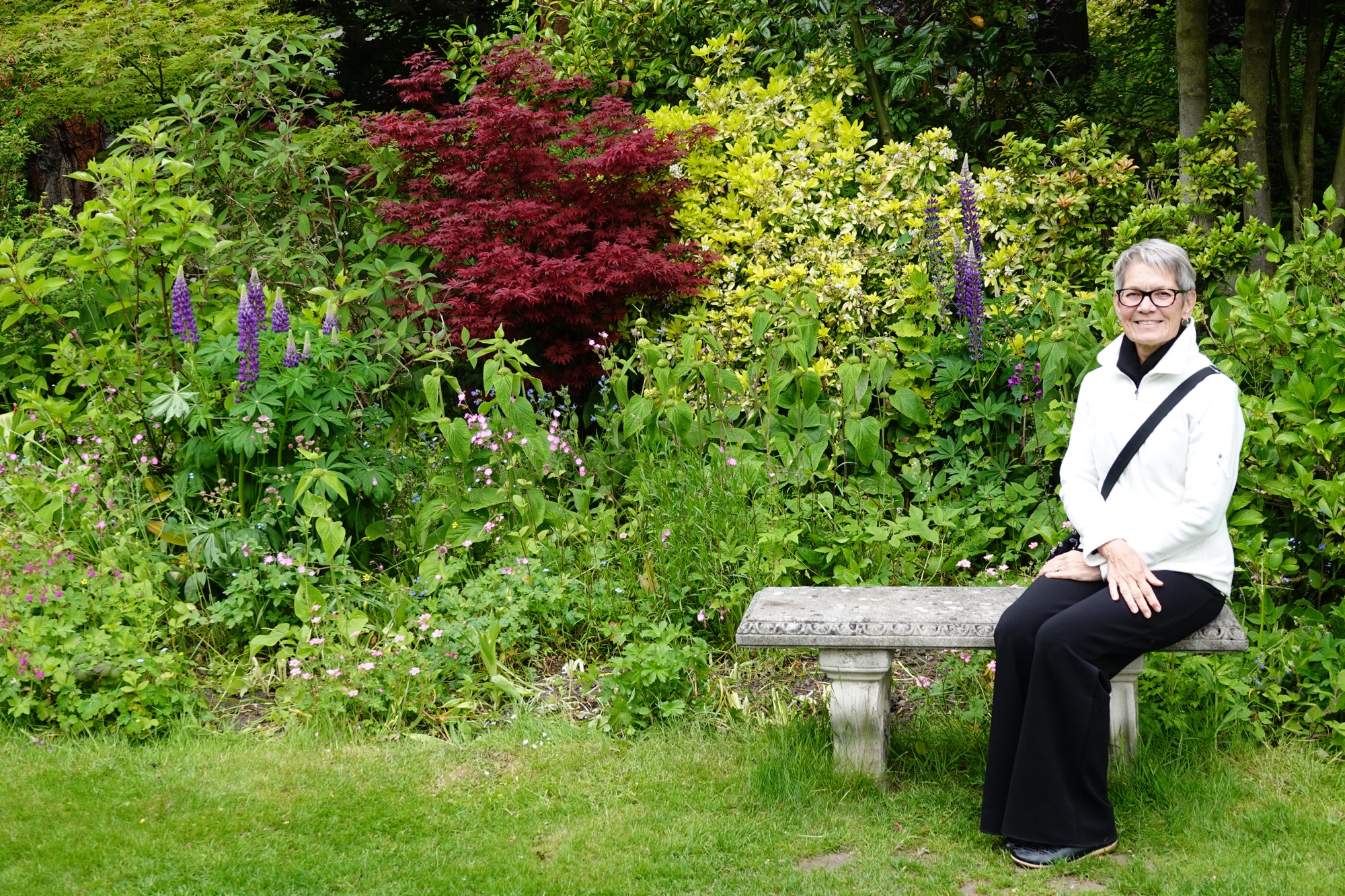
The area called The Wooded Glade featured several stone benches…
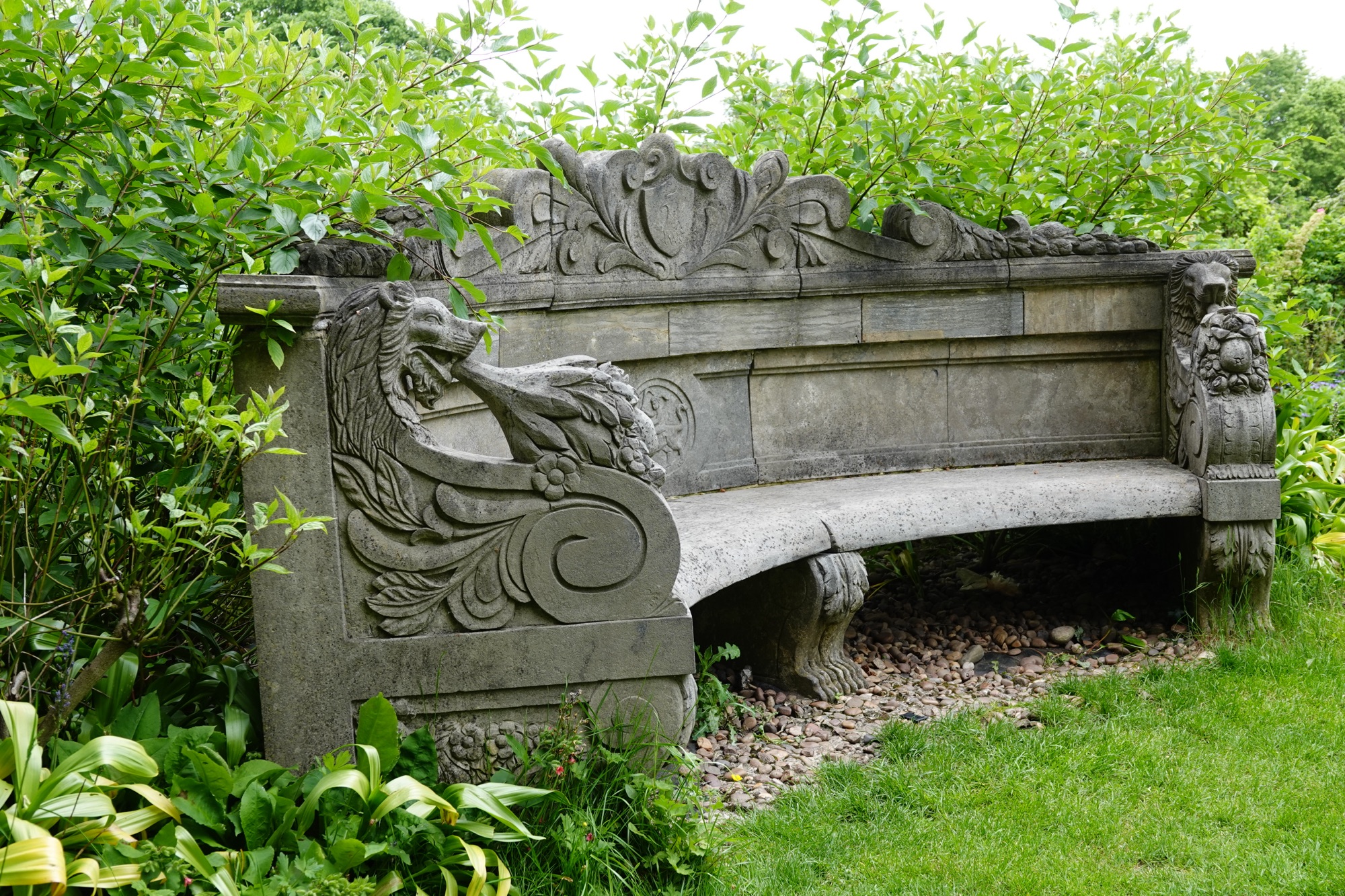
… a toad…
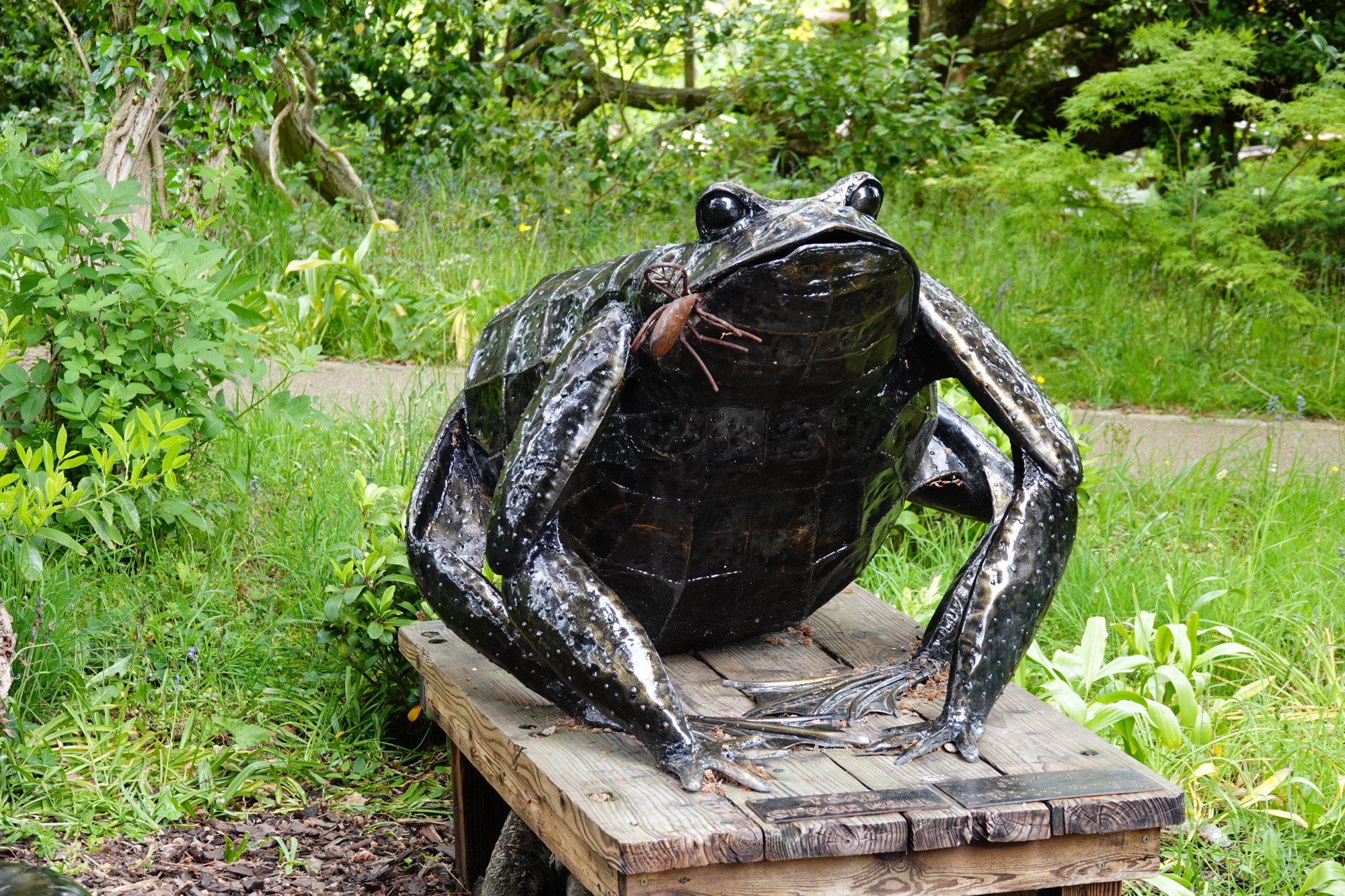
…a gazebo…
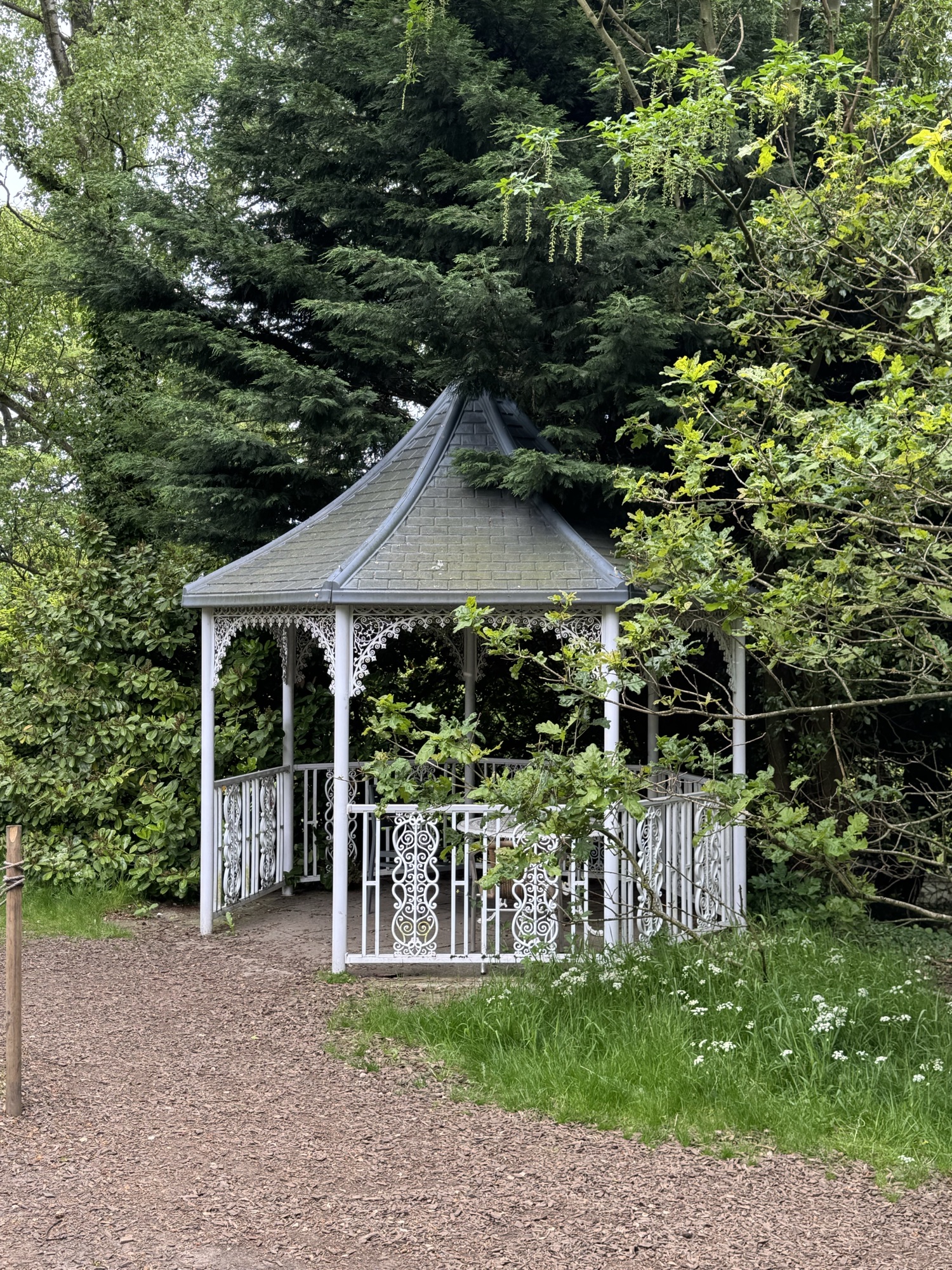
… and a pond.
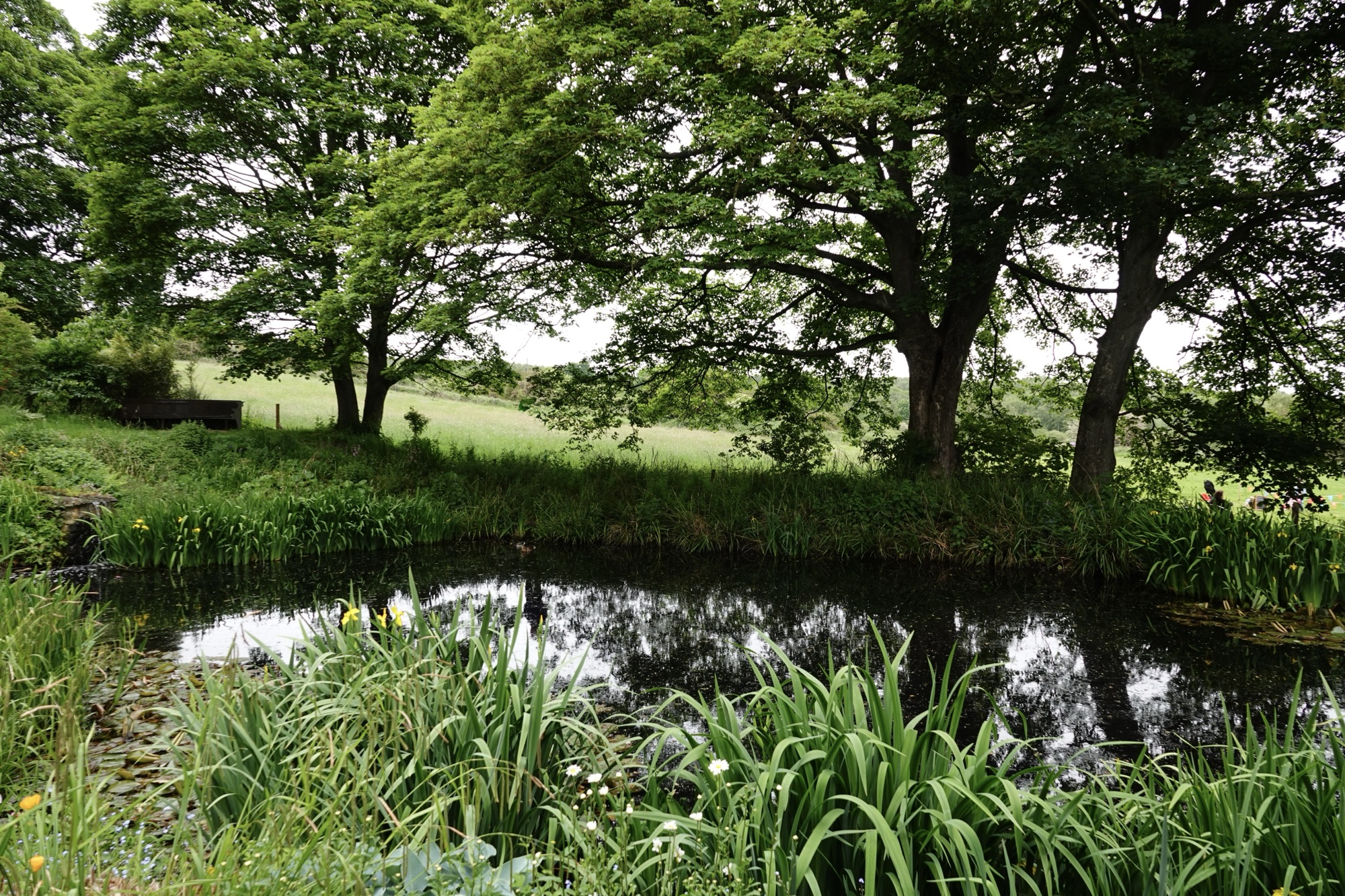
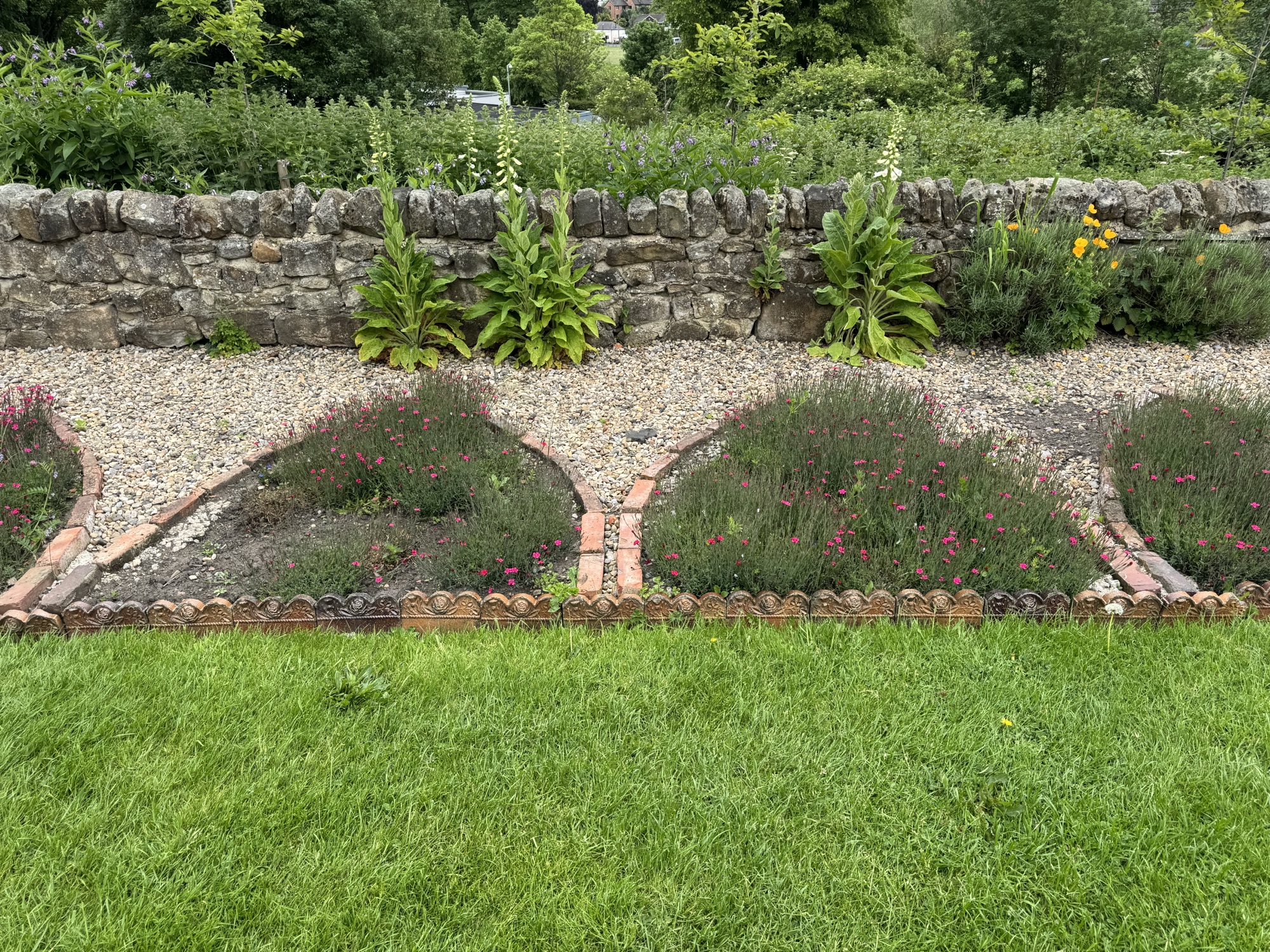
The gate at the entrance to the Cathedral Garden, where the flower beds are shaped like stained glass windows, had a leonine knocker.
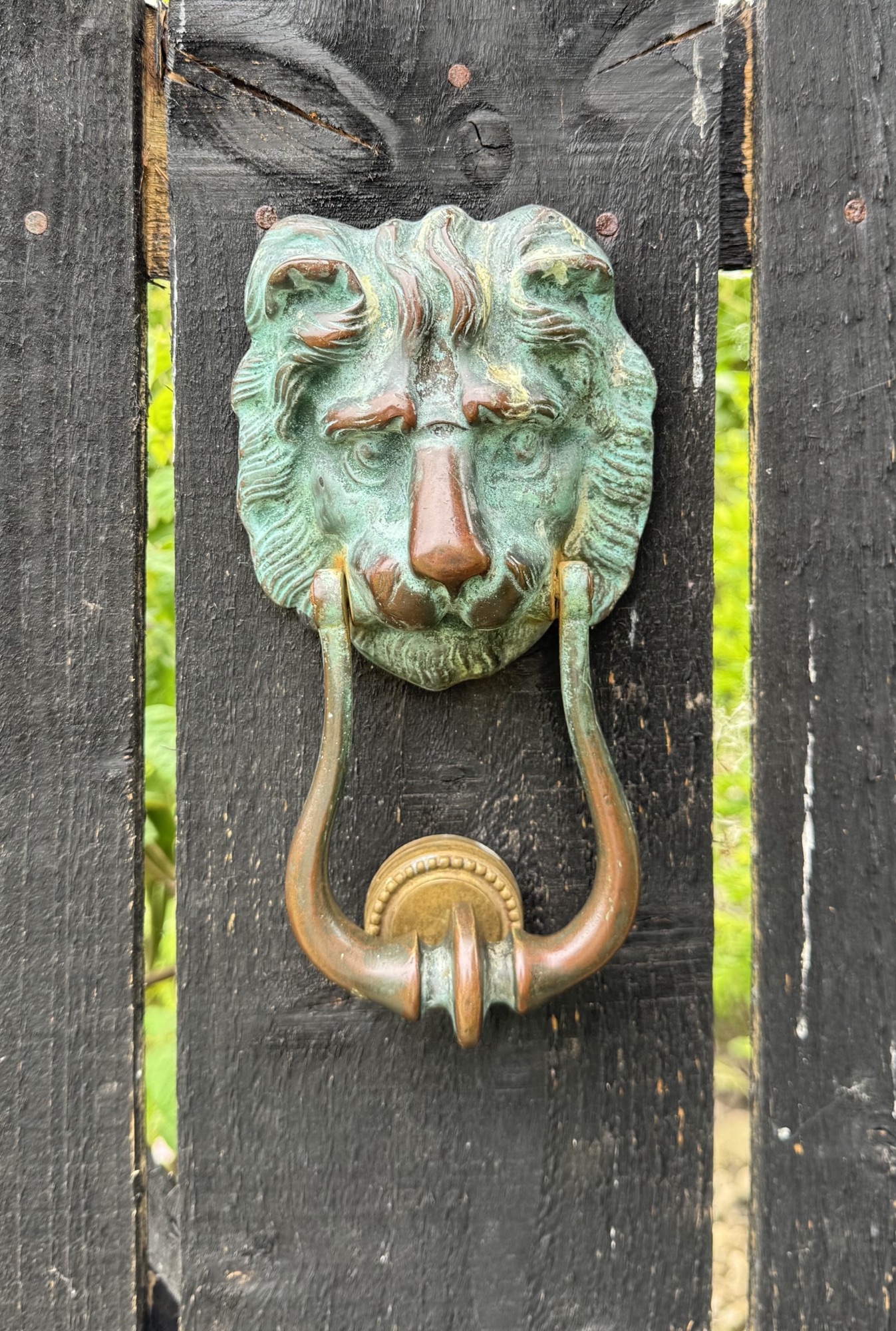
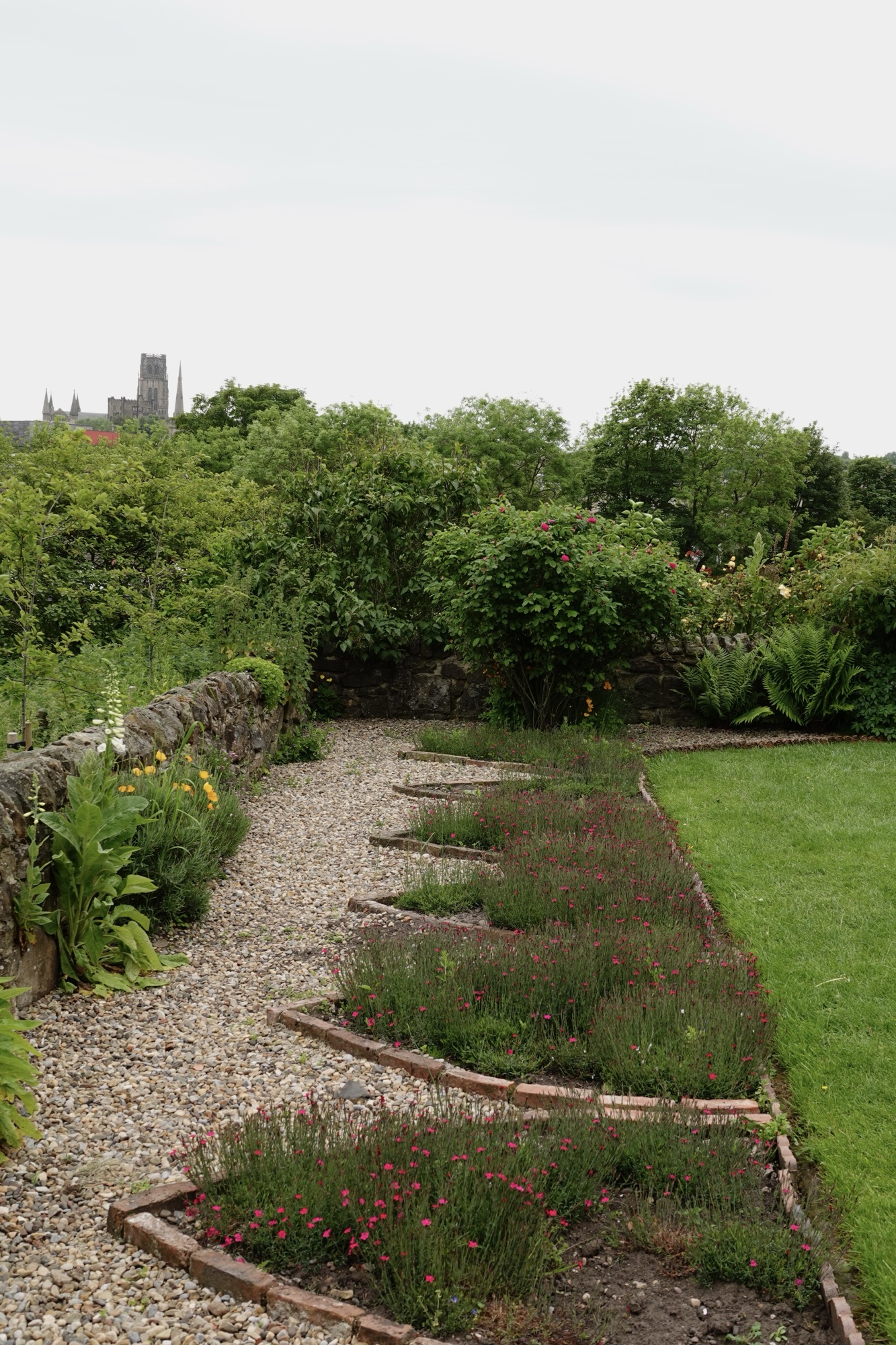
Ted captured a view of the Cathedral from Crook Hall’s Cathedral Garden.
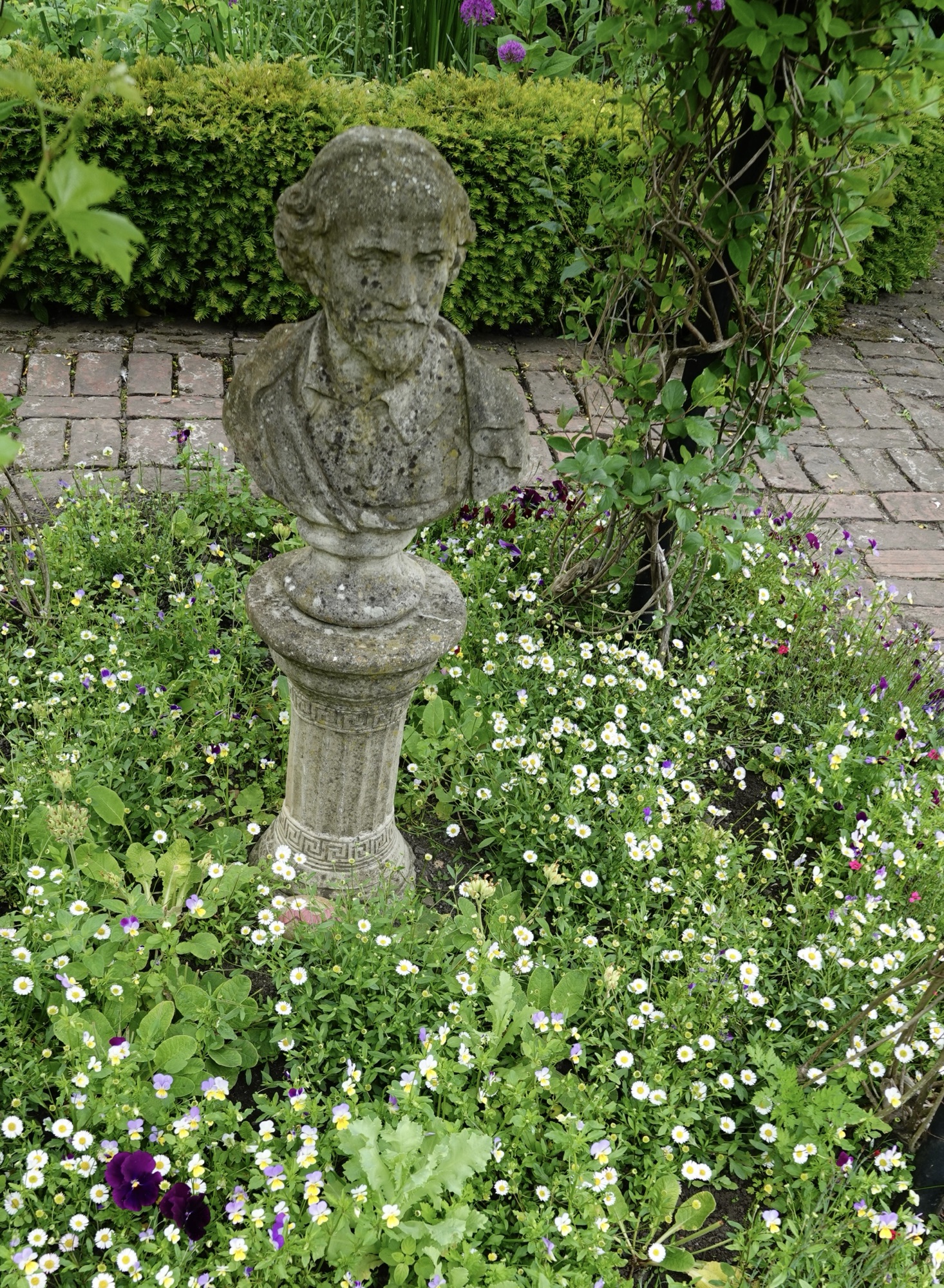
The choice of plants in the Shakespeare Gardens was inspired by the gift of a book to the Hall’s owners on plants popular in Shakespeare’s era.
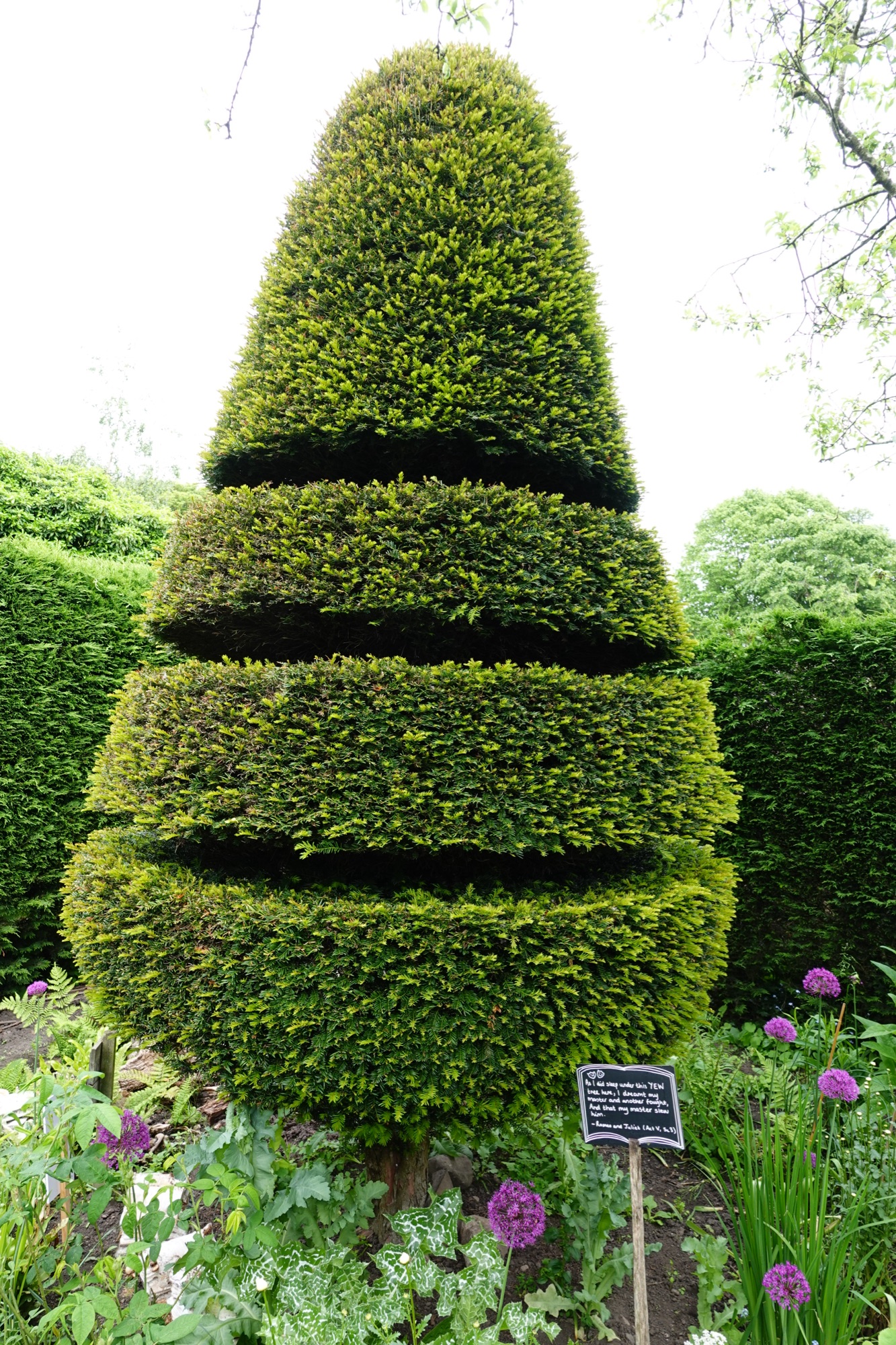
“As I did sleep under this YEW tree here, I dreamt my master and another fought, And that my master slew him.
– Romeo and Juliet (Act V, Scene 3)
For me, the most interesting things in the garden, if not exactly the most beautiful, were the mushrooms growing out of “ books”.
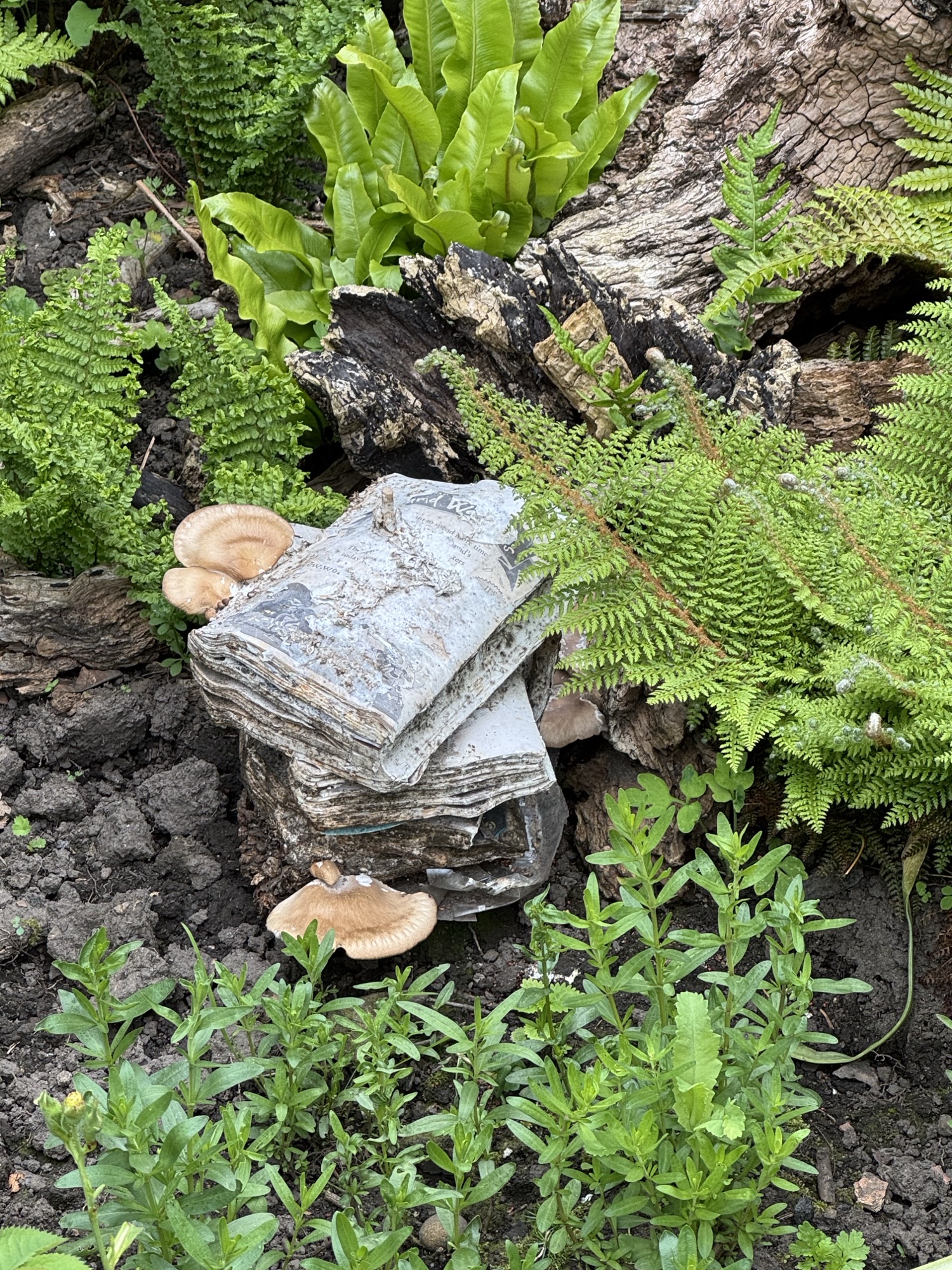
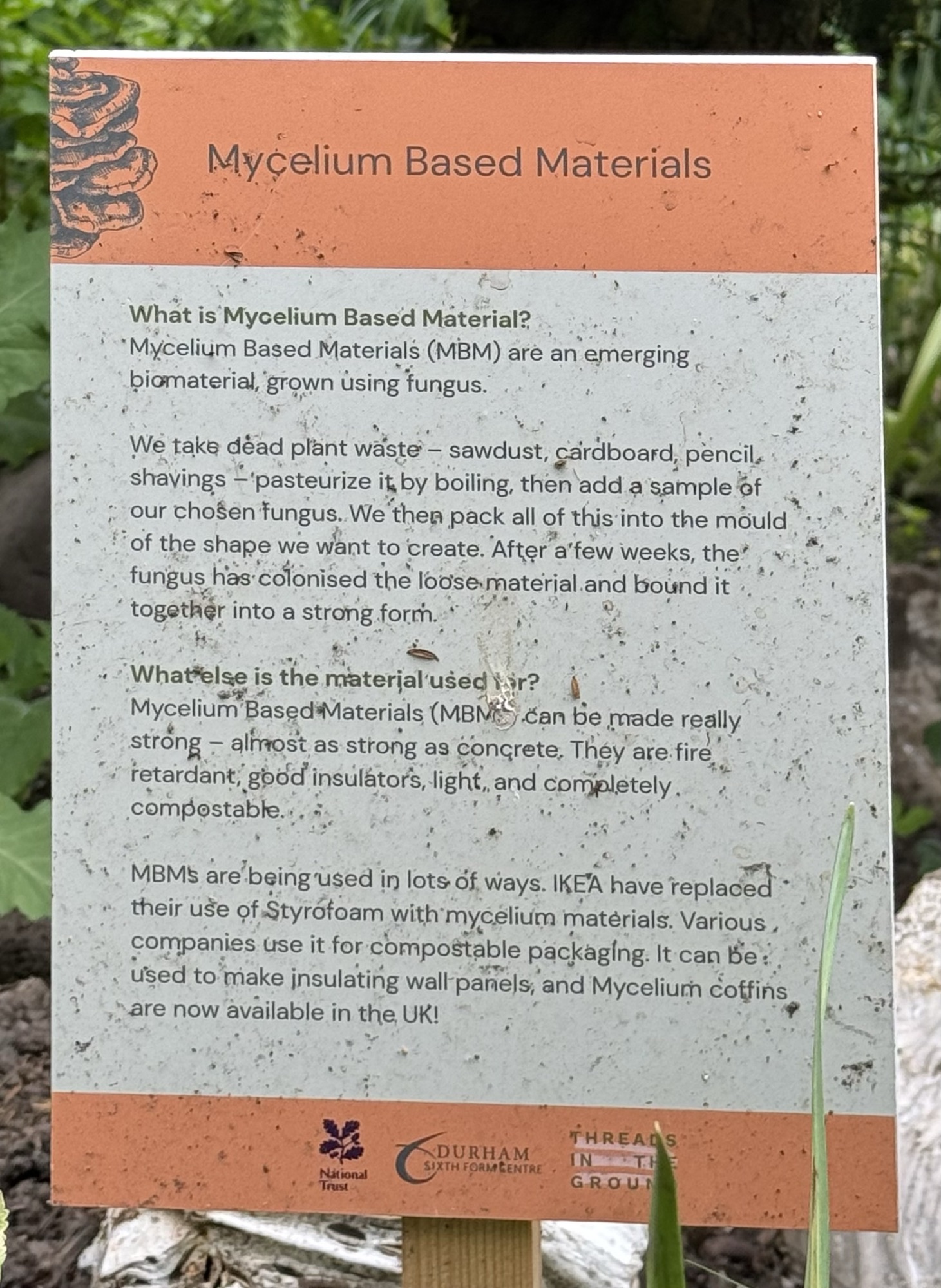
The scientific explanation of what mycelium is (from Wikipedia): “Mycelium is the vegetative, root-like network of a fungus, made up of thread-like structures.While mushrooms are the visible, fruiting bodies of fungi, mycelium acts as the unseen, foundational superhighway that absorbs nutrients, recycles organic matter, and acts as a communication network connecting entire ecosystems.”
In the case of the garden’s visible mushrooms, the “dead plant waste” being used to host the mycelium was the paper from actual books! The only thing that could have made this any more wonderful to me would gave been if all the books had been volumes of Shakespeare.
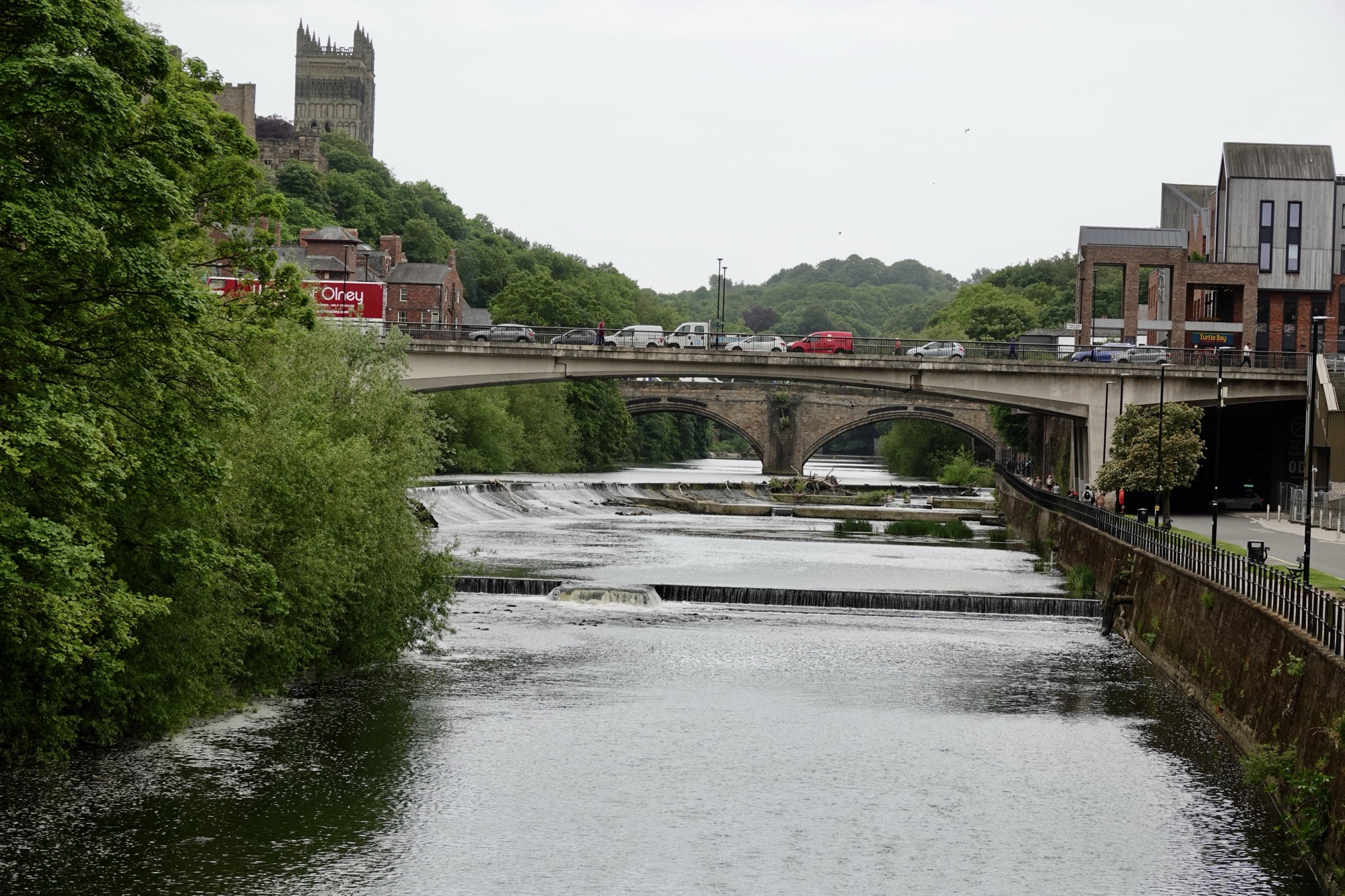
After a cup of coffee for Ted and (finally!) a North mint chip ice cream – with Flake – for me, we continued our riverside walk, first needing to pass both Millburngate (the new bridge in the front) and Framwellgate (the older stone arches in the background) Bridges.
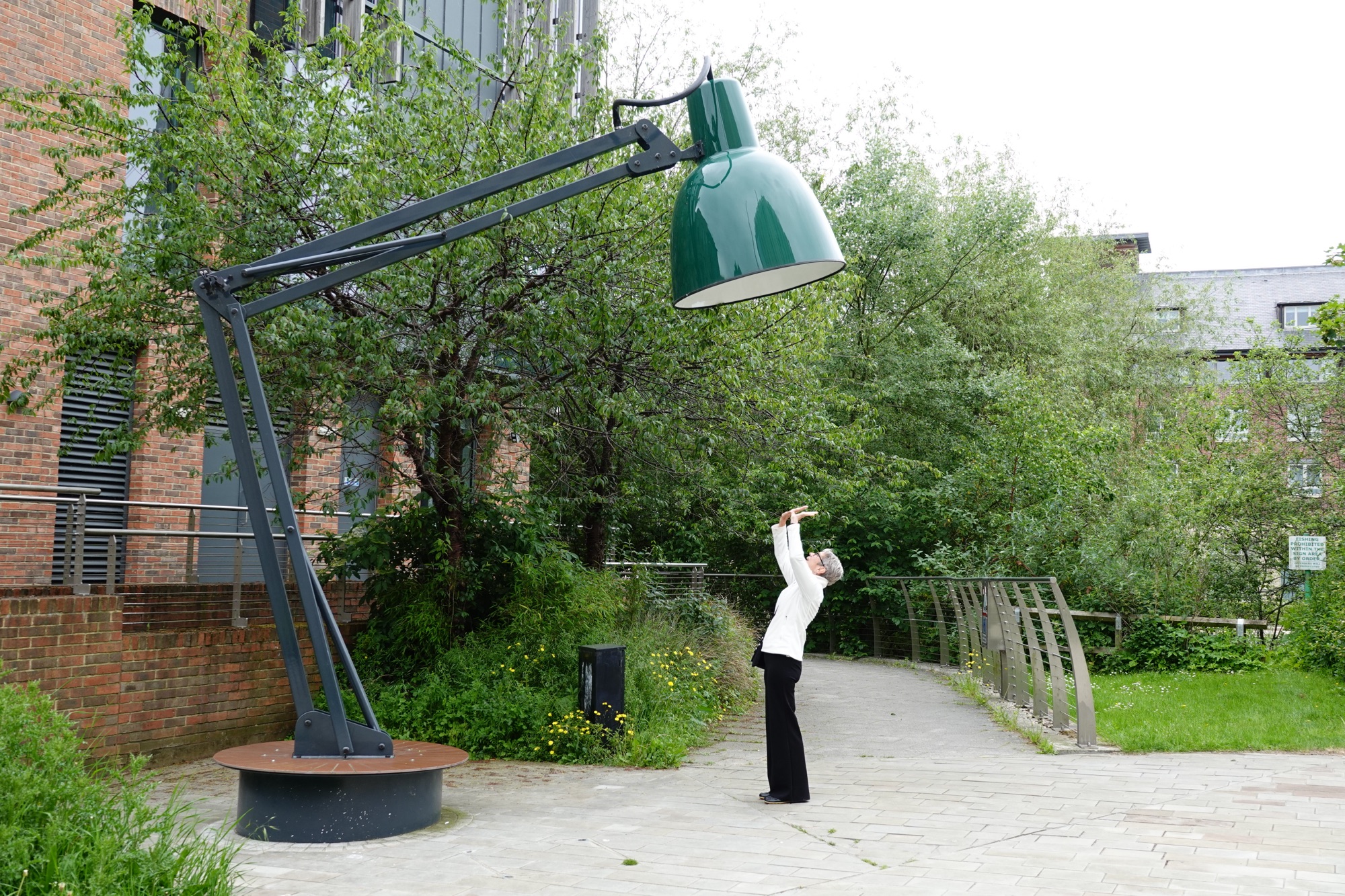
That took us past two very different art installations.
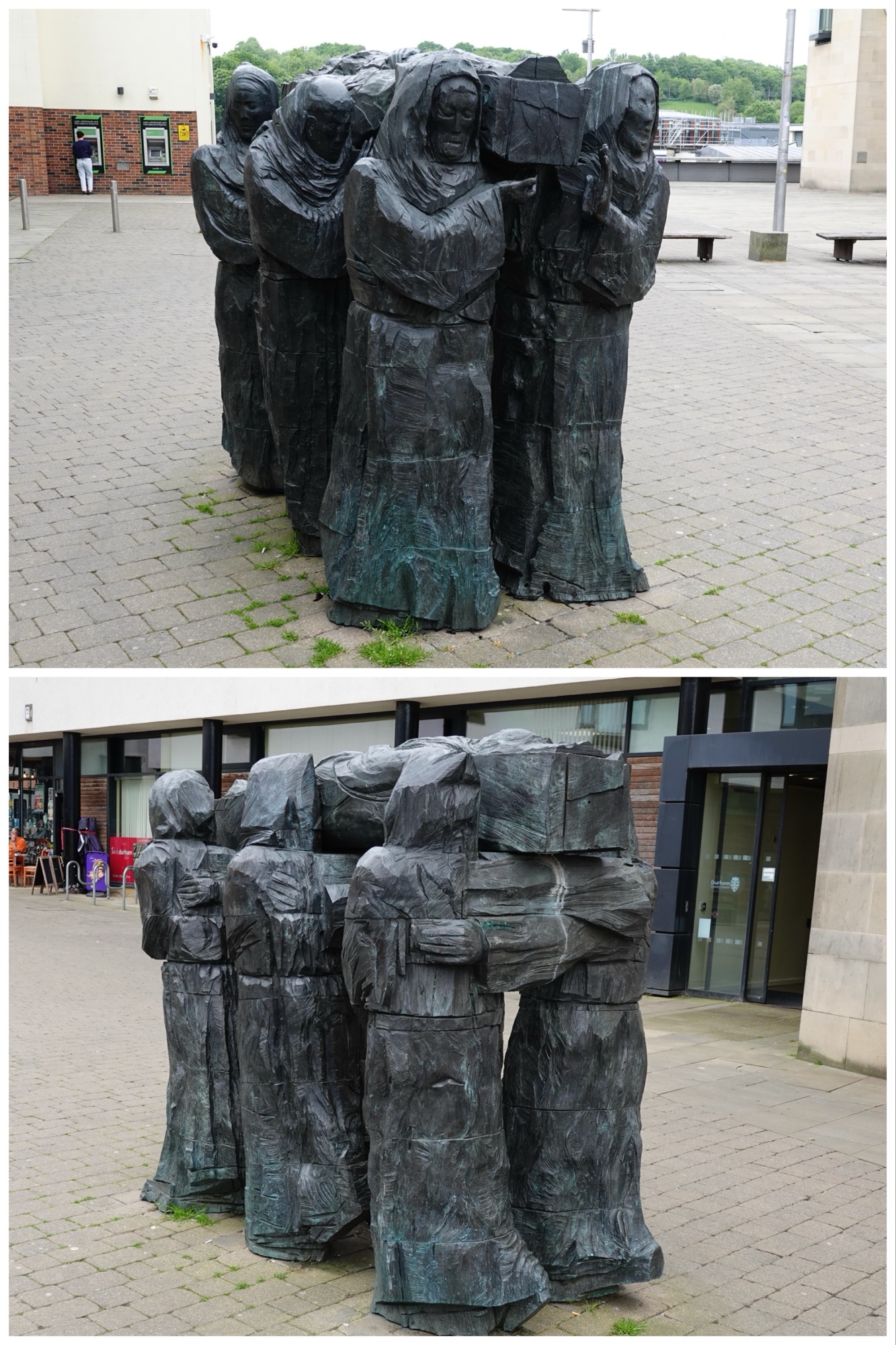
It was Carved by Fenwick Lawson in 1997 from seven elm trees. Cast into bronze, it was unveiled by HR Princess Anne on 26th September 2008.
We ventured further along the Wear, past several sculling crews.
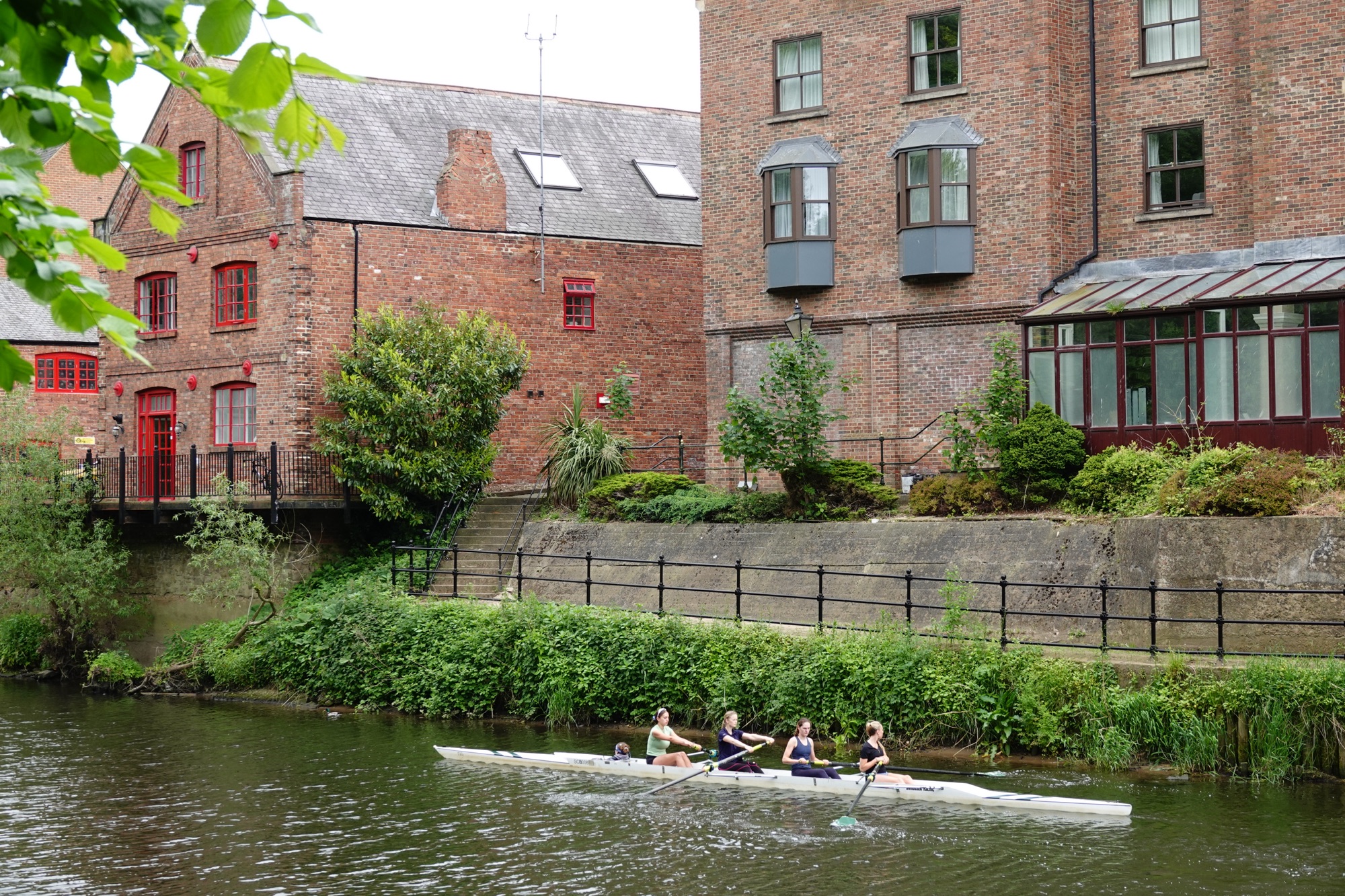
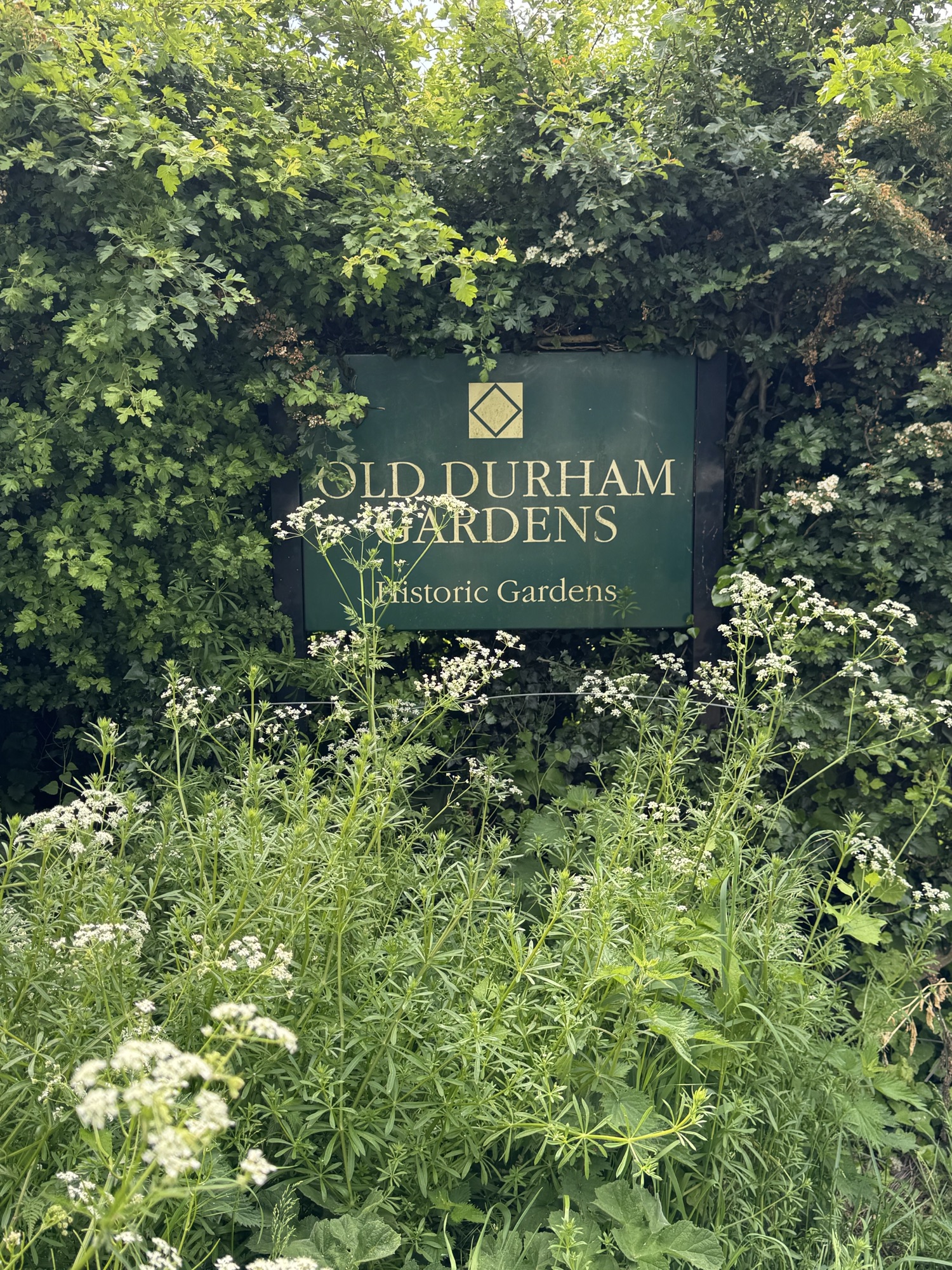
We walked all the way to Old Durham Gardens,
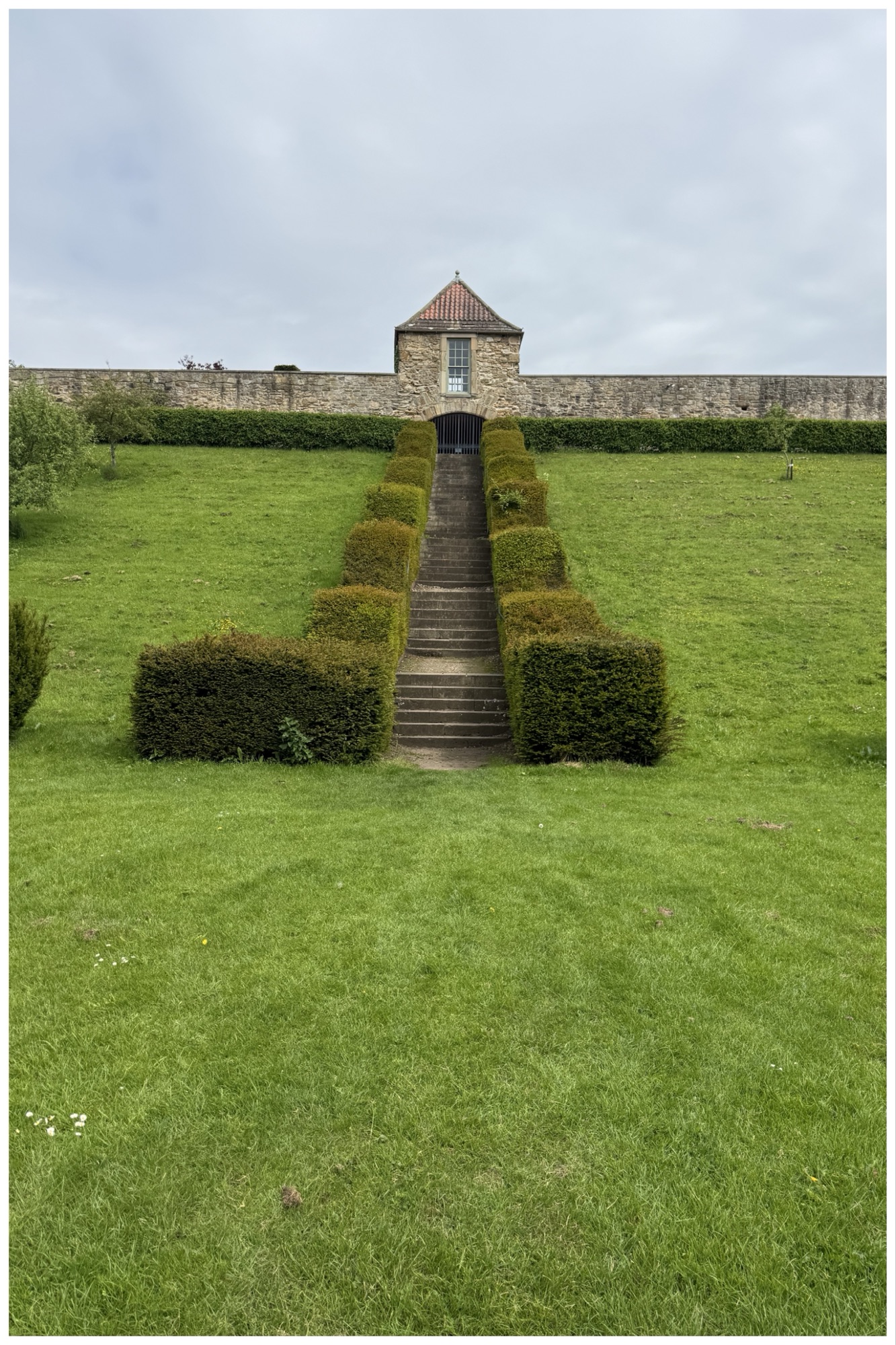
From the riverside pathway, the first thing we noticed was the staircase leading to the gardens. We’d already done more than 100 in the morning, plus the many hilly roadways, but the sight of another 40 definitely made Ted sigh.
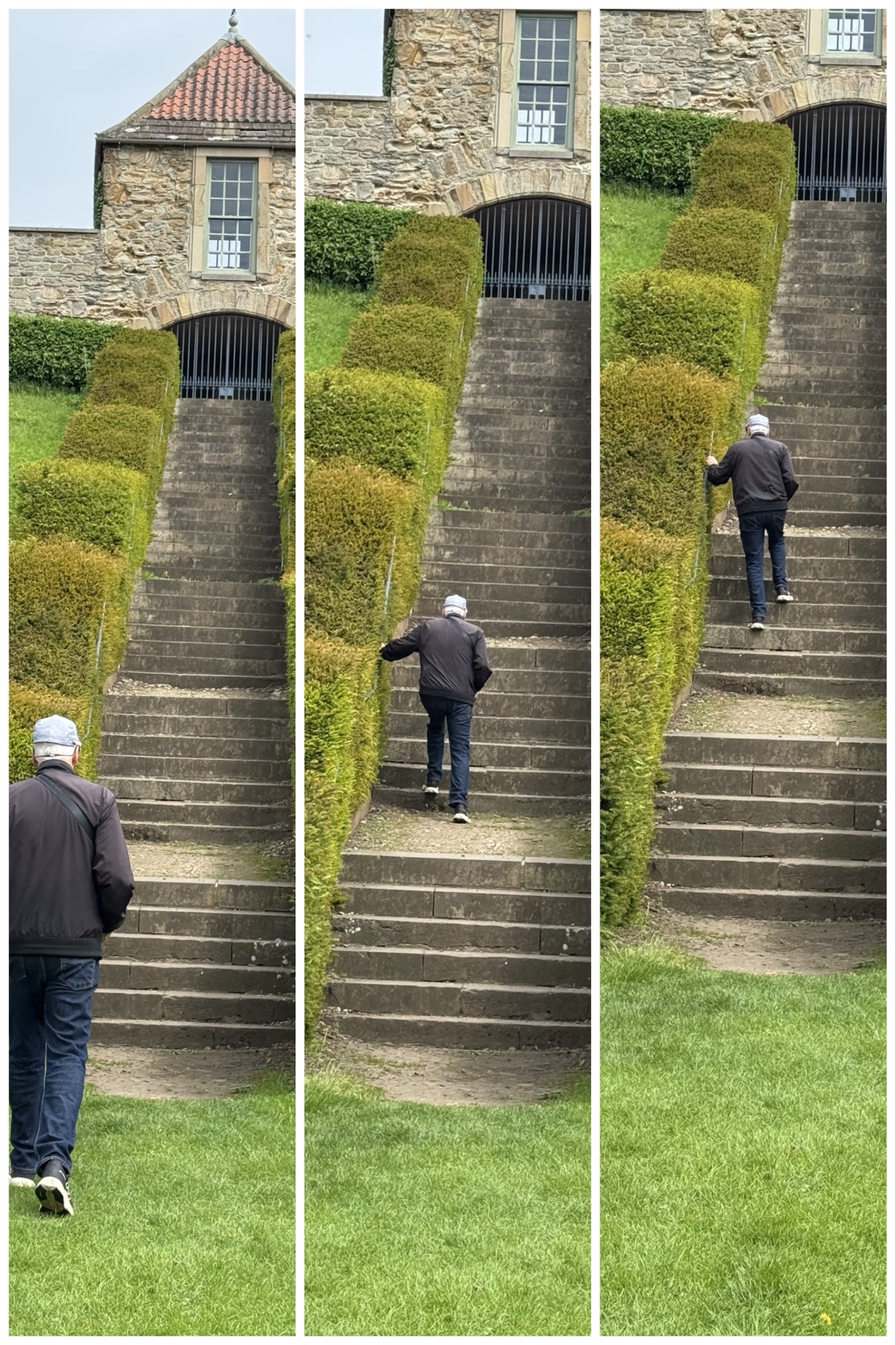

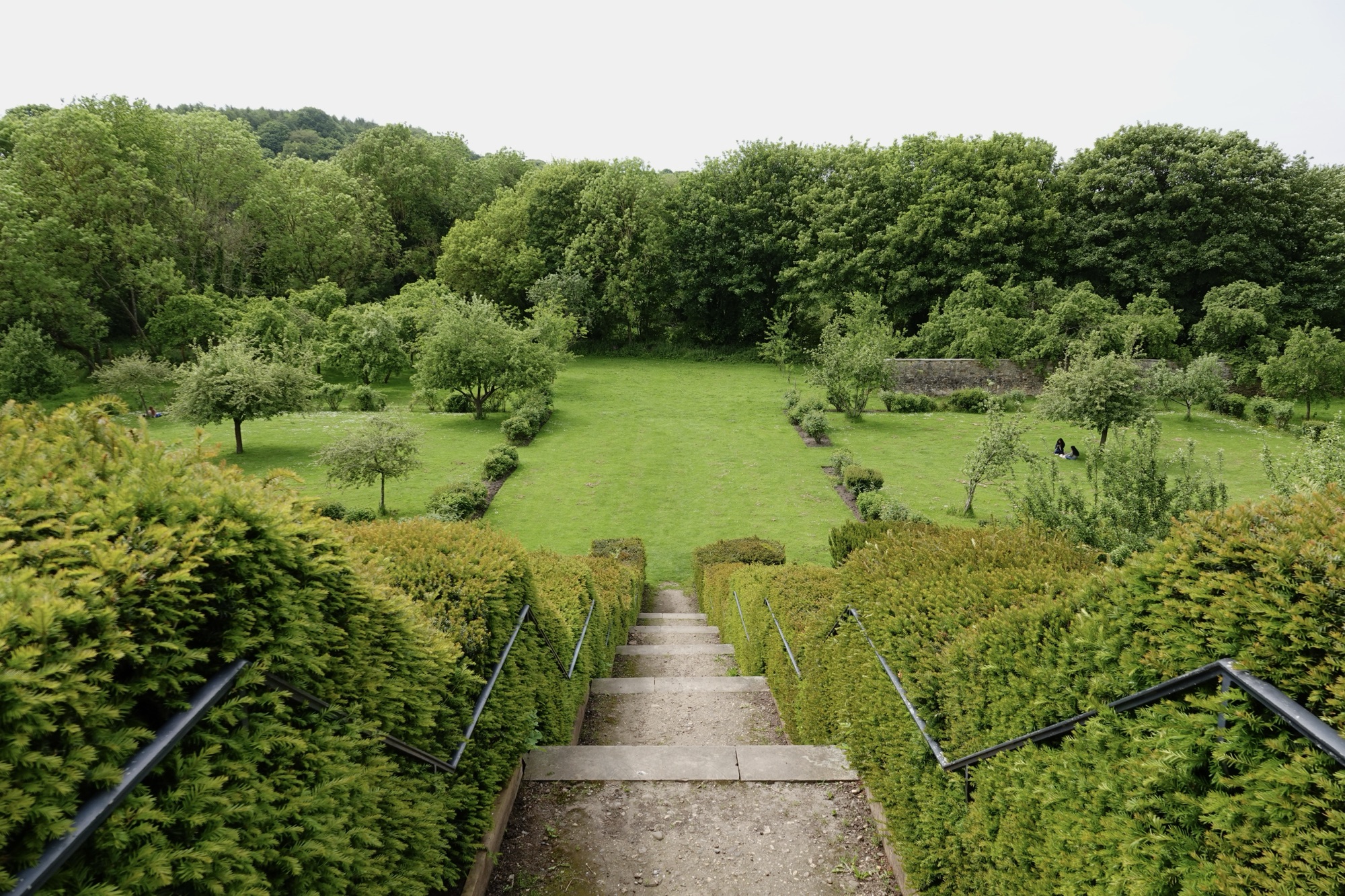
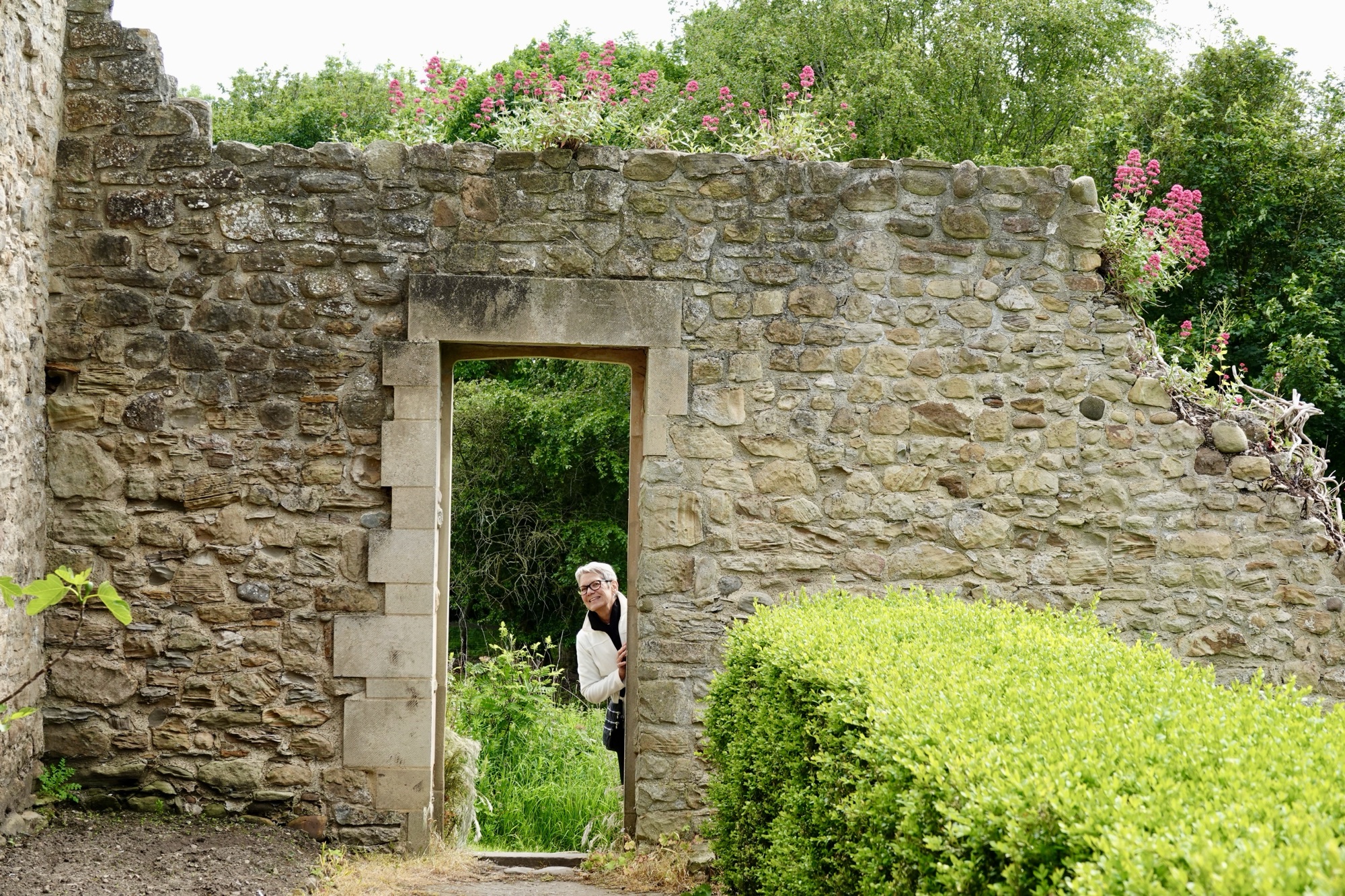
From the top of the stairs, we needed to walk the perimeter of the walled garden to reach the entrance.
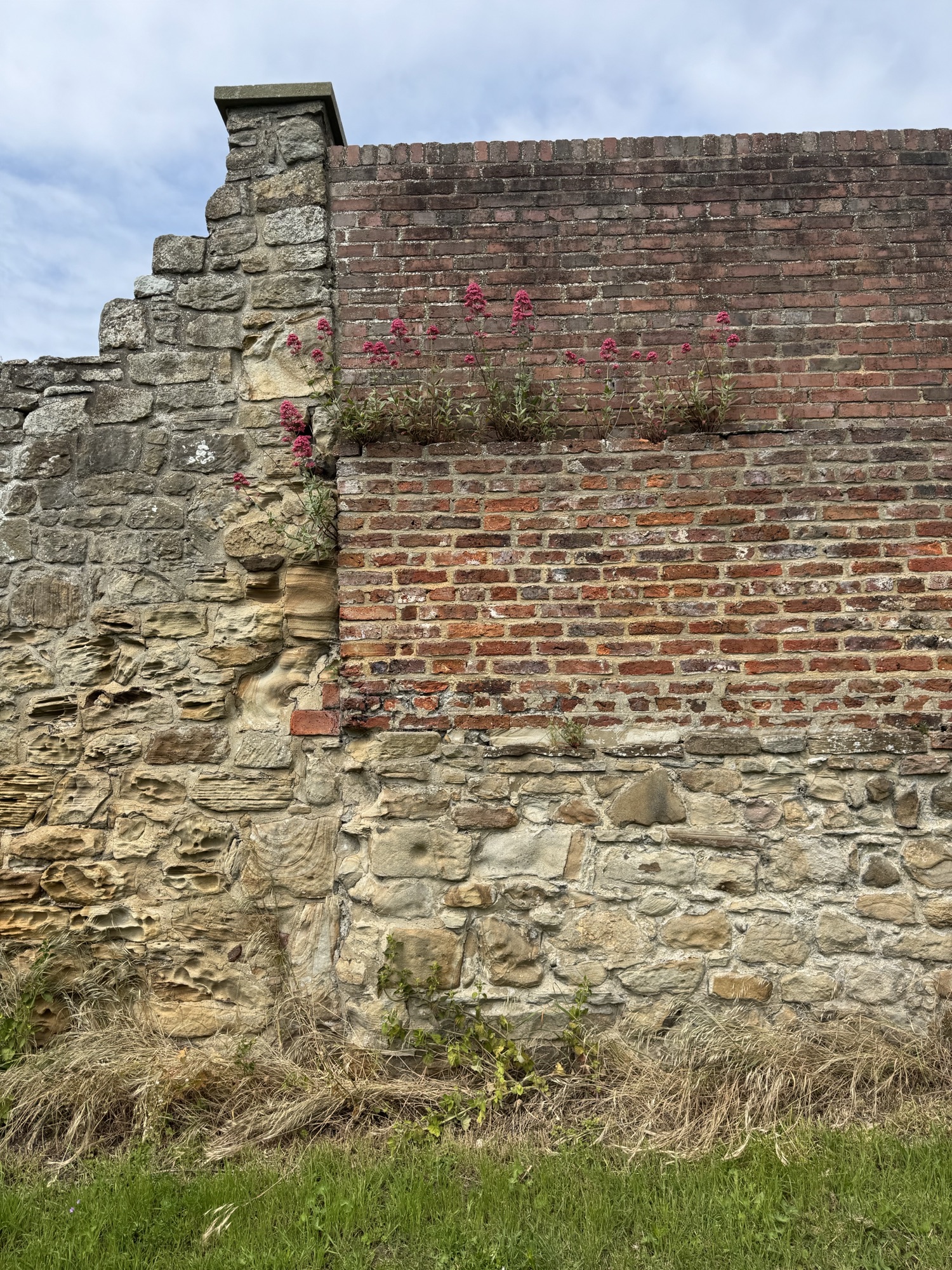
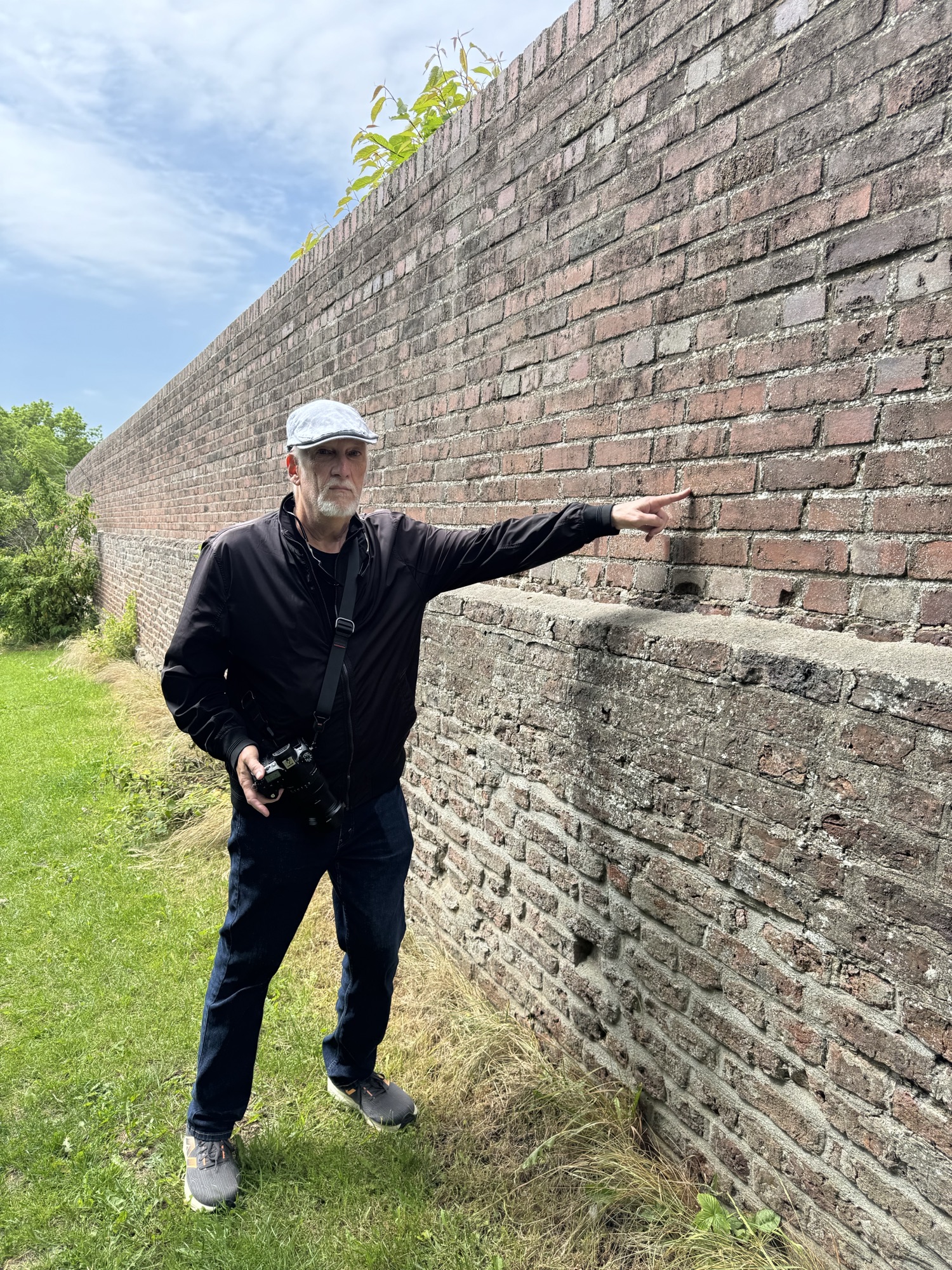
He said, “All in all, it’s just another brick in the wall”.
We got there only to discover that the gardens are only open Thursdays through Saturdays, April to September. We’d chosen the right month, but not the right day, so simply took a few pictures through the iron gates.
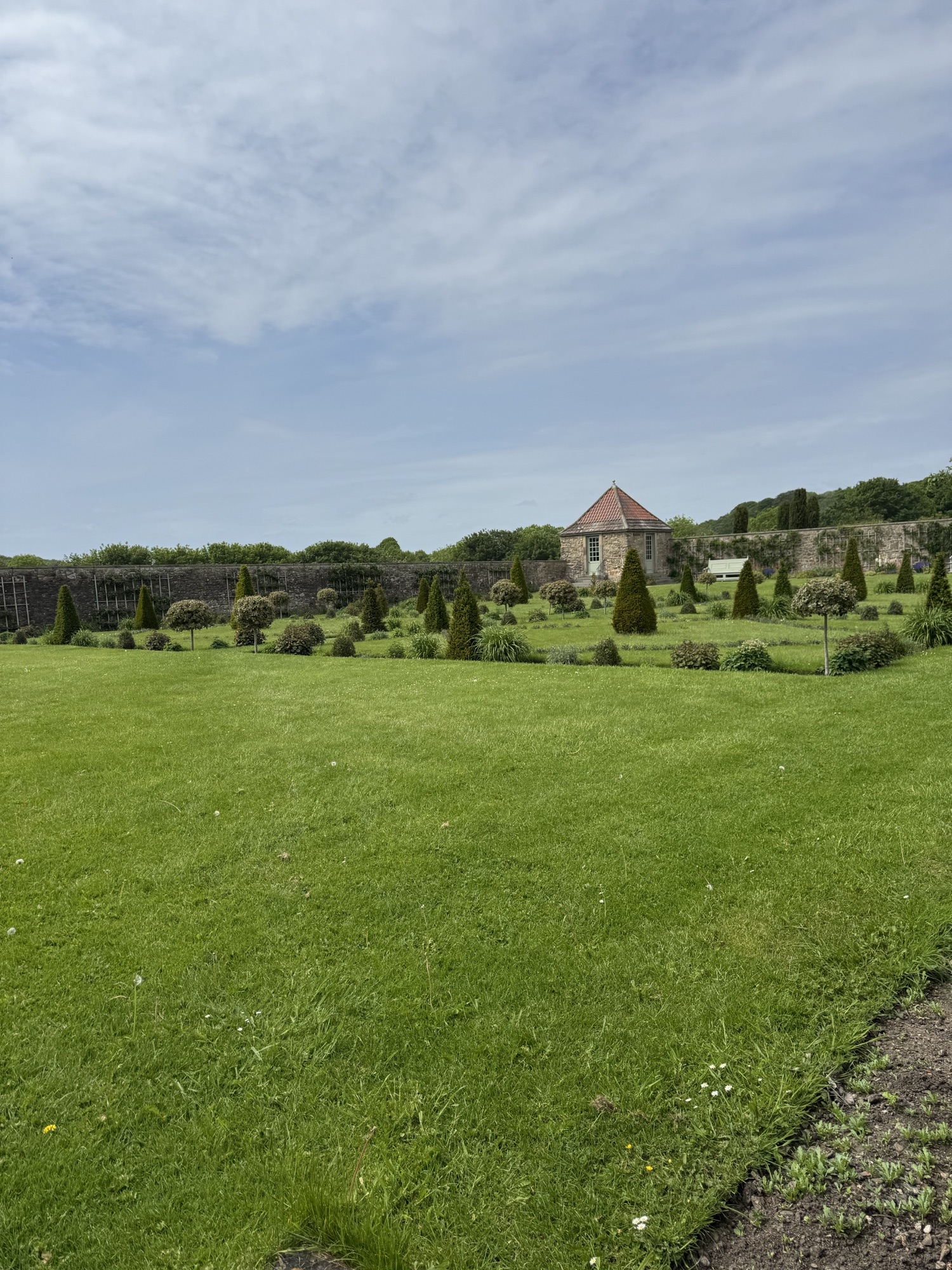
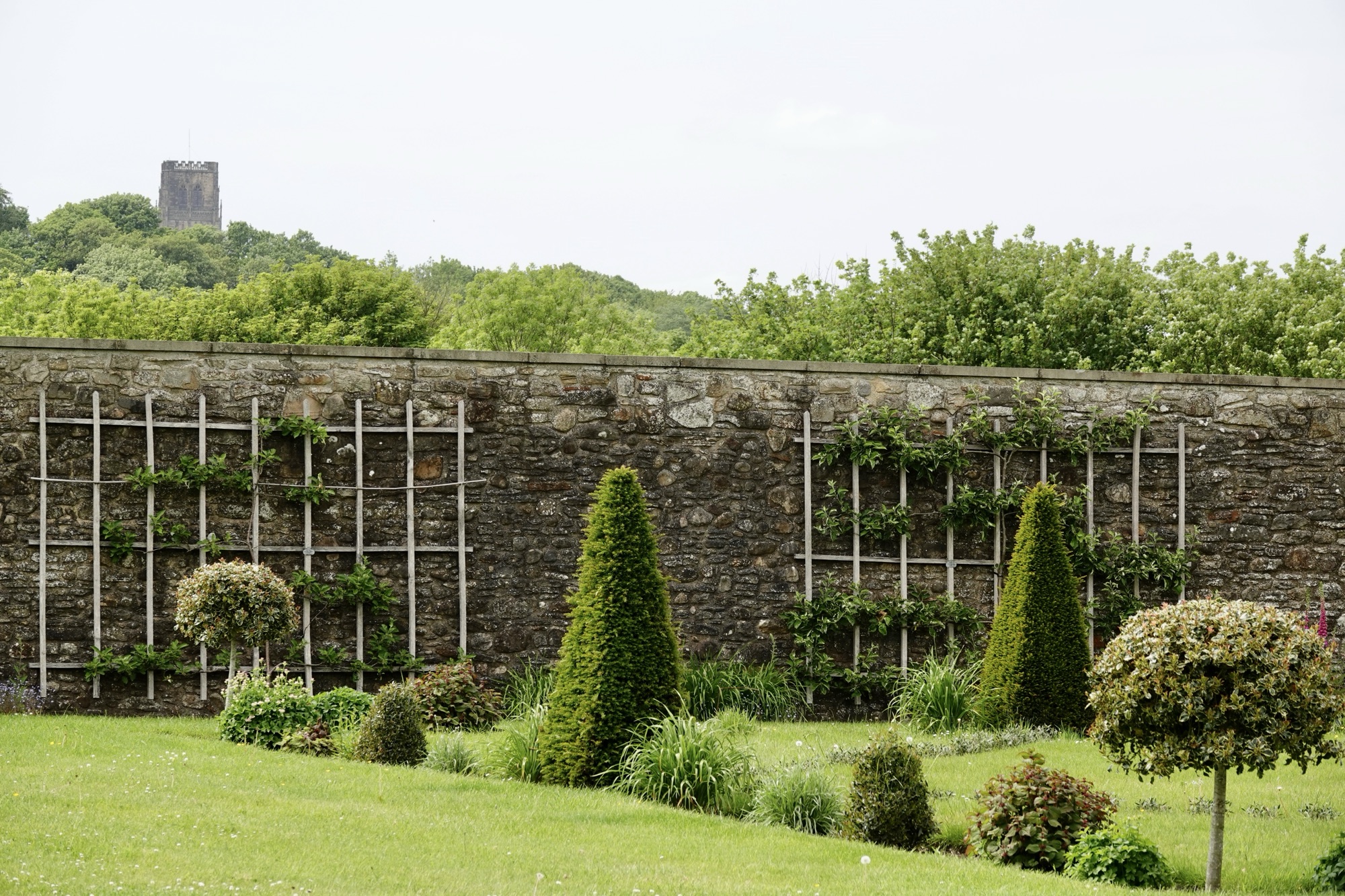
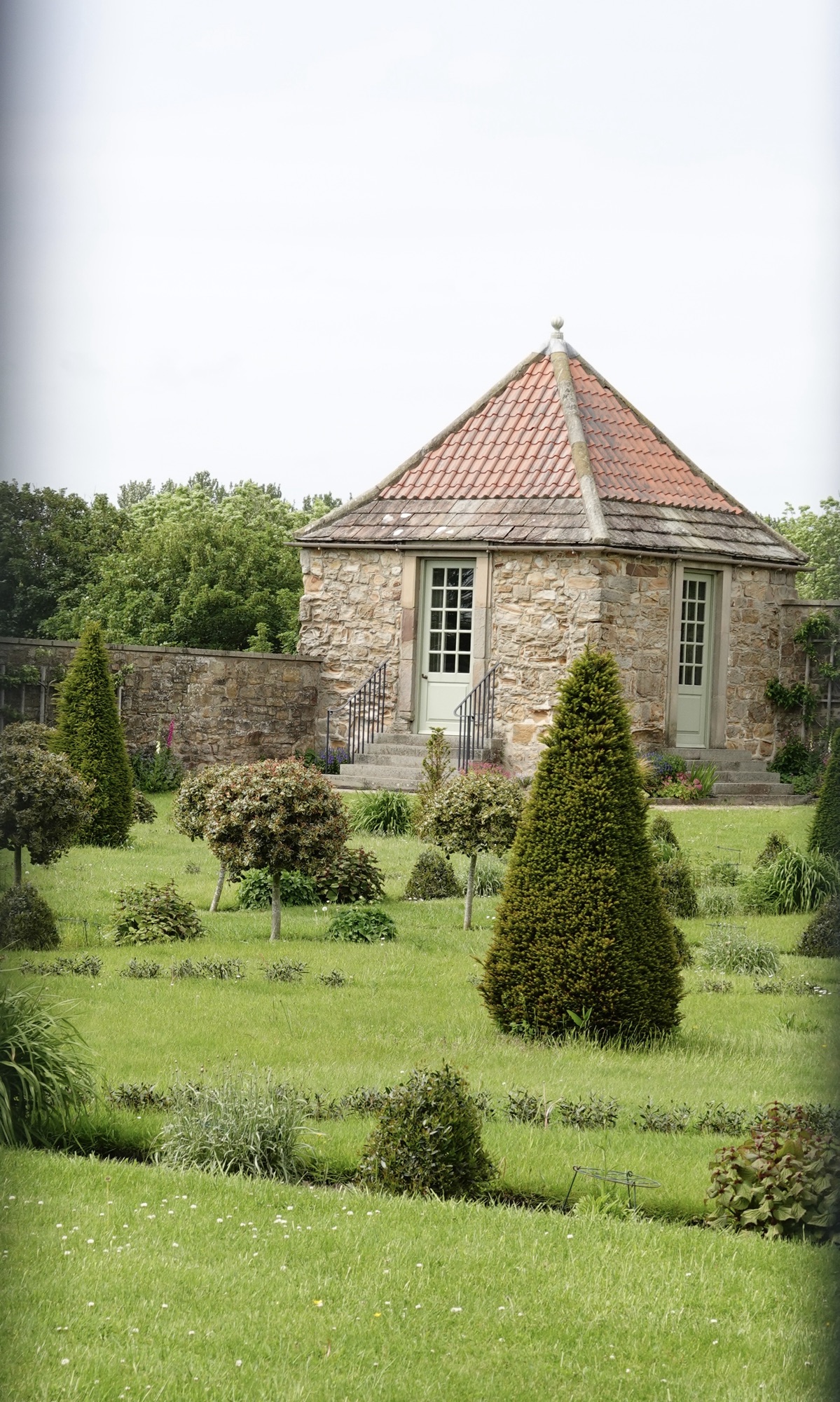
Then we turned around to walk back into the city centre for an early pub dinner.
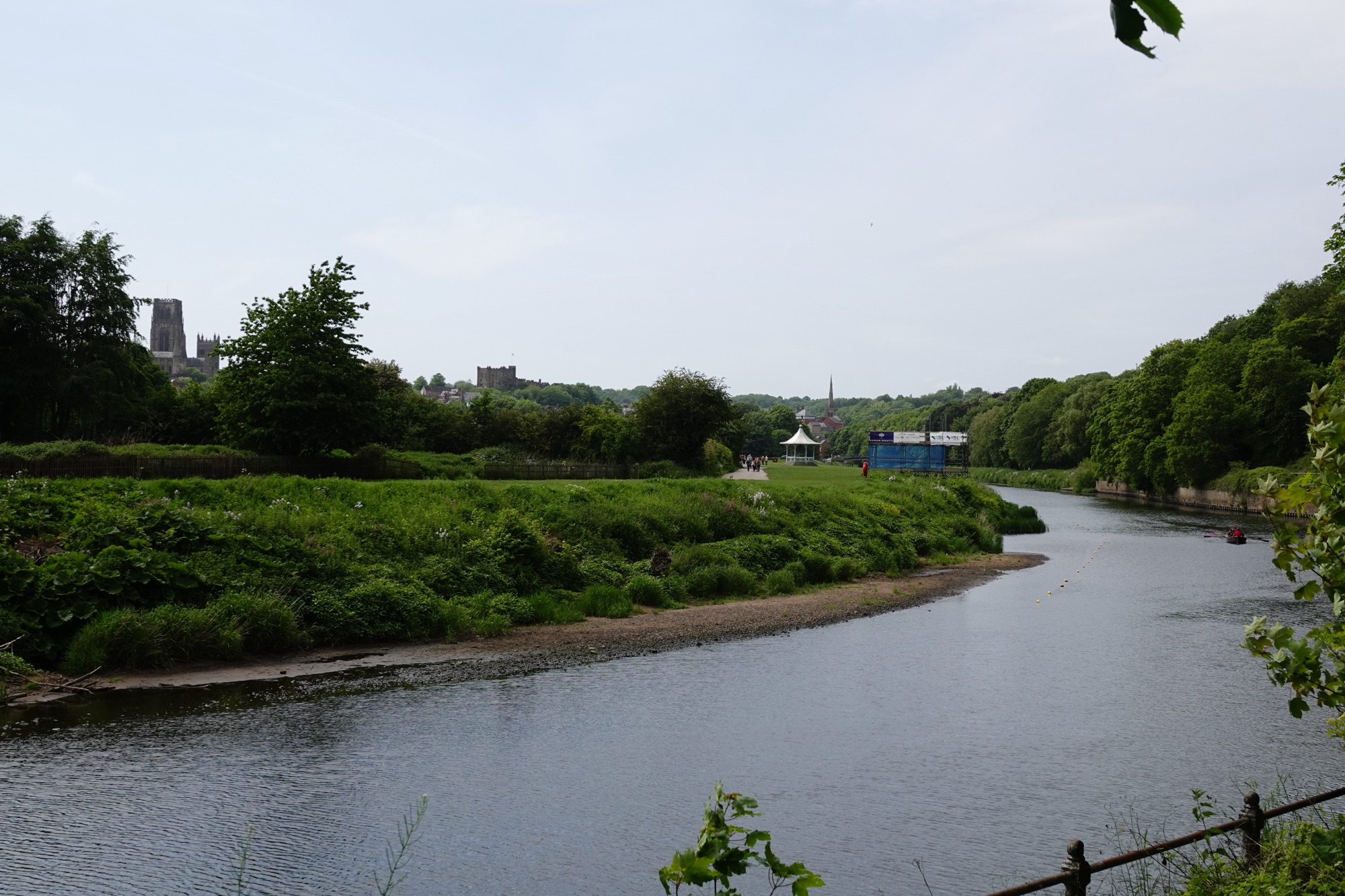
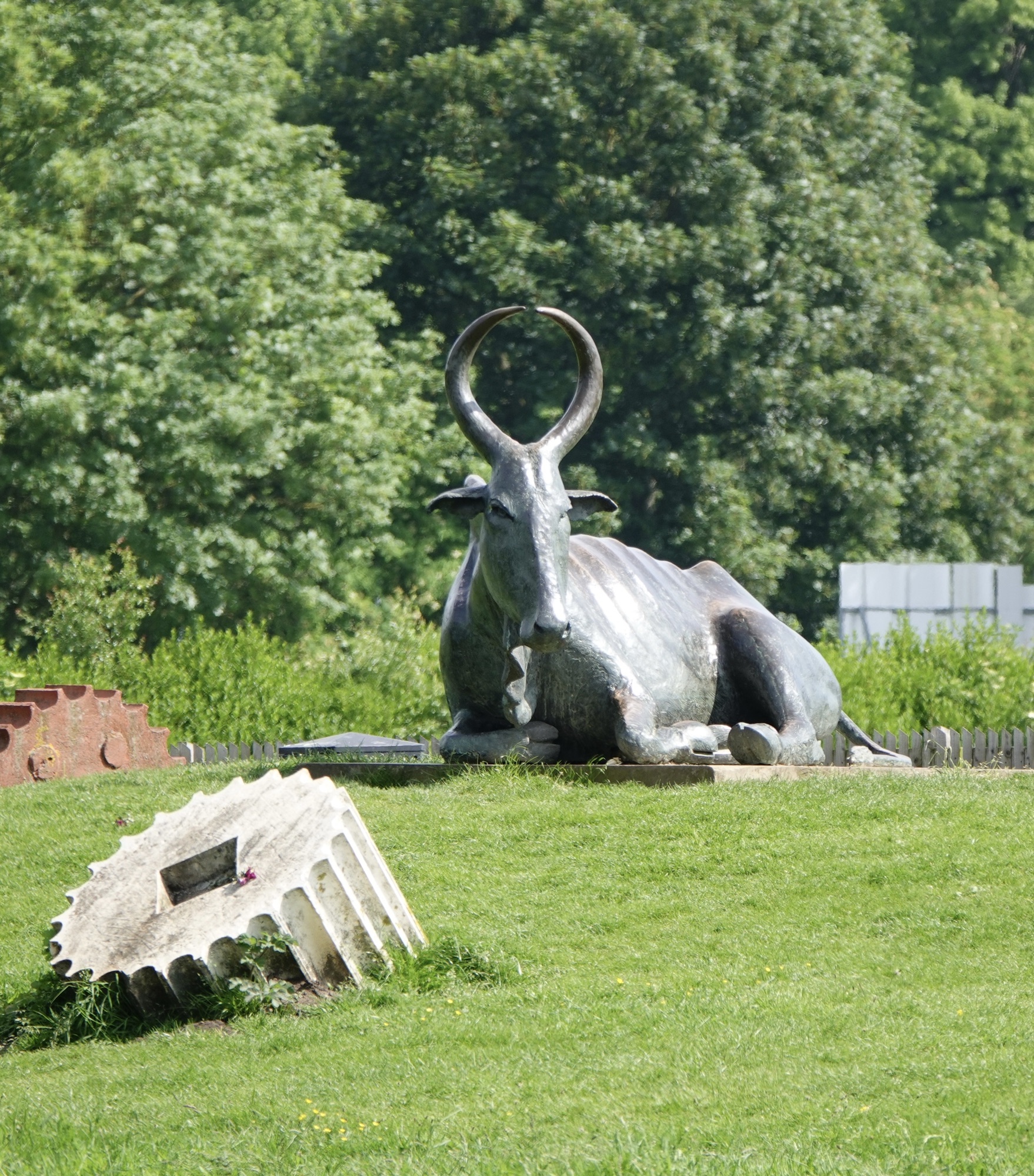
We got a view across the river of the Durham Cow, she of the Saint Cuthbert legend who was lost by the milkmaid and found on “dunholm” – a hill surrounded by water – that fit the description of where the Saint had “told” (via telepathy, I guess, since he’d been dead for years) the monks transporting his body that he wanted to be buried.
We were pretty happy to sit down for food and drink.
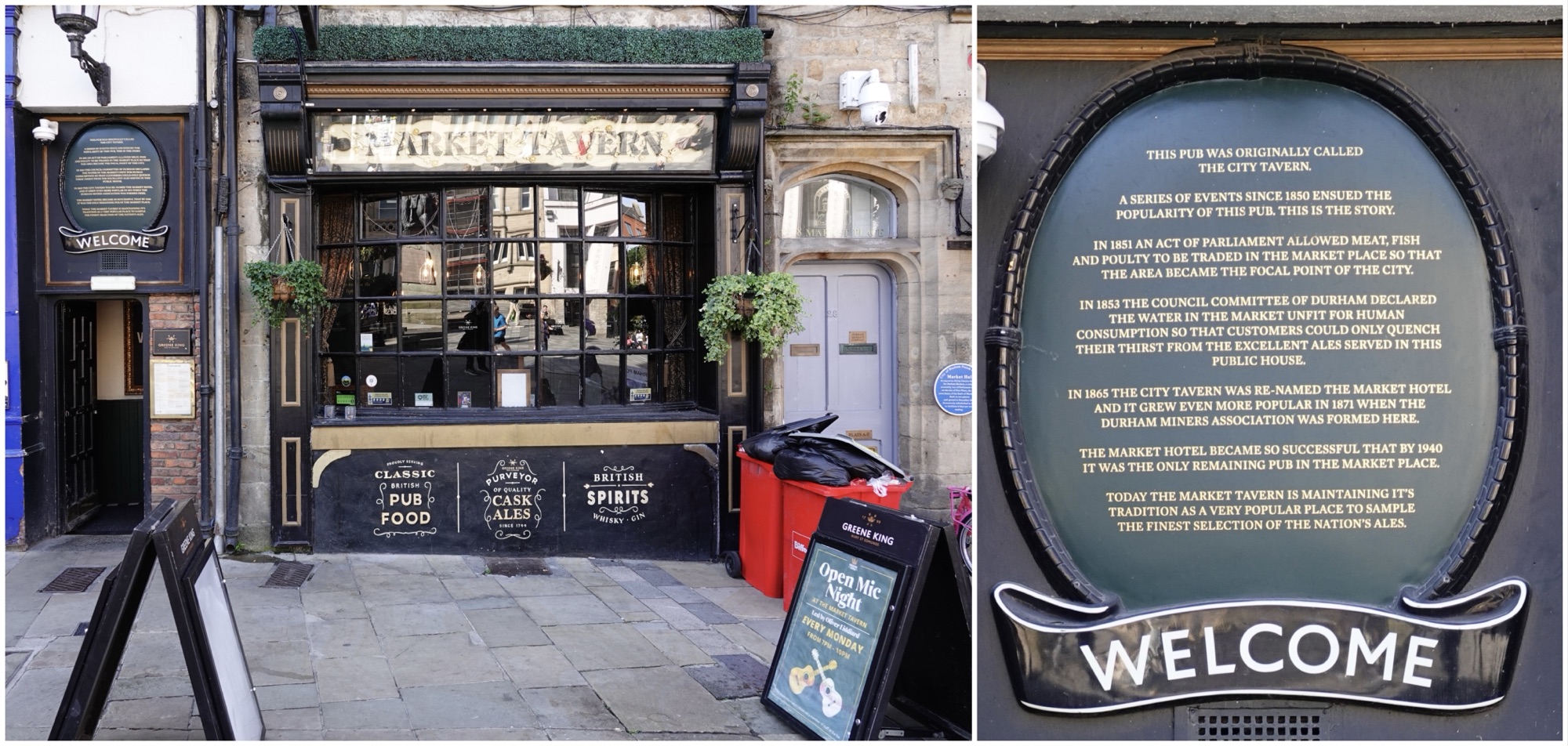

We’re certainly not skimping on getting our walking done each day!
Fun fact: The name “Durham” comes from the Old English word dun(hill) and the Old Norse word holm(island). Combined, they formed Dūnholm, which describes the city’s geographical layout.


Nice lamp!Have you ever been to Washington,DC. (Before the current mess.)And seen this?Typewriter Eraser, Sca
LikeLike
No…. Same artist?
LikeLike