Heraklion has a long history of fortification. The Minoans used the harbour for trade at least 2000 years BCE, and the Romans had a well-protected harbour here during their era.
There are no “fort” remains from those periods, only remnants of villas and palaces, but the fort that stands here now replaced was has been verified as a pre existing 7th/8th-century Byzantine tower, erected to guard the city against the incursions of Saracen pirates. Eventually, that tower proved to be insufficient, and the city was occupied by the Arabs in the early 9th century CE.
Then, taken directly from greeka.com:
“In 1211 CE, the city was conquered by the Genoese, and, some years later, it passed into the control of the Venetians, who reconstructed the Byzantine fort.
After being severely damaged by devastating earthquakes both in 1303 and in 1508, it was decided that the tower should be pulled down, so that a new fortress, better suited to the needs of warfare after the introduction of gunpowder, could be built in its stead. Construction works began in 1525, using a very interesting method: the embankments needed for the fort’s expansion were made by filling old ships with stones and sinking them just outside the north side of the mole. In this way, the ships functioned as breakwaters. Works finished in 1540 and the new fort was called Rocca a Mare (fort by the sea)”
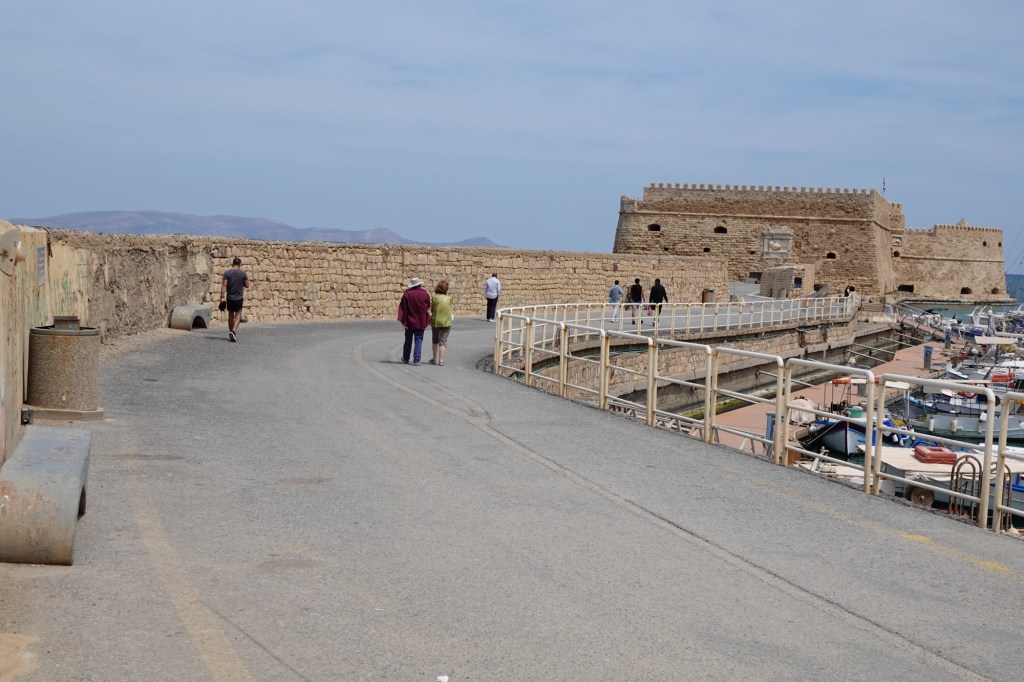
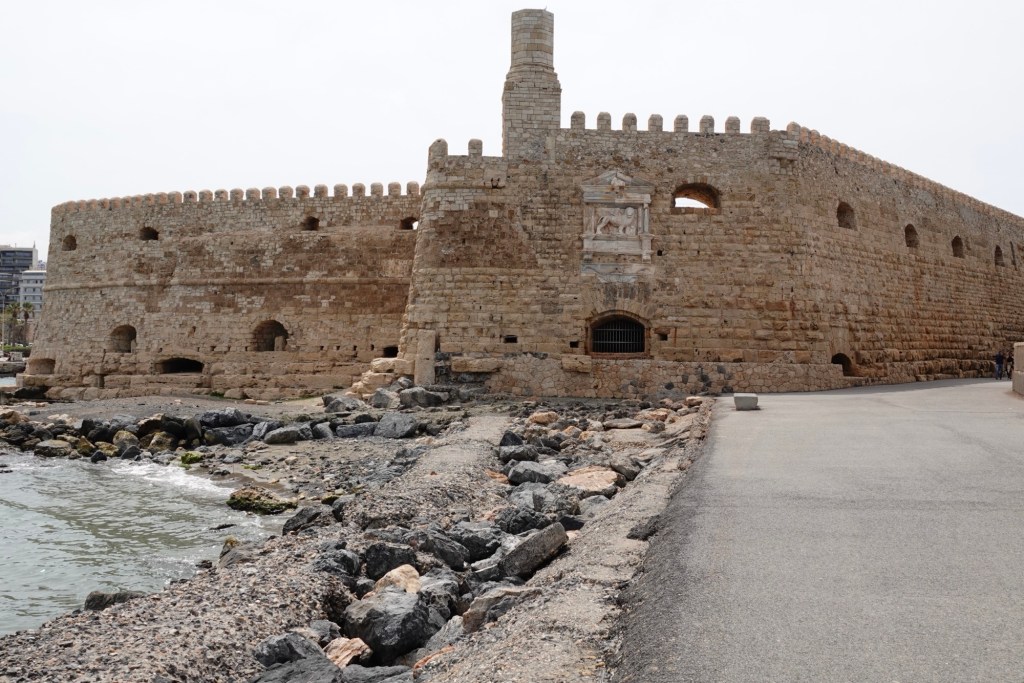
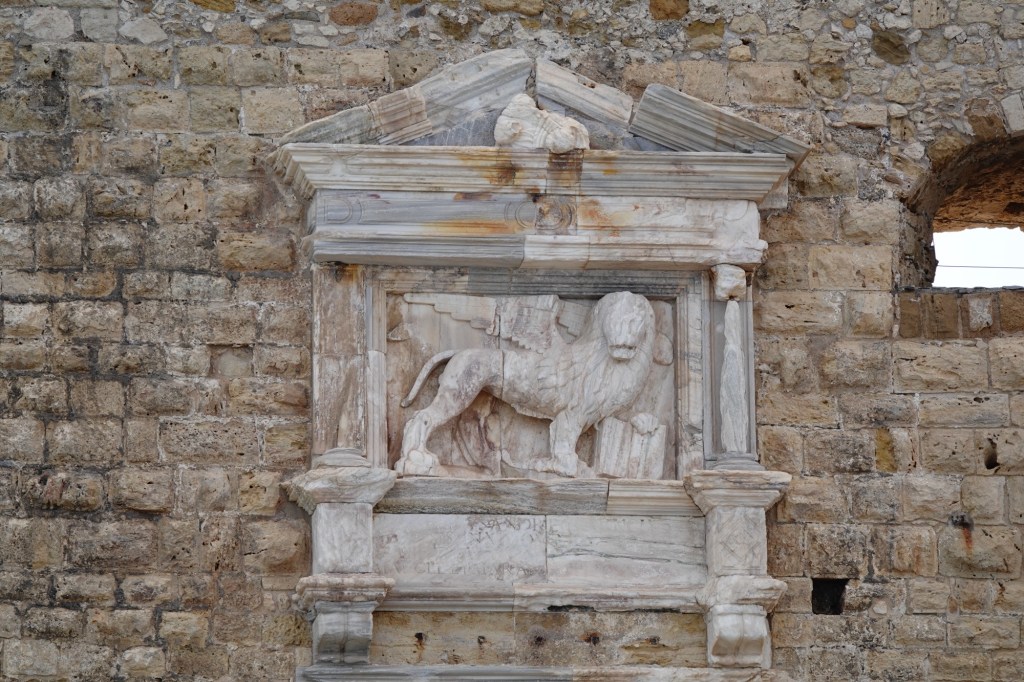
During Ottoman rule, after Heraklion fell in 1669 CE, the fort was often repaired, but it did not undergo any significant modifications, apart from the addition of battlements with openings for cannons and rifles. That means that what we toured today is essentially the same mid 16th century building that, in combination with the city walls, repelled the Ottoman Turks for 21 years in the 17th century.
I was excited to be able to visit a site where the history is well documented.
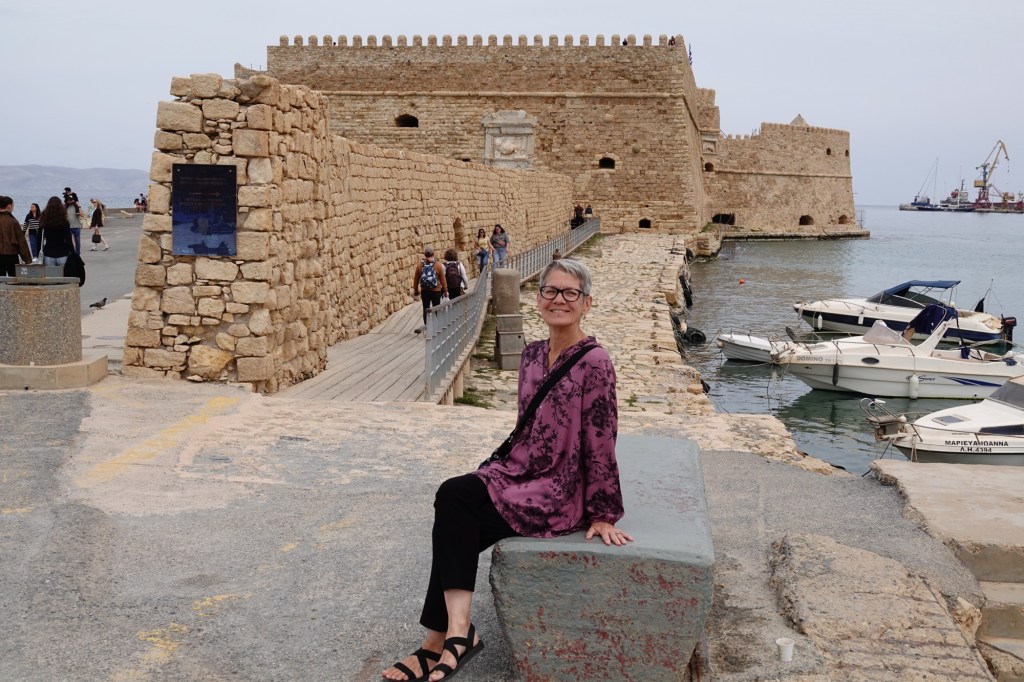
It happens more frequently as we travel more: that sense of not quite déjà-vu, but a memory sharply brought back.
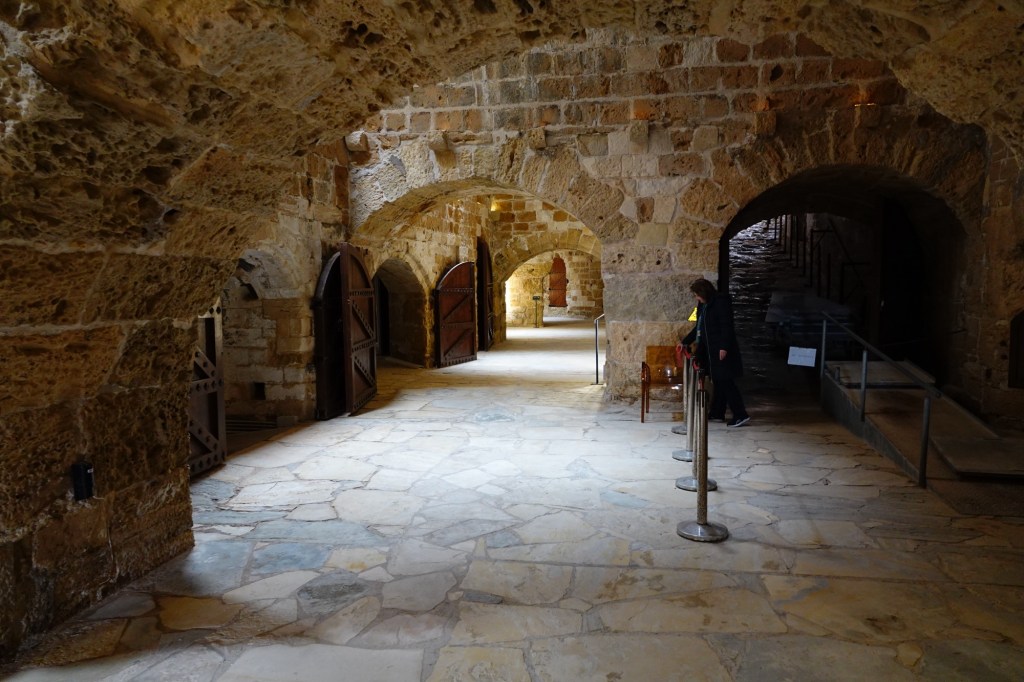
As we stepped into Heraklion’s Venetian fortress, I was suddenly struck by memories of walking through the arches of Diocletian’s Palace in Split, Croatia. (Episode 223).
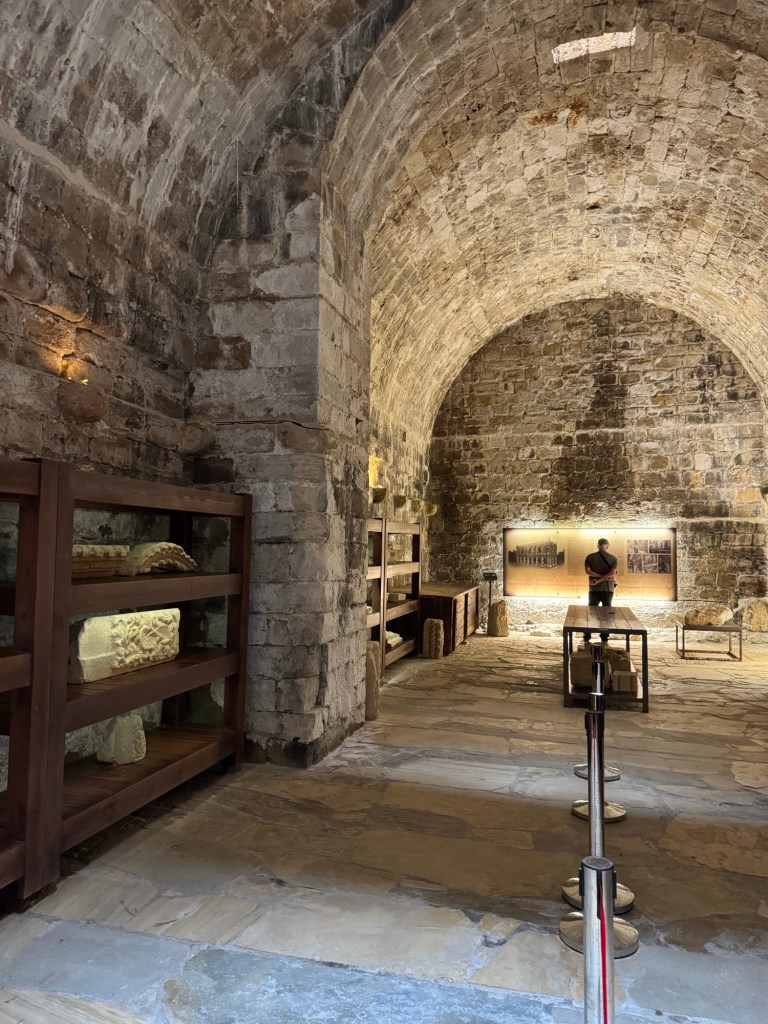
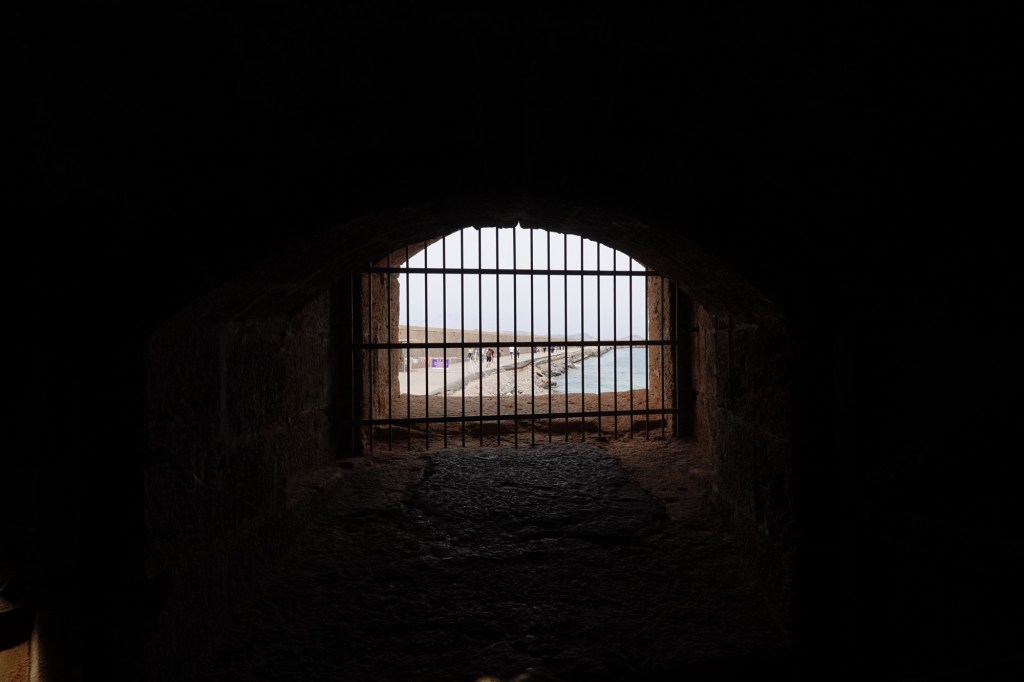
The ground floor consists of 26 rooms/compartments which were used to store supplies and ammunition, while some of them served as prison cells.
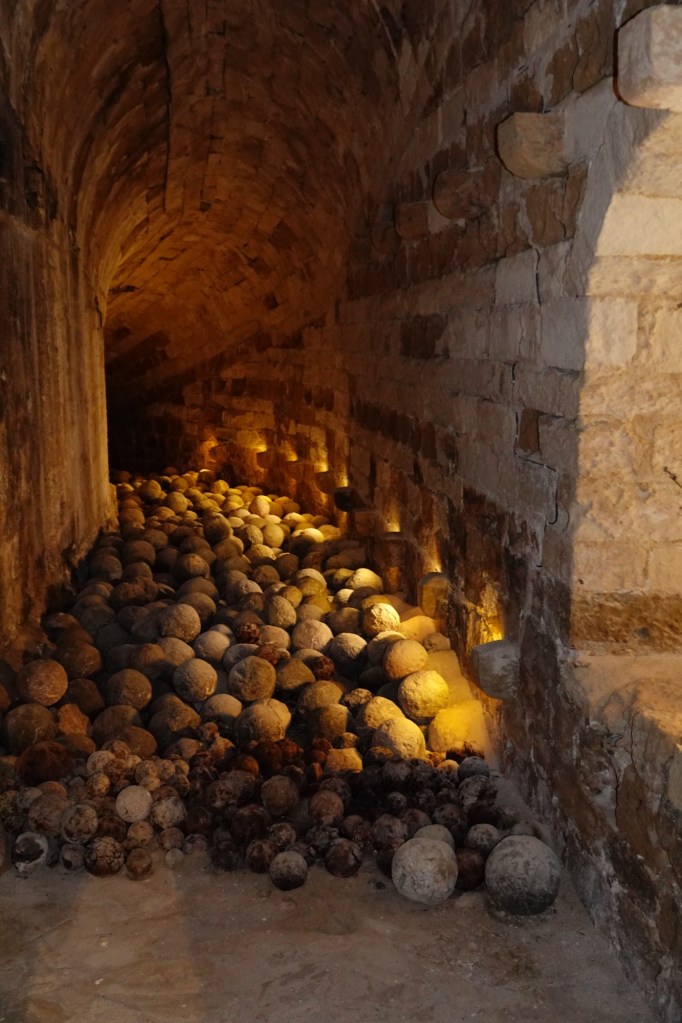
When Crete was conquered in 1211, Venice established in Candia (Heraklion) the administrative center of the island. The importance the Venetians gave to the city is evident by the fact that Candia was the first town they conquered and the last they abandoned to the hands of the Ottomans, four hundred and fifty years later, after a fierce resistance that lasted 21 years.
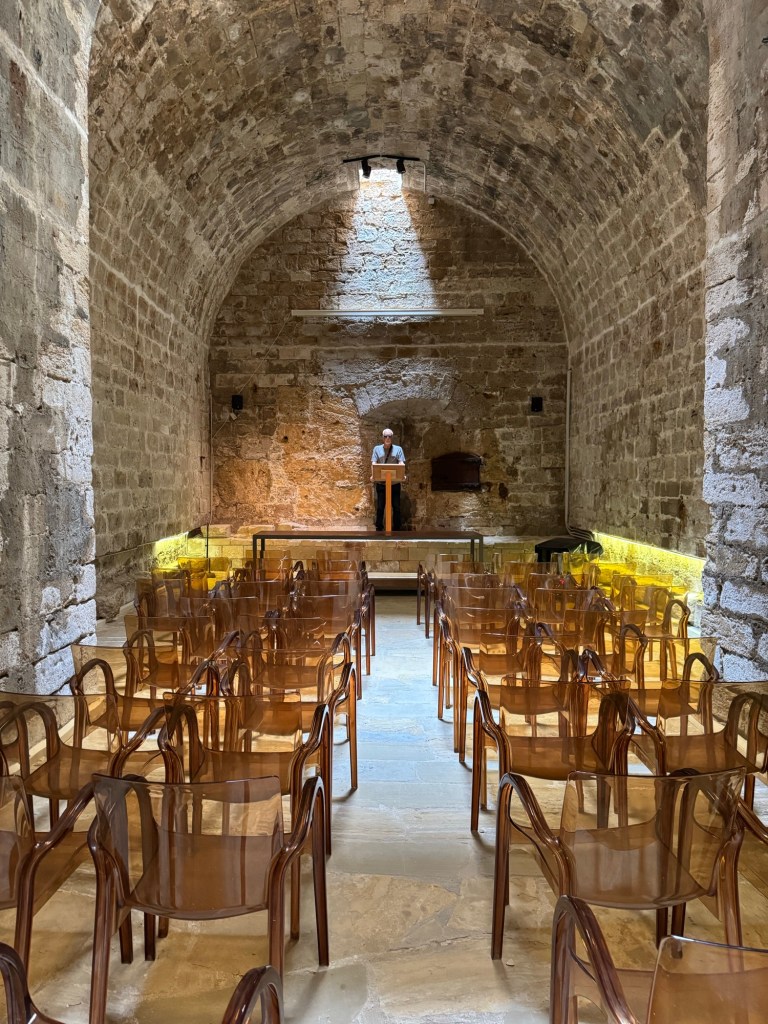
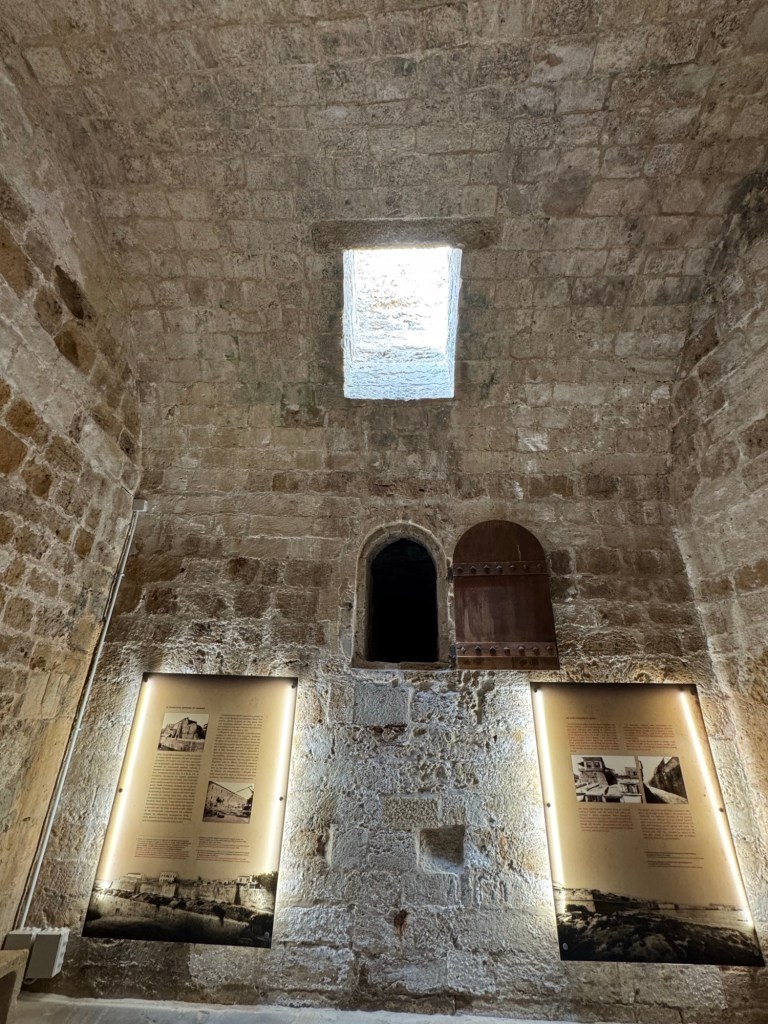
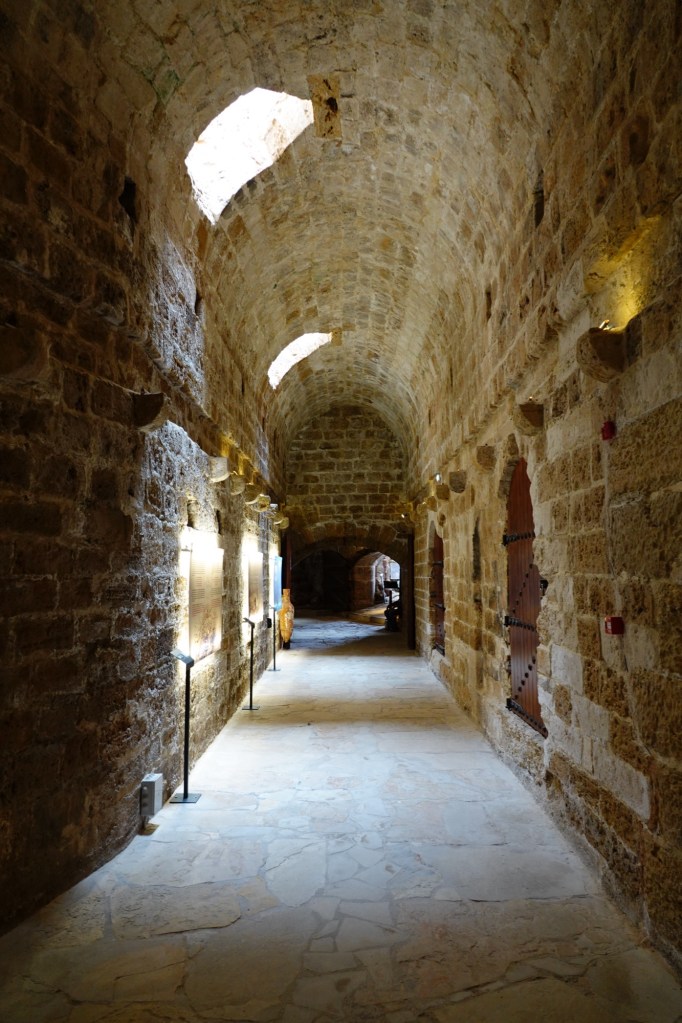
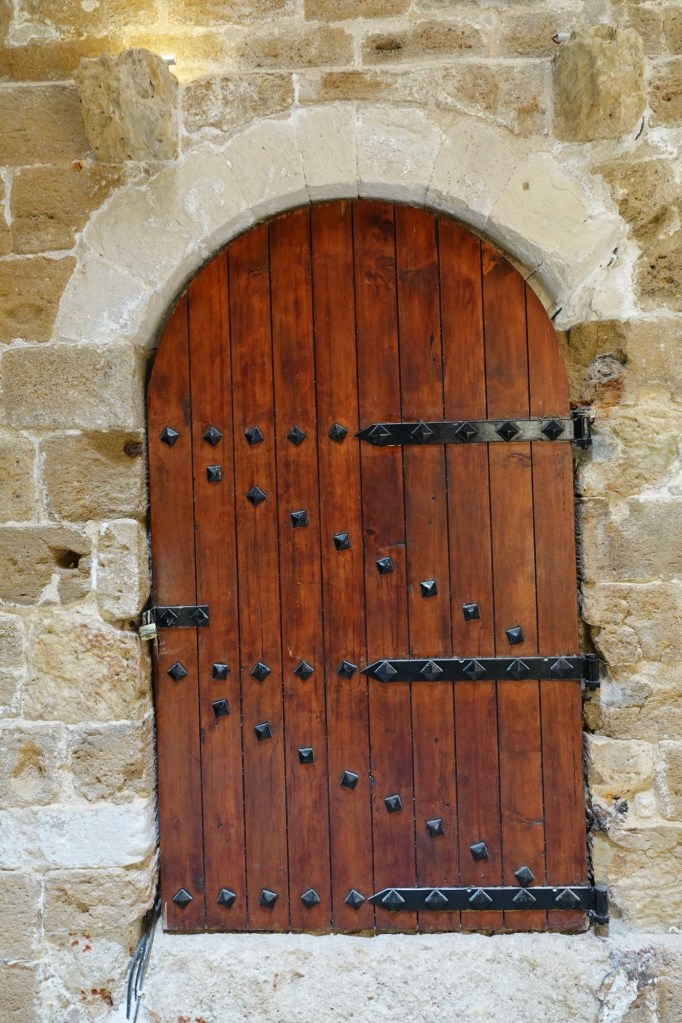
I suppose that to some extent, every conquered fort has a sad story, but Heraklion’s story – and as a corollary all of Crete’s – was expressed very movingly here.
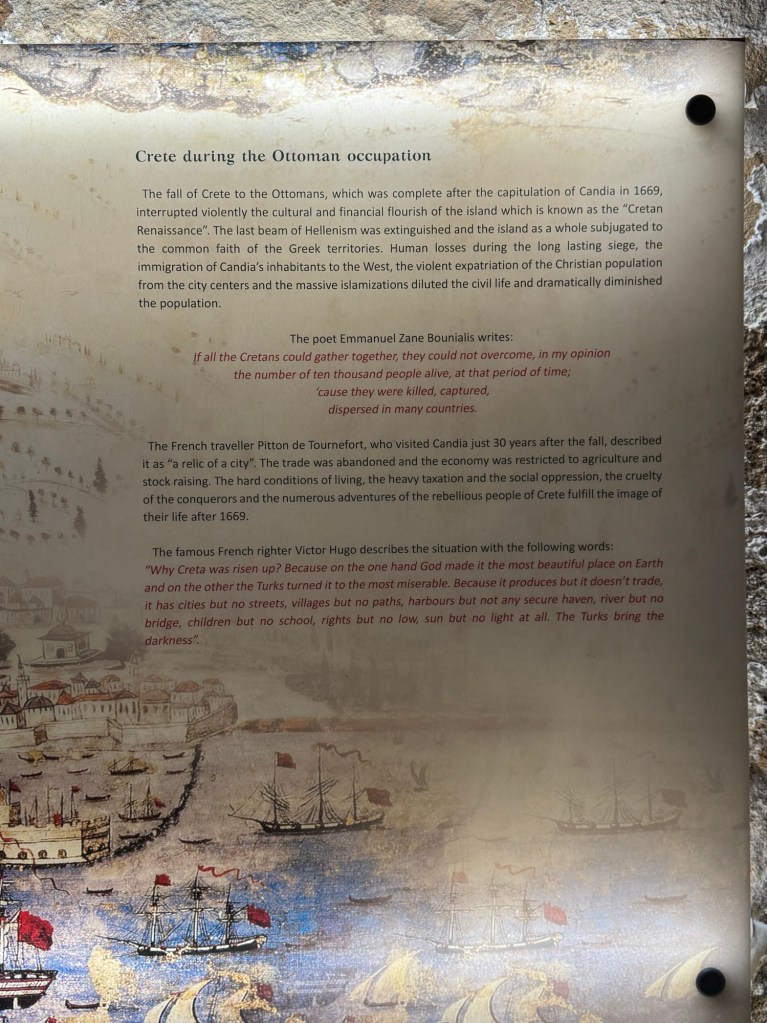
Note Victor Hugo’s words on the sign below:
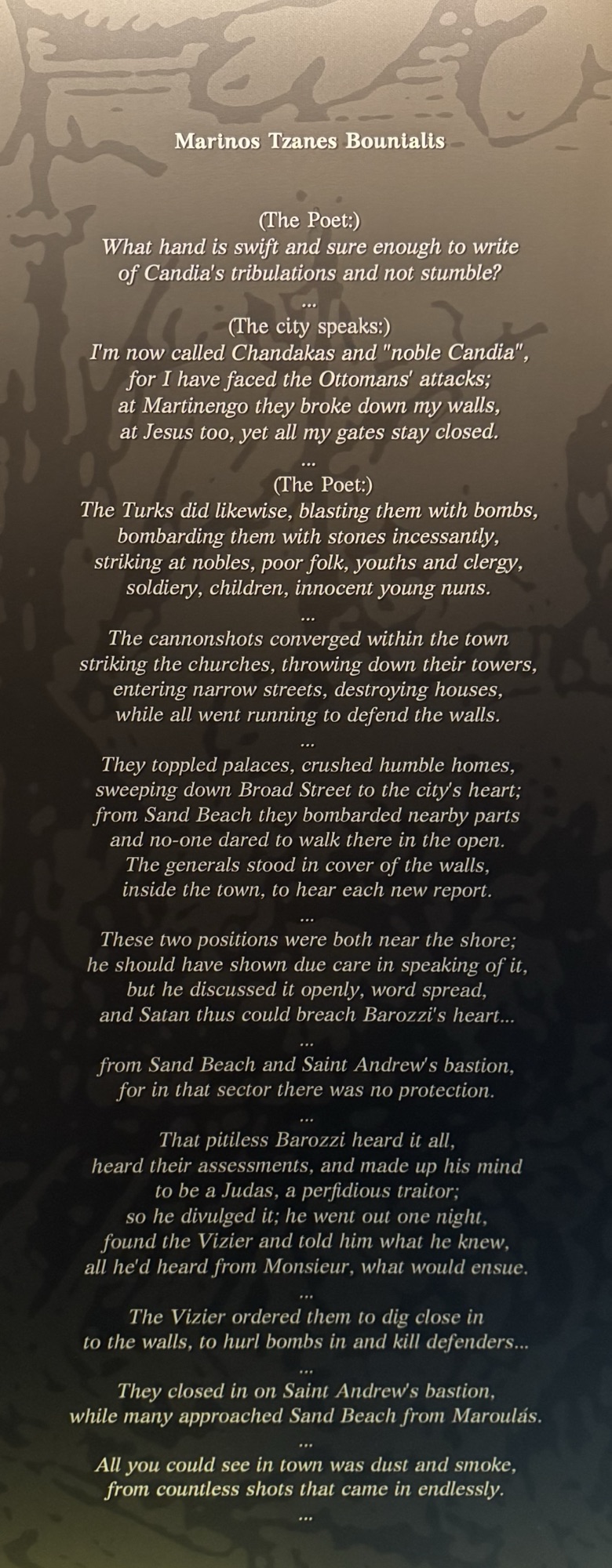
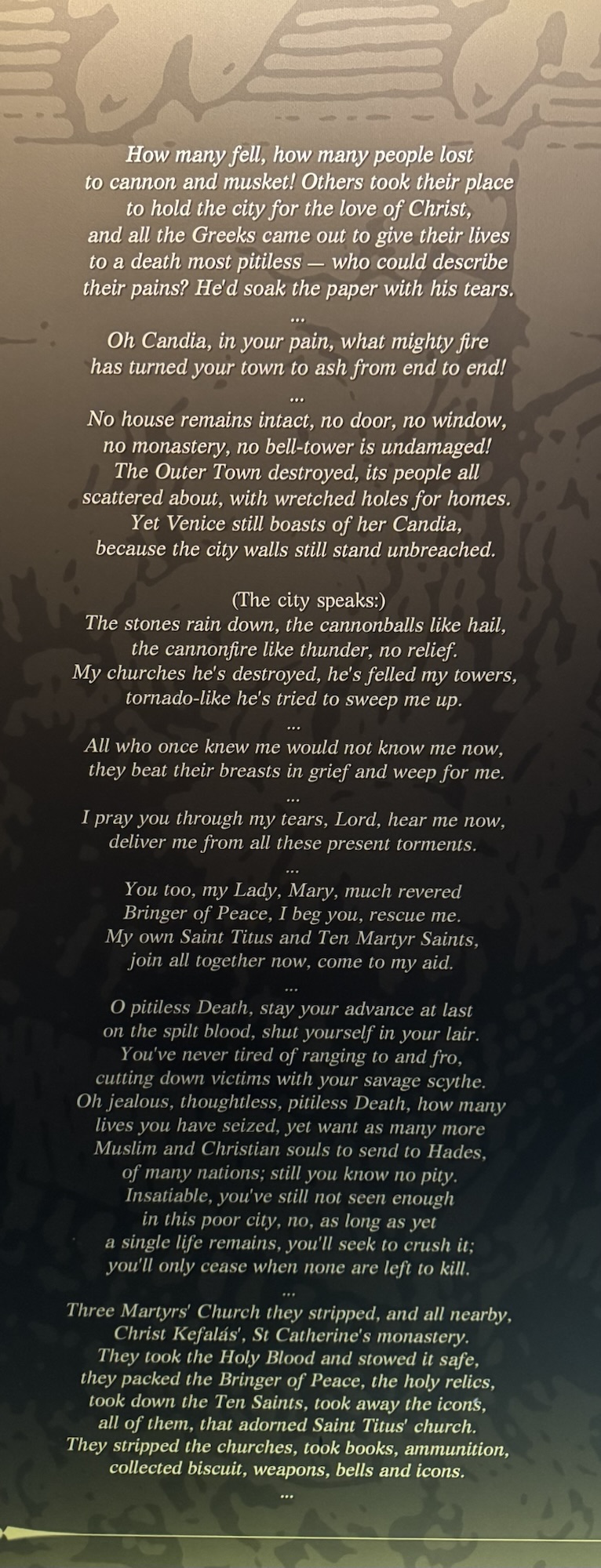
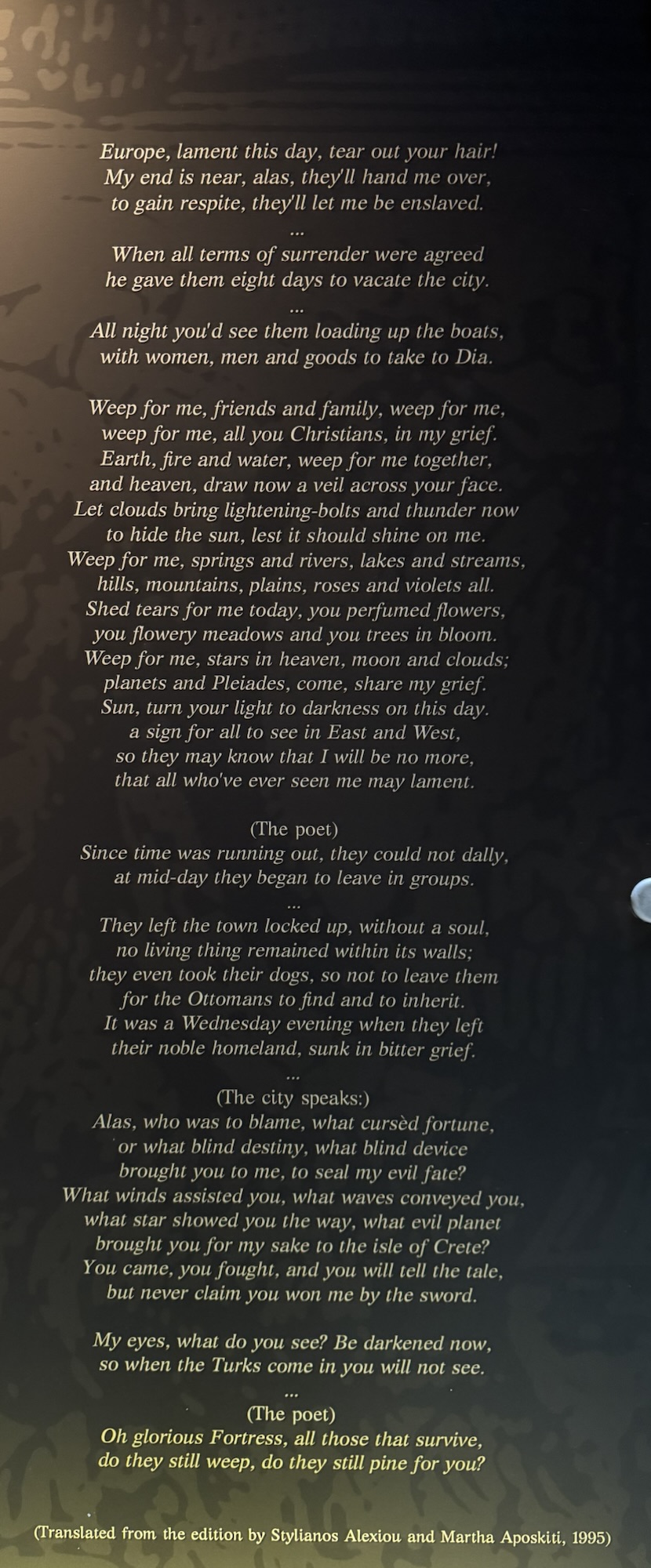
There was a very moving poem, translated into English, that described the fall of Heraklion (Candia) to the Ottomans. It’s quite long, but it impressed me so much that I wanted to save an image of it.
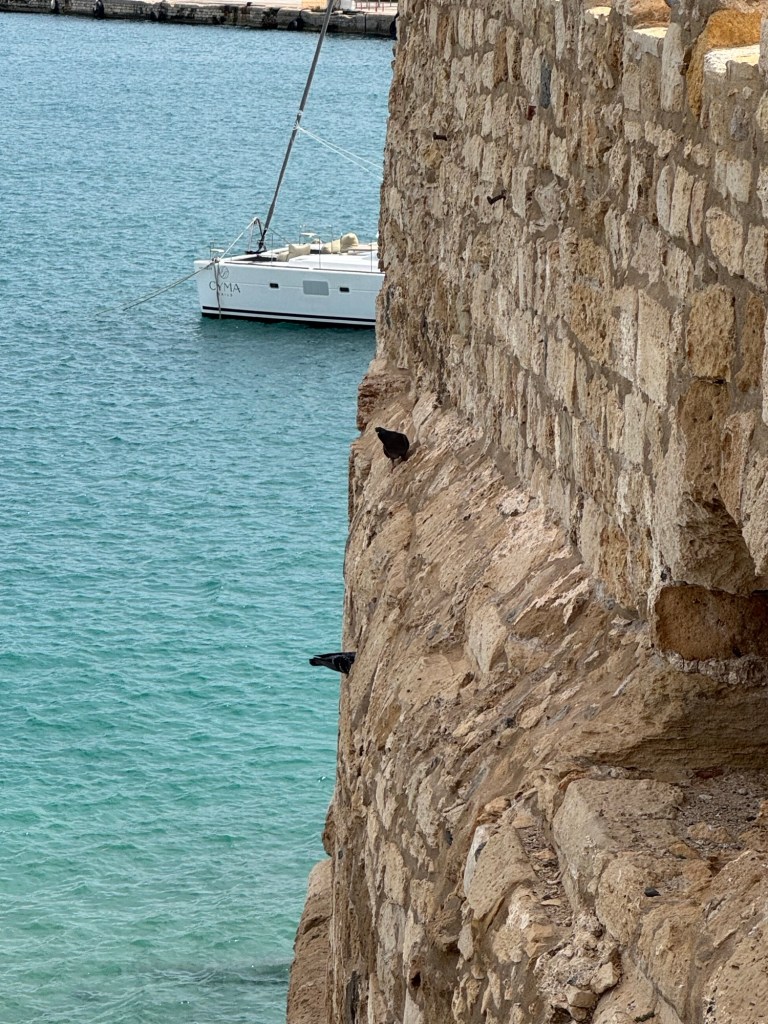
Not just the fort, but also the sea around it bore witness to history.
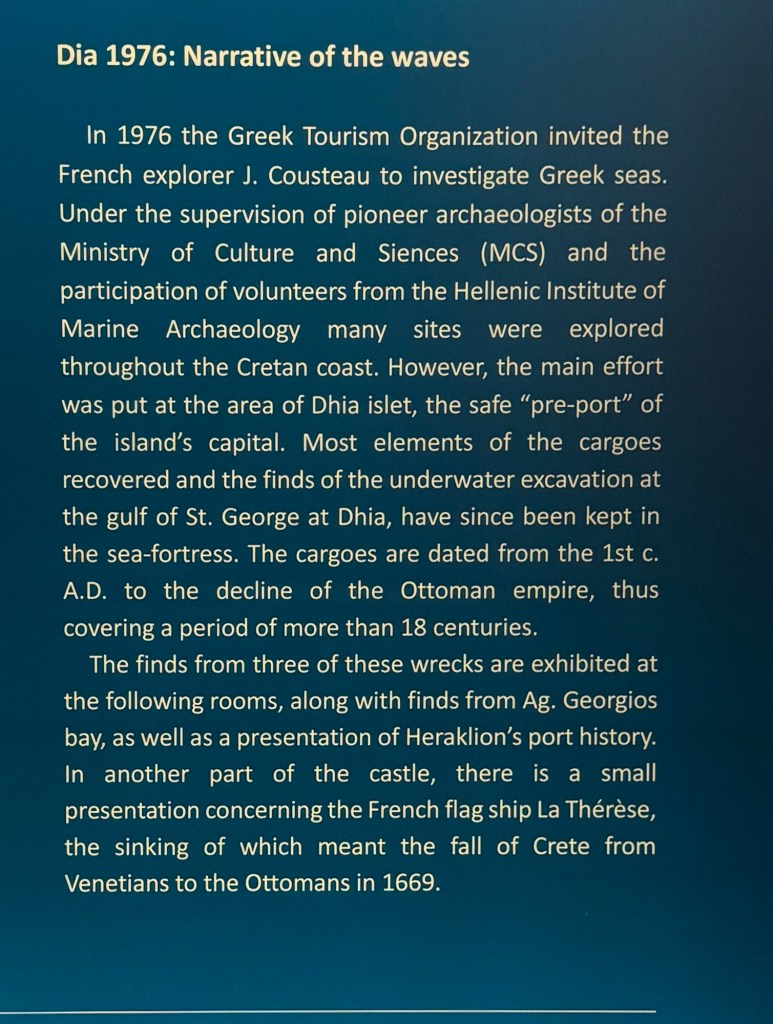
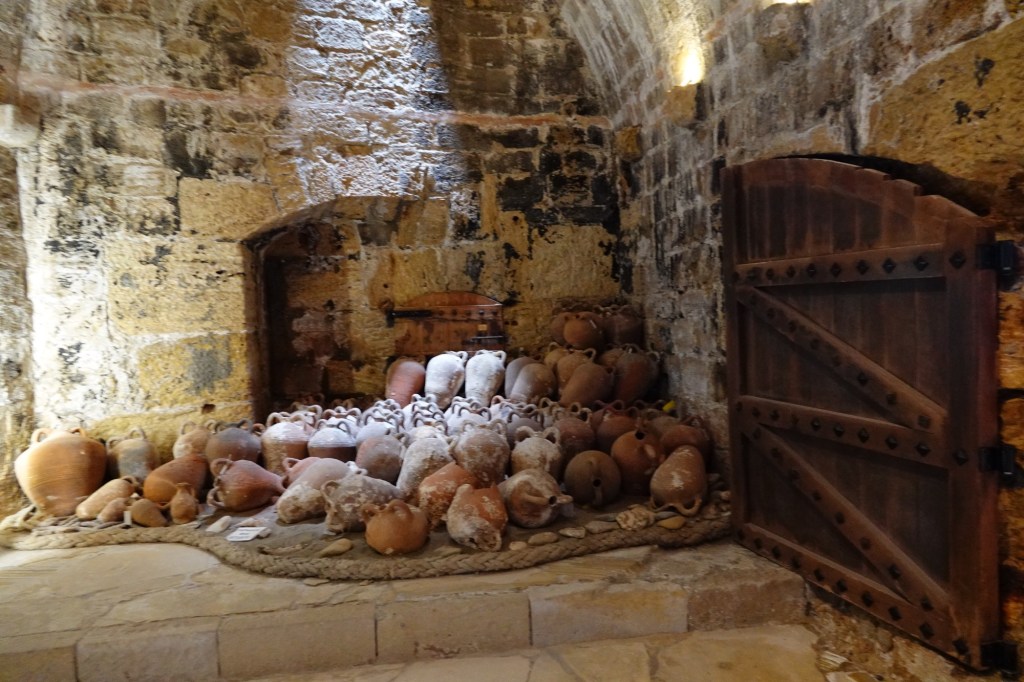
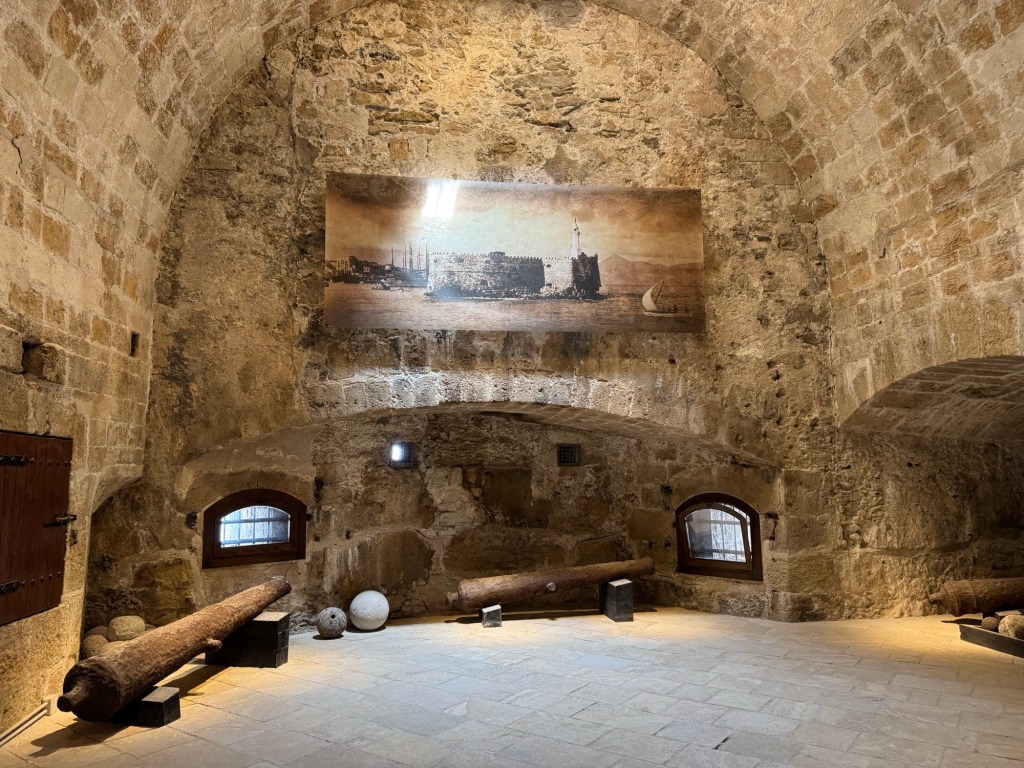
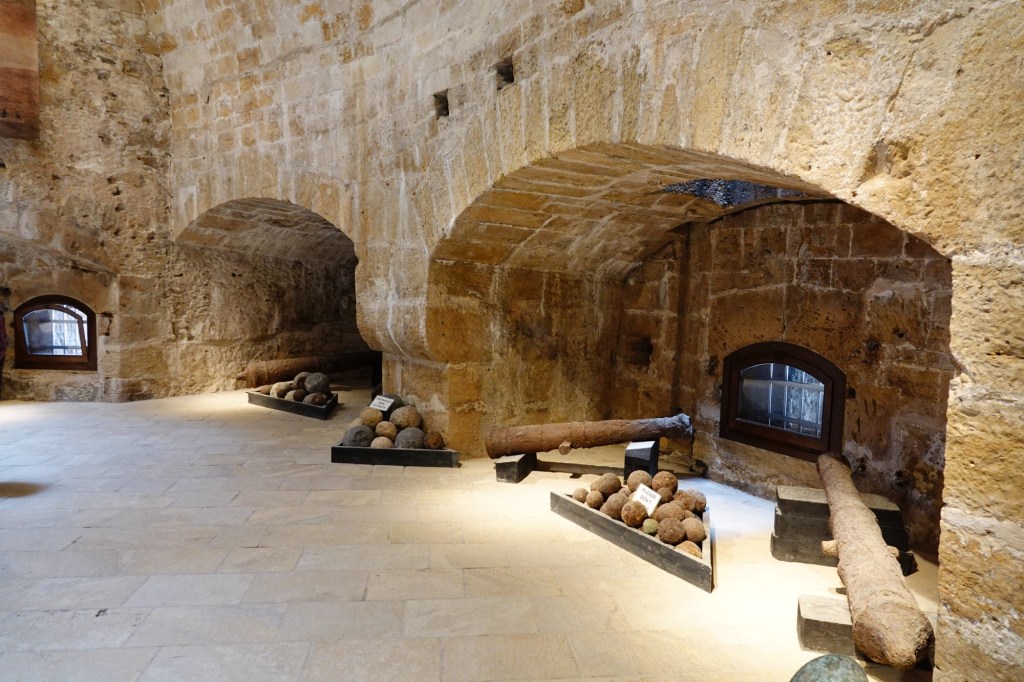
From the ground floor displays we ascended stone stairs into the bright sunshine and blue skies that have so enchanted us here this week (rain is predicted in a couple of days, so we’re taking full advantage now.)
The upper floor is made up of a big courtyard surrounded by crenellations. It once housed the soldiers’ barracks, the officers’ quarters, a bakery, a mill and a small church. Only the courtyard and half of the ramparts are accessible to tourists.
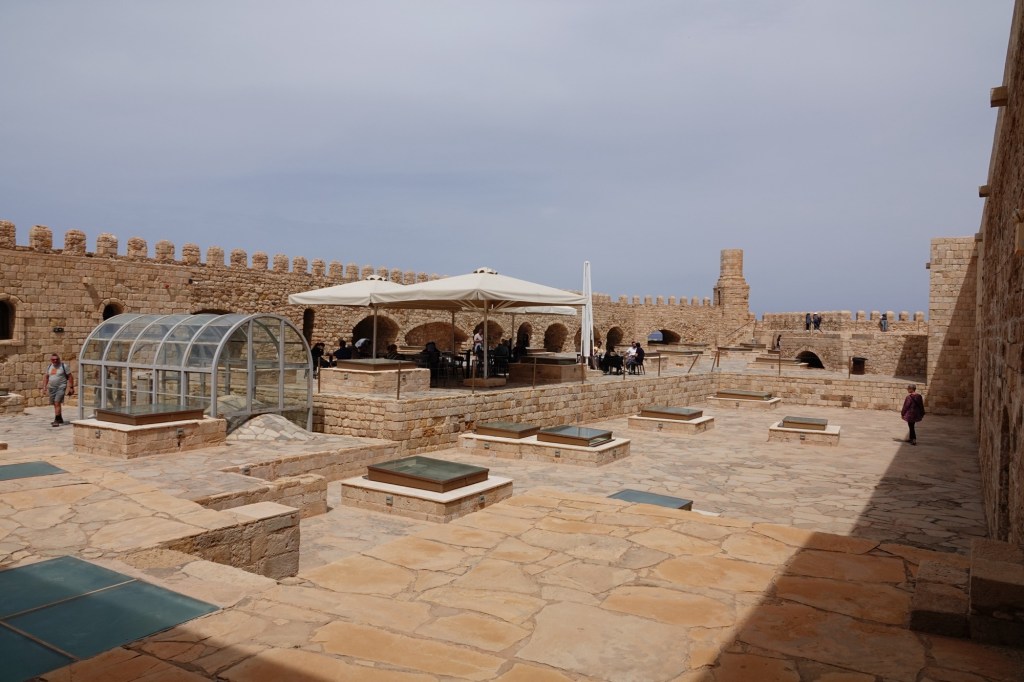
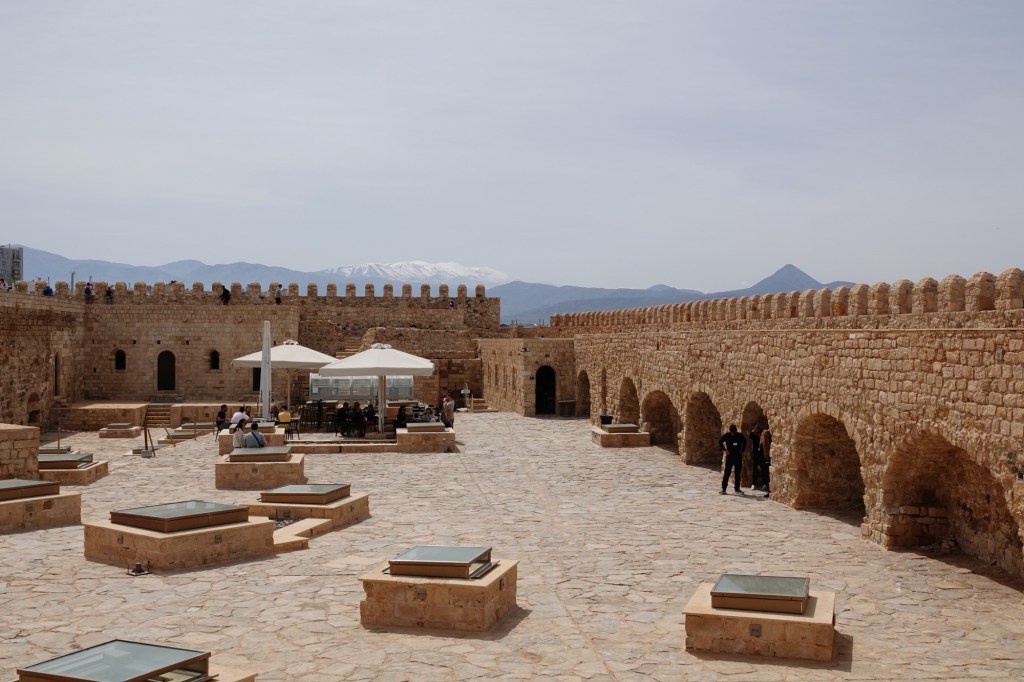
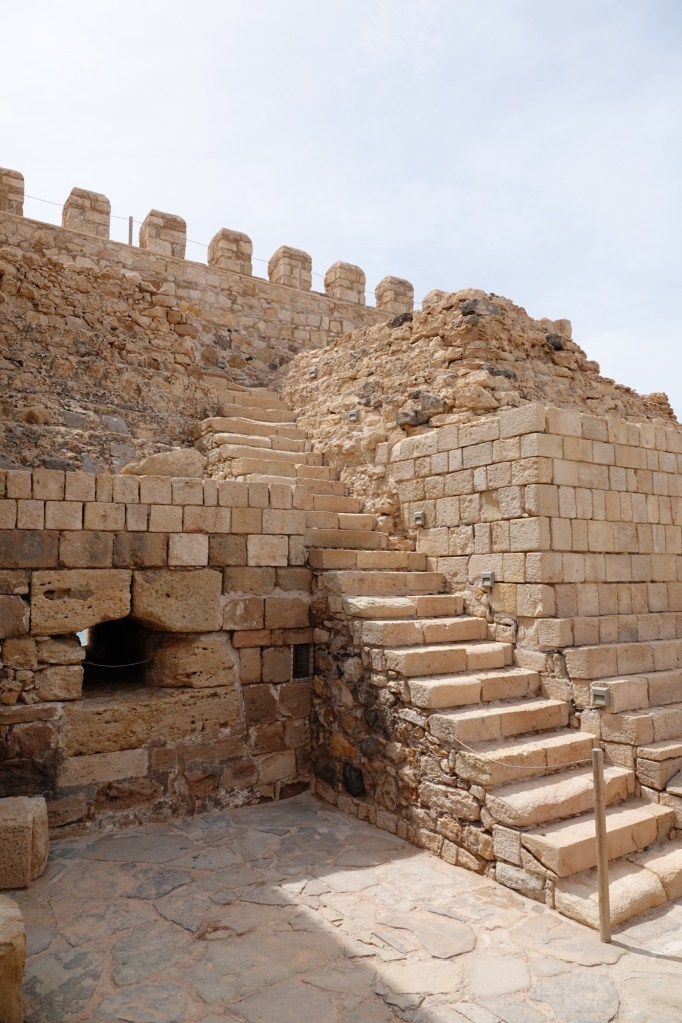
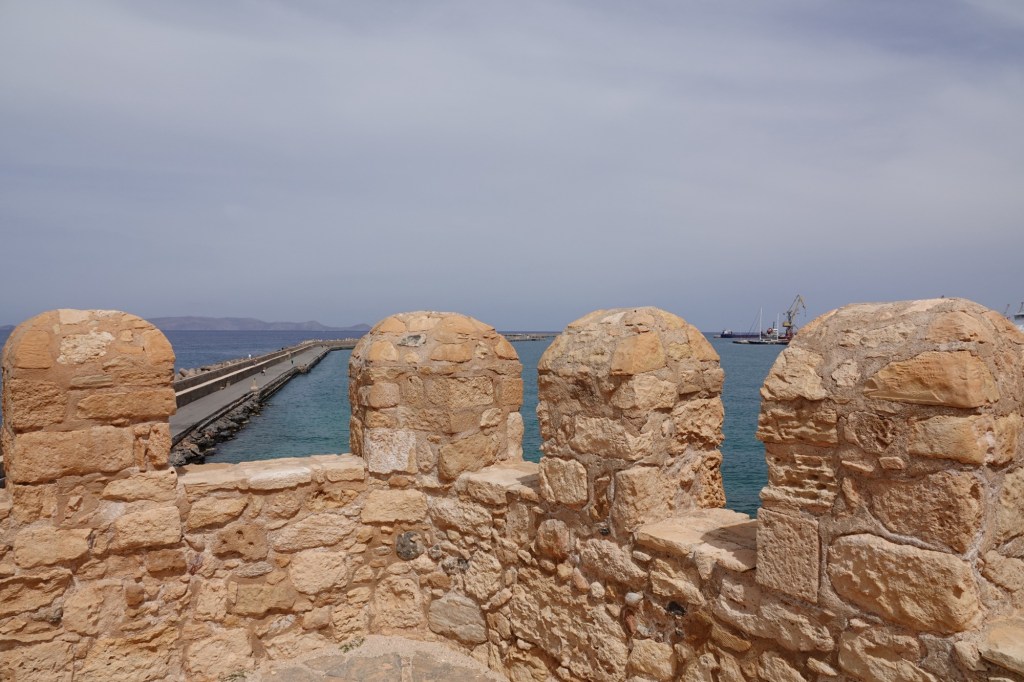
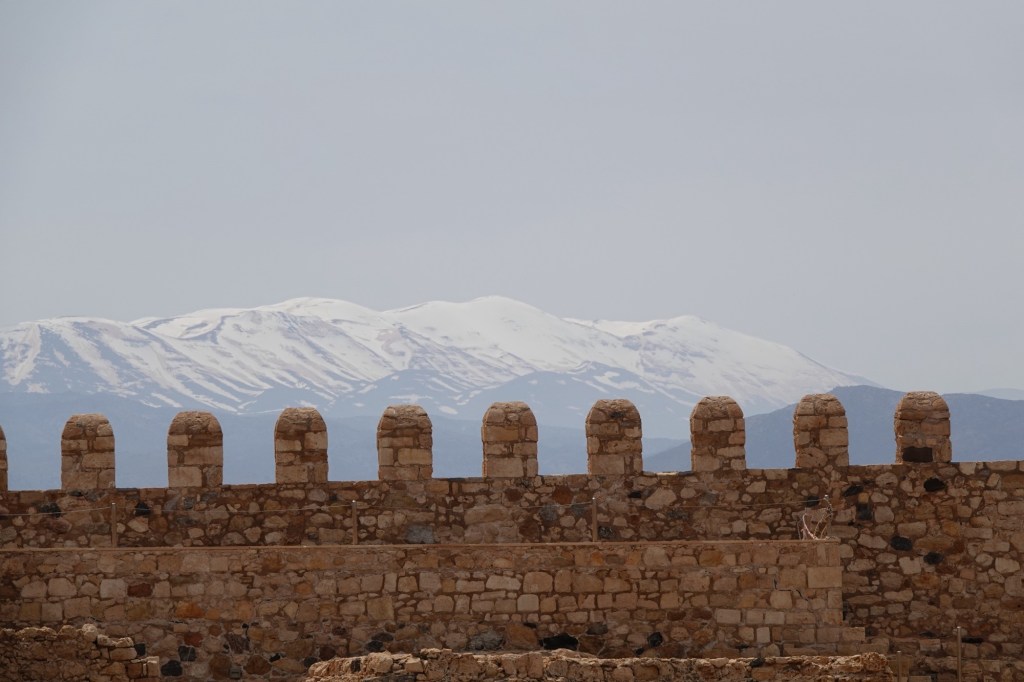
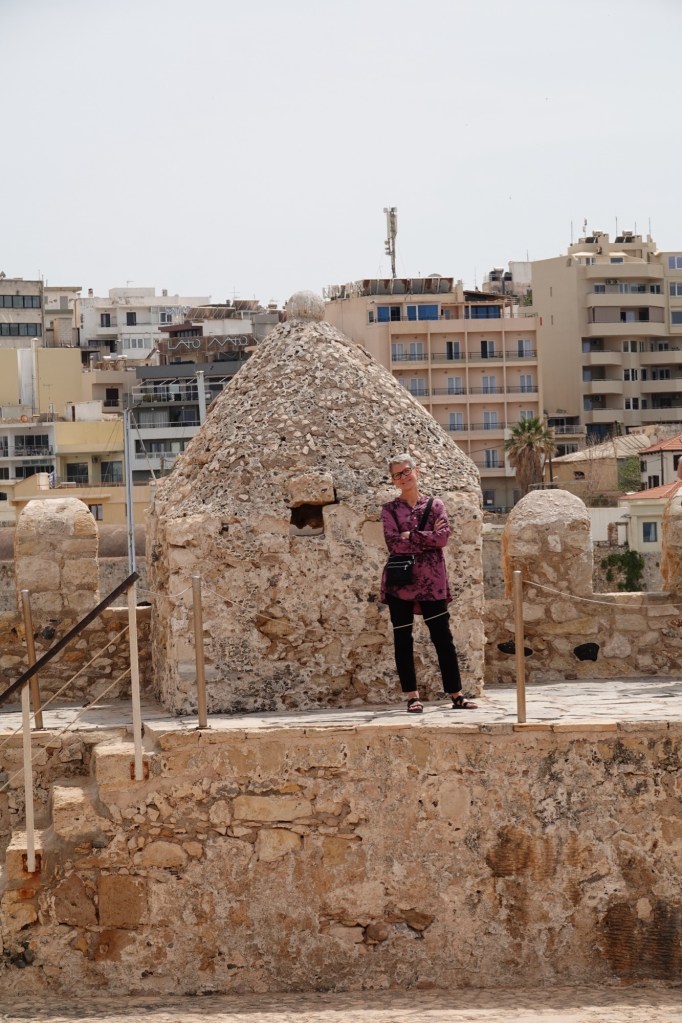
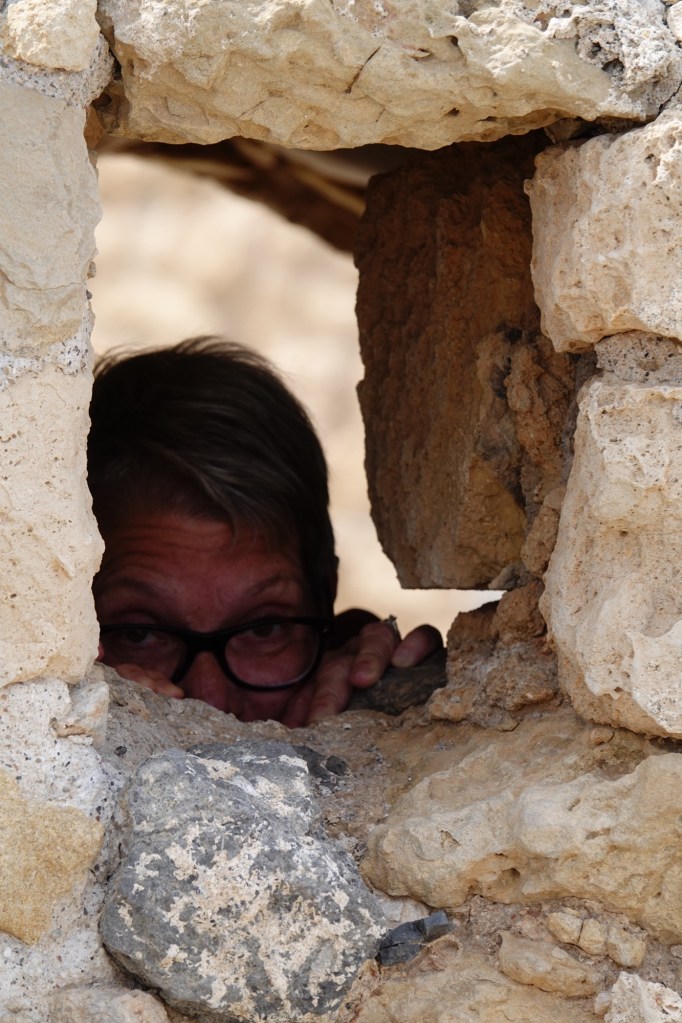
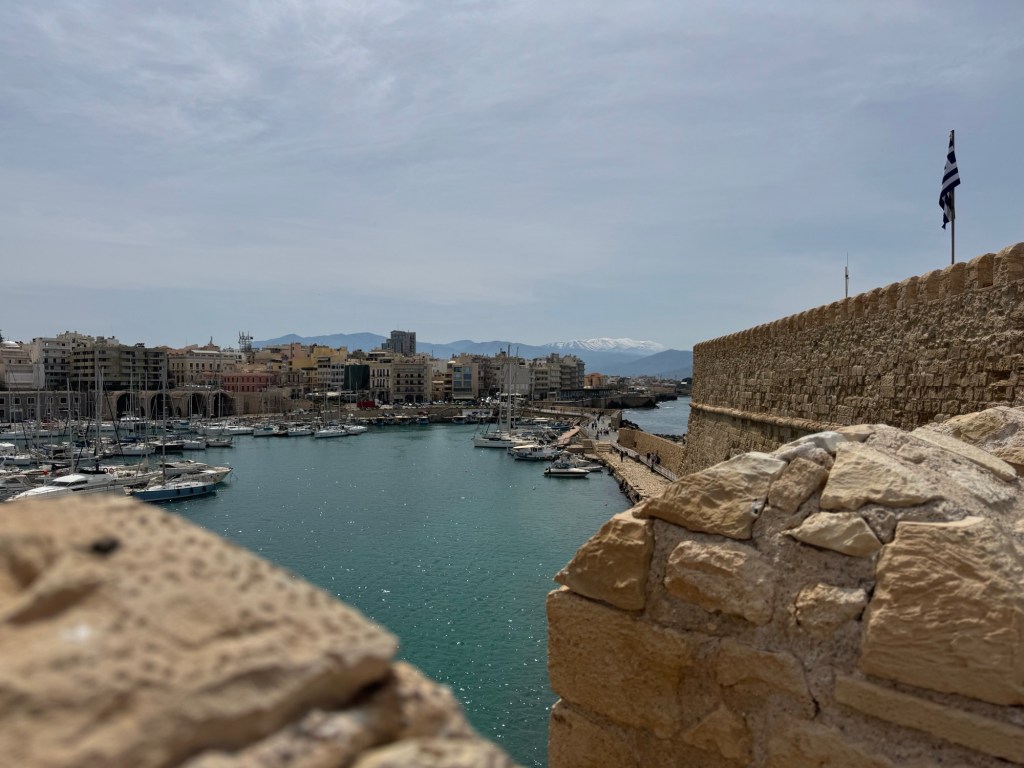
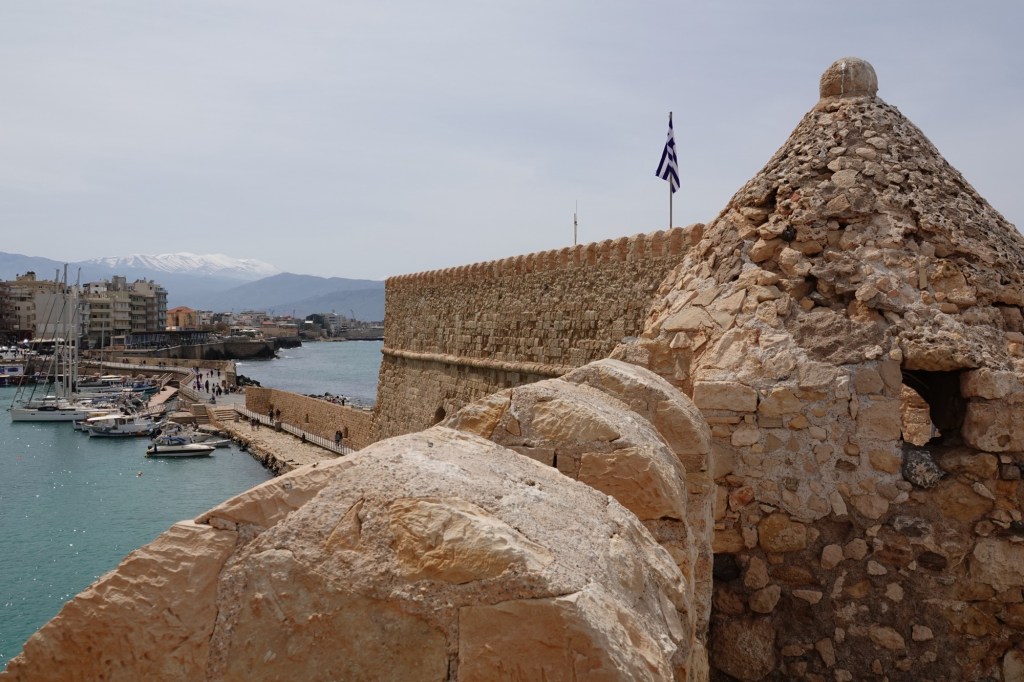
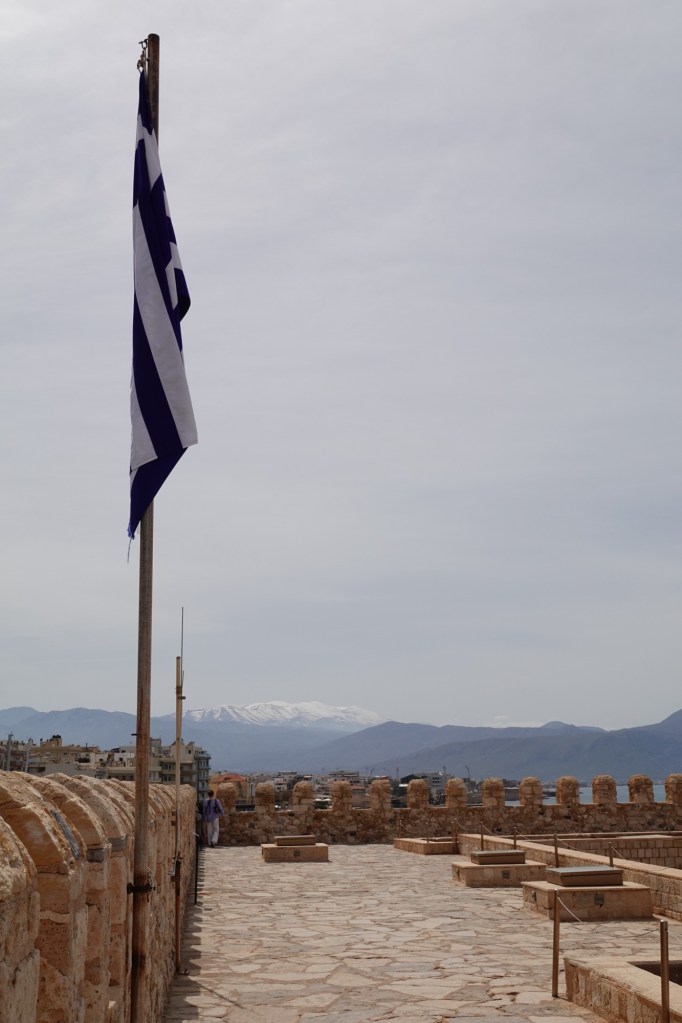
At the highest point on the ramparts (other than the lighthouse) the Greek flag attested to the lack of breeze.
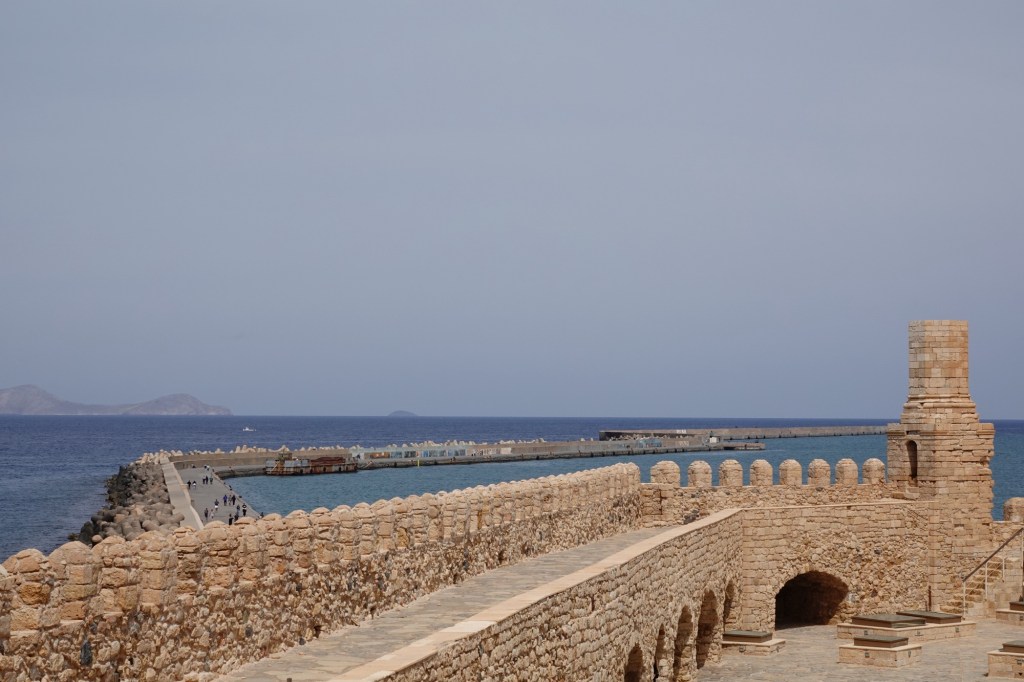
On the north side, there was also a lighthouse, which was restored in 1864 by the French Society of Ottoman Lighthouses.
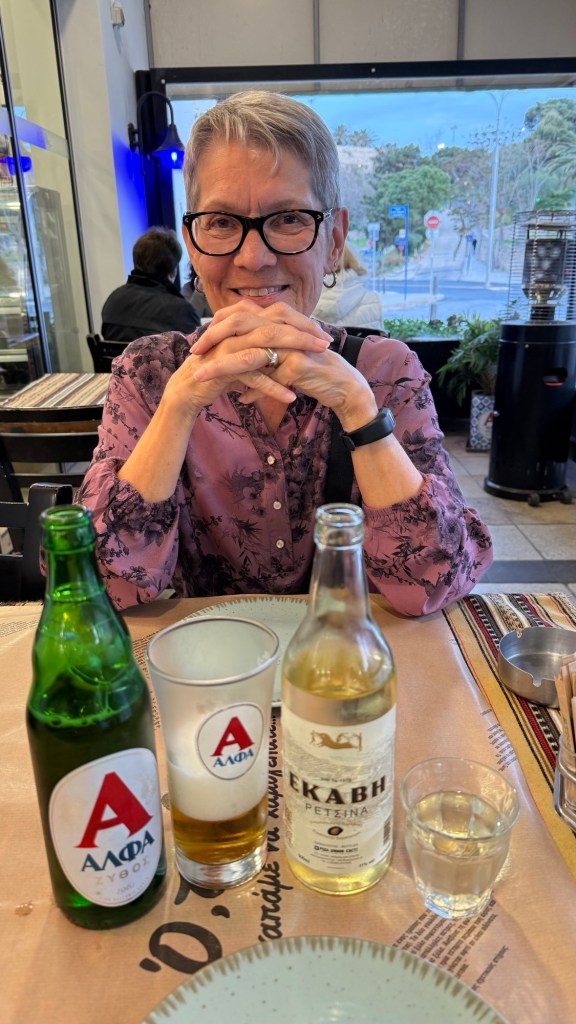
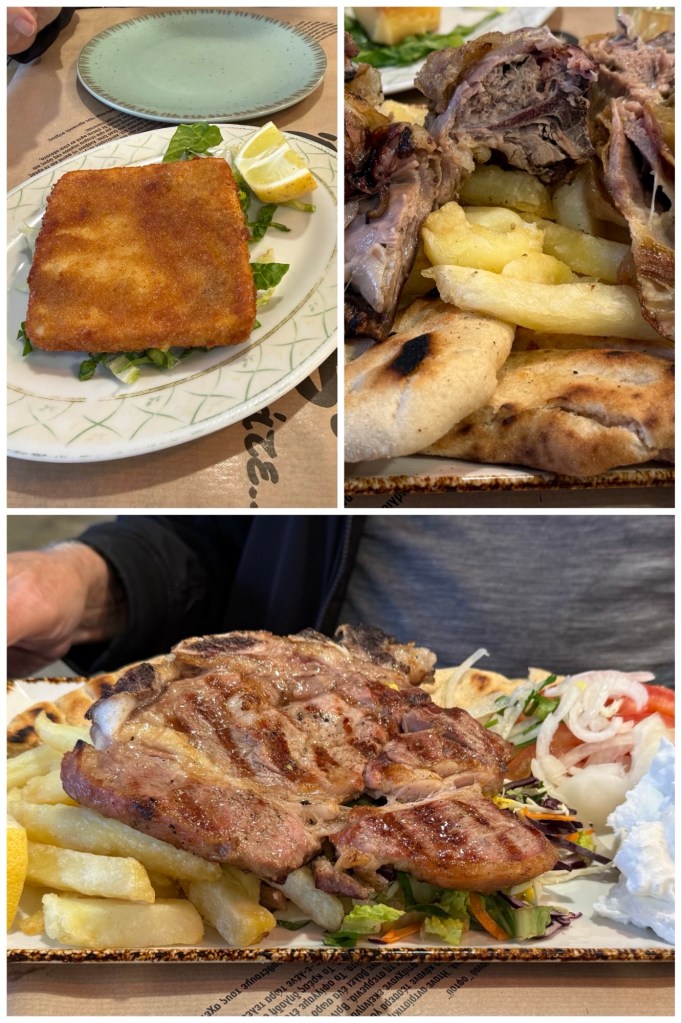
We ended our day with souvlaki at O,ti Thes Grill. I was craving protein, and we’ve been pretty good about fending for ourselves with dinner from our mini kitchen, so a treat felt worthwhile. The entire dinner below came in at €47.50($77CAD).
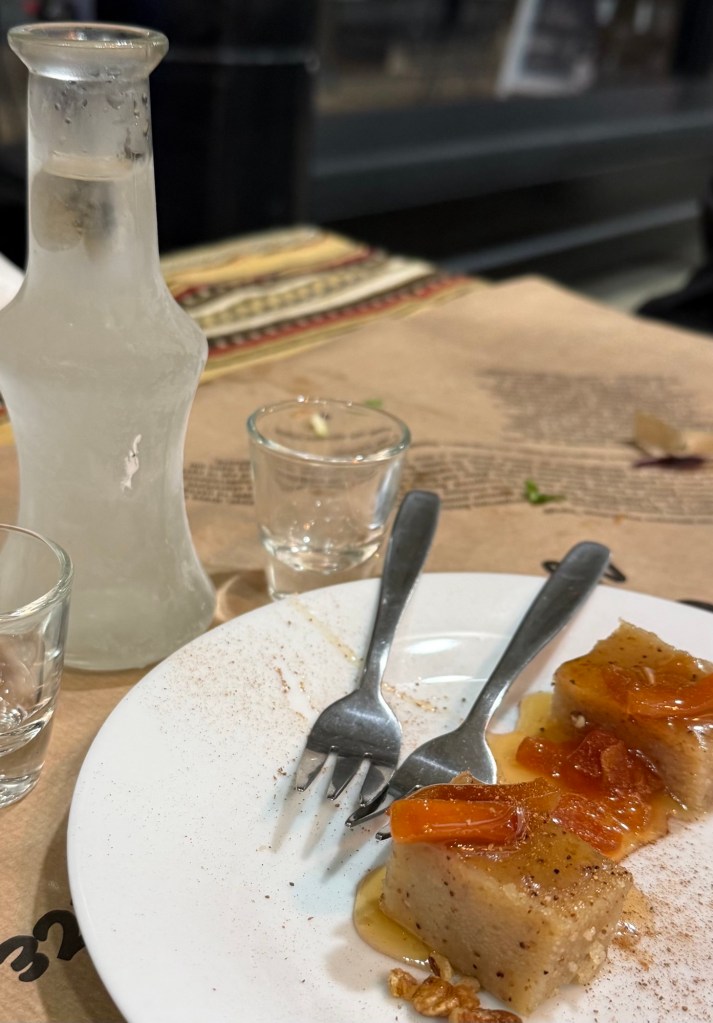
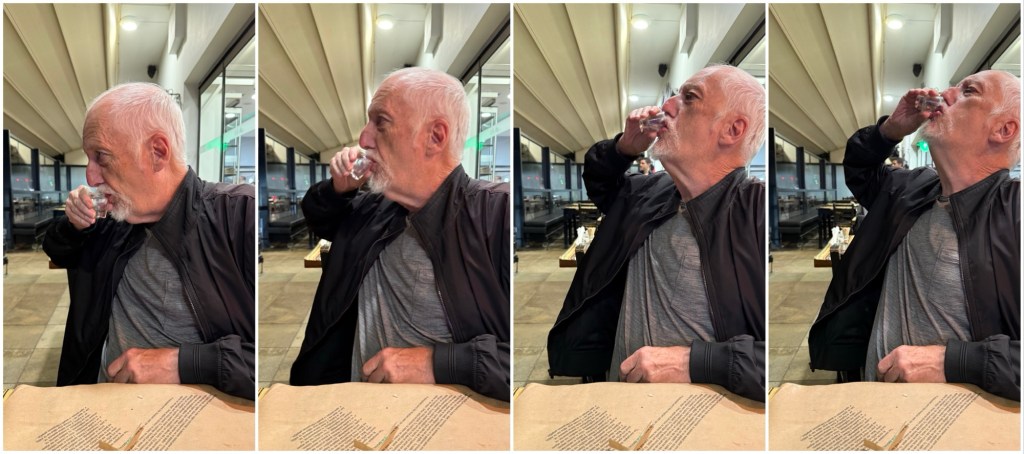
As we’re learning is the custom here, a complimentary small sweet dessert and a vial of freezing cold raki (enough for 5 shots) appeared at the end of our meal.
Another lovely day on Crete over.


I hope Ted is feeling better. I’m glad you don’t have to push on quite yet. The pictures are wonderful — that fort is much more interesting than it looks from the town! Thanks as always.
LikeLiked by 1 person