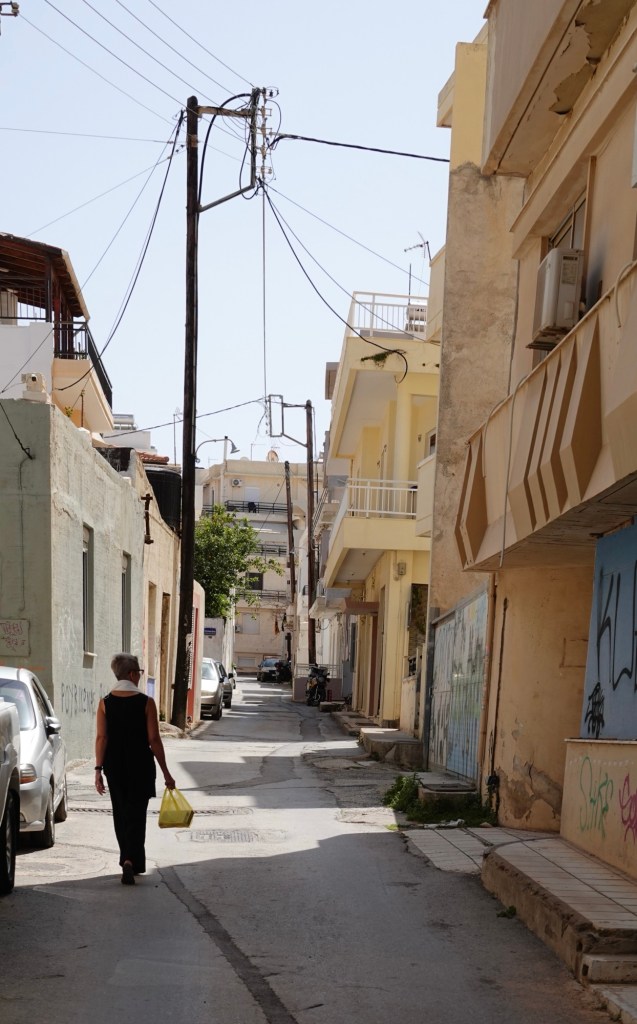
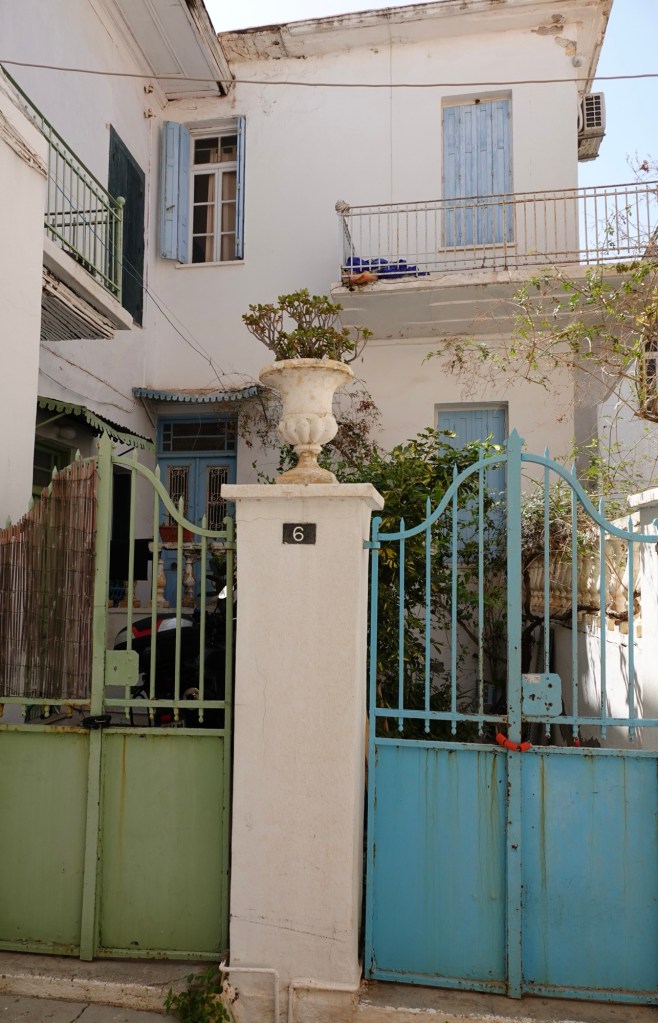
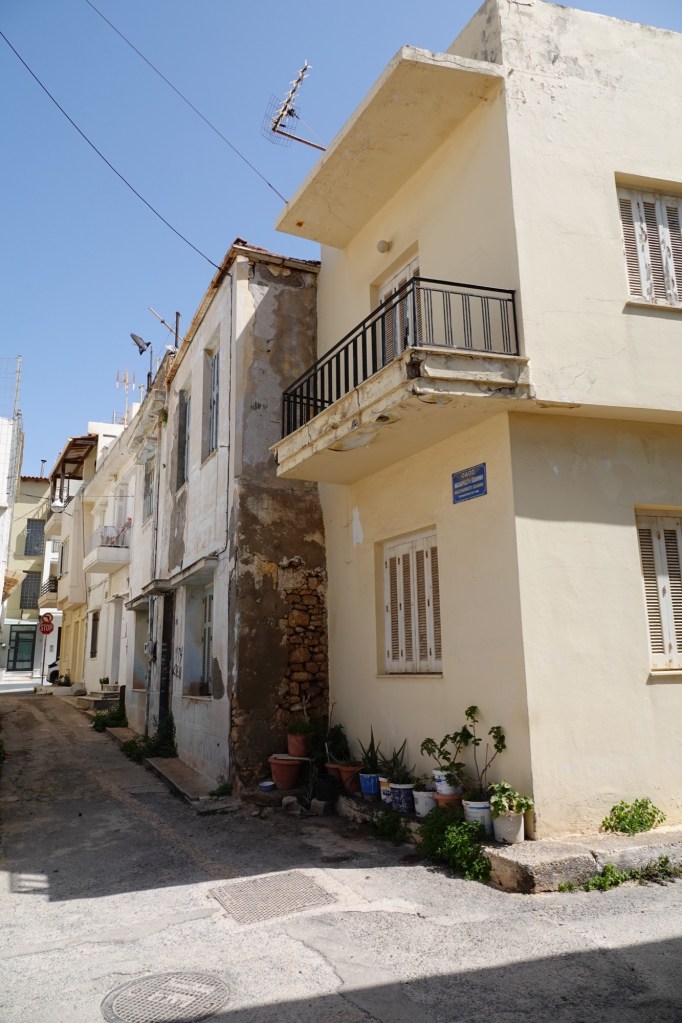
We spent our last two days here taking more pictures of “our” neighbourhood, wandering the tourist corridor along 1866 Street, and visiting the Historical Museum of Crete to get a better sense of the last 17 (!) centuries here.
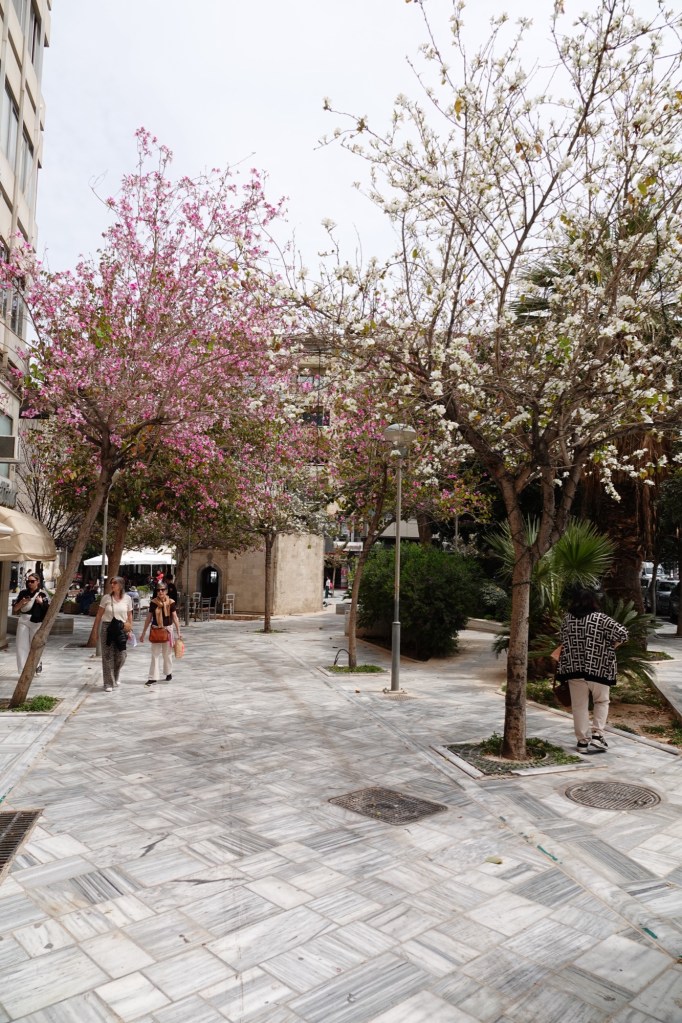
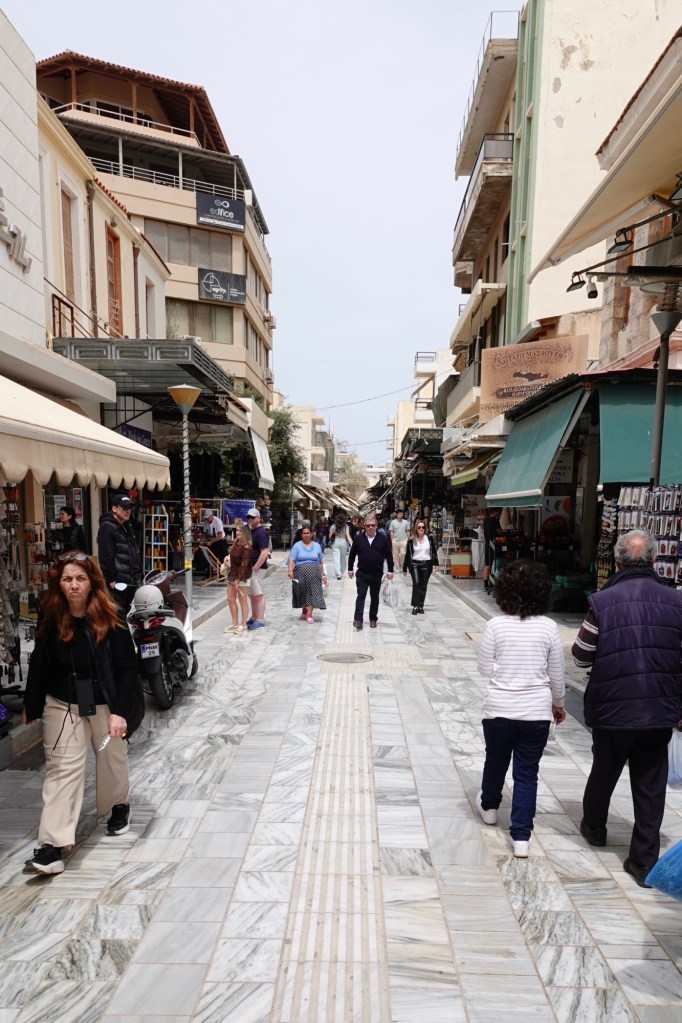
Pictured below is part of the wide marble-surfaced pedestrian mall and shopping area, which is all most tourists see.
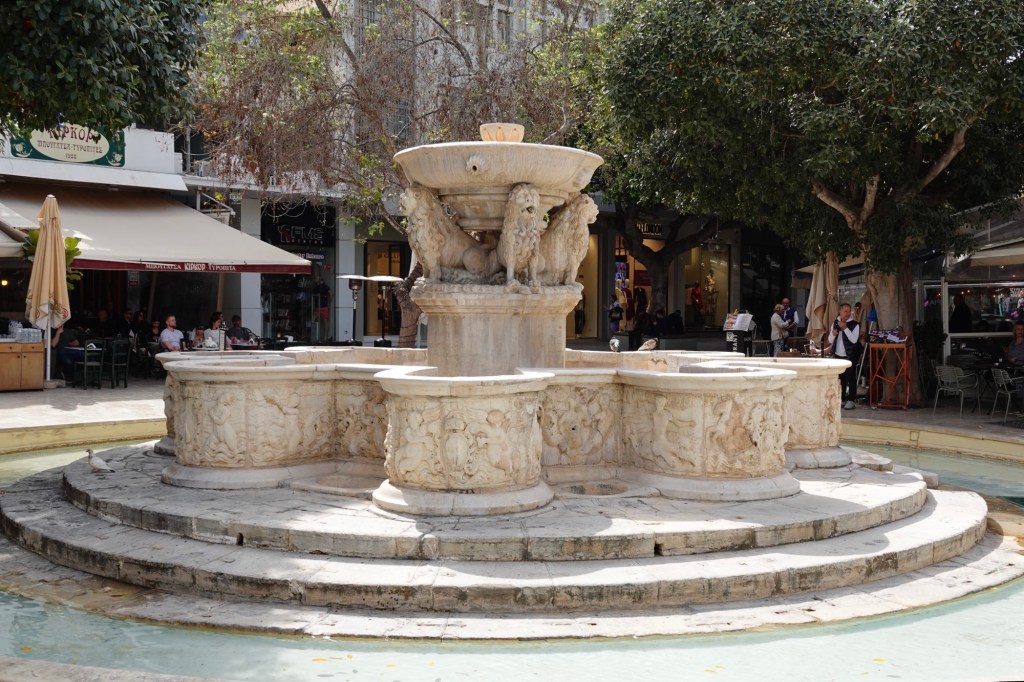
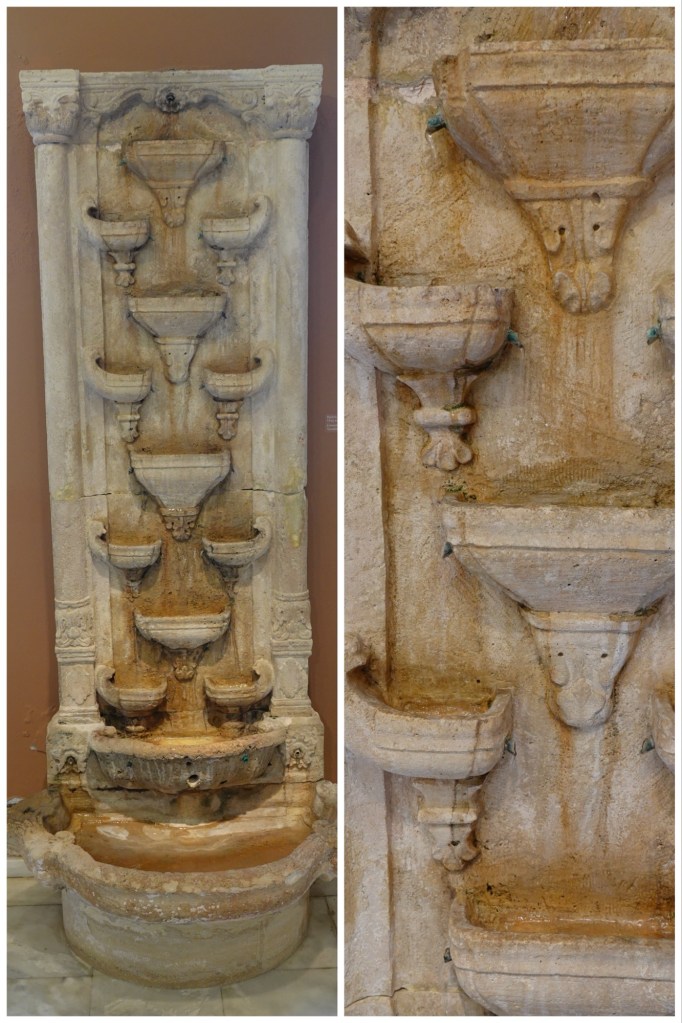
We made sure to get photos of the famous Morosini “lion fountain”. While the fountain is certainly decorative in design, its primary purpose was as a public water source.
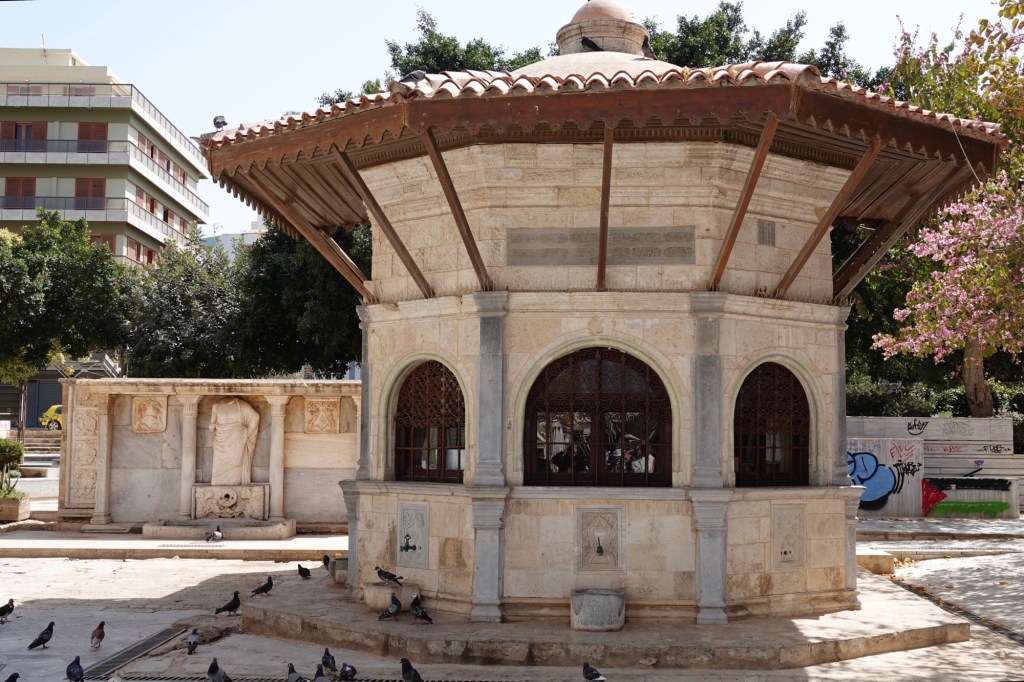
The same goes for the Bembo Fountain. The water taps are visible around the lower ring.
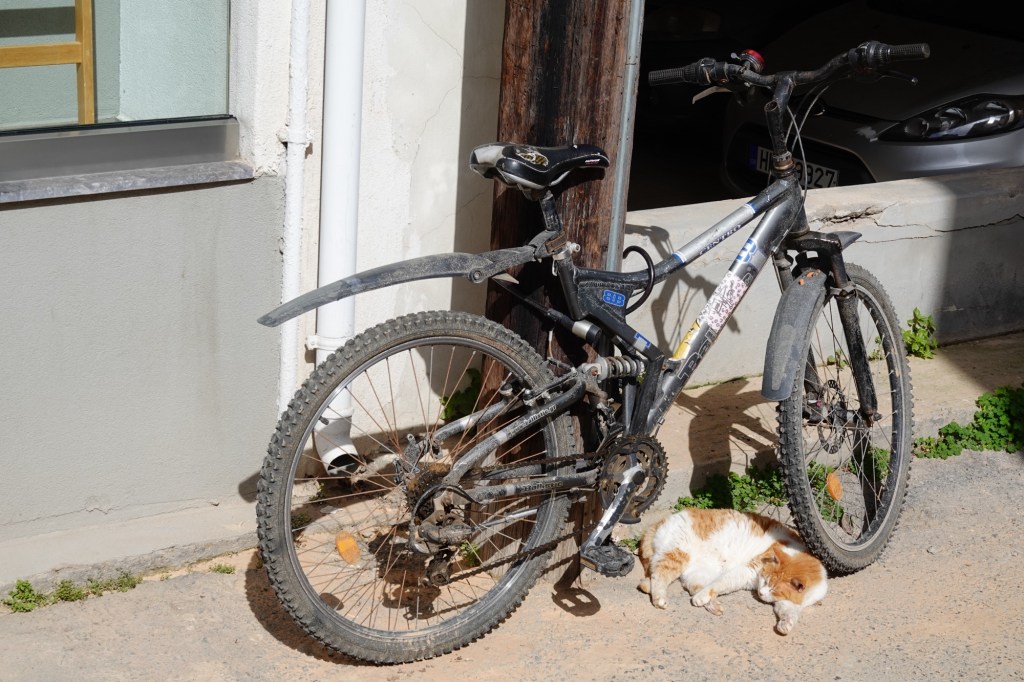
We’ve seen dozens and dozens of free-roaming cats. Also dozens sleeping wherever the mood strikes.
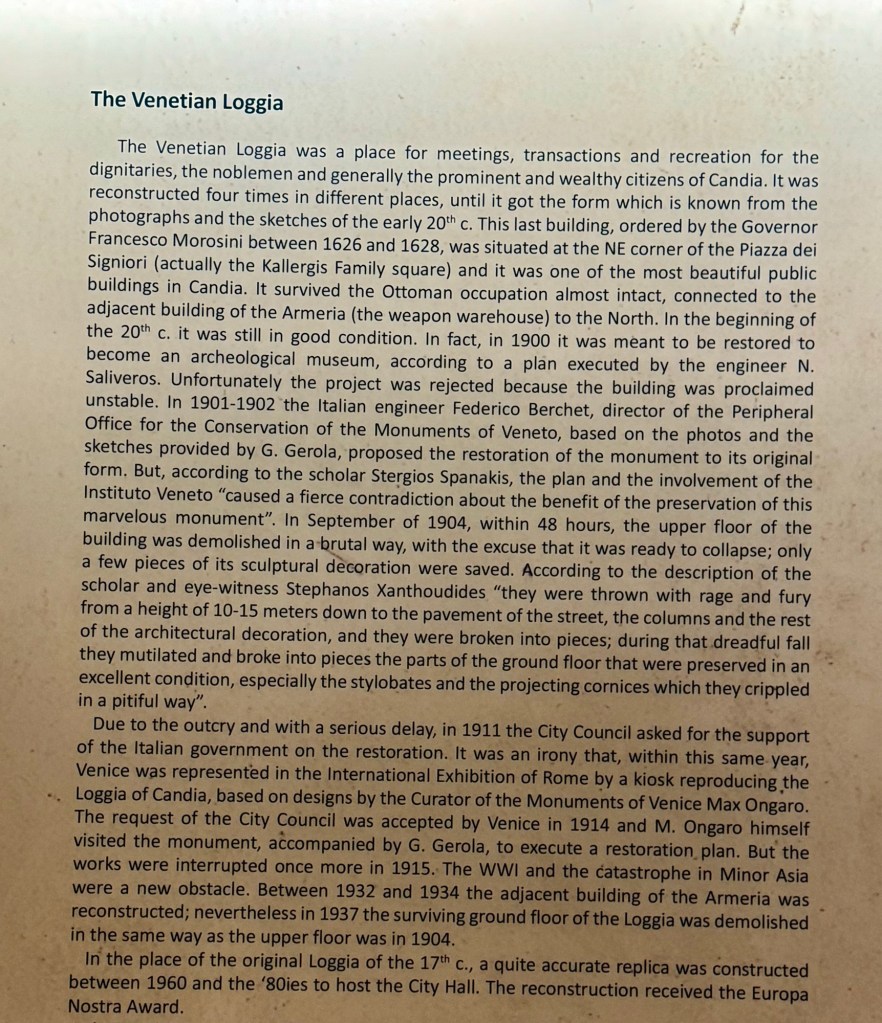
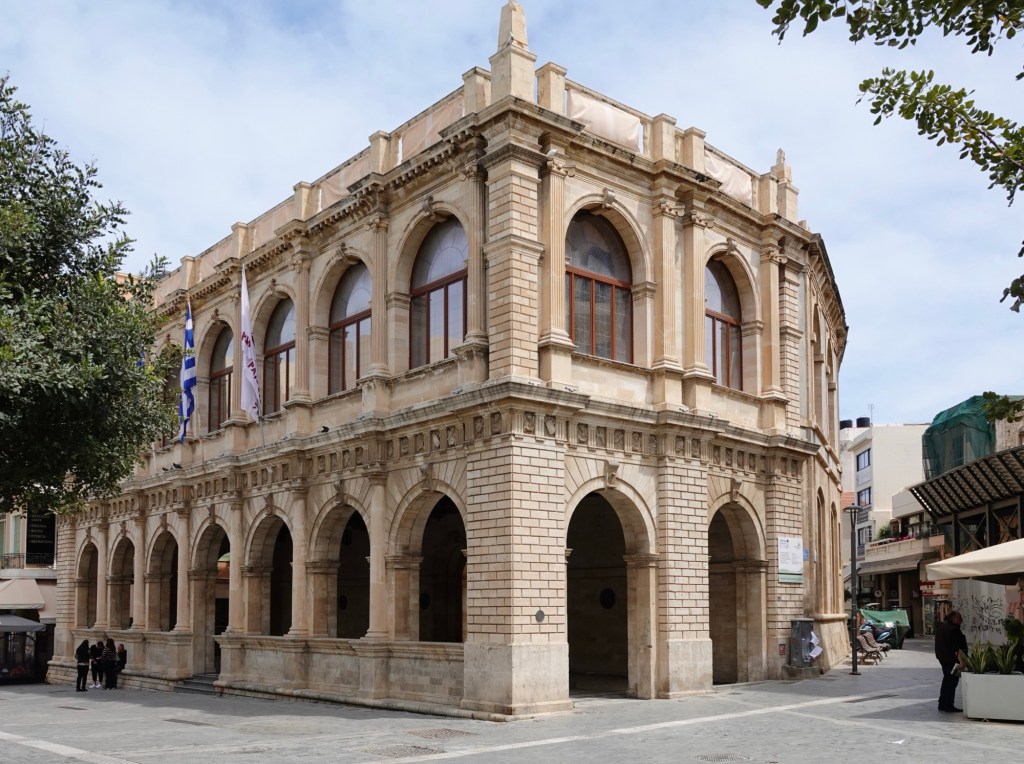
We walked past the Venetian Loggia several times without knowing much about it, until we found the information on a sign in the Venetian Fort:
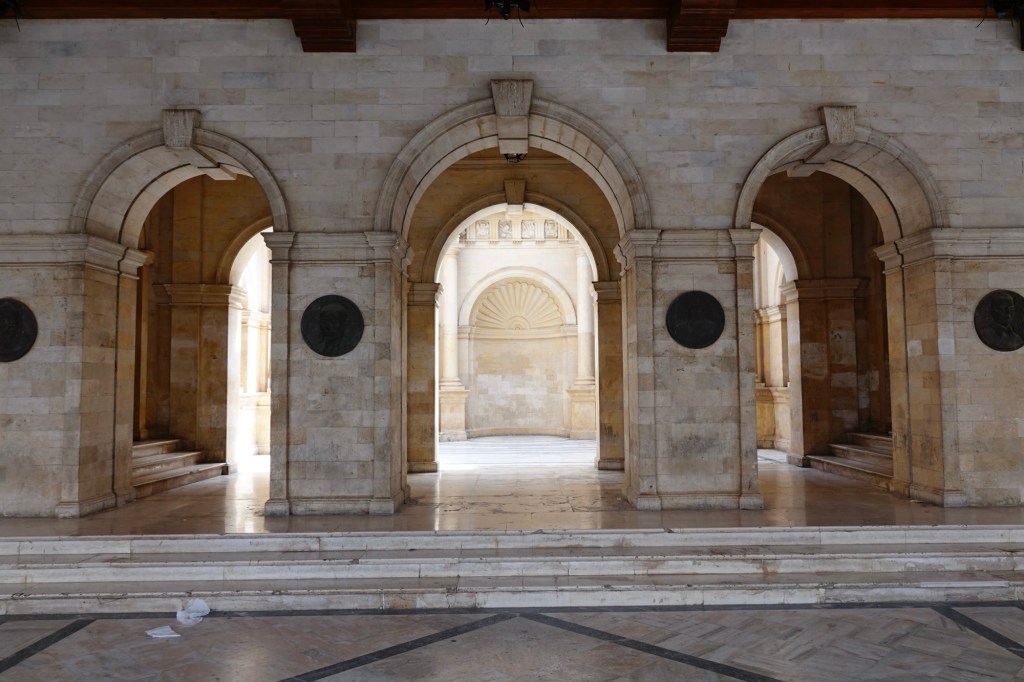
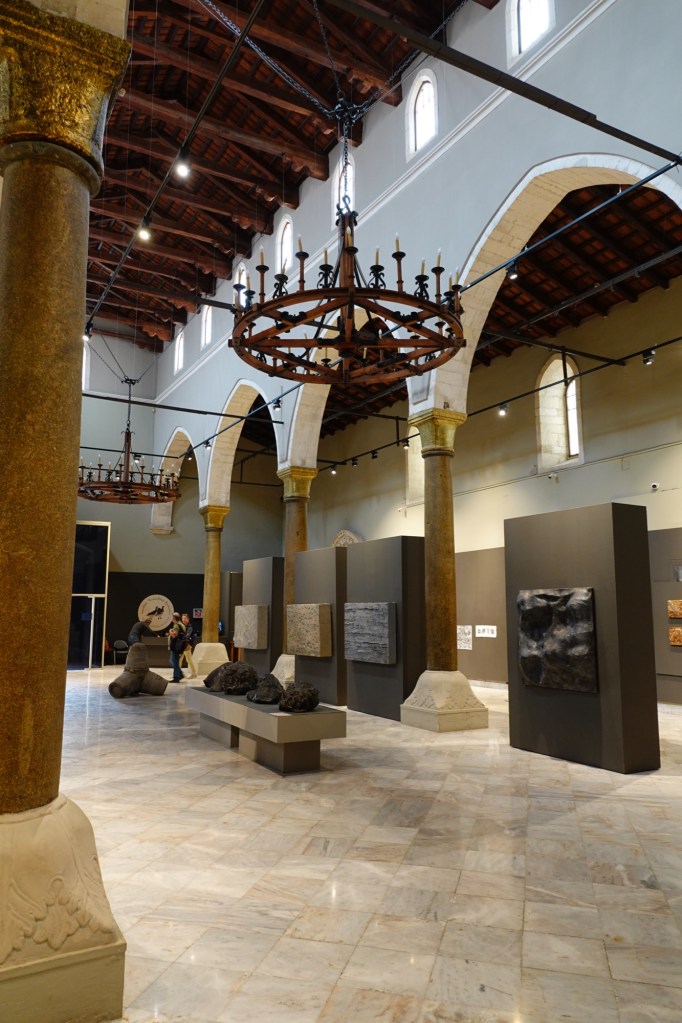
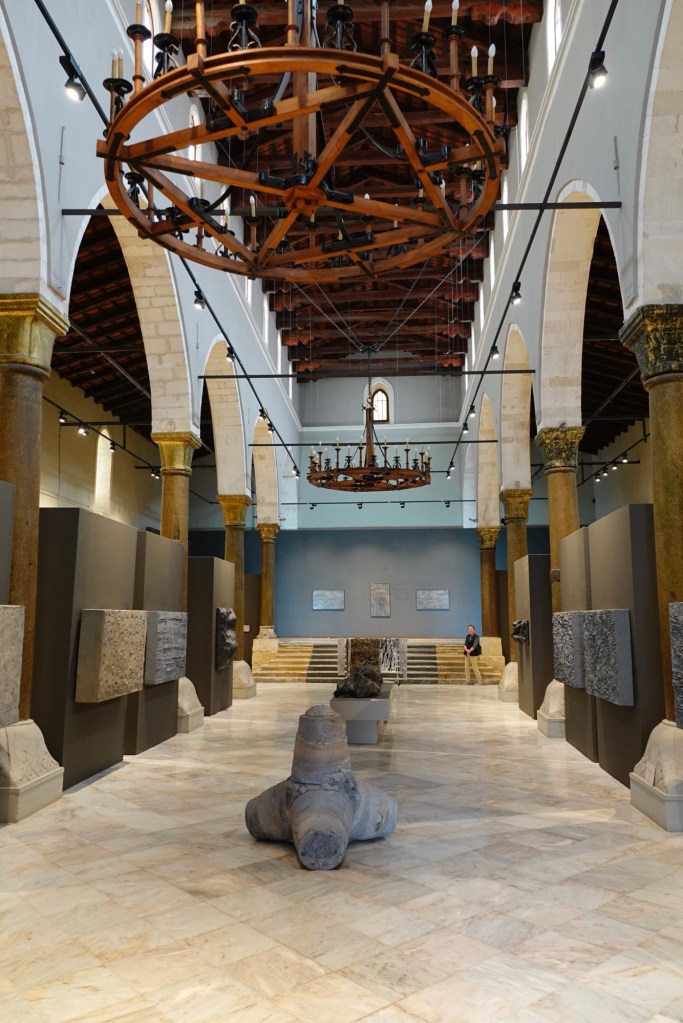
We wandered into the building that was once St. Mark’s Basilica, and is now Heraklion’s municipal art gallery. The interior has been repainted in colours that effectively highlight the original architecture.
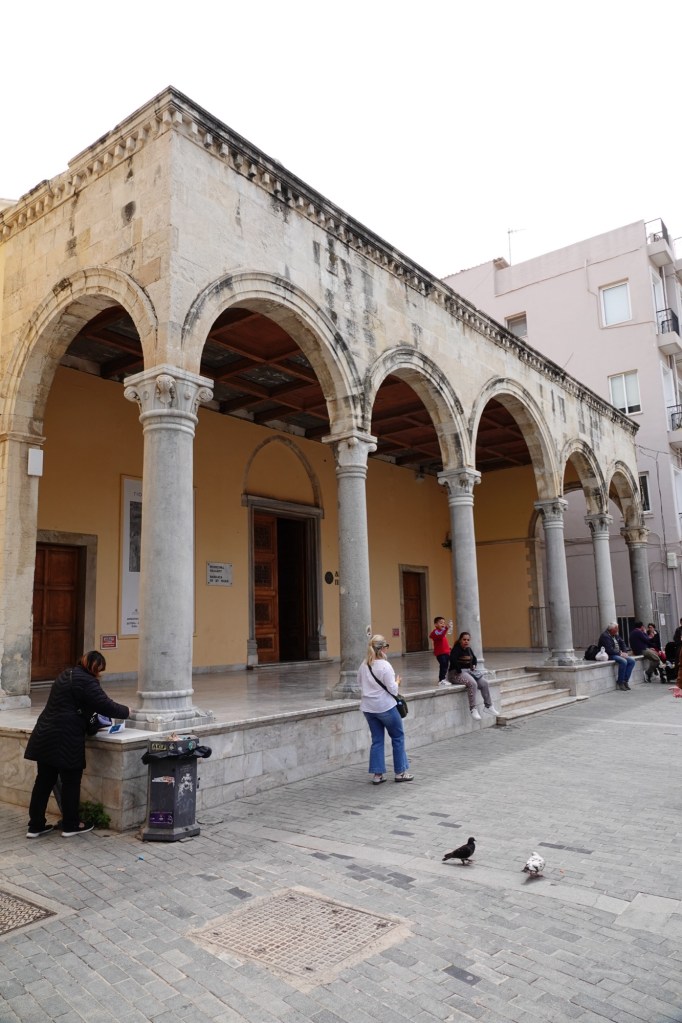
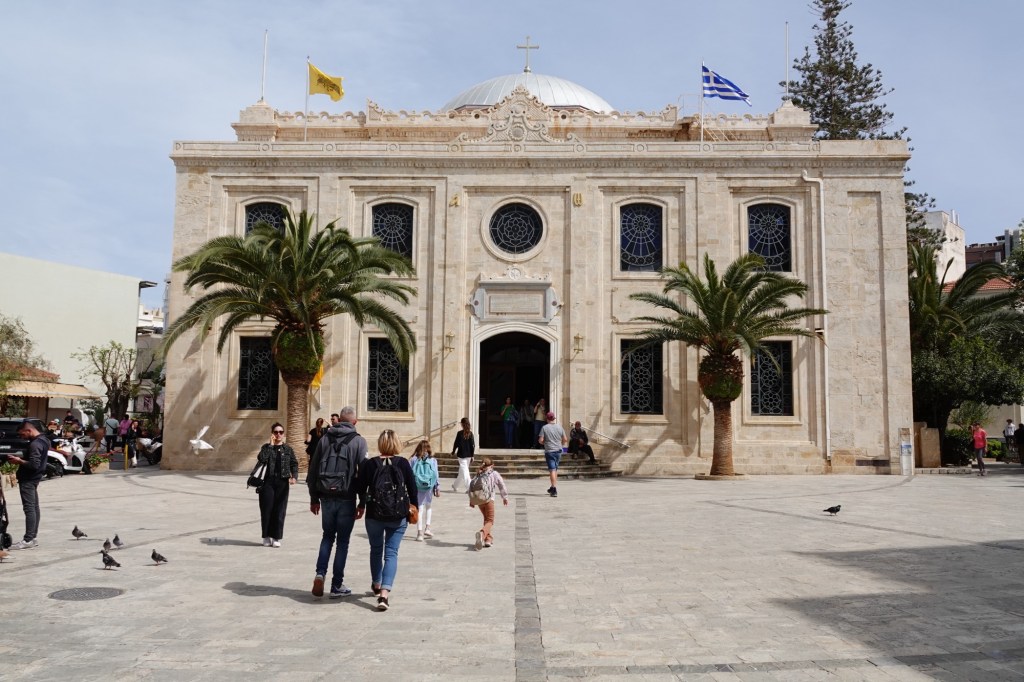
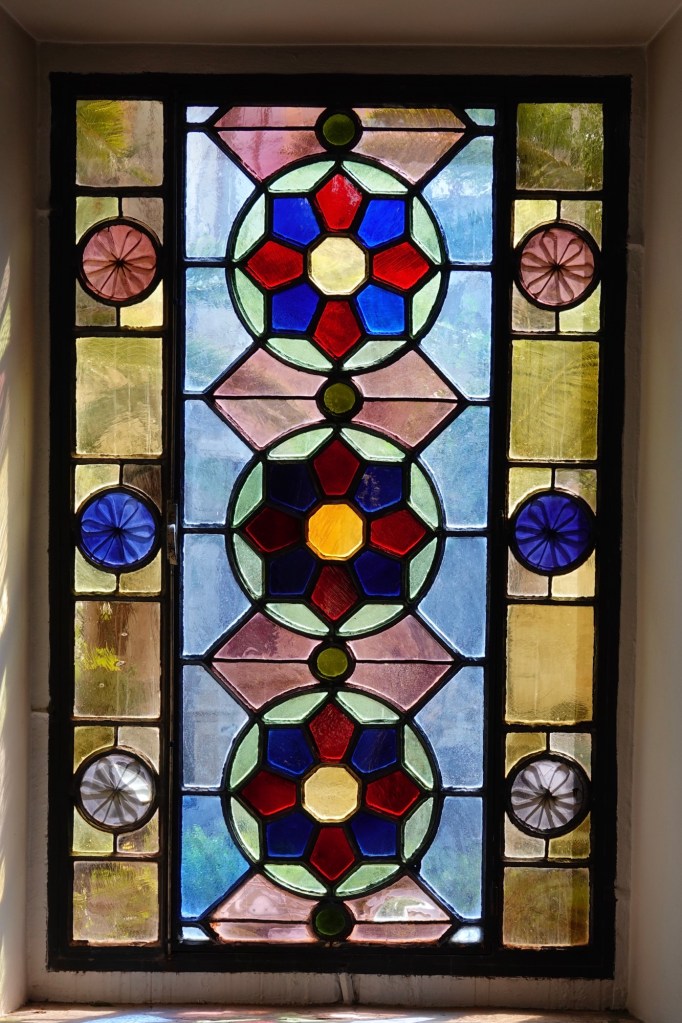
Near the gallery and the Loggia is the cathedral of the Holy Archdiocese of Crete Parish of Saint Titus. The current iteration of the building was erected in 1869 as a mosque (hence the typically Islamic domed ceiling and geometric stained glass instead of depictions of saints), converted to a Greek Orthodox church in 1925, and has been designated as a cathedral since 2013 – but the site has had a church of some description on it since the Byzantines erected the first one in 961CE.
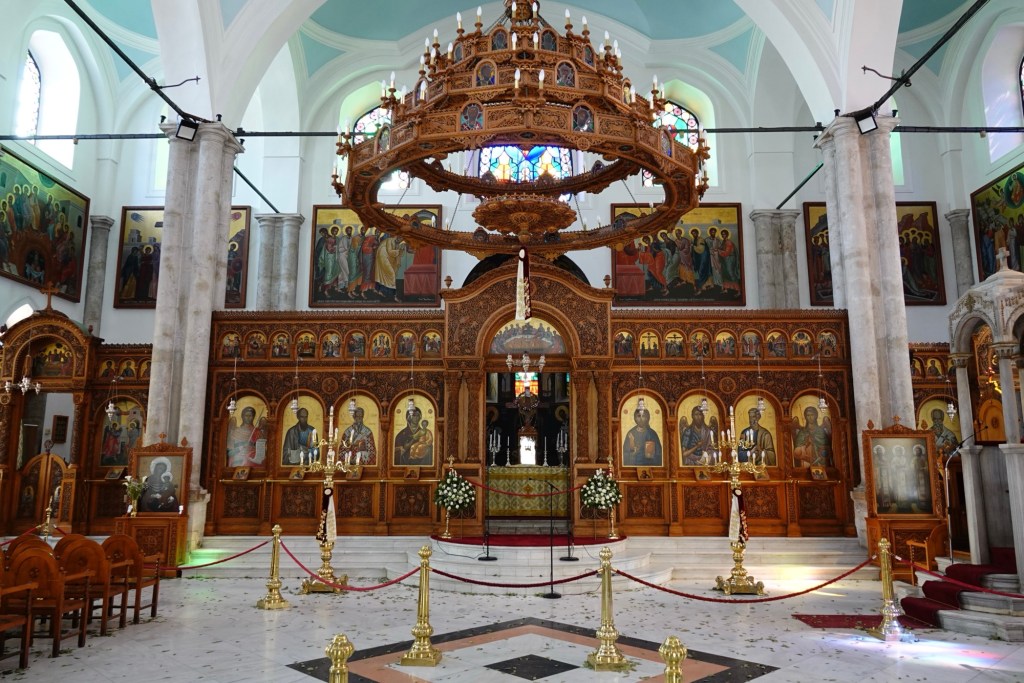
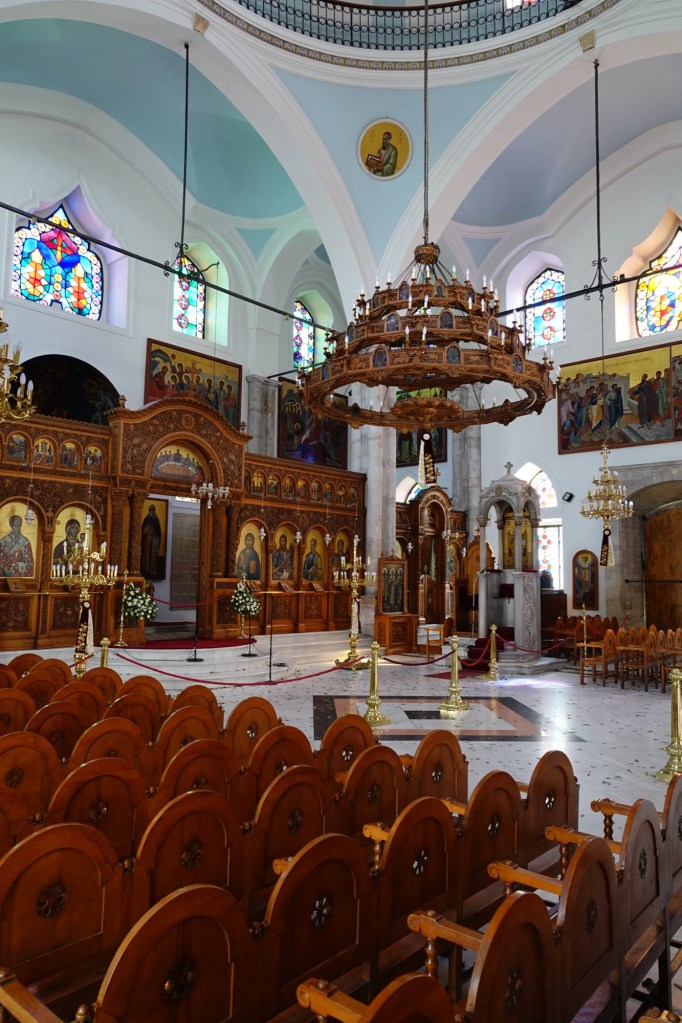
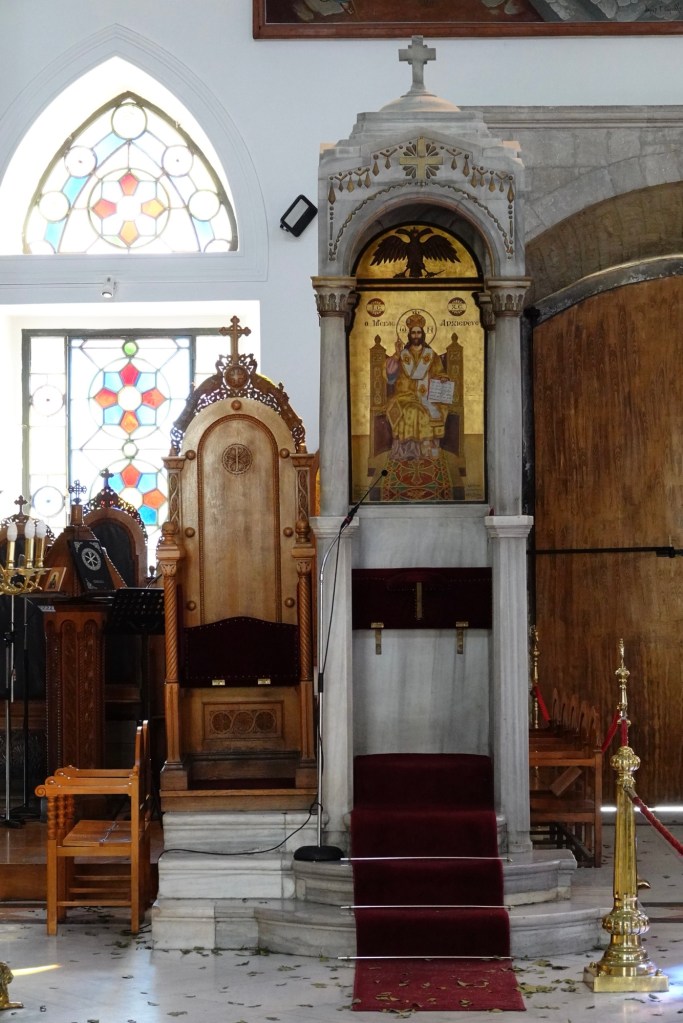
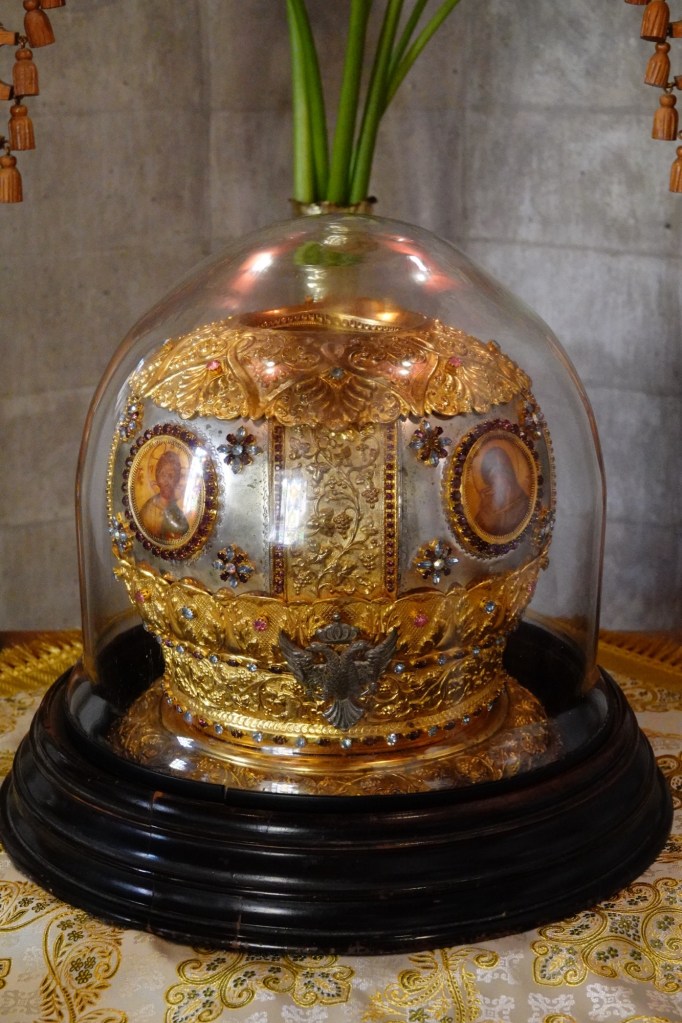
The cathedral’s claim to fame is having the skull of St. Titus. I’ll admit to not understanding the obsession with religious relics, but the reliquary created to hold the skull was quite magnificent.
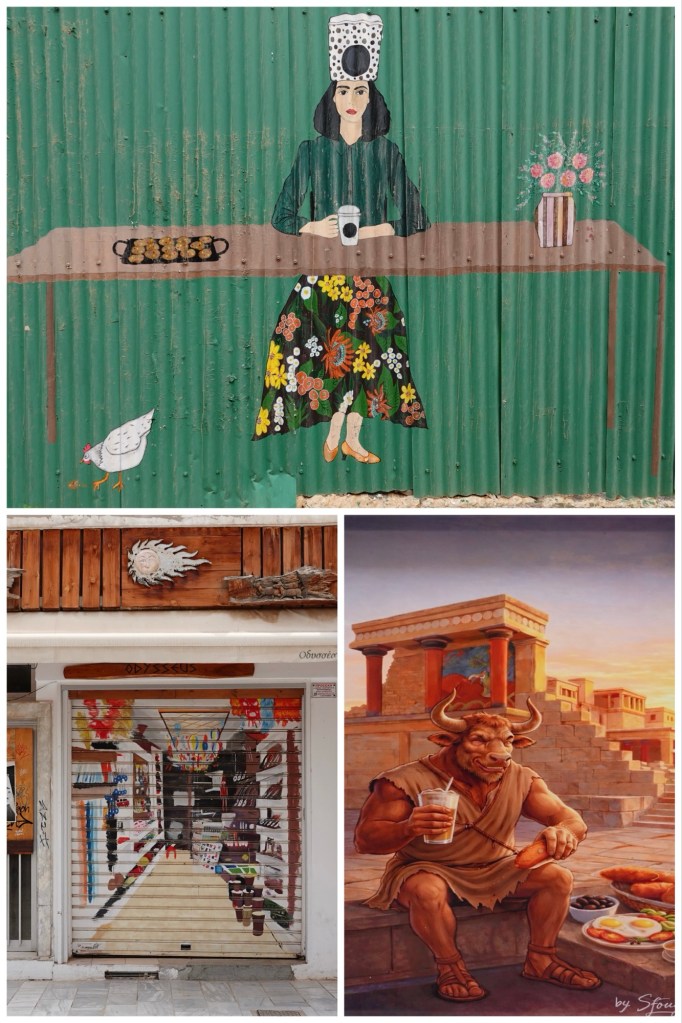
Of course we continued to see lots of street art, including one inventively painted fold-down shop door designed to look like an open store.
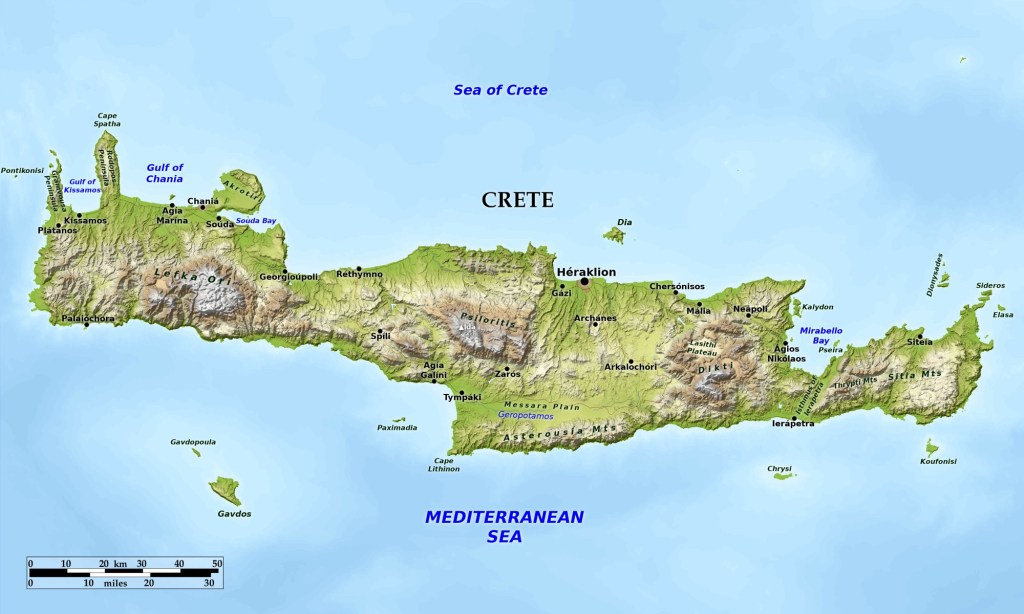
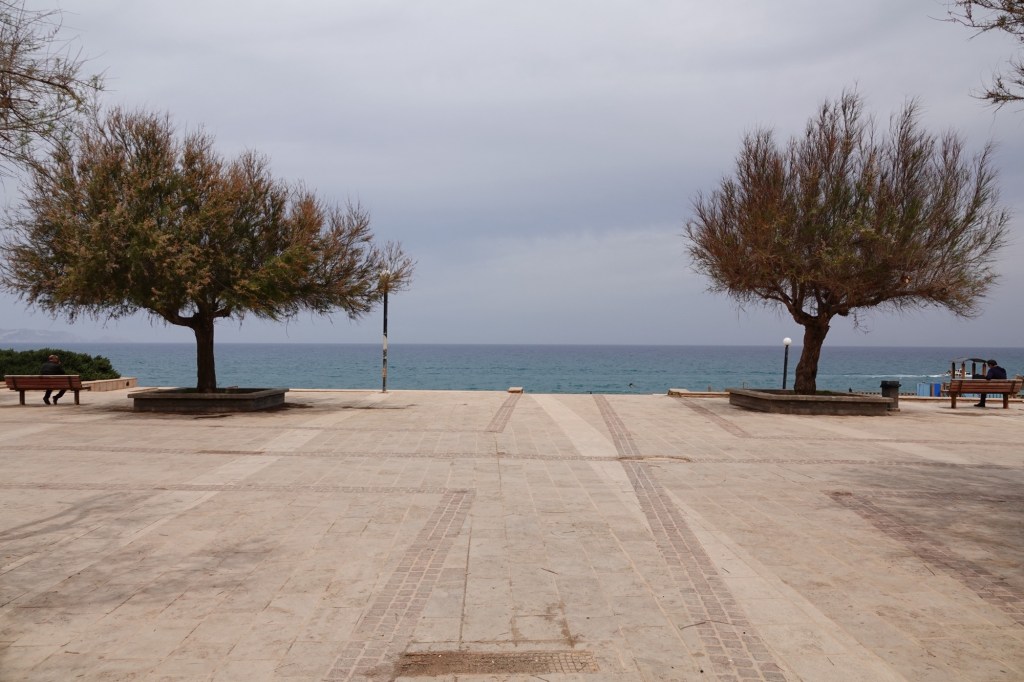
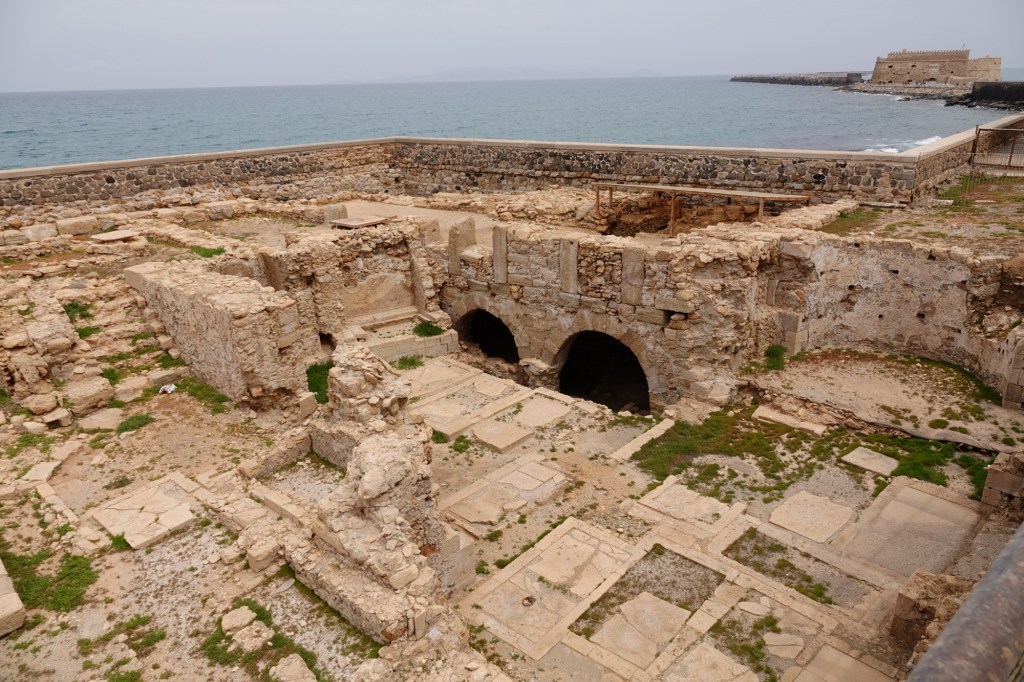
En route to the museum we got yet another wonderful view of the Sea of Crete and out toward the Aegean (the Mediterranean is on the south side of the island, the island itself marks the southern border of the Aegean.)
The water is just so blue.
Opposite that gorgeous sea view was an archeological dig site surrounding the Monastery of St. Peter and St. Paul, which is currently being reconstructed.
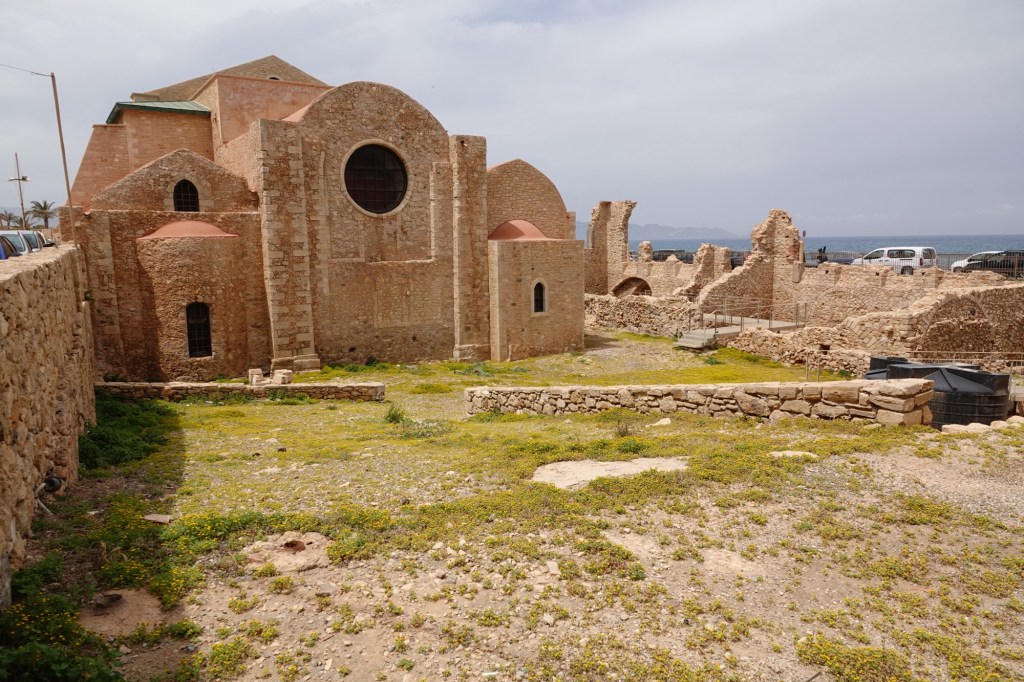
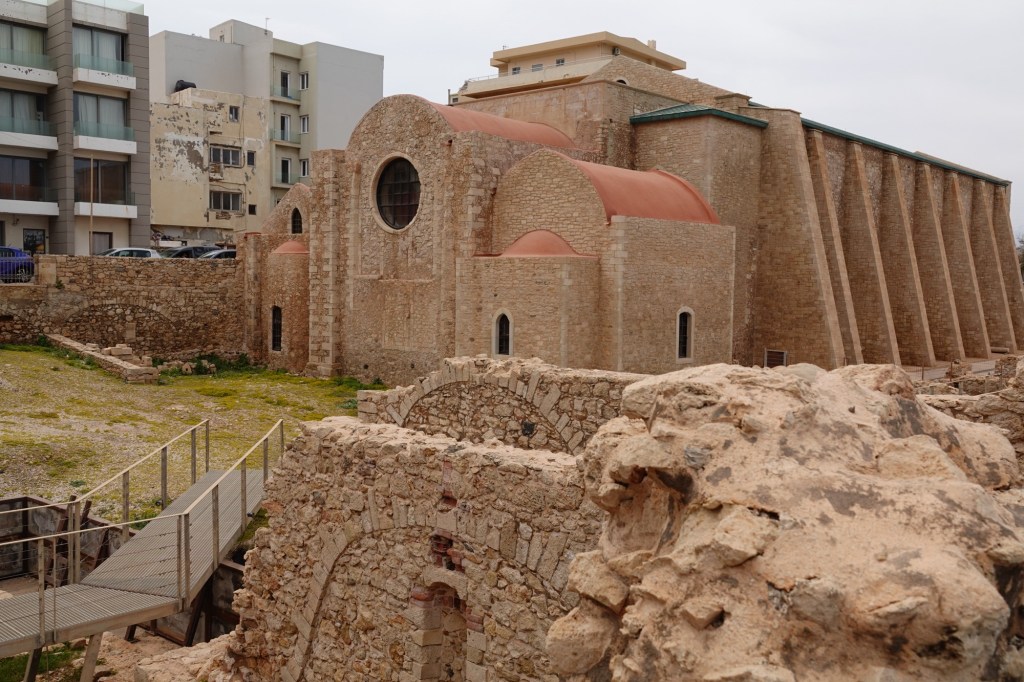
The monastery dates to the early Venetian period, was damaged in the 1508 earthquake, rebuilt and then partially destroyed during the Ottoman siege, and subsequently used for a time as a mosque. Graves of the 2nd Byzantine period were uncovered here, as well as an extended settlement from the Arabic period. (There are two distinct Muslim periods on Crete: the Arabic Emirate of Crete, an independent Sunni Islamic state that lasted from about 824–961 CE, and the Ottoman/Turk provincial rule from 1669-1898CE. Between the two were multi-century Byzantine and Venetian eras.)
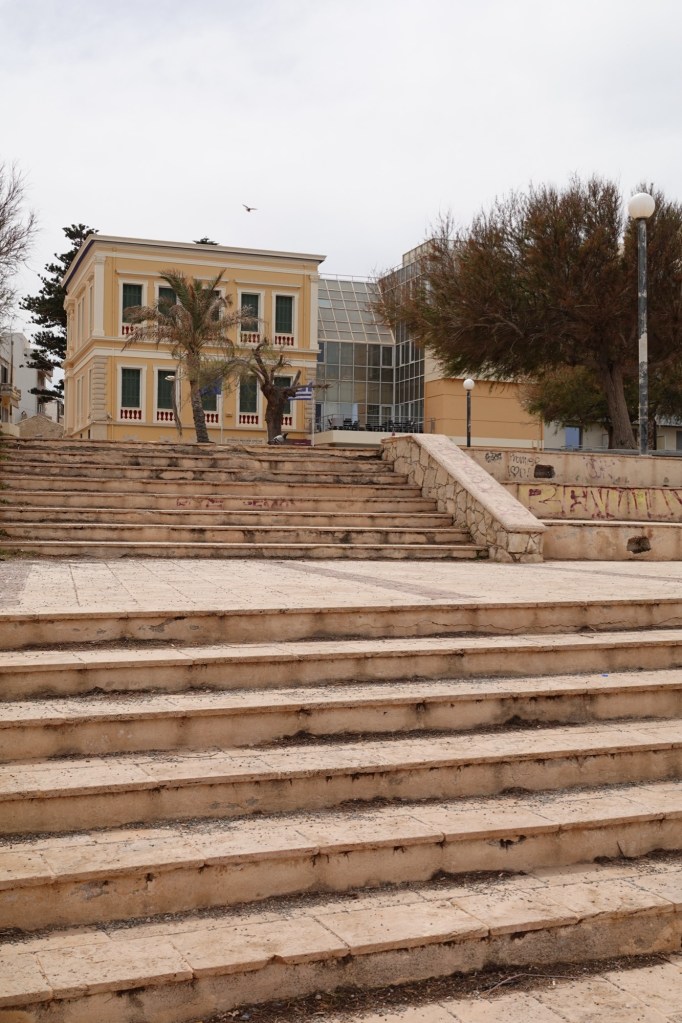
The Historical Museum of Crete occupies a lovely restored building.
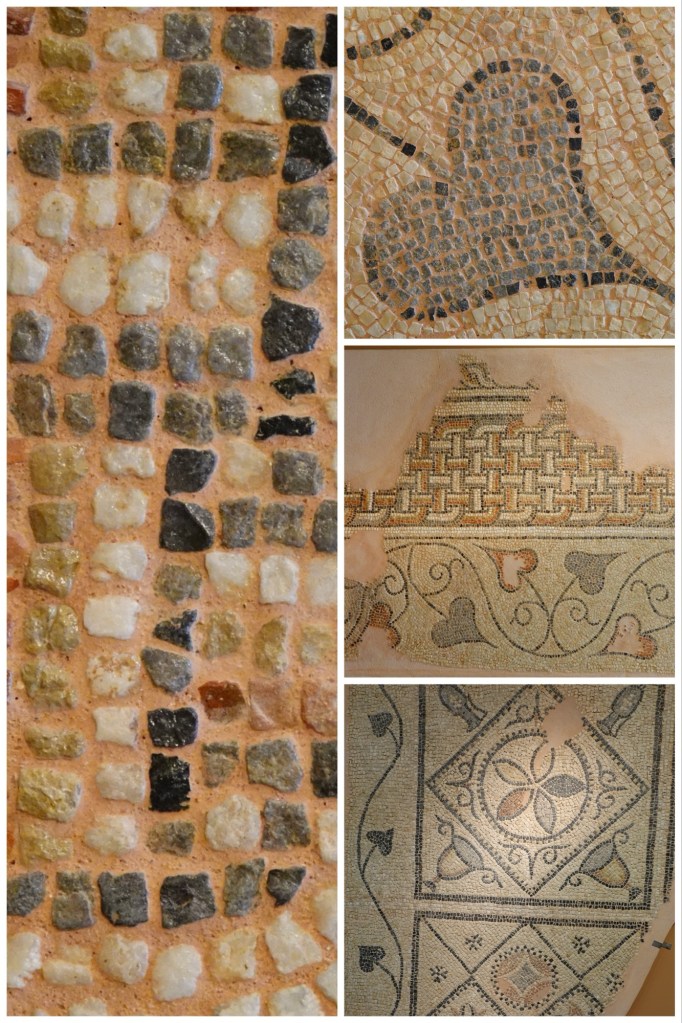
The museum’s exhibits cover everything from the Byzantine era through to the end of WWII. One of the things I learned (or maybe re-learned after forgetting) was that Crete only became part of Greece in 1913. That may explain why Cretans don’t identify first as “Greek”, in the same way that Sicilians don’t identify first as Italian.
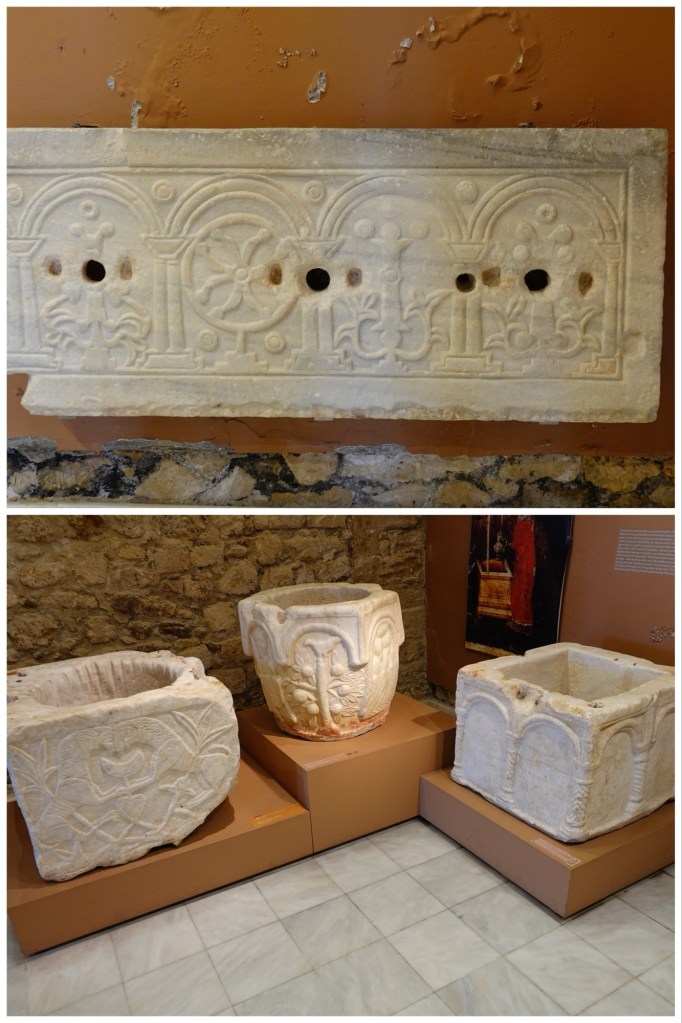
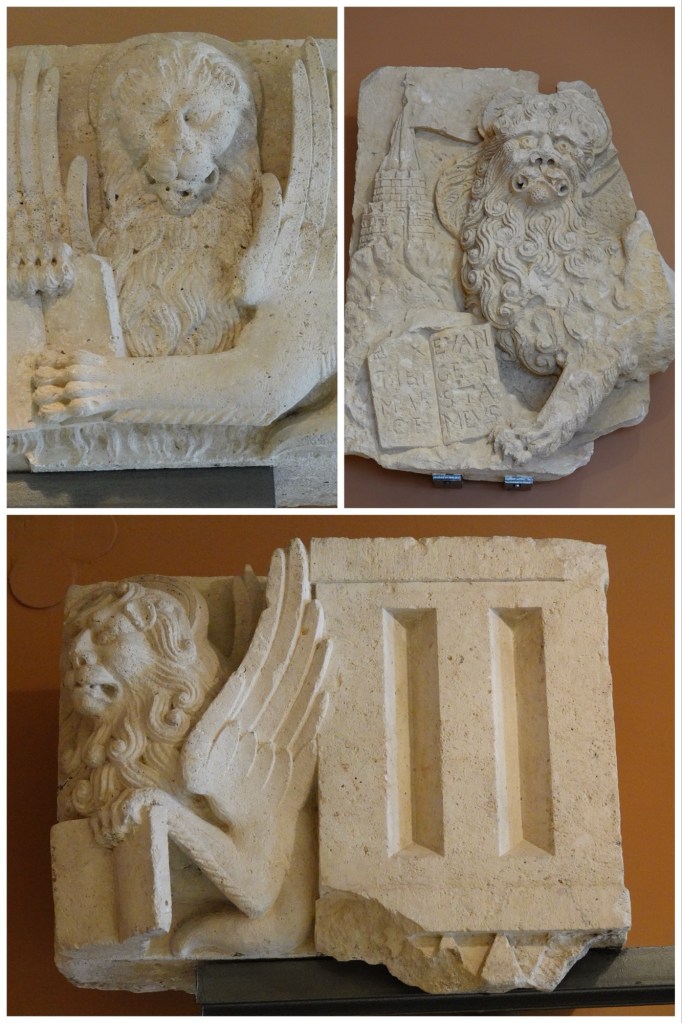
There were 25 small rooms of well curated and well explained exhibits. Some of my favourites are below.
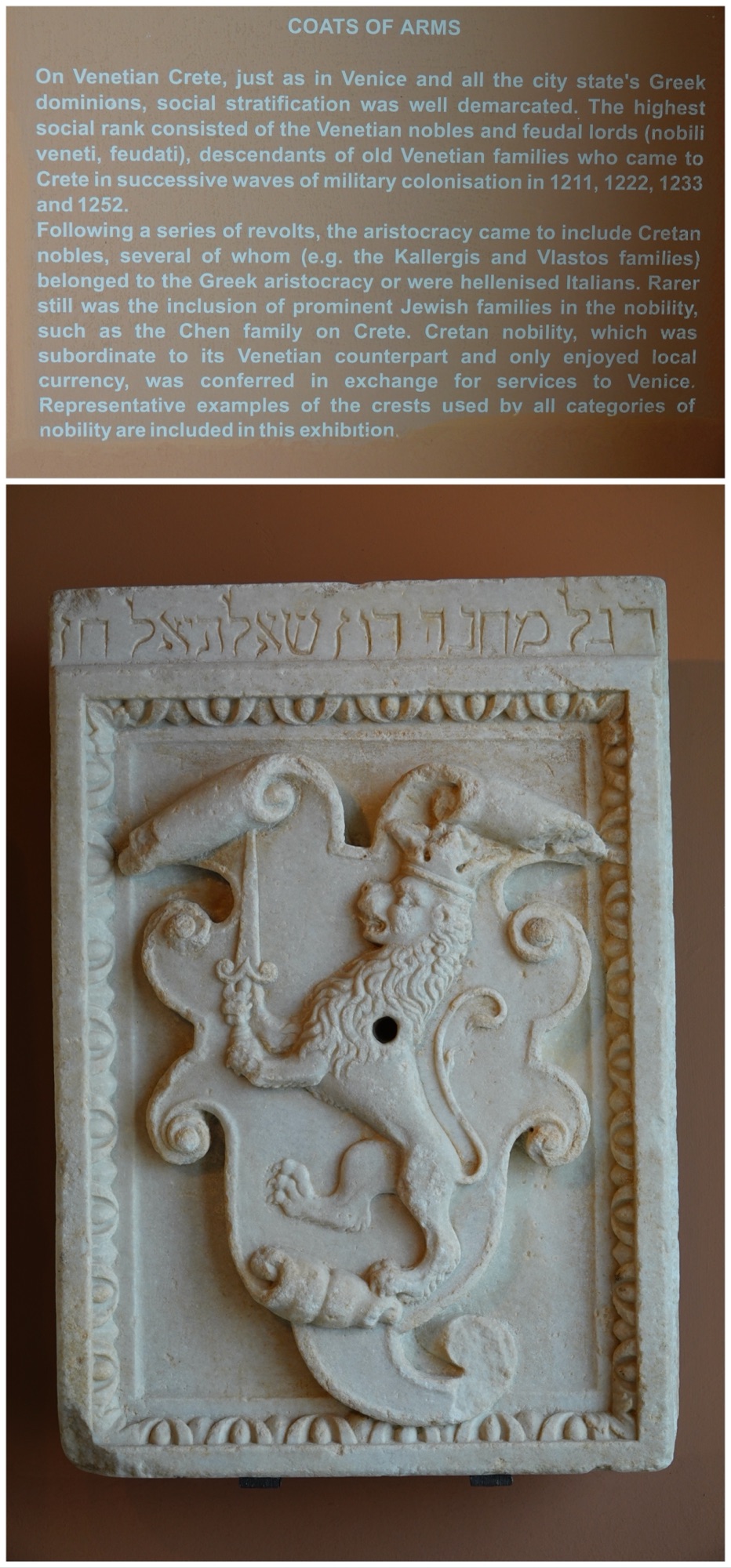
I was fascinated by the display and explanation of the Venetian crests, and then amazed that the Chen crest referenced in the explanation was one of those actually on the wall.
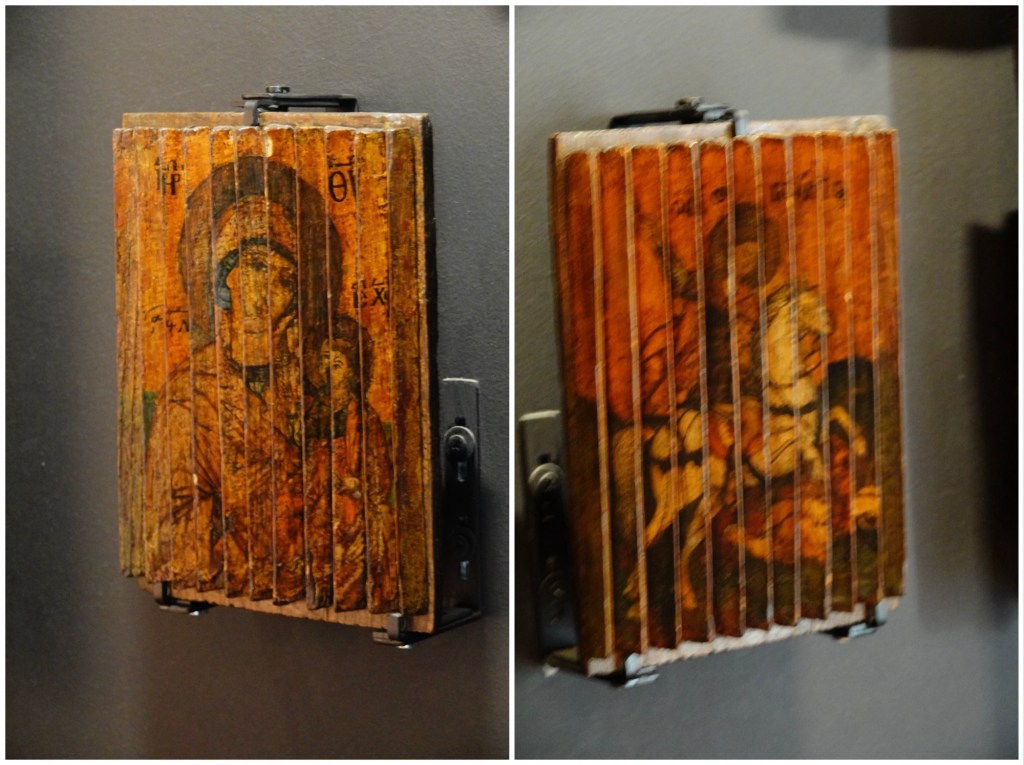
Ted was particularly fascinated by the icon below. We’ve never seen a “pleated” icon before. From one side this one shows Saint Mary, from the other side it’s St. George.
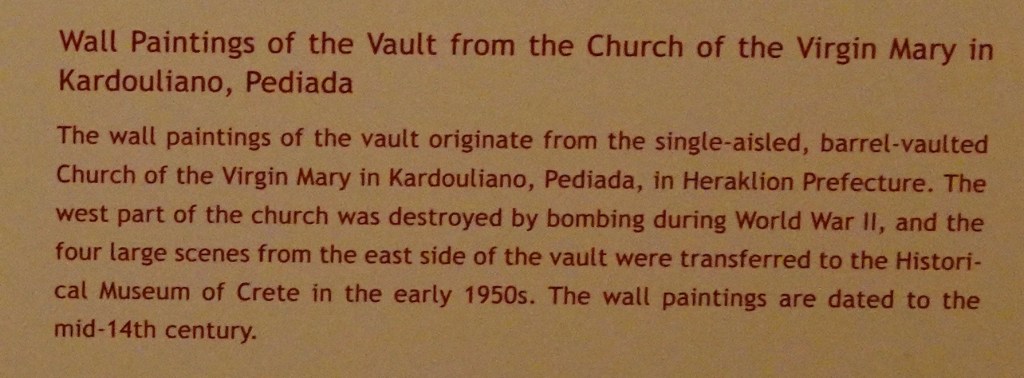
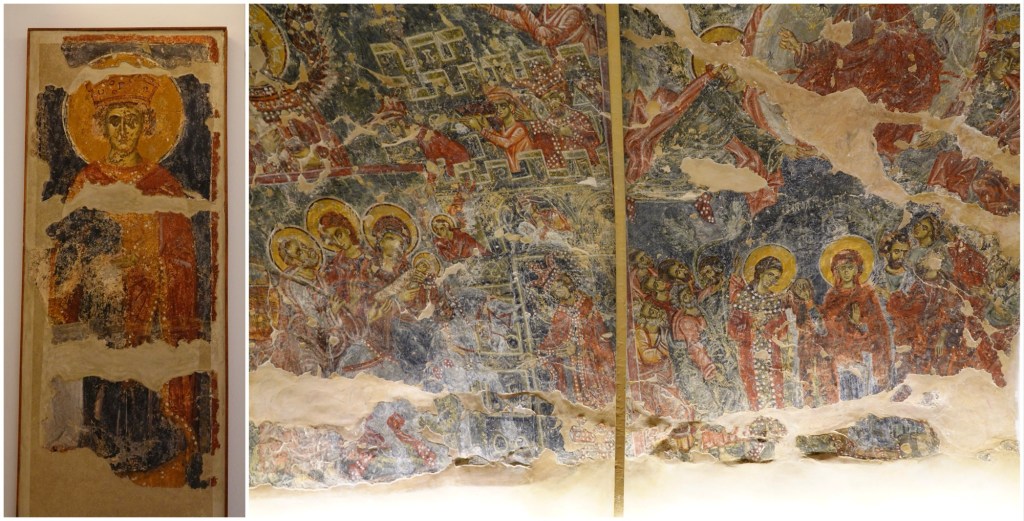
Unlike the “reimagined” wallpaintings at the Knossos Palace, the 14th century portions below were rescued from a church and have not been retouched.
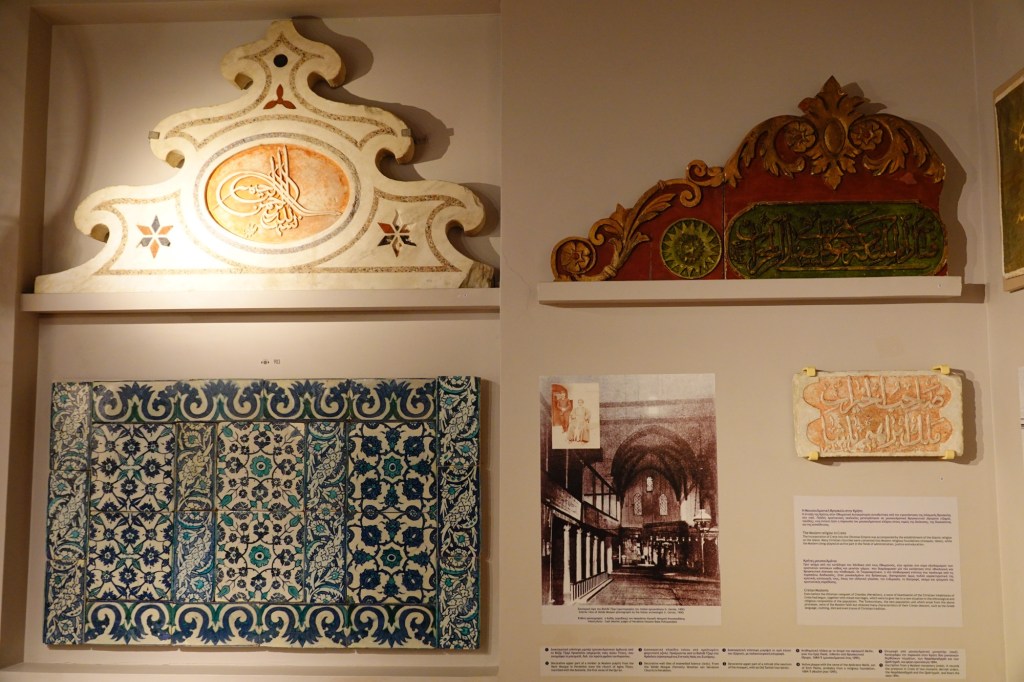
There were items from Ottoman mosques of the late 17th century, not long after the Ottoman Turks conquered Crete.
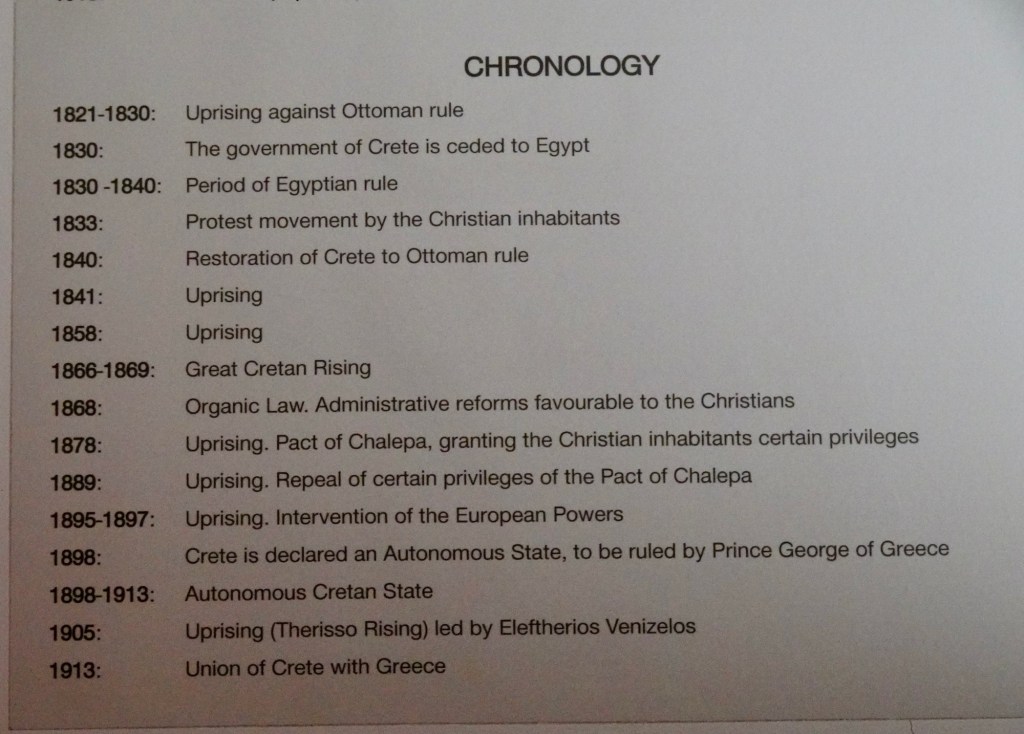
Charts like the one below really put Crete’s more recent history into perspective. I cannot even imagine living through a century of that kind of upheaval.
The upper floor of the museum shared Crete’s proud cultural traditions, lifestyle, and famous personages. Earlier this week we saw the tomb of Cretan writer, journalist and activist Nikos Kazantzakis atop Martinengo Bastion. I recognized him only as the writer of Zorba the Greek, but he wrote many other fiction and nonfiction books, including The Last Temptation of Christ. He was nominated for the Nobel Prize in Literature nine times, and remains the most worldwide translated Greek author.
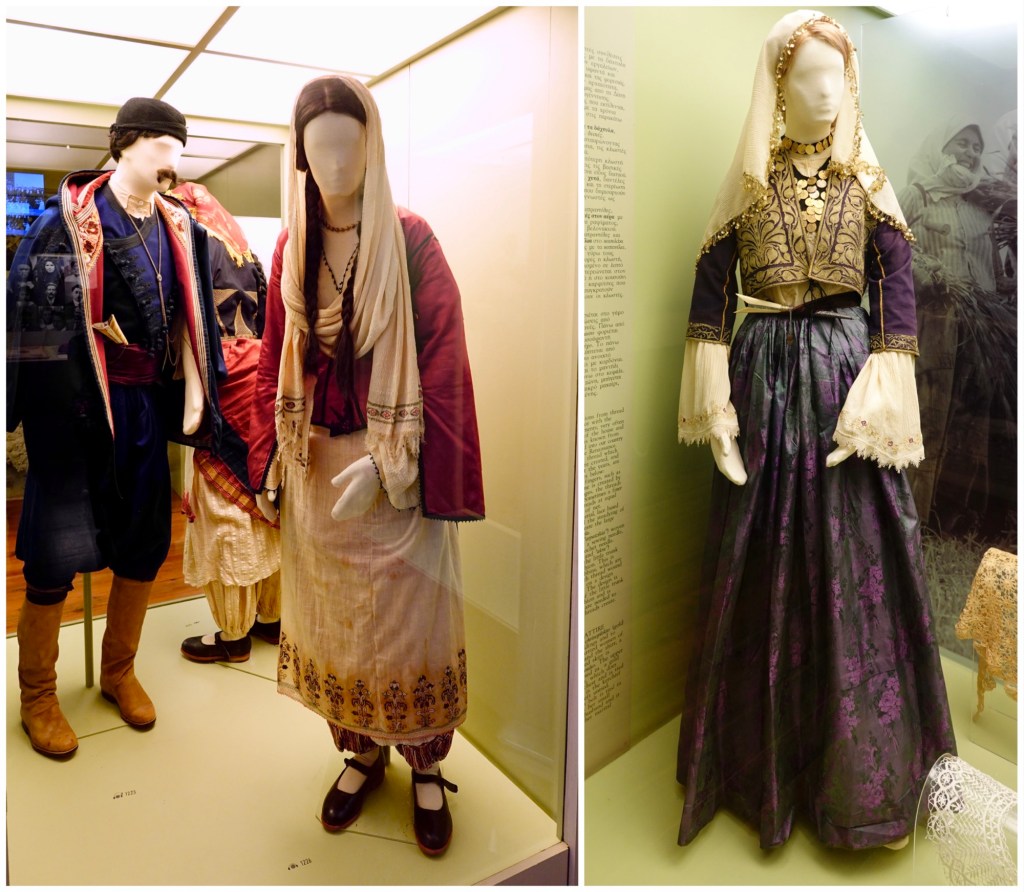
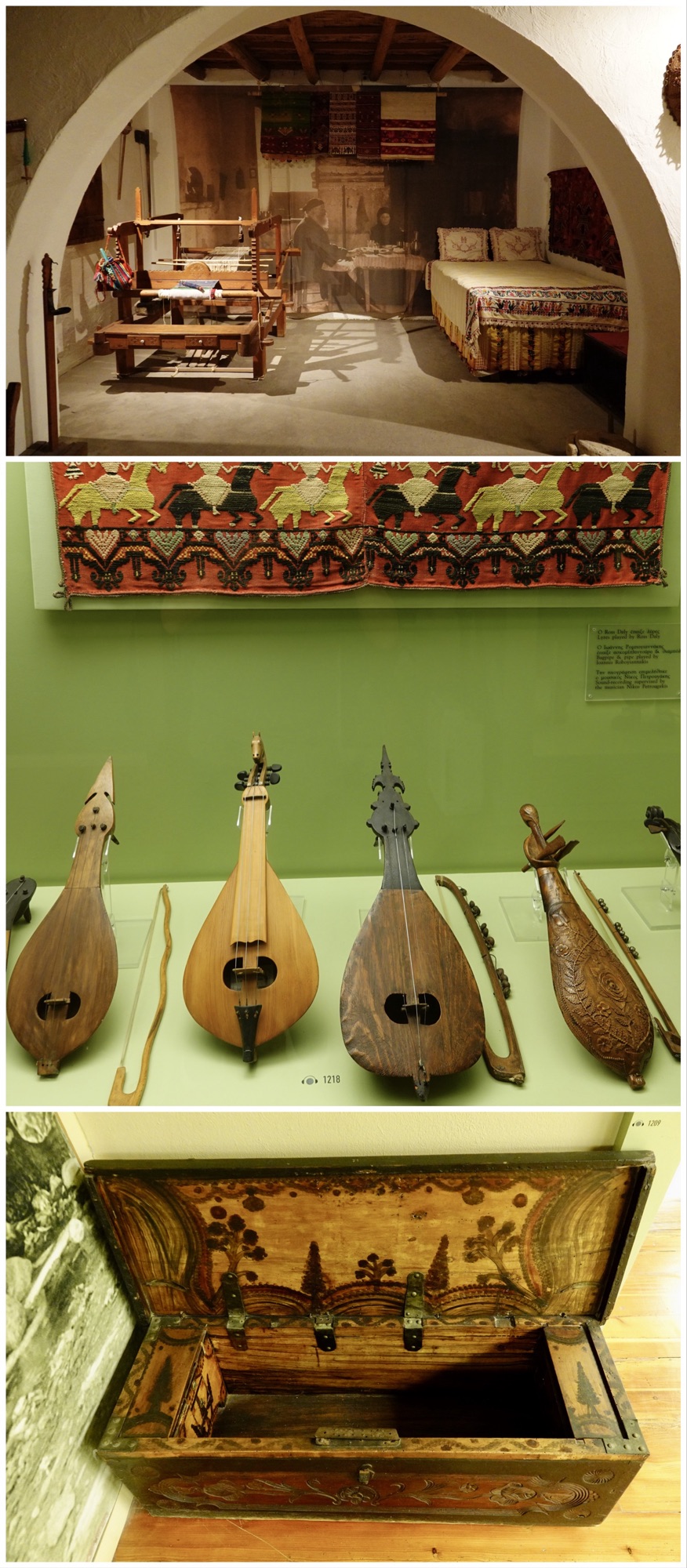
The displays of traditional garb, crafts, instruments, and agriculture pulled us back into the present after a week of looking mostly at ancient history.
Our time in Heraklion has certainly given us some insight into Cretan history and culture. I know we’ll expand on that as we move on to the other two large cultural centres of the island.
We head to Rethymno today.
 Rose and Ted’s Excellent Adventure