I’ve always wanted to stay in a Tuscan agriturismo, and this trip gave us that chance!
But first, we had to get there from Bologna, which was via train through Florence, where we had a three hour transfer window.
The train station is about a half hour walk from the Duomo, which was too much of a timing risk for my taste. Instead, DIL wanted to check out the shops near the station. We’d waffled over buying leather goods in the many, many virtually identical leather shops of Venice, thinking that Bologna would have different options, but Bologna’s city centre turned out not to have much at all to offer in the way of reasonably priced leather goods (or small souvenirs, beyond magnets shaped like tortellini and cheese).
Because it was just a brief train stop, our glimpse of Florence was quite different from Ted’s and my visit here (Episode 529 & Episode 530) – just food stalls inside the Mercado Centrale and leather and clothing vendors lining the streets around it.
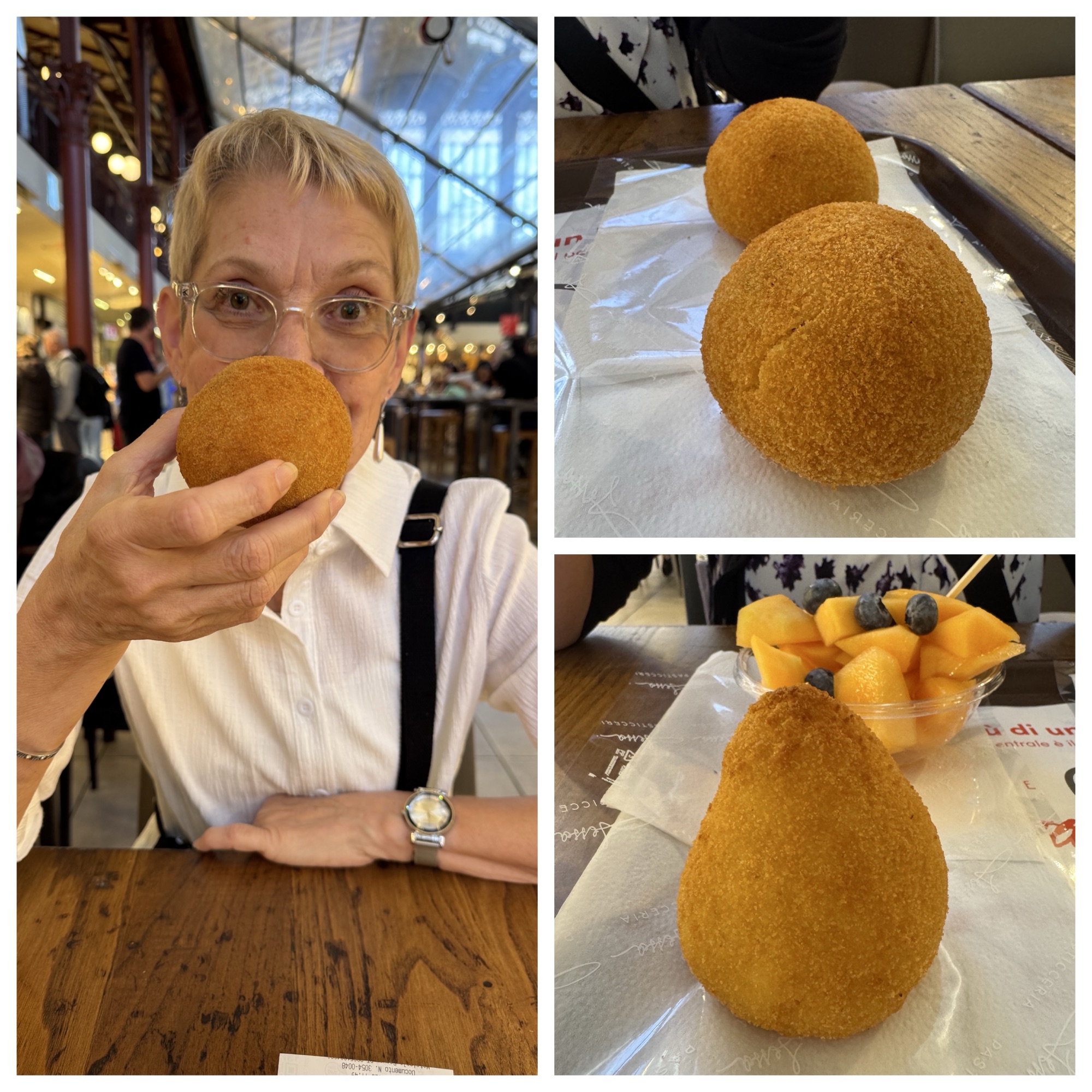
We grabbed filled arancini for our quick lunch.
We had another short regional train ride into the countryside near San Gimignano.
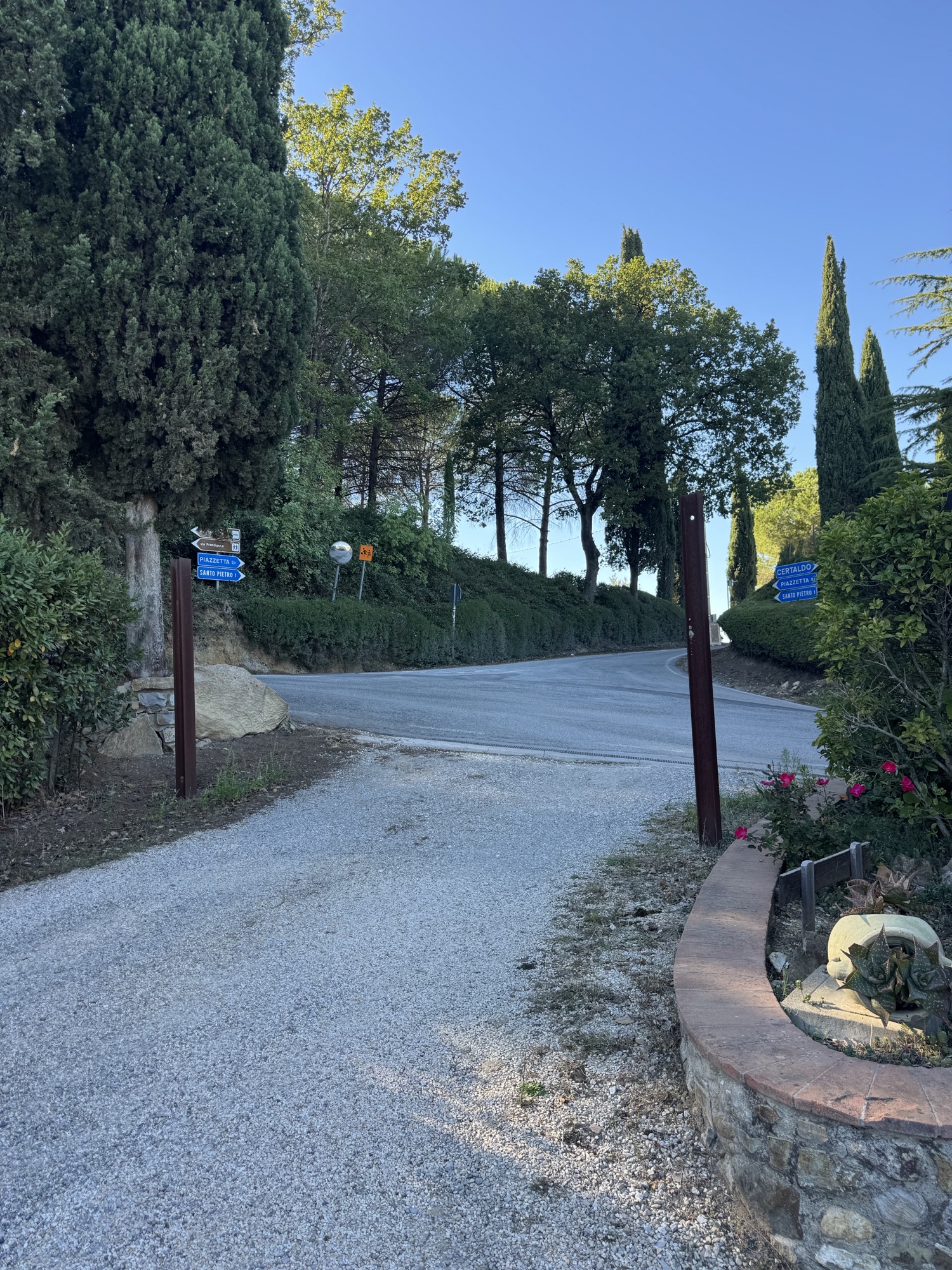
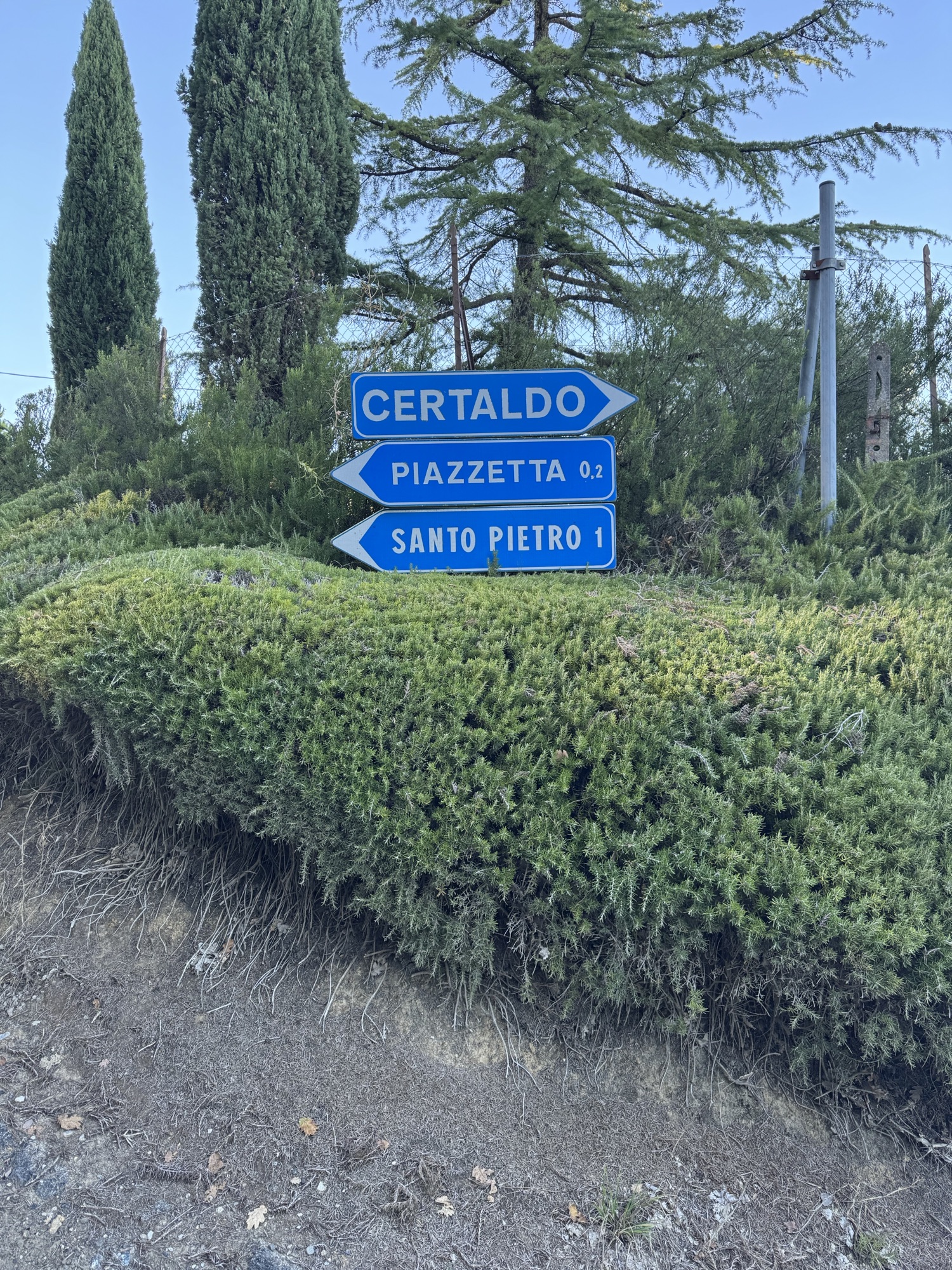
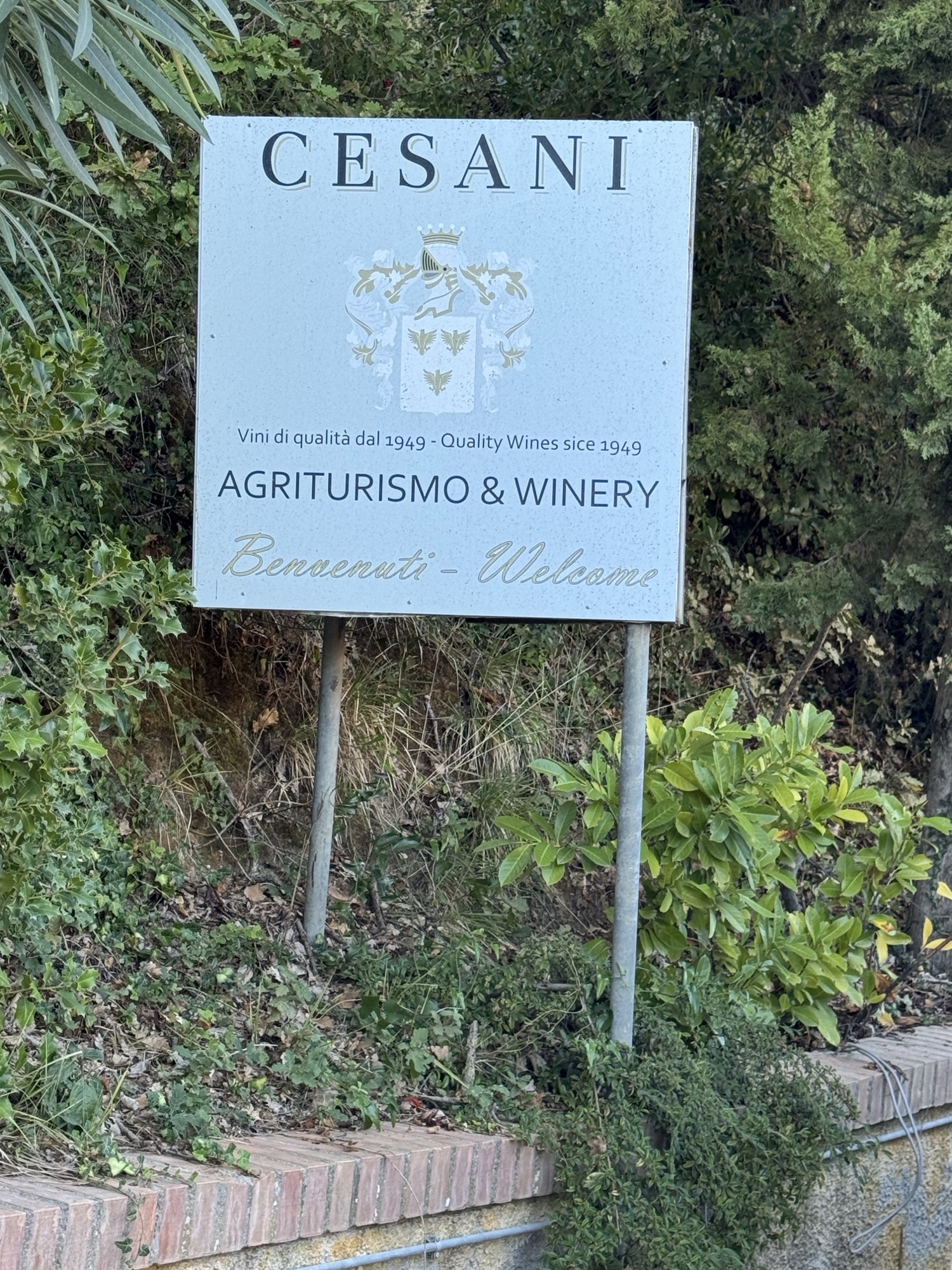
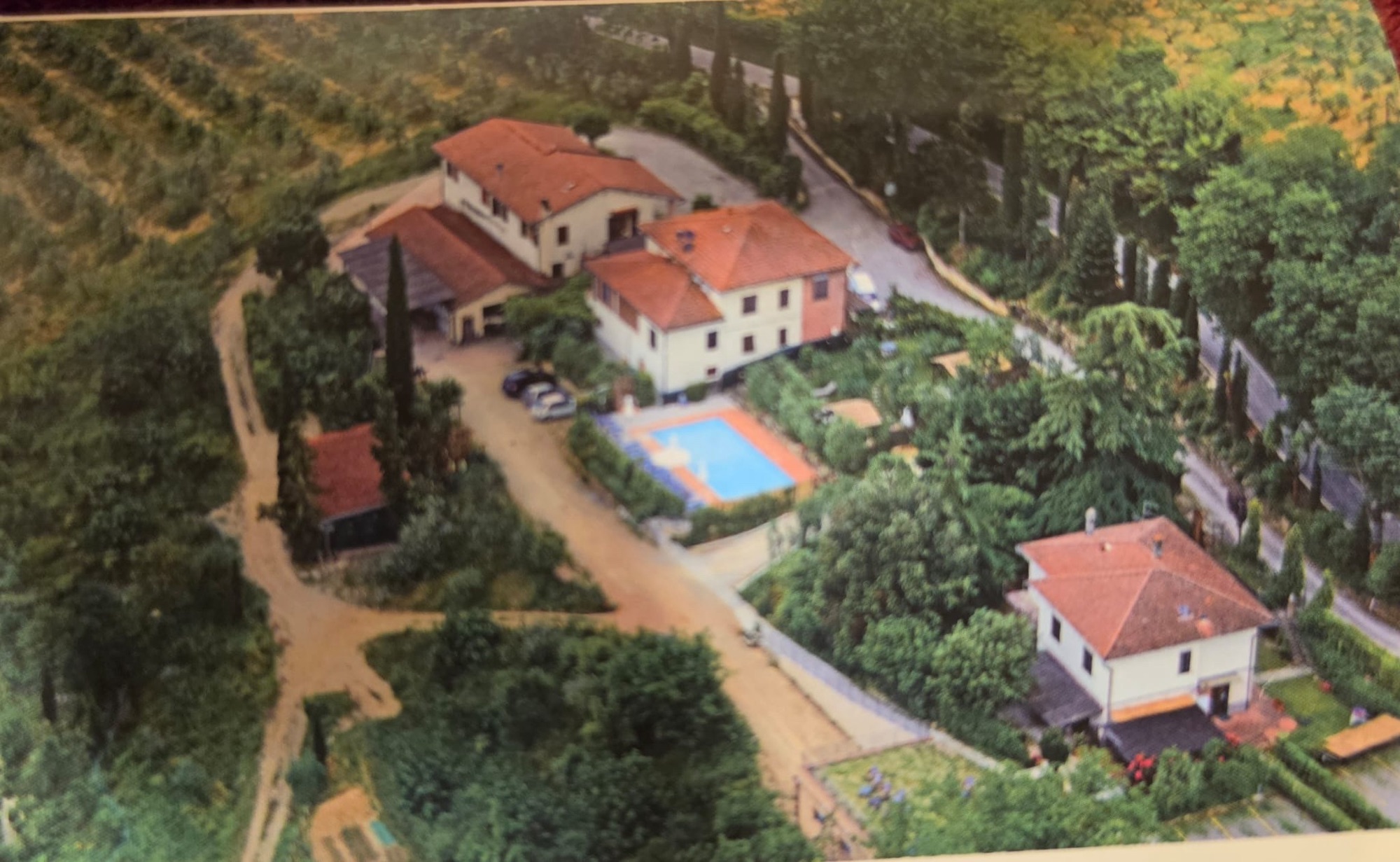
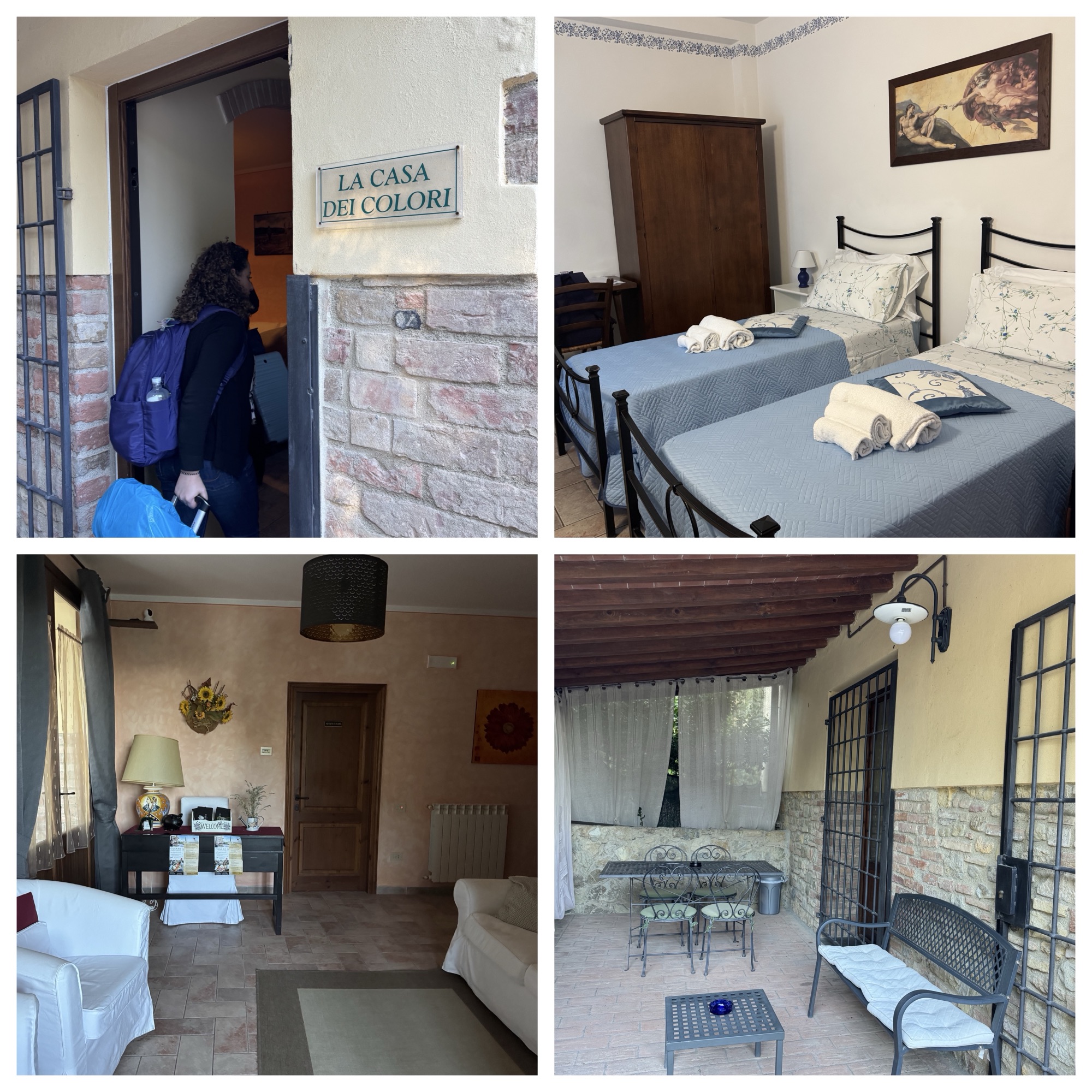
Our stay for the next two nights is at Agriturismo Cesani.
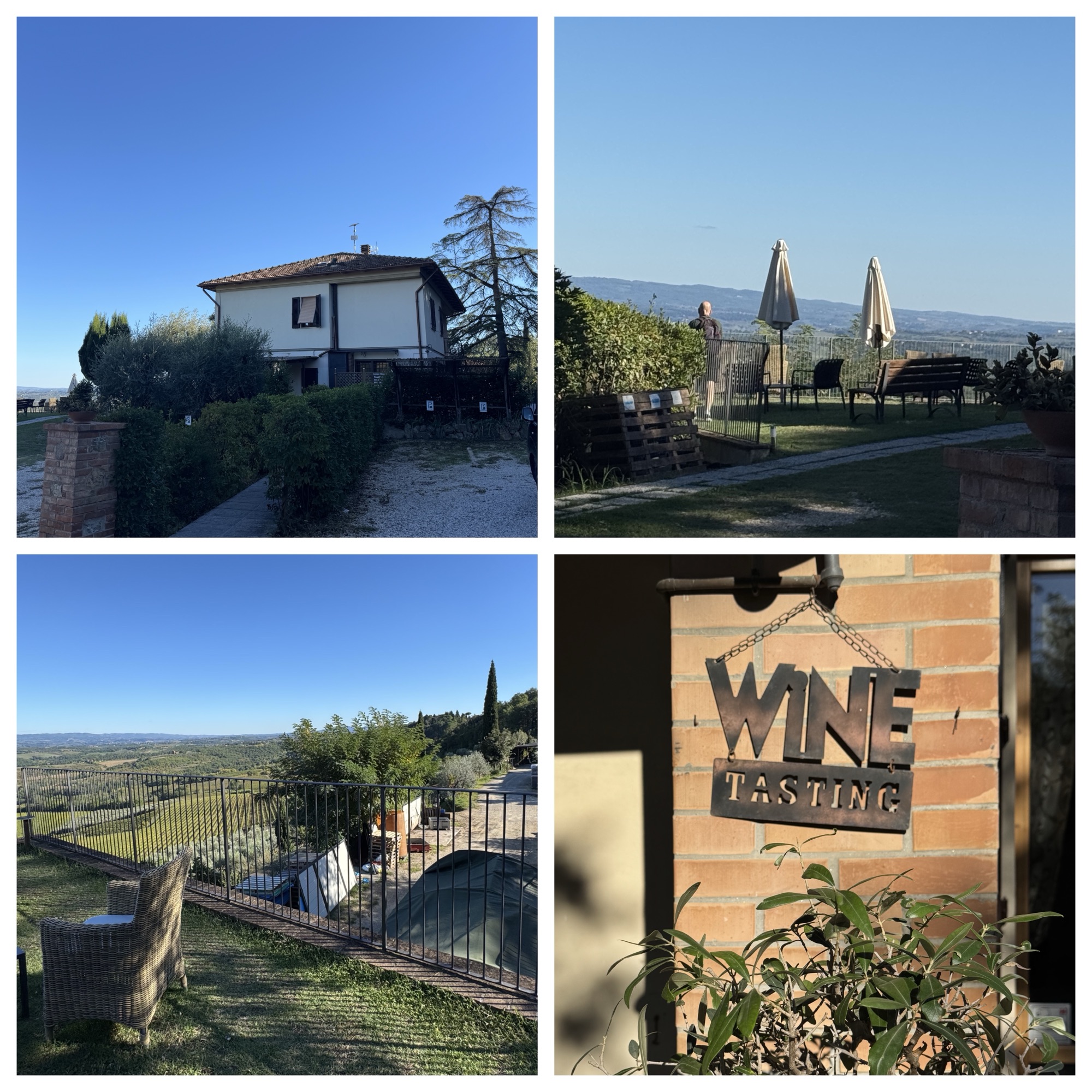
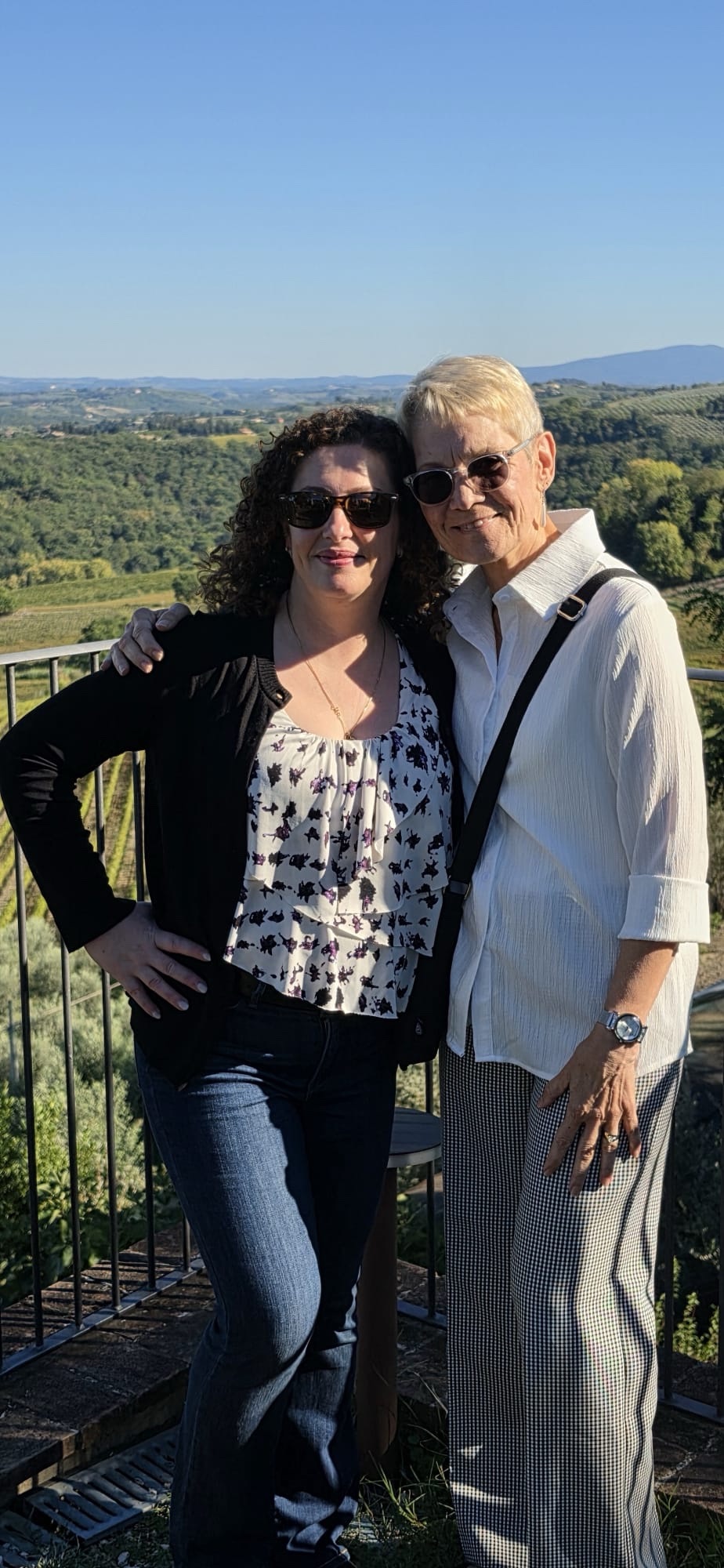
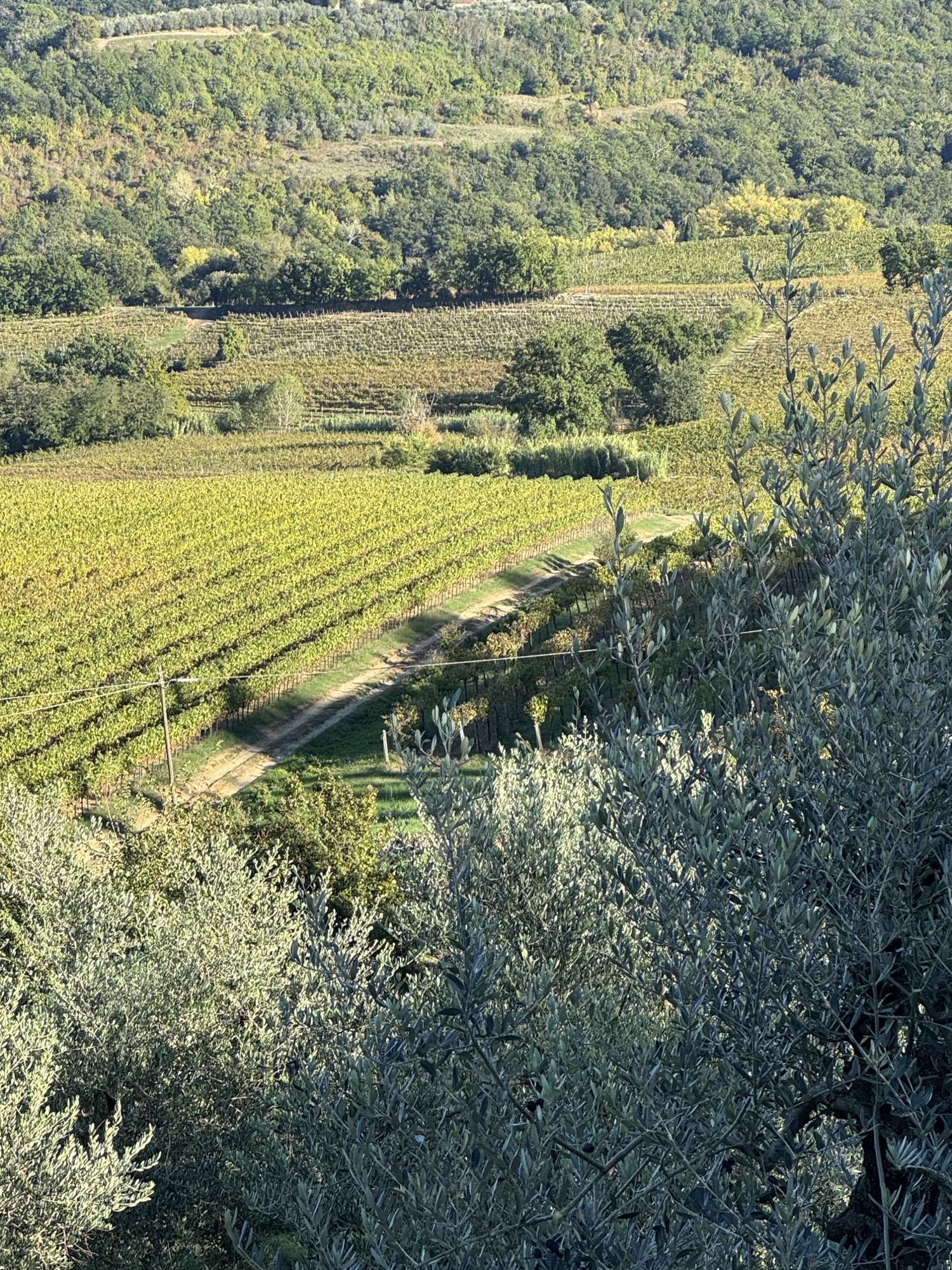
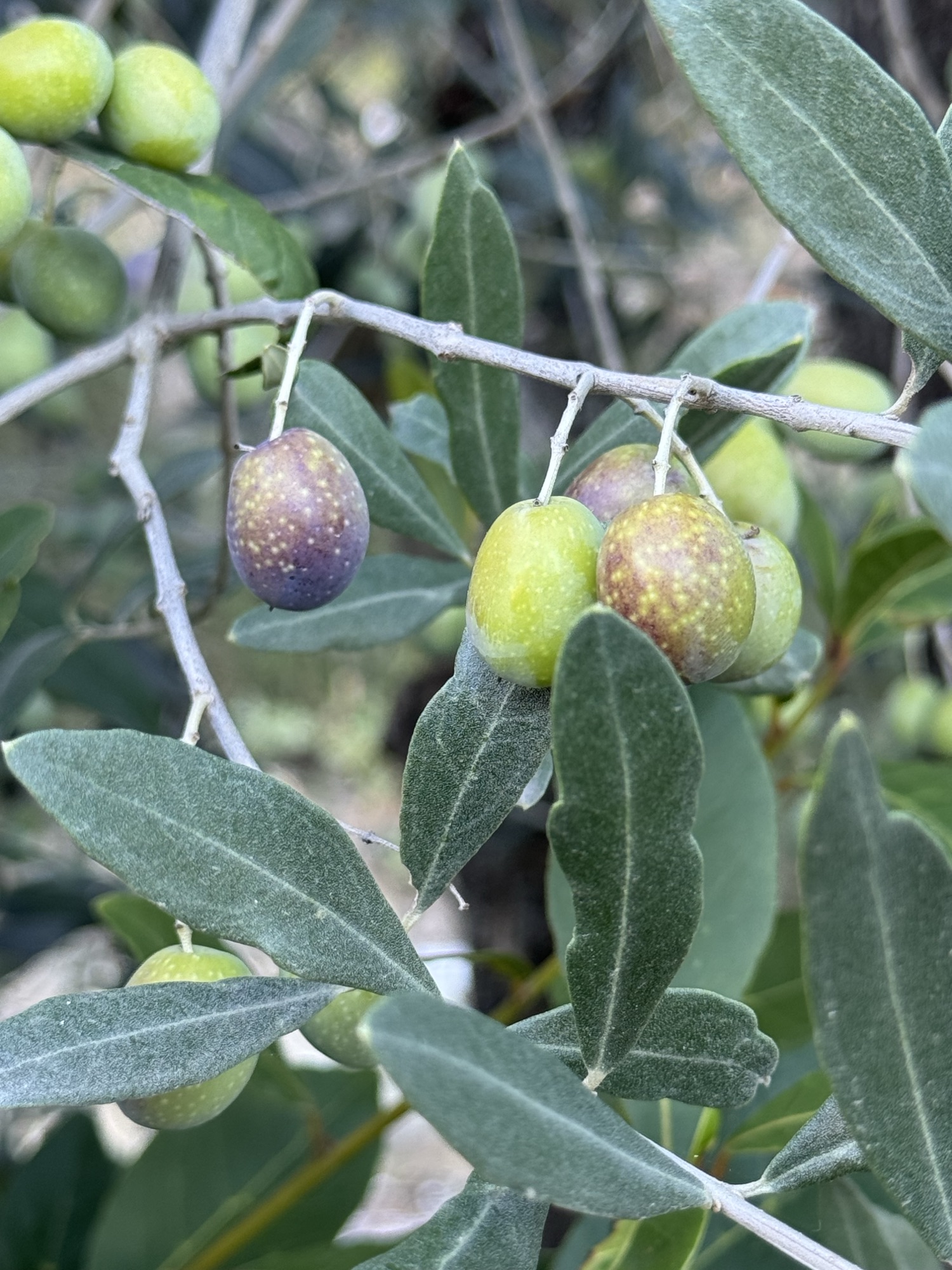
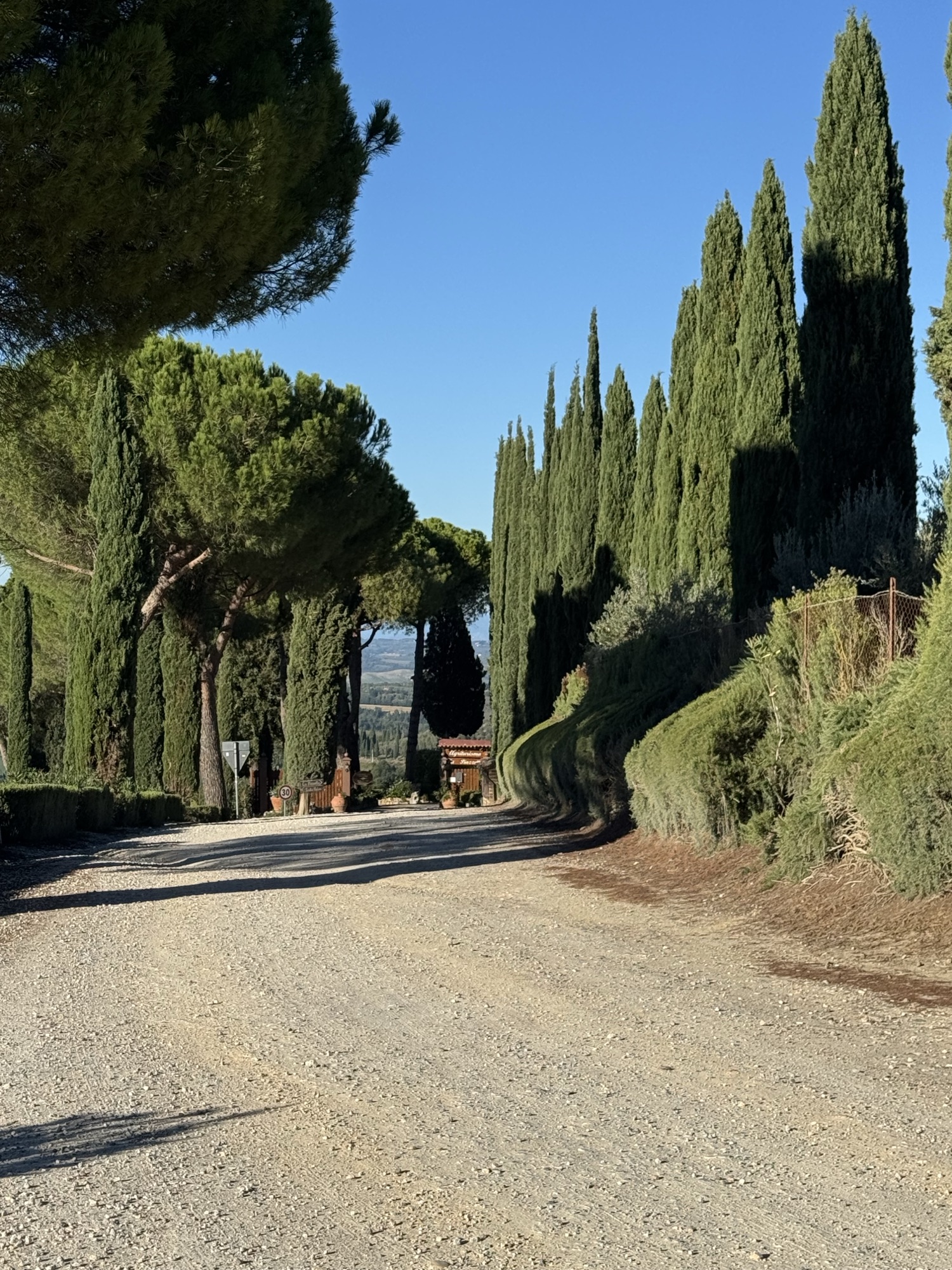
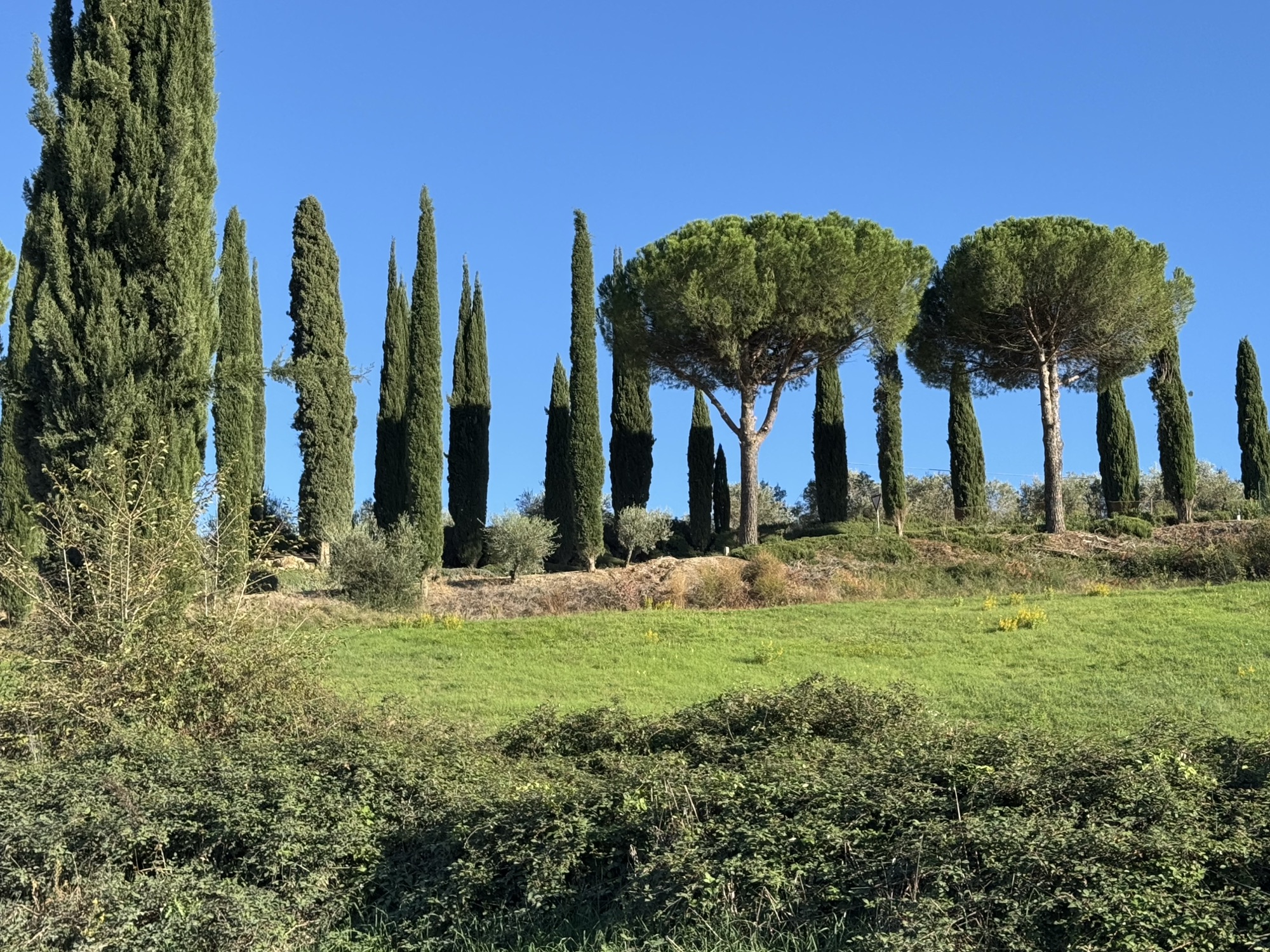
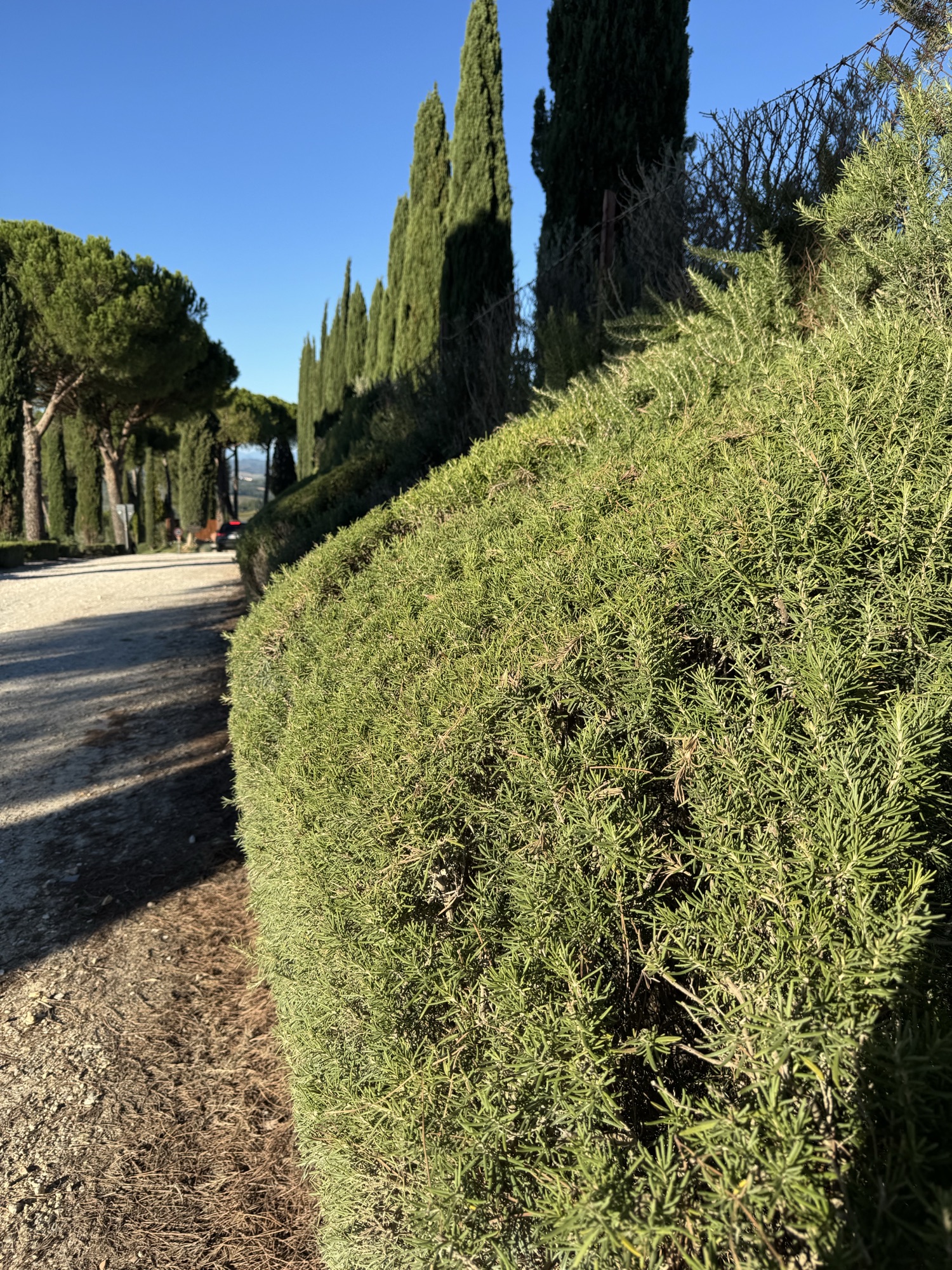
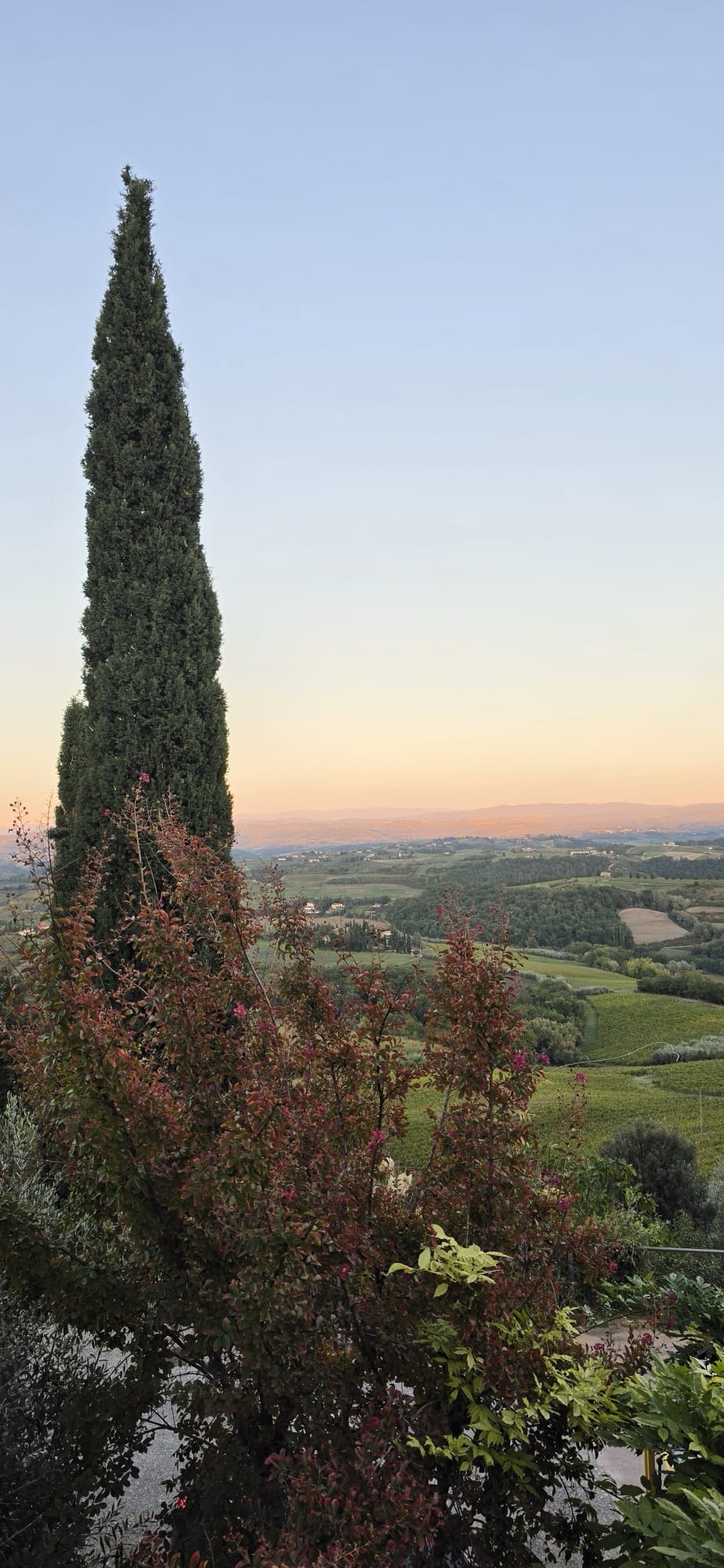
Before our group events began several of us walked around the property to take pictures of the olive trees, vineyards, stone pine, Italian cypress, and hedges of fragrant rosemary.
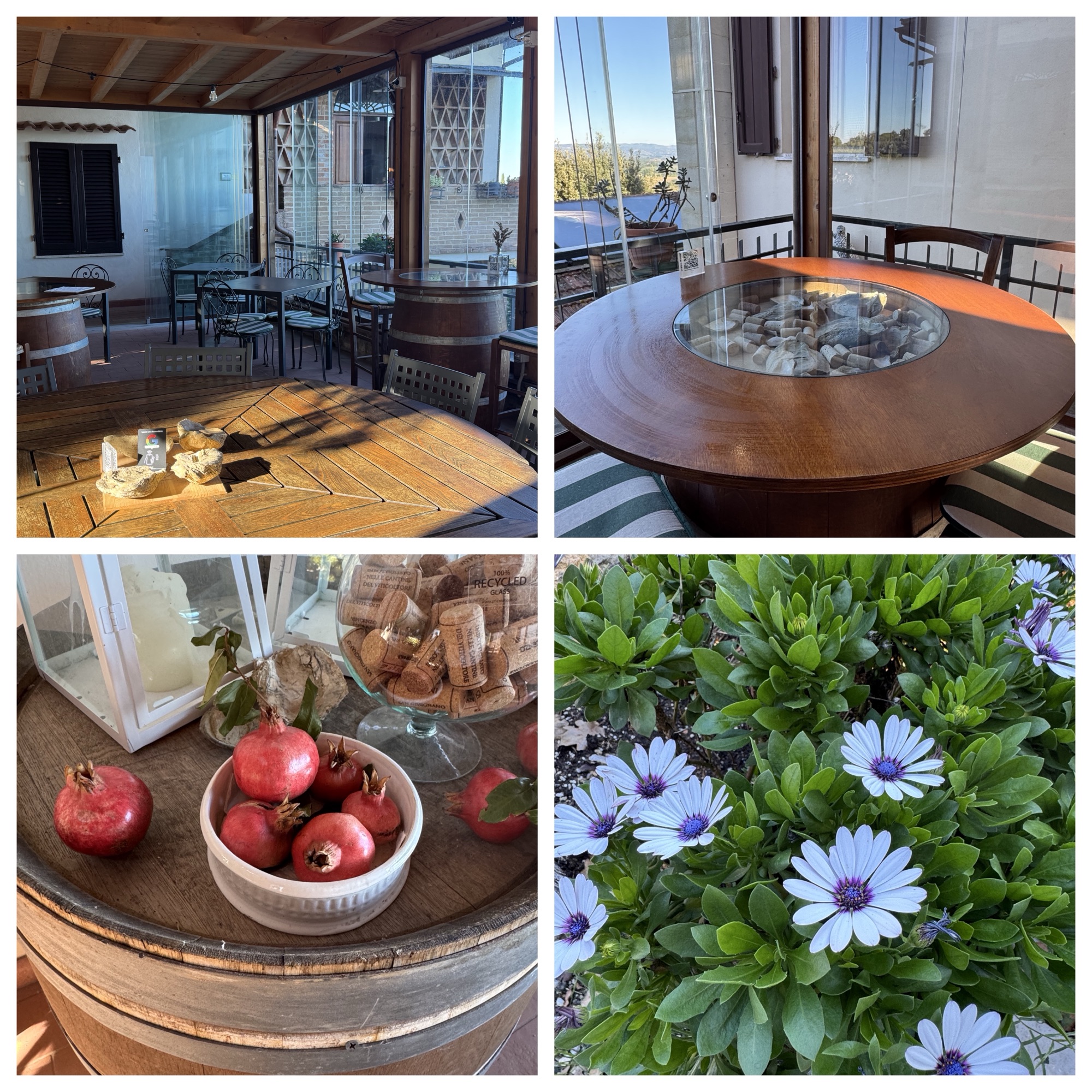
We all convened in the complex’s dining area at 5:00 fir an introduction to the agriturismo and its products.
Antonio, one of the owners, explained that climate change and hotter summers are resulting in much lower olive and grape yields year over year.
This farm has 43 hectares (approx 110 acres) comprised of mostly vineyards (27 hectares), but the secondary farm production is olive oil. 530 different olive cultivars exist in Italy, compared to 70 in all of Spain. Here they use just 4 different cultivars for their EVOO. The end flavour result sought for is a progression from palate to throat of fruity to bitter to peppery.
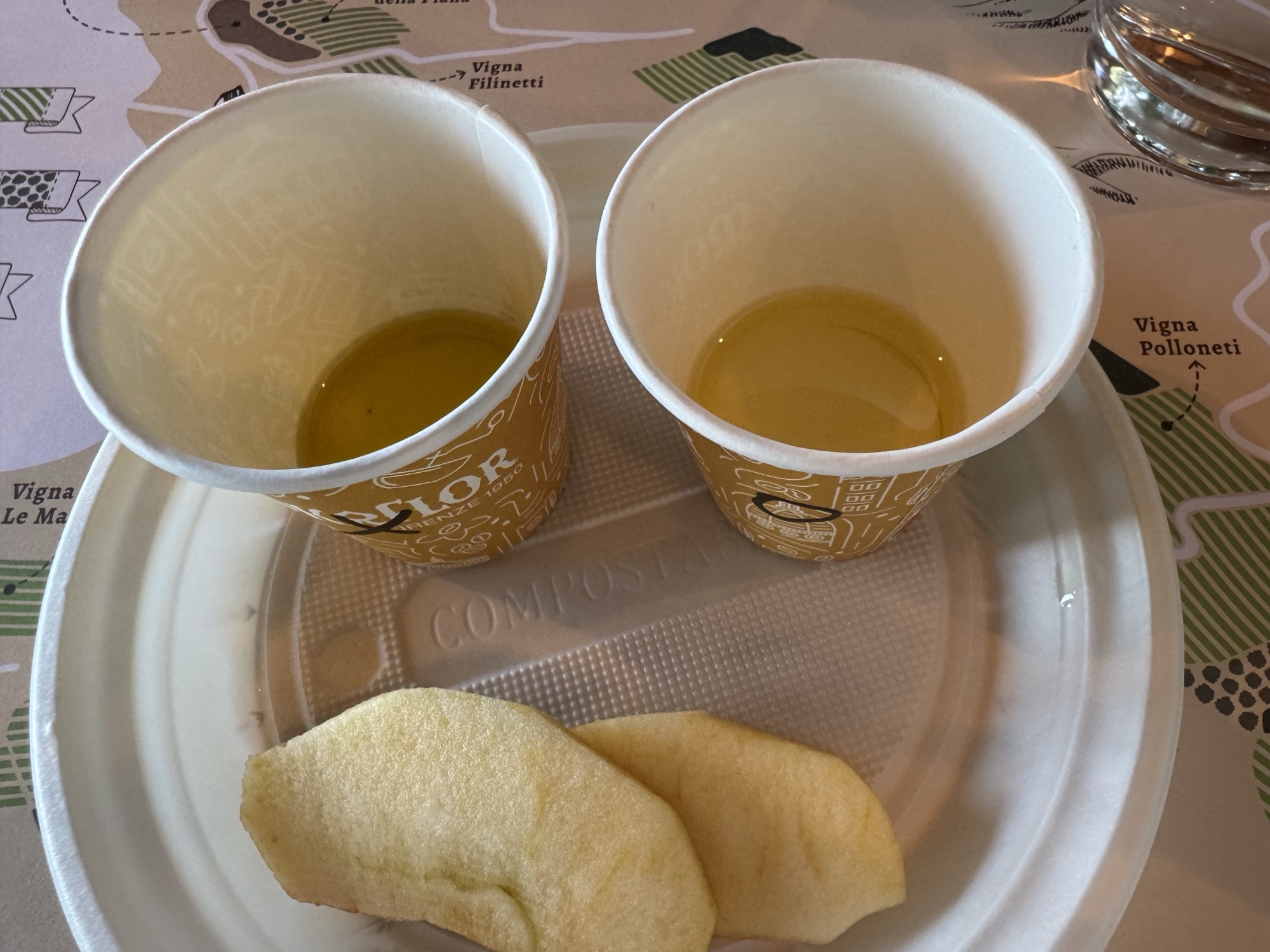
We were involved in a taste test to see if we could differentiate the true EVOO from a cheap commercial oil. Unfortunately we used paper cups instead of the small bowl glasses in which tasters warm the oil by spinning the glass in the palm while covering the glass with the other hand. Then taste by passing the oil over the lips and onto the sides of the tongue over the taste buds at the side.
Next came wine tasting, using 5 wines ranging from youngest and mildest to oldest and most intense.
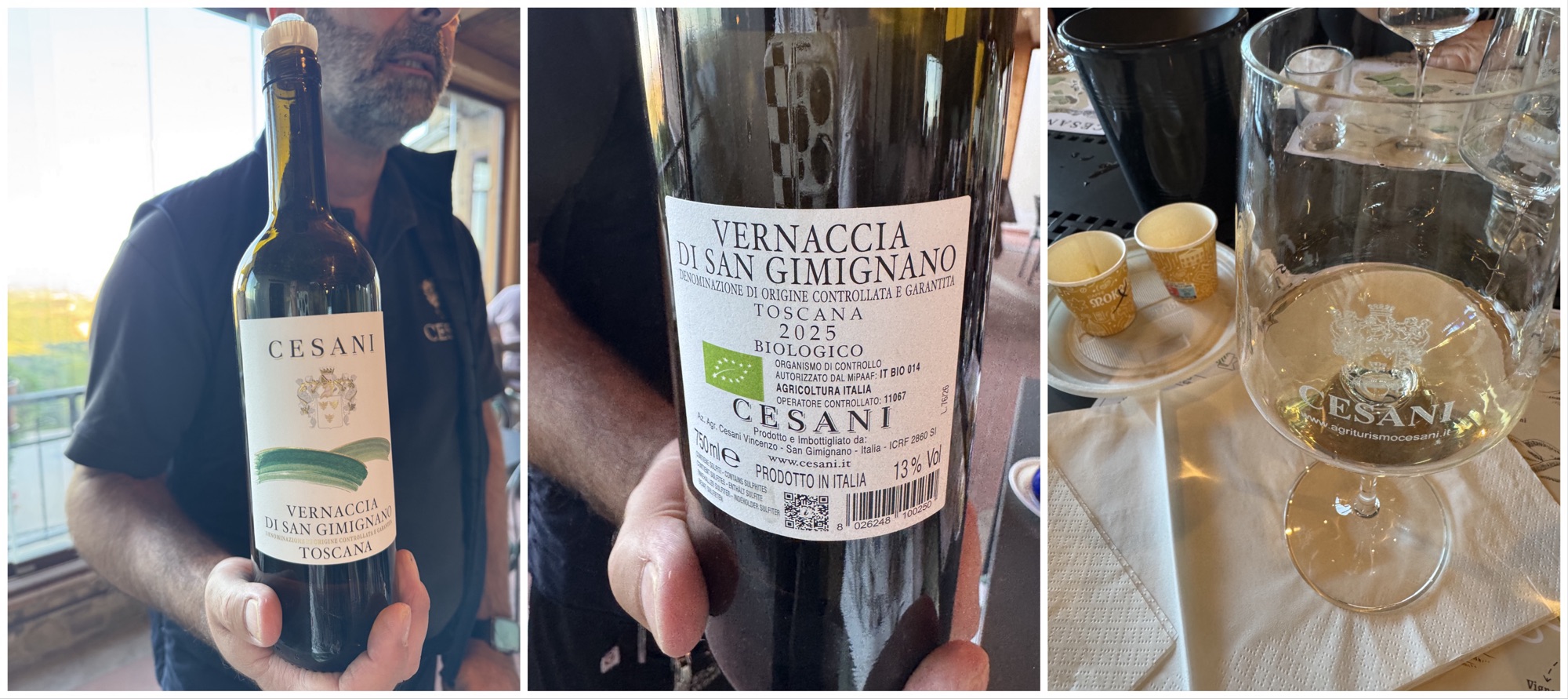
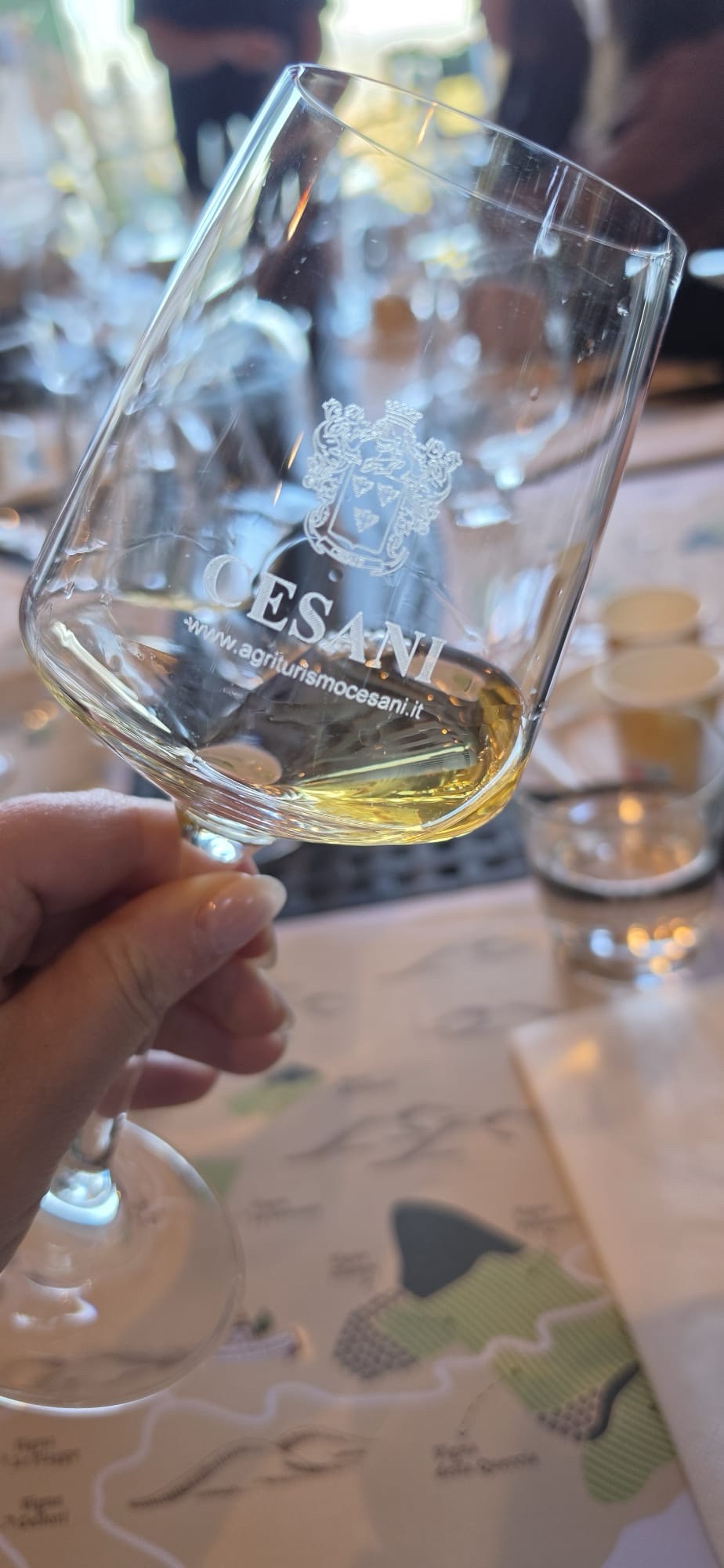
%1. A 2025 white wine made from Vernaccia of San Gimignano, a DOCG designated wine (single grape variety, grown among other things without irrigation) which despite Antonio’s suggested apple and pear notes to me had a light dried apricot smell.
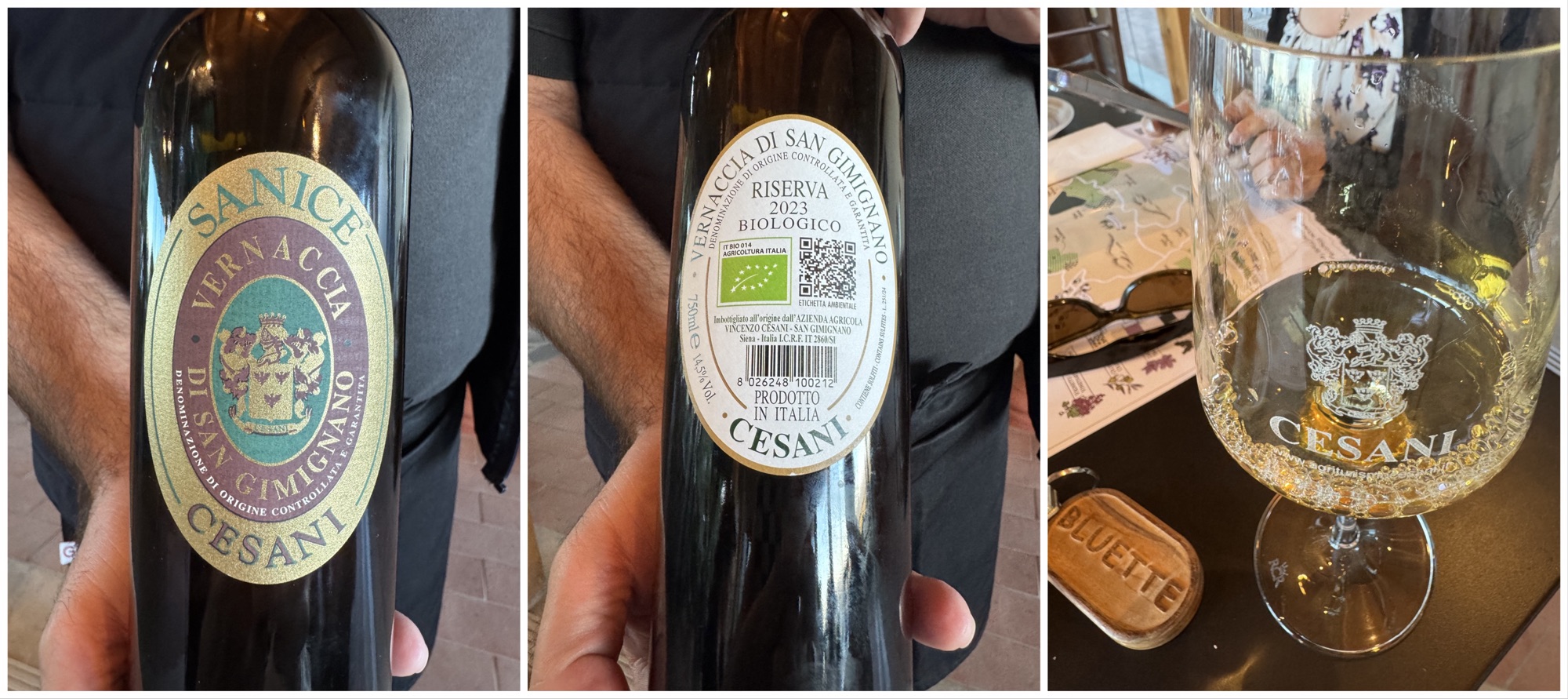
#2. 2023 Riserva, moving from pale yellow white to a more golden hue, with longer legs, and a taste redolent of yellow delicious apple dipped in honey.
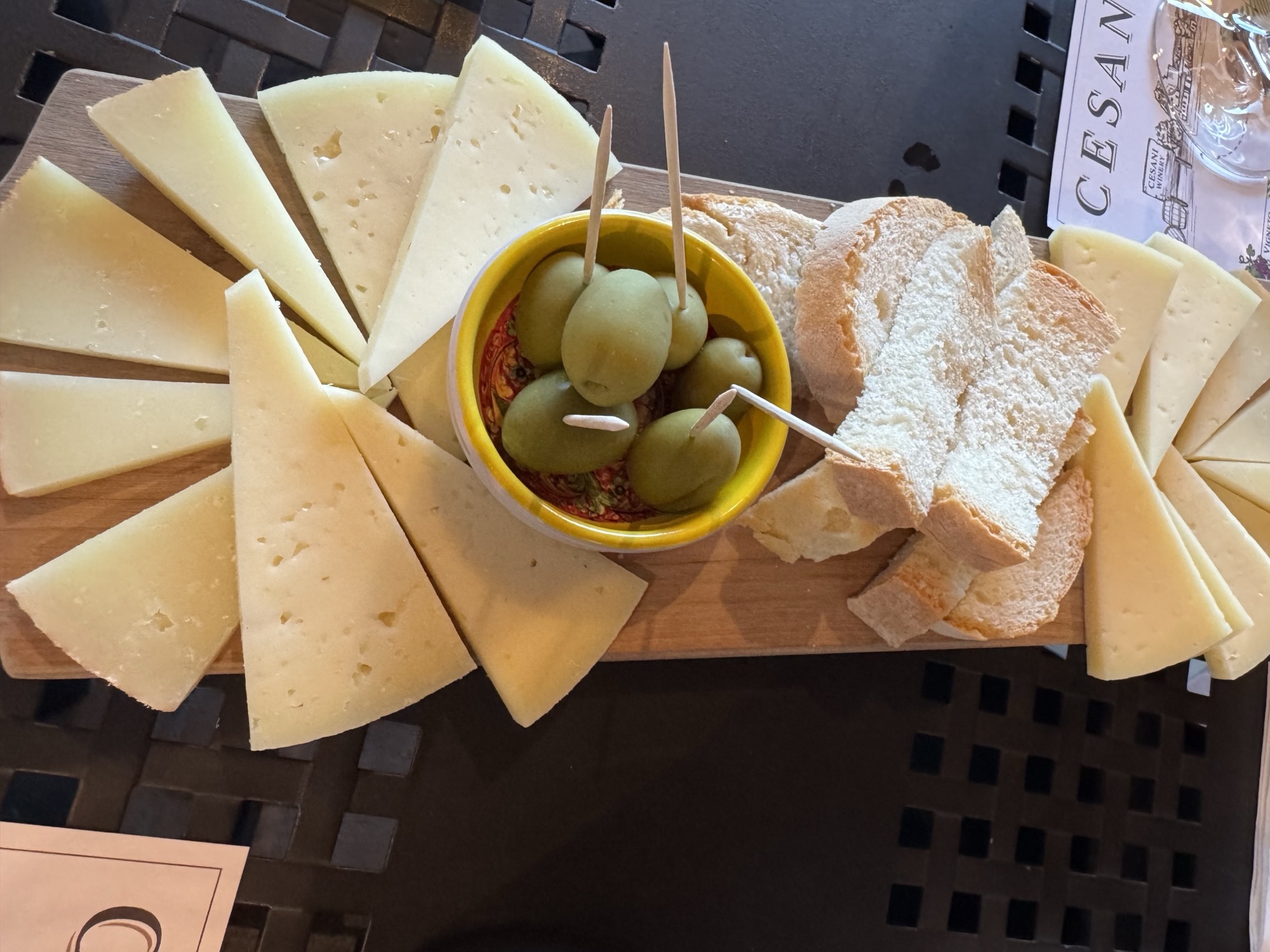
We got olives and pecorino cheese to taste with our wine.
#3. 2025 Sangiovese Rosato (rosé) macerated just 4 hours to give the sunset pink colour. It was full of strawberry taste and just very slightly peppery enough that it would be delicious with barbecued pork ribs and a fresh salad.
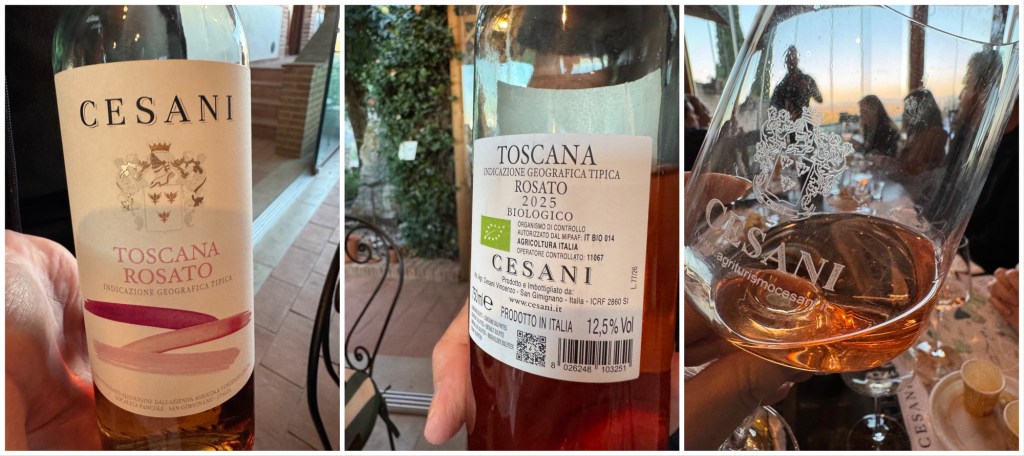
The colour really did match the sunset.
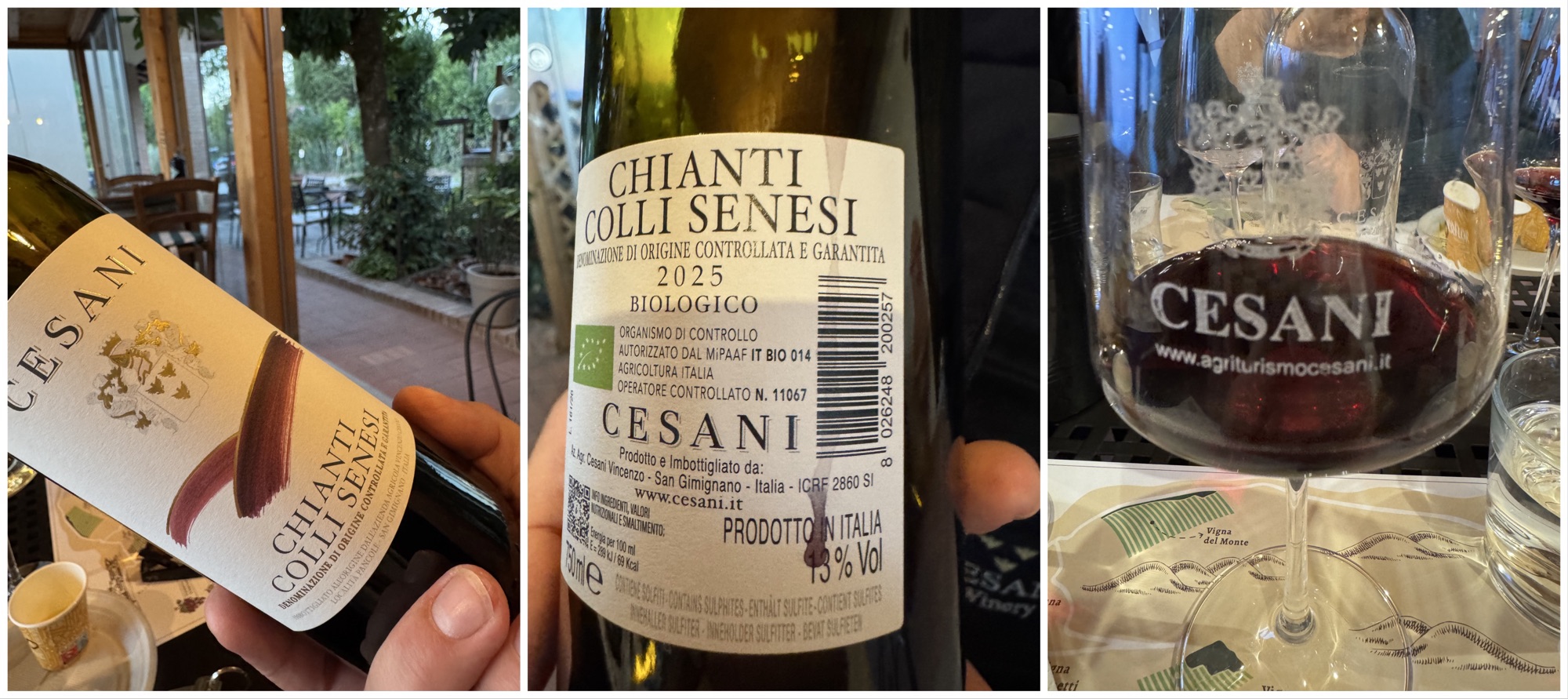
#4. Our first red was a 2025 Chianti, probably the most iconic Italian wine, and from the Chianti region of Tuscany. The appellation “colli senesi” refers to Chianti from the hills of this region, and is quite different from Chianti classics or ruffino. One of our group thought it tasted like pencil lead, which prompted much hilarity. The wine had an extremely dry mouth feel that I didn’t enjoy.
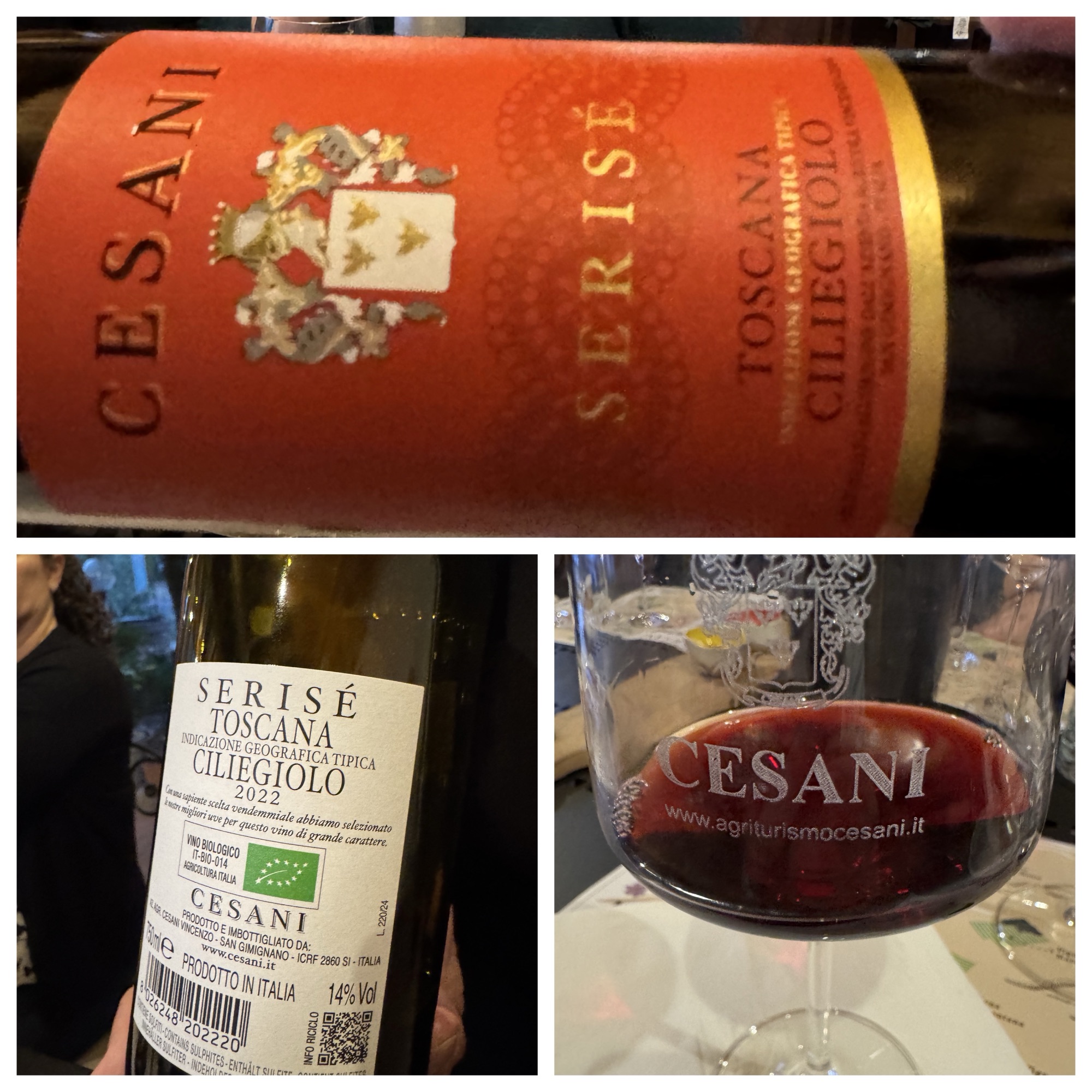
#5. A very tasty 2022 Ciliegiolo, made from a local variety of grape that looks and creates a taste like cherries. The fruit can actually burst if not picked in time. The wine has enough tannins and acidity to cut through fatty foods like lamb. This is also not a DOC wine but simply a typical regional wine.
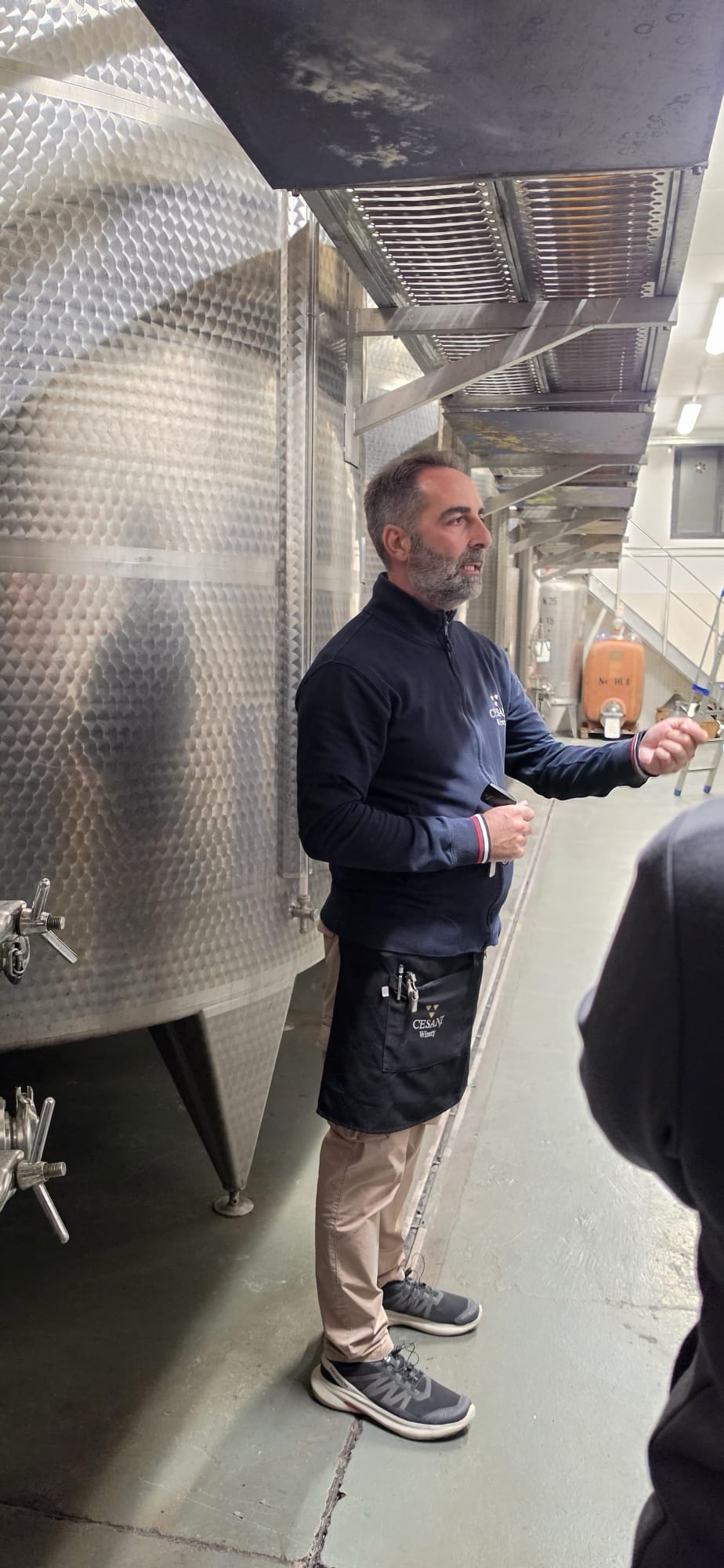
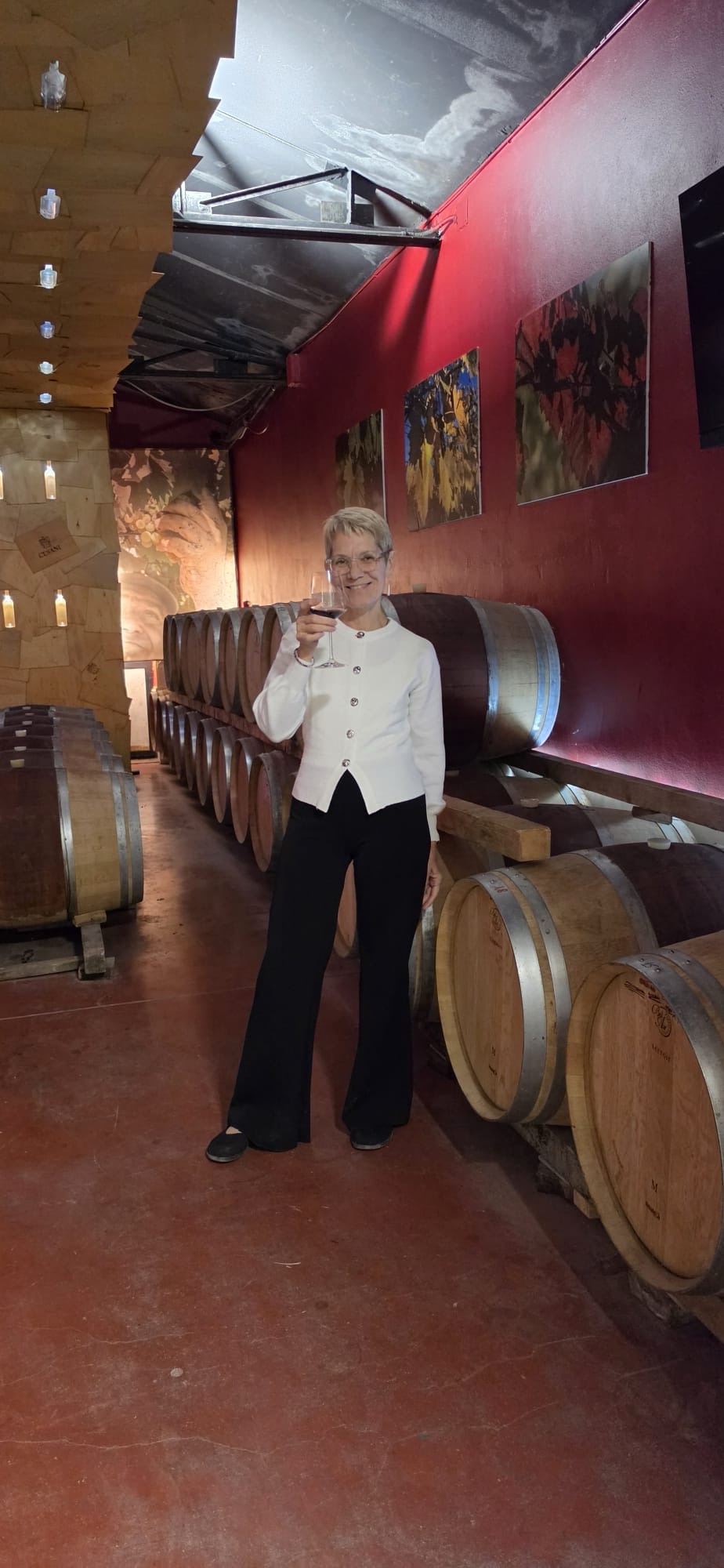
After all that wine it was time for dinner, but while the room was being reset we got a tour of the small wine production area.
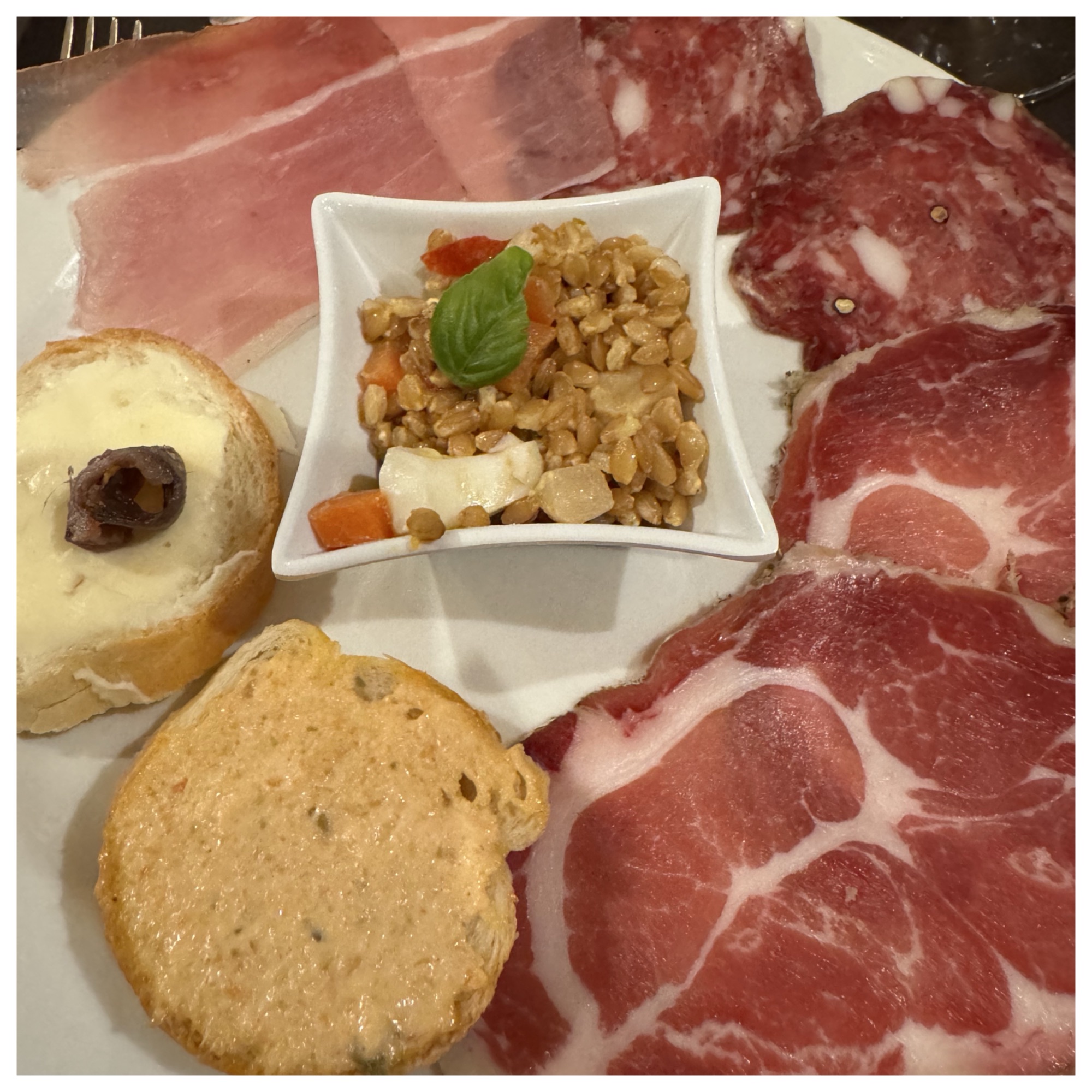
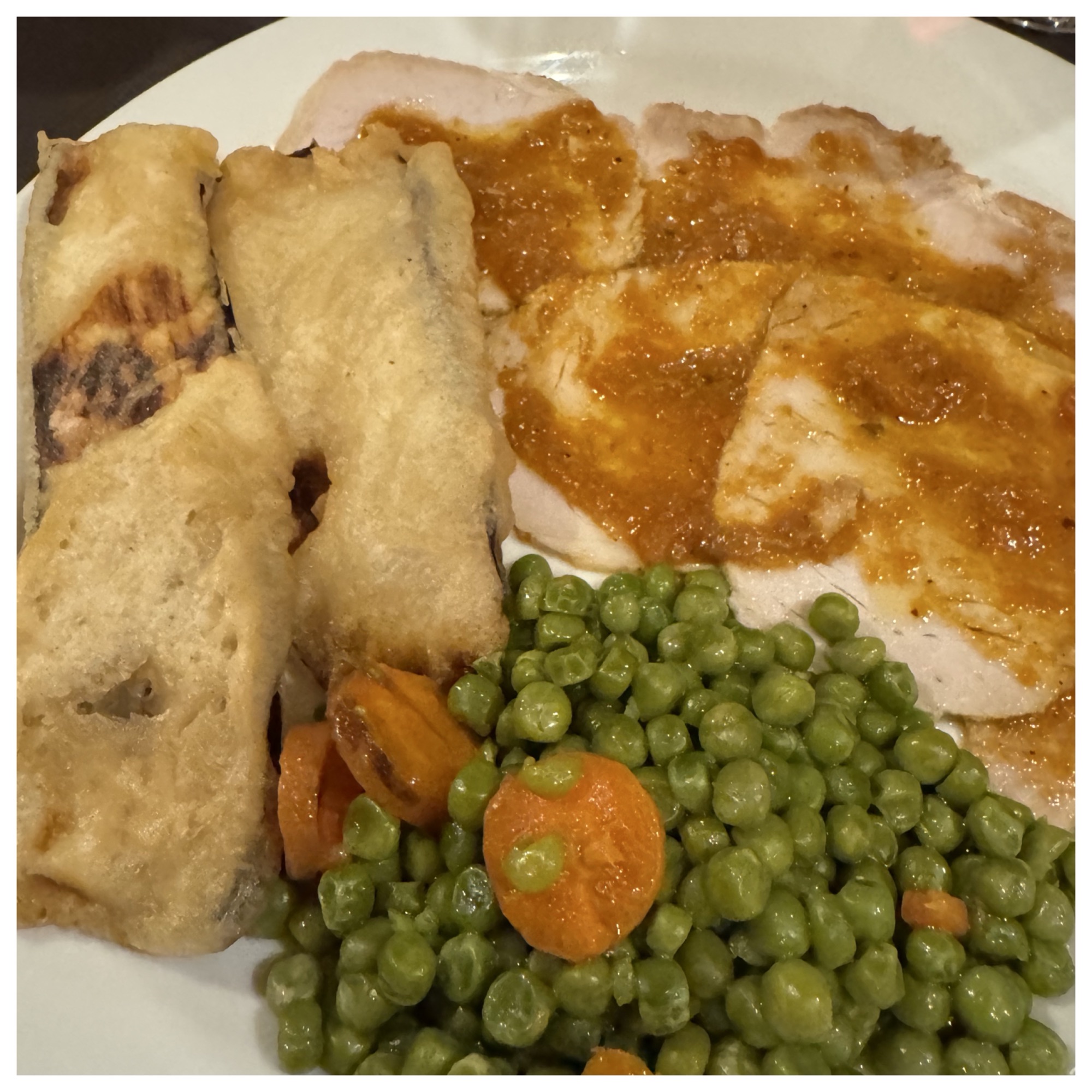
Dinner began with antipasti, which was followed by a main course of pork loin cooked with basil, carrots, celery, and onion, plus deep fried battered eggplant, peas and carrots, and salad.
We enjoyed fresh fruit for dessert, followed by lots of conversation and laughter. It was our most social night of the tour so far, and an absolute delight.
Tomorrow we make the trek on foot 7 km into San Gimignano to visit, among other things, Italy’s #1 award-winning gelato shop!

