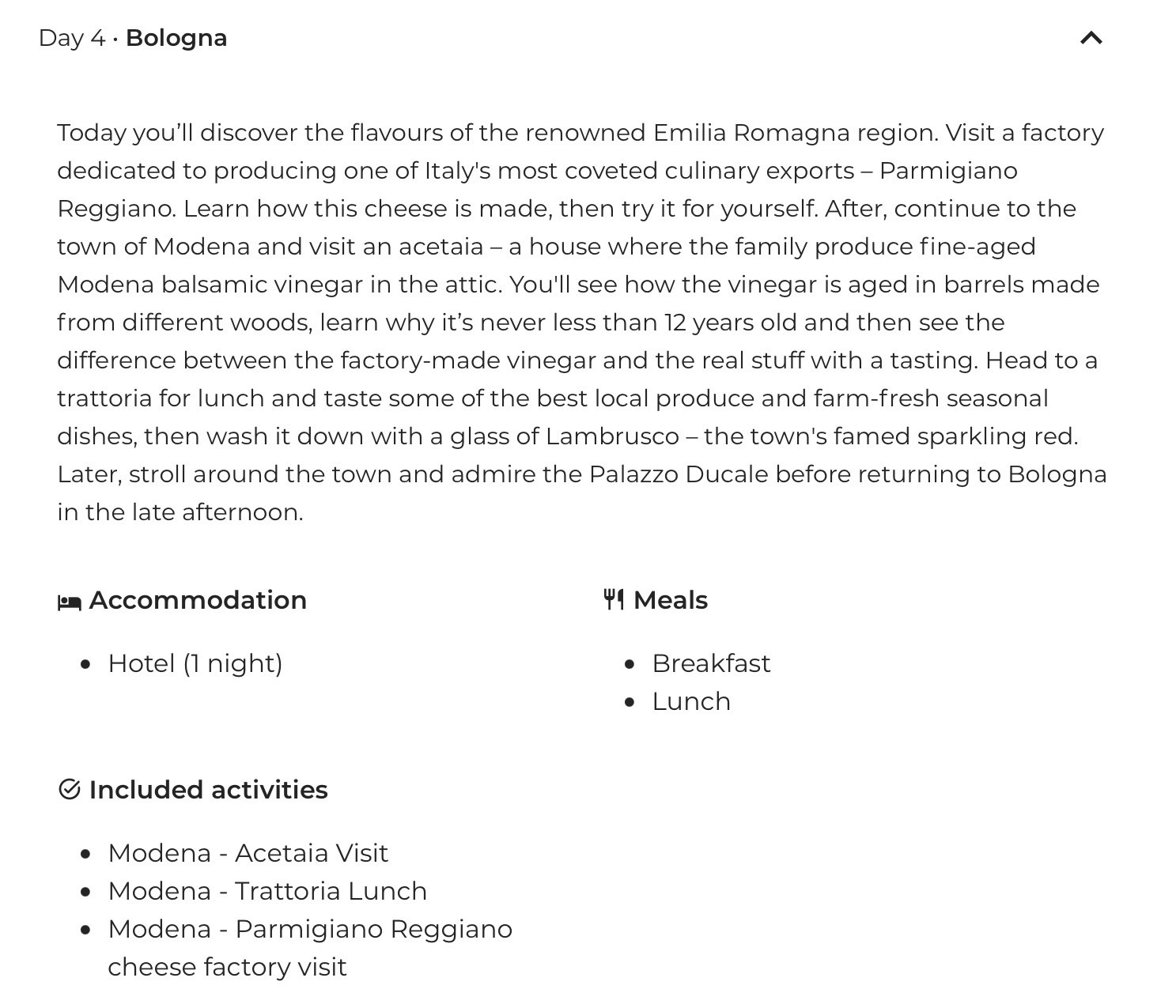
After 07:00 breakfast at the hotel, we boarded a private 20 seat coach and headed to the Emilie Reggiano region to a large organic cheese maker.
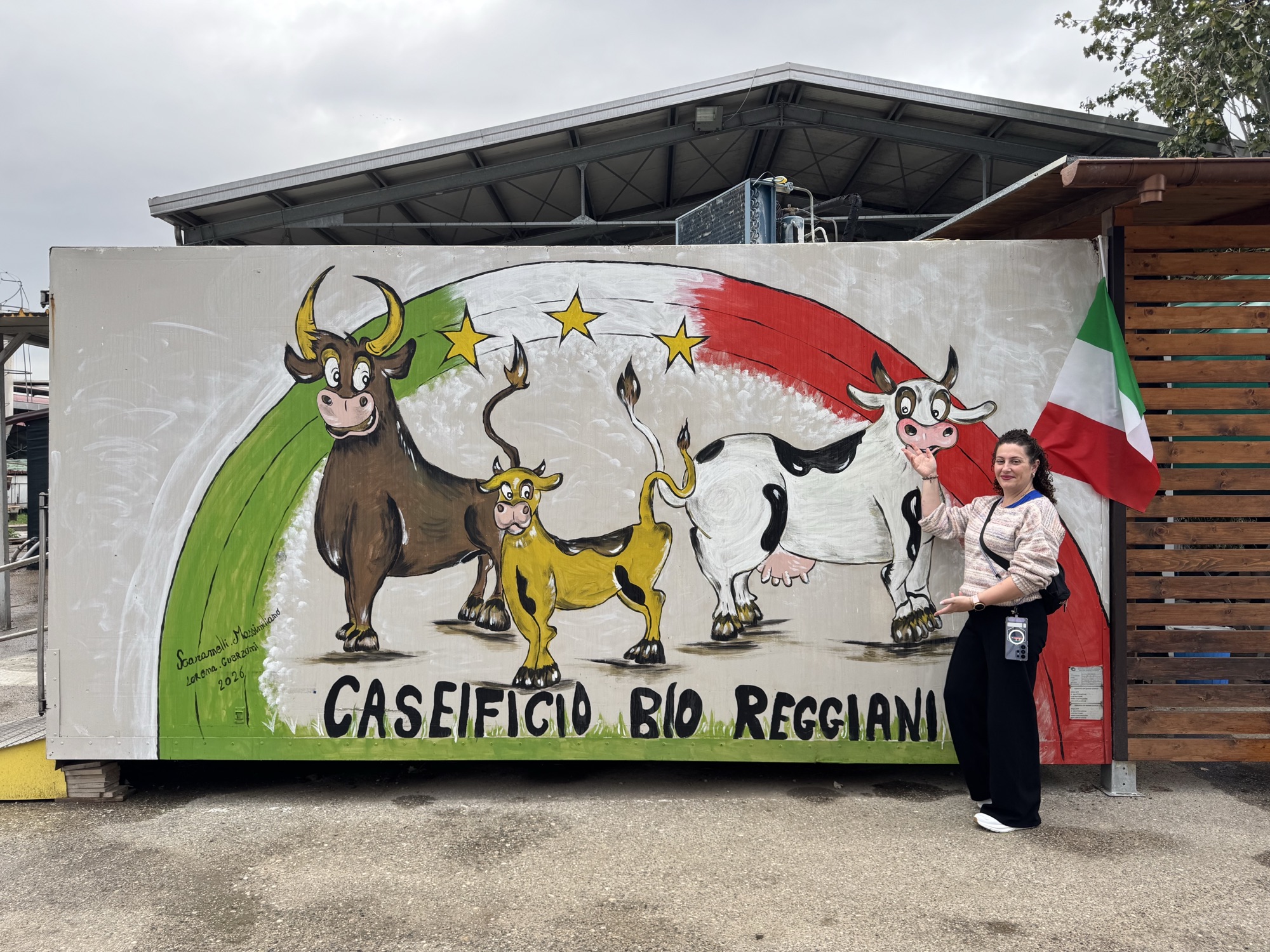
Given that we were only 8 people, being mixed in with another tour, in French, made it awkward. Our guide explained some things only in French, others only in English, and others with a background of so much noise that either language was impossible to hear. Fortunately my rudimentary French was good enough to allow me to glean a fair bit of information about the process.
The milk from several different kinds of cues is used, with the most common being Fresians which each produce about 30 litres of milk per day. The mere 8 litres per day of the white cows is kept separate to produce an artisanal parmigiano.
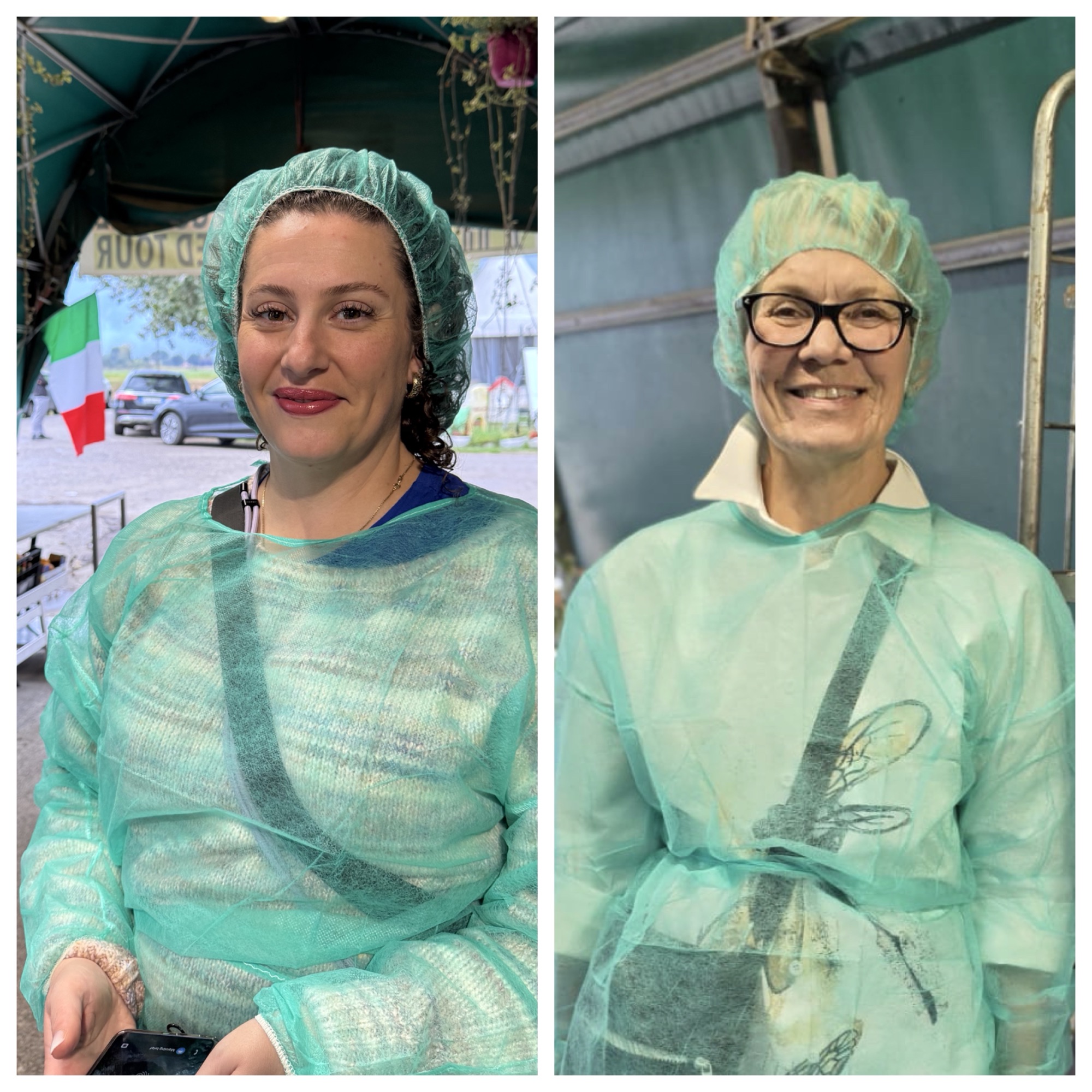
We donned coverings and hairnets in order to enter the production area, where gleaming copper vats each hold 1000 litres of milk.
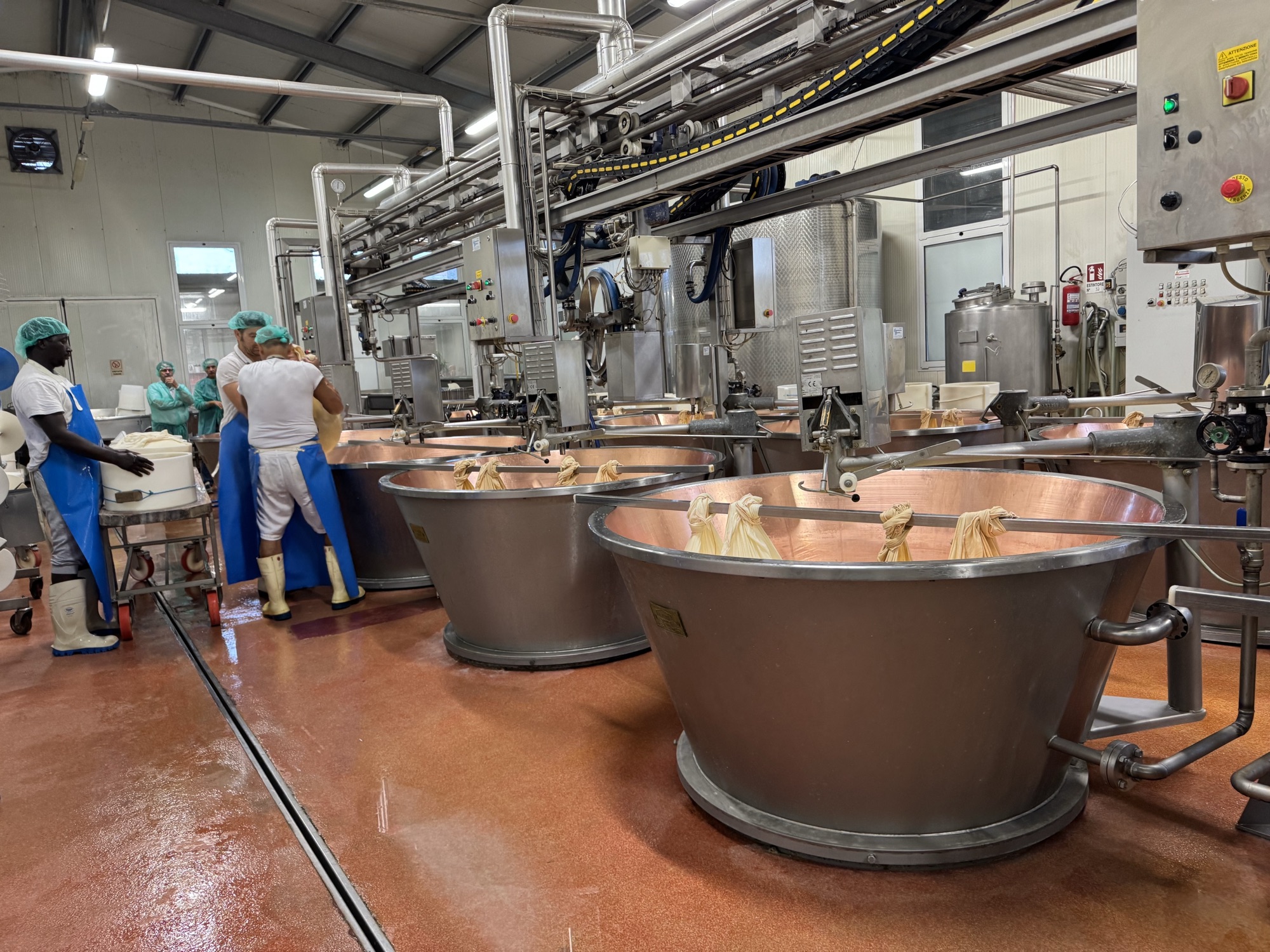
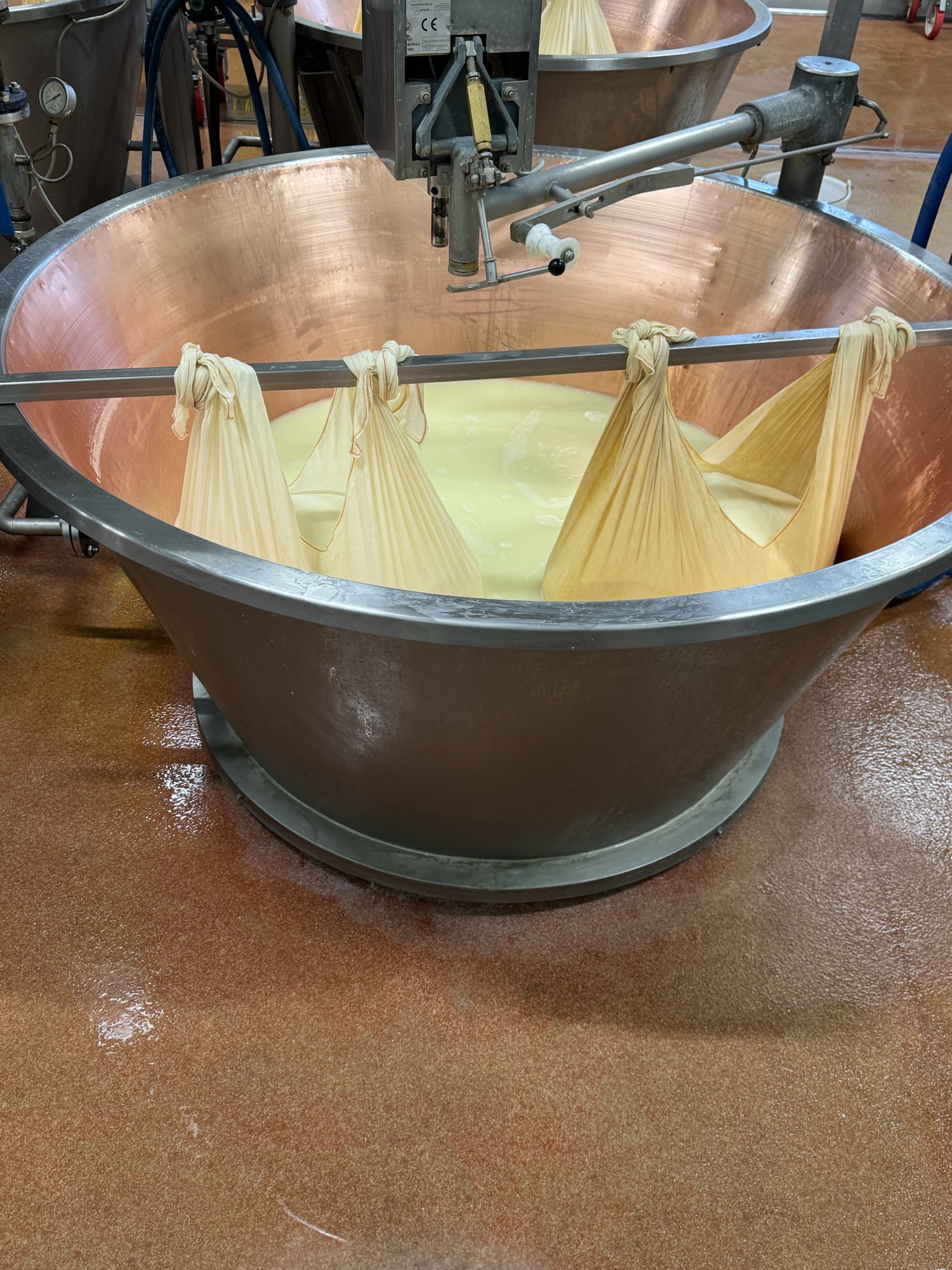
Milk from the evening milking is poured into the vats and allowed to separate overnight, with the cream being removed to make butter. Milk from the morning milking is added without skimming.
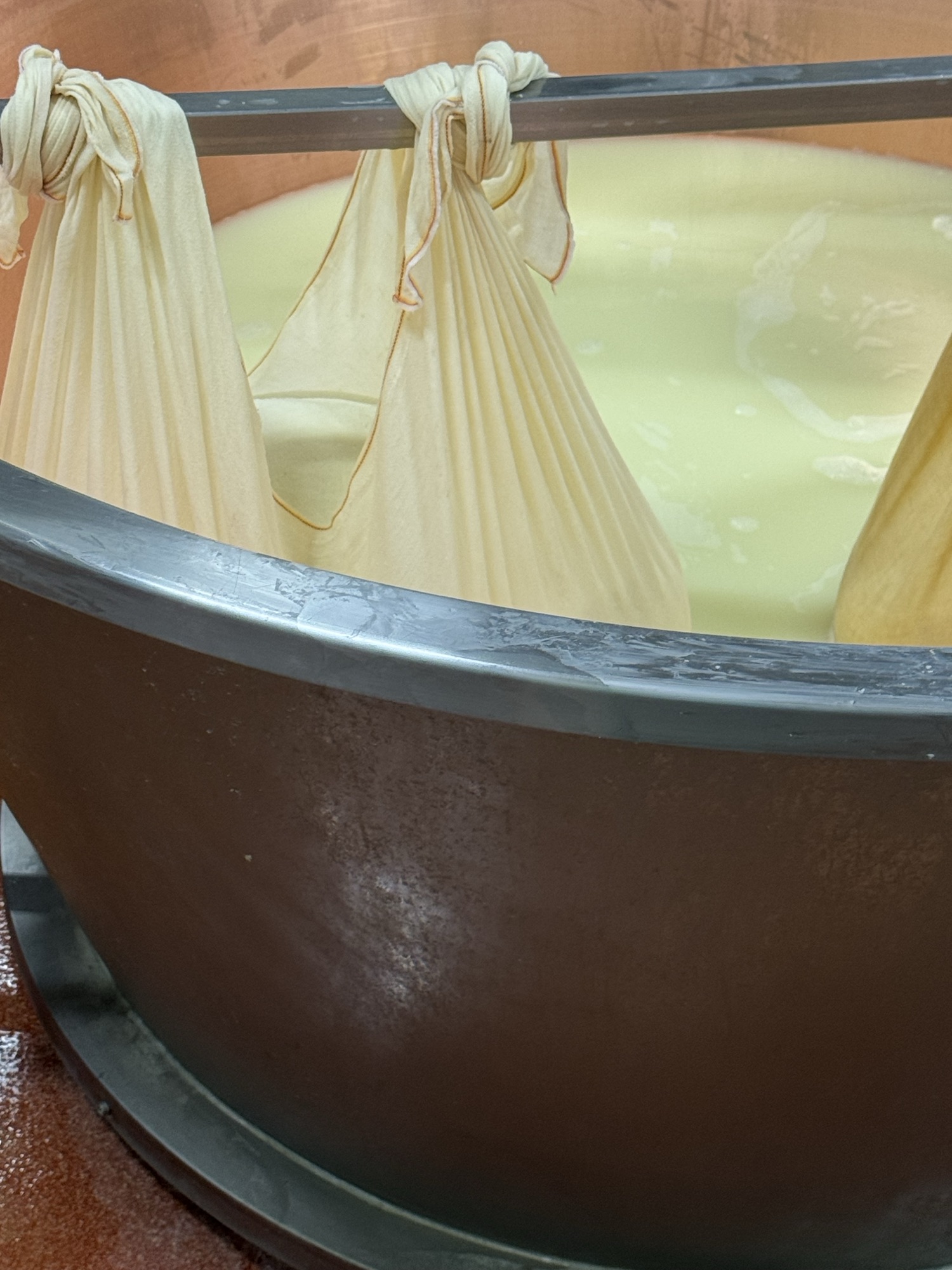
We watched the balls of solidified curd being lifted out of the vats, looking like huge soft mozzarella balls.
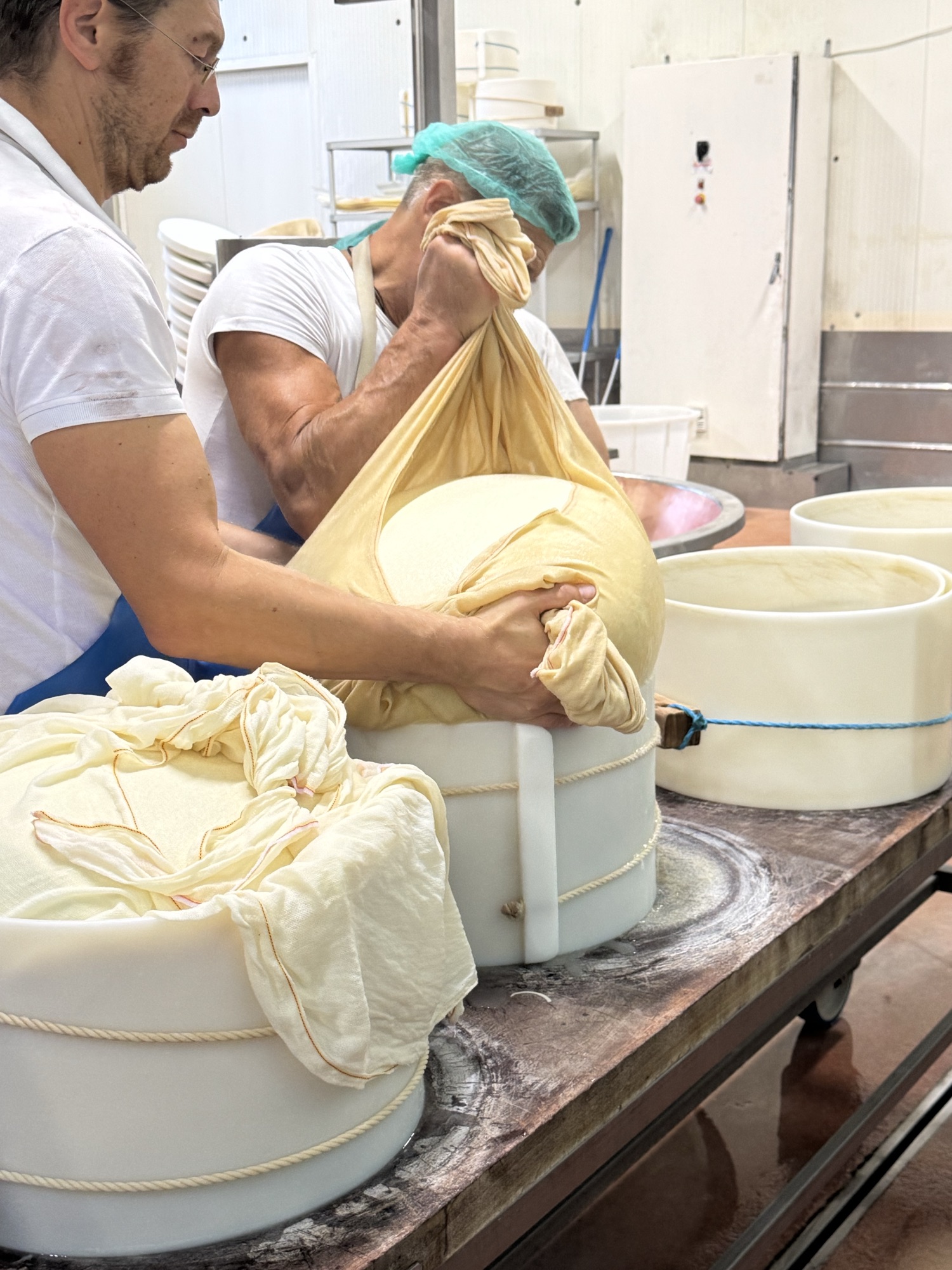
After being removed from the milk bath, the whey is supplemented with fresh milk and used to create ricotta cheese. “Ricotta” actually means twice cooked.
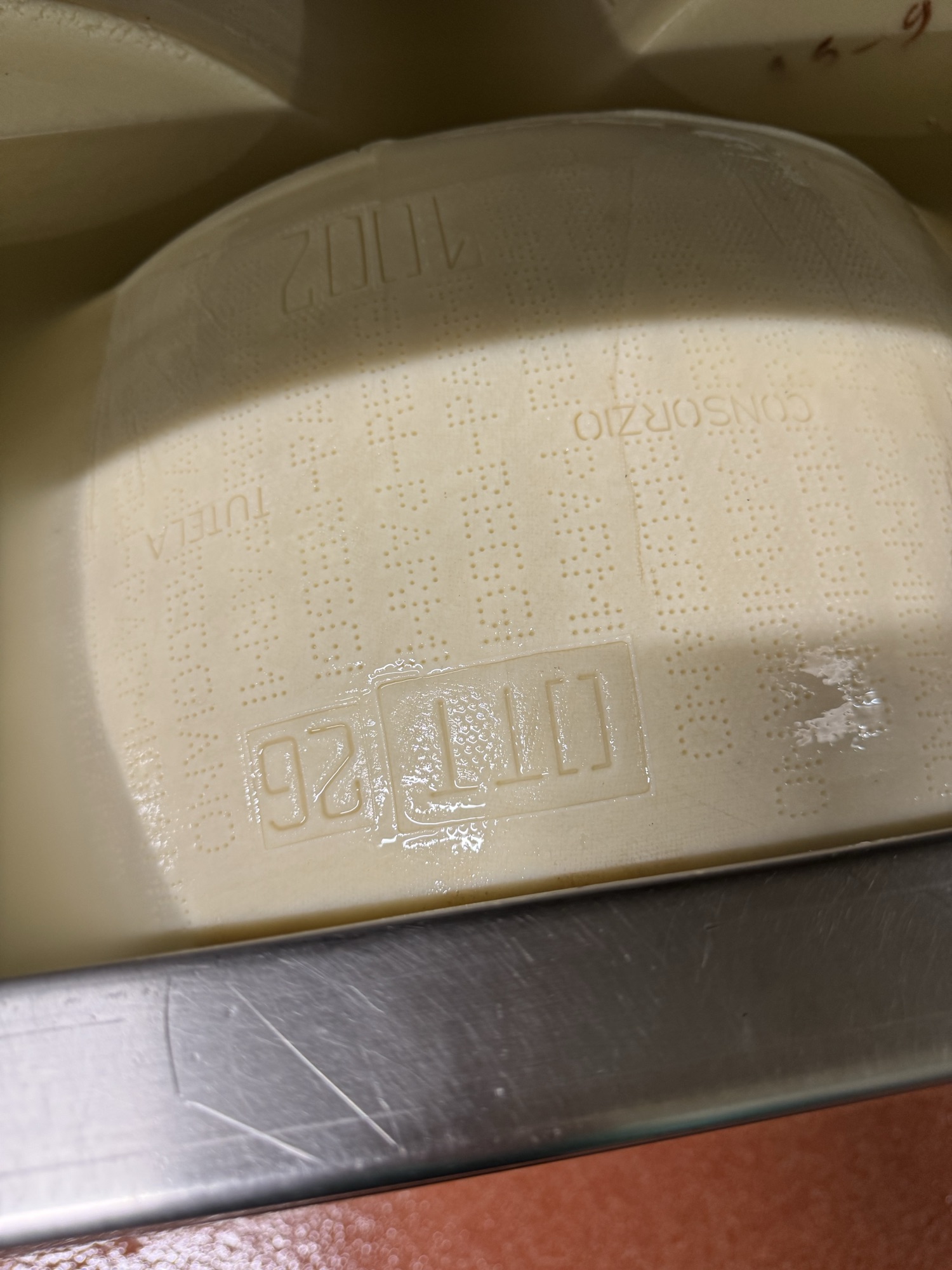
The parmigiano ball is wrapped in a thick plastic sleeve with raised numbers and symbols which will press into the rind, and then weighted down to firm it into the iconic flattened wheel shape. It spends 5 days in the weighted wrap.
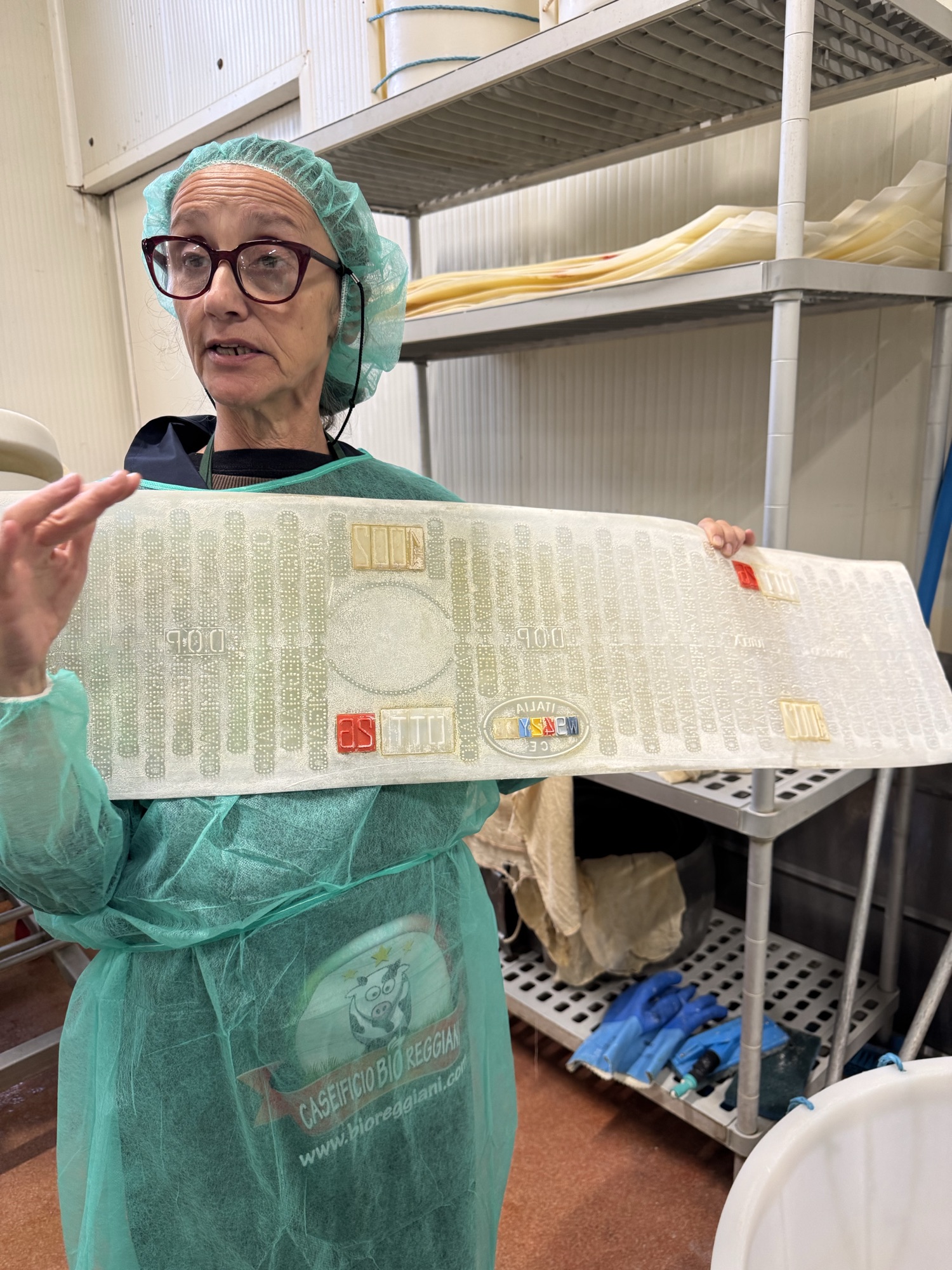
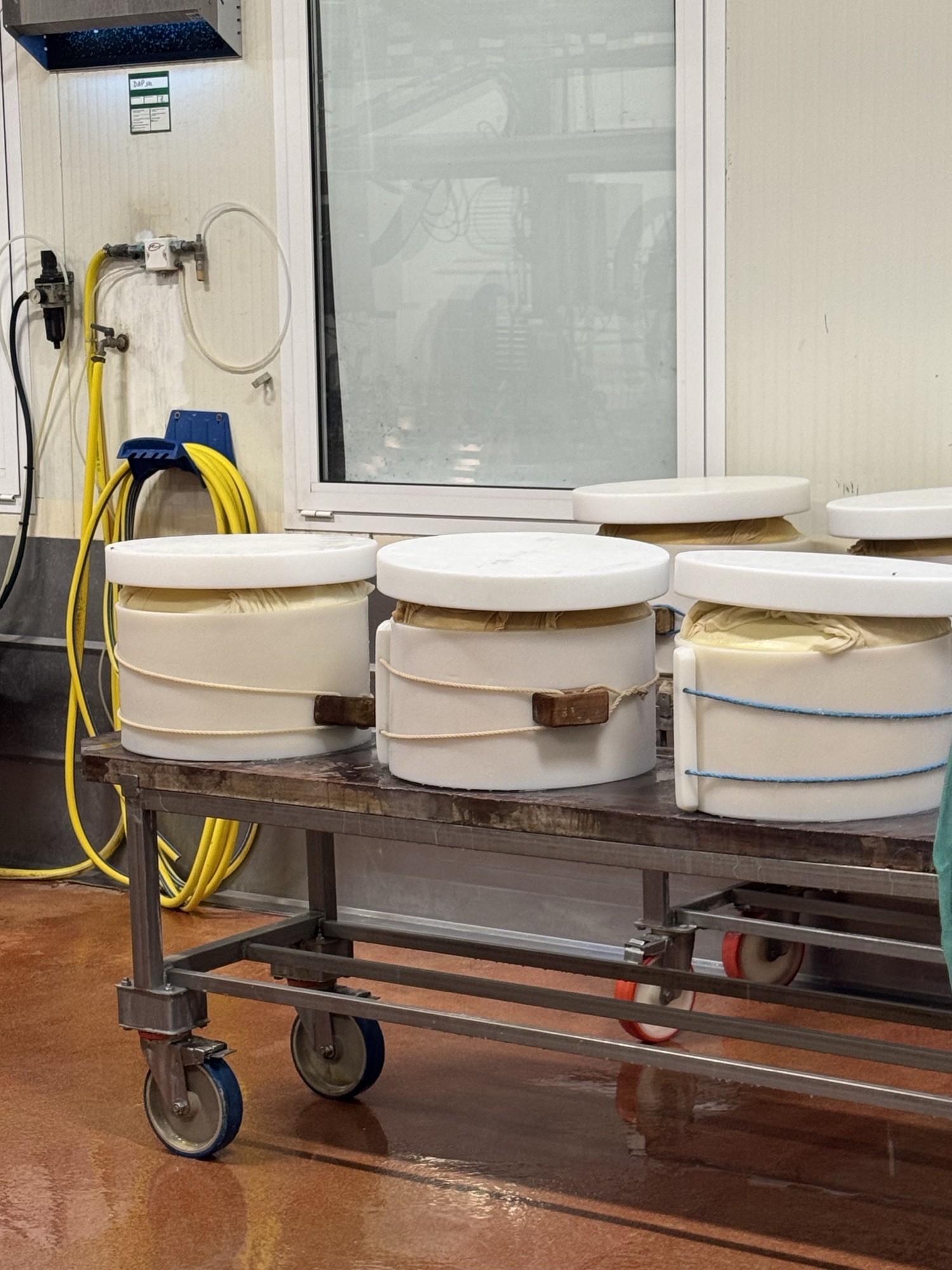
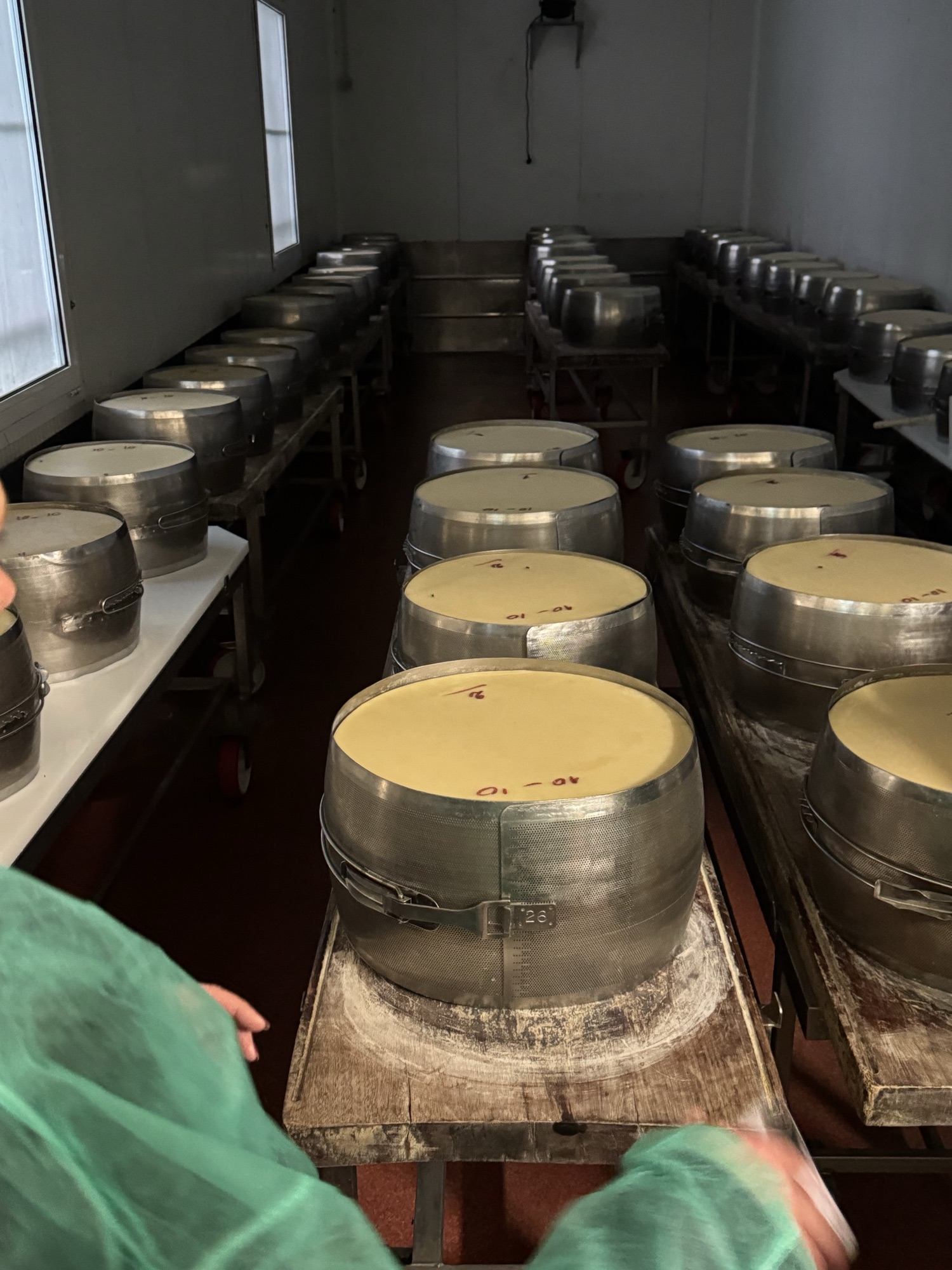
Next it is moved for 3 days into a metal mold in a cool area of the factory, where the outer layer rind begins to firm up.
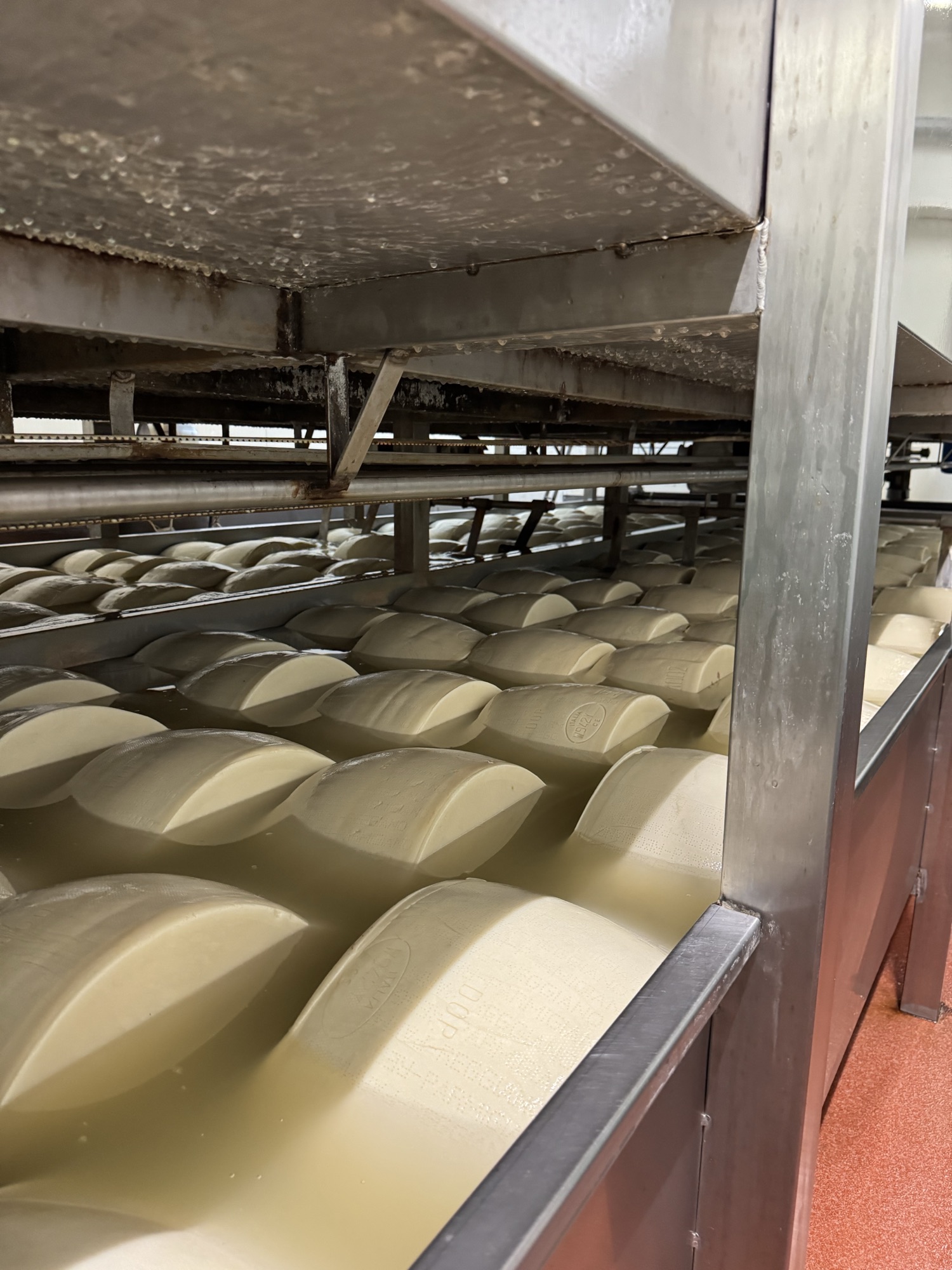
Once removed from the metal casing, and stripped of the wrap, the wheels are soaked for 20 days in brine, rotated several times per day to brine wash the rind evenly.
The wheels then get stacked 20 high on shelves in strict climatic conditions: 18C and 76% humidity. Here the cheese is aged for 12 months minimum. It may be aged at most 5 years. At 70 months it is still edible although with much crystallization and very crumbly; beyond that the taste changes too much. We were shown an 11 year old wheel described as inedible/ disgusting.
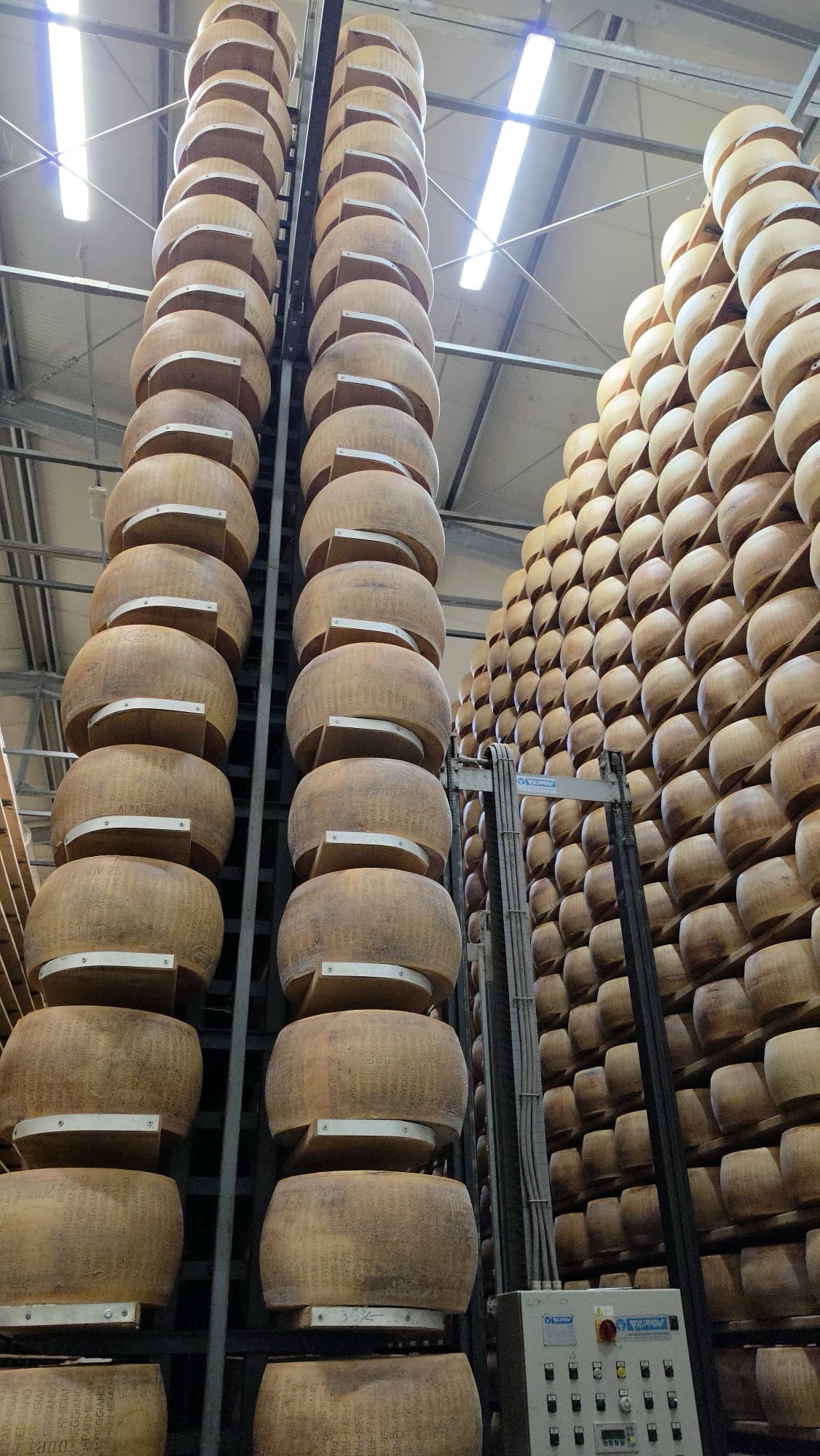
Each wheel weighs 40kg initially, and loses 1 kg per year as it dries.
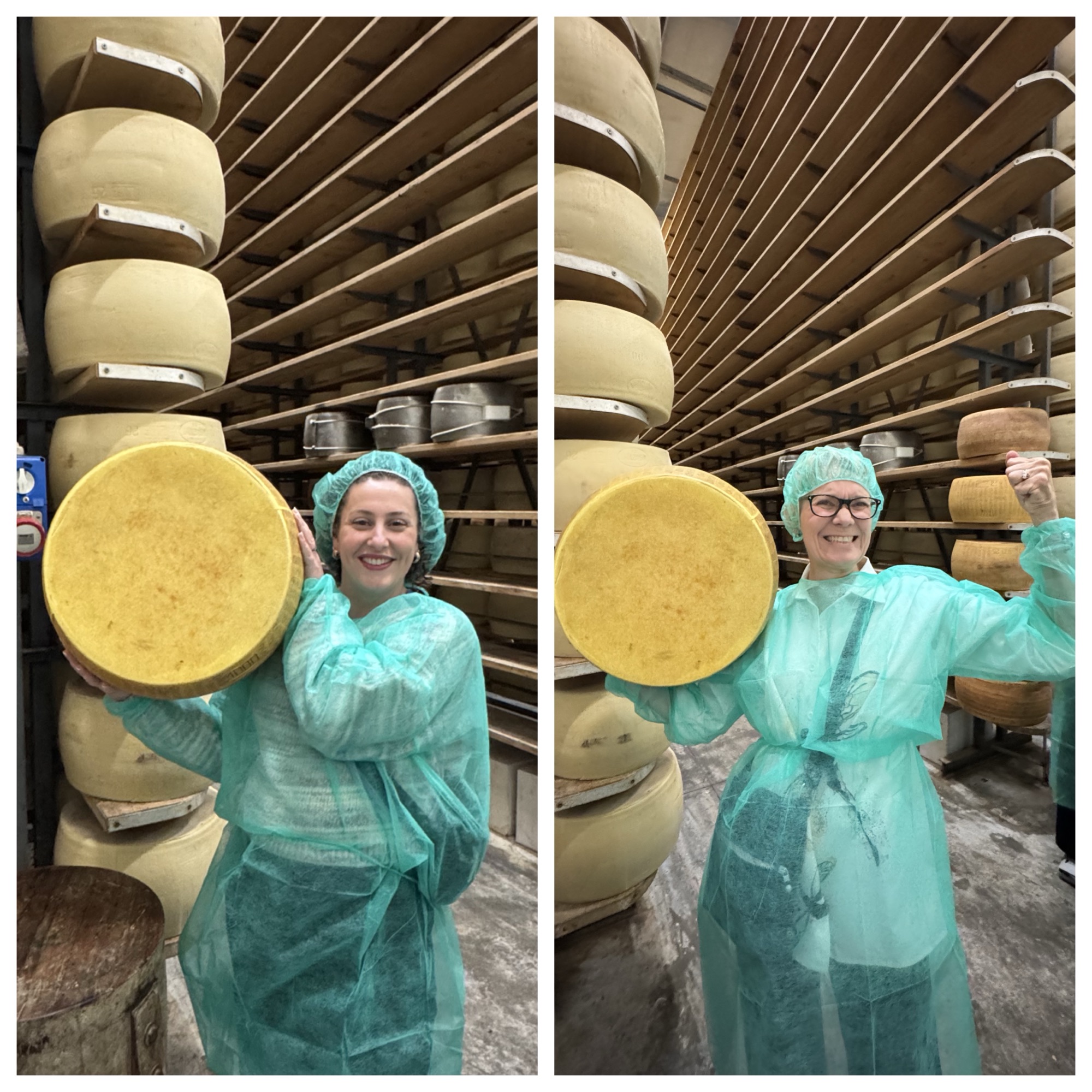
All the cheese made here is unpasteurized and organic and must be inspected by the European and regional authorities for both quality and taste before being allowed to be called Parmigiano Reggiano.
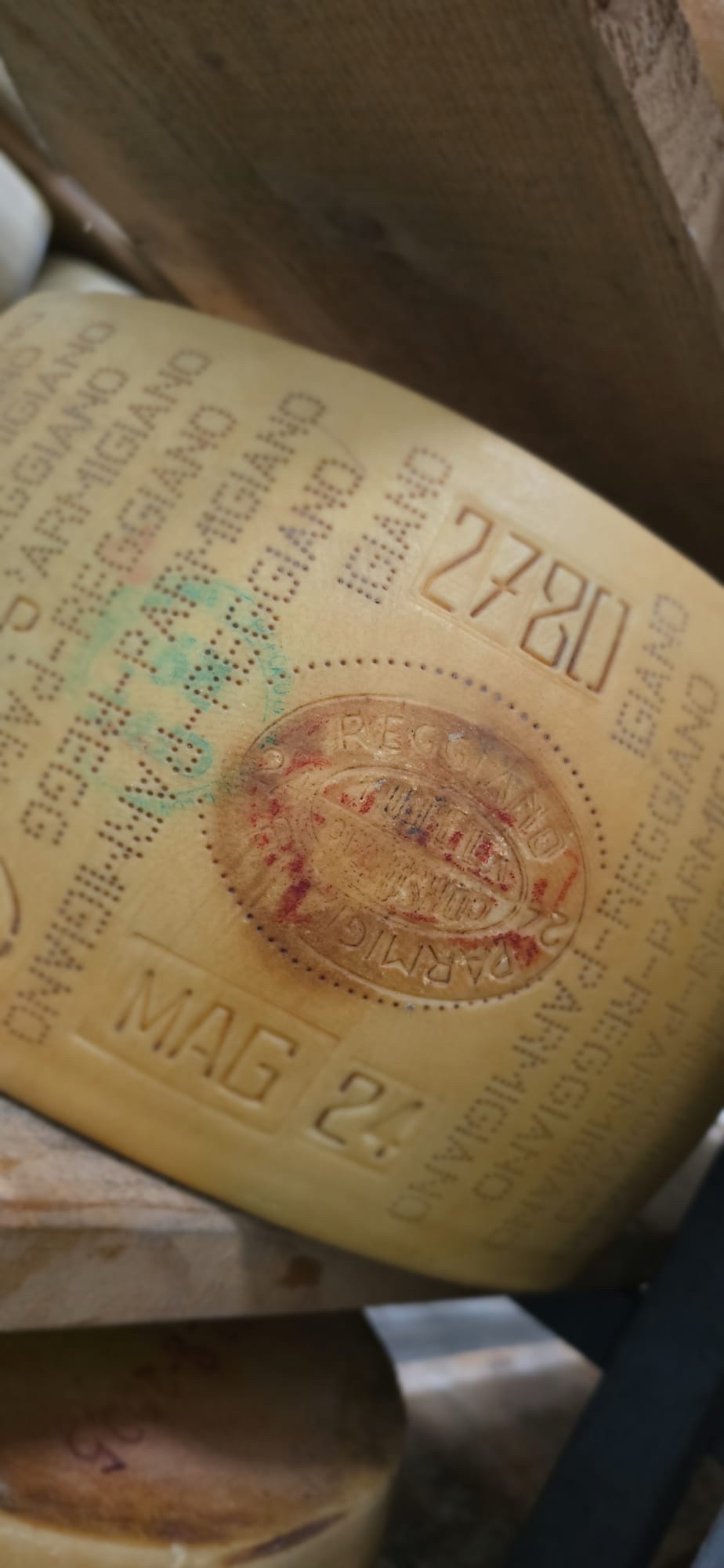
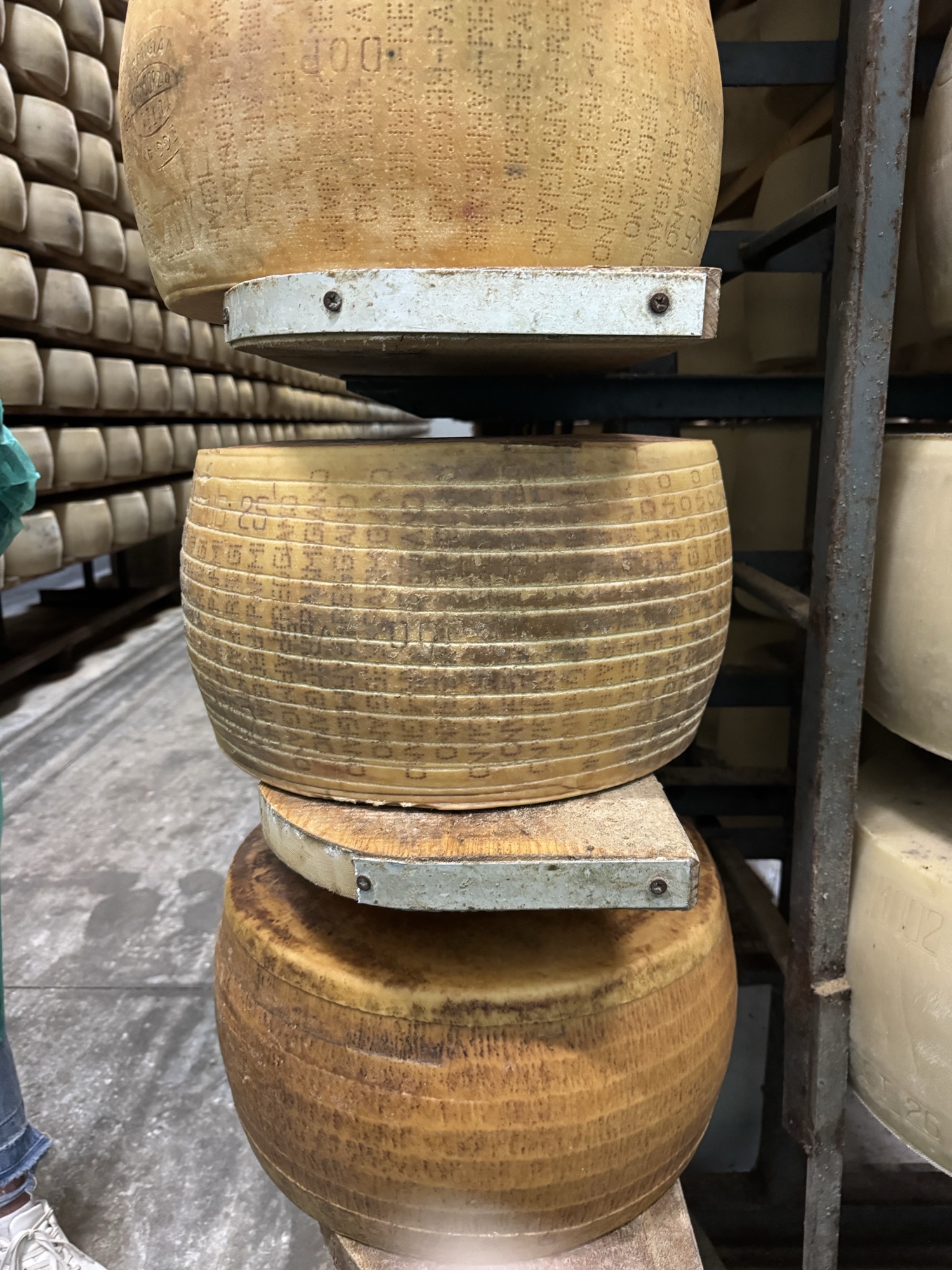
In the warehouse a cheese with a scored rind indicates second quality; the labelling is obscured on third quality and those wheels are not able to use the designation/appellation, but can be sold for use as grated cheese.
When we moved to the tasting room we met Reggiana, the 61 year old owner of this particular factory and shop, who – with her husband – began this operation 44 years ago with 5 cows. They currently have 1000 of the region’s total of 7000 cows, 120 employees, and 3 storefronts, and produce 130-150 wheels of cheese per day. They are the region’s biggest organic parmigiano producer.
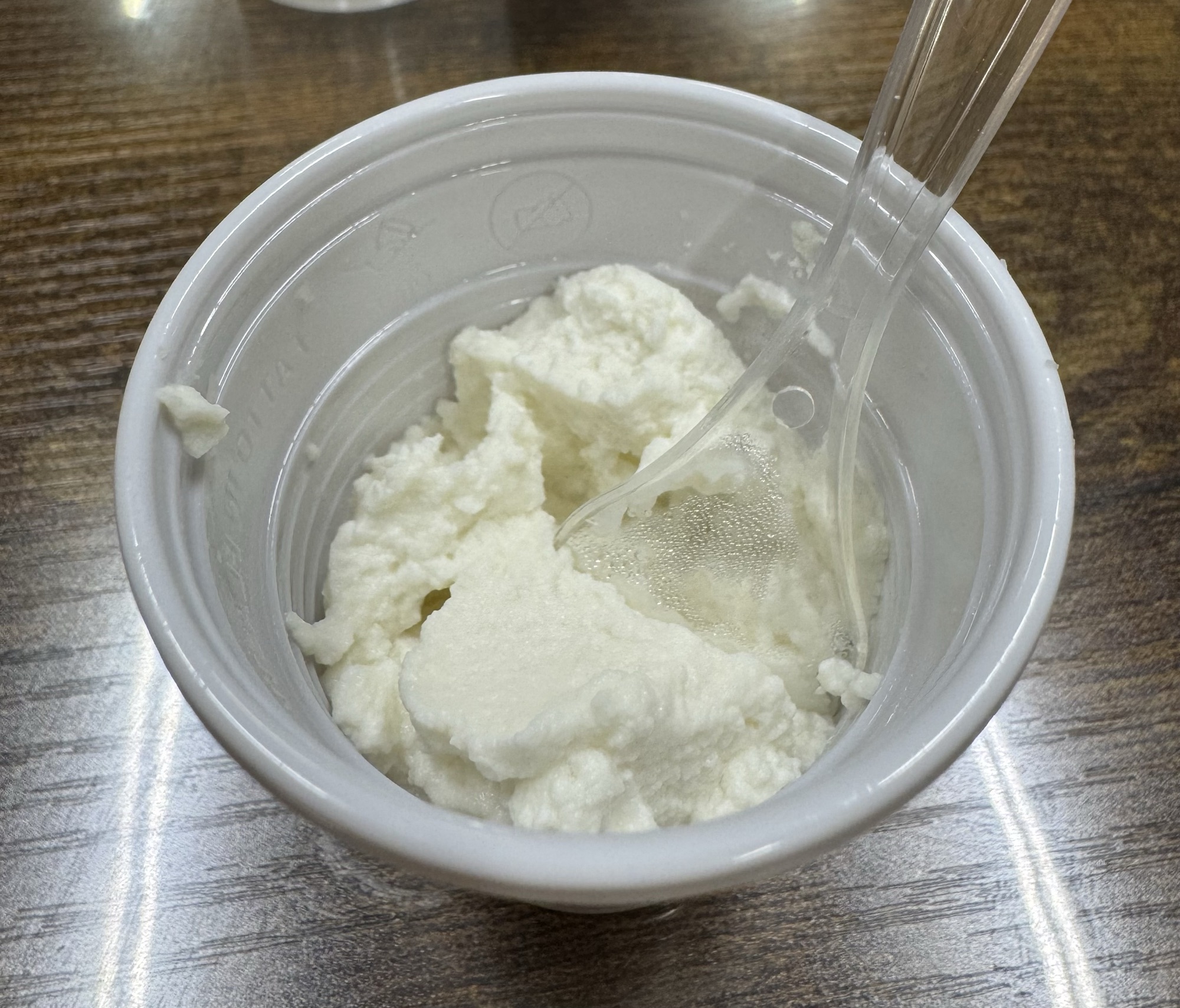
We got to taste several cheeses, including fresh ricotta, with honey or balsamic vinegar if we chose.
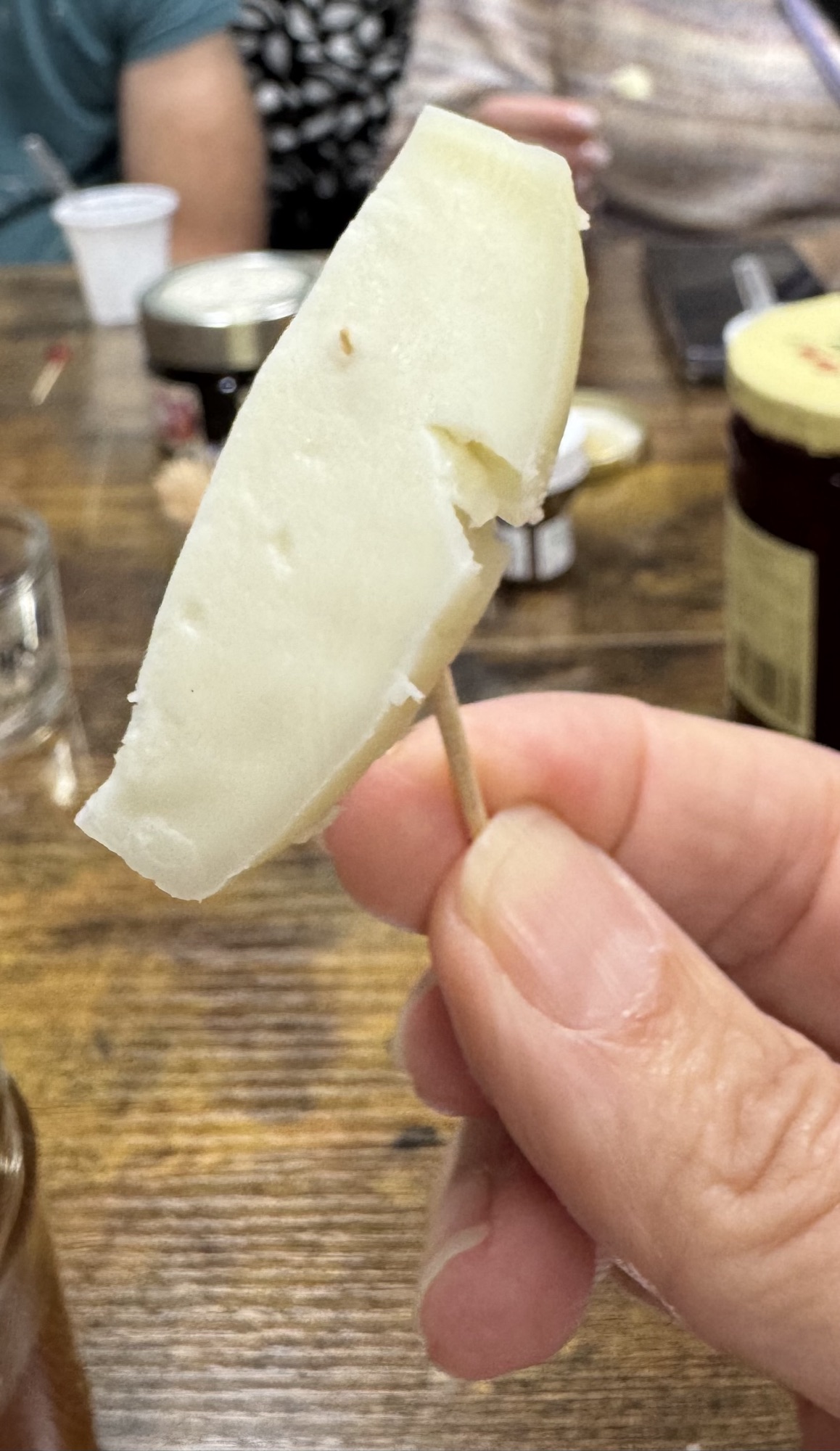
There was also Caciotta, fresh Parmigiano rind, which was delicate and delicious.
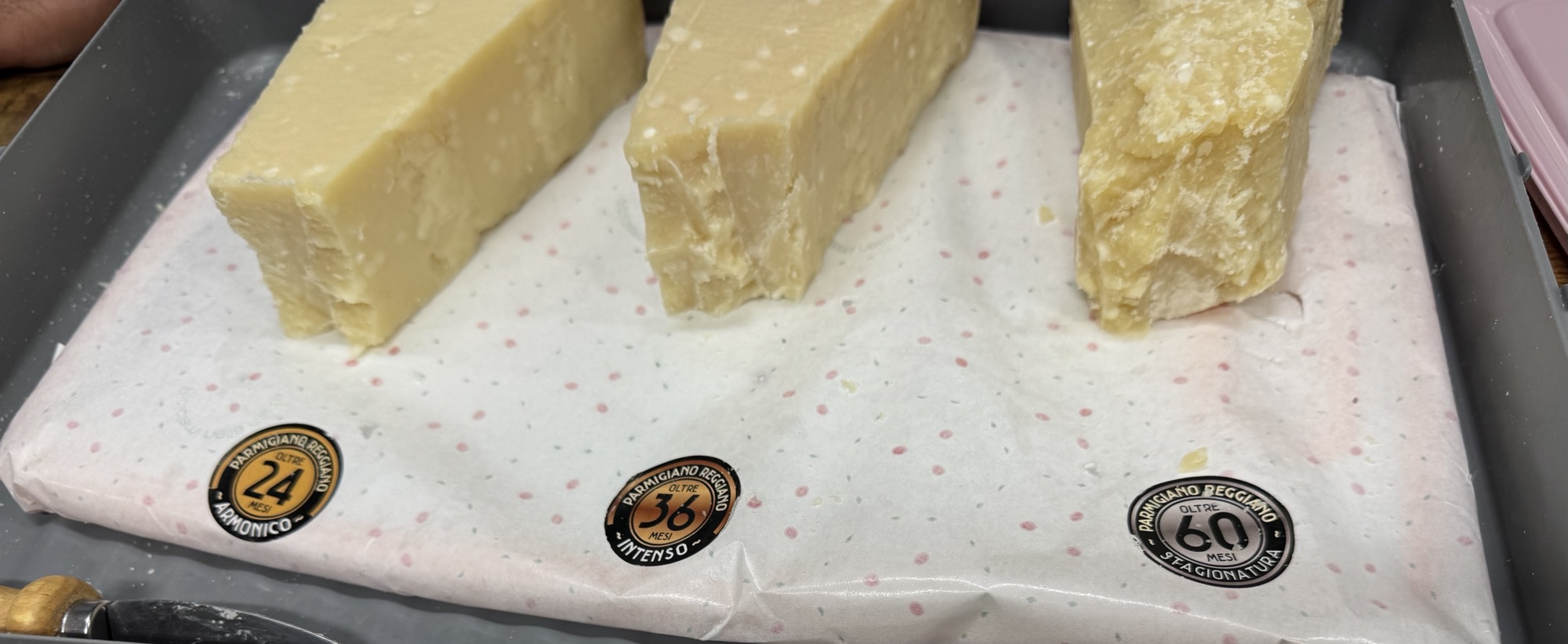
Then there were three Parmigiano Reggiano to try: 24 month aged for “everyday”, 36 month aged which is perfect for filling tortellini or making sauces, and the 60 month aged which Reggiana teased was “natural Viagra”.
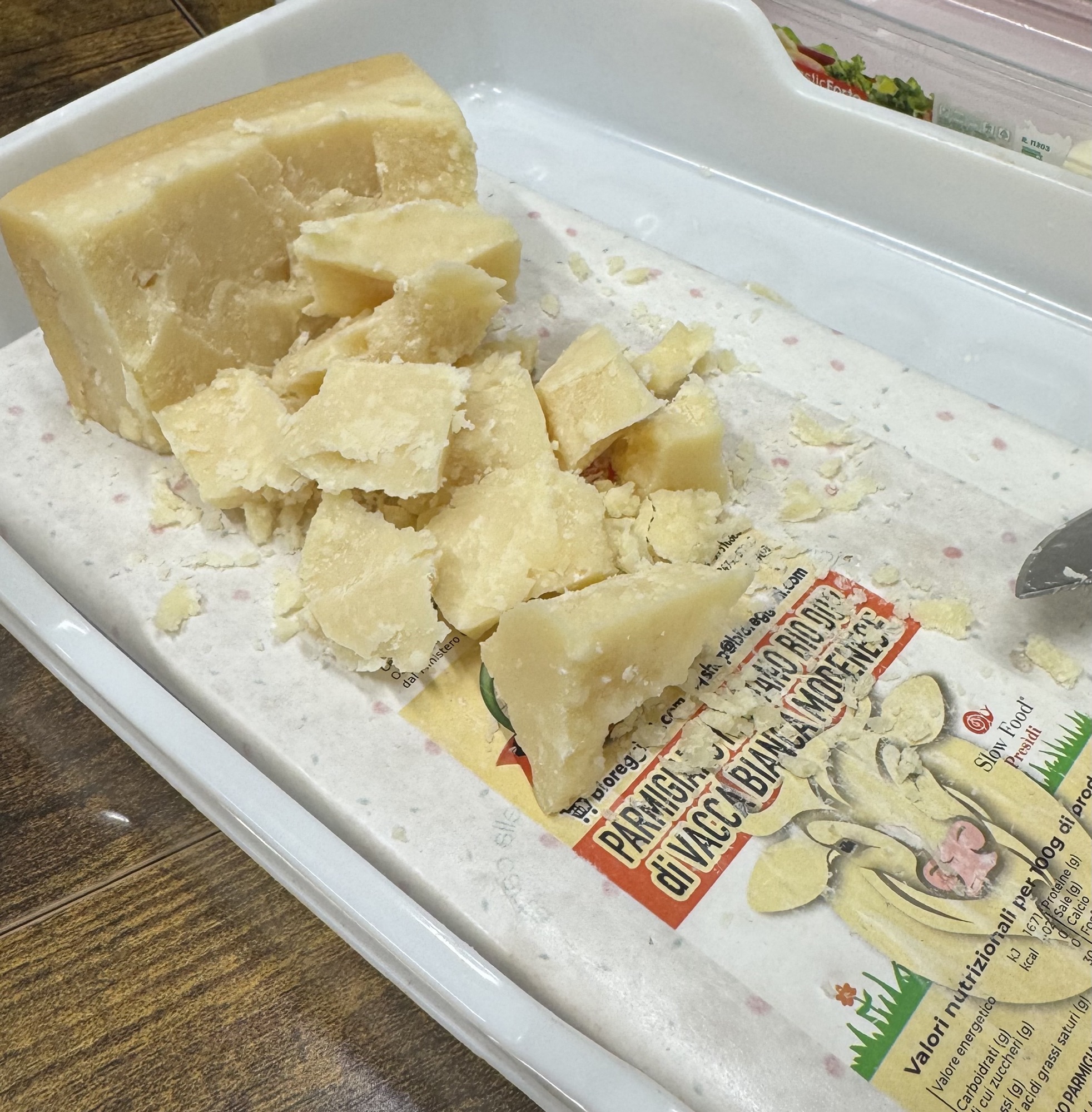
We also tried the Vacca Bianca (white cow) cheese, aged 30 months.
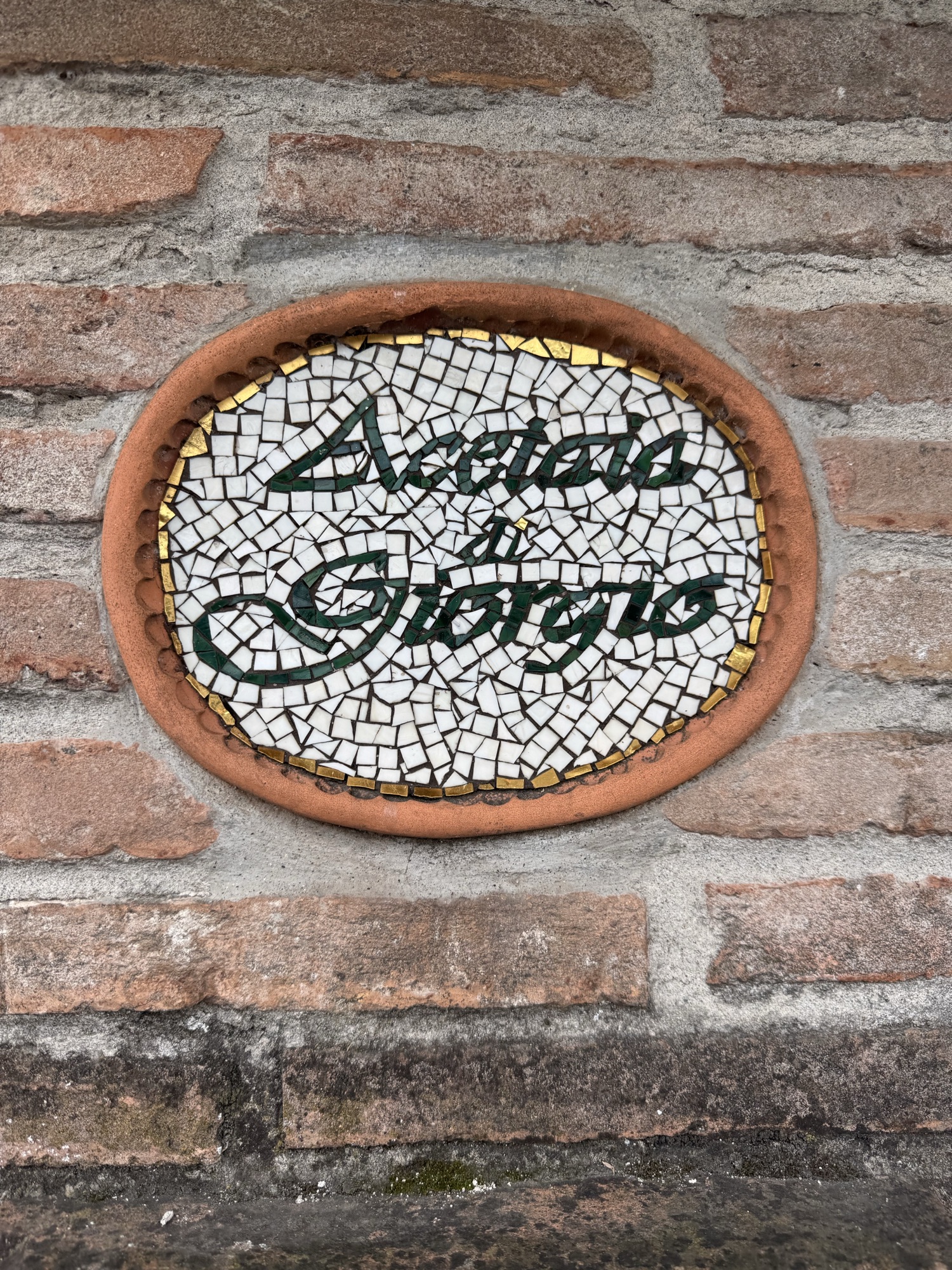
Our second stop was at a family Modena Balsamic Vinegar producer, where this very special vinegar has been made since 1860 and is now into the fourth generation of makers.
Unlike wine which is cellared, Modena’s balsamic vinegar is kept warm for fermentation, and cold for decantation, using several levels of the house.
Like vintners though, in a modern world certification is required.
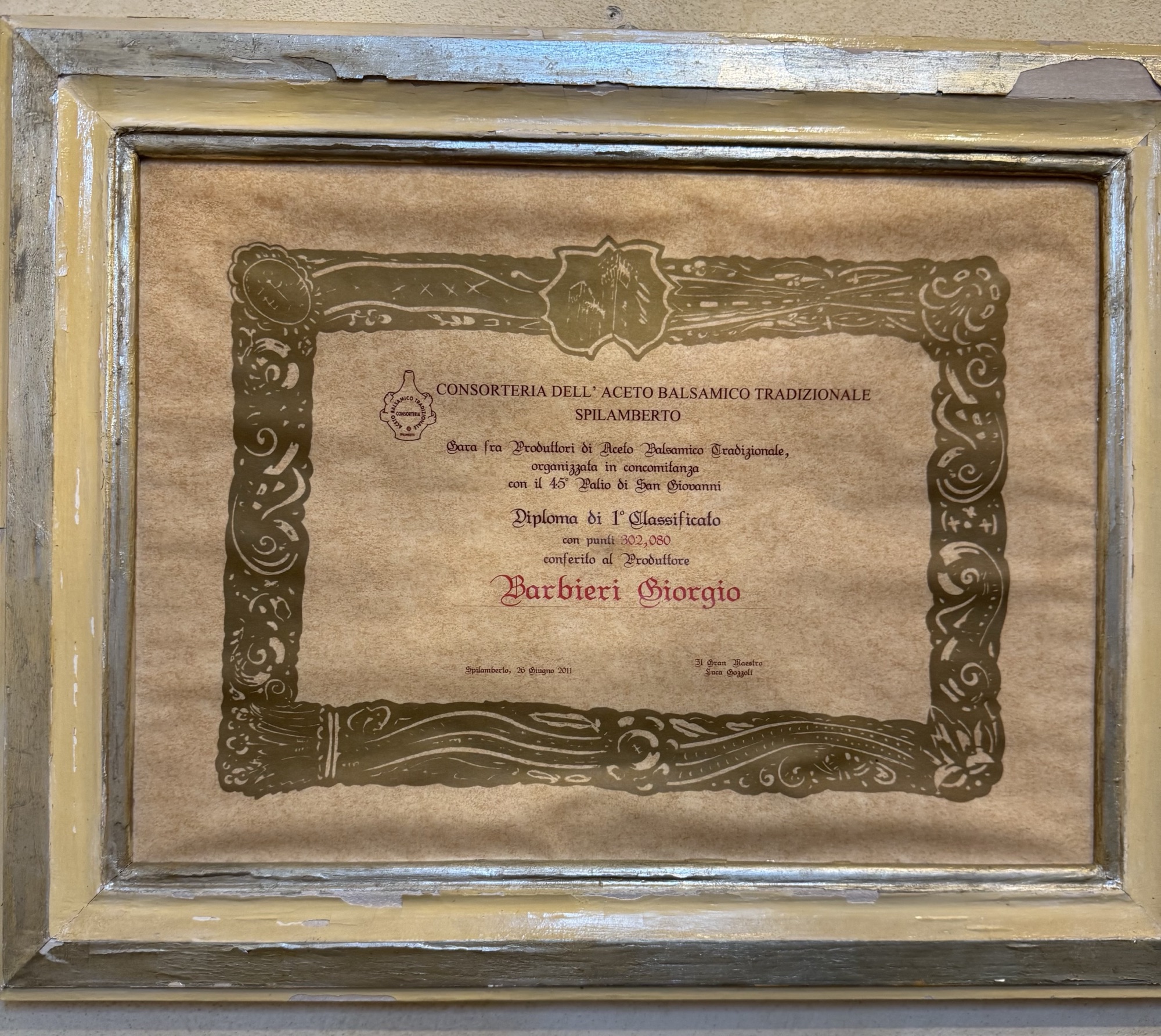
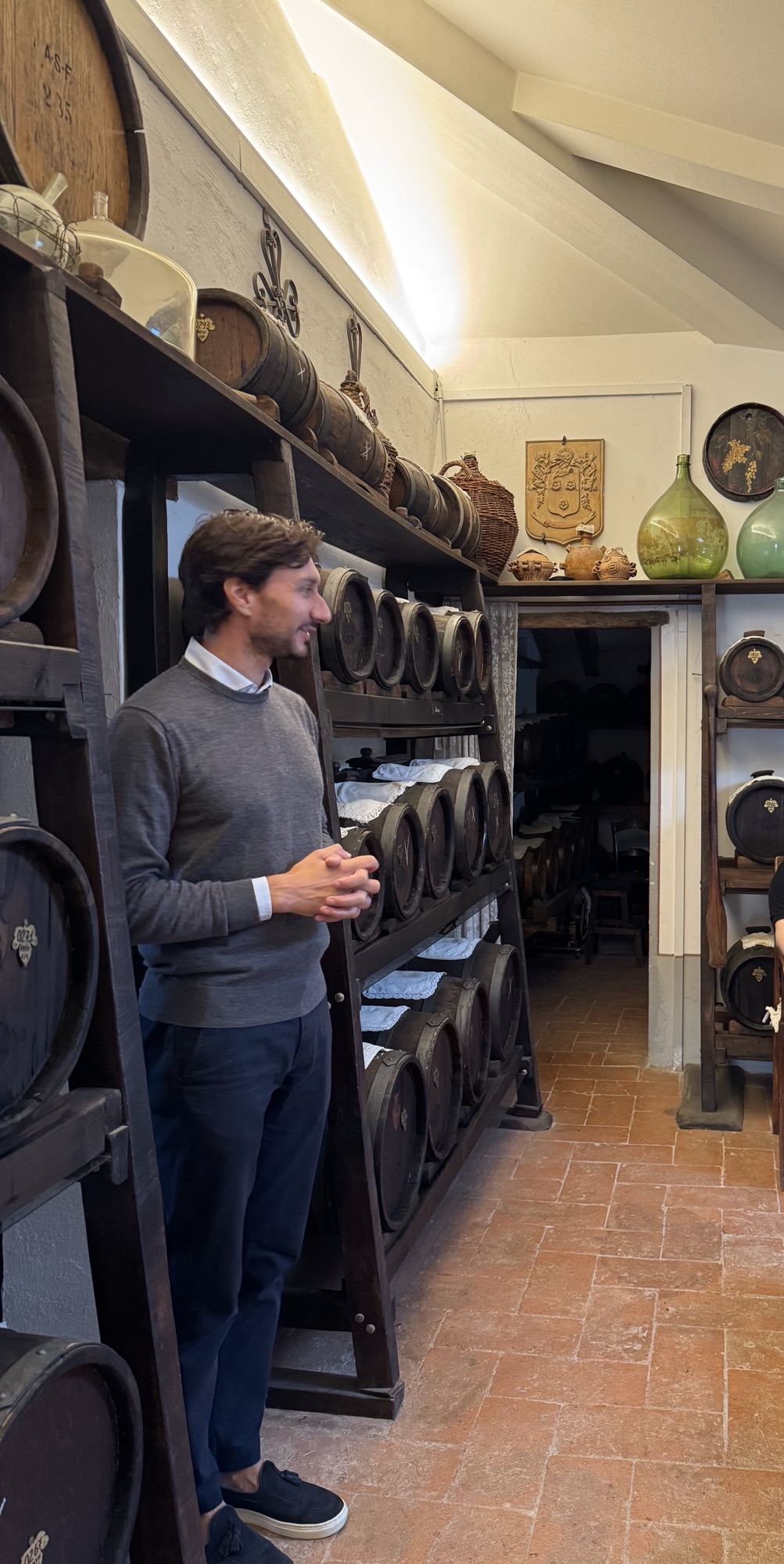
We learned that for Modena balsamic DOP is the highest designation, with the only ingredient being 100% local Lambrusco red and Trebbiano white grape juice.
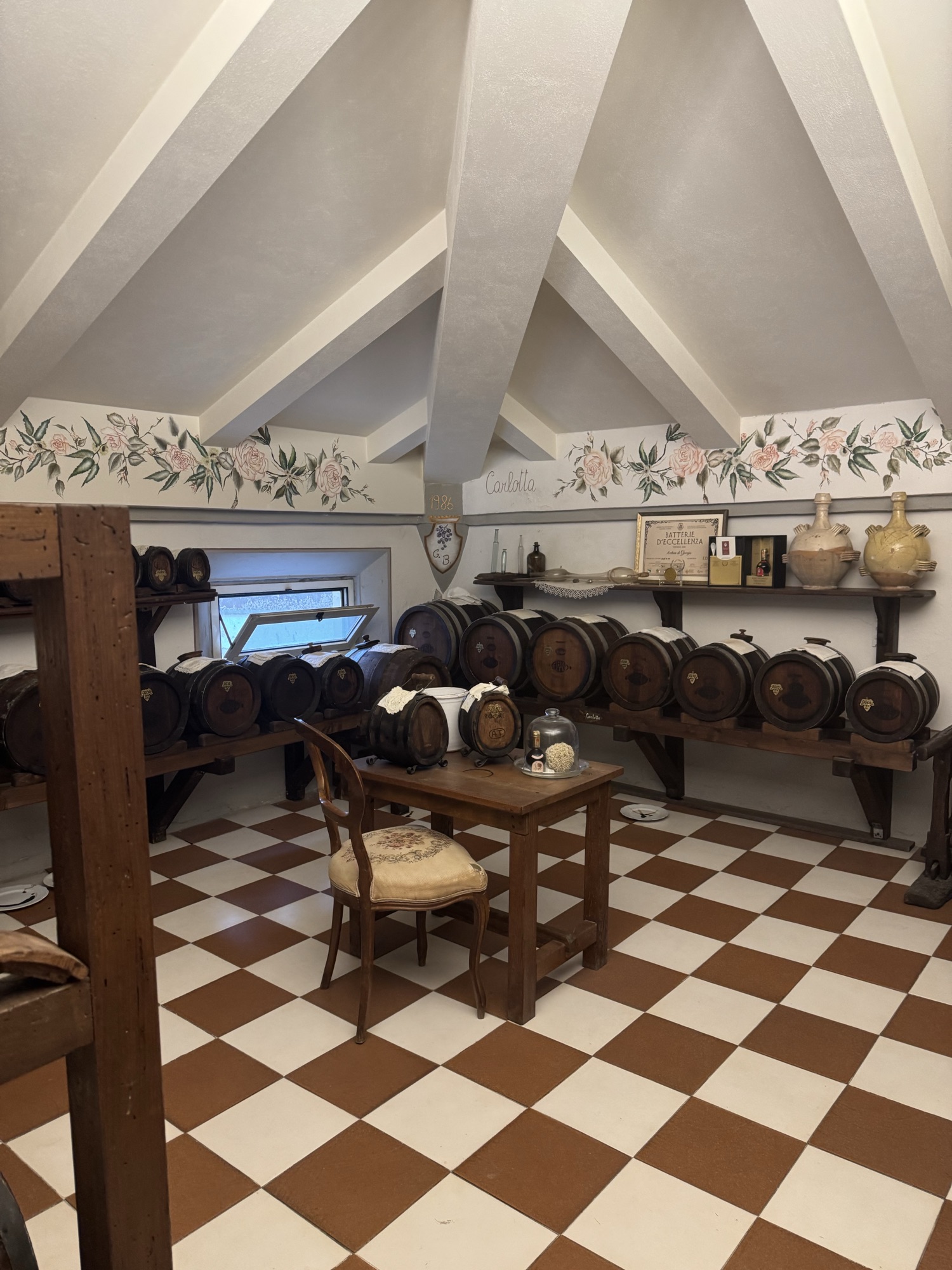
The juice is concentrated through slow evaporation by using open barrels covered just with lace over the opening to keep insects out.
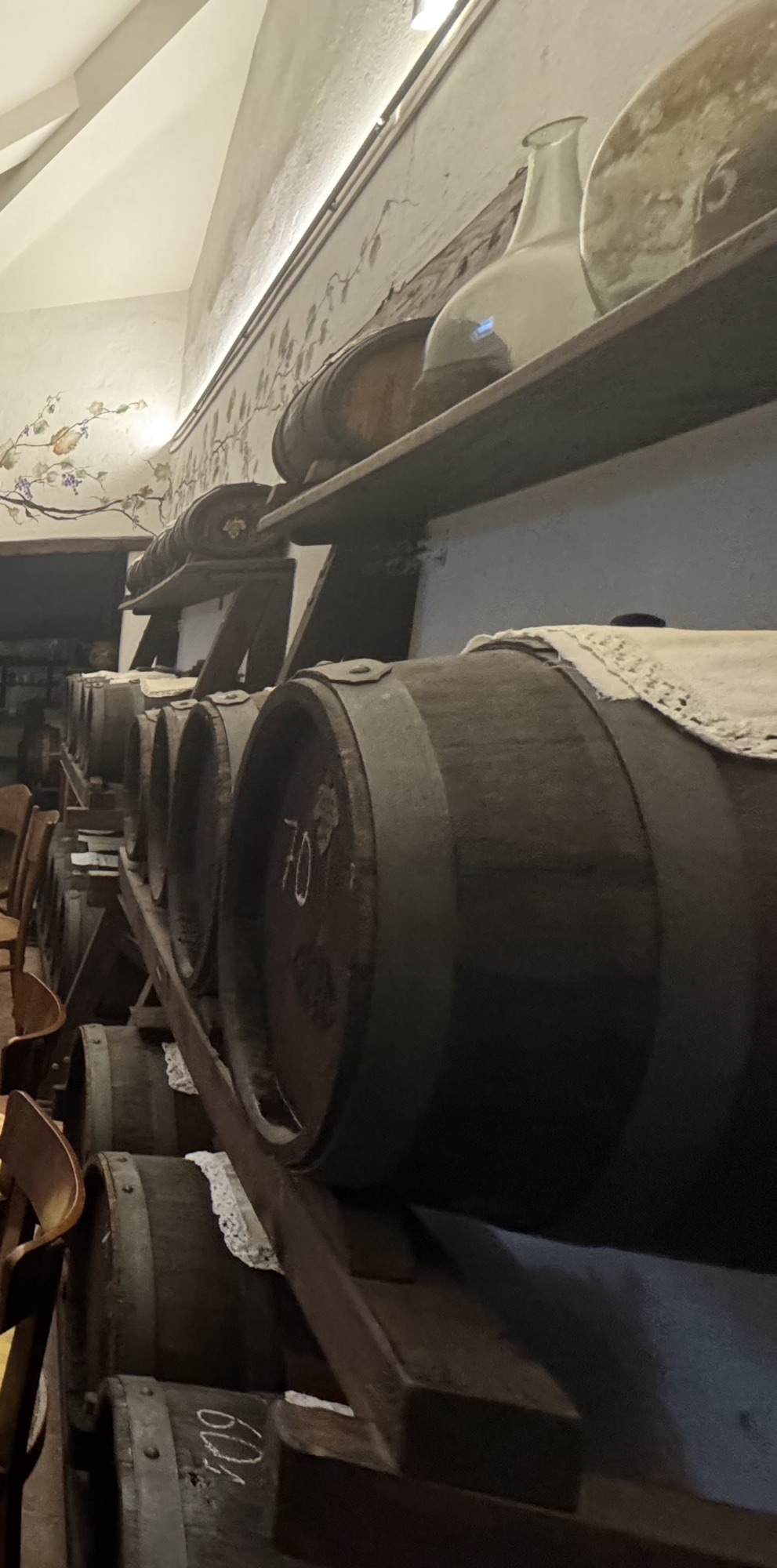
About 20% evaporates each year, so each barrel is topped up from the next oldest. The vinegars are transferred in the winter months because the fermentation slows in the cold.
From 100 kg of grapes, crushed into 85 litres of juice, just 1.6 litres of the final product is created.
Barrels are reused forever! Usually the juices work their way through , juniper, ash, mulberry, cherry, chestnut, and oak but some vinegars can be single wood aged.
The finished product is capped with either a white or gold top: a white cap indicates a minimum age of 12 years; a gold cap a minimum age of 25 years. The vinegar is aged in a series of “batterie”, barrels of different sizes and different woods, starting from the largest barrel to the smallest.
When ready for bottling, a maximum of 30% of the smallest barrel is siphoned off and sent to the official consortium, who have blind tastings and score the product before it gets bottled. Makers are not allowed to bottle their own, because the consistency of quality appellation and designation must be assured. Of course, they can design their own labels.
Modena balsamic must be bottled in a specific shape 100ml bottle. Marcello, our host and vinegar maker, explained that anything other kind of bottle contains wine vinegar with added sugar, caramel, or even xanthan gum – mimicking Modena balsamic, but not duplicating it.
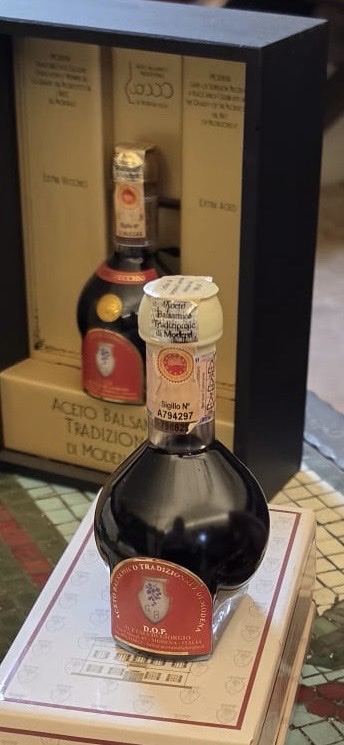
We tasted from youngest to oldest.
We tasted a 6-wood white cap, a single juniper wood white cap, a 6-wood gold cap, and a 25 year old aged only in cherry, which is the sweetest wood and produces the sweetest vinegar.
The vinegar will never spoil, although EU rules require an expiration date of 10 years.
Despite prices ranging from €60 to €135 for just 100 ml of vinegar, almost everyone in our group bought at least one bottle. It needs to be used sparingly; think chef plating with just a drop or two on each plate.
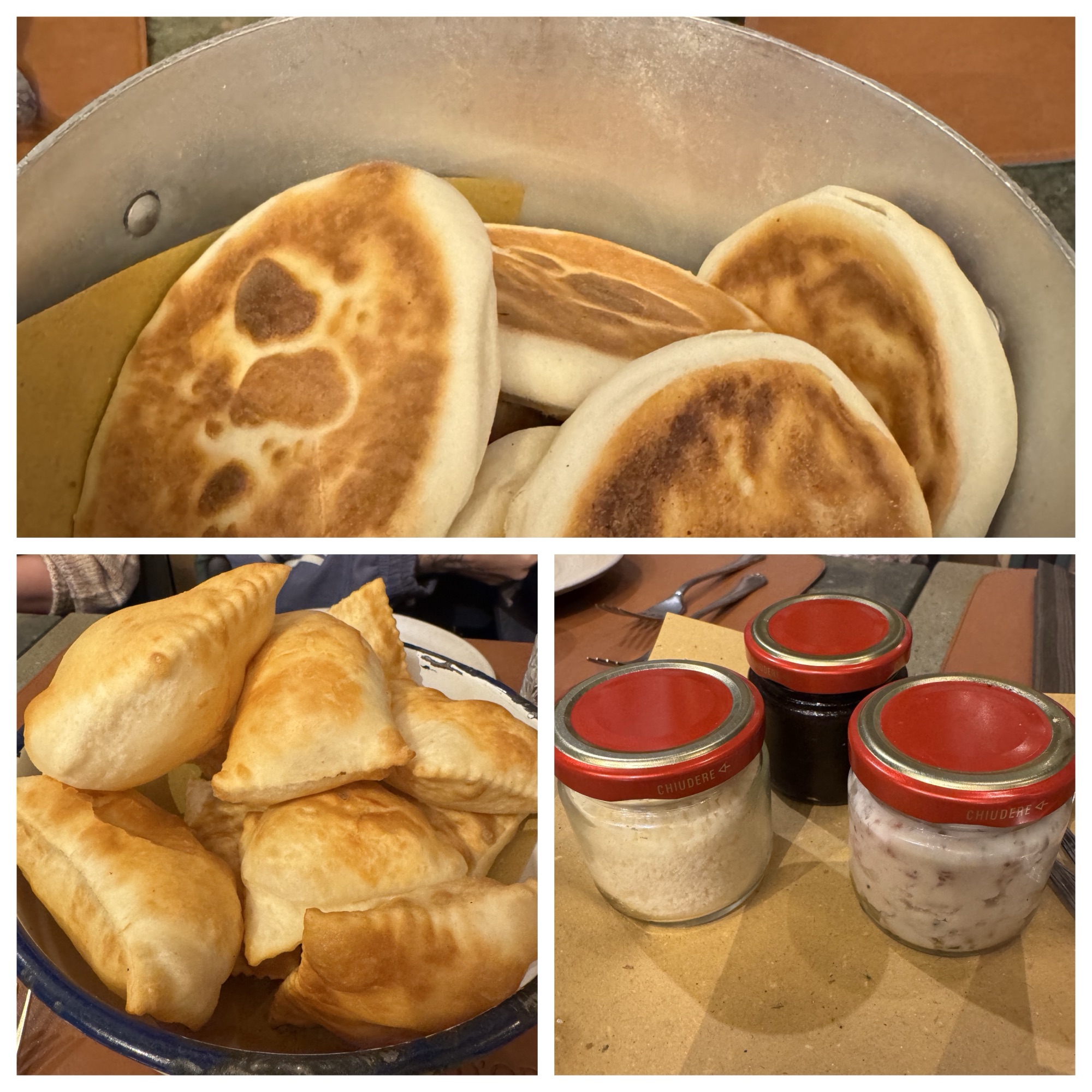
Our morning tastings were followed by a delicious group lunch of fried gnoccho and pan bread (tigelle) with a choice of Parmesan, lard and pancetta, or prune jam.
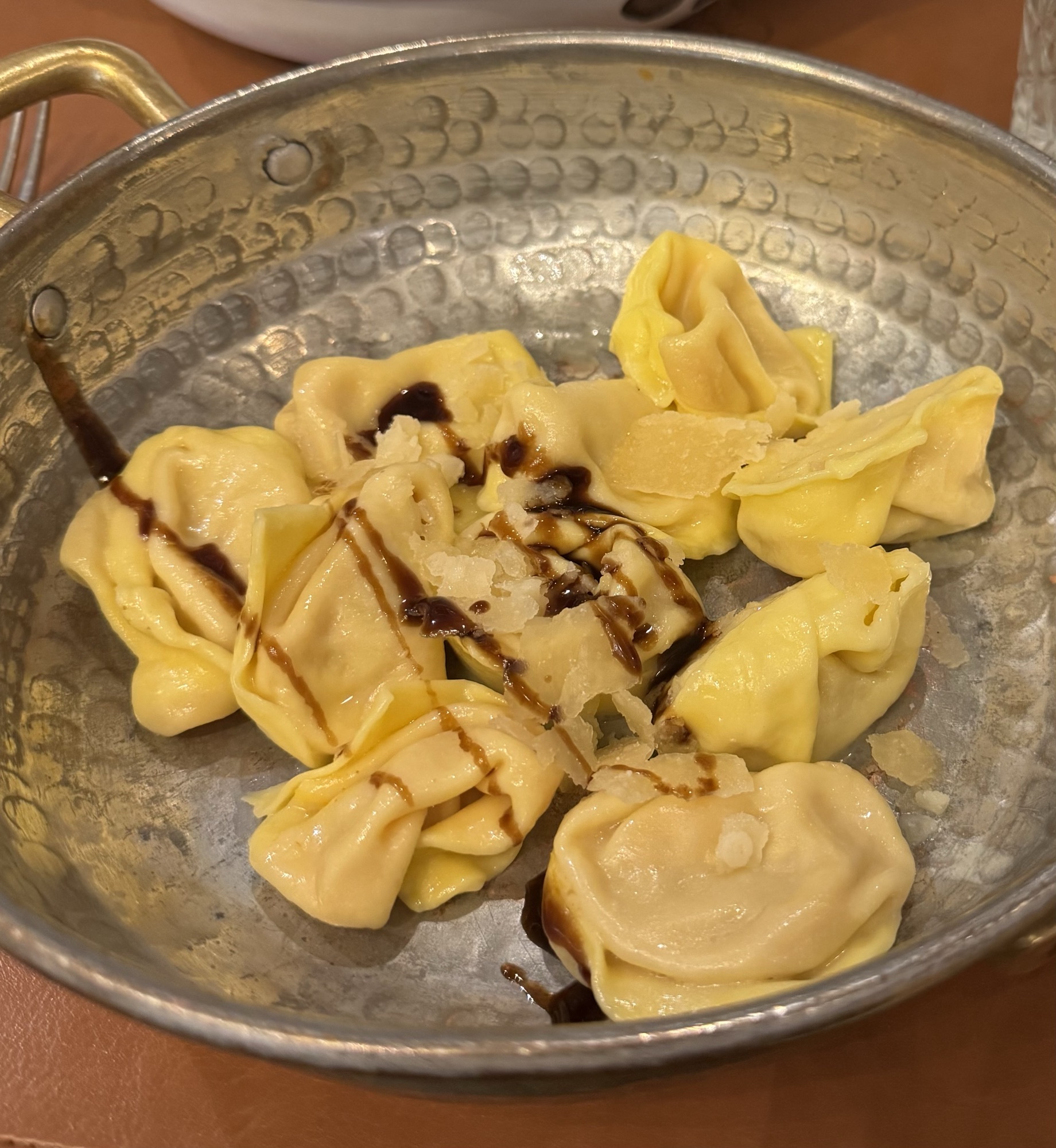
Our main course was tender tortellini zucca (pumpkin filled).
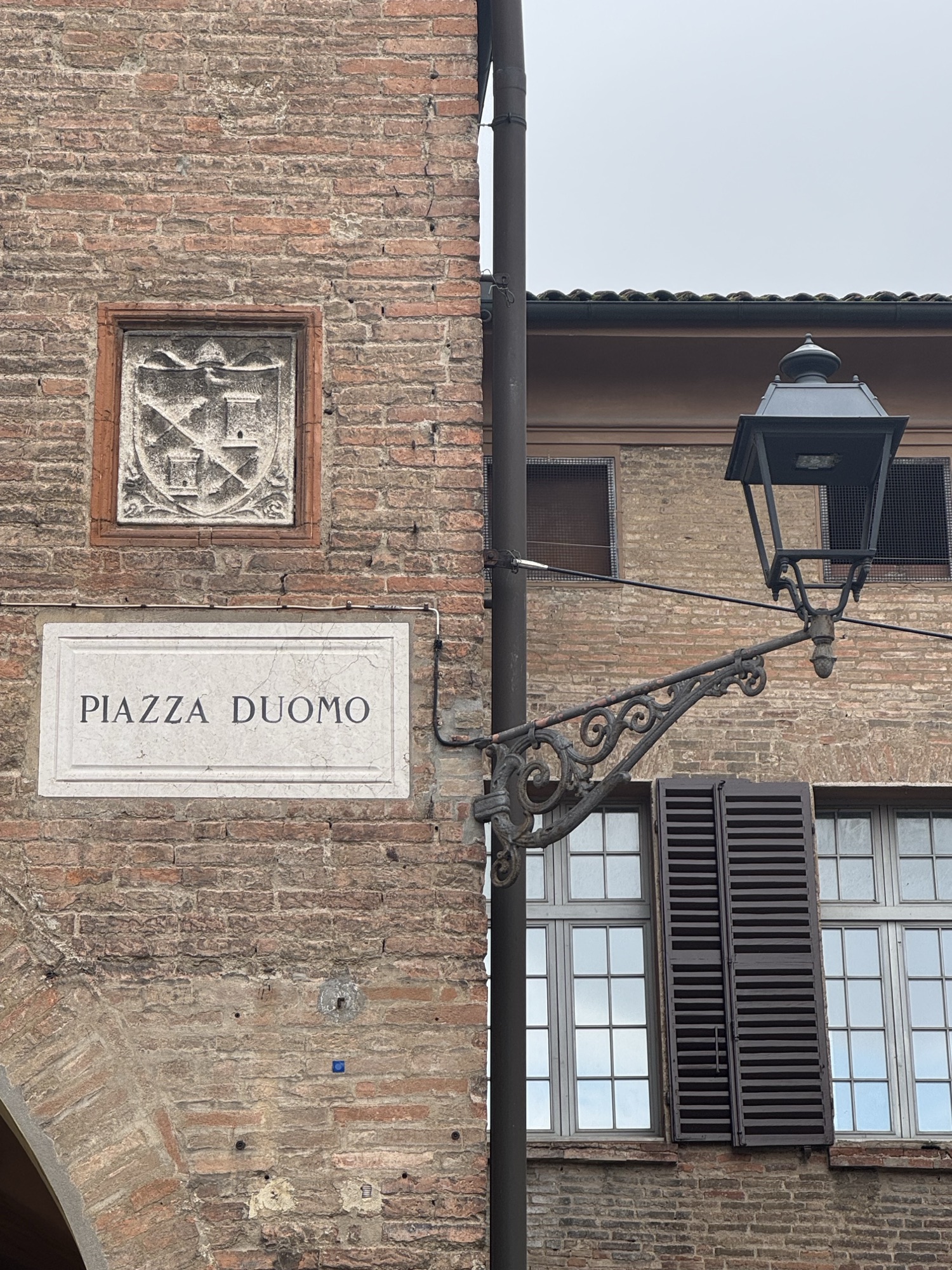
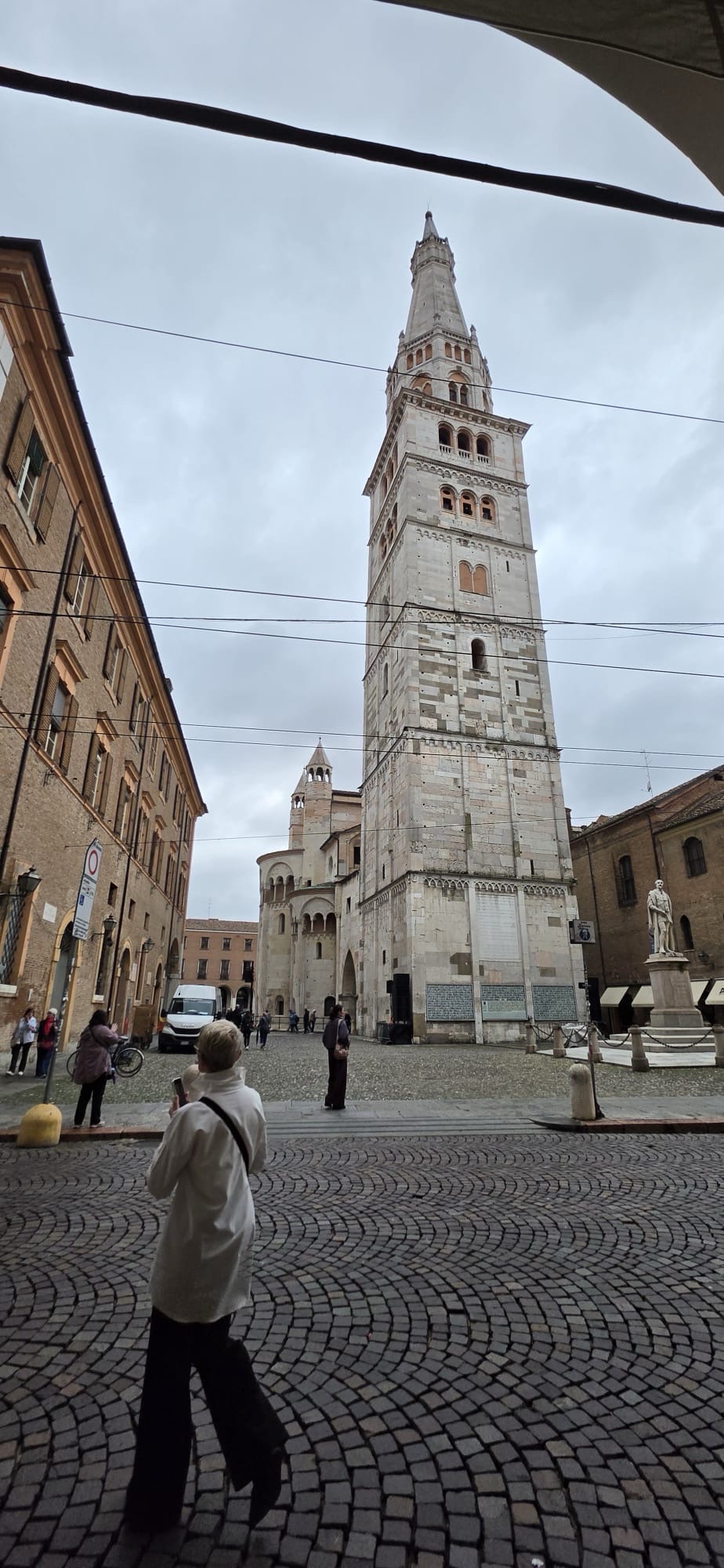
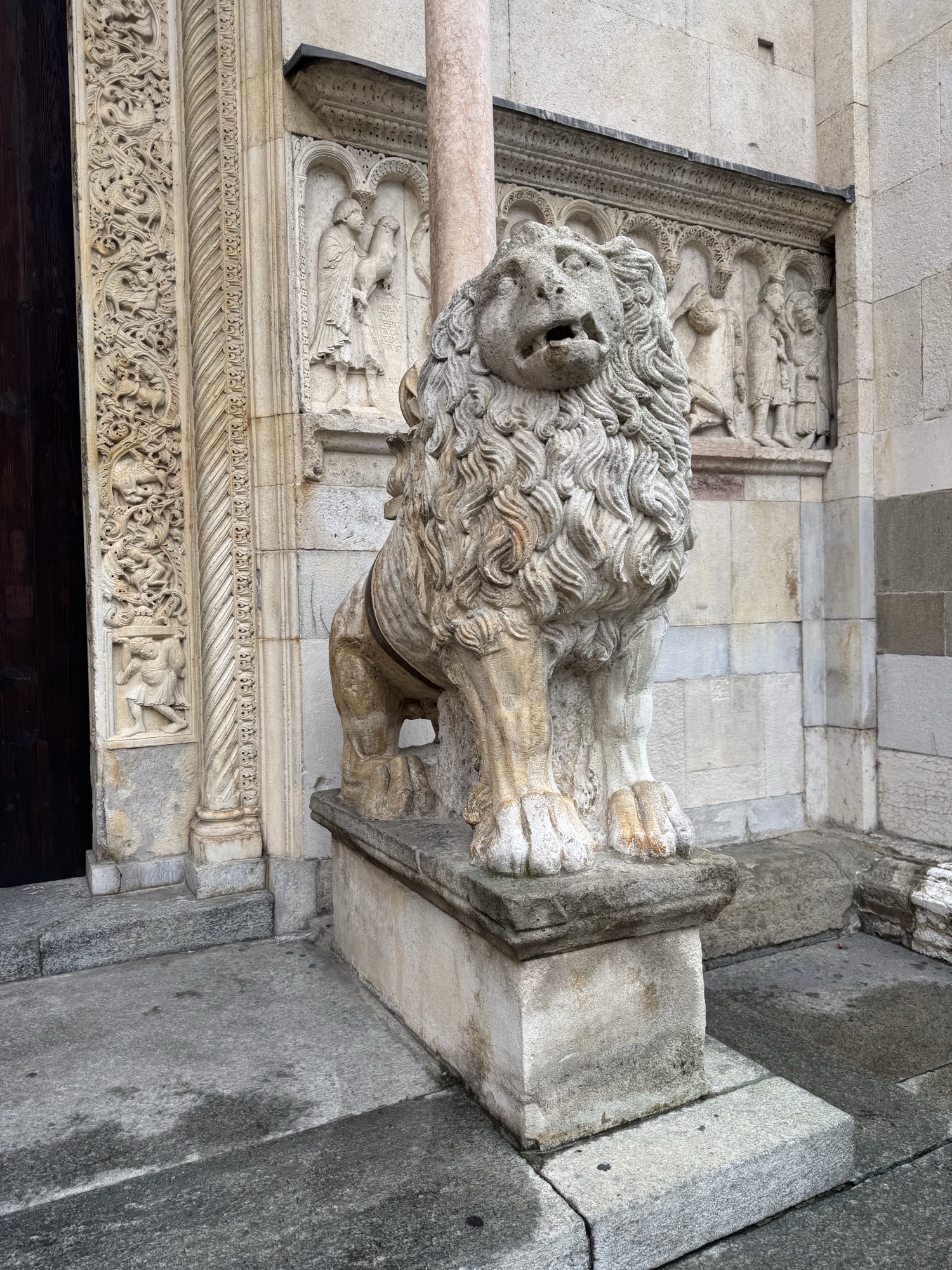
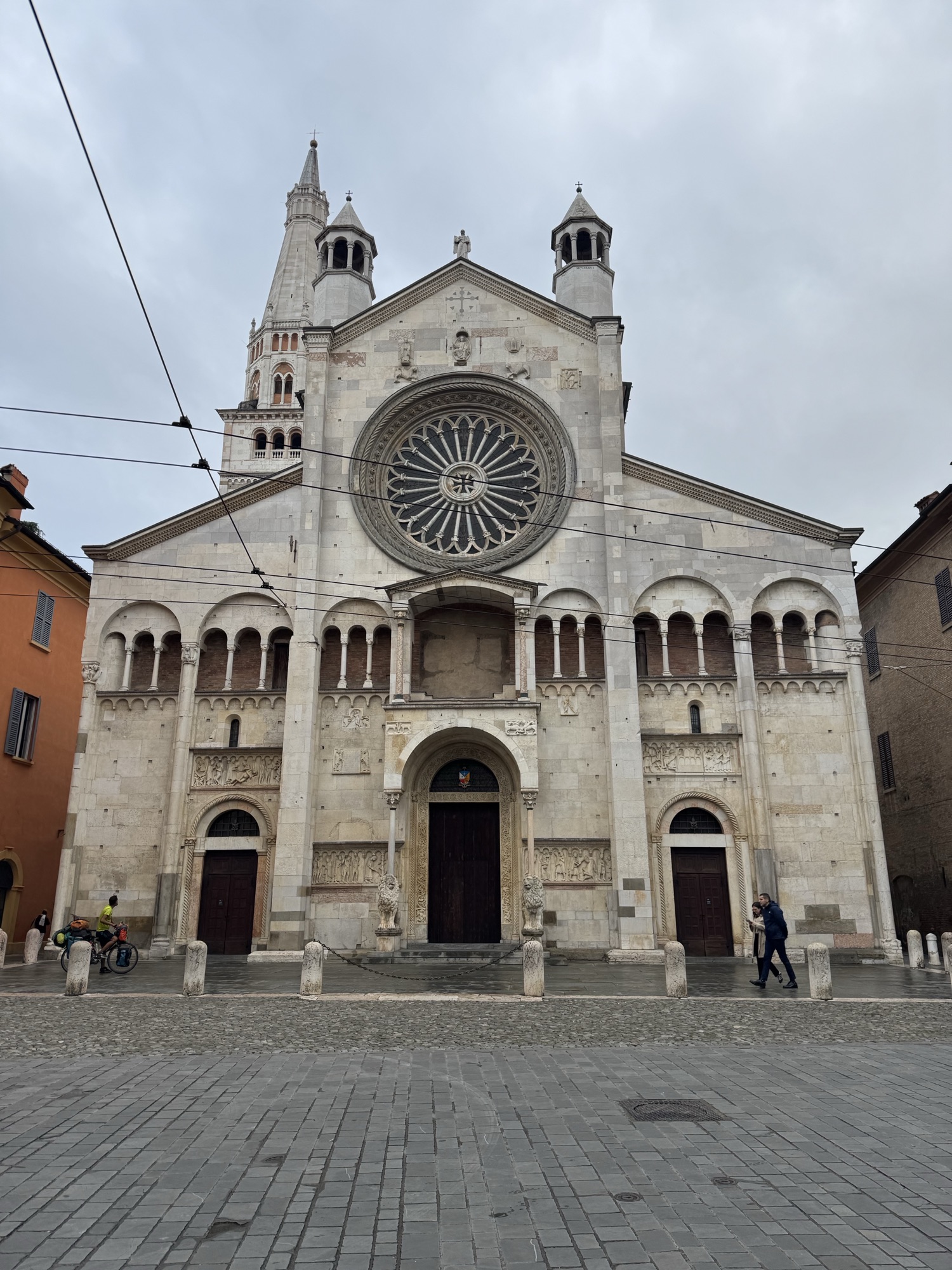
Following lunch we had a short stroll through Modena, which is a lovely university town.
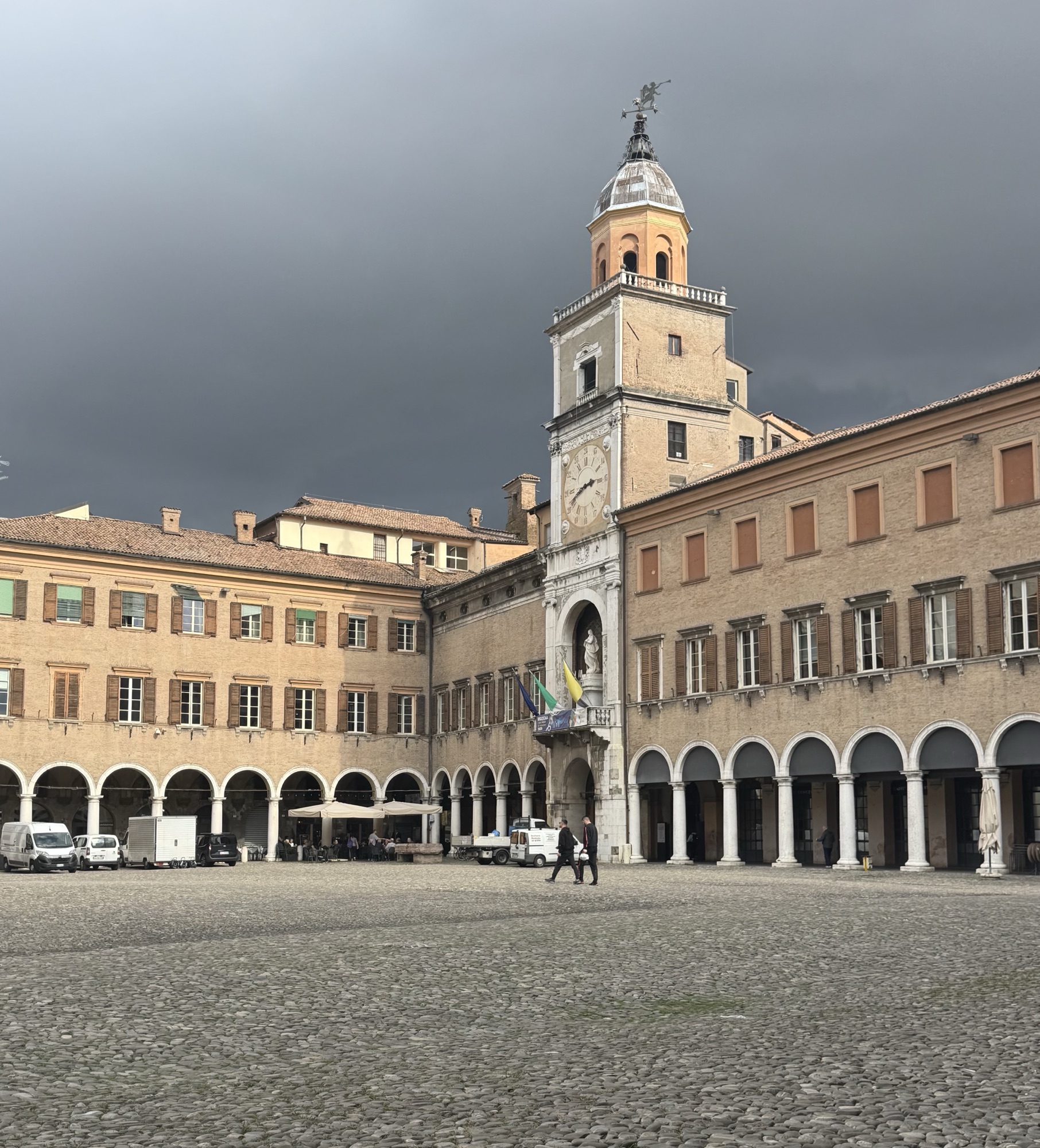
We had independent exploration time in Bologna once we returned late afternoon.
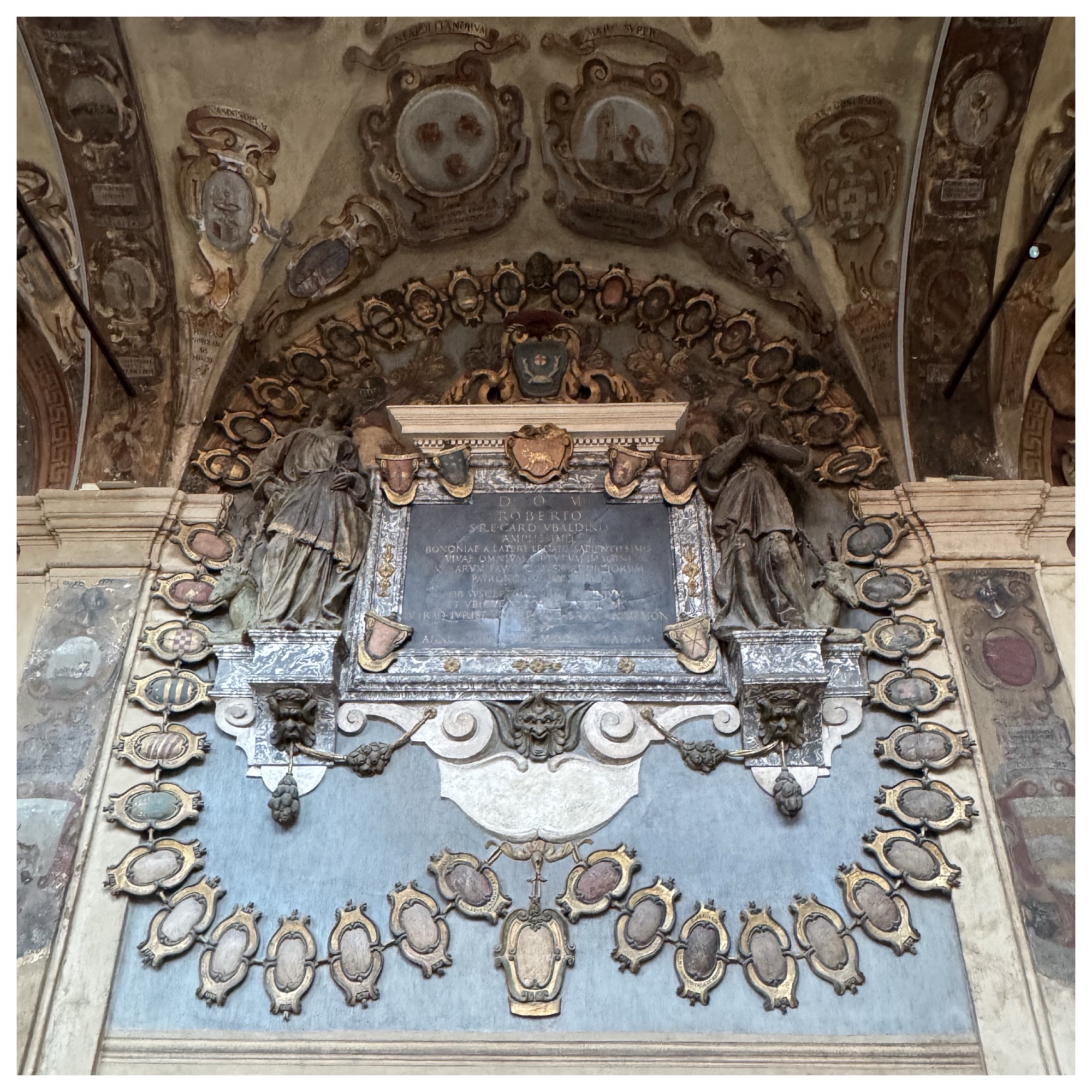
After a much needed espresso stop, we stumbled upon the the Palazzo dell’Archiginnasio, the building that served as the main seat of the university of Bologna from 1563 until 1803. Today it houses one of the largest libraries in Italy.
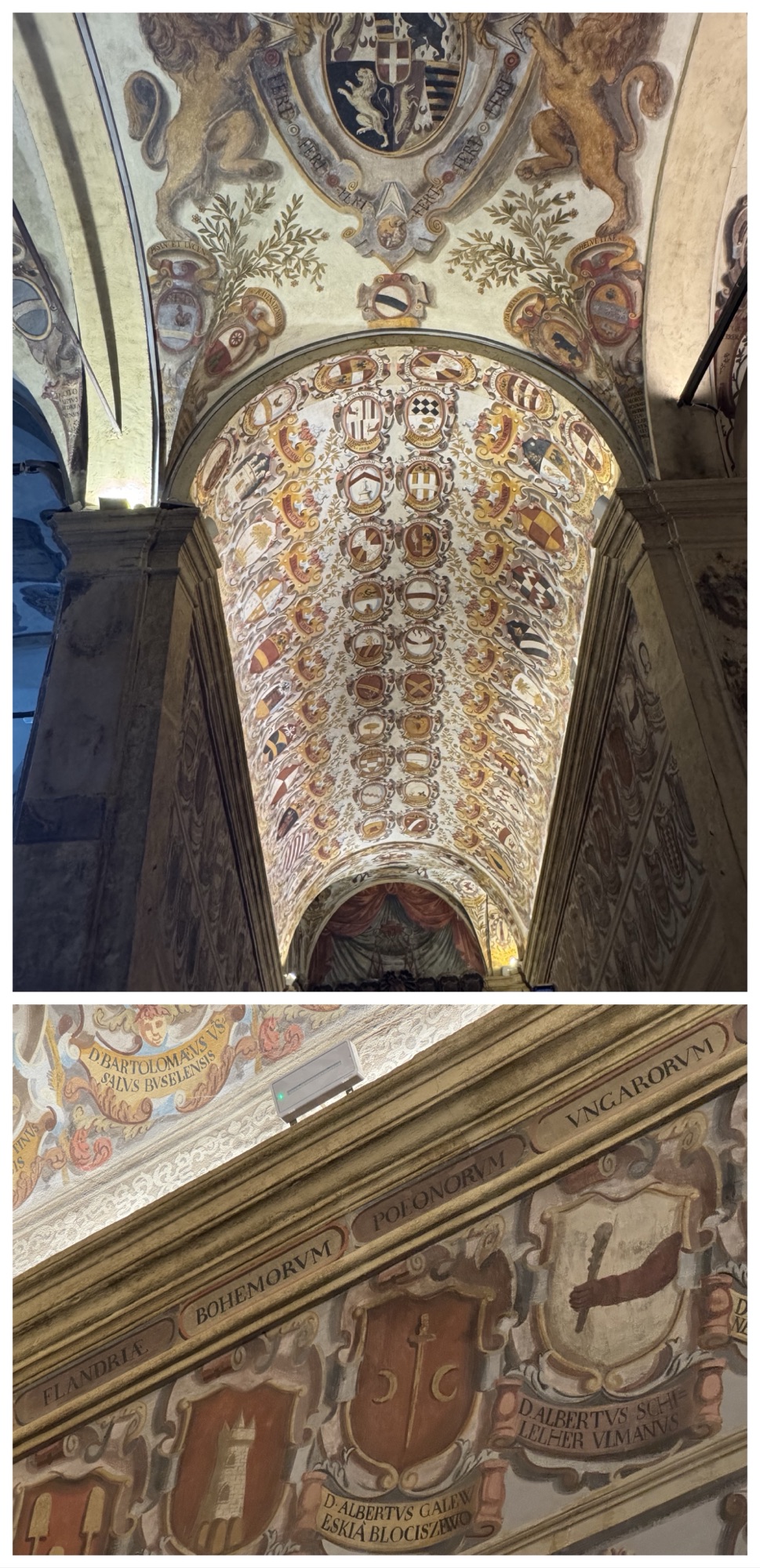
It was built under the commission of Pope Pius IV and Cardinal Carlo Borromeo to unite the university’s scattered schools.
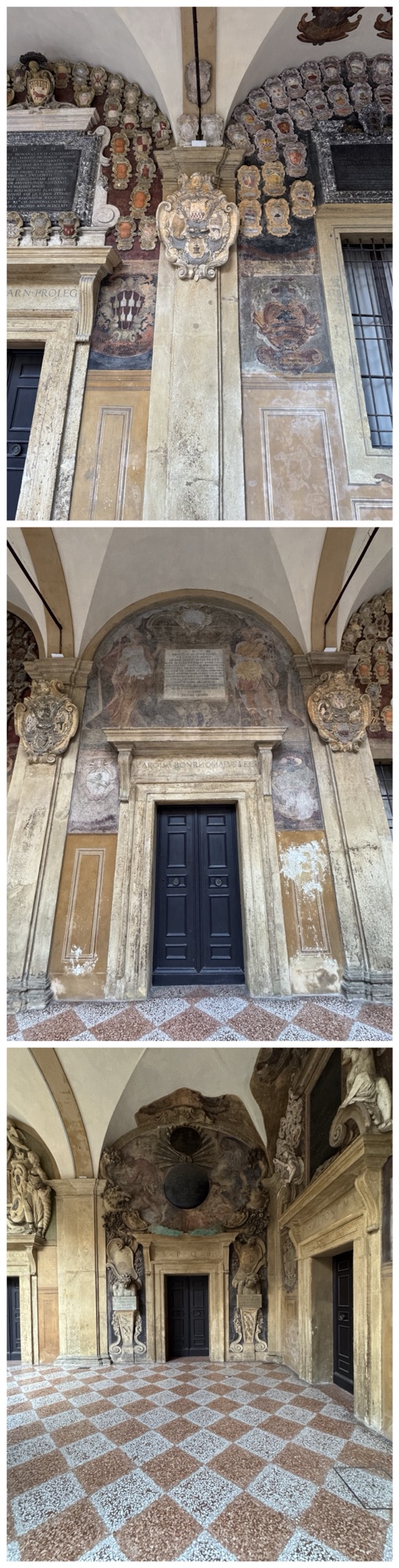
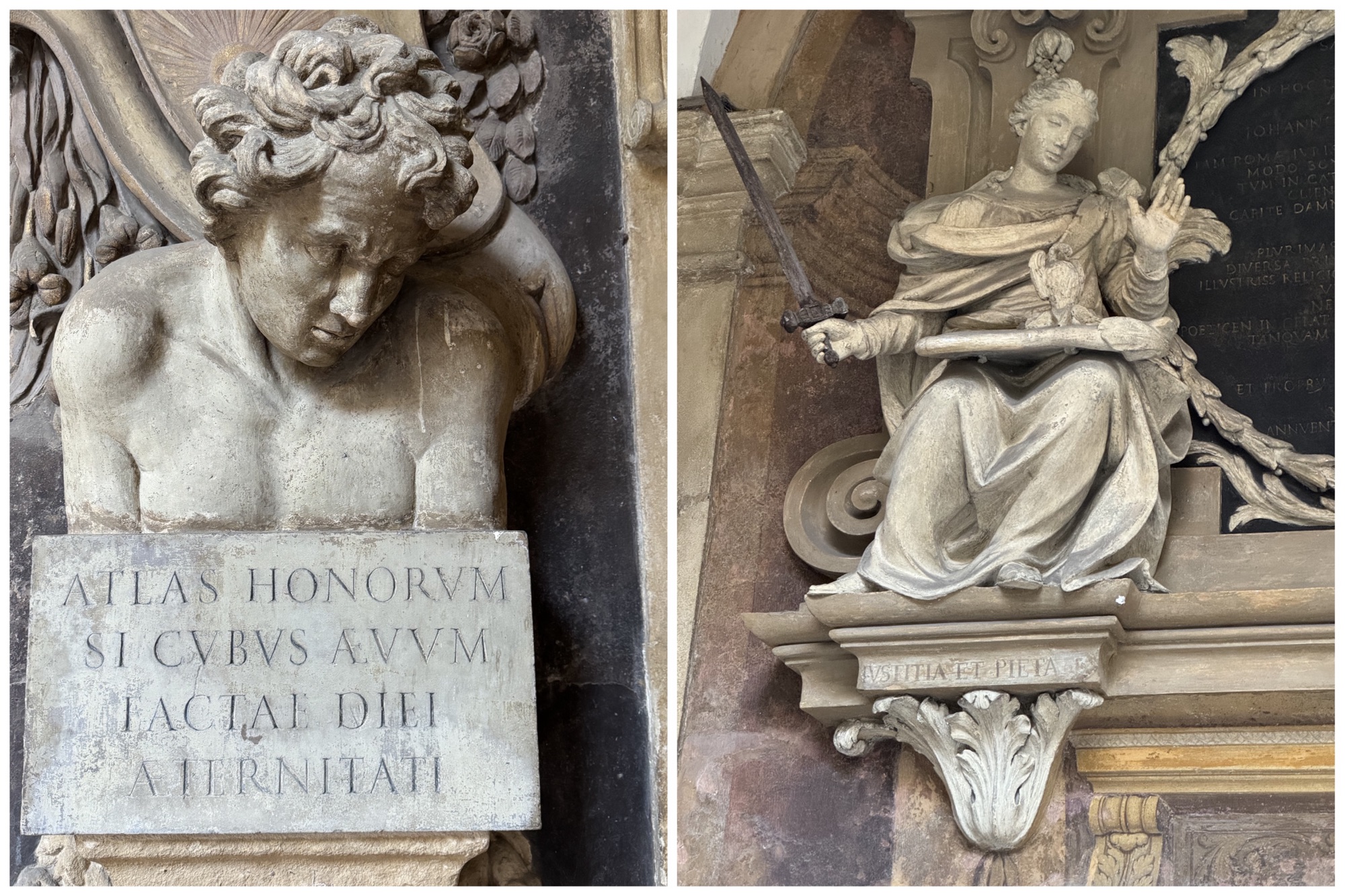
We were overwhelmed by the frescoes, sculptures, and costs of arms. I had to check Wikipedia to find out that the walls and corridors feature roughly 6,000 historical student and faculty heraldic coats of arms.
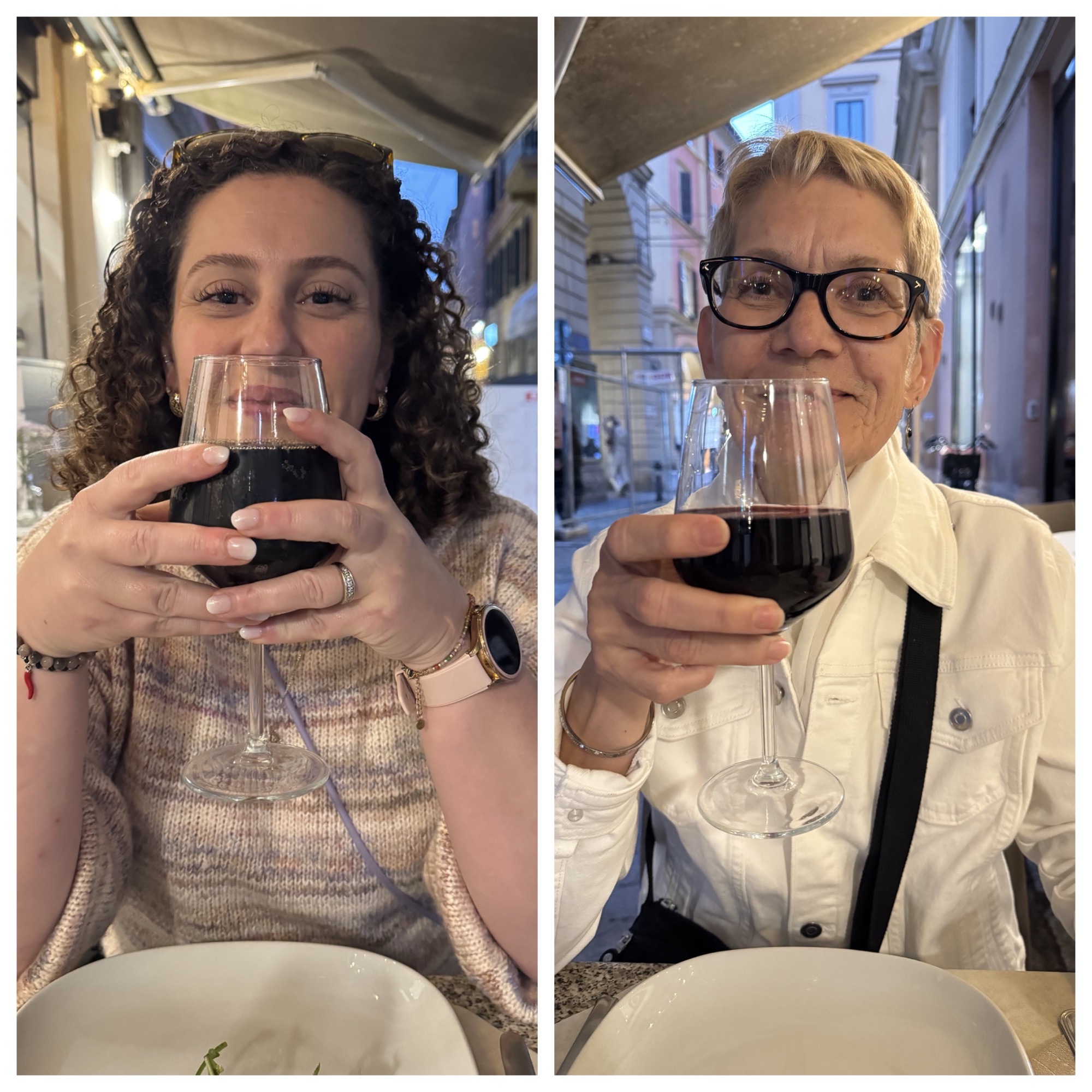
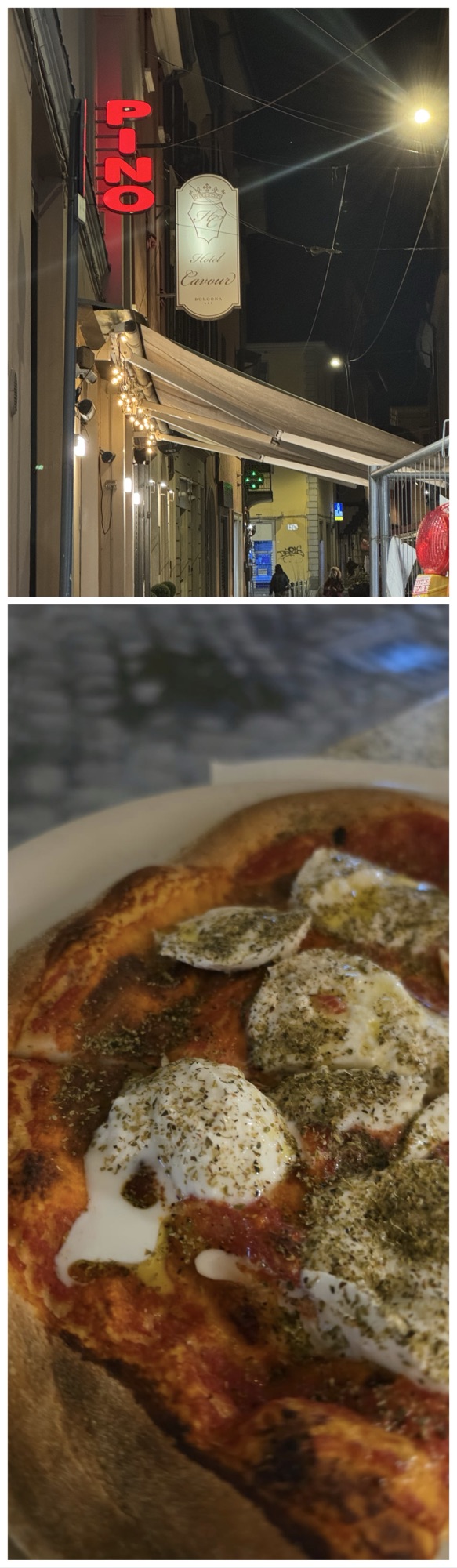
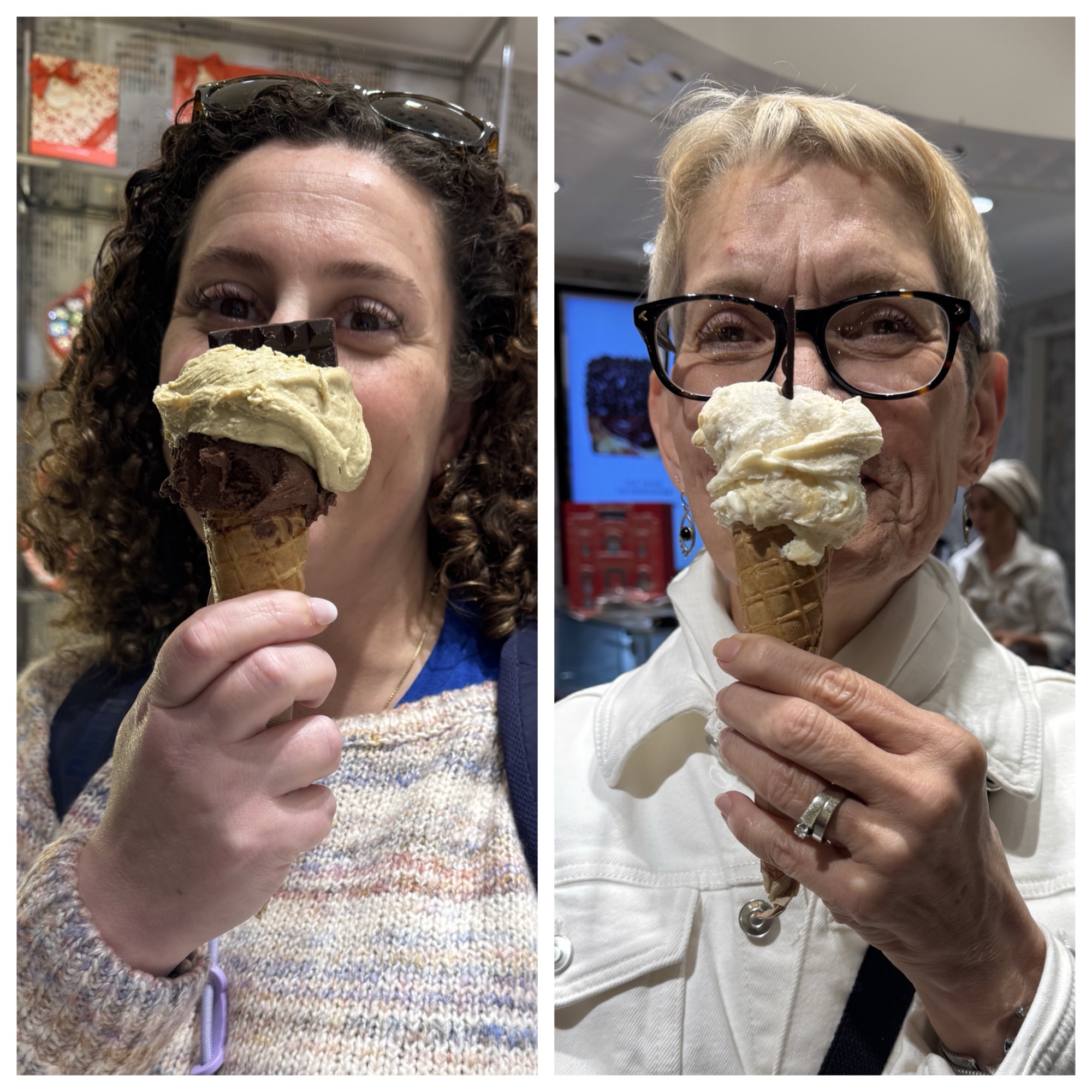
Dinner on our own was wood oven pizza followed by gelato, so a good end to an overall good day.
Tomorrow we head to San Gimignano, via an unexpected short layover in Florence.

