Ted and I loved our visit to Passau in 2015 (Episode 96) and again in 2022 (Episode 361) especially the stunning Baroque cathedral which has Europe’s largest pipe organ.
I was hoping that son #1 would love the city as well.
Our plan today was to wander the narrow lanes toward the riverfront, and climb the hill to the Dom where we would hopefully be able to take in an organ concert, then have lunch before climbing a steeper hill on the opposite site of the Danube to the Veste Oberhaus. If there was extra time, we could take in the largest museum of Bohemian glass in Europe.
We didn’t make it to the glass museum, but we certainly didn’t slack off either.
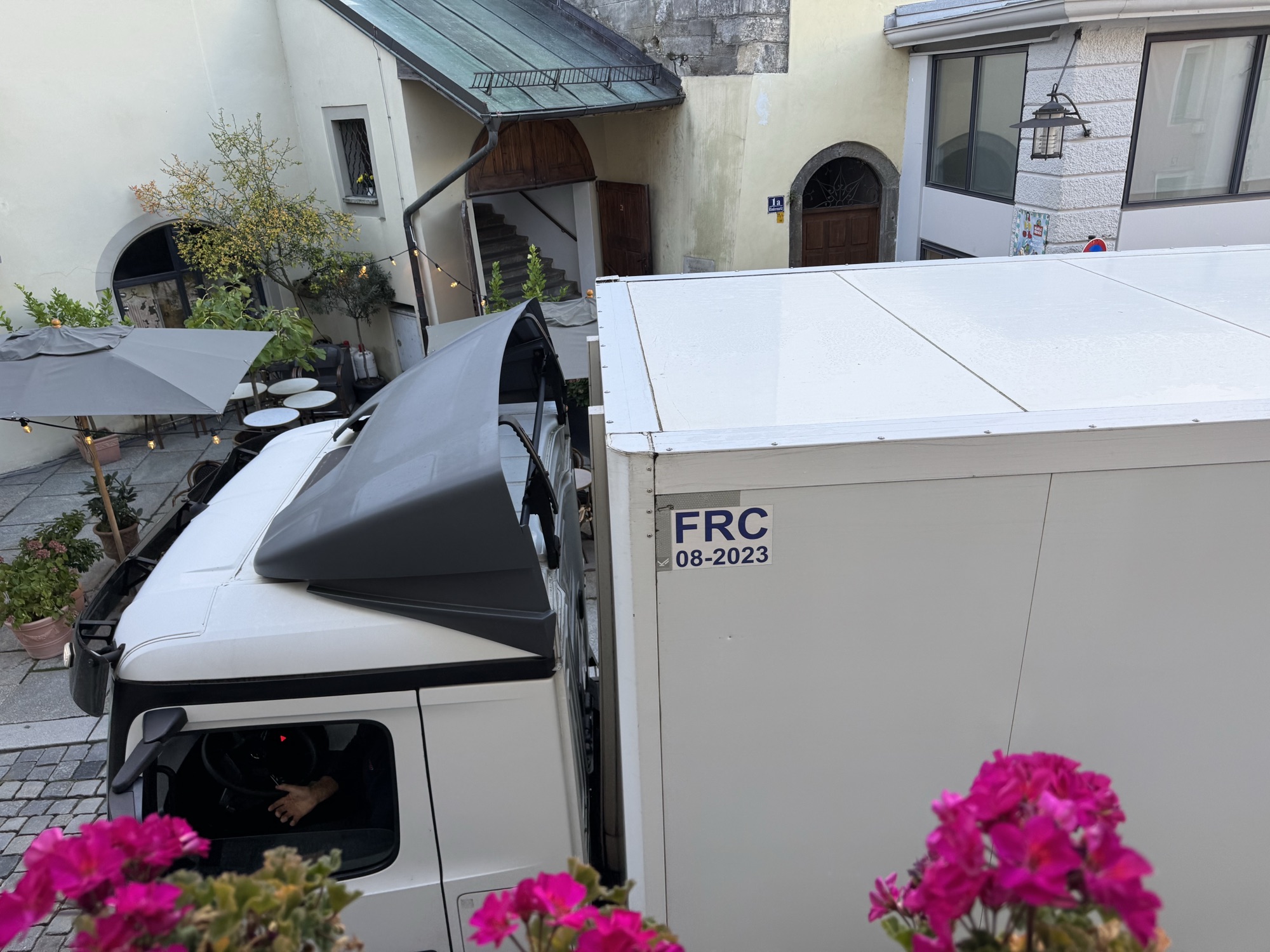
Last night I learned why the charm of a hotel in a pedestrian zone might not be so charming: at 05:30 all the truck traffic not allowed between 9 am and 5 am enters the old town centre. Delivery trucks on cobblestones sounds bizarrely like either thunder or sleeping under a flight path. Son #1, who wears a CPAP apparatus and lives over the Toronto subway line, noticed nothing.
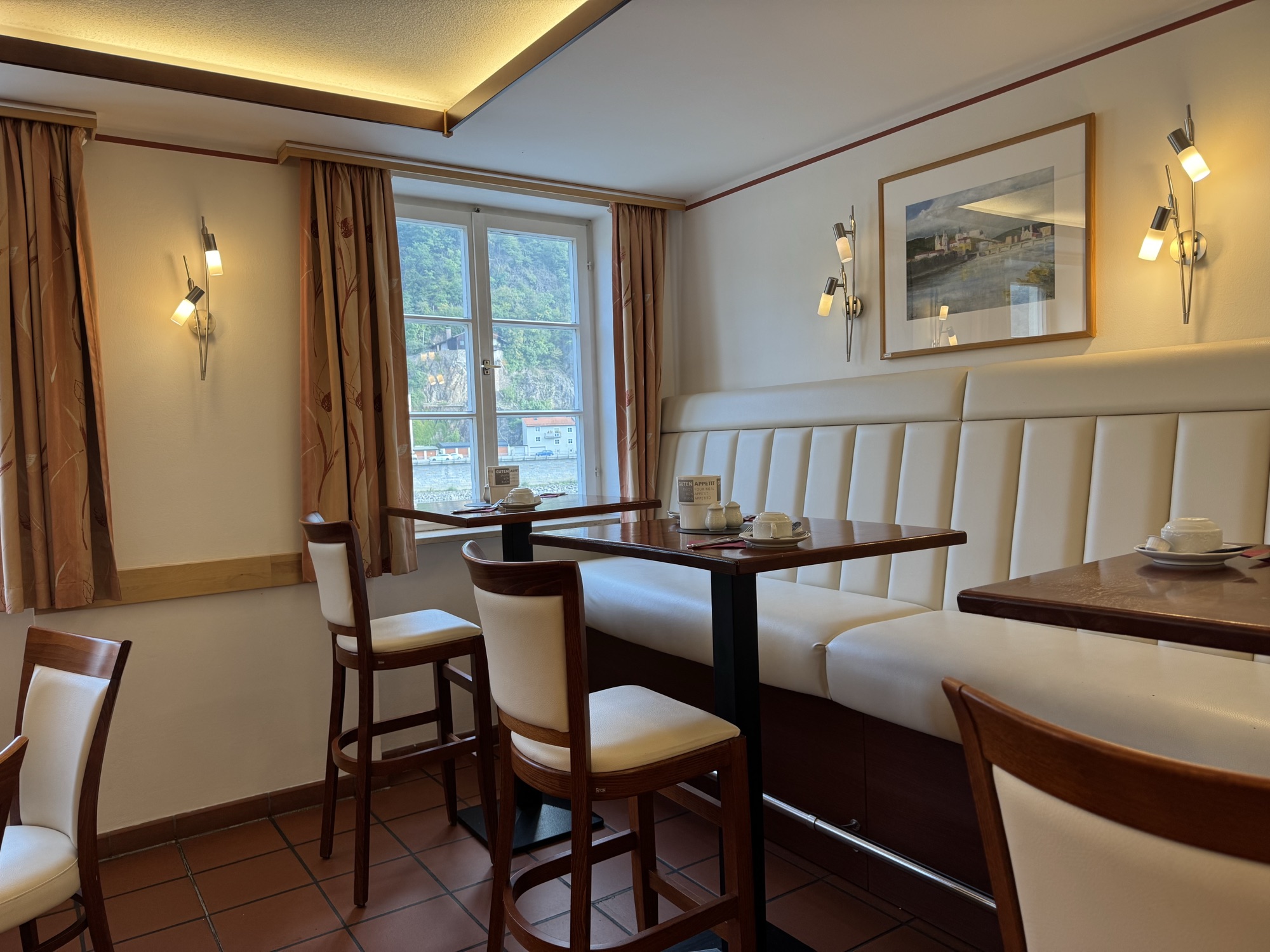
We began our day in the hotel’s charming breakfast room, where a lovely hot and cold buffet was laid out. The decor here echoed the 1930s Art Deco feel of our room.
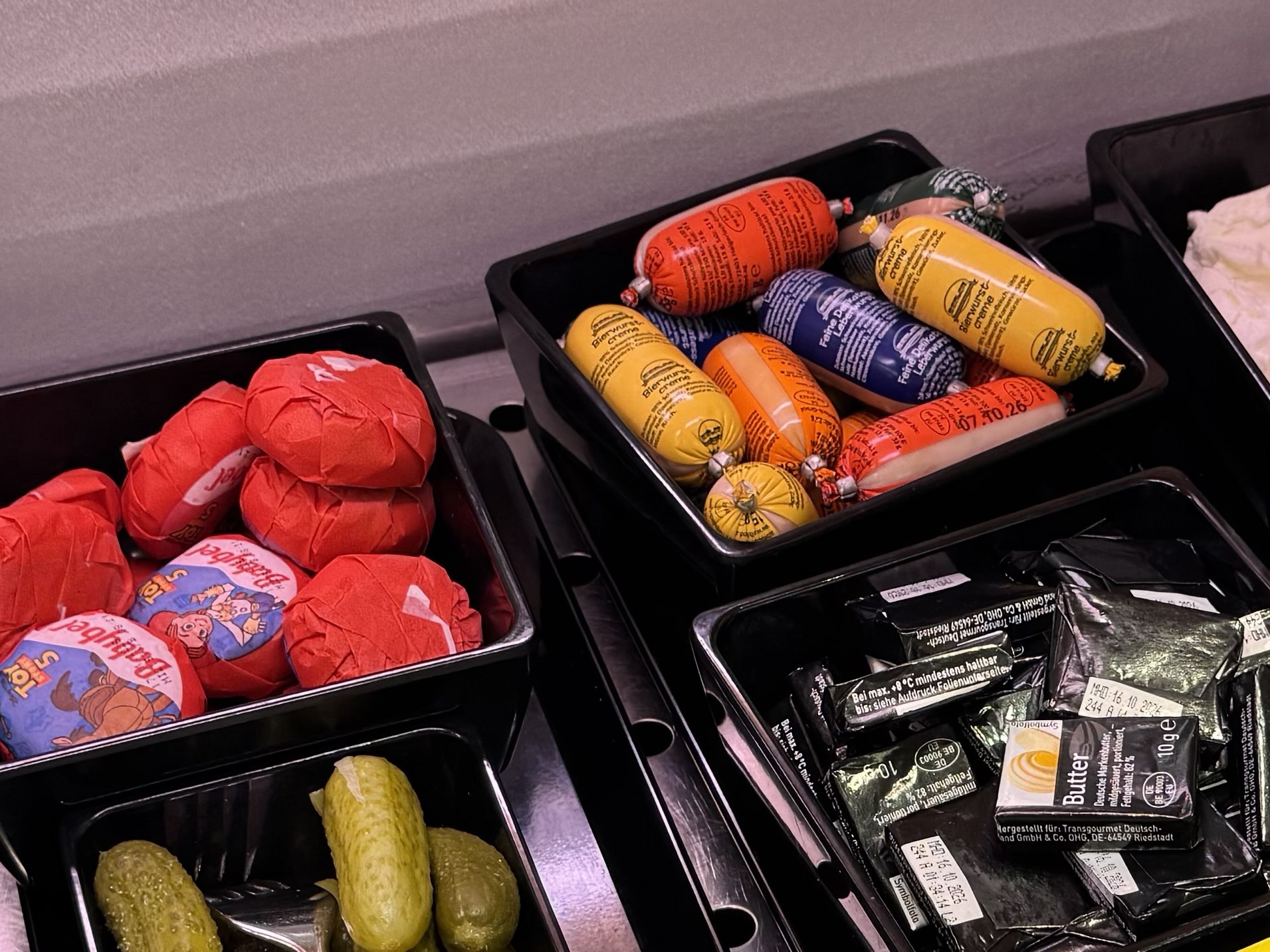
I was intrigued by the tiny individually wrapped liverwursts beside the Babybel cheeses, although what I ate was herbed cream cheese and smoked salmon on dense whole grain pumpernickel.
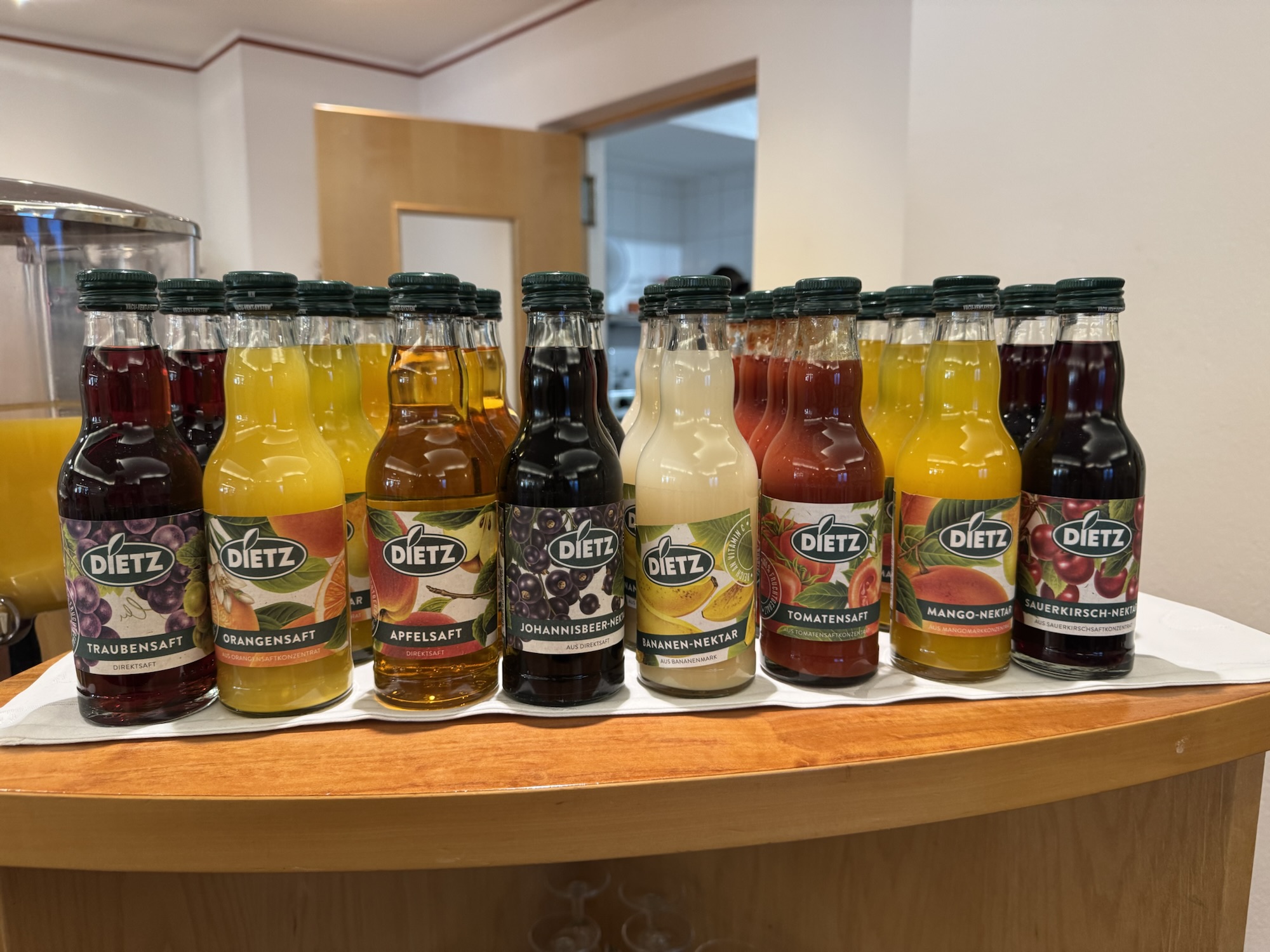
My grandsons would have loved the varieties of bottled juices
On to our day.
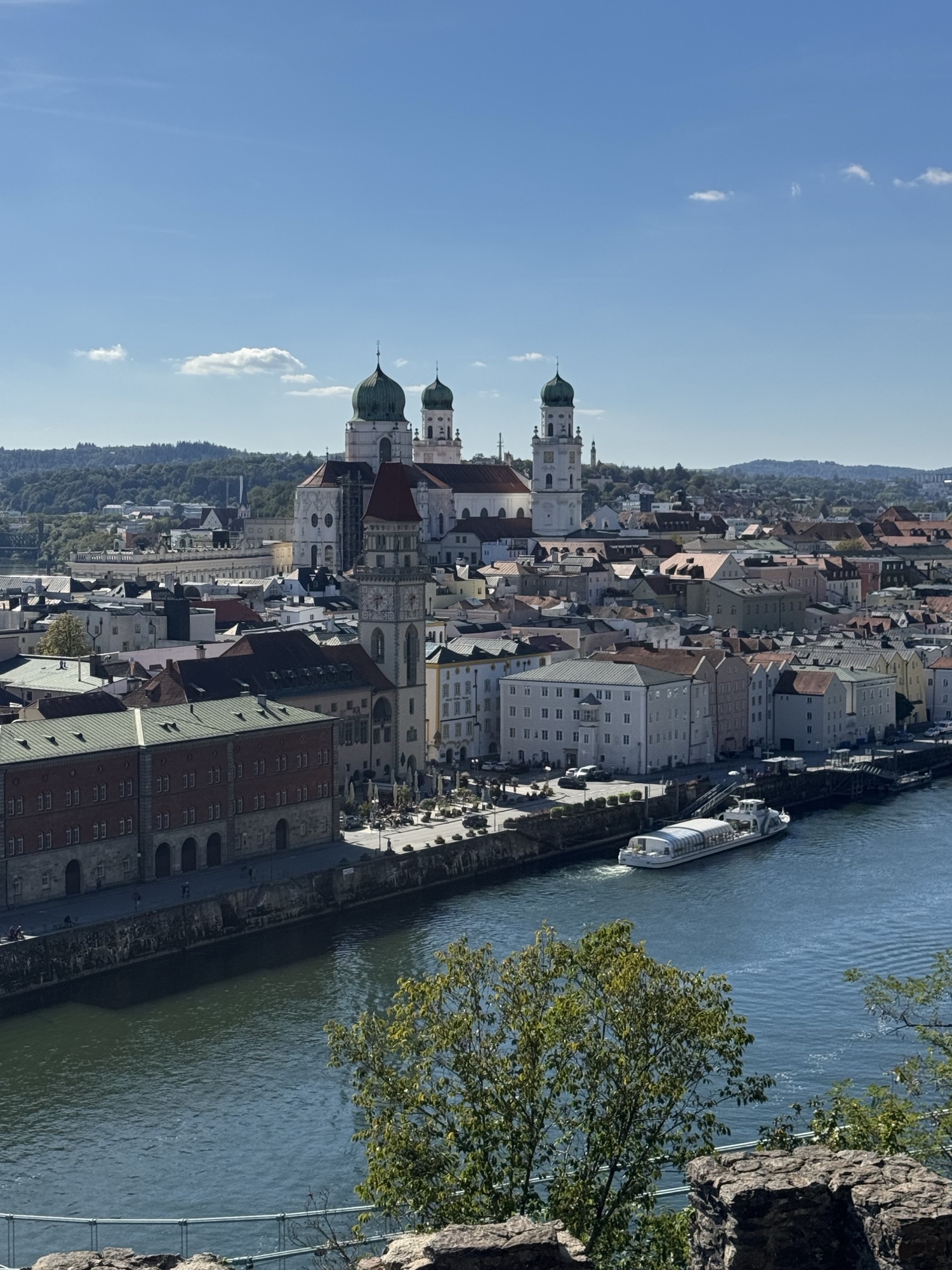
St. Stephen’s Cathedral in Passau is the “mother church” of the Danube’s eastern region. Around the year 450CE, a church already existed here.
In 1407, Prince Bishop Georg v. Hohenlohe laid the foundation for the construction of a late Gothic cathedral in Passau, at the highest point of Passau’s old town, the Altstadt. After a devastating fire in 1662, during which the cathedral almost completely burnt down, it was resurrected again by the famous architect Carlo Lurago, but now in the Baroque style instead of Gothic.
Ted and I have toured many, many places of worship, including Paris and Rouen’s Notre Dames, the Sacre Coeur in Paris, Seville’s cathedral, Barcelona’s Sagrada Família, St Peter’s in Rome, Westminster Abbey in London, the Hagia Sophia, St Stephen’s in Vienna, St Matthias in Budapest and cathedrals all over Scotland, Ireland, and Germany (just to name a few), but St Stephen’s in Passau remains my favourite.
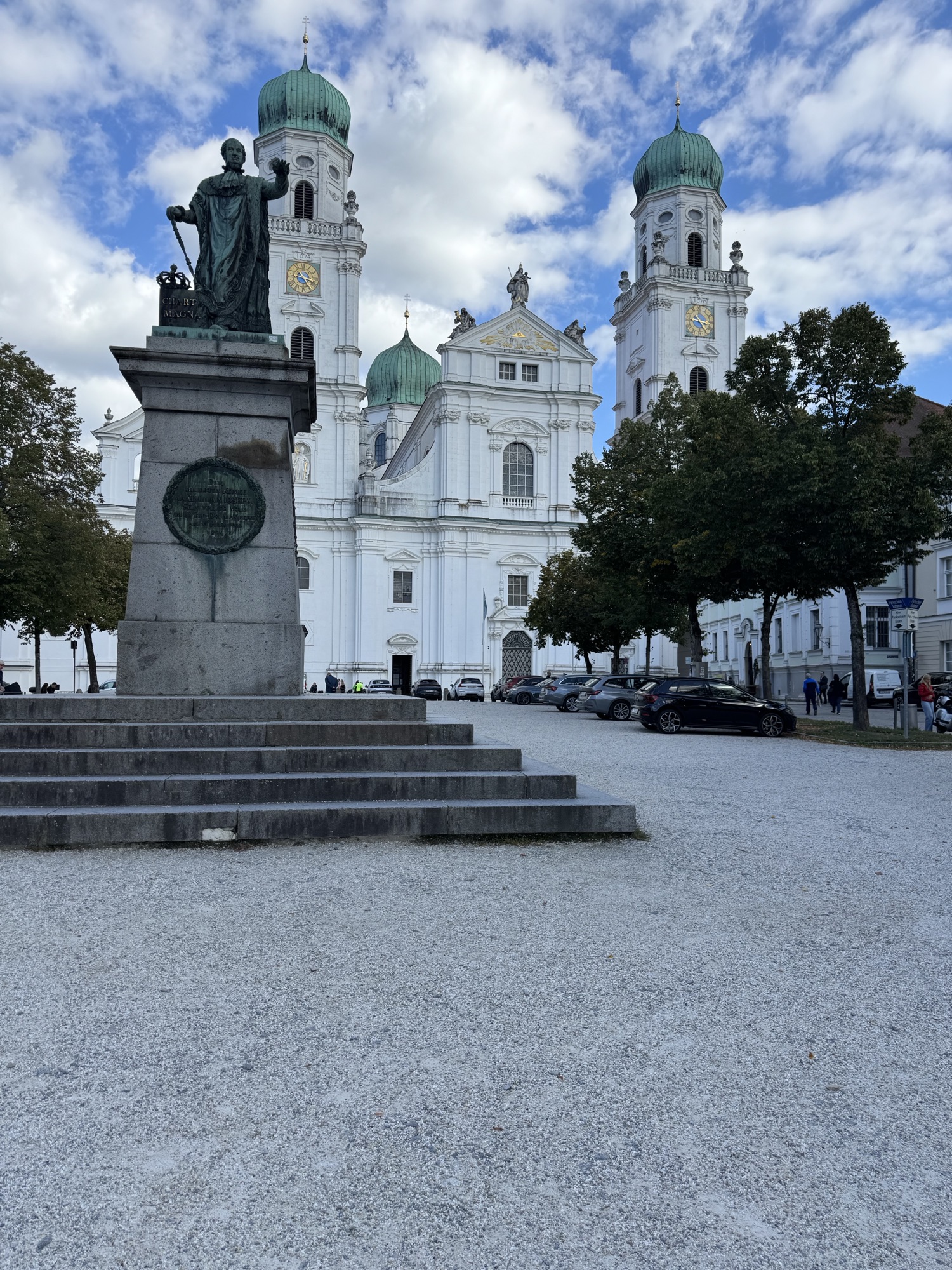
The magnificent exterior of the cathedral features white towers and blue-green domes.
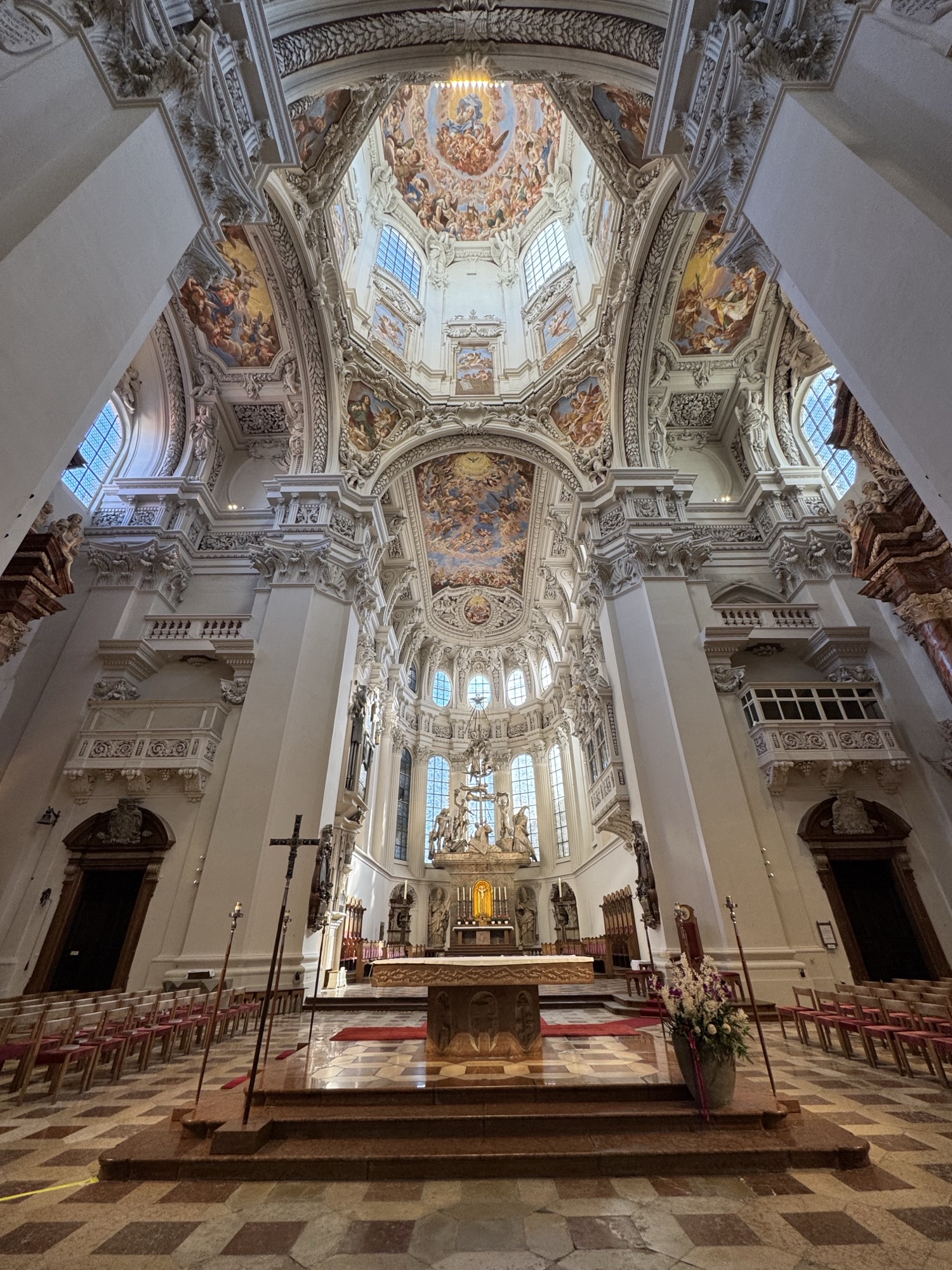
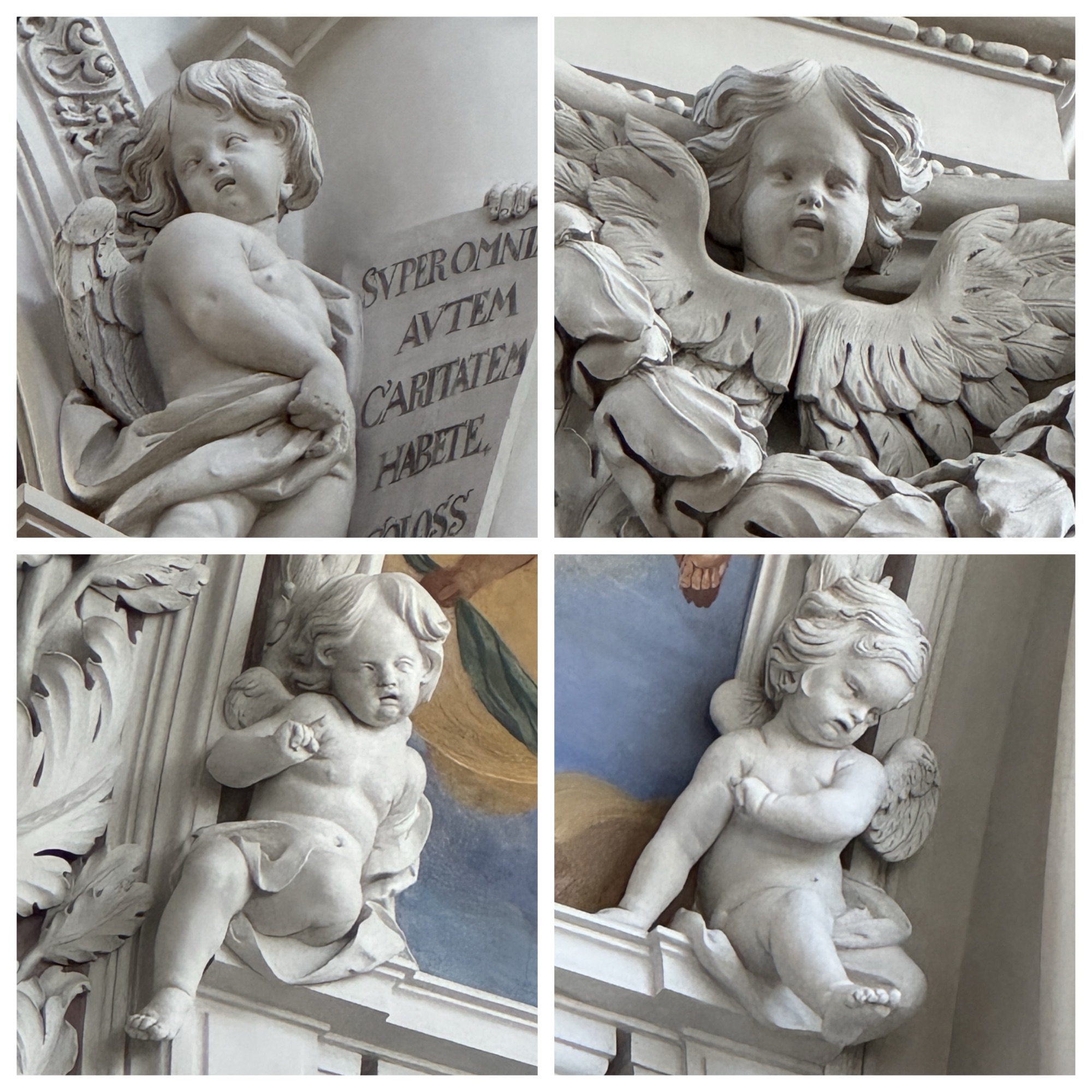
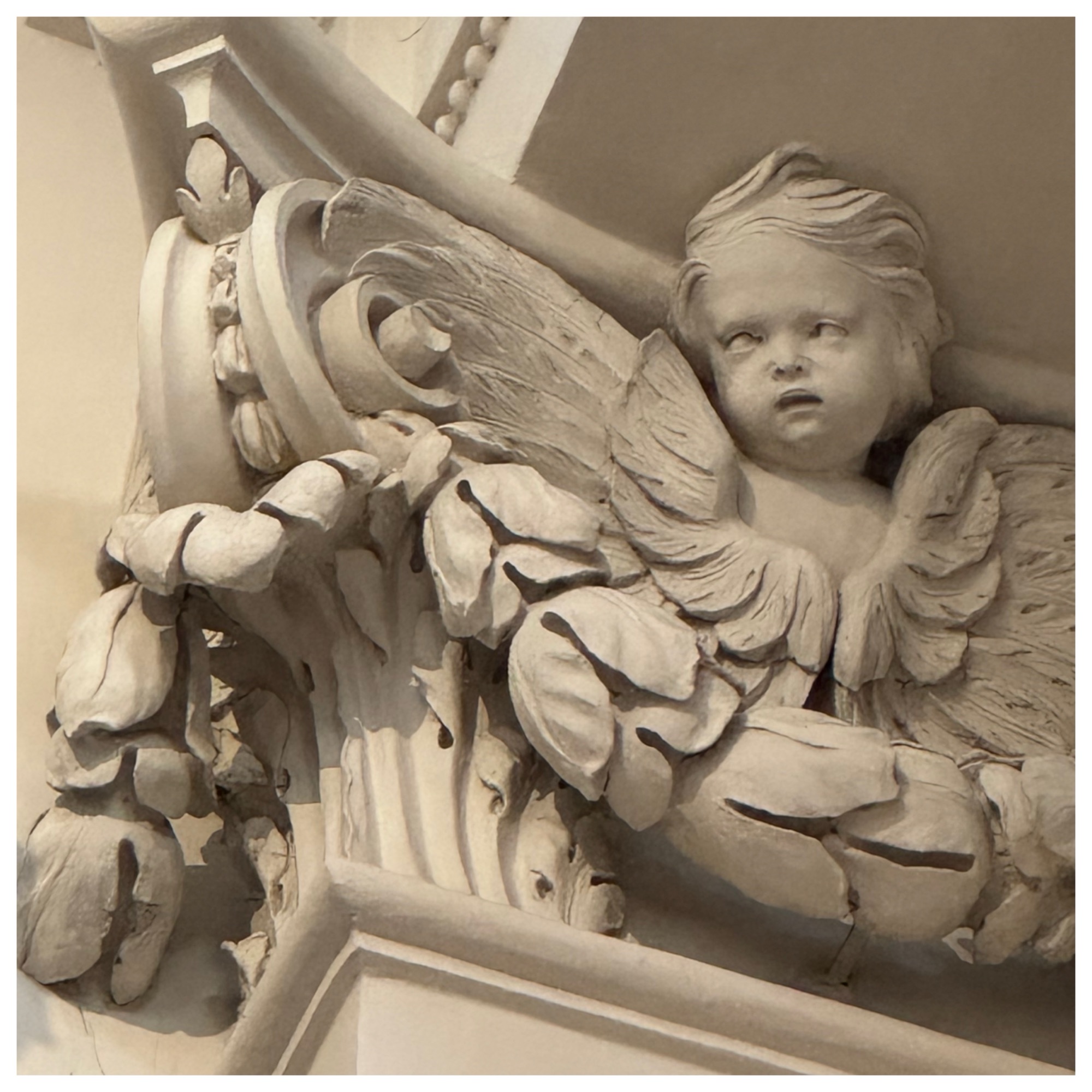
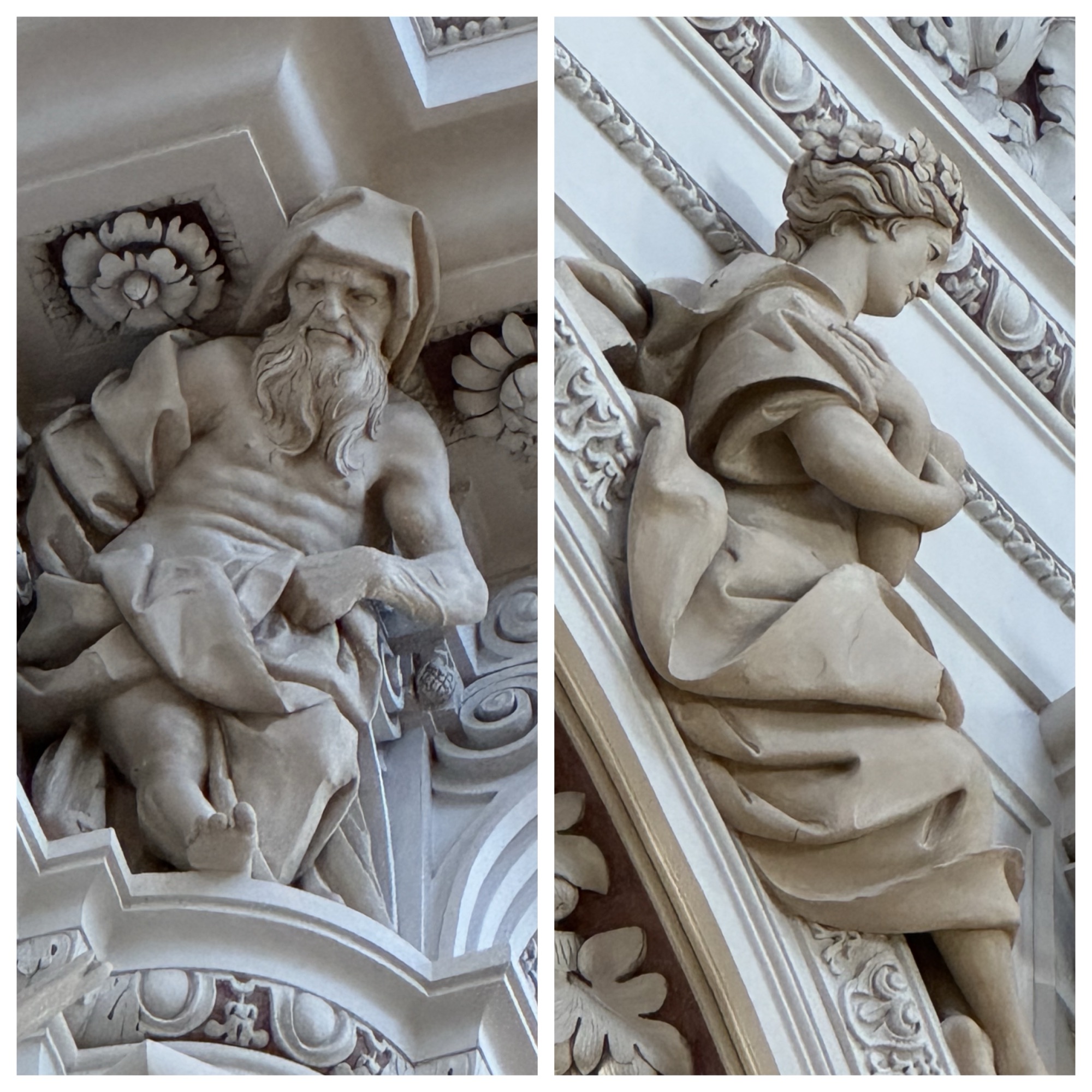
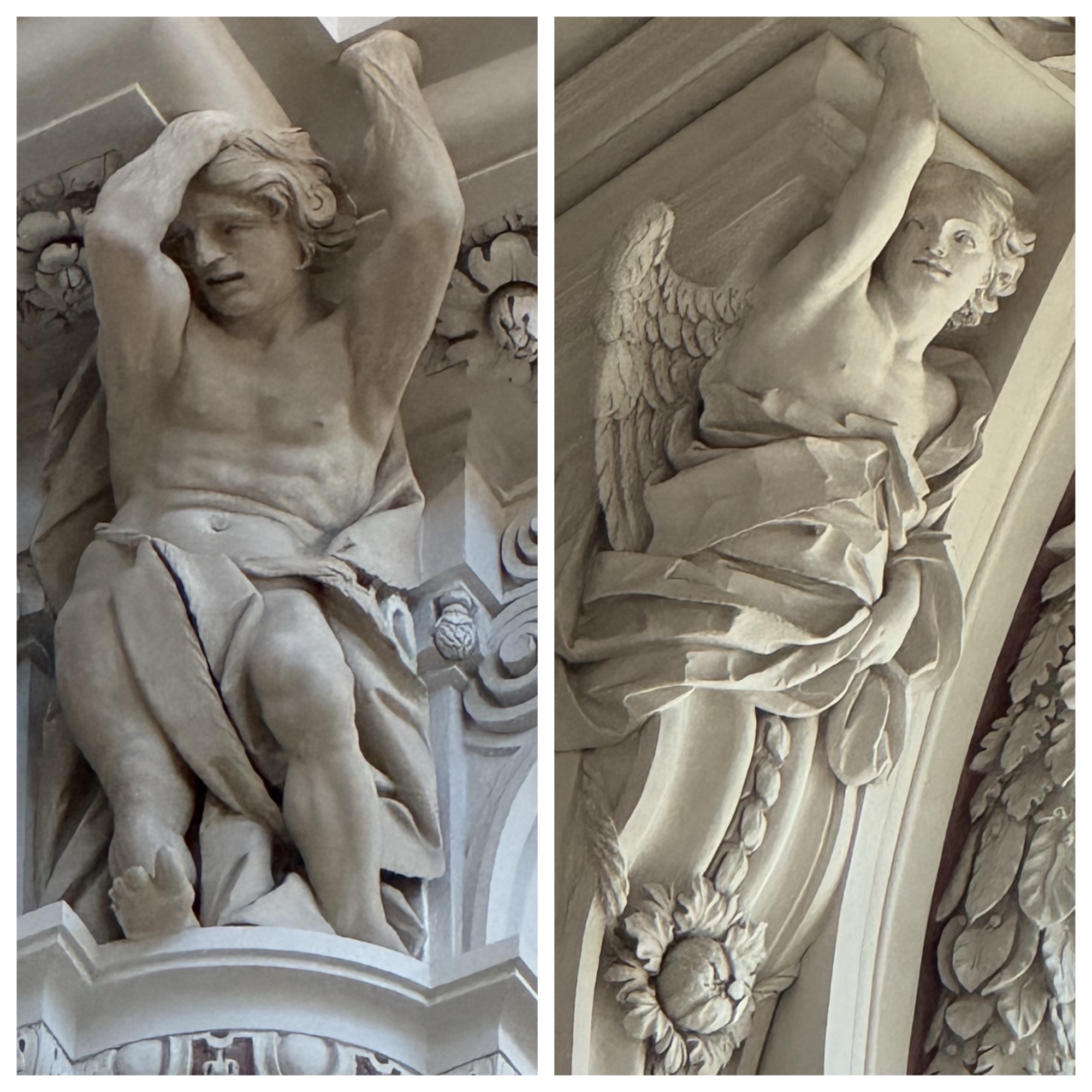
The interior was decorated by Giovanni Battista Carlone with heavy baroque stucco.
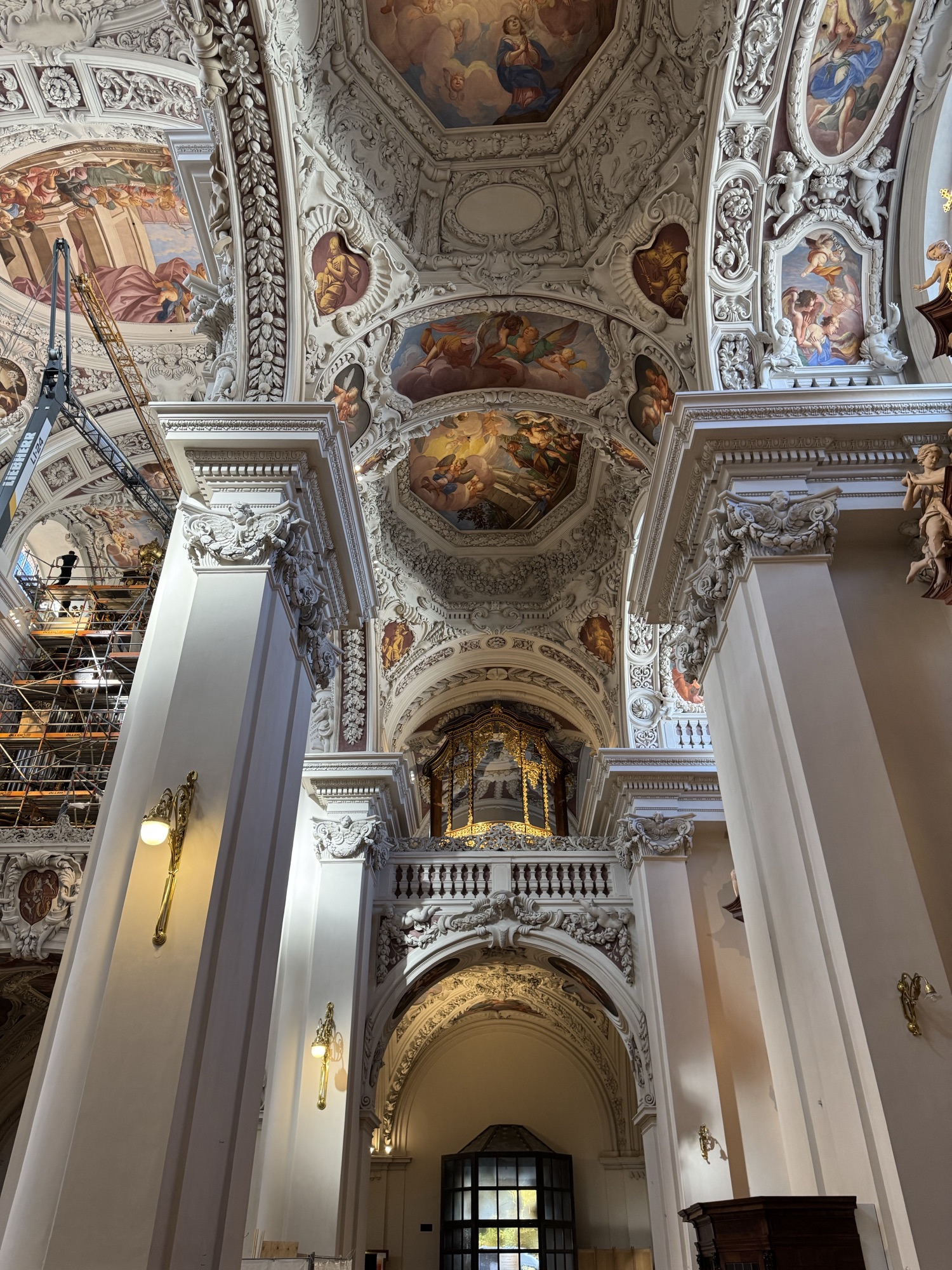
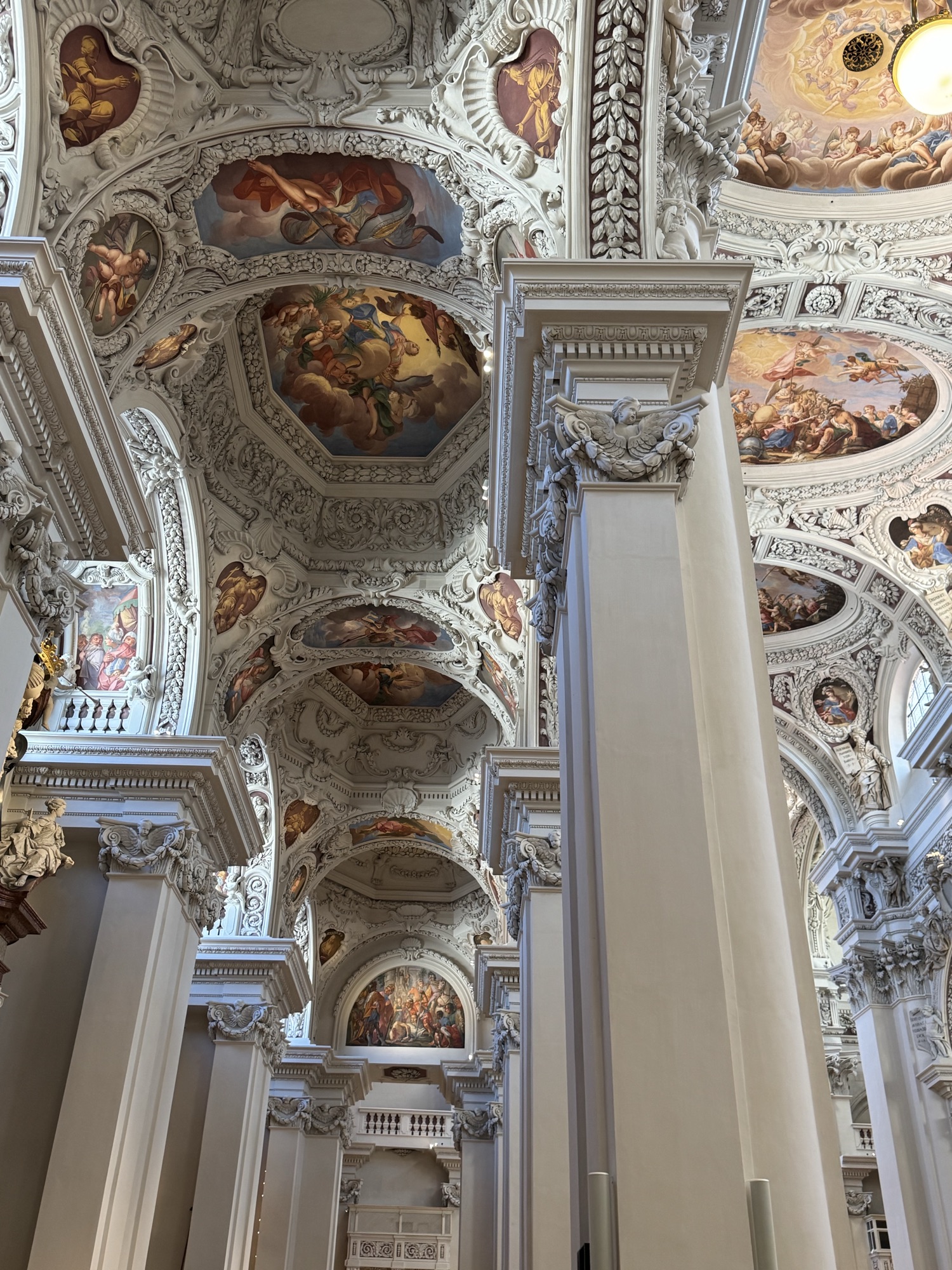
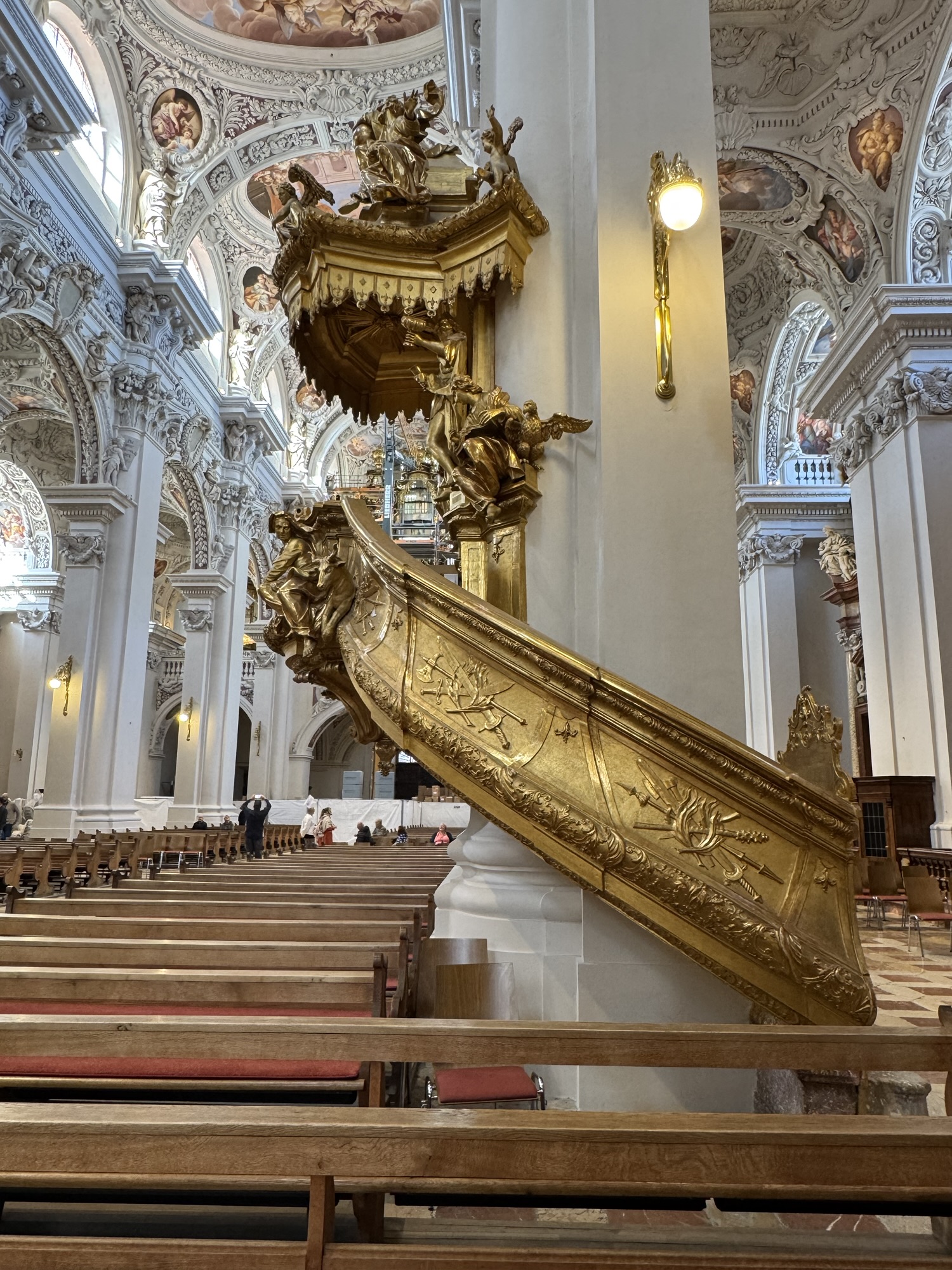
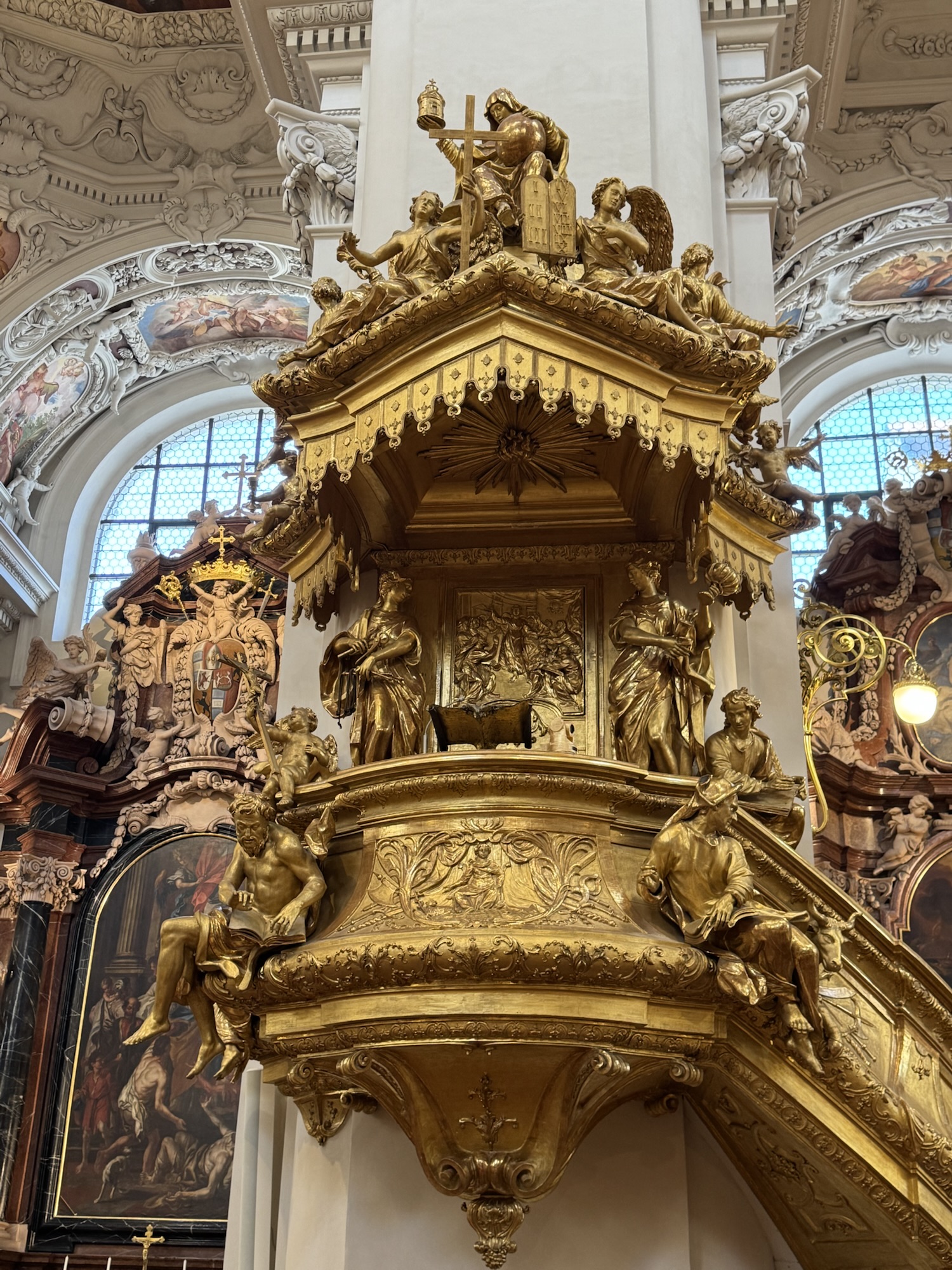
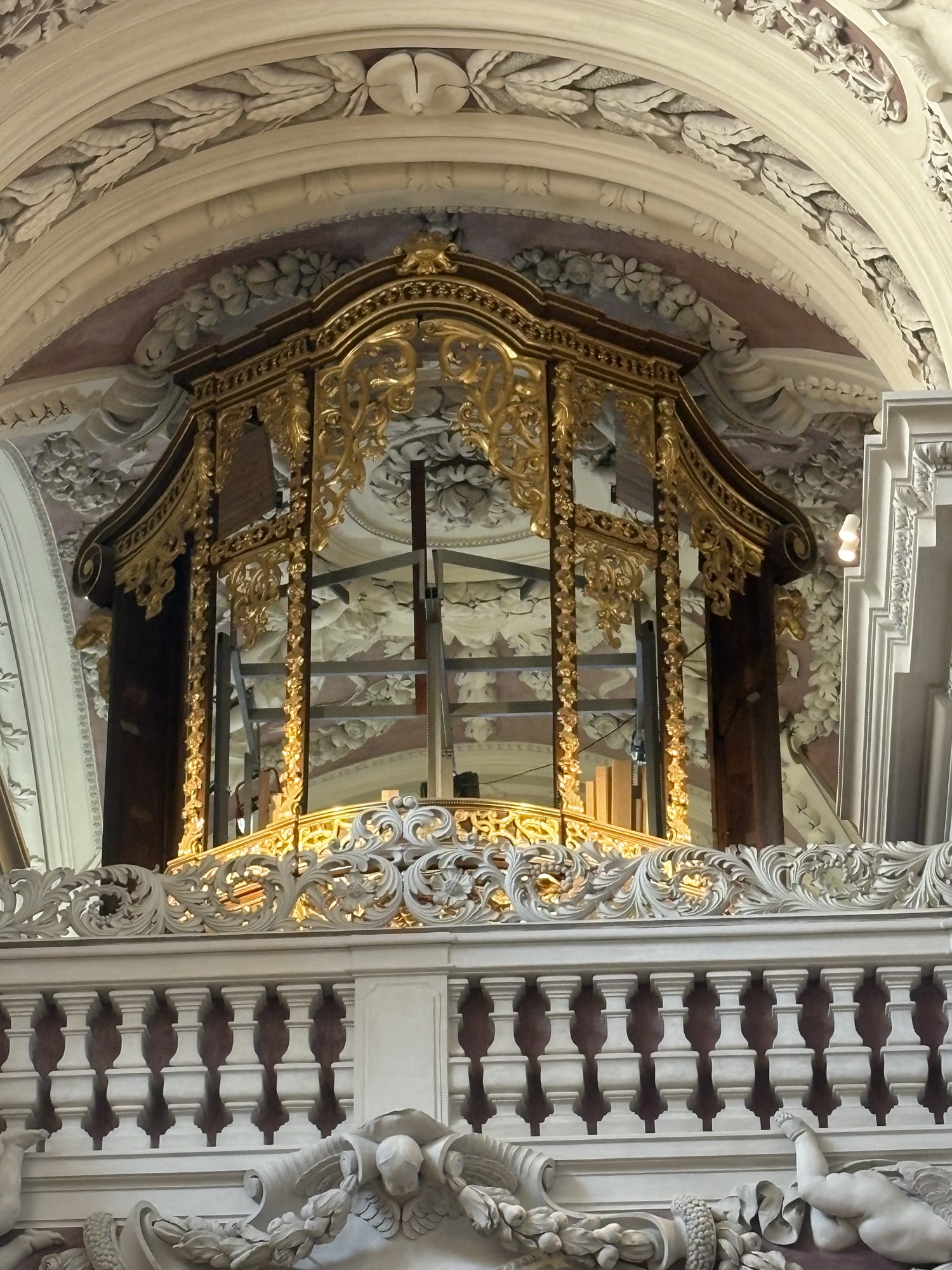
Every arch in the ceiling is stunningly stuccoed and the intermediate spaces frescoed.
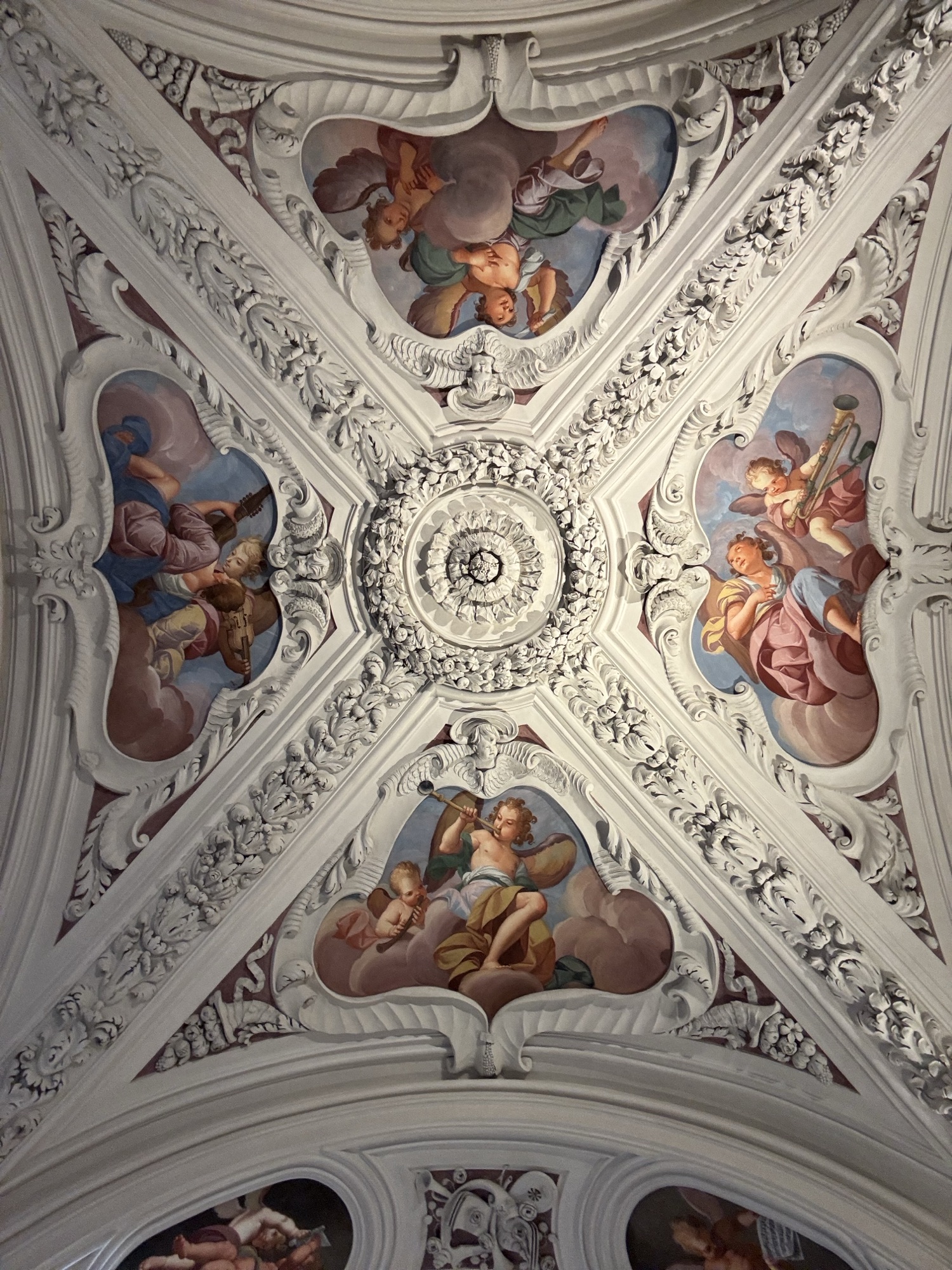
In the main part of the cathedral are 10 side altars, each similarly (although not identically) adorned.
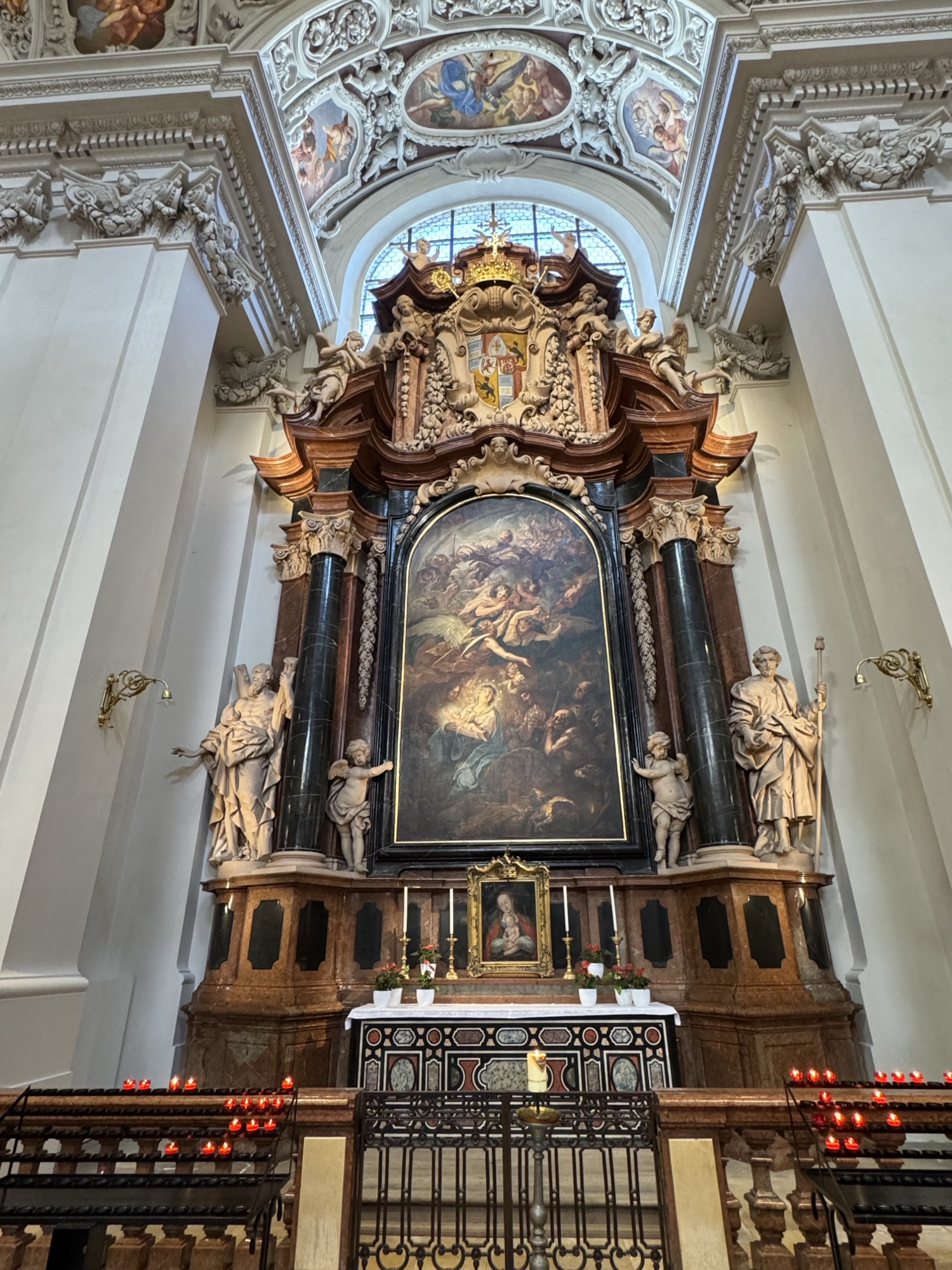
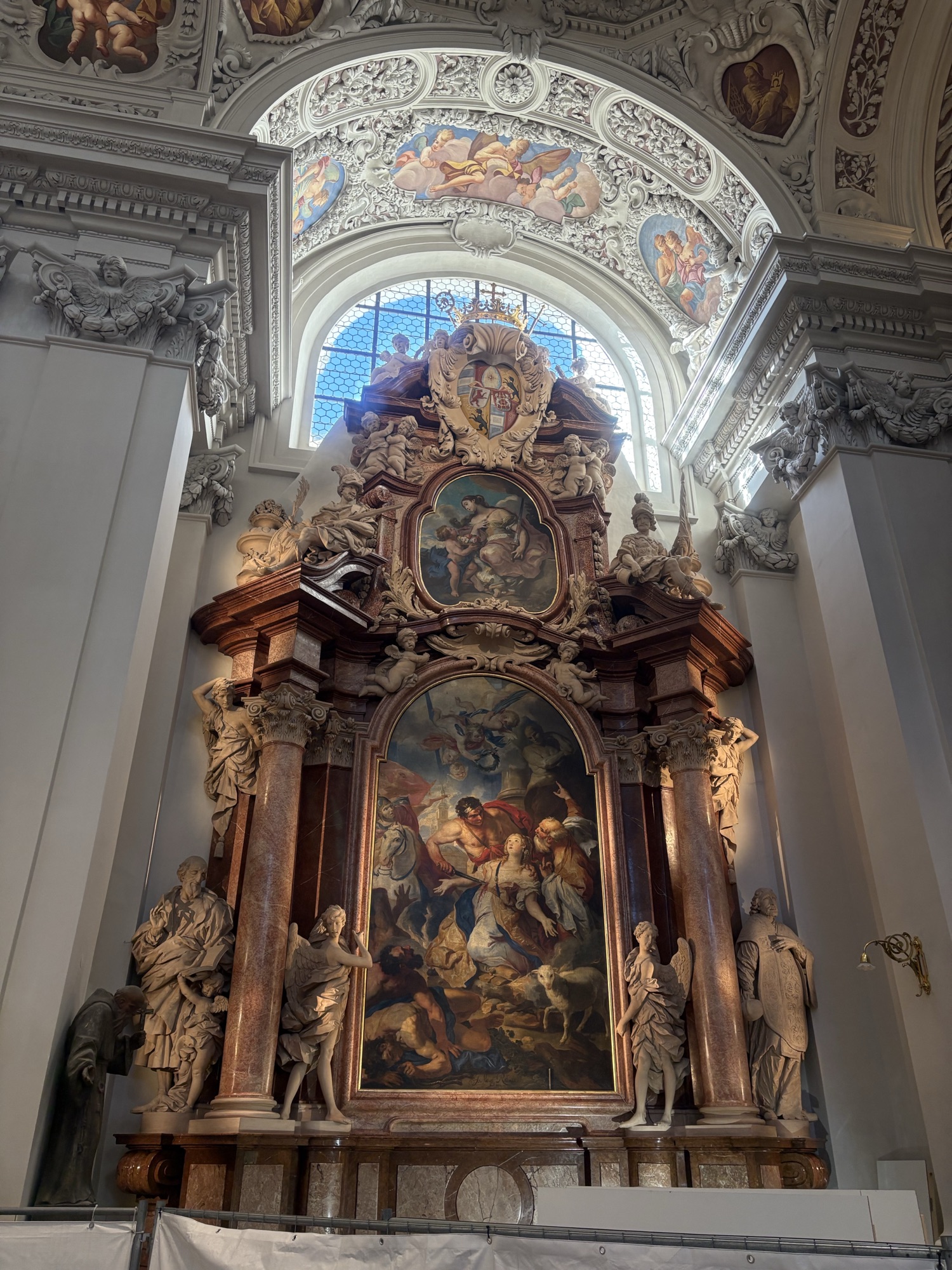
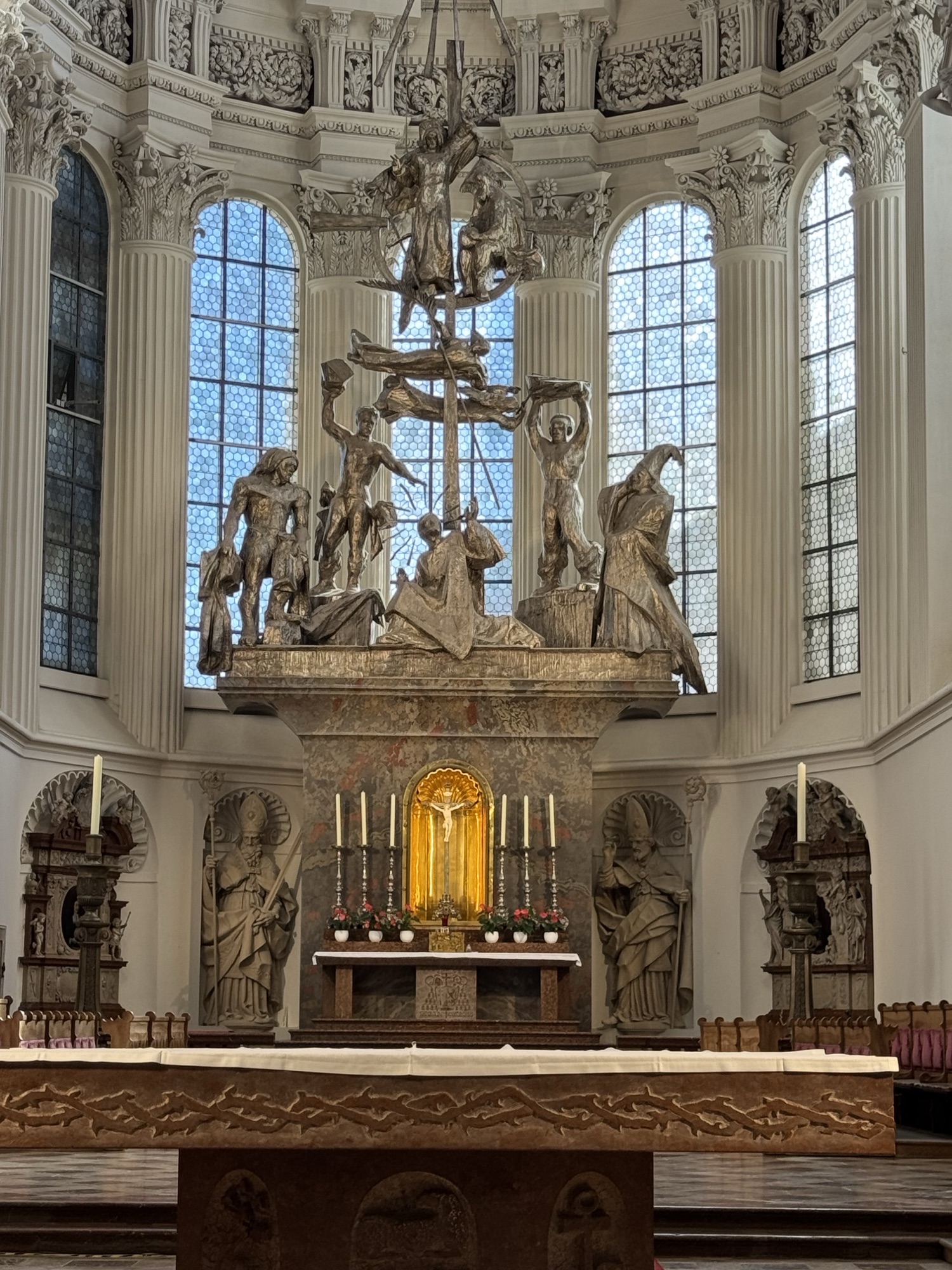
The main altar features the martyrdom of St Stephen.
The silvery coloured depiction is post-war; it dates to about 1950.
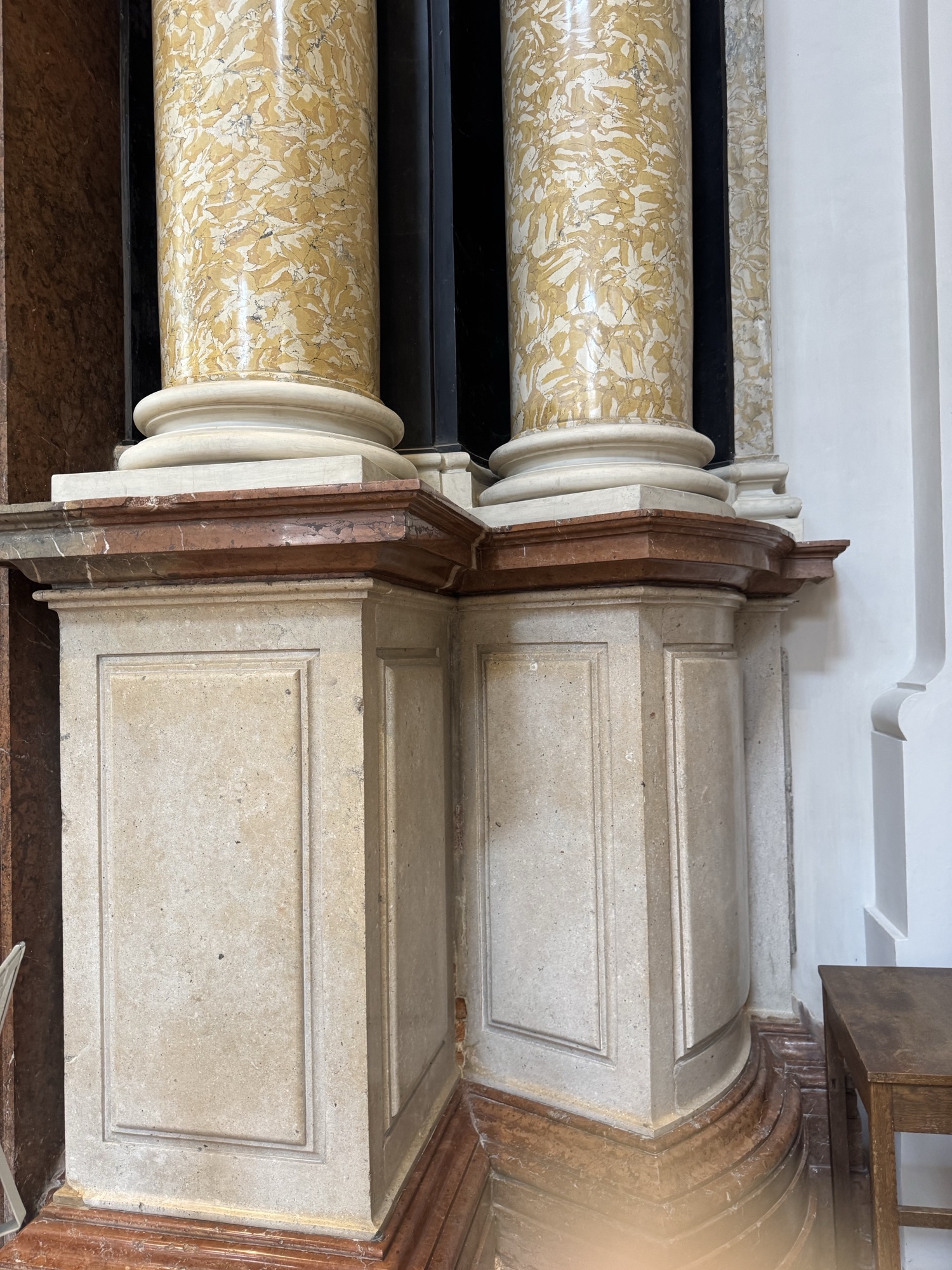
Only the bases of the cathedral’s many pillars are actual marble. Everything above that is Scagliola, an Italian technique which uses a composite material made from selenite powder (a purified form of gypsum or plaster of Paris), animal or fish glue, and natural pigments to creates a solid, stone-like inlay that can be carved, polished, and touched up to replicate real geological marble. It weighs less than marble, which is a bonus for enduring a stable building foundation, and because of the skill and artistry involved in making it can actually be more valuable than marble.
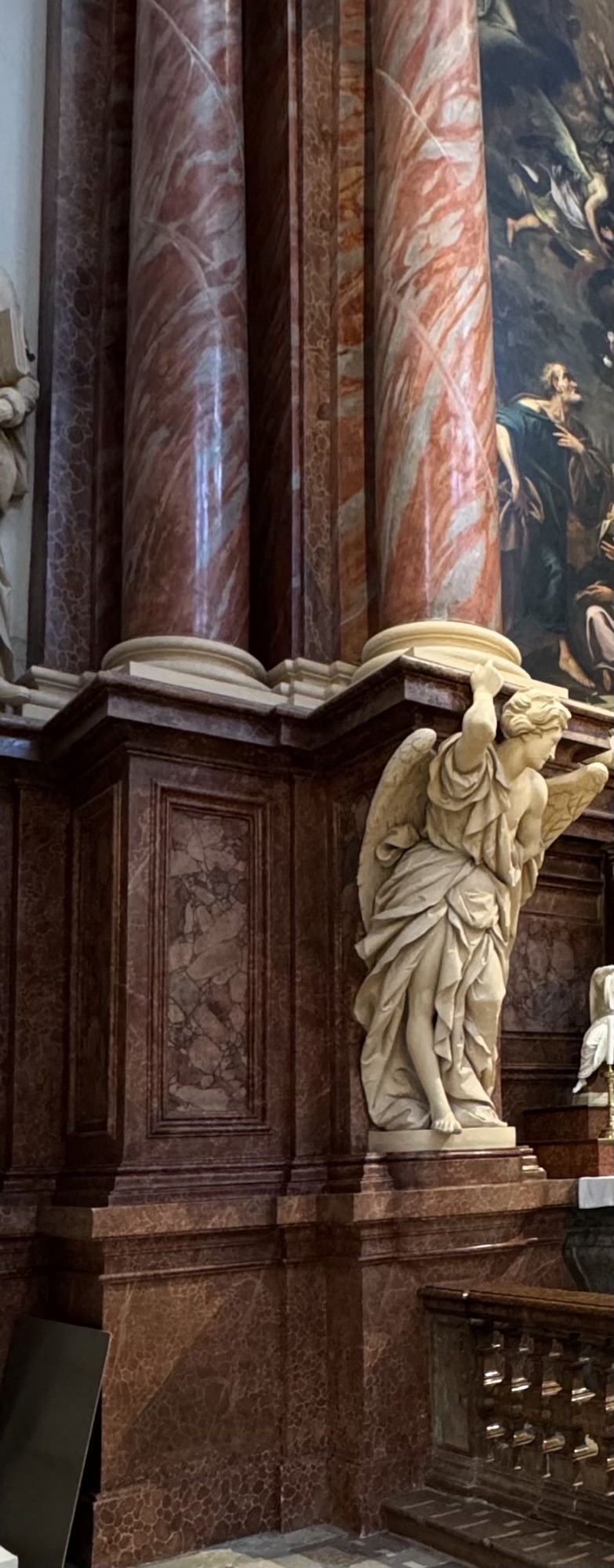
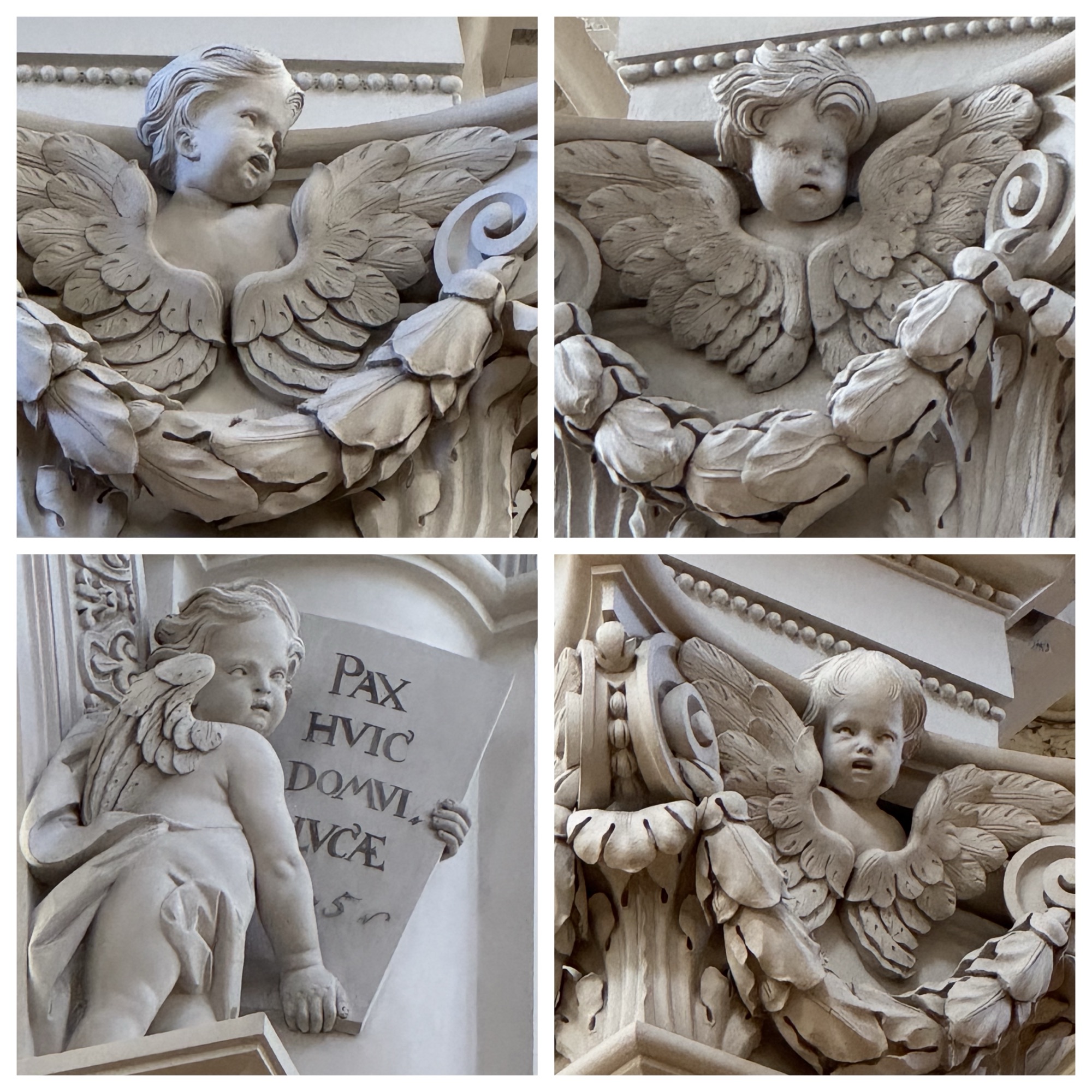
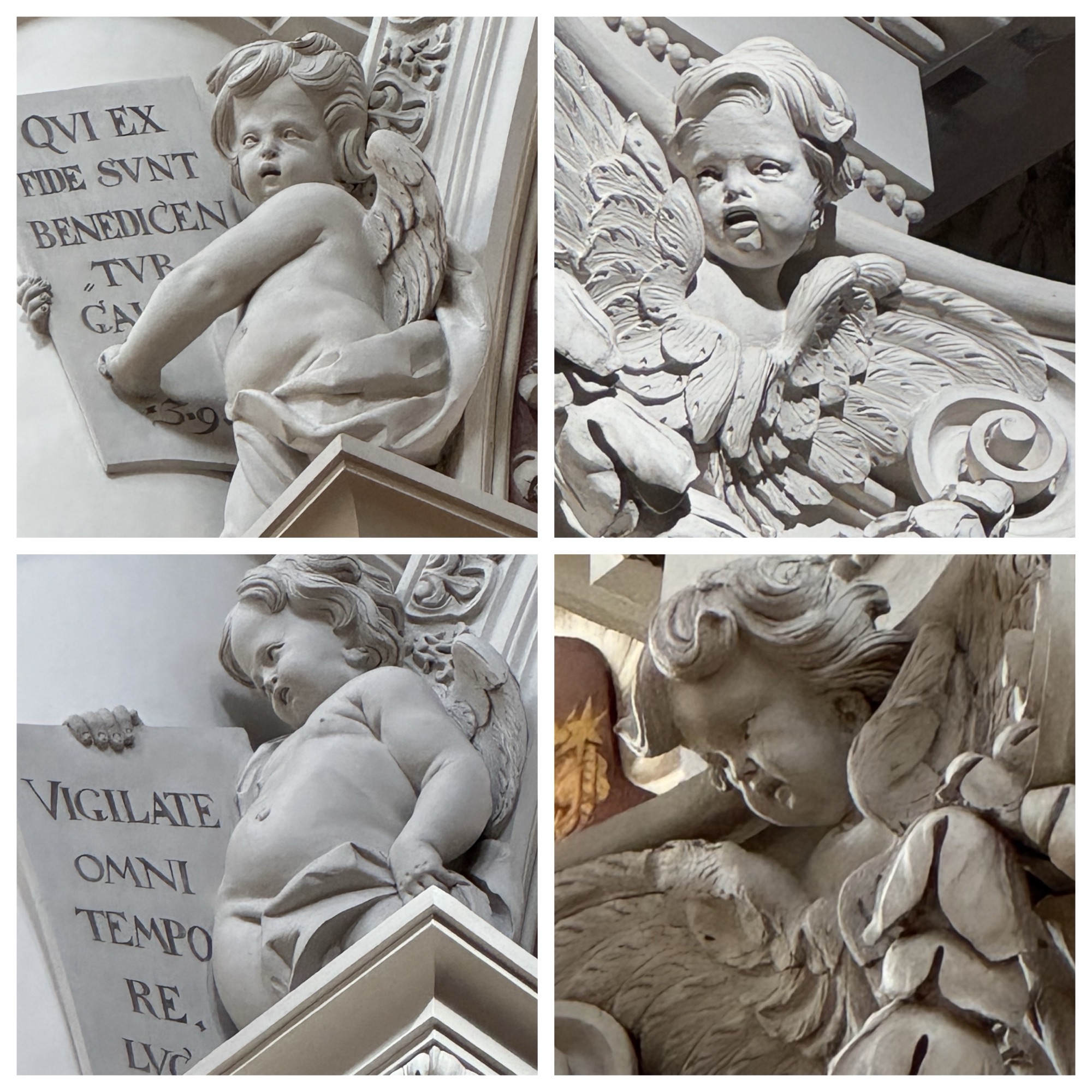
My favourite feature of this cathedral has always been the angels and putti. Putti can sometimes look quite off putting, as if adult faces were attached to children’s bodies, but the putti here are perfect, and no two are alike . I took a lot of pictures.
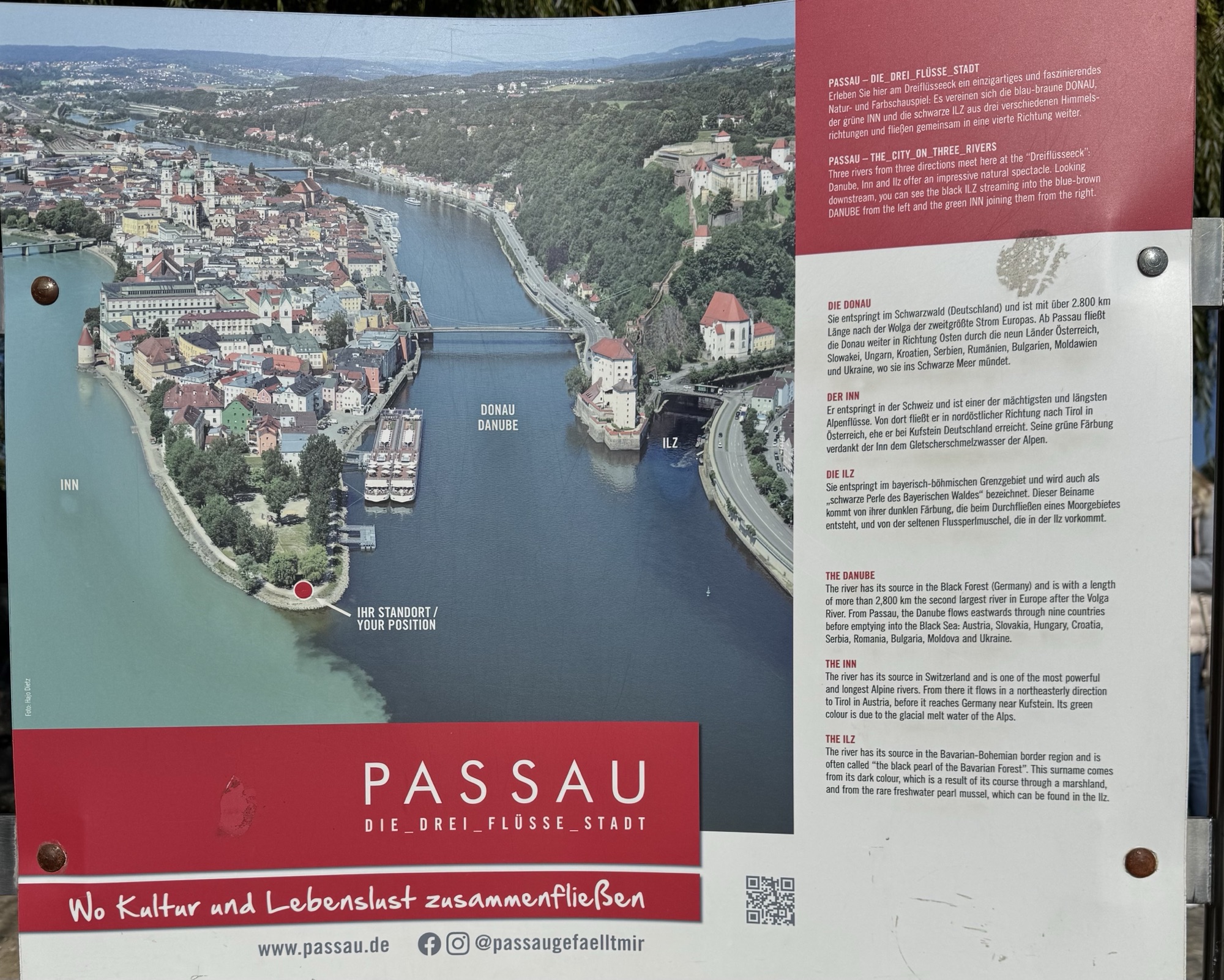
Between buying our tickets for the noon organ concert and the concert itself we had about 90 minutes to walk the perimeter of one end of Passau to the point where the Danube and Inn River meet and their blue and green waters merge. Passau is the city of three rivers, the third being the very narrow Ilz River.
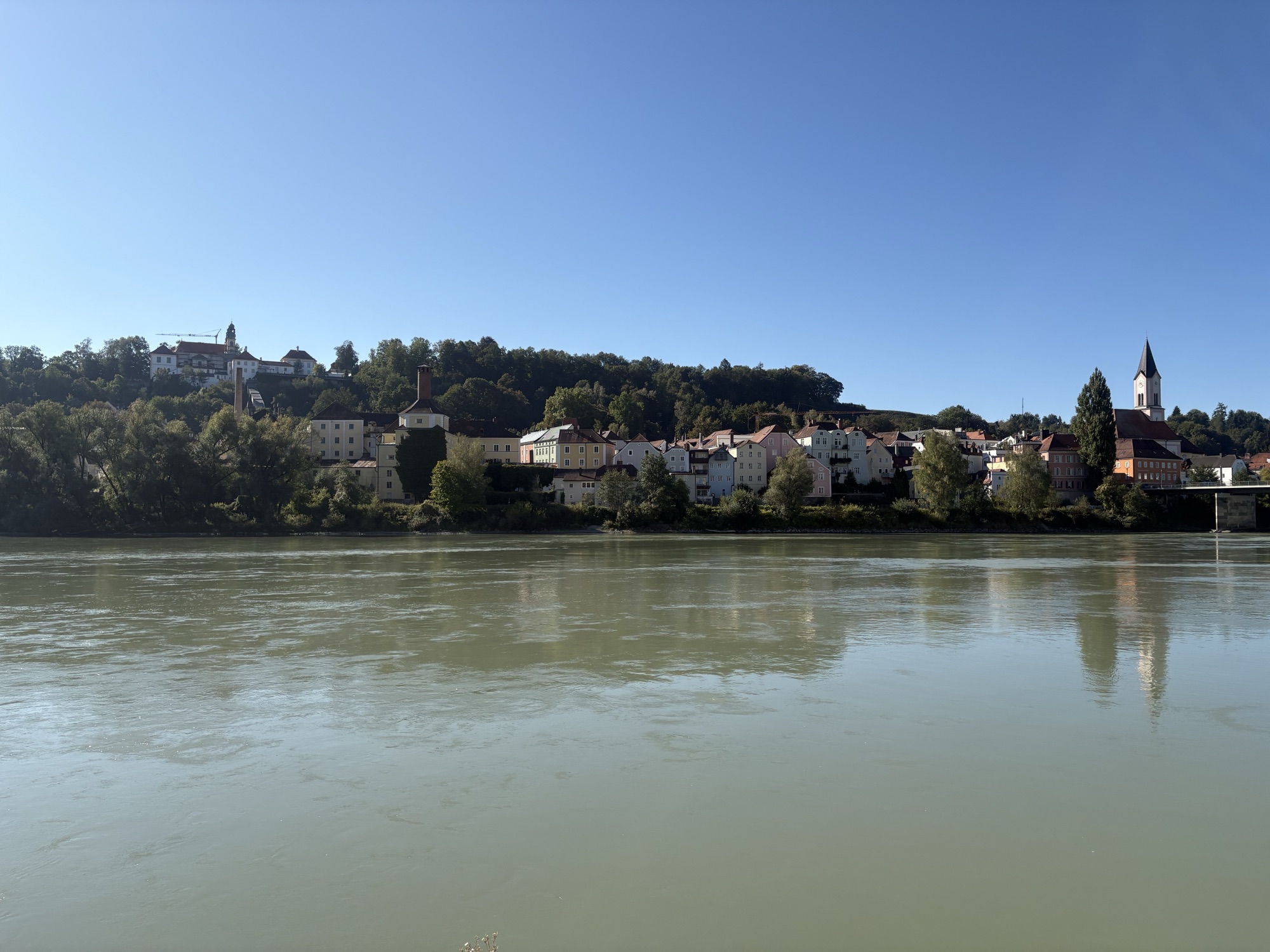
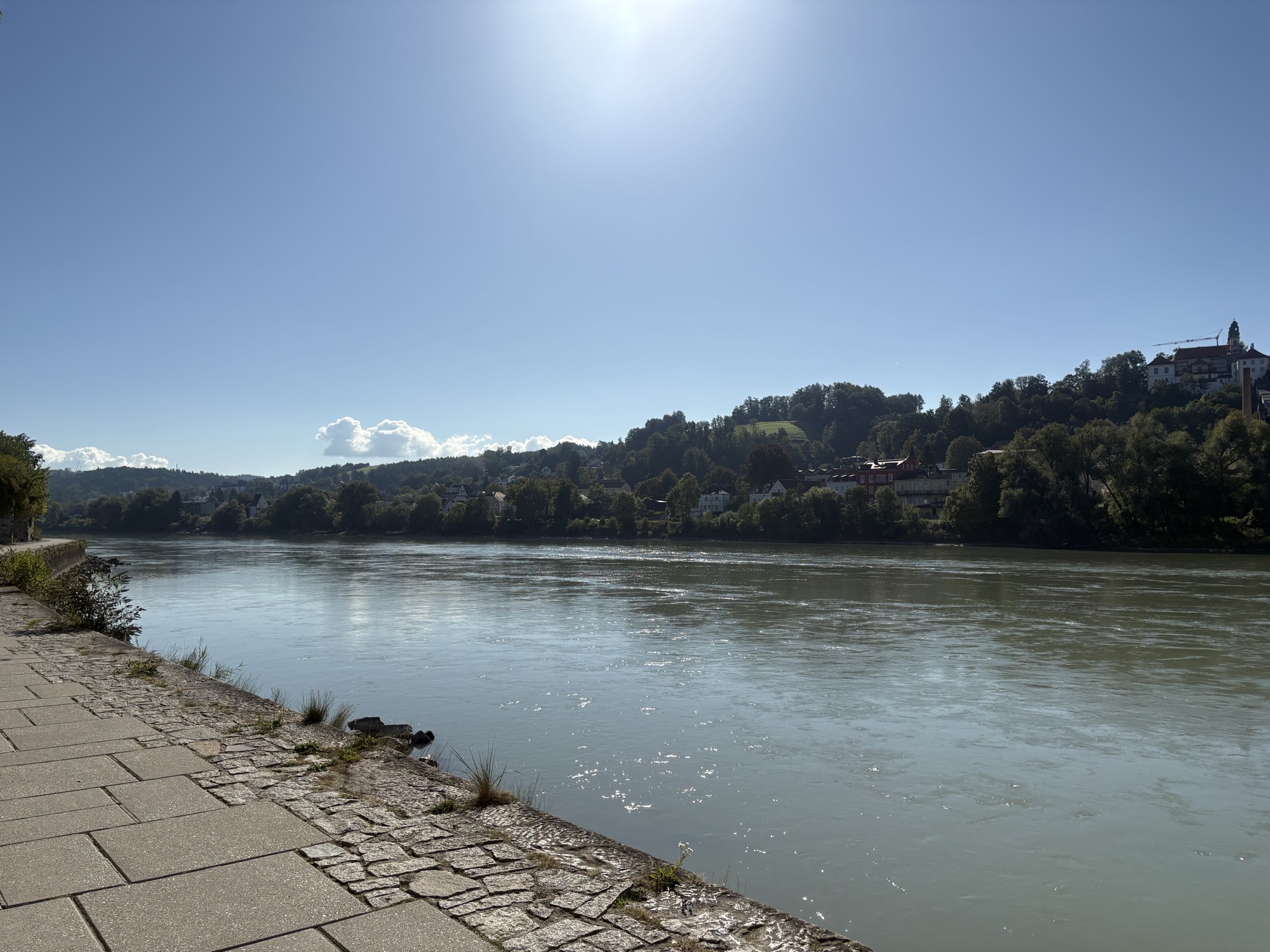
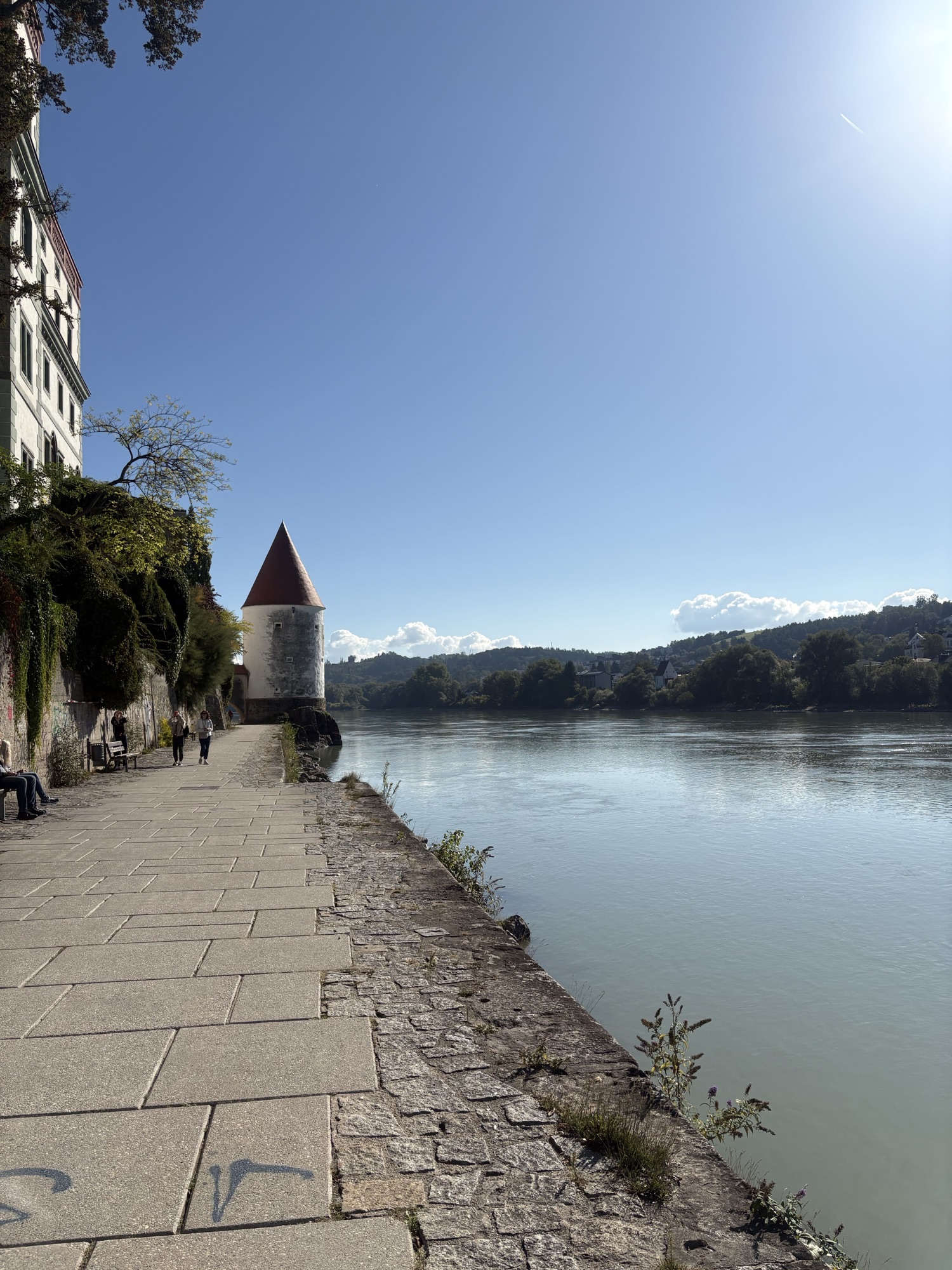
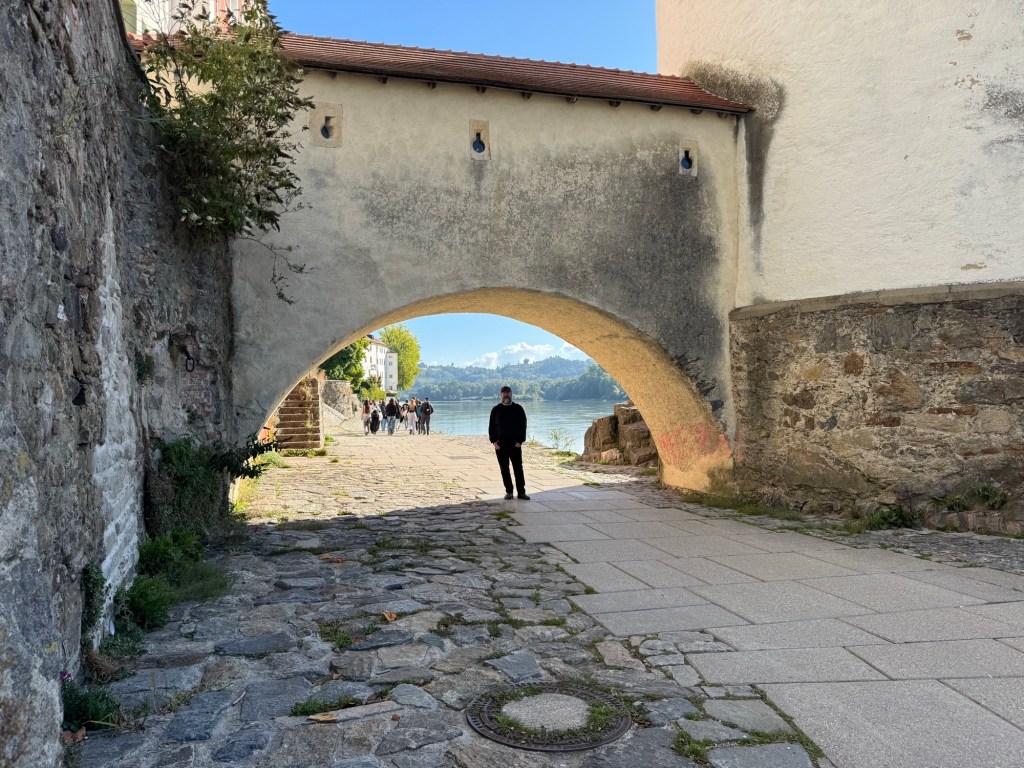
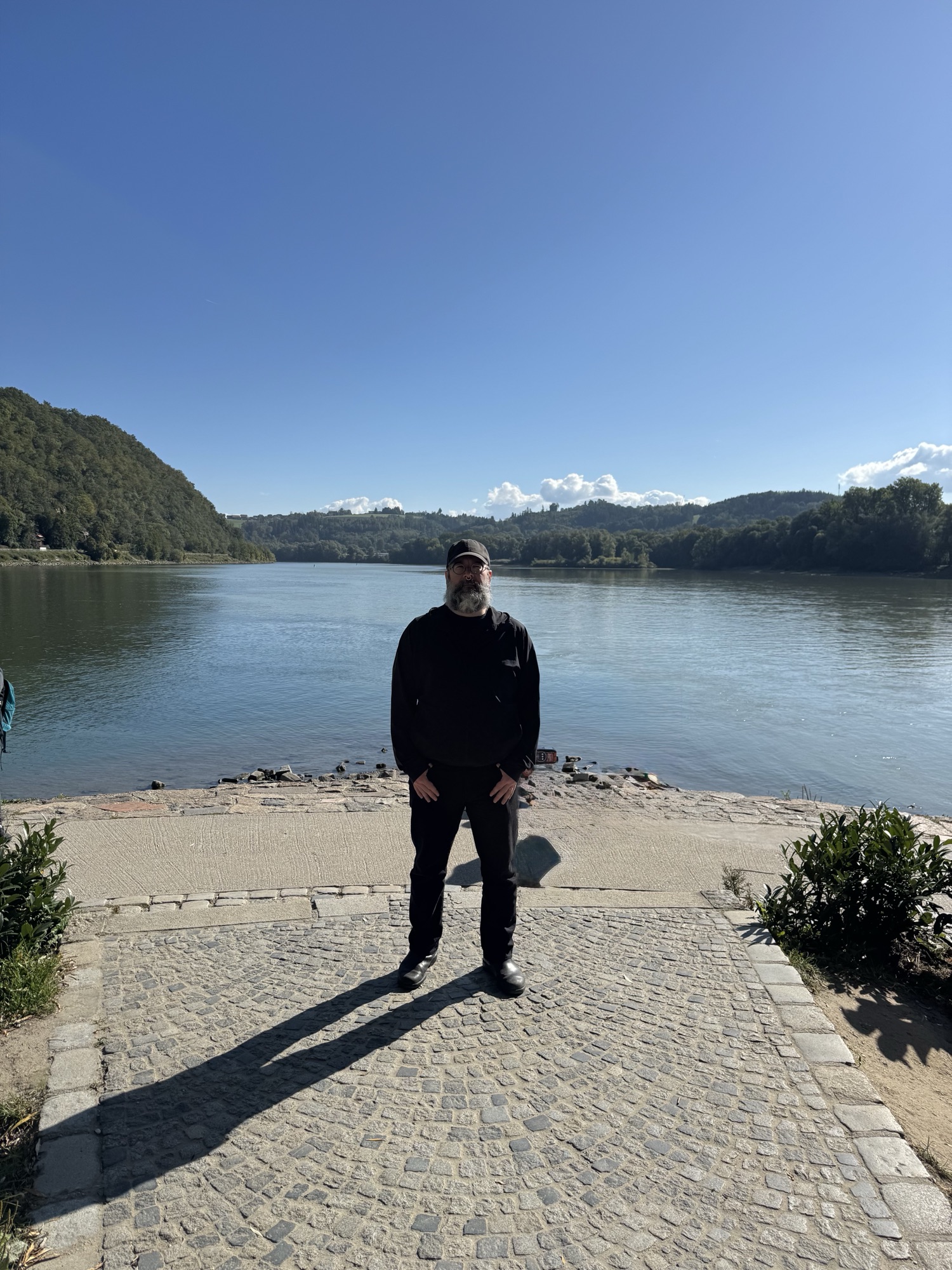
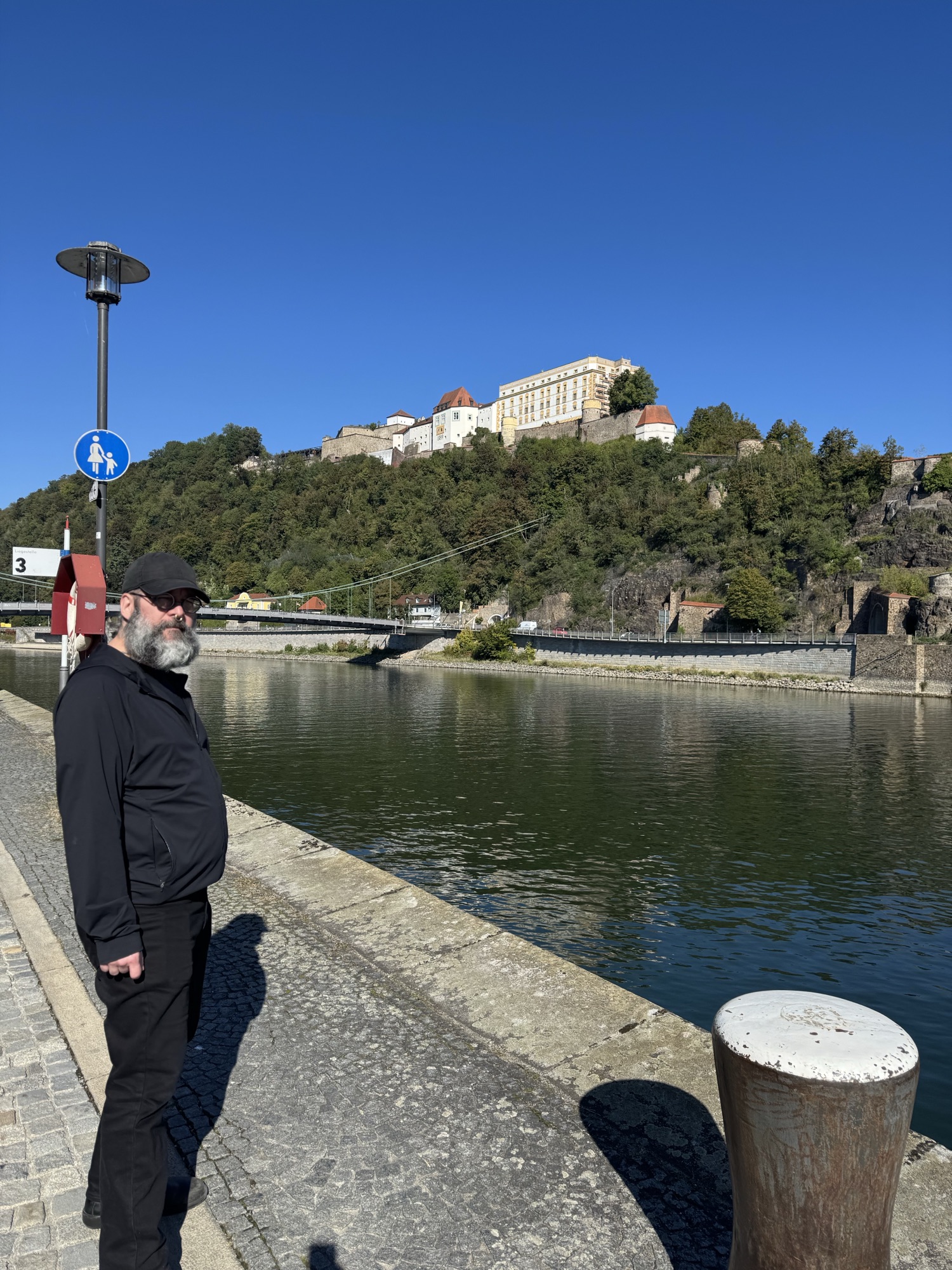
From river level we walked back into the old city centre. Passau’s Altstadt is simply a hill between two rivers; stairs are unavoidable.
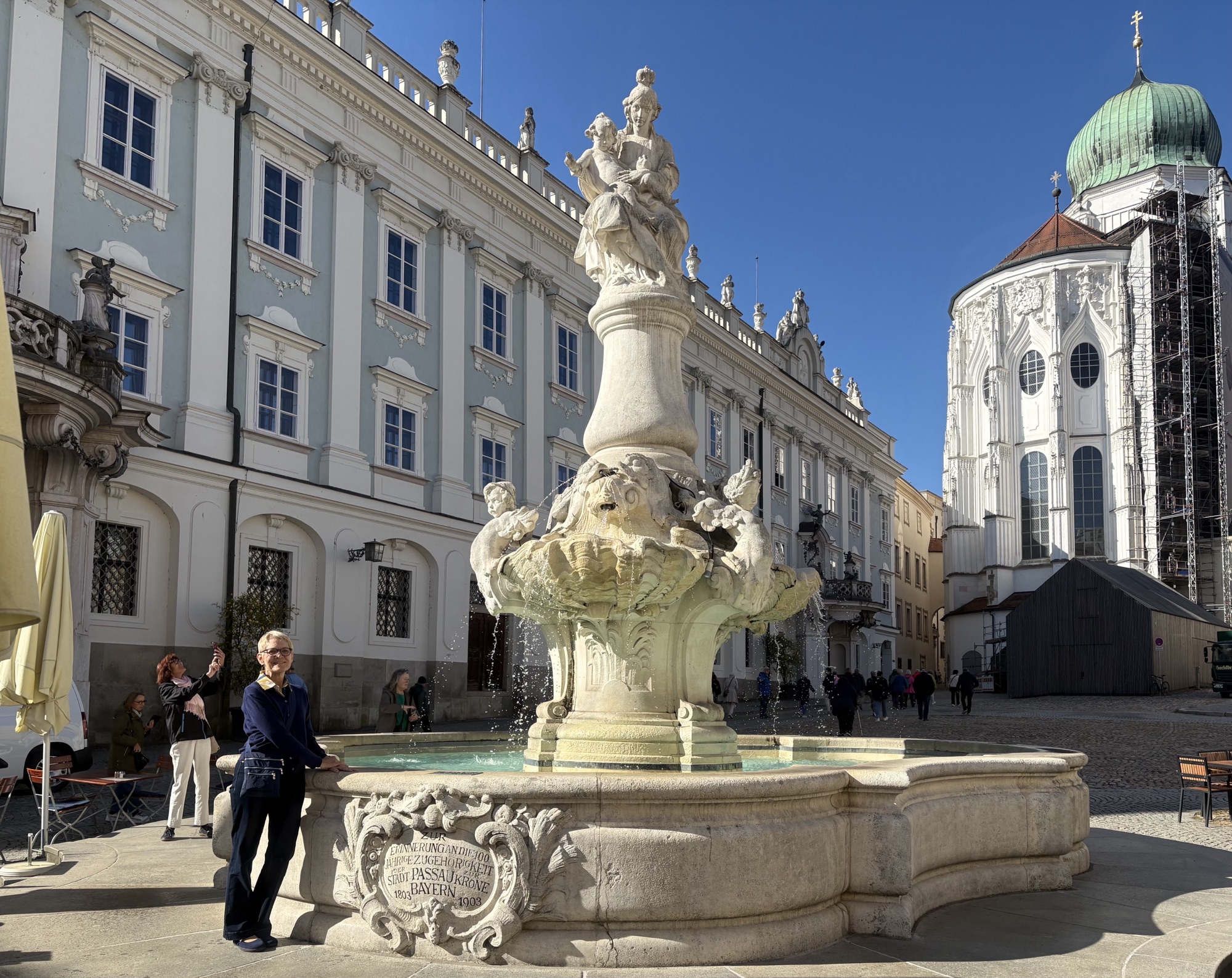
The cathedral is surrounded by other beautiful buildings, including the Bishops’ residence (below) in a square that also features a large fountain and several cafés, one of which provided our pre-concert milchkaffees.
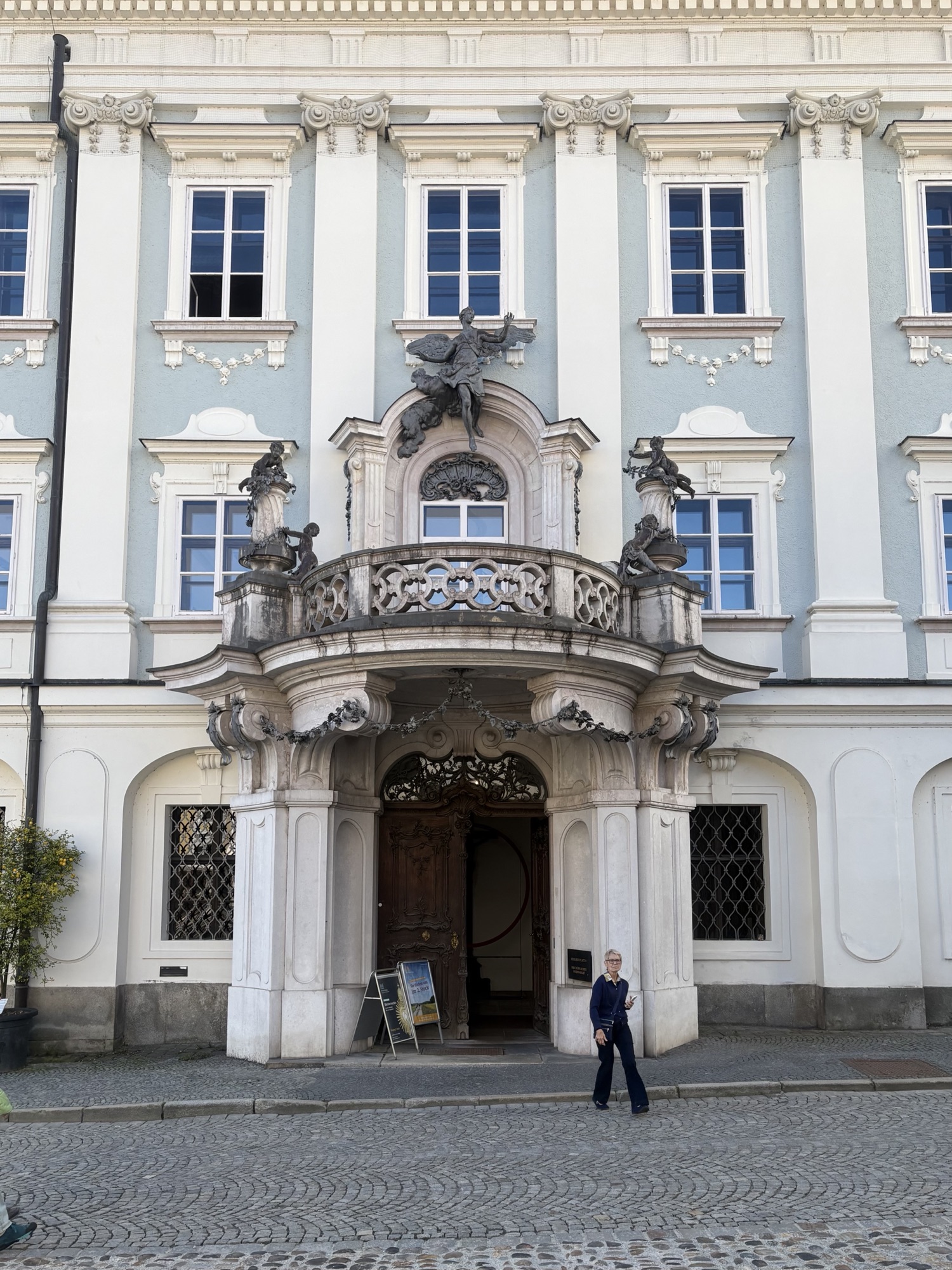
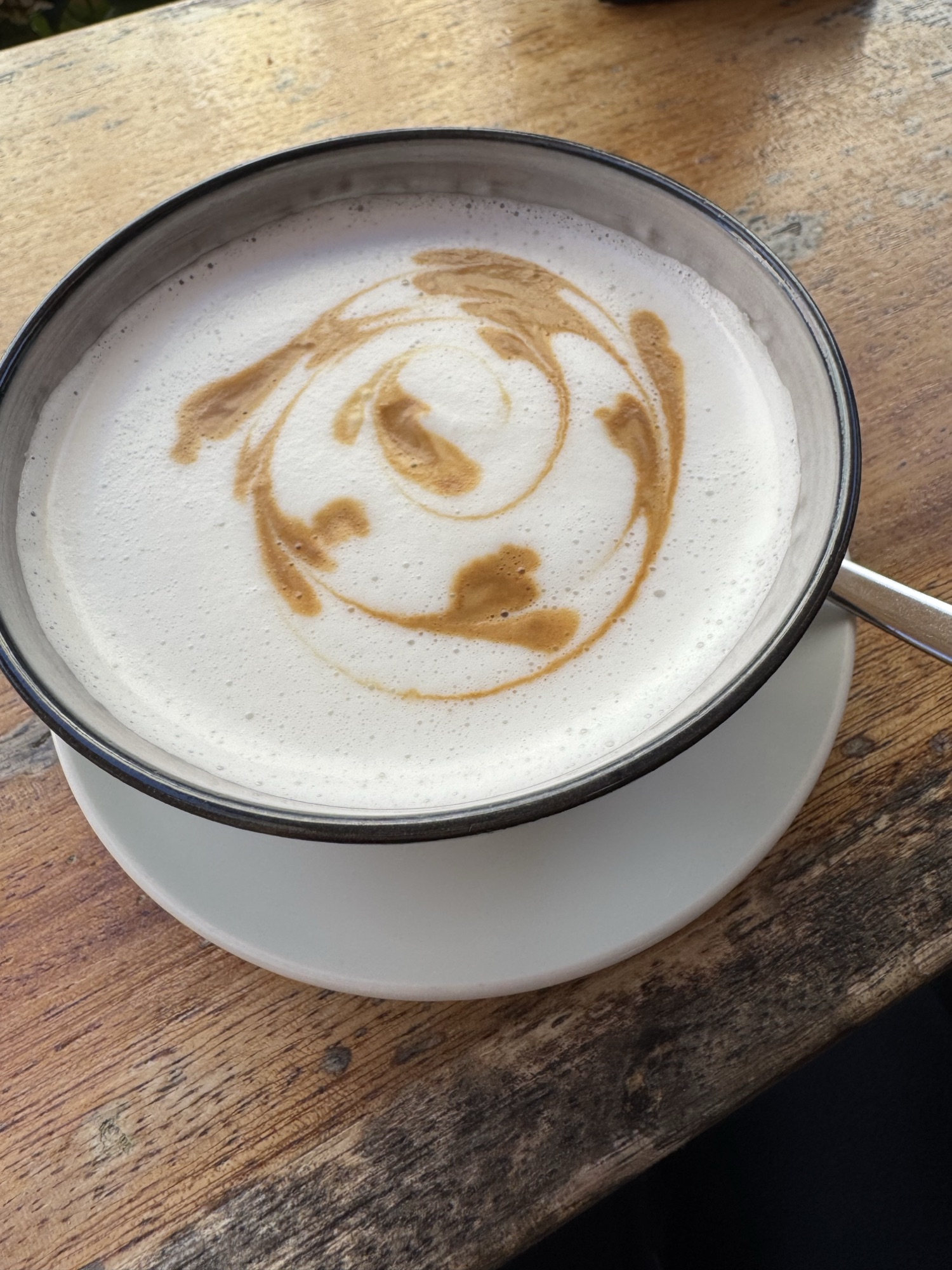
After coffee we returned to St Stephen’s for the noon concert.
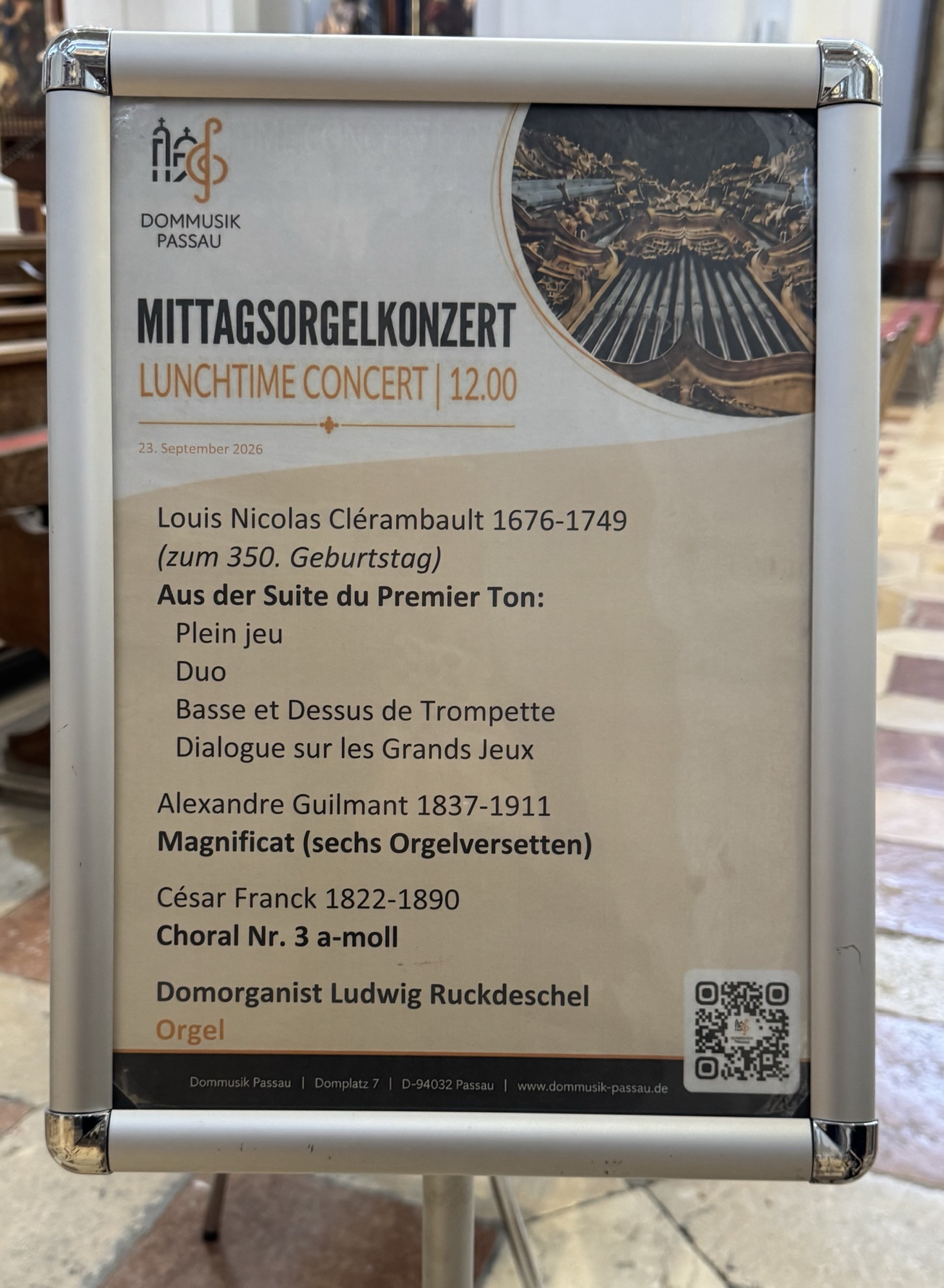
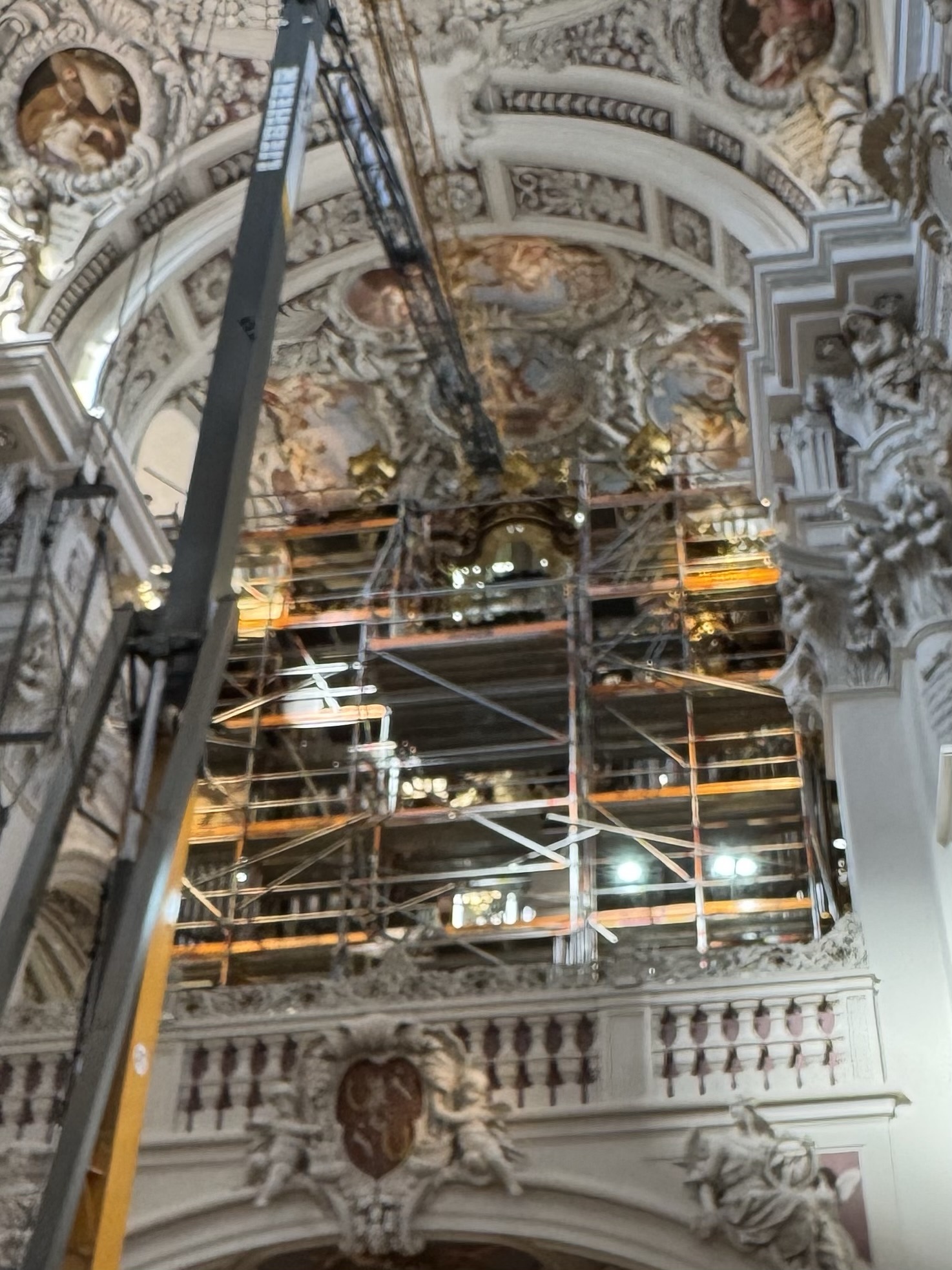
With it almost 18,000 pipes and 233 registers, the organ in Passau’s cathedral is considered to be the largest cathedral organ in the world and the largest organ in Europe. It ranks at fifth place overall for pipe organs in the world.
Unfortunately, we heard only about half of the pipes in concert today. As the sign in the cathedral explained: More than 40 years after its last major overhaul, the “Queen of Instruments” in Passau Cathedral is undergoing comprehensive restoration—ensuring it can continue to resound for the glory of God and the delight of future generations. With its current total of approximately 18,000 pipes, it is the largest cathedral organ in the world. In addition to upgrading the electronics, cleaning the instrument, and enhancing its technical capabilities, the project focuses on revising the tonal concept; this draws inspiration from the original Romantic sound of the predecessor organ built by Steinmeyer and completed in 1928. As a result, the organ will also be expanded to include additional stops and pipes.
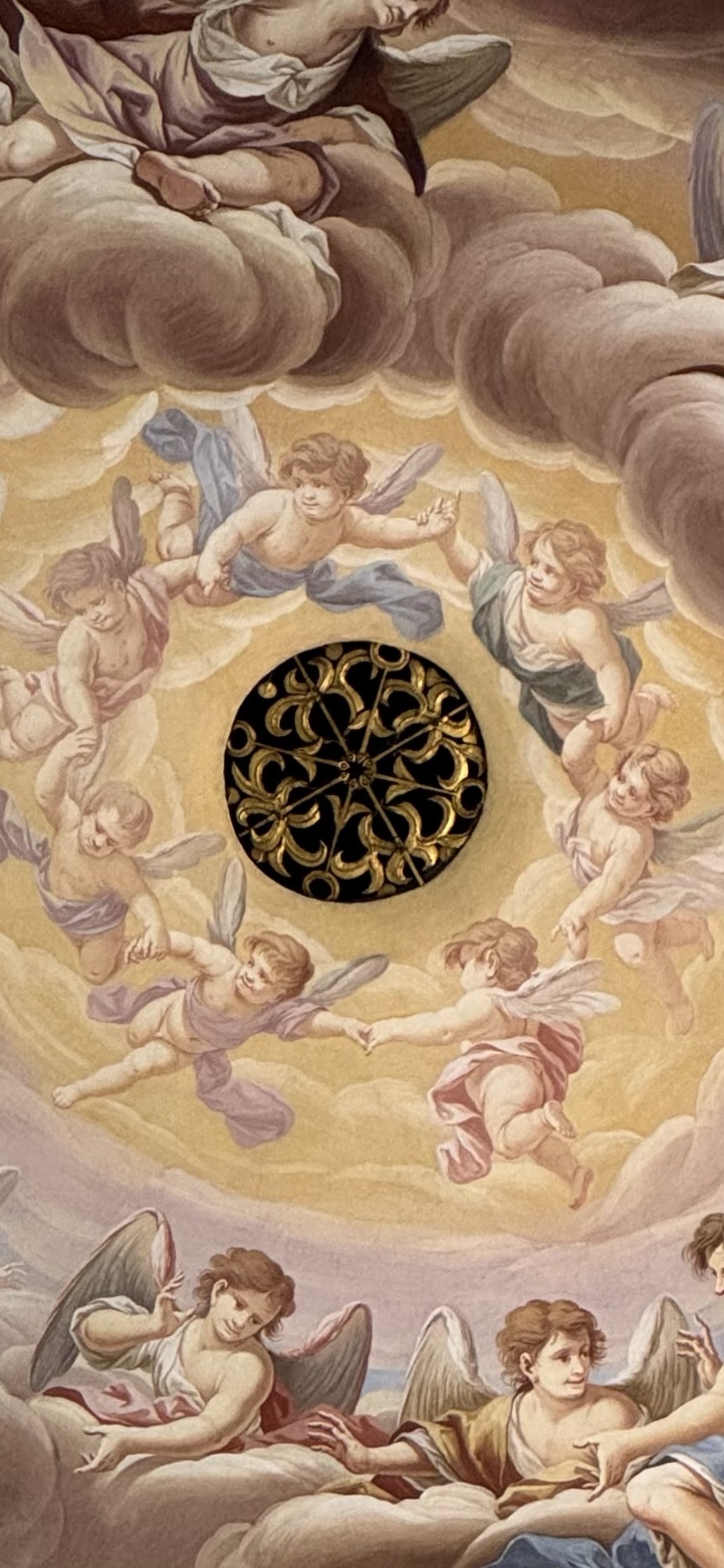
Nonetheless, the cathedral’s acoustics continue to impress, and I knew from previous visits that the best place to sit was directly under the “Holy Ghost Hole ” or “Angel Hole”. The holes in the ceiling of German baroque Catholic churches may well symbolize a path for the descent of the Holy Spirit on the day of Pentecost, but from a practical standpoint they are actually organ sound-holes.
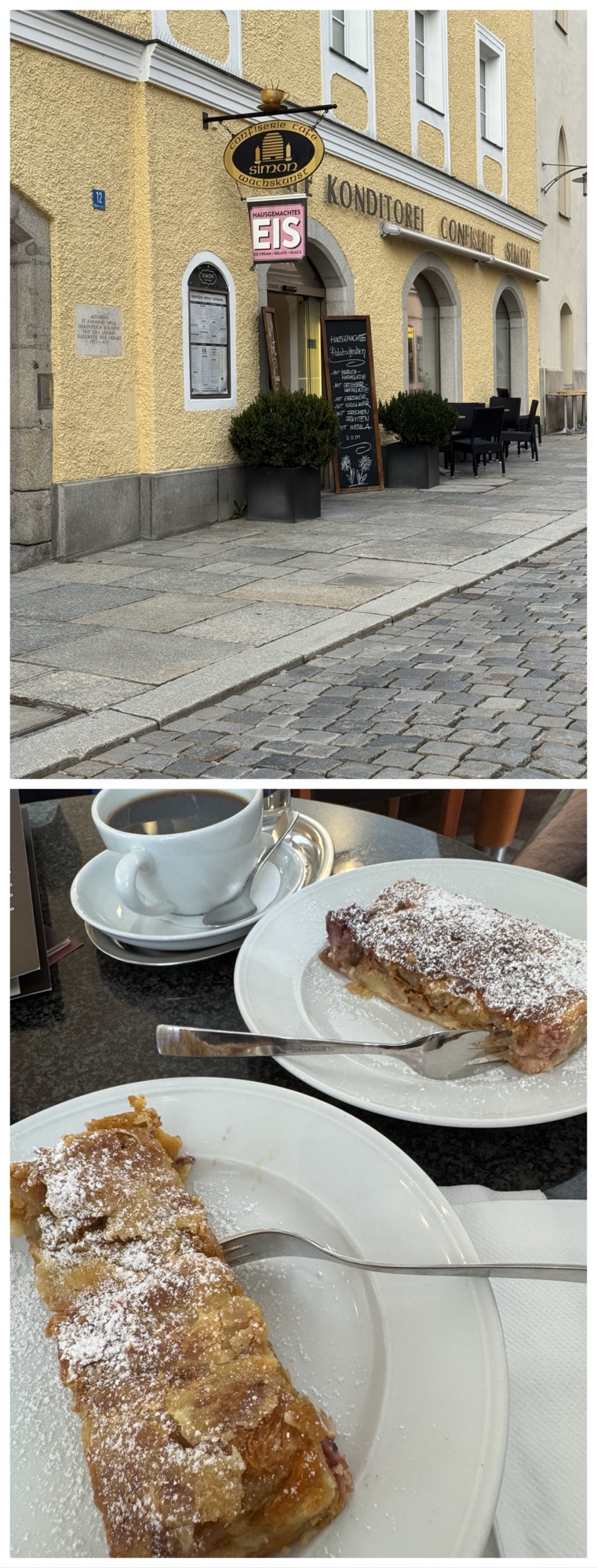
After the concert, we took a break for coffee and strudels (reminiscent of the ones my mother used to make) at Simon’s Café, knowing we’d need energy for our climb up to the Veste Oberhaus fortress/bishopric castle on the hill on the opposite bank of the Danube.
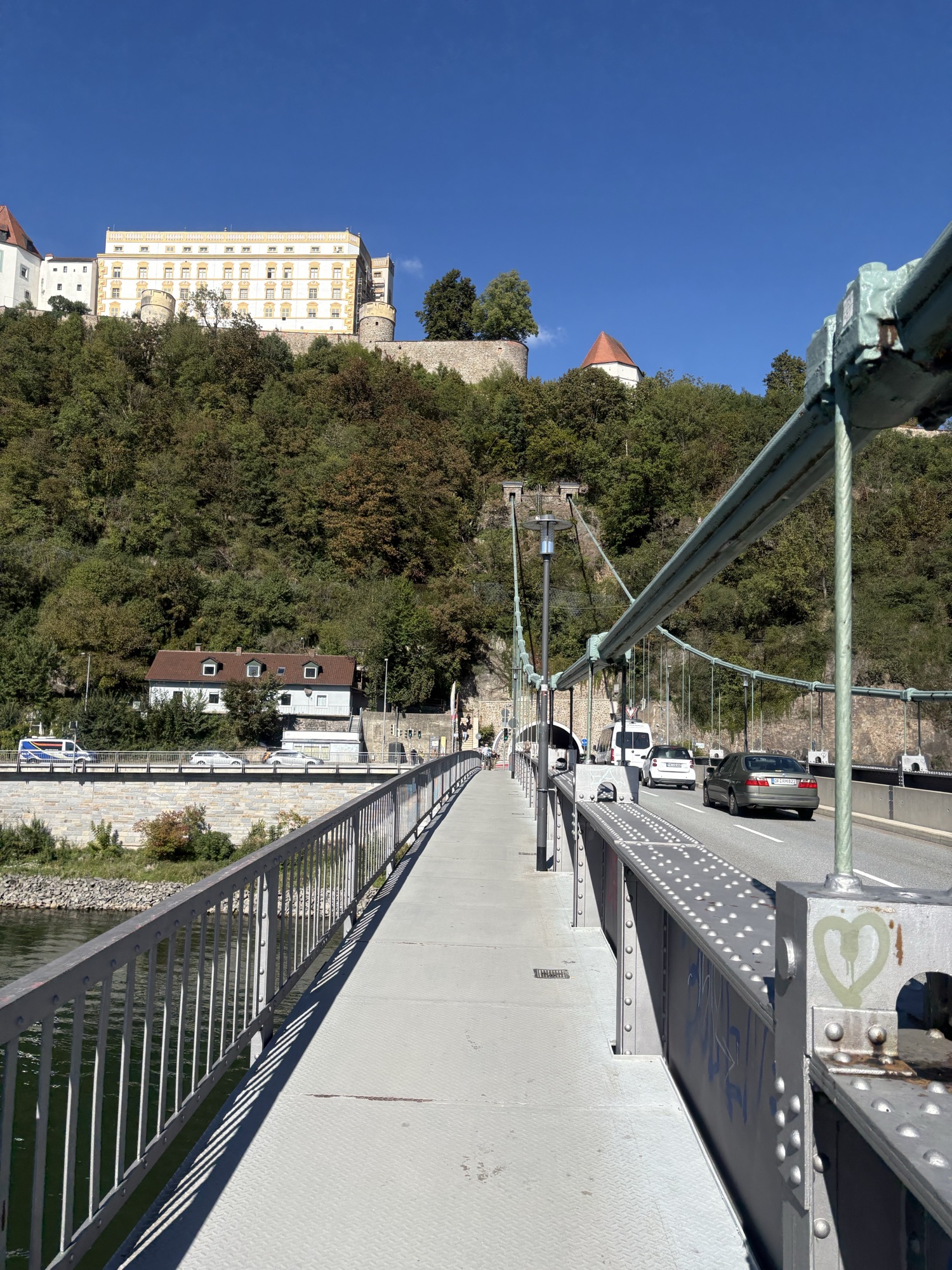
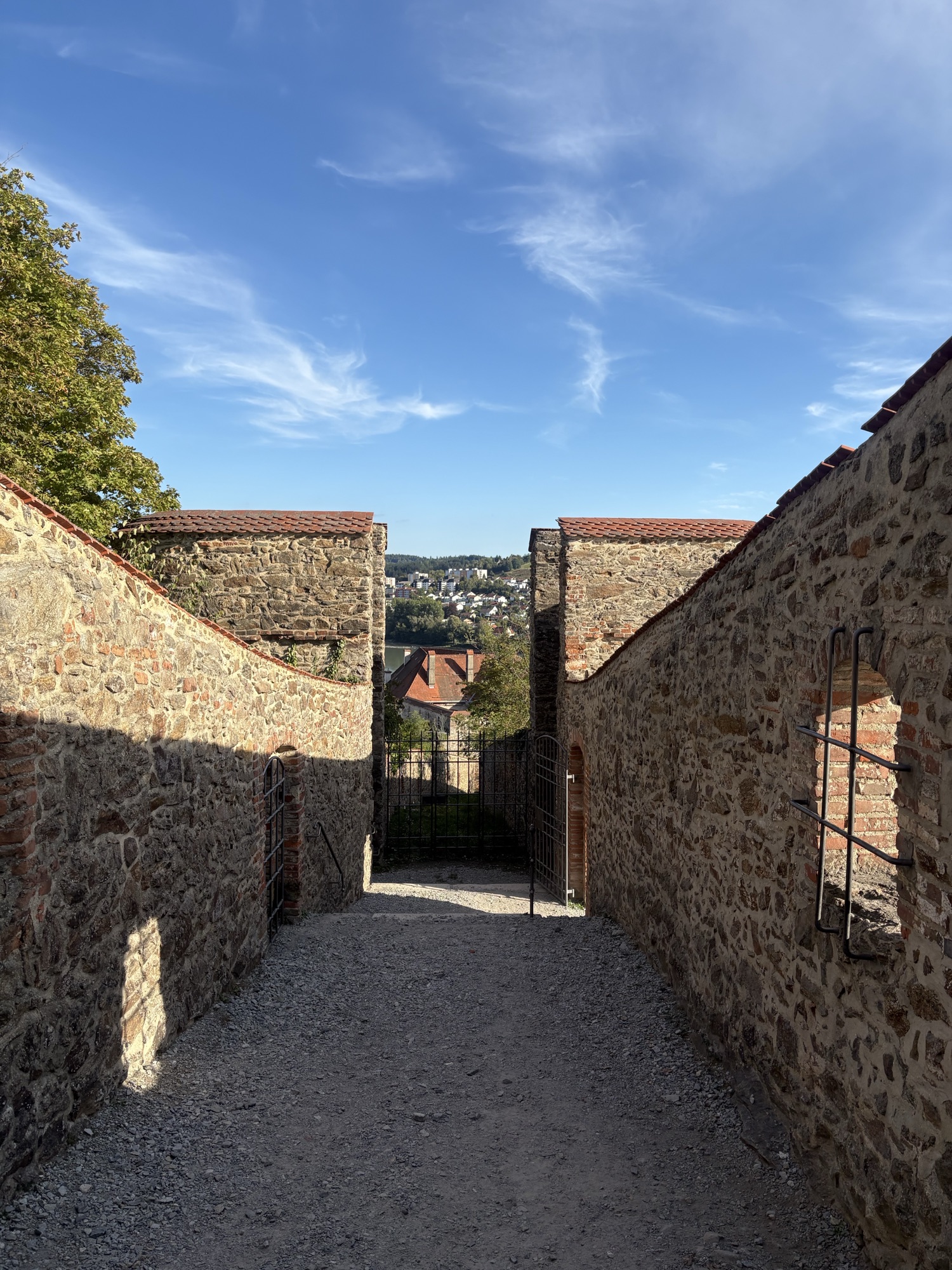
Fortified, it was time for our climb – the equivalent of climbing the spire of the Cologne Cathedral, so we knew we could do it. Ted and I made the same climb 5 years ago. Oh, to be 65 again!!
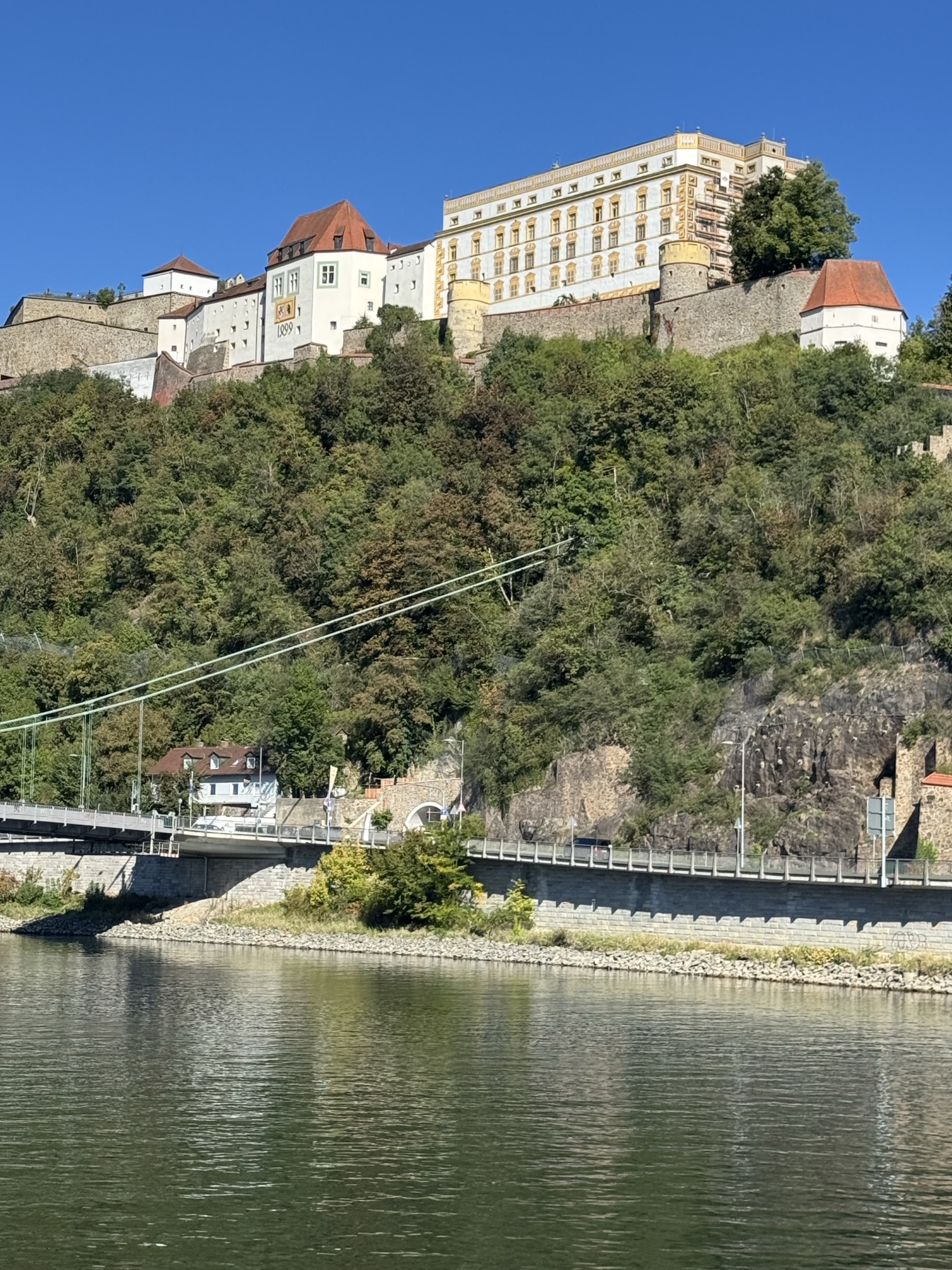
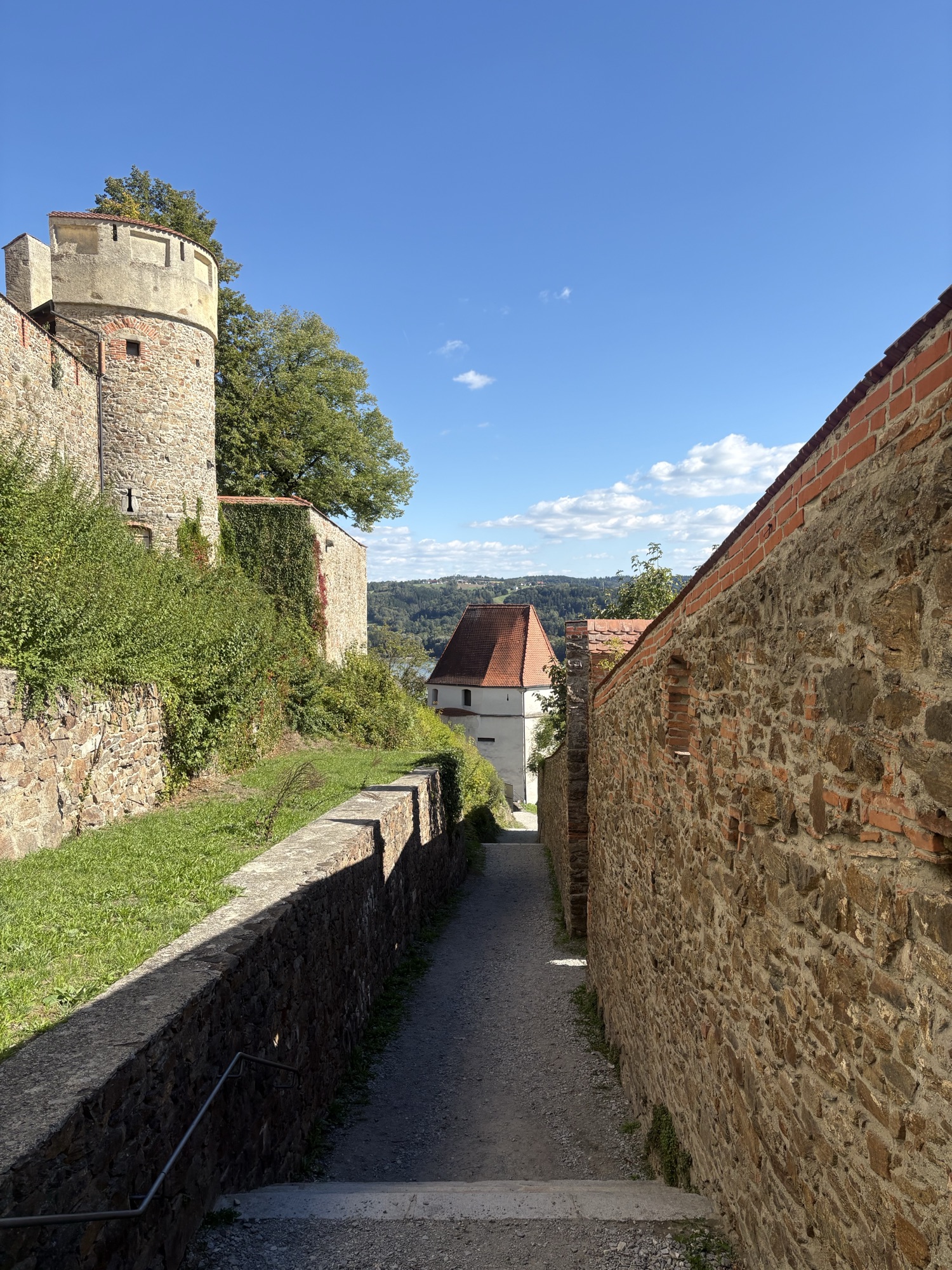
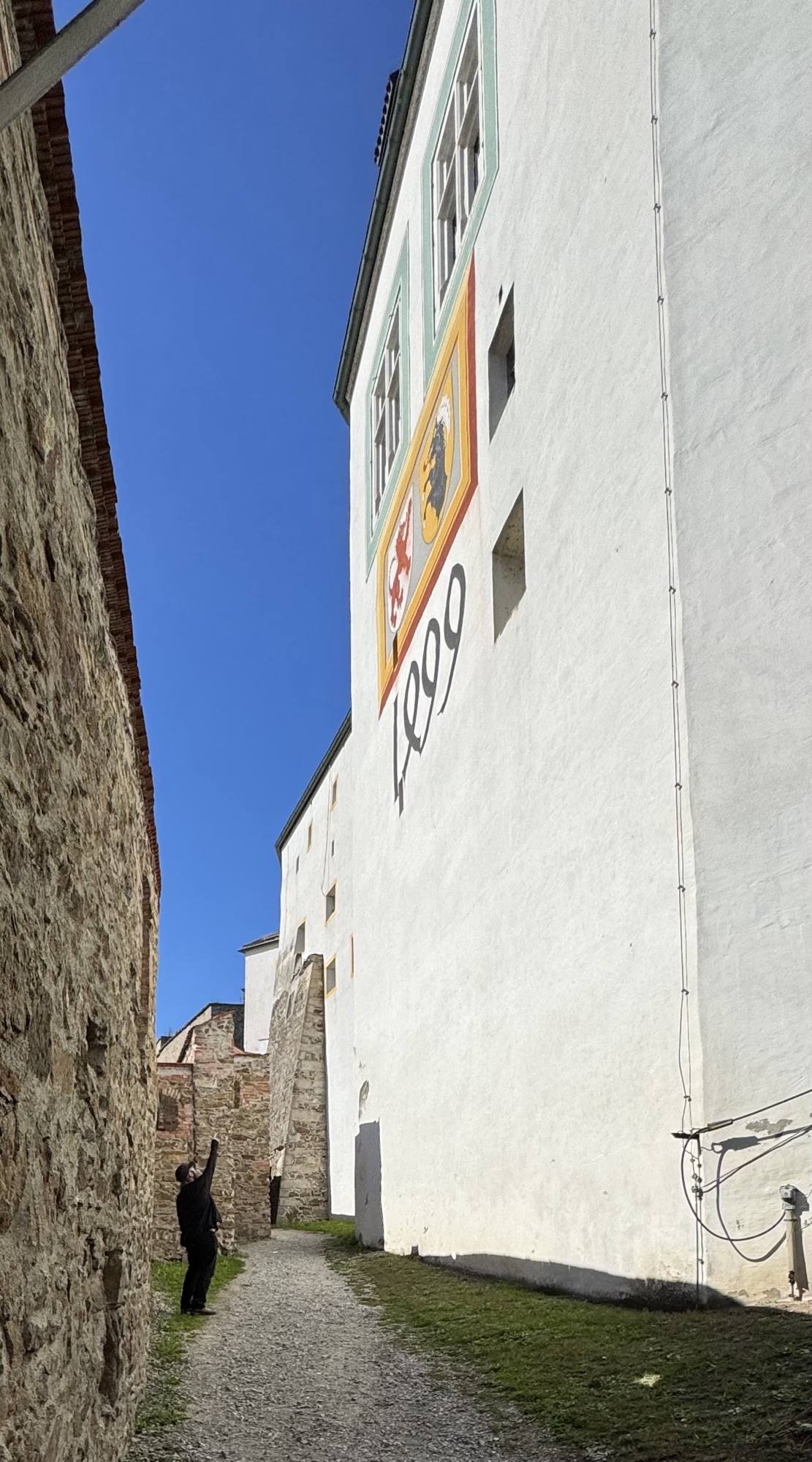
We toured the museum with its combined history displays covering the city’s history as a religious and trade centre, and the fort/castle’s construction, as well as giving insights into the lifestyle of those in the castle and those outside it.
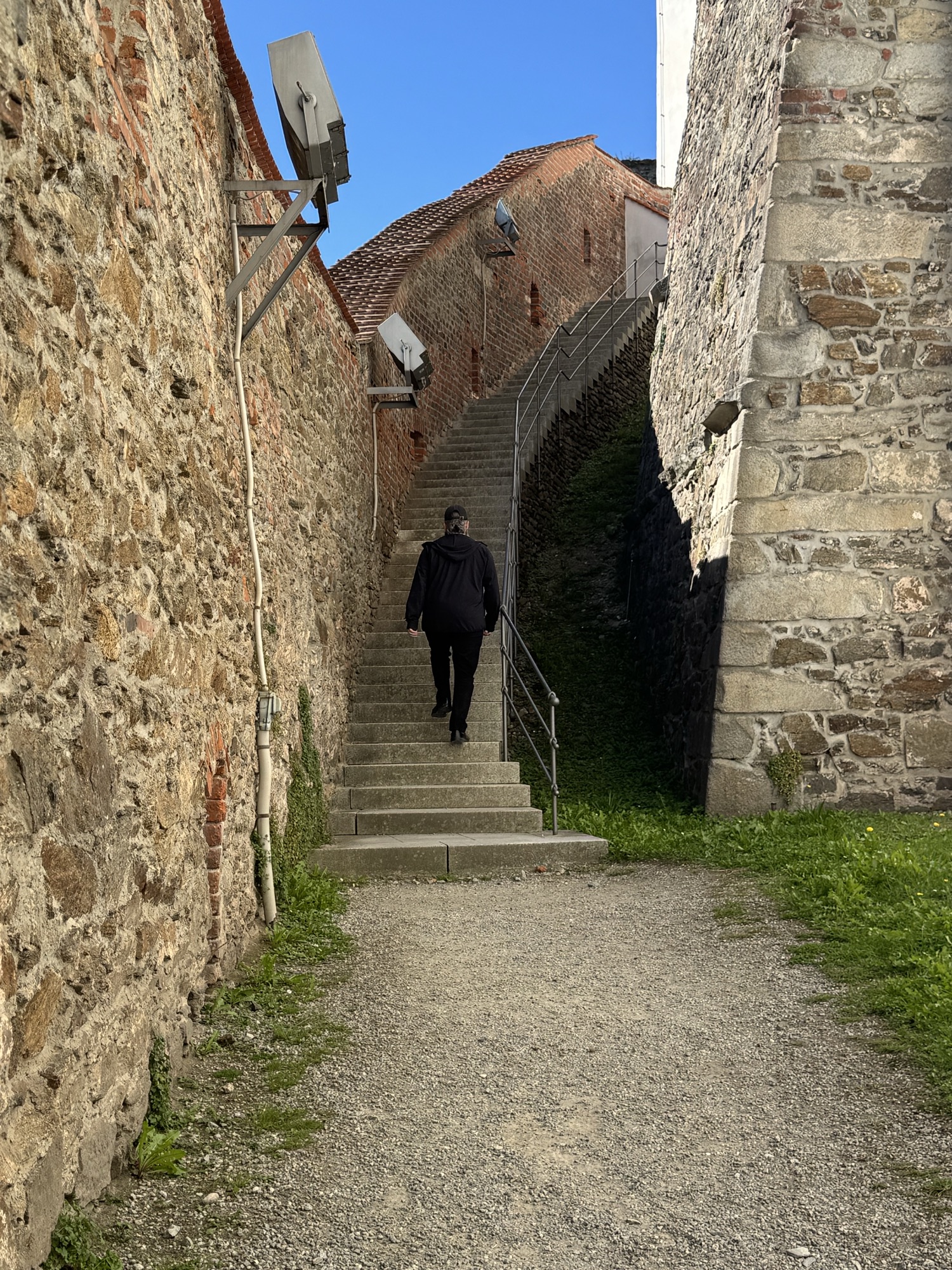
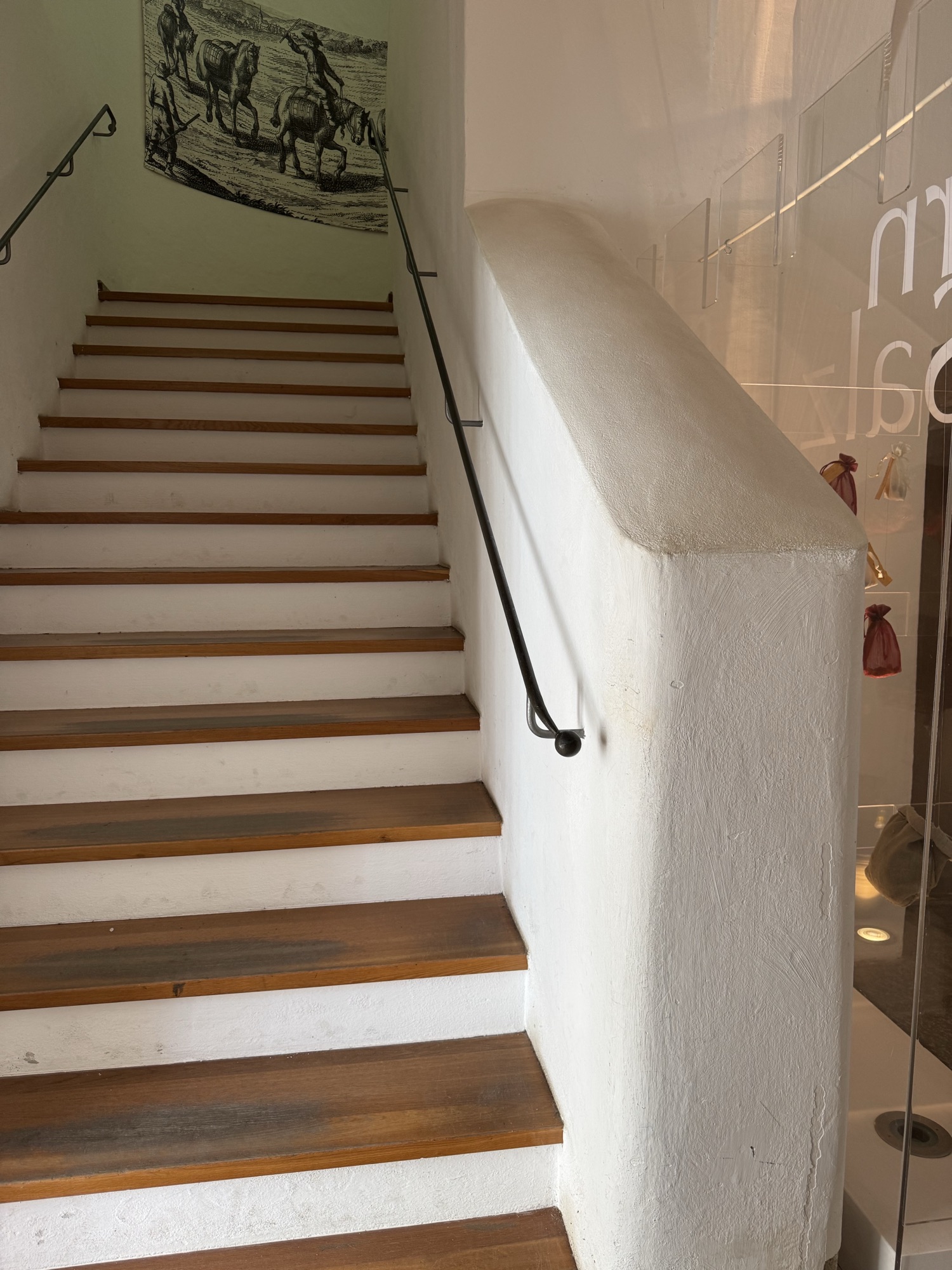
Of course, there were more stairs involved in visiting the exhibits.
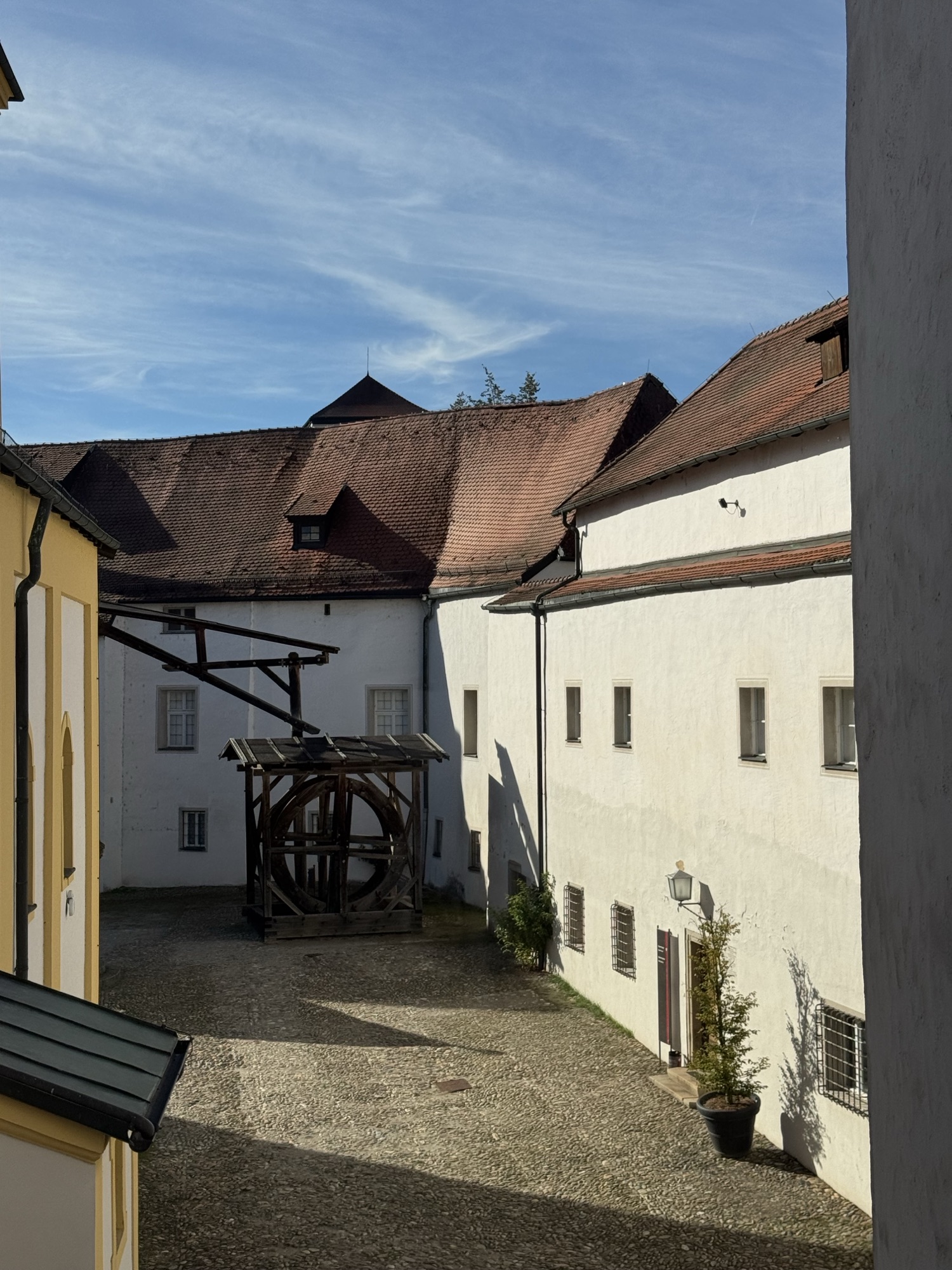
From the upper floor exhibit rooms we got a good view of the water wheel in the courtyard.
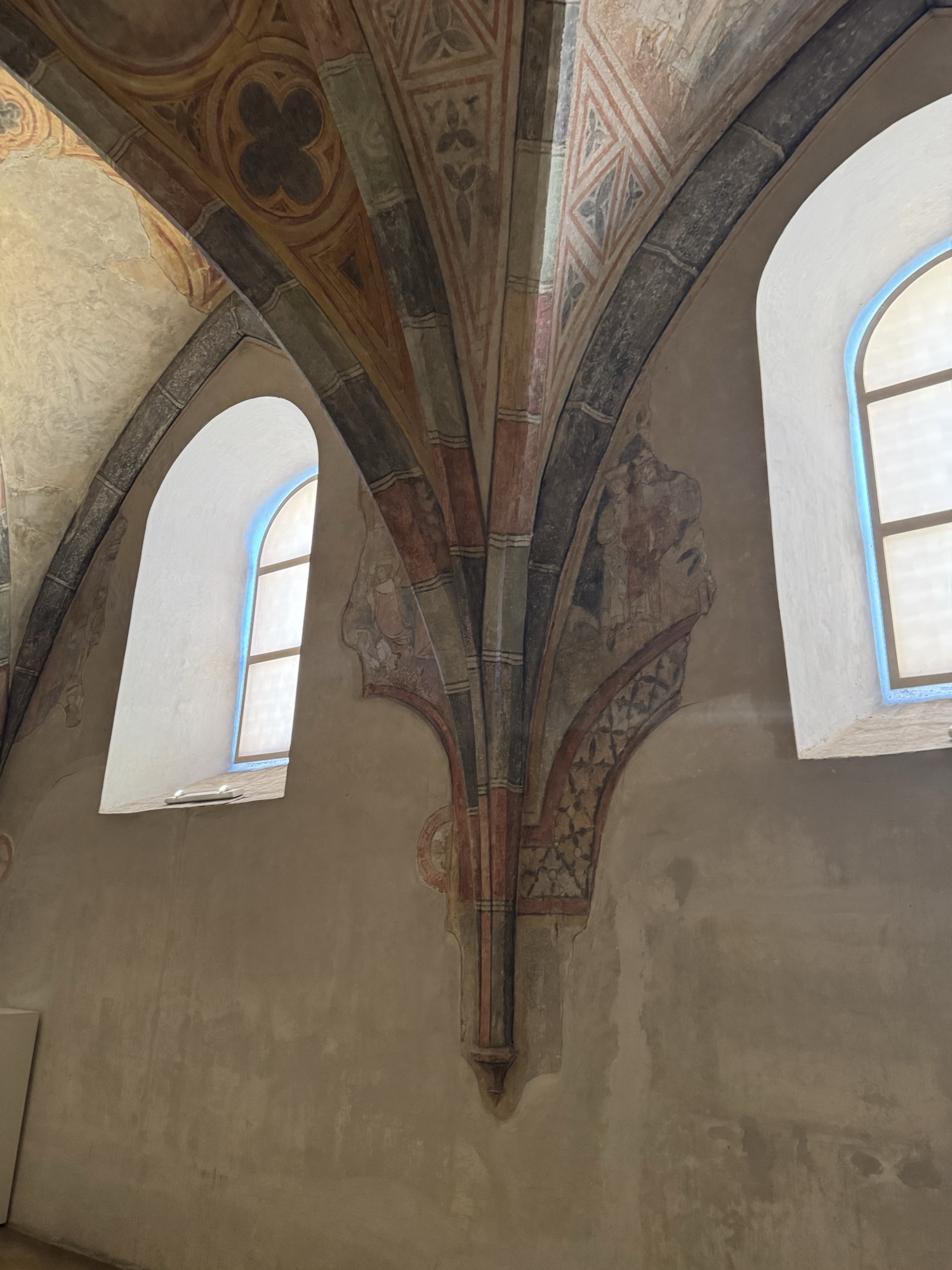
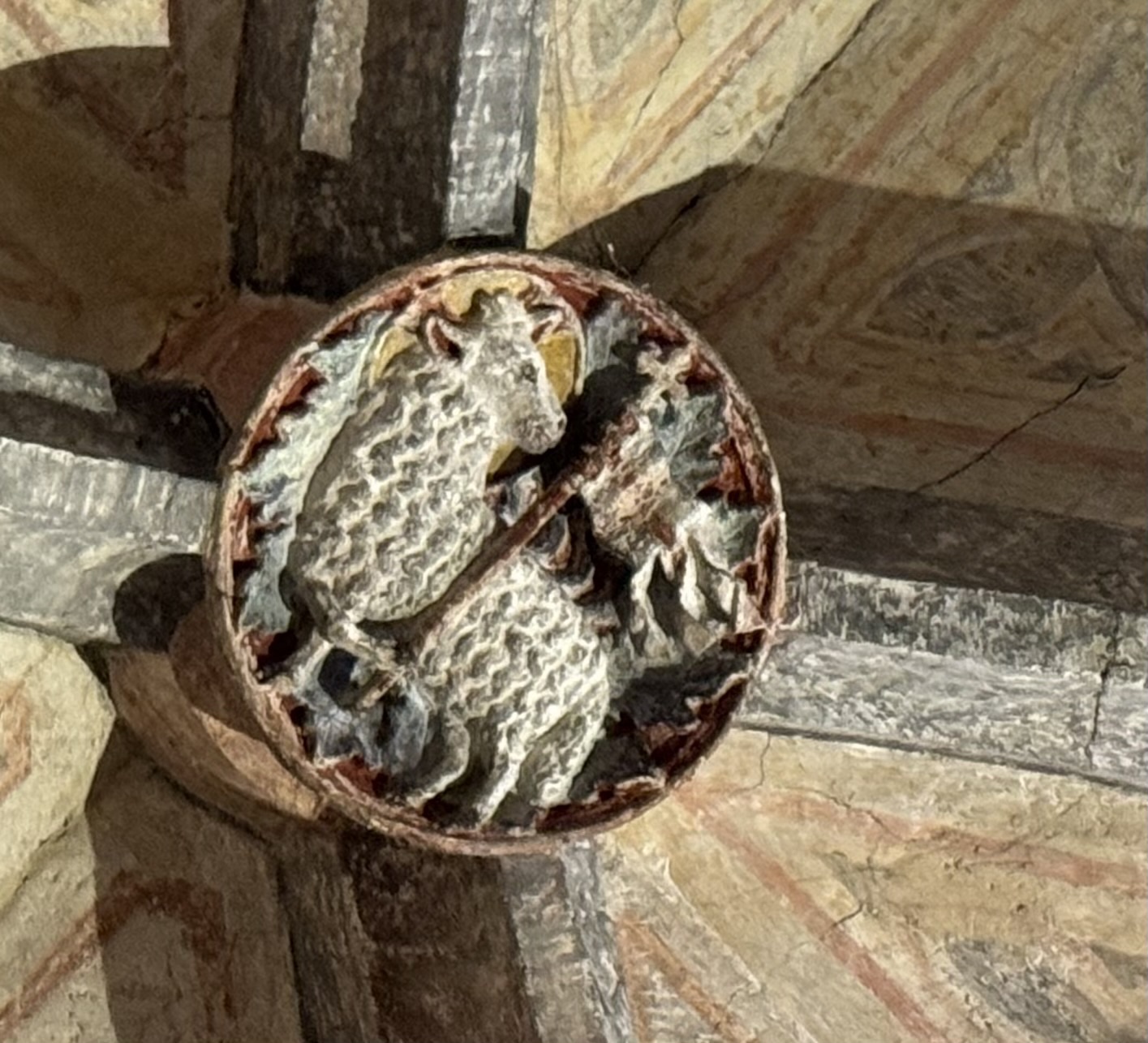
St George’s Chapel in the fort still has well preserved colours on its walls and ceiling, as well as what we expected to be a dragon but turned out after zooming in to be the Lamb of God depicted on one of the ceiling medallions.
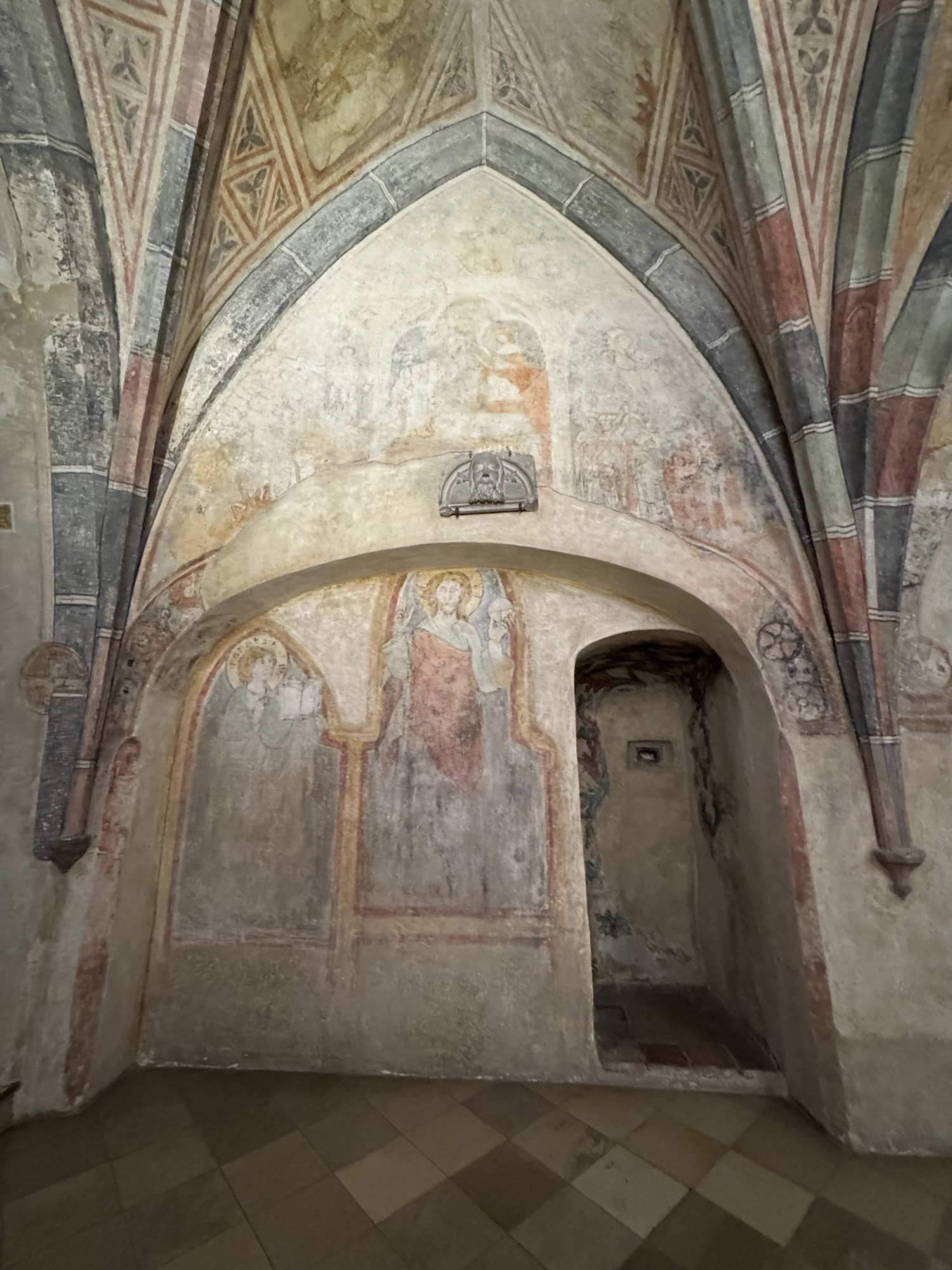
By the time we left the chapel we were worried that we wouldn’t get to climb more stairs to the top of the observation tower if we continued in the museum, so we cut our visit short to head onward and upward.
First, a hillside elevator up the equivalent of two storeys. Then a set of spiral metal stairs for another 2 storeys.

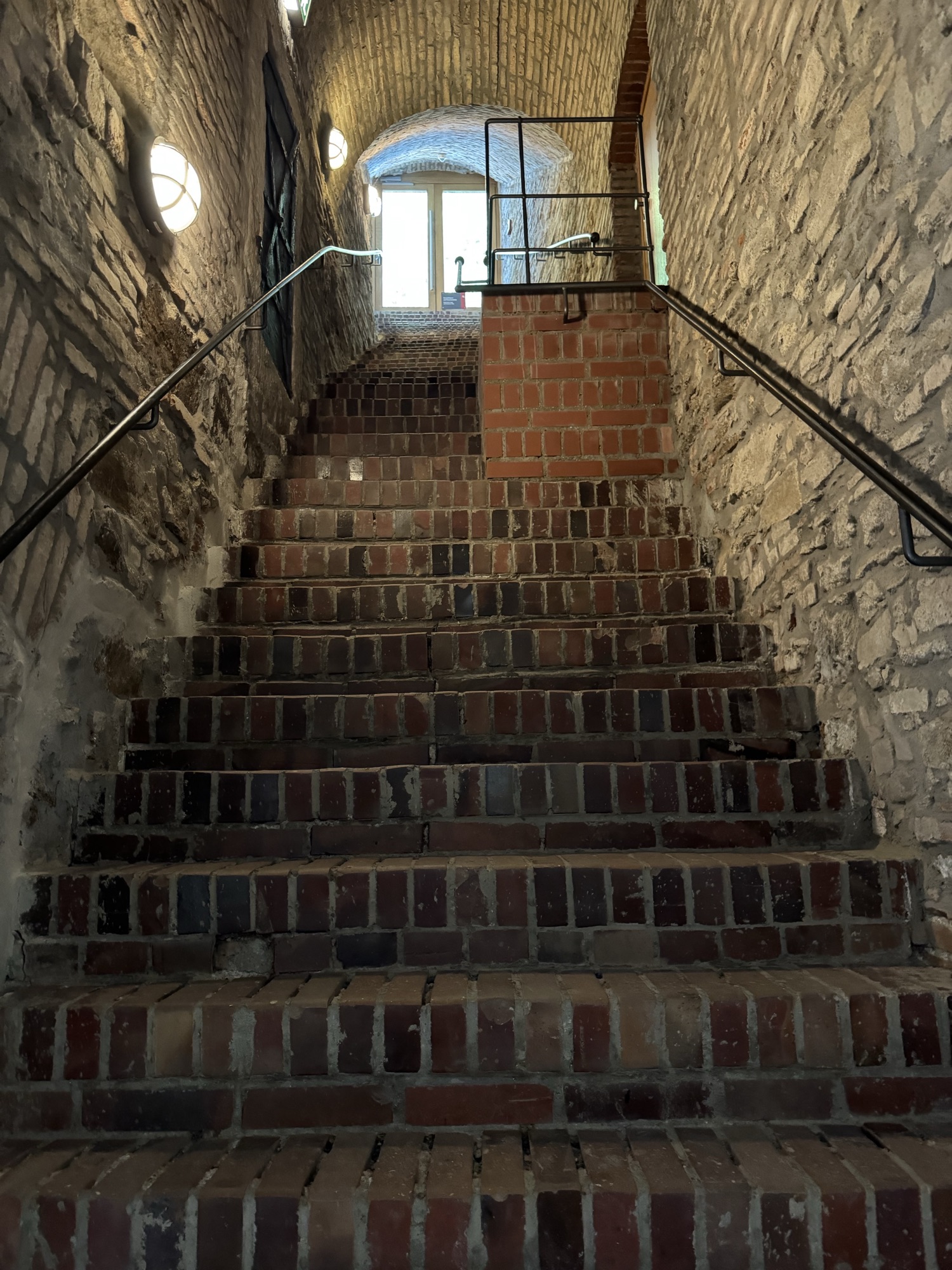
Then several flights of brick stairs…
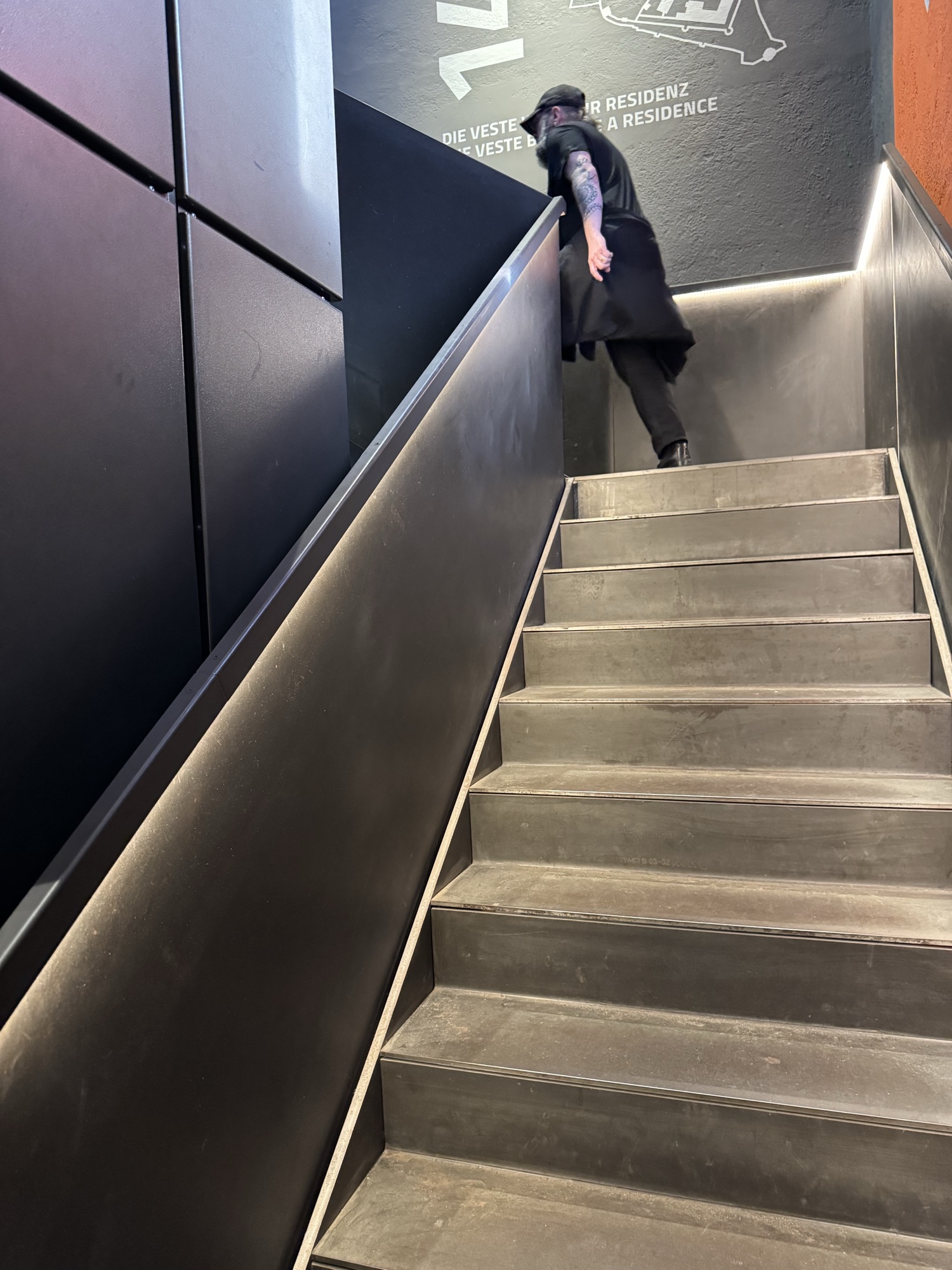
… followed by about 6 flights of modern stairs.
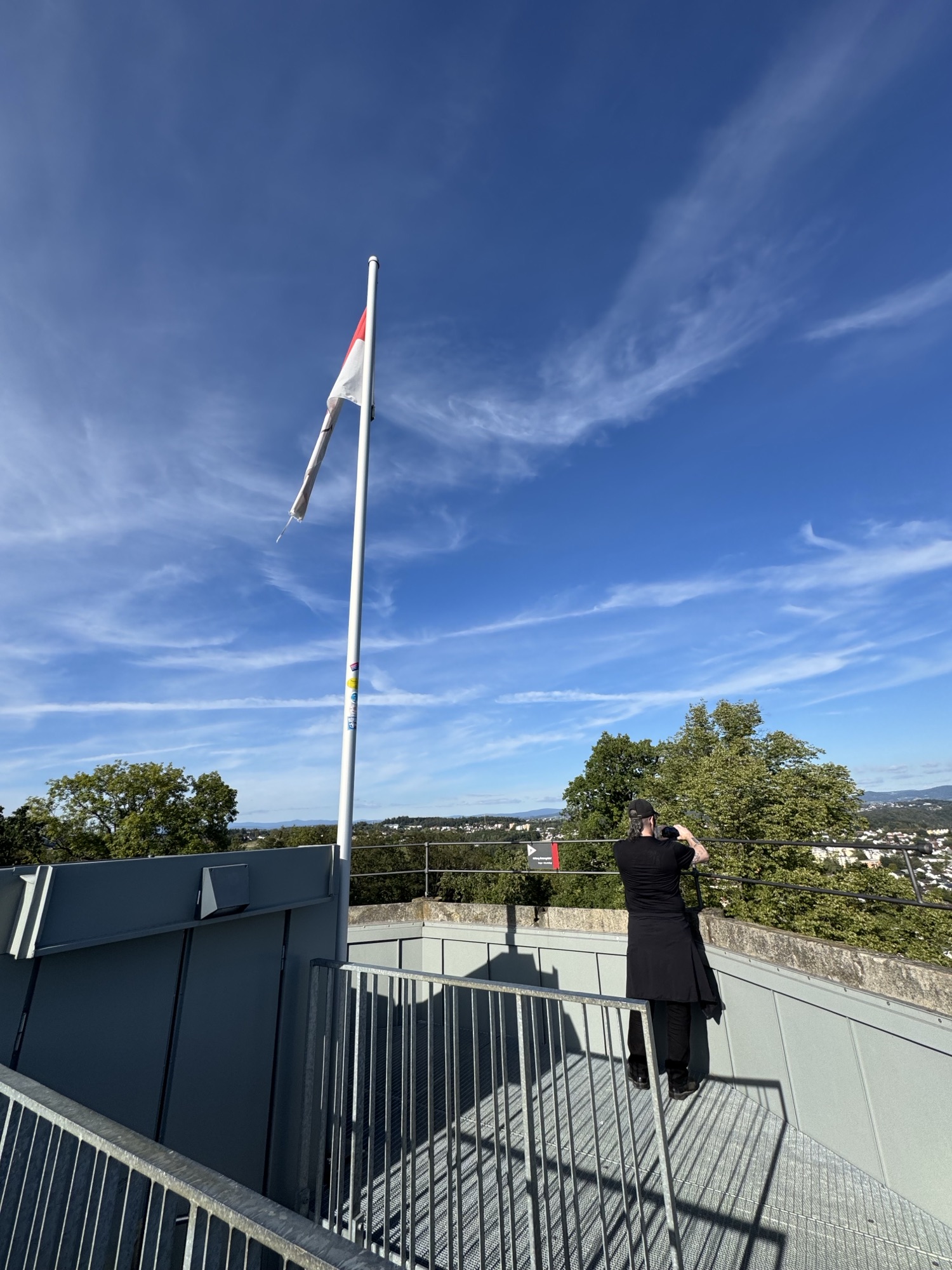
The panoramic view was worth every step, and #1 wasted no time in getting some great photos.
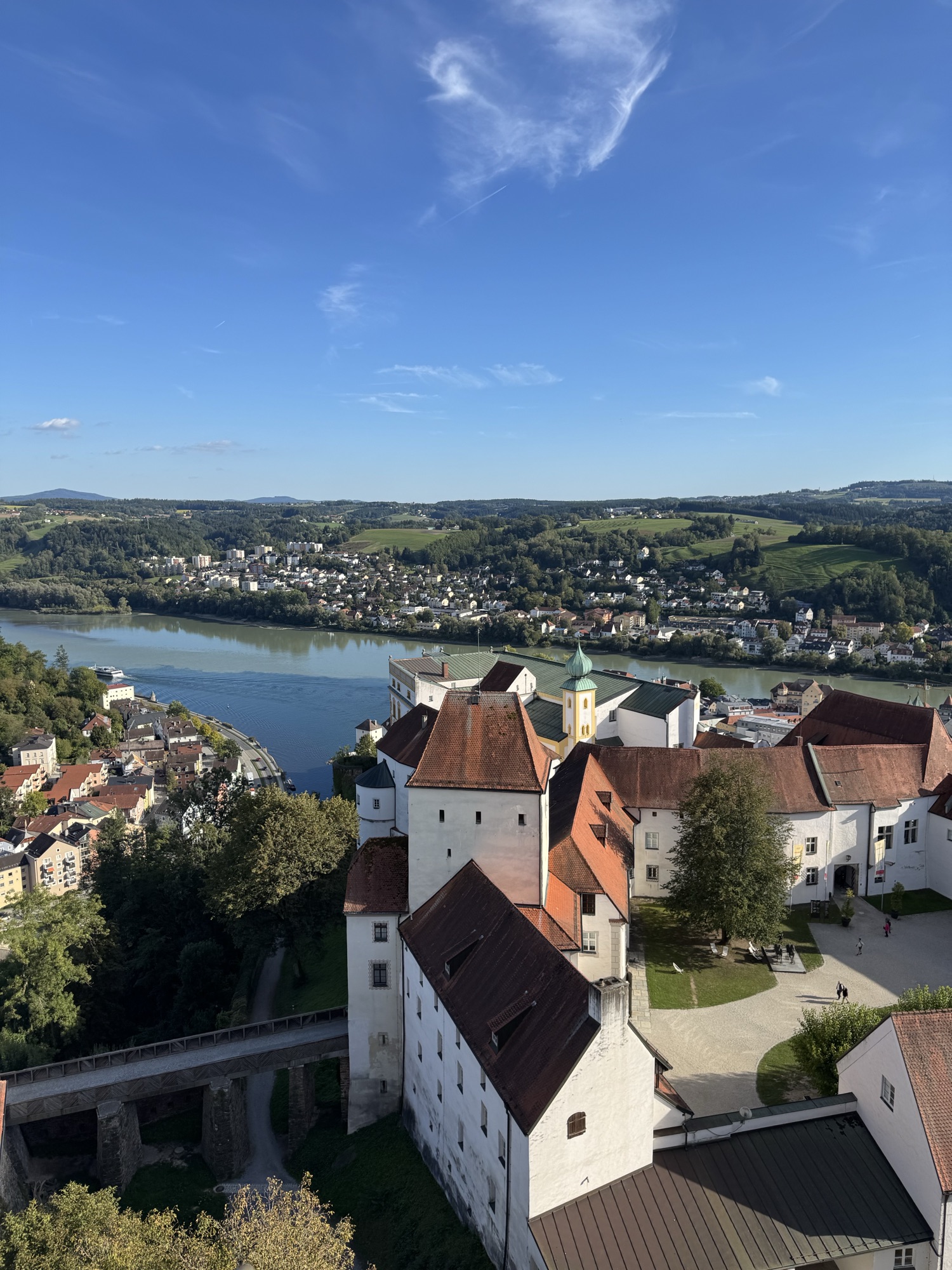
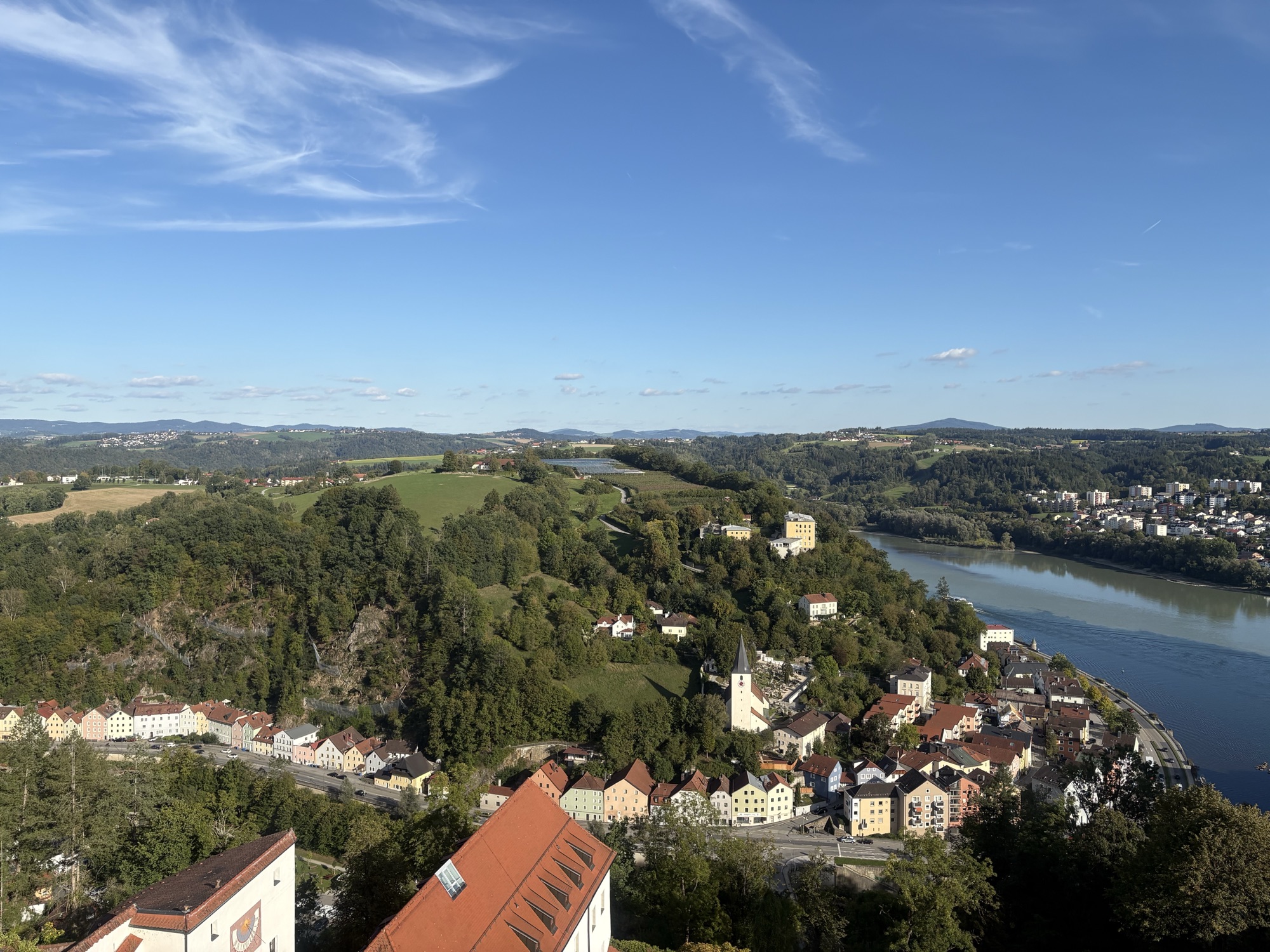
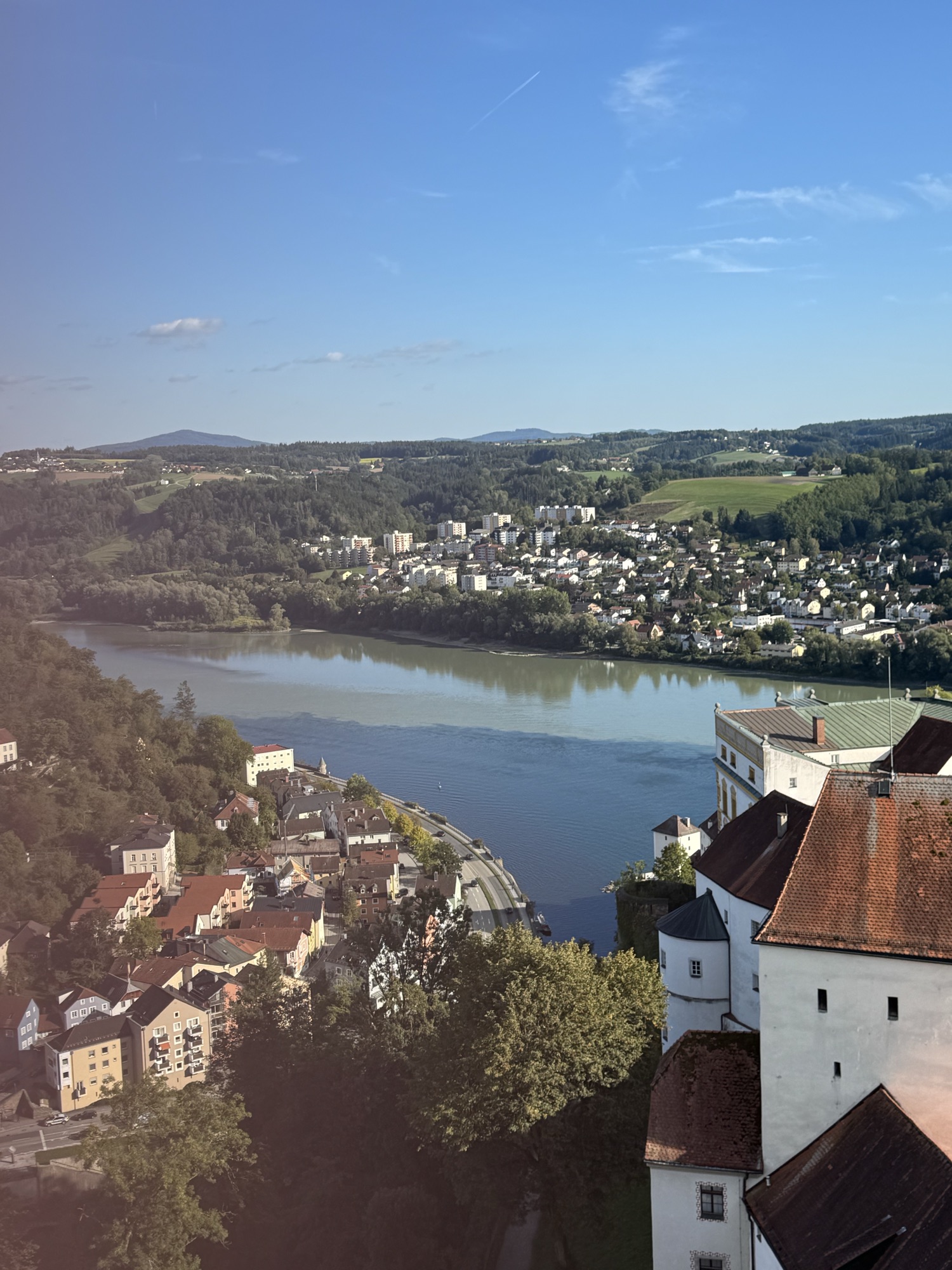
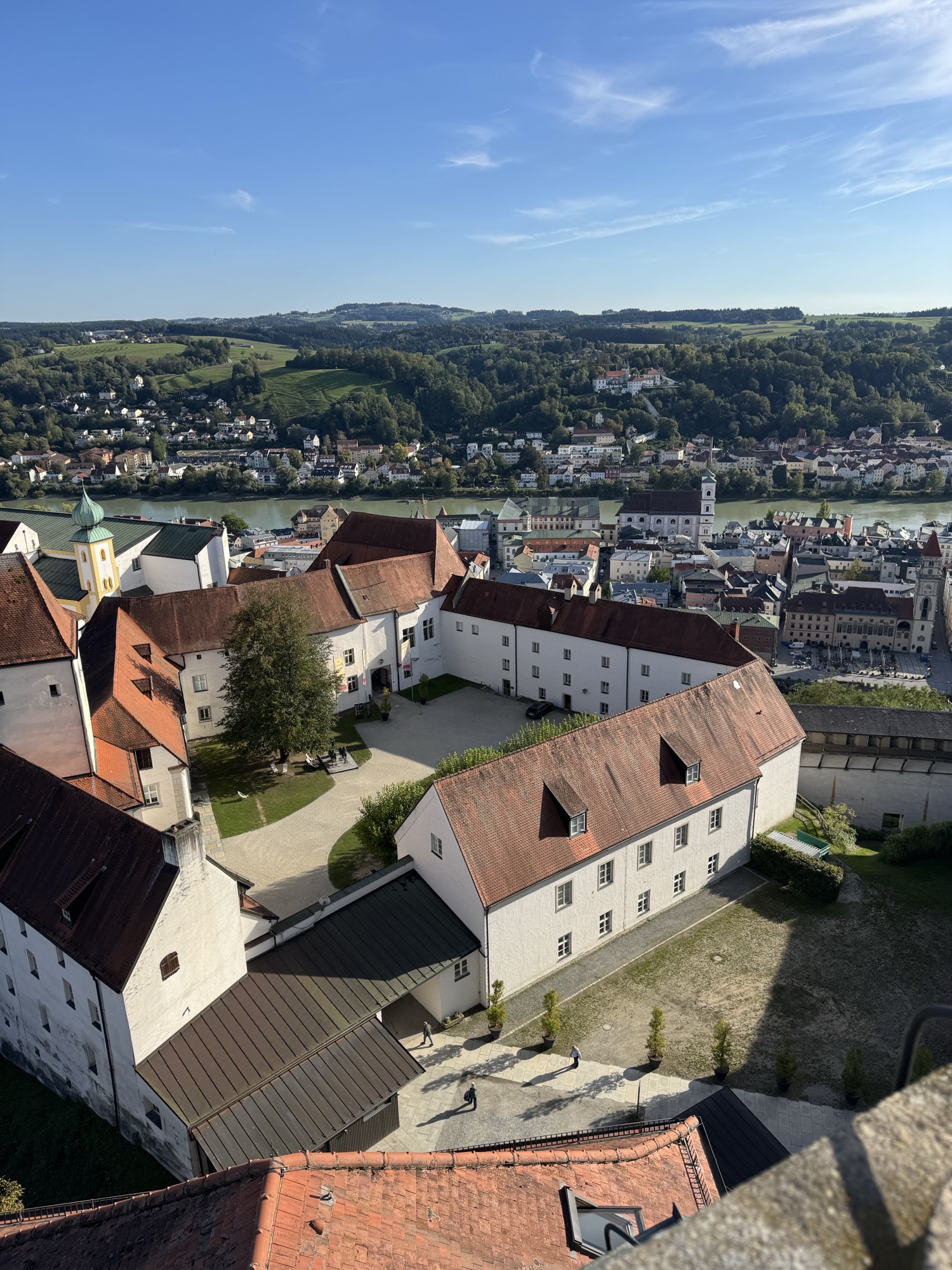
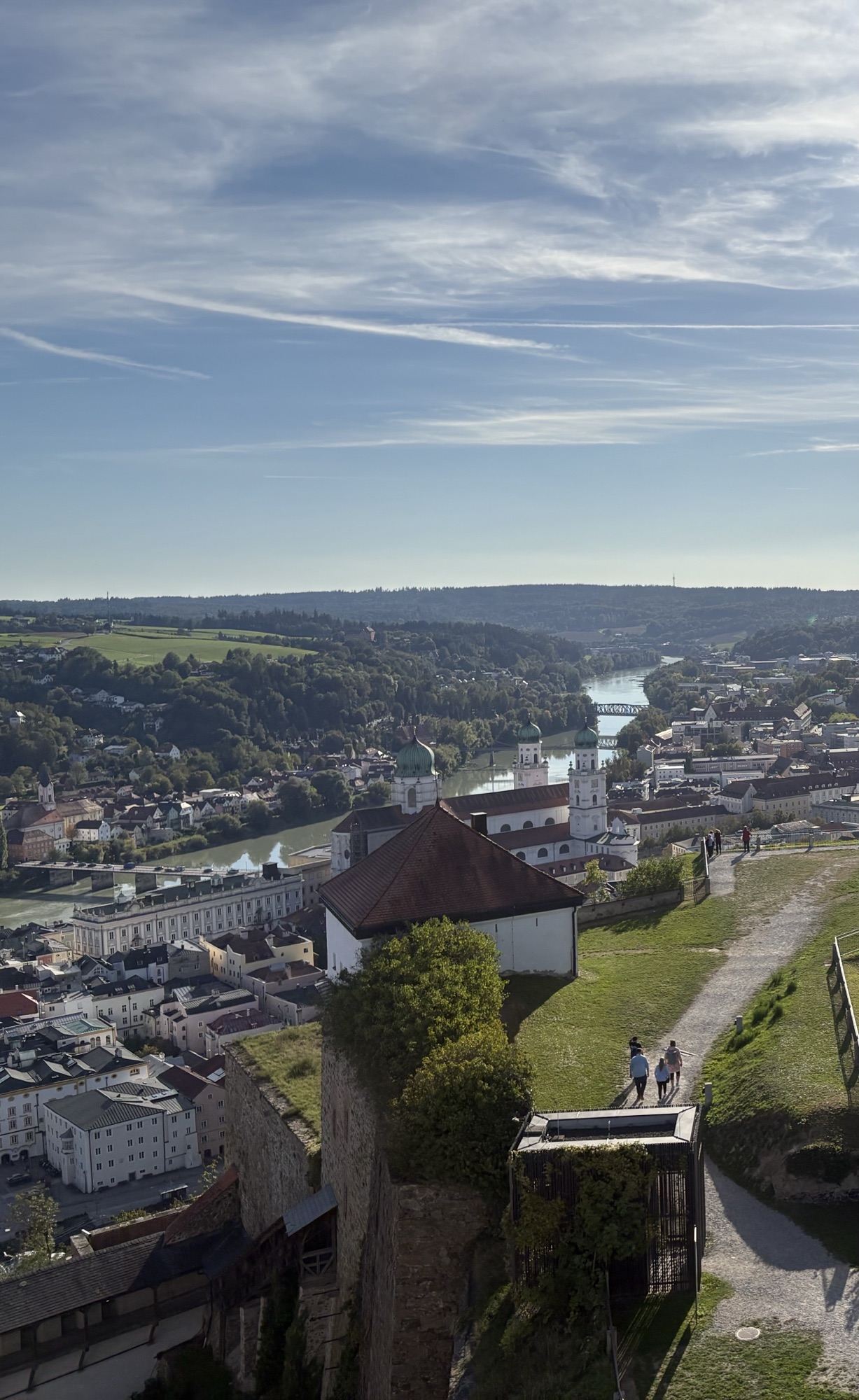
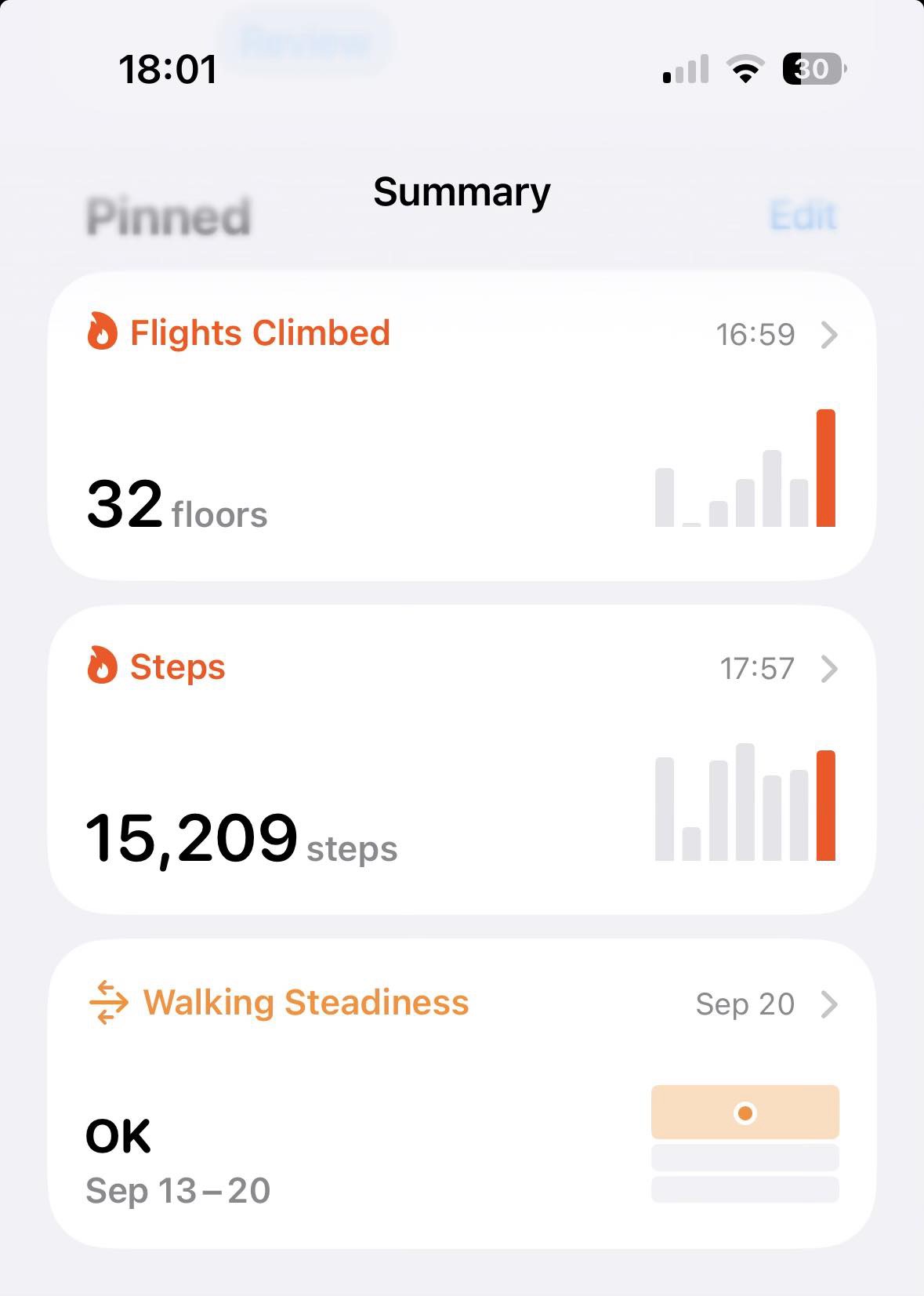
Every climb means a descent, so we slowly made our way back down the roughly 130m/426ft to the riverbank. Given that a standard building storey in North America is 10 to 14 ft, we climbed up (and down again) the equivalent of 37 to 42 storeys. Despite all the extra stairs we did in the city during the day, my iPhone app only gave us credit for 32 storeys up only. I feel cheated.
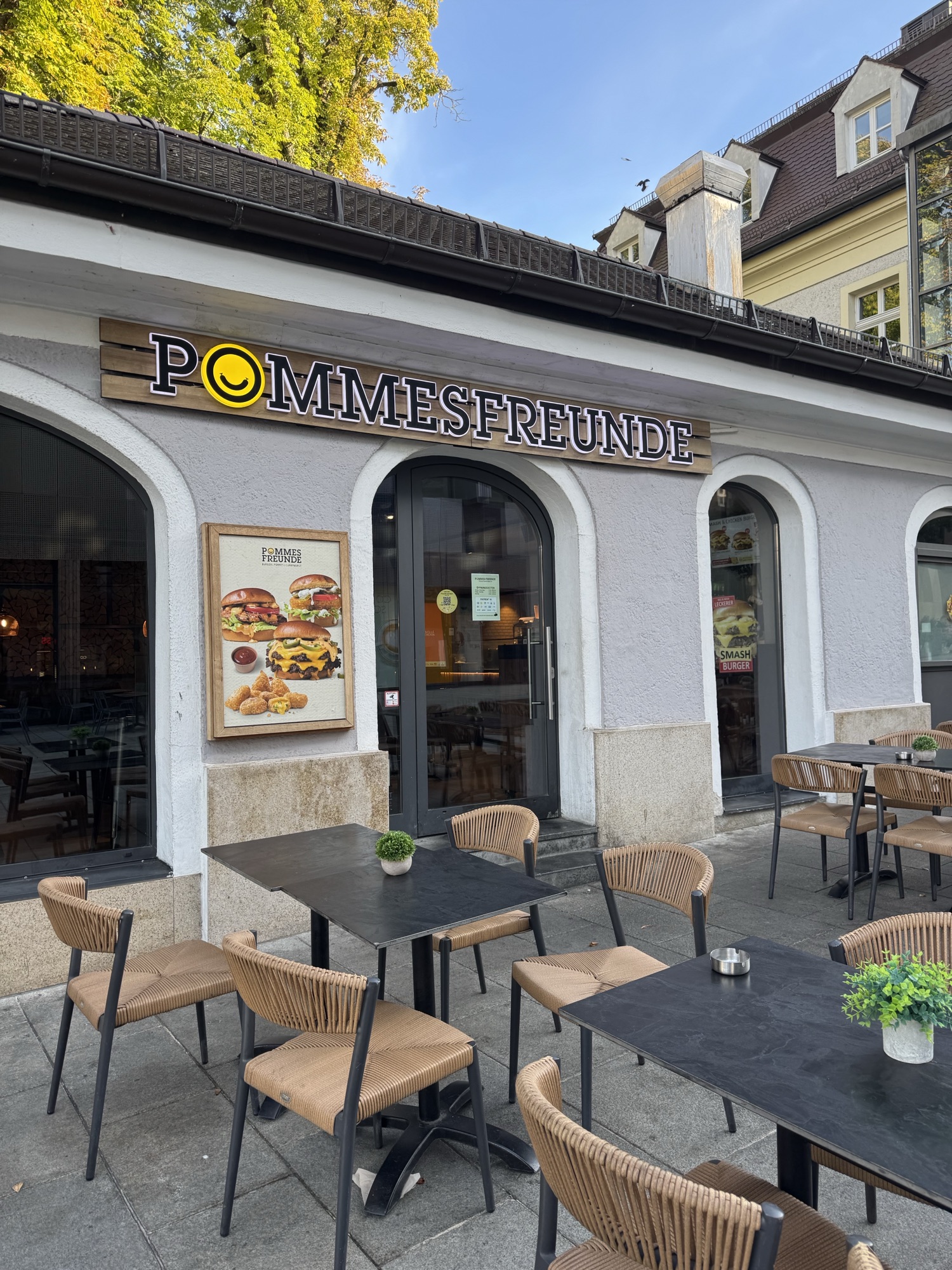
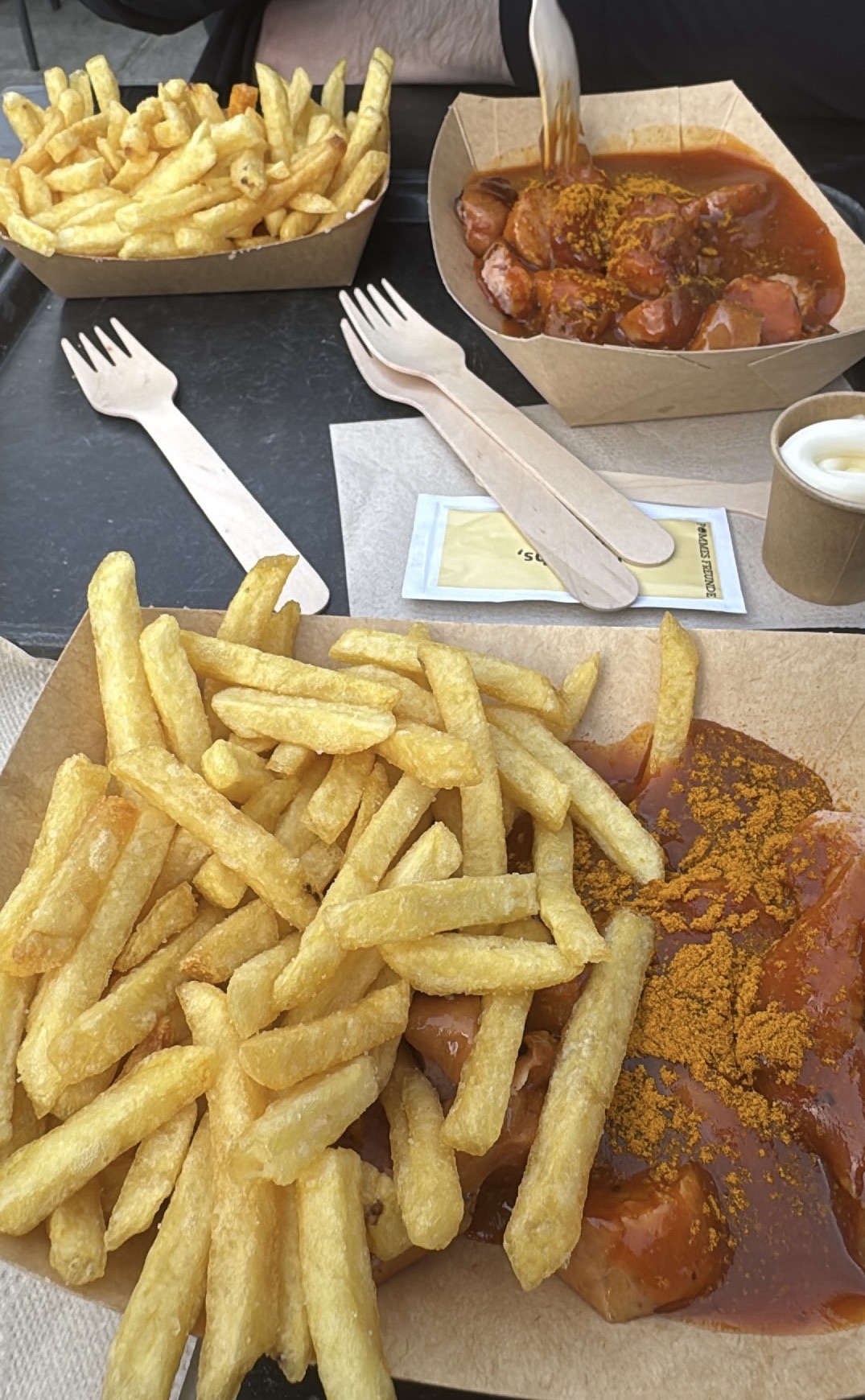
In a case of too little too late, tonight we economize on dinner by eating Currywurst and pommes from a fast food chain called Pommesfreunde ( French fry friends).
We accepted a free drink from our host on our return to our hotel, and then called it an early night.
Tomorrow we visit the town where my mother, grandmother, and great grandmother were housed while waiting for their chance to emigrate to Canada.

