This was my third visit to Bremen (Episode 83 & Episode 693 ) so I felt that I knew my way around the old city centre well enough to show son#1 the highlights in a single day.
Not planning ahead meant we missed out on the (sold out) English tour of the old city hall, and private events like baptisms meant we couldn’t get into otherwise open-to-the-public churches like the Our Lady, but we still had a scenic walking “tour” of the old city centre and The Schnoor.
20,000 steps counted by day’s end.
Bremen was also much busier with tour groups than Cologne had been. Busloads of German seniors crowded the city. Tomorrow, when we’ll be in Bremerhaven, Bremen hosts its annual marathon, forecast to be a rainy event. Although it was not preplanned on my part, it will be a good day not to be in the city centre vying for street and restaurant space.
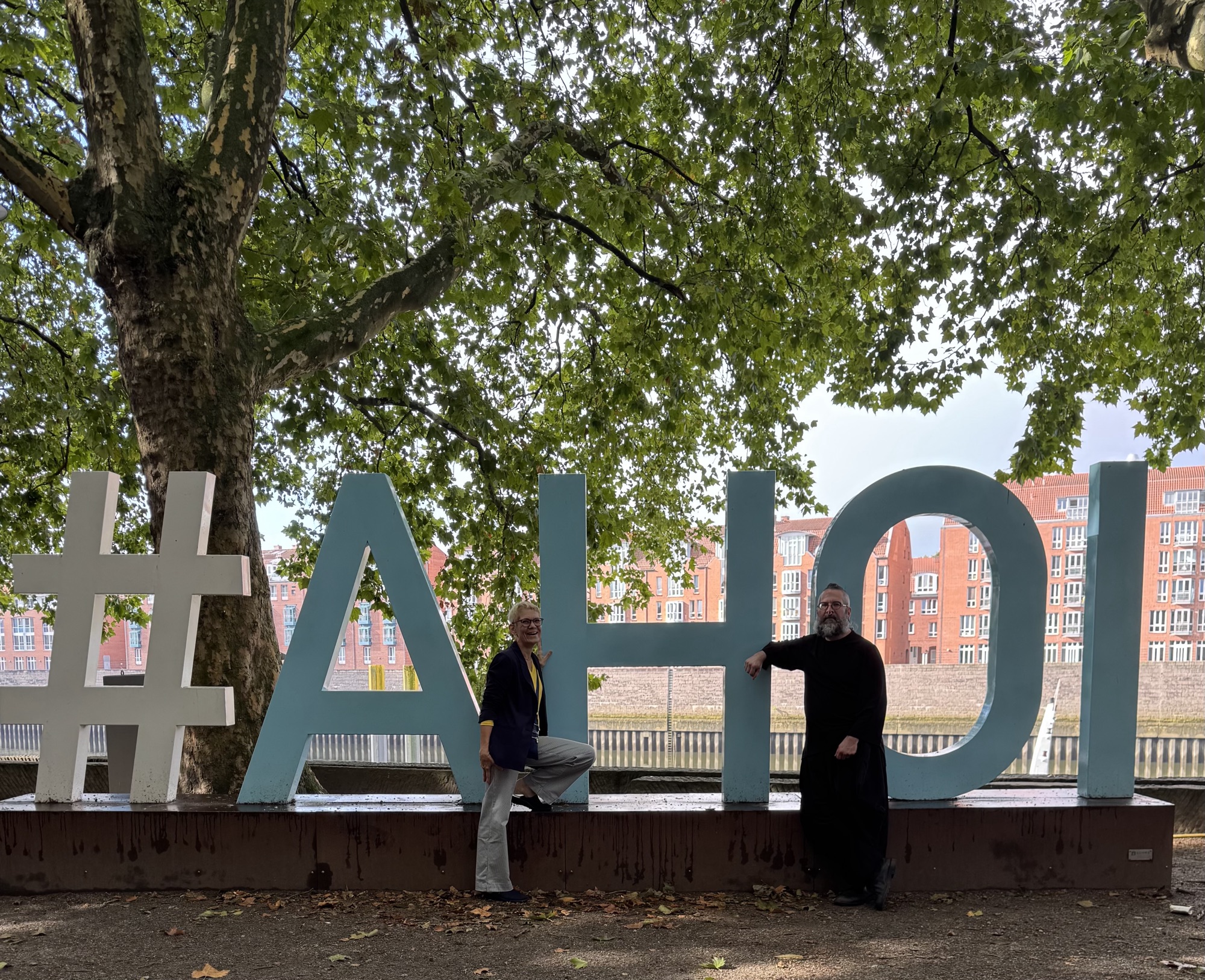
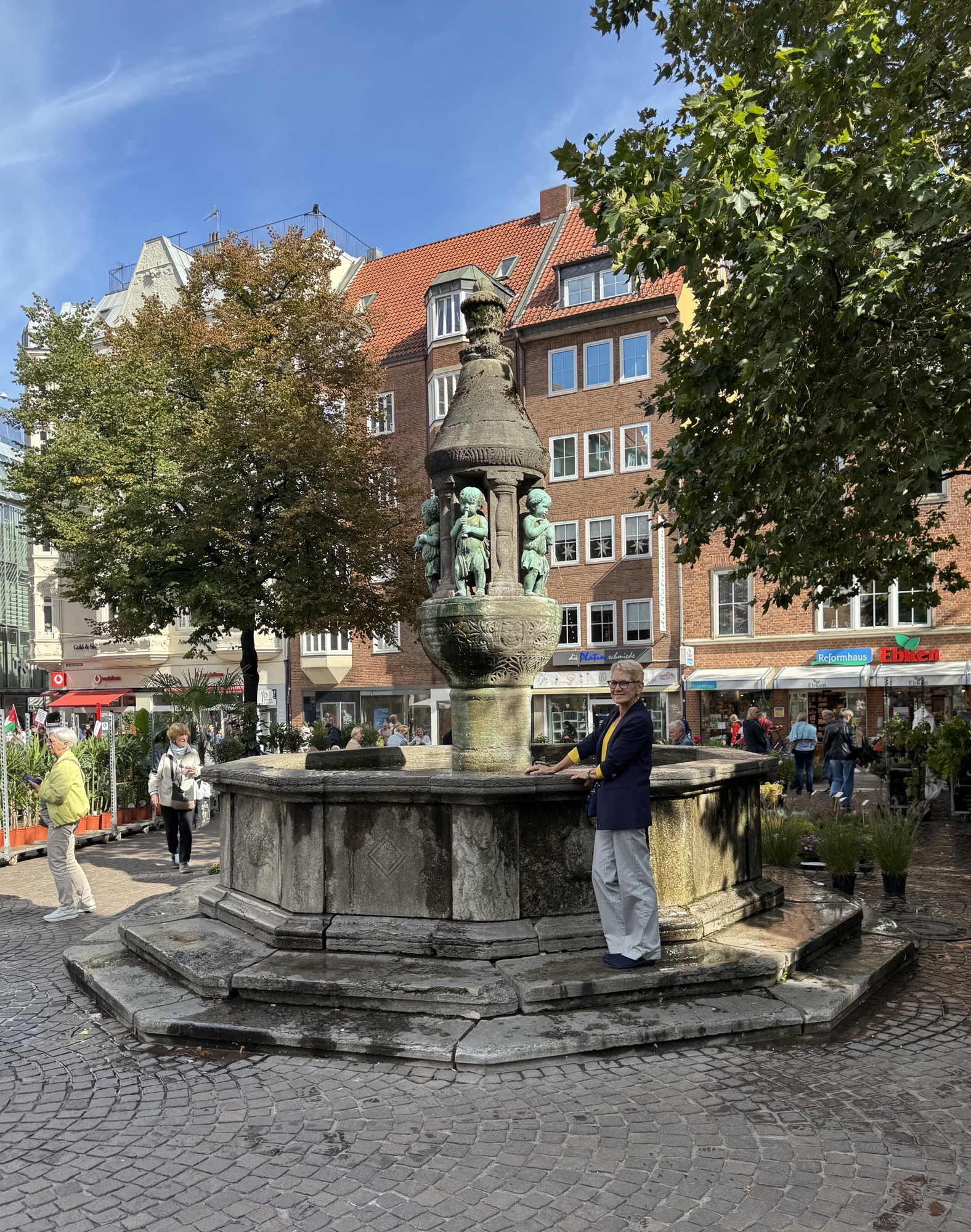
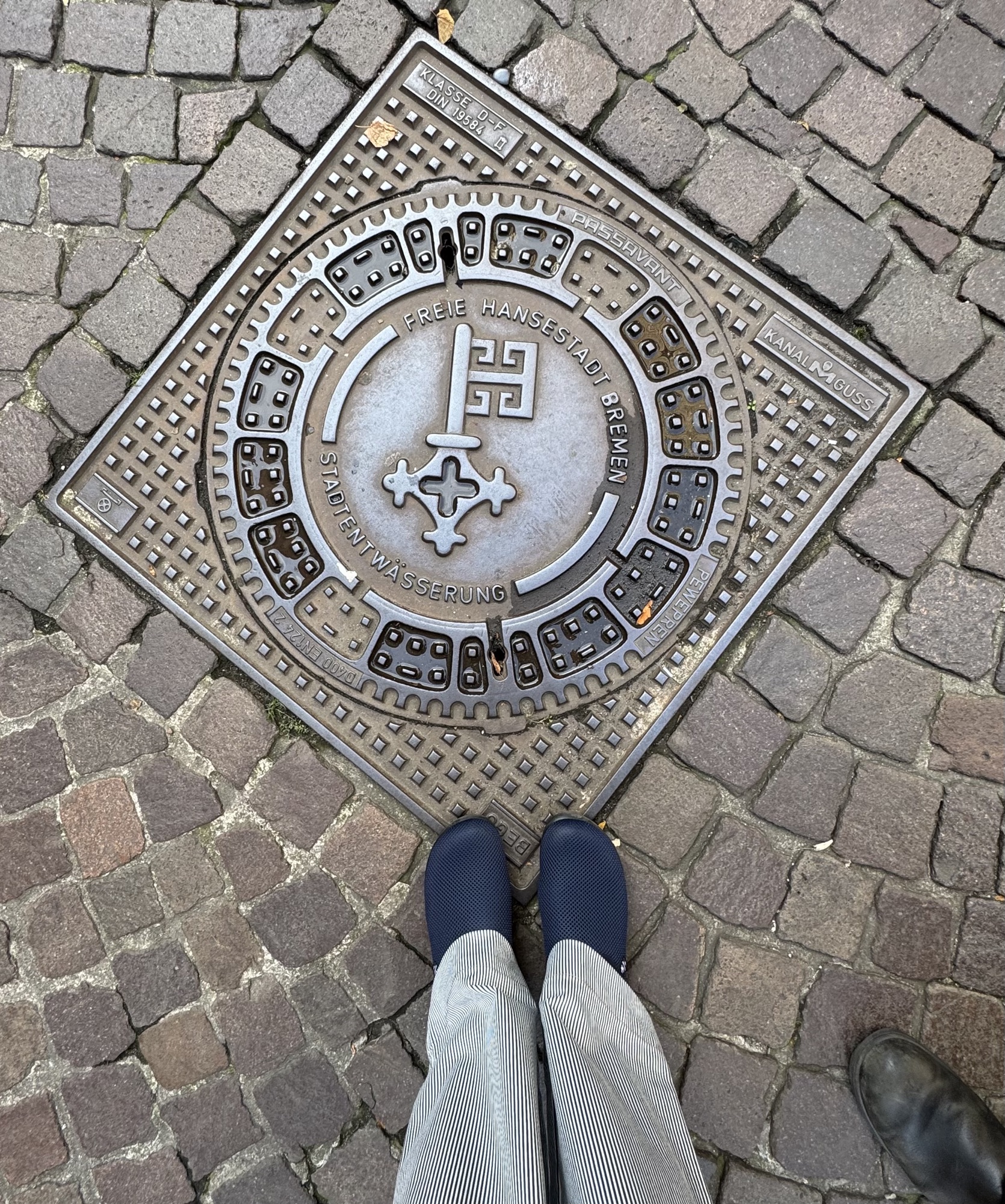
As was the case yesterday, the easiest way for me to chronicle our day instead of getting totally frustrated with tapping out letters on my phone is to simply post photos (and a few captions) in the order in which we saw things today.
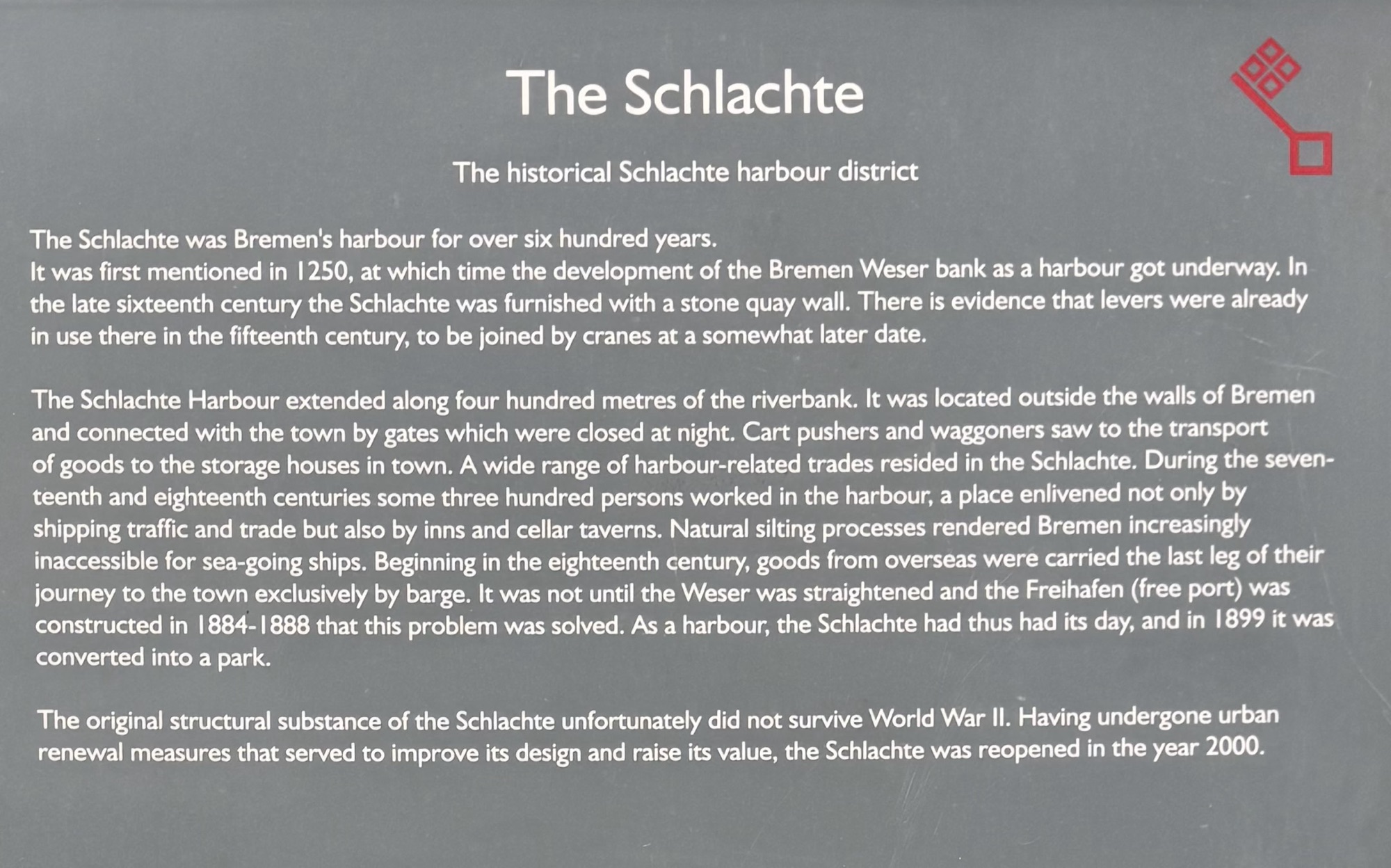
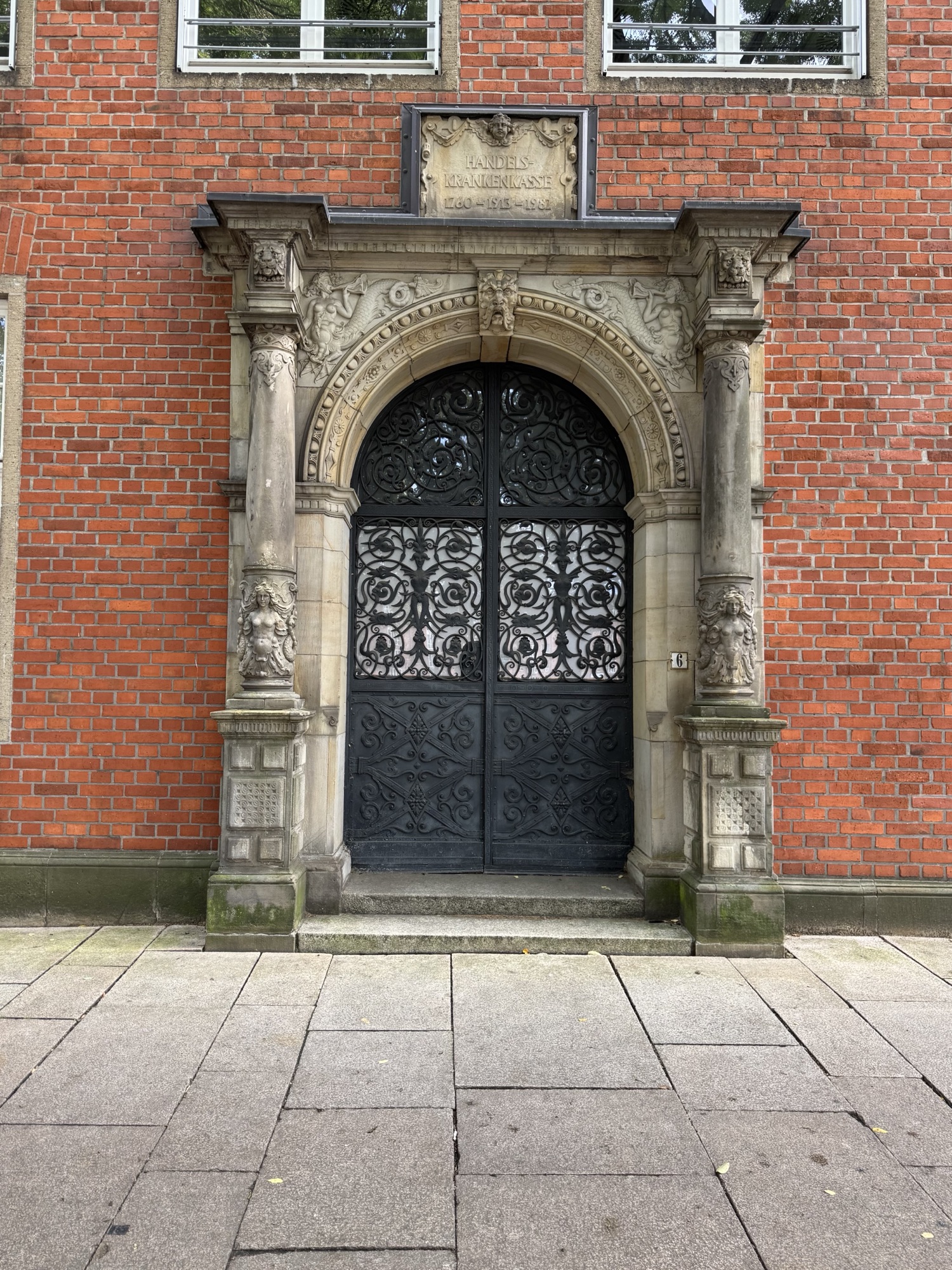
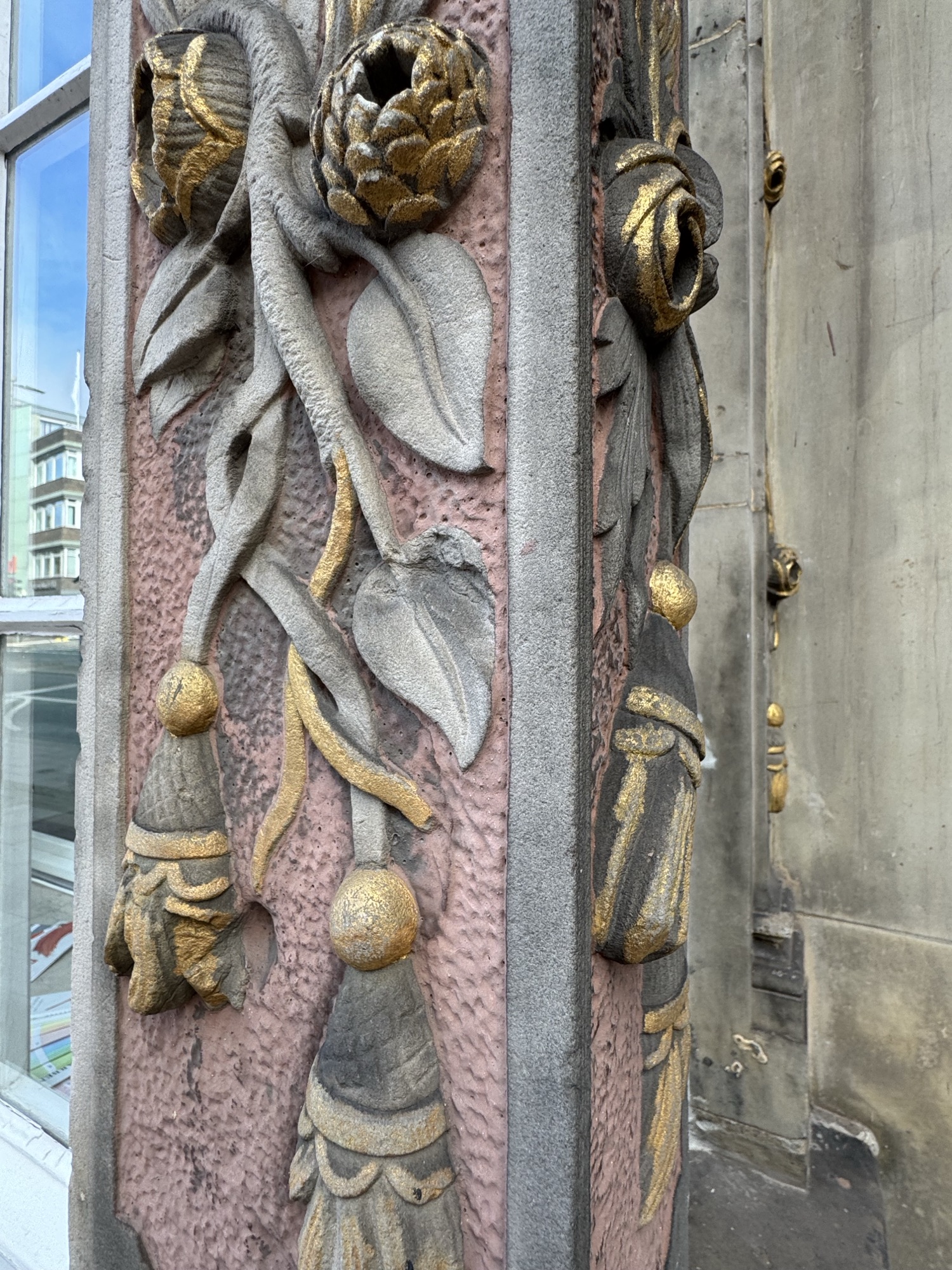
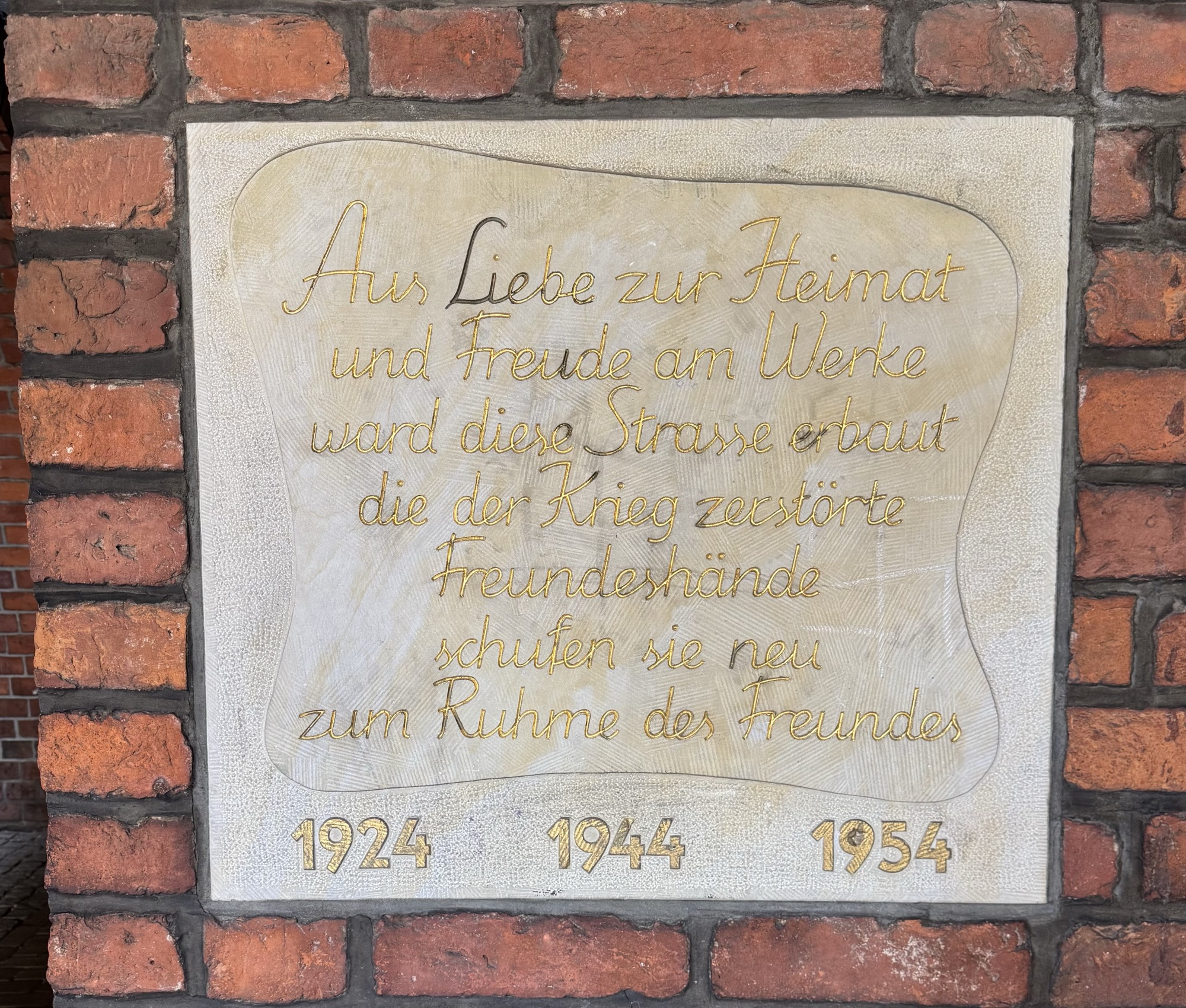
The next series of photos are all of Böttcherstrasse, Between 1922 and 1931 this “Street of the Coopers” was transformed from old medieval foundations into a unique work of art by the Bremen coffee merchant Ludwig Roselius (Kaffee HAG). The architecture very much fits into the European Art Deco period.
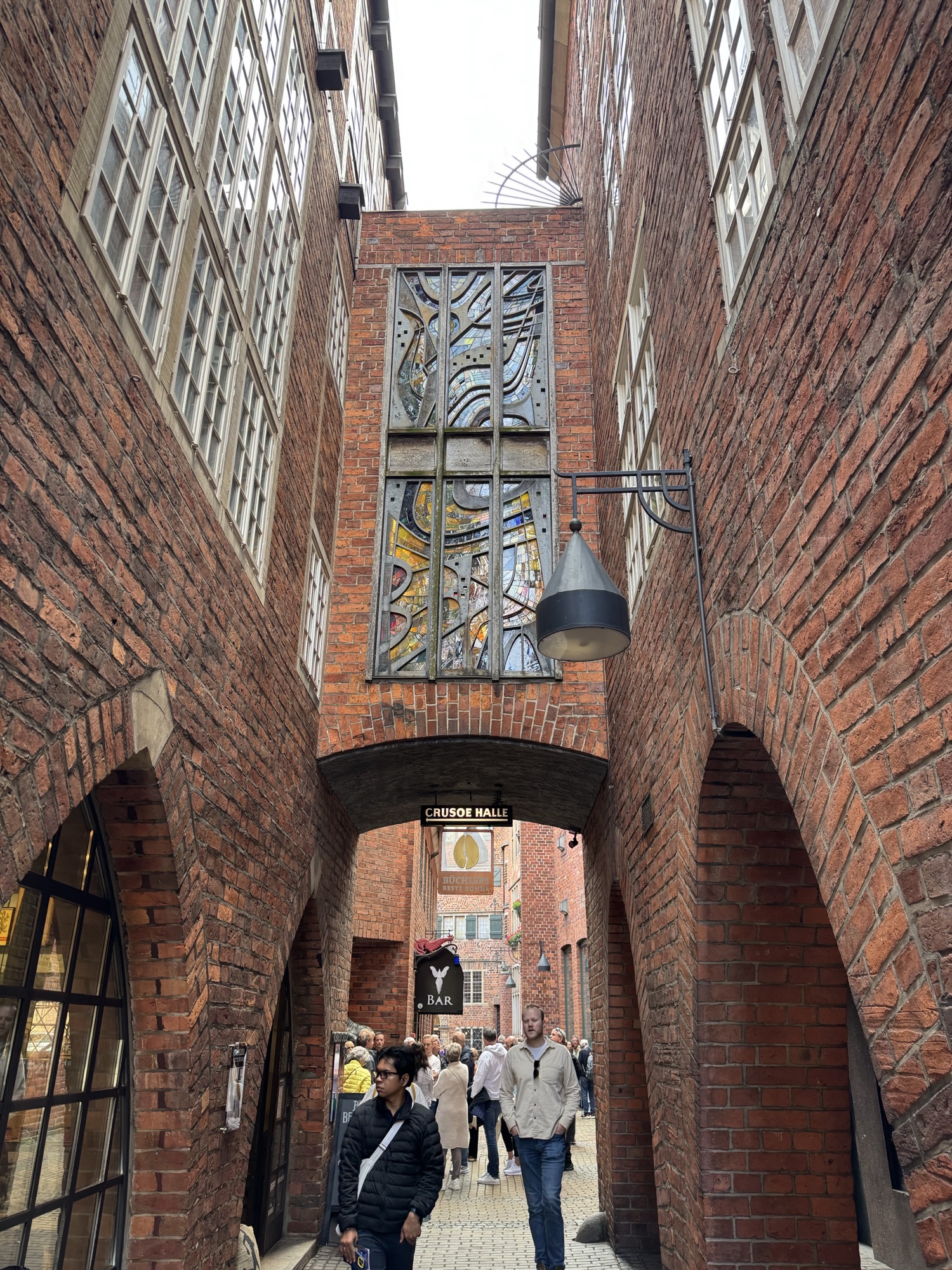
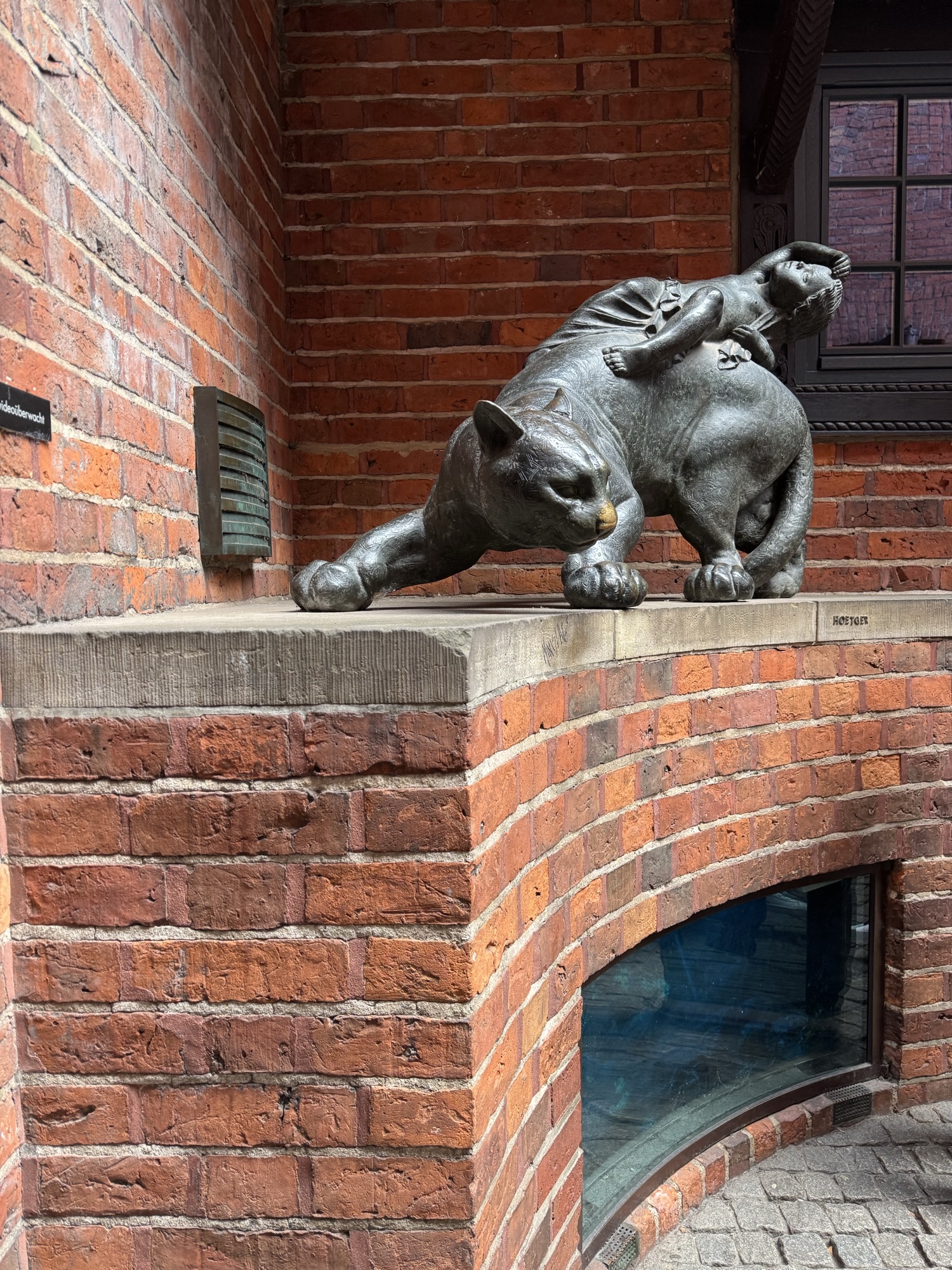
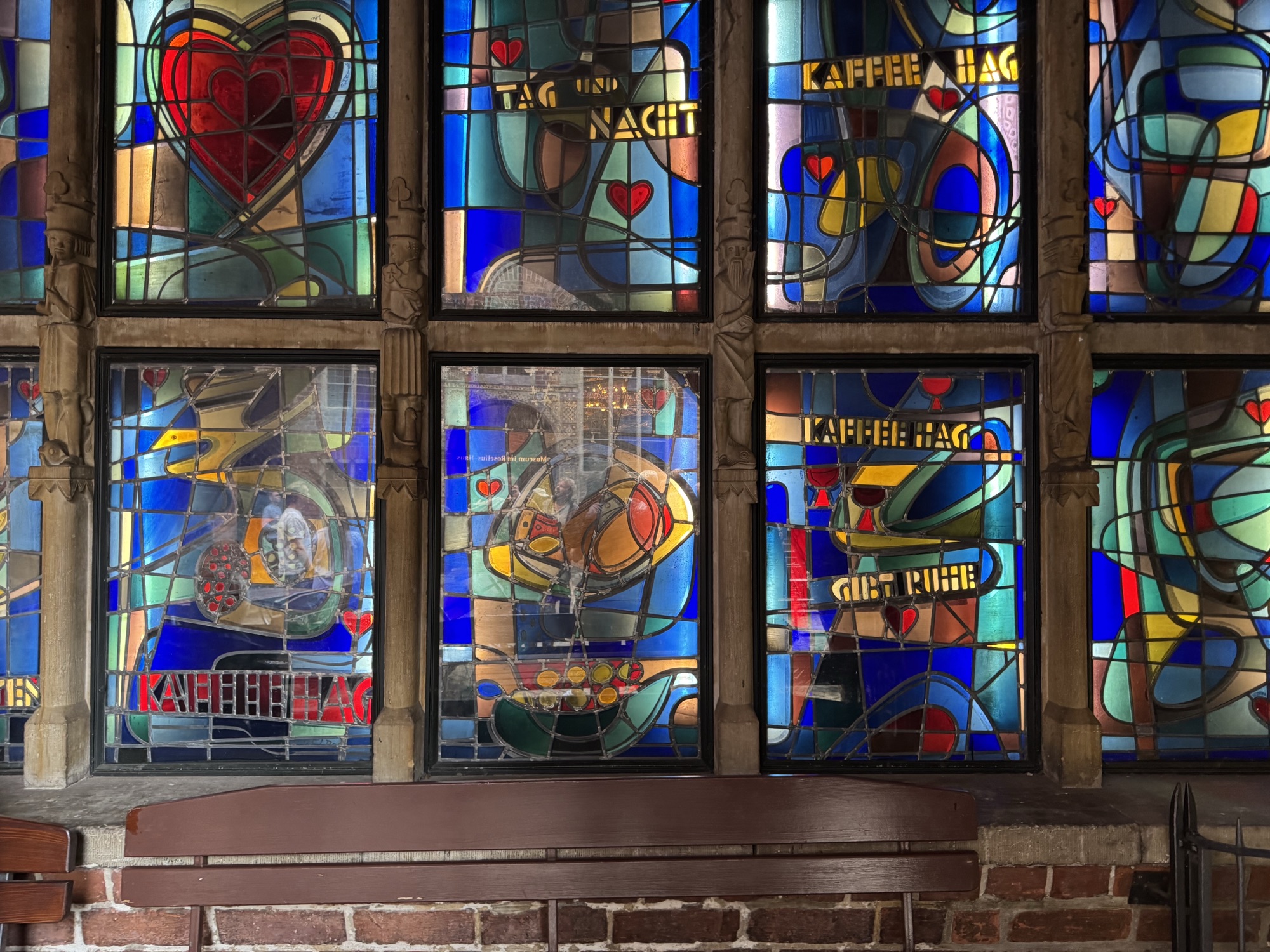
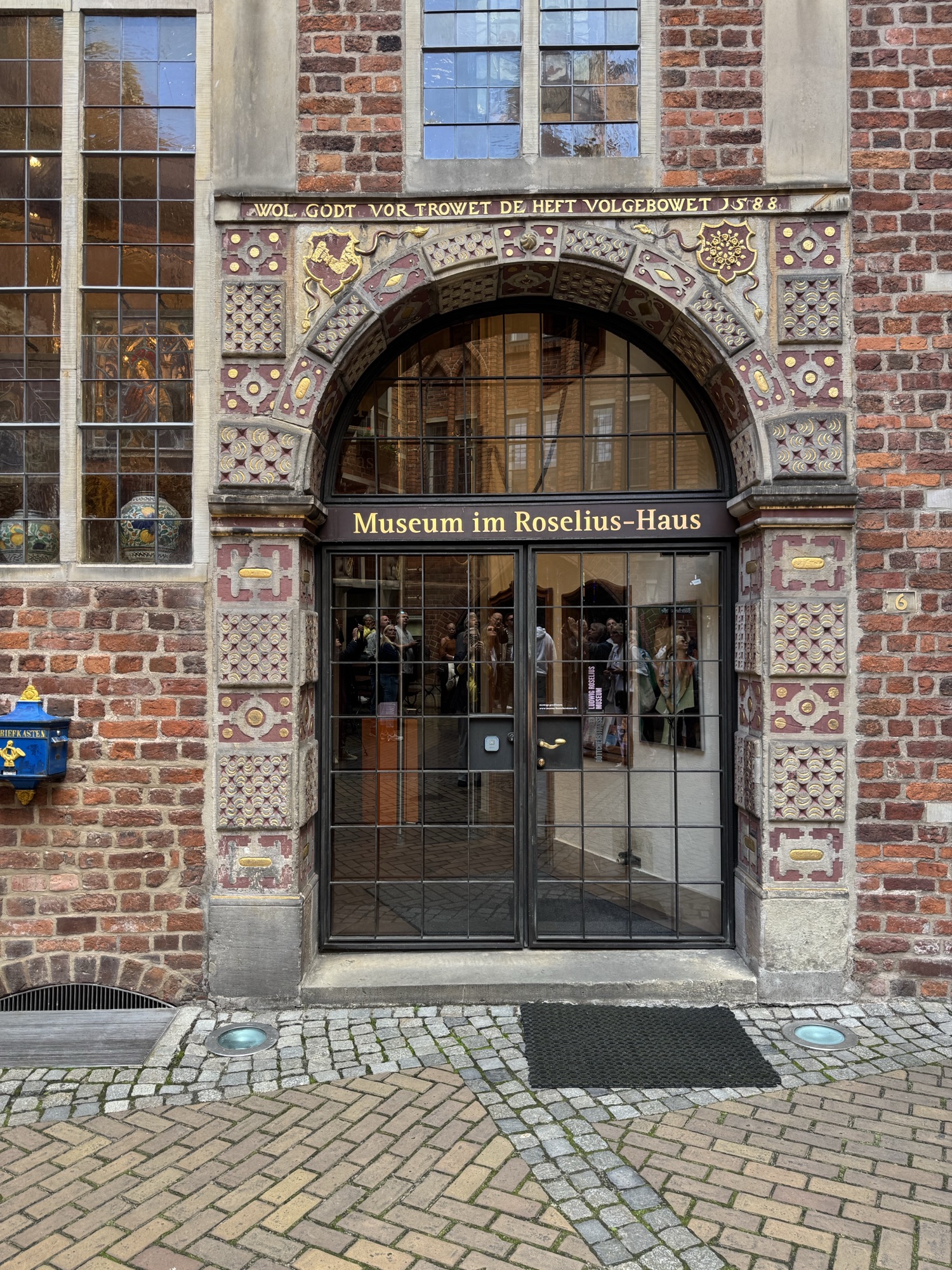
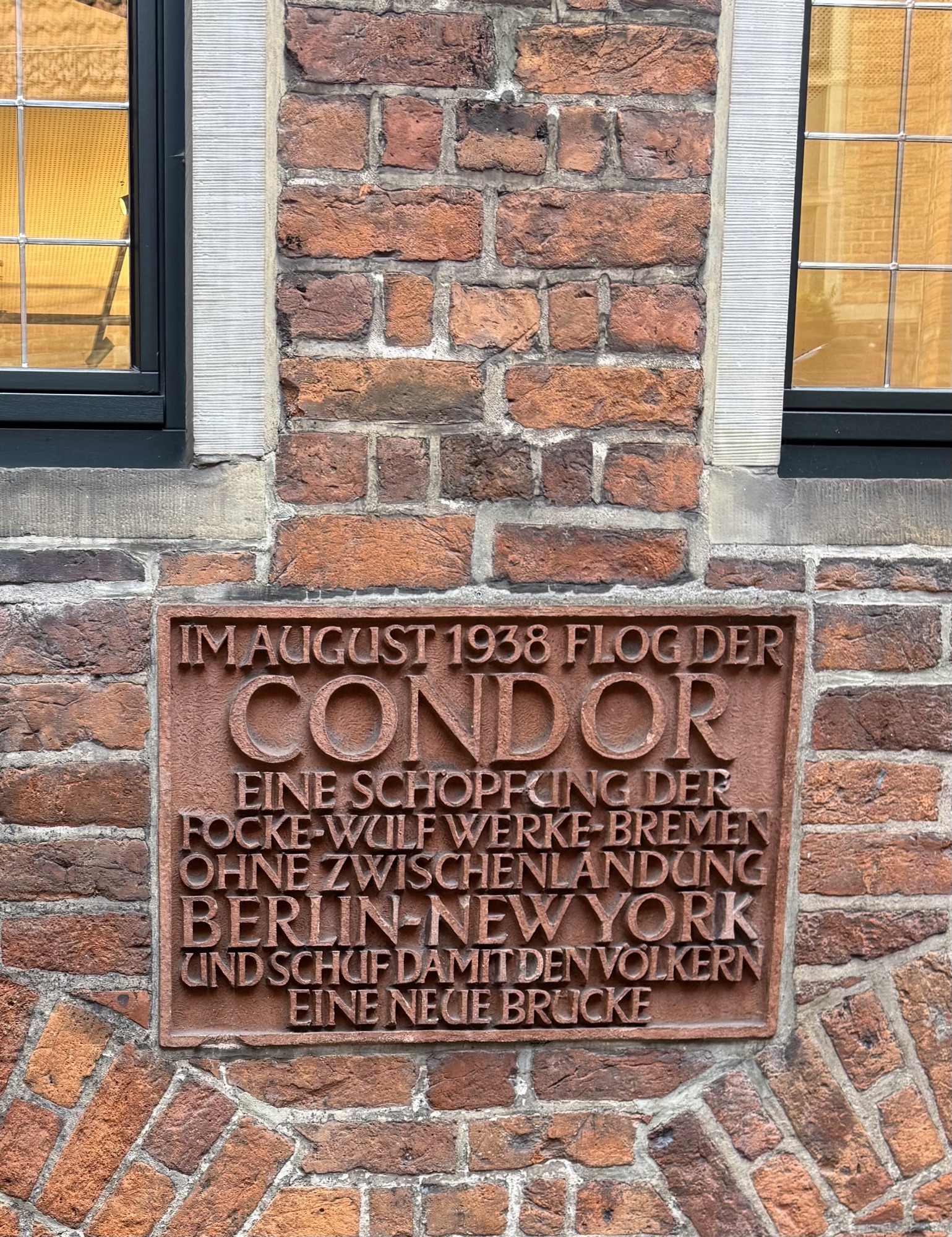
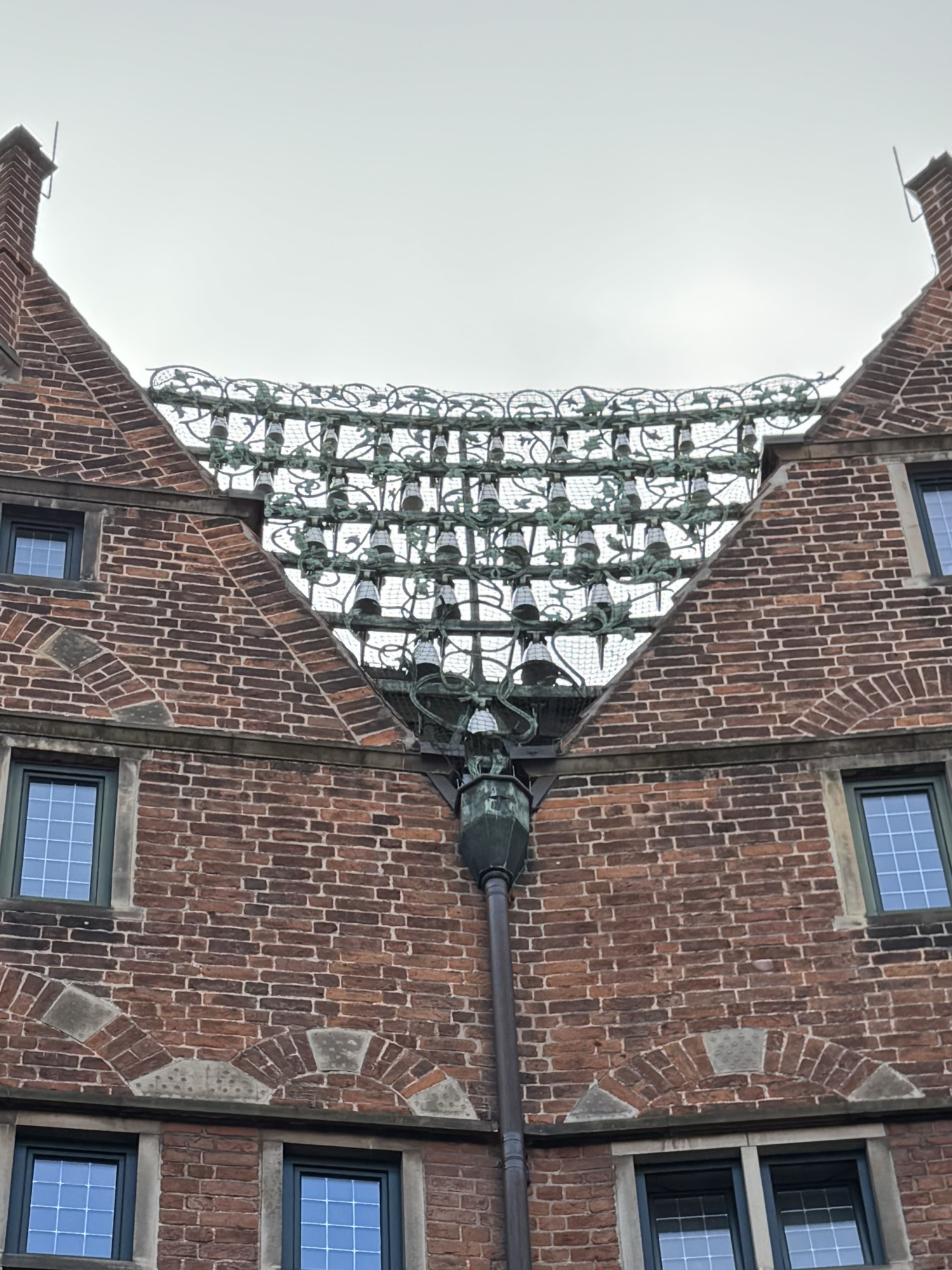
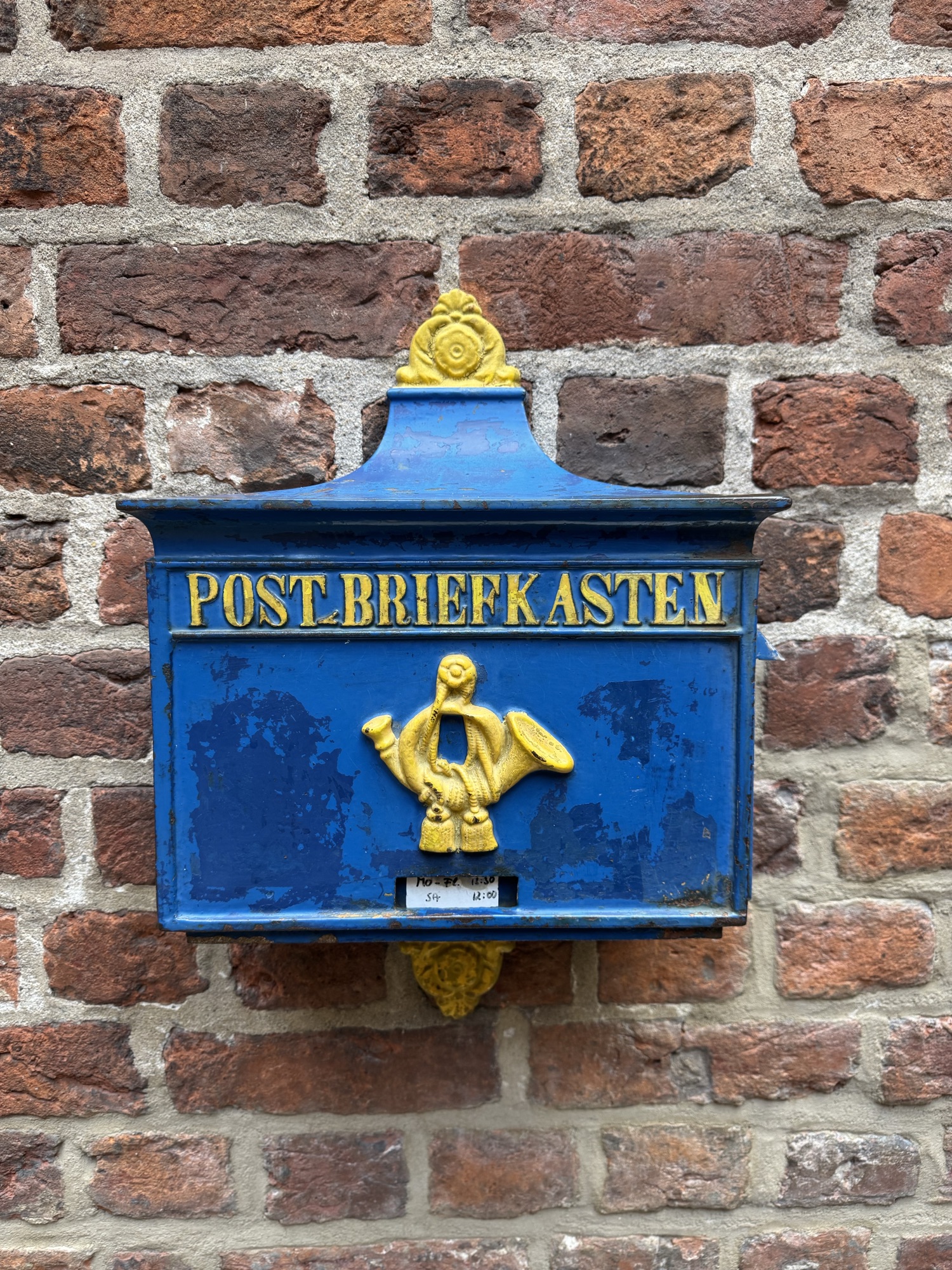
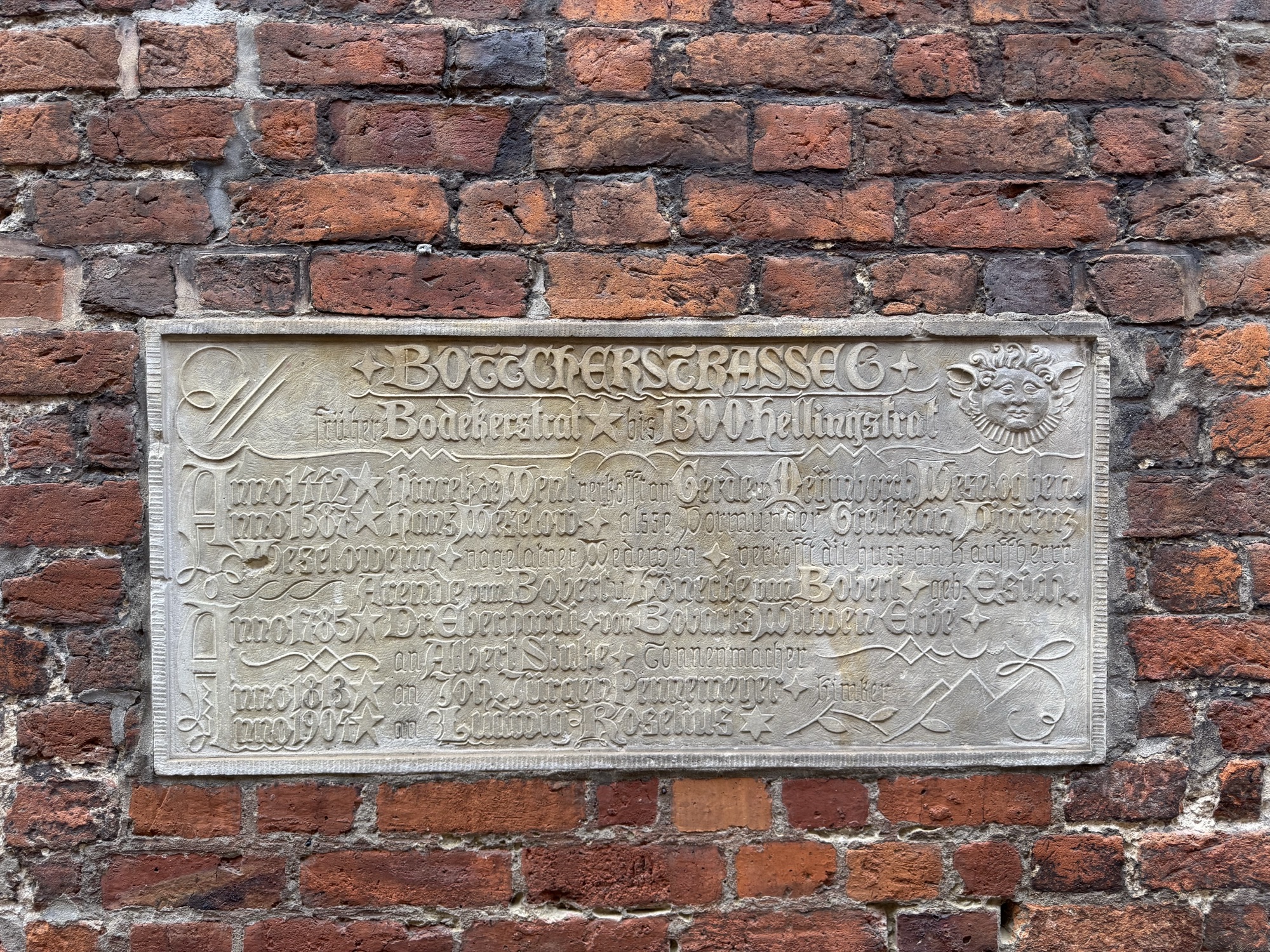
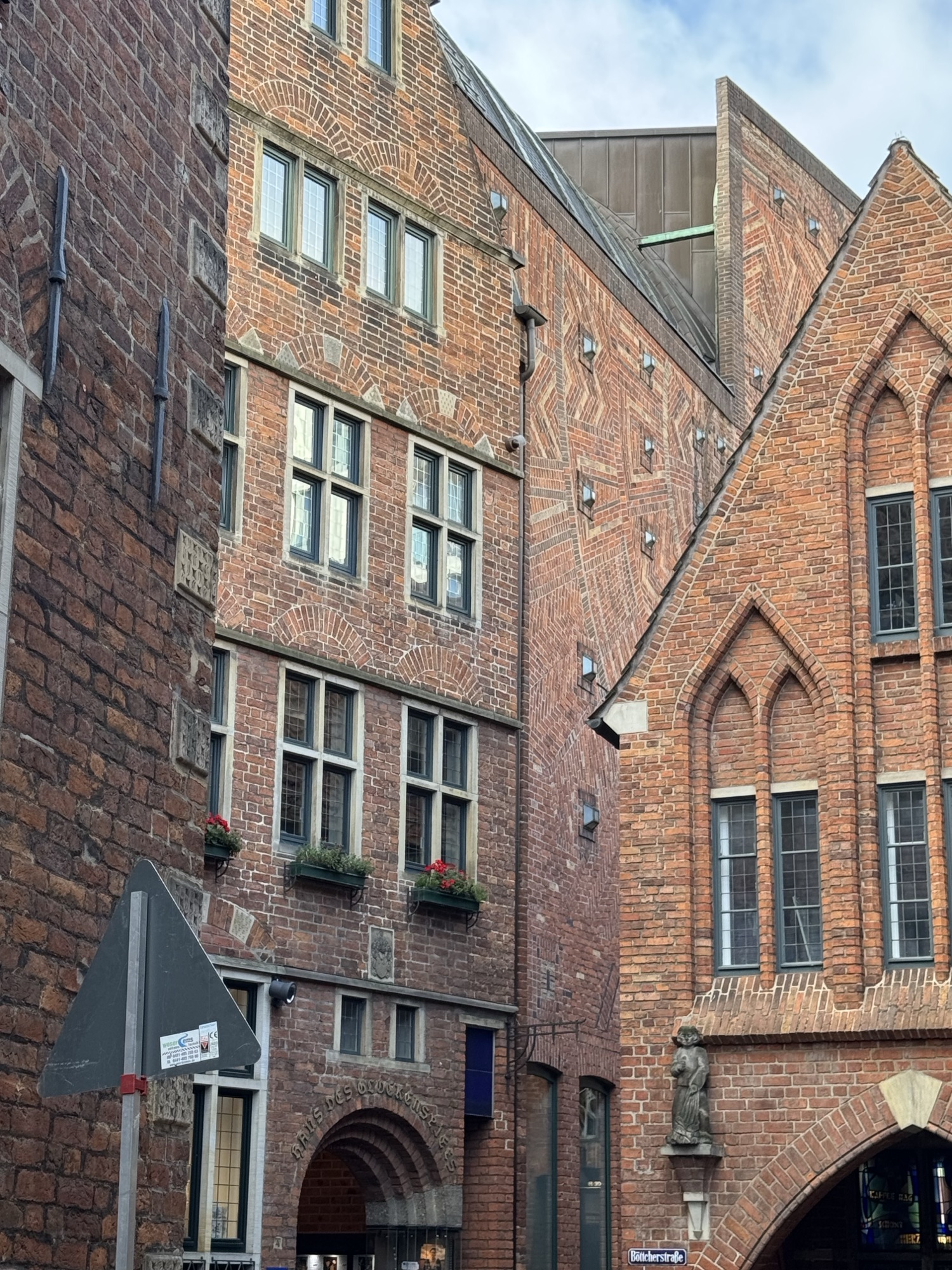
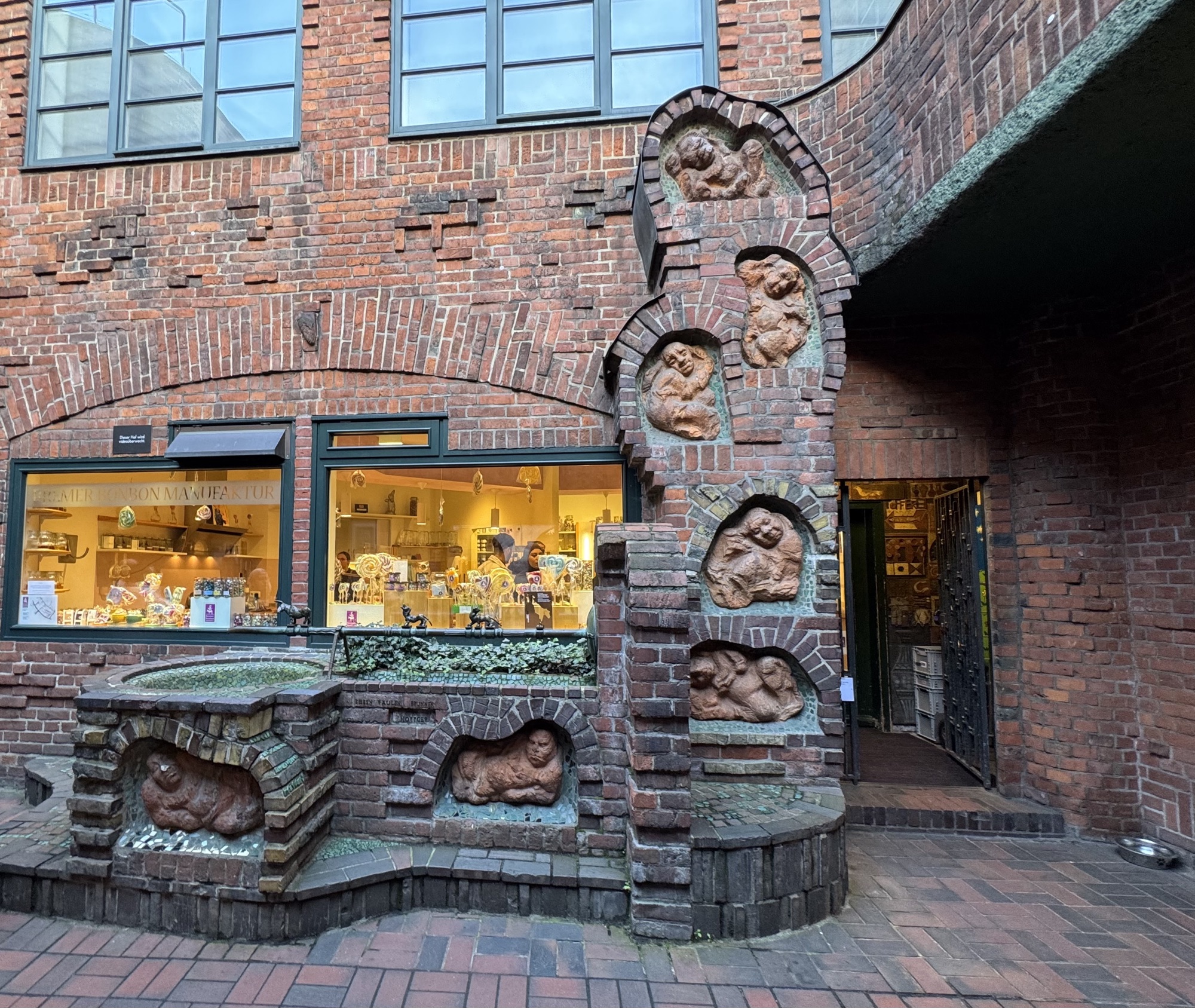
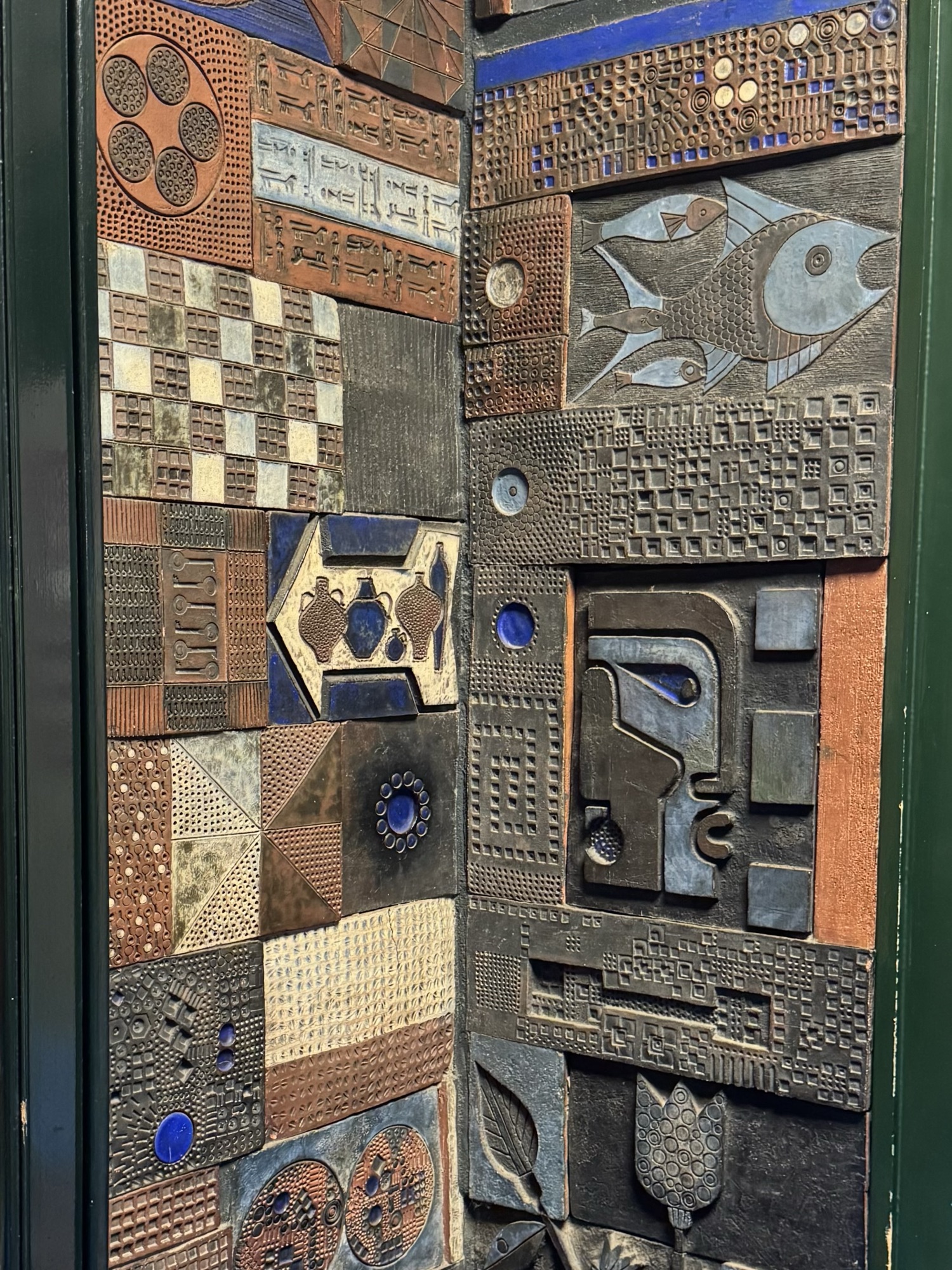
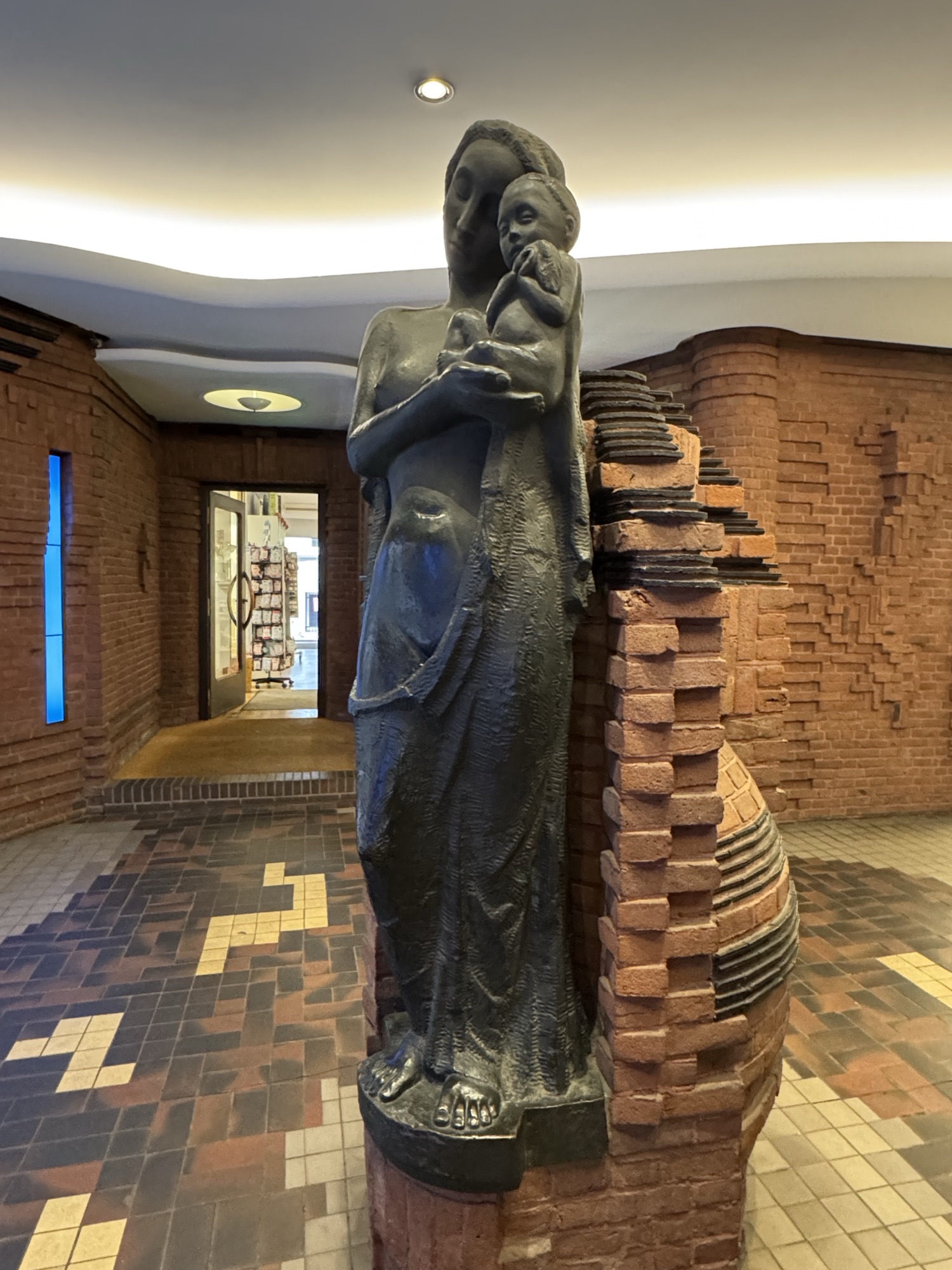
Exiting Böttcherstrasse to the main square, we returned to architecture from the Middle Ages, specifically St Peter’s Cathedral.
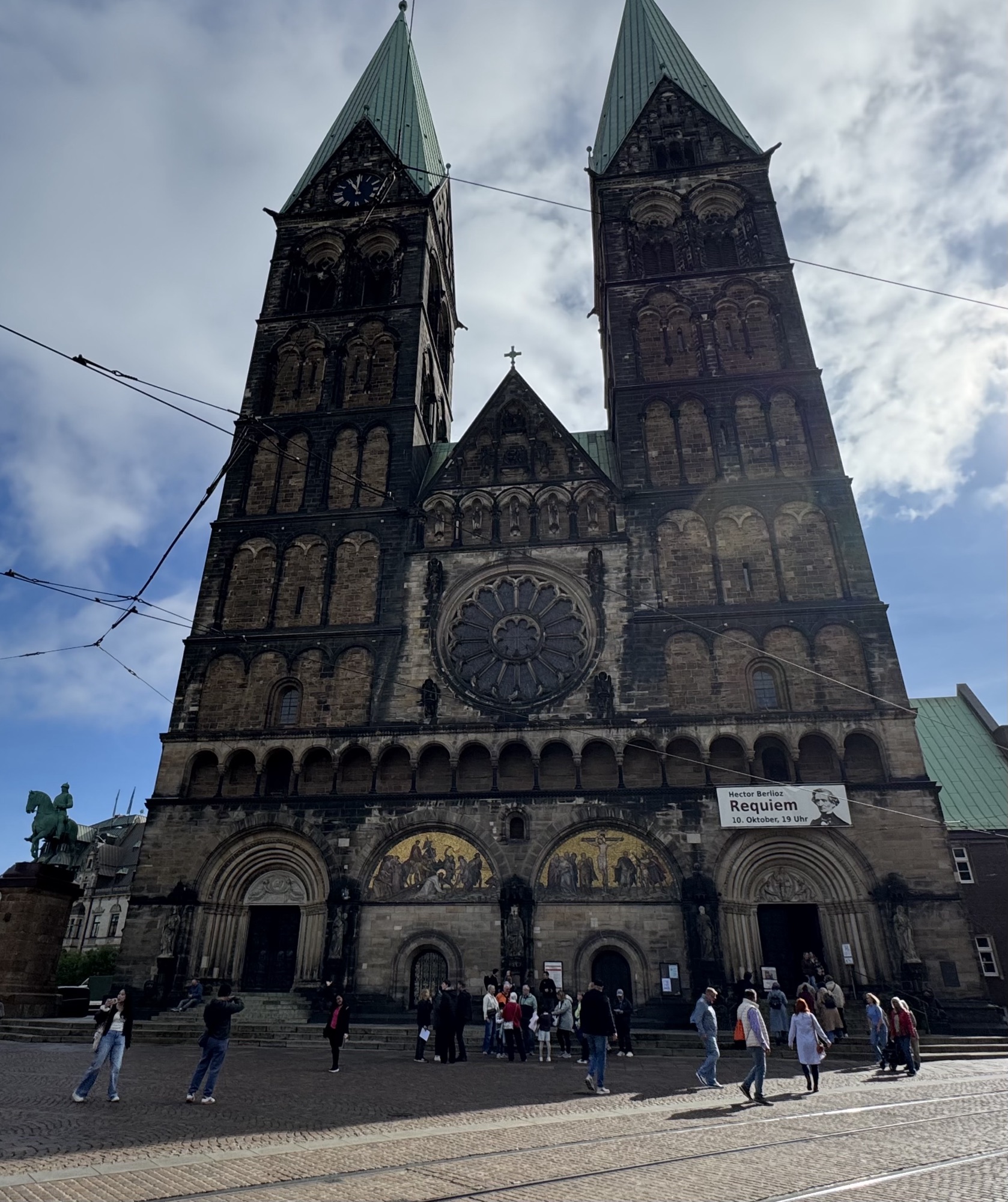
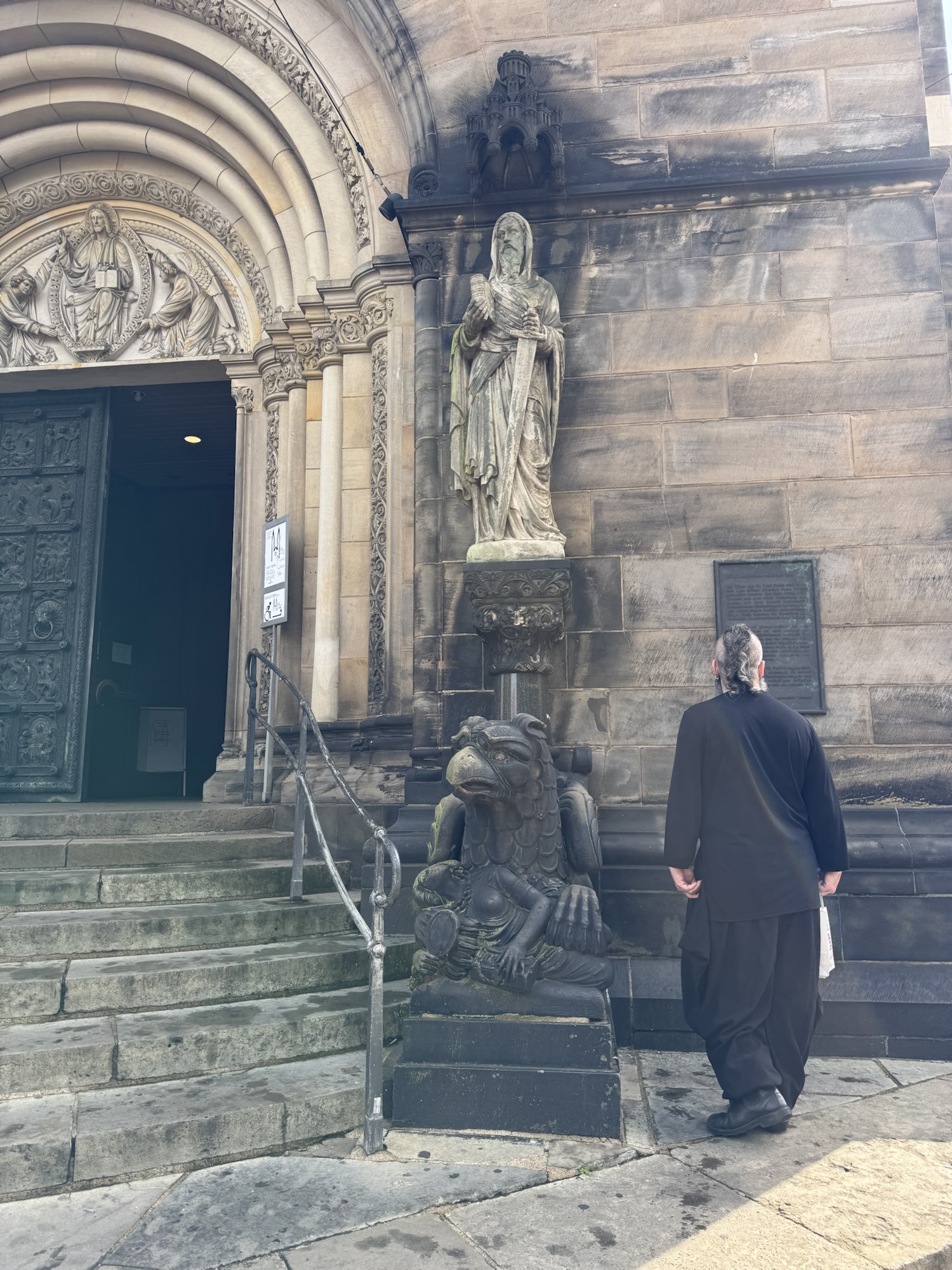
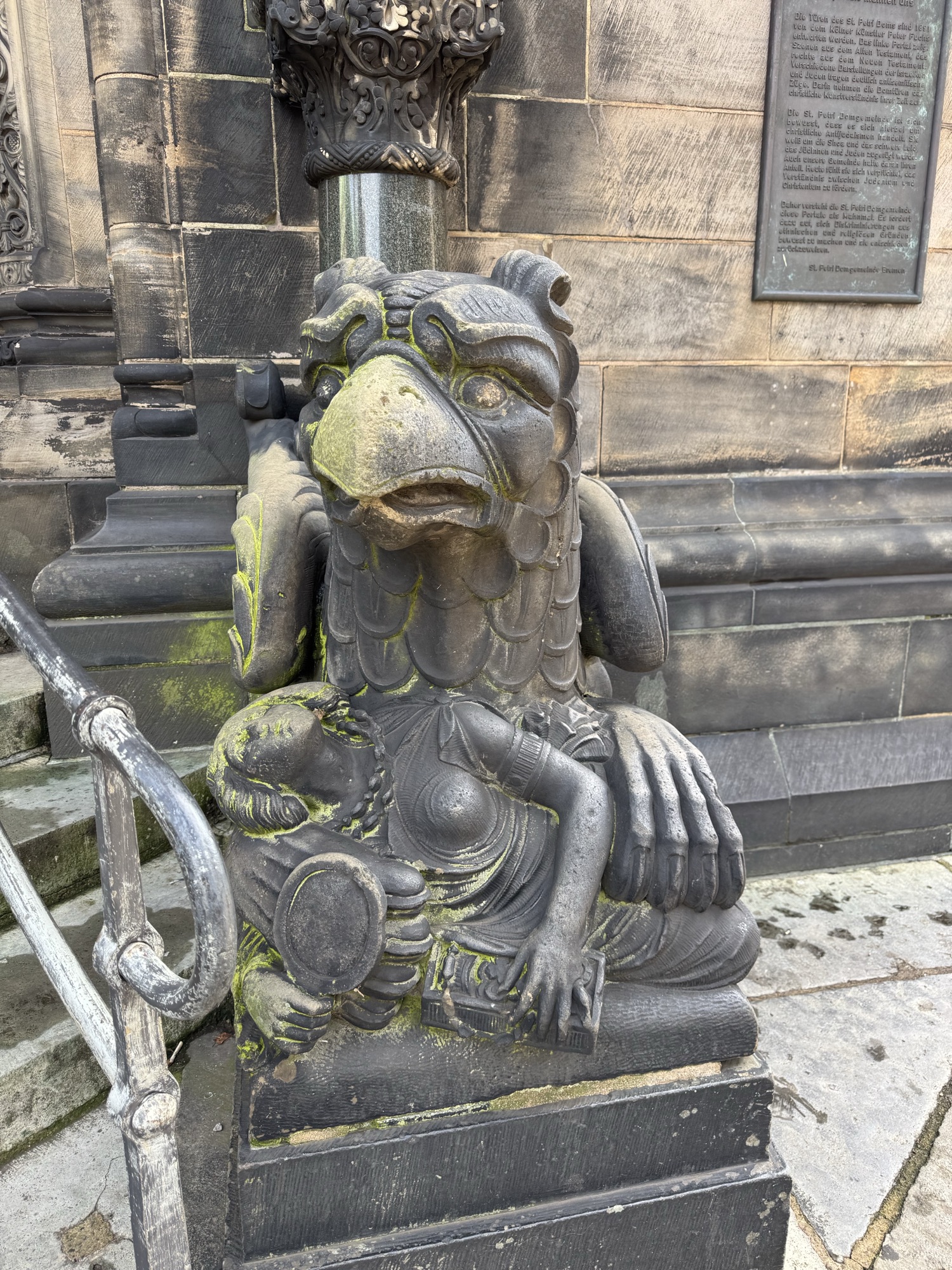
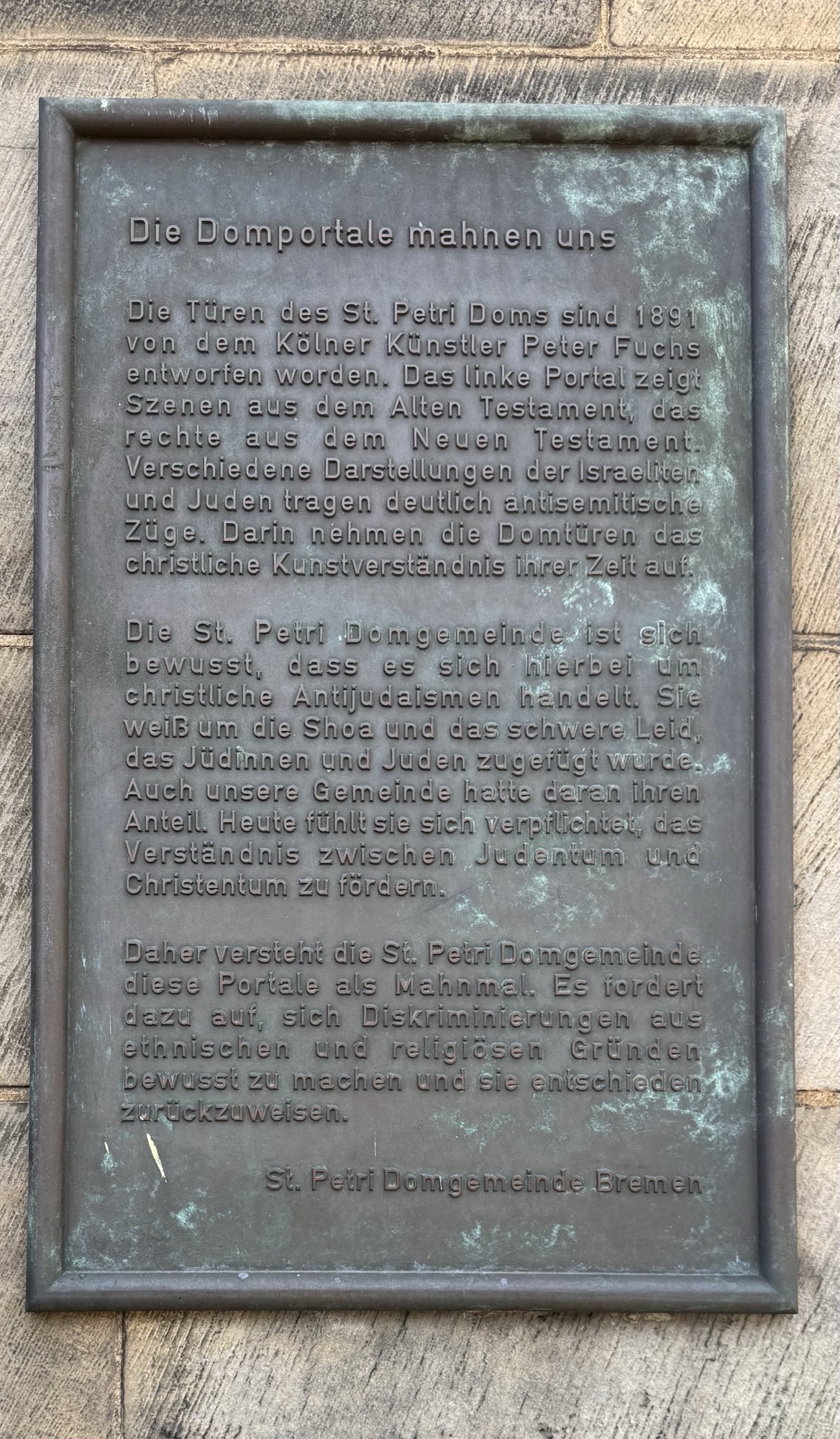
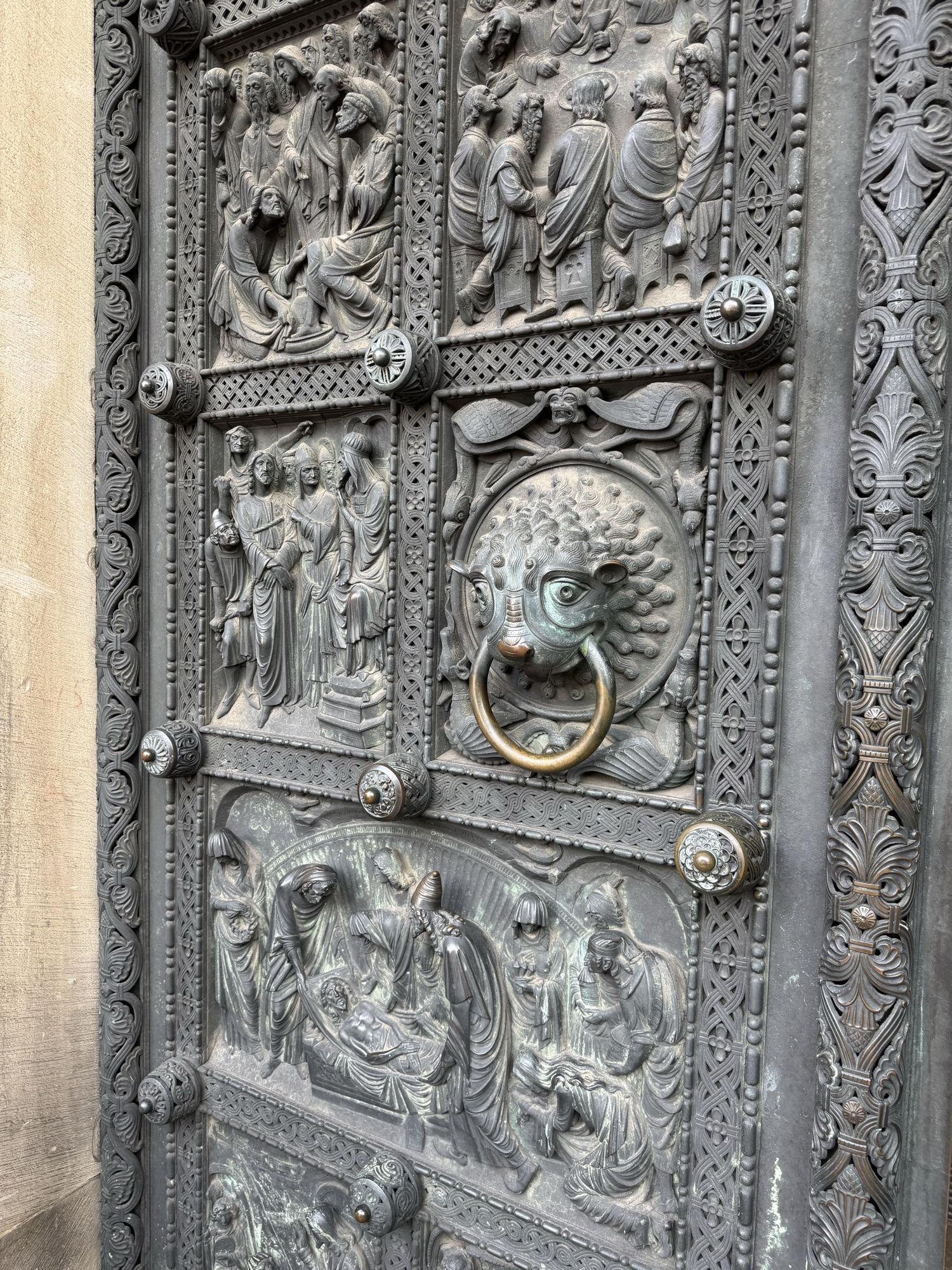
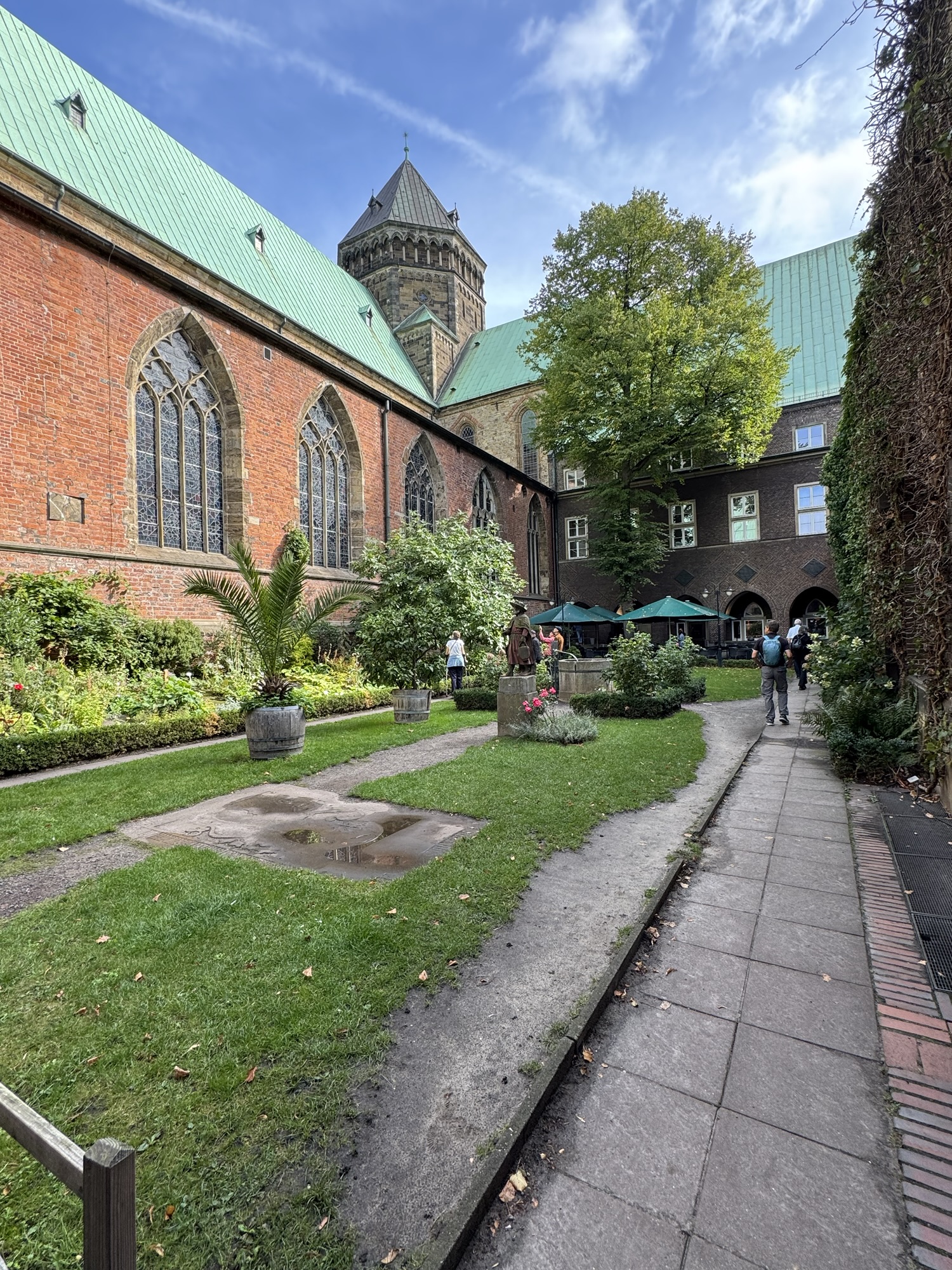
The doors of St. Peter’s Cathedral were designed in 1891 by the Cologne artist Peter Fuchs. The left portal depicts scenes from the Old Testament, while the right shows scenes from the New Testament. Various depictions of Israelites and Jews bear clearly antisemitic traits; in this regard, the cathedral doors reflect the Christian artistic sensibilities of their time.
The St. Peter’s Cathedral congregation acknowledges that these images represent forms of Christian anti-Judaism. It is mindful of the Shoah and the profound suffering inflicted upon Jewish people.
Our congregation, too, played a part in this history. Today, it feels a duty to foster understanding between Judaism and Christianity.
Consequently, the St. Peter’s Cathedral congregation views these portals as a memorial—a call to recognize discrimination based on ethnicity or religion and to reject it resolutely.
St. Peter’s Cathedral Congregation, Bremen
The cathedral is lovely inside, with colours that reminded me of the interior of St Matthias at the Fisherman’s Bastion in Budapest, although the designs here are not as complex.
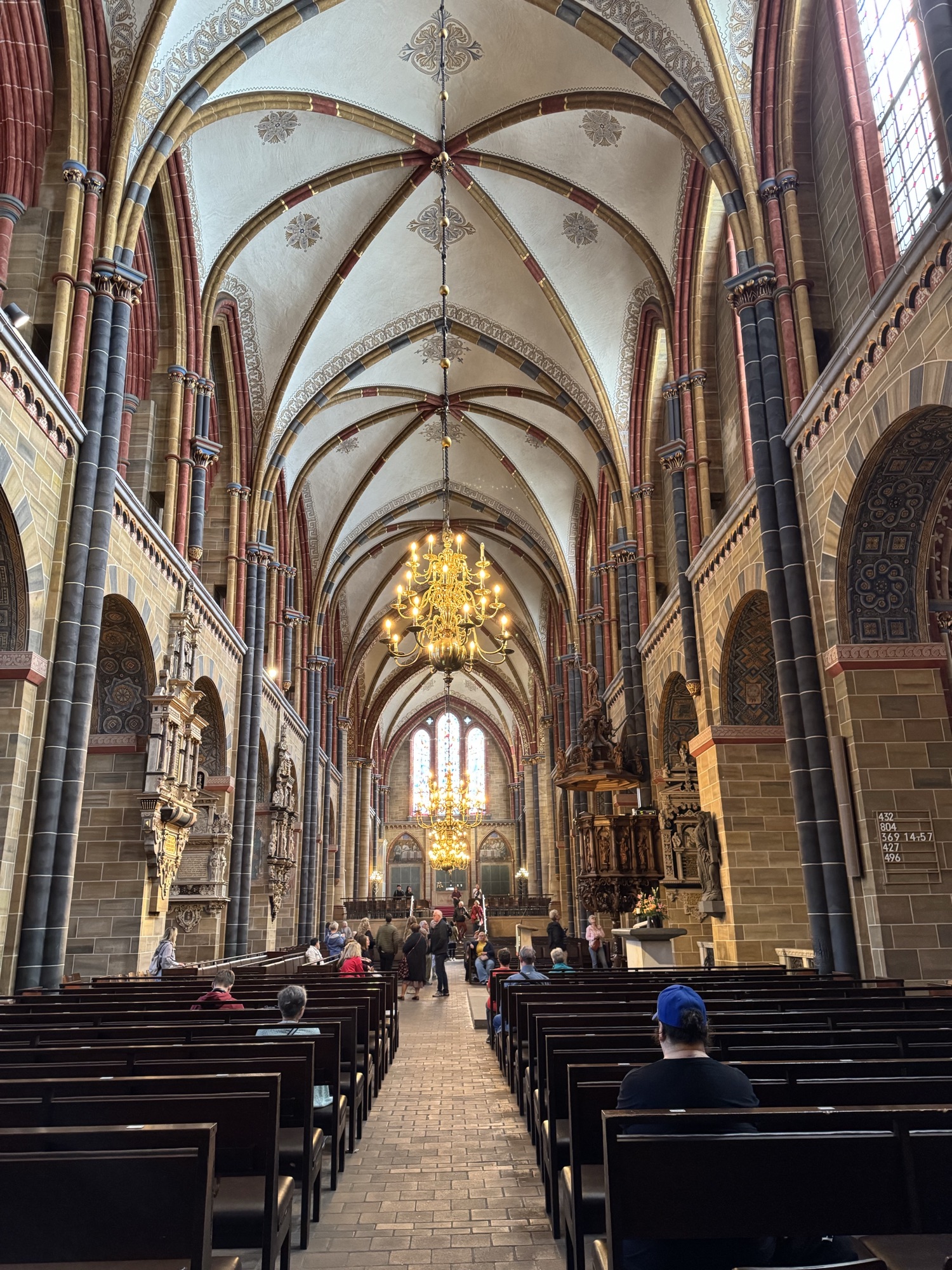
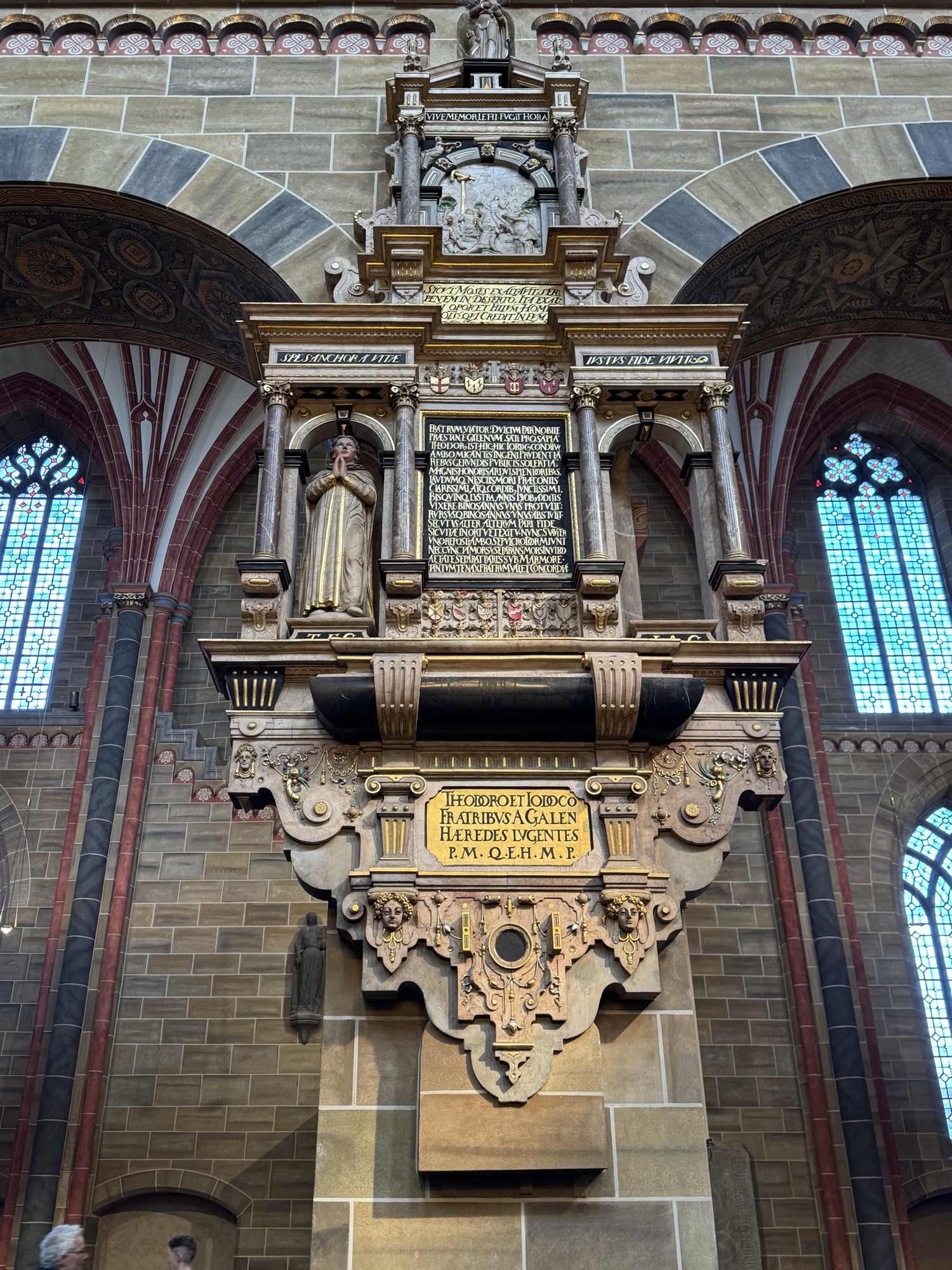
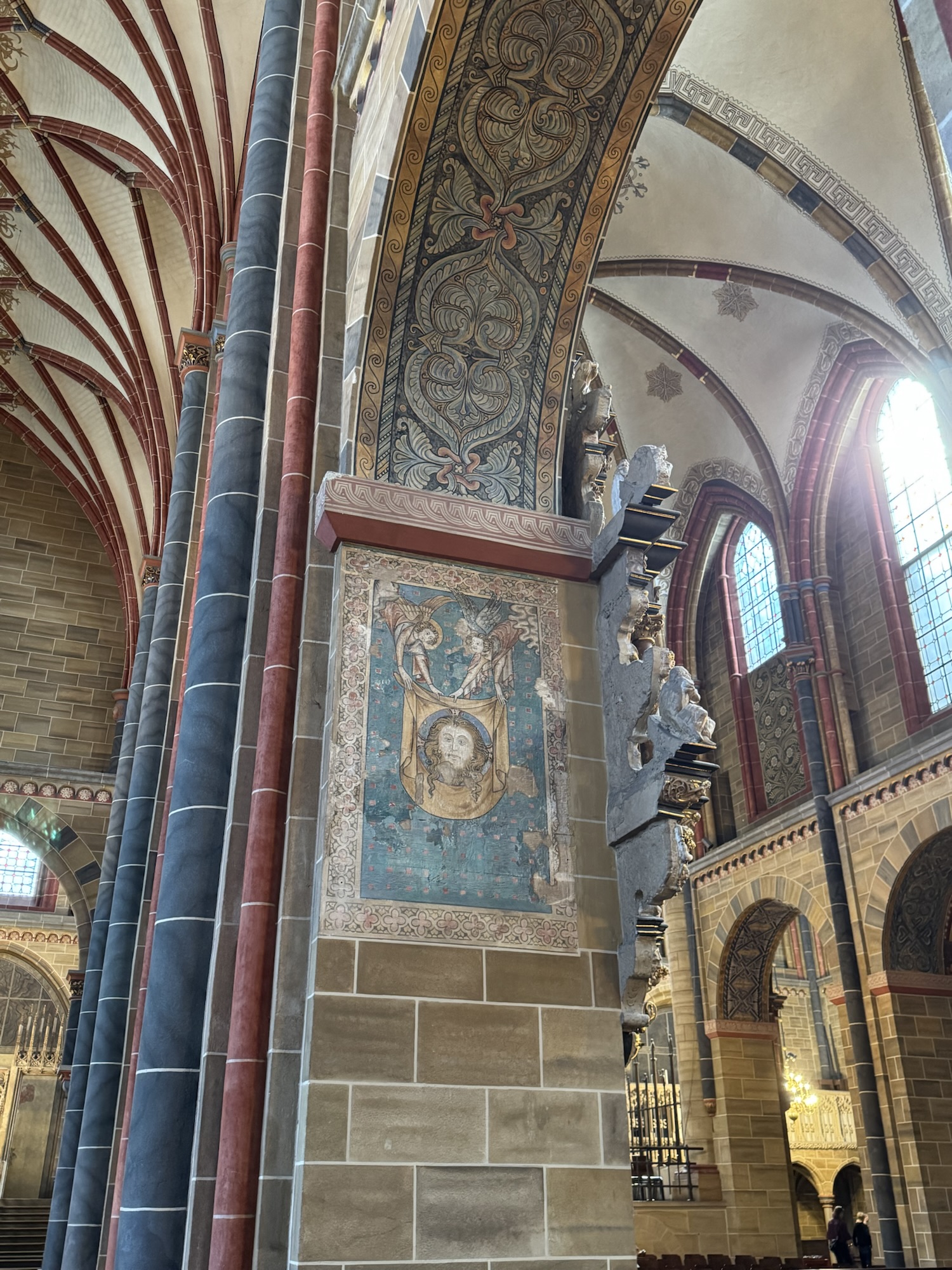
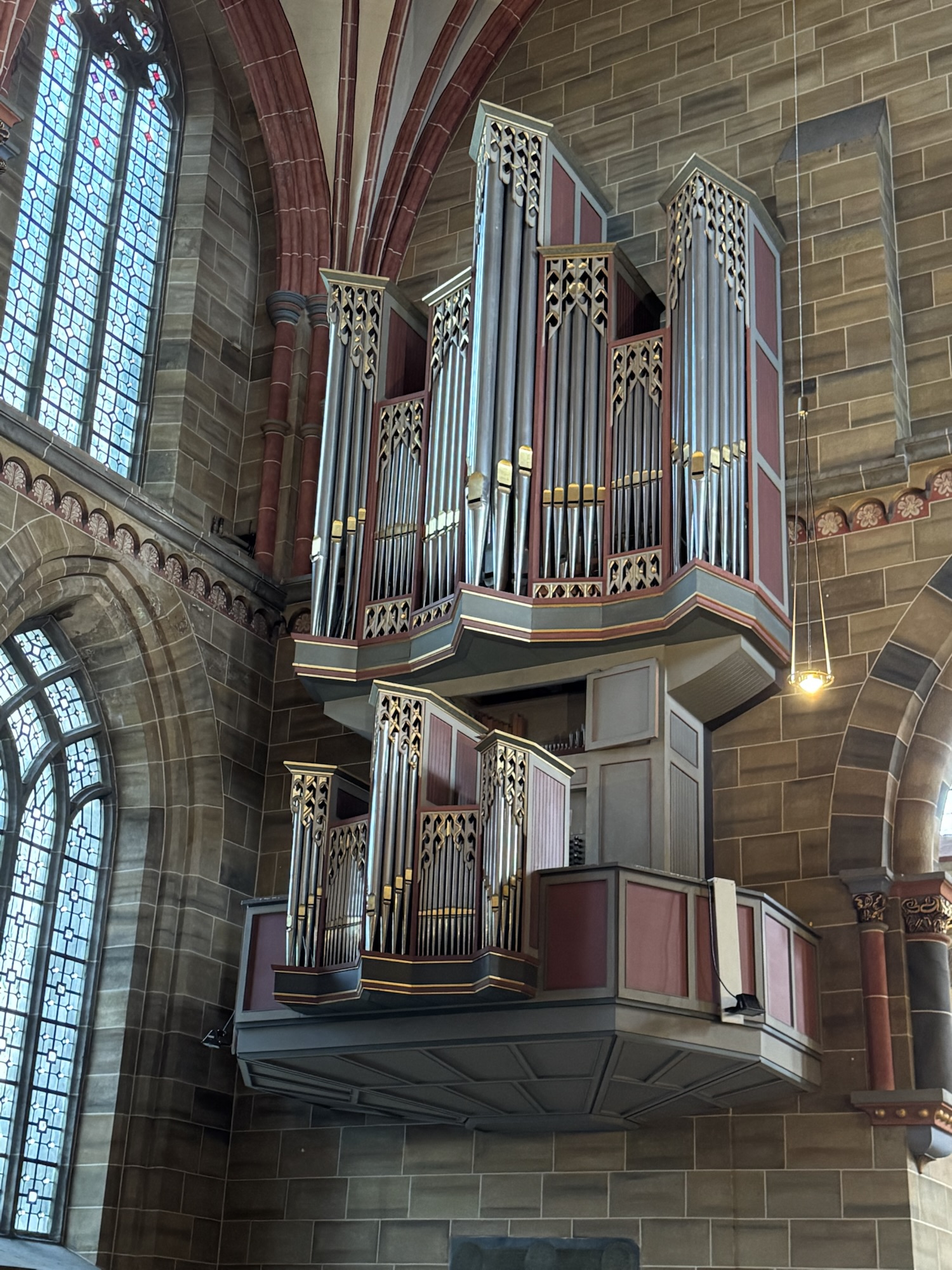
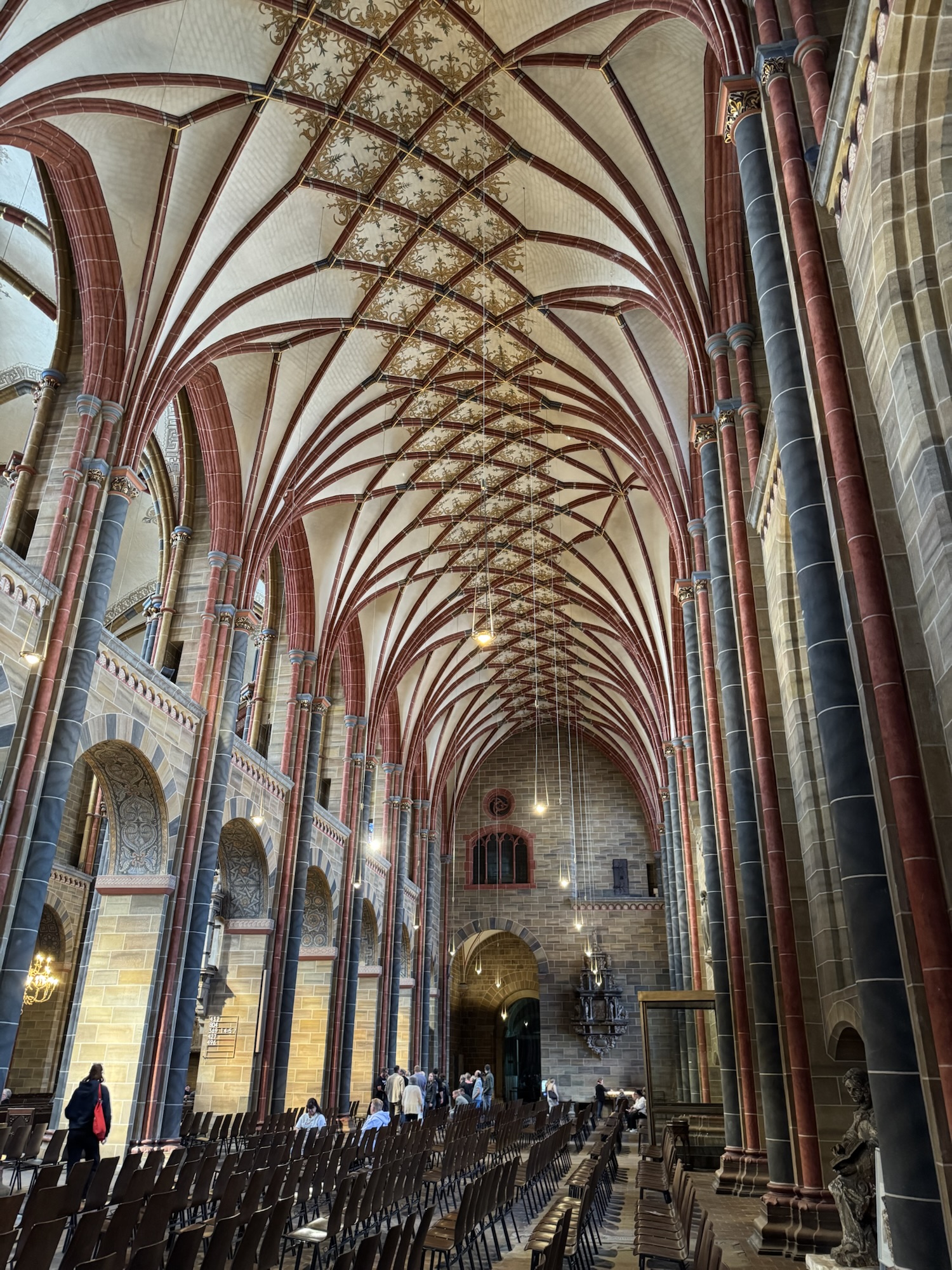
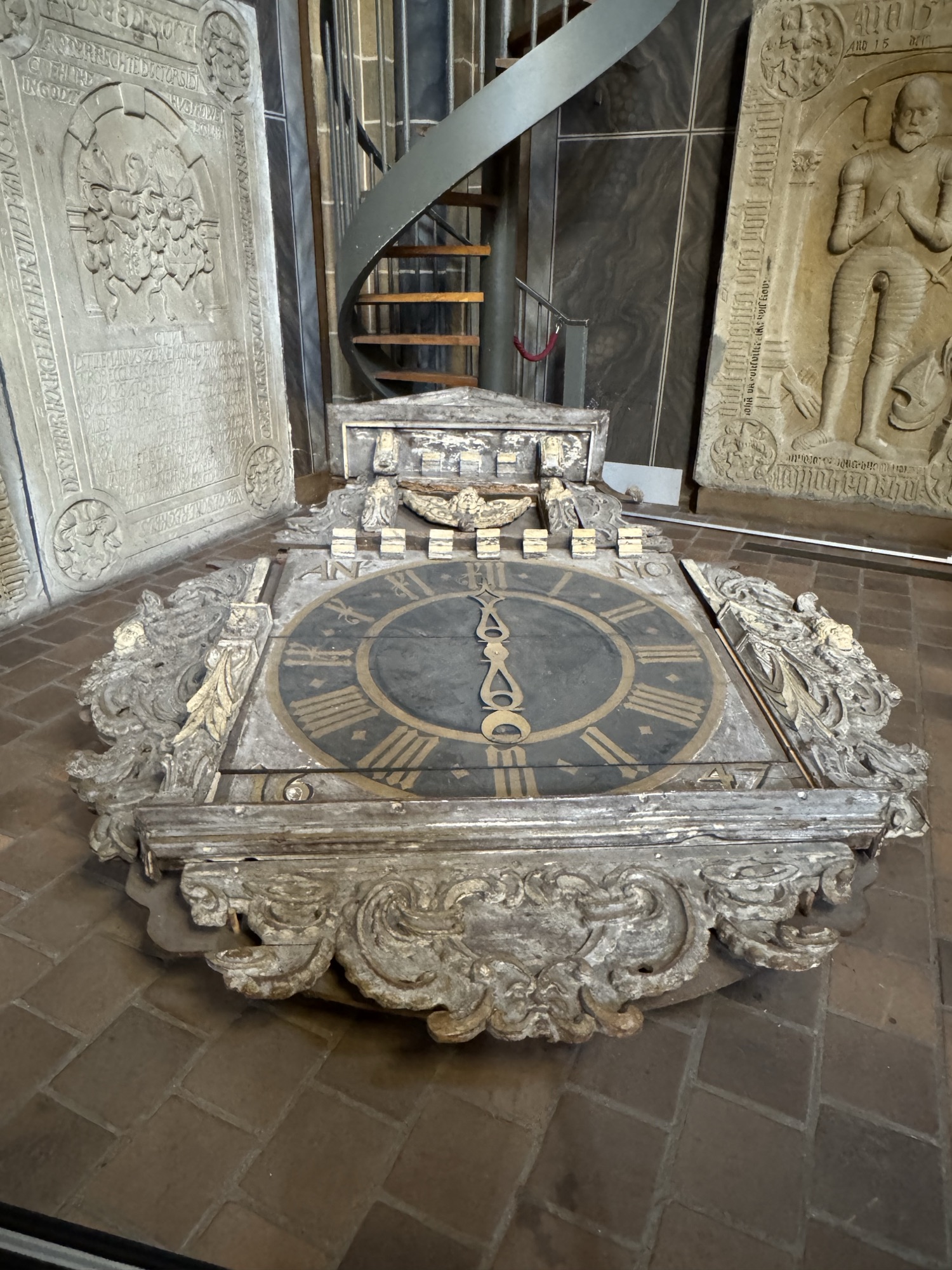
The current church was restored after WWII to its 17th century appearance. The tower clock from 1647CE is on display in one of the cathedral alcoves.
The 17th century church was only the most recent structure here. The original cathedral dated yo the 11th century. Signs explained that : “St. Peter’s medieval church served as the cathedral of the once mightiest Archbishopric in northern Europe. The Christian mission spread from Bremen to all of Scandinavia and along the Baltic coast as far east as Riga.”
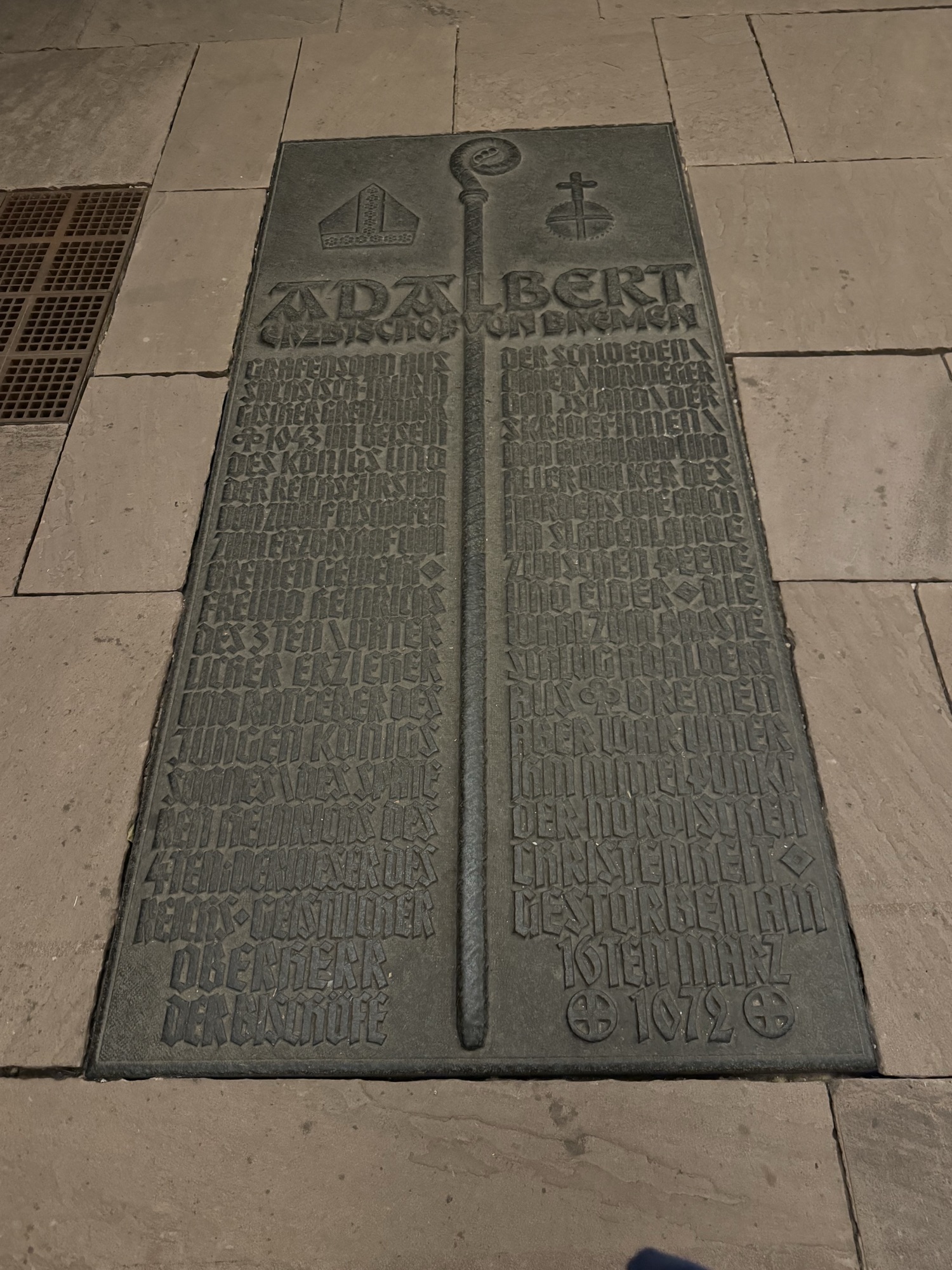
A recreated 1079 CE tomb marker for Archbishop Adalbert is part of the cathedral floor.
We went down to the East Crypt, expecting it to contain tombs, but it is currently a quiet room for prayer and meditation.
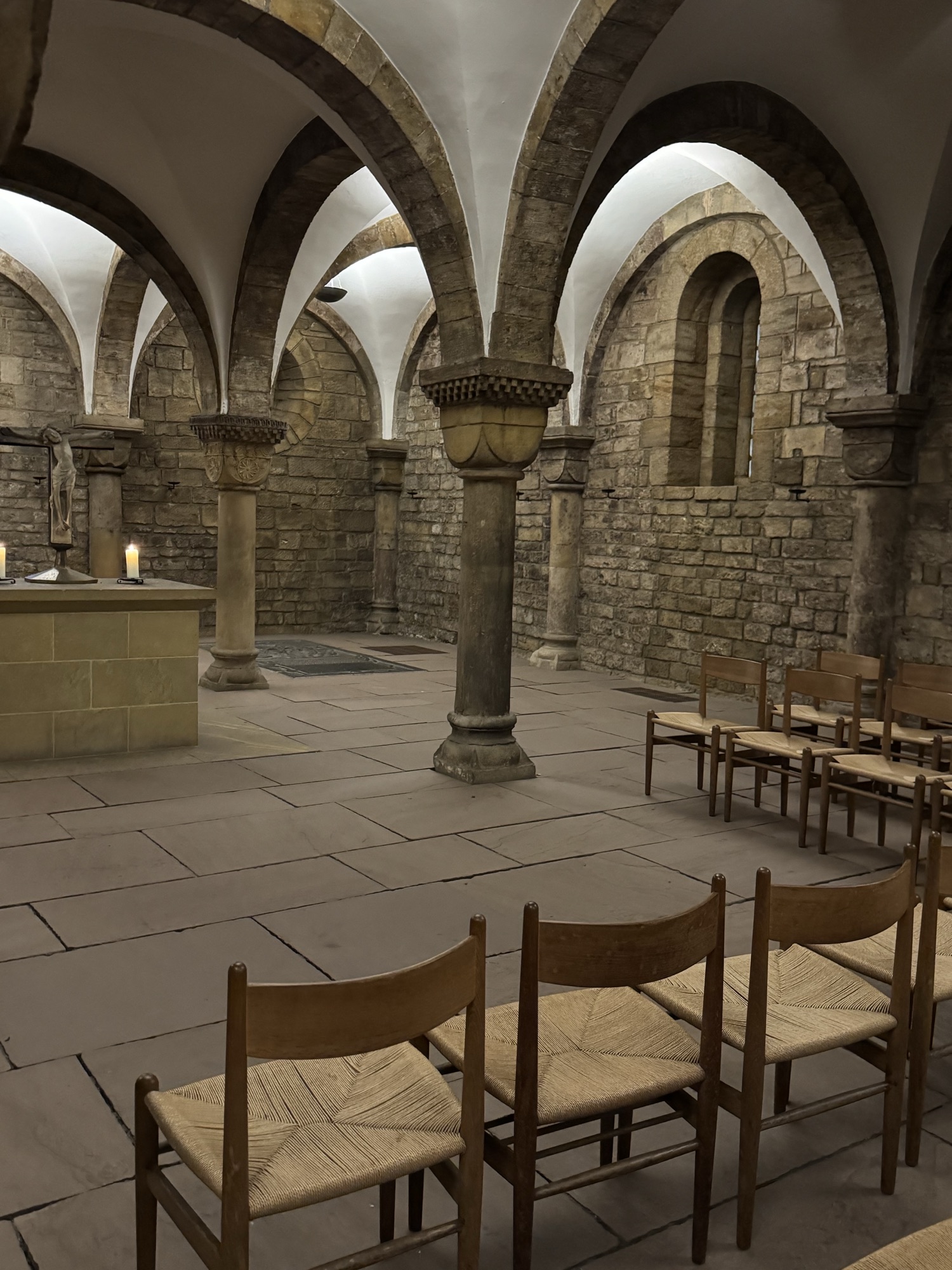
The crypt area had once been used as the “lead cellar”, where lead intended for roof and window repairs was stored.
In 1698CE several mummies were discovered here by journeymen repairing the cathedral organ. The mummification was caused by the rapid dehydration of the bodies—a result of the subsoil’s air permeability—and had nothing to do with the presence of lead. We found this out when we exited the cathedral to the Bible Garden and then headed down the stairs to what is now called the Lead Cellar, where a total of eight mummies (some identified by name) are now displayed in open coffins with glass tops. No photos at all are allowed. I can say that the mummified bodies were far less disturbing to look at than the Egyptian mummies we’ve seen, and somehow more interesting for the fact that the bodies were in no way mutilated/handled in order to be mummified.
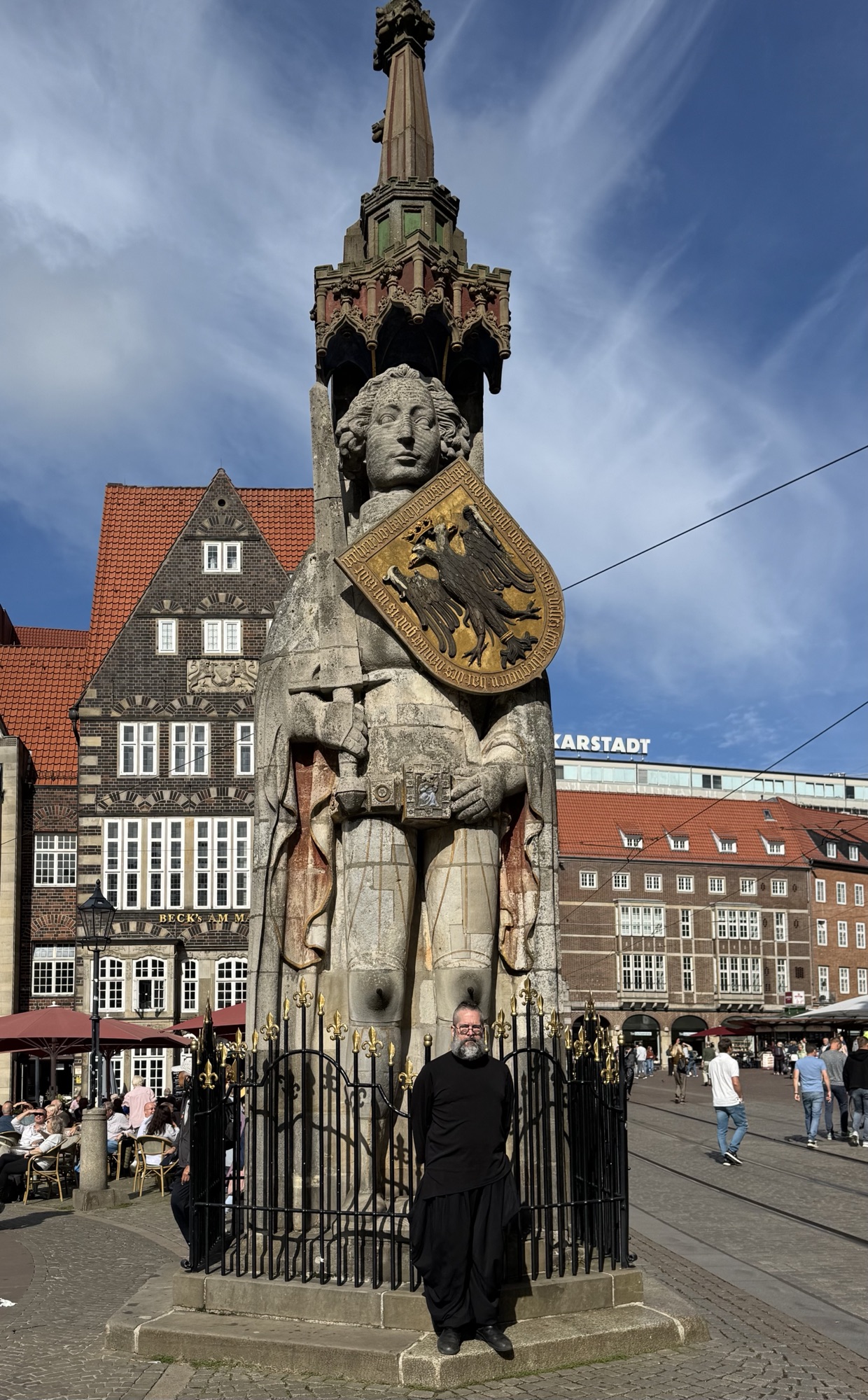
We crossed Market Square to ensure we hit a photo of the Roland statue. Erected in 1404CE, the statue is a symbol of the city’s self-governance independent of the Archbishop and church. Roland was a paladin knight under Charlemagne. Supposedly as long as Roland stands, the city will be free. Rumour has it there is a spare statue hidden in the city just in case!
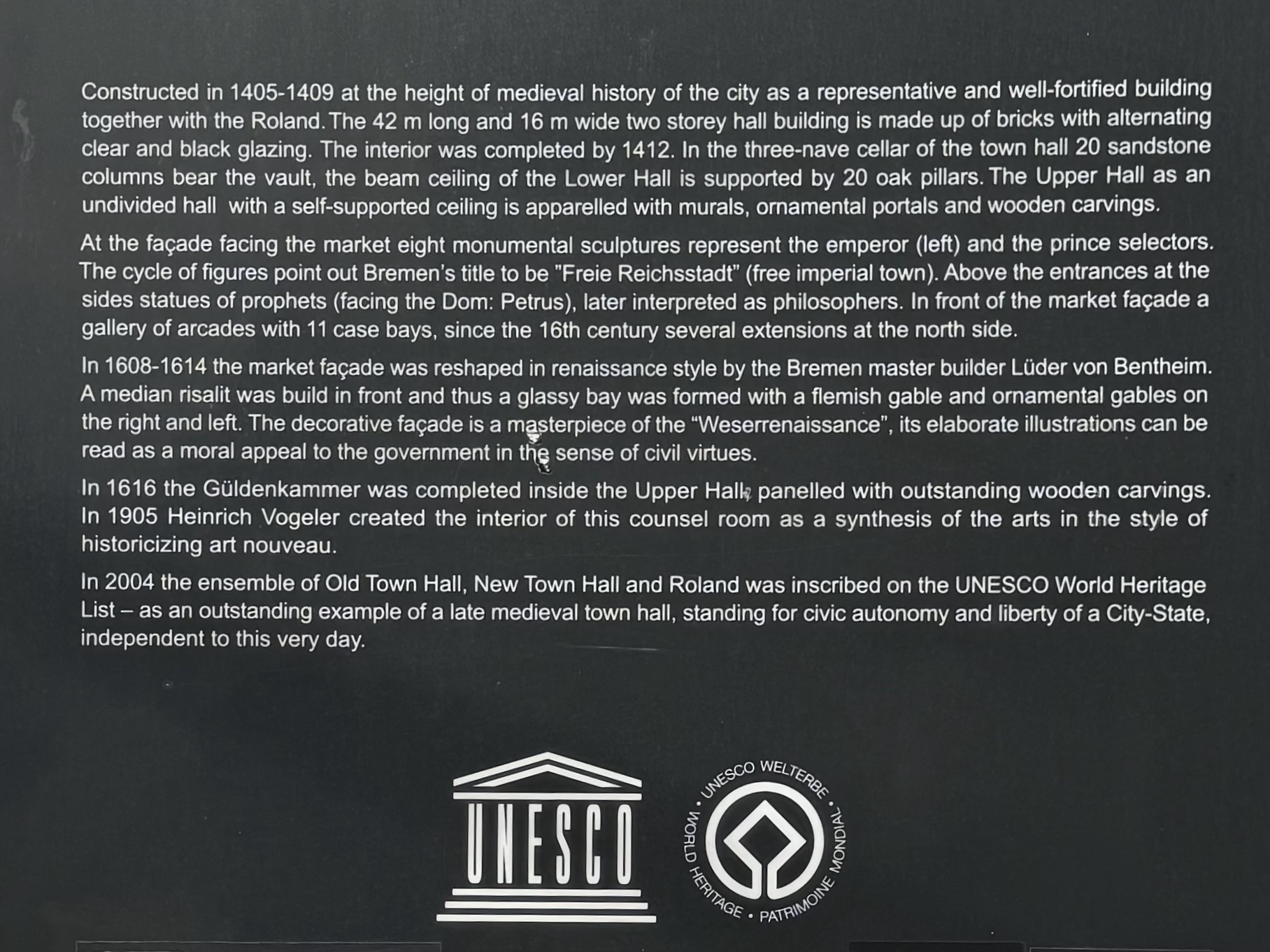
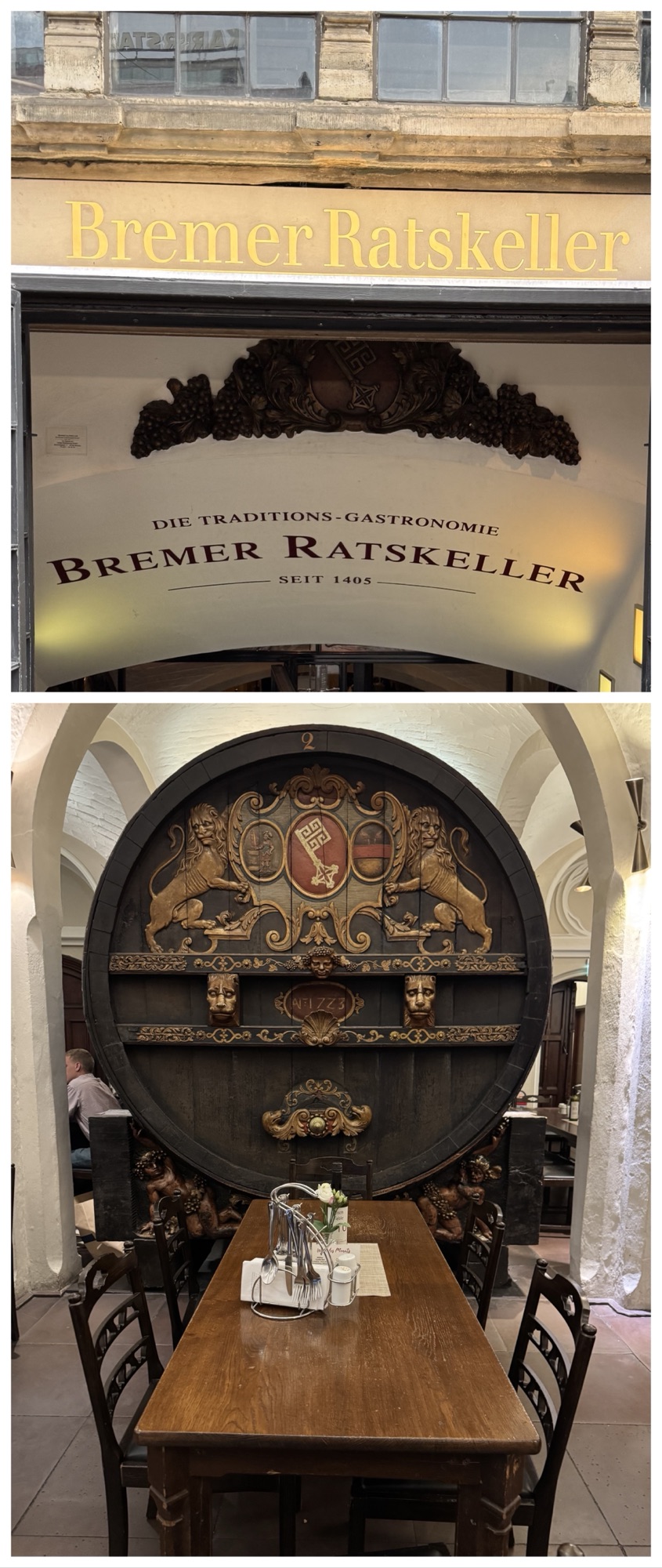
I’d originally hoped to go inside the old city hall, but didn’t realize a guided tour was obligatory. I took two exterior photos, and we made a reservation to eat dinner in the Ratskeller under it.
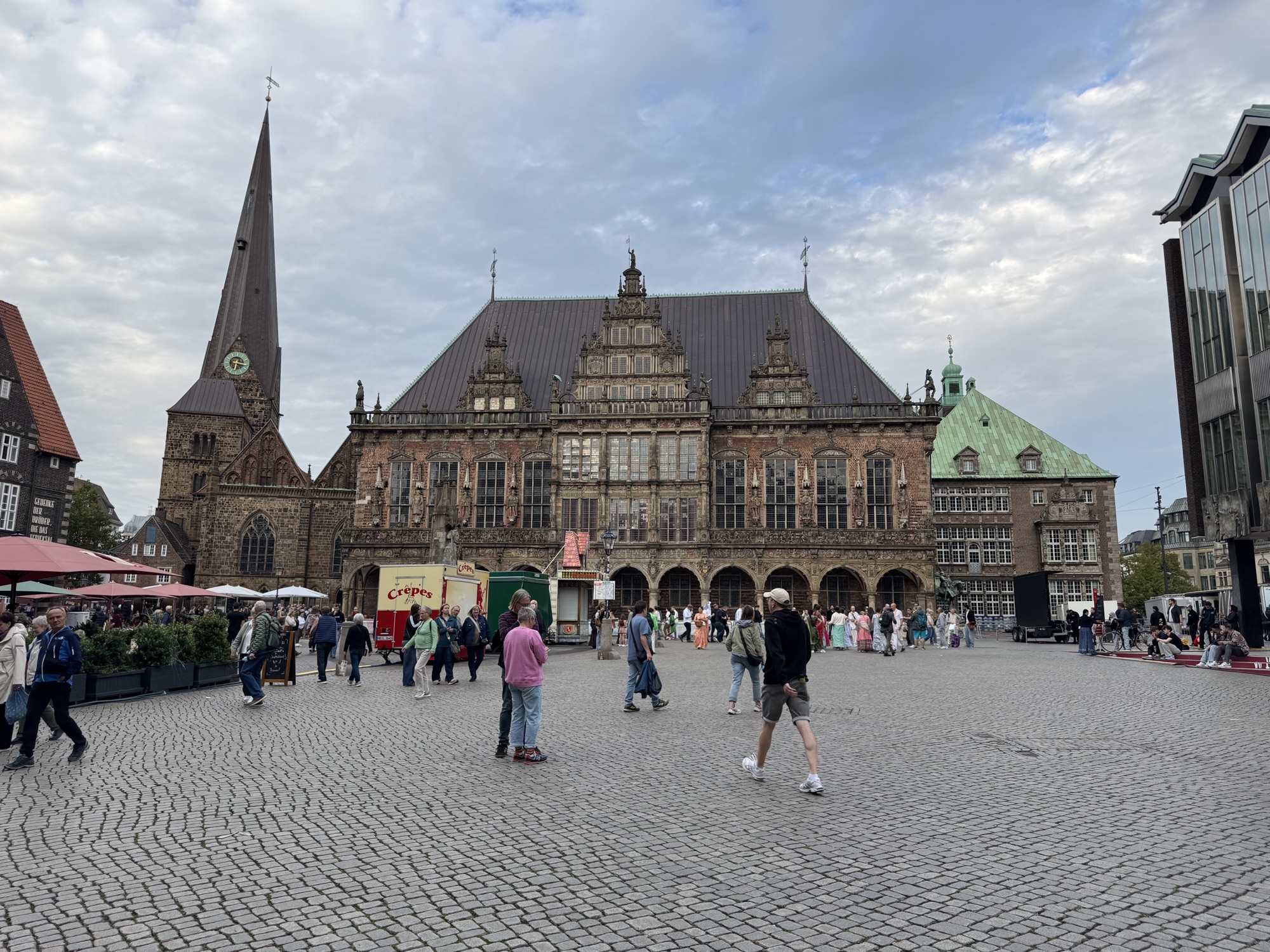
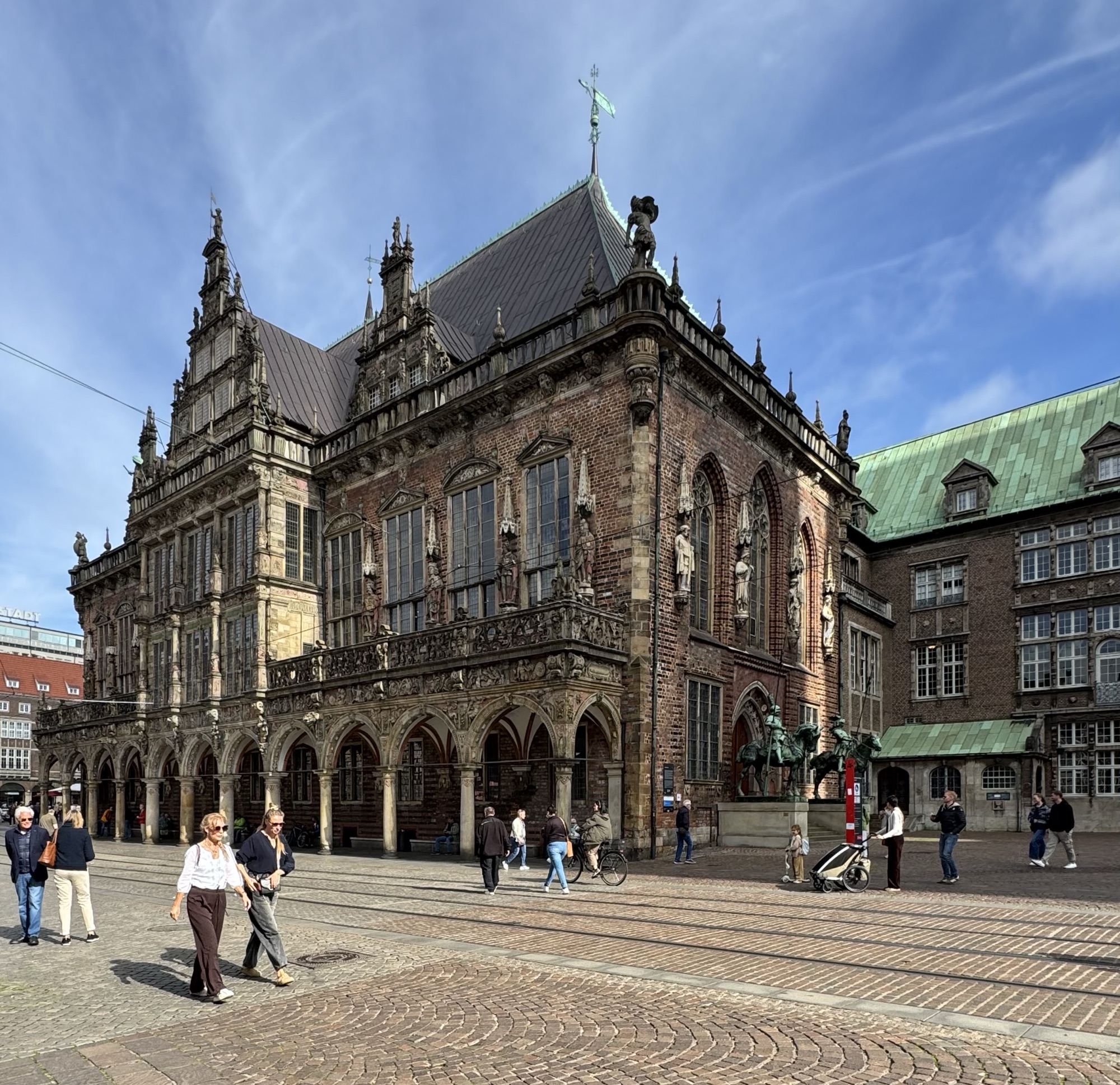
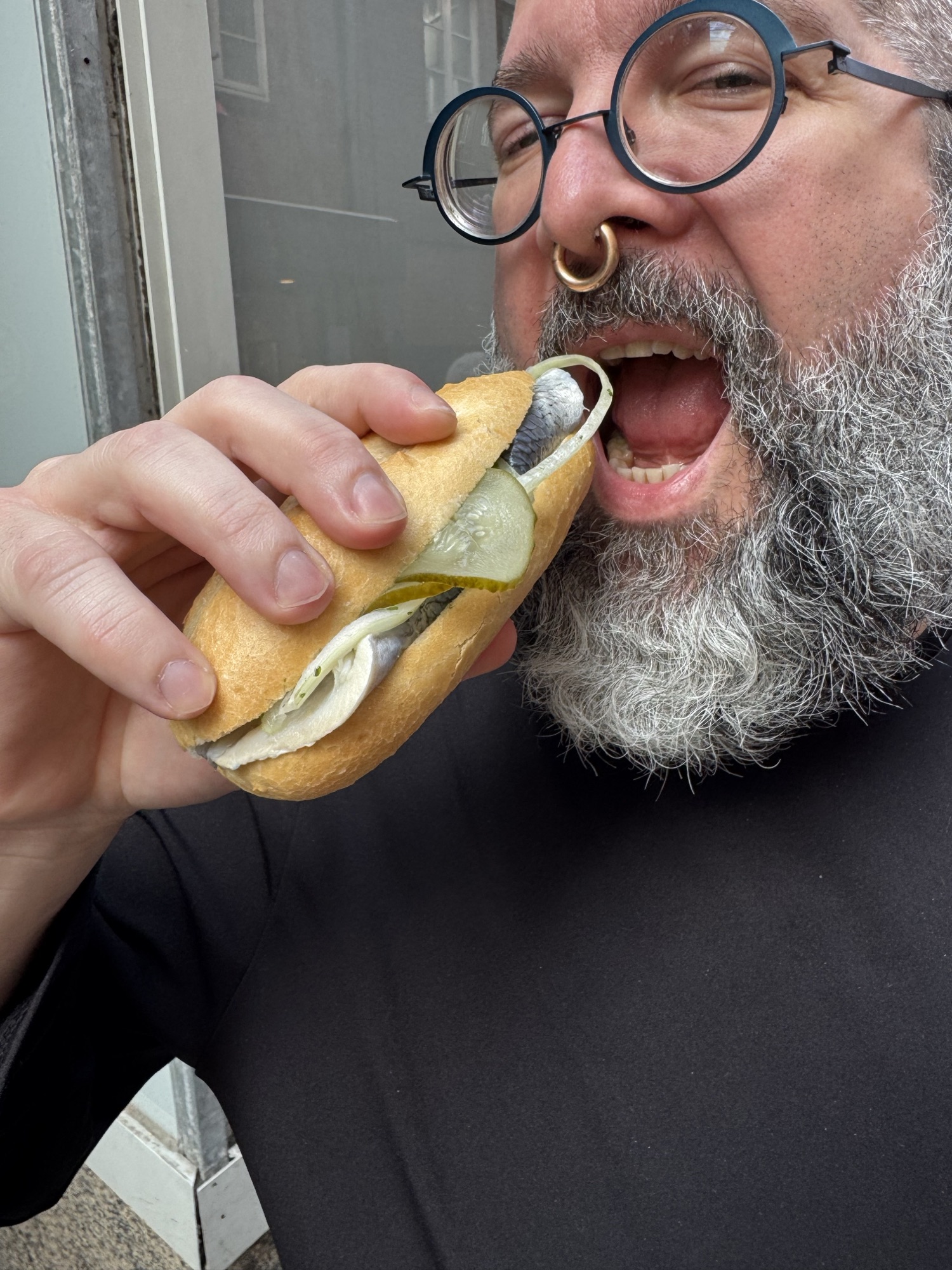
In each city there are iconic foods and drinks. Bremen and its port Bremerhaven are known for “Fischbrötchen” (fish on a bun), most especially featuring Bismarck herring. Delicious!
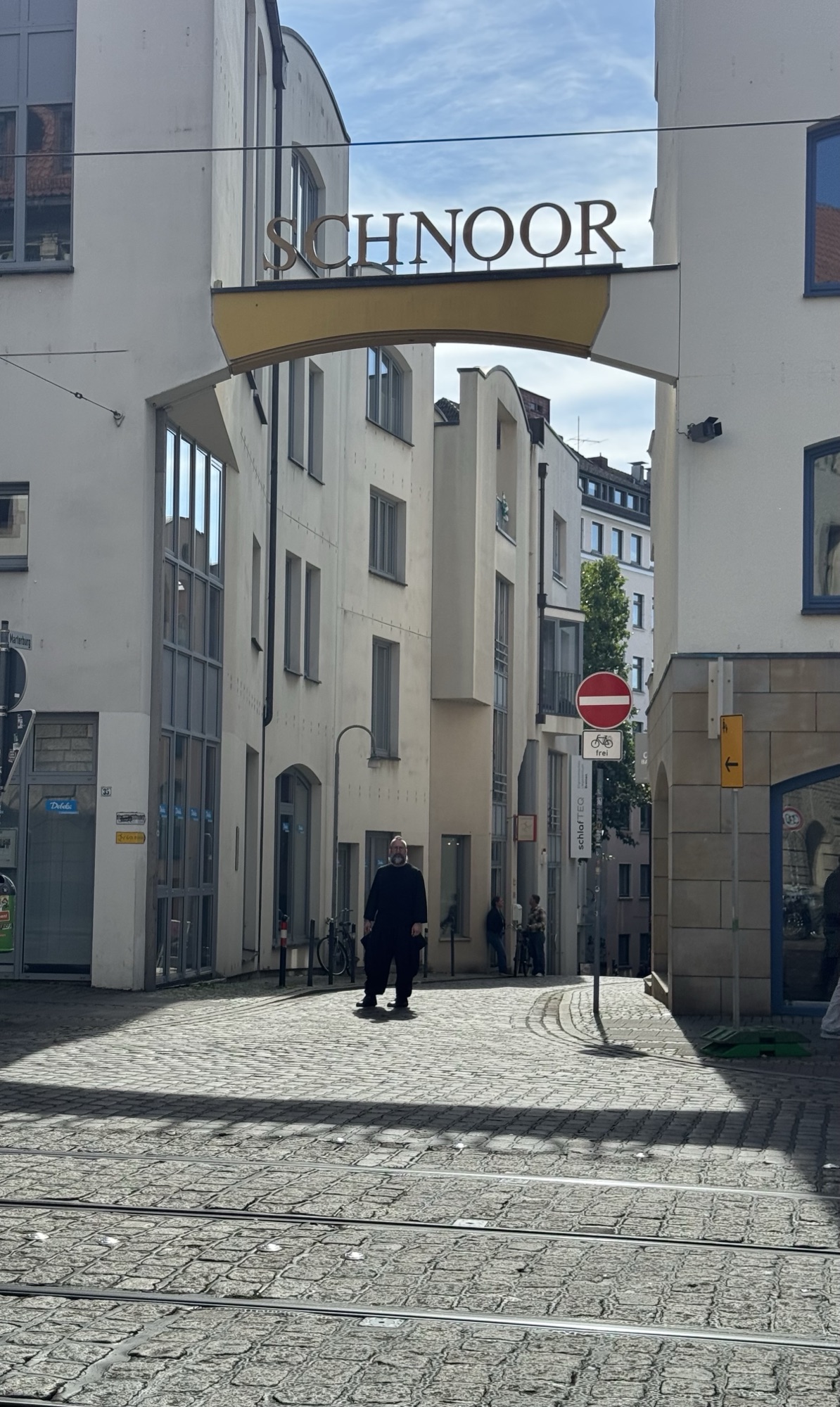
Our next destination was the Schnoor, Bremen’s 15th and 16th century neighbourhood of winding narrow streets lined with even narrower houses. Entering is a bit like going into a maze.
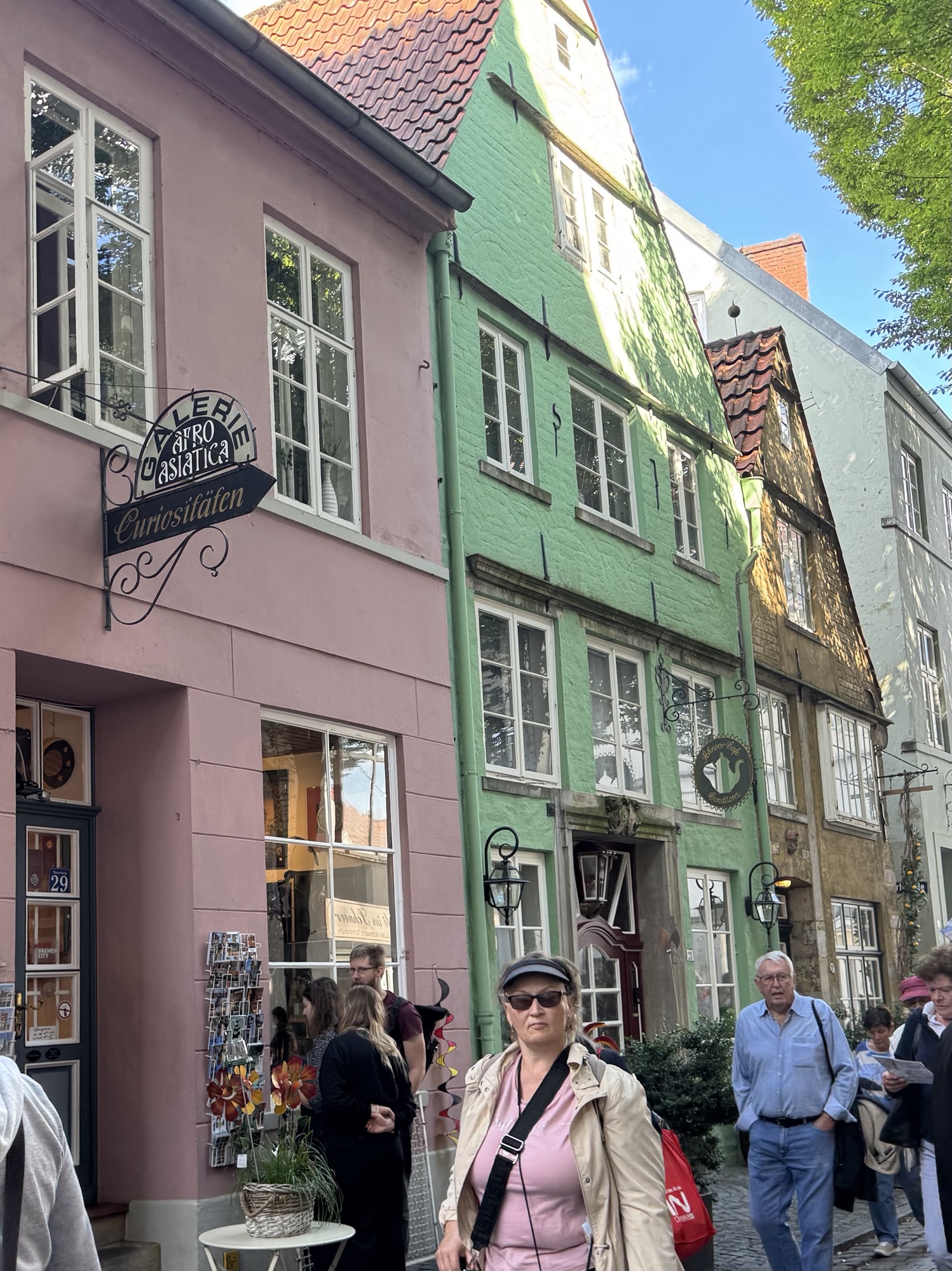
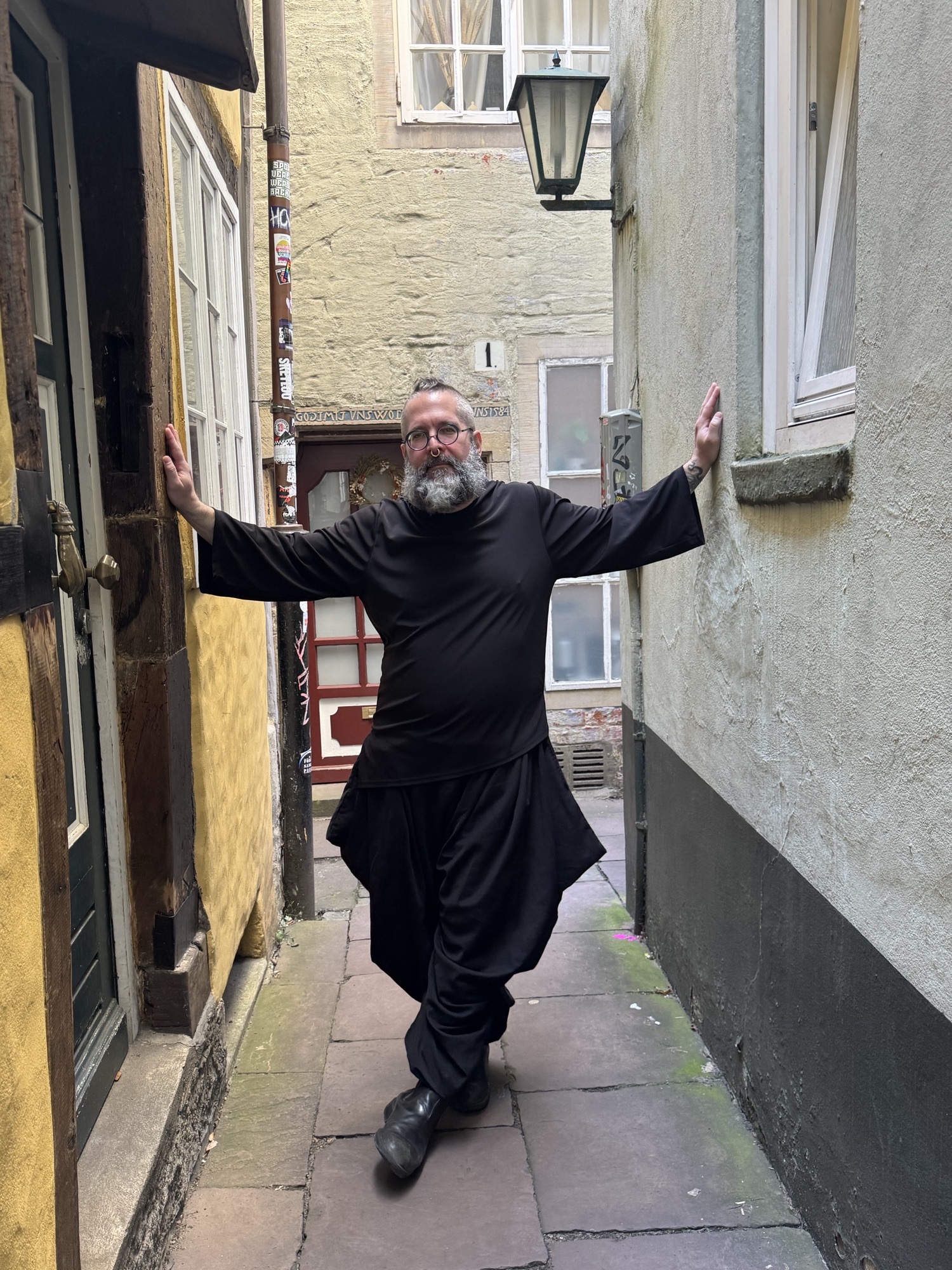
It is said that during the plague, people were asked to stay the length of a broom handle apart; on many of these streets that would have been impossible.
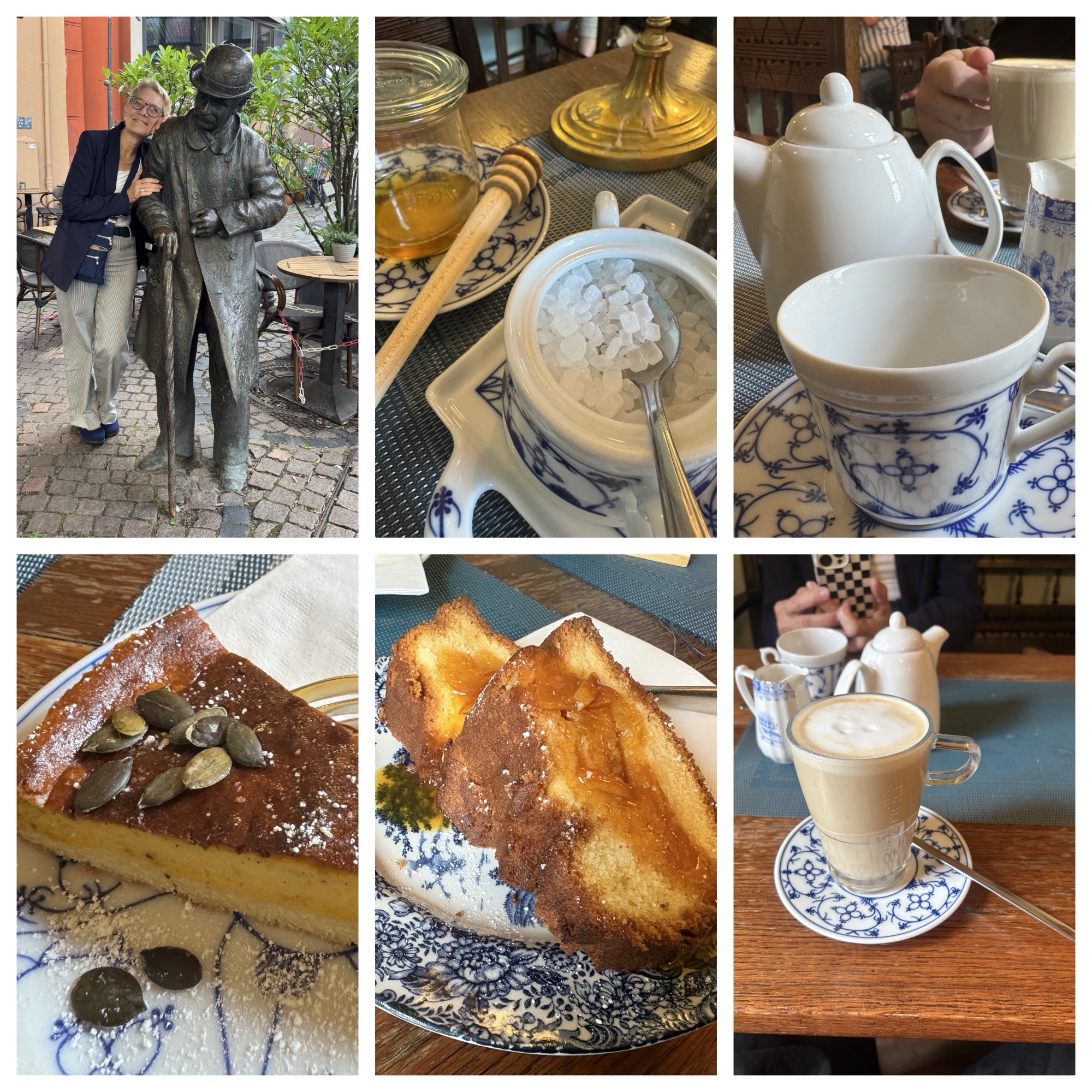
We decided to get out of the crush of people and have our Kaffee und Kuchen Break at one of the tiny tea houses.
As we set out to do a bit more exploring I hit a WhatsApp message from my irrepressible cousin Helga who lives about 45km from Bremen that she was on her way to see her grandchildren but had alighted here and was in the Market Square hoping we had half an hour for a drink and hugs.
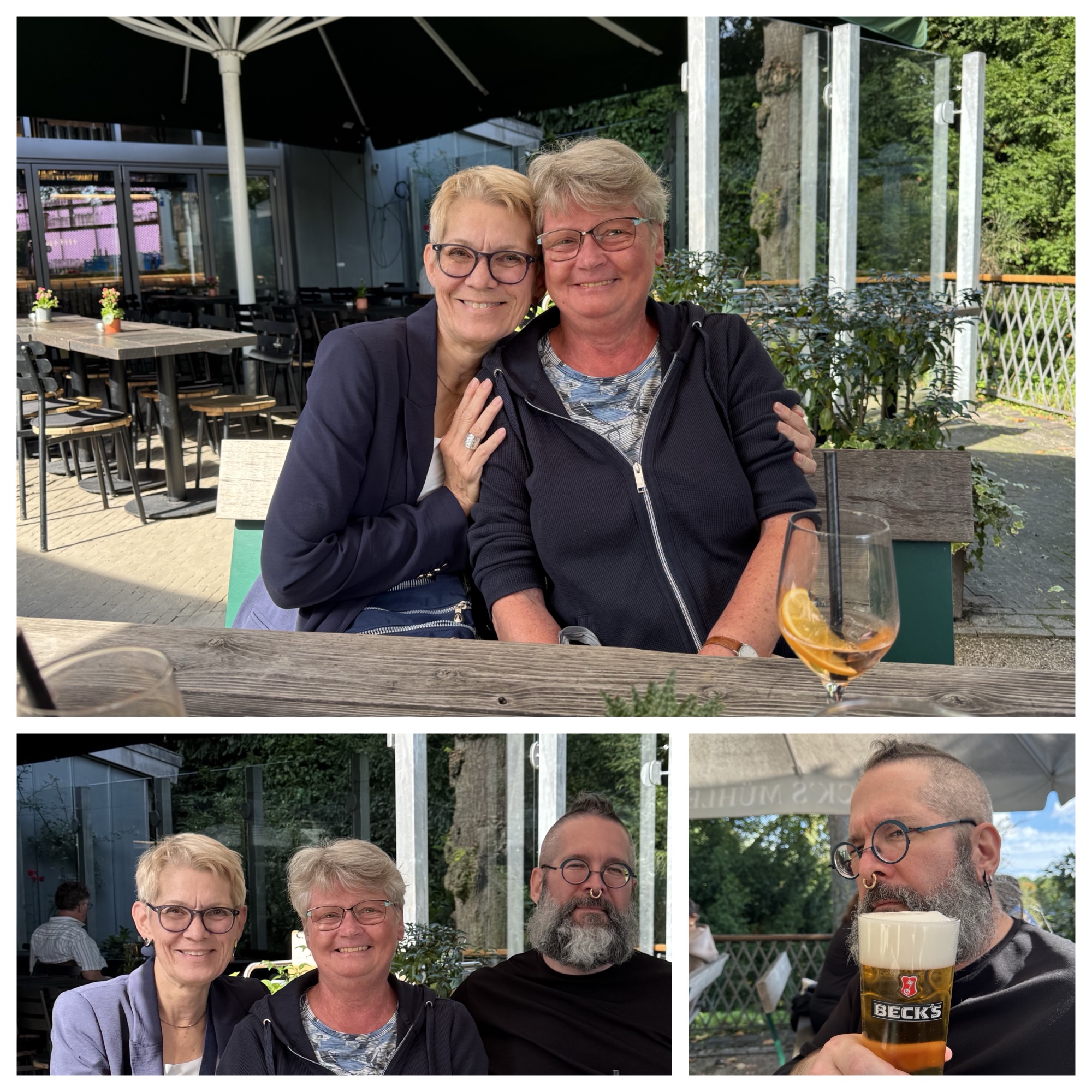
Son #1 got to try Bremen’s iconic Beck’s beer.
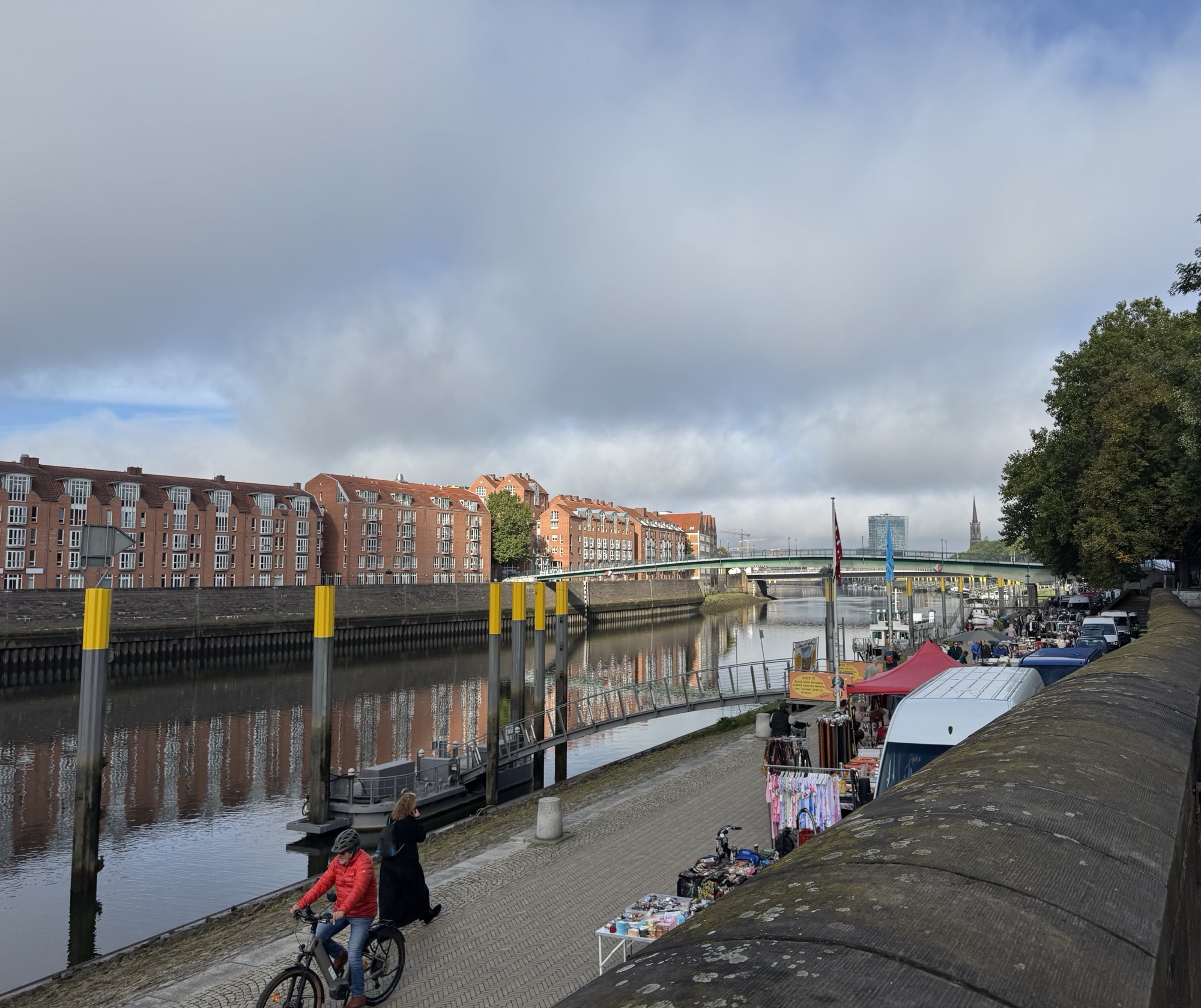
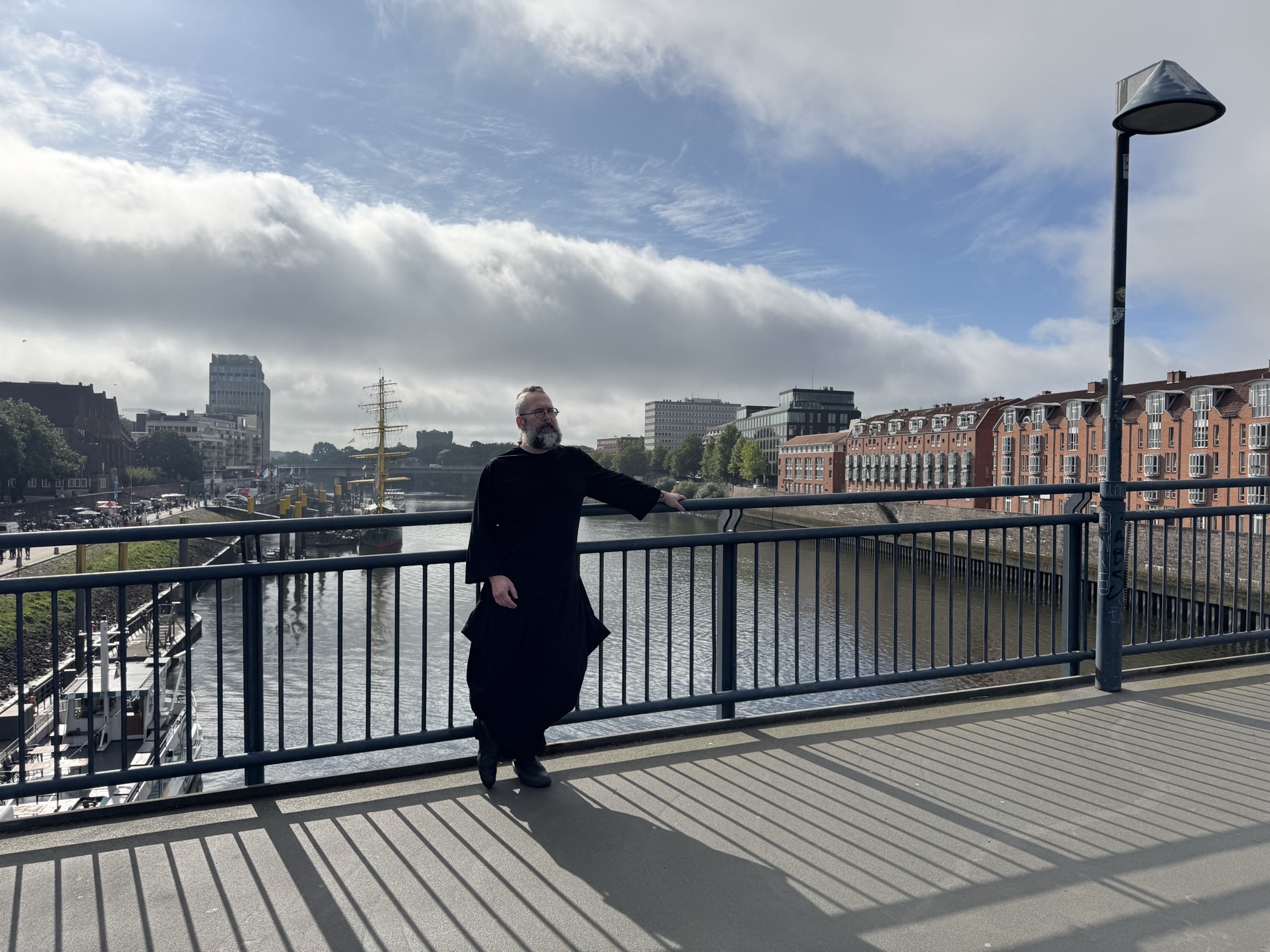
After parting ways with Helga, rather than going back into the Schnoor #1 and I decided on a walk along the Weser – a choice being made by many on this gorgeous day.
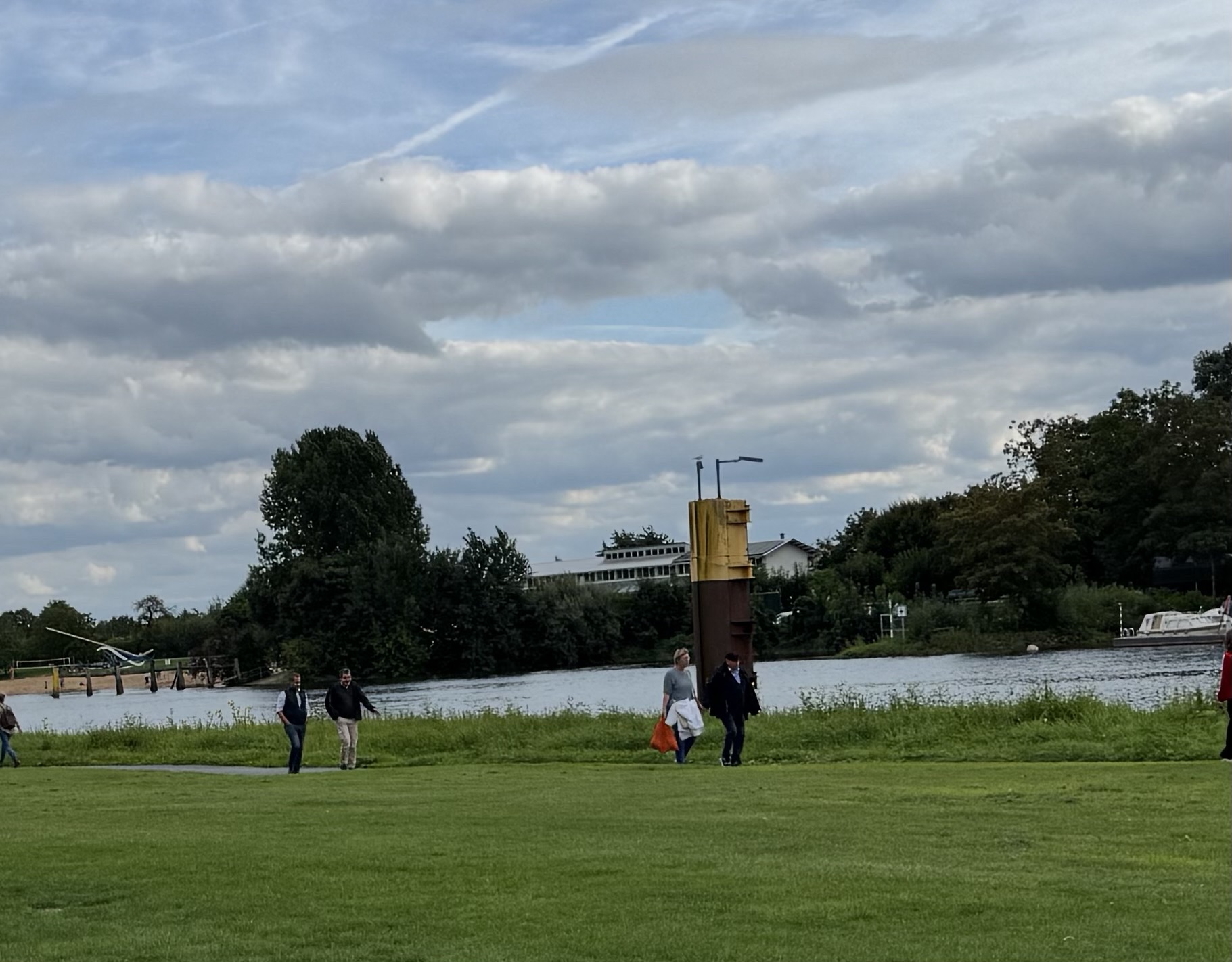
After a long stroll and some time back at the hotel to freshen up, we headed for dinner.
If it seems as if we are eating a lot, it’s because we are. Each city has a specialty, and we’re attempting to try them all. I know I’m going to regret this.
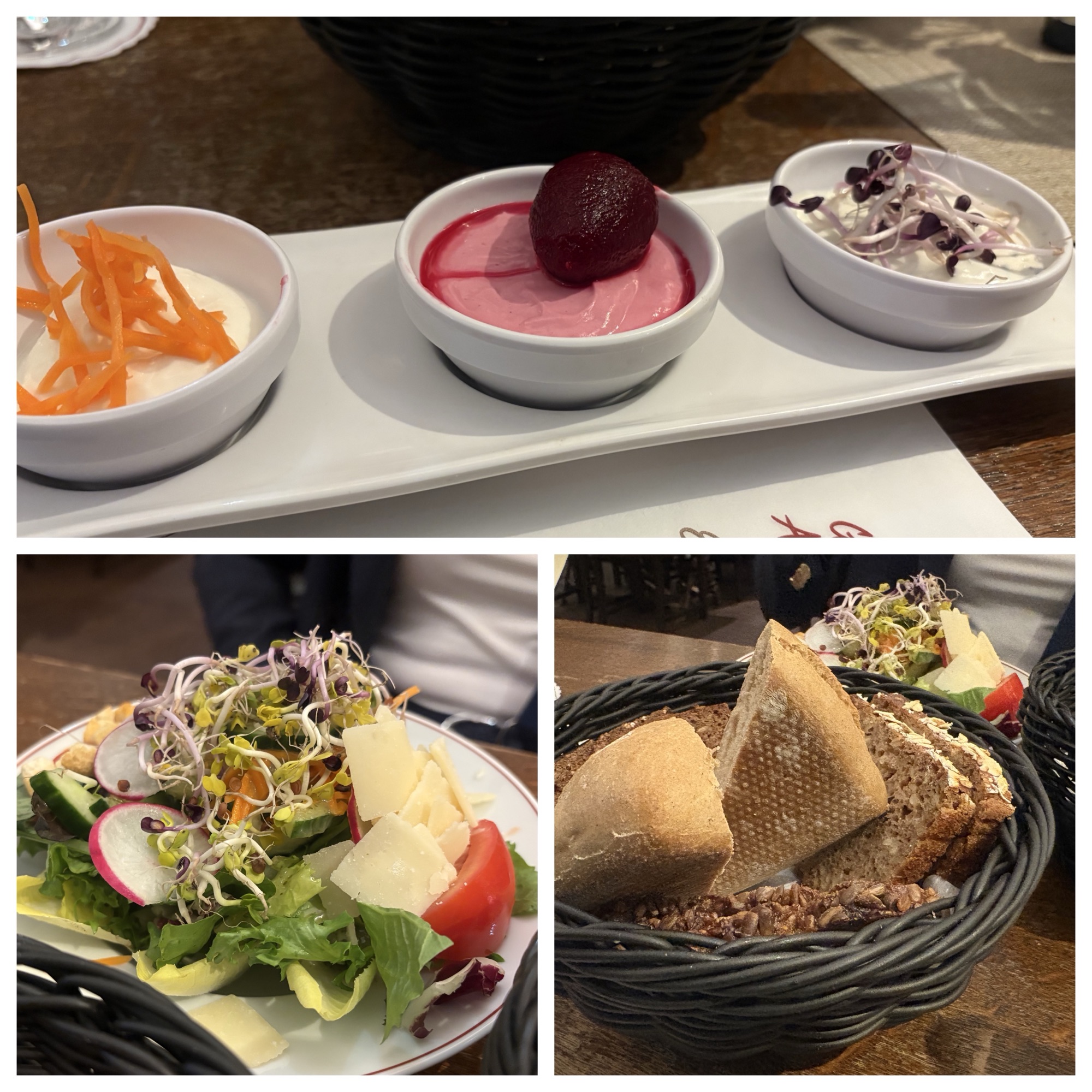
I enjoyed a seasonal main dish of chanterelles in an herbed cream sauce with bread dumplings. Son#1 had Königsberger Klopse, an East Prussian specialty that consists of meatballs cooked in a cream sauce flavoured with capers and enriched with egg yolk, with new potatoes. The city they were named after , which was once the capital of East Prussia (Ostpreußen) is now Kaliningrad Russia. Both dishes were delicious; neither was photogenic.
After dinner we waddled along the river for a while before turning in.
Tomorrow we return to the emigration story.


You are doing an amazing job using your phone. What great memories.
LikeLiked by 1 person
Thank you.
The memories are what this trip is all about.
LikeLike
Great pics! Are you using your phone camera?
LikeLiked by 1 person
Yup. It’s a challenge and I delete a LOT
LikeLike