NOTE: much of this post was prepped in notes I had available in my Notes app, fortunately synchronized from my iPad before it was stolen. The rest was painstakingly pecked out on my phone. The posts for the first day in each new city will have that same advantage of some pre preparation; all the other days will be either dictated (I just can’t effectively use a phone for this), or simply be much less wordy.
Don’t be too grateful; I will have a new iPad before leaving for Italy next month and be back to lots of words.
Ted and I first visited Cologne (more properly Köln, in German) in 2013 on our first trip to Europe, when we did the Viking Grand European river cruise from Amsterdam to Budapest. (Episode 89).
We returned twice: once in November 2022 (Episode 354) with friends, and again for the Christmas Markets in December 2023 (Episode 460). It’s no exaggeration to say that we really enjoyed this city.
This time, travelling with son #1, we will of course cover the cultural, historical, architectural, and culinary highlights, but we’ll also be looking at the city through the lens of my mother’s emigration experience.
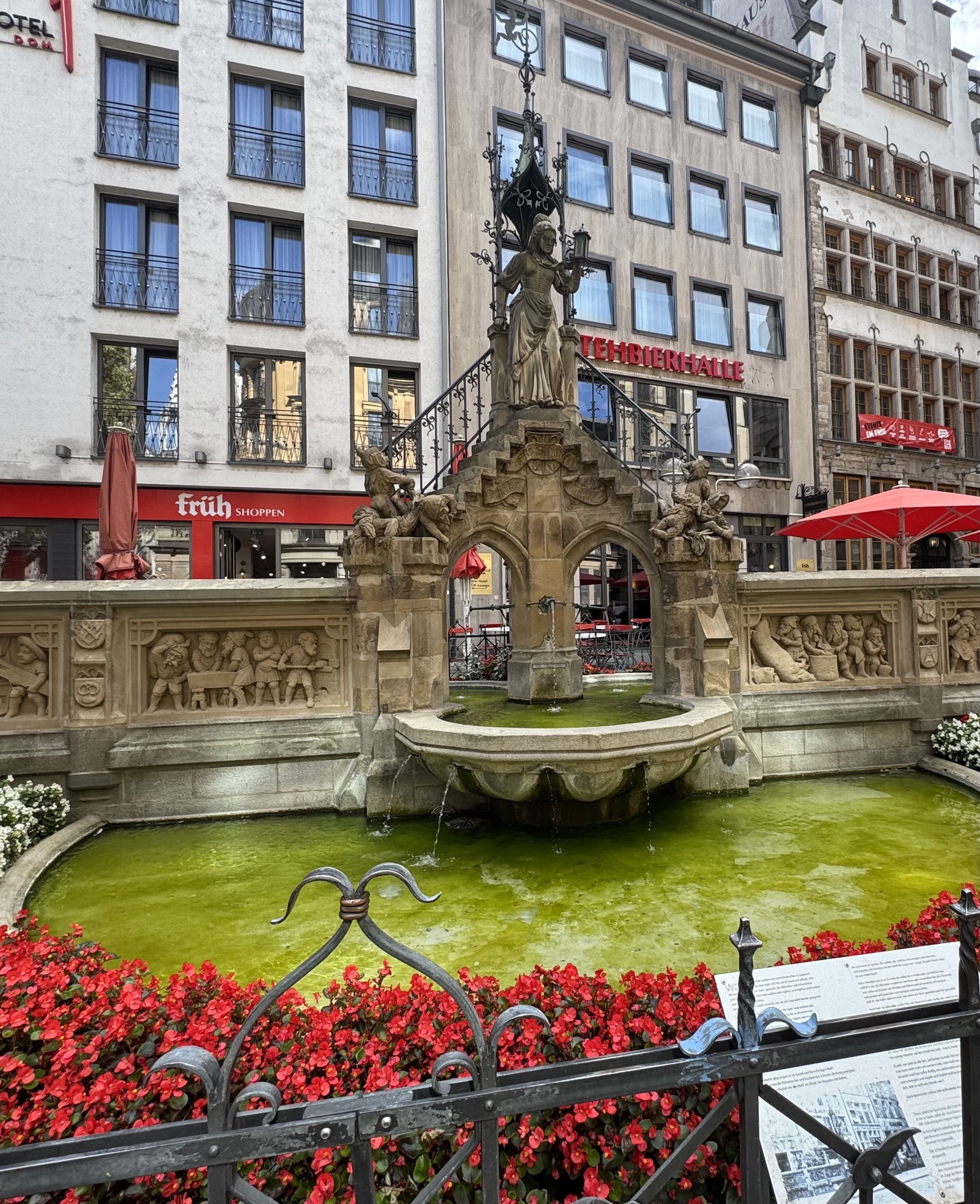
Our hotel for four nights in Cologne is the Eden Hotel Früh am Dom, centrally located just a one minute walk from the Cathedral, and 6 minutes from the main train station. Having been in Cologne before, I knew the location would be perfect, and hoped that the rooms and breakfast would live up to their excellent reviews.
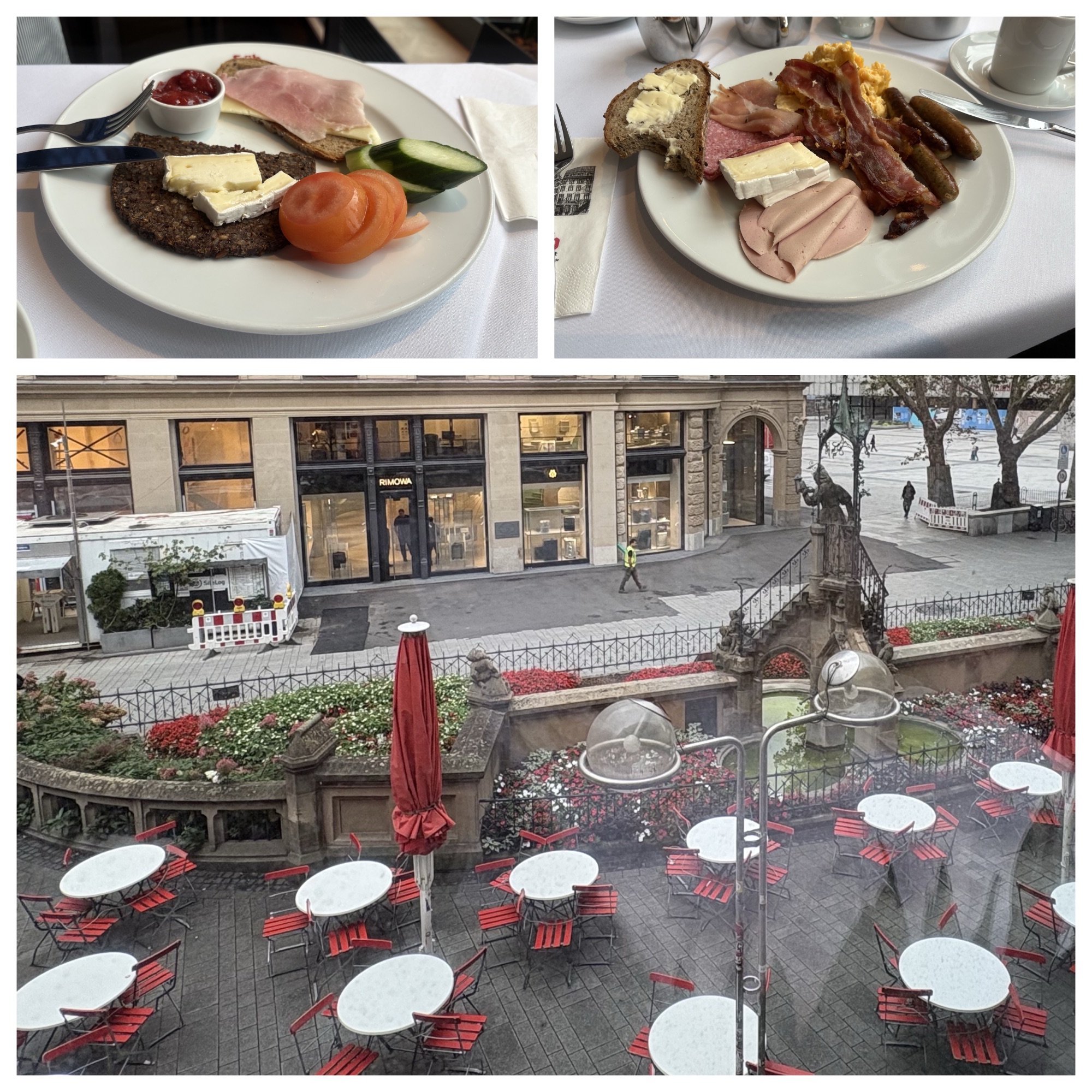
The room is quite utilitarian, but has everything we need, and we clearly were able to make up two delicious plates while also enjoying the scenery out the window; the hotel’s beer garden restaurant, and a beautiful fountain.
Our plan on this sunny perfect 26°C/78°F day was to concentrate on Köln’s dominant feature: the Dom (Cathedral).
My mom would have transited through Köln in late 1948/early 1949, when the city was very much still in ruins. The medieval and 19th century buildings of the old town, many now lovingly reconstructed to look as they did before WWII, were largely rubble.
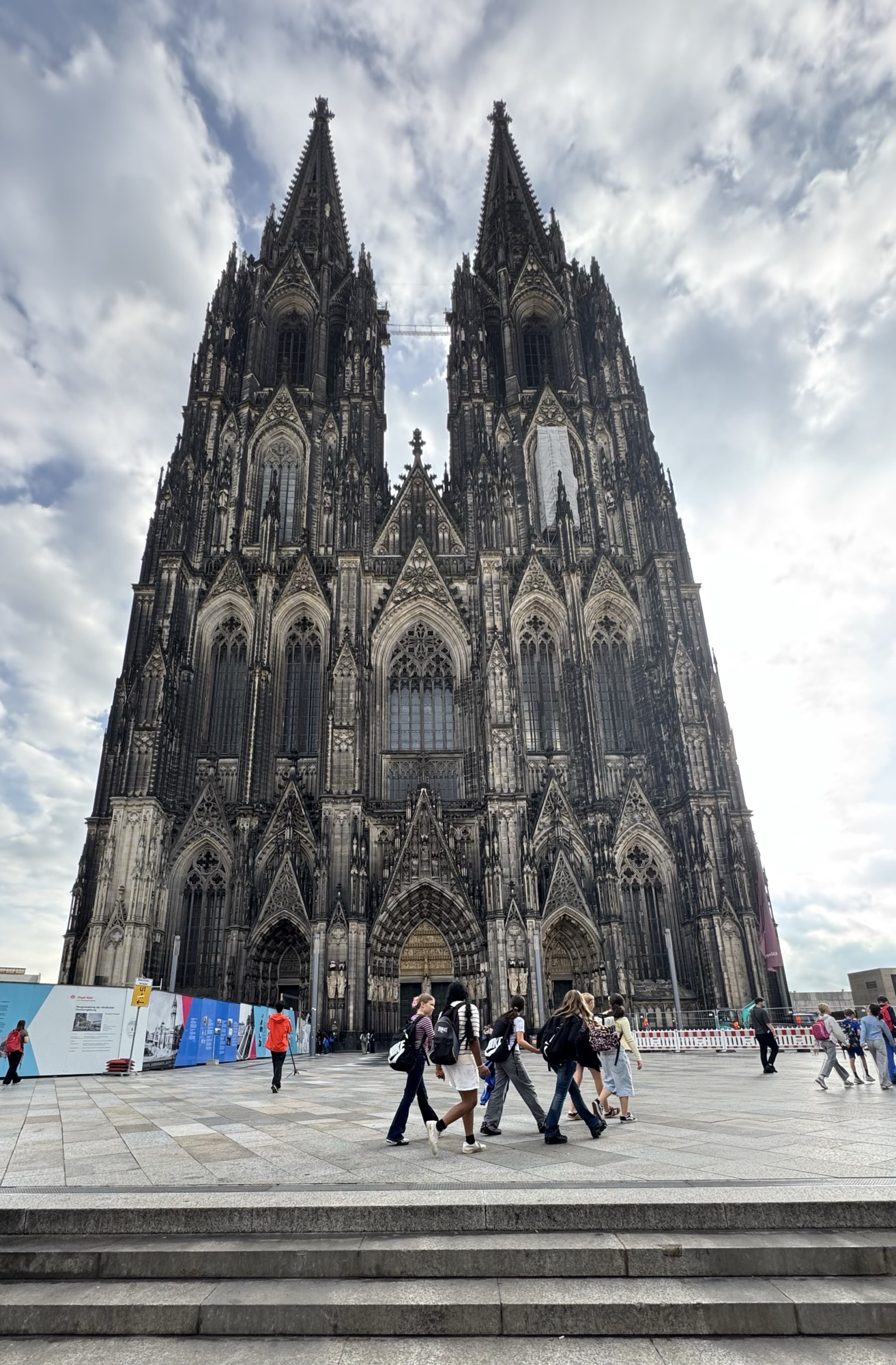
What was the same then as it is now is the fact that the Kölner Dom, the Cologne Cathedral, dominated the skyline. Although the cathedral’s walls were scarred and the nave roof collapsed by hits from 14 aerial bombs and countless bullets, in stark contrast it was surrounded by an almost completely flattened city. It survived largely intact mainly because its spires created an easily recognizable navigational landmark for Allied aircraft bombing.
We walked over to get a photo before the crowds arrived (crowds never arrived!), and then bought our online entry tickets for the full cathedral experience.
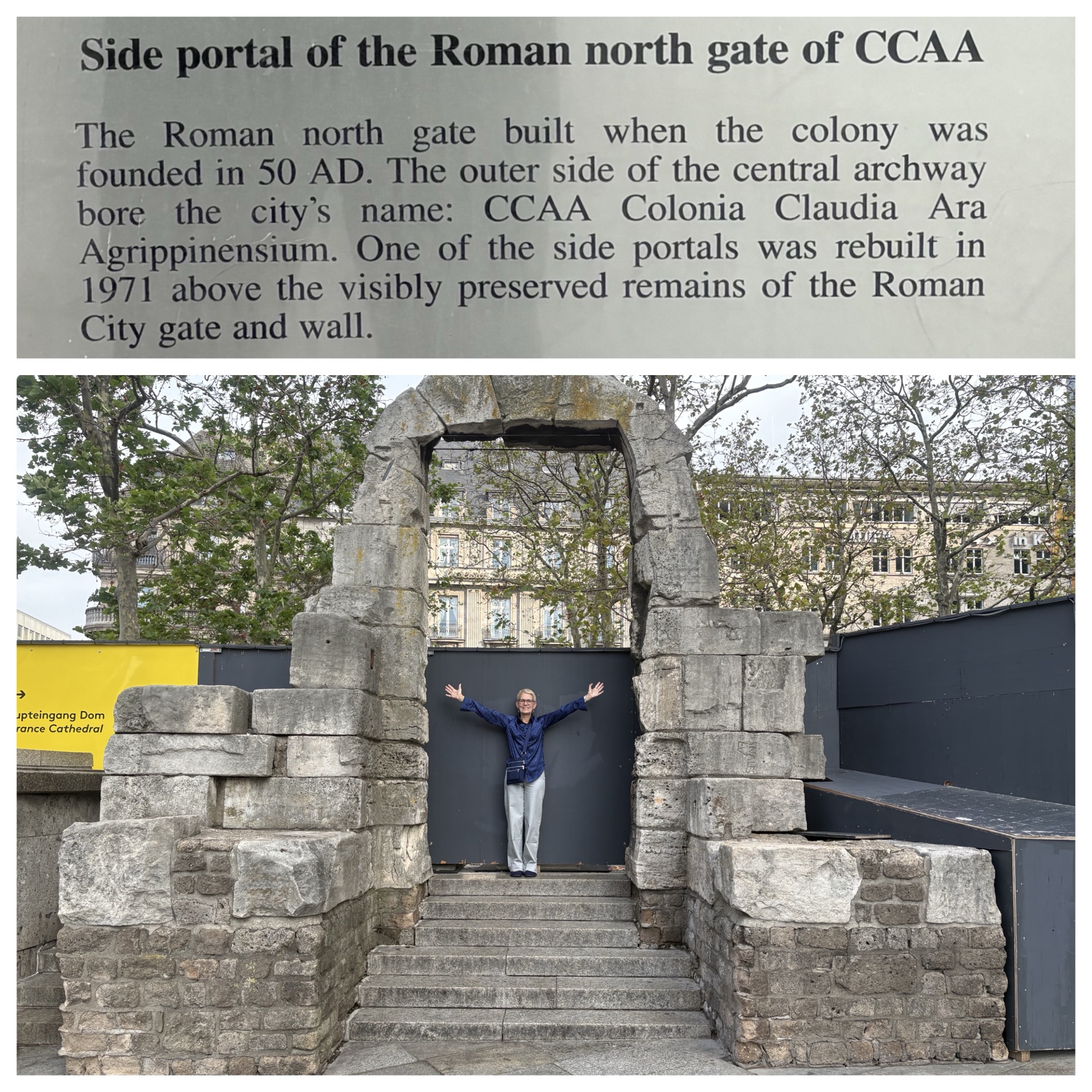
In the cathedral square was a tangible reminder of how old Cologne is; we’d see many more later in the day.
Construction of the cathedral began in 1248CE, a few decades after the city became the recipient of the relics of the three Magi, making it a major pilgrimage site. It took 632 years to finish, although there’s an argument to be made that work has never stopped, since repairs and preservation are ongoing. At 157 meters/515 feet tall, the Dom’s iconic twin spires make it the tallest twin-spired church in the world, the third tallest church of any design in Europe (#1 and 2 are the Sagrada Família and the Ulm Minster), and the tallest cathedral in the world. Since 1996 it has been a designated UNESCO World Heritage Site, one of 55 such sites in Germany (only Italy has more, at 61; France is close behind at 54).
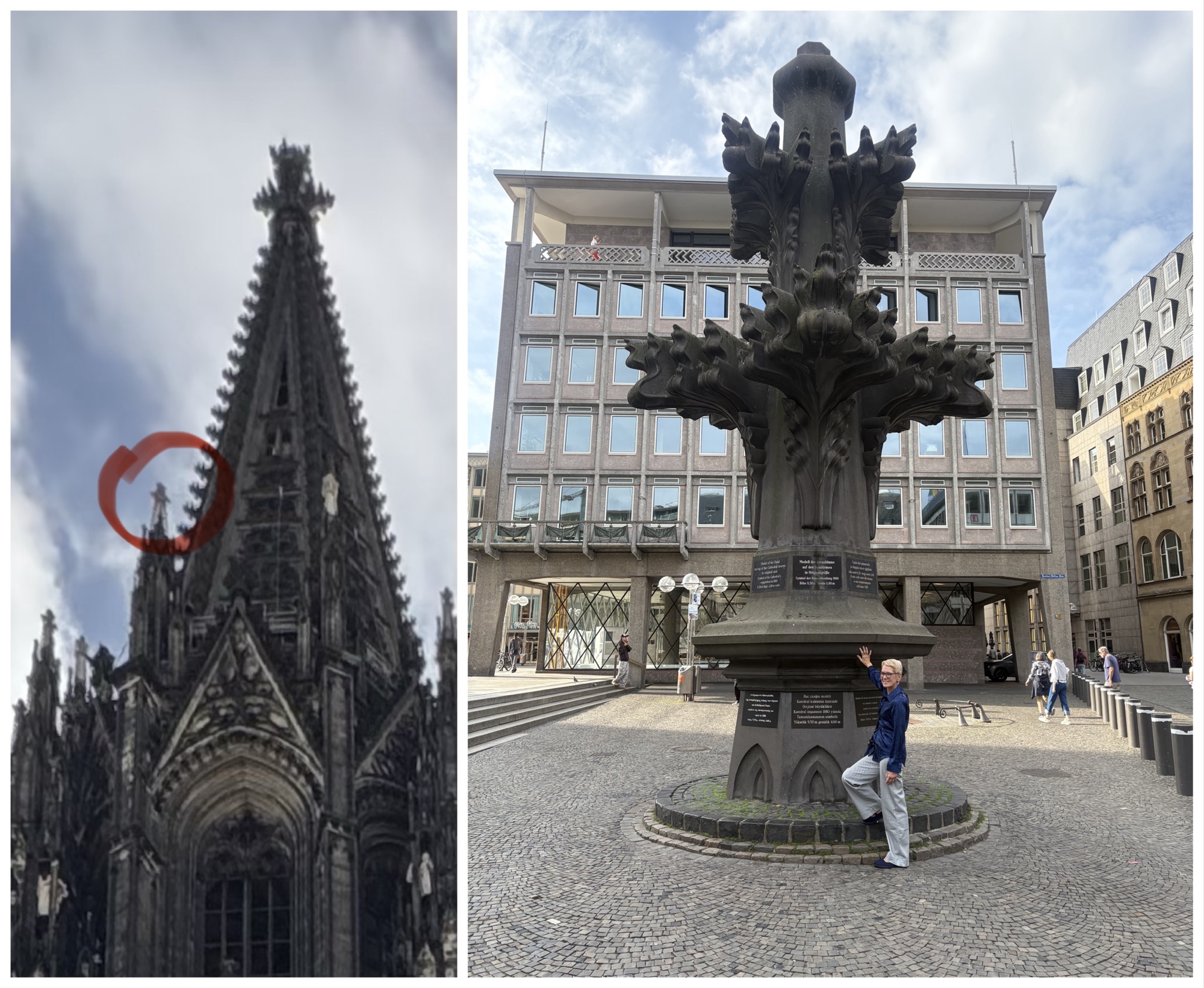
Because it is so huge, the scale of individual elements is sometimes hard to understand, but in this case there is a piece on the cathedral grounds that really helps.
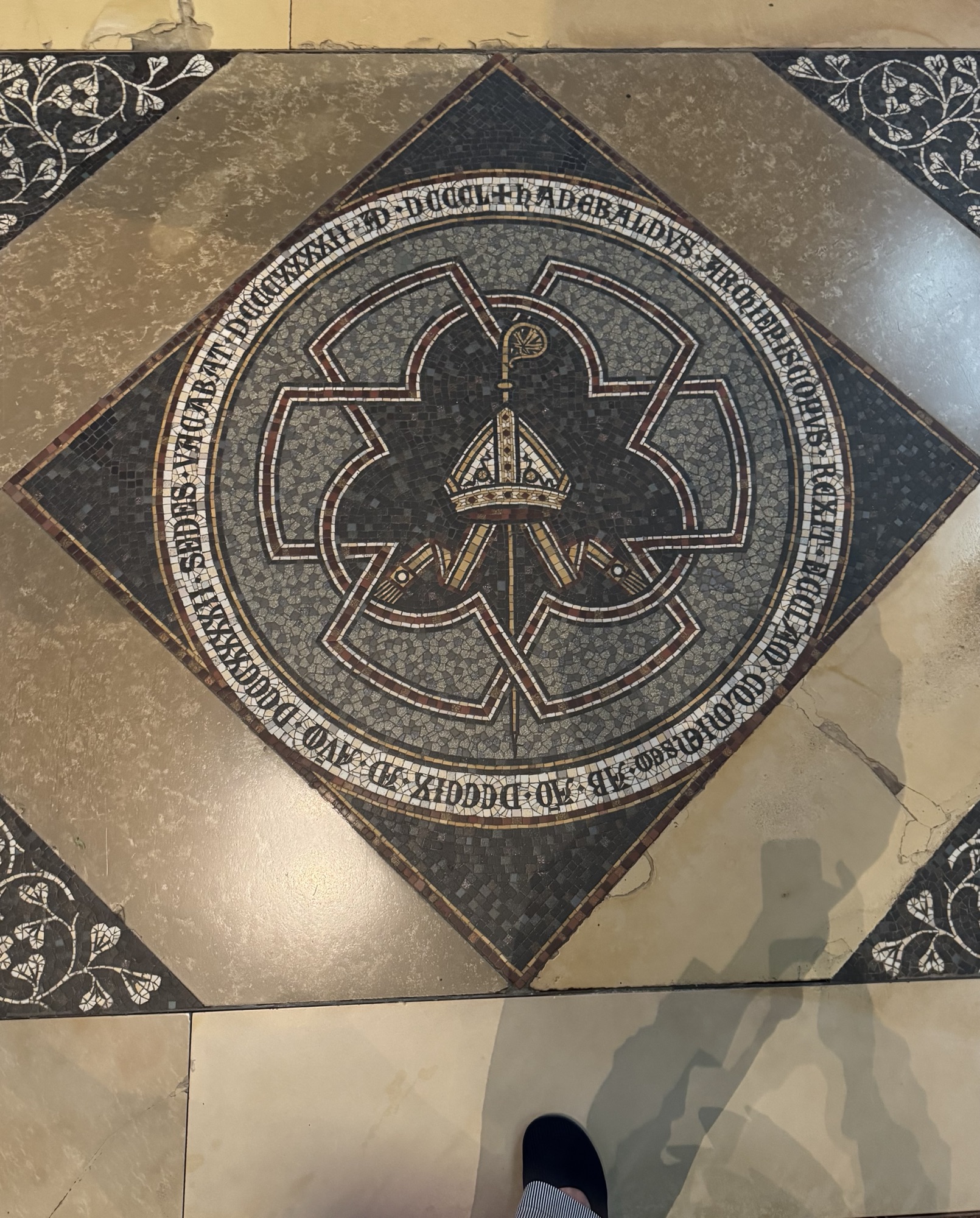
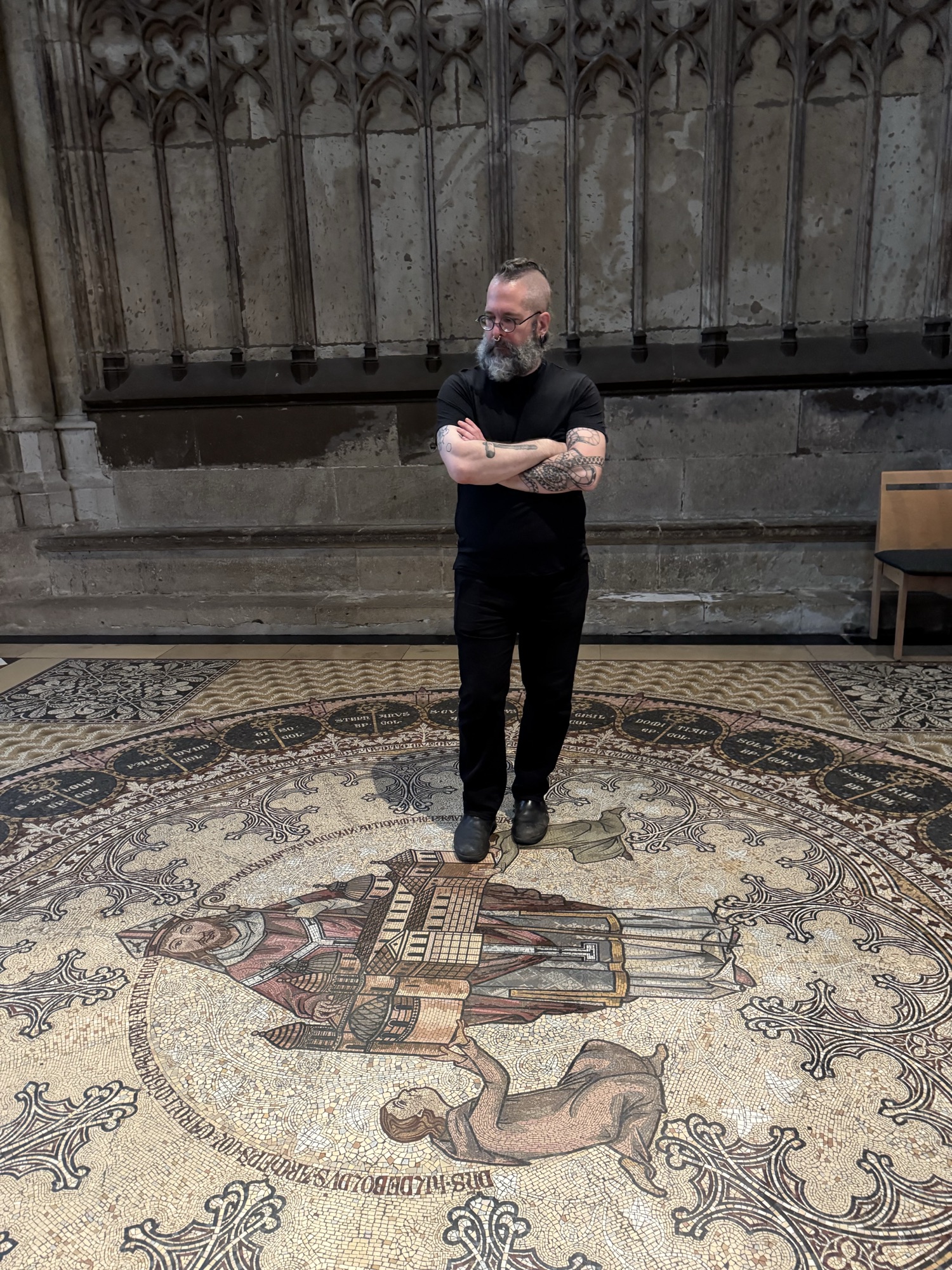
My mom always said that she’d been able to enter the cathedral, and historic accounts indicate that the choir and transept had been cleared and restored by 1948, allowing regular church services and worship to resume in that section of the cathedral, so her memories seem verifiable. Each time I’ve walked on the hundreds of years old floor in the Dom, I’ve felt my mom’s presence. Today was no different.
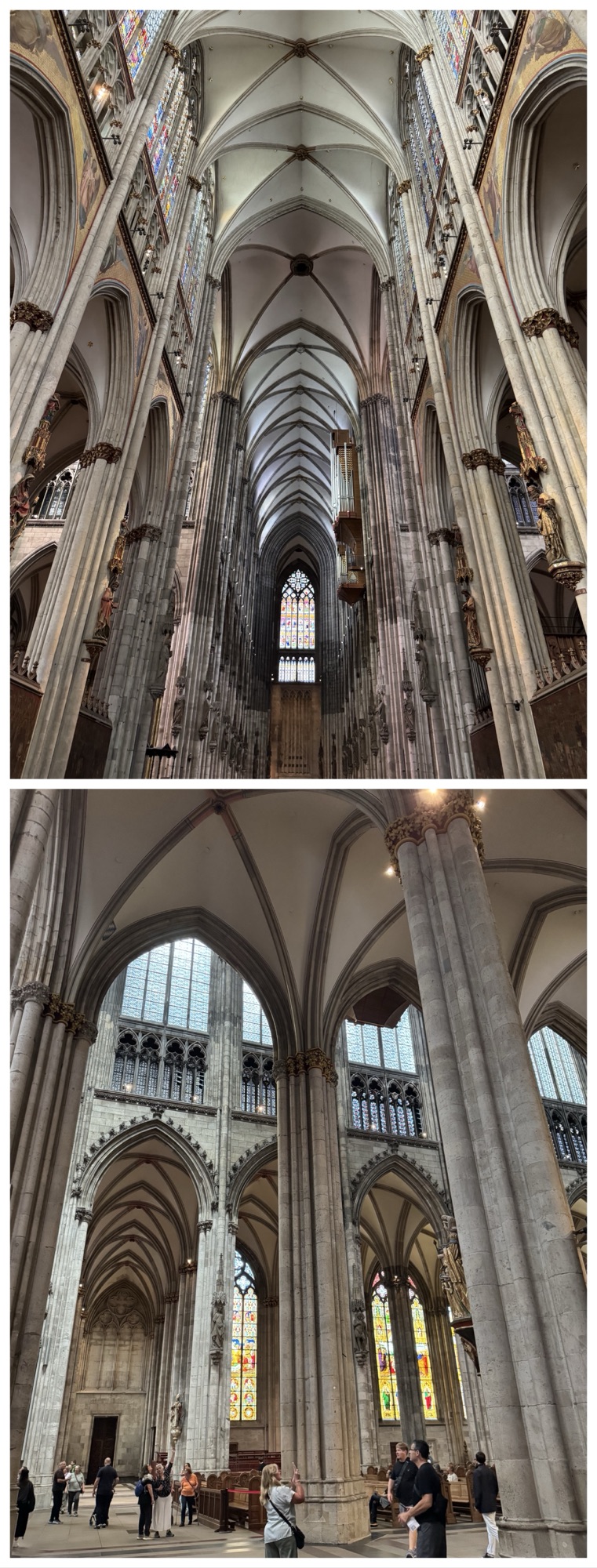
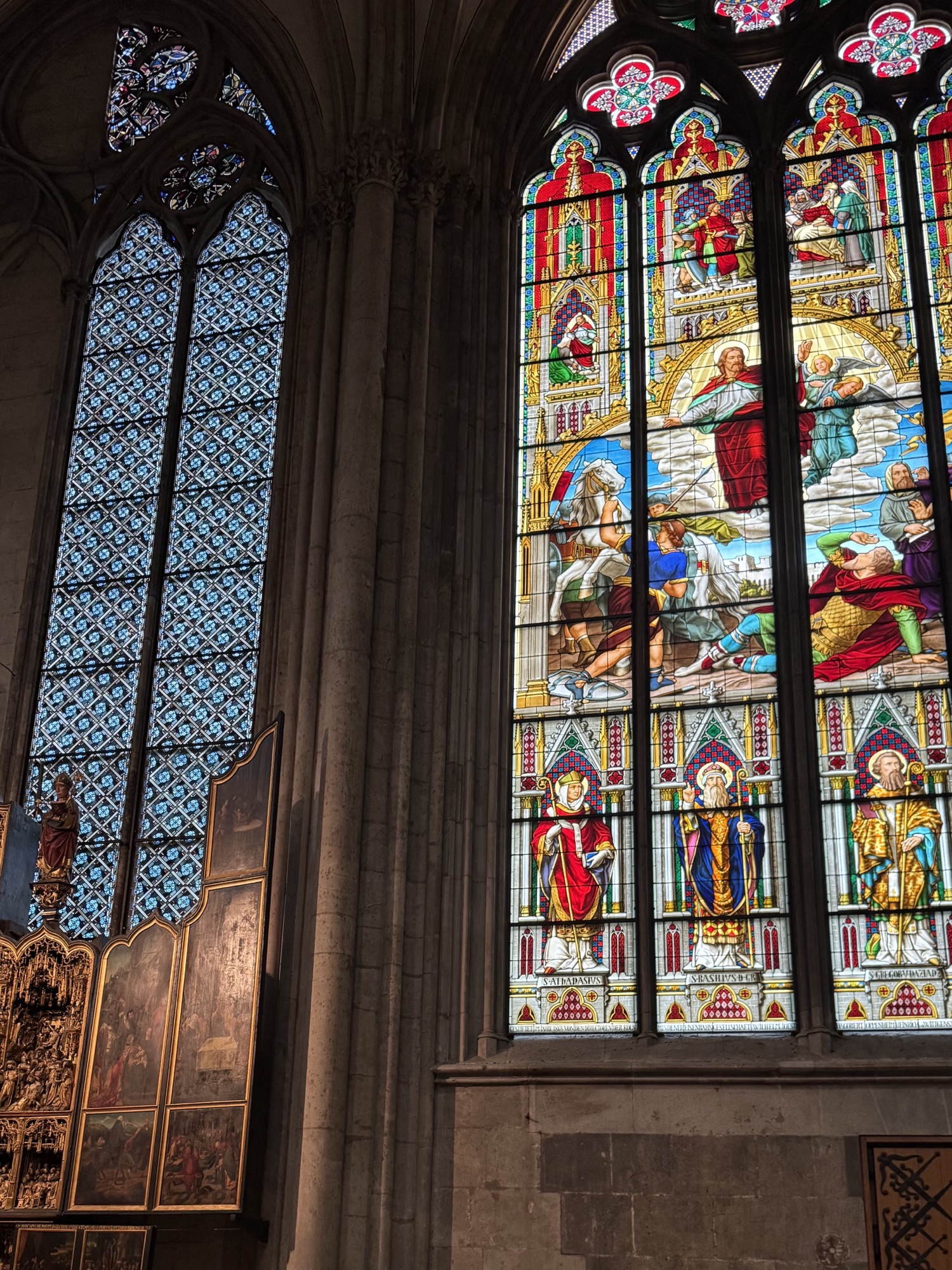
Sadly, the cathedral’s stunning stained glass windows would not have been visible to my mom. The oldest of them had been removed around 1940 to protect them. (There’s a wonderful article here about that process). Although the mediaeval glass windows were reinstalled in 1946 (much of the 19th century glass was not saved), that reinstalled glass was largely in areas not yet reopened to the public.
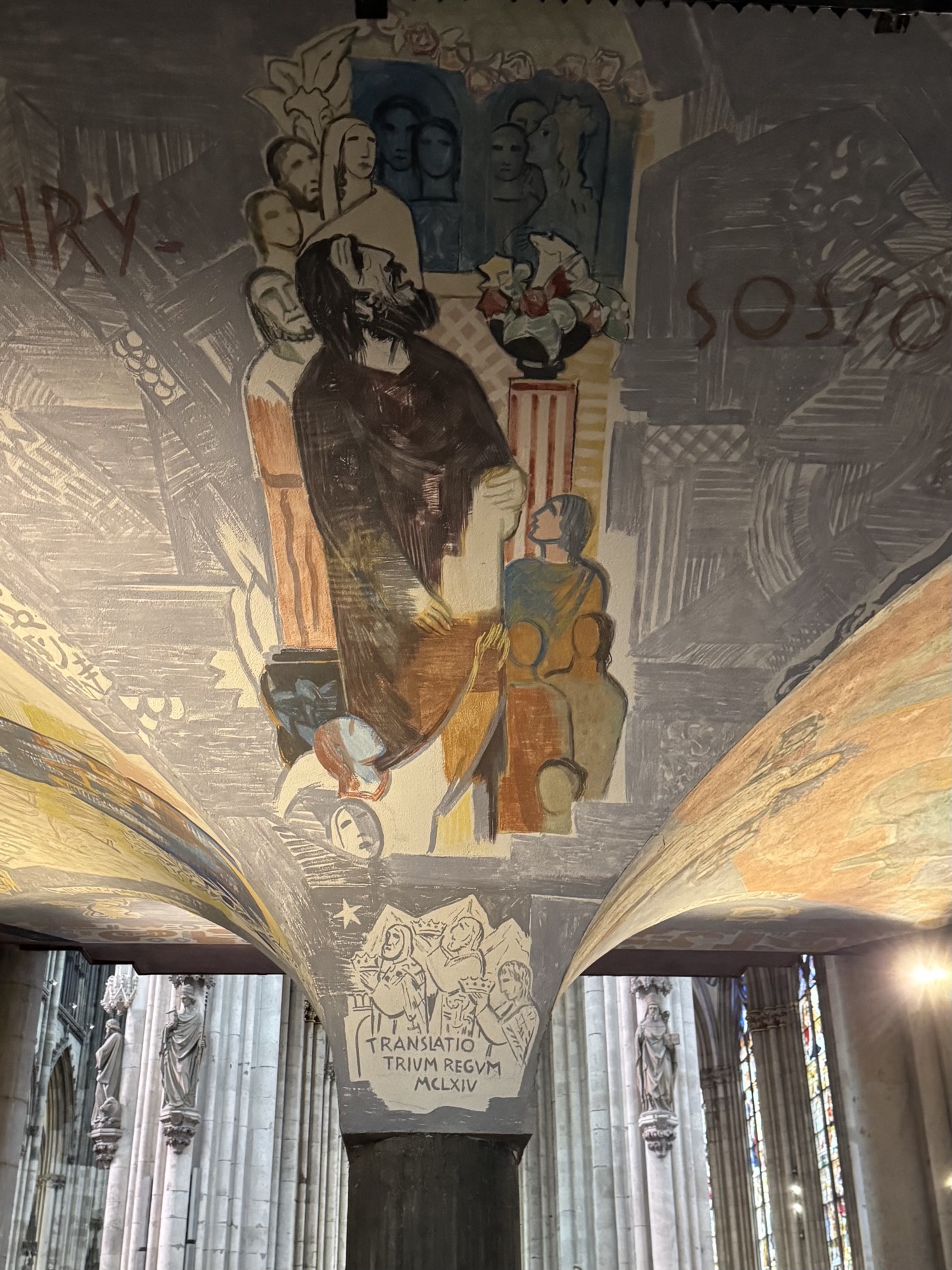
We also visited the crypt, but it had far less accessible area than I remembered.
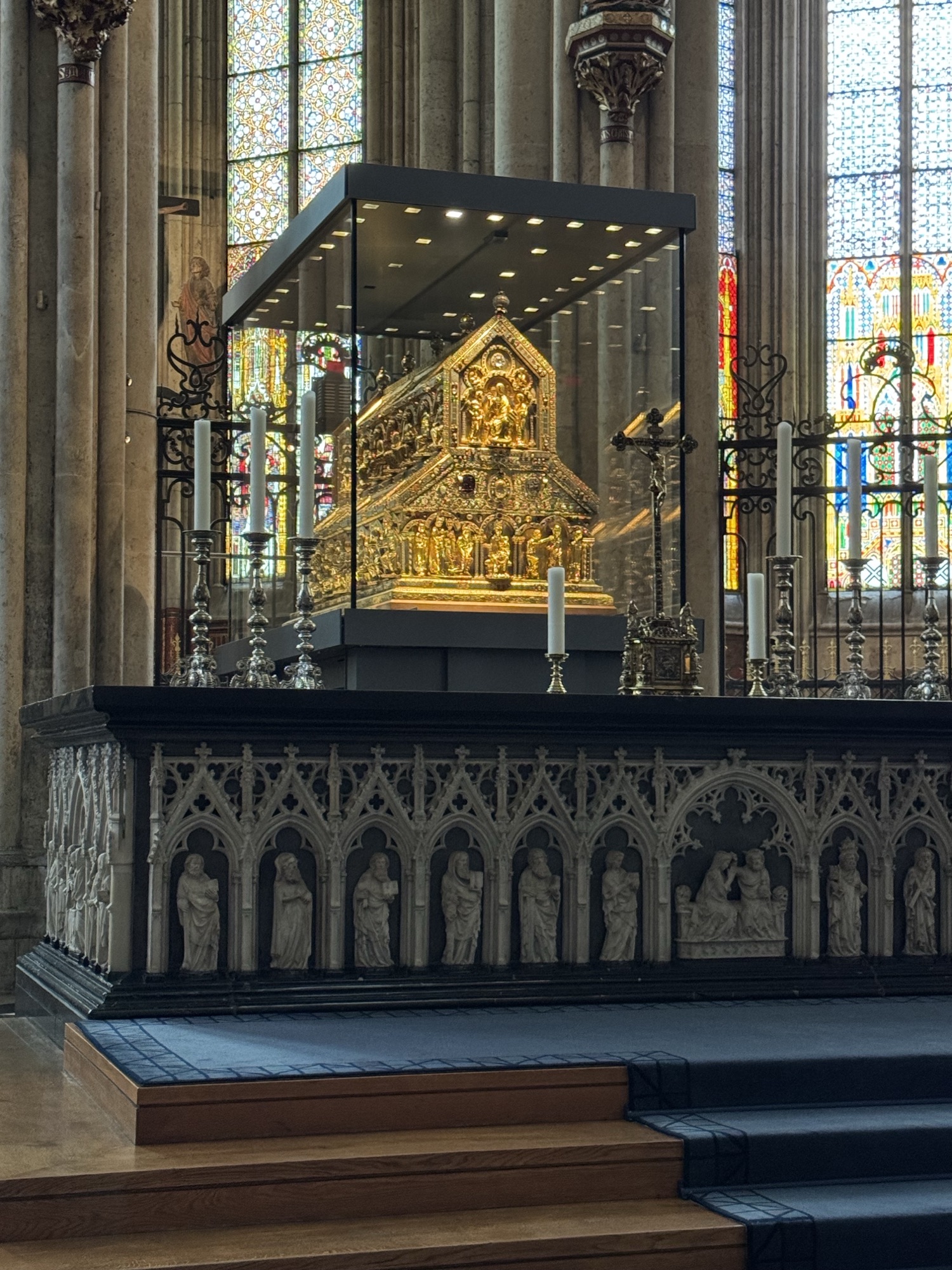
The Dom’s main attraction is the huge gold reliquary containing the bones of the three Magi.
On to part two of our cathedral visit.
I’d thought there’d be more debate about climbing the south tower of the Dom, via 533 steps each direction on narrow winding bi-directional stone and metal spiral staircases to reach an outdoor viewing platform 97m/318ft above the city. Ted and I had not done that on previous visits (although a friend we travelled with did, and got some spectacular panoramic photos) but I had a pretty good idea of the effort required since we had climbed up and down 513 temple steps to see a statue of Lord Shiva in Penang earlier this year (Episode 845). Those stairs were wide cement staircases though, and outdoors, so there was no sense of claustrophobia. I still remember quite vividly how scary our climb up the 280+ steps of the Nikolaikirche in Potsdam was (Episode 299), and that was back in 2022.
I thought that perhaps my reluctance related to fear of heights, and their less-than-perfect (dare I suggest aging at 45?) knees might be deterrents. However, son #1 reminded me that not so long ago, he had climbed the 1776 steps up the CN Tower in Toronto, twice, for charity.
So up we went.
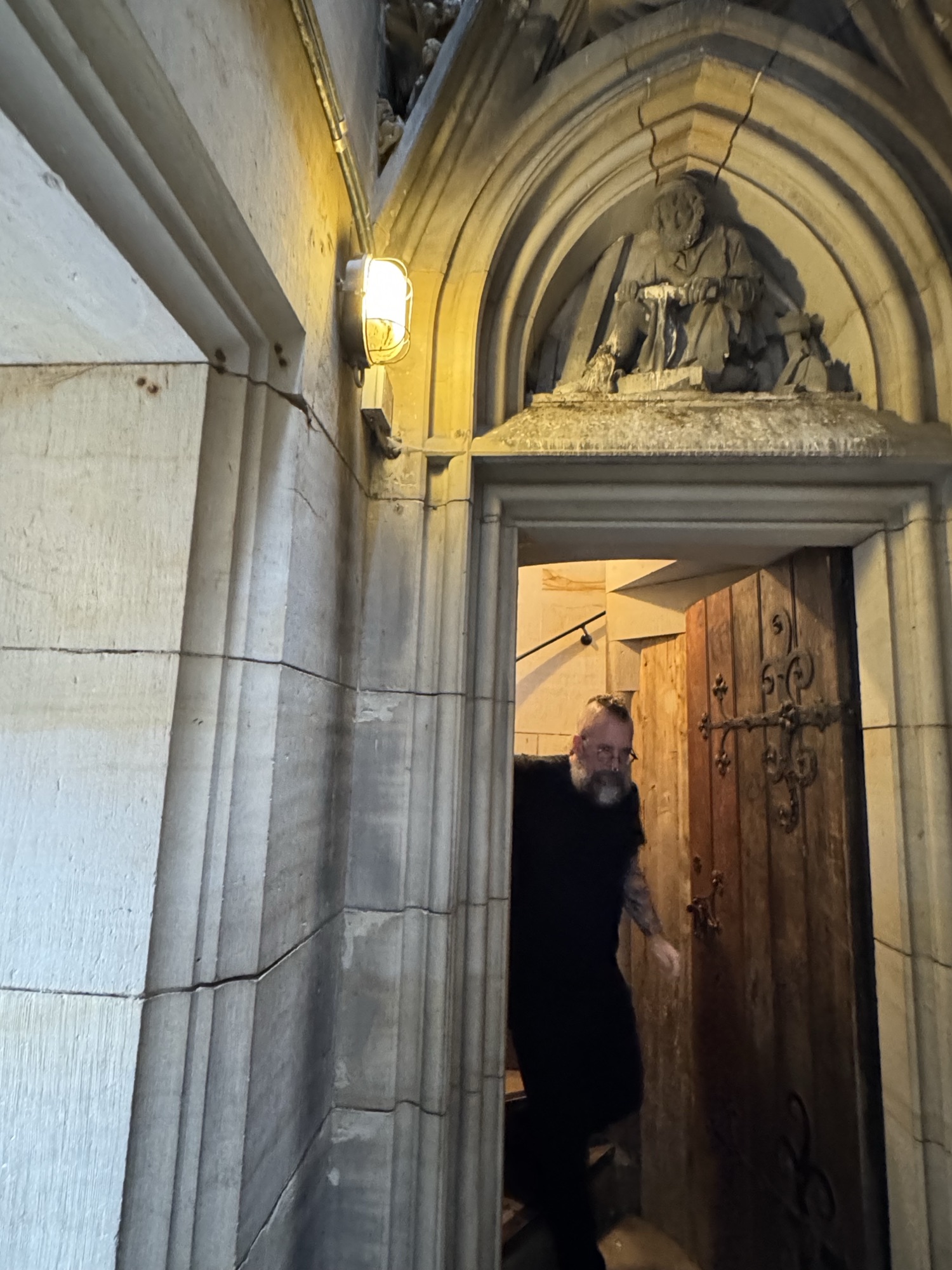
The climb begins below ground level, with the base of the stairs accessed through a stone tunnel.
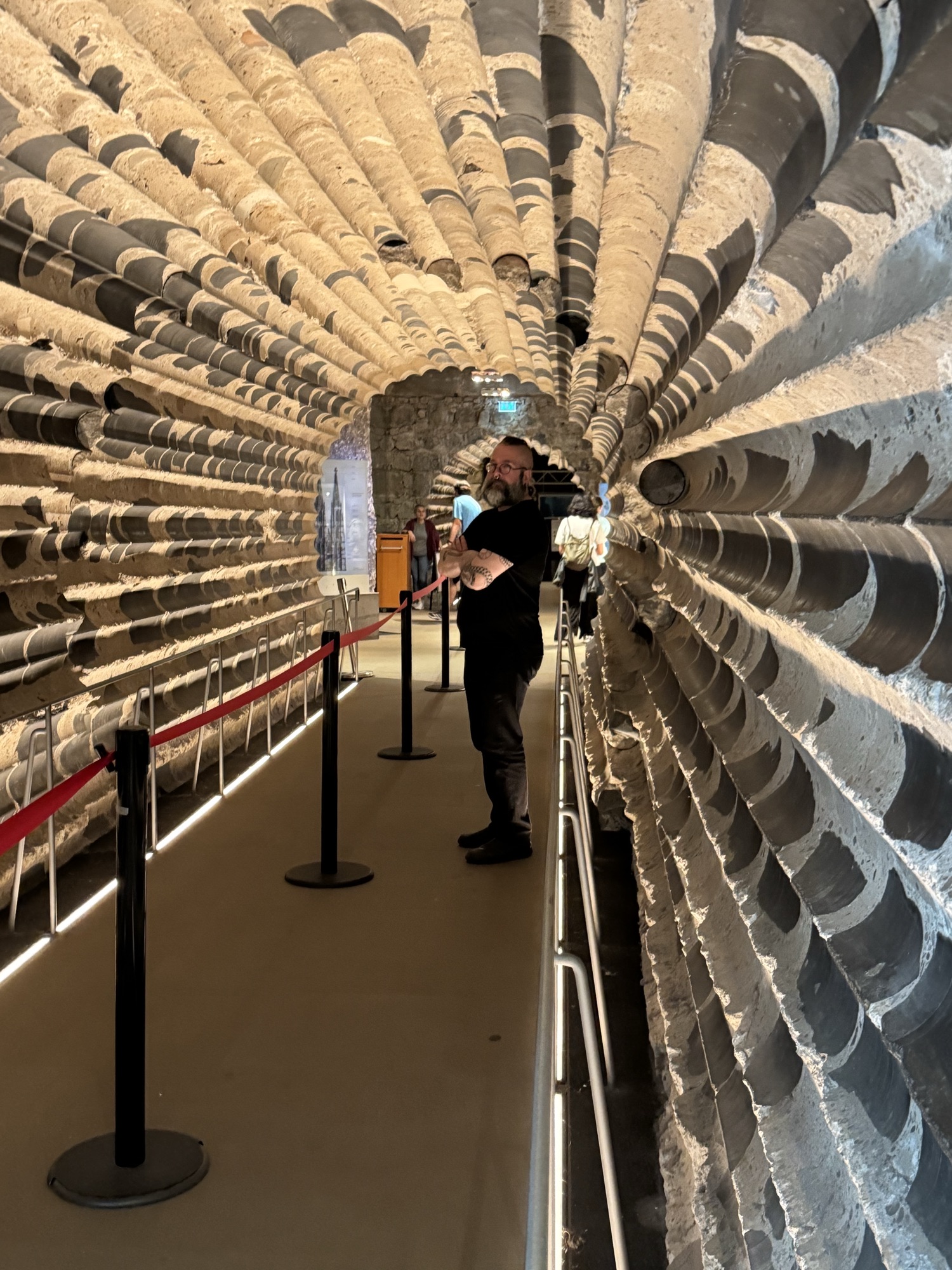
The stairs were winding and continuous – as in there were no landings on which to stop and rest until we reached the level of the 8 huge bells that form the Dom’s carillon.
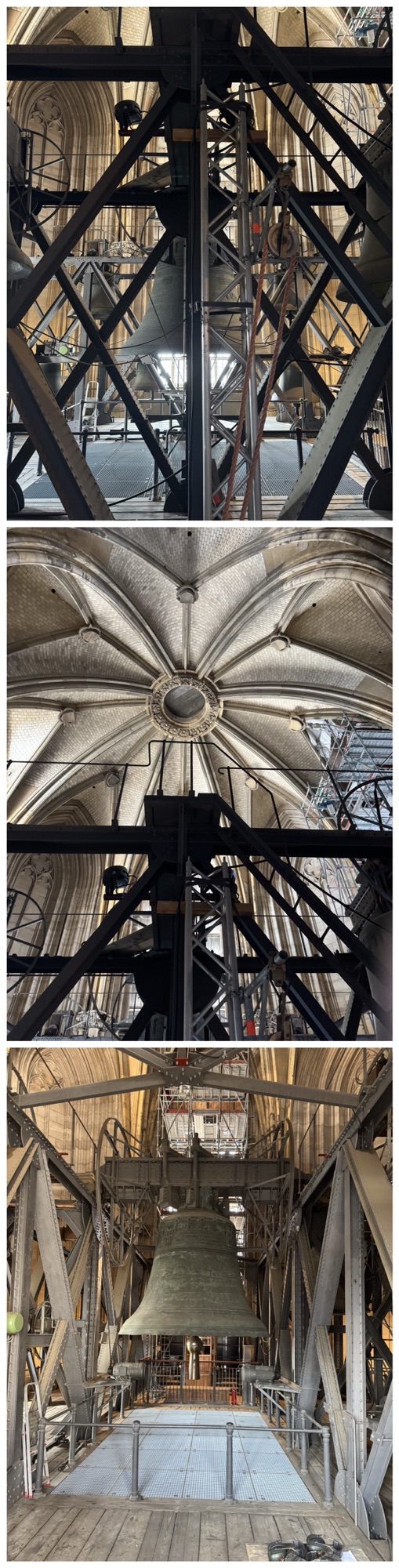
We were in the narrow stone passageway surrounding the bells when they struck 11:45. Fortunately, the stone muffled the sound, and these are not Westminster chimes.
Slightly further up more stone steps was a large nominal observation deck, but with its windows too high up to be useful. From there the stairs changed to metal, but quite modern in design, giving me a false sense of hope.
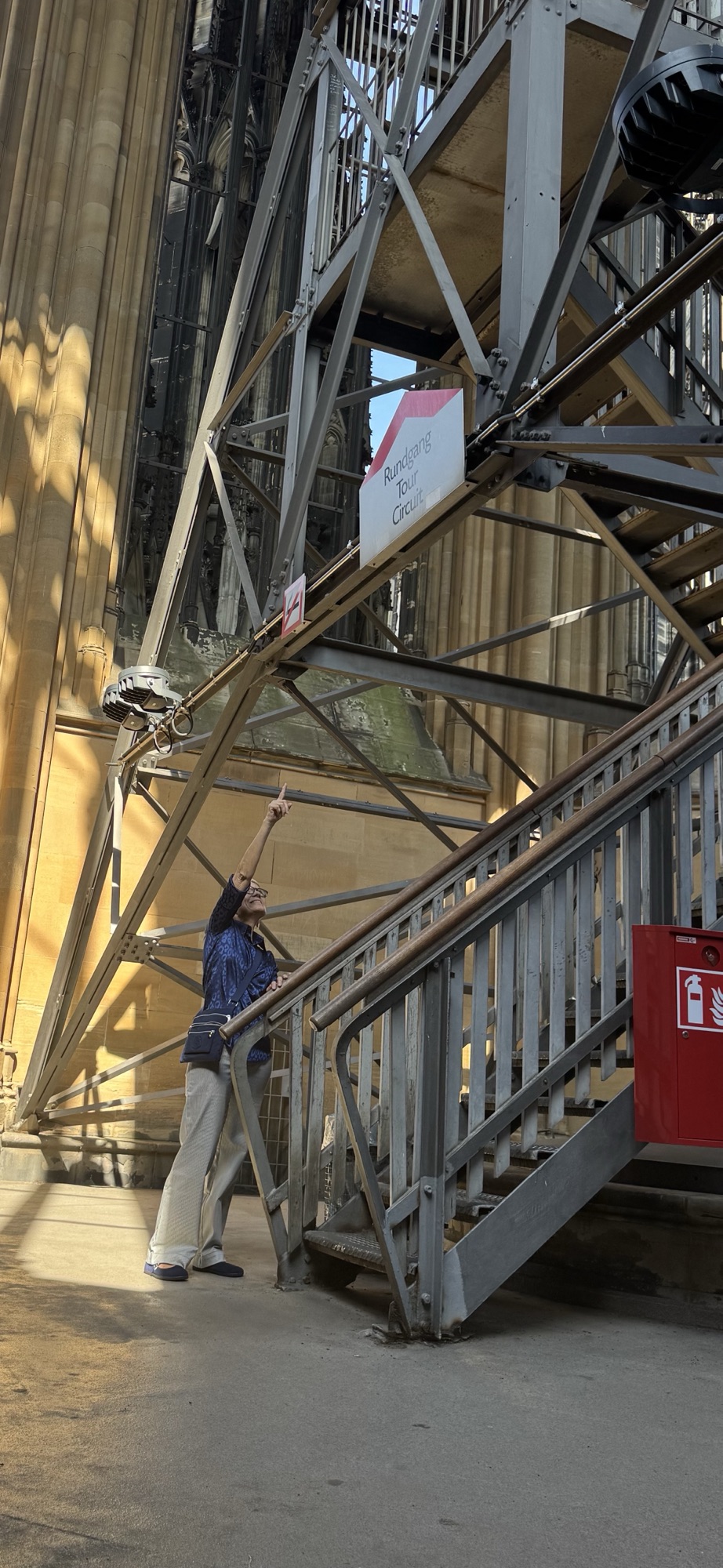
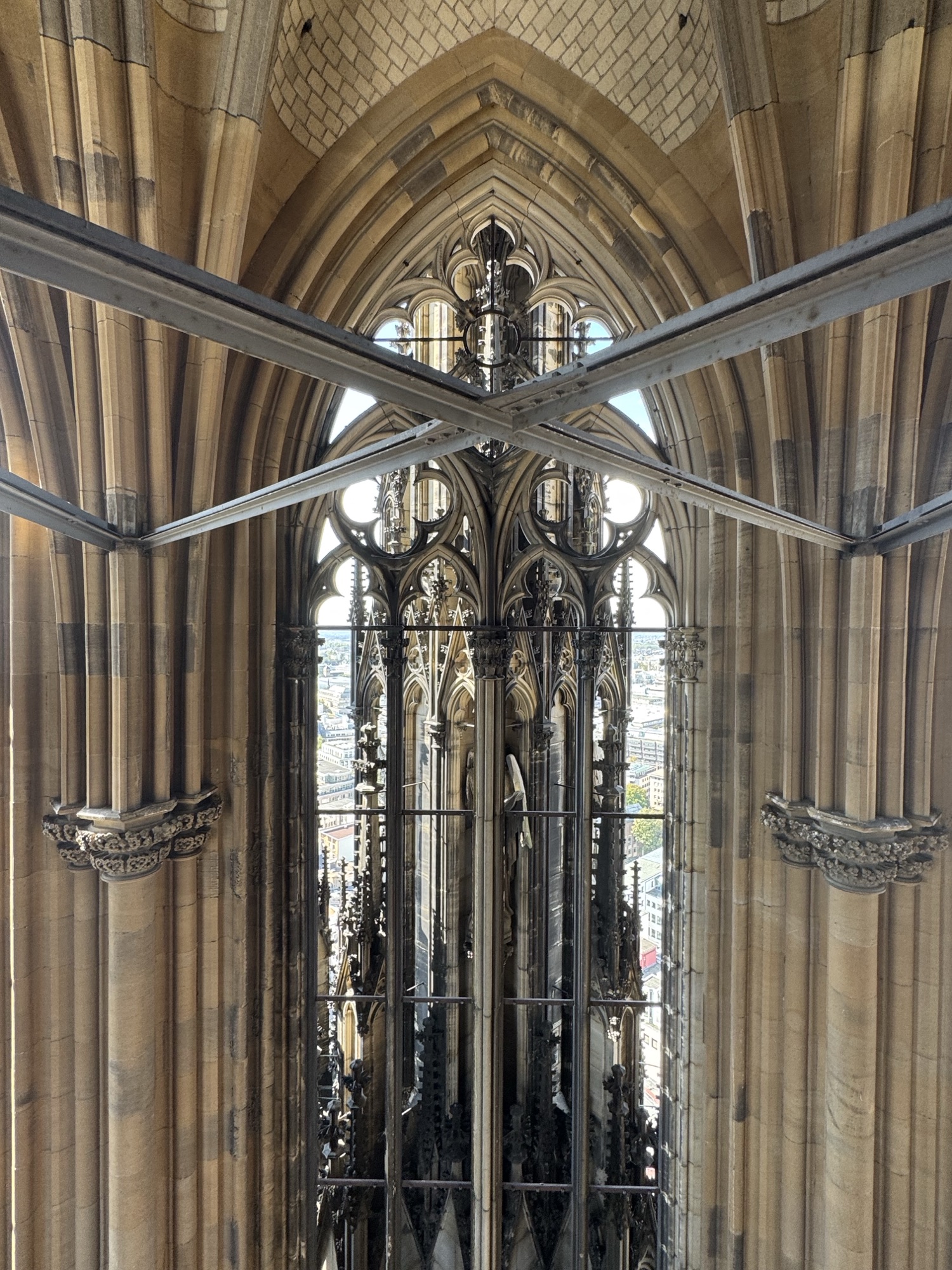
Plus, there were large landings on which we could stop and get a closer look at the features of the spires.
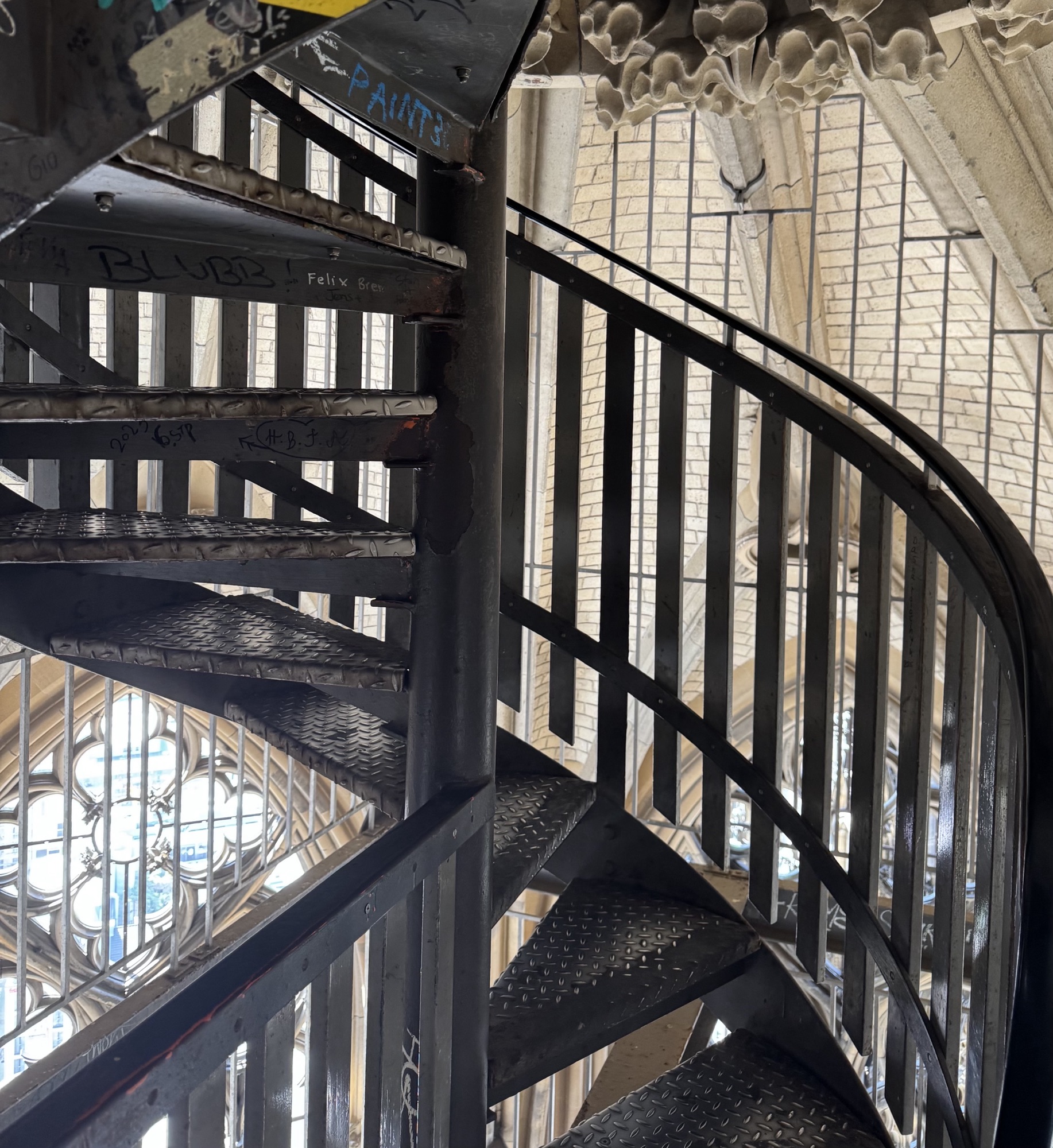
But then, for the ultimate stretch …
Nonetheless, the view and the breeze after a hot climb were both worth the effort.
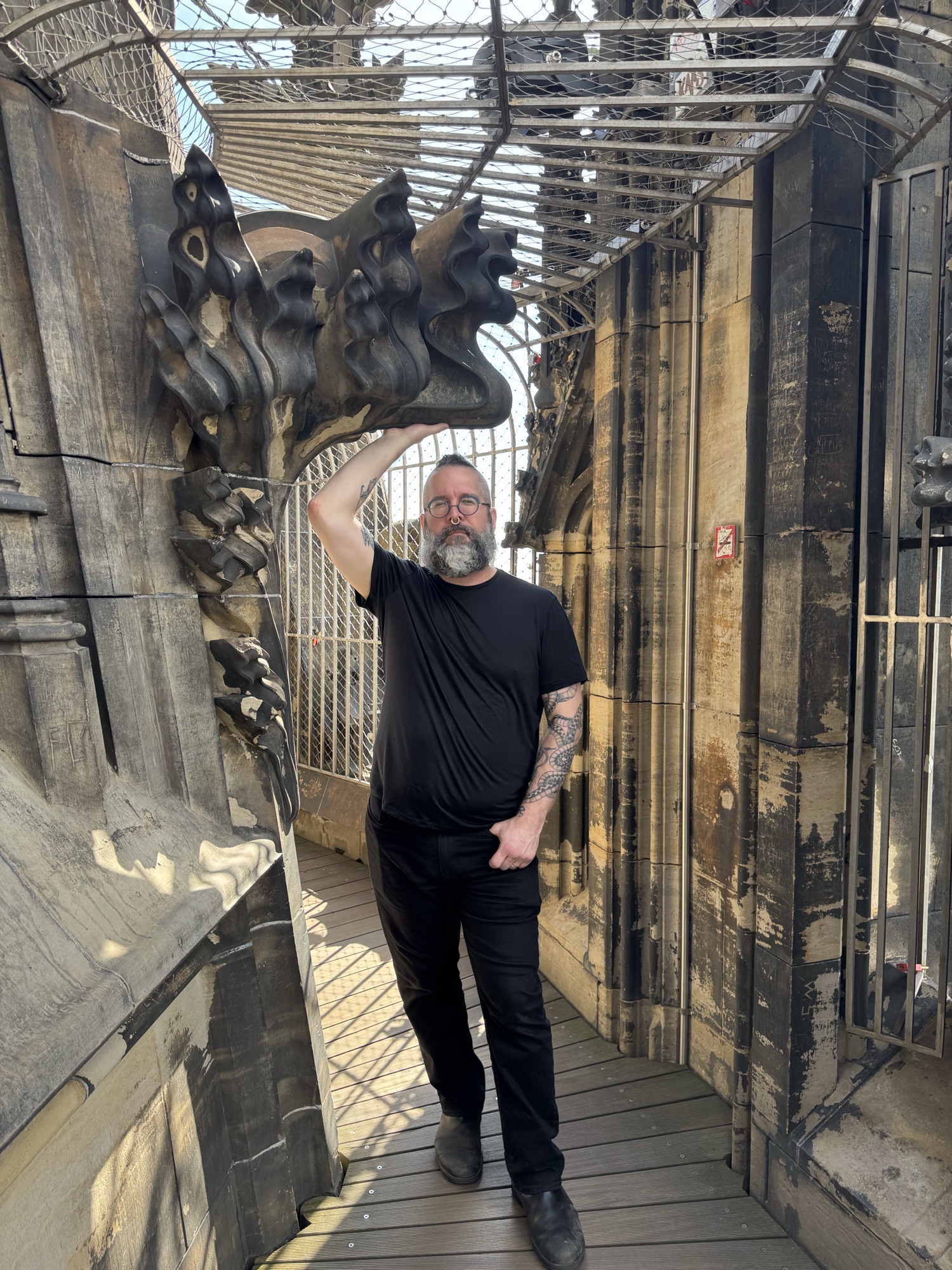
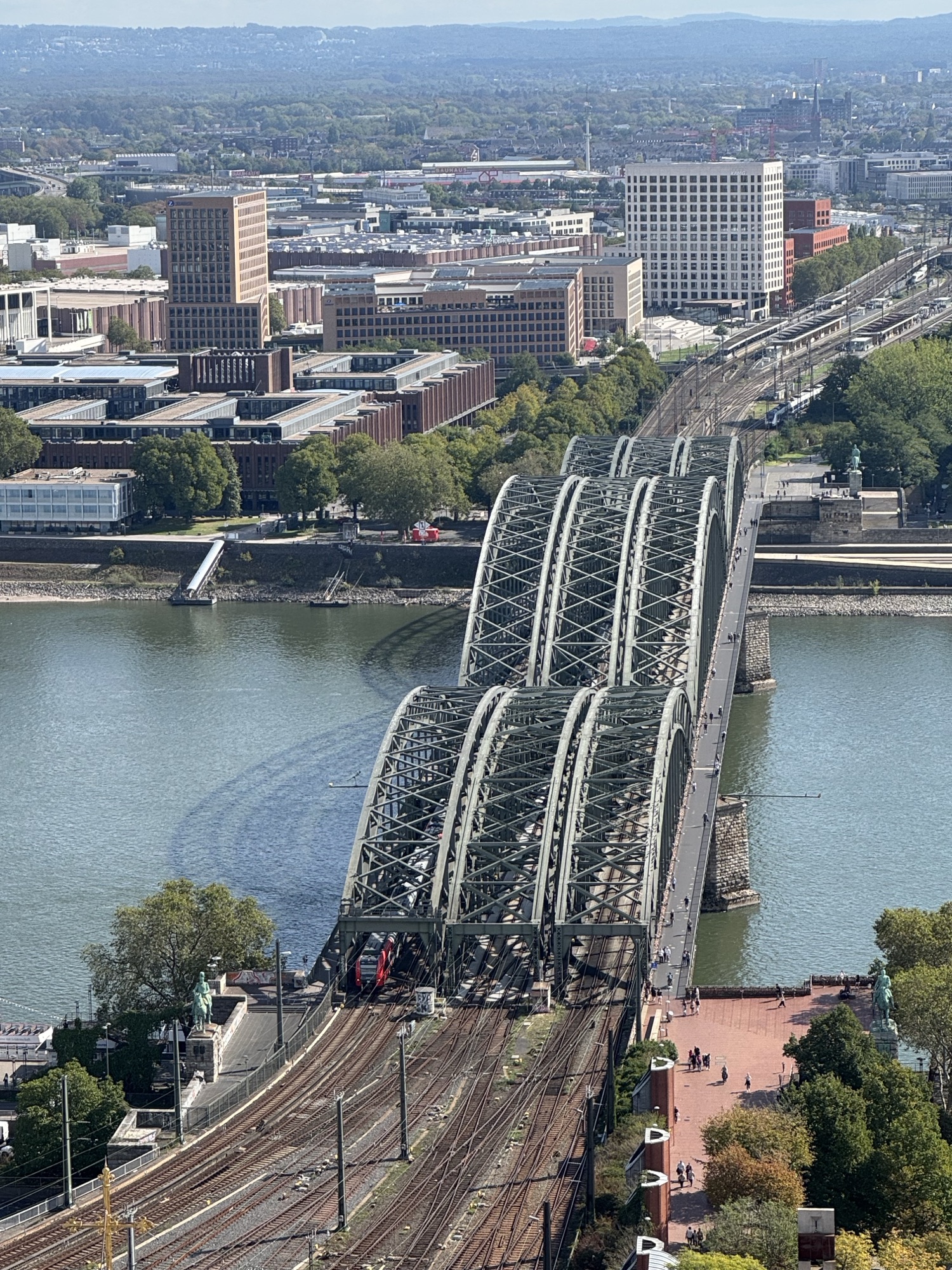
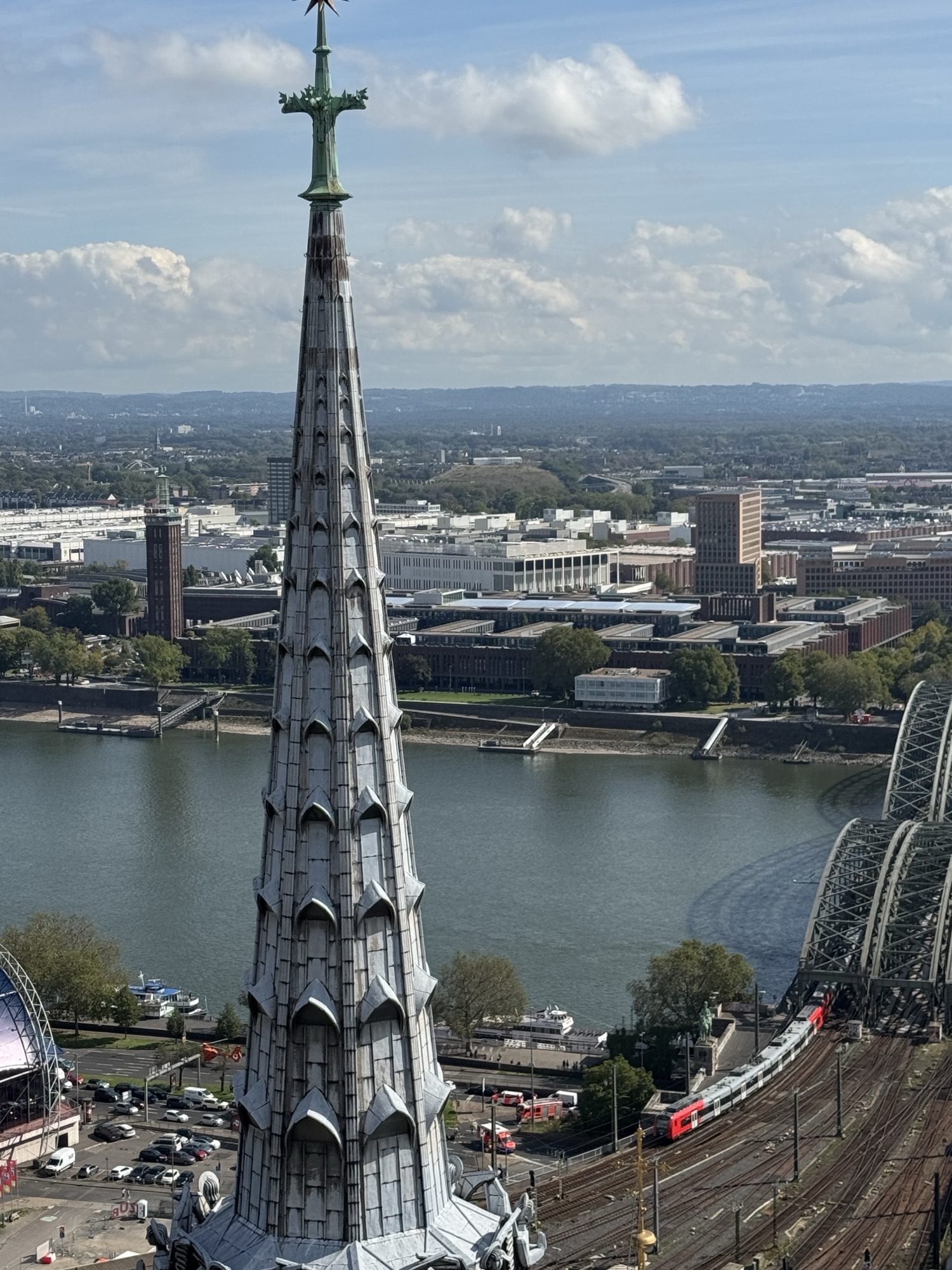
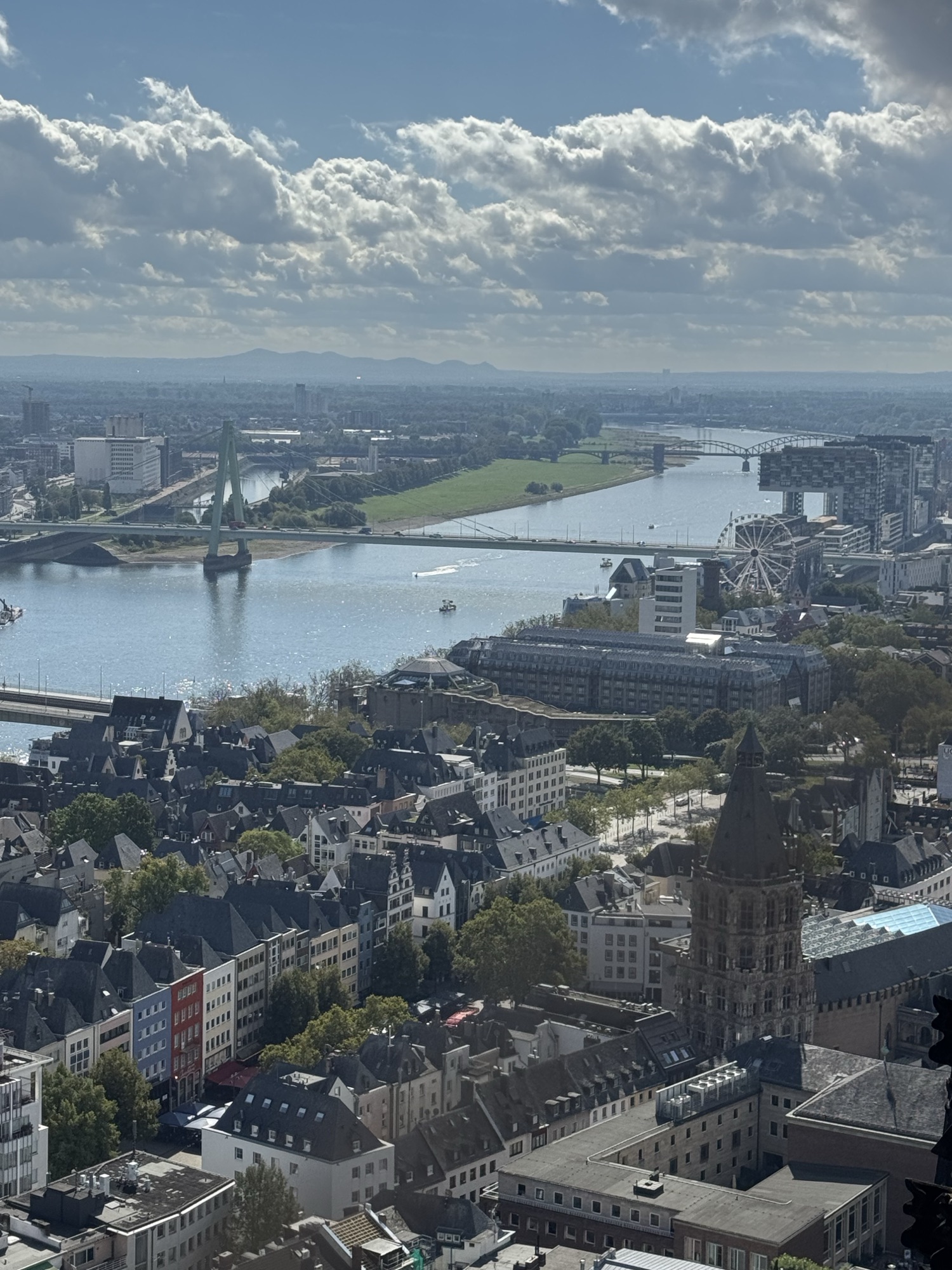
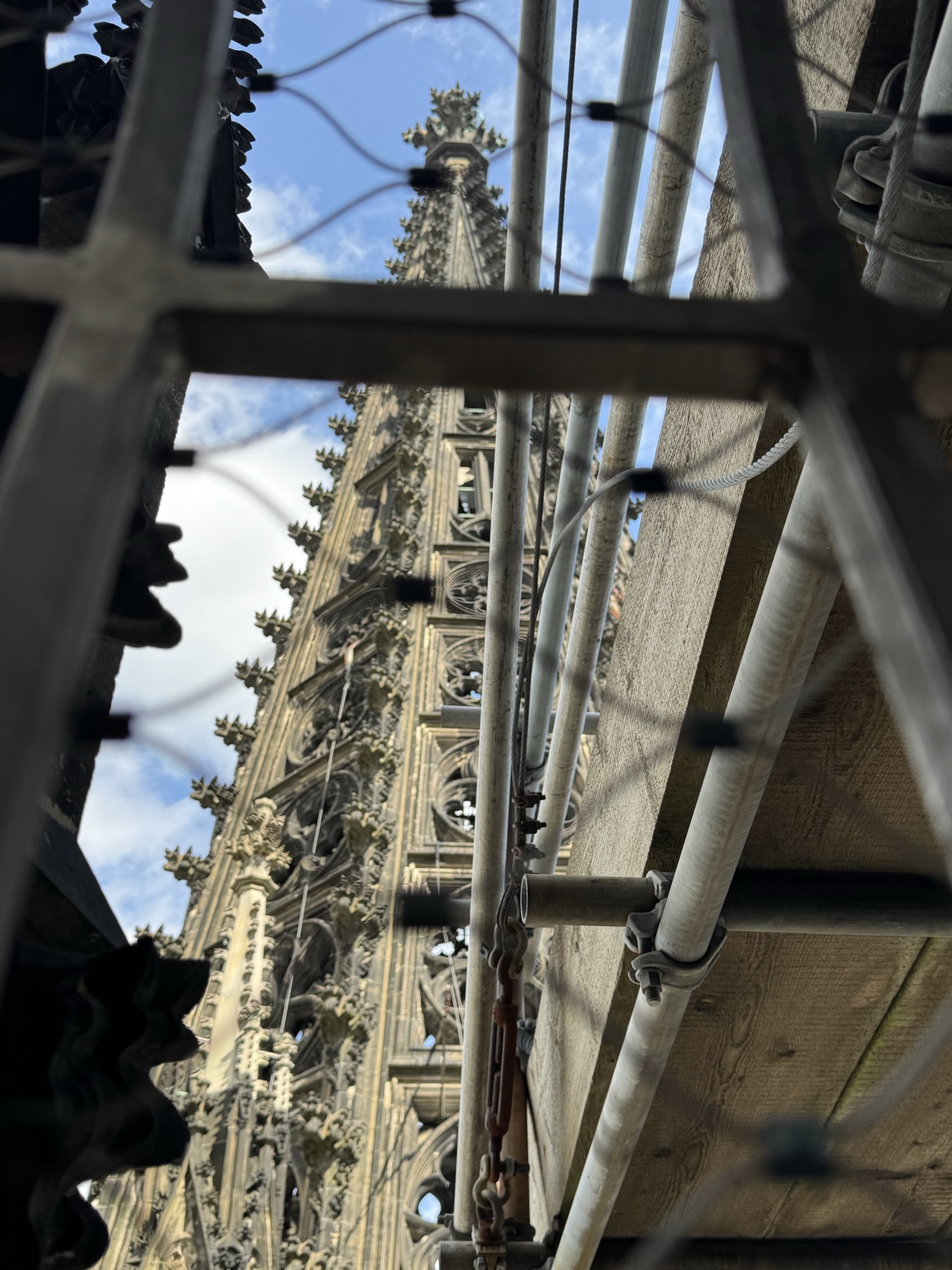
The walk back down felt much shorter.
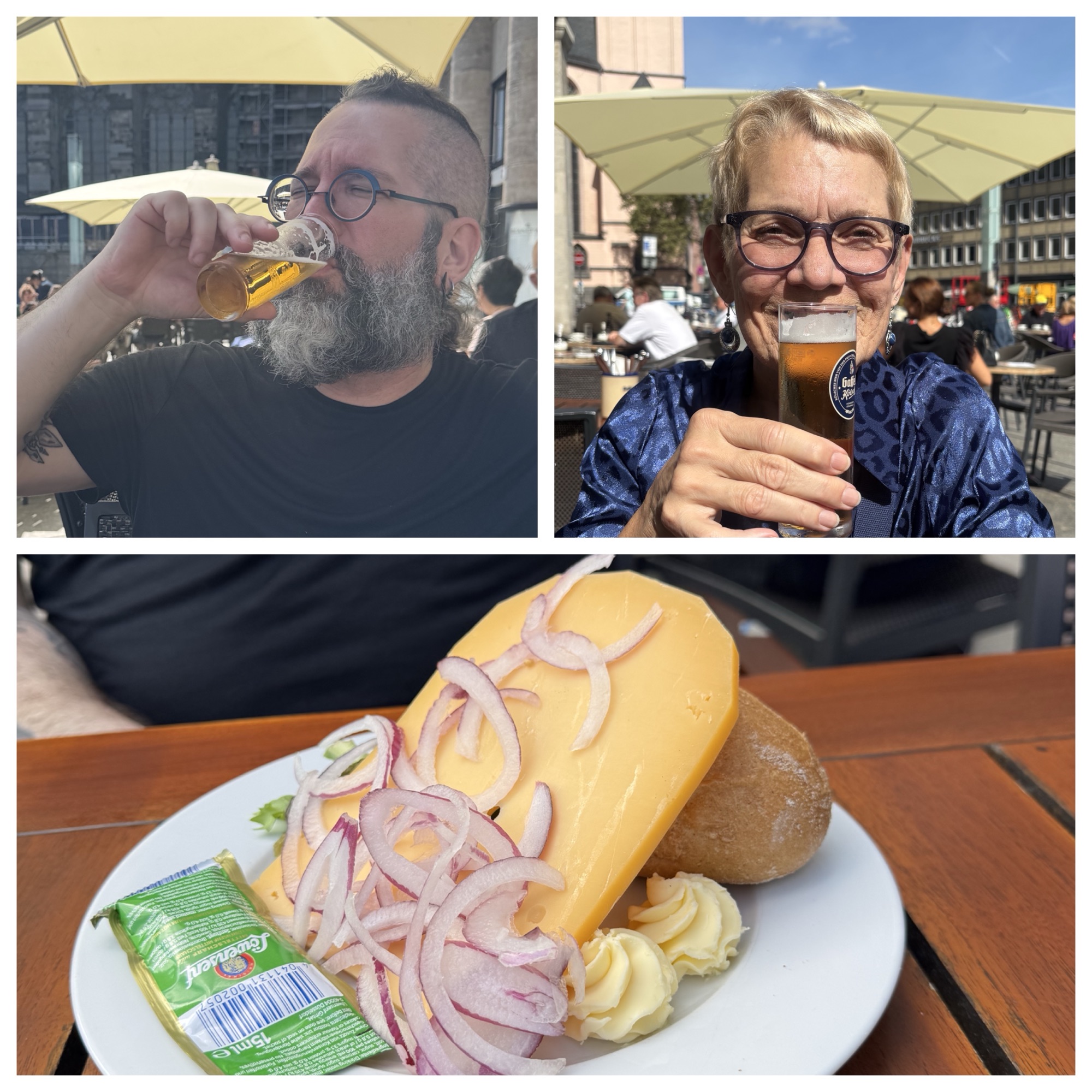
What we really needed after that was a litre of cold mineral water, cold beers, and a snack. One of Cologne’s signature bites is a “Halve Hahn”, which translates in the local dialect to “half chicken”, but is actually a generous slice of Gouda cheese plus sliced red onion on a crusty roll, served with mustard.
That break refreshed us for the final part of our Dom experience: the Schatzkammer. That word translates as treasury, but it is more literally – and more correctly – a “chamber of treasures” and not directly related to money.
The Dom’s collection spans centuries, and includes gold chalices and crosiers, gem-encrusted monstrances and reliquaries, and bishops’ vestments heavy with gold and silver thread.
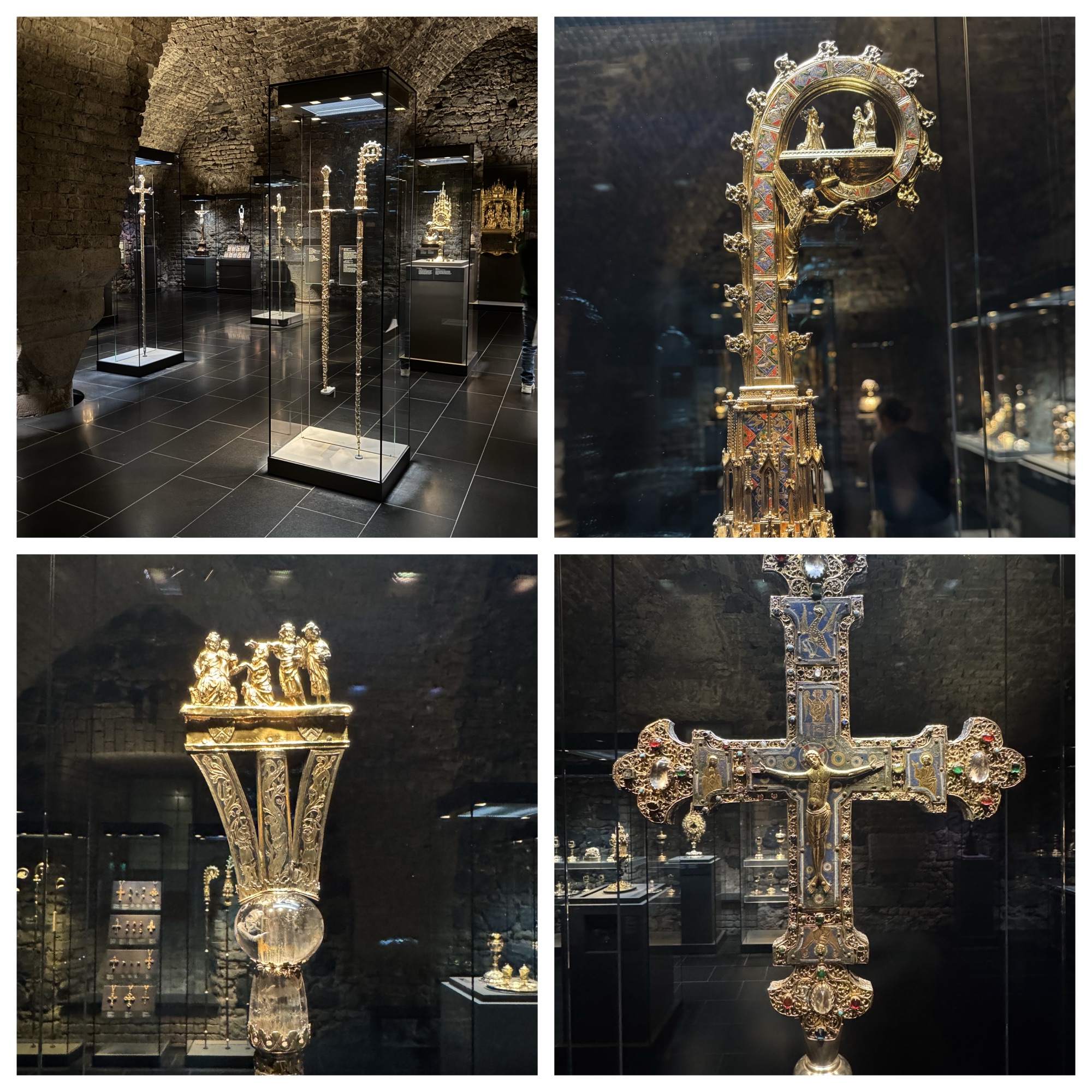
Top R: Gothic bishop’s crosier Cologne, c. 1322. Silver, partly gilded, enamel. The bishop’s crosier and the electoral sword are the symbols of the spiritual and secular authority of the archbishops of Cologne. The crosier probably dates from the consecration of the new gothic cathedral choir on the 27th of September 1322.
Bottom L: Precentor’s staff with Adoration of the Magi Cologne, 1178, circa 1240CE.
Bottom R: Processional Cross
Limoges, c. 1200 (enamel plates) Cologne, c. 1220 (setting).
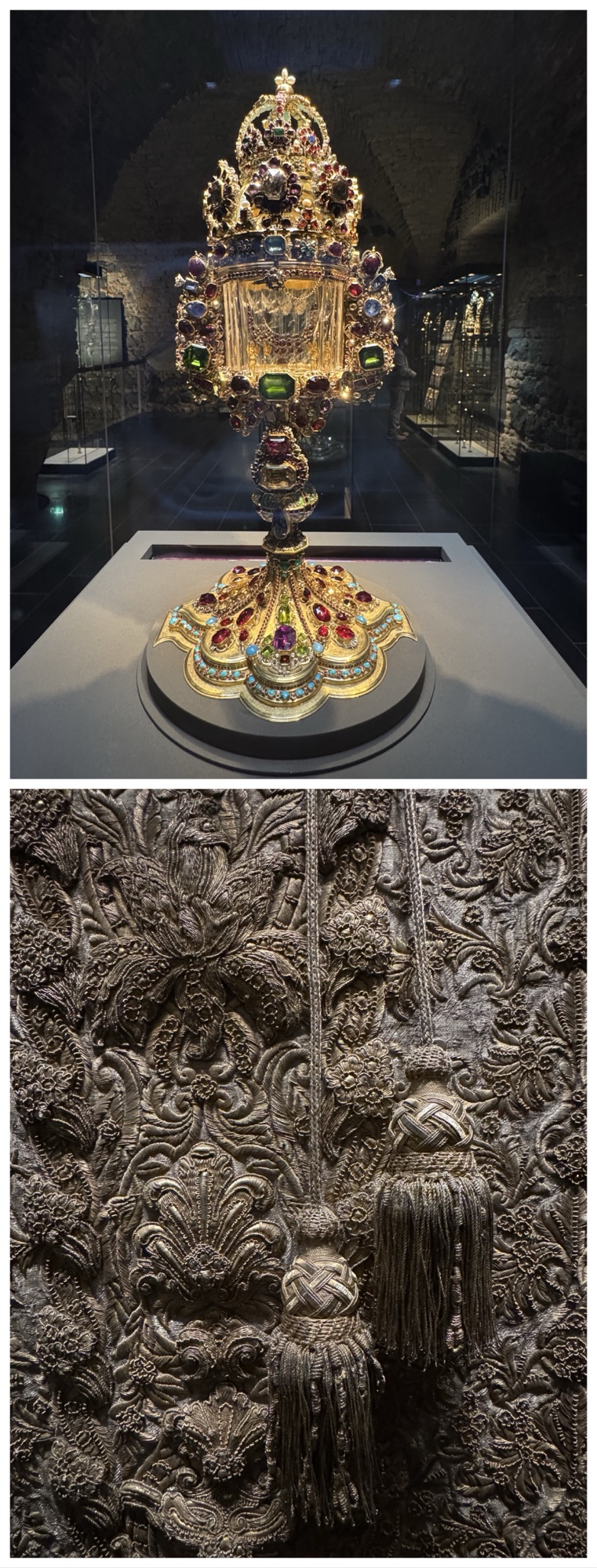
Bottom: detail of one of the 44 pieces in the “Capella Clementina” the complete set of items including 22 garmentd made of silver fabric heavily embroidered with gold thread that Elector and Archbishop Clemens August
acquired for the coronation of his brother, Emperor Charles VII, in Paris in 1742.
A portion of the Schatzkammer is located within walls that date to Roman times. Cologne is full of Roman history, all lying just metres below its streets and buildings.
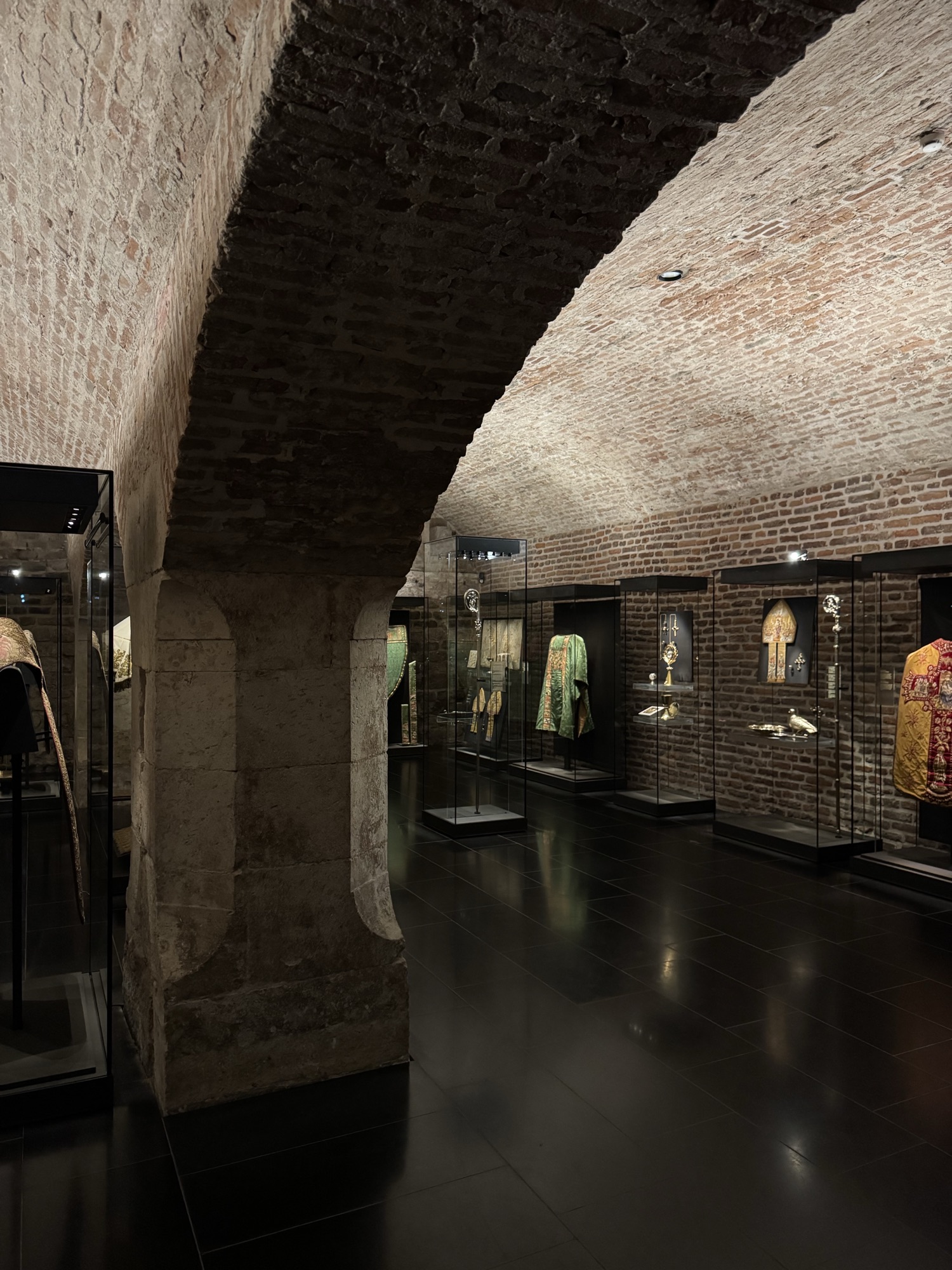
In addition to religious treasures, there are also some architectural gems, like this angel carved out of chalky sandstone by a stonemason around 1270CE, removed and replaced to prevent further wear and damage.
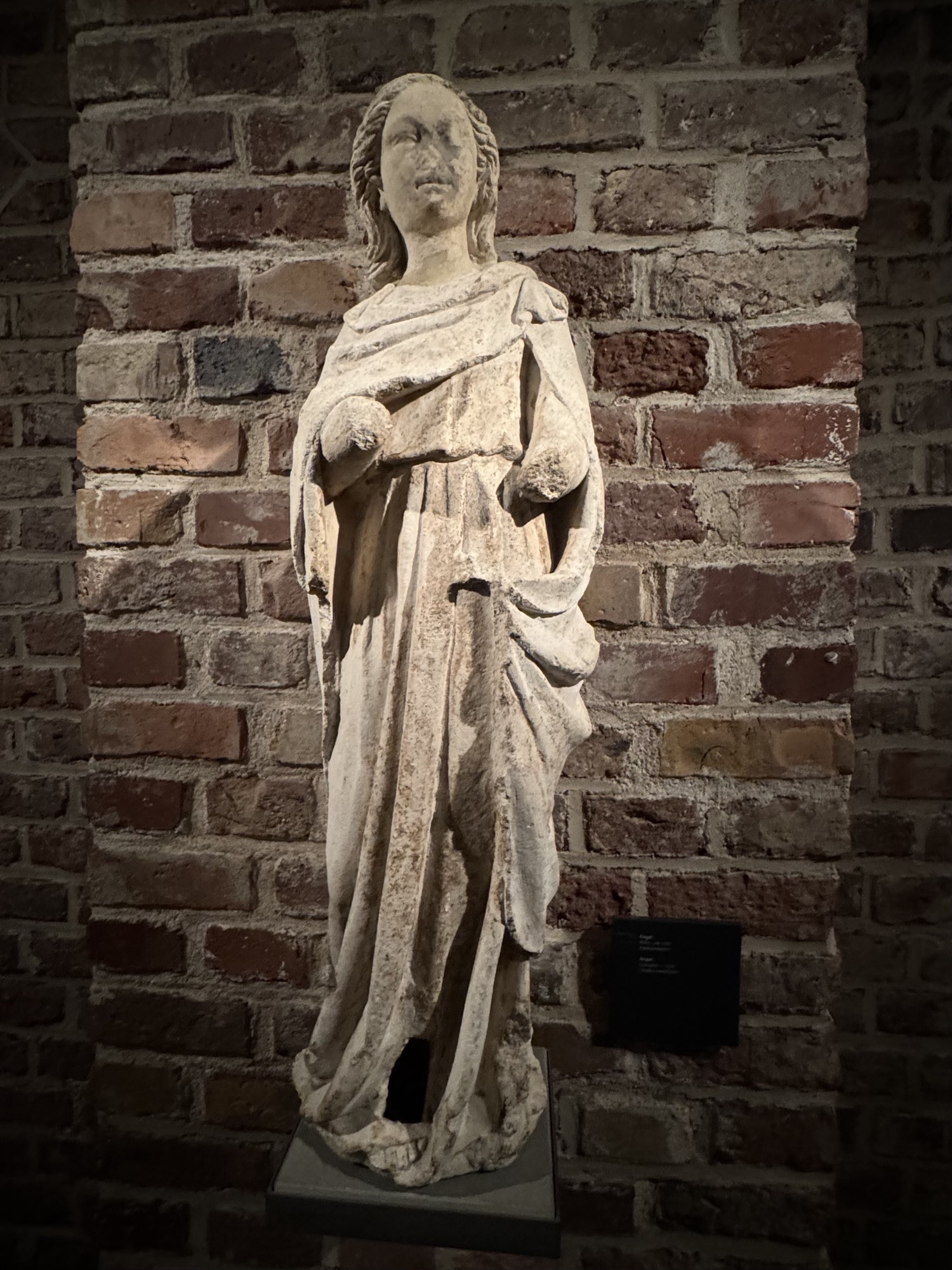
I was particularly enamoured of this circa 1380CE figure original to St Peter’s Portal.
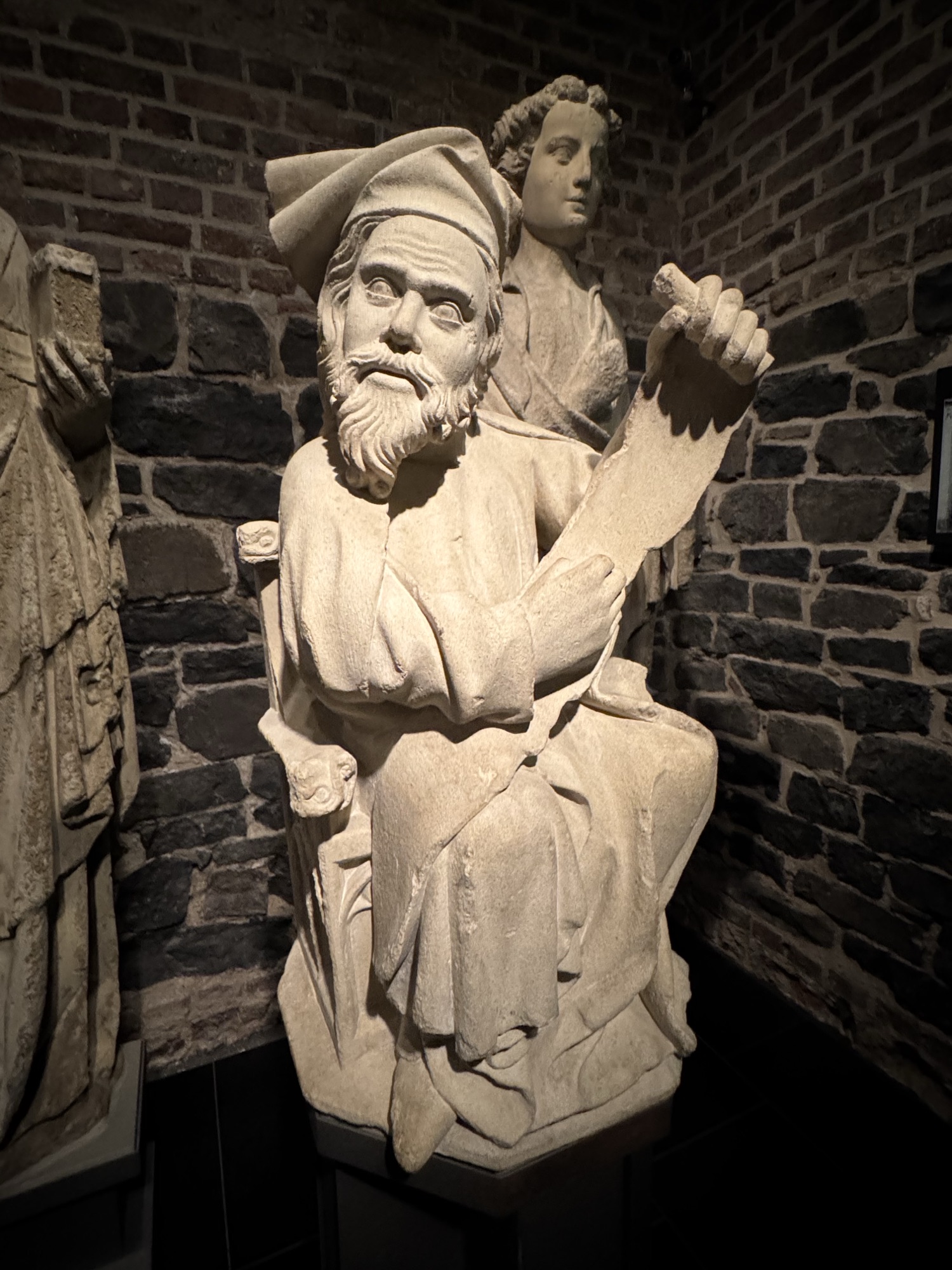
There was so much more to see than my photos indicate, but I don’t dare wear down my phone battery when we’re out.
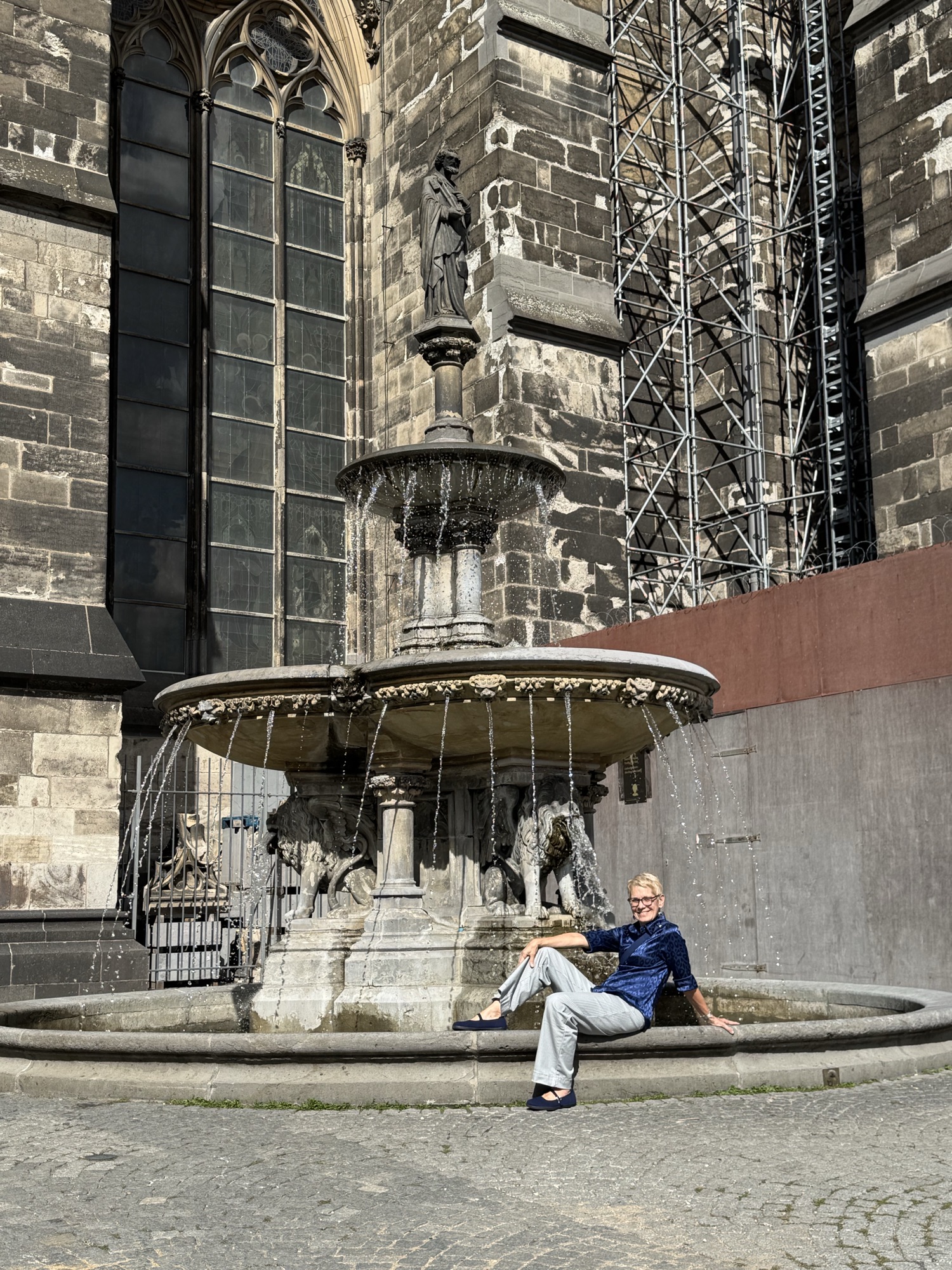
And then we were back out into the afternoon sun, where I made #1 take a photo of one of my signature poses (fountain leaning – the other two are chaise fainting and throne lounging) before heading back to our hotel for a very quick break.
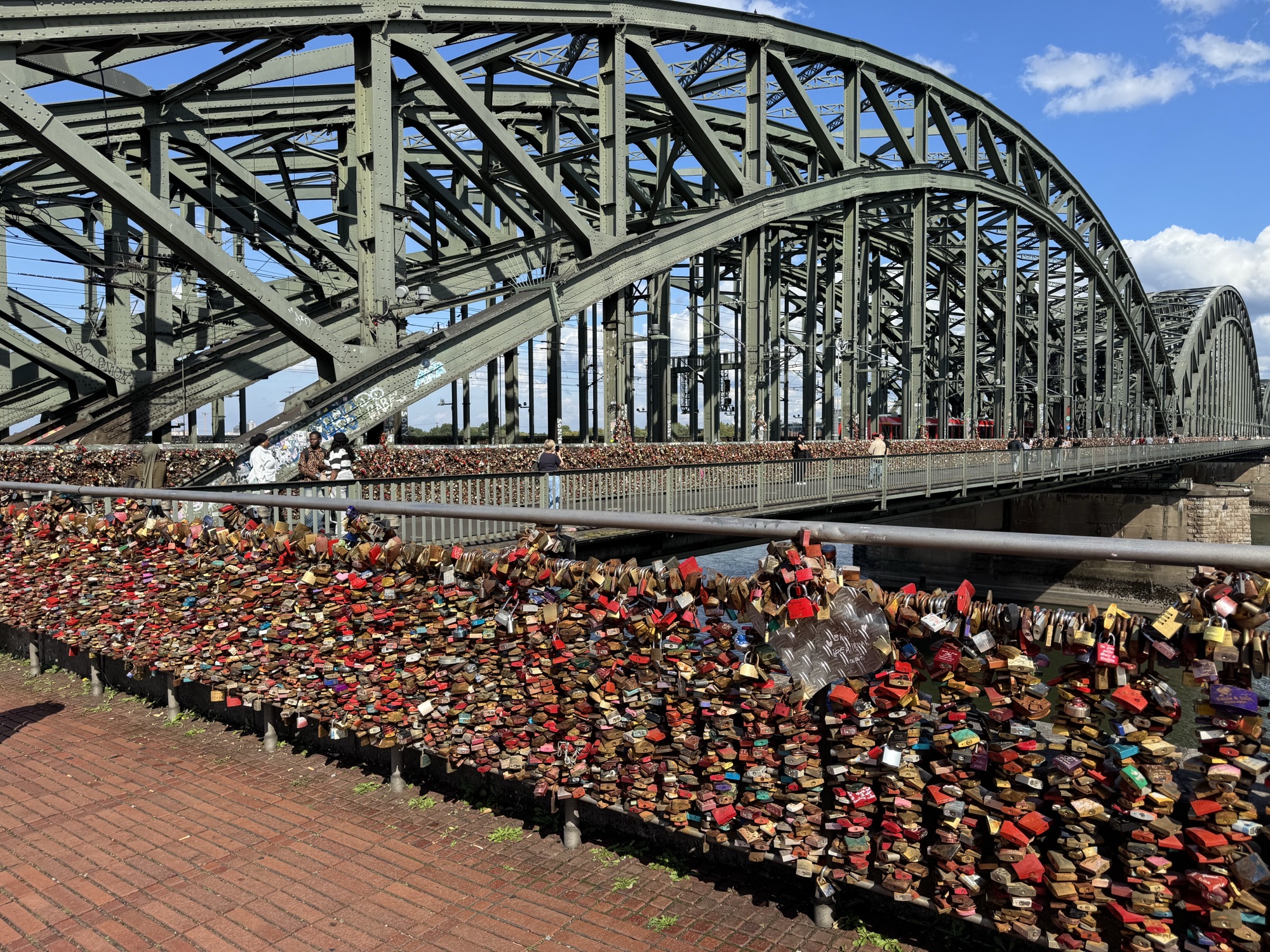
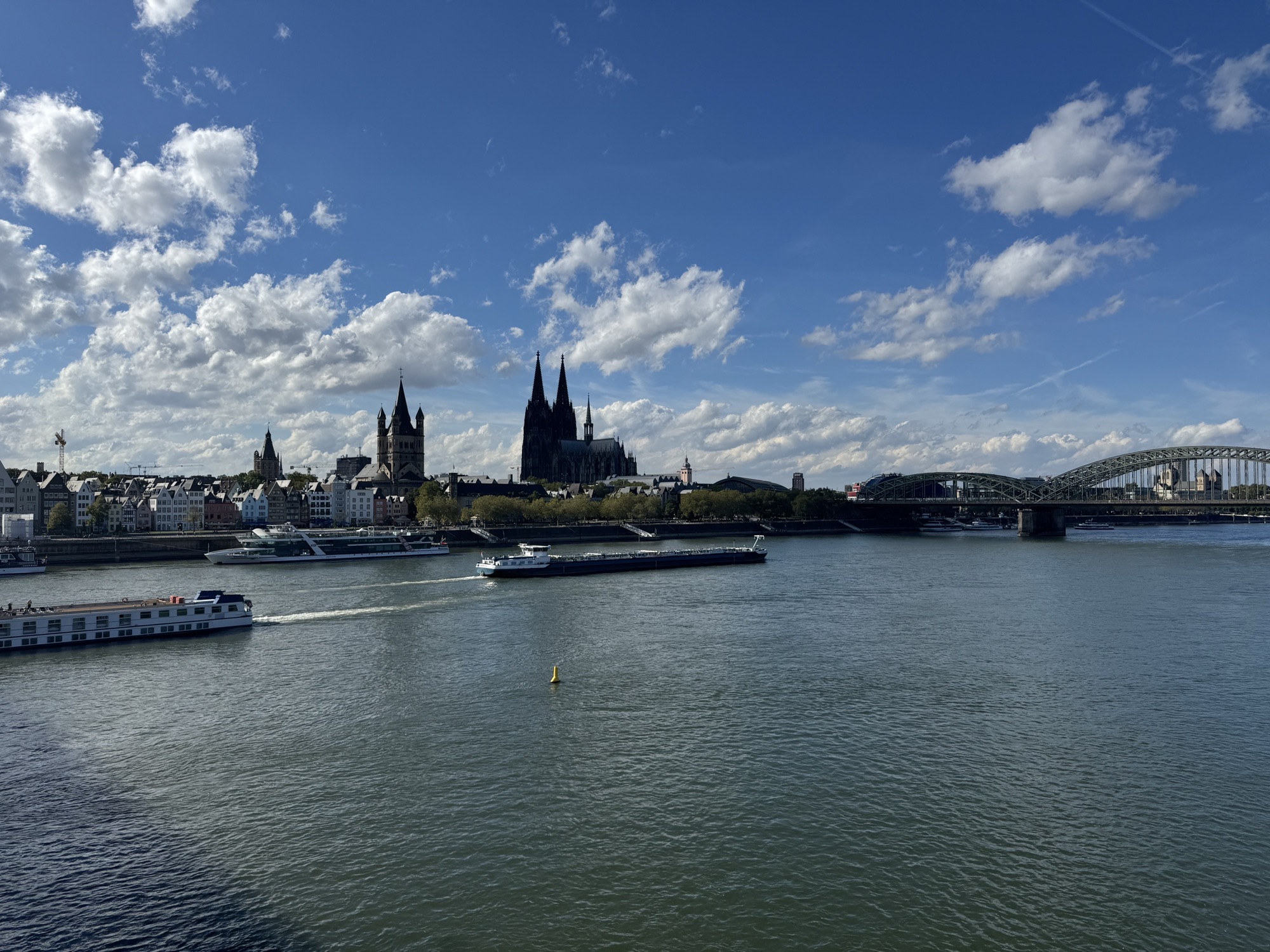
From where we are in the centre of the city, we can see two bridges crossing the Rhine: the Hohenzollern Brücke, named after the eponymous German dynasty and used for rail and pedestrians, and the Deutzer Brücke for vehicular traffic and pedestrians.
We started out by crossing the former, which glitters with the up to 500,000 love locks affixed to its railings. The locks add tons of extra weight, but railway experts agree that (so far) the heavy-duty train bridge can handle the load safely.
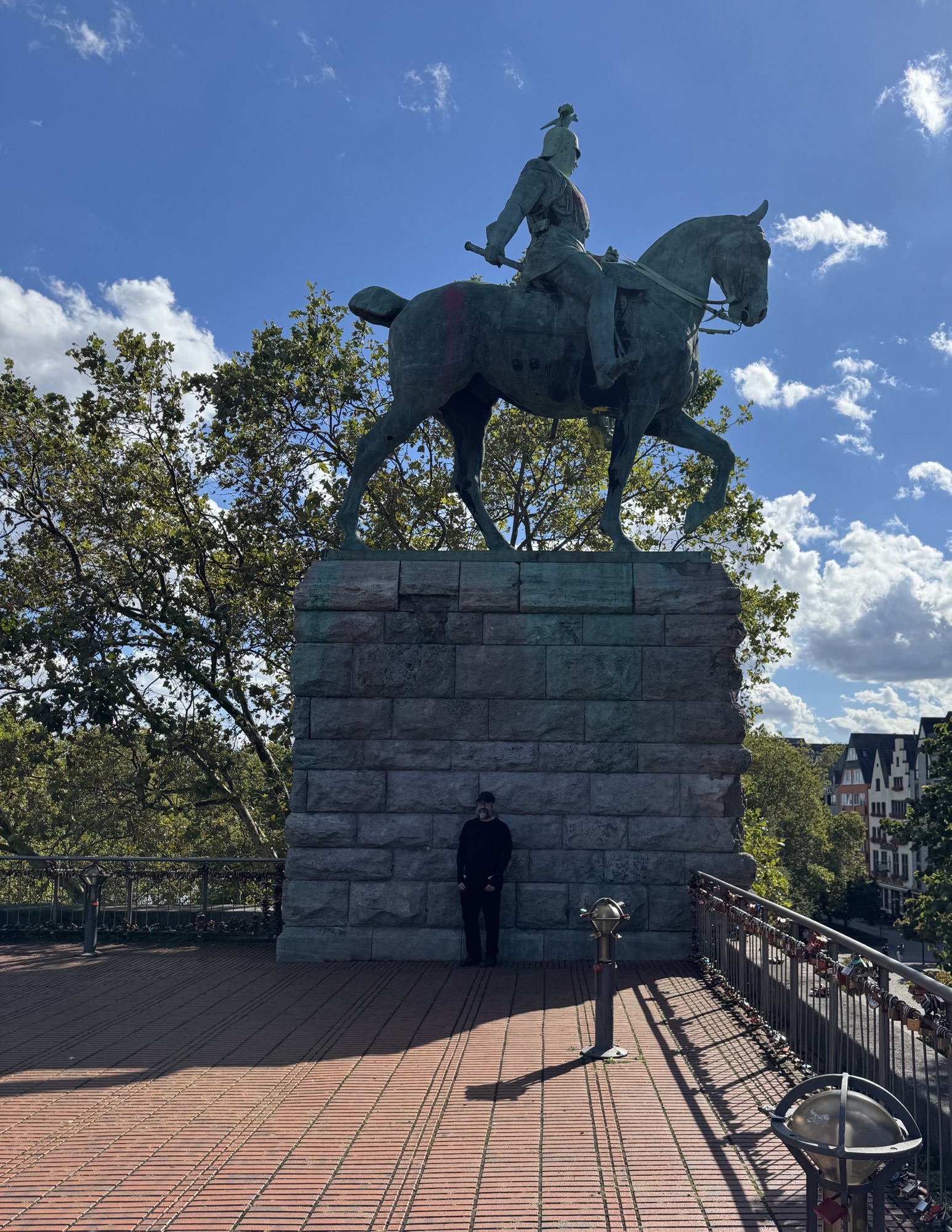
At each end of the bridge is an equestrian statue of Kaiser Wilhelm II.
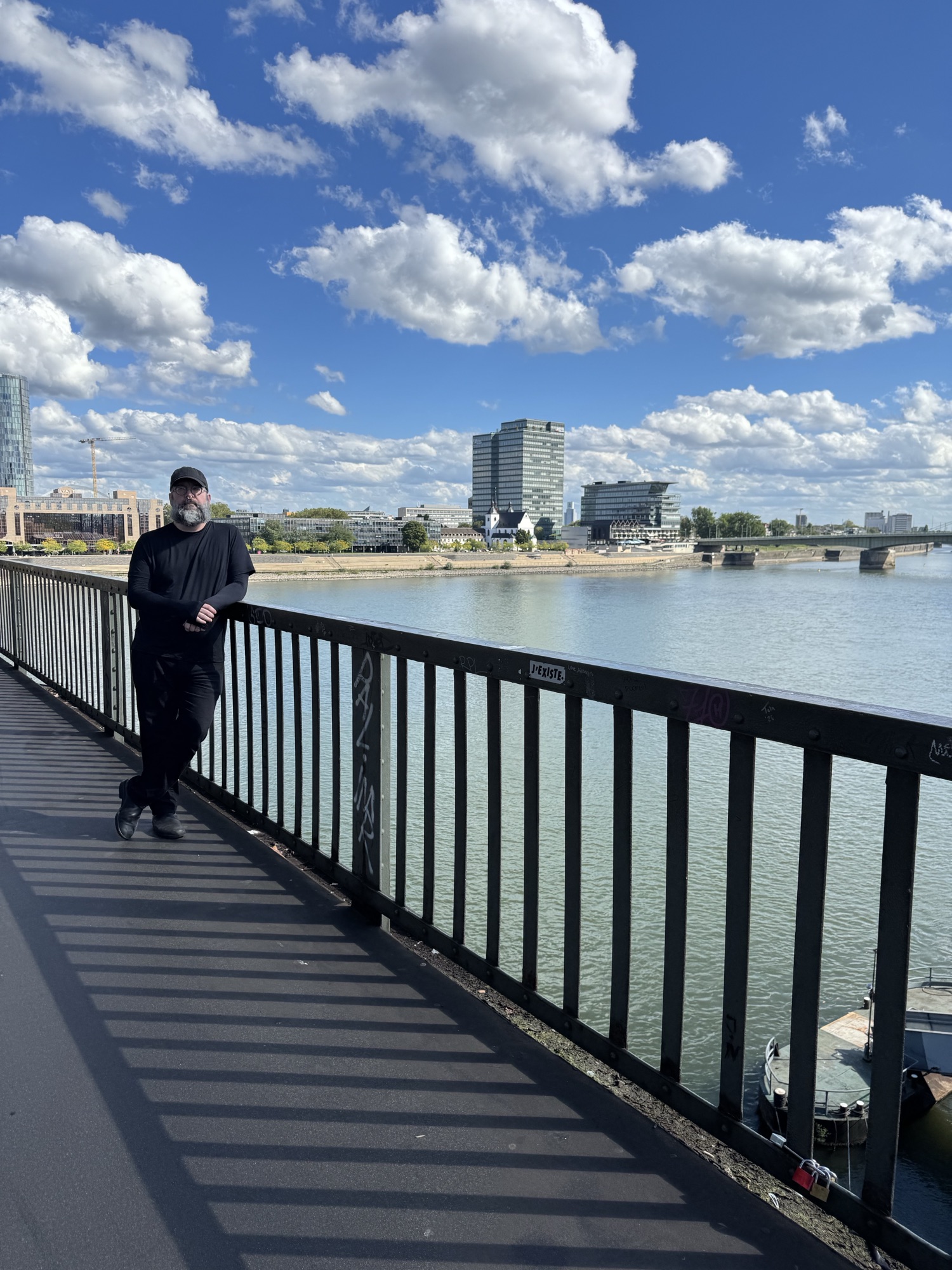
The views from the middle of the Rhine were lovely.
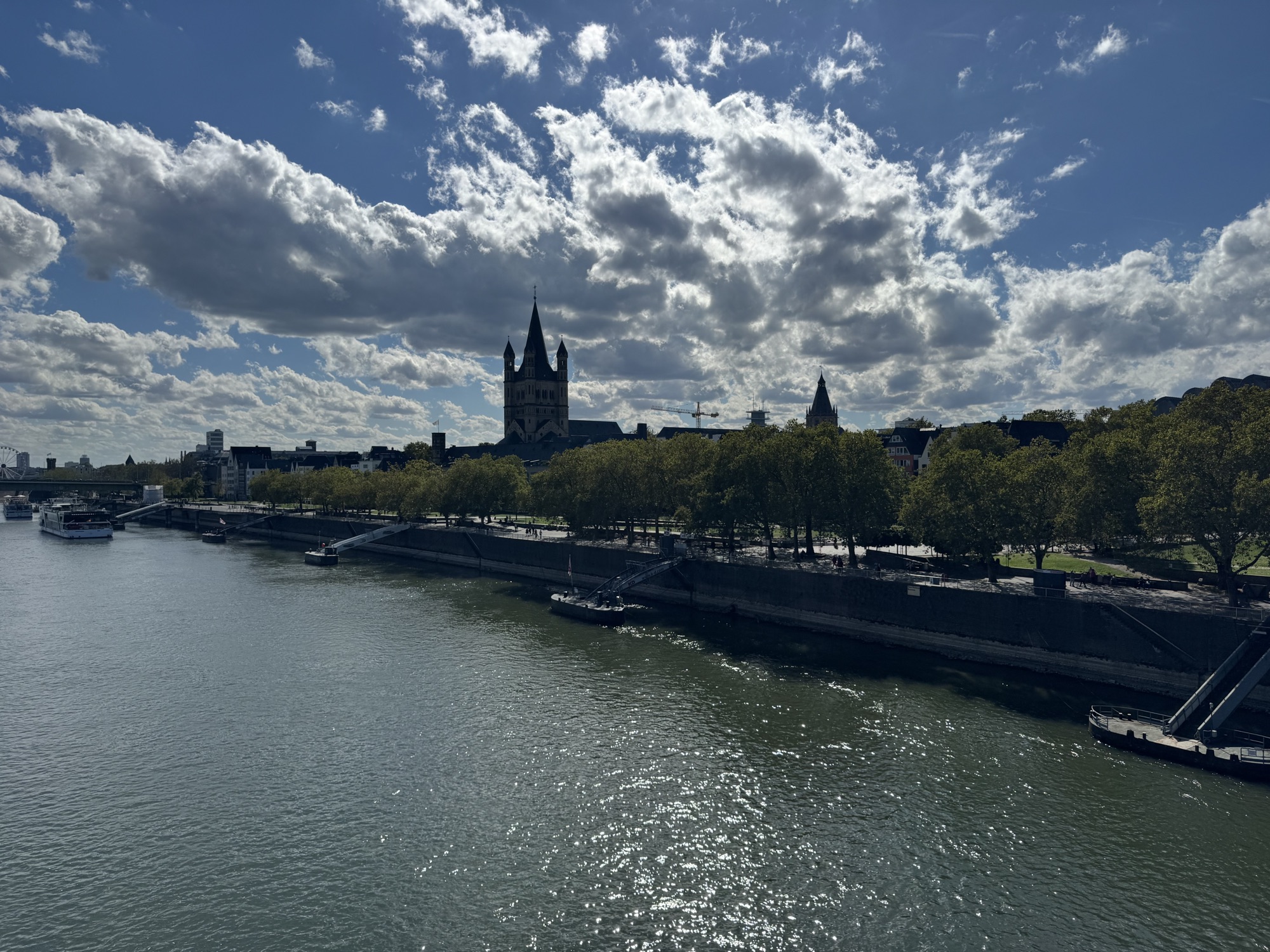
When we reached the opposite bank we bought ice creams (priorities!) and then walked along the fairly new river walk, along which we found lots of information about the Roman fort that used to be here.
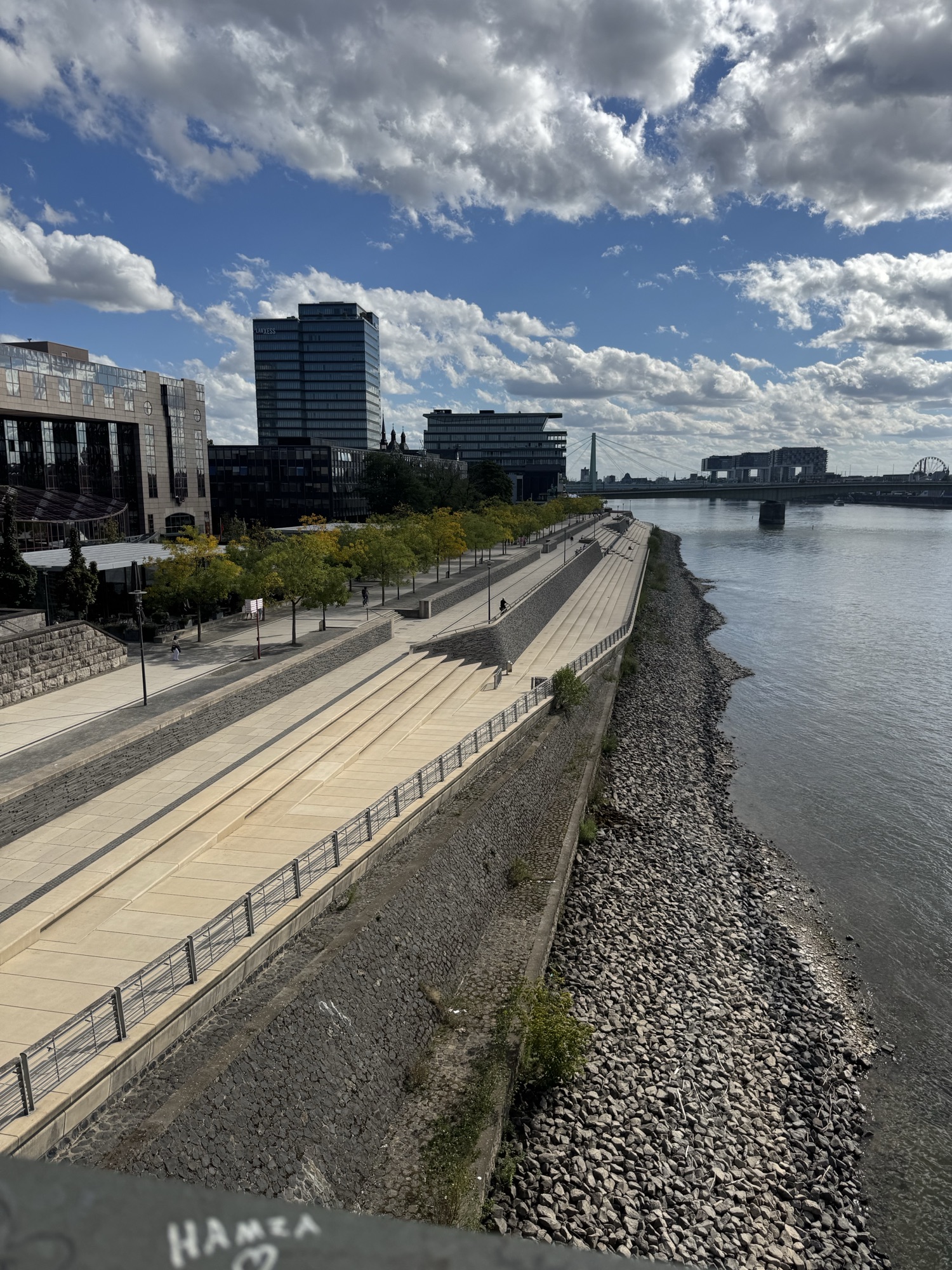
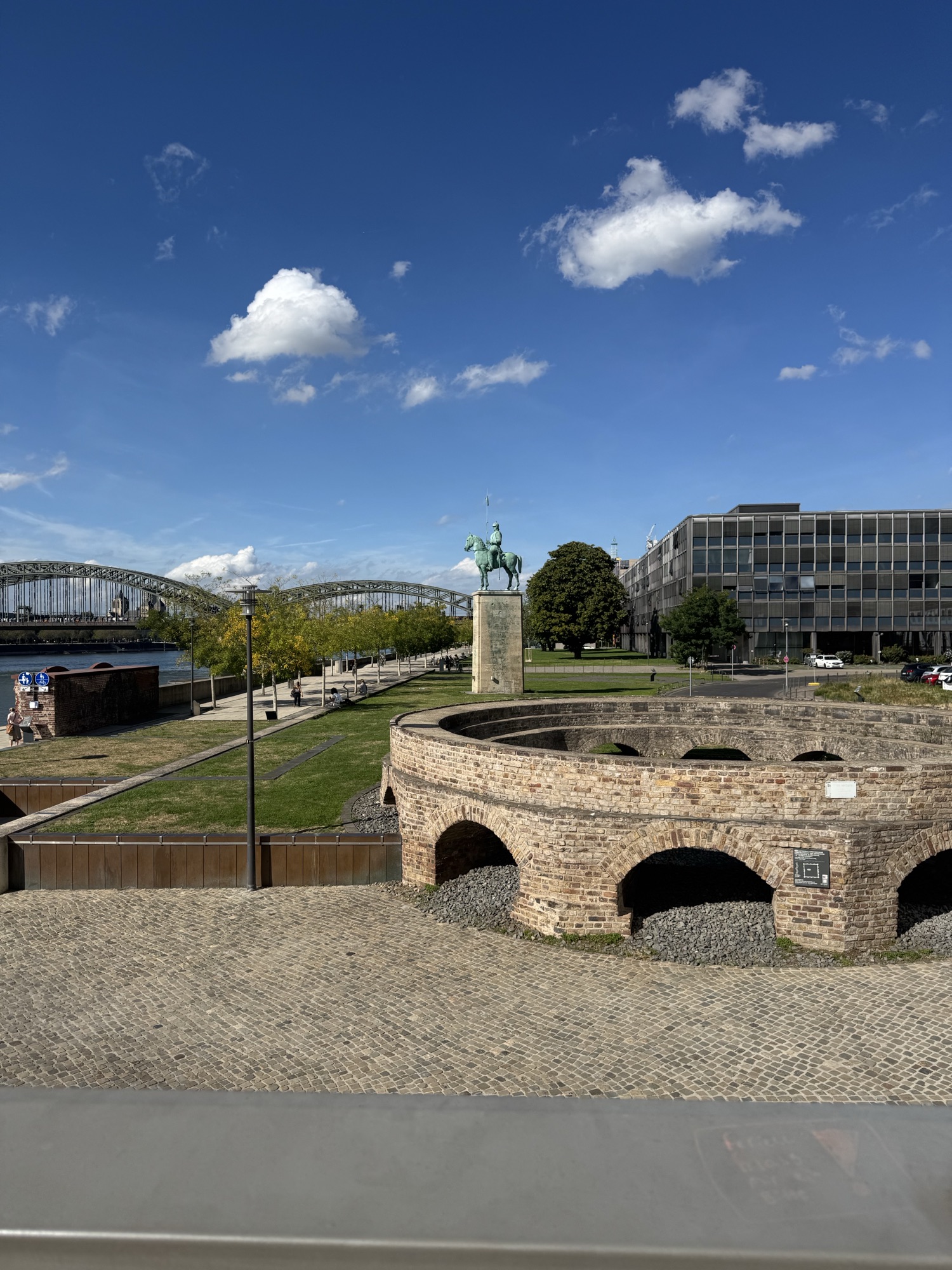
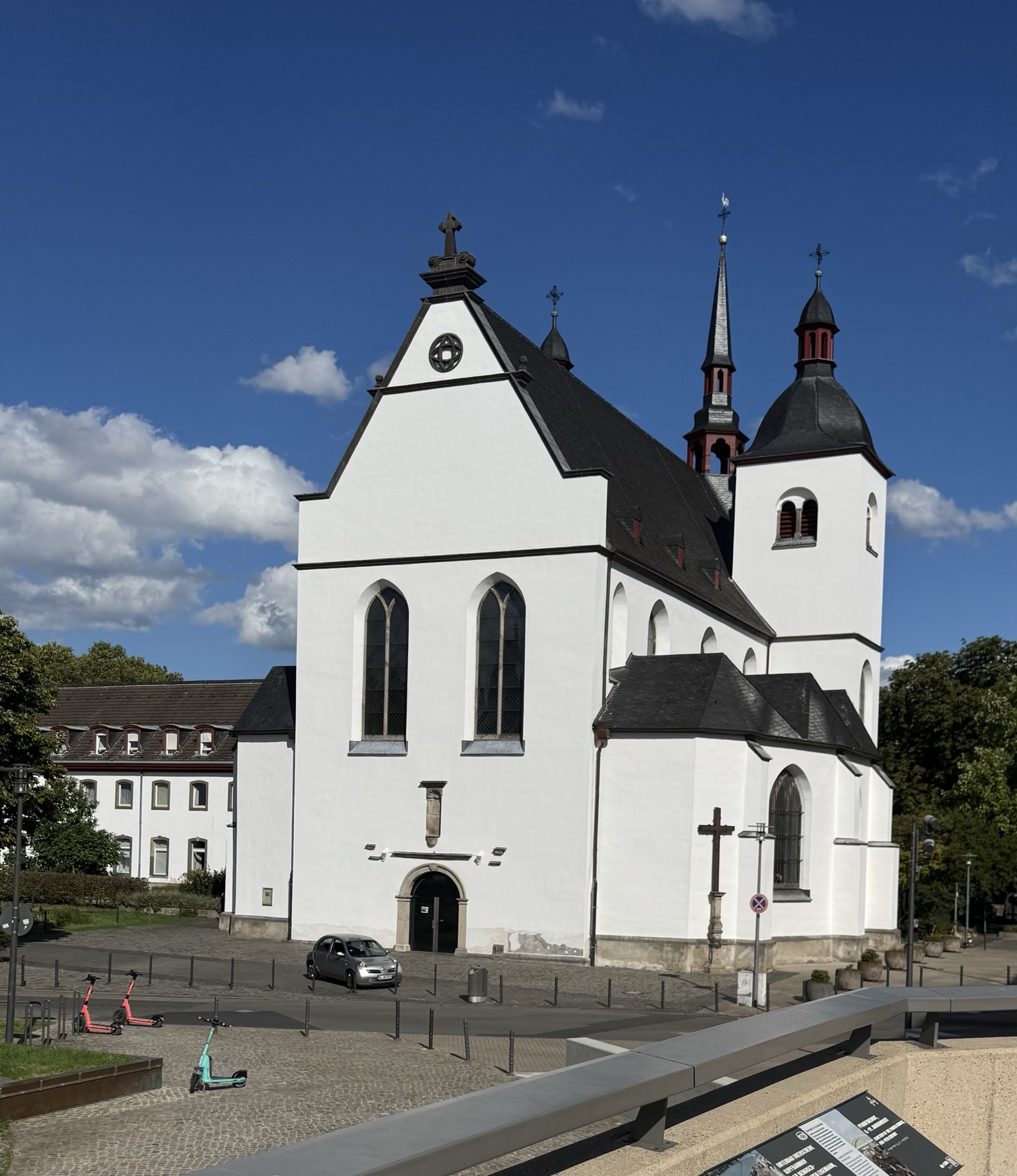
Above the riverbank the former abbey church of the Benedictine monastery in Deutz dates back to the time of Heribert, Archbishop of Cologne, and was built around 1020. Heribert was buried in the central part of the church. The abbey church was destroyed and rebuilt several times.
The present building, a basilica with a central nave, two lateral aisles, and two towers flanking the choir, was erected in the 17th century on the foundations of the old church.
From the Deutzer Brücke (bridge) we had a look back at the Hohenzollern Brücke, the Dom, and riverboats finally able to ply this stretch of the river after a long summer drought and low water levels.
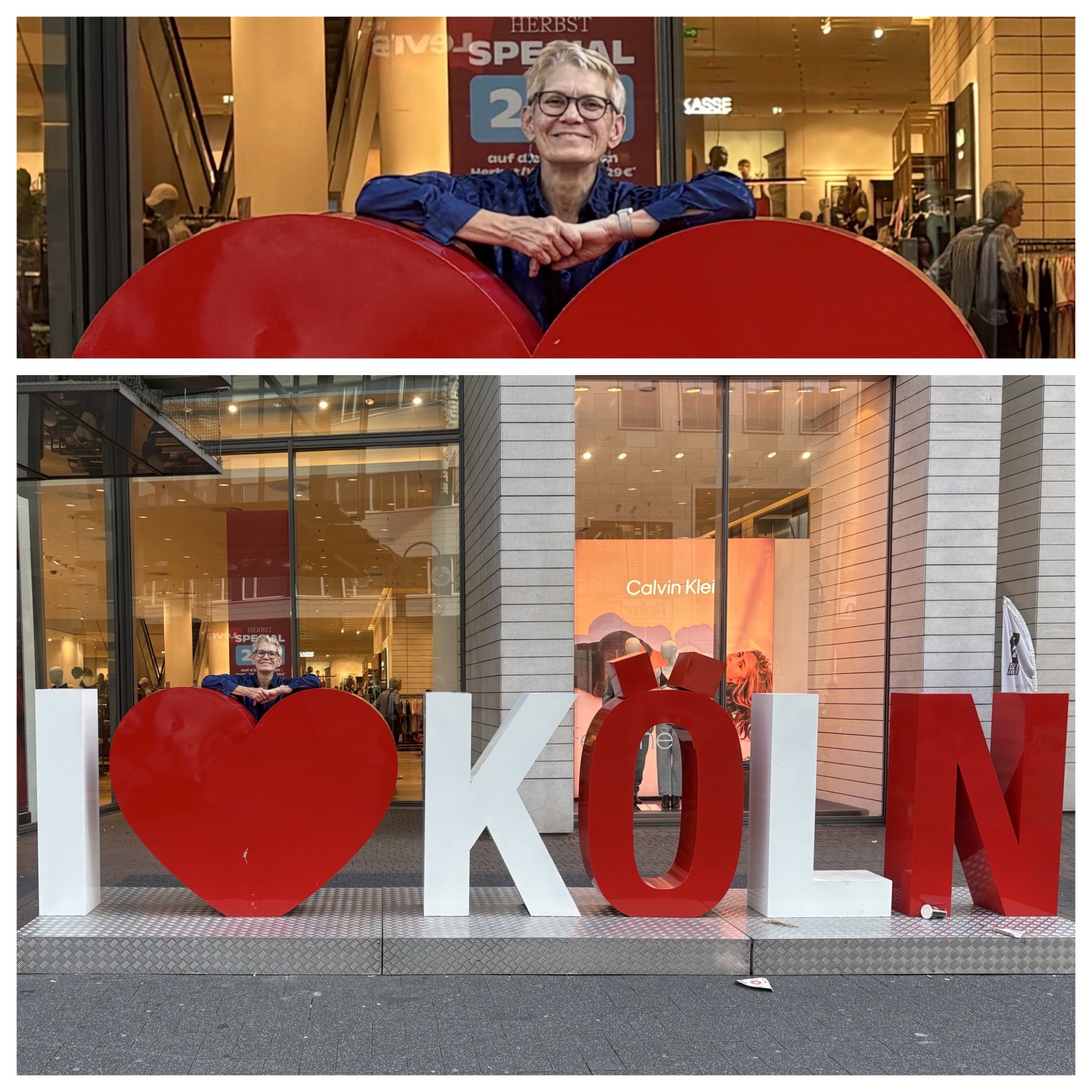
On our walk back to the hotel we stopped so that I could get a photo at the I Love Köln sign in the main shopping district.
We needed to rest our feet for a bit before heading into the Heumarkt District for supper.
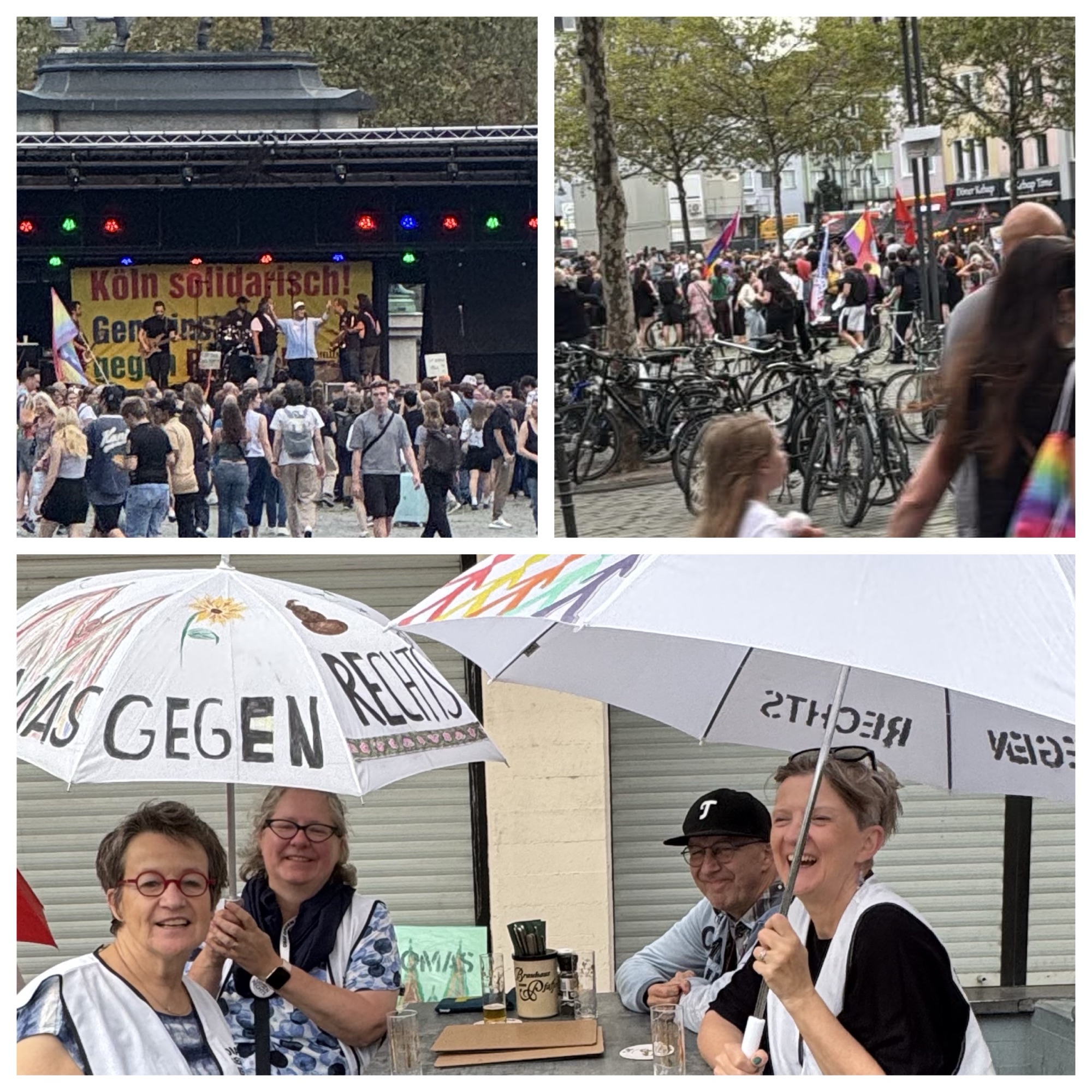
En route to our chosen brew pub we encountered a huge anti-afD protest in the square. People of every age, some carrying signs of pride flags, including Köln’s Omas Gegen Rechts, a group similar to Canada’s Raging Grannied except in this case dedicated specifically to enduring that Germany never returns to far-right politics. The protest was in response to the afD’s win this week of a majority in the small state of Saxony-Anhalt, and suggestions that they want to run a campaign in the state in which Cologne is located. It appears, from the protests and overheard conversations in the pub, that Cologne wants nothing to do with them. I was inordinately happy to be able to say “well done” to people across all age groups. The protest was very peaceful, there was a band playing on stage in the square, and the police presence, while obvious, was completely non intrusive.
Our dinner at Brauerei zum Pfaffen was delicious and made even more enjoyable by the very positive vibe of the square and our neighbouring table companions.
The brewpub was in a building that Ted and I had admired on previous trips; this time renovations were complete, and an excellent menu and friendly staff in place. While the interior renovation is lovely, we chose to eat outdoors with almost everyone else.
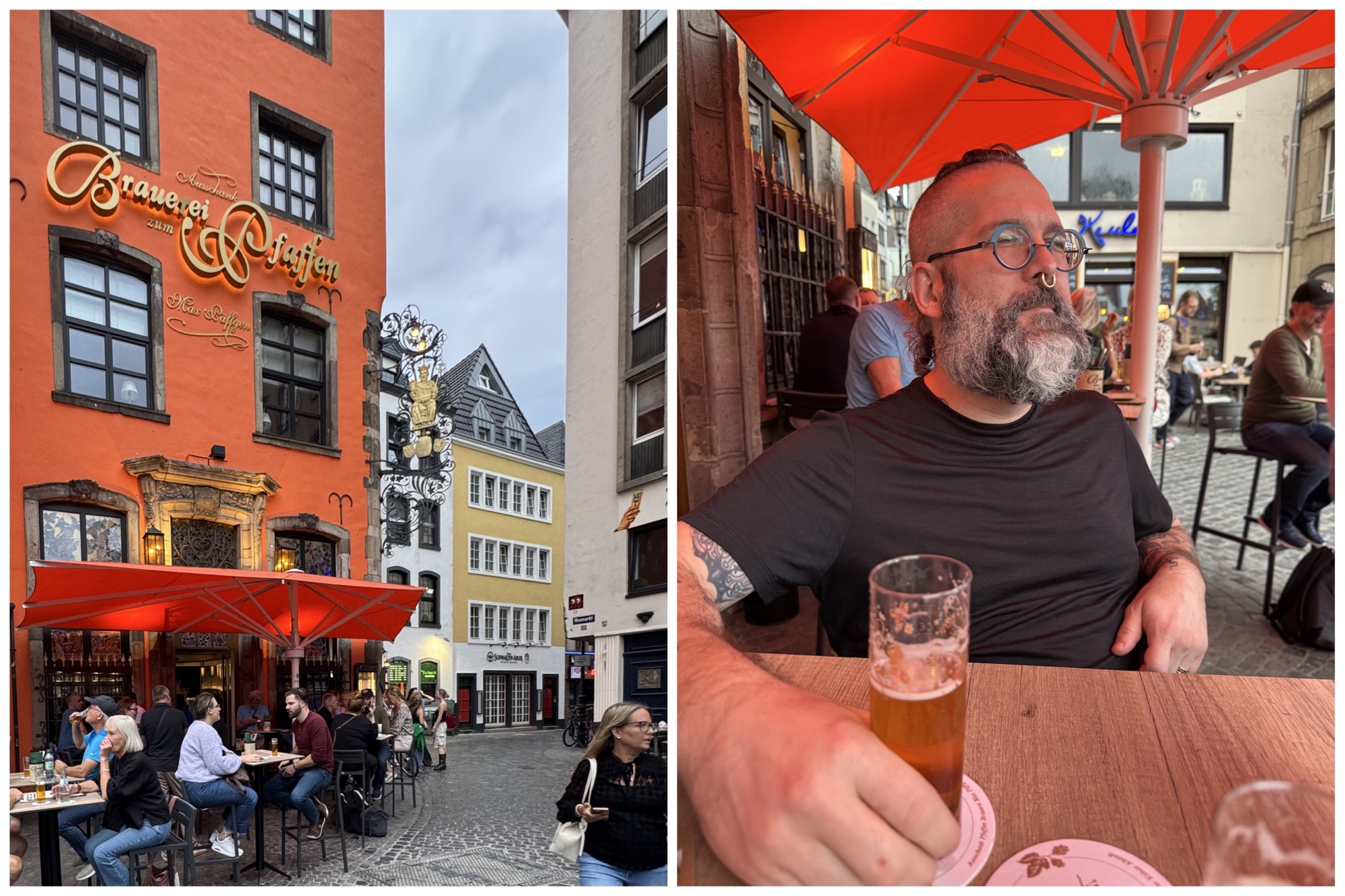
We shared potato pancakes with apple compote, fried Köln style blood sausage with smothered onions and warm kraut, a huge crispy pork hock, fried potatoes (Bratkartoffel), and glasses of icy cold Kölsch constantly being replenished until we put our coasters on top of our glasses in the local signal for “please stop!”
If yesterday was horrid, today was pretty perfect. We’re toasting to more of the same.


You are doing wonderfully well with the blog without your iPad. Your stamina is pretty amazing too!
LikeLiked by 1 person
I’m quietly cursing in two languages as I peck out the narratives…..
LikeLike
Lovely way to revisit Köln! So glad the day worked out MUCH better than the day before. Some of your iphone photos are really wonderful — artistic, not just documentary. I’m longing for beer and sausage now. After such a climb, you certainly deserved it.
LikeLiked by 1 person
Thank you so much for the kind words.
LikeLike