Bremen Germany has the Schnoor, the warren of multi-storied narrow buildings and even narrower streets dating to the Middle Ages. Ted and I visited it in 2016 and son #2 and I were there just last year.
From all the guidebook descriptions and glowing Tripadvisor reviews, I expected that York’s Shambles would feel somewhat similar.
It didn’t really, despite sharing cobbled streets, preserved mediaeval buildings, and lots of tourists. The difference is largely because the Schnoor was originally a “neighbourhood” of several streets containing tiny houses and businesses in a variety of styles and ages, shaped by artisans, seafarers, and small-scale domestic life, whereas the Shambles was always a single long commercial corridor of fairly homogeneous half-timbered commercial properties, shaped almost entirely by the butcher trade.
One source I found summarized the difference succinctly as:
Schnoor = domestic + artisanal.
Shambles = commercial + carnivorous.
The Shambles is actually somewhat older than the Schnoor: 14th/15th century as compared to 15th/16th. Originally recorded (by location, not name) in the Domesday Book of 1086CE, the street was formerly known as the “Great Flesh Shambles”, not because of houses of ill repute, although that was what first came to mind when I heard the name, but due to its history as a butchers’ row. None of 1885’s high of thirty-one butcher shops still exist.
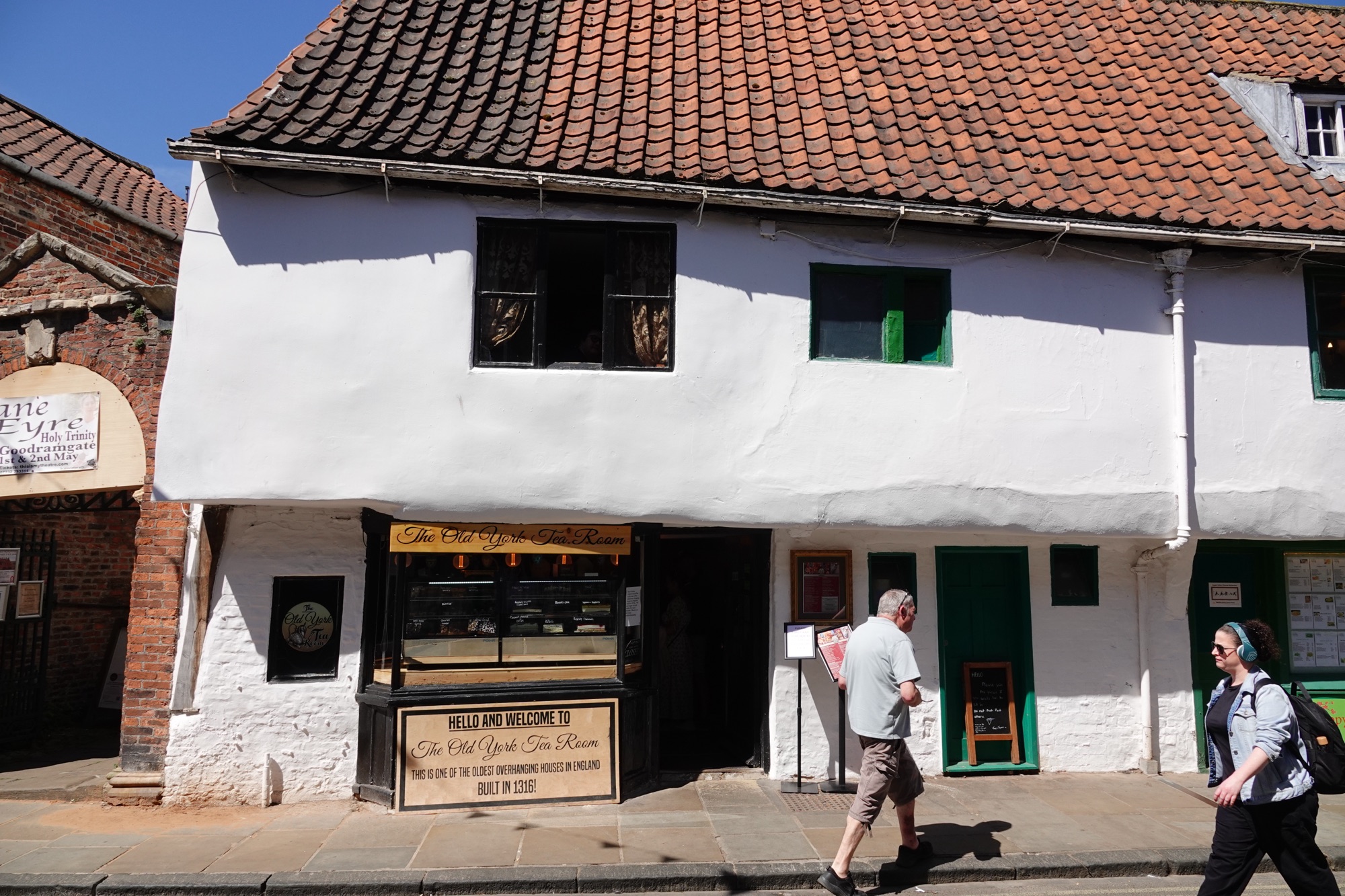
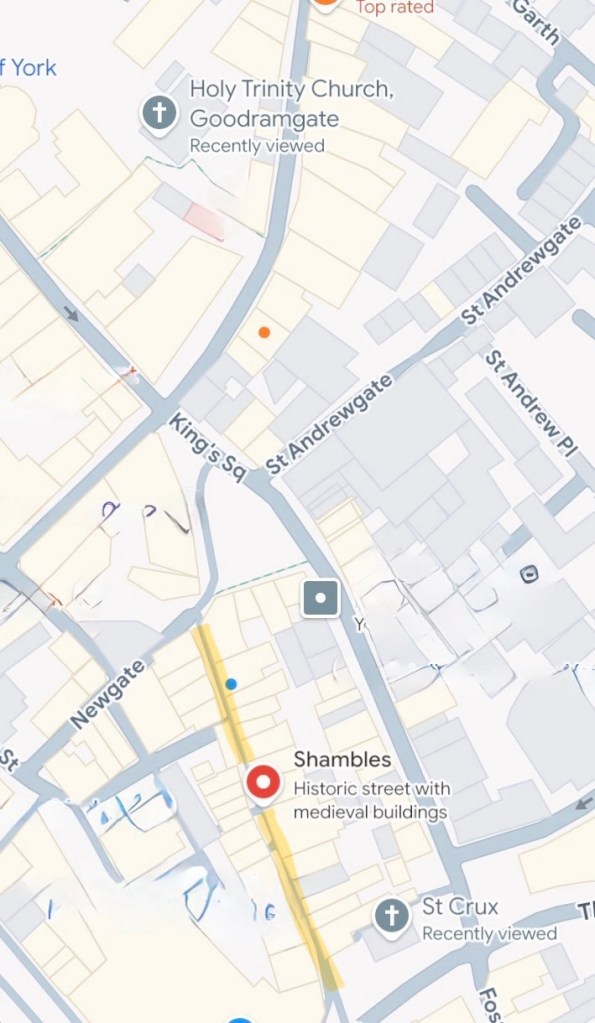
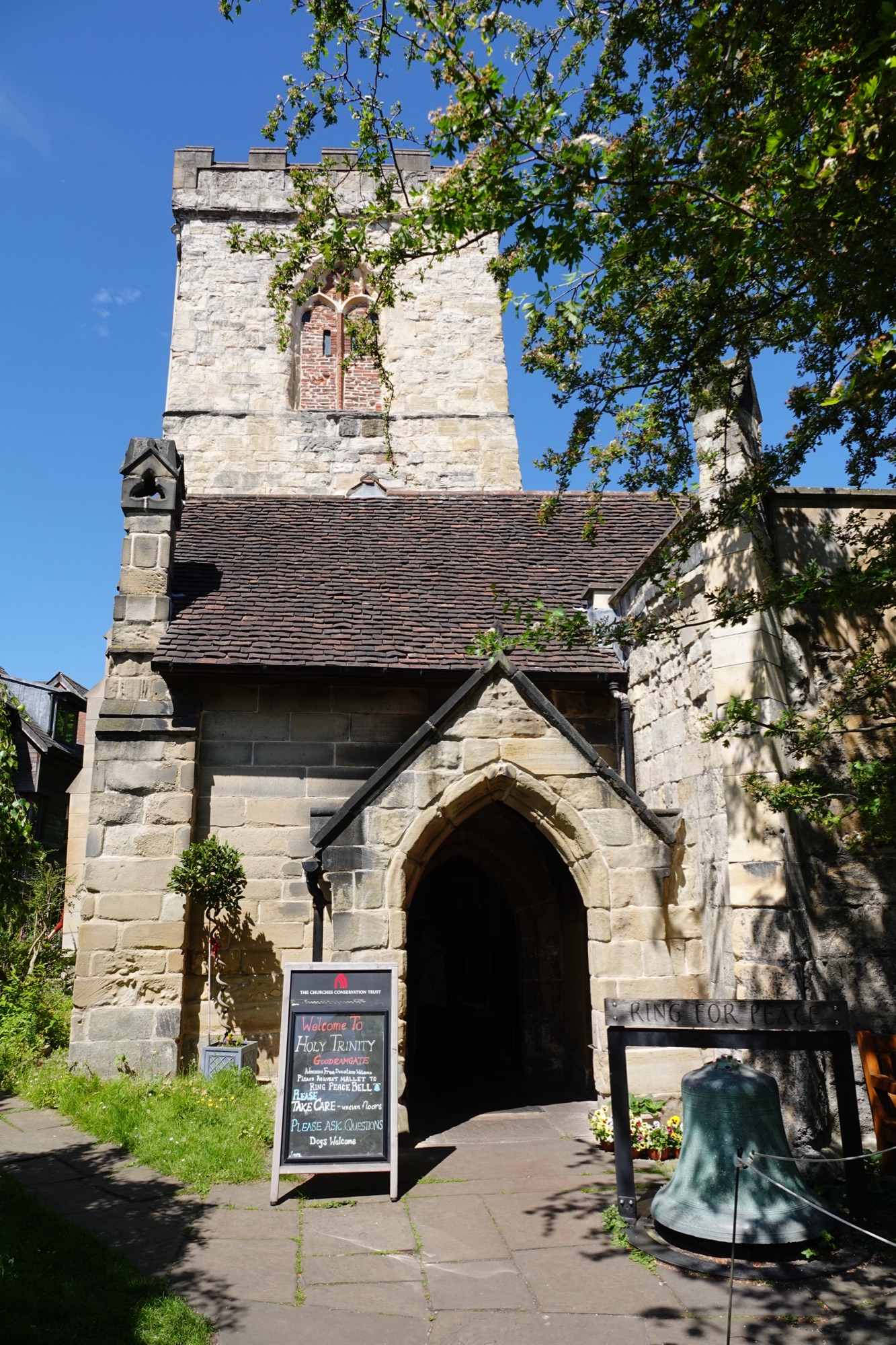
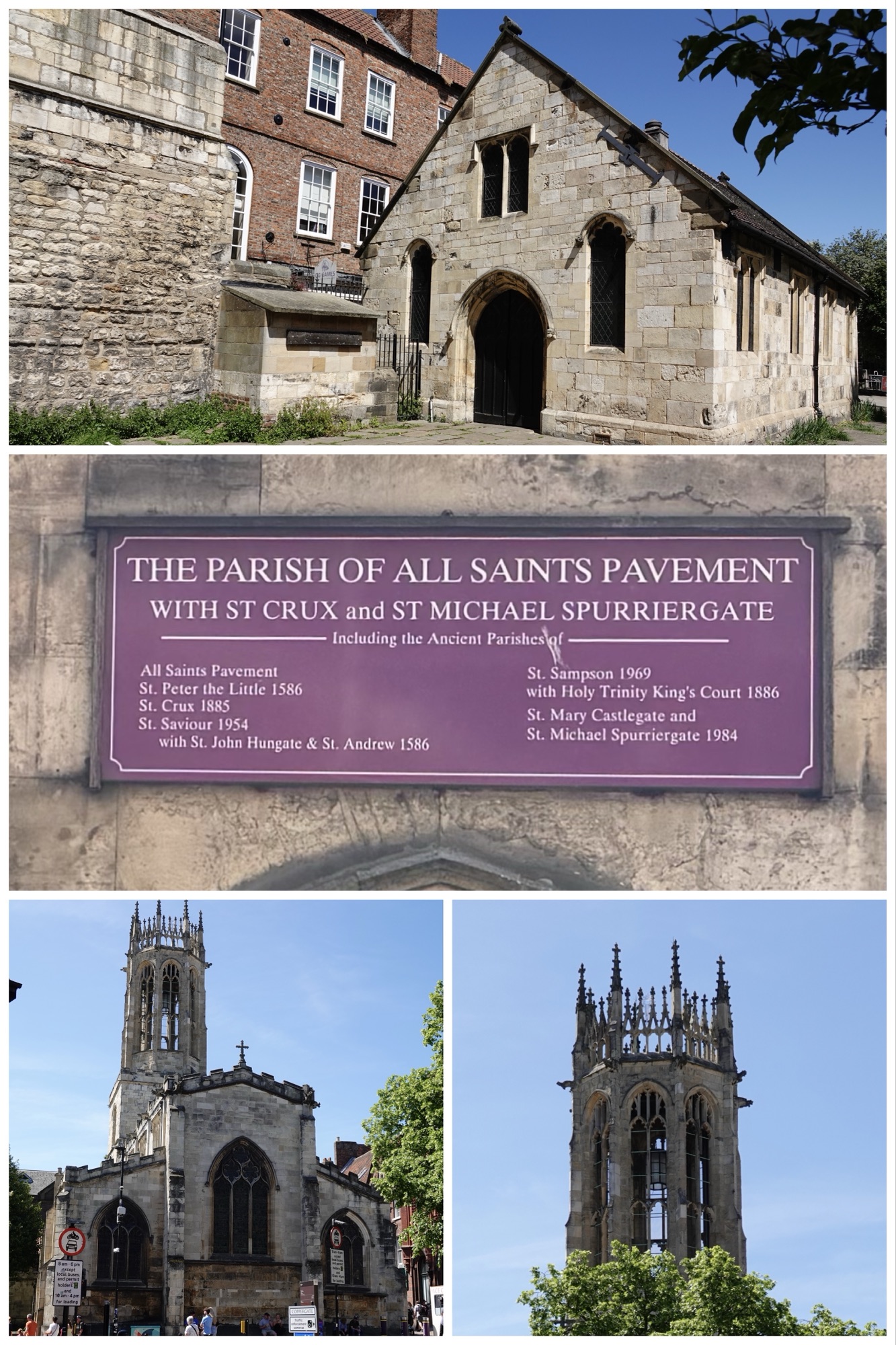
The actual Shambles is just 120m long, in a district bracketed by two mediaeval churches.
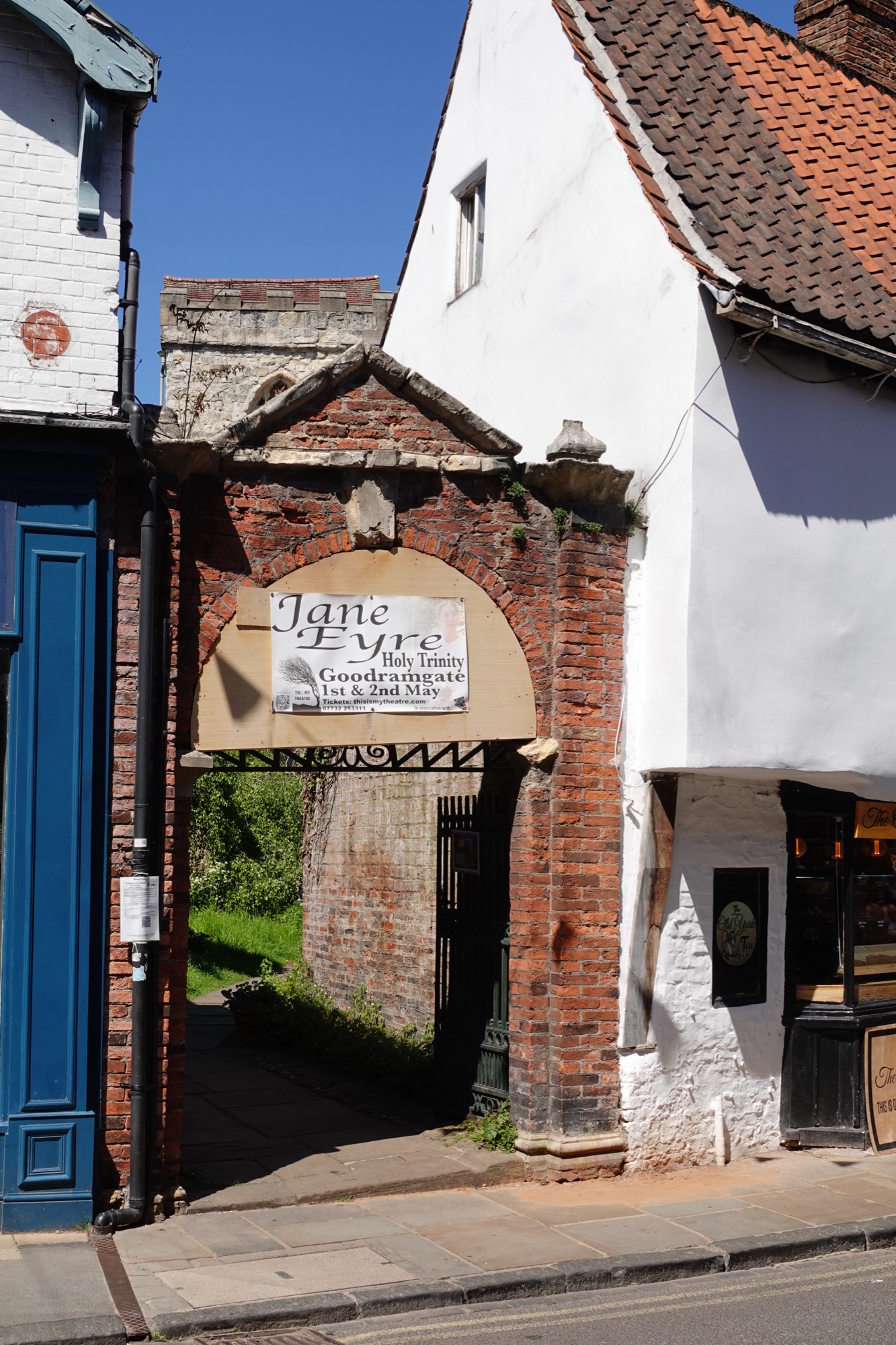
We entered the first via the gate beside the tea room.
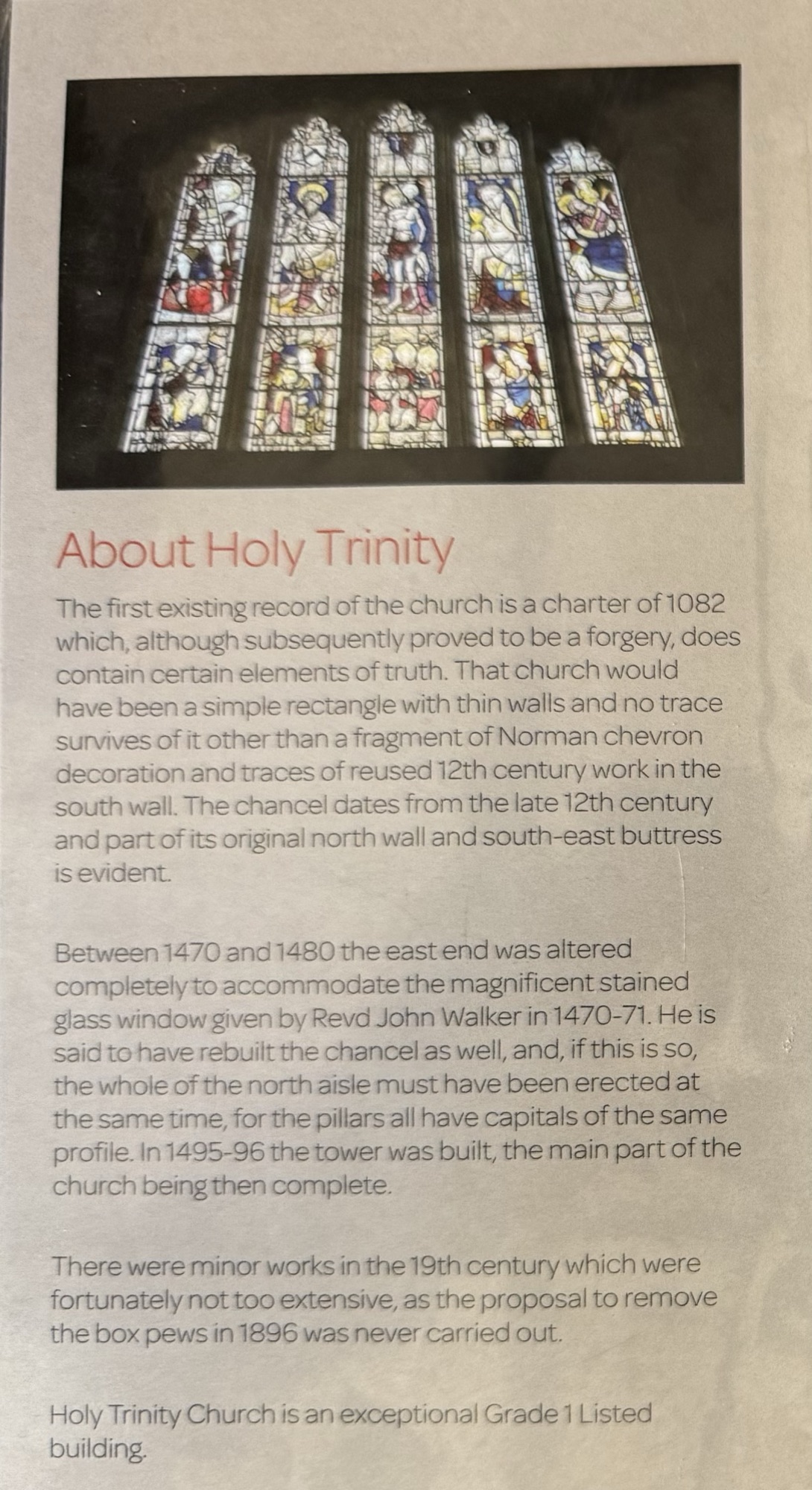
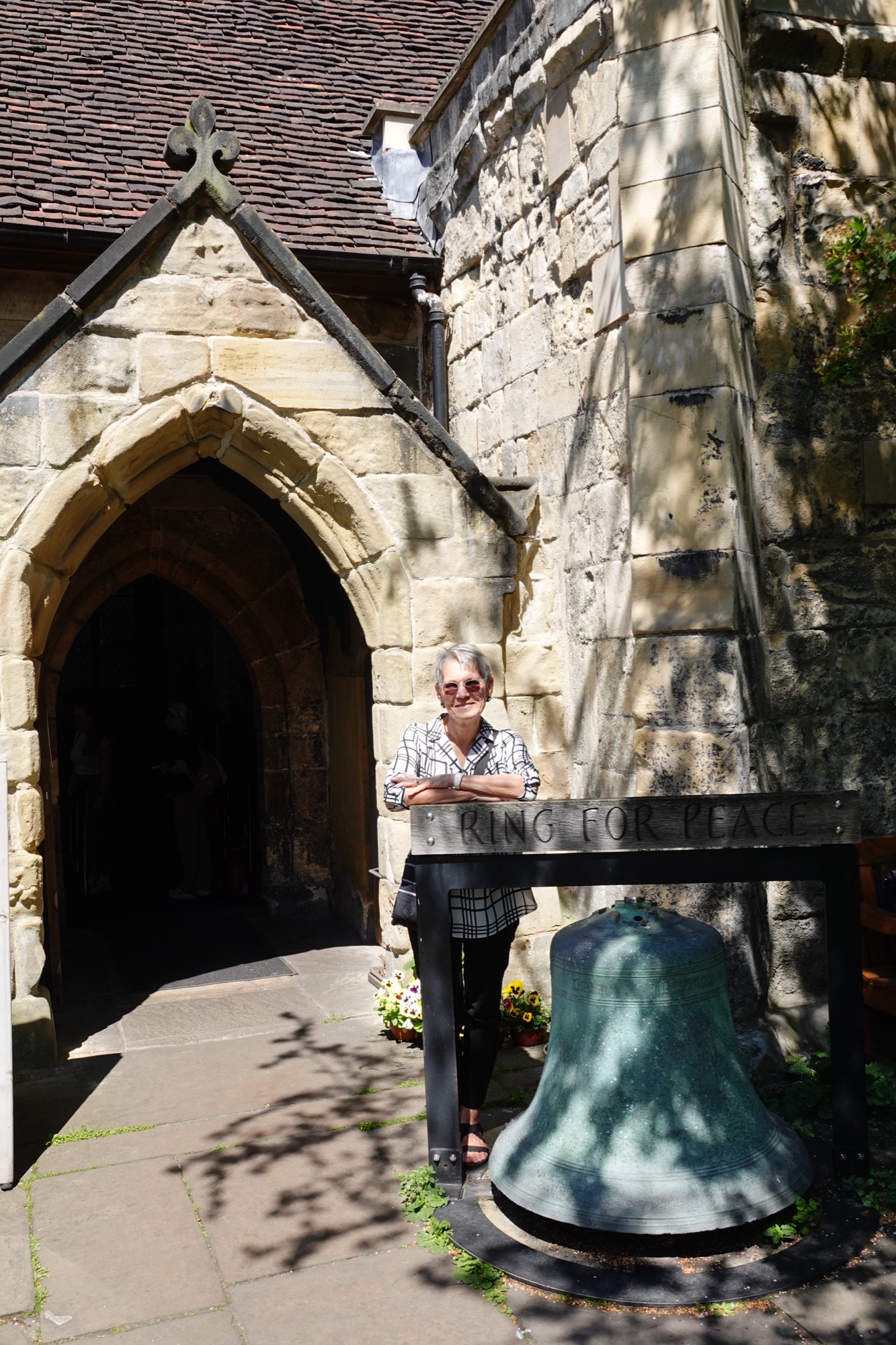
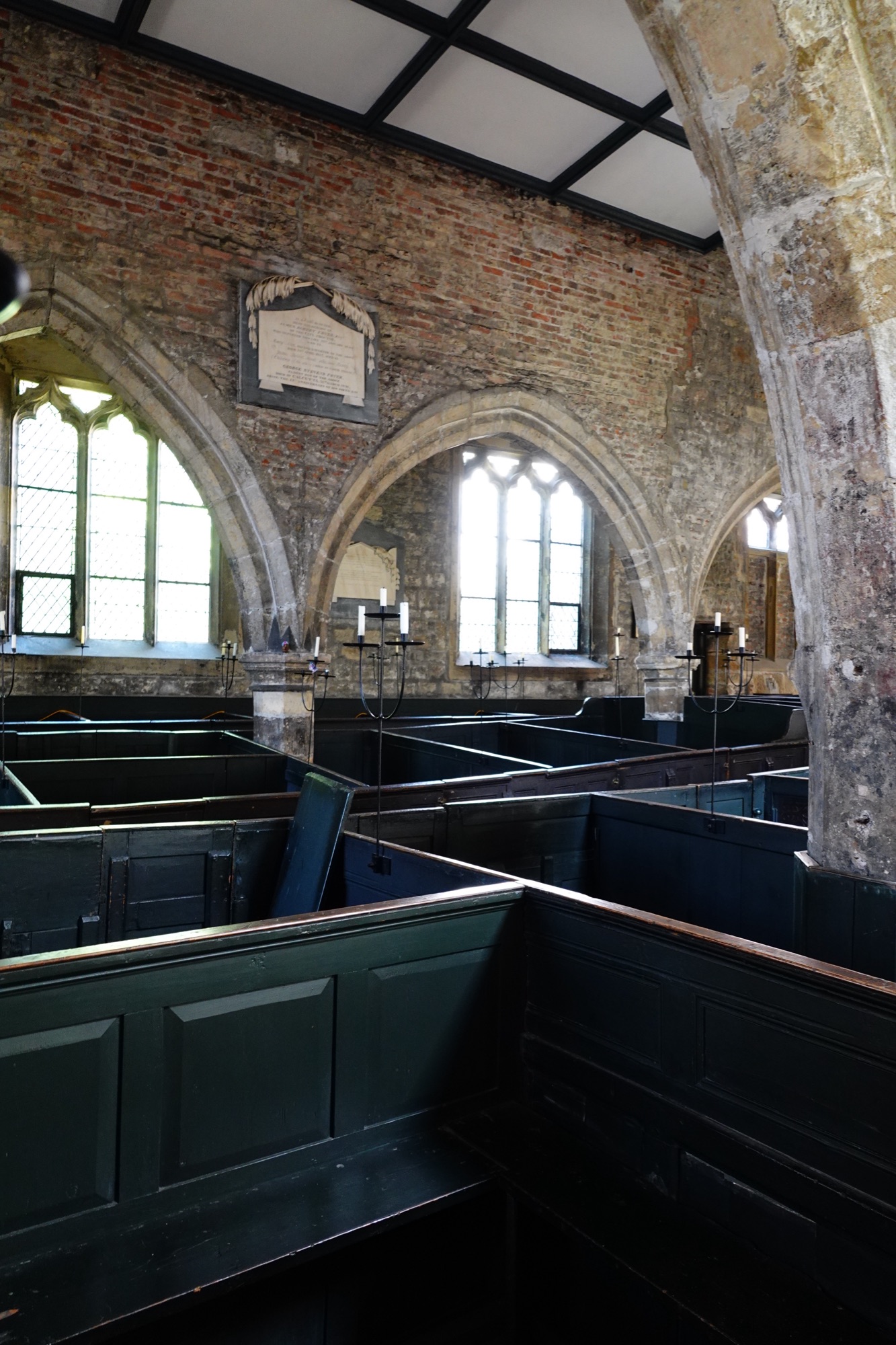
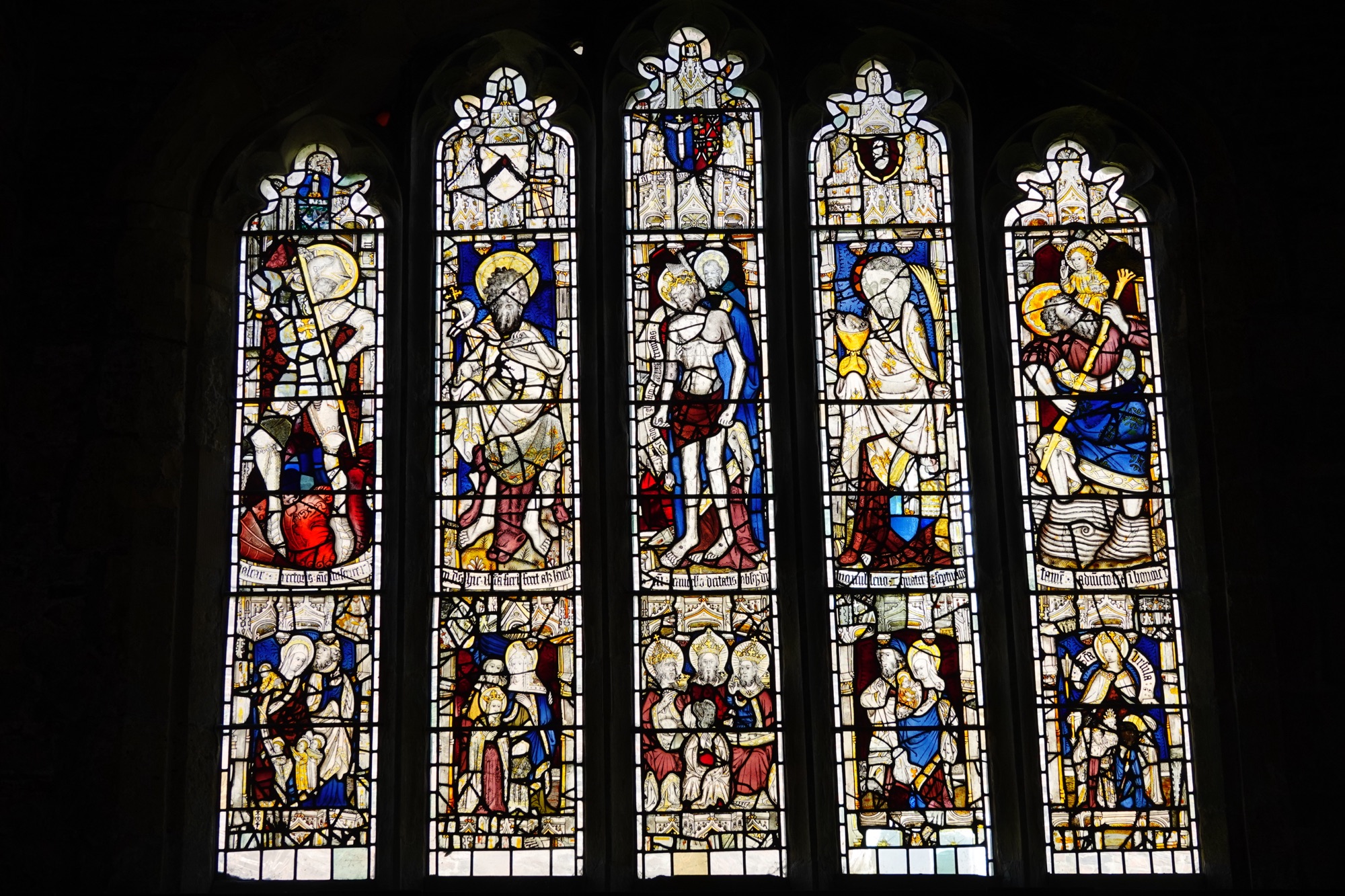
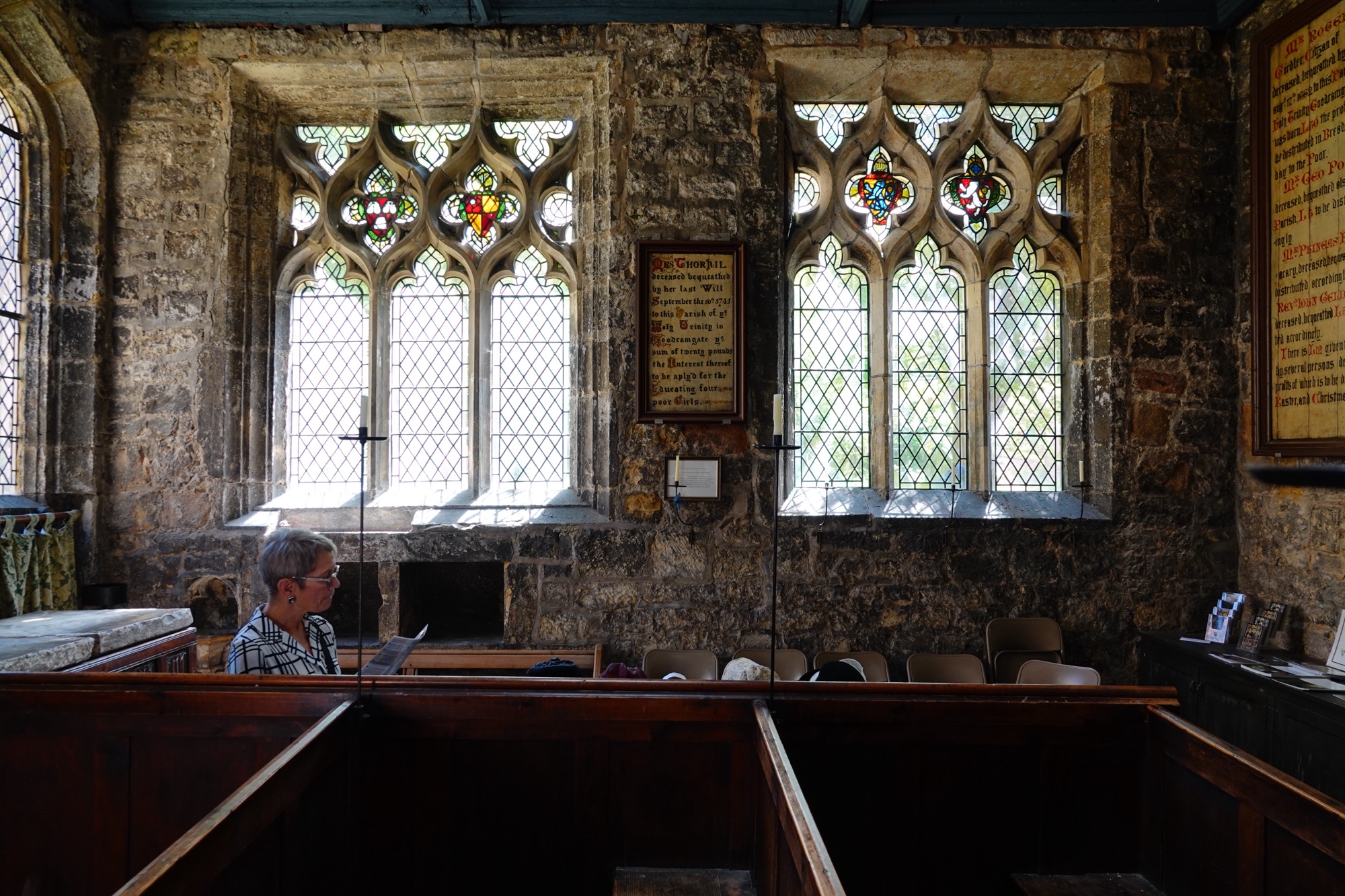
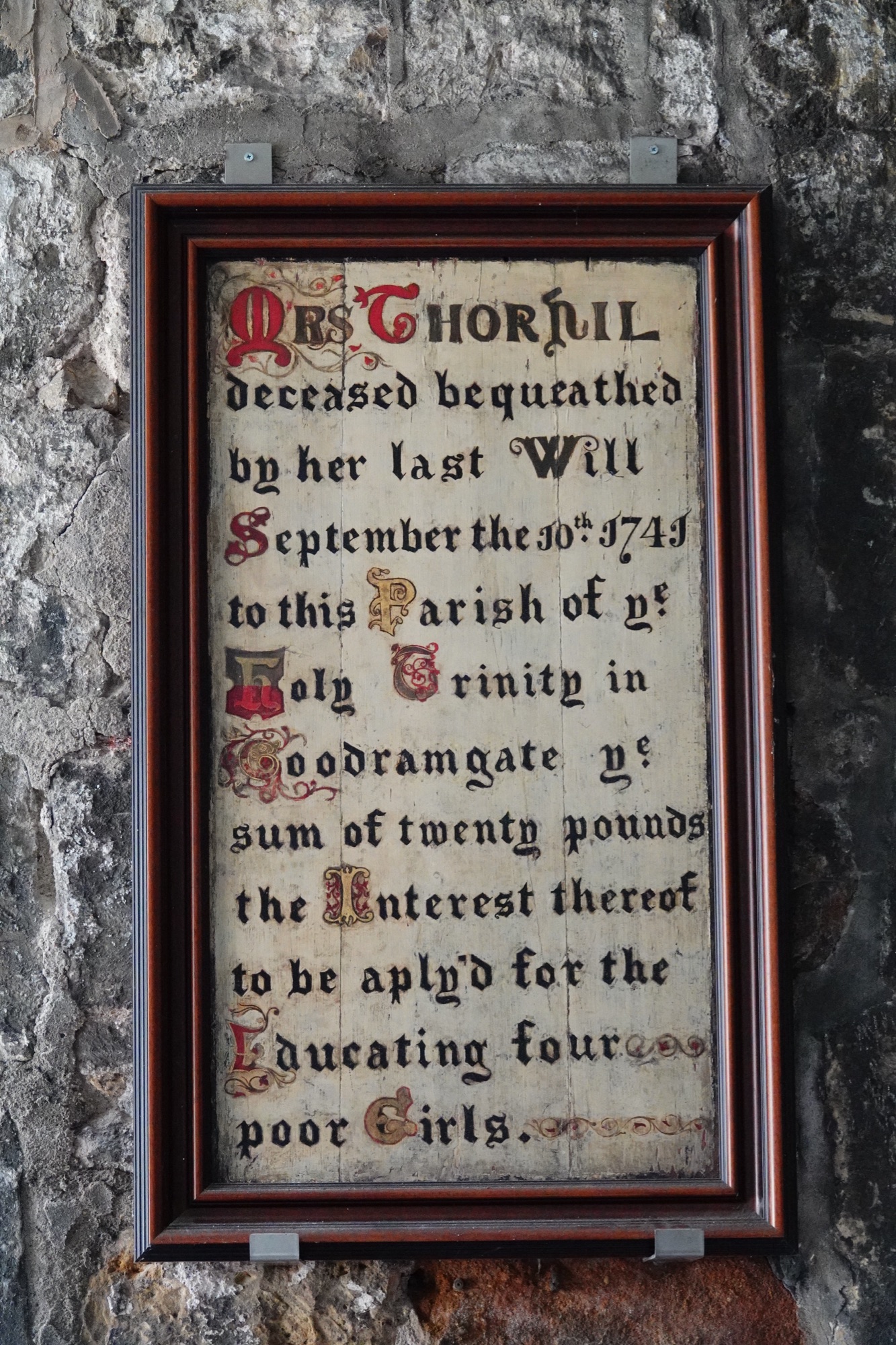
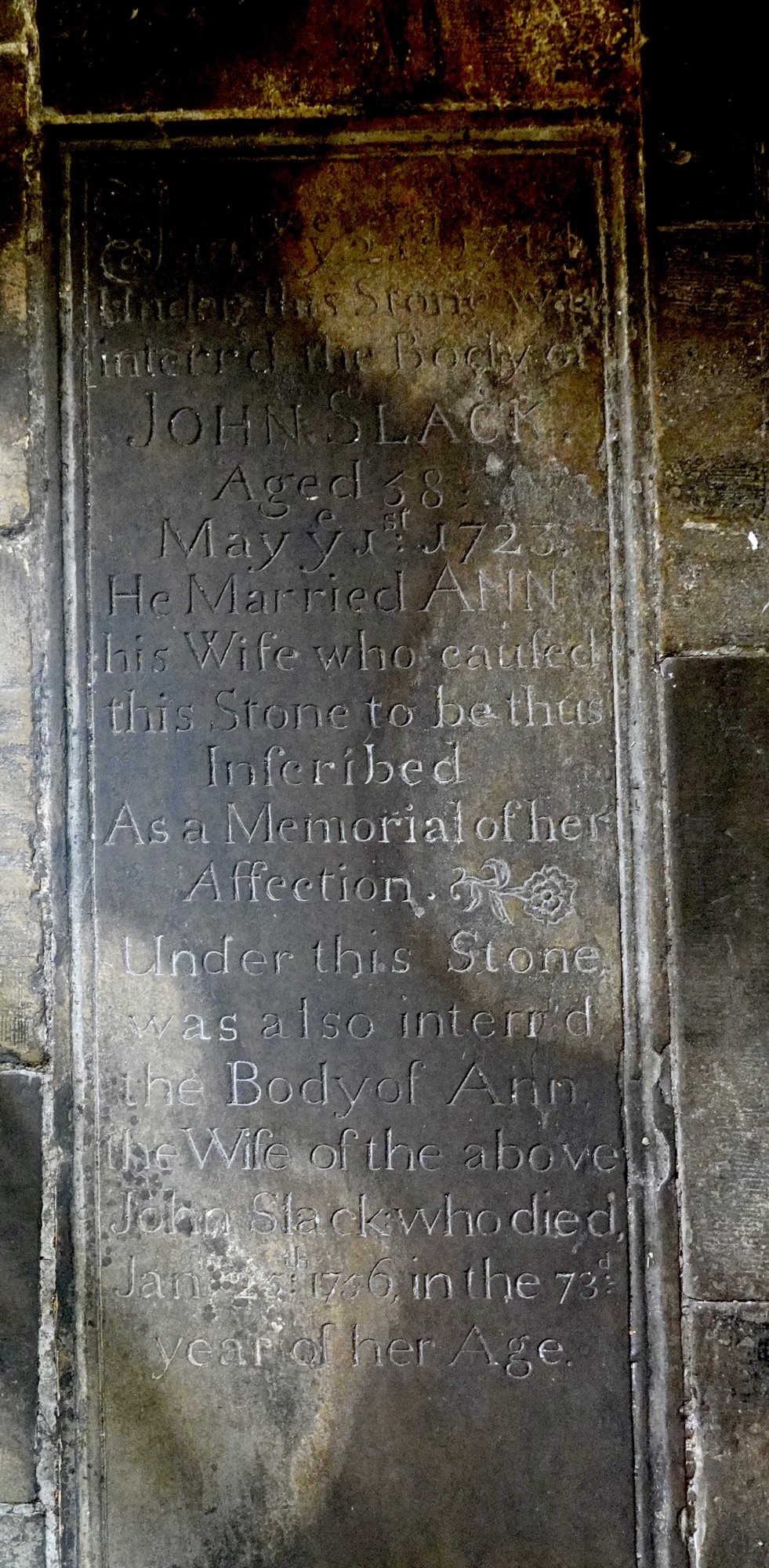
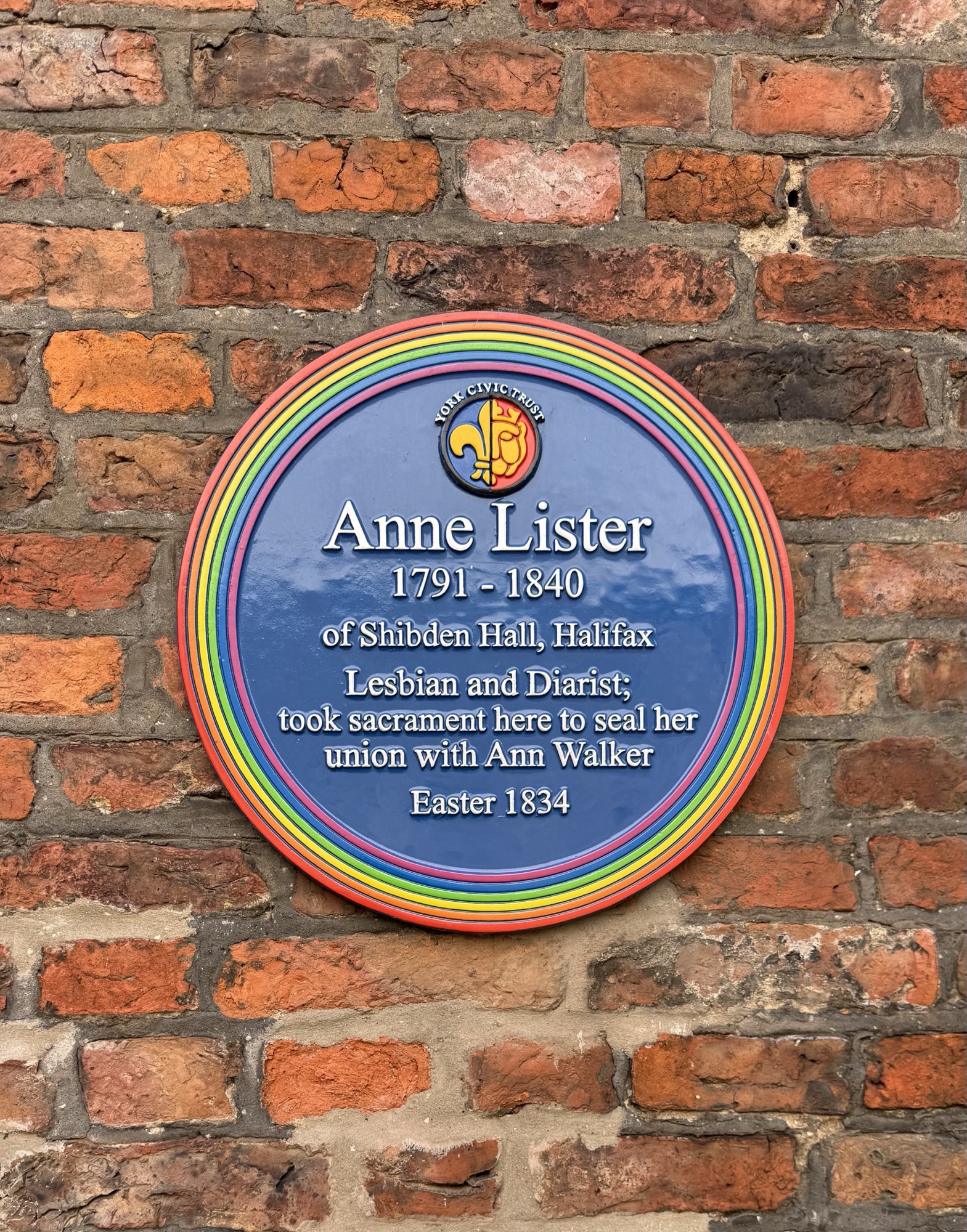
On the churchyard wall, the plaque below attested to the open-mindedness of this parish. While official marriage of same-sex couples was not possible, there are written records of this:
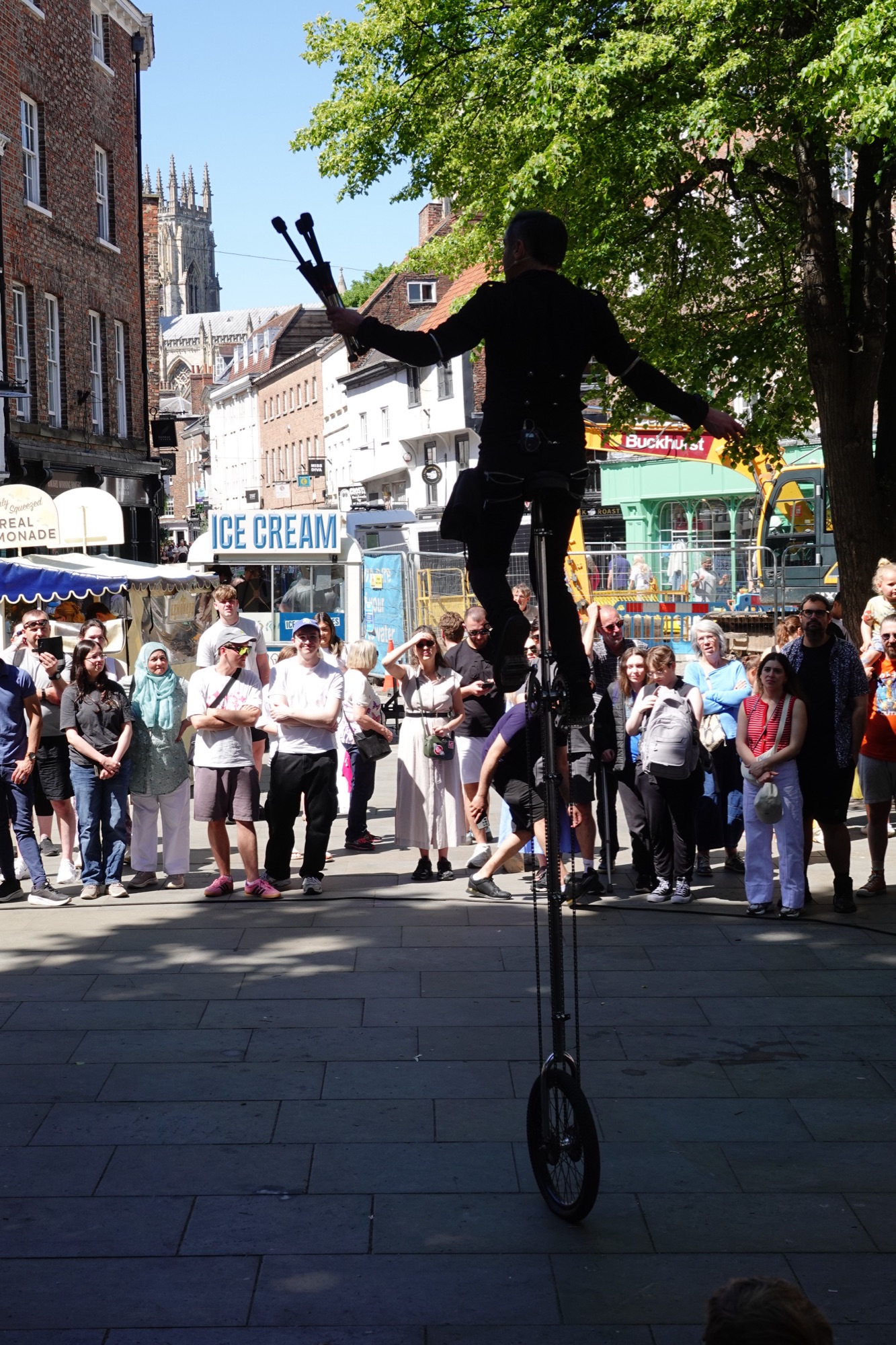
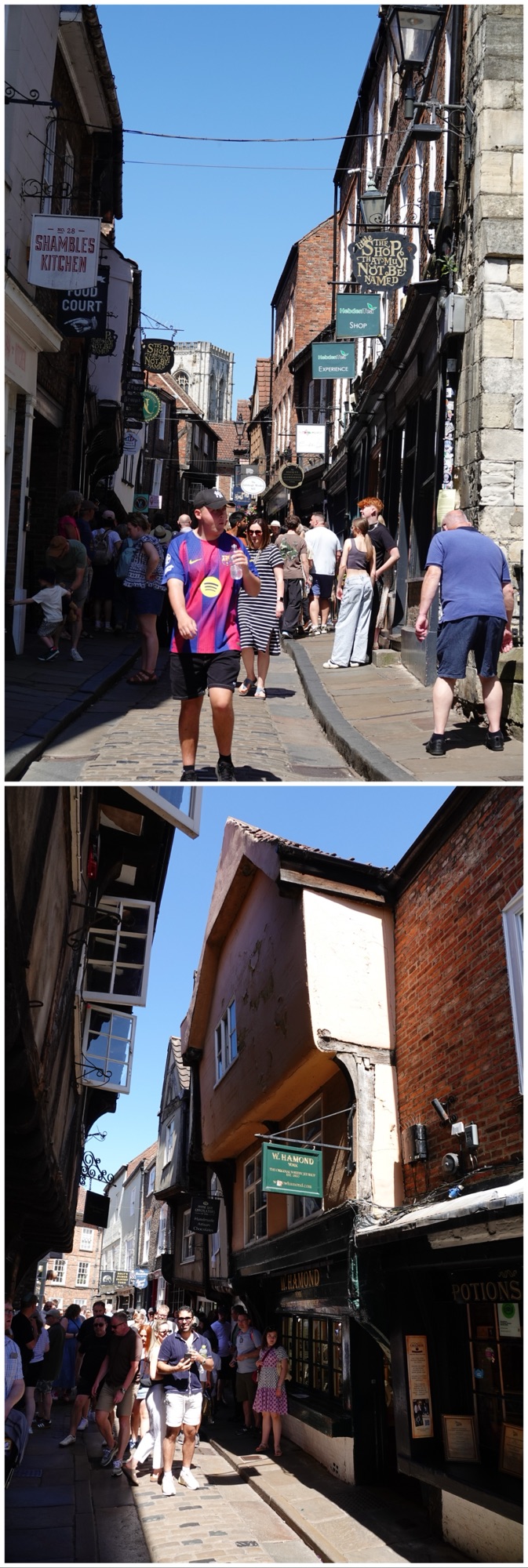
Turning right from the church took us past more mediaeval buildings, through a square where a street performer was doing tricks on a unicycle, past the pub where we’d later be eating Sunday Roast, and onto The Shambles.
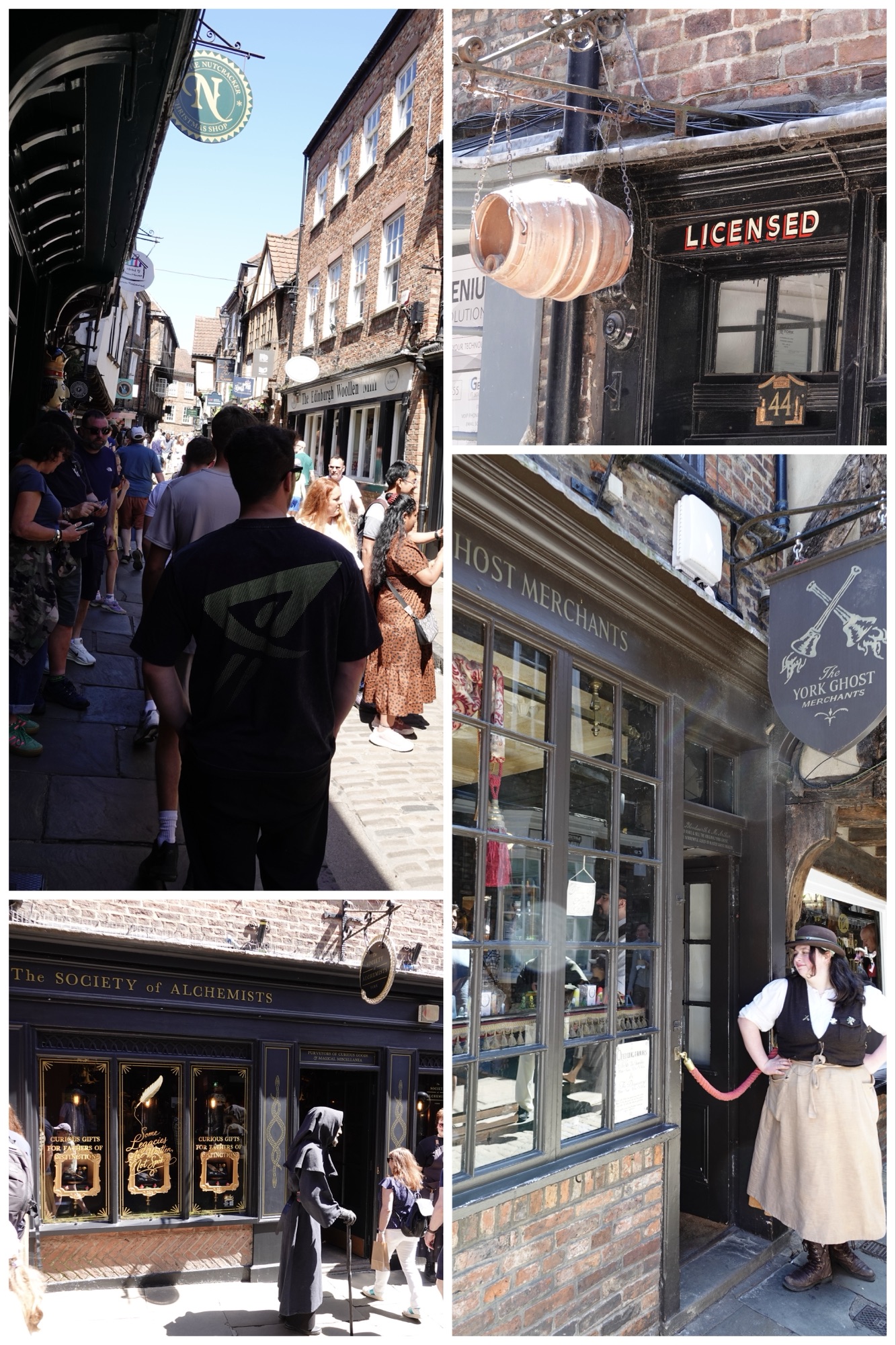
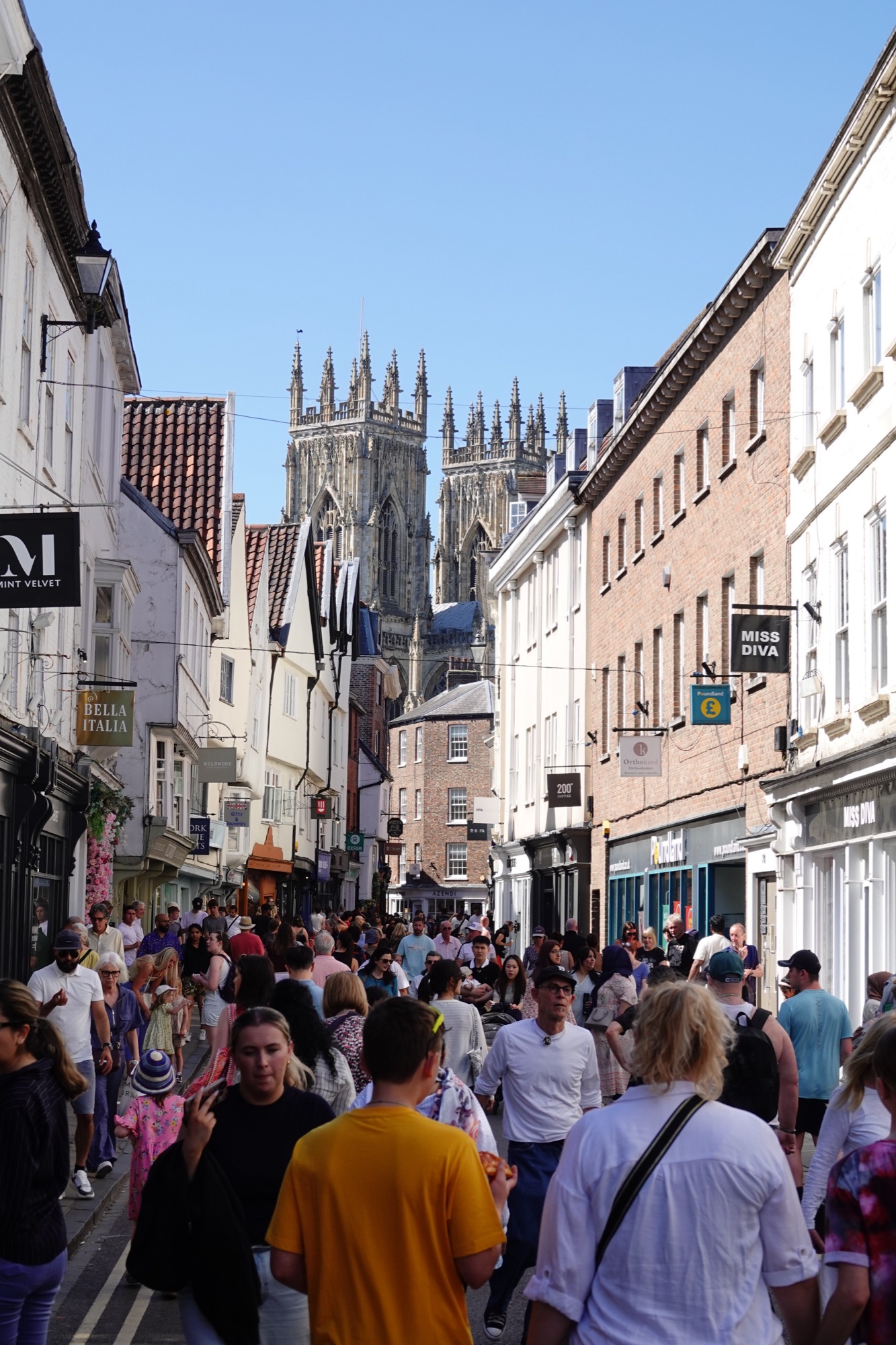
It was so absolutely packed with tourists that it was almost impossible to move, let alone stop to get decent photos.
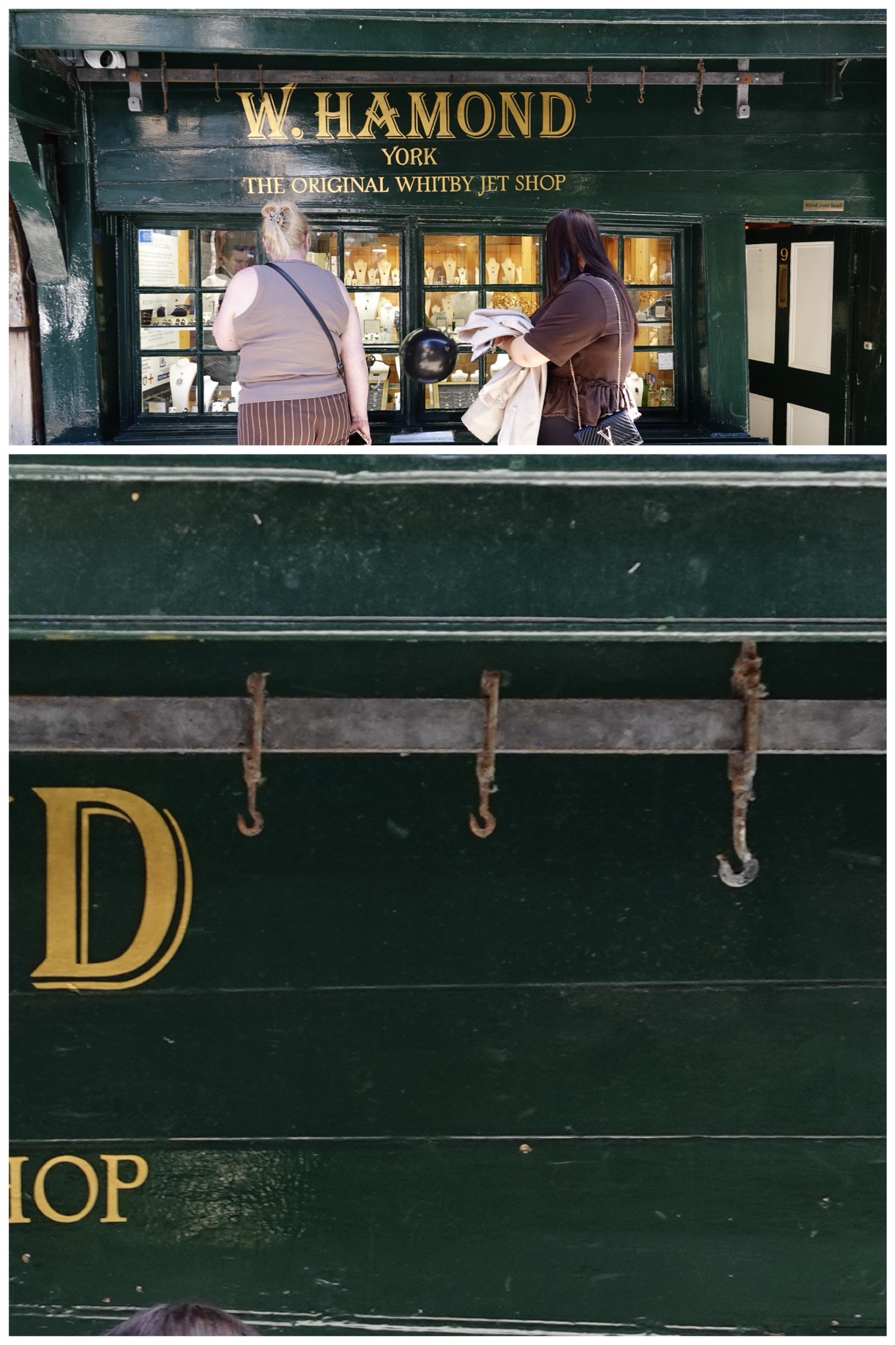
While we were told that original meat hooks and wide “flesh-shelves” can still be seen on many of the building exteriors today, we only saw one store with hooks.
Roughly mid way along the street was a shrine to St. Margaret Clitherow.
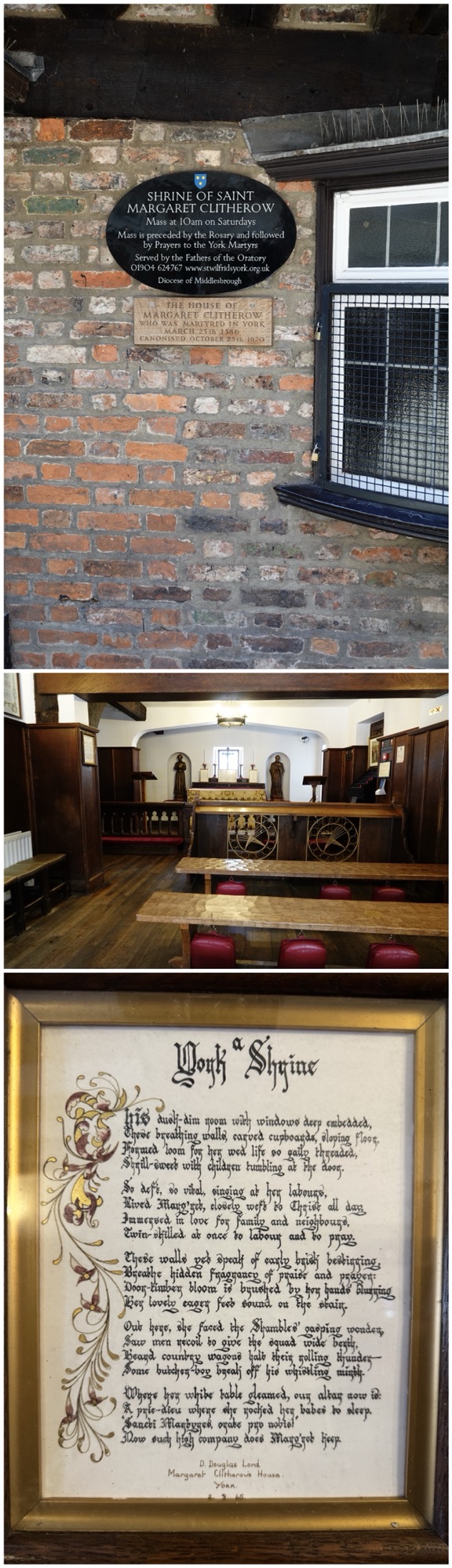
The shrine was cool and empty, allowing us to catch our breath before heading back into the crowd.
We reached the second mediaeval church as we exited the Shambles. Unfortunately it was not open.
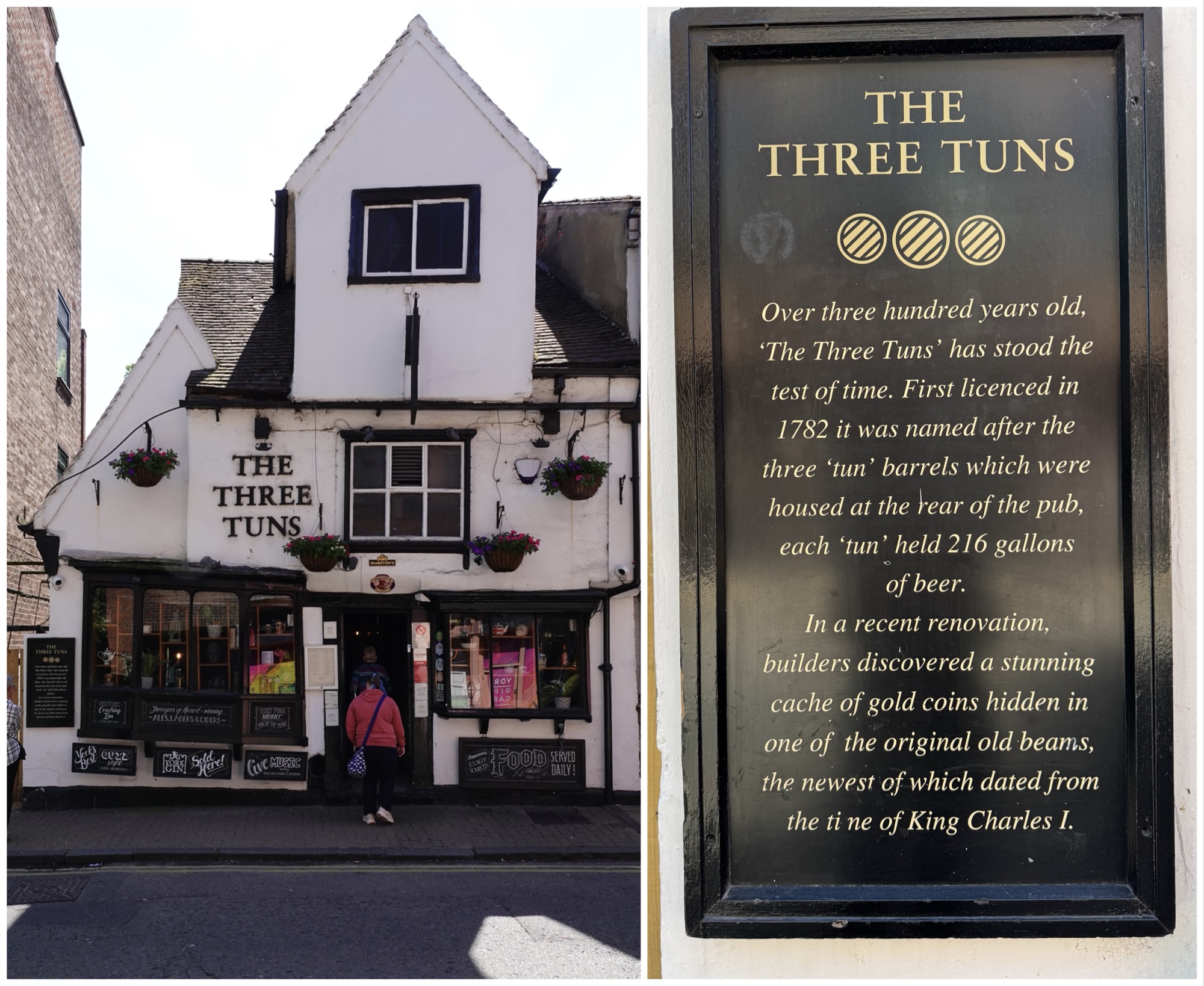
Jostling our way through the crowds left us hot and thirsty. The Three Tuns provided a cool space, plus half pints of cold cider and lager.
We had a bit of time to continue exploring before lunch.
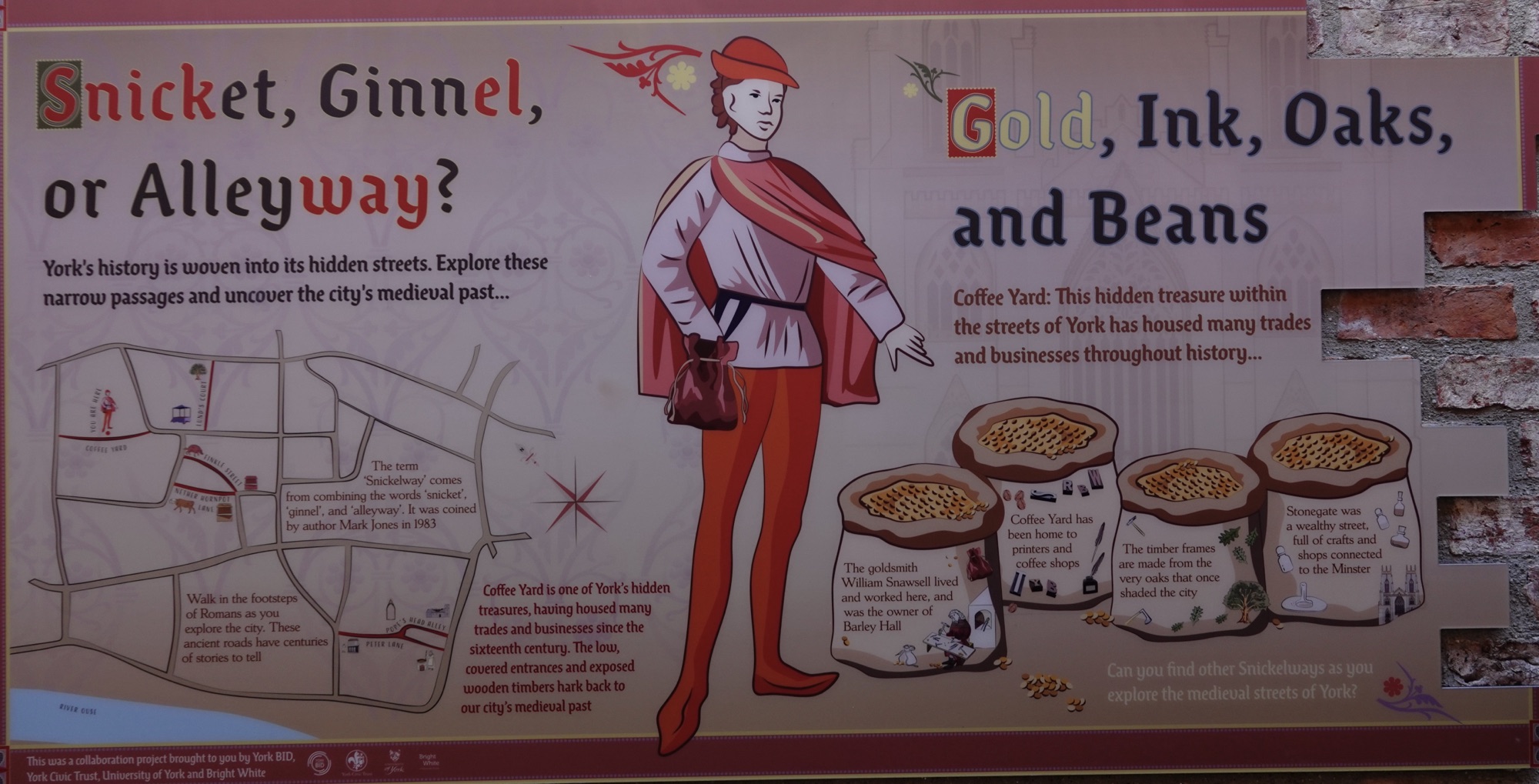
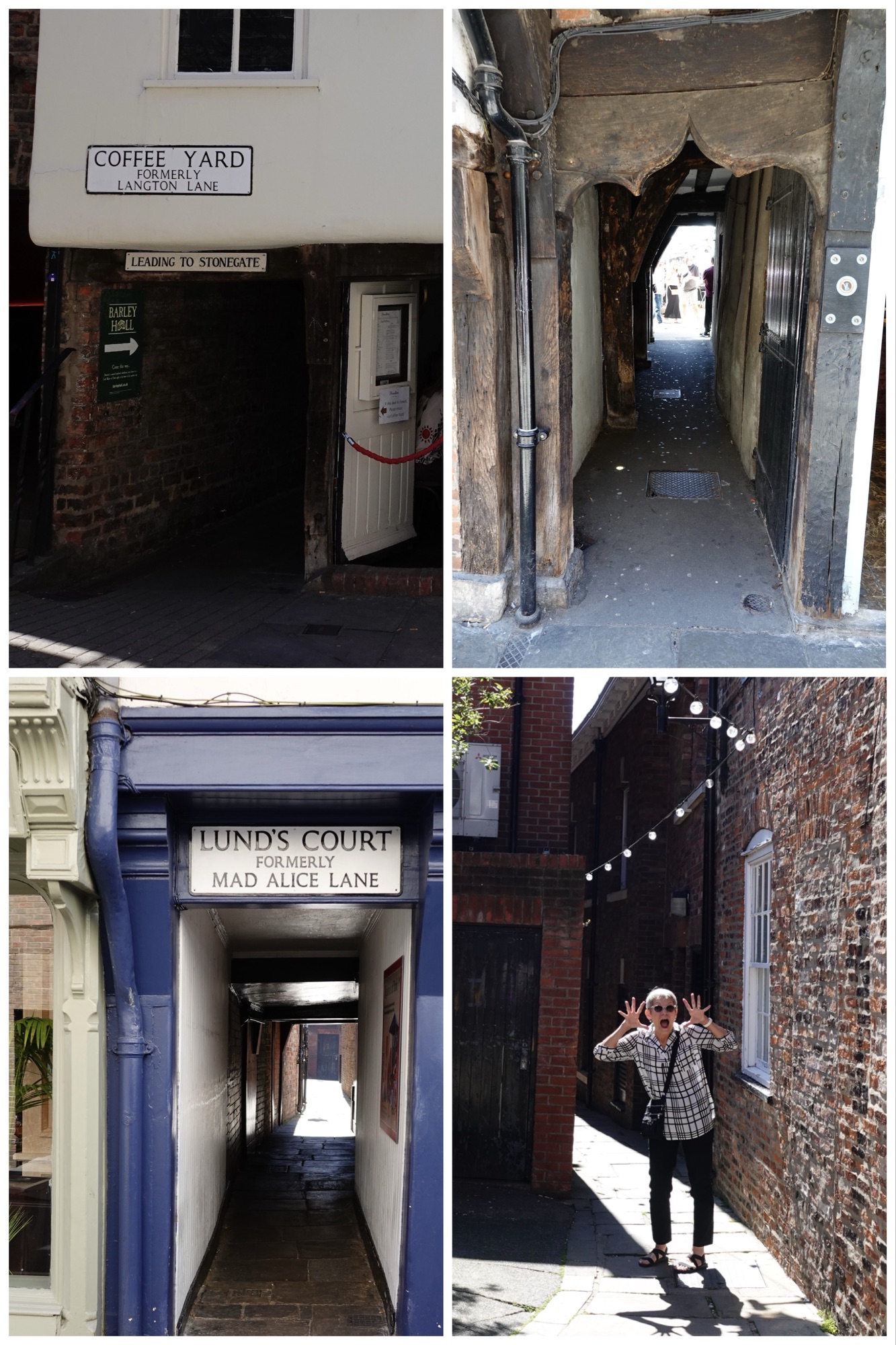
There are five “snickelways” (a name only coined in 1983) that lead off the Shambles. They used to lead to other small alleyways in the backs of the buildings, but since those buildings were all demolished in the 1950s, they now lead to Shambles Market, a big open space with market stalls.
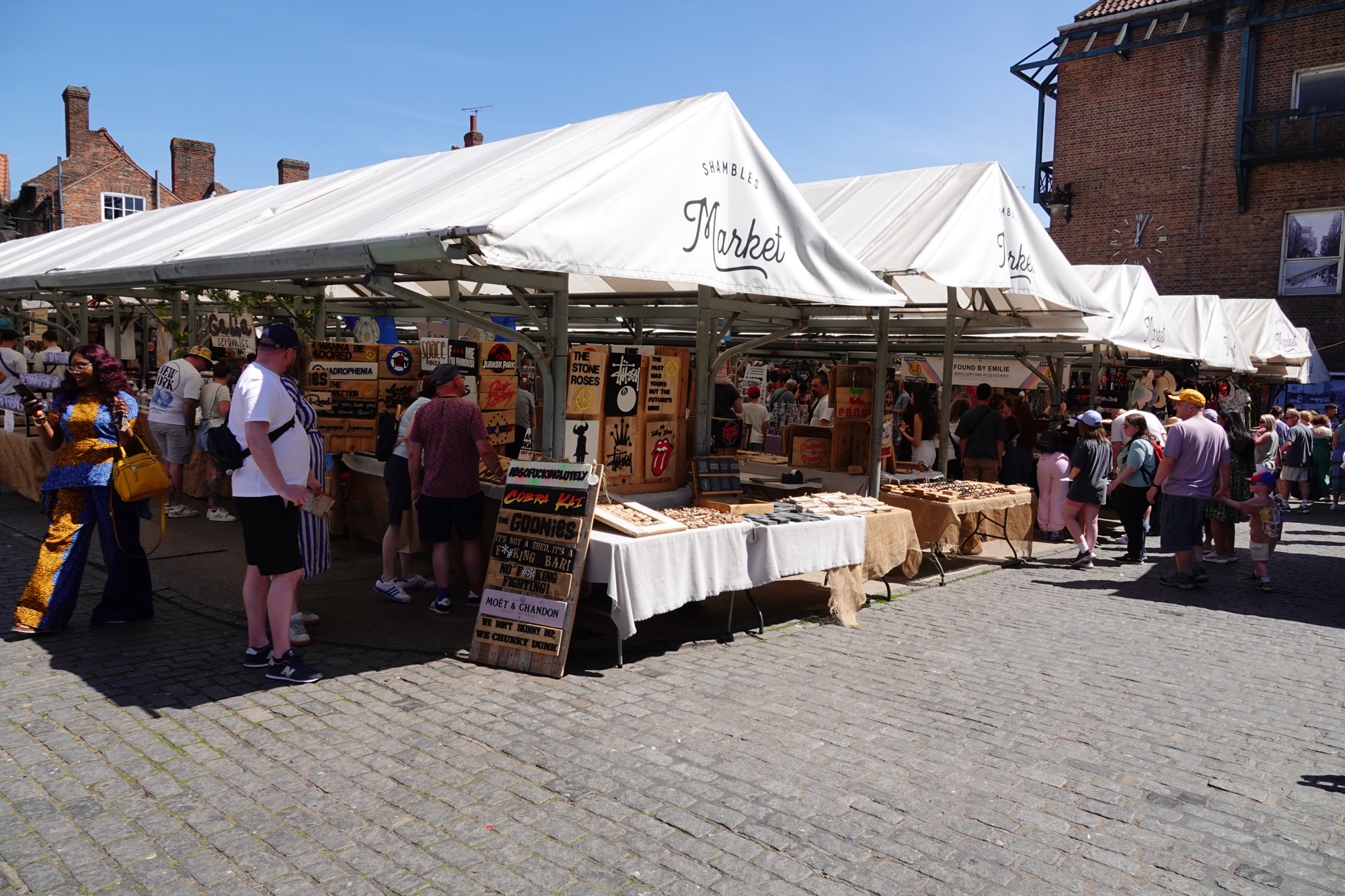
The market is open 7 days a week, since it is a big tourist draw, so we were able to wander through. It’s much like any tourist city’s open market: souvenirs, a few artisanal crafts like jewellery and beeswax candles, colourful clothing, and a couple of food stalls.
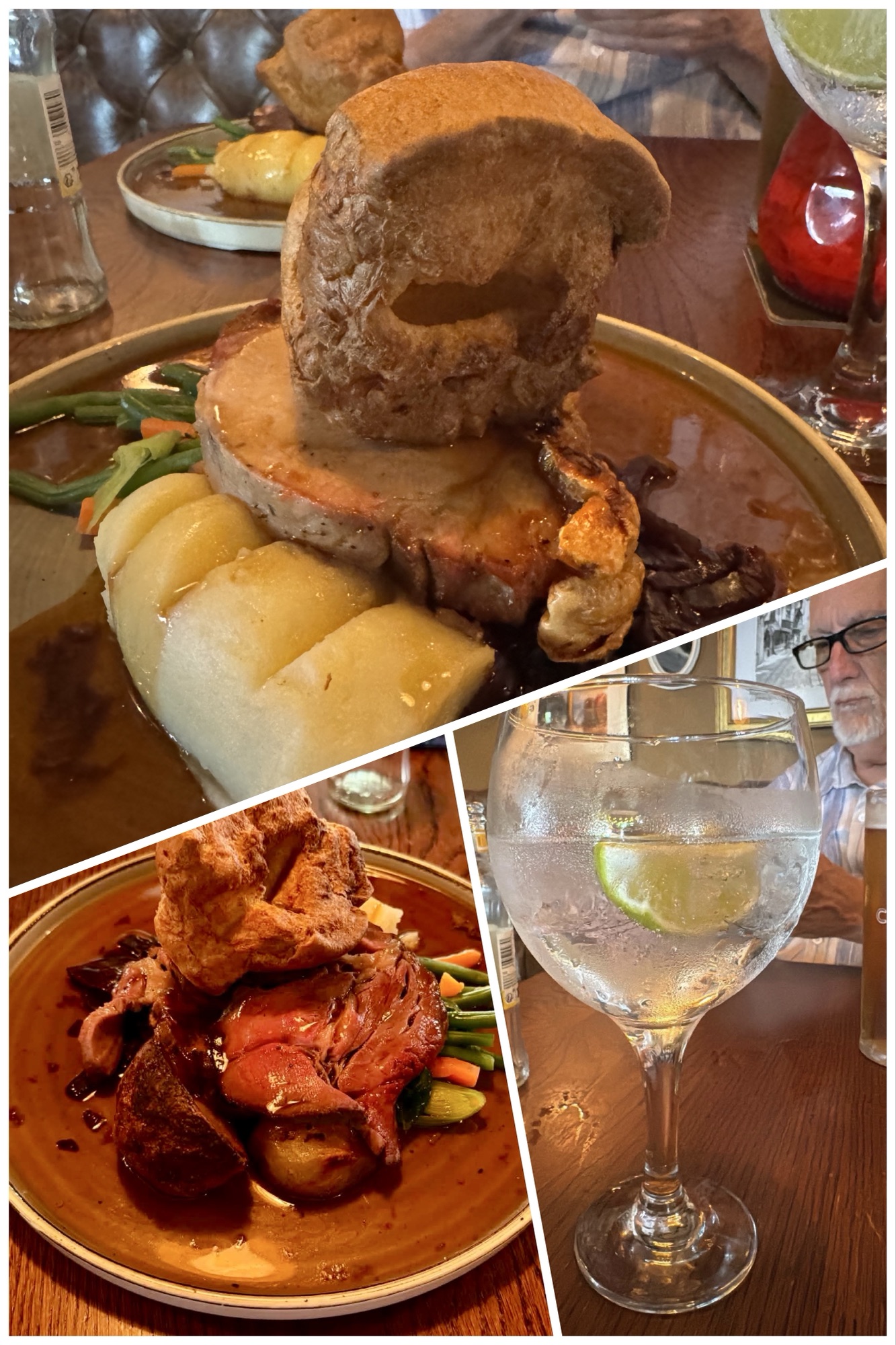
Lunch was “Sunday Roast” at The Duke of York: roast (Ted had beef, I had pork with crackling), potatoes two ways, beans and carrots, red cabbage, a huge crisp Yorkshire pudding, and lots of wine gravy.
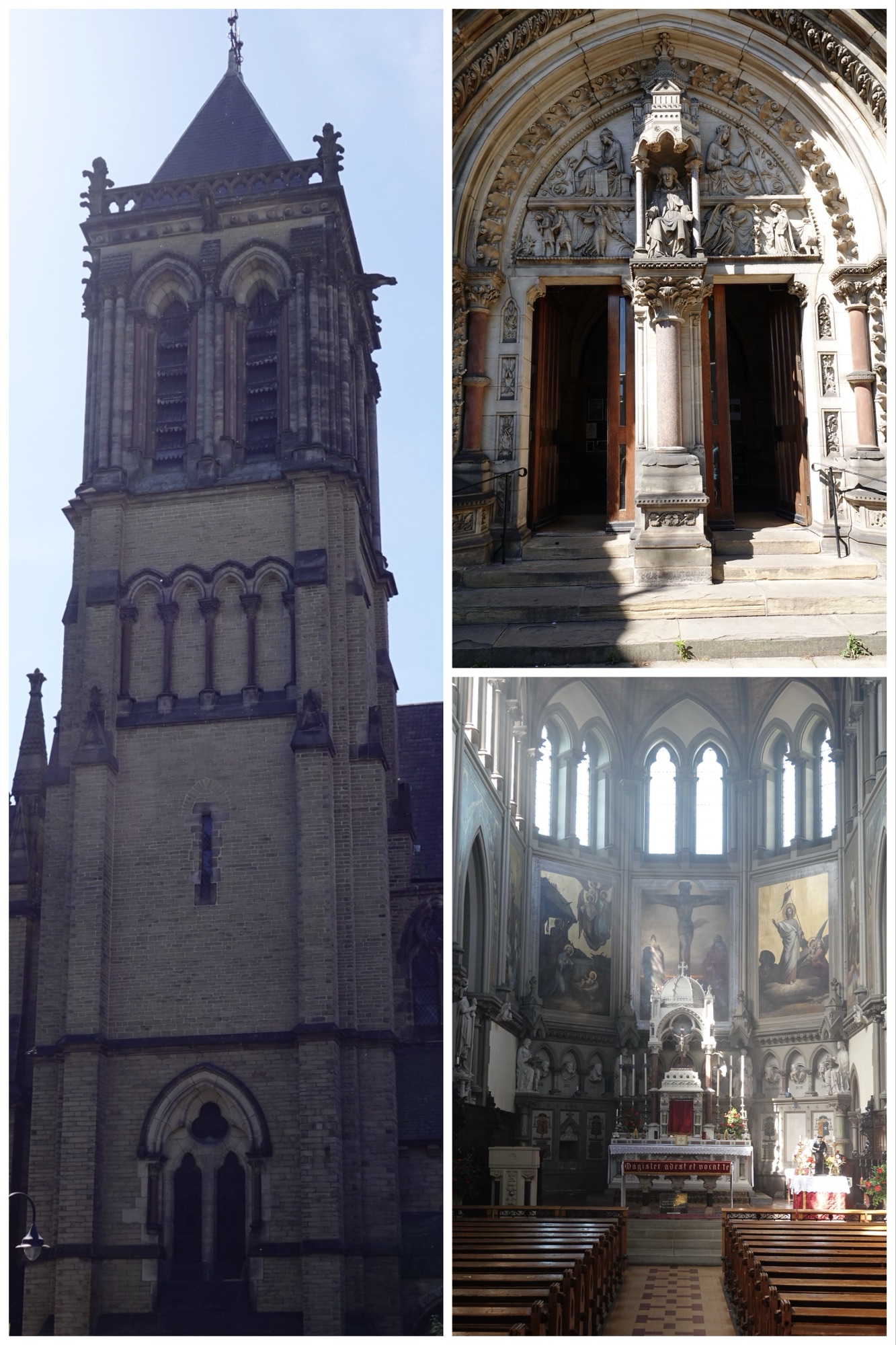
Since we obviously needed a walk after all that food, we wandered back into the direction of the Minster, and found another beautiful church from which organ music was emanating: the Catholic Oratory Church of Saint Wilfrid.
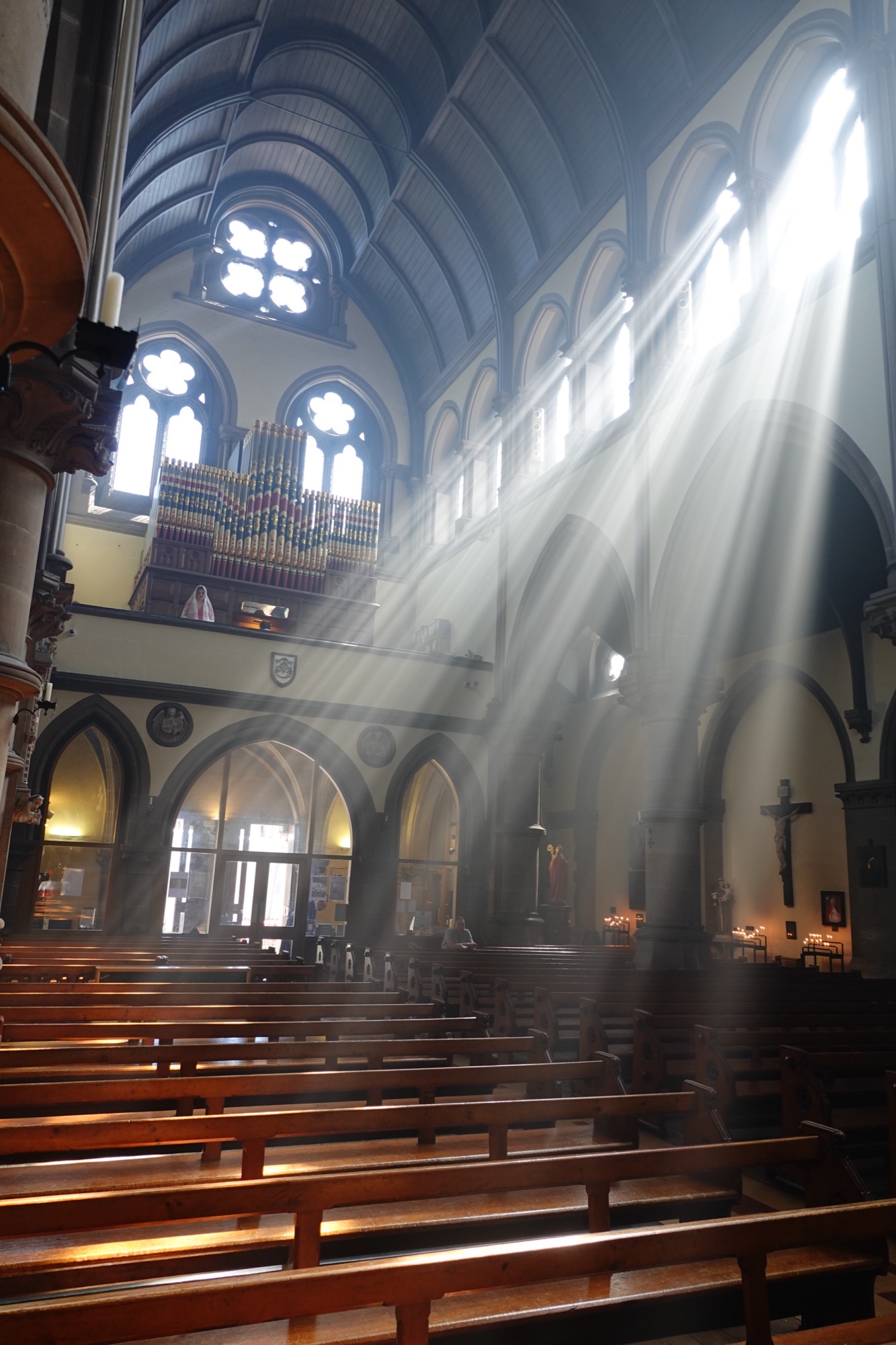
The inside of the church had the scent and slight haze of incense, which gave definition to the shafts of sunlight shining through the high windows, creating a vision of otherworldly beauty.
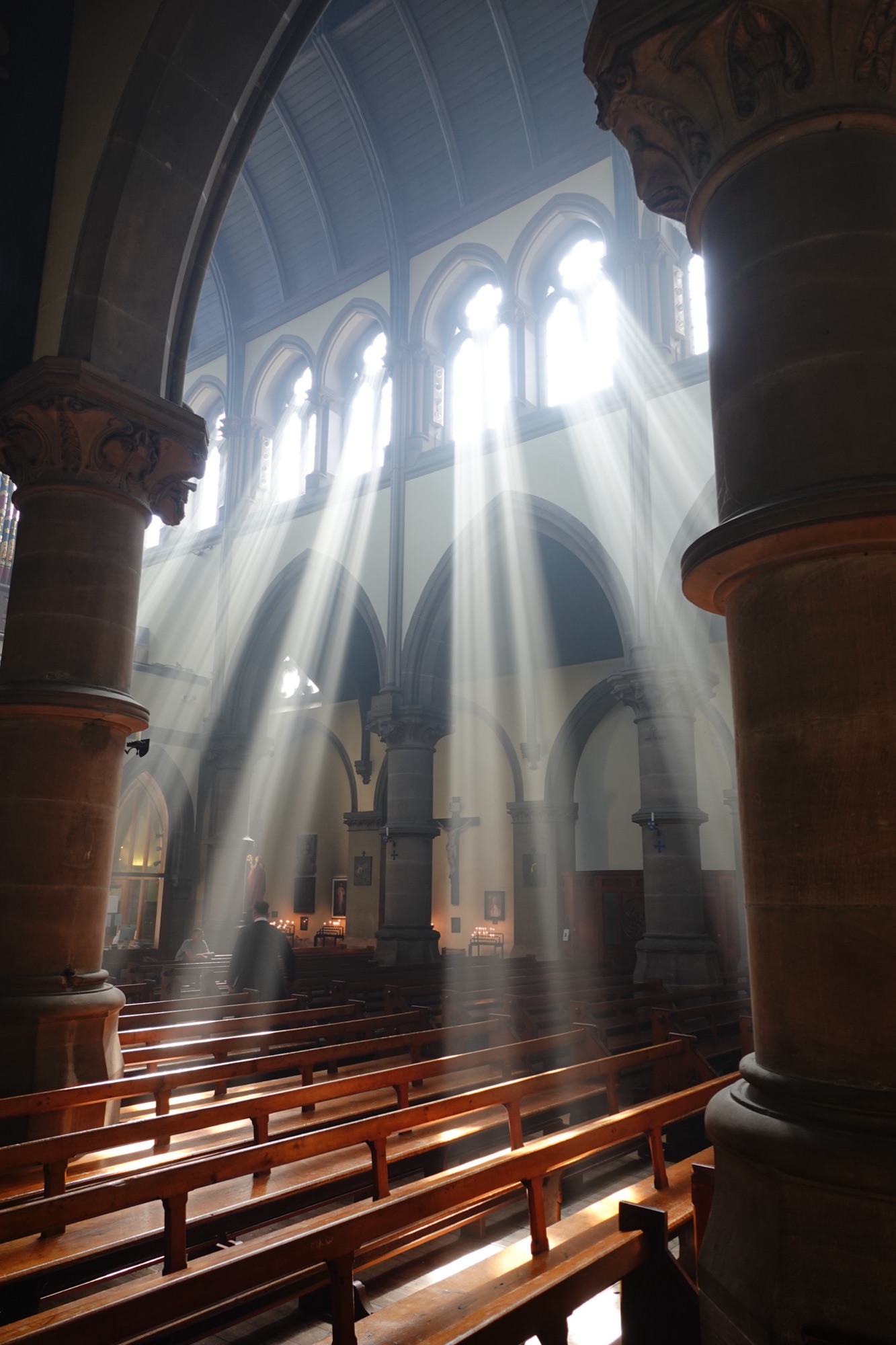
The organist was just getting ready for Vespers, which reminded us that at York Minster it was almost time for the Choral Evensong.
Fortunately the crowds along the route were not all headed to the Minster, although the service was full.
Ted and I haven’t been to church in decades, with the exception of our youngest son’s wedding and our grandson’s’ baptisms, so I was surprised by how moving all the pomp and ceremony was, from the swinging thurible from which wafted fragrant smoke, to the sumptuous robes of the priest and deacon, the glorious voices of the choir, and the resounding notes of the organ. The setting in the quire of the Minster certainly added to that. Today was Pentecost Sunday, when the Christian church celebrates the Holy Spirit descending on the disciples of Jesus, and the priest gave a very inspiring sermon about the triune quality of the Spirit that is transferred to believers: energy, peace, and joy.
Christian or not, those three things seem like states to which everyone can aspire. Maybe that’s what being “spiritual” should mean
It seemed like the perfect ending to our time here, which has certainly been a very happy few days.


It was lovely to see the plaque for the marriage of Anne Lister. There was a wonderful series about her and her unconventional life on HBO called Gentleman Jack. She was played by the always excellent Suranne Jones. It appears to still be available for streaming on Crave.
LikeLiked by 1 person
I may just have to look for that!
LikeLike
That is a lot of tourists!
LikeLiked by 1 person