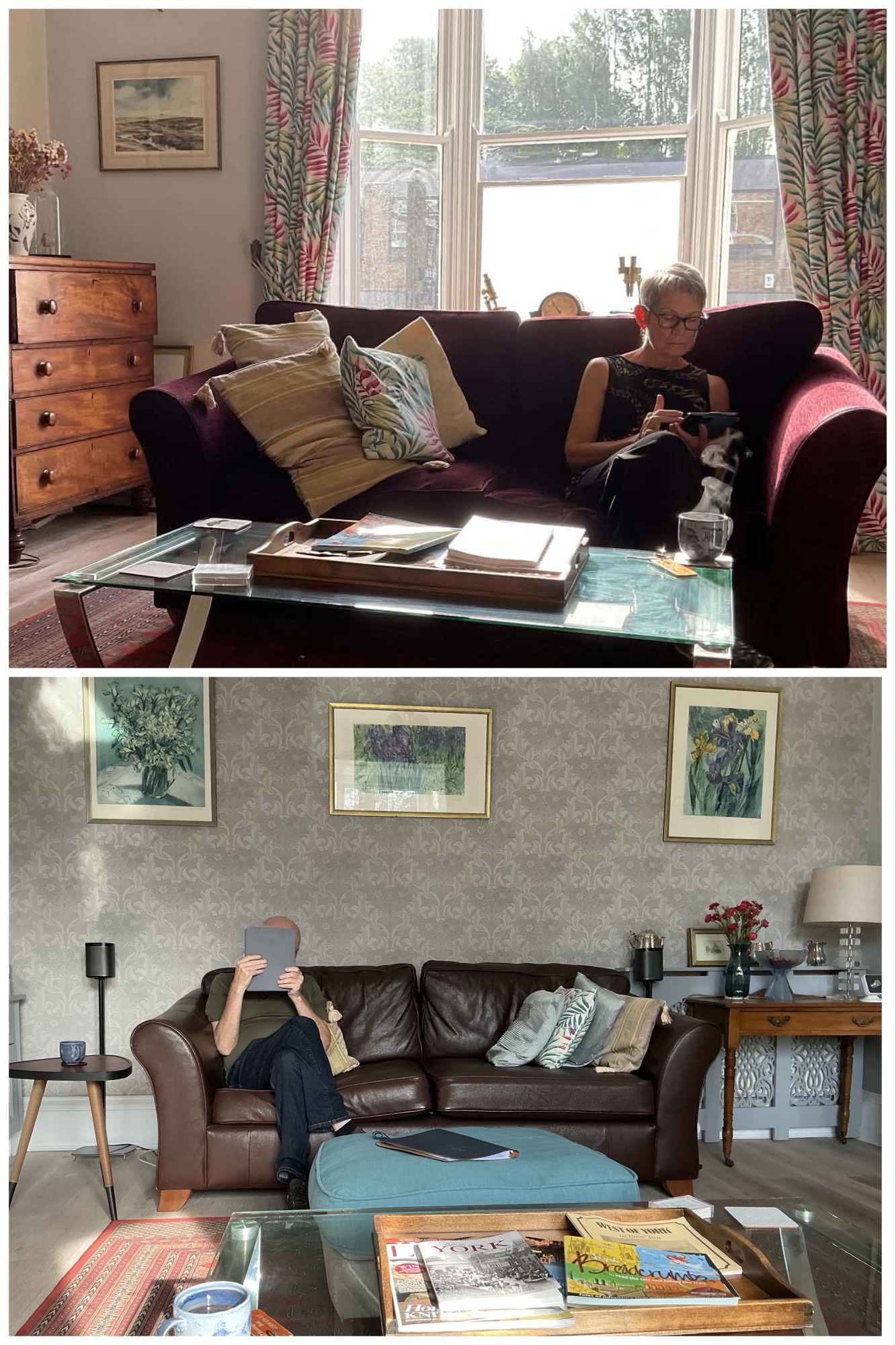
We started our day with coffee in the sitting room, followed by Paul’s famous breakfast.
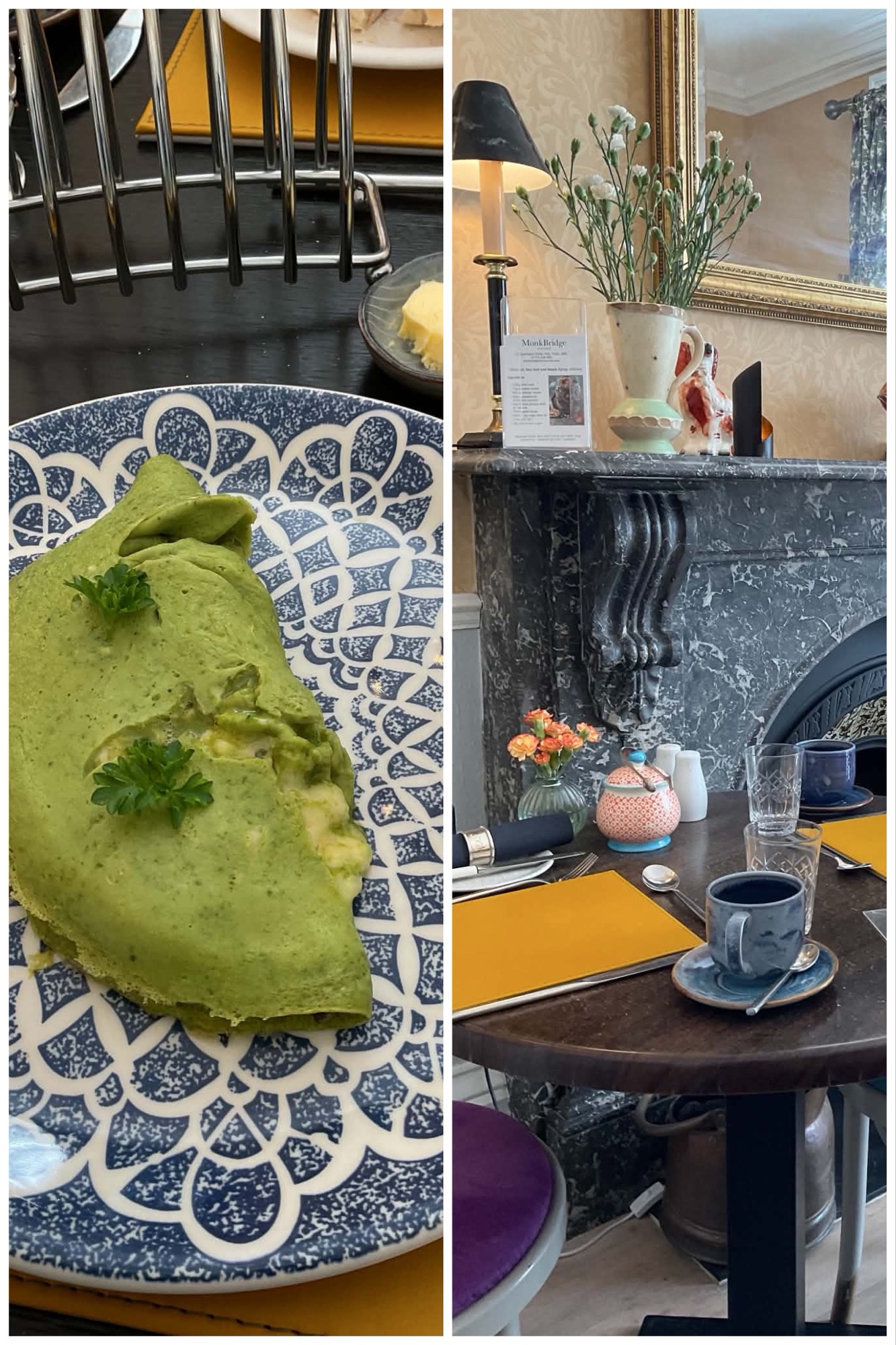
Each day we get to choose one from a long list of regular breakfasts (in that they’re always offered) or Paul’s special of the day. Porridge is an available extra either way, but it feels like summer today, so that held no appeal. Ted chose a bacon butty from the standard options, and I opted for Paul’s “green omelette” special stuffed with cheese. Coffee, tea, juices, croissants, fresh fruit, yogurt, and home-made jams and butter are self-serve from the sideboard.
Then it was off to the Minster.
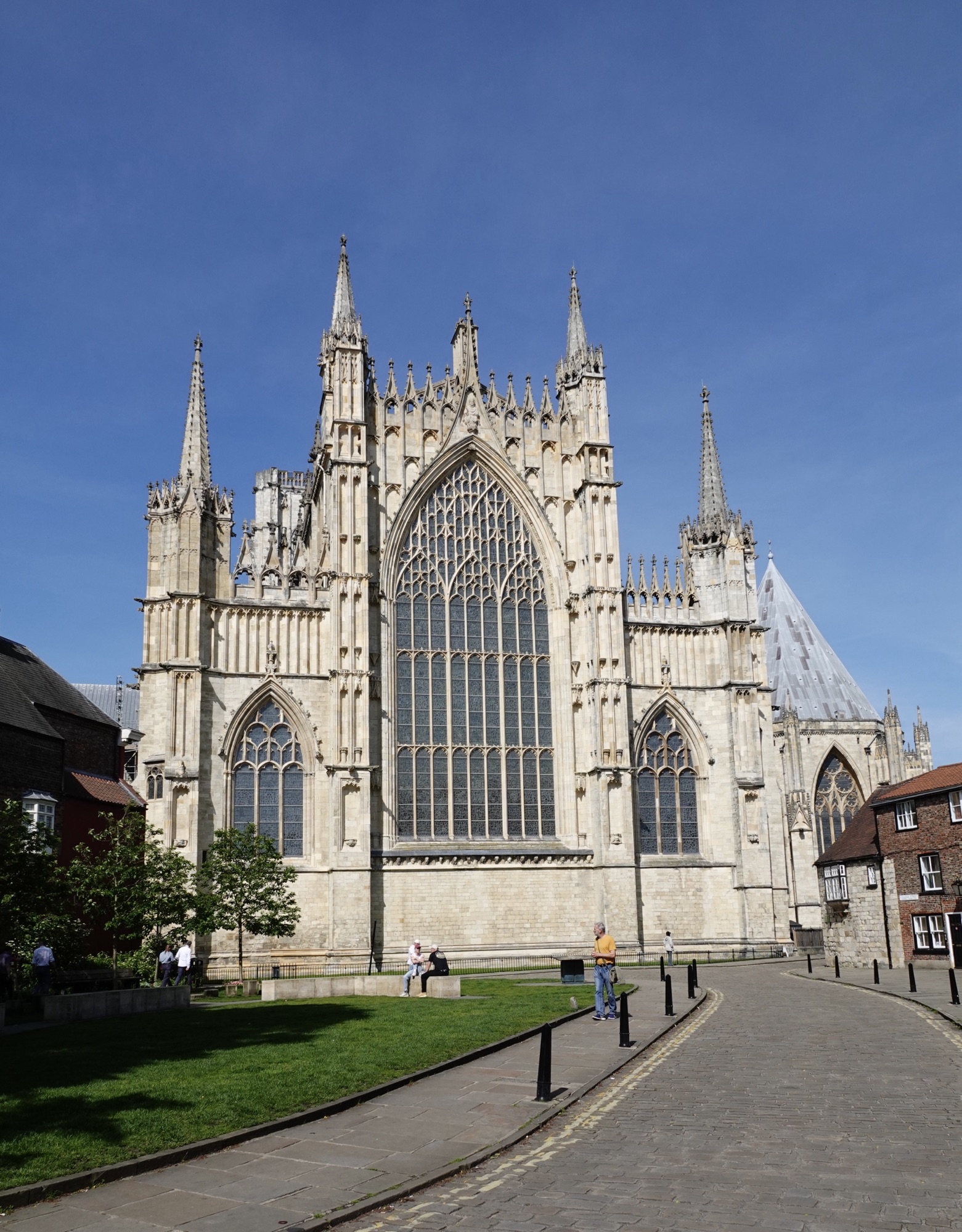
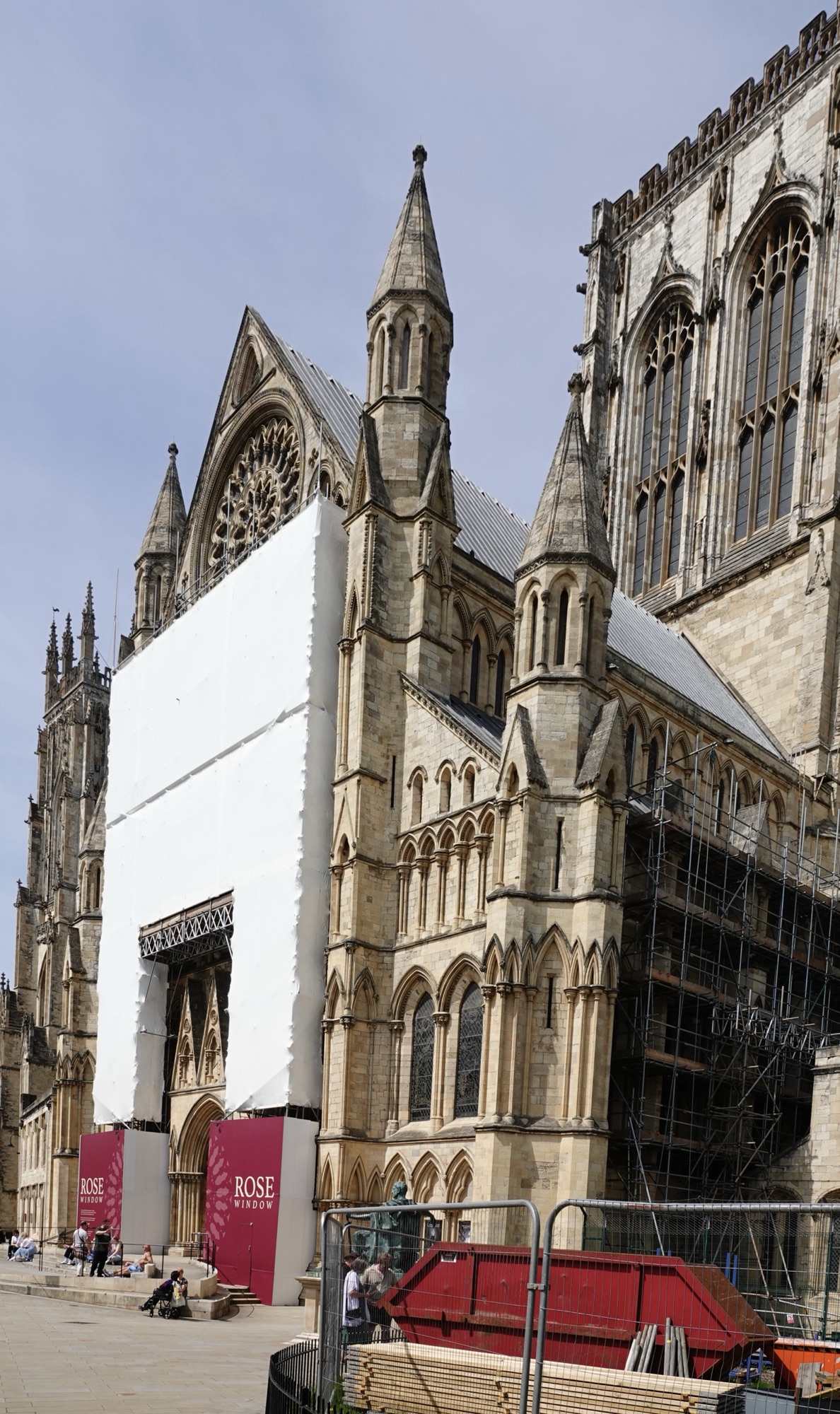
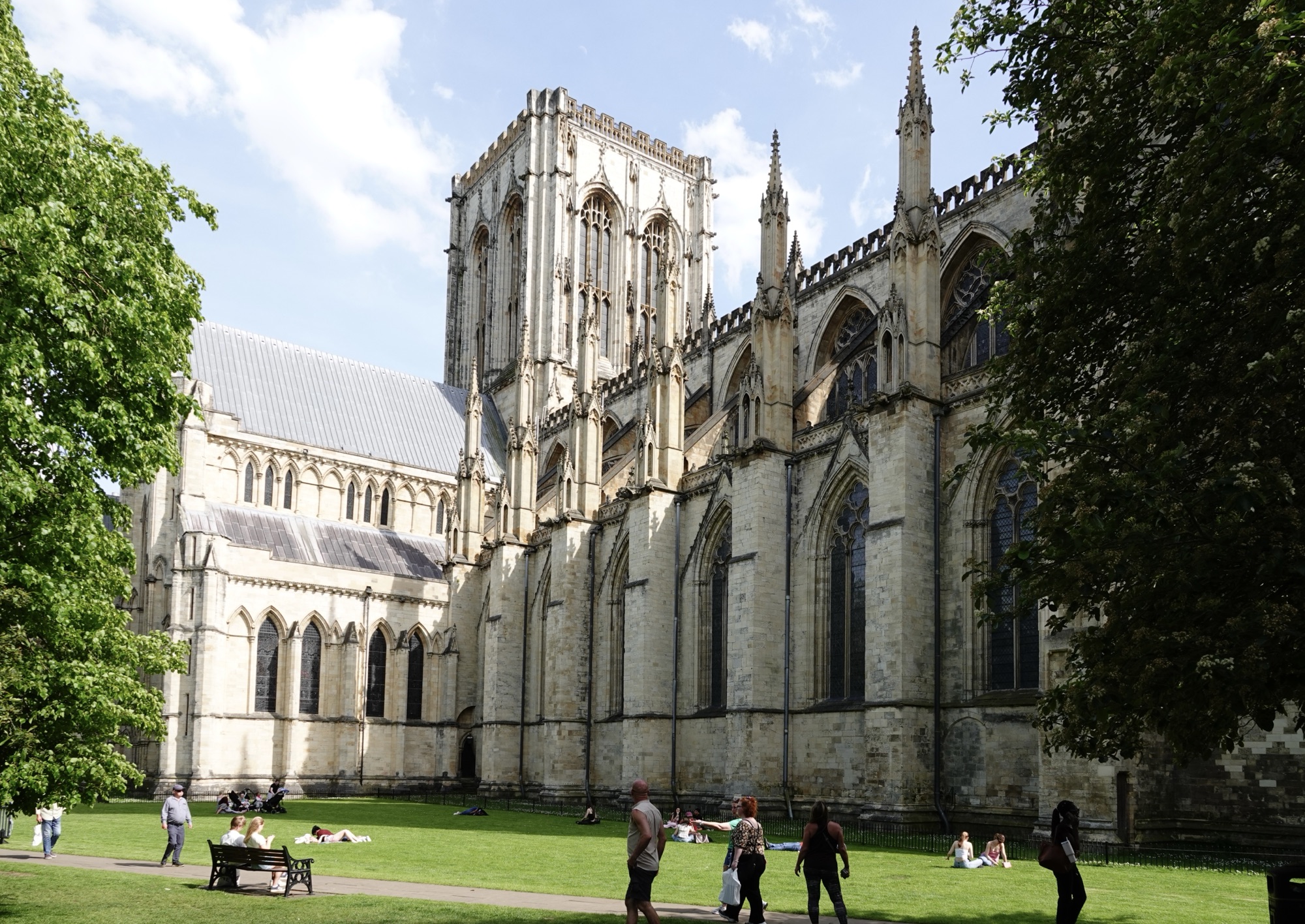
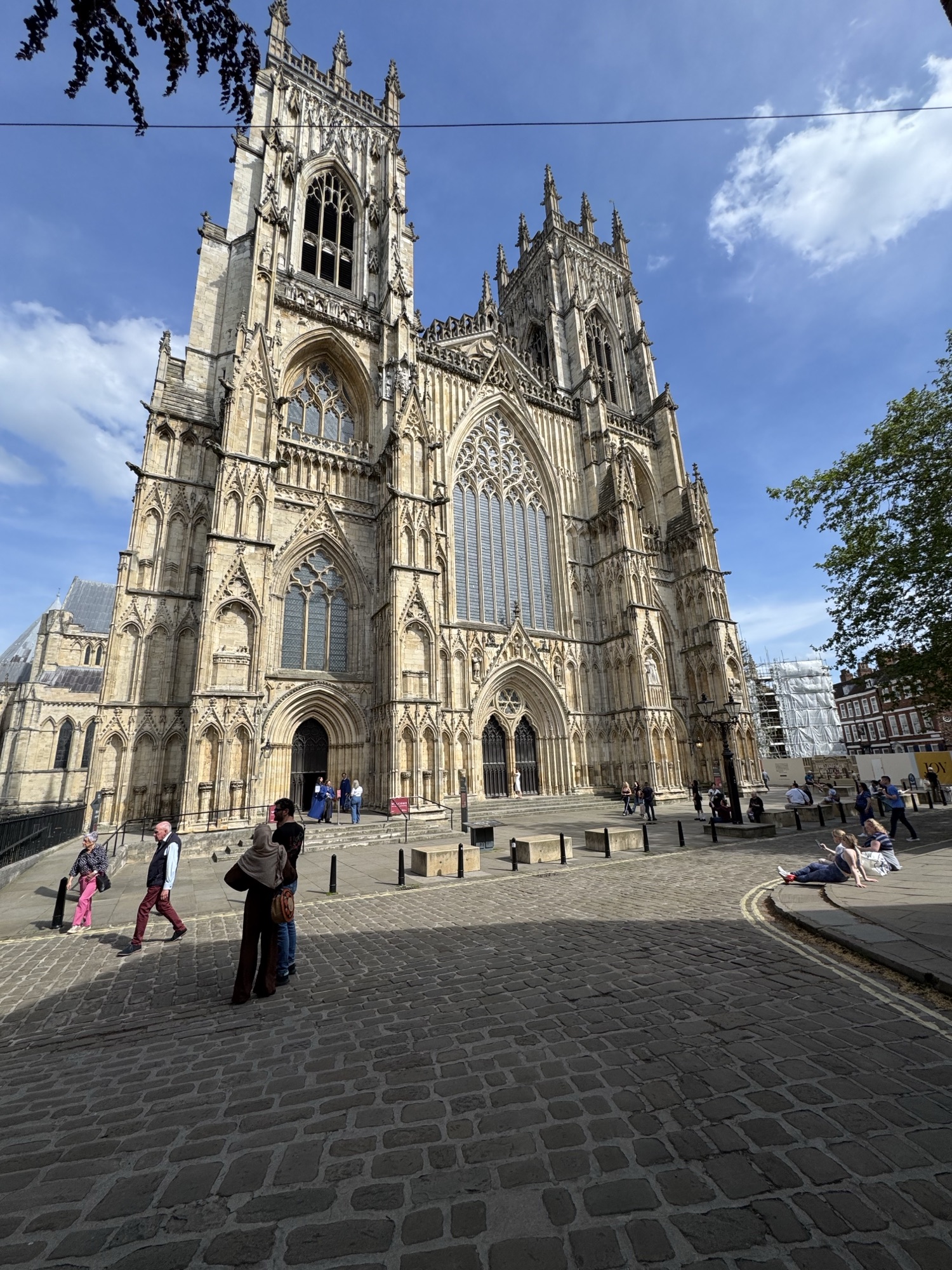
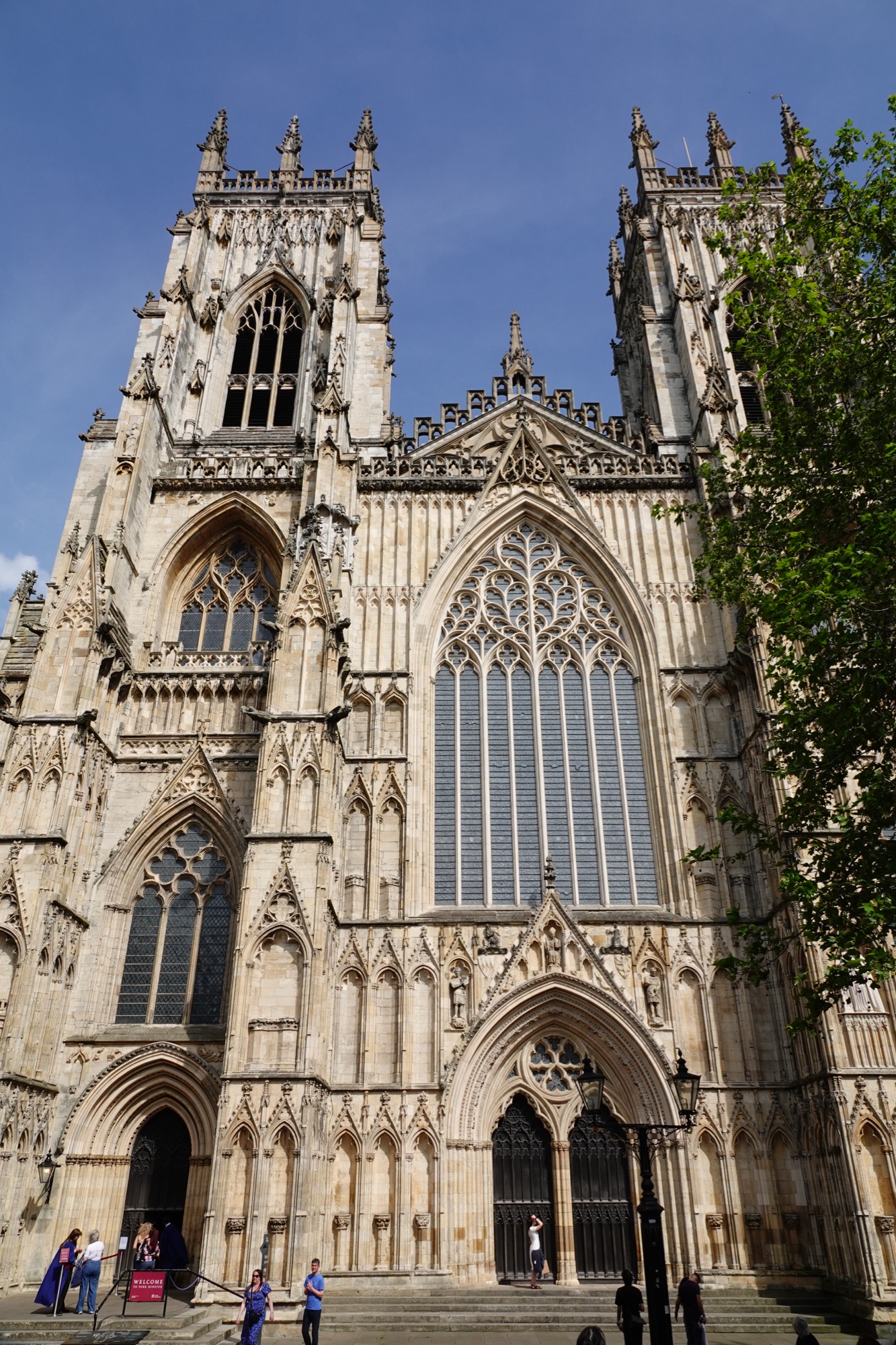
Since the 7th century, York Minster has been at the centre of Christianity in the north of England. That’s 14 centuries!
York is both a Minster (a large, important historic church with Anglo-Saxon roots, which may originally have housed a monastic community) and a Cathedral (home church of a bishop). Not all cathedrals are minsters, nor the other way around.
The current Minster is actually the 4th church on this site, the first being a wooden “mynster” (mission church) builtin 627CE, on the site of a Roman fortress. We saw so e of the Roman ruins today.
By 781CE there was a stone church with all the expected embellishments of the main church of an important city. Nothing seems to remain from that; the stone may all have been reused.
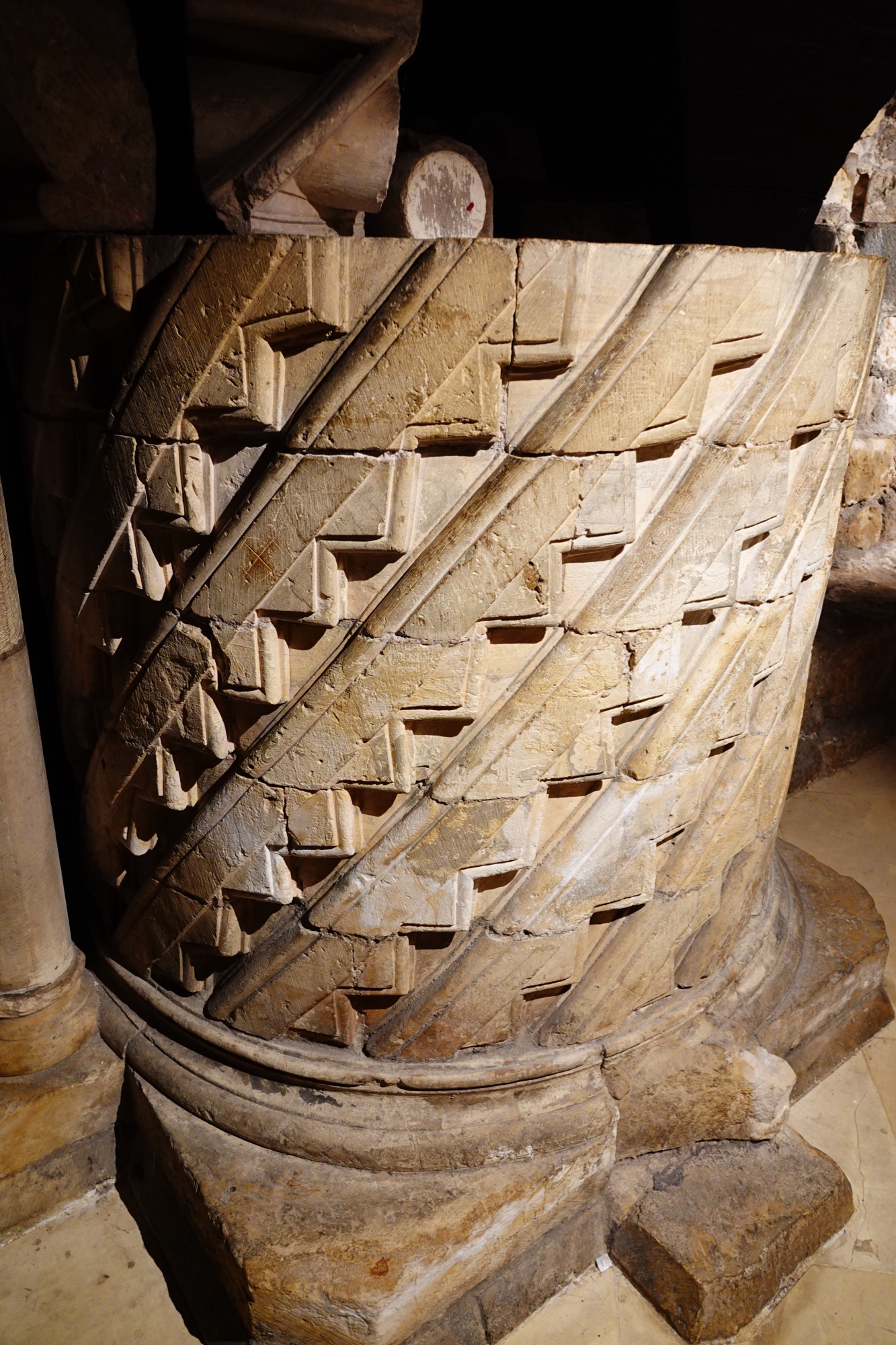
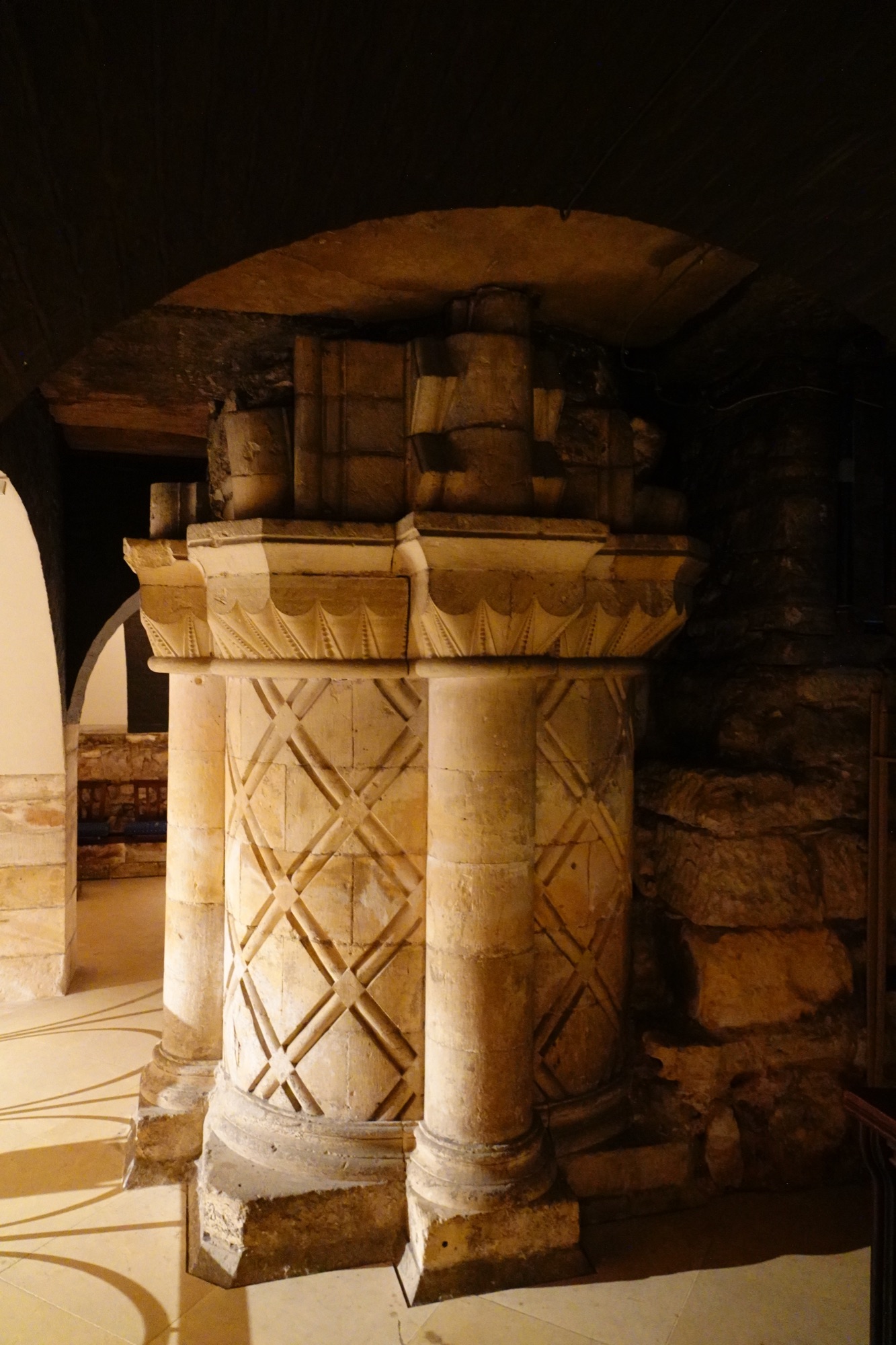
Between 1080CE and 1100CE a grand Norman style church was built. In the Minster’s undercroft we saw remains of the massive Norman pillars.
In 1215CE, Archbishop Walter de Gray ordered the construction of a Gothic cathedral to rival Canterbury. That was the beginning of what is here today. It took more than 200 years for building to be completed. It was finally consecrated in 1472CE.
We were reminded that the Minster was originally a Roman Catholic Cathedral. After all, York is where Emperor Constantine was crowned Emperor in 306CE – and after his conversion to Christianity, it became the official religion of all Roman held lands. That carried through to the Saxons and beyond until Henry VIII and the Protestant Reformation.
All of that background came into play during our hour-long guided tour.
We began with a window: the great Western Window above the main entrance. It dates to the 1330s, and among other things features portraits of St. Peter and the Archbishops of York up until its creation.
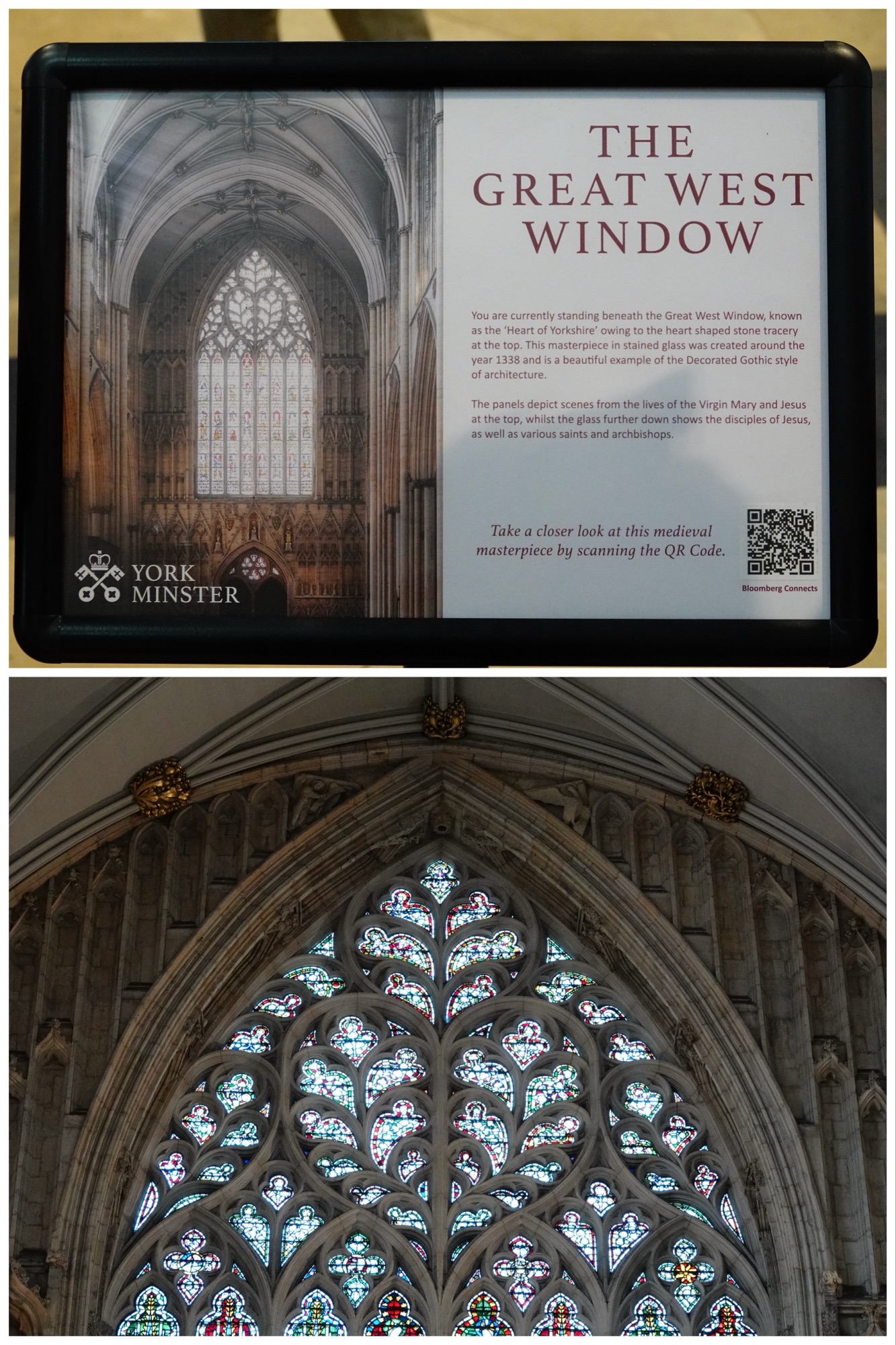
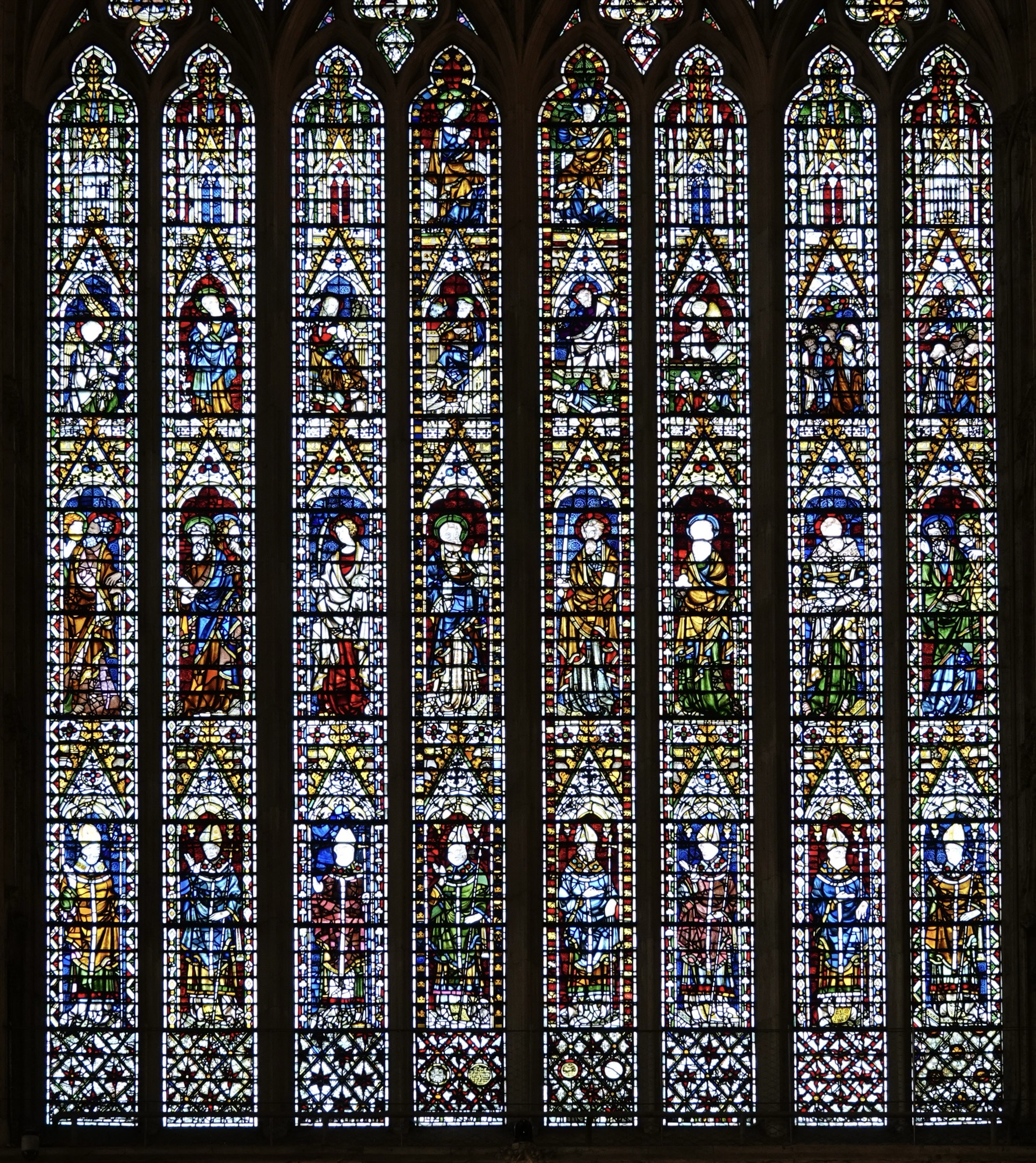
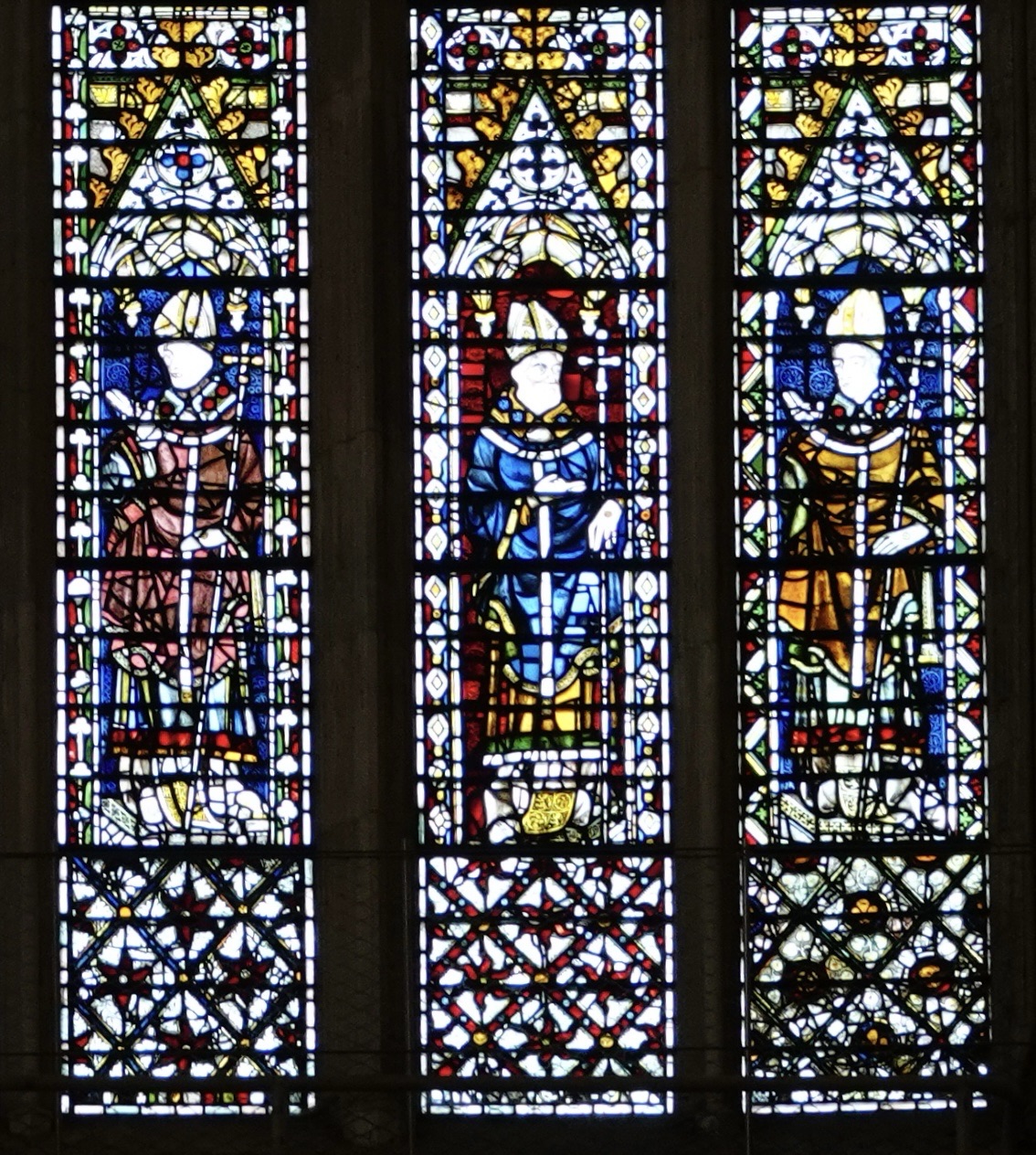
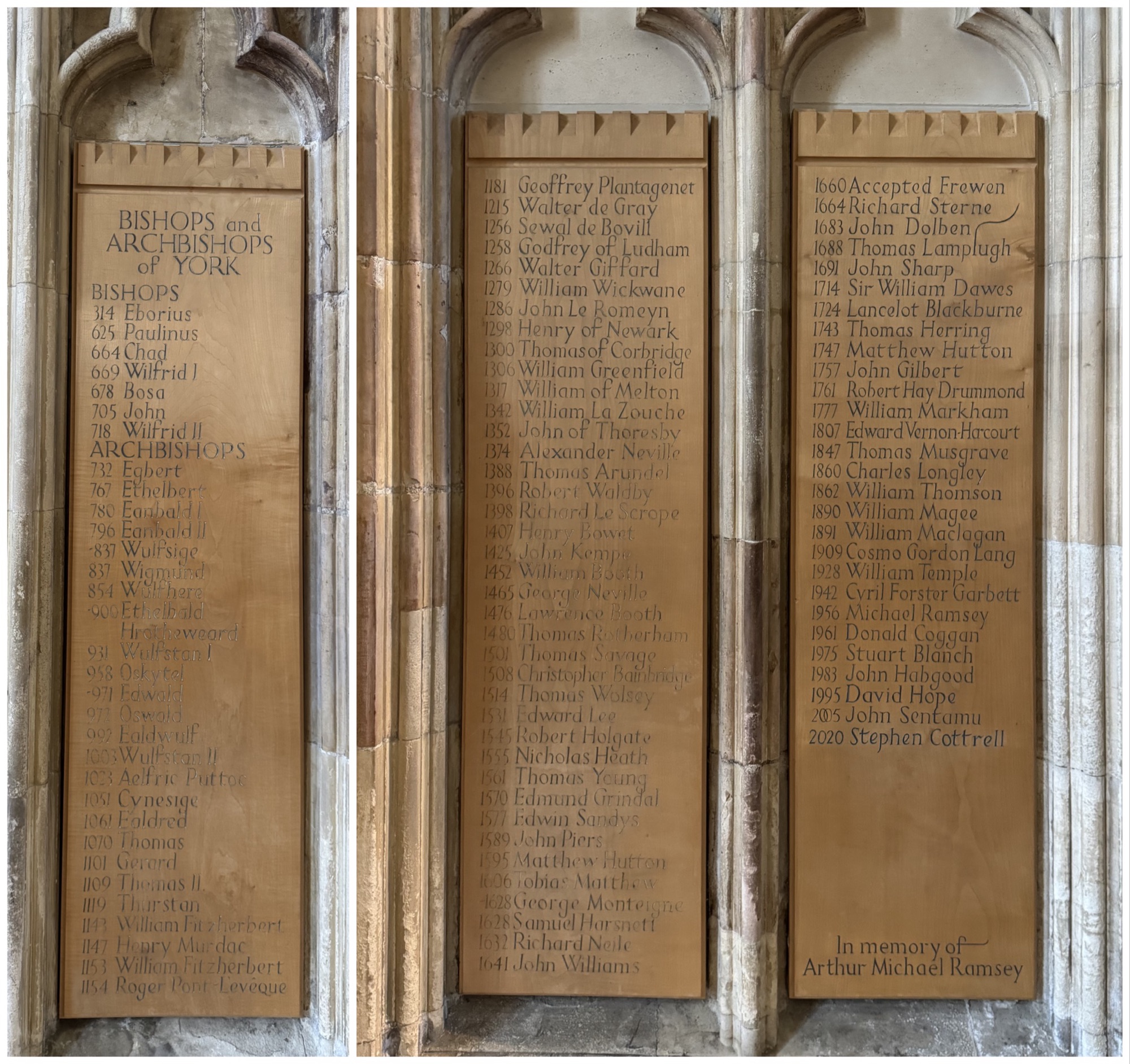
While the window is spectacular, it is just one of 128, totalling the largest collection of mediaeval stained glass in England. 80% of the glass is original; 109 of the windows were removed and secreted away during the World Wars.
The Minster’s windows comprise the largest collection of mediaeval stained glass in England.
On the wall below the window are a series of 12 headless statues (made that way) holding disks which spell out “Christ is here”. They are called “the semaphore saints” and were added in 2004 by sculptor Hammill, made of wood painted to look like stone. It was a reminder that the Minster is not a relic of the mediaeval age, but a place of worship that remains in use, and is continually being not only restored but also added to – a process that has been ongoing throughout its existence.
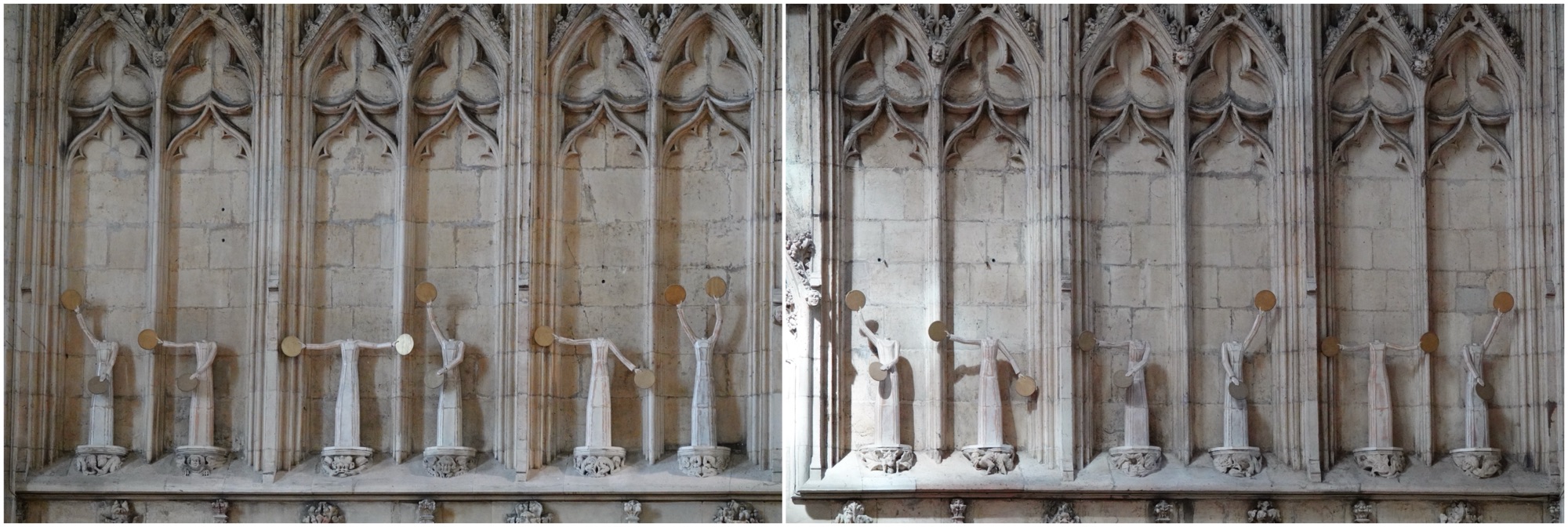
Our guide shared an anecdote that he admitted might not be verifiable. In 2010 the statues were removed during work being done on the window above. Apparently they were replaced slightly out of order, and ended up signalling “Chris is there”. Since they’ve been “corrected”, we’ll never know.
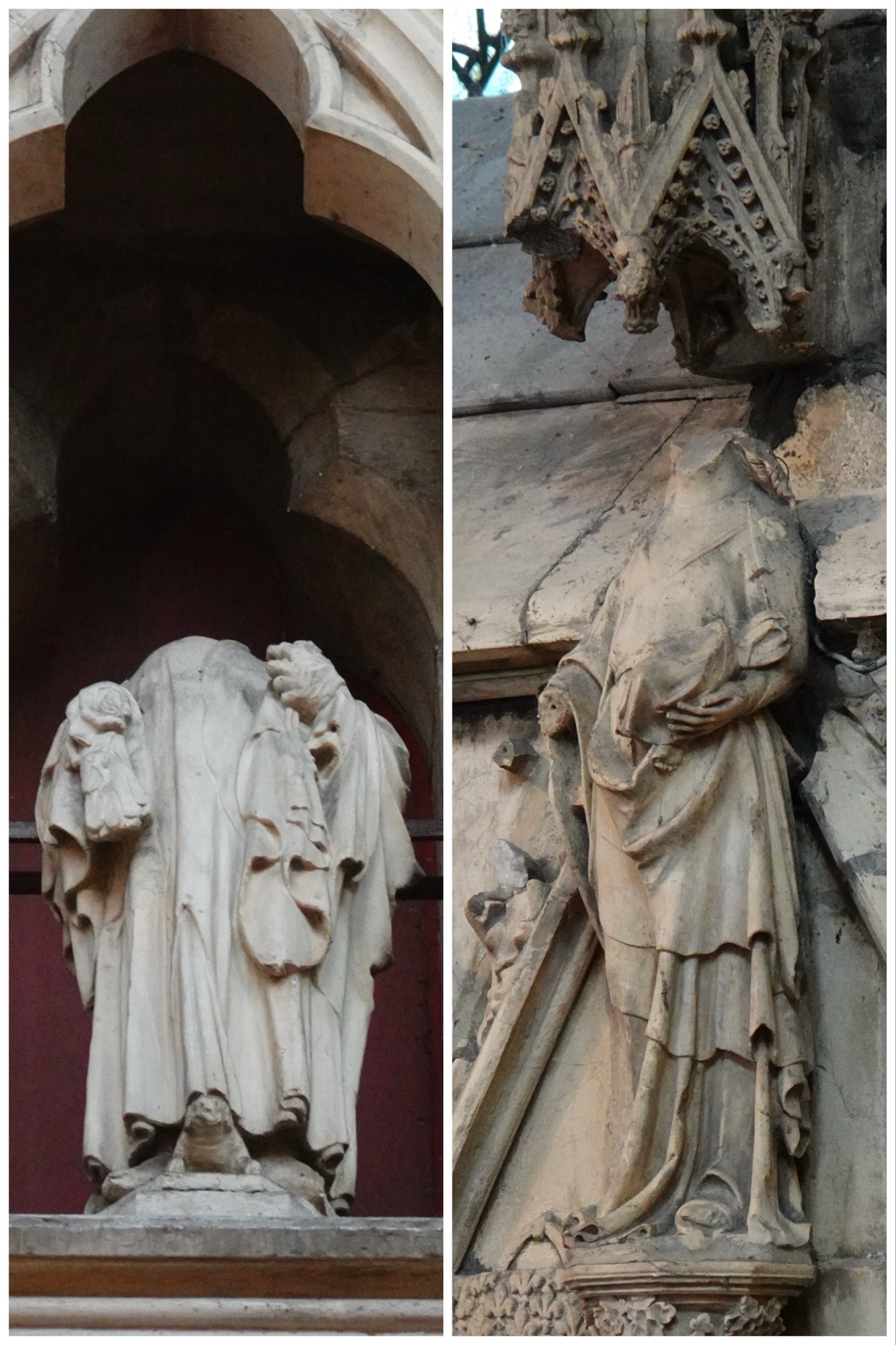
The other large headless statues in the nave were not designed that way. They were beheaded during Henry VIII or Elizabeth I’s reign, because they were Catholic saints, and not to be worshipped. Our guide explained that the heads have not replaced because their removal accurately reflects a period of history, which should not be rewritten.
The nave began just 1/3 of its current width.
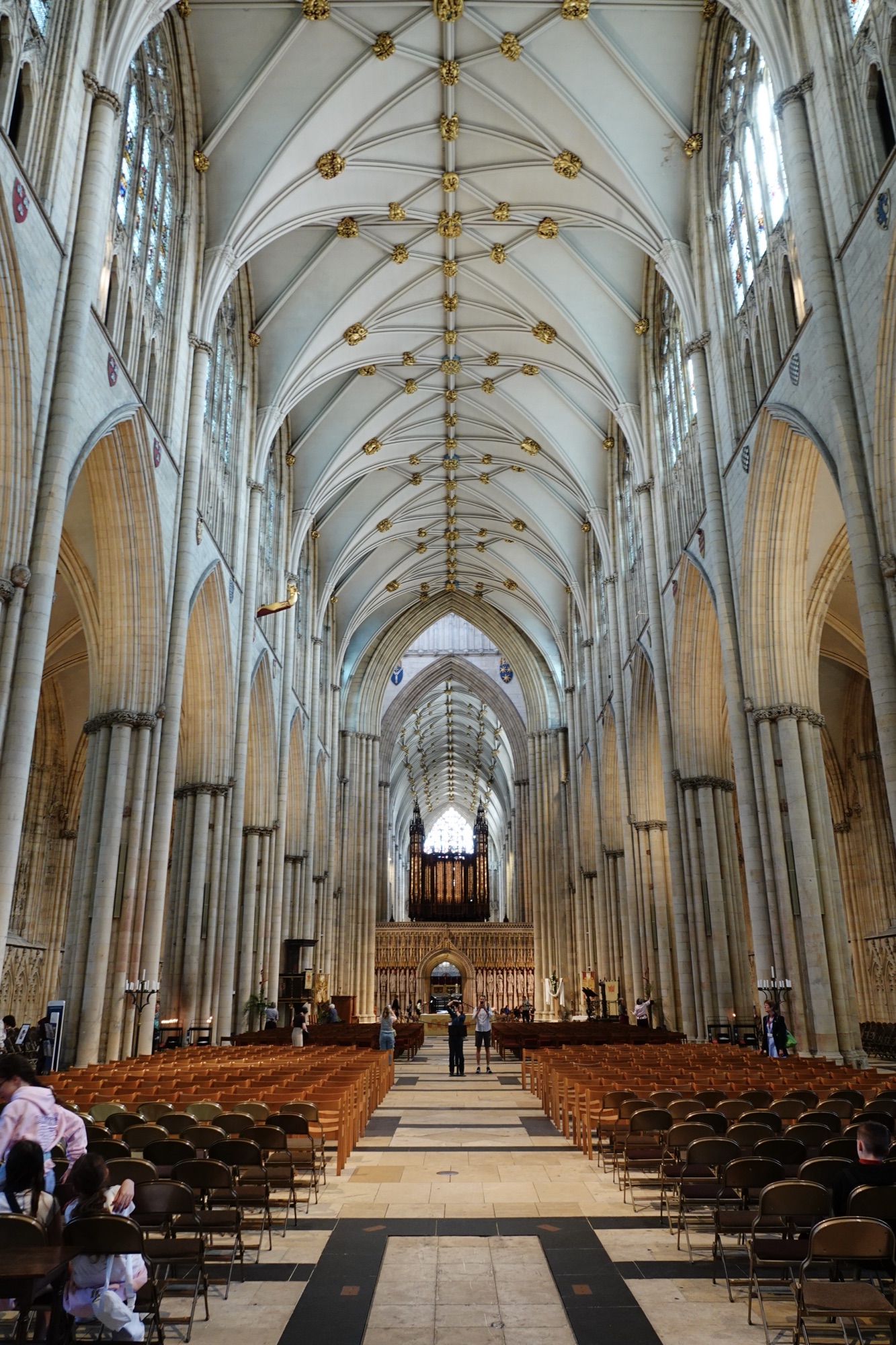
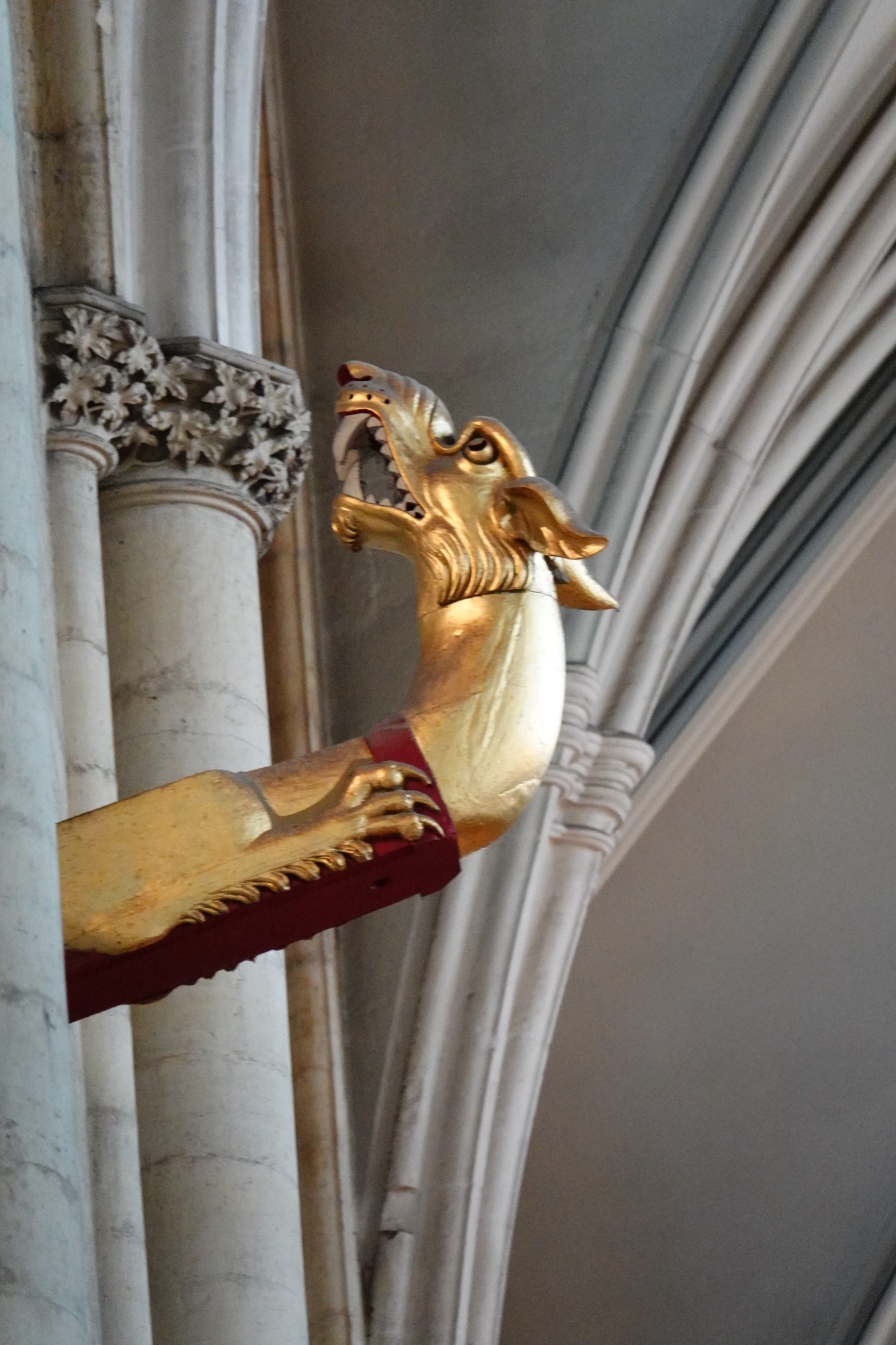
While the Minster walls, buttresses, and pillars are limestone, the roof arches are wood. In 1840 a fire caused by an unattended candle completely destroyed the roof.
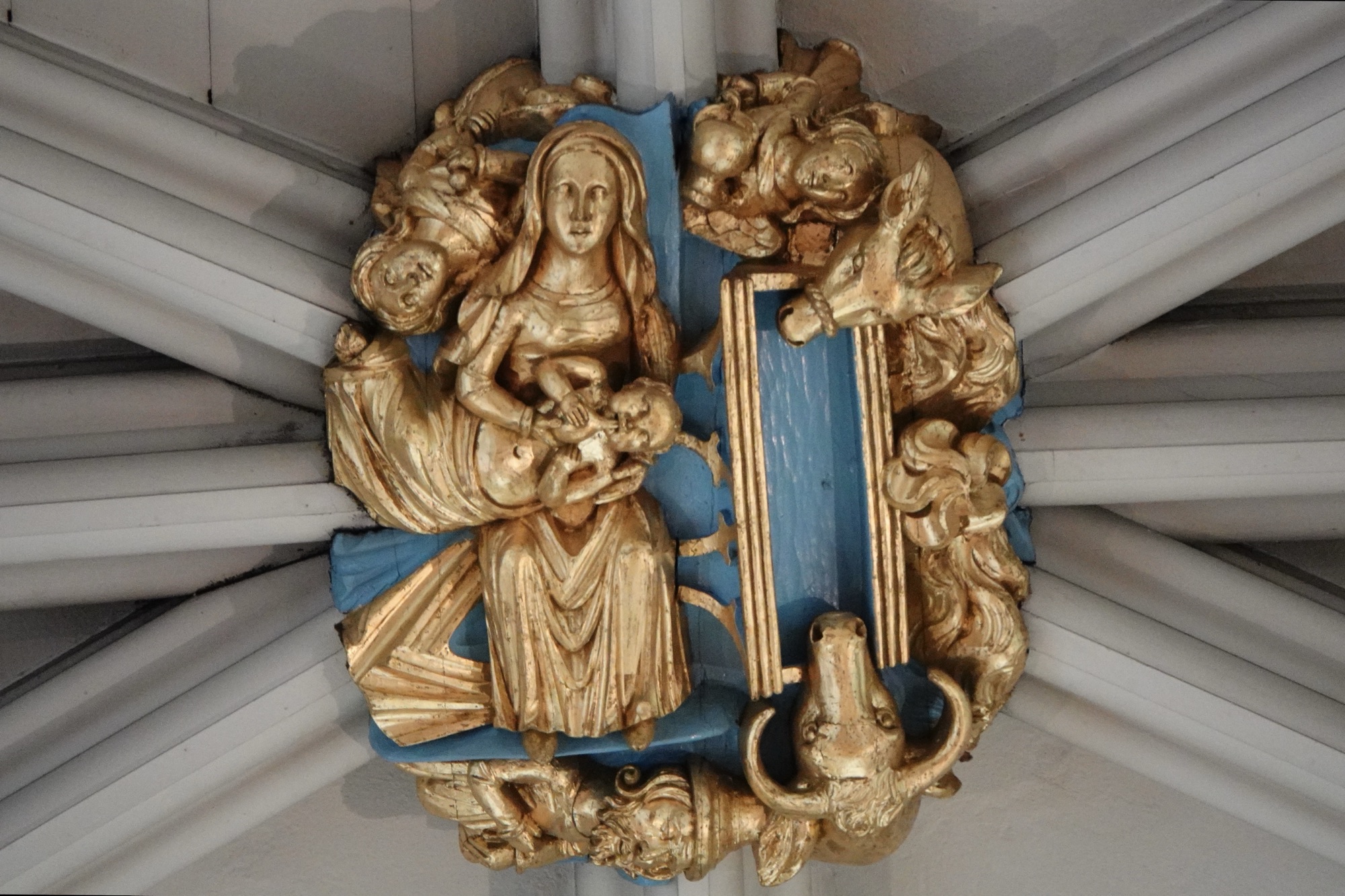
Fortunately there were drawings, so it was able to be reconstructed, including the intricate blue and gold medallions. However, since this was the mid 1800s, the medallion with Mary breastfeeding Jesus was replaced by Mary bottle feeding him, in accordance with delicate Victorian sensibilities.
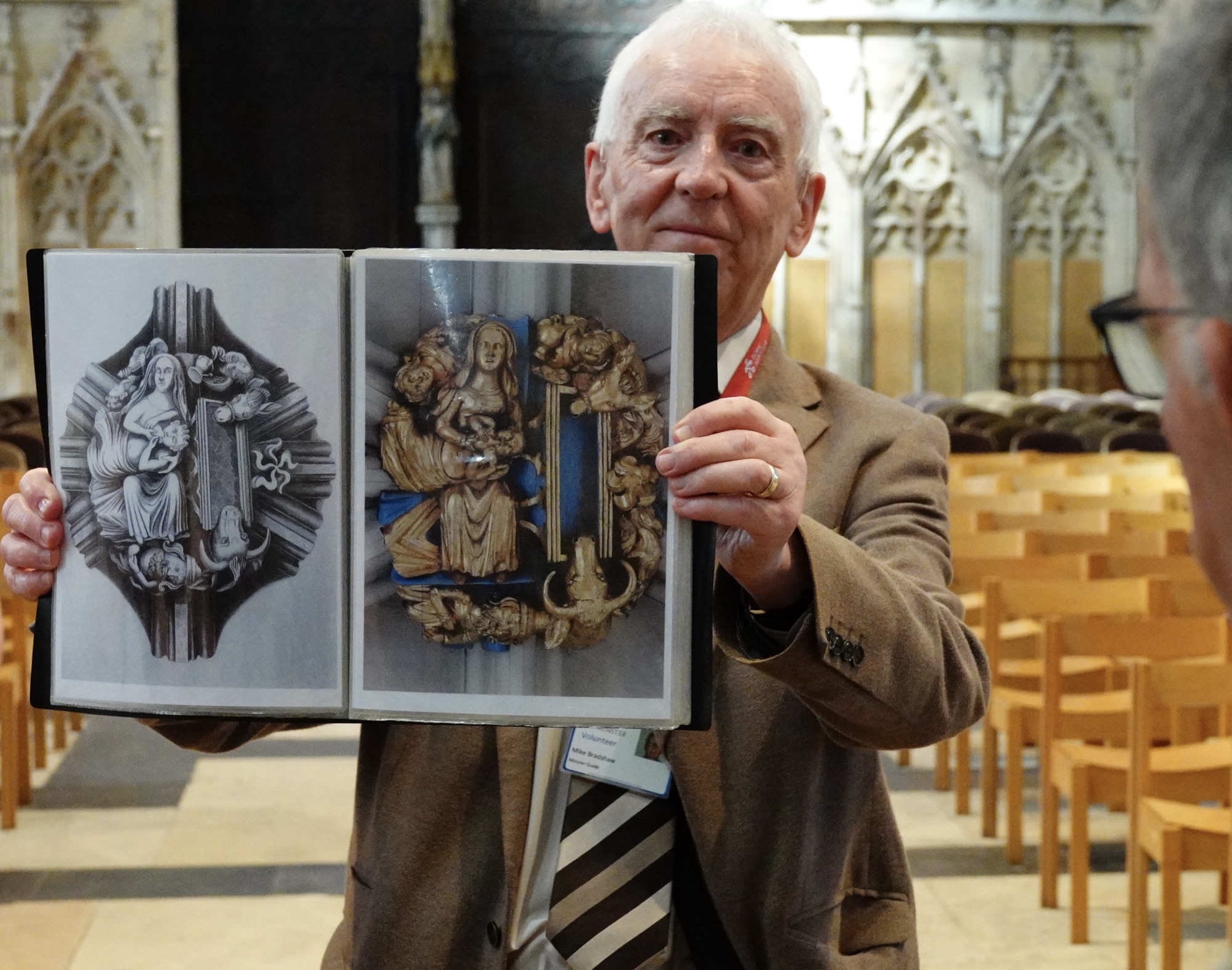
Ted and his camera are amazing. He was able to zoom in on the medallion. The manger animals must be confused.
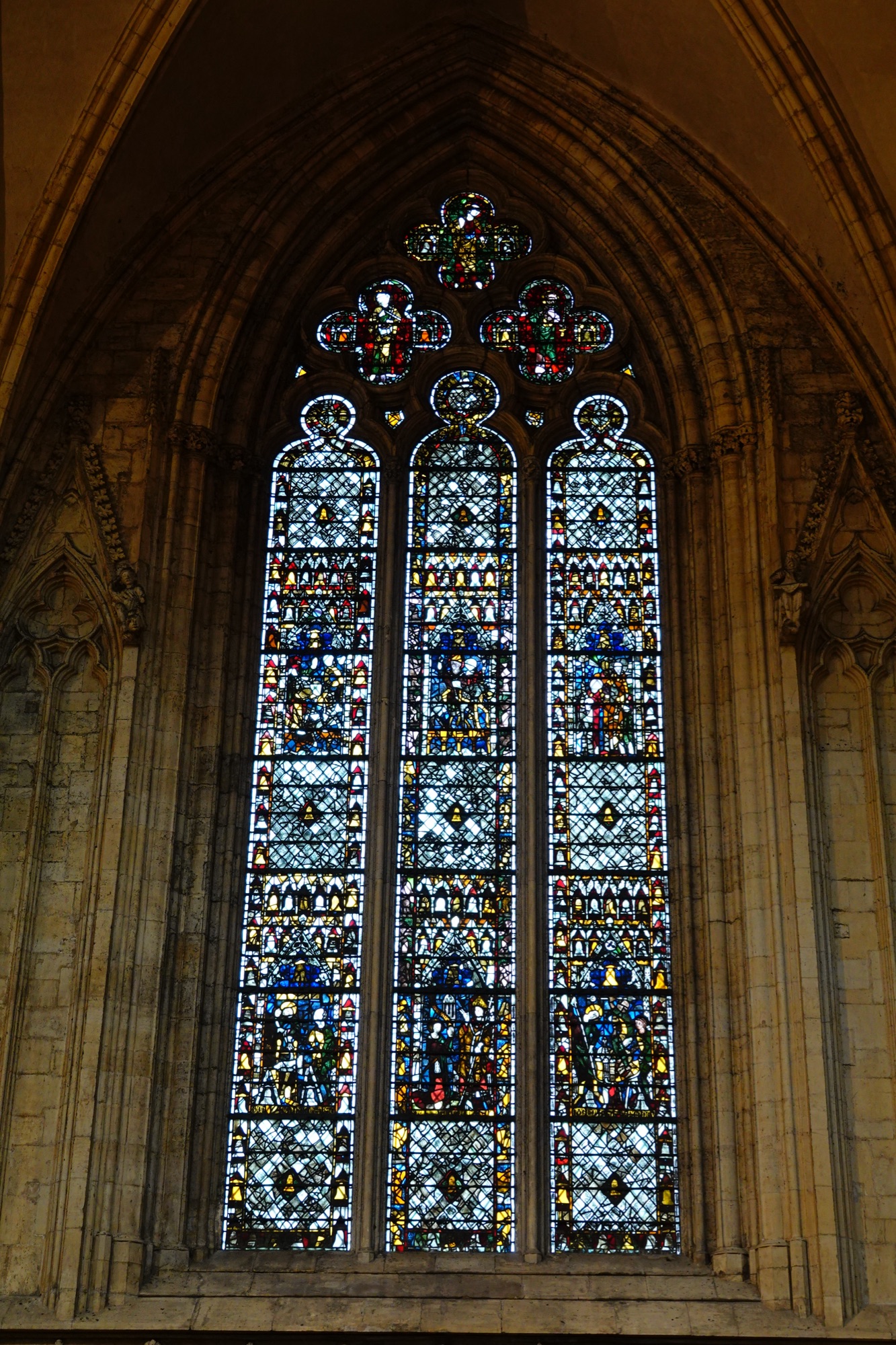
We continued to tour the stained glass windows, most of which date to late 13th early 14th centuries, focusing on one of our guide’s favourites.
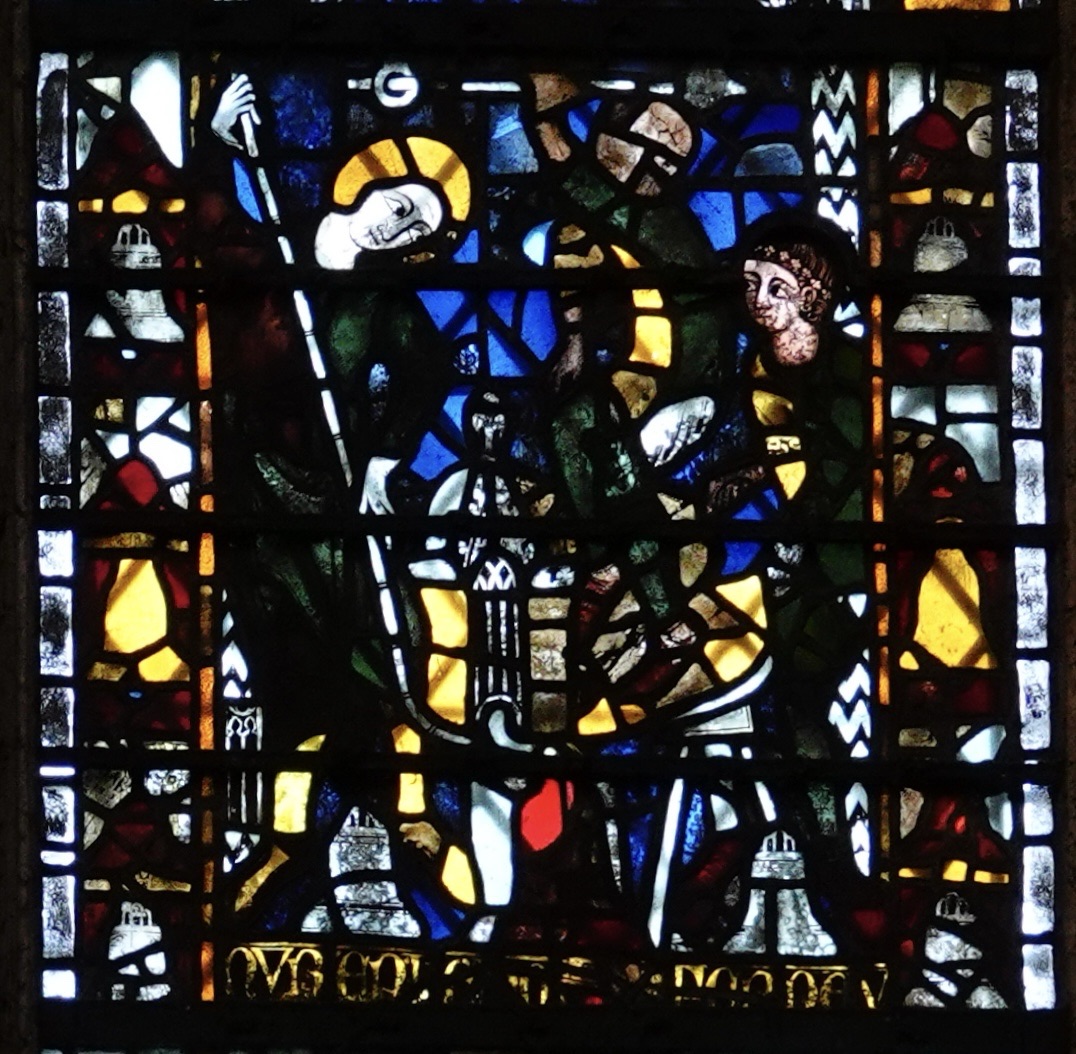
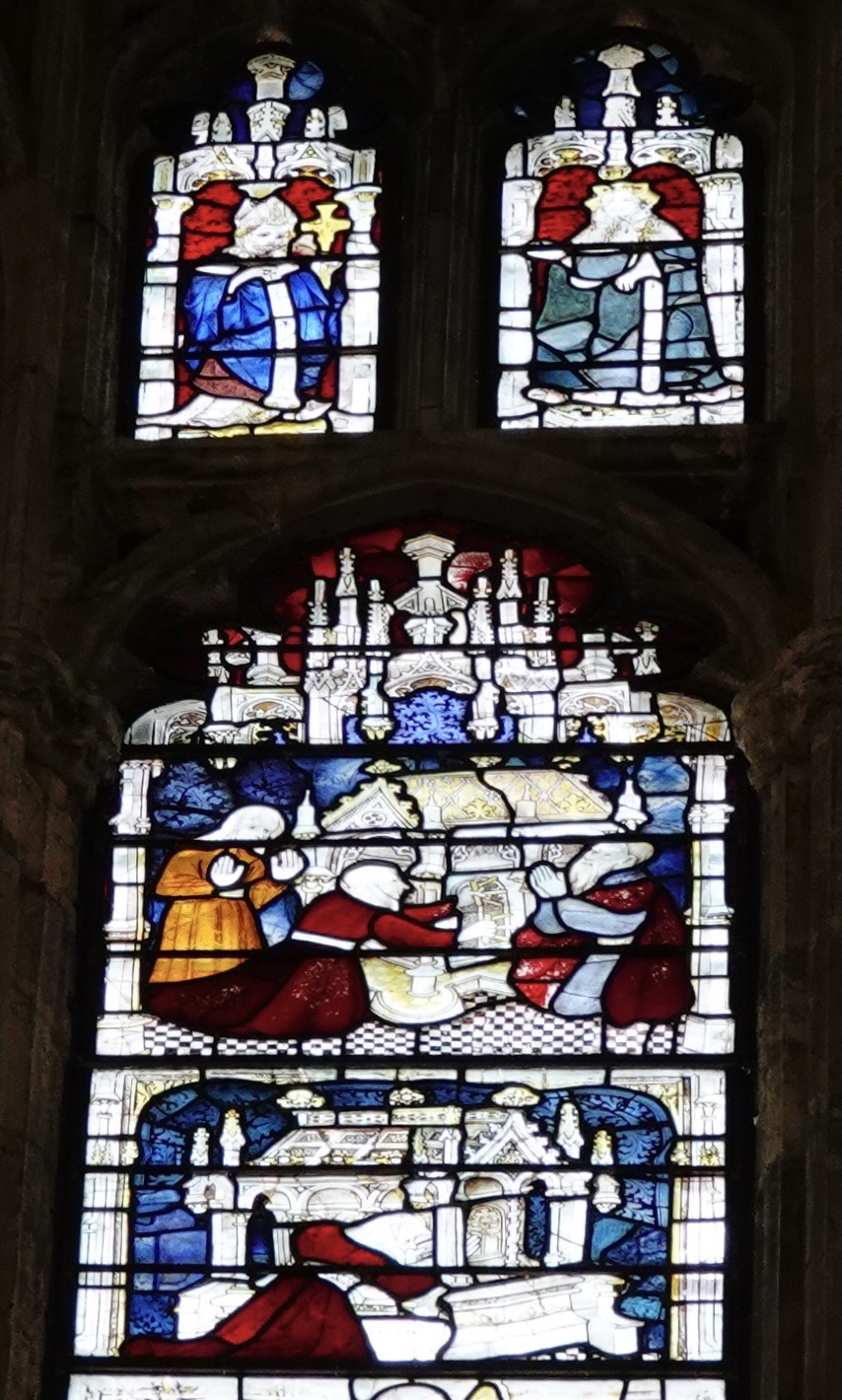
The so-called “bell founder window” was paid for by the bell maker/goldsmith/Mayor of York.
He included himself in the window (in the way we’ve seen in paintings, icons, and triptychs) as the kneeling figure in red in the centre panel second from bottom presenting the window to the Archbishop who was later canonized as St. William of York.
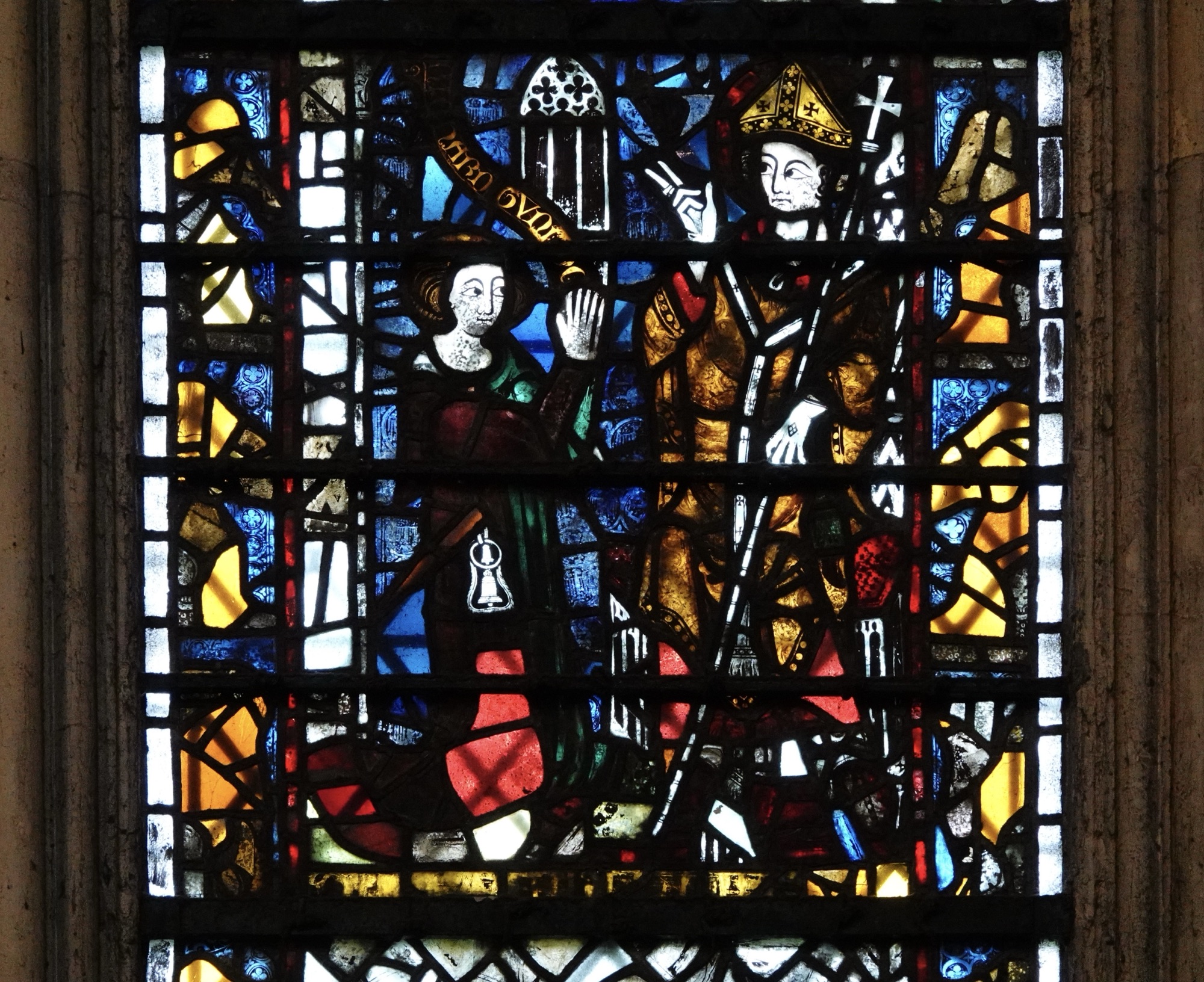
The panel to the right of that shows a bell foundry/factory, which os certainly unusual for the era.
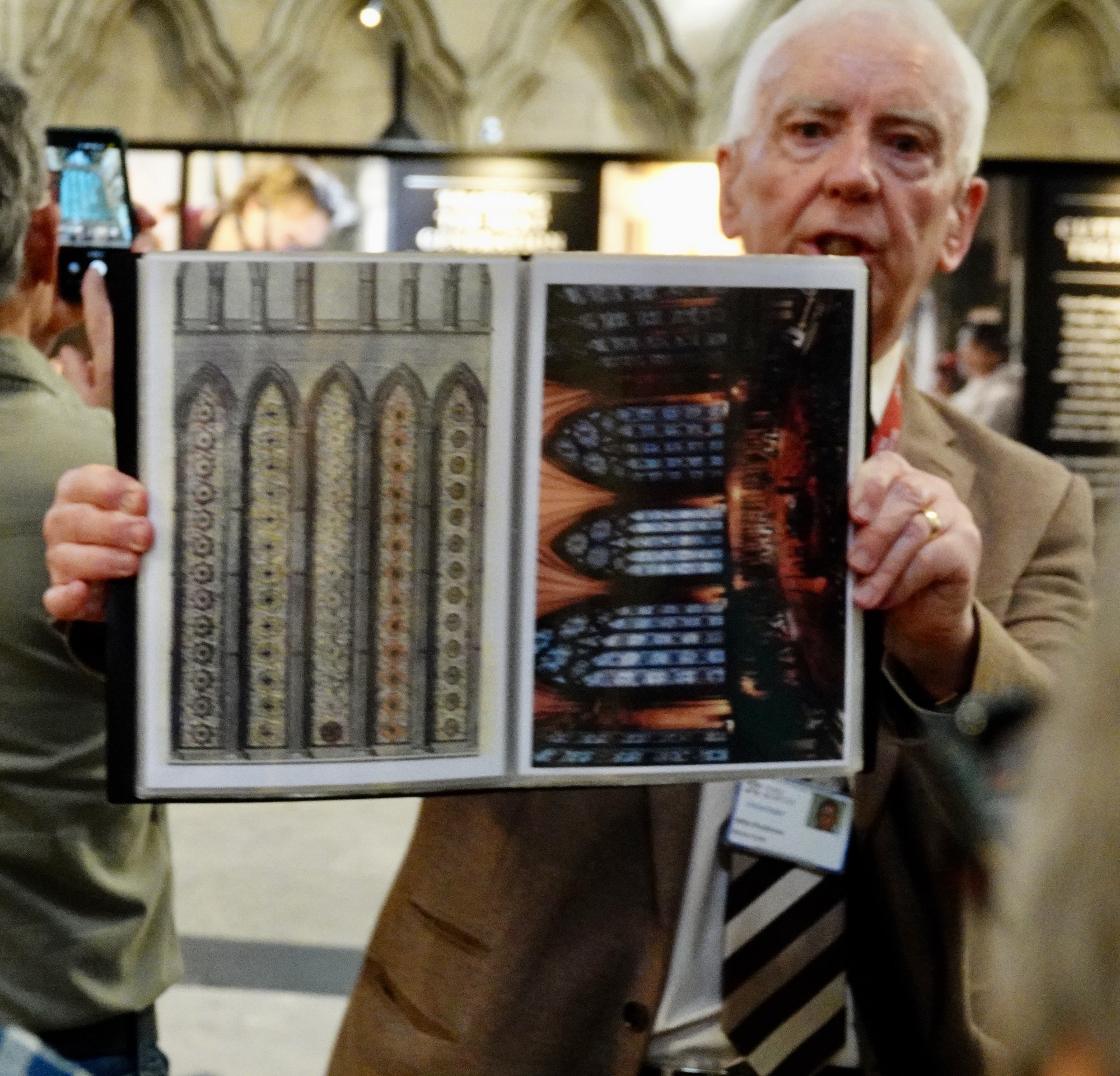
We moved on to view the 52 foot tall north transept window, made of about 100,000 individual pieces of glass. What was originally meant to be muted grey, completed in about 1260CE, now looks like black lace with jewels.
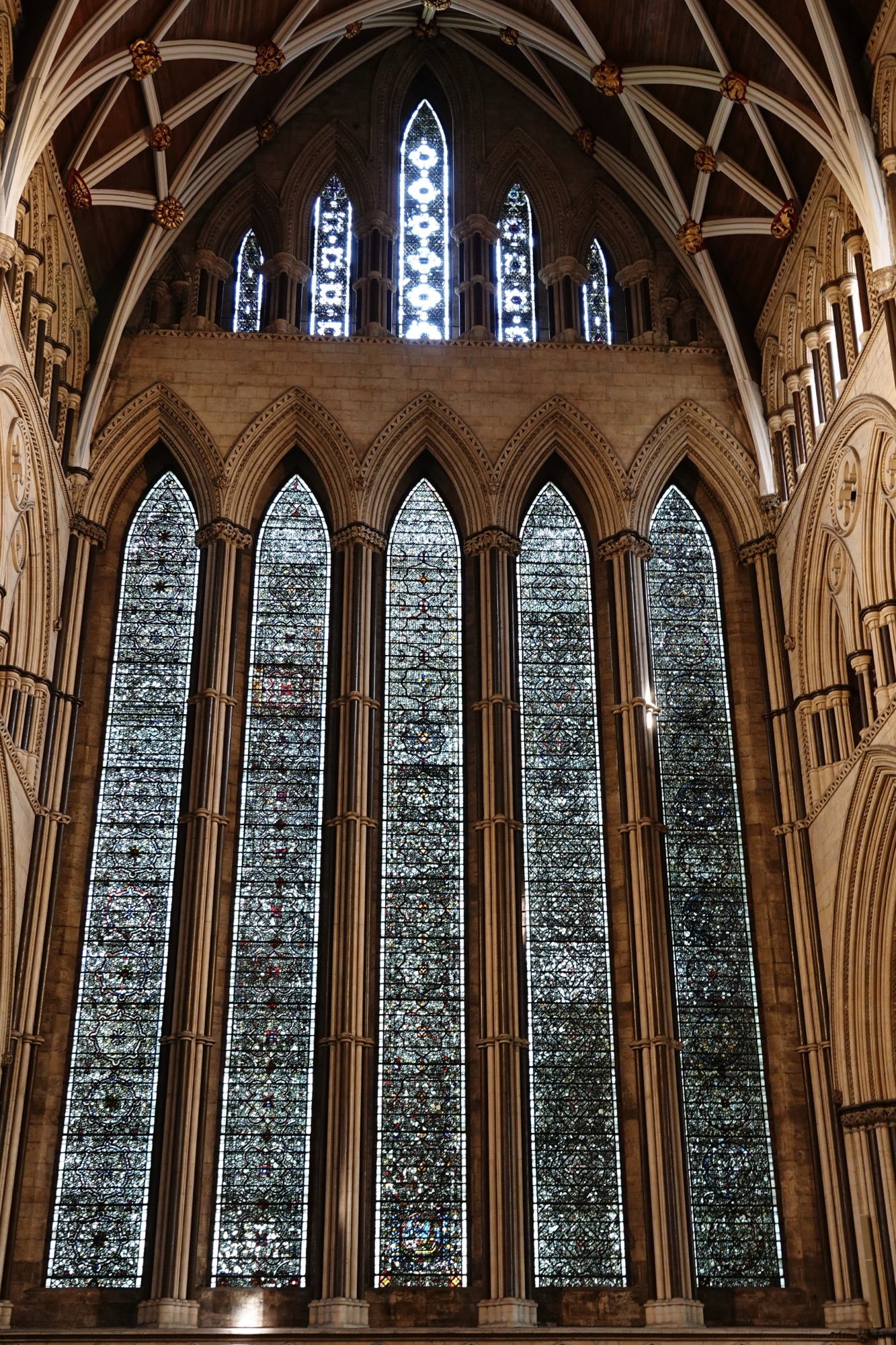
It has darkened through being repaired with lead and secondary glass so many times. Looking closely, we could see many places where there was a second bead of lead and a second layer of coloured glass. Modern restoration techniques would use less lead, and new glazing.
The original documents still exist for a specific repair in the 1600s, which used material from the 1150 church.
The current dark colour hides the geometric shapes, not saints, in each window. That imagery have been the preference of the Cistercian monks who paid for the window.
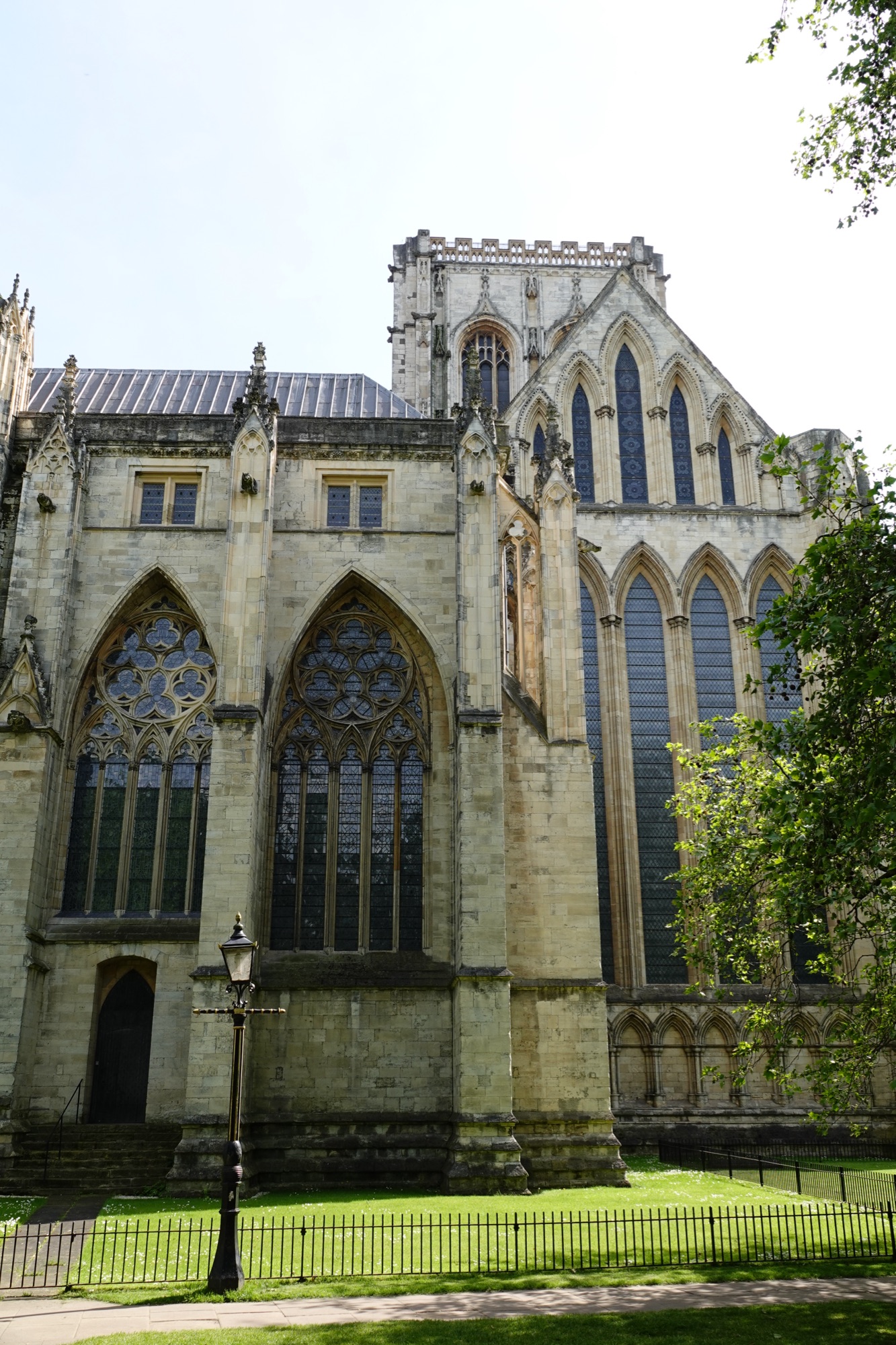
The designs were no easier to see from outside the church, except fir the upper windows.
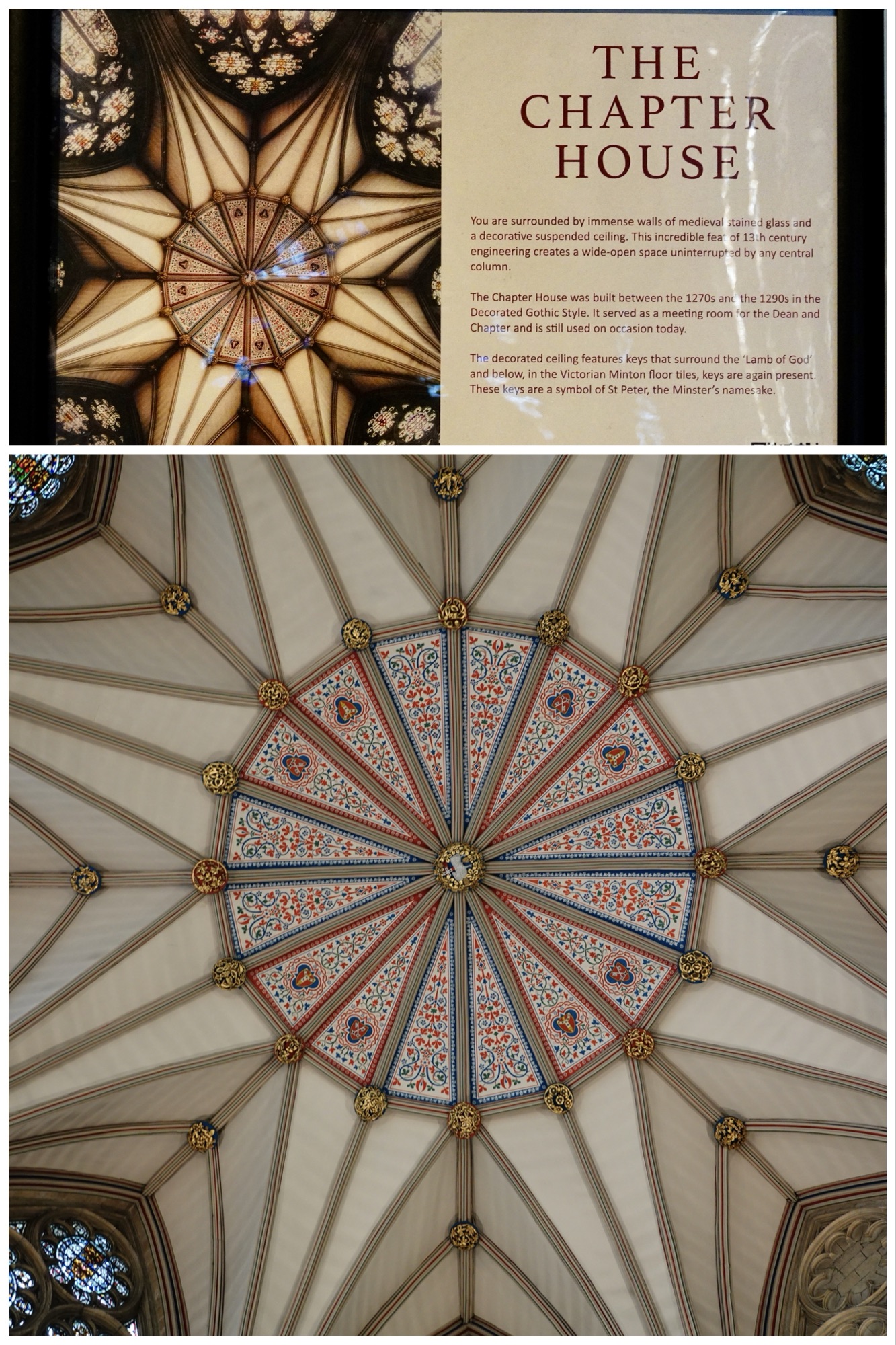
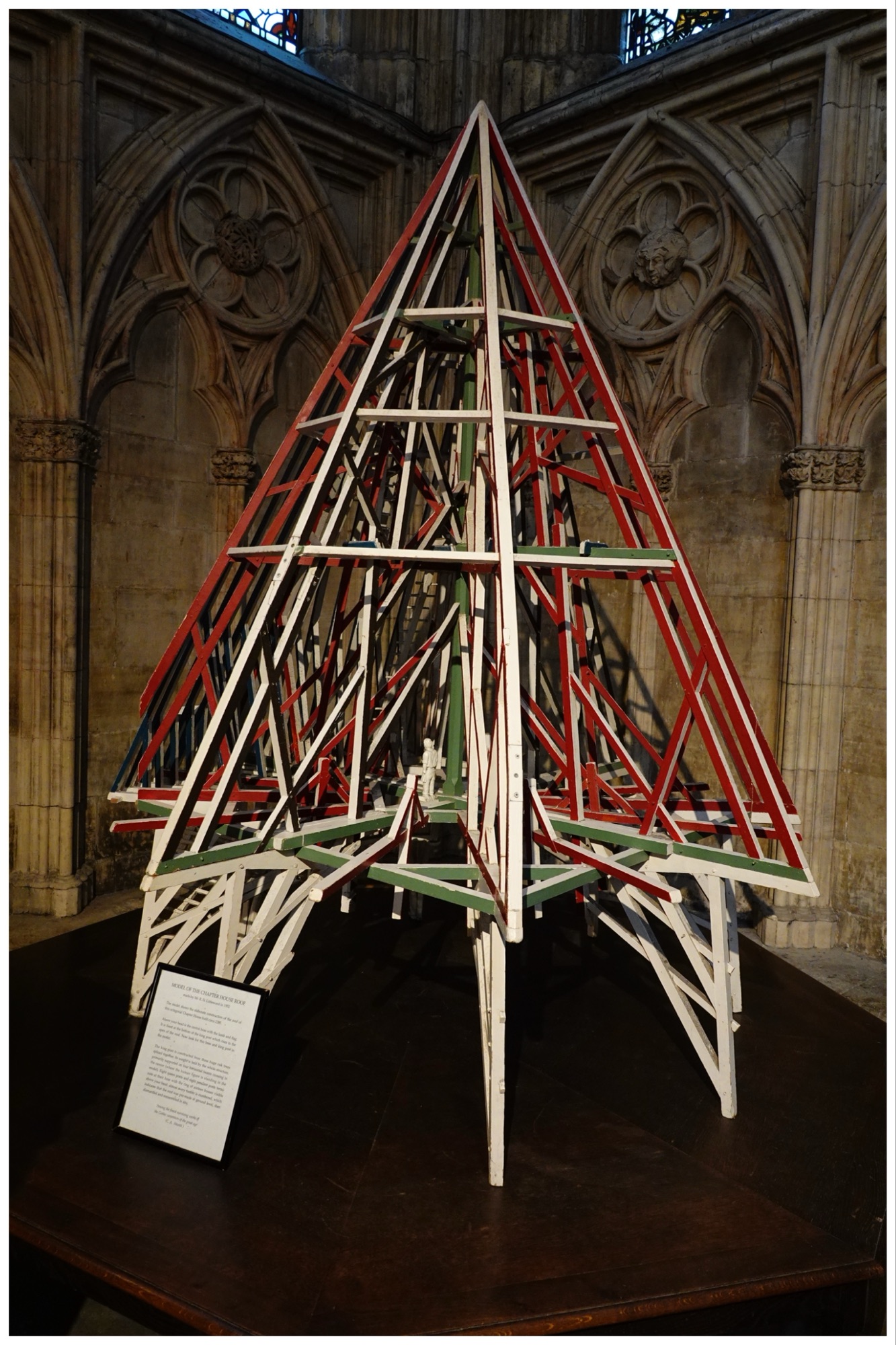
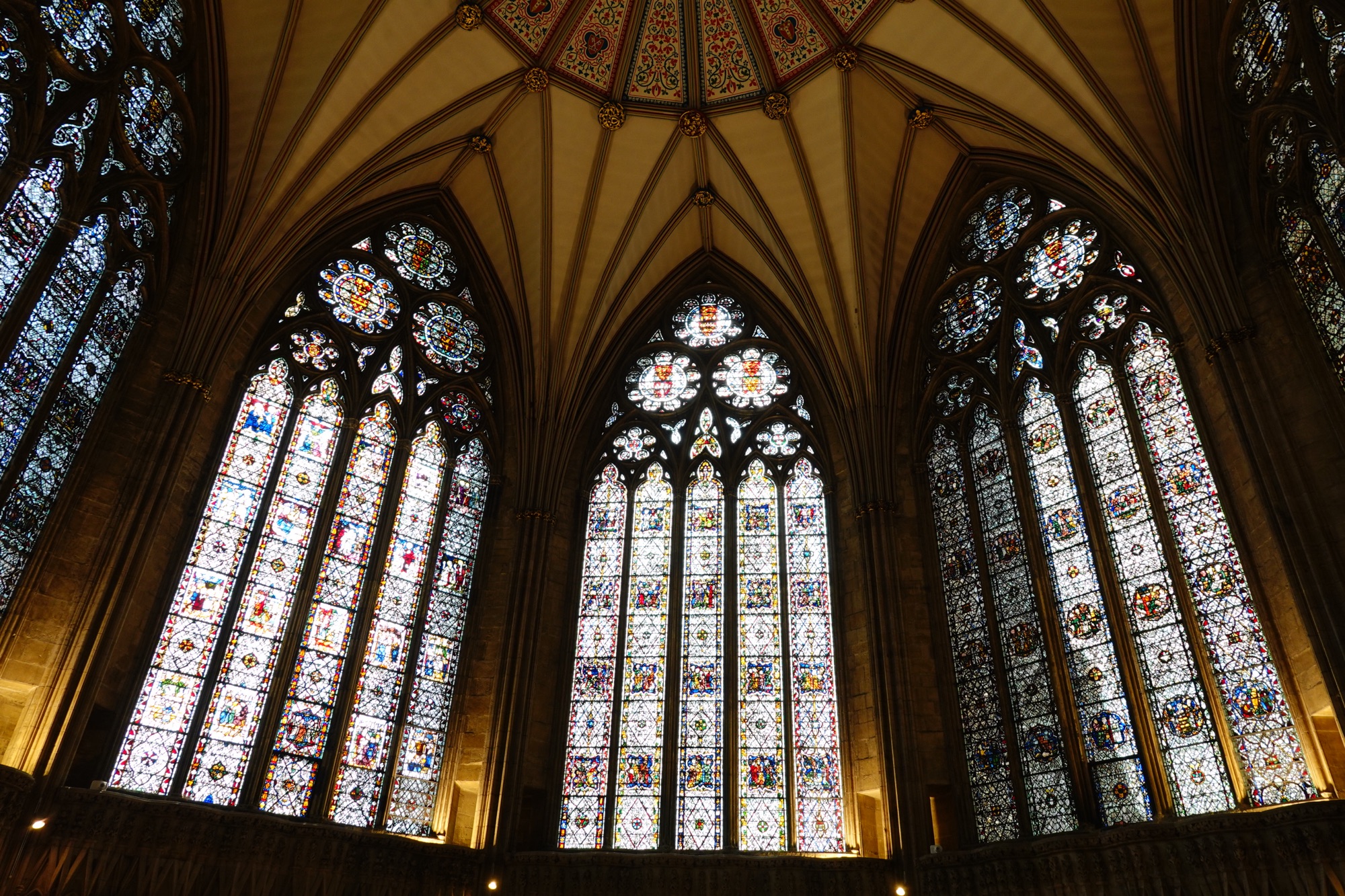
Our guide next took us into the octagonal Chapter House, dating to 1060-1080 CE, with its 7 huge windows and an arched entrance with timber oak doors that are some of the oldest in the country. A Chapter House would typically have a centre pillar, but York is unique in having its domed ceiling suspended by massive external buttresses and timbers.
There was a scale model in one of the hallways of how the roof is supported (by 1000 year old wood!).
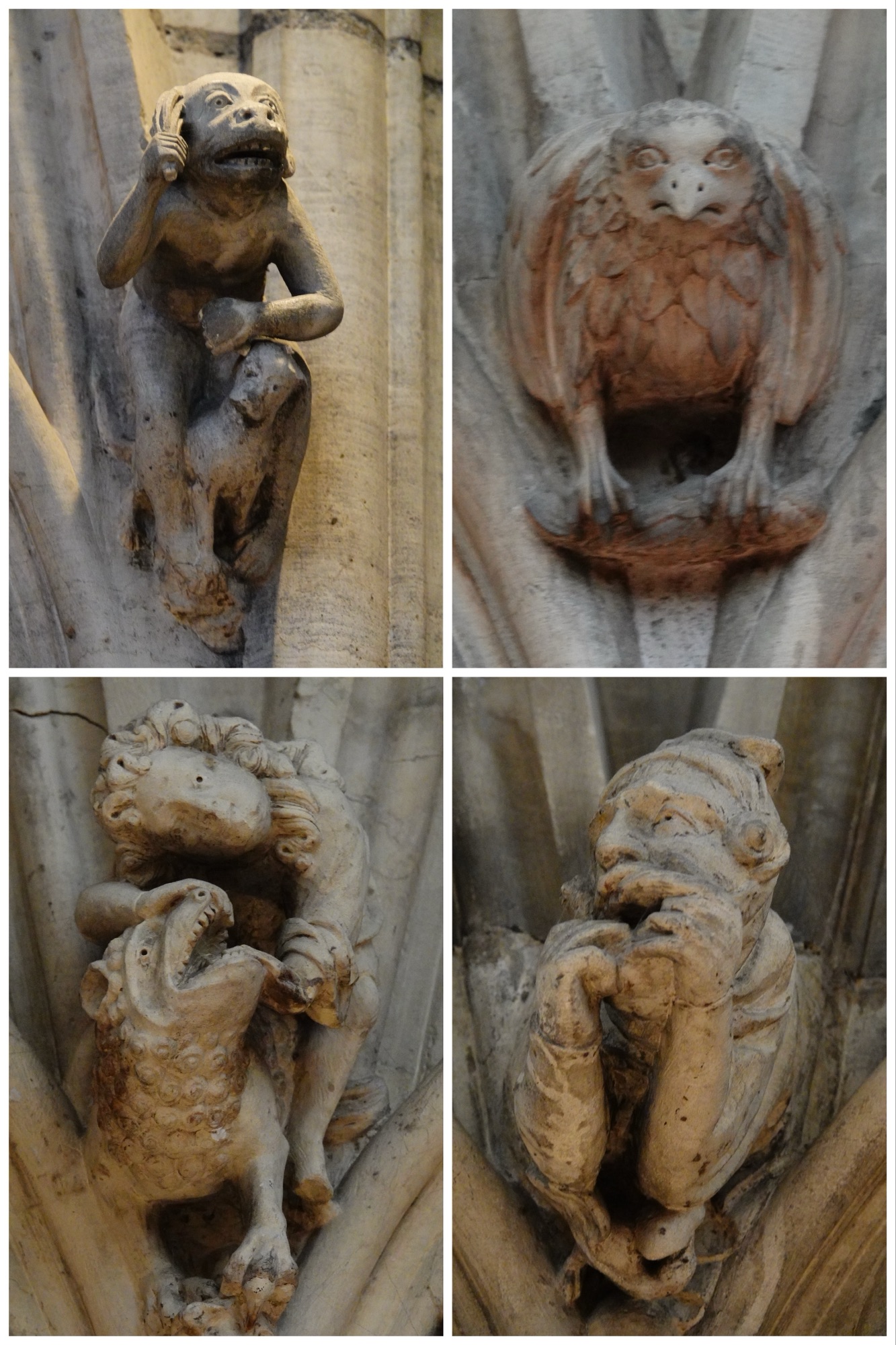
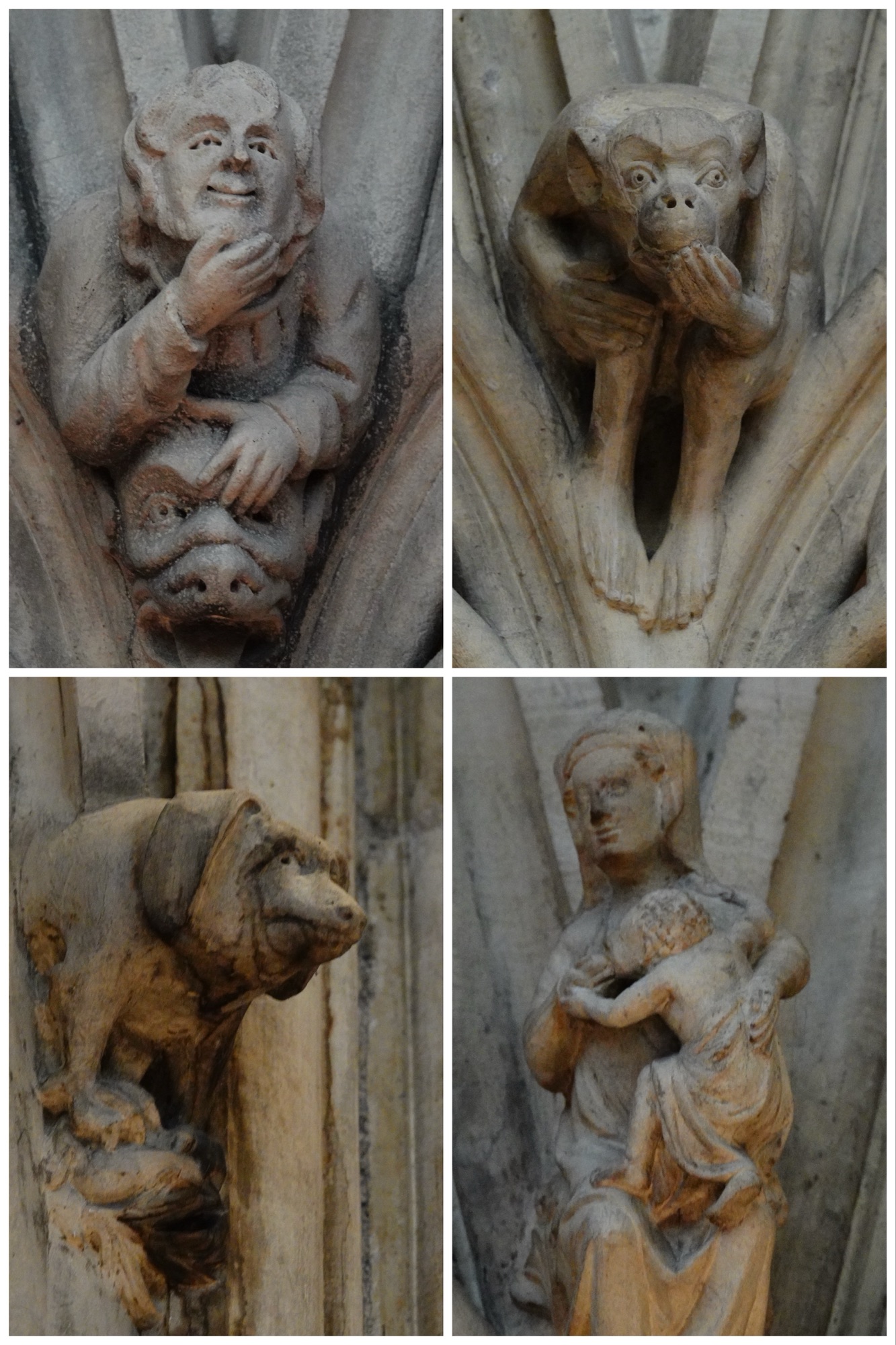
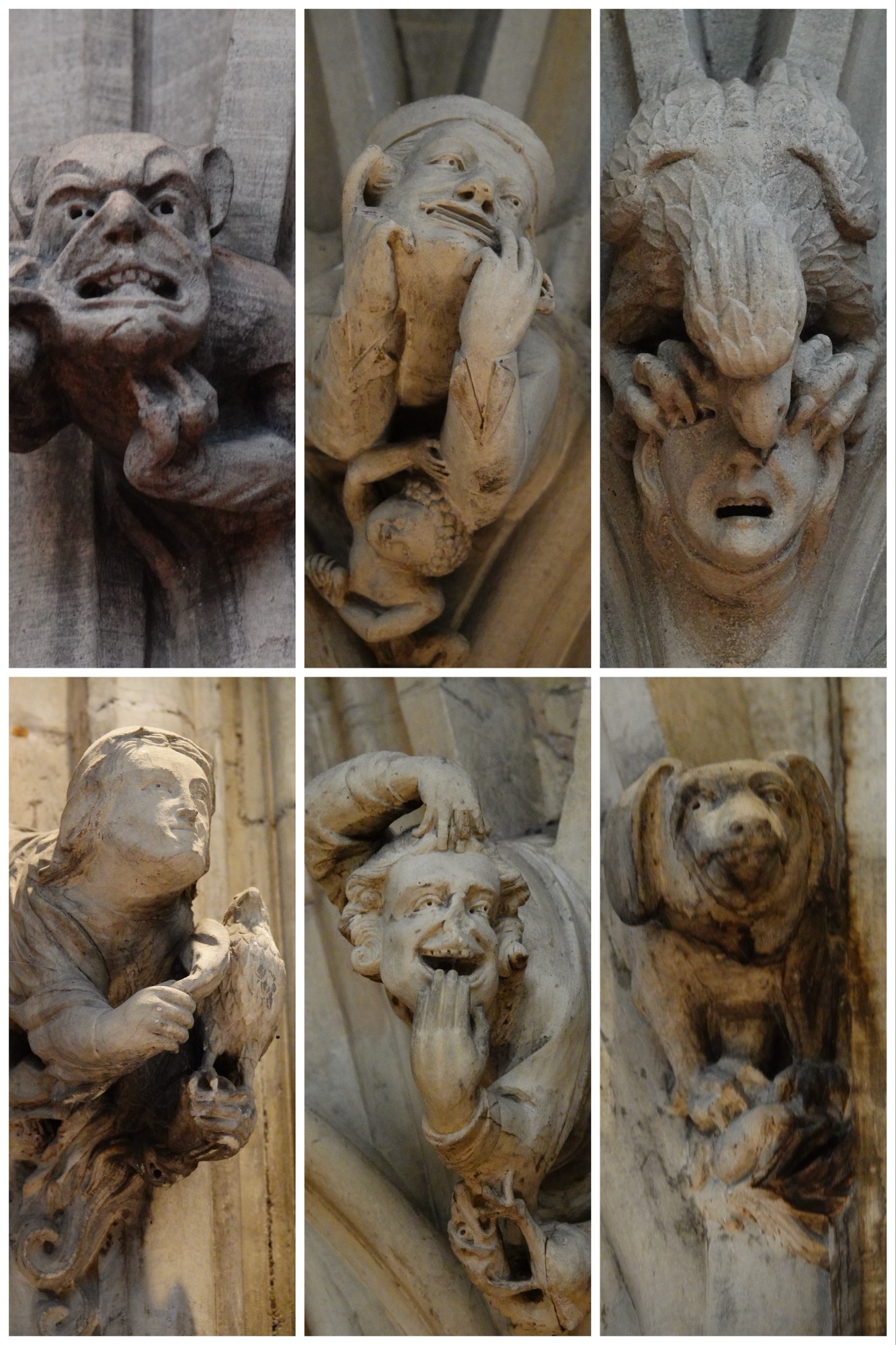
The Chapter House is decorated with slender marble pillars around the outside, and ringed by over 200 carved heads, 80% of which are original. They depict people (including the stonemasons themselves), as well as mythological beasts.
The Minton ceramic floor tiles were put down in the 1840s . Cracked tiles were able to be replaced in recent years using original patterns still on file with the company.
When the church was Catholic the walls would have been brightly painted, but that was removed (or wore off) during the Protestant reformation and the centuries following. Once again we were reminded that York Minster is a “living” place. Repairs happen, but there is no attempt made to recreate a prior period, so the walls will not be re-painted.
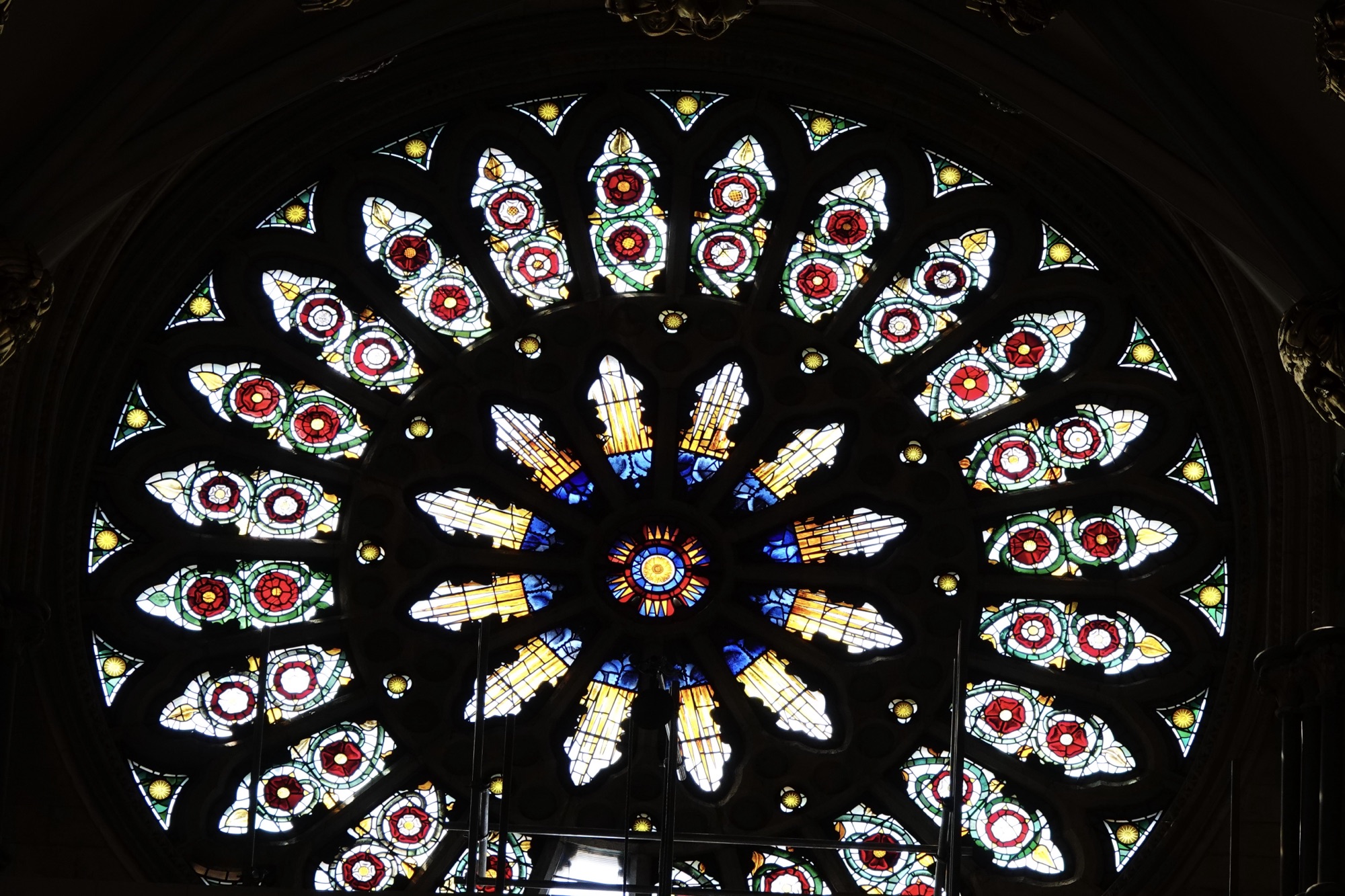
Only a small upper portion of the famous South Transept rose window is currently visible. The stonework around it, although charred in the 1984 fire, is original to the 1500s, which is when the roses would have been glazed. There are both red and red-and-white roses, which are thought to represent the houses of Lancaster and Tudor, but no white York roses.
We stood under the central tower, which is not the original. That collapsed around 1400. When it was rebuilt, it was done without a spire, probably due to weight issues . The tower weighs 16,000 tonnes in stone. The Tower of Pisa, or the Statue of Liberty, would each fit inside the tower. Ted’s photo is looking dizzyingly straight up.
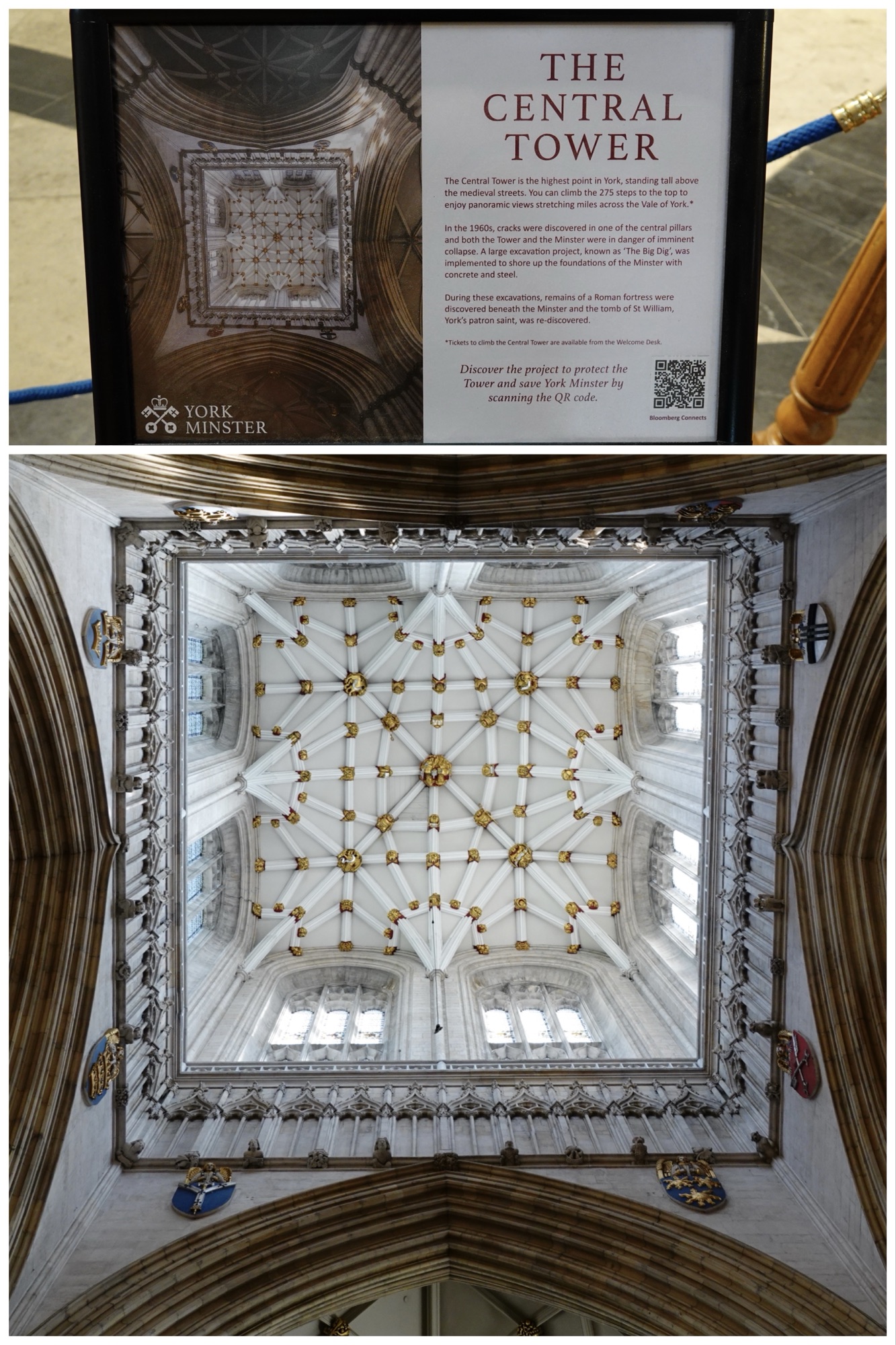
In 1967 cracks started to appear and the foundations/undercroft was shored up with massive concrete blocks over a repair that spanned 5 years.
Archbishop Walter de Grey, King John’s Lord Chancellor who was at his side when the Magna Carta was signed, is entombed here. He began the construction of this church on top of the site of the Norman Cathedral, and was also responsible for building the palace in Bishopthorpe where the current bishops still live.
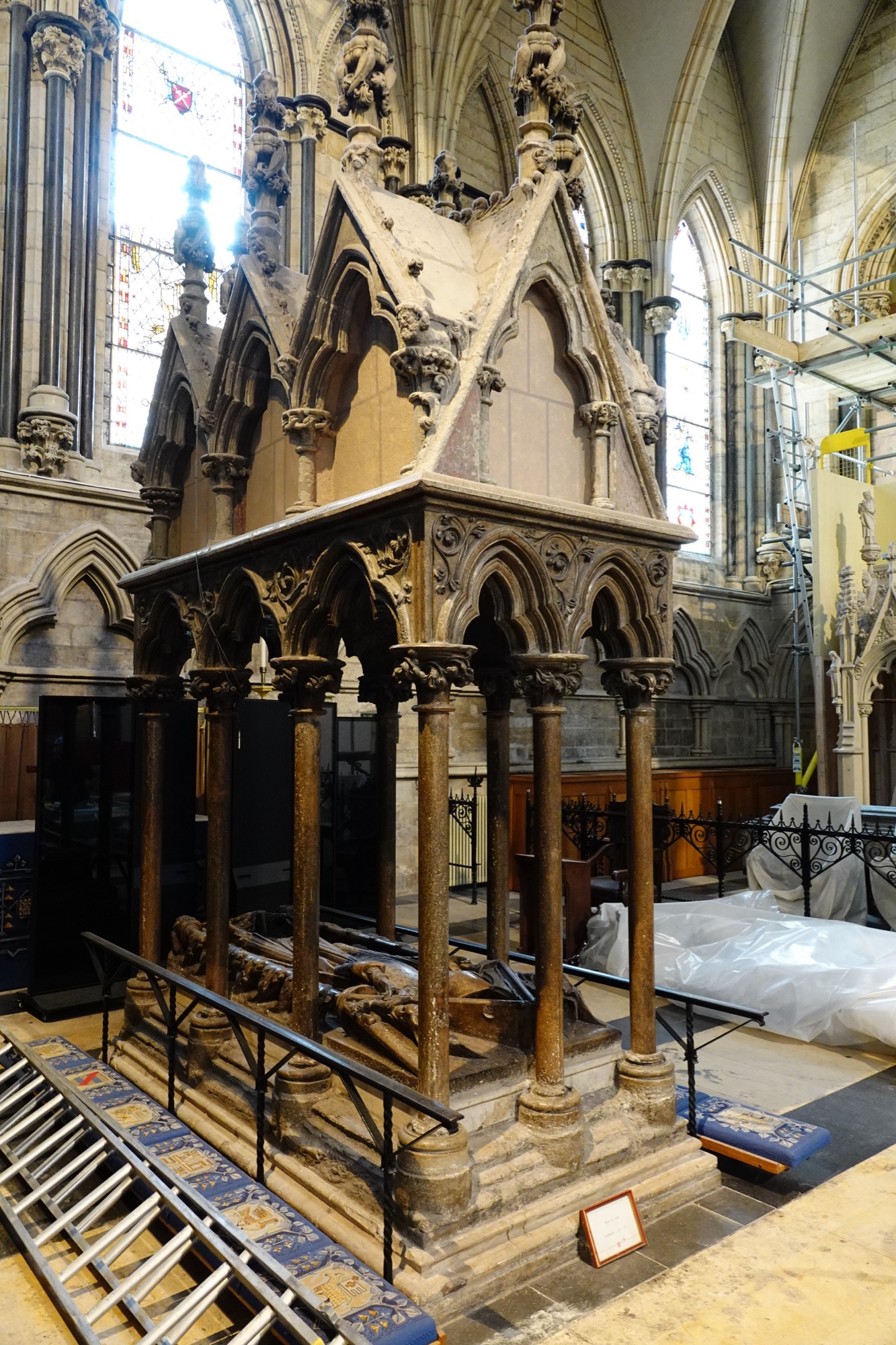
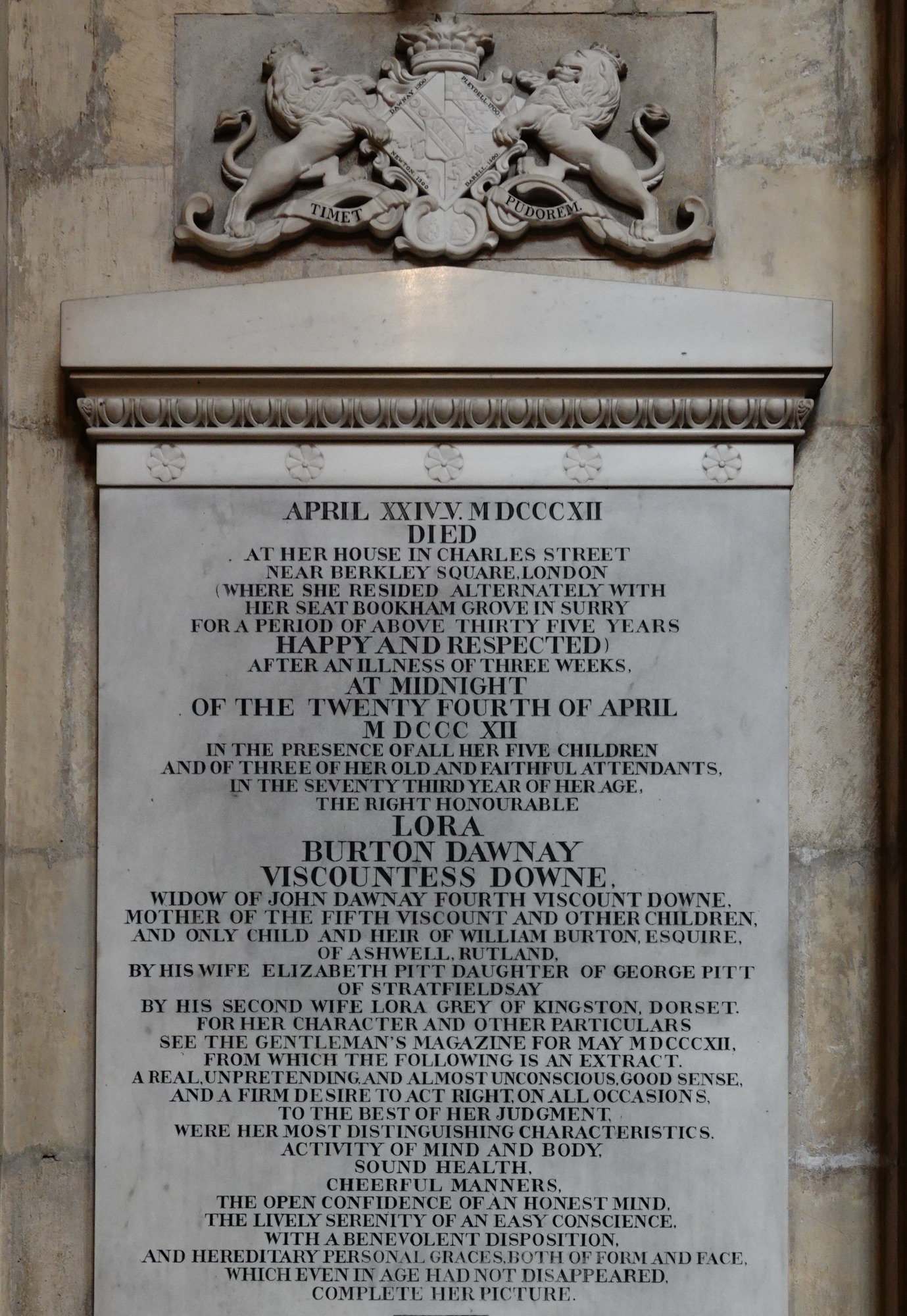
There are dozens and dozens of fascinating tombs, some with very detailed obituaries inscribed on them, and others more colourful than any we’ve ever seen.
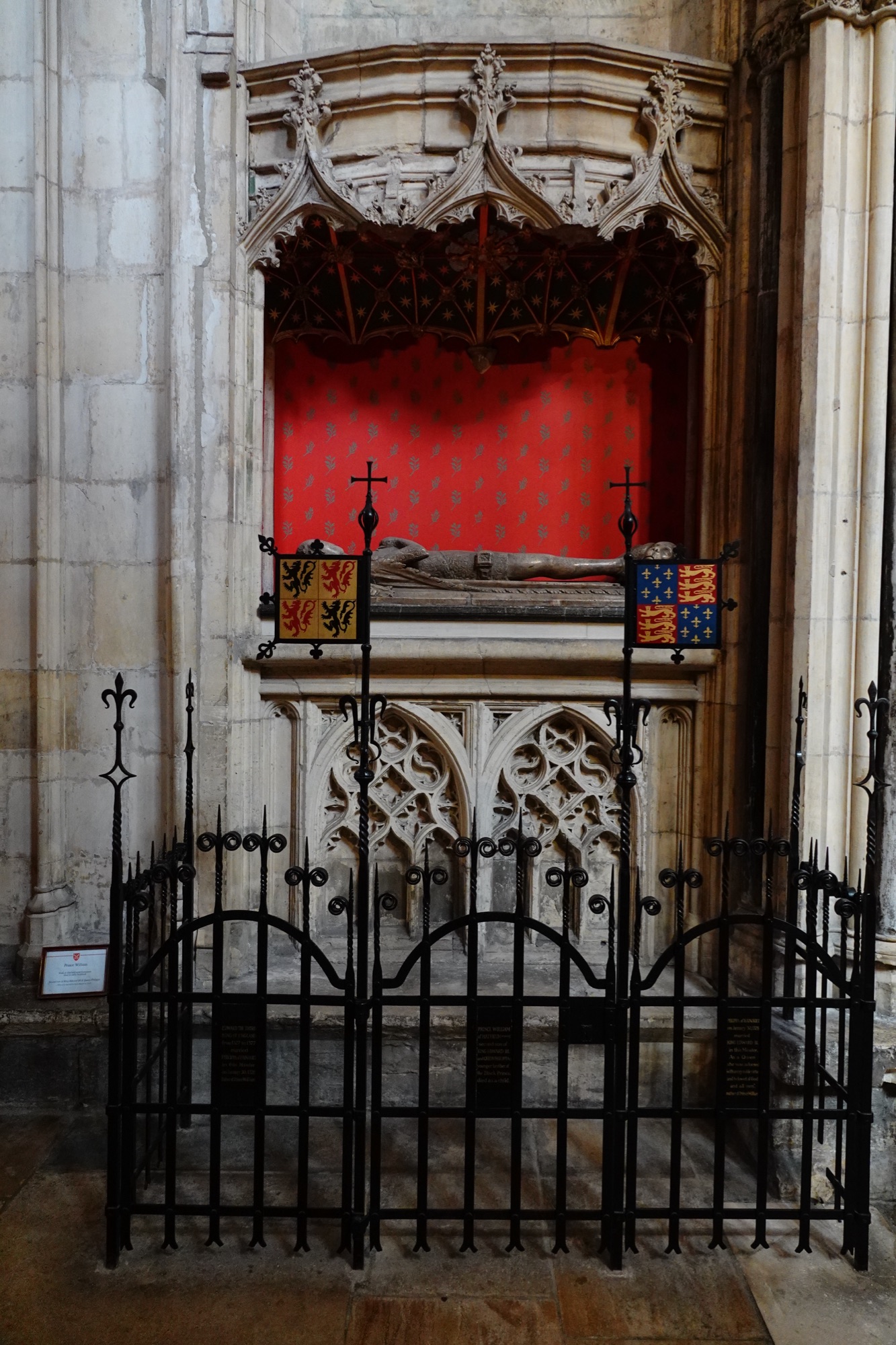
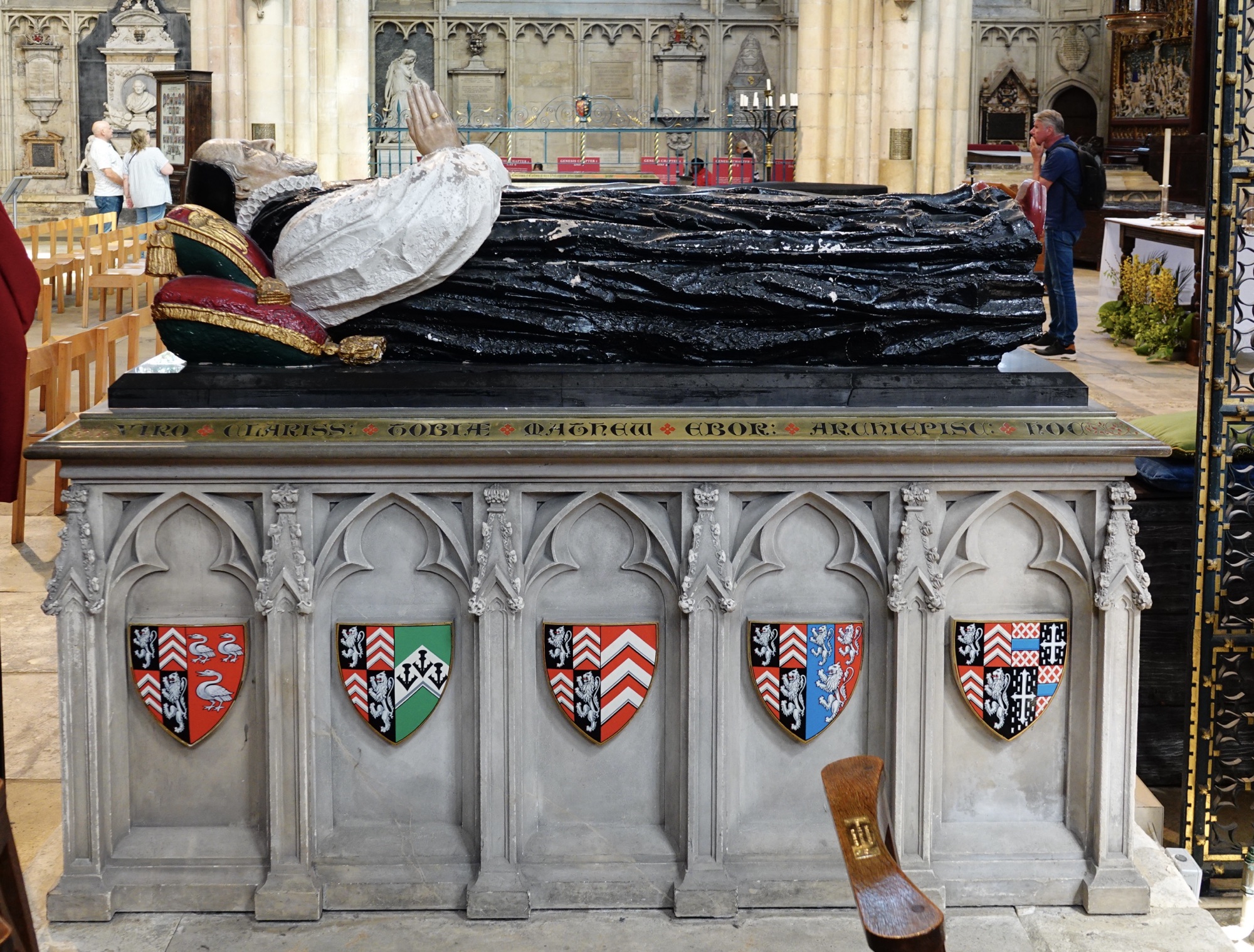
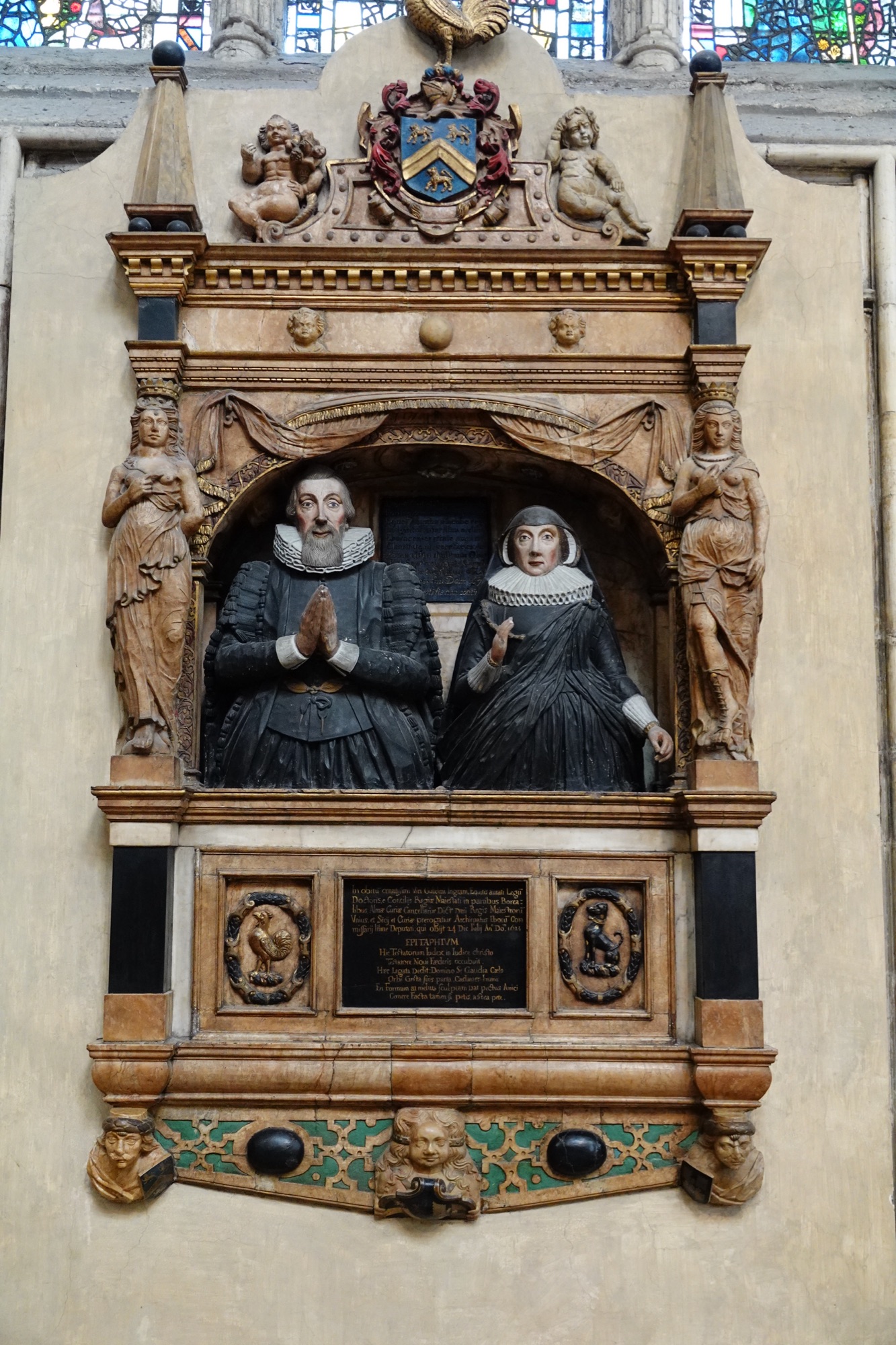
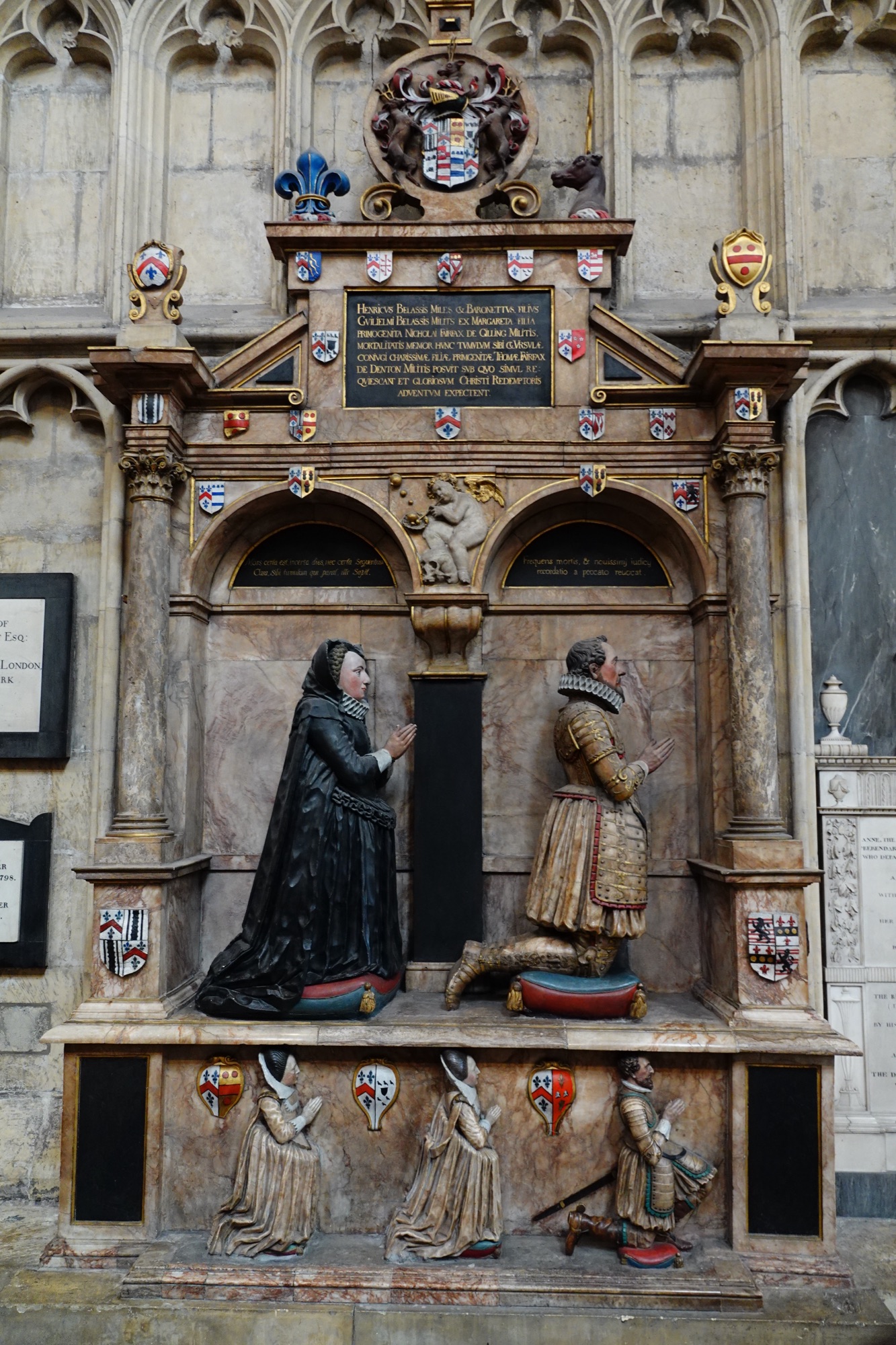
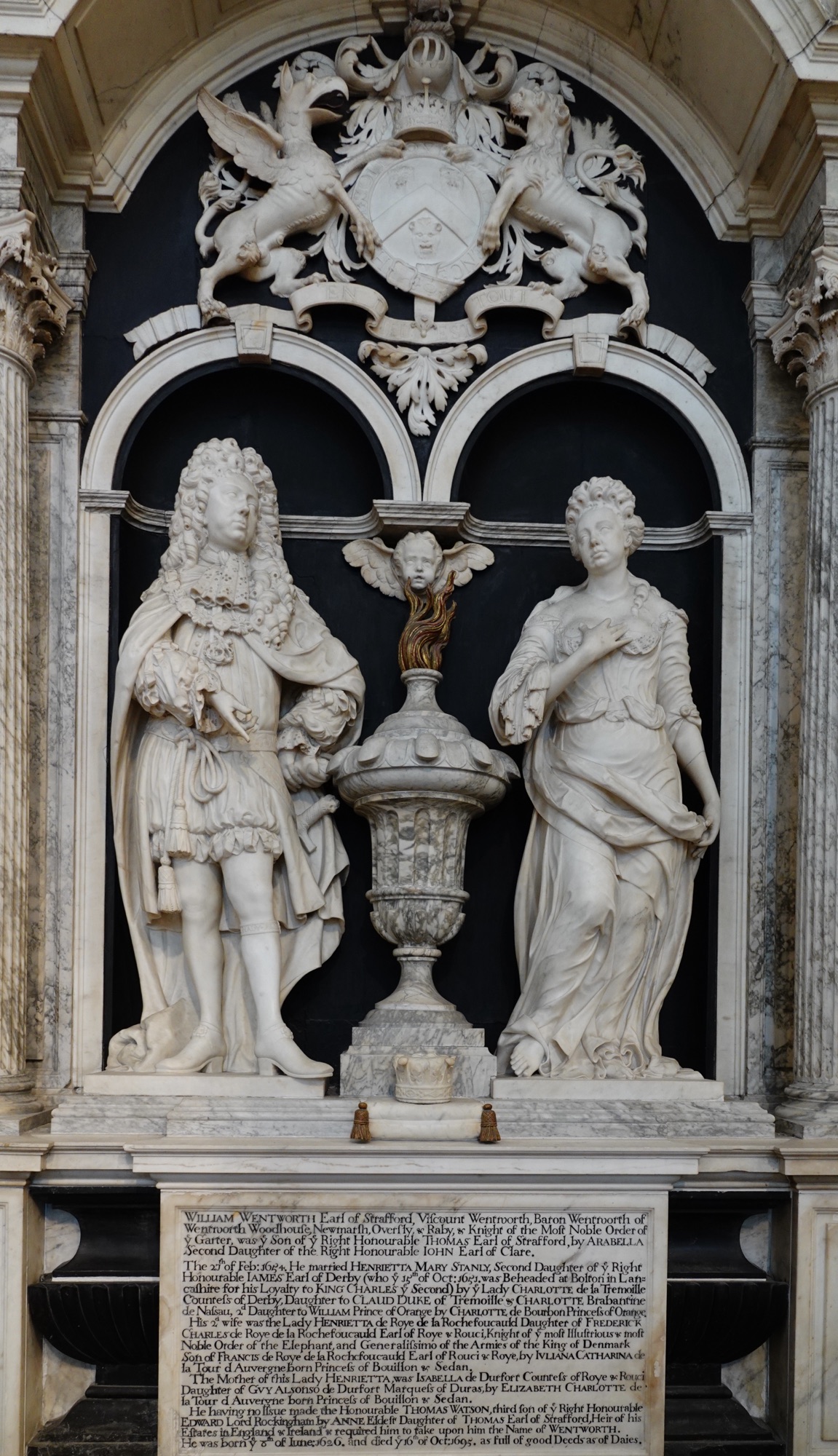
One of my favourites was this inscription that referenced an 1812 magazine edition for more details!
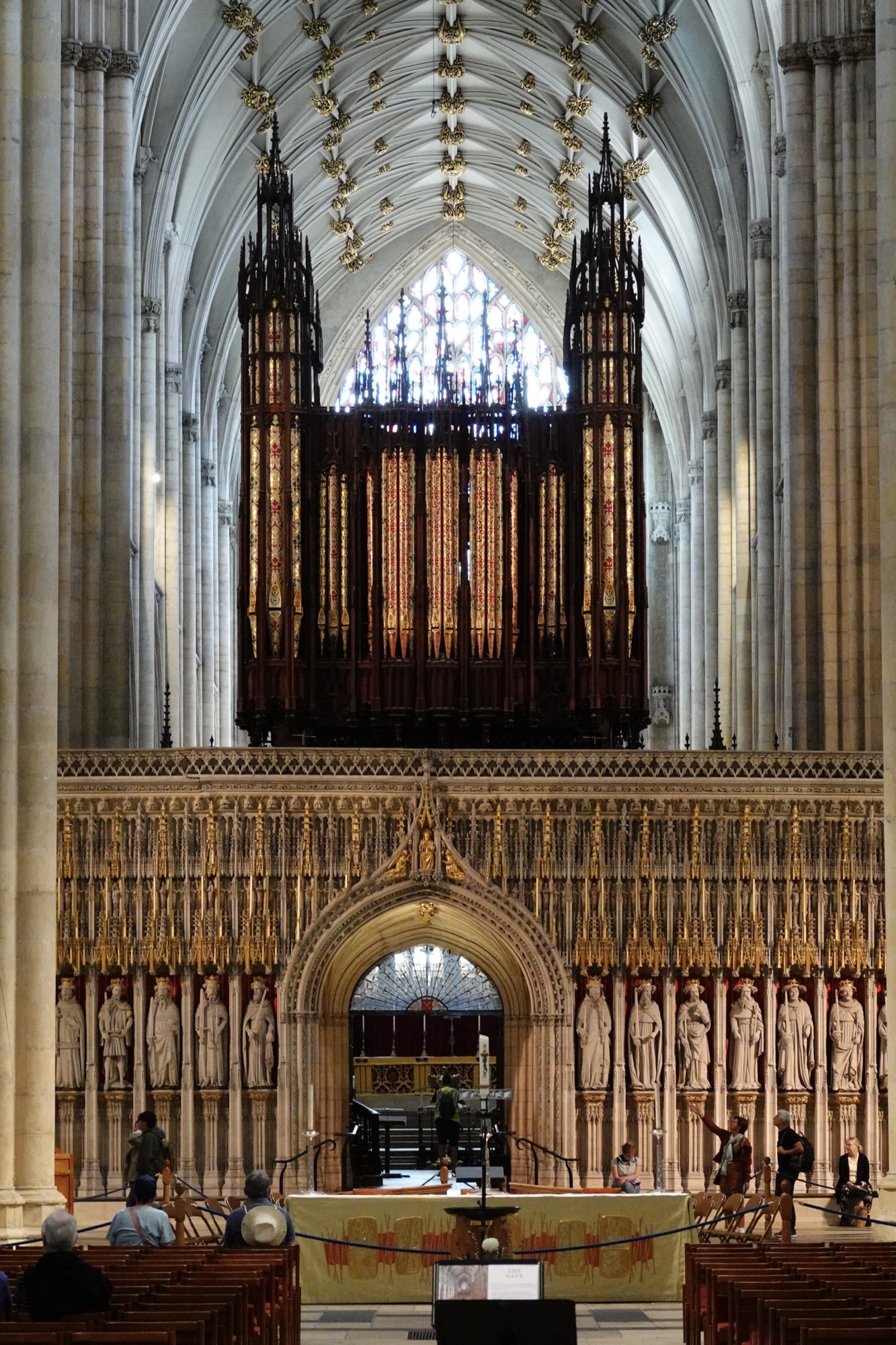
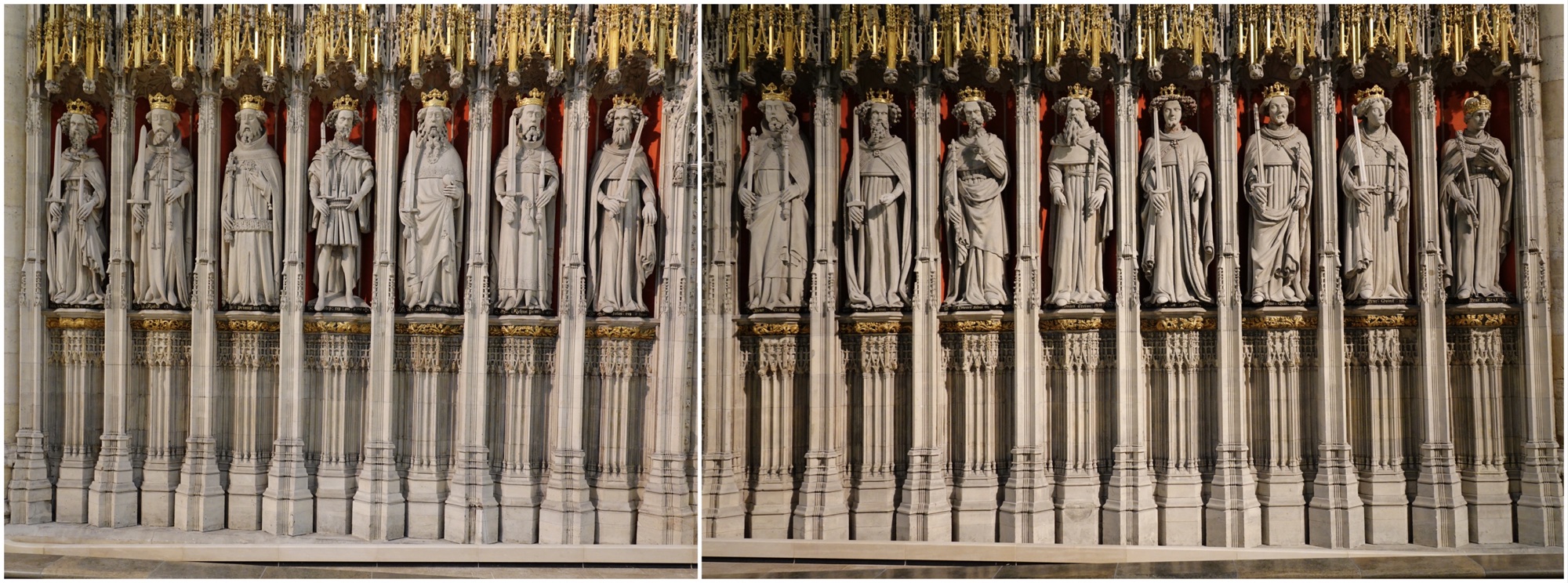
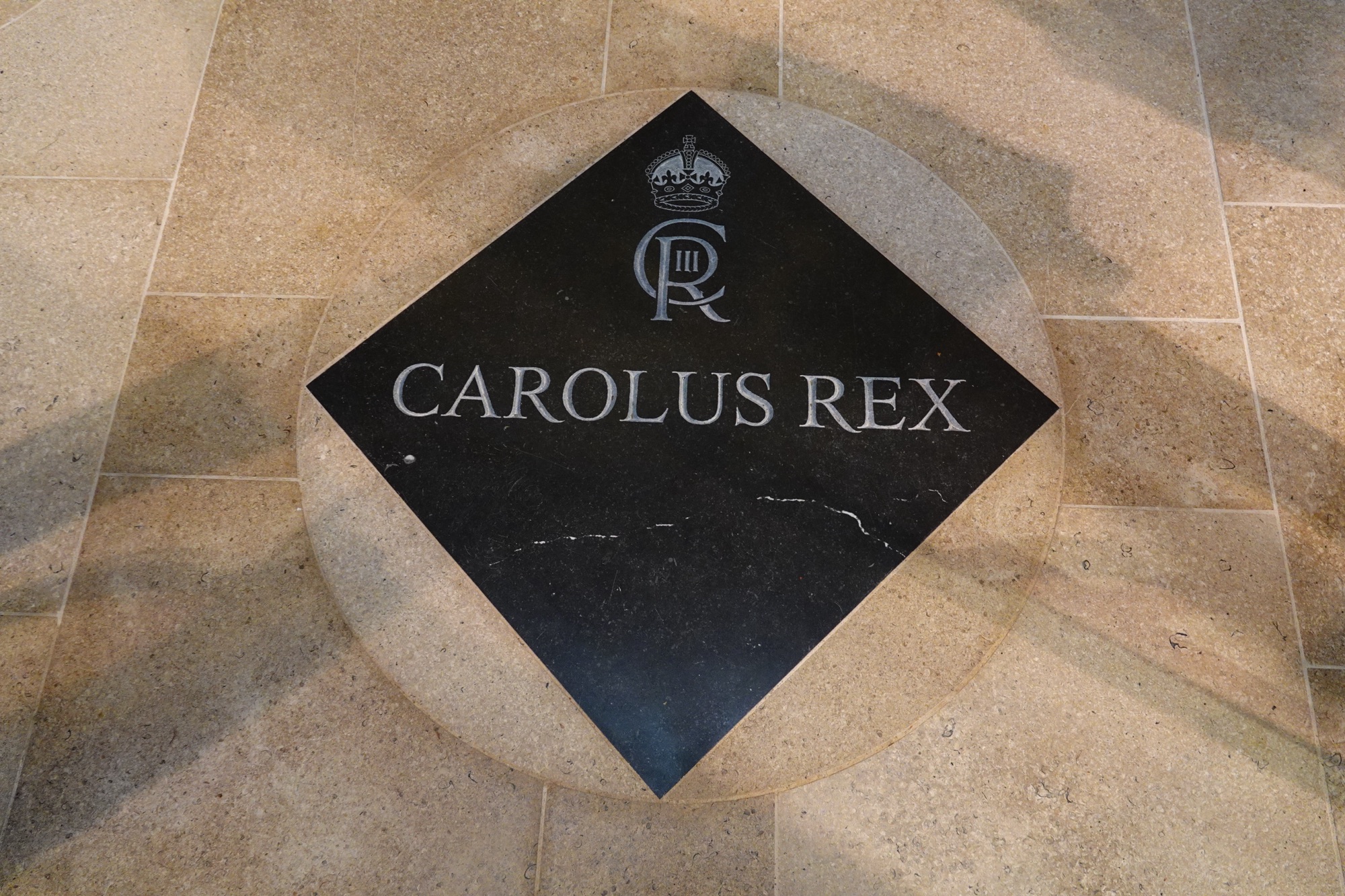
Returning to the centre of the nave, our attention was drawn to the quire screen with statues of 15 Norman Kings, ending with Henry VI. Between them, at the entrance from the nave to the quire, a marble dedication to the current King.
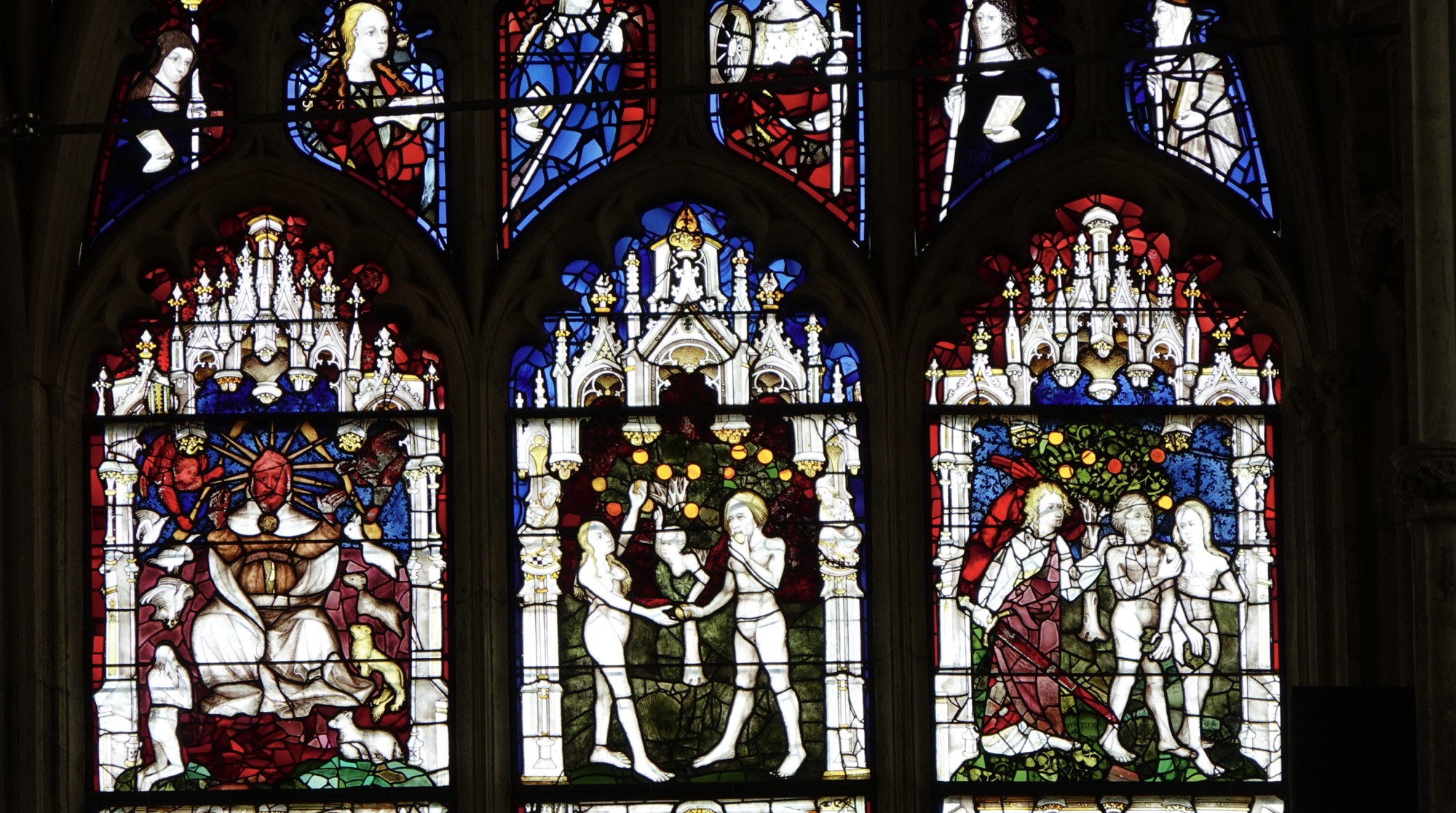
Behind the altar is the East Window, installed between 1405-08CE and paid for by the Bishop of Durham at that time. It depicts the story of creation, parts of the Old Testament, and judgement day, soaring seven stories tall. It is the largest expanse of mediaeval glass in England. The window’s recent restoration took 10 years.
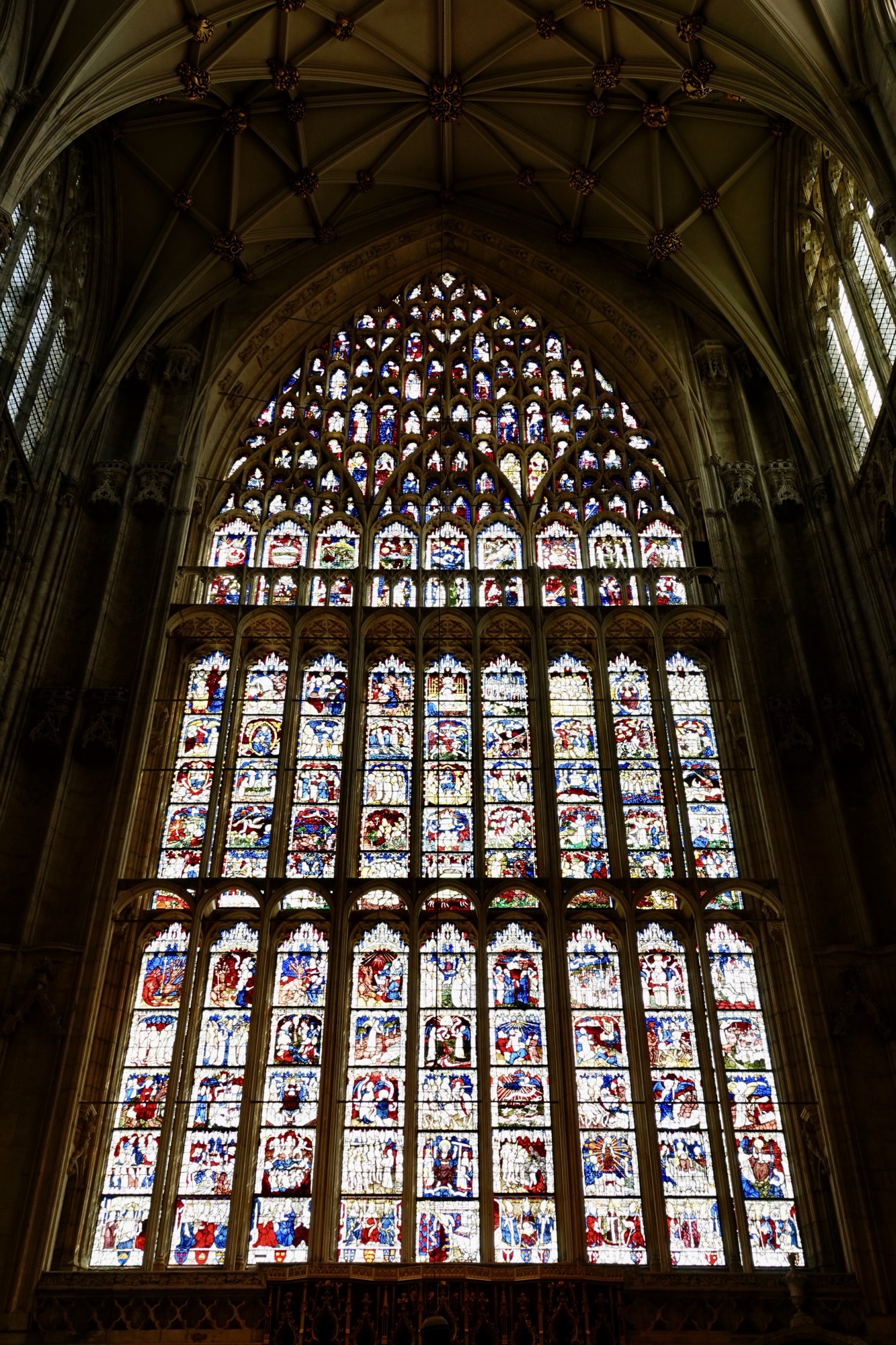
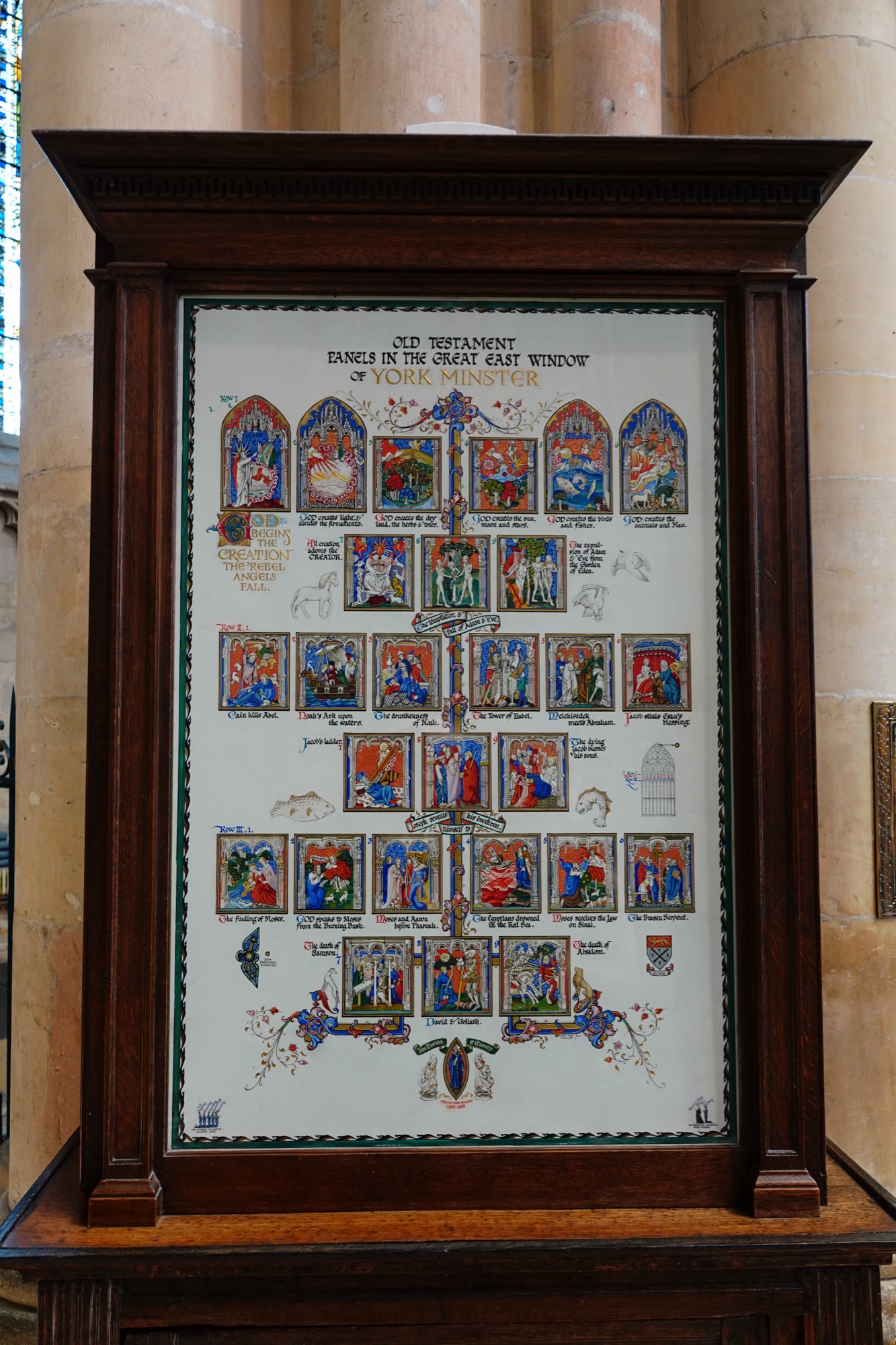
Near the top, the creation story.
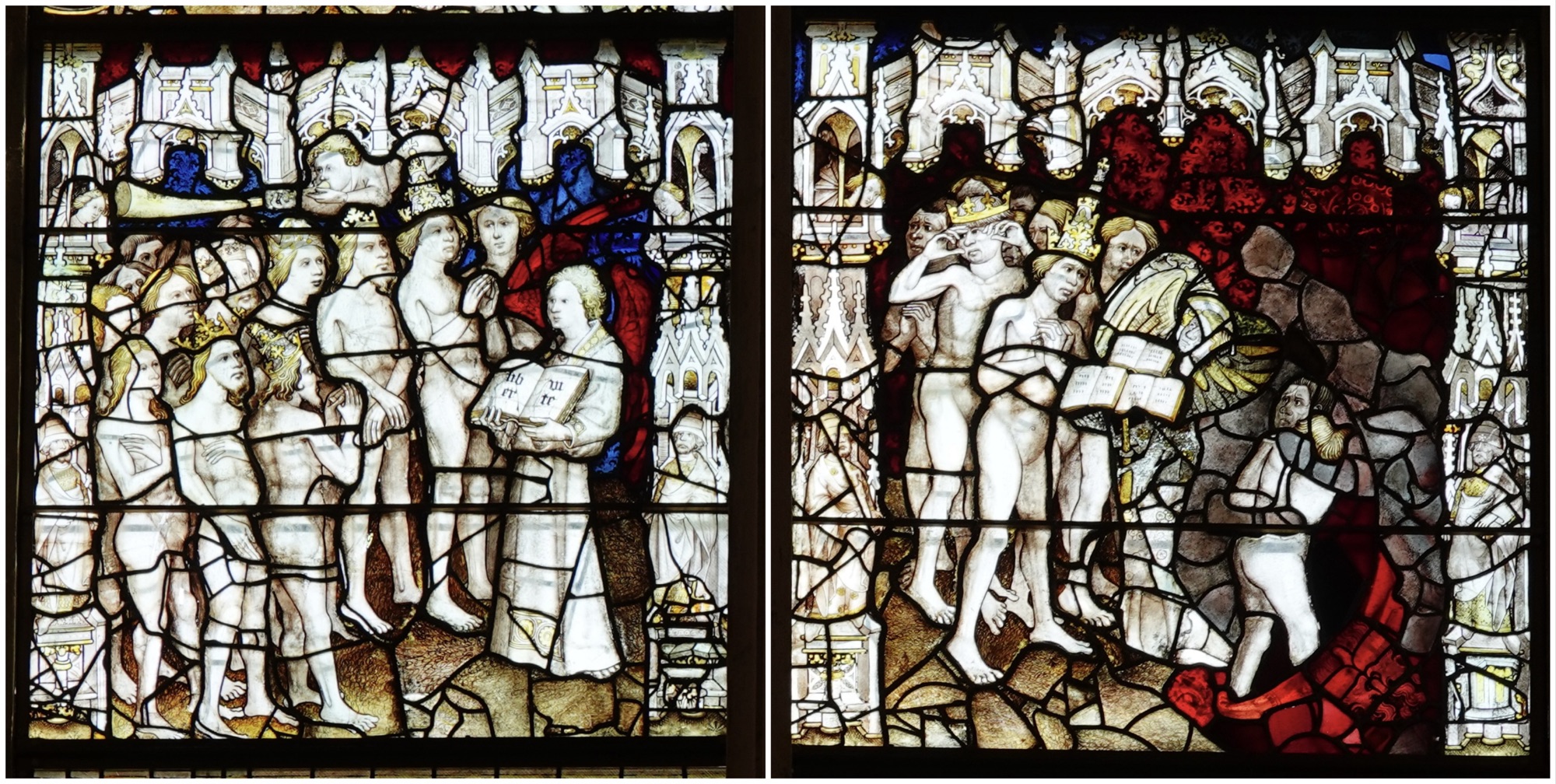
On the second row from the bottom are figures going to heaven (left) and others entering the jaws of hell (right).
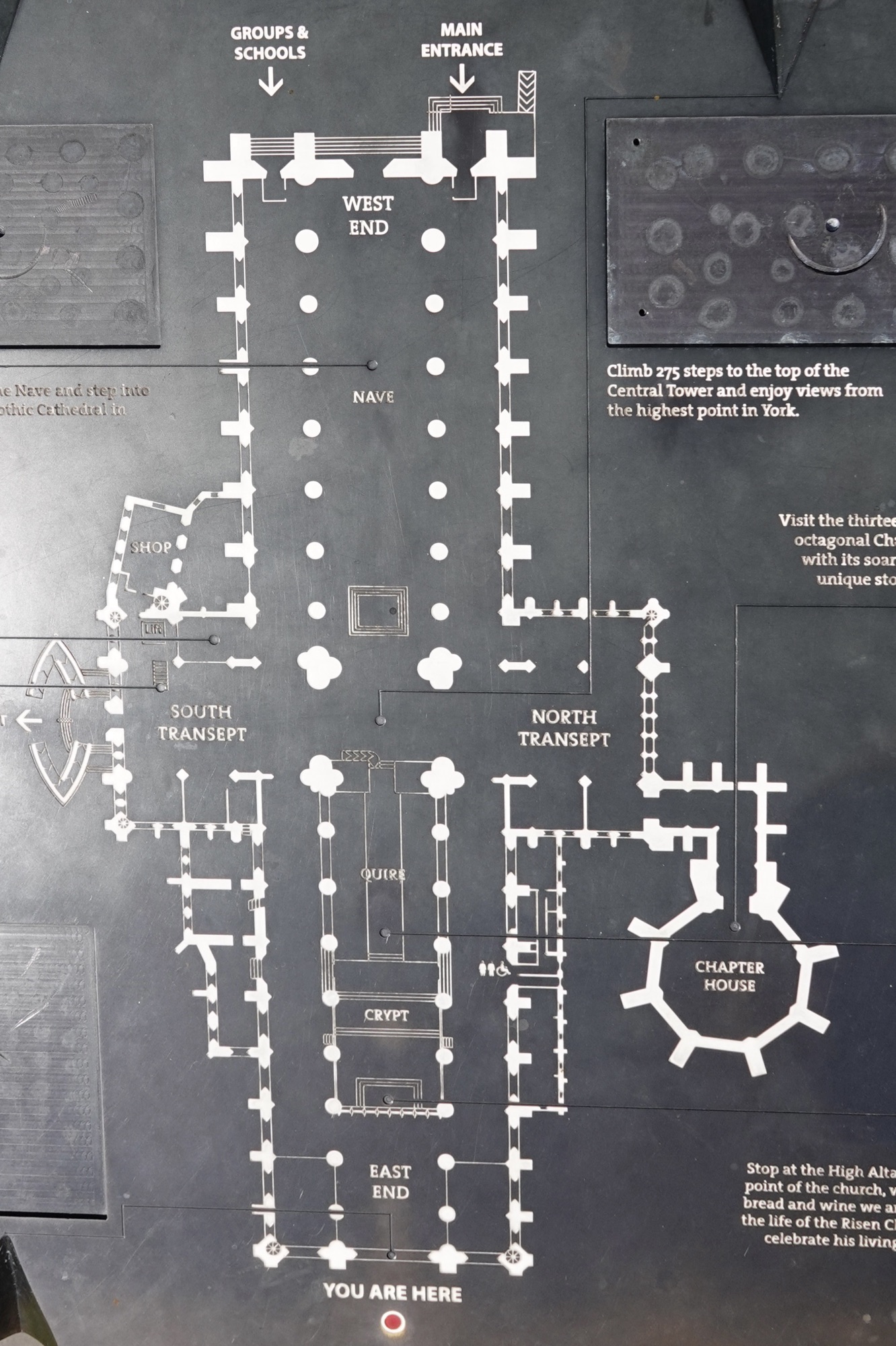
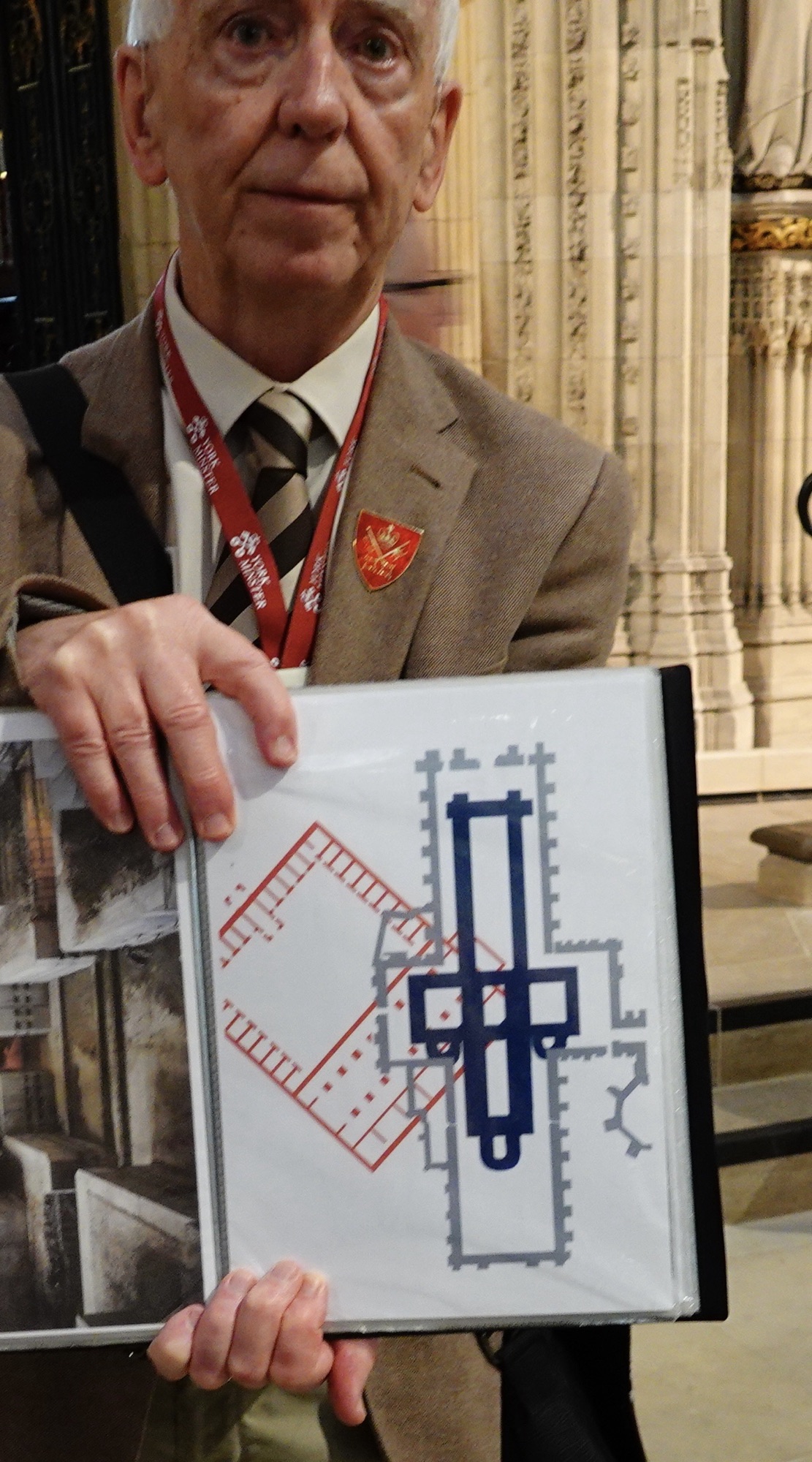
Before leaving us, our guide showed us a Minster floorplan which detailed the relative sizes of the Norman edifice in blue, current Gothic in grey, and the Roman fortress (which he pointed out had a sewer system that still works) in red.
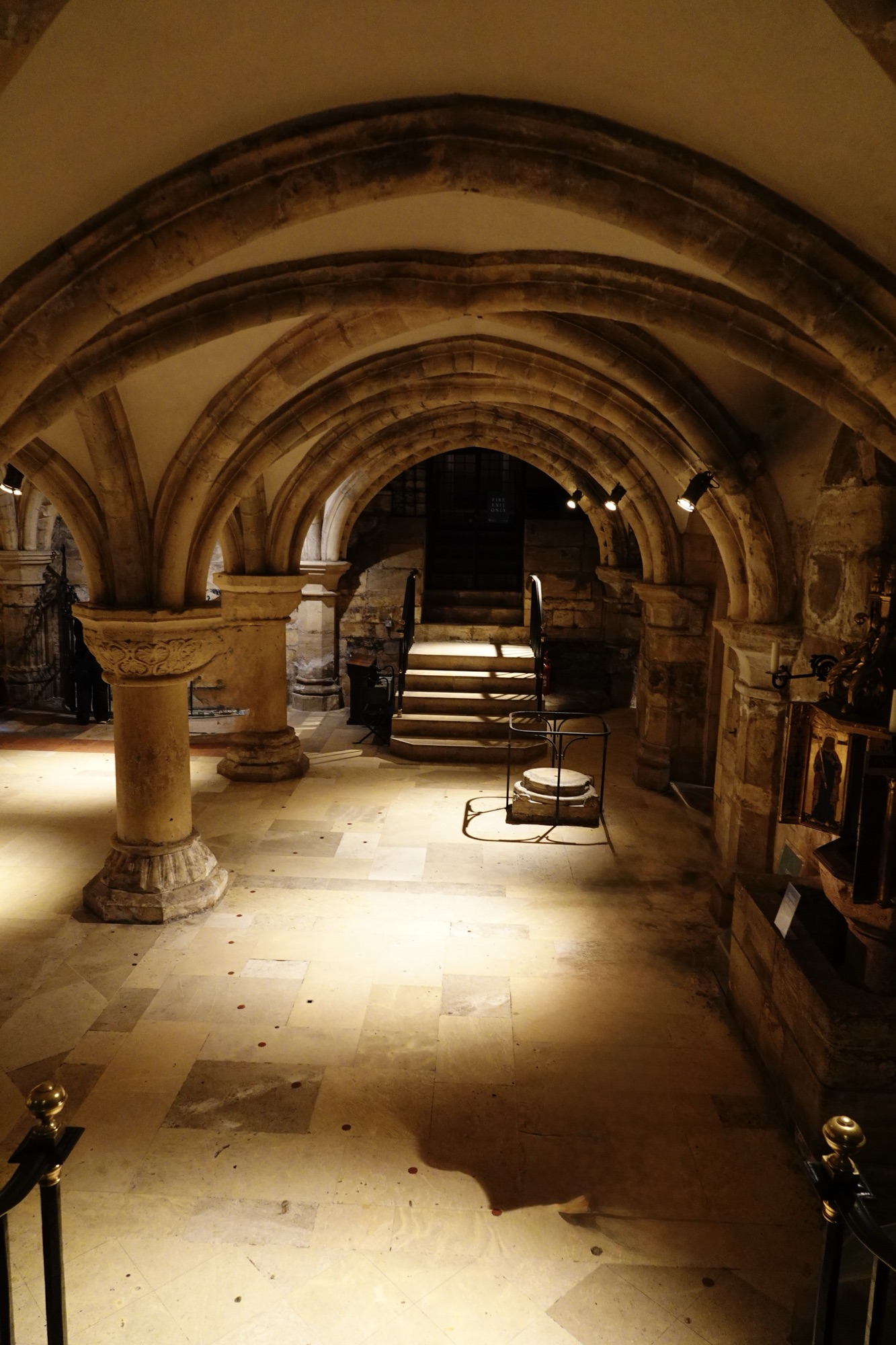
With our formal tour over, we were left to explore the undercroft on our own, and return to further explore any areas of interest.
In the undercroft we could see remnants of the Norman cathedral and the earlier Roman fortress. The Roman walls were a physical reminder that York was the capital of Northern Britannia, second in importance only to Londinium.
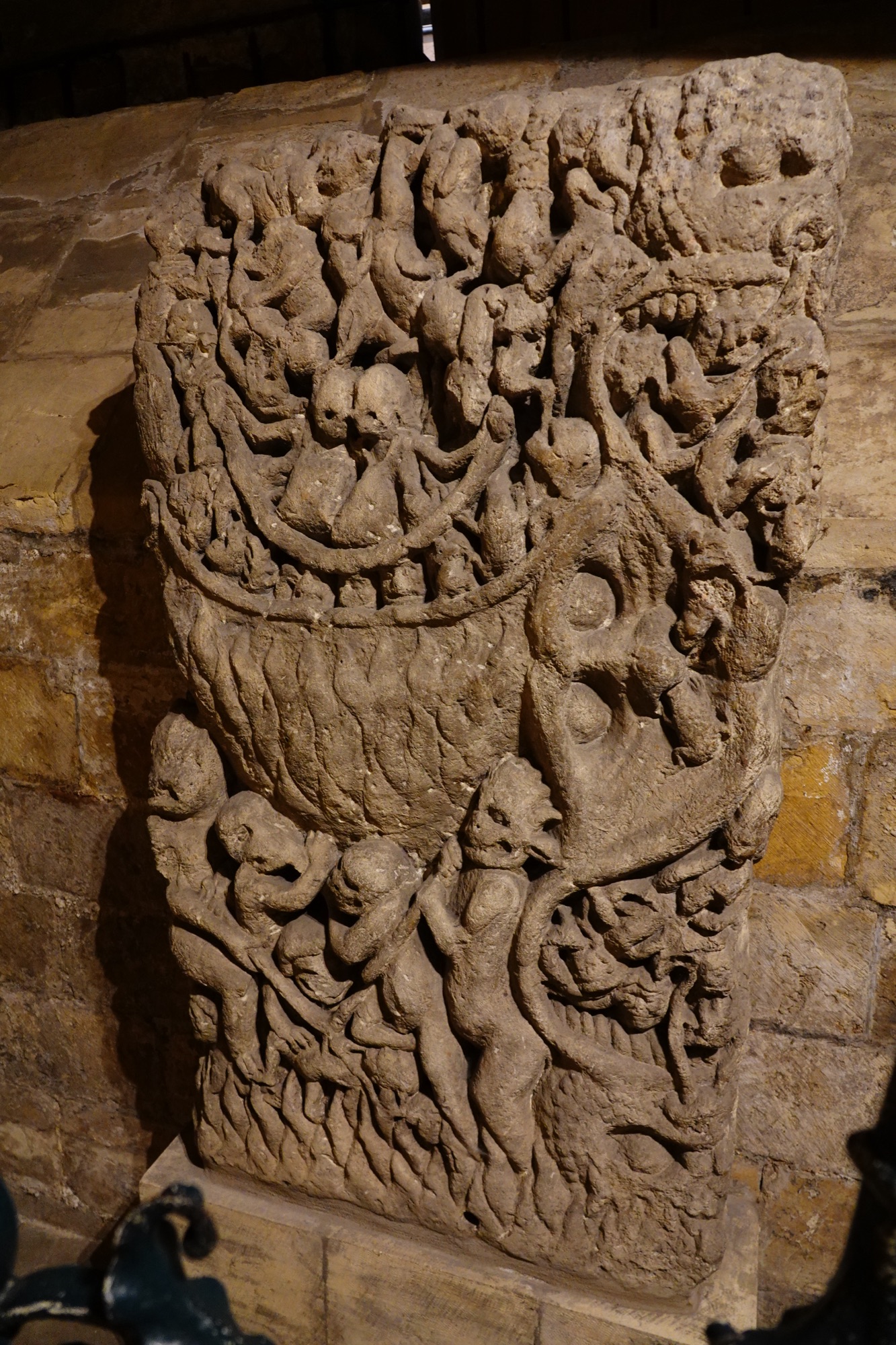
One of the artifacts that remains from the Norman cathedral is the Doomstone.
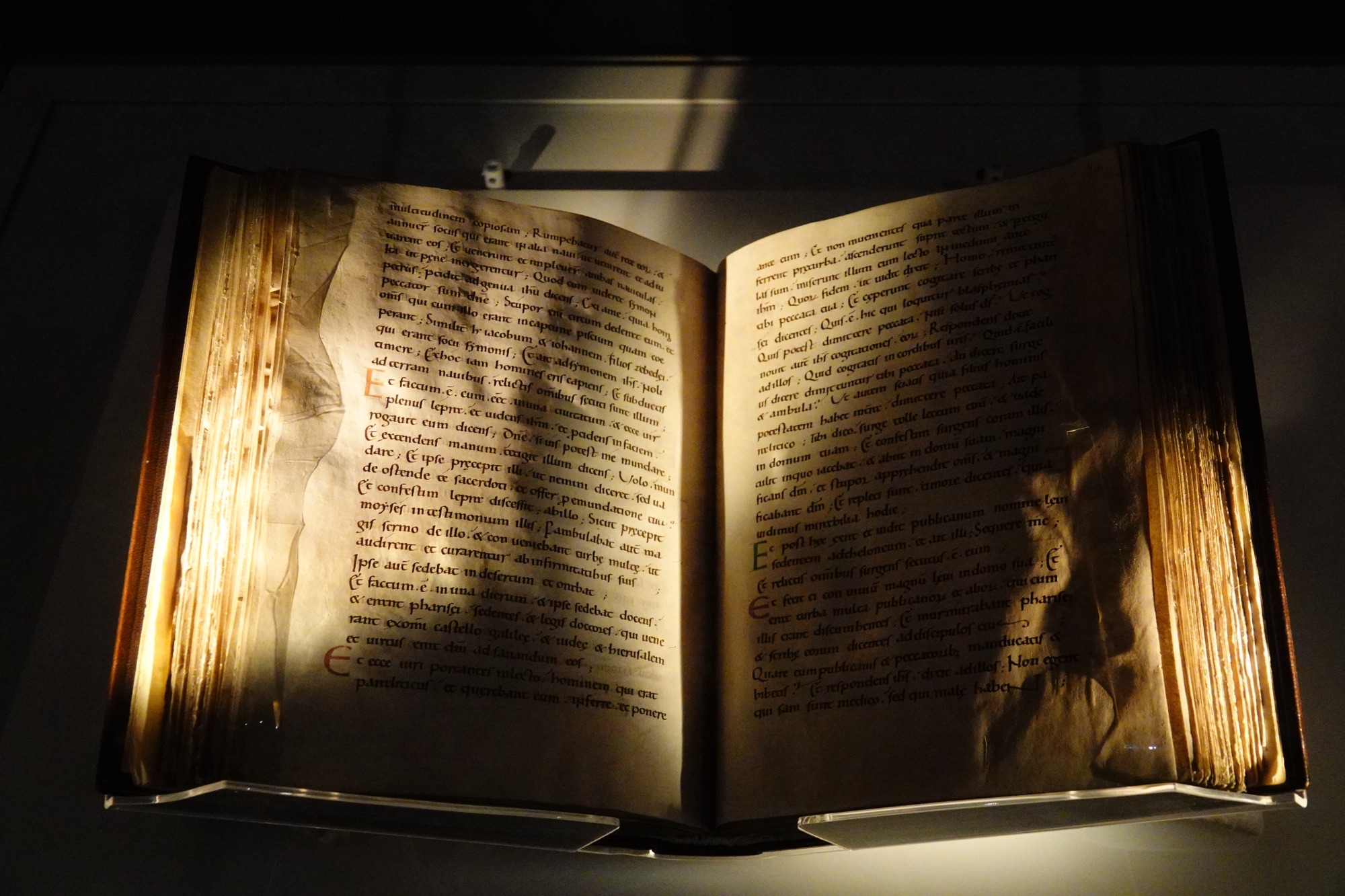
There is also a museum in the undercroft.
2026 marks the the 800th anniversary of the canonization of St. William of York. The history of this saint, who (okay, admittedly, like most of the other saints) I’d never heard of before, is fascinating (here). Twelfth century stories are full of names like “Osbert of Bayeux” that just draw me in. The anniversary means that there are additional exhibits in the Minster beyond just the incredible edifice itself.
While celebrating Mass at the Minster, William is said to have unknowingly drunk from a poisoned chalice. Rumours quickly spread that he had been murdered by one of his long-standing opponents. The case was never proven so the true circumstances surrounding William’s untimely death remain an unsolved medieval mystery…
After his death, there began to be stories of miracles occurring for visitors to his tomb, which is now located in the Minster’s crypt.
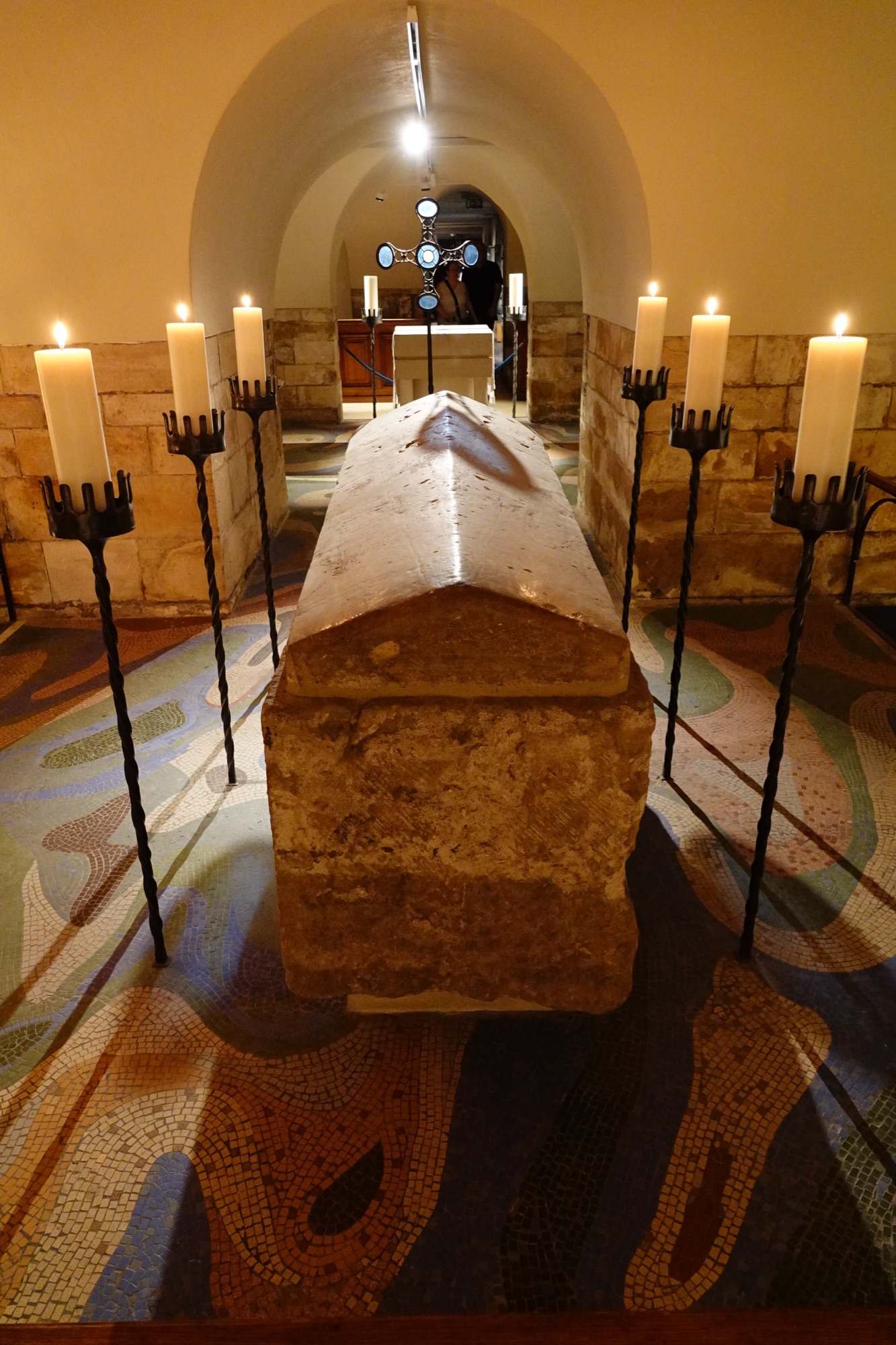
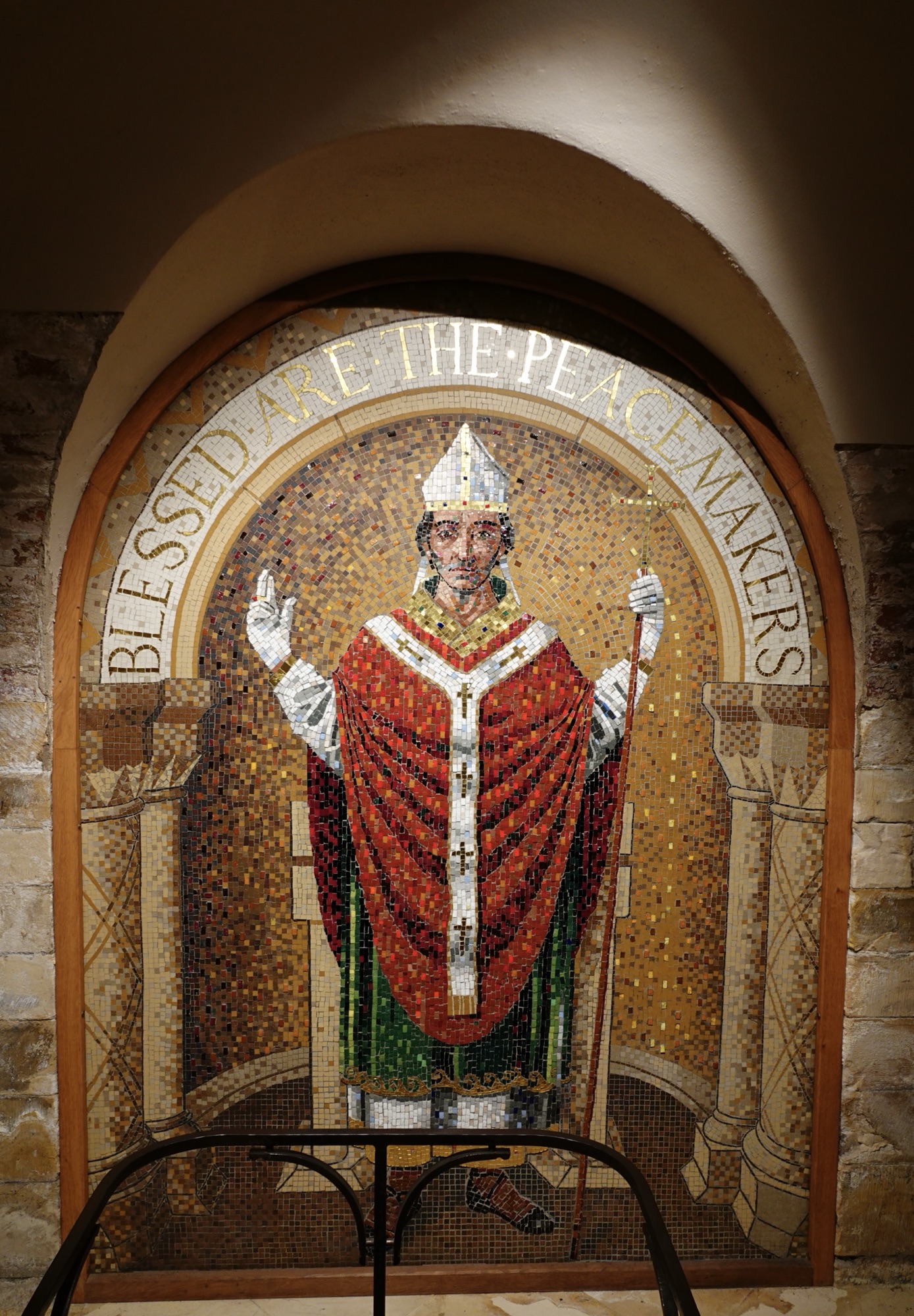
We also got a brochure showing us the various places in the Minster where St. William is depicted.
That sent us back upstairs to look more closely at the Saint William Window. In 1177CE more than 20 miracles were reported at William’s tomb in a single day, including healings of sight and hearing, and even a cure for a woman who had accidentally eaten a frog! (Ted wondered if she’d swallowed a fly first…). The window is thought to have been designed by John Thornton around 1414CE, and depicts scenes from William’s life.
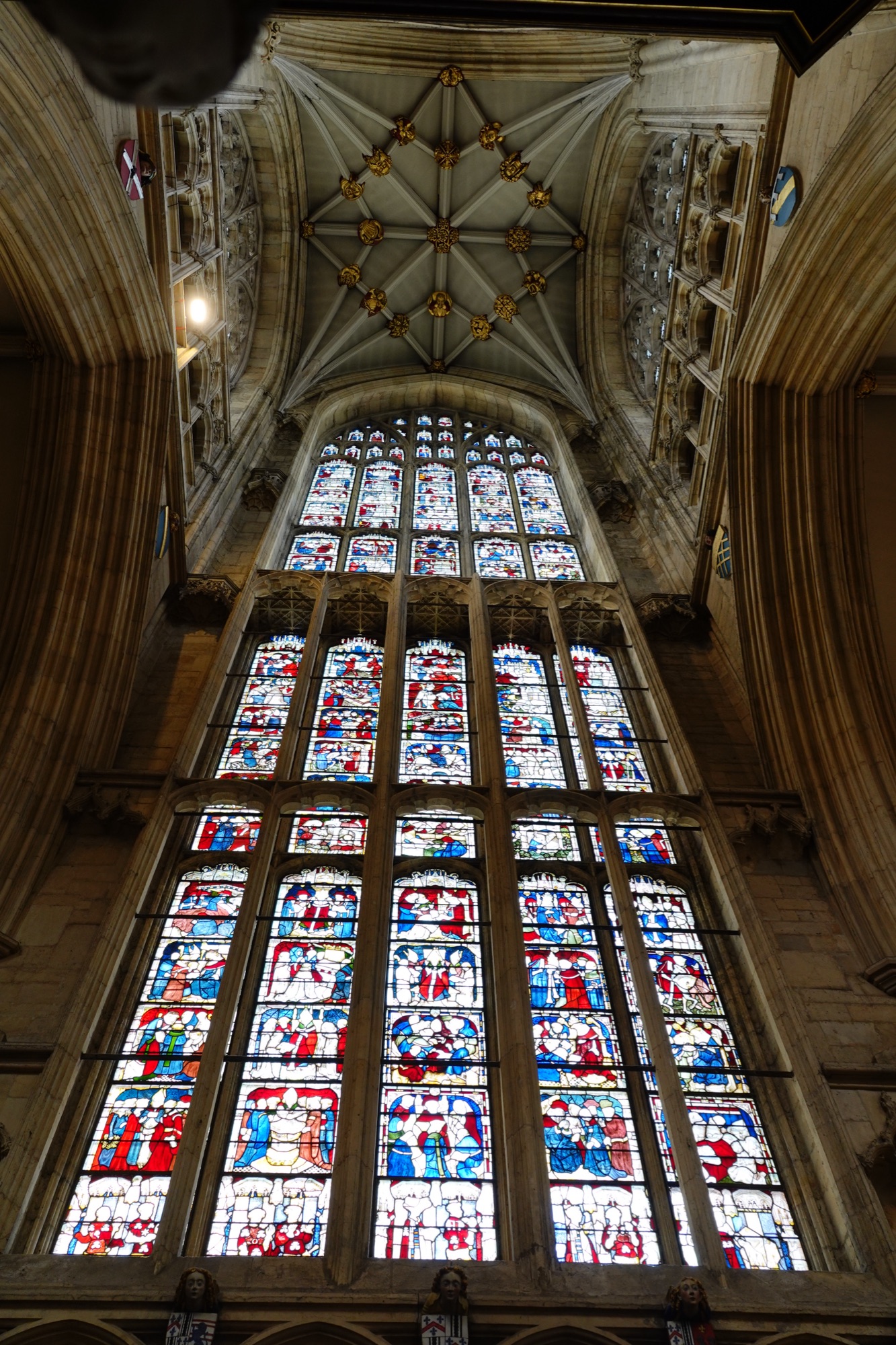
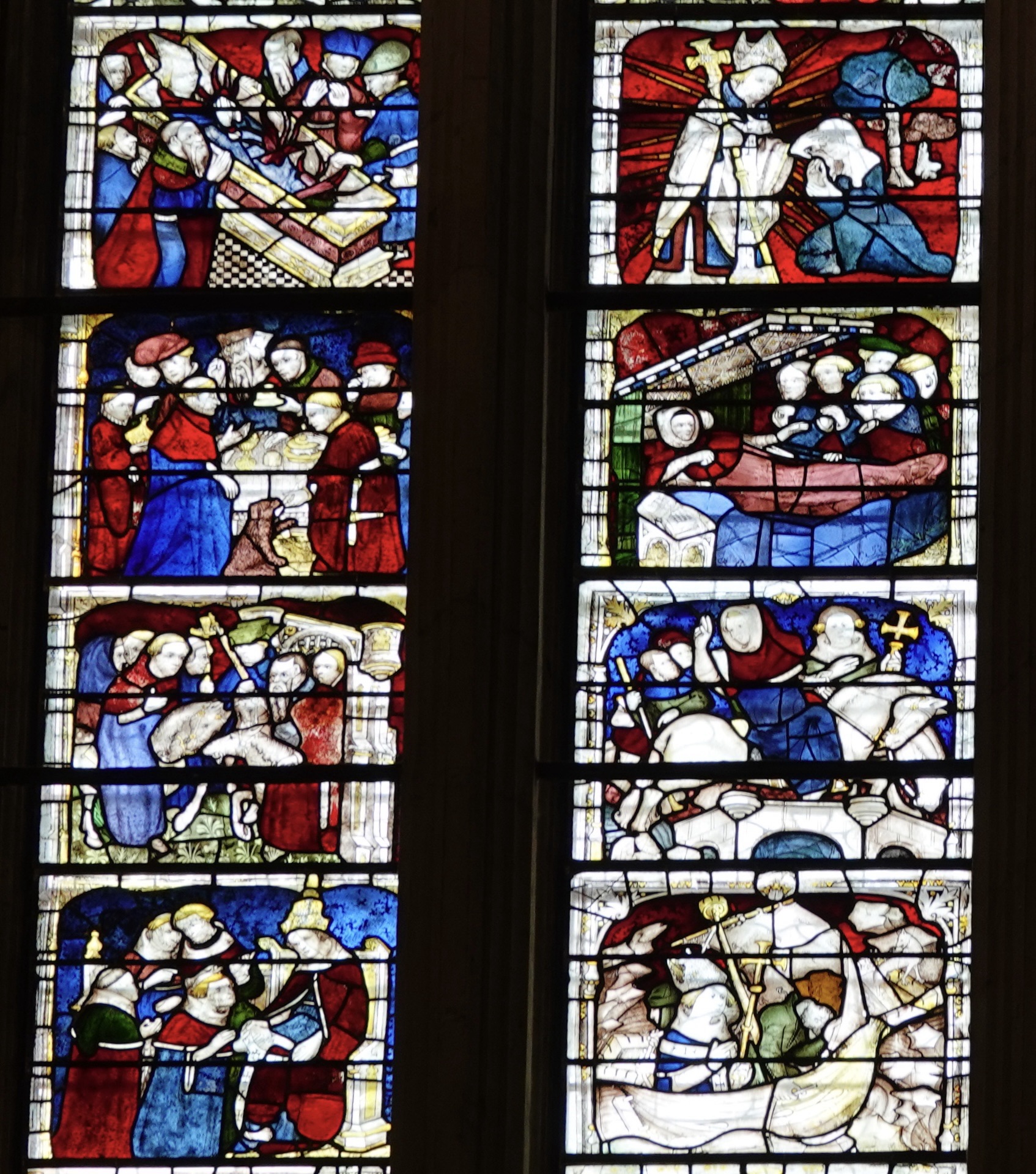
It’s fabulous having a camera that allows zooming way in.
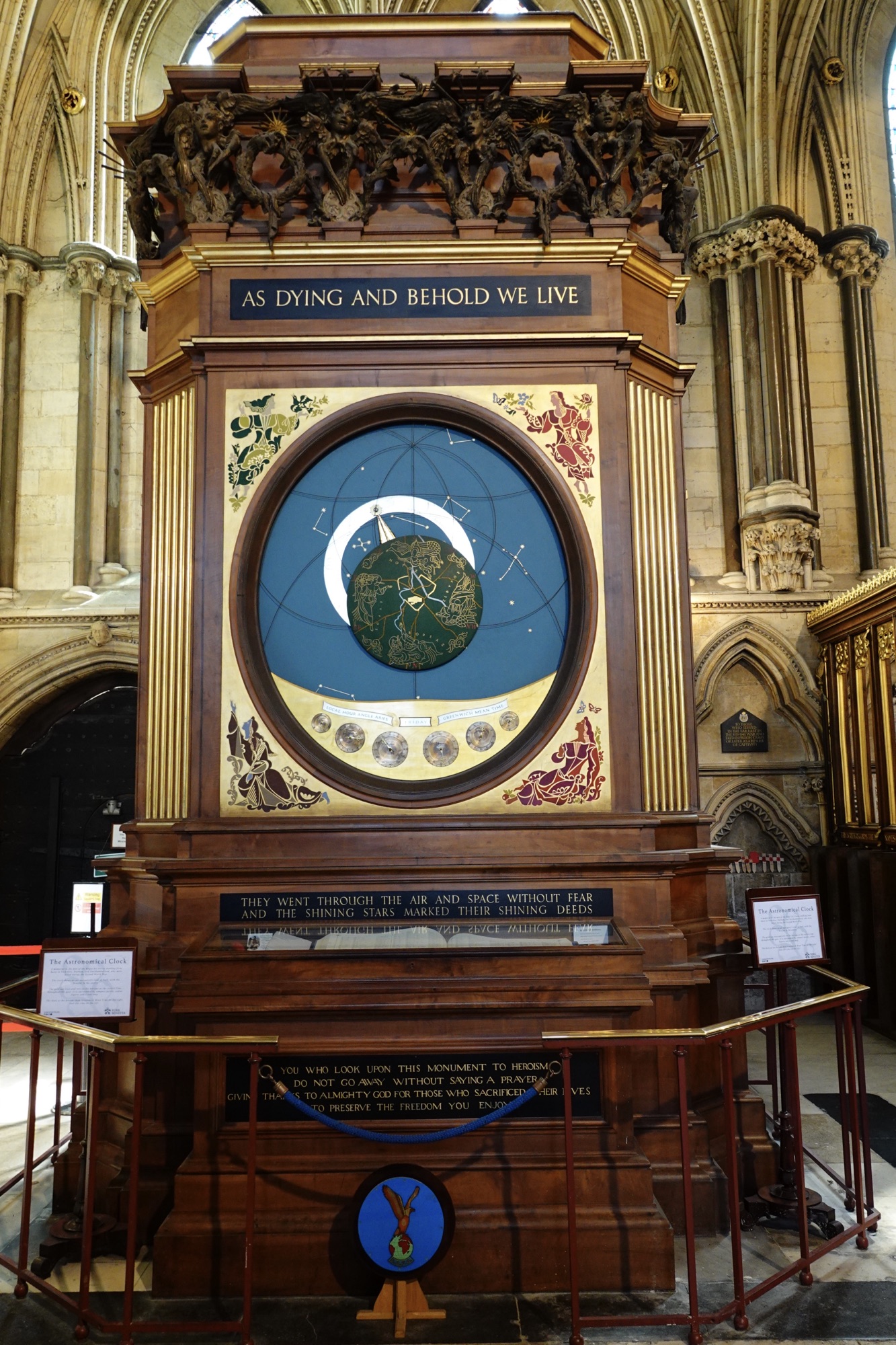
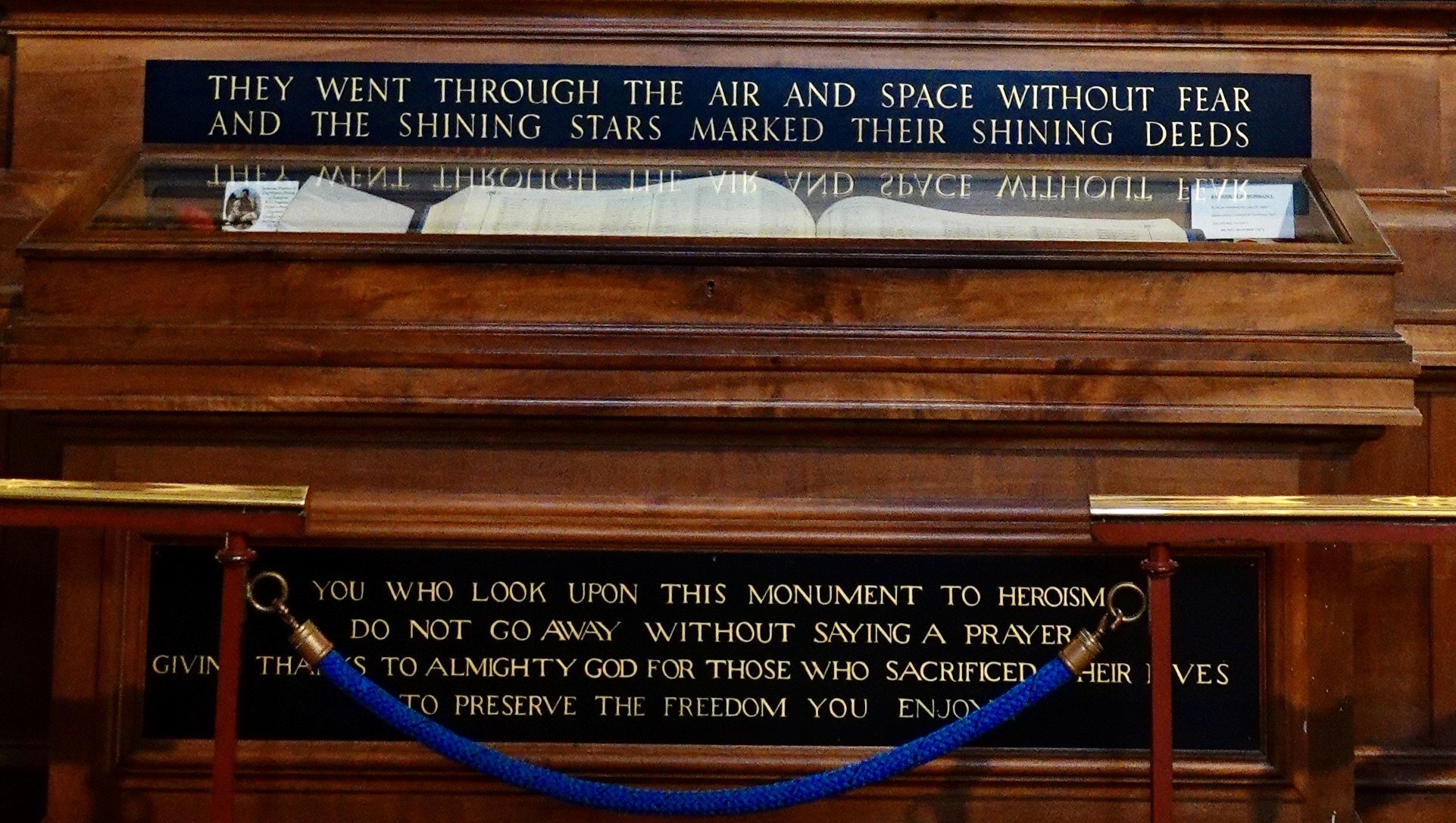
We were also interested in the ornate painted clock at one side of the nave with moving knights who strike 4 times every hour, and the war memorials.
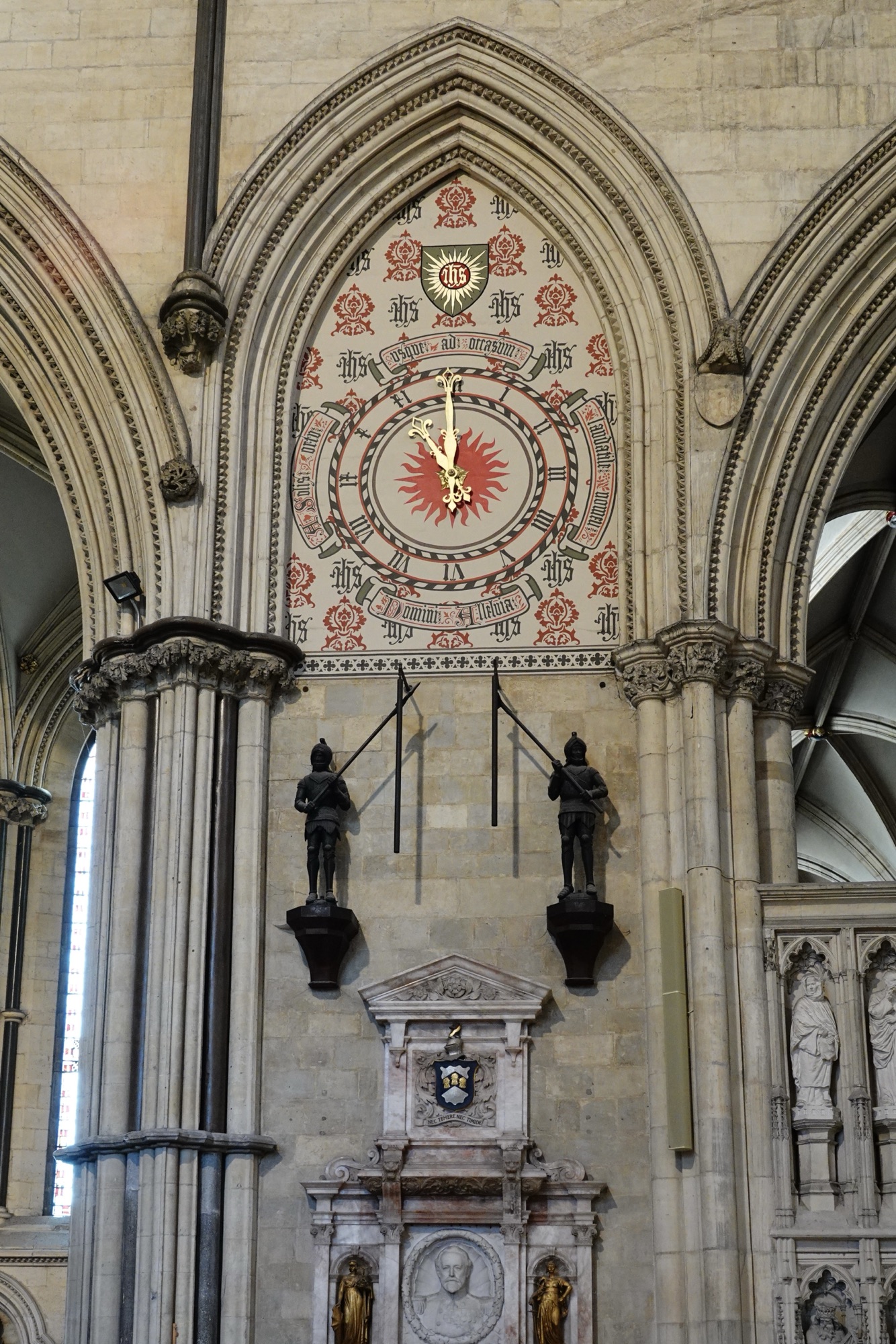
The two men-at-arms who strike the quarters were made in 1528CE.
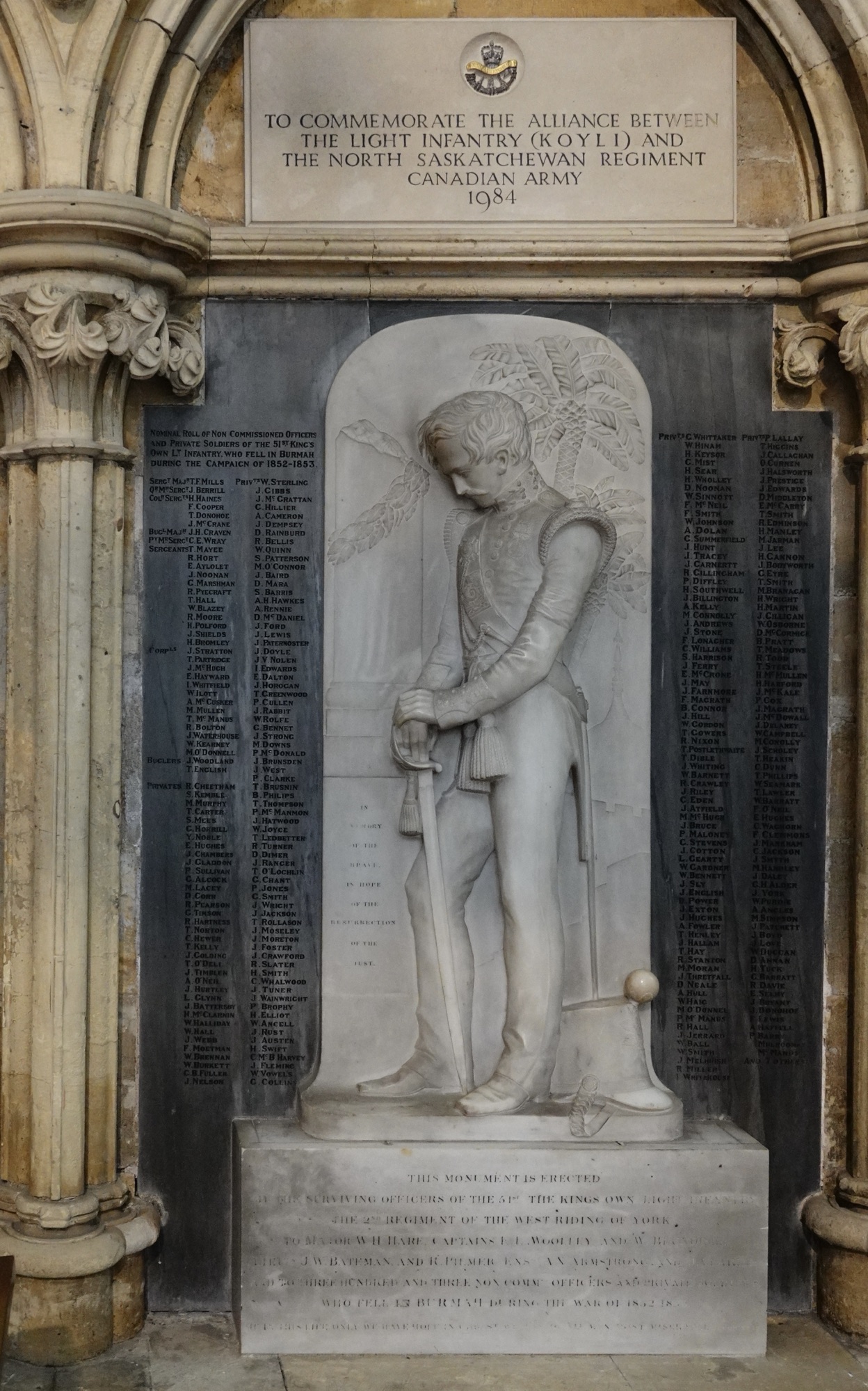
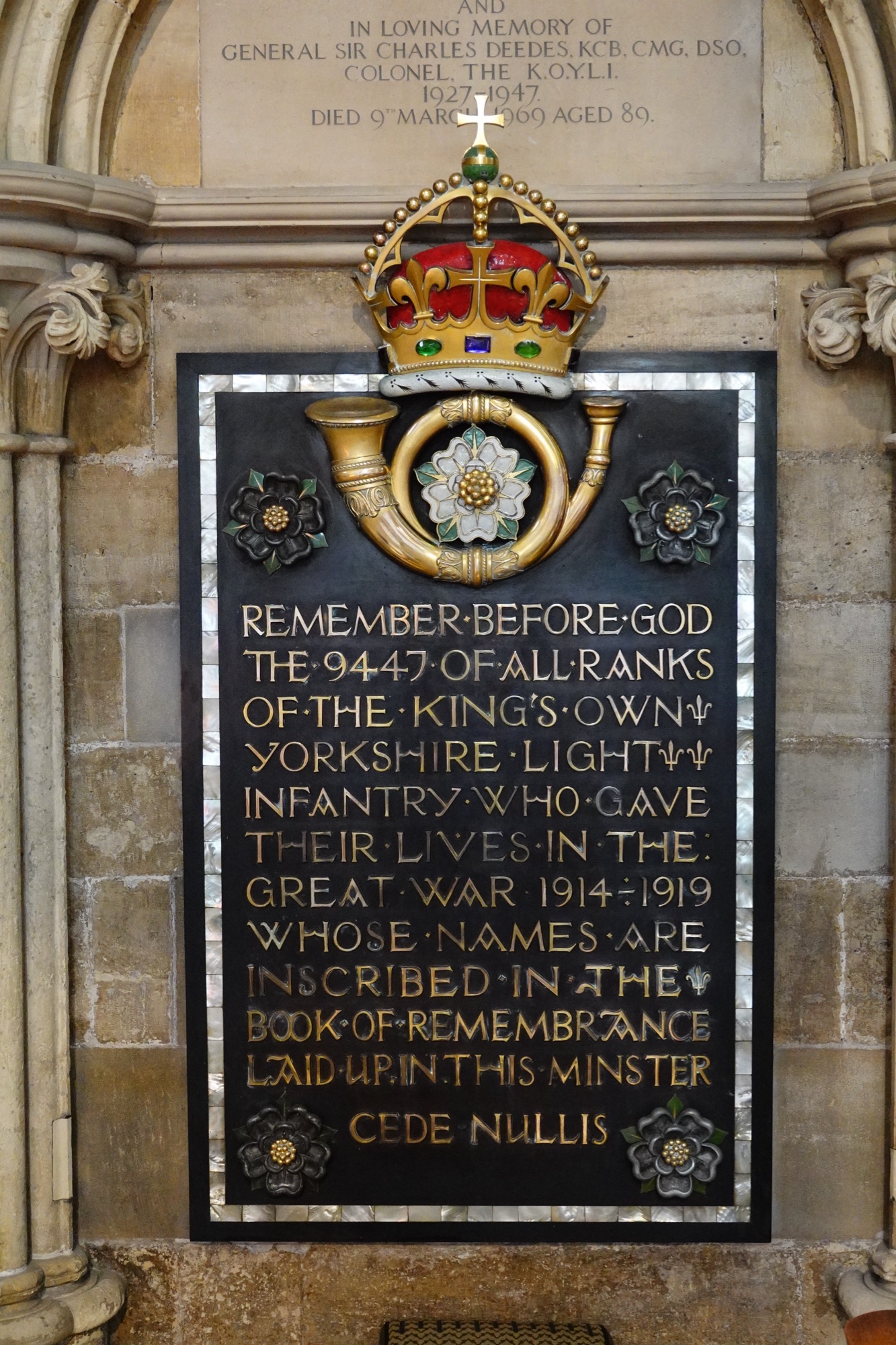
The astronomical clock is a very moving tribute to airmen.
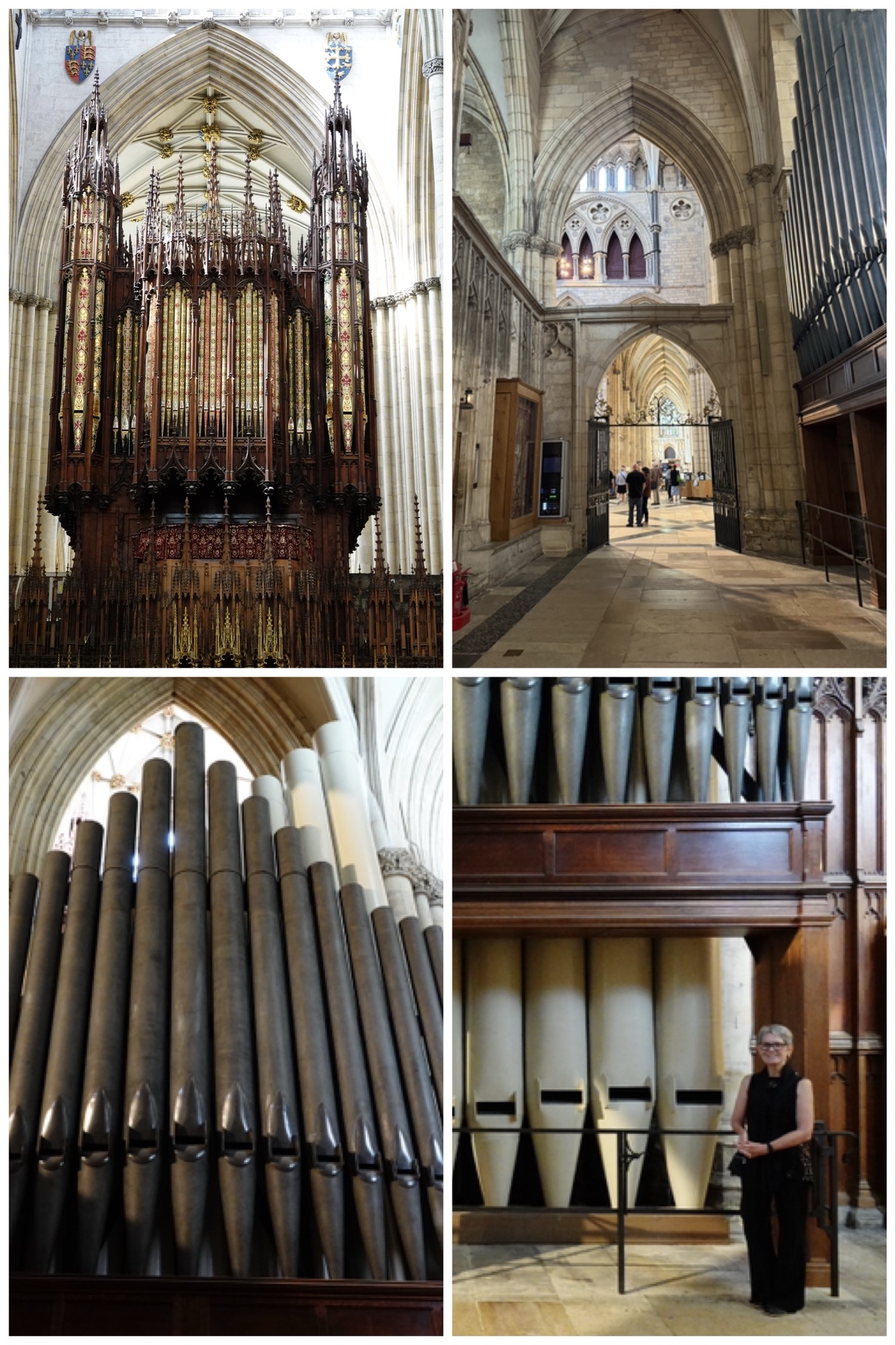
Ted got several perspectives of the Minster’s organ’s pipes.
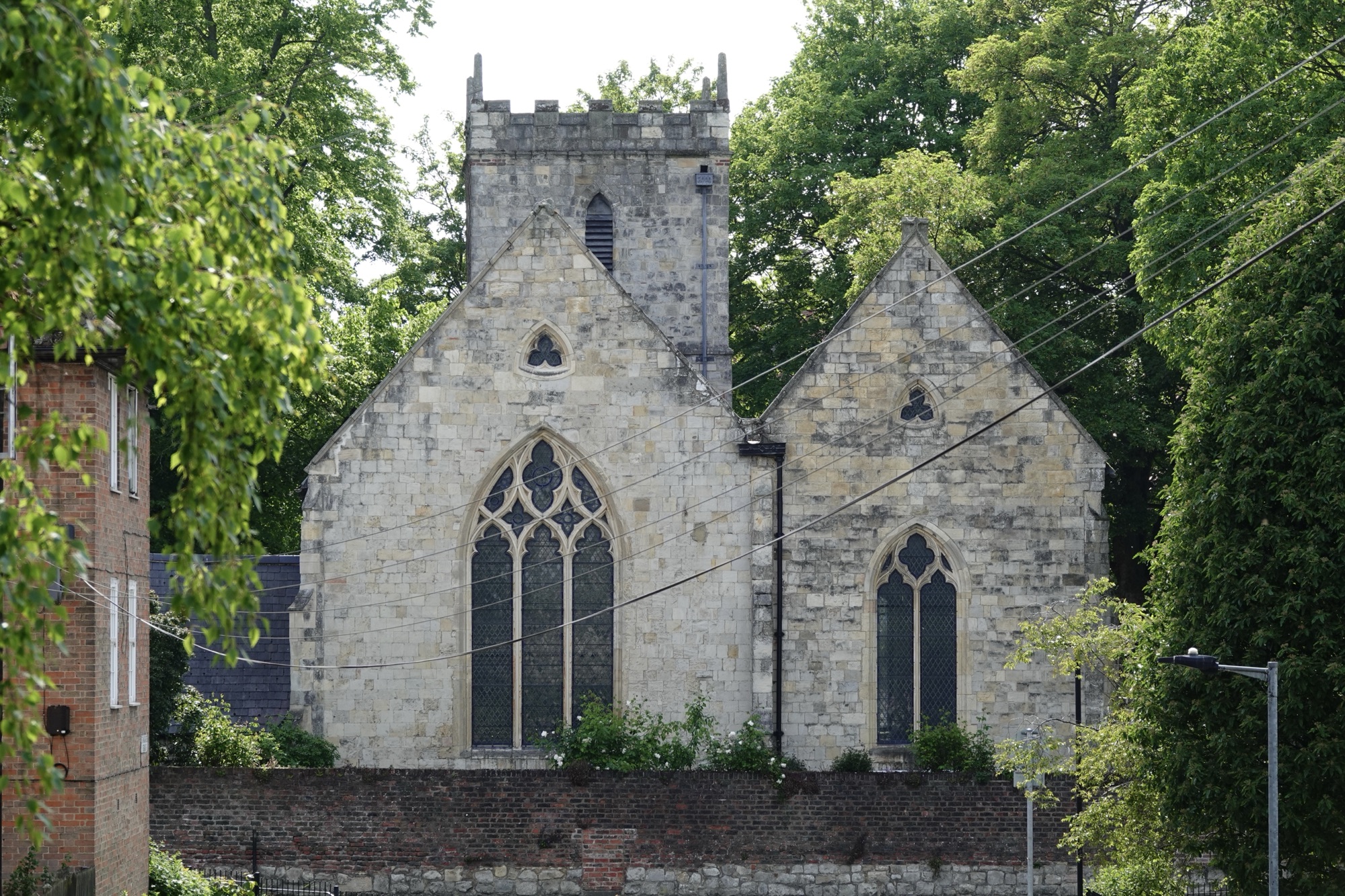
It was finally time to head outside and walk around the cathedral.
Having seen the scale model of the Chapter House roof, we had to make sure to get a photo of the outside. As Ted was doing that, one of the Minster guides came to tell us more.
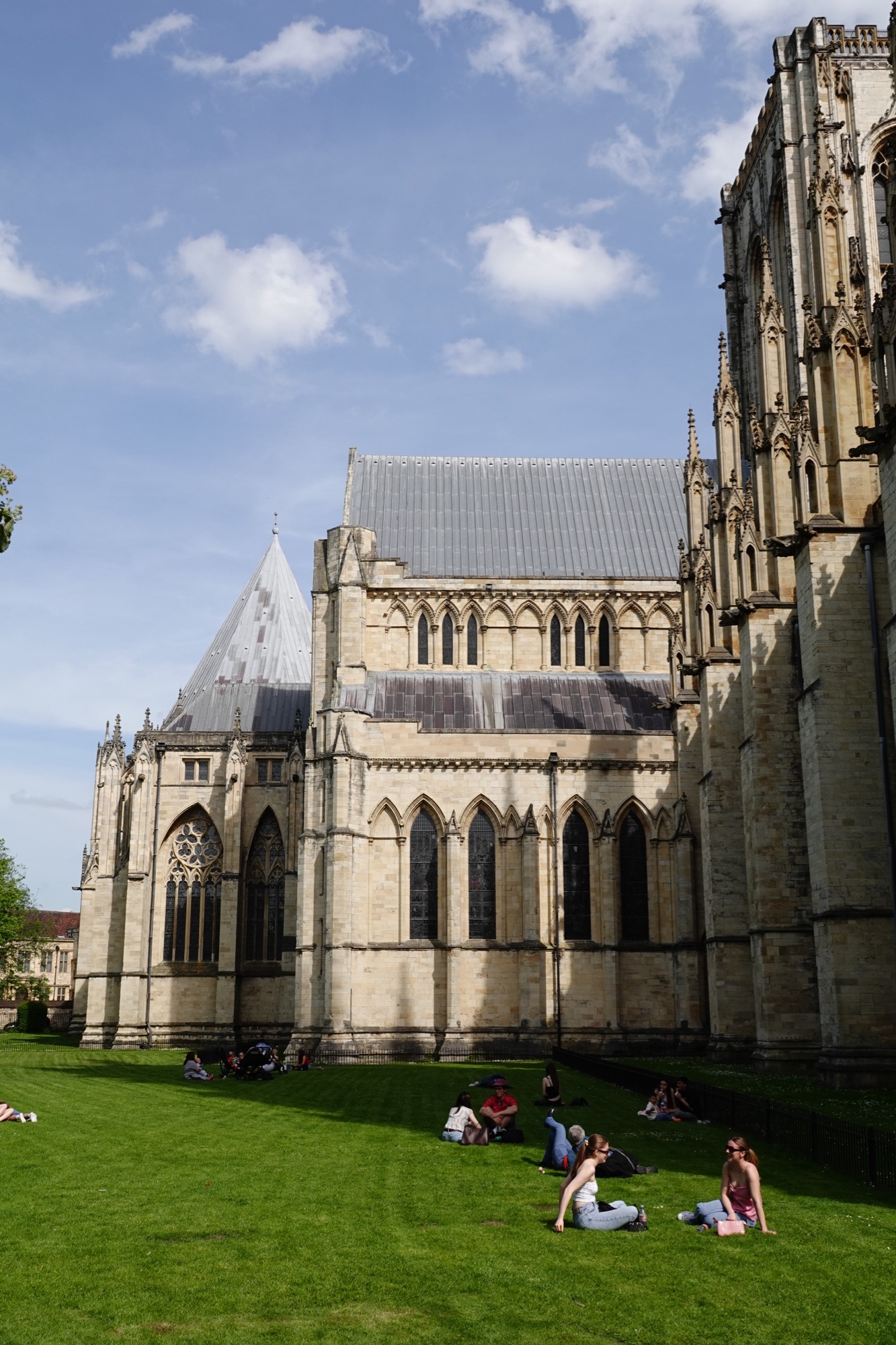
A lightning strike fire in 1984 gutted the South Transept of the Minster in one of the worst cathedral fires in modern times (until Notre Dame). In the aftermath of that fire and during the cathedral’s reconstruction, it was decided that all the lead roofs should be vented to prevent them exploding due to extreme heat. The guide pointed out the “noses” on all the roofs, but especially on that of the Chapter House.
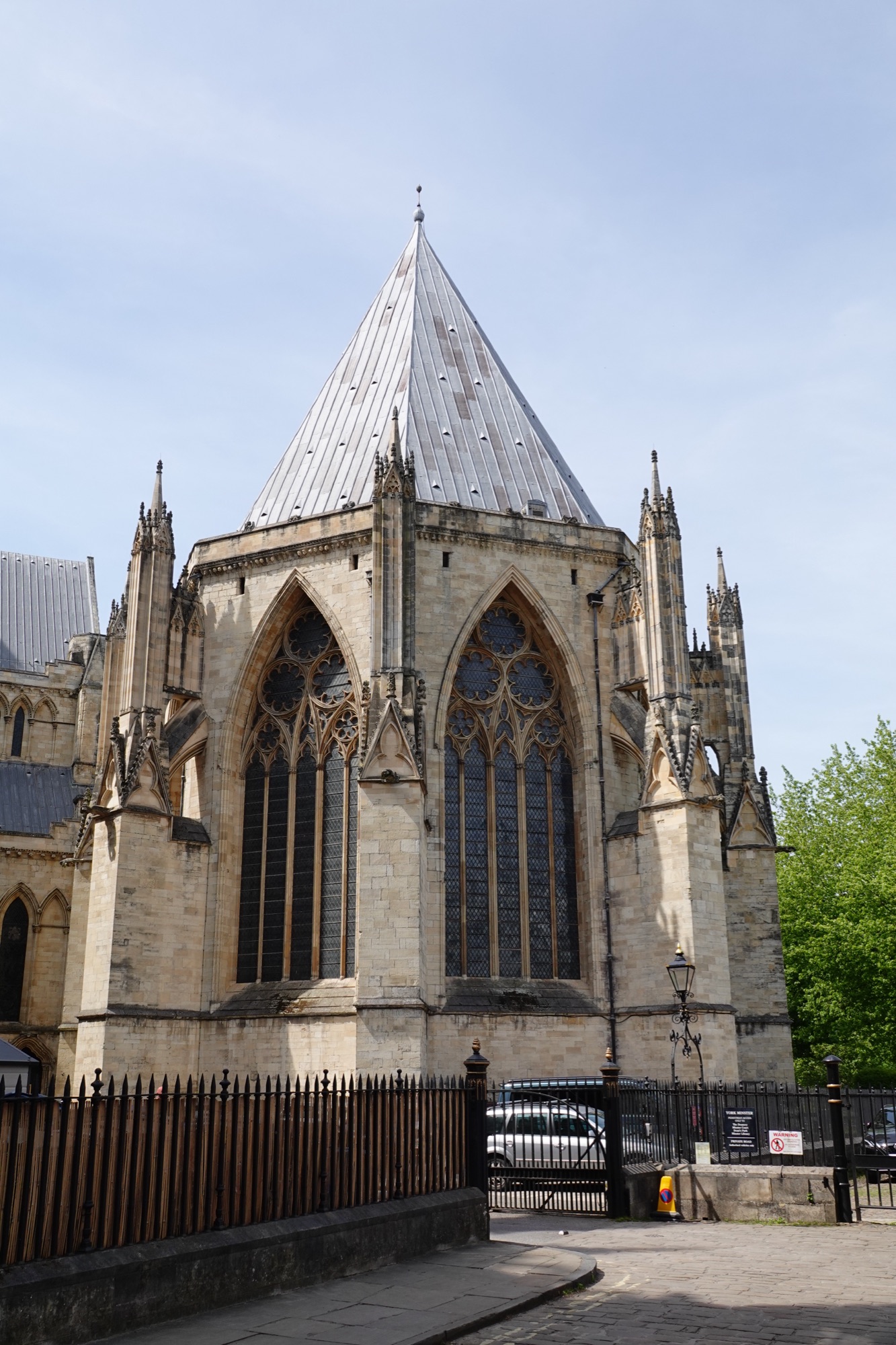
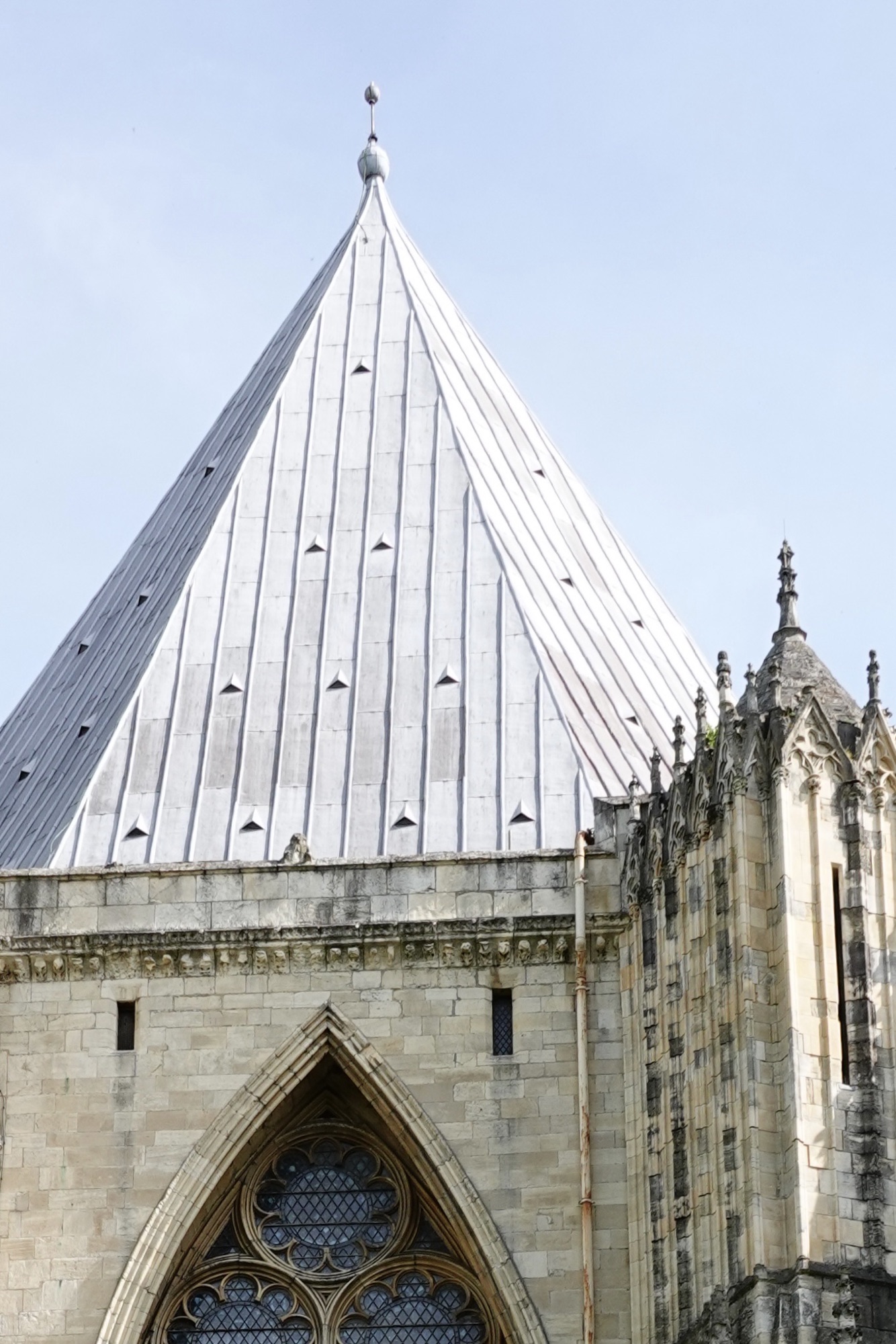
He also showed us a piece of English oak with charred edges that he carries as a visual aid for his tours. The piece was retrieved from the fire, meaning it dated to the 13th century, and dendrology shows the tree from which it came was over 300 years old when harvested, meaning he’s carrying around a 1000 year old piece of history.
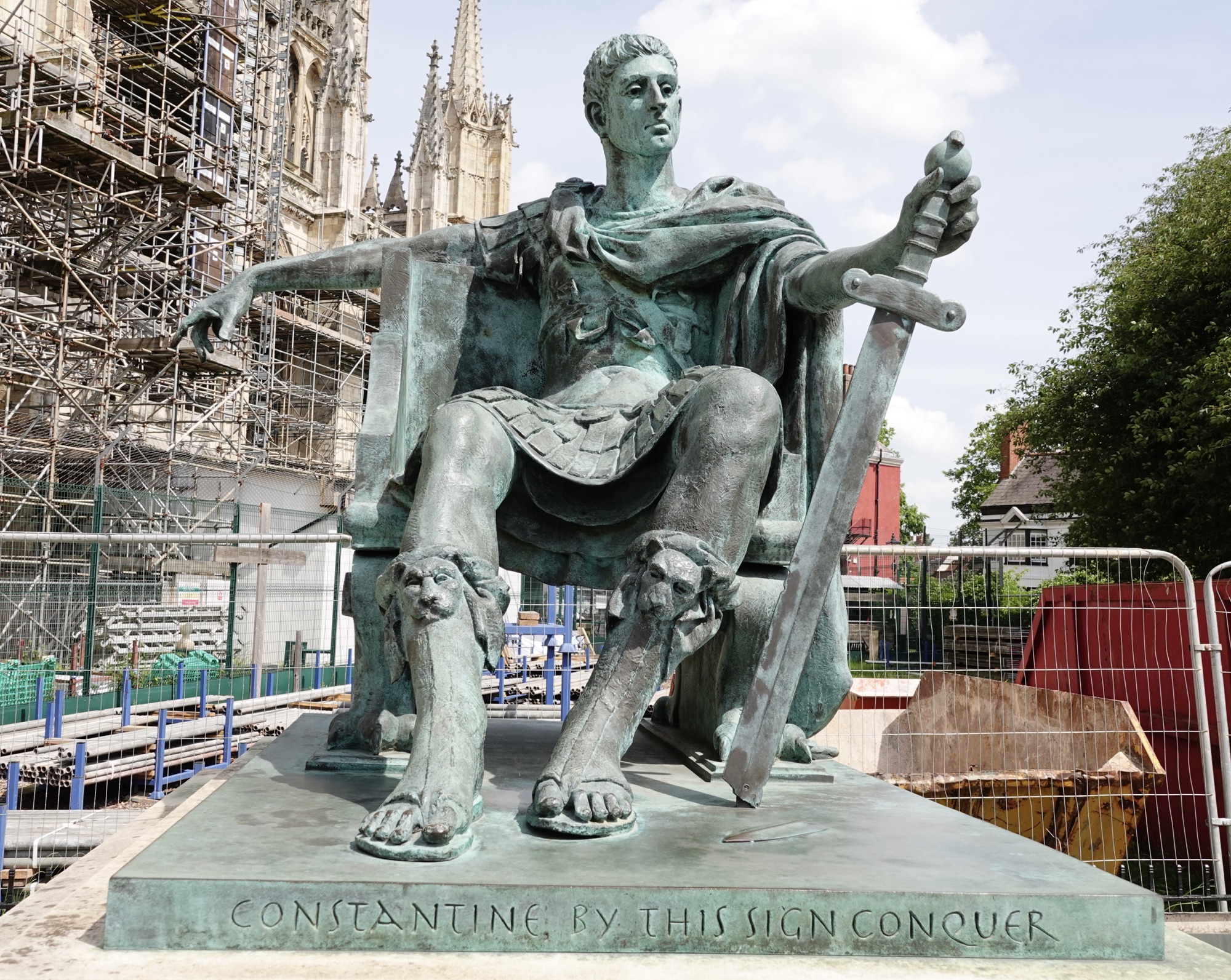
Another guide had suggested we revisit the statue of Emperor Constantine to see the symbolism we hadn’t noticed yesterday. Constantine’s sword tip is broken off, turning the sword into a “cross”. That changes the meaning behind the inscription “by this sign conquer”.
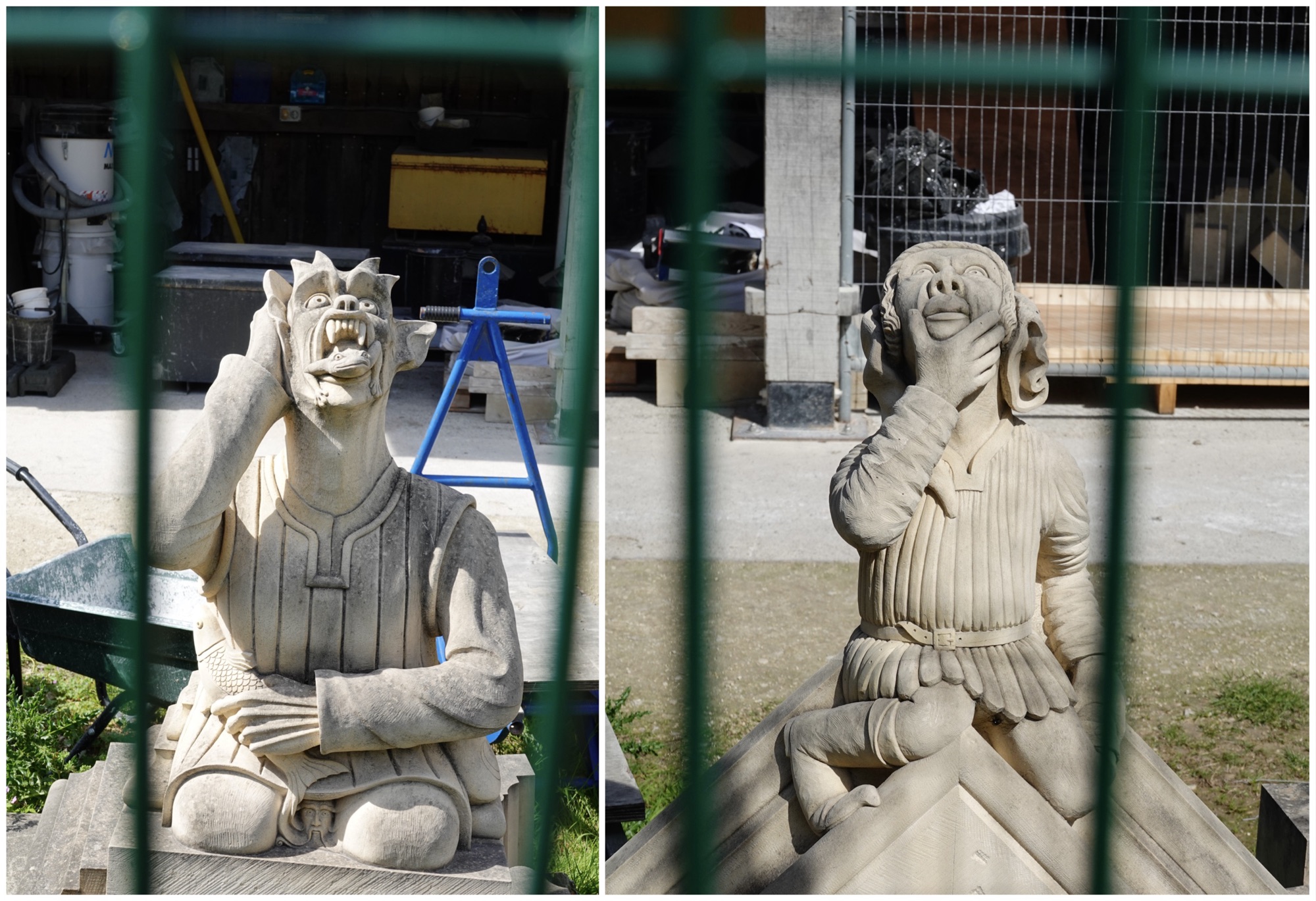
On our way to lunch in the Minster Refectory we walked past the Mason’s Studio where stonemasons do everything from repairing or replacing eroded limestone wall sections to re-carving gargoyles. We peered through the protective fencing at some of their handiwork.
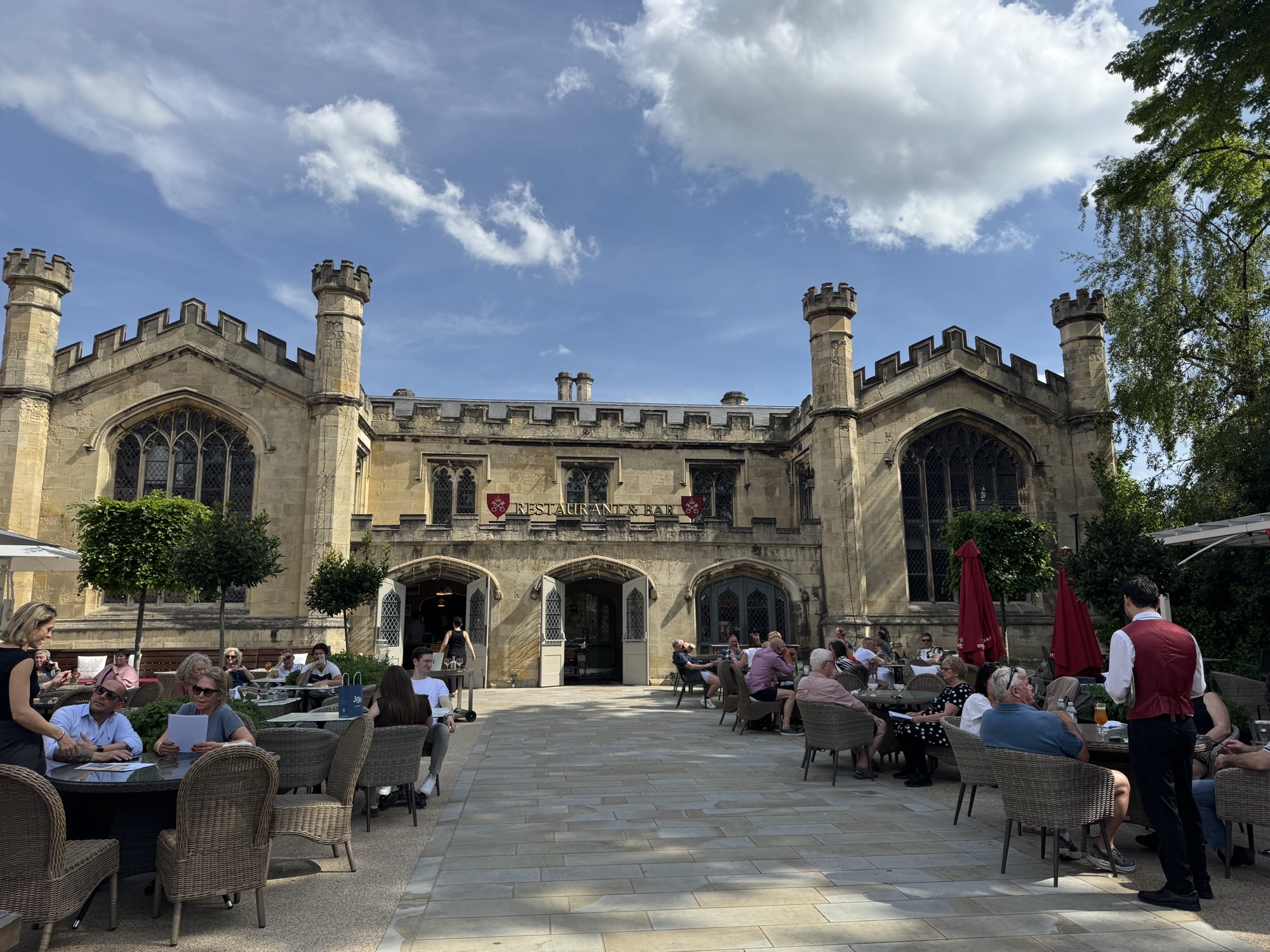
We’d reserved a “light bites” lunch at Michelin Star Chef Andrew Pern’s York Minster Refectory, where the day to day operations are run by Joshua Brimmell, executive head chef of The Star Inn The City. The restaurant offers a 7 course tasting menu with paired wines for £89($166CAD) per person, but that’s not really something Ted would appreciate. I know, because he said so. Since I really wanted to eat there, lunch made sense – considerably less complex, but still really lovely.
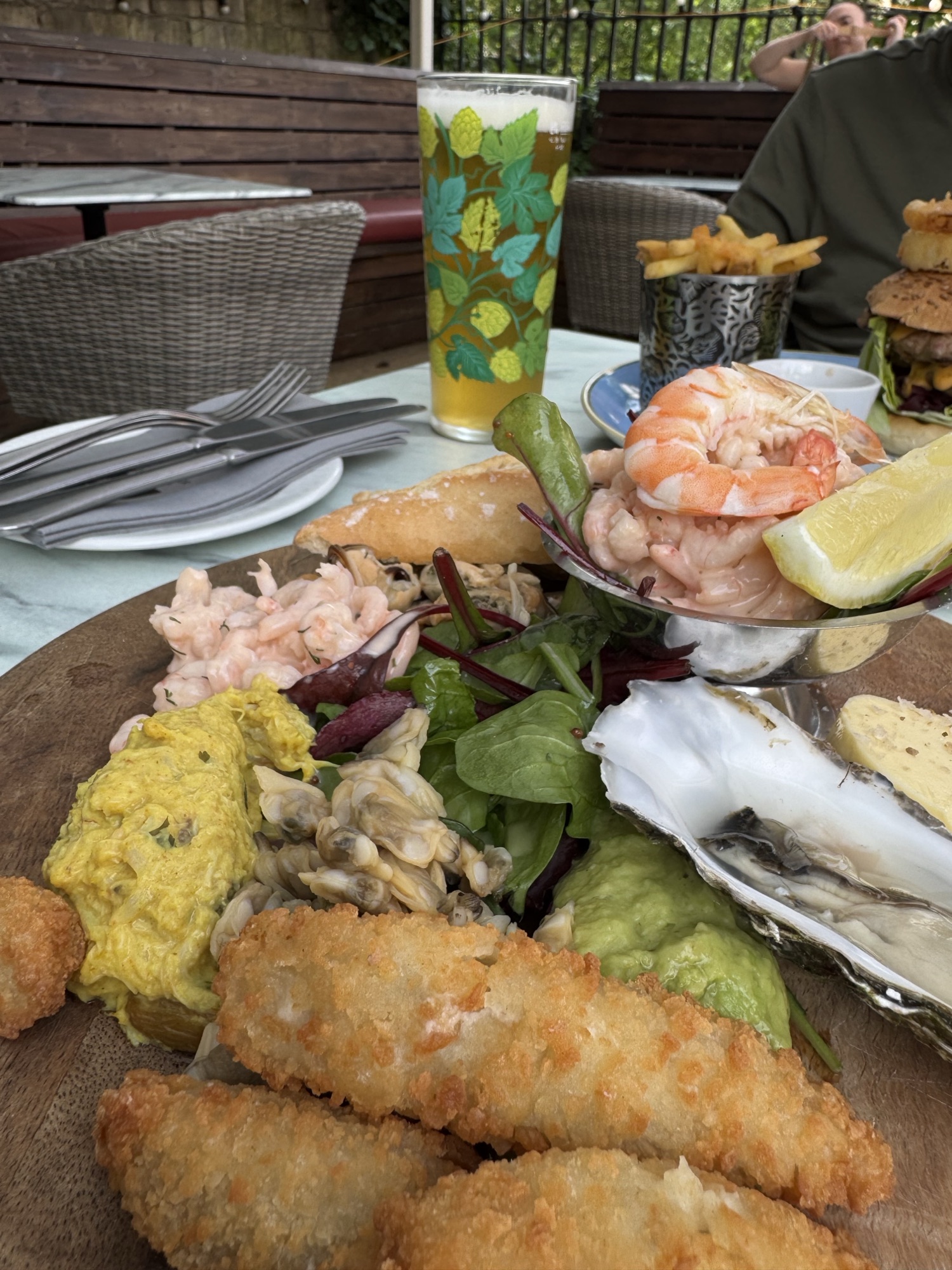
I ordered a Seafood Board, which had Coronation crab, a natural oyster, Atlantic shrimp in Marie Rose sauce, pickled mussels, sweet pickled button clams, one large prawn, breaded fish goujons, lemon, baby leaf salad, smashed avocado, and a crusty baguette. Ted’s lunch: a double charred beef & pork patty burger with sweet pickle slaw, and cheese on a toasted linseed bun, with beer battered onion rings, and Piri Piri spiced skin-on skinny fries.

Our shared dessert was warm sticky toffee pudding with confit blood orange slices and buttermilk ice cream.
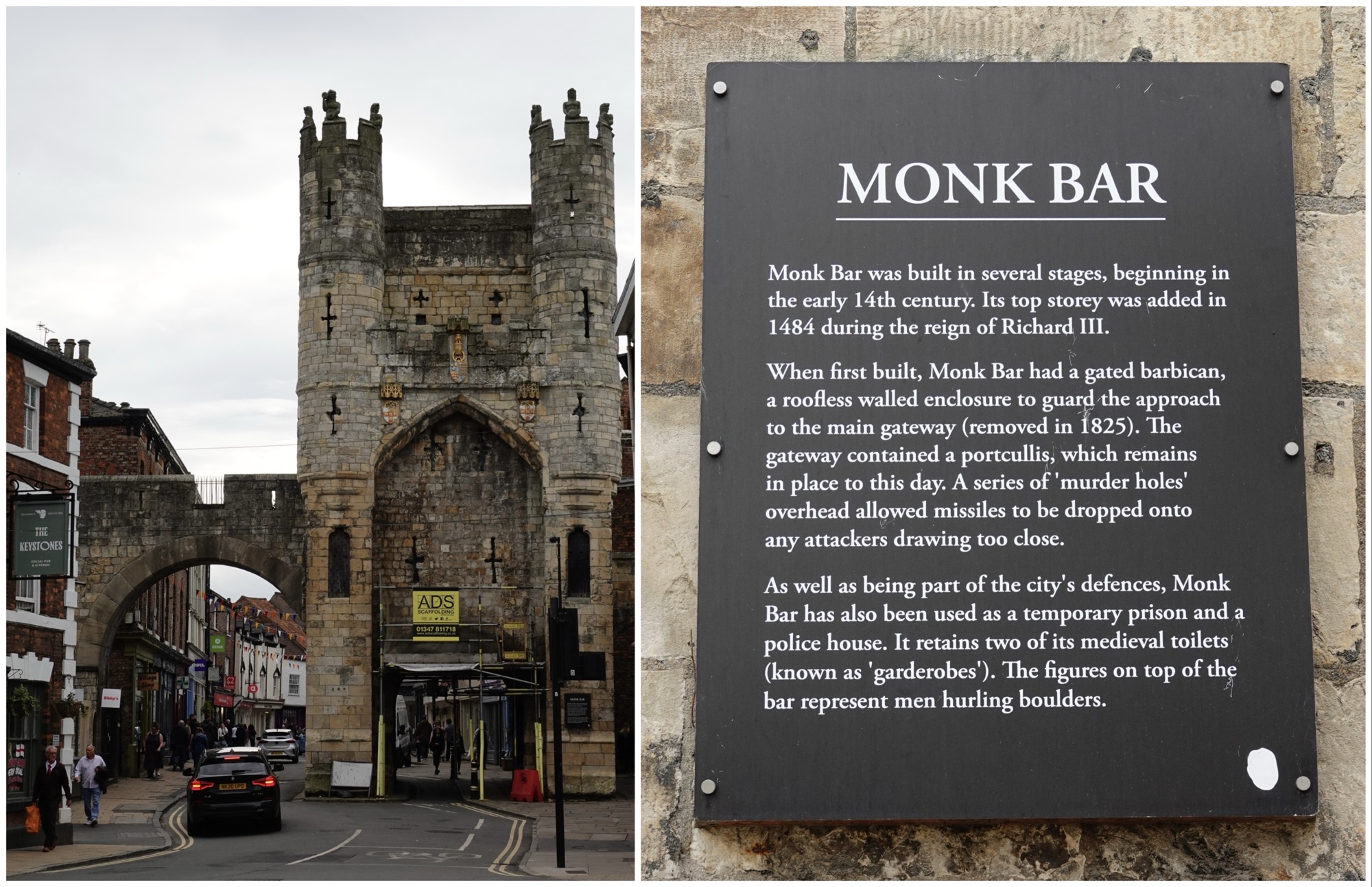
That got us energized to walk 2/3 of the city walls , which looked like the series of photos below, before eventually getting back to our B&B.
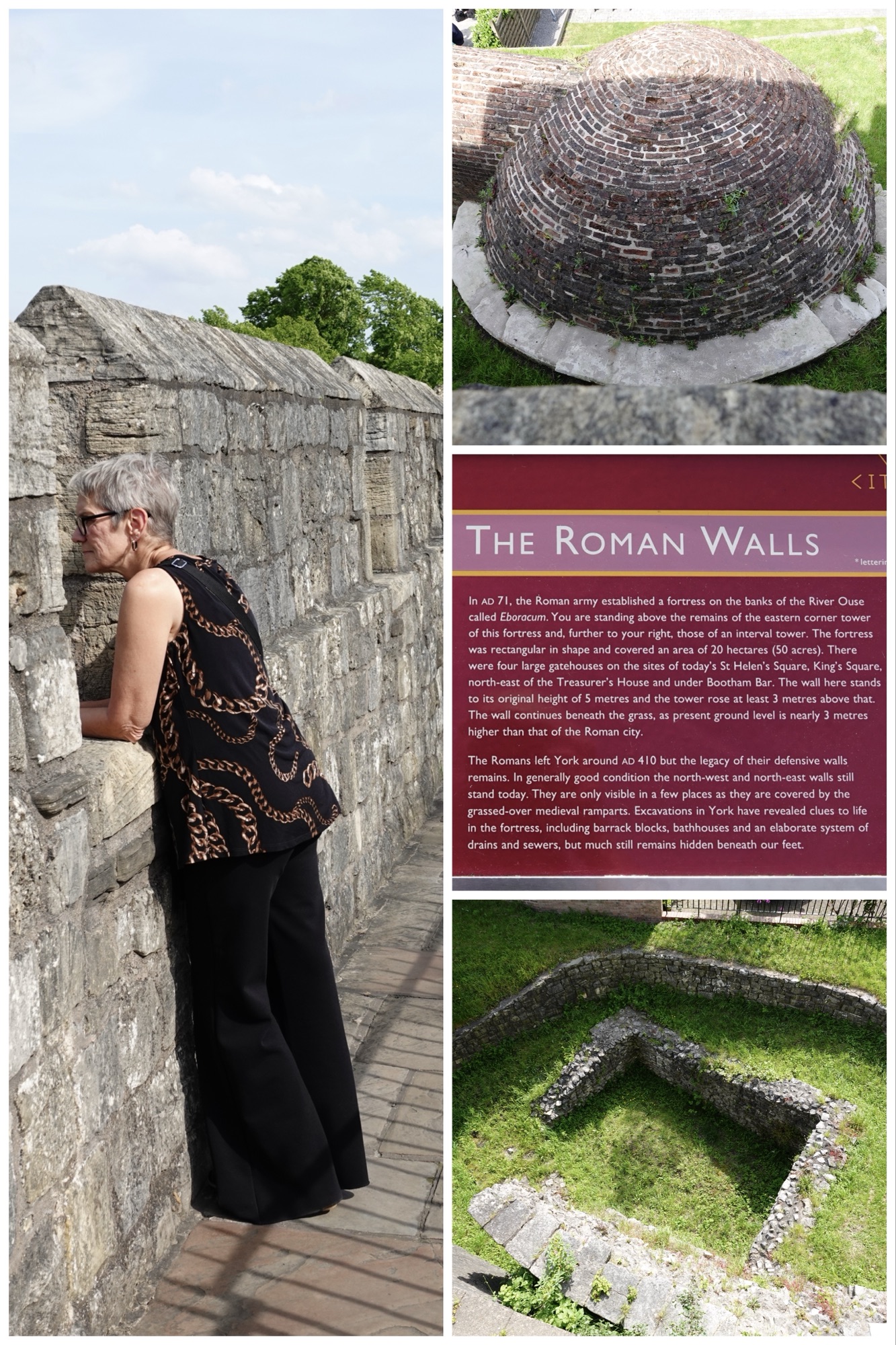
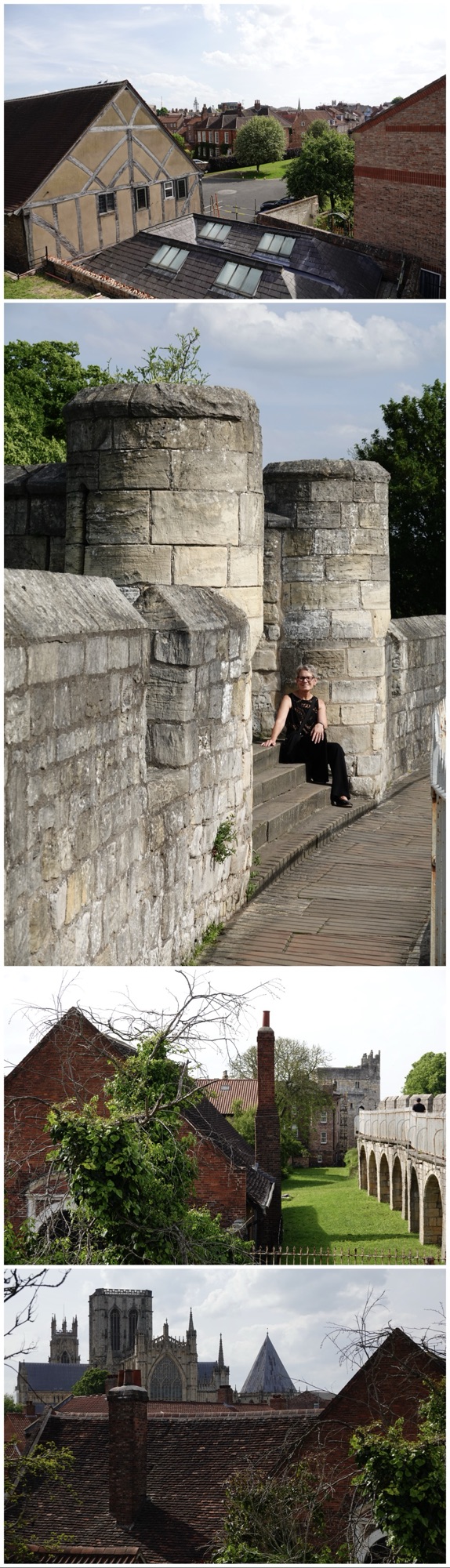
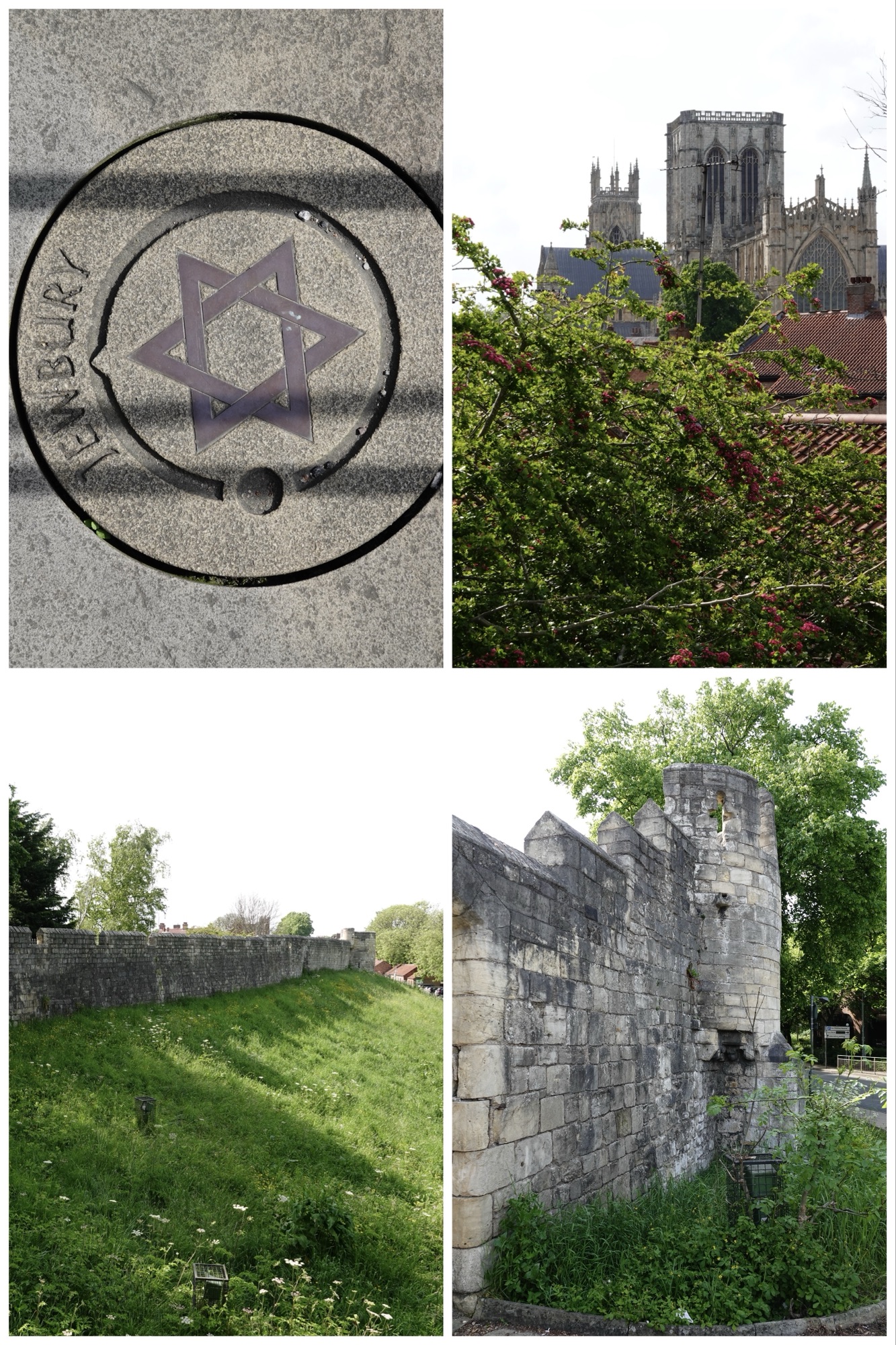
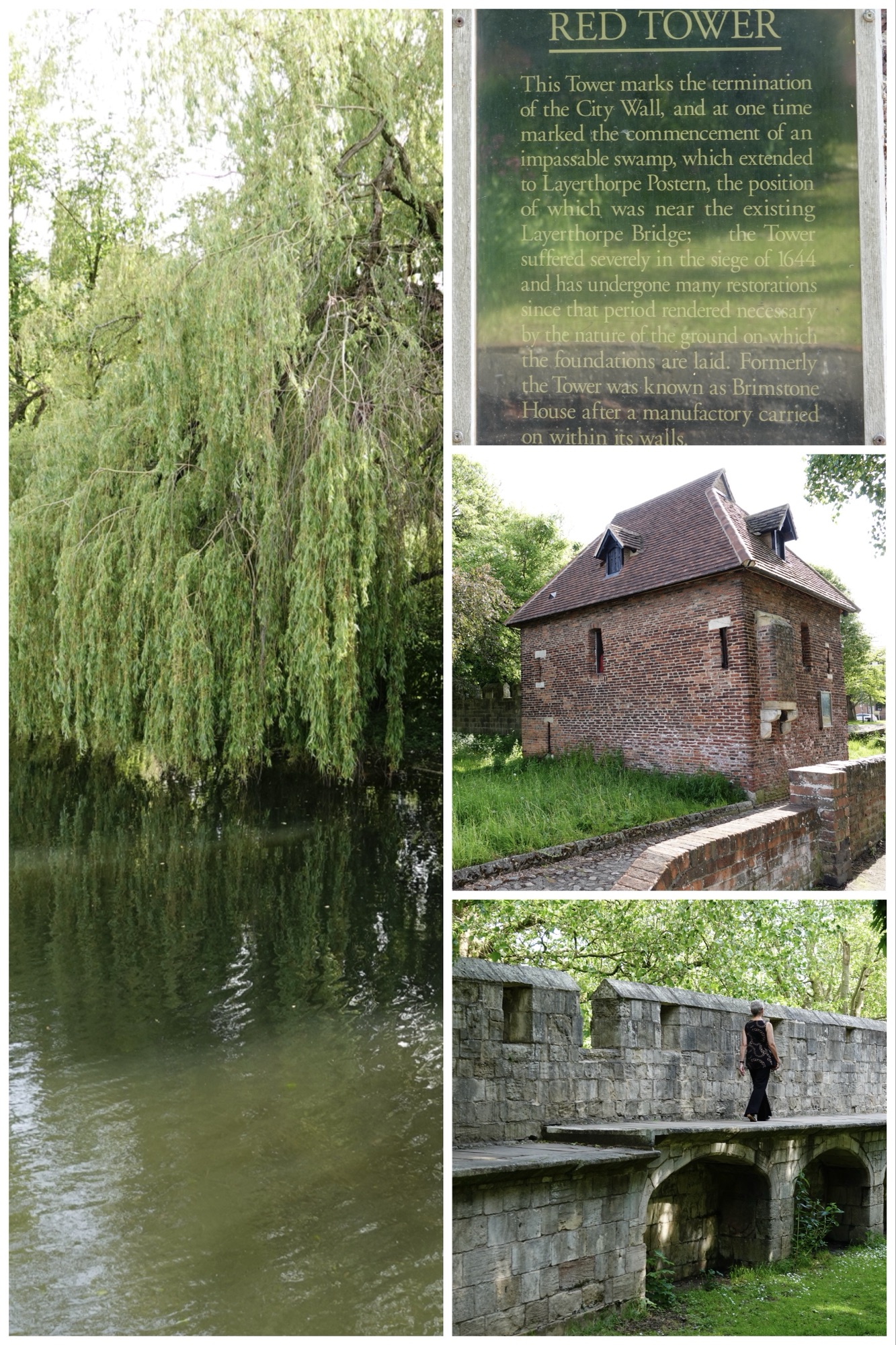
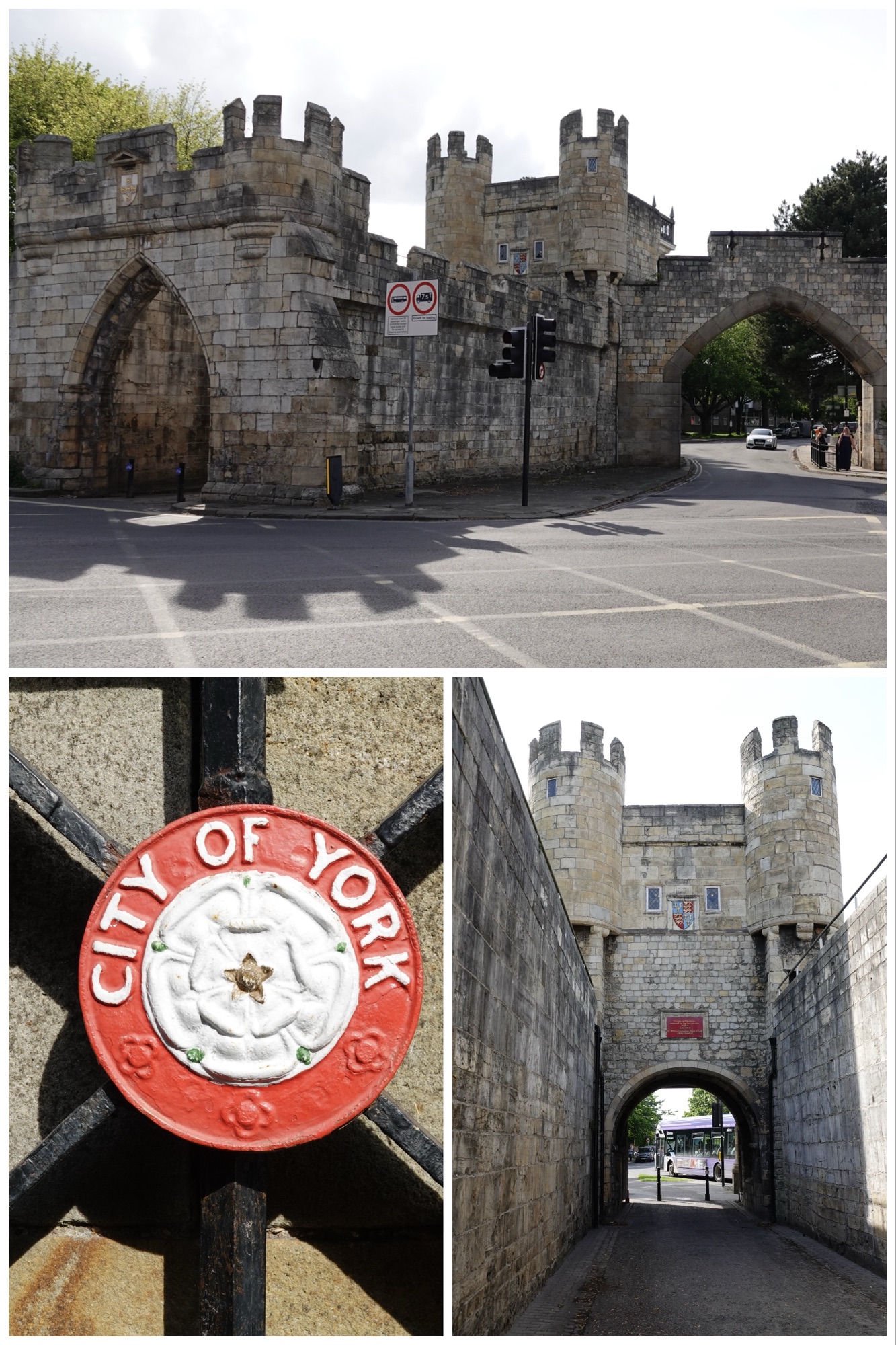
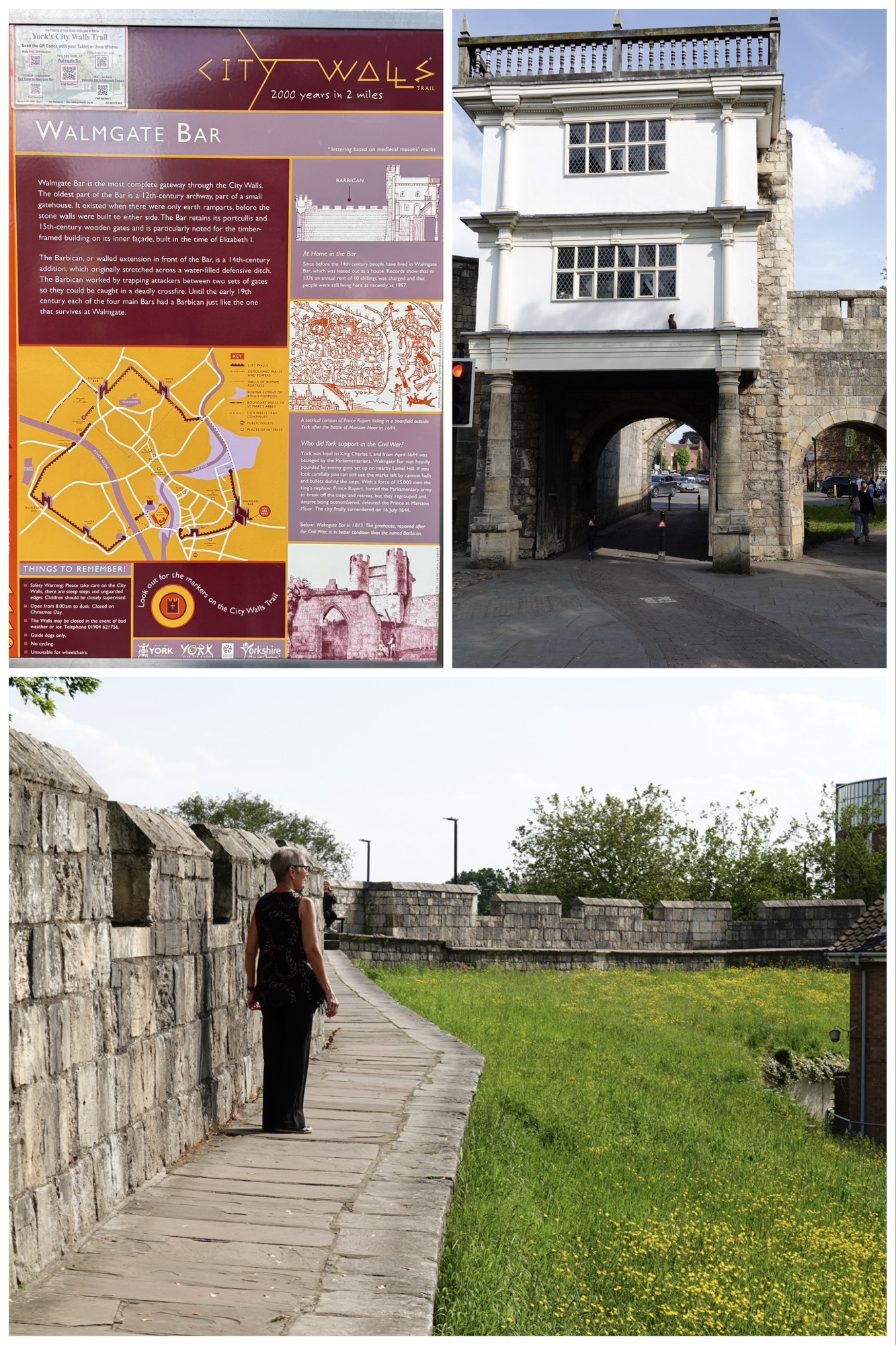
Right about here we realized we were done, and stopped at a pub for Bundaberg ginger beers, which we first enjoyed in New Zealand at the beginning of this 5 month trip. It really is starting to feel like we’re nearing the end.
We had a very full day, in glorious summery weather.
Tomorrow we visit The Treasurer’s House, and then see what other mischief we can get up to before dinner at a local Indian restaurant.


I don’t know how you find time to write all this. I’m still not caught up with my Egypt days. I am, however, catching up with reading your posts.
LikeLike
While I hesitate to say stop reading my posts 😂, I’d really like to read the rest of your Egyptian ones!!
LikeLike
You two never cease to amaze me! You fit so much into the day, and then crank out one wondrous blog post after another! Thank you. You’re an inspiration for sure.
LikeLiked by 2 people
You’re too kind, but thank you!
LikeLike