After a smooth and on-time 90 minute train ride from Manchester, through countryside landscapes of vibrant green, interspersed with stone cottages and brick houses that could have come right out of a Midsomer Murders set, we arrived to our first glimpse of York: the street outside the train station.
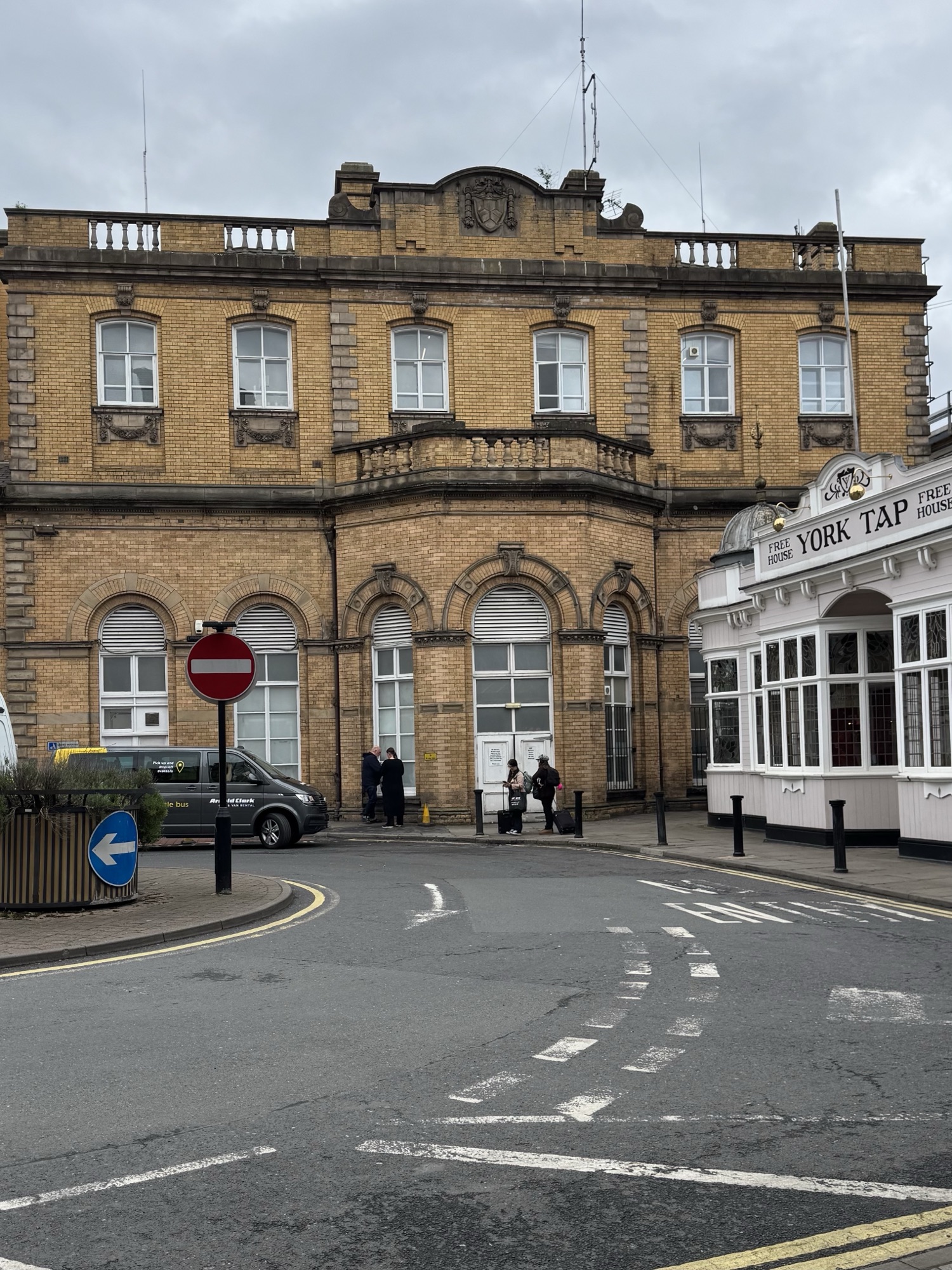
We walked about 20 minutes along historic roadways filled with storefronts and residences each worthy of a photo (although since we were navigating by Google Maps on Ted’s phone, and dragging suitcases, we took none) to reach our accommodation for the next 4 nights.
This begins a short stretch of staying in “real” B&Bs.
We’re booked into MonkBridge House as the guests of Paul and Fiona, who bought an existing B&B called Palm Court in 2020 and completely reworked it.
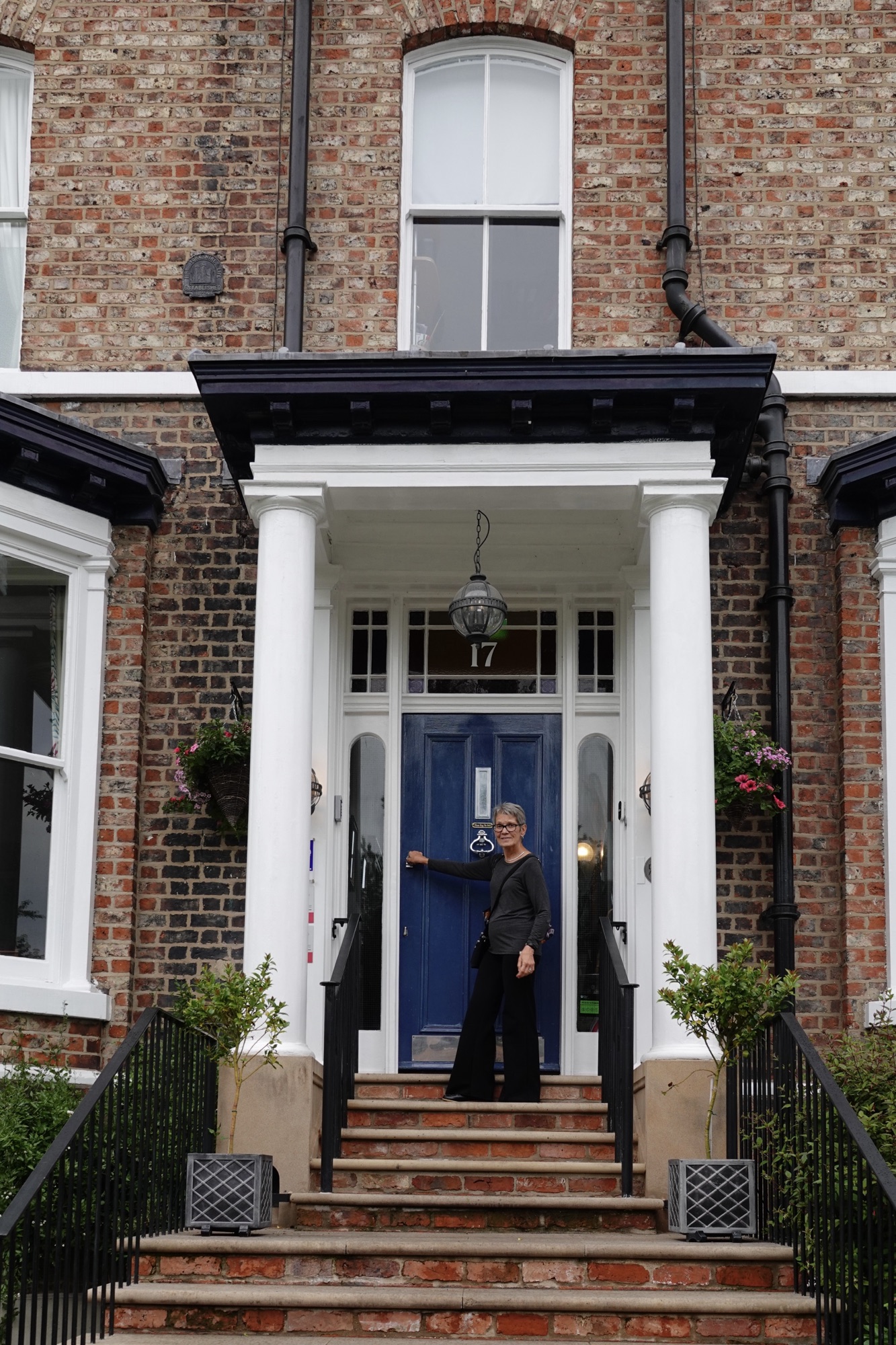
The history of 17 Huntington Road (formerly Park Place) dates all the way back to 1864.
There is an impressively documented history of the house in the B&B’s sitting room.
It was home to a series of owners: merchants including a fellmonger, a woolstapler, and a coal merchant, followed by two Lord Mayors of York, a lace merchant, and the Clerk to the Guardians of the York Workhouse – all in its first 80 years! Between 1943 and 1962 it was St. Mary’s Home for Girls before returning to private ownership. In the 1960s the house was divided into bedsits, and was even slated for demolition when the area was earmarked for light industrial development. Neighbouring streets were demolished, but Park Place survived. In 1977, number 17 became a guest house, the aforementioned Palm Court, which ran until 2019 despite being flooded at the end of 2015, along with 600 other properties along the Foss River.
Fiona and Paul bought the property in 2020 as a “semi-retirement” career change, did a massive amount of restoration and reconstruction, and have gone on to win multiple awards for the property’s design and its ranking for customer service.
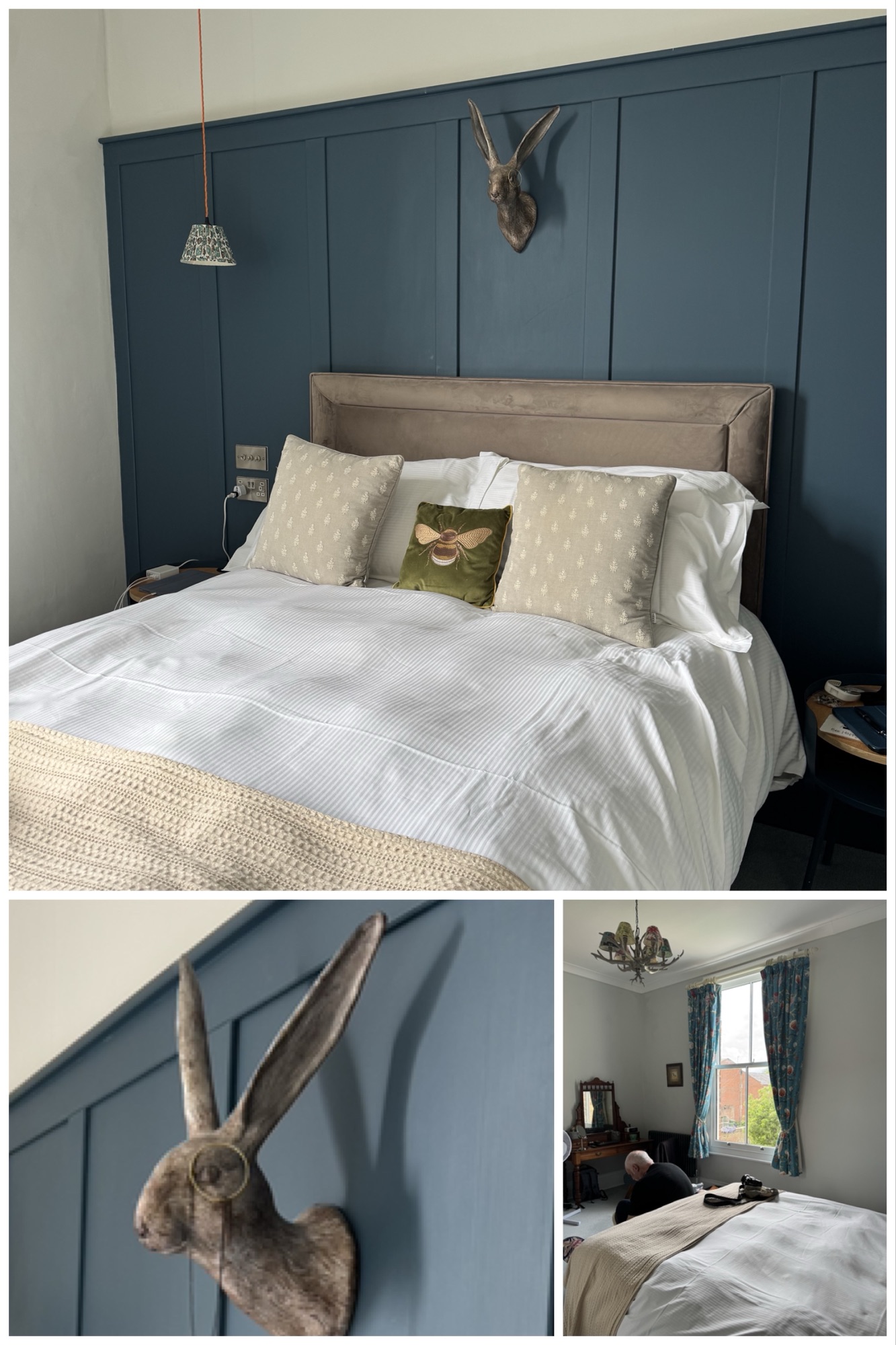
Fiona got us oriented to the house routines and spaces, and settled into our room with sherry and shortbread.
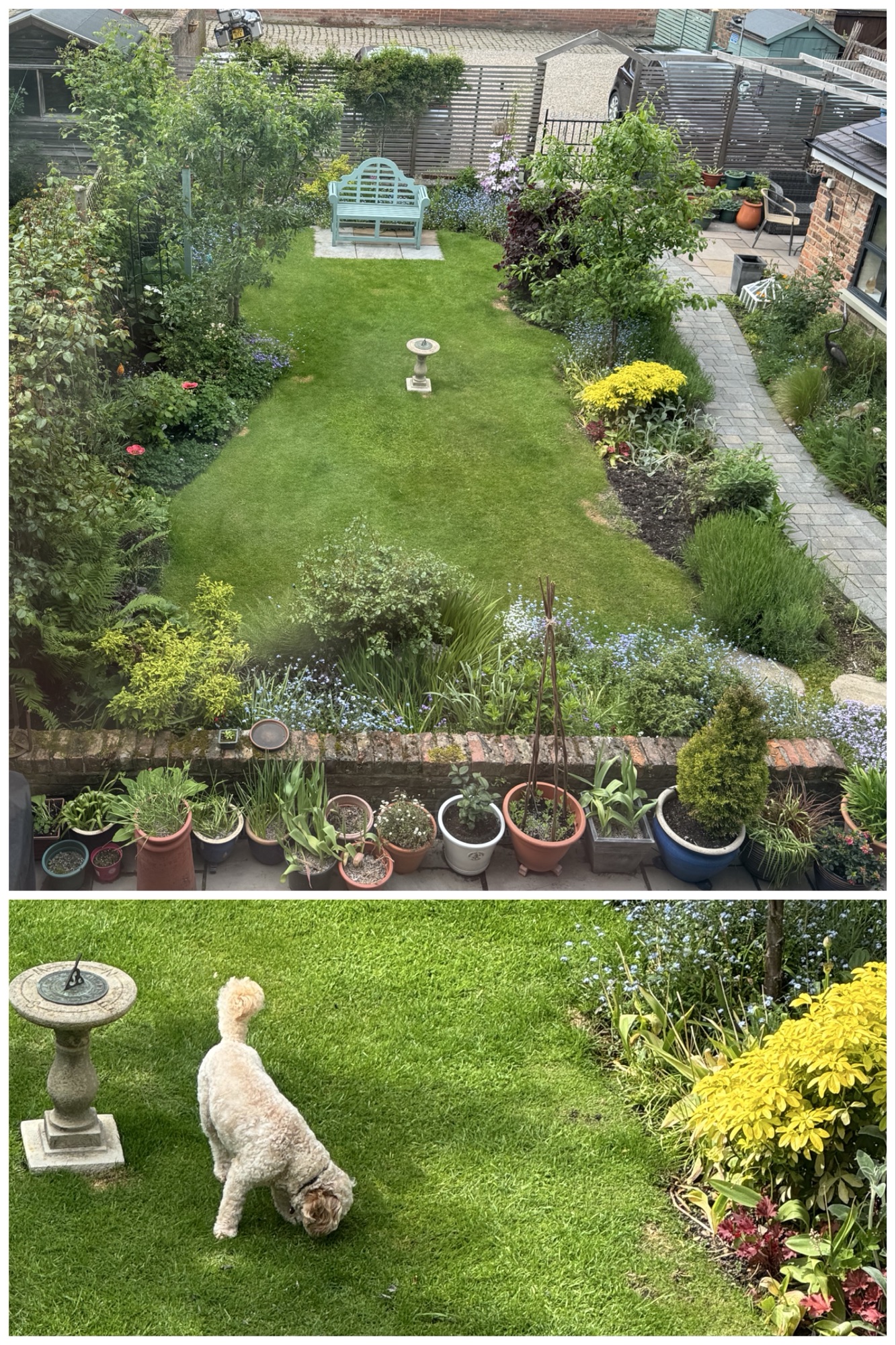
Once we were unpacked, it was time to stroll back into the old city centre, with the priority being me getting fed.
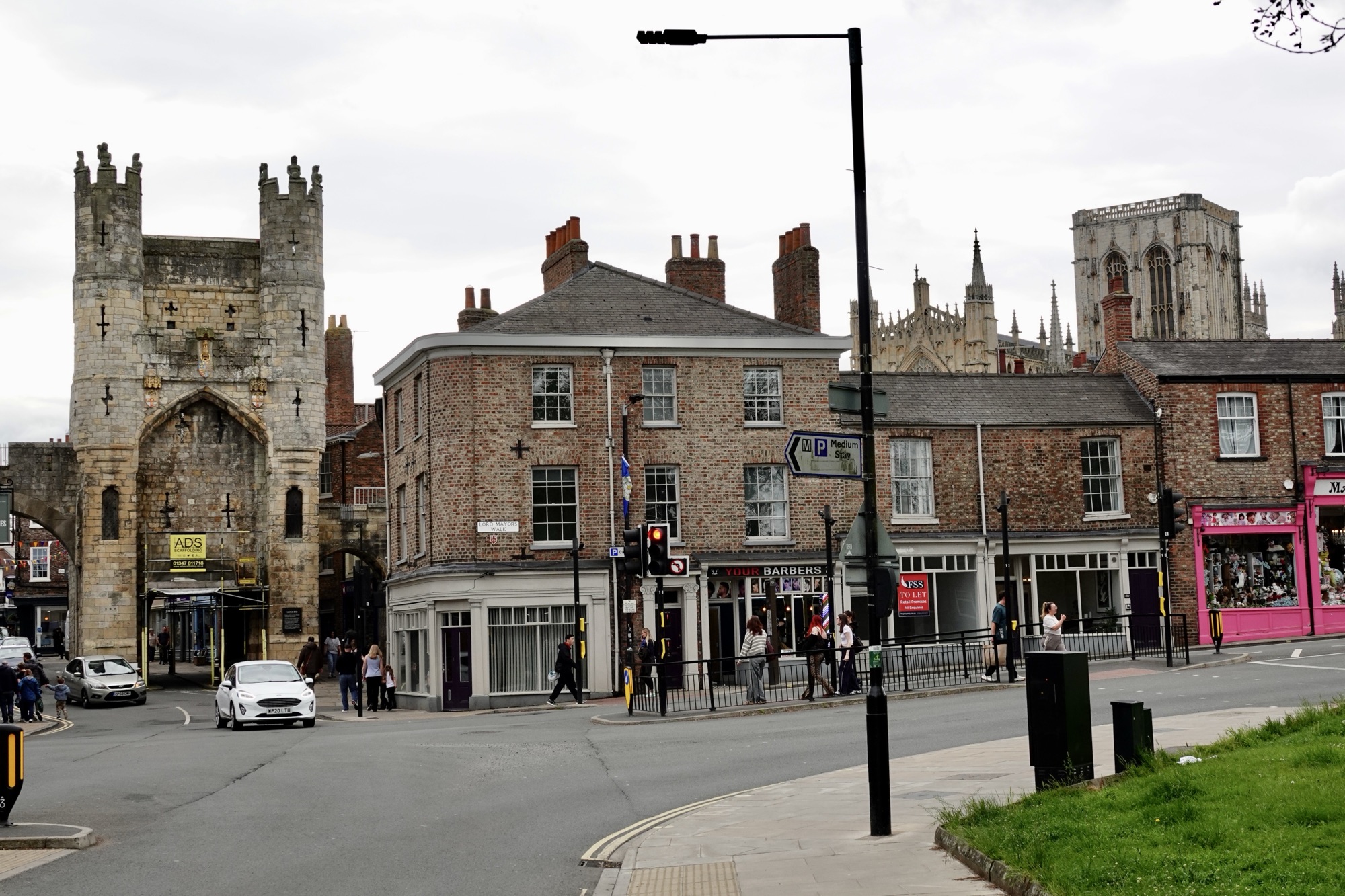
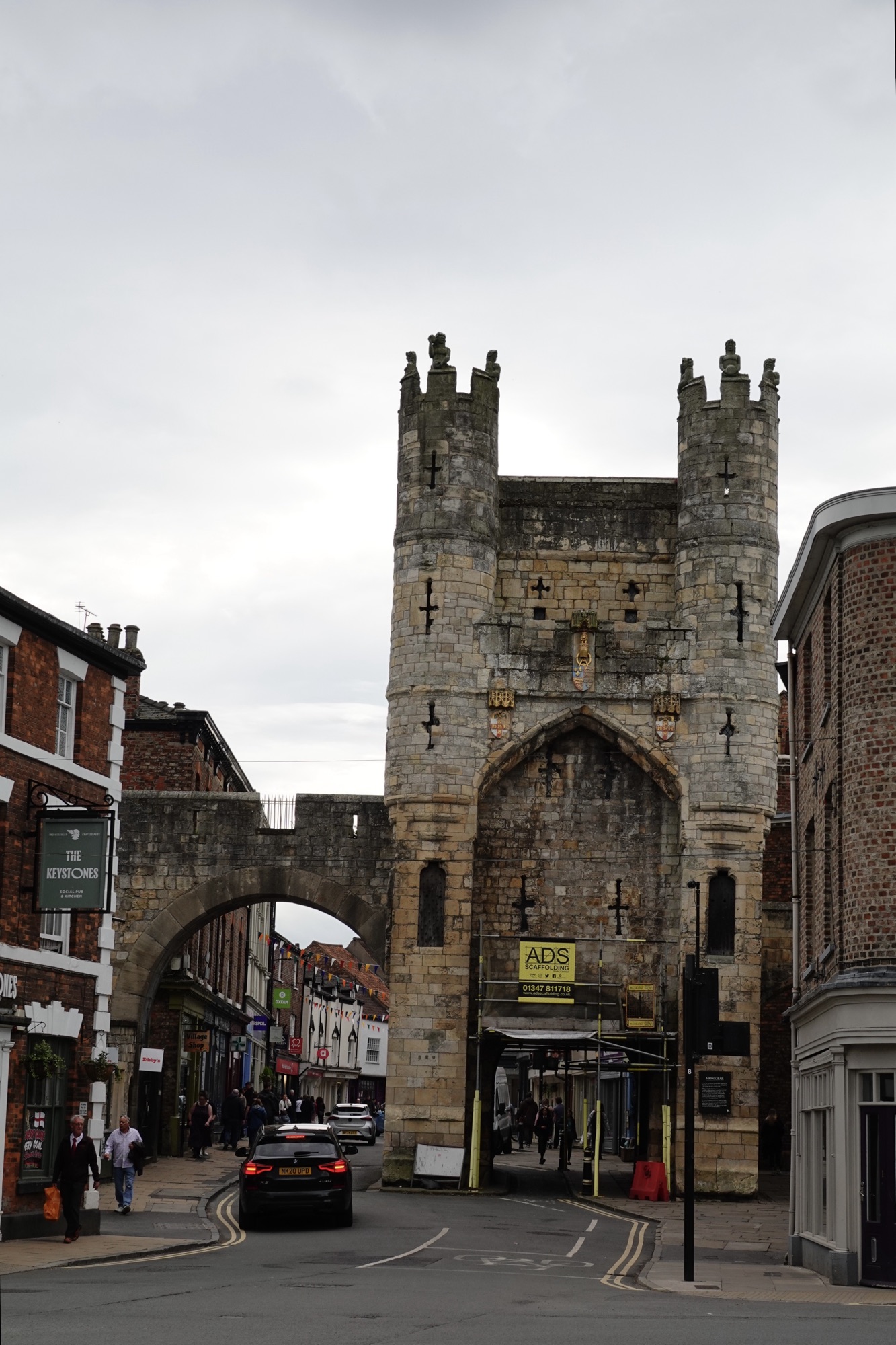
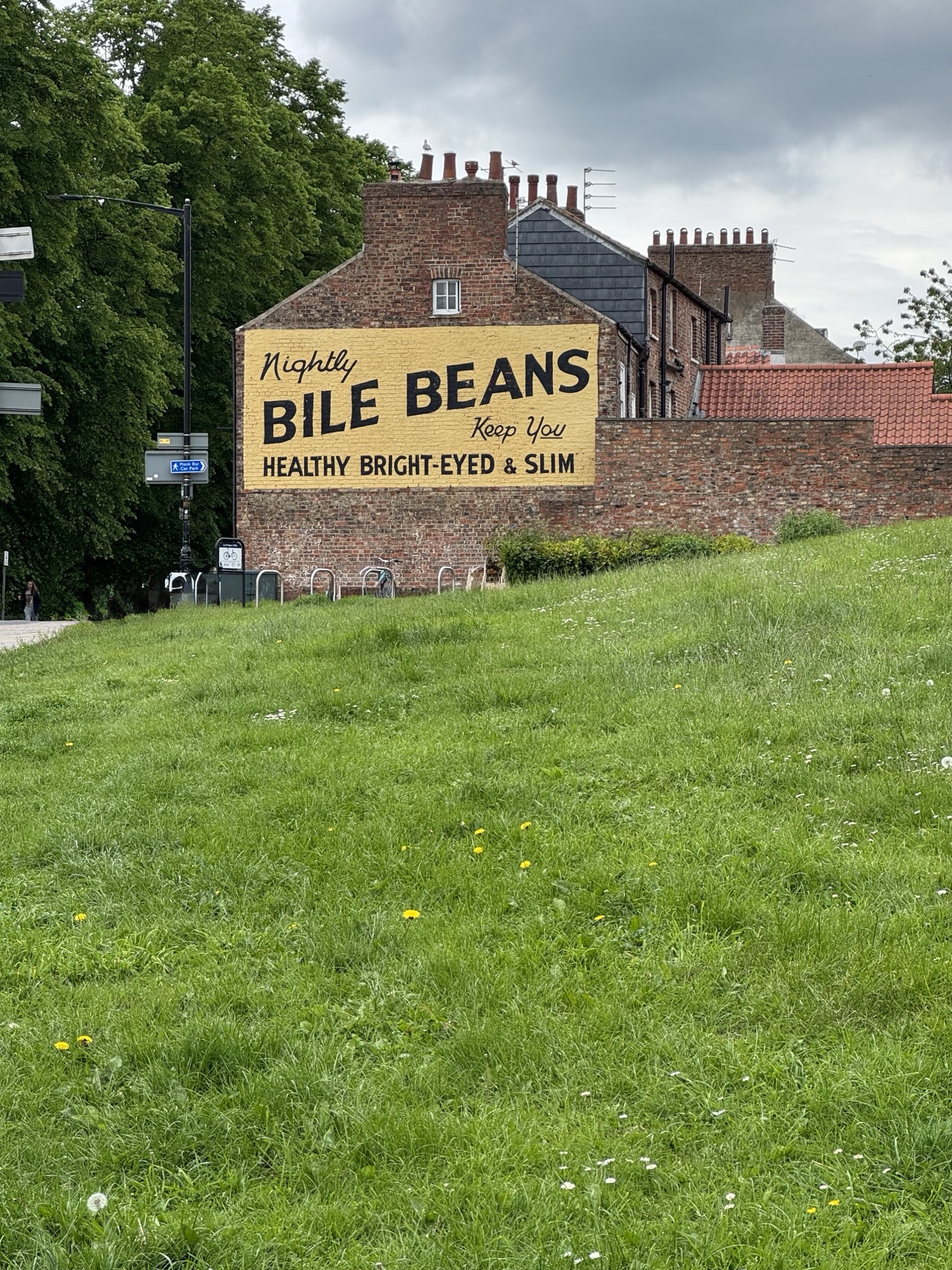
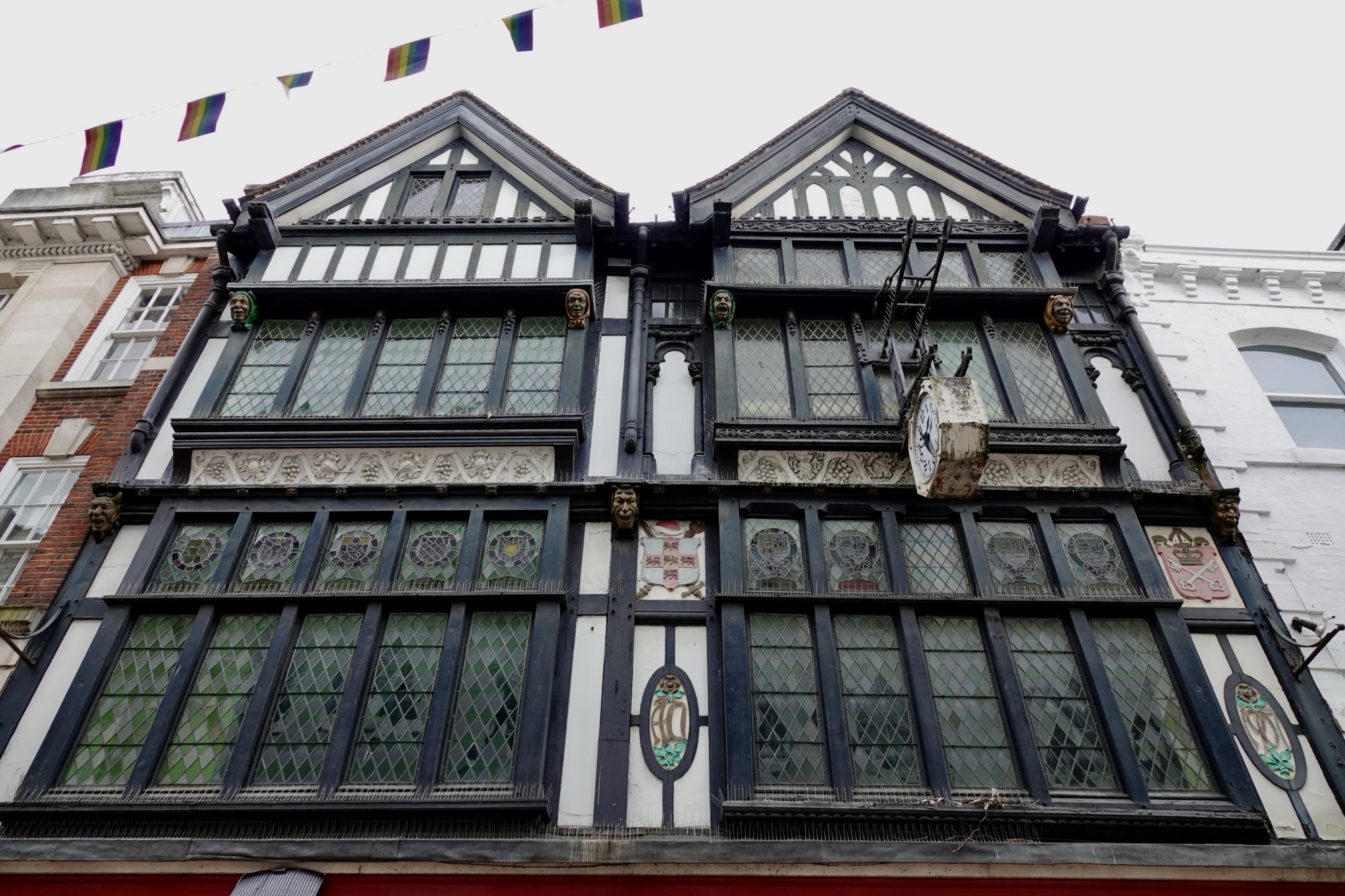
We’re not sure exactly what was being advertised on the wall of this building…
The first cozy pub we walked into, The Black Horse, turned out to be only drinks; no food beyond crisps and pork rinds. I’d forgotten that bars in the UK can sell alcohol without food. The proprietor very kindly recommended another establishment where we could get both food and drinks, so we took his advice and headed to the Royal Oak, a 17th century inn.
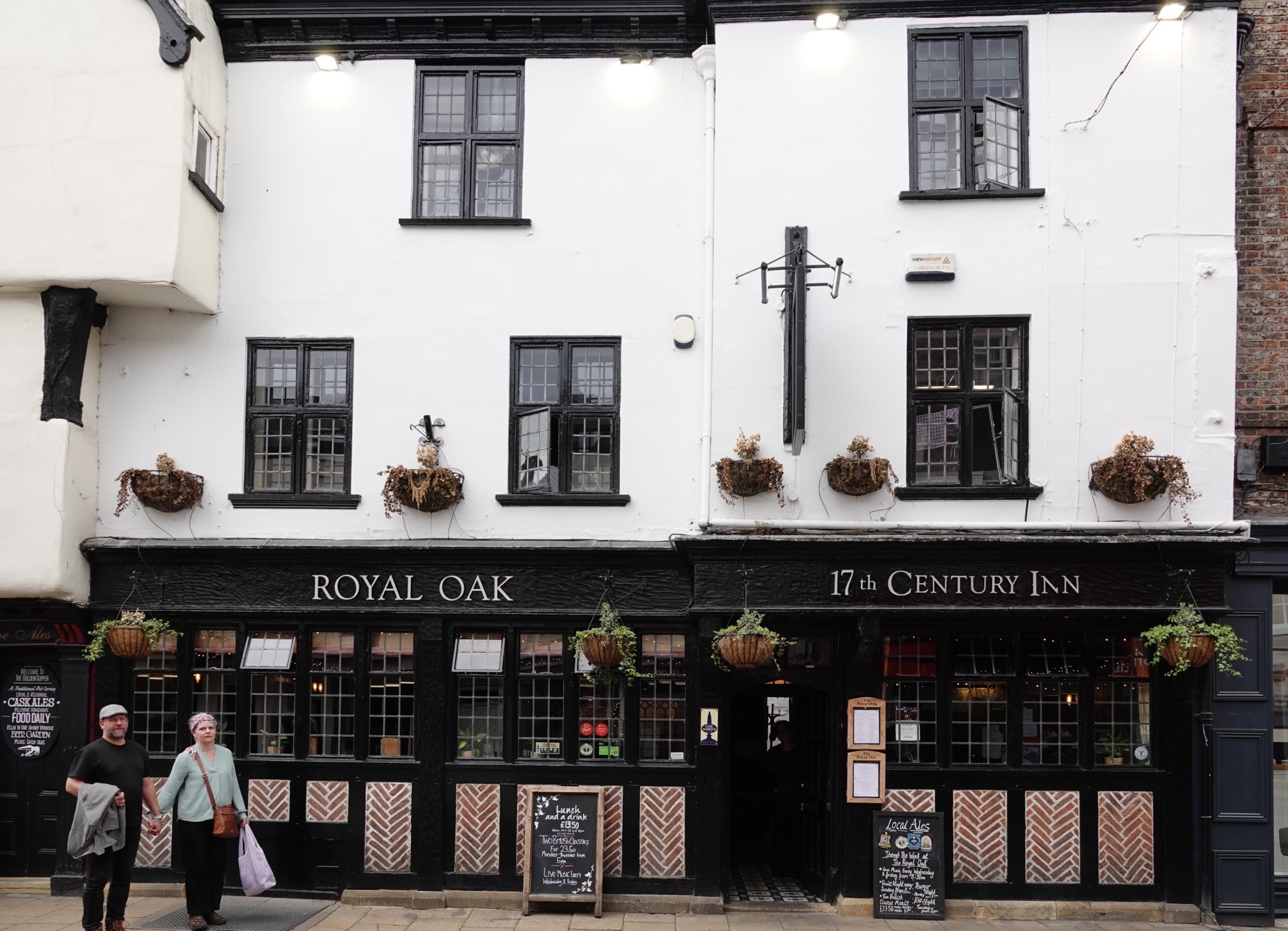
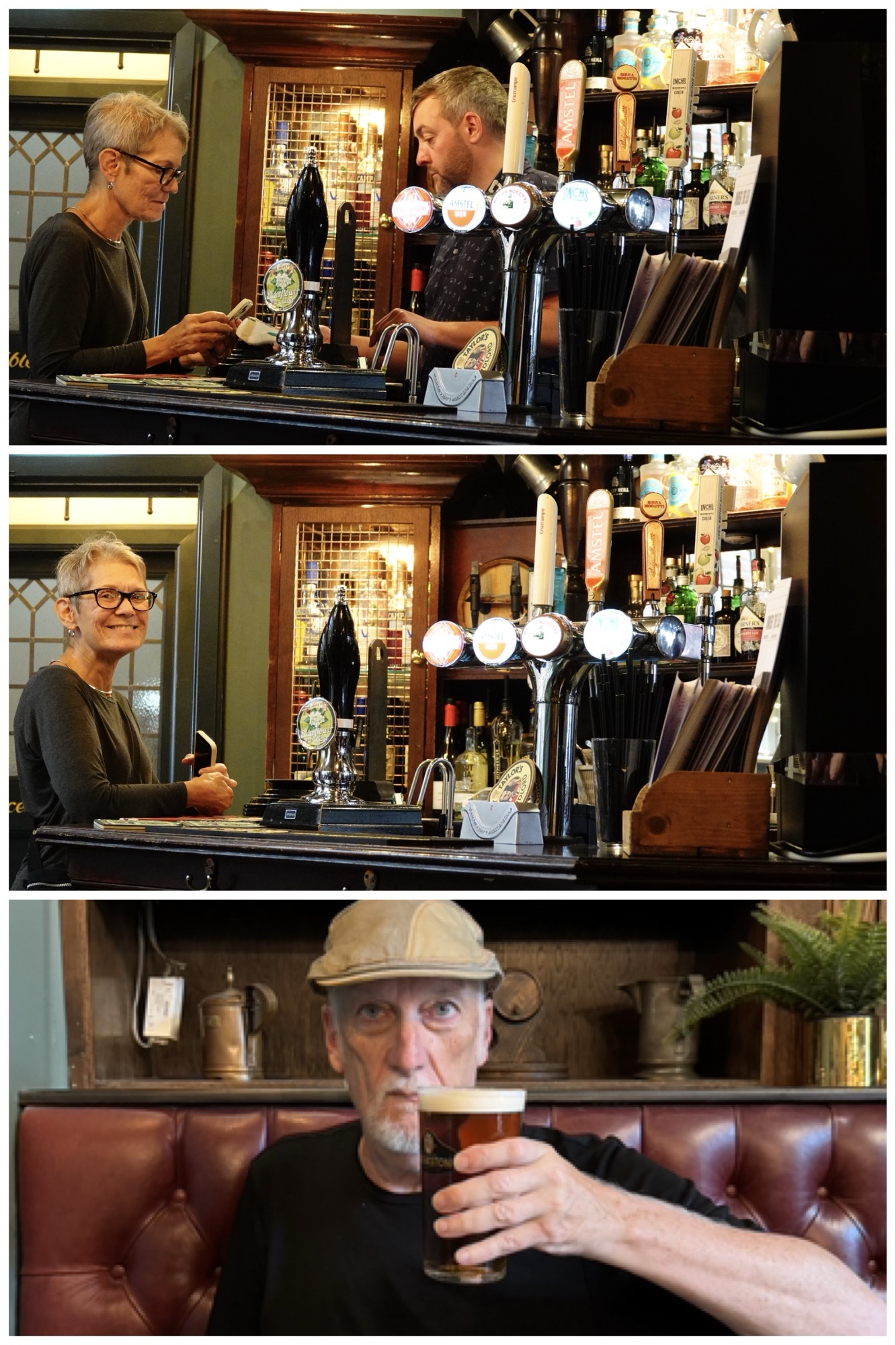
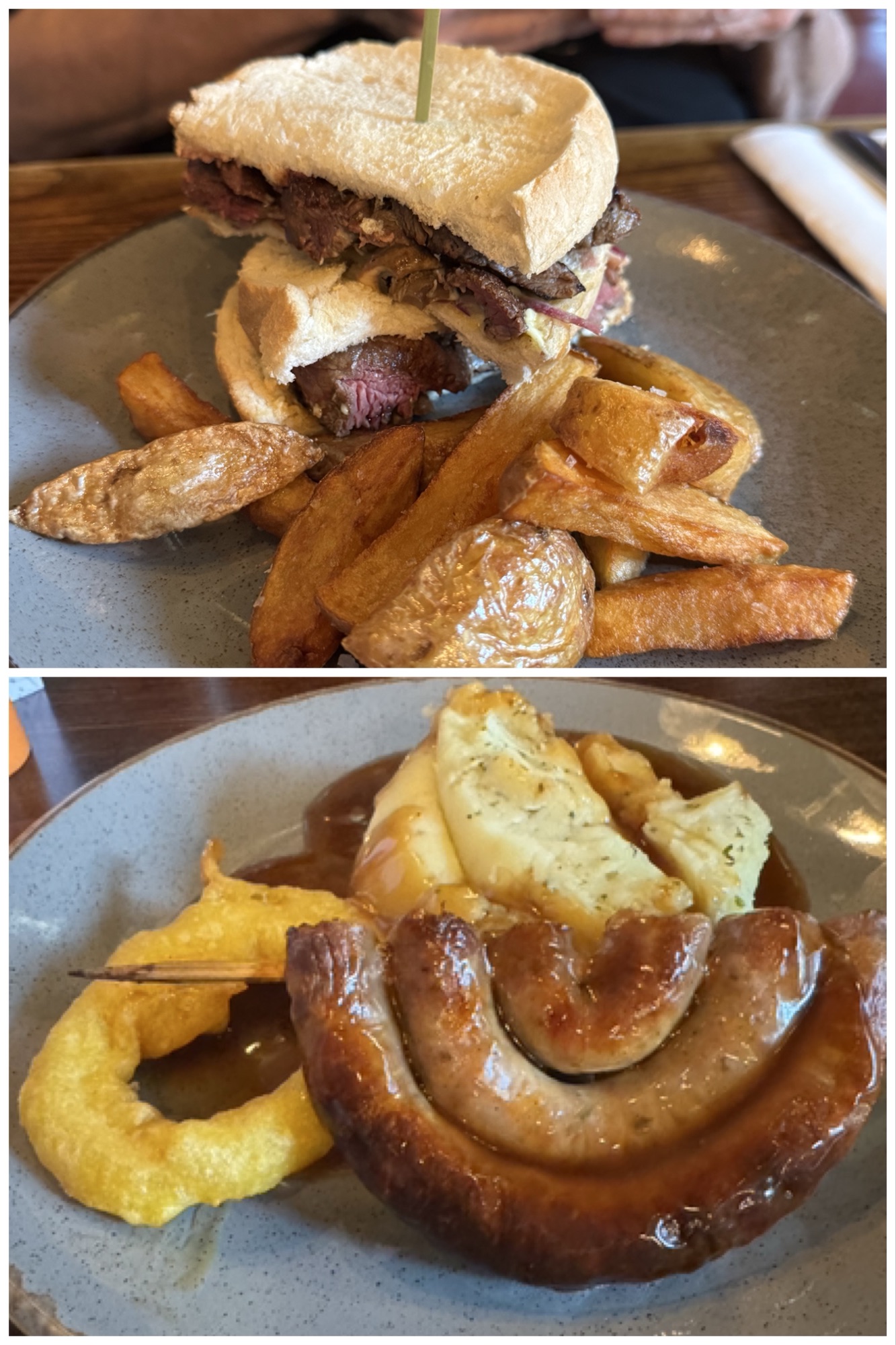
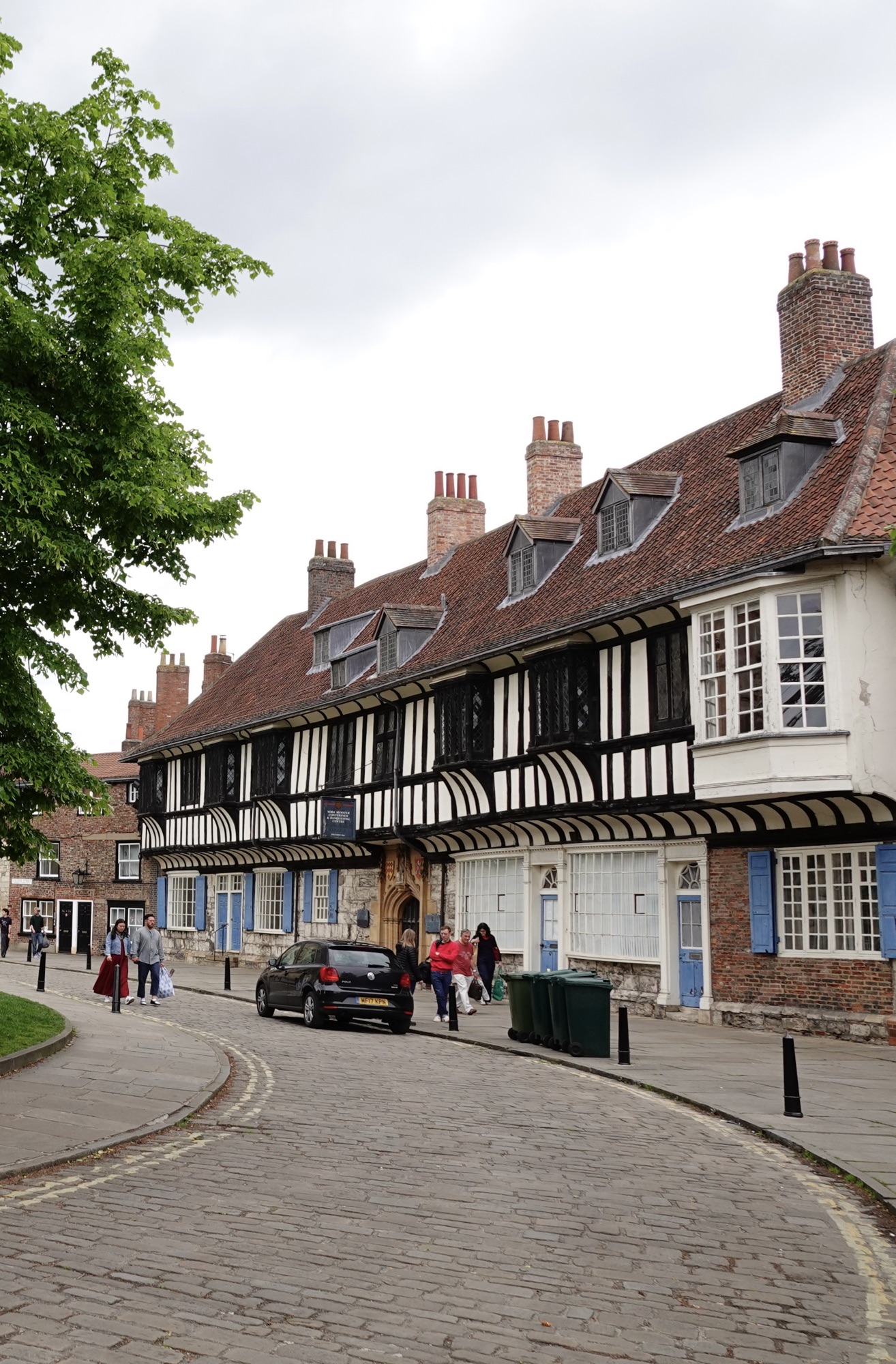
Fortified, we went off in search of a Boots pharmacy to replenish our ibuprofen and paracetamol supplied, knowing that it would be a slow, scenic walk.
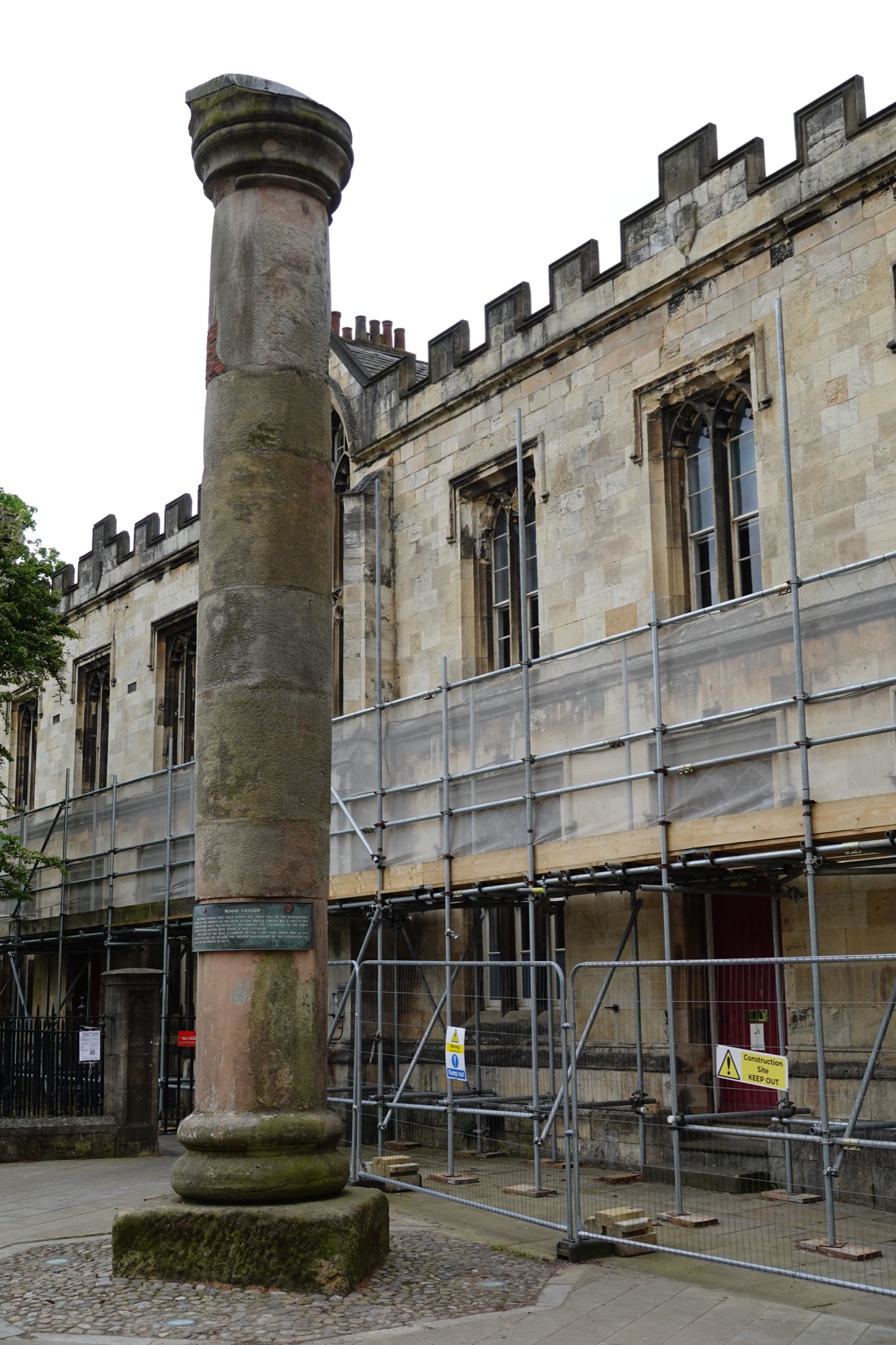
THIS ROMAN COLUMN ONCE STOOD WITHIN THE GREAT HALL OF THE HEADQUARTERS BUILDING OF THE FORTRESS OF THE SIXTH LEGION (WHOSE EMBLEM WAS A BULL) IN THE FOURTH CENTURY AD. IT WAS FOUND IN 1969 DURING THE EXCAVATION OF THE SOUTH TRANSEPT OF THE MINSTER LYING WHERE IT HAD COLLAPSED. IT WAS GIVEN BY THE DEAN & CHAPTER TO THE YORK CIVIC TRUST WHO IN 1971 ERECTED IT ON THIS SITE TO MARK THE 1900TH ANNIVERSARY OF THE FOUNDATION OF THE CITY BY THE ROMANS IN AD 71.
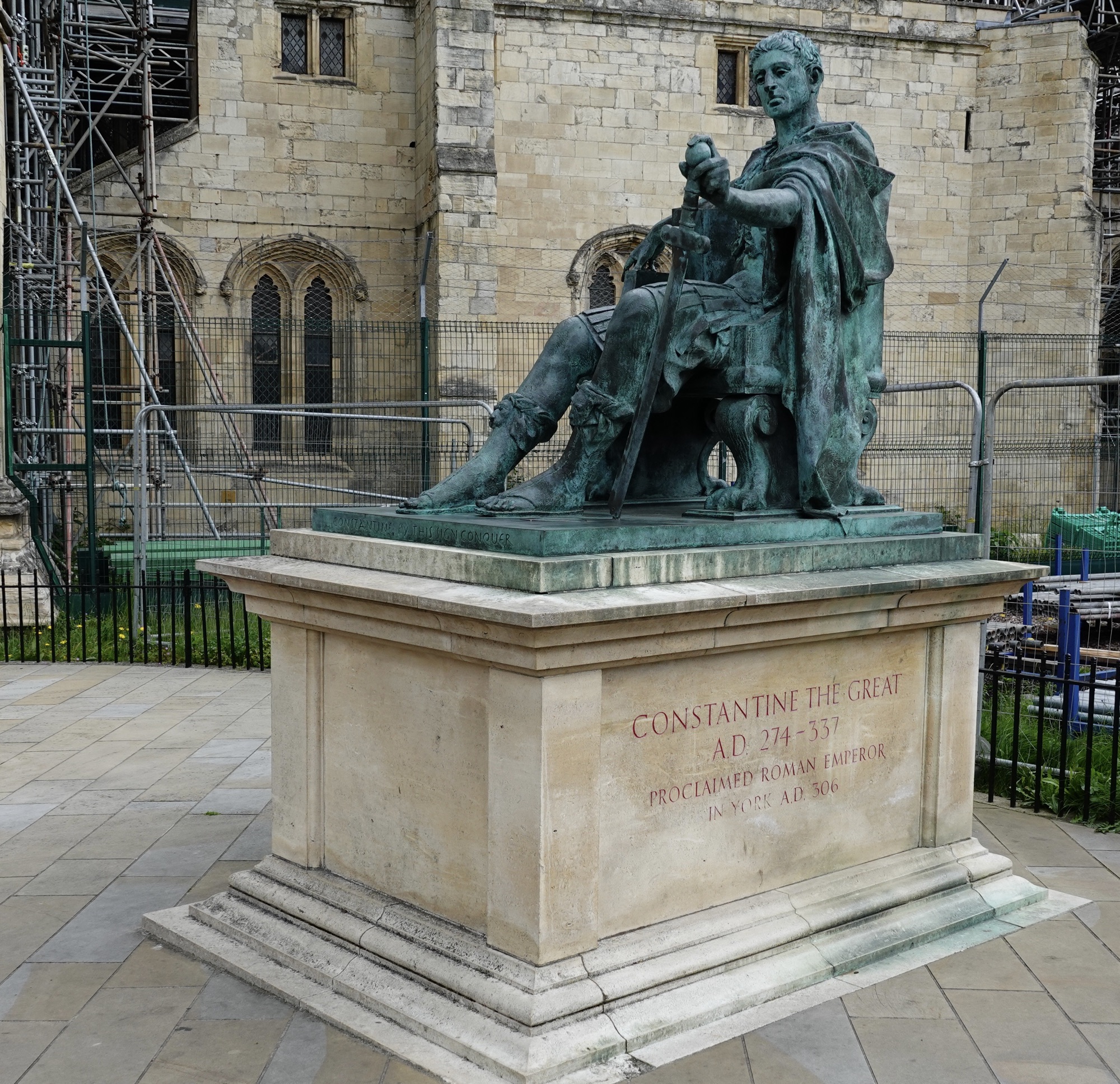
The plaque beside it reads: “CONSTANTINE THE GREAT 274 – 337
Near this place, Constantine was proclaimed Roman Emperor in 306.
His recognition of the civil liberties of his Christian subjects, and his own conversion to the Faith, established the religious foundations of Western Christendom.”
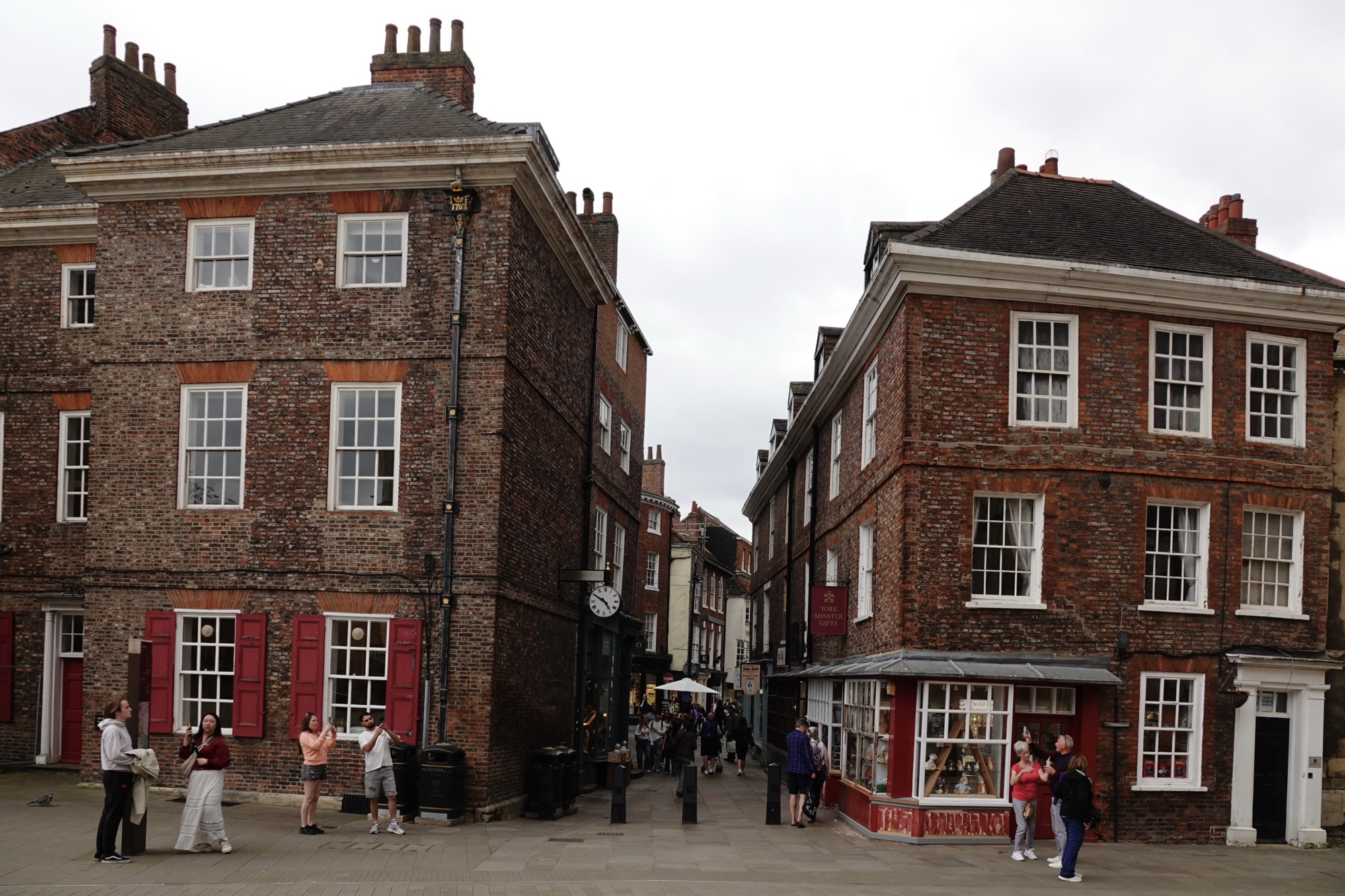
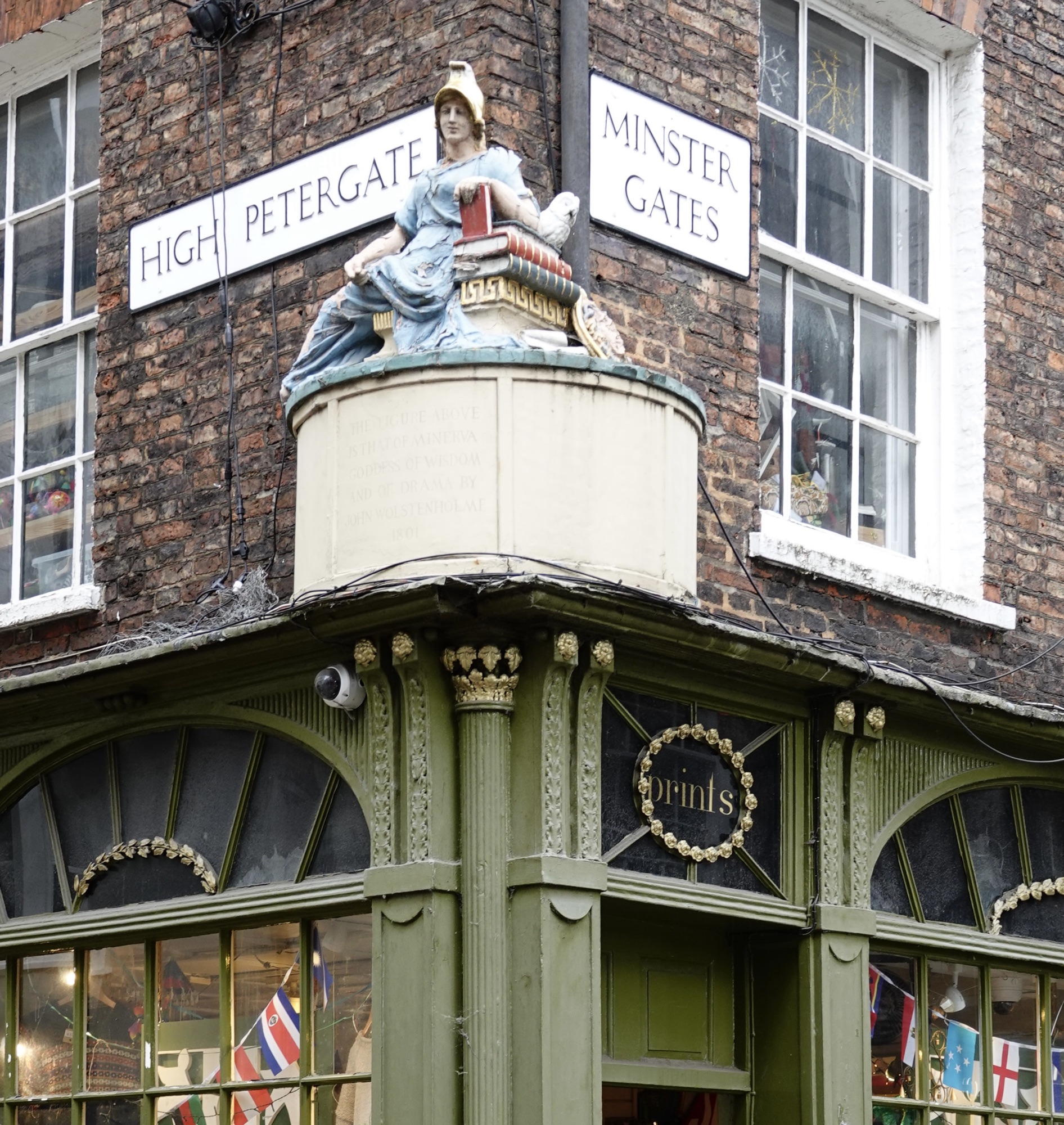
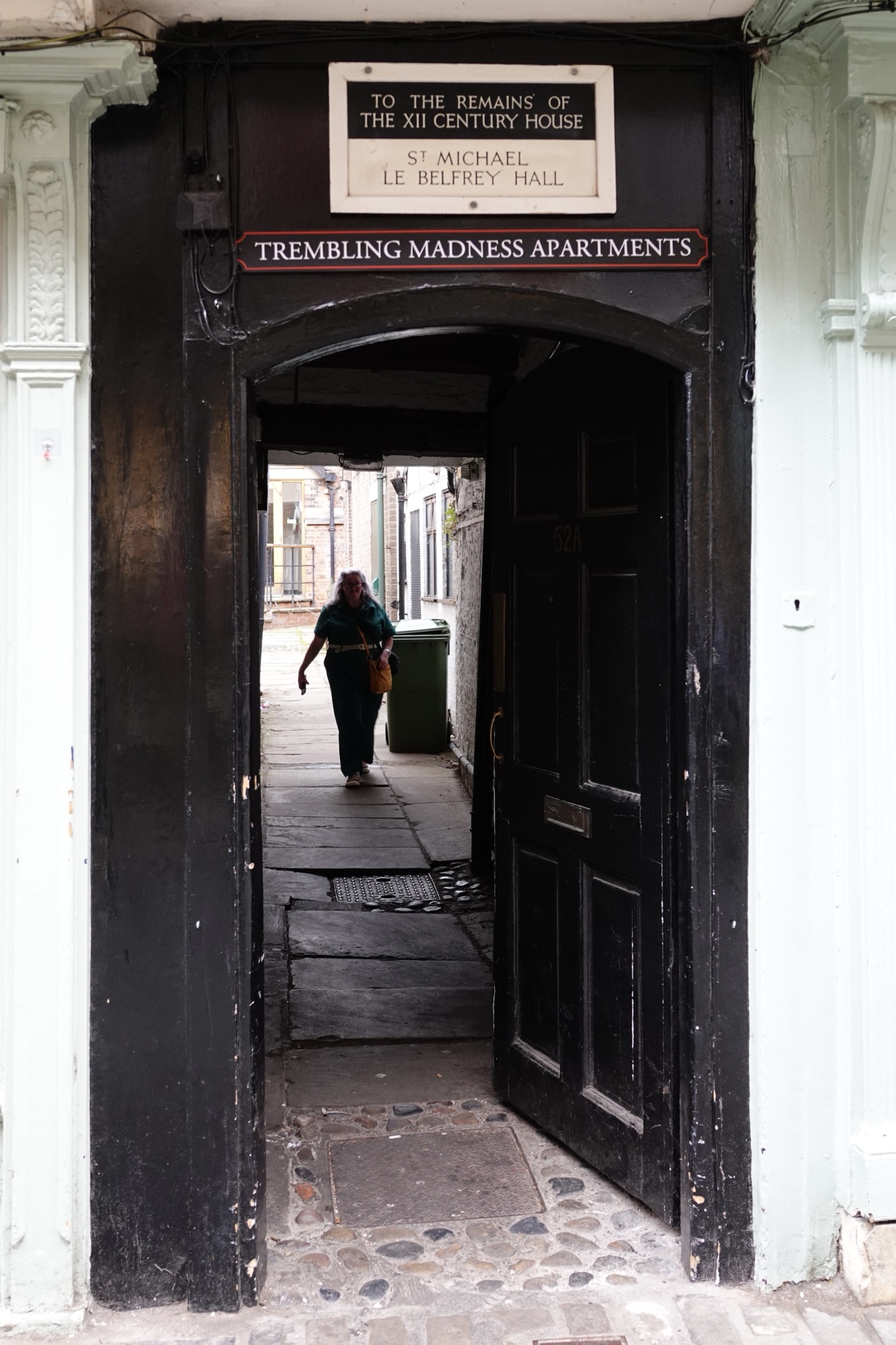
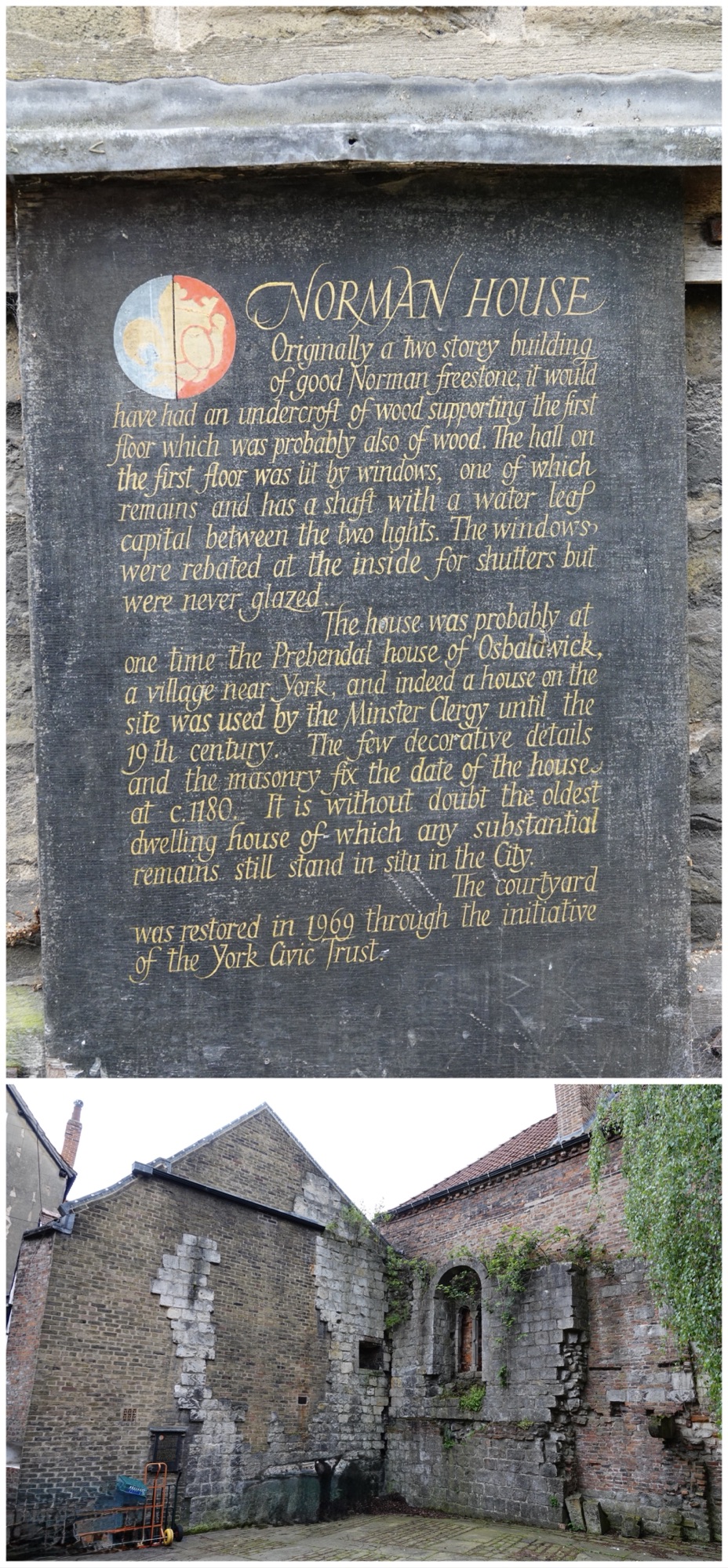
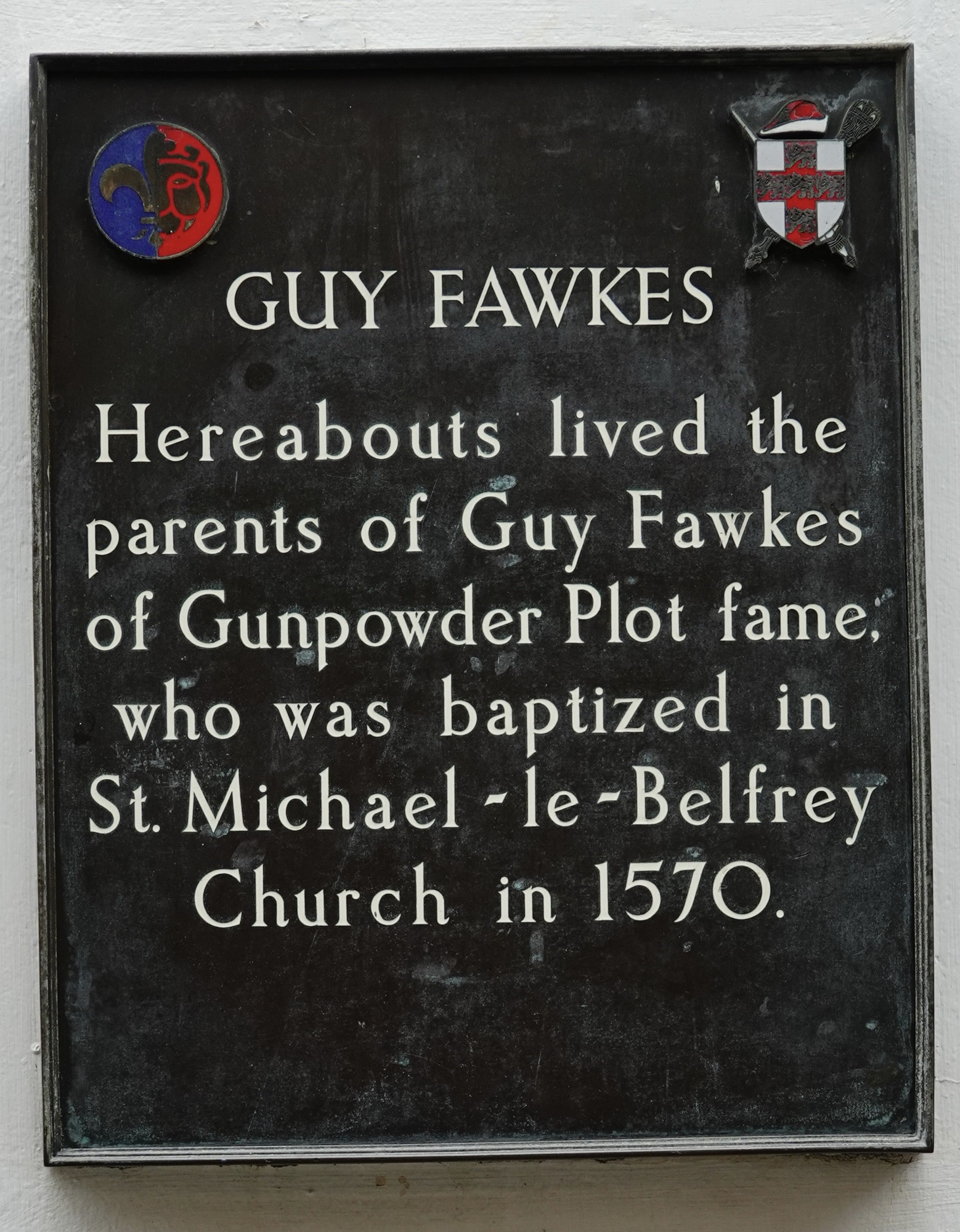
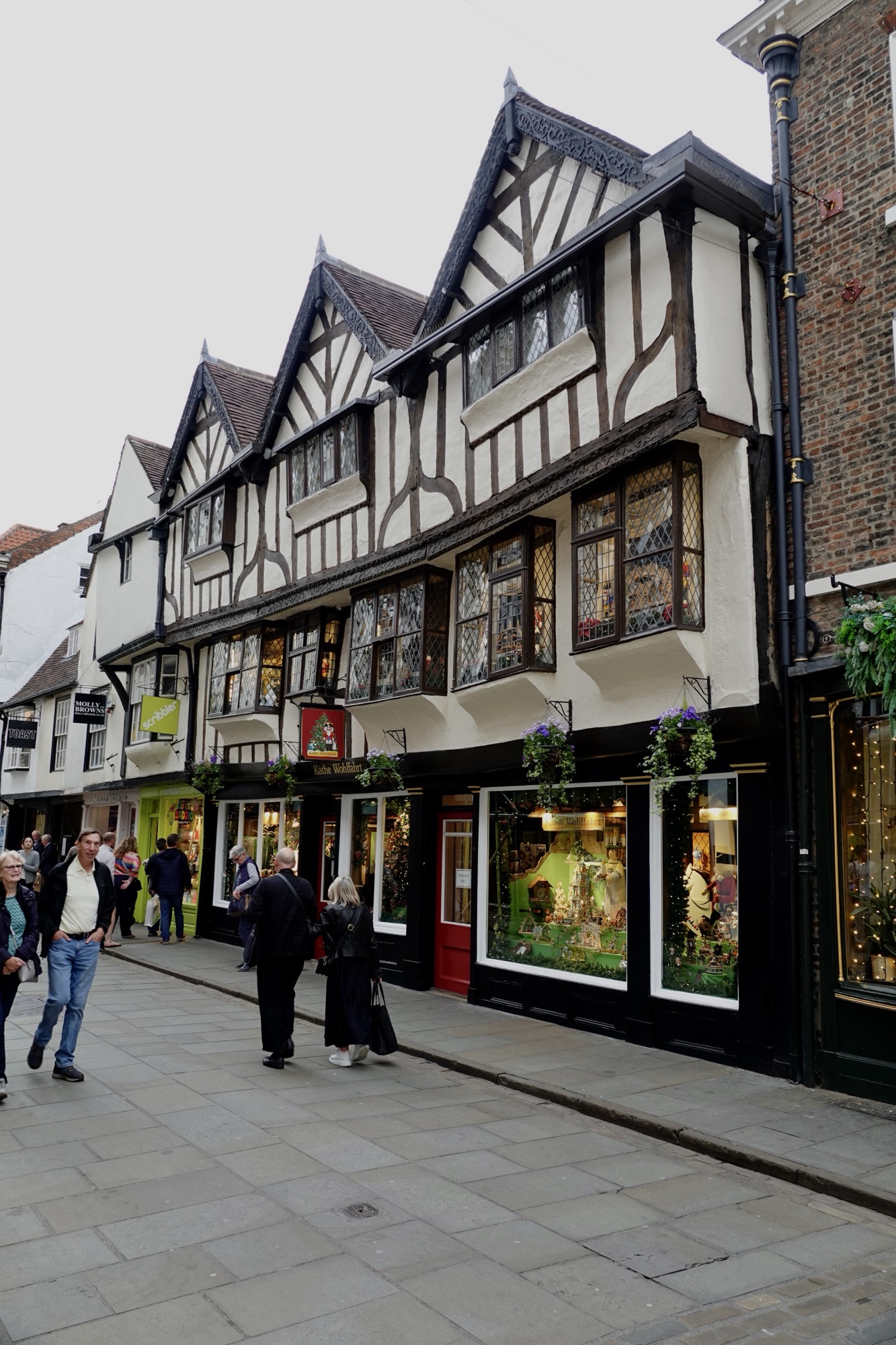
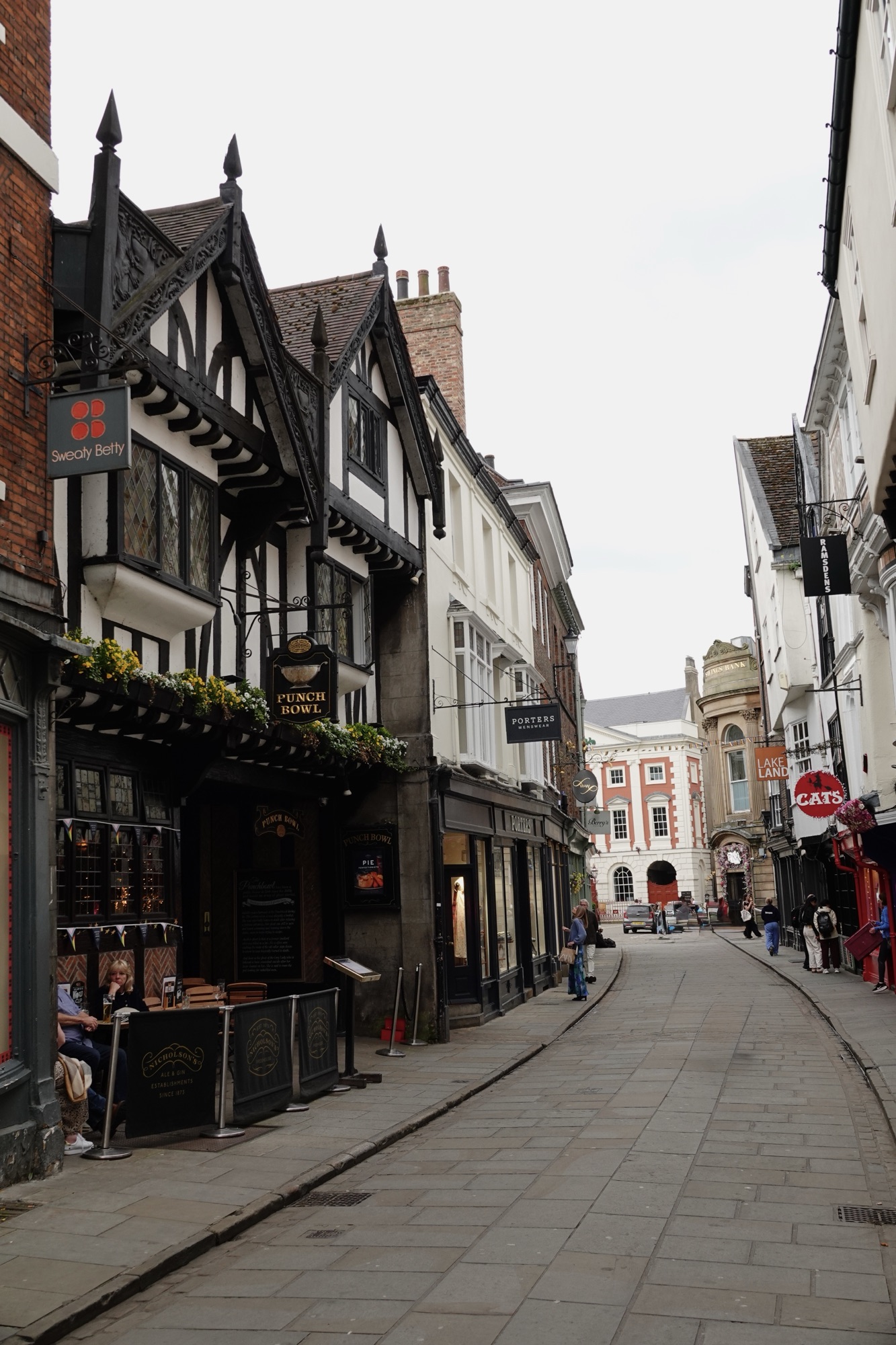
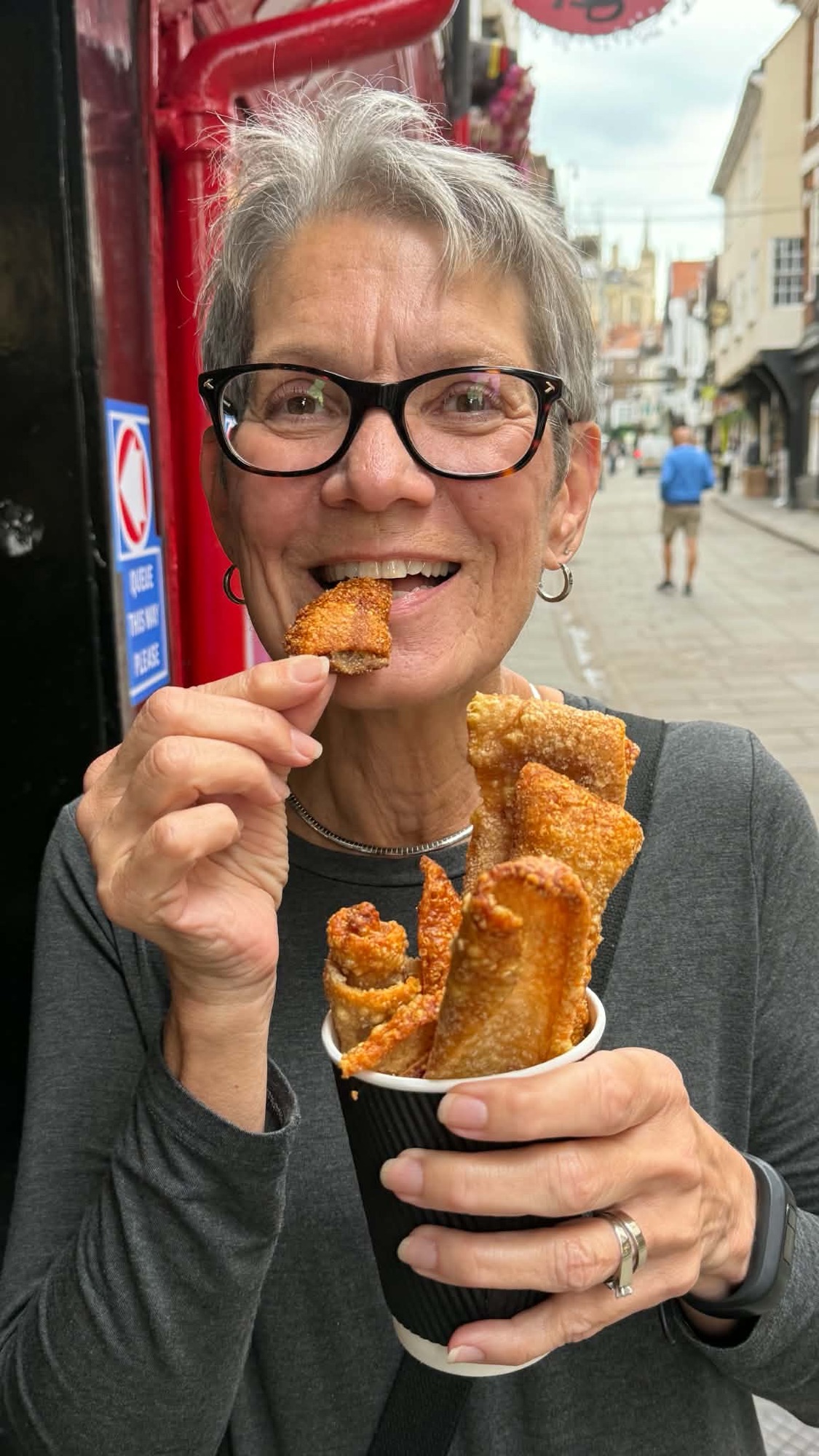
We resisted detouring down any of the side streets, and did eventually complete our task at Boots, but not before getting sidetracked by a sandwich shop called The York Roast Company, one of whose offerings was a “bucket of cracklings”, taken from the huge pork joints they were slicing, for £5. Ted felt that we had to have that, and we did enjoy the salty crispy goodness, but even sharing we couldn’t finish it. No regrets though.
On our return walk we were distracted by a set of twinned churches.
The first we noticed because of its clock.
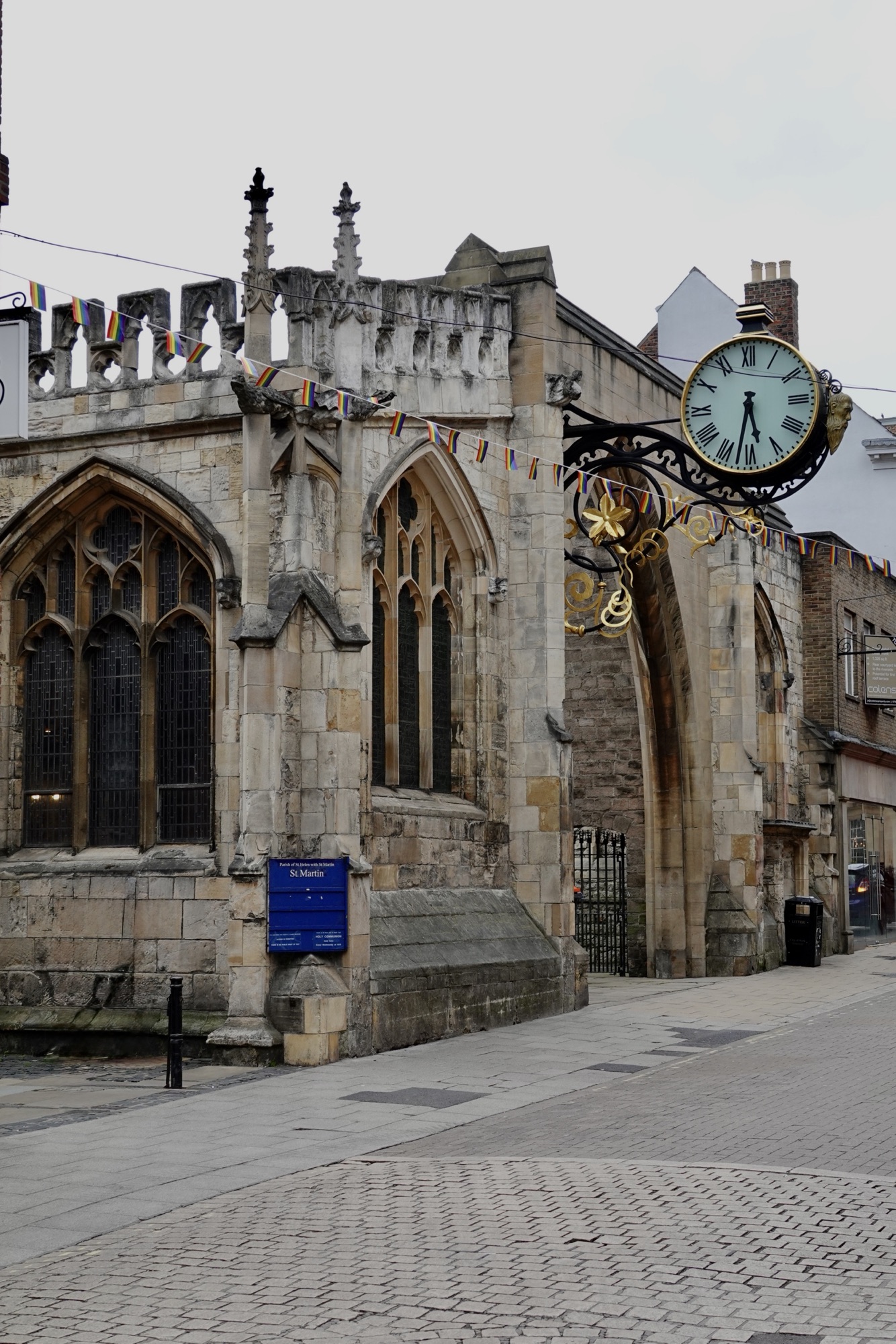
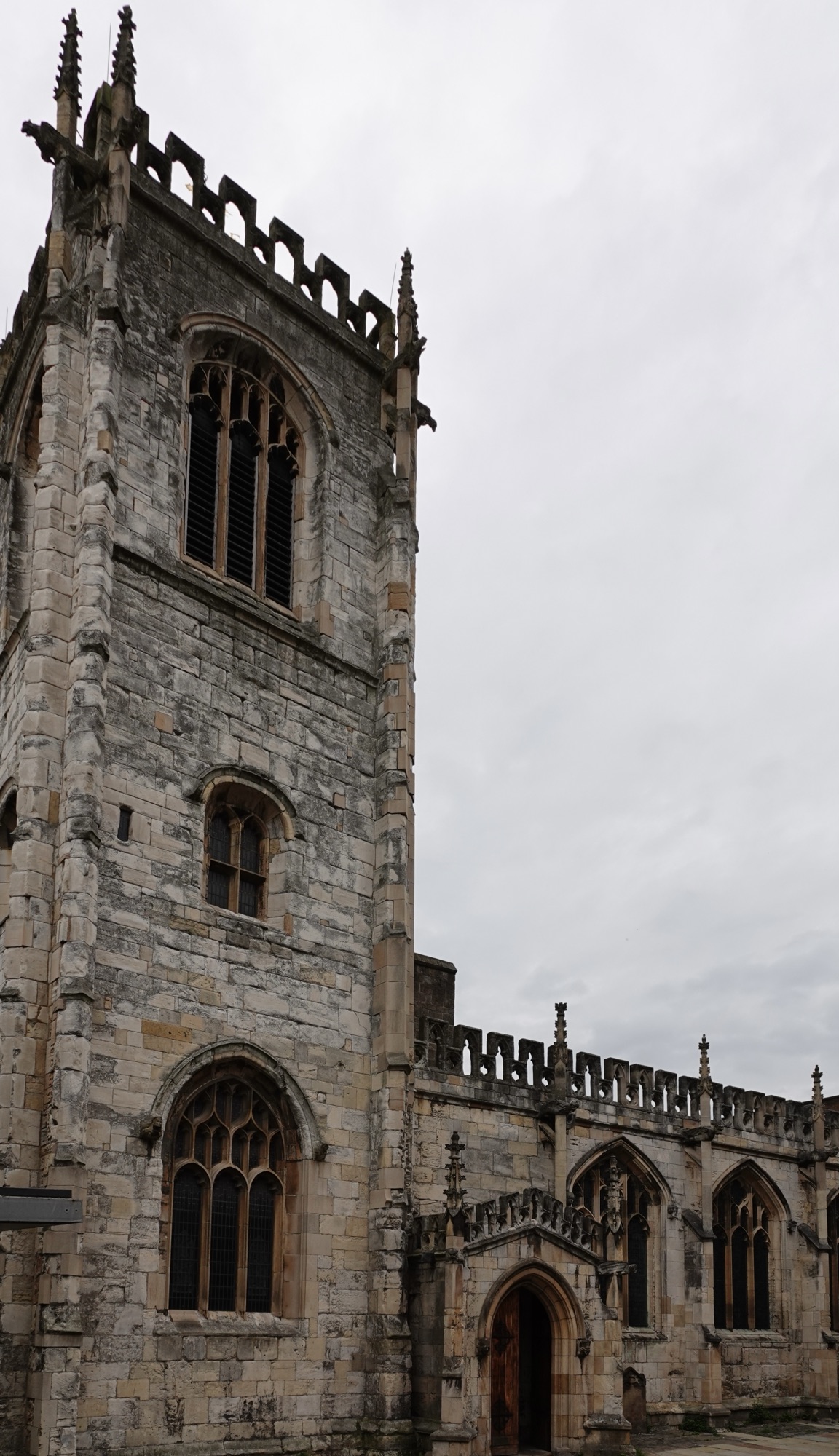
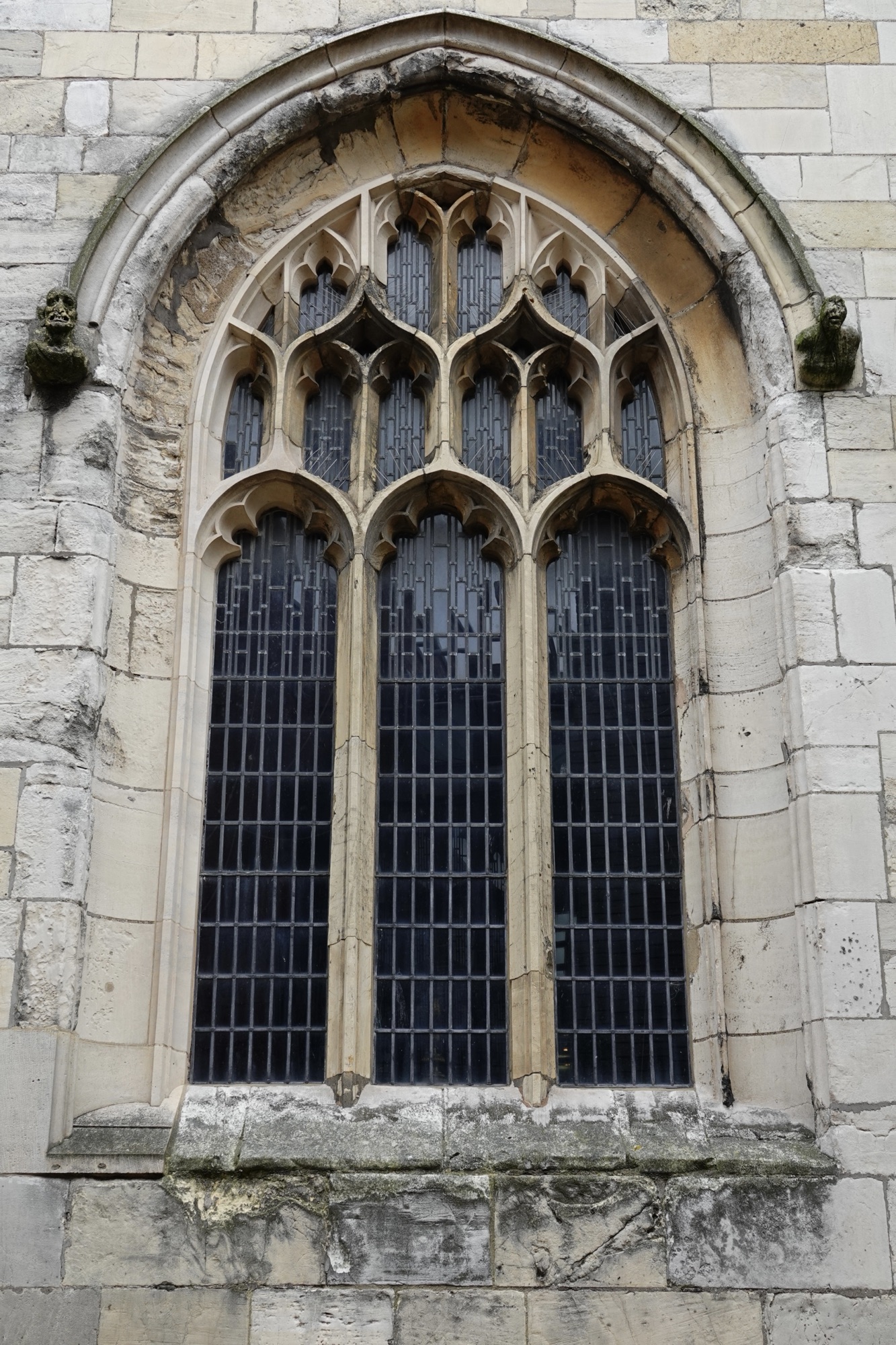
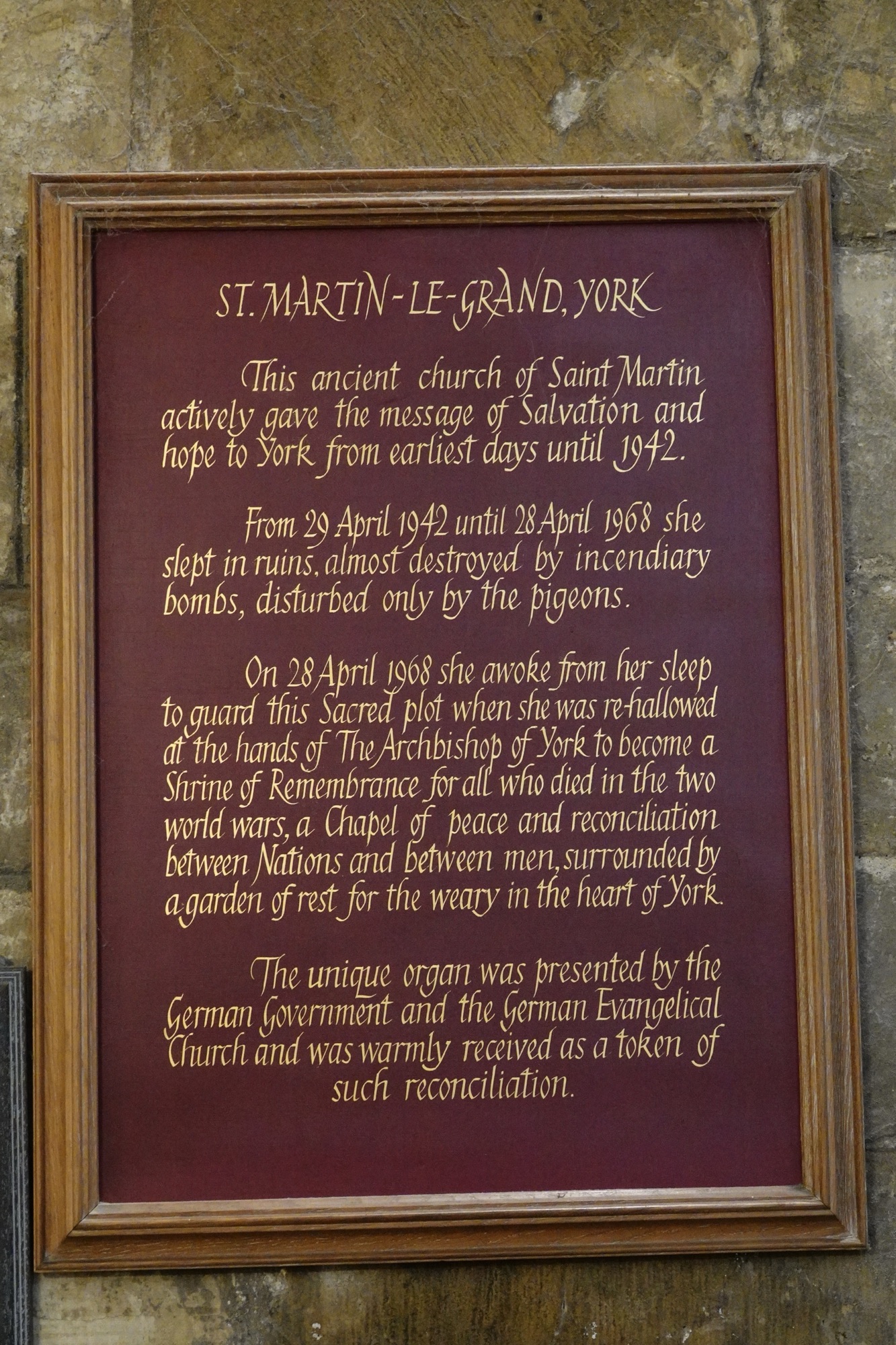
At one time, St. Martin le Grand was the local parish church, and St. Helen Stonegate was the “Chapel of Ease”, a term I’d never heard before, but is basically a prayer chapel as opposed to the church where formal services are held. However, St. Martin was almost completely destroyed by a German incendiary bomb on April 29, 1942, during WWII. It was partially rebuilt and in April 1968 was rededicated as a Shrine of Remembrance for all the dead of wars, and to peace and reconciliation.
It is now, in effect, the Chapel of Ease, while St. Helen Stonegate, which remained intact, has become the parish church.
I was particularly moved by the reconciliation component so in evidence here.
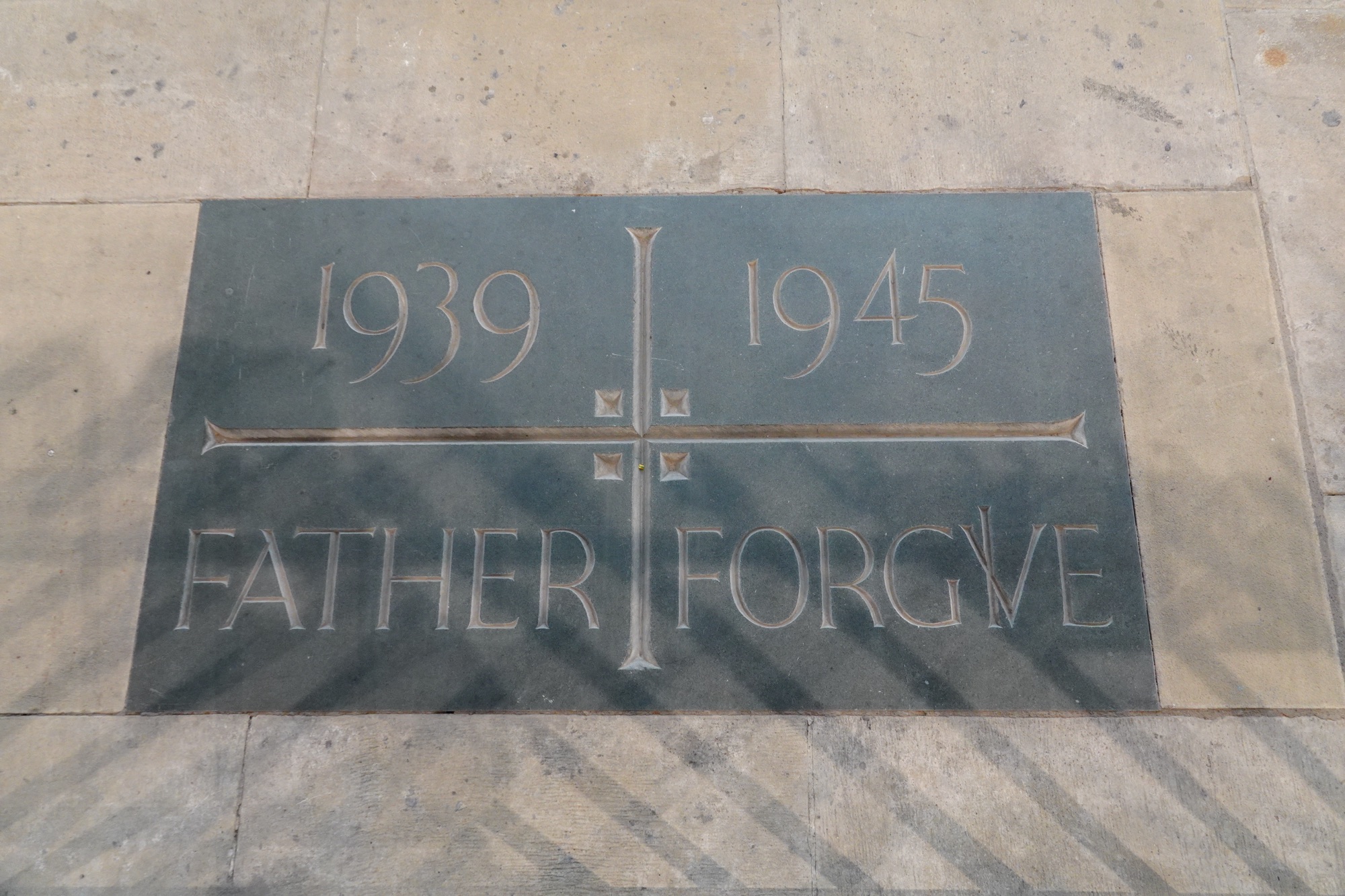
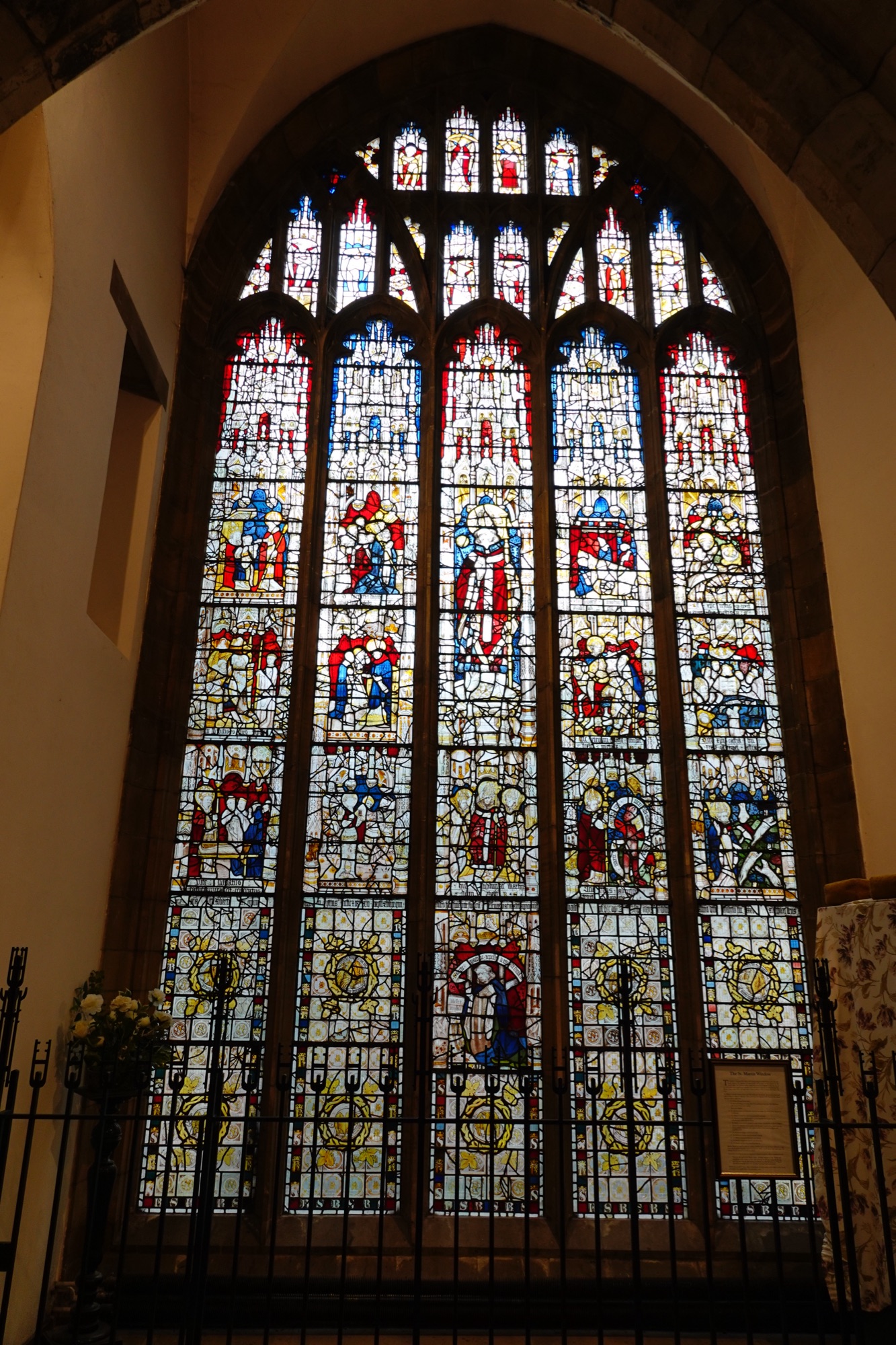
Set in a wall above the alcove next to the St. Martin window is a Book of Remembrance commemorating all known to have lost their lives in the 1942 raid, because “from both sides of the conflict all were victims of war.” The incredible 15th century window (donated to the church in 1437 by the parish Vicar) survived because it had been taken down in 1940 for safekeeping.
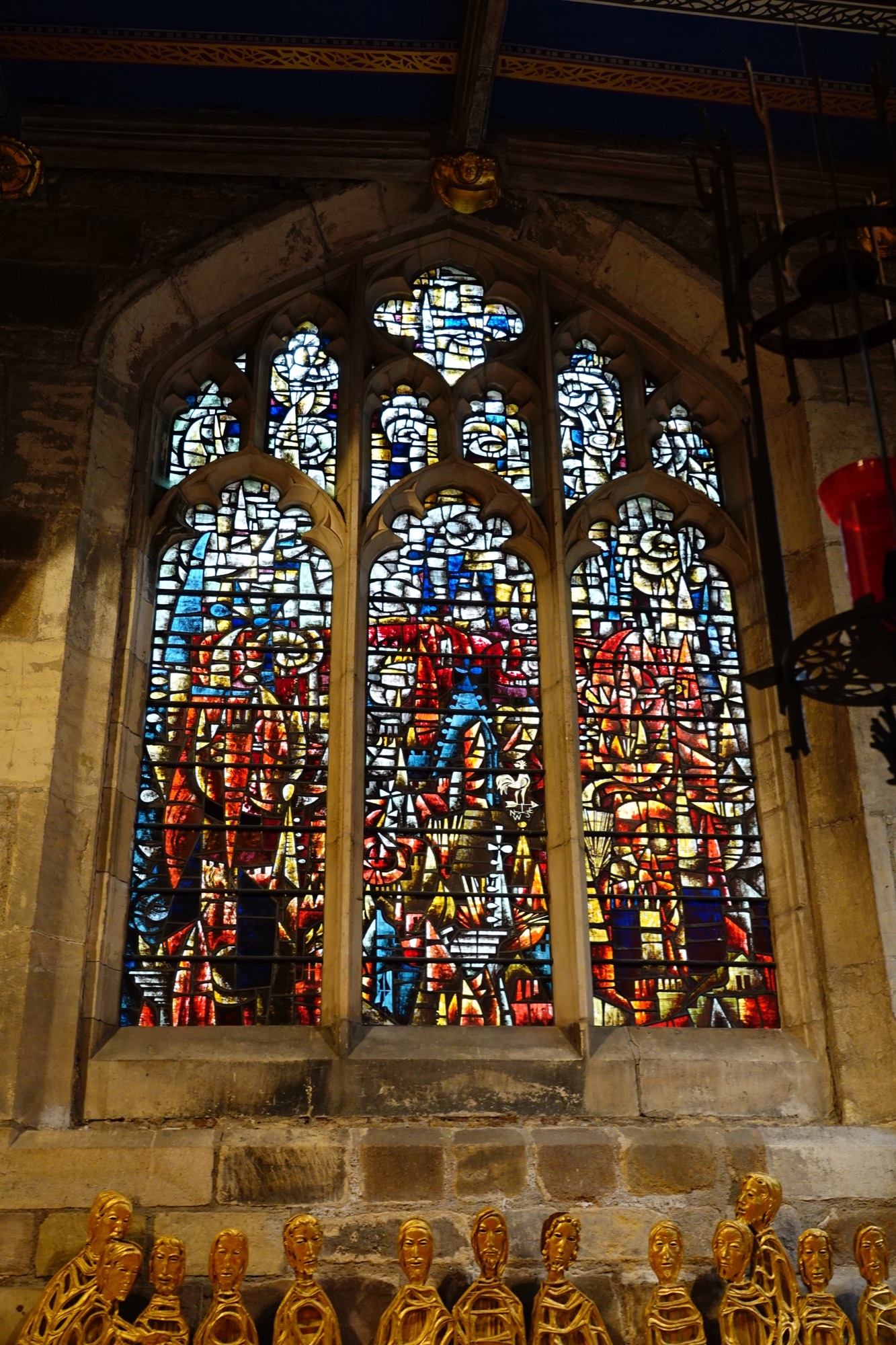
The East window, above the altar, is a 1965 work by Harry Stammers and depicts the church engulfed in the 1942 flames.
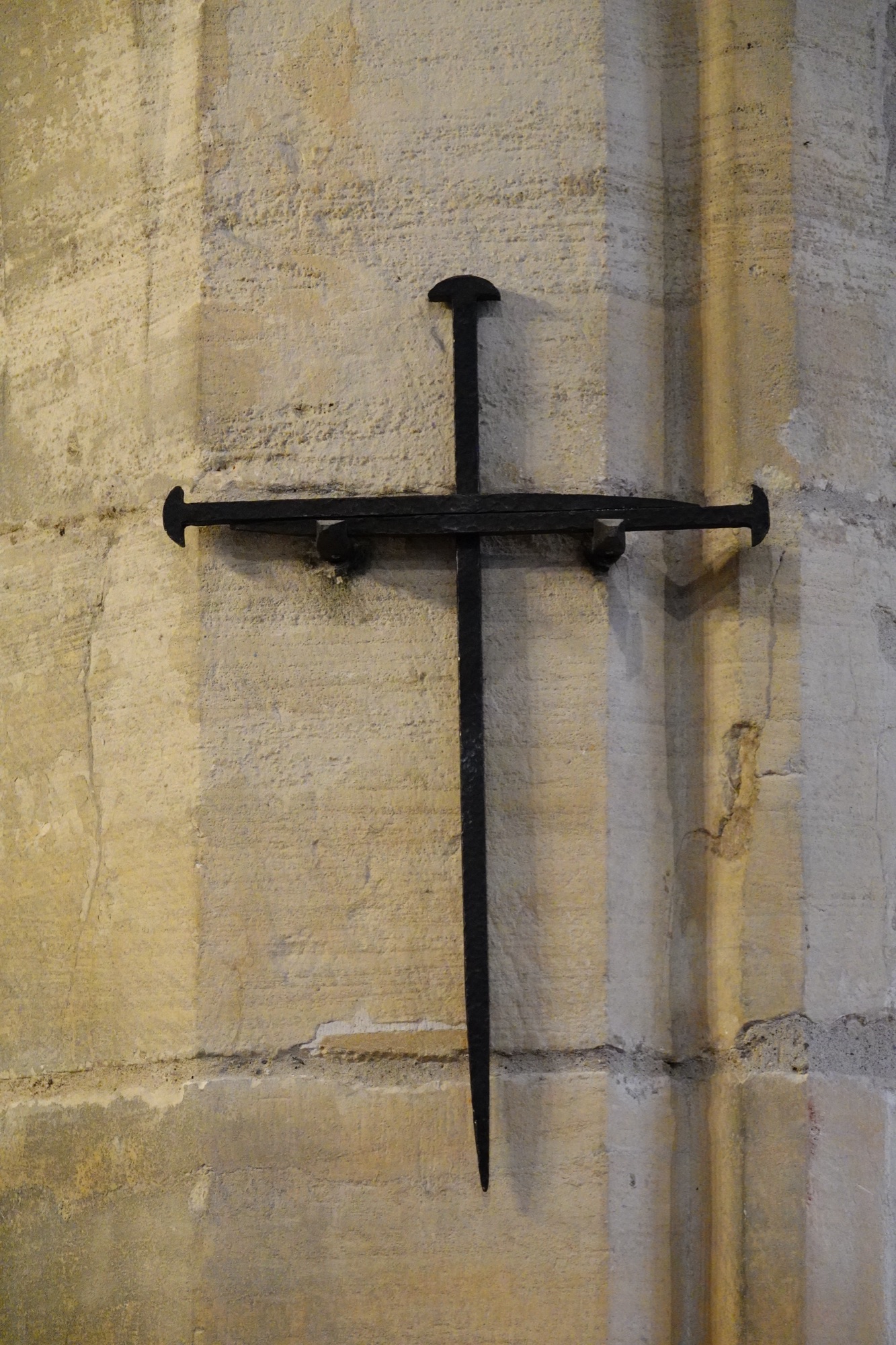
In 2012, on the 70th anniversary of the bombing raid, St. Martin became a partner in the Community of the Cross of Nails. The cross here (and in all churches in the Community) is a replica of that forged from mediaeval nails found in the bombed ruins of Coventry Cathedral in 1940.
We somehow missed taking a photo of the modern organ built in 1967 was a gift from the people of Germany and the German Evangelical Church at the time of St. Martin’s rededication, but learned that it is regularly played.
If it was the bell that drew us into Saint Martin, it was music that drew is into St. Helen: the organist had just opened the doors and put out a sign saying “church open to visitors”, and gone back inside to play.
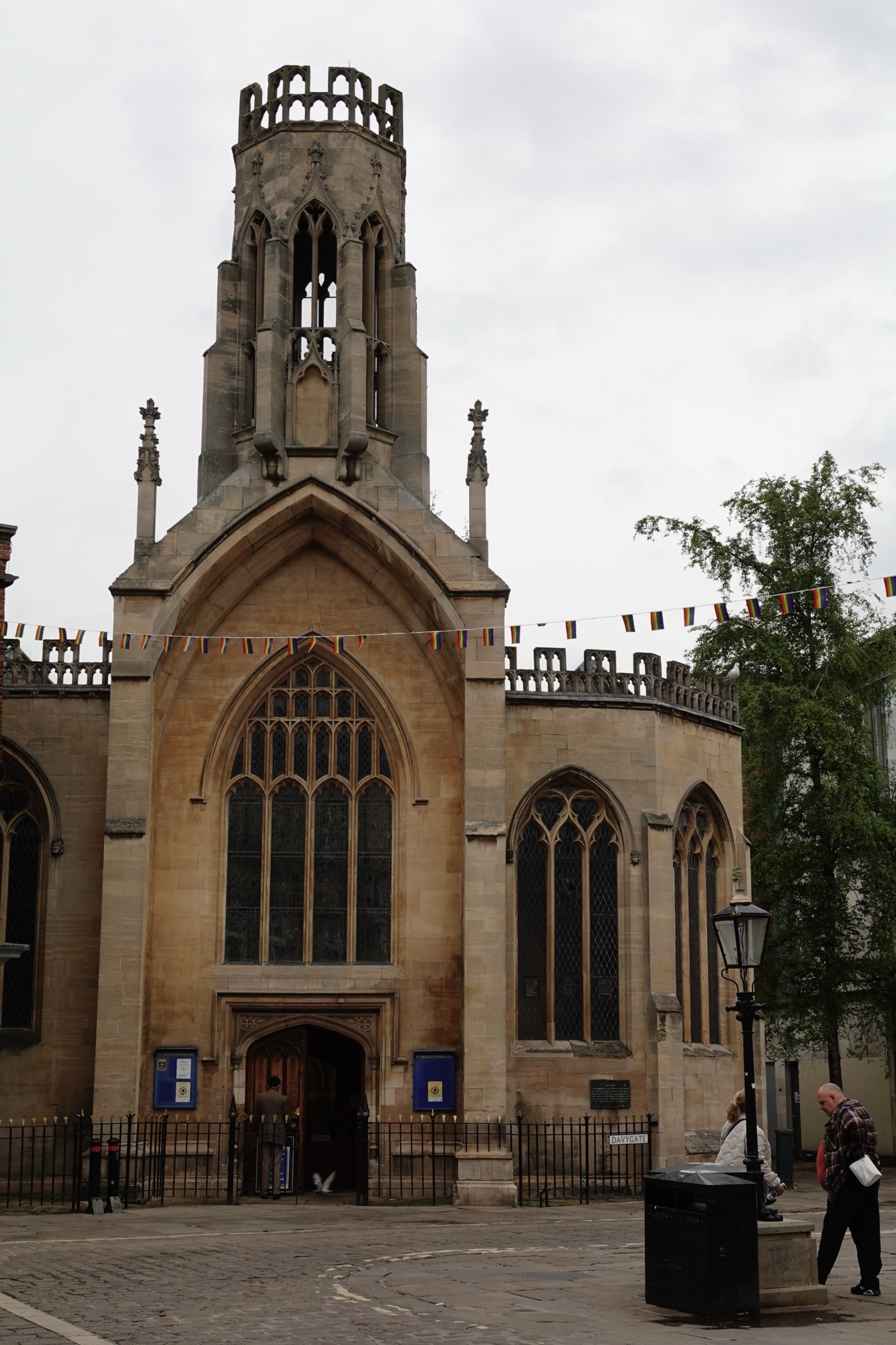
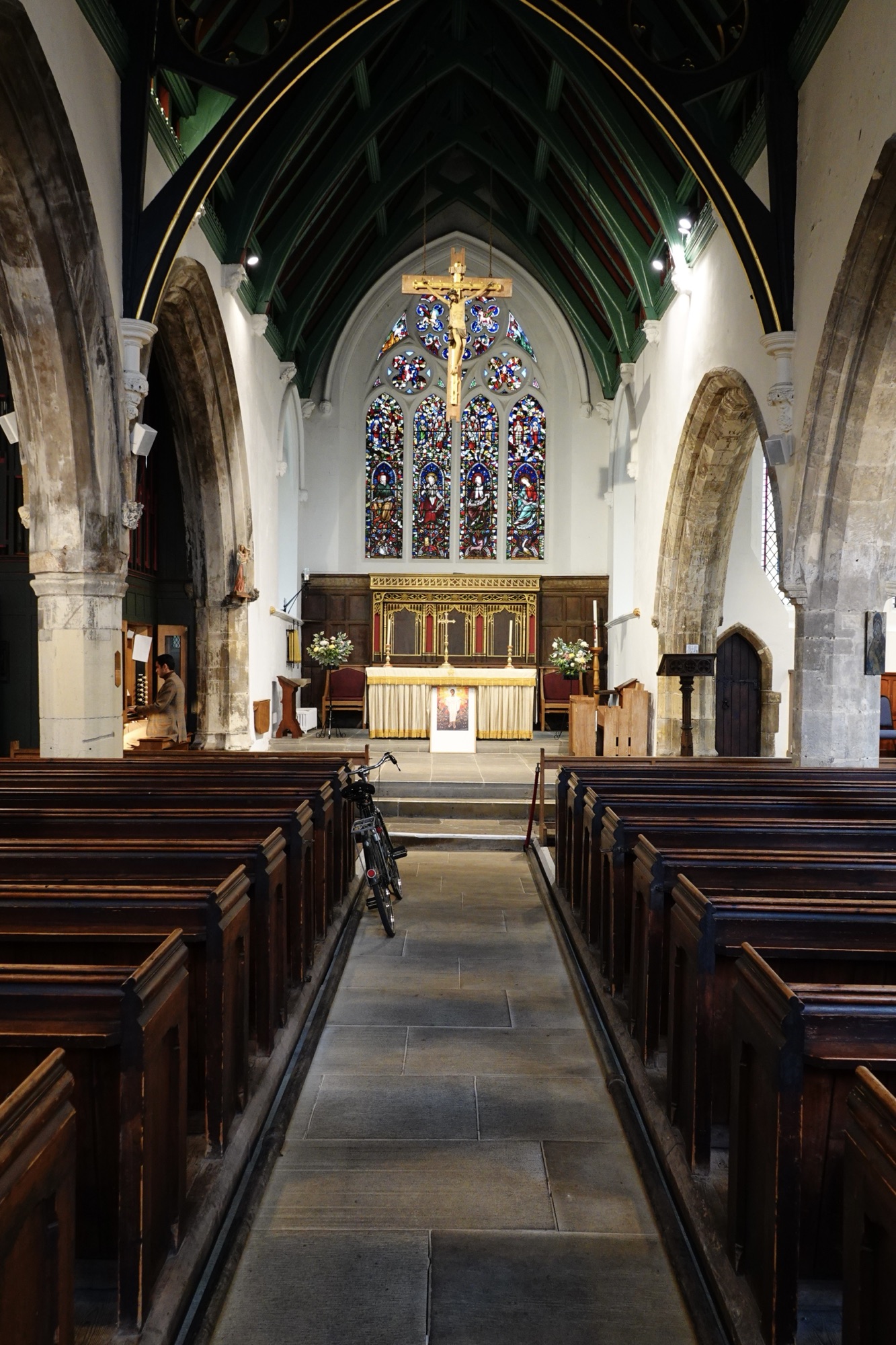
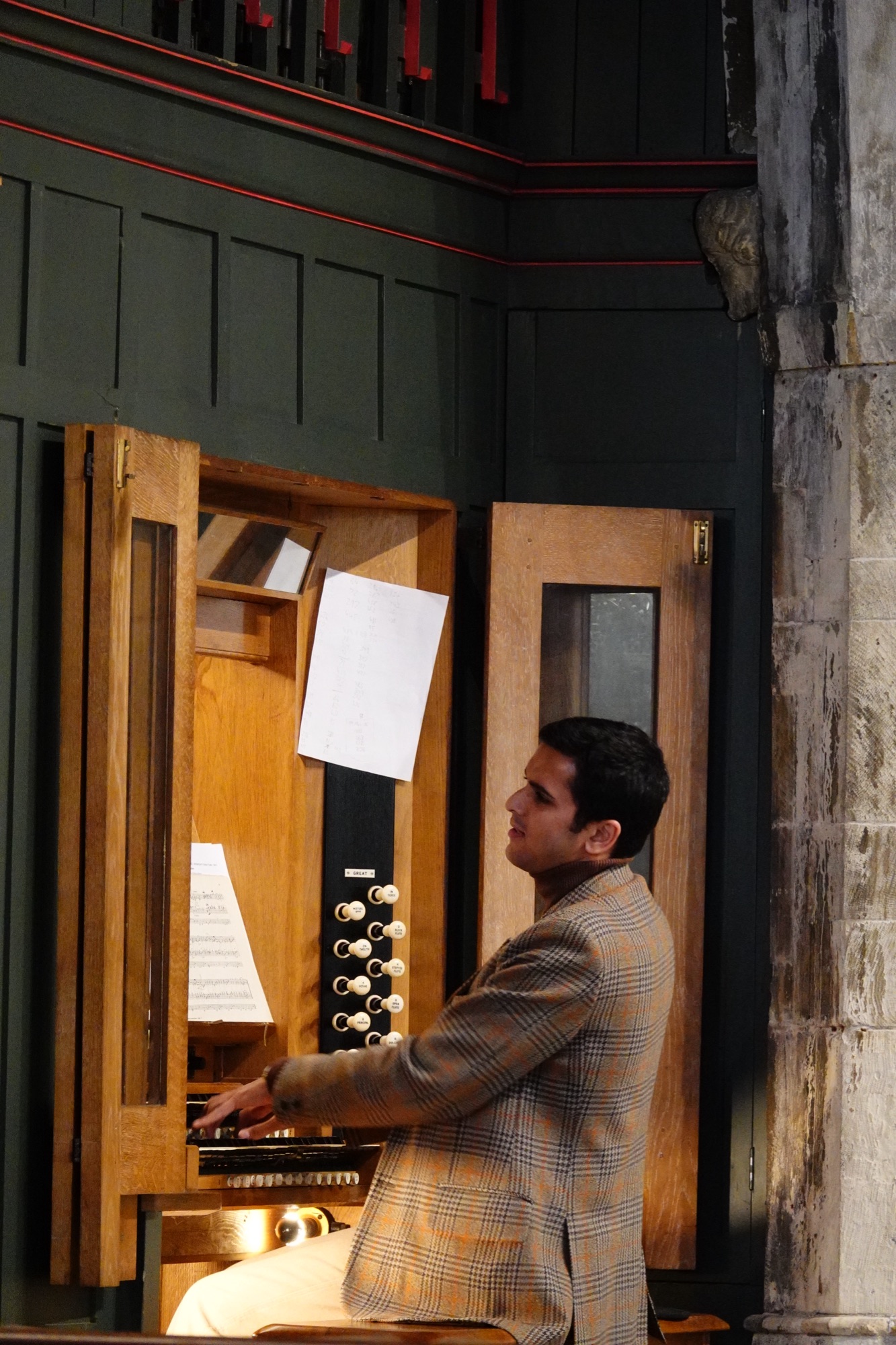
It wasn’t a formal concert, nor did it seem like he was practising, because he played a couple of traditional hymns, and then segued into “The Old Wooden Cross” and “What A Friend We Have In Jesus”. Watching him enthusiastically pull pipe stops and bounce along to the rhythm was fun; he really seemed to be enjoying himself, even with an audience of only five.
Below is 10 minutes of organ music:
On the walk home, another reminder of how old this city is, and one of its famous stone cats, for which we’d been forewarned to watch.
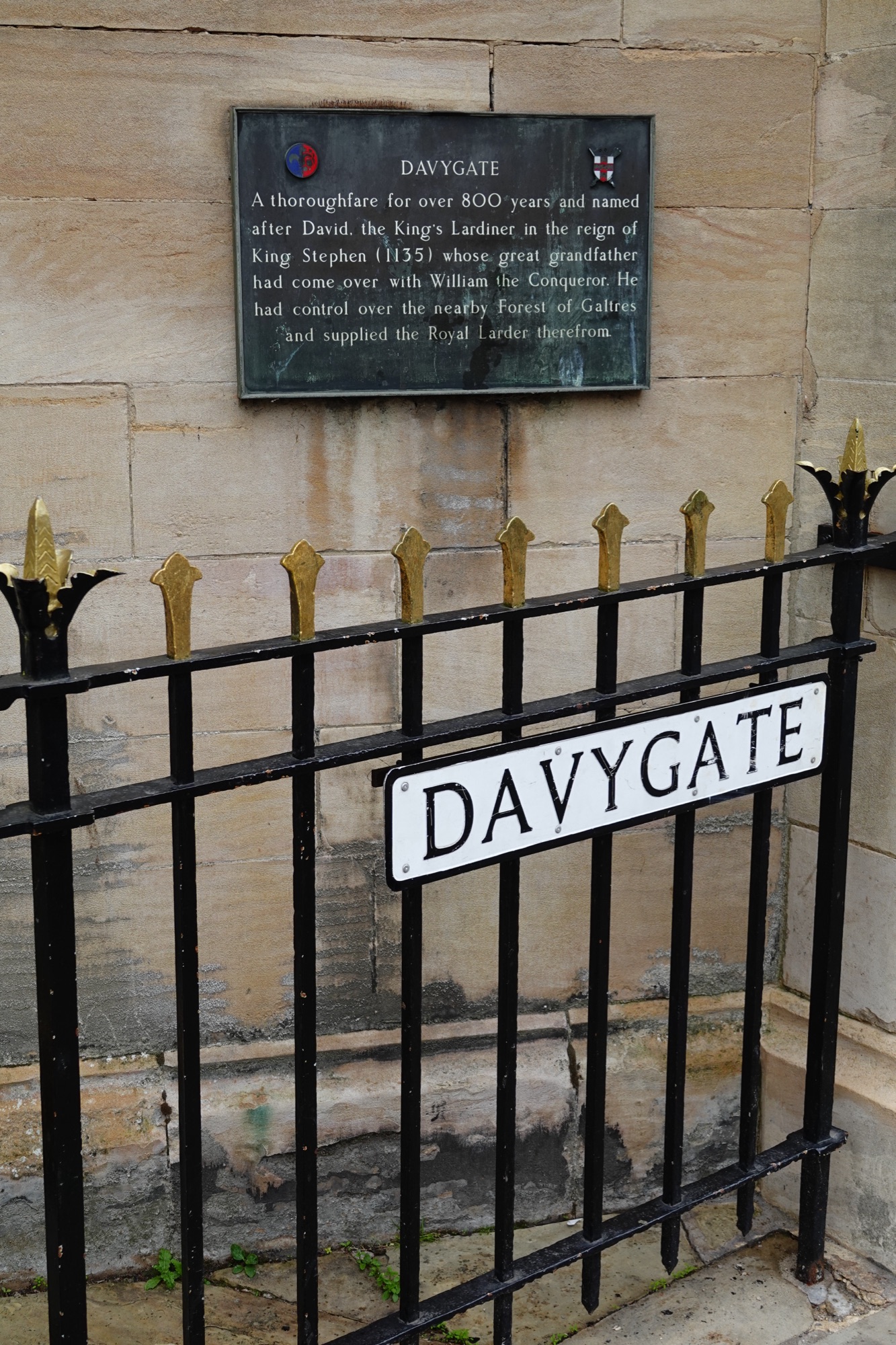
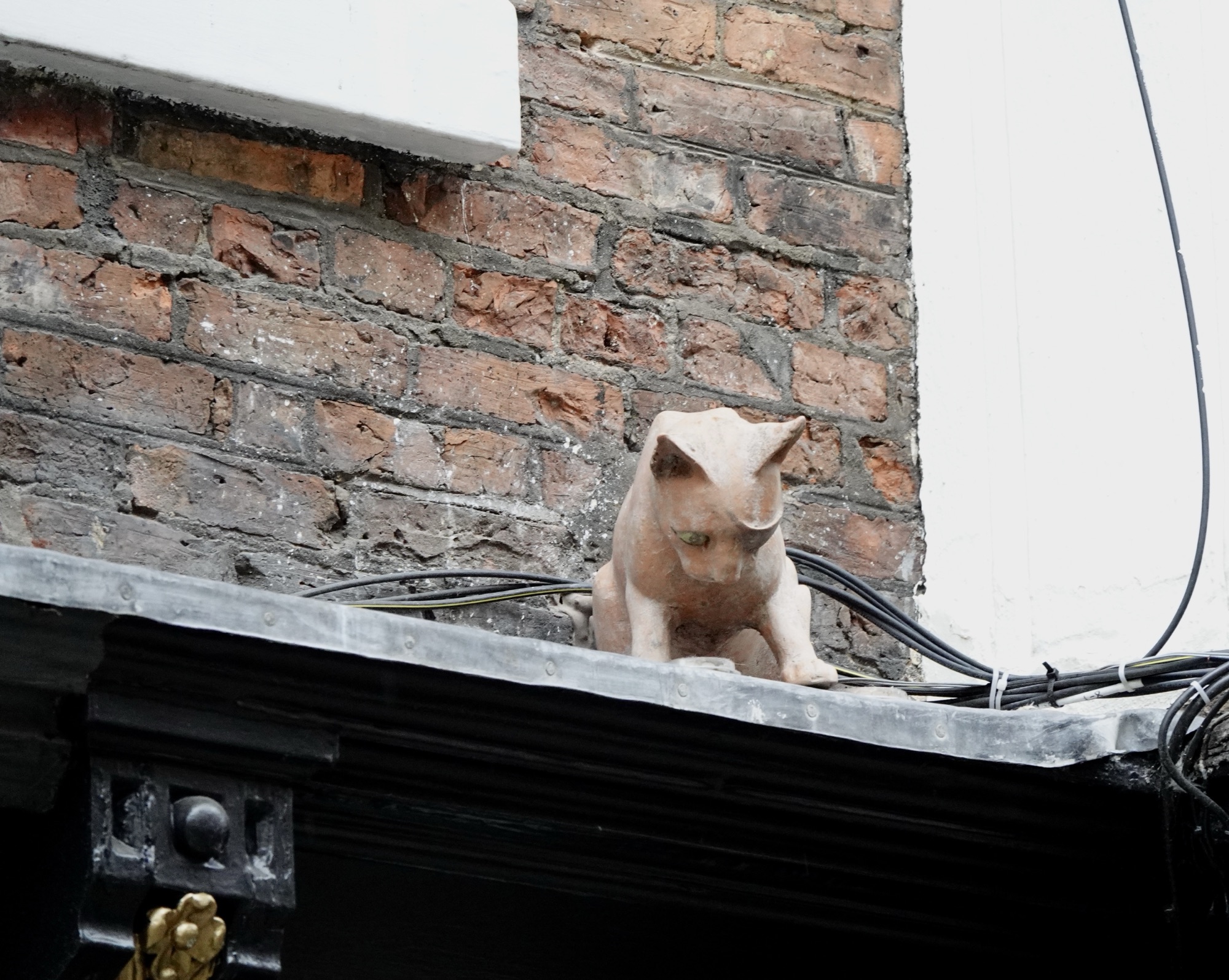
Tomorrow we start sightseeing in earnest.


i love happening upon an impromptu organ concert! I just finished listening to Ted’s YouTube video and imagine my surprise to hear that the two hymns you didn’t name at the beginning were two of my favorites – Blessed Assurance and Because He Lives! I was singing along as I listened!
Looking forward to finishing your posts on your time in this region as I’d really love to visit Northumbria after reading all LJ Ross’s DCI Ryan books set in the area. I’m definitely taking notes on your adventures here.
LikeLiked by 1 person
Thank you! I recognized both hymns but no amount of trying would bring the titles to mind.
I’m looking forward to more organ concerts in Austria and Germany in September
LikeLike
You must explain Trembling Madness Apartments.
LikeLike
Absolutely no idea! There’s a pub called Trembling Madness, and MAYBE it had apartments above it at one time?
LikeLike
Look what you missed out on. You could have stayed here:
https://www.tremblingmadness.co.uk/apartments.html
LikeLike
Wow! And at £1 = $1.80CAD, the price alone might cause trembling madness!
LikeLike
We have been fortunate to have been in York several times and found it fascinating. I hope you venture out into the surrounding area as there is much to see. Fountains Abbey is particularly amazing. Easy bus trip.
LikeLiked by 1 person
Unfortunately tomorrow is our last day in York. Any recommendations for three days in Durham?
LikeLike
Sorry, have never been to Durham. As you have discovered, one could easily spend several weeks in this beautiful area. I realized we also had eaten ( several times) at the Royal Oak. Food was always delicious.
LikeLiked by 1 person
Thanks for the tour — must get back to York! I’ve been there, but it was about 1987 — it — and the B&B food look much better than I remember. Our daughter will be in Newcastle for the next 4 years at least (medical school) so we may find ourselves in the North much more than London.
LikeLiked by 1 person
Wondering if you might be going to London to see the exhibit of Queen Elizabeth’s Clothing?
As I recall you appreciate a good textile and fashion?
Anne
Link:
https://www.rct.uk/collection/exhibitions/queen-elizabeth-ii-her-life-in-style/the-kings-gallery-buckingham-palace
>
LikeLike
No London at all this trip. That would be interesting though (although not as interesting as Quern Elizabeth I’s clothing!)
LikeLike