Laundry took priority this morning, and I left it to Ted to plan the rest of our day while I concentrated on finding creative places to hang damp clothes. The apartment has the European style of combined washer/dryer that my best friend’s British daughter has affectionately dubbed a “washer/less wetter”, and has very limited clothes hanging options and no drying rack.
As is always the case, Ted excelled at his task, and planned a 5 hour walking tour that took us out of our clothing-bedecked apartment and into Manchester’s eclectic centre.
Just around the corner from our aparthotel is Manchester’s Rochdale Canal, whose adjacent paths formed the first part of Ted’s route.
We began at Piccadilly Gate, which used to lead directly to the canal but now leads to a parking lot. It brings to mind a Joni Mitchell song lyric about paving paradise, although canal-side was never much like the Garden of Eden.
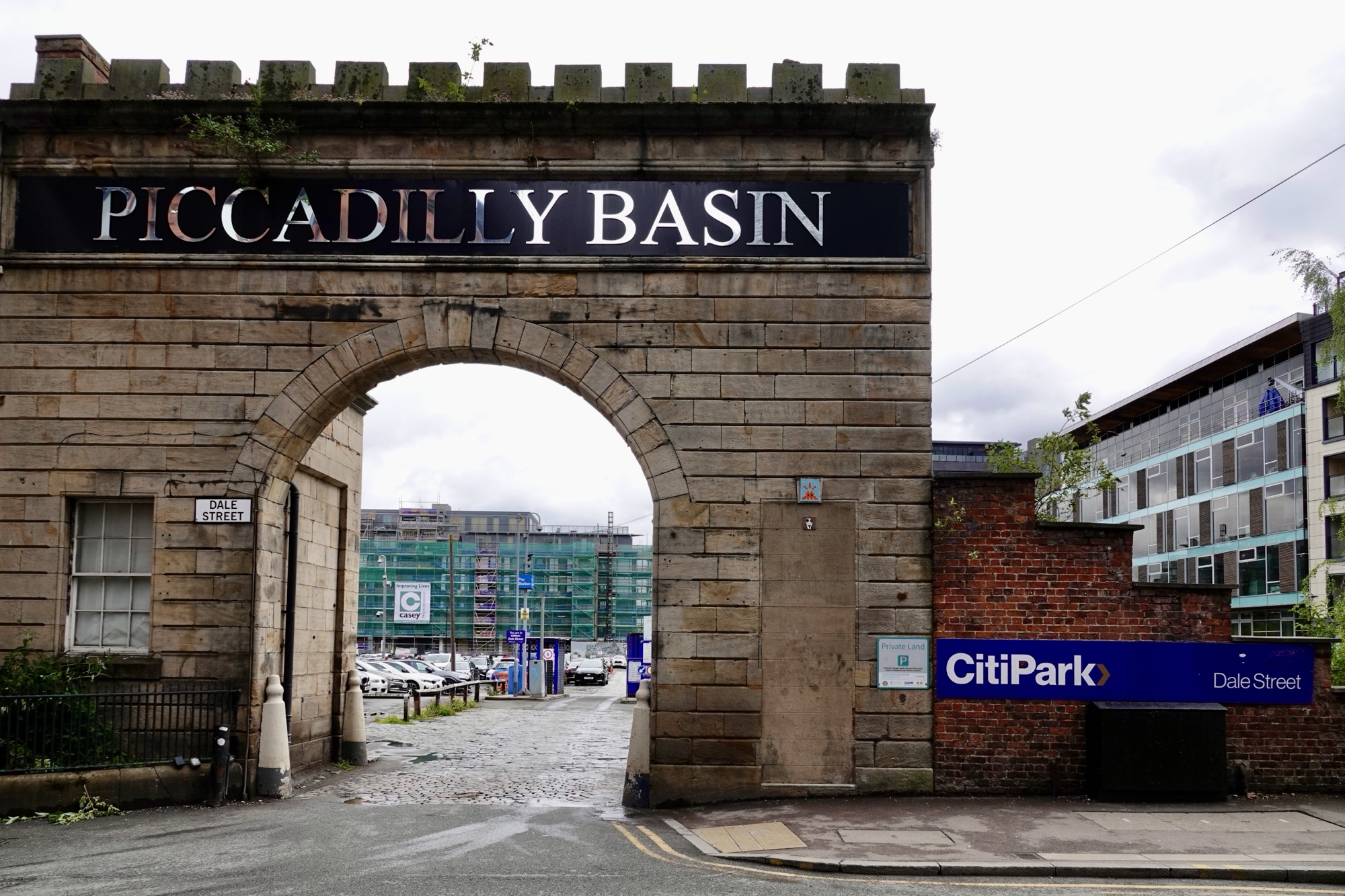
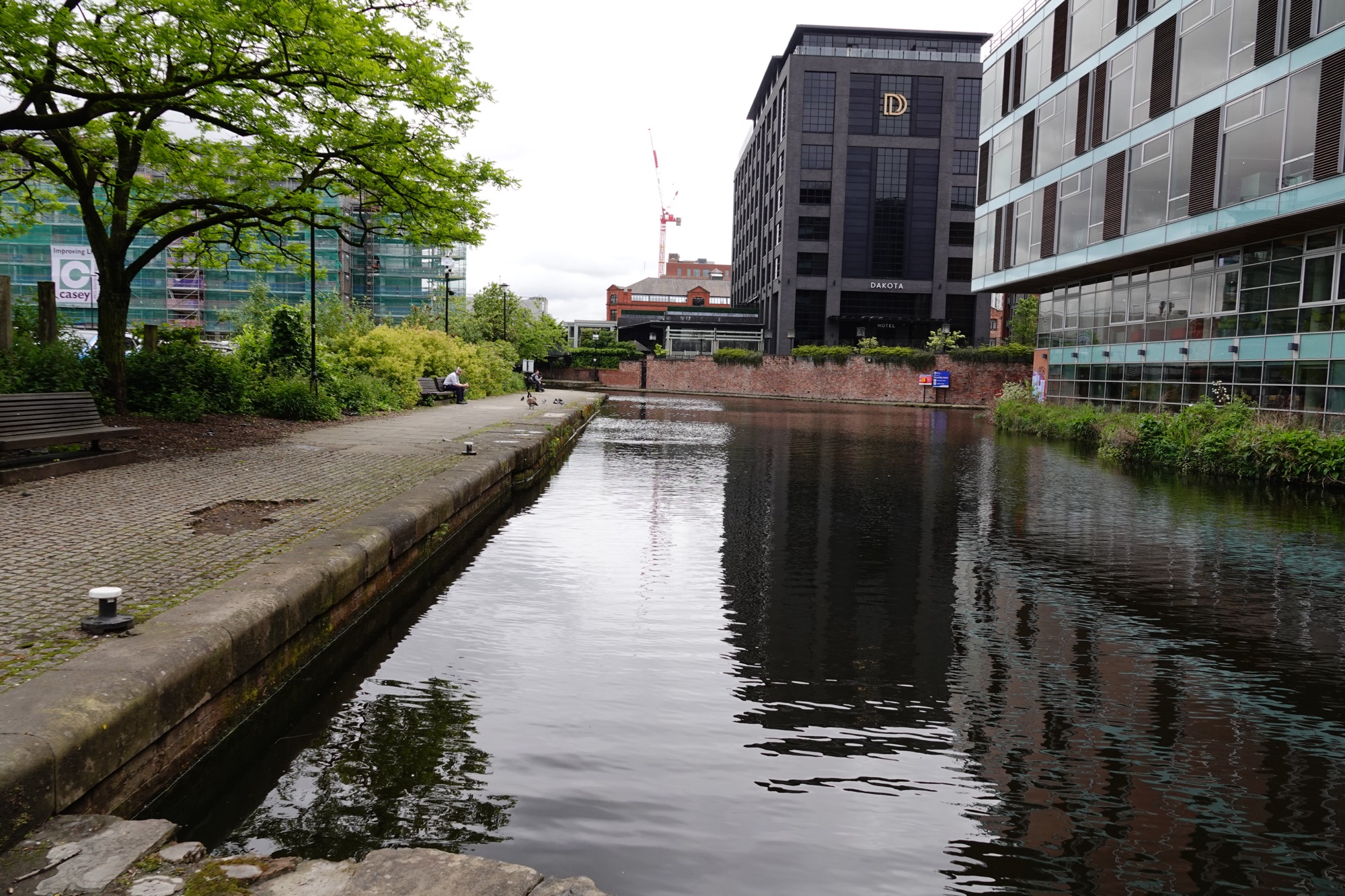
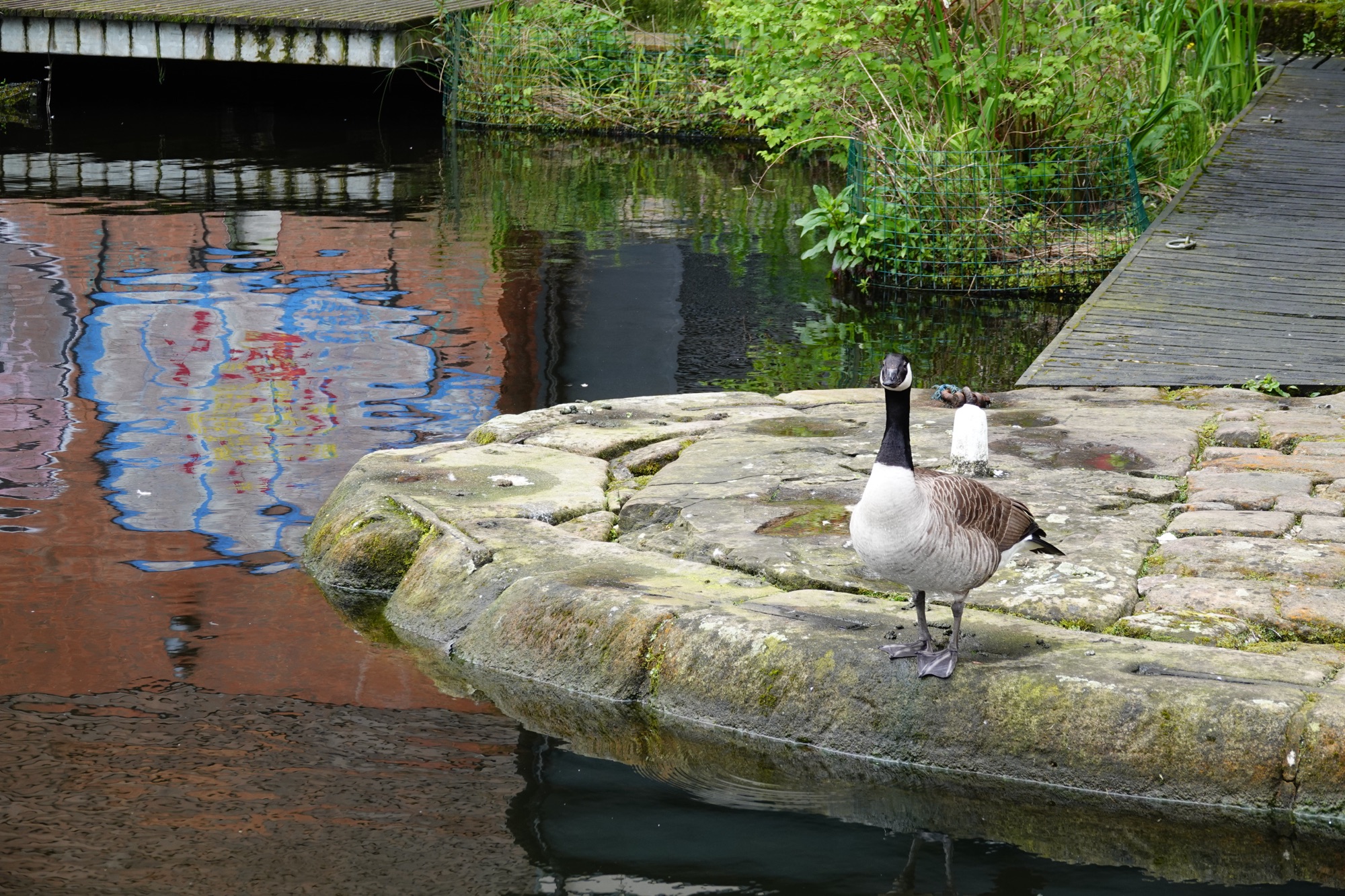
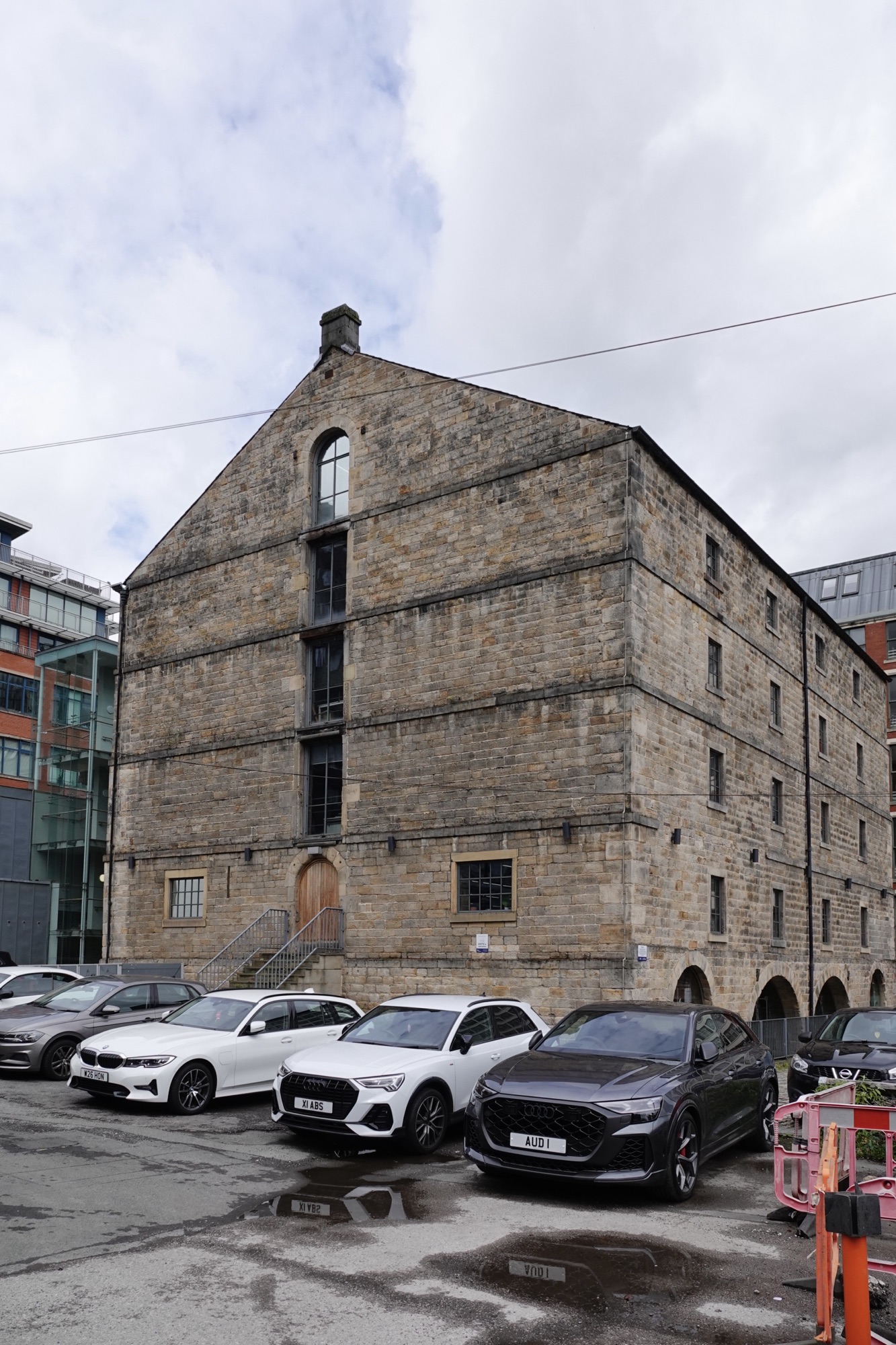
Adjacent to the parking lot is the historic Carvers Warehouse on Dale Street, Manchester city centre’s oldest surviving warehouse (built 1806) and the only one constructed entirely of stone.
Turning around to go back through Piccadilly Gate and follow the canal into the city centre gave us a much lovelier view than the parking lot.
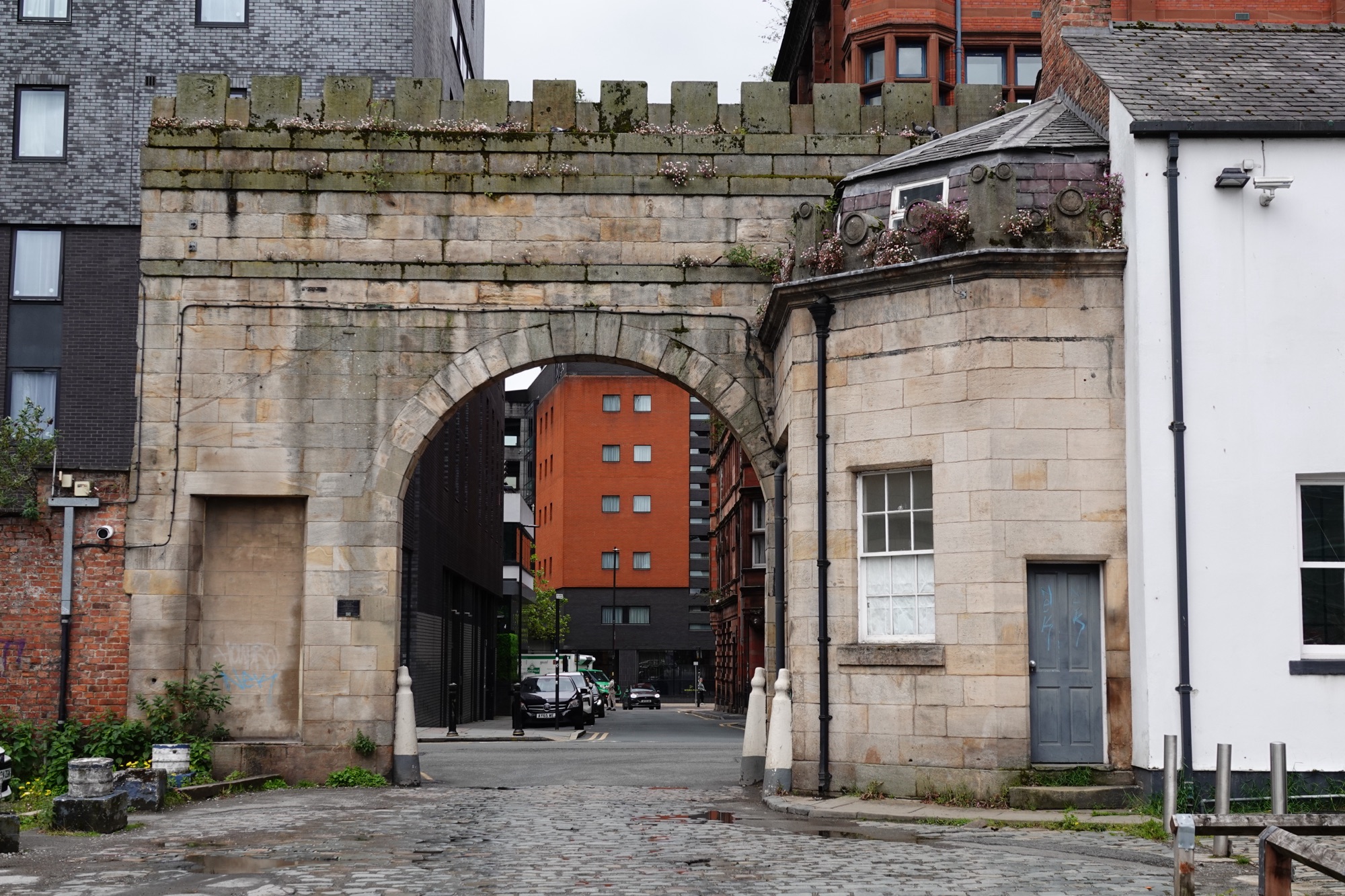
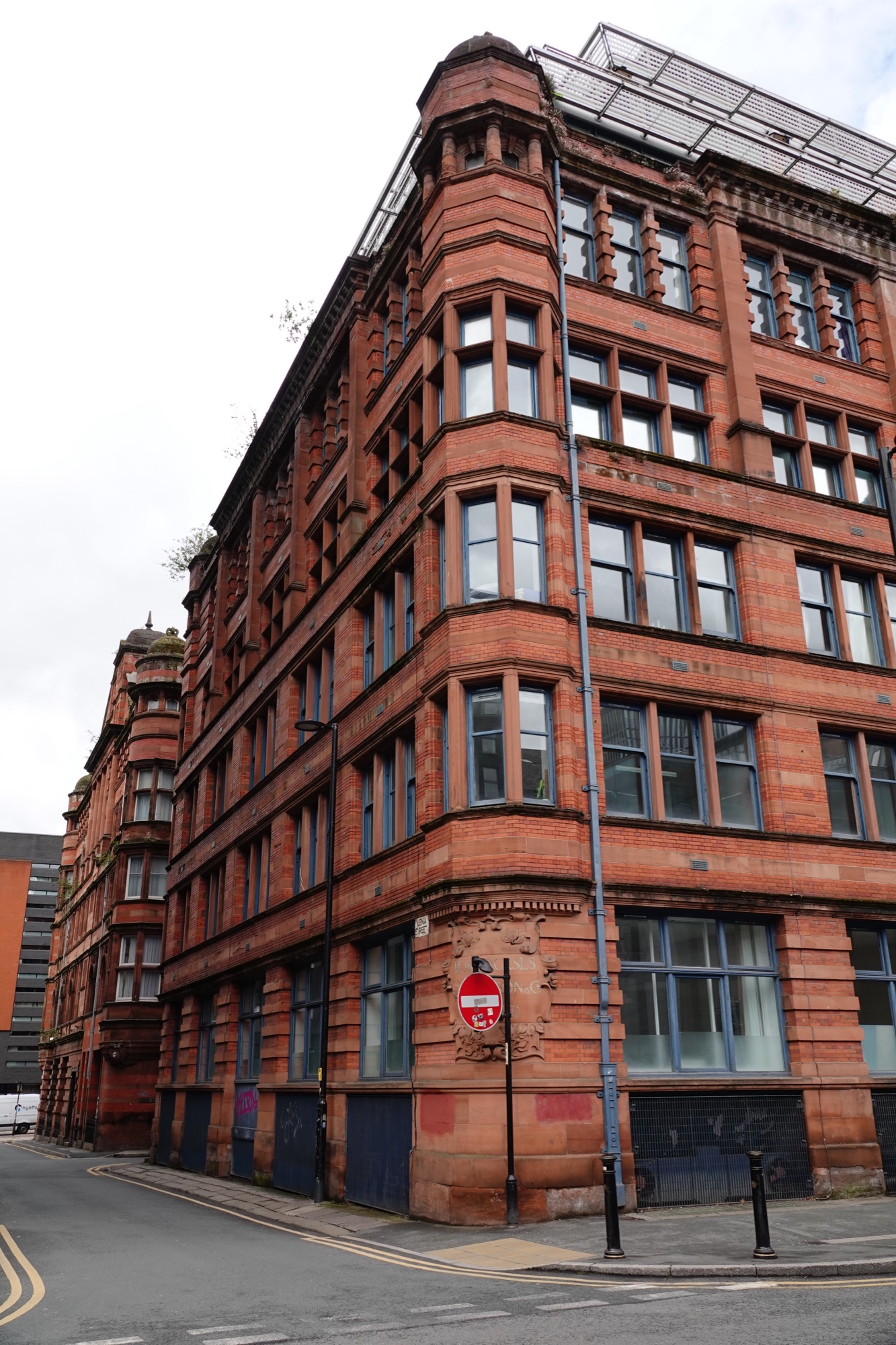
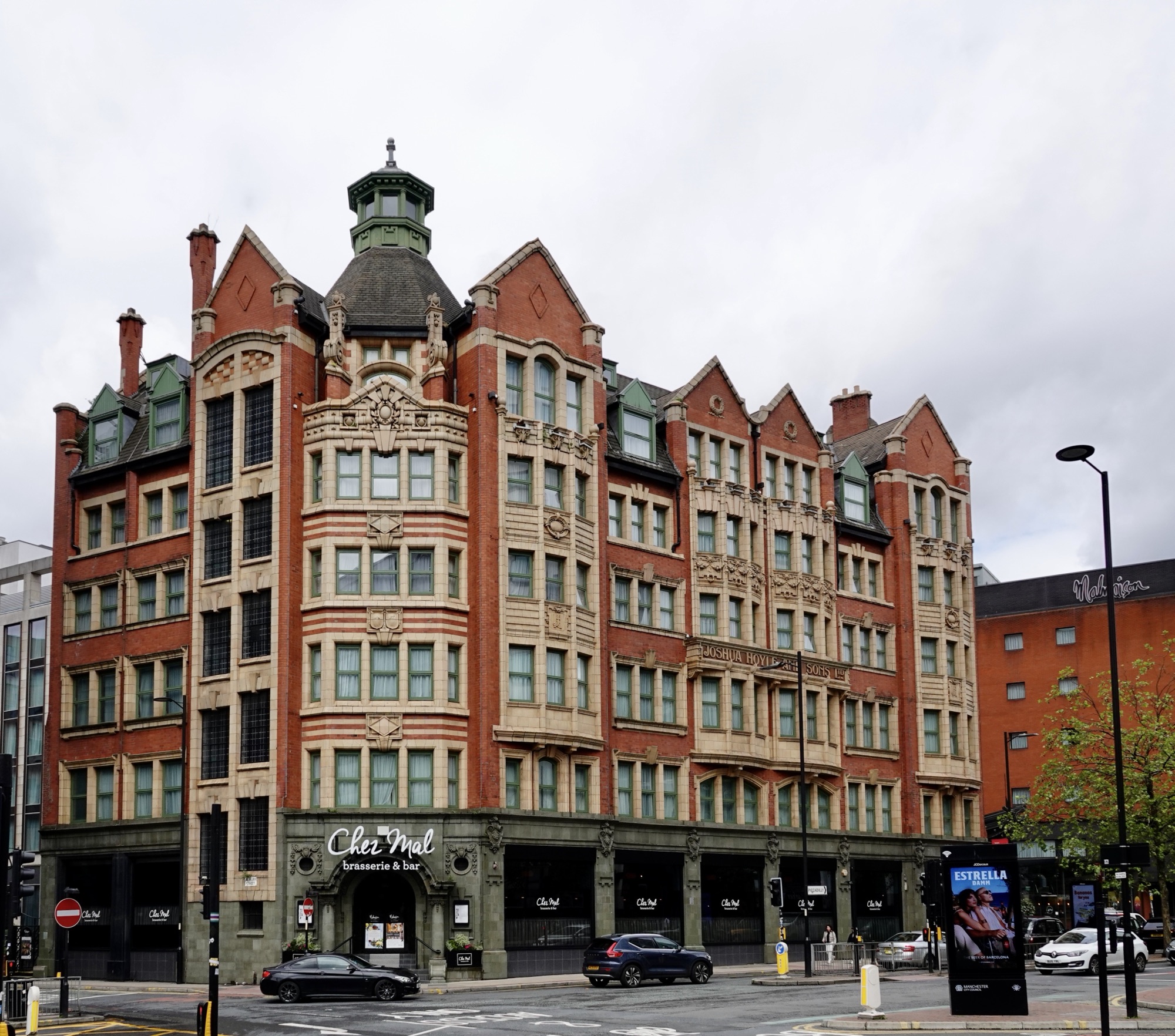
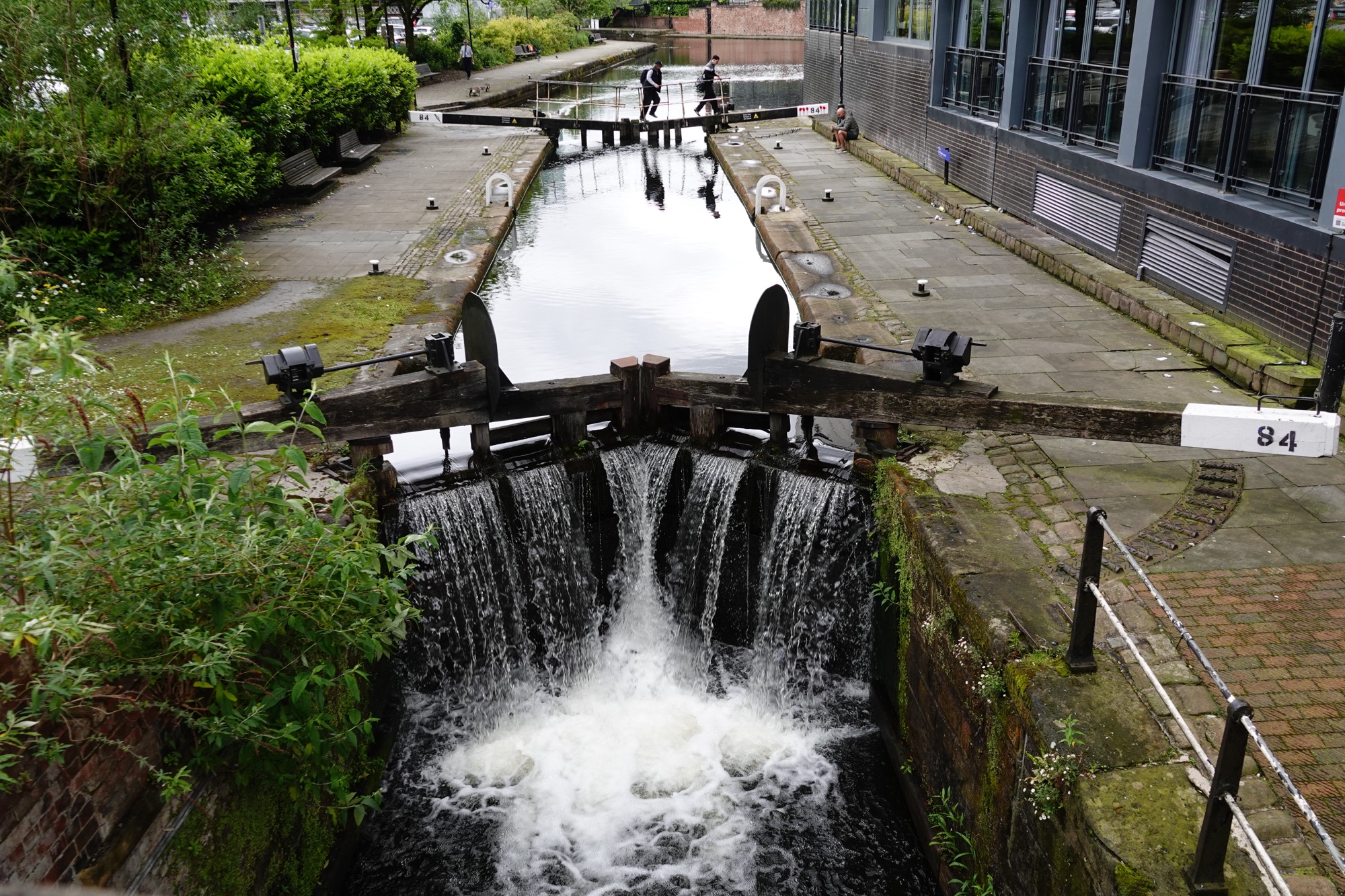
The canal is 32 miles long, from Manchester into West Yorkshire, and has an impressive 91 locks along that span. When the canal was opened in 1804, it was the first canal to traverse the Pennines mountain range; that speaks to why so many locks are needed.
We decided to take the stairs down from street level to walk beside the canal and under one of the tunnels with the roads above us.
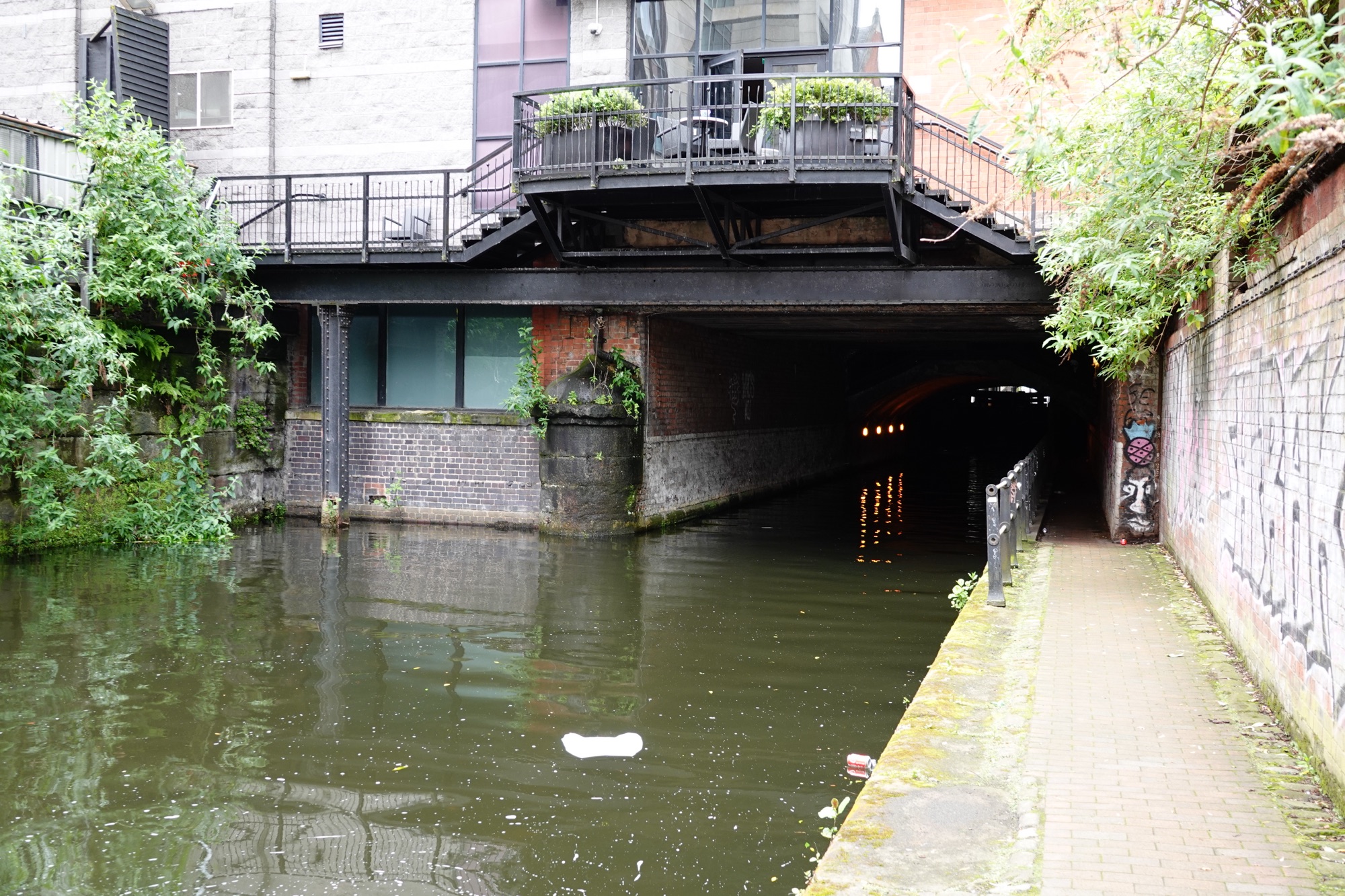
That path took us to where we could go back up to street level at a point where Manchester’s Minshall Street Crown Court dominates the corner.
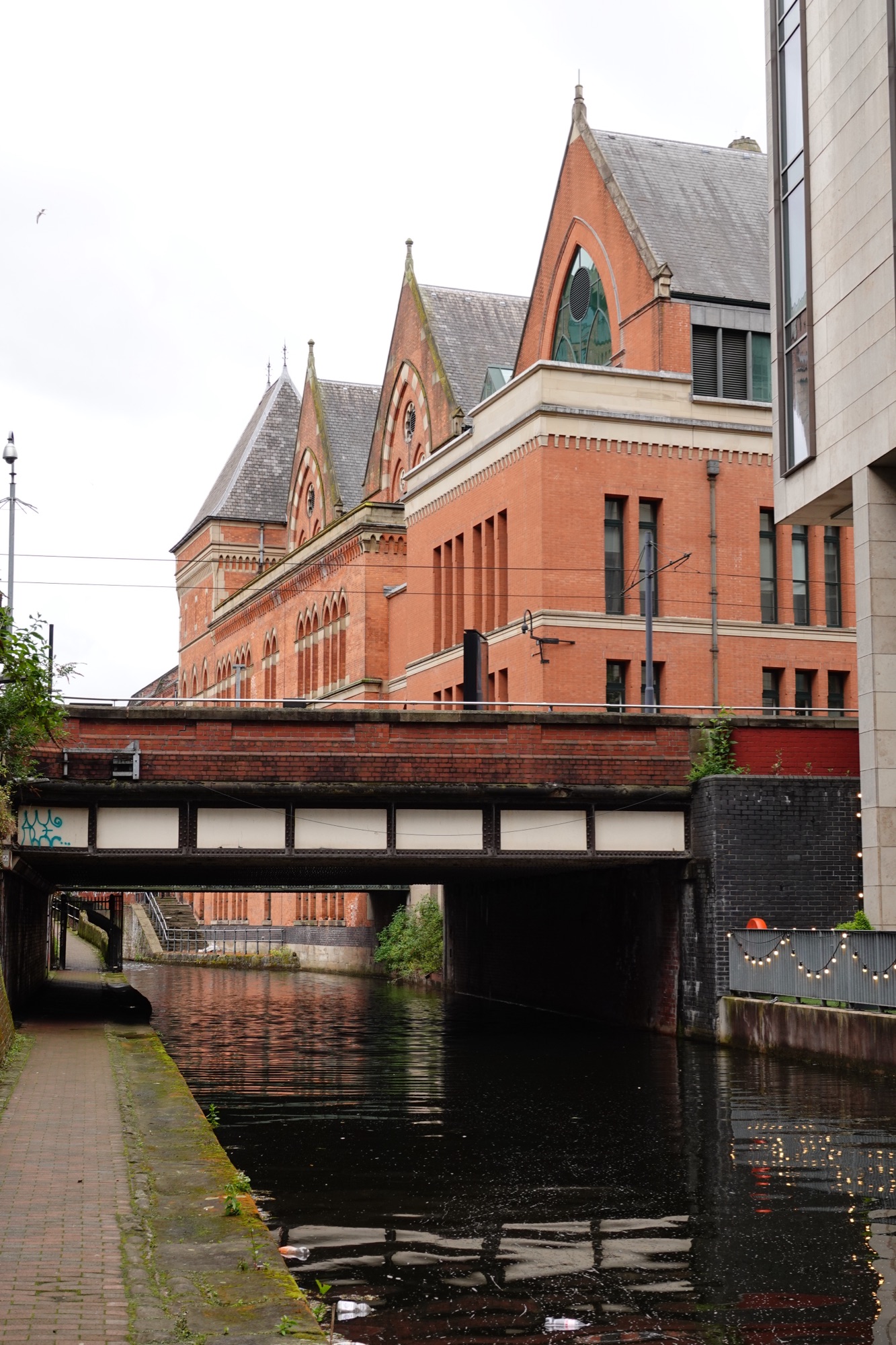
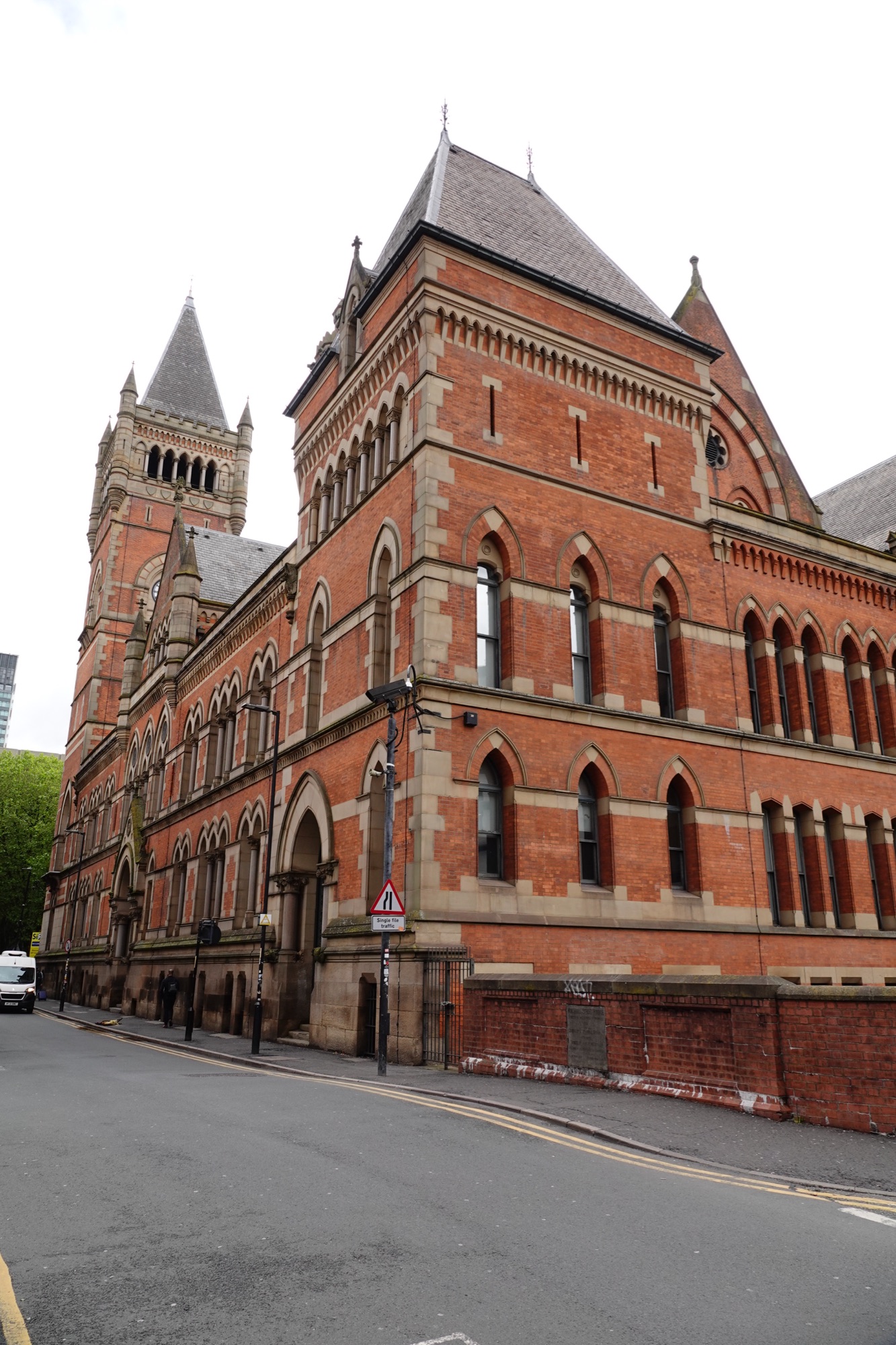
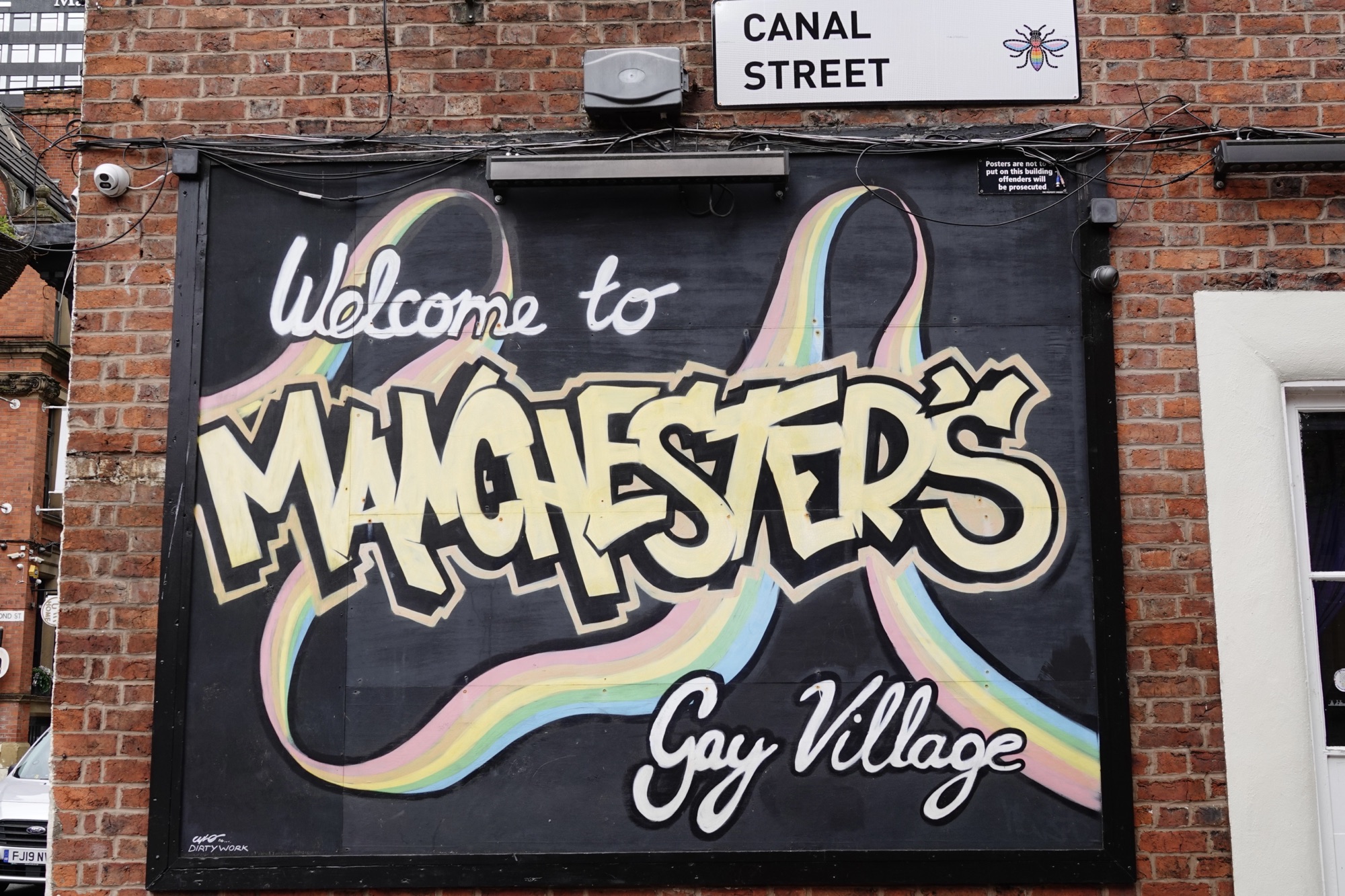
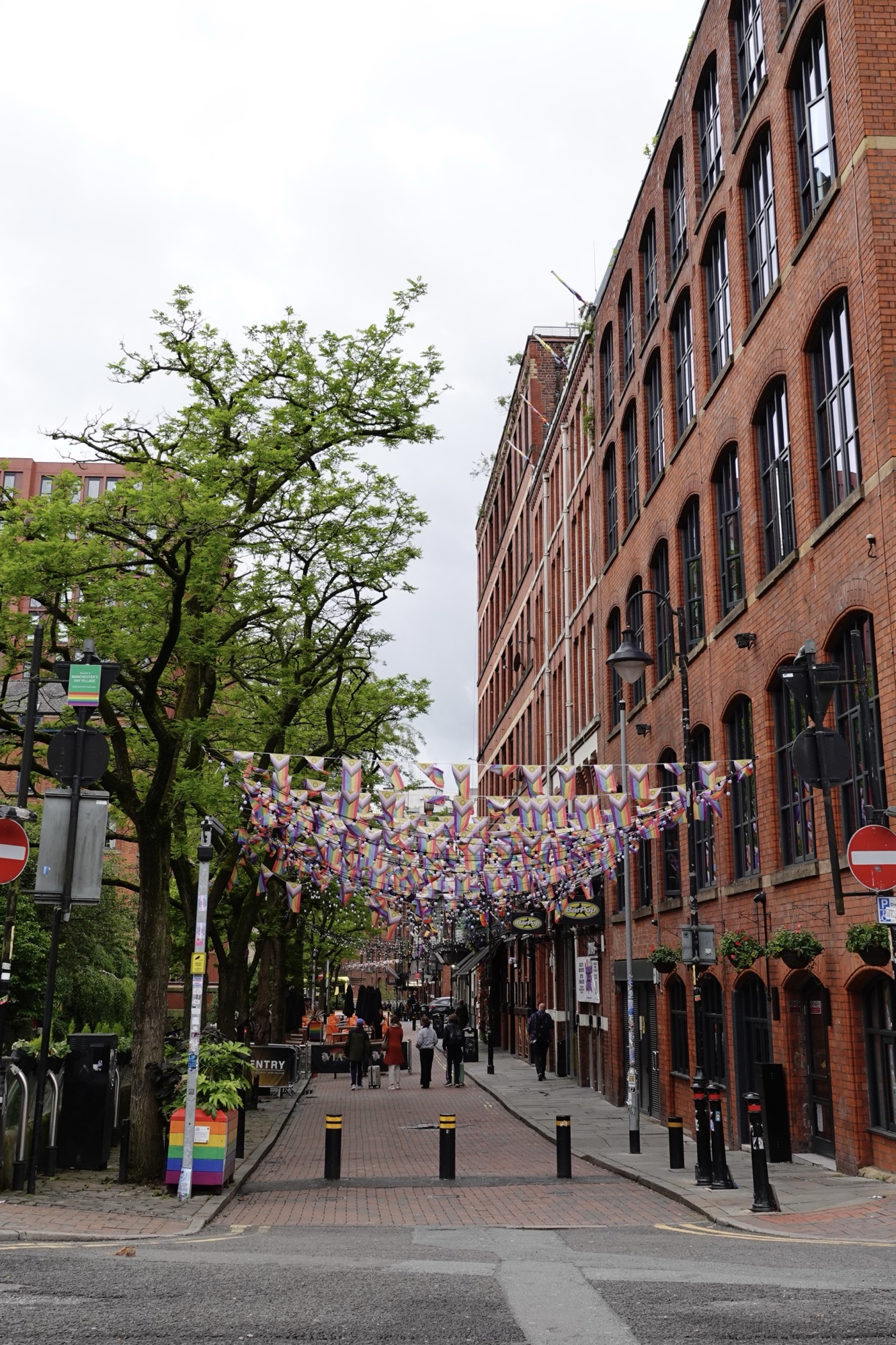
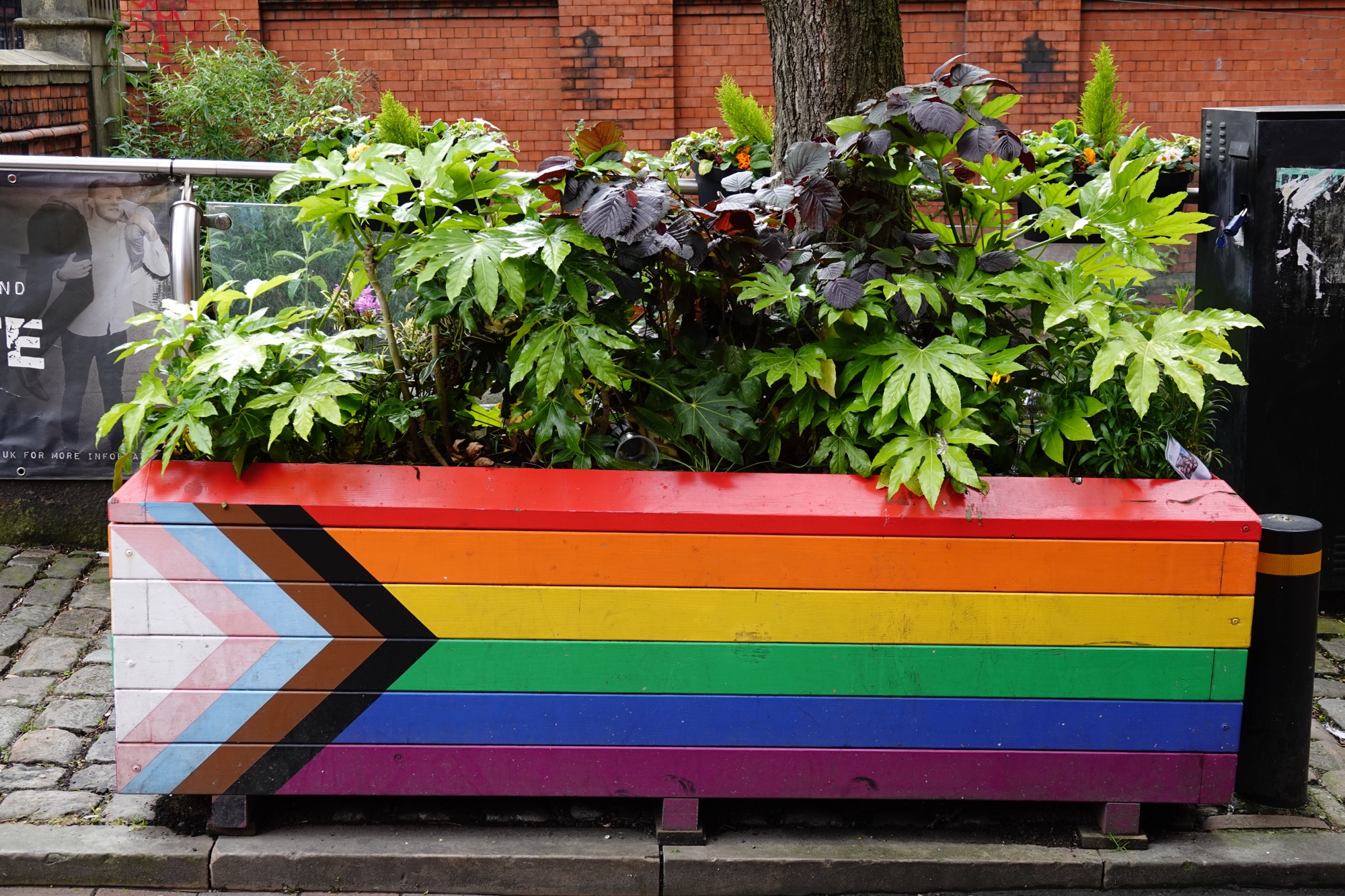
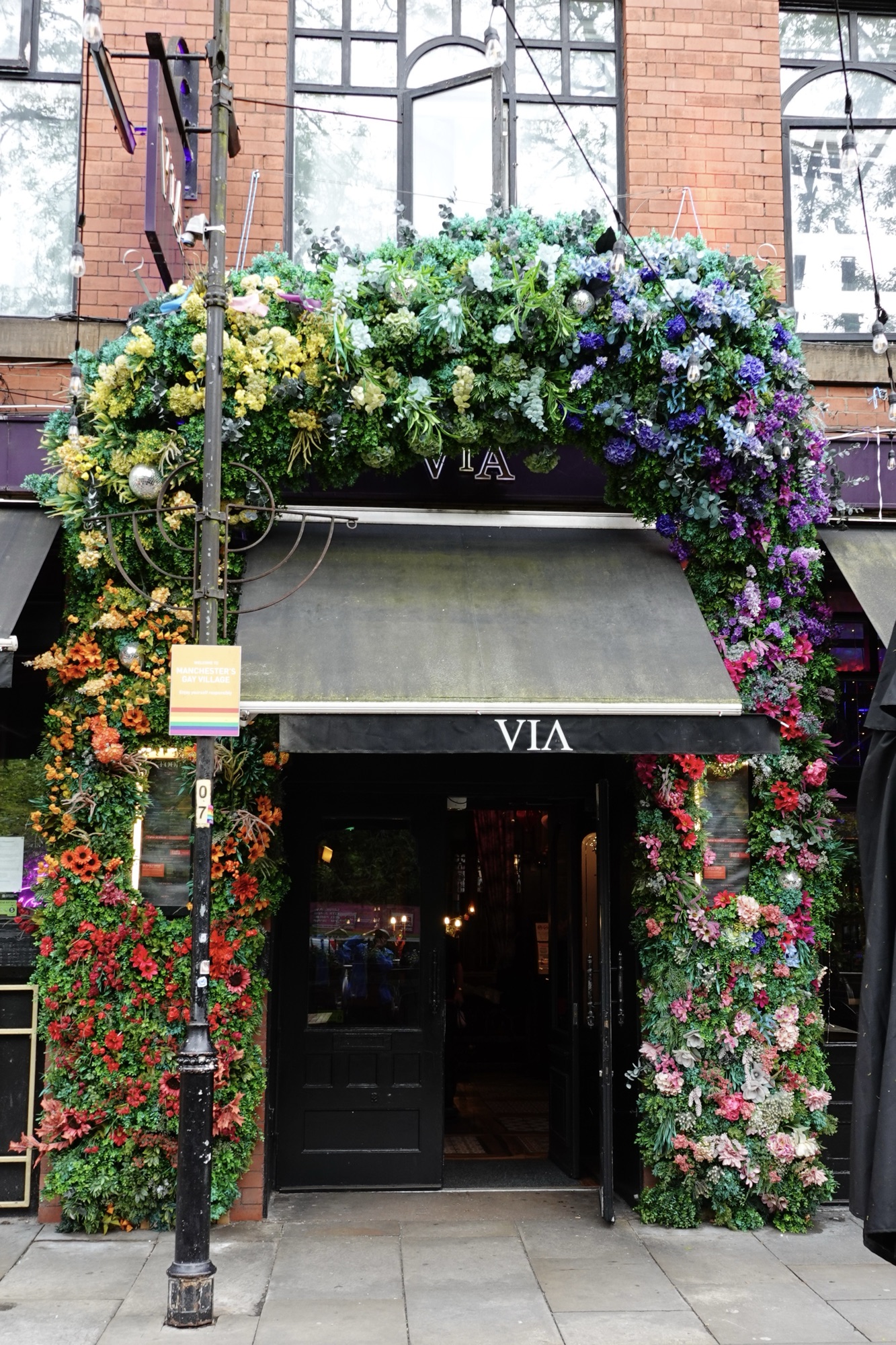
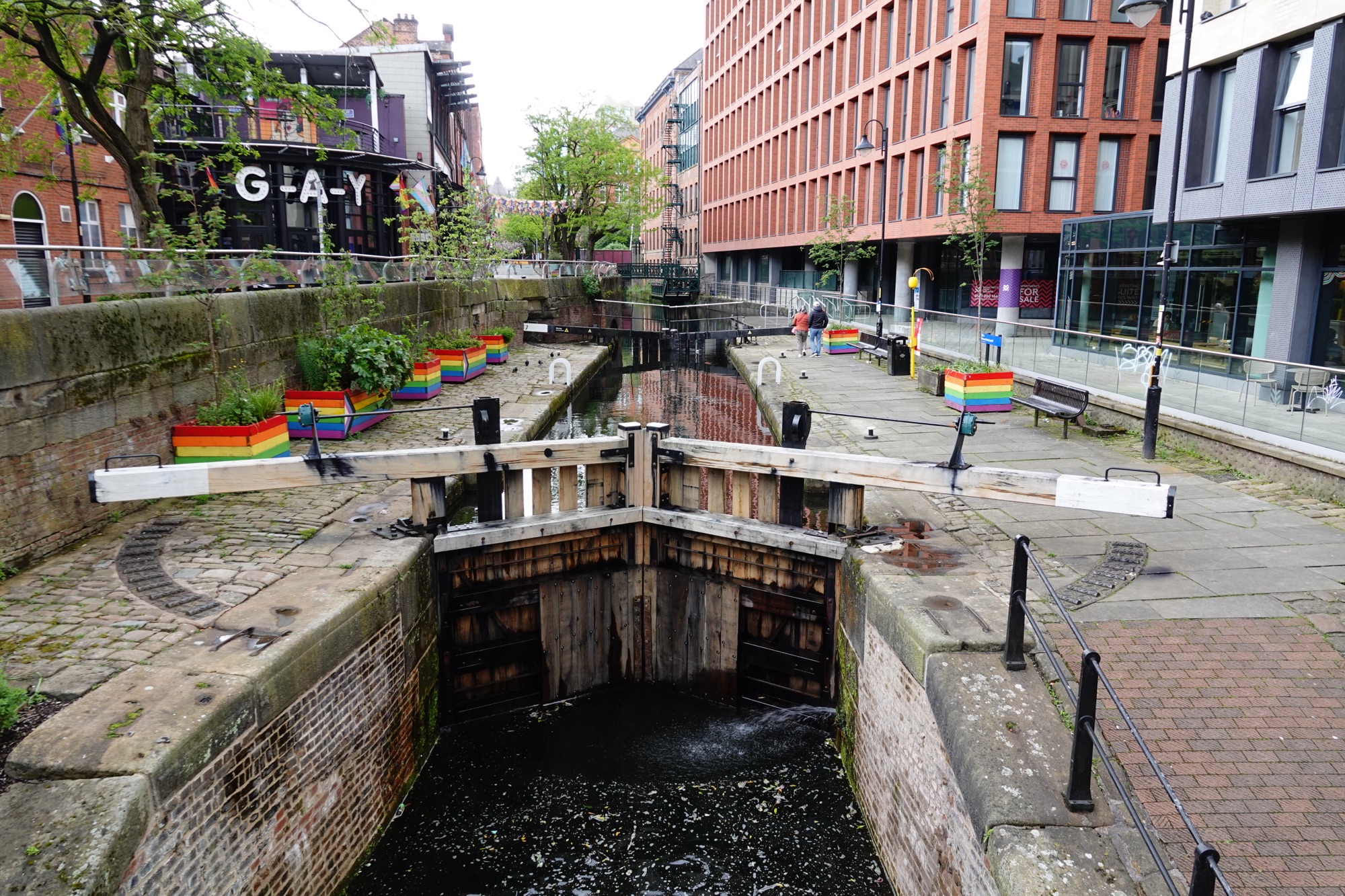
This is also where Manchester’s vibrant Gay Village begins, with bars, restaurants, and theatres lining the canal.
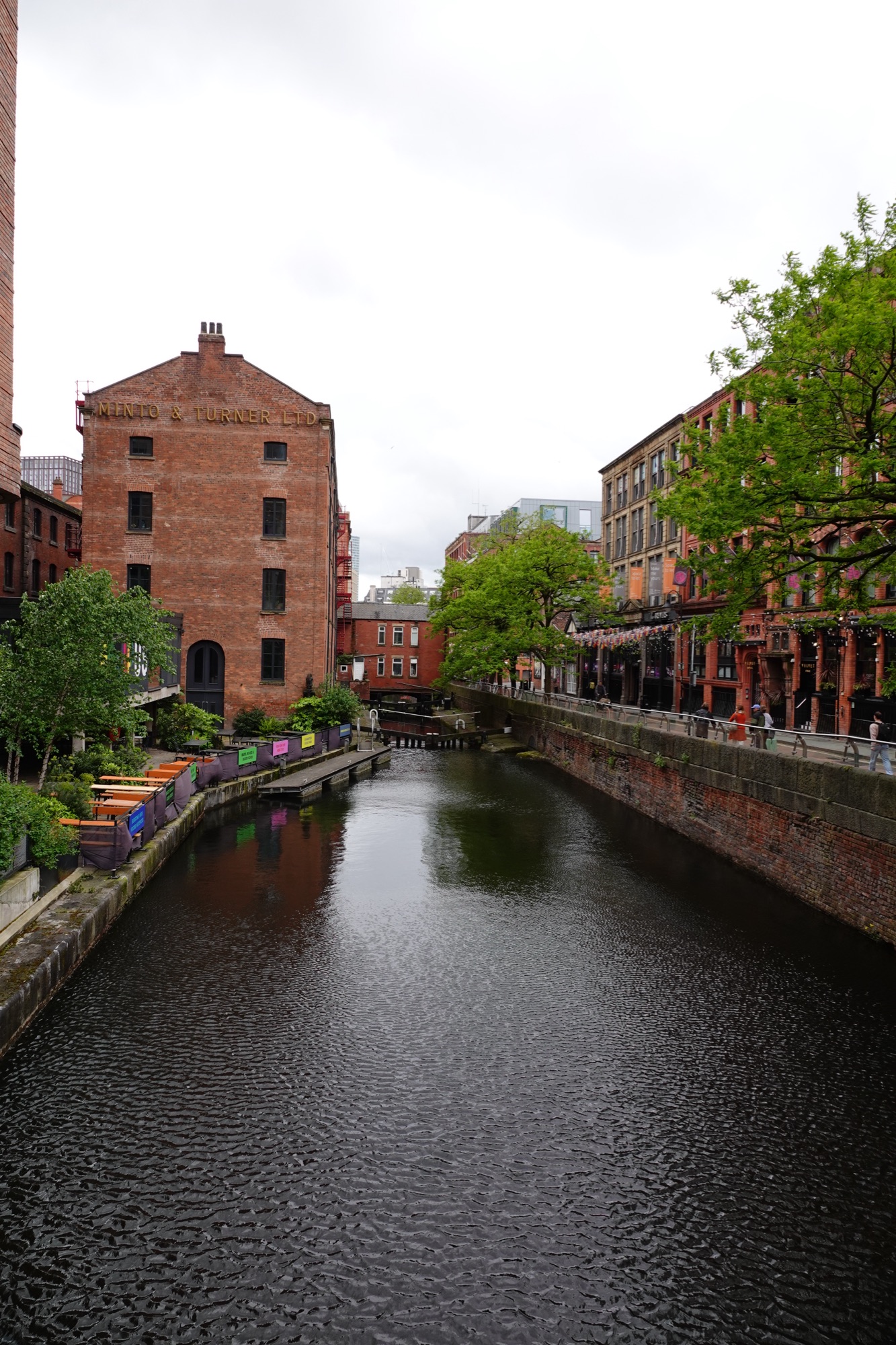
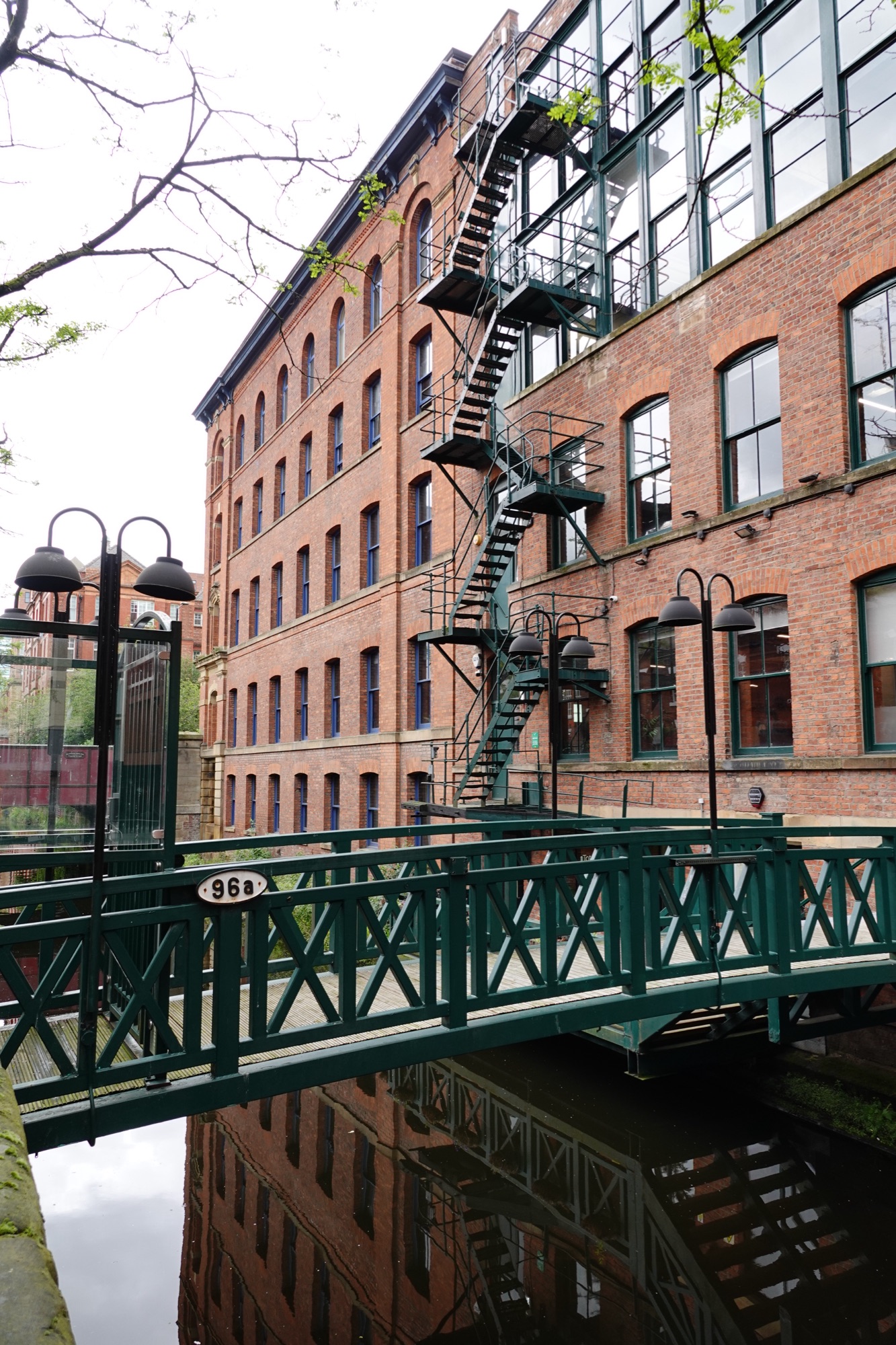
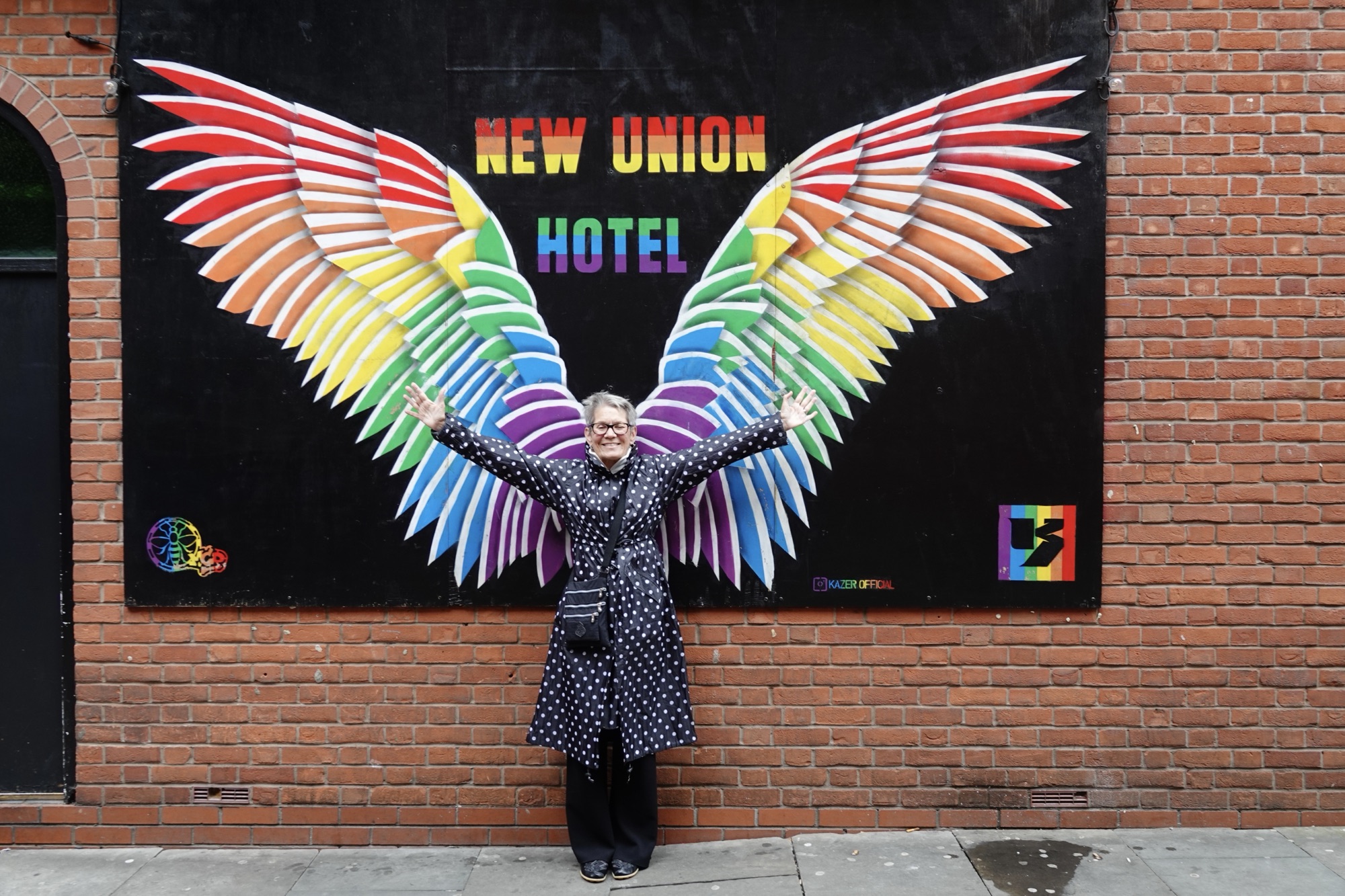
This was at least the third lock we’d passed in less than about 1km.
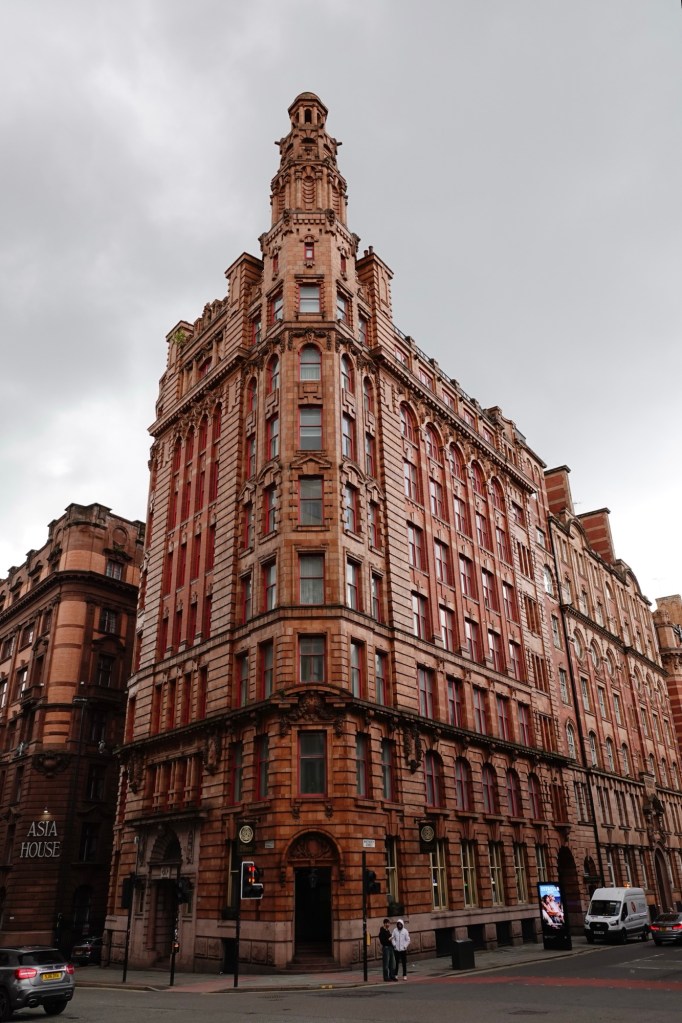
Coming out of the village, the first building we saw was the Edwardian Baroque Lancaster House, now residential flats, but originally built between 1905 and 1920 as a packing and shipping warehouse for Lloyd’s Packing Warehouses Ltd. Grace’s Guide to British Industrial History explains that “the company served an important aspect of the textile trade – making-up and packing textiles for export, and manufacturing waterproof wrapping and linings, packing cases and lapping boards, and provding facilities for storing and handling the goods.” It certainly seems pretty fancy for a warehouse, speaking to a need for companies to maintain a particular façade (ha ha).
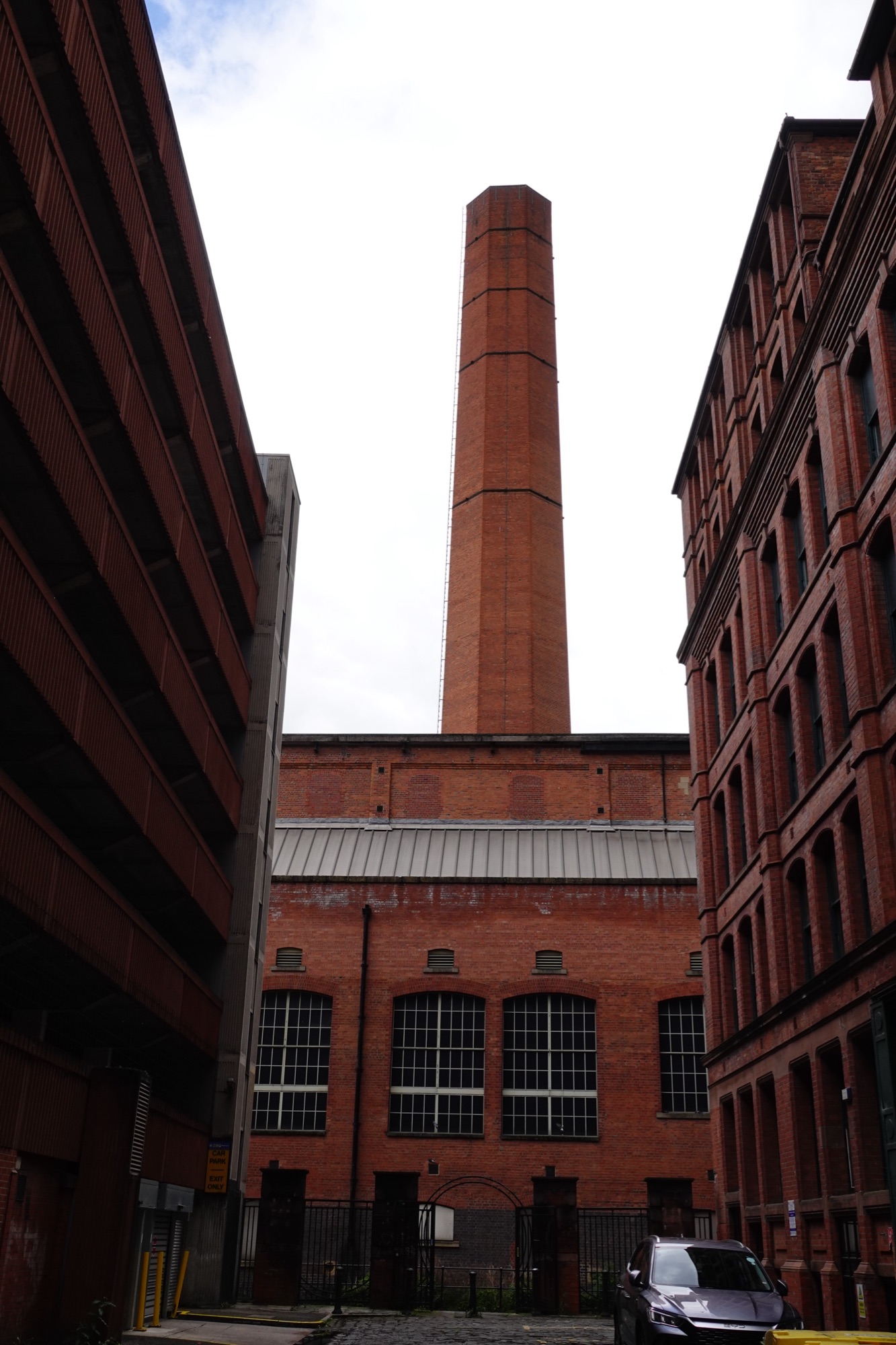
Turn around, and we could get a glimpse of the former Bloom Street Power Station.
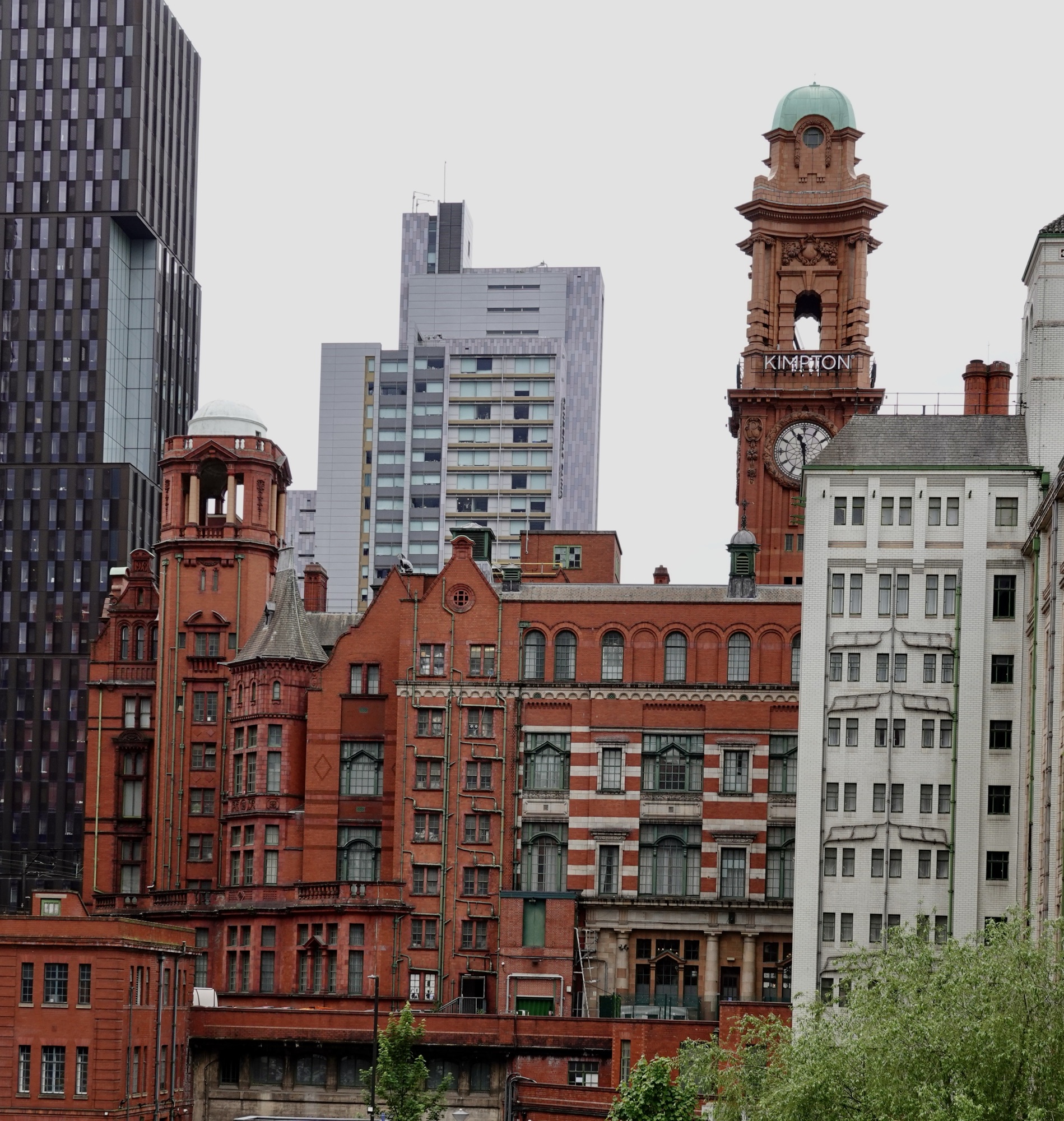
The contrast between old and new makes for an interesting skyline.
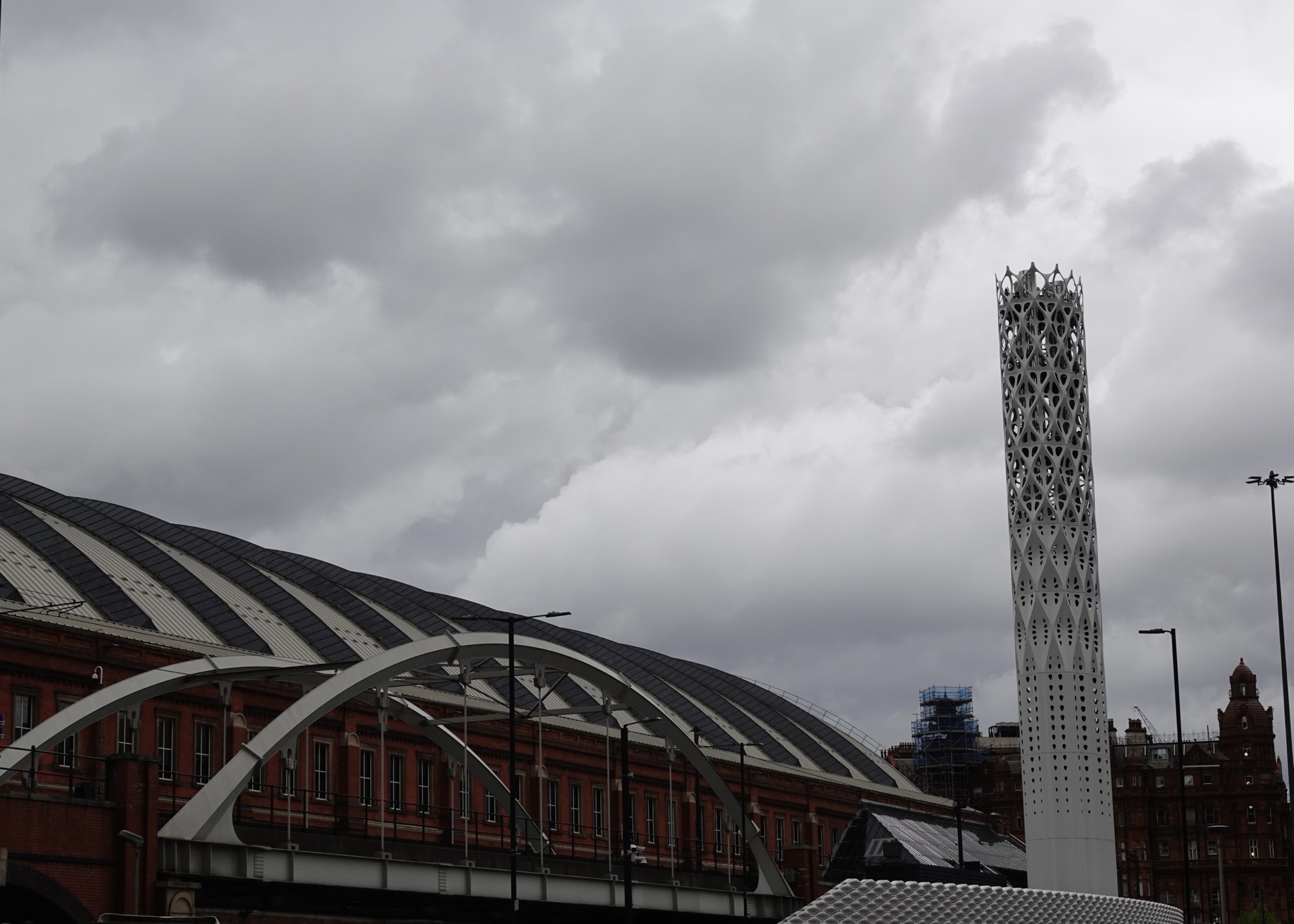
Continuing to follow the canal, we peeked down the street at Manchester Central Station and the Tower of Light.
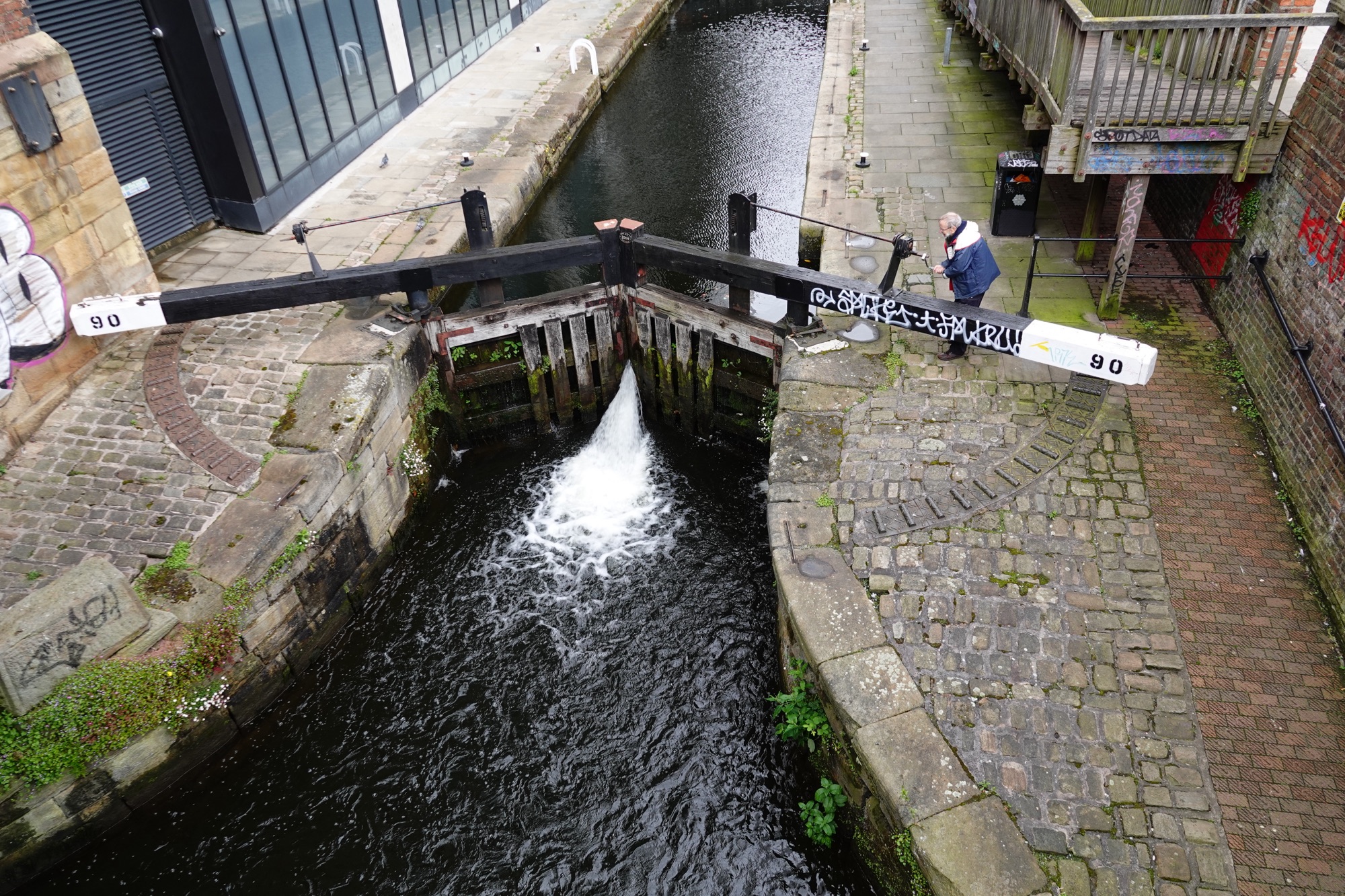
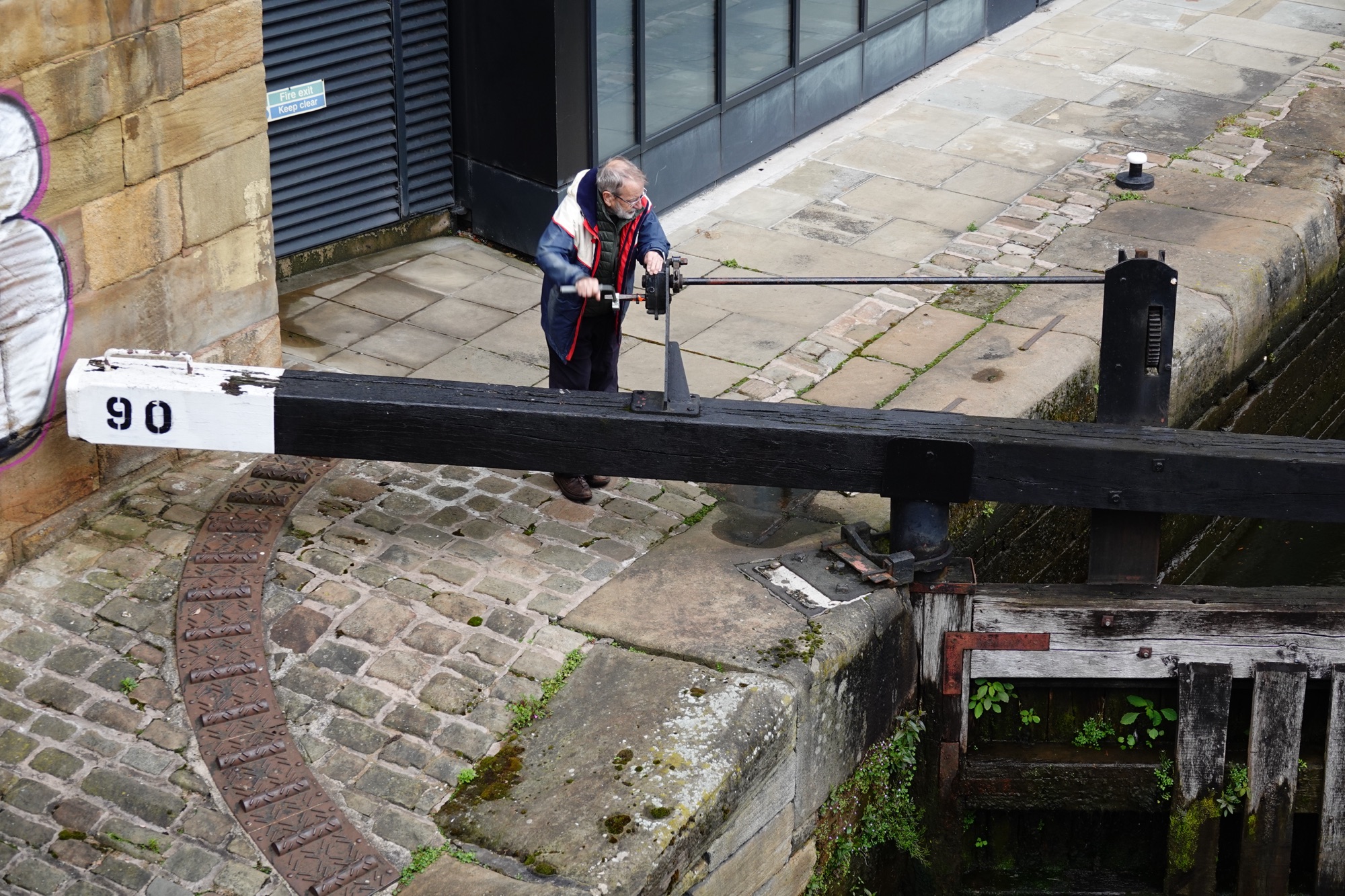
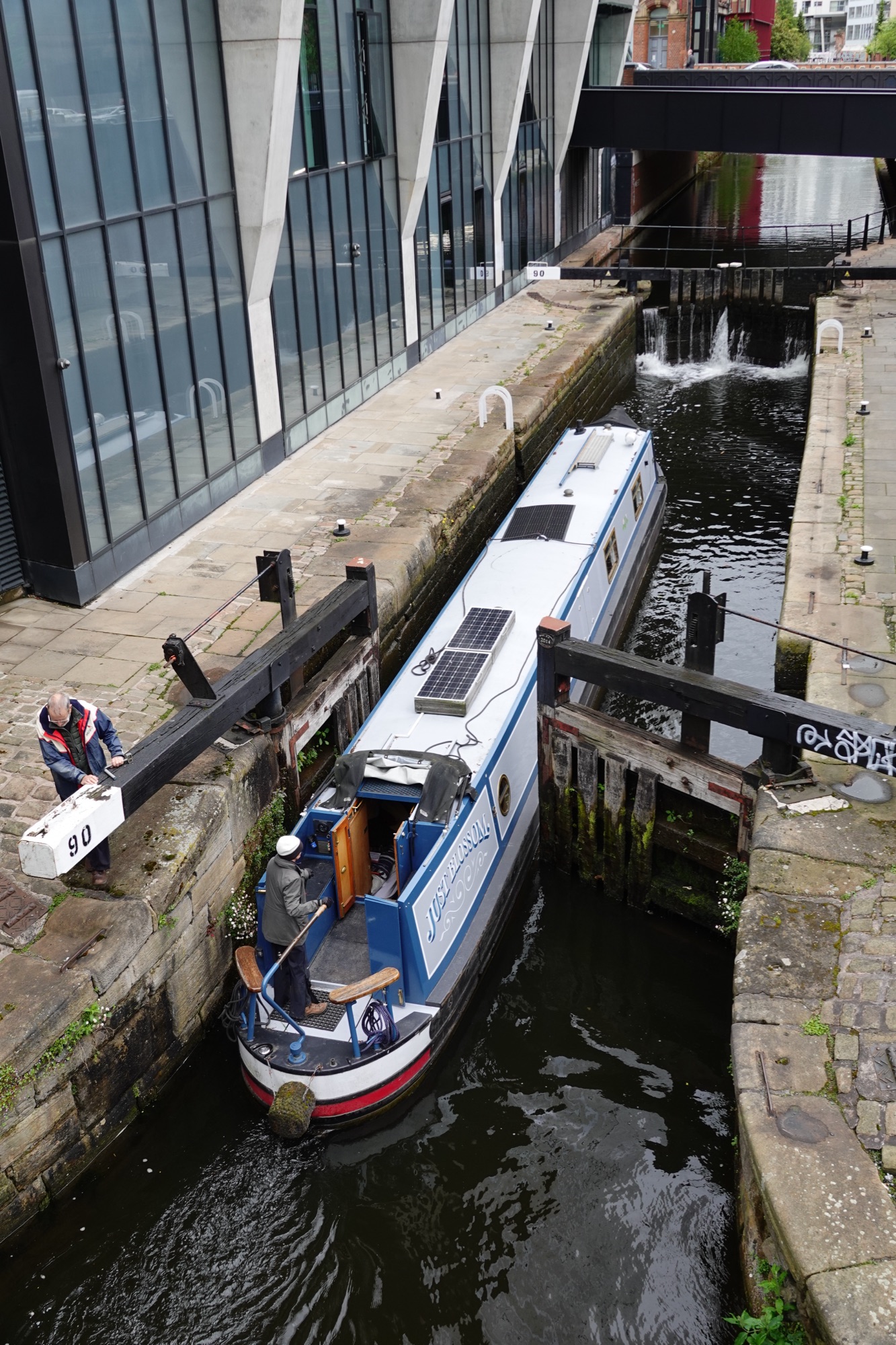
The picture below is at the Deansgate Locks, where we watched a canalboat going through.
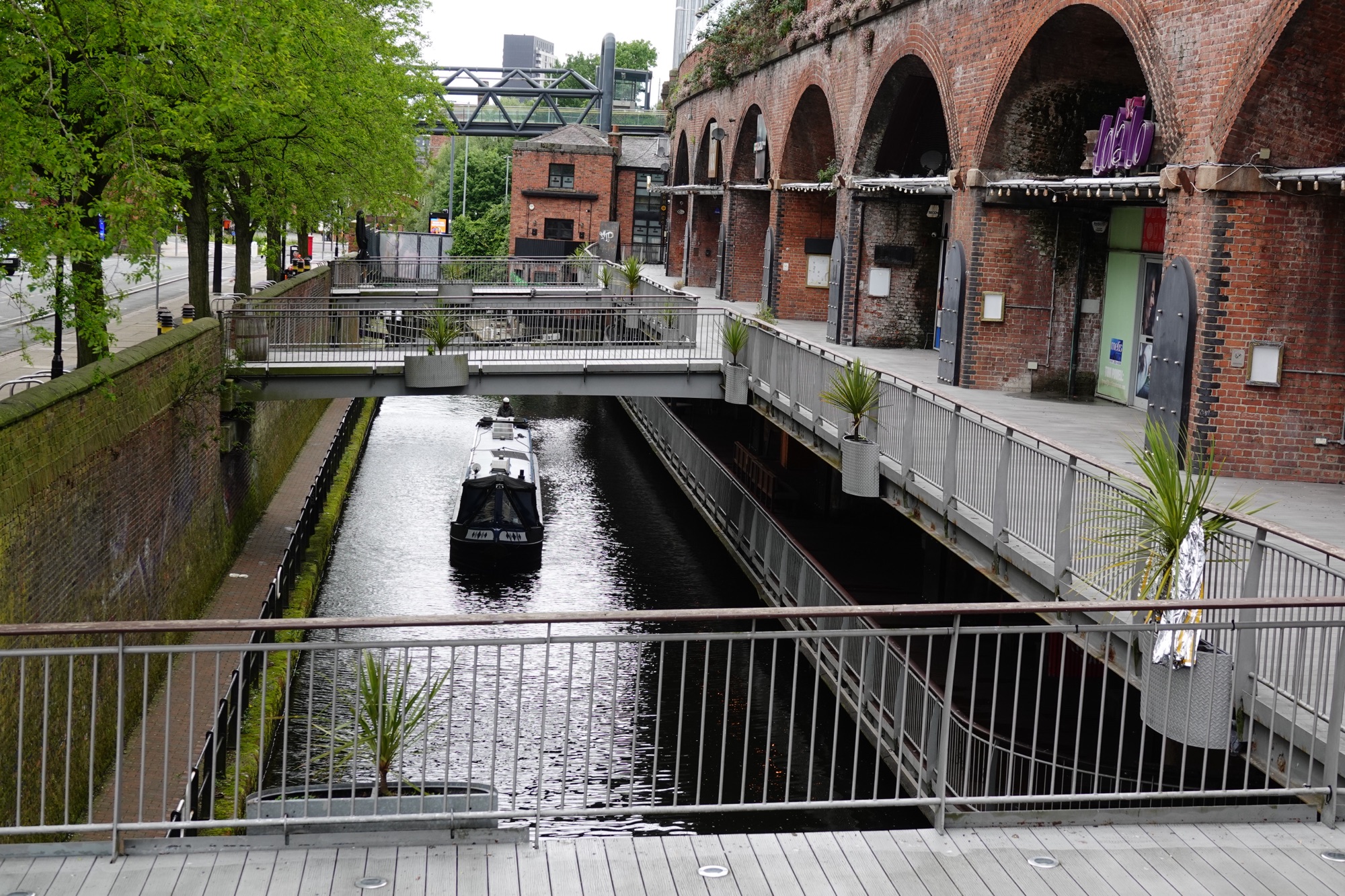
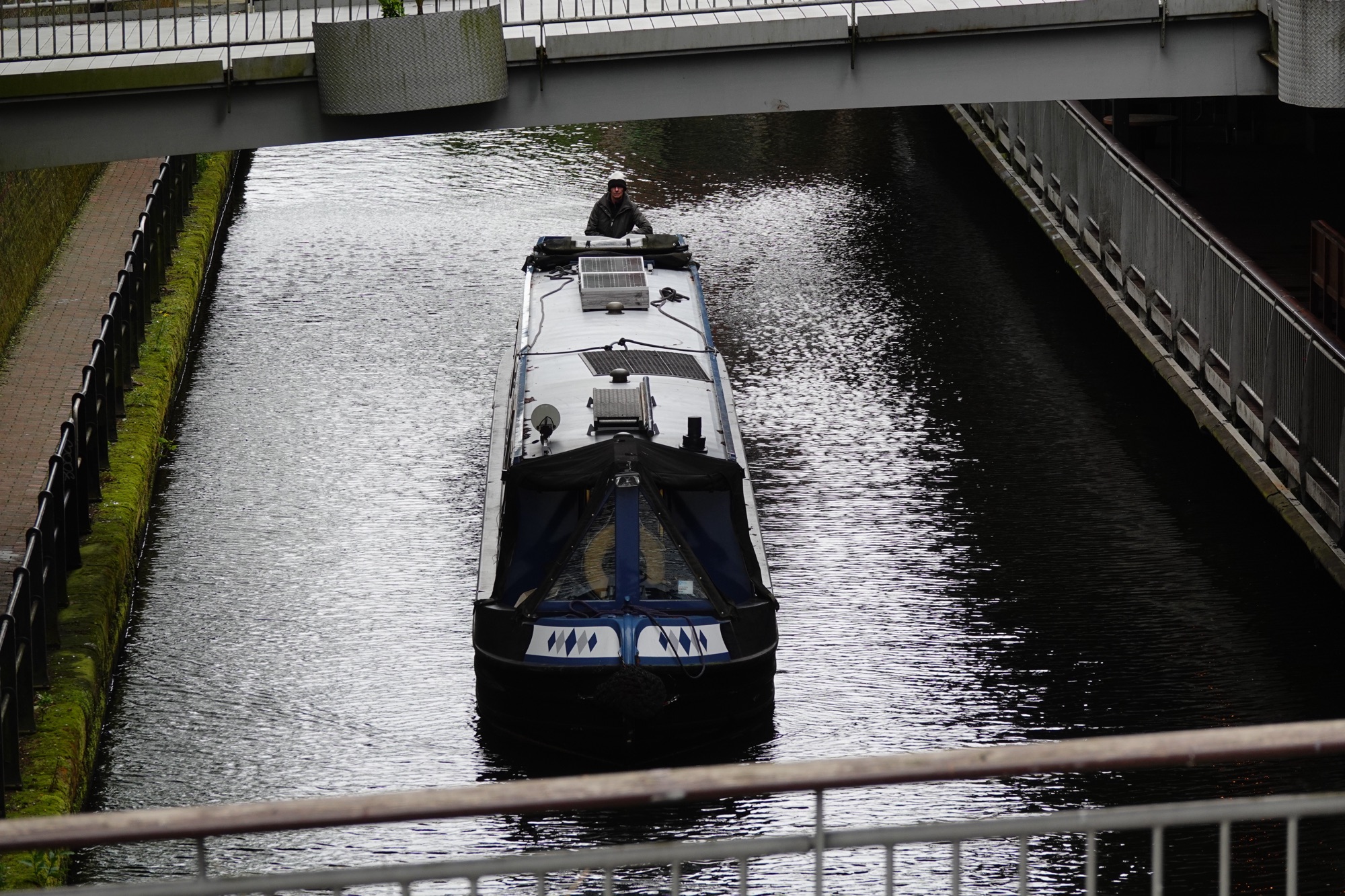
The locks on the Rochdale Canal in Manchester are maintained and operated by the Canal & River Trust, a charity that manages the waterway. While most manual operation is done by boaters, the trust’s paid staff and volunteers work 365 days a year to manage maintenance, water levels, and complex passage.
We continued on past the railway viaducts, intending to visit the Castlefield Viaduct, a National Trust site.
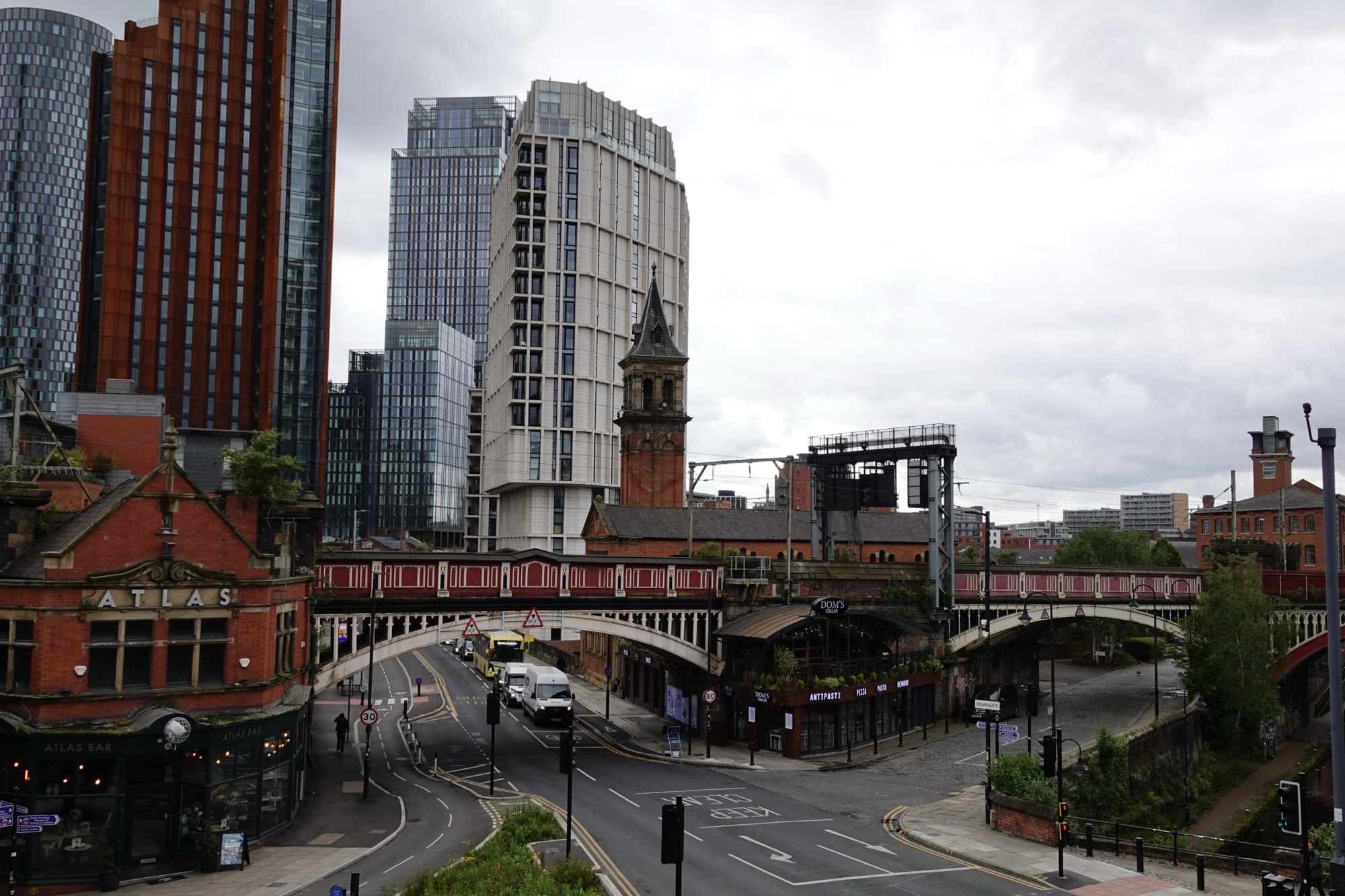
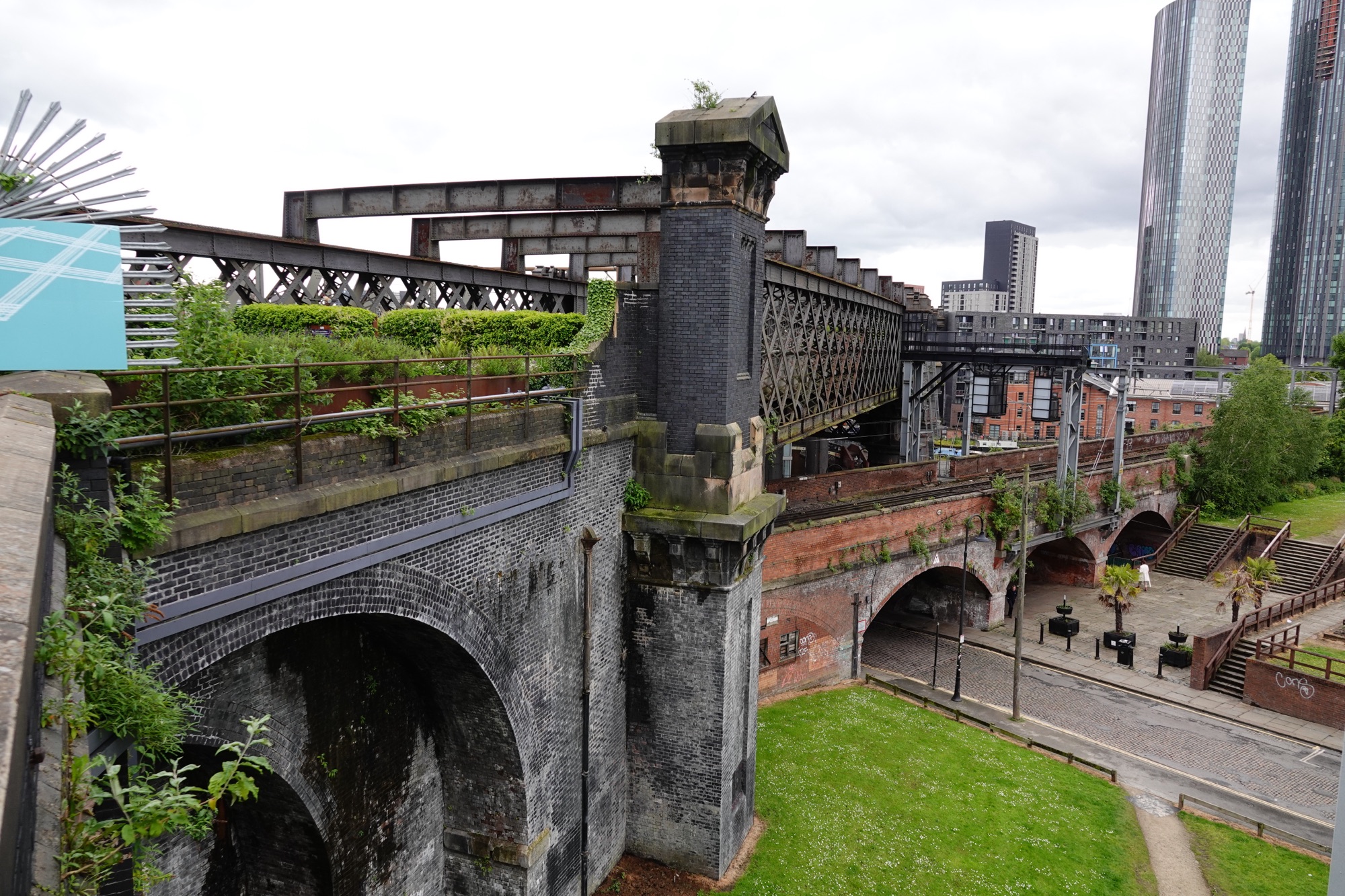
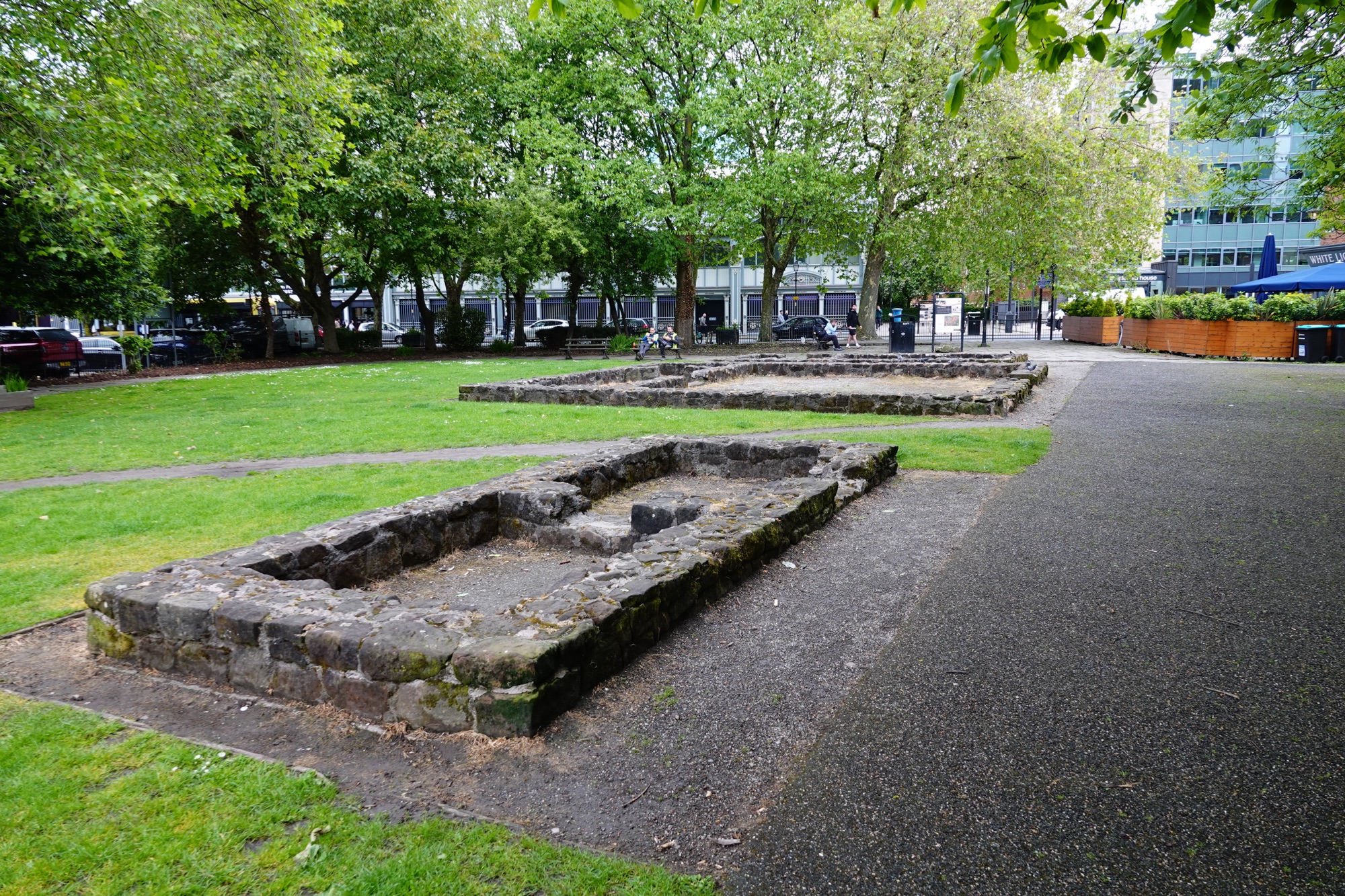
Unfortunately the site was closed, but right beside it are the remains of the Roman Fort of Mamucium, dating to between 79 and 200 CE.
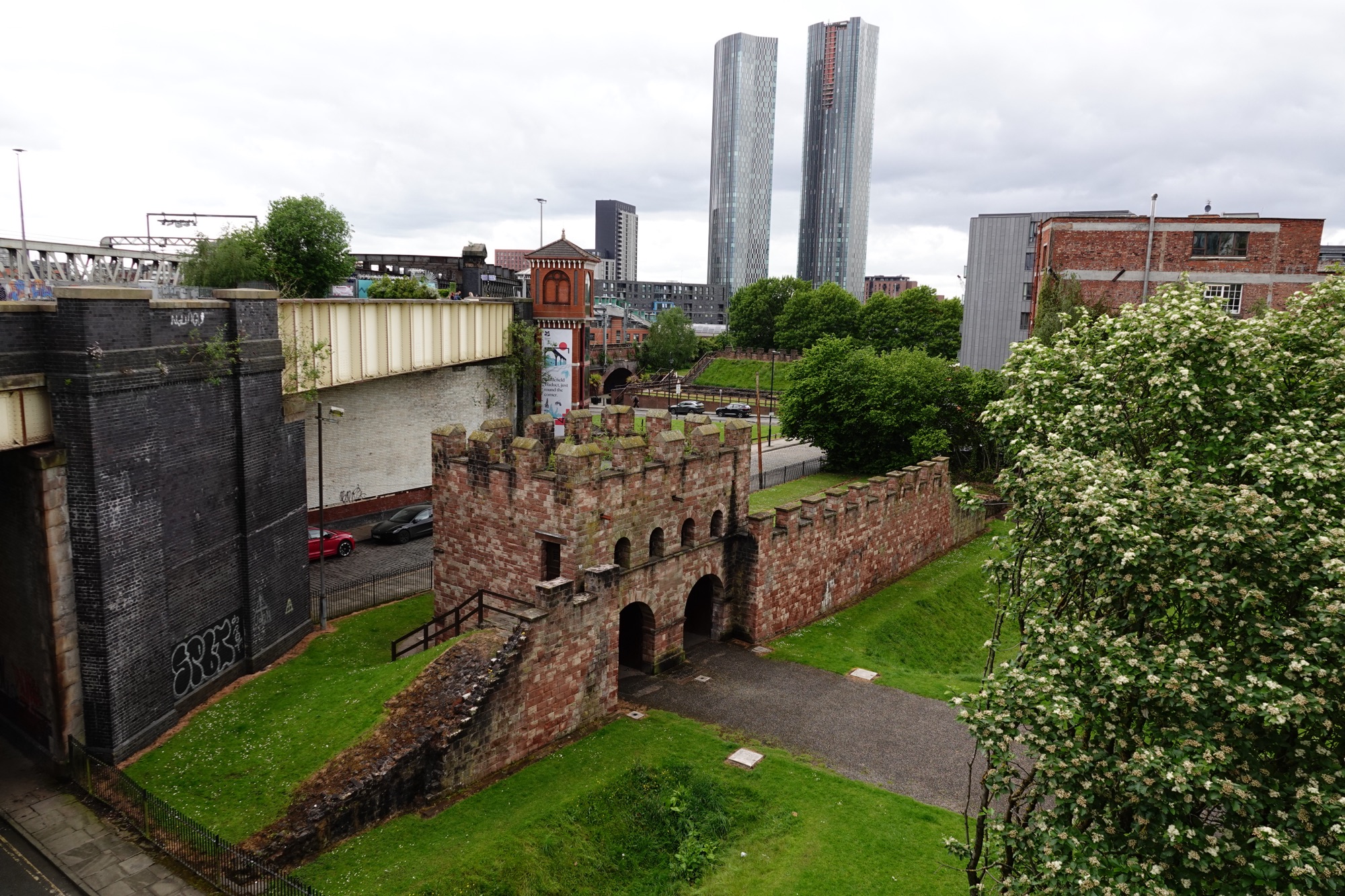
The sign at the entry reads: “THIS IS WHERE MANCHESTER BEGAN. HERE, 1700 YEARS BEFORE THE GREAT INDUSTRIAL CHANGES THAT SHAPED THE MODERN CASTLEFIELD, THE ROMANS BUILT A CASTLE-IN-A-FIELD. YOU ARE STANDING INSIDE THAT ORIGINAL FORT.”
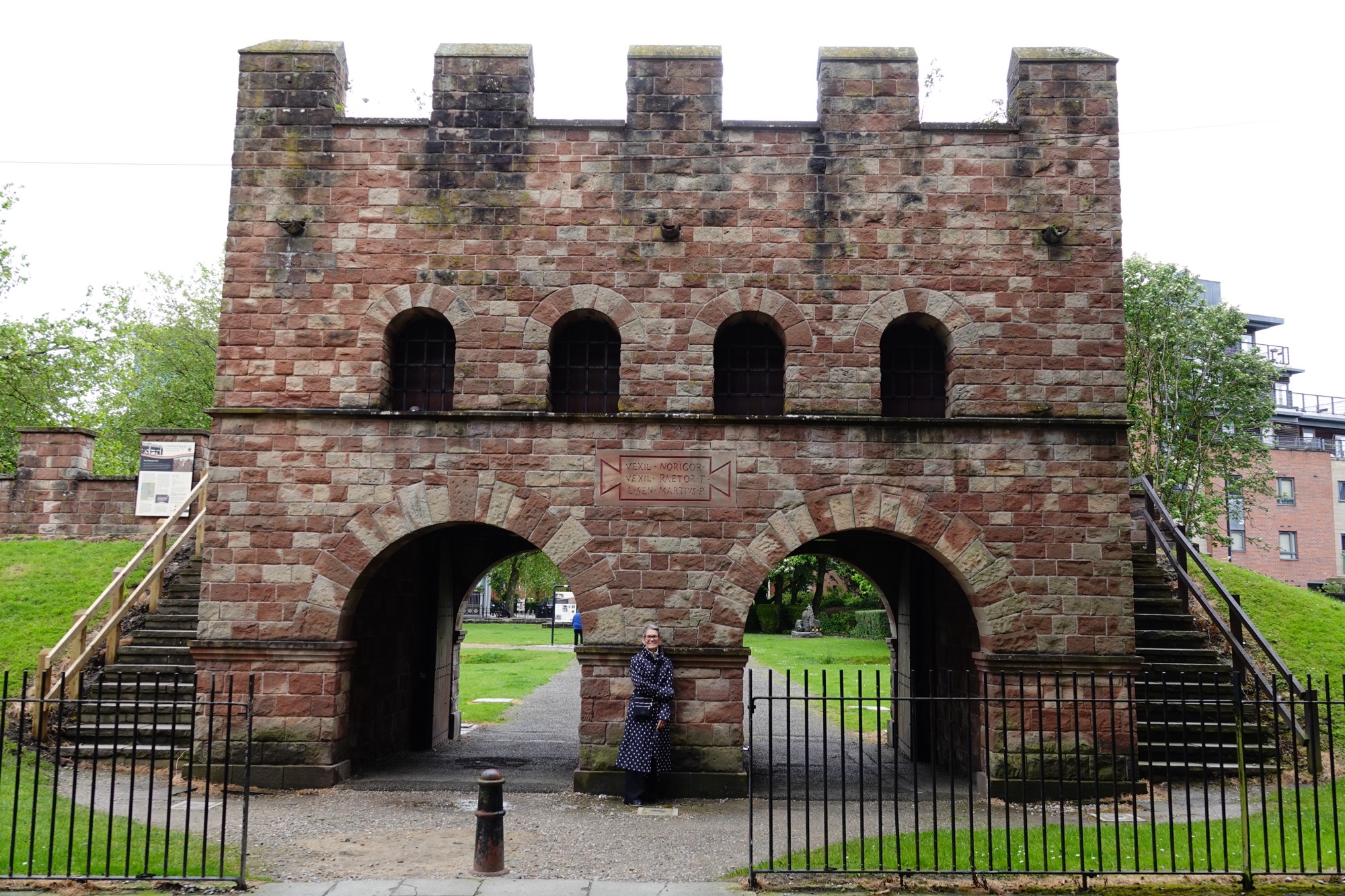
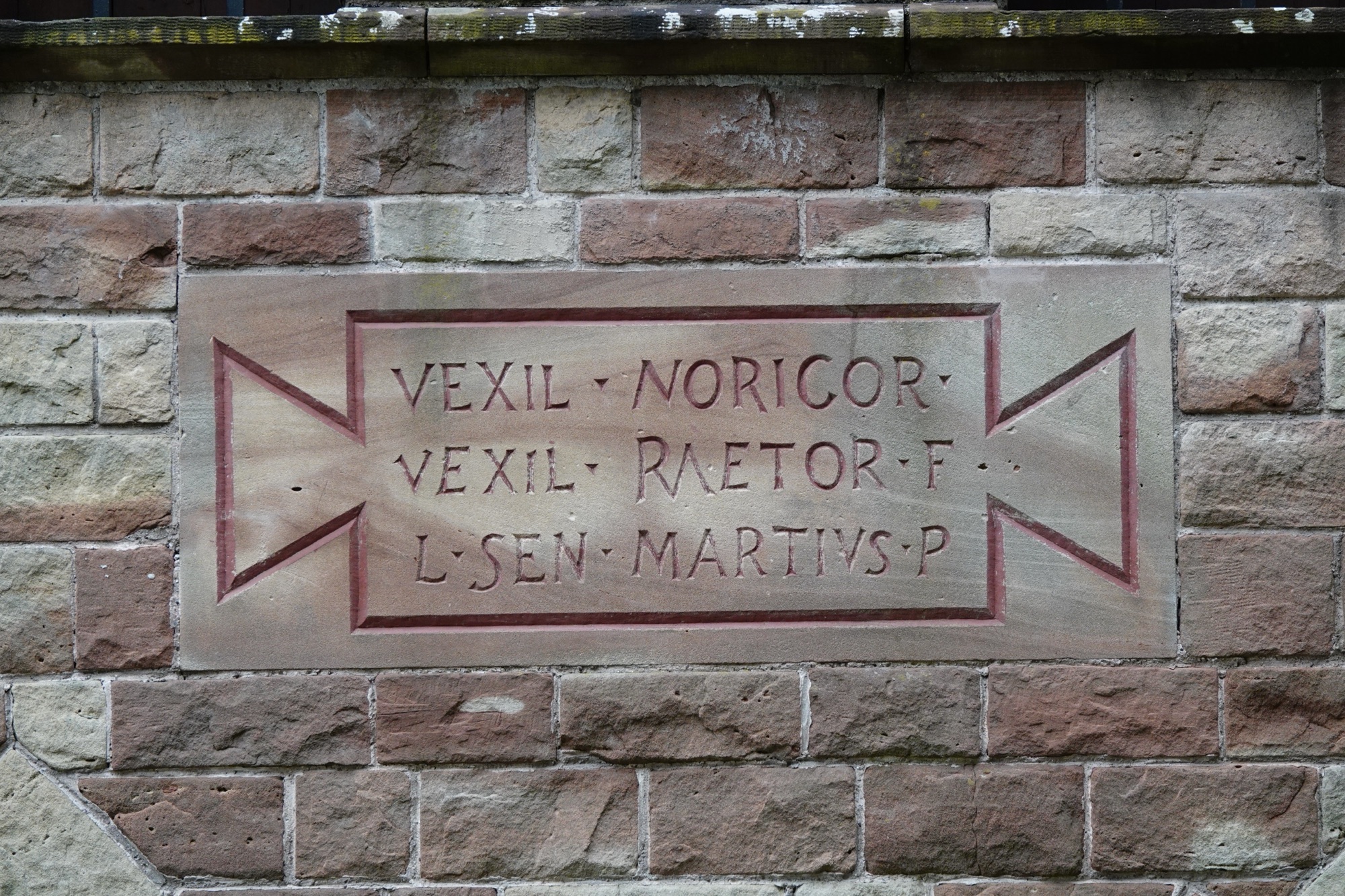
The inscription between the arches is a fragmentary dedication commemorating a detachment of soldiers from Raetia and Noricum (regions in modern-day Austria and Germany). It is the only surviving piece of original Roman masonry in its original position within Manchester.
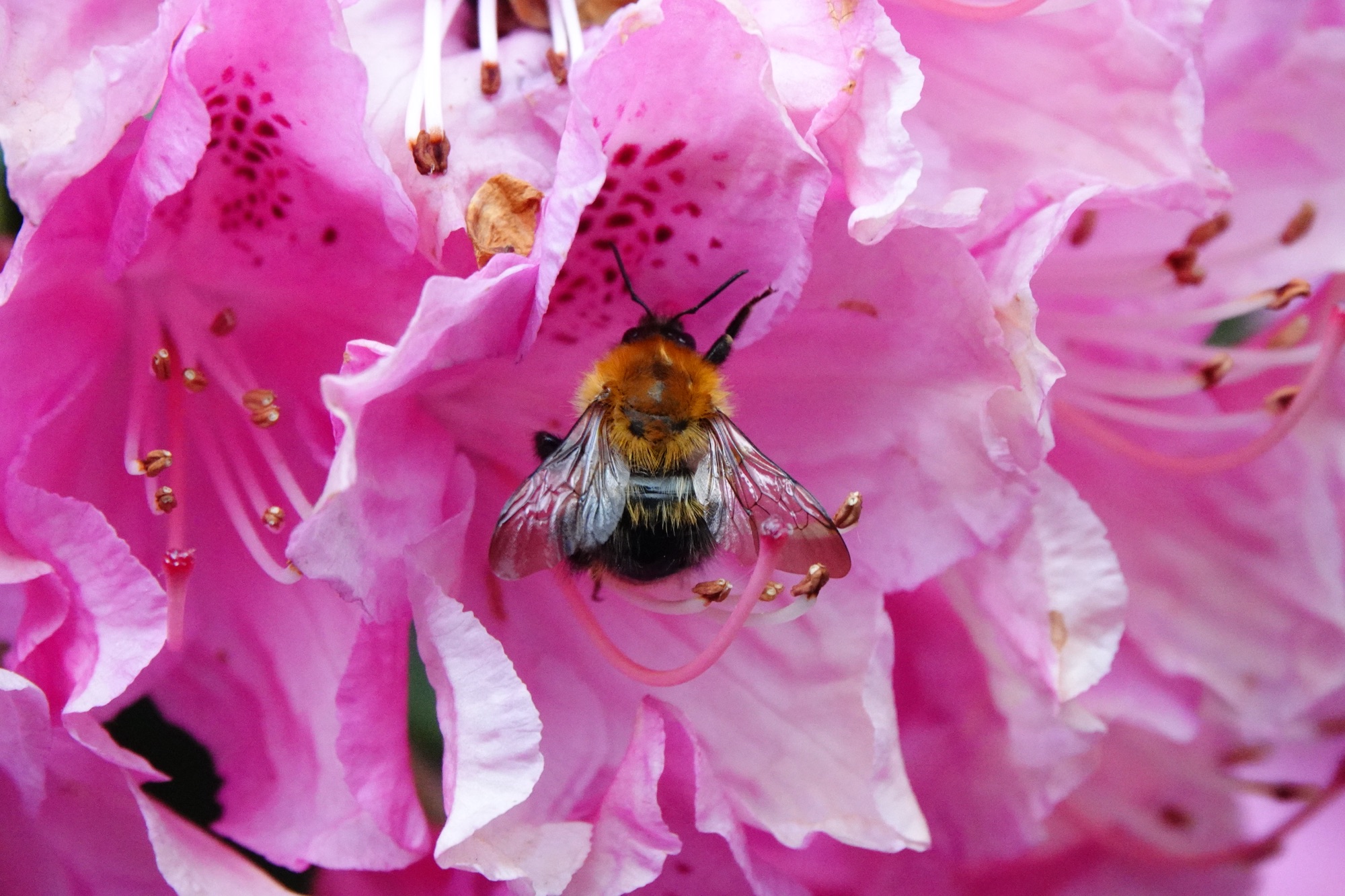
The route Ted had planned took us past Manchester’s Museum of Science and Innovation and into St. James Gardens, where it was a bit disconcerting knowing that while we were walking among green trees and lush rhododendrons, we were also walking over the burial place of 22,000 people in what was once a churchyard.
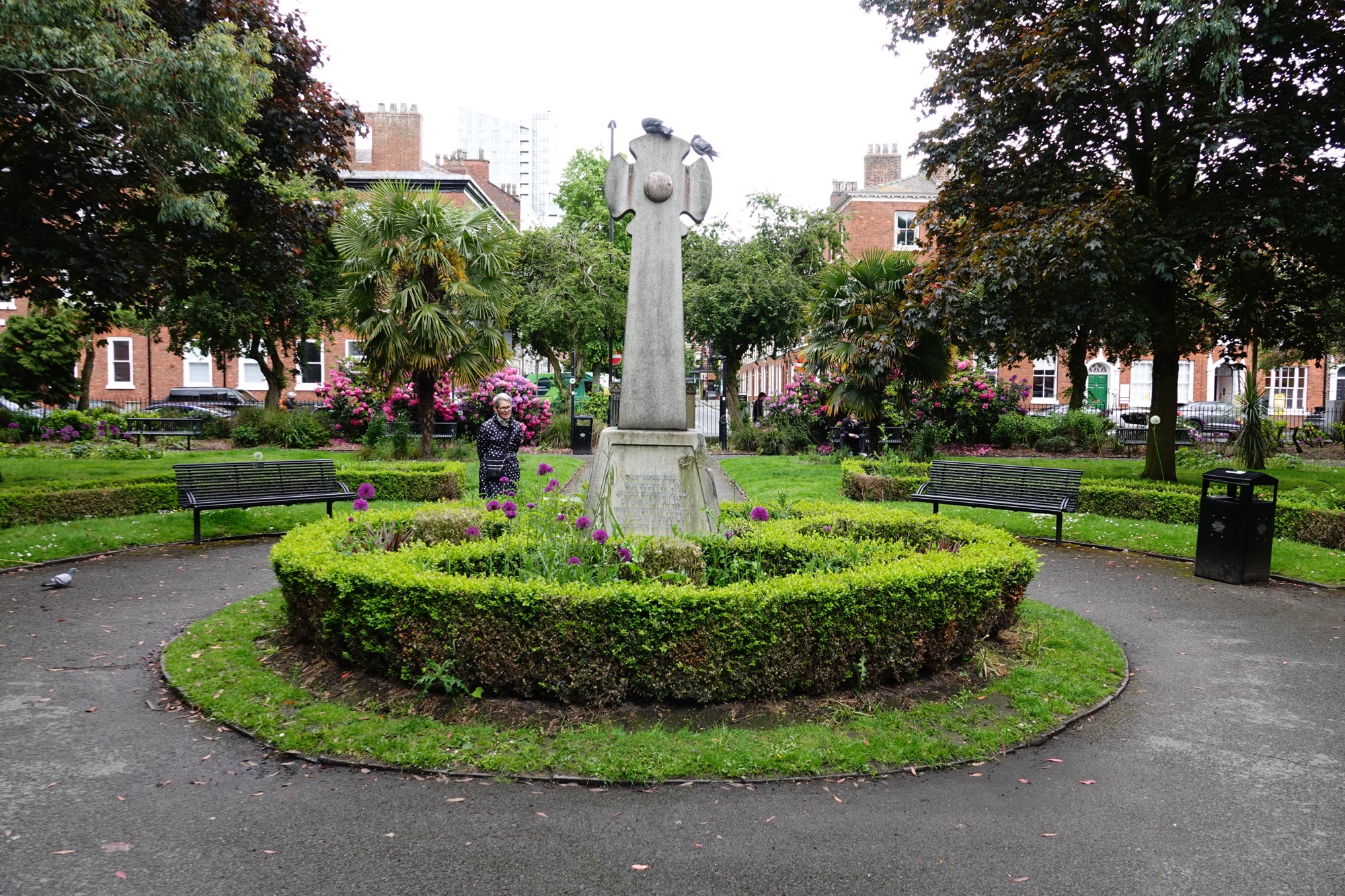
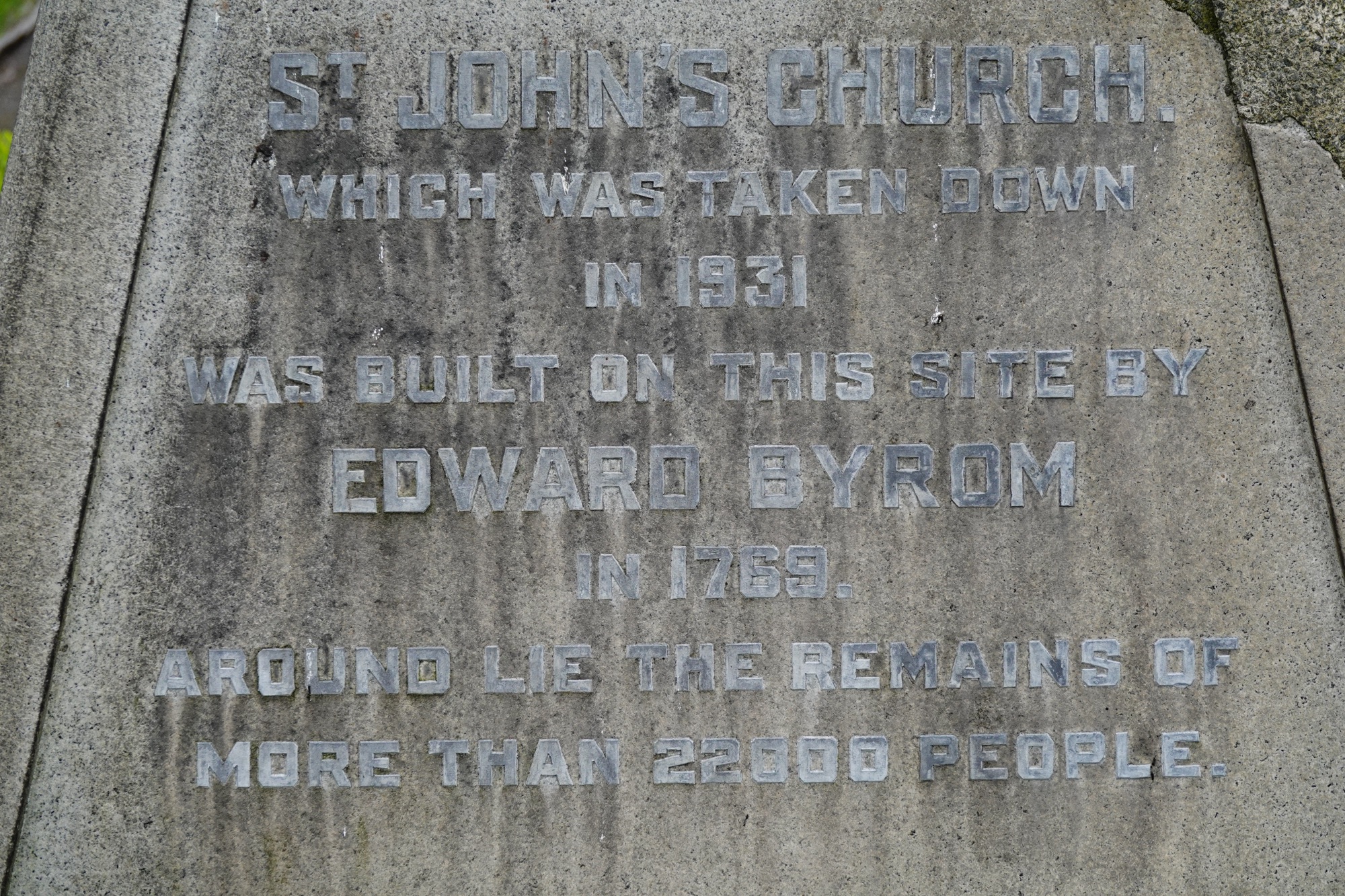
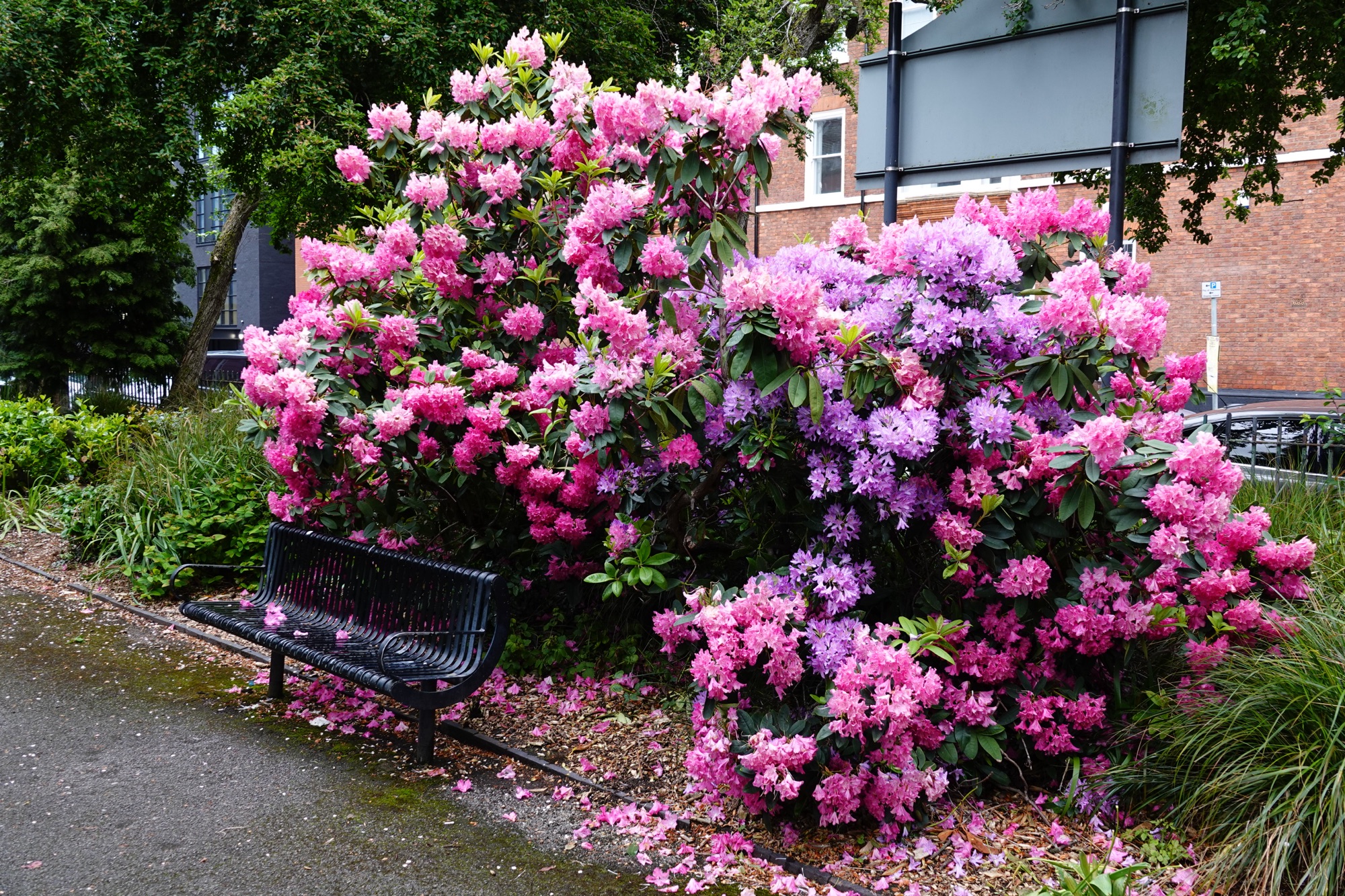
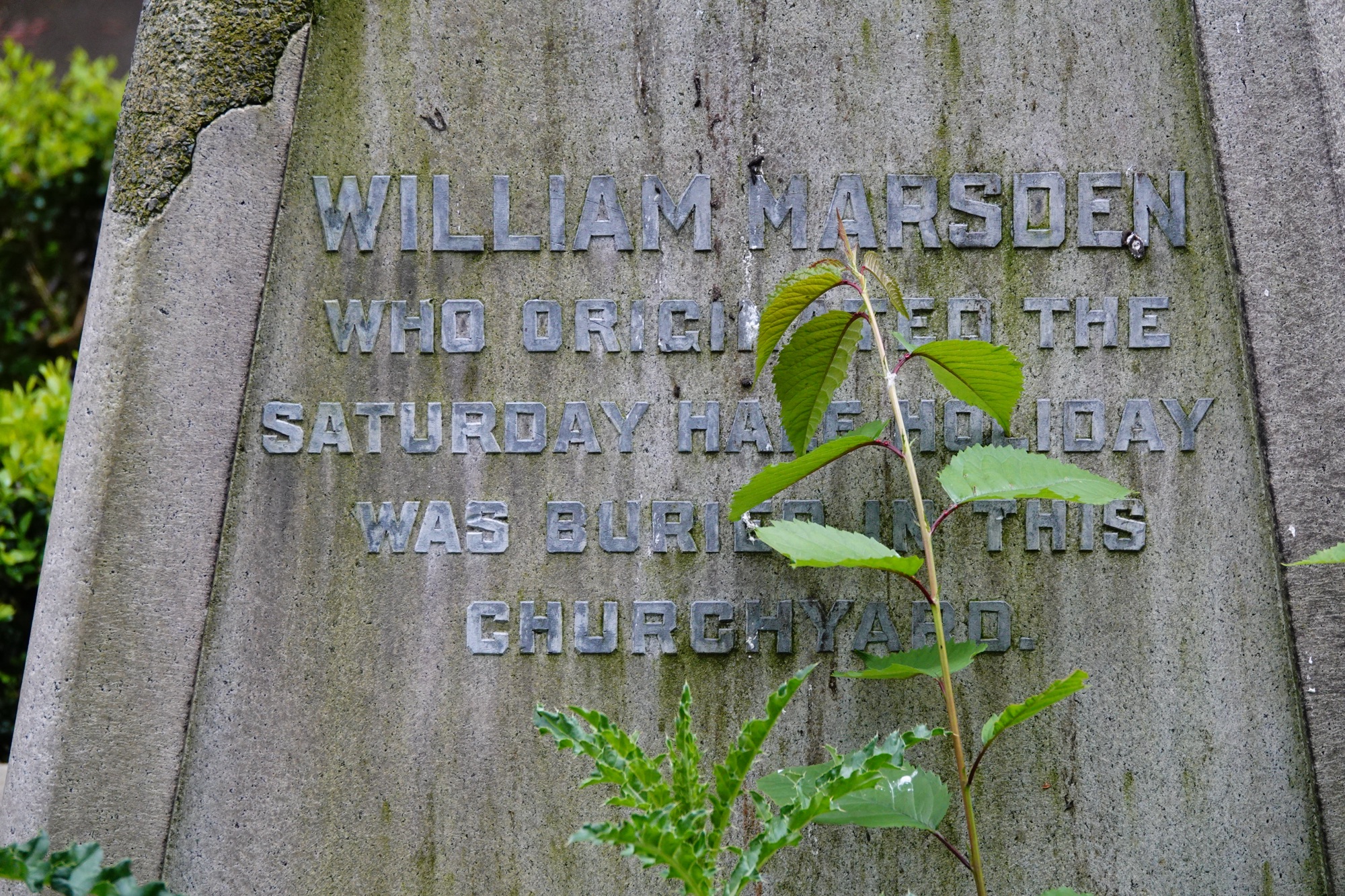
One of the people buried here was identified on the central memorial: the man who originated the Saturday half-day holiday for workers in Britain’s industrial age.
Our next stop was Ted’s sectet until we reached it. What a lovely surprise!
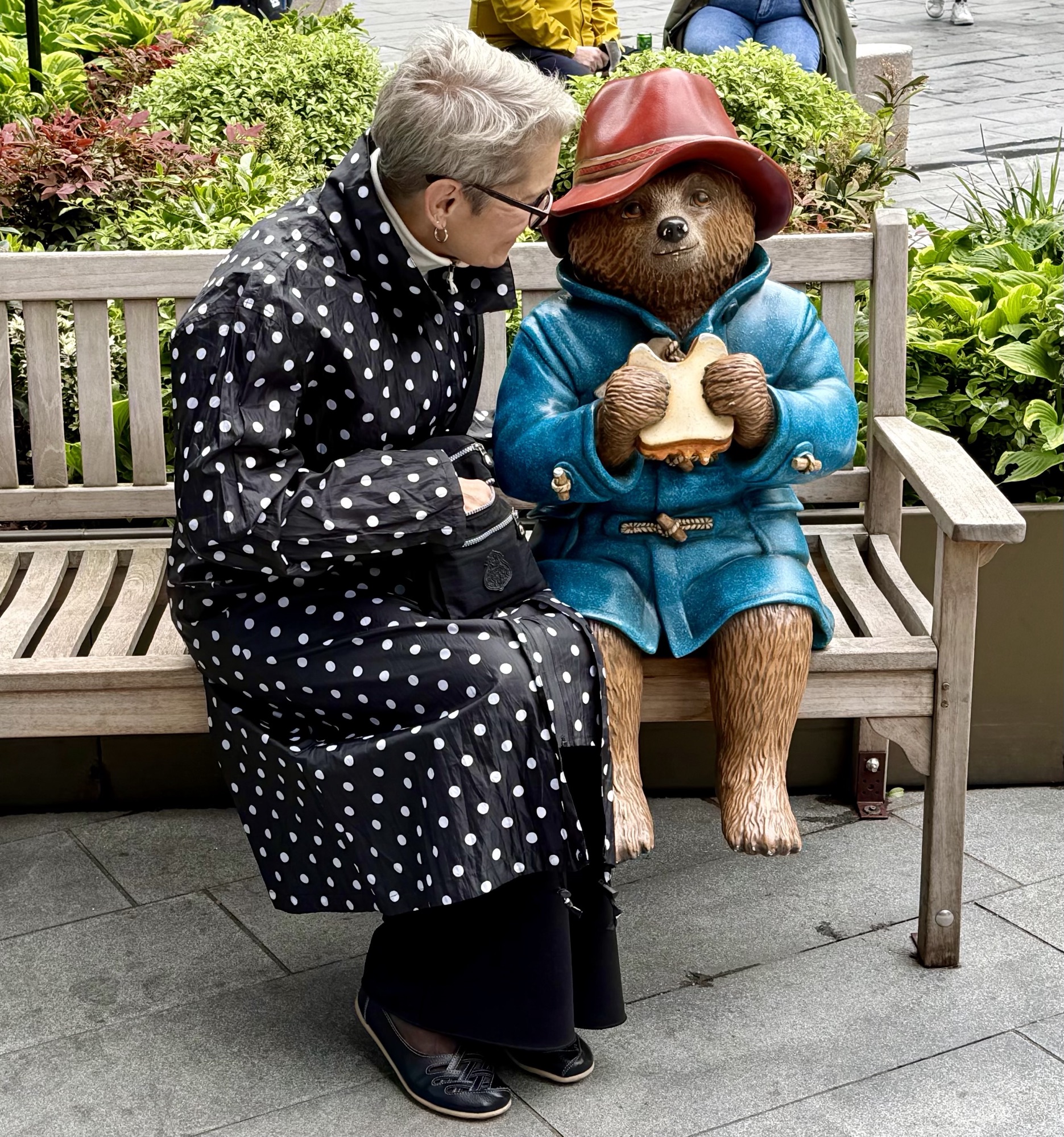
I’m reaching into my purse for my own marmalade sandwich. For anyone who doesn’t get the reference, here is the amazing woman I am emulating:
We continued on past a number of wonderful Victorian and Edwardian buildings, but when we saw this huge Gothic style one we were inspired to try to go inside, thinking it was a church.
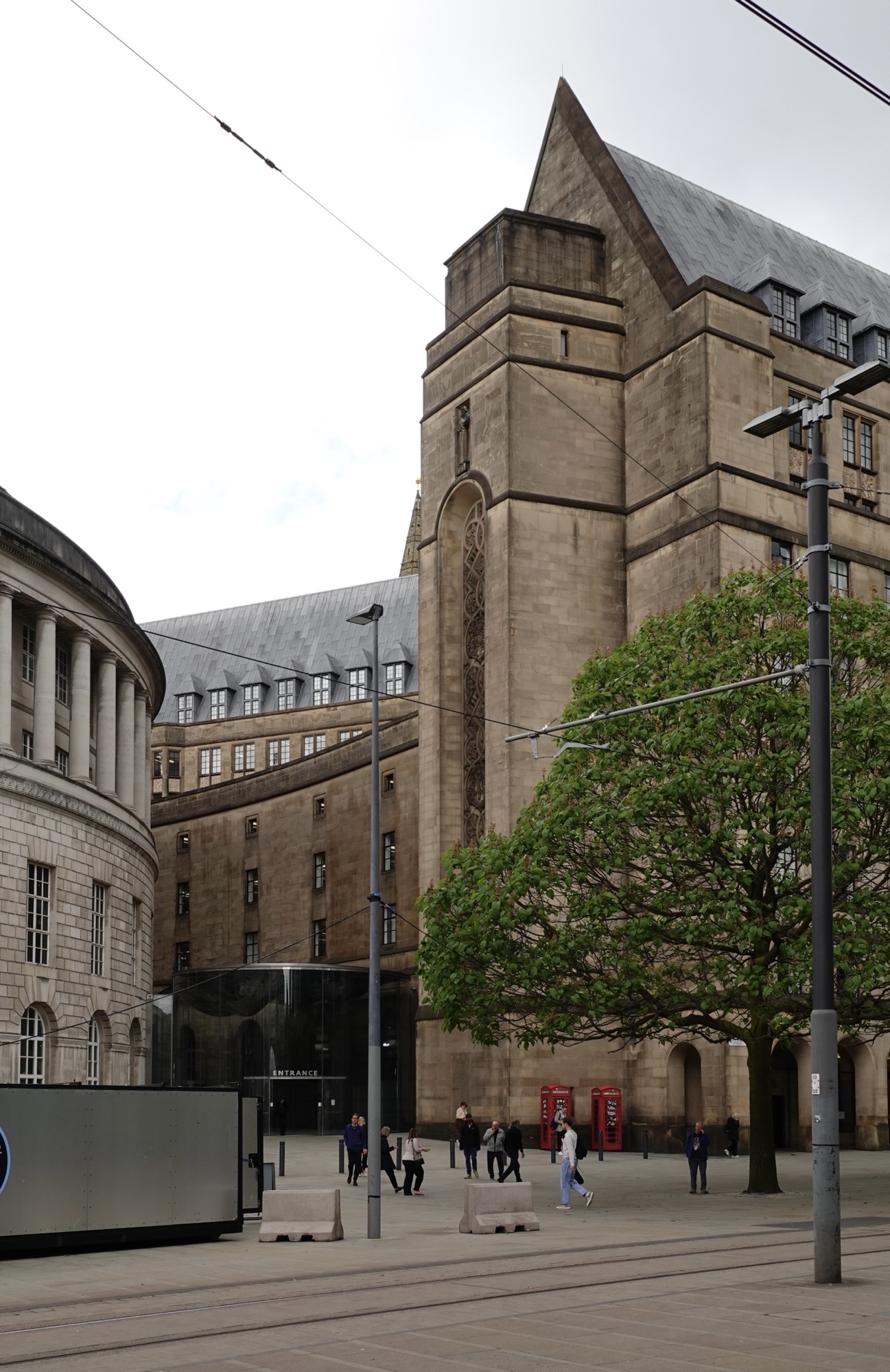
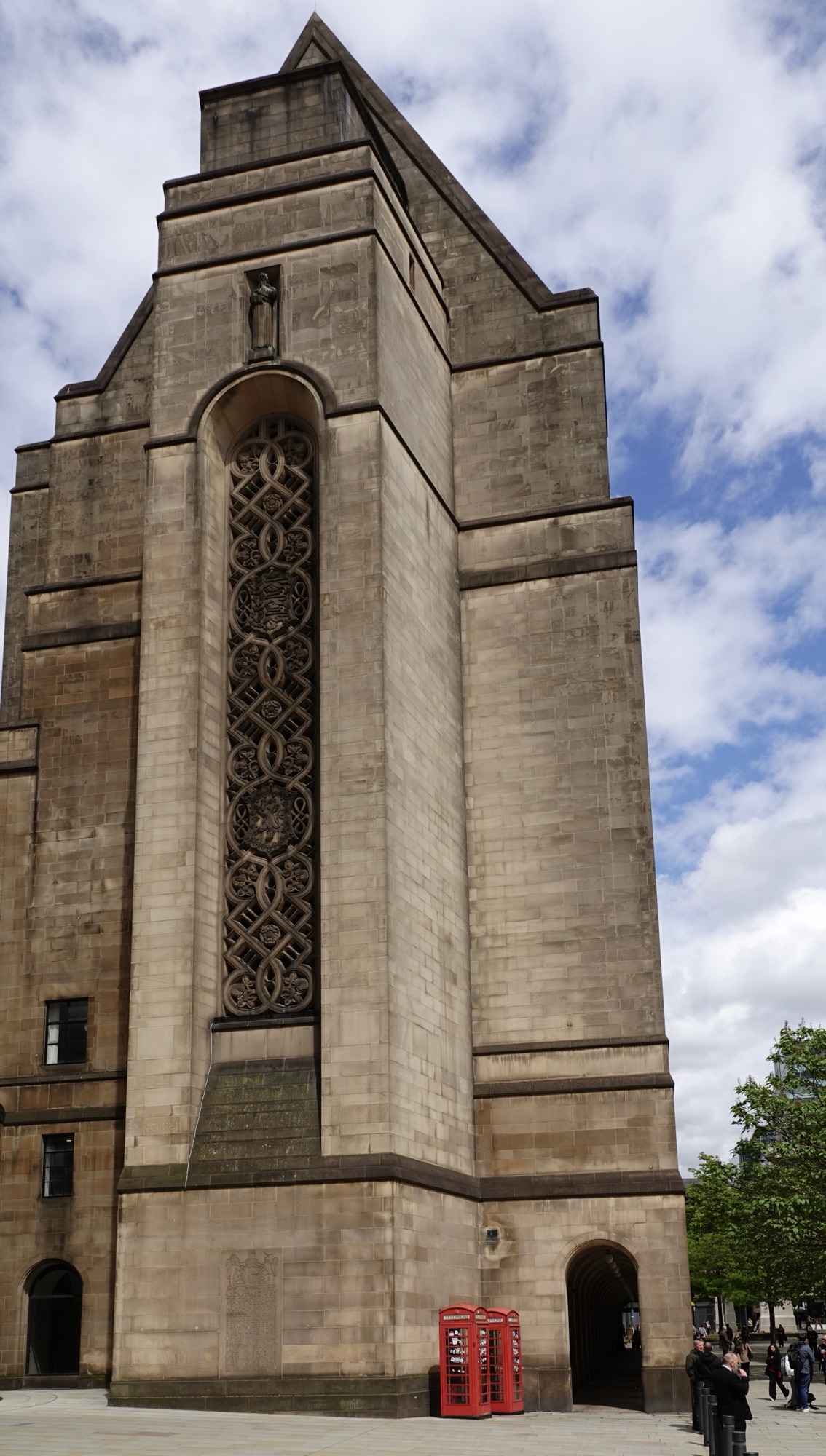
It was actually the Gothic style Manchester Town Hall Extension, and currently closed to the public. We chatted briefly with the two security guards about where we were from, our interest in architecture, our travels, and what had drawn us to the building. They explained that while the main building was undergoing restoration work, this one was being used as offices. Then, one of them offered to unlock the marble “rates hall” and let us walk through with him! His partner quipped, “Sure, just let them roam free!”
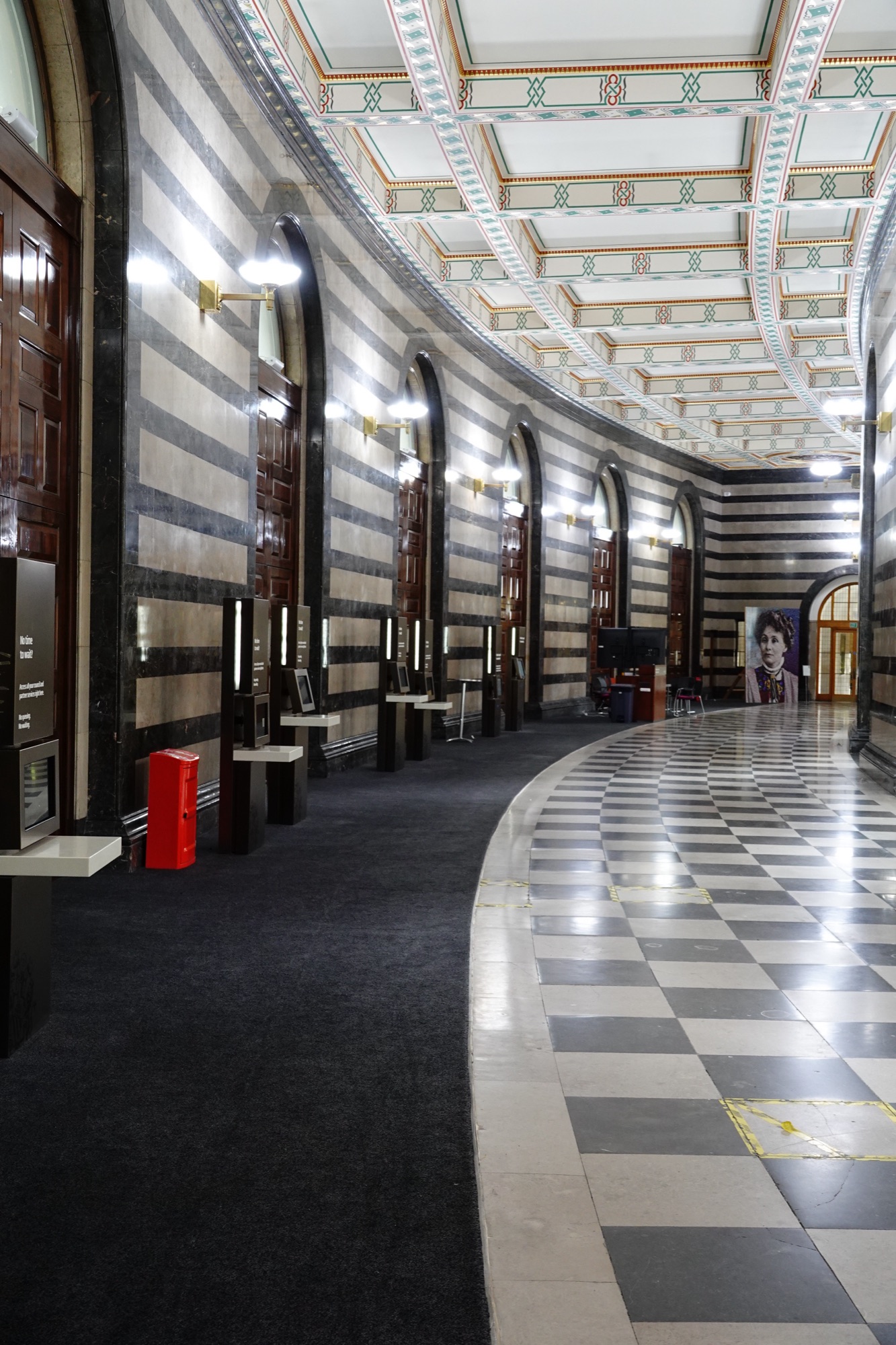
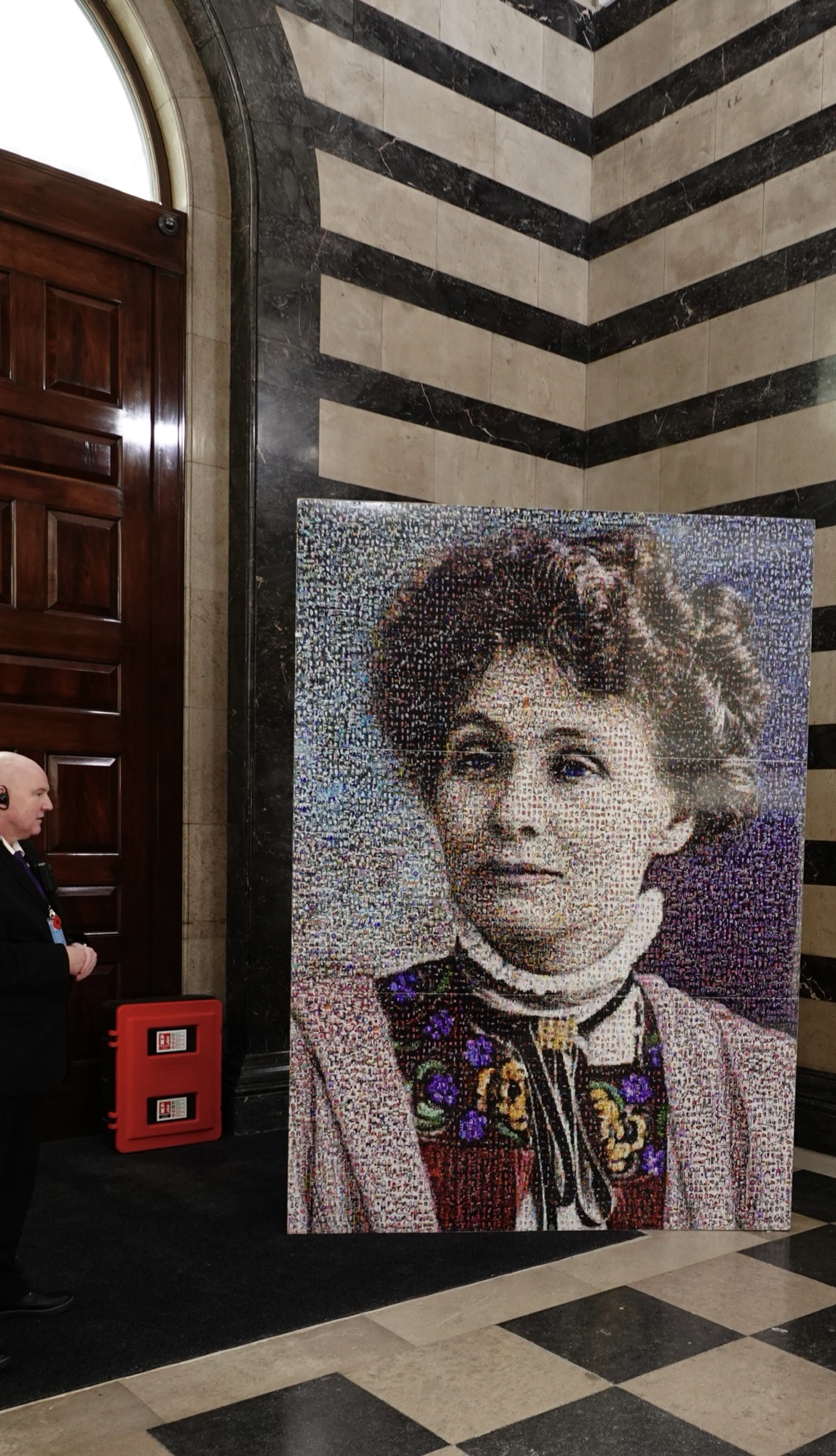
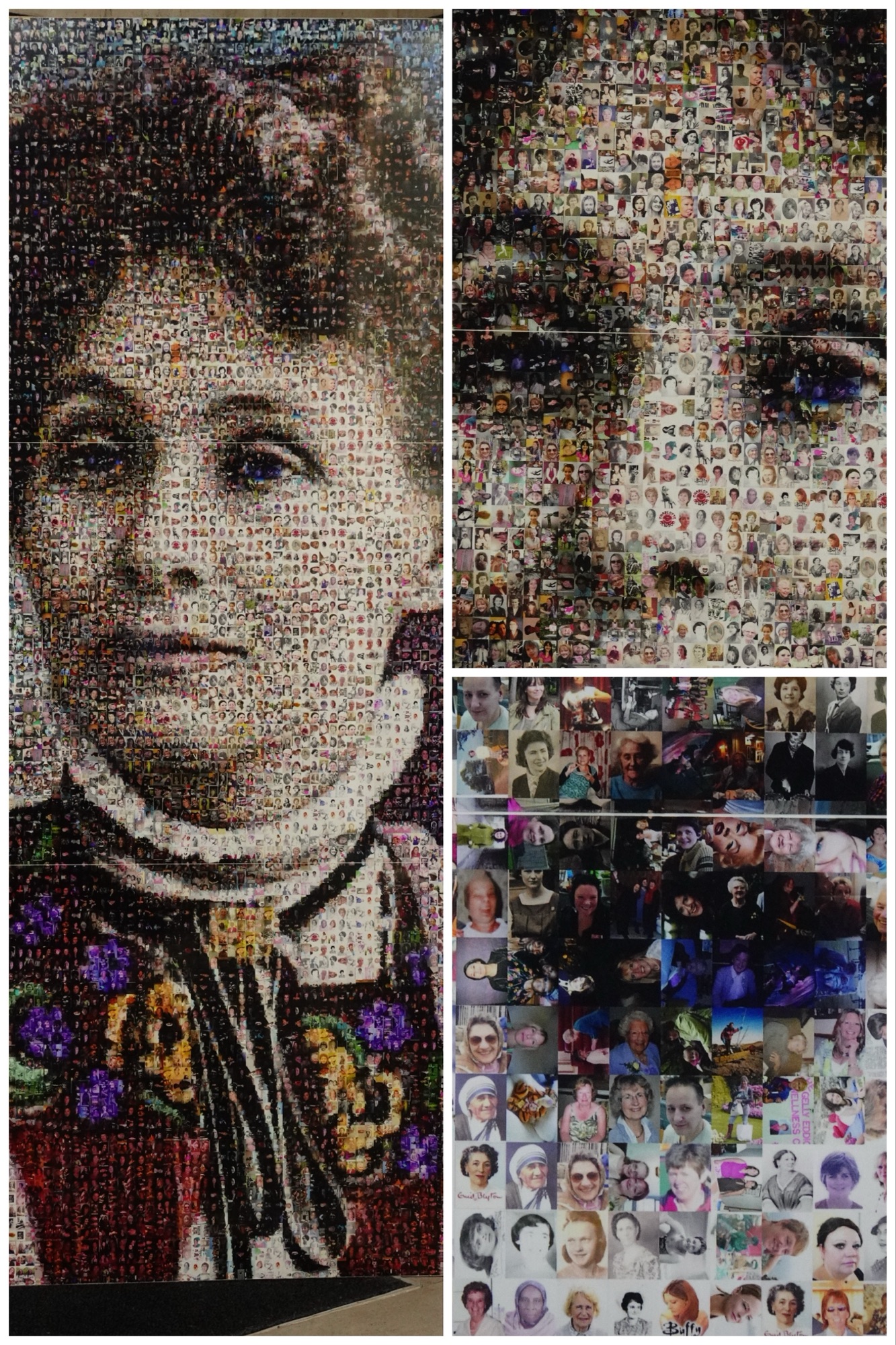
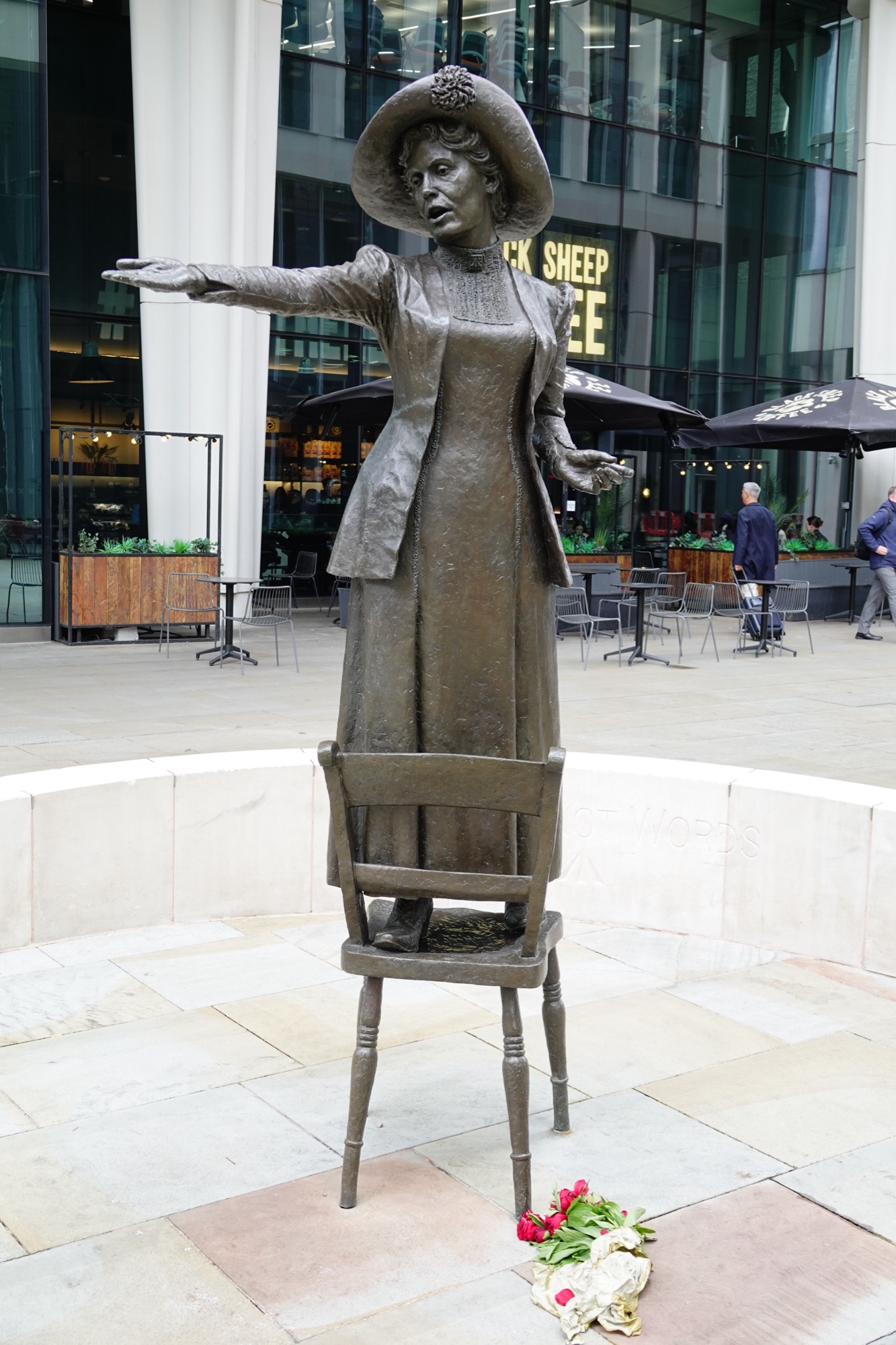
Our “guide” pointed out the huge poster of Emmeline Parkhurst, who led England’s suffragette movement. It is made up of pictures exclusively of women. He also told us where in St Peter’s Square to find her statue, and encouraged us to go into the main library branch next door.
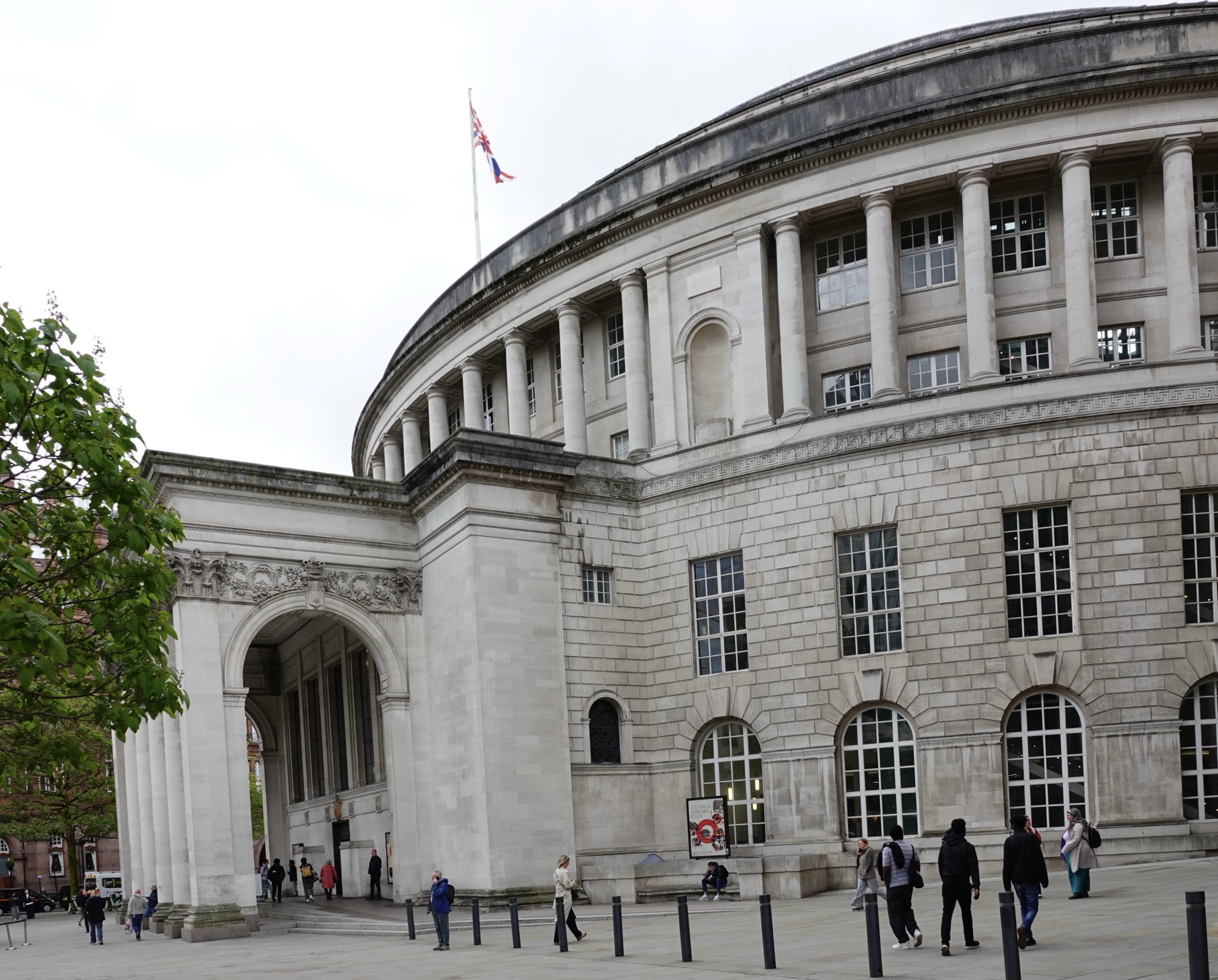
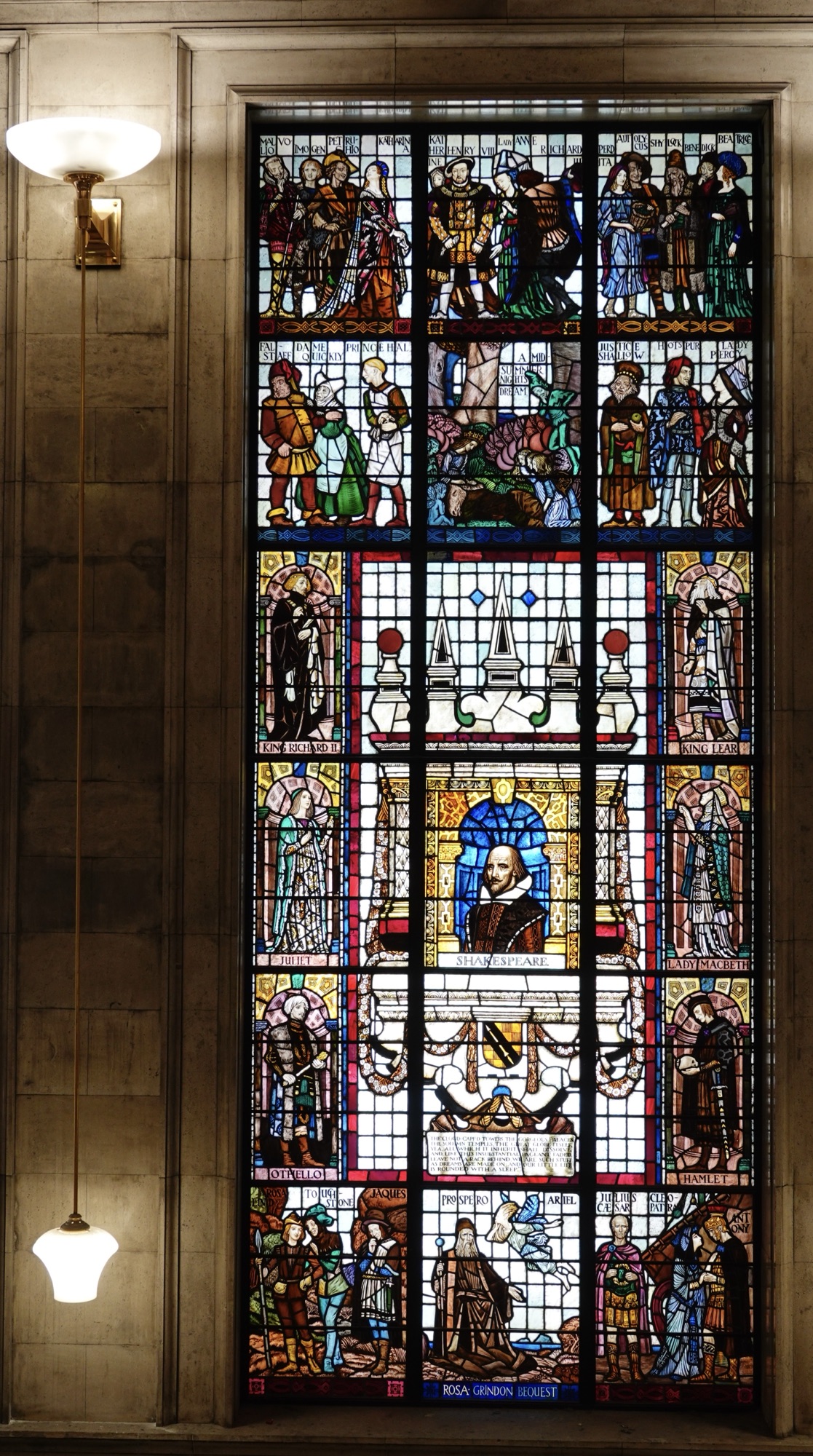
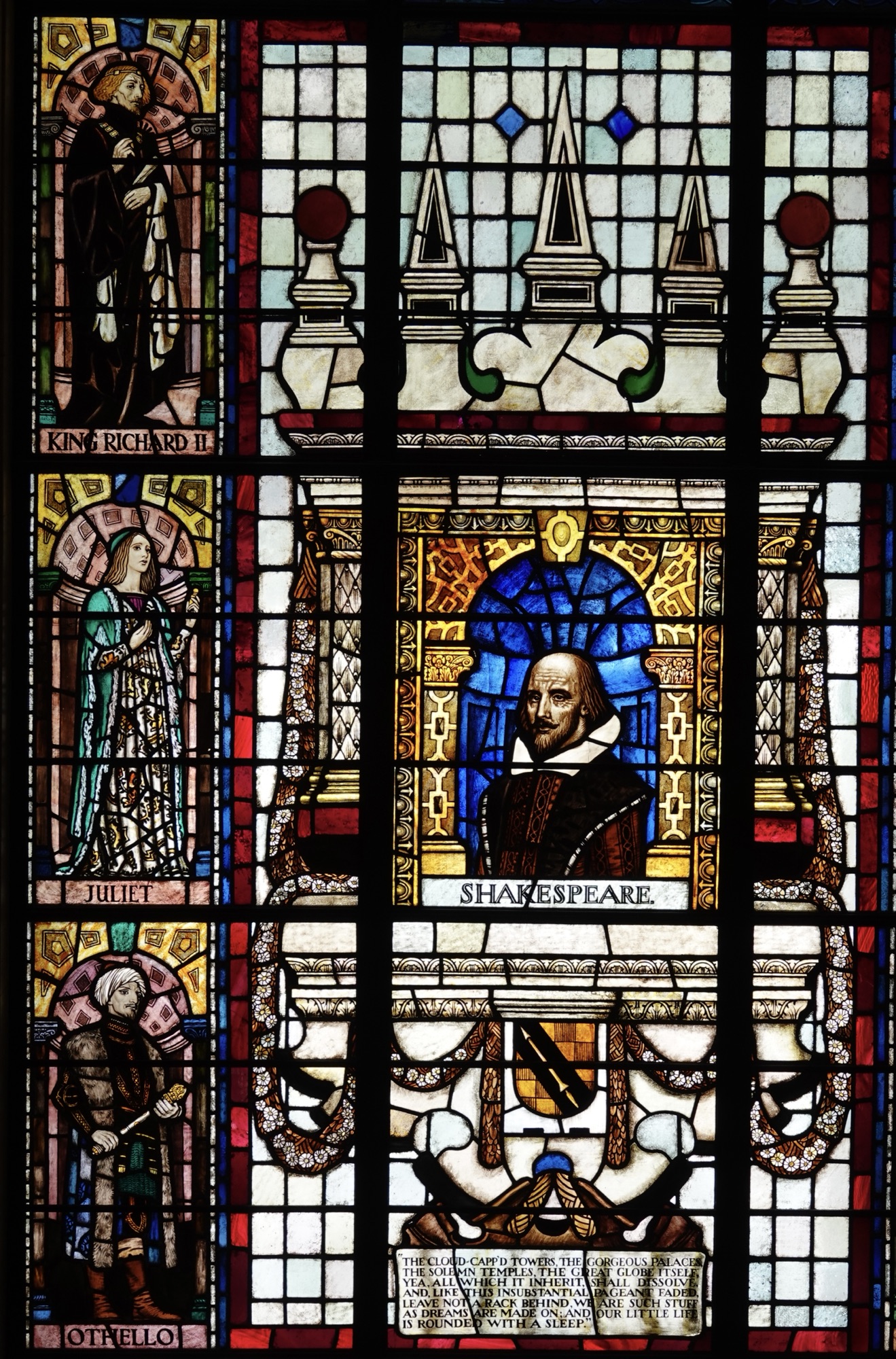
In its soaring entry hall, the library features a “Shakespeare Window”.
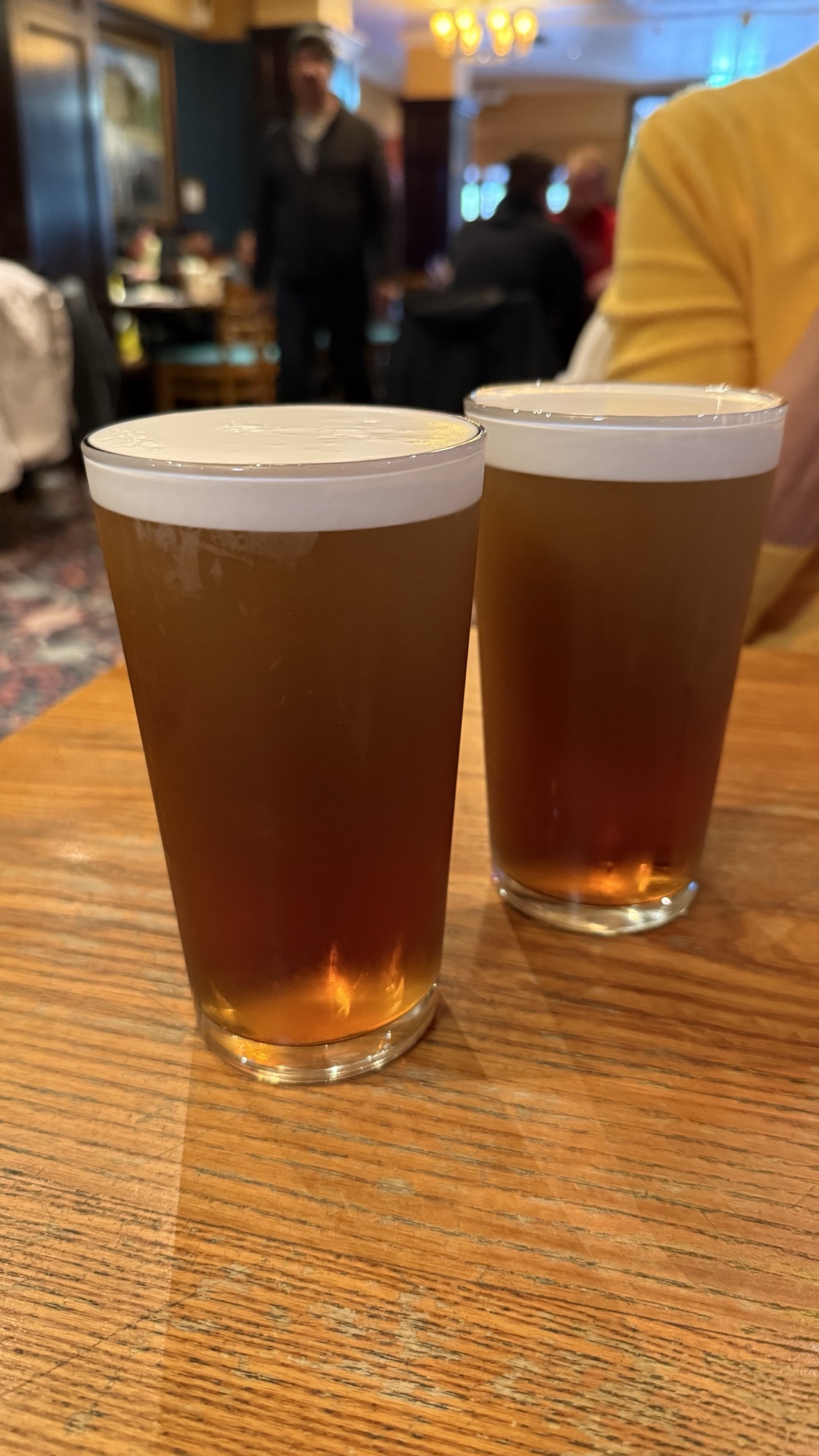
Hours of walking had us both tired, thirsty, and hungry. We stopped at Wetherspoon’s Hotel on Piccadilly Garden for fish and chips (devoured before a thought had been given to taking a photo) and pints of lovely cold Worthington’s Creamflow Ale. The ale is dispensed from a “nitro-keg” and pours looking like 100% creamy foam, which gradually reveals a lovely amber colour.
Ted’s route for our day was a great success, but his feet had had enough. while he returned to our hotel, I managed somehow to have the energy to peruse a couple of Manchester’s op shops, and buying a scarf and tank top at one which supports Barnardo’s, the same childrens’ charity that was responsible in 1922 for paying passage to Canada for Ted’s orphaned 14-year old Nana, who ended up working as a domestic for a U of T professor. Her story ended up a happy one, although that was not the case for all of the Dr. Barnardo Children. Interestingly, the charity’s website does acknowledge that to some degree.
Dinner was fresh meal deals picked up from the Sainsbury’s Local, after which it was time to re-pack and relax.
Tomorrow we take the train to York, where I’m especially excited to visit the Minster and Treasury House, for which we’ve already booked our timed entry tickets.


Thanks for a great day out in Manchester. That portrait of Emmeline Parkhurst in women’s pp photos and the Shakespeare stained glass were worth the price of admission! Ahhh, laundry — the bane of the traveller’s schedule. One tip I haven’t seen often is to bring a bunch of balloons, inflate and lay laundered “smalls” on them! I use a rubberband clothesline I made some years ago. It’s fast and effective — I think I’ll replace the carabiner ends I used with velcro strips. https://www.instructables.com/Make-a-Rubber-Band-Travel-Clothesline-for-Less-T/ Mine used 2 rubberbands for each link but basically like this one.
It’s frustrating to use any part of a precious day on laundry!
If you haven’t seen it, there are 7 seasons of “Canal Boat Diaries” available on various platforms including DailyMotion, YouTube and Acorn. It’s calming and fascinating — especially if you’ve been seeing these canals recently. Season 7 is in Wales, but the first few were all across Northern England.
Cheers!
LikeLiked by 1 person
I really enjoyed reading about your day out in Manchester, and seeing the many photos. The Paddington Bear statue was a real treat! The English canal network is amazing; I’m so glad that many are being restored and supported by various organizations. YouTube has lots of videos of folks journeying on the various canals, great fun to watch!
LikeLiked by 1 person
We were a bit discouraged by the amount of litter thrown into parts of the canal, and kept saying “but I’ll bet the canals in the countryside are beautiful “
LikeLike
I’m looking forward to your days in York, as, outside of London, it is our favorite city to visit in the UK. Don’t miss the snickleways of York (narrow, secret passageways and alleys in the city center), there is an excellent map of the circuit. There also is a cat statue trail (also a free map) of 20 cat statues, some easily spotted, some hidden on window ledges, etc. Unfortunately on our last visit, we didn’t learn about the cat statues until we saw one from the second story window of Betty’s tearoom on Stonegate, where we enjoyed lunch. And then didn’t have time to explore, looking for the rest. Be sure to visit the Minster Undercroft, it has an excellent display of the old foundations of the church. The medieval stained glass windows in the Minster are all absolutely amazing.
LikeLike
I’m looking forward to your days in York, as, outside of London, it is our favorite city to visit in the UK. Don’t miss the snickleways of York (narrow, secret passageways and alleys in the city center), there is an excellent map of the circuit. There also is a cat statue trail (also a free map) of 20 cat statues, some easily spotted, some hidden on window ledges, etc. Unfortunately on our last visit, we didn’t learn about the cat statues until we saw one from the second story window of Betty’s tearoom on Stonegate, where we enjoyed lunch. And then didn’t have time to explore, looking for the rest. Be sure to visit the Minster Undercroft, it has an excellent display of the old foundations of the church. The medieval stained glass windows in the Minster are all absolutely amazing.
LikeLiked by 1 person
Thank you! So much to look forward to!
LikeLike