We may be on the road, but there are things that still need doing: remembering birthdays, banking, paying income tax, and this year completing our Canadian census forms, thankfully available on line.
For anyone asking “why?”, it’s because we want and value the services that census information helps to generate: schools, hospitals, senior services, housing, transportation infrastructure, etc. If our government doesn’t know we exist, they can’t possibly plan for us. It’s that simple.
The Romans conducted censuses every 5 years, for many of the same reasons we do, but the earliest known census was around 3800BC in Babylonia, when it was recorded on clay tablets. We’re pretty thankful for the option of paper or online.
It was a good morning to have something to do, since it was raining and there were no more umbrellas available in the lobby (from a decent supply of about 15 at this 30-room hotel).
We (well, I) decided when packing for this 5 month trip that the space taken up by a collapsible umbrella could be better allocated to a pair of shoes, given the countries and seasons in which we’d be travelling.
It has worked out really well, until today. We’ve had less than half a dozen rainy days in five months, and on those we were able to borrow an umbrella from our accommodation.
Fortunately, we’ve done all the main things we’d highlighted for our Kraków visit. In fact, I said to Ted today that, unlike Warsaw where I think we need (and have booked) another month, four full days in Kraków would probably have been enough.
Nonetheless, there are lots more churches to explore, łody (Polish semi-soft ice cream) to be eaten, and the vendor stalls in the Cloth Hall and Market Square to peruse since it’s Saturday.
We headed out as soon as there was an umbrella available, which guaranteed that five minutes later we wouldn’t need it and I’d just be carrying it around all afternoon. Funny how that works.
Kraków’s Cloth Hall, originally built in 1358, was renovated/repaired in 1559, and then fully restored in 1879.
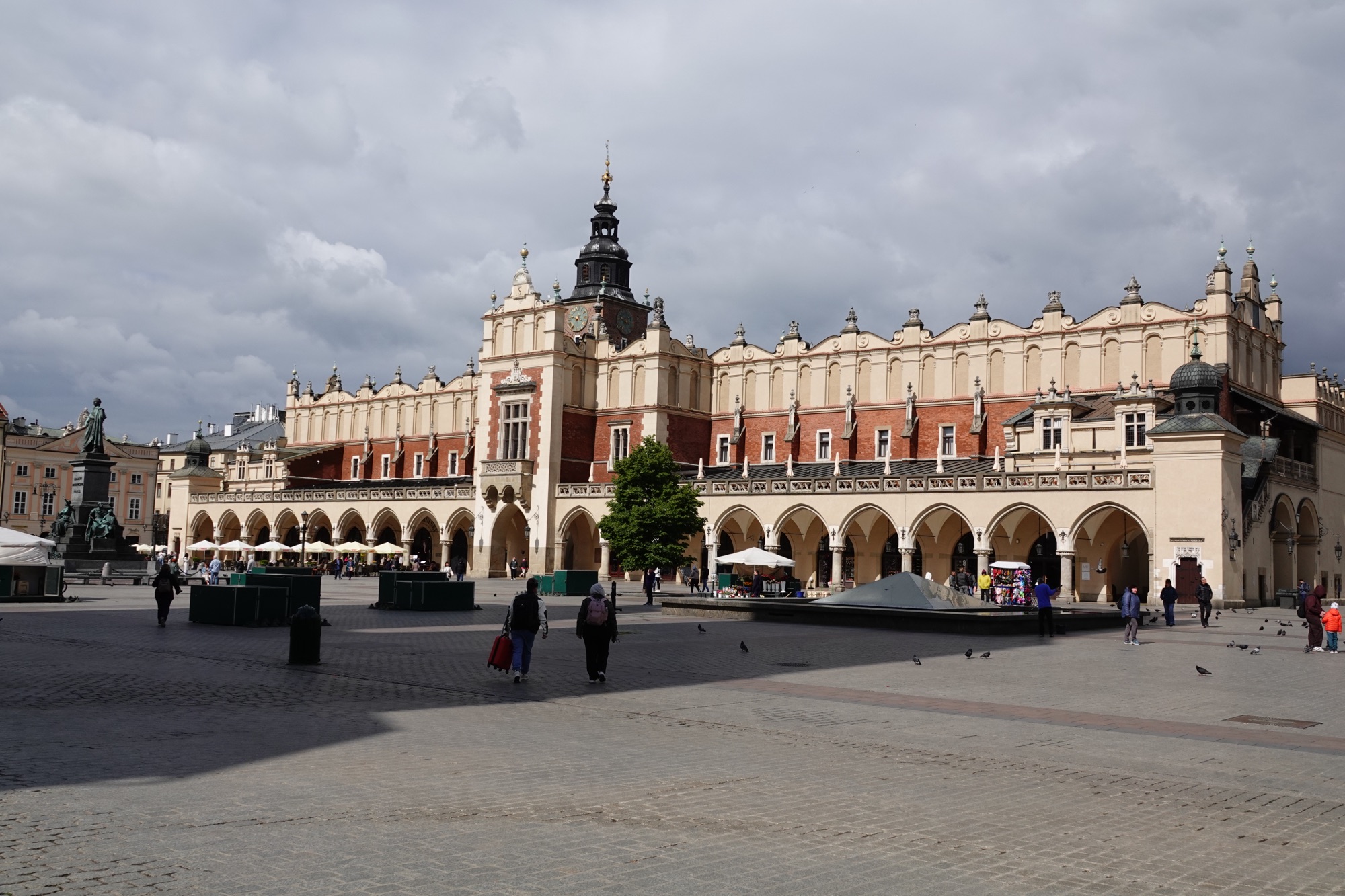
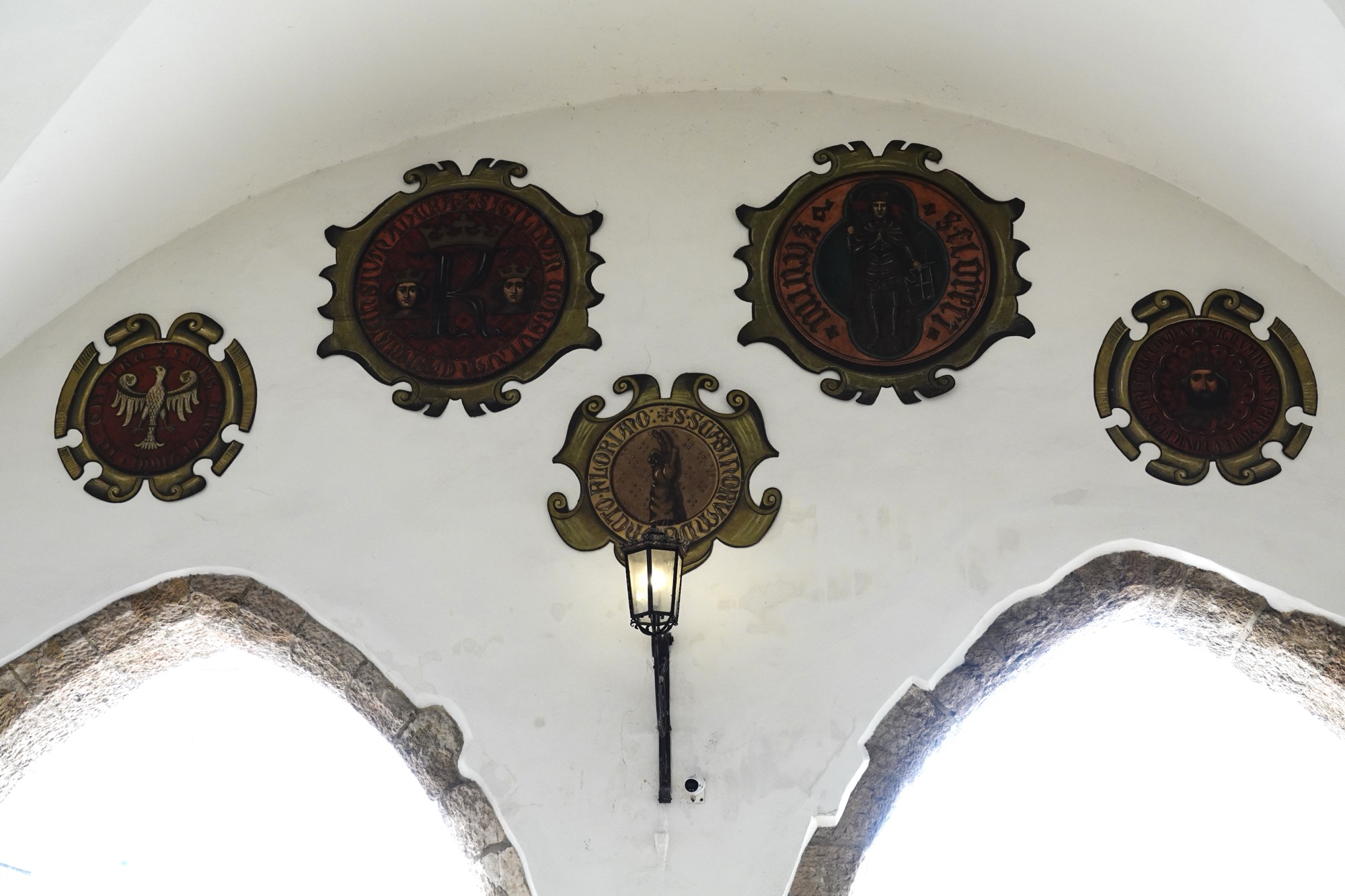
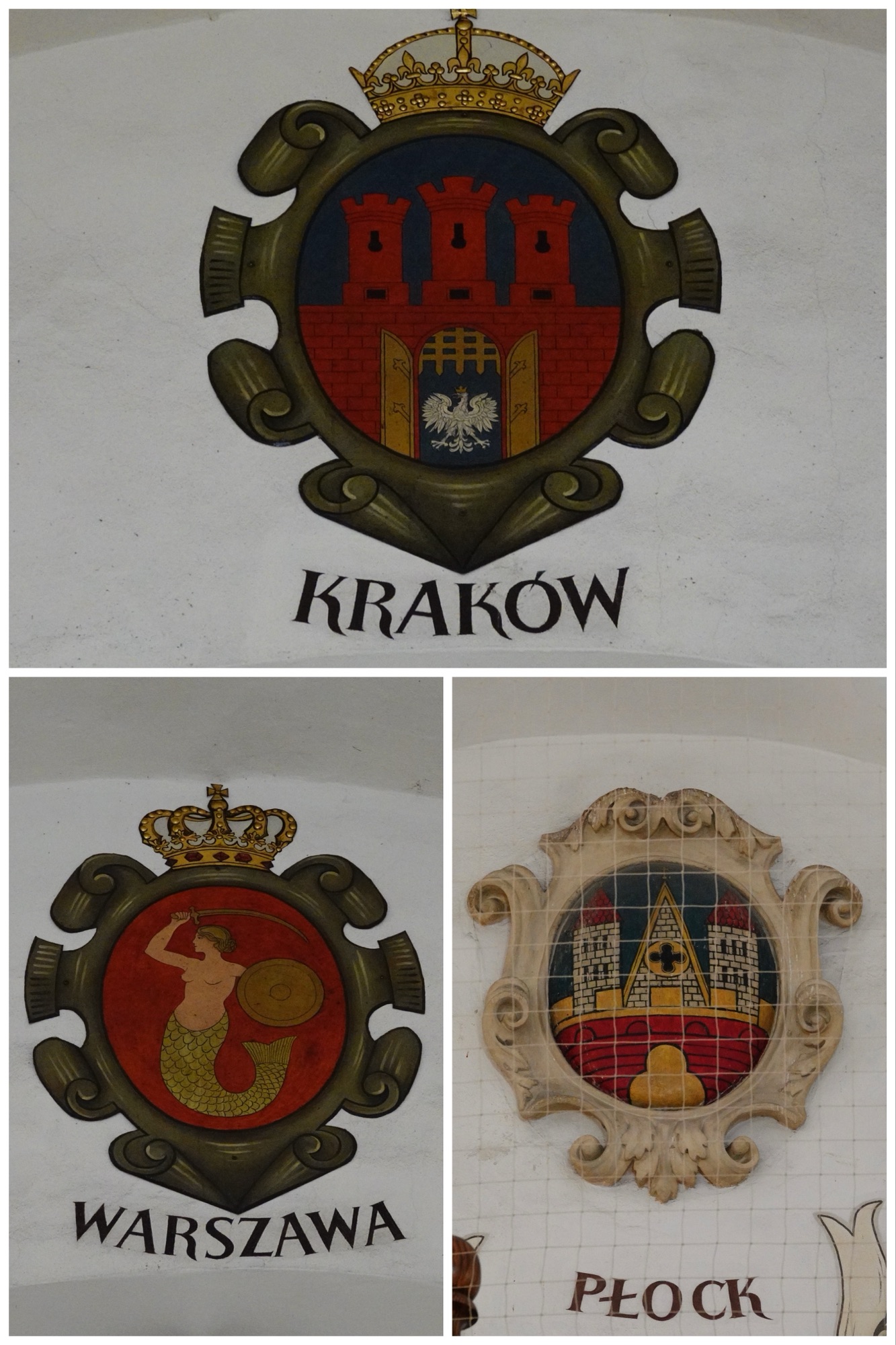
During that last restoration, the crests of Polish cities and guilds were added to the gallery walls.
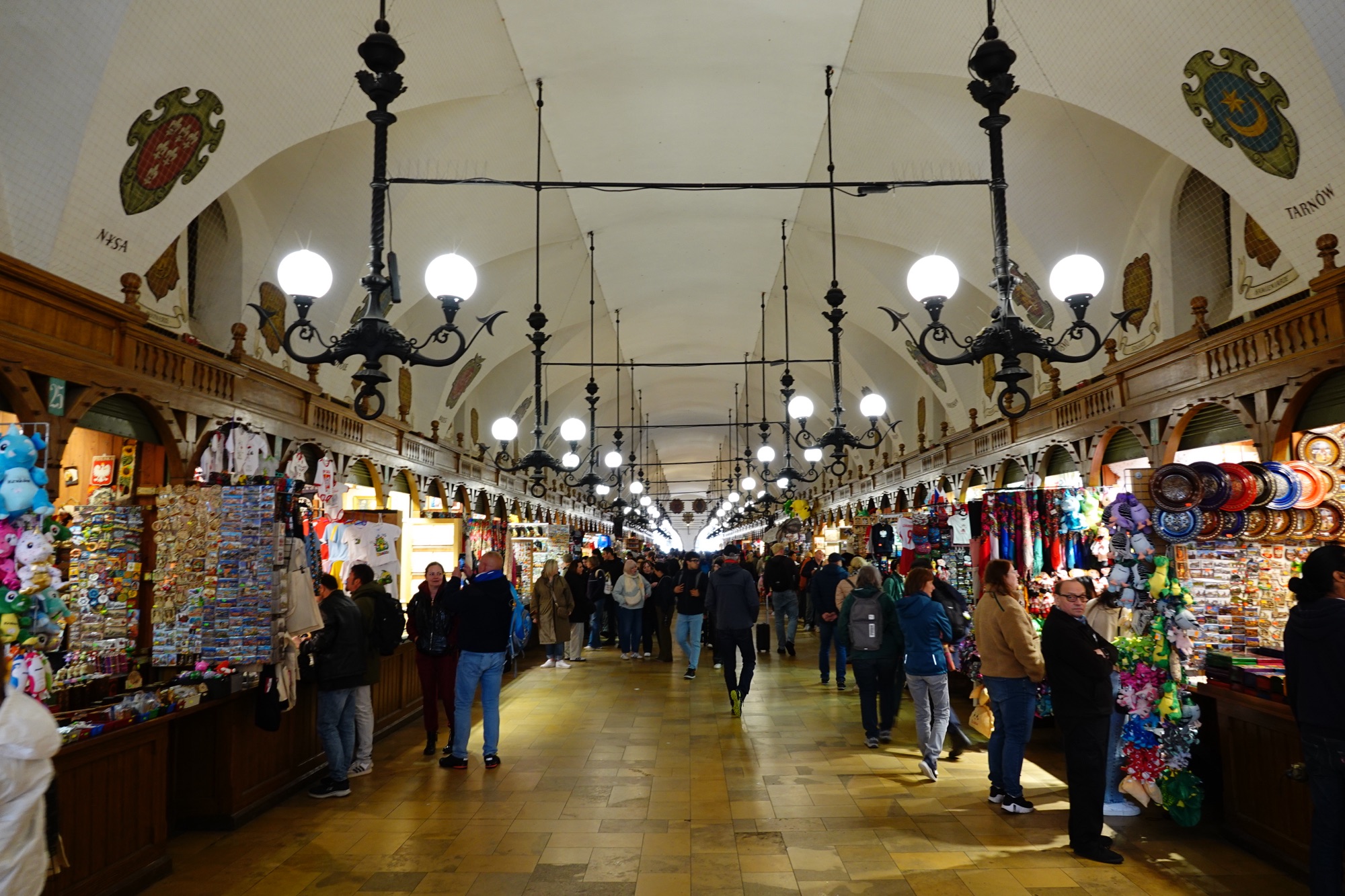
The Cloth Hall was once a major centre of international trade in spices, silk, leather, and wax, and a place for Kraków’s merchants and traders to arrange the export of textiles, lead, and salt from the Wieliczka Salt Mine. During its golden age in the 15th century, exotic items from the Middle and Far East would have made their way here.
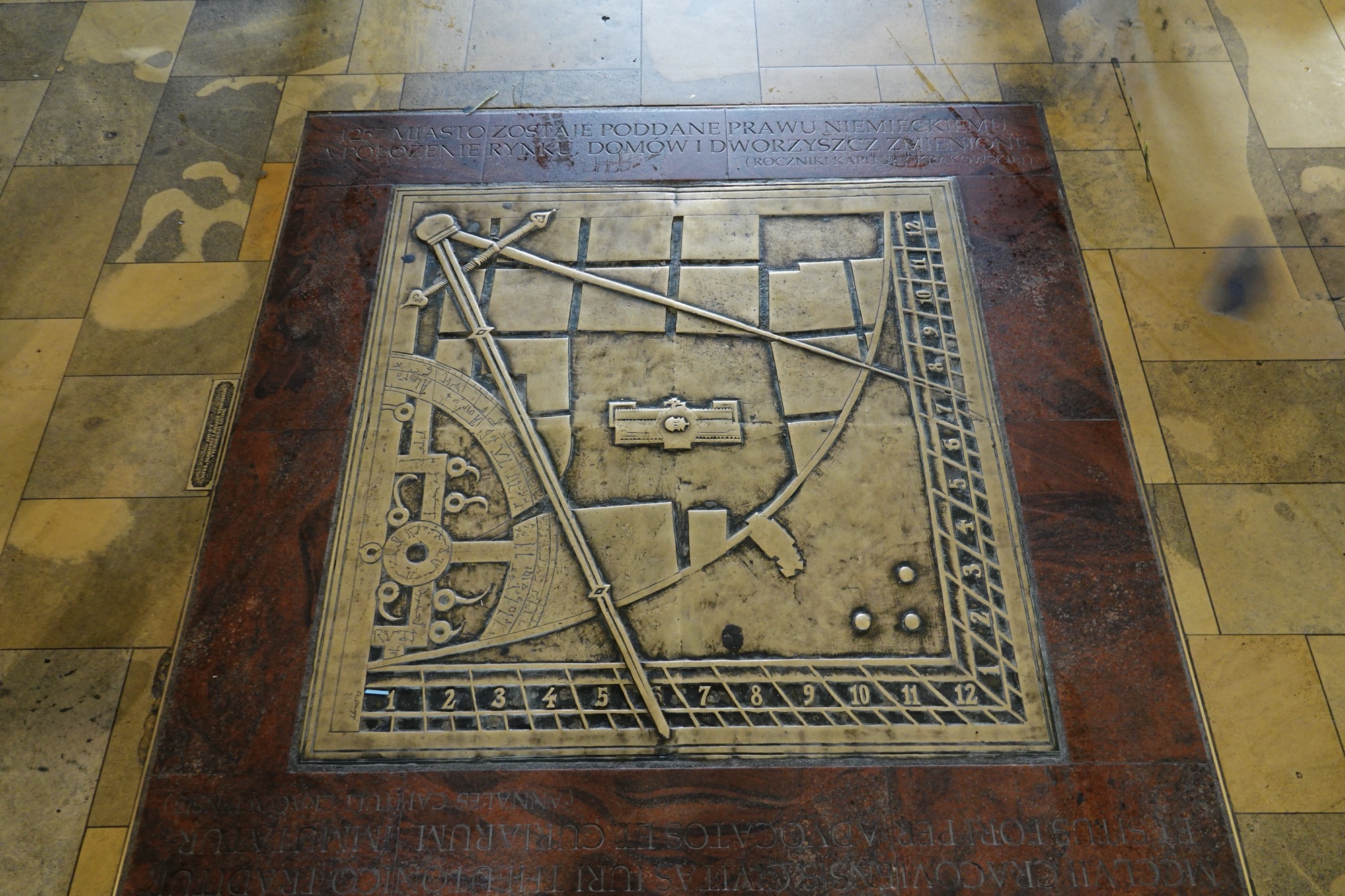
Because it’s Saturday, there were vendor stalls in Market Square in the style of what we’ve seen in Europe’s Christmas Markets, only without the Christmas season decorations.
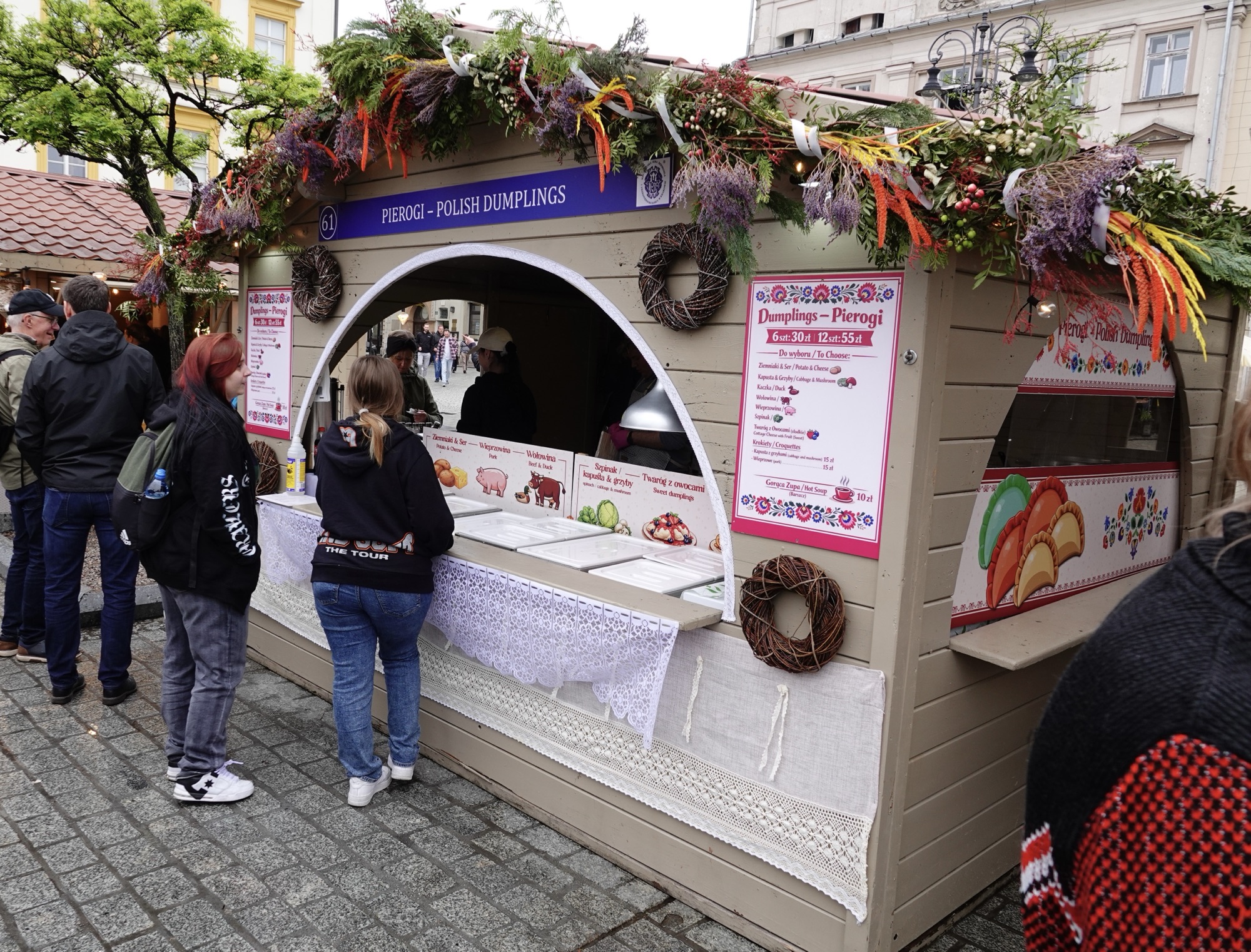
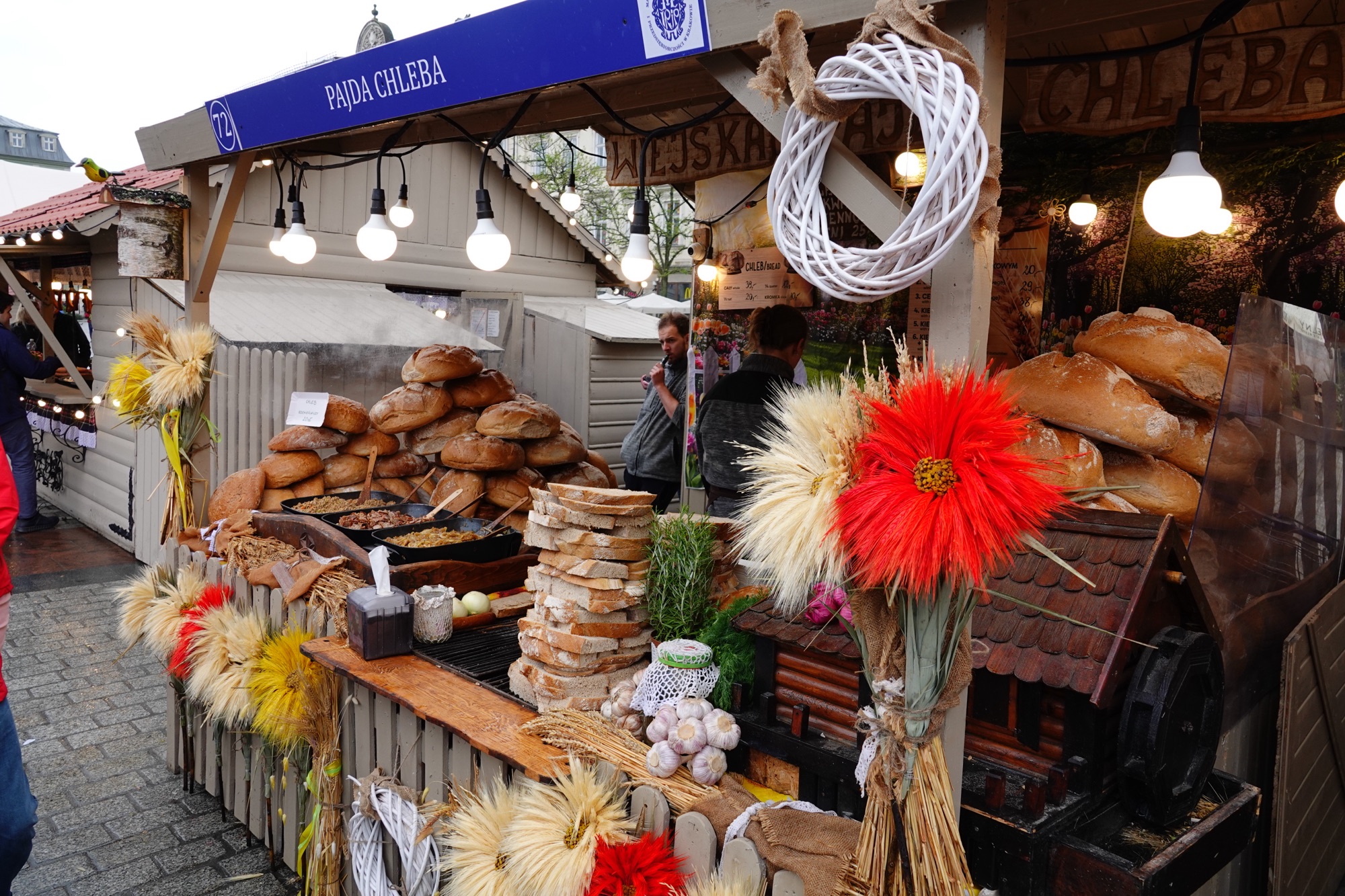
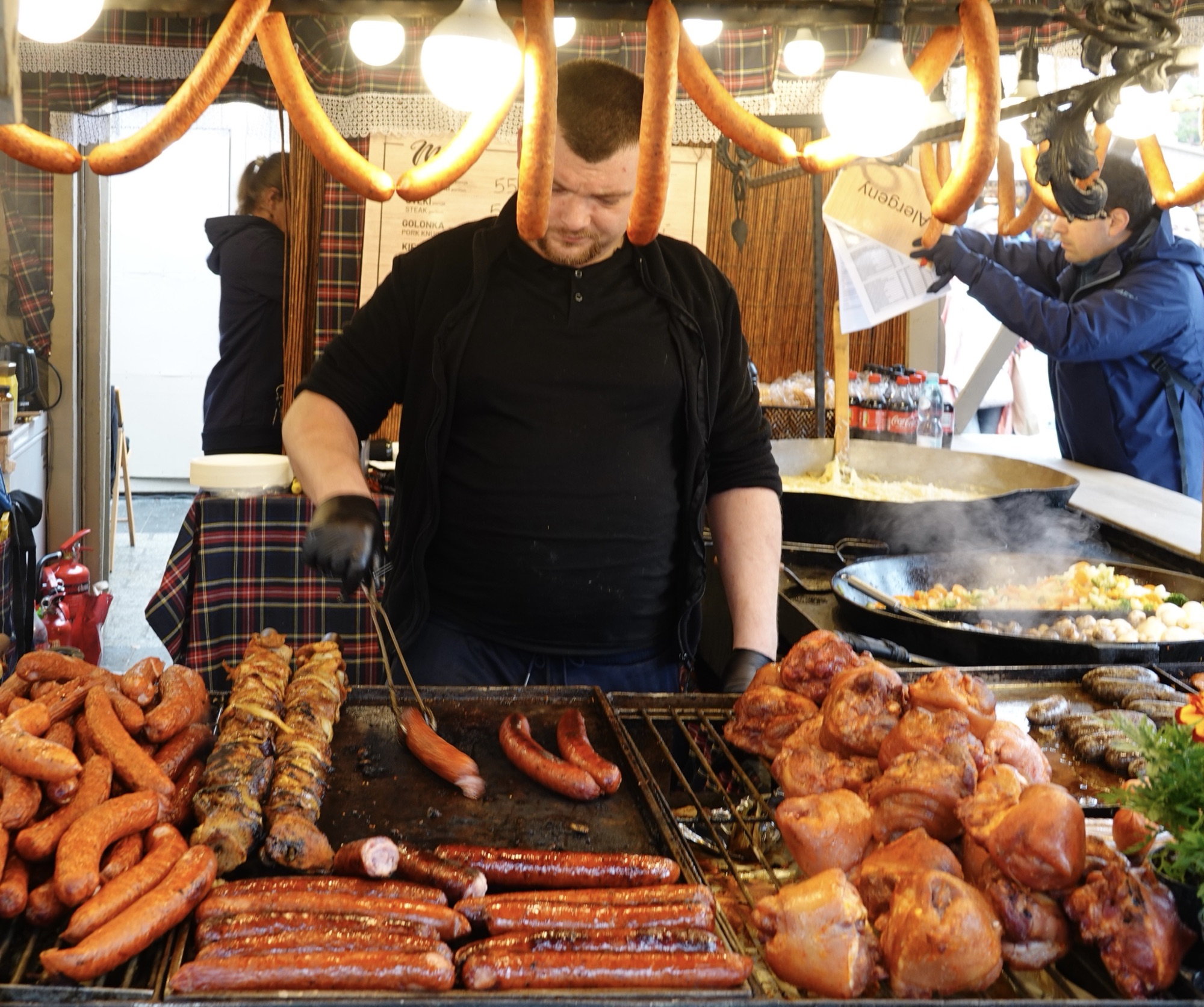
Markets like this are when it is really obvious that this is a tourist destination, complete with tourist prices. Kielbasa on a bun (which in Warsaw cost 24 Złoty (PLN) with all the fixings, was 45-50 Złoty in Kraków today. Even the price of the Polish pretzel-like bread rings that have been 3.5PLN all week were suddenly 4PLN. We split a 45PLN ($17CAD) kielbasa between the two of us.
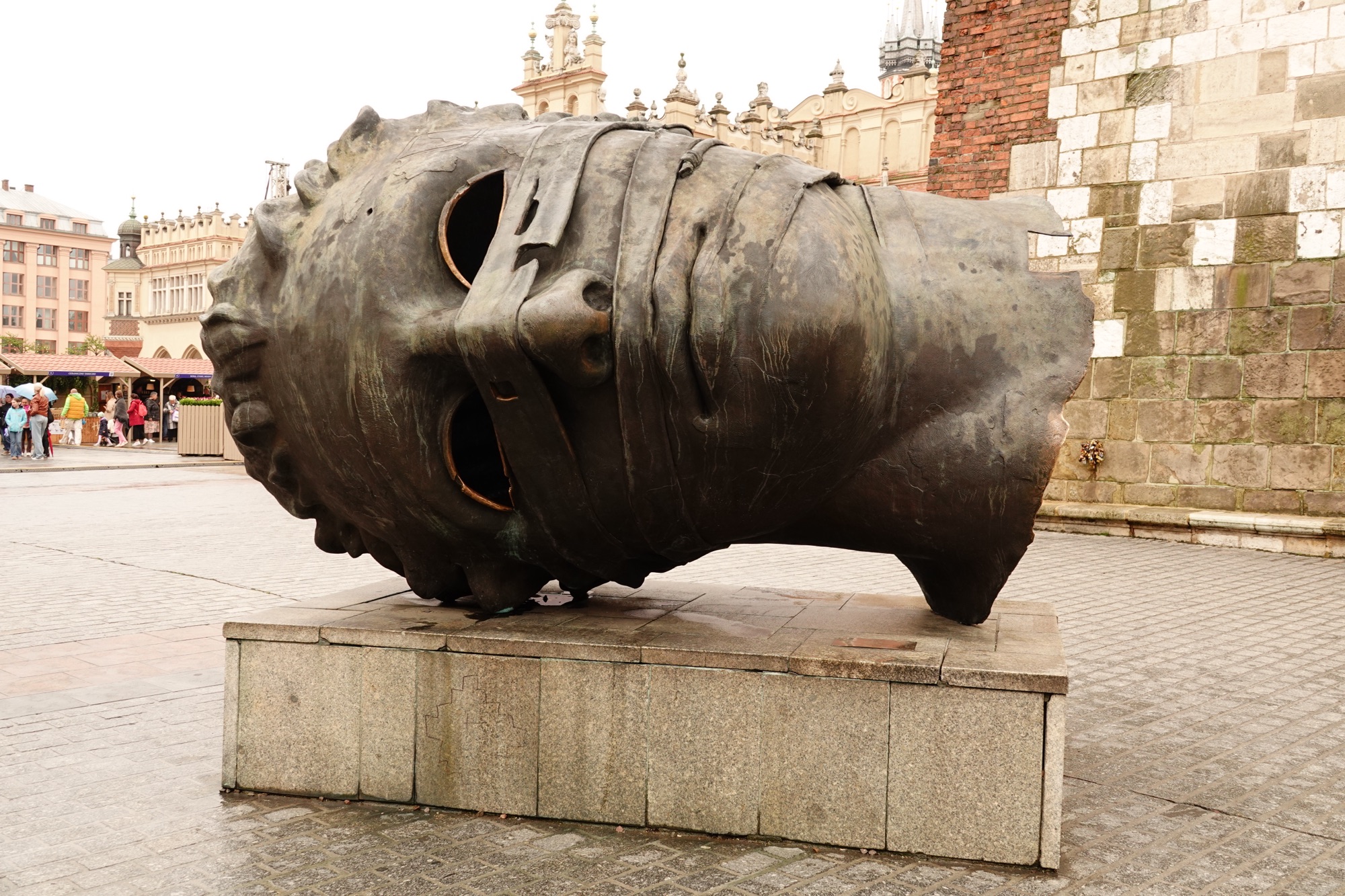
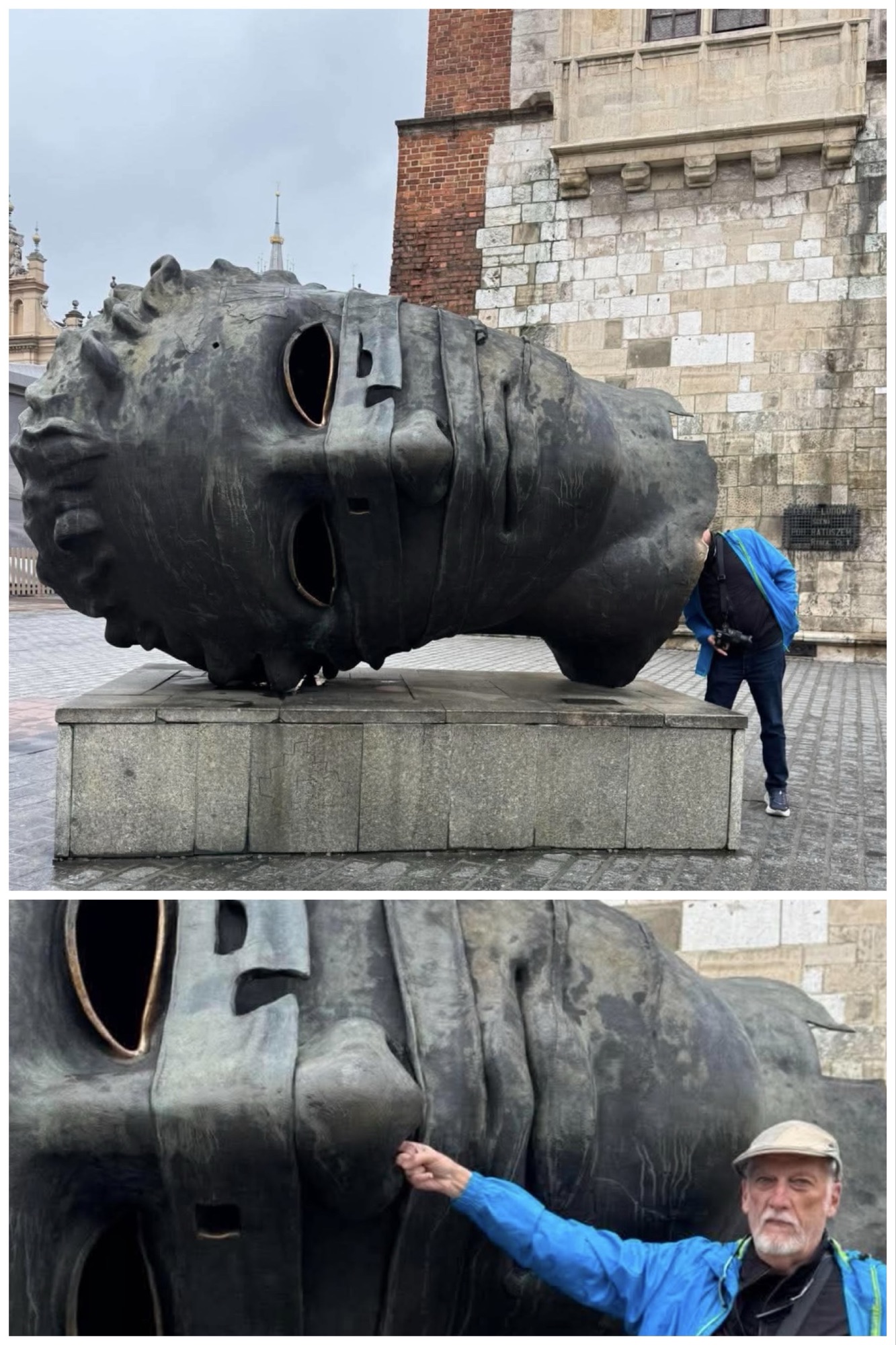
There’s a very interesting modern sculpture of a head in the square.
As is our tradition when we find something like this, “Gramps” has to strike a silly pose or two that we send to our grandsons, it being our goal in life to make them roll their eyes.
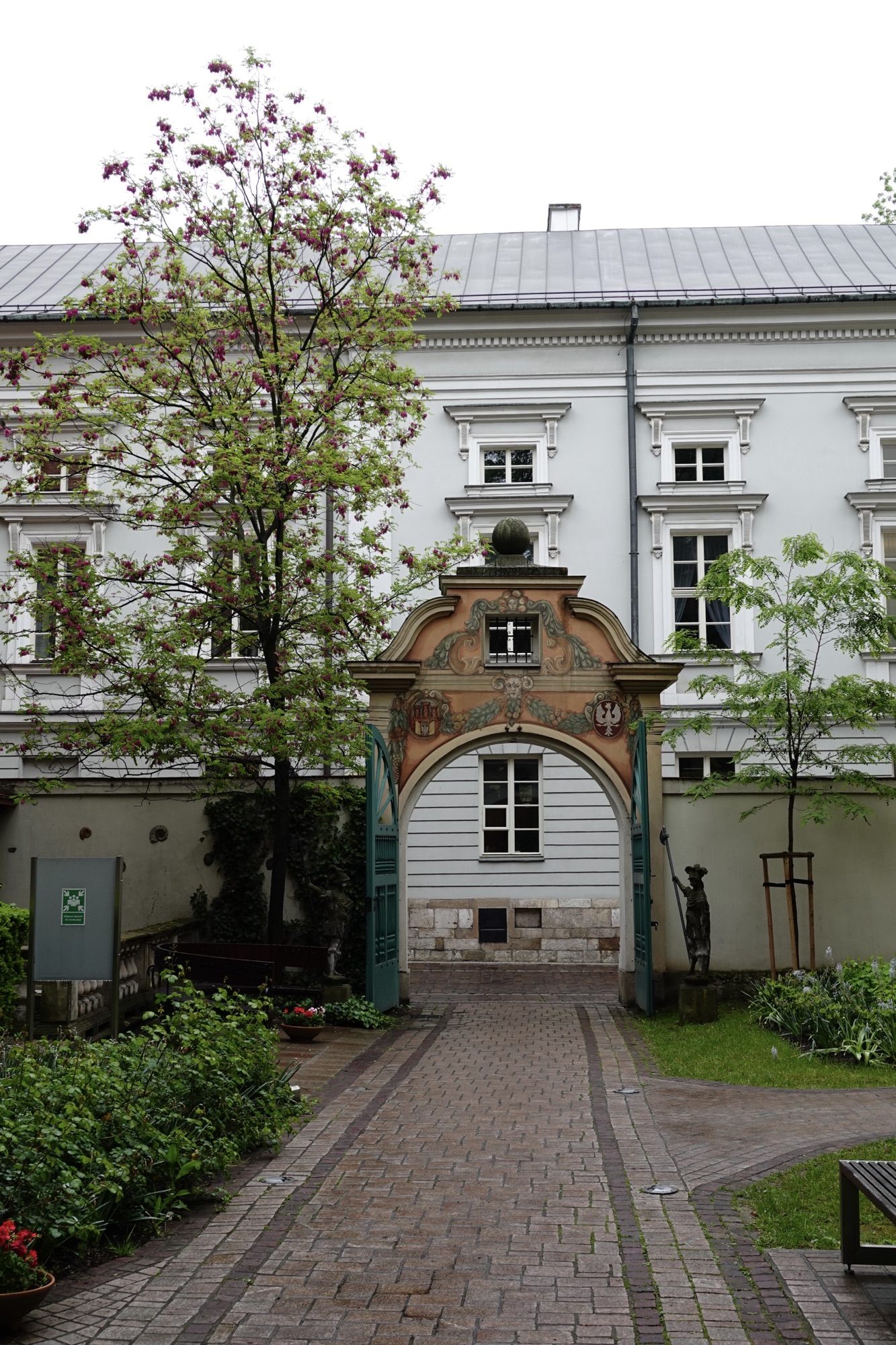
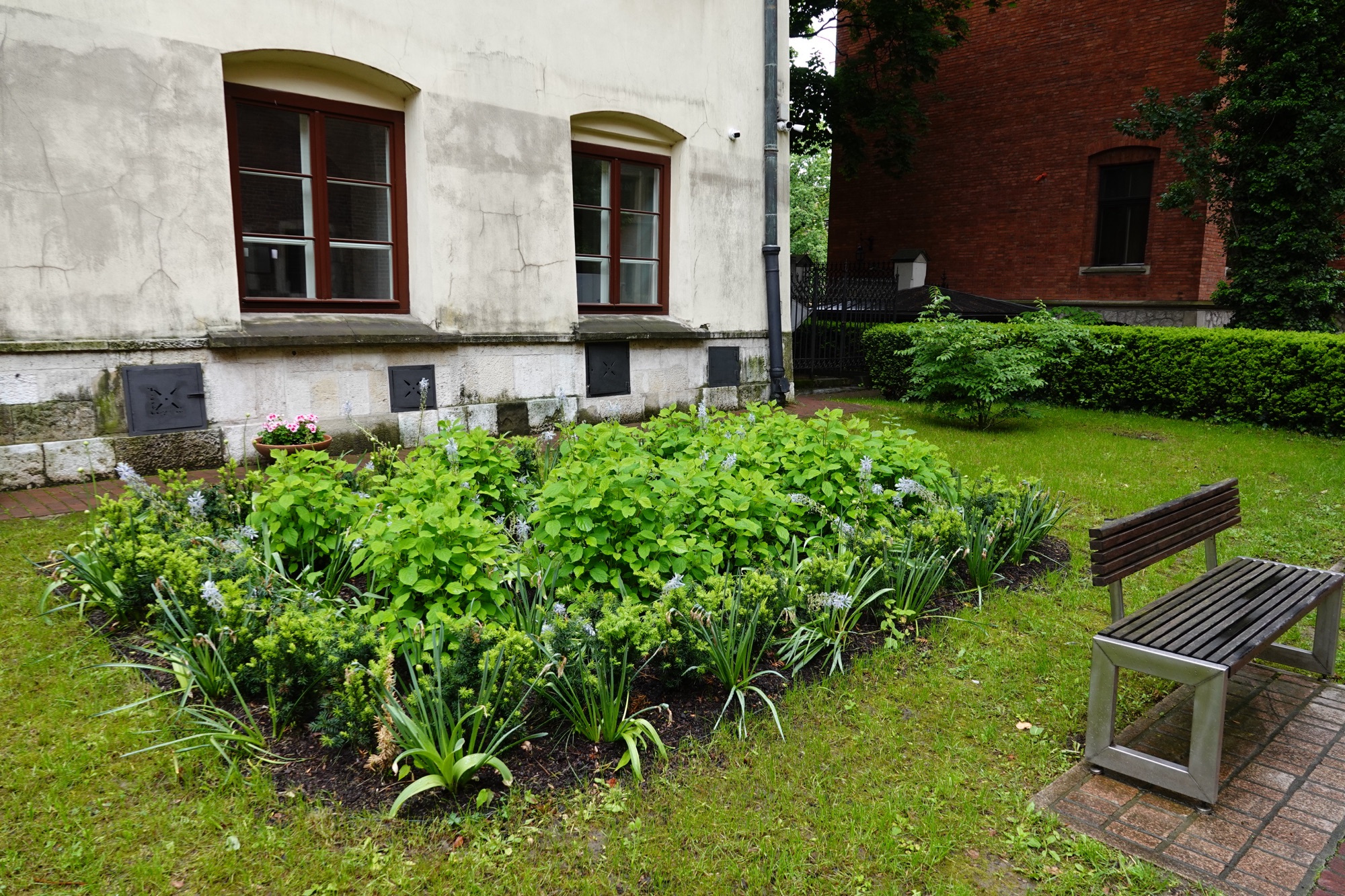
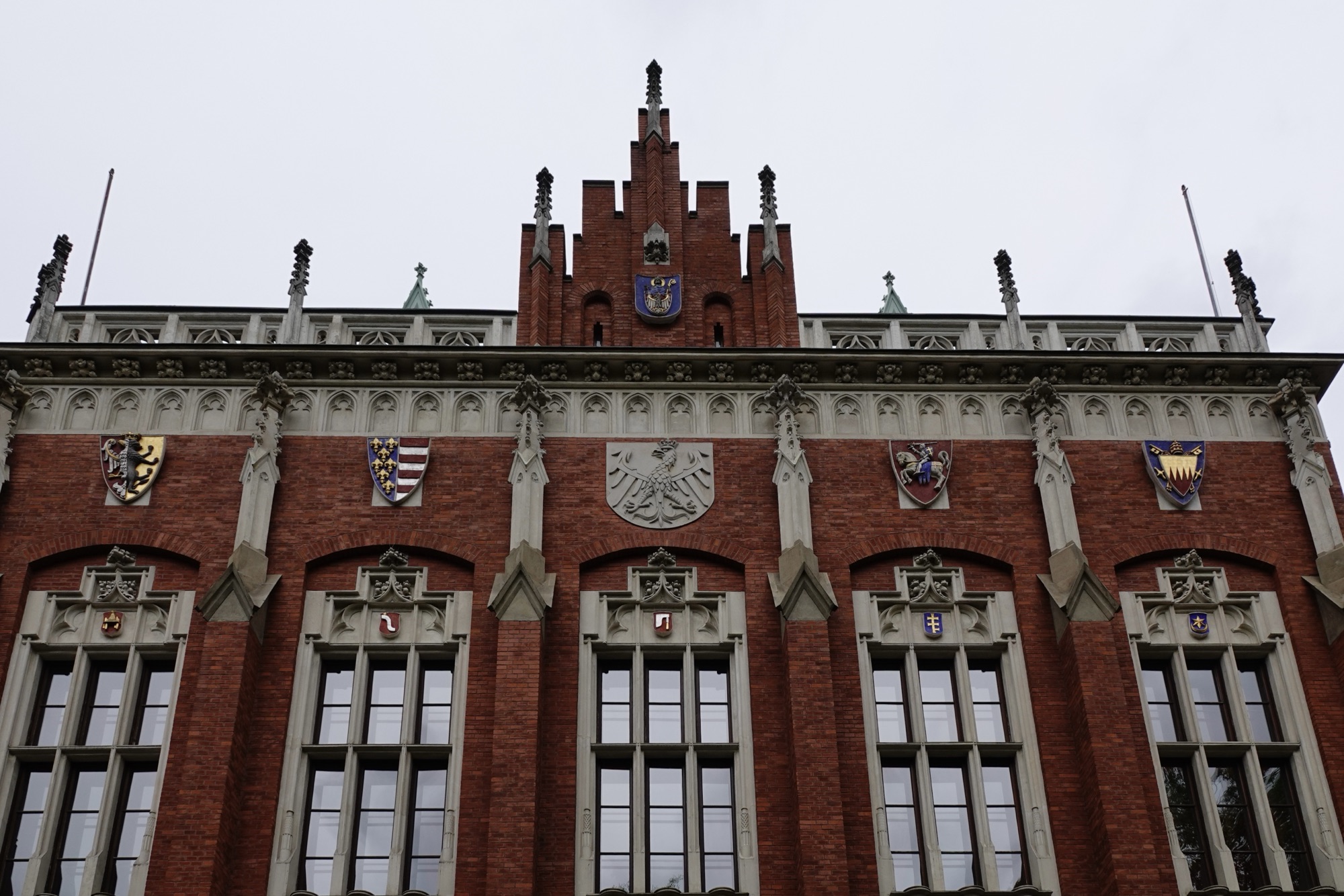
Since the rain had stopped, we wandered in a direction we hadn’t gone before and ended up in The Professors’ Garden of the Jagiellonian University, an institution founded in 1364 by King Casimir III The Great (he of the huge salt bust Ted photographed yesterday). It is the oldest university in Poland, and one of the oldest continuously operating universities in the world.
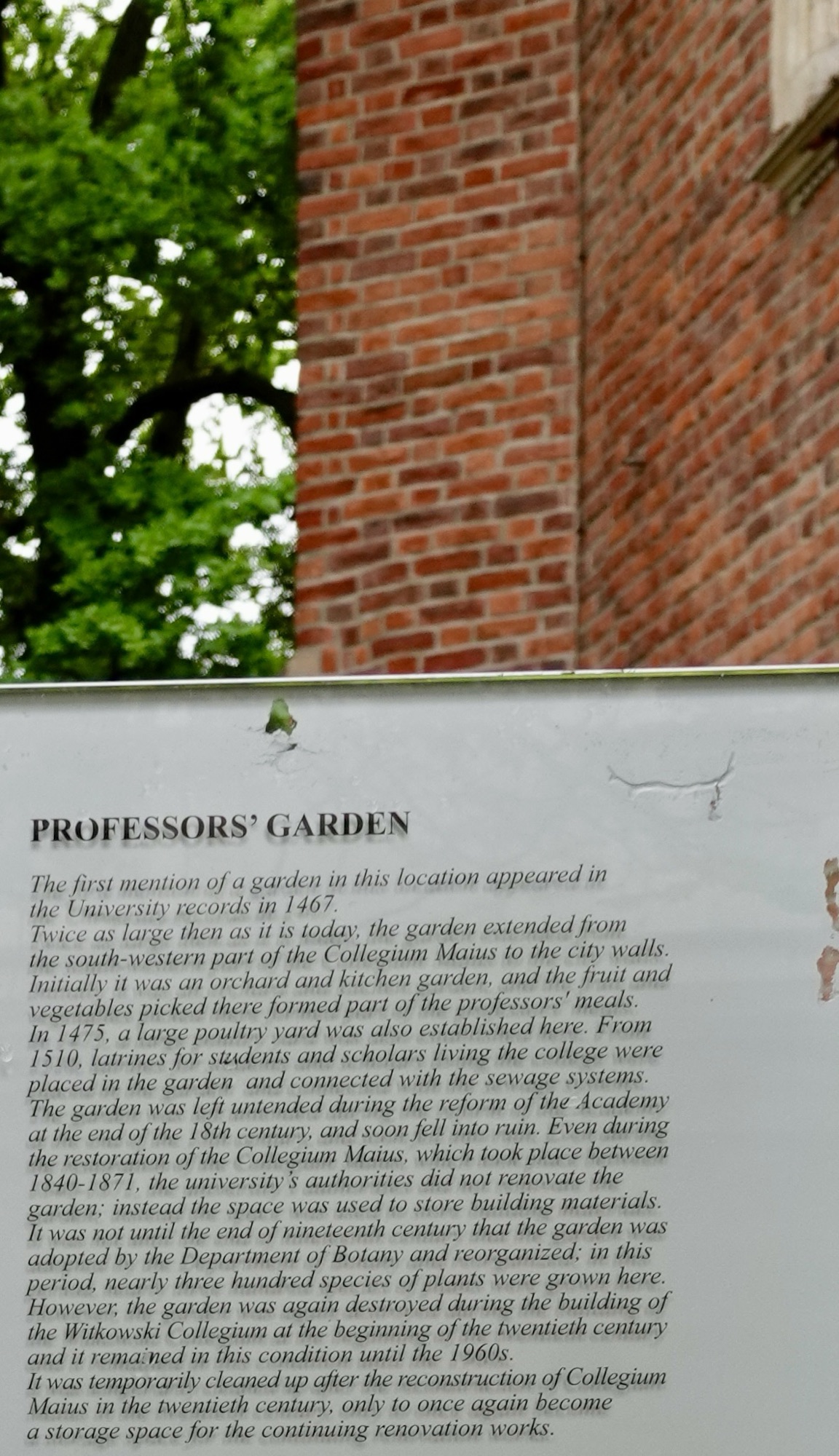
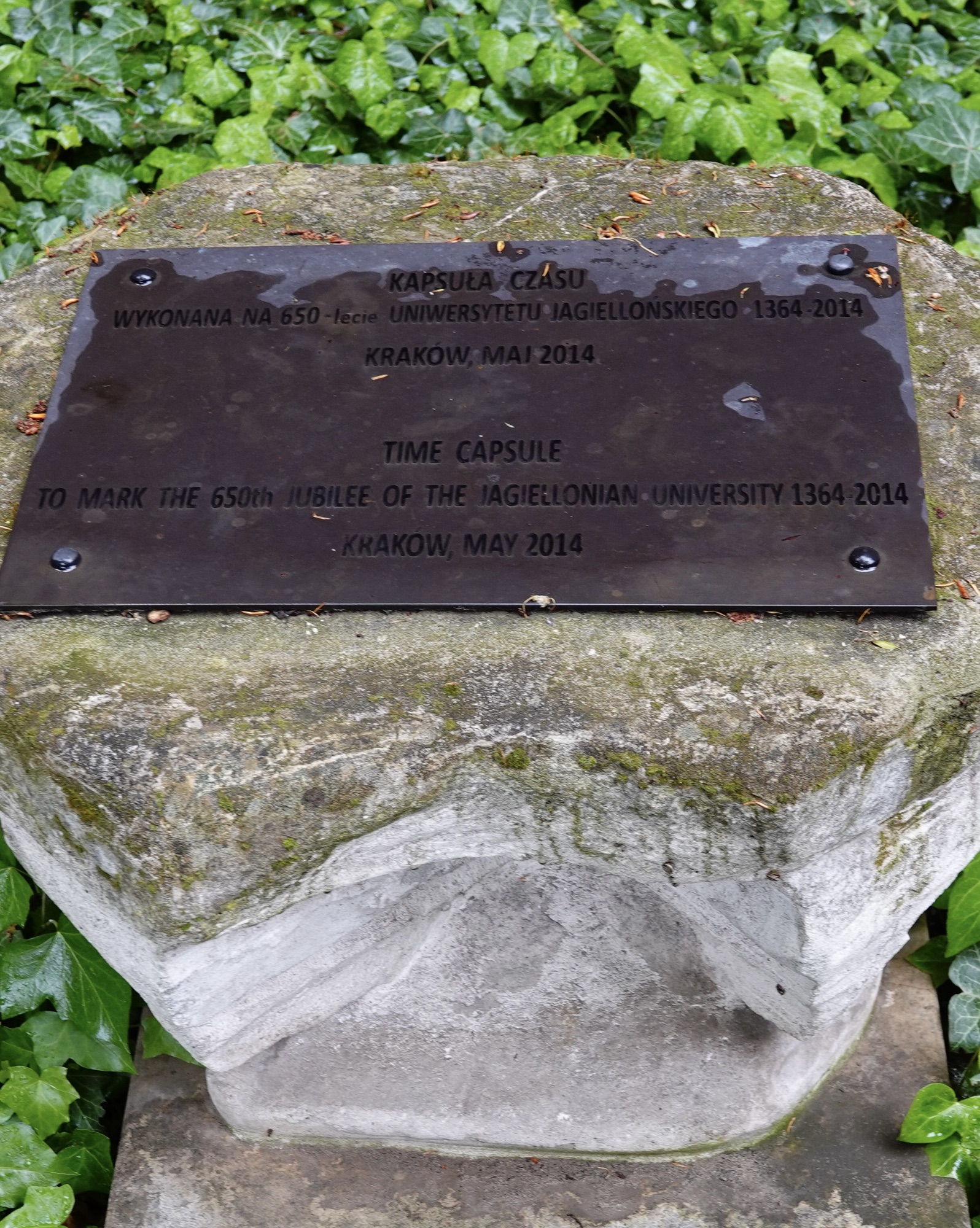
The time capsule in the garden was placed for the university’s 650th anniversary.
Since we had specifically chosen not to visit Auschwitz or Schindler’s Factory while in Kraków, we haven’t seen much reference to WWII (which was ubiquitous in Warsaw). The serene green space called The Professors’ Garden unexpectedly changed that.
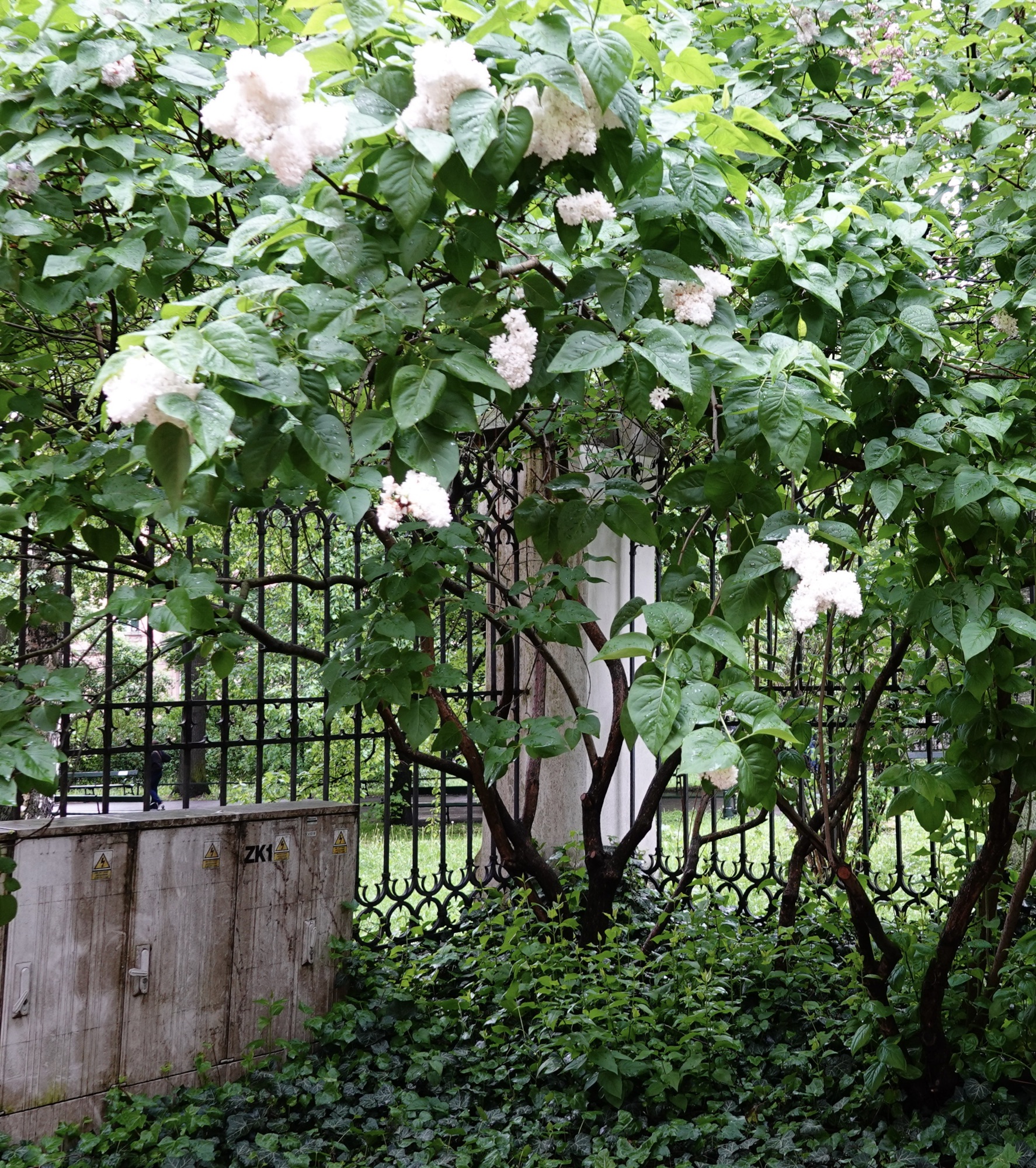
The signs below are only about 1/3 of those on display, interspersed with lush green grass, fragrant spring lilacs, and statues of academics. There was a palpable sense of disconnect between nature’s beauty and human ugliness.
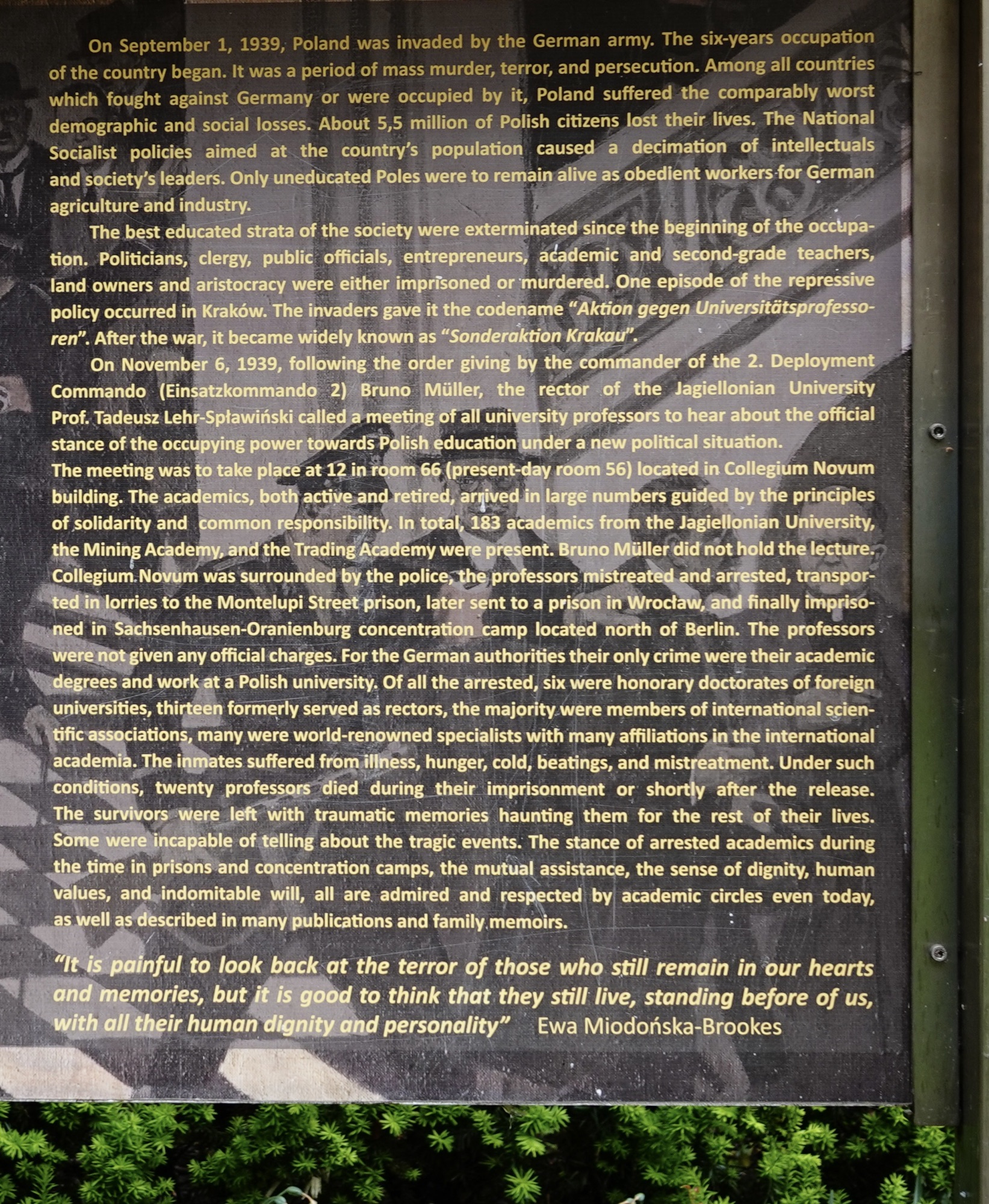
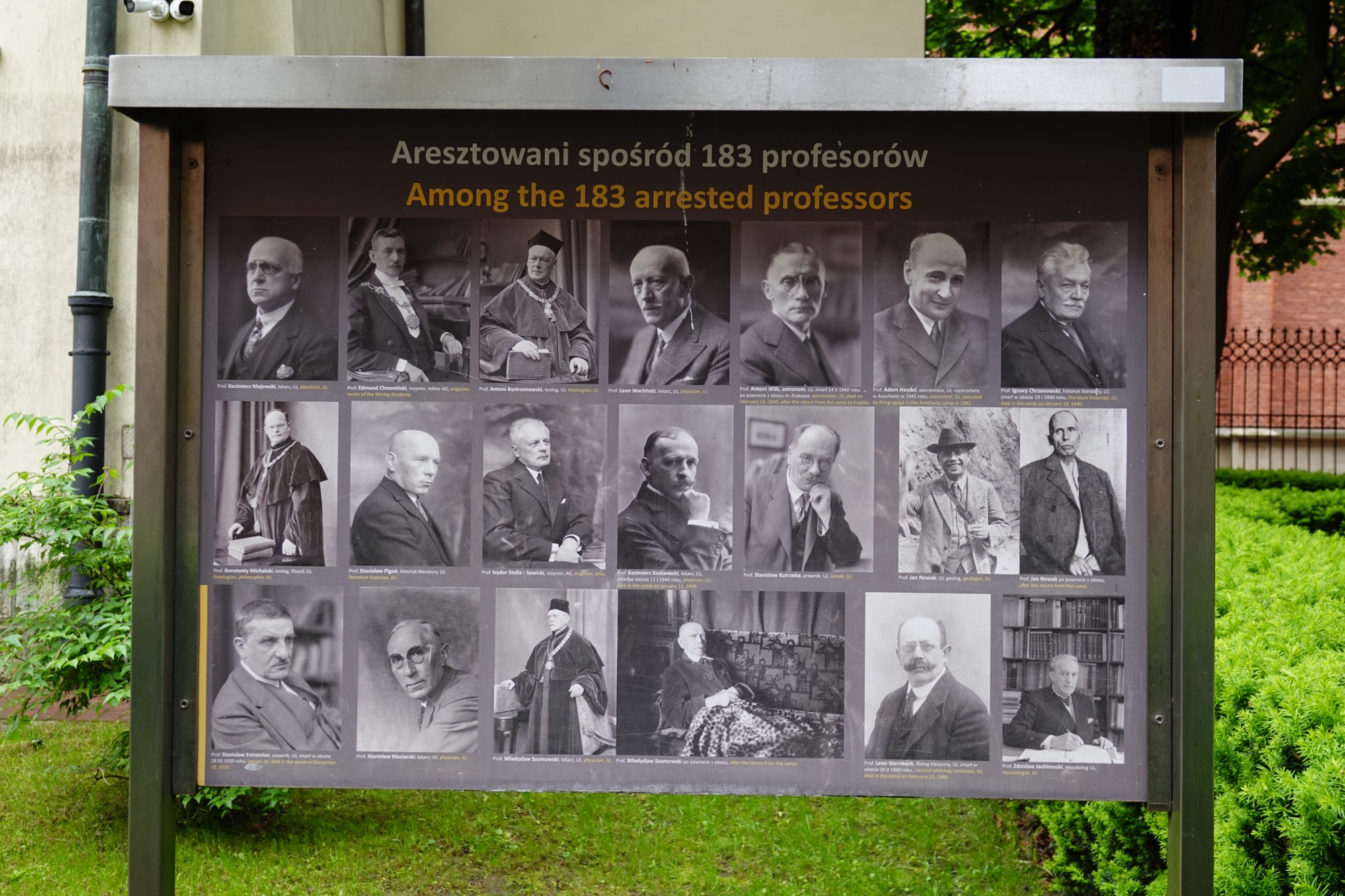
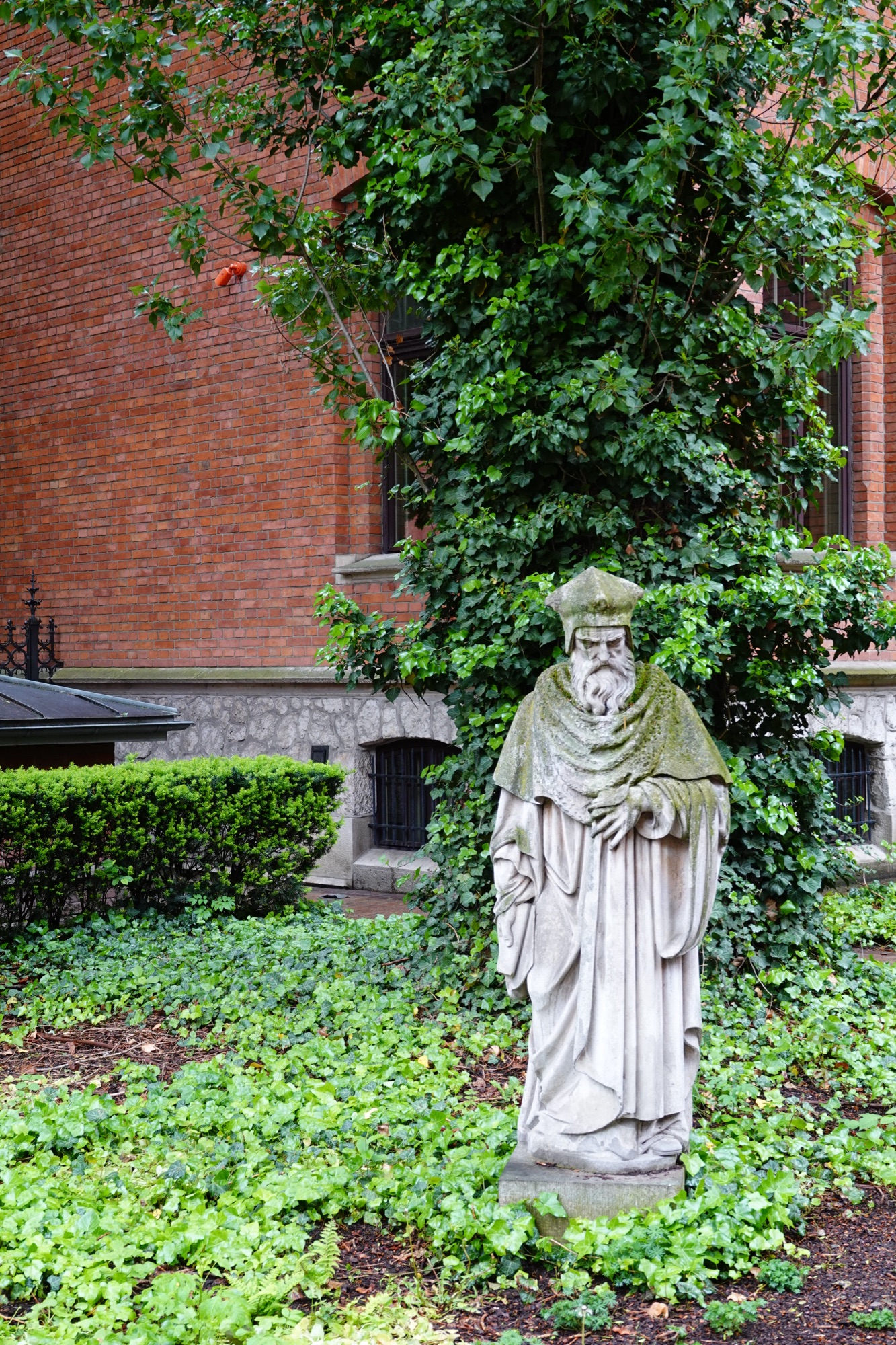
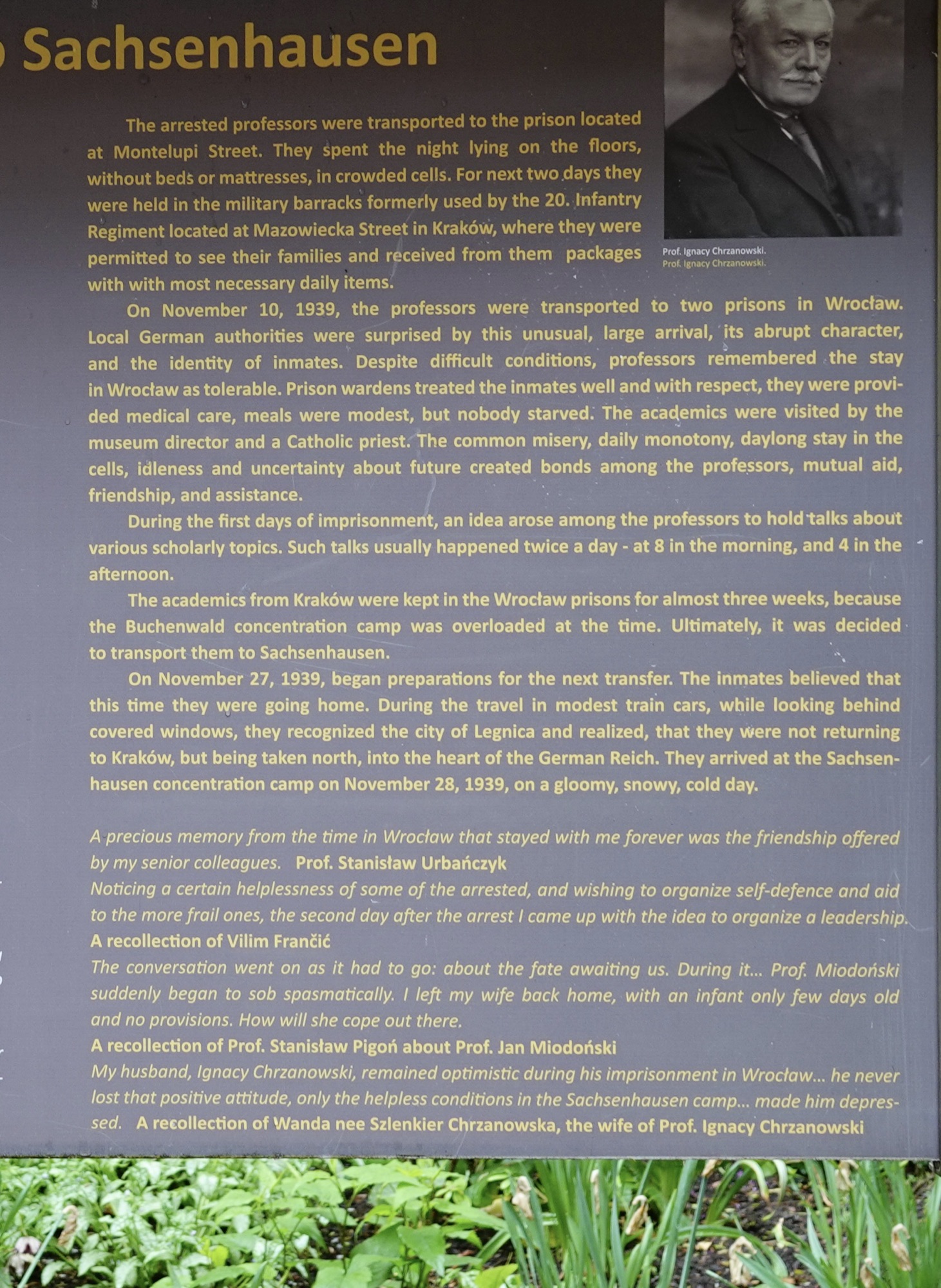
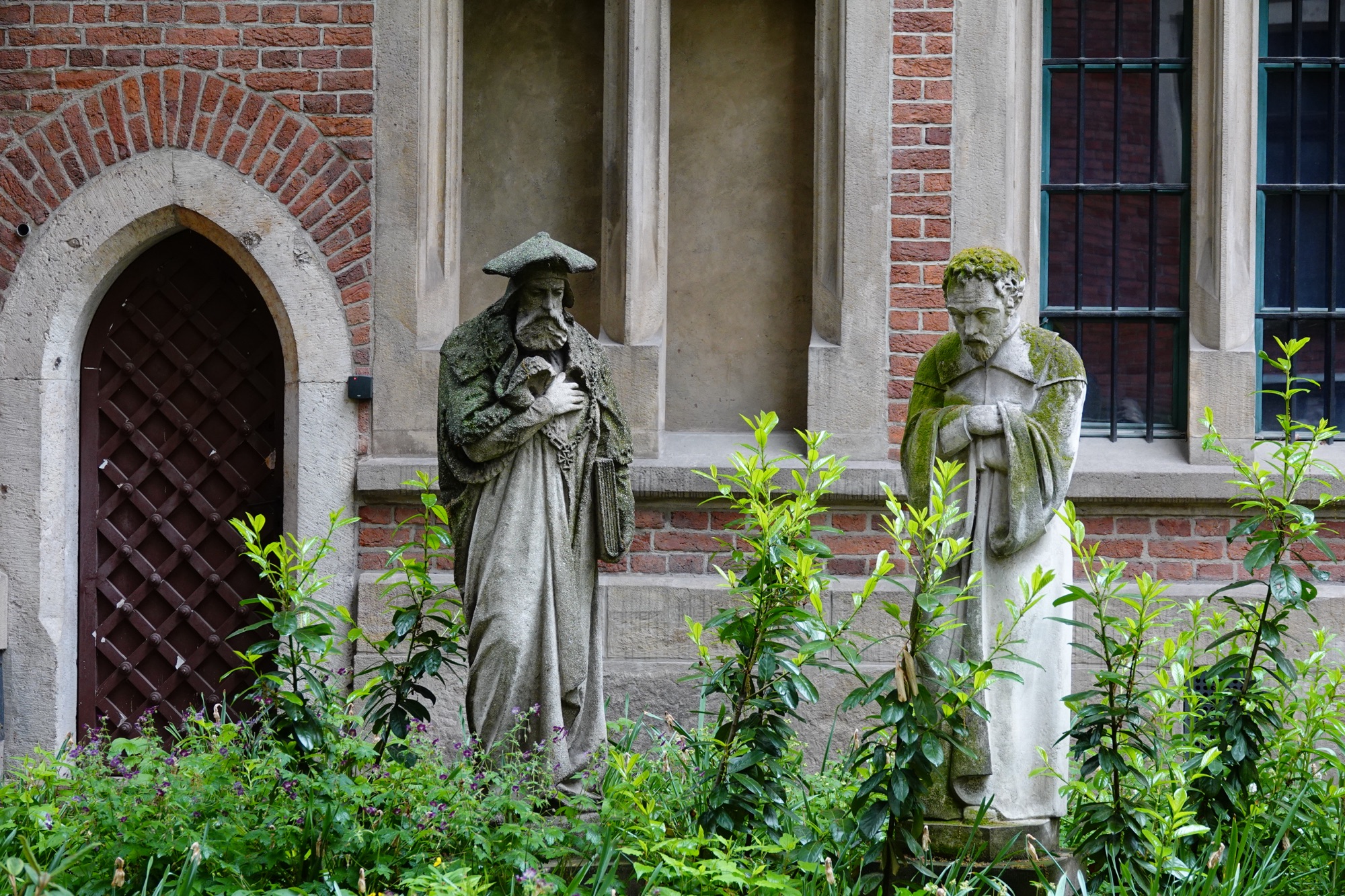
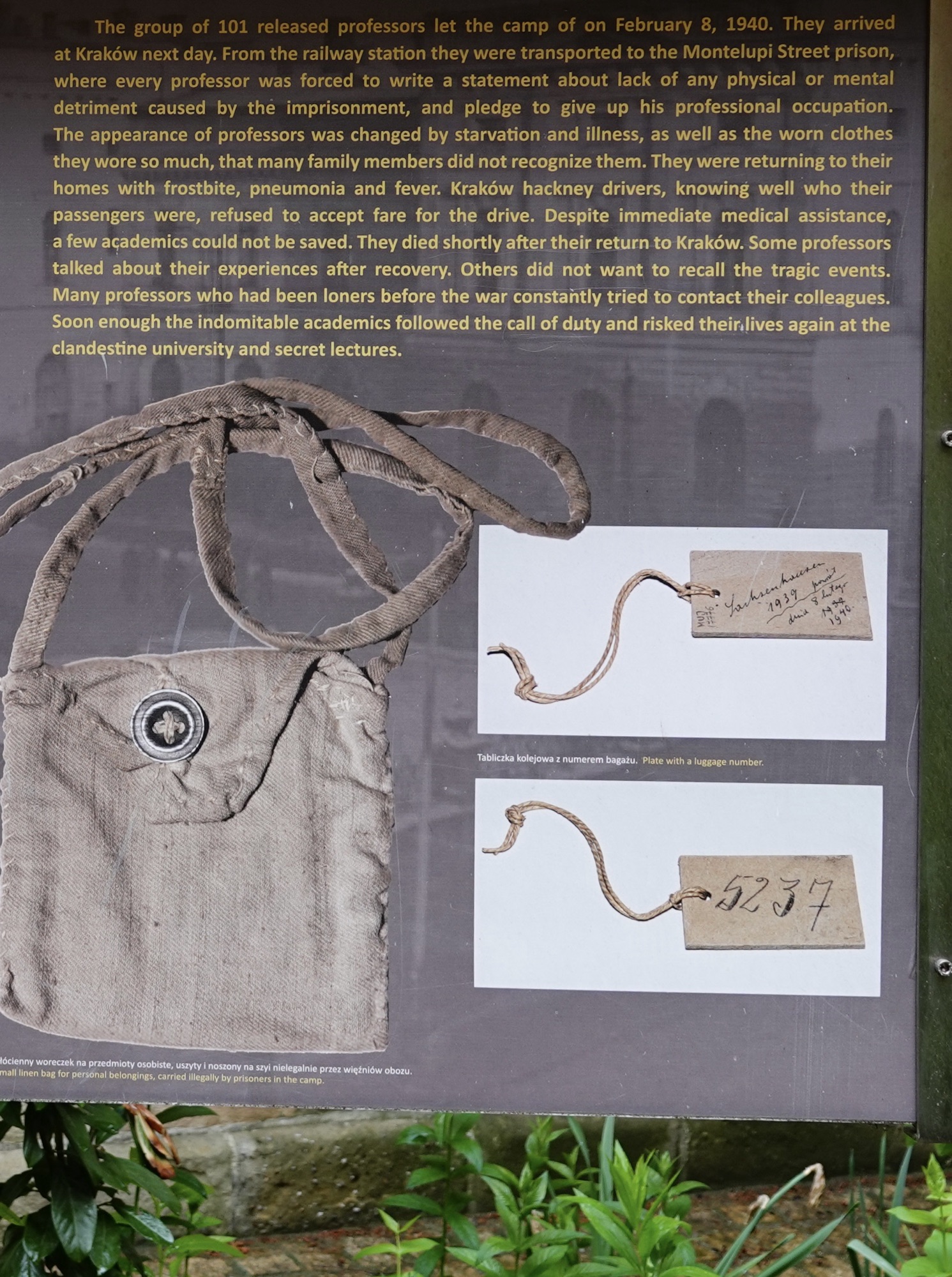
Those arrested, confined, and – in the case of Jewish professors – murdered, had committed no crime except that of teaching.
It really makes one ask why the idea of people being educated scares fascist regimes so much.
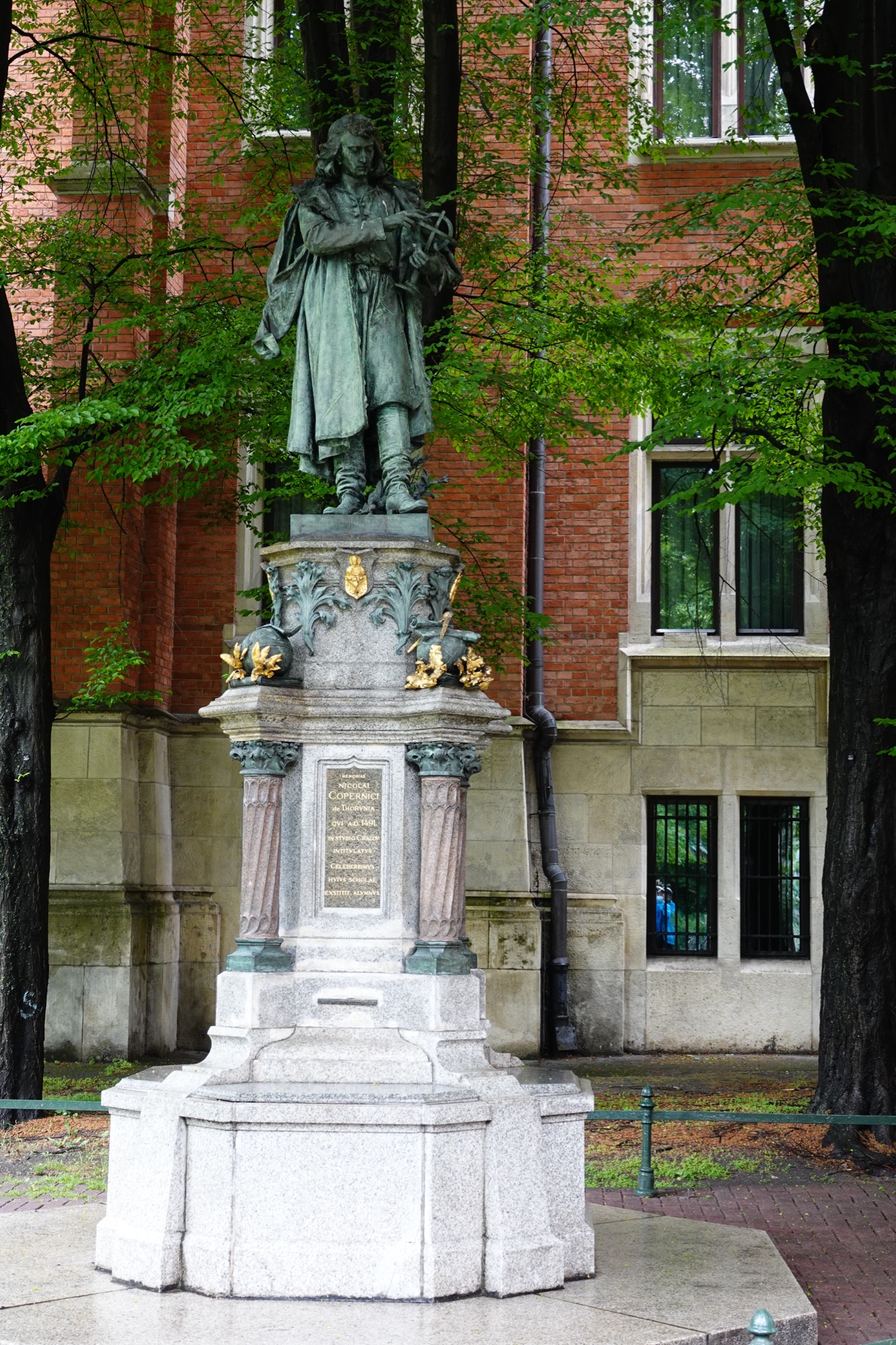
Around the corner, but still on the compact campus, a statue of Copernicus, “the most famous alumnus of this school” who attended university here from 1491-1495 before going on to Bologna, Padua, and Ferrara. Pope John Paul II was also an alumnus, just not as famous as Copernicus.
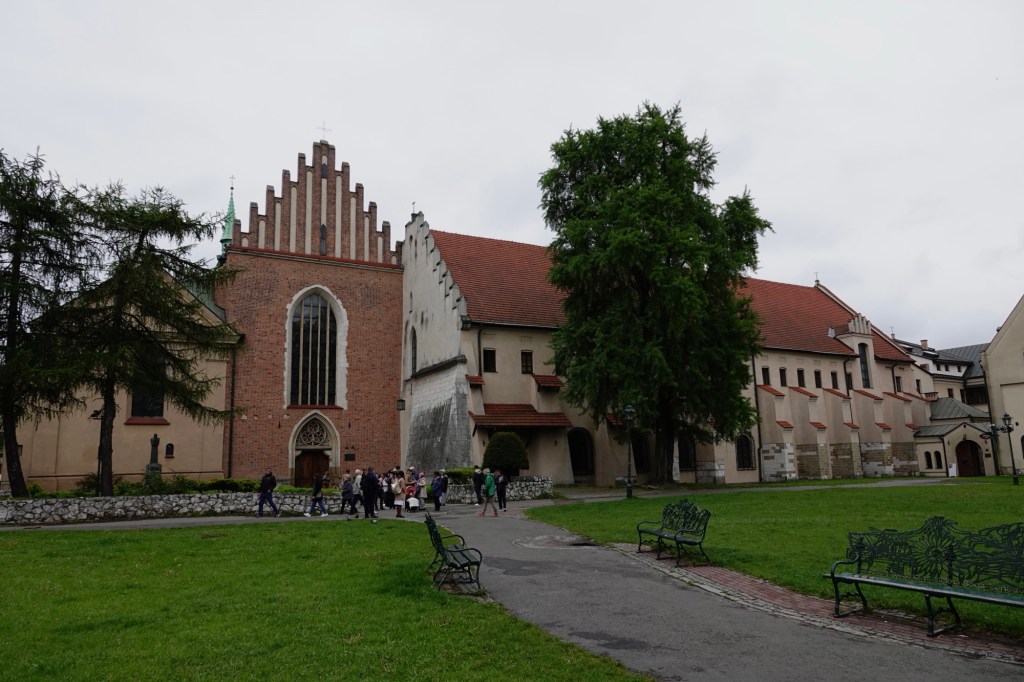
Around another corner and we were at the Gothic style Basilica of Francis of Assisi and its Franciscan monastery, founded in the first half of the 13th century. We were intrigued by the discolouration of its copper roof.
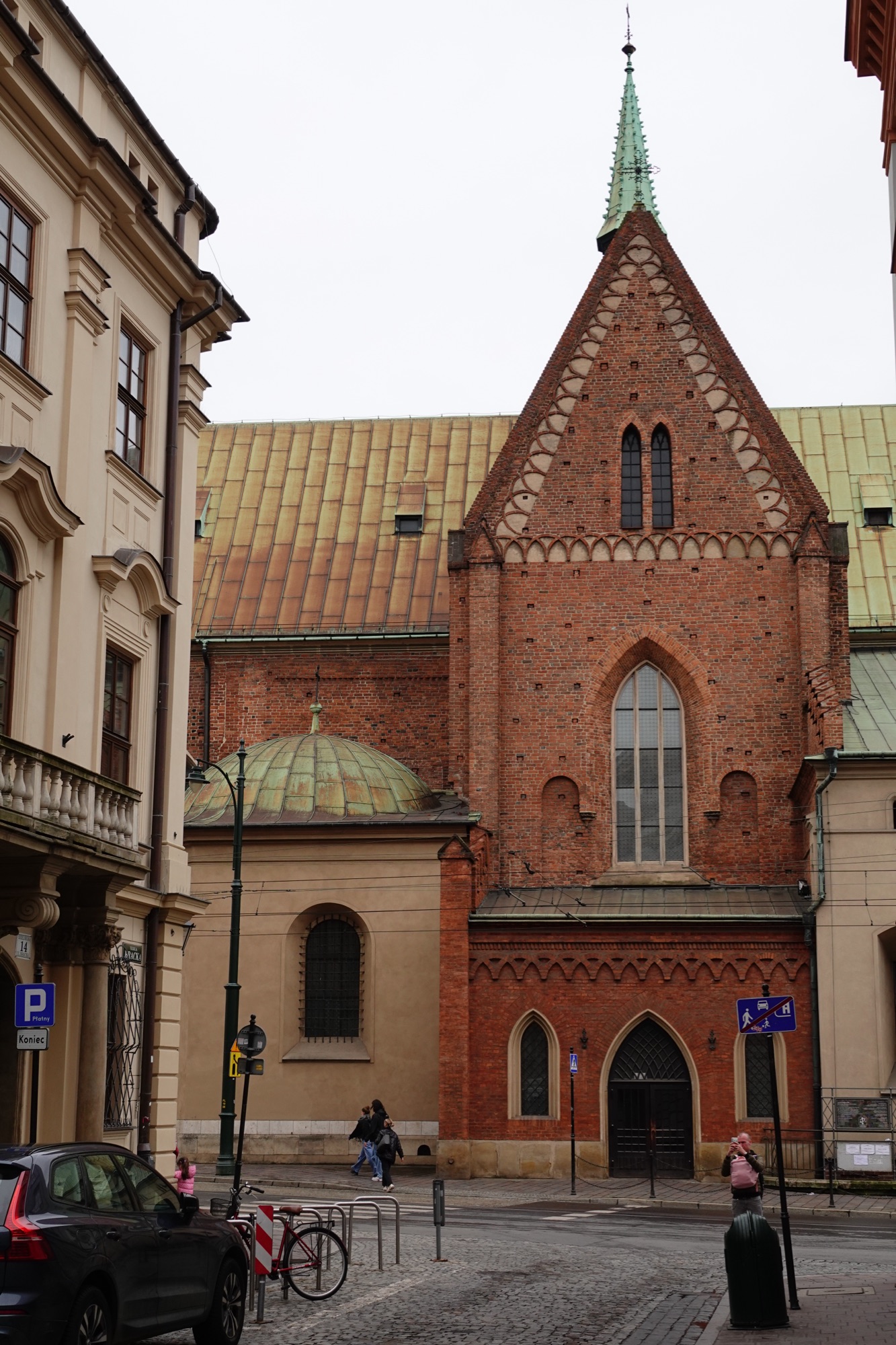
This makes three monasteries we’ve seen so far – Pauline, Augustine, and now Franciscan – all within the UNESCO Heritage area perimeter.
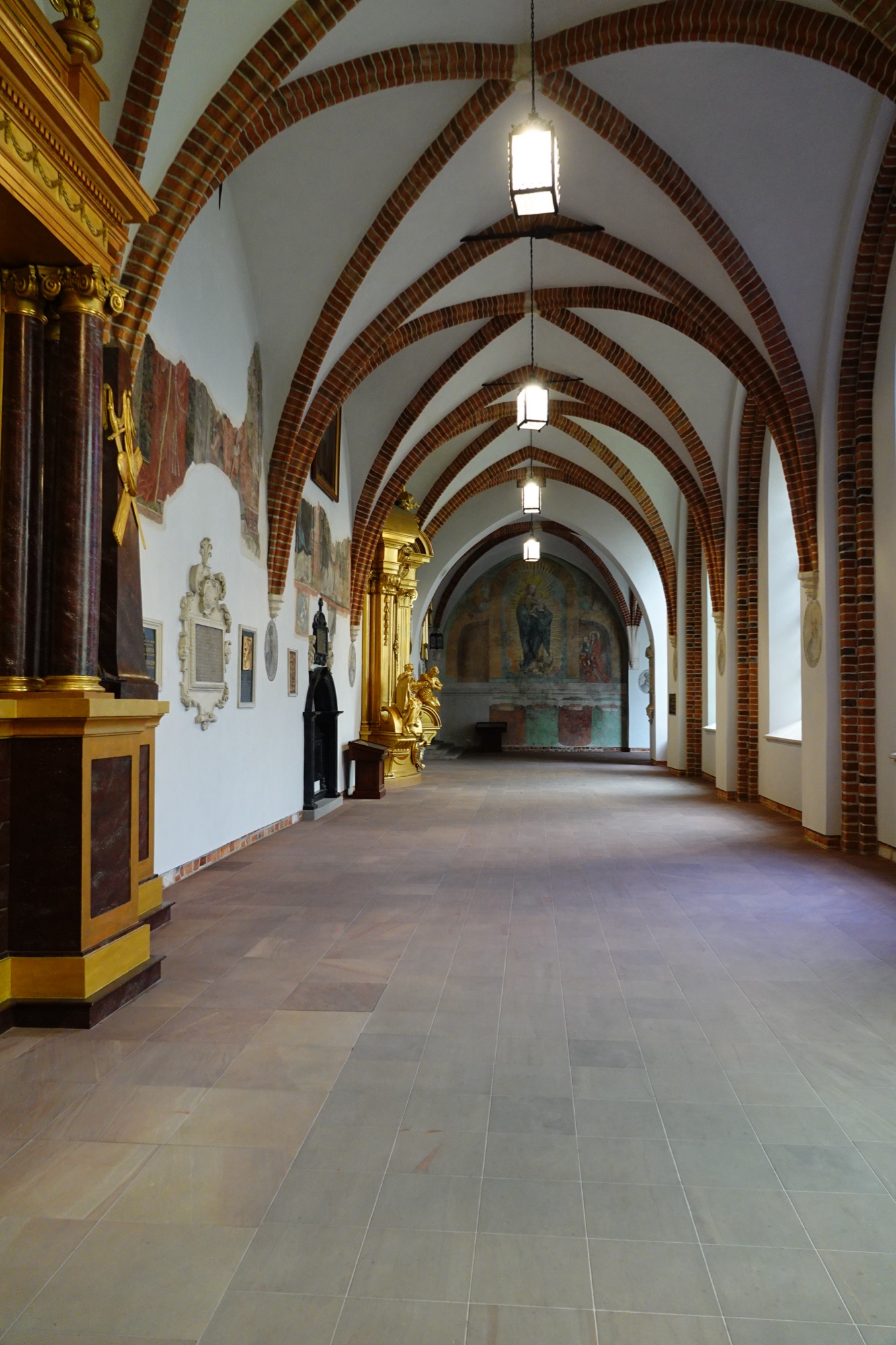
Mass was being held, so we went first into the cloisters.
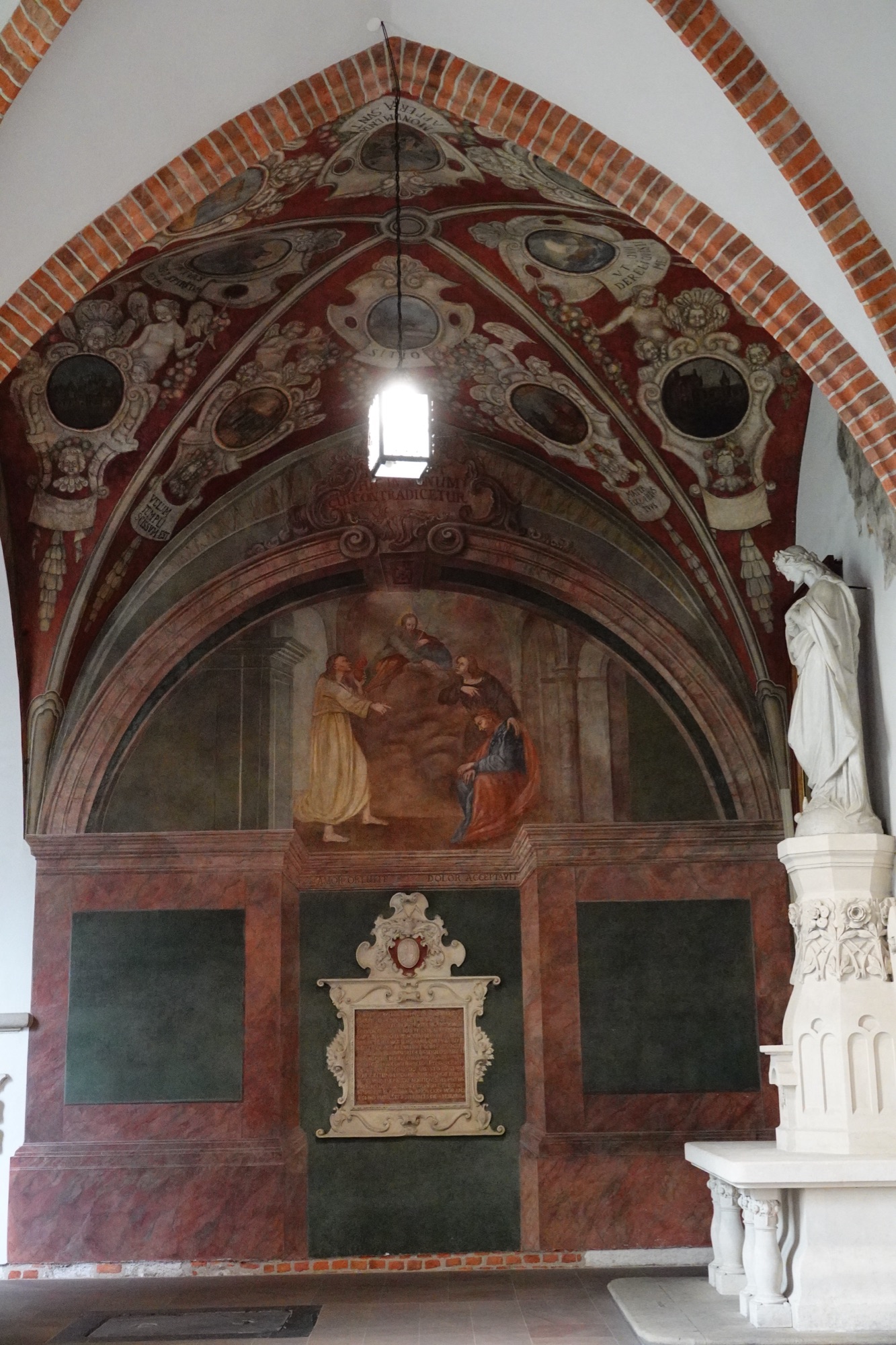
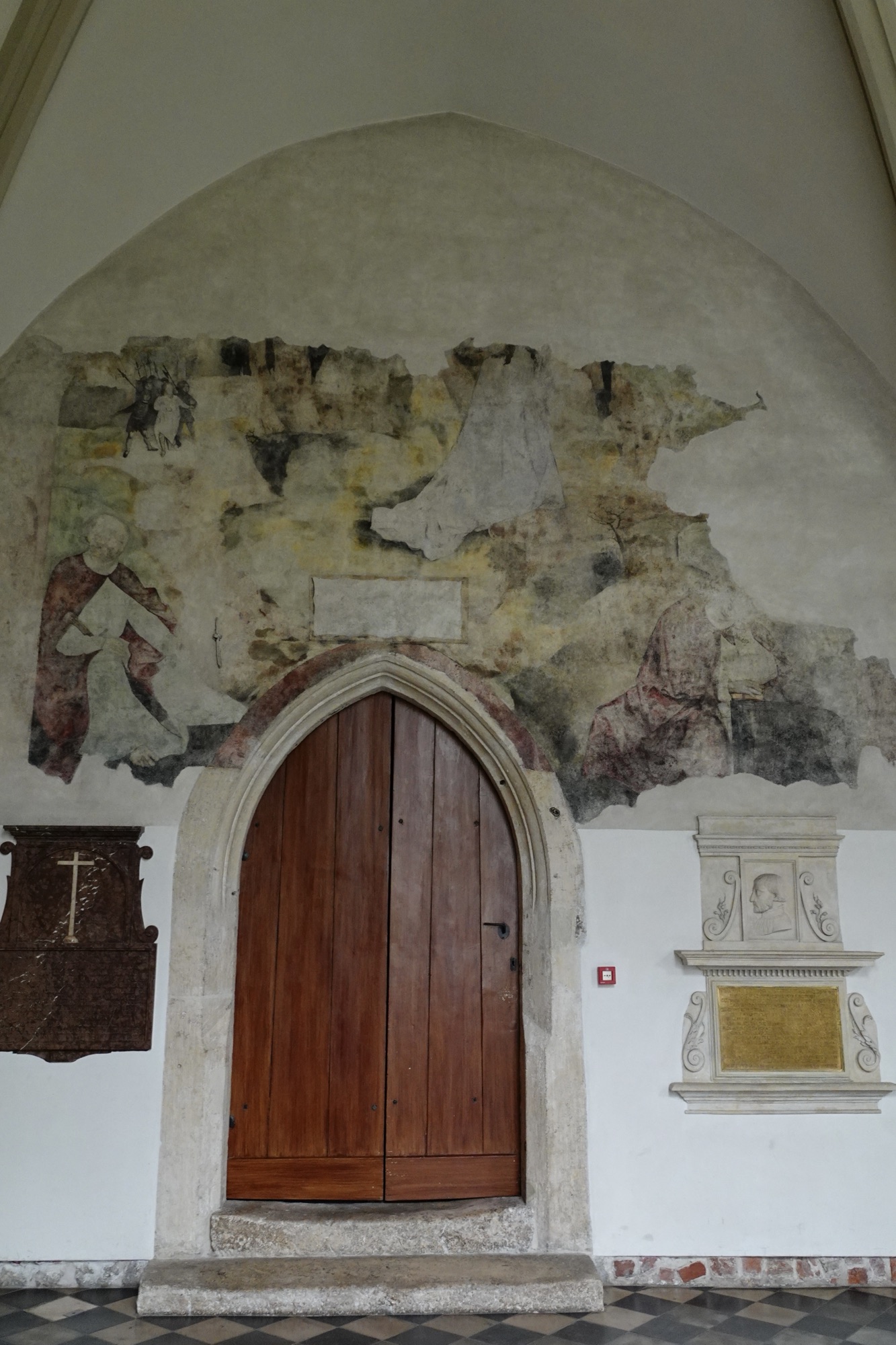
When walking through the cloister areas, we had to keep reminding ourselves that the walls were not originally white. The frescoes of which we now only see remnants would have covered the walls completely, creating a space at once both much more colourful and much darker.
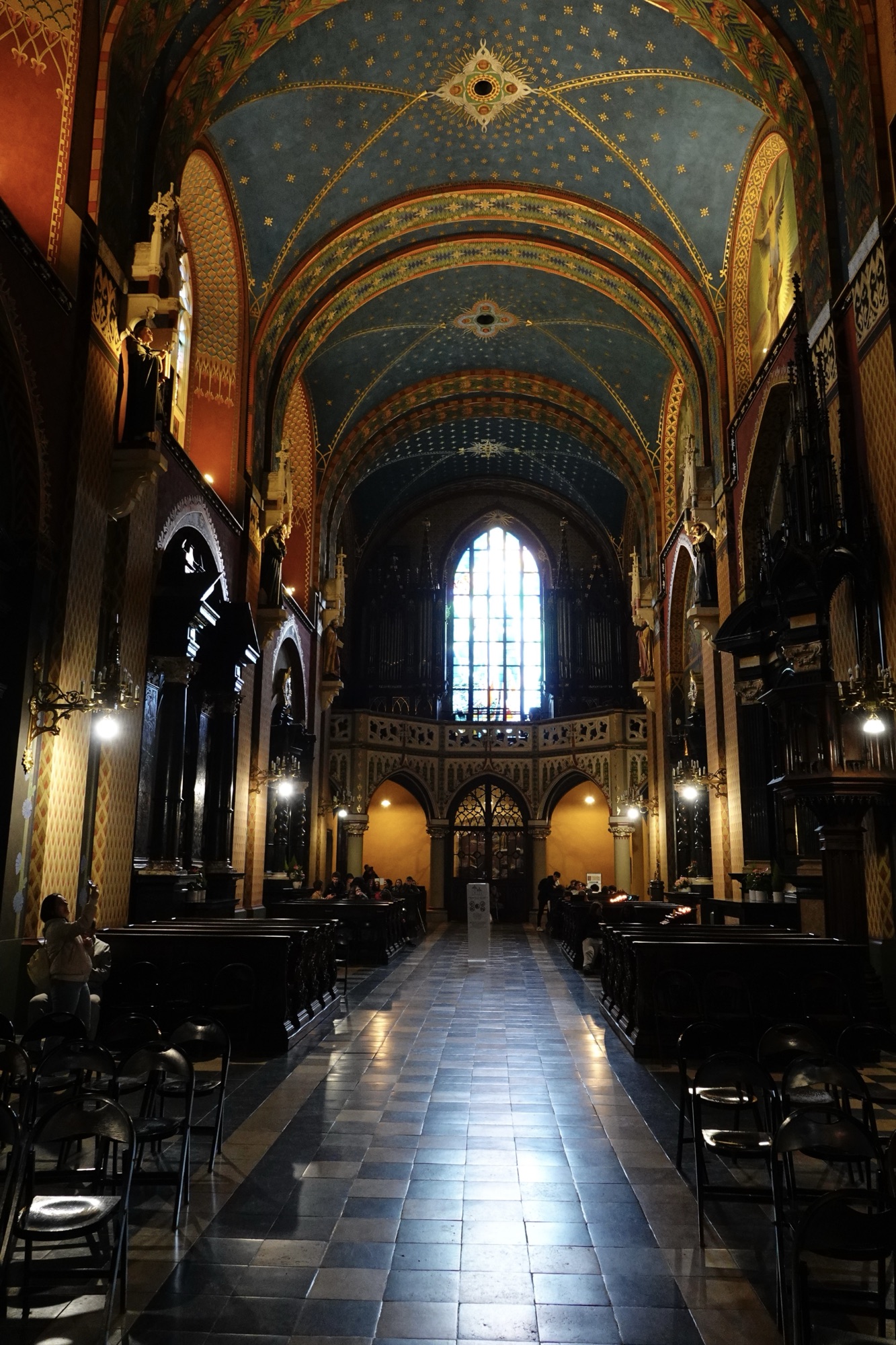
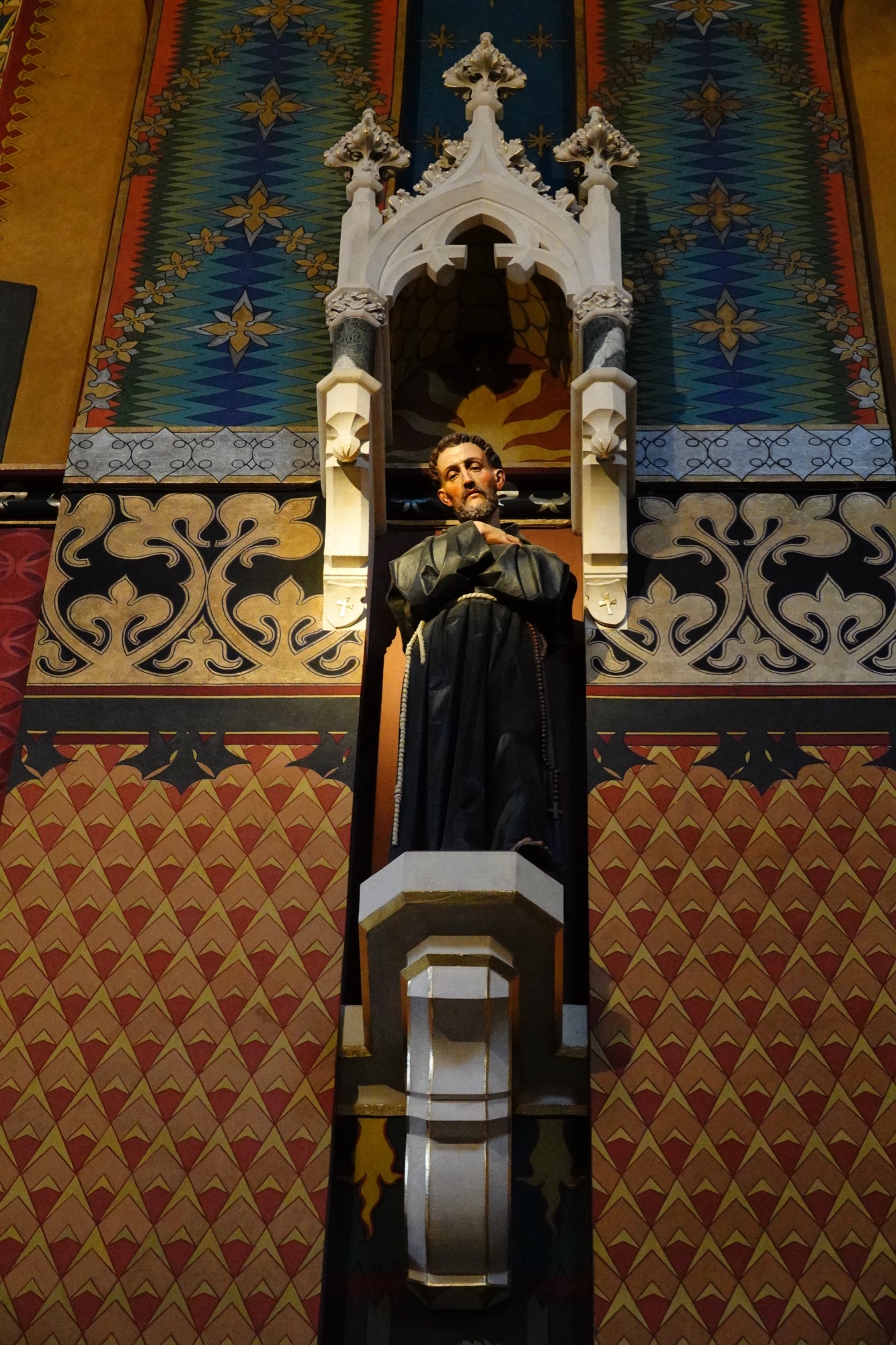
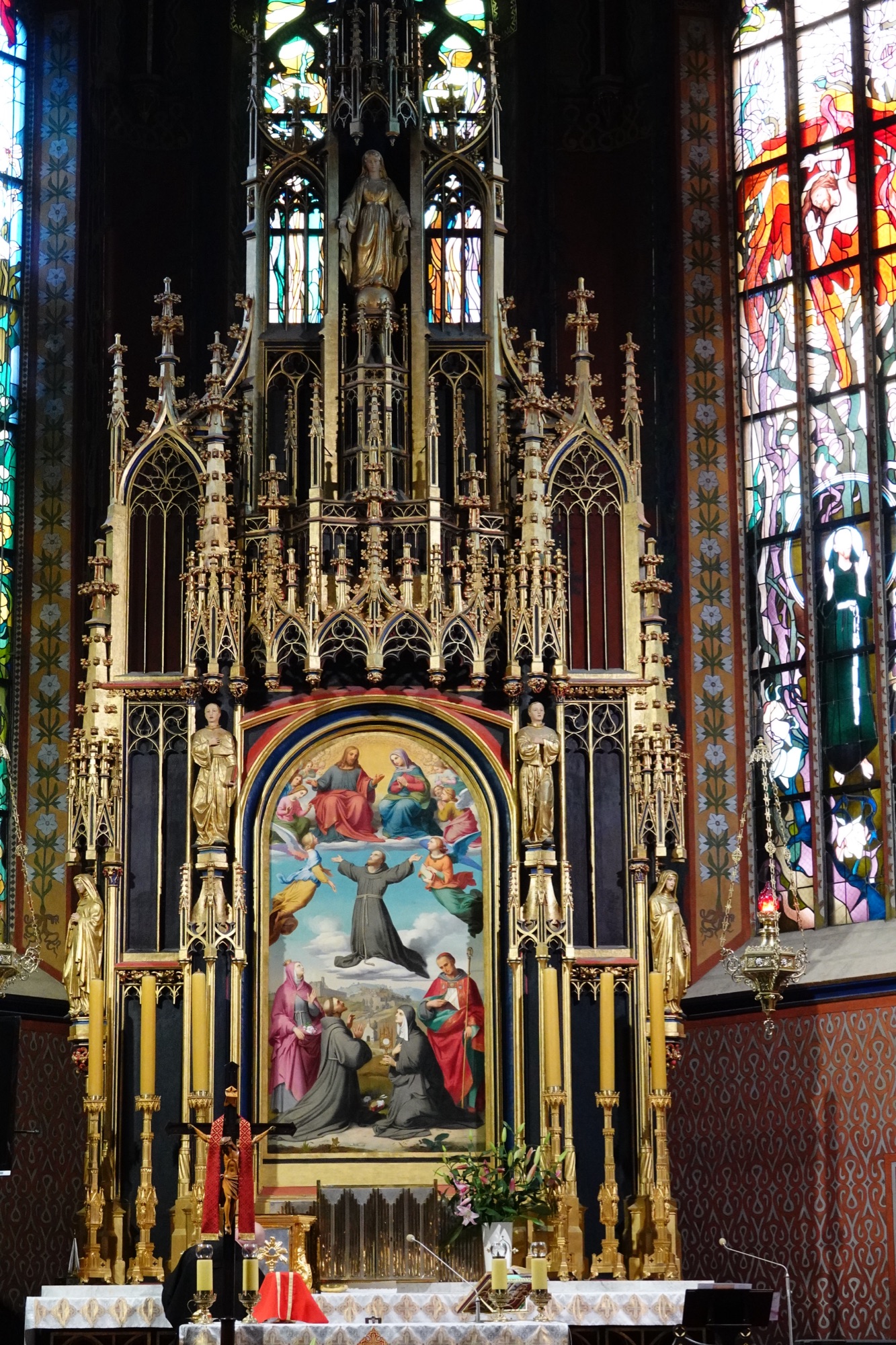
Once we did get into the chancel of the church there was certainly no lack of colour.
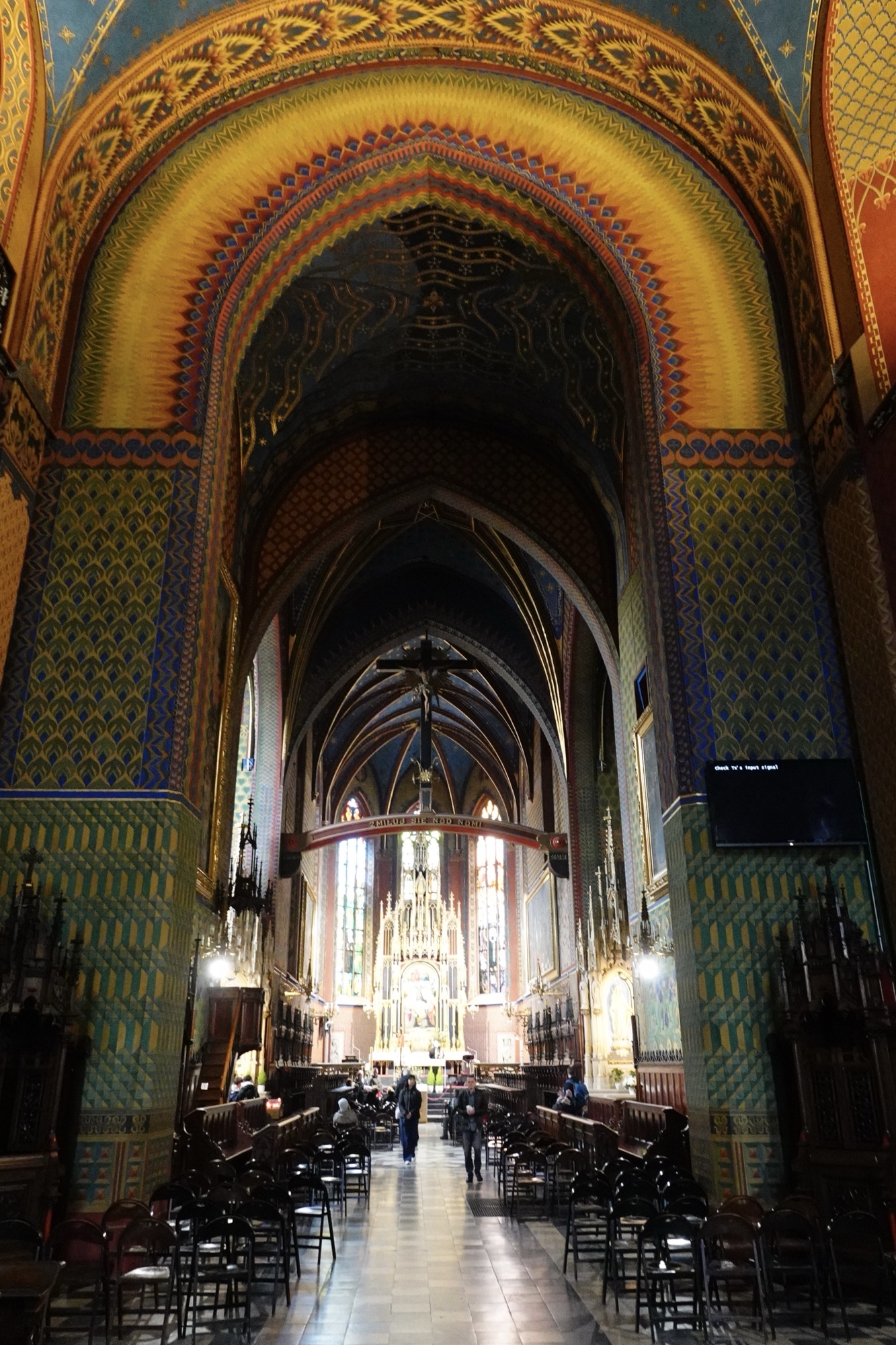
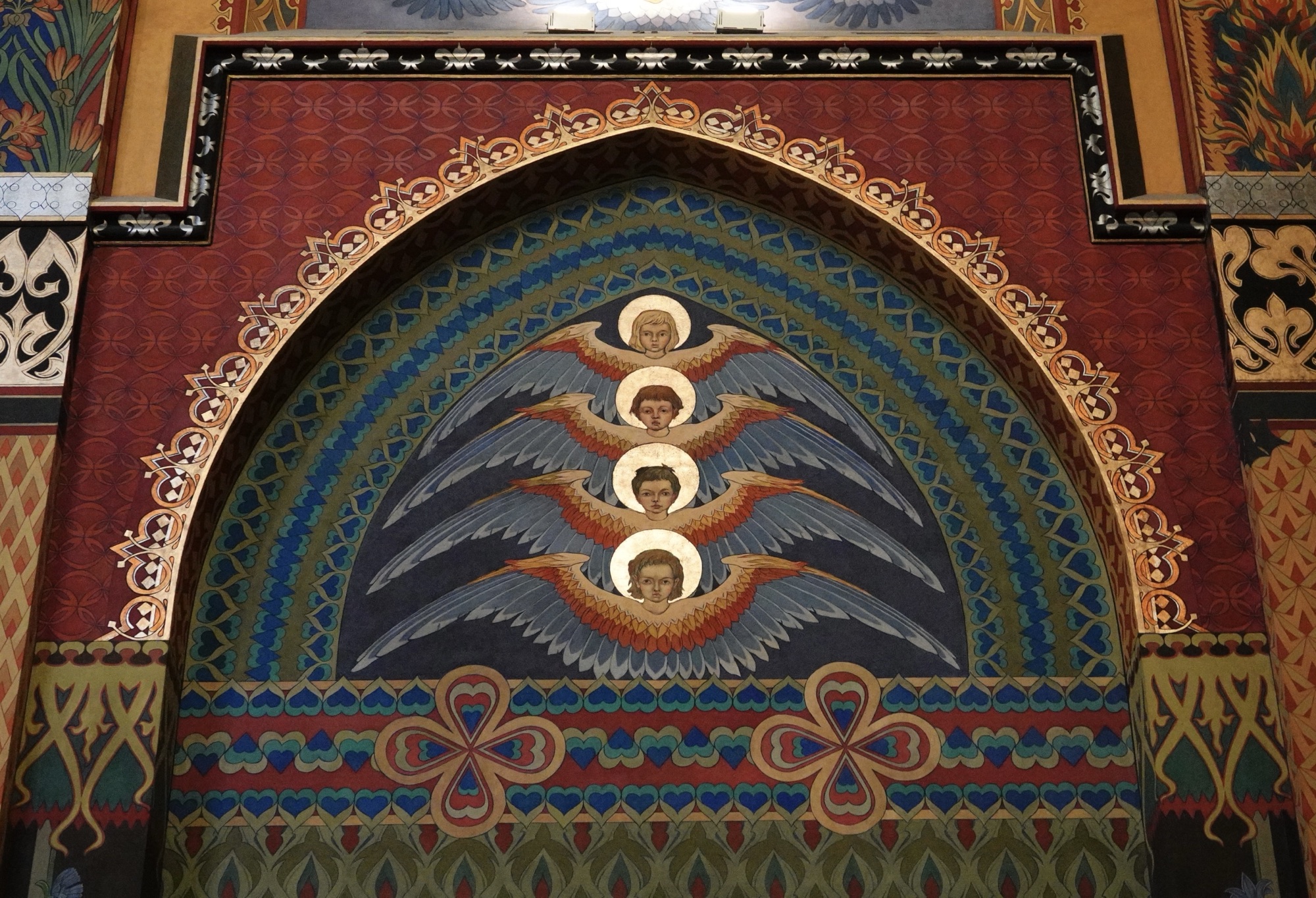
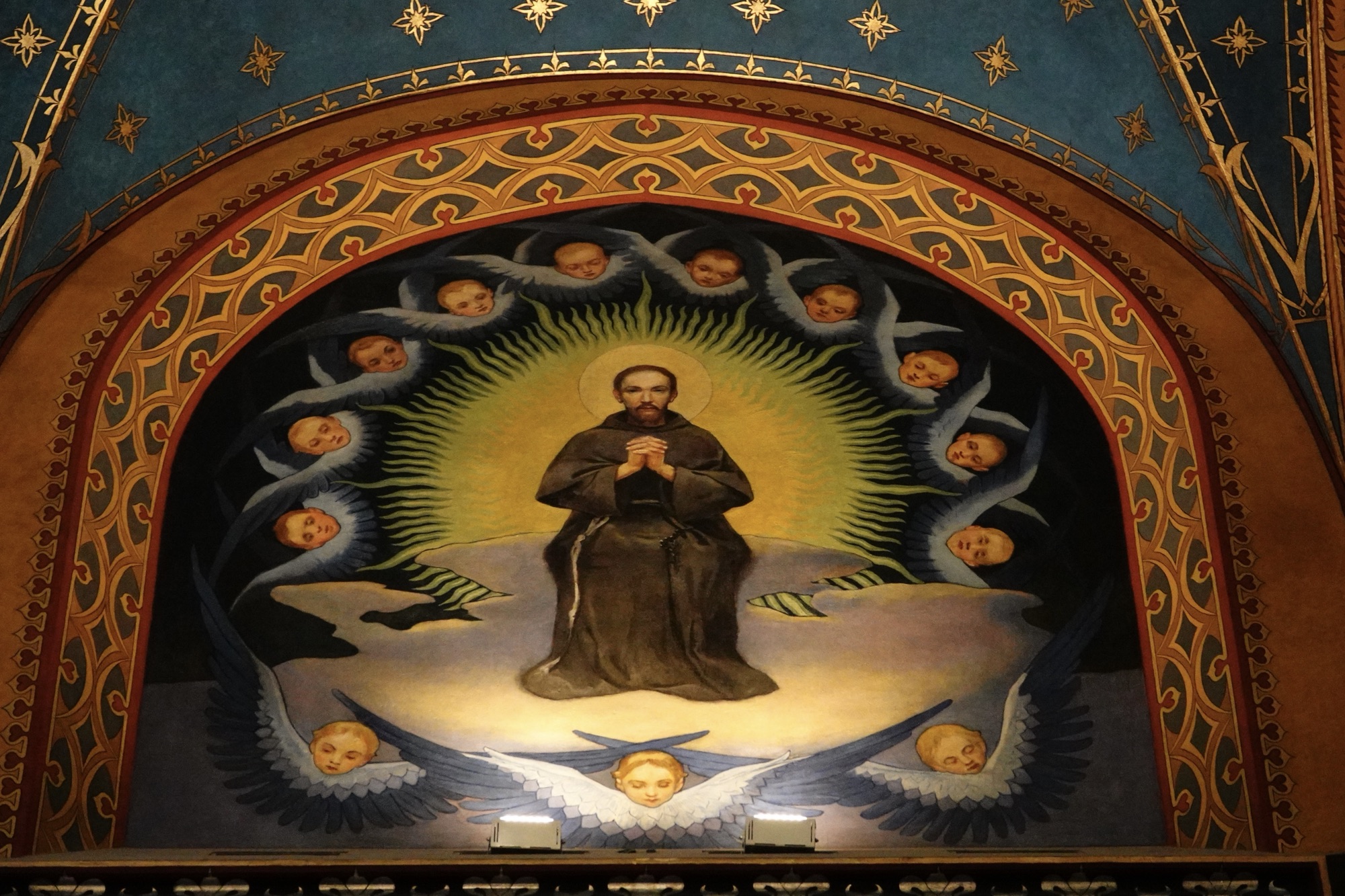
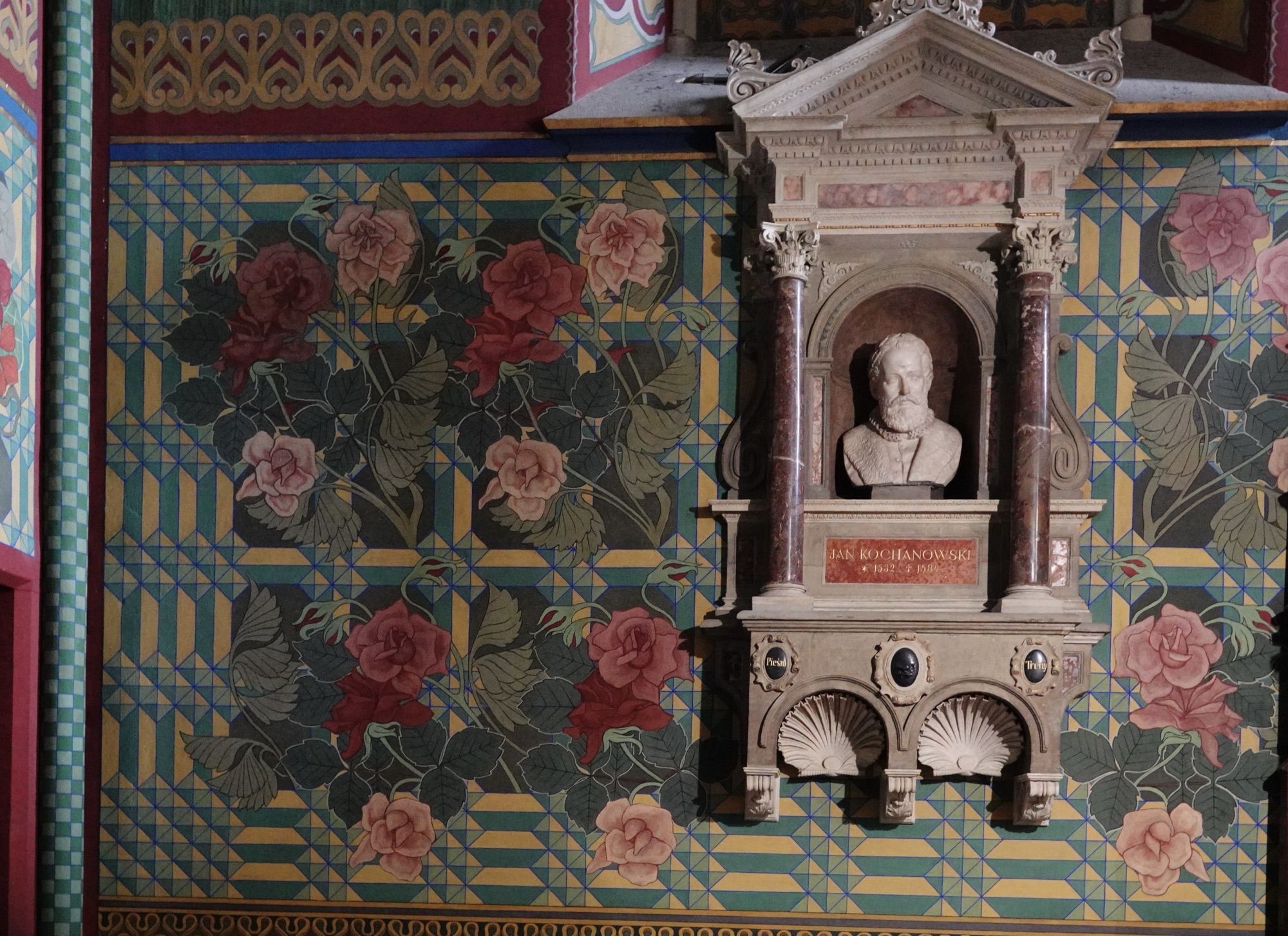
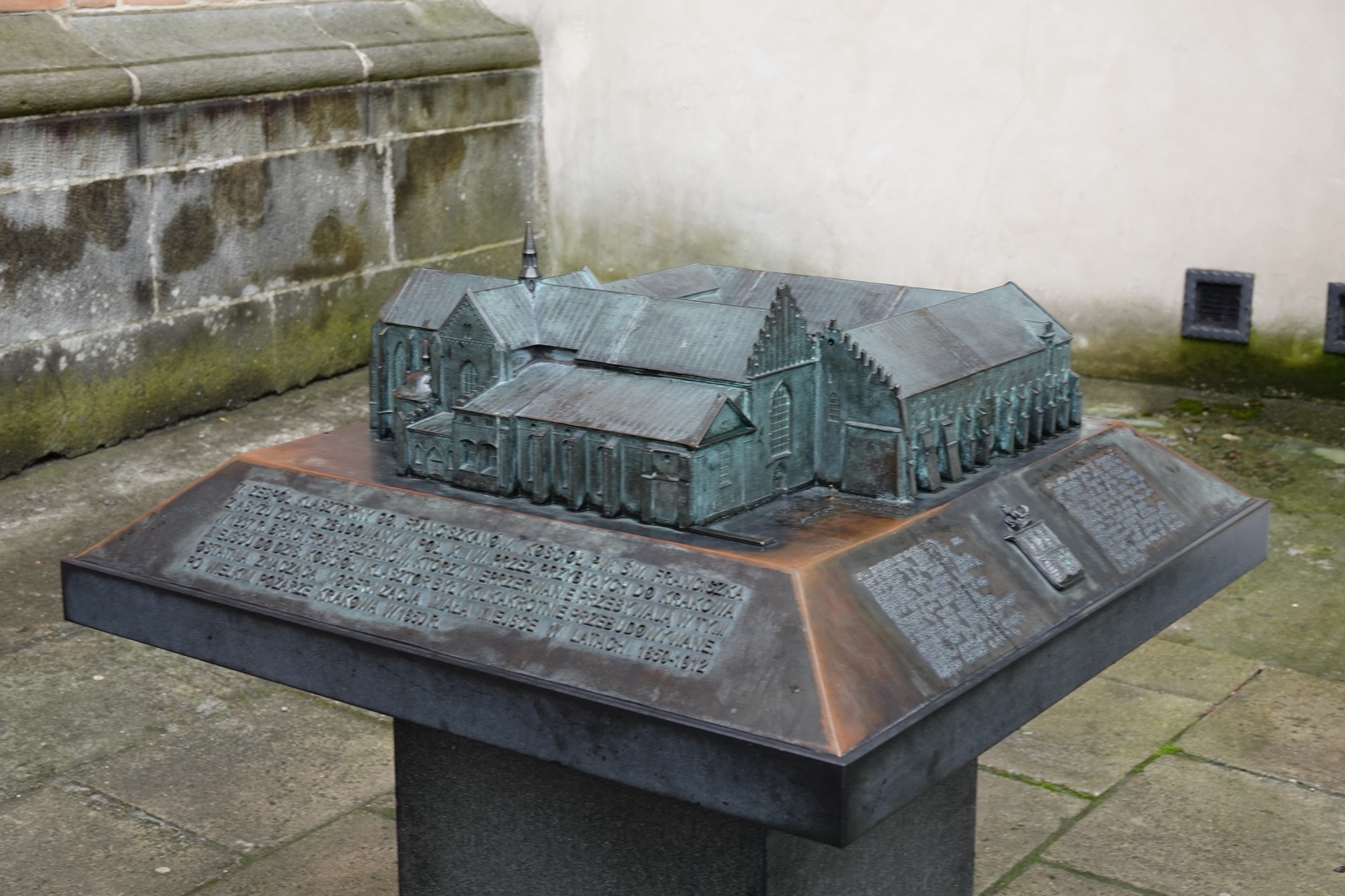
We appreciate when there are models available for buildings that are just too big to photograph in their entirety. Here is the layout of the Franciscan complex.
And here is our best overview. Ted did a pretty great job of getting risking standing in the middle of the road to get it all.
En route back to our hotel we passed our fourth monastery, this time the Basilica of the Holy Trinity, a part of the Dominican Priory complex of Poland’s first Dominican Order, established in 1222CE.
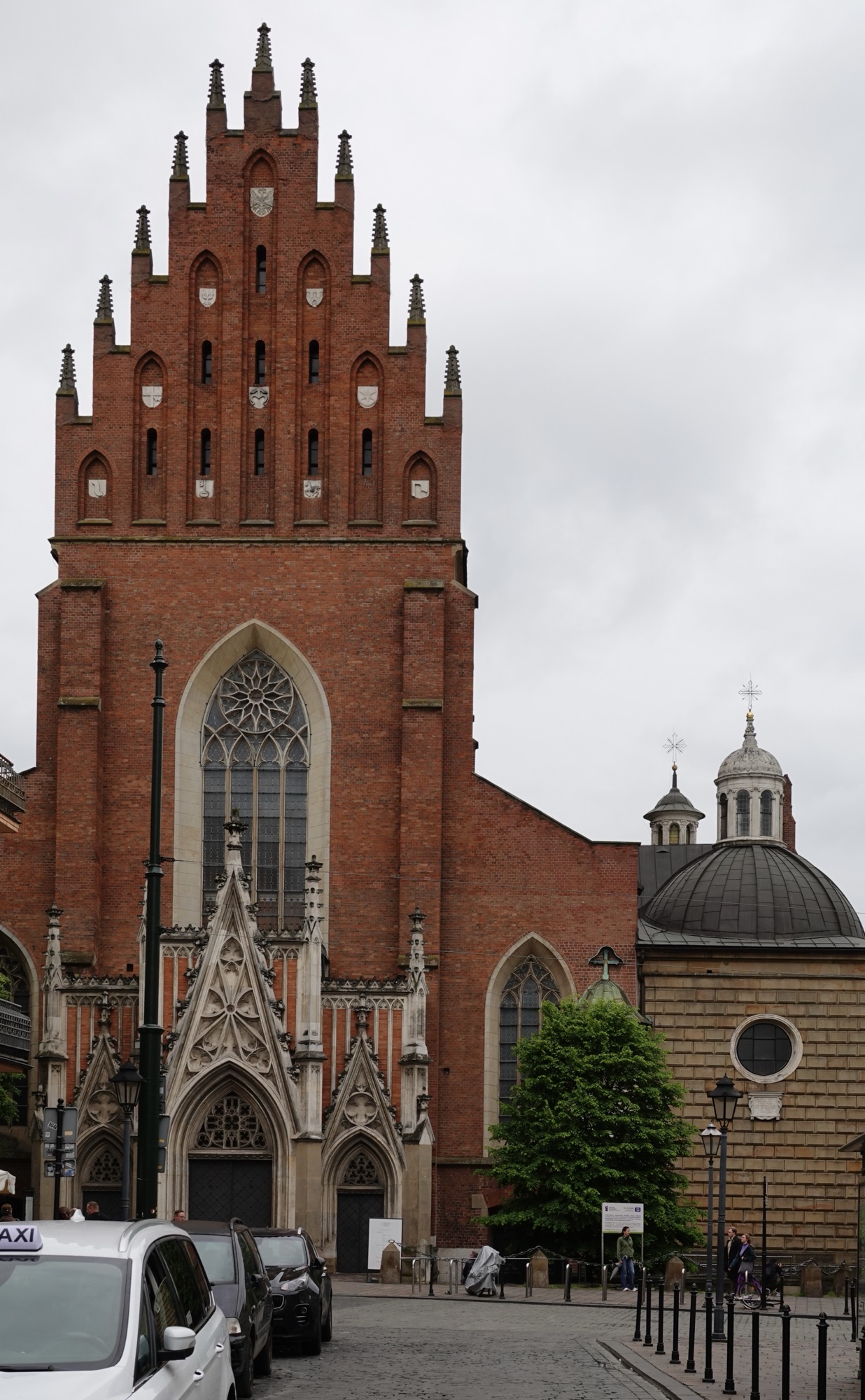
The church as it looks today is a partly Gothic and partly neo-Gothic three-nave basilica with a long rectangular presbytery and chapels on the sides. Added to that in the 17th century were four domed chapels at the corners of the nave body. The church was destroyed by the great fire of Kraków in July 1850 and suffered two subsequent construction disasters, after which the nave had to be completely demolished and reconstructed. Once completed, the church was decorated with new church fittings, and a neo-Gothic porch (pretty obvious in the photo above) was built in front of its facade.
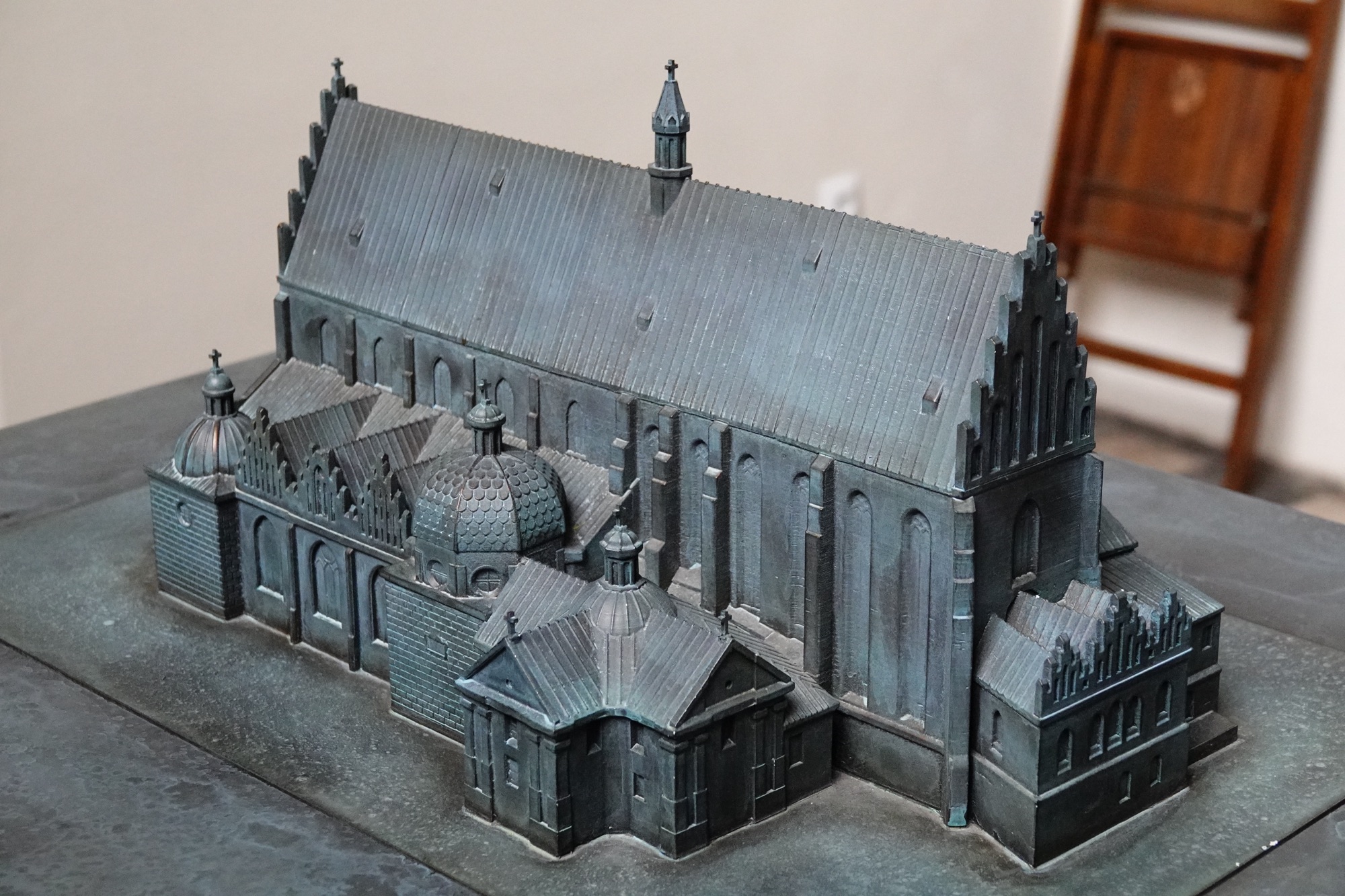
Once again, we were grateful for a scale model.
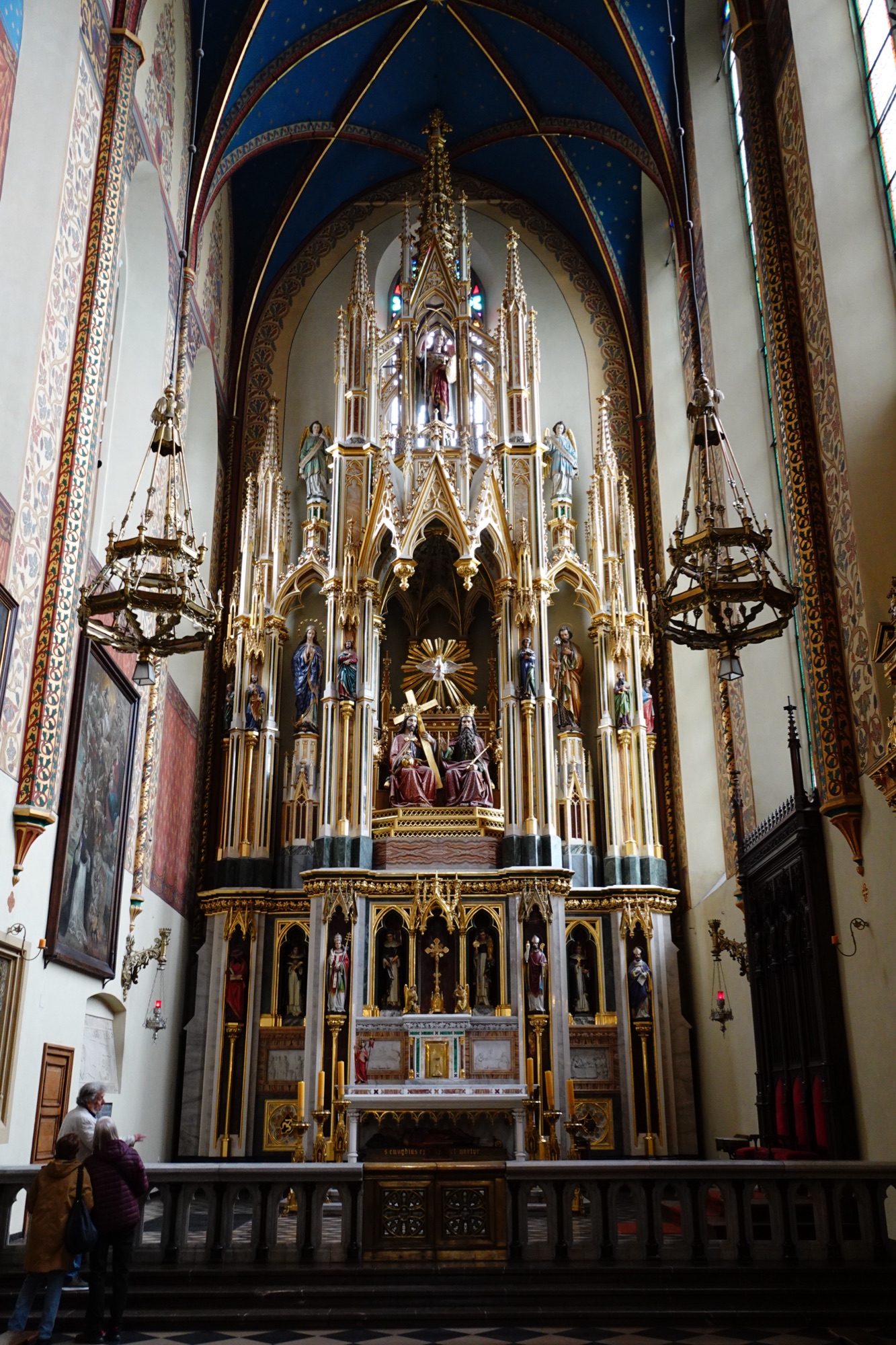
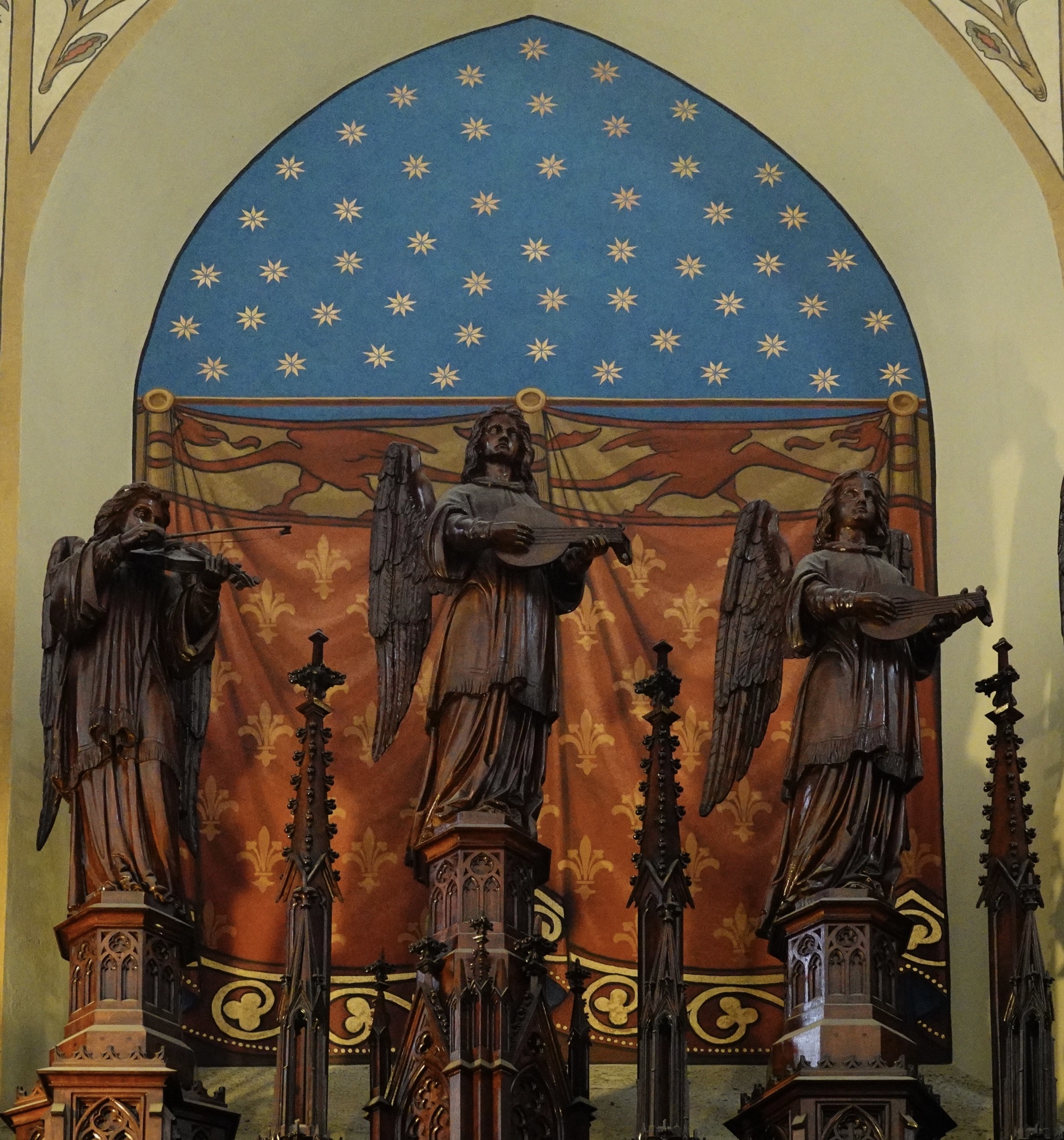
While the Dominican church was not nearly as ornate or colourful as the Franciscan, they had vibrant blue ceilings full of stars in common.
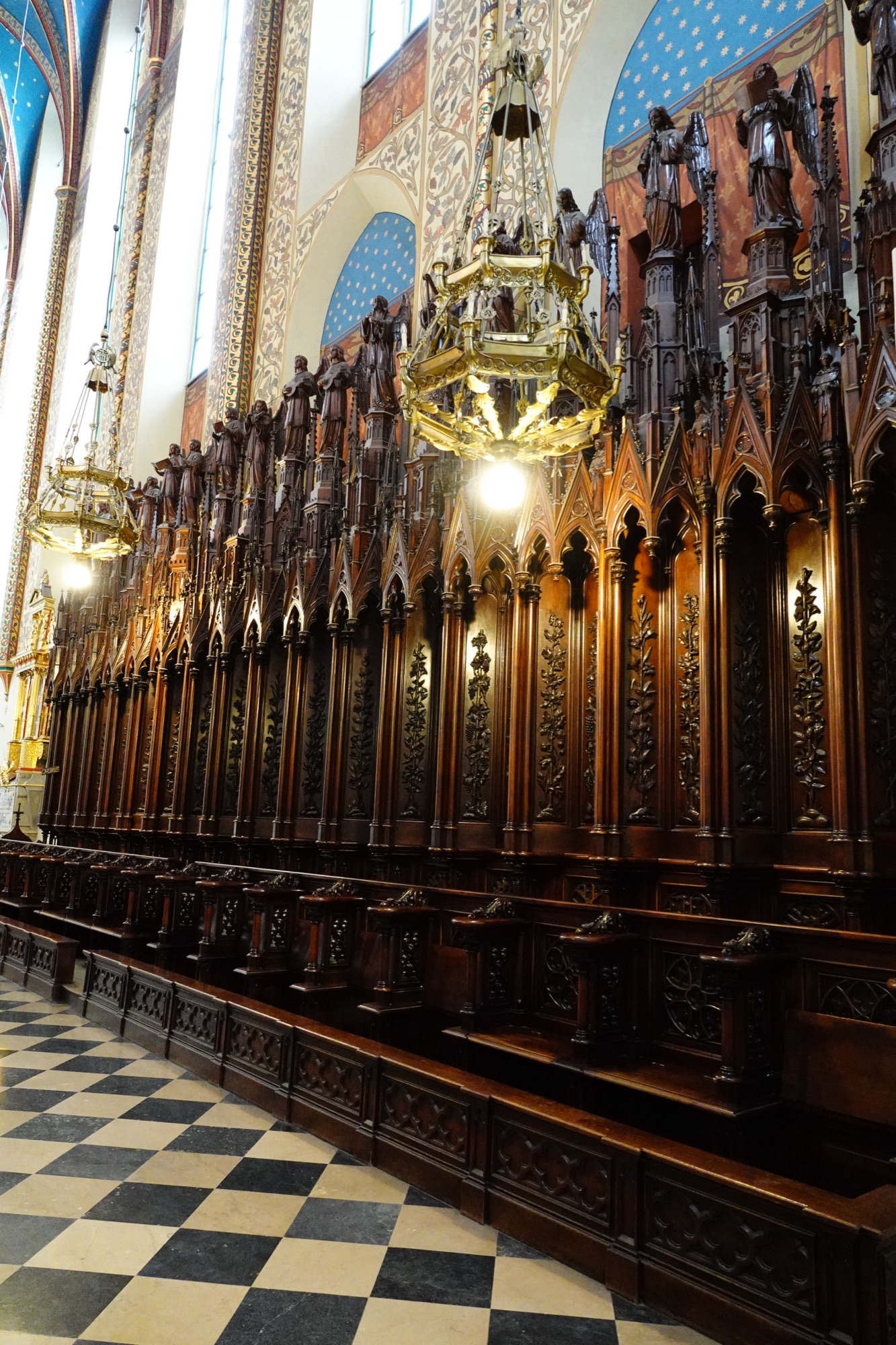
My favourite part was the beautiful choir with its stalls topped by angels playing musical instruments.
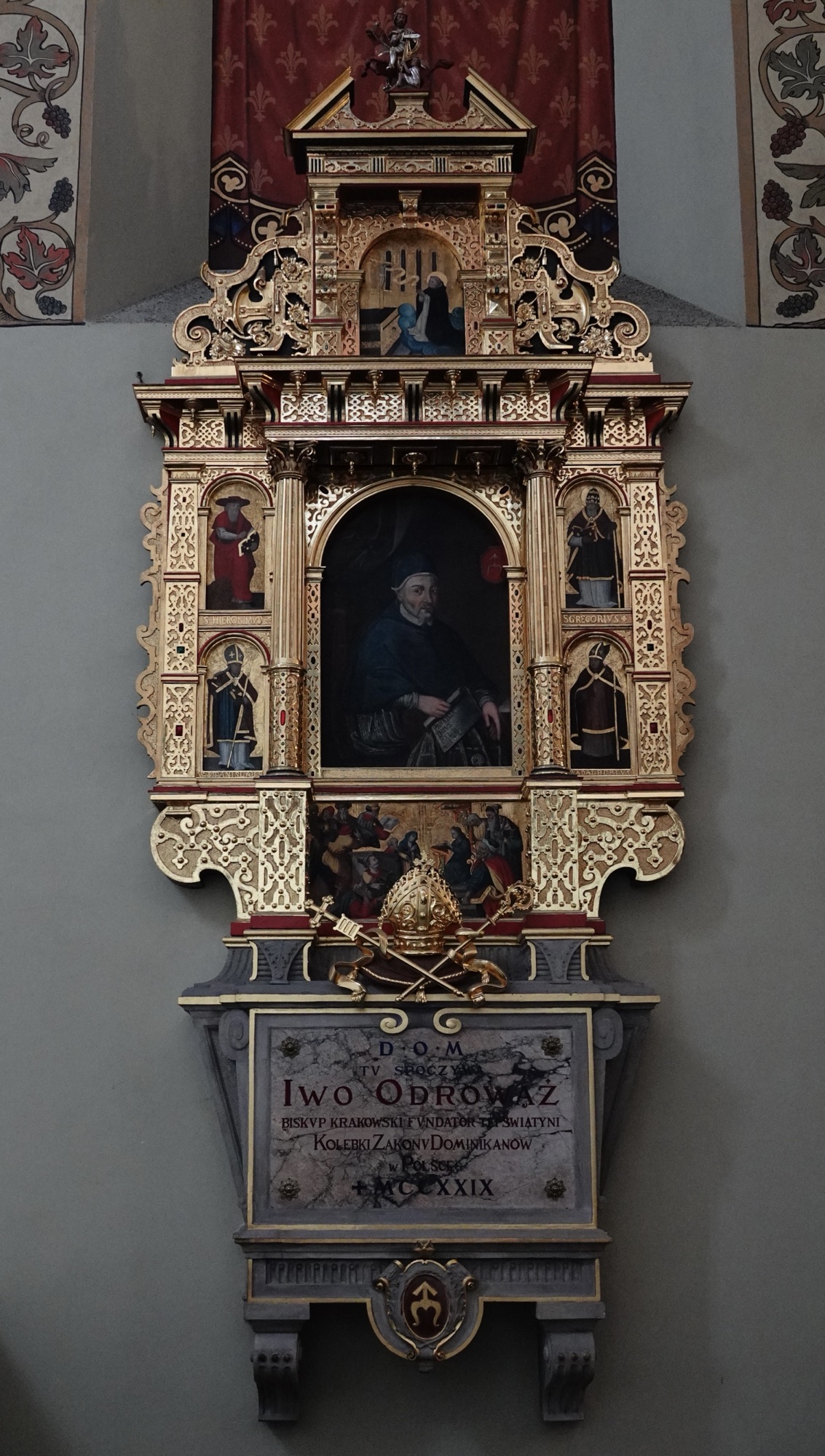
Originally this church was the seat of the oldest parish in Krakow. In 1222, Bishop Iwo Odroważ handed it over to the Friars Preachers (the Dominicans) who had come from Italy a year before.
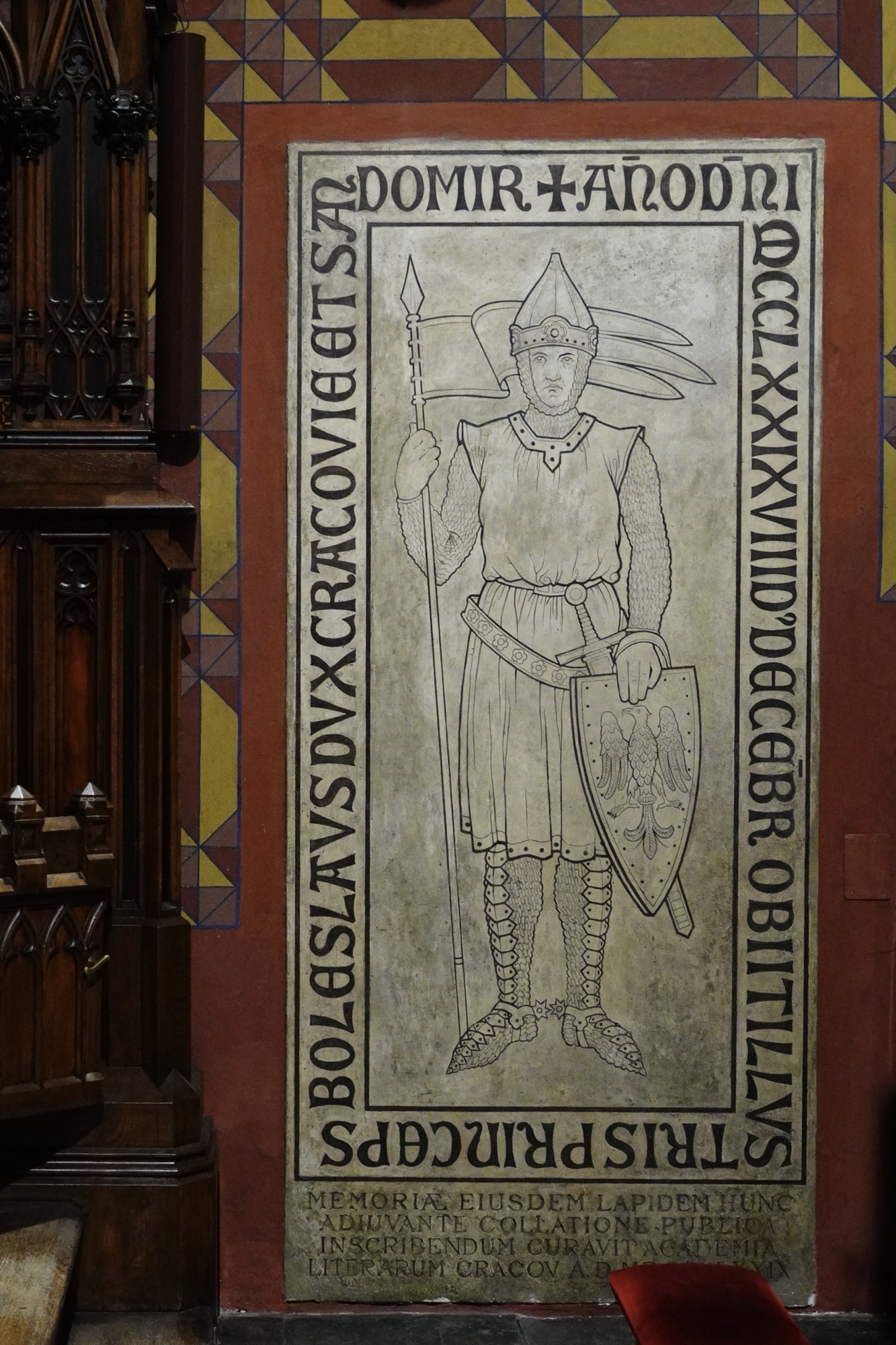
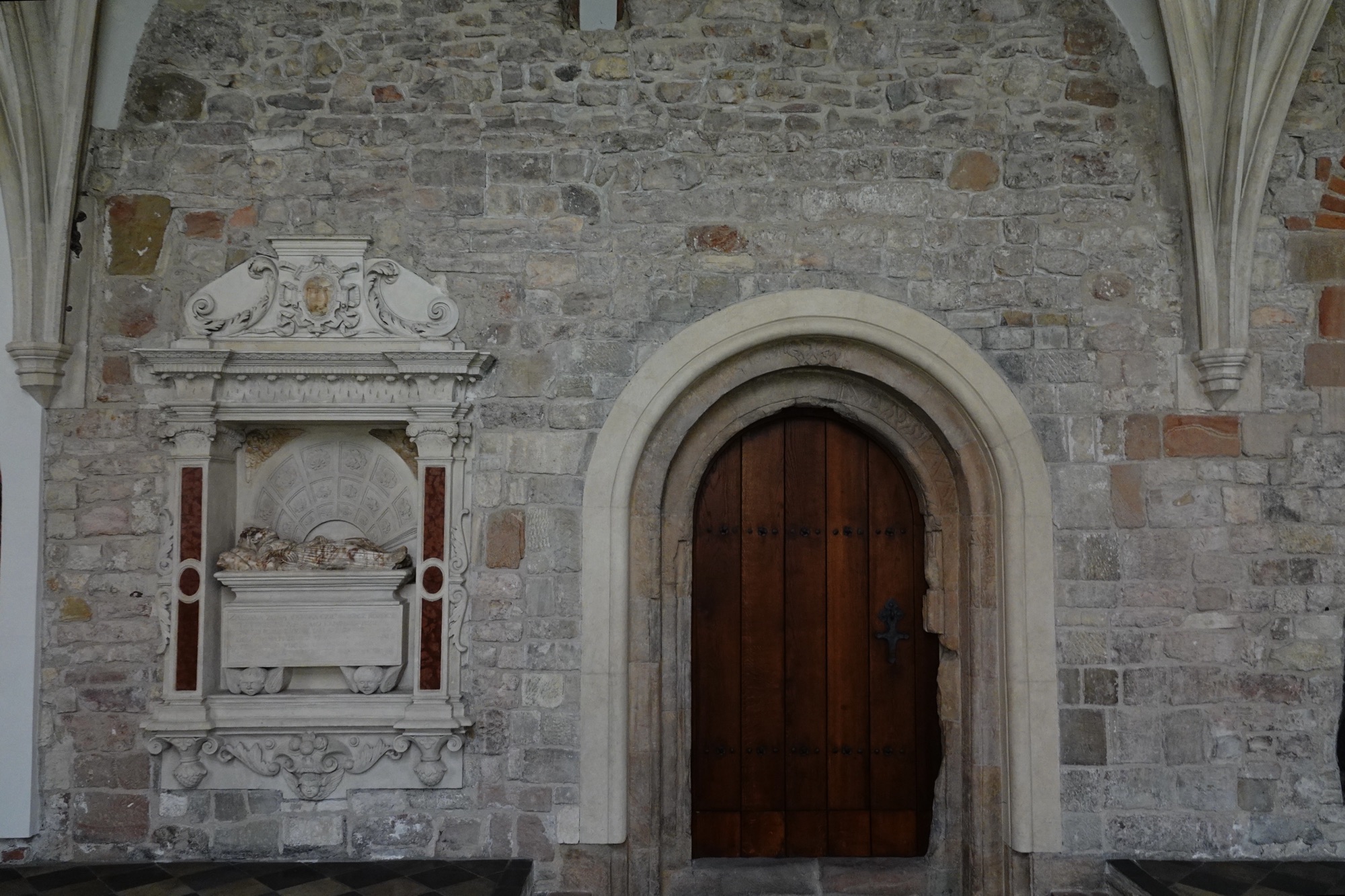
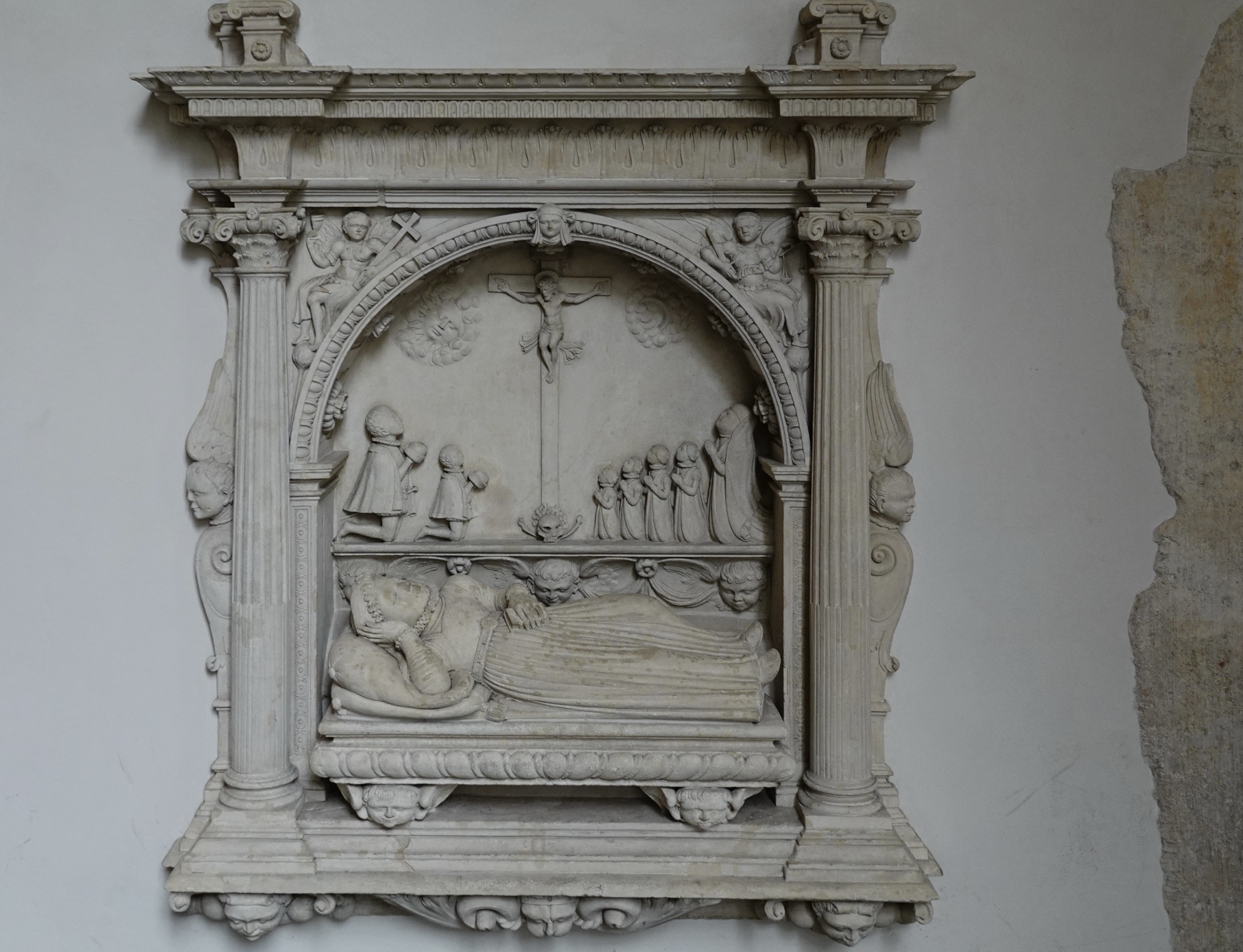
What just about everyone in the church simply walked right past (I do understand “cathedral fatigue”, even though I personally never feel it) was the monument to the founder.
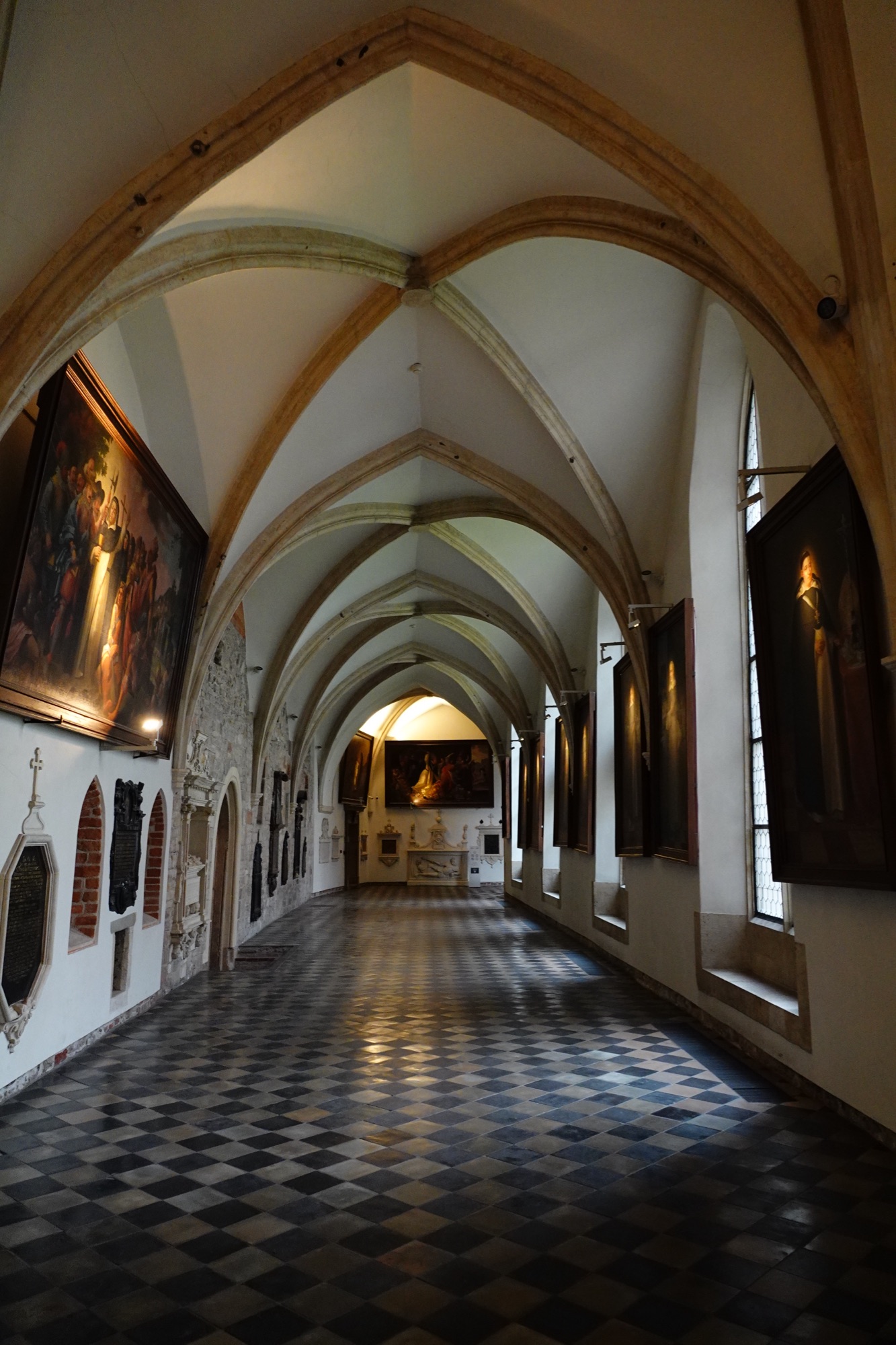
The Dominican cloisters were much larger than those of the Franciscan priory. There was a Dominican Museum as well, but we just missed its open hours.
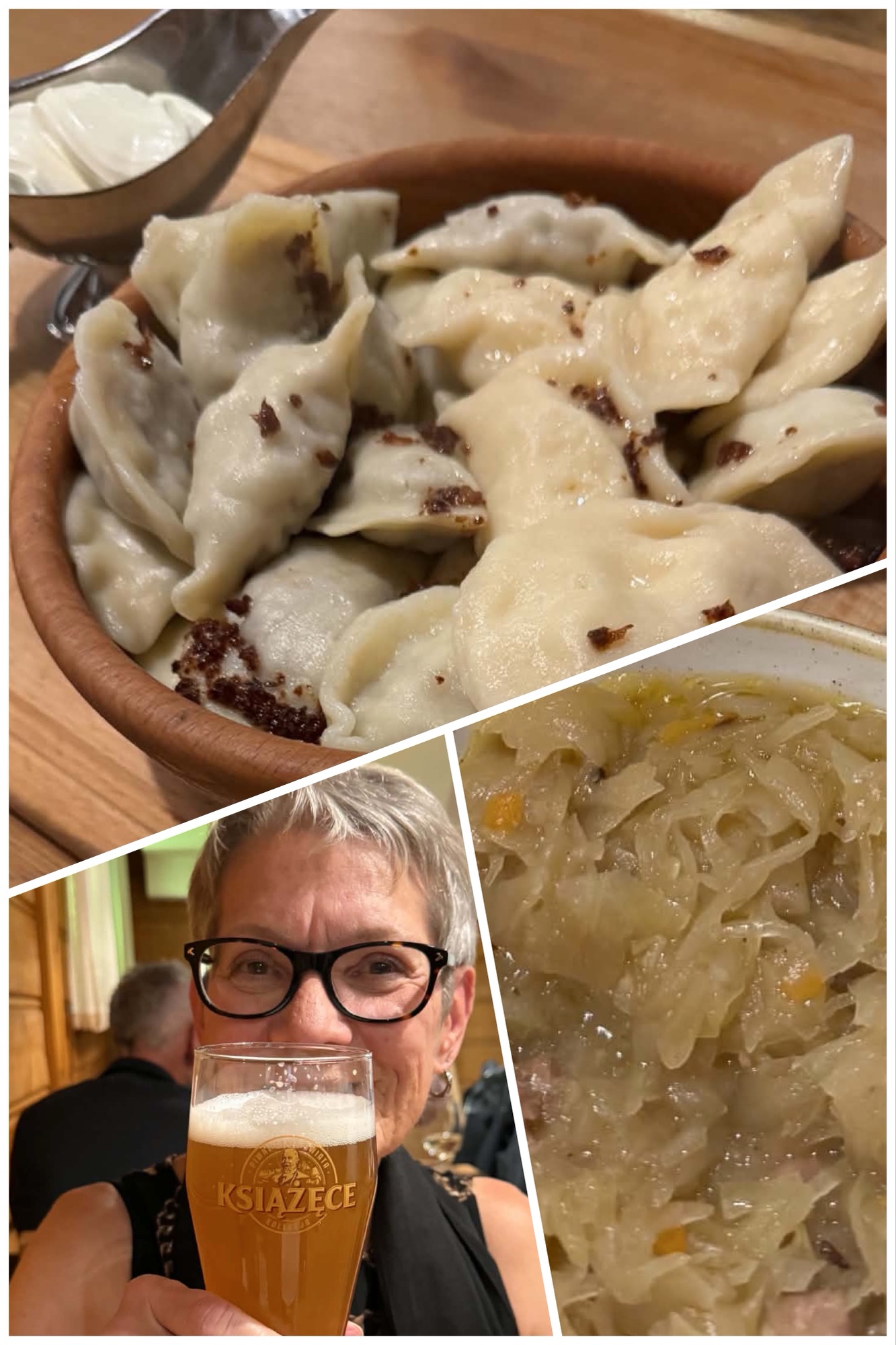
Walking and gawking deserved ice cream, followed by putting our feet up in our room, and a late dinner in the Polish cuisine restaurant conveniently attached to our hotel (it actually serves as our breakfast room). The “Pierogi feast for two” more than satisfied our appetites.
We have just one more day in Kraków, and no firm plans yet as to how to spend it.
 Rose and Ted’s Excellent Adventure
I
LikeLike
Unfortunately your comment didn’t come through.
LikeLike
can’t believe 4 Days in Krakow and did not visit Auschwitz!
LikeLike
Honestly, as someone of German heritage whose Dad was born just outside Warsaw and who lived his teenage years during WWII here (until fleeing the Russians) and whose entire family was scarred in various ways by the war, seeing the physical buildings where such inhumanity was perpetrated simply wasn’t an extra image I needed to add.
LikeLike
I can’t even read novels set during WW2. I had too many relatives with concentration camp tattoos. And those were the survivors.
LikeLike