When I was a teenager, the expression “being sent to the salt mines in Siberia” was a throw-away phrase used if someone got grounded by their parents.
It was only once I was in my 40s or 50s that I learned that my paternal grandparents had actually been deported from Poland/East Prussia to Siberia, and had in fact borne and lost two children there. (Research into the deportations in Wikipedia here). It was at least part of the reason that they did not want to live under Russian rule after WWII.
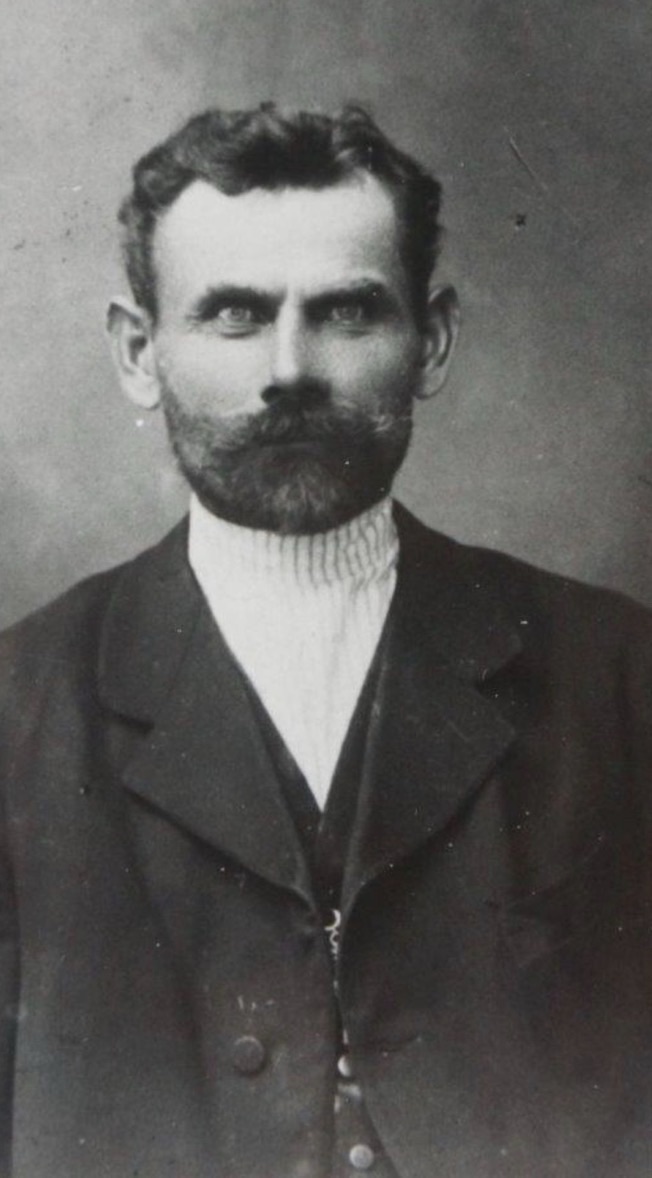
I don’t think my grandfather actually worked in a Siberian salt mine, although in 1914 he would have been 41 years old and in prime physical condition for hard labour.
At any rate, when we talked about coming to Poland I became obsessed with the idea of seeing an actual salt mine.
And since every day cannot be 8 plus hours of activity, or else we (by which I mean Ted) might feel as if we’d been sentenced to hard labour, this morning we just lazed in our room, and in the afternoon we visited the Wieliczka Royal Salt Mine, named for the town – a suburb of Kraków – in which it is located.
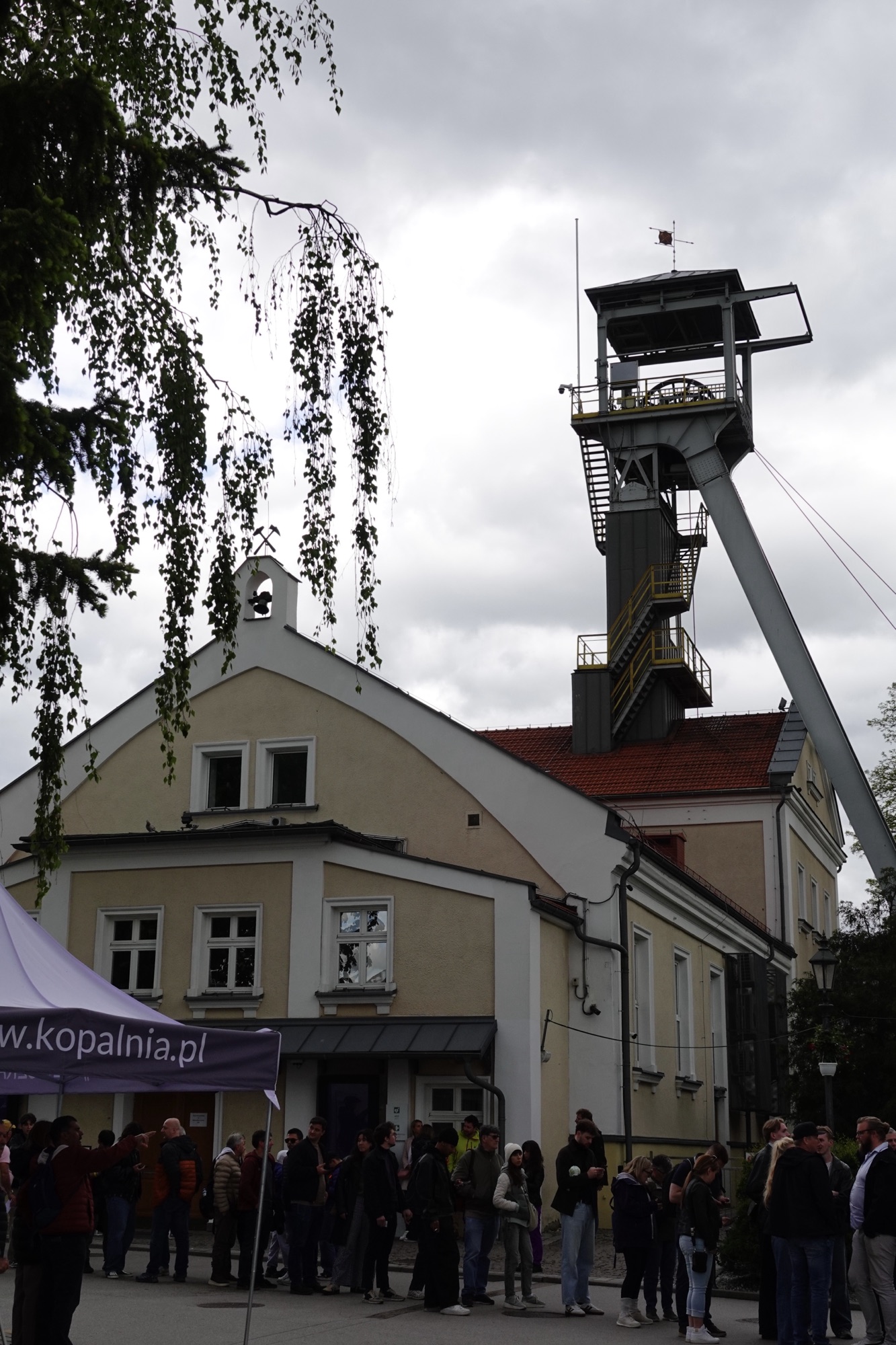
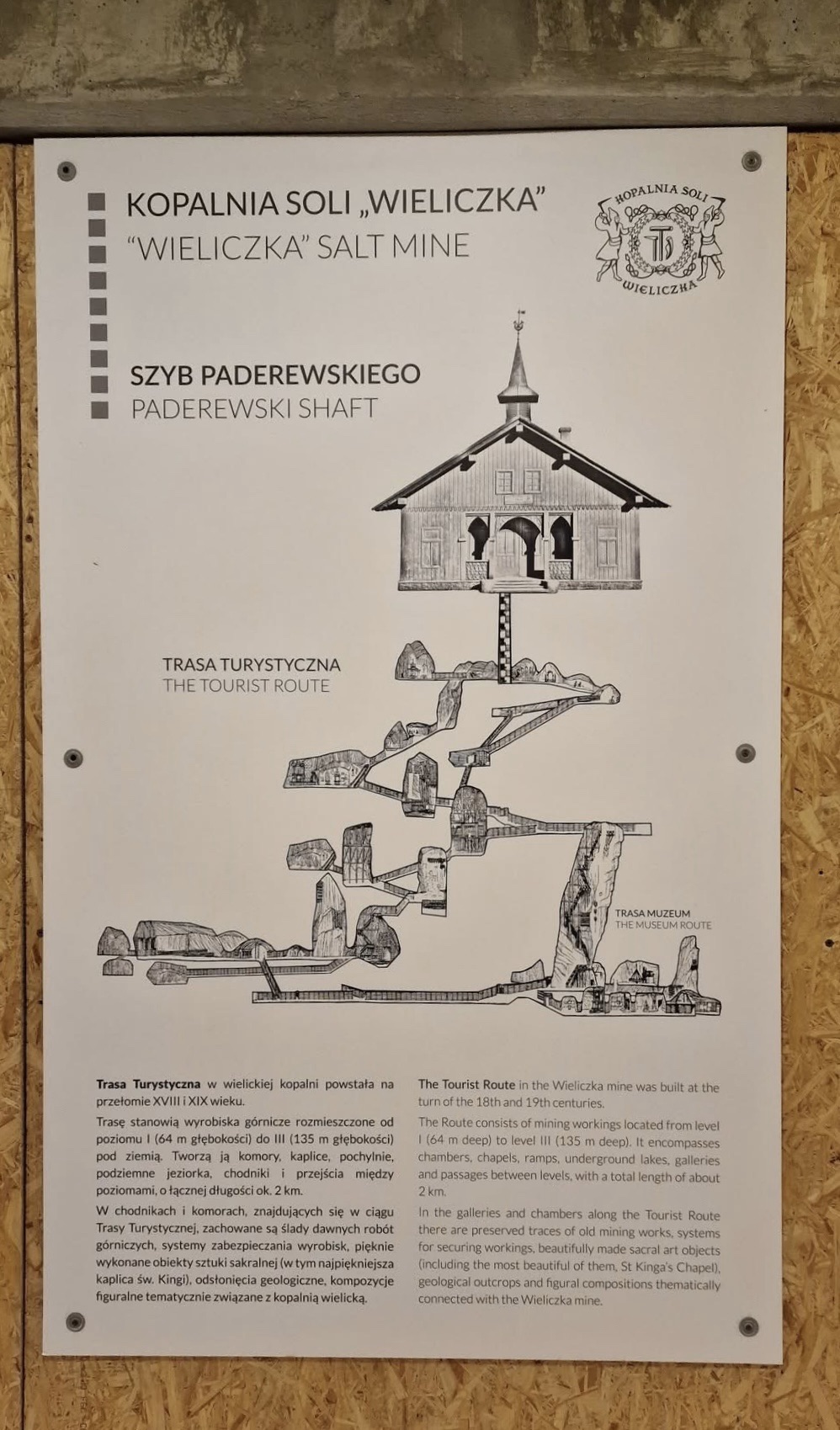
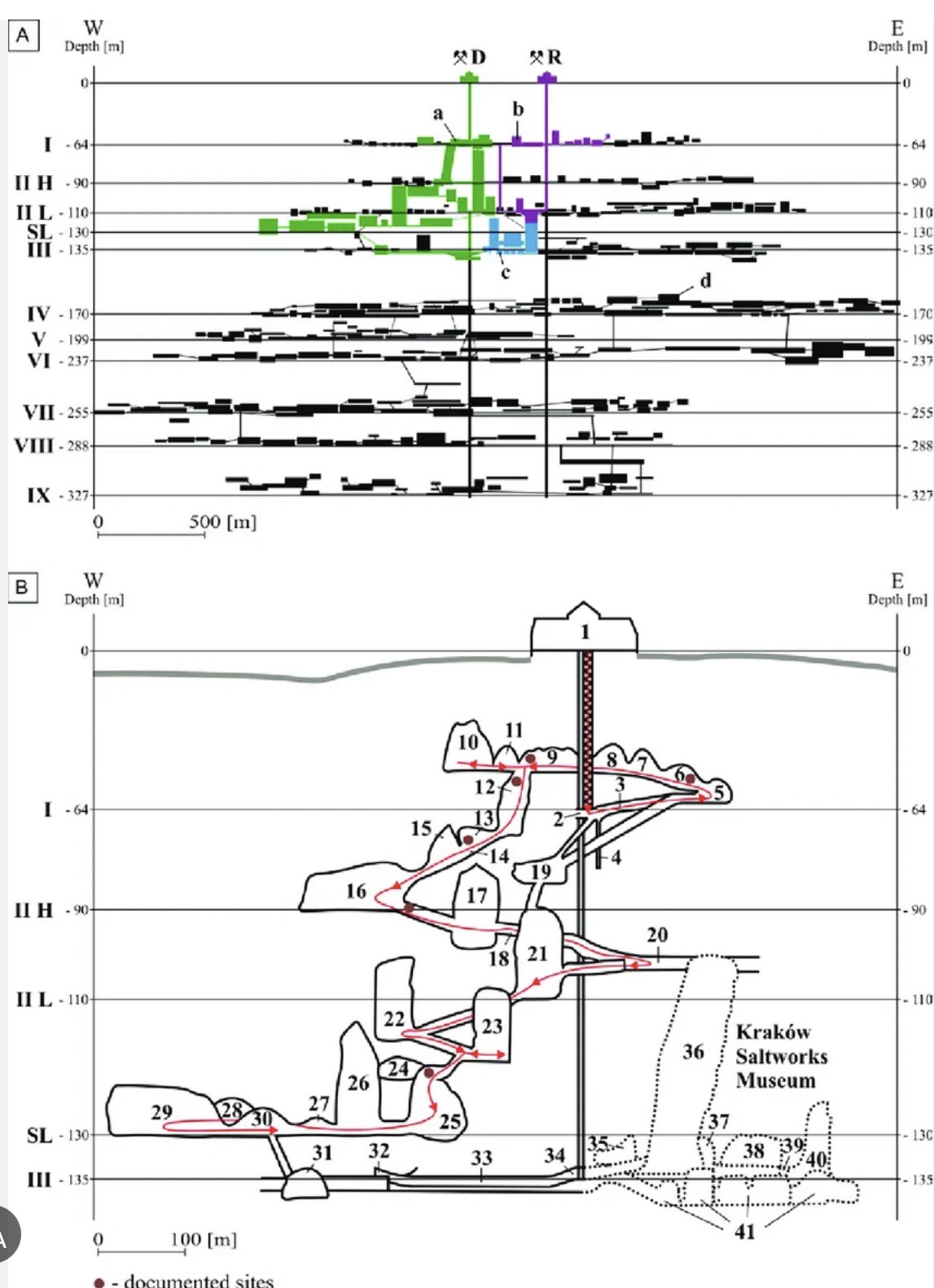
The mine has about 245km/152mi of hollowed out corridors, on nine levels, the deepest of which is 327m/1070ft underground, dug over a period of 700 years. We visited just 3.5km/2.2mi, and went no deeper than 135m/443 ft below ground.
There is archeological evidence of the use of briny water to obtain salt as far back as the Neolithic Period, 6000 years ago. In the 11th and 12th centuries, salt in Western Europe was still mostly obtained by boiling/evaporating briny well water. In the 13th century, when briny surface springs began to dry up and saline wells were being dug, the first lumps of rock salt were accidentally found. The discovery of the valuable raw material turned out to be revolutionary.
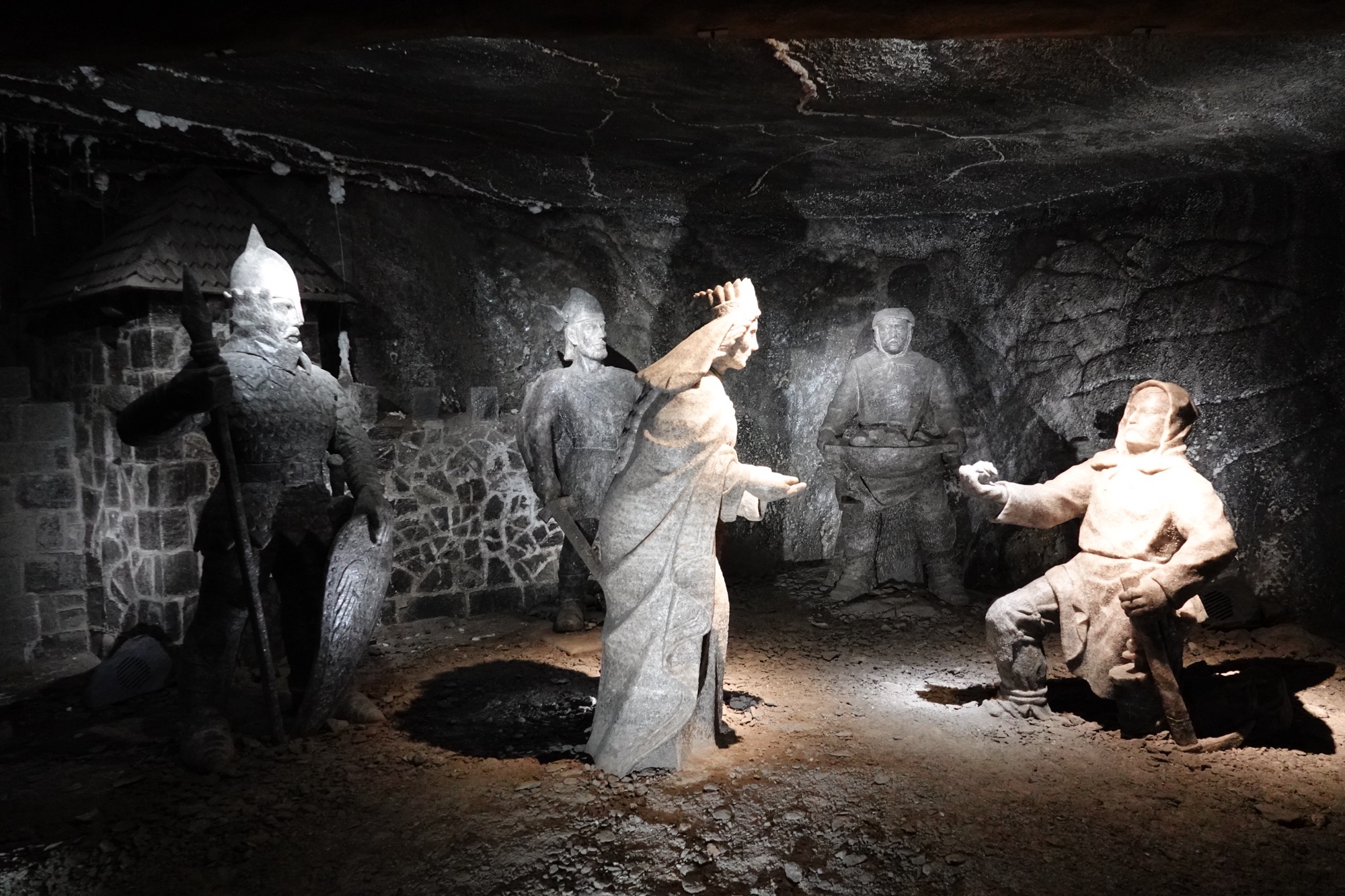
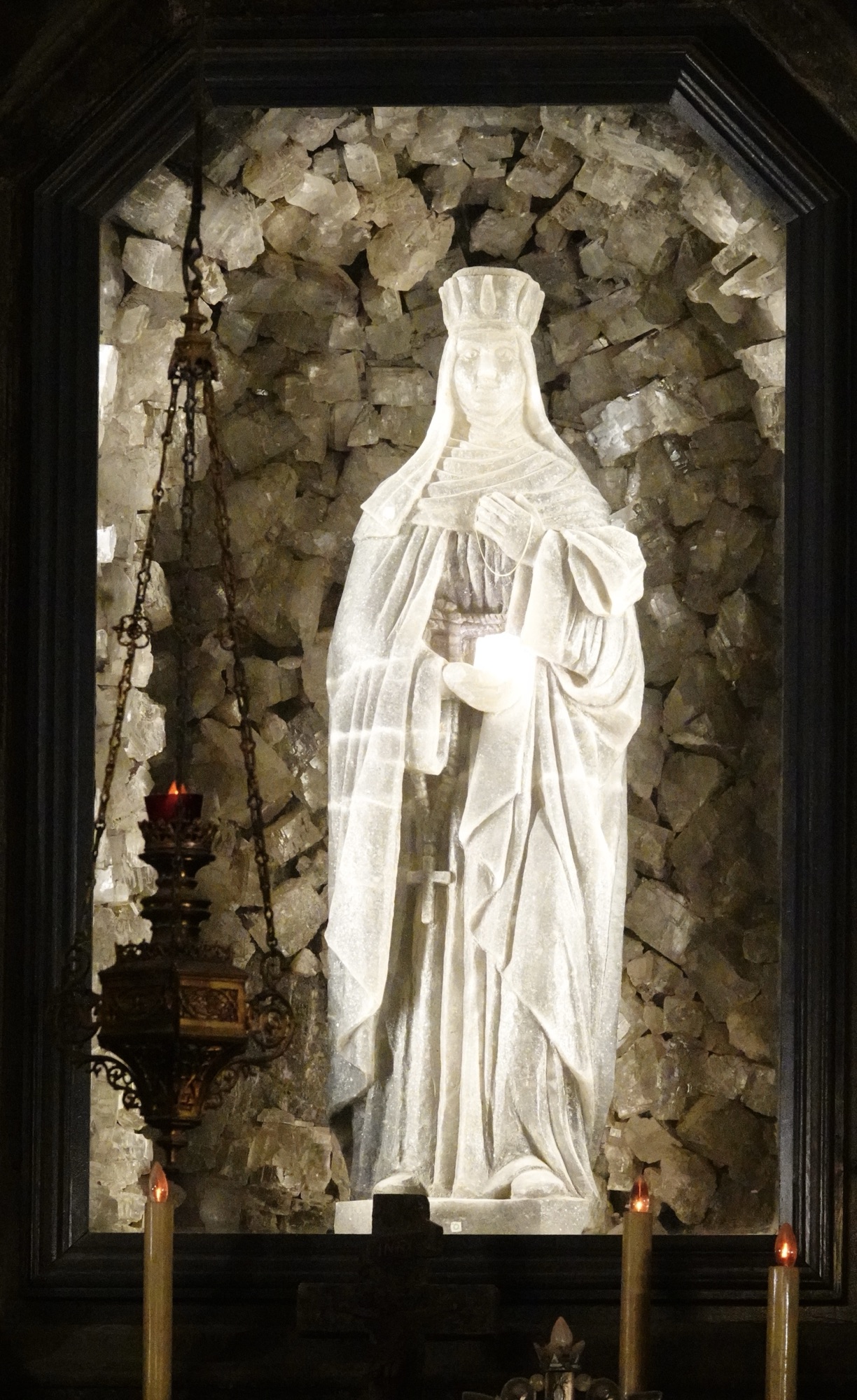
Naturally, in an area with a dragon for a mascot that is much too simple a story, so enter Saint Kinga, a real 13th century Hungarian Princess betrothed to the Polish Prince Bolesław the Chaste. She apparently requested a salt mine (or it may have been experienced salt miners) as her dowry rather than gold. She threw her engagement ring into a Transylvanian mine, which miraculously traveled to Wieliczka, revealing Poland’s first salt deposits.
The legend is depicted using life-sized salt statues.
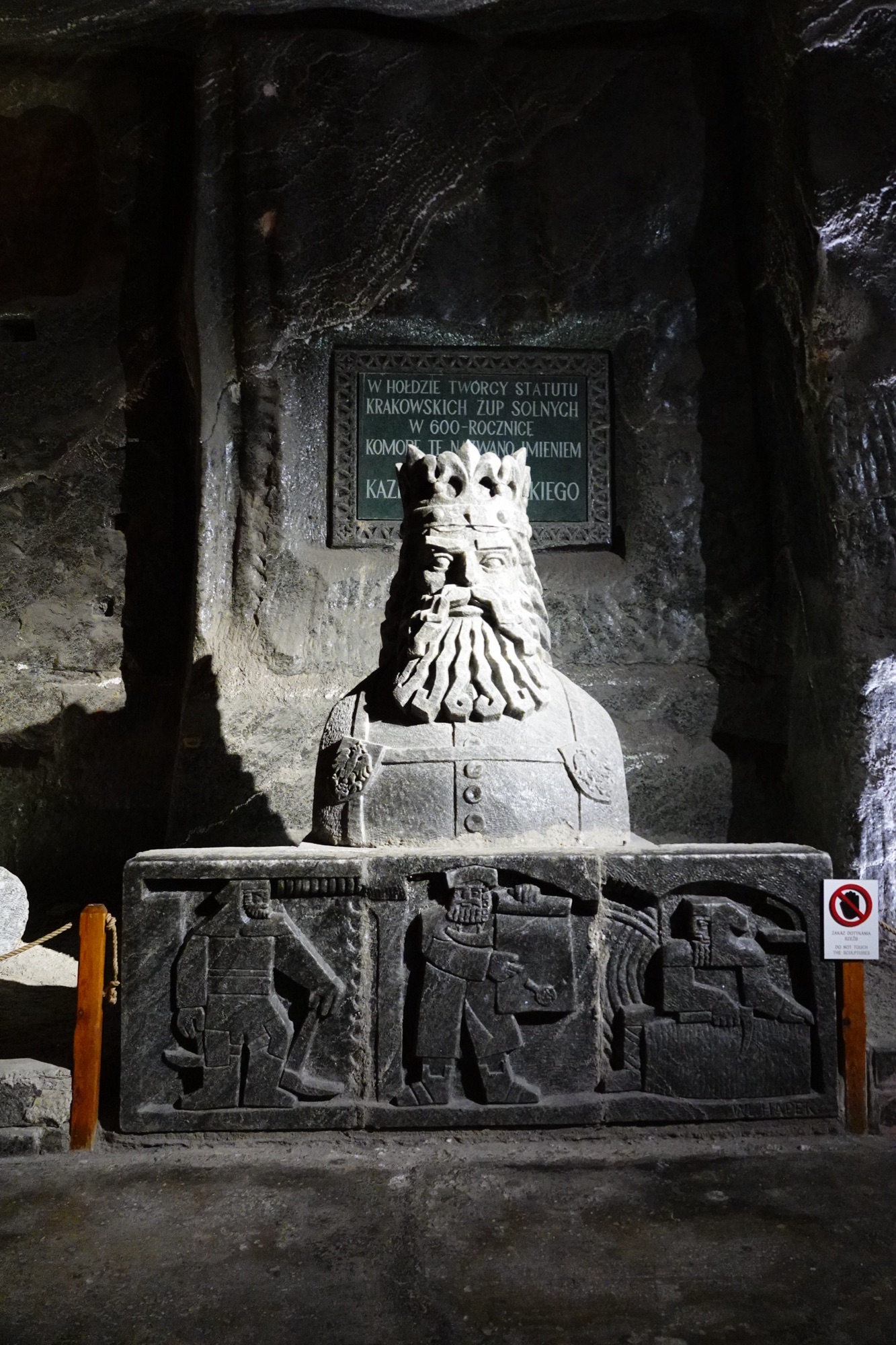
By the 14th century, salt extraction from the salt mines constituted as much as 1/3 of the royal treasury’s income. King Casimir III (“The Great”) who reigned from 1333-1370CE used those revenues to, among many other things, found the Krakow Academy – the first university in Poland. Casimir III is said to have “found a Poland made of wood and left it made of stone.”
He also has a salt tribute in the mine.
At the end of the Middle Ages, 300–350 people worked in Wieliczka, and the annual production of salt reached 7 000 –8 000 tonnes, with miners working from just 4 shafts and one level, and only during the non-agricultural season. For perspective, there were eventually 21 shafts and 9 levels.
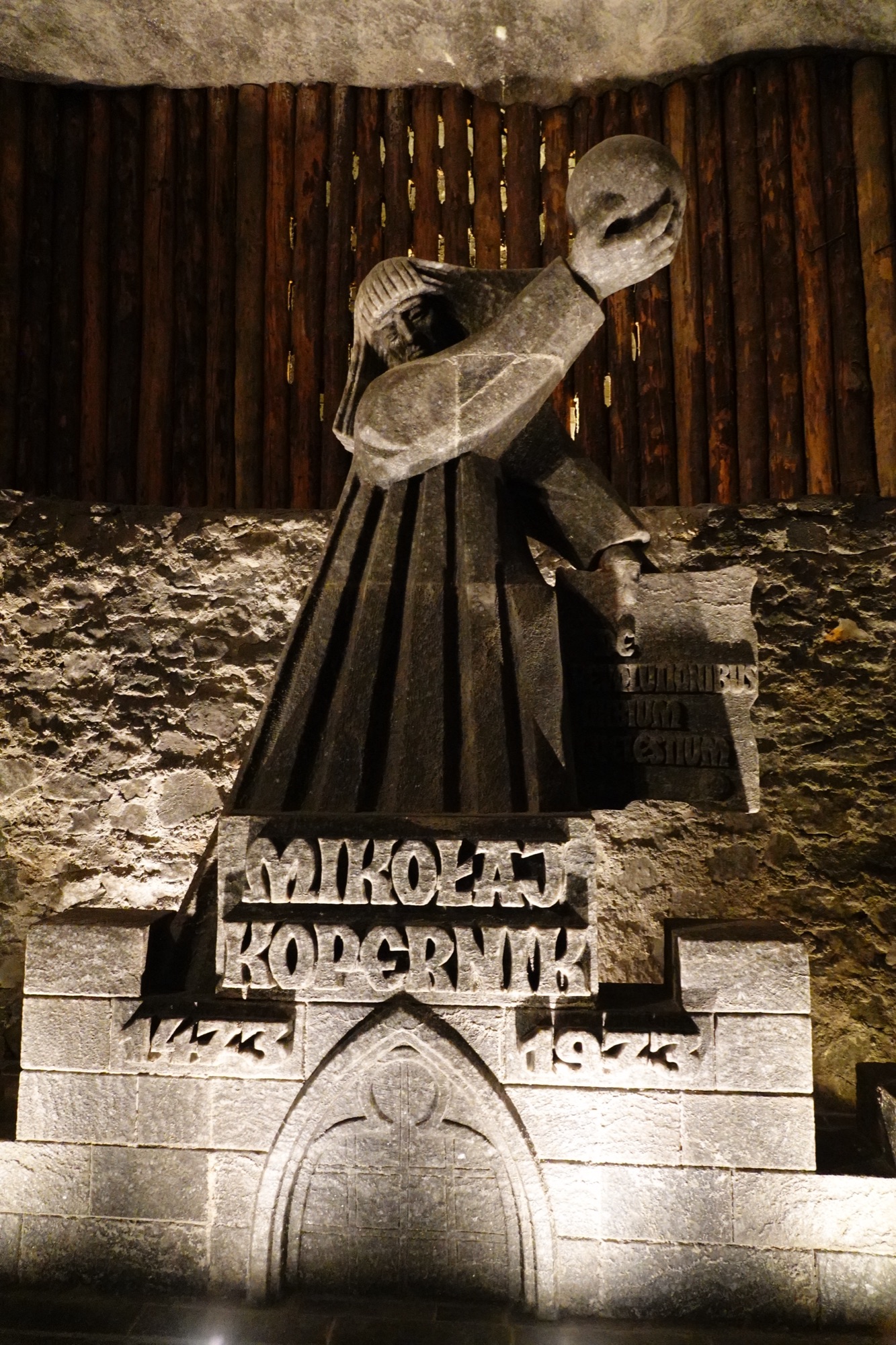
Popular lore has it that first “tourist” to visit the Wieliczka mine was famous Kraków astronomer Nicolaus Copernicus, in 1473CE. To commemorate his visit, a monumental statue was carved from salt for the 500th anniversary of that visit, and placed in a chamber named after him.
By the early 18th century, the mine was already such a popular tourist attraction that every traveller who wanted to visit the underground had to obtain a personal royal permit. We only had to book a tour online.
In 1772, with the first partition of Poland, Wieliczka came under the rule of the Habsburg Monarchy. During this period, tourist attractions were developed in parts of the mine not being actively harvested.
After the end of the World War I and the regaining of independence by Poland, the mine once again became the property of the Polish State Treasury.
After World War II, which was marked in the history of the mine by intensified excavations, a very difficult time for the mine occurred, because the 1940s and 1950s were characterised by an increase in production regardless of the cost, without taking care to secure the workings.
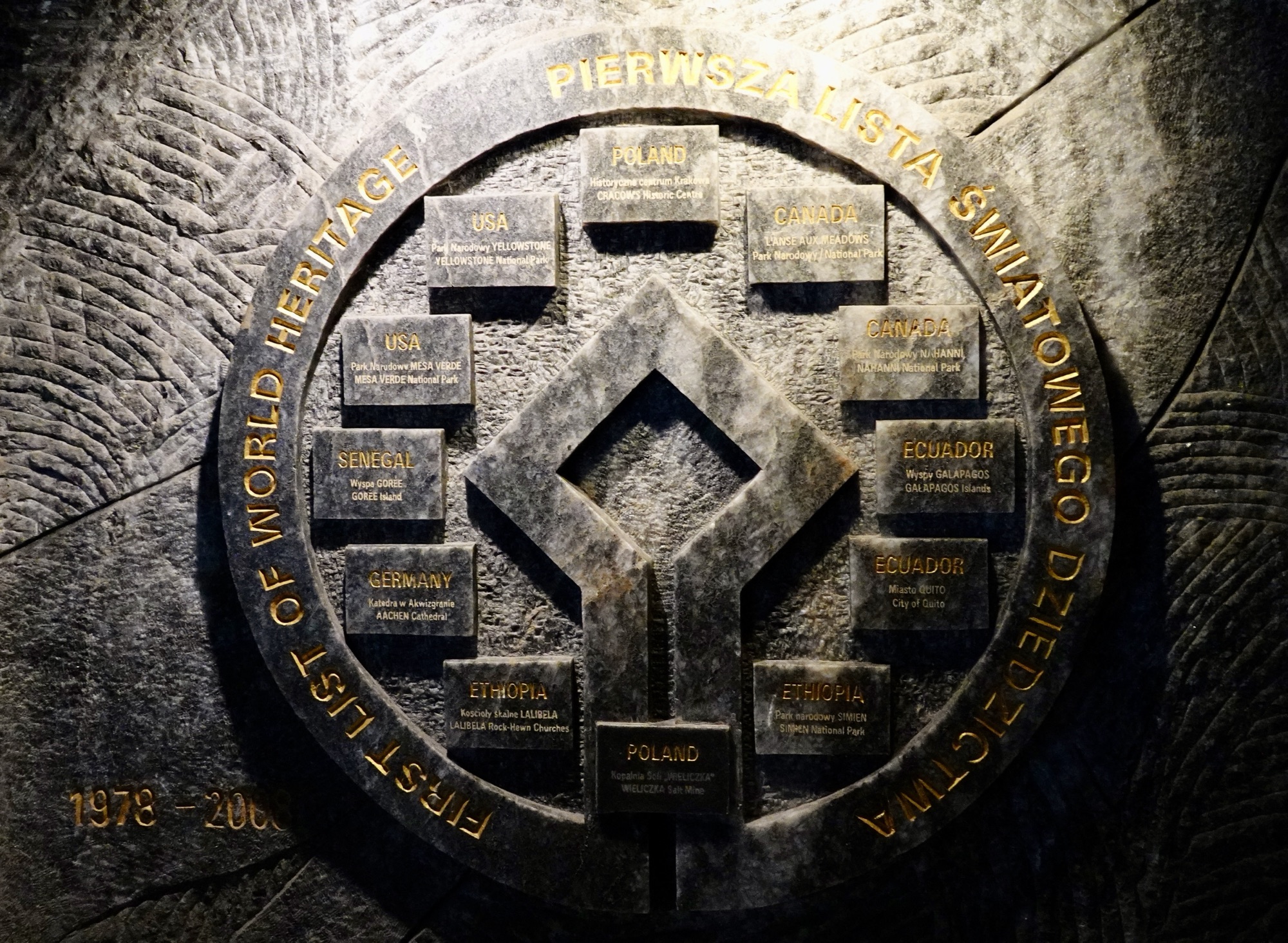
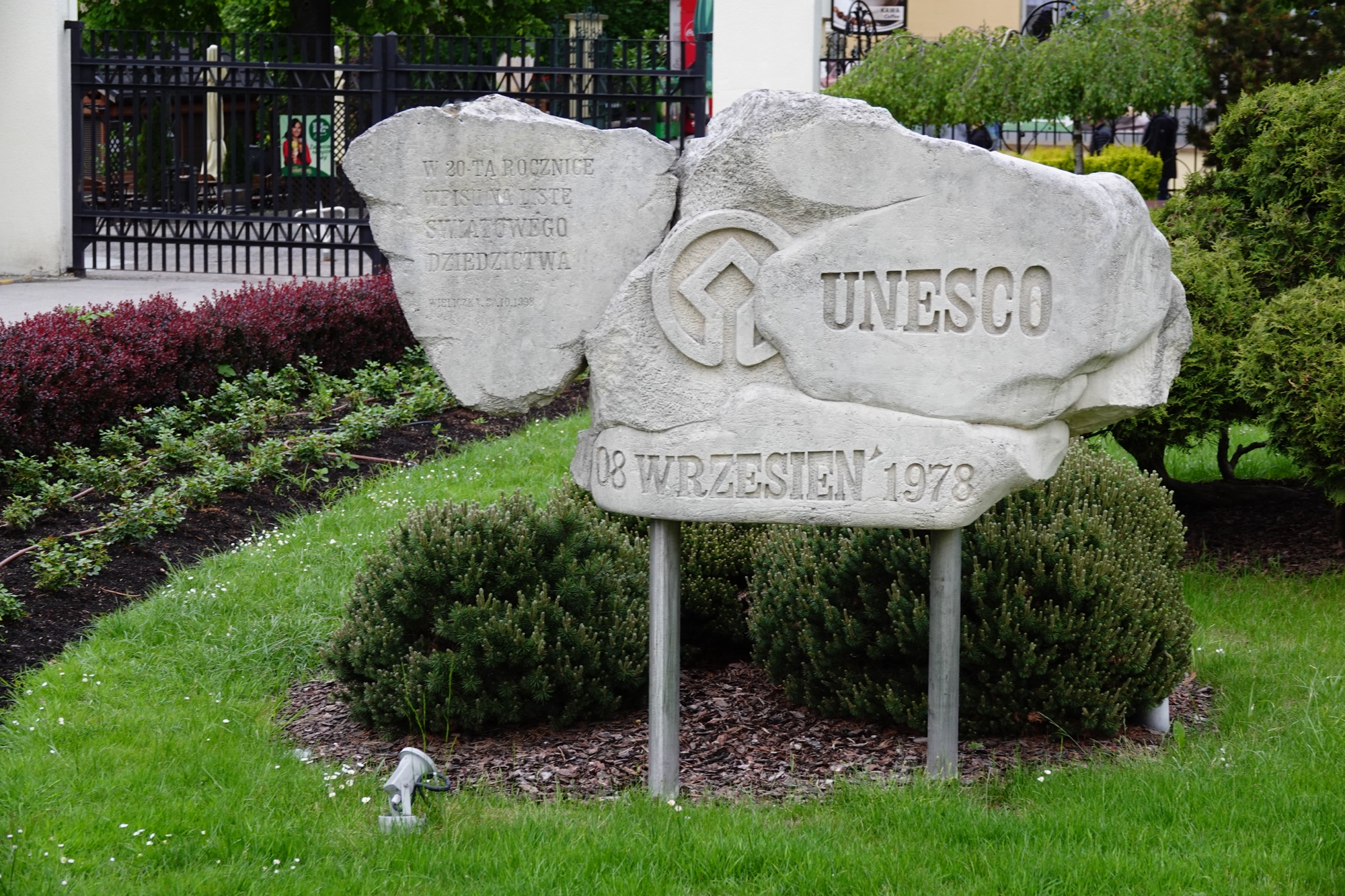
Slowly, though, tourist traffic was becoming more and more important, and the awareness of the cultural significance of the site was growing. In 1964 the mining of rock salt in Wieliczka was completely discontinued in favour of the industrial production of evaporated salt using the wet mining method. Since 1976, the underground Wieliczka has been listed in the register of monuments, and in 1978 the mine was added to the UNESCO World Cultural and Natural Heritage List. On that salt sculpted plaque showing the inaugural 12 entries on that list are two Canadian sites!
In 1994, it was declared a national Historic Monument by the President of the Republic of Poland.
Finally in 1996 a decision was made to end industrial salt production in Wieliczka, but several hundred miners still work underground making sure that the mine is a safe place and that it survives in the best possible condition for future generations. They protect the historic areas of the mine, backfill the so-called post-mining “voids” in its non-historical parts, and manage fresh water leaks. New attractions for tourists are also constantly being prepared – historic chambers, corridors and shafts are being renovated.
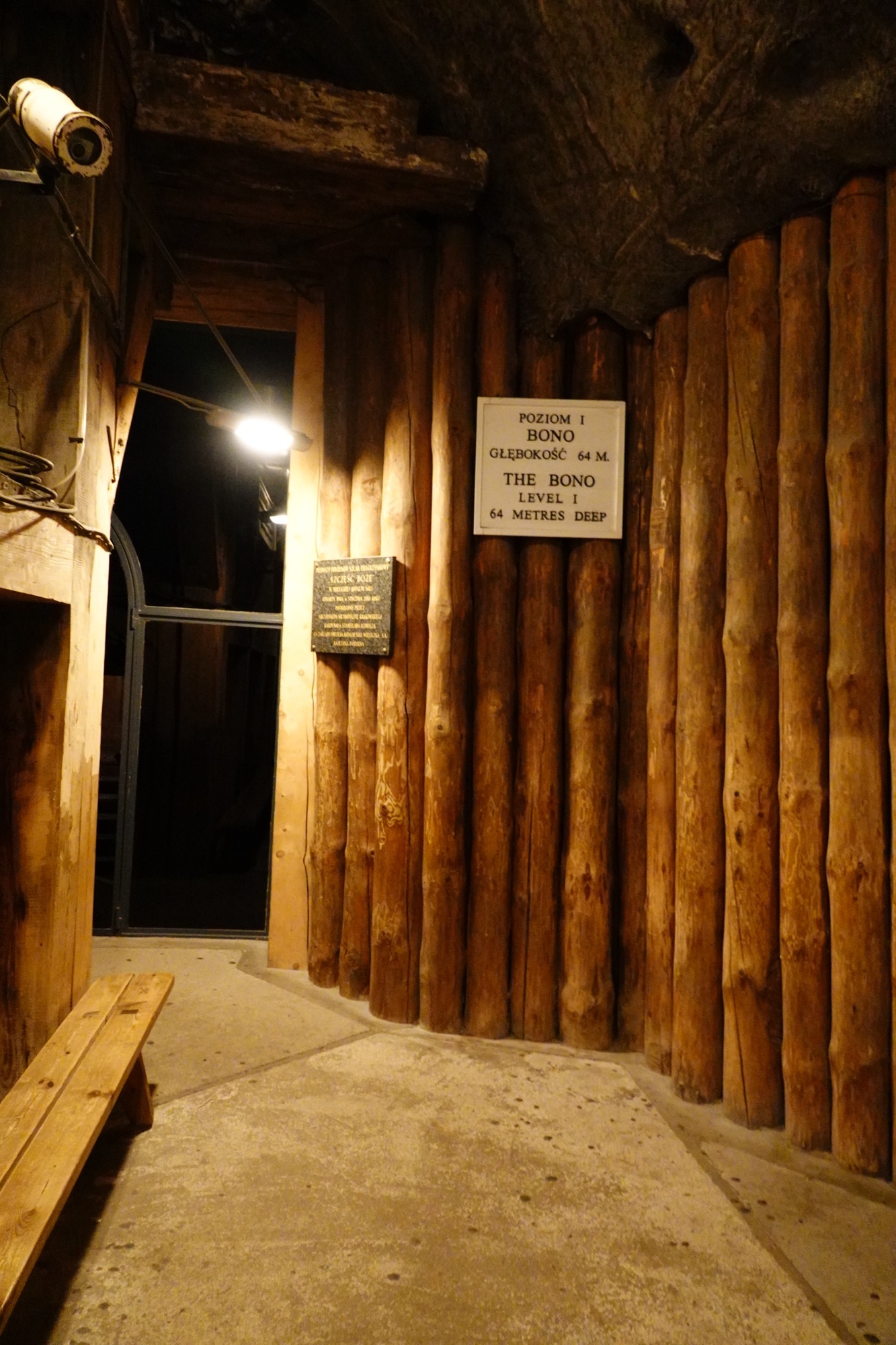
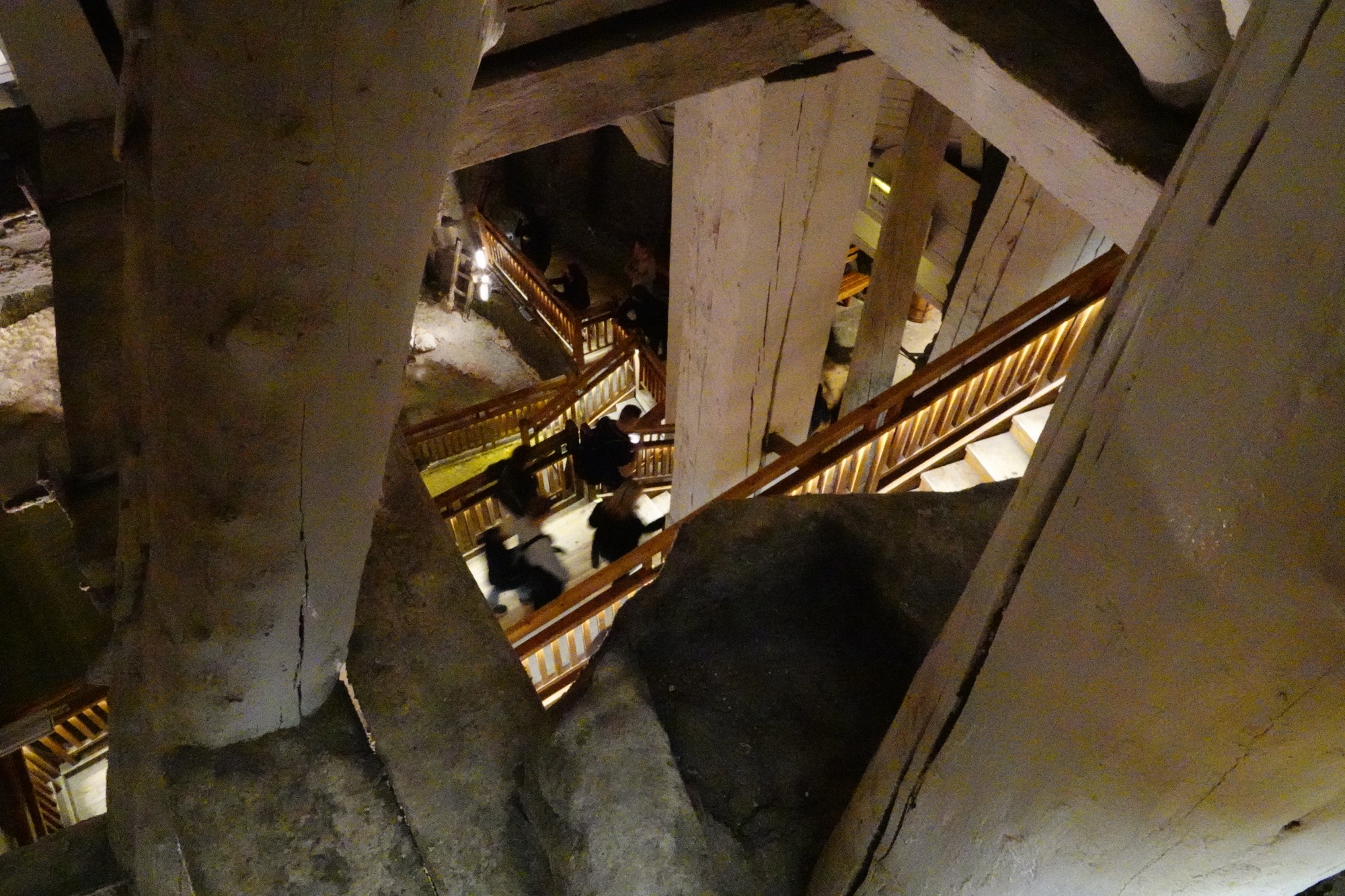
Our tour involved descending about 400 steps to level I (64 m/209ft) down the Daniłowicz Shaft to enter the Mine. That was just a teaser though – in total we descended 800 steps, just not all at once.
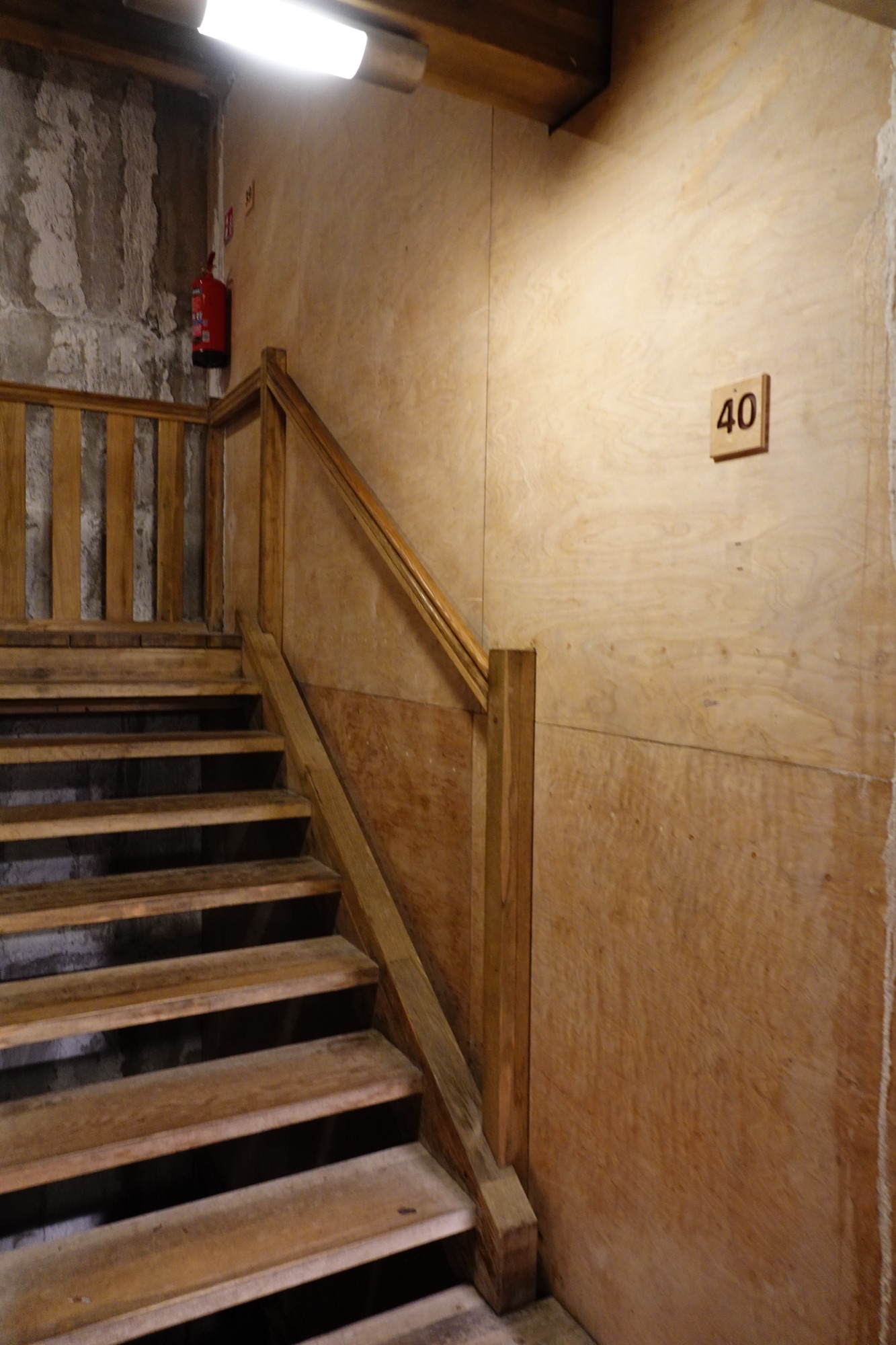
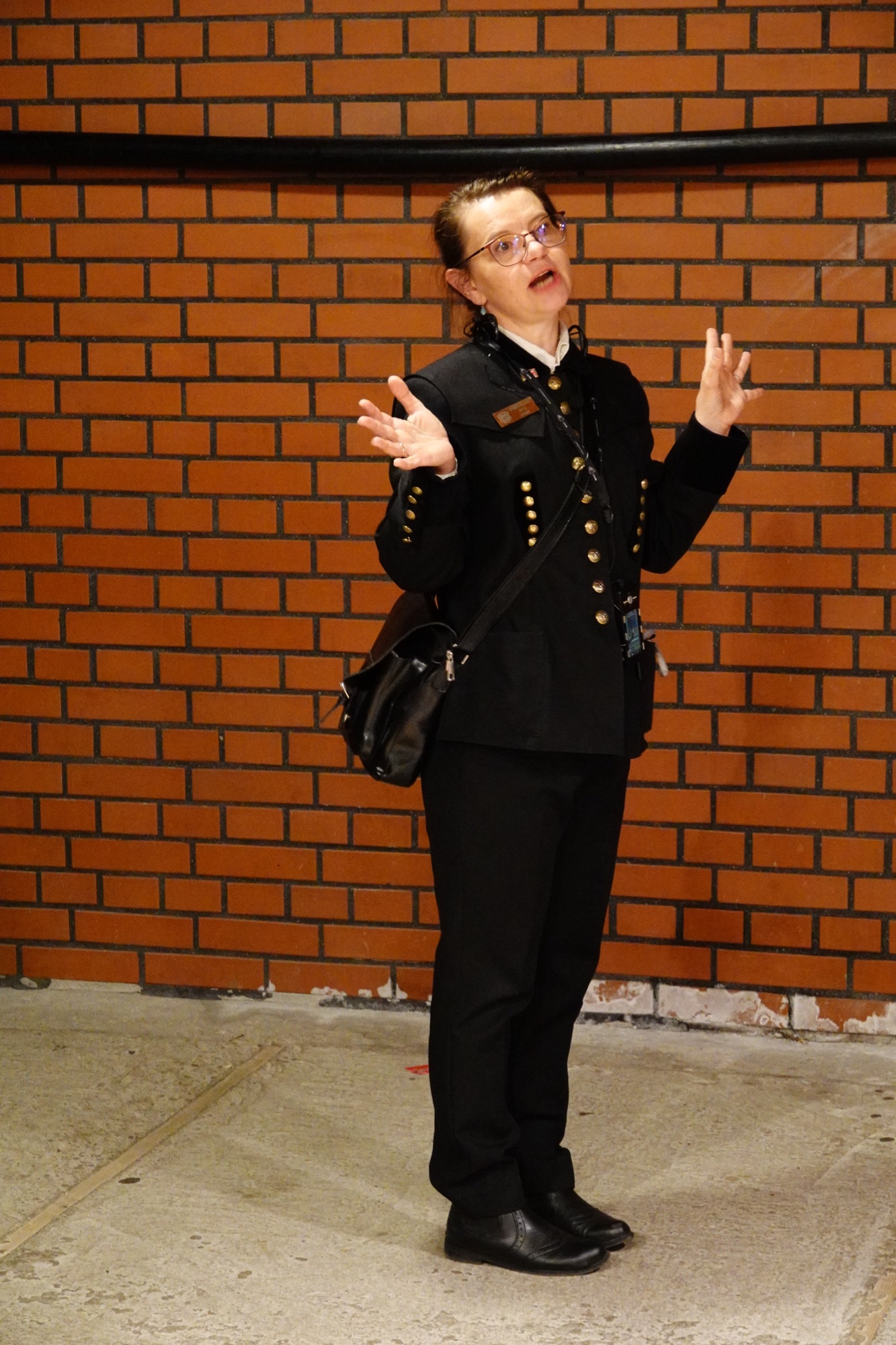
Fortunately, neither we nor Anna had to climb back up, since the return to the surface is by elevator from Level III (135 m/443ft), a trip which took just 40 thrilling seconds.
In the mine we walked a 3.5km/2.2mi route that involved, in short bursts, the rest of the 400 stairs. Although it was threatening rain and only 14°C/57°F outside, the temperature underground is a pleasant 17-18°C/64°F year round. This mine was an early engineering pioneer, with air intakes ensuring that men and pack animals had fresh air to breathe.
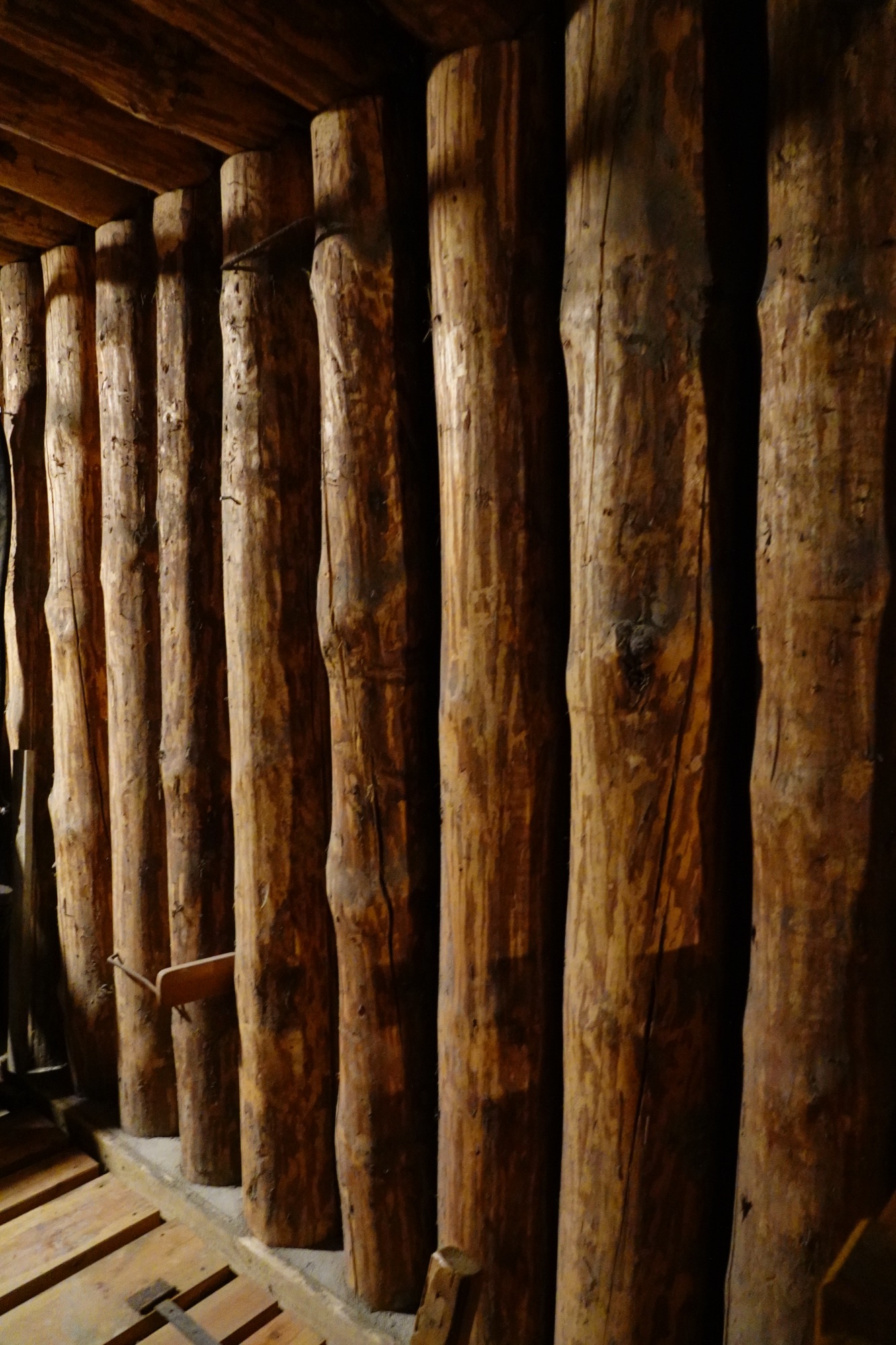
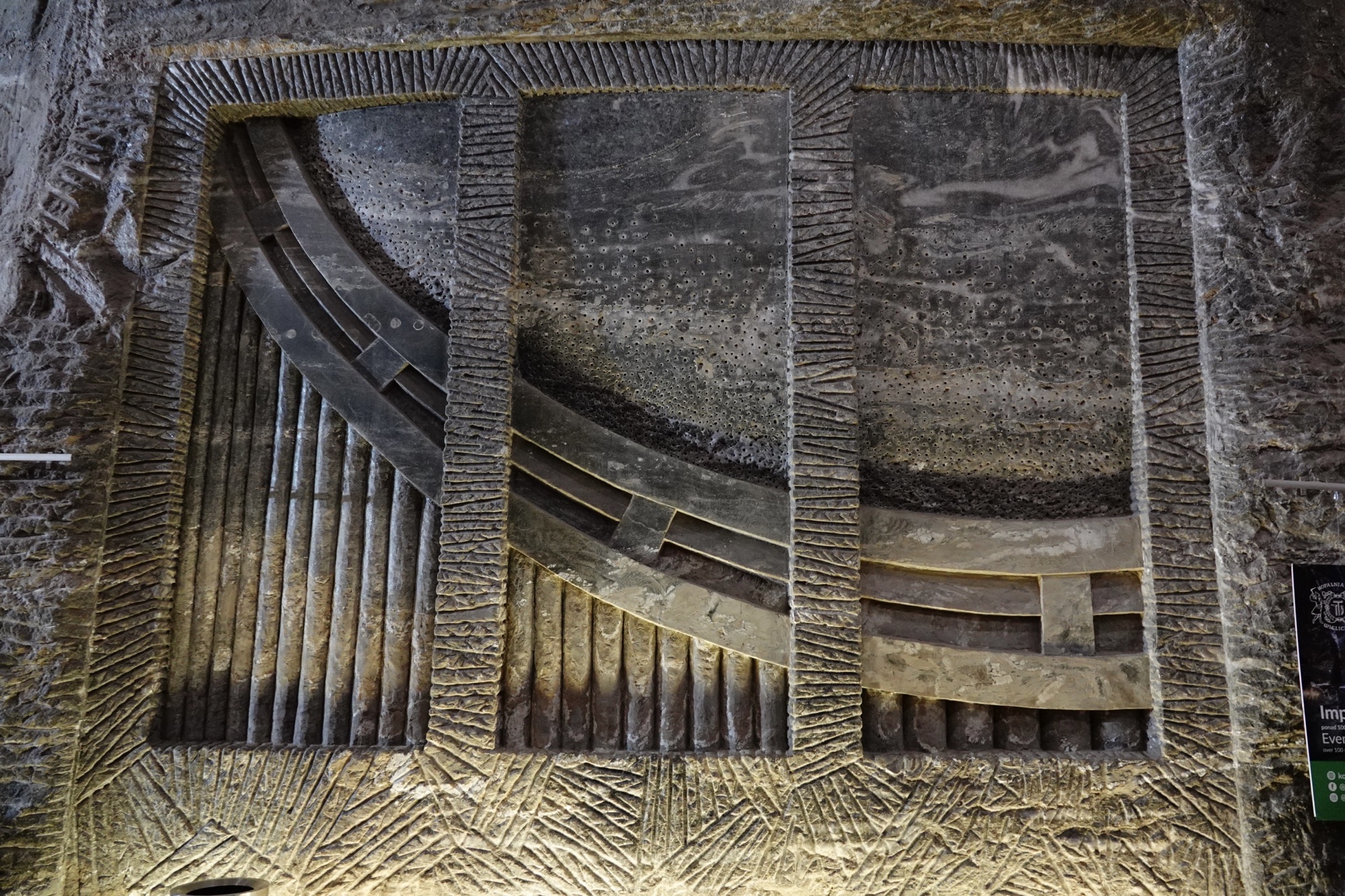
The salt that was mined here is grey rock salt, 97% pure. Rock salt is geologically “plastic”, so when passages are dug and chambers excavated they don’t generally collapse, but water seeping in can dissolve the salt, so every passage is reinforced with wooden walls, beans, and columns.
Along the tour there were displays showing various steps in the mining process. We learned that blocks of rock were cut out as cuboids, but then carved into cylinder/barrel shapes so that the could be rolled instead of lifted or dragged.
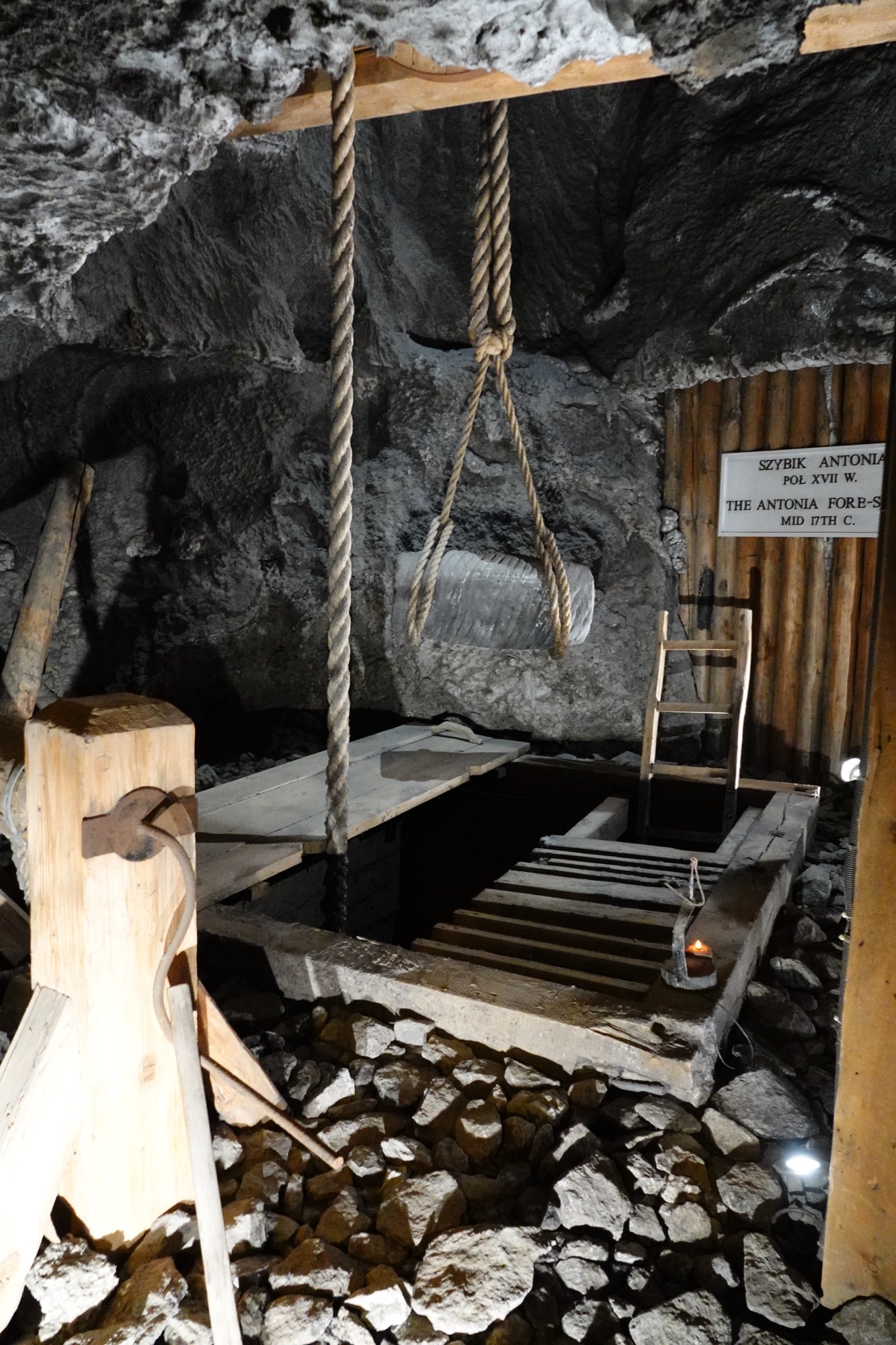
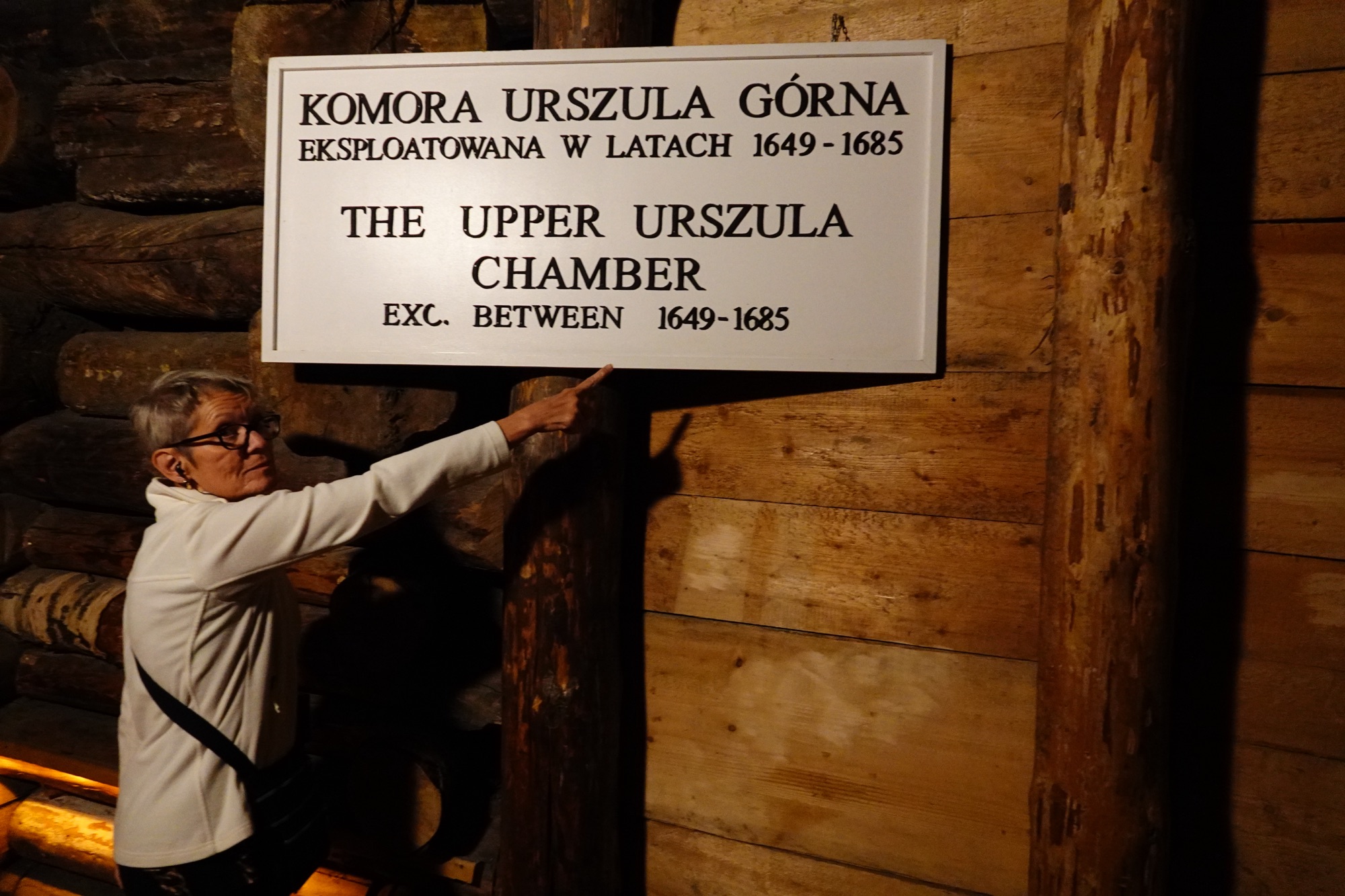
Many of the chambers we entered were carved out in the 17th century.
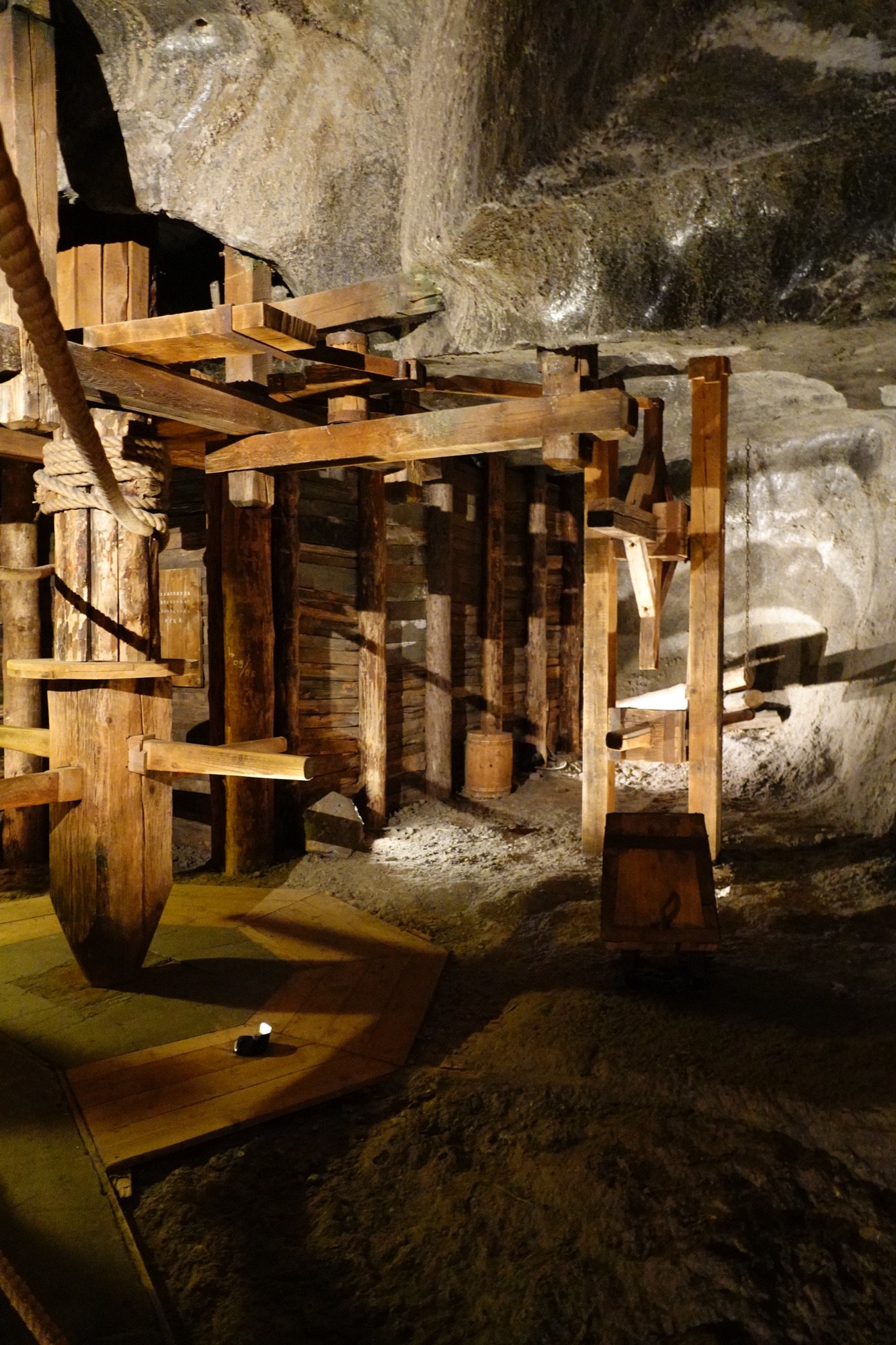
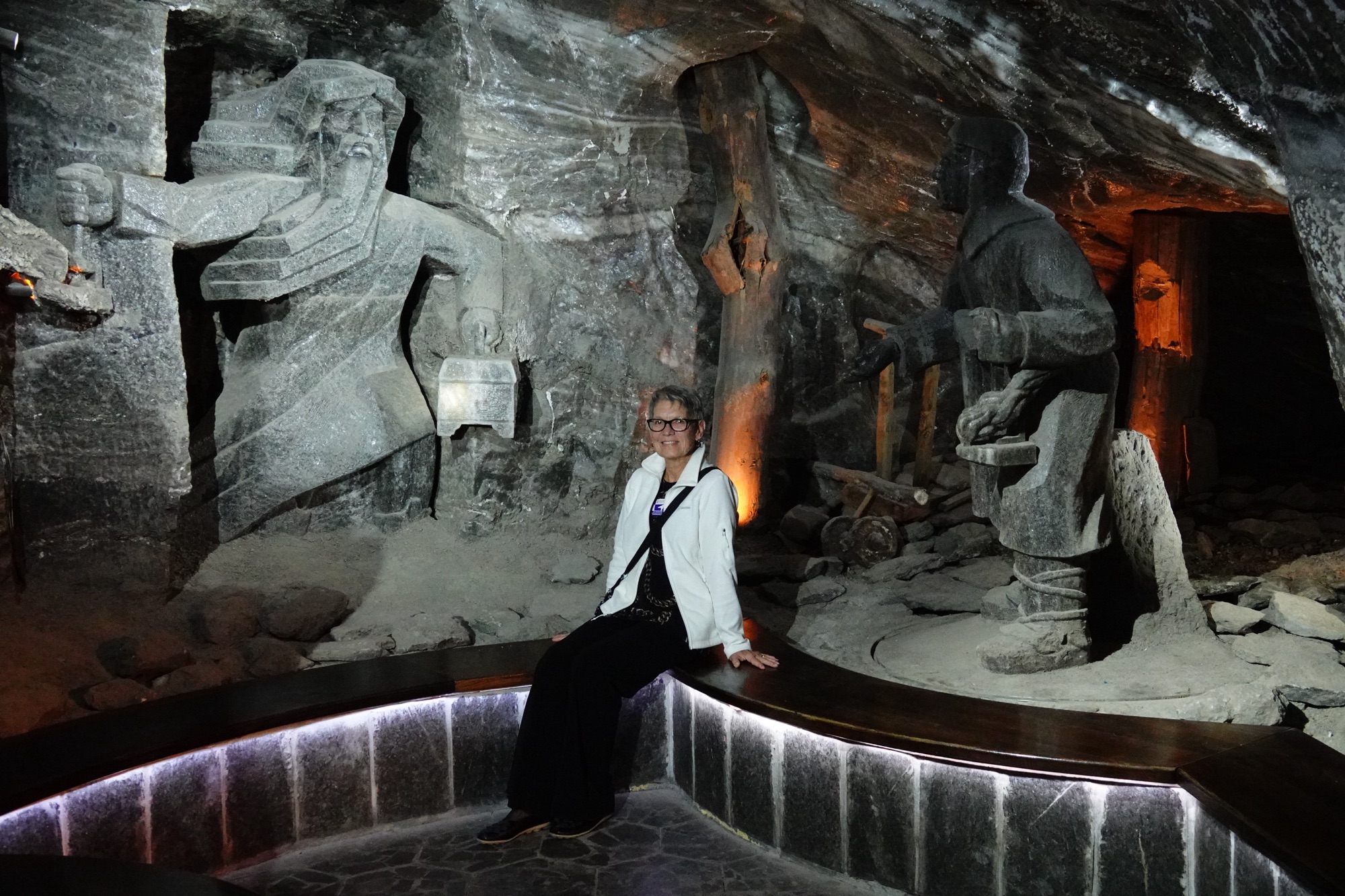
The pillar with “handles”on the left in the photo below drove a vertical lift, operated by the brute strength of 4 to 8 men. By the 20th century, vertical lifts were engine-powered.
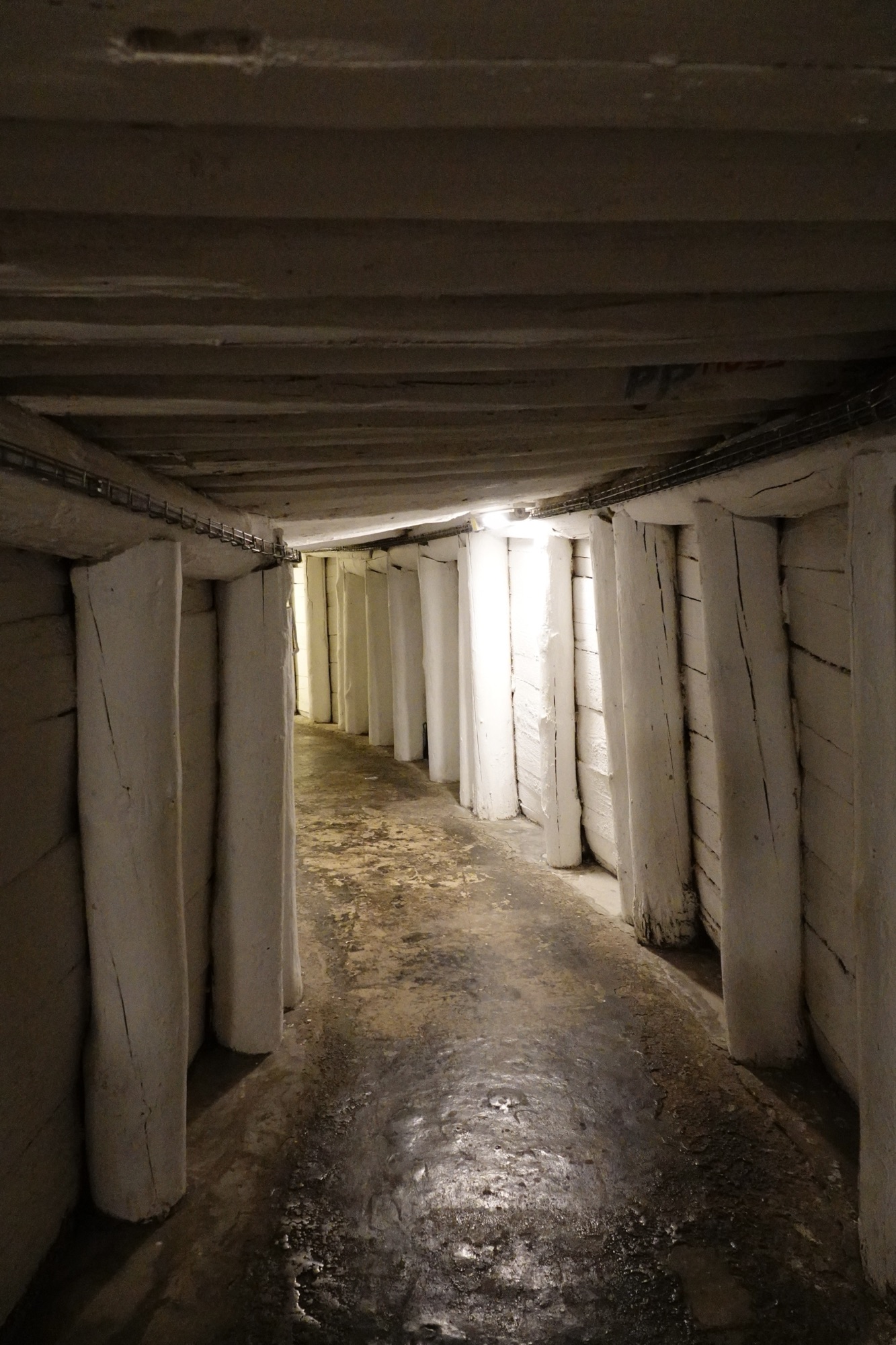
Much of the wooden support structure in the passageways and chambers was painted with lime wash. The white colour helped to reflect light. The passages are fitted with electricity now, but in the early centuries the miners carried only oil lamps. An even more important benefit was that lime wash paint was highly fire resistant because it is made from natural minerals (slaked lime and chalk). It is non-combustible and will not burn or release toxic smoke when exposed to heat or open flames.
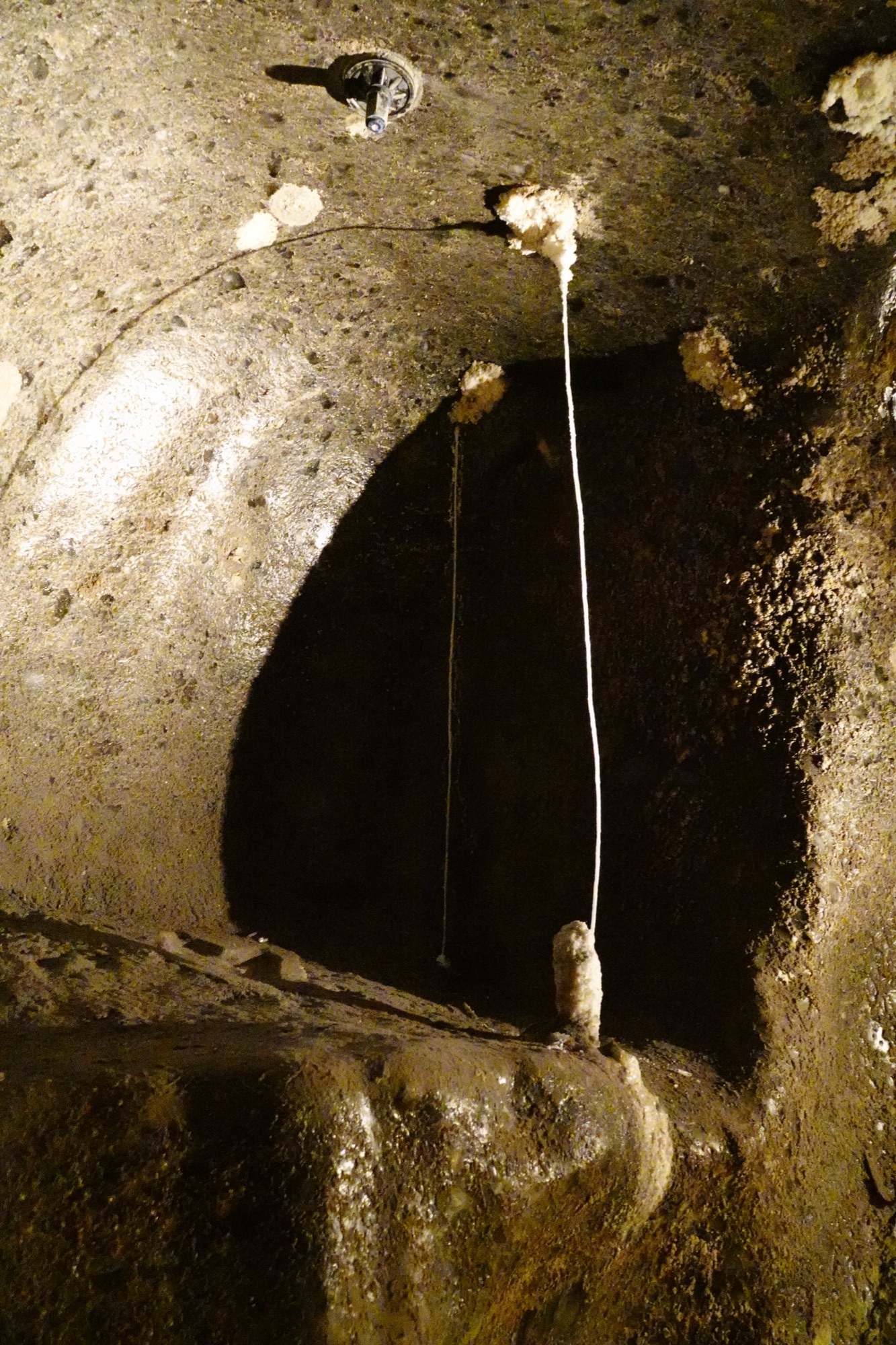
The white “cauliflower” on the ceiling is the result of water leaking in a dissolving the rock. When the water evaporates, white crystals (not grey rock) is left behind.
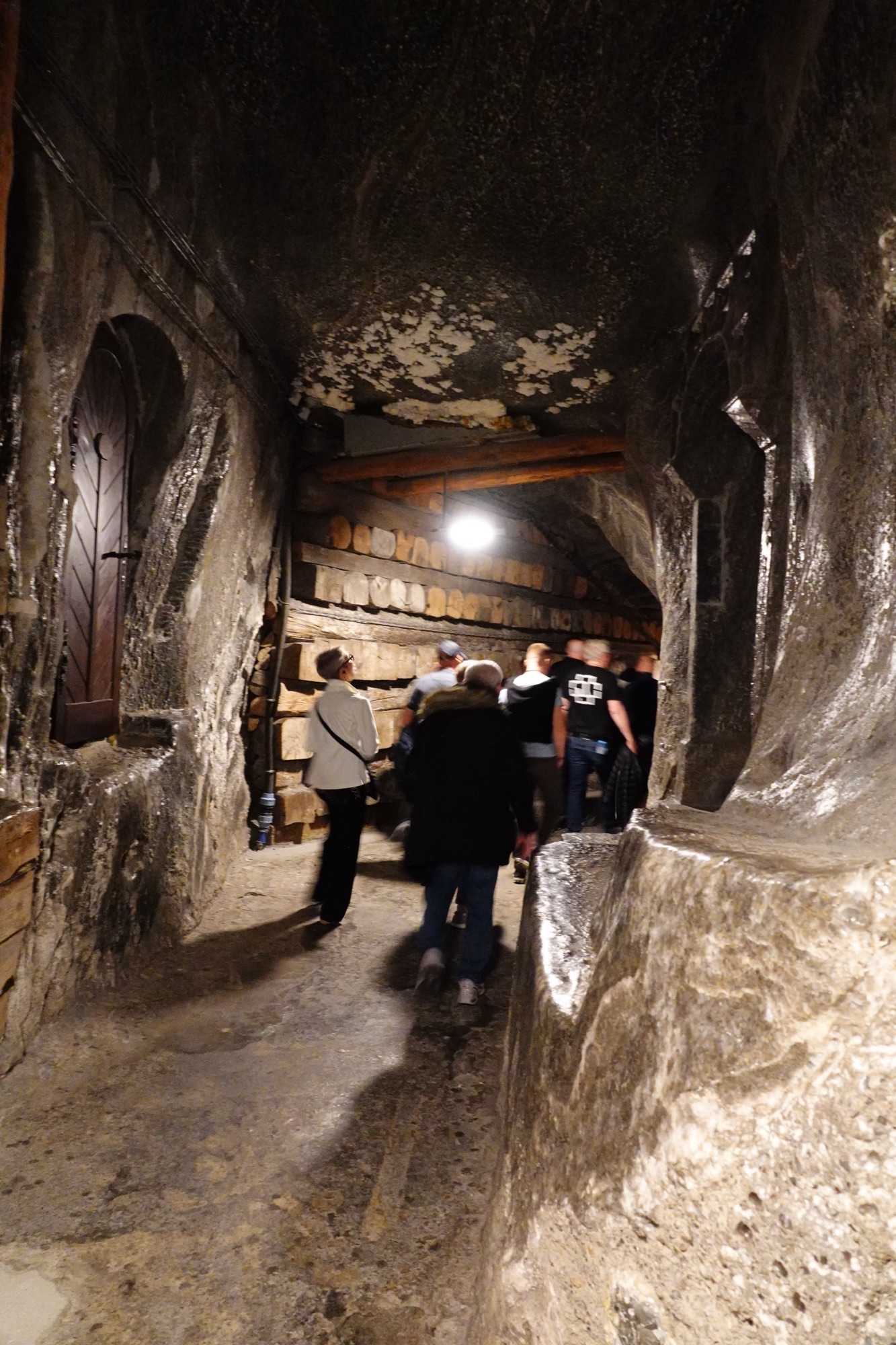
There are areas that show evidence of much larger leaks, with salt crusted onto the wooden pillars.
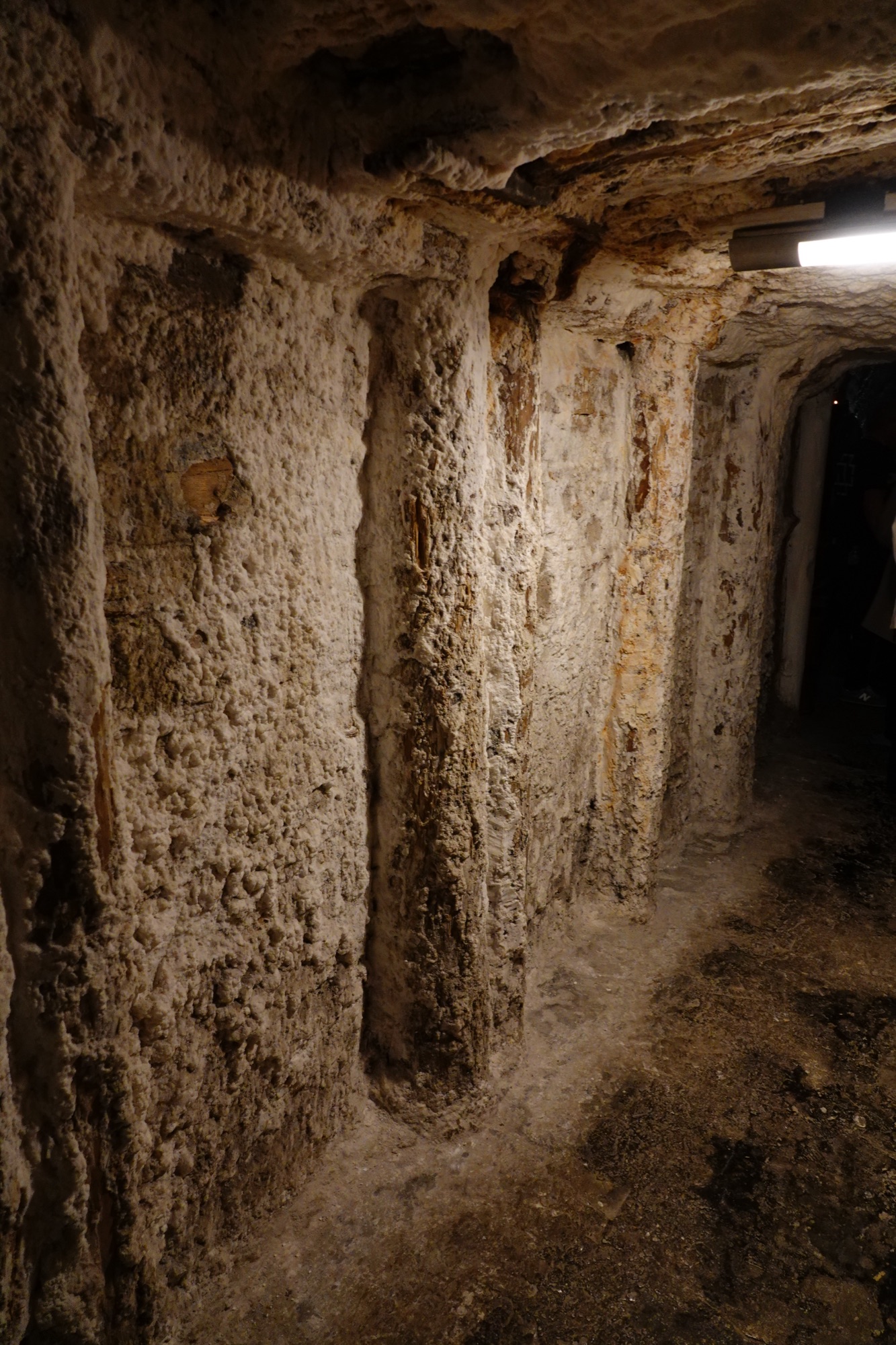
Salt statues depicted one of the more dangerous jobs in the mine: defusing methane gas via flames on long poles. The workers tasked with this job wore thick leather protective gear. There are no historical accounts of explosions in the mine, unlike coal mines where trapped gas is a major hazard.
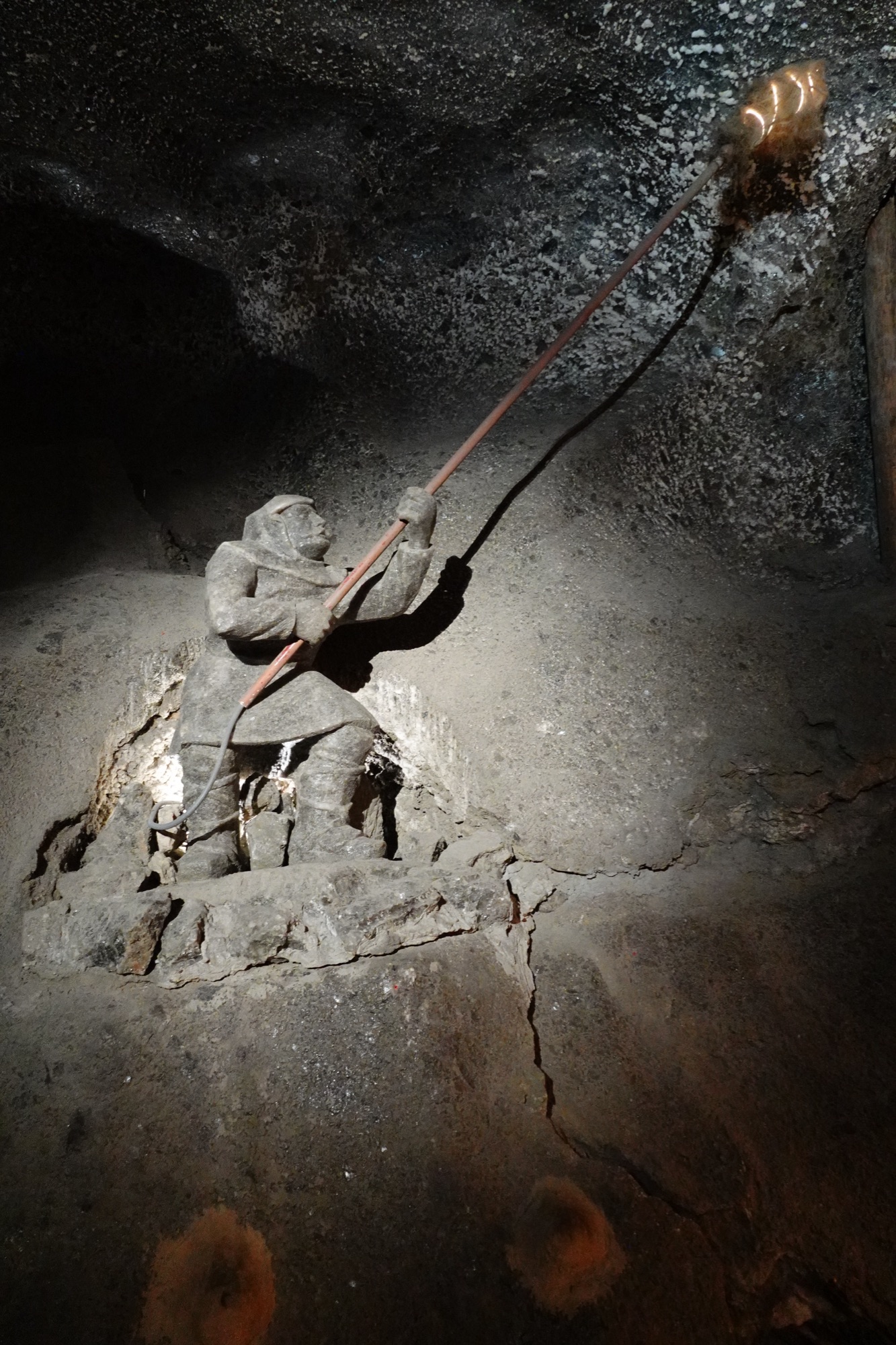
In places, what we expected to be rough-hewn or crystalline surfaces were smooth, due to a process called “plastic deformation”. When buried under massive amounts of overlying rocks (and subjected to high pressures and temperatures over thousands of years), rock salt can lose its rigidity and actually flow like a slow-moving liquid.This geological property is why massive rock salt deposits can fold, shift, and form subterranean structures like salt domes.
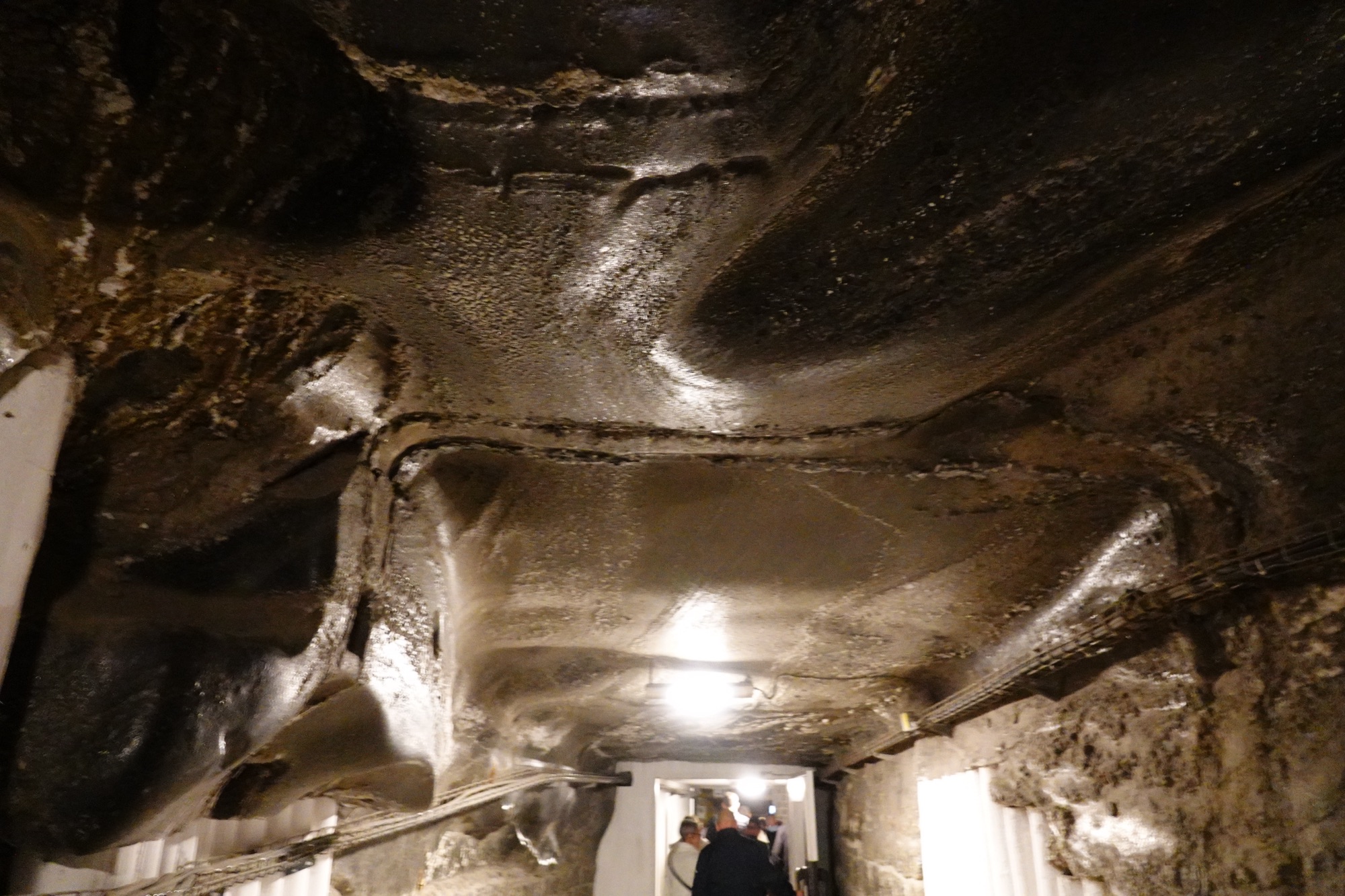
Instead of rolling salt cylinders, or using a vertical lift, salt was also brought to the surface by horse-drawn carts and later motorized ones. We walked along tracks grooved into the salt by centuries of wheels.
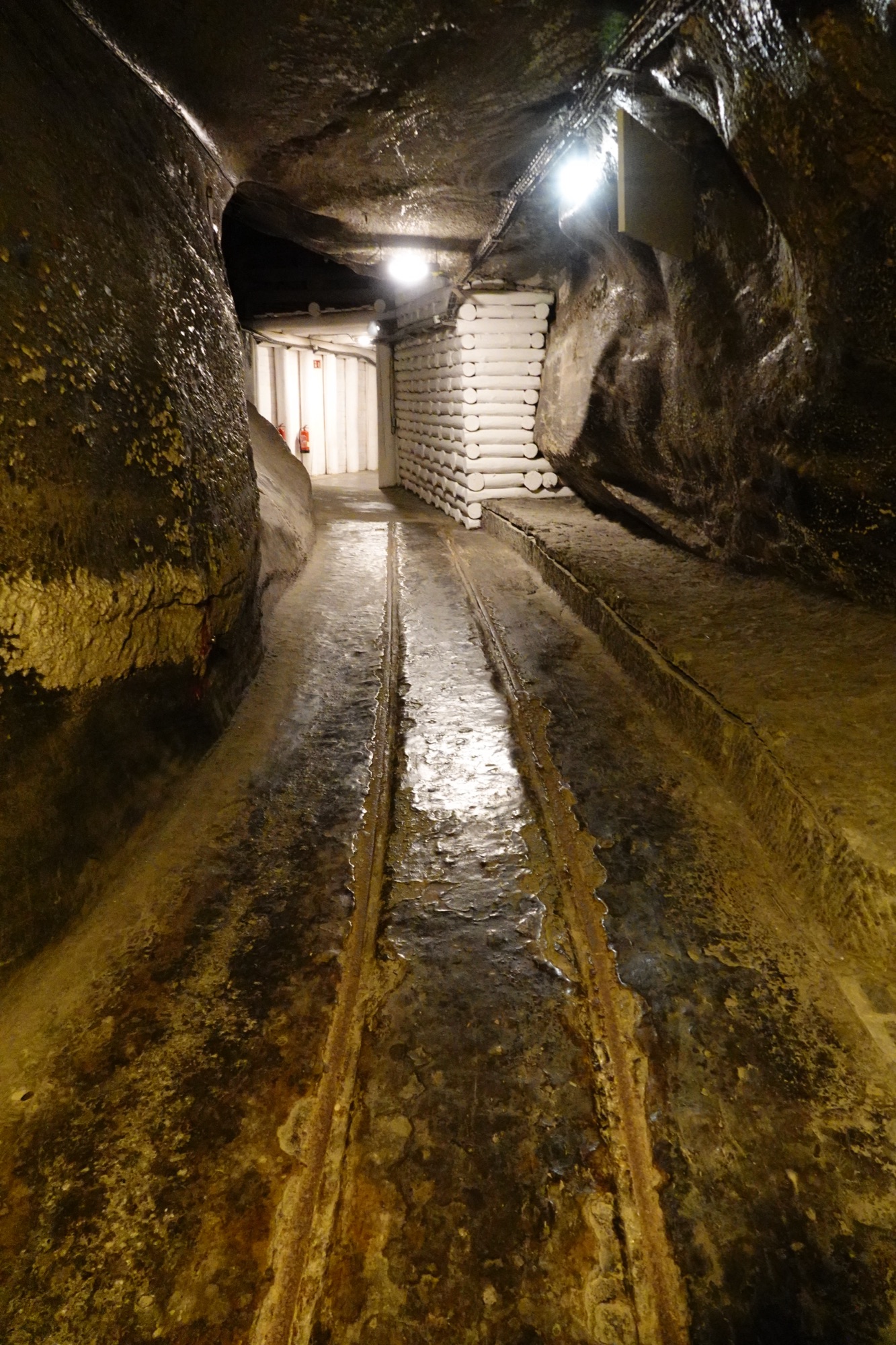
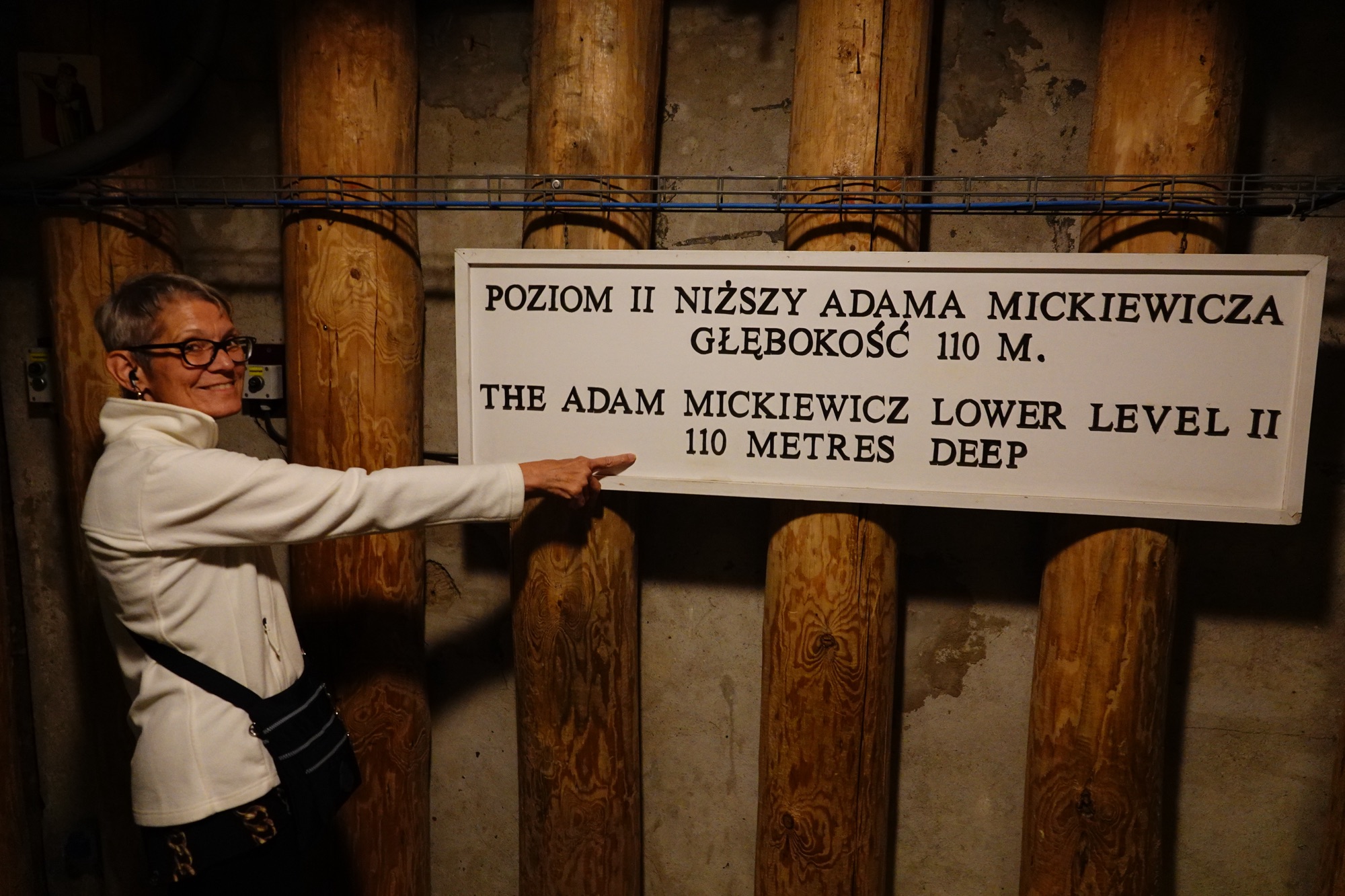
All of that was on Level I. There were more stairs to descend to Level II, where things got really interesting.
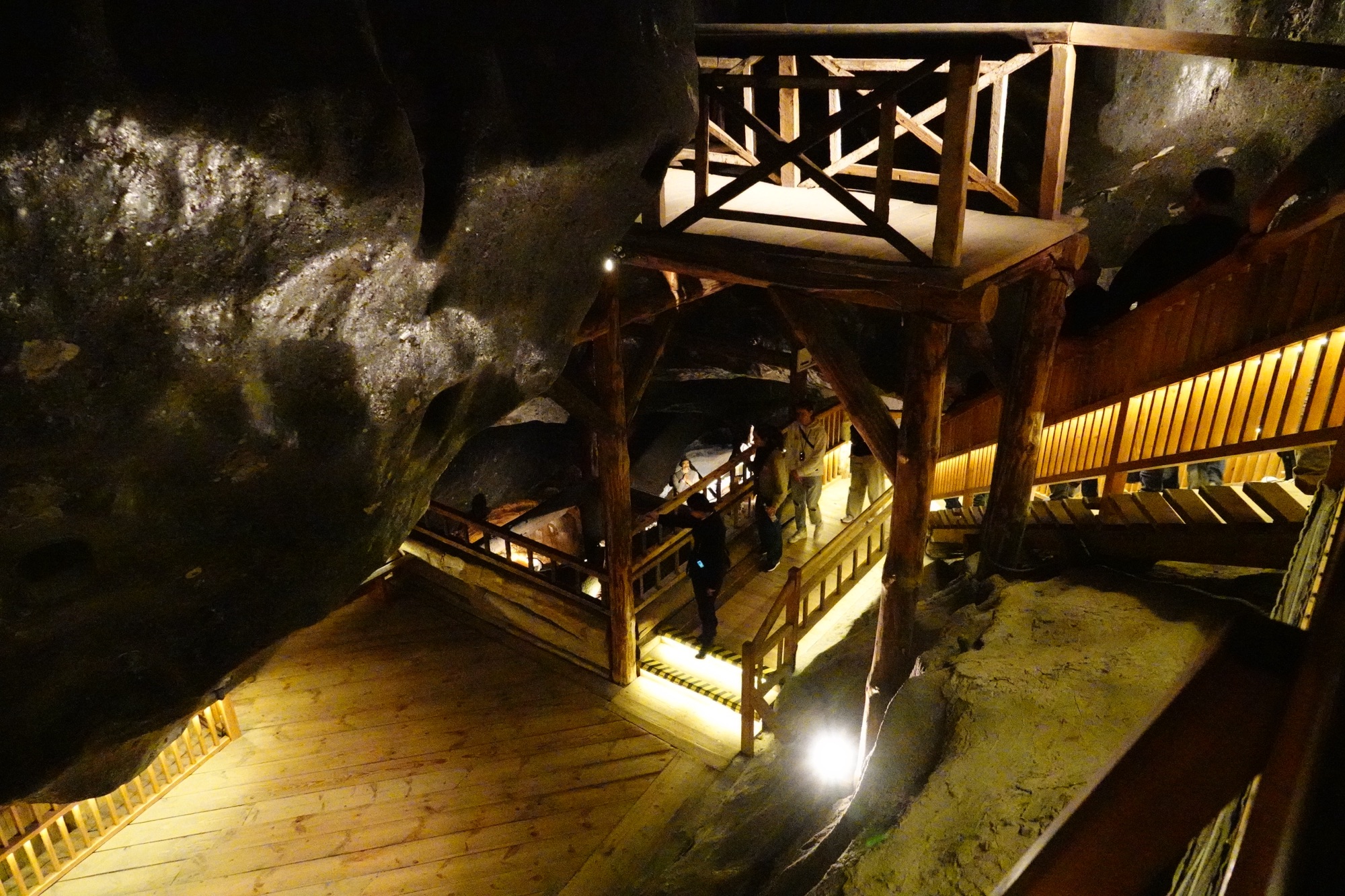
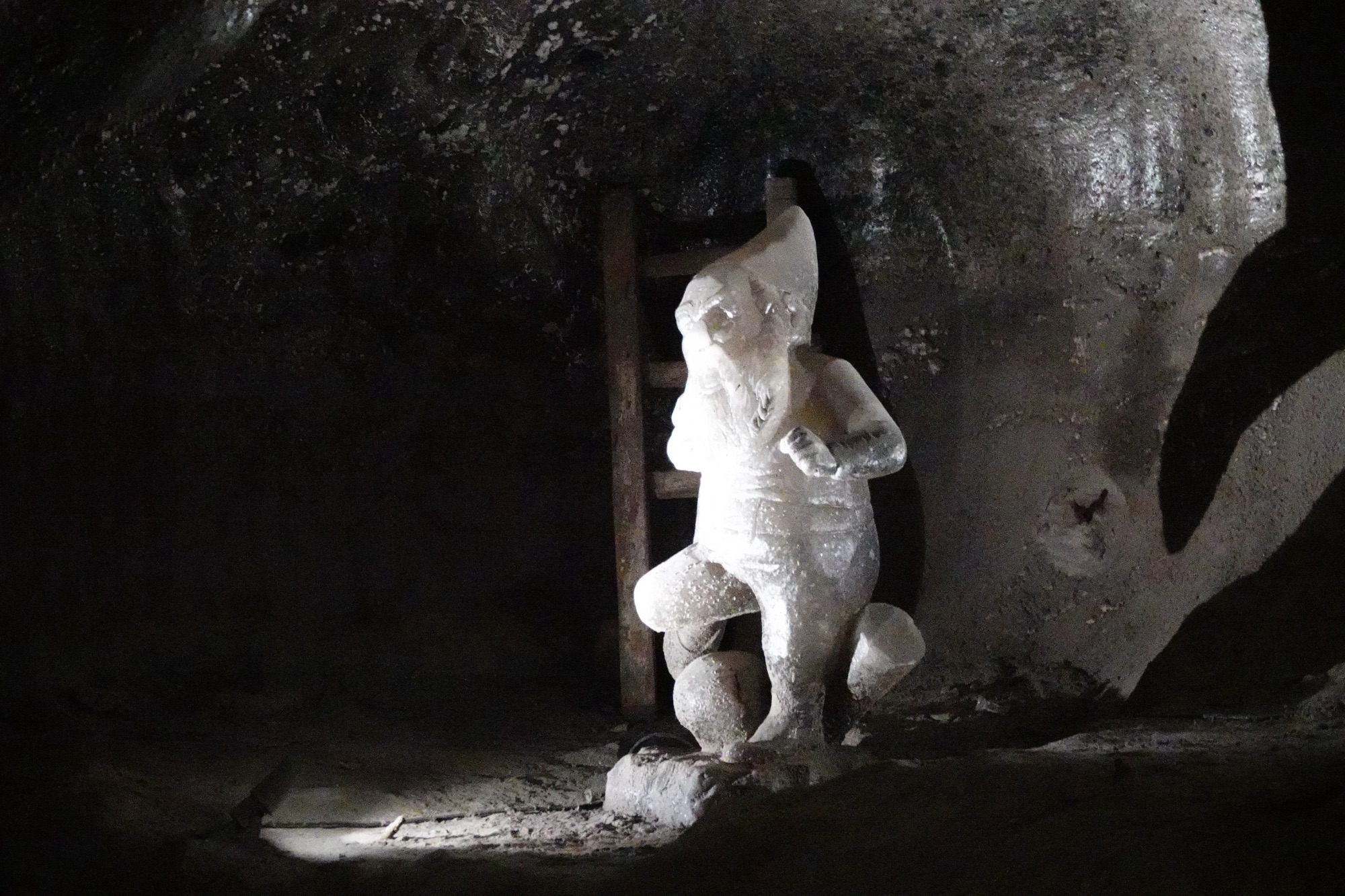
Some of the miners carved the rock in whatever spare time they had. Several of the carvings were dwarves, who were conveniently blamed for any mischief that occurred underground.
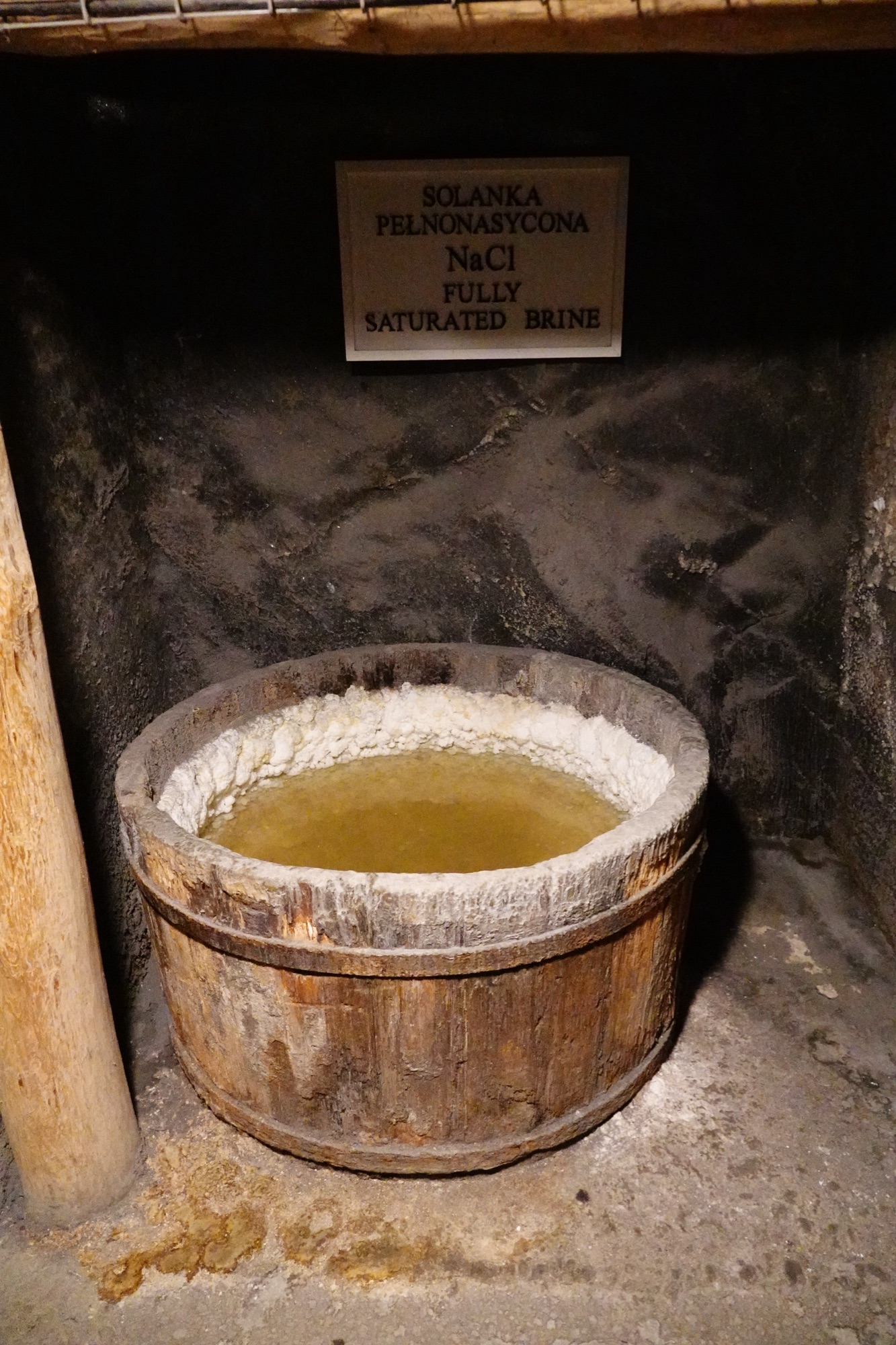
Water that leaked into the chambers would quickly become salt-saturated; the salt could be retrieved through evaporation.
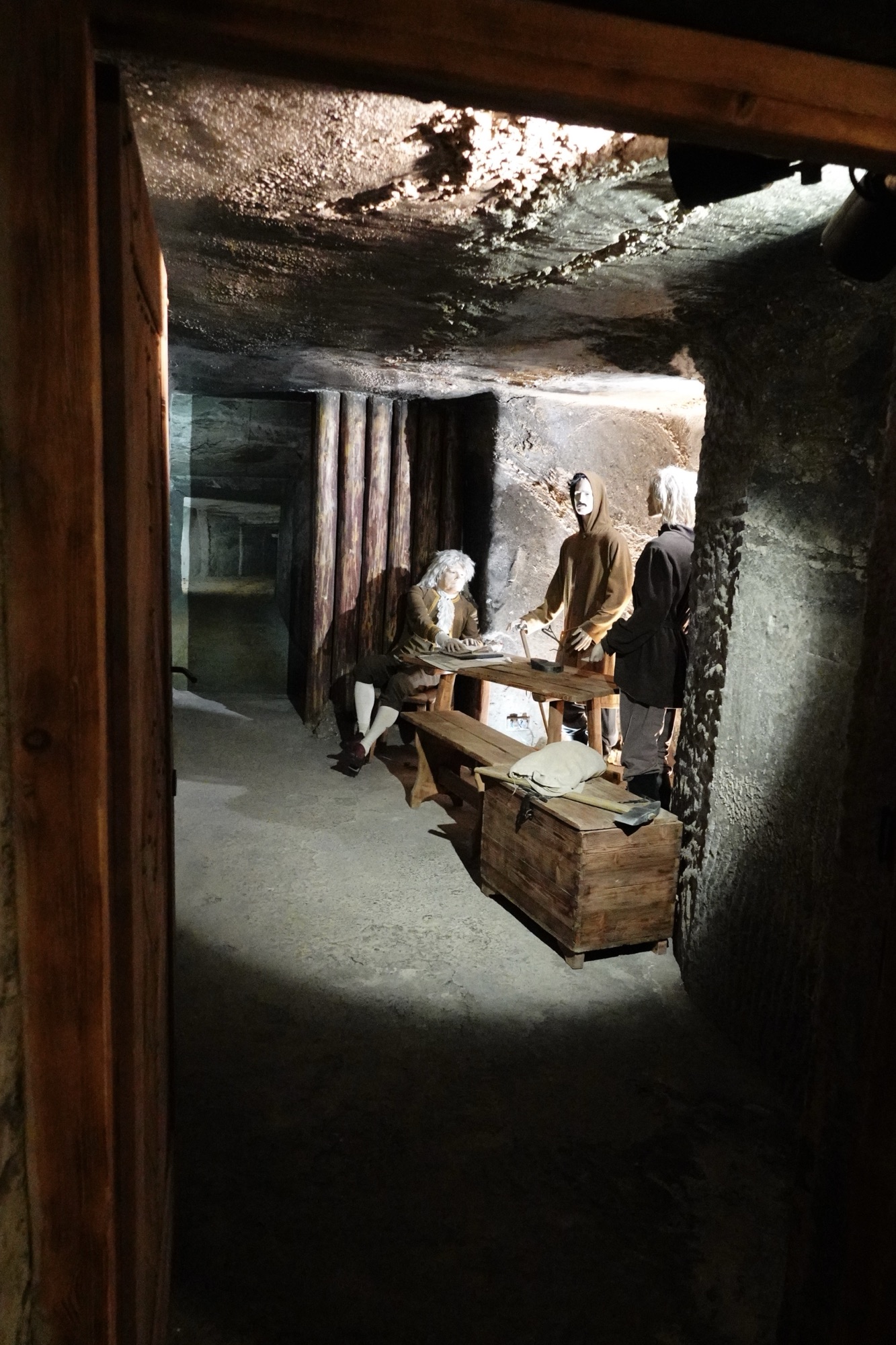
In the 17th century, the mine foreman’s office decor would have looked like this:
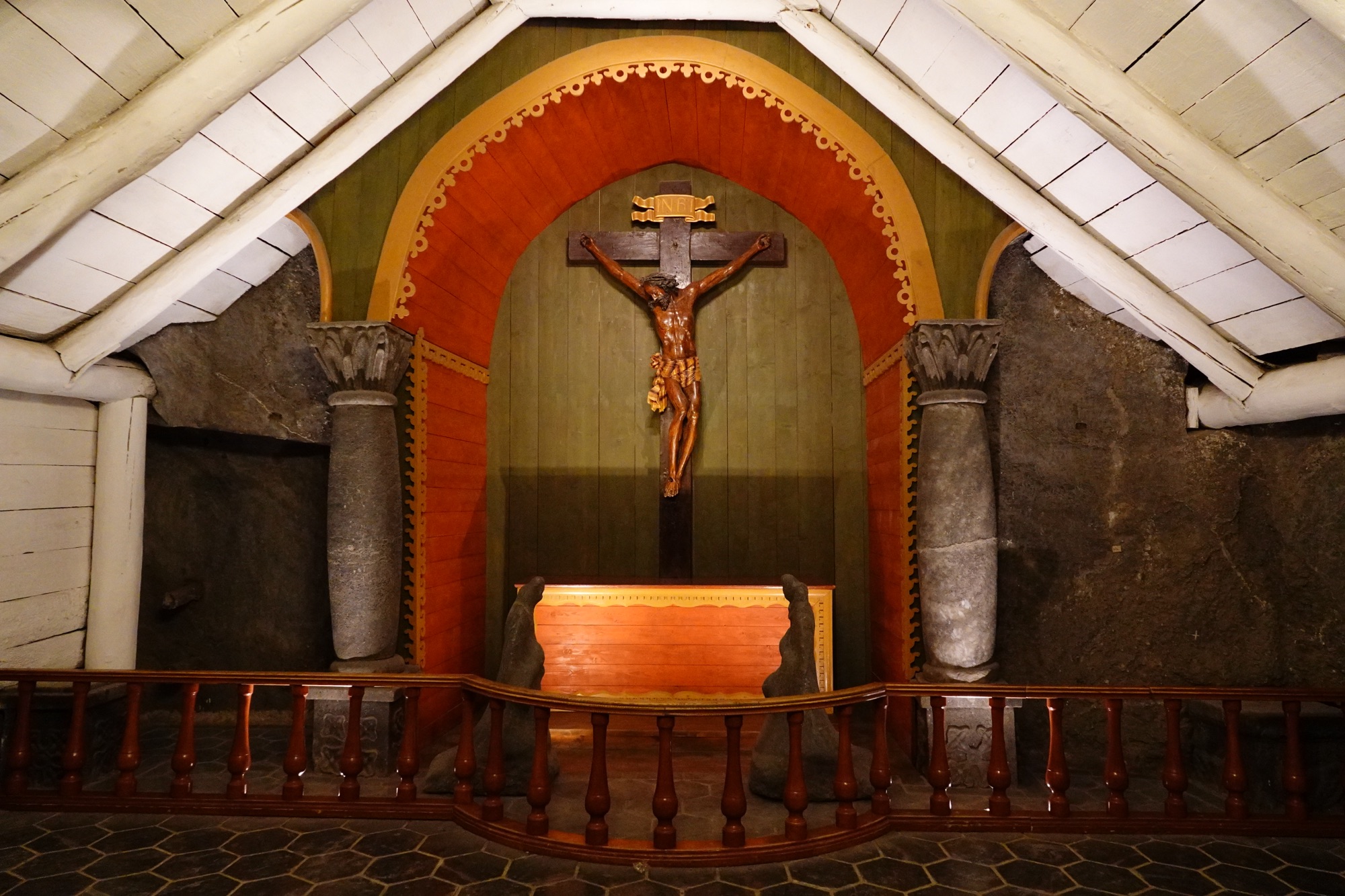
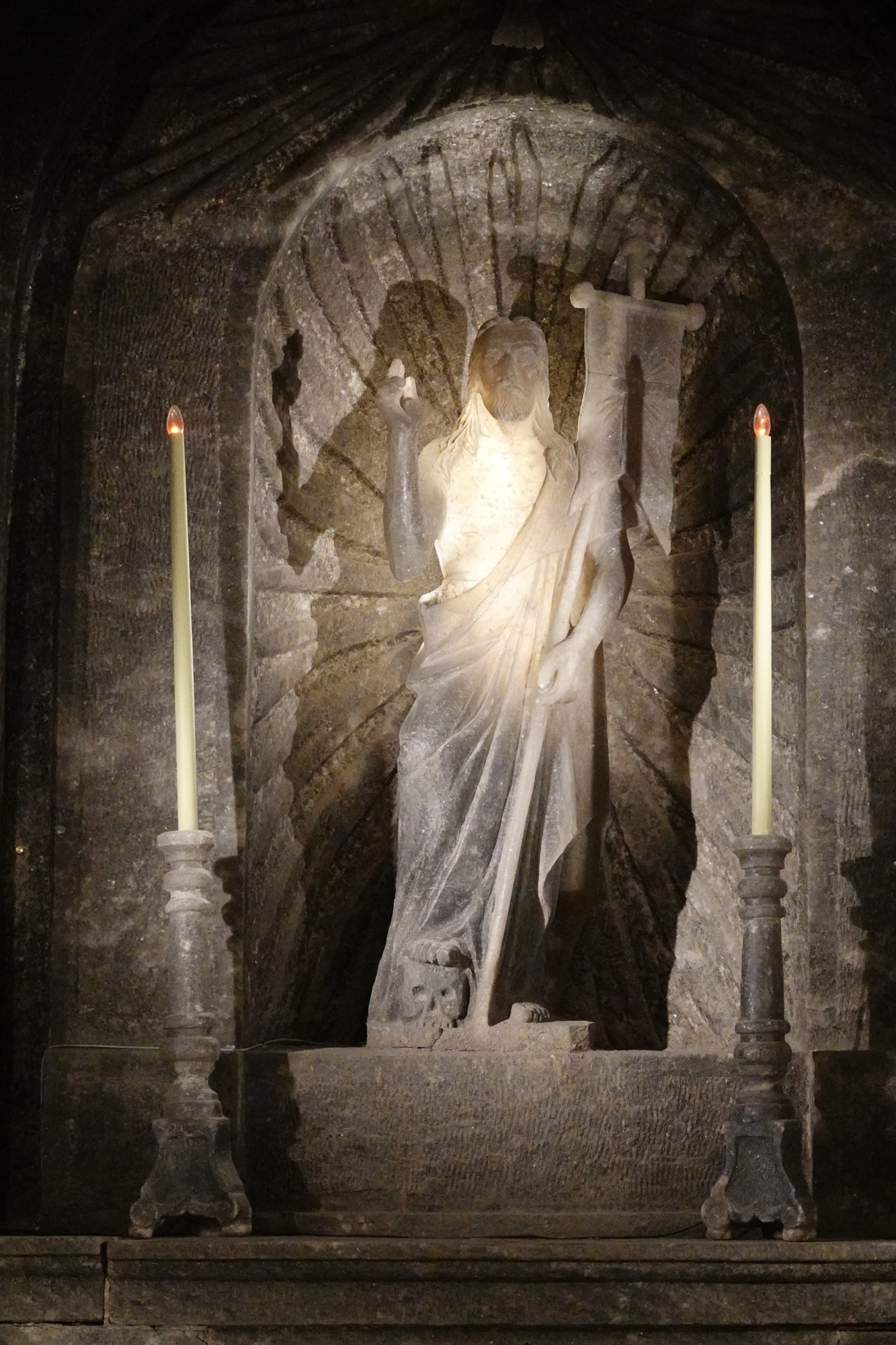
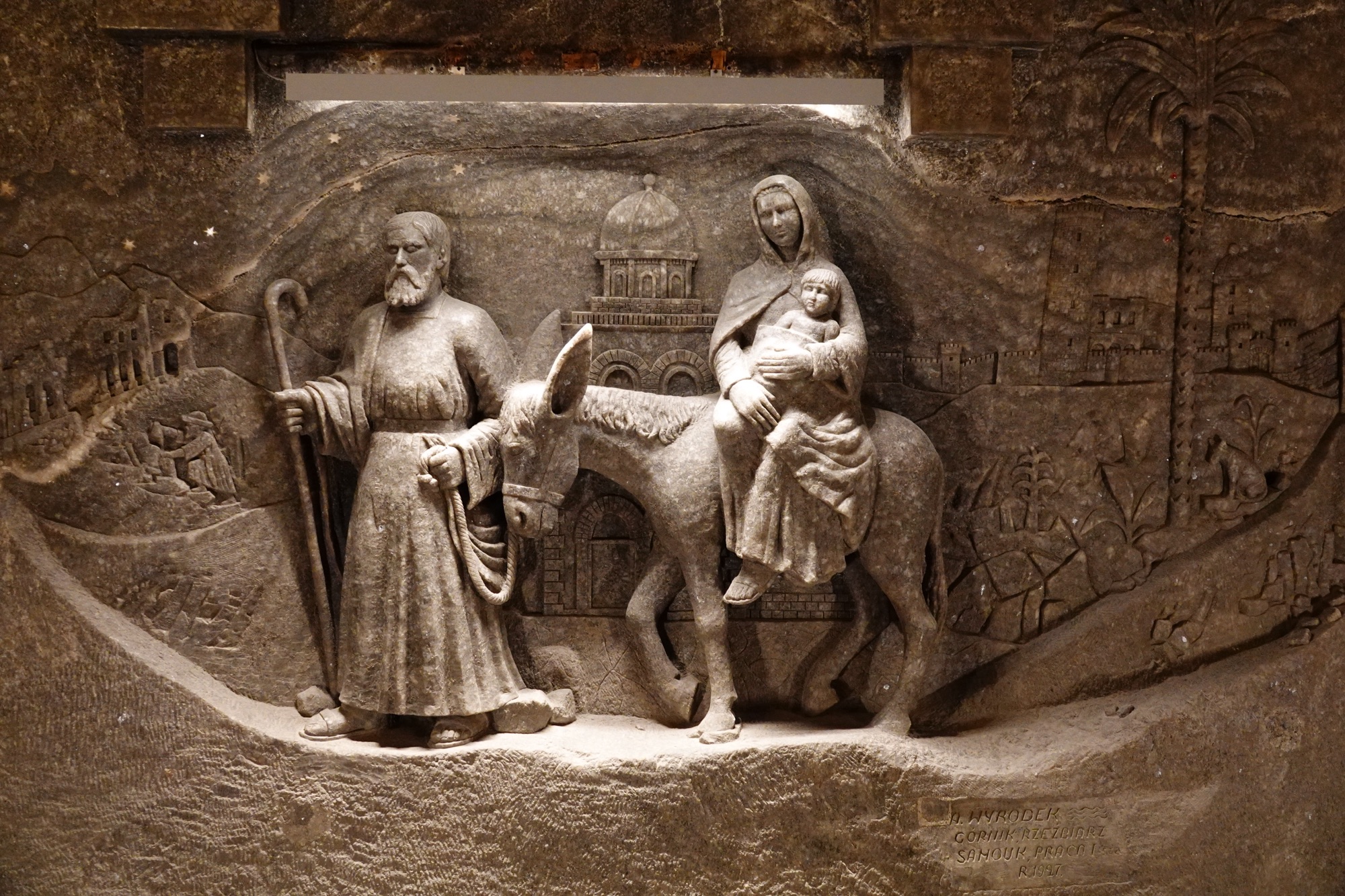
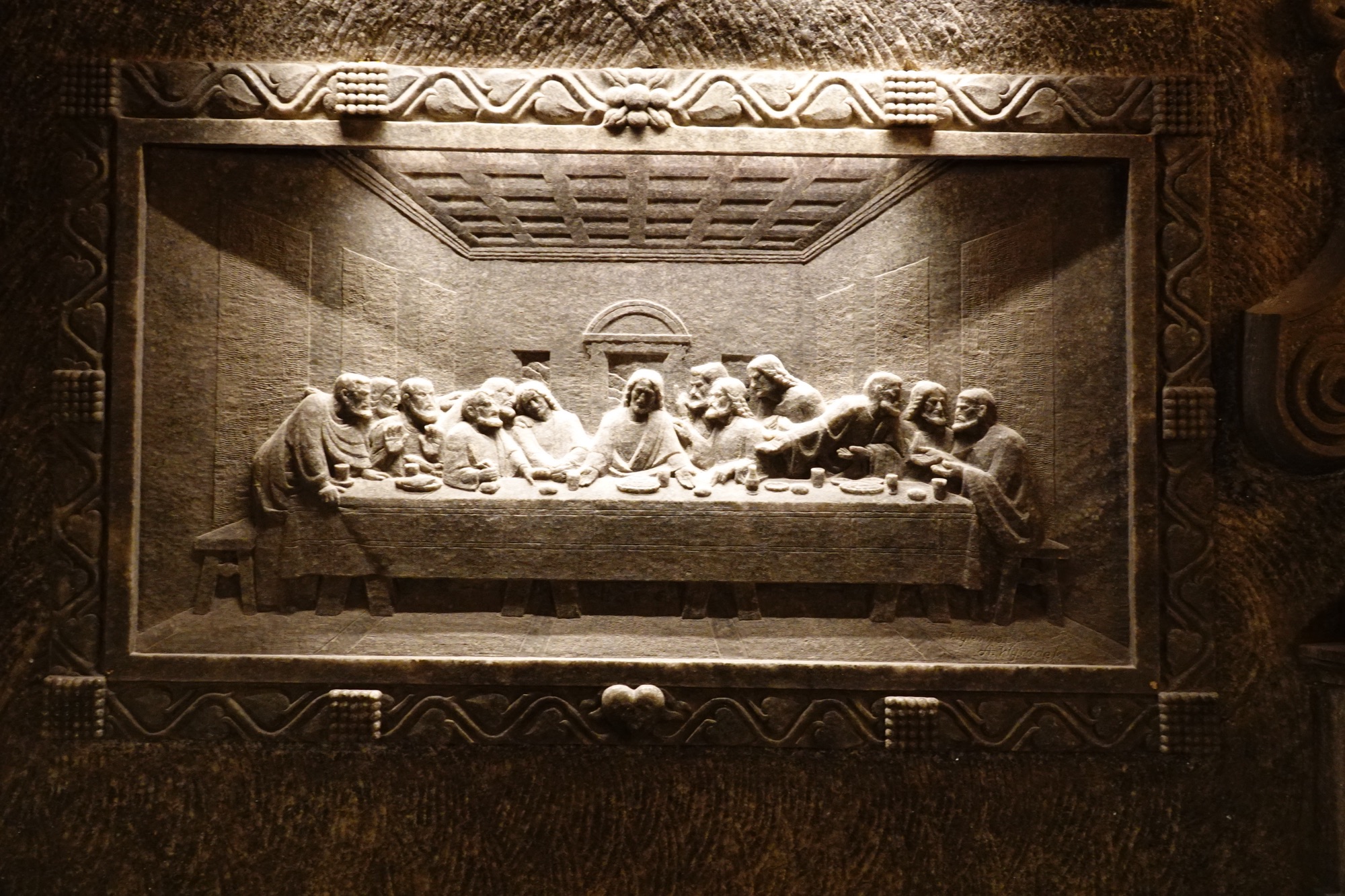
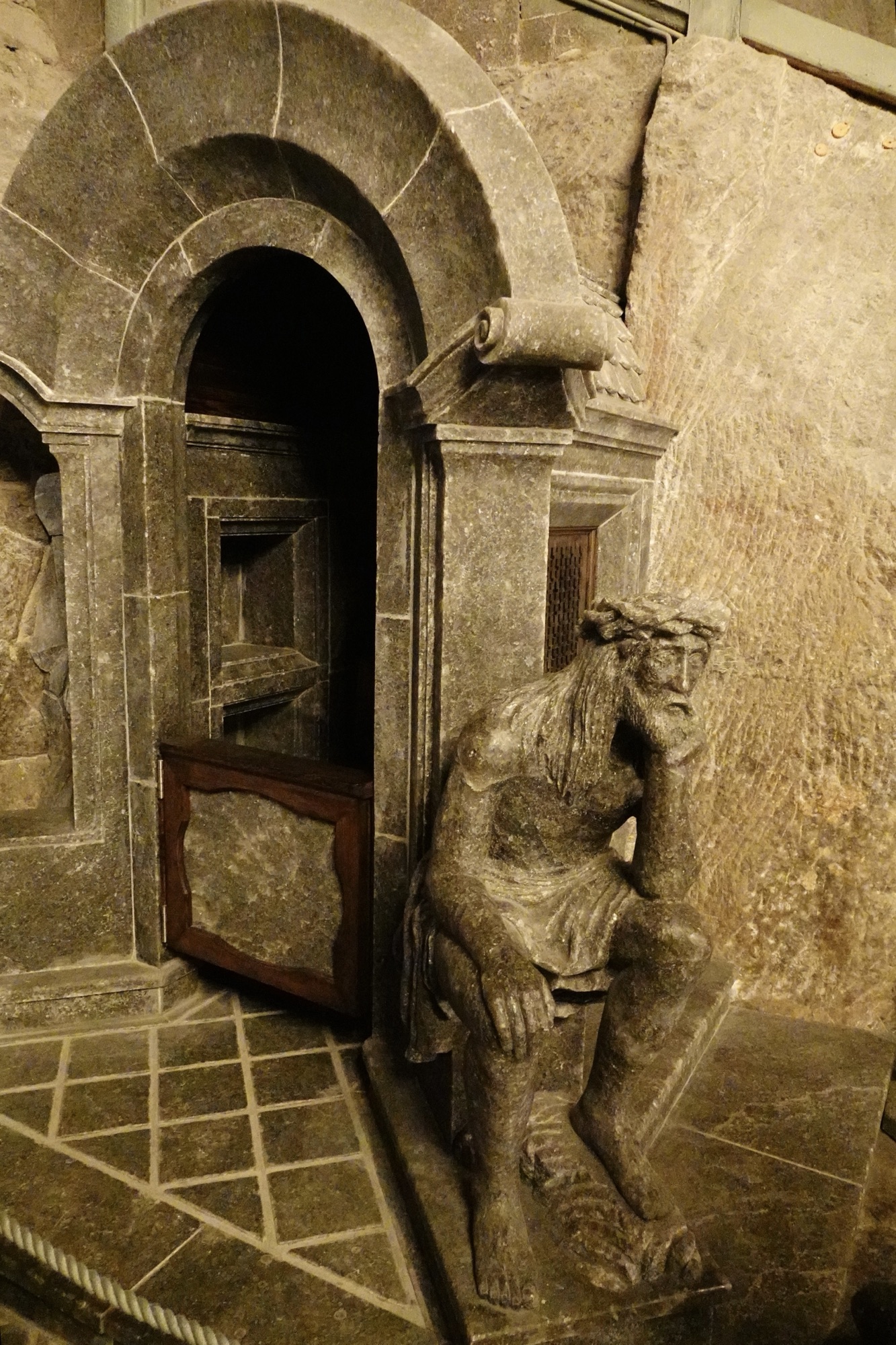
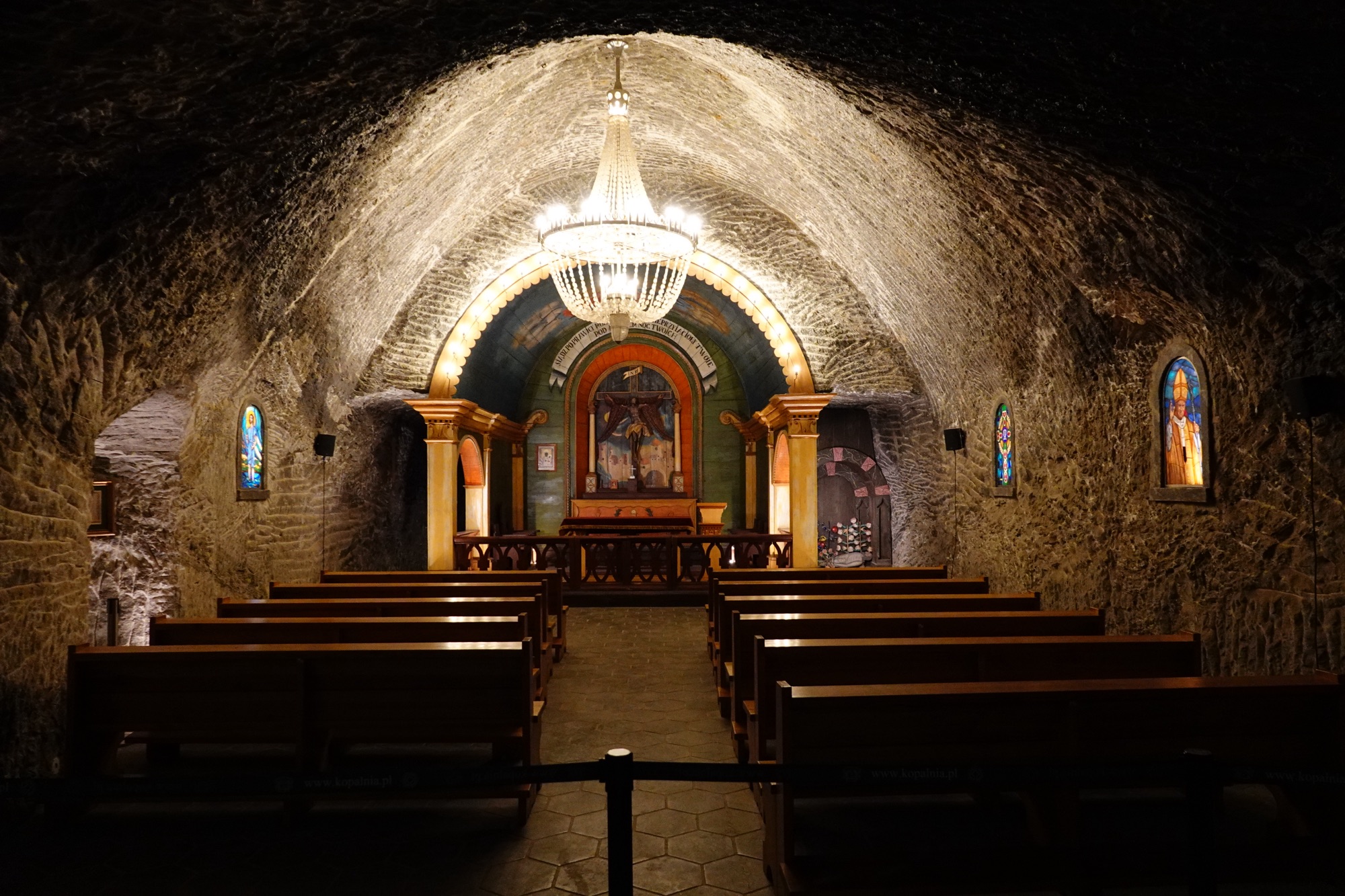
The miners created their own underground chapels, complete with rock salt statuary.
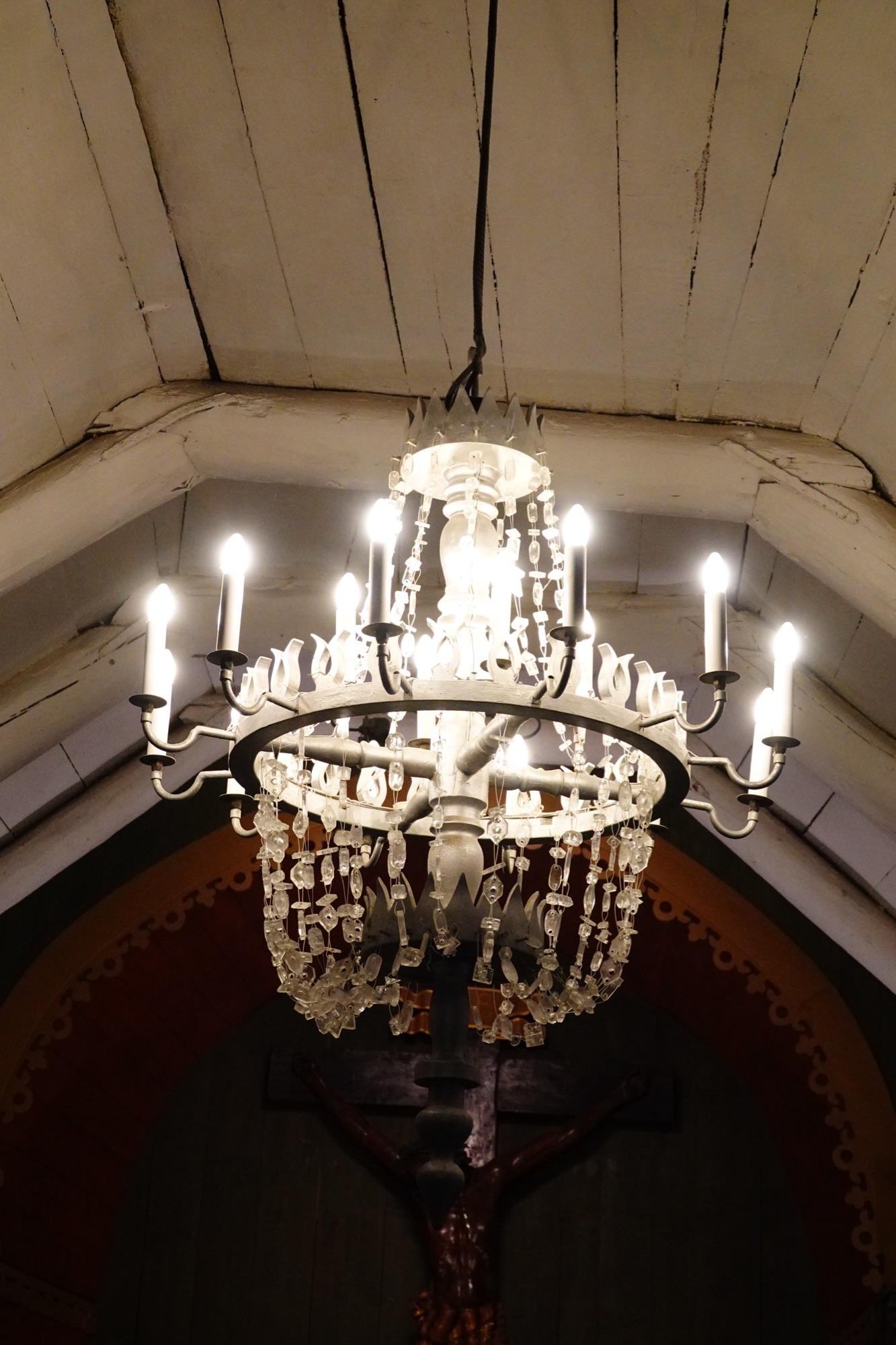
They also carved rock crystal into the drops for chandeliers!
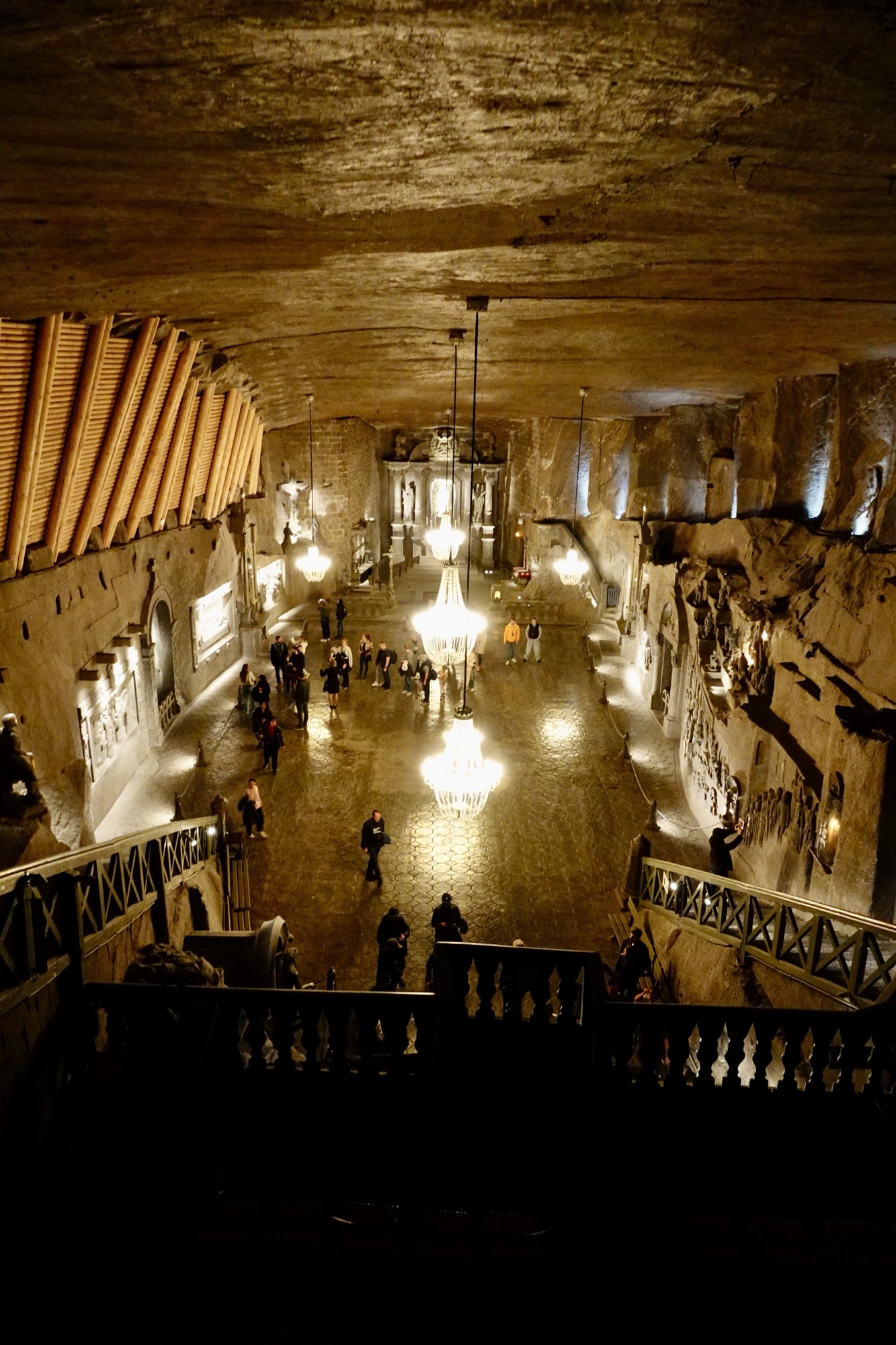
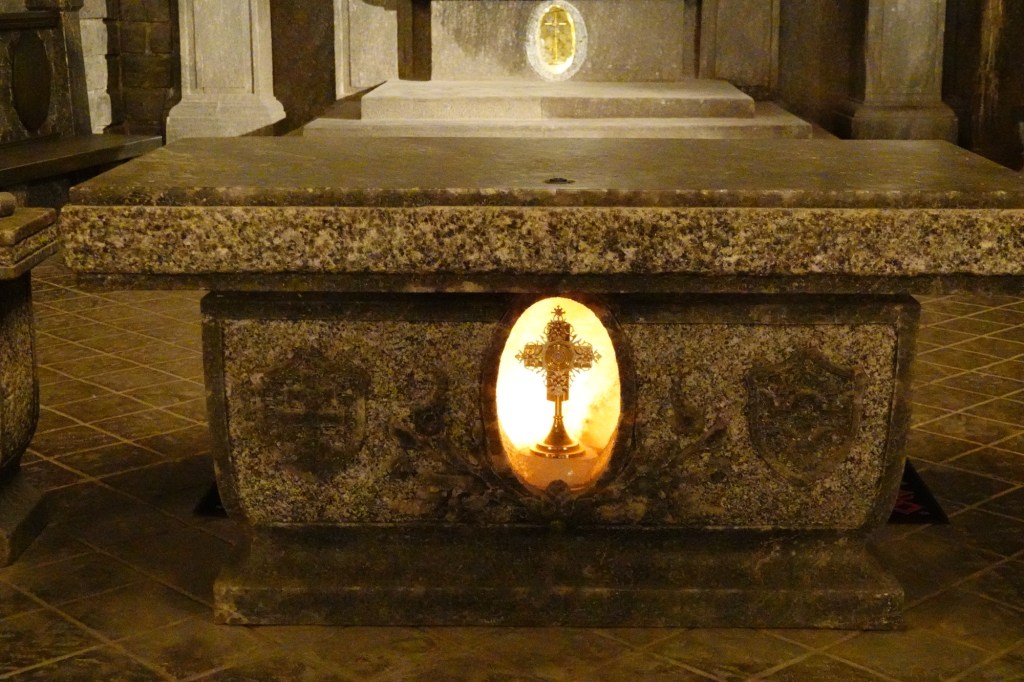
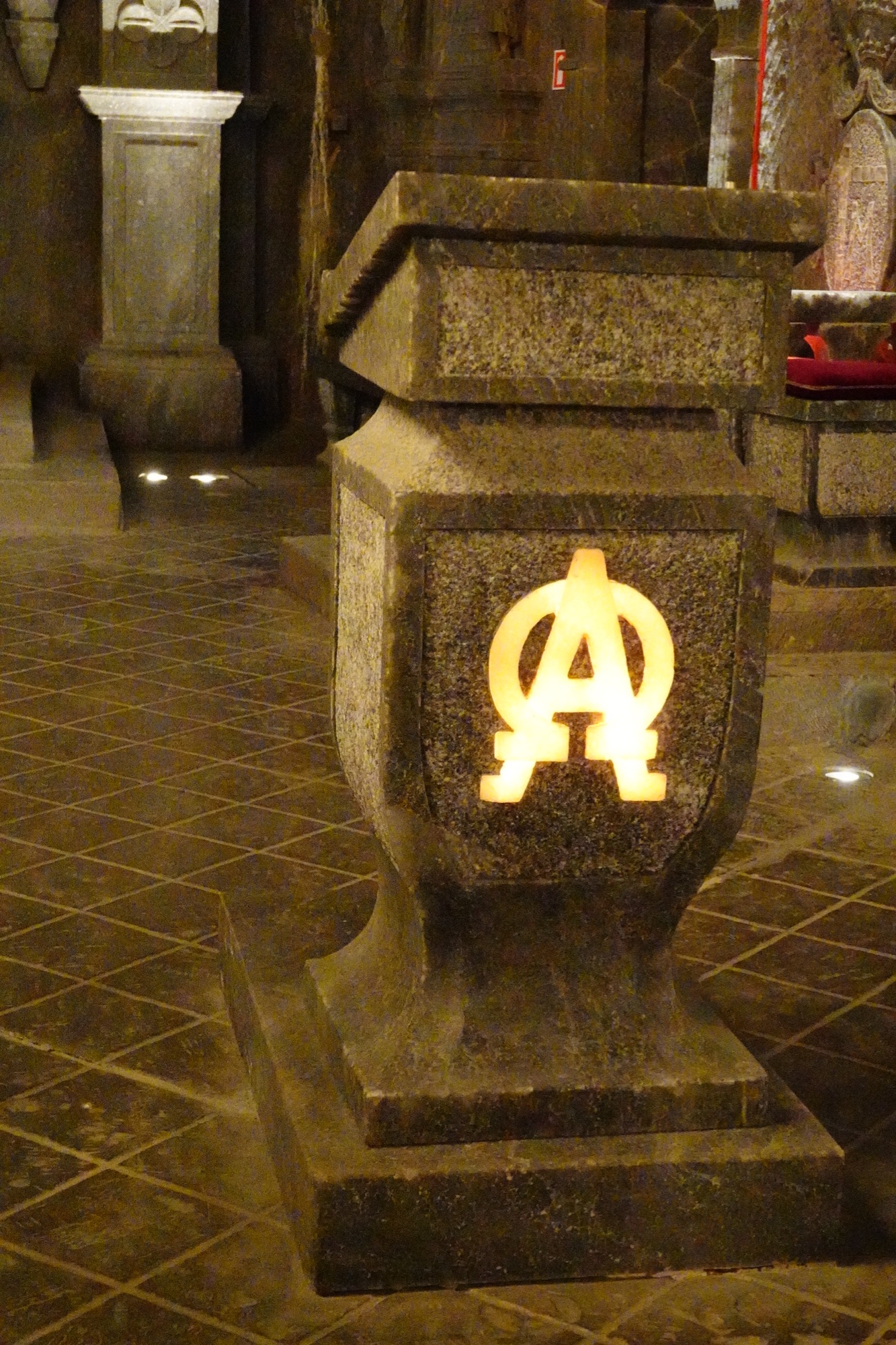
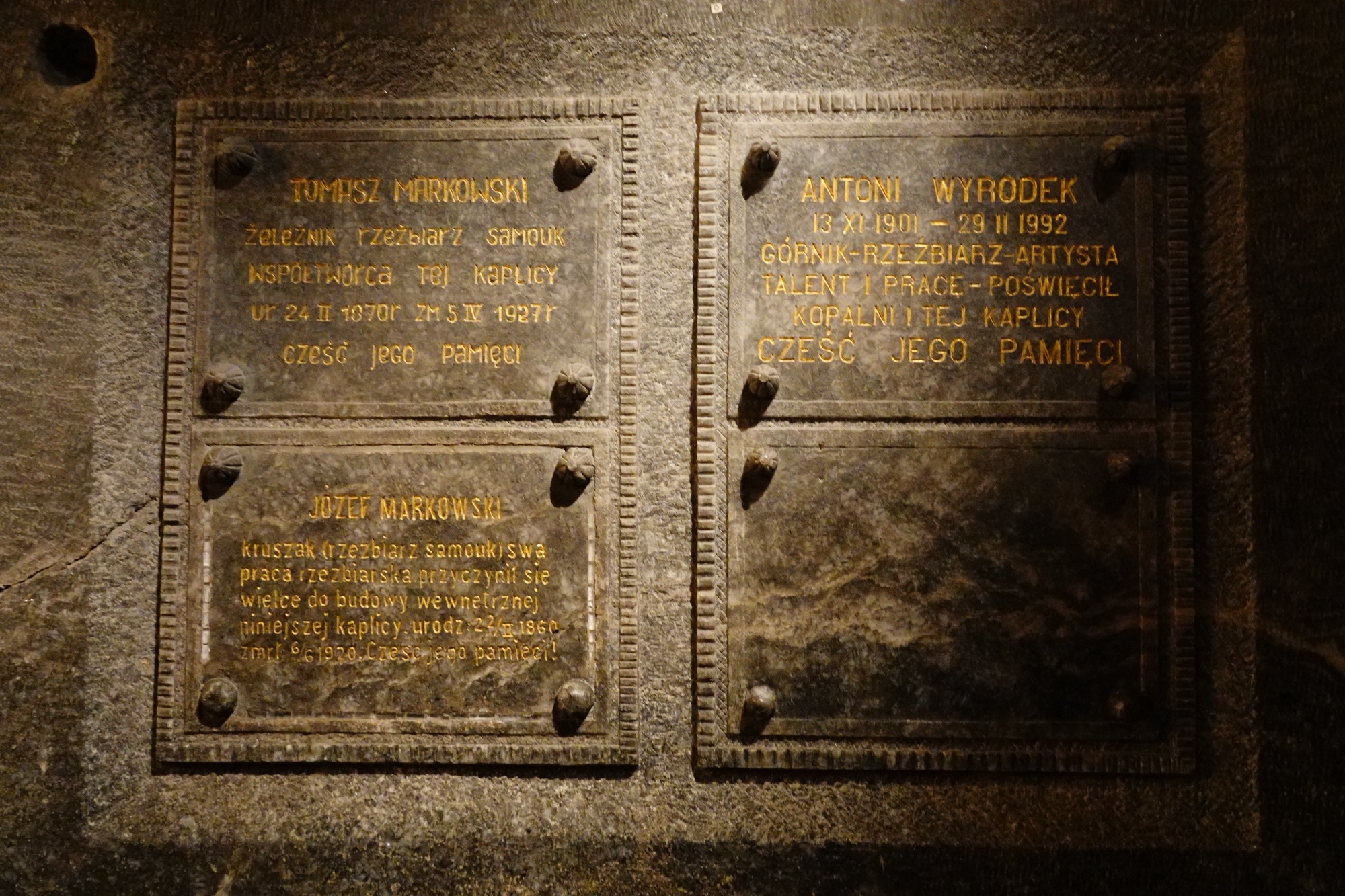
The pièce de résistance in the salt mine is Saint Kinga’s Chapel, where all of the elements were created not by professional sculptors, but by miners. This chapel is, not surprisingly, the largest underground place of worship in all of Europe.
More stairs down to a man-made underground supersaturated salt lakes, one of which was used for tourist boat rides during the Austrian era.
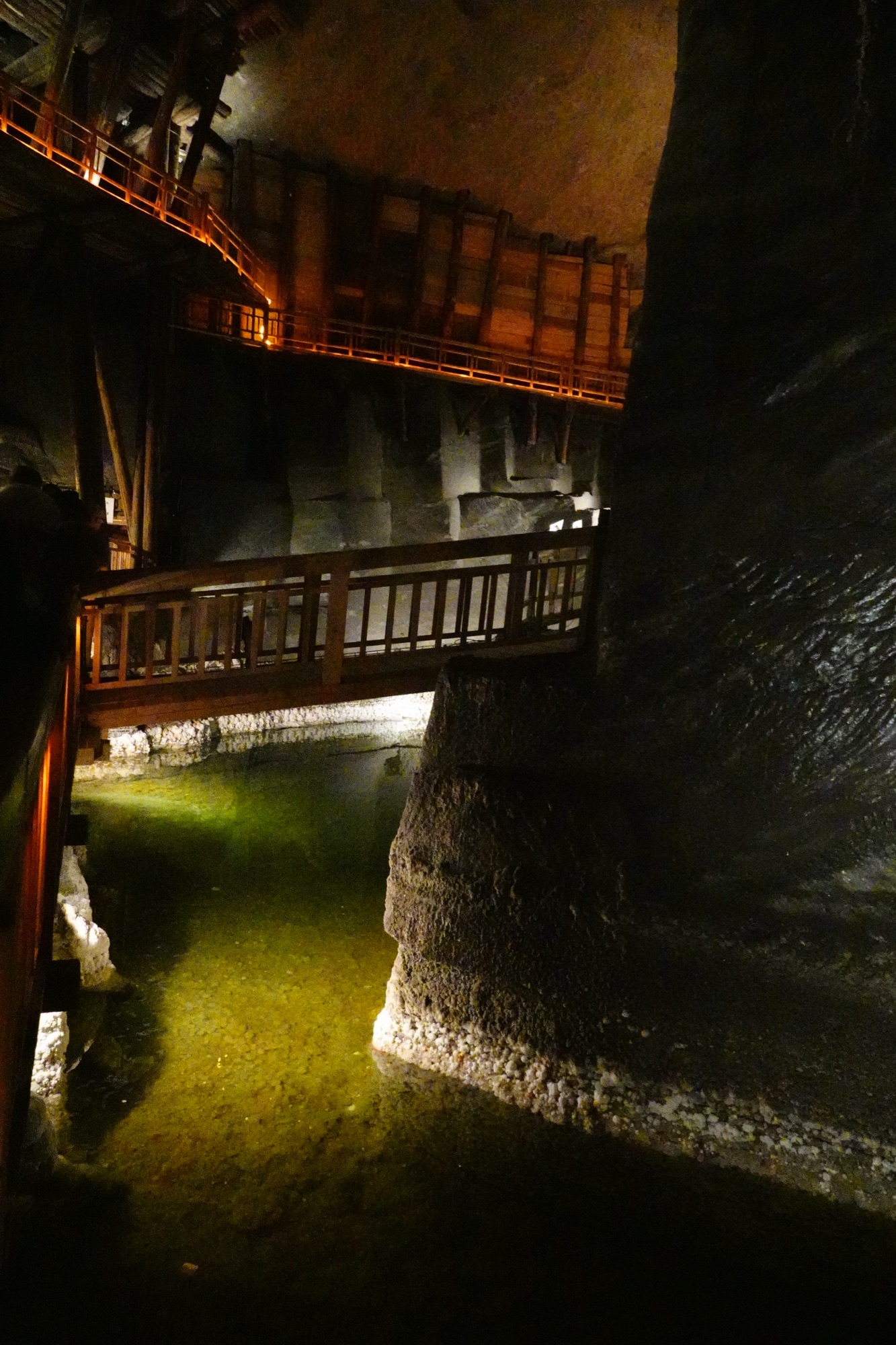
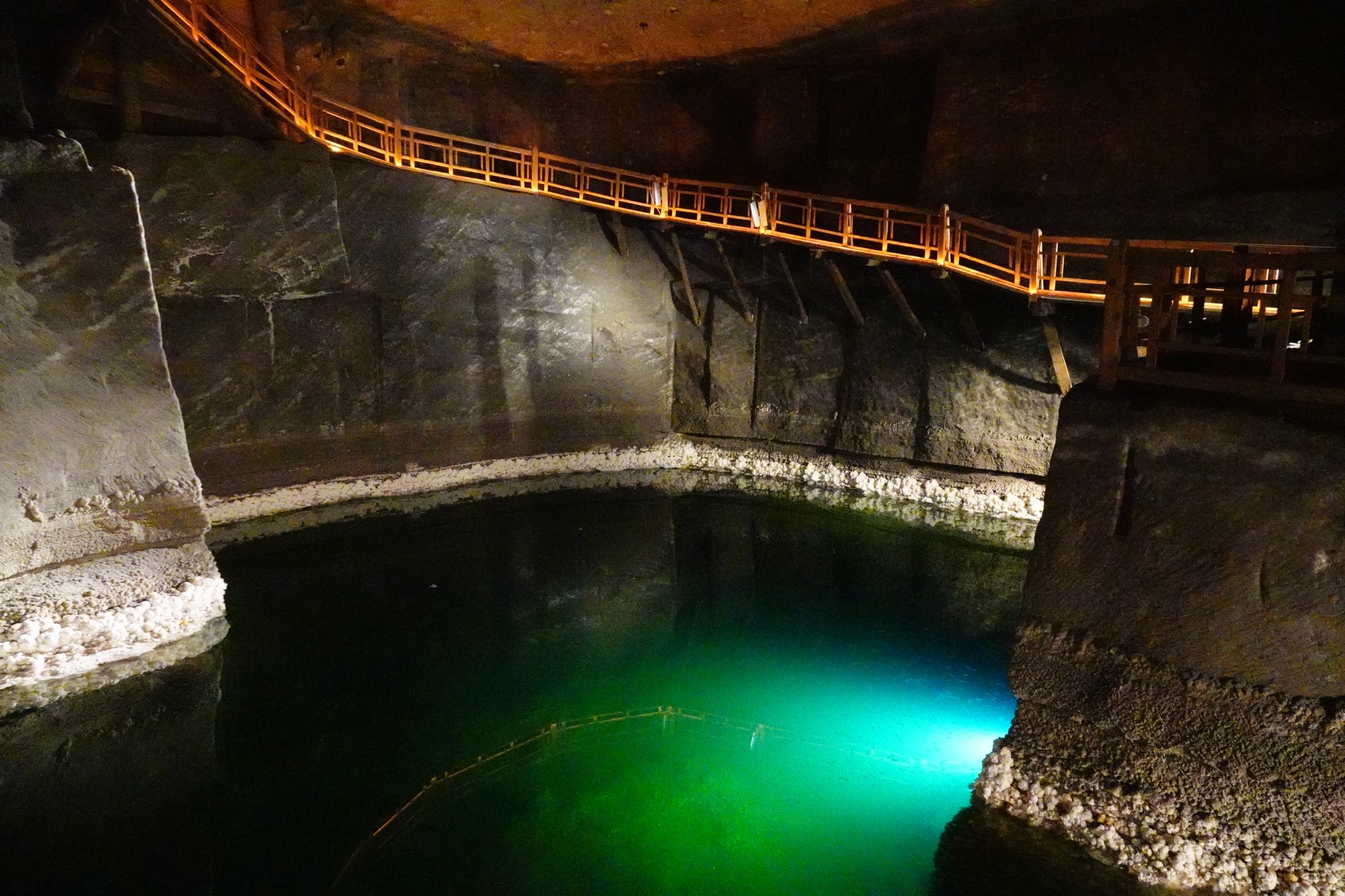
We saw some complex and very attractive wooden scaffolding in an area that was used in the 19th and early 20th century to host receptions and concerts. There was always tourist interest in these mines, although nowhere near the present day peak of 10,000 visitors in a single day!
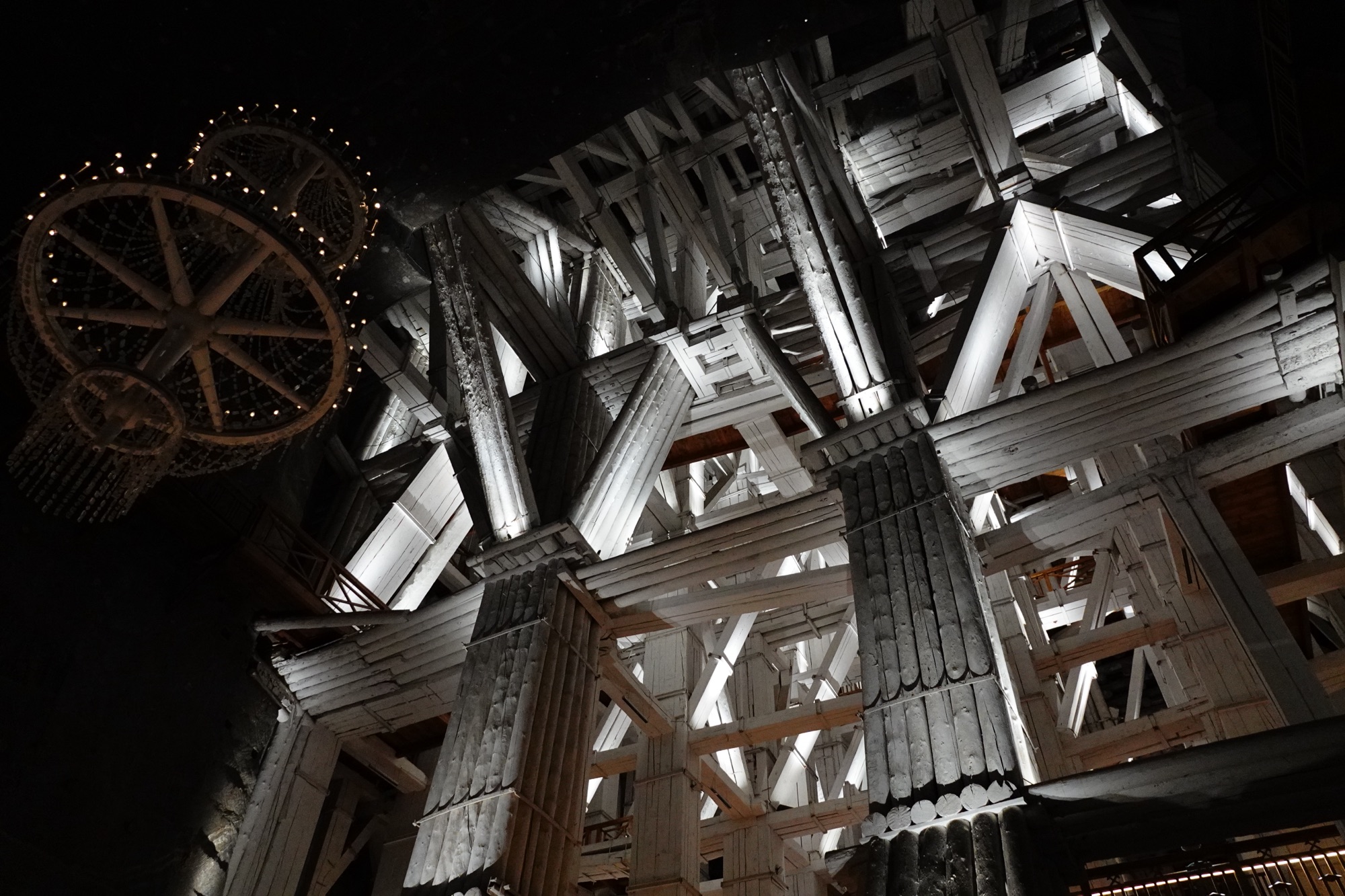
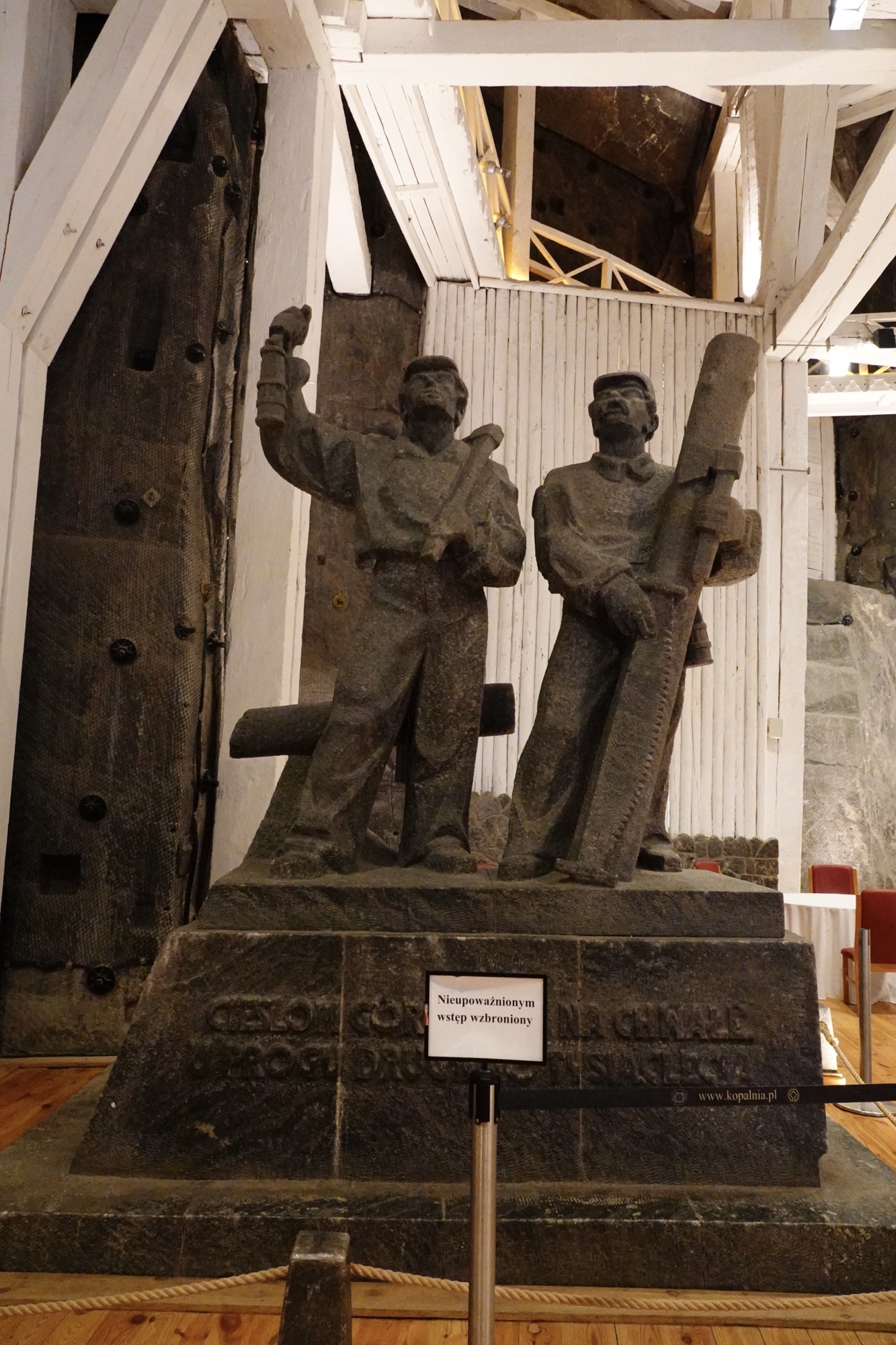
The salt-sculpted miners seem to be either solving a scaffolding problem or cursing at one.
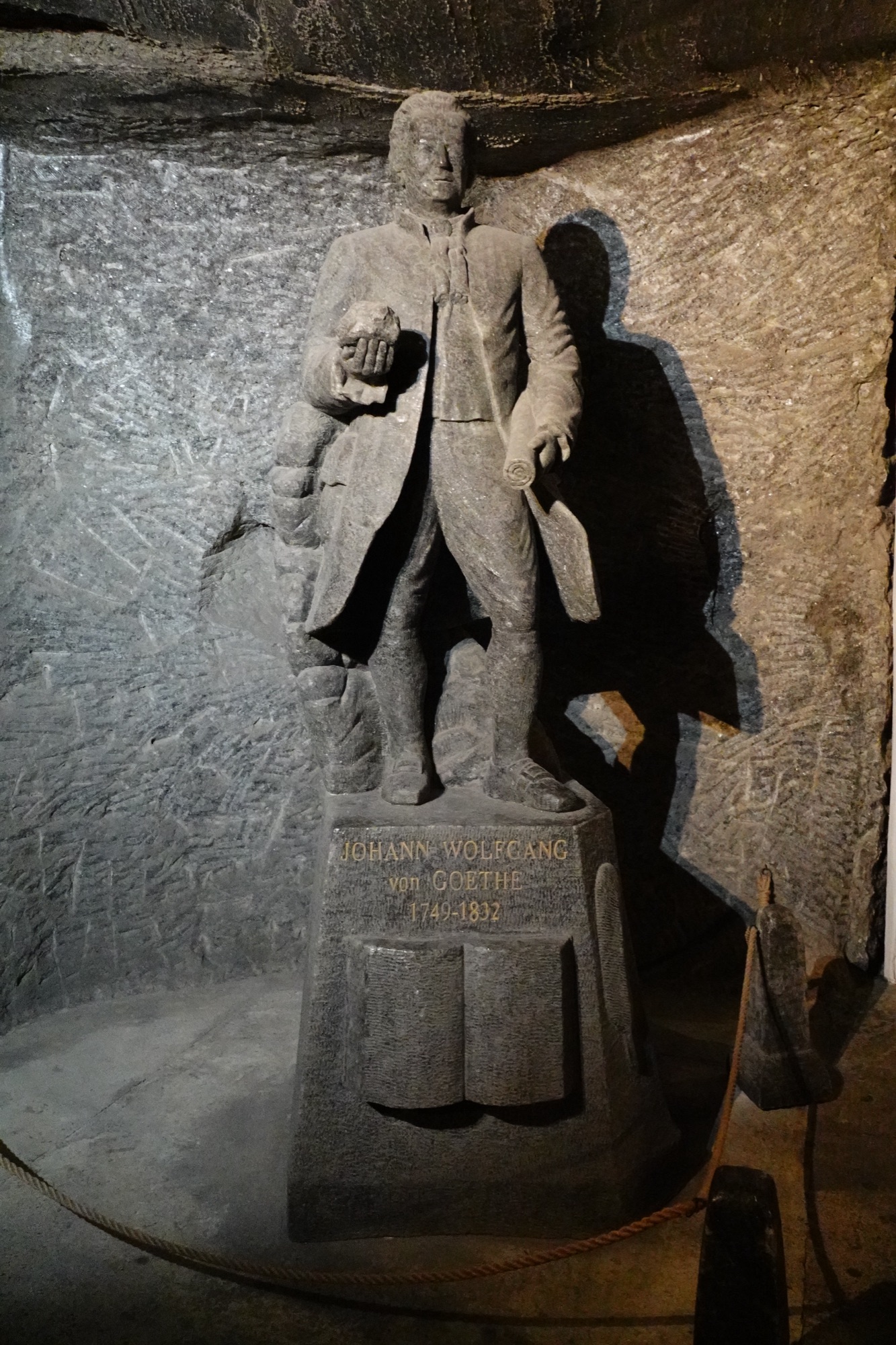
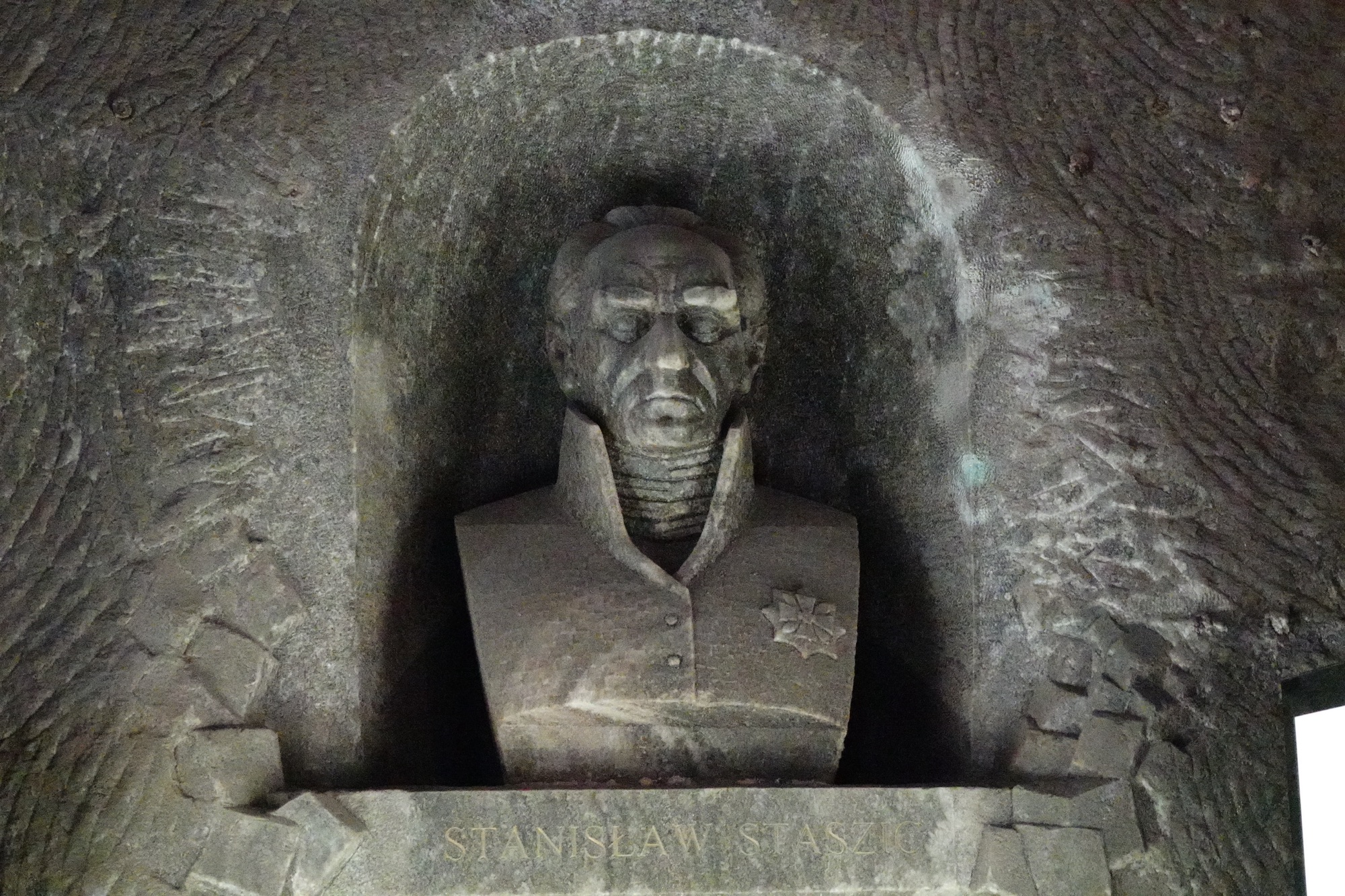
Famous visitors were obviously a favourite theme for the sculptors.
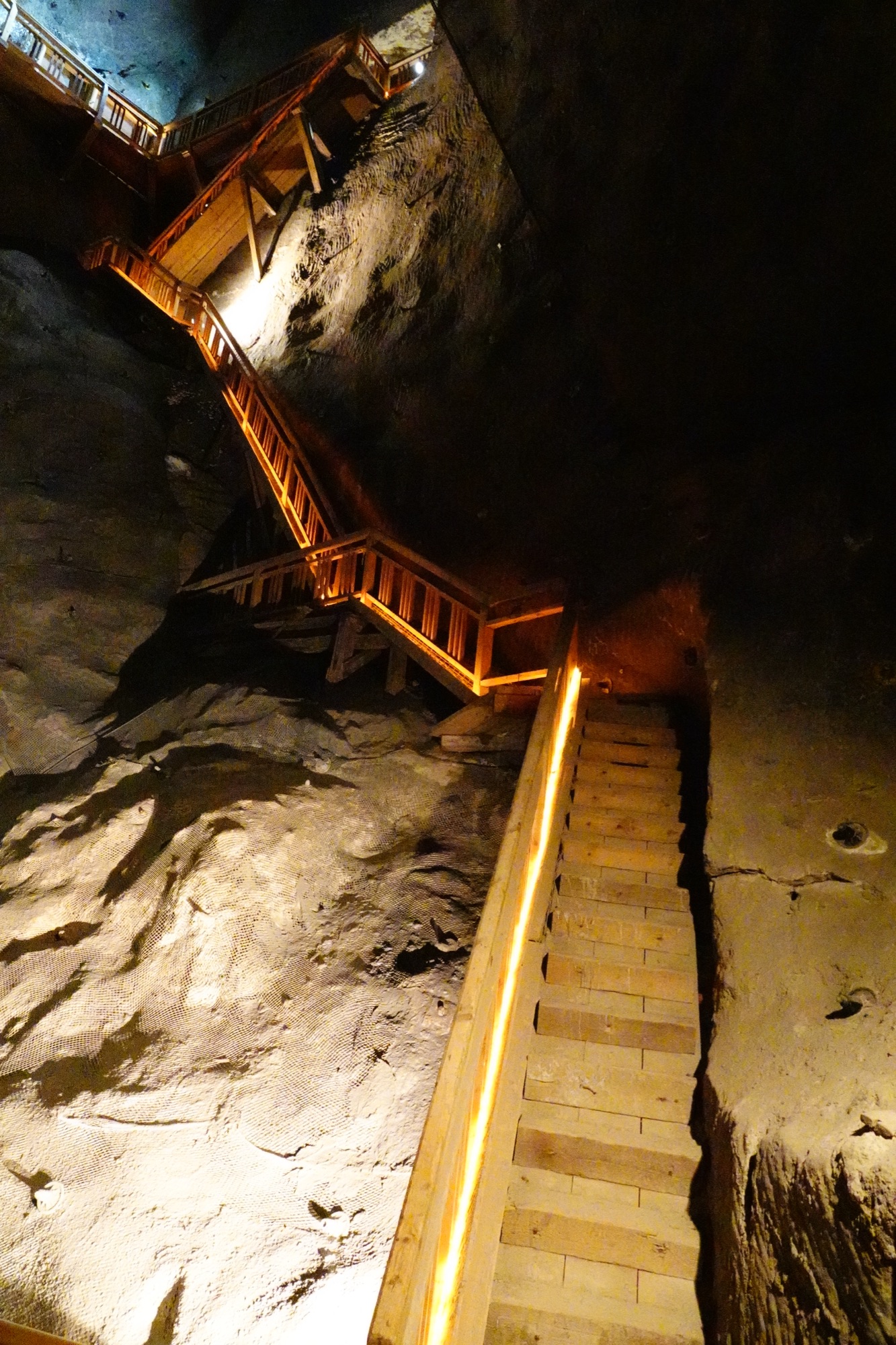
Plus one that we did need to descend to get down to Level III.
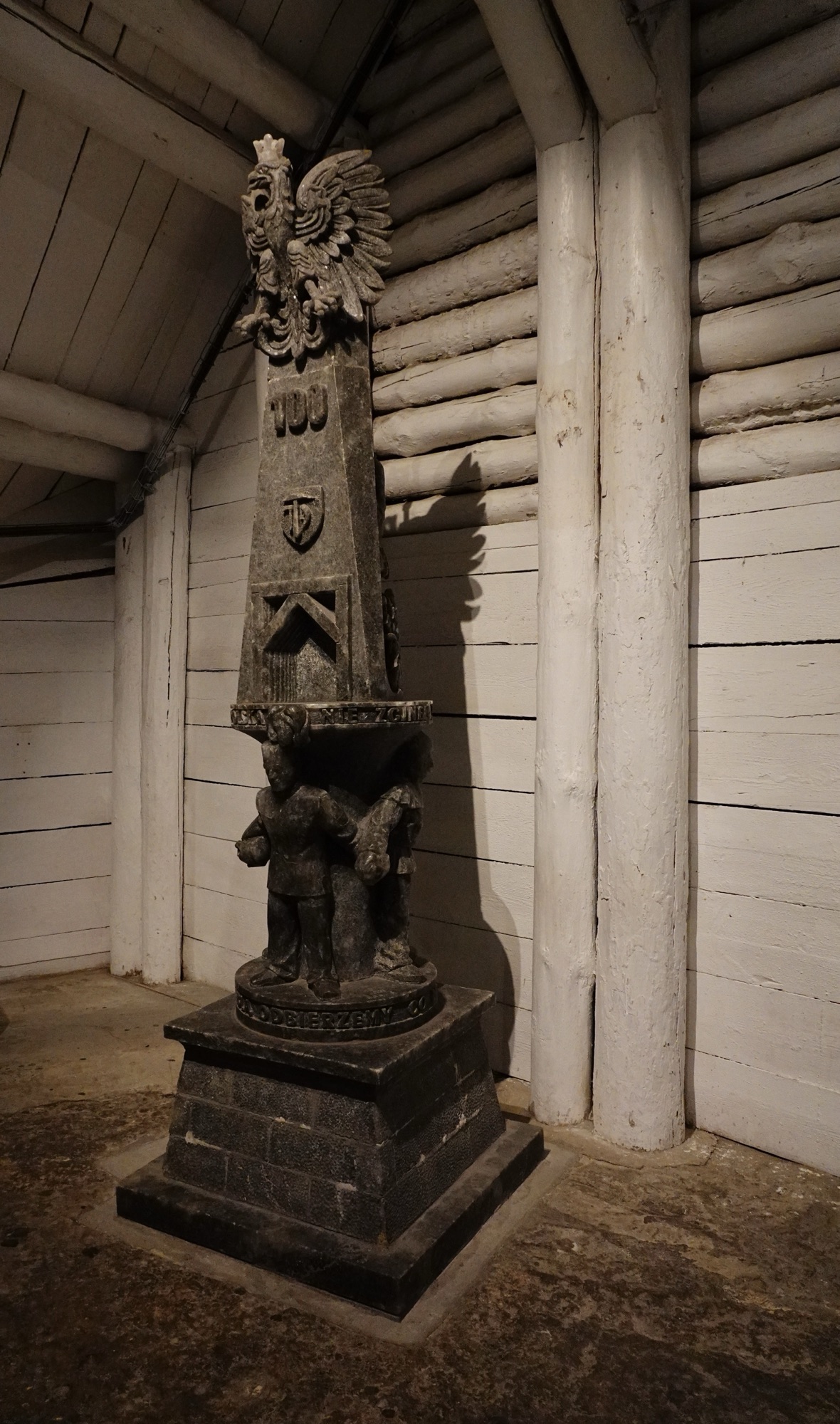
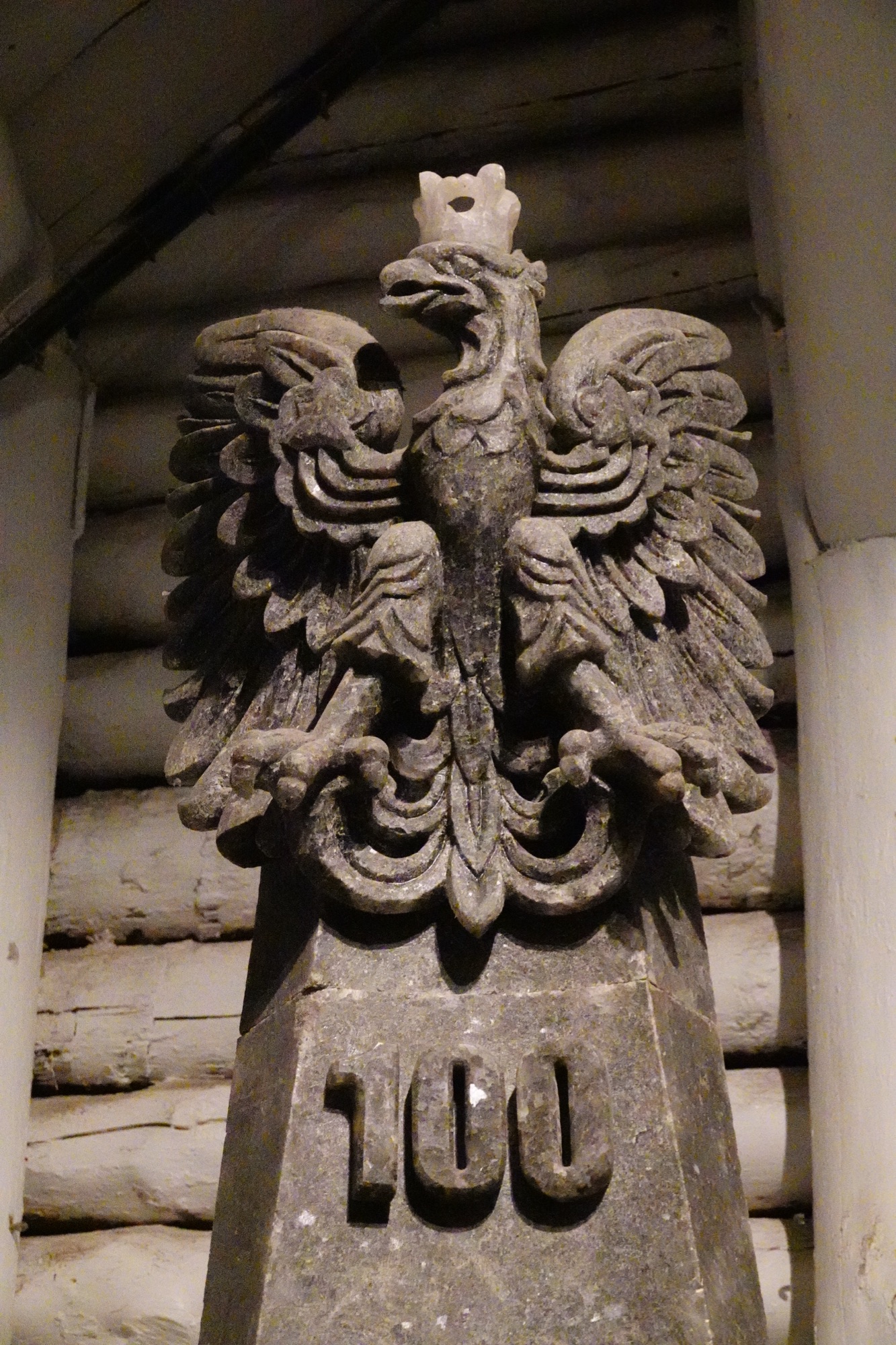
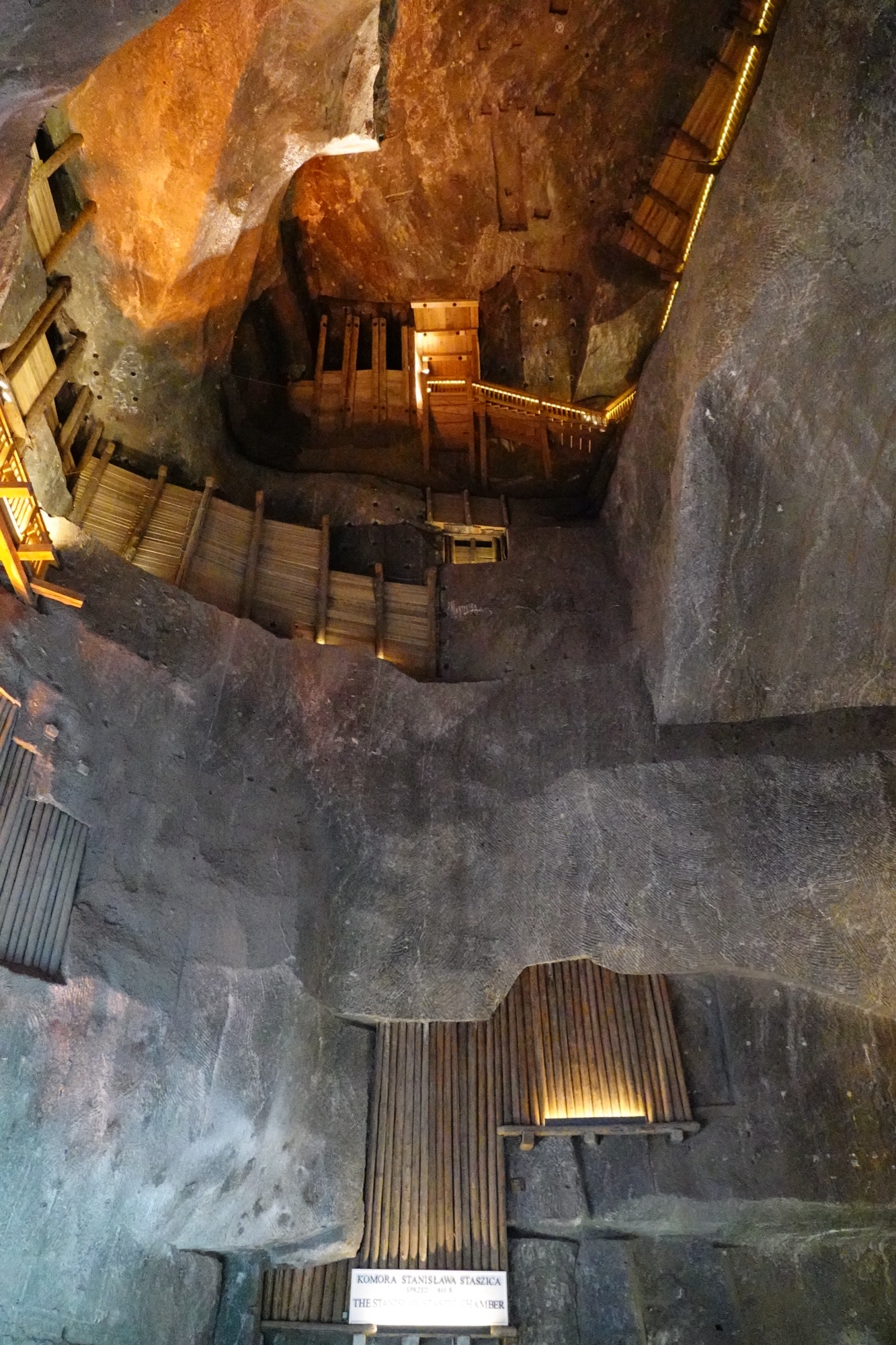
At the 135m level, another beautiful chapel.
And then it was time for our elevator ascent back to ground level.
We didn’t get the chance to eat in the mine’s underground gourmet restaurant (where everything is prepared “with a pinch of salt”), nor had we booked an overnight stay in what is purported to be a very healthy micro-climate among the salt crystals, but it was still a pretty neat visit.


Bleeping amazing! But one wonders when the miners found time to actually mine, what with all that carving and chapel building.
LikeLiked by 1 person
Sent from my iPad
LikeLike
This has been on my bucket list for over a decade! One day!!!
LikeLiked by 1 person
When you get here, I’d suggest going as an individual. The mine will put you in a much smaller group that way.
LikeLike