I wanted to end our visit on a positive note after yesterday’s anger and sadness.
As we wandered around Warsaw on our last day here, marvelling at its splendour, we were struck again by how bravely and how beautifully this city rebuilt itself after almost complete destruction.
There is a wonderful article from The Guardian (linked here) about the destruction and reconstruction.
Here were some of just today’s highlights, in no particular order. Almost every one of them was reconstructed in the post-war years.
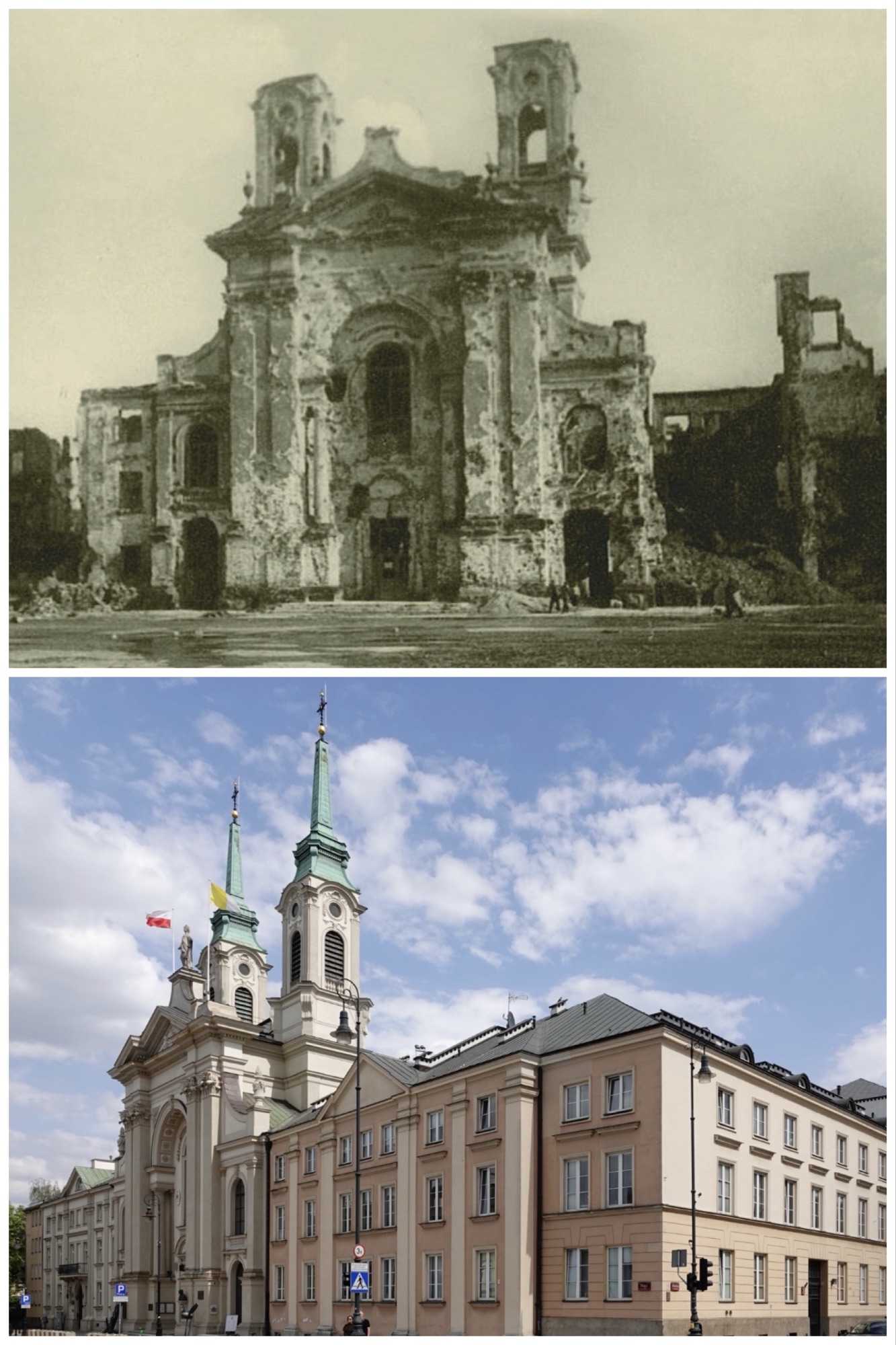
The reconstructed Field Cathedral of the Polish Army right around the corner had its exterior recreated to look like it did before WWII,…
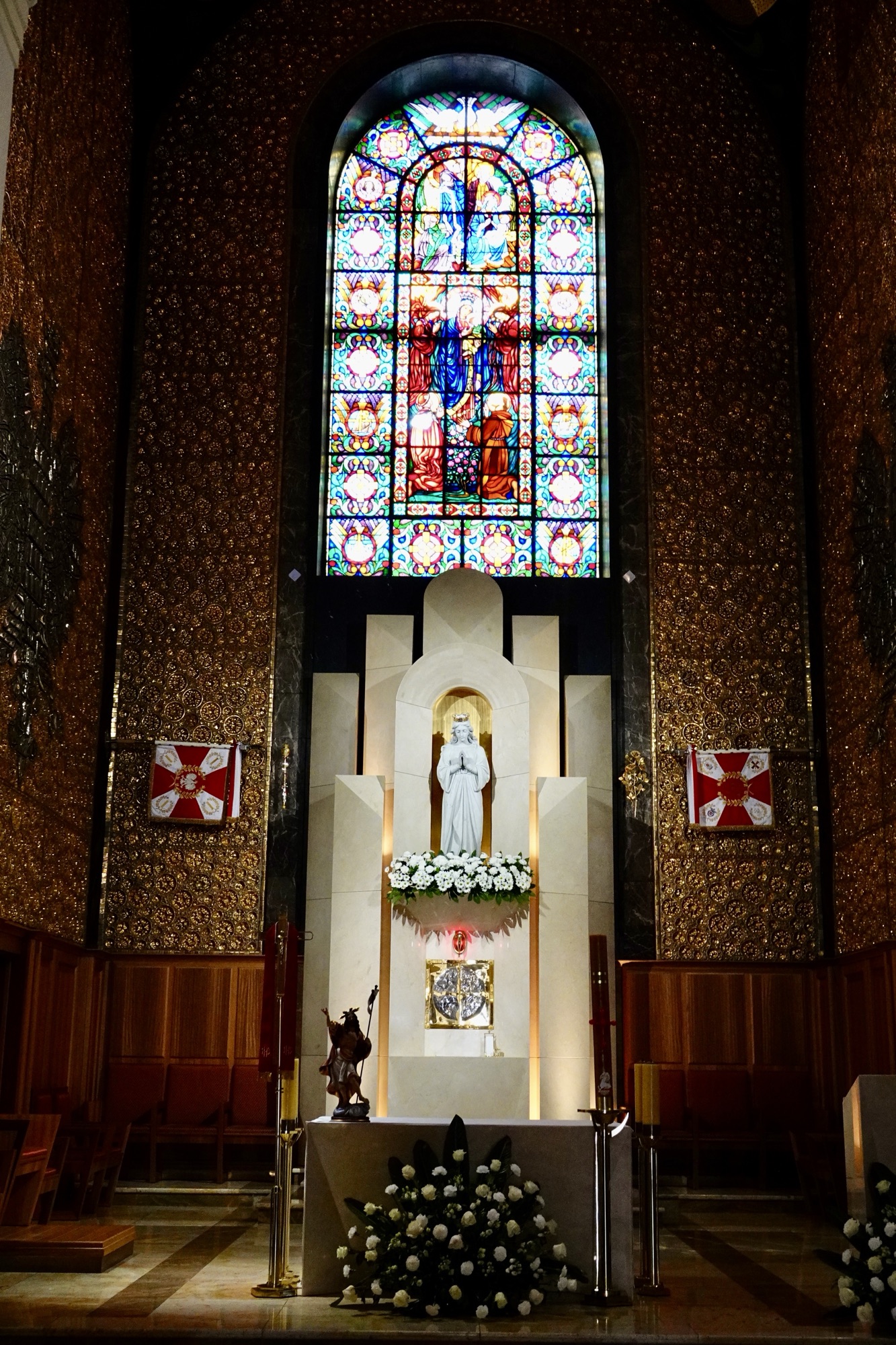
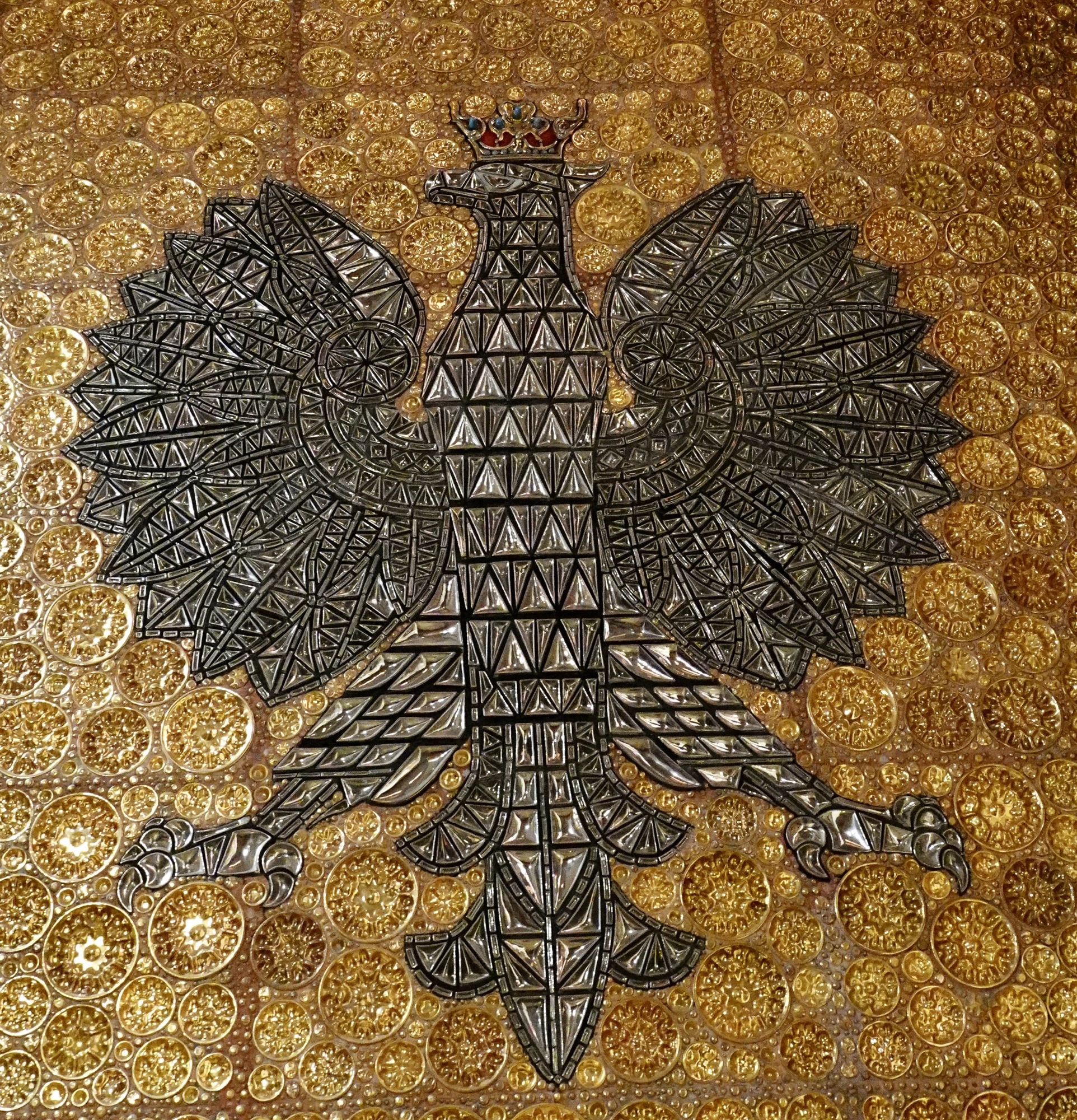
… but inside the nave was constructed anew (i.e. not the way it looked in 1944), with an altar surrounded by gold porcelain tiles inlaid on each side with the Polish eagle. (It is, after all, a military cathedral.)
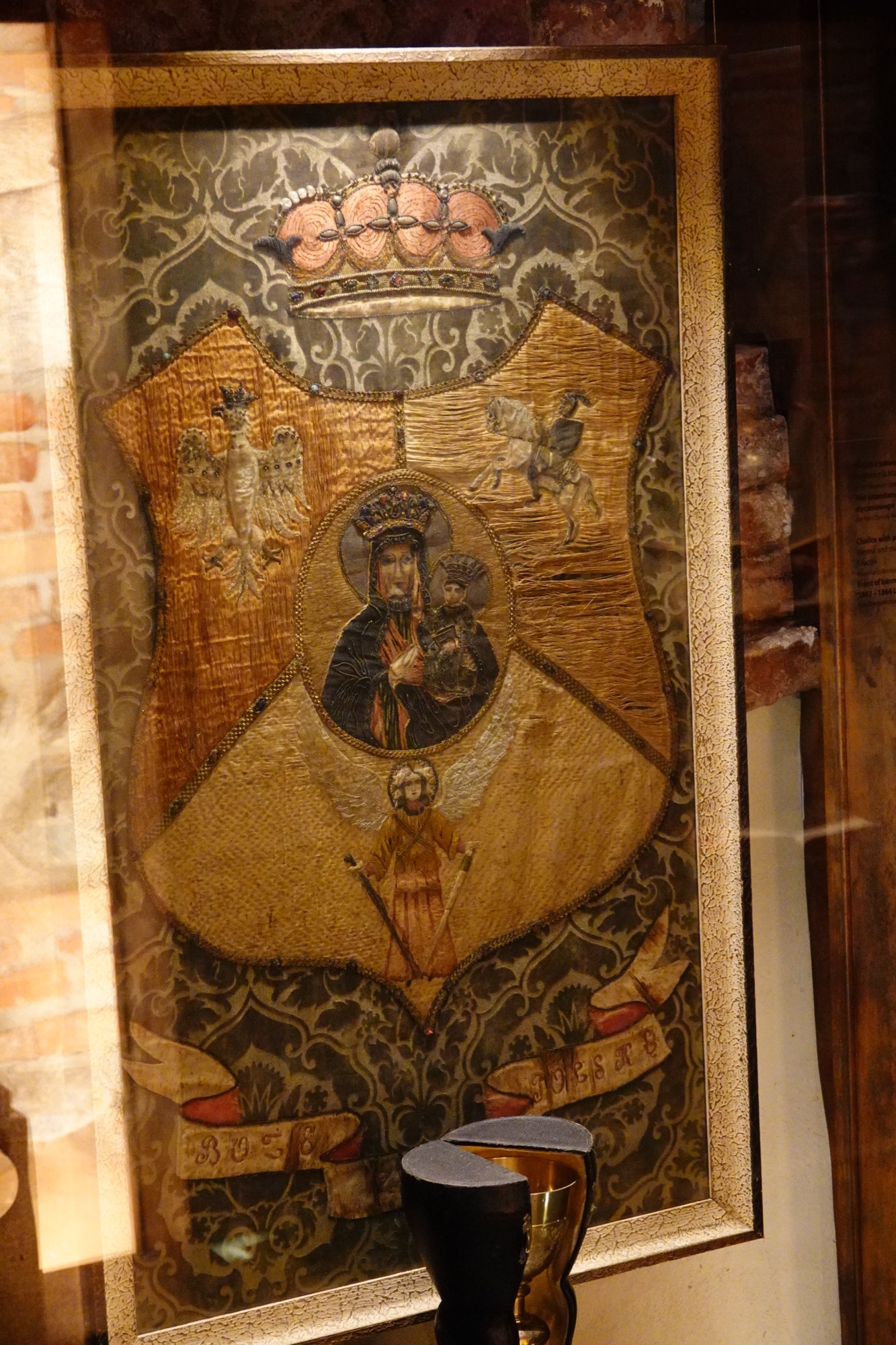
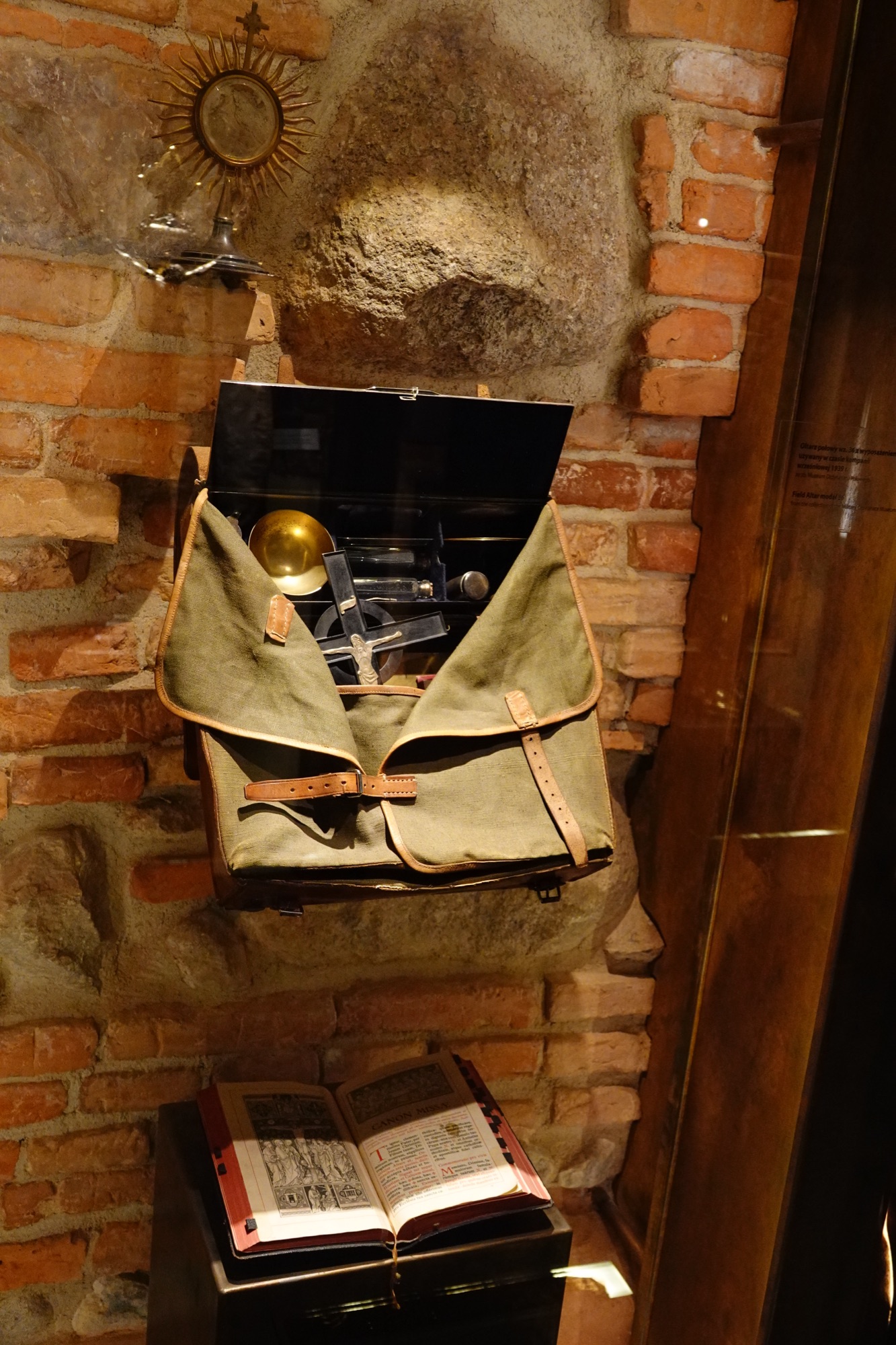
During and since reconstruction, the church crypt was modernized and turned into a museum related to the military chaplaincy from 970CE through to the present.
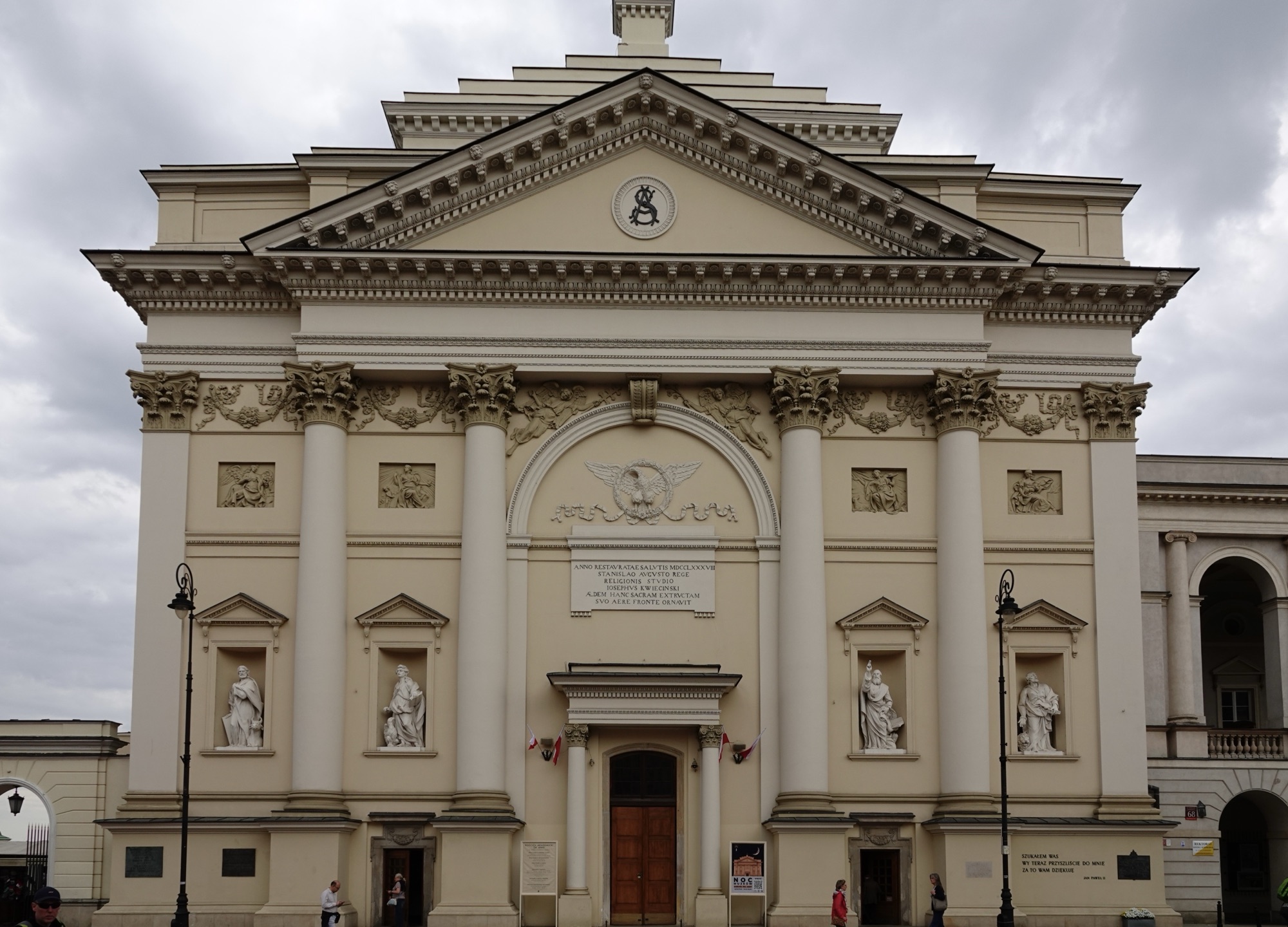
Saint Anne’s Church adjacent to the Castle Square is one of the oldest buildings in the city, the original dating back to 1454CE.
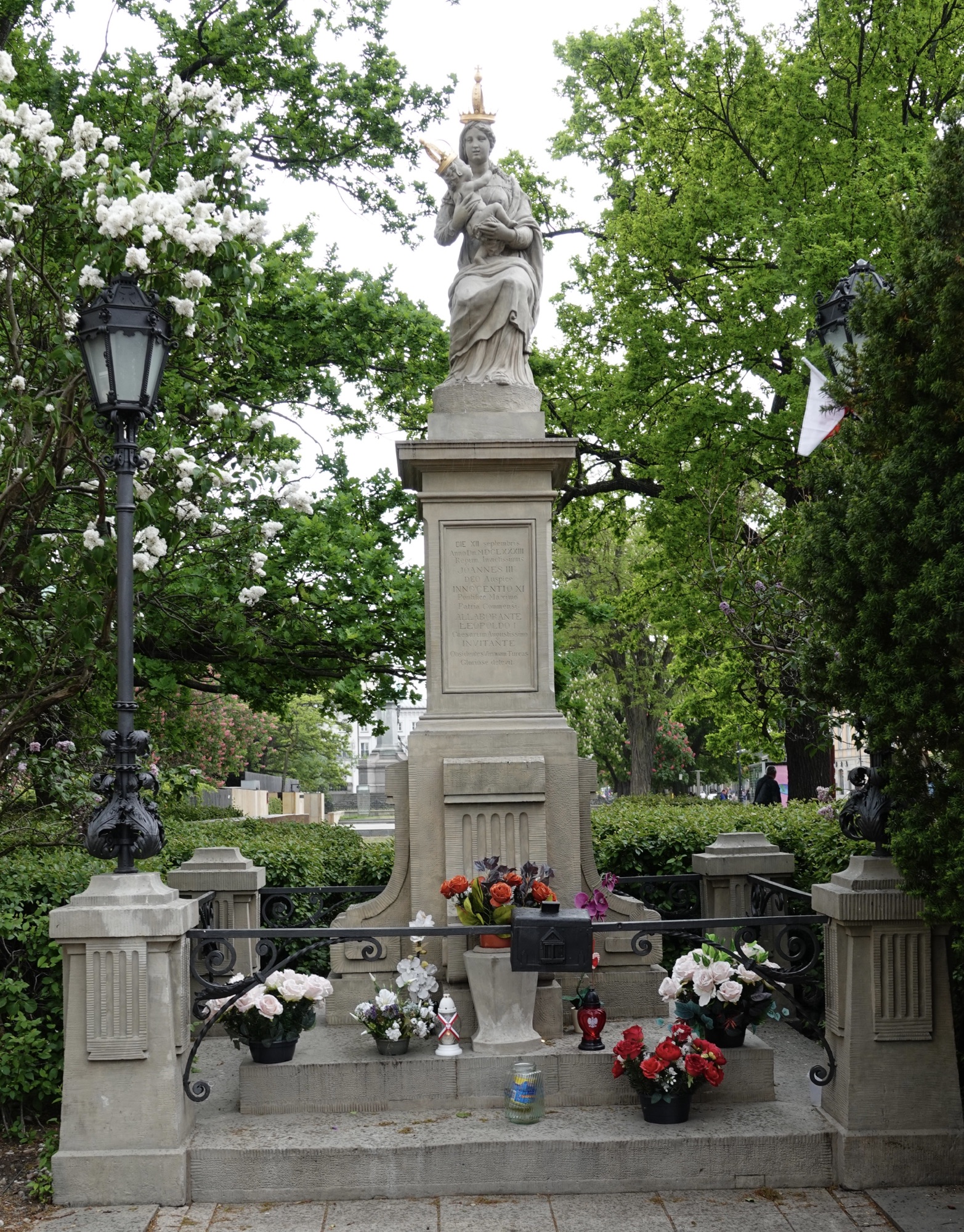
The Passauer Madonna, erected in 1683, is the second oldest monument in Warsaw. (We passed by the oldest, but didn’t realize it so have no photo-next time!) It was originally situated further south in the city but moved to its current location in 1866.
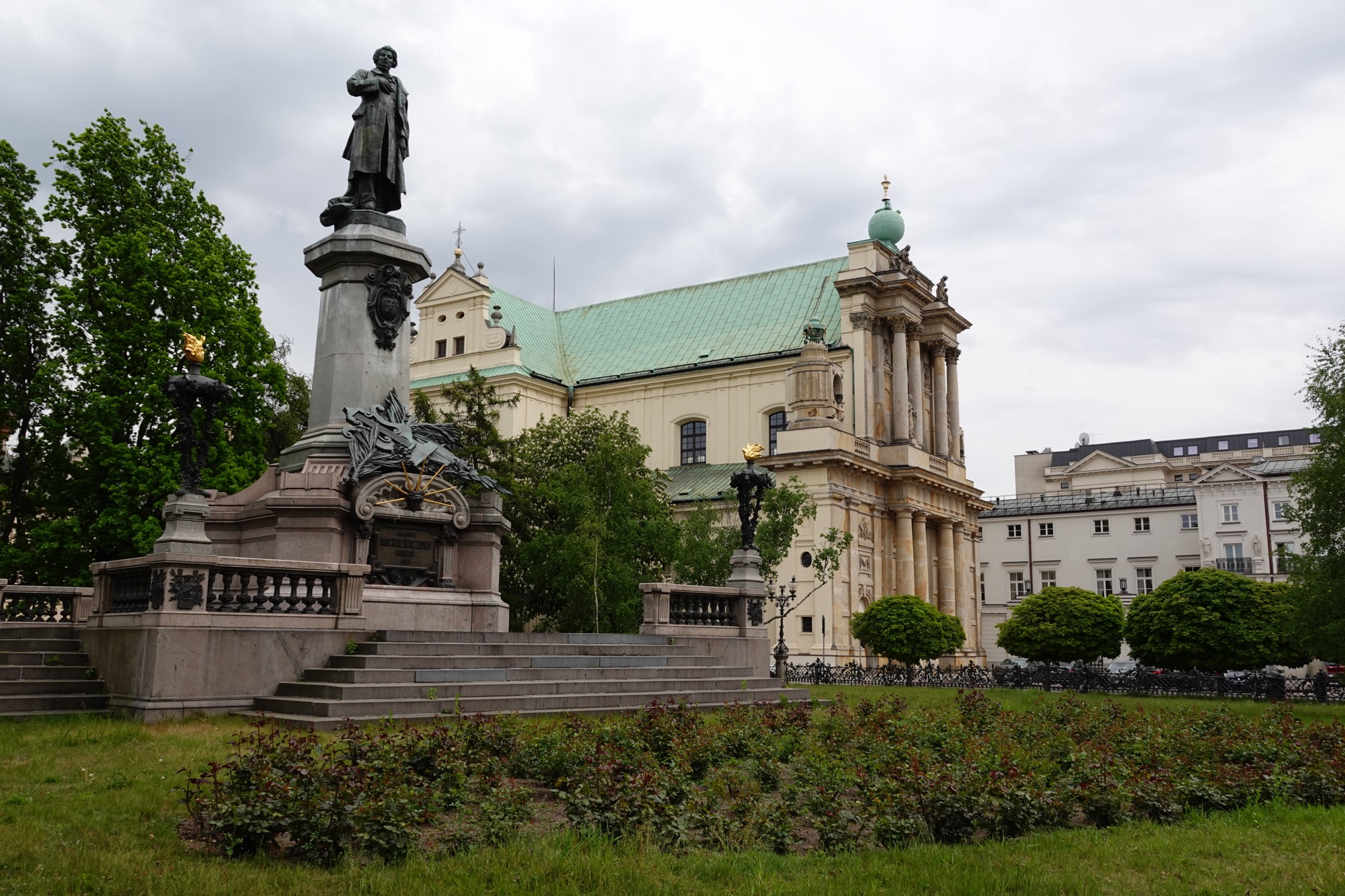
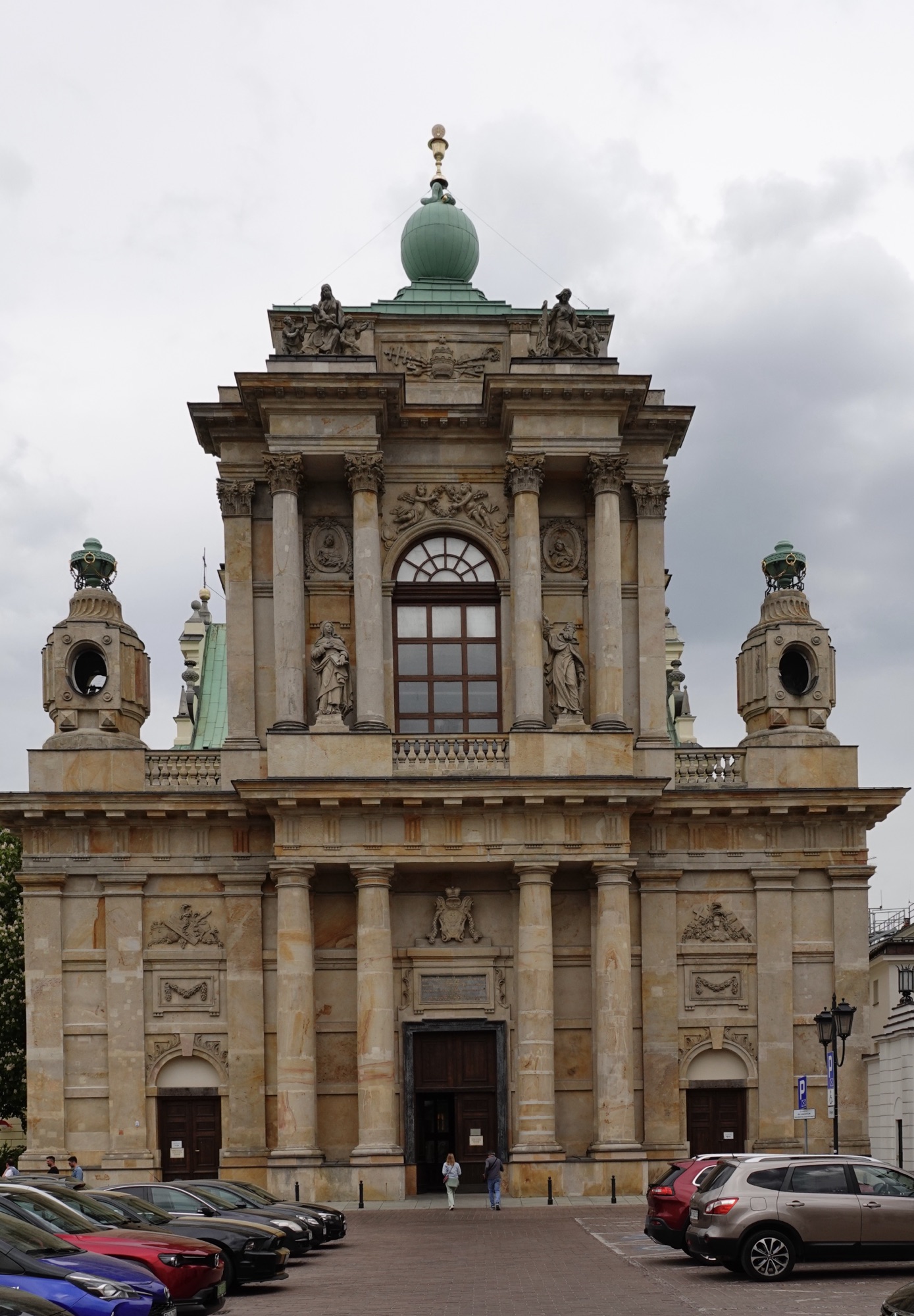
The 14.5m tall Adam Mickiewicz Monument, dedicated in 1898 to one of Poland’s most revered poets, was destroyed by German forces during World War II but was later reconstructed. In the background is the Church of the Assumption of the Virgin Mary and St. Joseph (the “Carmelite Church”)
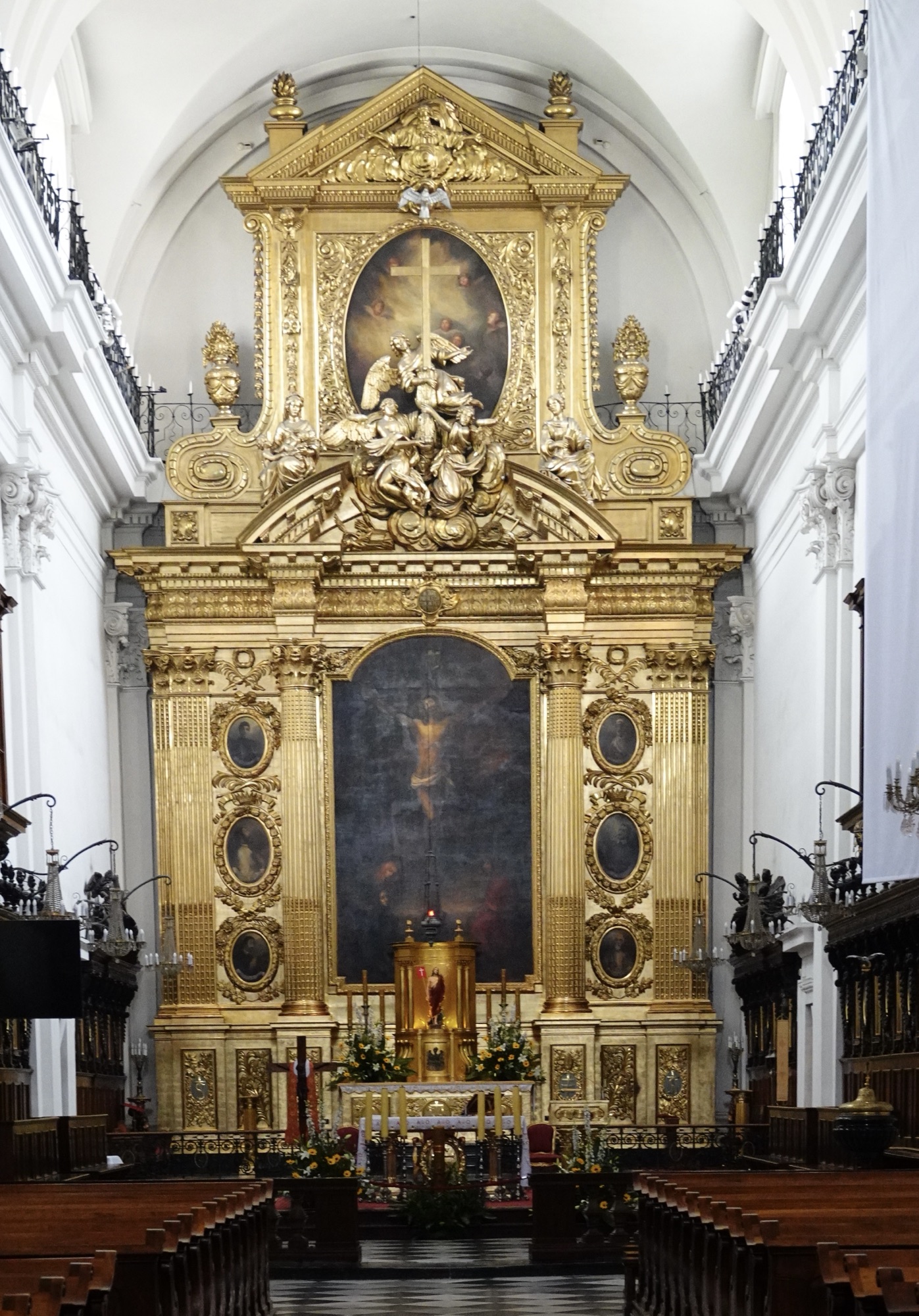
This is one of only two churches in the entire city that was not demolished during WWII, although it was burned down by the Swedes and the Brandenburg Germans in the 1650s.
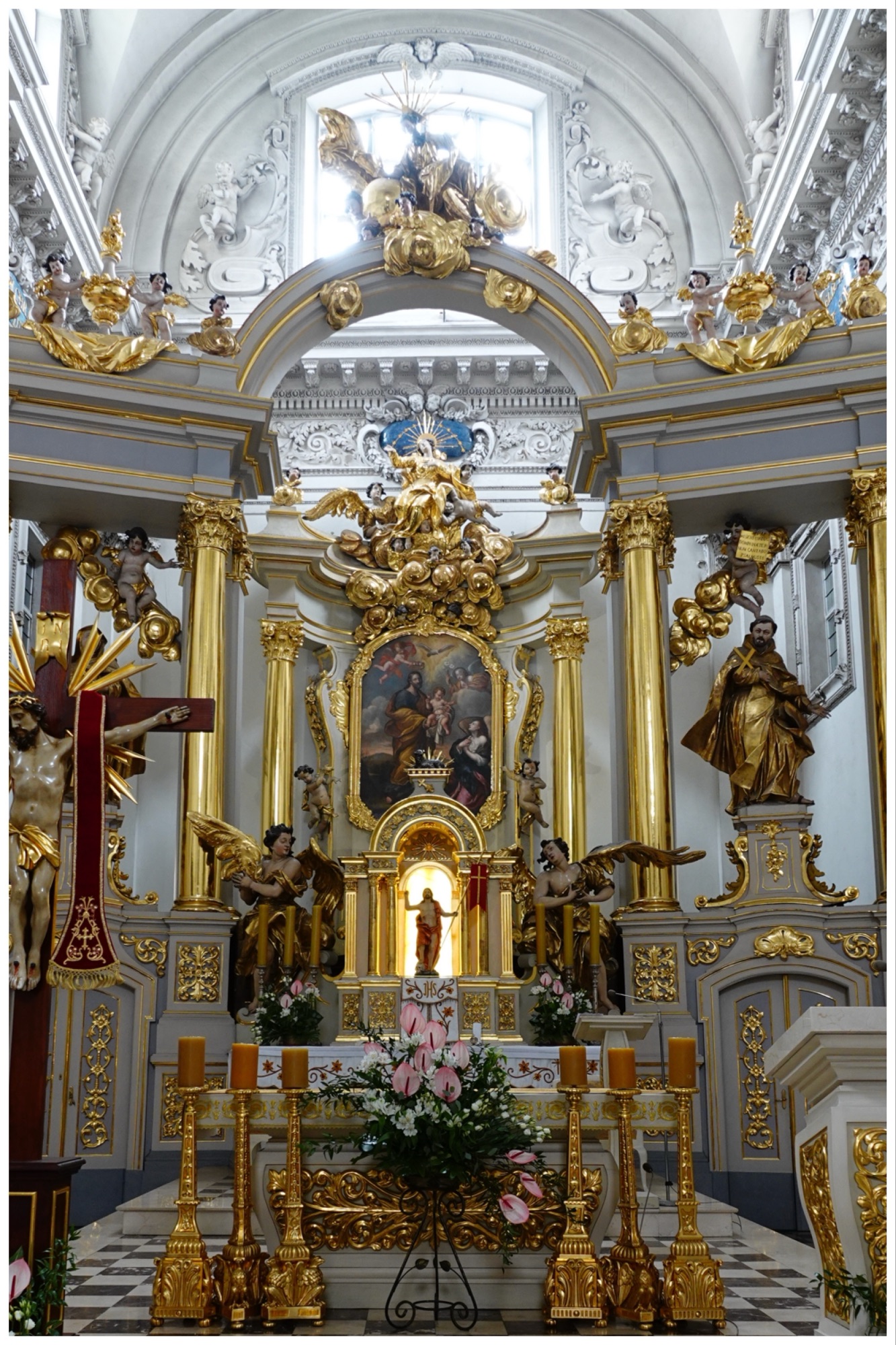
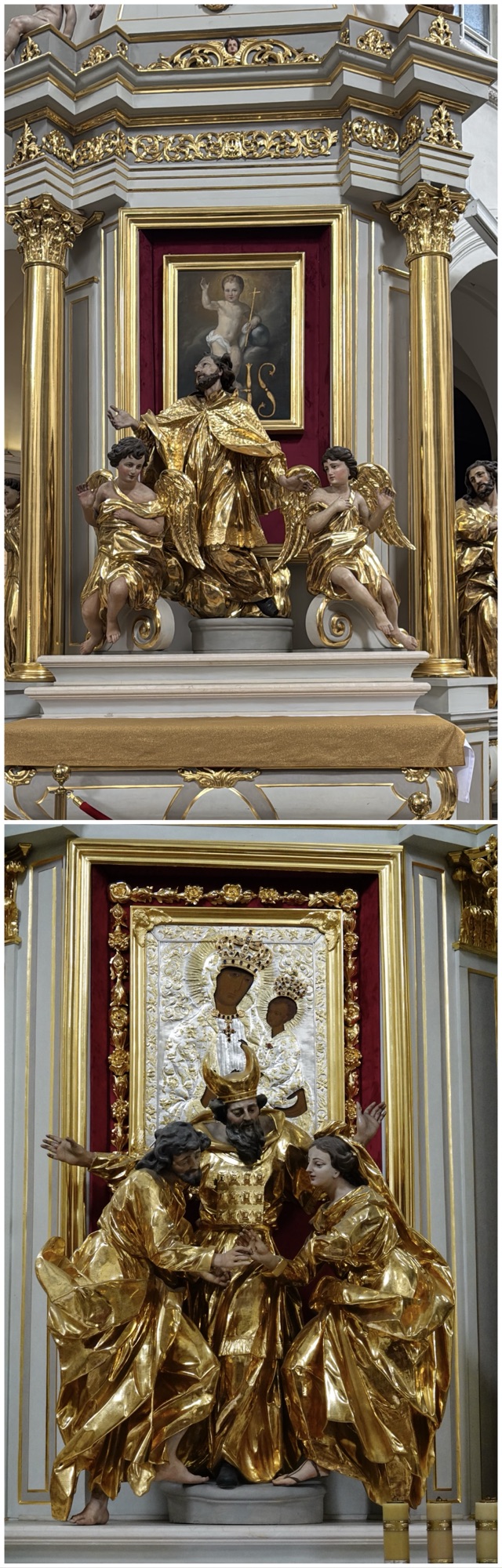
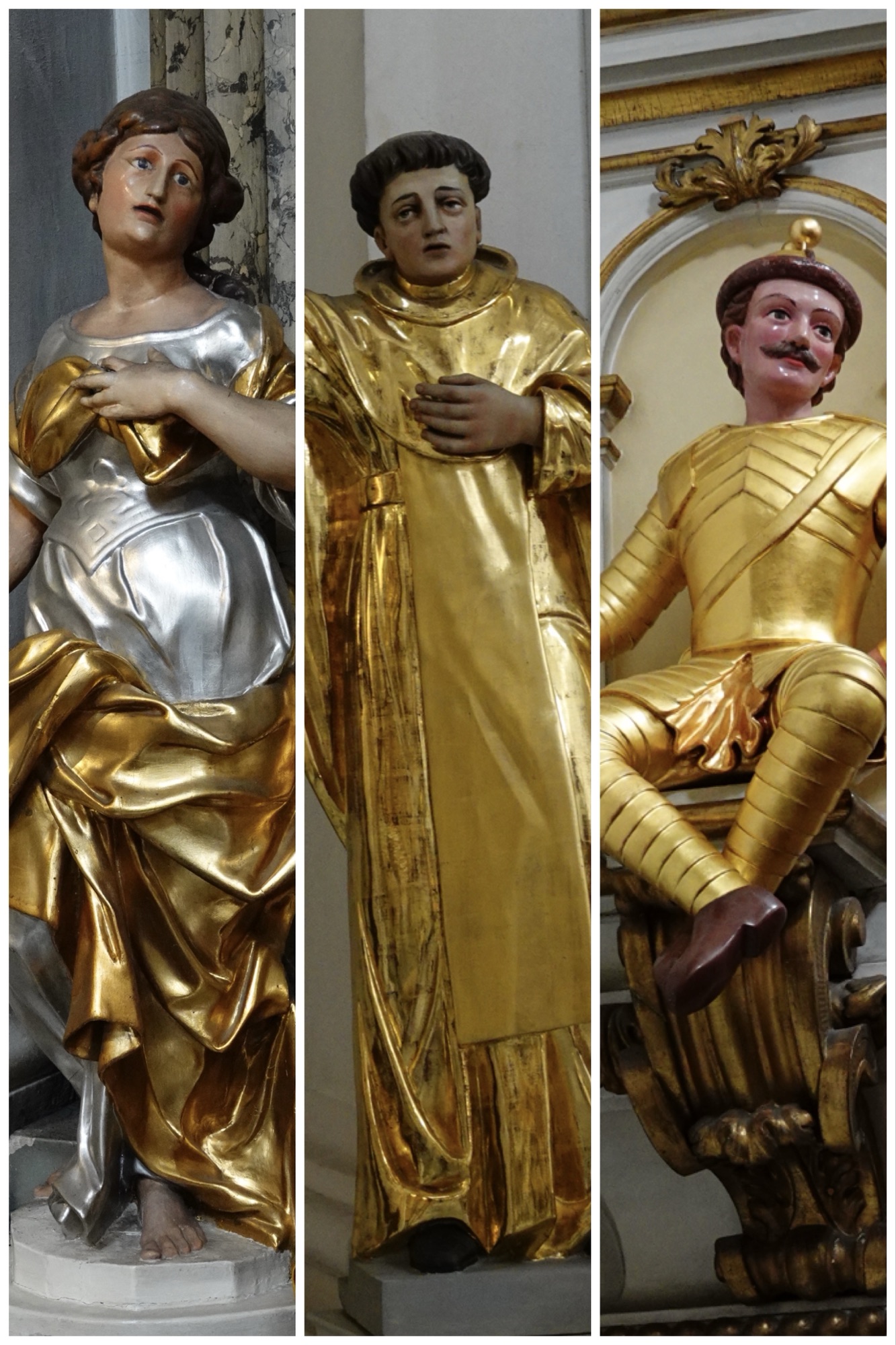
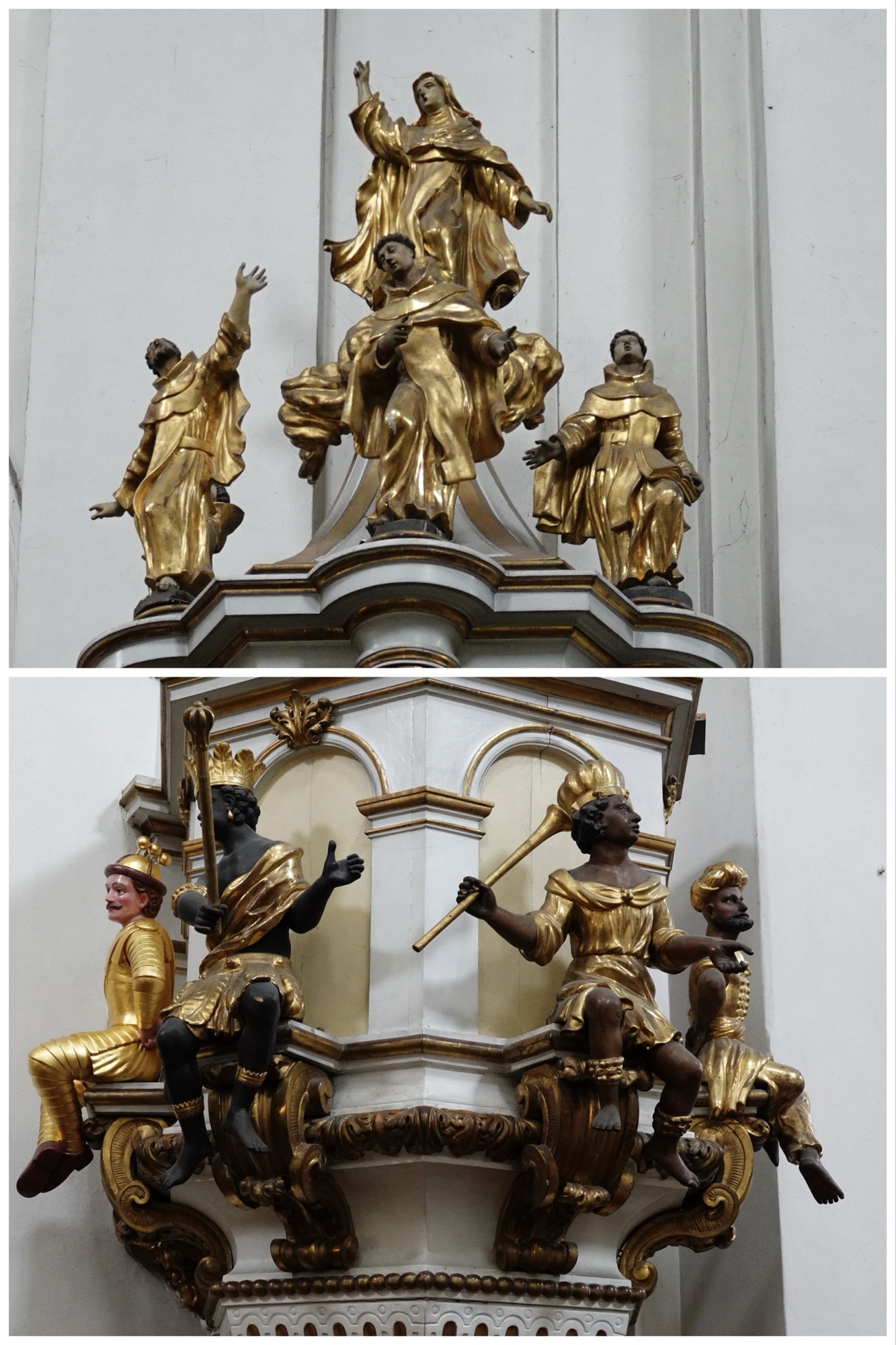
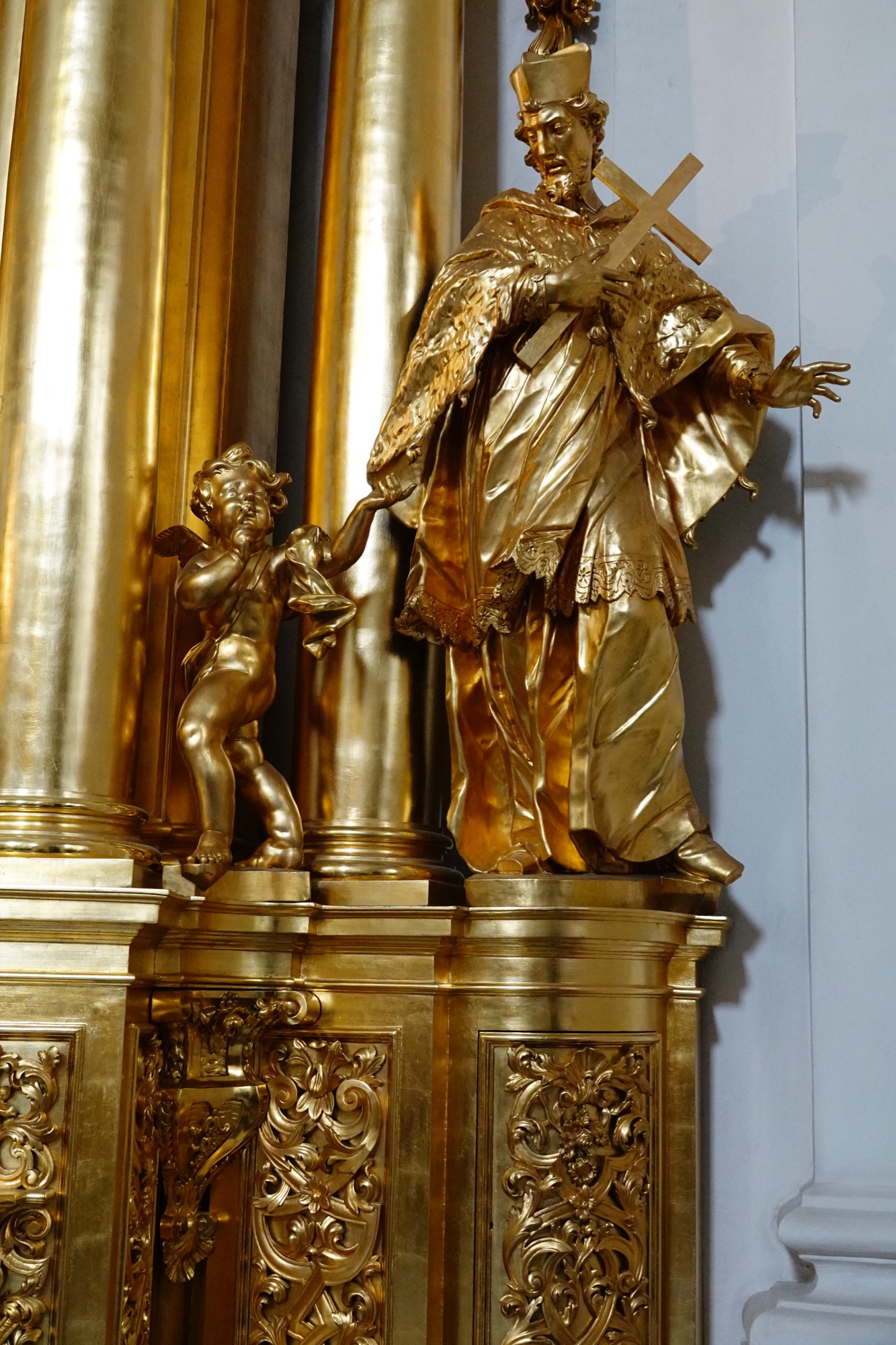
Inside it is, frankly, overly opulent even for someone who likes “bling”. I have never seen that much gold leaf in a church before.
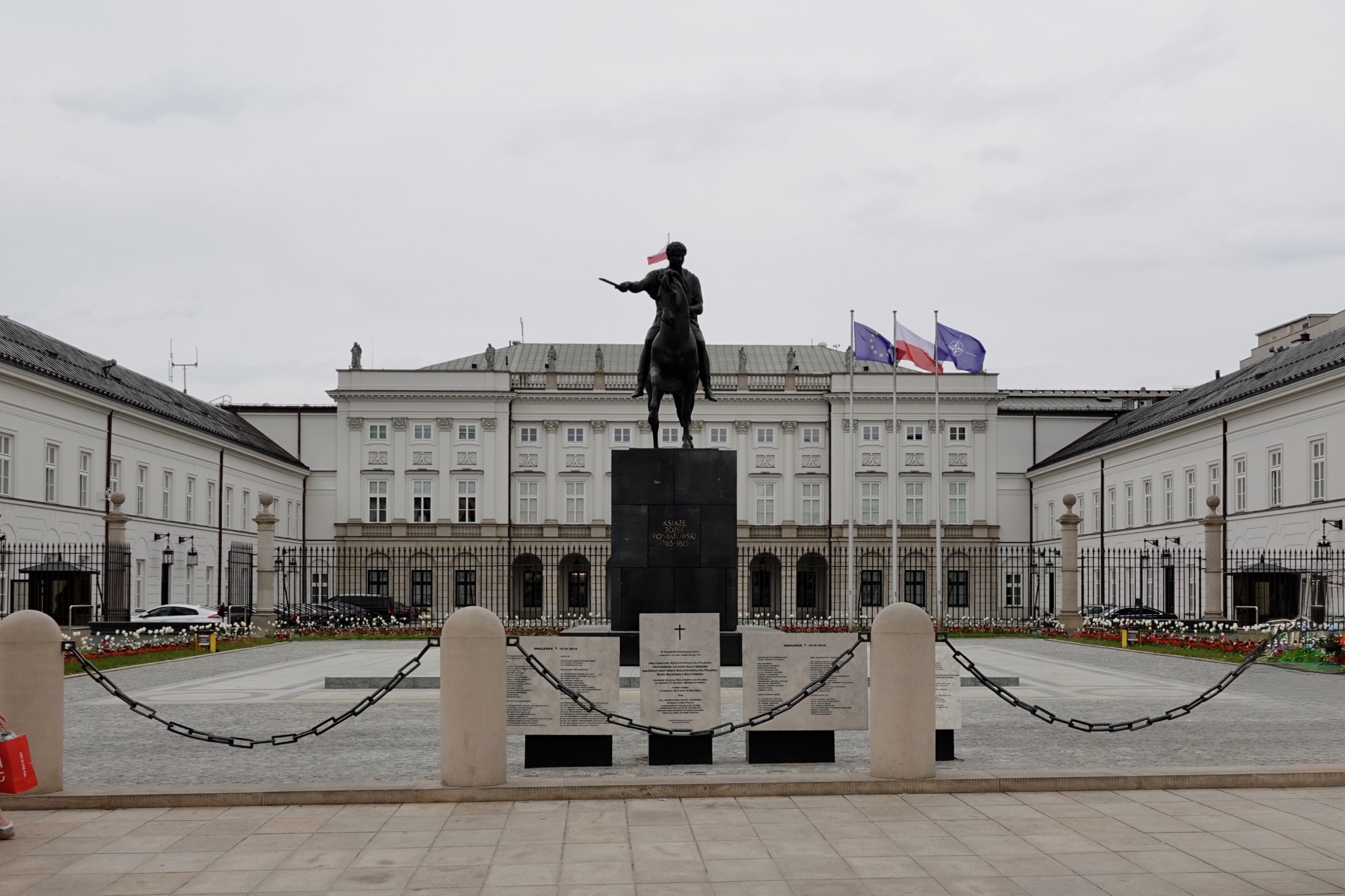
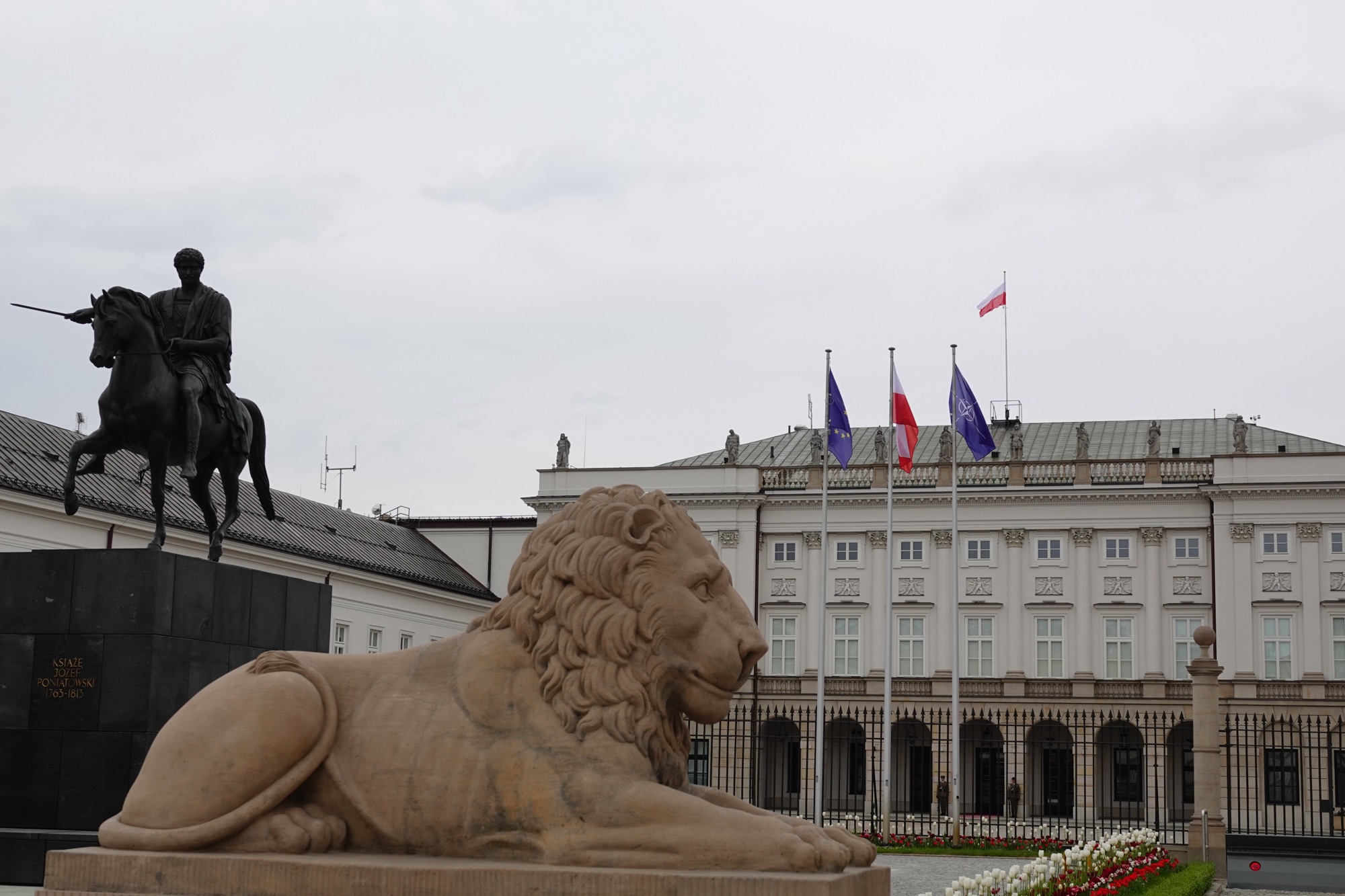
The Presidential Palace, originally constructed in 1643, was completely rebuilt after WWII. It was the site where the Warsaw Pact was signed in 1955.
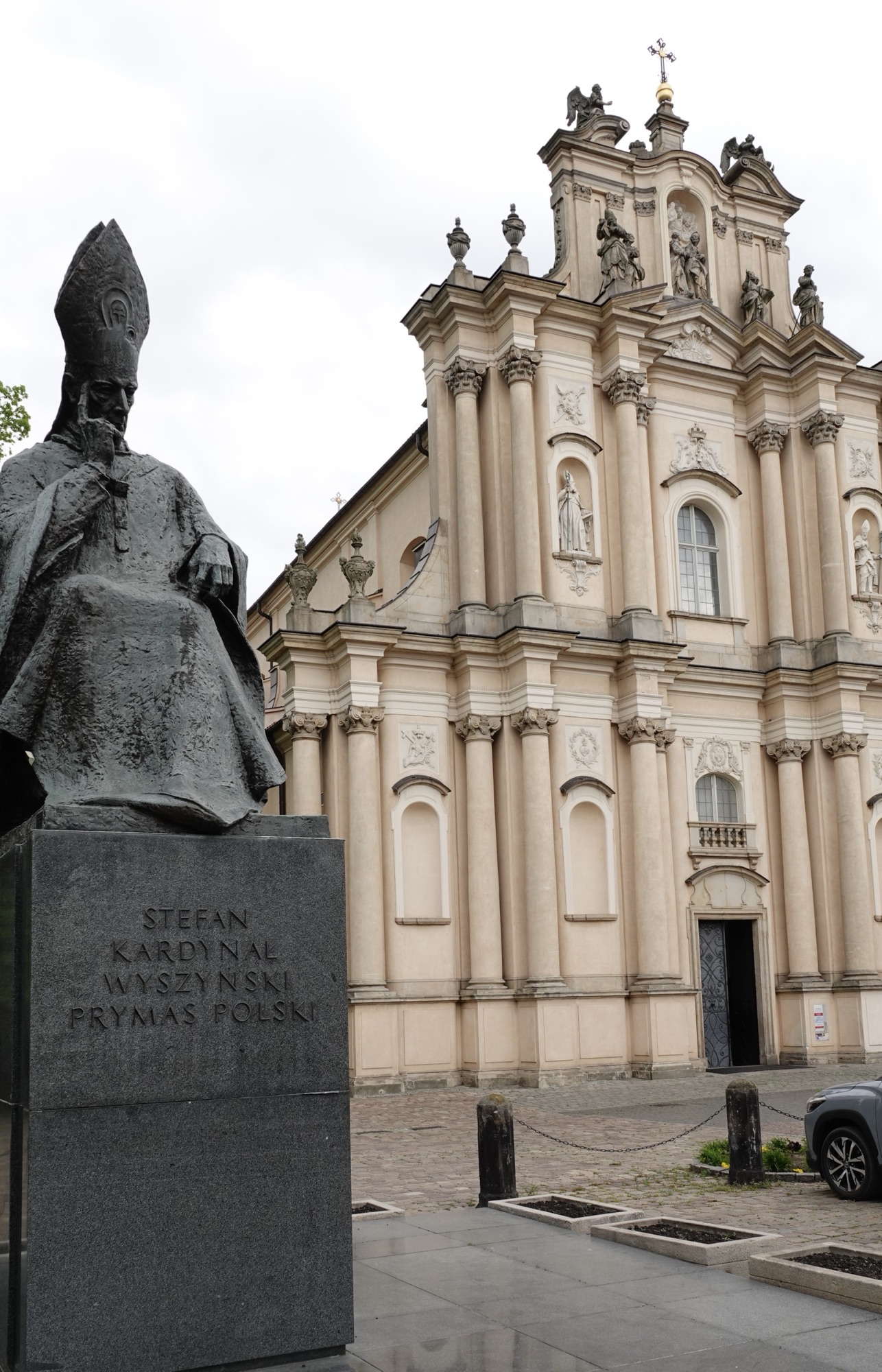
The Visitationist Church (Kościół Wizytek), was constructed beginning in 1654, burned down by the Swedes in 1656, and finished in 1761. It is famous for being a place where composer Fryderyk Chopin used to play the organ. It was left almost completely untouched during World War II.
On the opposite side of the street was a display showing the Canaletto painting like those that were used as a reference point for the city’s reconstruction.
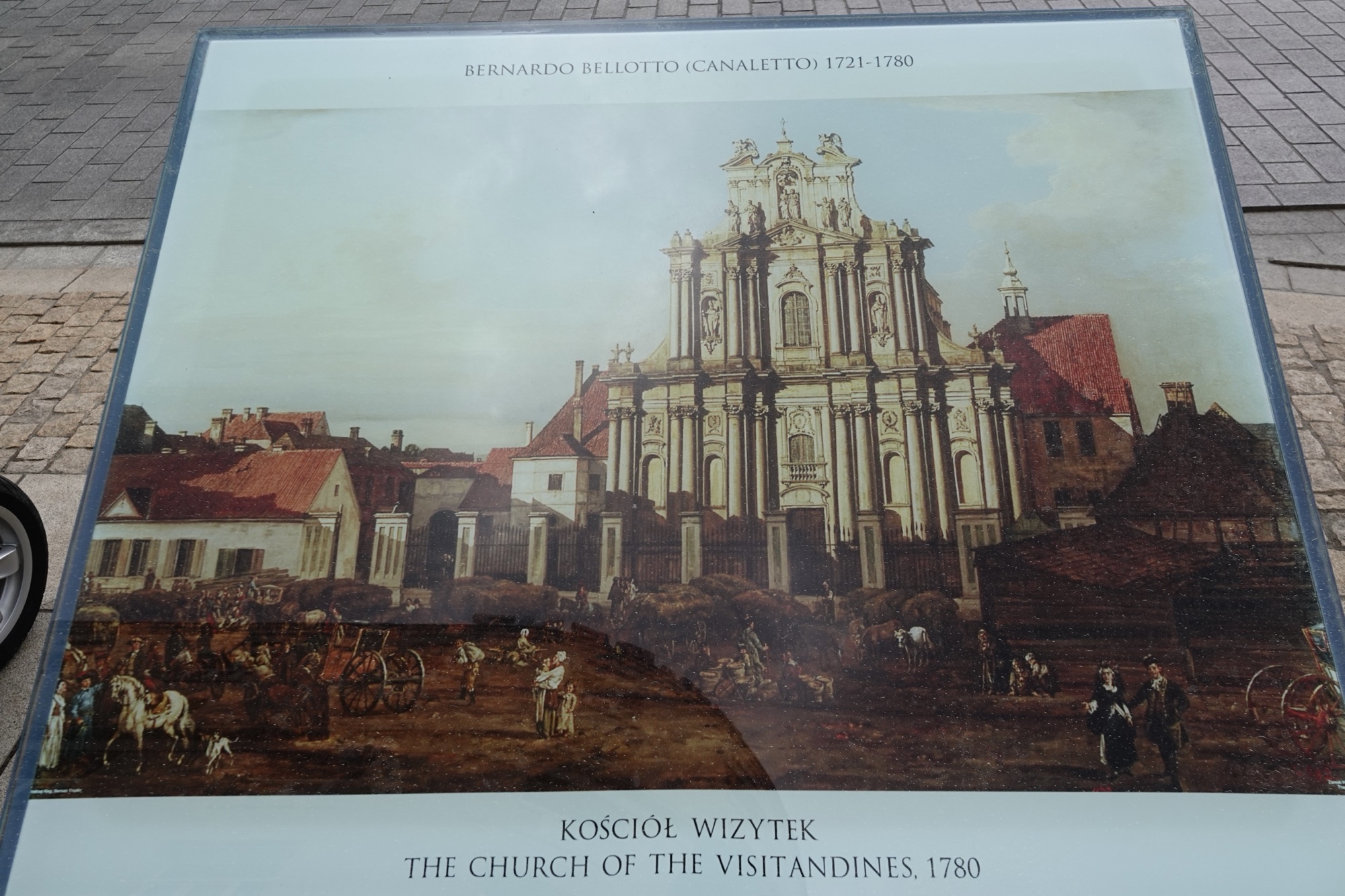
What was interesting was that we met a docent from the Warsaw Museum who told us that when Stanislaus II Augustus, King of Poland and Grand Duke of Lithuania, commissioned Canaletto to paint Warsaw streetscapes, he specifically wanted them idealized in order to use them as “propaganda” in his “panorama room”. The intent was that visitors should be awed and intimidated by the beauty of his city.
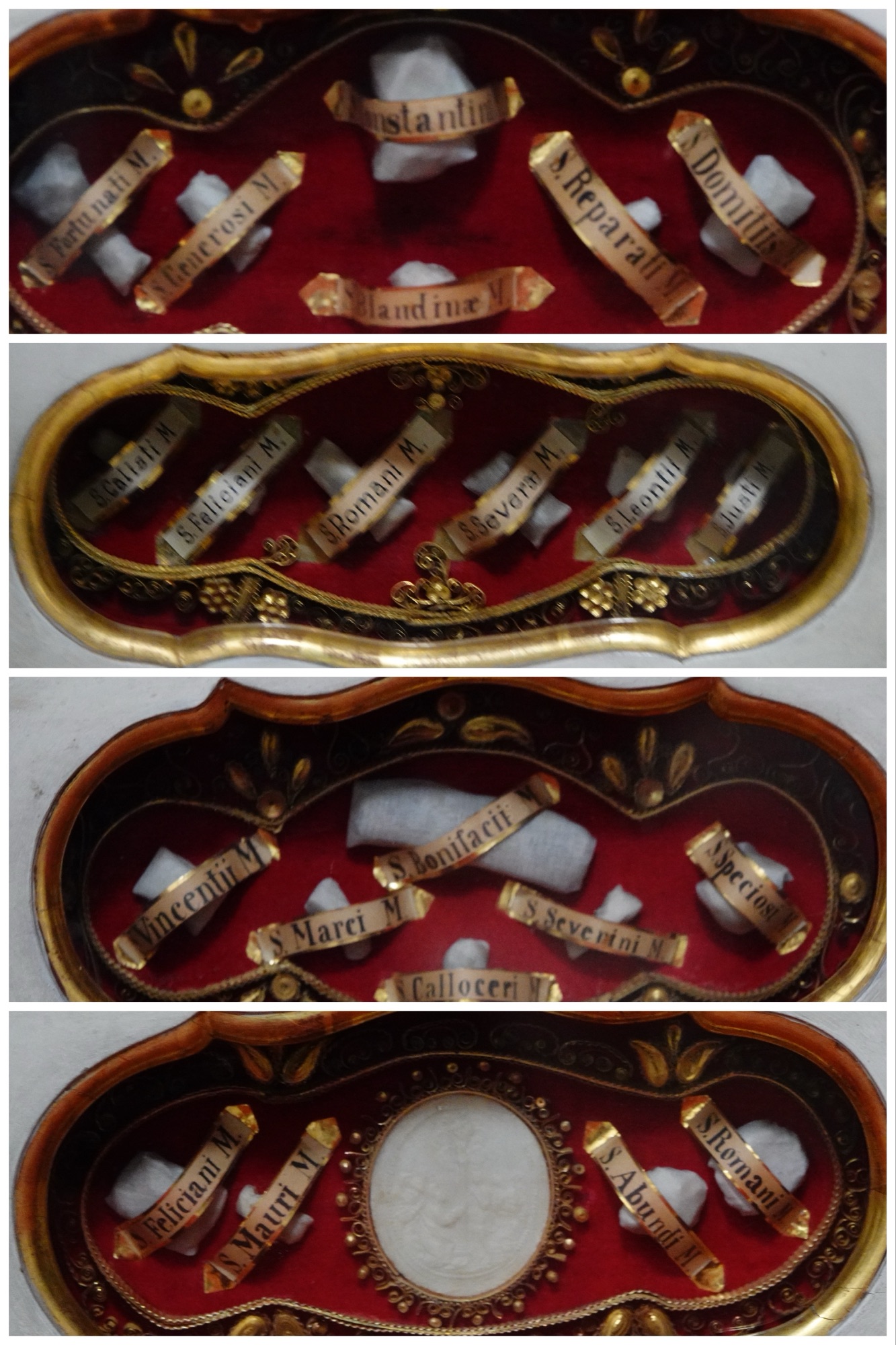
What this church lacked in gold leaf it made up for in multiple reliquaries containing small, white bone fragments (“ex ossibus”) labeled with the names of various Christian saints and martyrs. It gives one pause, the whole concept of dividing up bones between churches.
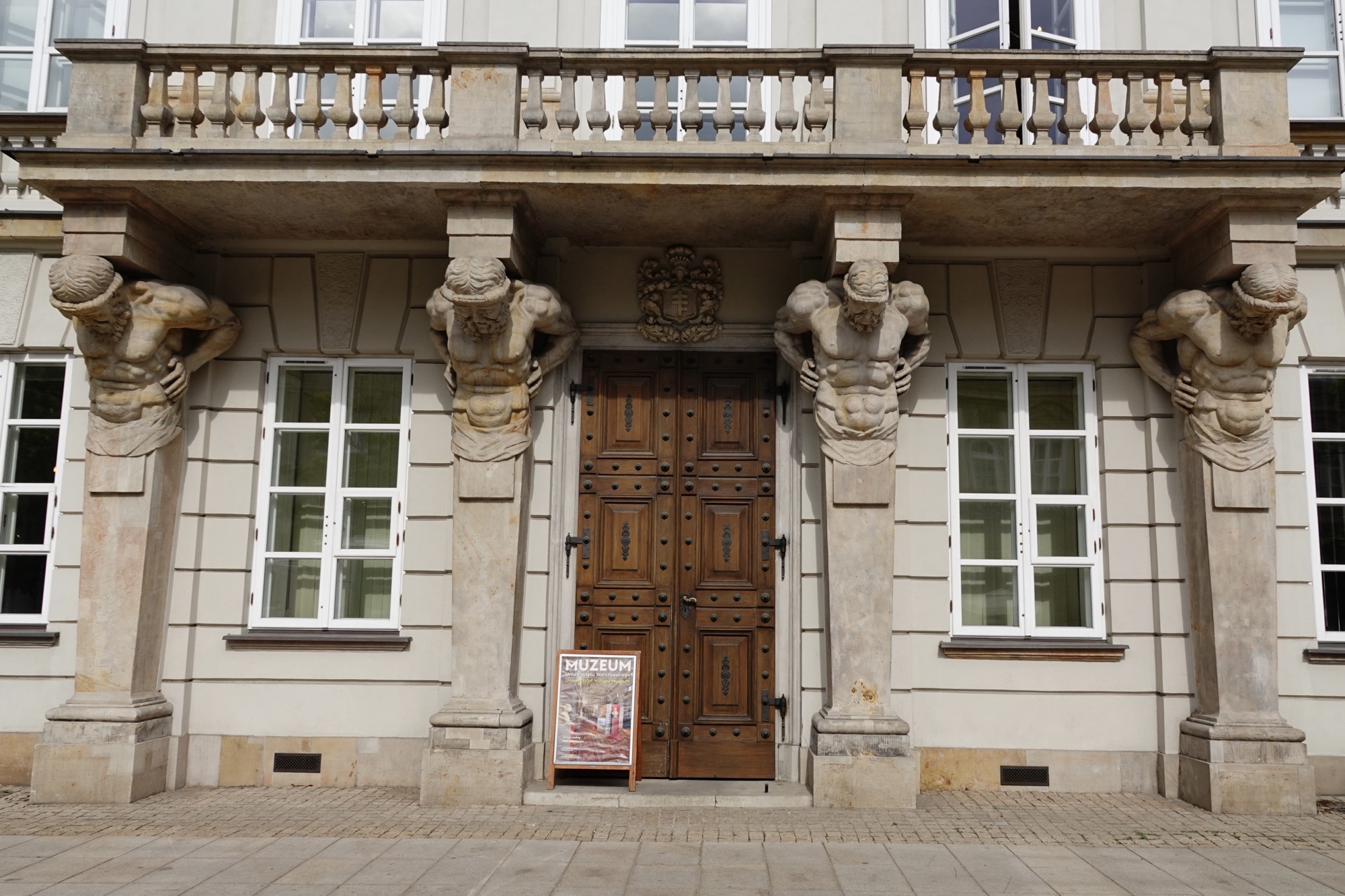
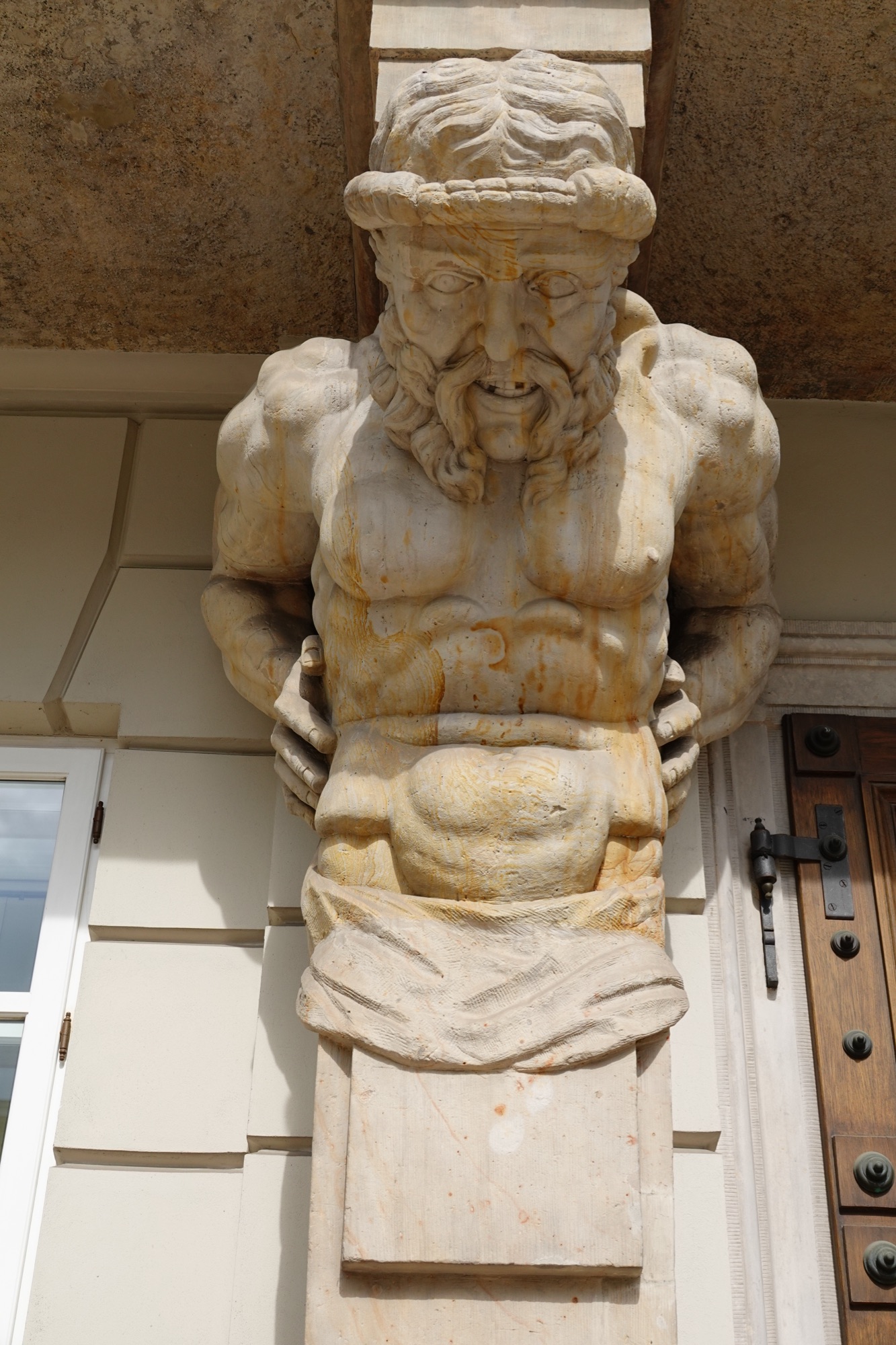
Uruski Palace was designed by Andrzej Gołoński and built 1844-1847 on the site of the palace of Stanisław Poniatowski, the king’s father. It was burnt down in 1944, rebuilt 1951.
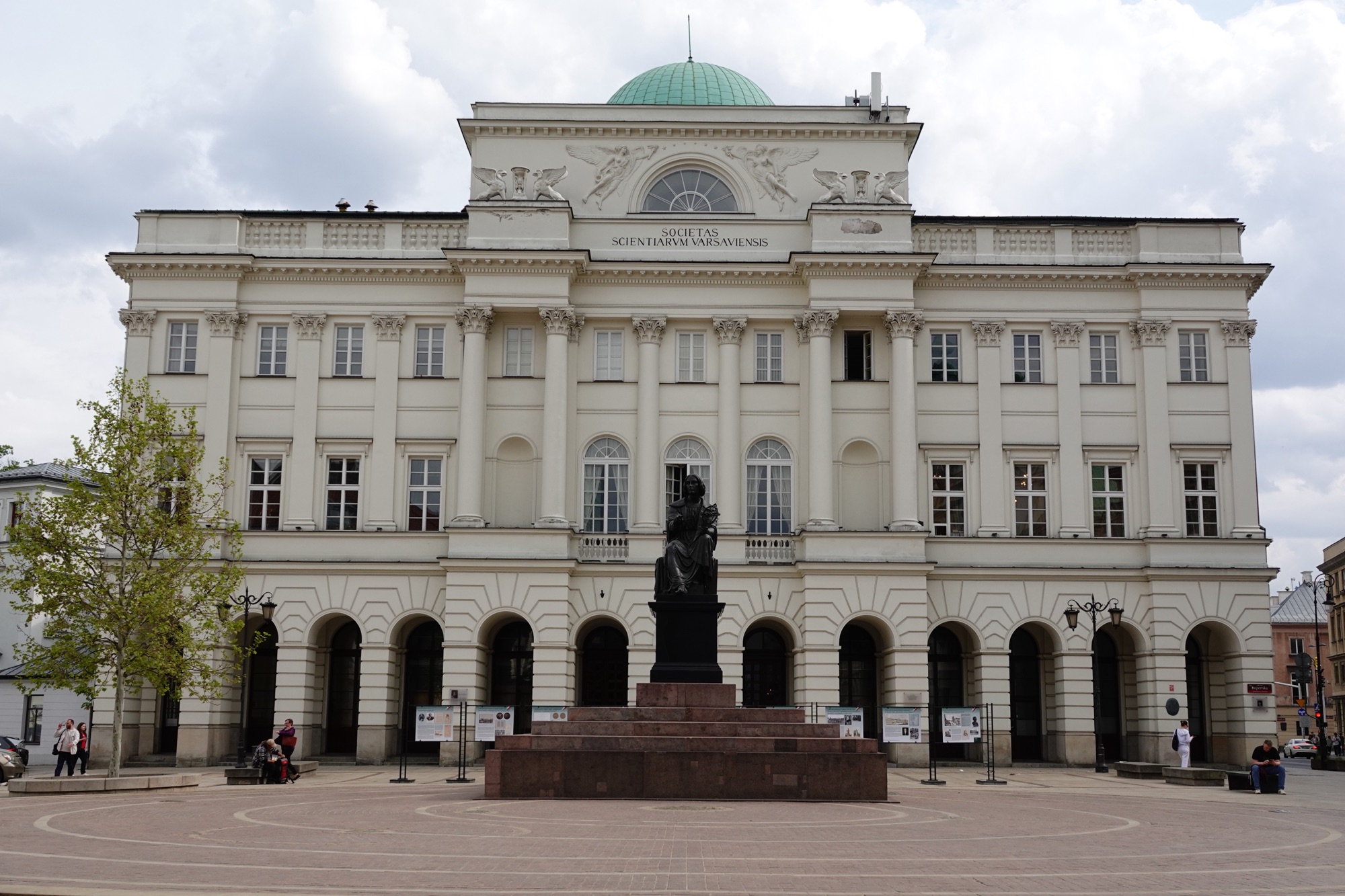
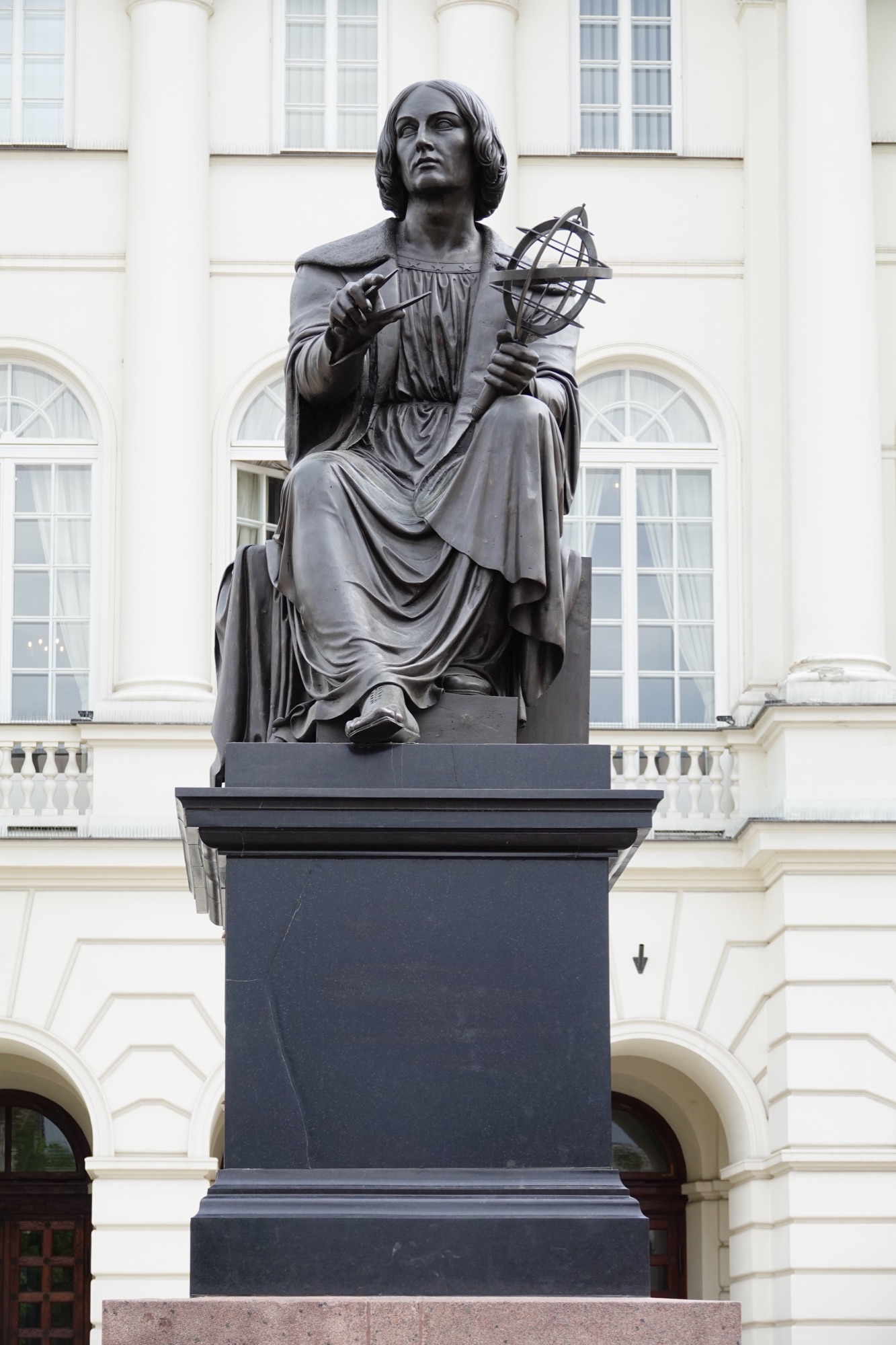
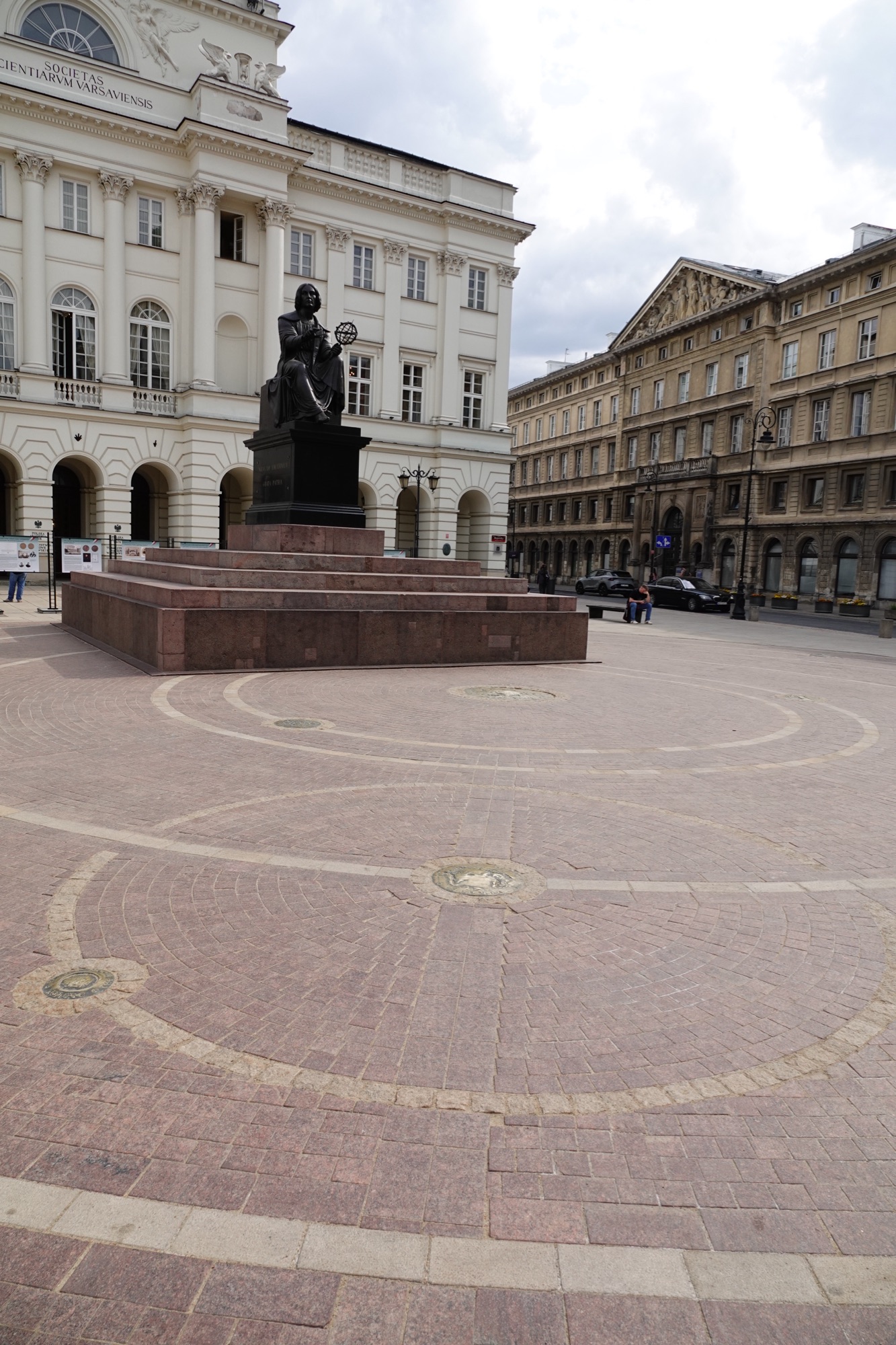
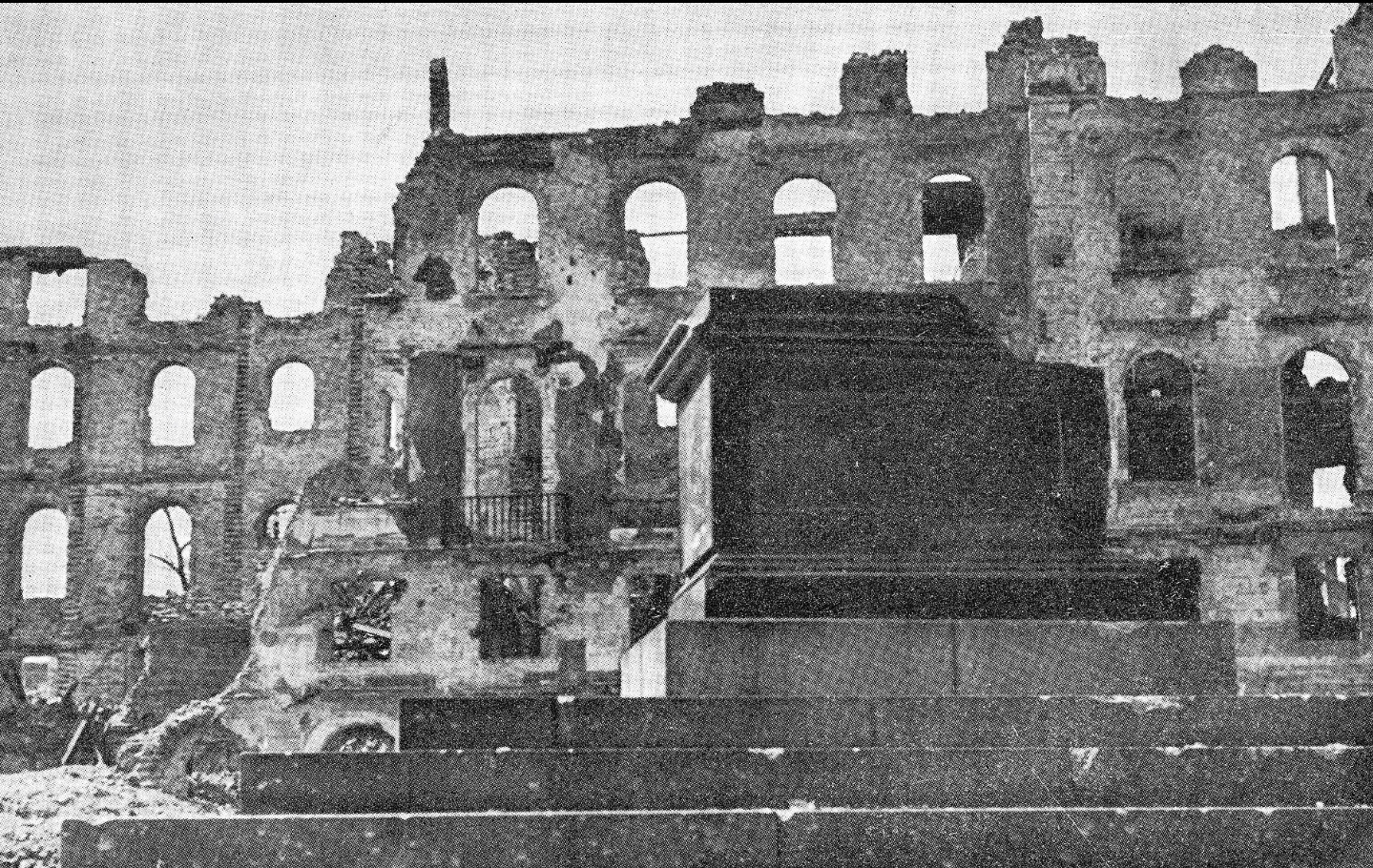
The Staszic Palace in Warsaw, originally built in the early 19th century, serves as the seat of the Polish Academy of Sciences.The statue in front is the Nicolaus Copernicus Monument, dedicated to the famous Polish astronomer, and is surrounded on the ground by the rings of the solar system. The building was almost completely razed in 1944, rebuilt in 1946-50.
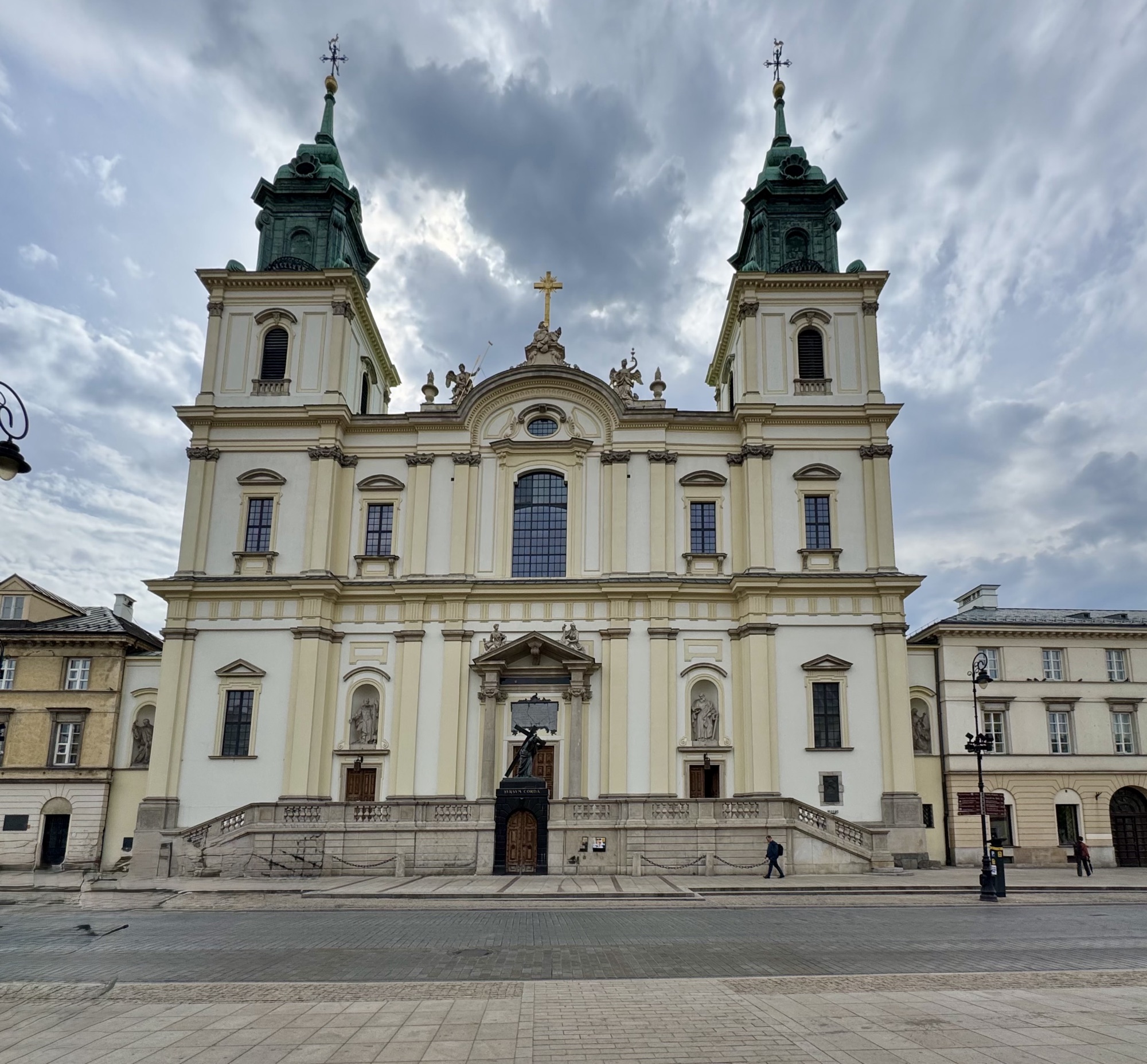
Holy Cross Church, given the designation of Minor Basilica by Pope John Paul II, was severely damaged during the 1944 Warsaw Uprising and subsequently rebuilt in a simplified baroque style between 1945 and 1953. The picture really does not effectively show how huge the church is.
If we thought we’d seen gold leaf before…
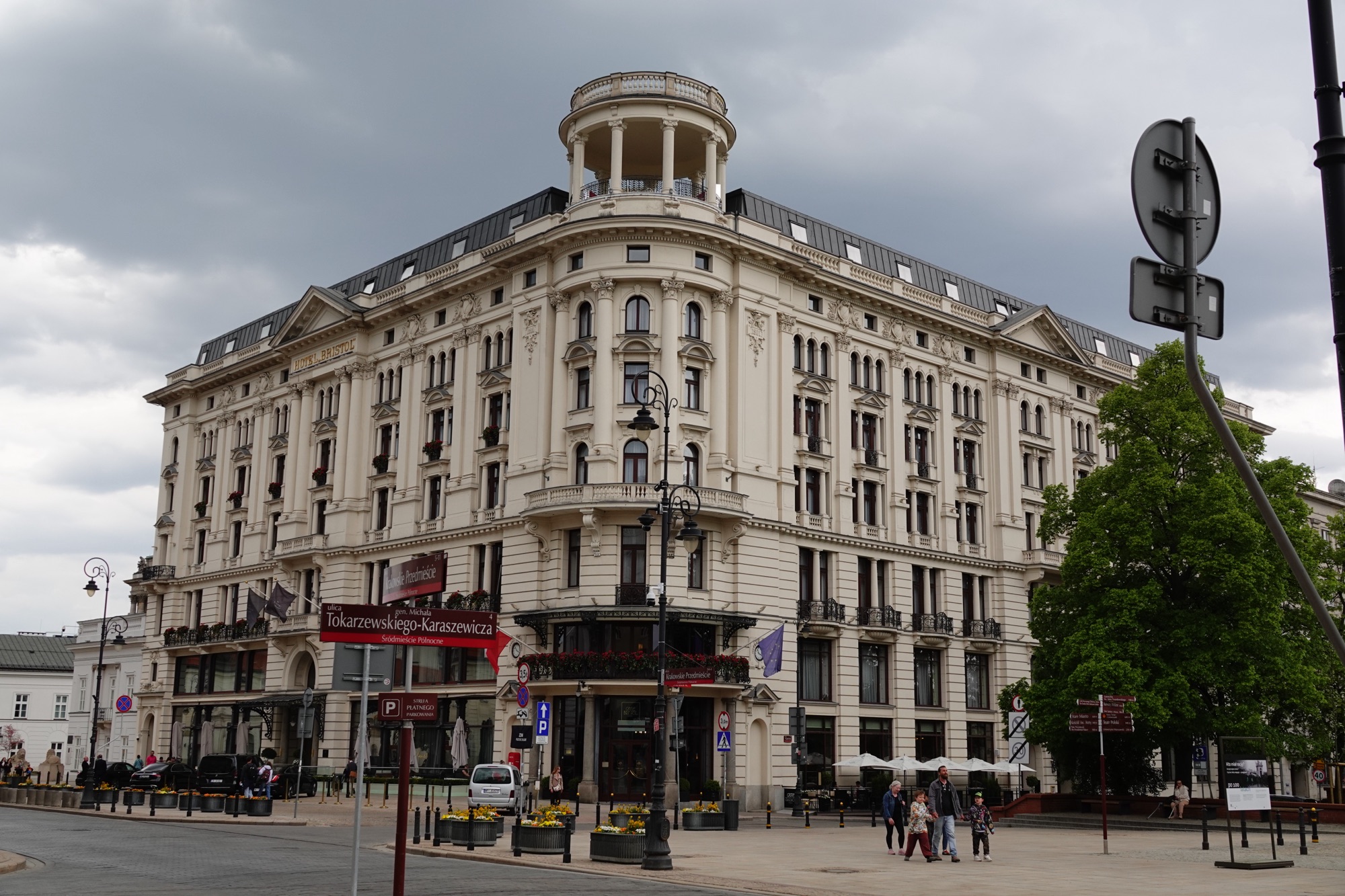
When we think about a city 85% destroyed, it is remarkable that the Hotel Bristol, built in 1901, escaped almost unscathed. It is considered one of Poland’s (not just Warsaw’s) most luxurious hotels.
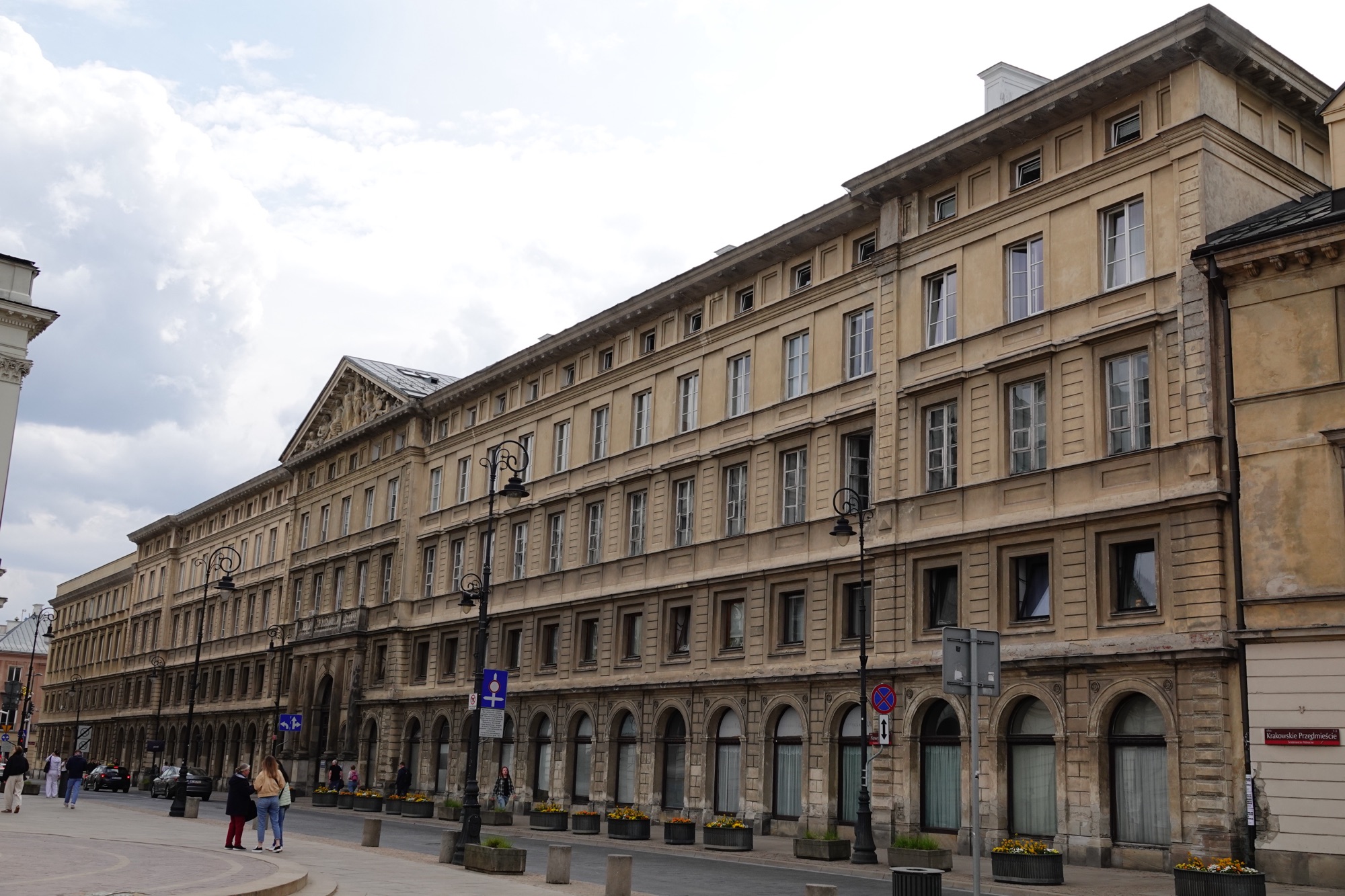
Zamoyski Palace , currently the Faculty of Journalism and Political Science of the University of Warsaw, was rebuilt between 1948 and 1950.
In one of the many Warsaw squares we saw this plaque, which seems appropriate for a phoenix reborn and optimistic.
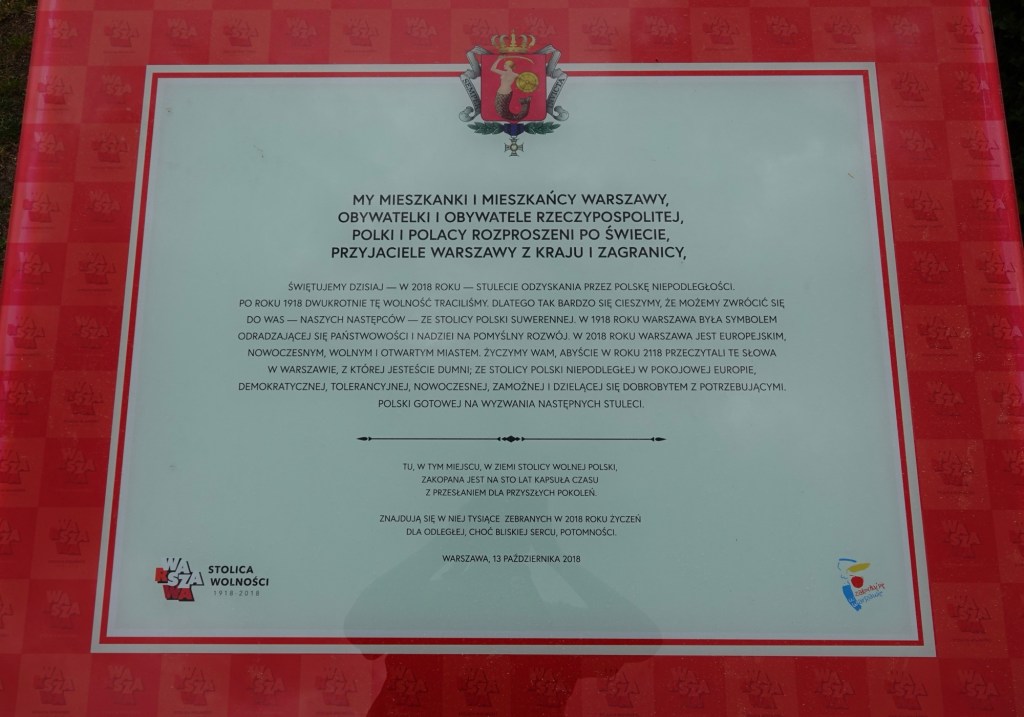
Its inscription, translated, reads:
WE RESIDENTS OF WARSAW, CITIZENS OF THE REPUBLIC OF POLAND, POLES SCATTERED AROUND THE WORLD, & FRIENDS OF WARSAW FROM HOME AND ABROAD,
TODAY – IN 2018 – WE CELEBRATE THE CENTENARY OF POLAND’S REGAINING INDEPENDENCE.
AFTER 1918, WE LOST THIS FREEDOM TWICE. THAT IS WHY WE ARE SO HAPPY THAT WE CAN ADDRESS YOU – OUR SUCCESSORS – FROM THE SOVEREIGN CAPITAL OF POLAND.
IN 1918, WARSAW WAS A SYMBOL OF THE RESURGENCE OF STATEHOOD & HOPE FOR SUCCESSFUL DEVELOPMENT.
IN 2018, WARSAW IS A EUROPEAN, MODERN, FREE AND OPEN CITY.
WE WISH YOU TO READ THESE WORDS IN A WARSAW OF WHICH YOU ARE PROUD IN 2118; FROM THE INDEPENDENT CAPITAL OF POLAND IN A PEACEFUL EUROPE, DEMOCRATIC, TOLERANT, MODERN, WEALTHY AND SHARING PROSPERITY WITH THOSE IN NEED.
POLAND IS READY FOR THE CHALLENGES OF THE NEXT CENTURIES.
 Rose and Ted’s Excellent Adventure