Yesterday and today were random wandering days, with our only specific destination being the local Hondo Centre to buy some more SPF50 face cream.
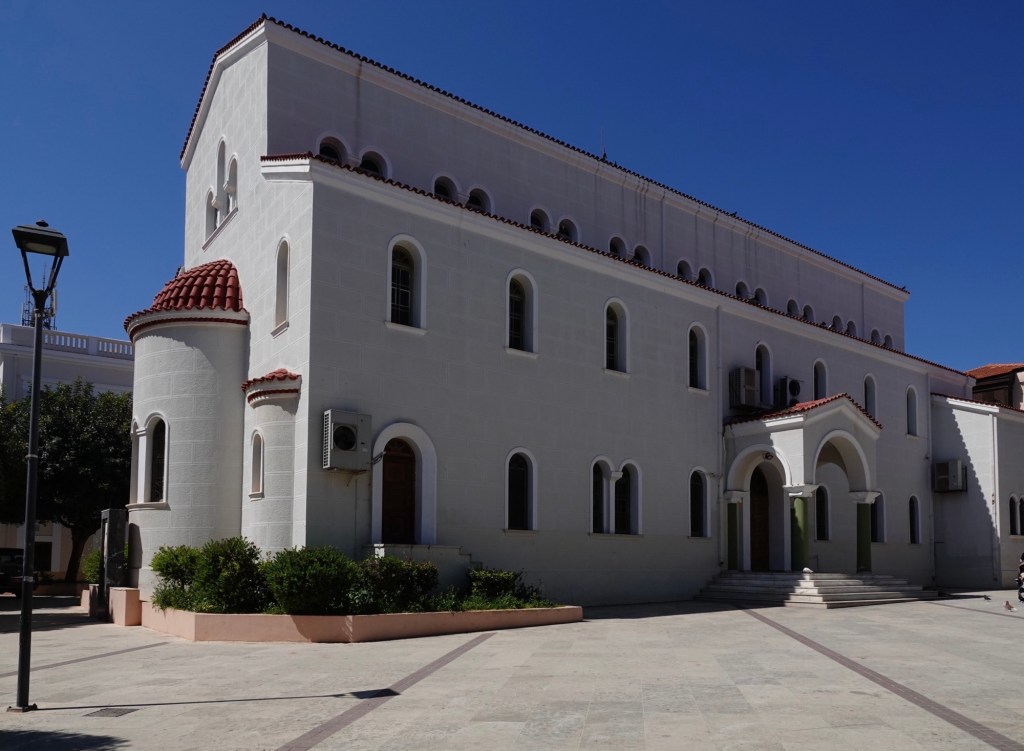
On yesterday’s walk we were distracted by the Metropolitan Cathedral of the Great Holy Virgin (Megali Panagia), modelled after the Church of Evangelistria on the island of Tinos.
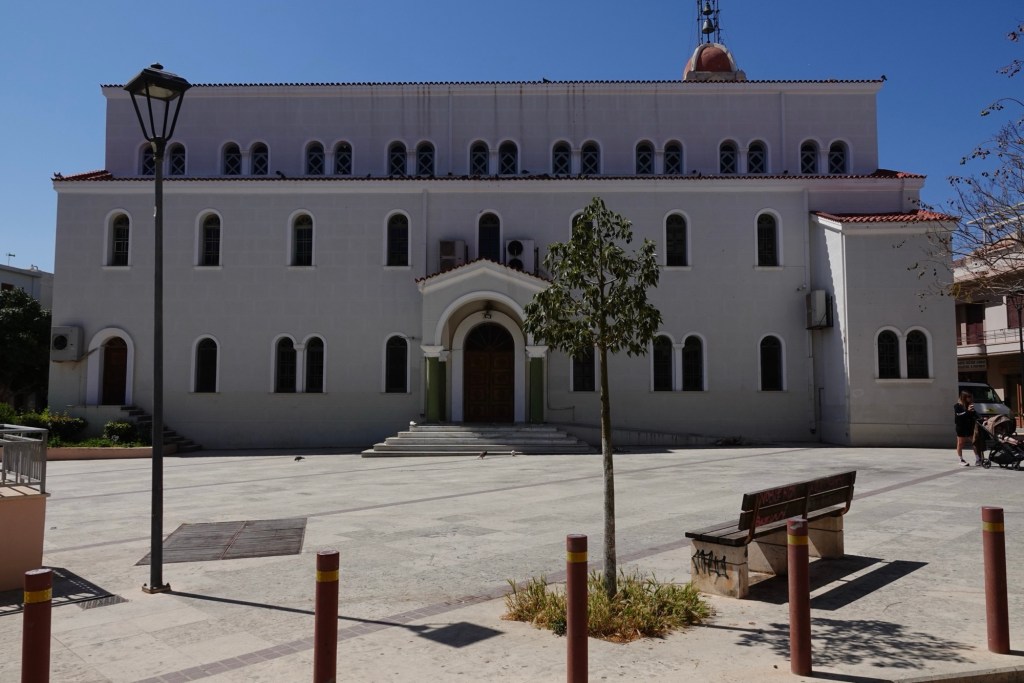
The current building was constructed in 1956 after the previous 1899 building, itself a reconstruction of an 1834 iteration, was heavily bomb damaged during World War II.
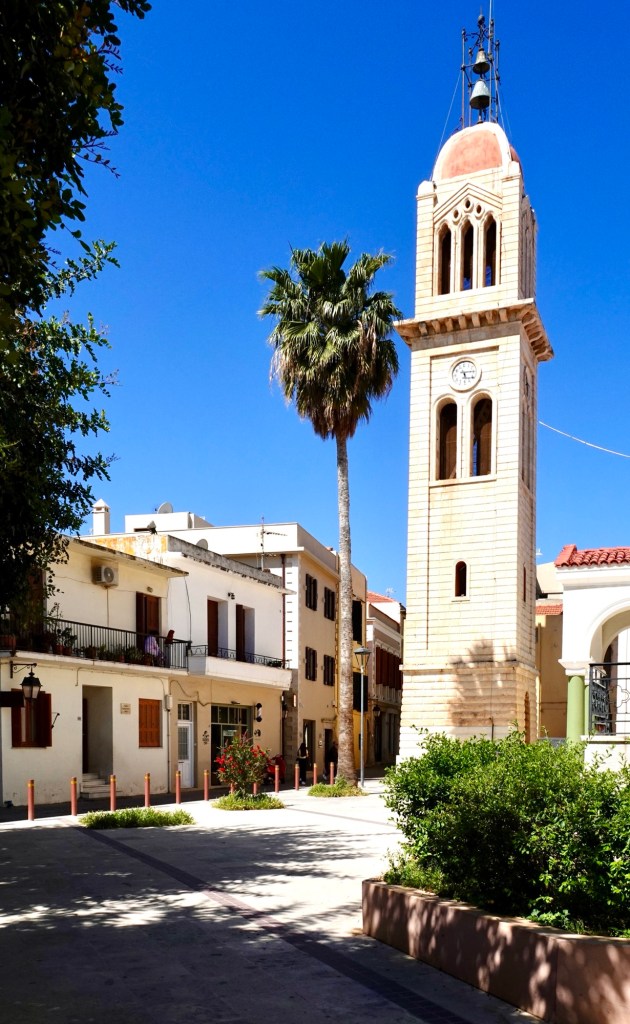
The bell tower is also a post-WWII rebuild.
Unfortunately the interior is being restored and we could not go inside.
After completing my shopping, we crossed the street to gawk at Rethymno’s largest church, the Church of the Four Martyrs.
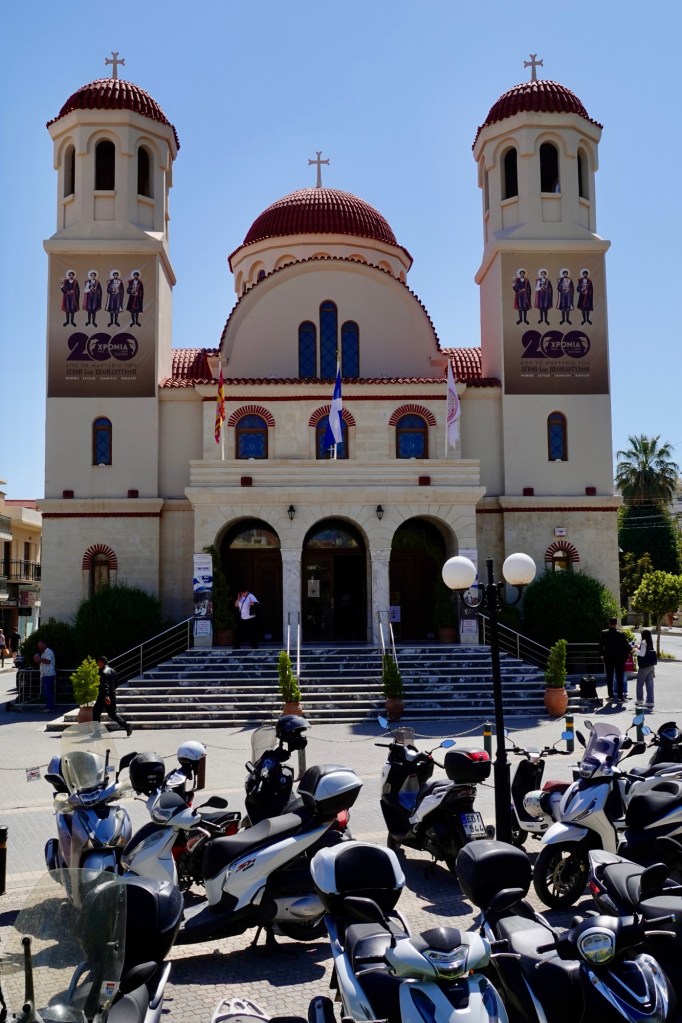
Although signs on the church bell towers referenced a 200 year anniversary (1824-2024), the current church dates only to 1975. It is the third church built on the site. The first two, dating to 1905-1947 and 1955-1972, were also consecrated to the Four Martyrs.
The 200 year anniversary refers to the martyrdom, not the edifice.
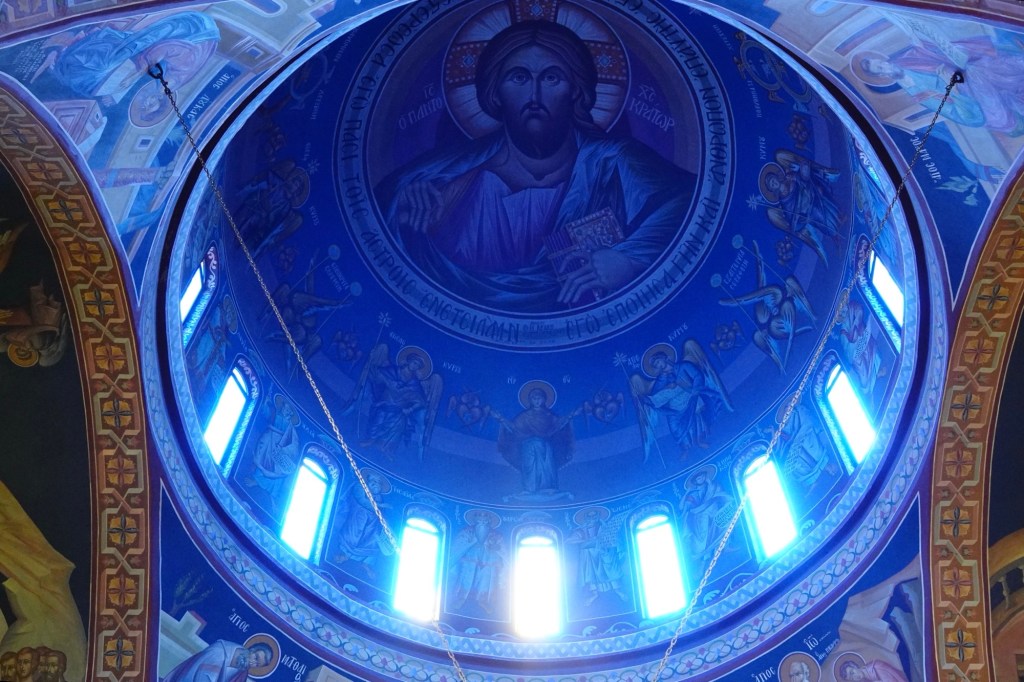
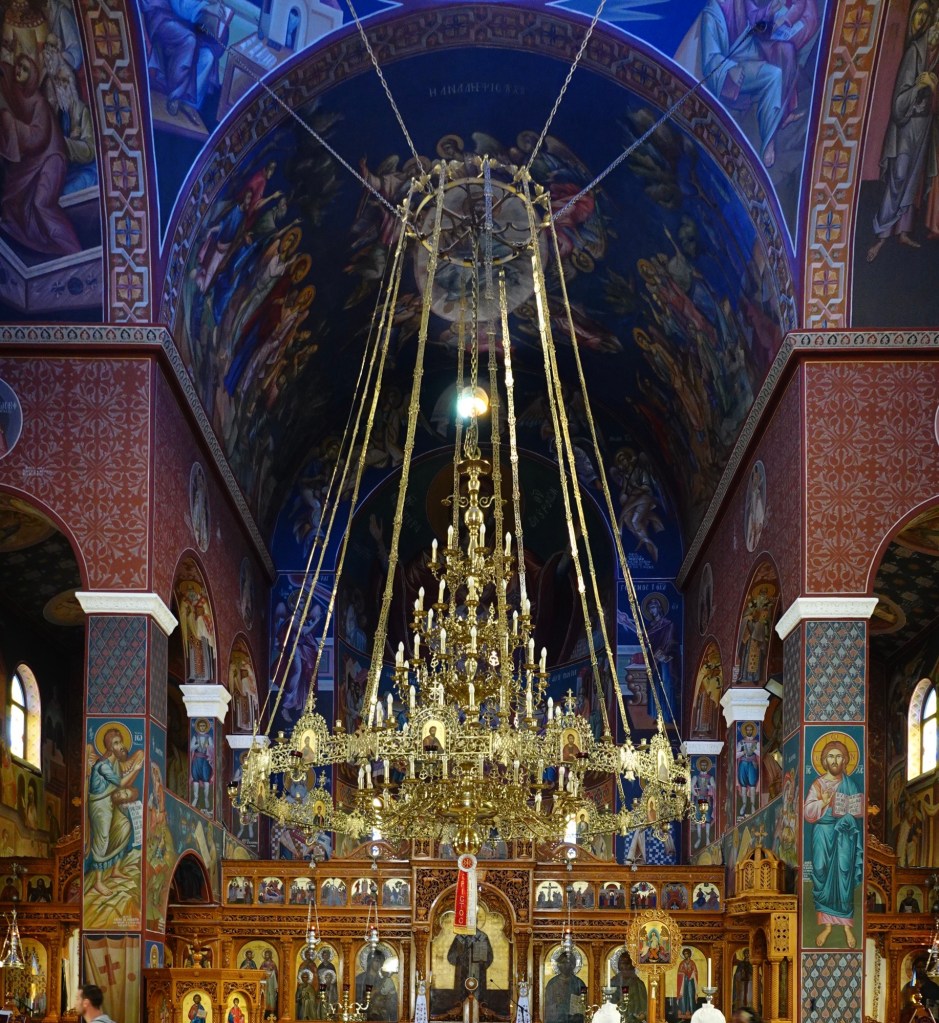
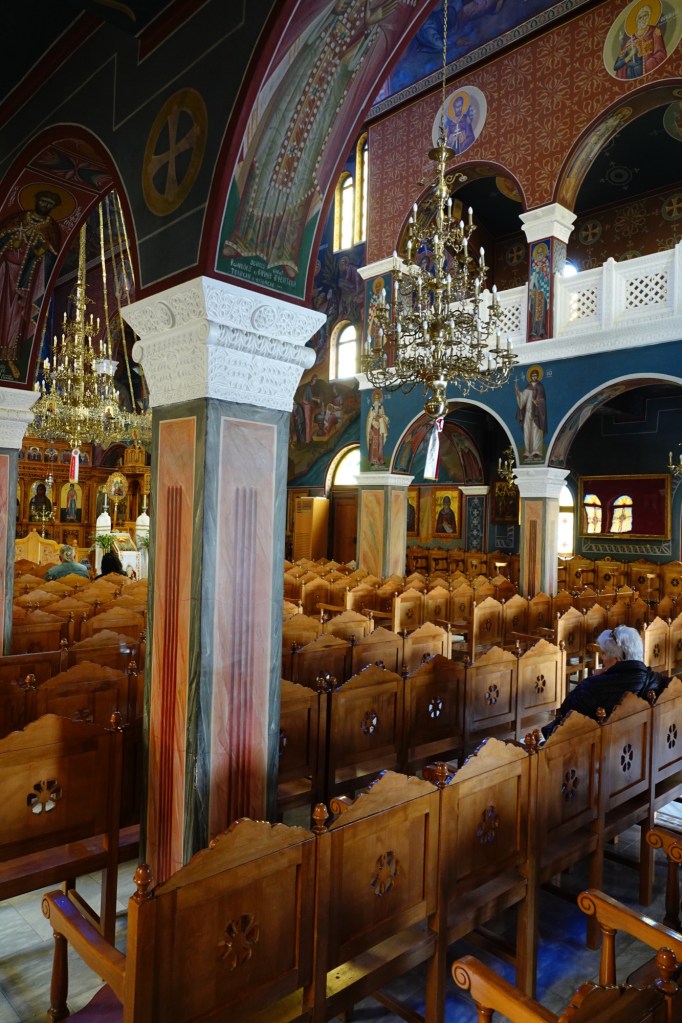
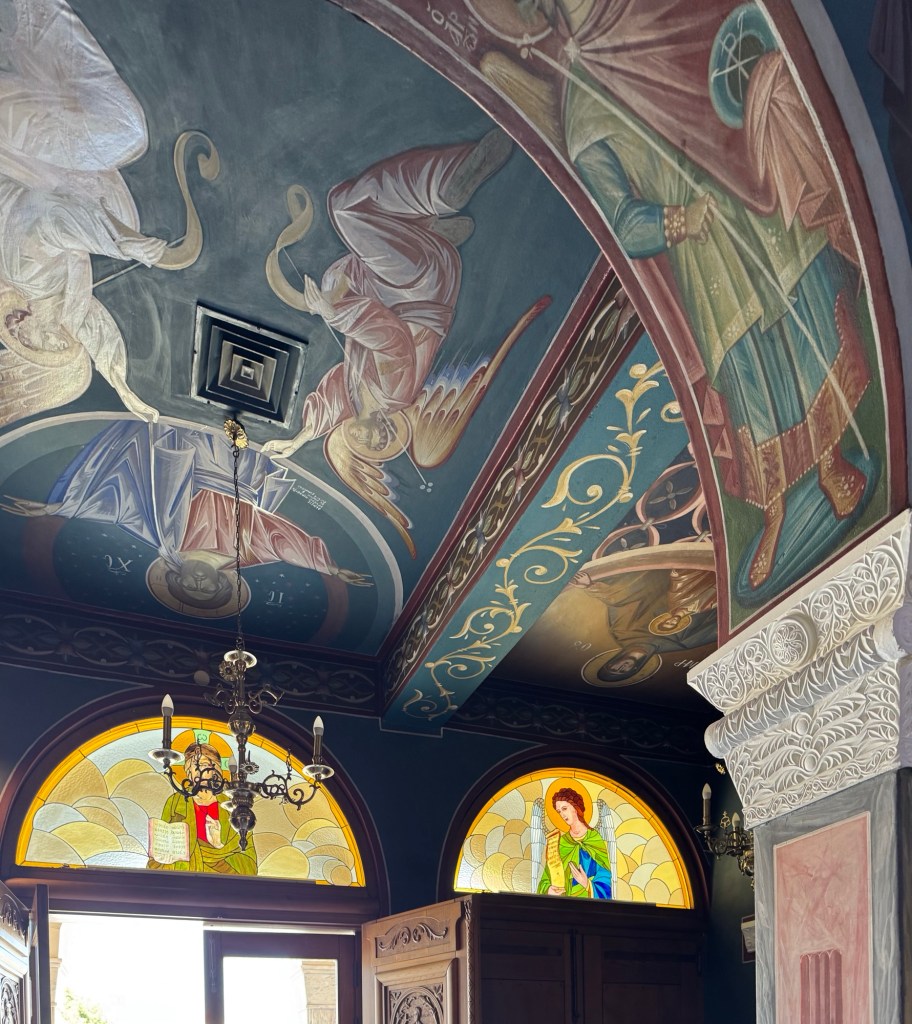
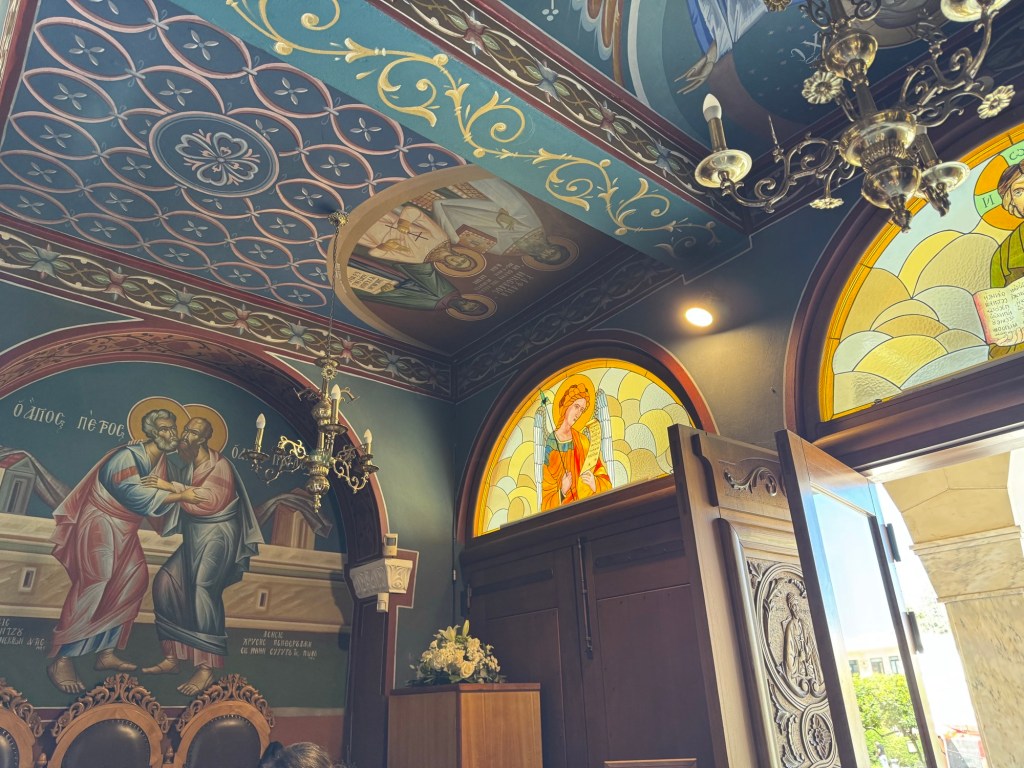
Inside, the church ranks with the most beautiful Orthodox churches we’ve visited.
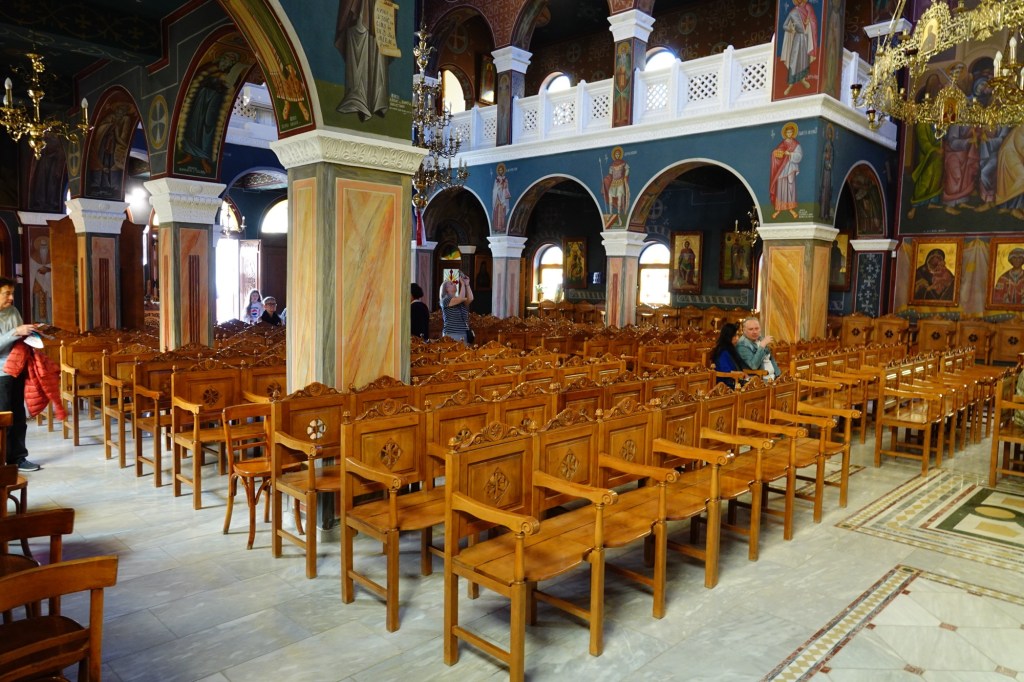
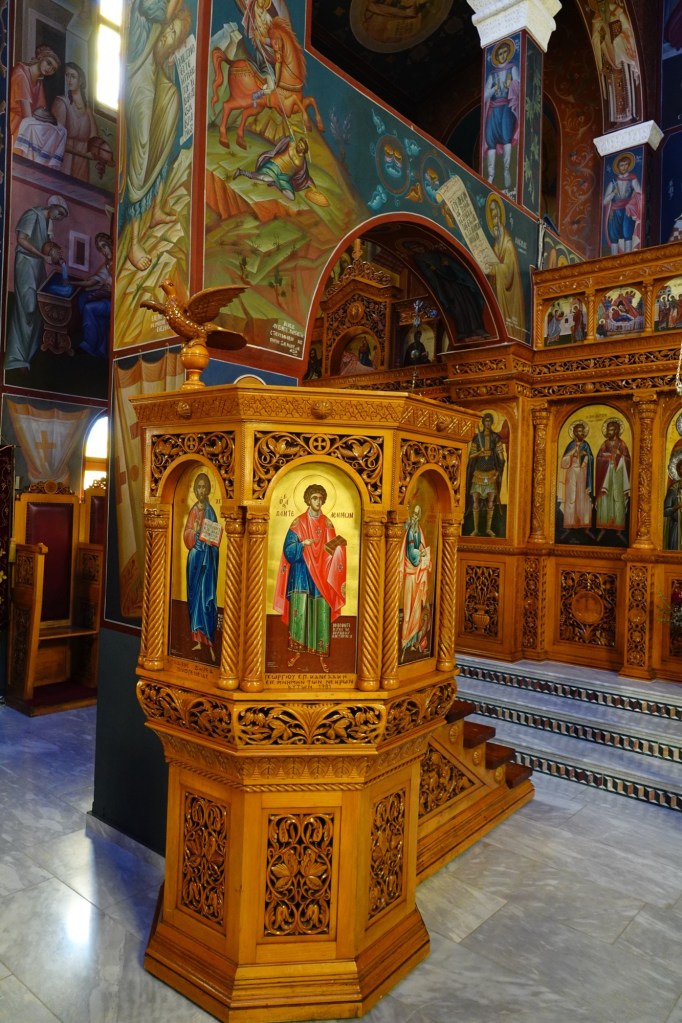
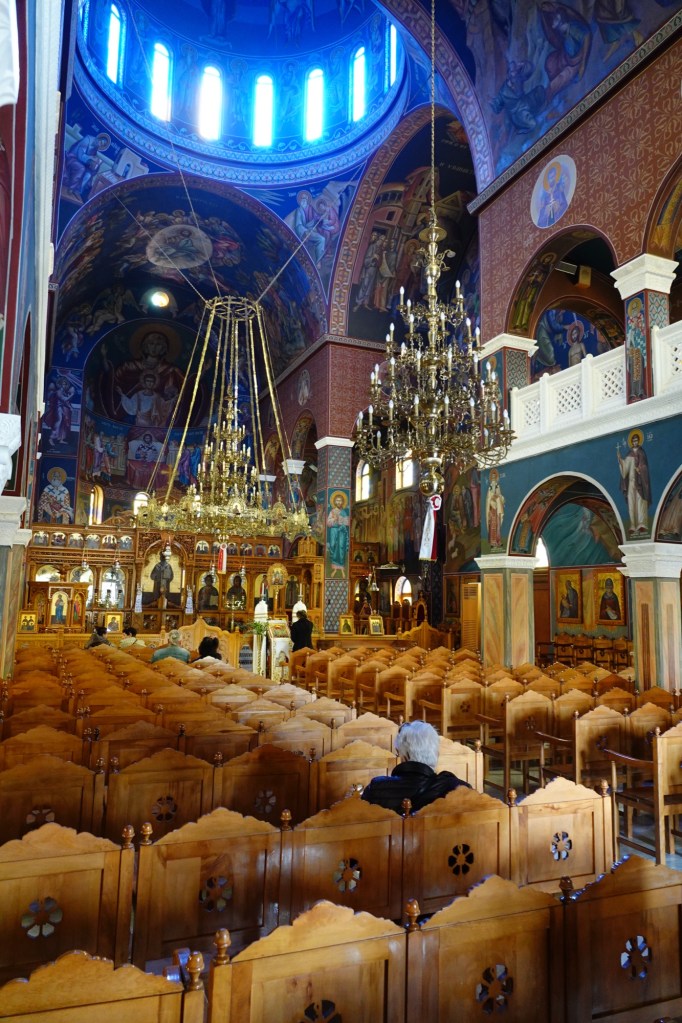
The central chandelier, suspended by four strong chains, and featuring oval icons, is huge and quite magnificent.
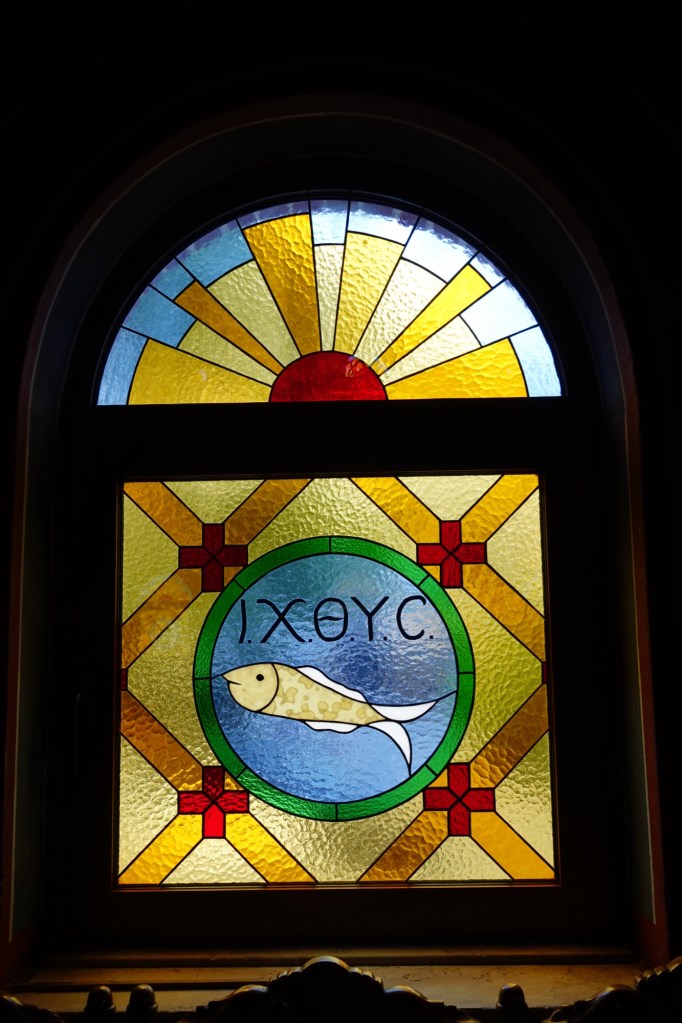
The brightly coloured modern stained glass adds even more depth to the vibrant paint.
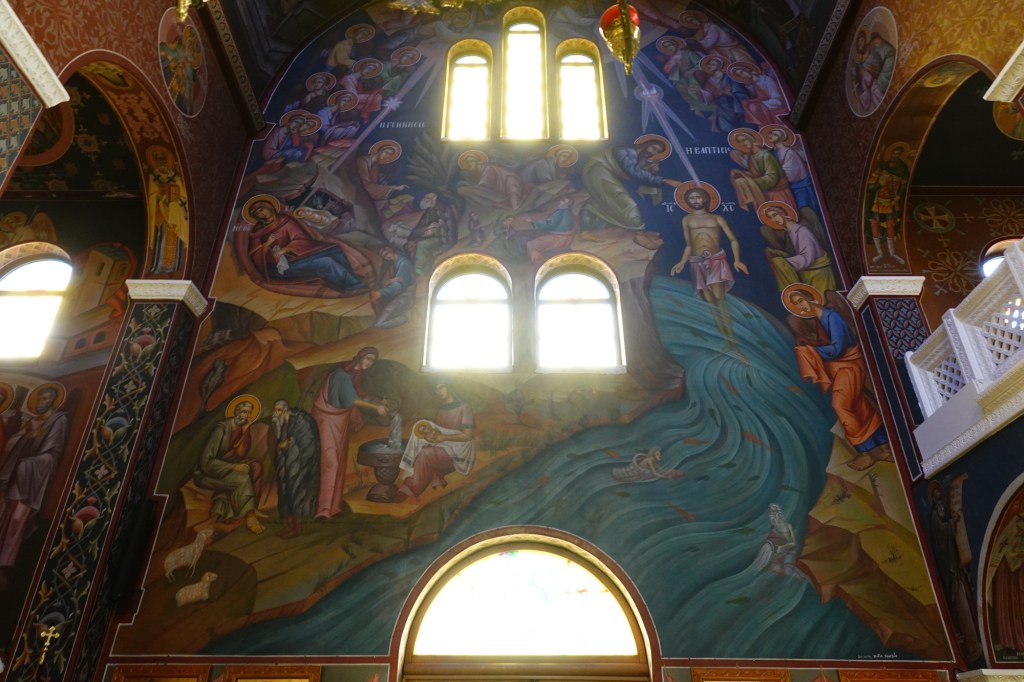
The story of The Four Martyrs is an interesting one given what we’ve been learning about Crete’s history. Angelis, his brother Manouil, and their cousins Georgios and Nikolaos were four Cretan men from the village of Melambes who had feigned conversion to Islam to gain the benefits allocated to Muslims by the local Ottoman rulers, becoming wealthy and politically influential as a result.
When the 1821 Revolution broke out, they joined the side of the Cretan rebels against the Ottomans, revealing their true Christian identity. After Crete was subdued by the Egyptians under Ibrahim Pasha in 1824, the Pasha was informed of their Christian faith and had them arrested as apostates. The Pasha offered to spare their lives if they converted (re-converted?) to Islam, but they refused. On October 28th, 1824, the four men were taken to the main gate of Rethymno’s city walls, where they were beheaded.
(Anyone else wondering why the fatal change of heart by men who were totally okay pretending to be Moslem for years while amassing wealth? Sudden altruism, or community pressure? We’ll never really know.)
Their skulls were eventually taken to the city’s first Metropolitan Church, and remain in the current one, while the rest of their bones are in the ossuary at Arkadi Monastery.
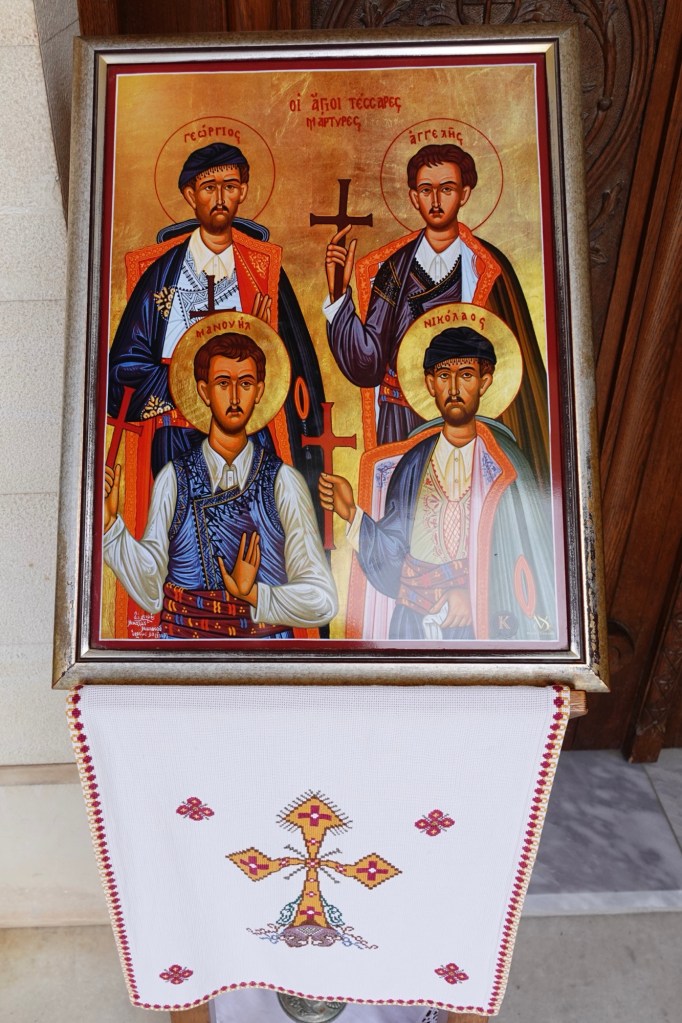
At the entrance to the church is an icon painted in 2009 depicting the four.
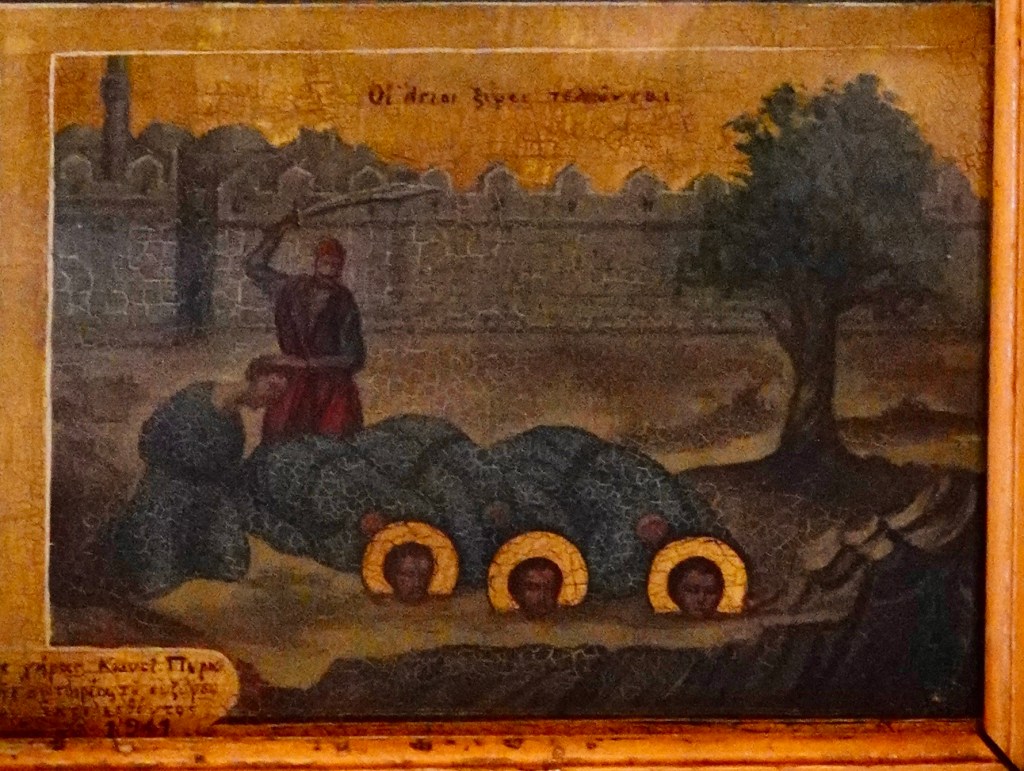
There’s also a pretty grim icon inside the church showing three disembodied heads having attained their saintly haloes, while the fourth is about to join them.
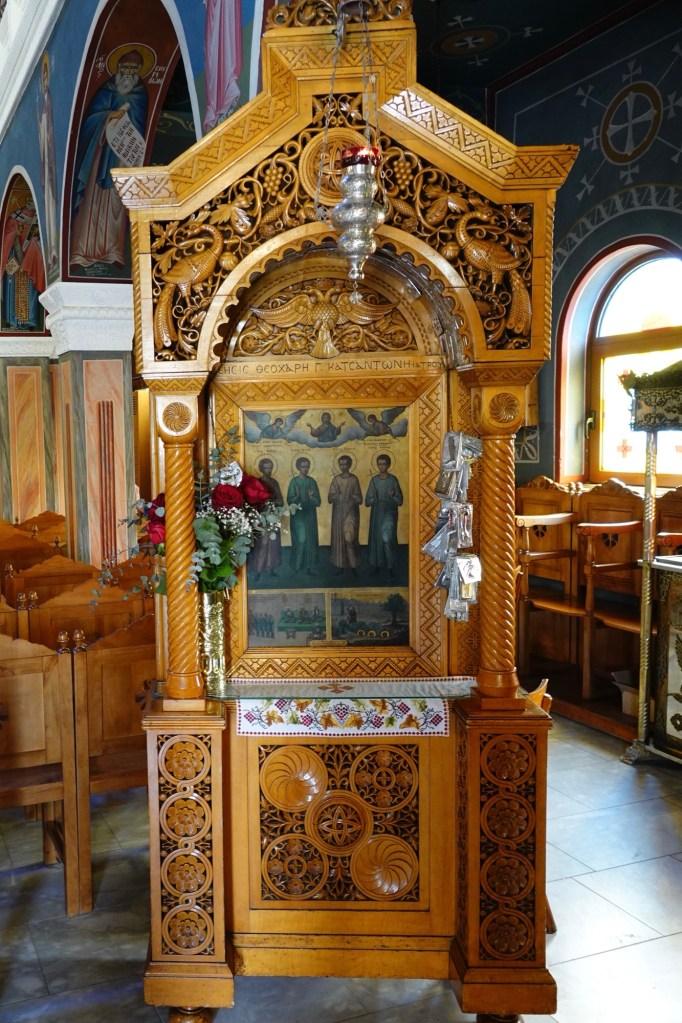
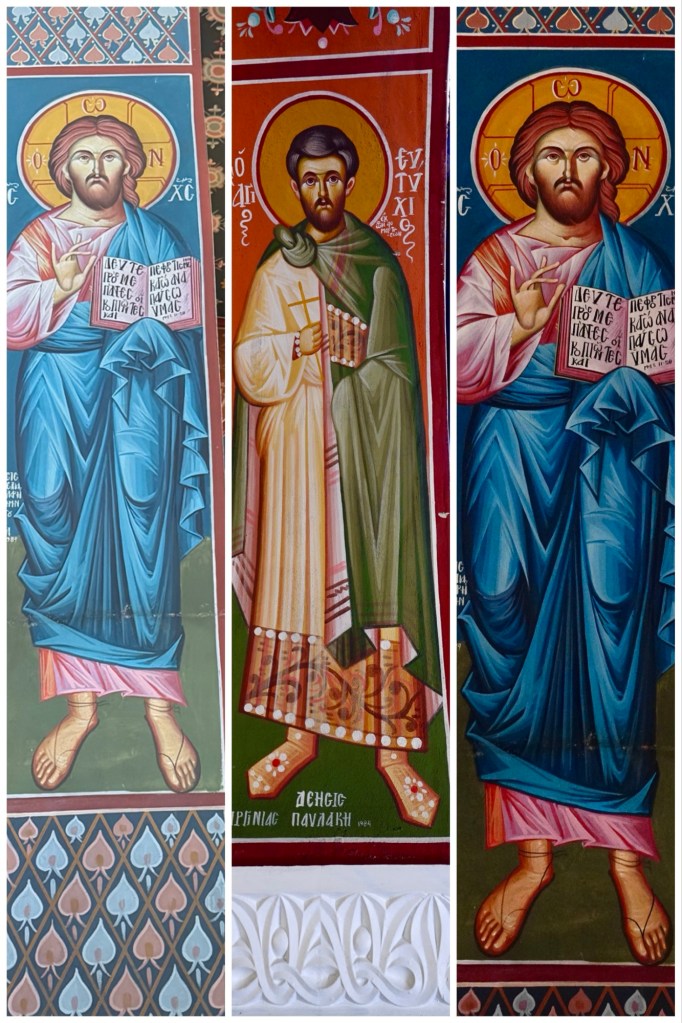
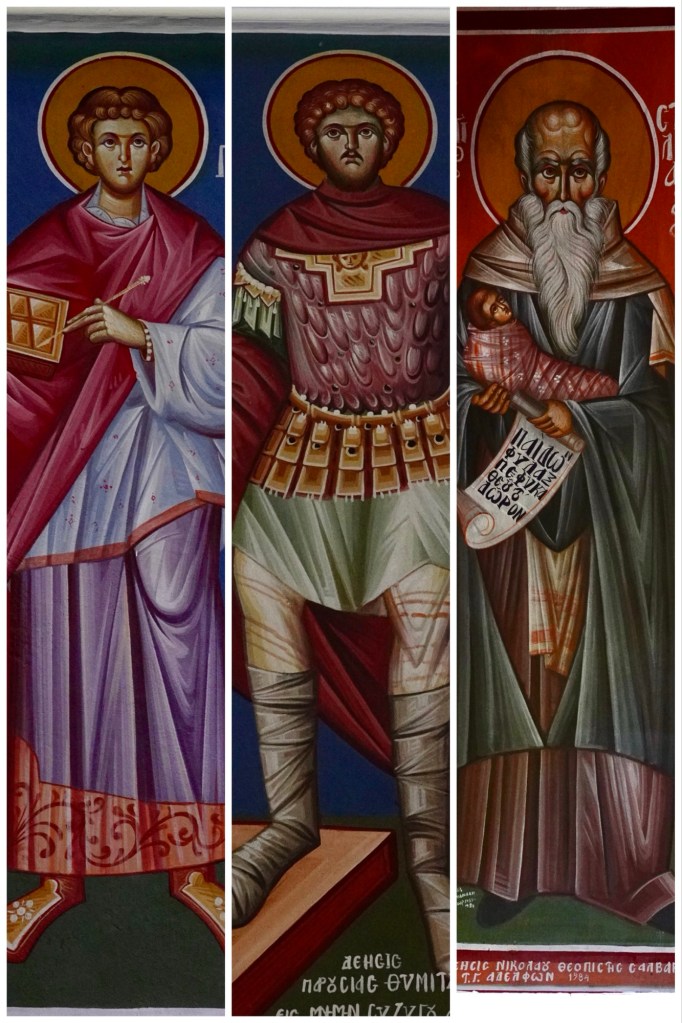
The interior of the church contains many unique and decidedly less grim icons,several painted by the acclaimed Greek writer and painter Fotis Kontoglou.
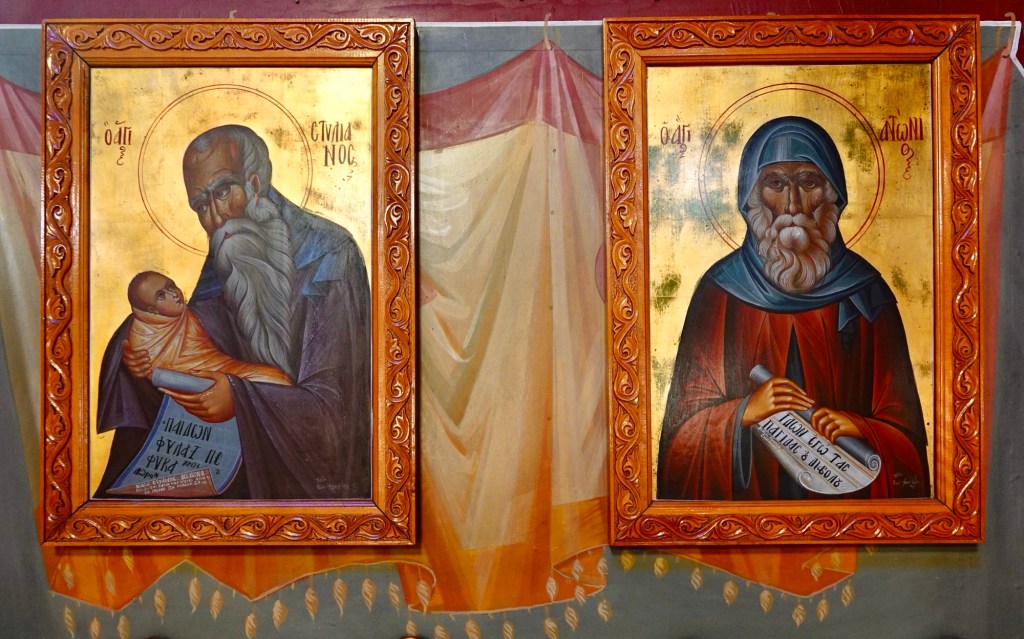
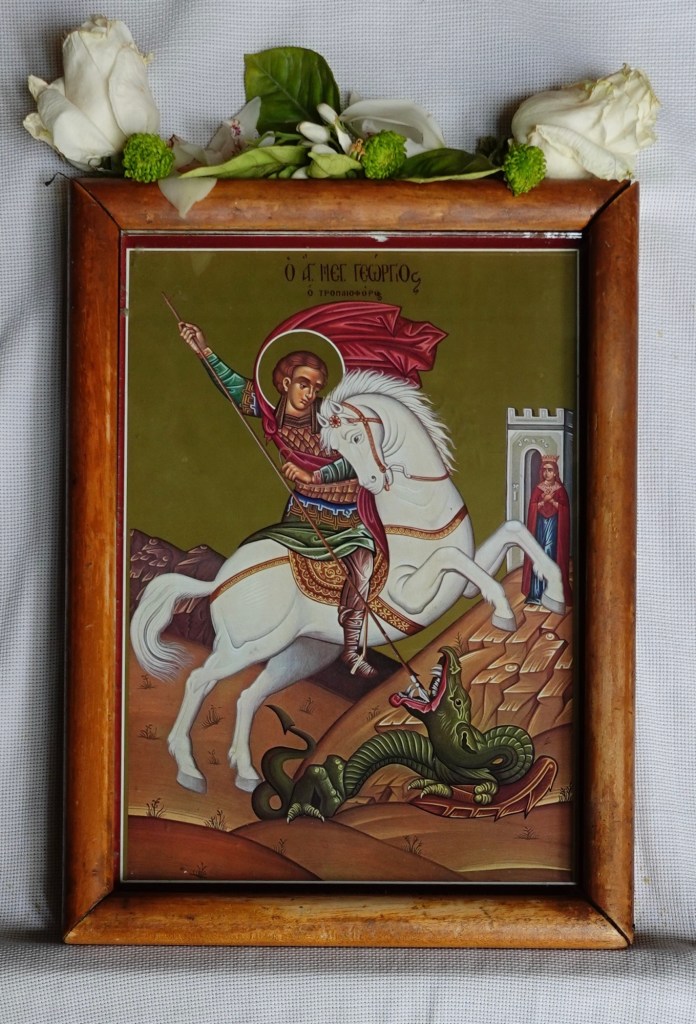
The walls and ceilings are covered in amazing depictions of the Greek Orthodox Church’s many saints, each painted wearing garb unique to their time period.
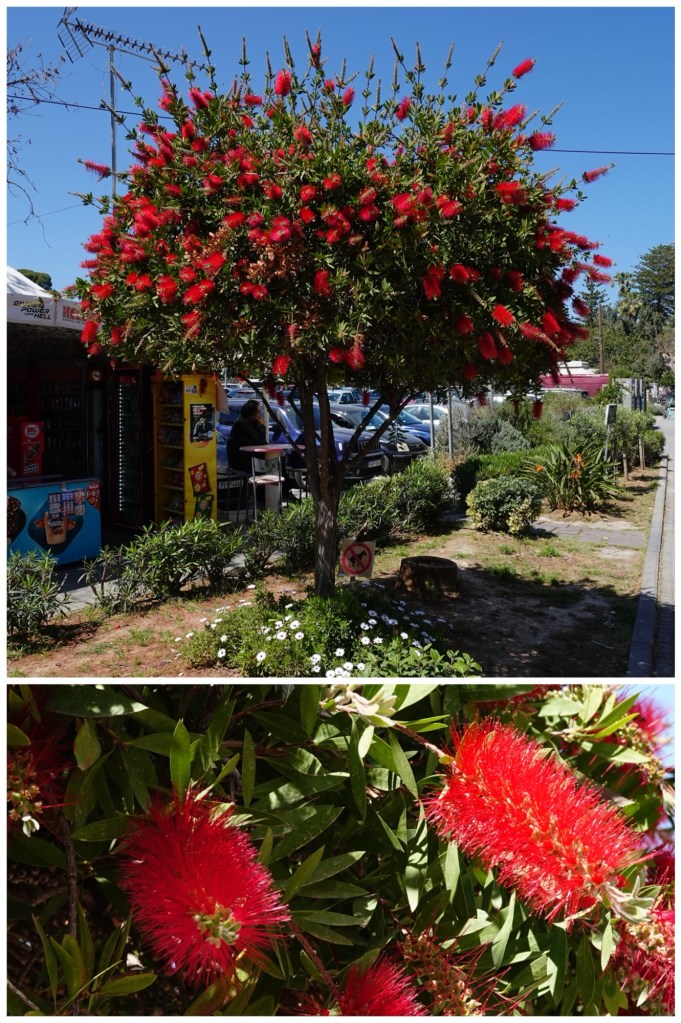
Next we crossed through Rethymno’s central park, an oasis of green just outside the old town, where we saw these fabulous flowering trees that looked like bright red bottle brushes. Quite coincidentally they are properly called “Crimson bottlebrush” and are actually native to Australia.
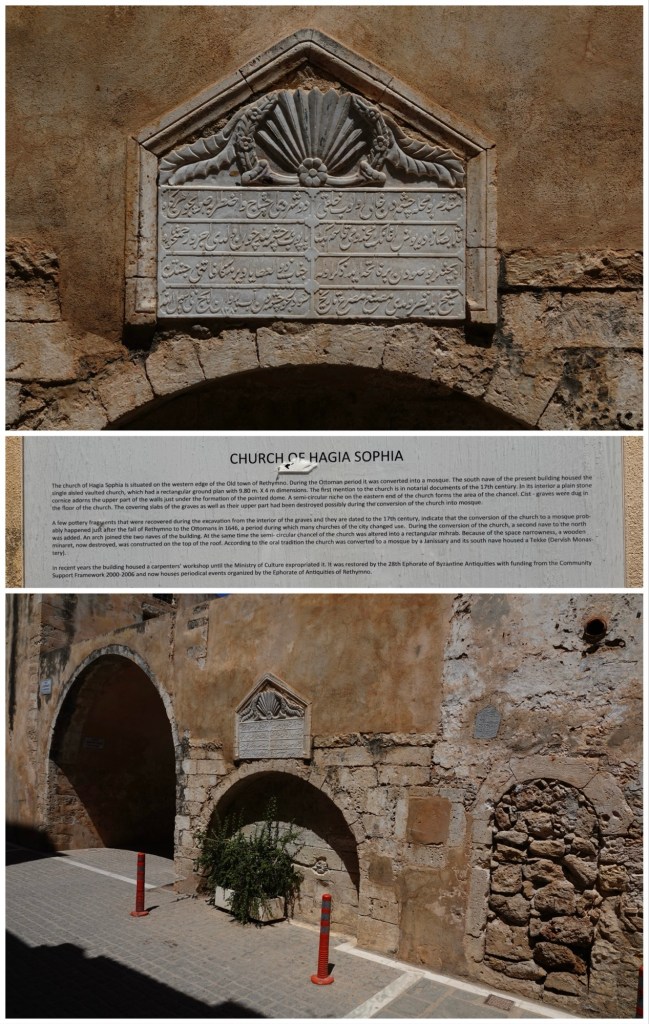
En route to the “Hands Across the Globe” sculpture located near the Fortezza fortress we passed by an arched gate bearing Quran verses. A nearby plaque explained that this had been the location of Rethymno’s Hagia Sophia which, like Istanbul’s, had been both a Christian church and a mosque during its lifetime.
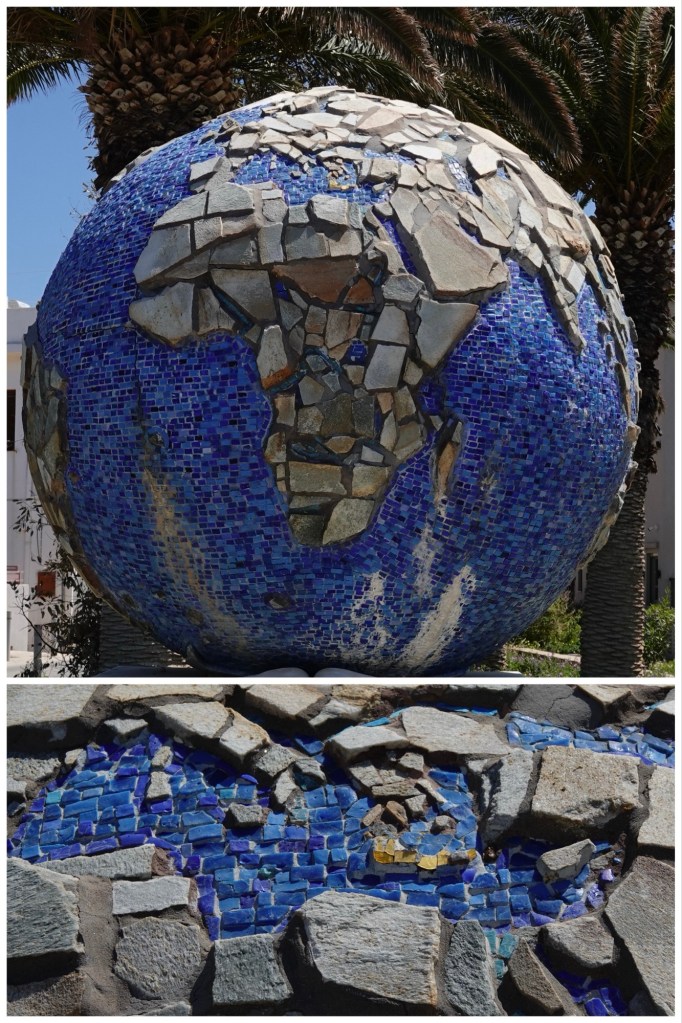
The sculpture on the waterfront features a large mosaic globe focussed on Africa and Europe, resting on an open book. Beneath the book, two hands are clasped together in a handshake symbolizing the connection between the Greek diaspora and their homeland.
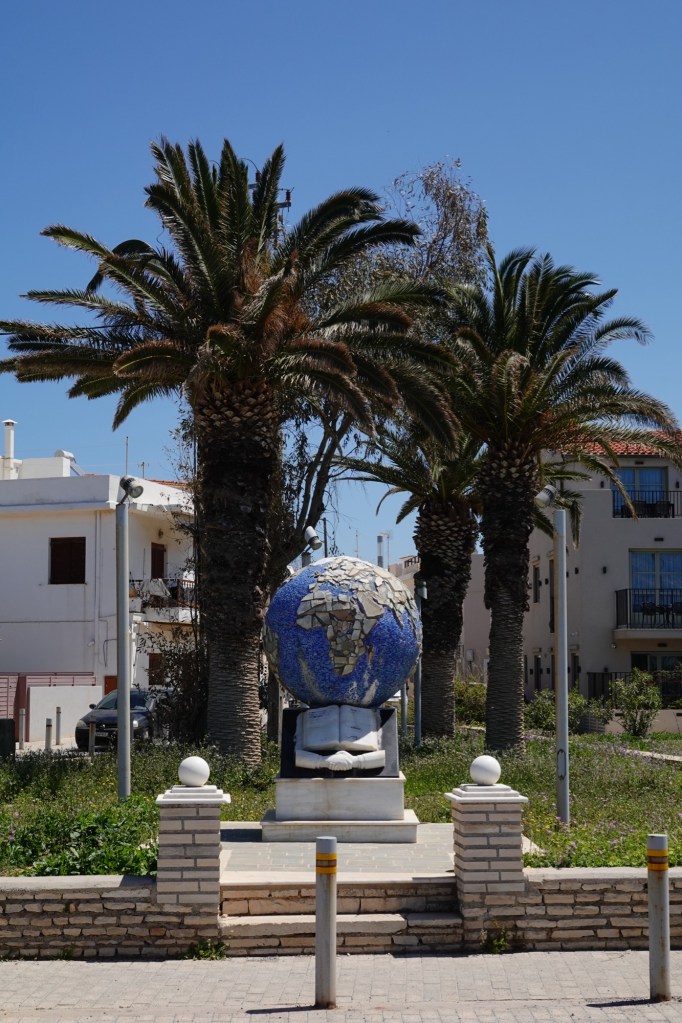
The inscription on the book is illegible, but the engraving on the back of the plinth gives the sculpture’s accurate name as “Monument to the Rethymnians Abroad” , inaugurated in 2002.
The island of Crete is the only land mass depicted in gold mosaic tiles.
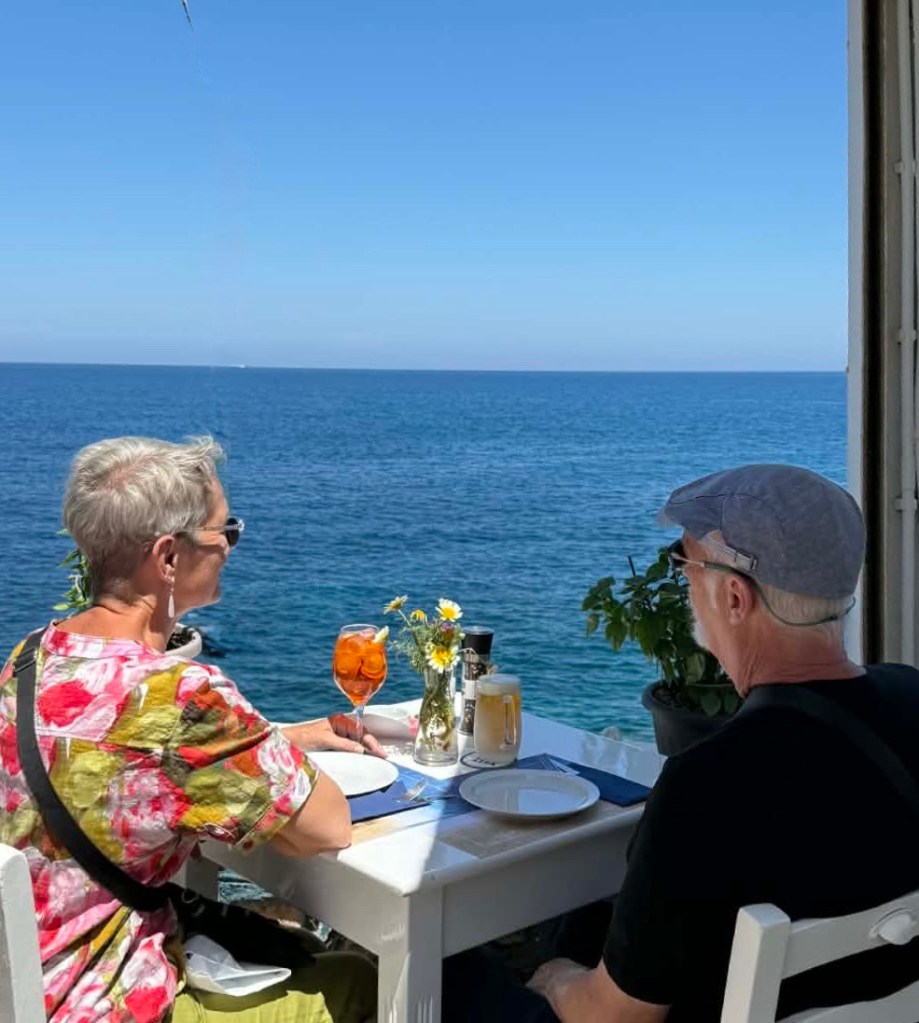
We continued along the waterfront for an aperitif and a snack of cheesy garlic bread on the patio of a restaurant overlooking the impossibly blue Cretan Sea.
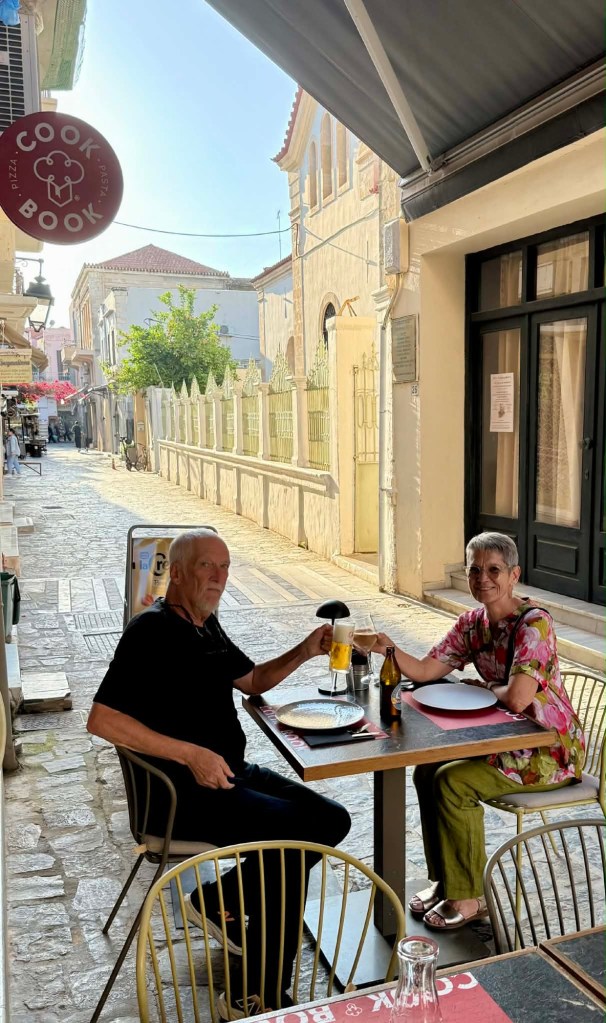
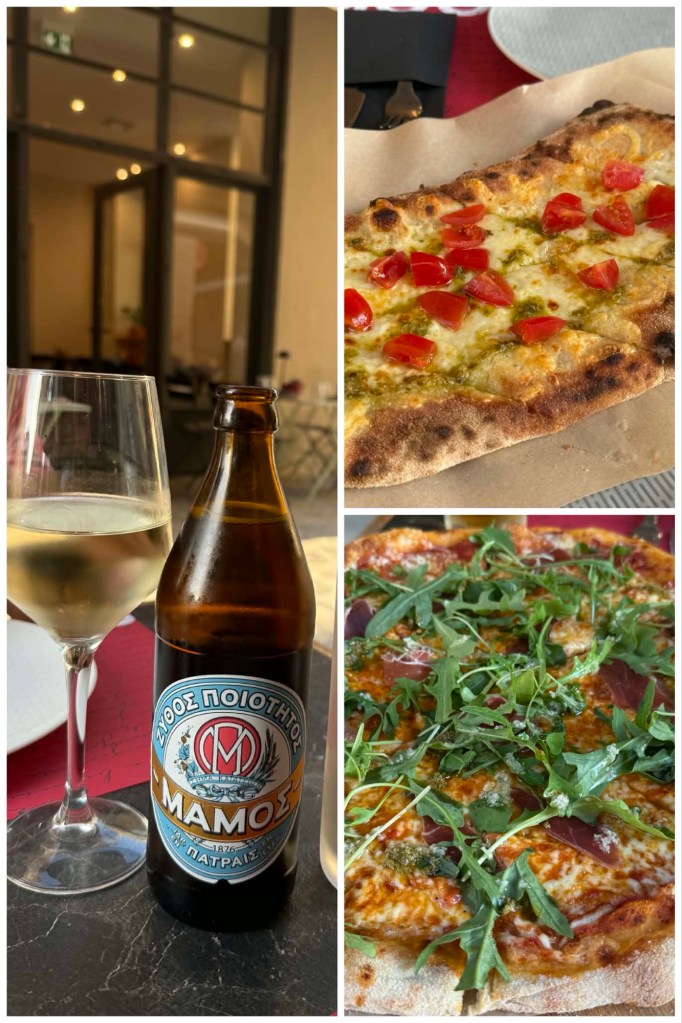
Dinner was at Cook Book, a cute little pasta and pizza restaurant on the street behind our hotel. We continue to be so impressed with how perfect al fresco dining can be when there is no vehicular traffic sharing the cobblestone streets.
Our second wandering day took us to Rethymno’s one-room archeological museum. While nowhere near as impressive as Heraklion’s, what makes it interesting is its location in one of the surviving wings of St. Francis Monastery, dating to 1580, and its specific focus on Rethymno.
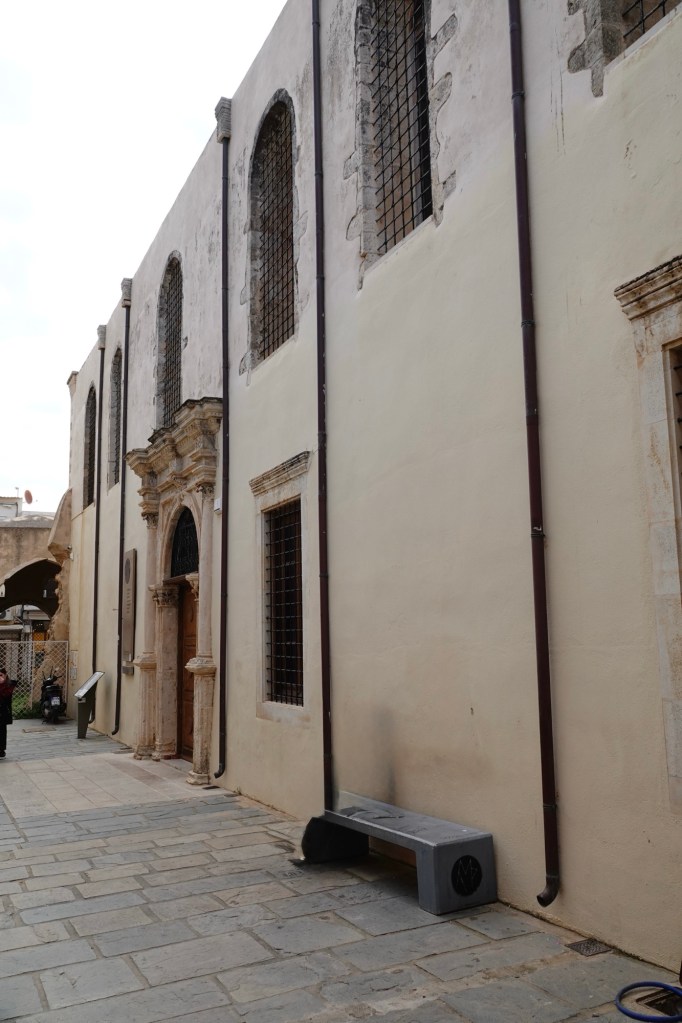
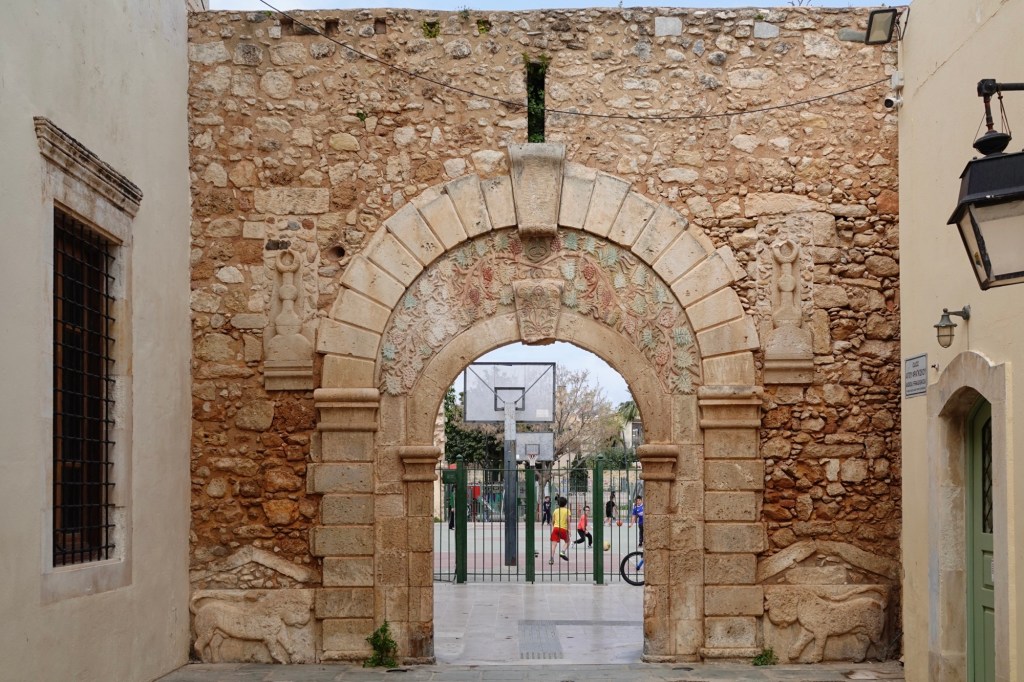
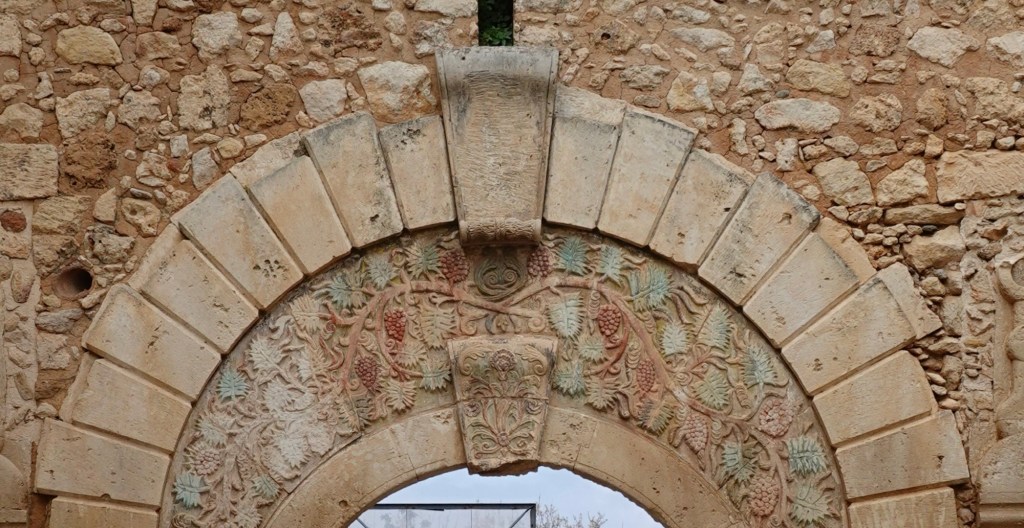
Like most of the Venetian churches, this one was also converted for a time into a mosque. In 1654 the monastery became part of the Gazi Hussein Pasha mosque and housed a hospice. The museum’s wooden doors – and the wooden ceiling in what was originally part of the transept – are original.
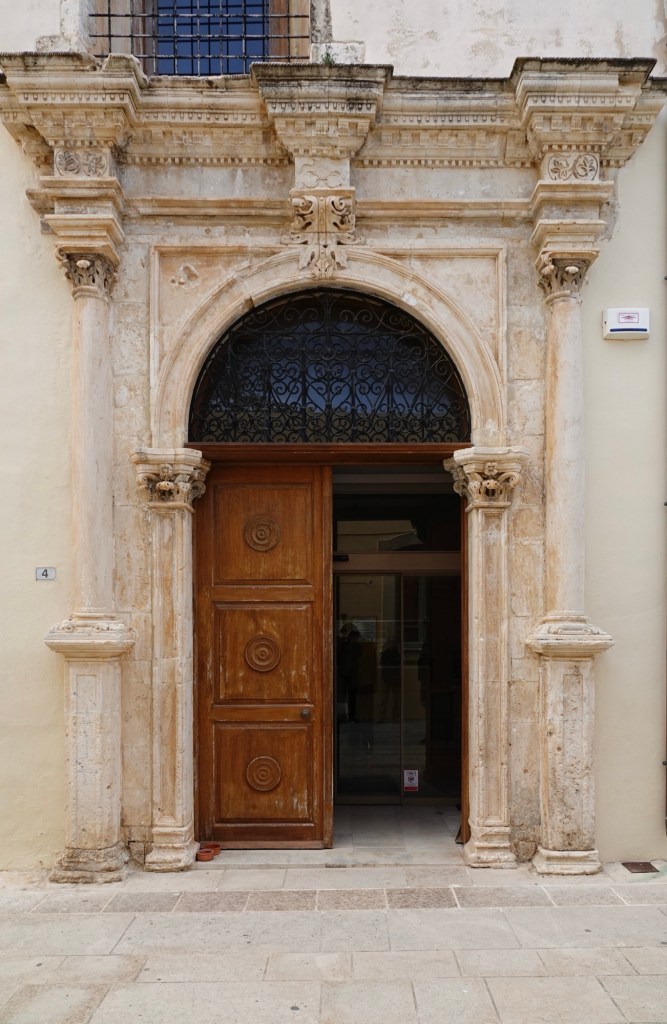
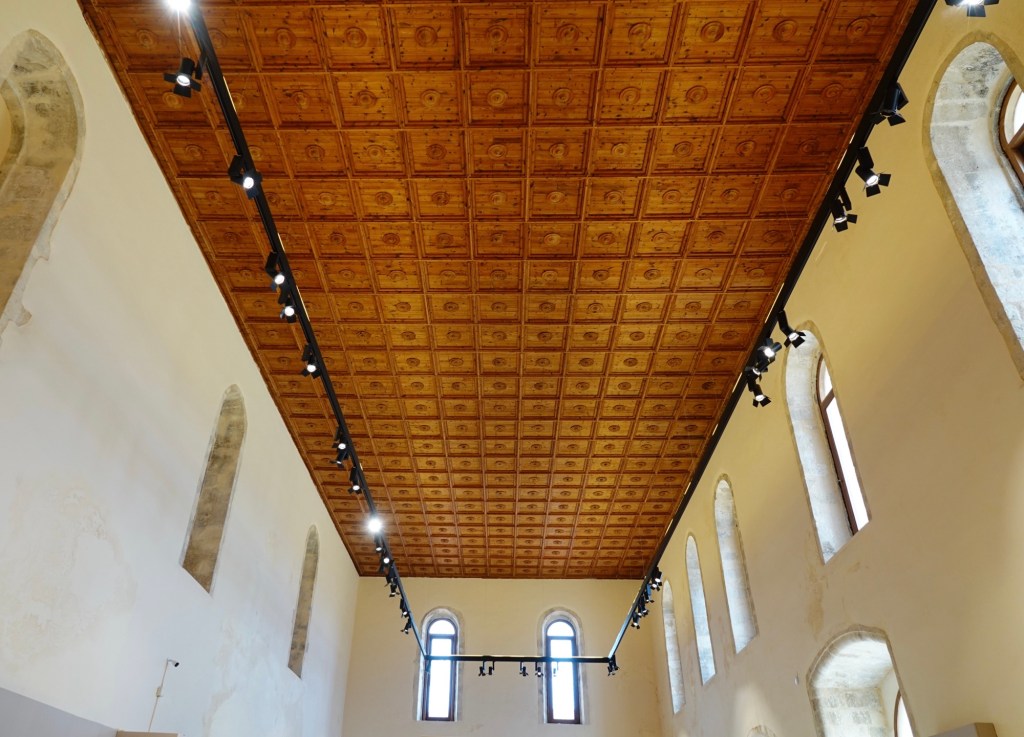
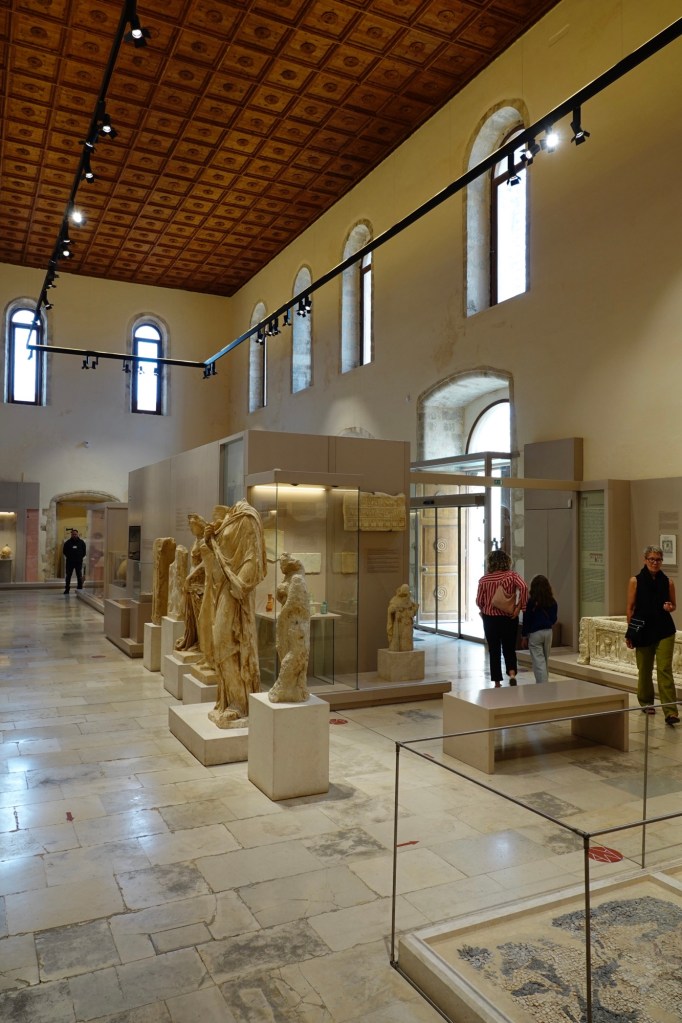
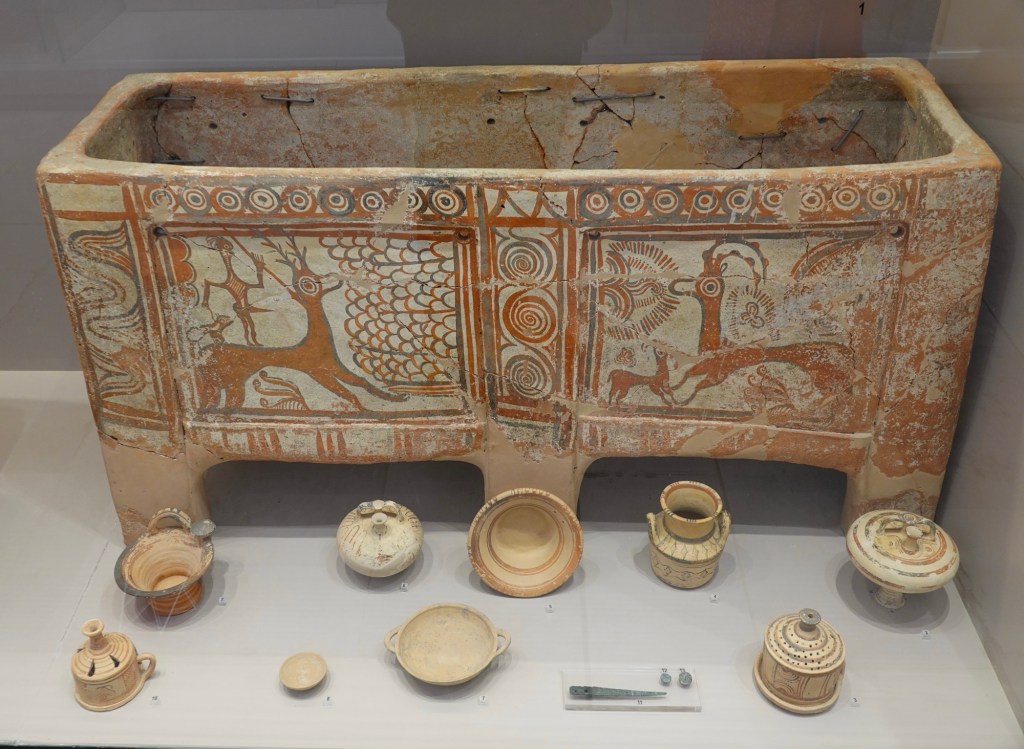
Because we saw and photographed so many incredible artefacts in the Heraklion Archeological Museum, the examples here were somewhat repetitive. I kept only the photos of a few favourite pieces.
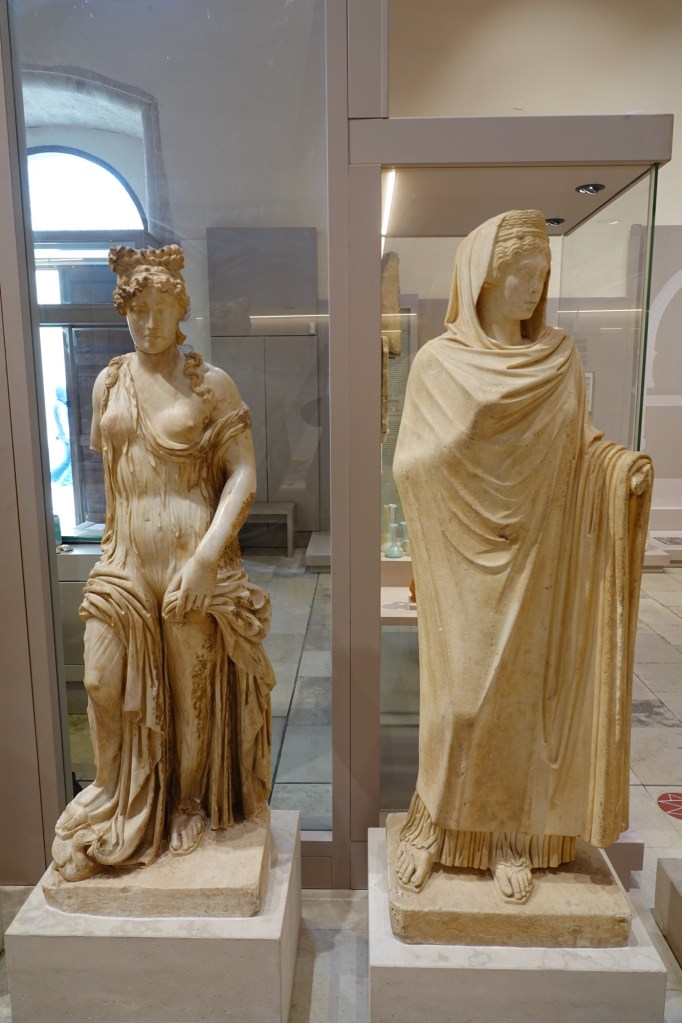
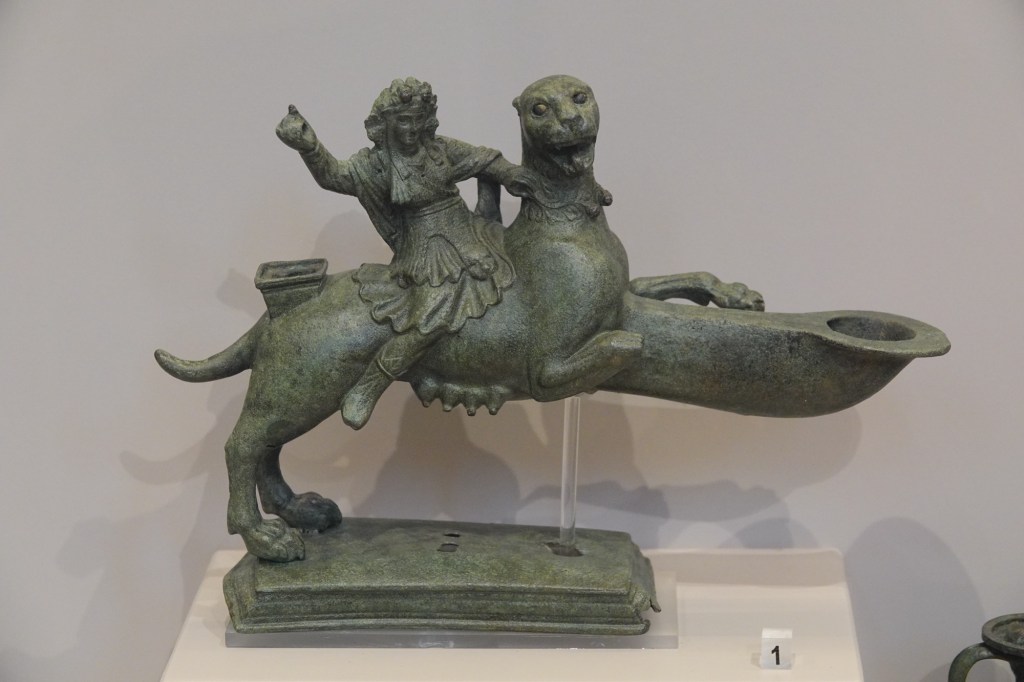
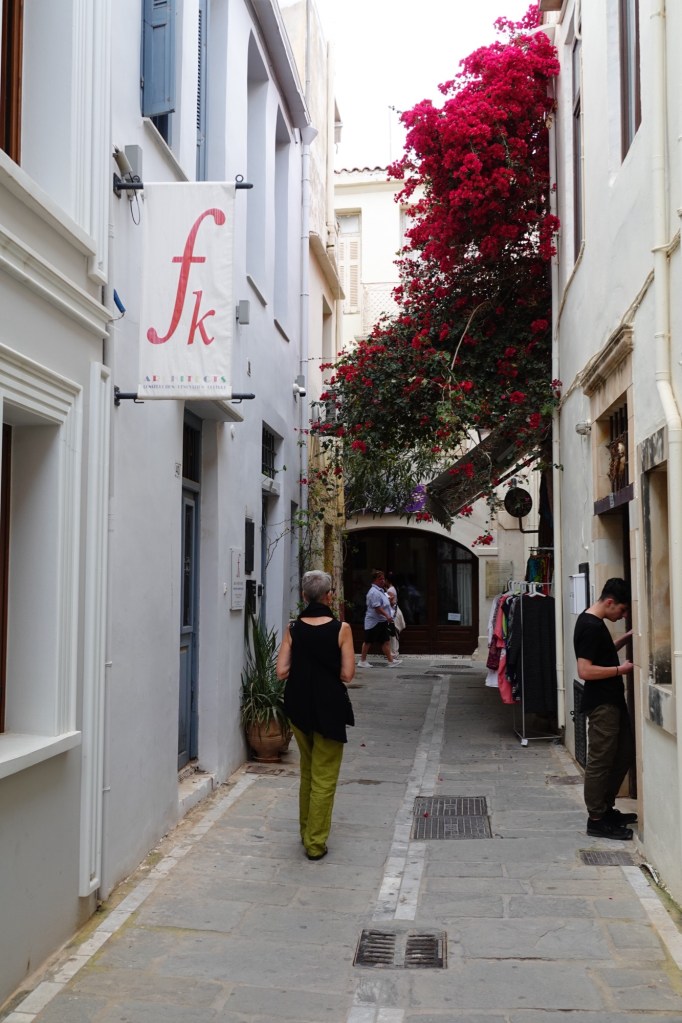
We continued to just wander after leaving the museum. The streets are just so lovely!
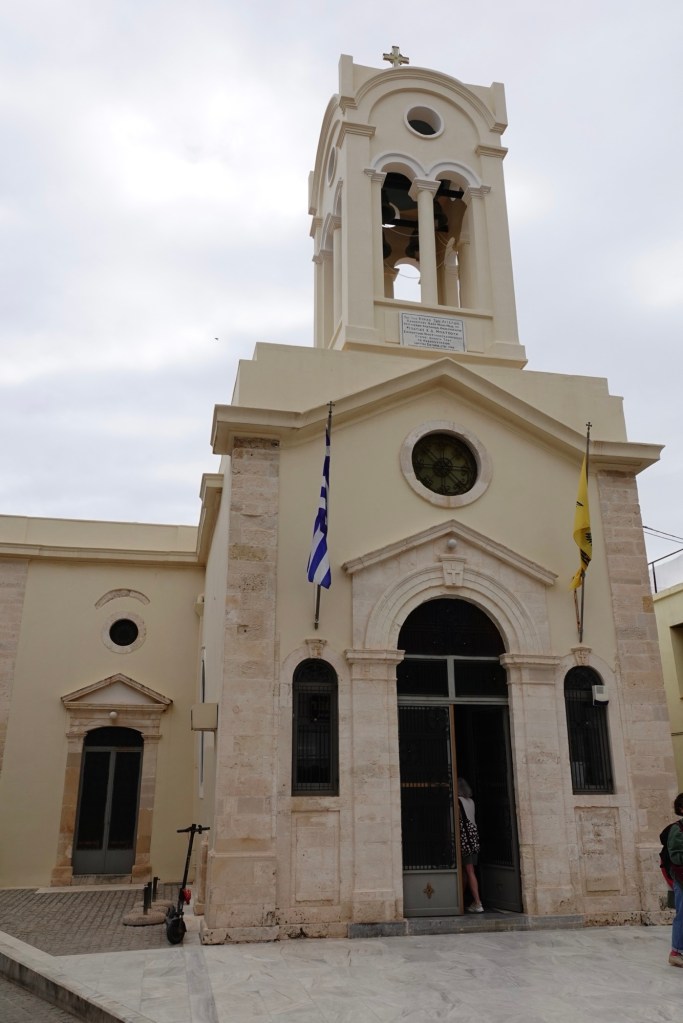
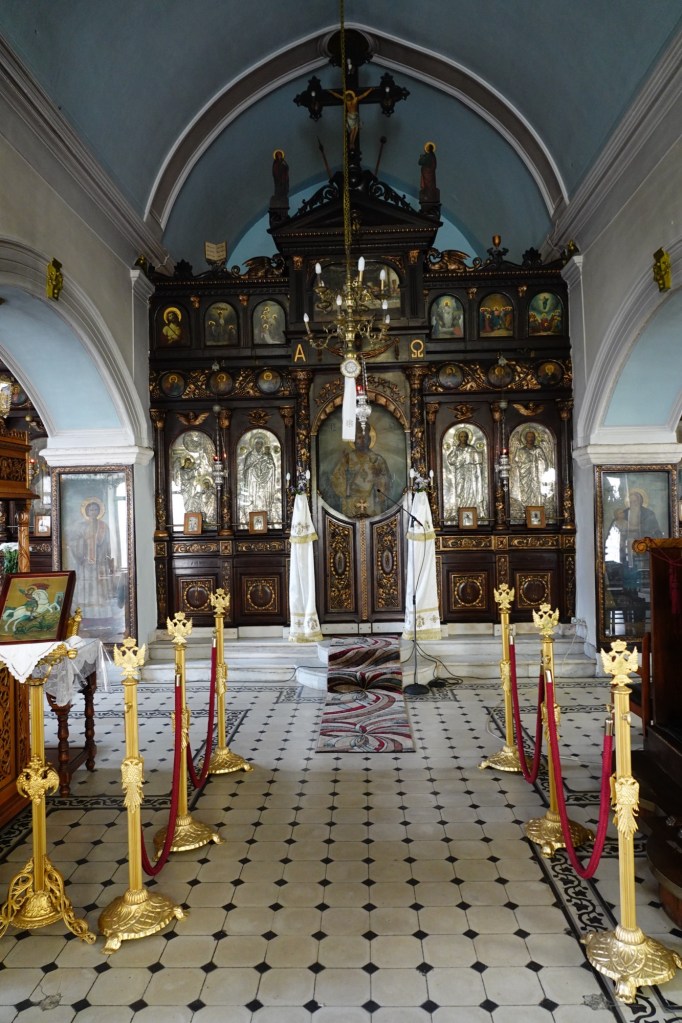
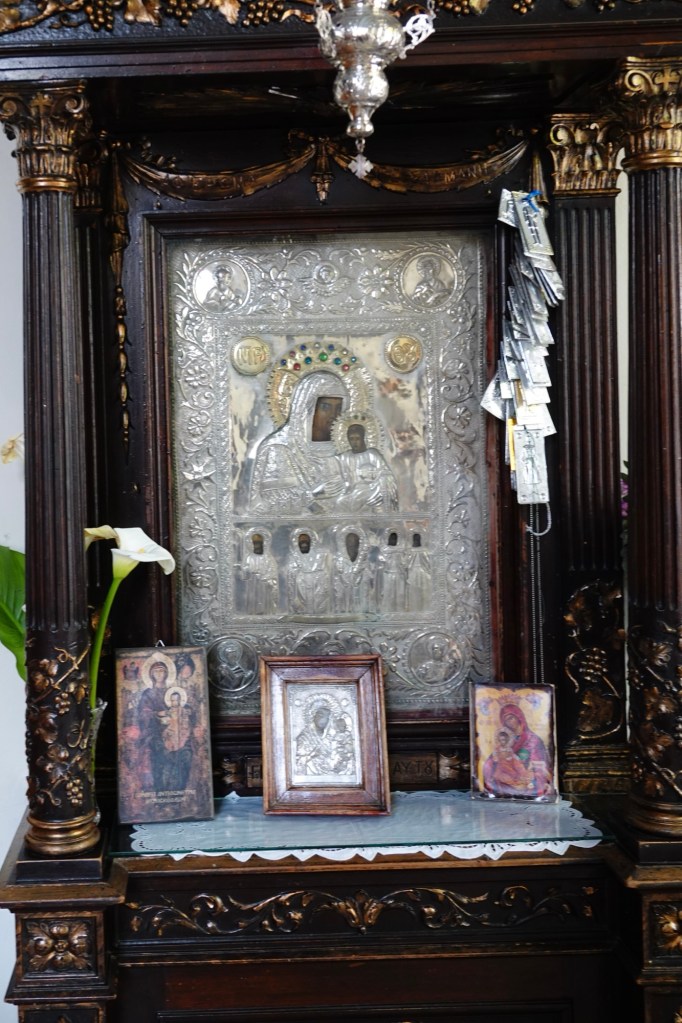
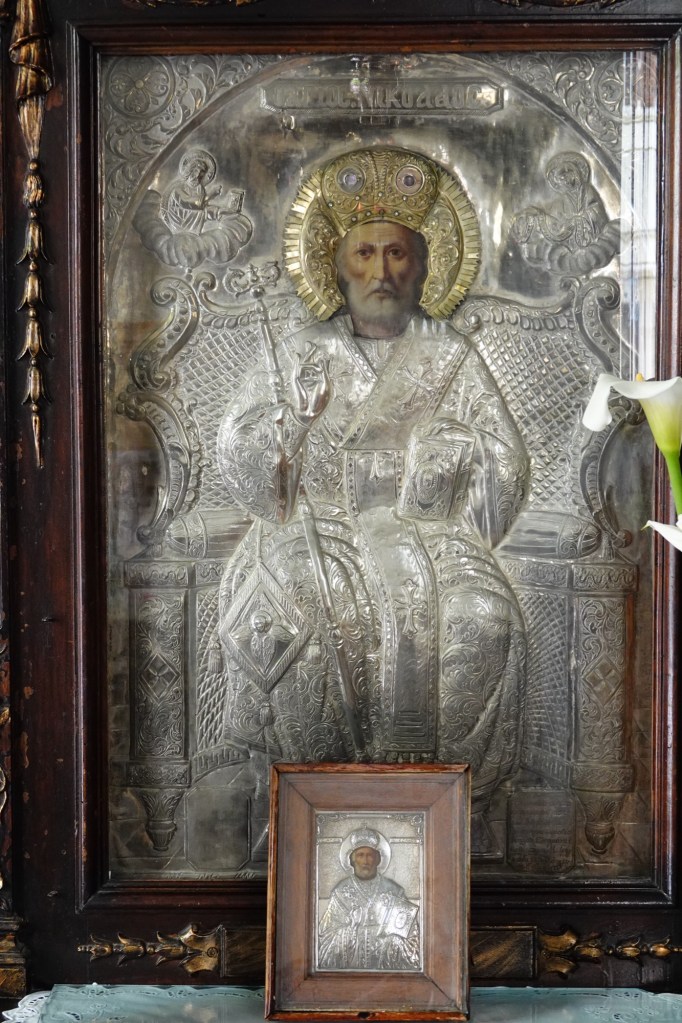
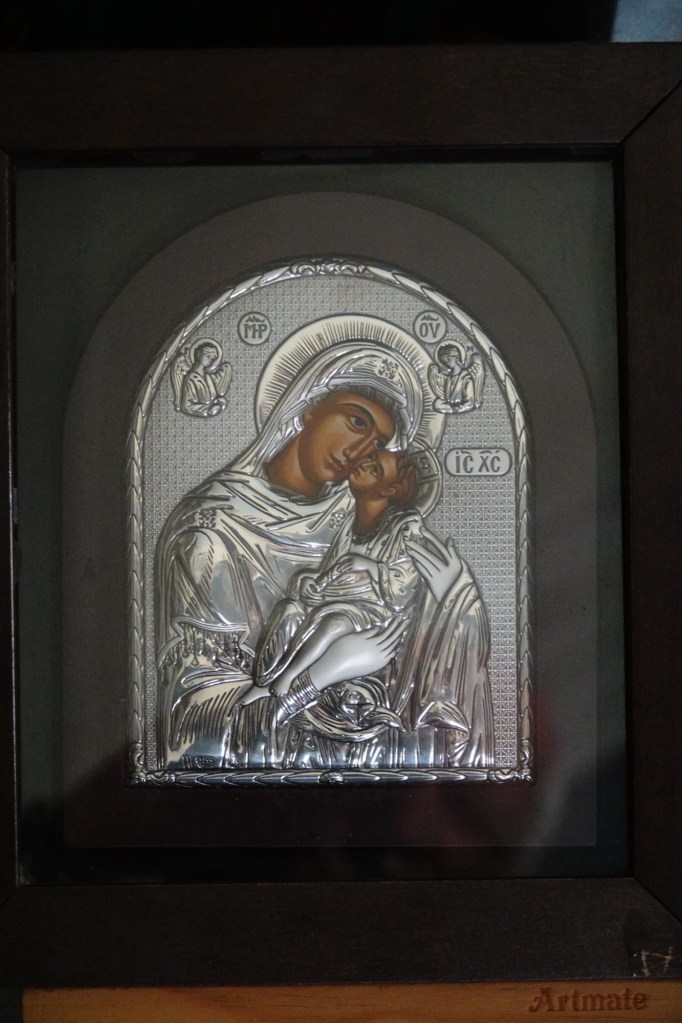
We peeked into the Orthodox Church of Our Lady of the Angels, dating to the late 16th century (and also a mosque for many years).
It is home to some of the most elaborate silver-covered icons we’ve ever seen. This kind of decoration originated in Byzantium; the covers feature intricate repoussé work, leaving only the faces and sometimes hands of the painted saints exposed. The ornate cover serves to honor the icon while simultaneously displaying the wealth, or devotion, of the icon’s owner.
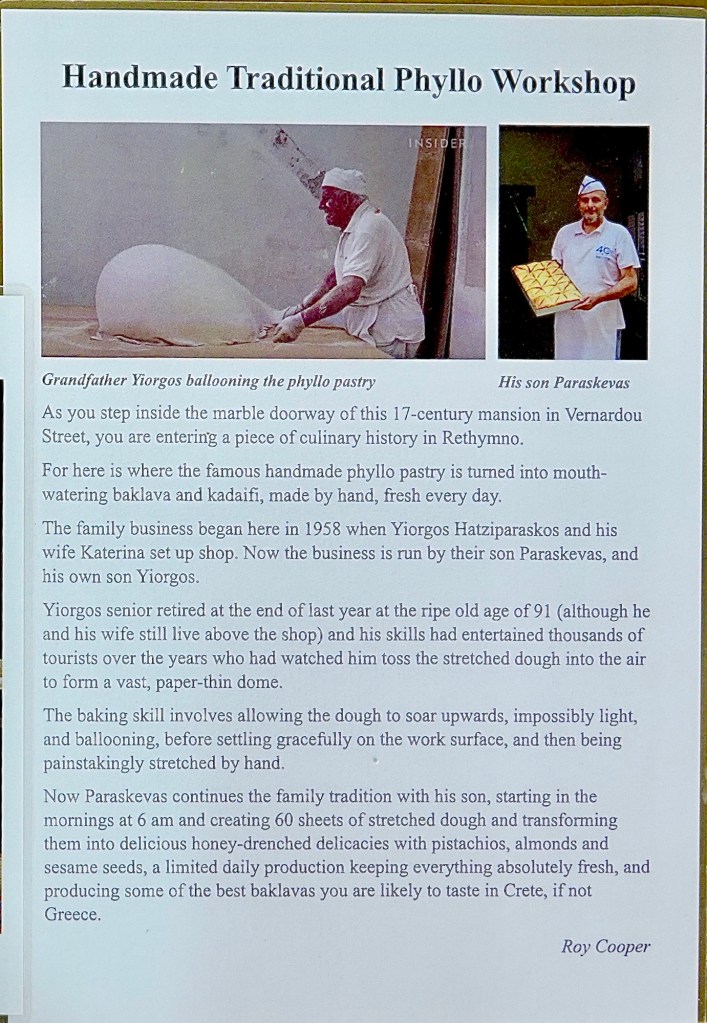
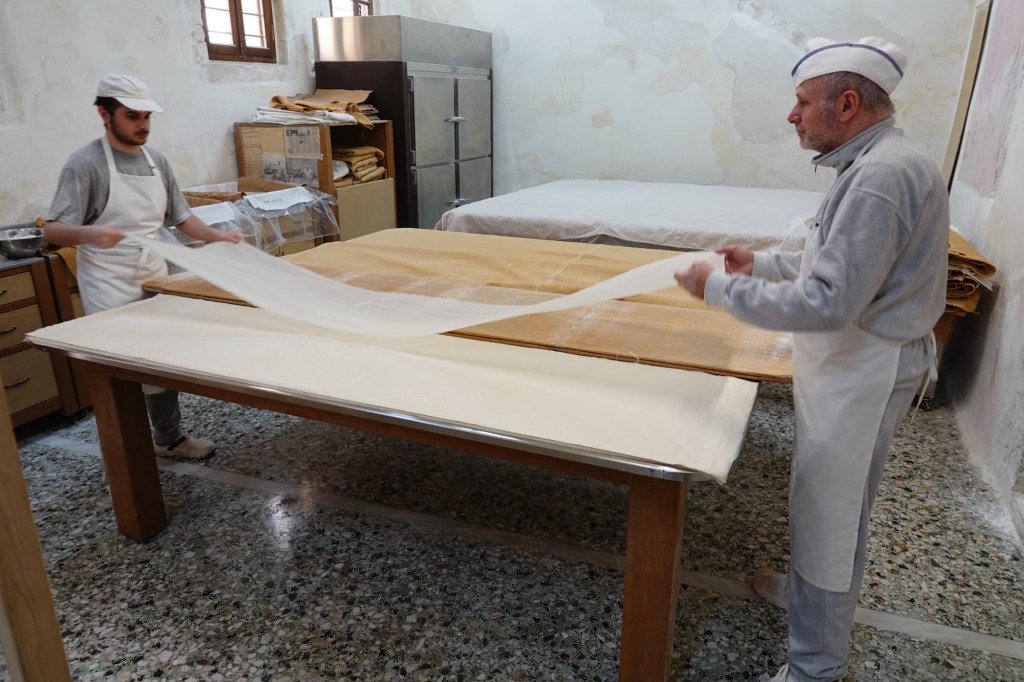
Our wandering’s final distraction was a phyllo-making workshop, where two pastry chefs were creating impossibly thin translucent sheets of dough.
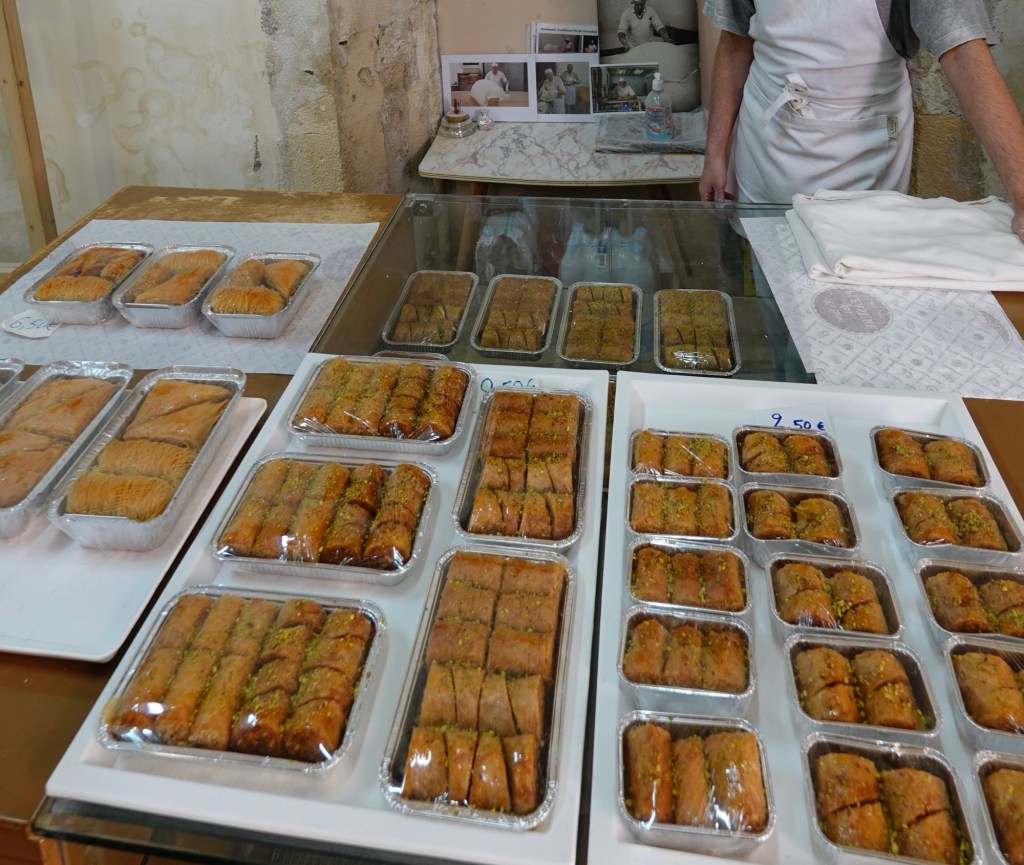
Yes, we bought both some baklava and some nut-filled honey-soaked kataifi (a pastry made with phyllo so thinly shredded it resembles angel hair).
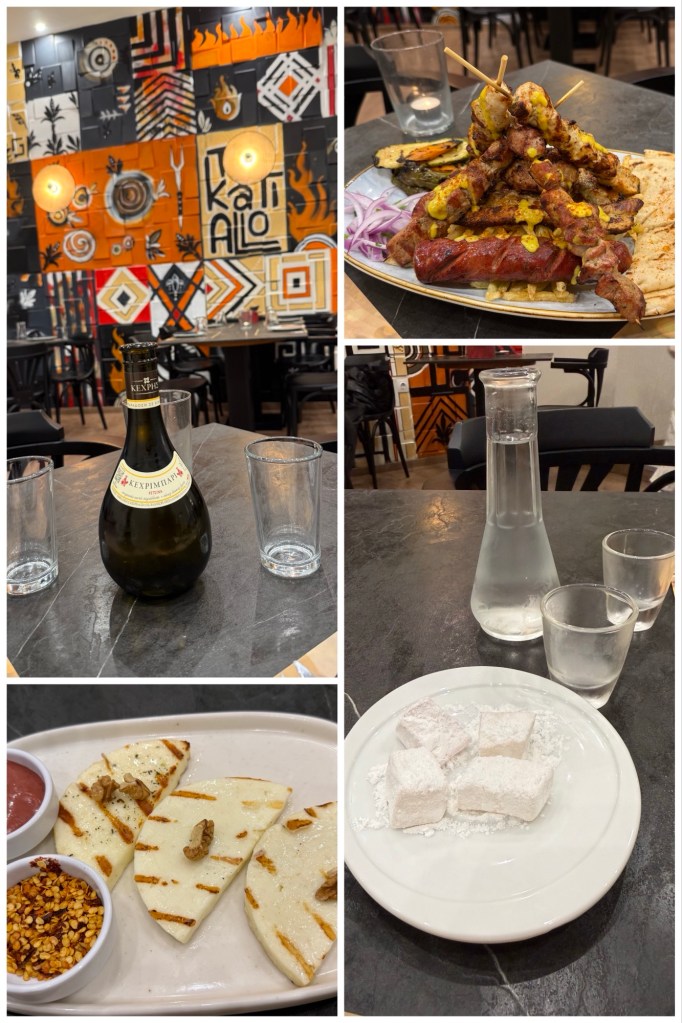
I commented to Ted last night that after more than two weeks on Crete we haven’t had souvlaki yet, so that became our dinner goal. We ate at To Kati Allo, where we ordered the grill selection for two: chicken souvlaki, pork souvlaki, pork belly, beef patty, sausage, french fries, grilled vegetables and pita. We hardly needed our grilled cheese appetizer, but enjoyed it anyway. I finished a 500ml bottle of retsina all on my own, and then raki and loukoumi (the Greek version of Turkish delight) appeared with our bill. It’s a good thing we only had 100 metres to walk to get back to our hotel!
We’ve effectively done all the things I had on my Rethymno list. That means that tomorrow, when all-day rain is predicted, we’ll be at loose ends. This is when I wish we’d booked a suite instead of a room so that we’d have something to sit on other than the bed or dining chairs.
Chania awaits…


I looked through your photo essay and recognized bottle brush. It’s seen in gardens here, in San Rafael. I like it for color in our yard. Bougainvillea, also is all over San Francisco and San Rafael.
Claire & I spent a week in Chania, before we took the bus over the mountain to Paliochora. We loved the Greek cooking, Claire and I have both agreed, that we prefer it to Italian, which was the cooking I learned from my Mom. The seafood, in the cafes by the sea, plates of anchovies (fries with eyes) made us happy.
Paul
LikeLiked by 1 person
Ted definitely prefers Italian, but I’m equally happy with both – as long as there’s gelato!
LikeLike
Rose – I am so enjoying reading about your adventures! You have the best life! We will be in Greece this fall, but on a Viking ship again, so will miss many of the sites you are enjoying.
LikeLike
Rose – I am so enjoying reading about your adventures! You have the best life! We will be in Greece this fall, but on a Viking ship again, so will miss many of the sites you are enjoying.
LikeLike
It was our Viking stop in Chania on the 21/22 WC that convinced us that we wanted to return. I expect you’ll be inspired too!
LikeLike
Just YUM!
LikeLiked by 1 person