We may not be on a train, but in my head I’m still hearing Crosby, Stills & Nash singing “Marrakesh Express”.
October 11 Itinerary: We first visit Ait Ben Haddou – a 16th century UNESCO World Heritage Site and one of Morocco’s best preserved and spectacular Kasbahs. Then we proceed to Marrakech via the Tichka Pass – Morocco’s highest pass. The views of the High Atlas Mountains interspersed with small Berber villages typical of the region are breathtaking.
🐪 🐫 🐪 🐫🐪 🐫🐪 🐫🐪 🐫🐪 🐫🐪 🐫🐪 🐫🐪 🐫🐪 🐫🐪 🐫🐪 🐪 🐫🐪 🐫🐪 🐫
Our accommodation for the next three nights (hooray for not having to pack up each morning!!) was SUPPOSED to be the Adam Park Hotel & Spa. Before talking about our day, a group gripe to keep track of. Apparently the Moroccan government reserved all of the 5 star hotels in Marrakesh for the IMF conference that began here October 8th. We all know they didn’t do that last minute, so we should have been given our written itinerary reflecting that. Instead, our hotel here was a surprise: the Zephyr Targa Resort & Spa, a Moroccan “family” resort well outside the city, and geared exclusively to Muslim families. There’s no alcohol sold or served, for instance, although Ted and I don’t really care, but staying in Targa instead of Marrakesh is akin to staying in Richmond instead of Vancouver, or Brampton instead of Toronto, which means added bus time – of which we already have plenty.
The bigger concerns were that despite an initially positive impression – there’s a beautiful big pool, lovely landscaping, and attractive exterior – it’s a classic case of not being able to judge a book by its cover. Once assigned to rooms, there were multiple issues; leaking toilets (ours), bugs (thankfully not ours), luggage delivered to the wrong room, more than one couple being assigned to the same room…. you get the picture. But, it had the best bathroom water pressure and lighting we’ve had so far!
The many in-trip changes (this is the 4th for hotels) definitely does not meet the tour standards advertised, and in-trip communication has been abysmal. Our poor tour manager Monica is scrambling to find an alternate hotel with (we hope) support from the home office back in Toronto, our local guide Fouad is frustrated with our disappointment because he thinks it reflects badly on his country (it doesn’t), and there are 41 seniors ready to mutiny.
While we’re seeing absolutely amazing things here in Morocco, this will be our last Senior Discovery tour. They have completely failed to live up to their own pre-Covid standards.
🐪 🐫 🐪 🐫🐪 🐫🐪 🐫🐪 🐫🐪 🐫🐪 🐫🐪 🐫🐪 🐫🐪 🐫🐪 🐫🐪 🐪 🐫🐪 🐫🐪 🐫
Today we followed the route that Berber caravans of camels, donkeys, and horses took for hundreds of years getting goods from the Sahara via Ouarzazate to Marrakech: the Tichka Pass through the High Atlas Mountains.
The first stop on our journey was a Berber women’s rug/ carpet/kalim – making cooperative, supported by the government and with tax free status to allow poorer rural people to make a living from traditional handicrafts.

Berbers in general are dependent on pastoral activities: agriculture and raising animals, mostly sheep and goats who are suited to grazing at high altitude. The men of the tribes shear the sheep, but after that the women take over, spinning, carding, and weaving.
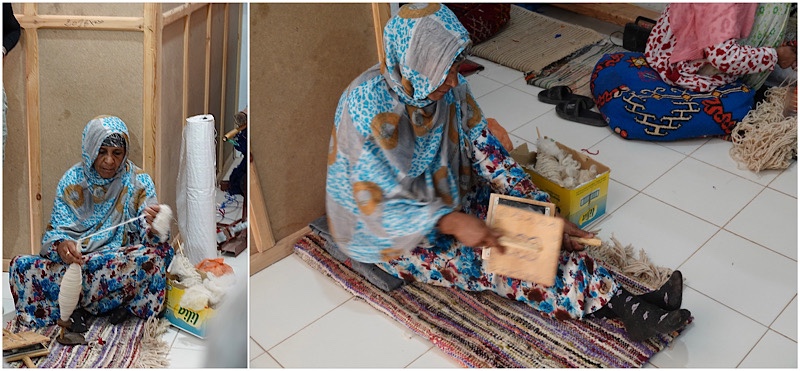
While the rugs are all woven, some are also embroidered and knotted. Many are reversible.

The patterns created are completely one-of-a-kind, and are not worked from any kind of pattern. Each design comes from thecweaver’s head, and tells a unique story, although there are some symbols used by all of the Berber tribes: diamonds to prevent against bad luck, and trees of life to represent fertility for instance. The symbols are not linked to Islamic religion but rather to Berber tribal tradition.

Looking at the intricate patterns, we quickly realized that we need to rethink our perceptions of what is considered “illiterate”, especially with regard to mathematical literacy. Just imagine programming these designs into a weaving machine and the value we’d assign to the computer programmer vs the societal value assigned to “handicrafts”.

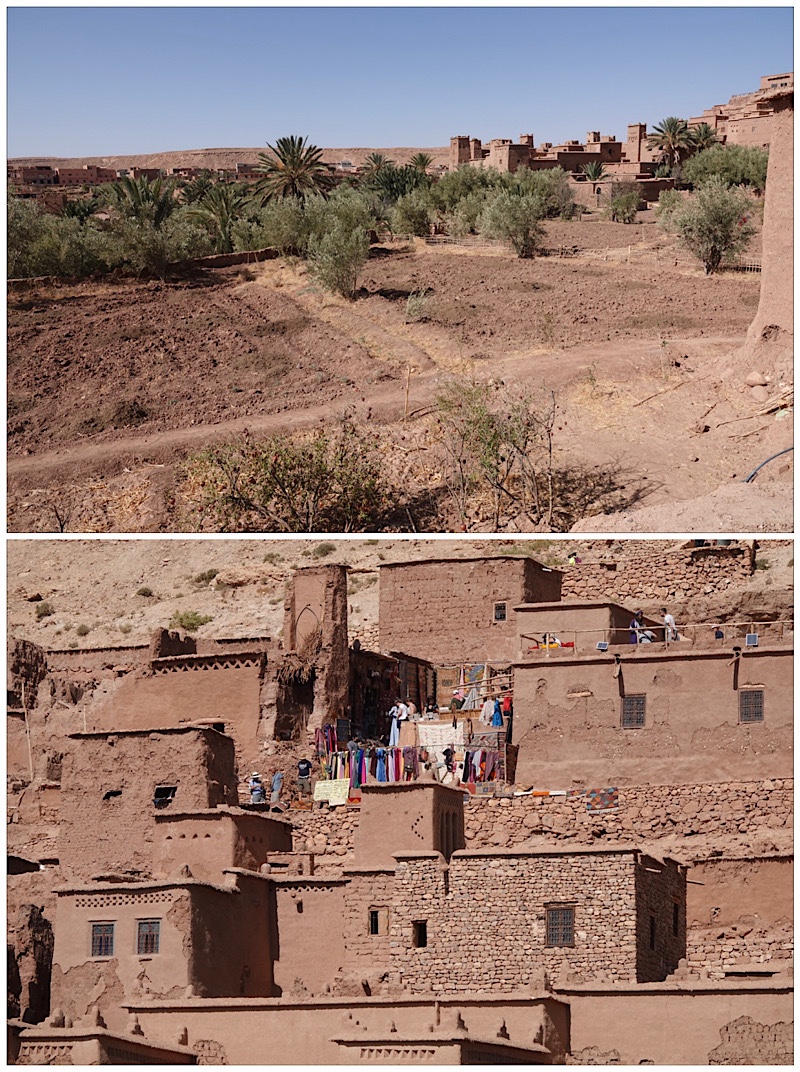
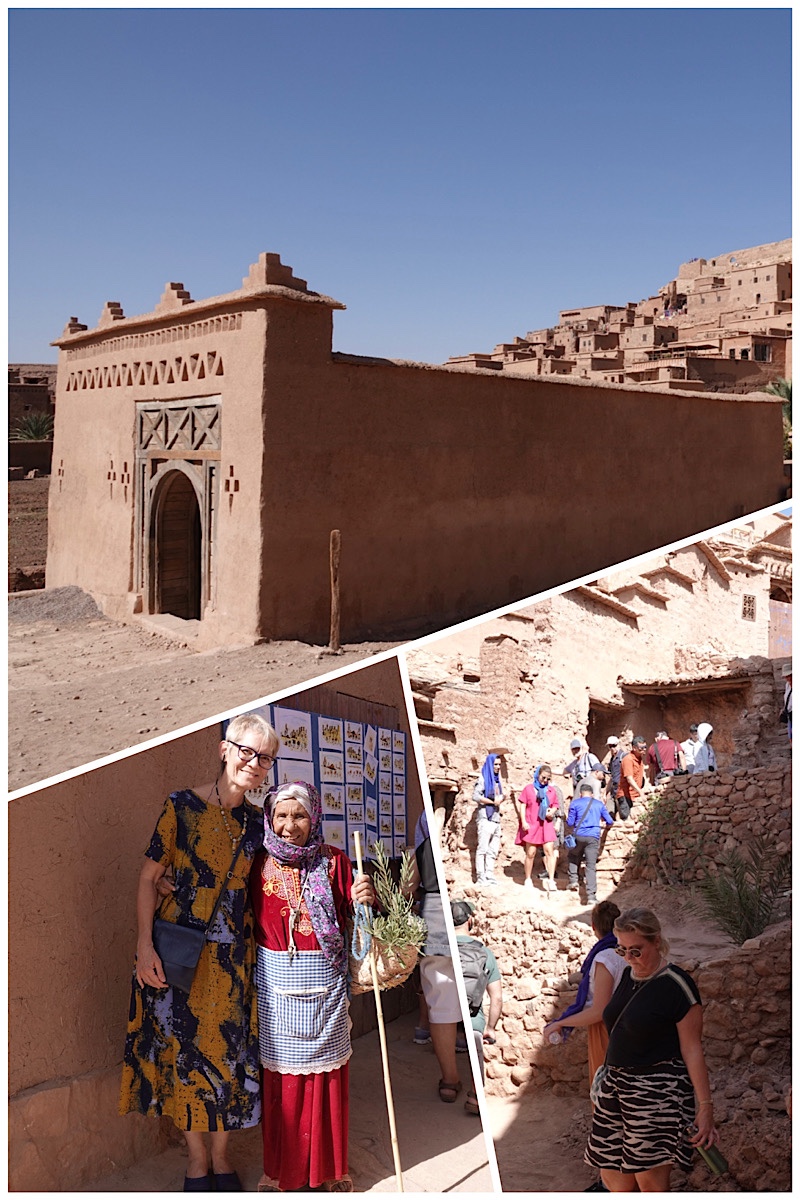
Our second stop was the UNESCO World Heritage site of Ait ben Haddou – a 16th century Kasbah which was supplemented by a “new” second kasbah in the early 19th century. Our goal was the old portion, where tourists can now only explore its ground floor due to last month’s earthquake making the second and third floors unstable.


The old and new portions of the kasbah are separated by a wide dry river bed, which we crossed on foot. When there is water here, local boys transport tourists through the area on donkeys. Because the river bed was not always dry, and was not crossable when it regularly flooded, most families moved to the new section. Only 11 very stubborn (Fouad’s description, not mine) are families still living in the old kasbah. Of course, there are still many many shops, but their owners cross to the modern side to live.


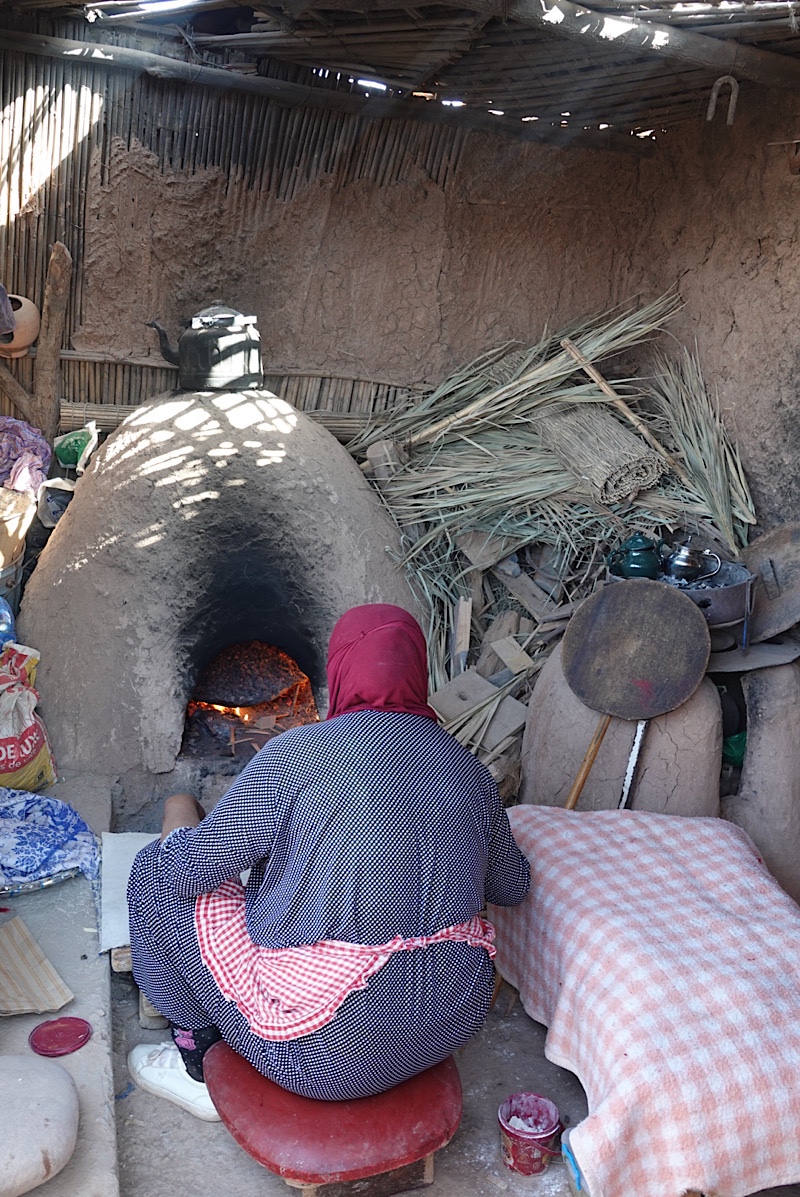

Back on the bus travelling through the High Atlas Mountains we encountered a LOT of roadwork to widen roads built largely during the French occupation. This work is part of a large plan of infrastructure projects slated for completion in 2030 when Morocco, Spain, and Portugal will be jointly hosting the World Cup of soccer.
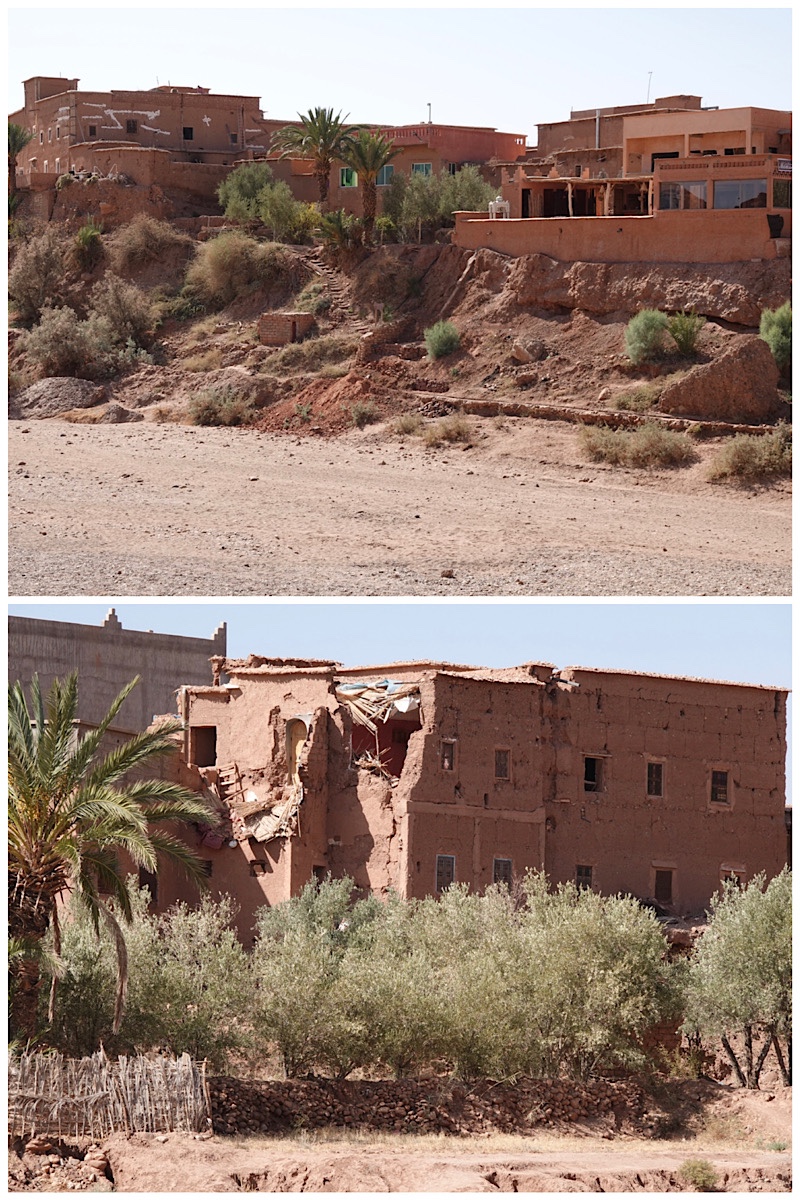
On September 8th, Morocco experienced a magnitude 6.8 earthquake, the most powerful in over 120 years. The epicenter was in the High Atlas mountains, about 72 km/45 miles southwest of Marrakech.
We drove through that area for about 2 hours, steadily climbing higher into the mountains, passing villages which seemed to show signs of earthquake damage, but because of the age of the buildings it was hard to determine which had already crumbled before the quake hit. We also saw modern buildings that seemed completely unaffected.

Our lunch break was at Café Rafik, with a beautiful view.
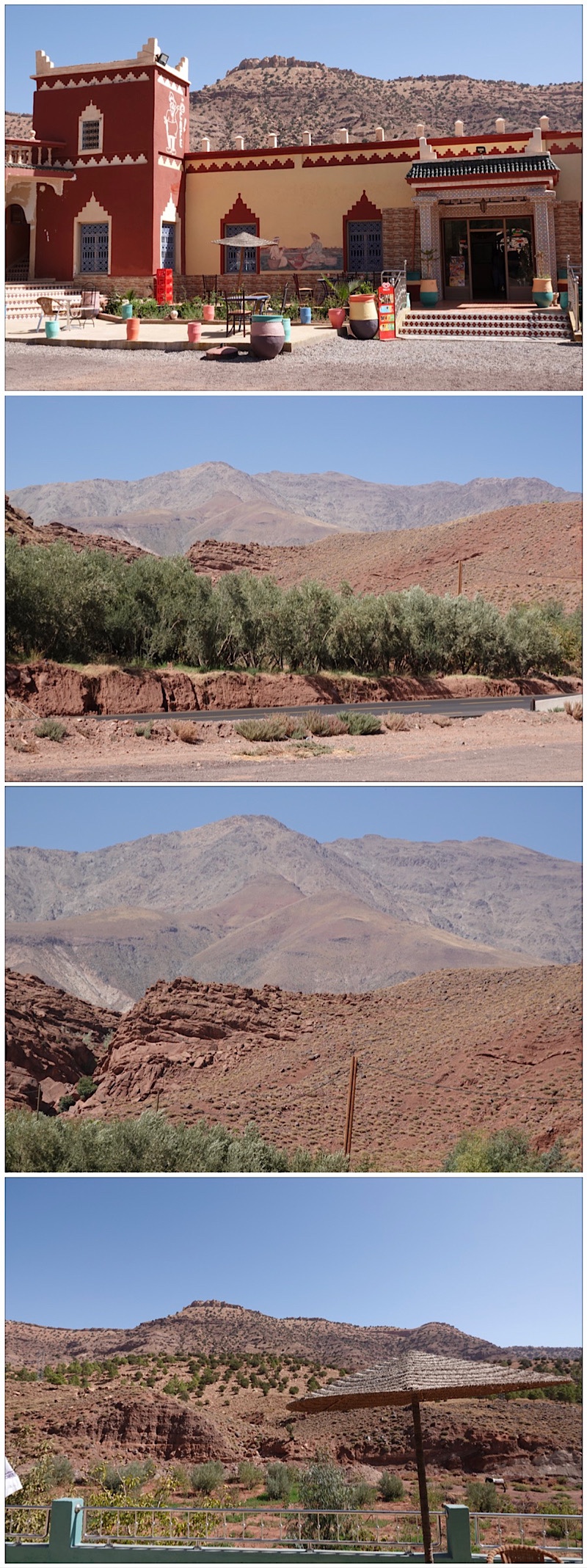
We made a photo stop at the highest point of the Tichka Pass, 2260m/7414ft.

Back to the winding roads through the mountains, with ooh and ahh and awe-inspiring views, and equally awesome driving by Monai!
Several times we encountered double-decker trucks carrying cows, with net securing the animals on the roof. Fouad joked that those on the upper deck pay extra for the panoramic view!

…. and then after over 2 hours of narrow rocky passages, sheer cliffs, hairpin turns, and steep slopes, we were suddenly in the second biggest city in Morocco, and driving past the square decorated with the flags of all the countries who sent representatives to the IMF conference.

Tomorrow we’ll start our exploration of Marrakesh.


I’m so saddened to hear the BS that they keep piling on. Sounds like some fraud going on?
I can’t even imagine what Gary’s Blog (from the Viking Star 2022 World Cruise) would reflect if he was in your tour and blogging.
Hope things get back to normal soon.
Mel
LikeLiked by 1 person
We all got emails from the head office today indicating that they’re negotiating compensation through the local tour company. We’ll see…..
LikeLike