October 10 Itinerary: We travel to Ouarzazate on the edge of the Sahara – an ancient garrison town made famous when the film Lawrence of Arabia was filmed nearby, then through Dades Valley, or “Valley of One Thousand Kasbahs”. We also visit Taourirt – one of Morocco’s most beautiful Kasbahs.
🐪 🐫 🐪 🐫🐪 🐫🐪 🐫🐪 🐫🐪 🐫🐪 🐫🐪 🐫🐪 🐫🐪 🐫🐪 🐫🐪 🐪 🐫🐪 🐫🐪 🐫
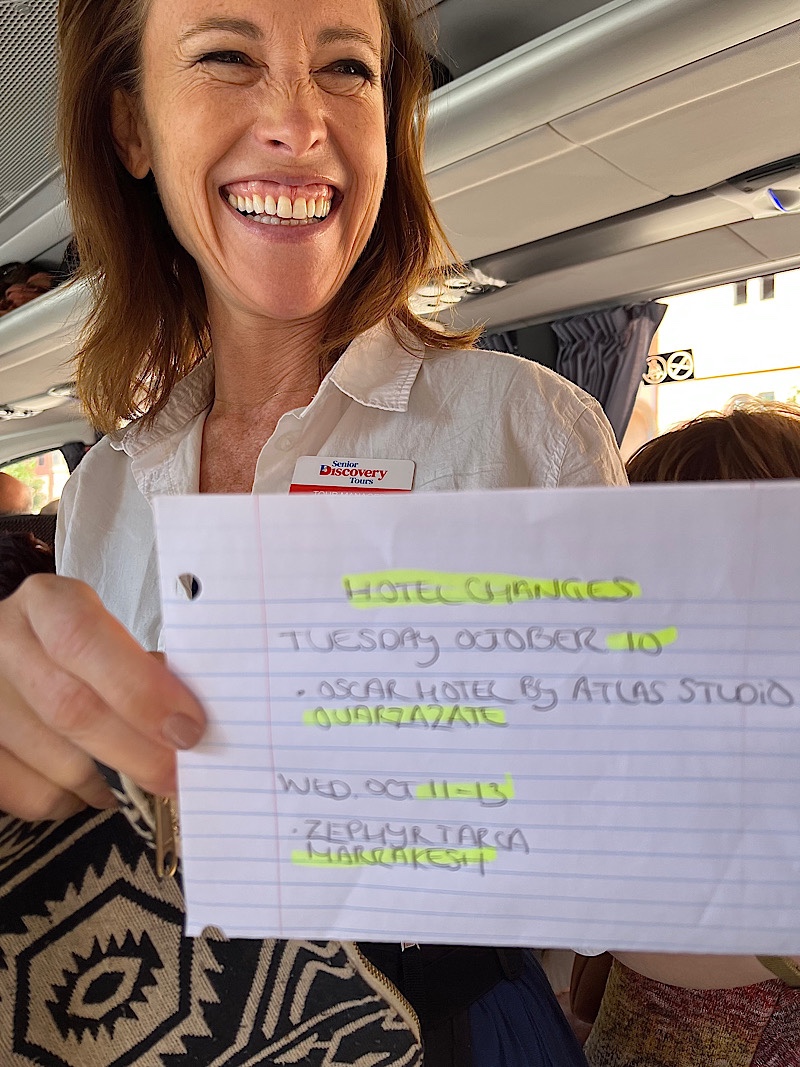
Housekeeping notes: It turns out that yesterday’s hotel change was because of a film crew extending their stay in Tinghir and thus occupying our original booking. Why our tour manager wasn’t informed ahead of time is baffling.
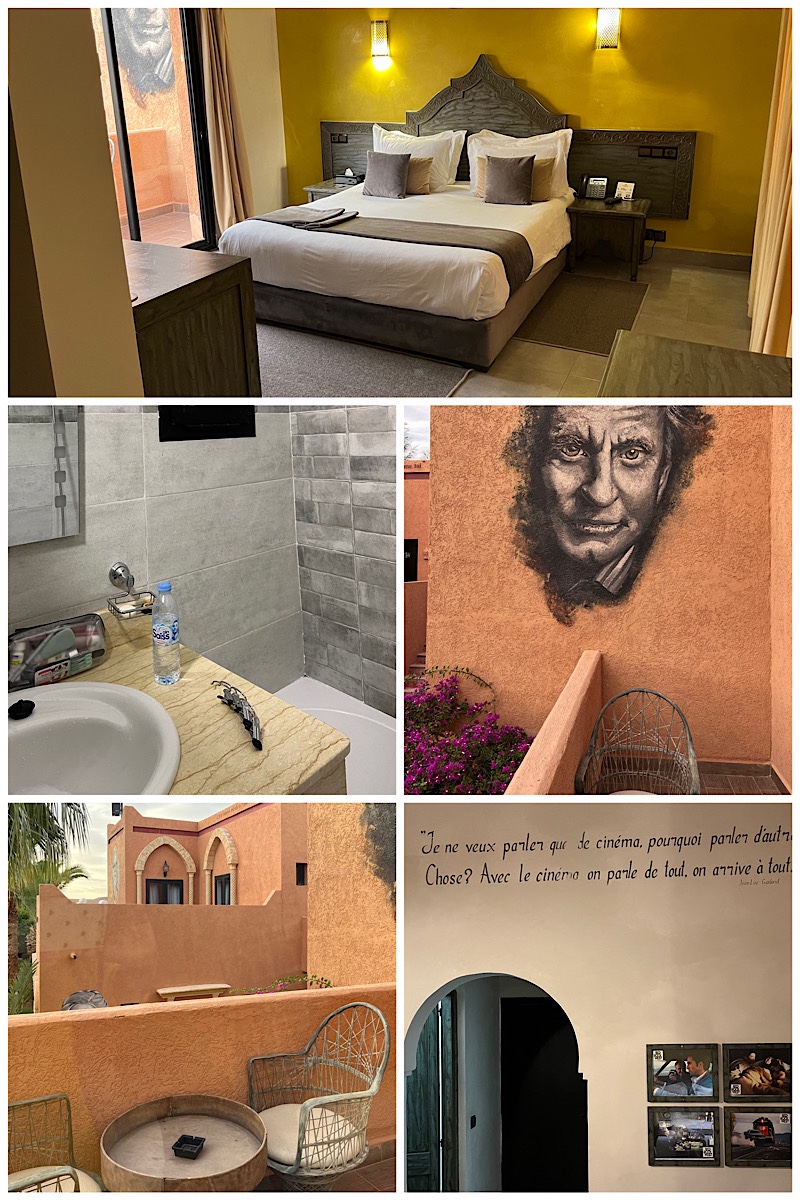
We had another hotel change today due to earthquake damage and ongoing restoration of our original hotel in Ouarzazate. Fouad told us that the earthquake’s final toll was almost 3000 dead and 2000 injured, mostly here in the High Atlas. That sure makes griping about our inconvenience seem pretty petty, although again it doesn’t explain why our tour manager was not informed. In the end, though, tonight’s accommodation was pretty spectacular.
Our 3 night Marrakech hotel is also changing because of the IMF (International Monetary Fund) meeting in the city. That should definitely not have been a surprise given how far ahead those conferences are scheduled. In compensation SD will provide each of us with 2 free lunches and a dinner with a folkloric show “fantasia”.
Check out Monica’s brave smile as she shared the information.
🐪 🐫 🐪 🐫🐪 🐫🐪 🐫🐪 🐫🐪 🐫🐪 🐫🐪 🐫🐪 🐫🐪 🐫🐪 🐫🐪 🐪 🐫🐪 🐫🐪 🐫
After a breakfast which included lovely cinnamon-infused coffee, and checking out of last night’s hotel, we began our day with a short city tour of Tinghir en route to Todgja Gorge.
Tinghir is located in the southern portion of the Anti-Atlas mountain range, almost into the High Atlas, in an area known for large oases.
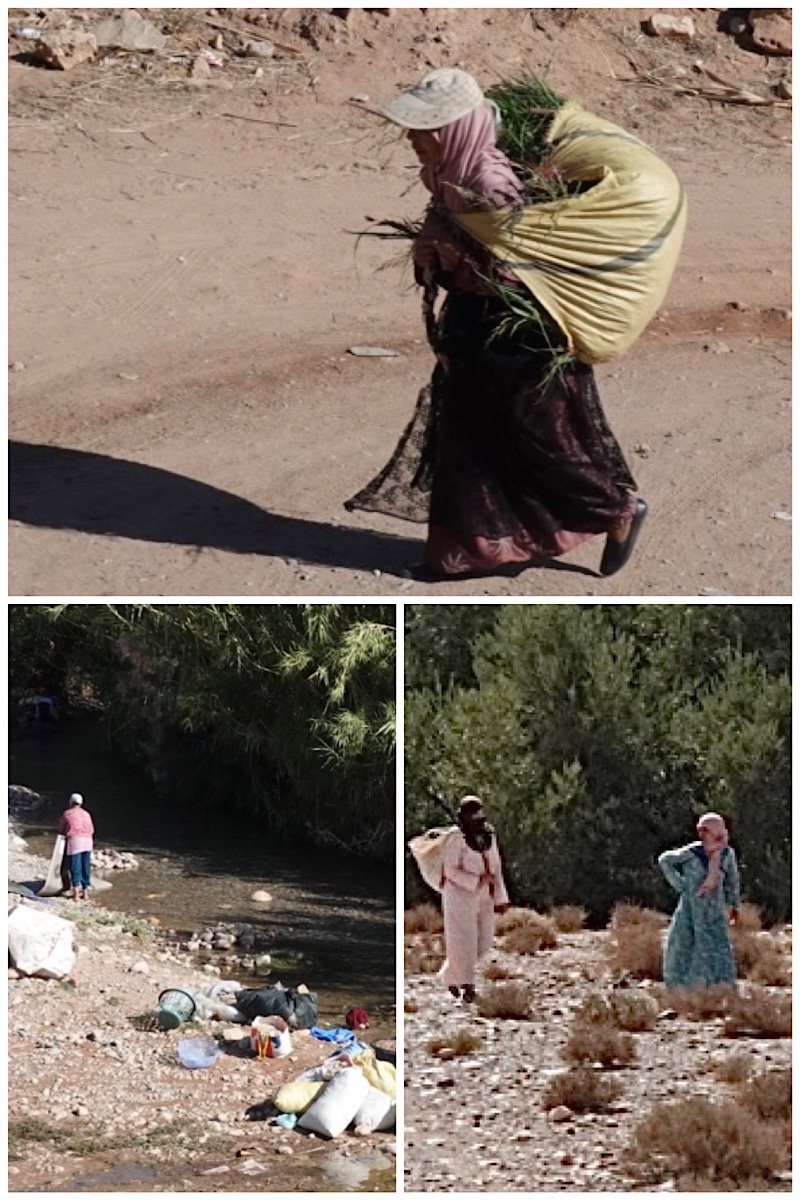
The people here, mostly Berbers, live a simple, traditional lifestyle focussed mostly on agriculture. Homes in the city all have water and electricity, but many of the rural women still do laundry in the river to conserve their well water for drinking.
Laundry day once per week is also a social event for the women; the laundry is carried from their homes by donkeys who are also laden with food for a communal meal riverside.
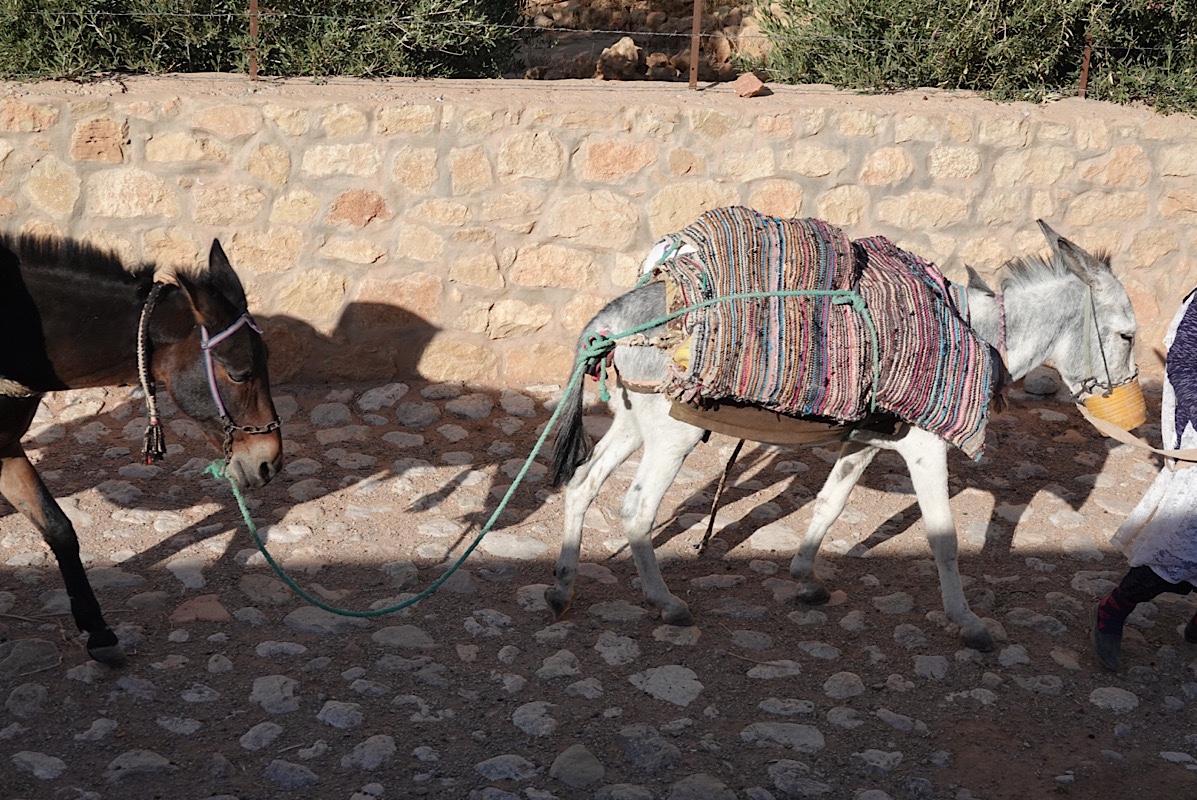
Many of the old Kasbah-style walled homes are now abandoned as the local people are modernizing their homes. There was lots of building going on. The homes all have fairly plain exteriors; interiors are where decoration is lavished. Many new homes are inhabited unfinished until the owners can afford to paint the exterior and begin to pay taxes, which are based on square footage of a “completed” home. It doesn’t seem to be a case of trying to permanently shirk taxes, just a strategy to delay them in favour of making the house comfortable first.
The few really large and fancy homes belong to Moroccans who live outside the country – mainly in France – and only return to them to visit (and maintain voting rights).
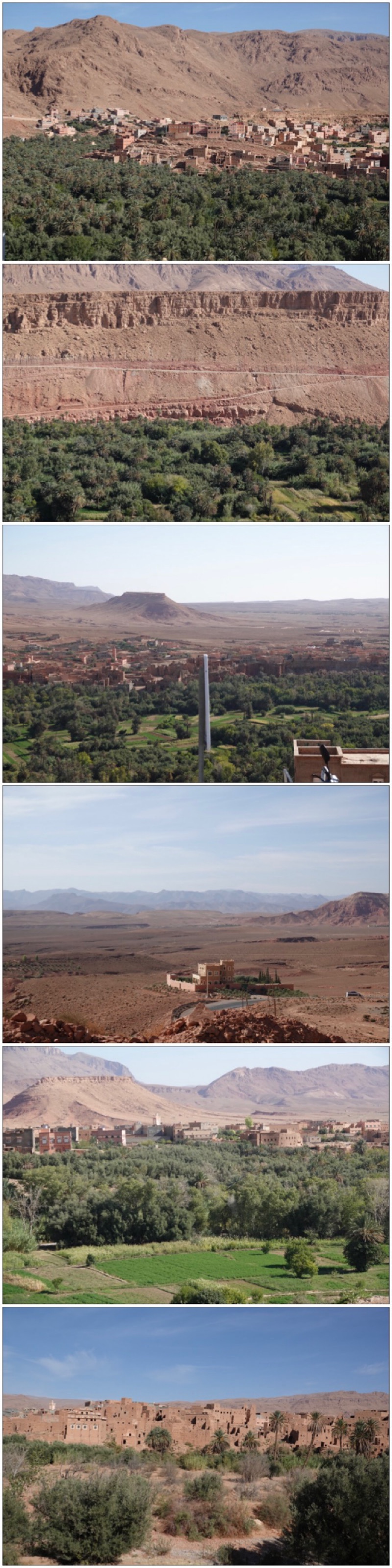
We made a photo stop at the highest point overlooking the city. This is where you can see how far it spreads, and understand where its population of 50,000 lives.
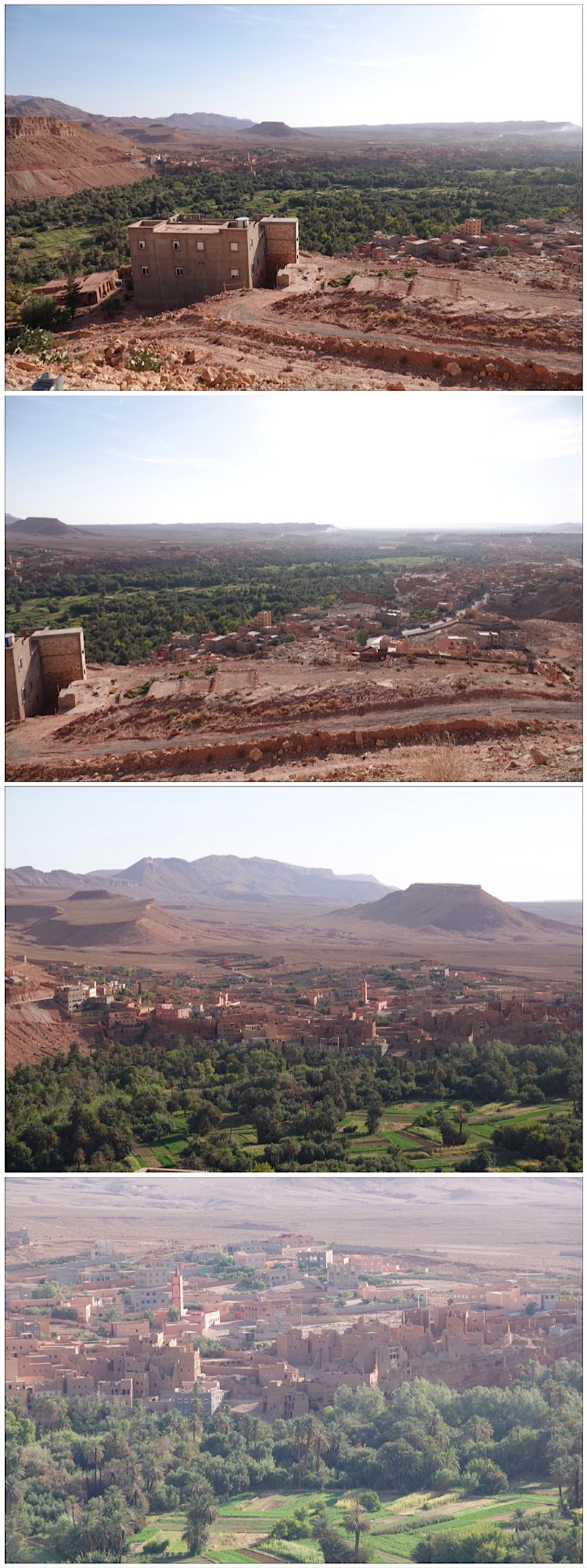
The green of the oasis is in stark contrast to the desert landscape. Here in an oasis covering almost 48 sq km, one of the largest oases in Morocco, date palms are inter-planted with beans, barley corn, and alfalfa crops,
You can see from Ted’s photos that all the buildings are painted pink. Those buildings that are also shops have green doors to differentiate them.
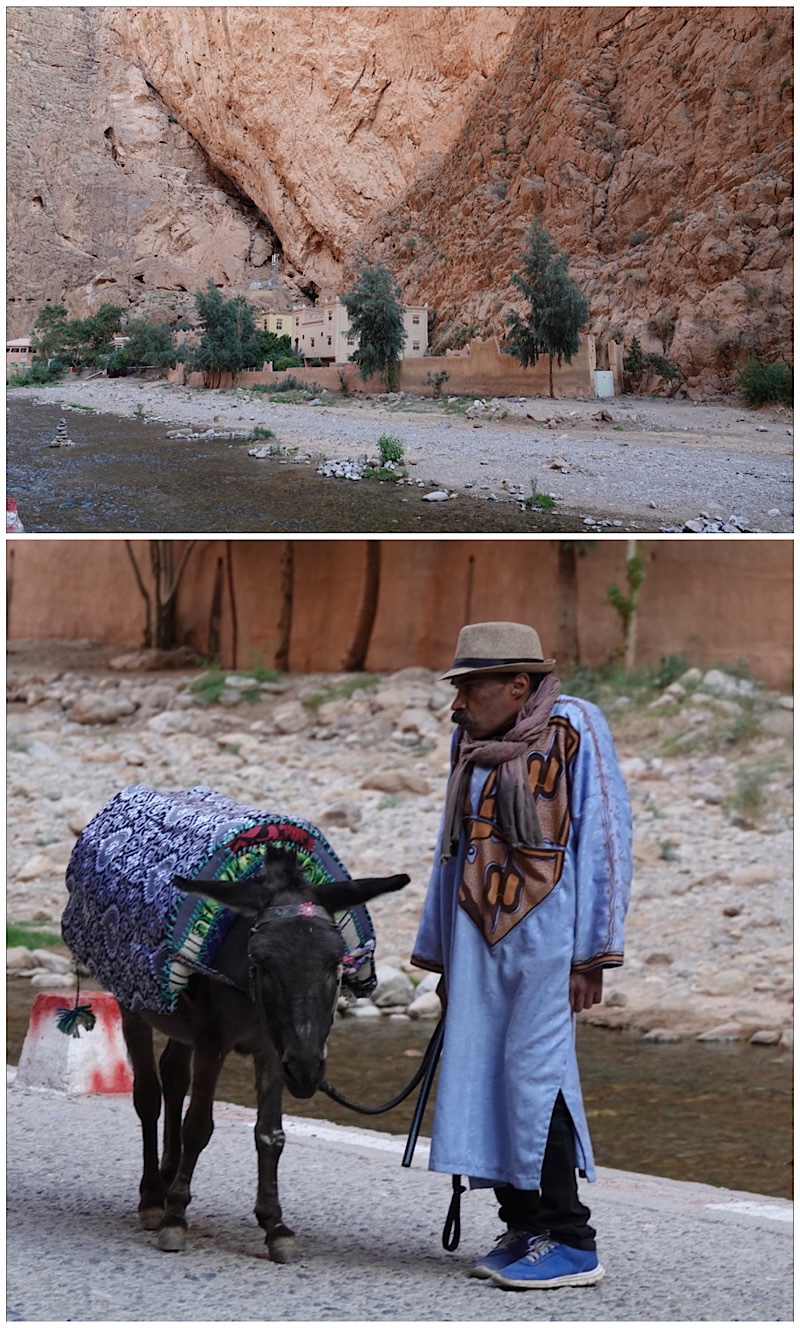
Not far from town we entered the spectacular Todgja Gorge, created by millions of years of river water eroding the mountains. The steep walls and pink rock colour reminded us of the rose red city of Petra in Jordan.

On the next stretch of our trip toward Ouarzazate, Fouad told us a bit about the education system in Morocco.
Public education is mandatory for 9 years , although many children attend 1 or 2 years of pre- primary school focussed mostly on learning the Quran and instilling basic math skills. Pre-school lessons are done “circle” style, sitting cross legged around a teacher, in a mosque-like setting.
All schools are privately run but overseen and funded by the government, meaning that no one has to pay for education, including at public universities. Of course, some people do choose private or even international schools.
Students attend primary/elementary school for 6 years, taught in Arabic, with French taught as a second language beginning in second year. Middle/ seconday school for the next 3 years includes a second foreign language, generally Spanish, English, or German.
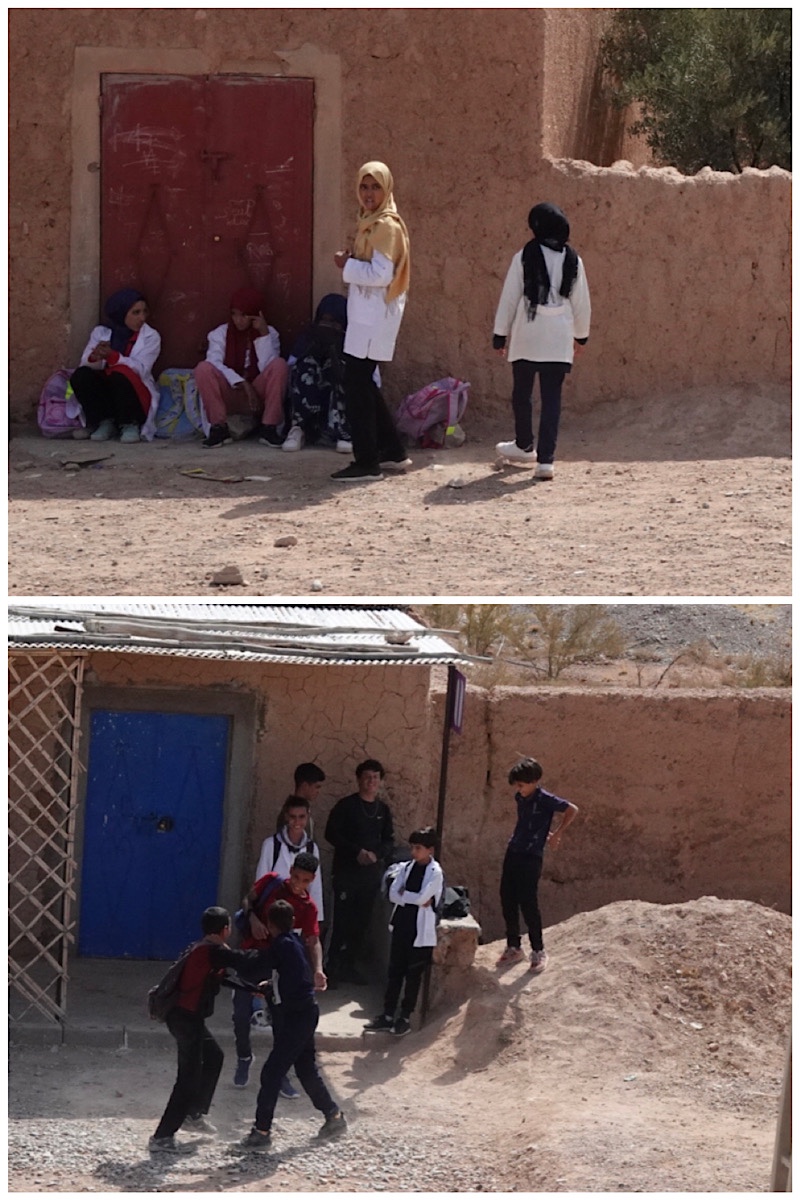
The next 3 years, called college here but more like our high school, come in several options for specialization: a focus on literature, a focus on experimental sciences, a focus on mathematical sciences, or technical institutes.
Once the college diploma is granted at 16 years old, further education is encouraged but not compulsory, with free public universities generally offering literature, science, maths, or law as a 3 year Bachelors degree.
The biggest challenge facing Morocco is illiteracy among rural women, something the King is actively trying to change by having all 3 levels of schools built in rural areas, where it is common for families not to want their daughters travelling far from home to study. On an encouraging note, last year 54% of university graduates here were women.
We made a comfort (and ice cream) stop in Kelâat M’Gouna, the rose capital of Morocco, where all kinds of rosewater products are sold, and a rose festival is held each May.
Then it was on to Ouarzazate, a city whose name means without confusion/without noise. While most tourists stop here just because it is a convenient midway point between Merzouga and Marrakesh, it has several interesting claims to fame.
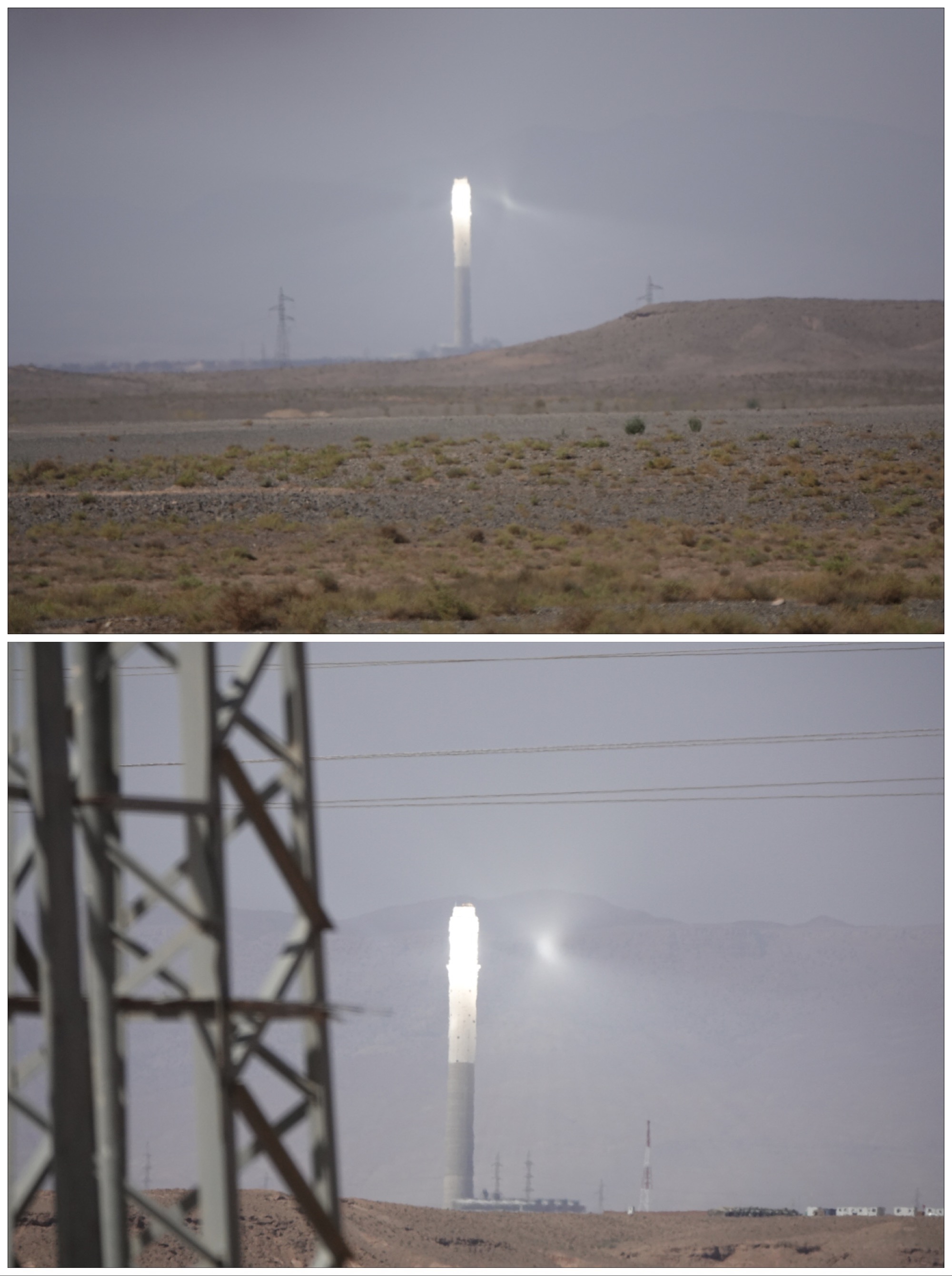
Noor Ouarzazate Solar Complex in Morocco, located just 10 km outside the city, is the world’s largest concentrated solar power plant. The white hot light generated by the sun hitting the plant’s huge reflecting mirror was visible from miles away. Ted was able to zoom in with his camera, even in a moving bus!
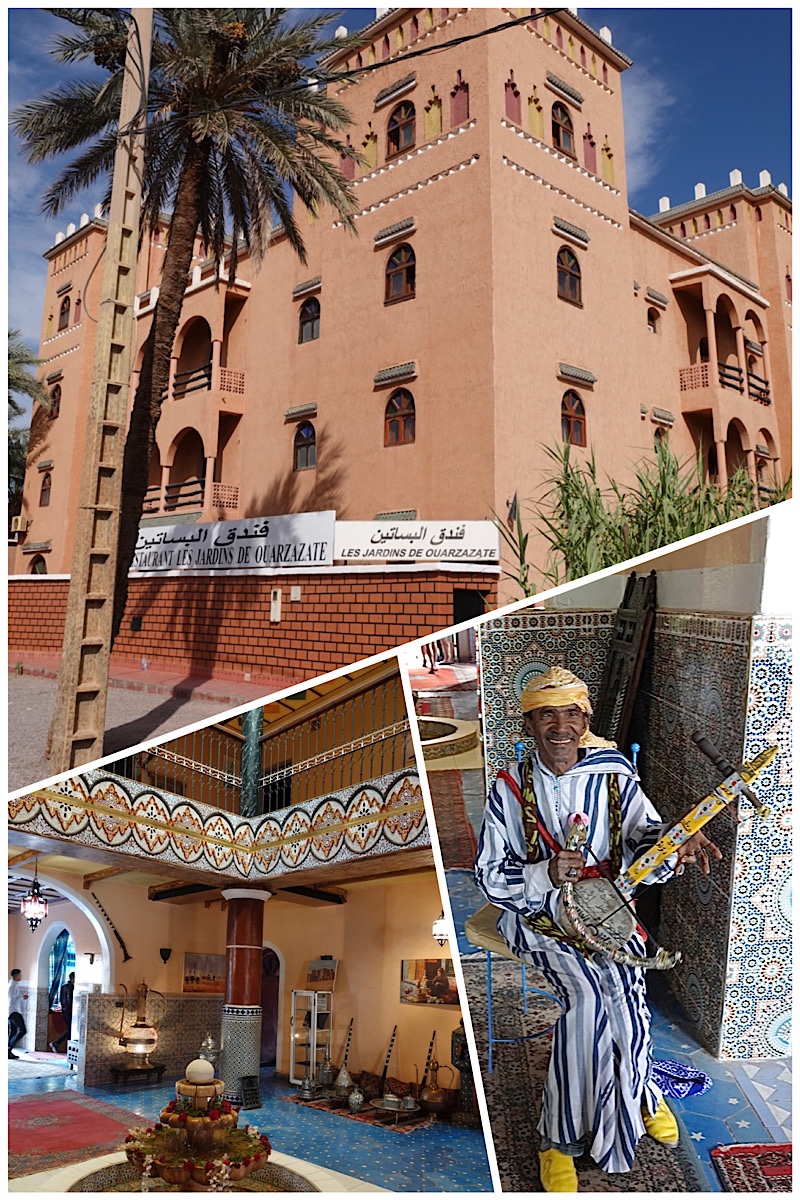
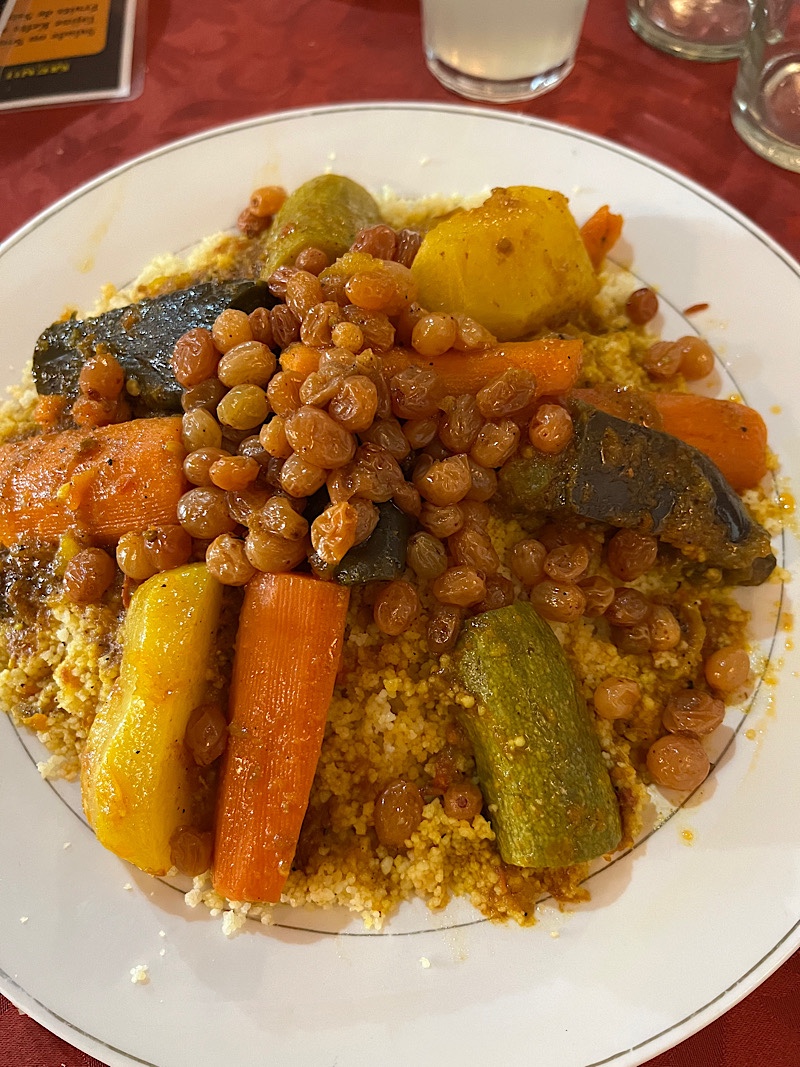
Our group’s first priority was lunch, which seems to be around 2:30 each day (hence morning ice cream). We ate at the lovely Les Jardins de Ouarzazate Hotel & Restaurant, where my vegetable couscous with raisins was outstanding.
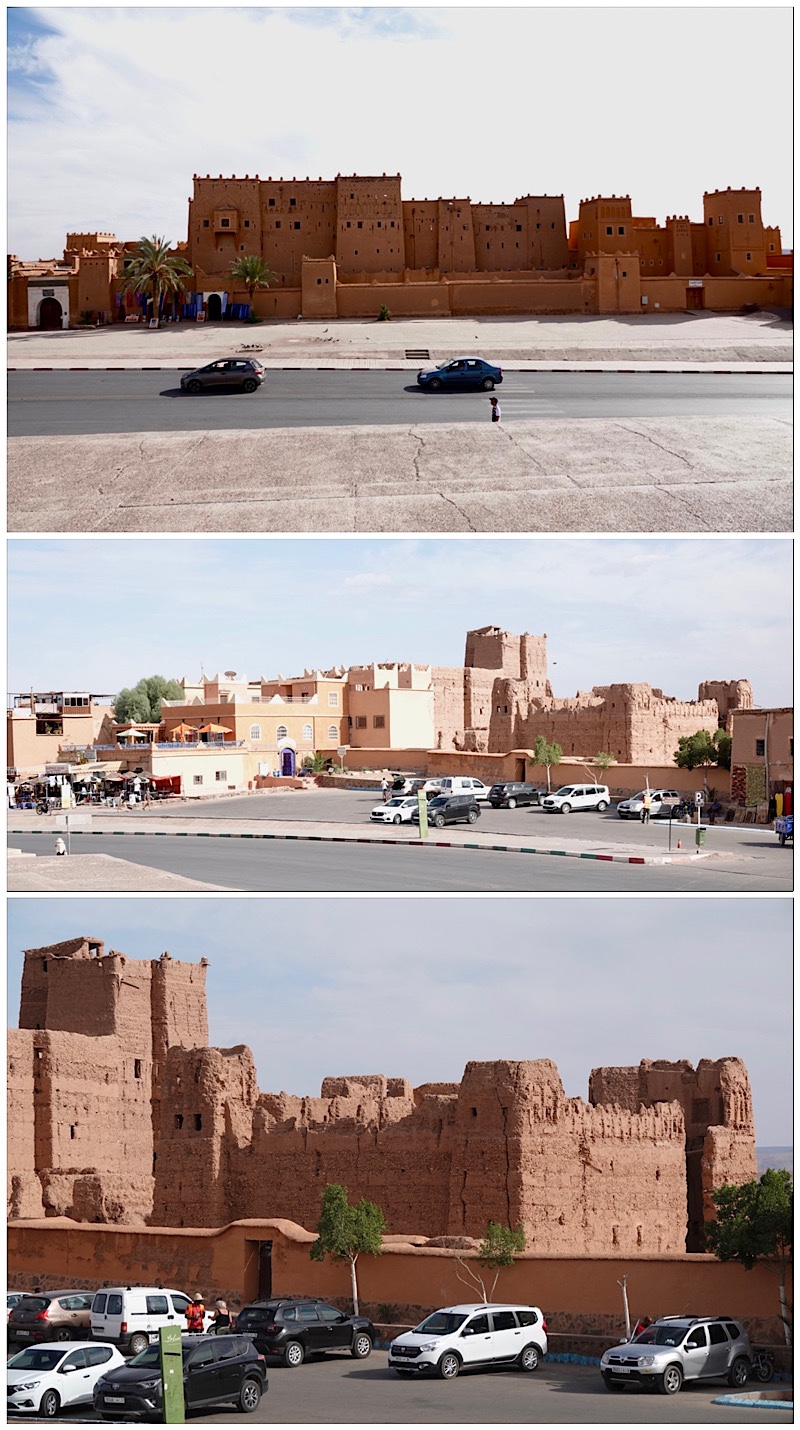
Kasbah Taouirrte in the centre of the city was the longtime residence of the Pasha, the representative of the Sultan (similar to a governor). The entire fortified complex was owned by a Pasha Thami El Glaoui, governor under Mohammed V, who conspired with the French to overthrow the King and this secured his own governorship through the entire period of French rule. Once the king was reinstalled in 1953, the pasha’s family was exiled and ended up in France, Belgium, and even Miami!
Unfortunately the site was damaged in last month’s earthquake, with cracks and partial collapses, and the risks of more, precluding tours. The photos below were taken from across the street.
Our group got an alternate tour right across the street, at the Ouarzazate Movie Studio Museum of Cinema.
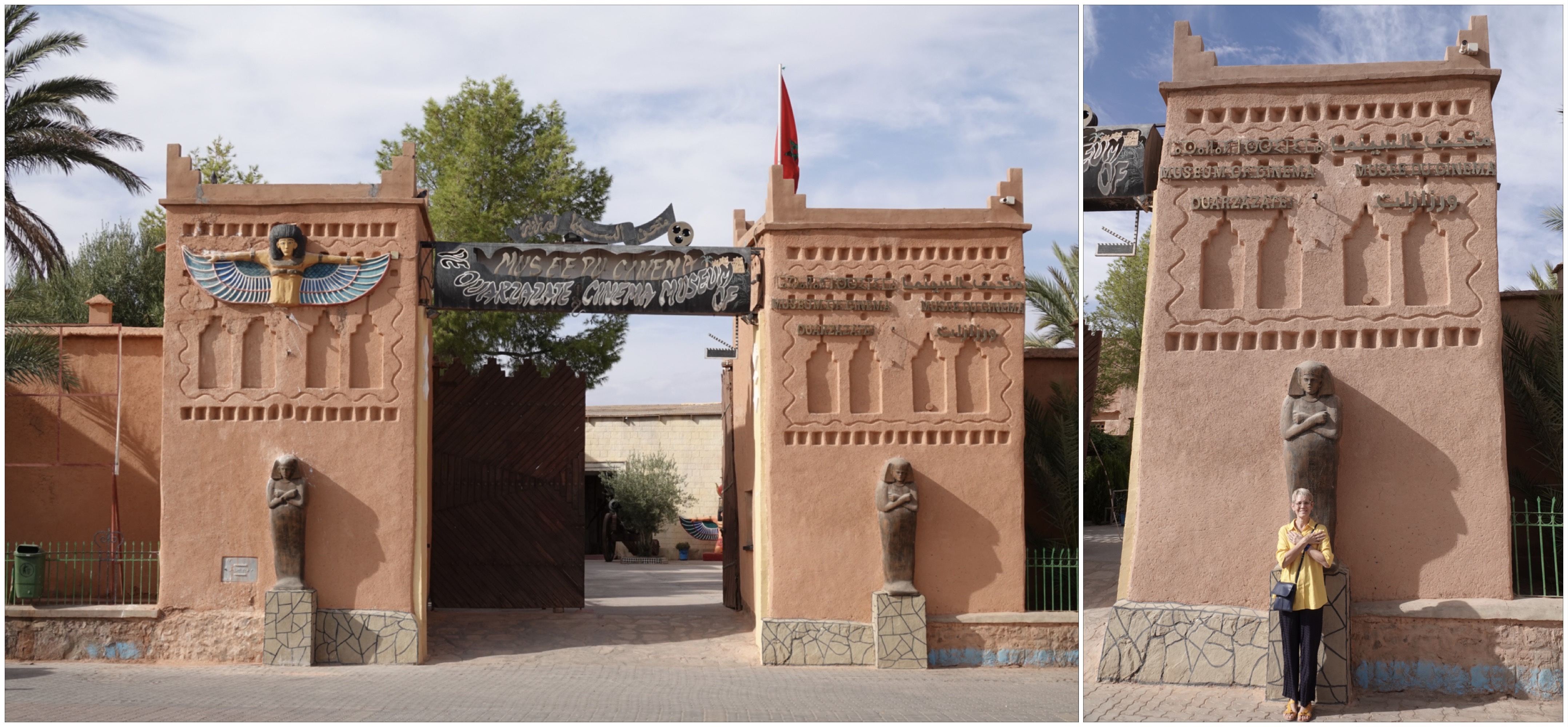
The desert around Ouarzazate has been a movie location for many decades, but really became known as the “Hollywood of Morocco” after the desert just outside the city was used to film parts of David Lean’s Lawrence of Arabia in 1961.
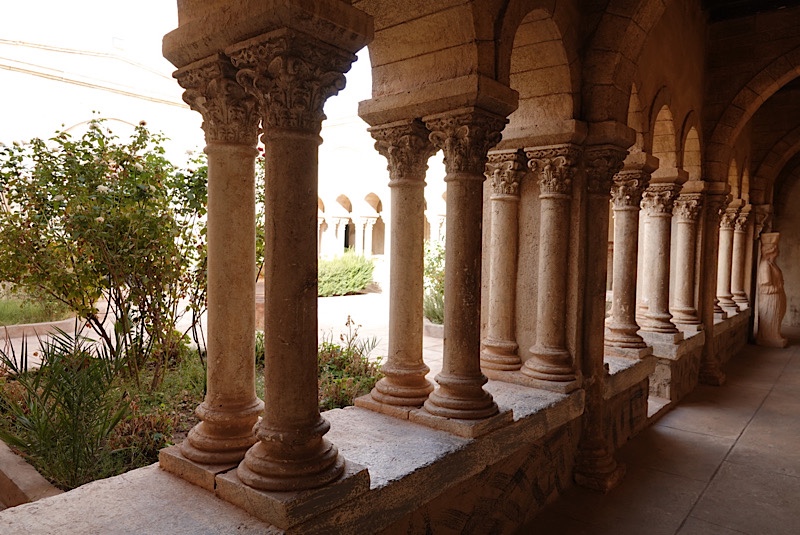
The current museum was the the first of 4 studios built here, in 1981. It was undamaged by the recent earthquake precisely because it is not “real”. It may look like clay brick and stucco, but it is really all polyresin, fibreglass, and bamboo – all of which are very flexible.
Over 300 movies have been made here, including all of these:
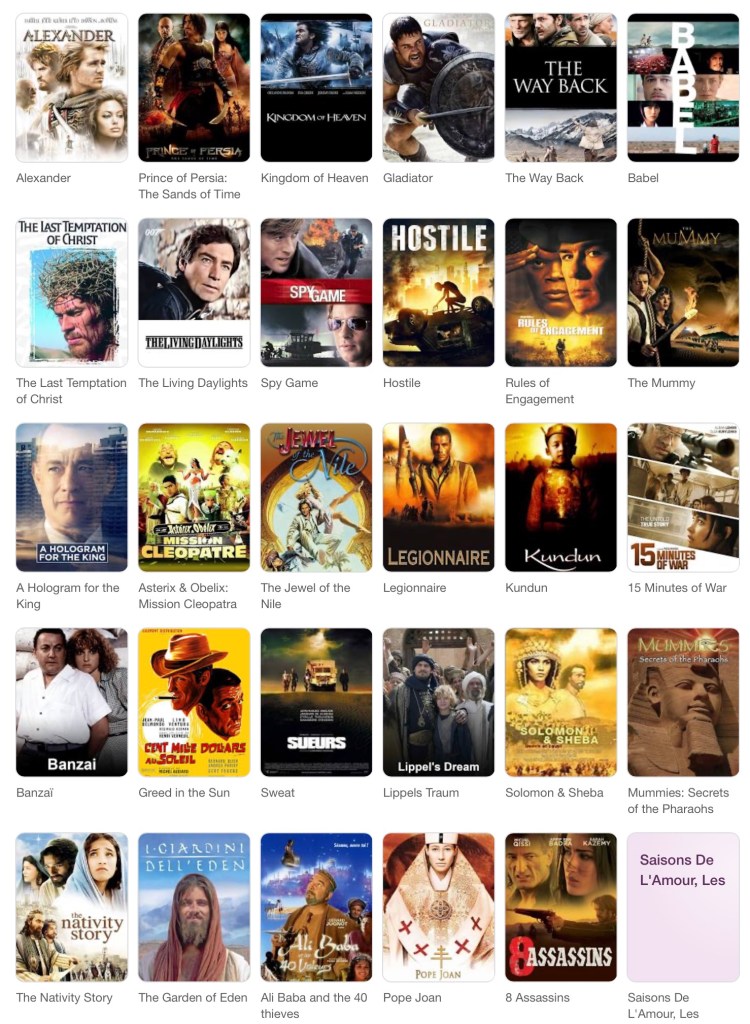
1999’s Rules of Engagement with Tommy Lee Jones and Samuel Jackson was filmed here, and our local studio guide Mohammed was an extra! Mohammed also spoke proudly sbout his multiple interactions over the years with Sir Ben Kingsley.
Sometimes other locations in the city were also used as sets. The last scenes of Star Wars Revenge of the Sith was filmed in the Kasbah
We got to go inside and check out a number of famous set pieces left here after filming.
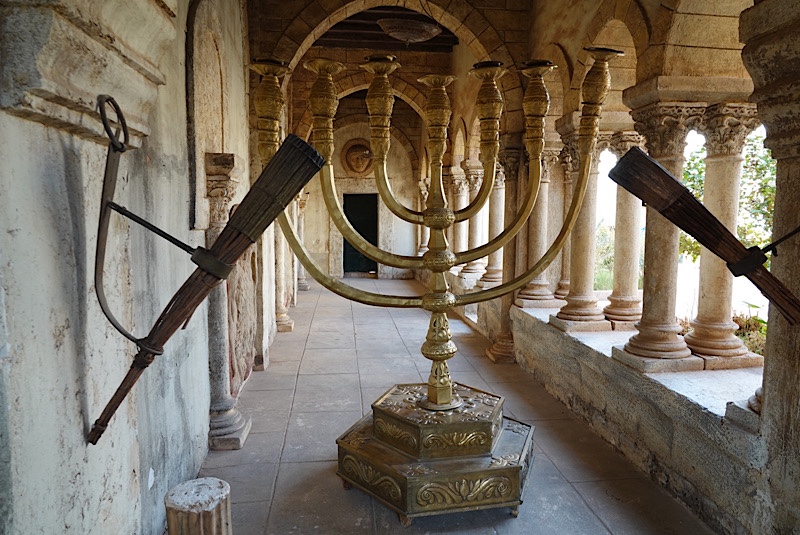
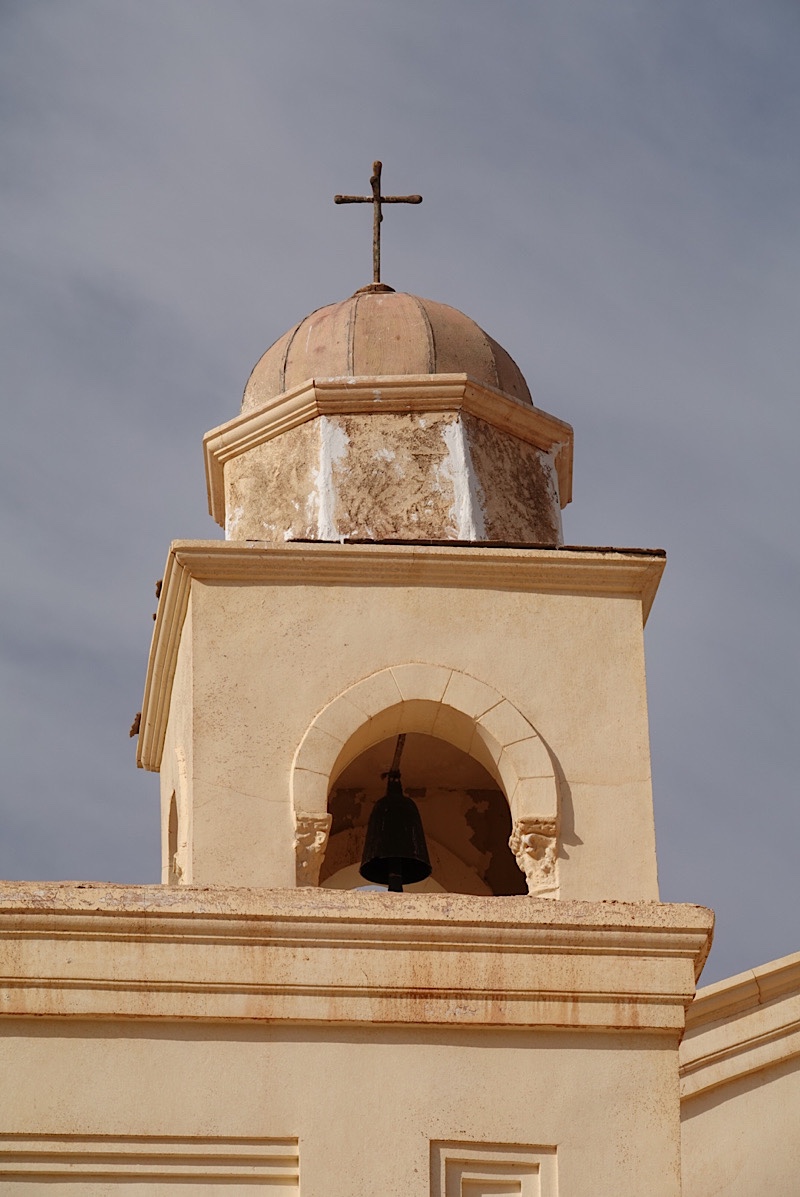
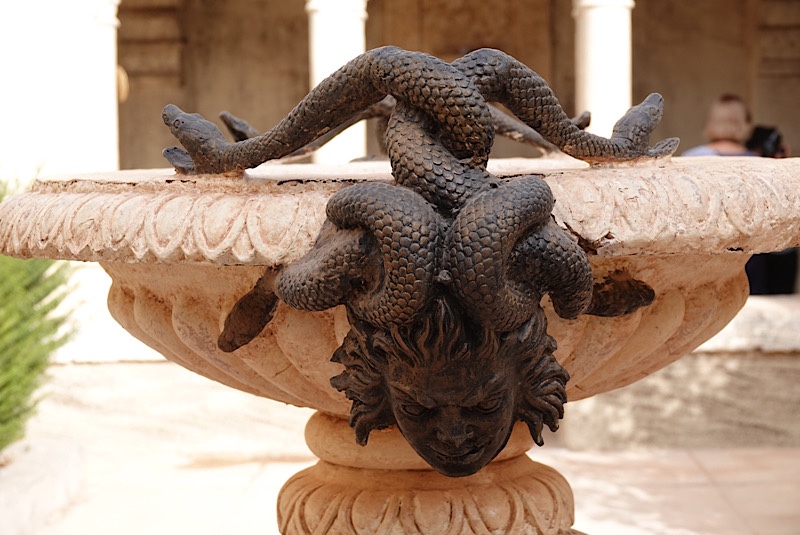
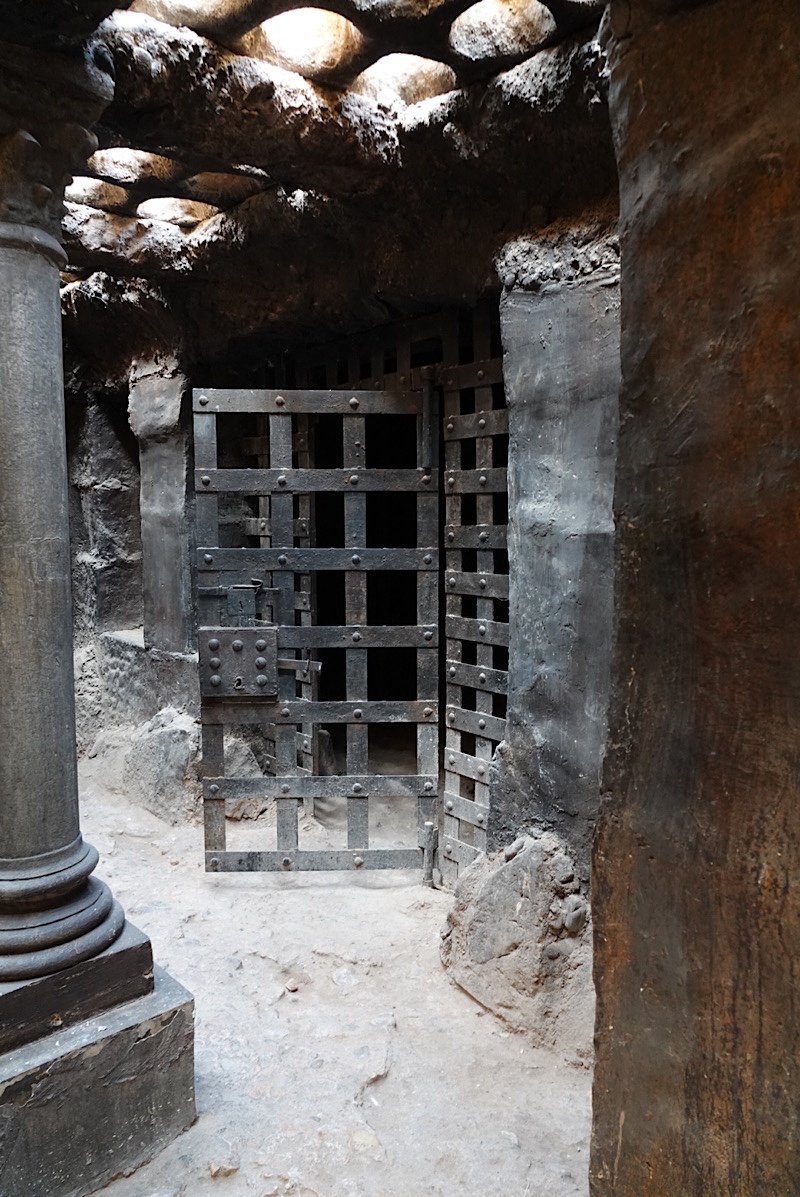
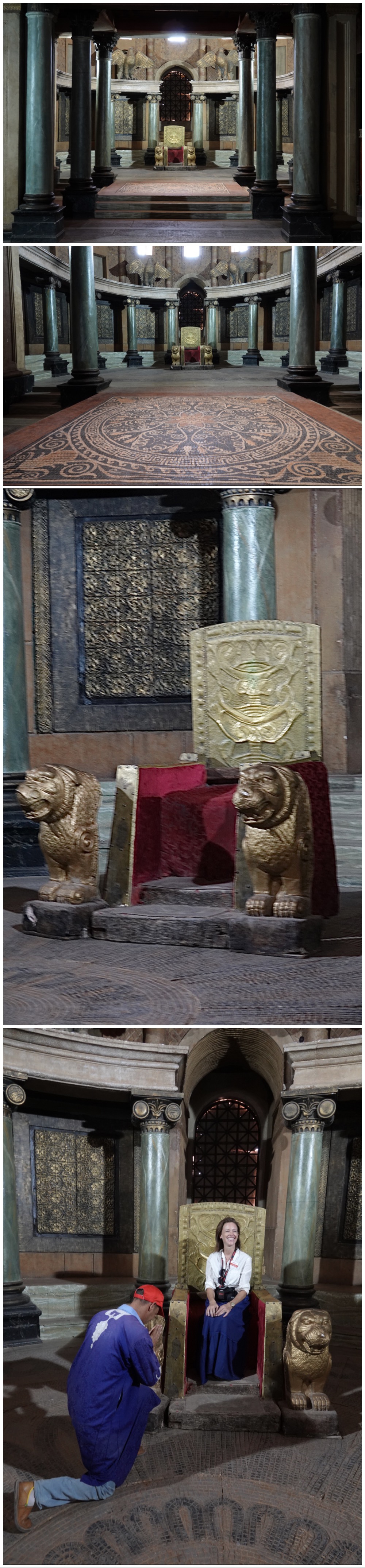
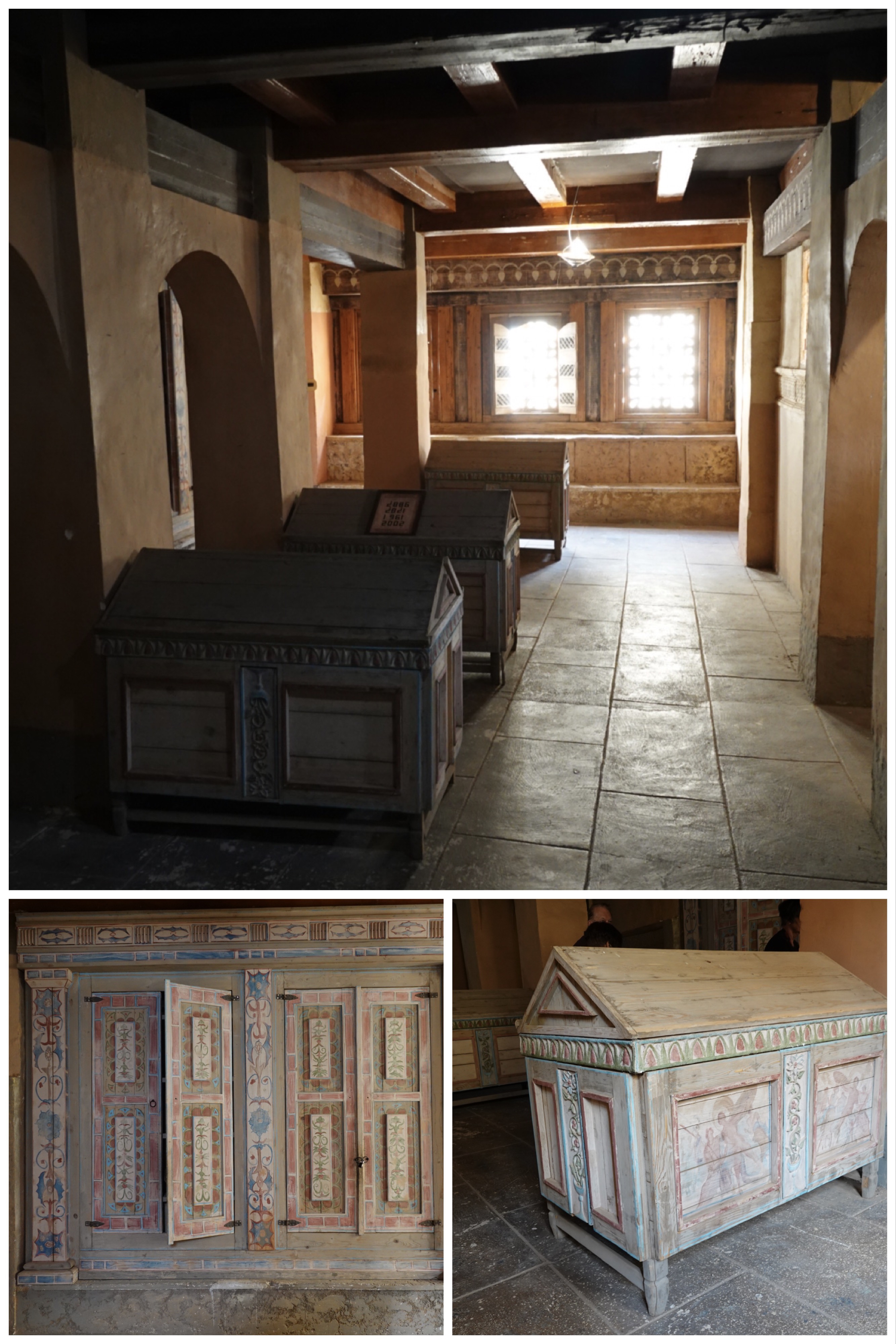
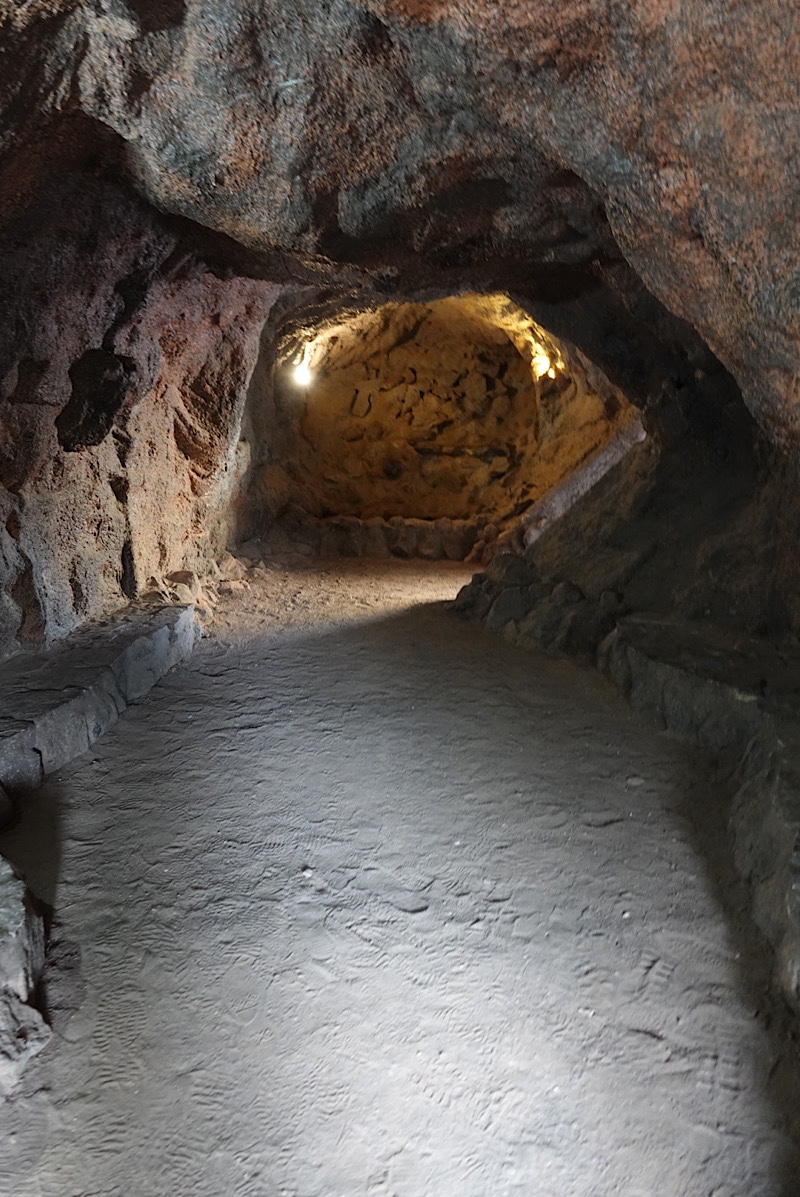
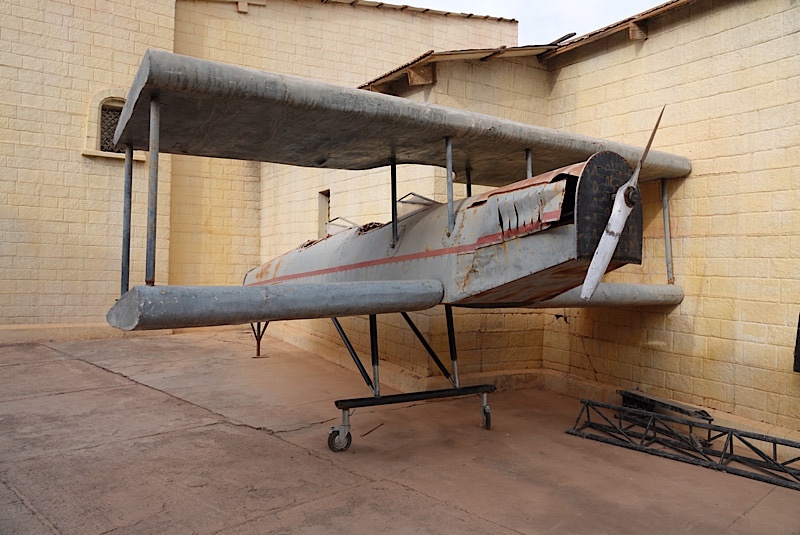
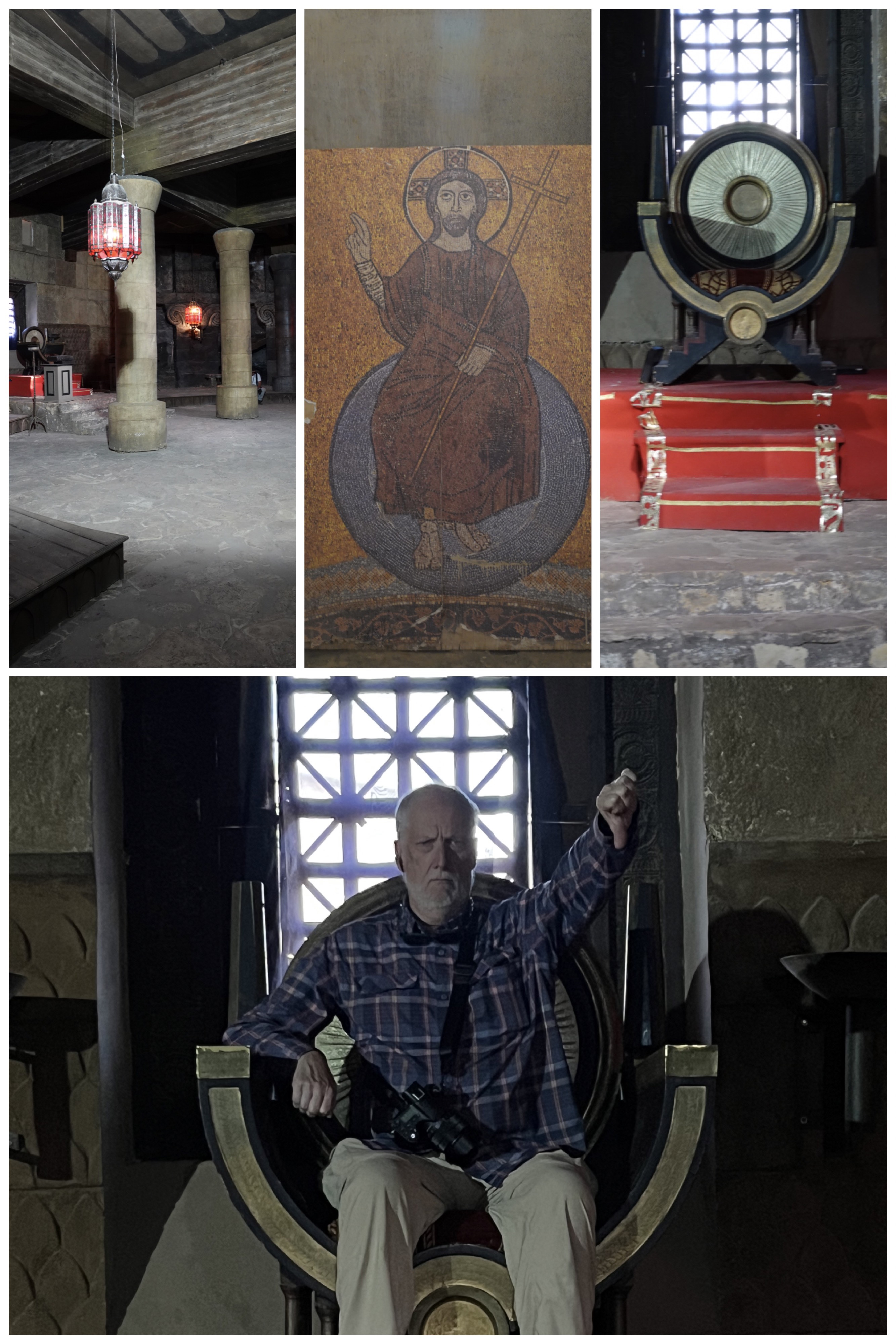
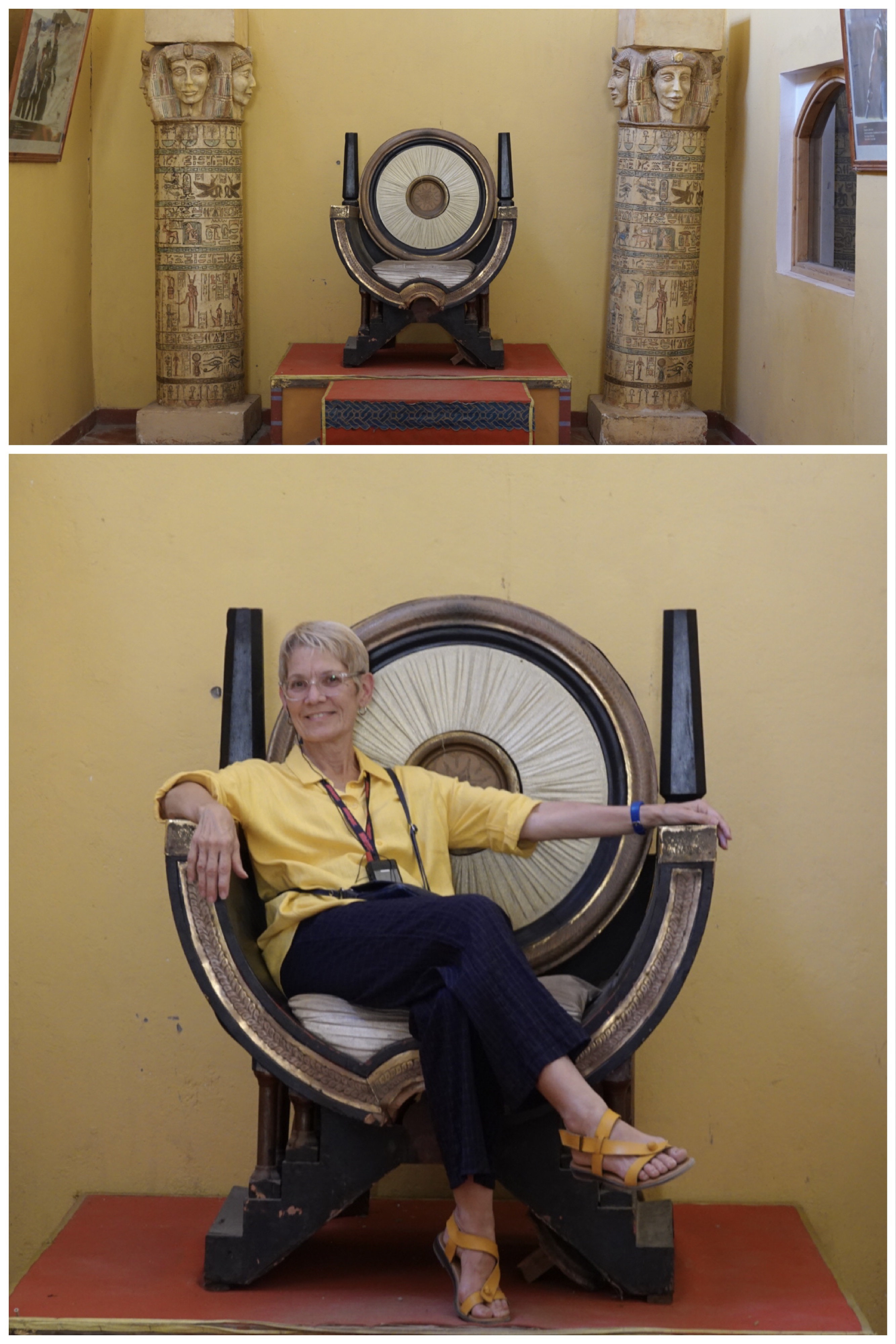
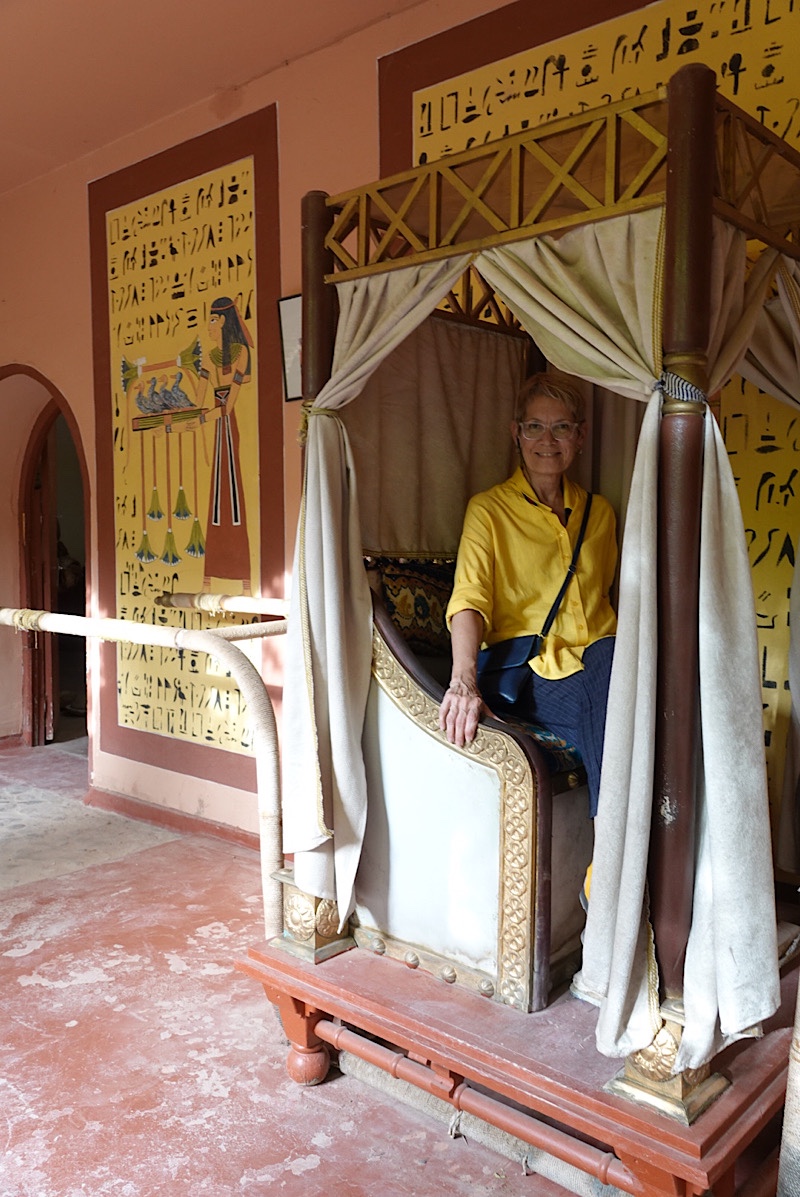
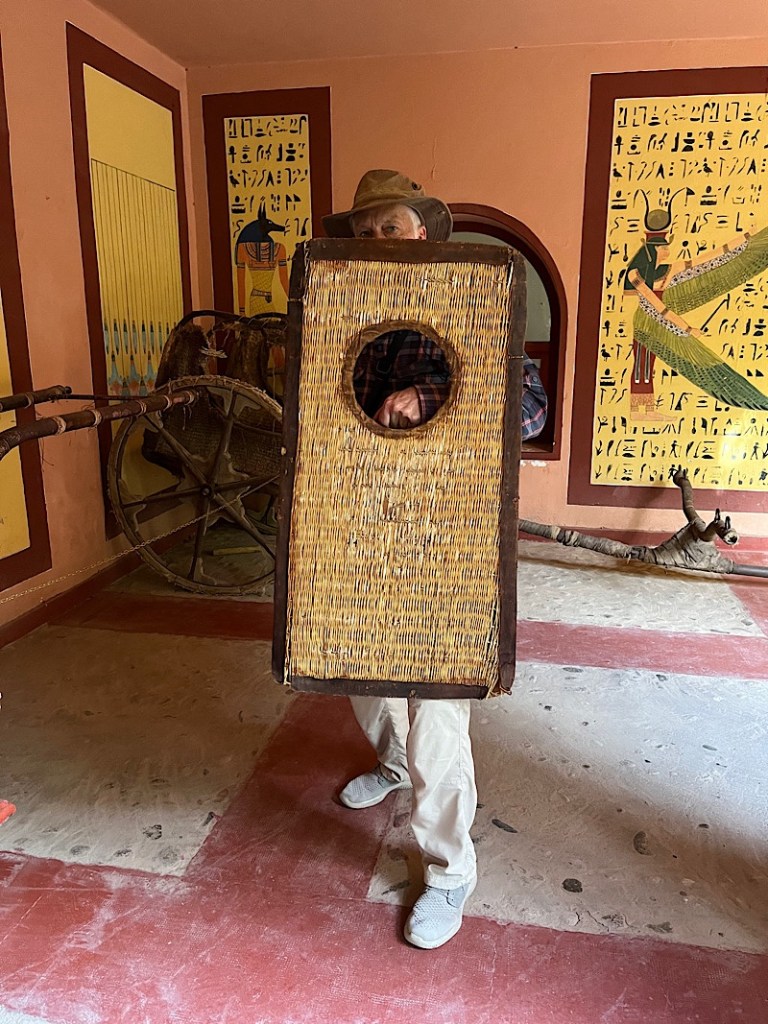
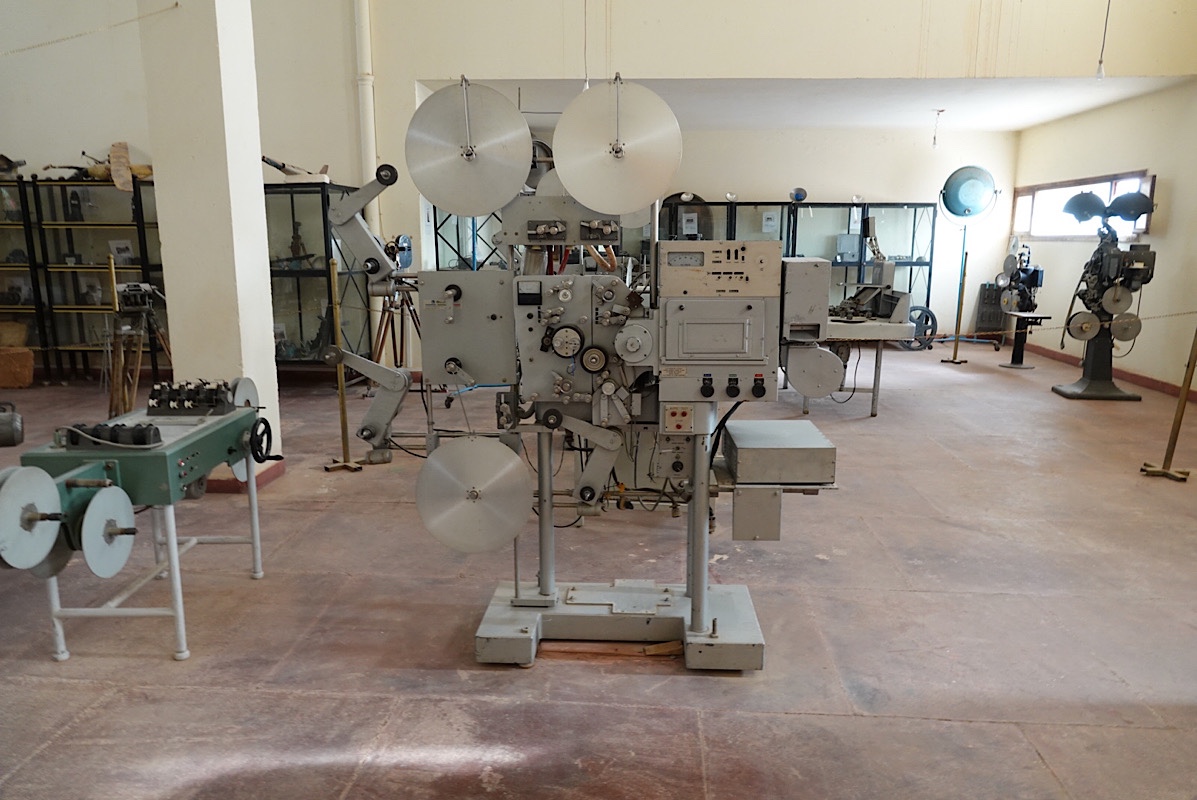
There was also a whole room of reel to reel projectors of the kind studios used before digital technology.
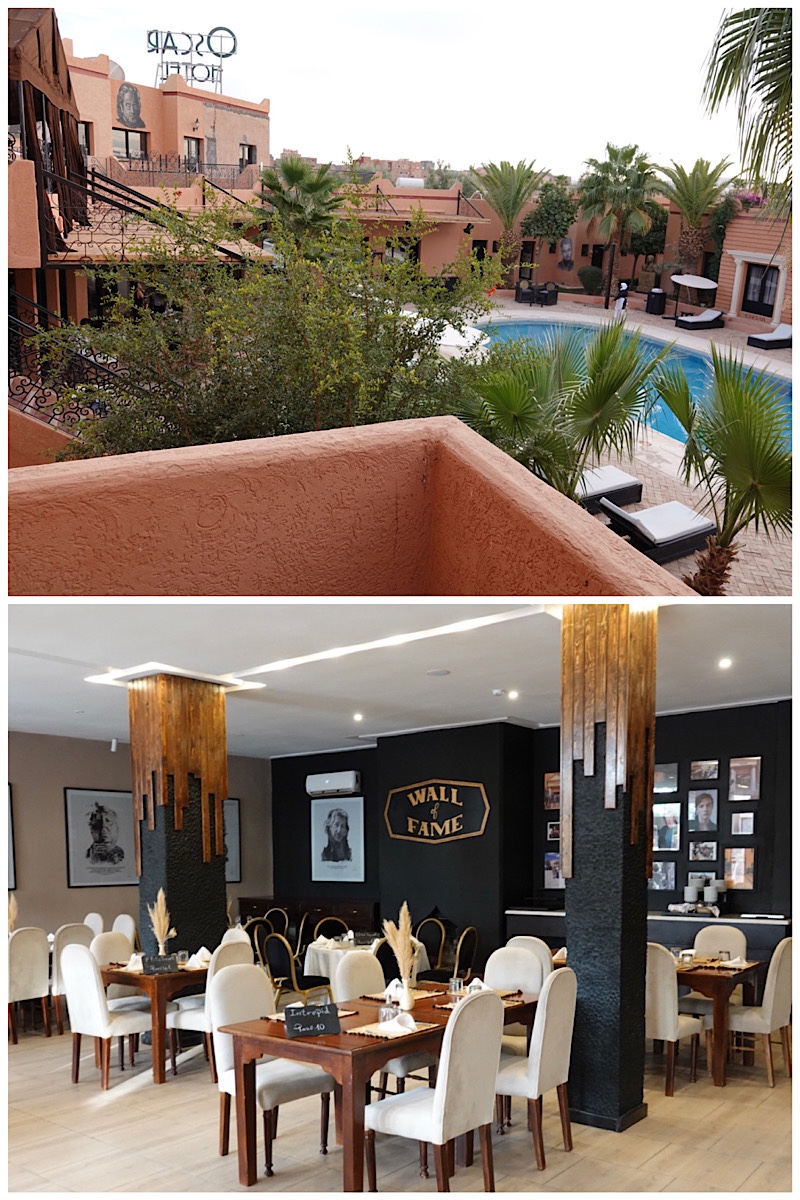
Our hotel tonight was supposed to be the Ksar Ighnda, whose website refers to it as “a palace of 1001 nights”. Instead we’re at the beautiful and modern Oscar Hotel, right beside another movie studio, and filled with posters from movies shot here. Locals call this area “Ouarzawood”, Morocco’s version of Hollywood. It’s really quite stunning, and the dinner buffet was the best we’ve had to date.
We head for 3 nights in Marrakesh tomorrow.


<
div dir=”ltr”>You evoke so many memories and awe. Women washing
LikeLiked by 1 person