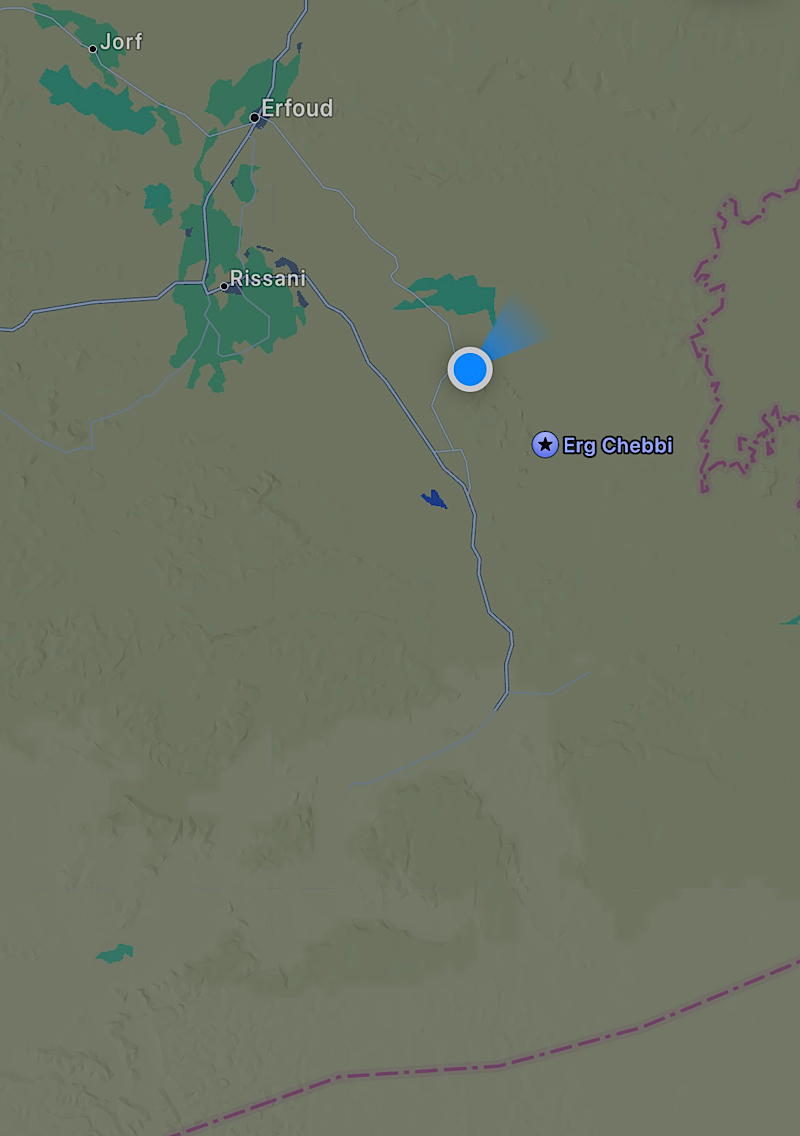
October 9 Itinerary: Early morning Jeep excursion to see the sunrise over the sand dunes in Merzouga. We continue to Rissani, the holy city where Moulay Ali Chetif, ancestor of the Alaouite Dynasty, is buried. We then contine to Tinghir, en route visiting the magnificent Todgja Canyons and marvel at the carved-out cliff-sided canyons with sheer rock walls.
🐪 🐫 🐪 🐫🐪 🐫🐪 🐫🐪 🐫🐪 🐫🐪 🐫🐪 🐫🐪 🐫🐪 🐫🐪 🐫🐪 🐪 🐫🐪 🐫🐪 🐫
Up at 5:00 a.m. and down to the lobby to board luxury 4×4 SUVs to drive as far as wheels can go without getting mired in the fine, shifting Saharan sands.
Under starry deep black skies, surrounded by the vast silence of the desert, we were helped onto waiting dromedaries and led about 10 minutes – perhaps just under a kilometre – further into the desert. The constellations absolutely glowed above us; Orion’s belt shining more clearly than we have ever seen. A bright crescent moon was the only light used by our camel guides to lead the way to the ridge from which we would look east to view the rising sun.

Our guides spread blankets on the dunes to give us a comfortable vantage point.
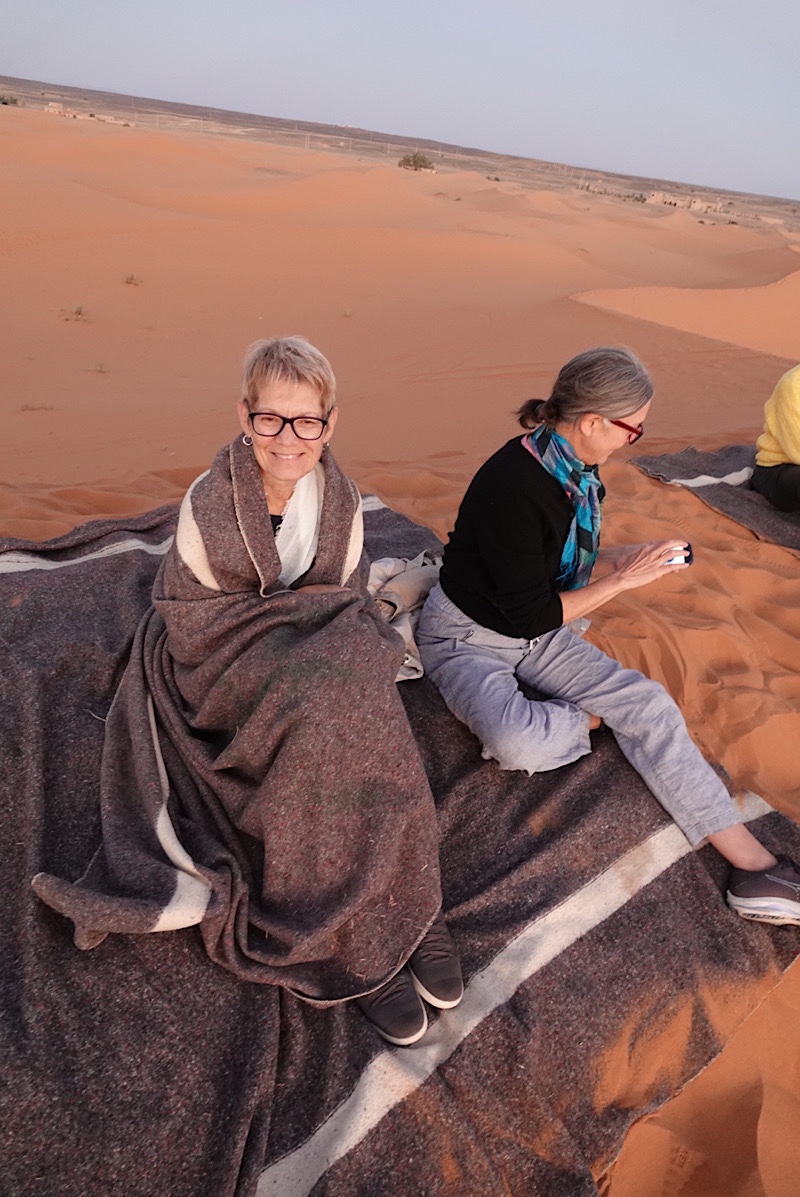
The sky on the horizon began to show tinges of pink, bleeding into a gradually lightening indigo sky, creating an almost ombré effect.
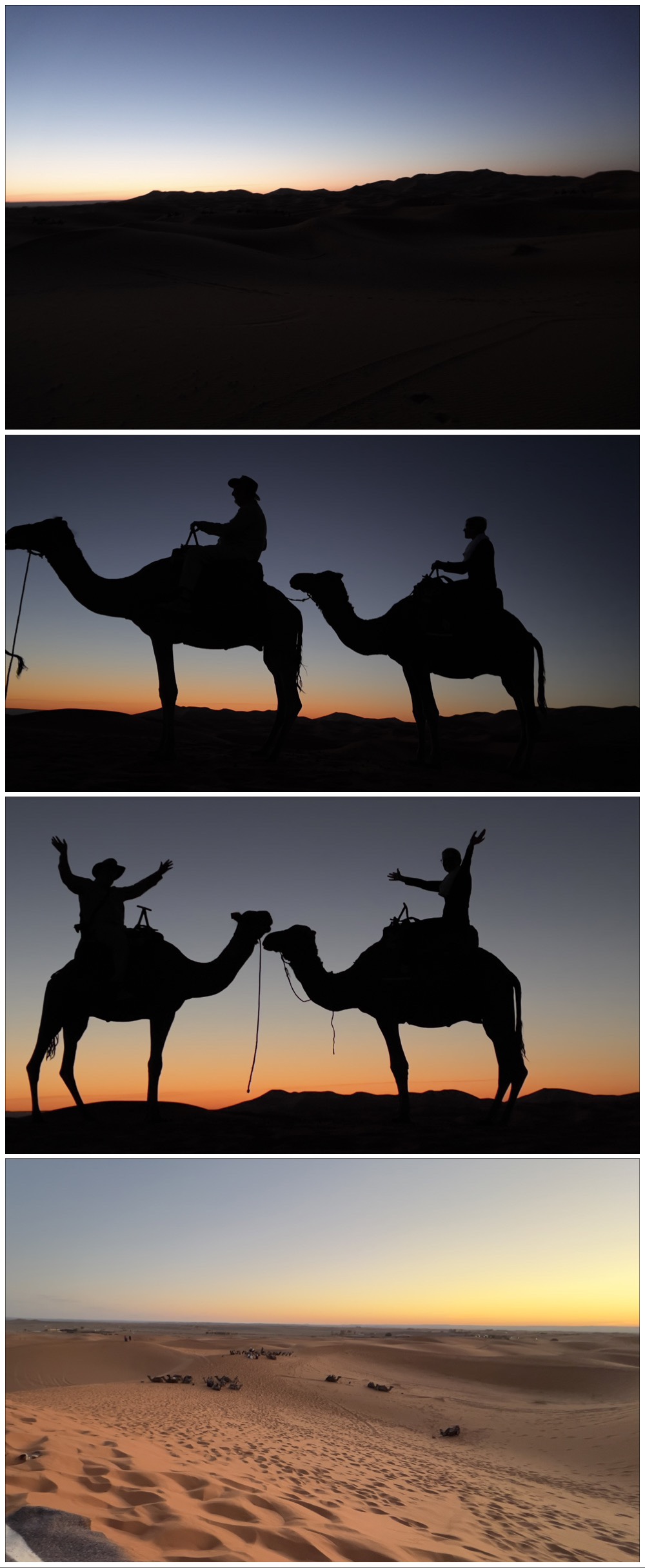
And suddenly …. there it was! The Beatles’ “Here Comes The Sun” – or “Thus Spake Zarathustra” would both have been fitting soundtracks.
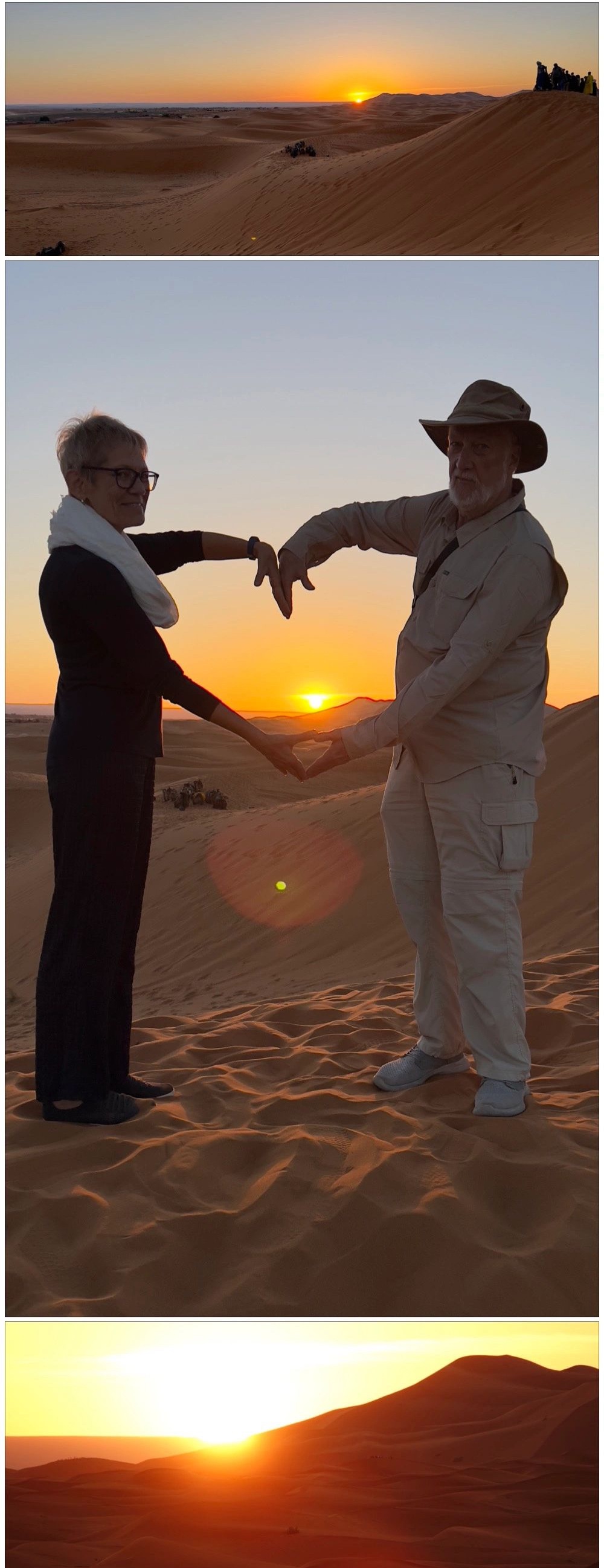
Abdul, our camel guide, in addition to being a very good-looking and gracious young man, was also a very talented photographer. He even managed a few Instagram-worthy poses, in younger parlance.
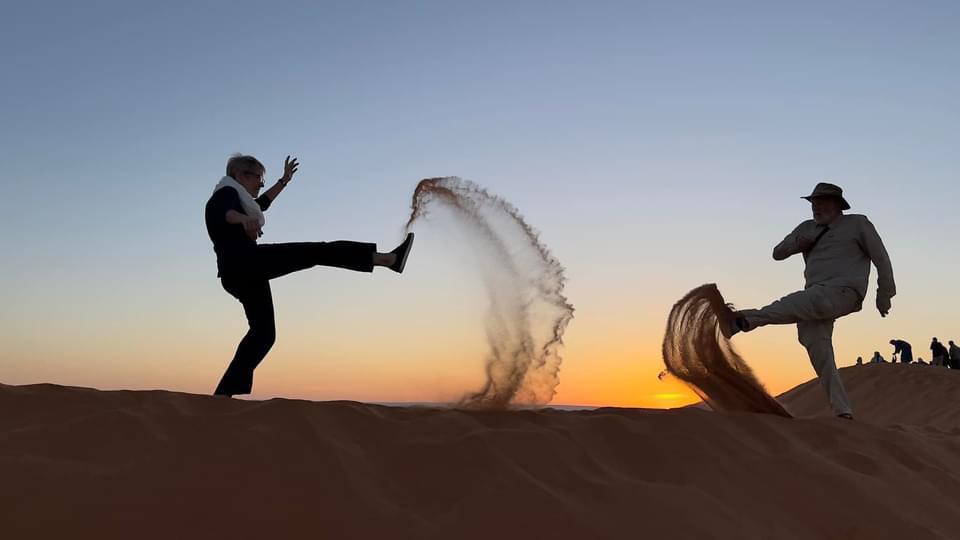
I got a thumbs up!
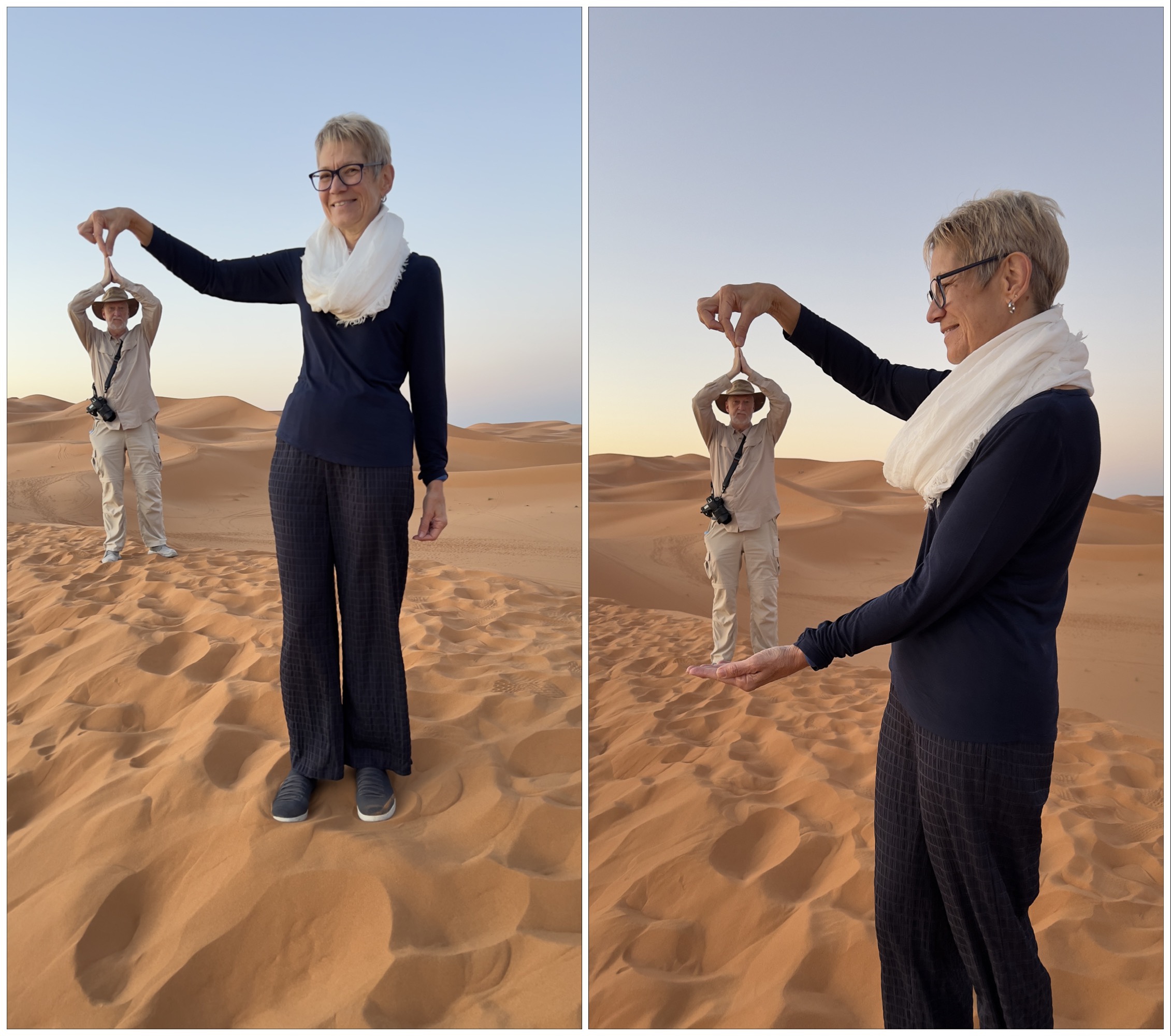
With the sun up, it was time for daylight pictures to create lasting memories of a breathtakingly beautiful experience.
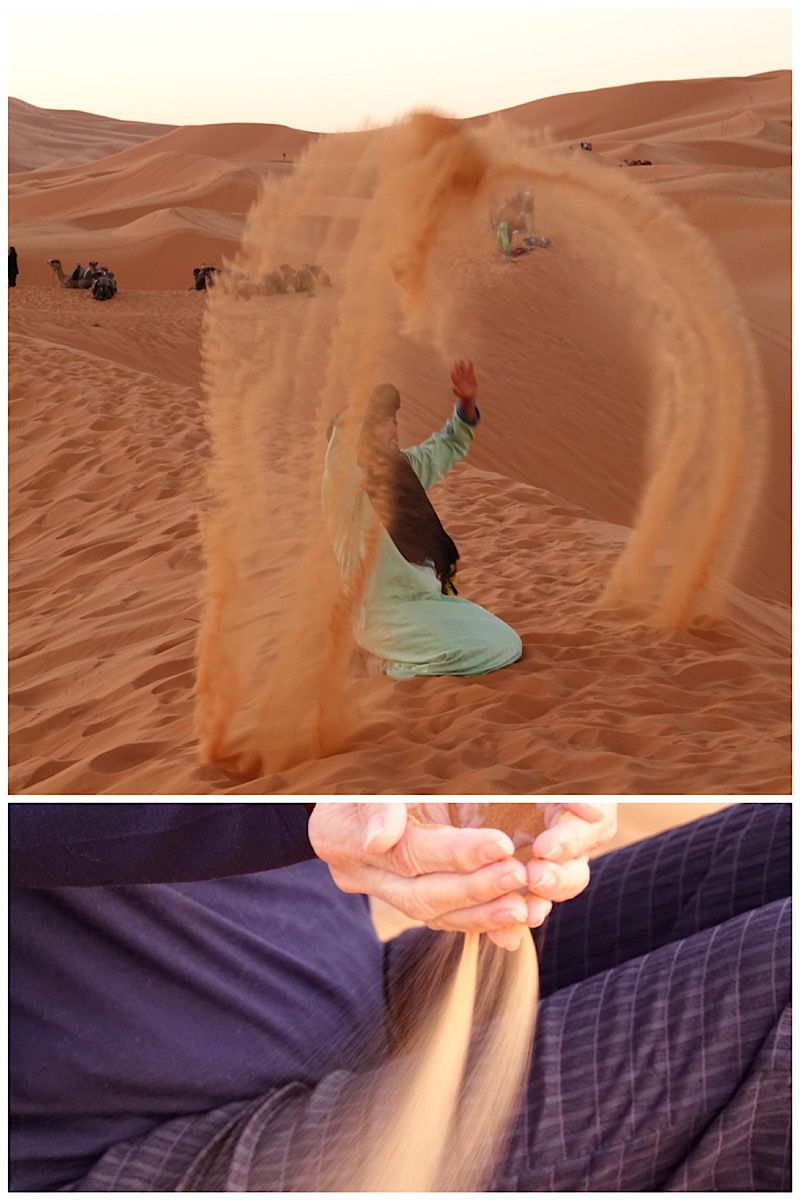
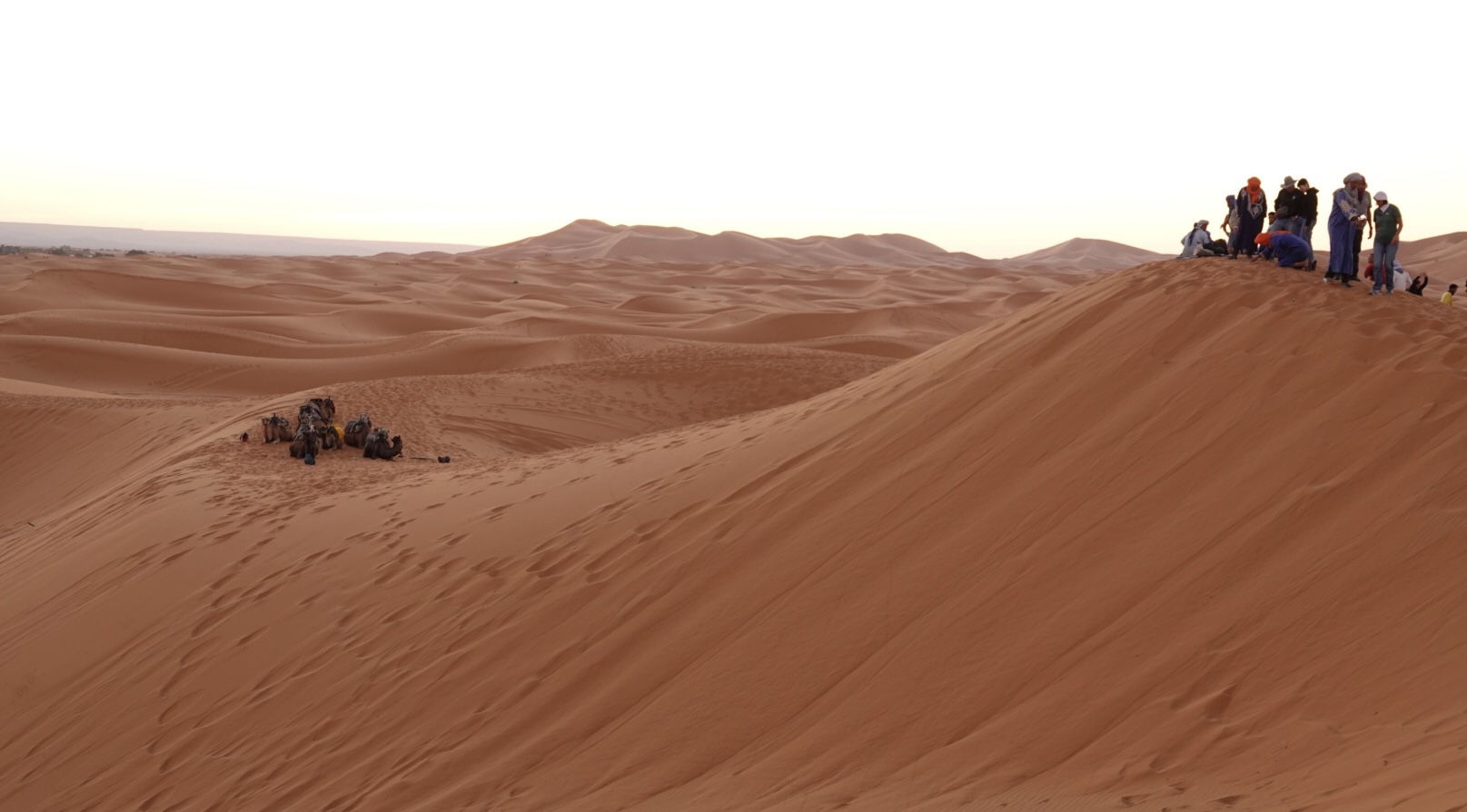

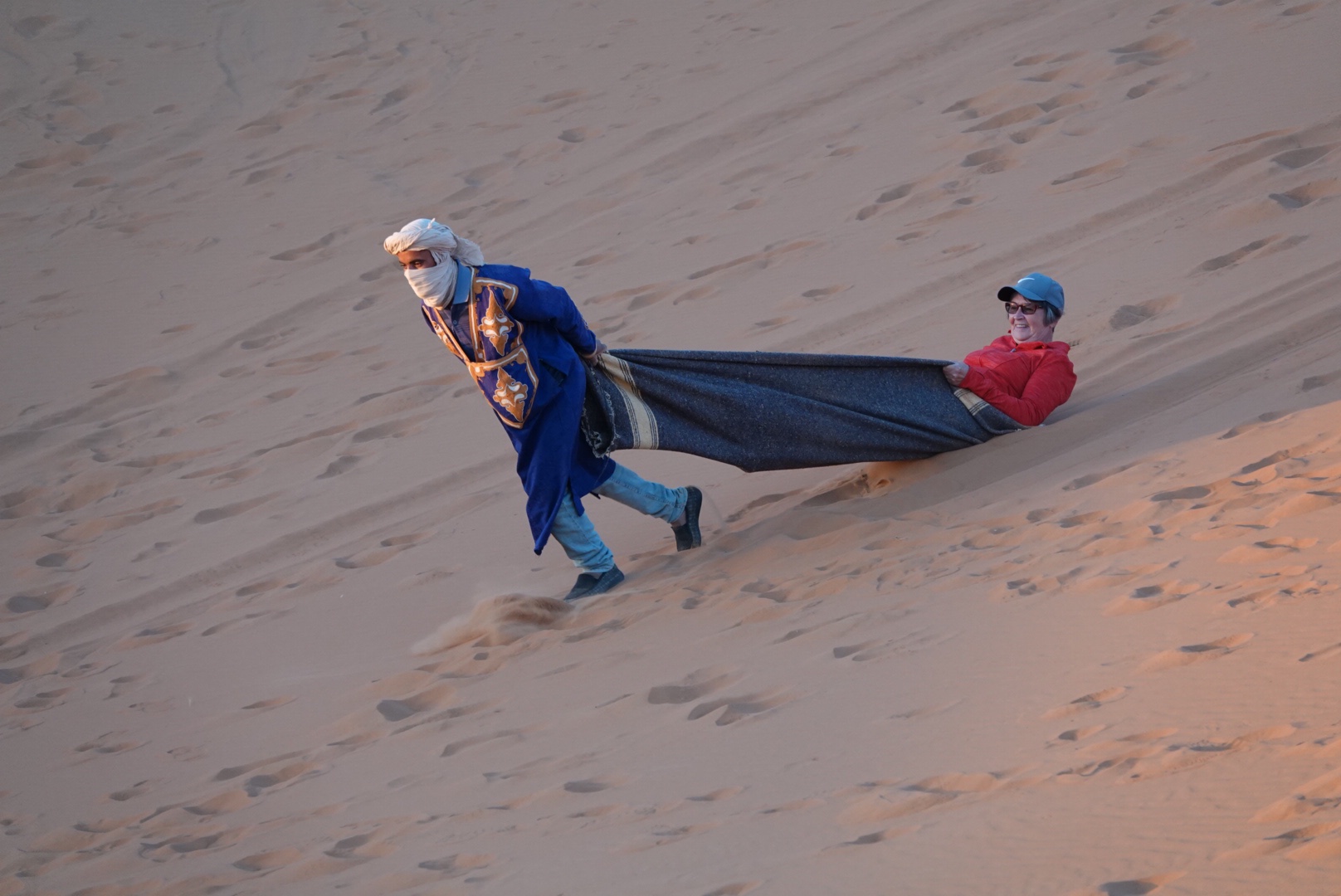

And so it was time to re-mount our camels and head back to the 4x4s.


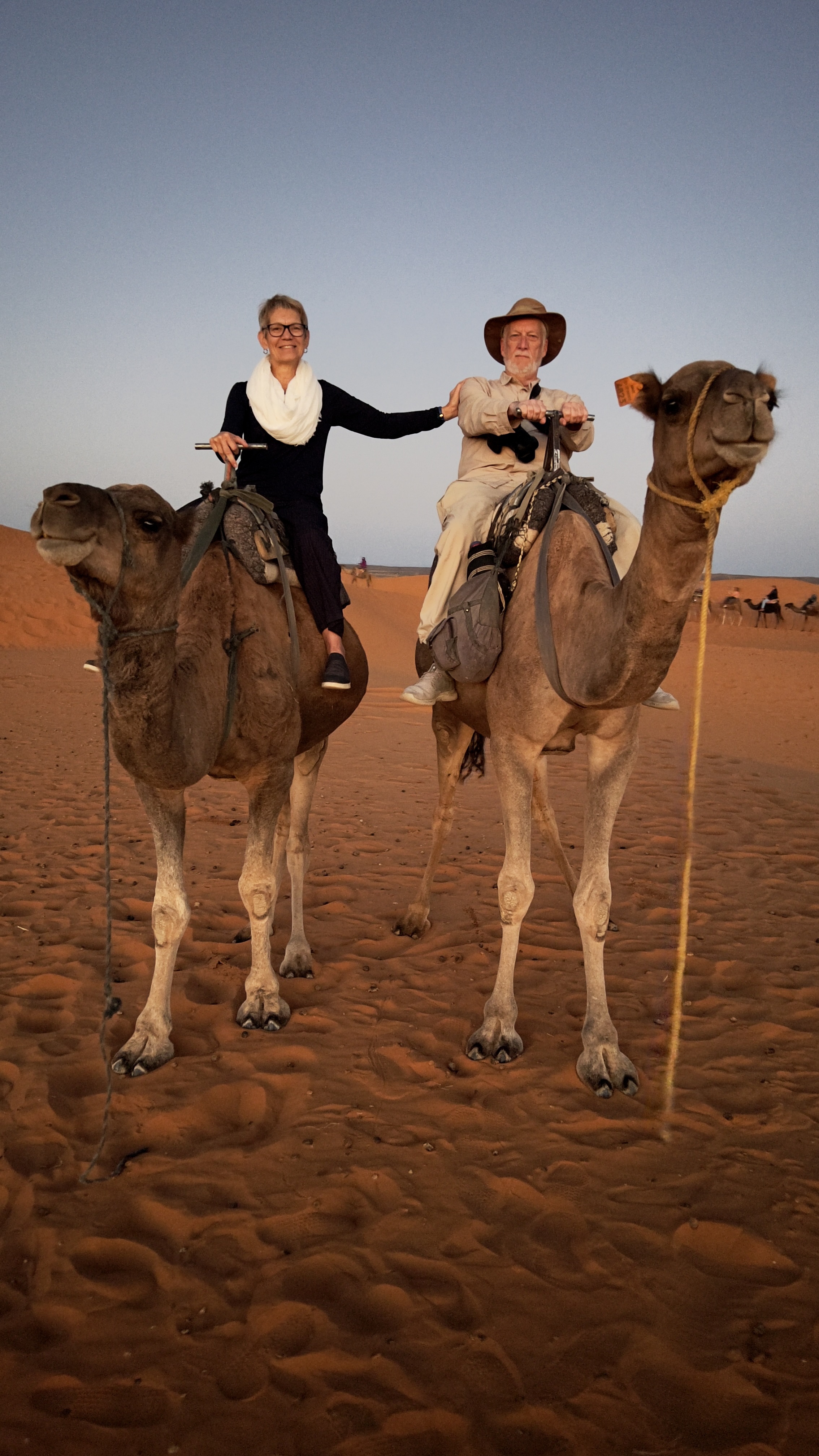
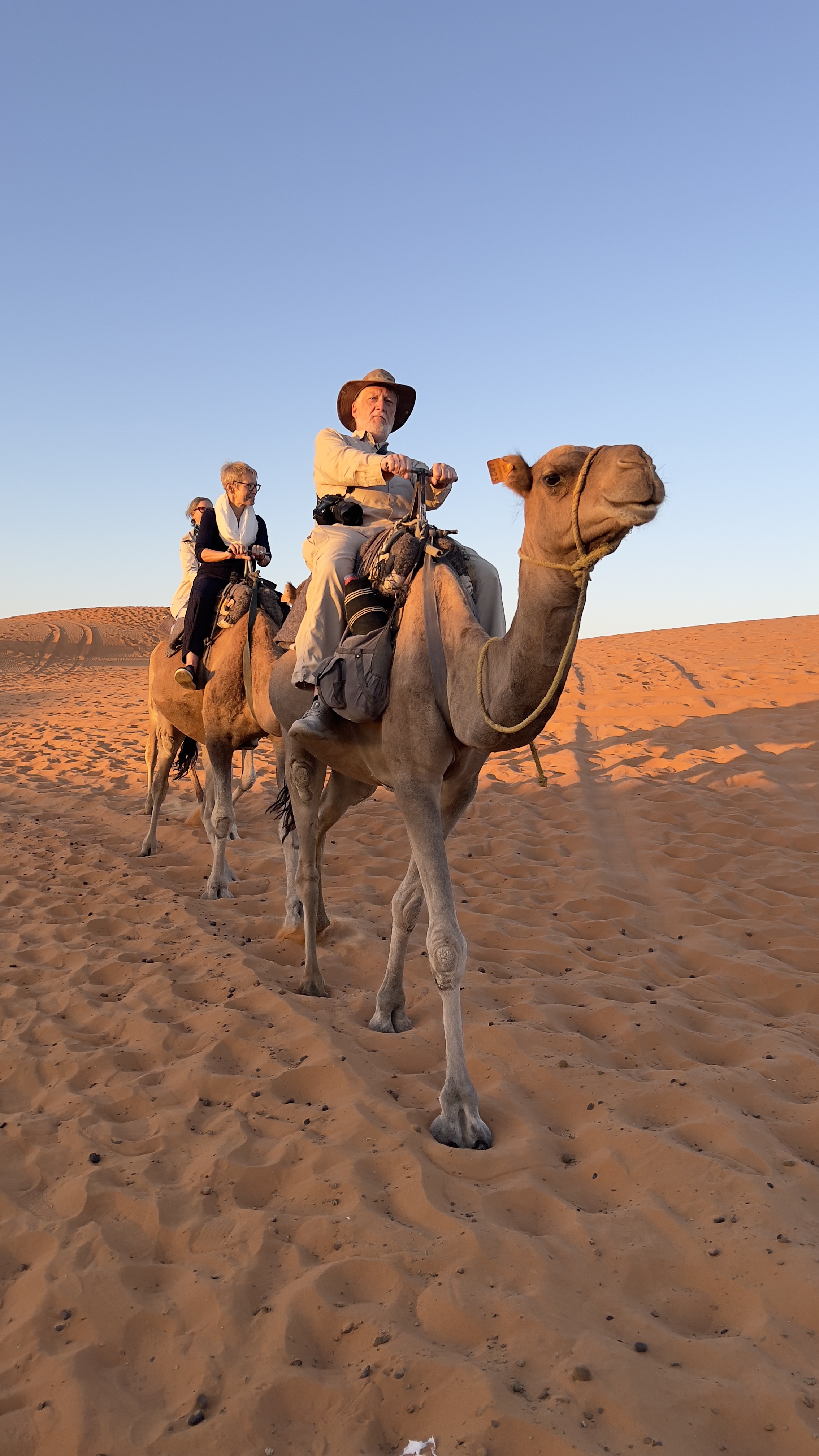
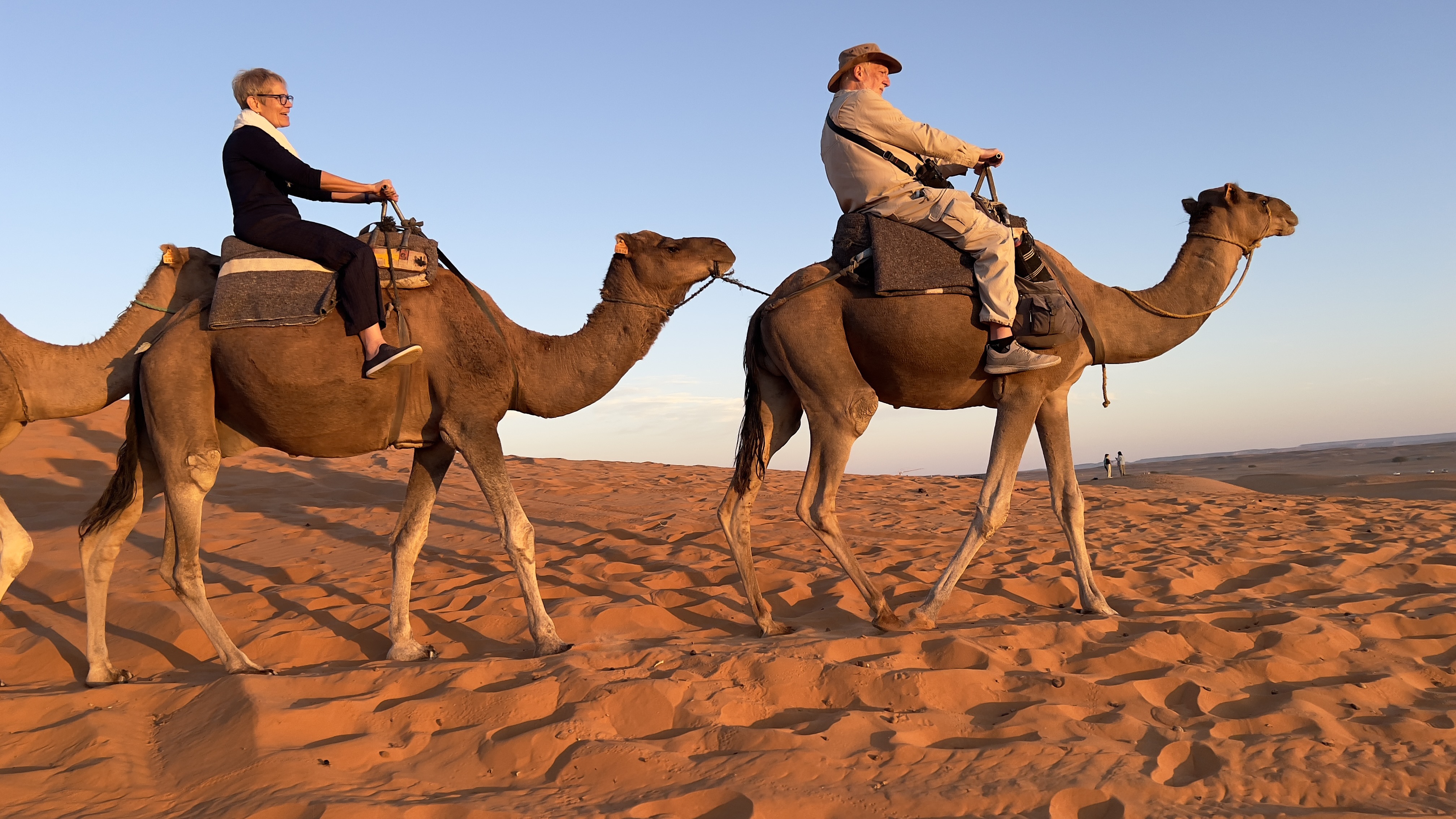

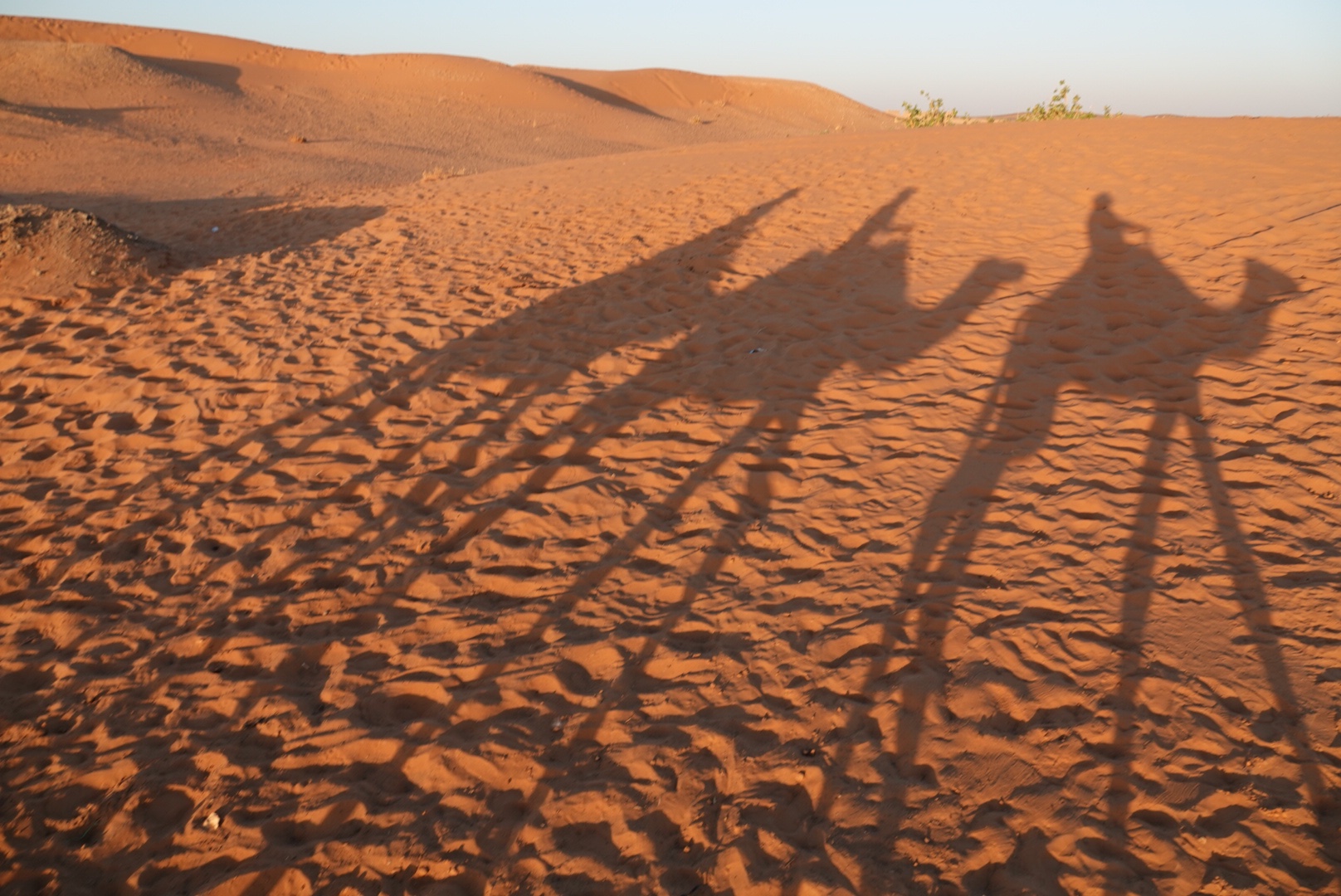
After saying farewell to our guide, and our beautiful gentle beasts of burden – and the best cared-for, healthiest camels we’ve ever seen – we drove back to our hotel for breakfast and quick showers to wash off the fine reddish sand on our skin and in our hair.
Then it was on to the rest of our day’s activities. Honestly, if that magical sunrise camel ride had been the only thing we did all day, I would have felt completely satisfied (especially since our afternoon turned into a curated shopping excursion).
On to our next destination: Rissani, population around 28000. The town is inhabited by a mix of Bedouins (Arabs) of the Sahara, and Tourag originally from Mali and Sudan, a people who moved in a fast caravan (like a fast VW!), but is most famous for being the ancestral home of the current imperial dynasty, established in the 16th century. Since then, an unbroken line of 23 Alaouite (Alawi) Sultans and Kings have ruled Morocco.
We met our local guide, Idris – dressed in the traditional garb of the area that has gained the males the nickname “blue men” – on the edge of town at the Mausoleum of Moulay Ali Cherif, the founder of the present Alaouite dynasty.

Built in the 18th century, the mausoleum has been restored in 1840,1955, and 1988. We were not allowed inside the mausoleum since entry requires the full Muslim ablution ceremony, but we were able to admire its external decoration, which included many hands of Fatima created in zellige and silver on the doors to fend off the evil eye. The hands of Fatima are an Arab (and Jewish) tradition; the Tourag use crosses.
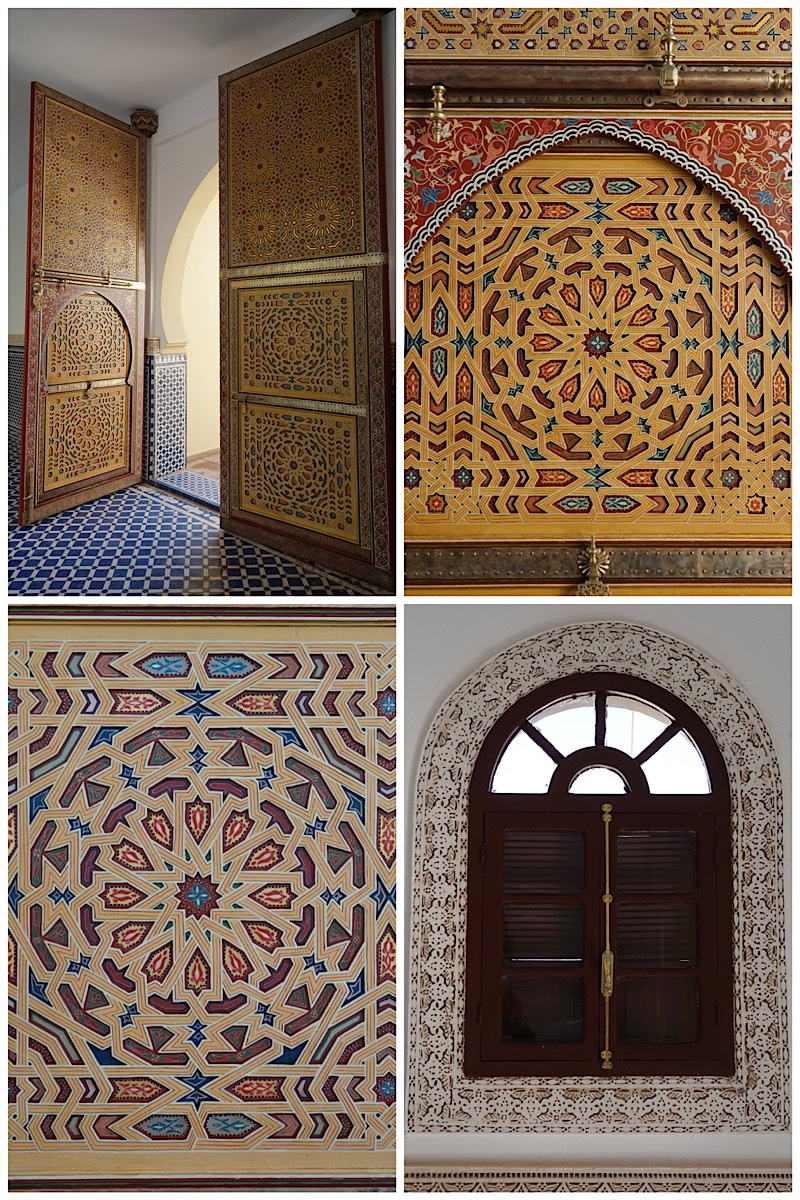
We were able to walk through the riad (the central courtyard garden with 4 areas, representing the four seasons).
On the same town square as the mausoleum is the Moulay Al Cherif Quranic School for 125 adult students.
On a third side of the square is a small Kasbah, still inhabited by about 60 people living in tri-generational homes. The ceilings, roofs, and doors of the Kasbah were originally palm wood, but have been restored in cedar.

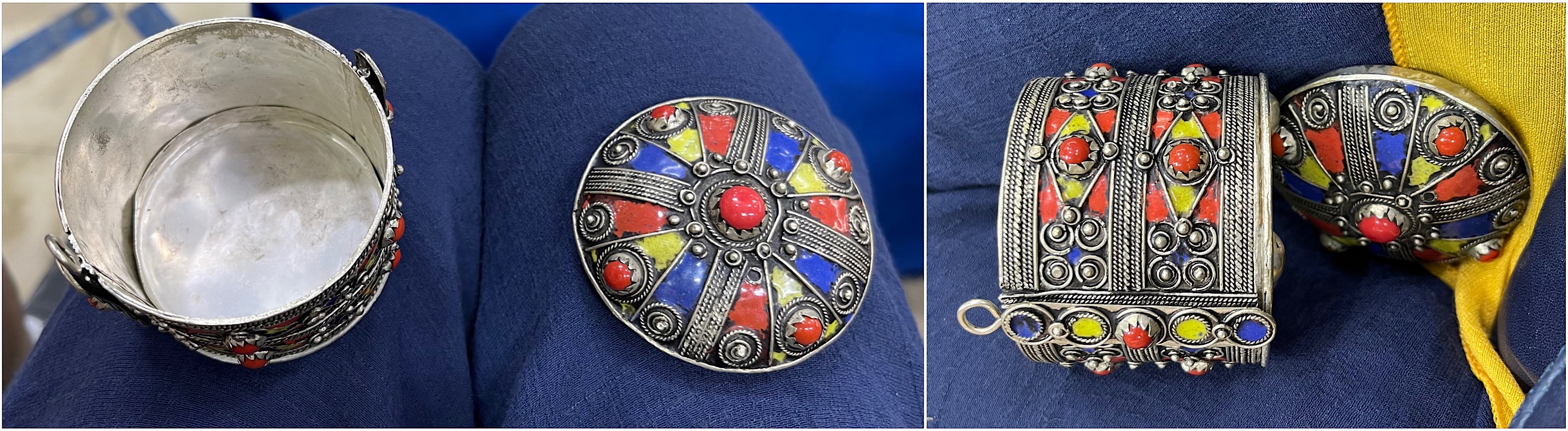
The Kasbah also houses the Maidon Tafilalet, a silver jewelry cooperative which we toured. They had wonderful vintage and modern pieces made by the local Berber tribes, and yes I bought a vintage Berber necklace, as well as a compass pendant, and a hand of Fatima for my daughter-in-law.
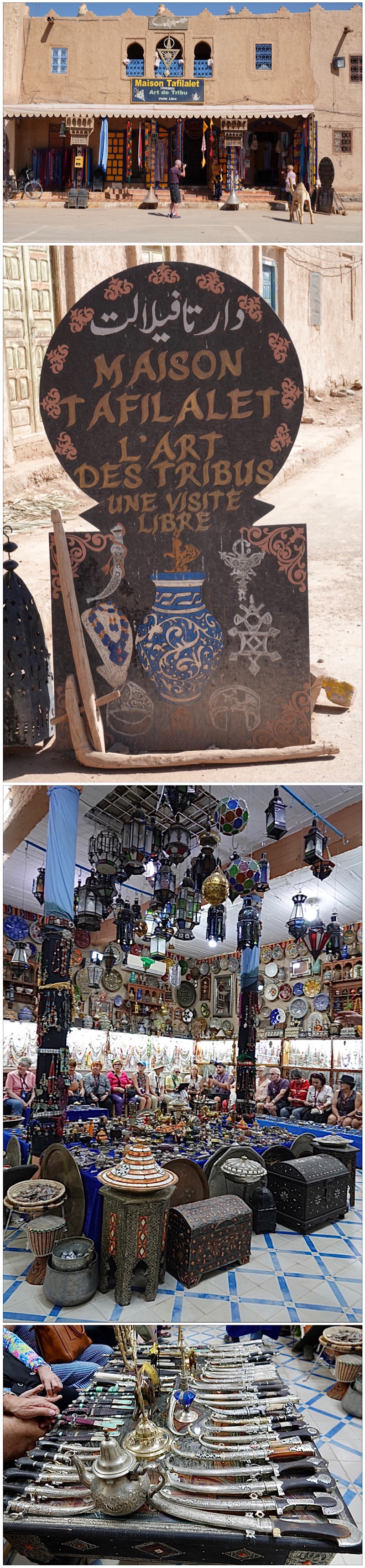
We also learned at the cooperative that the people here are now more properly called Ammazzir. “Berber” came from the Roman designation “barbaria”, used for any people not adhering to Roman civilization’s culture or language.
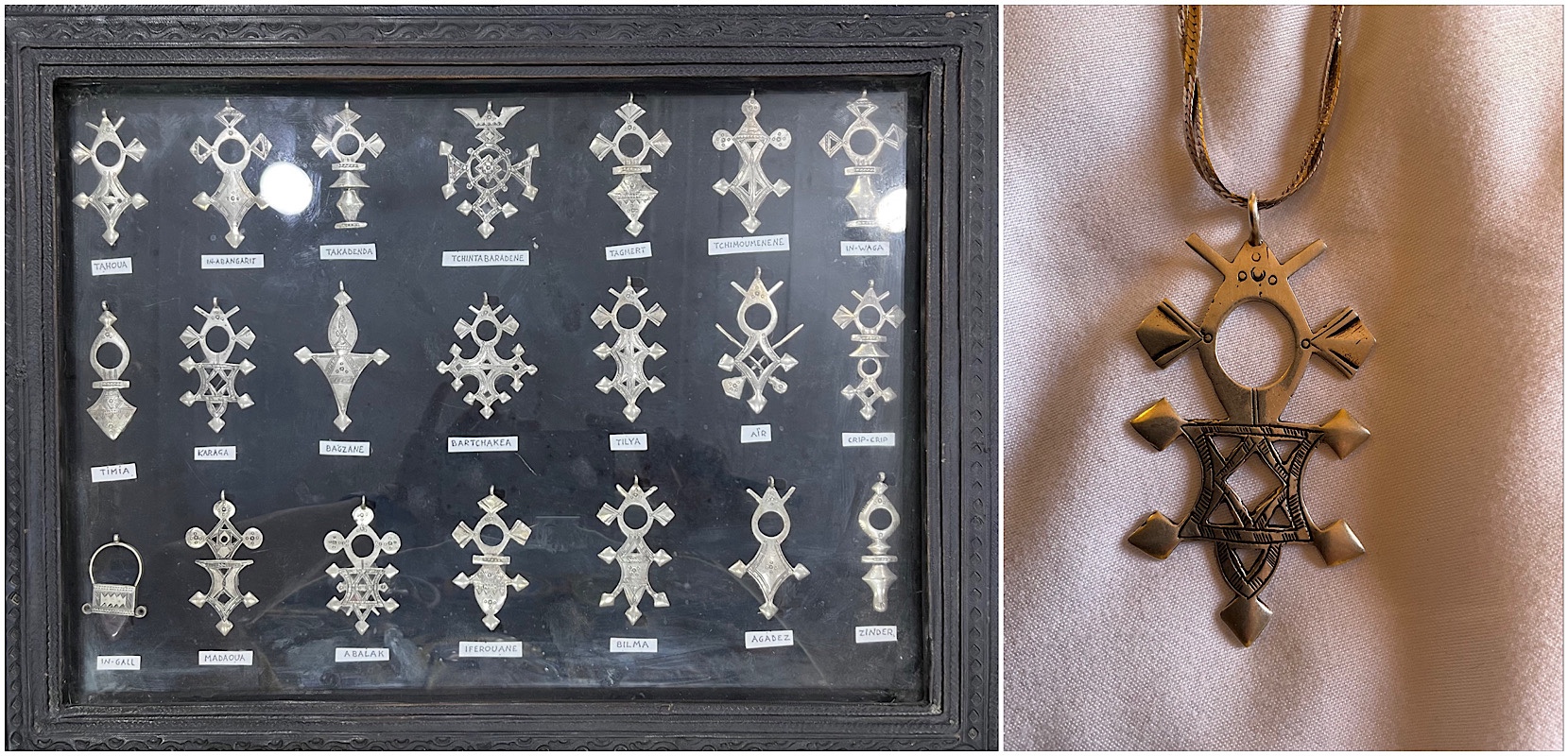
Some of the more interesting vintage pieces we were shown were Tourag tribal pendants that were worn around the neck and used as navigation instruments. Each pendant has a circle through which the North Star was viewed, and 3 directional “arrows”. Every tribe had a unique design, functionally identical. My pendant came from the Karaga tribe.

From Rissani we drove to Erfoud, which holds the twin distinctions of being Morocco’s date and fossil capital.
We did not stop for dates, although we passed the huge field where this year’s international date festival will be held later this month.

Instead, we went to a “fossil factory “! No, they’re not making fake fossils, but rather making household furniture and decorative items out of fossils.
Erfoud sits on a massive rocky area where virtually every rock is absolutely full of 350 million year old squid and ammonite fossils can simply be quarried in sheets, polished, and turned into tables, cheeseboards, sinks, trays, and wall decorations.

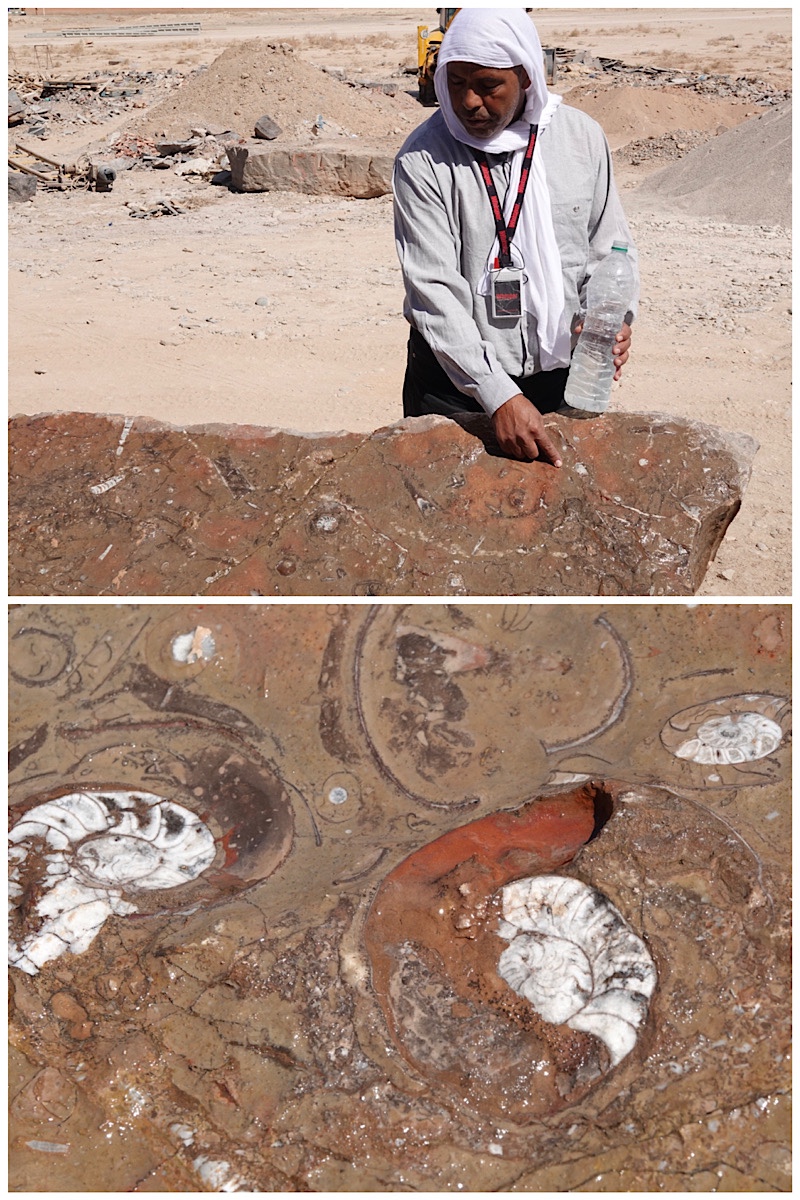


Slightly rarer in this area are the trilobite fossils and starfish.

We saw the cutting and polishing wheels, some of which use only the power of water to cut through the stone.

There are also alabaster quarries nearby, from whose stone bookends, decorative dishes, etc are made. Nothing here tempted us.
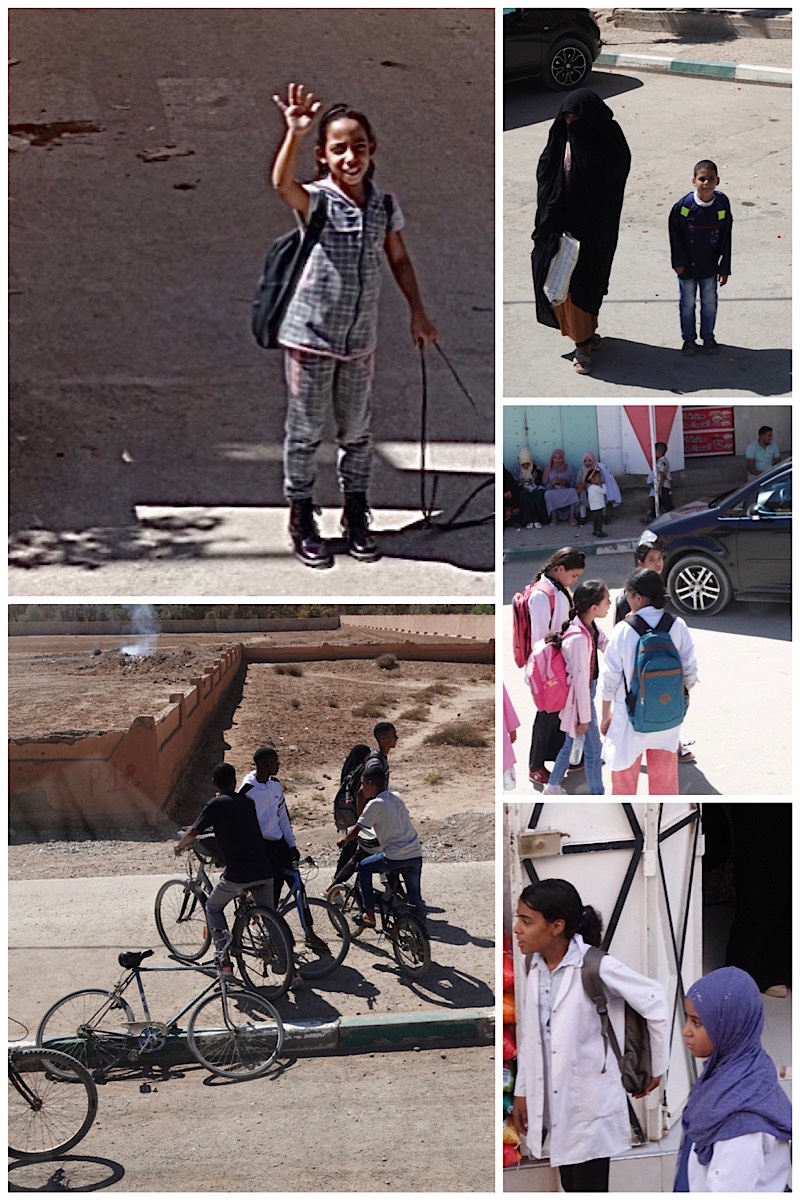
We passed through a typical Berber town during the mid day lunch break for a middle and high school.
Around 2 pm it was time for a lunch stop at Touroug Café , where Ted’s beef kebabs and my Berber omelette were both delicious.

Given our very early start, our group almost unanimously voted to defer our tour of the Todgja Gorge until tomorrow, and instead have a couple of hours of down time at our hotel in Tinghir. We were looking forward to the Kasbah Xaluca Dades which was in our published itinerary.
Instead, our accommodation tonight is the decidedly quirky (that’s a nice word for weird, strangely decorated, and in some state of disrepair) Hôtel Saghro. There’s a lovely pool and a great view, but the best feature of the rooms is their very efficient and much appreciated air conditioning. Our tour manager is trying to find out why the hotel change was made, since she had no forewarning and was just as surprised as the rest of us when the bus brought us here.

This morning’s sunrise ride was definitely the highlight of our trip so far.
Frankly, I could have done without the afternoon’s stops, but part of that is probably just tiredness talking. We’ve been keeping a pretty frenetic schedule for “seniors”.
 Rose and Ted’s Excellent Adventure
My favorite post on this trip so far! If I’m ever in Morocco, I’ll be looking for Abdul…what a photographer! Your necklace is beautiful and the amber is the same color as your wonderful desert sunrise 🌅…a perfect keepsake. Jayne B.
LikeLiked by 1 person
Definitely our favourite day of the trip! It’ll be hard to beat!
LikeLike
To experience a sunrise in “the desert “ would make it an unforgettable memory.
Thank you for sharing your observations & pictures…I’m loving following your experiences…
LikeLiked by 1 person
Sure been enjoying your posts and pics each day, what a wonderful trip! The pre-dawn adventure in the desert looks amazing.
LikeLiked by 1 person
I could have stayed a d watched shifting sands all day!
LikeLike
How FABULOUS!!!!! I am flummoxed, though, by the fossils – in the middle of the desert…. Can’t quite get my head around that!
BTW, I think Abdul’s photos at the dunes are wonderful!
B.
LikeLiked by 2 people
I could honestly have spent the entire day
LikeLike
I love the photos with the dark silhouette. And the one showing the camel shadows in the sand. How were those taken?
LikeLike
Our camel guide took them on Ted’s iphone – the shadow occurred naturally at sunrise!
LikeLiked by 1 person