Itinerary: We see the picturesque mountain scenery of the Mourne Mountains as we drive to the charming medieval coastal town of Carlingford. We will explore the town before continuing on to Trim – a designated heritage town. This afternoon we will explore Trim Castle – a stunning Norman castle on the bank of the River Boyne. It is the largest Anglo-Norman castle in Ireland. This evening is our Farewell Dinner.
☘️☘️☘️☘️☘️☘️☘️☘️☘️☘️☘️☘️☘️☘️☘️☘️☘️☘️☘️☘️☘️☘️☘️☘️☘️☘️
I was prepared to be totally disappointed today.
Things didn’t start well. Our group of 36 people had an assigned breakfast seating time – and separate space – at our hotel at 7:30 a.m. Ted and I arrived promptly at 7:30 to find that there were no seats in our assigned section. It had been set for 32. We ate our quick breakfast at a table in another section, where our plates were whisked away the moment they were empty; I took my unfinished coffee to our room.
As we were waiting to board our bus, our tour director quietly informed us that our group did not actually have tickets to tour Trim Castle, which can only be done with an authorized guide. Apparently our tour company had been aware of that for months, yet had not let us know.
I will say that the scenery en route from Belfast to Trim was lovely, with the greens of the countryside made even more intense by the slightly overcast skies.
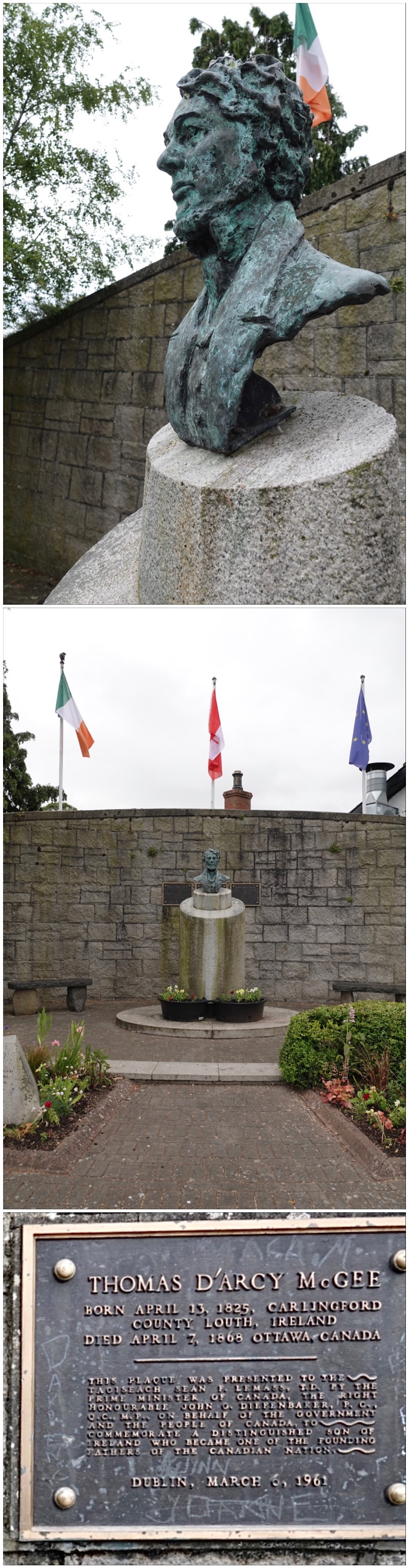
When we reached Carlingford, our “exploration” of the town consisted of a 30 minute comfort break almost entirely consumed by lining up for the single public toilet. I didn’t need the comfort stop, and fortunately Ted was almost first in line, so as usual he took his camera for a walk around the corner to find …. a Canadian flag flying above a bust commemorating Carlingford as the birthplace of Thomas D’arcy McGee, one of the fathers of Canadian Confederation!! We soon told as many of our fellow travellers as possible, although not everyone in our group knew who McGee was, which is a sad reflection on how Canadian history was taught to our generation. What was so disappointing was that we could have made this bathroom break without ever knowing we were in McGee’s birthplace. We wouldn’t have expected our Irish driver/guide to have known (it wasn’t a town he’d ever been in before), but we have hoped a 100% Canadian tour company would have researched Canadian connections in our destinations, or suggested their tour directors do so.
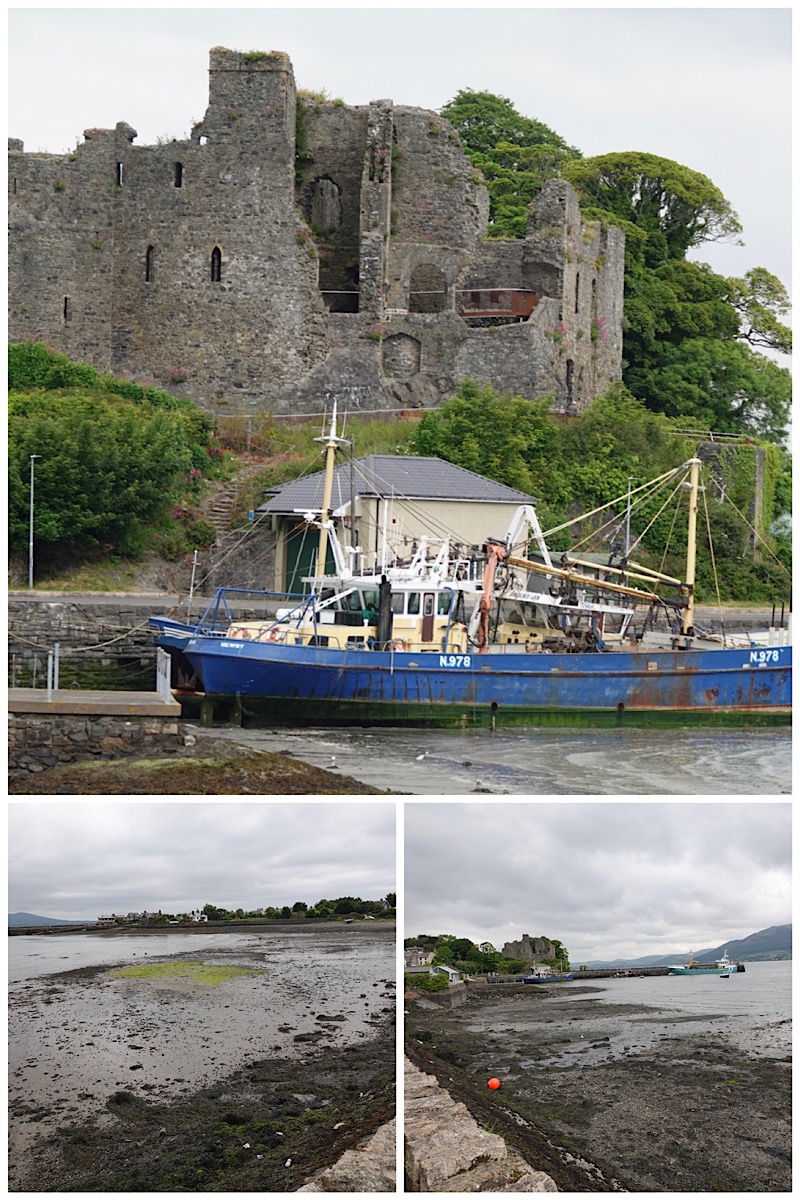
Also of note were the ruins of Carlingford Castle, built around 1190 by the Norman baron, Hugh de Lacy. Initially favoured by King John of England, Hugh grew too powerful for John’s liking and so John forced him to rebel and seized the castle for himself in 1210. John reputedly stayed in the castle for a short period when he visited in 1210. and so, it became known as King John’s Castle. Hugh de Lacy’s name came back up when we reached Trim.
Our lunch break was at a motorway service station.
We arrived in Trim at the lovely Trim Castle Hotel well before the time that rooms are usually ready, so we all left our luggage on the bus with our long-suffering driver and then Ted and I walked RIGHT ACROSS THE STREET onto the grounds of Trim Castle. (Side note: Braveheart was filmed here!)
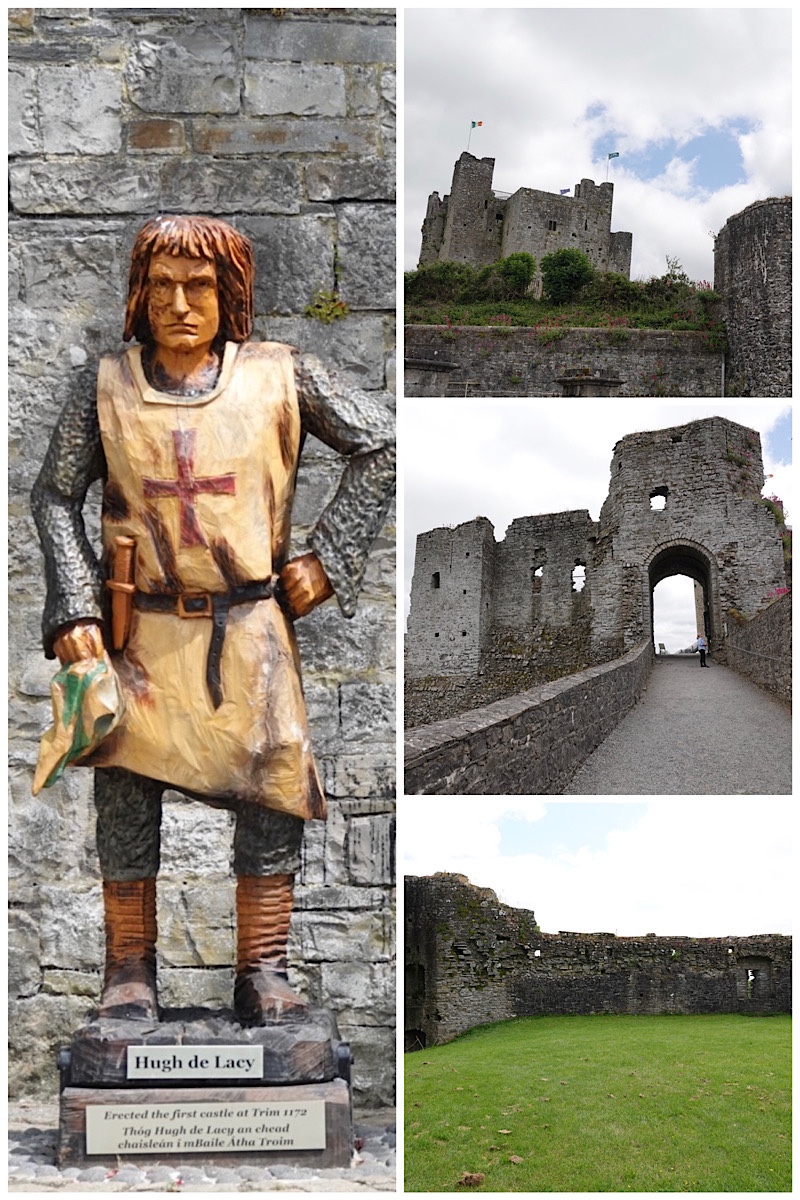
The sign at the gate indicated a £2 charge per senior for accessing the grounds, and £3 for a guided tour. At the ticket counter, the lovely Irishwoman told us that we’d need to have our parents verify our ages to-get our senior tickets 🤣, and then not only got us into the next guided tour, but also gave us the good news that admission was free today!

Things were definitely looking up.
While waiting for the tour, there were lots and lots of gorgeous photos to be taken of the castle walls and the exterior of the keep.
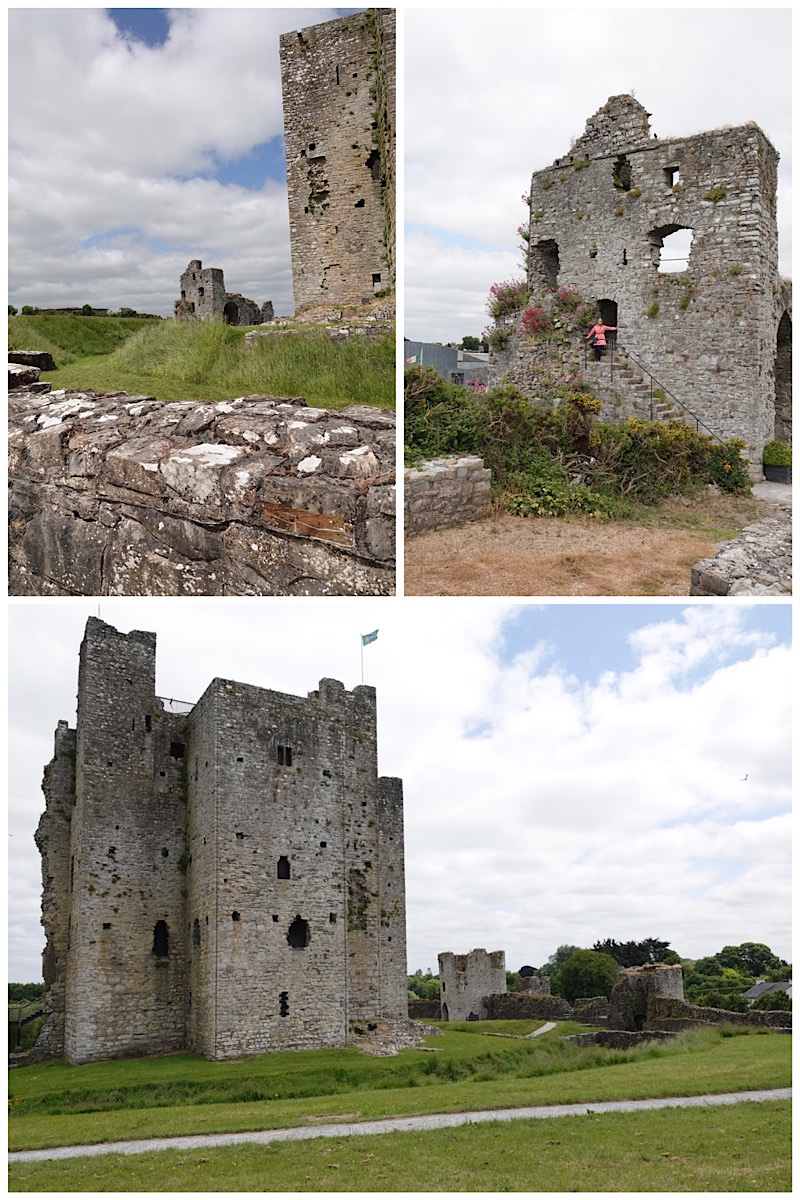

The castle tour was absolutely terrific, given by an excellent guide who was Scottish, like William Wallace (Braveheart), but sadly not dressed in blue body paint and a kilt.

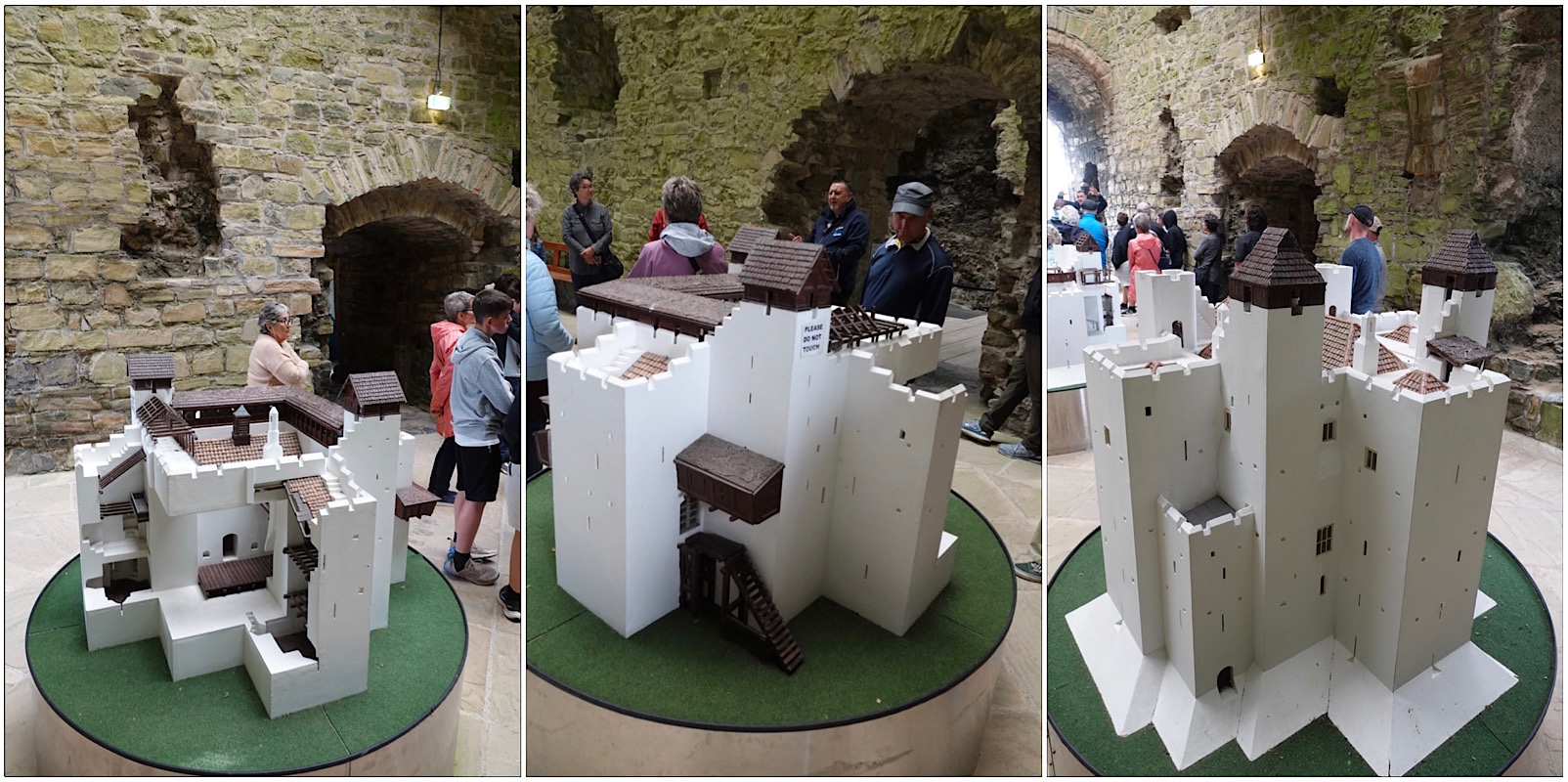
His narrative included the history of Trim, the building of the original wooden castle/ringfort and then the magnificent late 12th/early 13th century Anglo-Norman castle and keep, and information about the families who lived there.
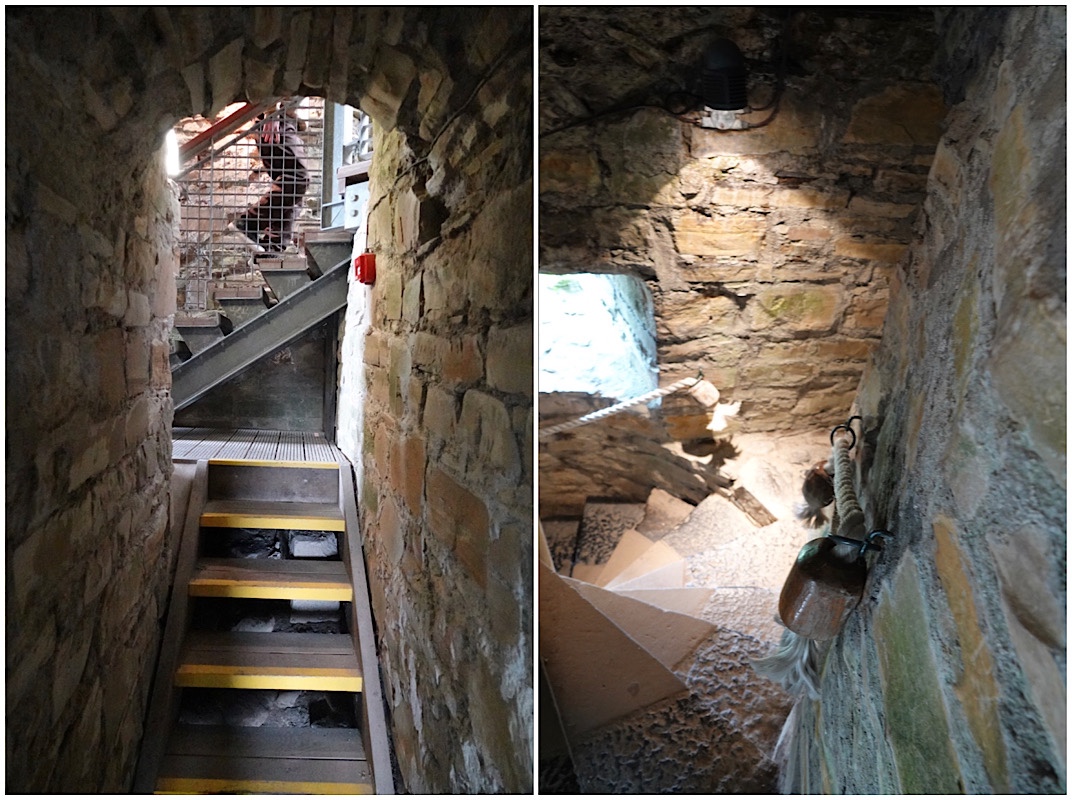
We climbed a combination of original narrow spiral stone stairs and some newer wooden ones to the third story “great hall” which at the time of the castle’s construction was considered the most impressive in Ireland (and perhaps beyond).
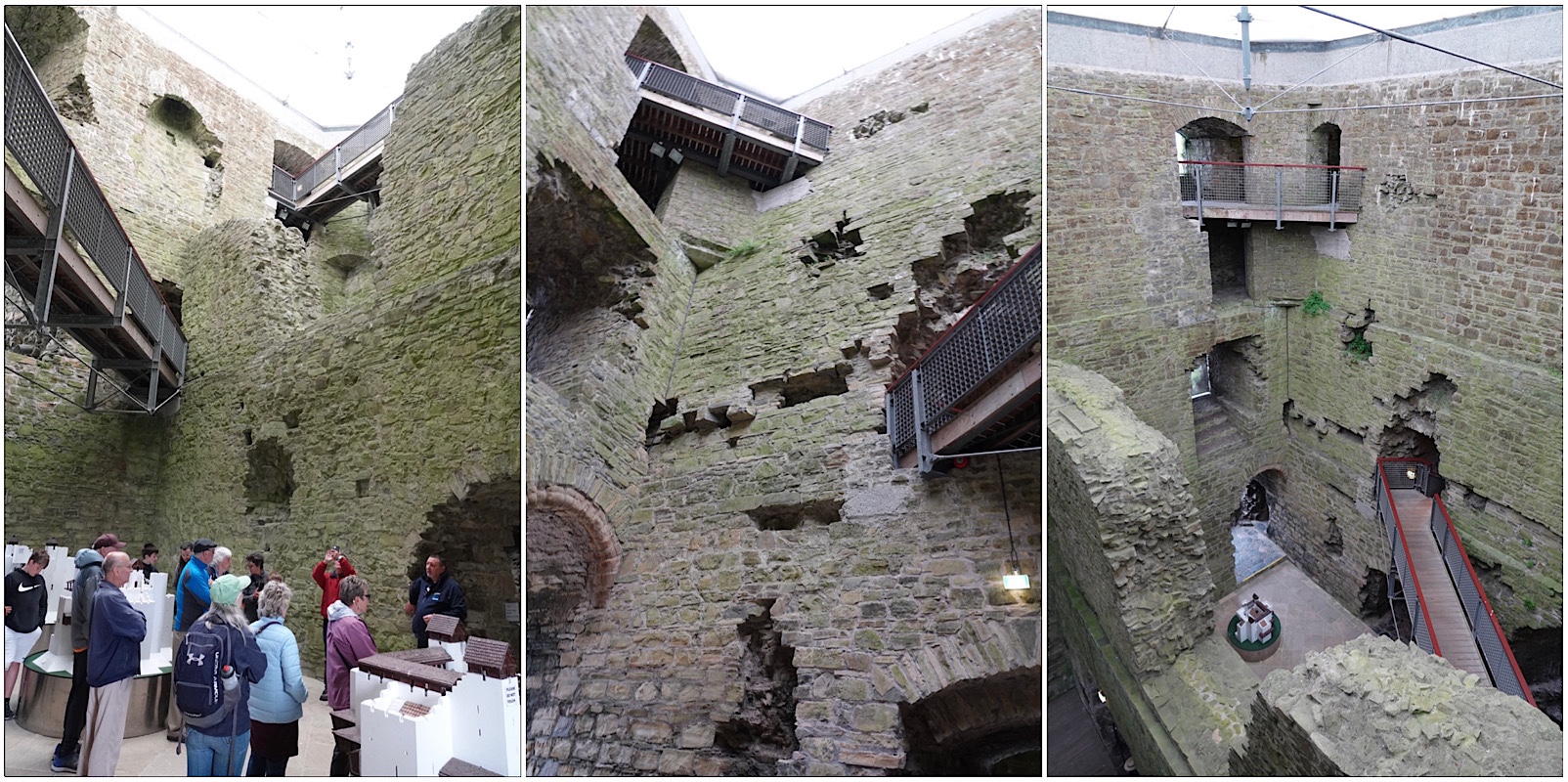
From our vantage point on the modern wood and steel walkways (erected to allow tourists to view the site) we were above the level of the Great Hall floor, which was originally built in 2 layers: a supporting base, and a highly polished oak surface. Only those specifically invited to events here would have climbed the 86 stairs to be entertained in the hall, which would have been plastered with white lime (as would the outside of the castle), hung with rich tapestries, and lit with braziers and bowls of flaming oil.
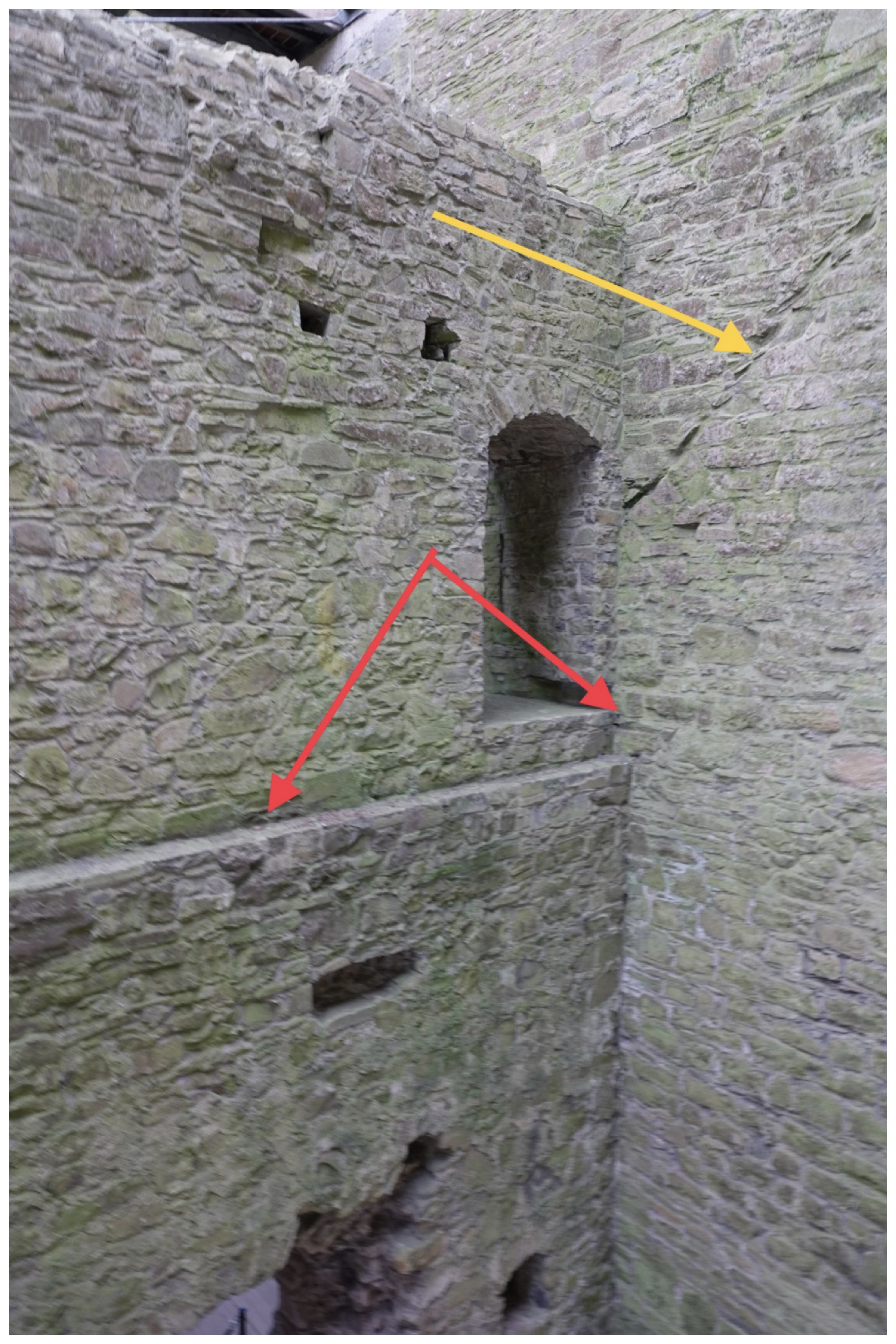
The yellow arrow points at a “scar” left by the tiled roof that would have been at this level before the third story great room was added.
Next we climbed to the roof of the keep, for the second most stunning panorama we’ve seen in Ireland – and that’s saying a lot considering what beat it out for first spot was the Cliffs of Moher!
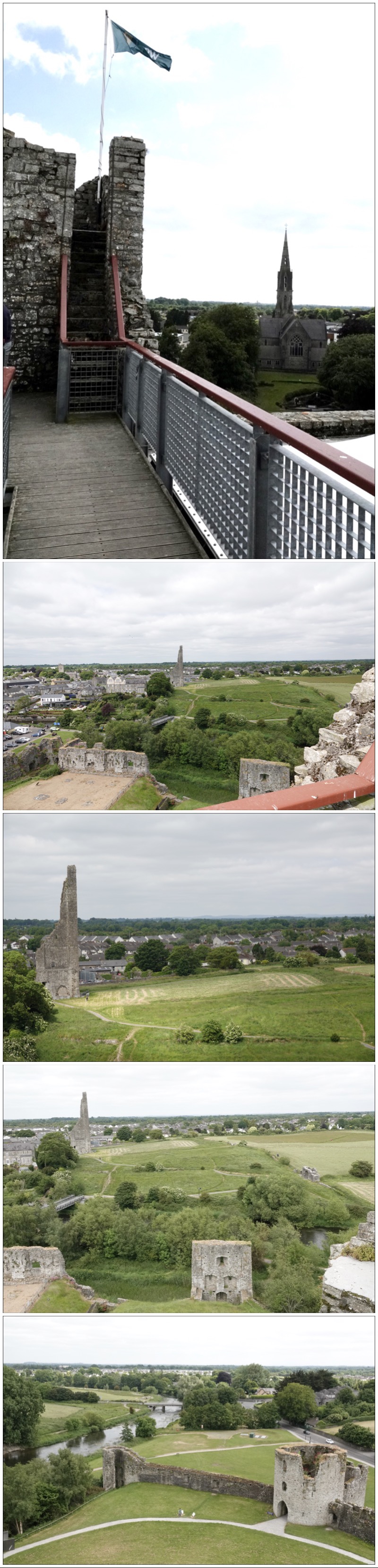
Our guide reminded us that on the way out of the main gate we needed to look up at the “murder holes” (and he said it in his gorgeous Scottish accent that made it sound like Alan Cumming introducing a Masterpiece Theatre Mystery: “murrr-der”). The opening in the roof of the entryway allowed defenders to attack invaders from above – with arrows, boiling water or oil, or “biological warfare (pots of animals or human excrement). The latter was especially effective if the invaders below had already been wounded by an arrow or sword, since the bacteria would infect their wounds and, as our guide so wryly explained, “they had a 750 year wait for a penicillin prescription”.
After our castle tour we walked a short way into the charming town of Trim.
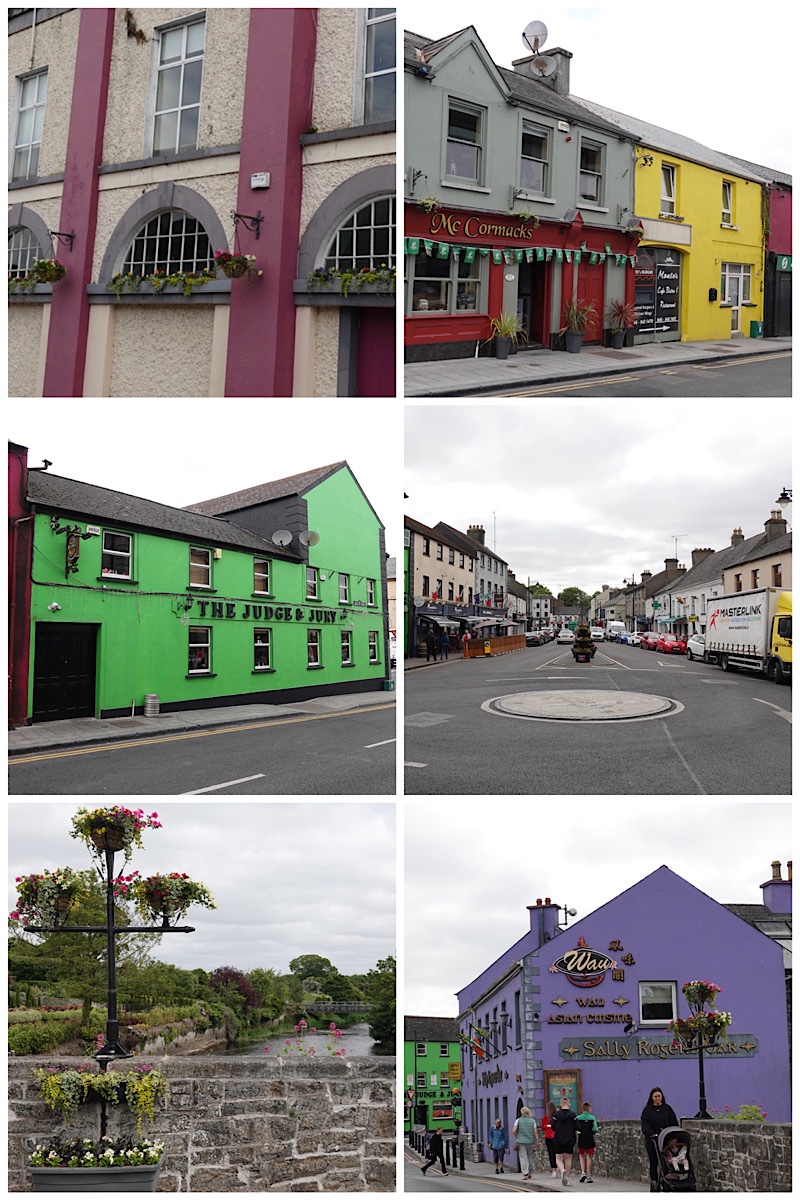
The goal of our walk was to get a better view of the remains of the bell tower of St. Mary’s Abbey, which was built around the same time as the castle.

At 40 metres/130 ft tall, it is thought to have been the tallest Norman building in what is now the UK and Ireland. (By comparison, the Norman Tower in Bury St Edmunds England is only 26 metres/86 ft tall and Rochester Castle’s tower tops out at 34.5m/113 ft). More of the abbey might have survived had it not been for Oliver Cromwell (we keep hearing his name spoken with bitterness in Ireland and Scotland) allowing his armies to use it for cannon target practice in the mid 1600s.


That’s it for our last day in Ireland. Only our “farewell dinner” remained, and a group picture which hopefully our tour director will share with us via email in the next week or so.
It’s been an excellent way to get a taste of what Ireland is all about.
 Rose and Ted’s Excellent Adventure
Parents verifying your age is not very reliable. We tried to keep our kids young enough to get child prices as long as they would keep their mouths shut. Good thing it was a free day!
LikeLiked by 1 person
In spite of some disappointments today, you seem to have finished up on a positive note in the delightful village of Trim. Neat castle it is so incredibly tall, you have to wonder whats keeping it upright…. Hope you return trip goes well. Hugs. B.
Sent from Mailhttps://go.microsoft.com/fwlink/?LinkId=550986 for Windows
LikeLiked by 1 person