Itinerary: Belfast is a beautiful city of imposing Victorian architecture set within picturesque hills. On our guided tour we see the City Hall with its copper-domed roof, the Grand Opera House and the Parliament Buildings set amid beautiful parklands. This afternoon we visit the newly-opened Titanic Museum, which features special effects, original drawings, full-scale constructions and interactive elements to explore the Titanic story. The rest of the day is at leisure.
☘️☘️☘️☘️☘️☘️☘️☘️☘️☘️☘️☘️☘️☘️☘️☘️☘️☘️☘️☘️☘️☘️☘️☘️☘️☘️
High 17°C/Low 10°C and overcast. Frankly, it was the kind of weather we’d been expecting to have in Ireland (and haven’t had).
Belfast is a city filled with beautiful Victorian architecture, but a bit of an unsettling vibe. Here, even more than in Derry, the post-Troubles peace feels fragile. Several of our travelling companions remarked at the “in your face” pro-UK imagery in the city. To be fair, Belfast IS in the UK; 26 of Ireland’s provinces are in the Republic of Ireland and self-governing, and 6 are in Northern Ireland under UK law. All 6 NI counties are in the province of Ulster, but Ulster’s 3 other counties are in the Republic, effectively splitting the province between countries.
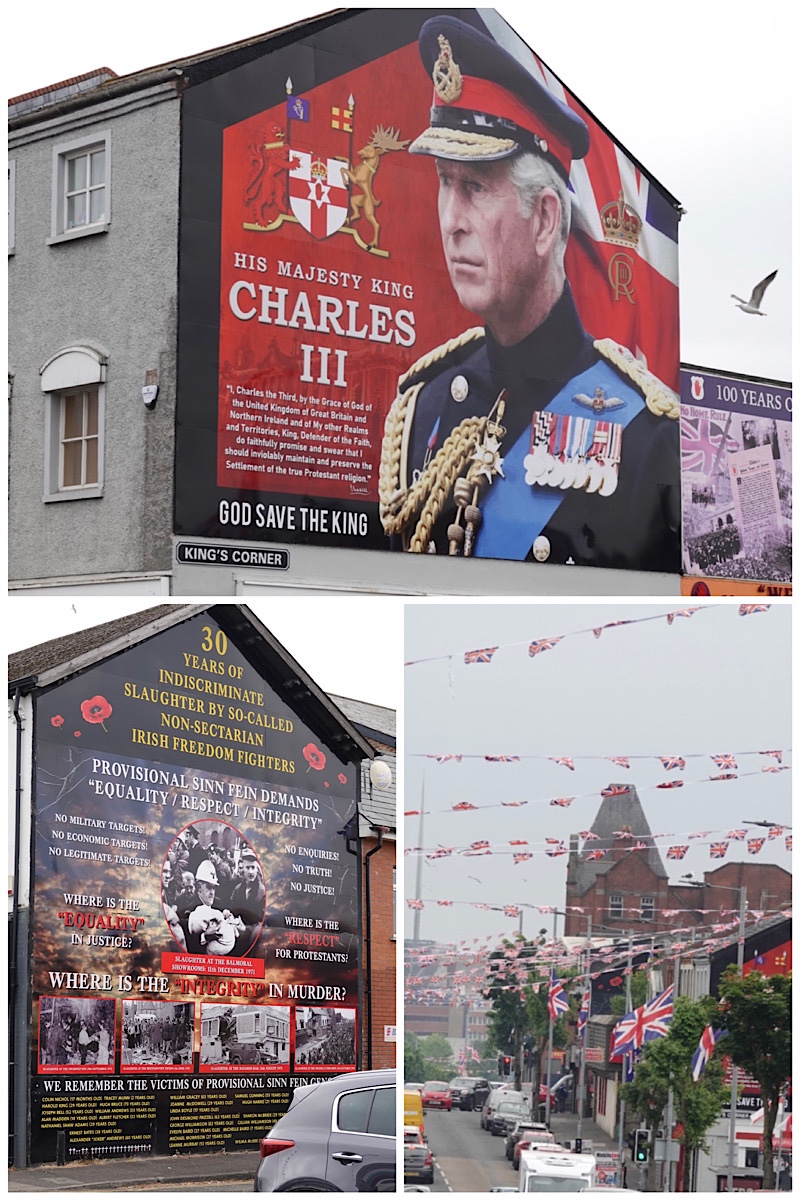
Why Northern Ireland remained in the United Kingdom is also complicated. There was a commission created and disbanded, a treaty, and a civil war, not necessarily in that order. Our Irish tour guide today shared the fairly common opinion (in Ireland, probably not in England) that the UK simply wanted to hang on to the biggest port, the most important shipyard, and most of the taxable wealth in Ireland, and those things were in the 6 northern counties they kept. Of course, there was a vote at the time … but there was also a vote for Brexit, so we know votes can be influenced by propaganda from BOTH sides.
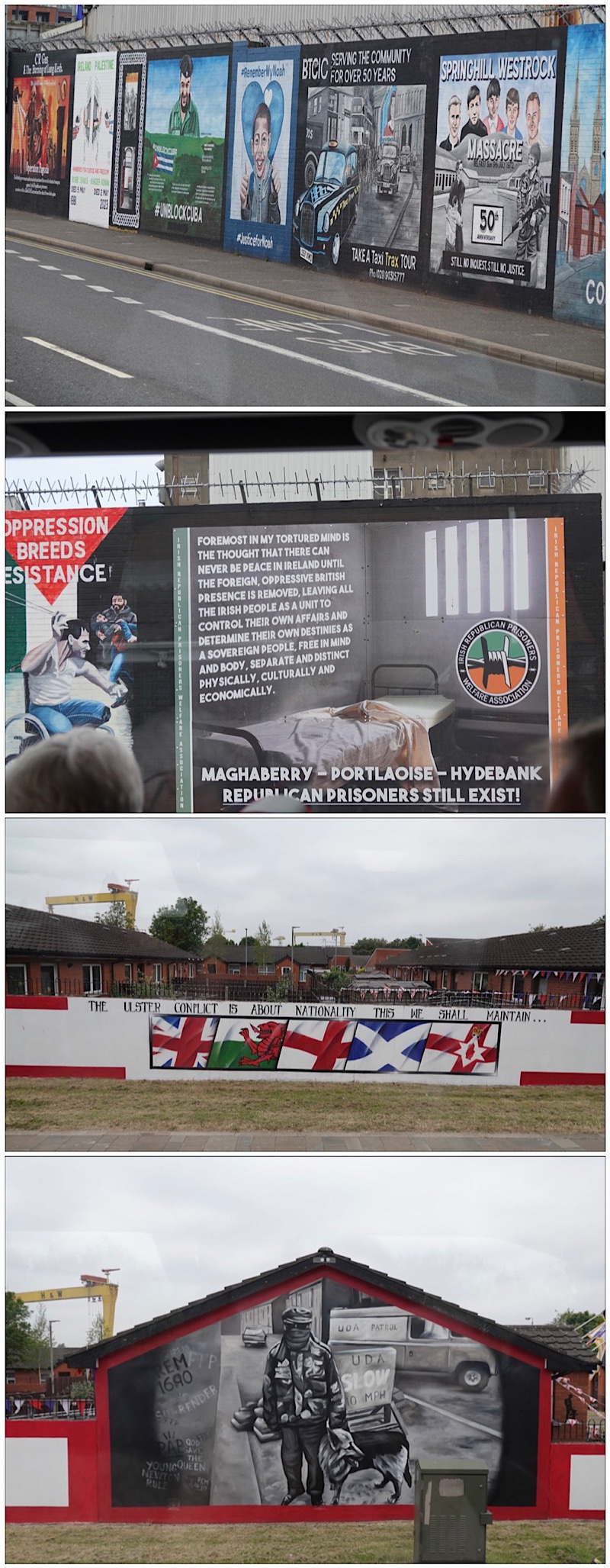
We were taken to a long section of the “peace wall”, erected to separate predominantly Protestant Unionist and predominantly Catholic Republican neighbourhoods and hopefully minimize violence between them. There’s a lot more information here: Peace lines Ireland.
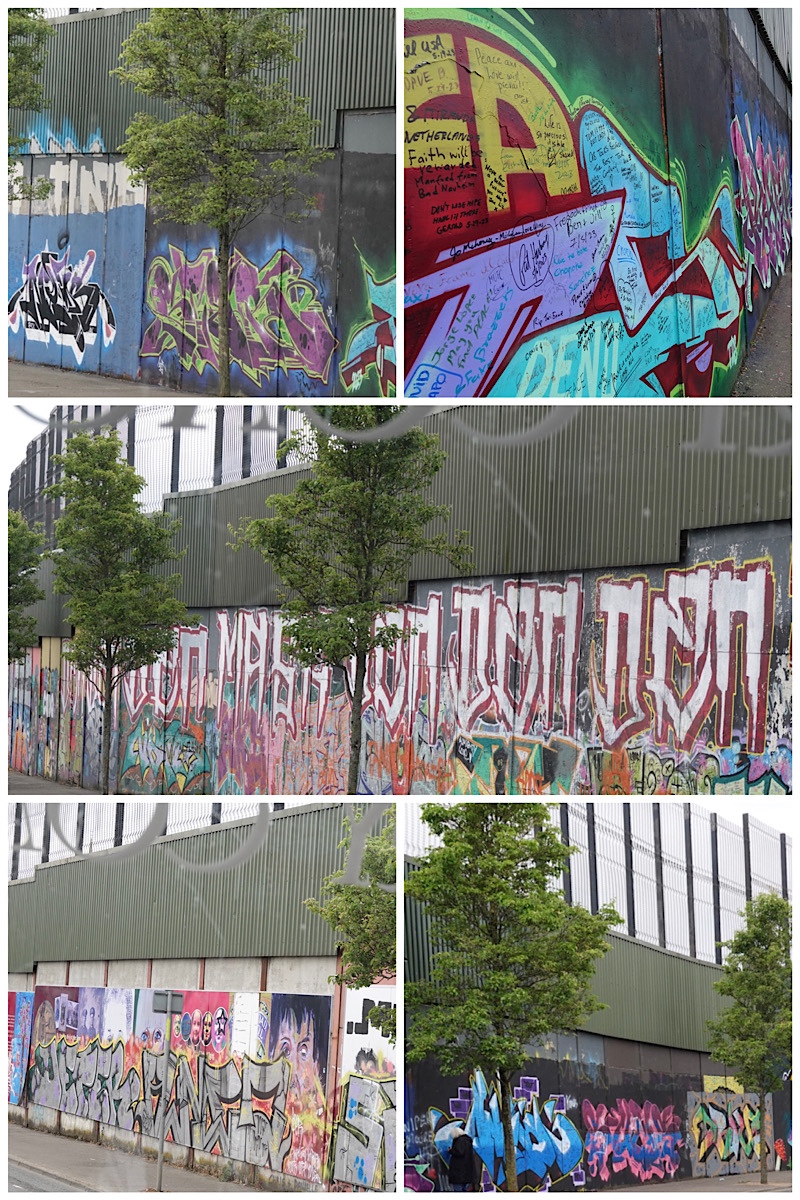
To me, the wall immediately brought to mind the Berlin Wall, and a great feeling of sadness. We were given the opportunity to add a message to the wall, much like is done in Berlin.
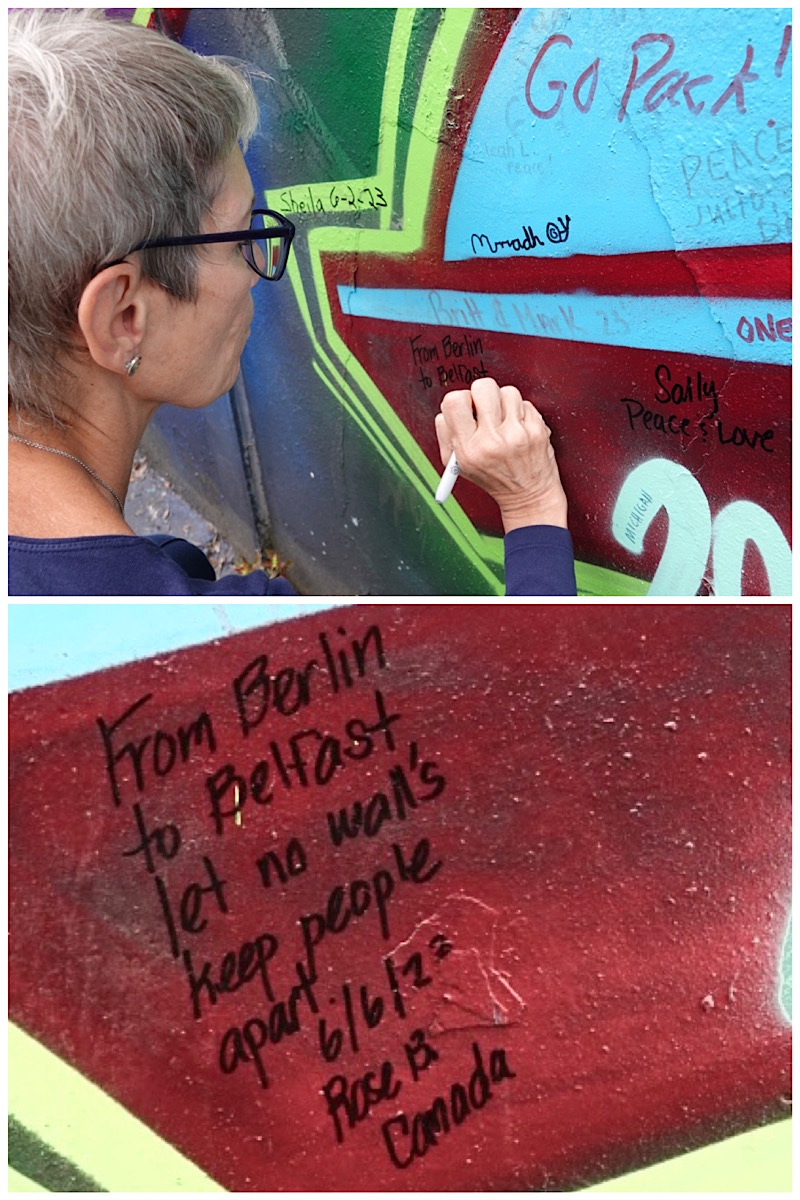
Some feel that the peace attained with the 1998 Good Friday Agreement has held long enough that the wall should be taken down. Others feel it should stay as a reminder. At present, nothing is going to happen because Northern Ireland has had no first minister or deputy first minister since February 2022! Senior Northern Ireland civil servants are responsible for the day-to-day running of government, but cannot take new policy decisions, and there is currently no Northern Irish representation in the UK government. It’s a bit of a mess.
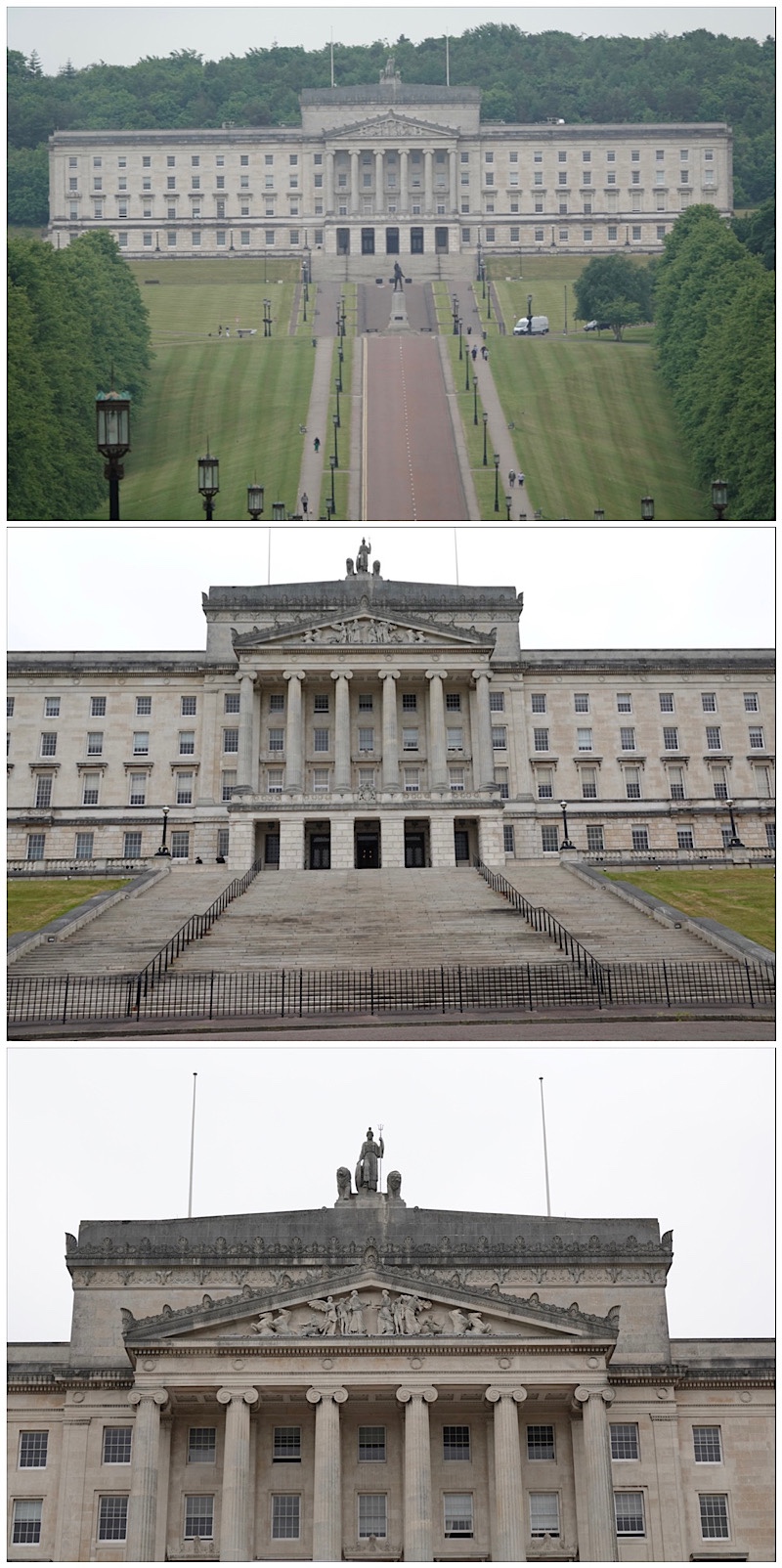
Our 3 hour guided coach tour also took us past the Belfast city hall, the Queen’s University of Belfast, and Northern Ireland’s parliament building, encouraging us to do further exploration later in the day. The parliament and the university were too far from our hotel for us to walk, so Ted took advantage of our photo stops to take the pictures below:
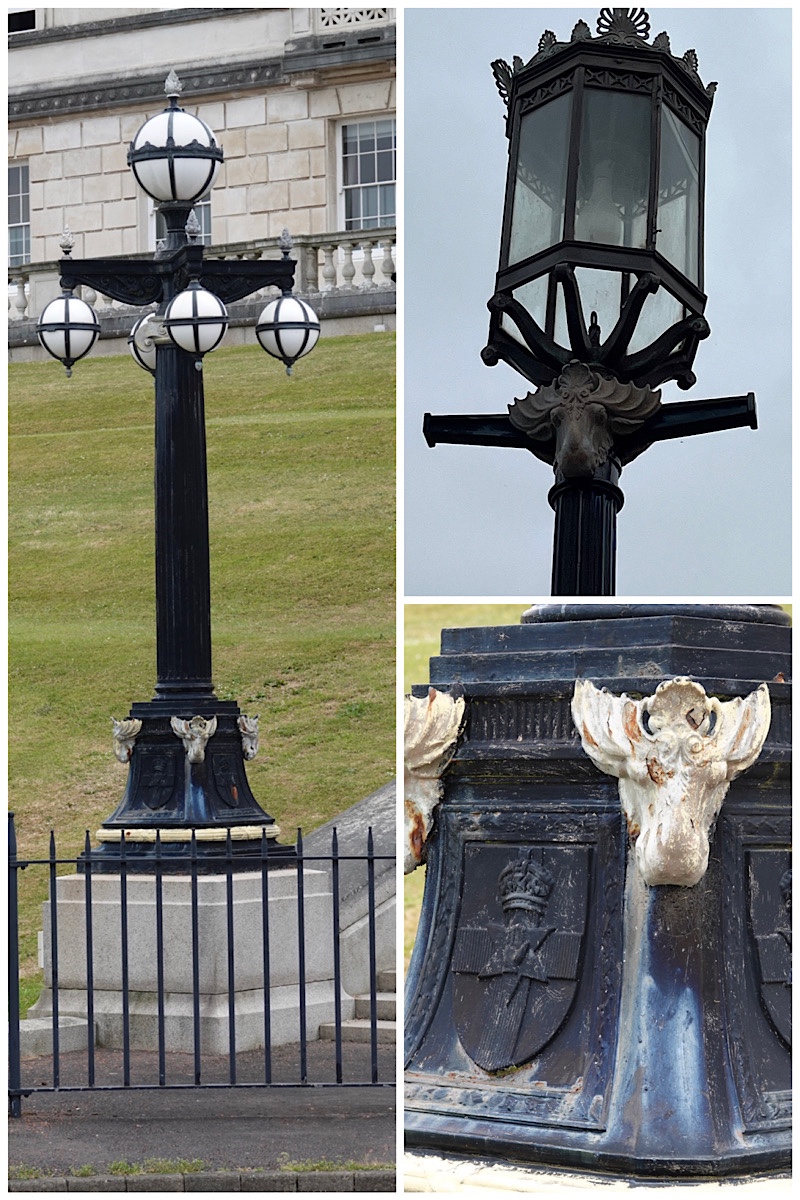
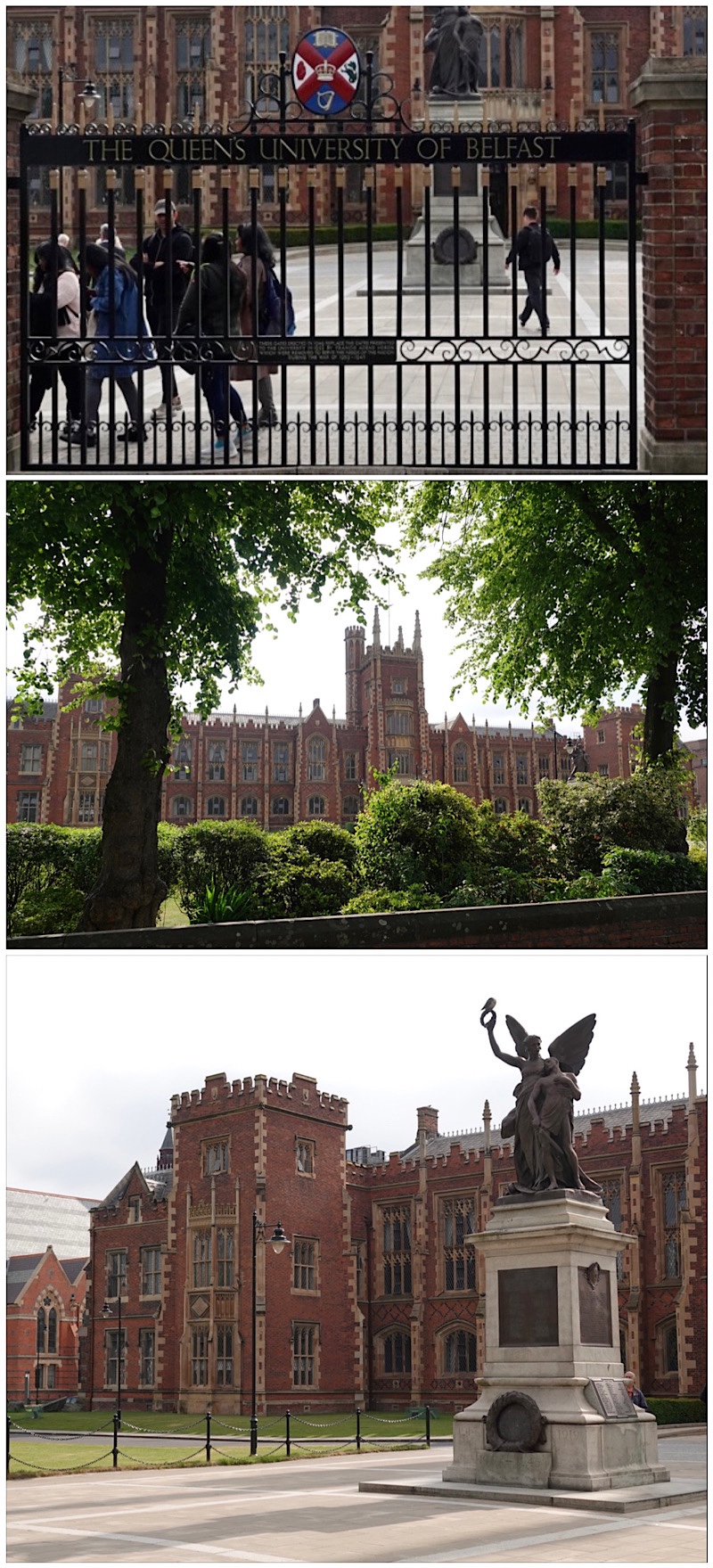
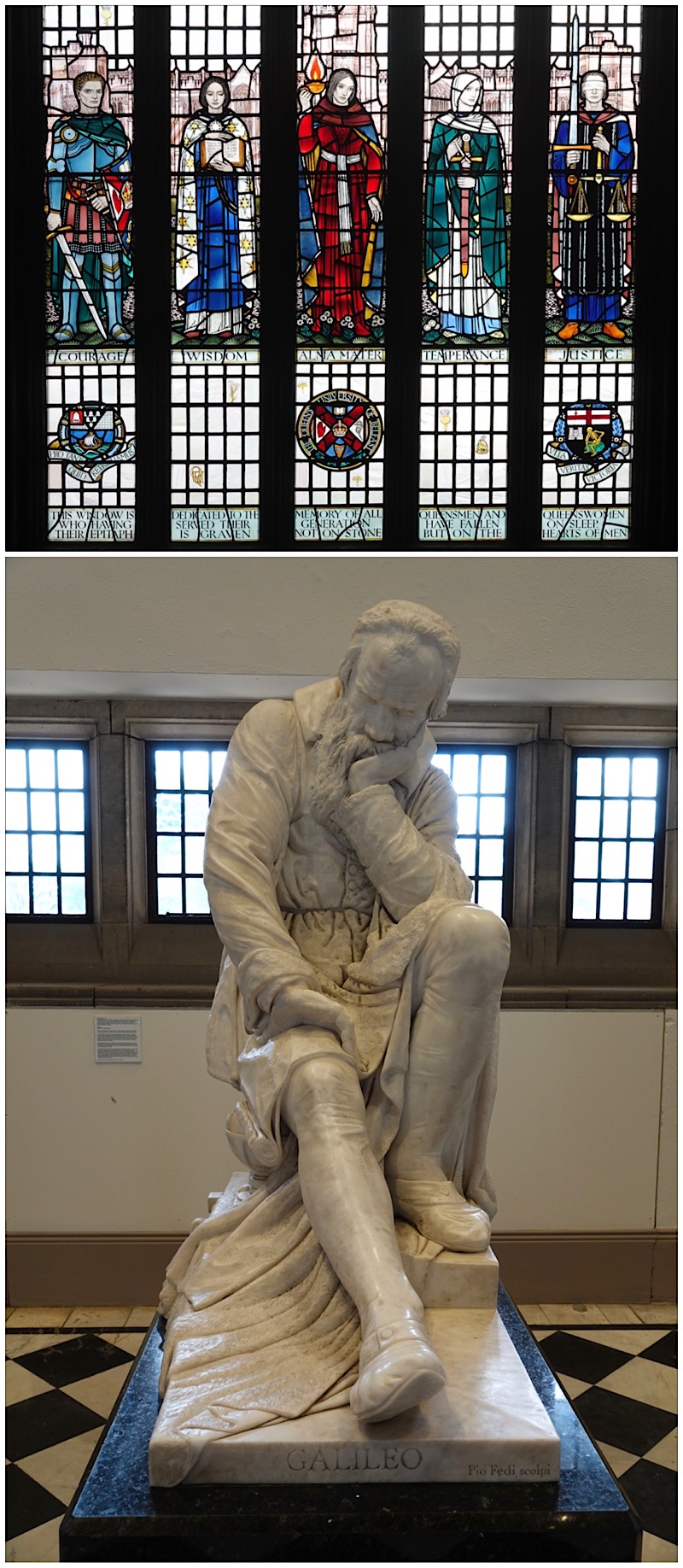
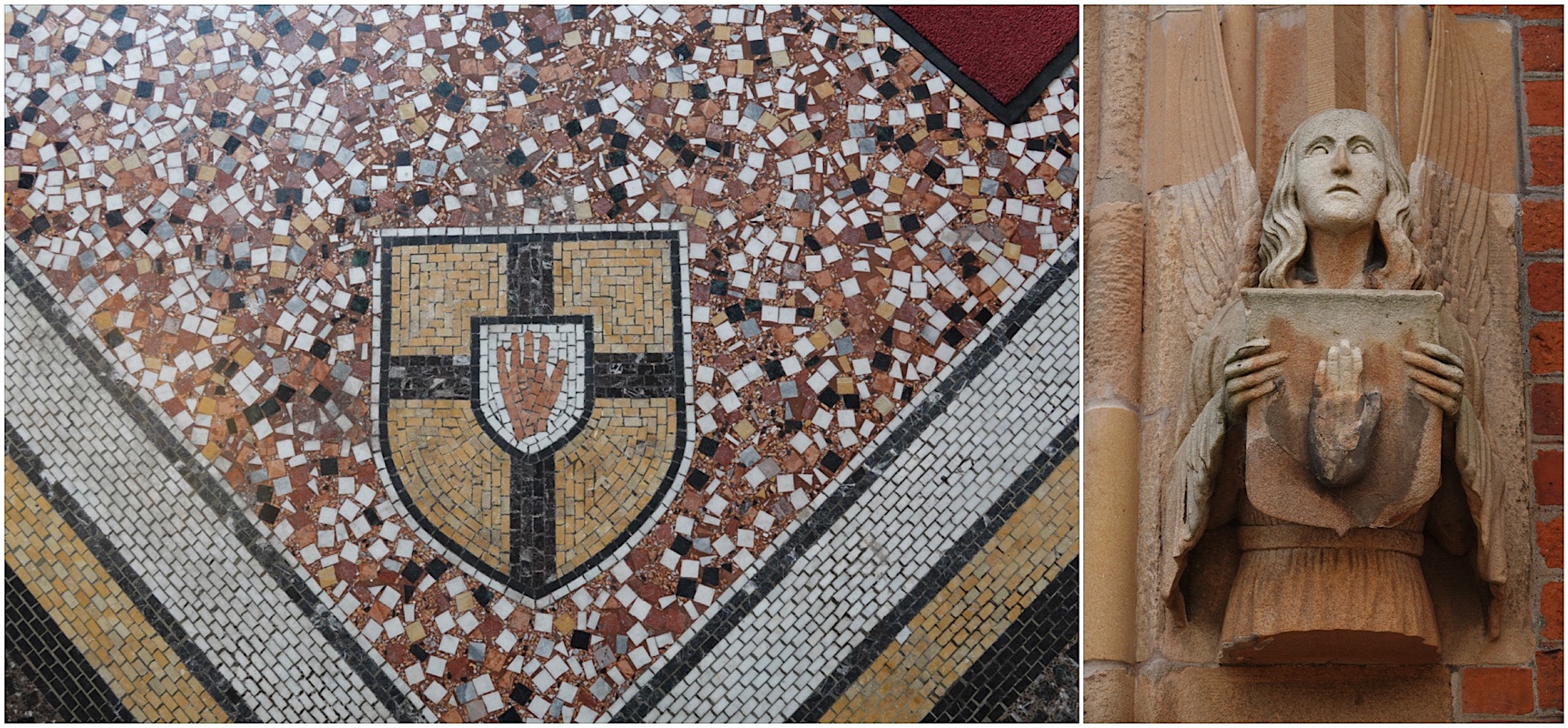
Red Hand of Ulster
Around noon, we left our bus at the Titanic Belfast to take a self-guided tour of the new Titanic museum which features 9 interactive galleries that re-tell the iconic story.
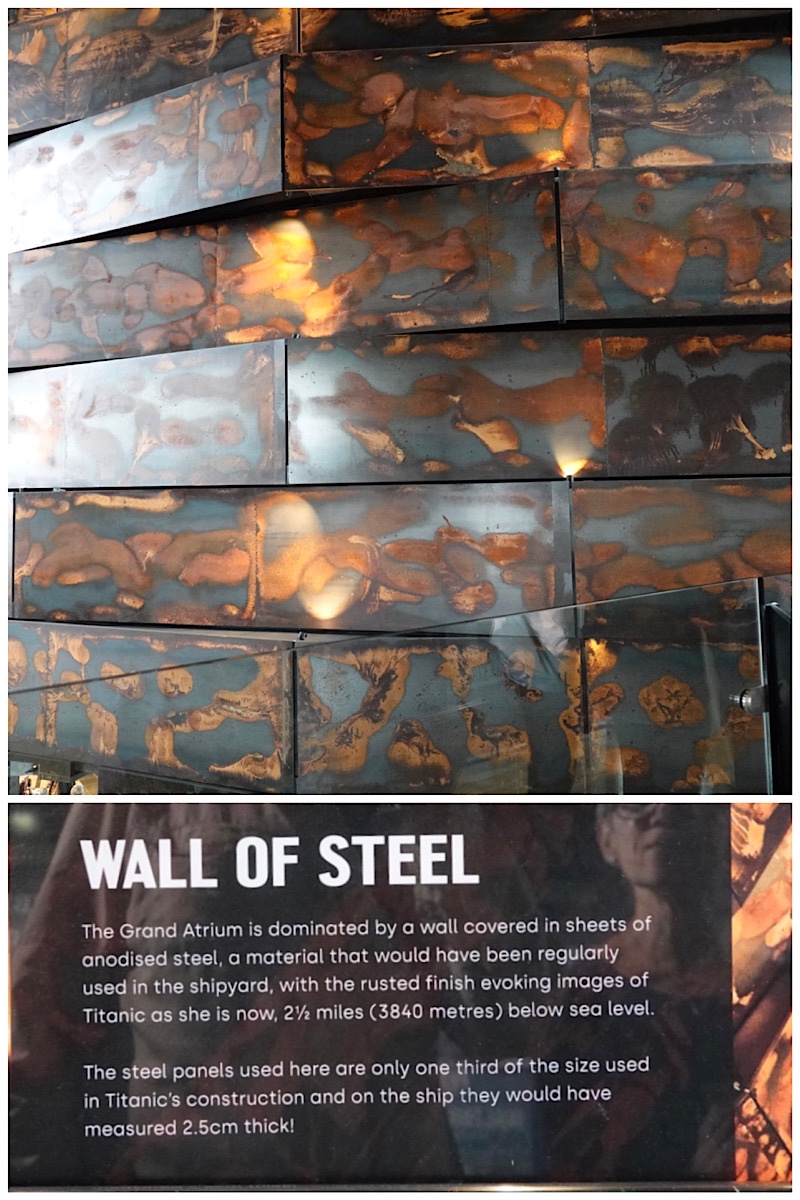
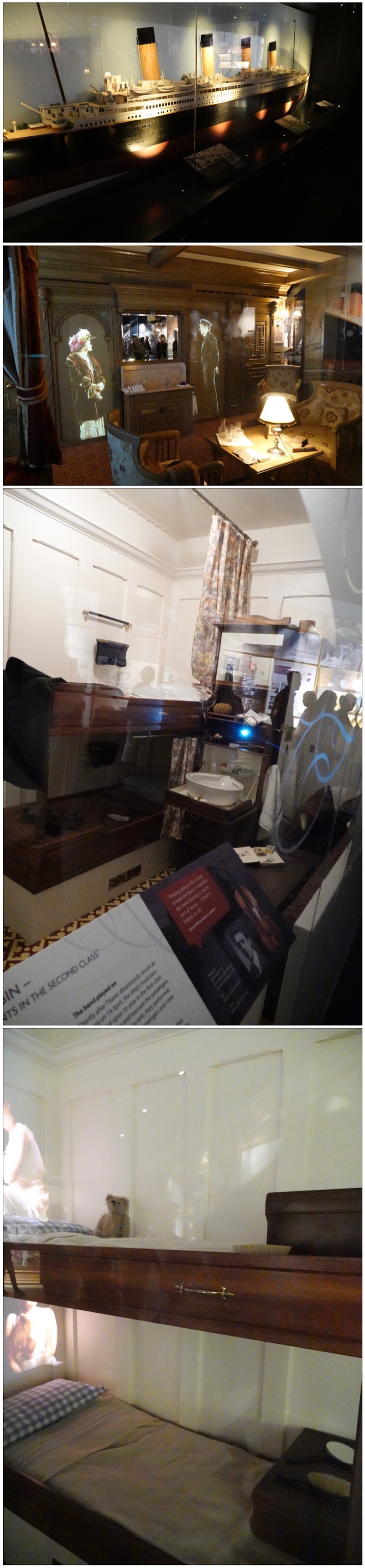
It took around 2-1/2 hours to tour areas beginning with a brief history of Belfast, the harbour, and the shipyard, and moving on to showing the construction of the ship, details of the design, and displays of the cabins.
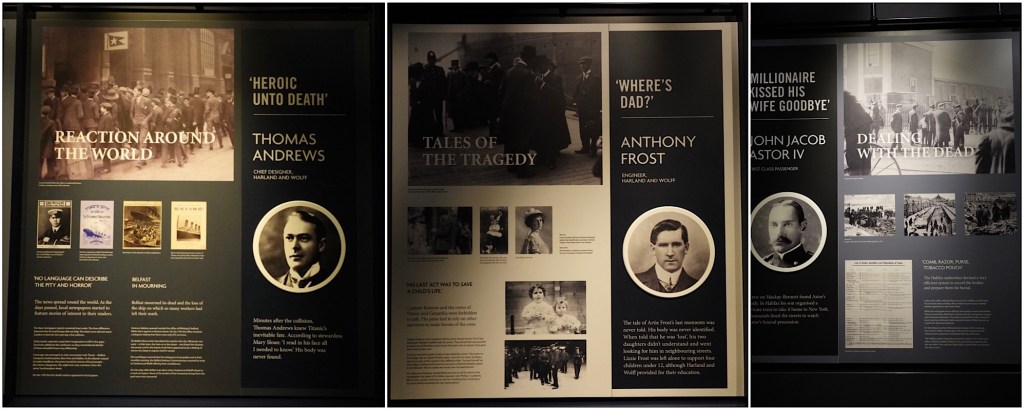
There was also a chronology of the disaster, with the distress messages sent during the ship’s last minutes, and stories of some of the survivors, as well as many of the passengers and crew members who lost their lives.
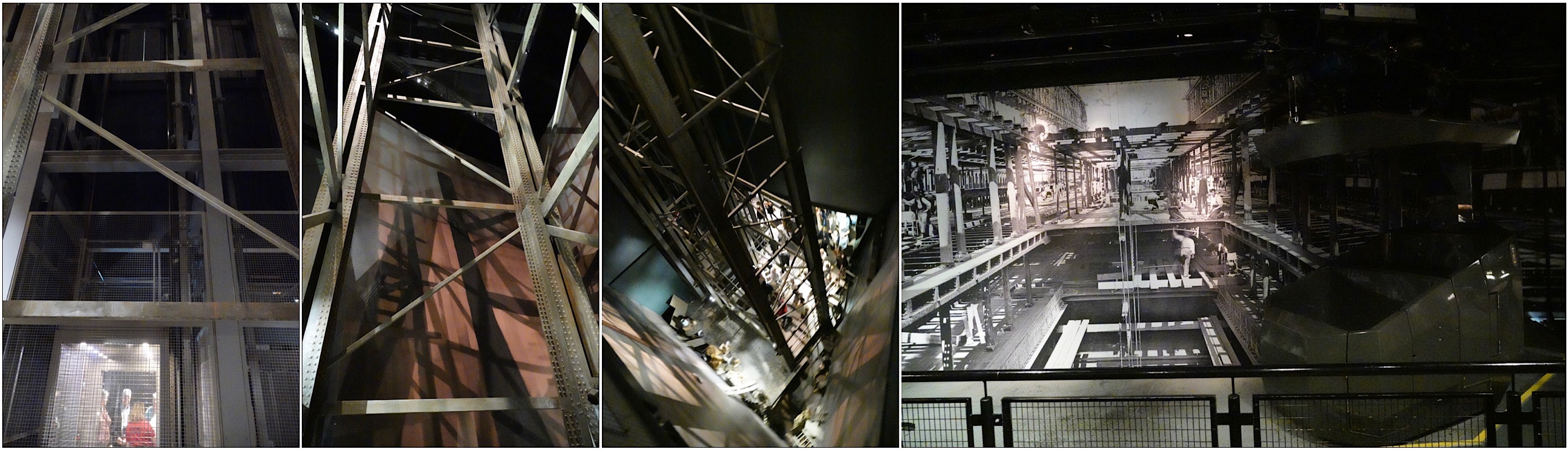
One of the interesting exhibits was a “ride” that took us into the ship’s construction. We took an elevator 4 stories up into the model of the shipyard’s gantry to see the various tasks that the 3000 shipbuilders performed. It felt a bit like being in a mine elevator. The actual gantry was the equivalent of 16 stories tall – 4 times the height of the display we were in.
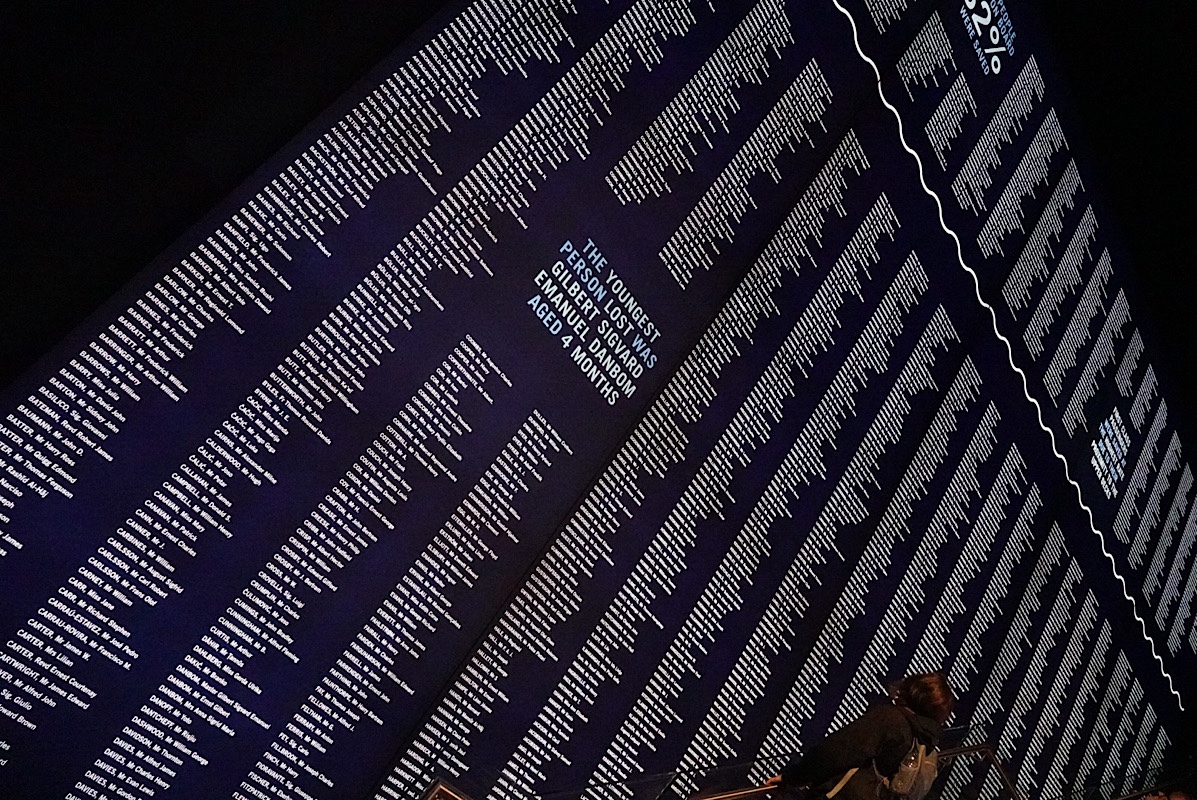
The huge wall listing the names of all those who perished really drove home the scope of the disaster.
An entire room was dedicated to what caused the disaster, and the safety measures put in place to prevent another similar disaster: safety drills, lifeboats, communication, and more.
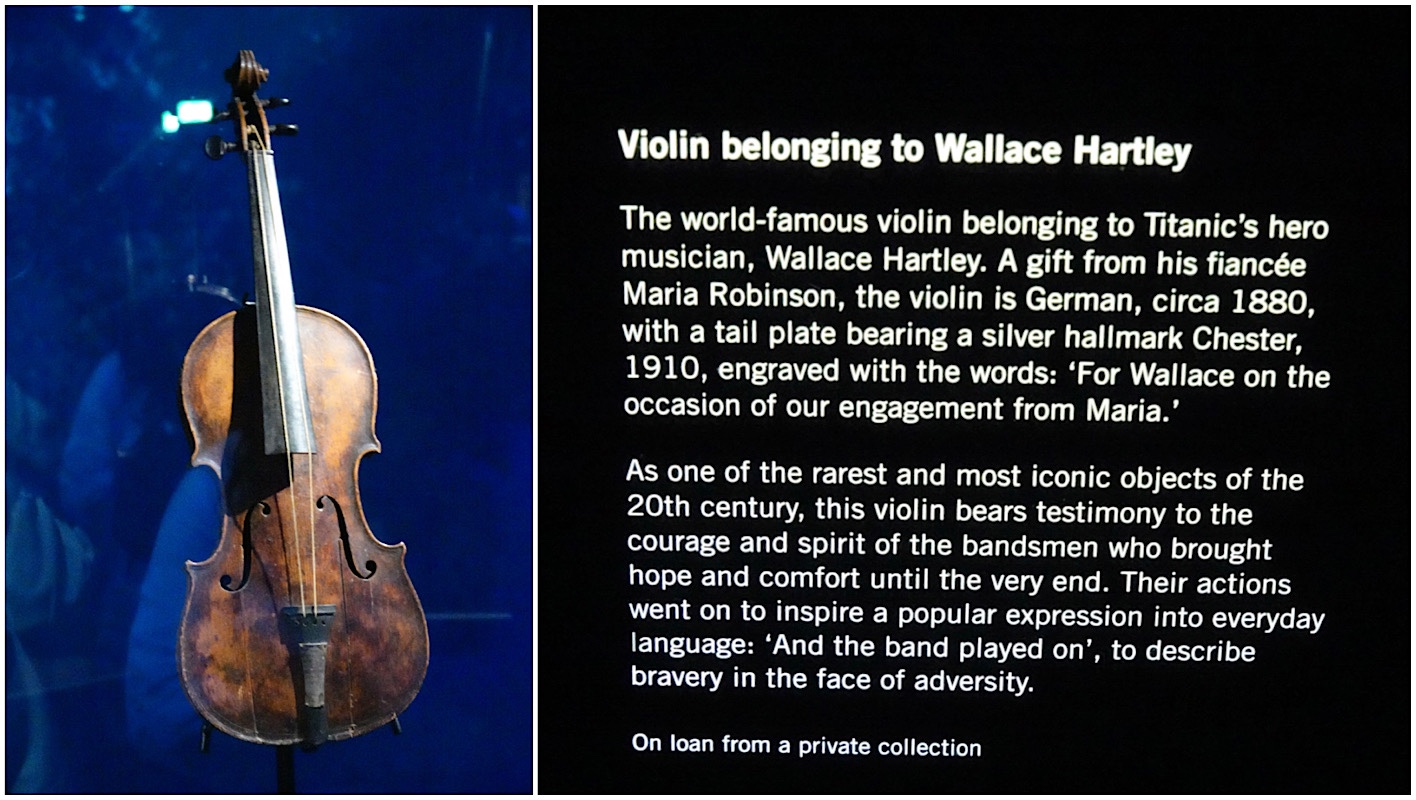
There were almost no artifacts from the ship on display, but this violin had a place of honour.
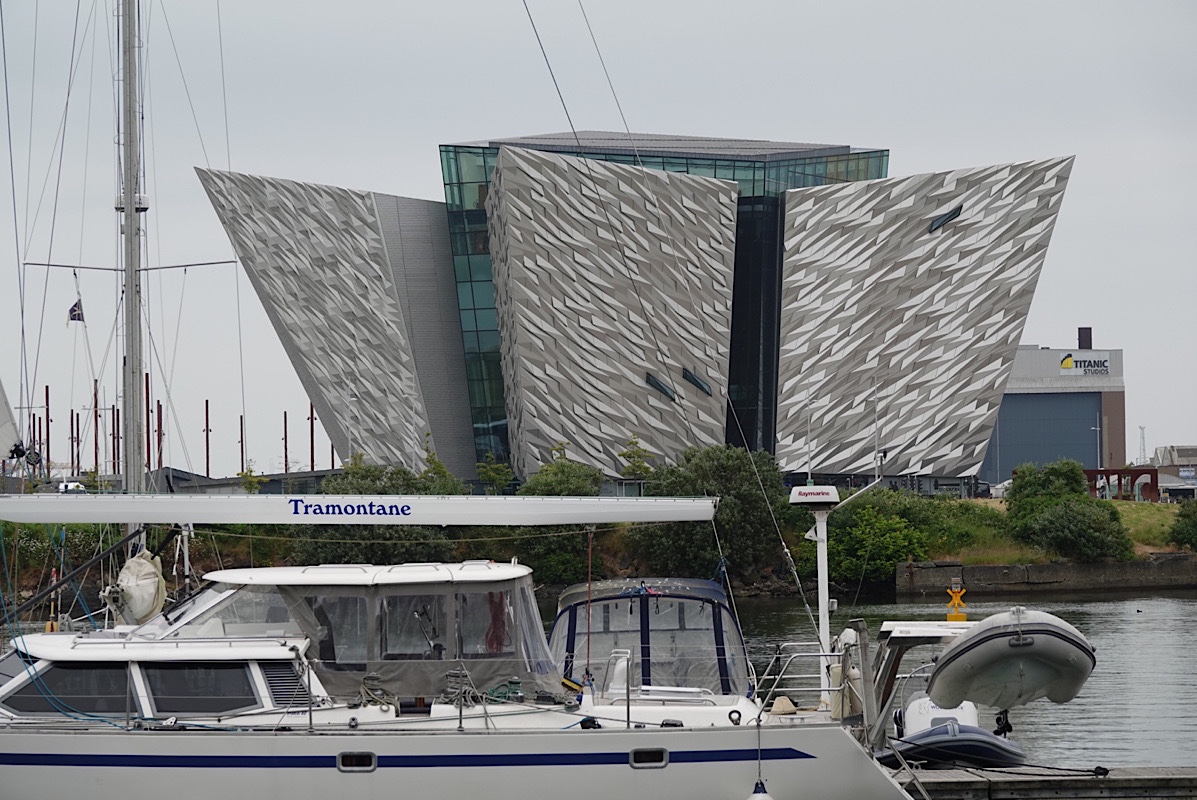
The outside of the exhibit building is striking. It was built to the exact height of the Titanic!
After leaving the Titanic visit, we decided to walk around Belfast and return to our hotel independent from our tour group.
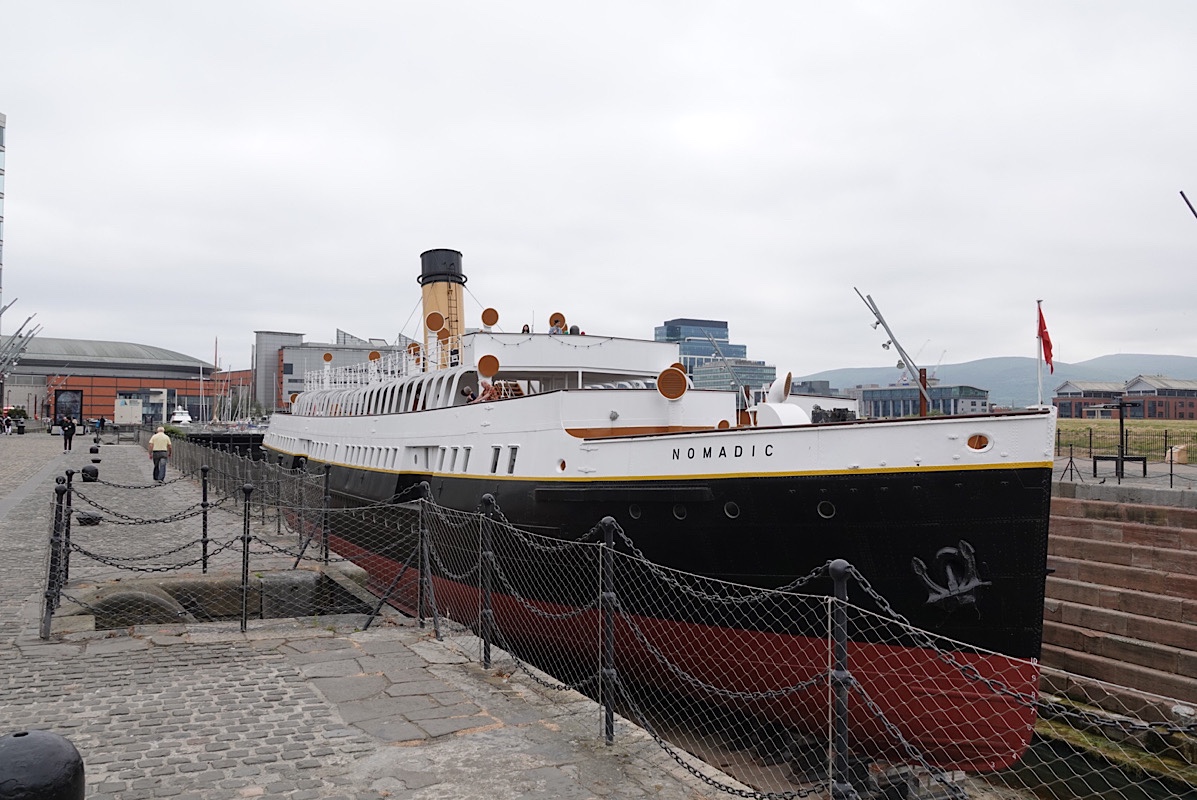
Not far from the Titanic experience was the Nomadic, a tender ship purpose-built to get passengers from the dock onto the Titanic.
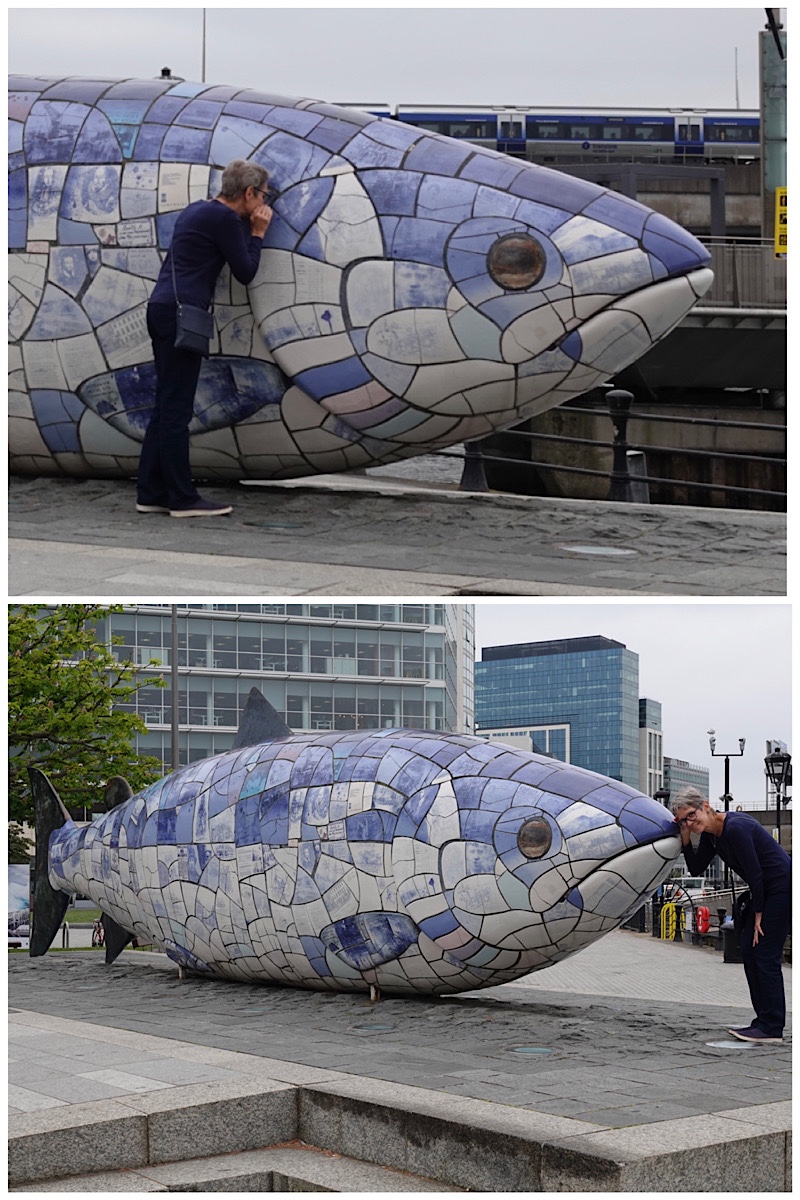
Ted took photos of me listening to, and giving out, knowledge to Fionn McCool’s “Salmon of Knowledge”, also called simply “The Big Fish”.
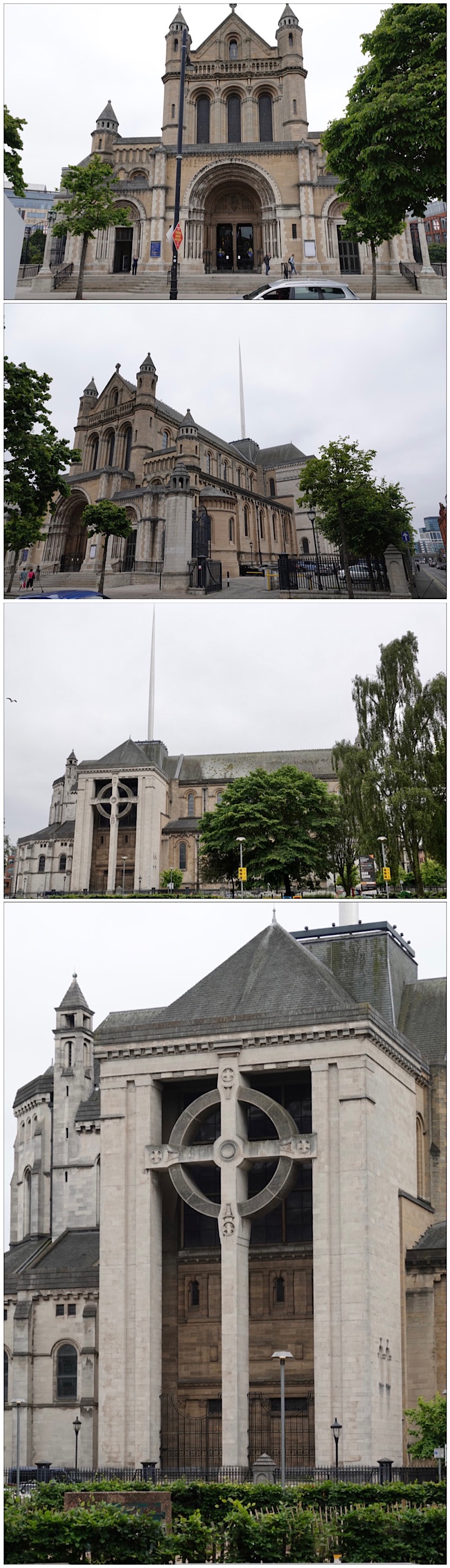
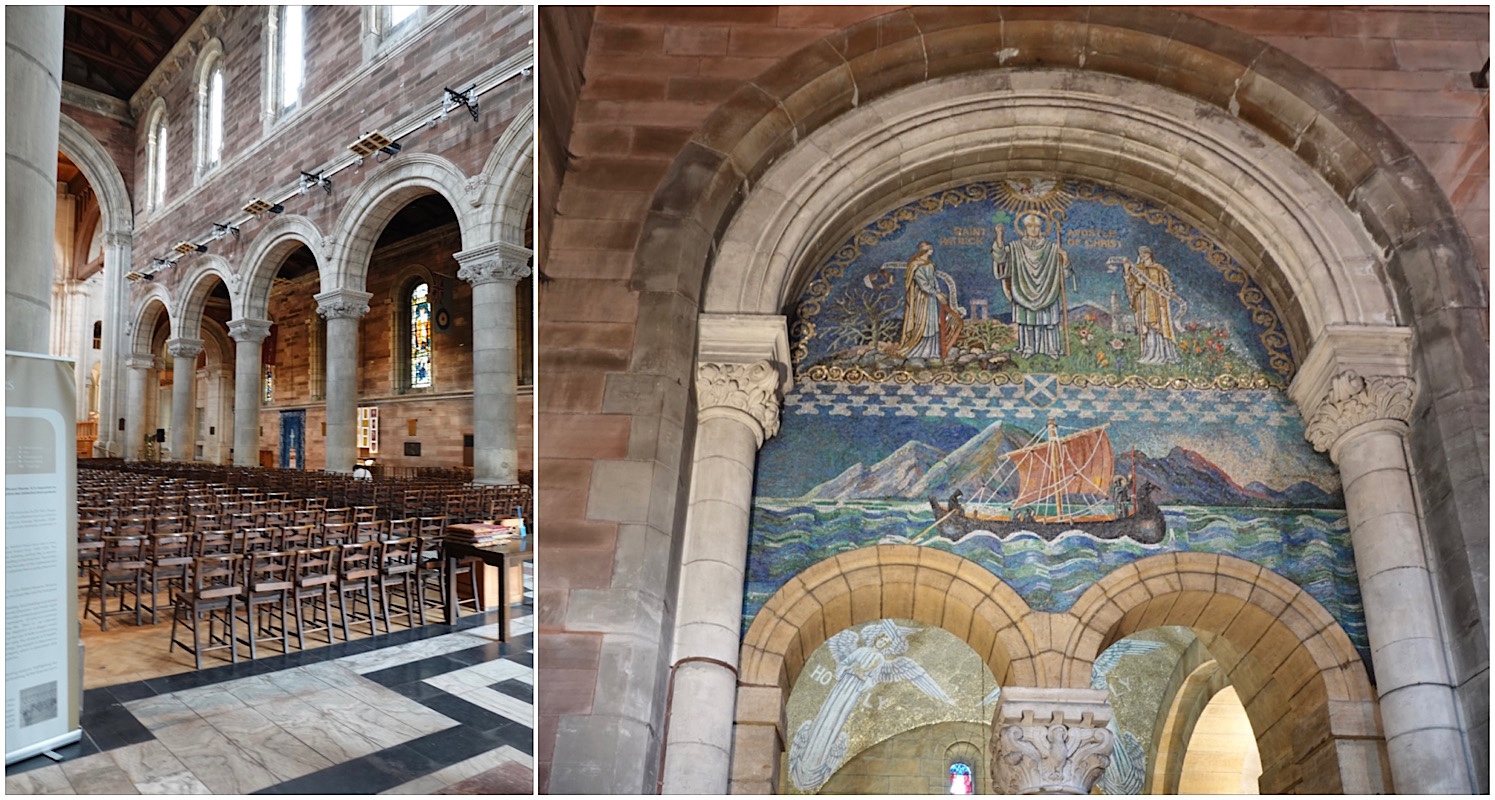
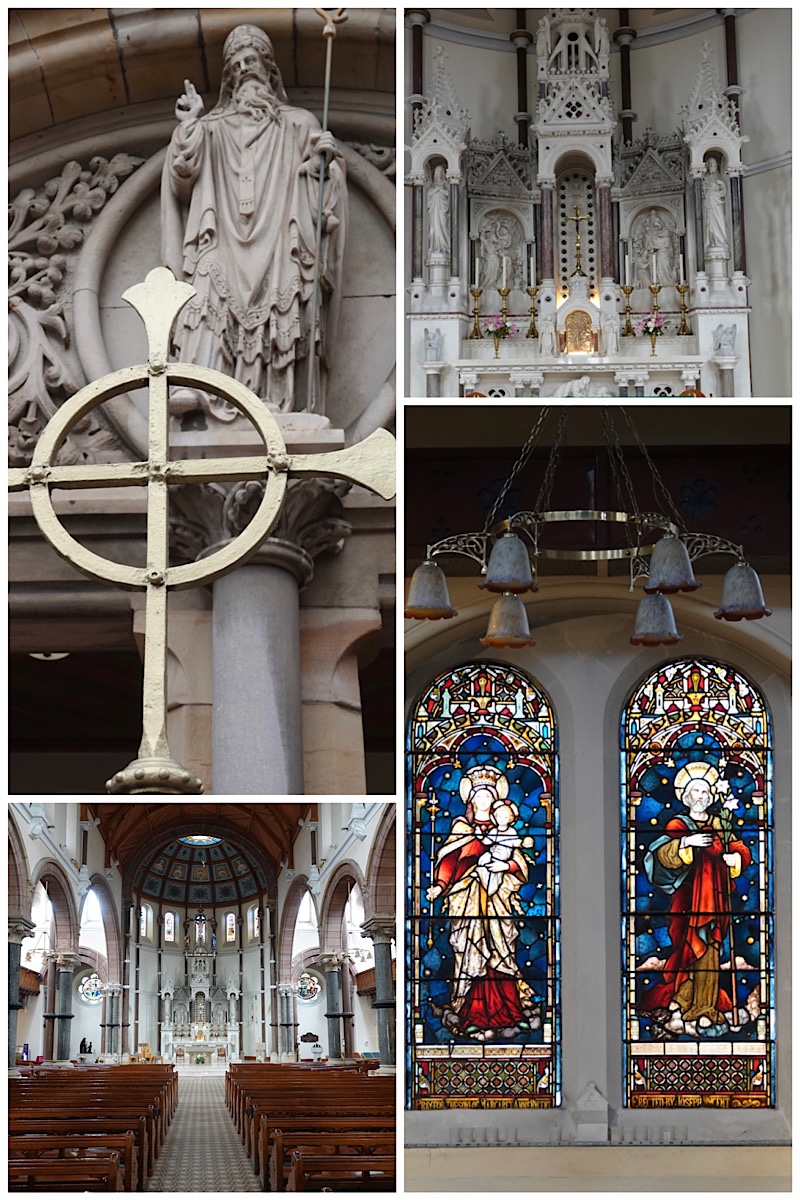
We stopped for lager and chips (french fries) at one of Belfast’s pubs, where we chatted with a couple from Australia travelling through Ireland before heading to Scotland, England, and Croatia, snd then walked to St. Anne’s impressive Belfast Cathedral. Unfortunately we were too late to tour the inside, so Ted got only a couple of interior photos of its Romanesque columns, and then its impressive exterior and huge Celtic cross from across the street where we could also see its tall thin modern spire.
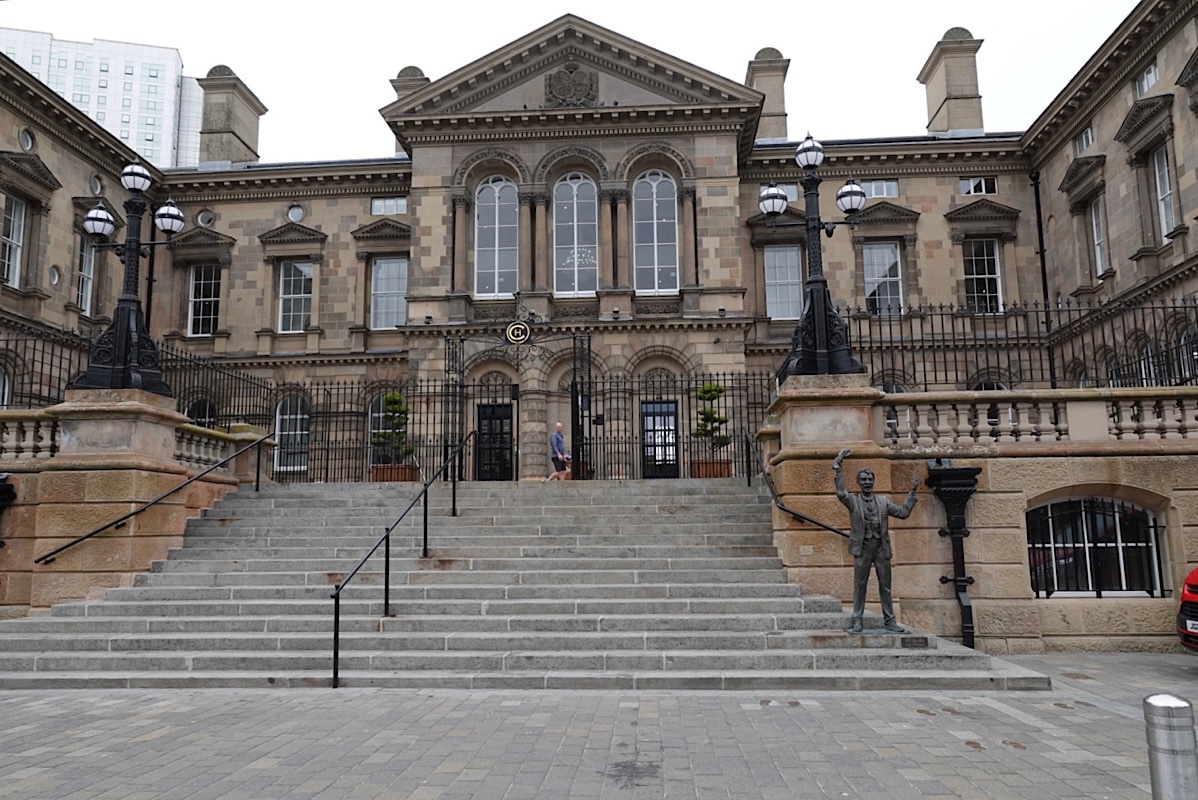
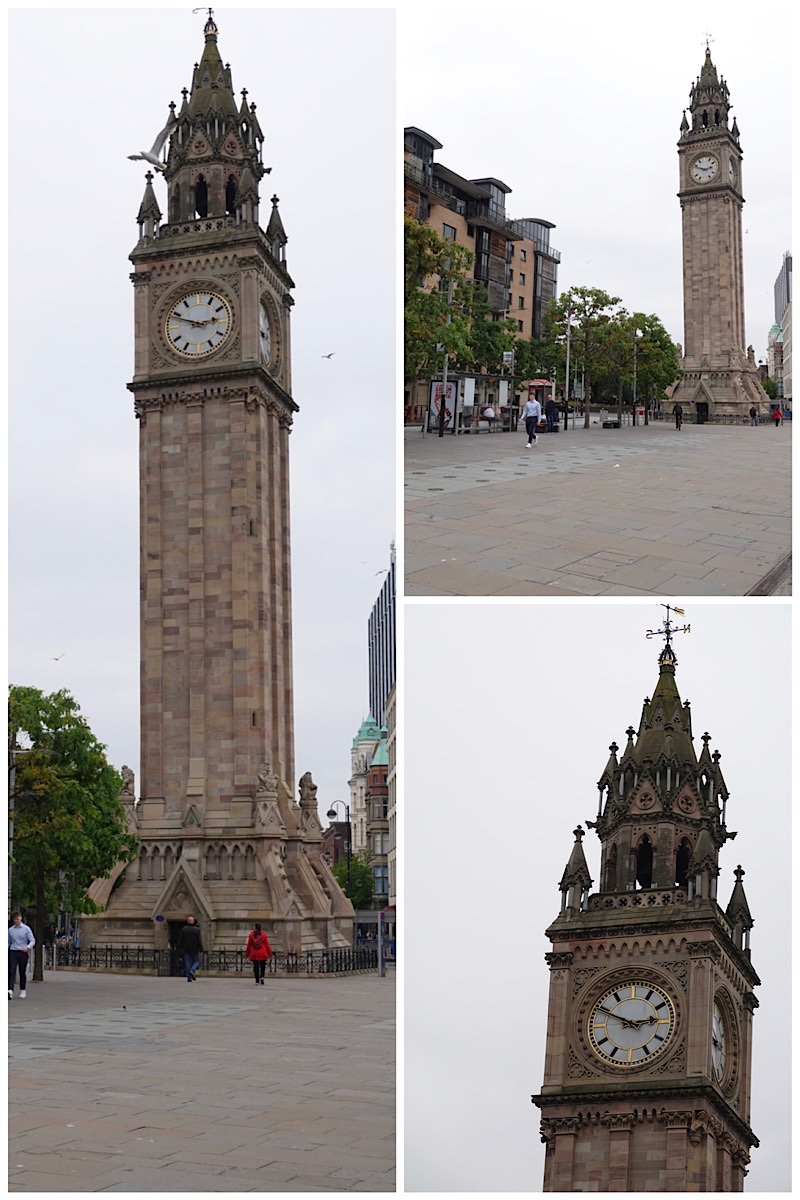
We passed the Custom House, and the 34.4m/113ft tall Albert Memorial Clock which was built on reclaimed land and leans (although at just over a metre off perpendicular, not nearly as much as the Tower of Pisa).
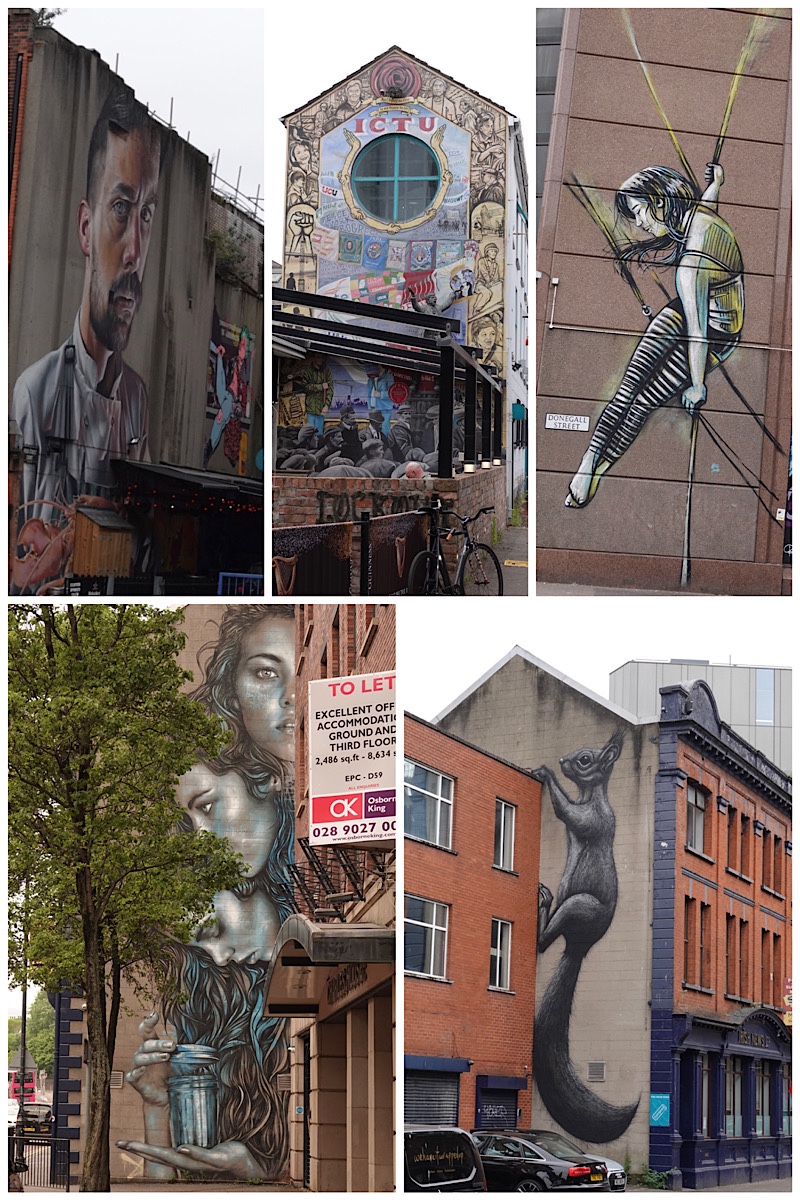
Ted took photos of more of the downtown murals. Every alleyway and building wall seemed to be painted.
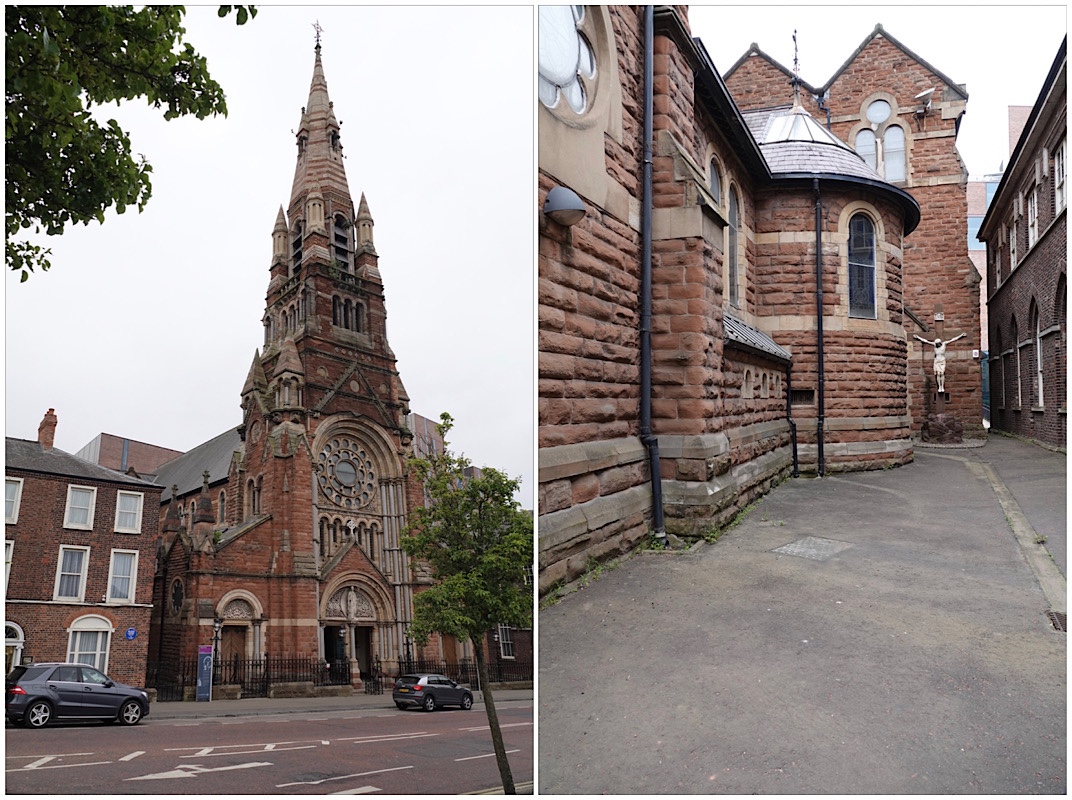
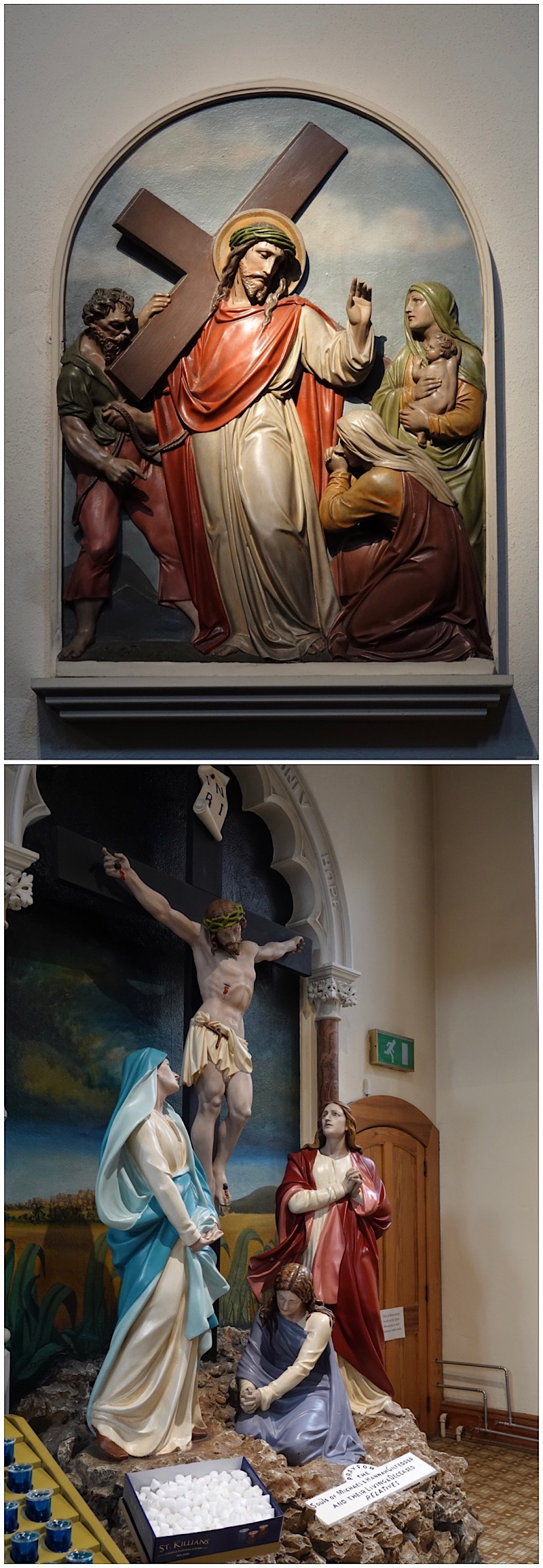
We got a glimpse into St. Patrick’s Church with its elaborate Stations of the Cross, statues, and stained glass windows.
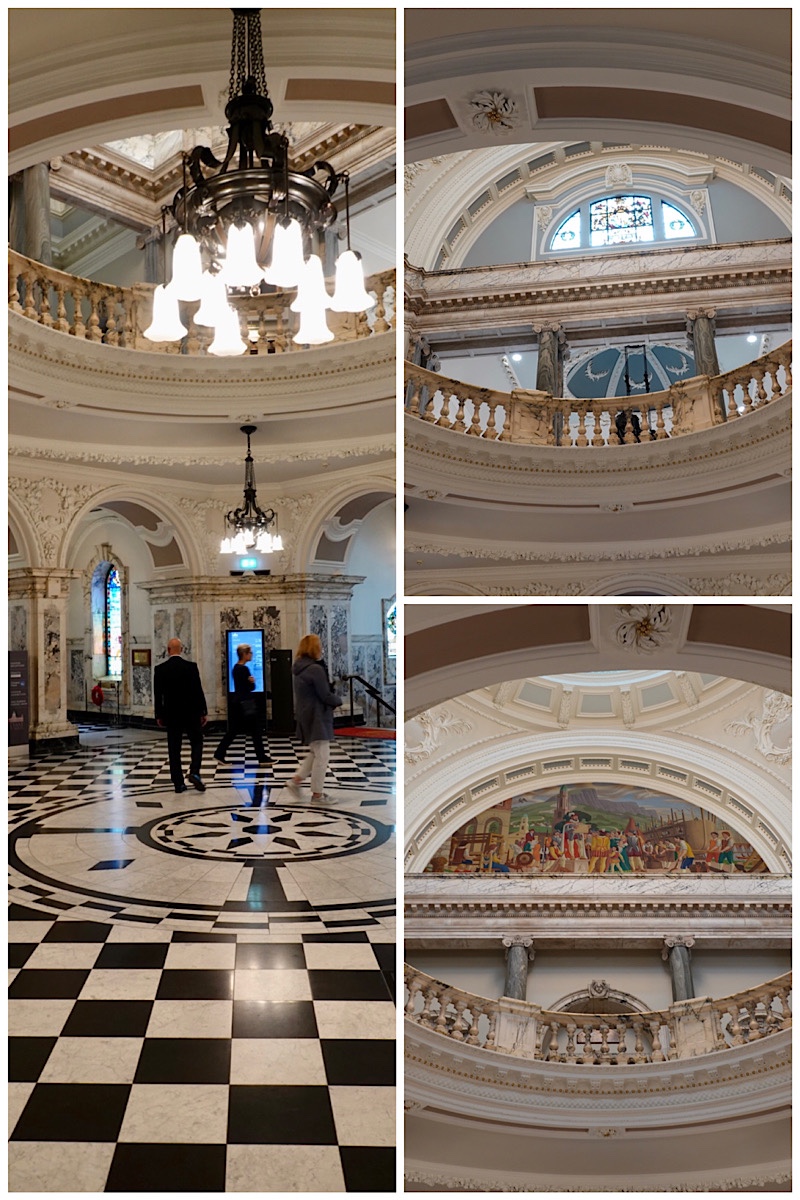
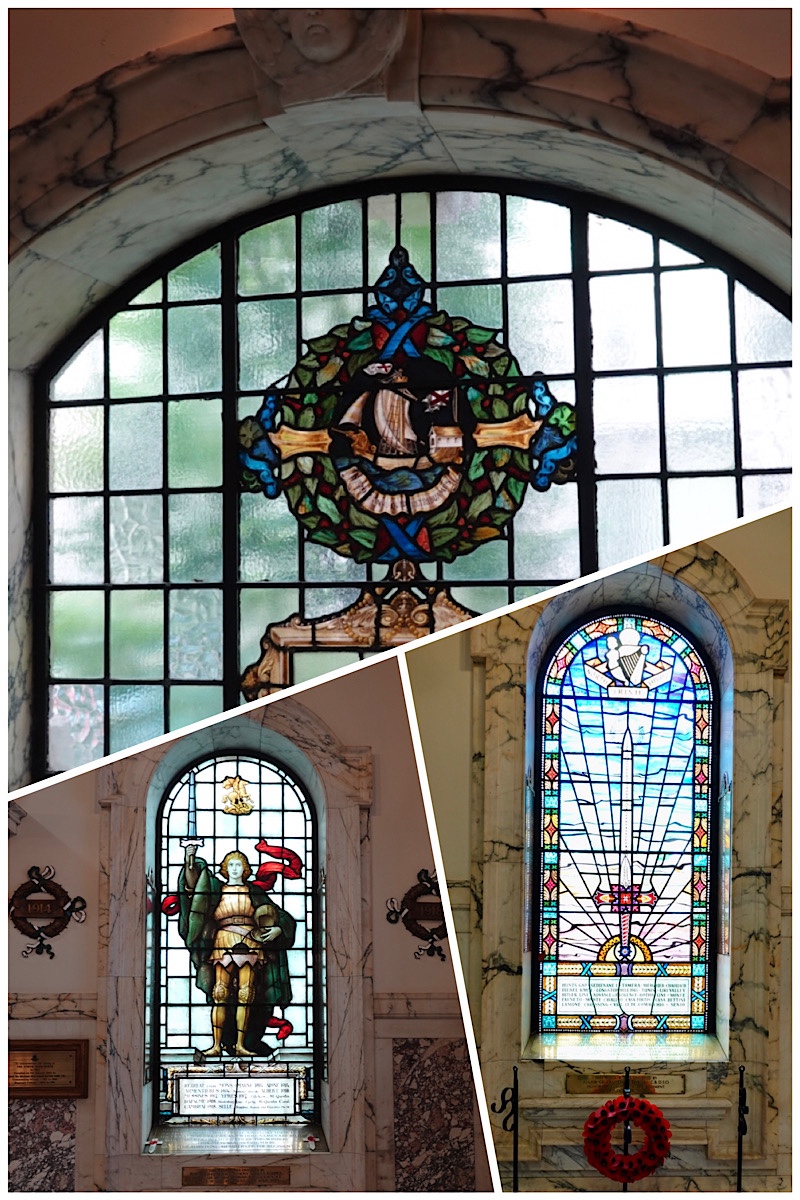
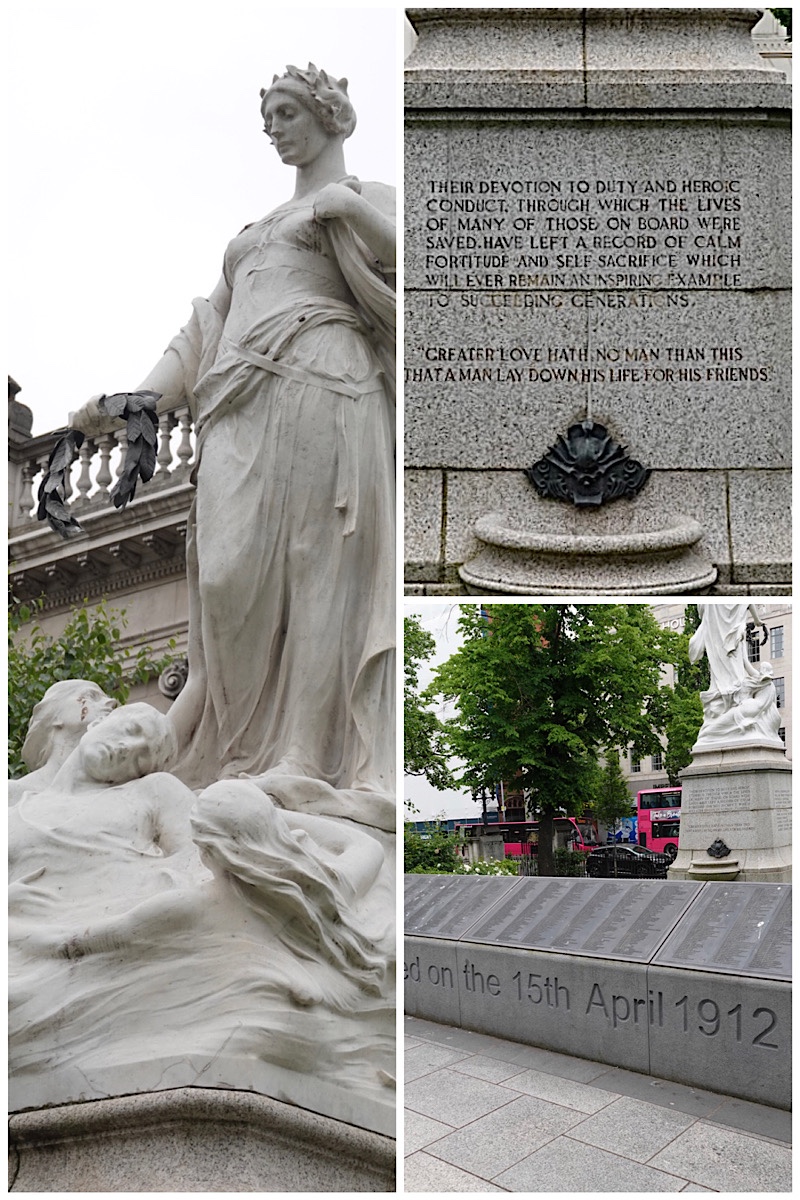
Before returning to our hotel, we visited Belfast City Hall. We were too late to join the day’s final guided tour, but were able to enter the main hallway, and take photos of several of the many outdoor statues and memorials.

Our group dinner was in the hotel restaurant again. We’re really hoping that the food at tomorrow’s “farewell dinner” in Trim is better.


Interesting. The problems go back several centuries and there have been many, many casualties from both religions. A year ago we took a “Black Cab” tour of Belfast (highly recommended) and it was the opinion of our guide that if the Peace Wall was taken down the troubles would immediately start again.
LikeLike
We’ll keep that tour in mind for when we go back. Sadly, we heard that same sentiment/opinion. The more we travel, the more we see the divisions religion has created. Tragic, since almost every religion starts put espousing peace and love.
LikeLike
Um..the people of Northern Ireland voted to stay in the Union. Might have been better for everyone had they not, but they did and that is the reason for the divide.
LikeLike
Only according to our guide, of course, the vote was not as straightforward as we’d been led to believe. (Think Brexit and what people were told to “encourage” an exit vote.)
LikeLike