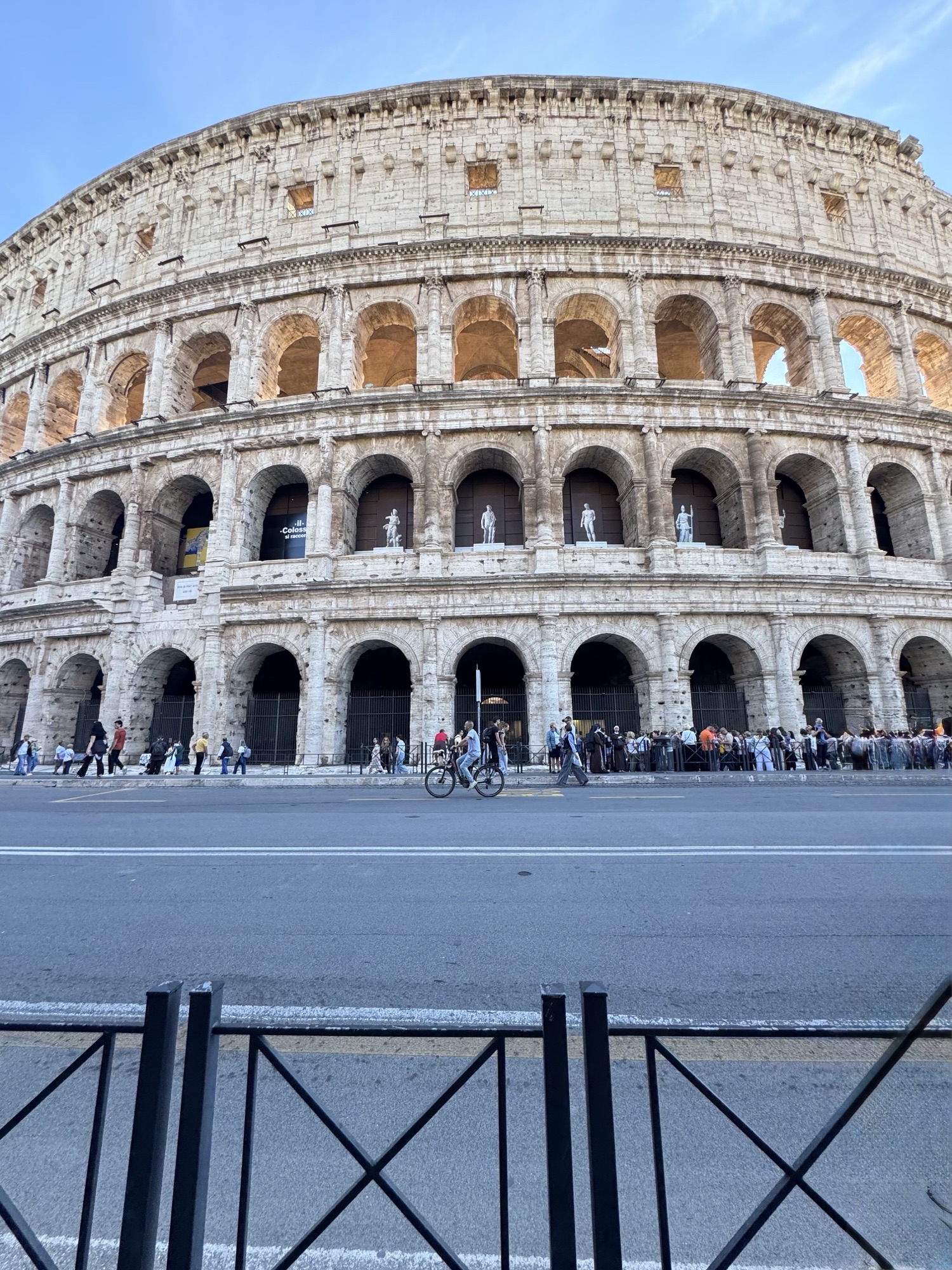
Ted and I toured the Colosseum in 2024 (Episode 527), but I don’t remember having a guide nearly as knowledgeable or funny as Valerio, an accredited tour guide but also a qualified archeologist.
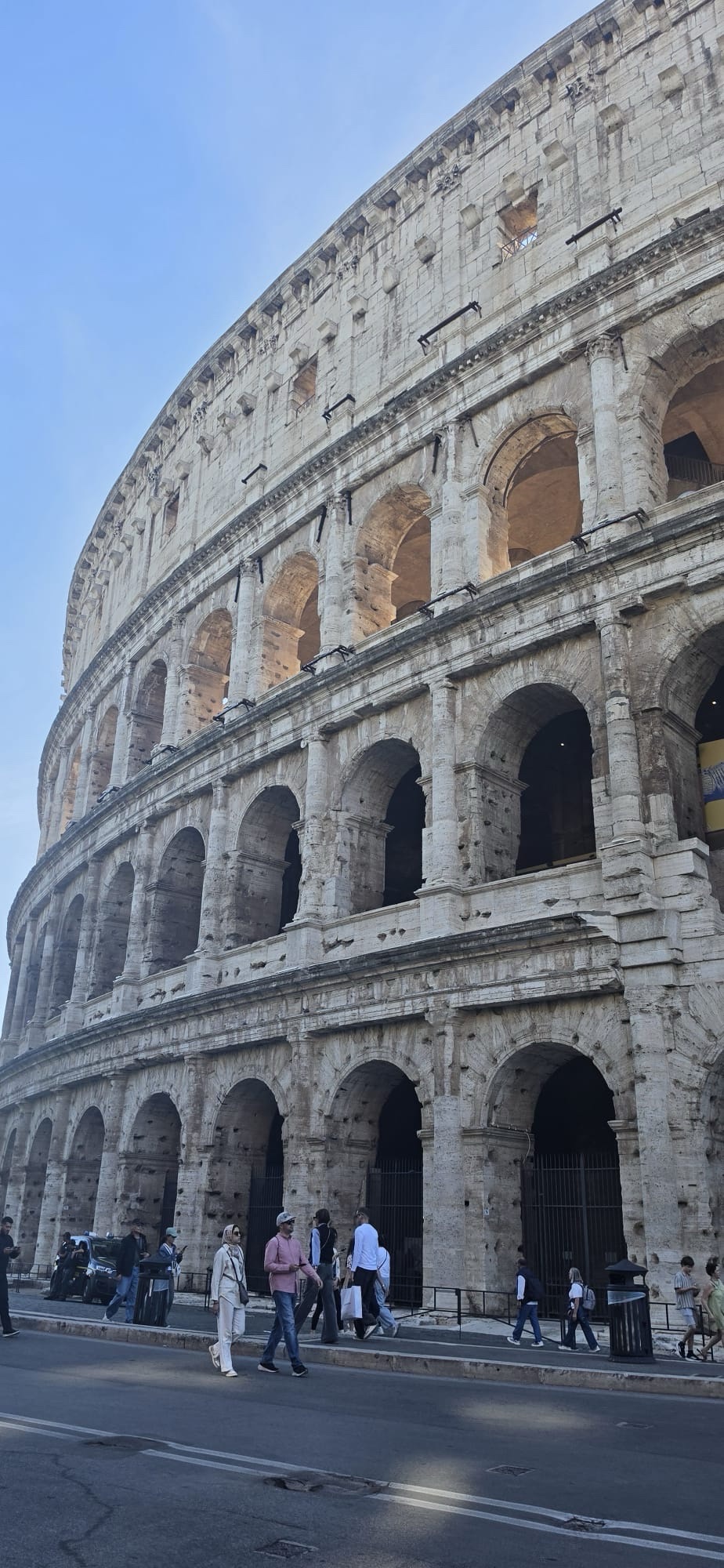
Rome’s Colosseum was founded by Emperor Vespasian, after Nero’s problematic reign and suicide, and the resulting year-long battle between military generals to take control. Vespasian was the winner, and the first non noble to become emperor. It was a fun coincidence that he also shared his name with our Vespas, adding some nice cohesion to our day.
The Colosseum operated as an “event venue” from 80-522 CE, providing entertainment for the masses that was a wonderful public relations strategy for a succession of emperors.
As is the case with so many ancient monuments we’ve visited, the colosseum originally looked much different than it does now.
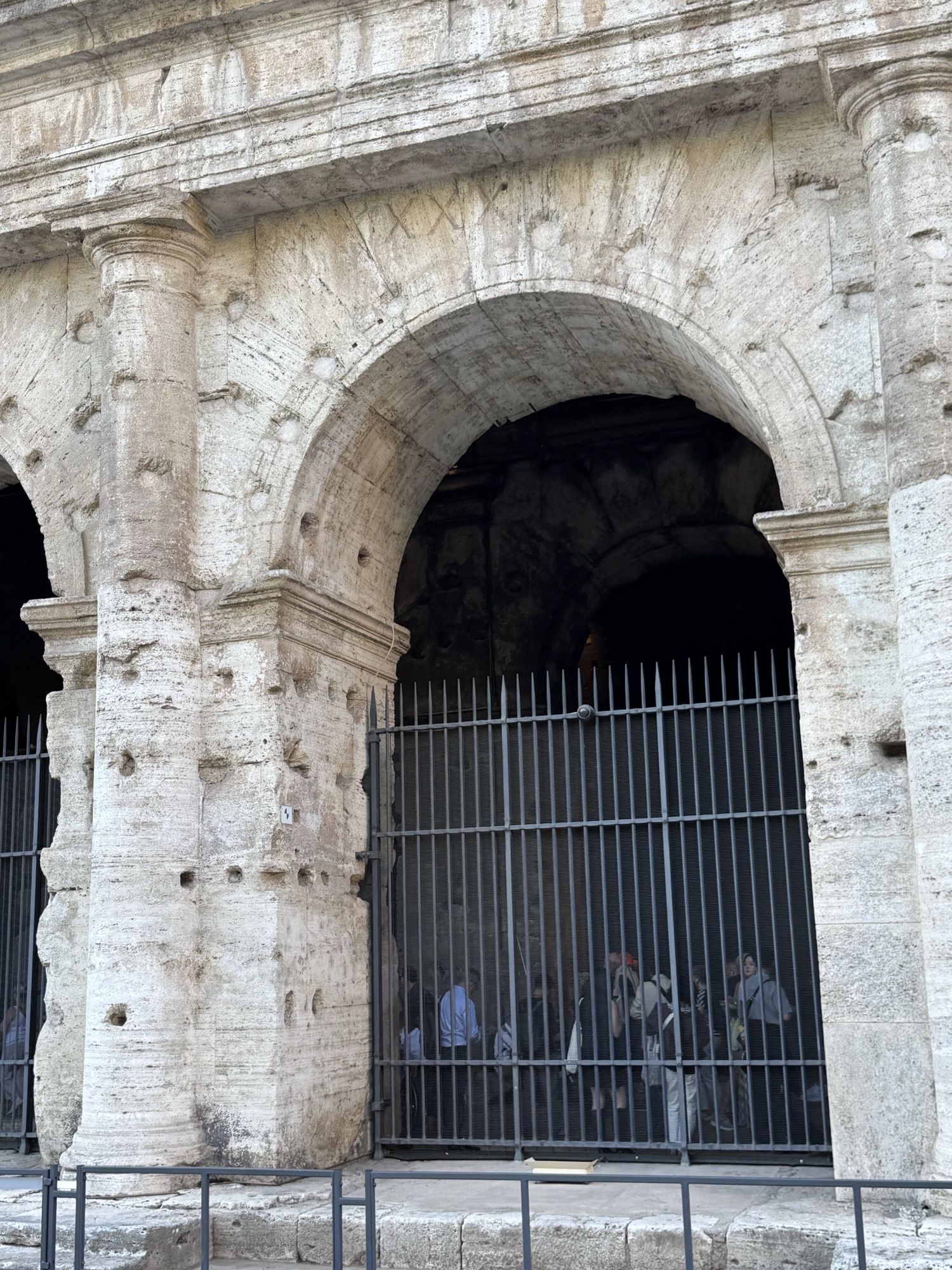
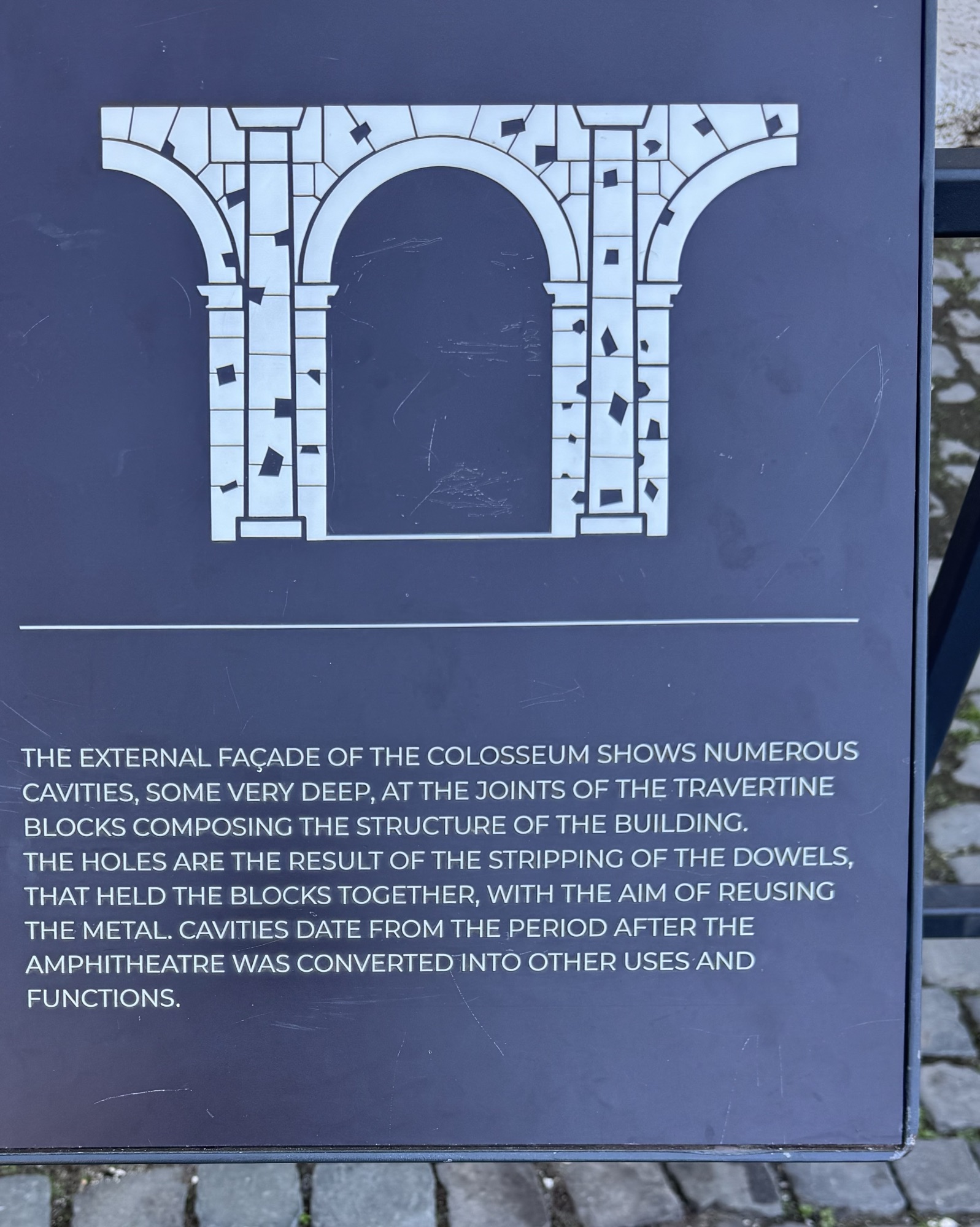
In addition to not evincing the damage done by massive earthquakes, it was also not originally plain stone. It would have been covered in marble that gleamed in the sunlight.
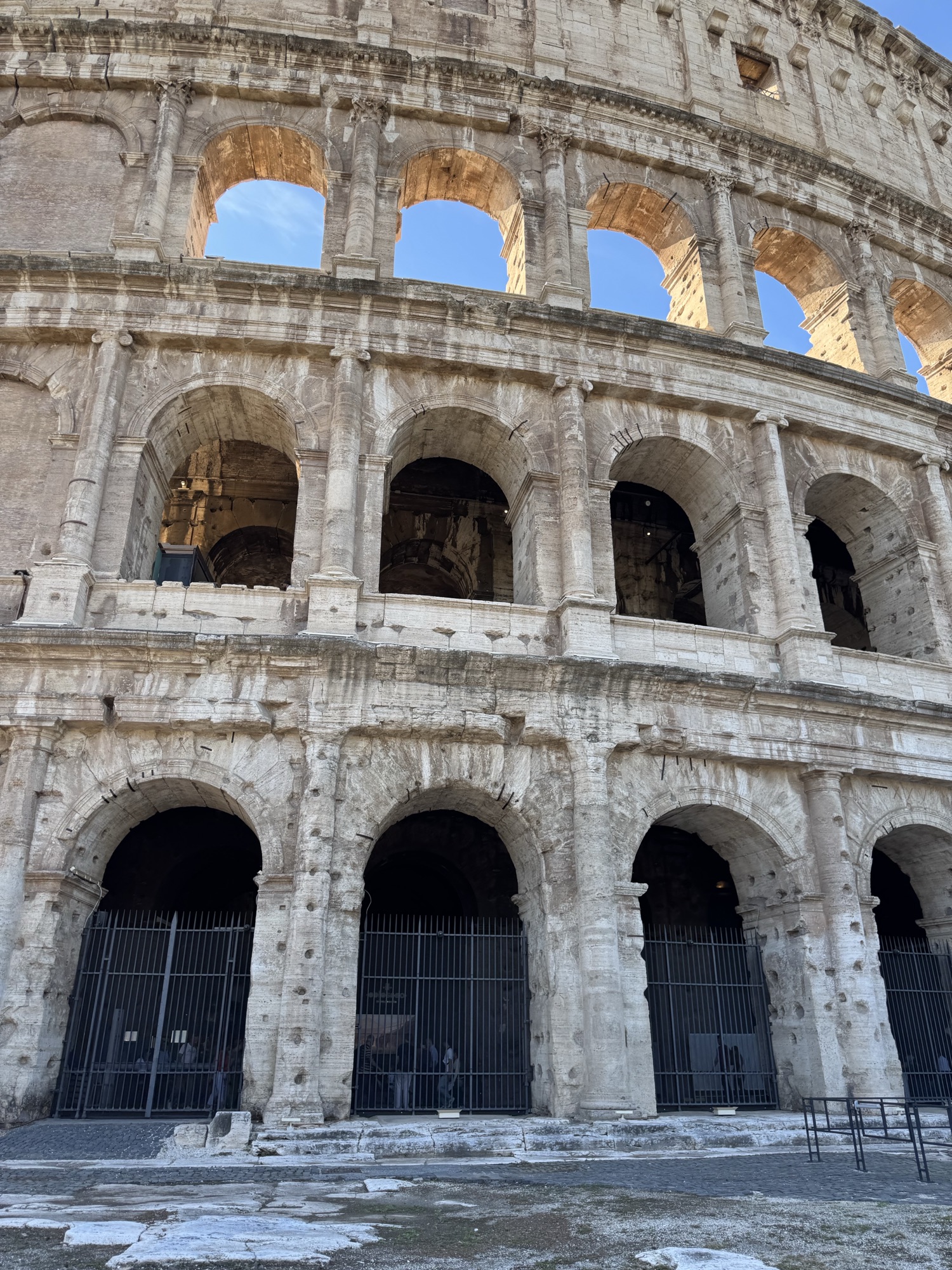
The interior hallway walls, arches, and floors would also have been marble-clad.
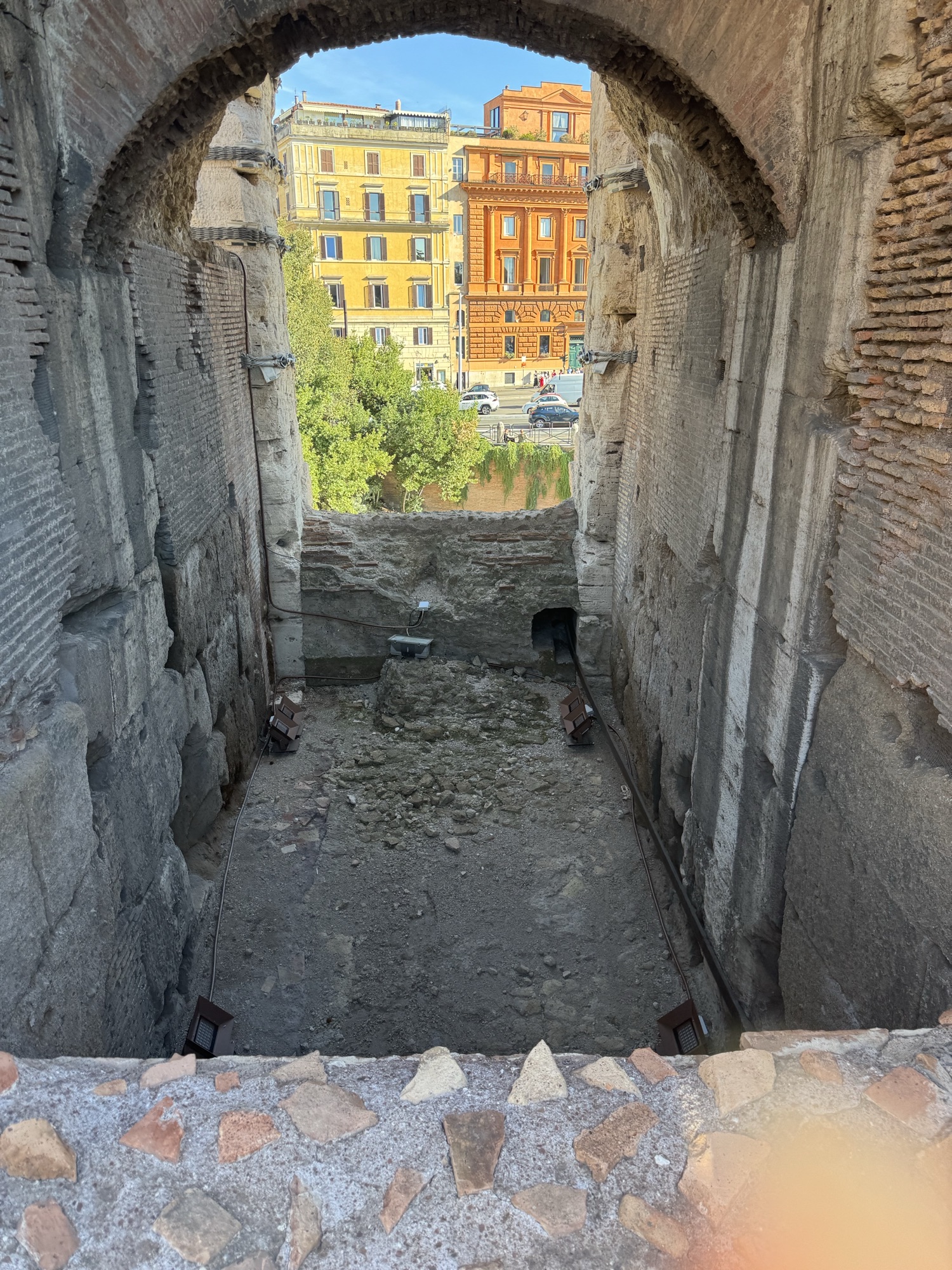
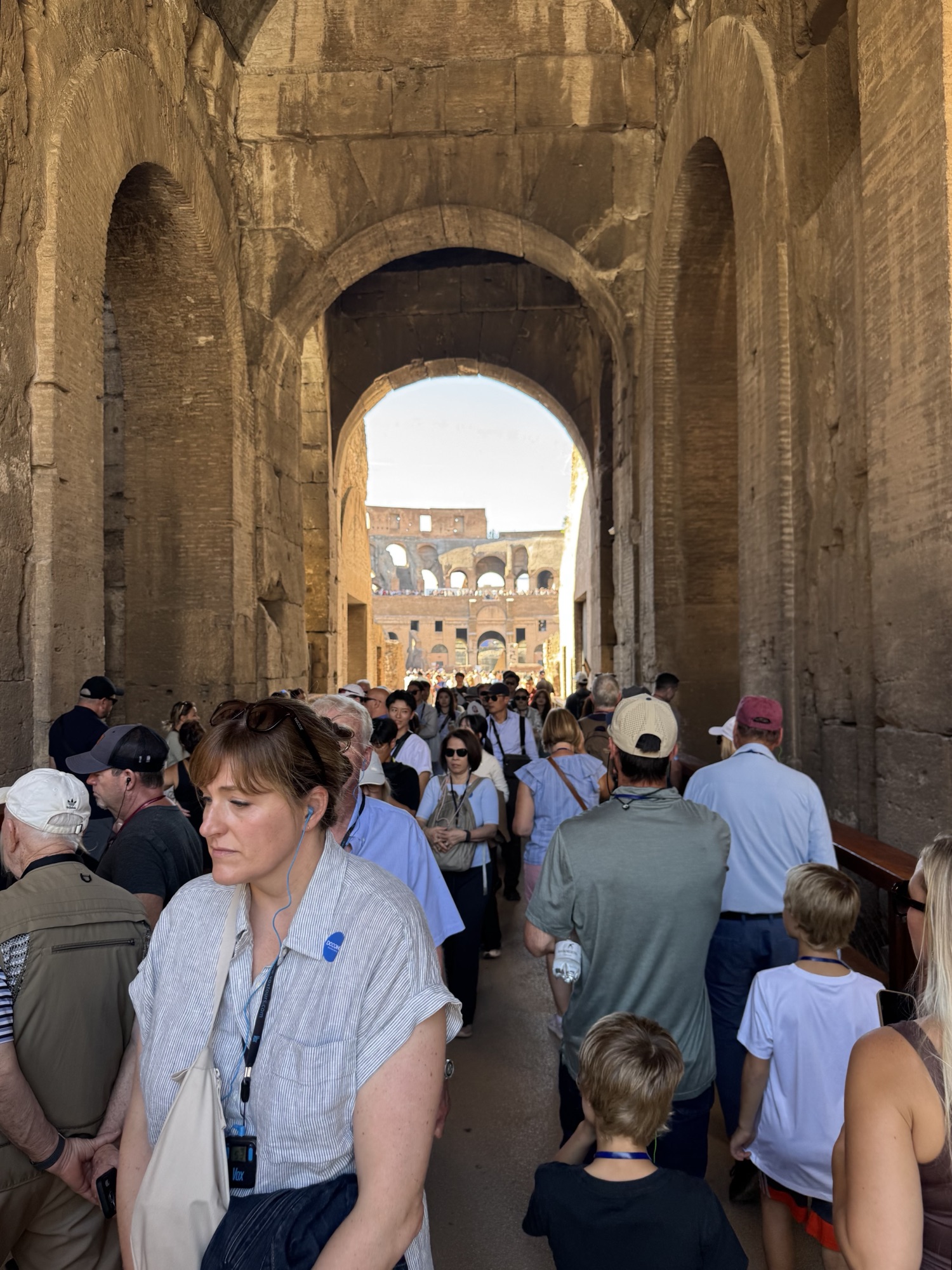
The stairs leading to the upper levels were originally white travertine marble. Of course there were no railings, but at least each staircase was restricted to one way traffic.
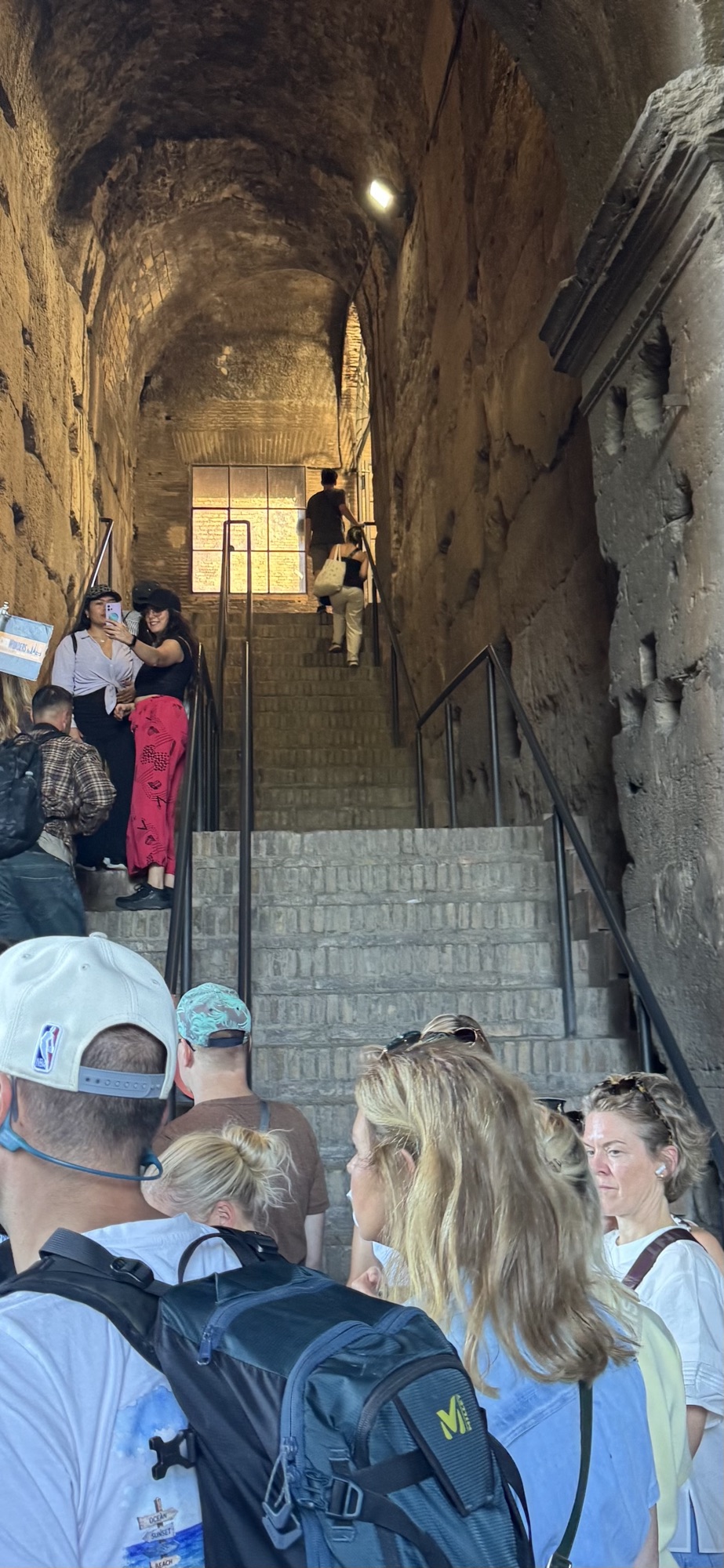
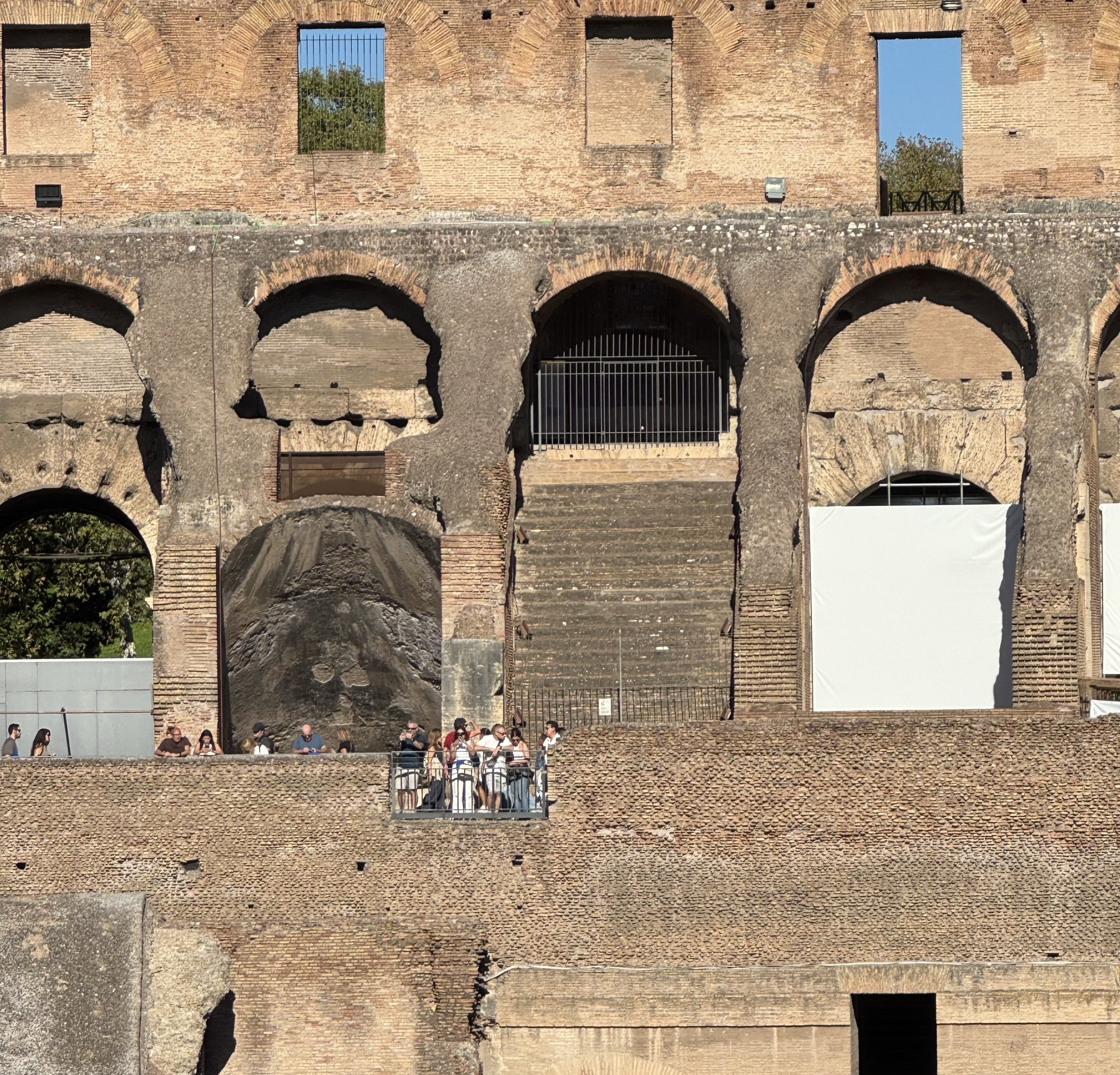
Once there was covered seating under vaulted ceilings decorated with colourful frescoes, not open to the elements. Nothing remains after the earthquakes except slopes where seats once were.
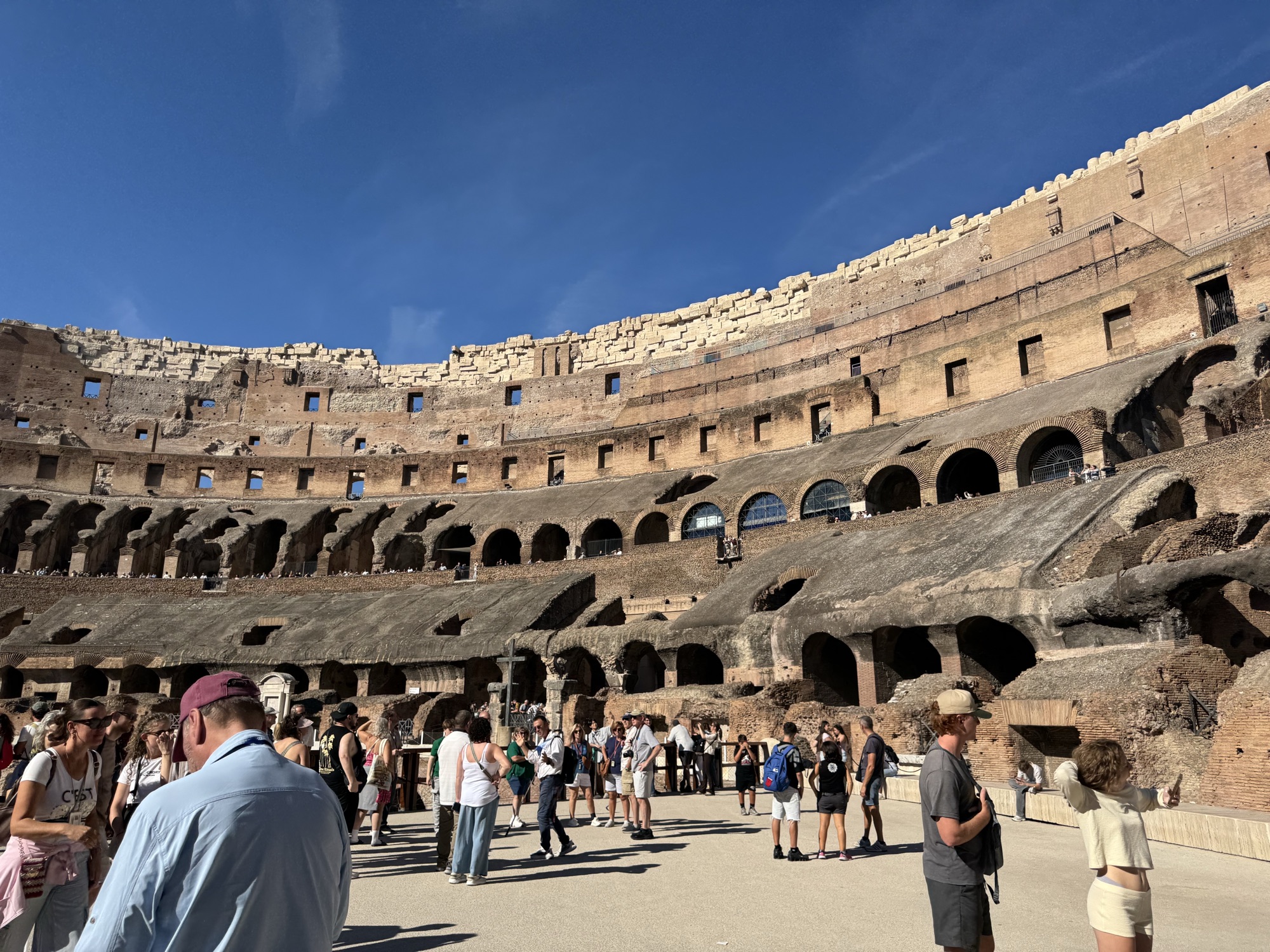
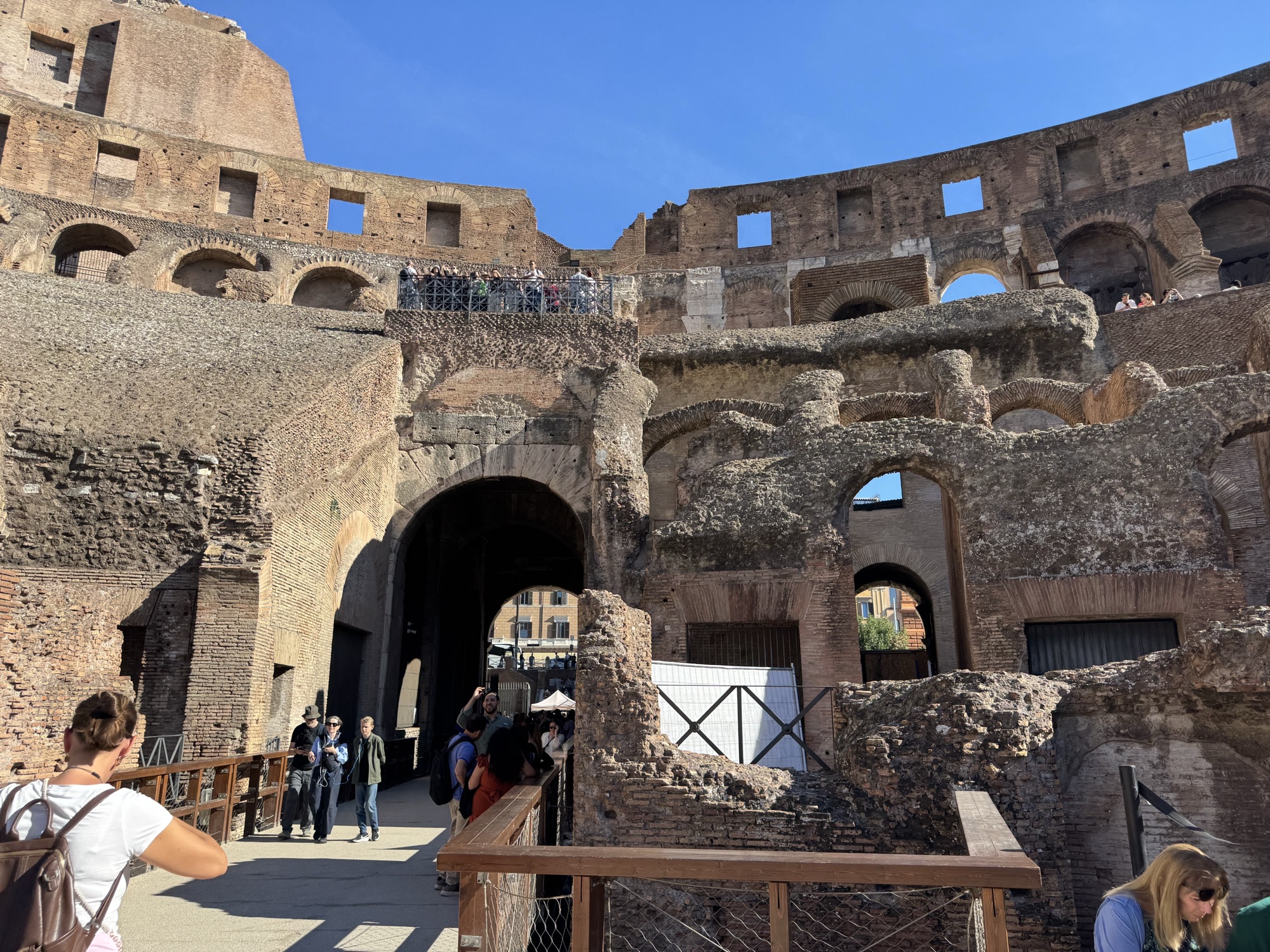
We were reminded that the Colosseum was one of the first covered stadiums: thousands of indentured servants angled hundreds of fabric vanes to accommodate weather conditions; a necessity when shows lasted all day and sometimes several days in a row.
We had a really fantastic guide (Valerio, an anarcheologist, which not all guides are) at the Colosseum who helped to put the violence of the games into perspective with the fact that 2000 years ago people lived in much more violent times, were considered adults at very young age, and were inured to being entertained by violence. Strength – of body, but especially of character – was respected beyond all else.
We began our tour on the remaining portion of the arena floor, where we could look at what would have been hidden to the Romans: the cells for animals, the preparation areas for gladiators, the set storage rooms, and the many elevator shafts leading to trap doors in the floor so that surprises could be lifted up onto the stage.
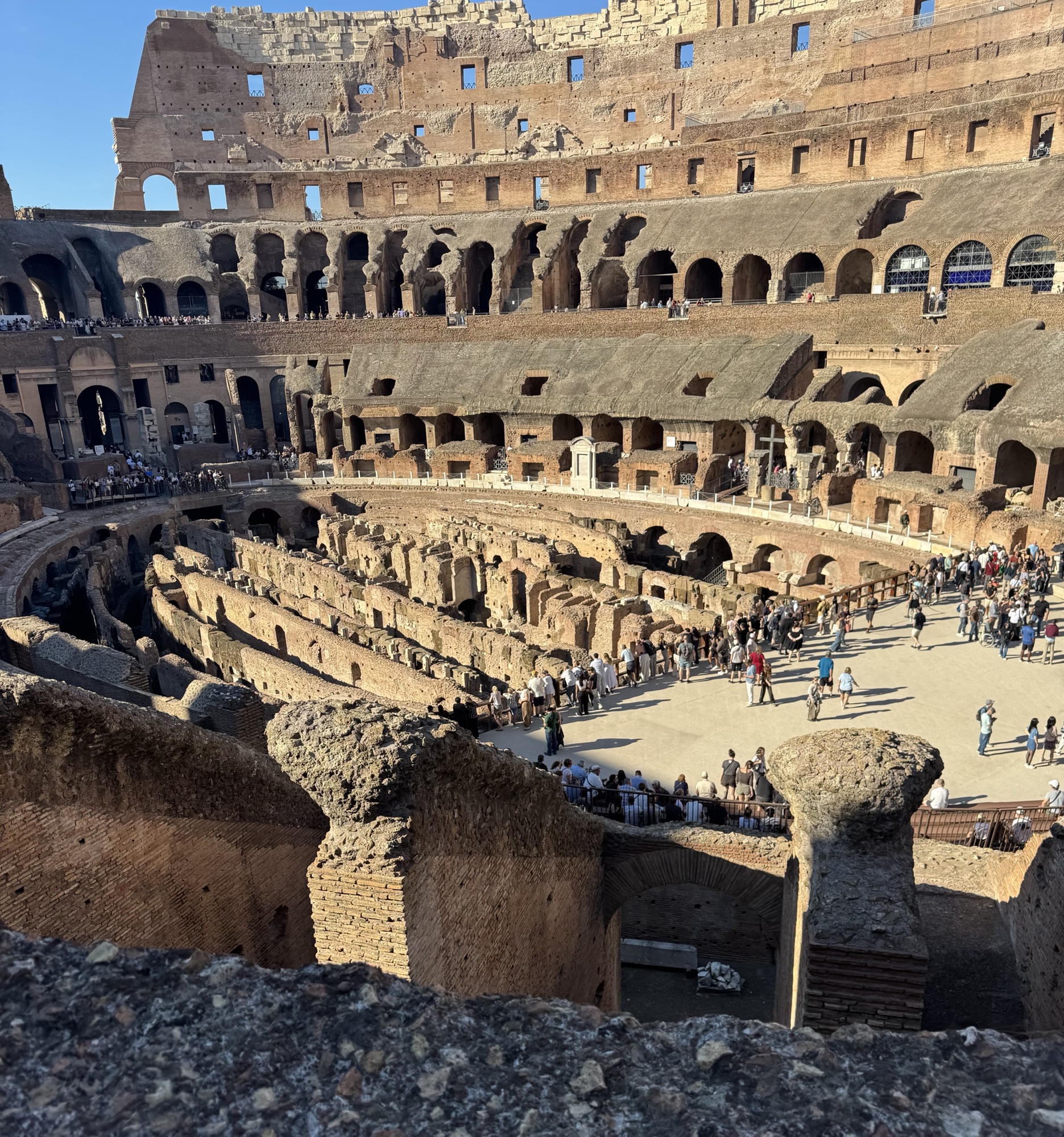
The events here were intended to entertain, distract, and convince the populace of the generosity and good character of the emperor, so surprise and laughter were as important as spectacle. Valerioasked us to imagine the crowd’s reaction at a flock of flamingos or a small herd of ostrich!
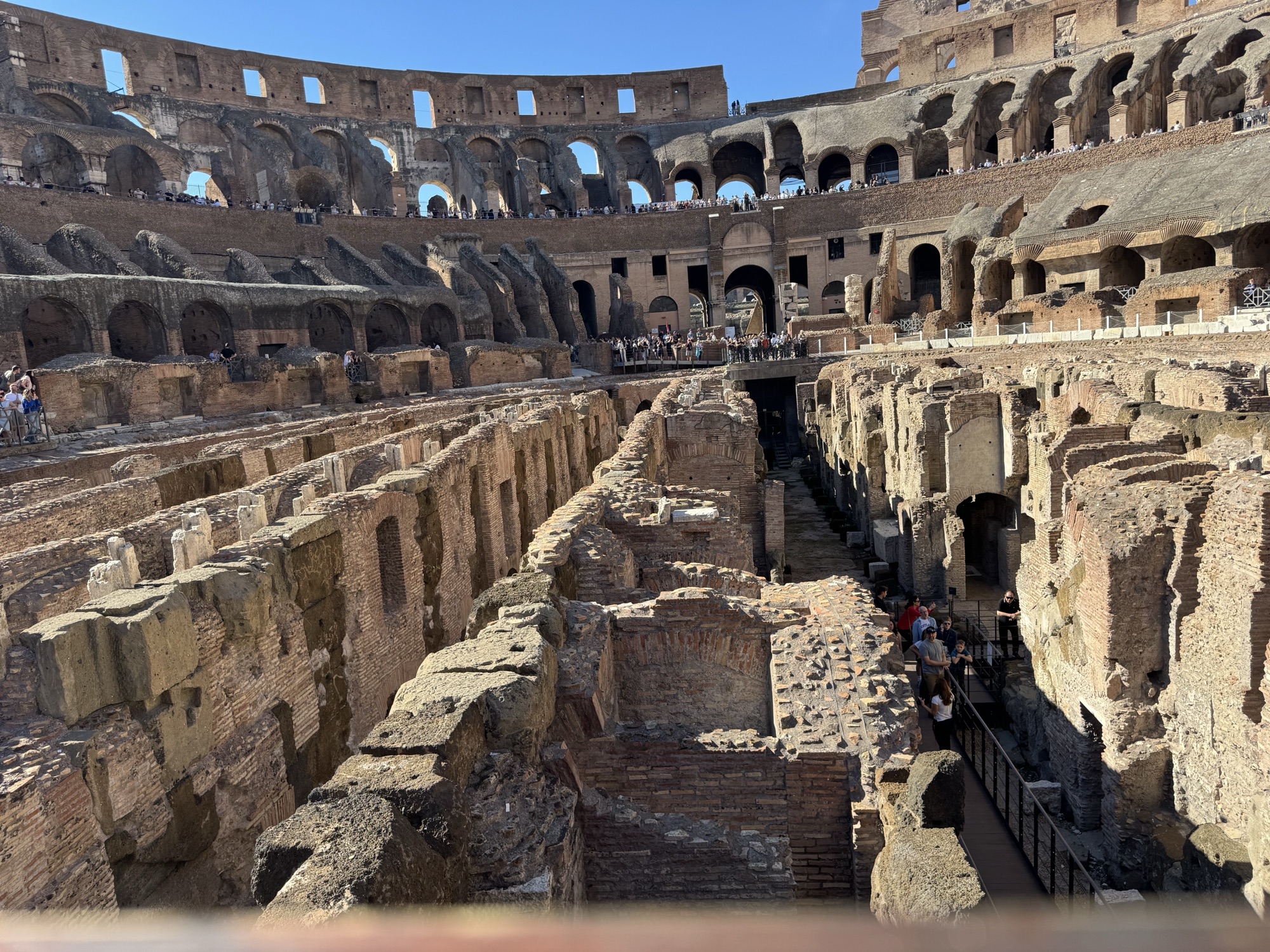
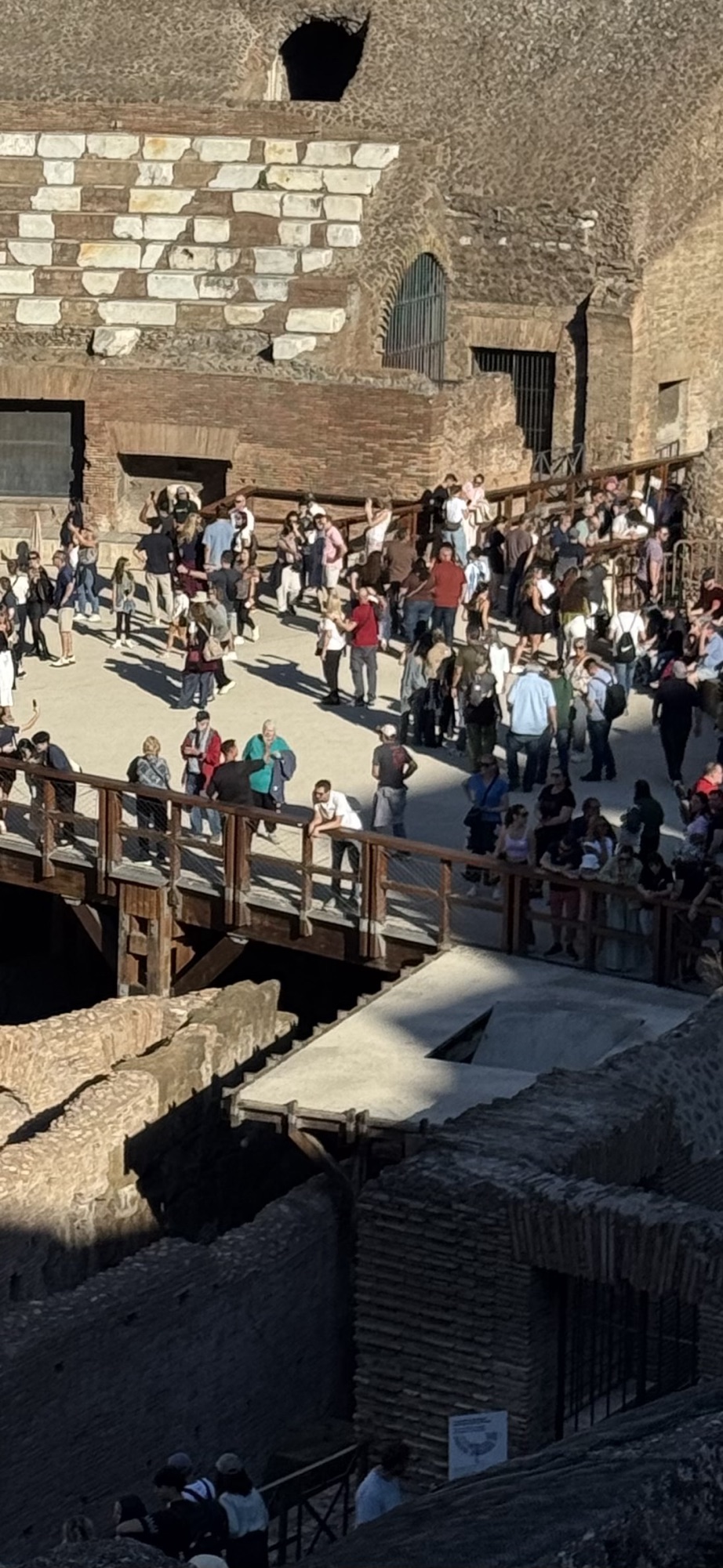
Valerio was almost overly enthusiastic in his description of what typical Roman games looked like, and he strenuously disabused us of many Hollywood-driven myths.
A day at the colosseum typically had three parts. The first show was presented as a hunt, showcasing up to 200 exotic animals and groups of sentenced criminals pitted against them. This would be the first opportunity for Roman citizens who were not soldiers to see animals from foreign lands, brought back to Rome specifically to be shown off. We criticize captivity in zoos; the Romans made a show of killing all the exotic animals they captured and then chopped up the carcasses to be given to the audience to eat! Valerio explained that archeologists know the animals were butchered in one of the areas under the colosseum floor because the bones of thousands of animals not native to Rome have been found there bearing the kinds of knife marks only made when preparing animals as meat.
During this “feasting”, the second part of the entertainment took place: public executions. Murderers and rapists were eaten alive by frenzied wild animals. Pirates, thieves, traitors, or political criminals were additionally beaten by gladiators before being eaten by animals. Those considered the worst of the worst, identified as war criminals, or leaders of opposing armies, were skinned alive, crucified, and set on fire – and the gladiators killed anyone or anything left alive.
Valerio dryly joked that then an intermission was needed while the arena was “reset”.
The third spectacle would involve new sand, but also new props, and elaborate sets. One hundred and sixty gladiators, divided into two teams of 80, would recreate a famous battle so those who didn’t see it in person could live it vicariously. Valerio commented that there is no evidence of recreated naval battles here not naval – those would have been done, if they were at all – at the Circus Maximus.
At the end of the battle, gladiators were not killed, and the whole thumbs up/thumbs down by the emperor is pure fiction. The emperor was there to present himself as a benefactor of the entertainment, not a judge. Only if an individual gladiator had acted disgracefully would the crowd decide their fate, by yelling ugula (jugular) or mitte (mercy).
The Colosseum is apparently the most visited tourist site in the world. Learning its history and facts make it perhaps a bit less glorious.
We left the Colosseum and walked to the Palatine Hill via the 4th century triumphal Arch of Constantine.
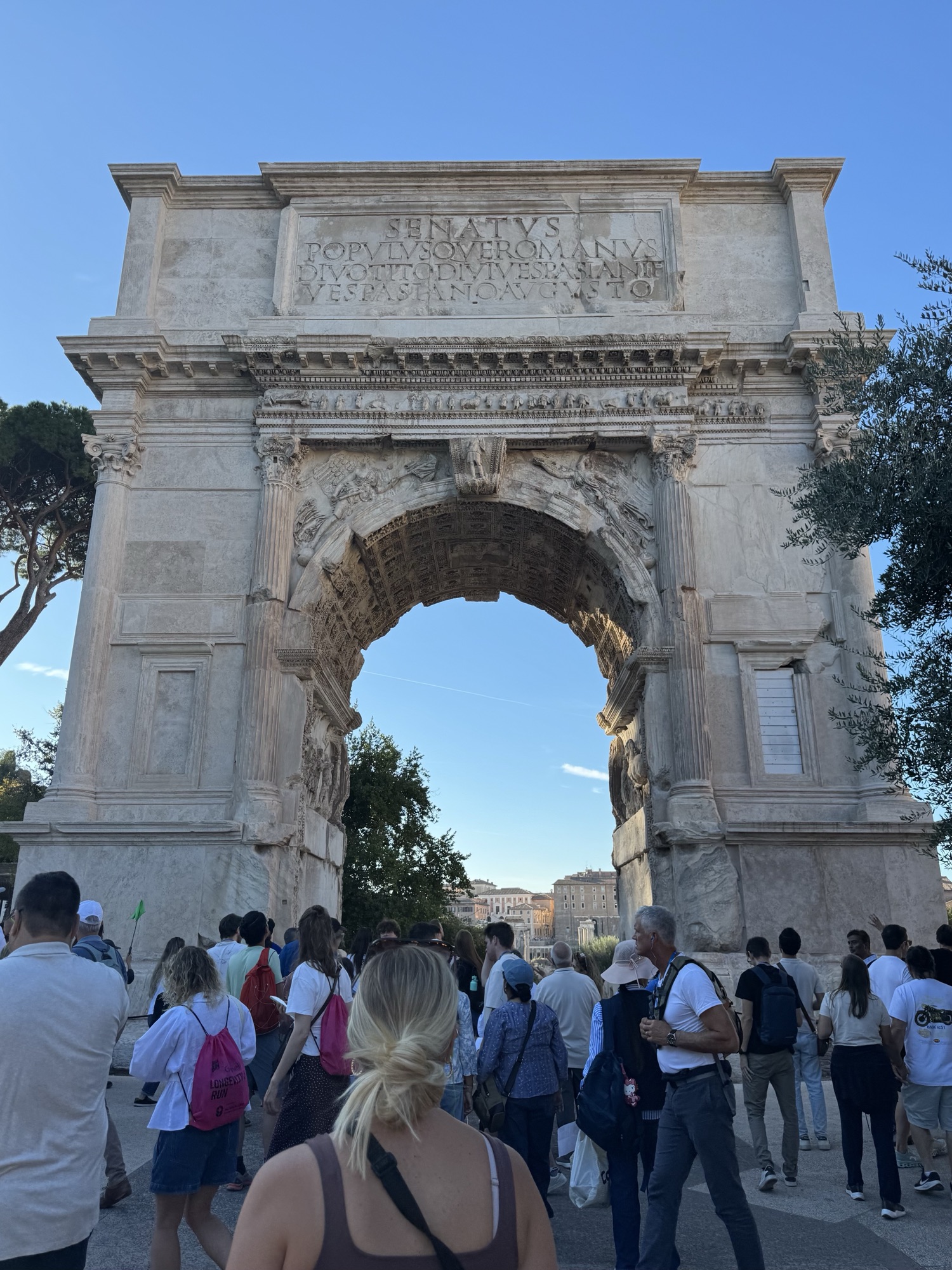
The discs on the arch were long thought to be images of Constantine, however archeologists and historians now know that when the arch was built, they reused images of Marcus Aurelius, so Rome is filled with many more images of Marcus Aurelius than probably anyone else.
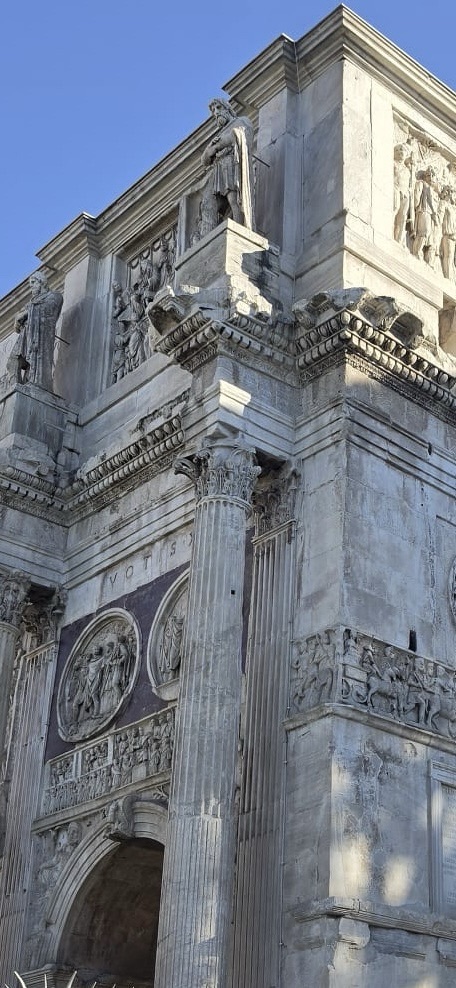
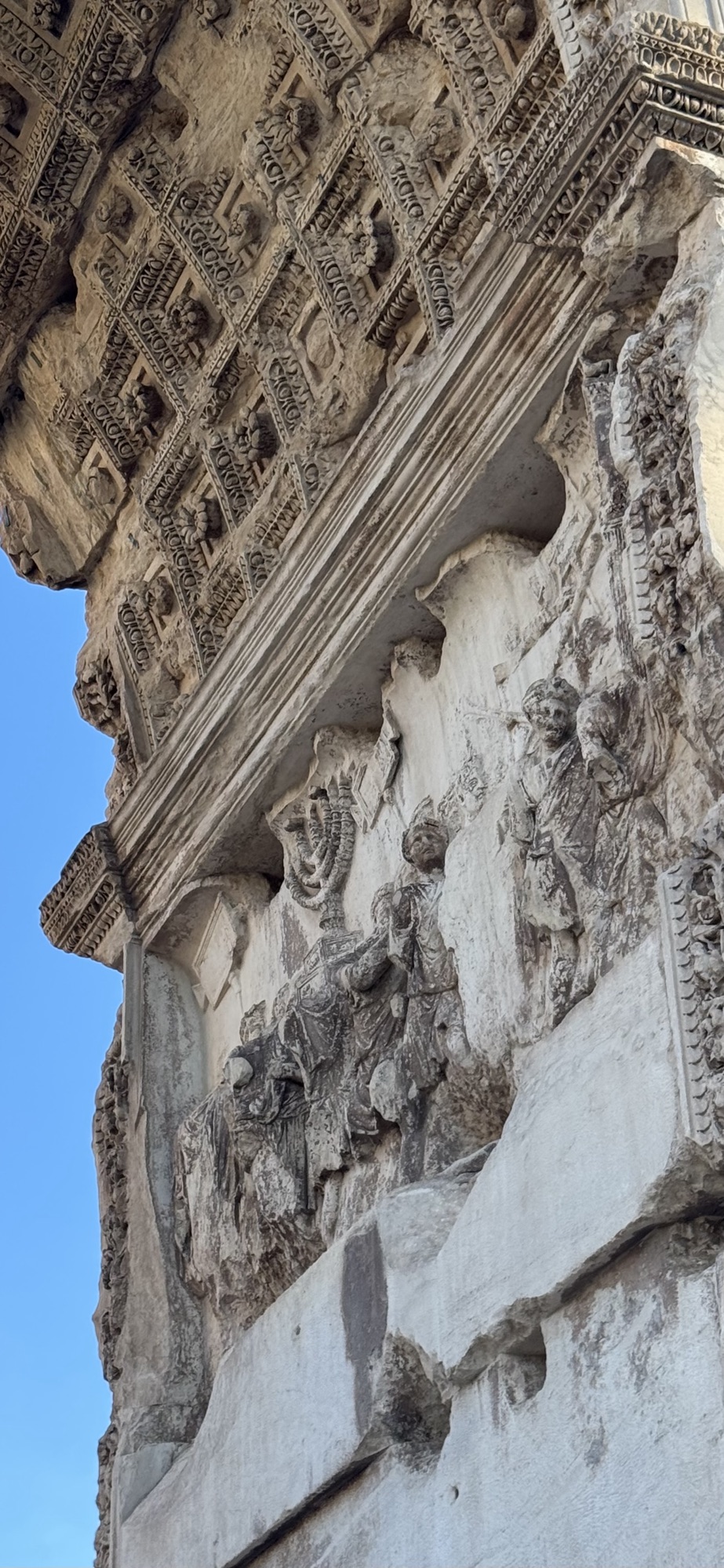
On one side of the arch is a menorah which represents Titus “pacifying” Syria and Judea by killing tens of thousands and sacking the second temple of Solomon . The western wall in Jerusalem is all he left standing of that temple.
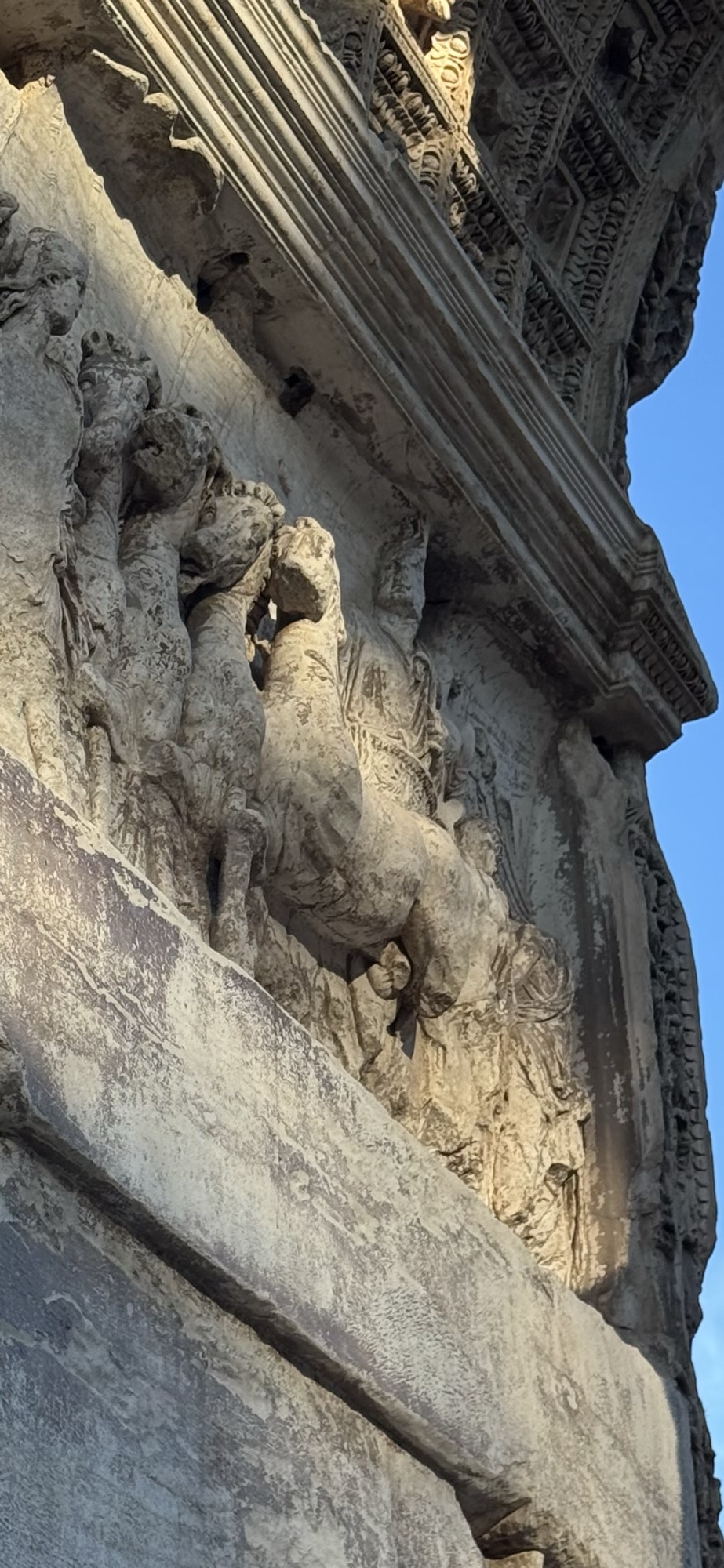
On the other side is winged goddess Nike with the general who led the army, and the oversized female personification of Rome.
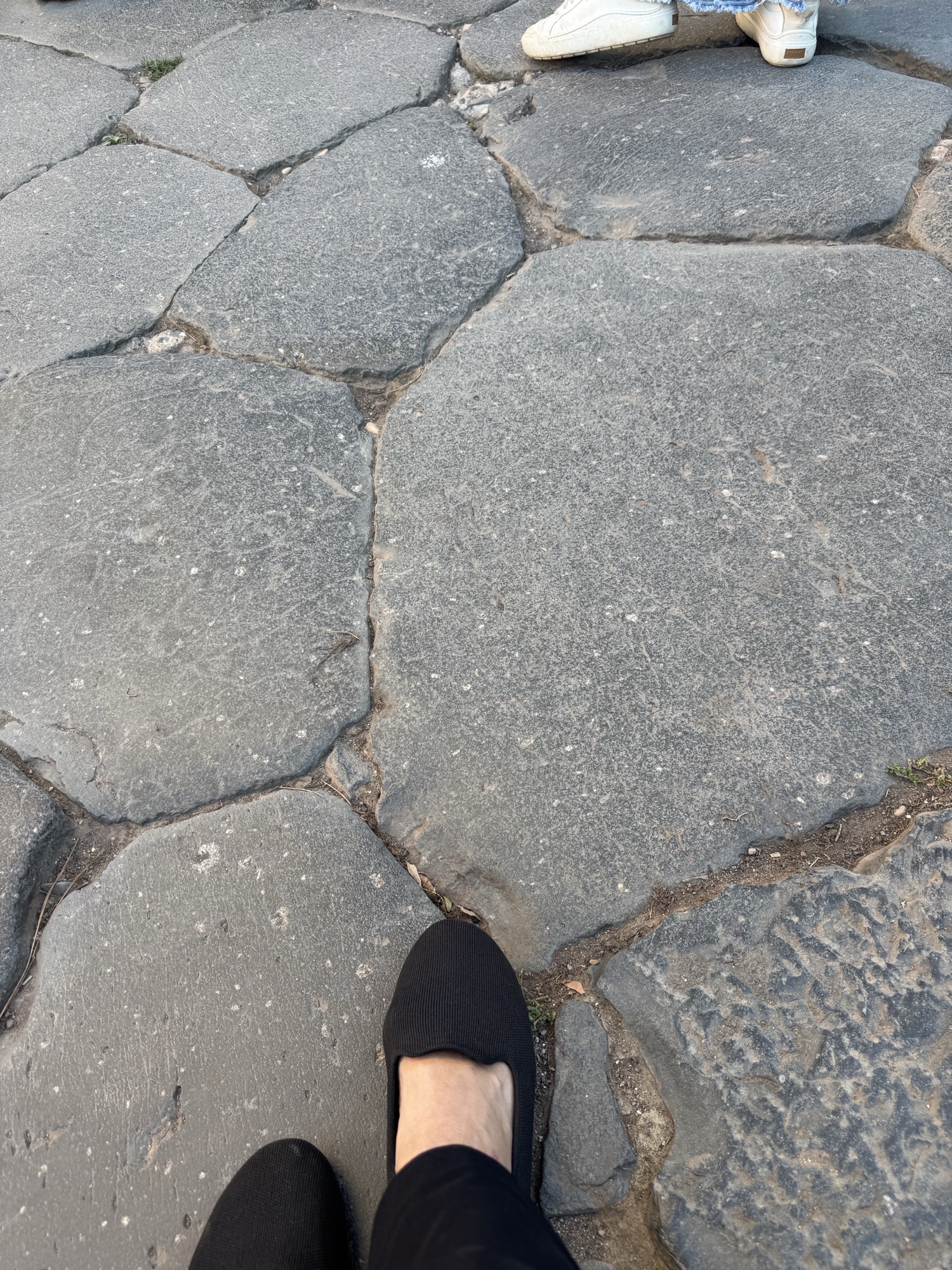
The large stones we walked on are the “republican” layer of the Roman roadway on which Marc Anthony, Cleopatra, and Caesar Augustus would once have walked. How amazing that we can still walk on them today!
From the arch, our tour took a completely different direction than the one that Ted and I were led on when we were here, heading up to the top of the hill rather than walking around the ground floor level of the forum.
We headed up a fairly long set of stairs.
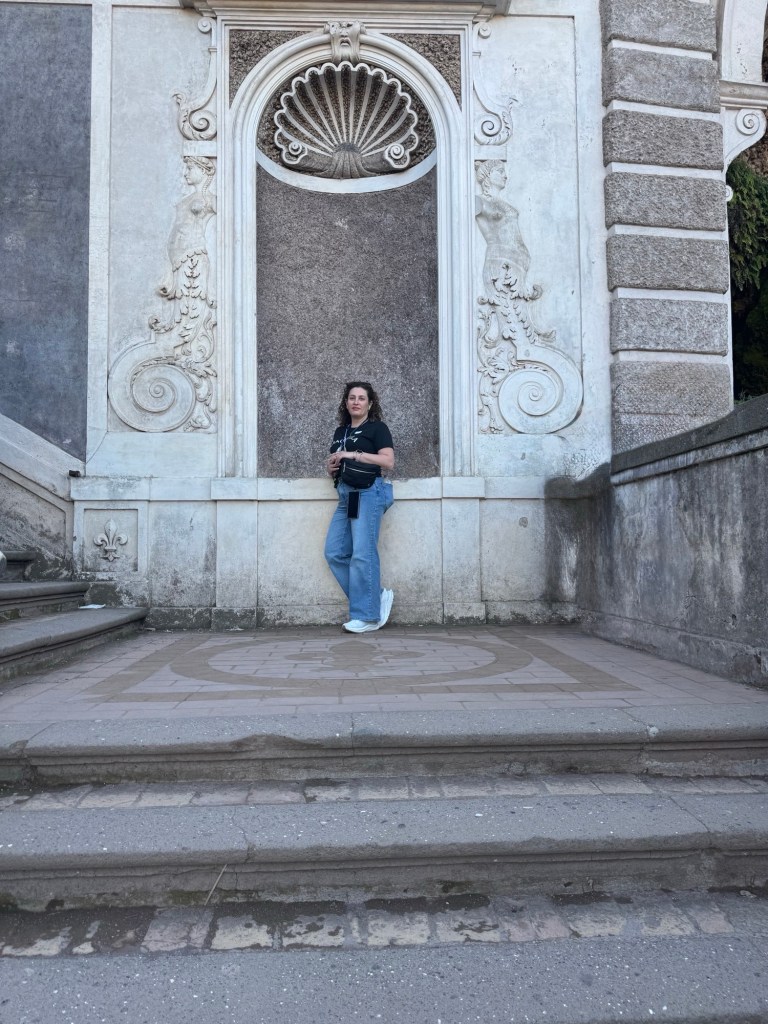
This place was holy ground to the ancient Romans, because it is where they believed Rome was founded when Romulus and Remus were born of a virgin and then raised by a wolf.
The most recent archeological evidence suggests that Rome was actually founded by tribes living here on the hill since the end of the 10th century BCE, but by the time of the Roman Empire only nobles, the “descendants of the gods”, were considered important enough to be allowed to have their homes here. Those residents were called Palatinos and their grand homes Palazzi.
We got wonderful panoramic views from the top, including of the forum.
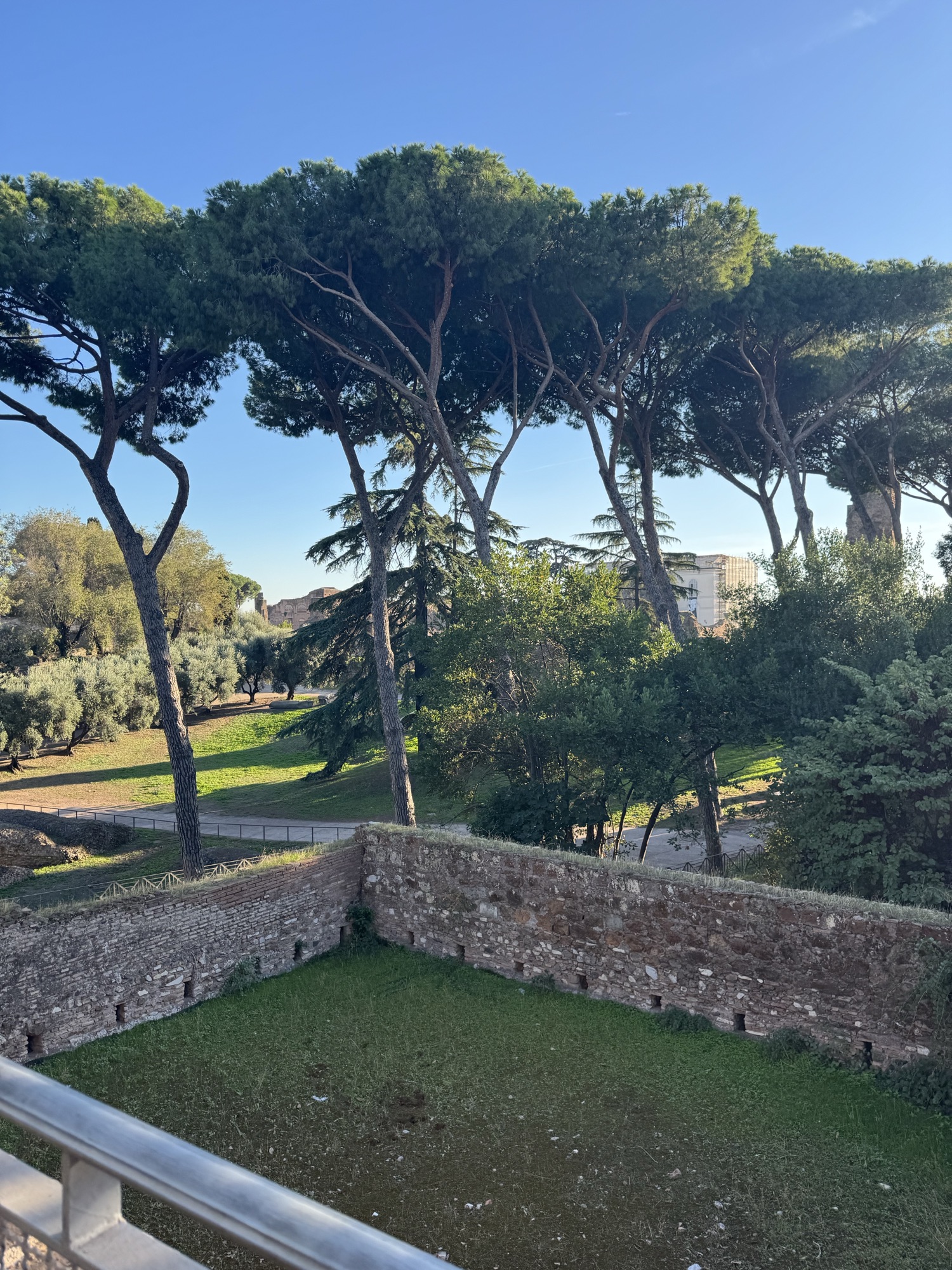
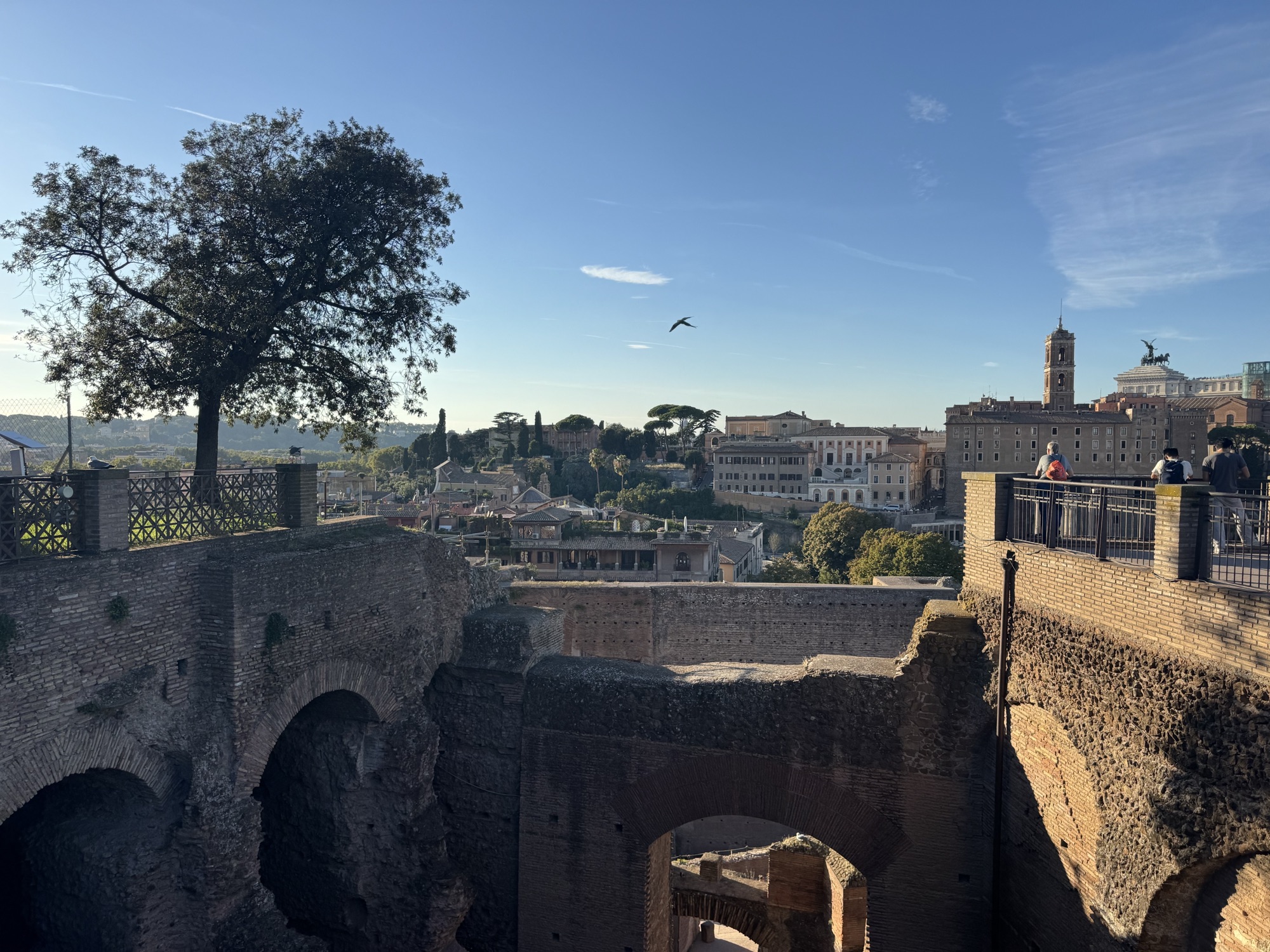
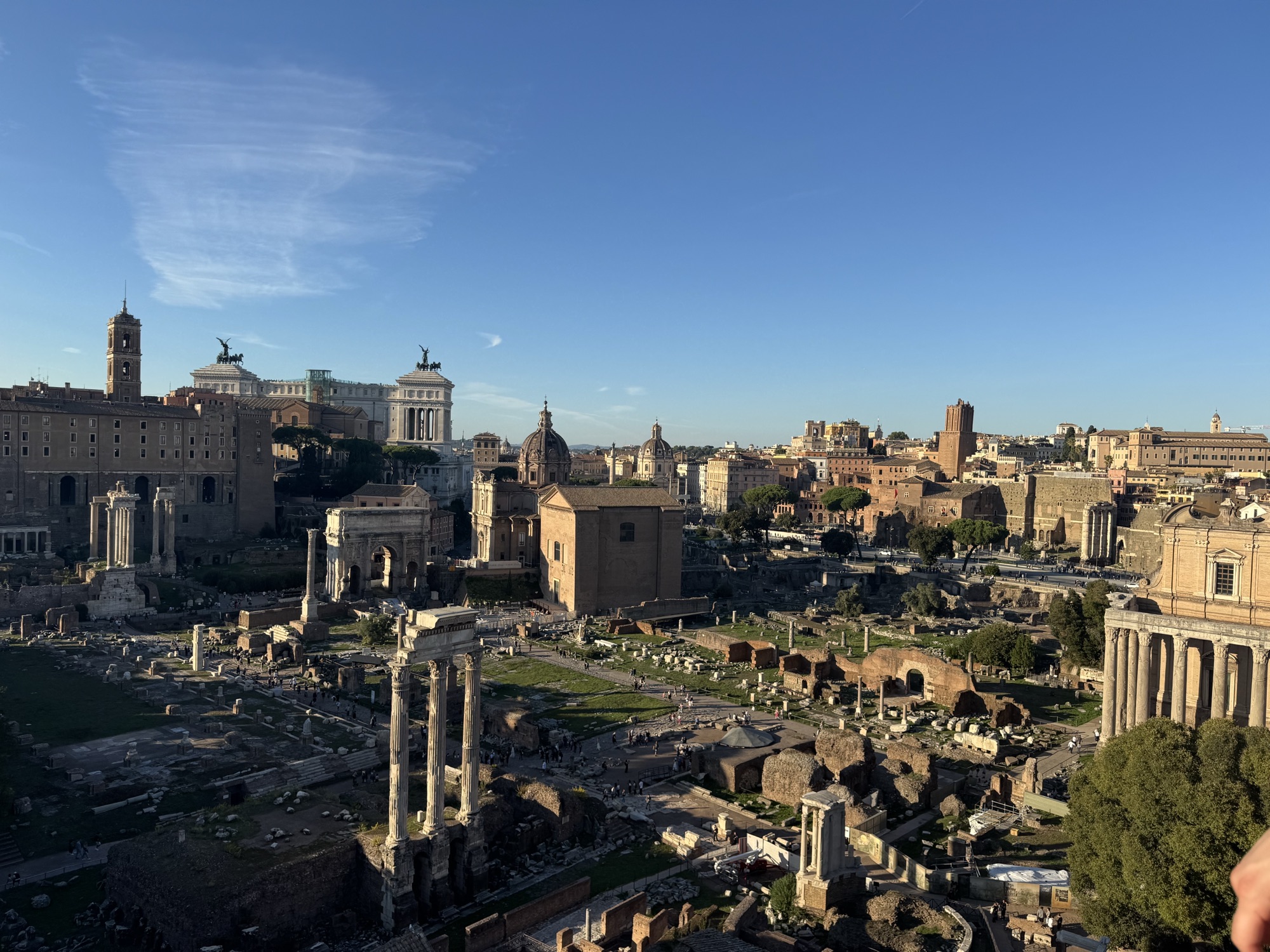
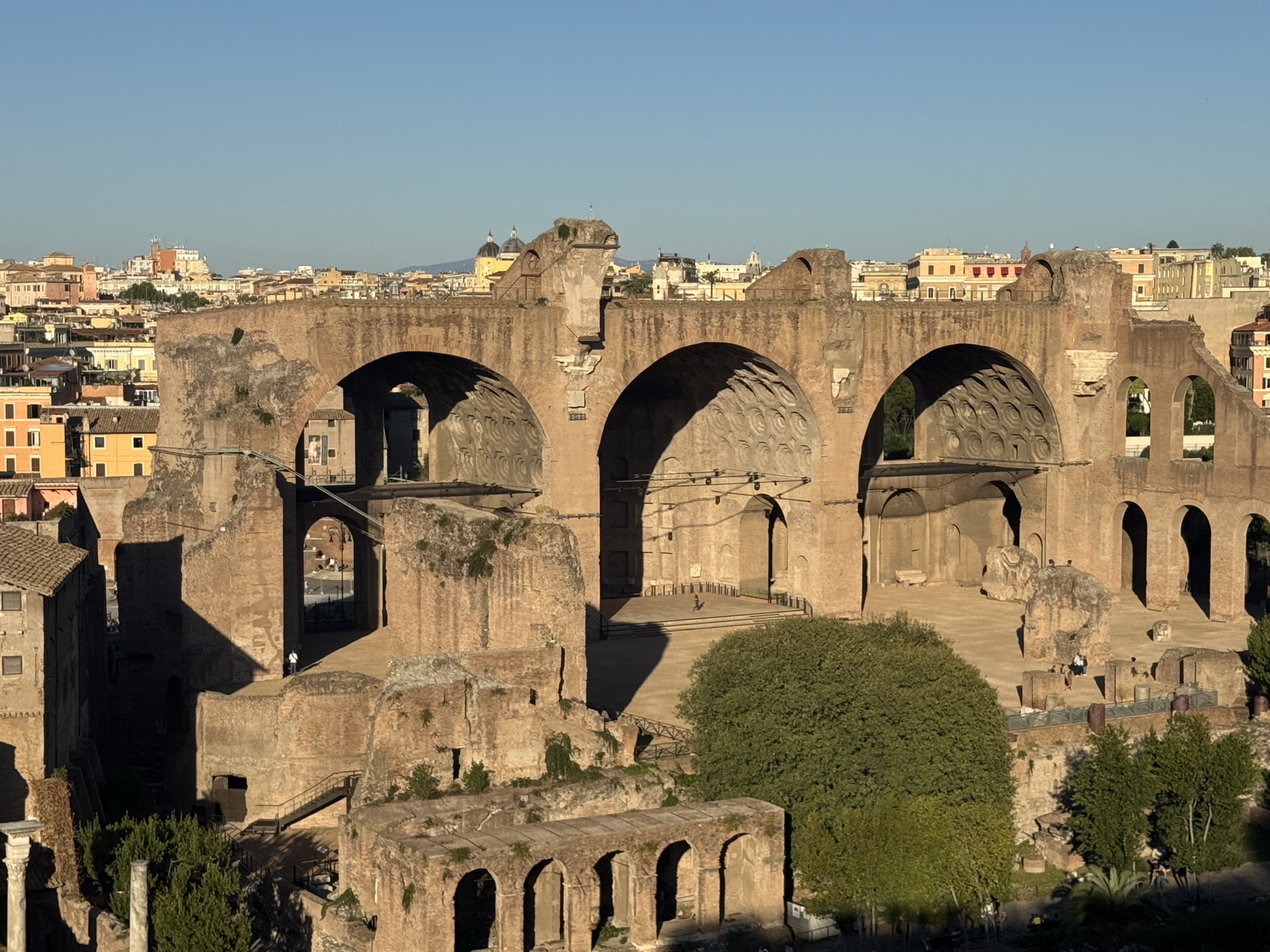
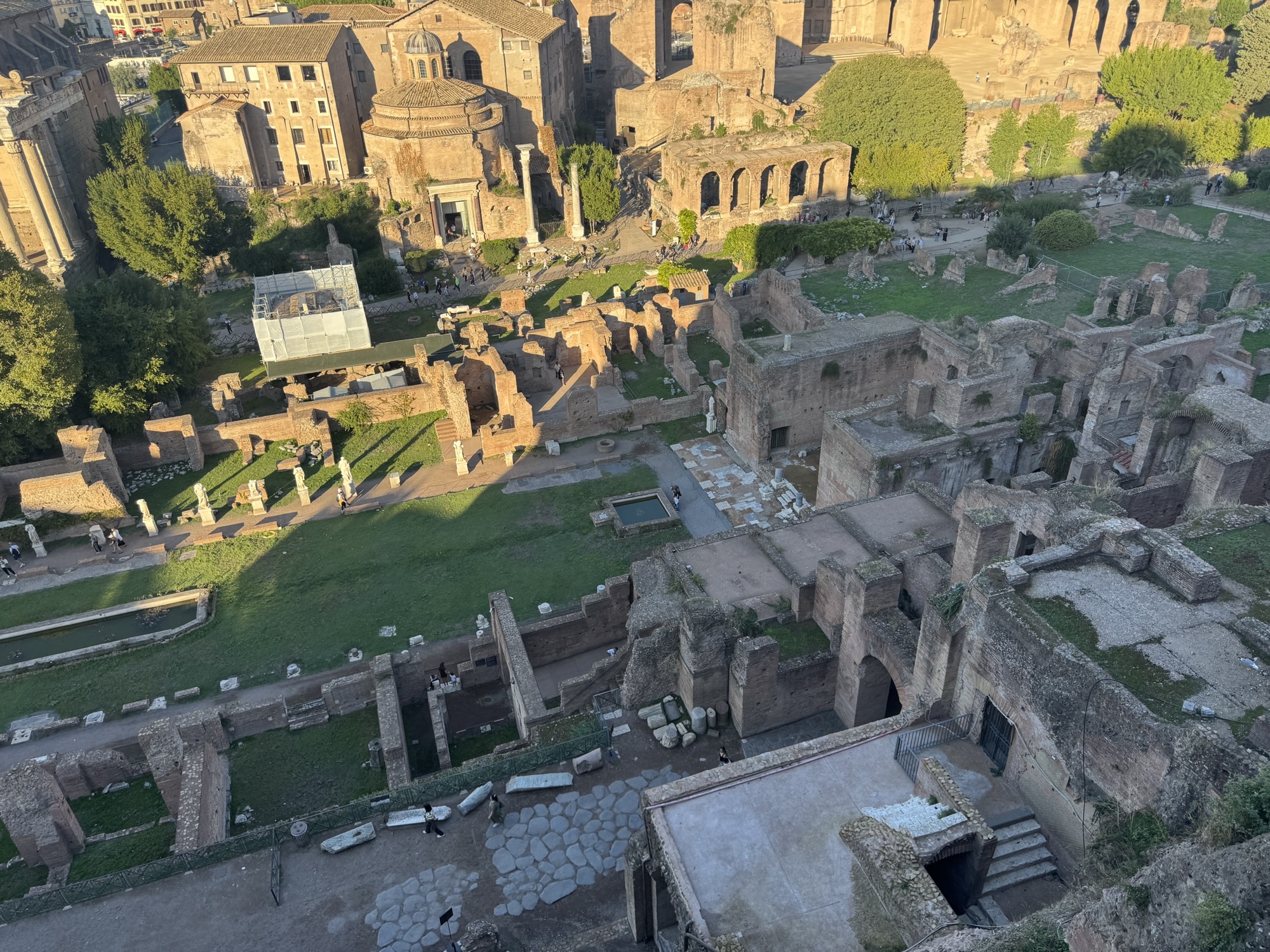
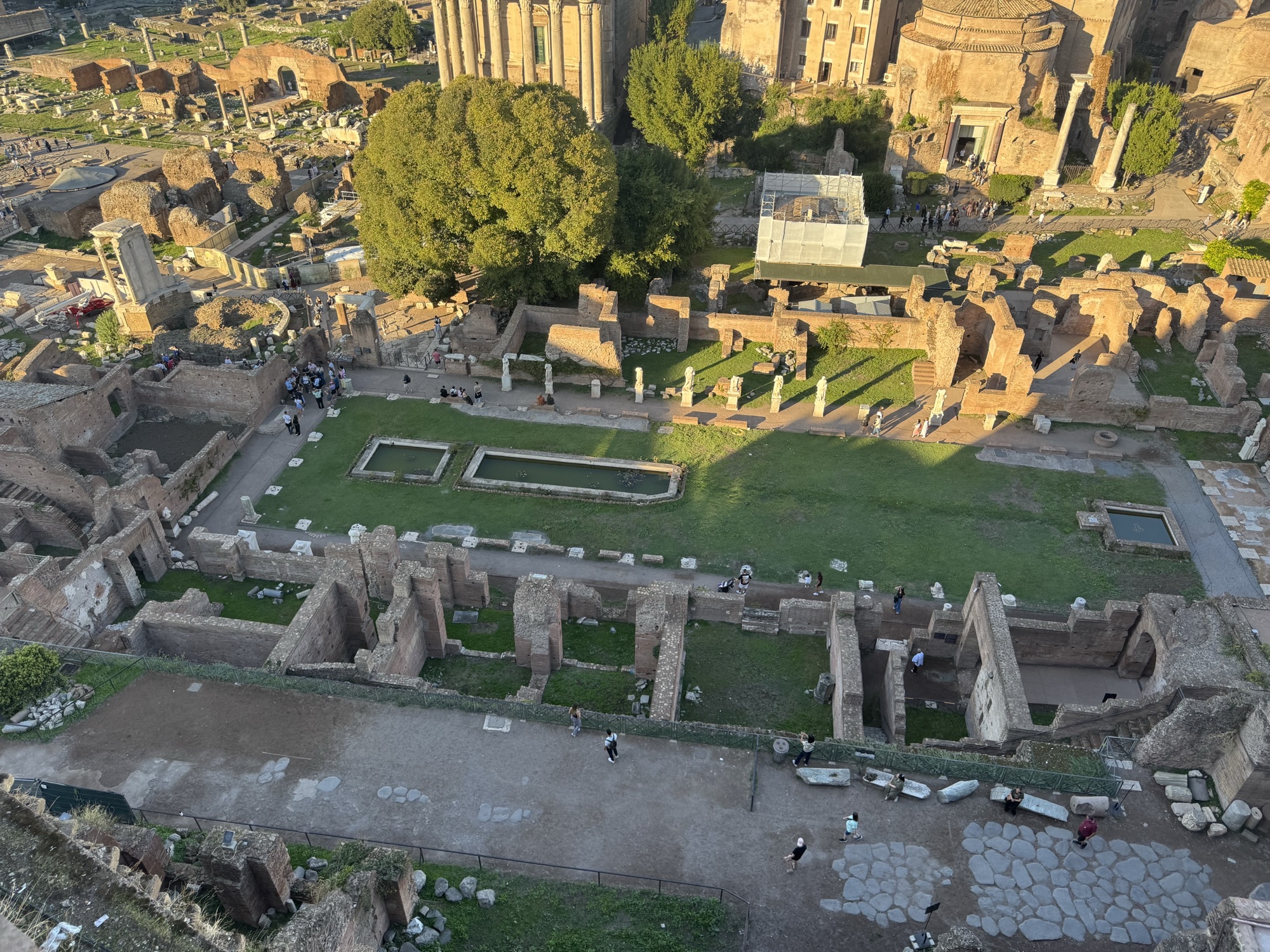
I don’t think that I knew before this tour that archeological digs only began here in the mid 1800s, when those digging were tasked with finding a unifying history for the country concurrent with Rome being chosen as its capital . Despite a break in discovery during WWI, and the sites being used as nationalist propaganda by Mussolini in WWII, historical research continues.
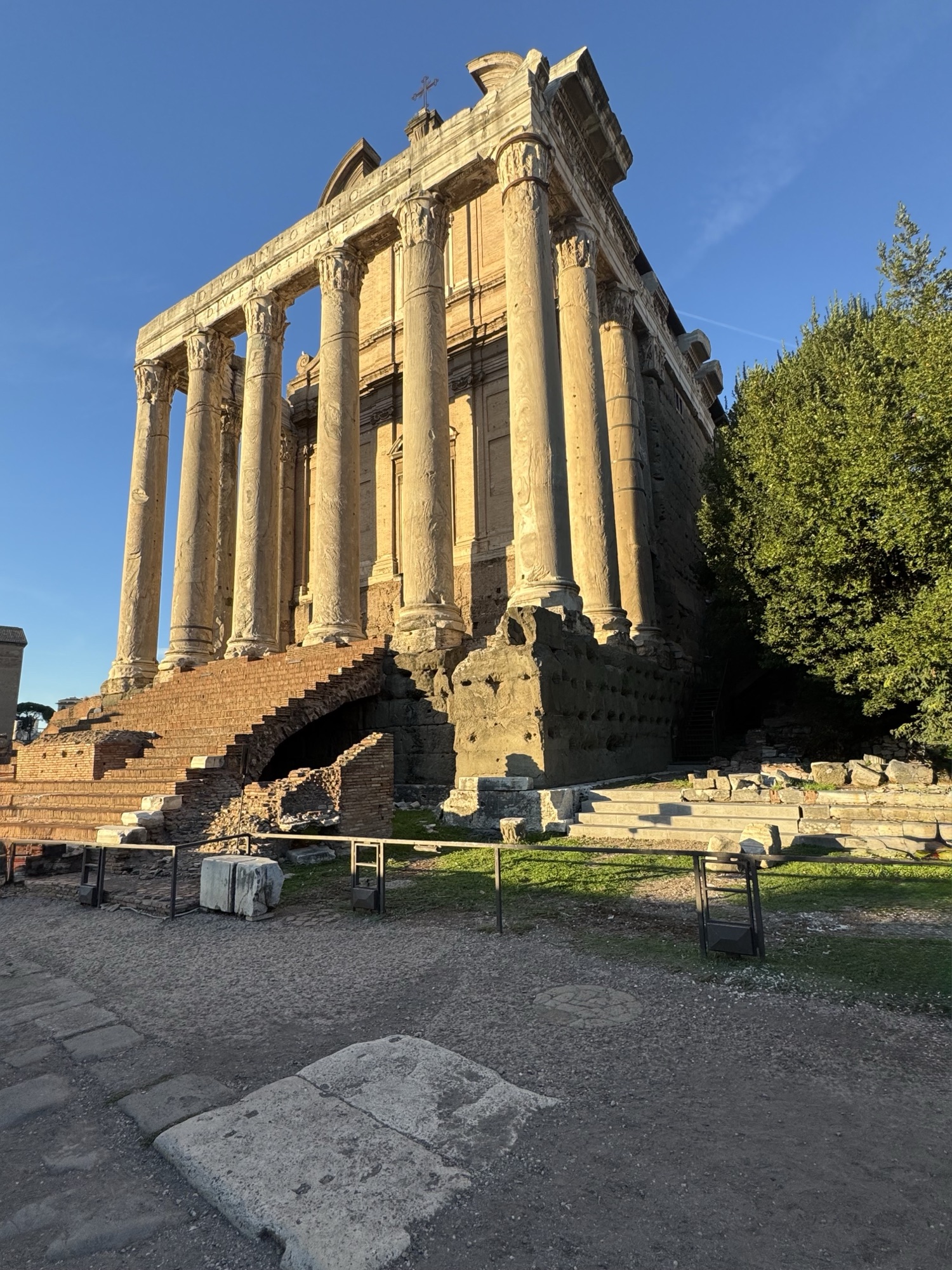
When we got back down to the level of the Forum, we passed several large temples. We were too tired and hungry to do them justice.
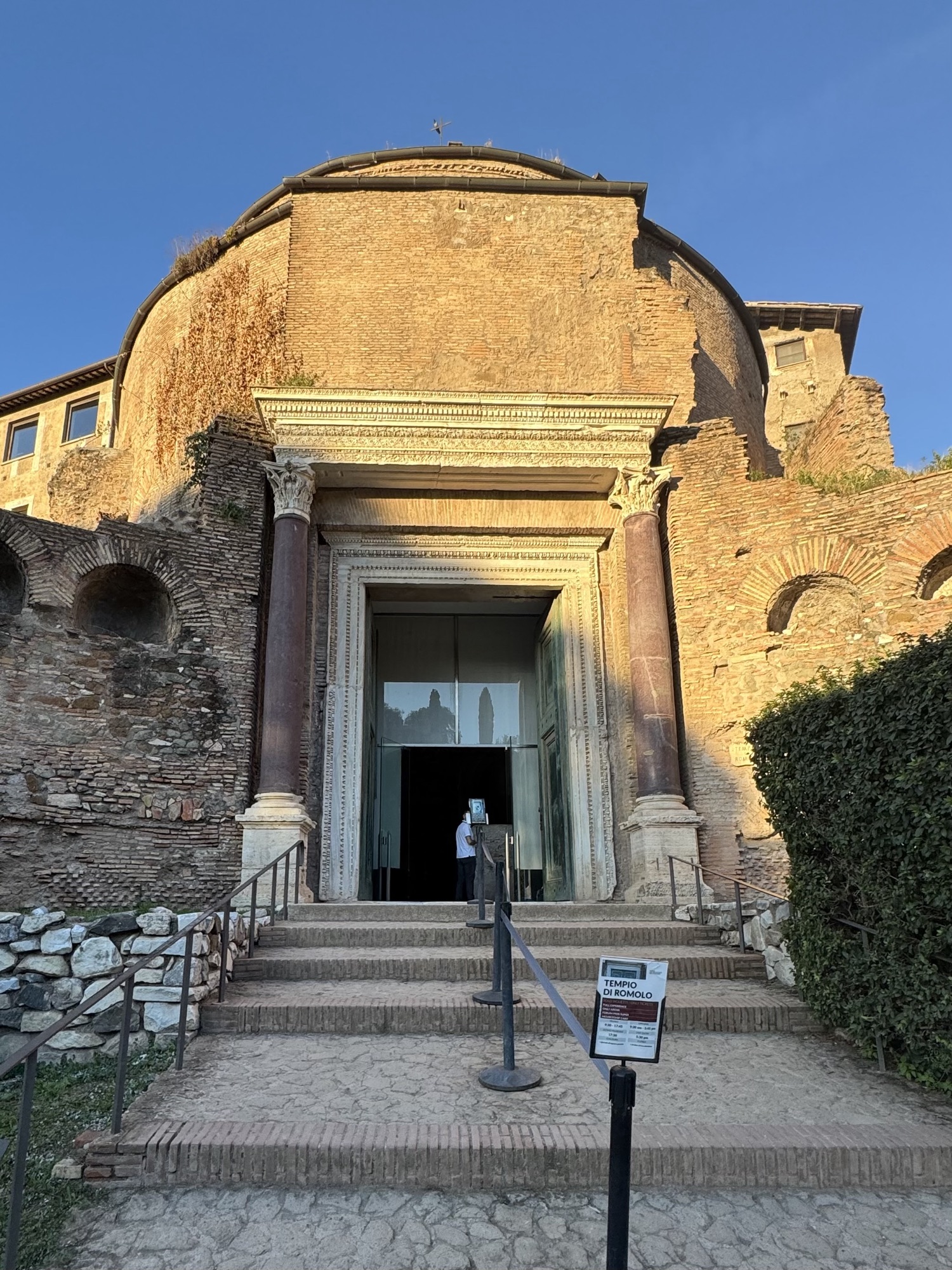
On the basis of a depiction on a coin this building – unusual in shape for Roman architecture – is identified as the temple built by the empe-
ror Maxentius in AD 307 in honour of his son who died in childhood. The circular building is flanked by two apsidal halls opening onto the front with little porticoes decorated with porphyry columns. The bronze door is original and the lock still works. Pope Felix V turned the monument into the vestibule of the Church of Sts Cosmas and Damian but the entrance to the Forum was reopened in 1879.
On our route home we found the solution to our hunger at Ristorante Taverna Urbana, where our timing was perfect. The restaurant was fully booked until after 9:30 pm, but they do not accept reservations for their 16 outdoor seats, and we arrived just as a couple was paying their bill.
What a gem the restaurant was, which I suppose is why it is so popular. I had my final Aperol Spritz of our Italian trip, to accompany a Roman style appetizer plate featuring breaded salt cod, zucchini flowers, and crispy Jerusalem artichoke before we tucked into a delicious dinner of both of the restaurant’s specialty pastas. We were sadly too full for dessert.

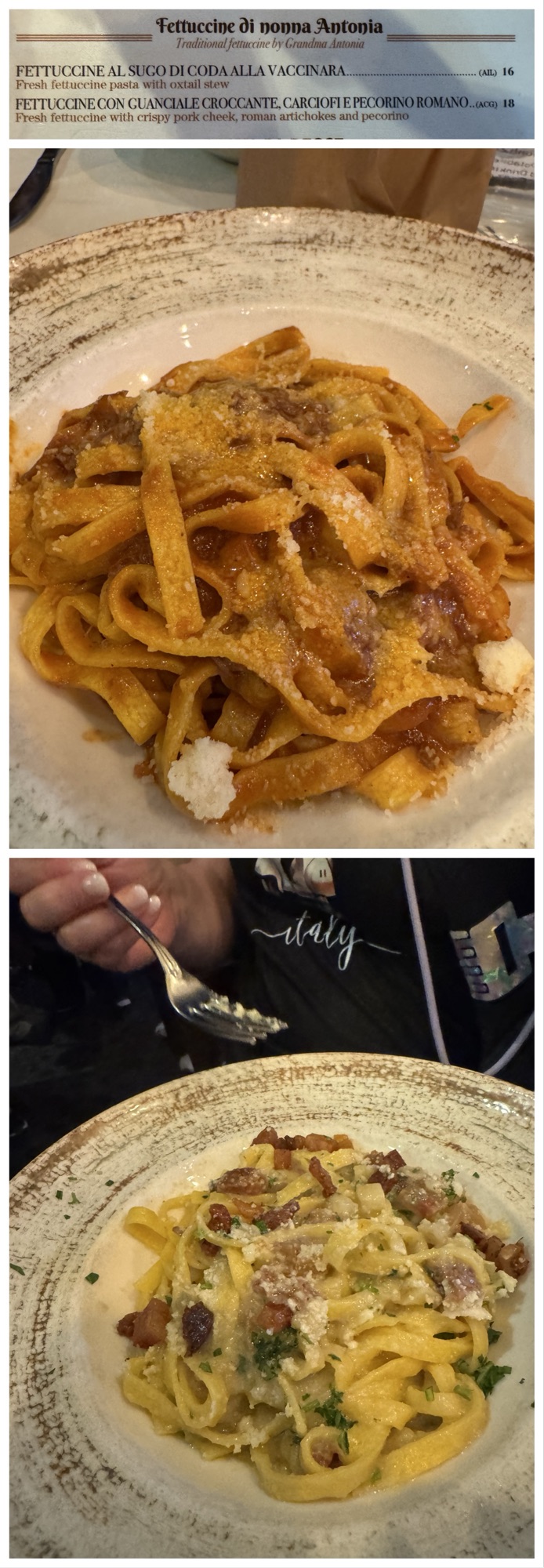
It was a lovely food finale to our trip.

