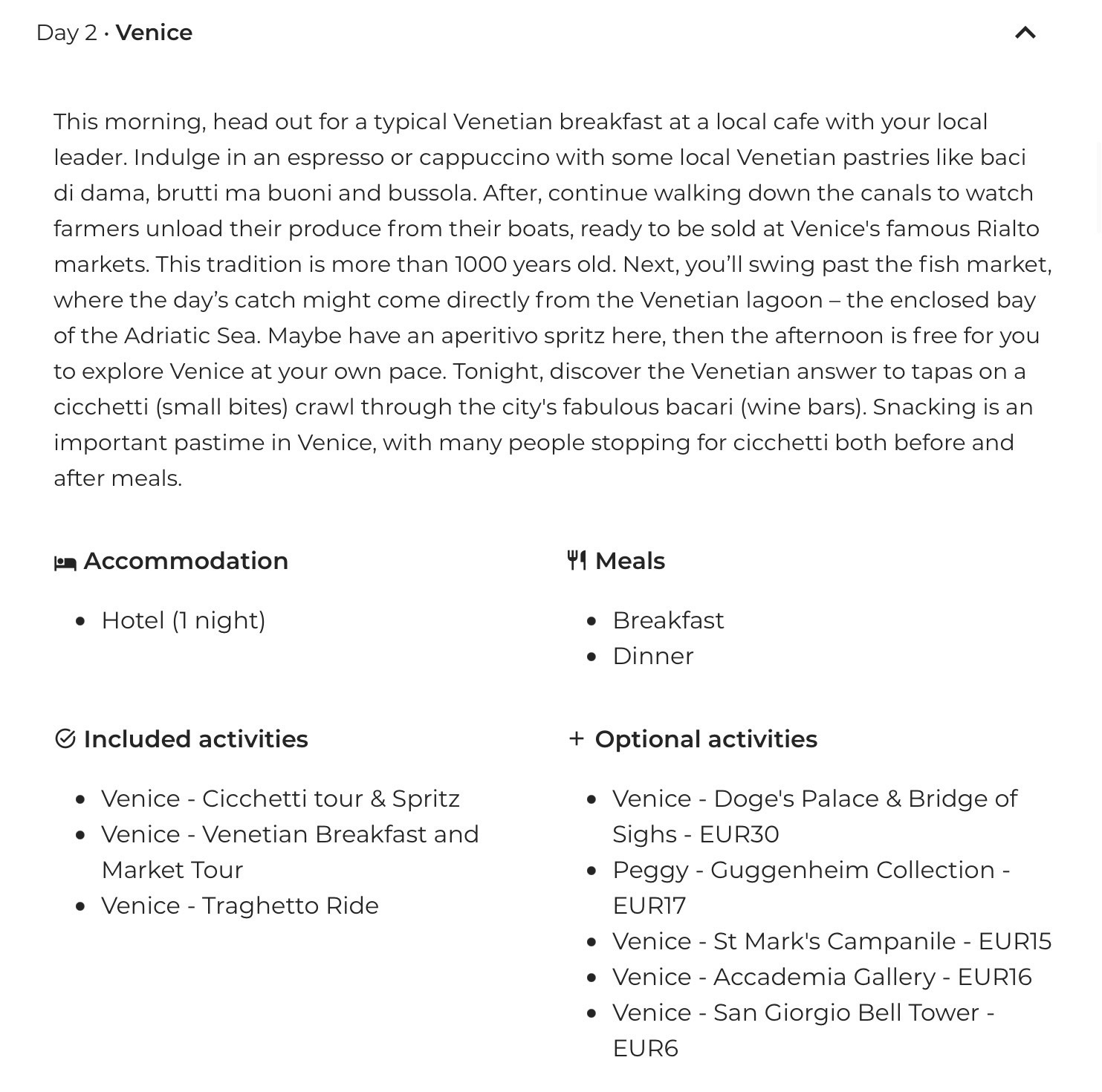
From a tourist standpoint, today was quite a laid-back day. We headed from the hotel to a local bakery to have breakfast of pastry and espresso, and then through the Jewish ghetto, but entering from the opposite direction that my DIL and I had gone yesterday.
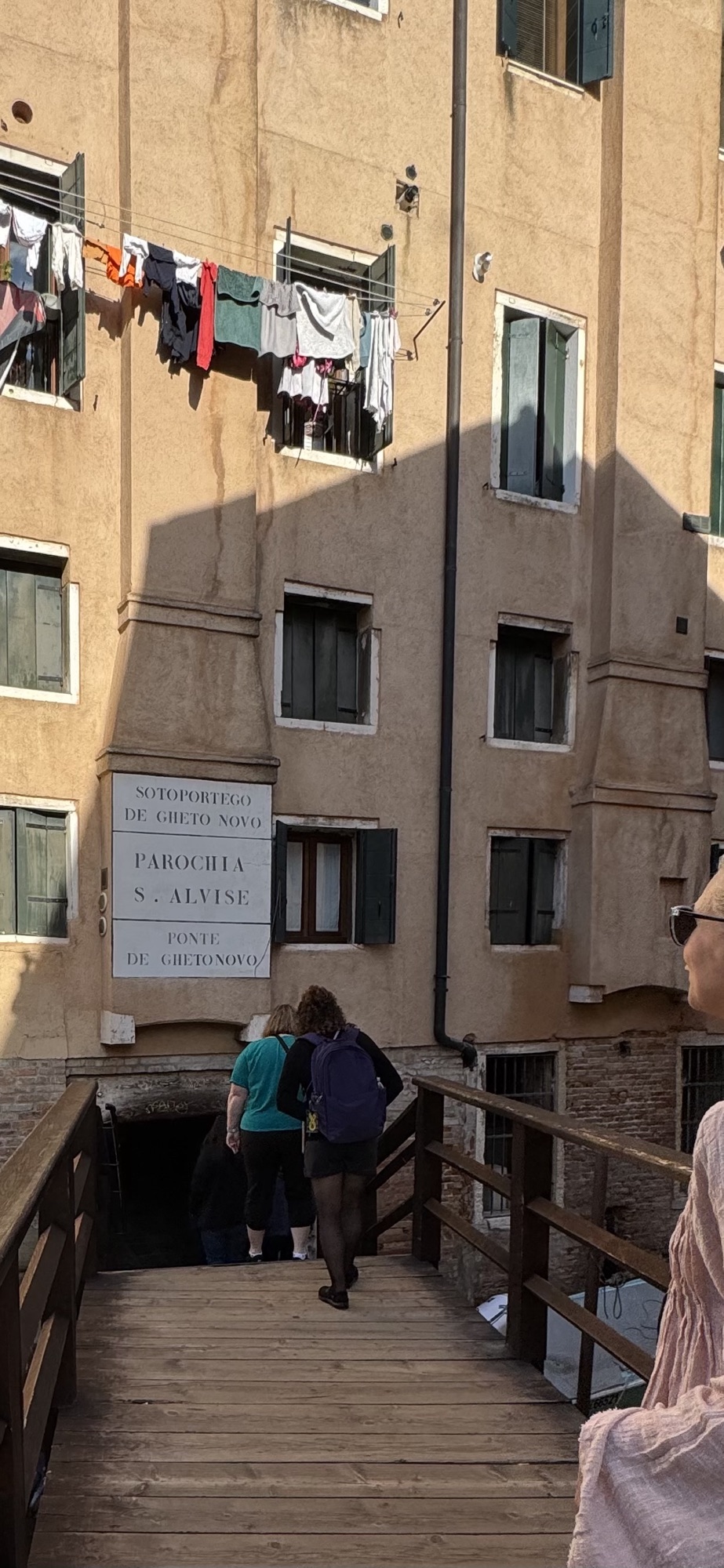
We learned that the reason for the tall buildings here was that the Venetian’s strictly limited the size of the Jewish Quarter, so as the population grew housing could only expand upward.
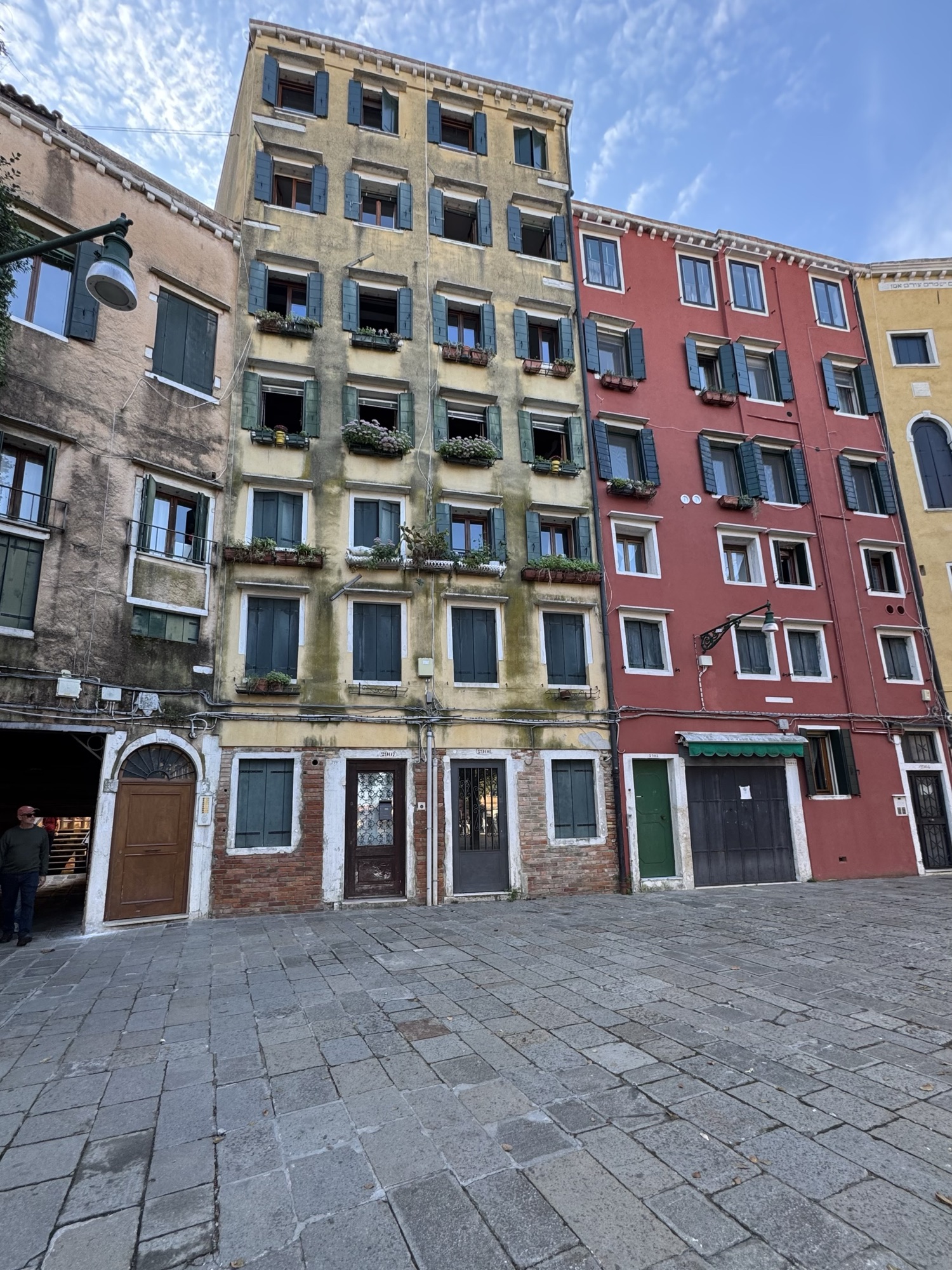
New learning: the word ghetto comes from the Venetian word for foundry, ghetó. The Venetians in 1516 created an enforced Jewish Quarter on the site of a former foundry, and we were told that Venice was the first place the word ghetto was ever used to describe a Jewish Quarter. Wikipedia verifies that story.
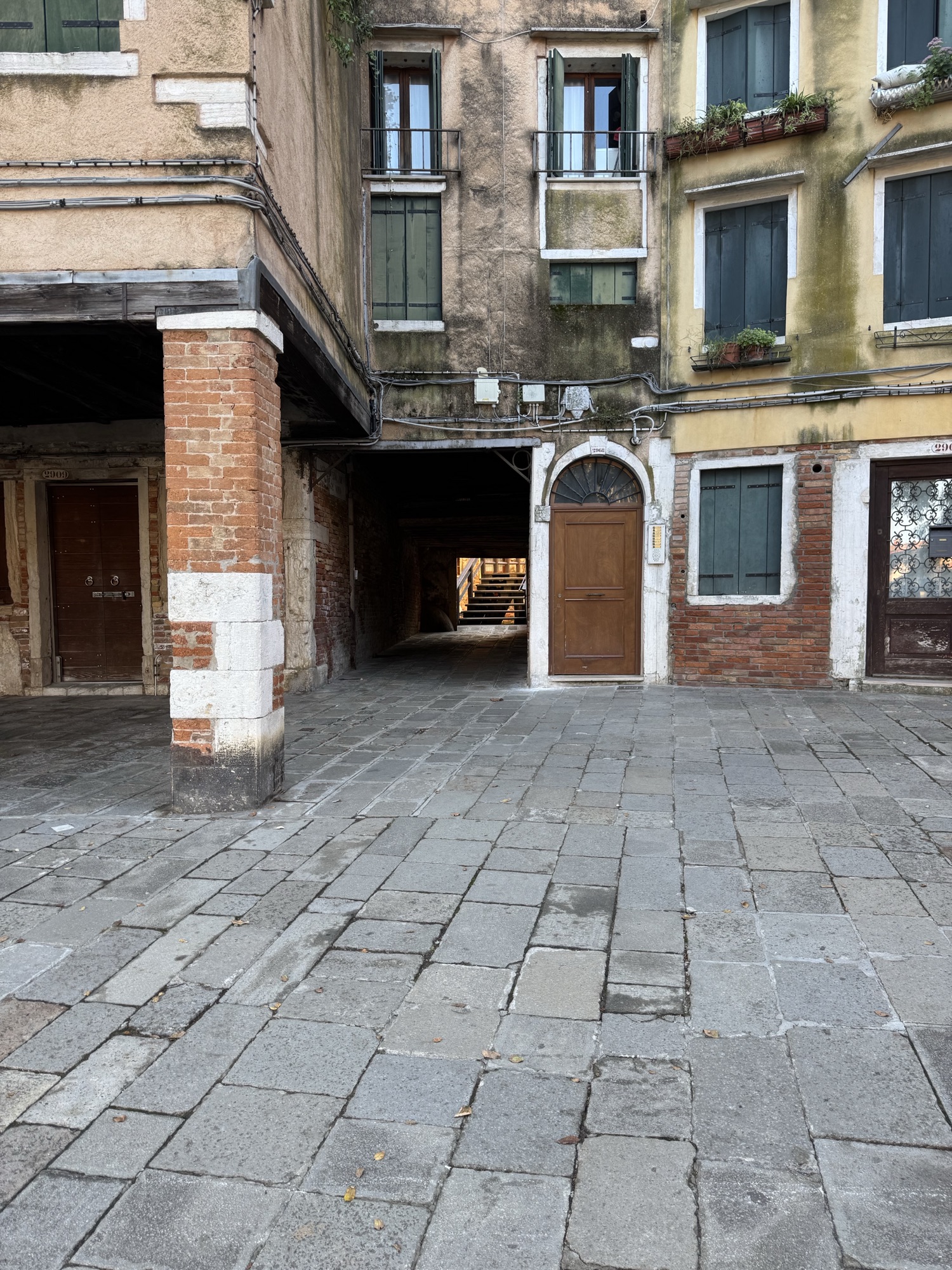
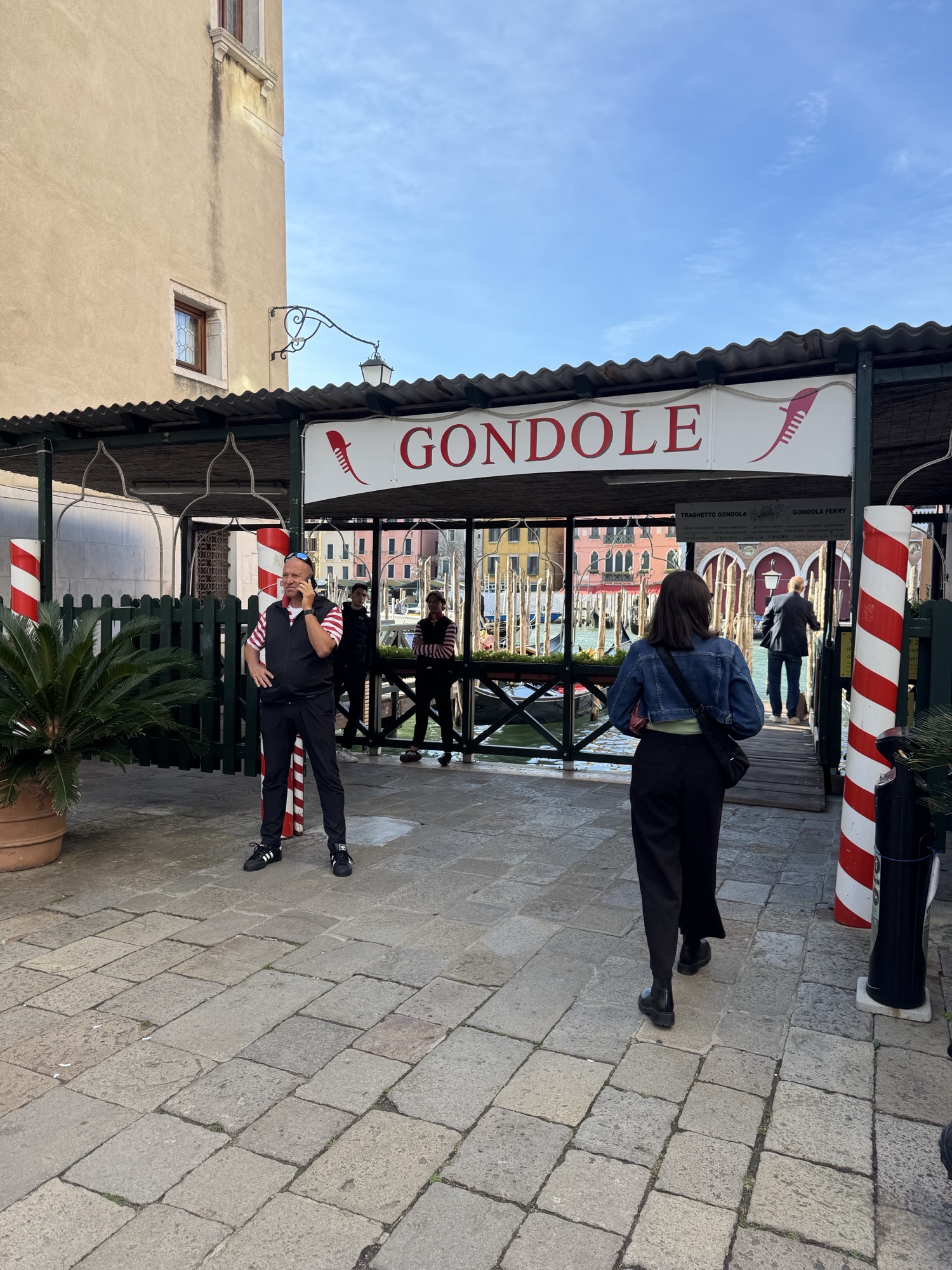
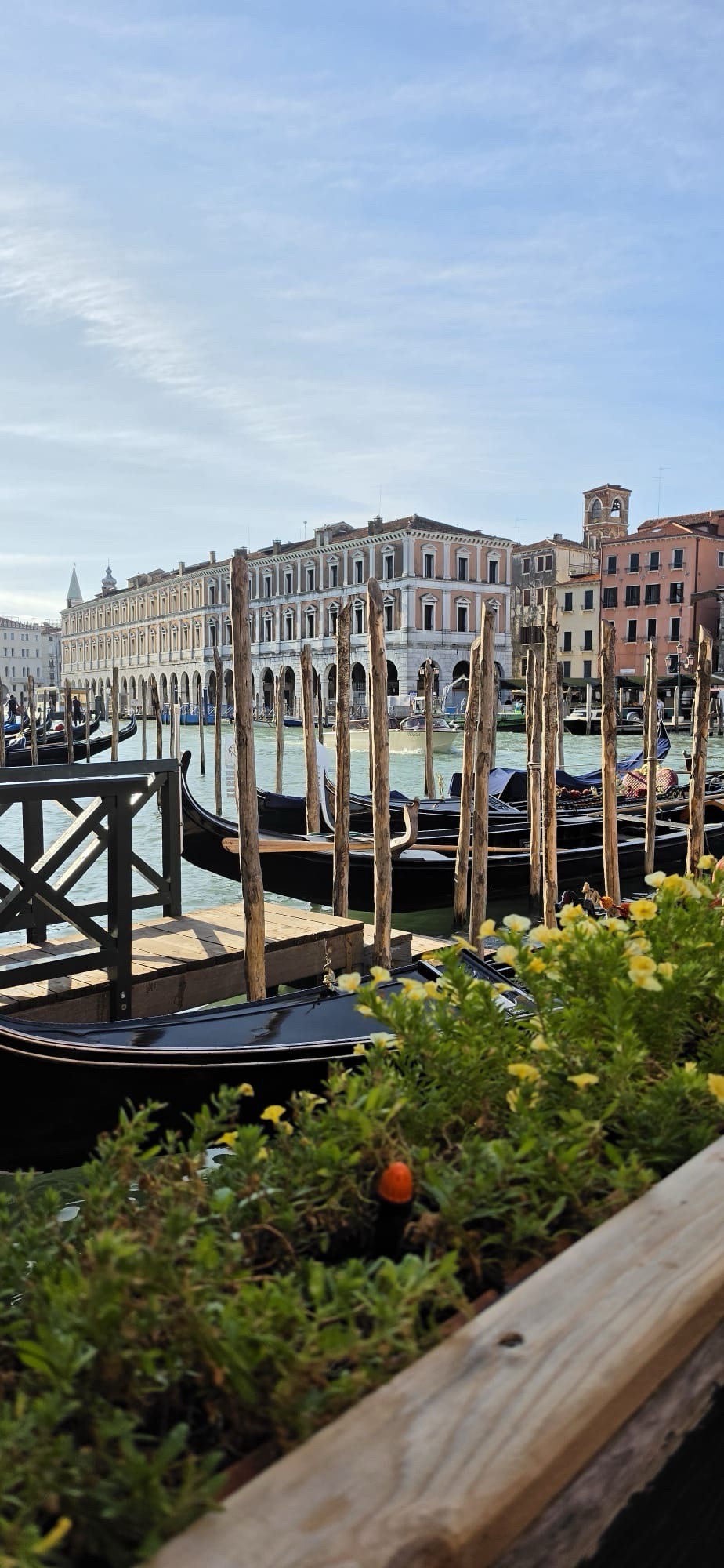
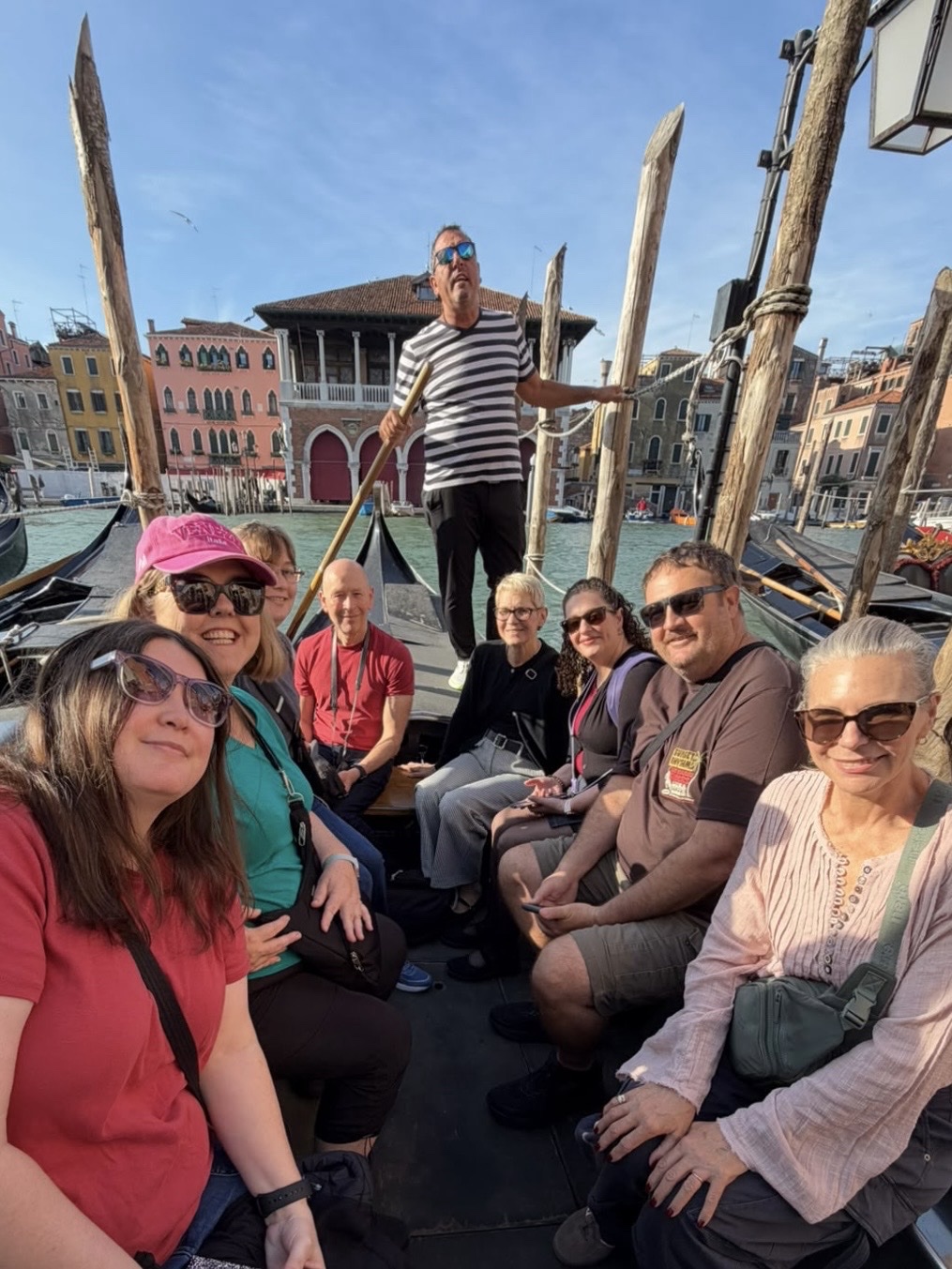
In order to get from the ghetto to the Rialto Market we needed once again to take a gondola traghetto.
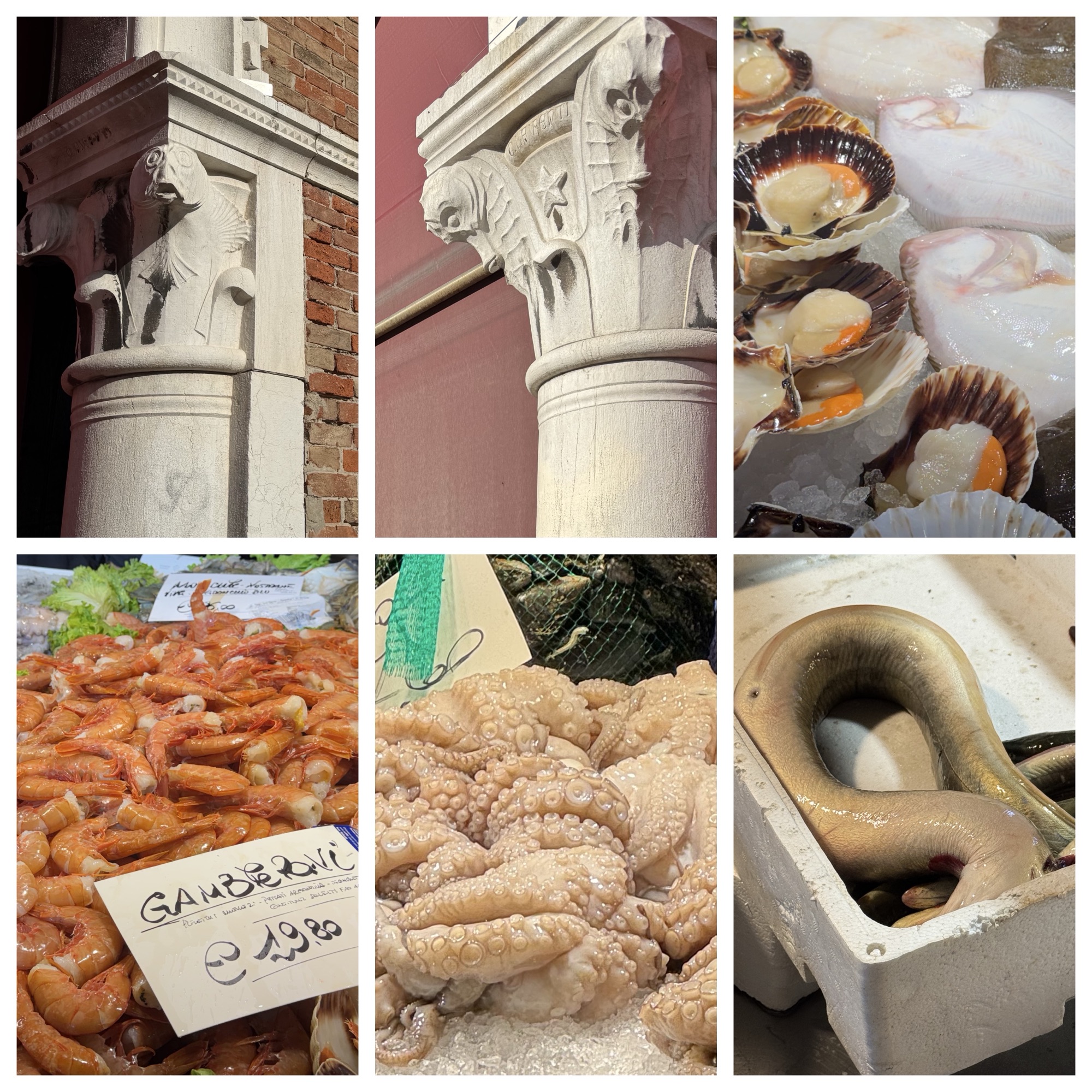
Safely across the canal our walk continued through the Rialto Fish market, where the sellers are so fed up with tourists that they put up signs indicating they charge €1 per photo…
… and then onto Venice‘s oldest and most famous bridge, the Ponte de Rialto, where we all stopped to take photos.
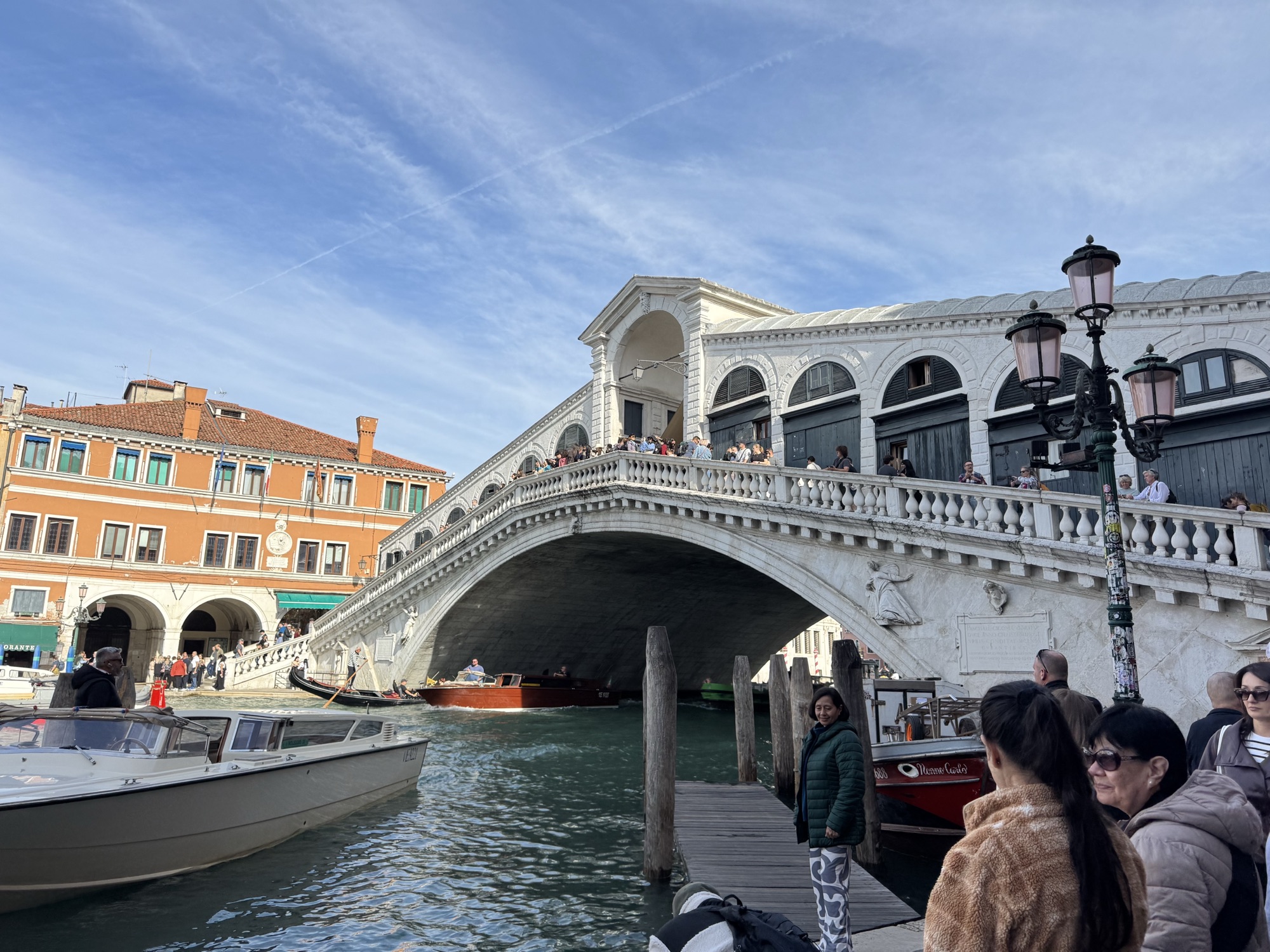
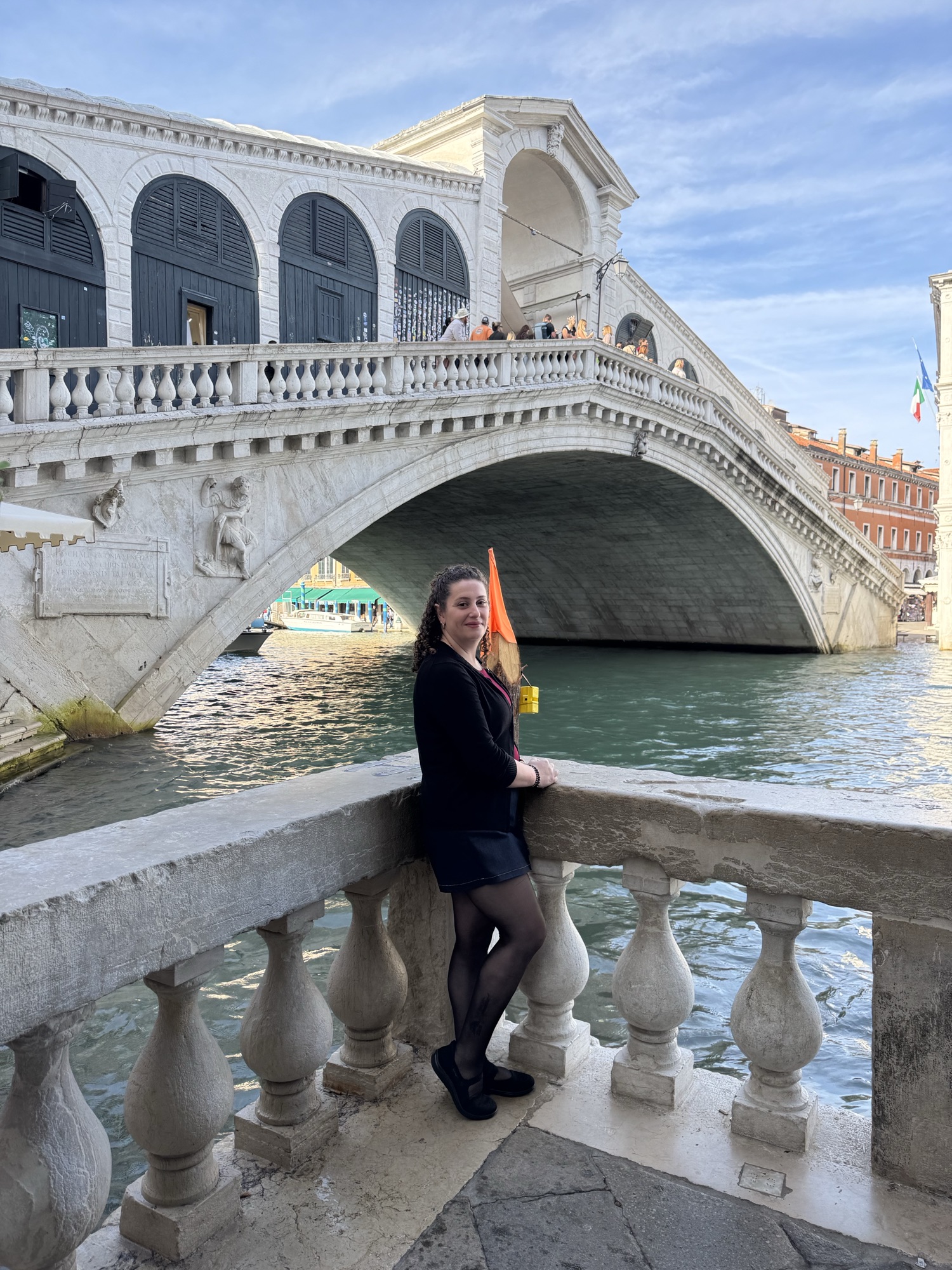
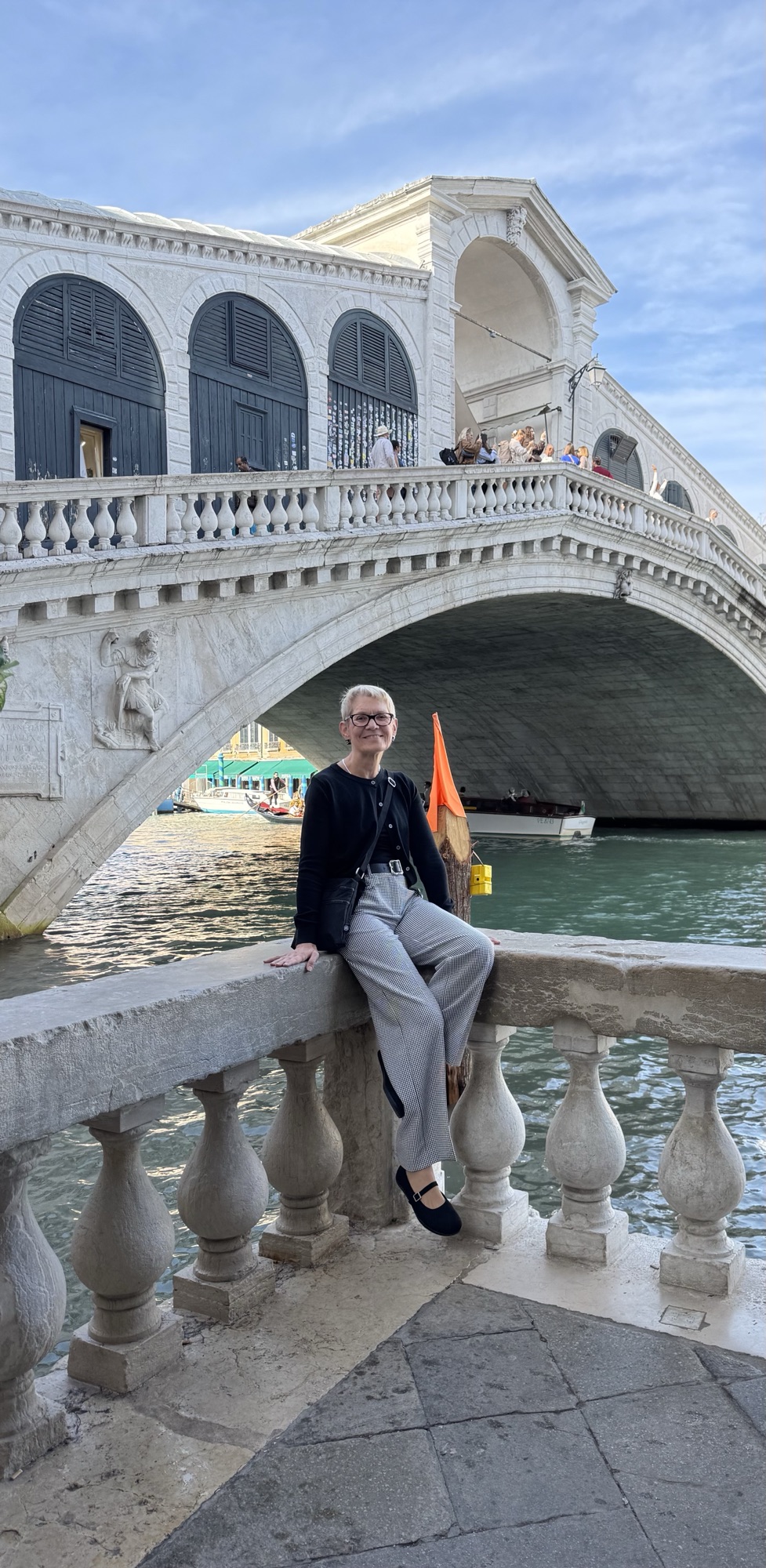
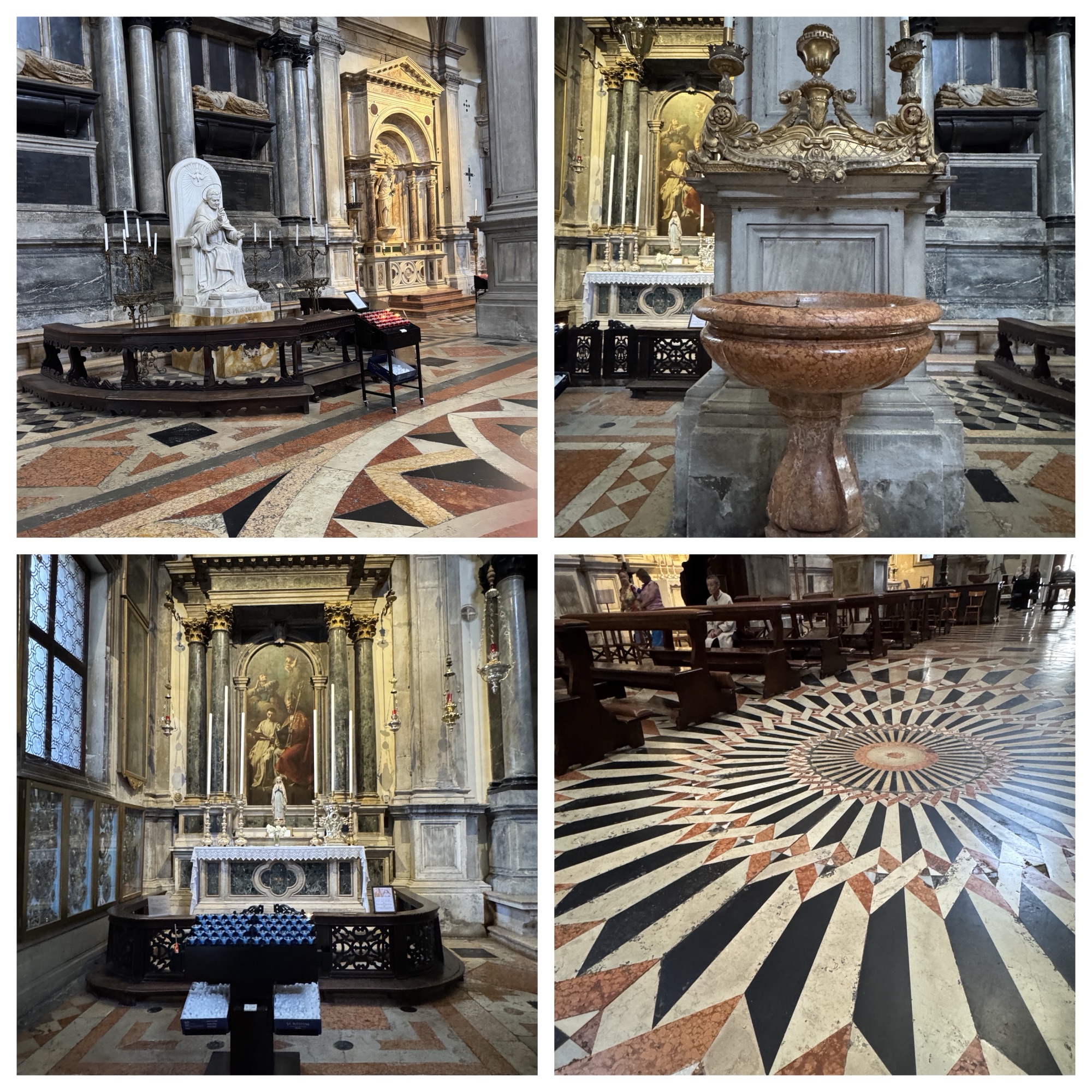
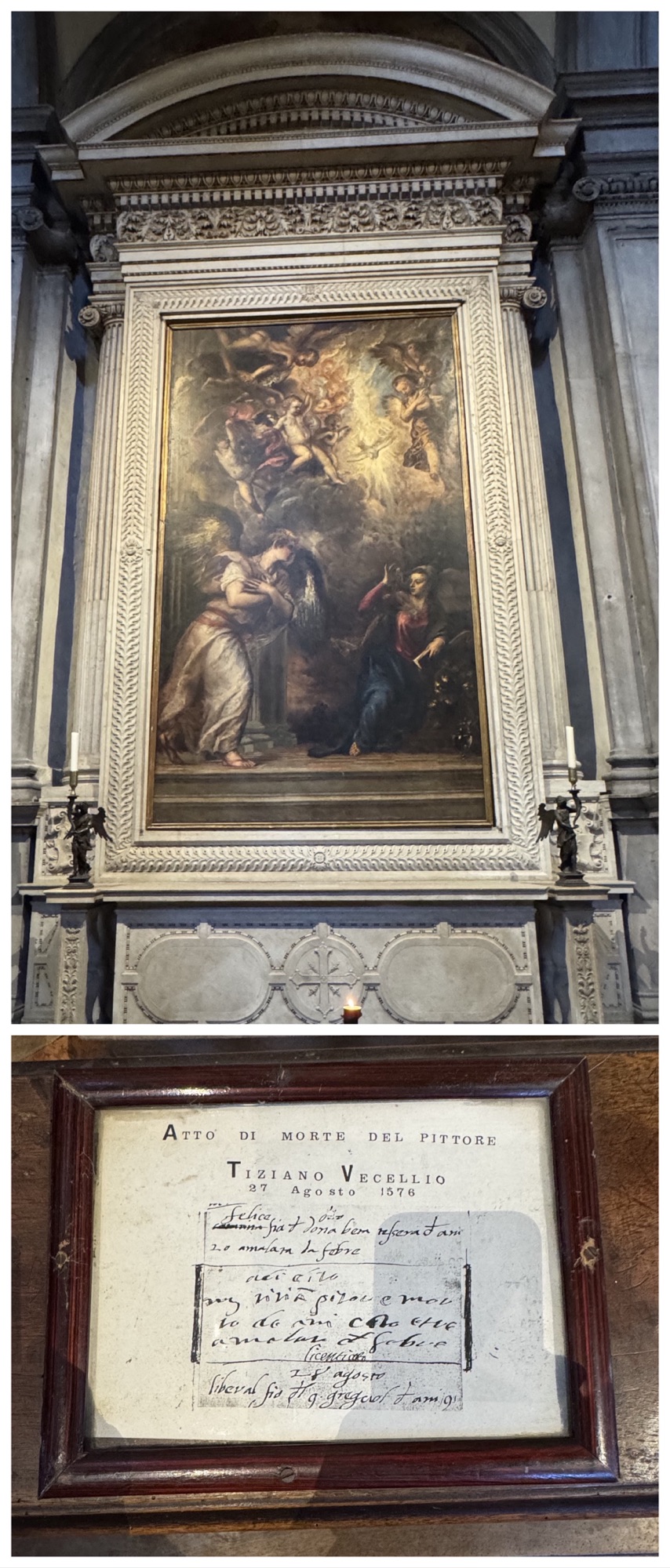
We detoured briefly into the church of Saint Salvatore, where once again we found art by Tintoretto and Titian adorning the walls.
Our route took us past the Scala Contarini del Bovolo, Venice‘s famous private Palazzo with its outdoor winding staircase.
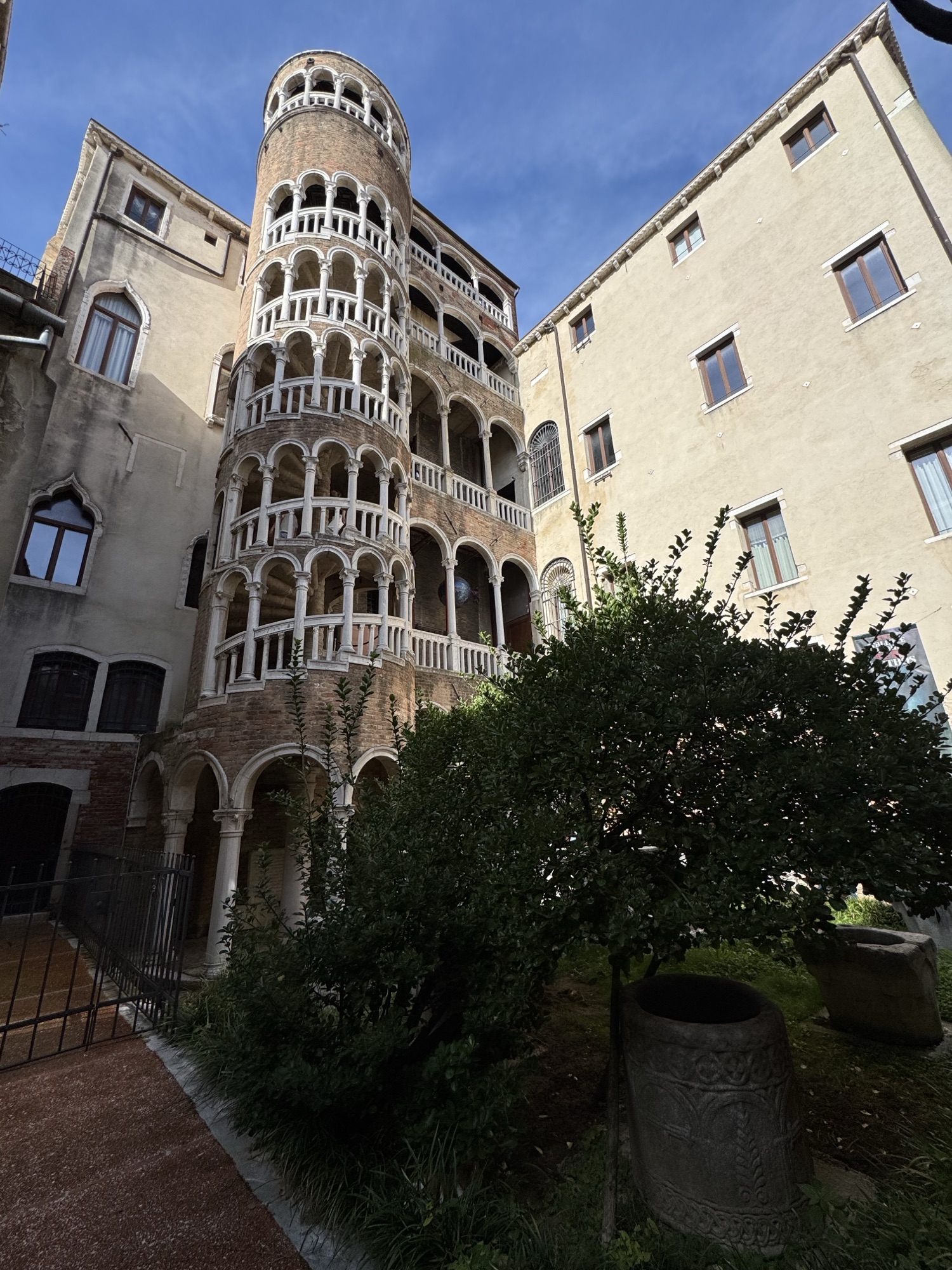
The story behind the building is that in 1499 the nobleman Pietro Contarini commissioned an exterior staircase leaning against the back of a house adjacent to his villa. The spiral stairs are inside a wall cylinder pierced by arches and loggia.
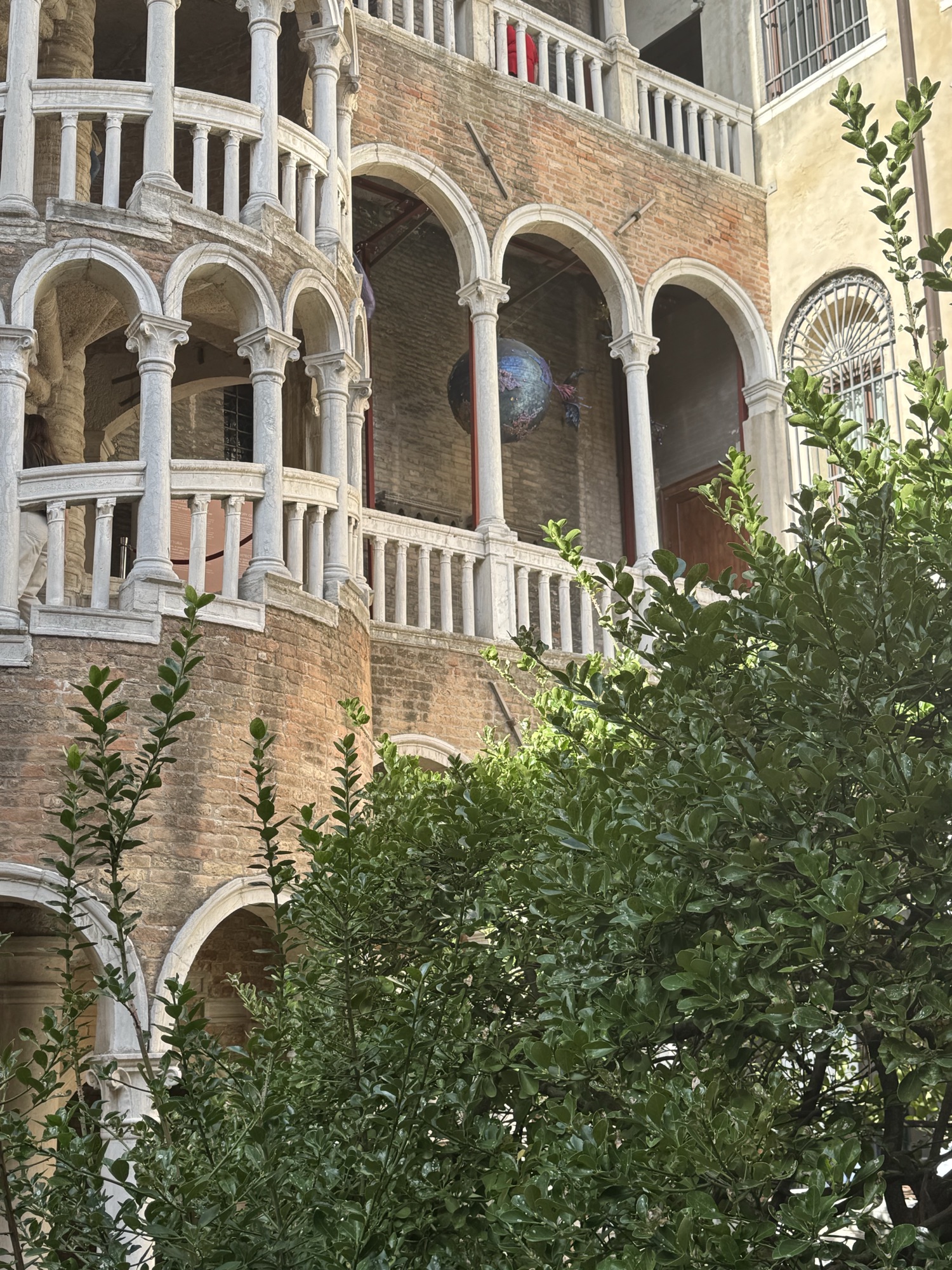
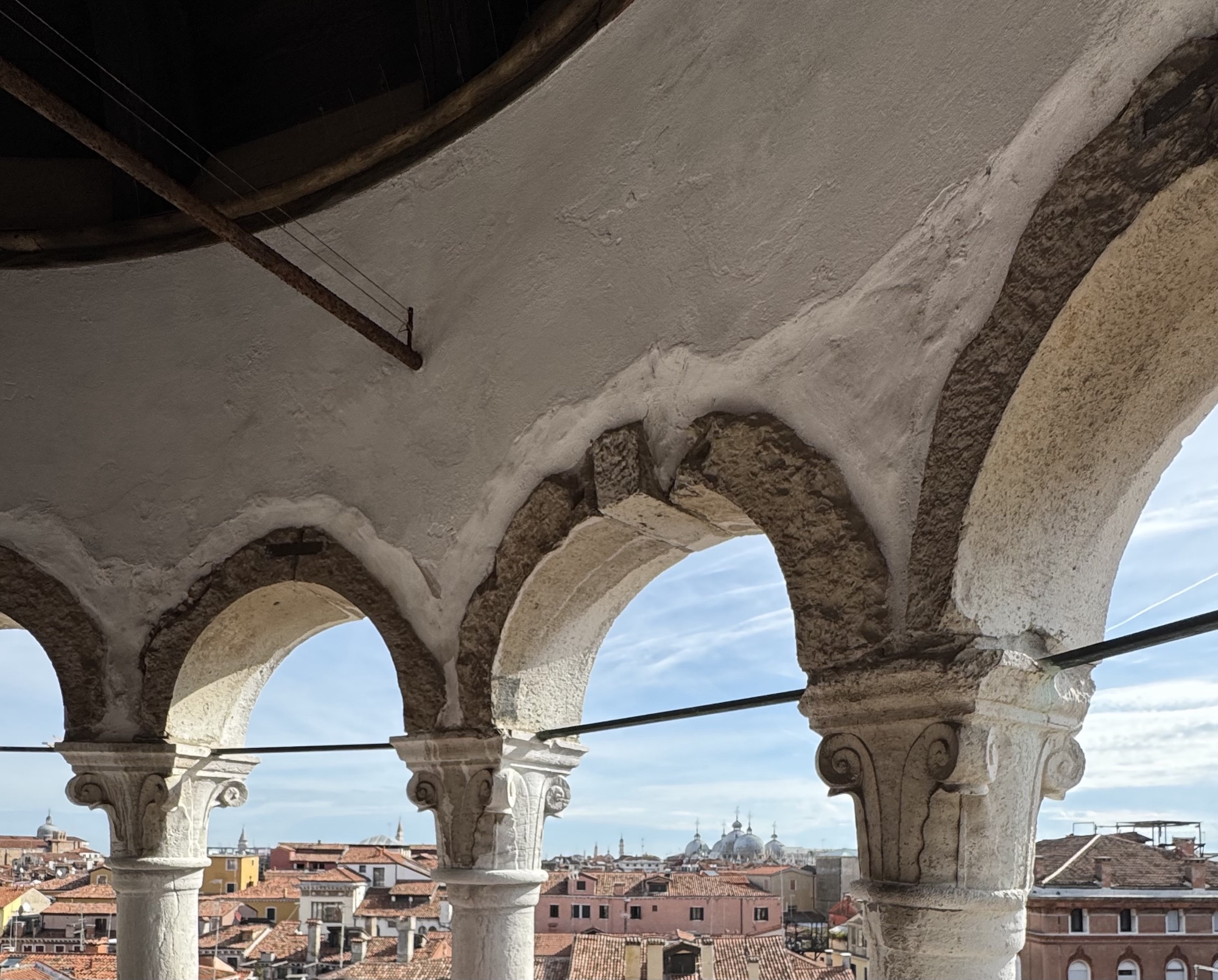
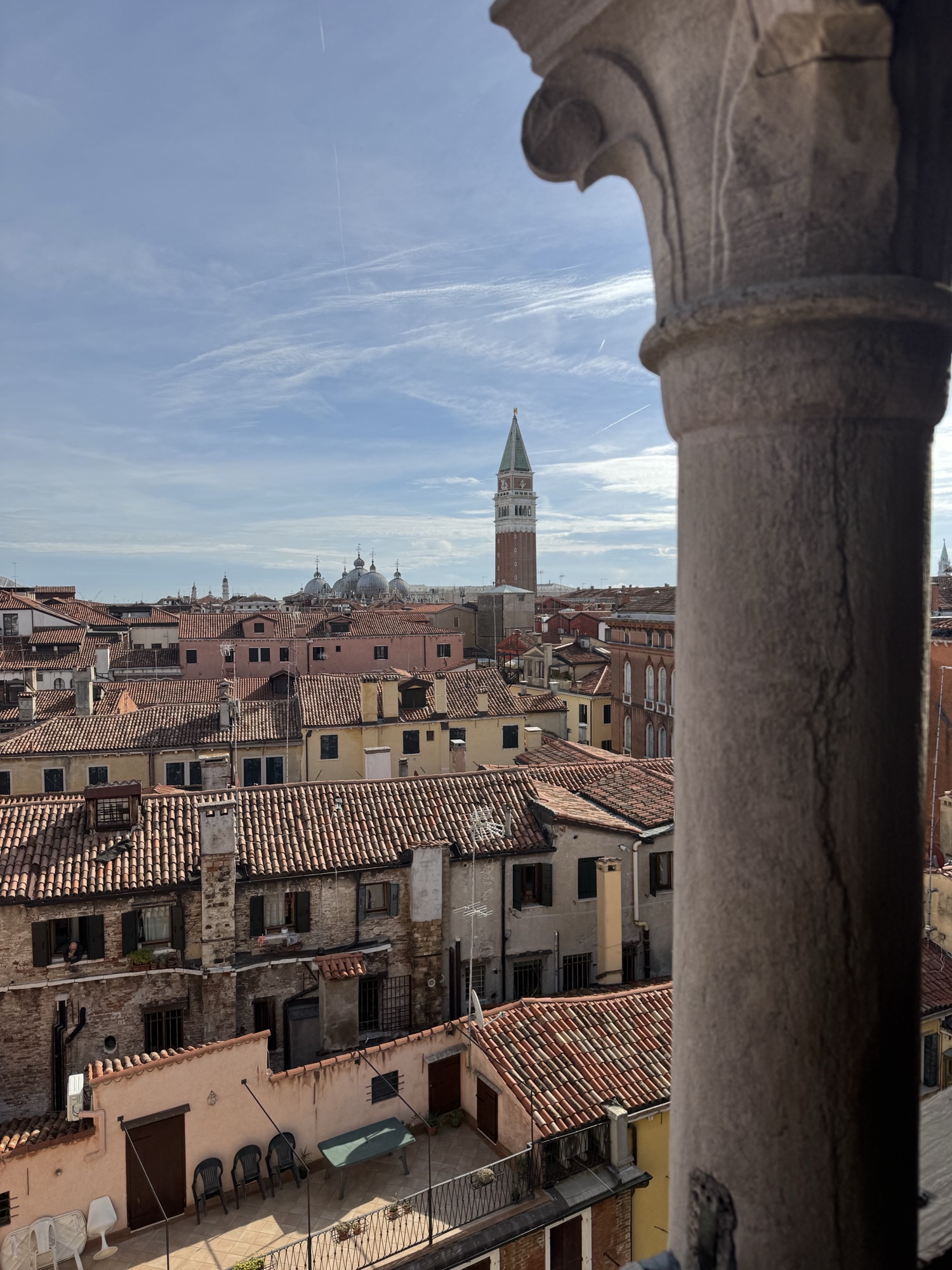
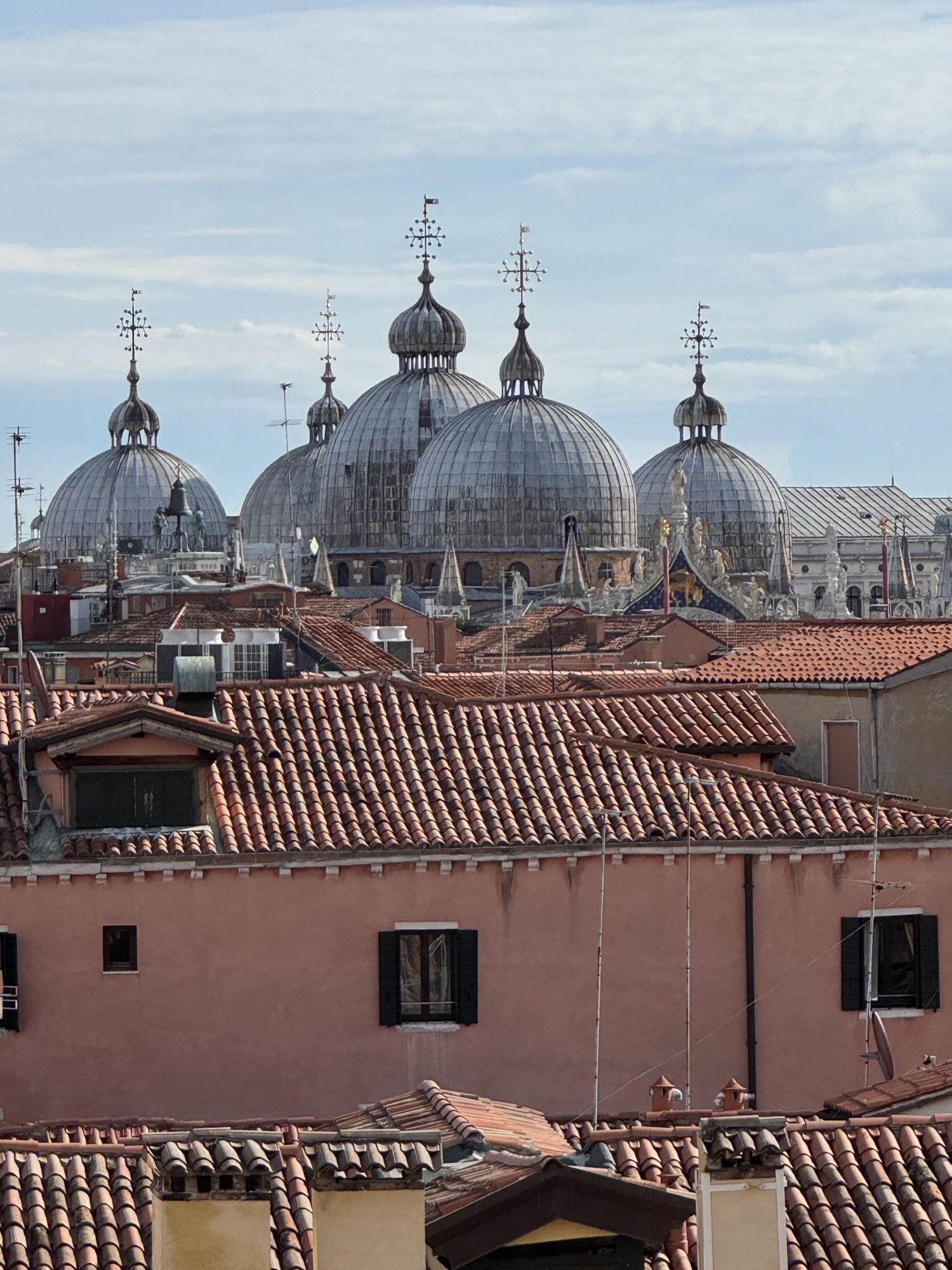
Our tour leader gave those of us who wanted to time to climb the staircase to get some really wonderful overviews of Venice.
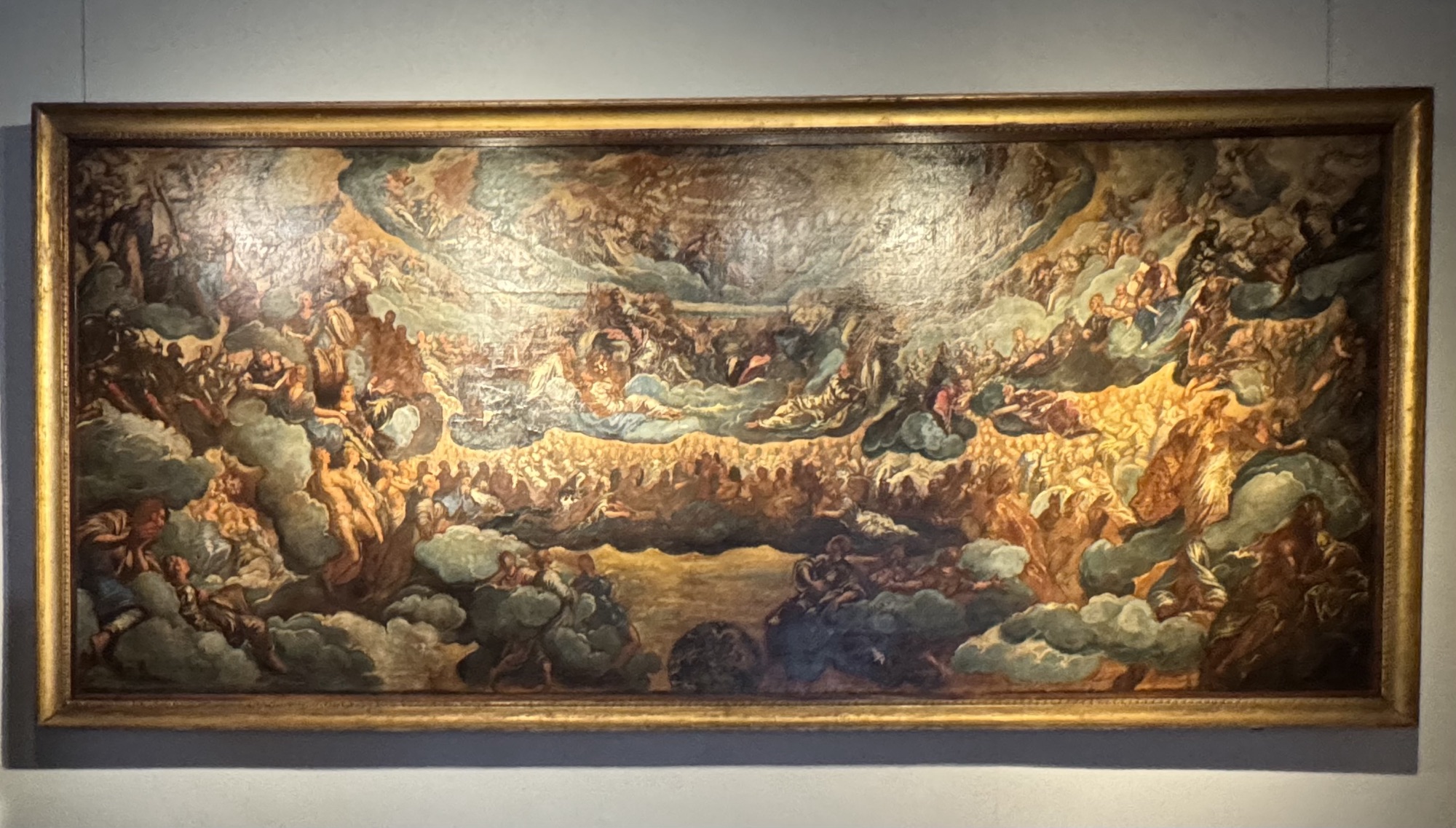
On the second landing is a room containing one of Tintoretto’s preliminary sketches for his commission of a series of four paintings of paradise for the Venetian Senate.
Our view from the top:
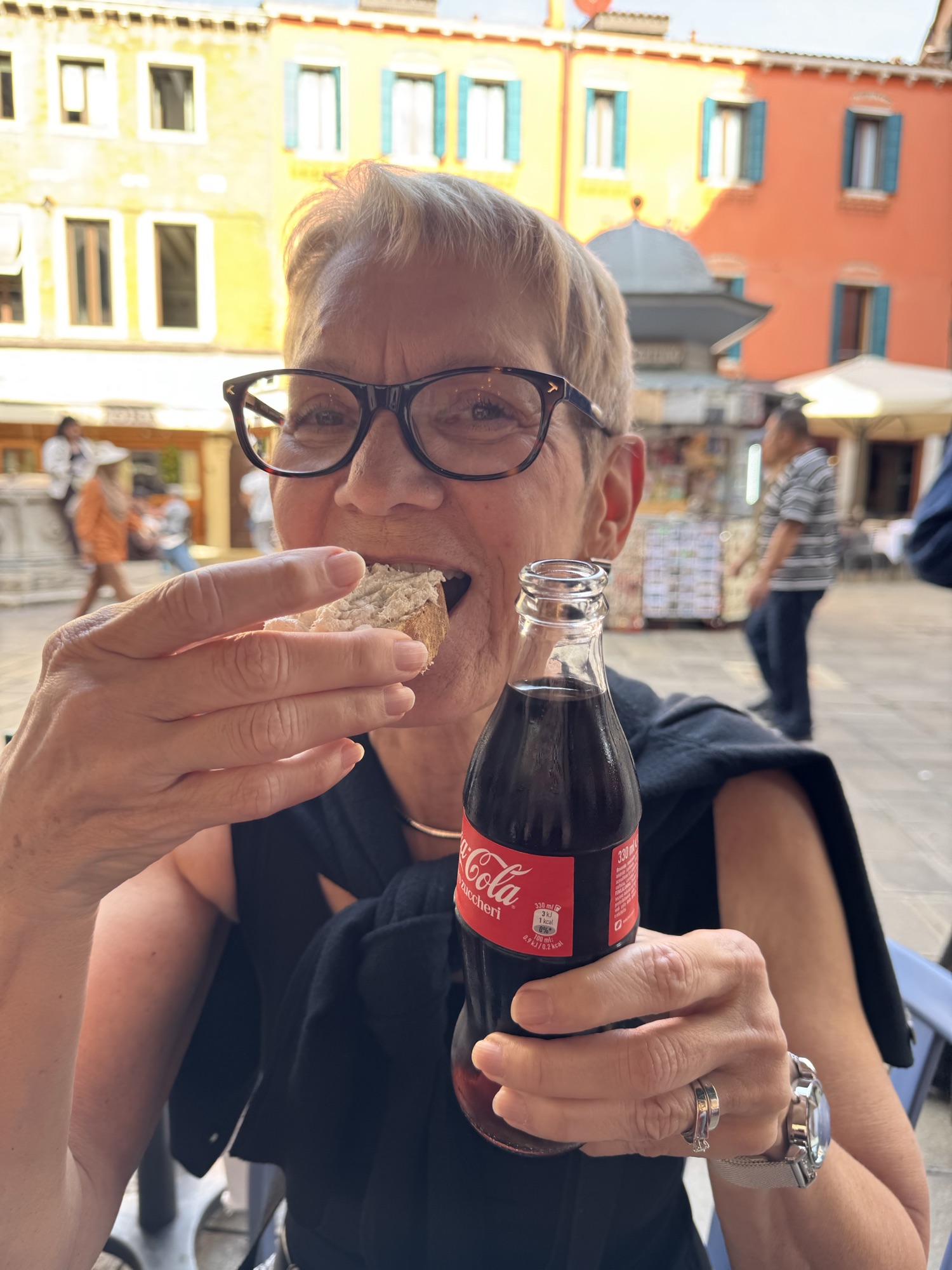
We made our first food stop for a snack of cichetti and the option for an Aperol spritz, a glass of wine, or something nonalcoholic. Since it wasn’t even 11 a.m. DIL and I chose Coke Zeros.
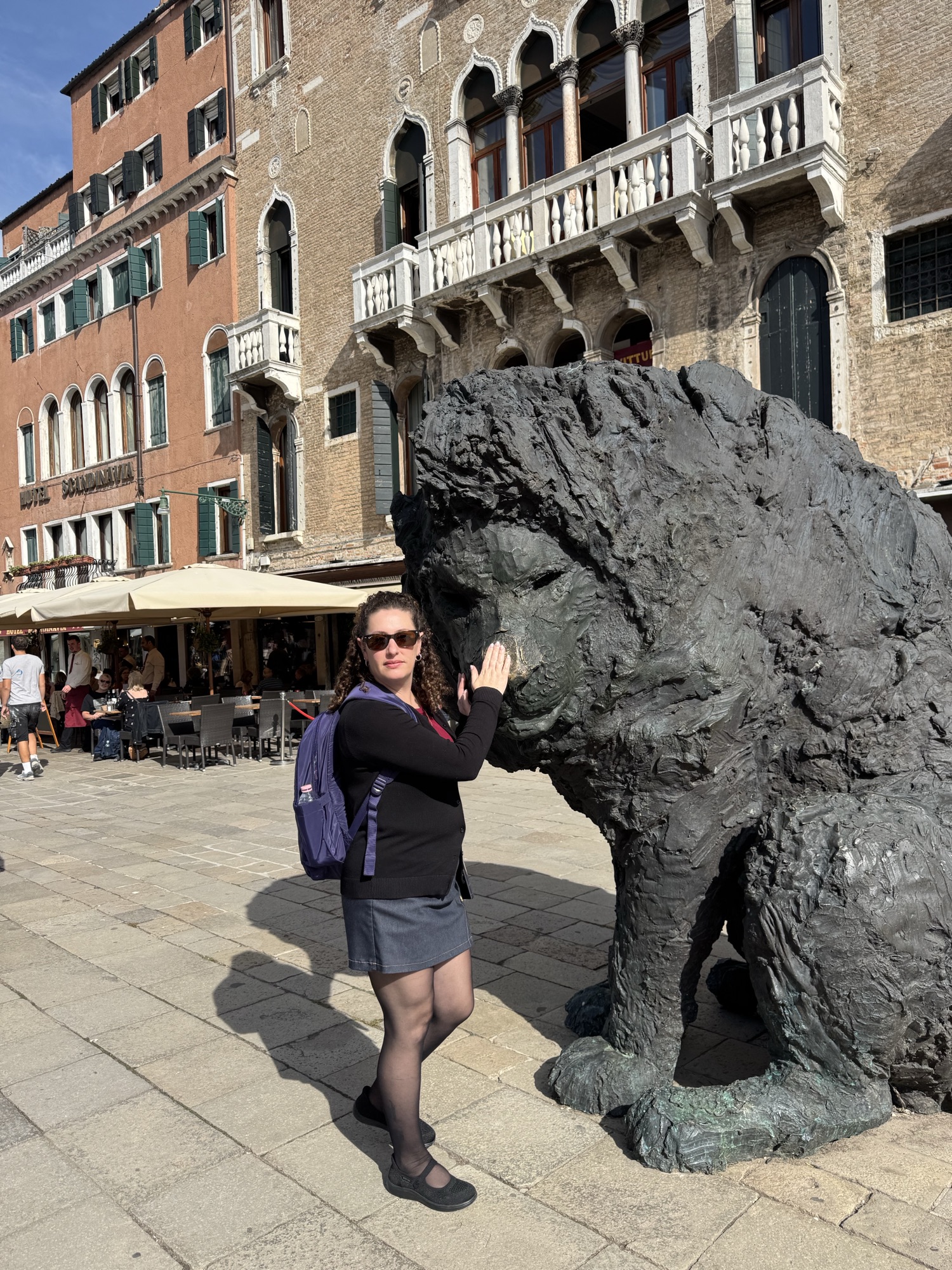
For good luck, DIL rubbed the nose of one of Venice‘s famous lions , the animal that is used as the symbol of Saint Mark, and thus the symbol of Venice.
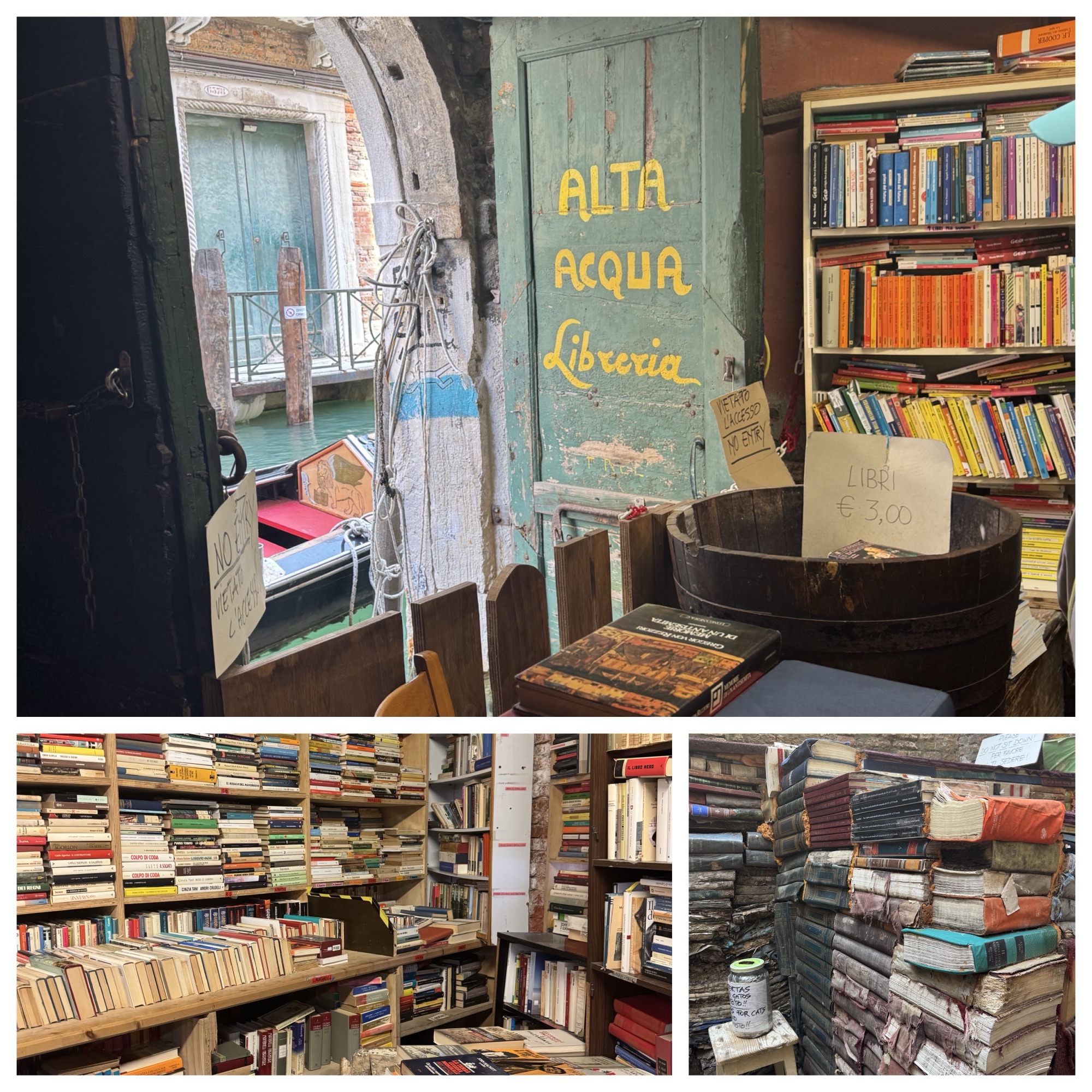
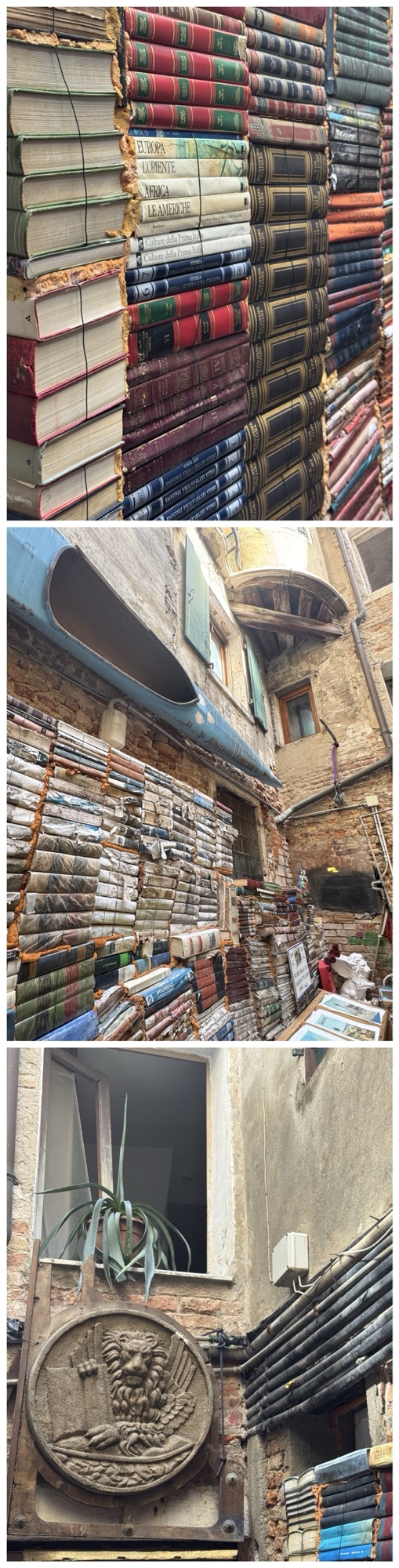
We got to walk through Alta Acqua Libraria, which translates as “high water bookstore” snd claims to be the most beautiful bookstore in the world. It was certainly quirky, but I don’t think any of us believed it was the most beautiful in the world.
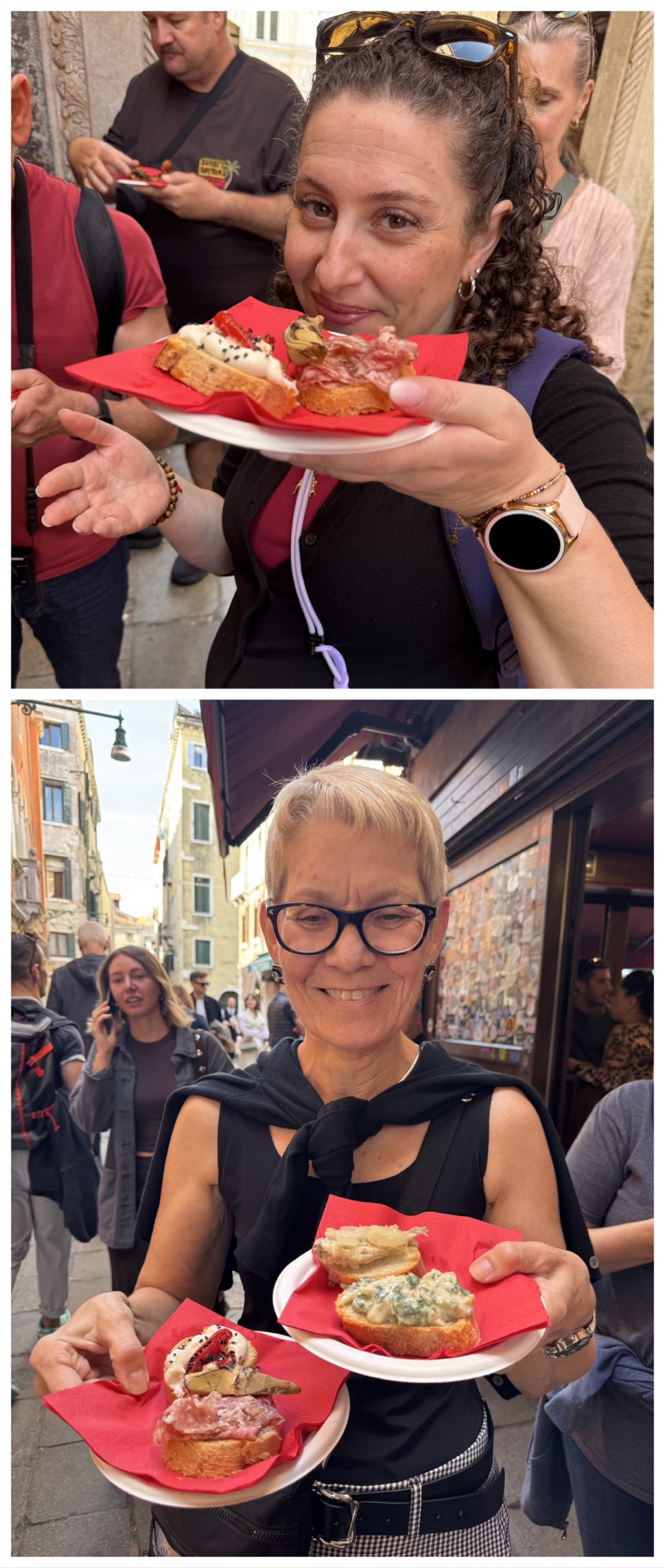
Then it was time for our second cichetti stop.
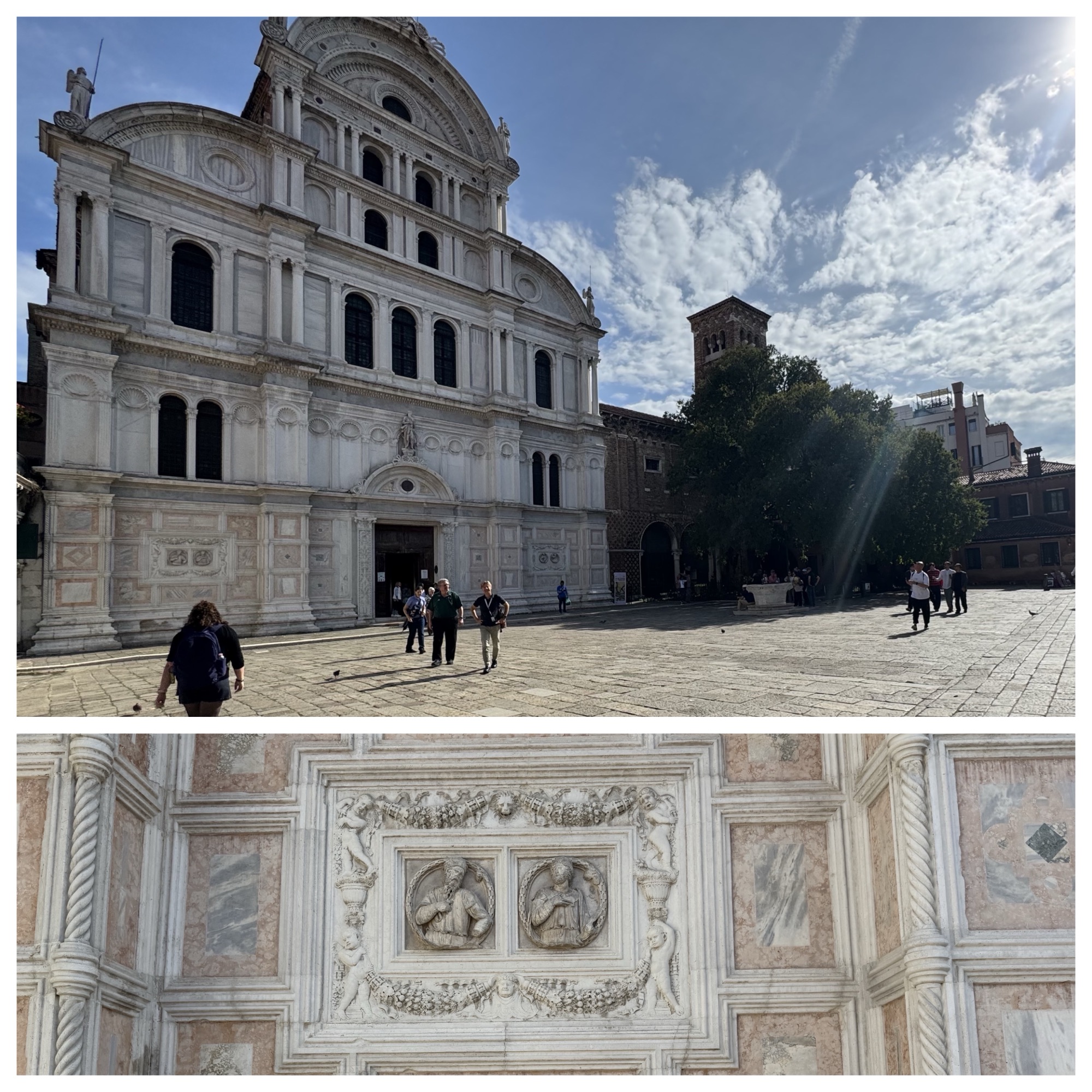
At this point, out official walk was over, and the group dispersed in different directions. DIL and I wandered into the church of Saint Zachary, dedicated to the father of John the Baptist. Once again, this was a church in which interior photos were not allowed, but we both really liked the pale pink marble used on the exterior.
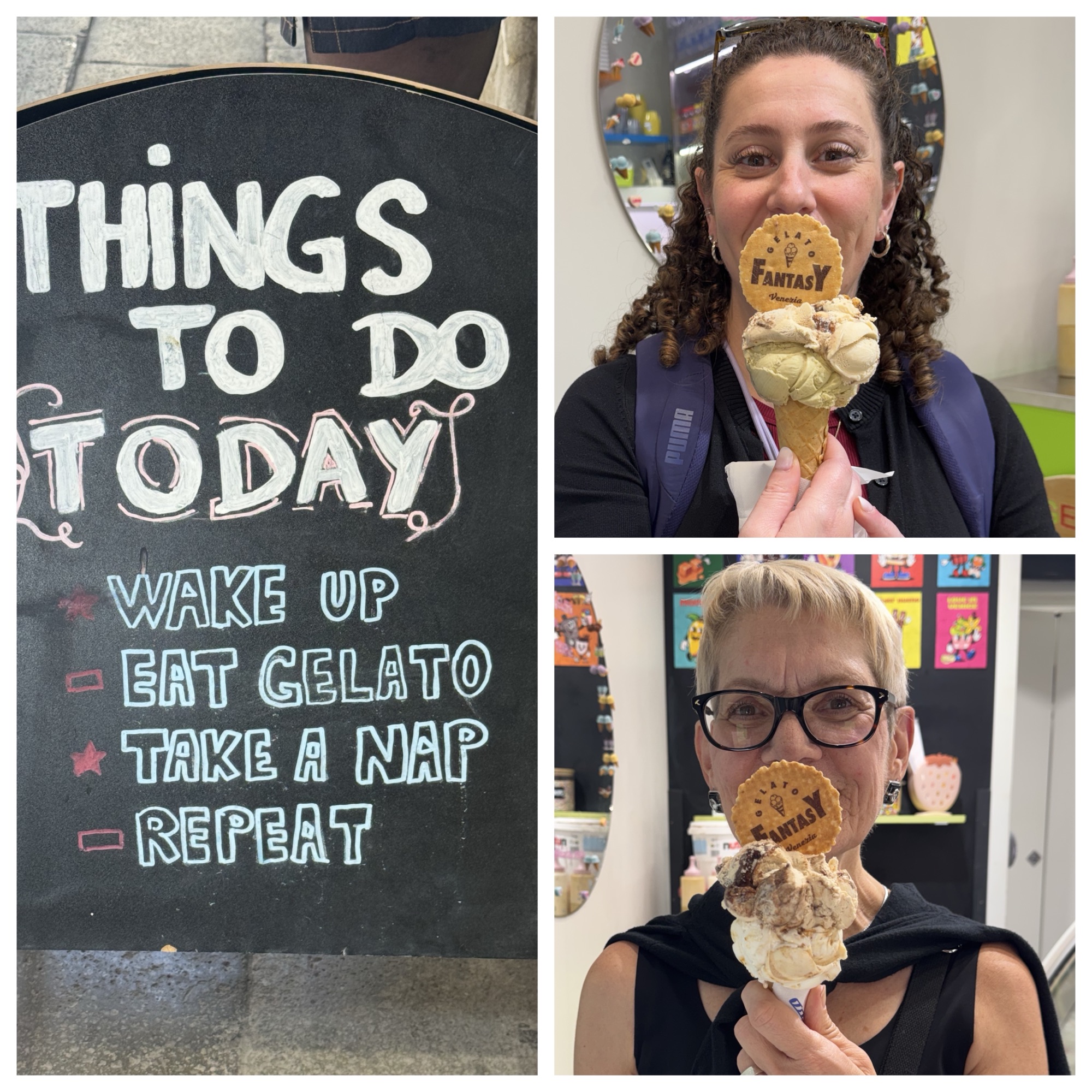
Realizing that we had already done about 7 km of walking and only had a pastry for breakfast plus three small cichetti , it was time for sustenance – which for me when I’m in Europe almost always means a gelato break. My DIL accuses me of eating like a child. We found a gelateria with the delicious and unique flavours and each enjoyed a double scoop.
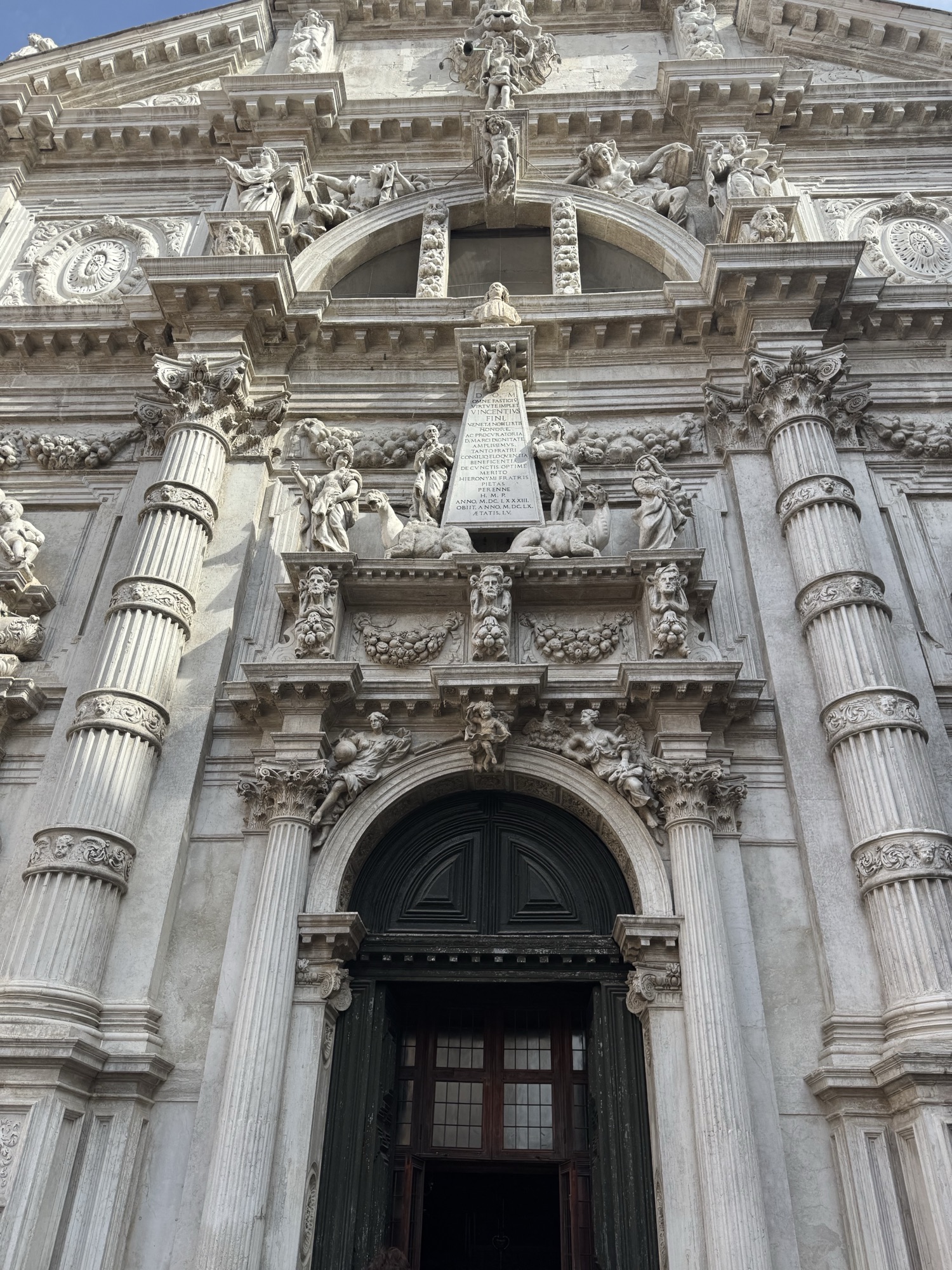
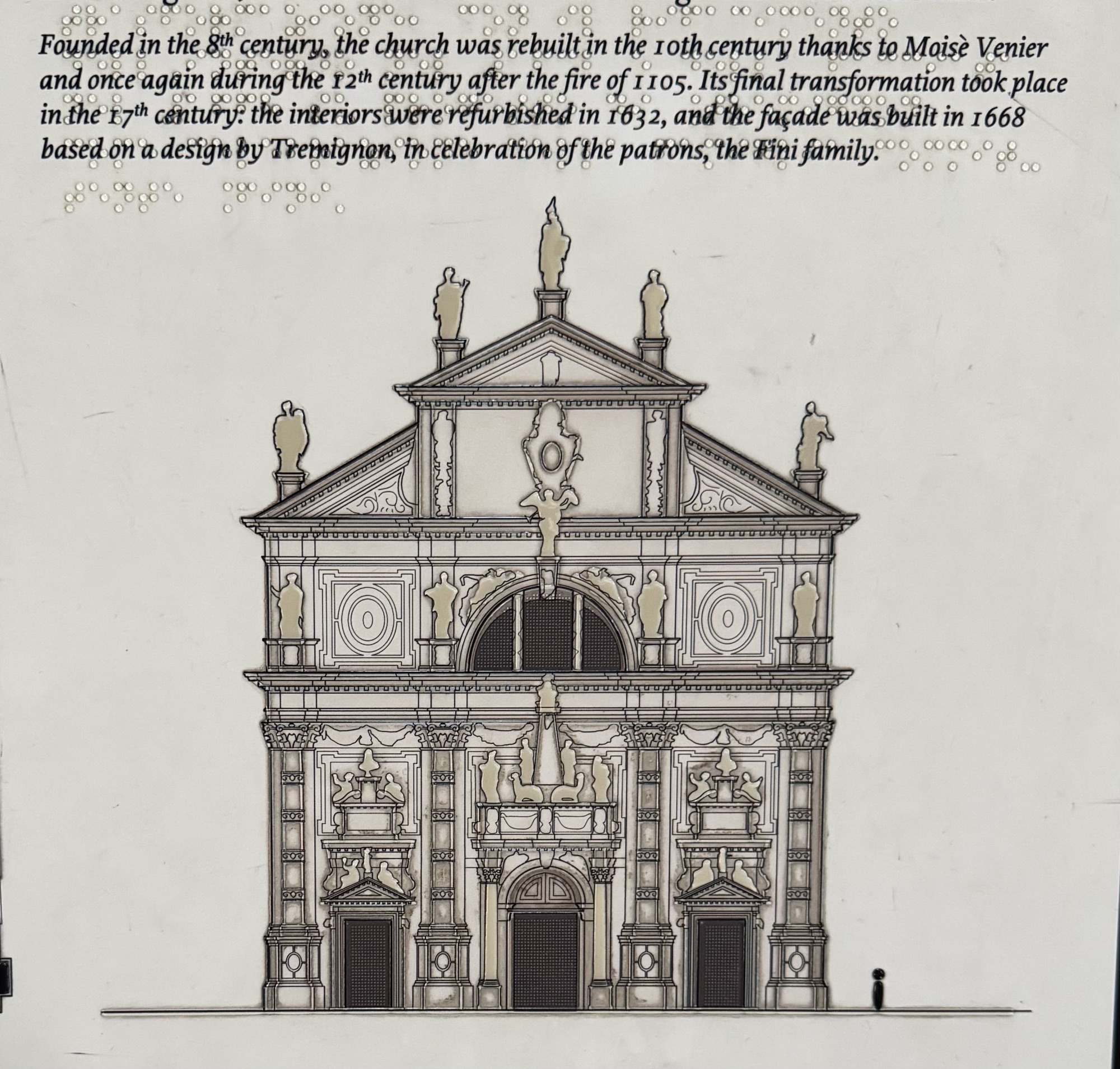
We made another detour into a church dedicated to Saint Moses, and learned that like the Byzantines, the Venetians often considered Old Testament prophets as canonized saints.
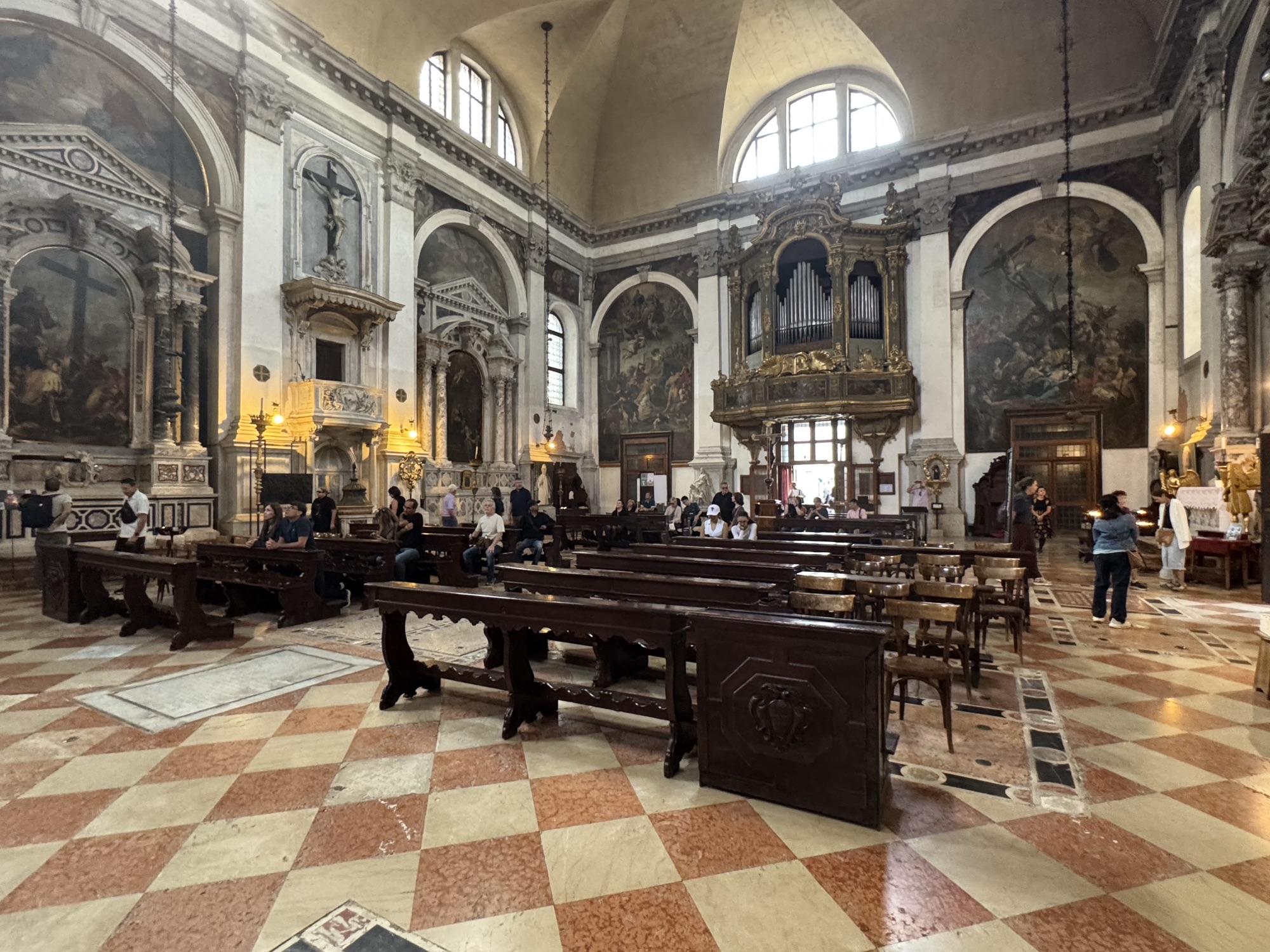
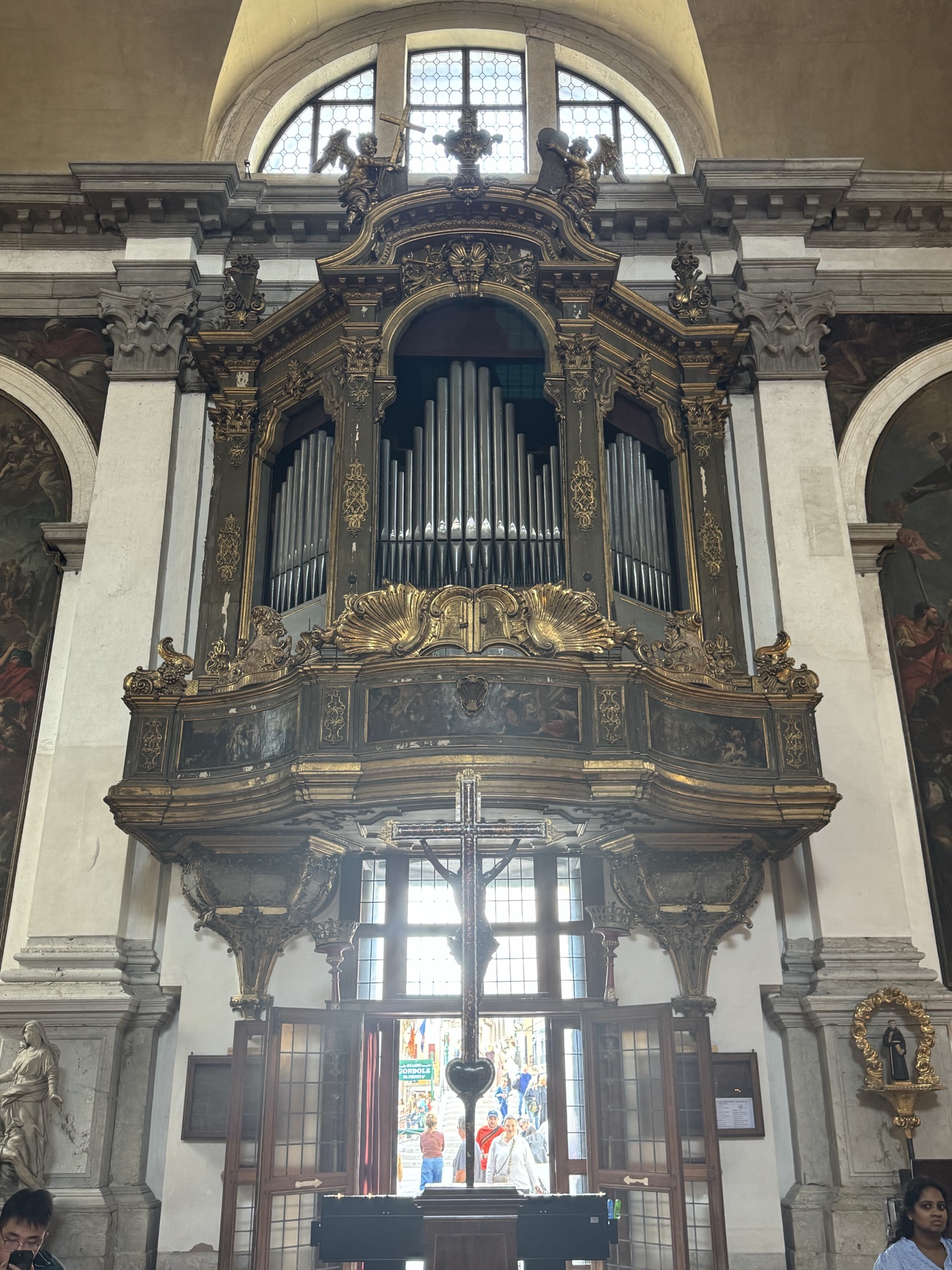
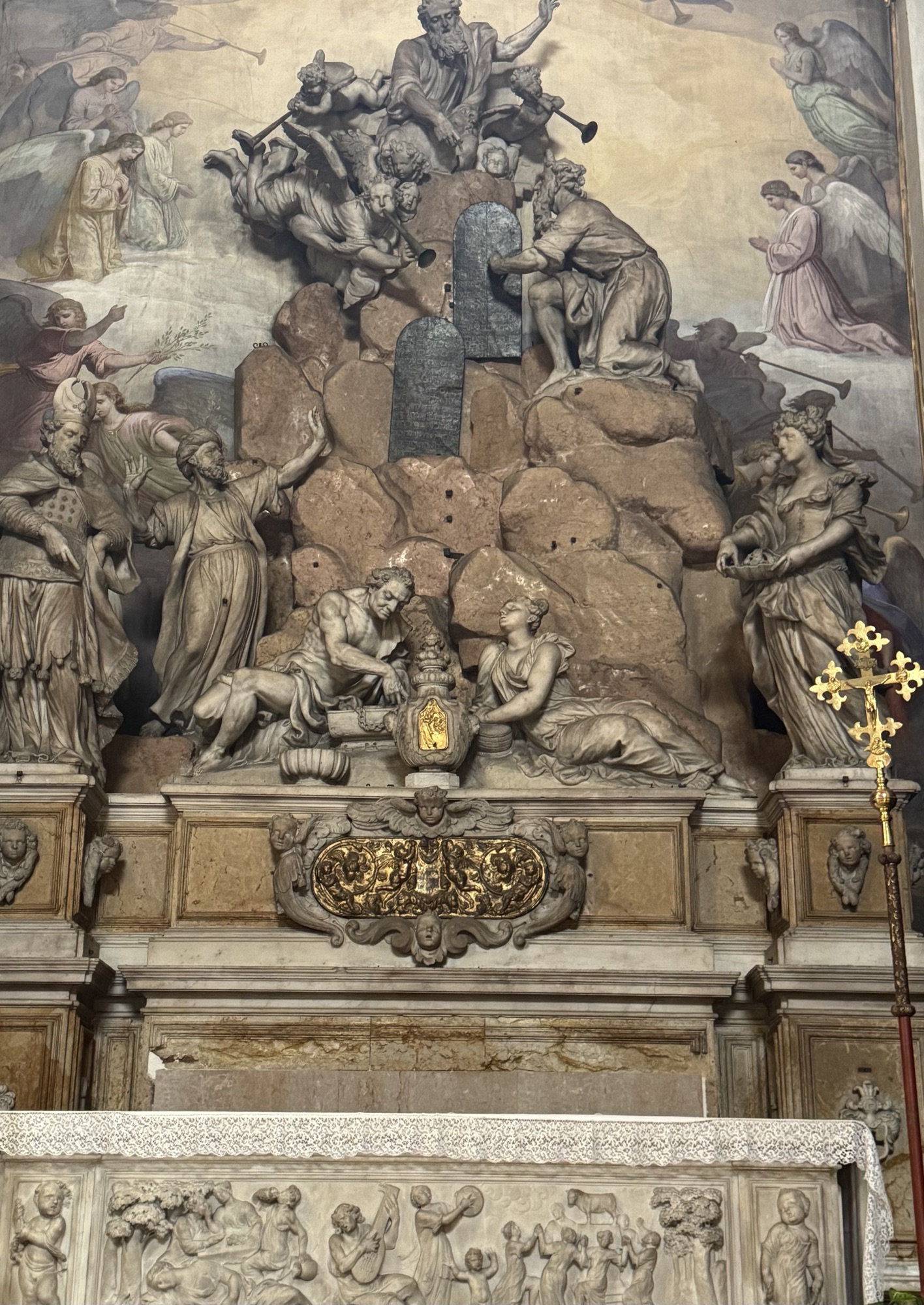
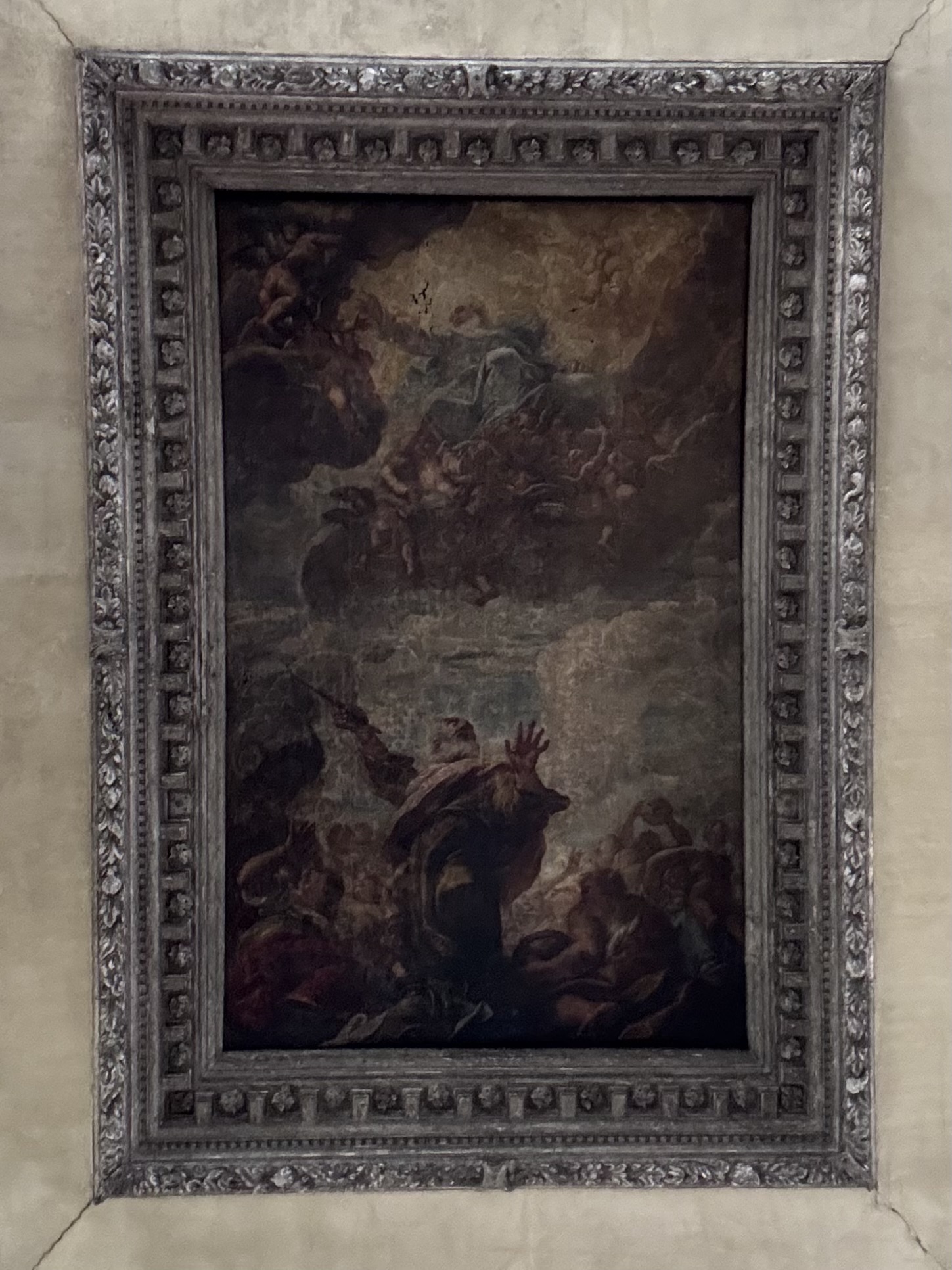
We’re discovering that Tintoretto paintings are everywhere in Venice; there was another in this church.
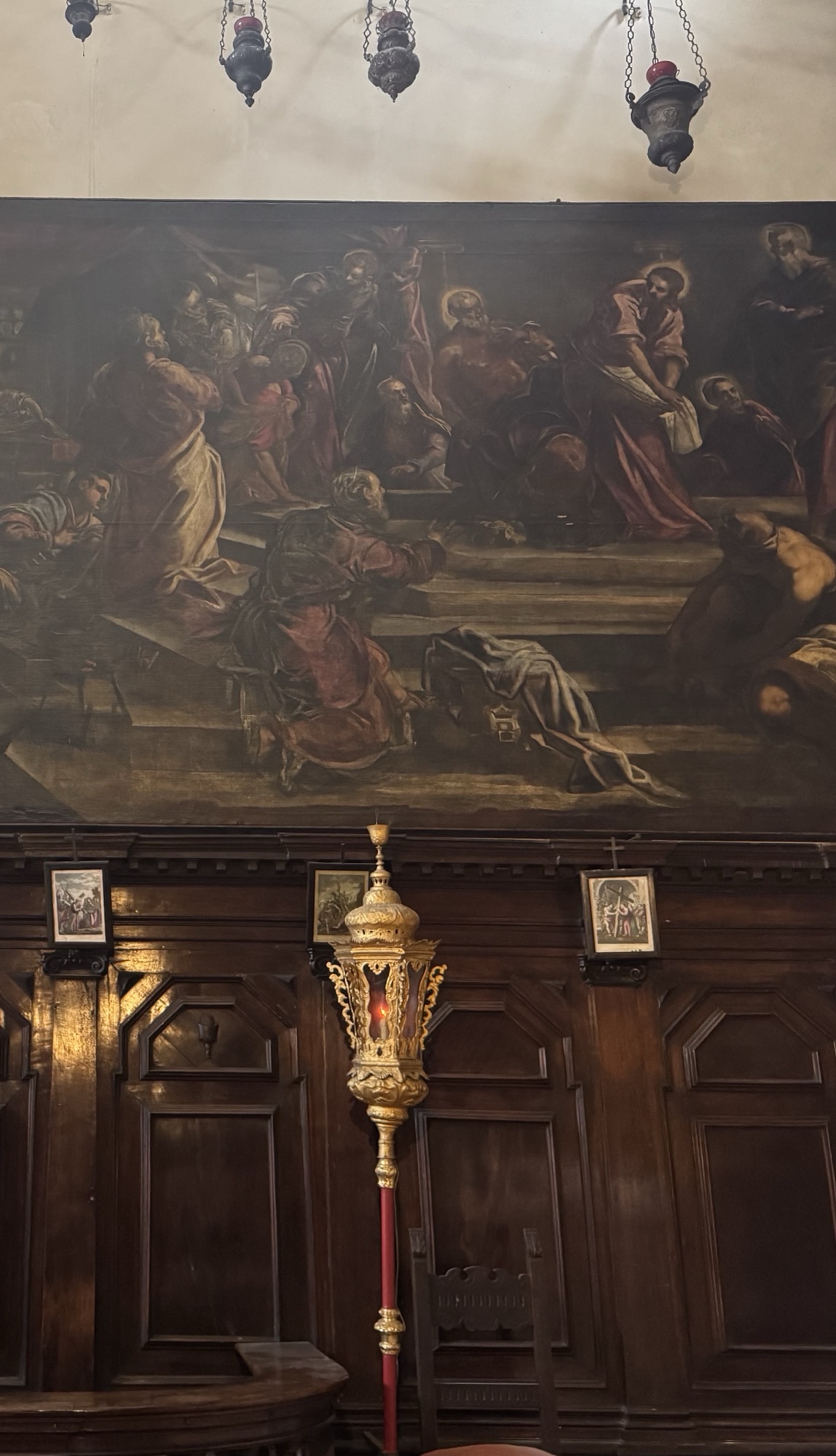
“Christ Washing the Apostles’ Feet”,
1590-1592
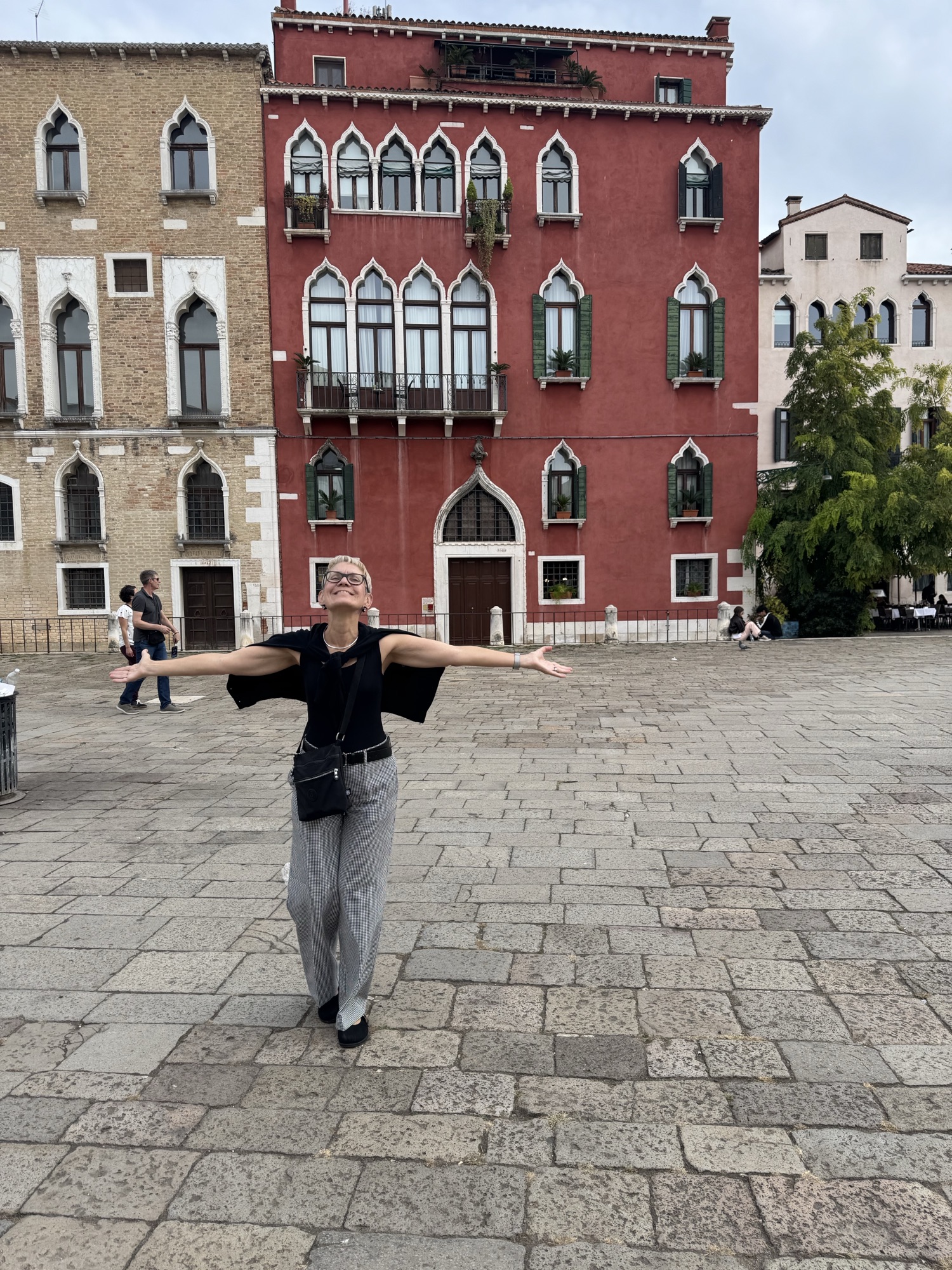
At almost 13,000 steps into a day that ended up clocking in at almost 19000 we really needed to sit down for a while, so we found a little cafe/bar on a quiet side street and nursed a couple of drinks for a while, joined by an extremely bold pigeon.
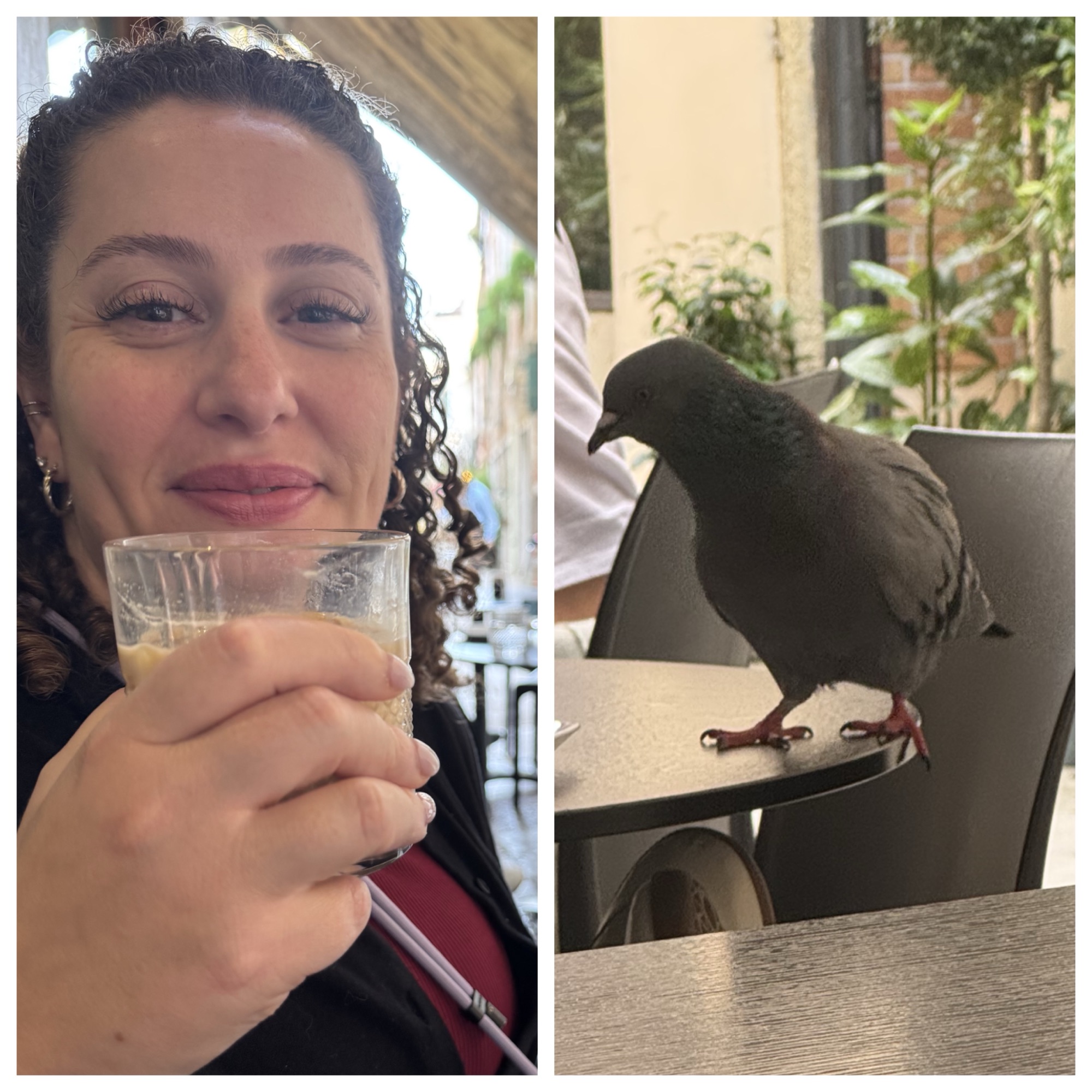
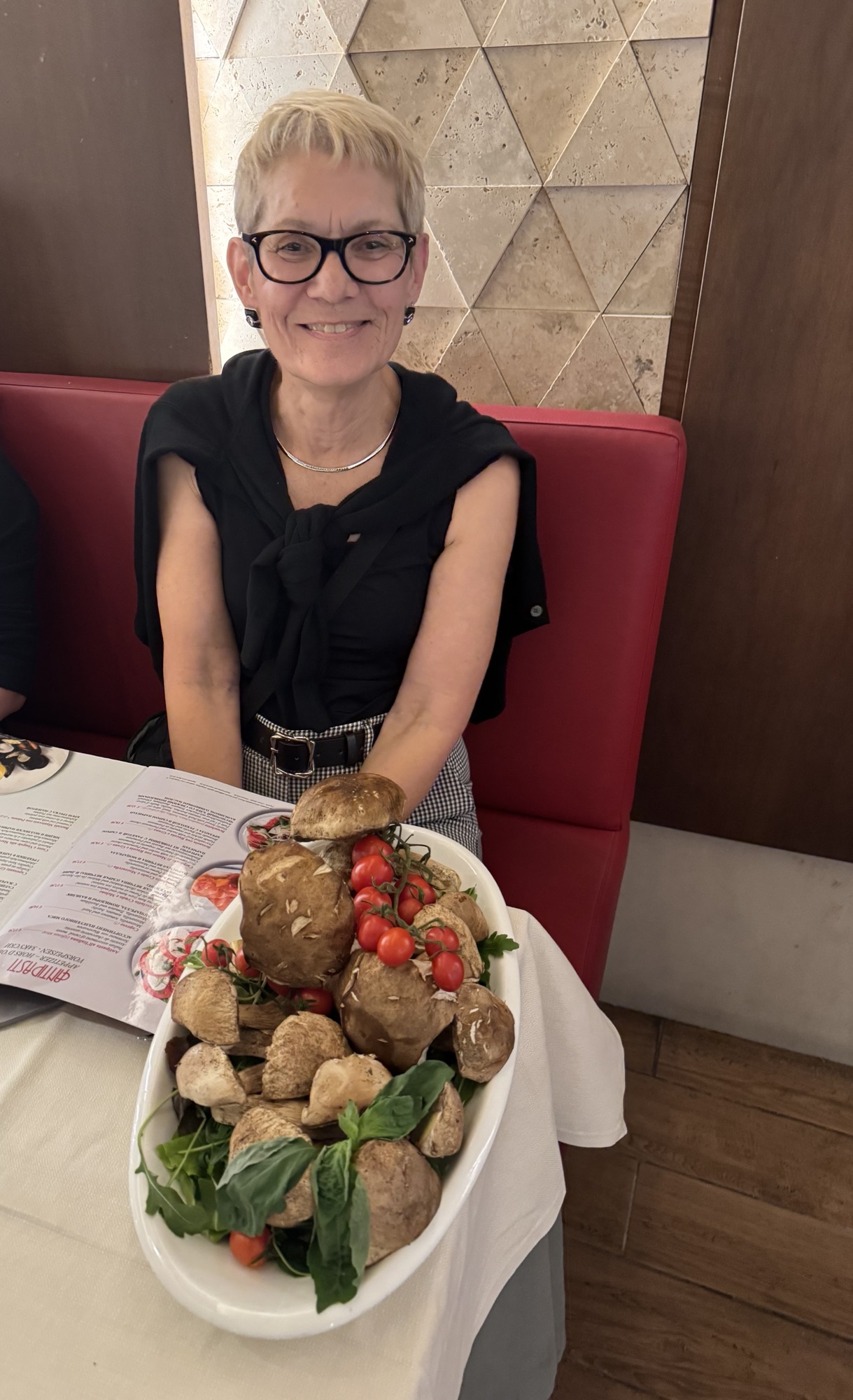
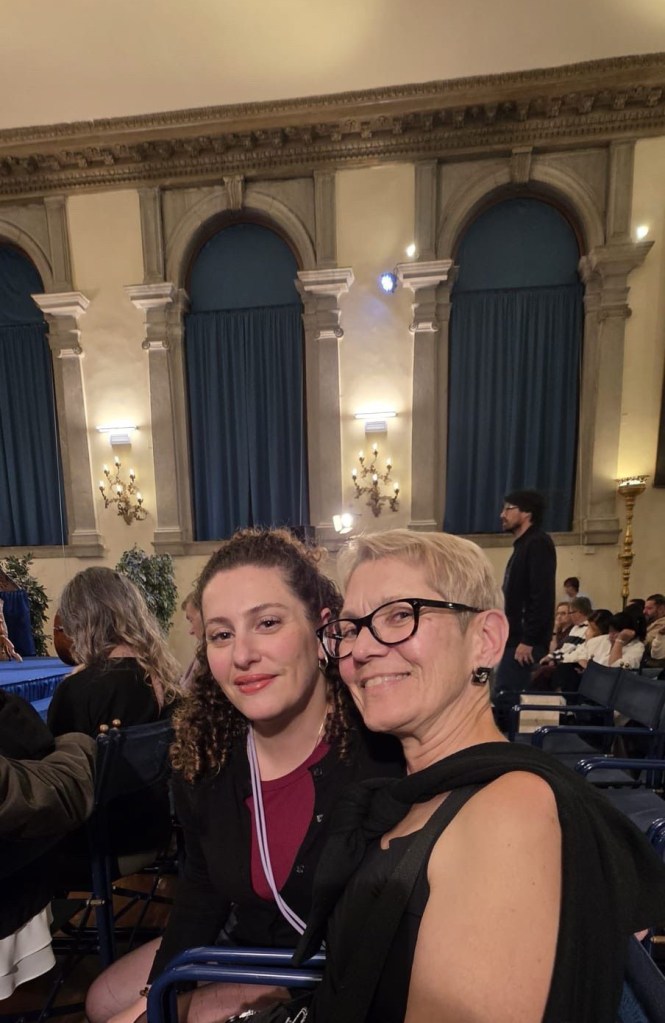
We did a little bit more wandering and souvenir shopping before meeting one of our tour group for an early dinner prior to the Vivaldi concert in the evening. Philippa, from Melbourne Australia, was the only other group member interested in the classical music concert but we were already really enjoying her company and were thrilled that she wanted to join us.
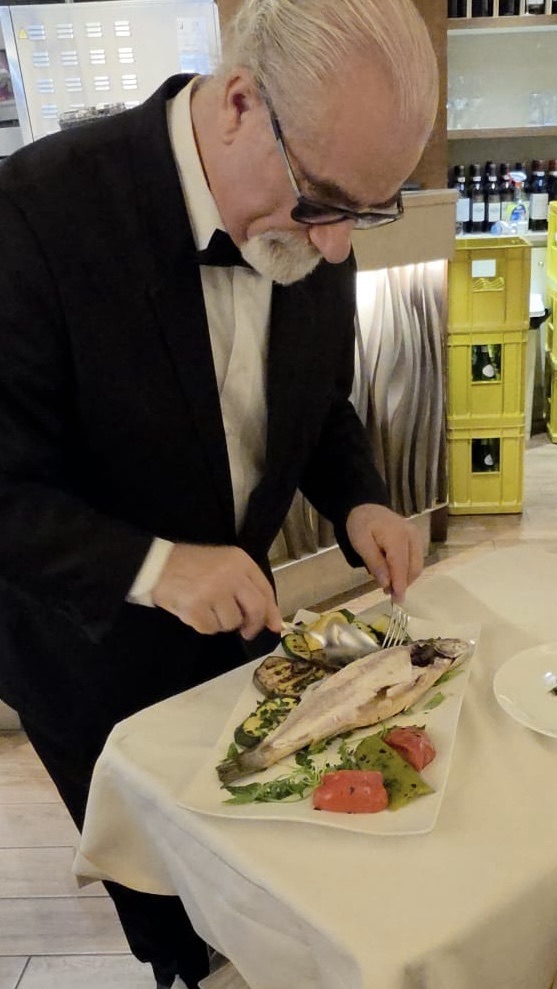
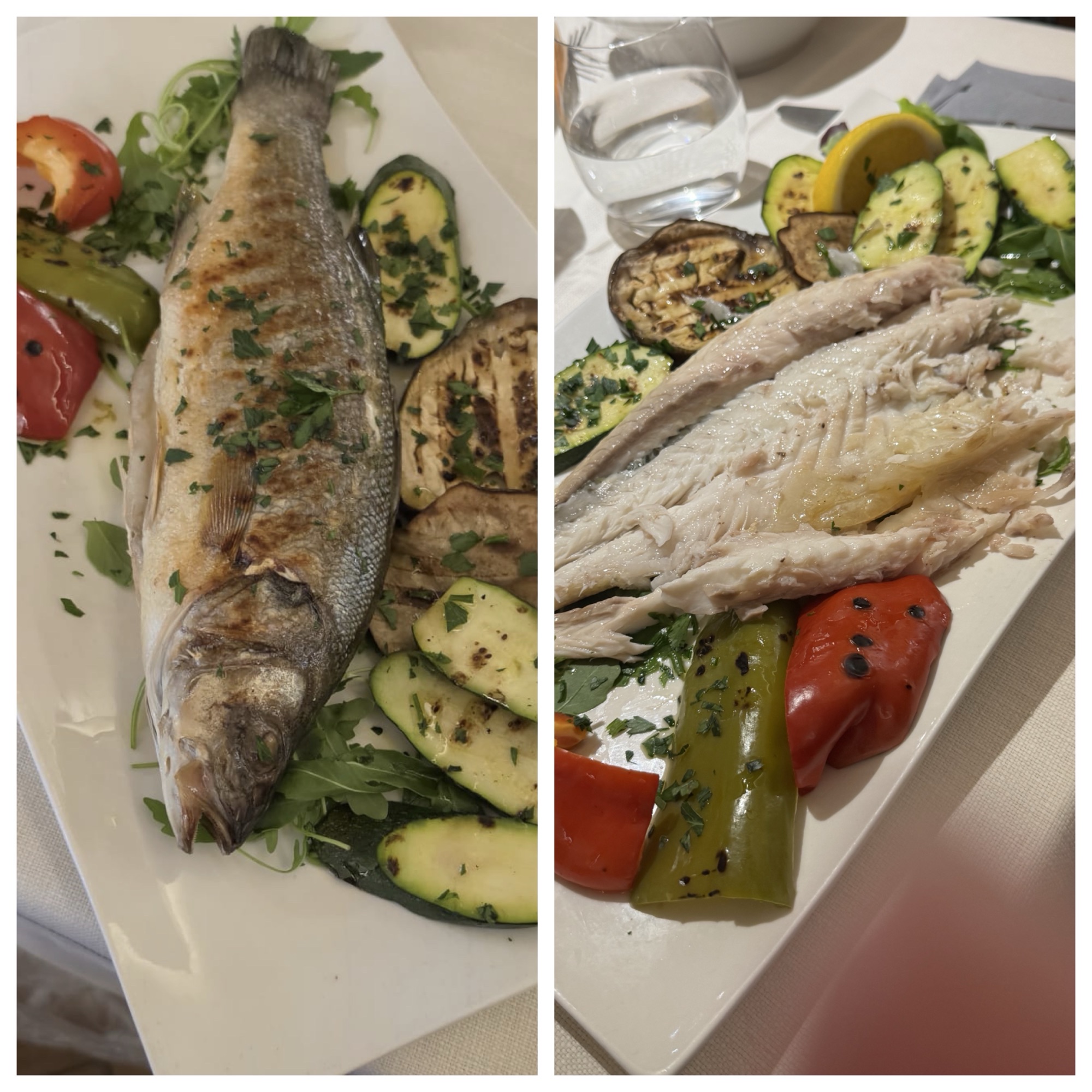
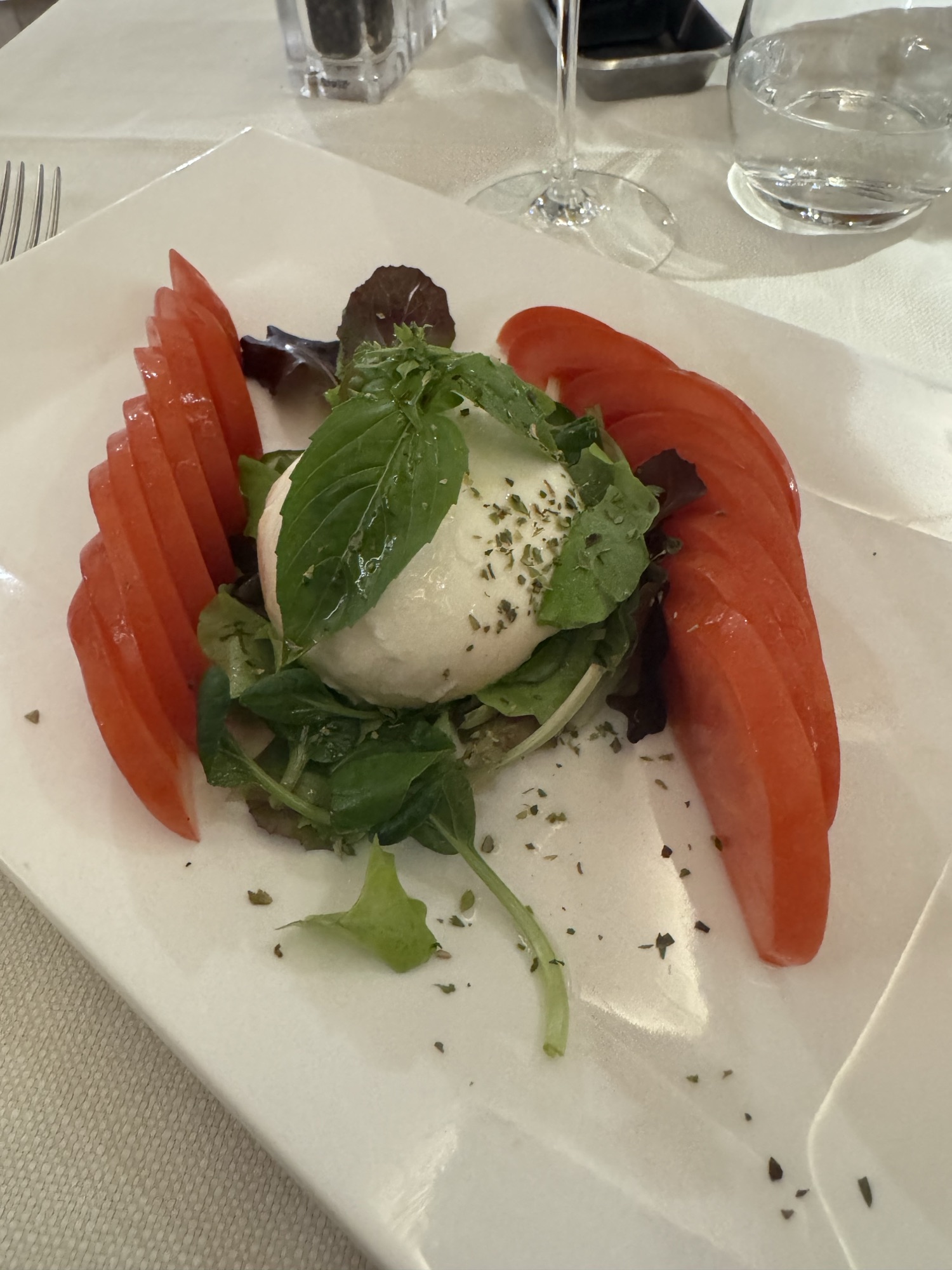
Both our charming waiter and the food at Ristorante Al Teatro Goldini were wonderful.
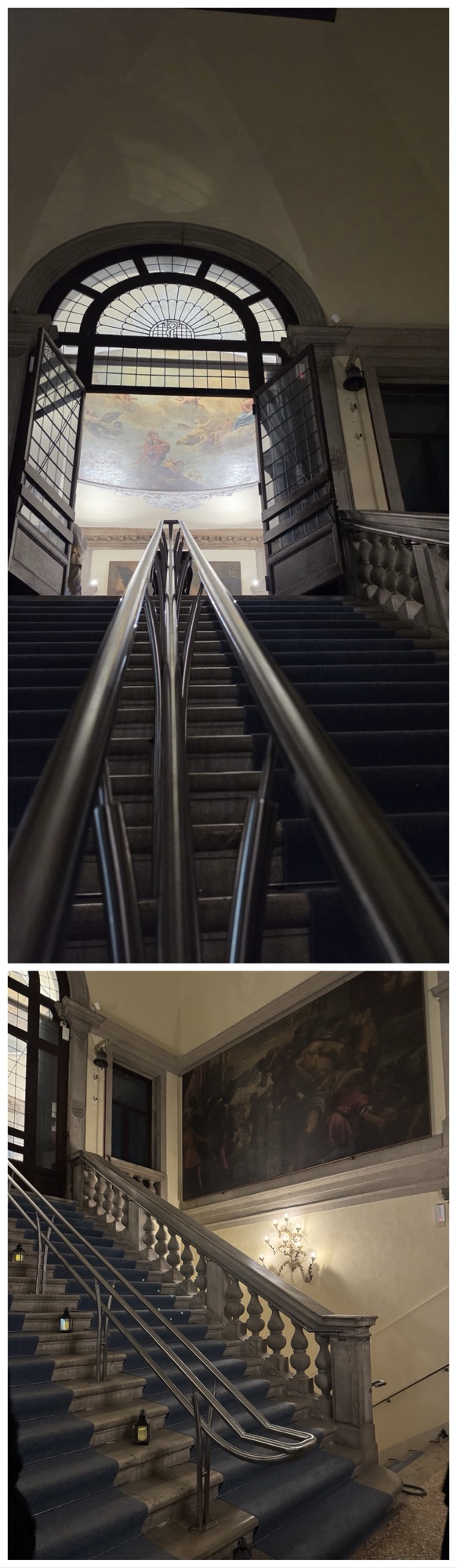
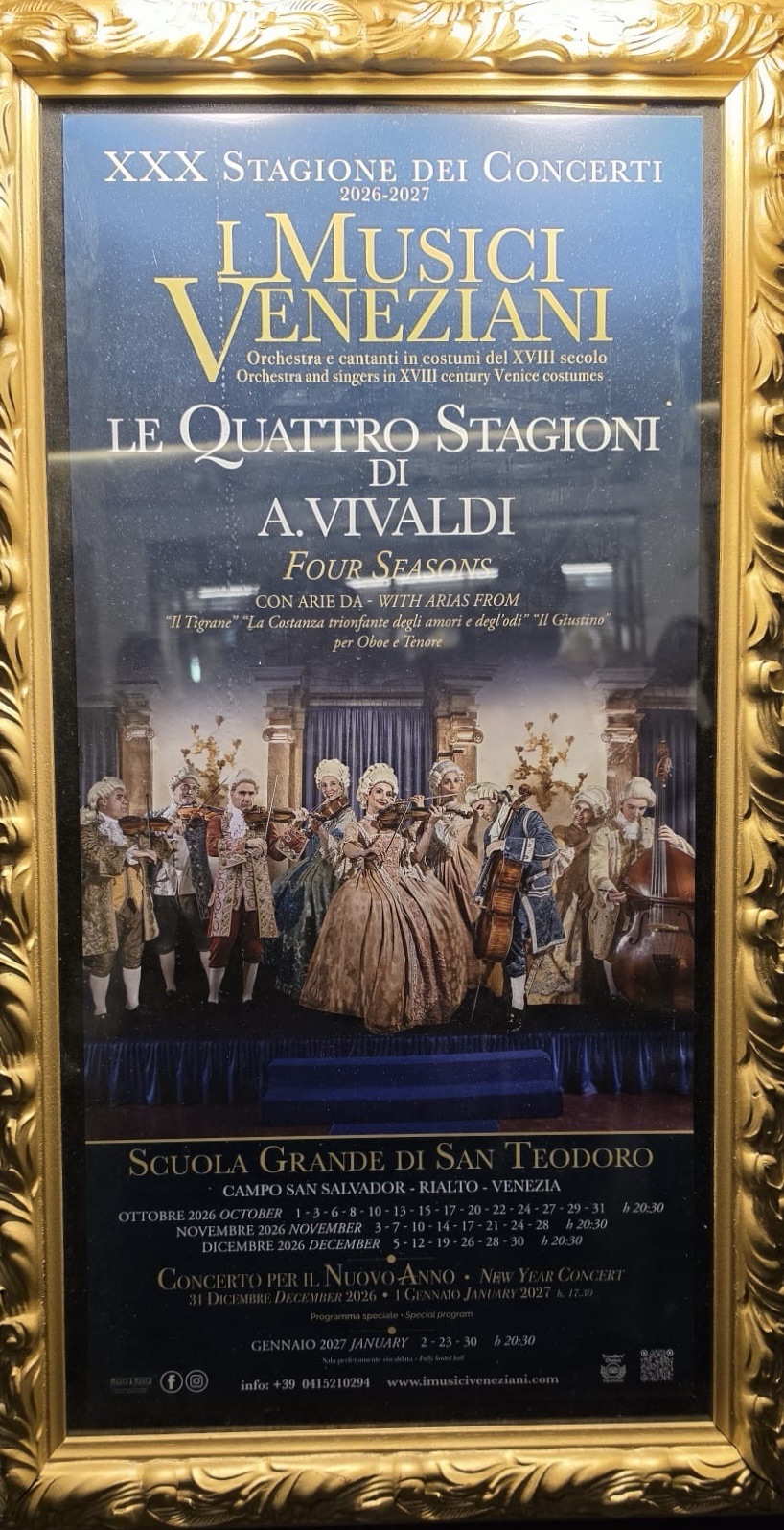
Scuola Grande San Teodoro is the seat of the oldest Venetian confraternity built around the 8th century as a sign of devotion to the first patron saint of the city of Venice. The gorgeous building, completed in 1581CE was our venue for the I Musici Veneziani orchestra’s mostly Vivaldi concert.
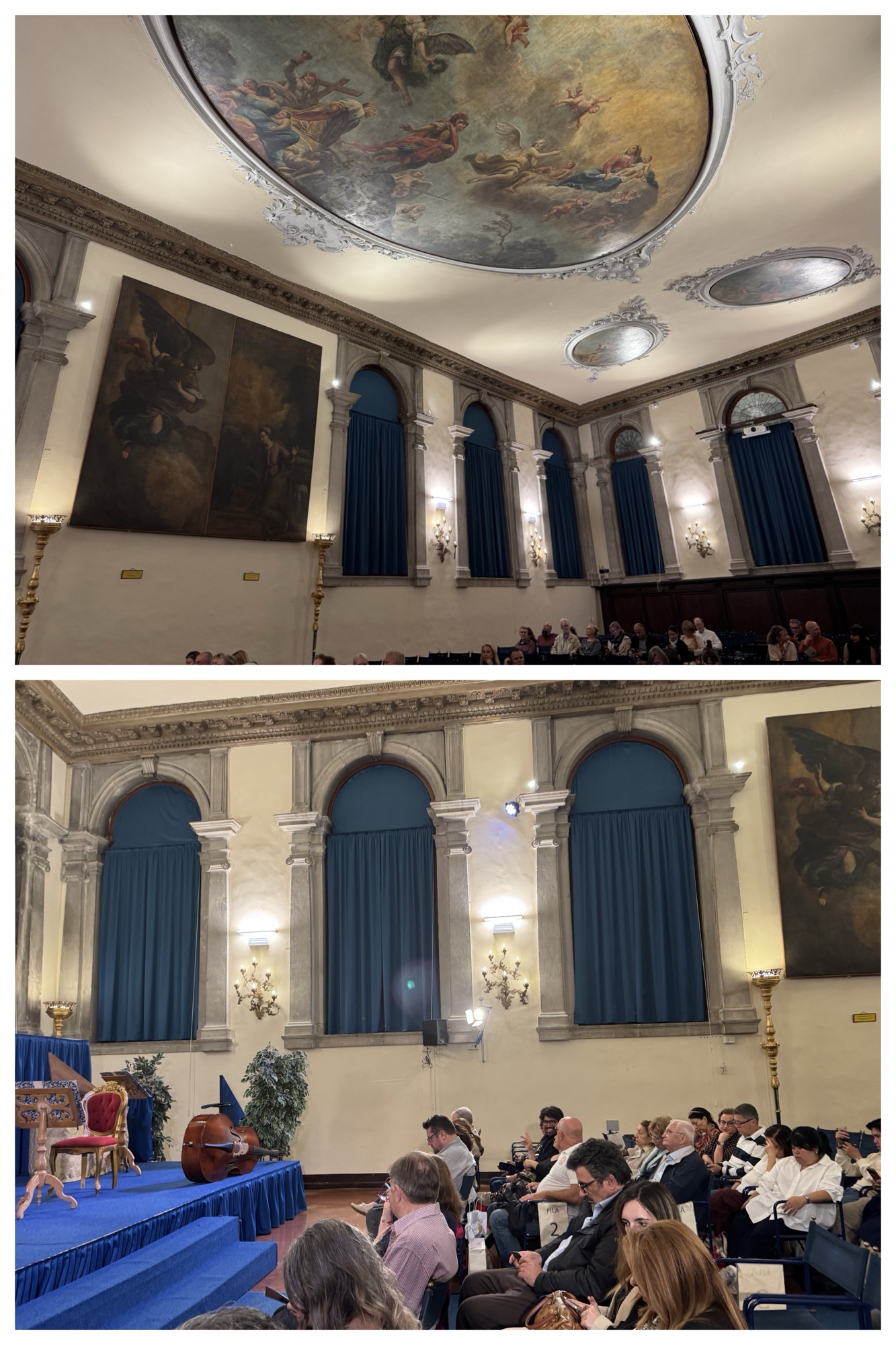
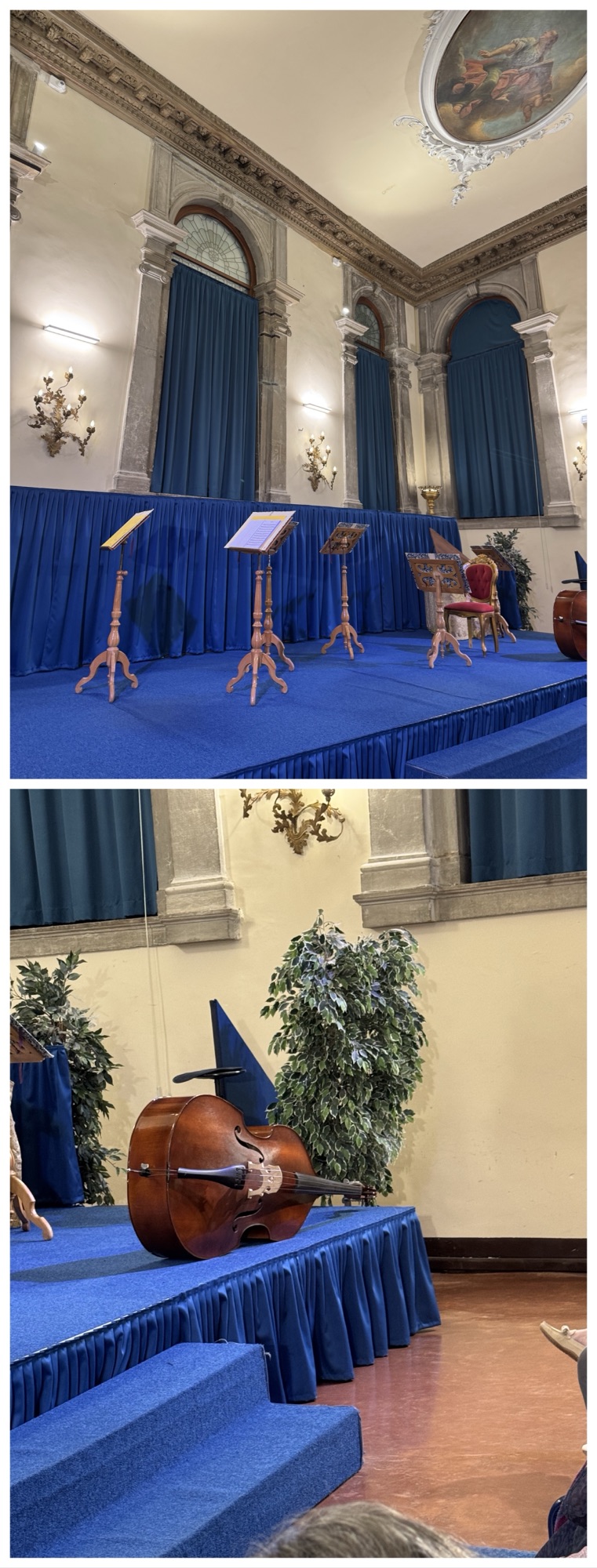
As was the case for the concert I attended last month in Vienna, photographing the costumes orchestra was not allowed, but I did take photos of the program.
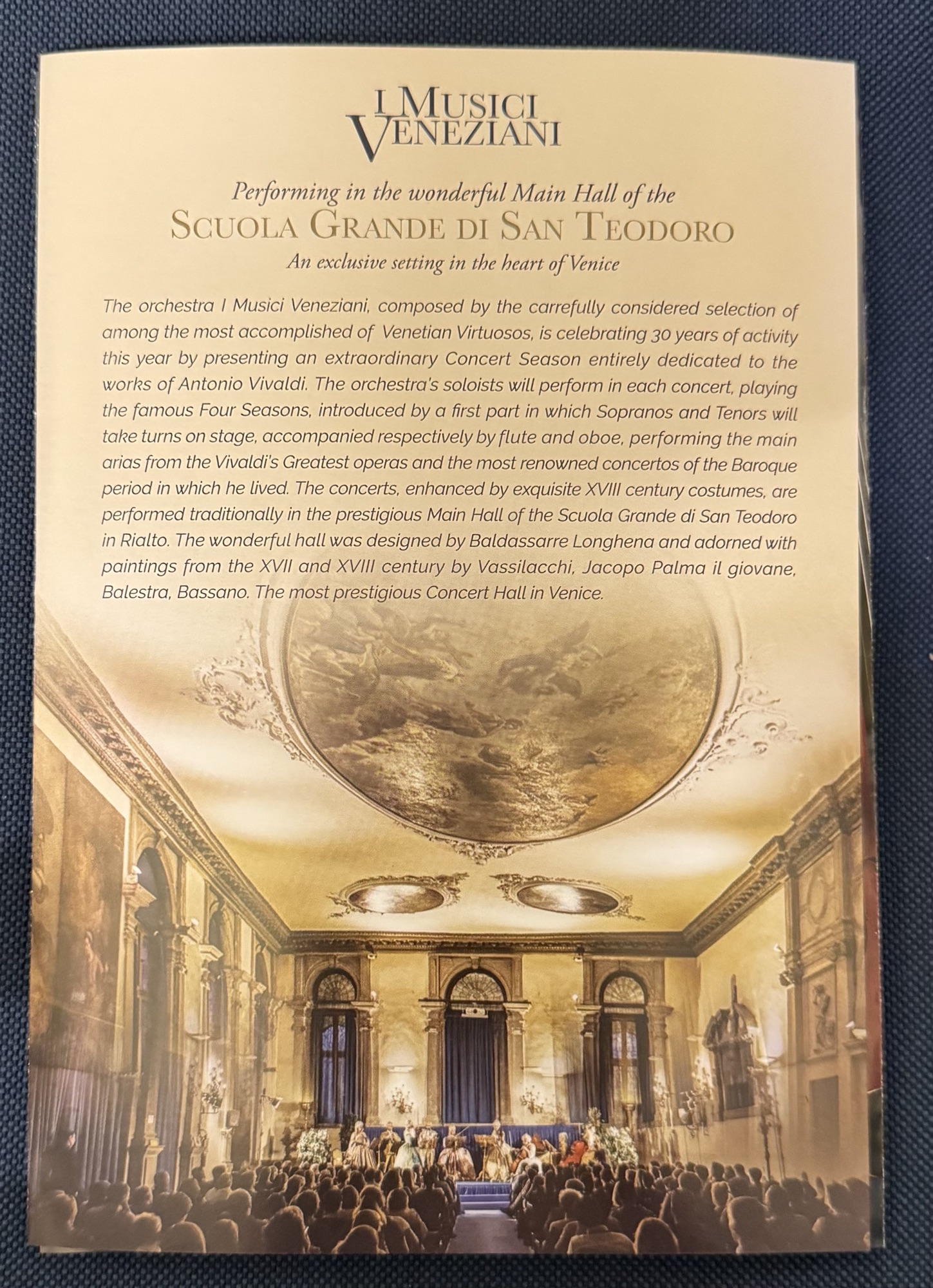
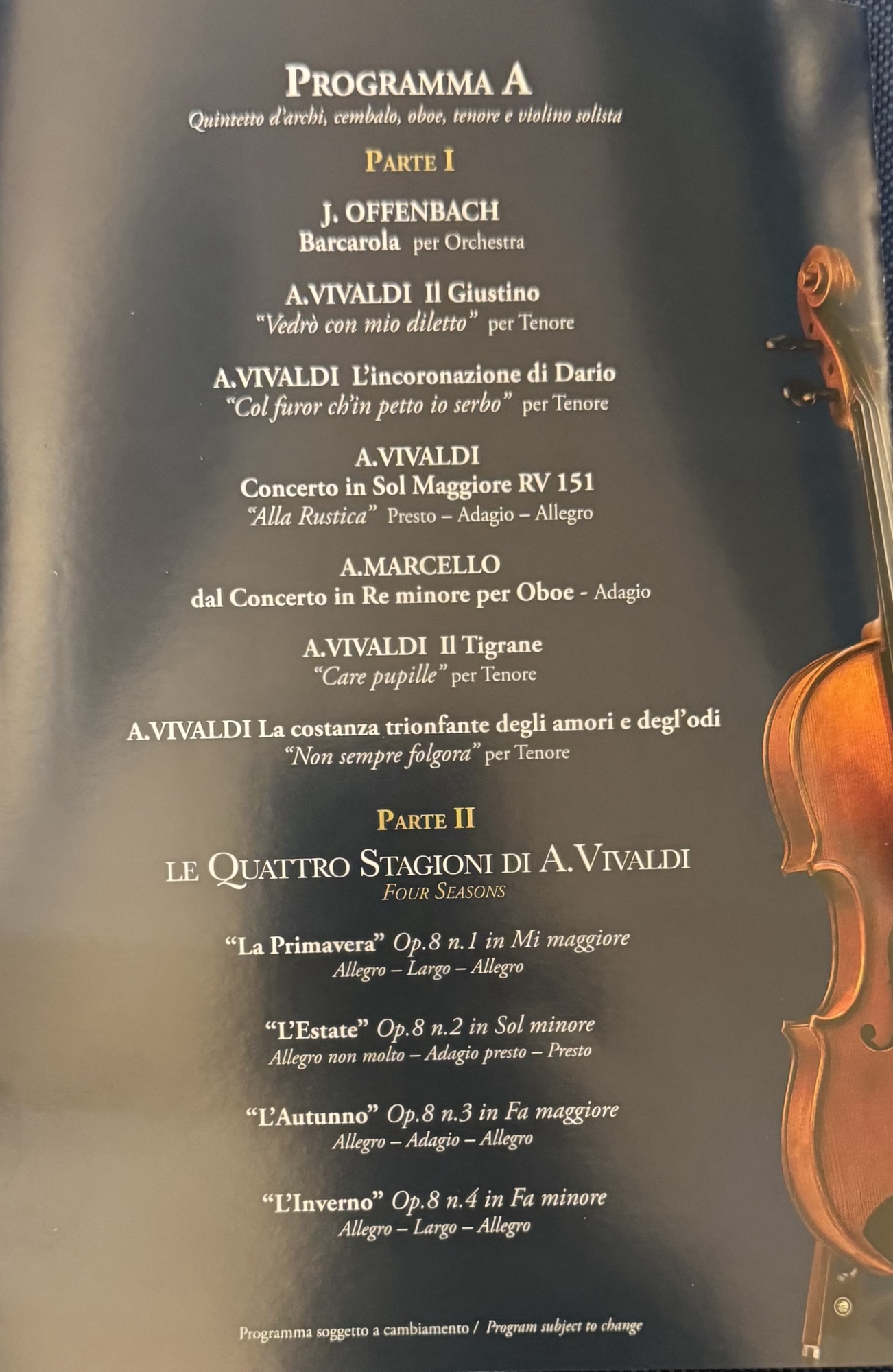
We got back to our hotel after eleven, with tired feet, but still needed to pack up ready to head to Bologna by train in the morning.

