Tomorrow (October 9th) we’ll join the other members of our 8-day Intrepid Italy Food Tour, but we began our adventure with some intentional time on our own in Venice.
I’ve been in Venice a couple of times before with Ted (Episode 224, Episode 224A, Episode 532), but DIL#2 has not, so I was hoping to share some of my favourite things with her that I knew were not on our tour itinerary – specifically the island of Murano and its glassworks, and (if I can find it again) the absolutely magnificent Scuola Grande di San Rocco.
To that end, I booked a boat tour to visit Murano and its glassmaking workshops, and Burano and its lacemaking traditions.
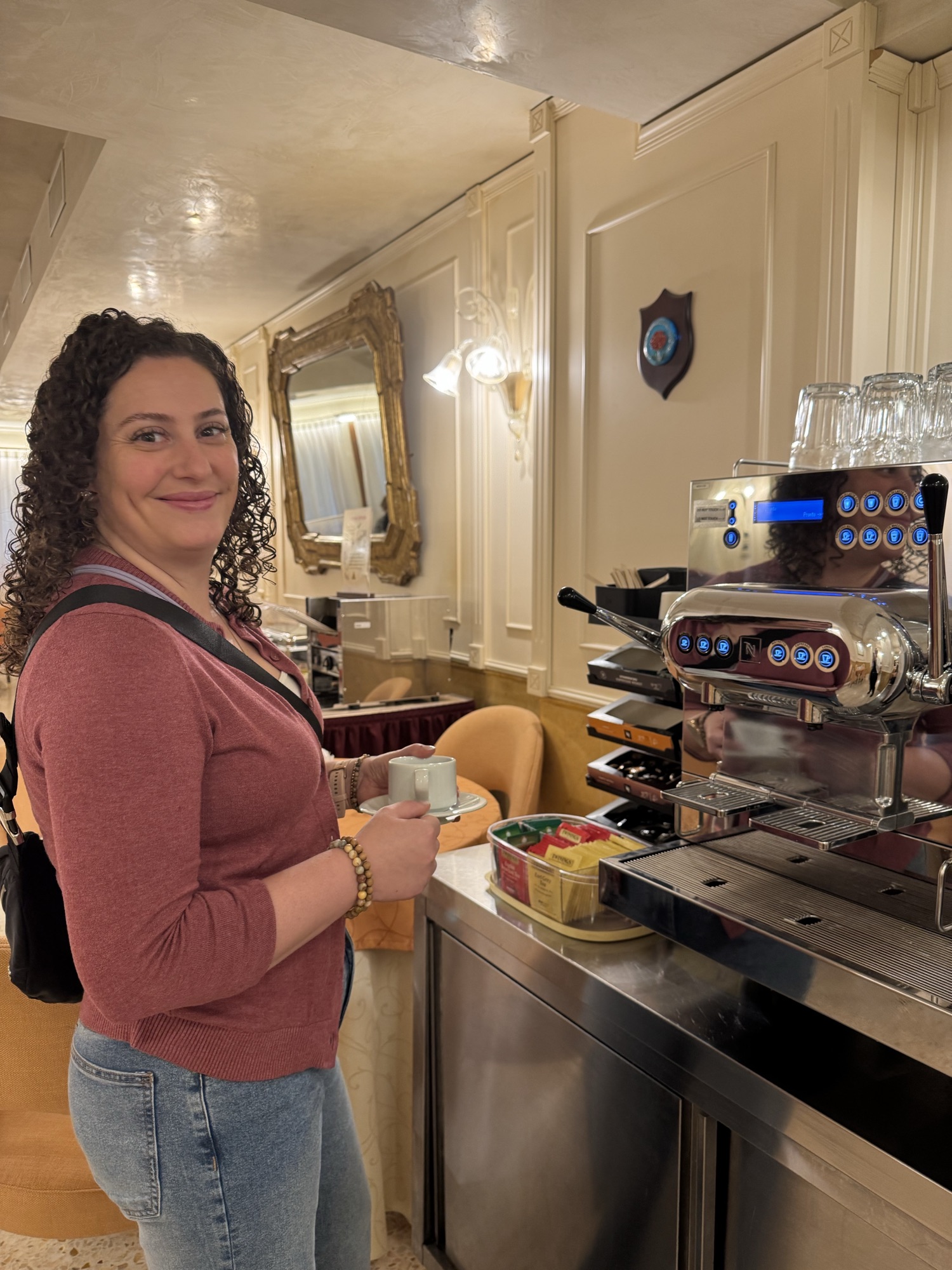
Before meeting our group at the equestrian statue of Victor Emmanuel II, we had breakfast at our hotel and reached our group meeting point via a leisurely stroll.
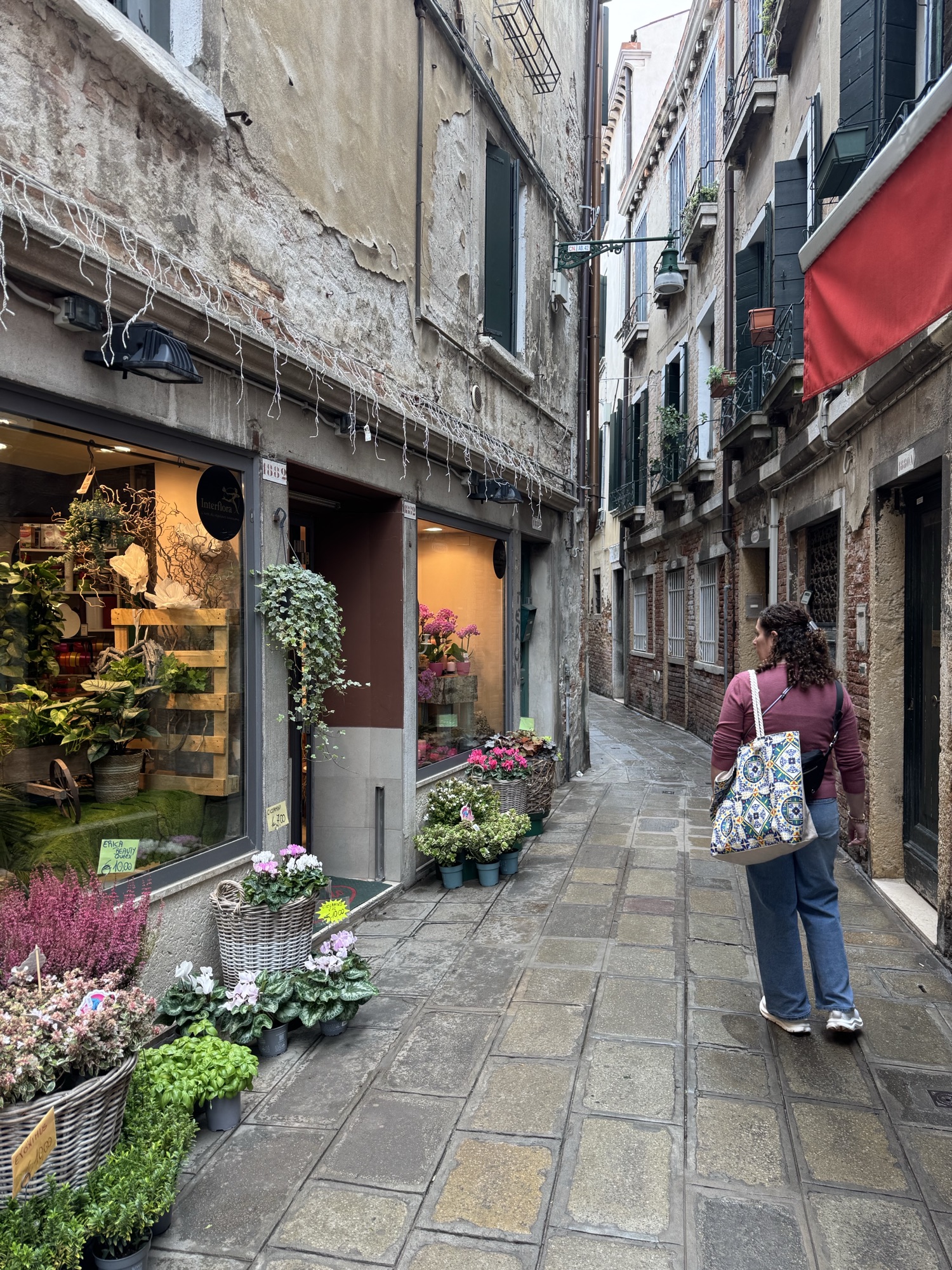
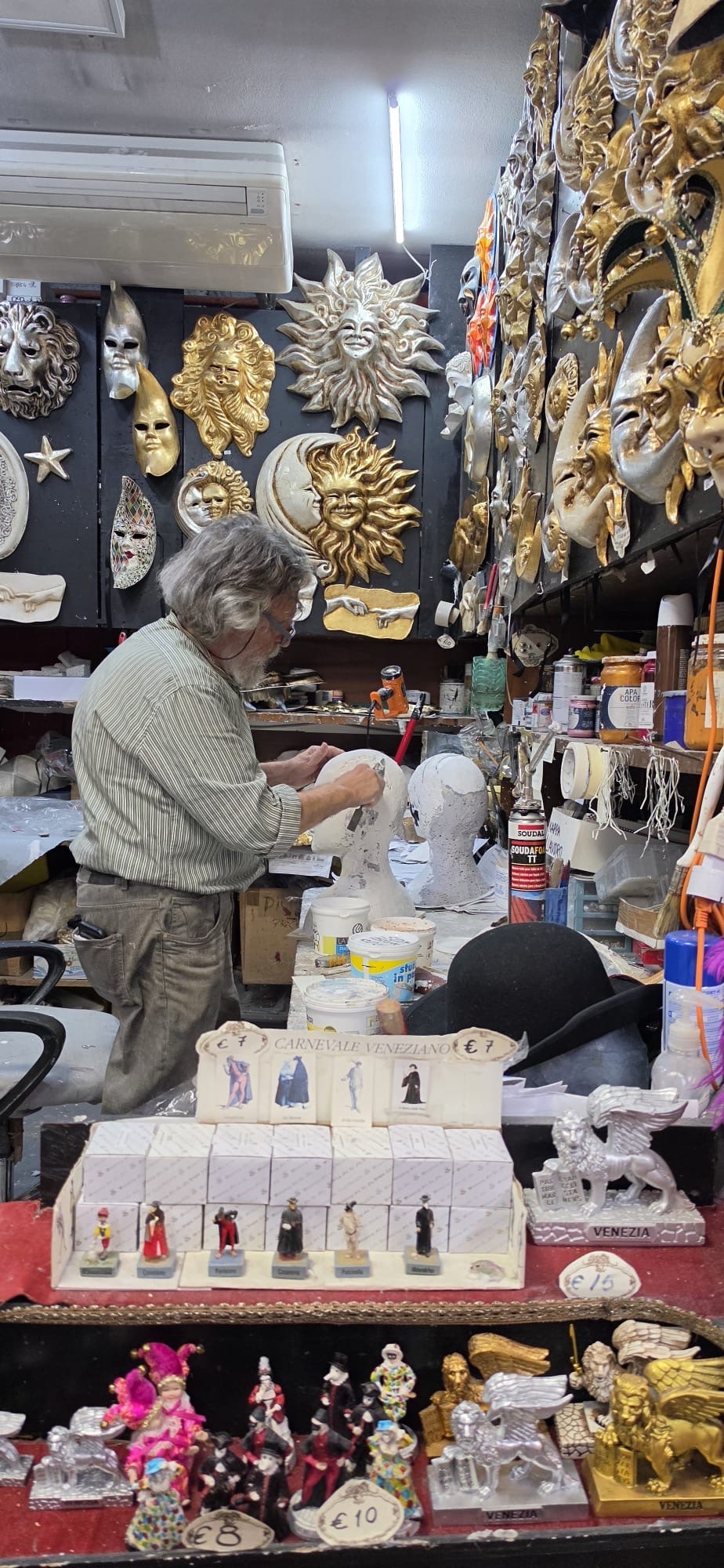
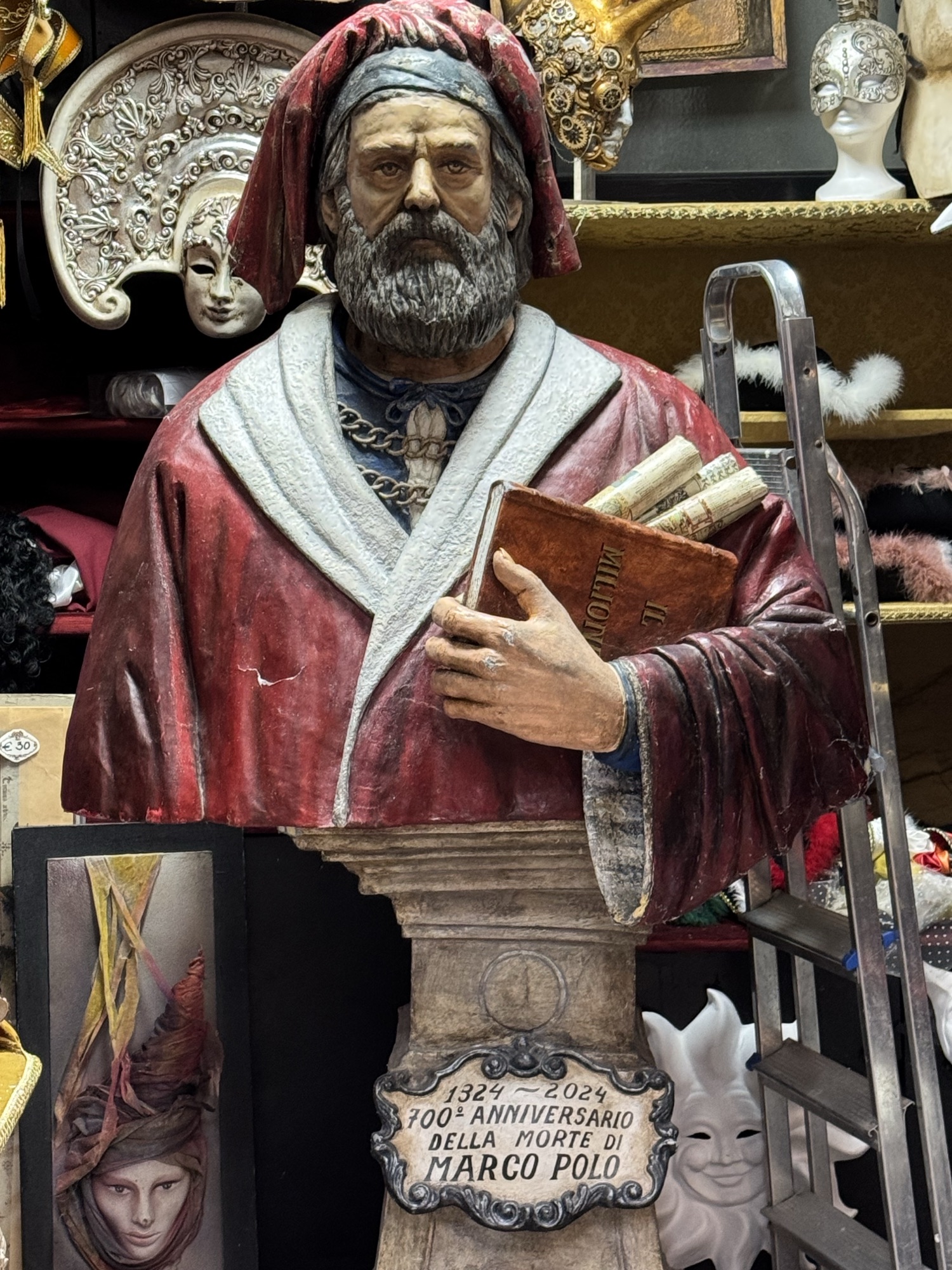
Our plan for the morning was simply to stroll around and do some window shopping, or potentially some souvenir shopping.
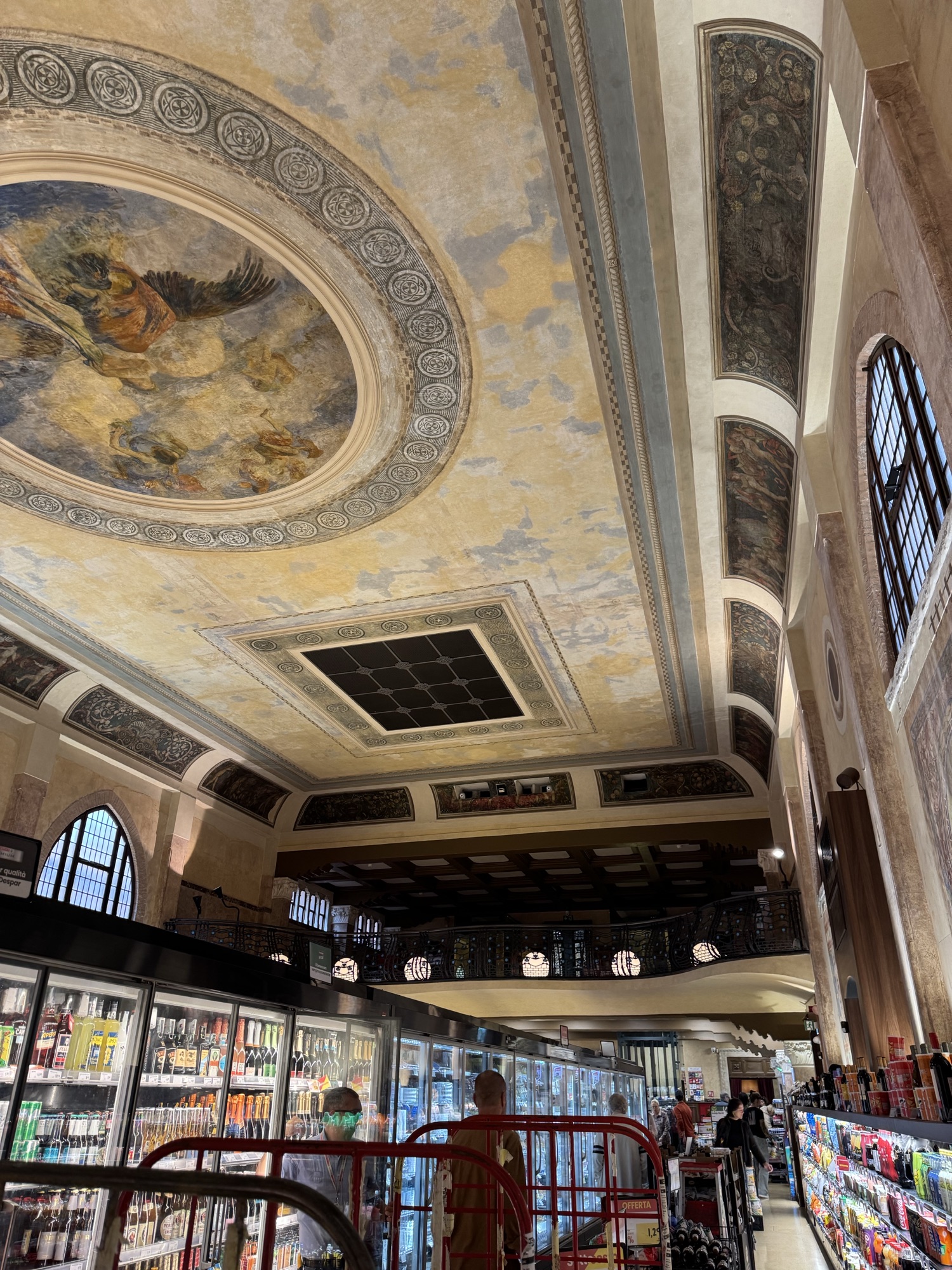
One of the things DIL was looking for was electrolytes, and to that end, we stopped into a Spar grocery store located in the Italian Theatre building. Apparently there are TikTok videos of this grocery store with its fresco ceiling and wrought iron trim. It is definitely an unusual place to be buying your daily needs.
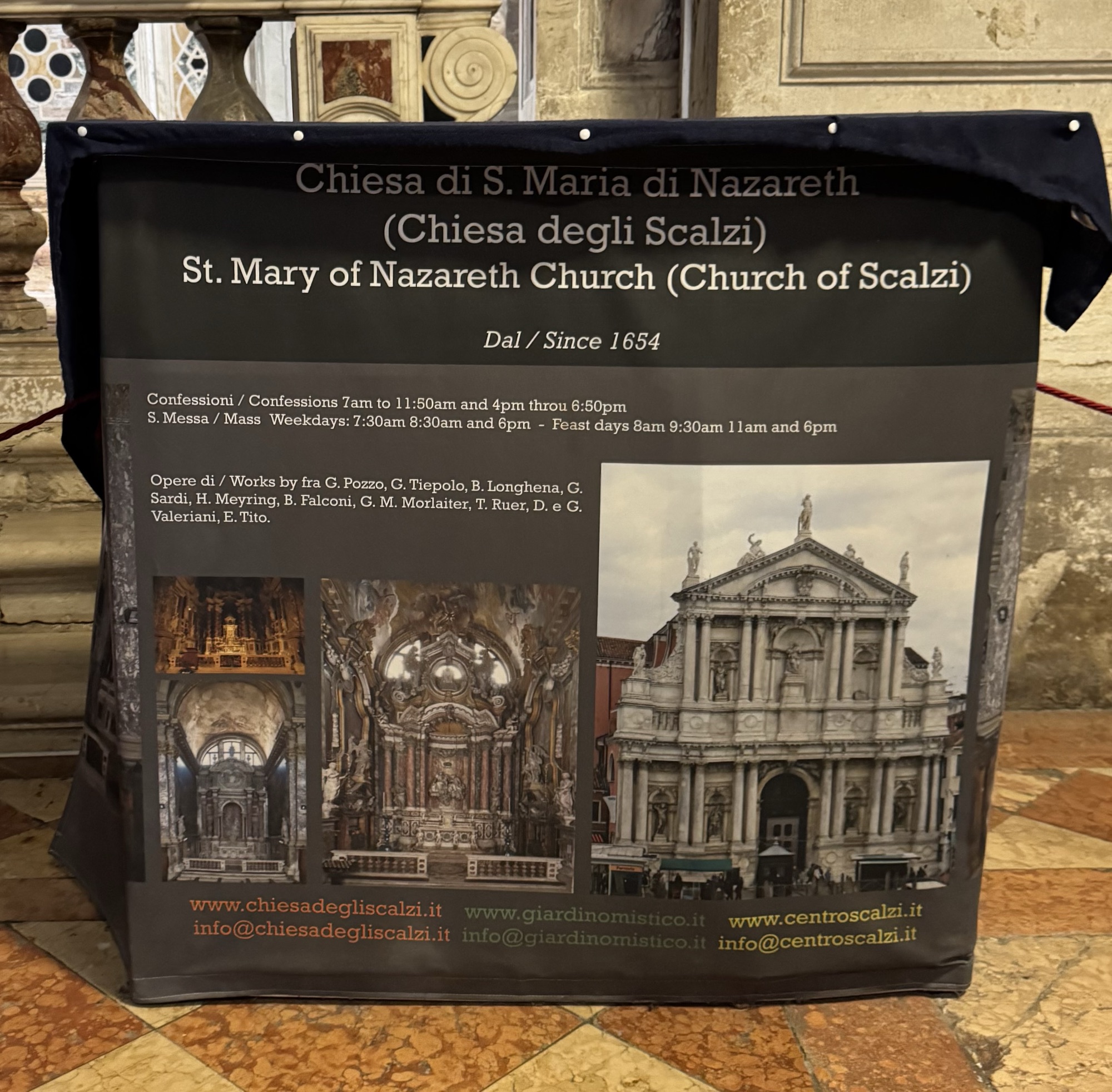
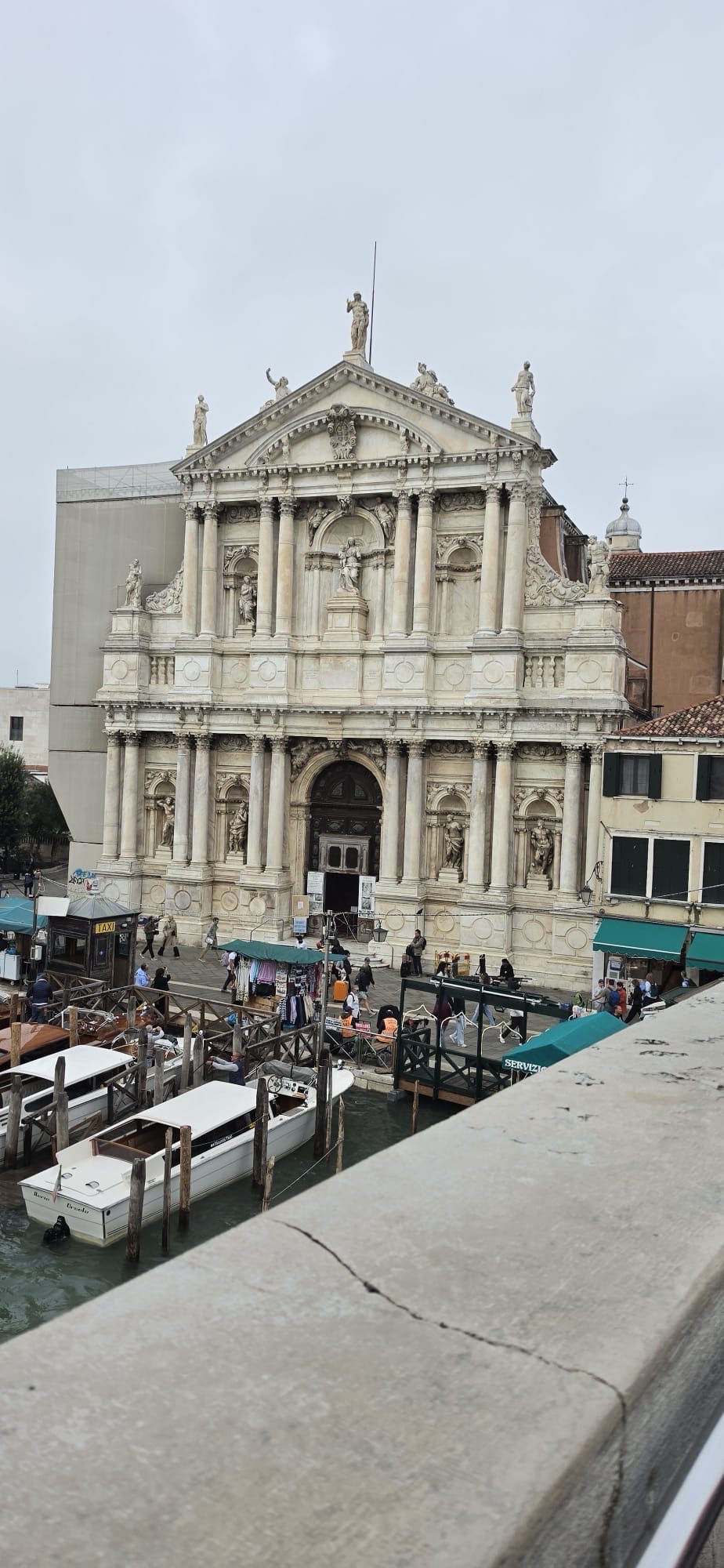
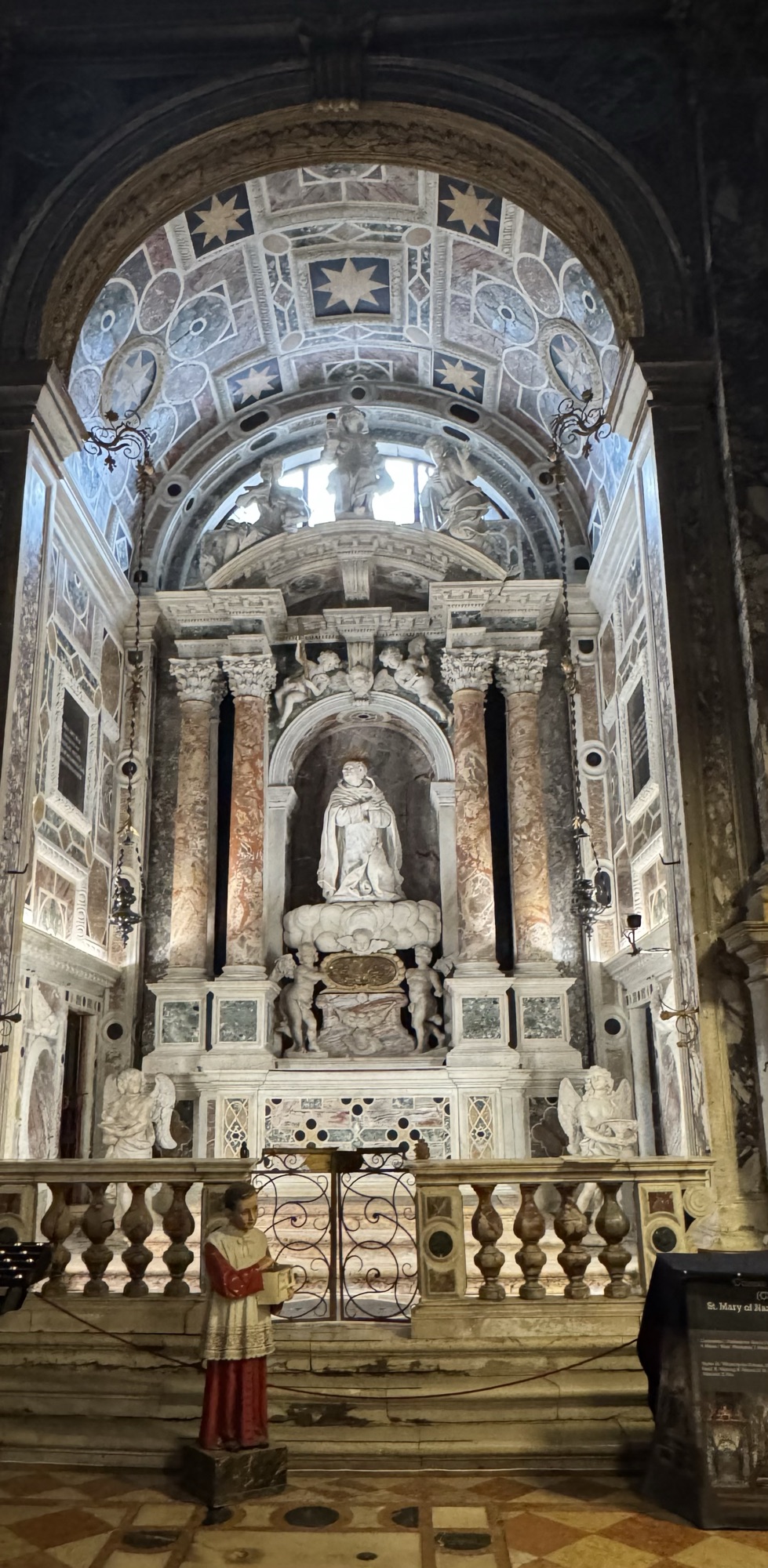
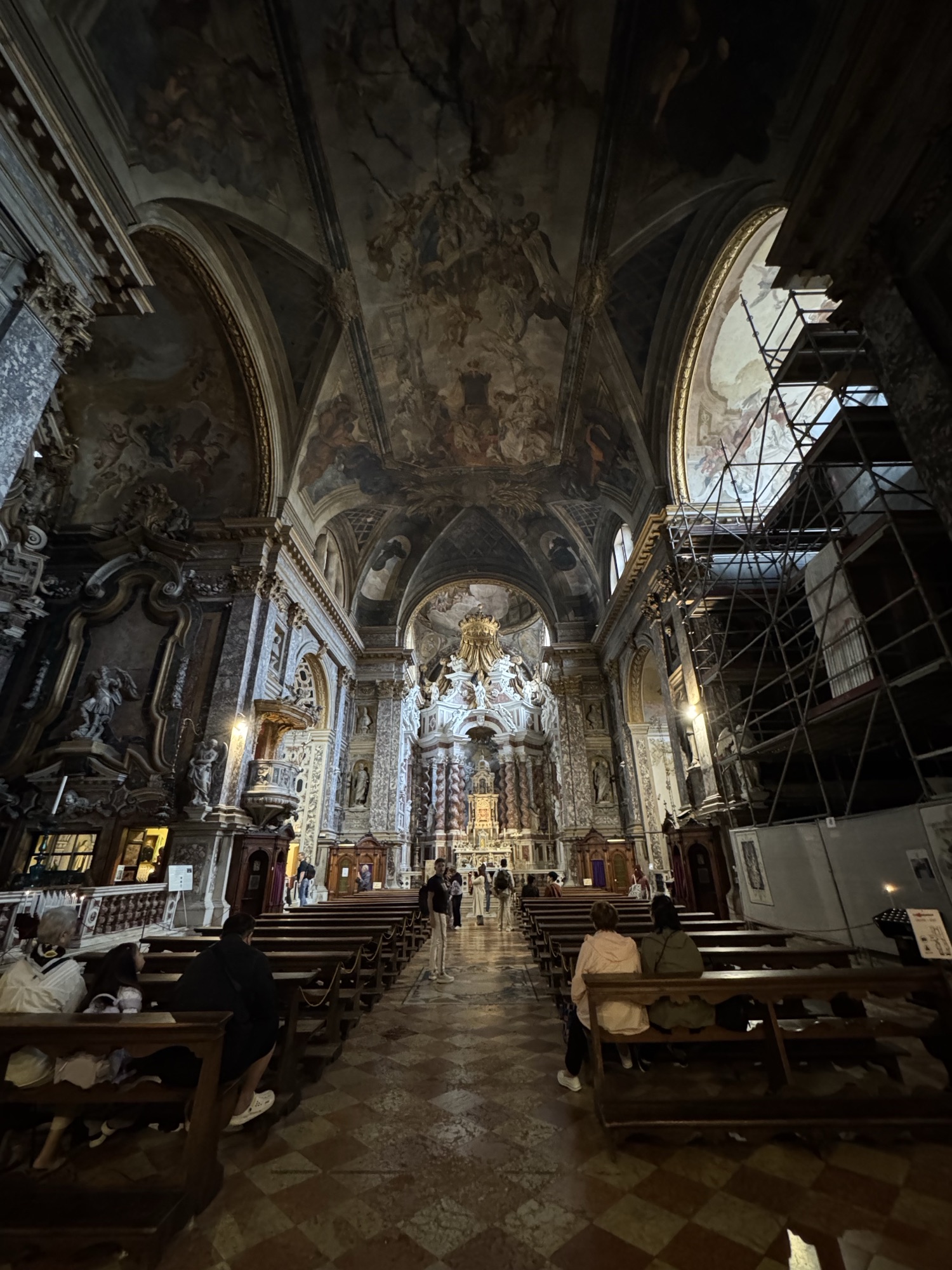
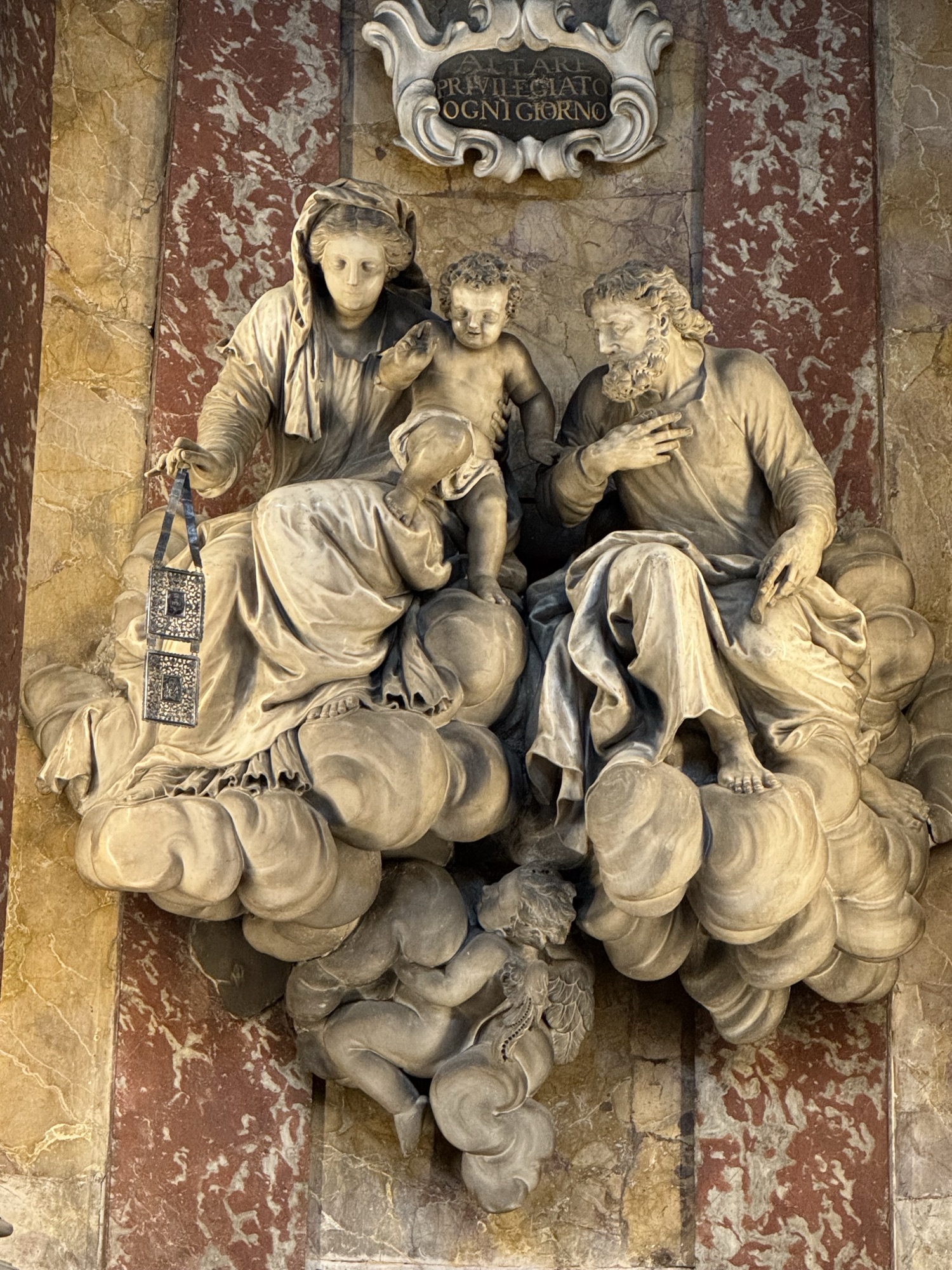
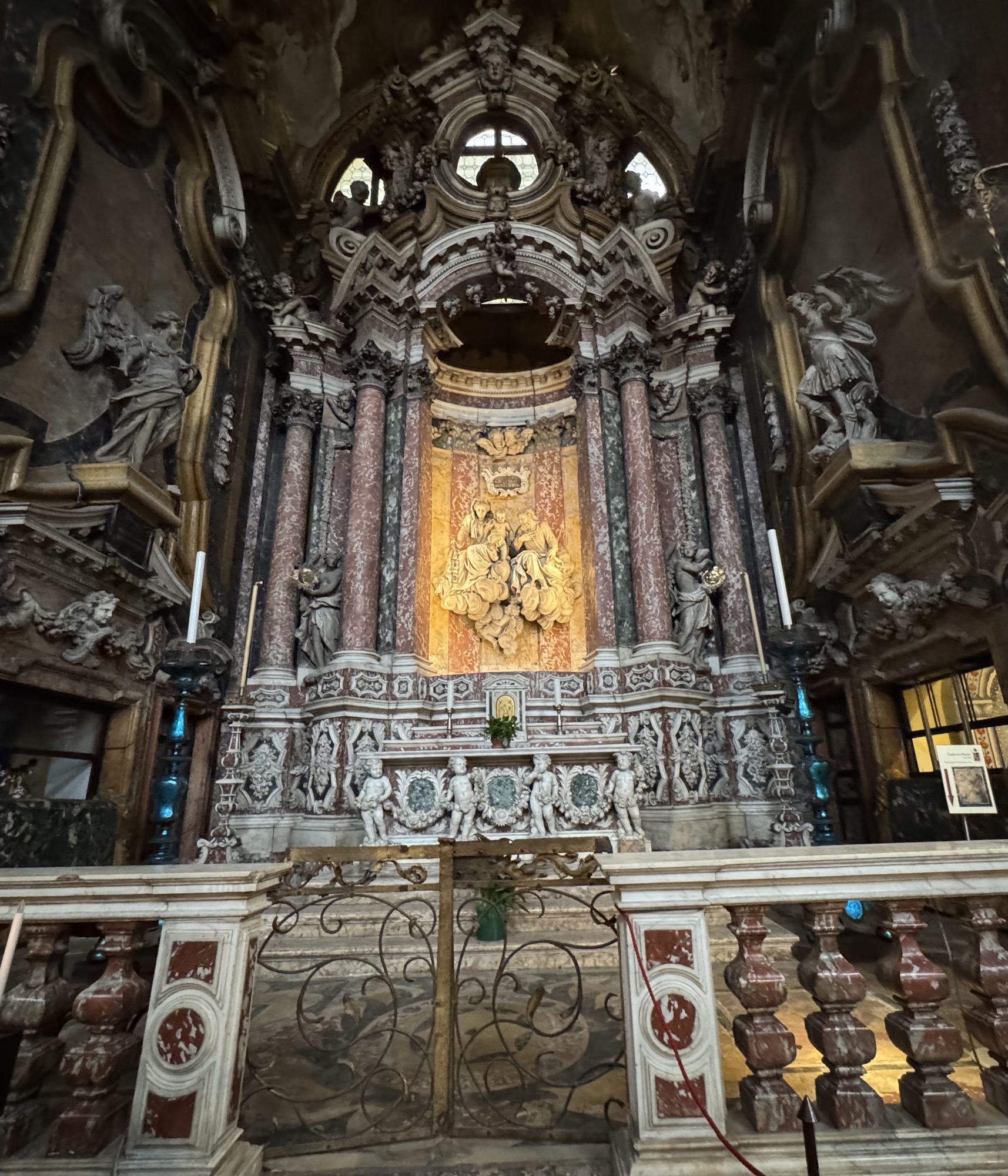
After wandering through a few souvenir stores, we stopped into Saint Mary of Nazareth Church to marvel at the gorgeous paintings and statuary.
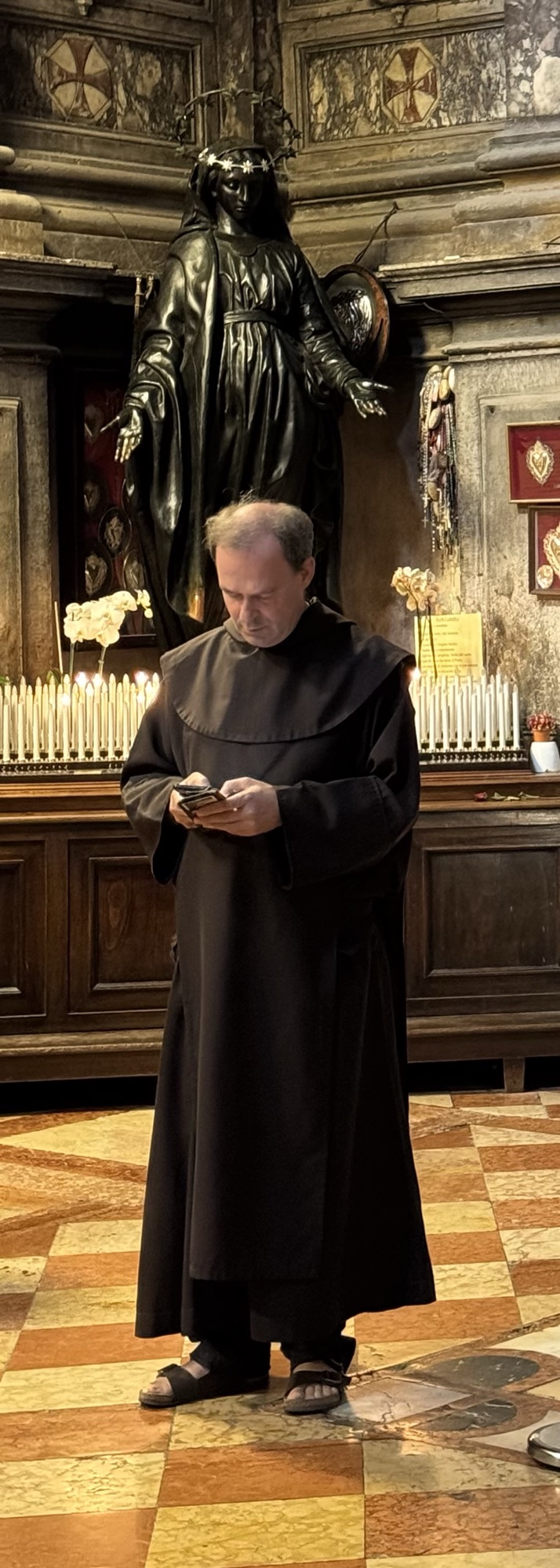
There’s always something a bit incongruous about seeing a robed monk on their cellphone. I wonder who he has in his contacts?
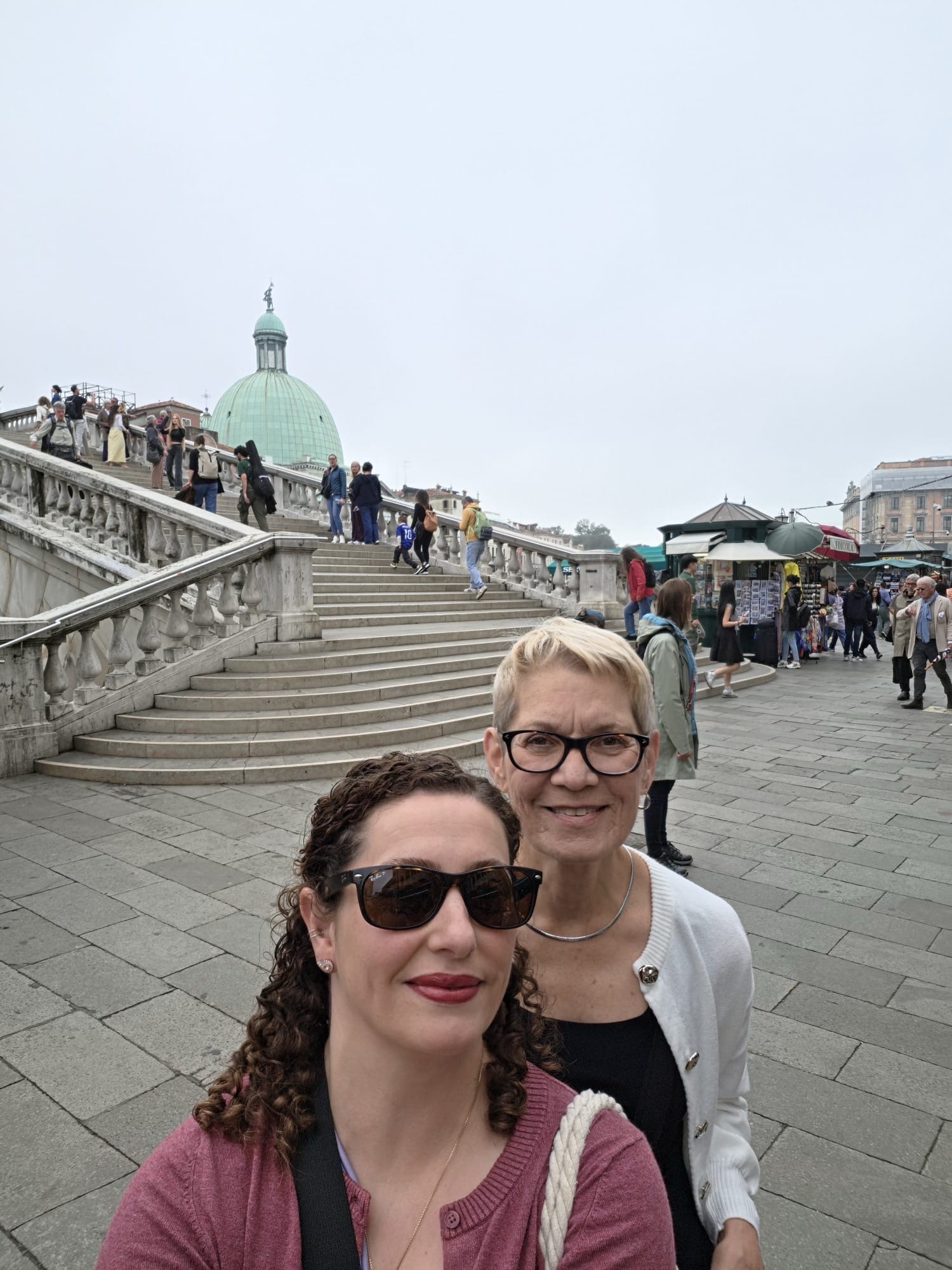
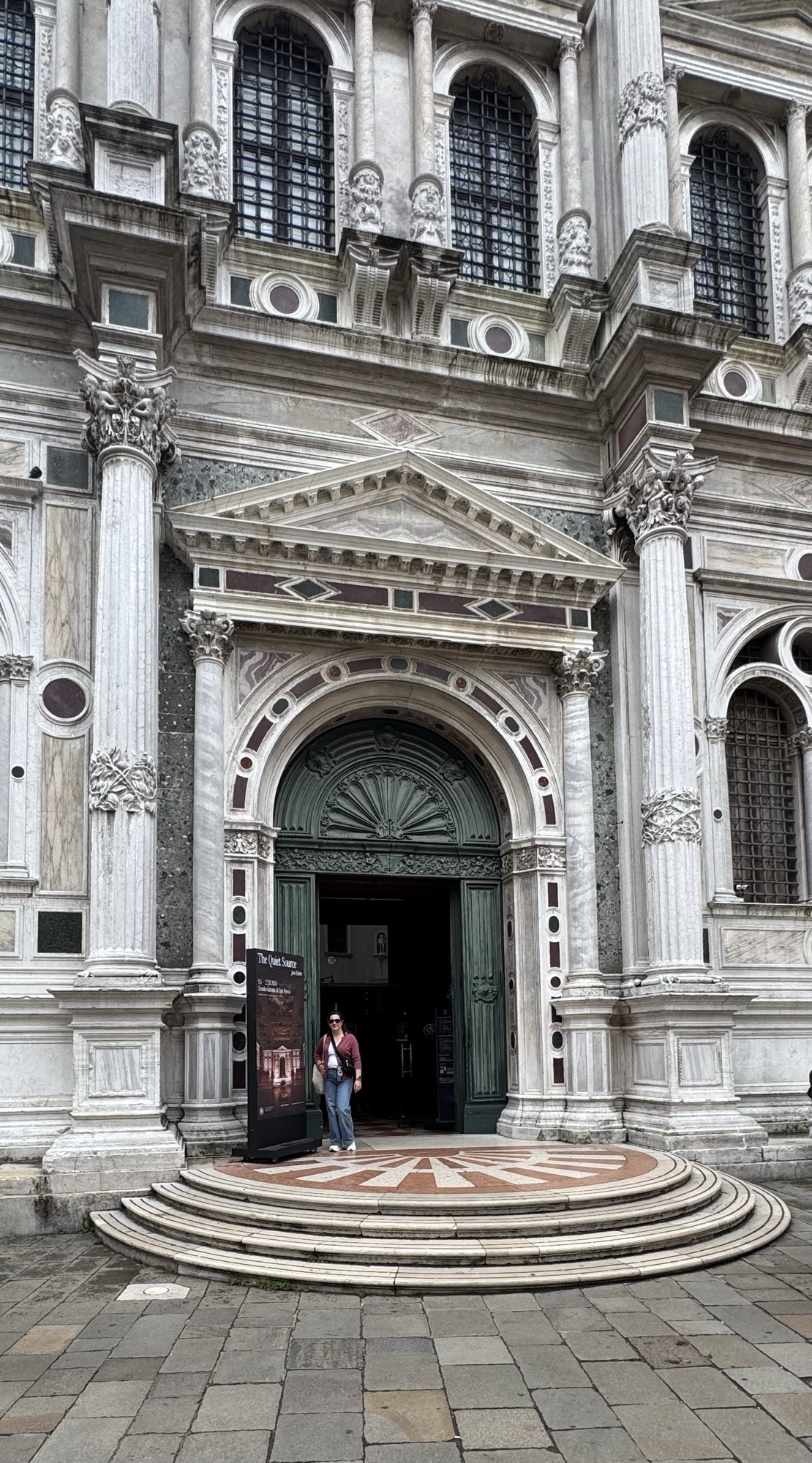
Next, we crossed the Ponte degli Scalzi with the intent of reaching the Scuola Grande di San Rocco.
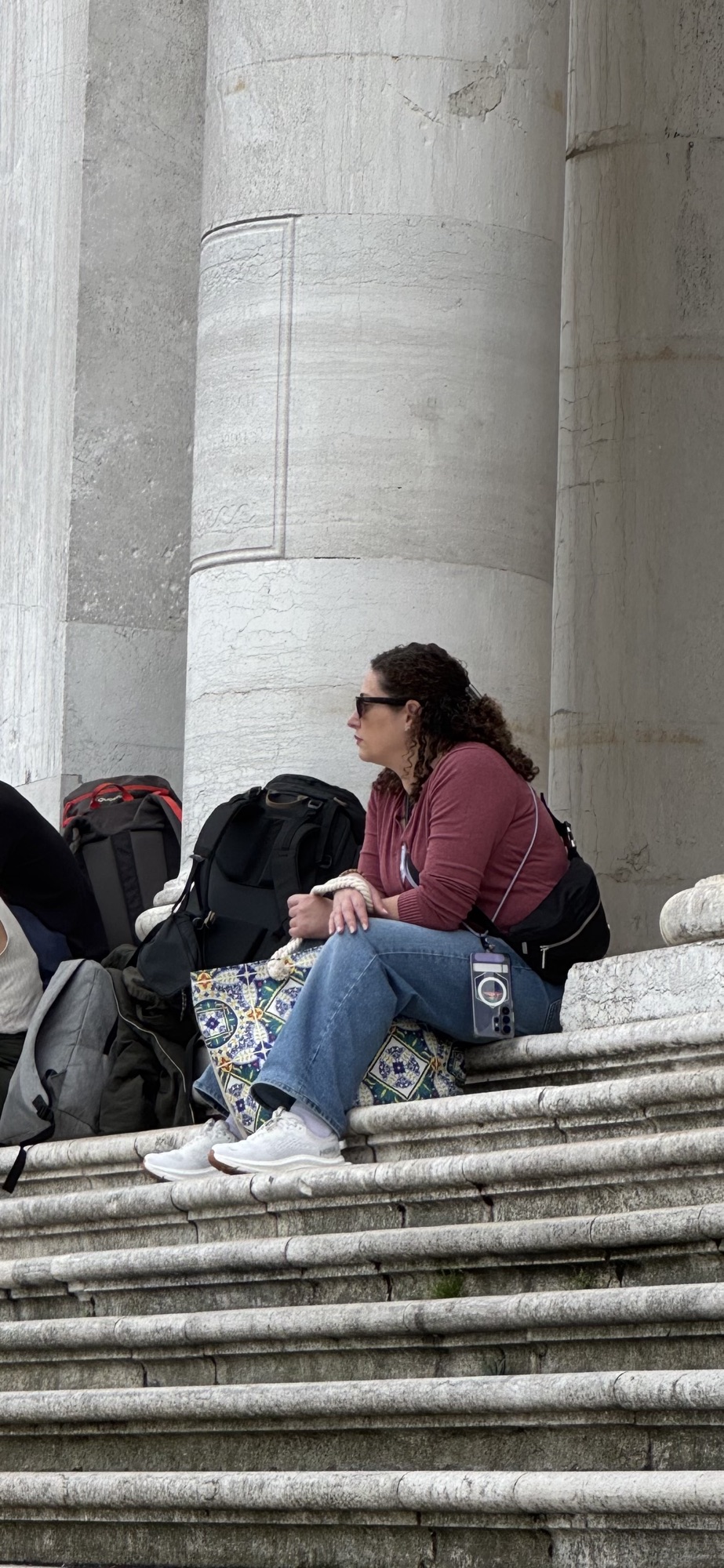
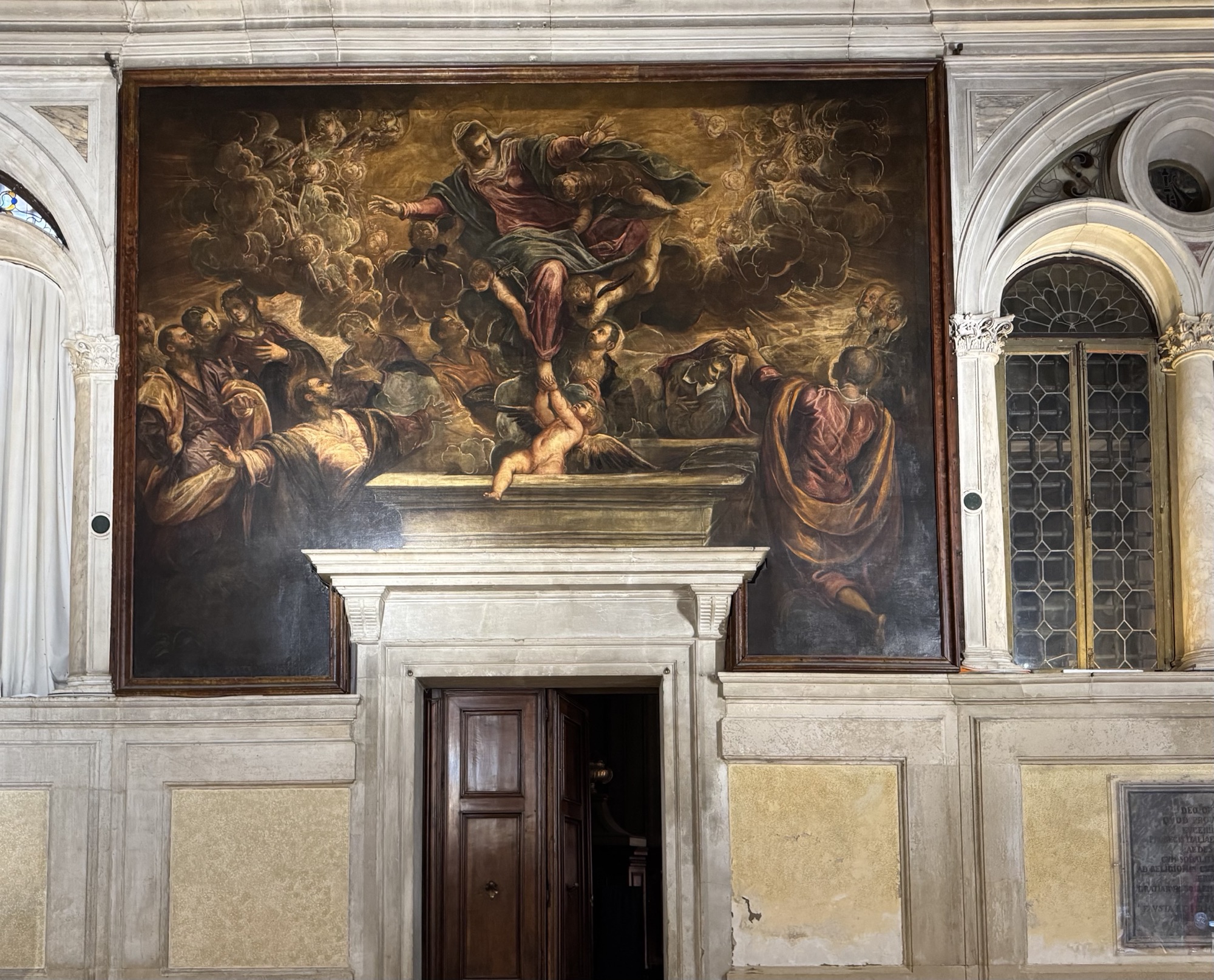
We did find it, although it was definitely a labyrinthine route, and I’m pleased to say that my DIL was as wowed by the huge Tintorettos in the museum as I was when Ted and I visited it years ago.
The vast majority of paintings decorating the walls and ceiling here are huge Tintorettos, although there is st least one Titian on the main staircase.
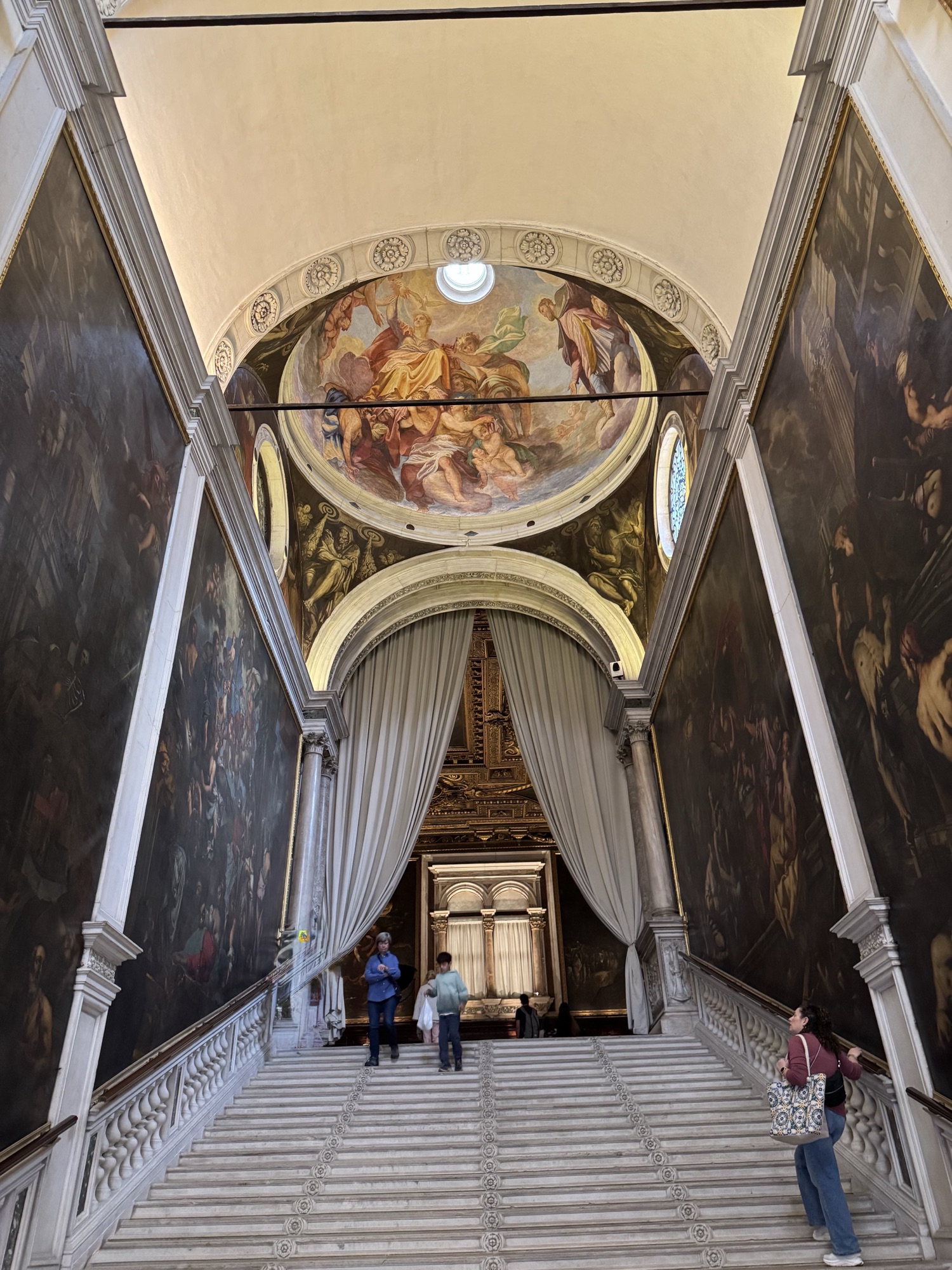
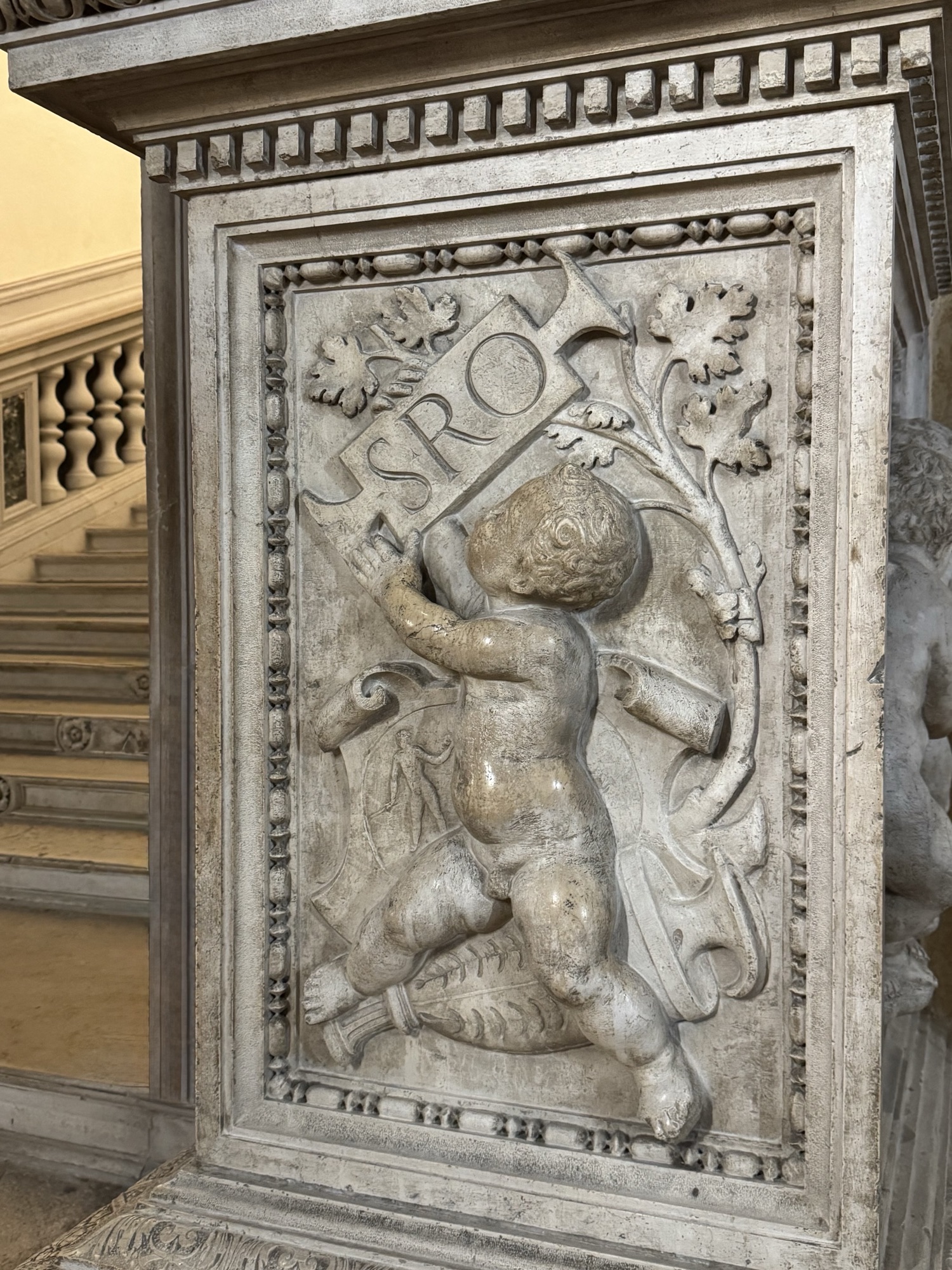
There is also intricately carved wood, beautiful sculptural elements, inlaid marble flooring, and fabulous trompe l’oiel work on the ceilings.
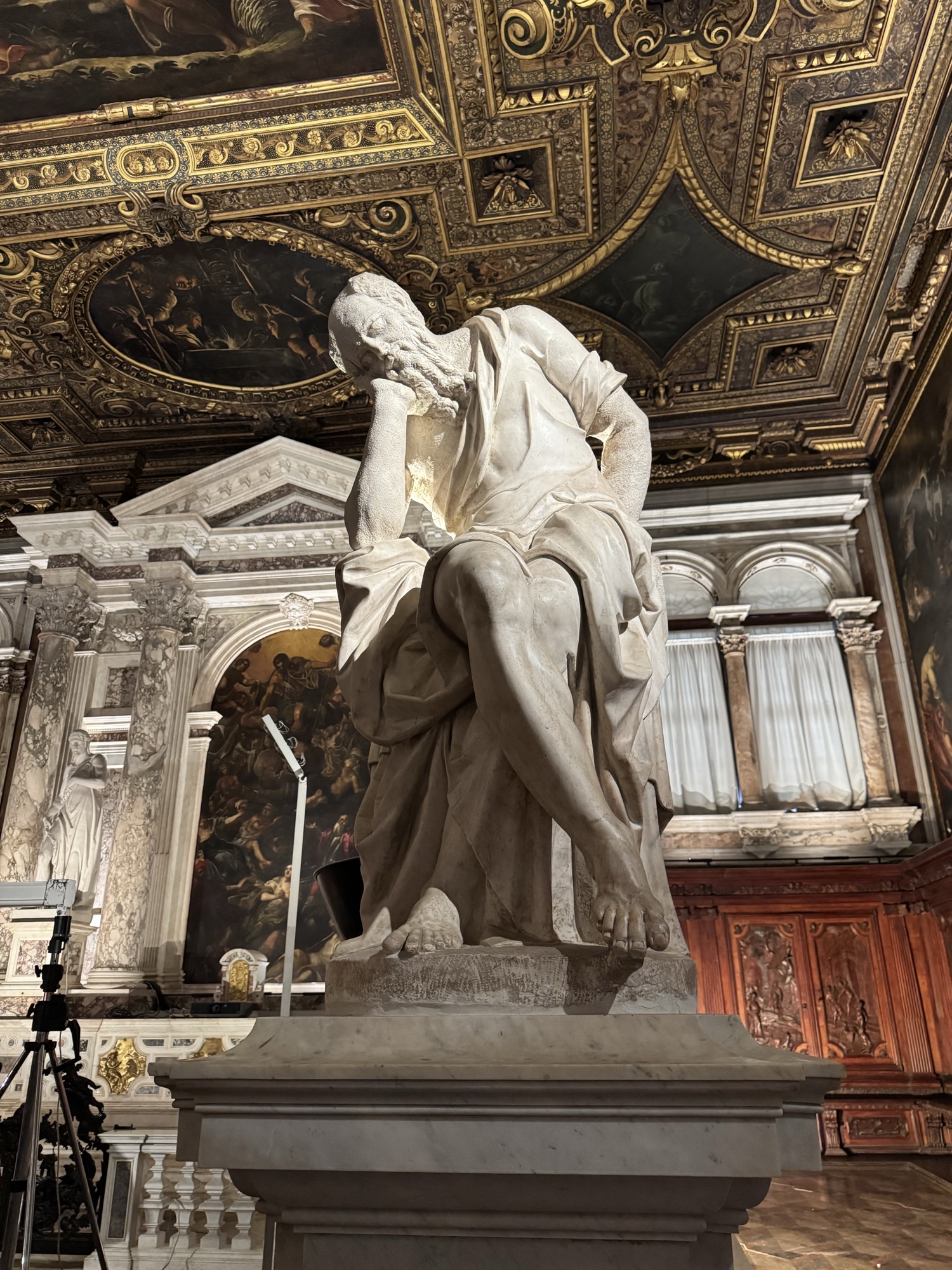
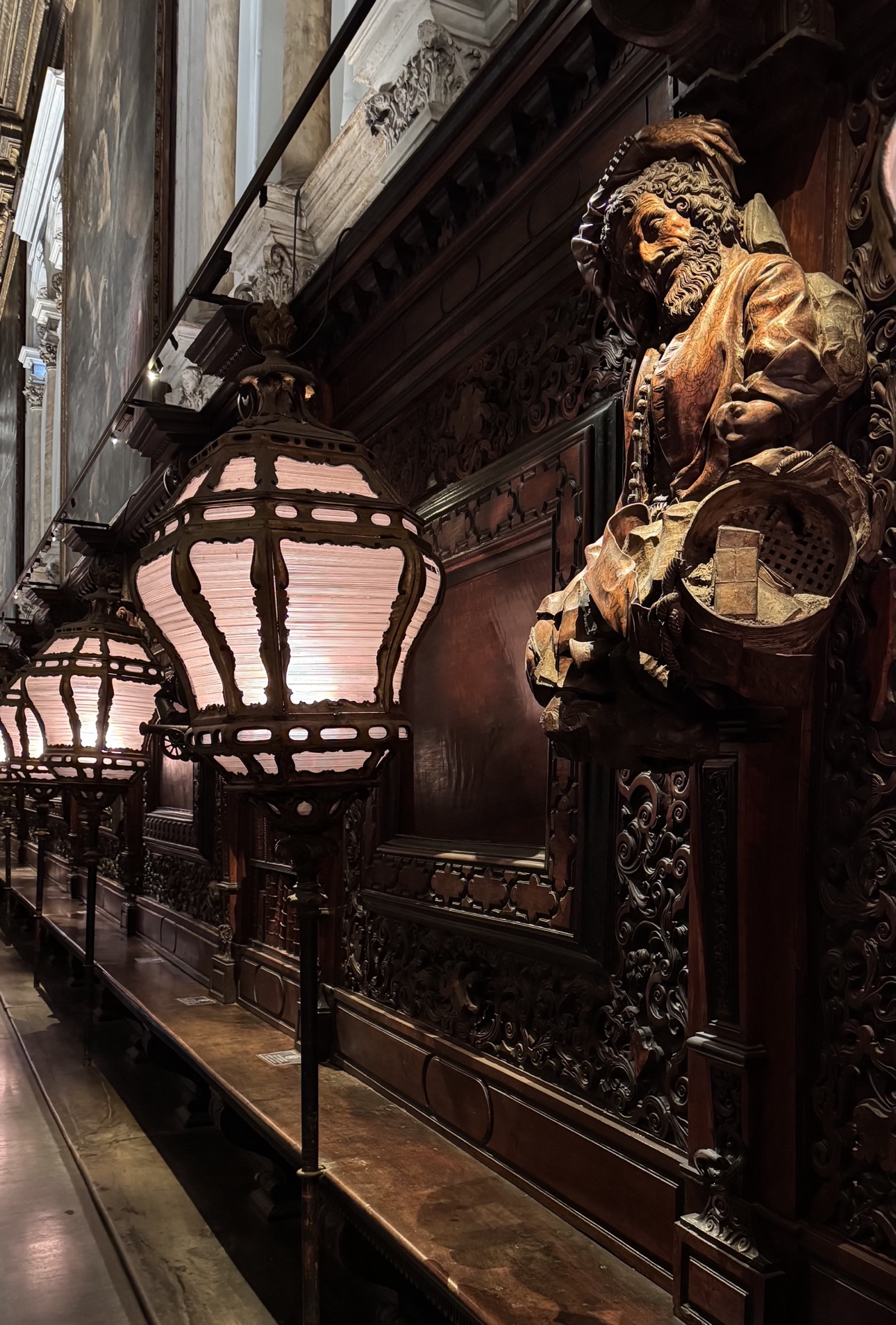
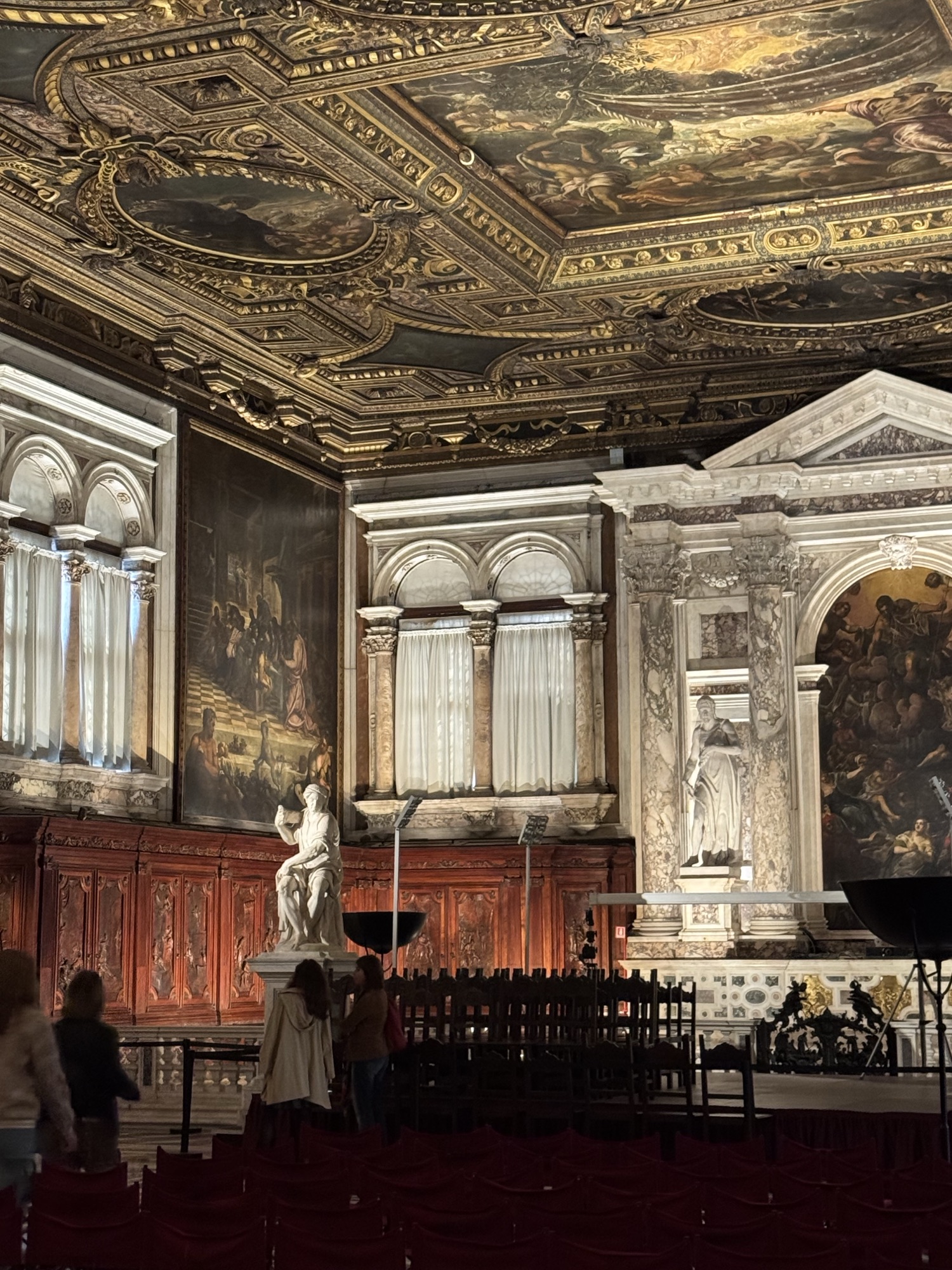
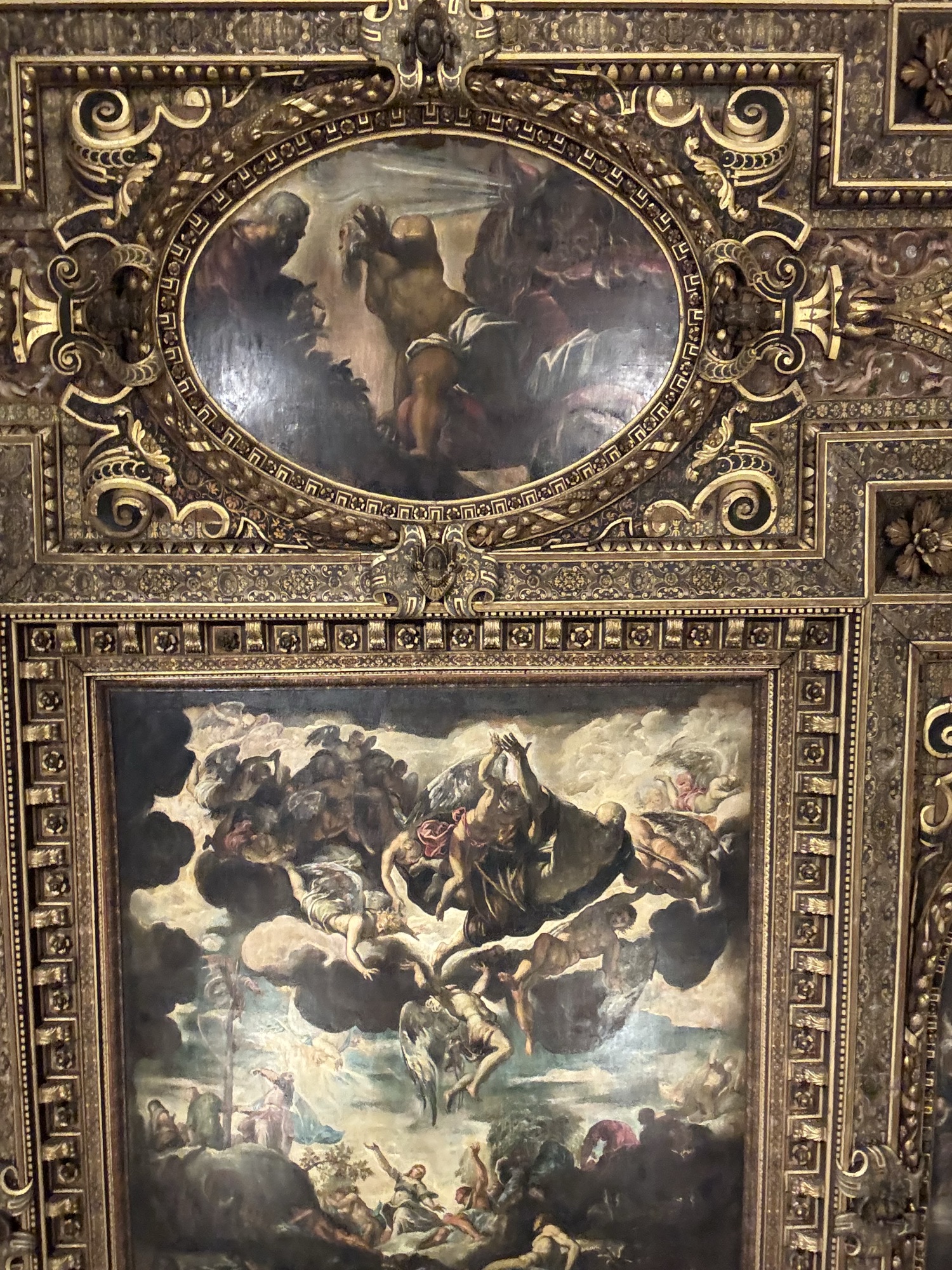
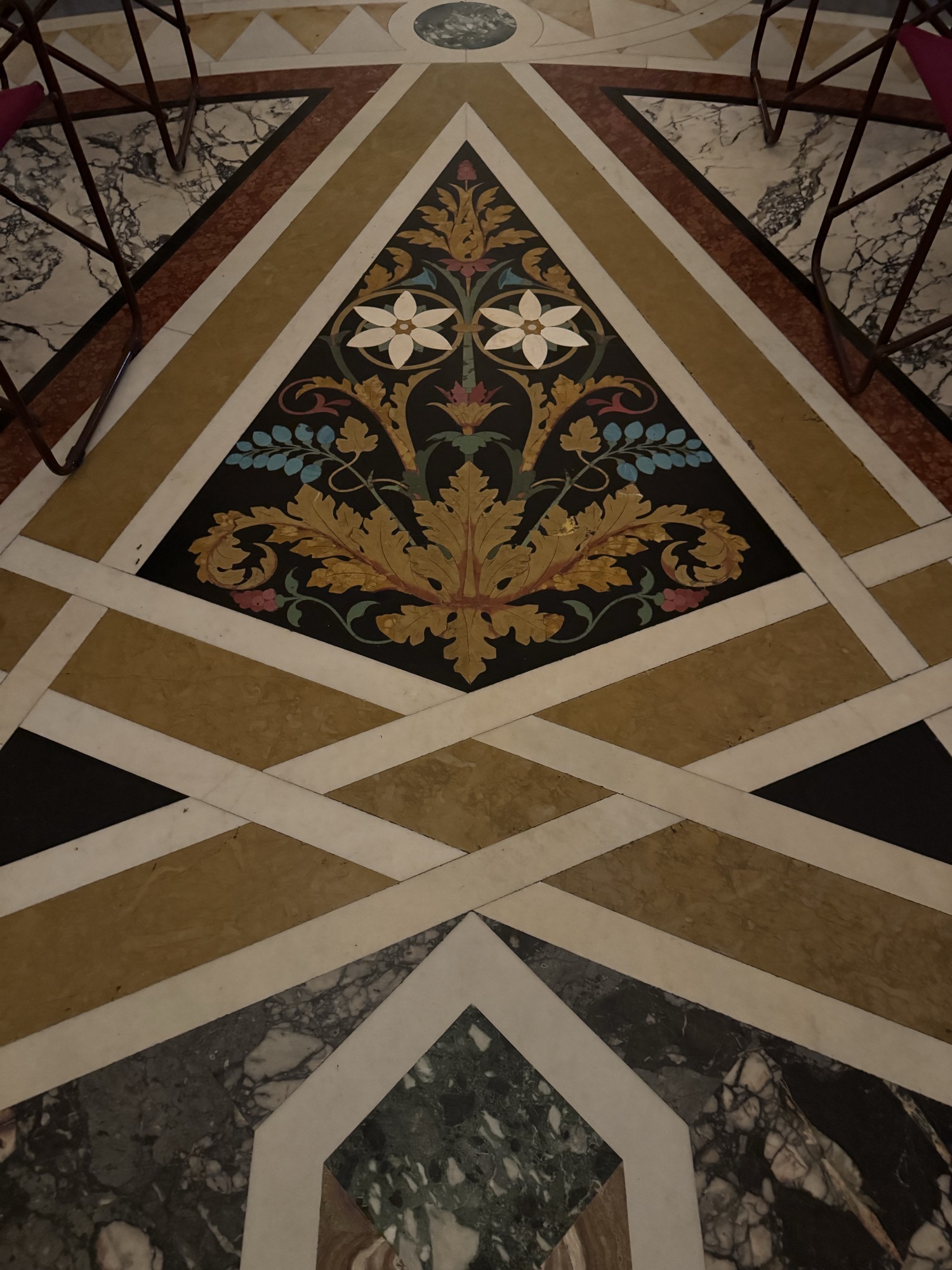
We could easily have simply stayed there, staring at the painted ceilings, but we had a tour to get to for the afternoon.
That meant that our visit to the church of San Rocco was a very brief one – just time for a couple of photos.
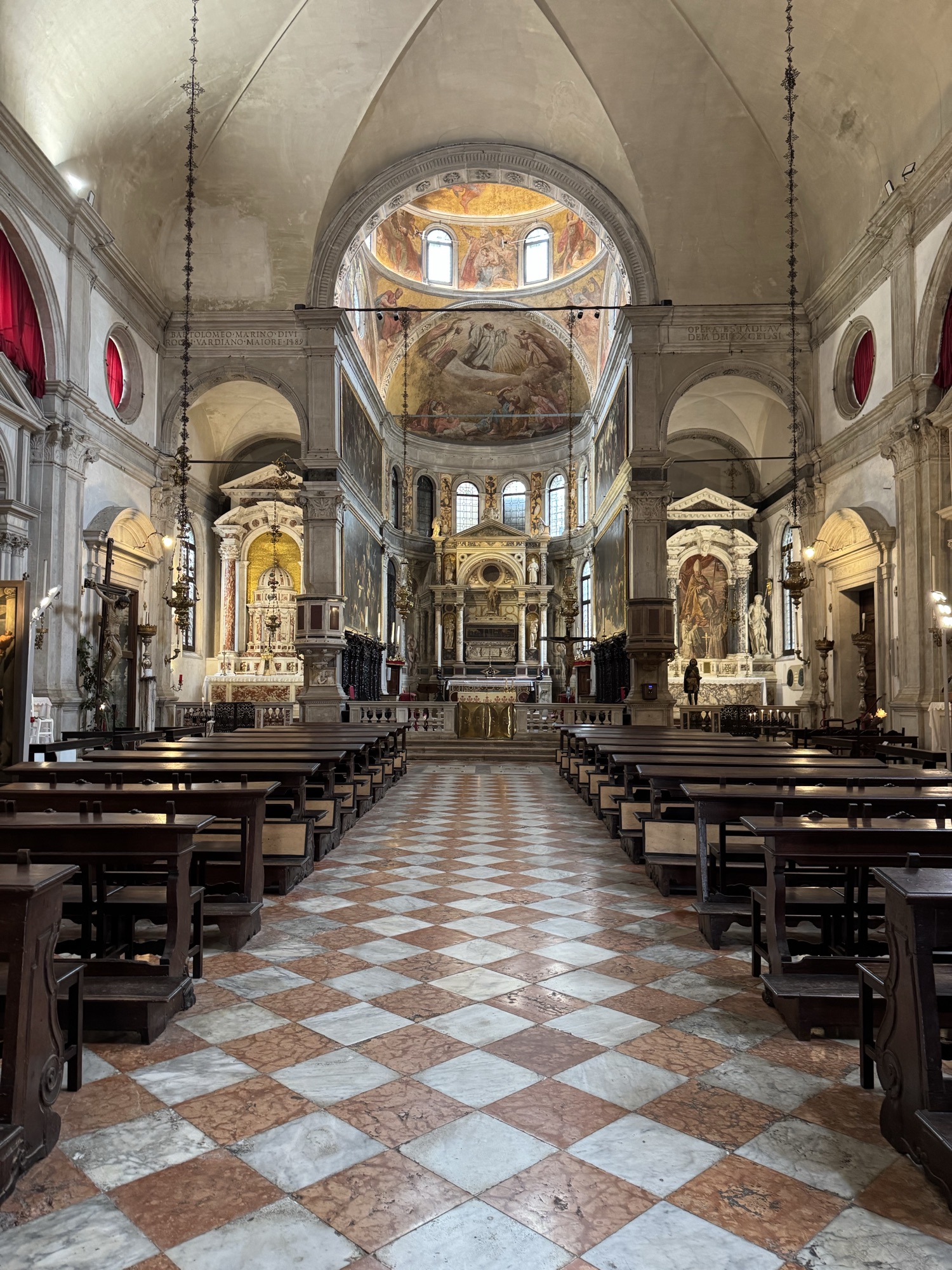
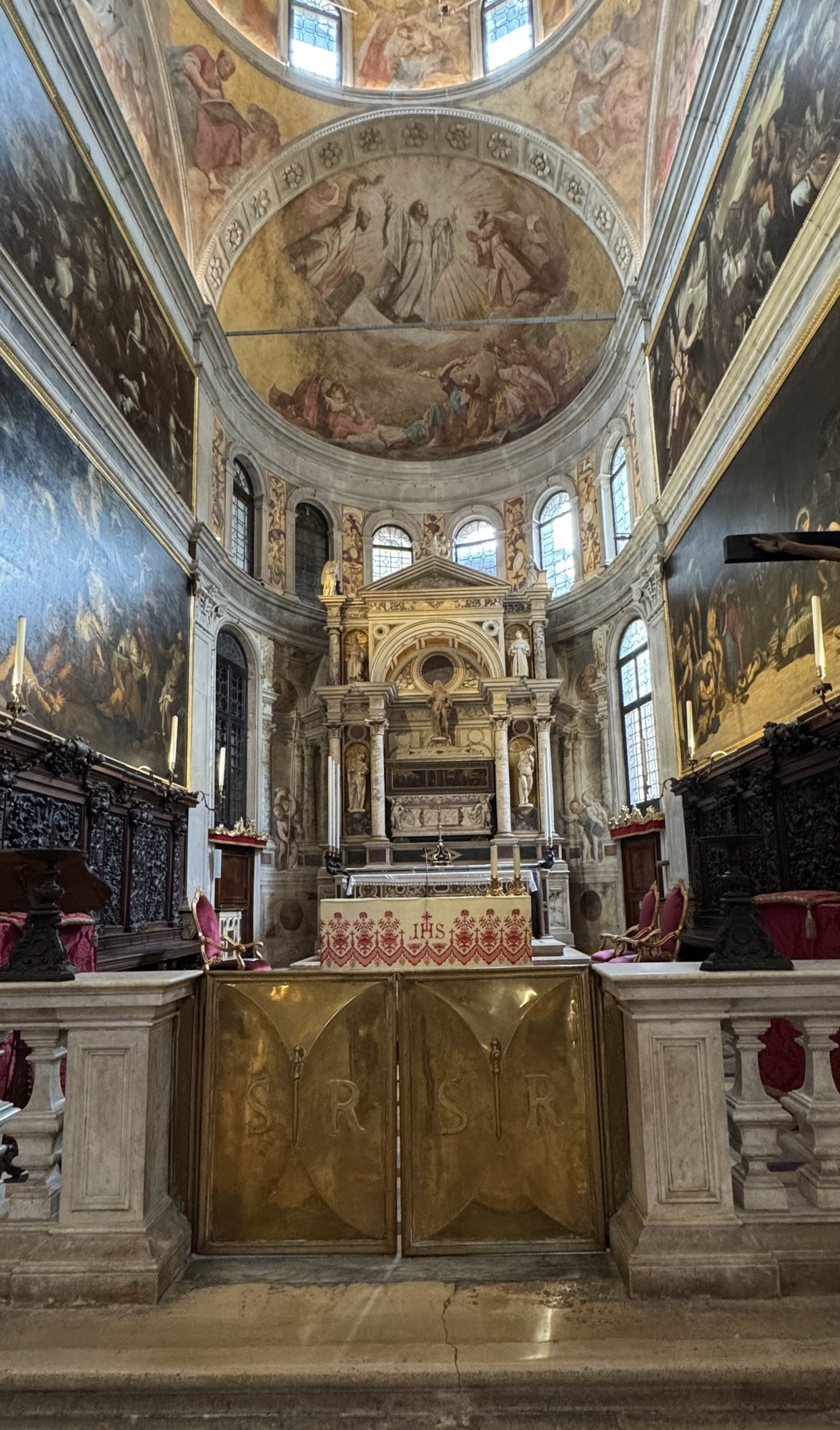
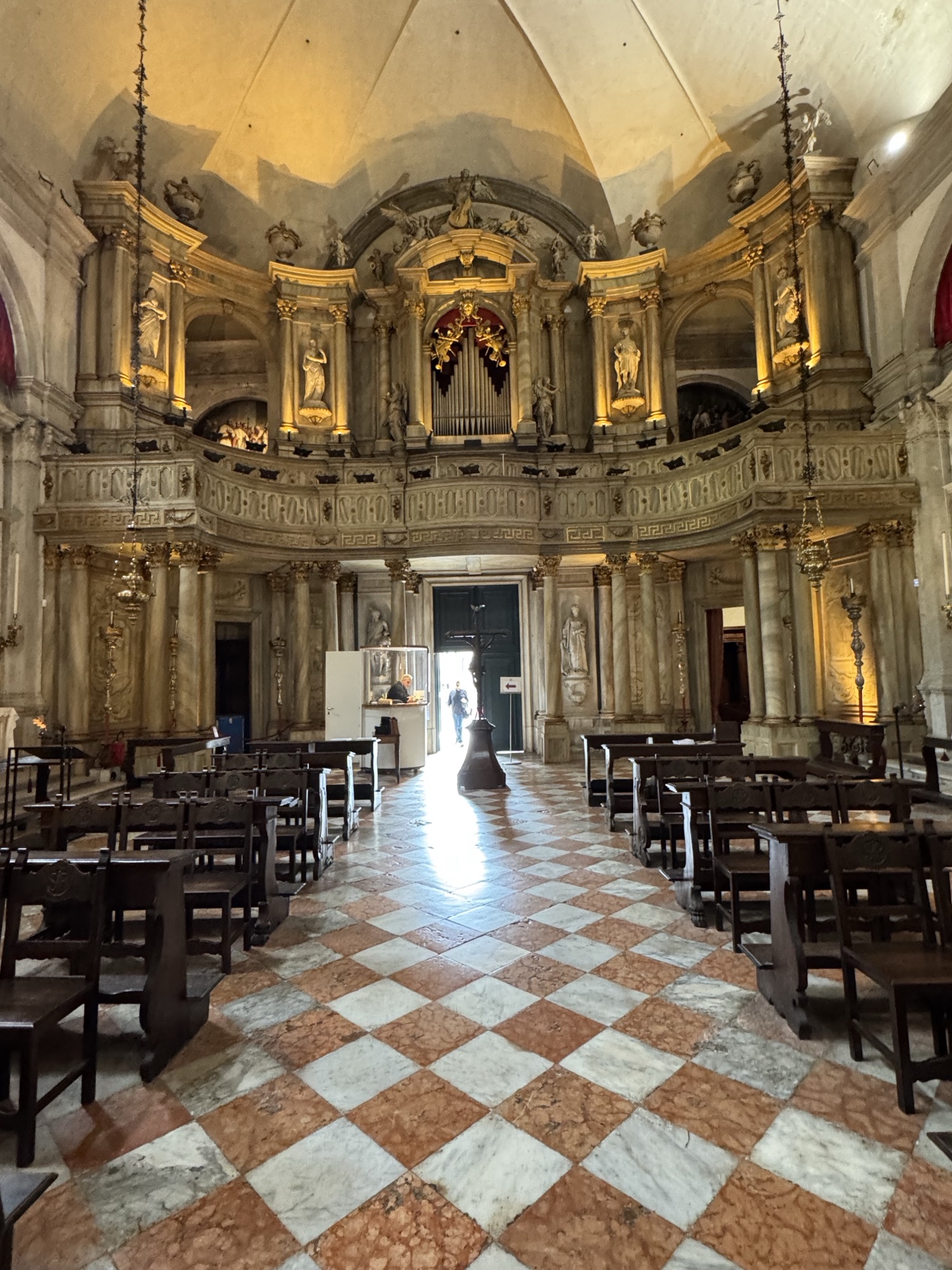
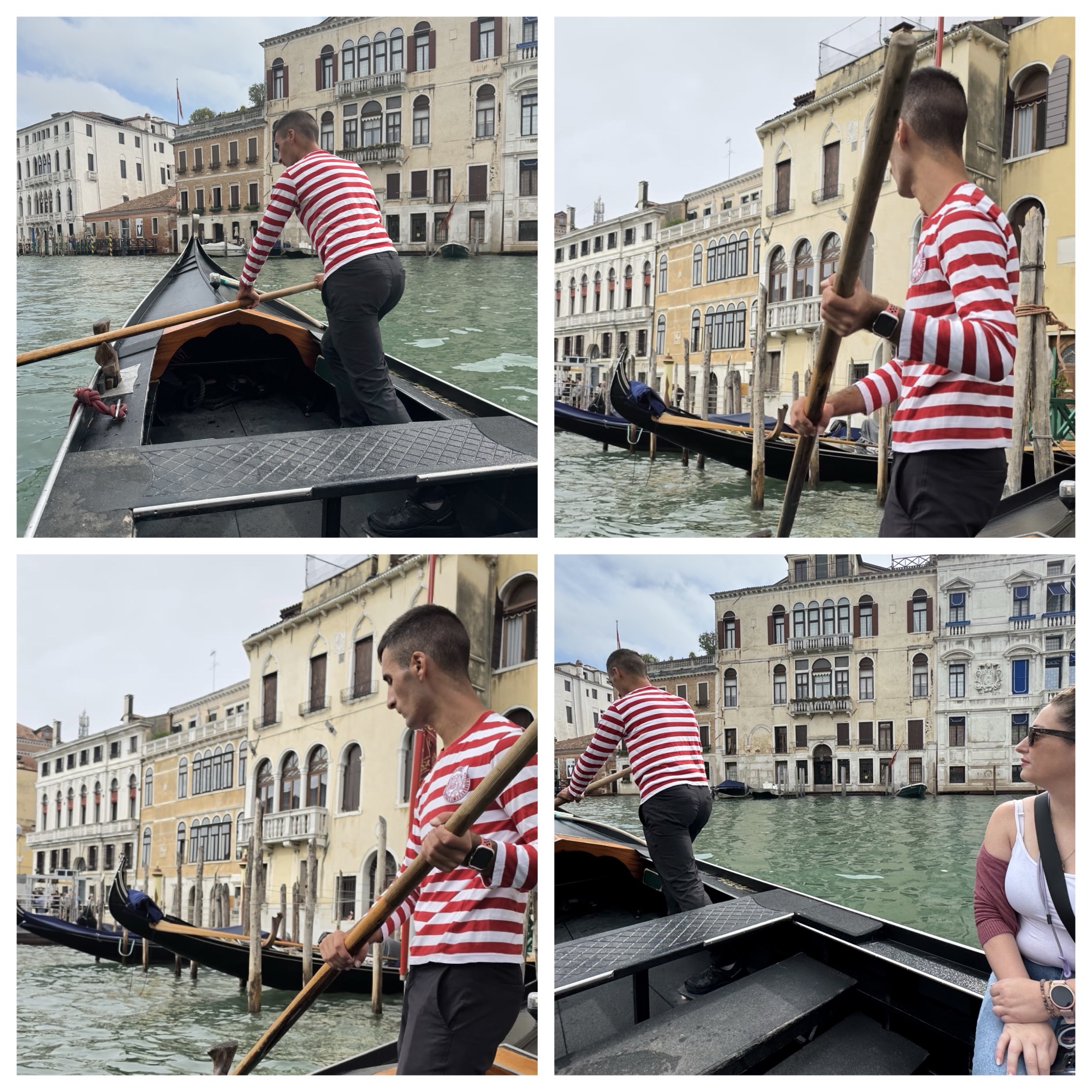
What Google Maps didn’t tell us when it mapped our walking route to our tour’s meeting point was that we either would have to be able to walk across water, or swim. Fortunately the route led to a gondola traghetto stop where for two euros each we were able to take a gondola ride across the canal. That was a much better deal than the widely advertised €90 scenic gondola rides and we can say we’ve done it.
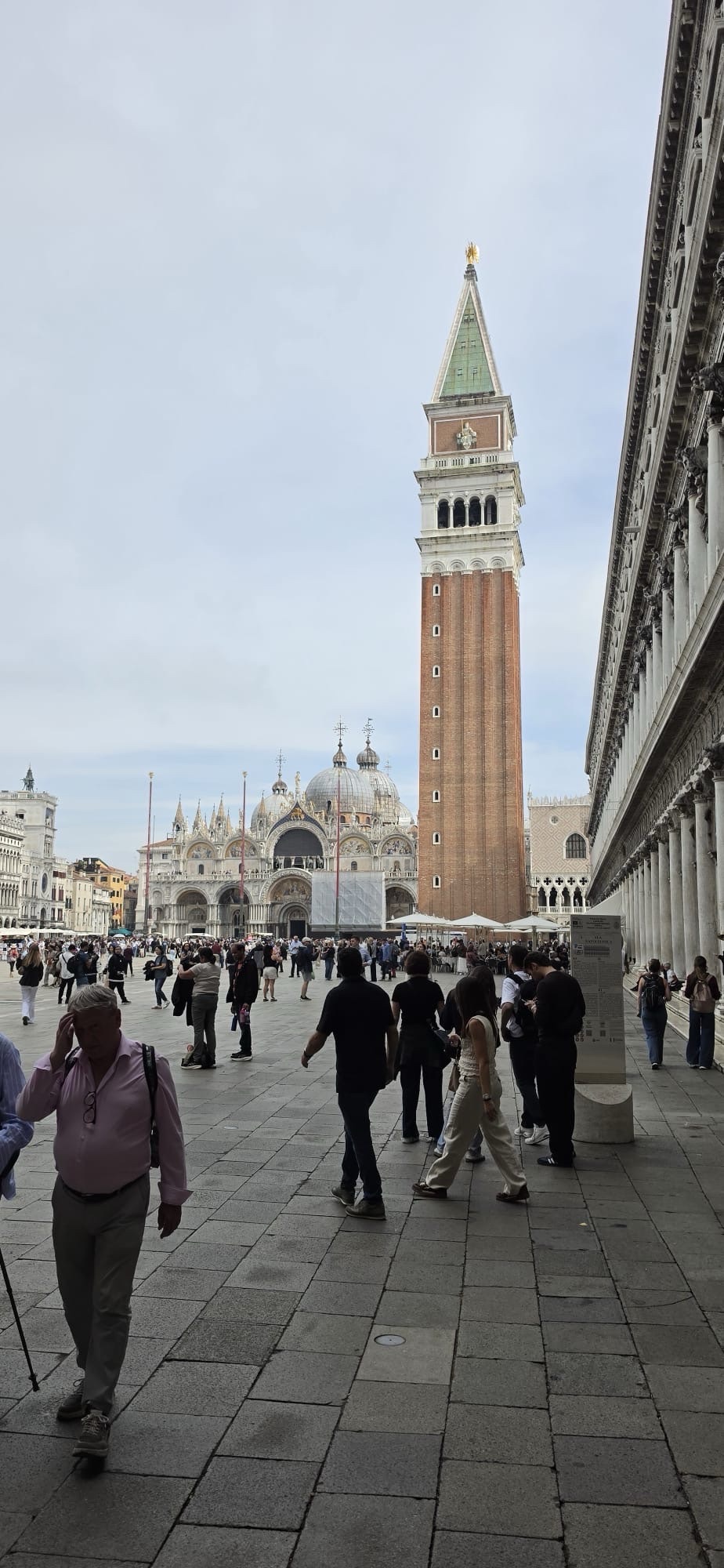
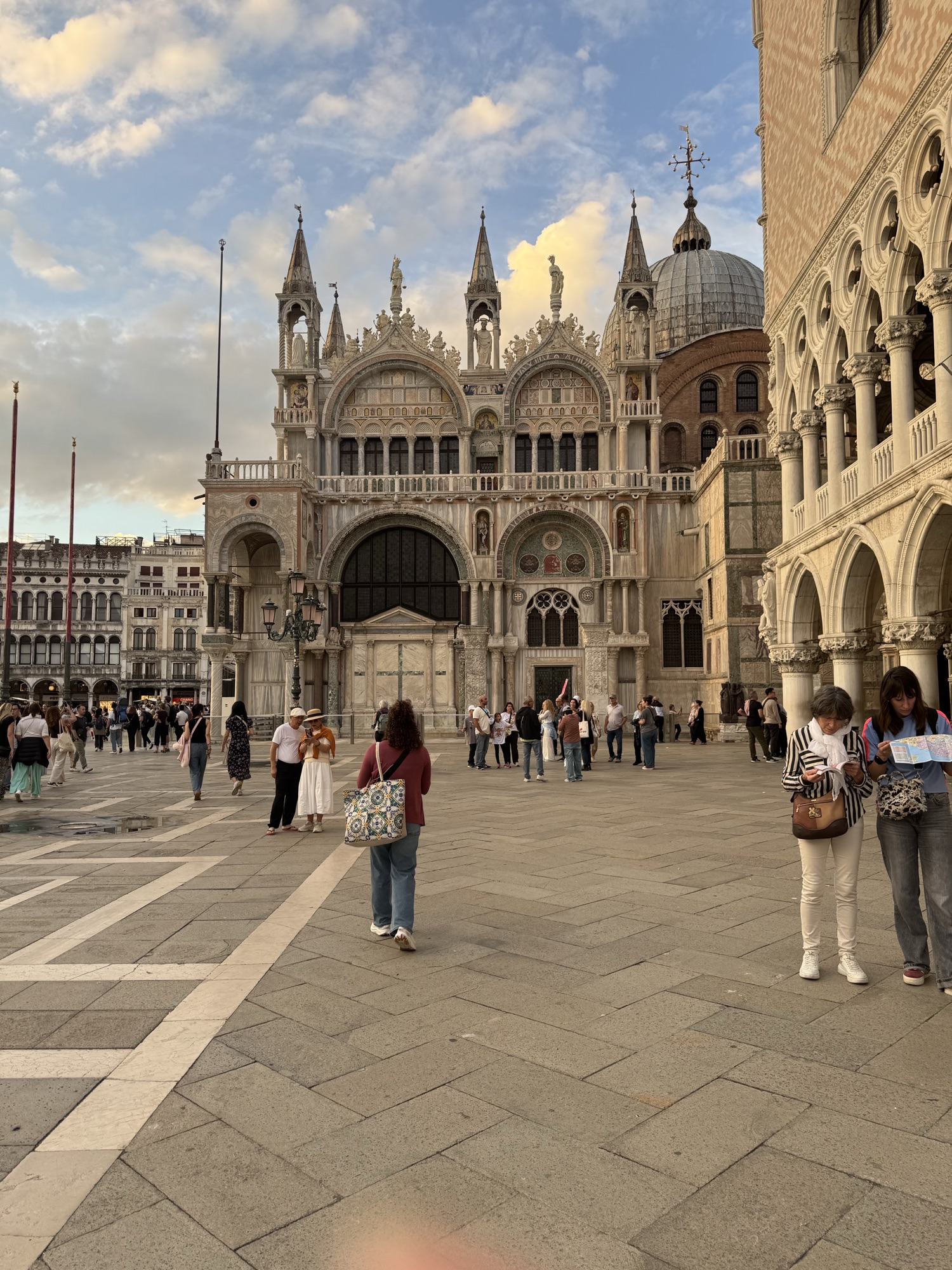
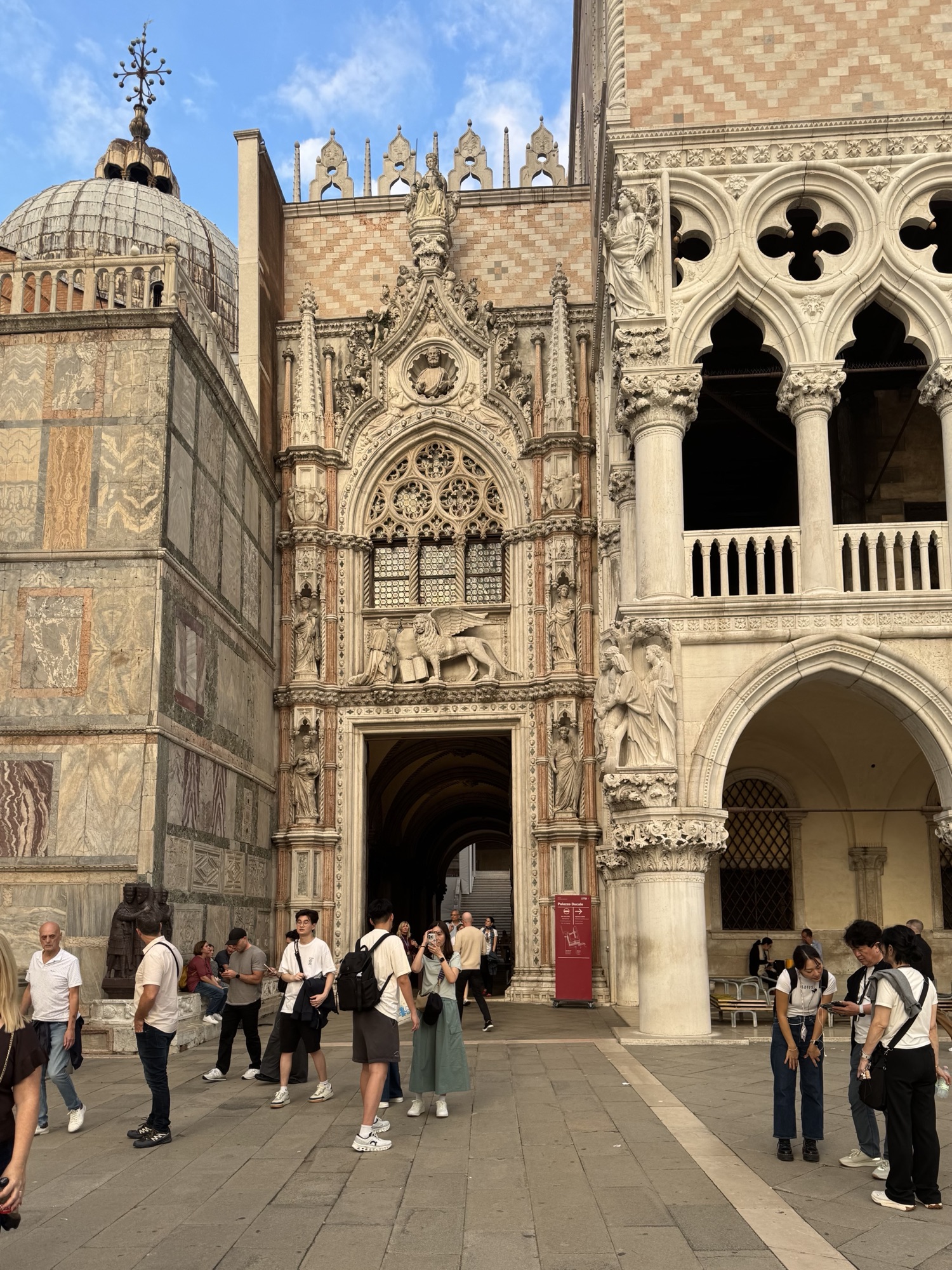
We then continued through small side streets until one of them opened onto the magnificent Saint Marks Square, where there is no option but to simply stop and stare.
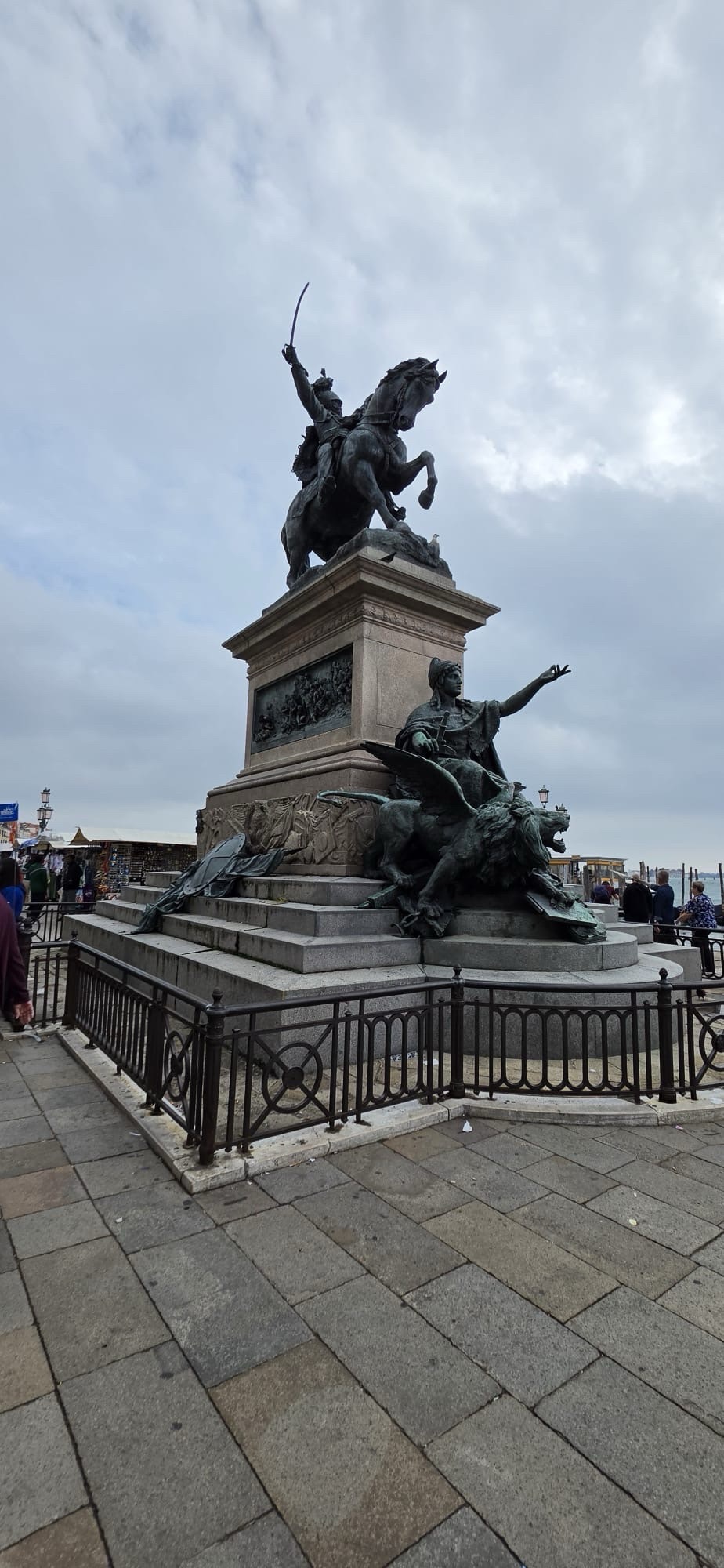
Our meeting place was at the statue of Victor Emmanuel II, the first king of a unified Italy.
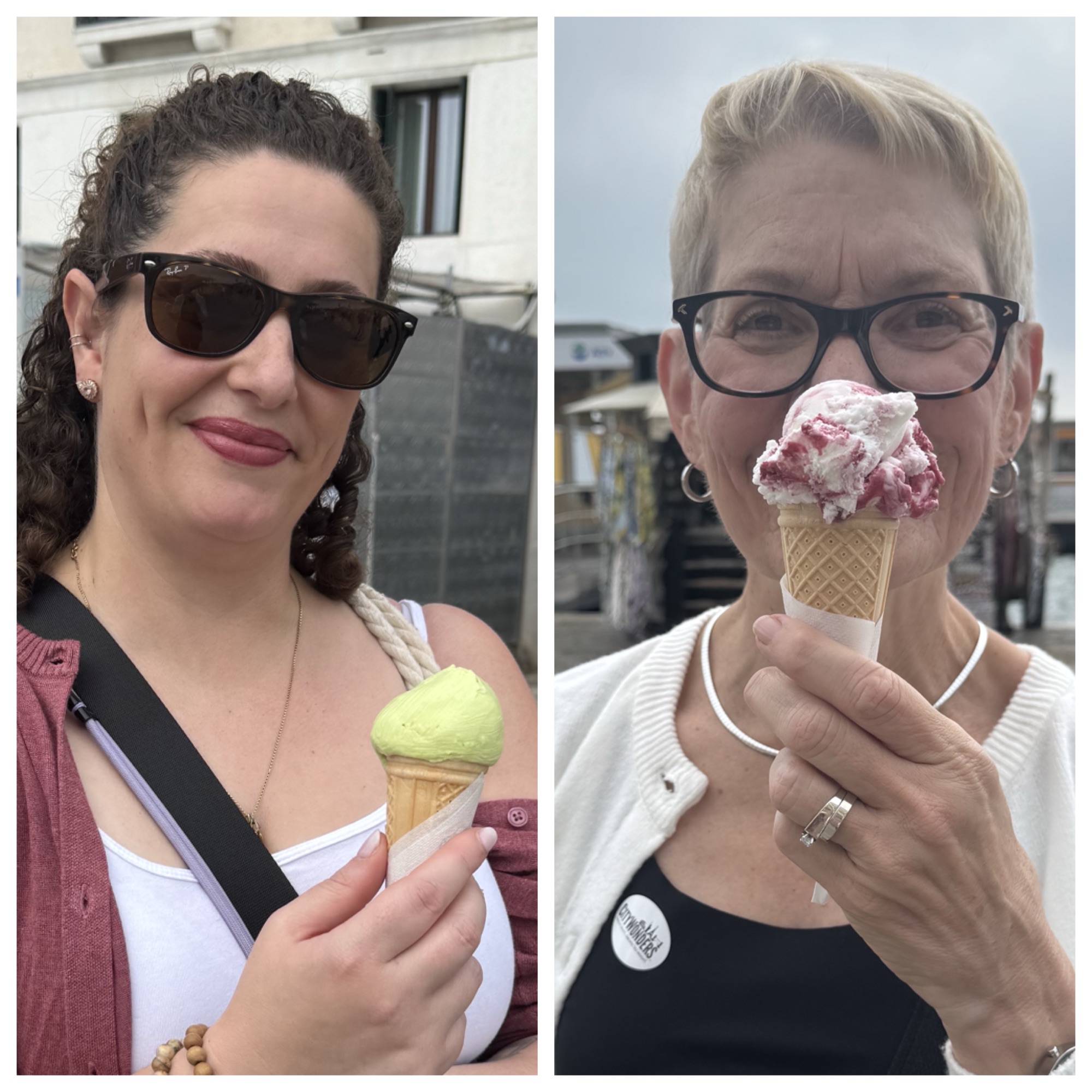
We grabbed a couple of gelatos because we hadn’t eaten all morning, and had run out of time to stop for lunch, and then checked in with our tour guide Alice of CityWonders Tours.
Our tour was a five hour experience that took us to the islands of Murano, where we saw a glass blowing demonstration and some incredible original pieces of one-of-a-kind glass, and to the island of Burano, where we saw a very brief lacemaking demonstration and then simply enjoyed a lovely walk around and a bit of shopping. DIL and I both agreed that we preferred picturesque Burano to bustling Venice.
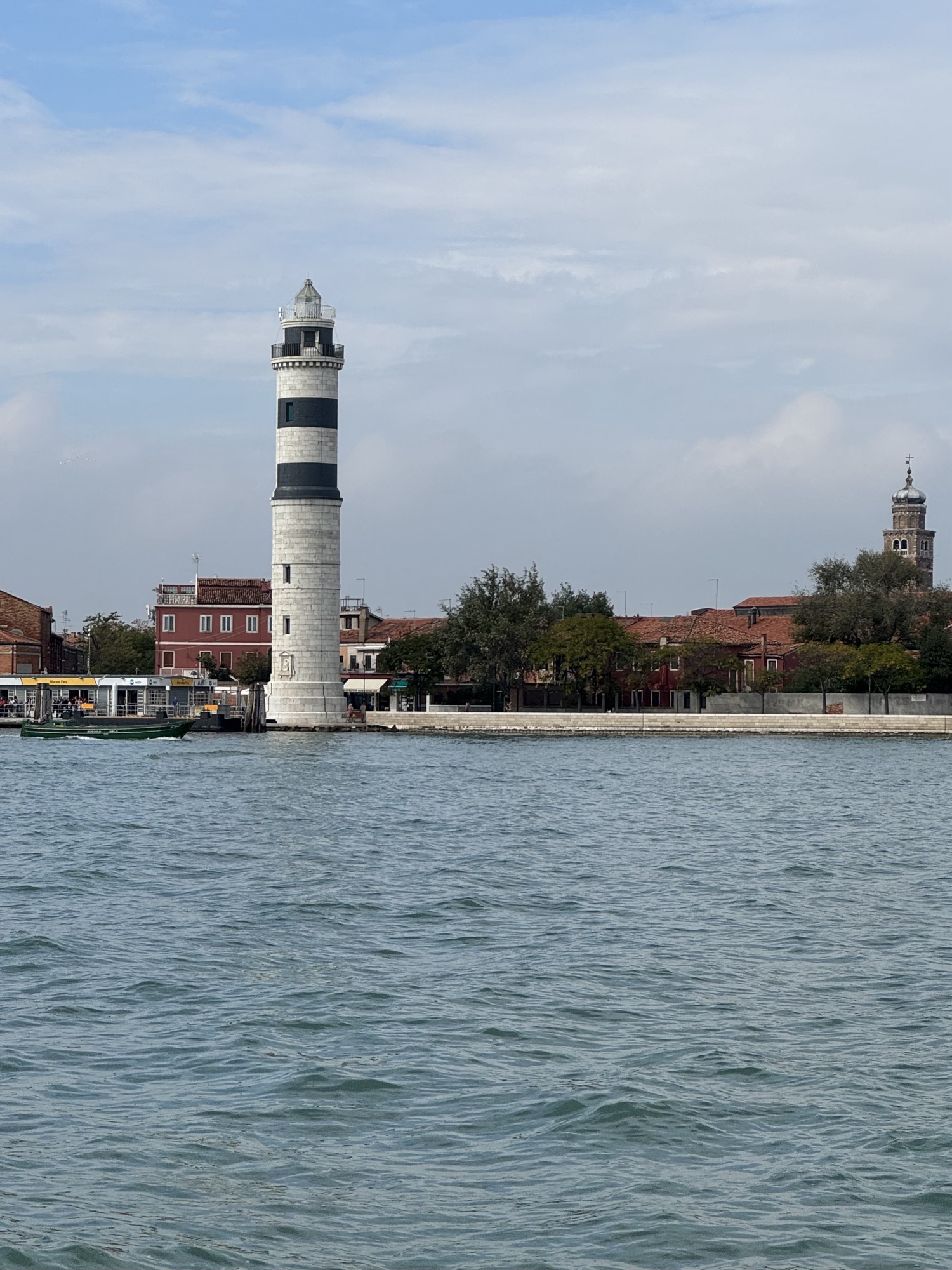
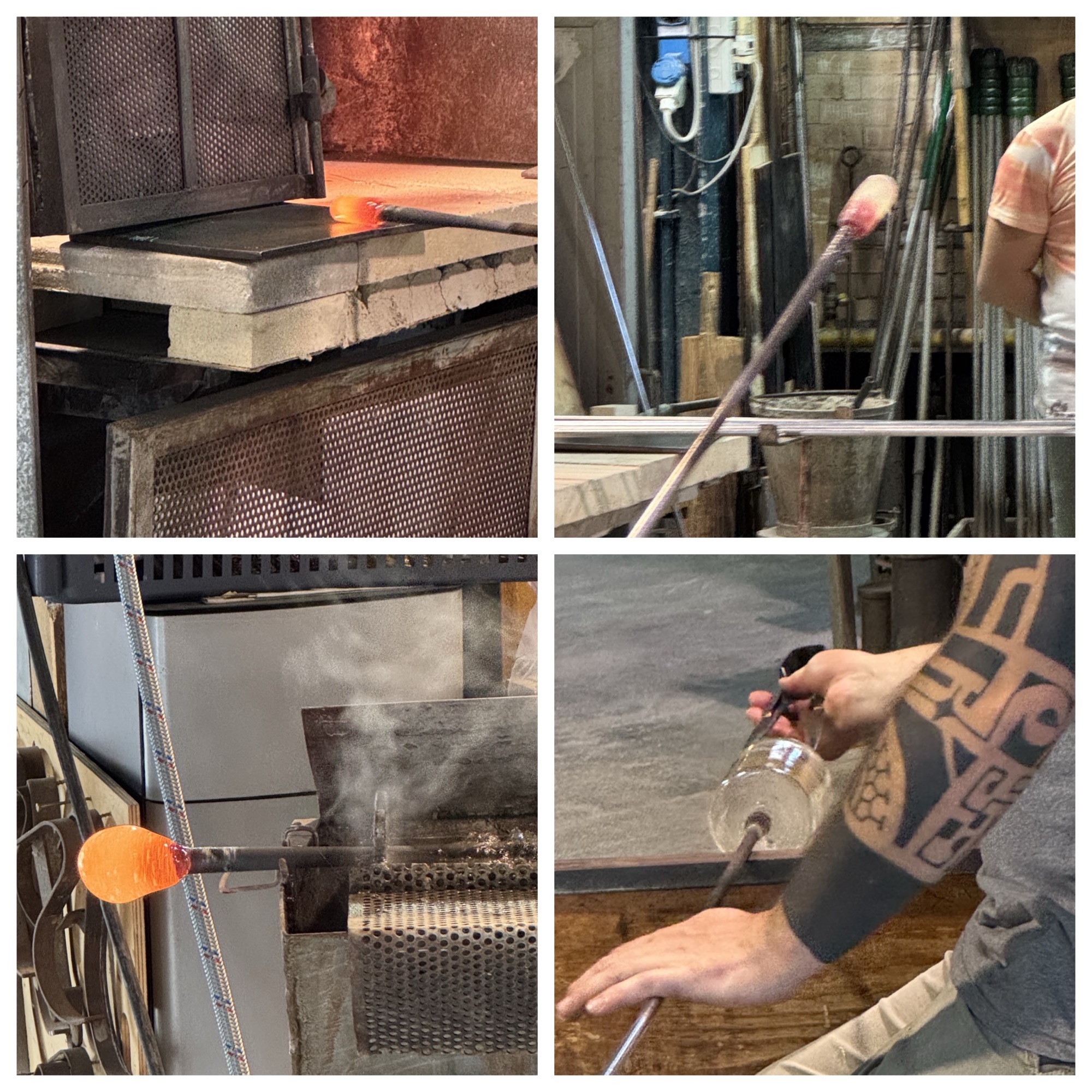
Because the glass workshop carefully guards both its process and its designs, we were not allowed to take photos of any of their finished products, and their prices precluded us bringing any home, although factory discounts and duty free shipping were included on all purchases over €1000.
Far more appealing to us than Murano was the island of Burano, a fishing community famous for its lacework, an incredibly painstaking process done with very thin thread and a slender sewing needle which is becoming a lost art.
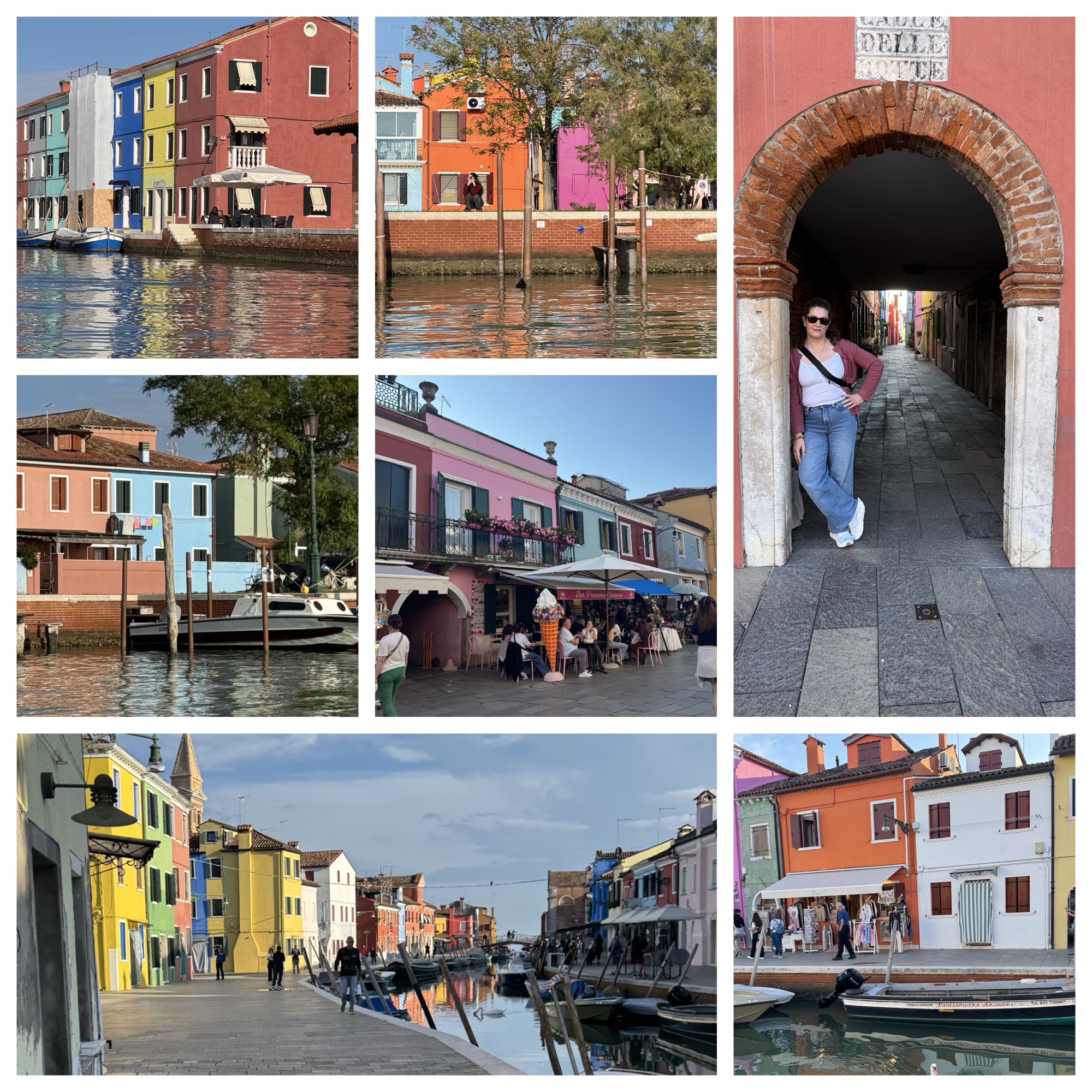
The island is also known for its colourful houses. One legend says that in their off season fishermen painted their houses to match their boats; another says that it was the fishermen’s wives who painted the houses in matching colours to ensure that their husbands had no excuse after a long fishing season to go to the wrong wife!
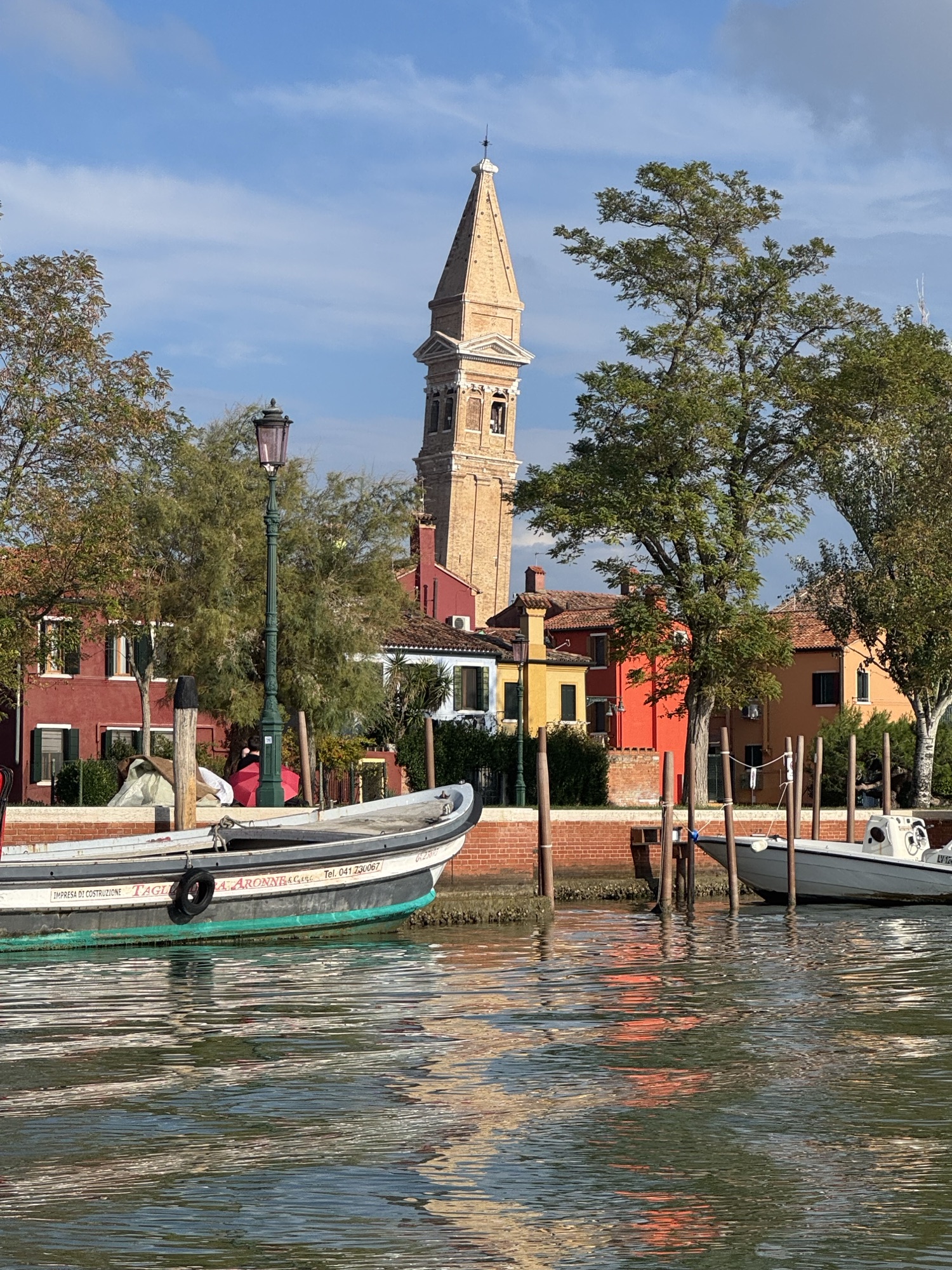
Burano also has a leaning tower, as does San Marco Square. In fact, there are scores of leaning towers on the Venetian Lagoon islands. The people here scoff at Pisa’s mere one.
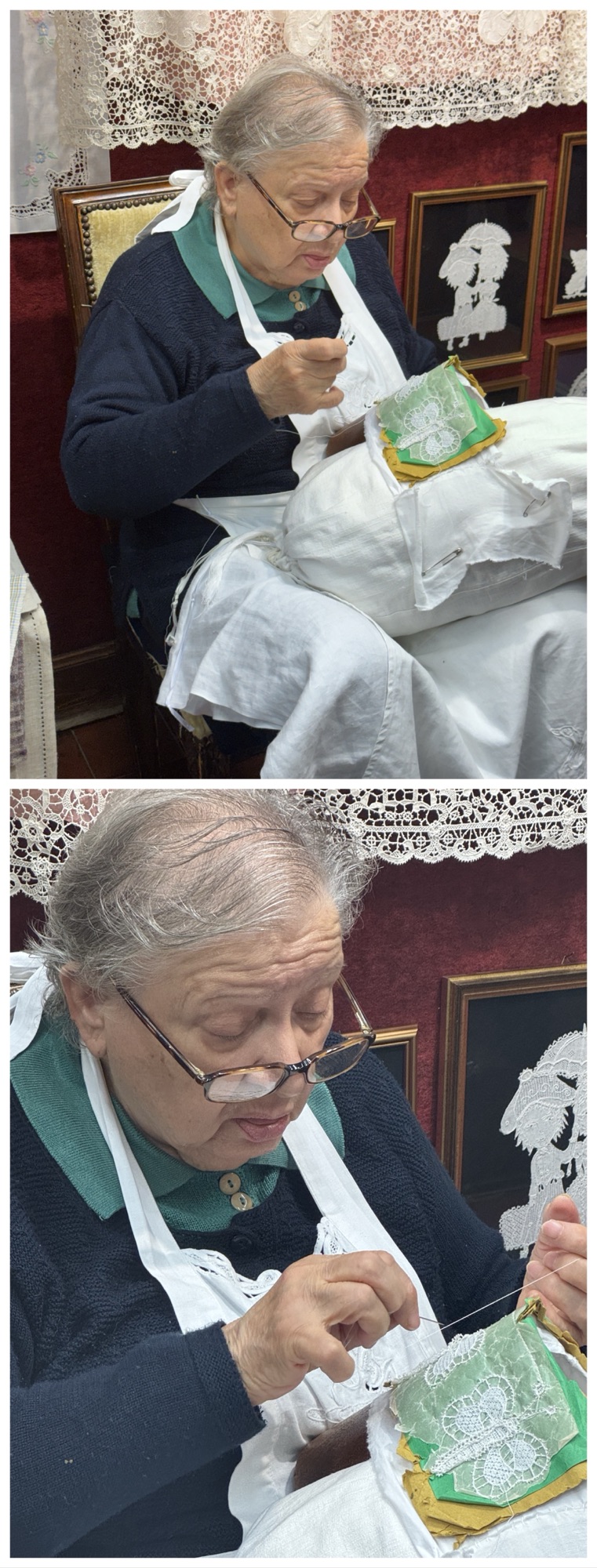
At one time there was a lacemaking school on Burano, but it is now a lace museum. It is difficult to find young women interested in a craft that is difficult, time consuming, and hard on the eyes.
Each piece of Burano lace is made by seven people, each of whom specializes in just one stage of the process. Lucia, the lacemaker we met, was almost 90 years old, and has no apprentice .
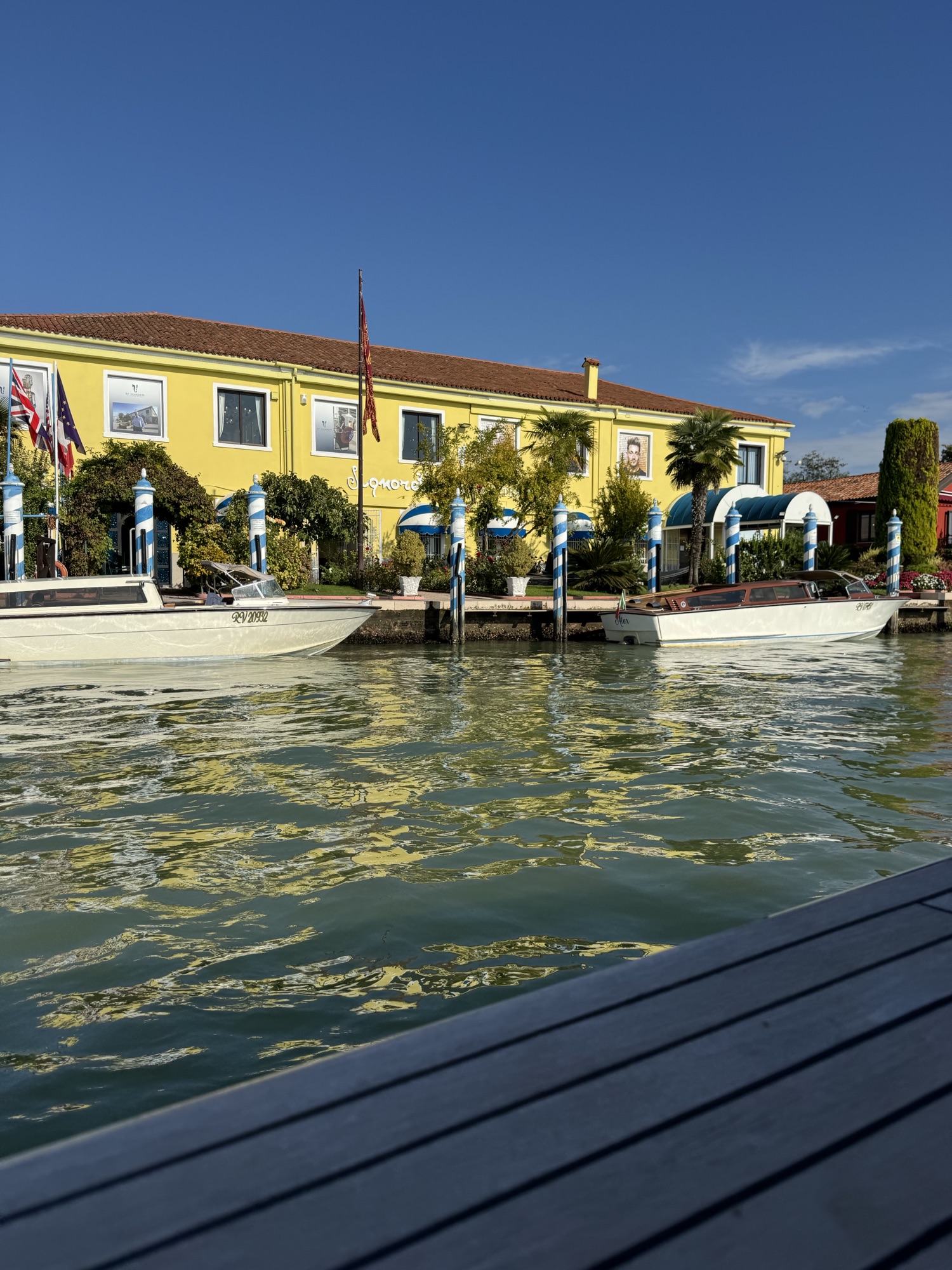
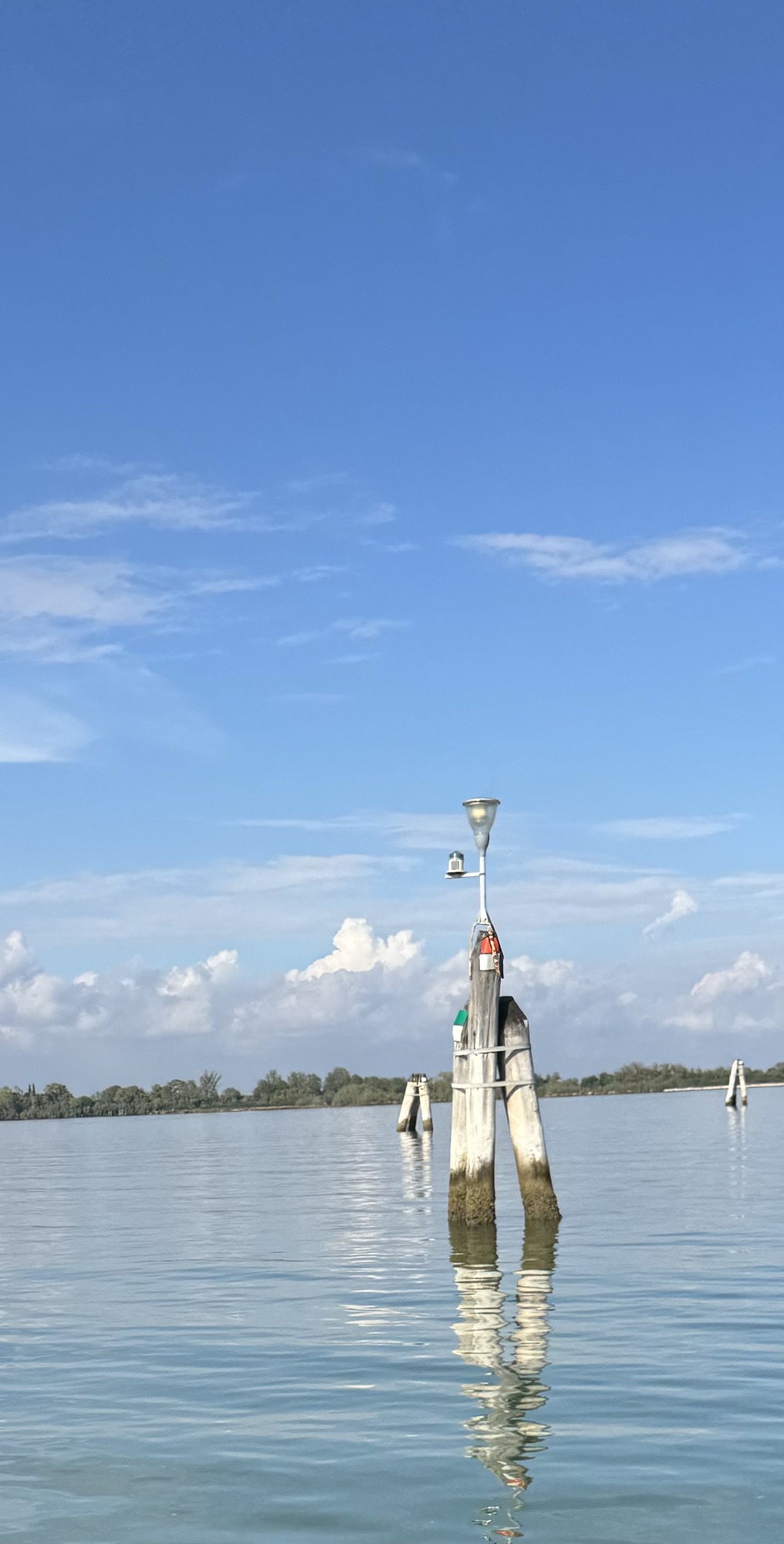
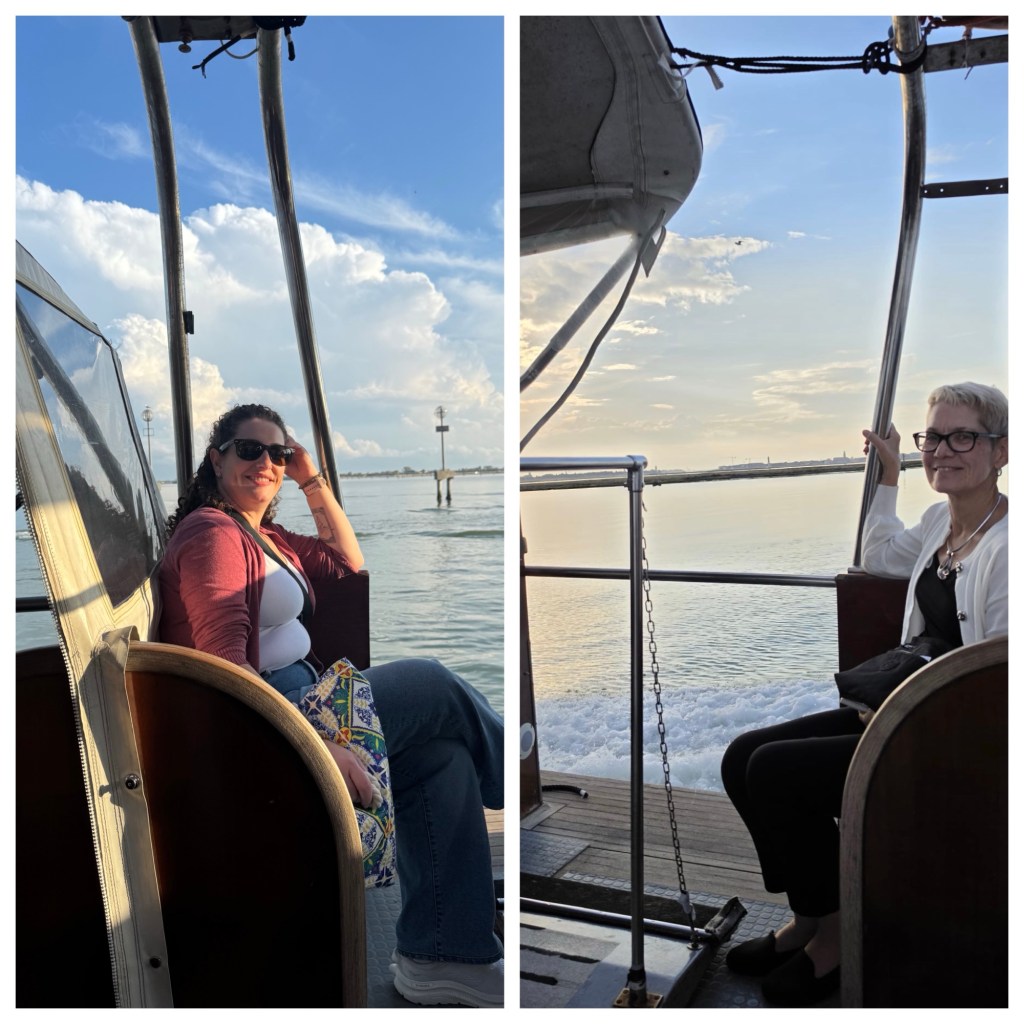
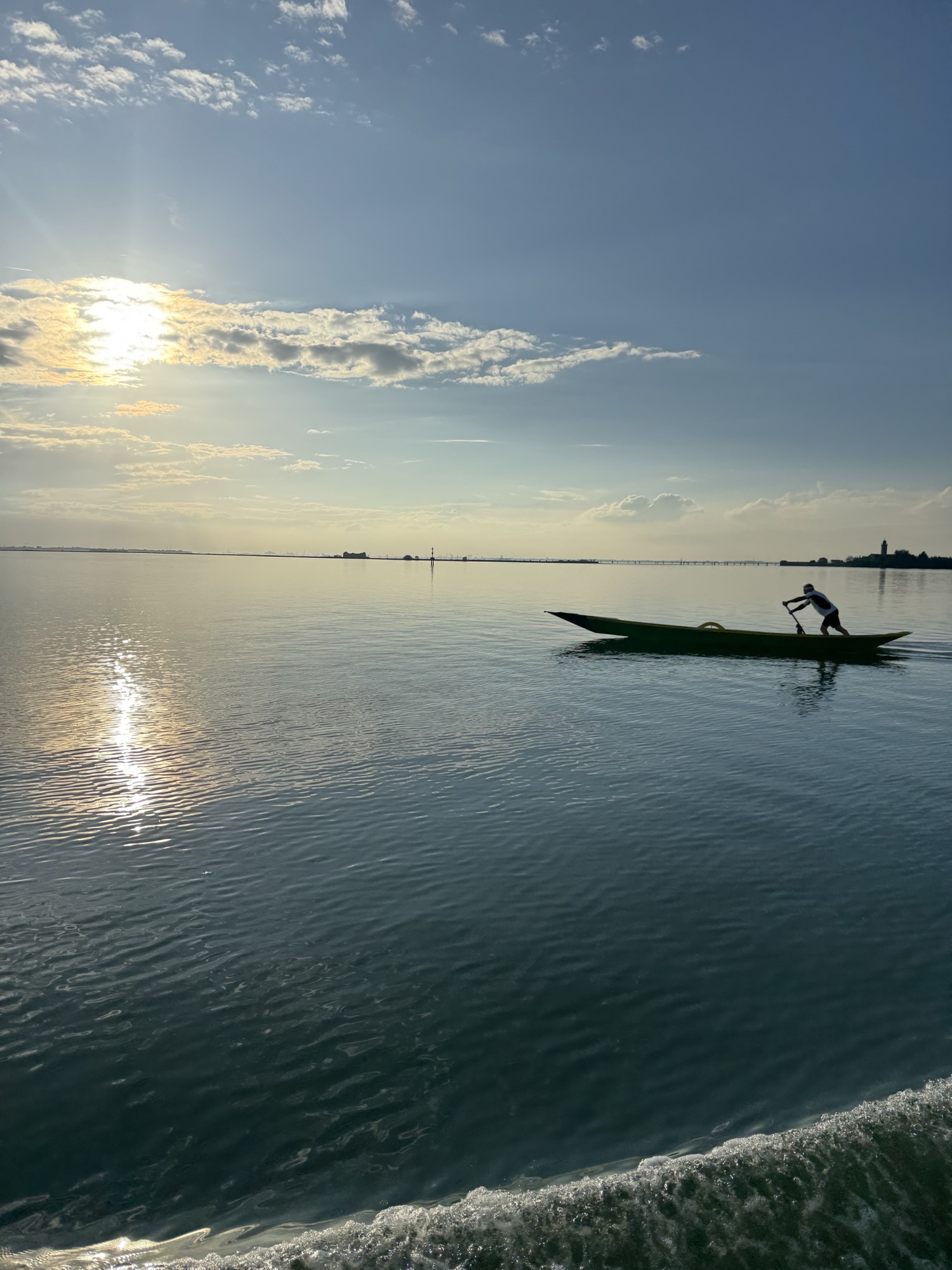
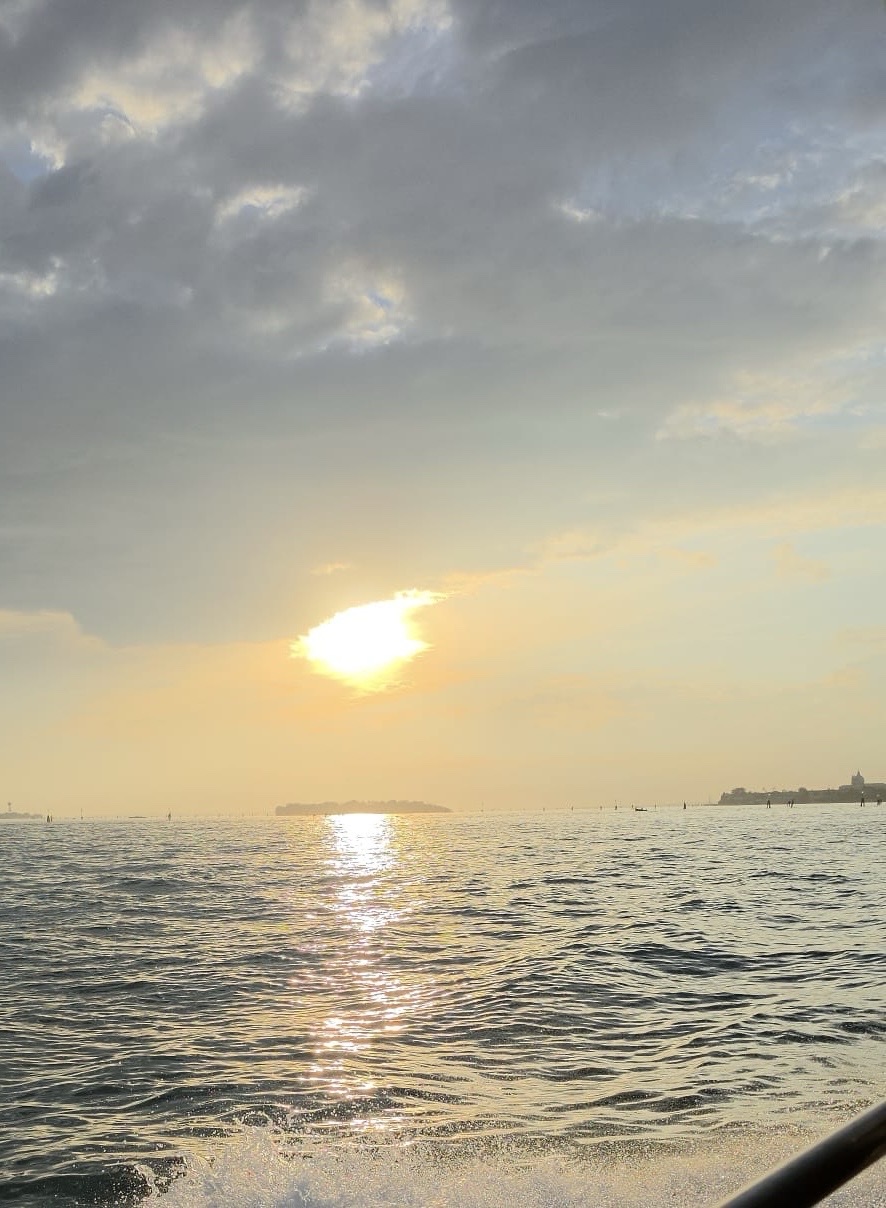
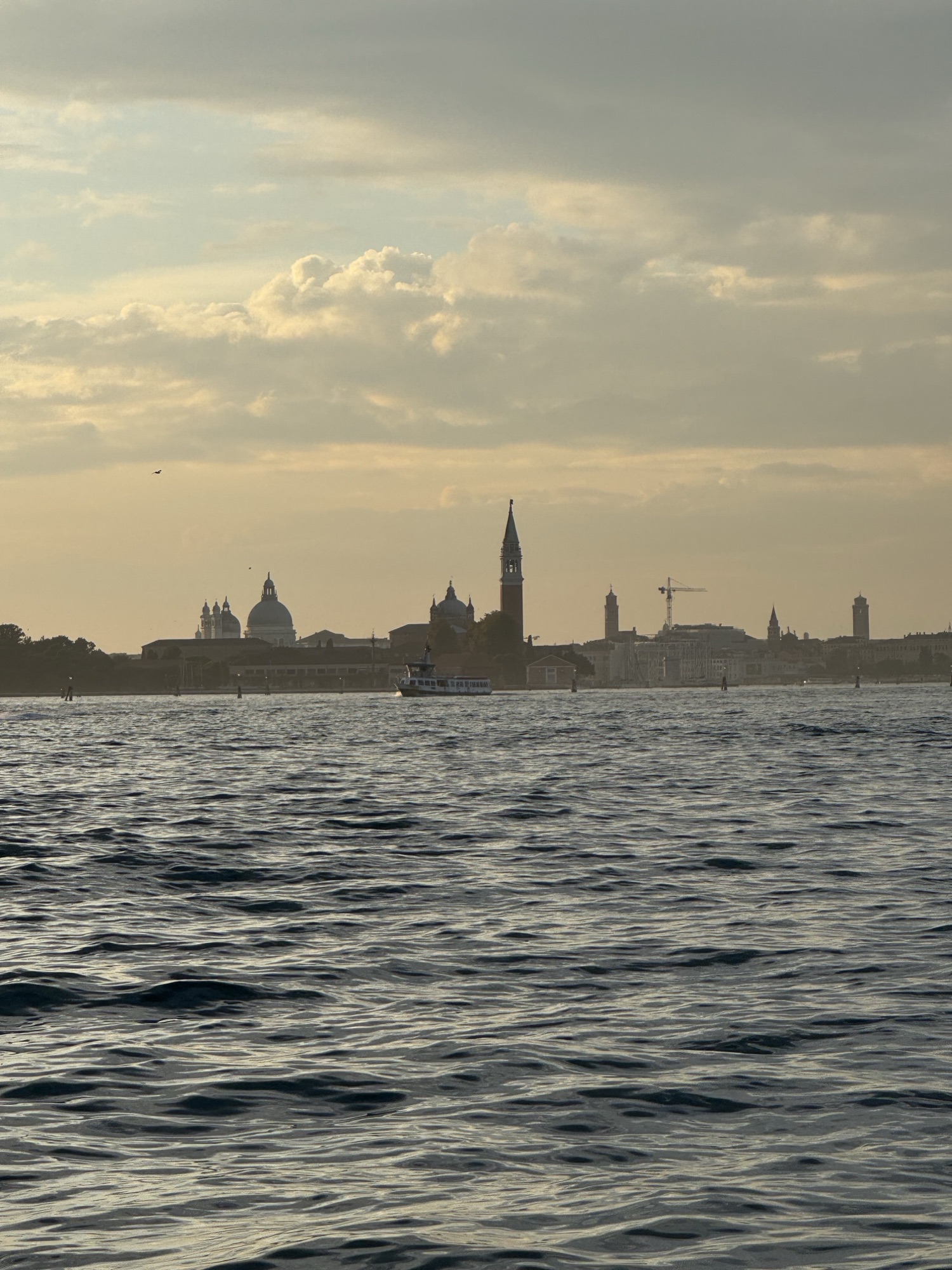
We took a few pictures on each of our boat rides in the Venetian Lagoon. I had forgotten how just how many islands there are here: an entire community connected only by canals.
The sun was beginning to set as we returned to the San Zaccaria vaporetto stop near SAN Marco just after 6pm, tired and hungry.
Our route to both food and our hotel took us through St Mark’s Square again. We’ll be back a third time in two days with our tour group on a guided walk.
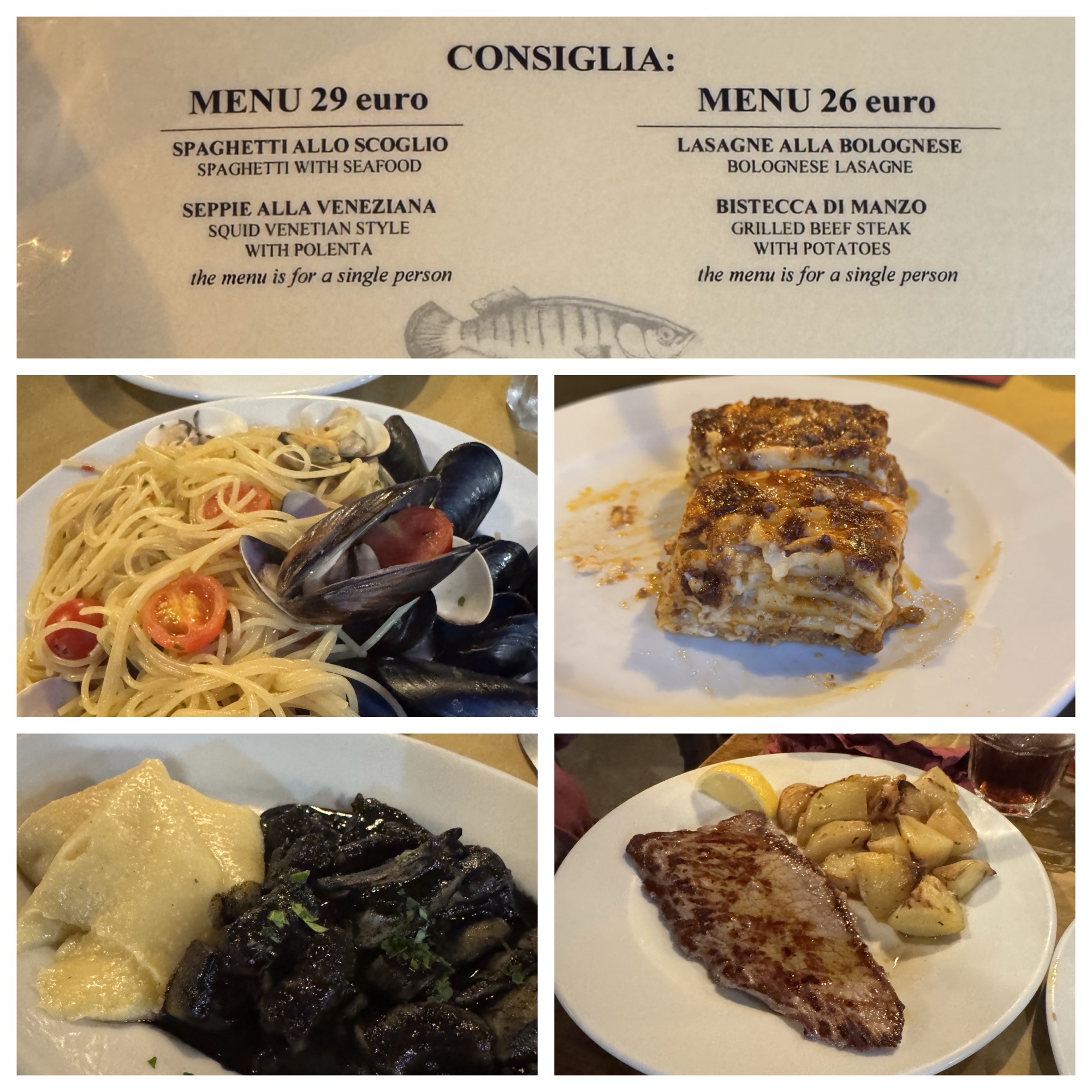
Thanks to a recommendation from a friend who lives just outside Venice for almost half if every year, dinner was much better than last night’s.
Tomorrow we’ll explore a bit more on our own, and finally meet our tour group.

