I’m still working my way through Elizabeth George’s Inspector Lynley series. In fact, after starting my re-read of them back in mid March while we were in Malaysia I’m now on number 20 of 22. If it seems as if it’s taking me longer than usual to power through the series, there are several reasons: our busy touring days until we returned mid-June, waiting for volumes on hold at our library, and the fact that these books are long – regularly over 600 pages.
I’m thoroughly enjoying becoming reacquainted with her wonderful characters, although my favourite of the series so far was the one that I began this month with, and that had almost none of the usual cast in it: What Came Before He Shot Her told the sad and gritty backstory of the 12-year old charged with killing Lynley’s wife Helen.

Reading in Libby (our online library) means that somet8mes the next book I want to read isn’t immediately accessible. In the gaps between available Inspector Lynley books I read a couple of Robert Thorogood’s Marlow Murder Club series. He’s the creator of Death in Paradise and annoyingly uses the same “aha!” convention from that series of having the person solving the murder have a sudden epiphany that involves revelations the reader/watcher could never have made. It’s fun to watch in the BritBox series, but less so when reading. I think I’m done with it.
A more successful interim read was Terry Fallis’ Operation Angus. Not since his 2008 first novel The Best Laid Plans (which won the Stephen Leacock Memorial Medal for Humour, which is a very big deal in Canada) have I enjoyed one of his books this much. It’s no surprise, since the protagonist is none other than Angus McLintock, the reluctant politician of that first novel. Fallis’ novels are less humour than satire, but always entertaining.
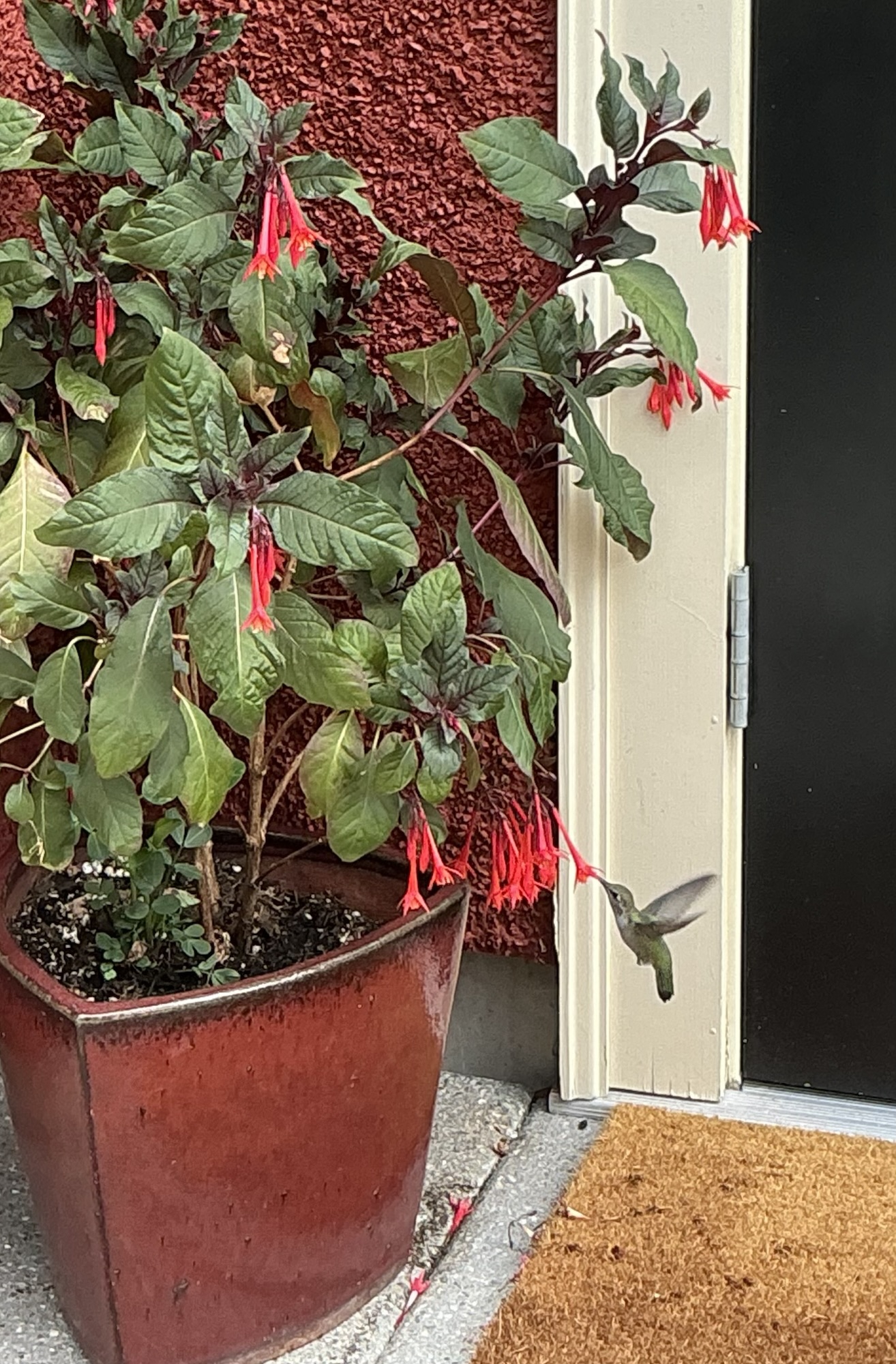
Not great detail in a photo taken on my iPad, but evidence nonetheless.
Hands down this month’s best read was The Women in the Castle by Jessica Shattuck.
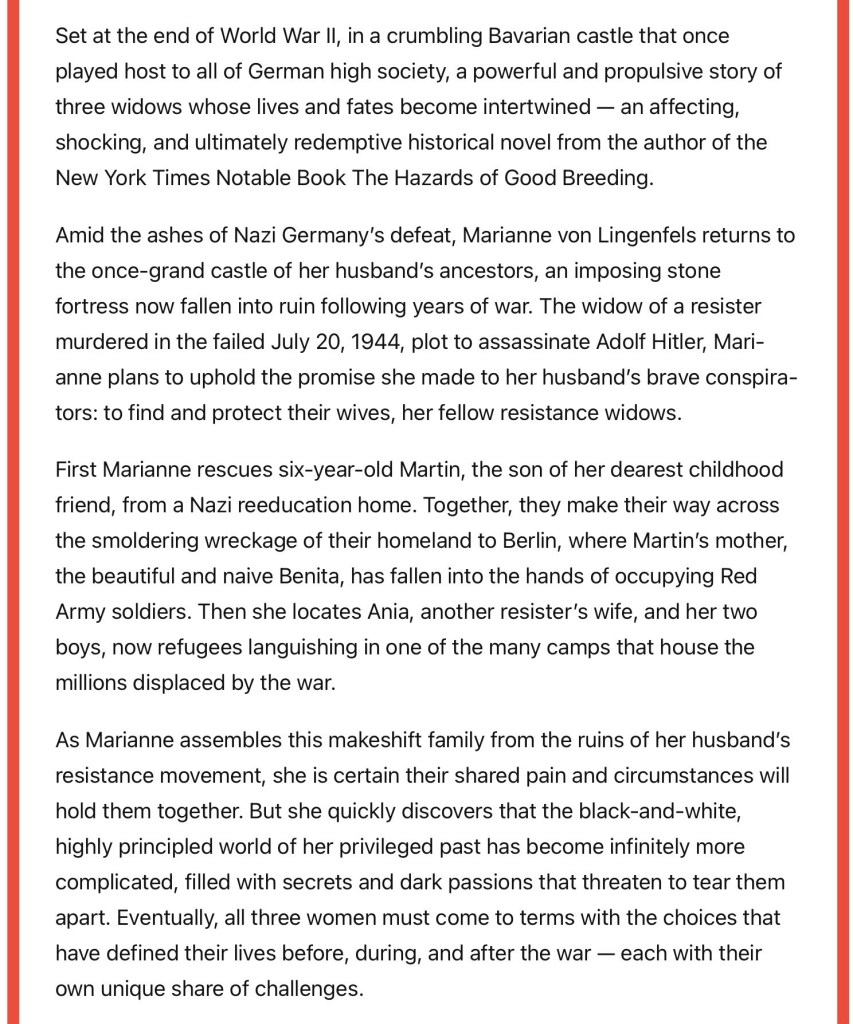
I chose the book after reading a Facebook post from the German Consulate commemorating the fact that “82 years ago this July 20th, a group of Wehrmacht officers, diplomats, and civil servants, led by Claus Schenk von Stauffenberg, attempted to assassinate Adolf Hotler and overthrow the Nazi regime.
They knew that failure would likely cost them their lives, yet they chose to act out of moral responsibility and opposition to tyranny. The attempt was unsuccessful, resulting in Stauffenberg and more than 200 other people being executed. Thousands connected to the plot were arrested, persecuted, publicly punished, and many were killed in the aftermath.
This became known as the July 20 Plot and the date is now one of the most significant dates in German remembrance of the resistance against the Nazi regime.”
A large part of what makes this well-researched novel so good is the author herself – half German, and of the same generation as mine, who were born in North America well after tue end of WWII but by the simple fact of our ethnicity forever associated with some of recent history’s most horrific events. The epilogue, entitled “Behind the Book”, is honest and poignant, and the inclusion of a background chapter that didn’t make it into the novel’s final edition adds further perspective.
I’d highly recommend this book to anyone interested in WWII history, wanting to understand how enticing a flawed ideology can be to dissatisfied people, or reading about the costs of wilful ignorance and the rewards – and costs – of resistance.


Adding The Women in the Castle to my list, as well as the Lynley series.
LikeLiked by 1 person
It does seem we regularly trade inspirations!
LikeLike
Great recommendations Rose, I must look up ‘Women in Castles’.
A crime series you might enjoy is the Dr Ruth Galloway series by Elly Griffiths a British author.
The main character is a middle aged Forensic Archaeologist.
I loved them all!
LikeLike
I devoured Elly Griffiths’ series last year! They were wonderful!
LikeLike