When we arrived here 6 days ago, our hotel welcomed us with a bottle of Prosecco. Yesterday, on our penultimate day, they thanked us for staying with a bottle of Spanish red wine blended especially for their Italian restaurant.
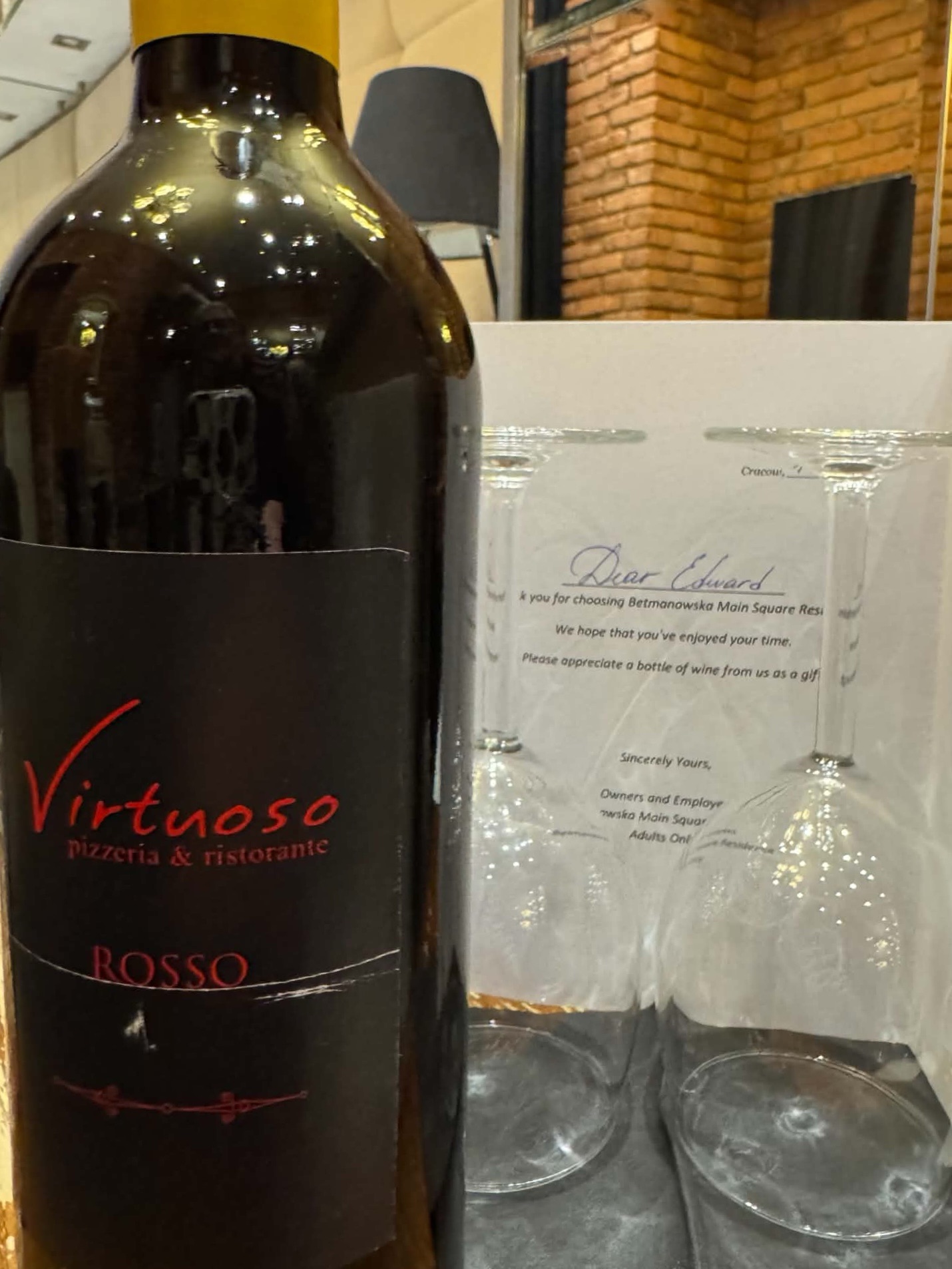
Nice.
And, because it came from the hotel’s associated restaurant, we were allowed later to take it with us into that venue to enjoy with our dinner.
Betmanowska Residence has been a lovely place to stay. Our only real complaint was the single stained glass window labelled “do not open”, which meant we had no view of the weather outside without descending 28 stairs to the lobby from our first floor room (ceilings are really high, and the infrastructure between floors very deep, so a storey is almost twice as tall as a standard North American house with 14 stairs between floors).
Despite the perfect location, excellent breakfasts, and two bottles of wine, I’d be hard-pressed to say I’d come back, but that’s largely because Ted and I agree that Kraków is a “once and done” destination for us.
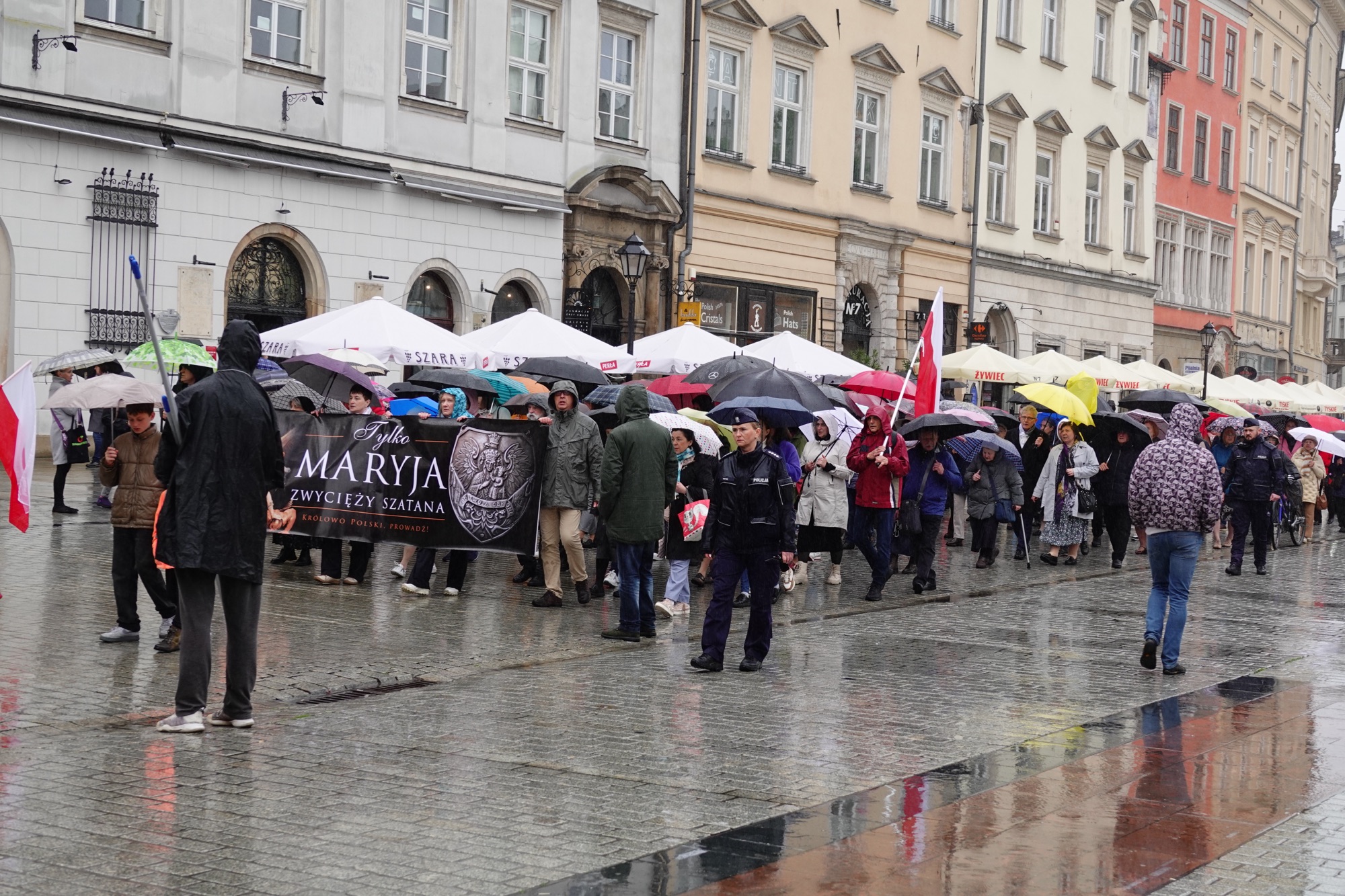
It poured rain yesterday, which did not deter the Warriors of Mary from marching and singing. This group’s members apparently take a “sword oath” to pray the rosary and use spiritual warfare to defeat Satan and protect their families and the Church. They regularly hold massive, public rosary marches through the streets of major Polish cities, including – as we witnessed firsthand – Kraków.
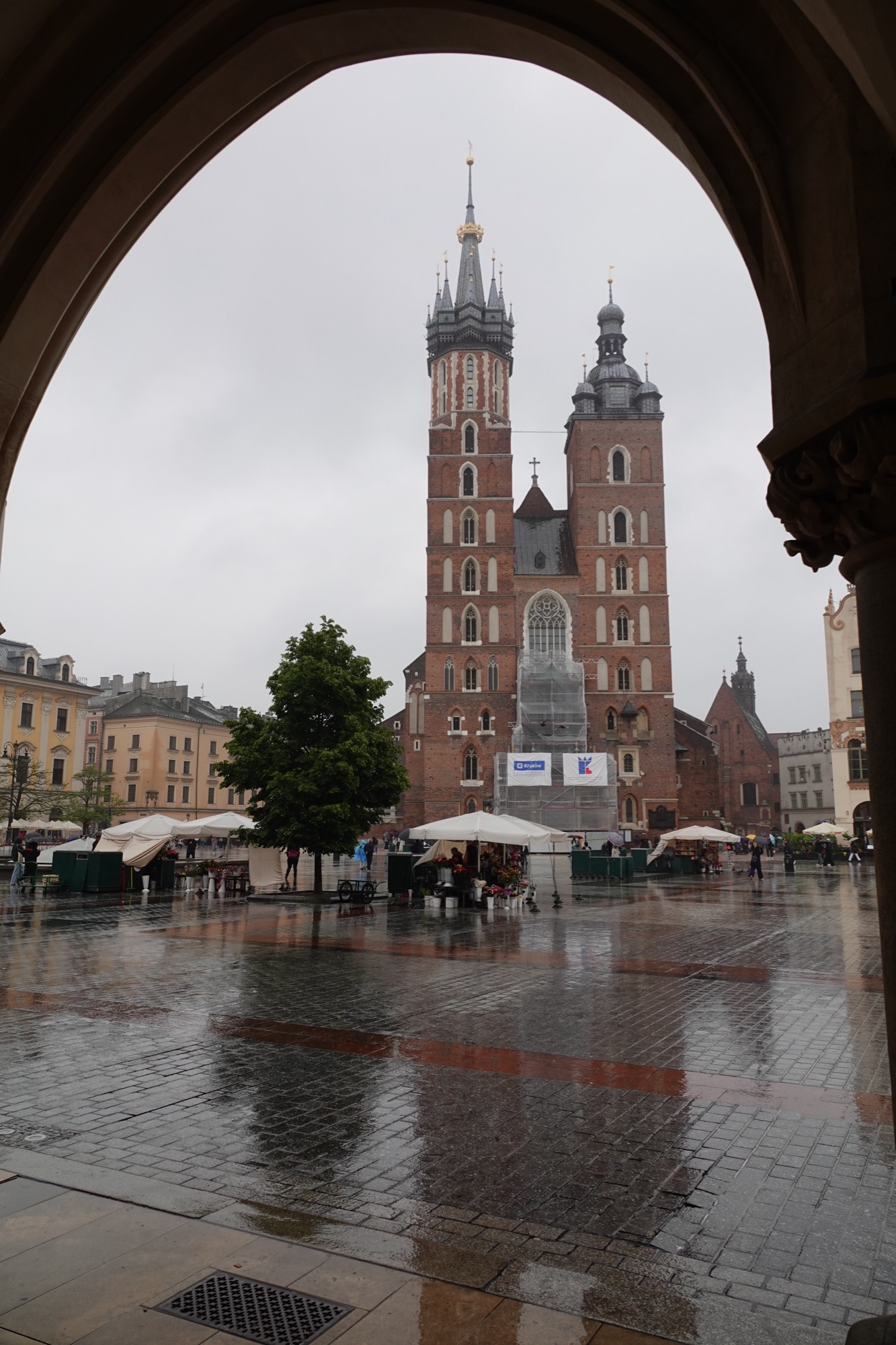
We, on the other hand, took shelter under the archway of the Sukiennice (the Cloth Hall) and listened to the bells of St. Mary’s Basilica.
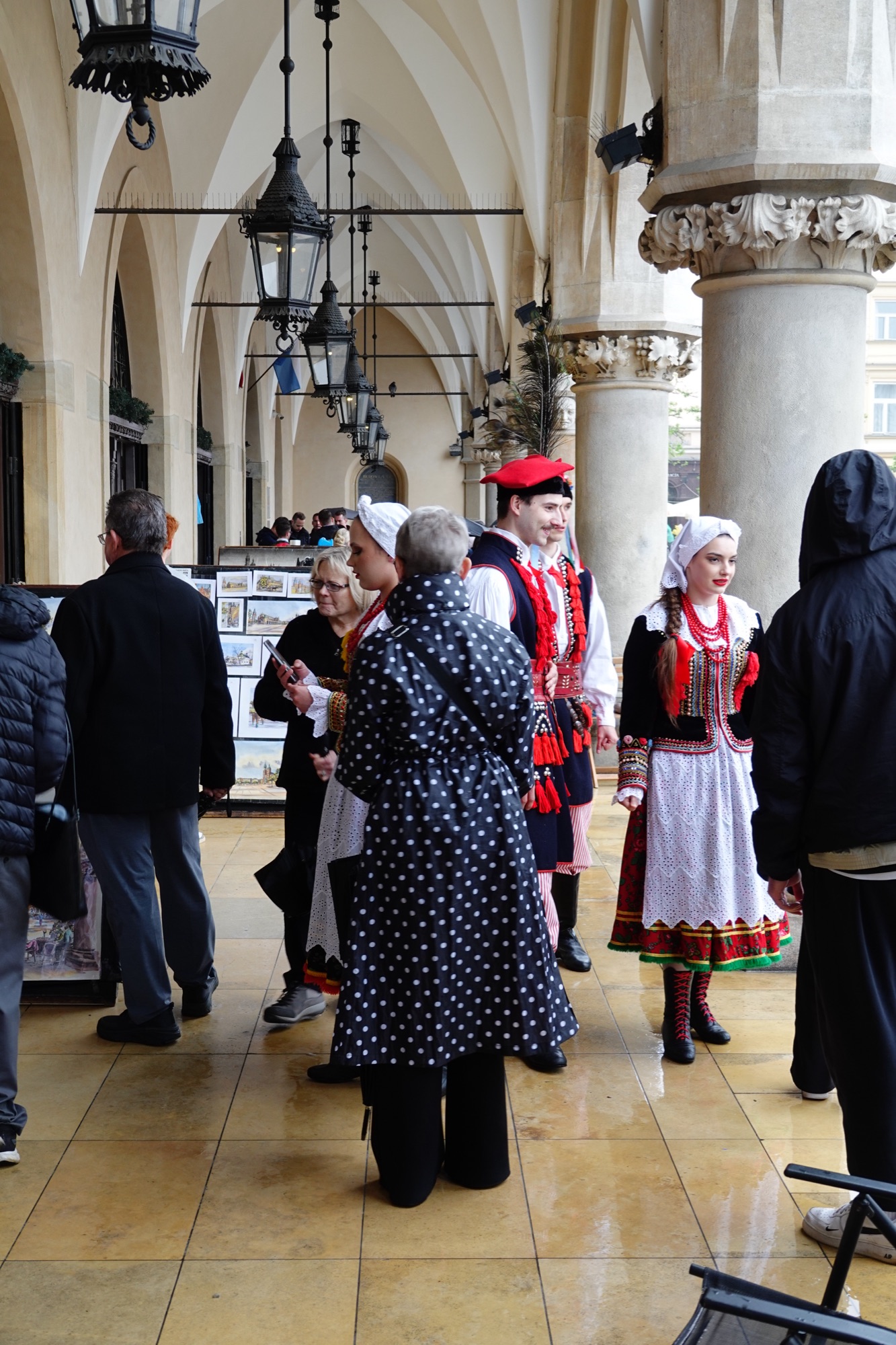
Joining us under shelter were the costumed Polish dancers who otherwise would have been soliciting tips in return for being allowed to take their photo.
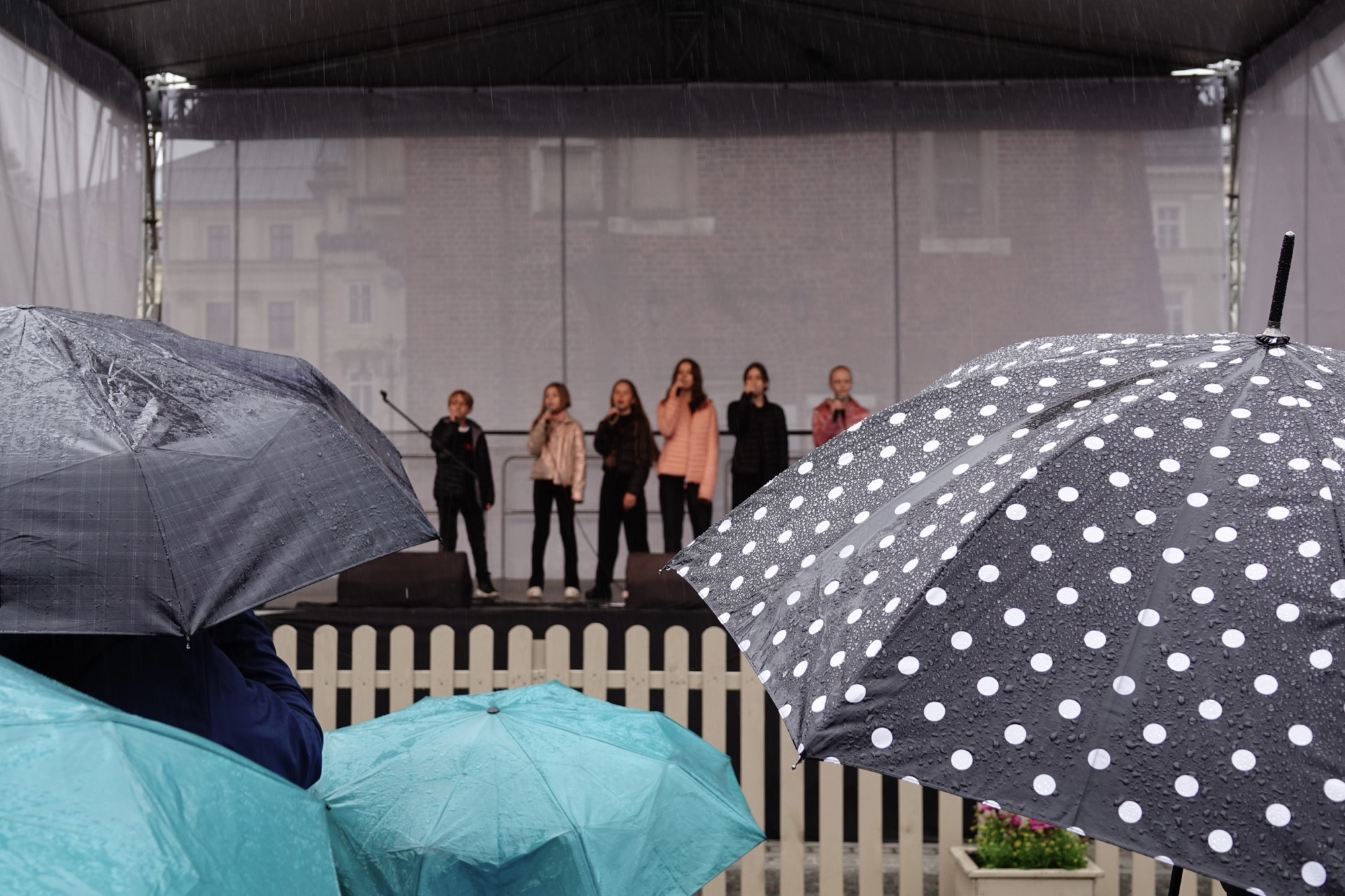
On the opposite side of the Cloth Hall, where the weekend market stalls were shrouded in tarps to protect their wares, young vocal groups gamely continued to perform on the stage, even though their audience had dwindled to just their parents and us (under our umbrellas).
It seemed like a good day to go underground, into the 3400 square metre exhibition of a fragment of mediaeval Kraków unveiled by archeologists in 2005-2010. The archeological site has been turned into a subterranean museum of Kraków’s Market Square, within the actual foundations of the 12th and 13th century buildings. The settlement was destroyed by the Mongols in 1241, which explains the plaque we saw on an earlier visit to the Cloth Hall that talked about Teutonic Rules changing the market and court location in 1257.
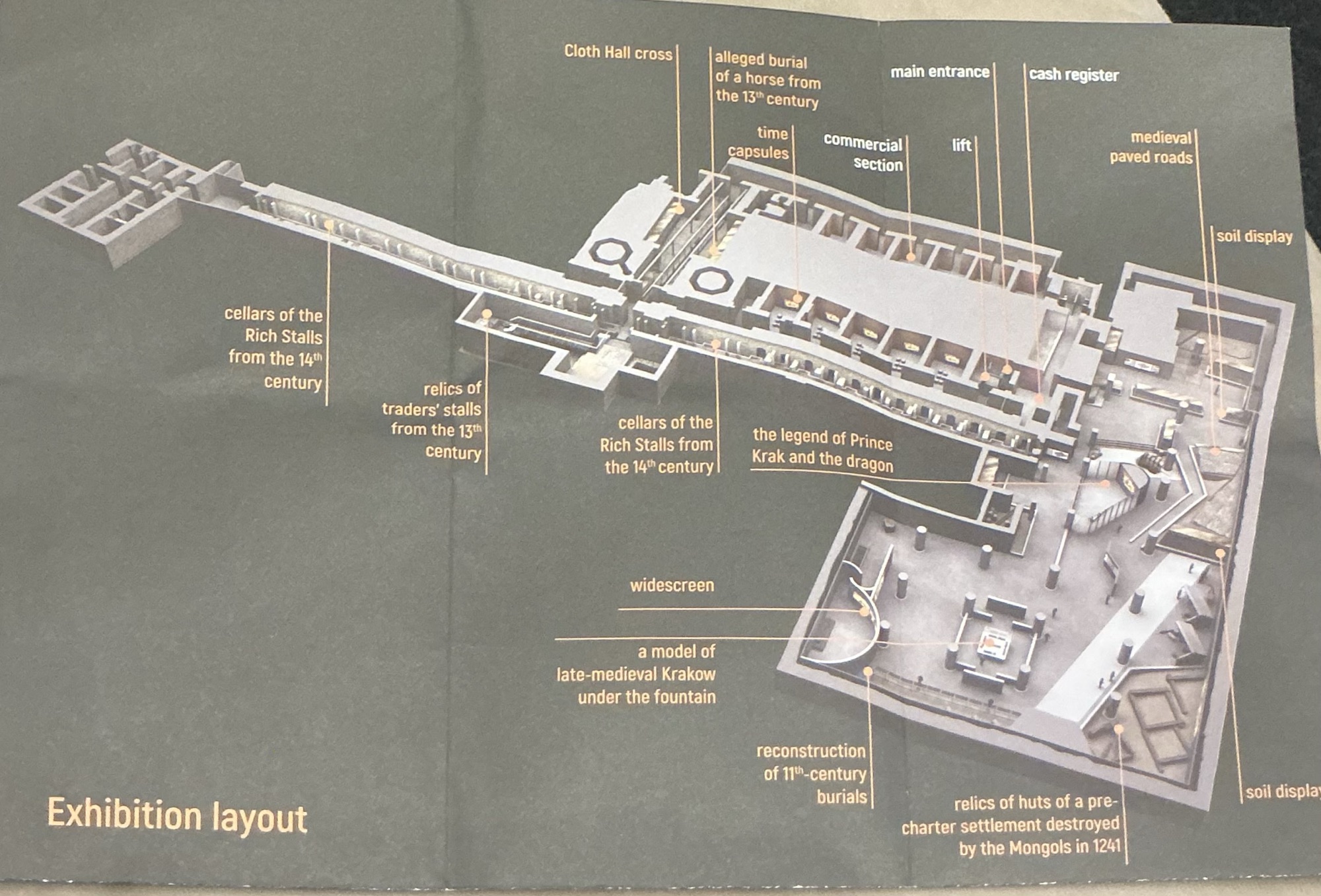
Entering the museum involves descending two flights of stairs (to below the level of the street in the 12th century), and then walking through a steam “curtain” to travel from the present day into the Middle Ages.
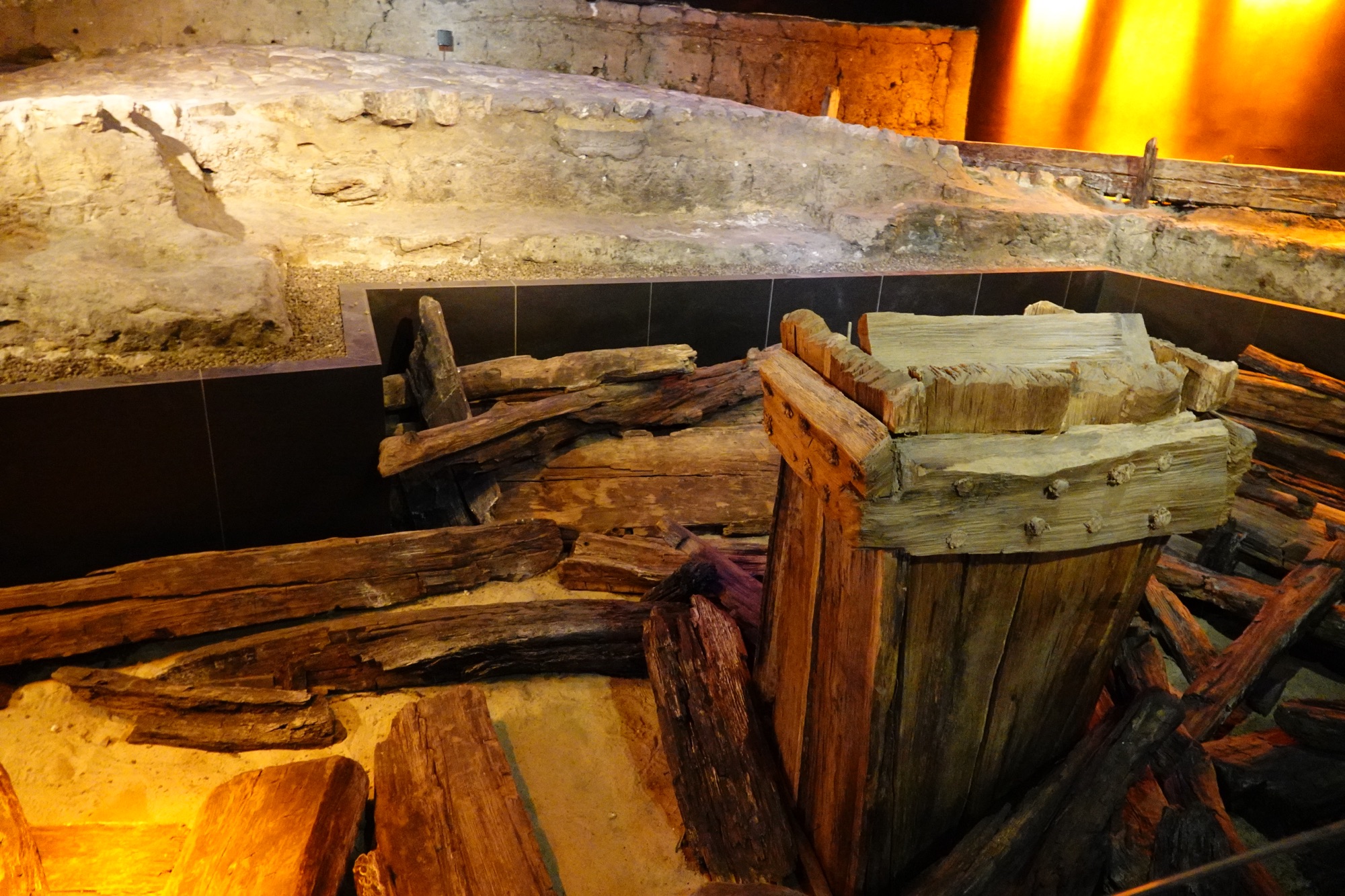
There were mediaeval artifacts, actual portions of the cobblestone roads that existed under the ones we’ve been walking on, reconstructions, mock-ups, lots of touch screens with explanations in six different languages, and a theatre. The space is dark, so not great for photography, but there’s lots to see.
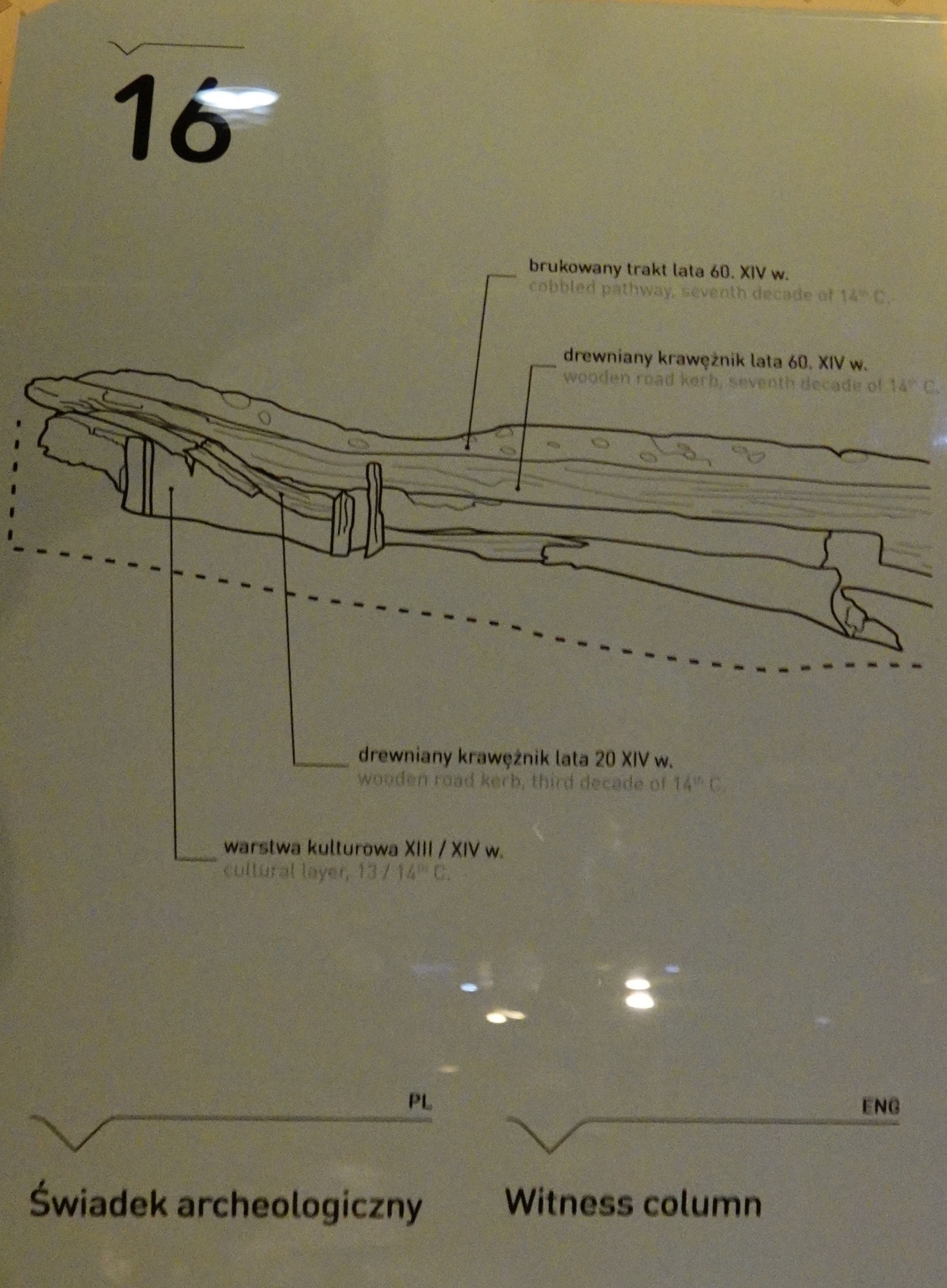
There were 70 total “witness column” points in the museum, each related to an actual spot in the archaeological dig.
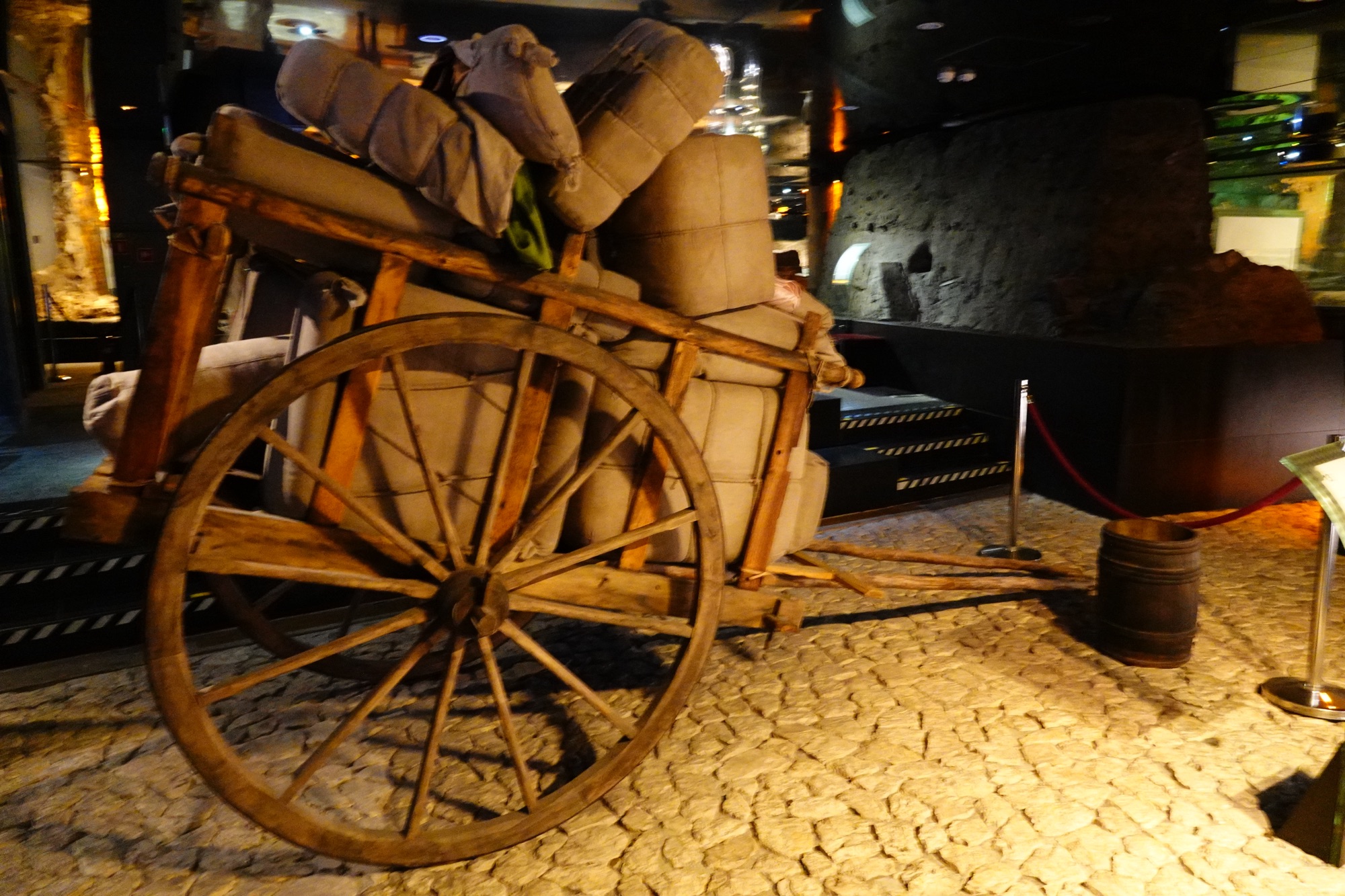
There was an option to stand on a mediaeval style scale and get weighed in various units that would have been used by traders who bought and sold goods in Kraków’s market.
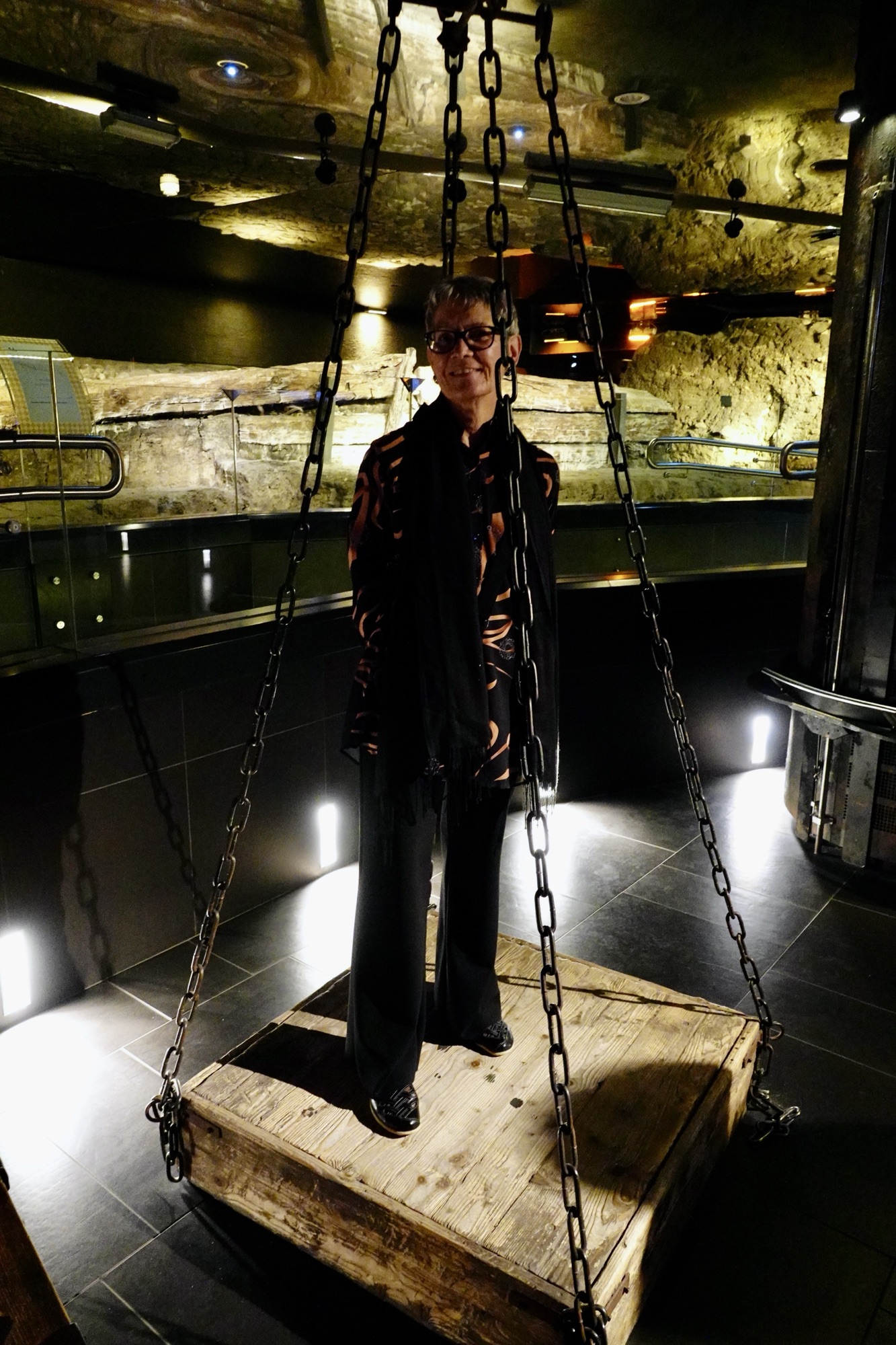
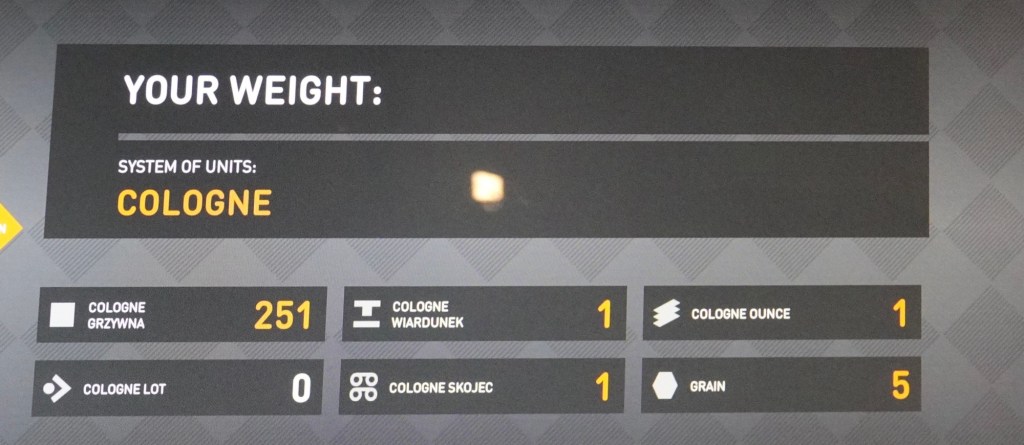
How accurate was that scale? Well, converting the Cologne mediaeval units to grams and then to pounds, it came within about two pounds of my current weight on a modern digital scale.
Ted’s feet were too sore for him to do the entire museum, and I wasn’t interested enough to continue on my own; we felt we’d seen enough and gotten a sense of the city that existed before its current iteration.
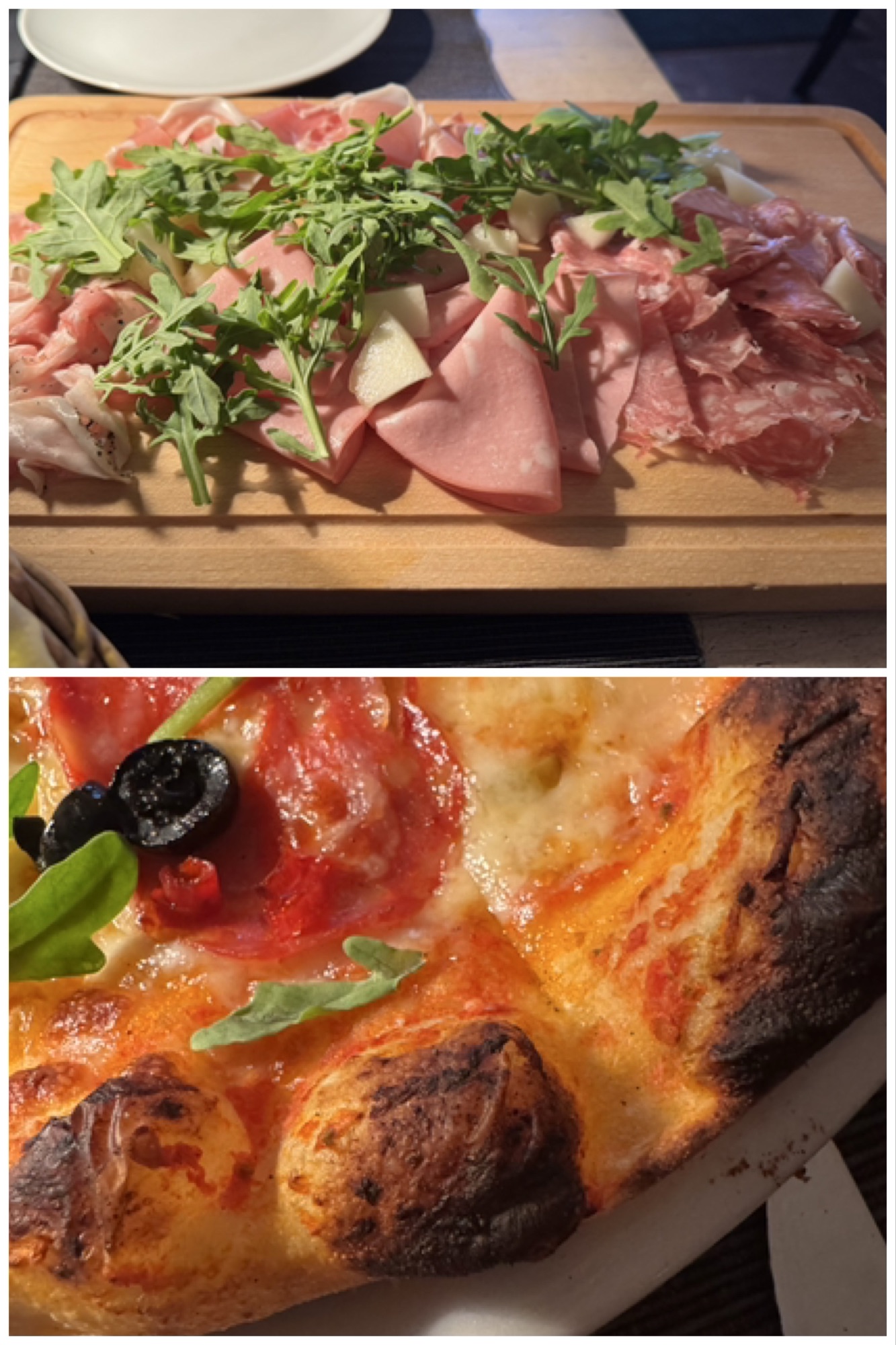
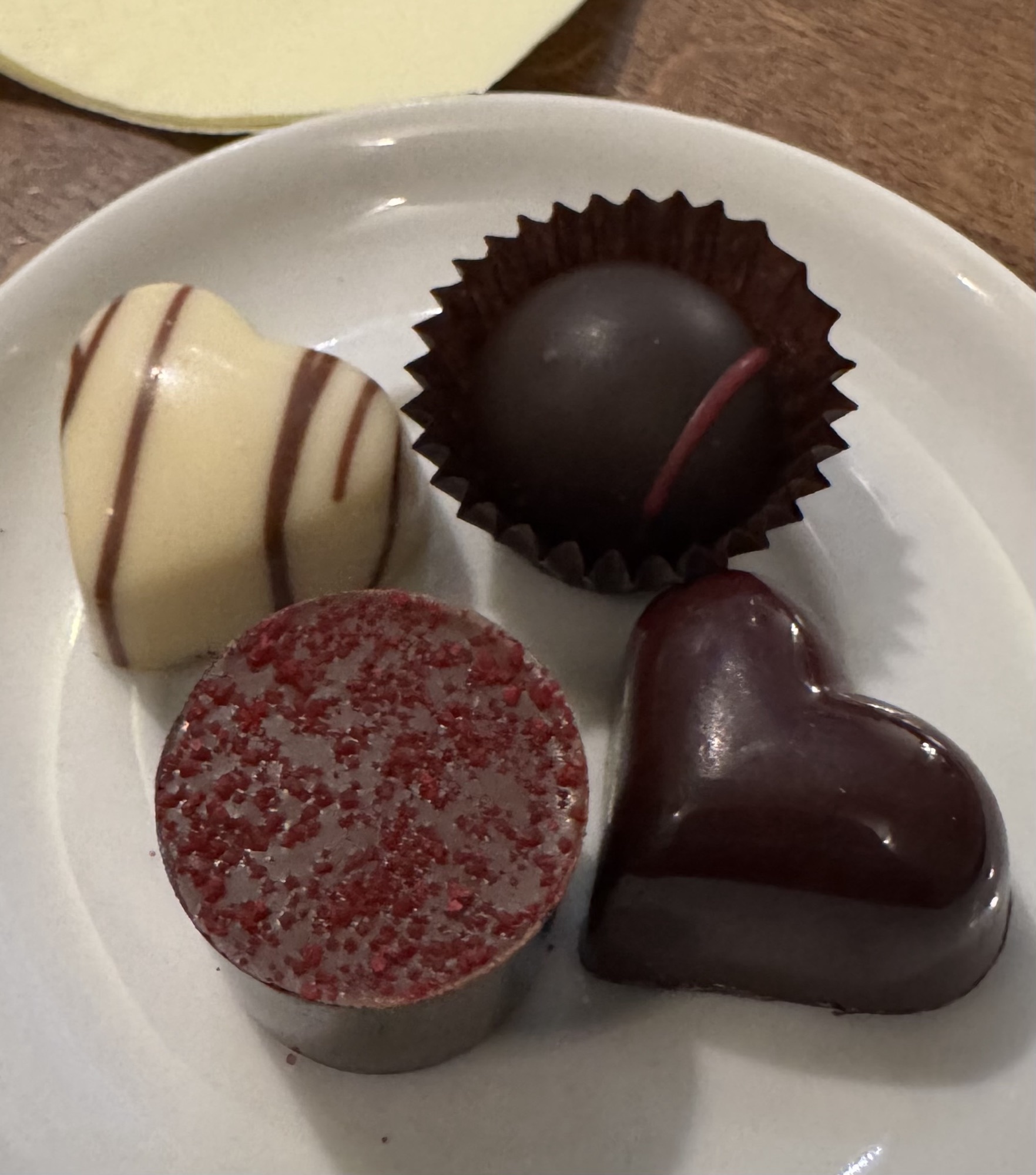
Dinner, and our wine, were at Virtuoso, followed by coffees and pralines at the E. Wedel lounge.
Wedel dates back to 1851 and is inextricably linked to the three generations of the German immigrant Wedel family who built one of the most powerful Polish companies. Karol Wedel and his wife started in a shop on Miodowa Street in Warsaw. The “E” of E. Wedel is Emil, Karol’s son, who became the manager of the plant in 1865, and who, immediately after receiving the company as a wedding gift, moved the plant to a tenement house on Szpitalna Street in Warsaw, where to this day there is a company store and café – the oldest E.Wedel Chocolate Drink “Old World Shop”. That’s a destination for next year.
Despite the family’s German ancestry Wedel refused to collaborate with the Germans; increasingly this led to him and his employees being persecuted by the Nazis
According to the company’s own website “Although the factory operates during the occupation, the production of confectionery products is only for the needs of the German occupier. However, this turn of events does not prevent Jan Wedel from getting involved in helping the poorest and offering them hot meals in the canteen of the Prague factory. During the September campaign in 1939 and the siege of Warsaw, Jan Wedel decides to open the warehouses of his plants and distribute food products to the residents. He then loses a huge fortune, but saves hundreds of people from starvation.
After the surrender of the Warsaw Uprising, Jan is arrested and sent to a transit camp in Pruszków for civilians evacuated from Warsaw. The factory workers prudently bricked up some of the factory’s products, thus preventing the German troops from looting them.
In September 1944, everything that the German troops failed to rob was stolen by the Soviet army.”
Wedel is no longer family-owned, but the Poles still consider it a national success story and the Polish national chocolate brand.
Their cappuccino and pralines were decadently delicious.
Today we were back onto a train for the 3 hour journey to Warsaw, where we were booked into an airport hotel in preparation for tomorrow’s flight to Manchester, England, and the last 3 weeks of our round-the-world trip.
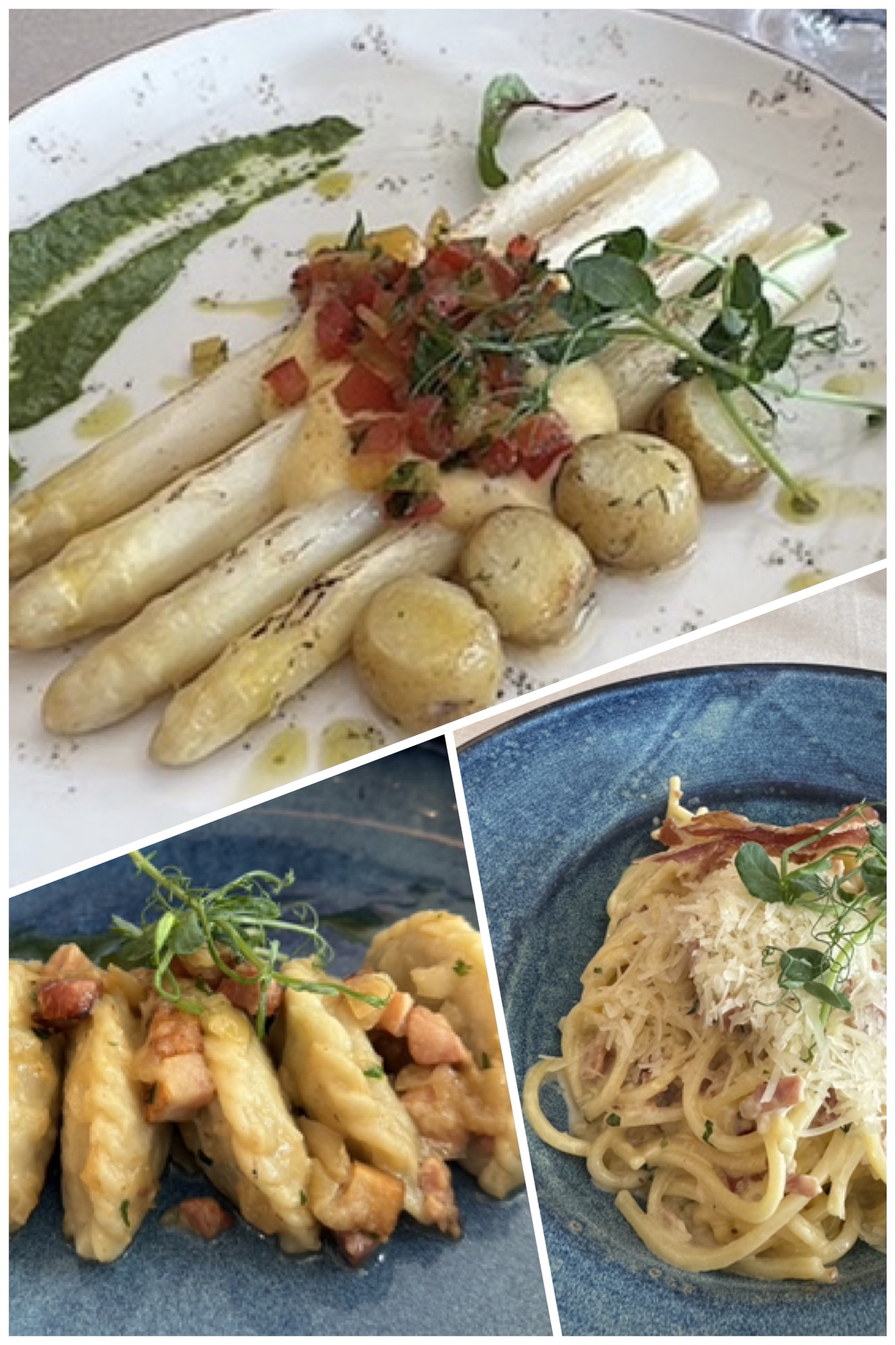
The Airport Hotel Okeçie turned out to be an absolutely huge five star hotel with a conference centre, spa, two restaurants, and a chocolate café. Since we hadn’t eaten since 8:00 a.m. breakfast, we had an early dinner at 4:00 p.m. in Mirage, where it was a treat (for me, anyway) that they were celebrating a rite of spring in this part of Europe: white asparagus season!
After dinner it was time to check in for our flights to the last country of this trip: merry old England.
Dziękuję, Poland (pronounced, roughly, like Dching-coo-yeh). That’s “thank you”. It’s been fun, and we’re looking forward to being back in Warsaw next May.

