We’re getting pretty used to seeing municipally-supported wall art as a way to counteract random graffiti.
There’s plenty of both here.
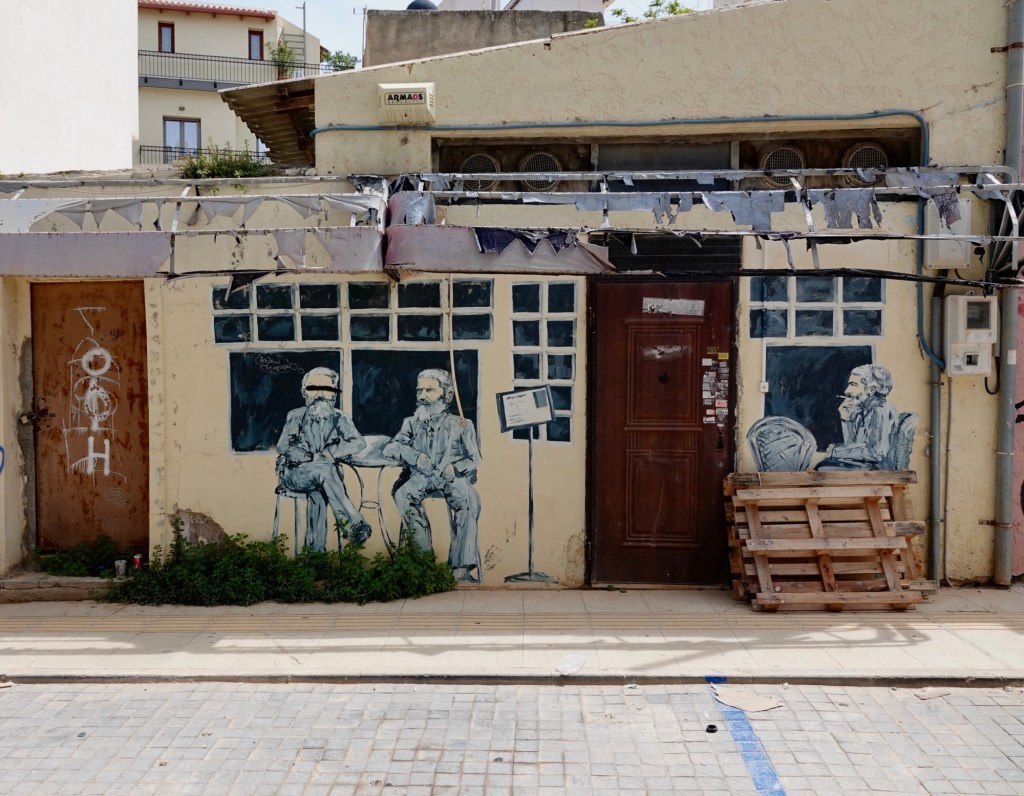
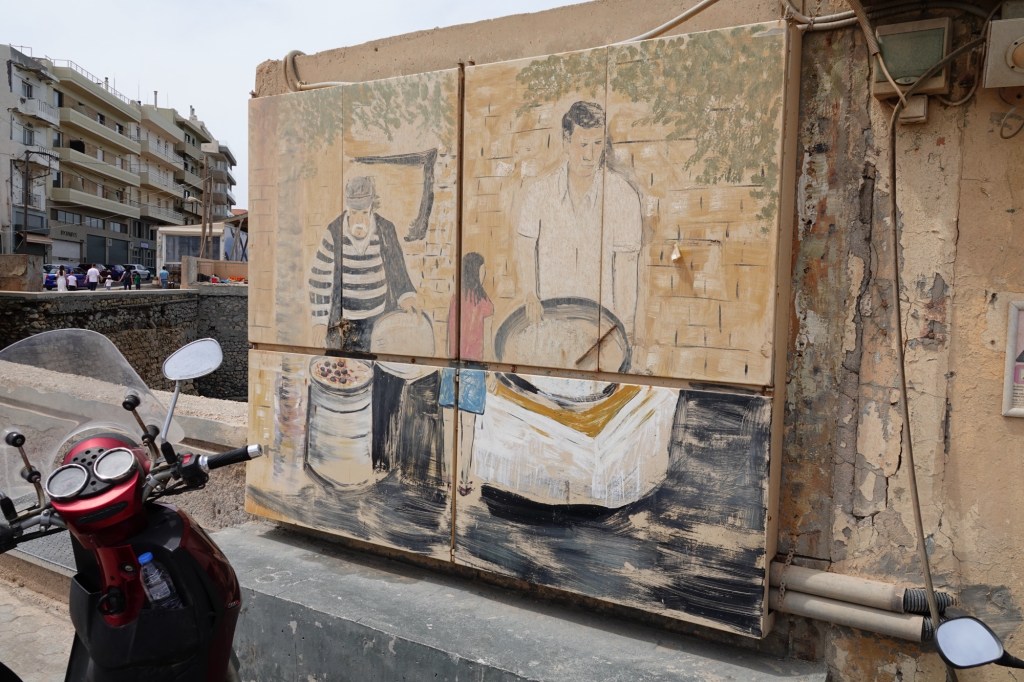
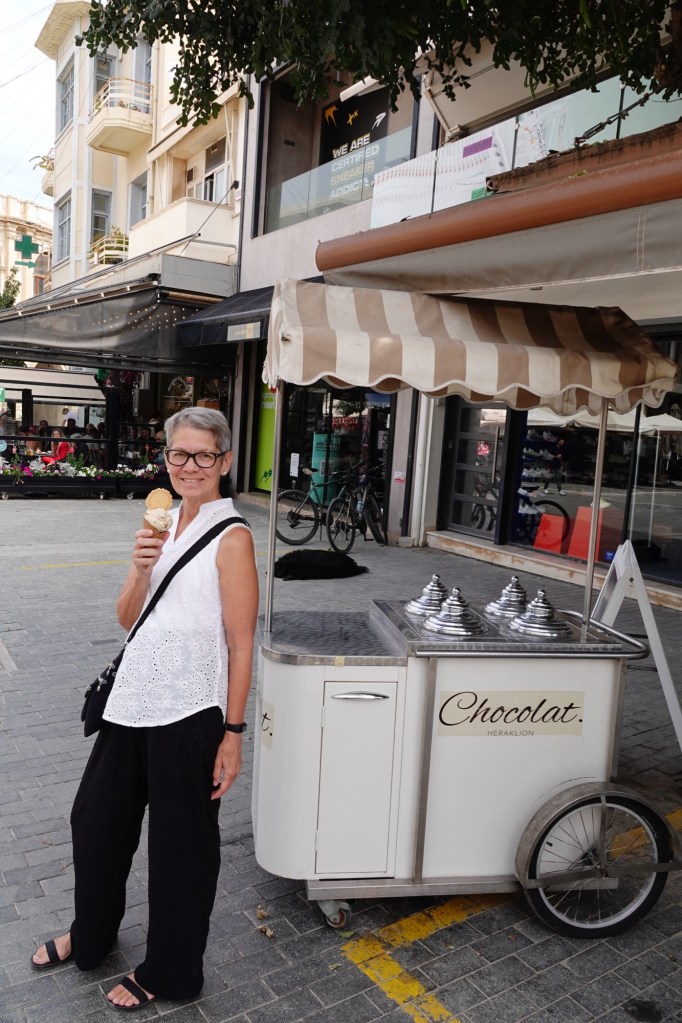
There’s also really good gelato.
I had the random thought the other day that graffiti may be what differentiates the higher primates from other animals. After all, what is ancient cave art but graffiti? The idea of putting art in approved places – temple walls, Egyptian tomb walls, or gilt wooden frames – only came much later, and never truly replaced the urge to leave one’s mark on the nearest blank space, be that a wall, a dumpster, or even a tree.
Of course, not all graffiti is created equal, and “Free Palestine”, “Tourists Go Home”, or “call for a good time” may not stand the test of time the same way as frescoes at Pompeii. Nonetheless I can’t help but be reminded of the crude male body parts etched onto walkways at Ephesus to guide patrons to the nearest pleasure house; I wonder if their creators ever imagined tourists giggling at them centuries later.
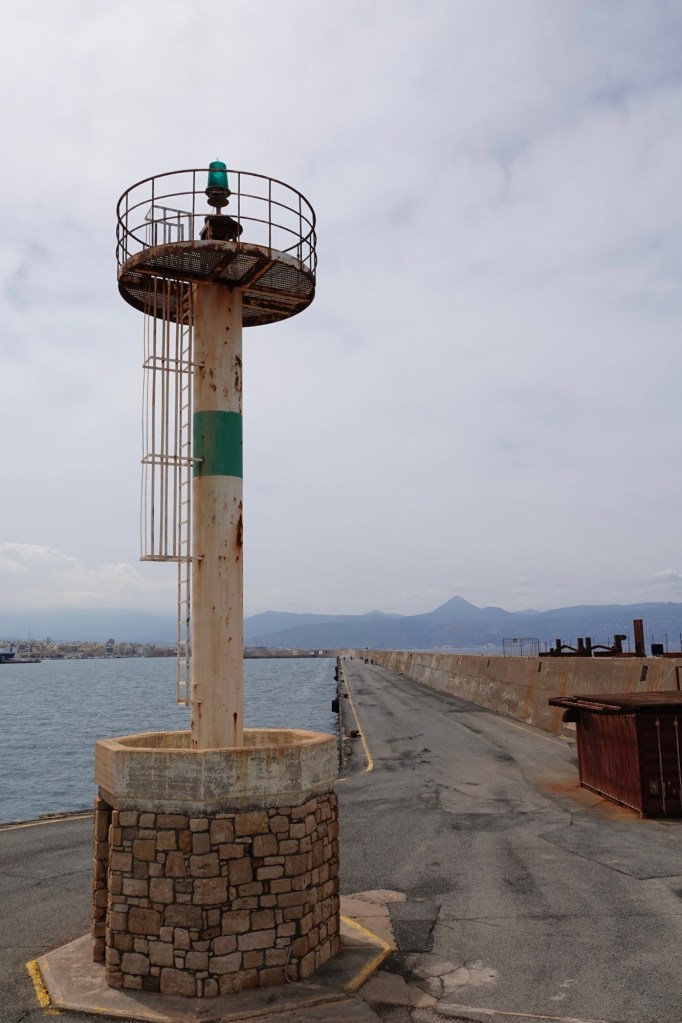
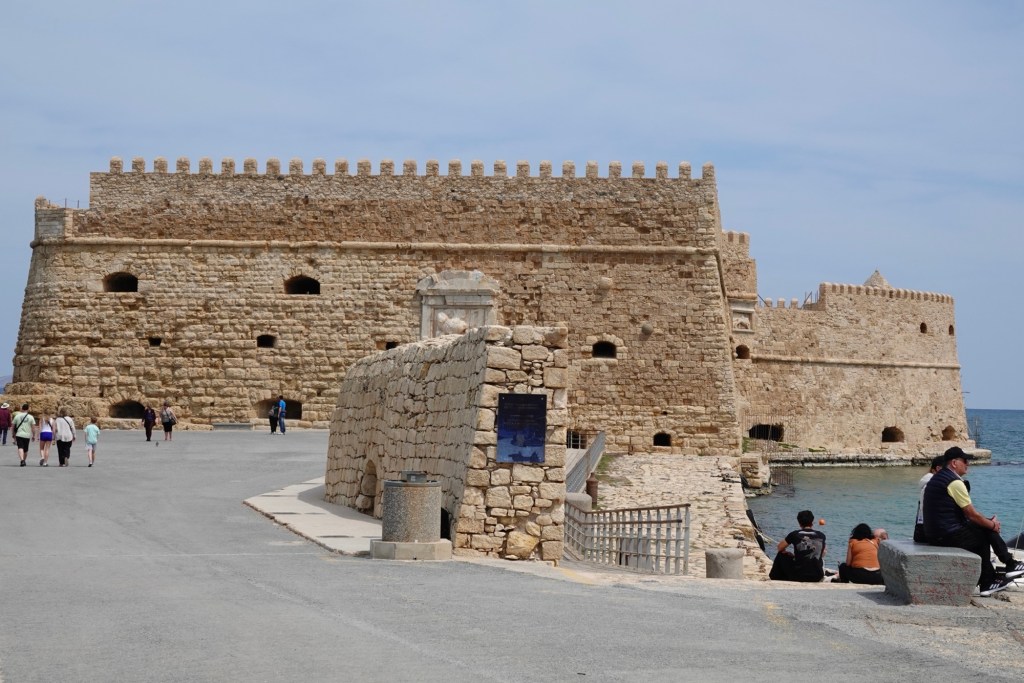
There’s a long breakwater in Heraklion’s harbour.
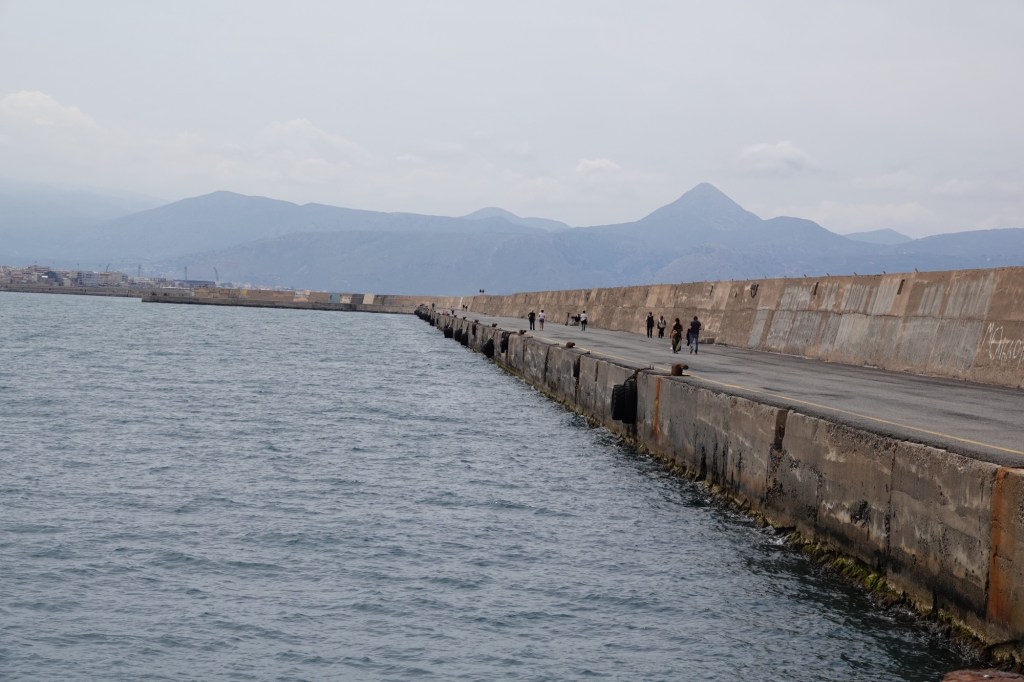
At one end is a beacon (hardly worth calling a lighthouse).
At the other is the Venetian Fortress, which we’ll visit separately since it was closed on Easter weekend.
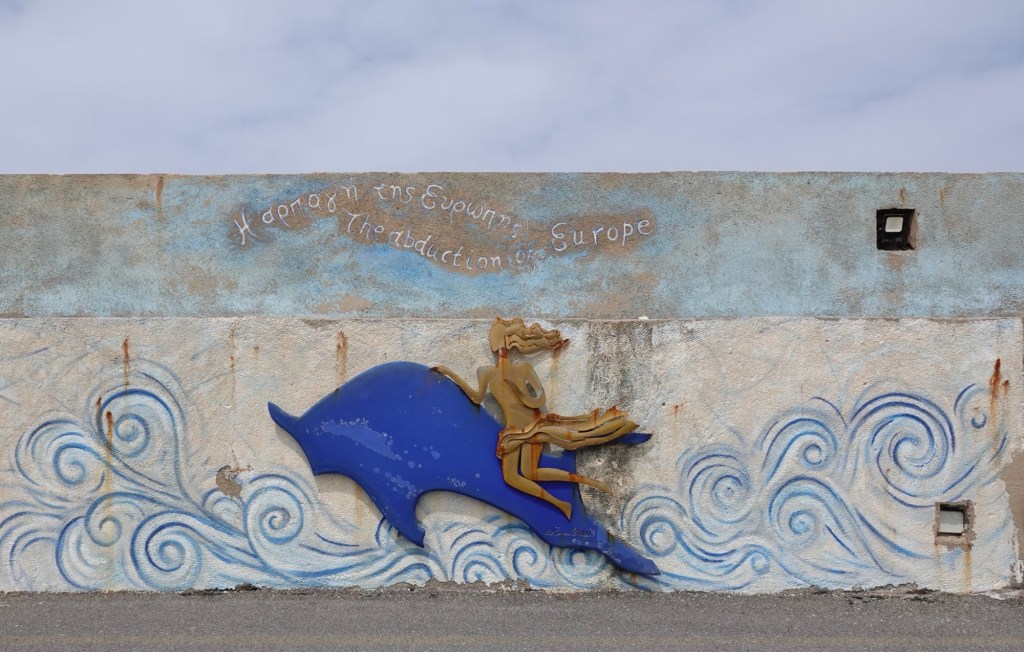
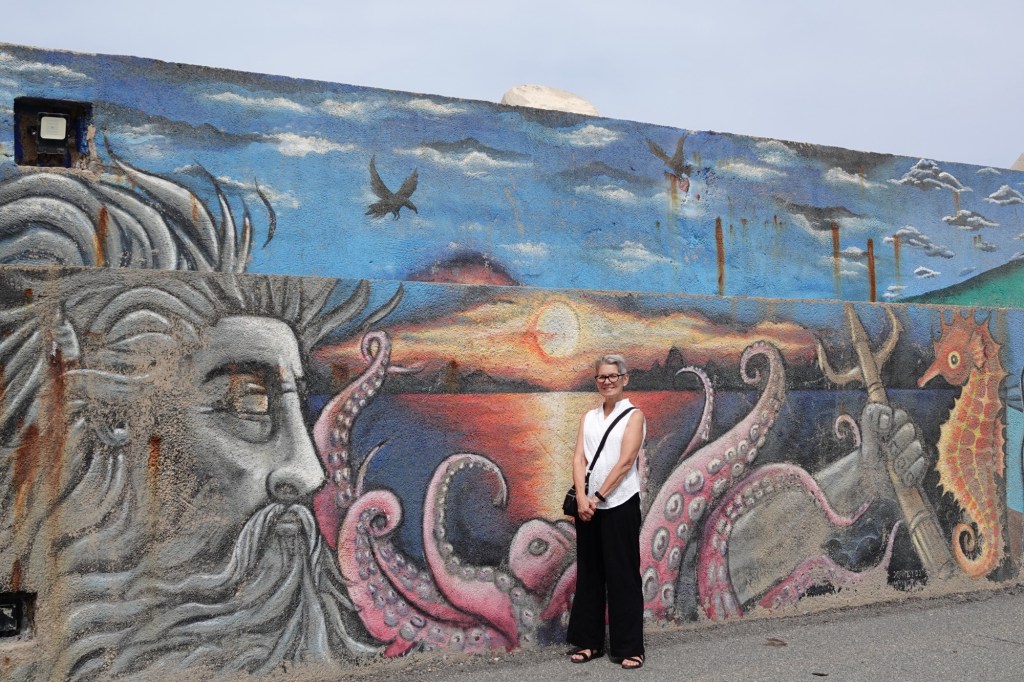
The murals along parts of the breakwater mostly reference Greek mythology, and a few are even copies of ancient murals that are located in nearby Knossos Palace. Others are more whimsical.
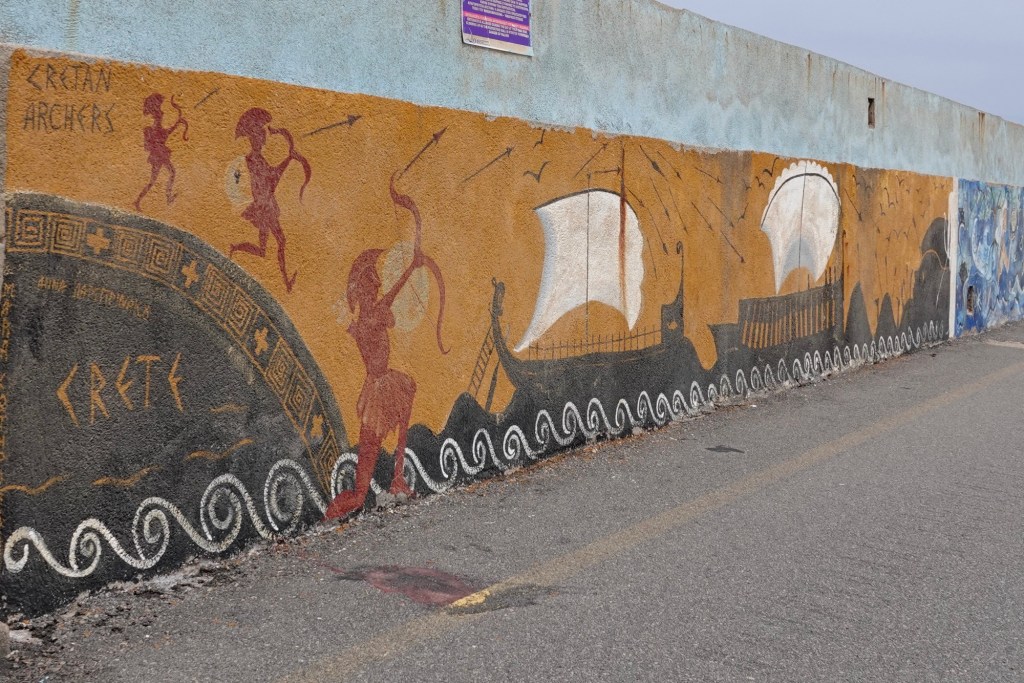
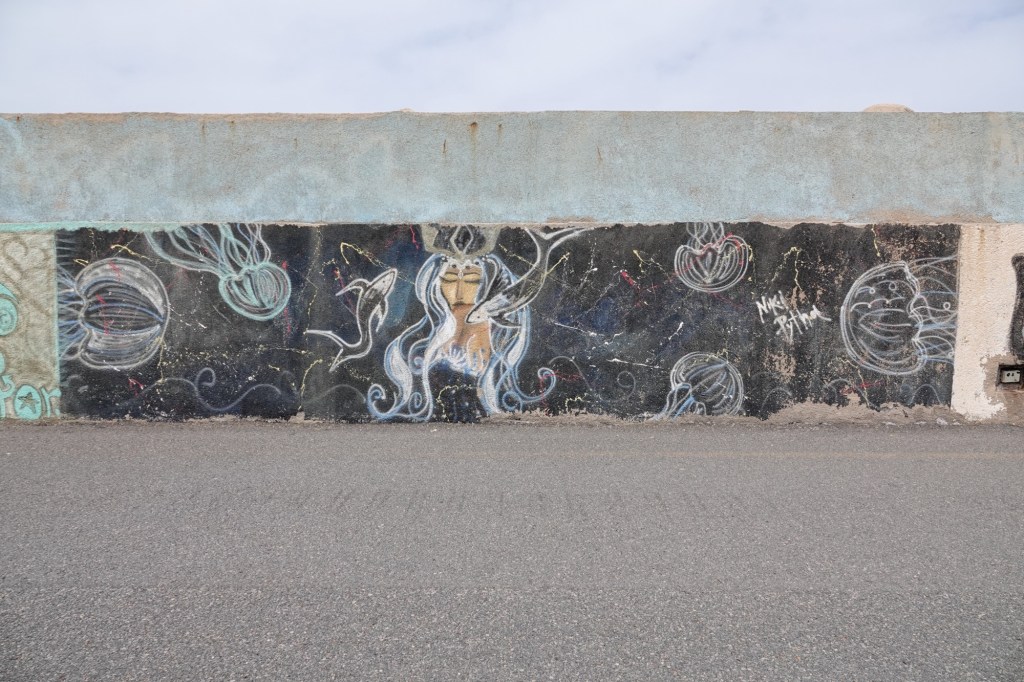
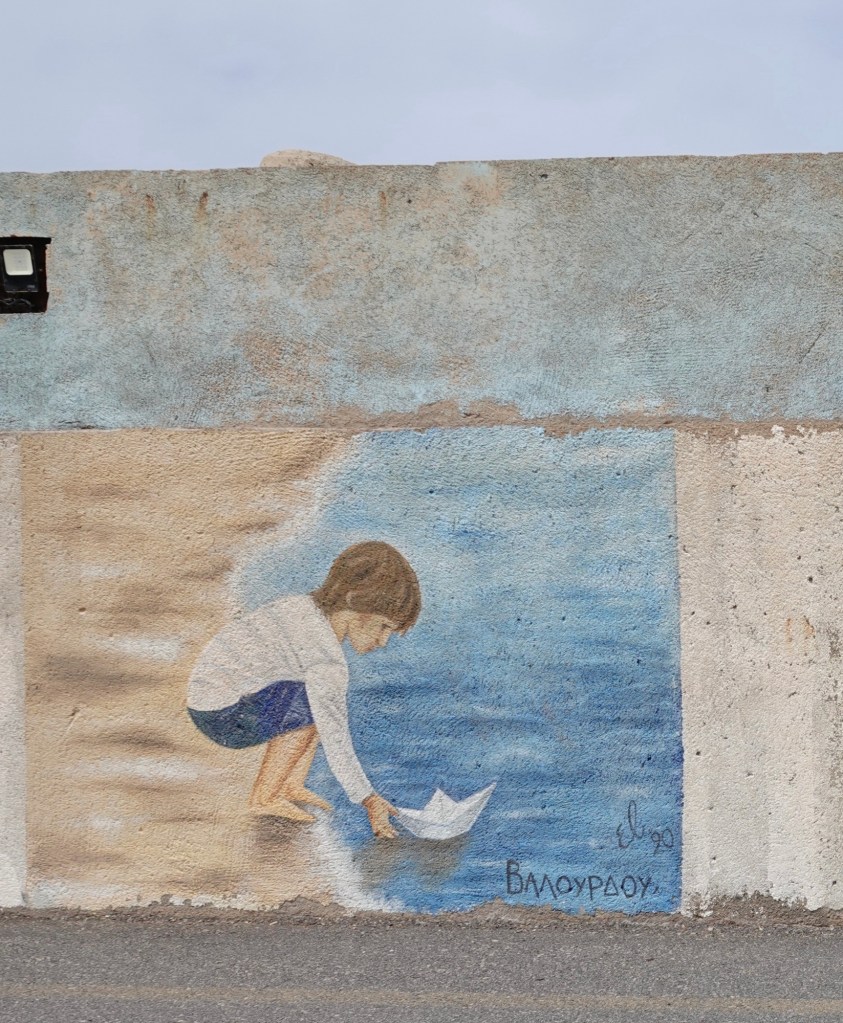
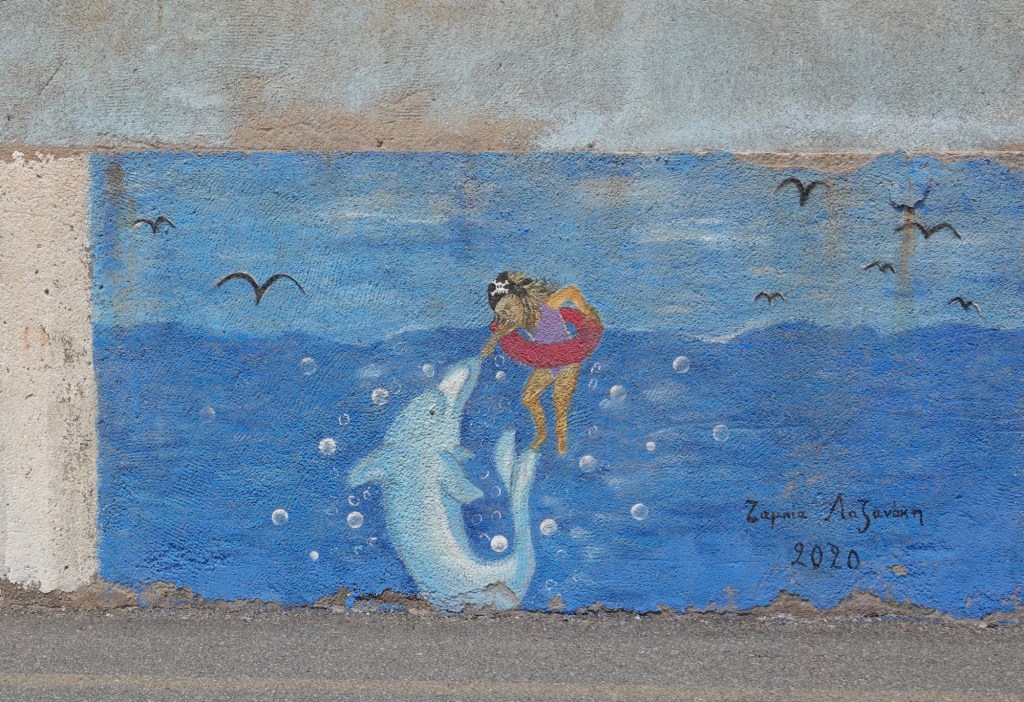
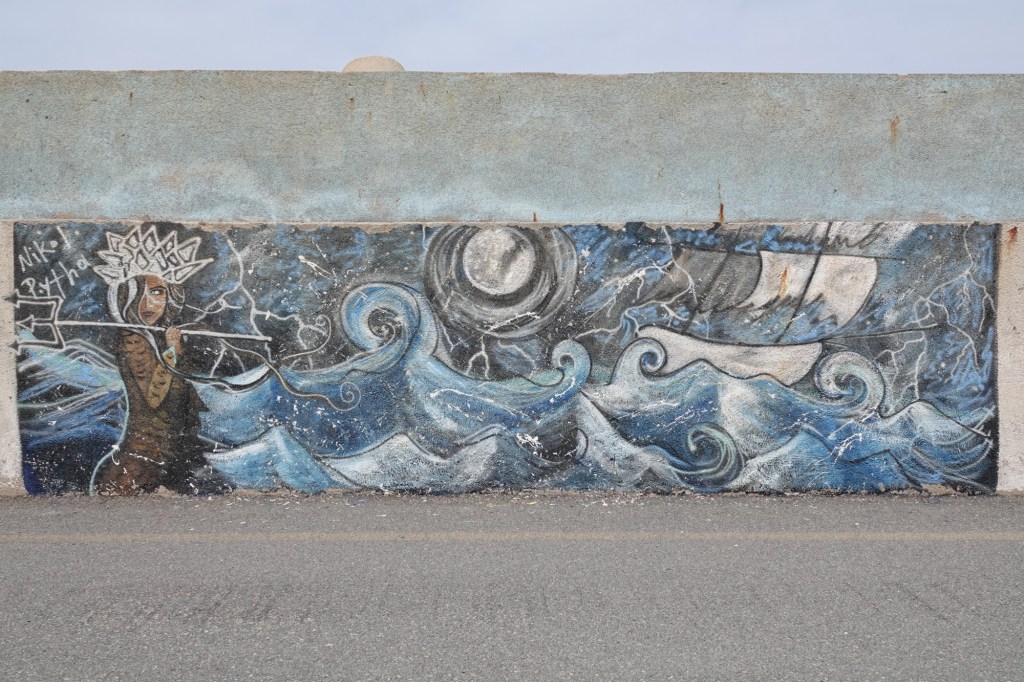
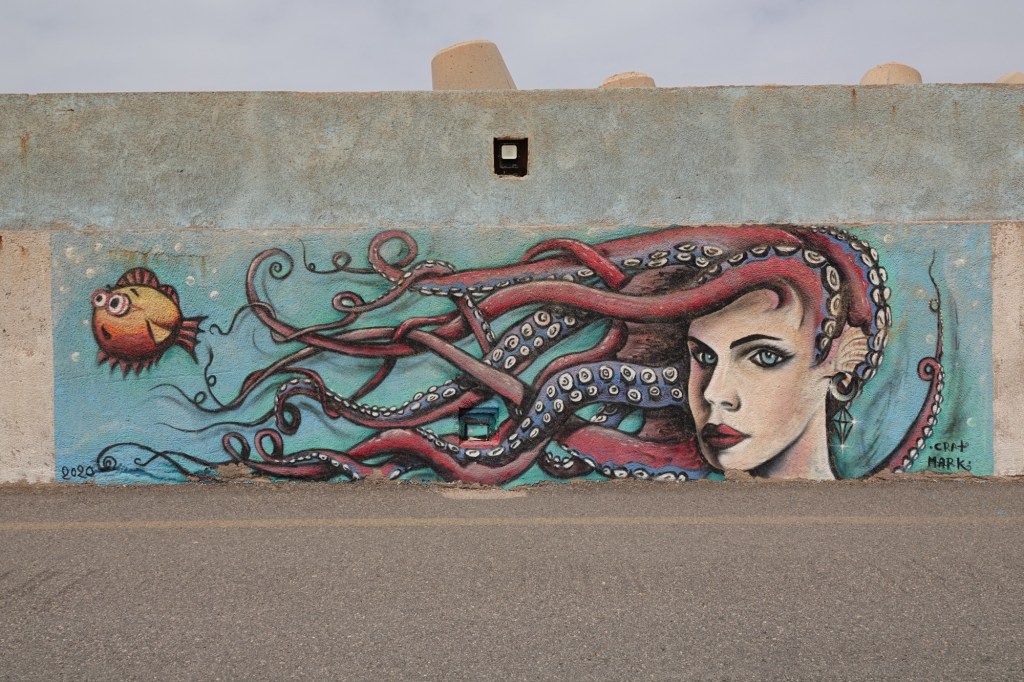
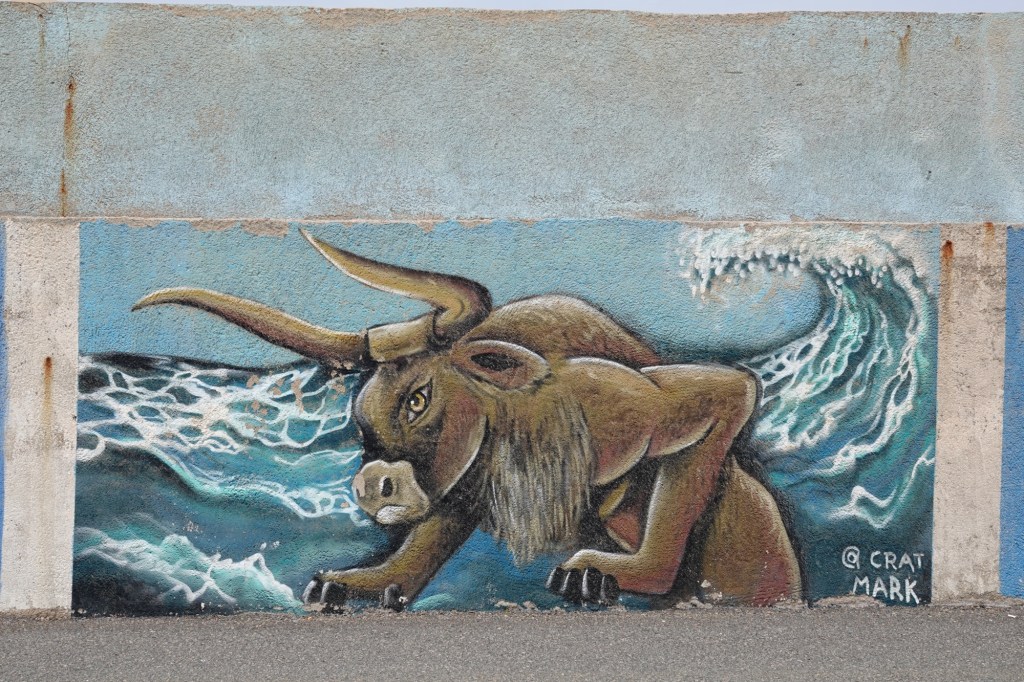
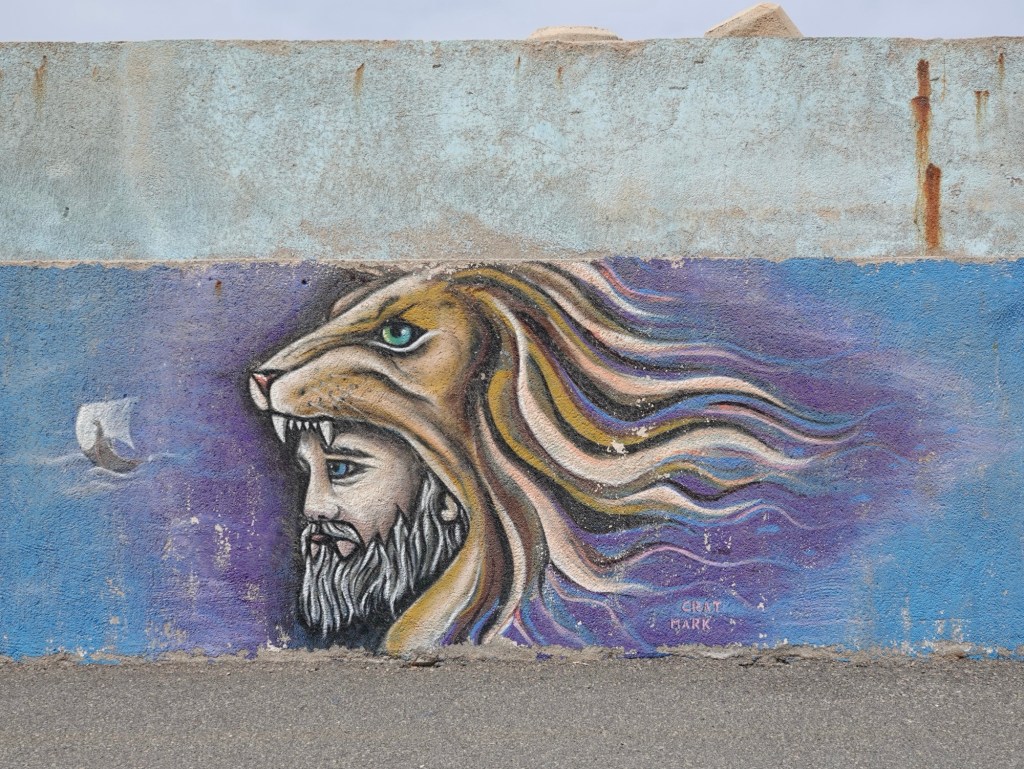
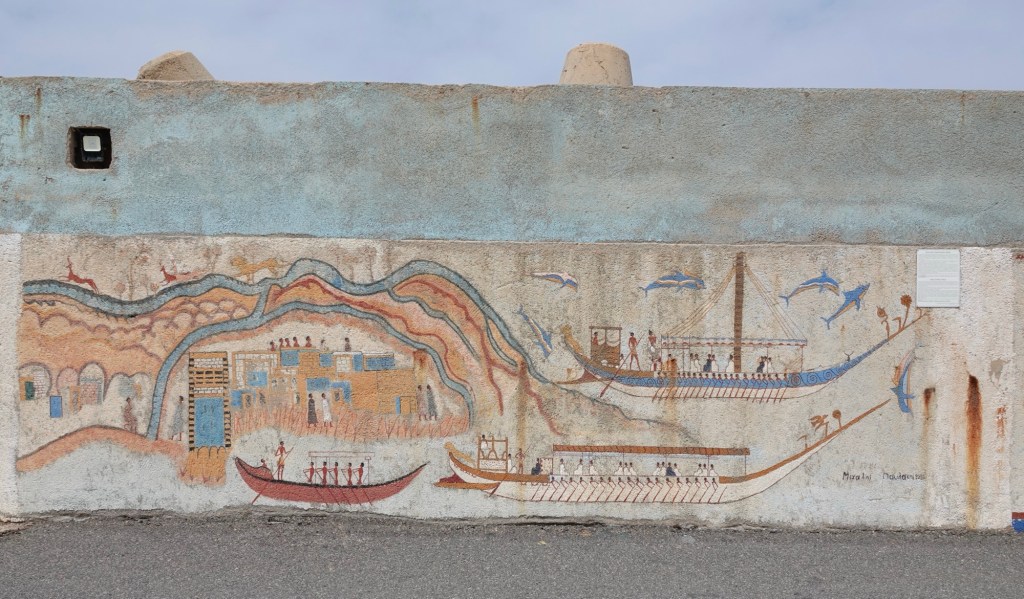
(Taken directly from the sign on the breakwater wall): Below is a copy of the Thera Flotilla Fresco. “The pictorial representation of the flotilla constitutes 1/3 of the fresco which was found at Santorini on a scale of 1×4, where the ancient artist in the sea procession of the miniature fresco was aiming to reconstruct the story of a great overseas journey of those from Thera during which the fleet visits different harbours and cities of Egypt, Syria and Palestine.The harbours are depicted with their actual appearance and the fresco can be considered as a kind of early shipping navigator, constituting the most ancient descriptive witness of voyages of discovery.The coastal city of Africa from where the fleet is sailing, is upon the river of the Delta.The deer and the lion show the exotic location. The small rowing vessel, with the seven locals, is an honour escort out of the harbor for the fleet which is moving towards the right in the harbor of its final destination, Santorini.
In the stern is depicted in the cabin, a head of a male type and long spear while in one of the upright spars is attached a boars’ tusk helmet. The presence of weaponry, such as figure of eight shields in front of the rudder, the spears and helmets, indicates that those on board are warriors. With these details the aim is revealed of the whole mission, as distant and dangerous. The Fresco is dated c. 1625 BC, i.e., 400 years before the Trojan War.”
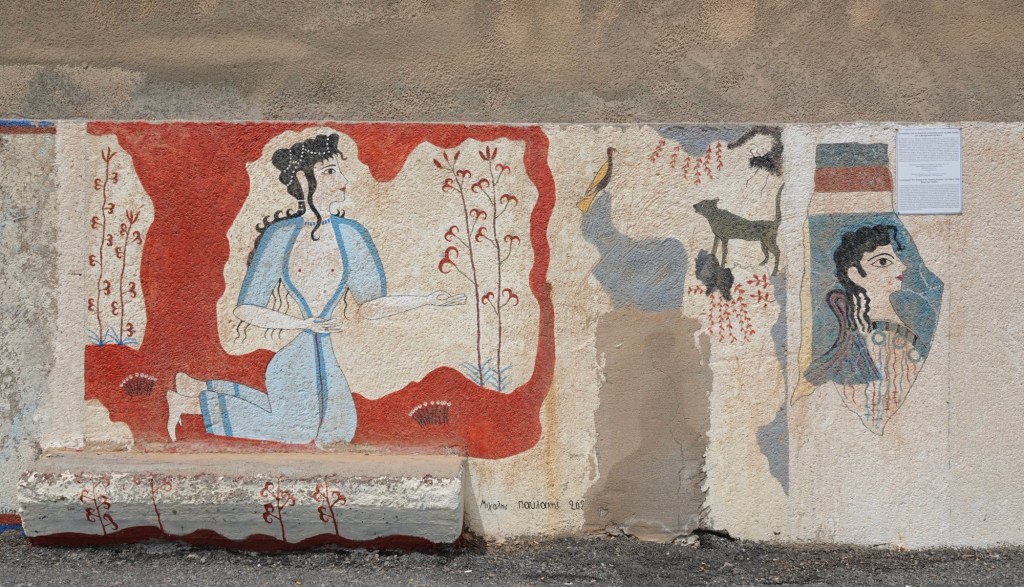
Copies of “La Parisienne” from Knossos & the “Kneeling Priestess” from Haghia Triada Mesara near Phaistos
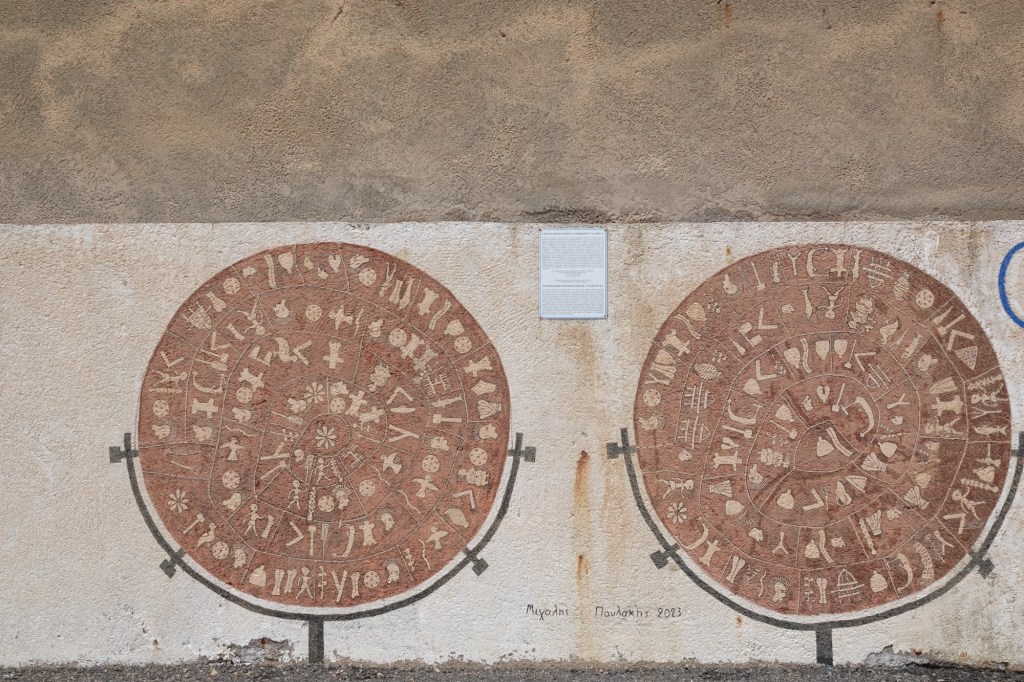
The Phaistos Disk and the Arkalochori Axe are two very important Minoan Syllabic Inscriptions from the 17th Century B.C. from Bronze Age Crete.
Depictions of Minoan Frescoes from the Second Millennium BC now in Heraklion Museum, just 15 minutes’ walk away – another place we plan to visit.
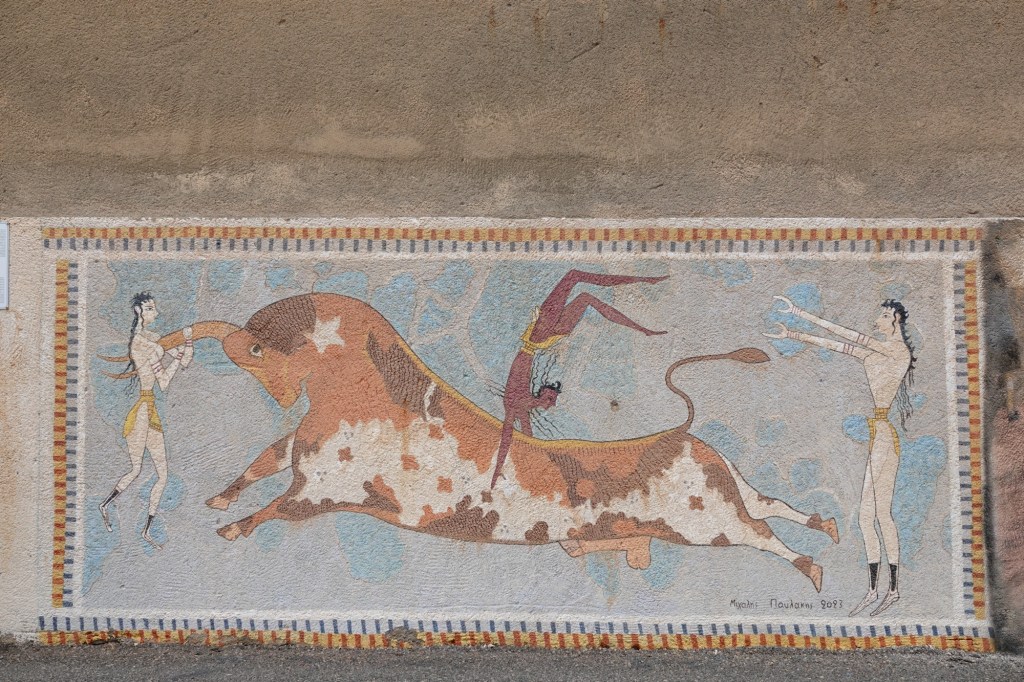
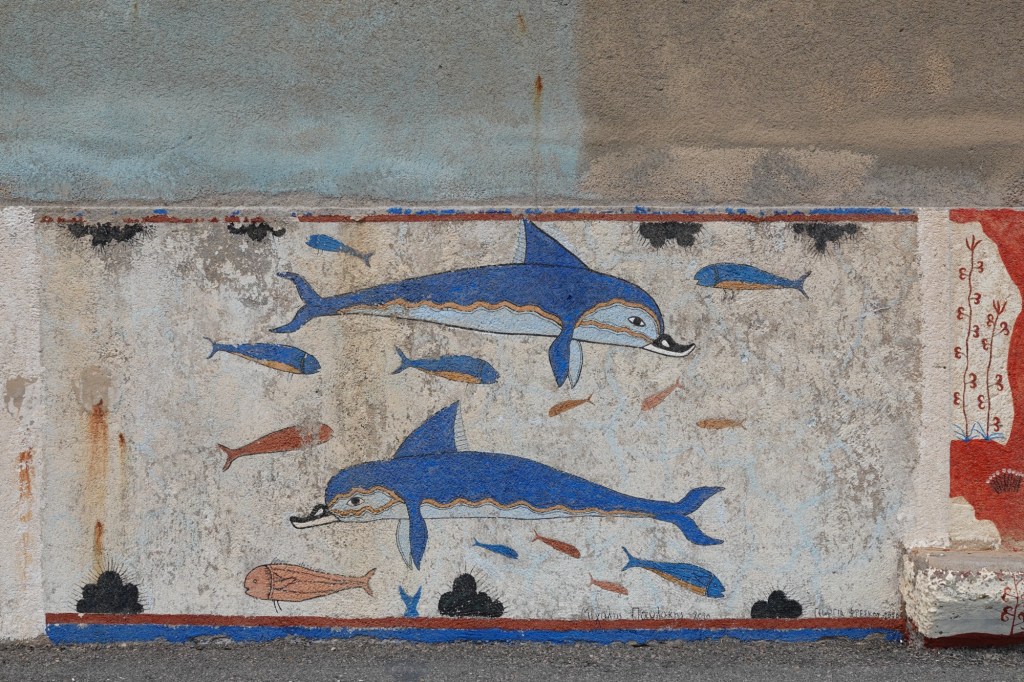
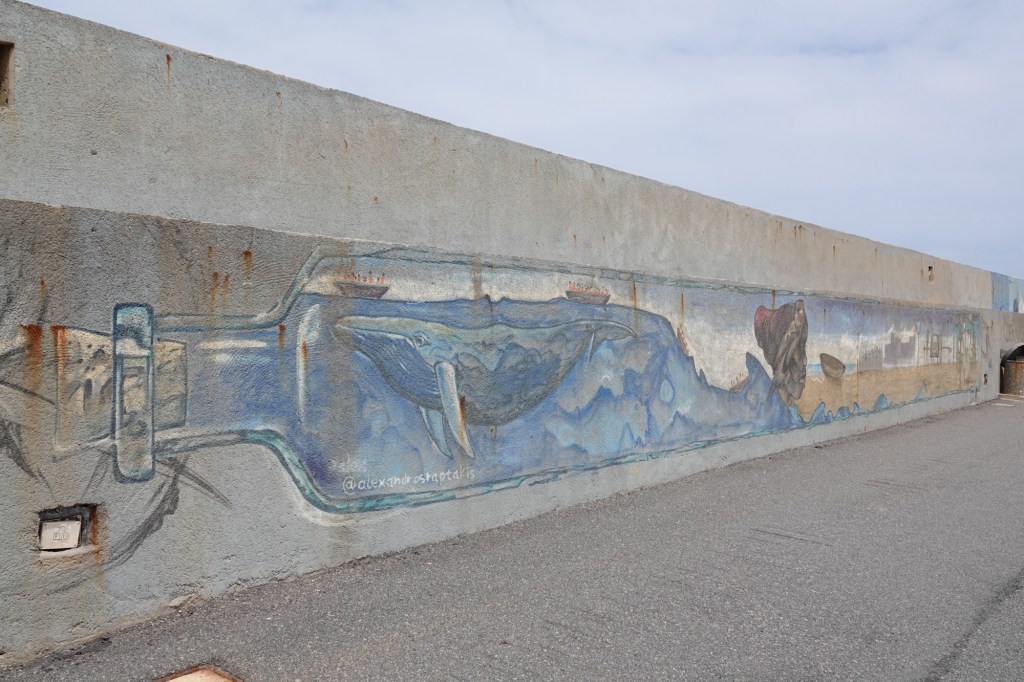
A few murals, like the one below, spanned two levels of the wall.
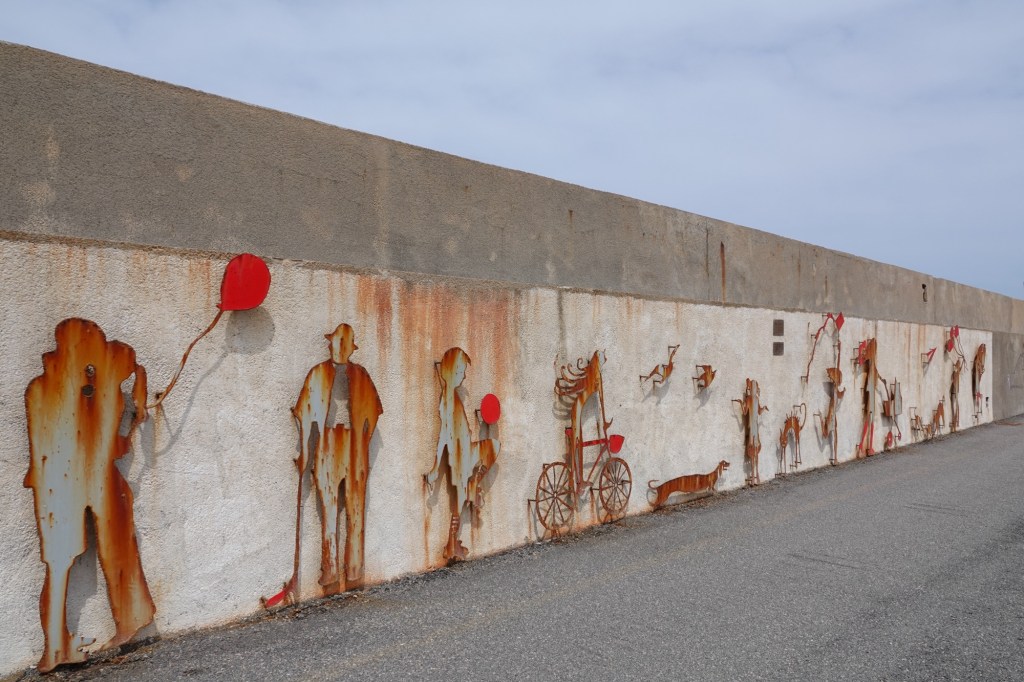
The piece below was metal, not paint, although the way in which it has oxidized looks absolutely intentional.
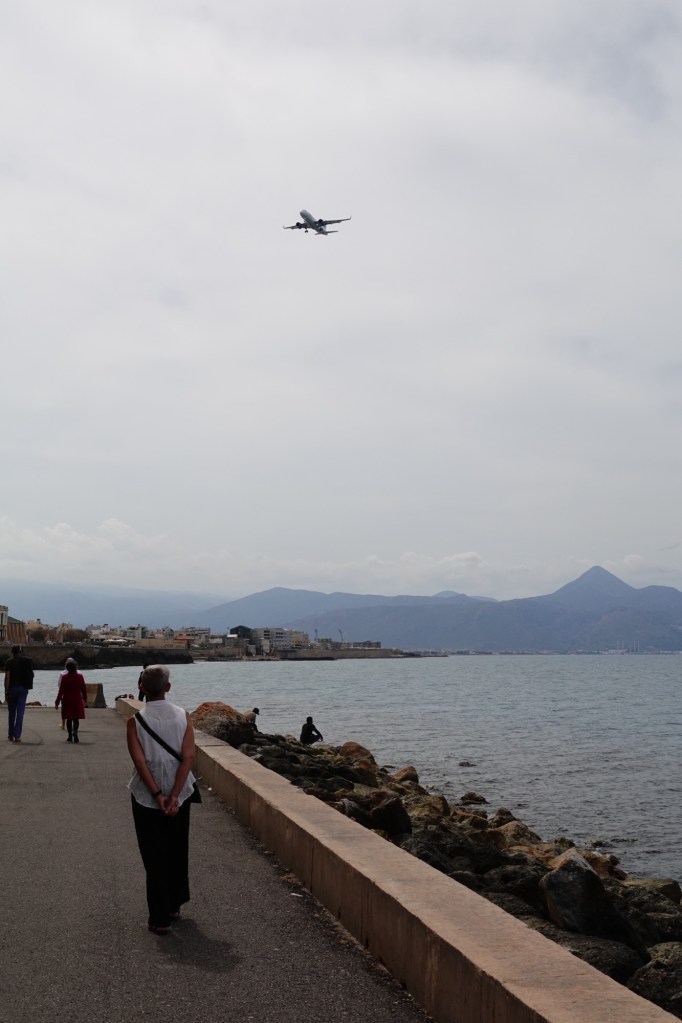
Where the wall is lower, closer to the shore, there are no murals, so we had to be content with the natural beauty of the landscape.
We’re looking forward to seeing much more street art as we continue to explore Heraklion.
 Rose and Ted’s Excellent Adventure
Hope you’ll make it to the Archaeological Museum – it is truly special!
LikeLiked by 1 person