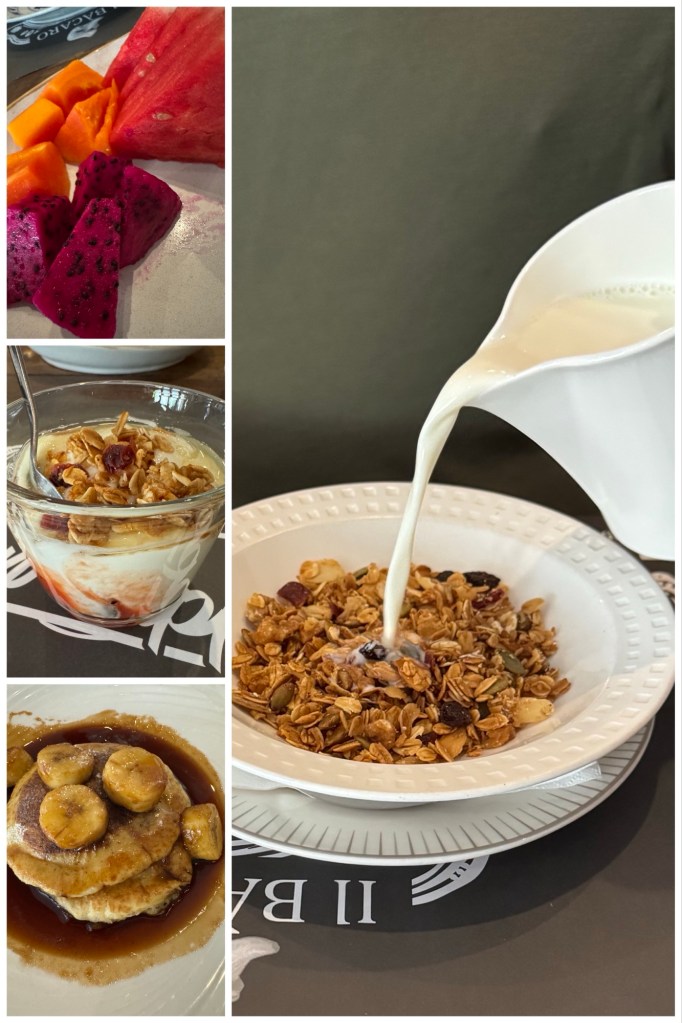
As will be our habit here, we started our day with the included breakfast in Il Bàcaro.
We’ve made no fixed plans in Penang, so after breakfast – using a combination of Kumar’s marked-up paper maps and Google Maps on our devices – we just pick a place at random.
Today, because it only runs on Saturdays and Sundays from 10:00-17:00, we headed for the Hin Market.
The walking route took us past Komtar Tower, a skyscraper which incorporates a shopping mall on the lower levels and a theme park on the upper levels, including the 68th floor glass Rainbow Skywalk and Skybridge. I wanted to look up at it before deciding whether to buy tickets. It’s all fine and good to think that I’ll be brave enough to do something, but when even the promotional advertising says things like “Sky Bridge inspires you to step beyond your comfort zone and build confidence, staying true to our tagline: Beyond Confidence” it makes me think twice.
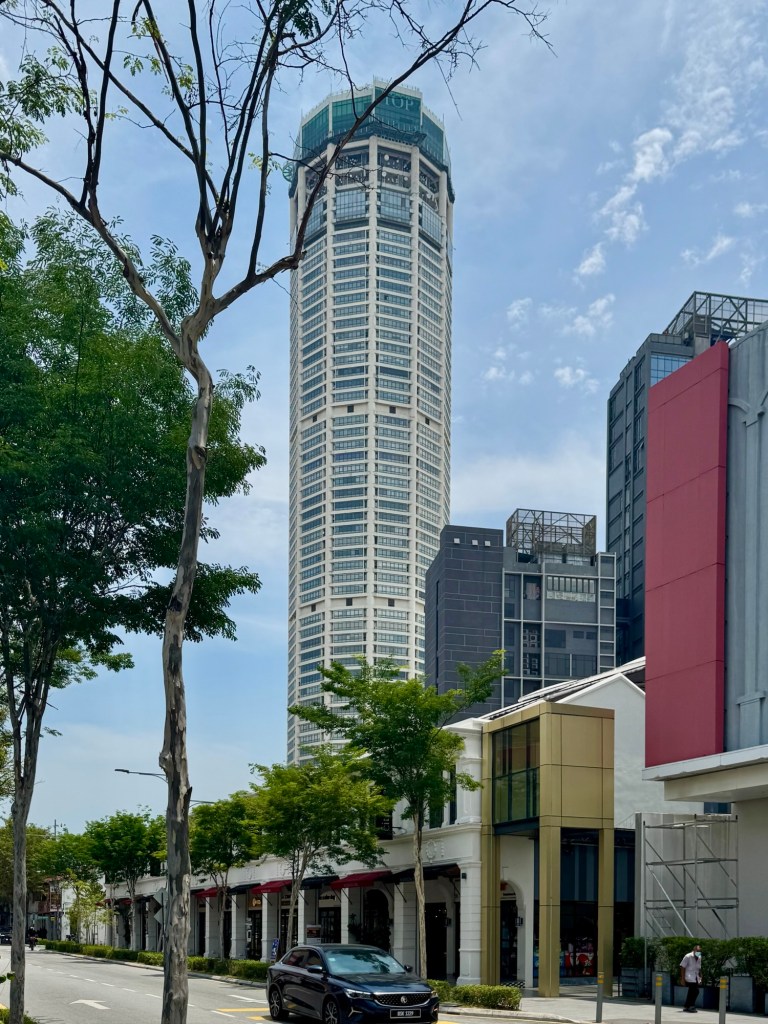
Interestingly, as we headed out just before noon, Kumar mentioned that the Komtar Complex was considered a bit of a failure by the local population, so I felt the need to research that a bit.
Back when it opened in 1986, the central skyscraper of the complex, Komtar Tower (231.7m/760 ft tall) was the tallest skyscraper in Southeast Asia, but Georgetown is not Kuala Lumpur, and the local people could not afford its high end retail shops and pricey restaurants.
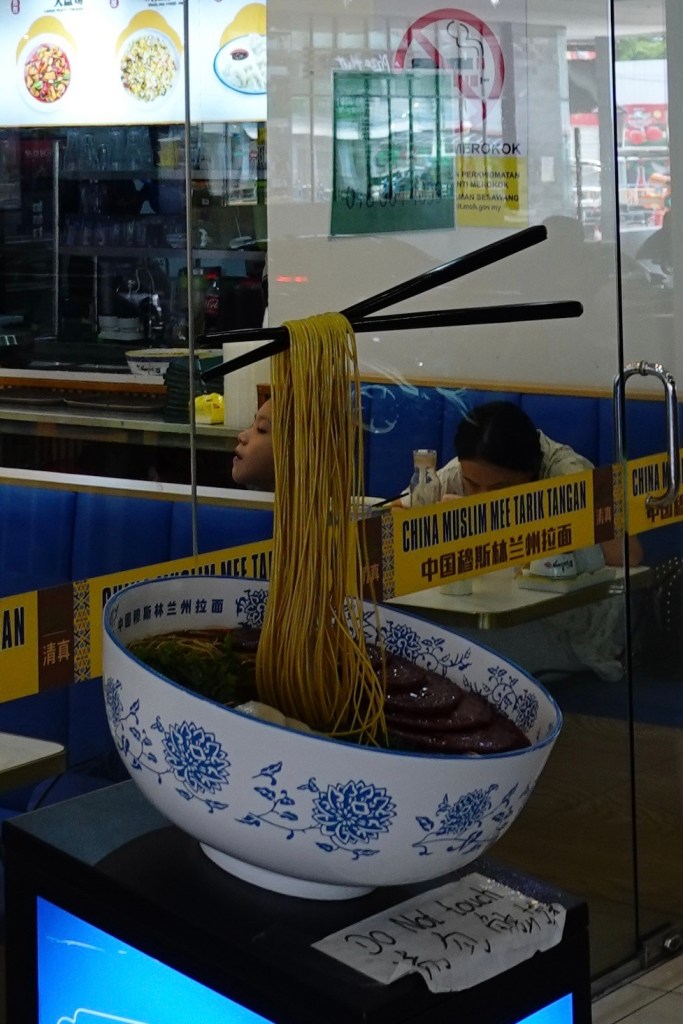
Many of the adjacent mall’s stores are now empty. Those that remain seem firmly aimed at tourists.
Instead of rejuvenating the city centre, the complex was resented right from the start for demolishing many heritage buildings and displacing thousands of people, although the government of the time characterized that heritage area as slums.
Despite more recent revitalization through its amusement park in the sky concept, the complex is still seen as a failed experiment in urbanization.
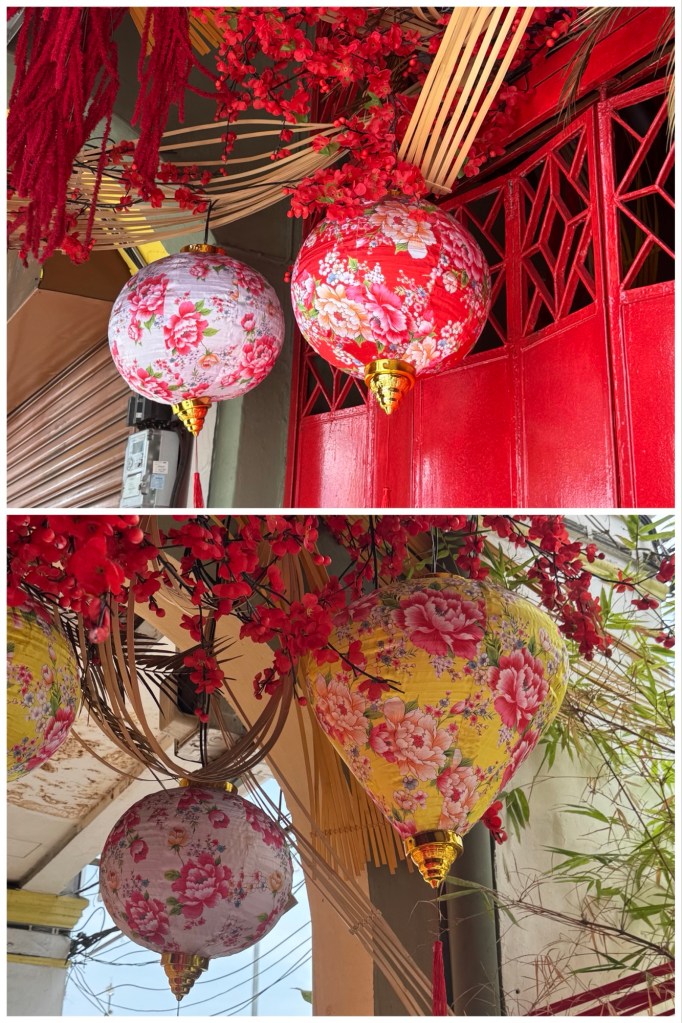
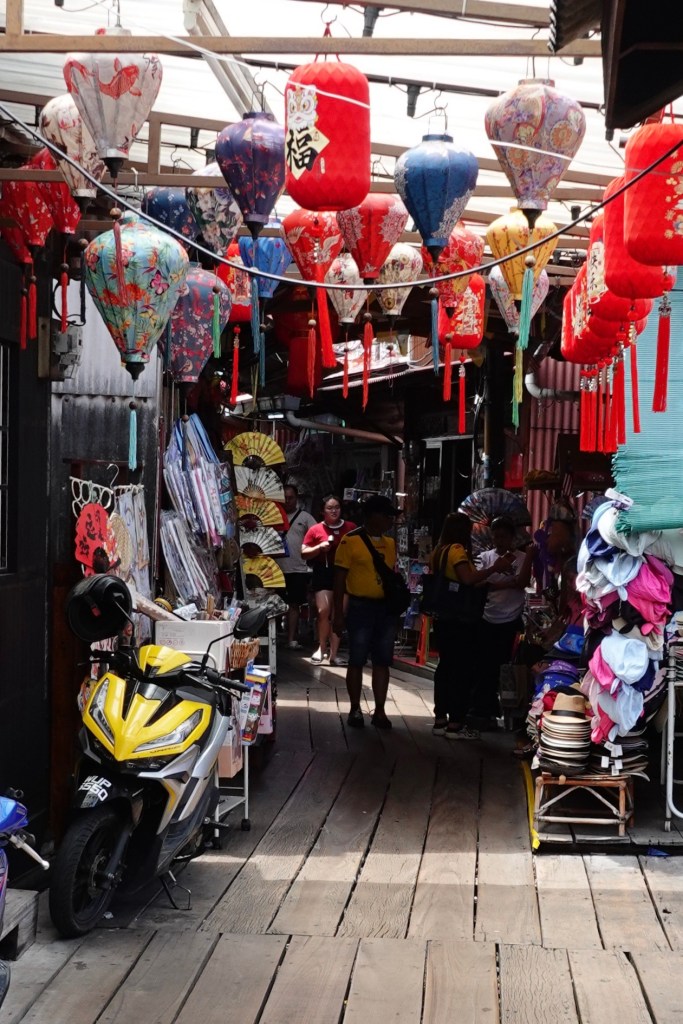
Once back on “regular” streets, which here means sporadic and broken sidewalks, missing drainage grates, and walking on the road in traffic lanes (crossing streets is an act of courage that I’ll bet rivals that 68th floor skywalk!), we walked under some beautiful hanging lanterns.
Hin Market had a variety of food stalls that were more upscale than the hawker stalls we’ve been frequenting, plus crafts, and a live band performing vintage rock.
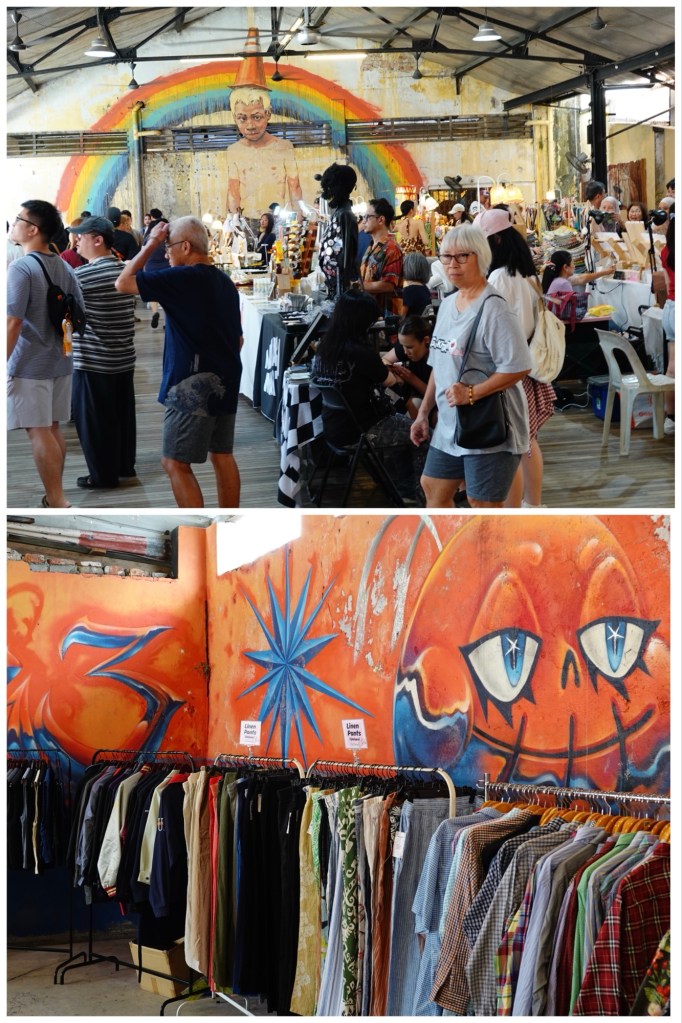
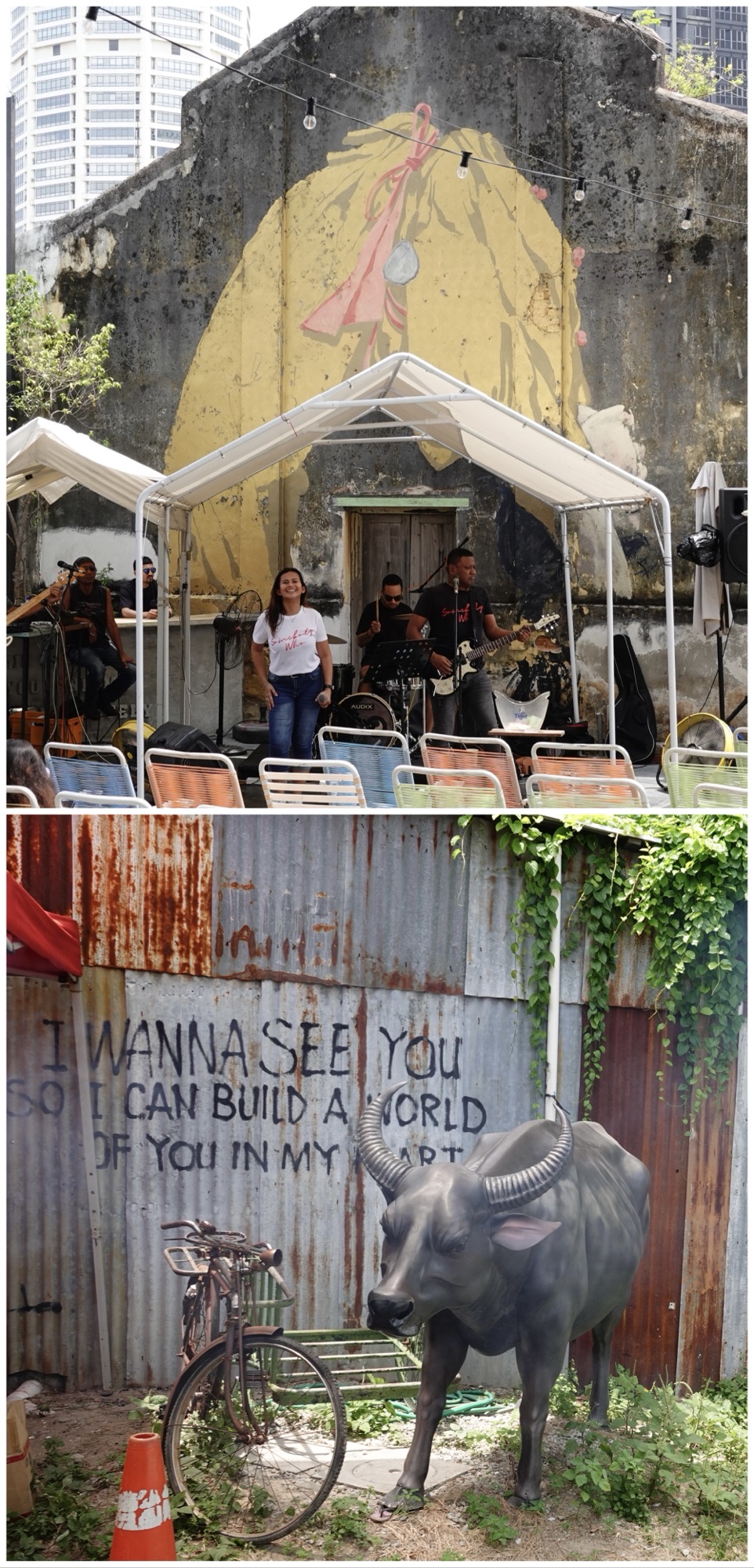
In solidarity with mad dogs and Englishmen, we decided to walk from Hin Market to the clan jetties on the waterfront. After all, it was only 33°C /91°F today with a real feel of 39°C /102°F and full sunshine.
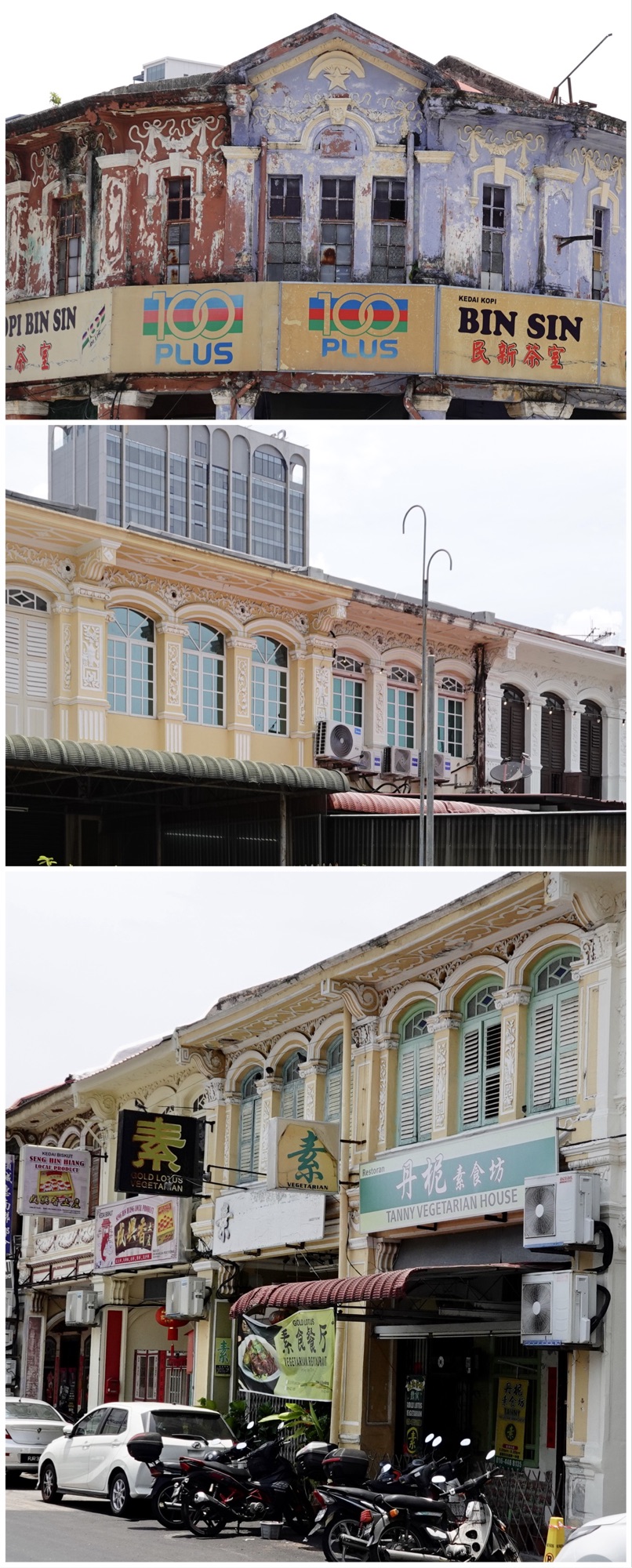
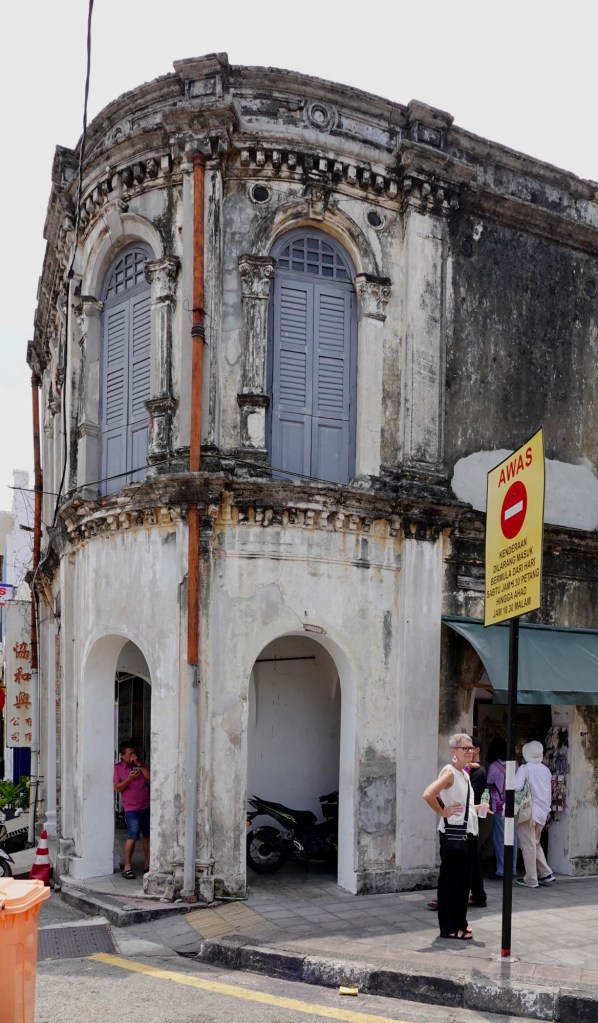
There are glimpses of what Penang must have looked like in its colonial heyday. I have to keep reminding myself that an incredibly humid equatorial climate wreaks havoc on plaster. While some of the peeling paint and chipped plaster here looks extreme, it’s actually no worse than what we’ve seen in Central America, Mexico, and even Portugal. Of course, lack of economic resources to keep things in good repair is a factor too.
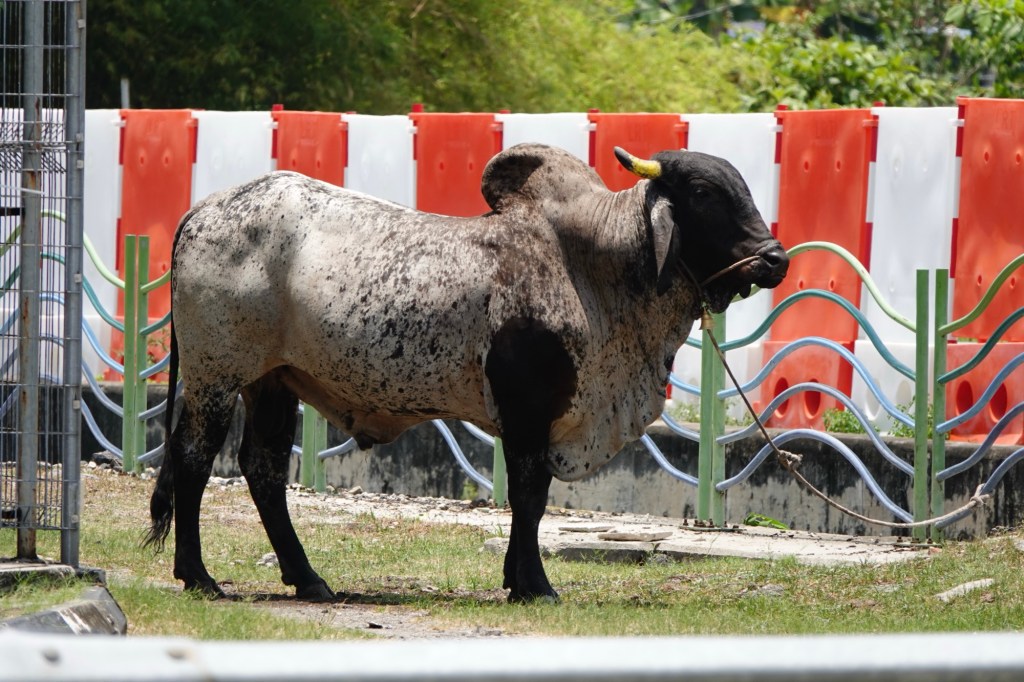
A little more atypical was the Gir bull (not a statue!) grazing roadside.
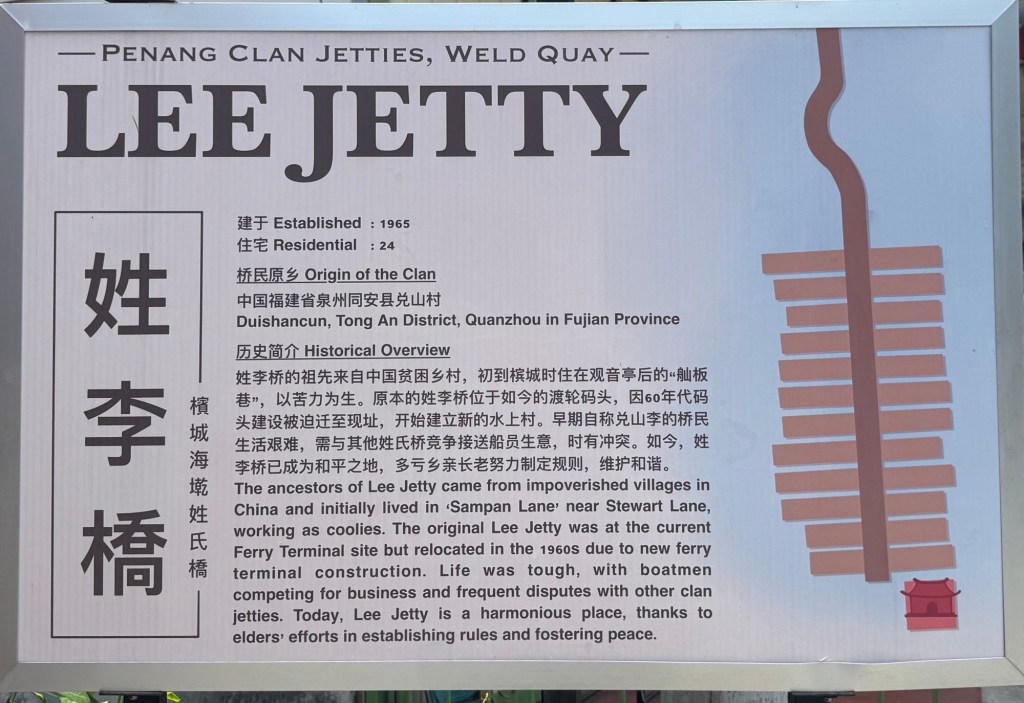
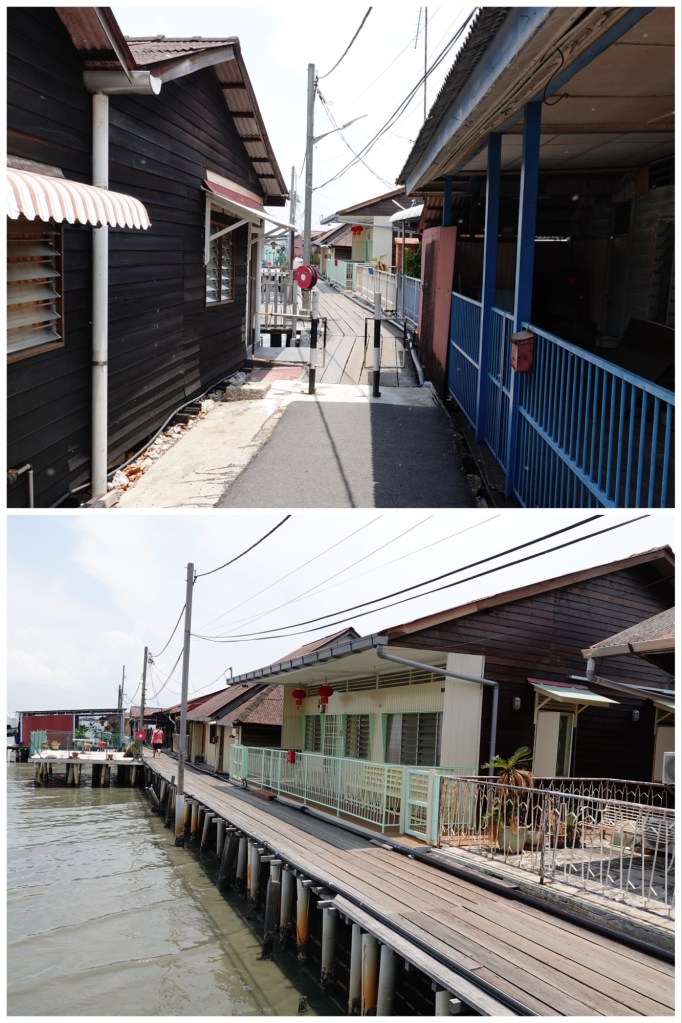
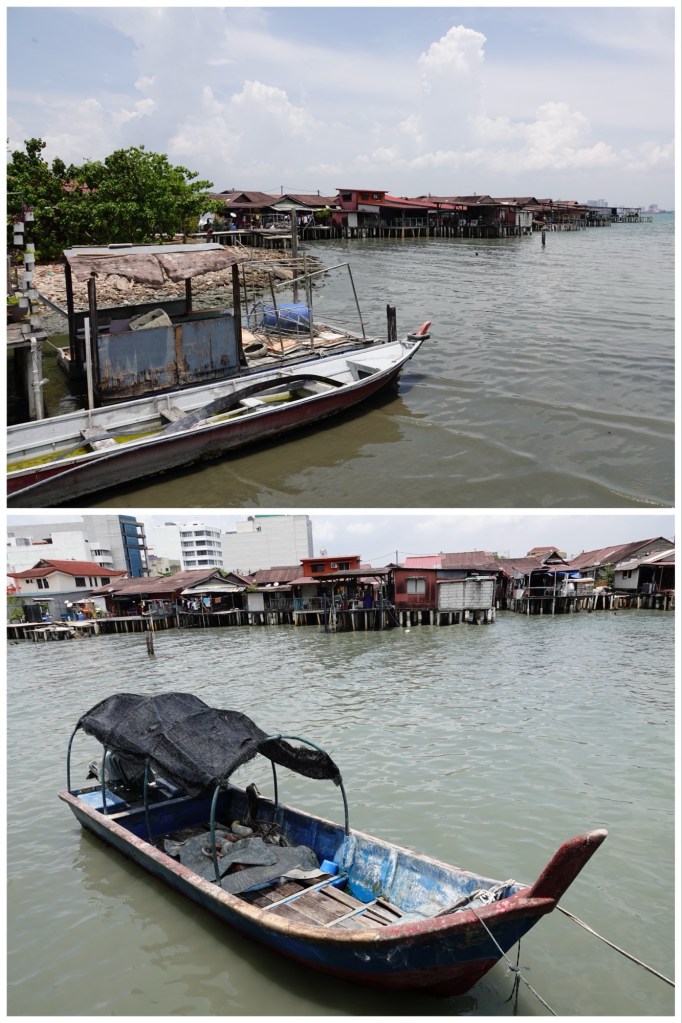
Each of the jetties here is still a family complex, and each bears the family name.
The first one we reached was Lee Jetty. It is the newest of the residential jetties, and not commercialized for tourists.
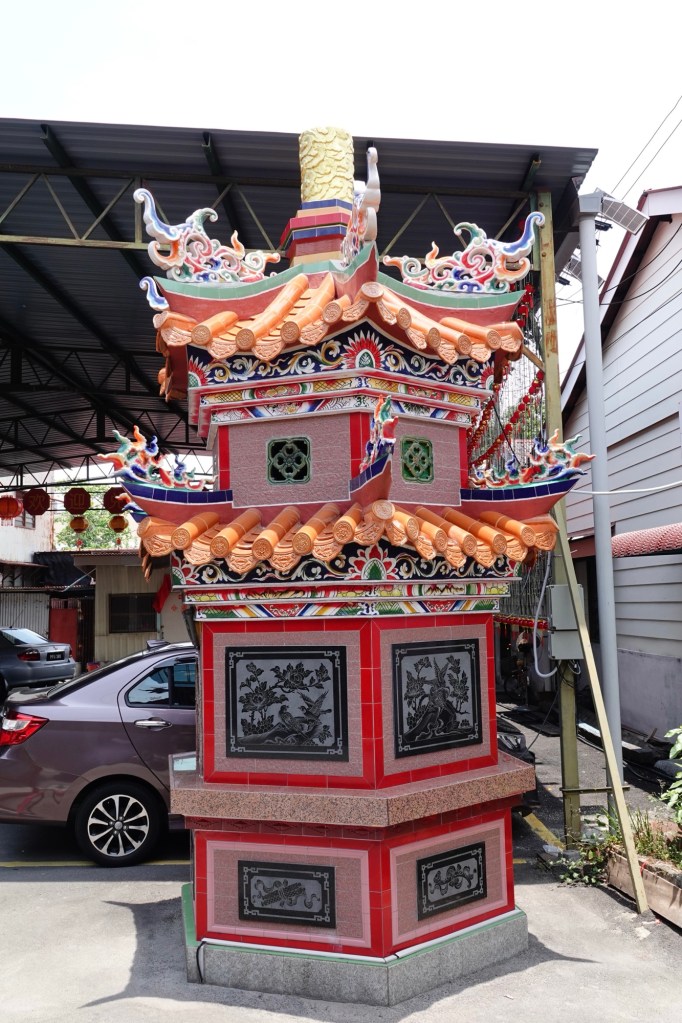
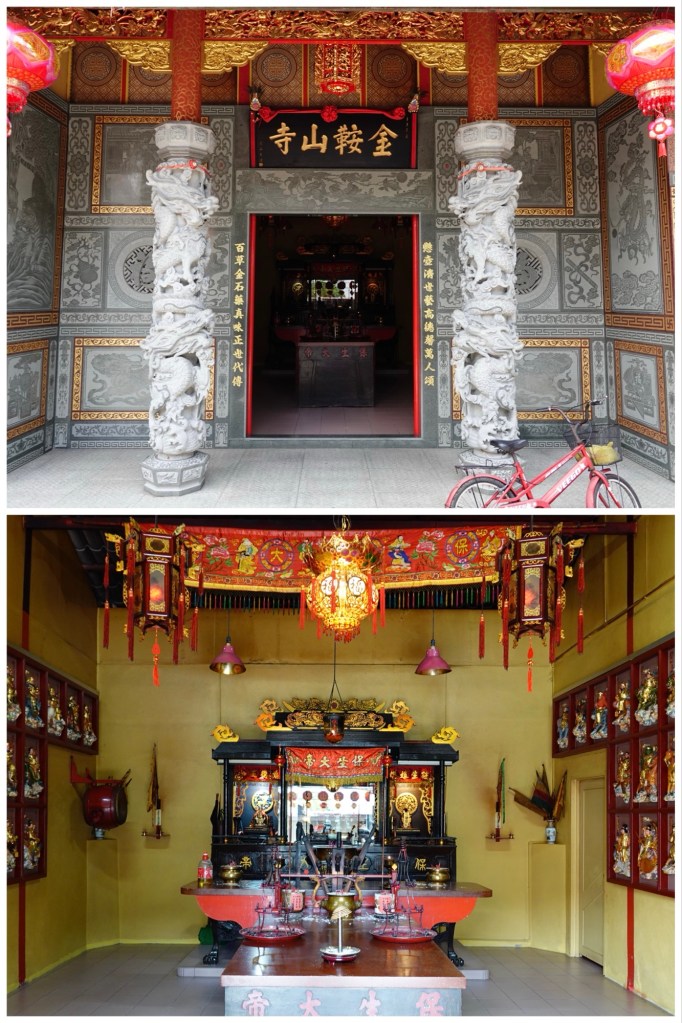
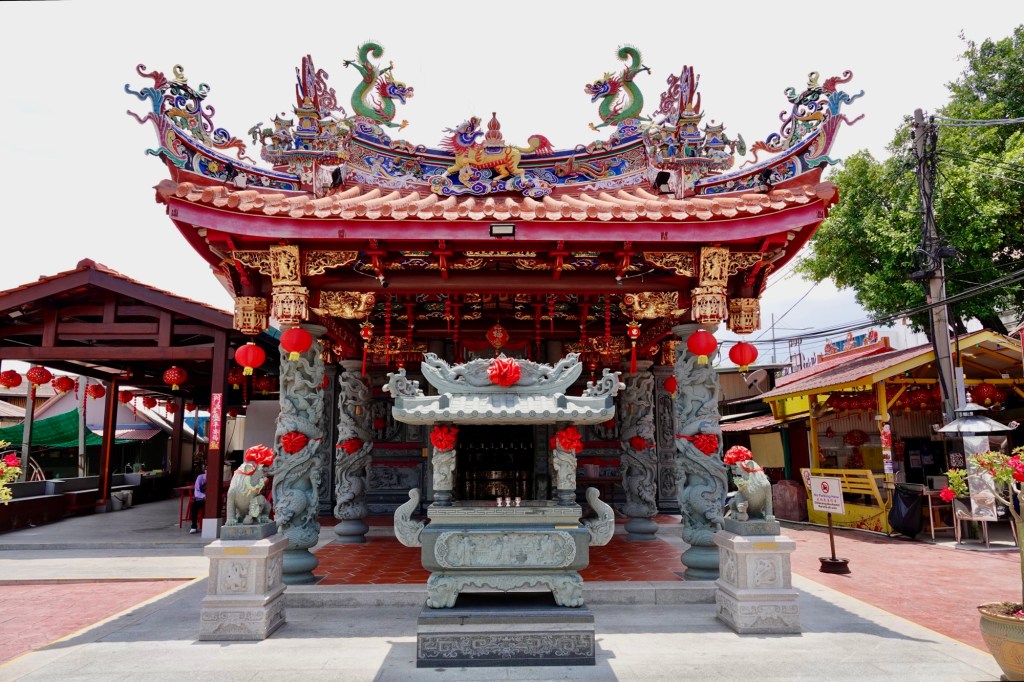
Each jetty has a clan temple near the entrance from the street to the jetty.
We had hoped to get a cold drink at what looked like a restaurant at the end of the jetty, but instead ended up apologetically walking through a funeral celebration.
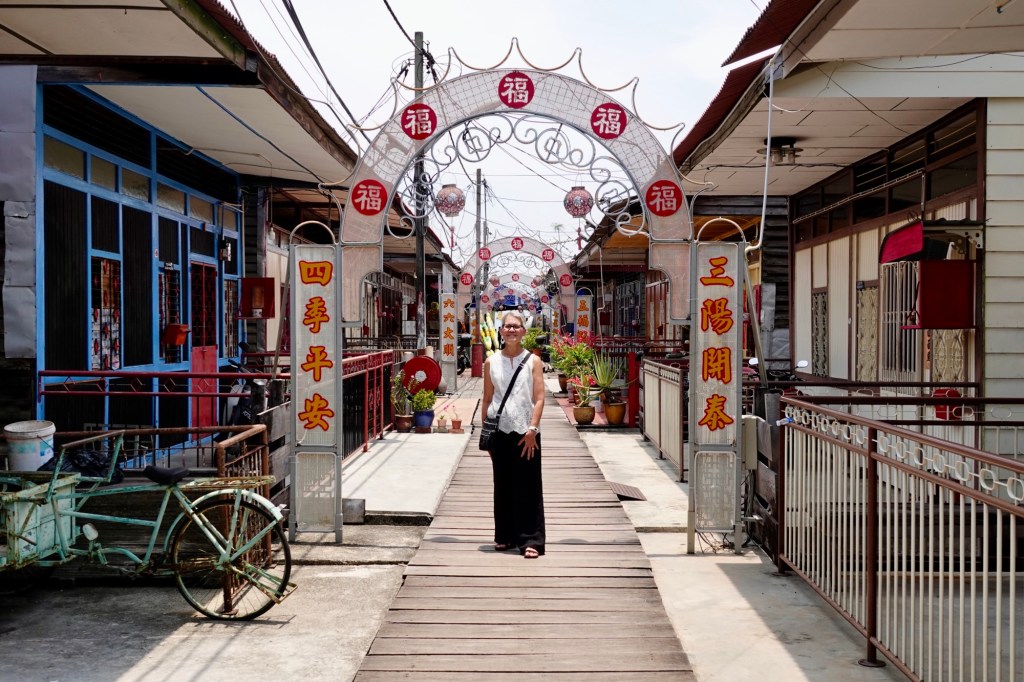
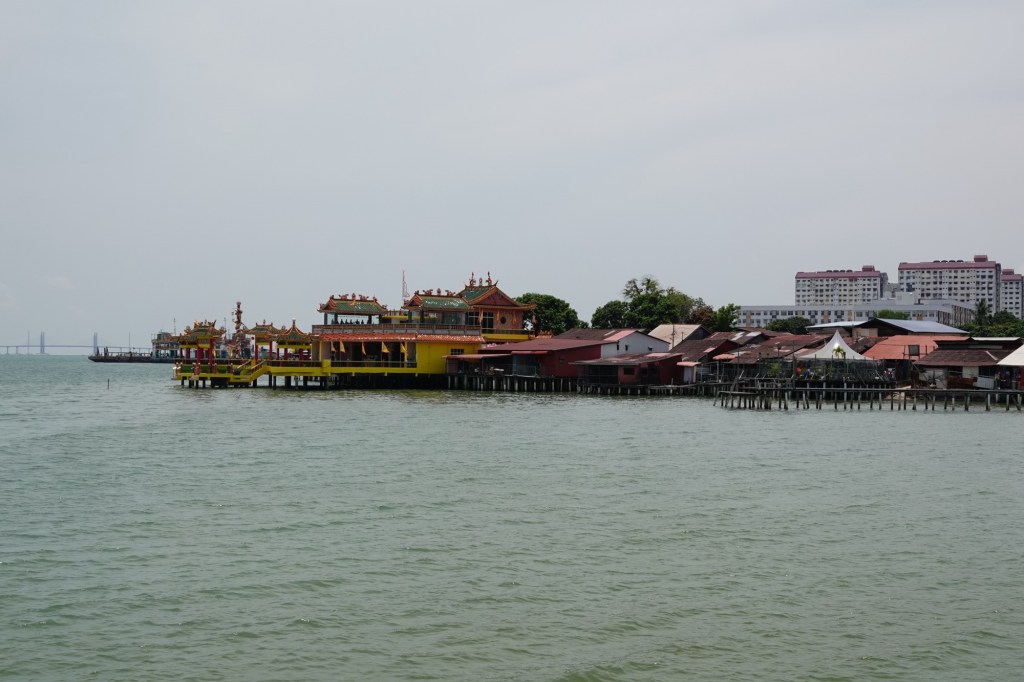
By the time we reached Tan Jetty we were both feeling overwhelmed by the heat, as well as dehydrated. Thankfully, there was a stand near the jetty entrance selling cold drinks and shaved ice. We were the only tourists there, because this is another generally non-commercial residential area.
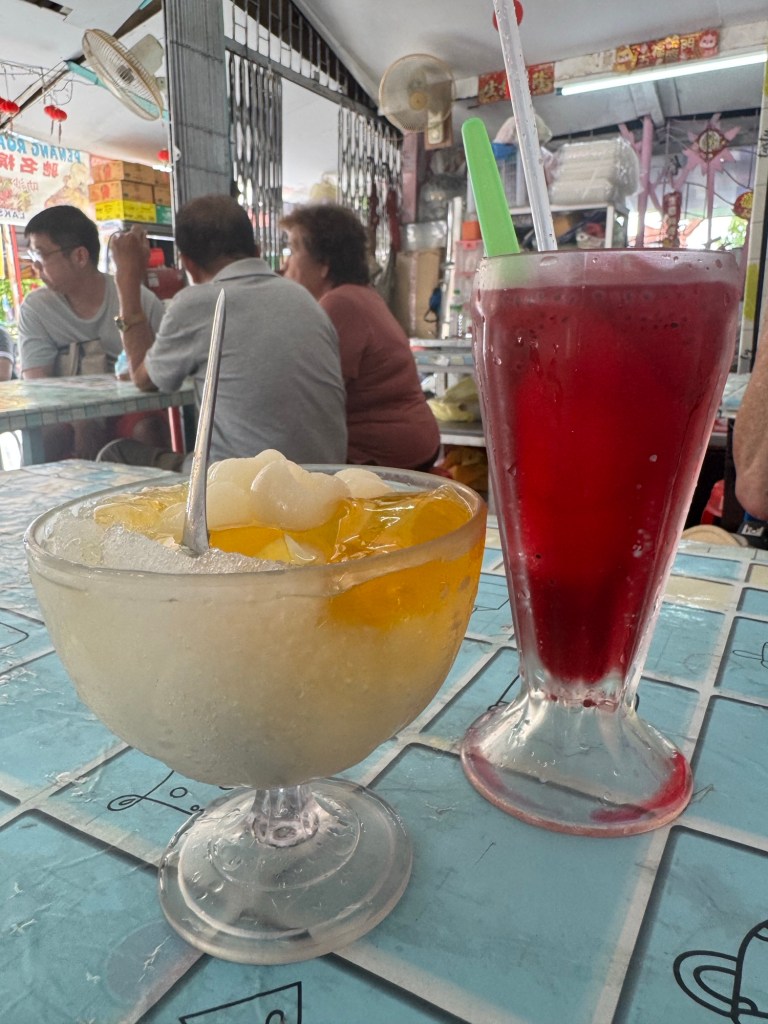
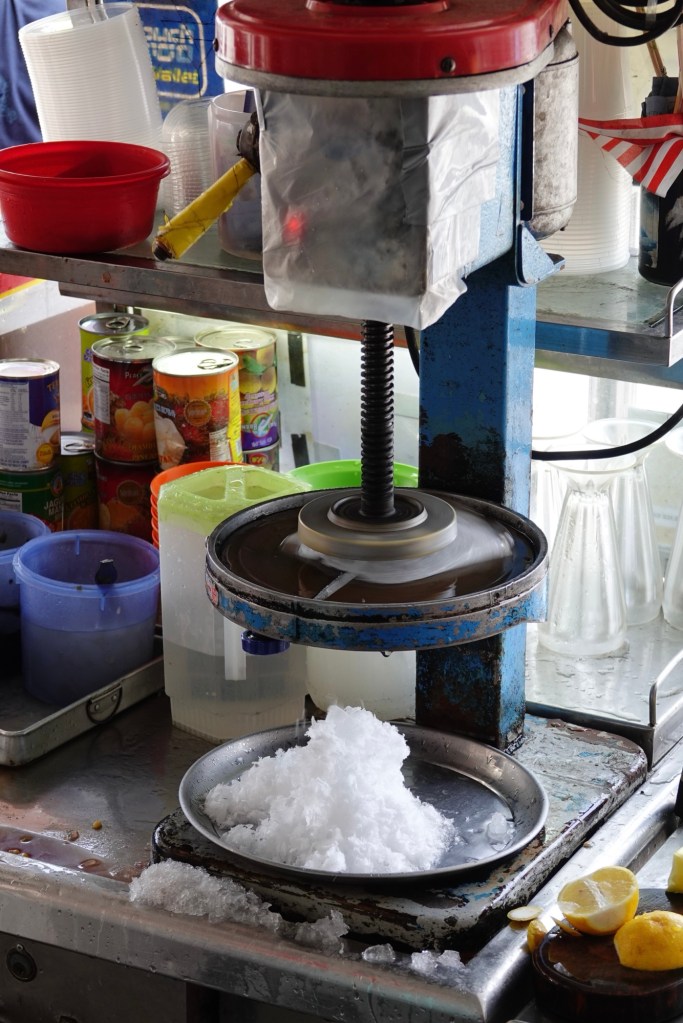
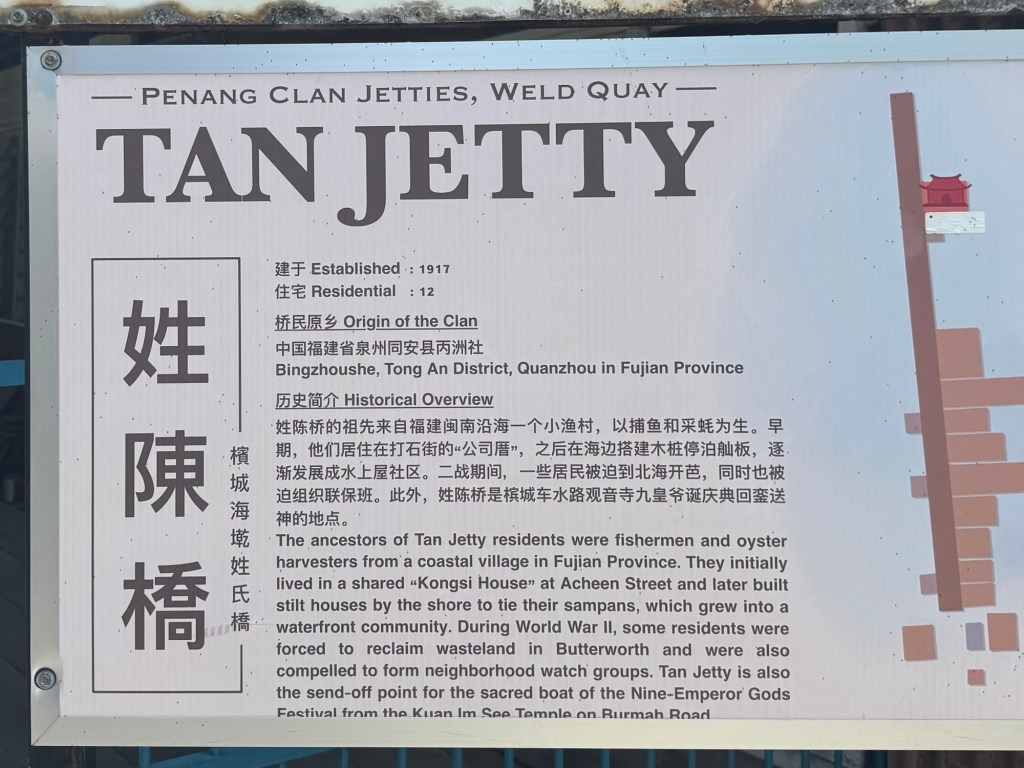
Tan Jetty dates to 1917. It has a temple at the entrance, and a restaurant for the residents near the end of the jetty/pier, but it is not a tourist area. Nonetheless we were made to feel welcome as we strolled – perhaps because we were being respectful and not trying to take photos looking into people’s homes. It’s exactly the same protocol we follow in Victoria’s Fishermen’s Wharf on Vancouver Island.
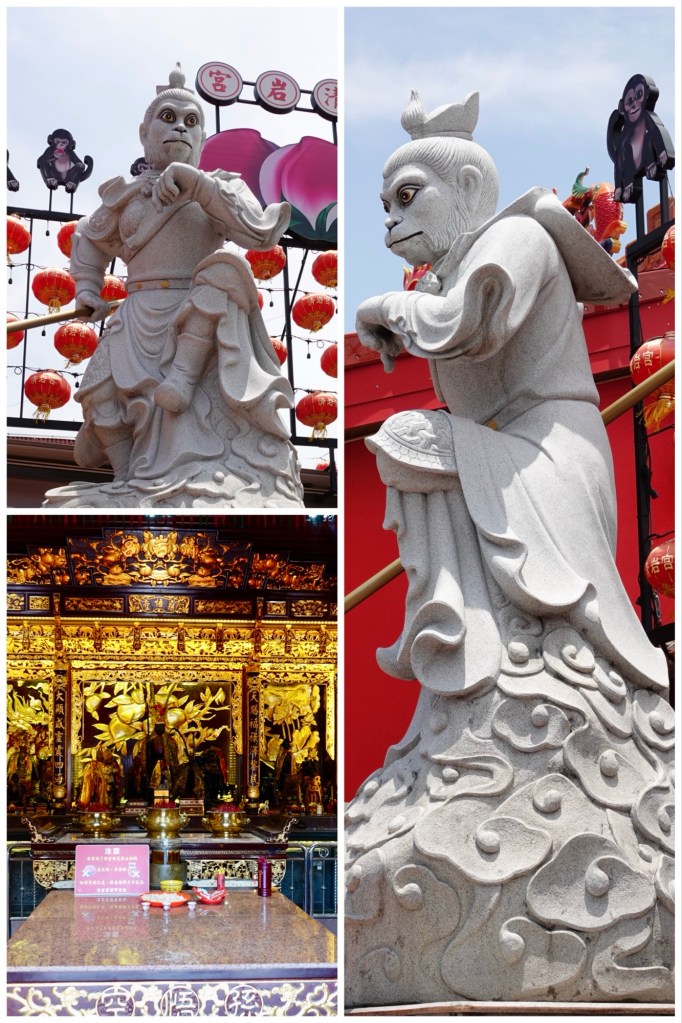
Just after leaving Tan Jetty, we passed a temple to the Monkey King, Sun Wukong.
Our last waterfront stop was at Chew Jetty, the oldest and largest of the clan communities and also the most commercial. This is where cruise ships and tour companies bring their groups (Episode 635), so we’d been here last year.
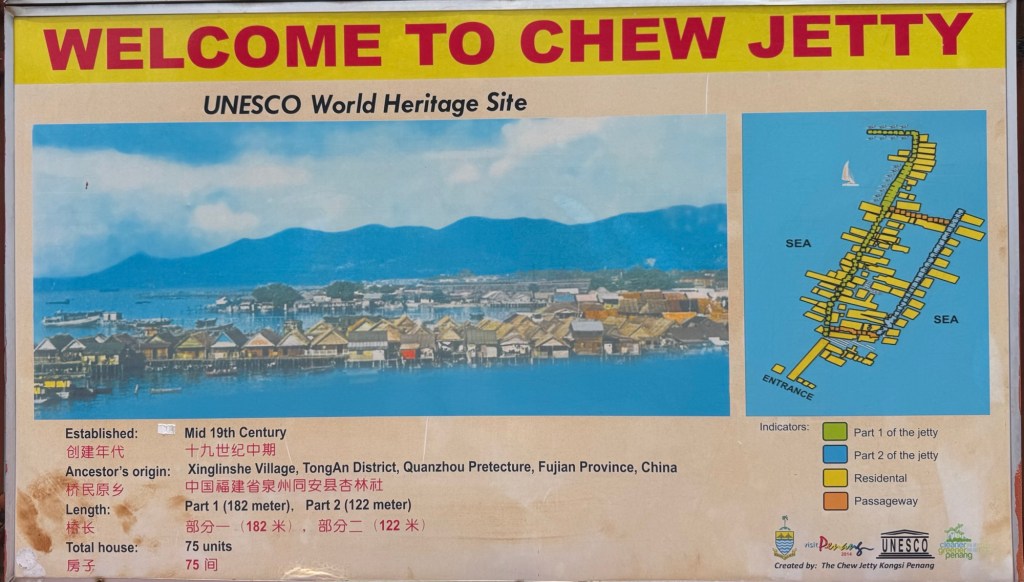
It’s hard to fathom a lifestyle like this stretching back uninterrupted to the mid 1800s.
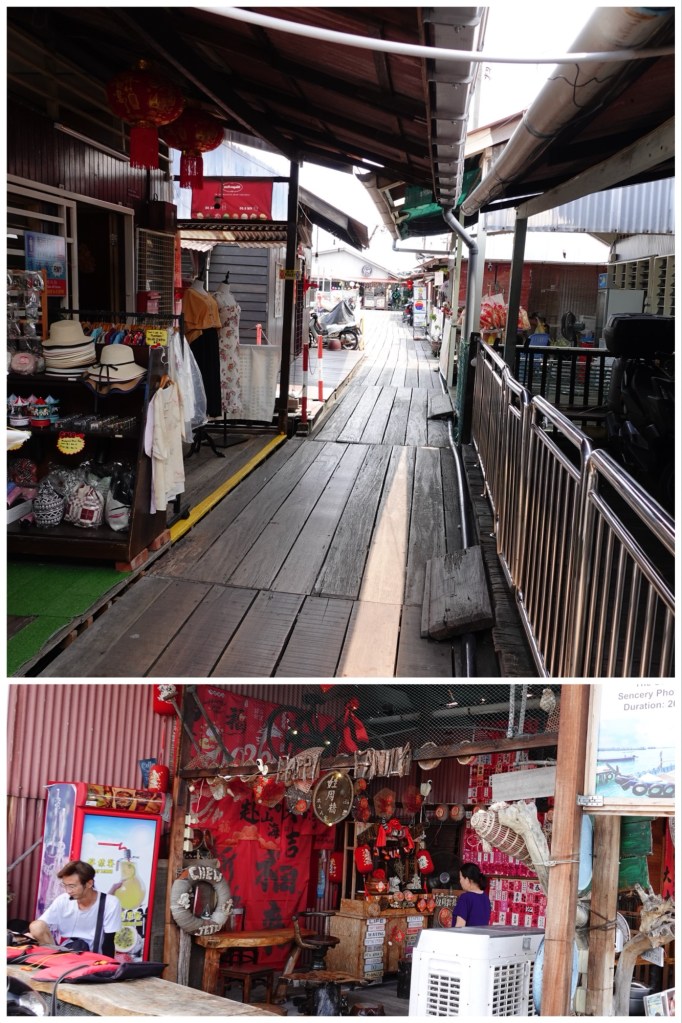
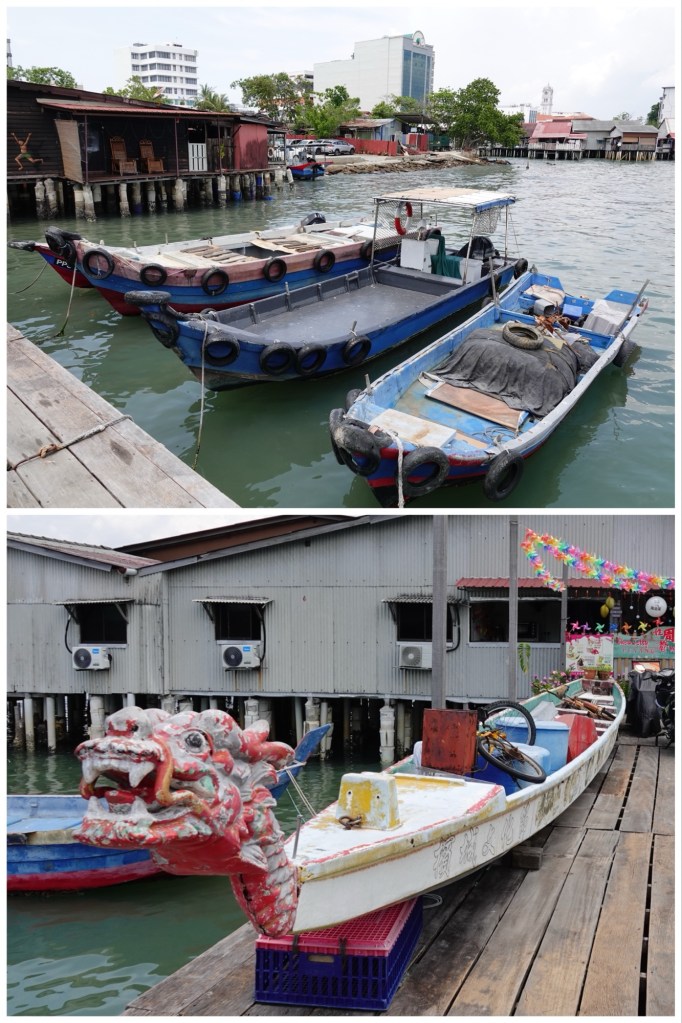
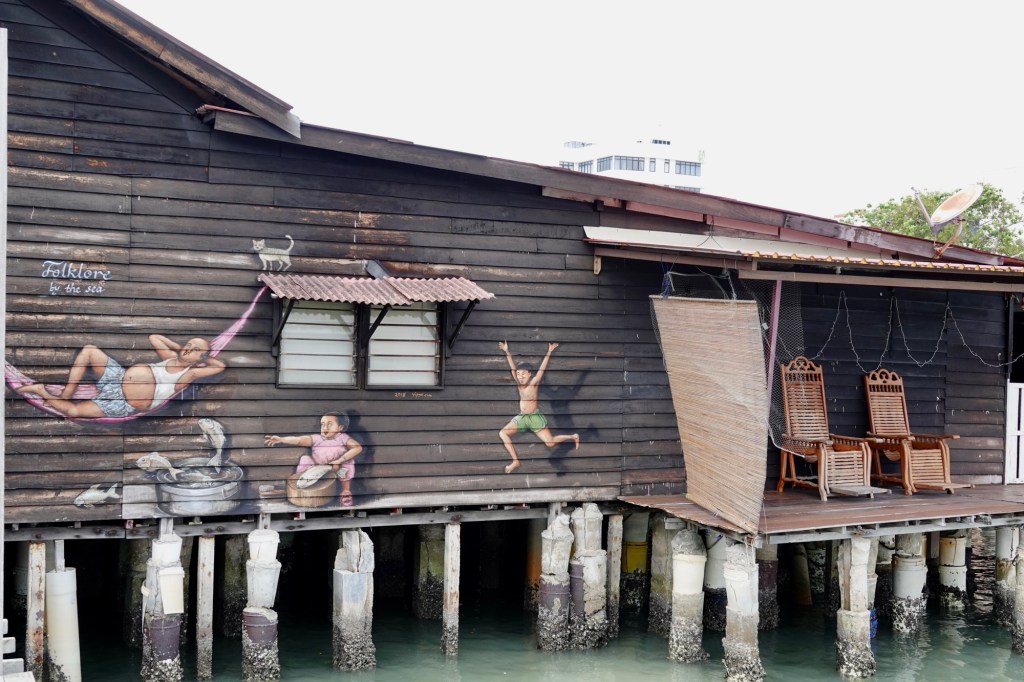
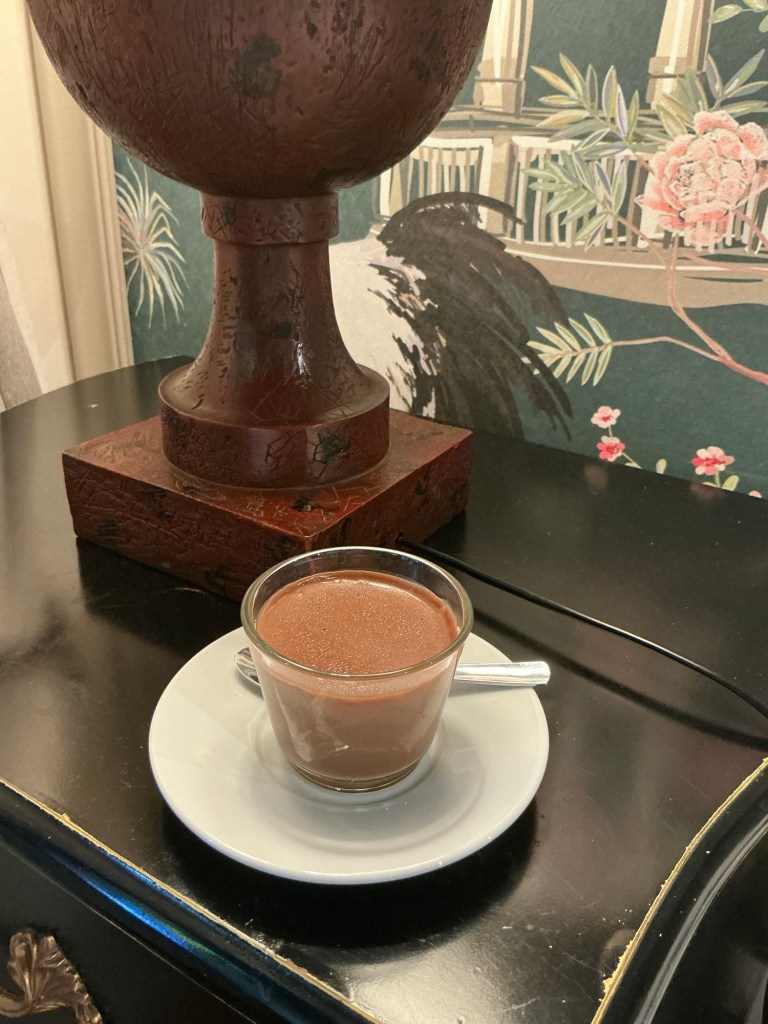
By the time we got back to Campbell House, it was time for our second shower of the day, after which we spent a couple of hours on the terrace recharging. Our afternoon treat was chocolate pot-de-crème.
As the sun began to set we walked around the corner to Hameediyah, Malaysia’s oldest Nasi Kandar restaurant, established here in Penang in 1907.
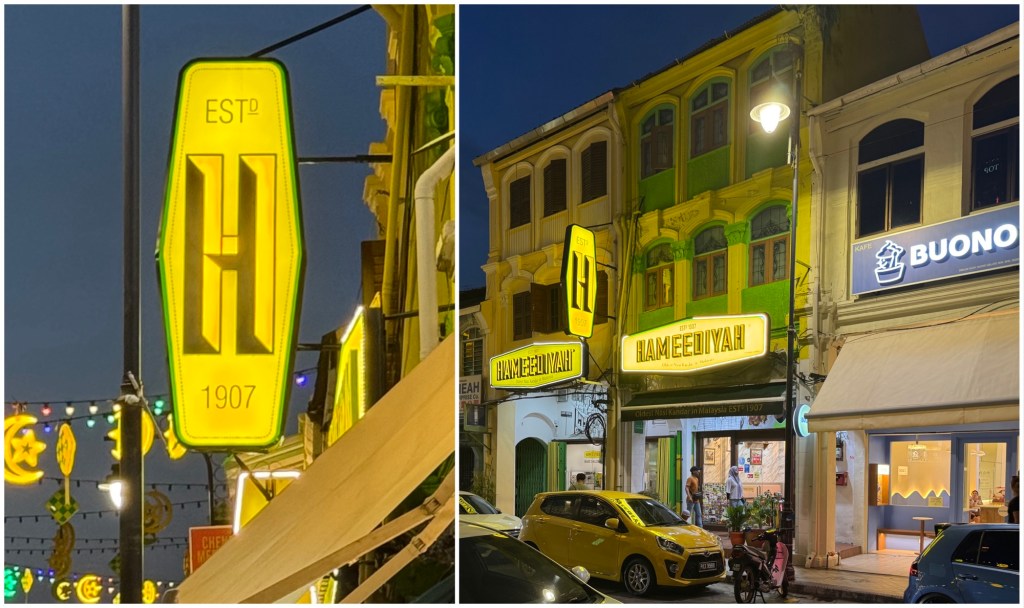
Nasi Kandar originated right here, originally introduced by Tamil Muslim traders from India. It consists of steamed rice combined with an array of curries, side dishes, and gravies.
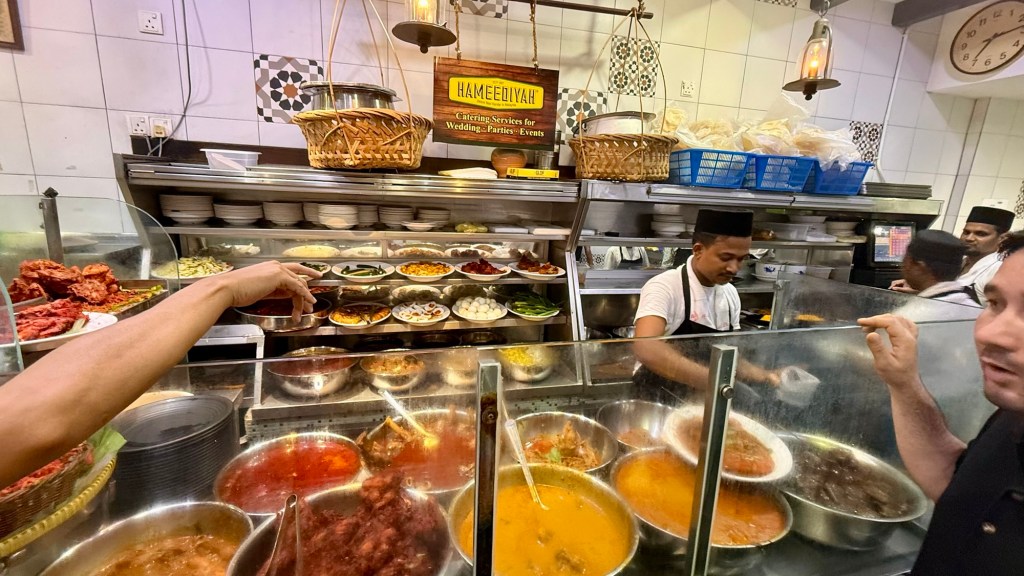
This was our first time being escorted into the kitchen (instead of being given a menu) to point out what combination of things we’d like on our rice, and how much curry “gravy” we wanted on it. Typically it would be banjir, which means flooded. We were then told to find a table and order our drinks – the nasi kandar would be delivered to us.
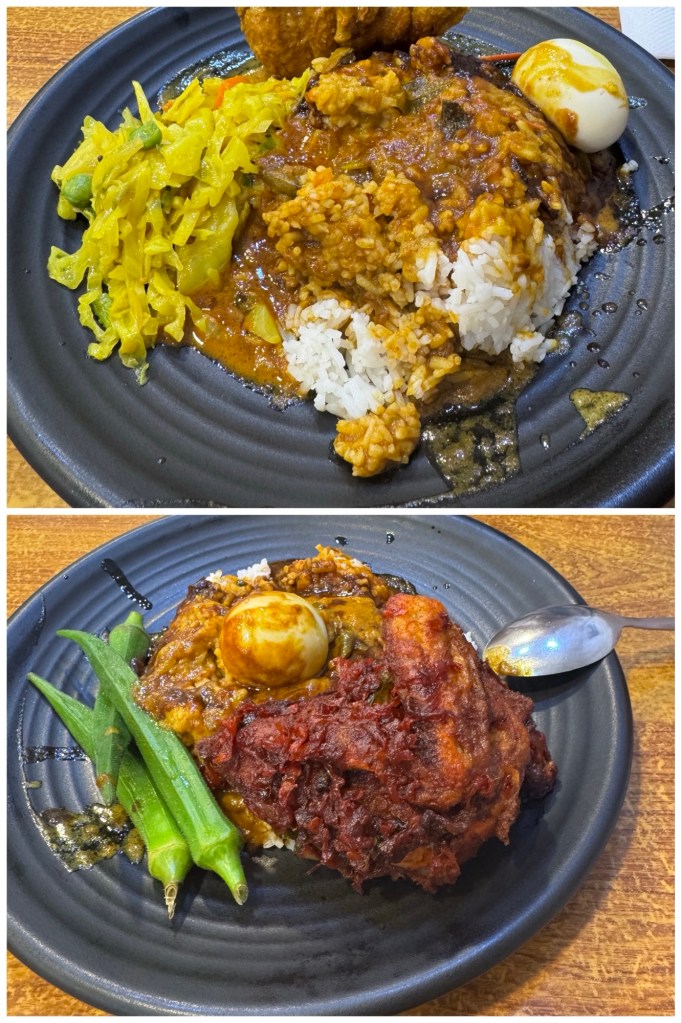
We both asked for spicy chicken, with a side of vegetables, so were a little surprised that our dishes came out completely different from each other: one with a drier spice-rubbed chicken and a side of okra, and the other with a saucy curry-like chicken and a side of sautéed vegetables. Both technically matched our order; I think the server who escorted us to the kitchen simply wanted us to try different options.
In the restaurant area, another server recommended their freshly made mango lassi, which was a good choice to counteract the spiciness of the sauce. Total dinner 53.40MYR ($18.50CAD).
Later this week, on the recommendation of the evening maitre ‘d at our hotel, we’ll try Lok Lok at the Chulia Street market. It’s all about the food!
 Rose and Ted’s Excellent Adventure
Those clan jetties: what a fascinating way for people to live. I’m enjoying your leisurely wandering around in Penang. And the food is amazing. You haven’t had any trouble with ice or drinks made with local water? It would be a shame to avoid such delicacies.
LikeLiked by 1 person
As is the case in Mexico, even the locals here drink filtered/bottled water, so everything we get is made with that. Tap water is strictly for washing. Public water fountains are clearly labelled “filtered” if they’re safe for refilling bottles, and our hotel provides lots of filtered water every day – it’s like being on a Viking ship!
LikeLike