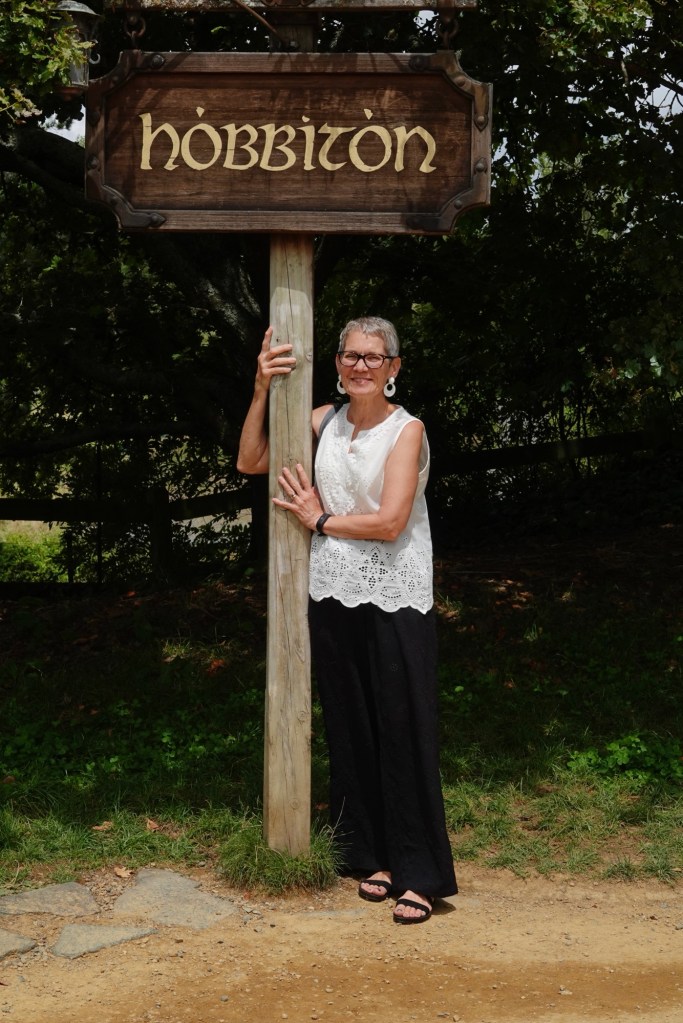
I think I was 13 the first time I read the Lord of the Rings trilogy. That would have been grade 9, which makes sense since I have a vivid memory of checking out the first book, The Fellowship of the Ring, from the first floor Nelson High School library.
I can’t remember a time I wasn’t a voracious reader, although growing up ours wasn’t initially a house full of books.
My parents did highly value education, though. Perhaps due to having been denied the opportunity themselves, they wanted their children to excel. The first hard-cover books that I remember in our house arrived uwhen I was about eight: the Encyclopaedia Britannica (yes, spelled exactly that way, in gold lettering deeply embossed on cream coloured real leather and trimmed in crimson, each volume also complete with a crimson silk bookmark bound into its spine). The set was bought from a door-to-door salesman, delivered and paid for in instalments, and I remember being aware that it was far more expensive than the World Book Encyclopedias (spelled the “American” way on their spines) that most of our neighbours bought from a different door-to-door salesman.
Once paid for, it came with two bonuses: a full 24 volume set of red leather-bound Britannica Junior Encylopaedias, and (for an extra annual cost) a “Yearbook” bound to match the adult set, which covered each year’s significant world events, as well as updating or amending topics in the base set. The 1969 yearbook, I remember, had a large section devoted to the moon landing.
It was magnificent, and I spent hours reading about random topics and people (Albert Schweitzer! Ludvig von Beethoven! Queen Elizabeth!) and poring over the colour plates of national flags (updated in each Yearbook) and the overlay transparencies that revealed the inner workings of the human body (so that’s what my mom’s missing thyroid would have looked like!).
Children’s fiction was not a priority. What fiction I read came home from the school library, or was occasionally bought through the Scholastic Book Club flyers that our teachers sent home.
My reading choices were guided largely by my teachers. By grade 5 I had a favourite book of my very own: The Tree That Sat Down and The Stream That Stood Still, 1930s children’s fantasy books written by John Beverly Nichols. Since I read them in their “combined” edition, I never realized that they were actually two separate books, and as a 9 year old the social commentary within the fantasy went totally over my head. Nonetheless I was in love.
My mom and grandmother both loved to read. My grandmother read exclusively in German (books in Hungarian being hard to get in Canada), and I credit her gifts to me of Grimms fairy tales in German and a couple of German editions of books I’d already read in English for being able to read German as well as I do. In high school, after having read Margaret Mitchell’s Gone With The Wind, I read my grandmother’s copy of the German edition Vom Winde Verweht. By around that time my mom belonged to a Book-of-the-month club, and was reading the latest bestsellers.
My dad’s education was interrupted around grade three. Being born in 1929 as the youngest in a very large farming family in a German settlement within what is now Poland limited his time in school. His formative school years were instead war years. And yet, somewhere in between avoiding his father and avoiding the Russians, he learned to read well beyond his formal grade level. I don’t know who taught him to read English after he arrived in Canada not even speaking it, but he had little trouble reading barbecue assembly instructions, car maintenance manuals, the Hamilton Spectator front section (which contained the news – he didn’t bother with the editorials or entertainment sections), and the UAW Local 707 circulars.
In grade 7 English class I was introduced to Shakespeare. The first live theatre I ever attended was a production of Hamlet at the Stratford Festival, as a school field trip. Despite the fact that I always felt motion sickness riding the school bus, the 90 minute drive from Burlington to Stratford was 100% worth it. Our grade 8 trip was to see A Midsummer Night’s Dream, with its fantastical elements.
I was hooked. The Complete Works of William Shakespeare, ordered by mom through her book club, appeared as my 12th birthday present. (“The Complete Works of” compilations were a big thing in the 1960s. Mark Twain’s arrived the following Christmas.)
But back to The Lord of the Rings.
By grade nine I was reading mostly historical fiction, interspersed with Agatha Christie mysteries to lighten things up. Thomas B Costain and Irving Stone featured prominently in my reading list. In fact, I made it a personal goal to read everything they’d ever written. Fortunately, my high school’s library was well stocked.
While I remember when I first read LOTR, I don’t remember why. I suspect that my best friend Elizabeth was reading JRR Tolkein, so naturally I had to as well. Even back then, talking about our latest reads was a favourite pastime.
The copy of The Fellowship of the Ring that I signed out was most certainly a hardcover edition, since that’s what our library stocked, but after I’d devoured it and was ready for The Two Towers, someone else had borrowed it.
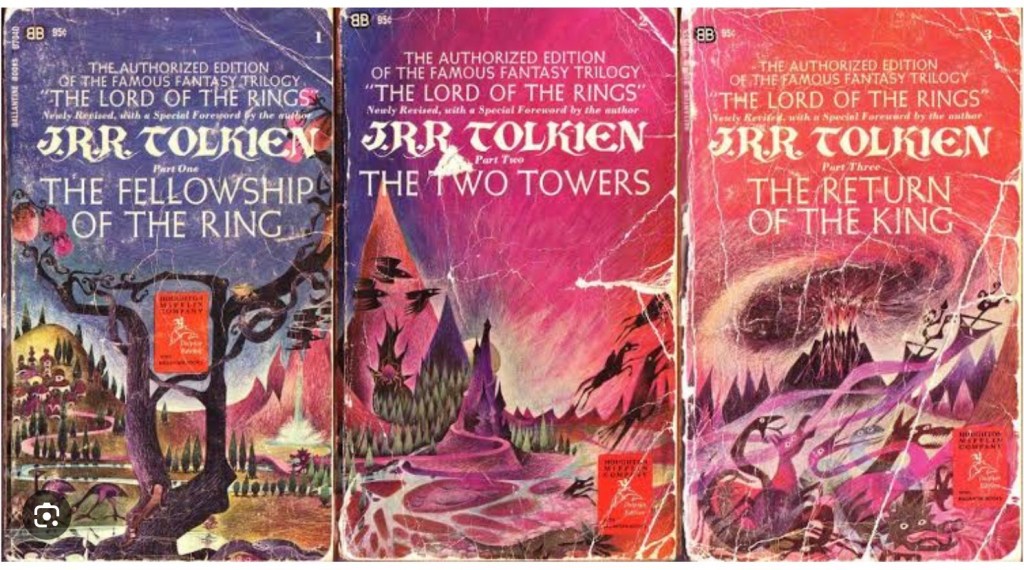
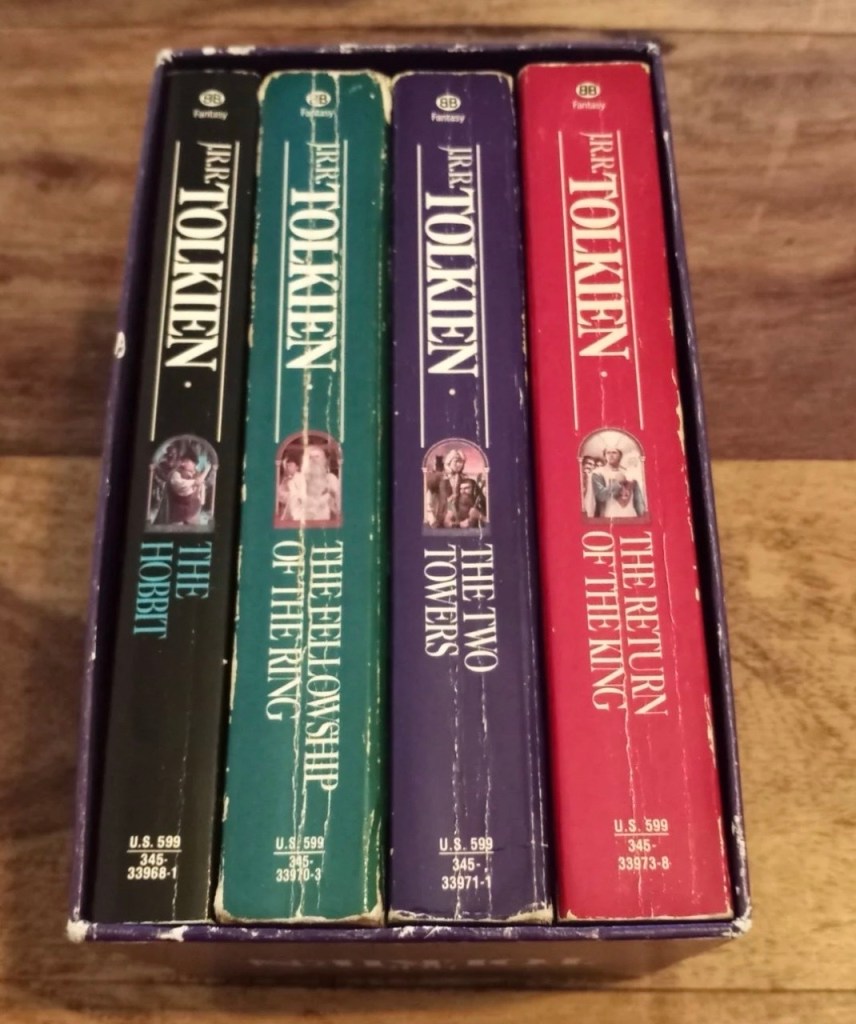
I couldn’t wait to continue the adventure, so I bought the trilogy in paperback. I hadn’t had my first summer job yet, and my allowance certainly didn’t stretch to hard cover editions. I can still picture those books: each one with a cover in a different colour palette.
I was a wee bit obsessed. Admittedly, it was Gandalf the Grey and the extremely handsome (or so I pictured him) Aragorn – and not the Hobbits – who captured my imagination.
In 1978 when director Ralph Bakshi released an animated film version of LOTR, I had to go and see it. Given the year, I must have seen it with Ted, and yet the person I remember critiquing it with was Elizabeth, and we hated it. The animation style was (in our opinions) awful, but more importantly Aragorn wasn’t at all how either of us had visualized him (and we’d talked about his character a lot) and that completely ruined the movie for us.
More than 20 years later, when Peter Jackson took on the project of making movies out of the trilogy, I was prepared to be disappointed again.
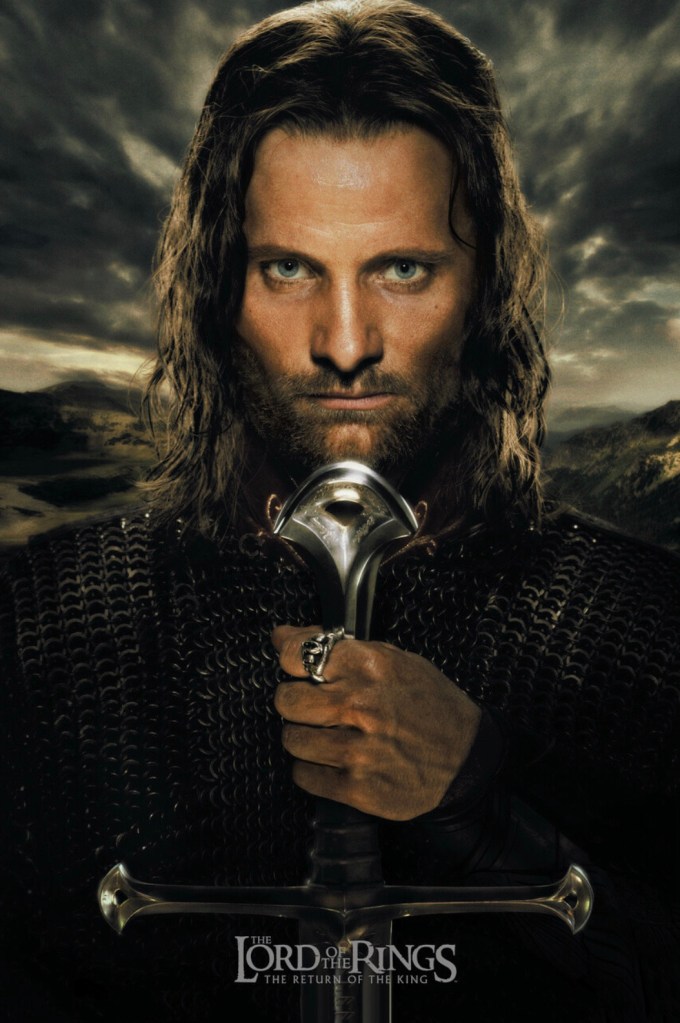
But then Viggo Mortensen was cast as Aragorn and all was right with the world. (If the movies were being made today, Alexander Skarsgård would also be “acceptable”. You get the idea.)
At any rate, being in Auckland this week, just 2-1/2 hours from the Matamata sheep station a part of which was transformed into The Shire, made visiting the Hobbiton film site irresistible.
The background story to how this village came to be here is an interesting one. Once Peter Jackson obtained the film rights to LOTR from the Tolkein estate, he was determined to film the entire thing in his home country, New Zealand. Additionally, exterior shots would not be filmed on sound stages with green screens, but on location.
Tolkein had created The Shire’s landscape with the rolling hills of his beloved England in mind; Jackson was determined to find its equivalent in New Zealand.
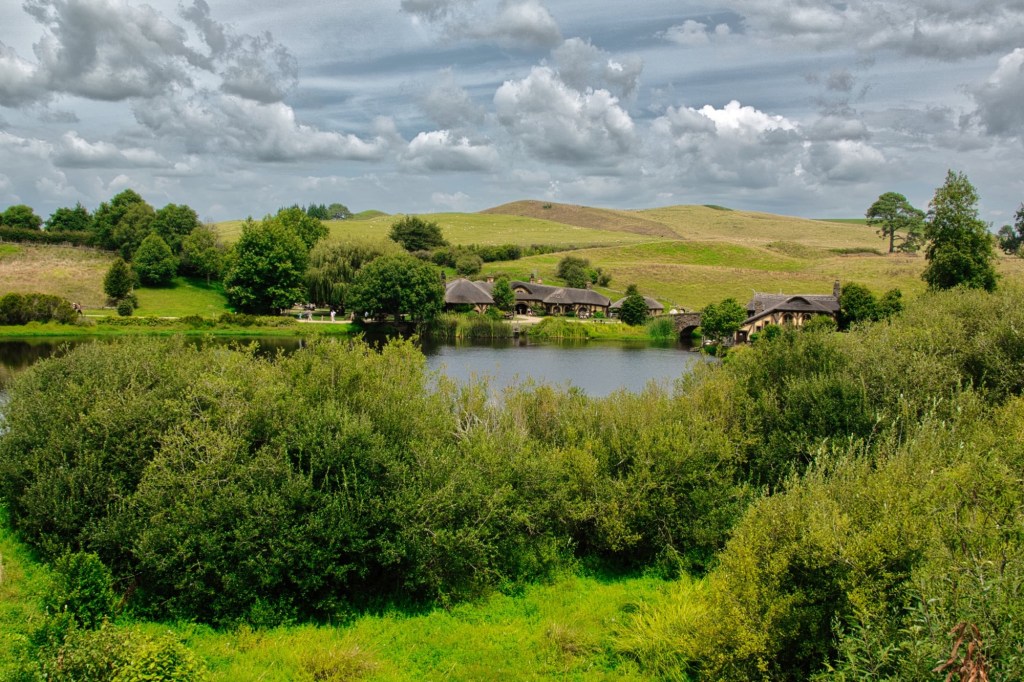
To that end, he flew over the north island in a helicopter until finding the perfect tract of land, with a pond/lake and a single huge tree (The Shire’s “party tree”). He found it on the Alexander family’s sheep station. To make a long story short, the Anderson patriarch had never heard of either Jackson or the Tolkein trilogy, but apparently his son had read the books and convinced him to lease 120 acres of the 12,000 acre farm to the film company – on the condition that it be returned exactly to its original condition once filming was complete.
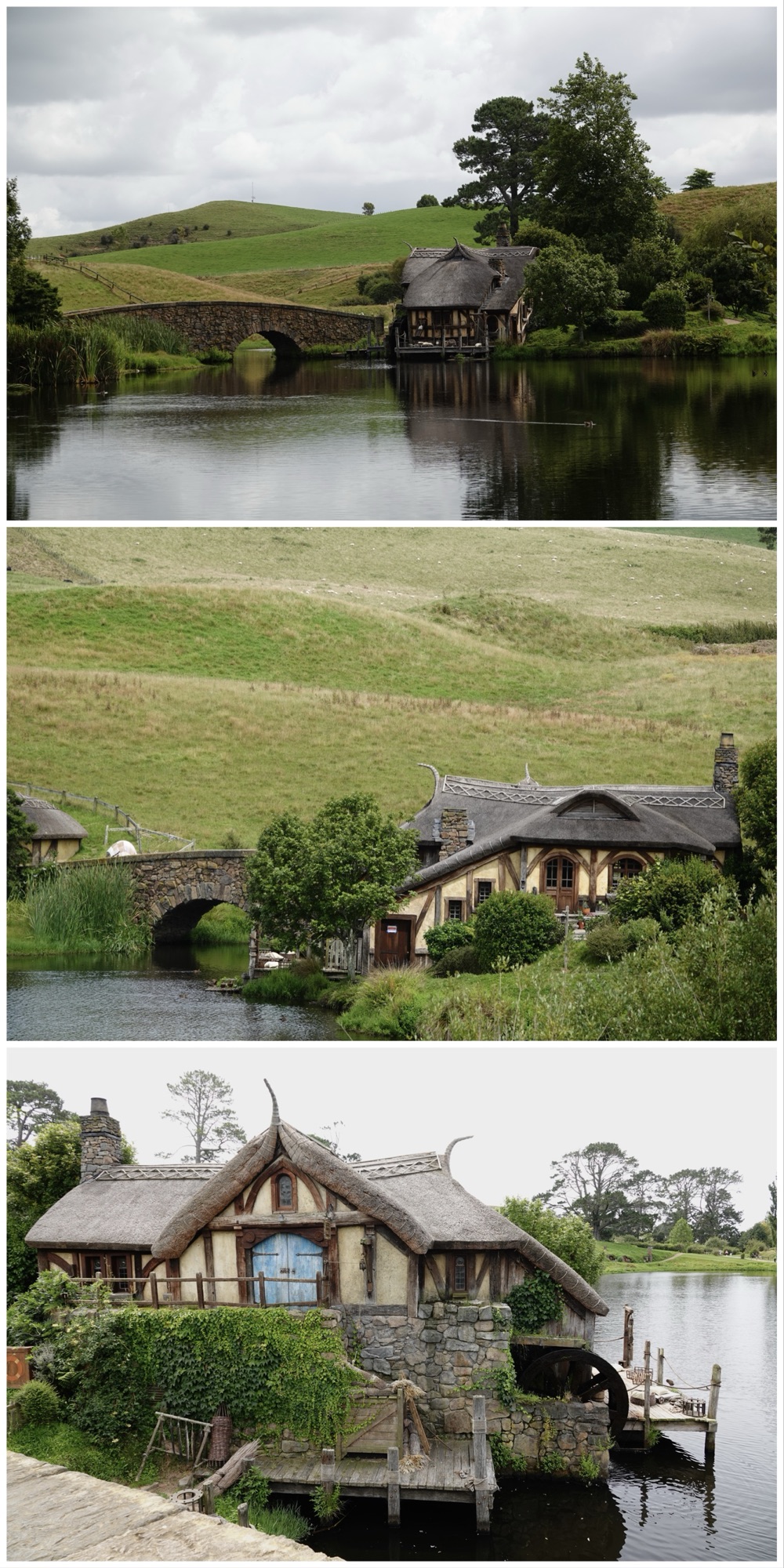
To fulfill that contract condition, all the original buildings were built of materials like untreated lumber, plywood, and polystyrene, which could be – and were – easily disassembled and moved after 2 years of filming. Even the “stone” double arch bridge was built out of scaffolding, plywood, and polystyrene.
And then the film’s box office receipts exceeded all expectations.
When Jackson returned to Andersons’ farm to lease the land again, and rebuild The Shire for the filming of The Hobbit, the Anderson family had a different condition: instead of returning the land to its original condition, they insisted that Jackson build permanent structures that could later be used as a tourist attraction.
Today’s Hobbiton was born.
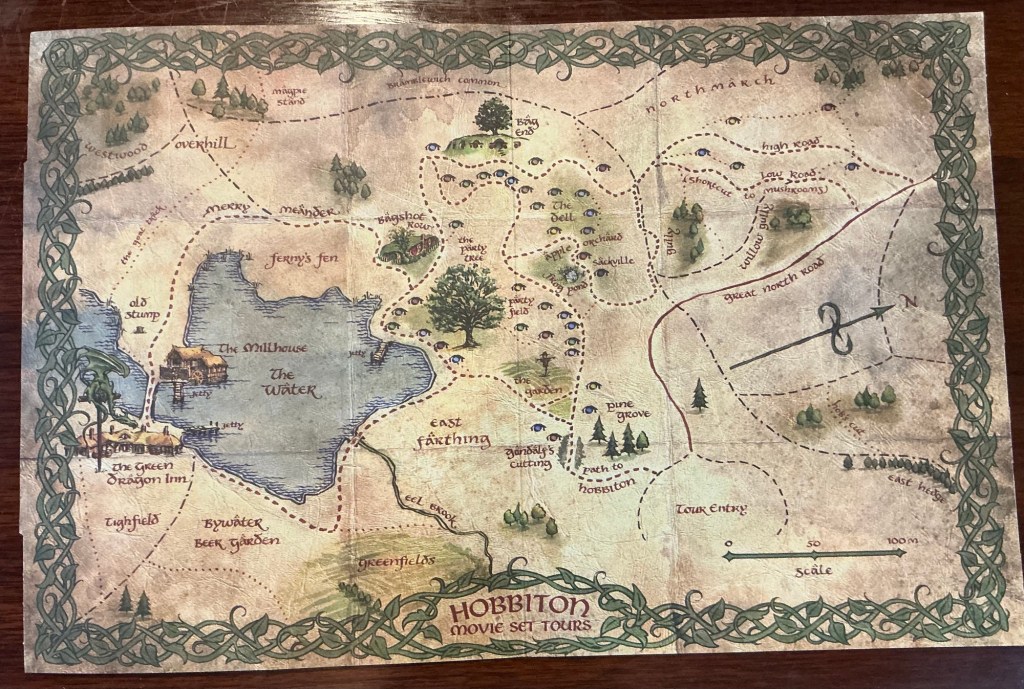
The attraction is owned 50/50 by Peter Jackson and the Anderson family, with the Andersons being allowed to retail LOTR merchandise under license. In addition to tour guides and café/bar staff, there are 15 full time gardeners, and a whole phalanx of people involved in the site’s ongoing maintenance – everything from painting to pathway maintenance to dusting the thousands of tiny artifacts.
The transportation and ticketing portion of our tour to Matamata was handled by Cheeky Kiwi Tours, but once on the Hobbiton site our guide through the grounds and around the Hobbit holes was a lovely Māori woman named Otiwa.
We began by walking into The Shire along the path that Gandalf the Grey used when arriving by horse-cart for Bilbo Baggins’ eleventy-first birthday (coincidentally Frodo’s coming of age 33rd). Like Gandalf, we were neither early nor late, but arrived precisely when we meant to.
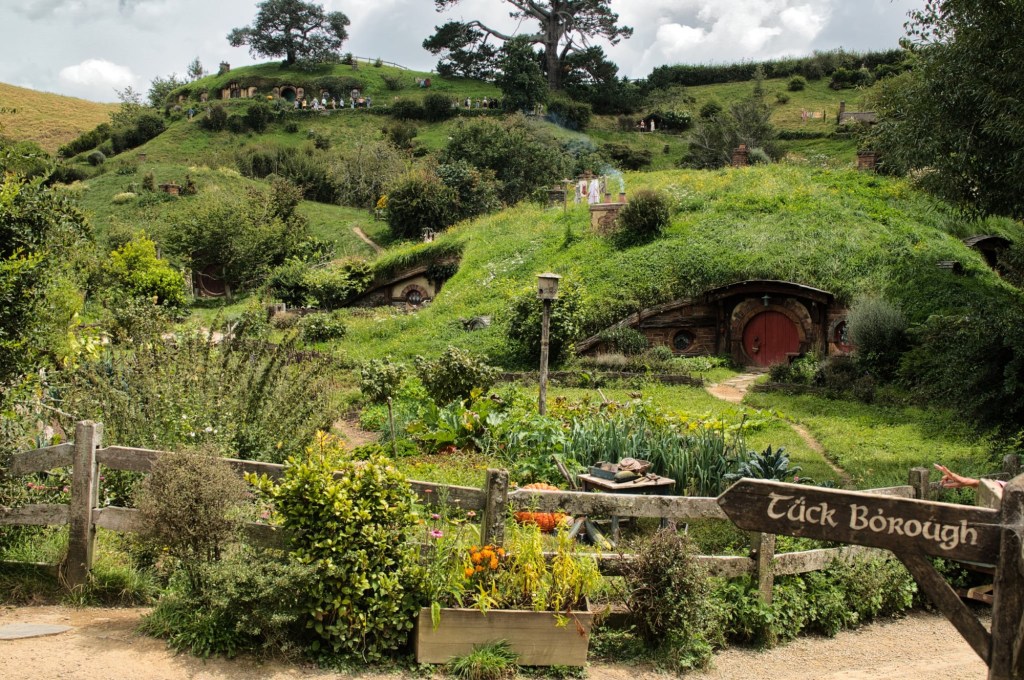
There are currently 44 permanently reconstructed Hobbit holes in Hobbiton, although only the two on Bagshot Row are fully furnished to allow visitors to tour. While the rest have working front doors, there is nothing inside but small empty spaces, some of which are used as storage. They’re big enough to allow an actor to be filmed entering or leaving through the door, but not intended for interior shots.
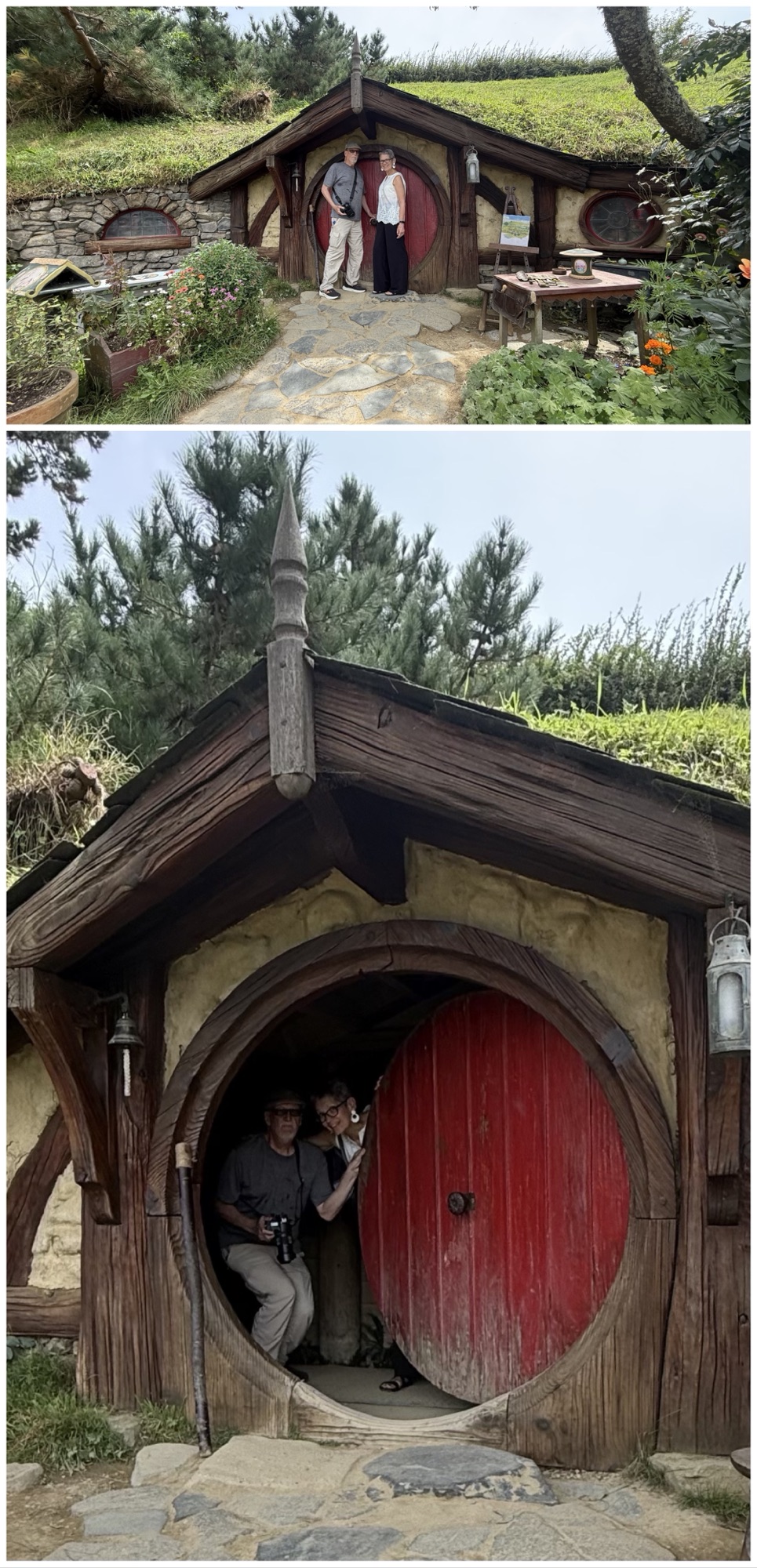
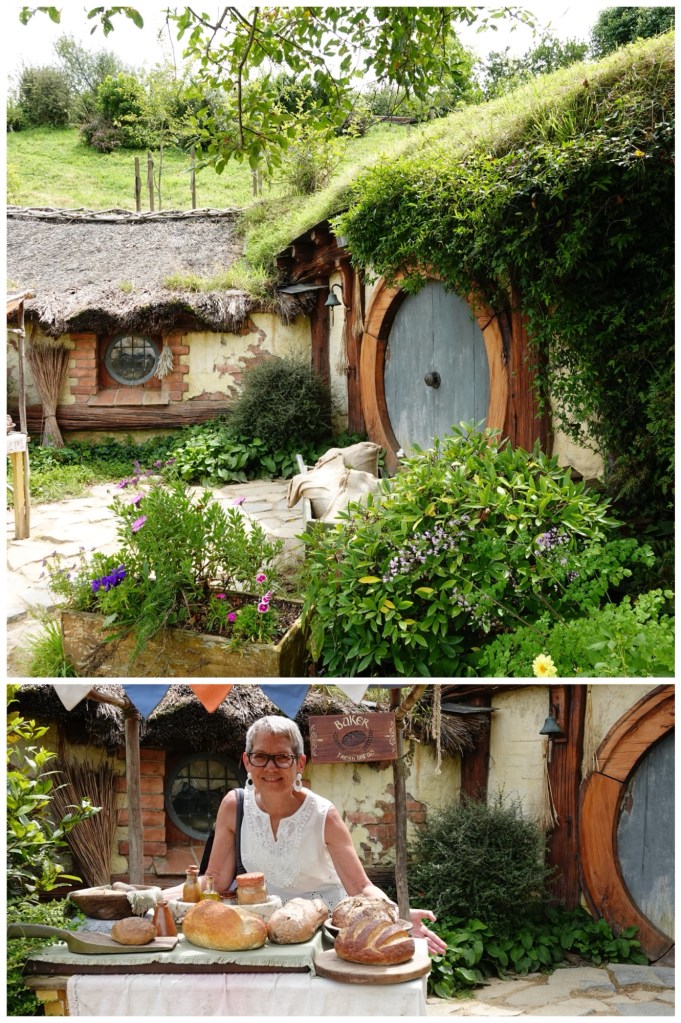
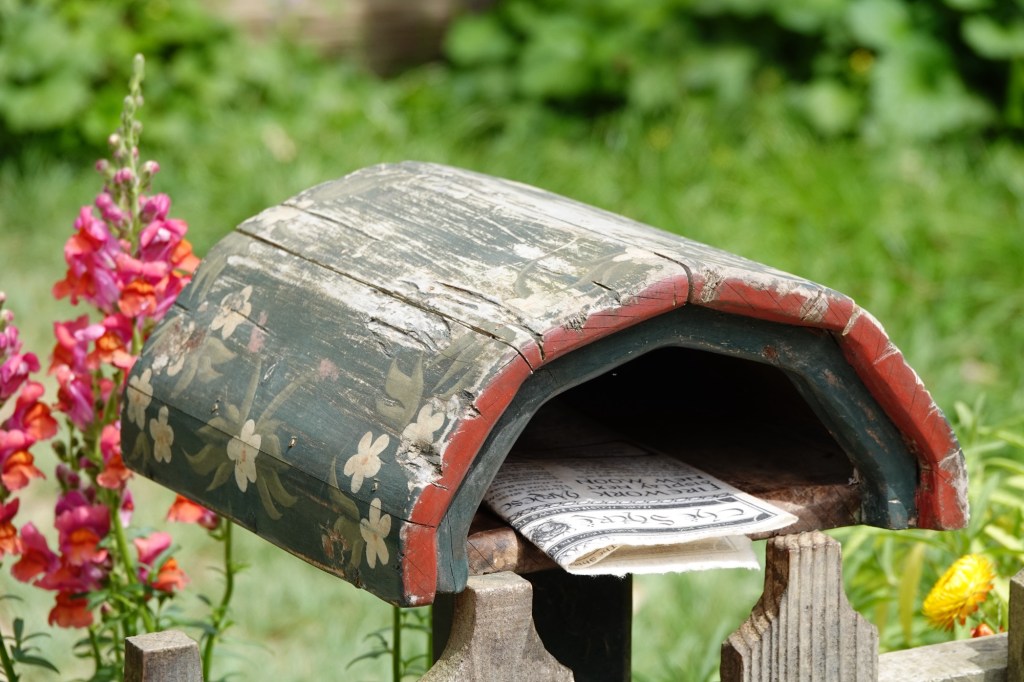
We definitely didn’t get photos of all 44, but we got a good selection. The details that make each smial (Hobbit hole in Hobbit) unique are incredible: colours, trim styles, windows, doorknobs, thresholds and welcome mats, letterboxes and signs.
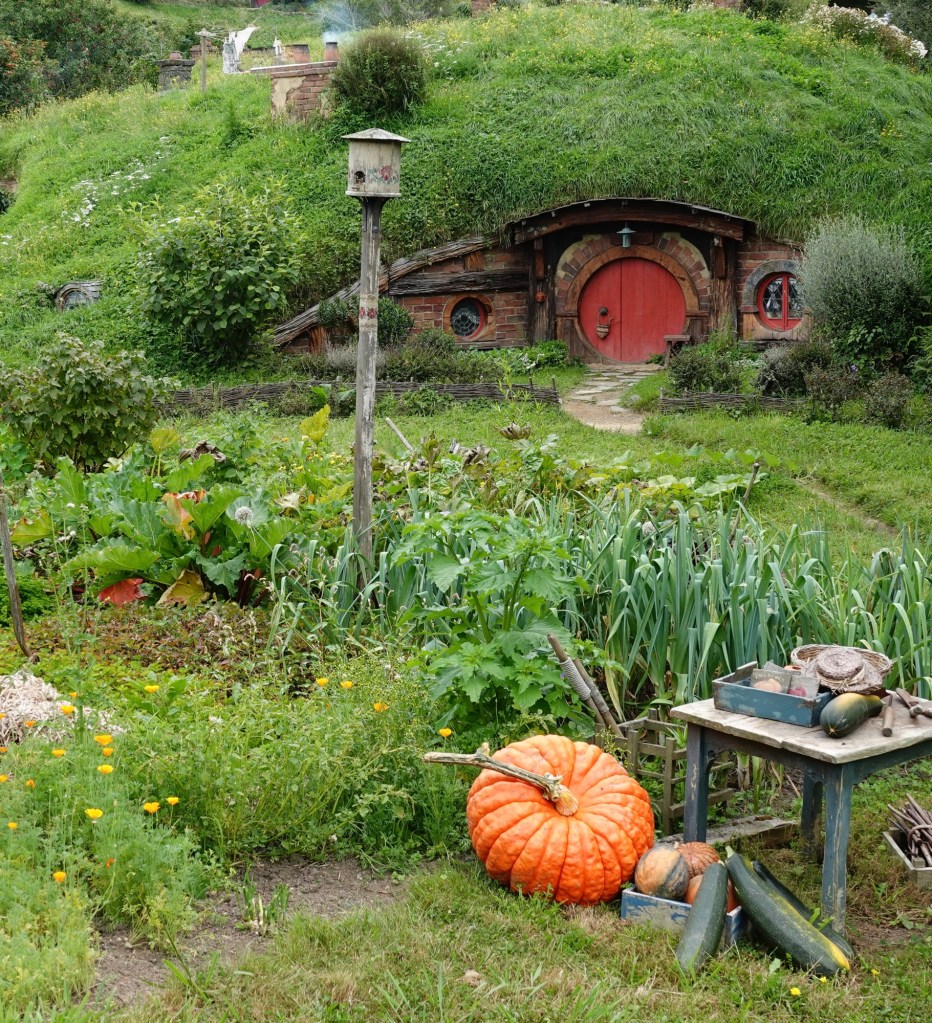
It seems no one really wanted the huge zucchini. I remember that feeling well from our own home garden days.
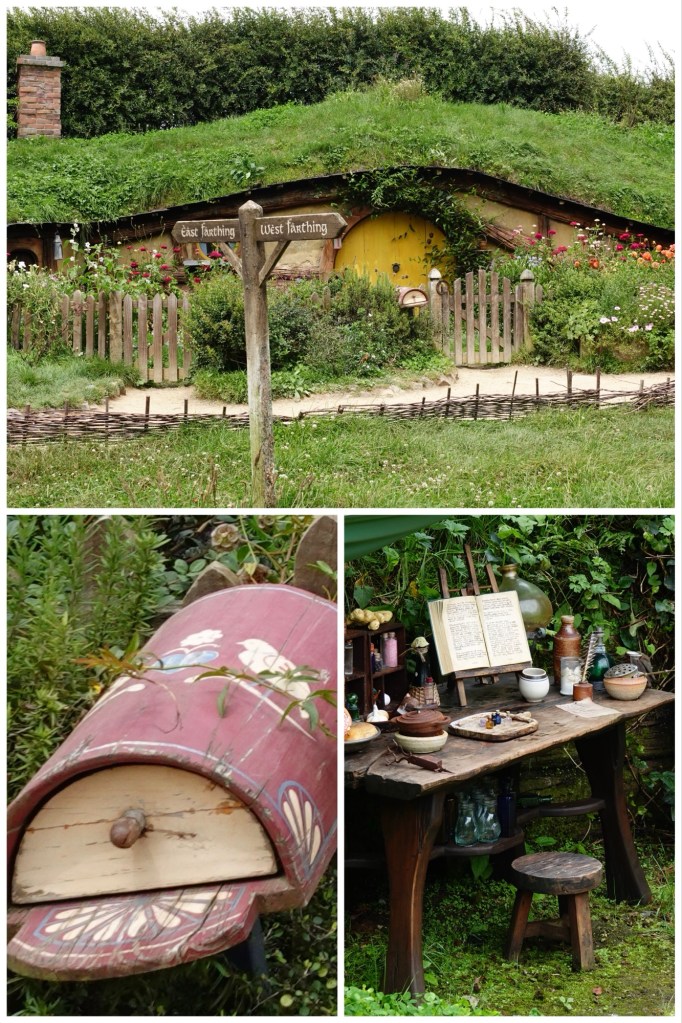
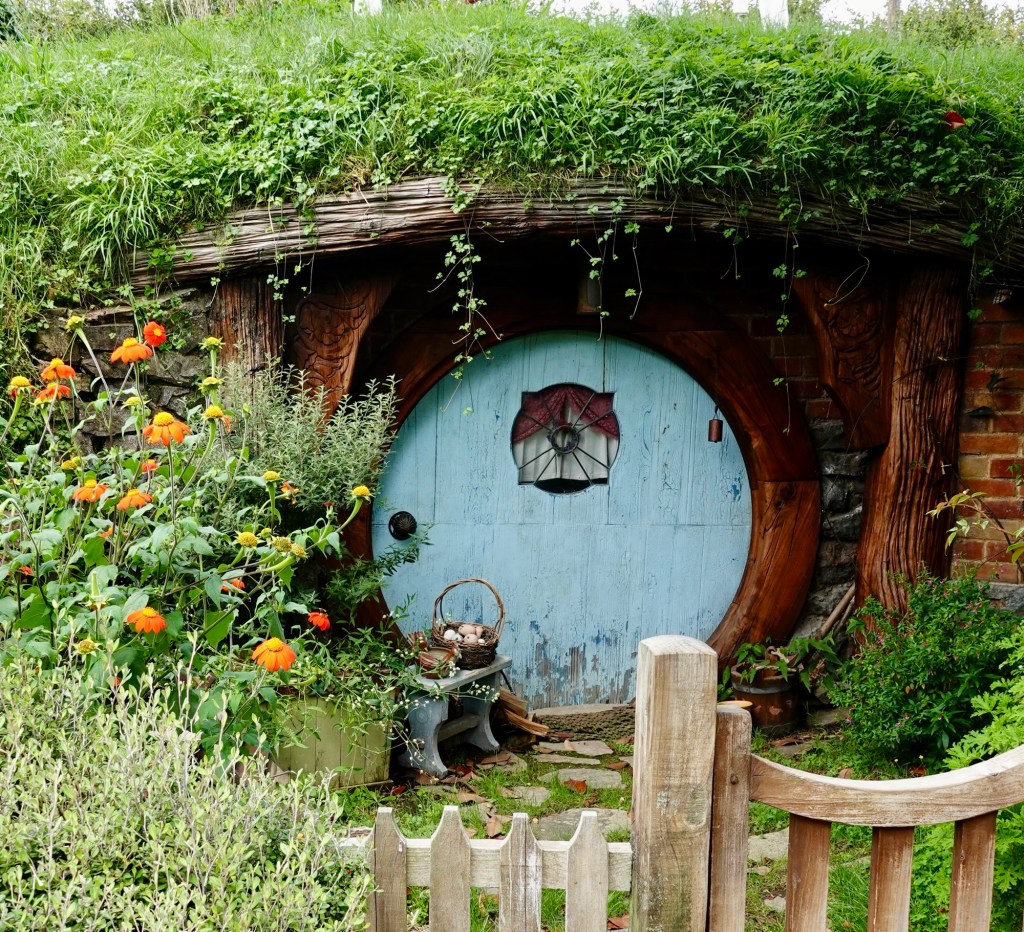
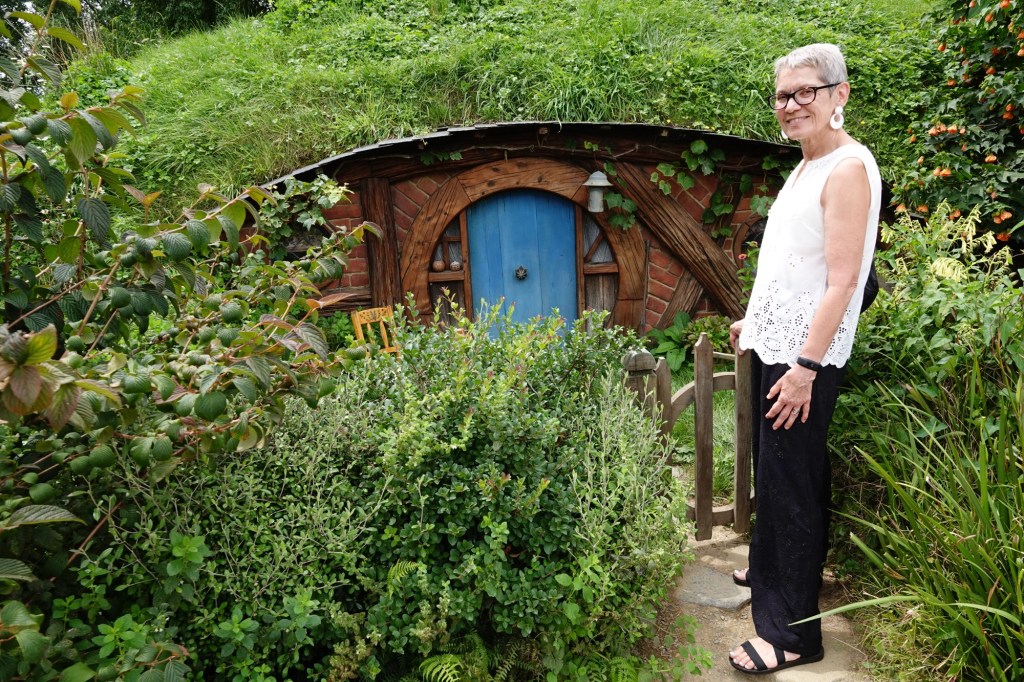
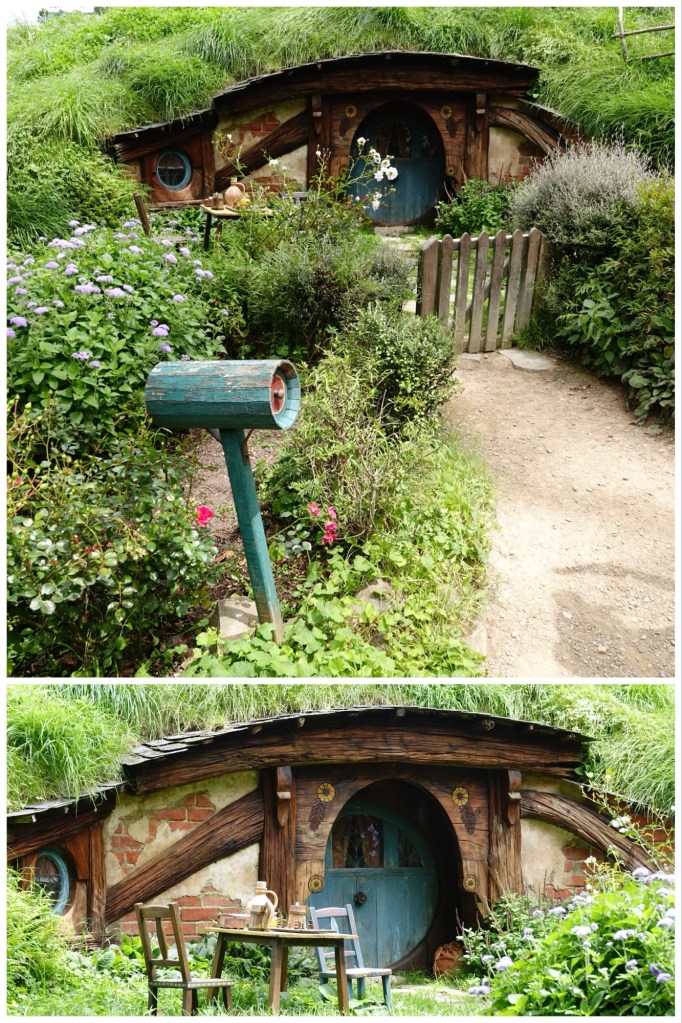
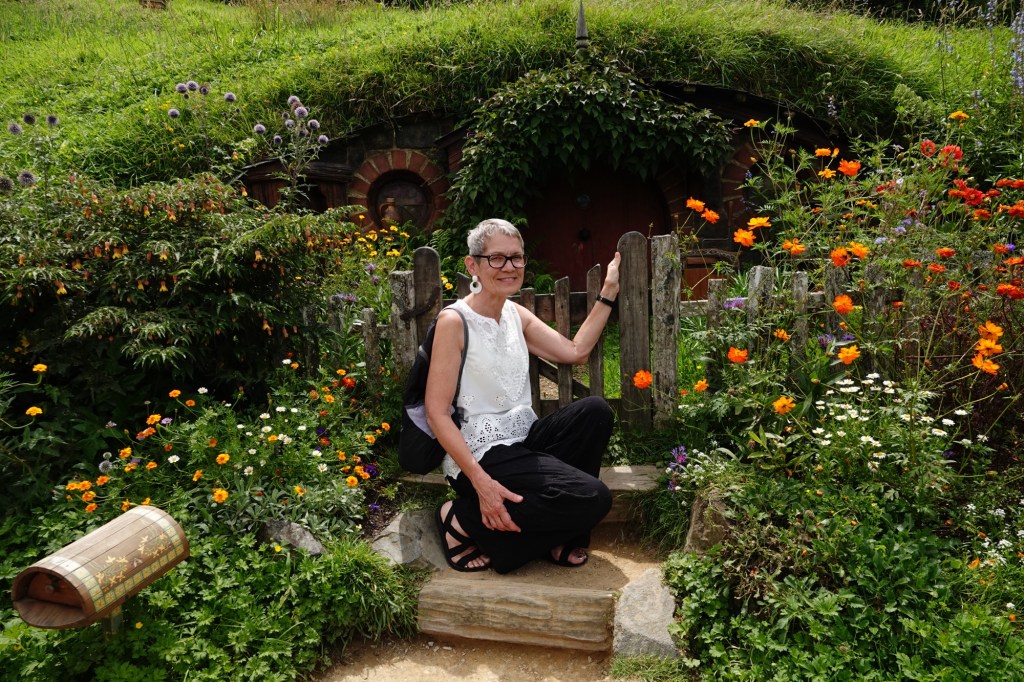
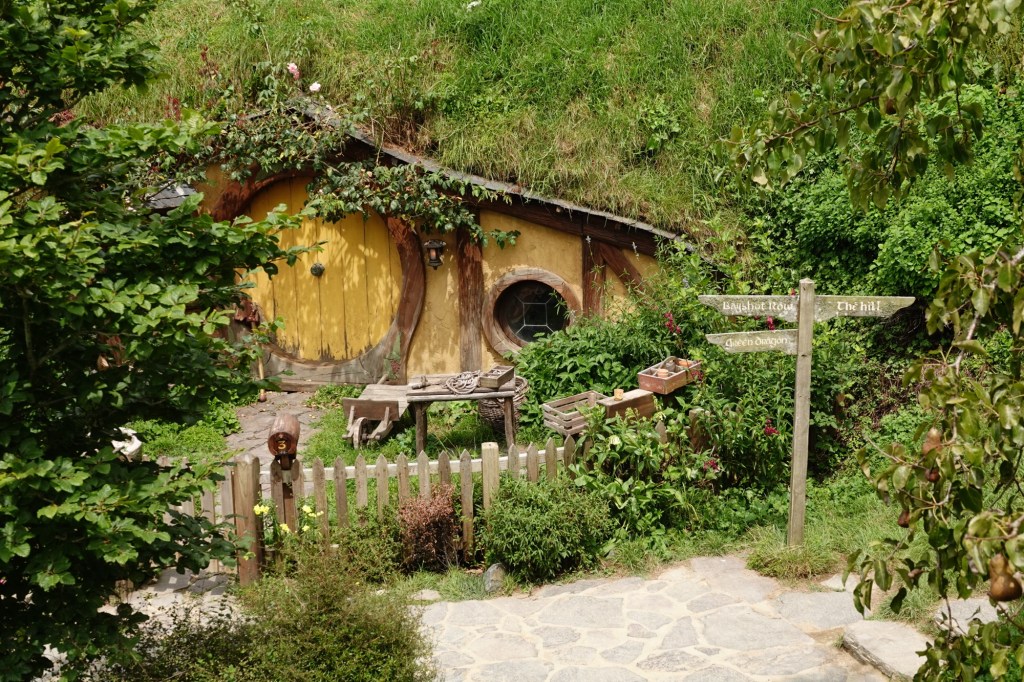
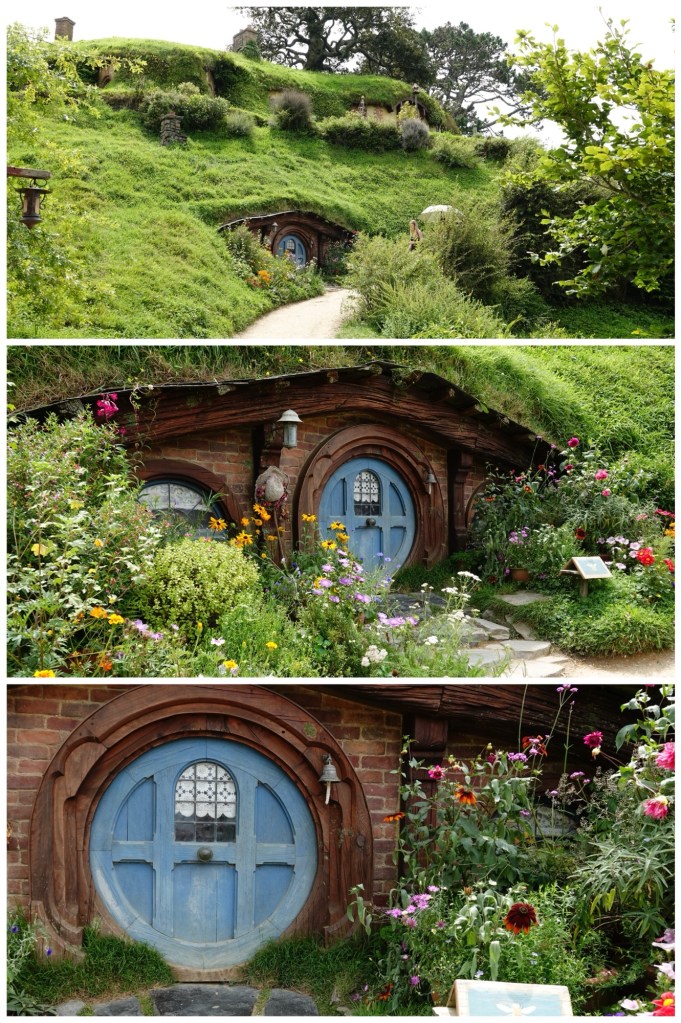
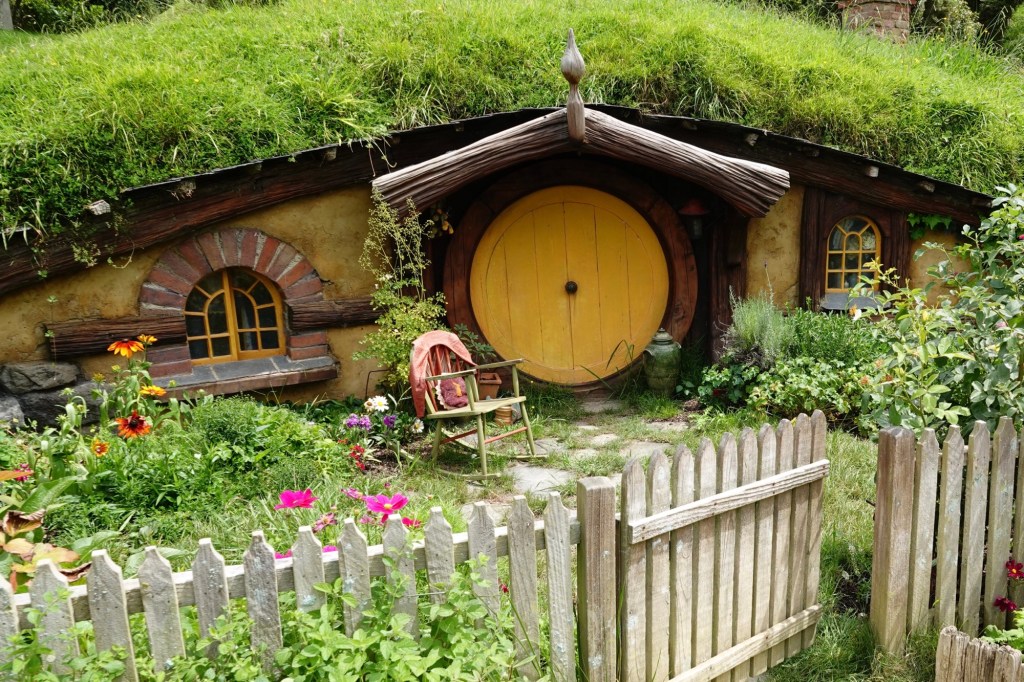
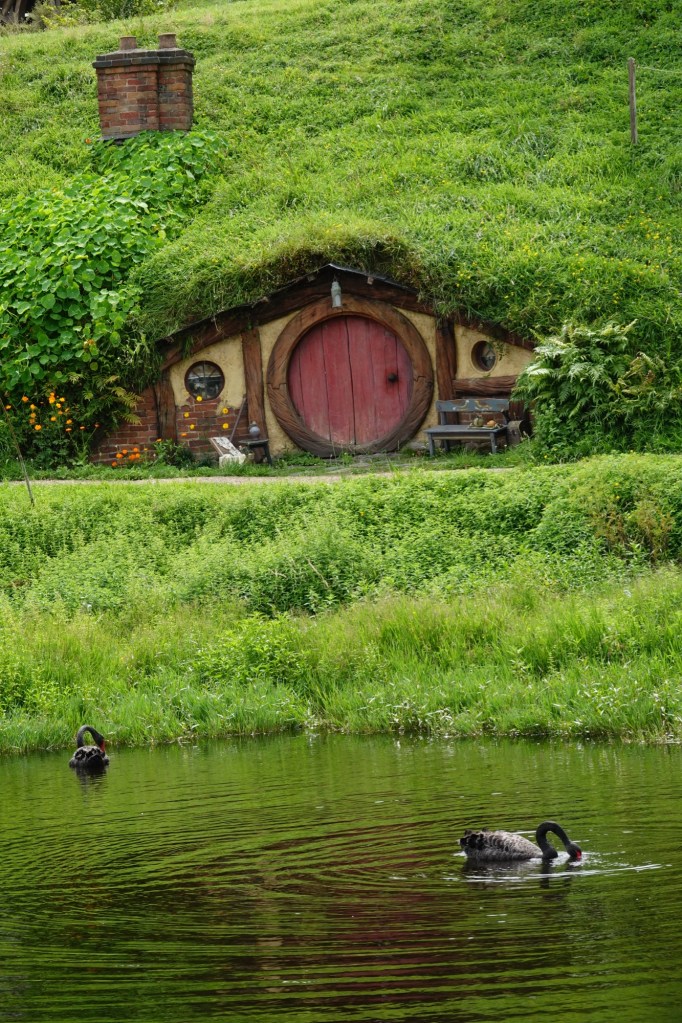
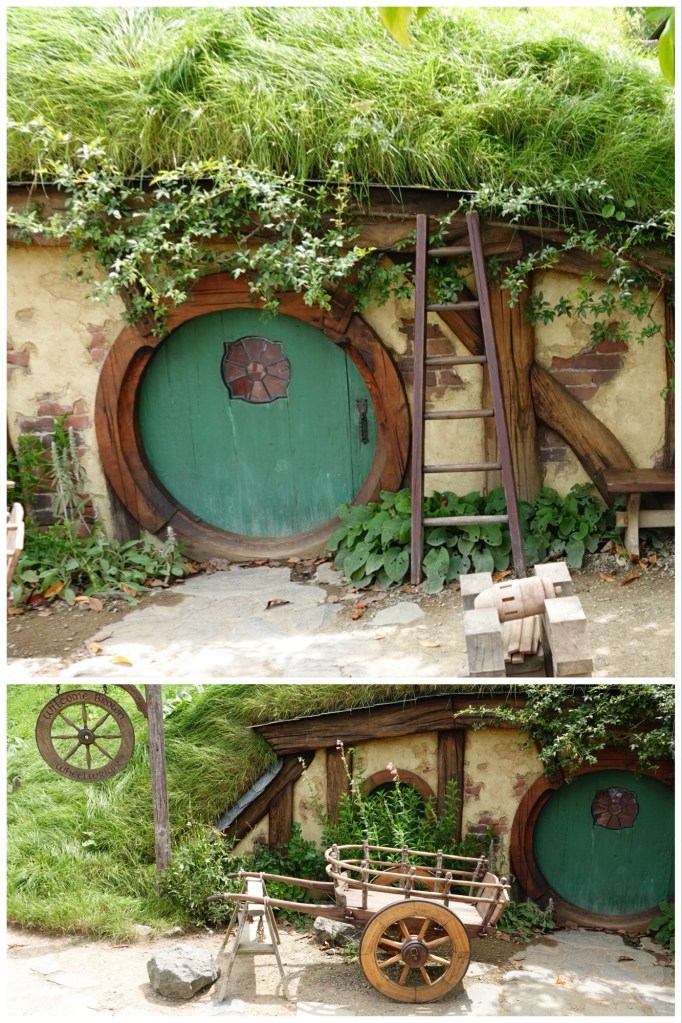
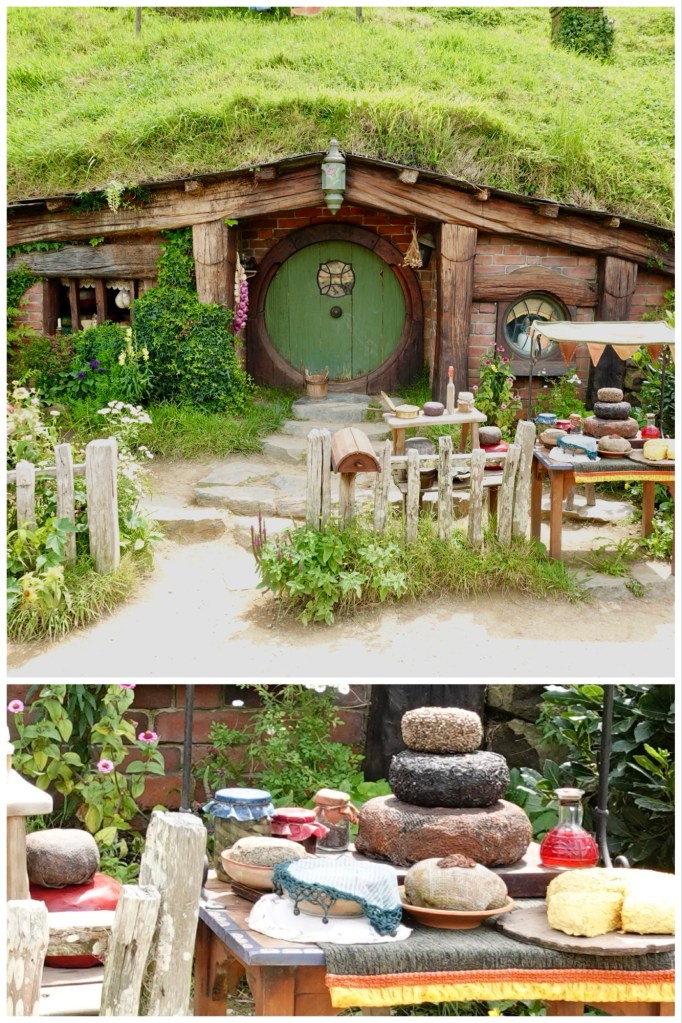
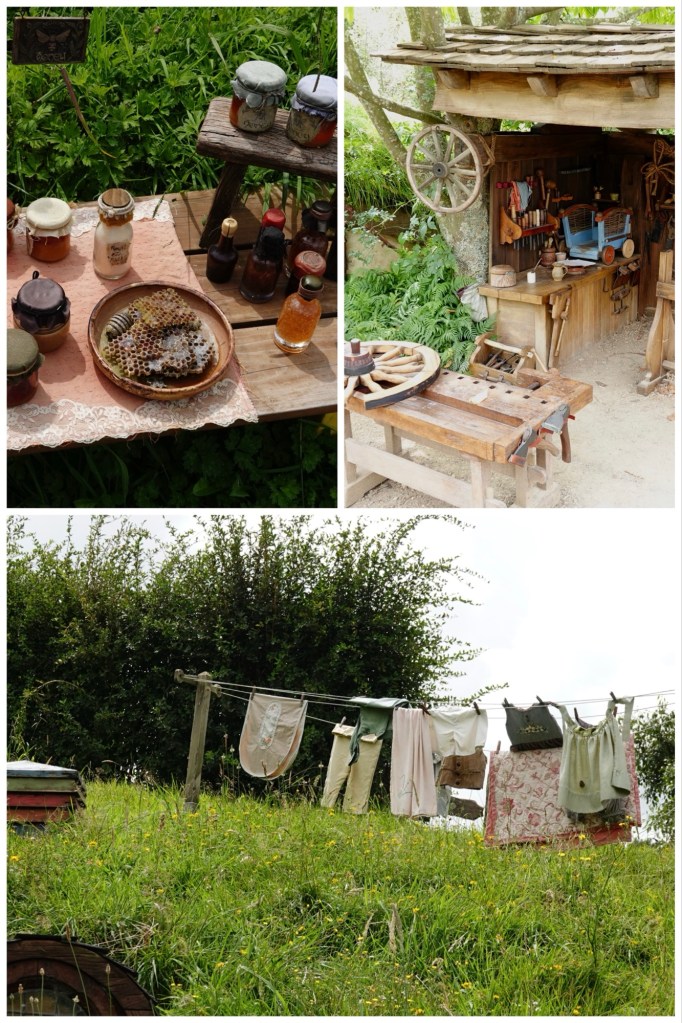
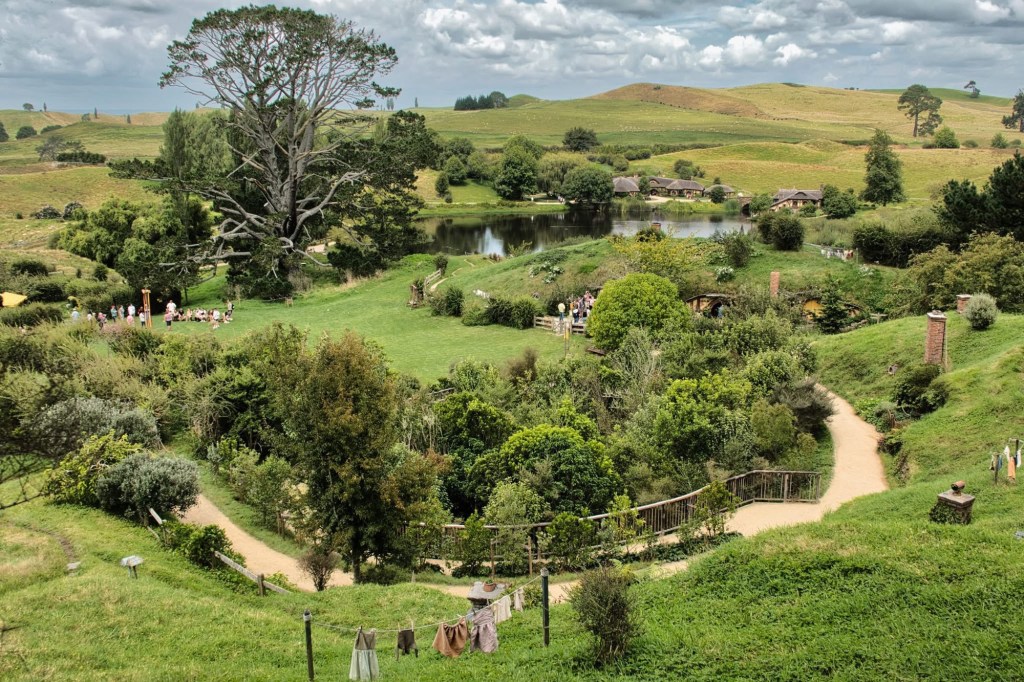
There is also evidence of each householder’s occupation, whether that is cheesemaking, baking, beekeeping, or fixing wagon wheels. Laundry lines hold drying Hobbit garments – pointedly no socks!
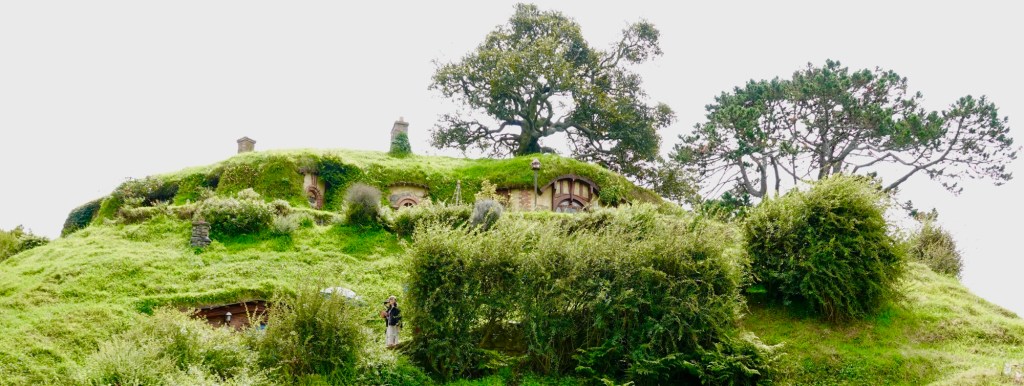
Of course, Bag End is the largest Hobbit hole on the set, since it has a fully rendered interior. Unlike the holes that have just a front door, Bag End was built so that it could be filmed from all sides. Its 12 windows represent the 12 members of the Ring Fellowship.
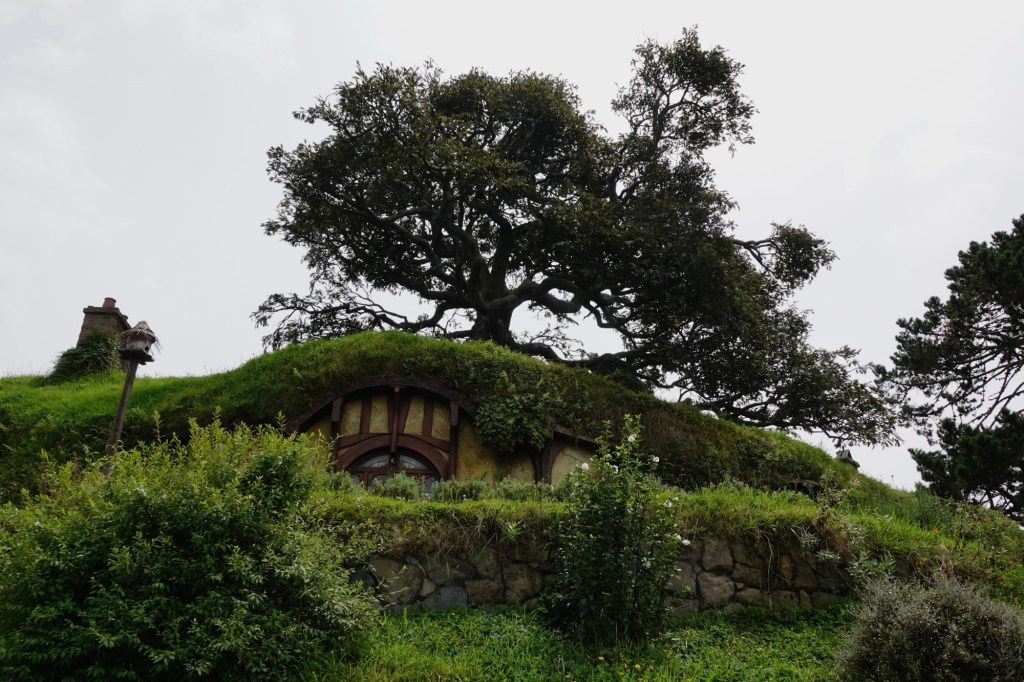
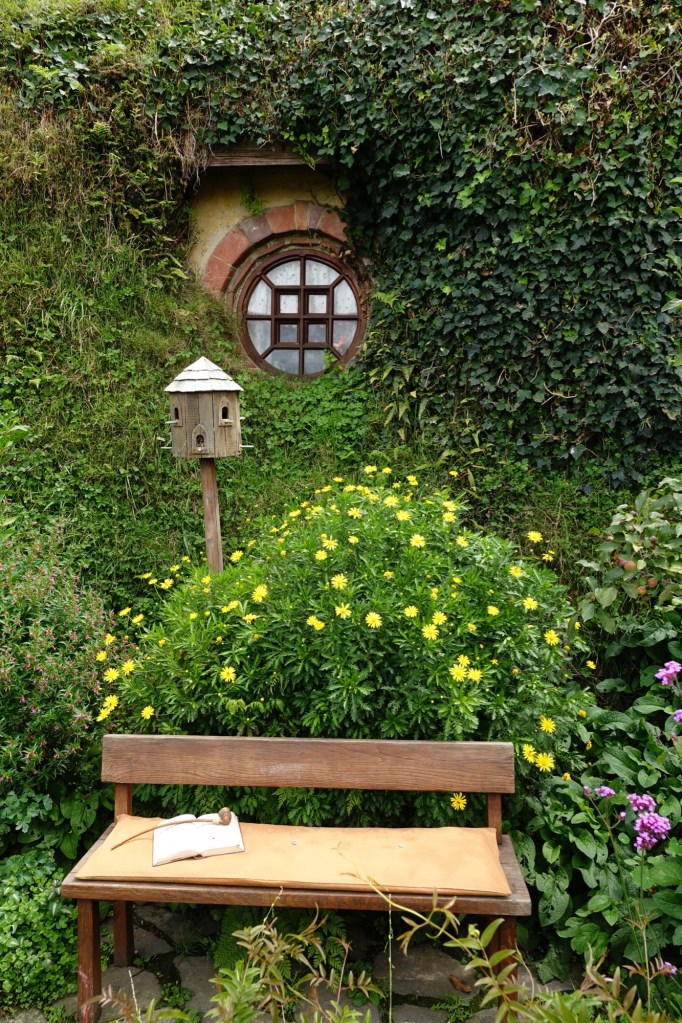
In front of Bag End, evidence that Bilbo was recently here.
Naturally, we could not enter, since we weren’t on party business.
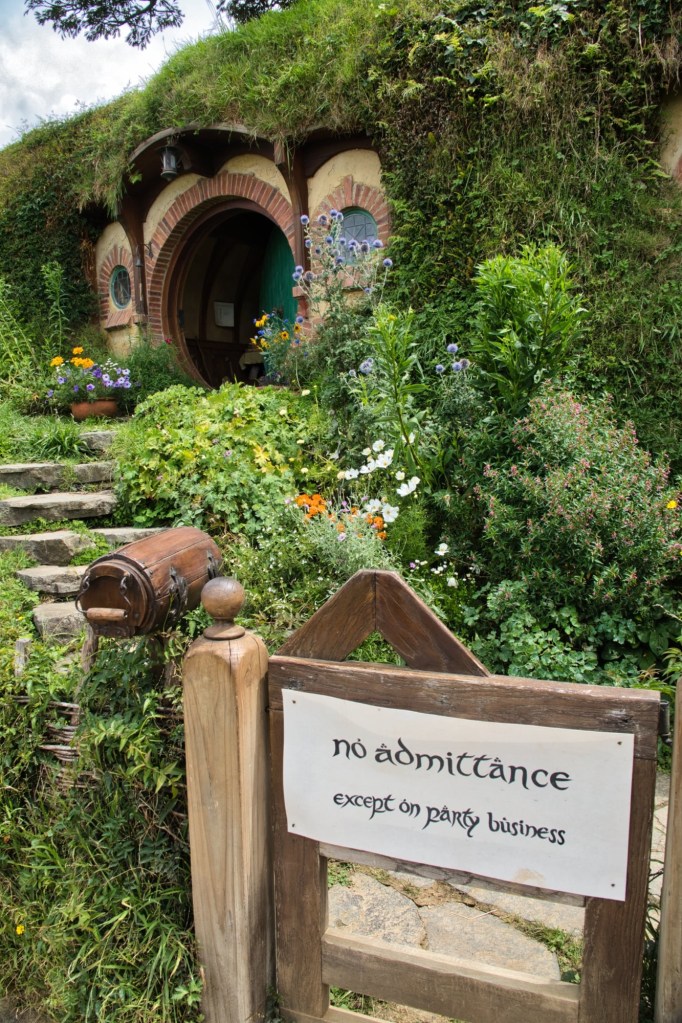
We peeked as best we could.
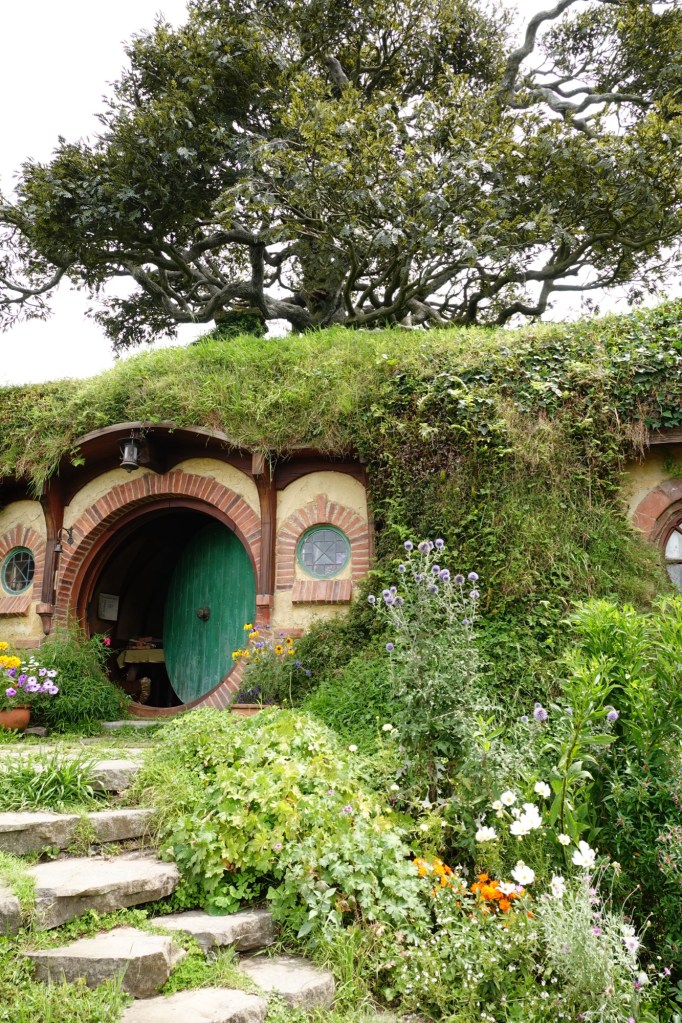
The Hobbit hole that we were allowed to enter and explore was definitely the highlight of the tour. Not only were we allowed to take photos, but we were encouraged to touch everything! For a LOTR geek like me, it was heaven, and I couldn’t stop grinning.
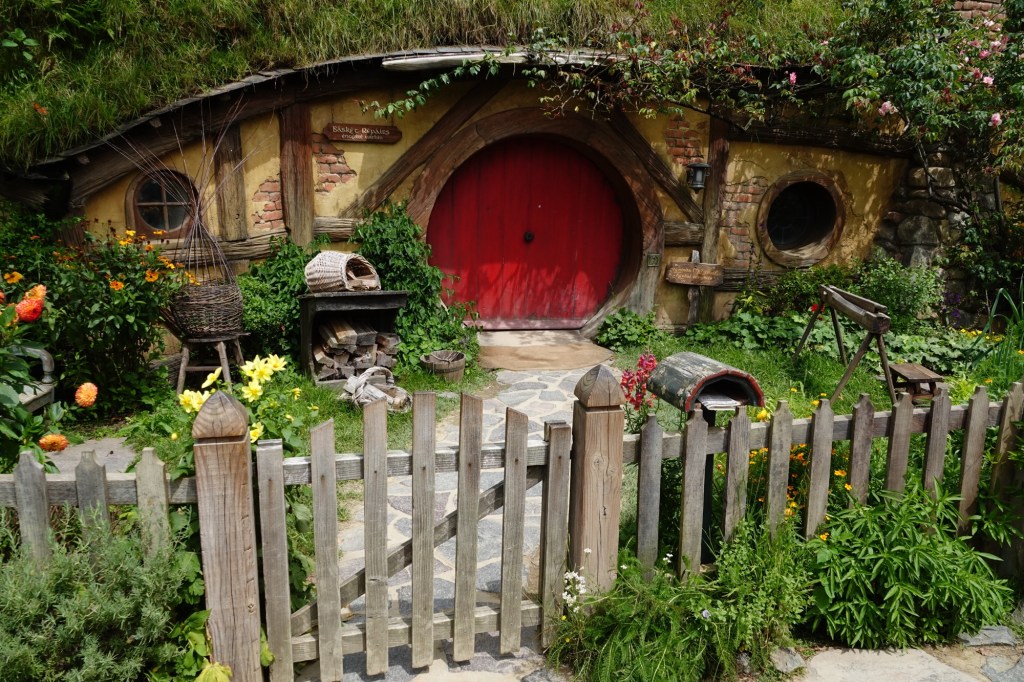
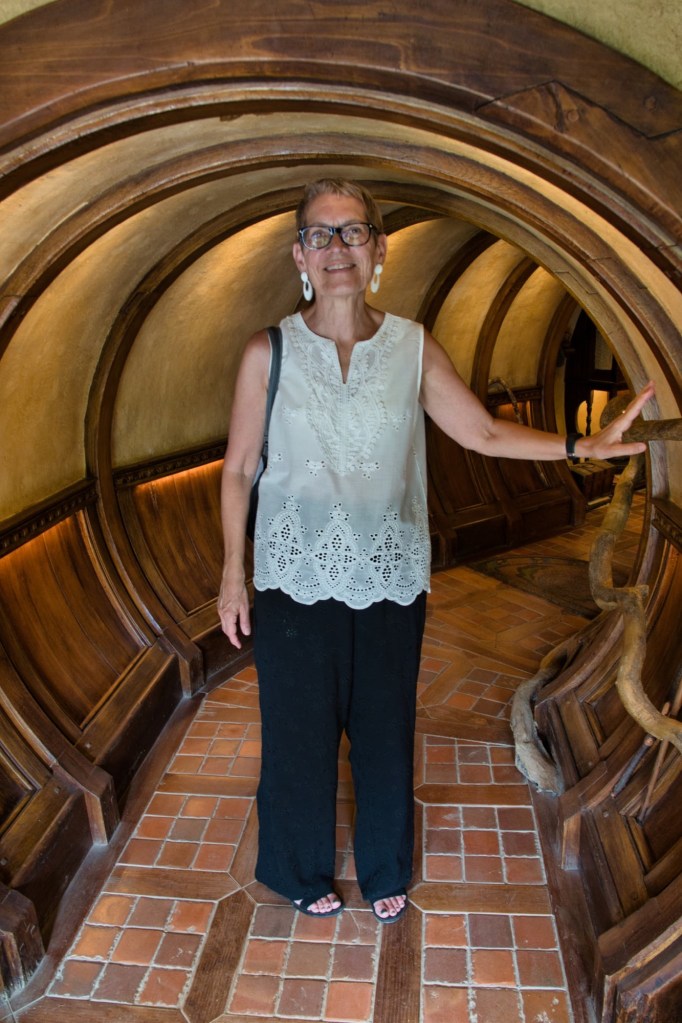
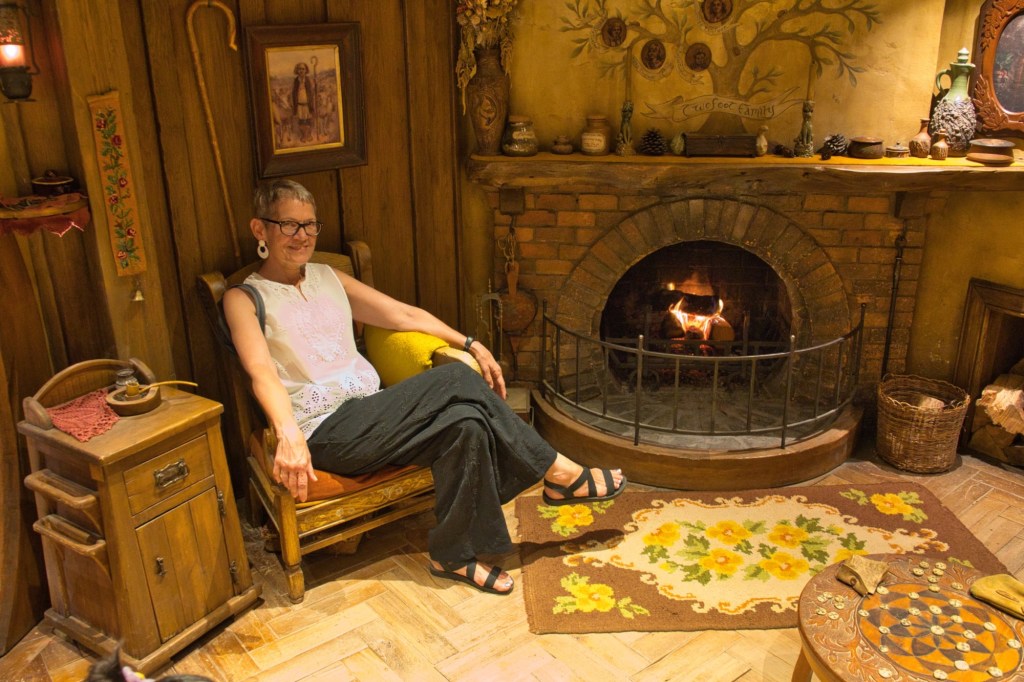
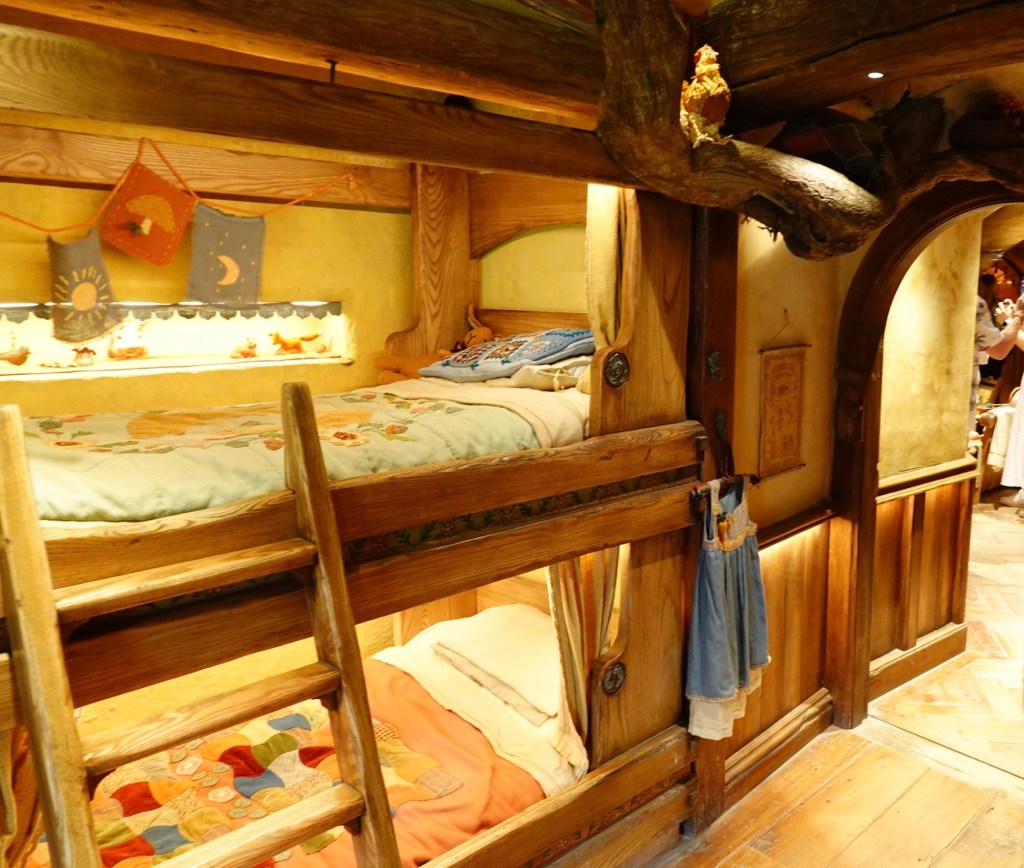
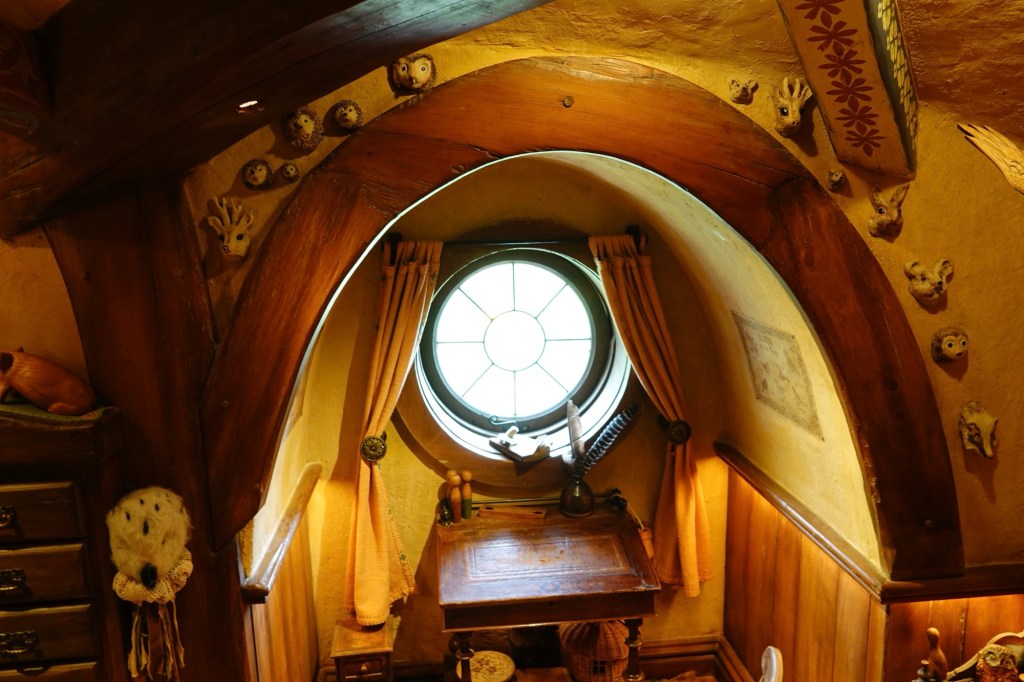
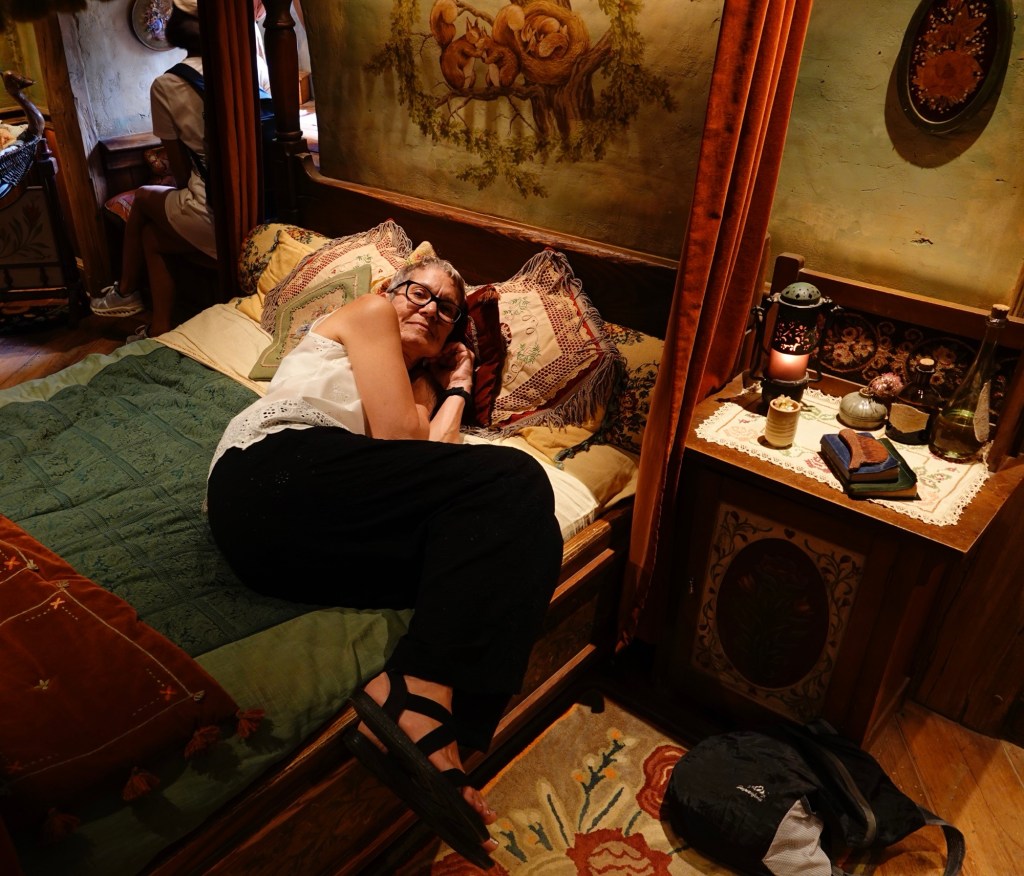
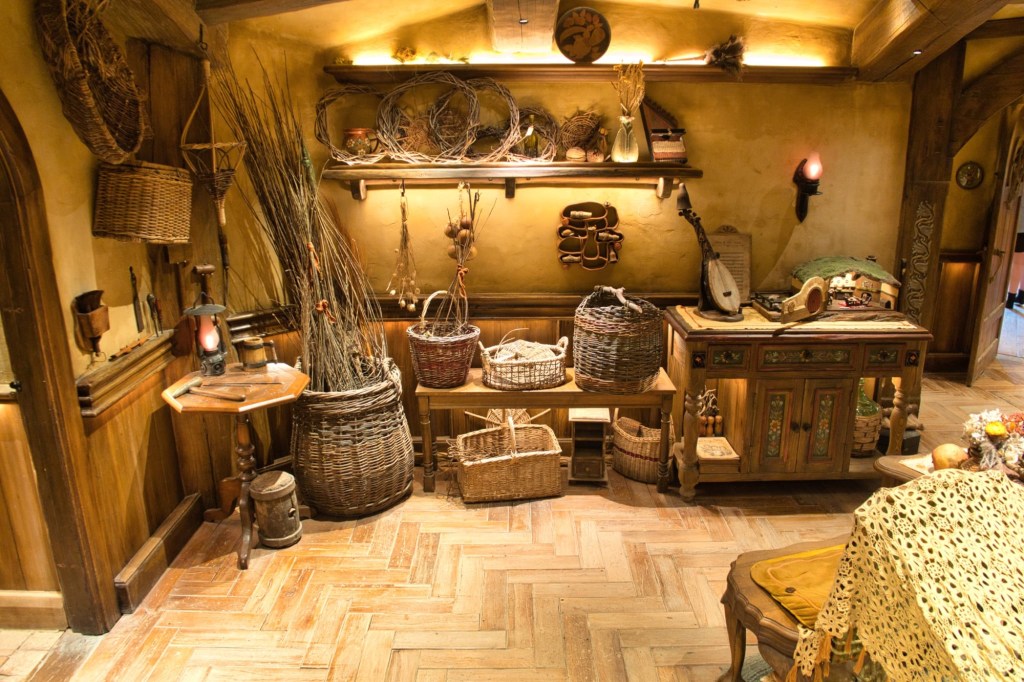
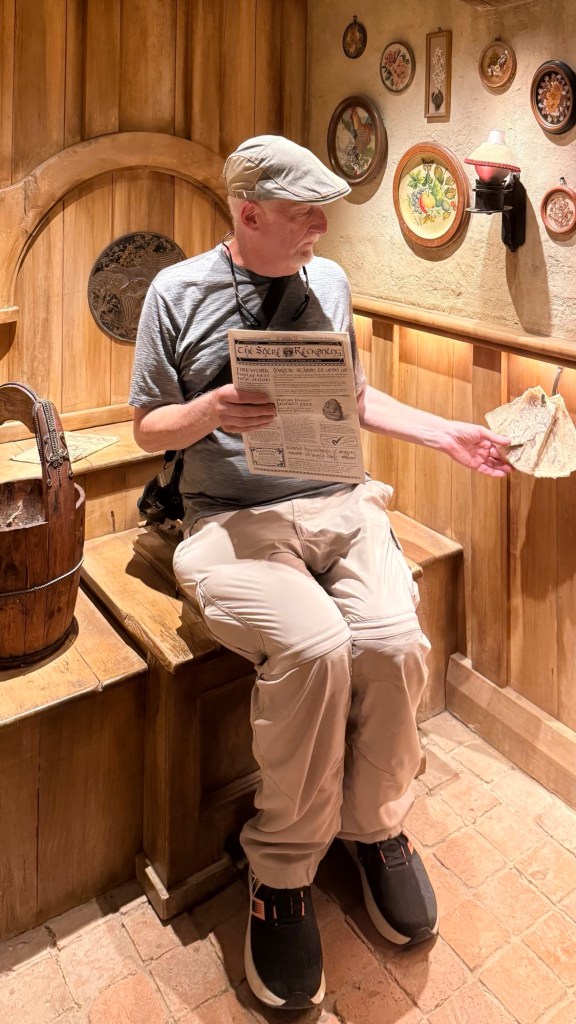
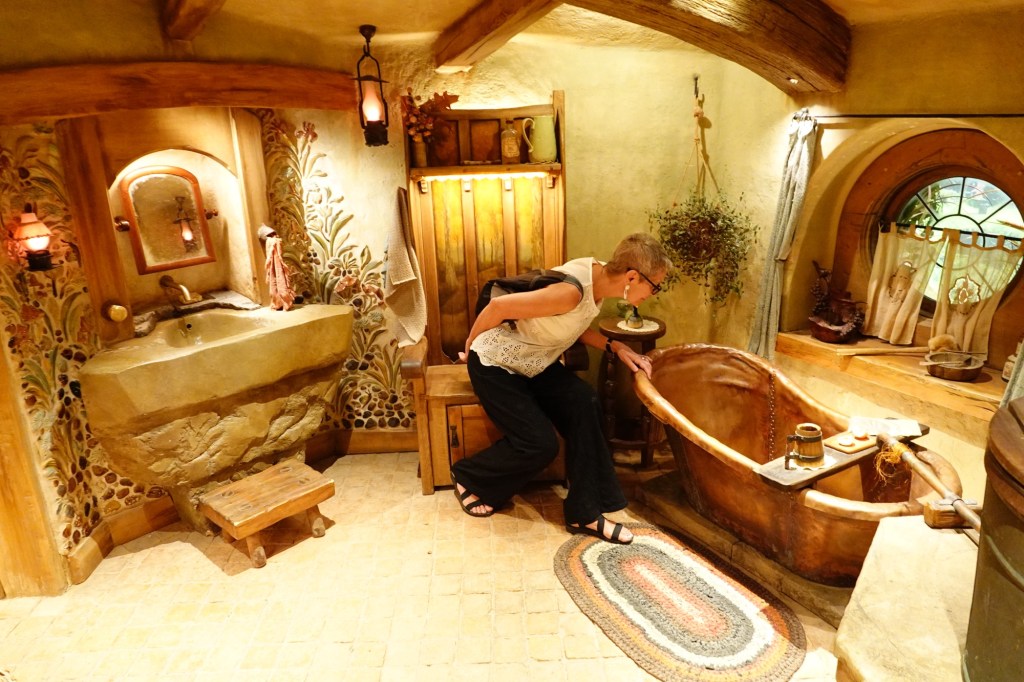
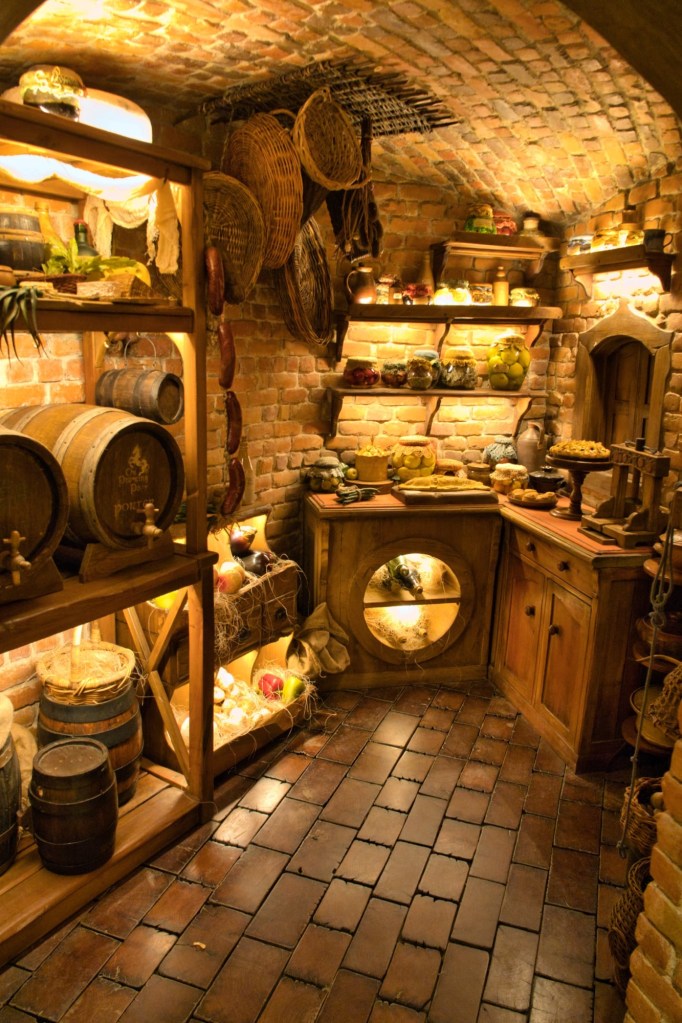
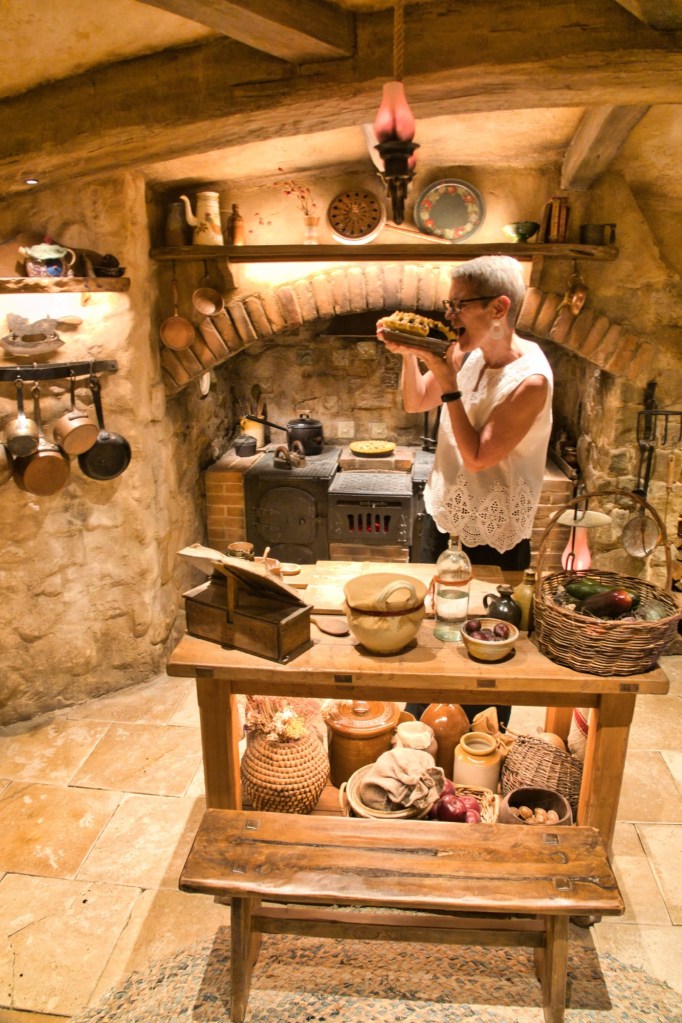
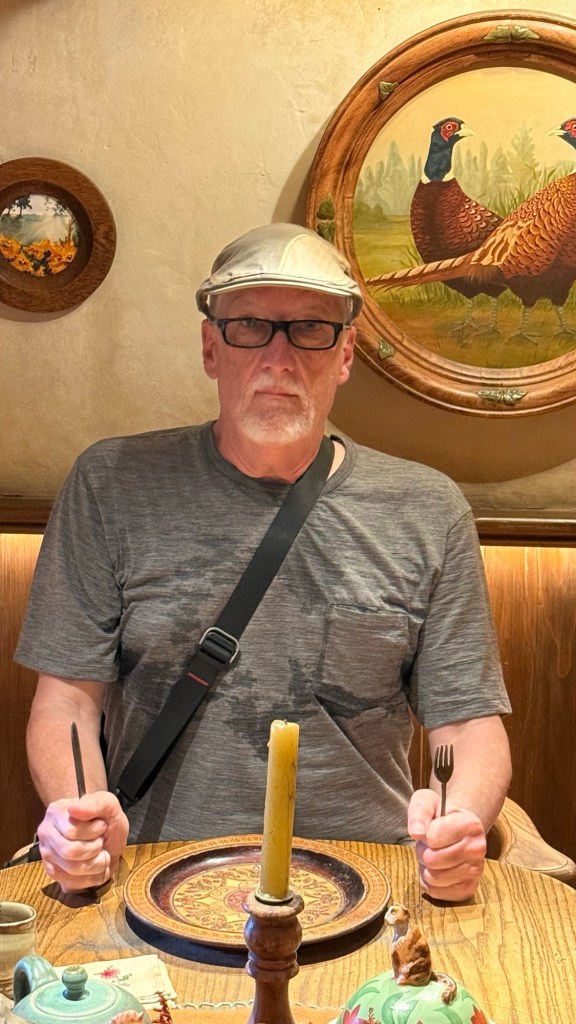
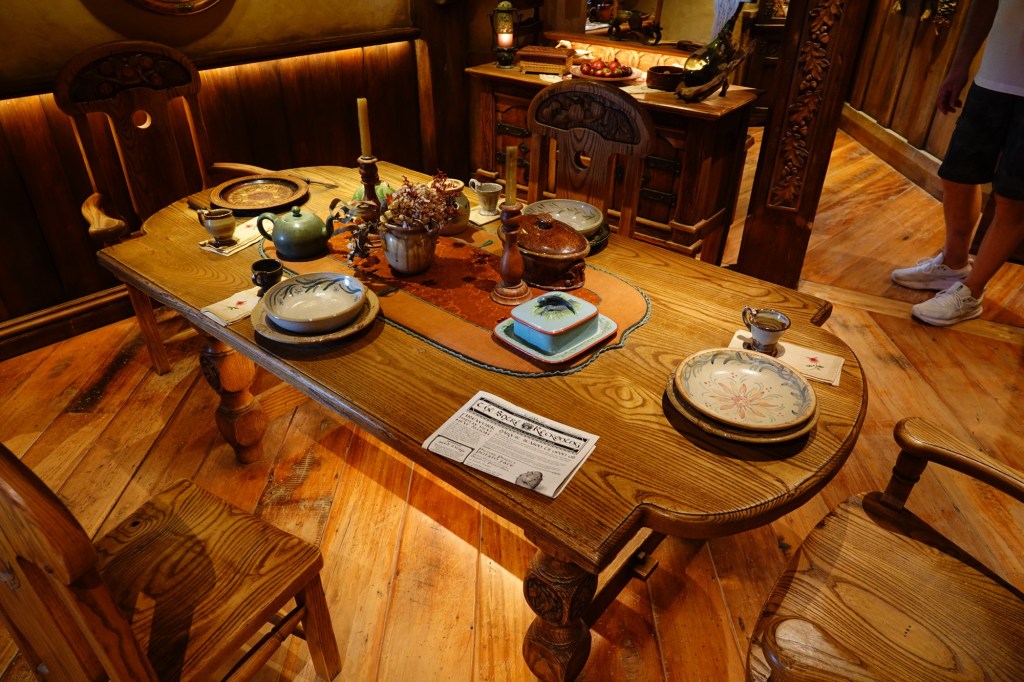
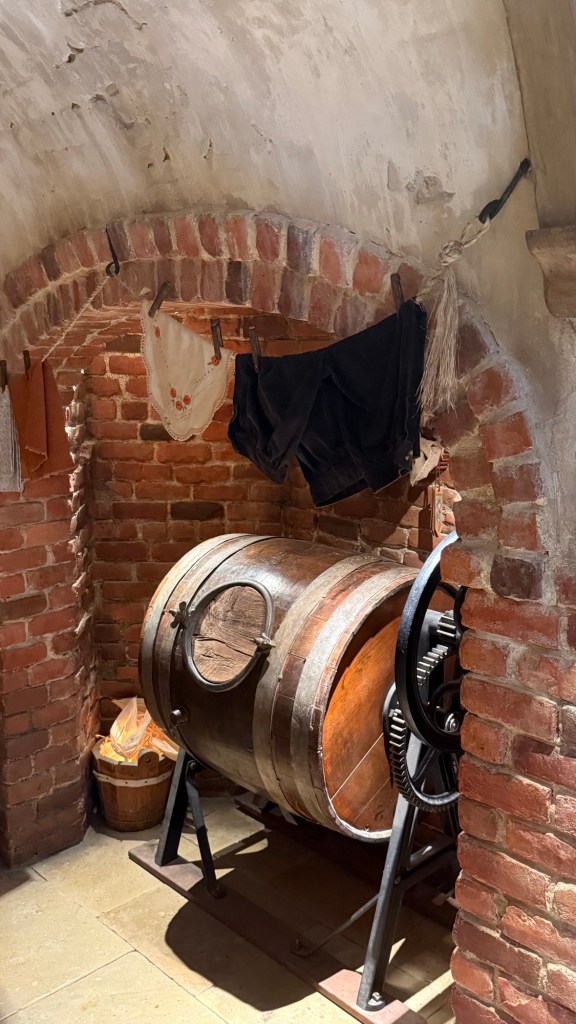
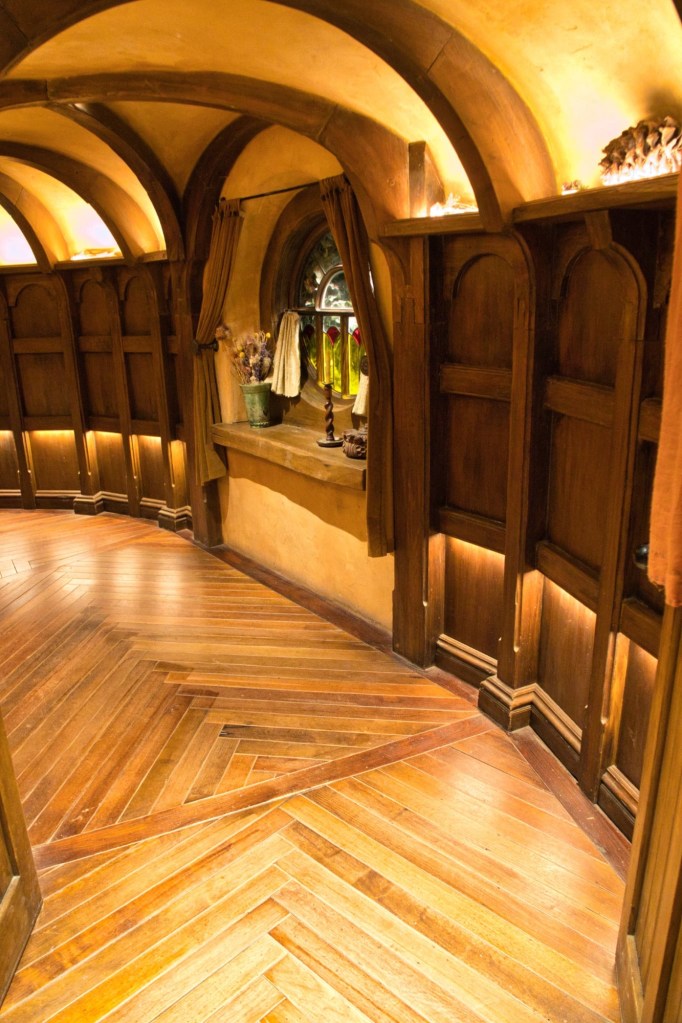
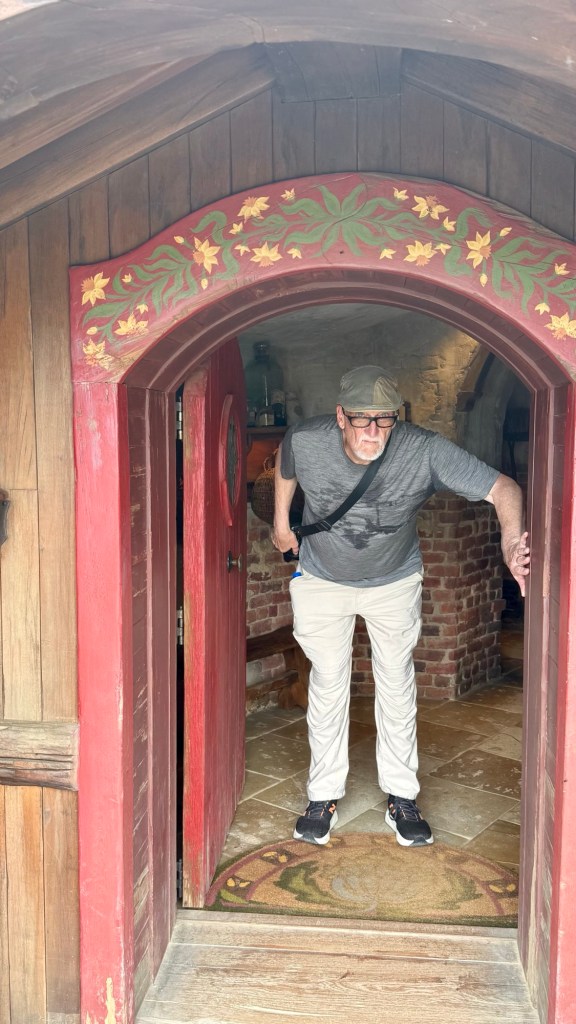
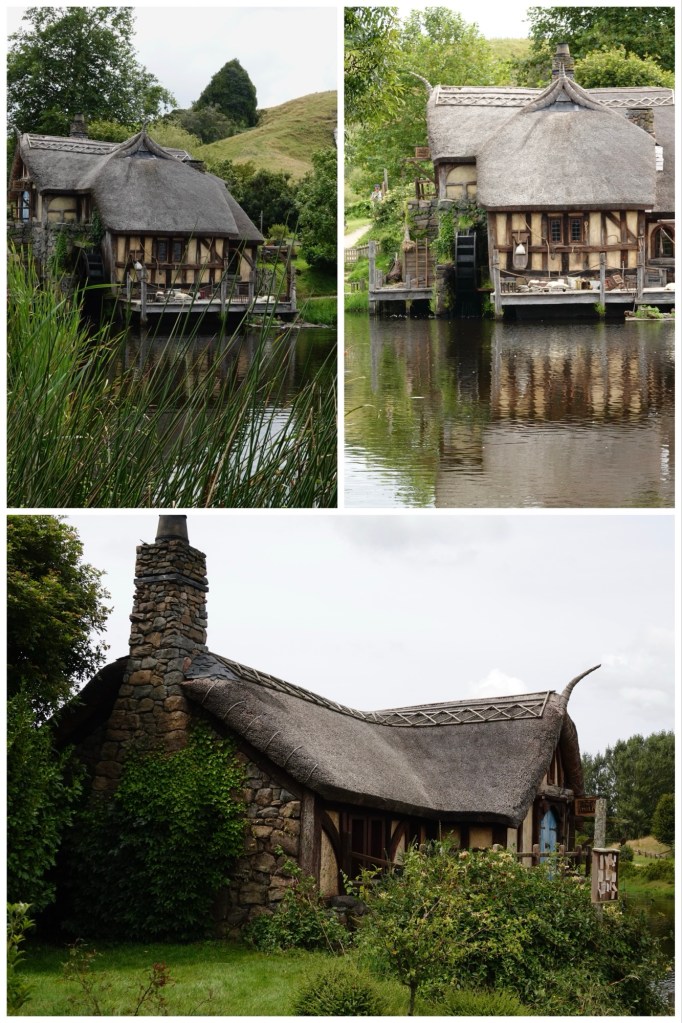
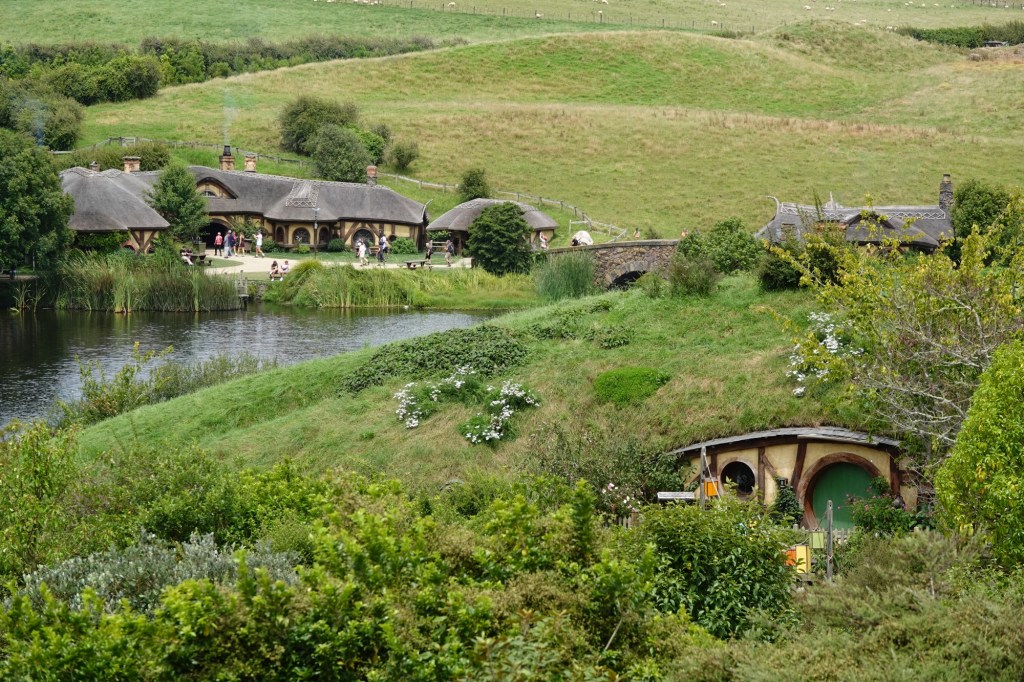
In addition to the Hobbit holes, the rolling hills are home to Hobbit gardens, a lake, and the Shire’s Millhouse and bridge.
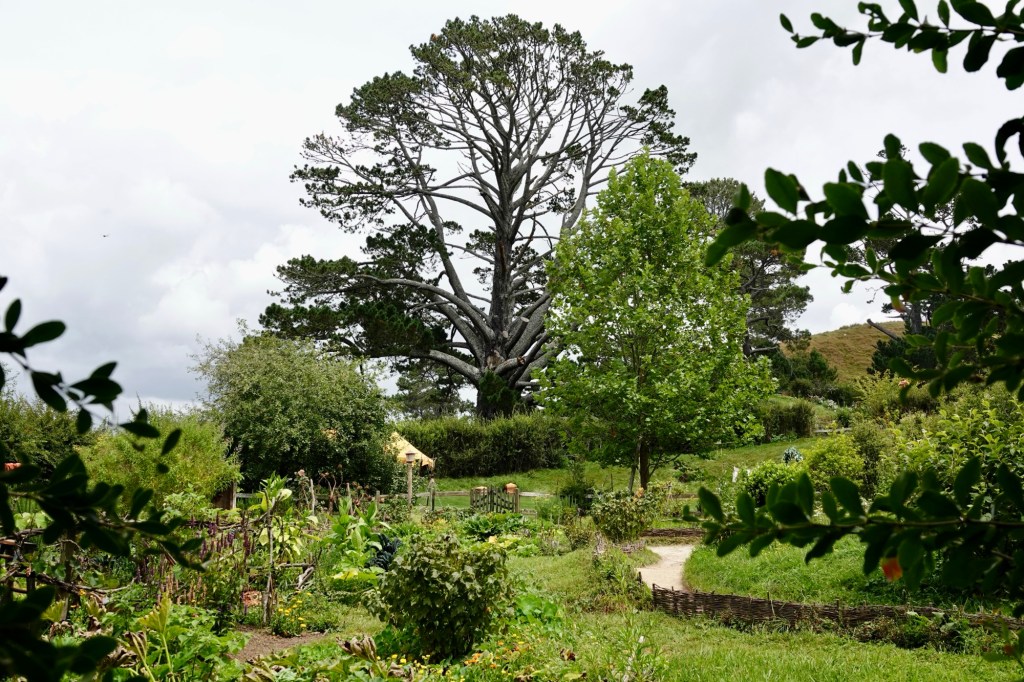
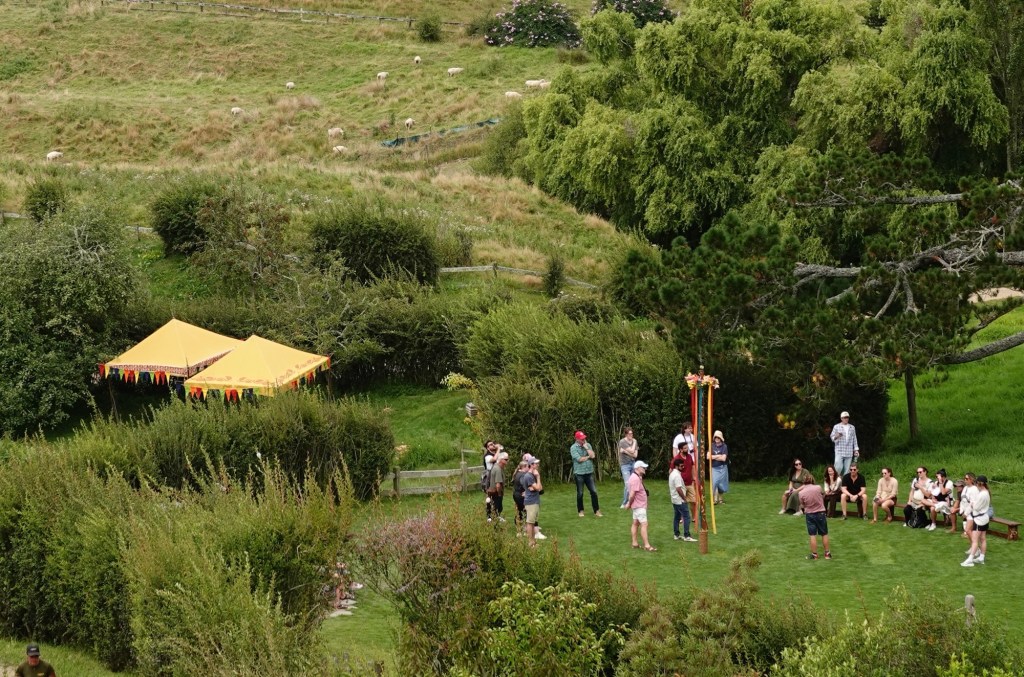
We got a chance to listen to stories while standing on the green under the “party tree”. If the landowner’s plans had come through, this huge tree would have been cut down in order to create undisturbed grazing land. Instead, because the contractor didn’t arrive to do the job, Peter Jackson saw it standing beside a perfect pool of water and knew that this piece of land was The Shire.
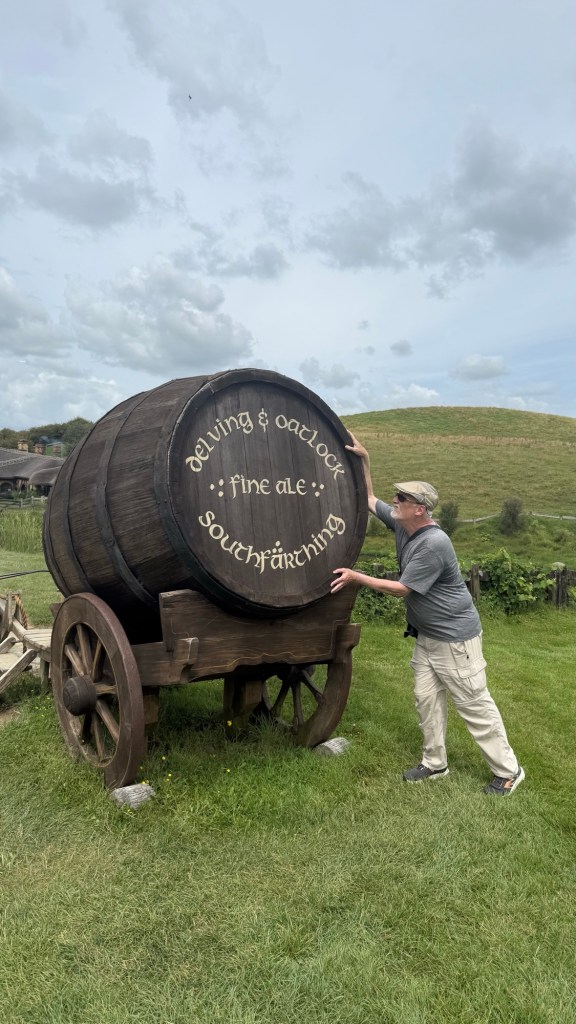
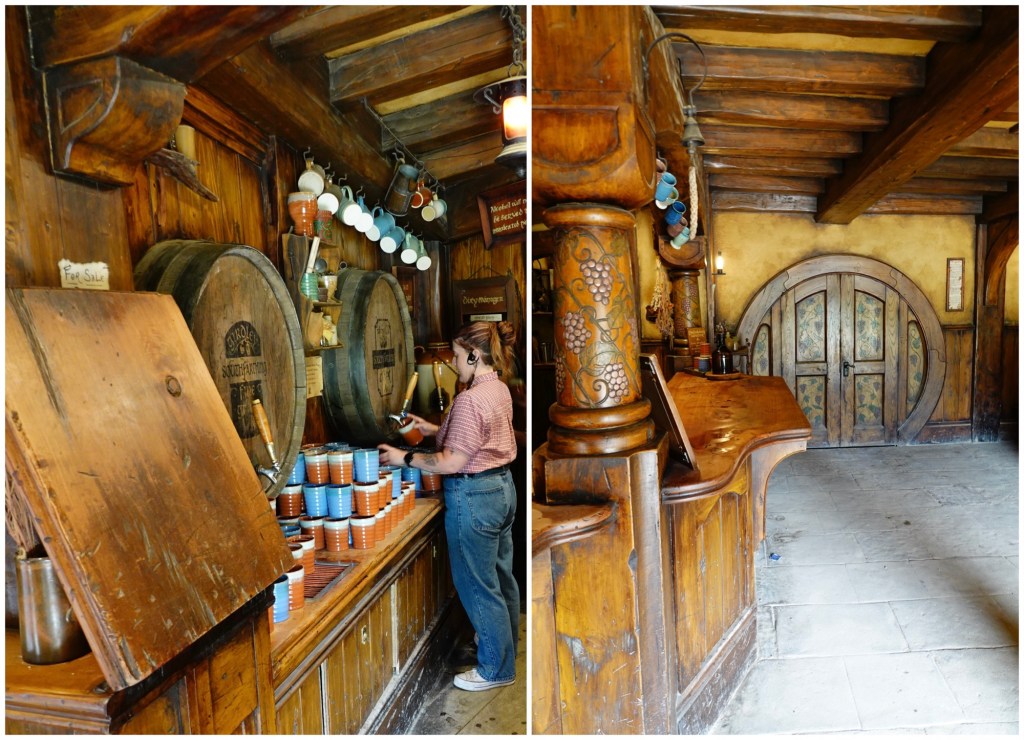
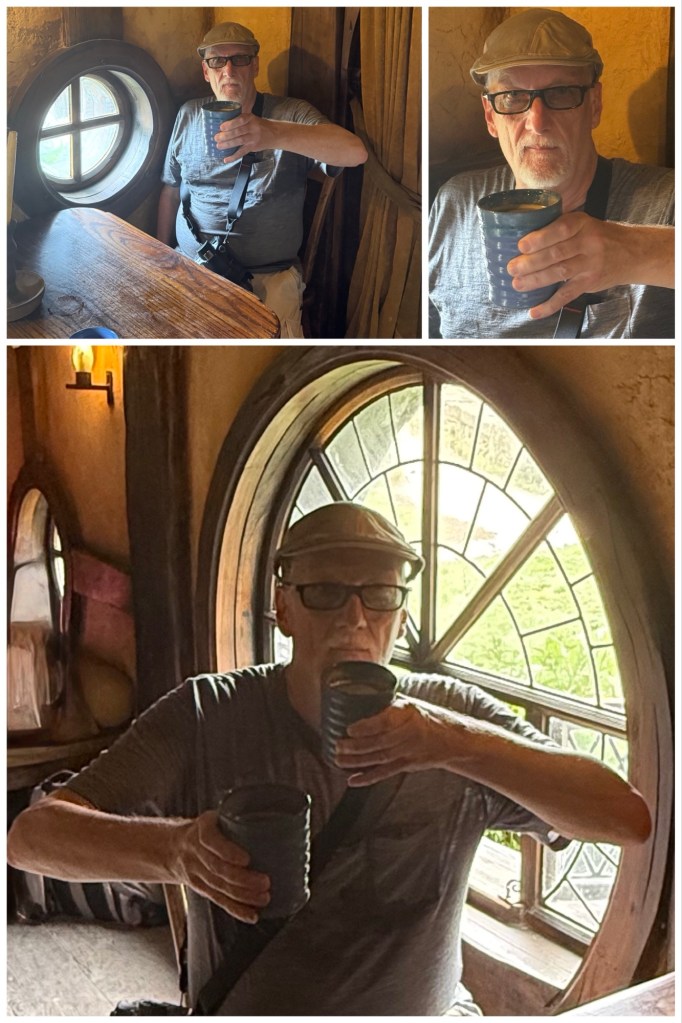
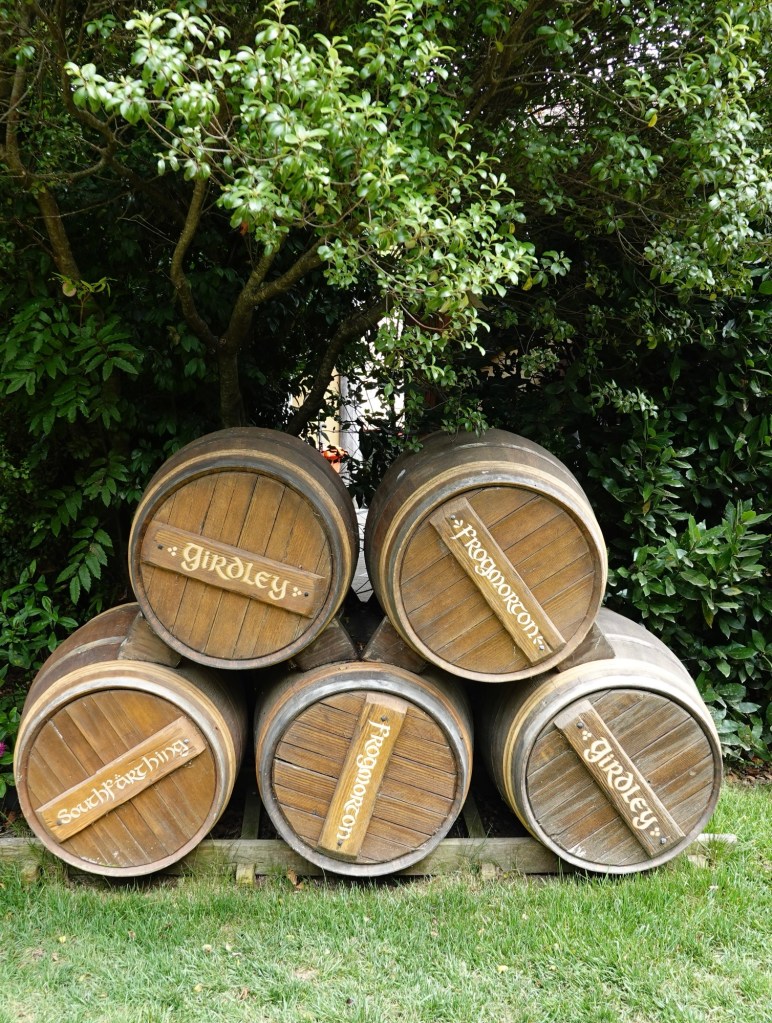
Of course, there’s also The Green Dragon Inn, where the Hobbits famously eat, drink, and party. Ted tried to get things started by pushing the ale cart down the hill toward the inn.
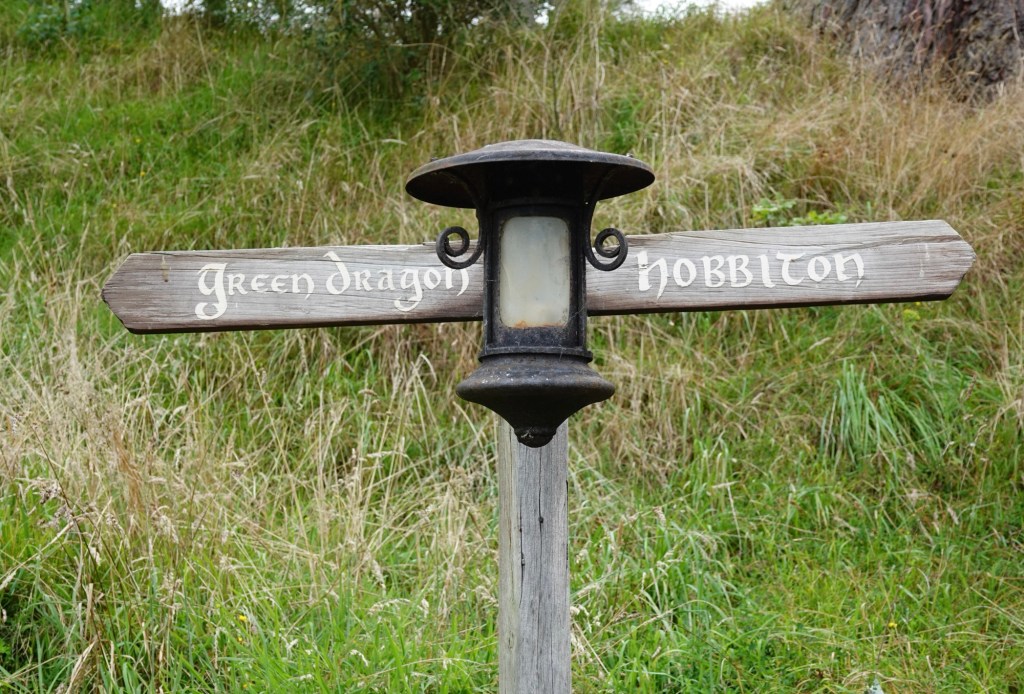
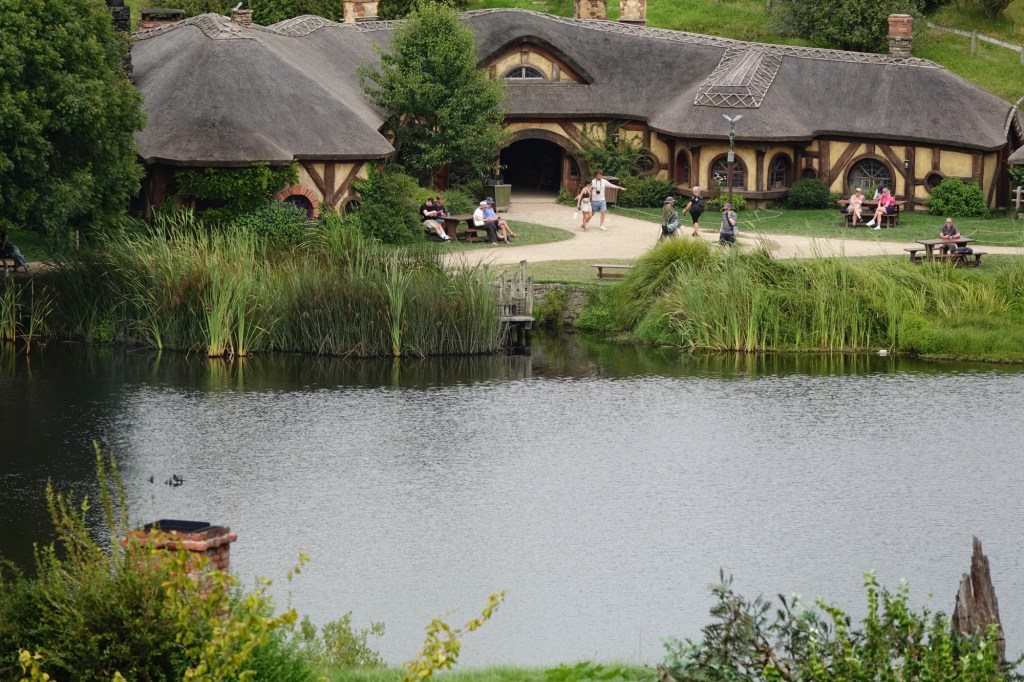
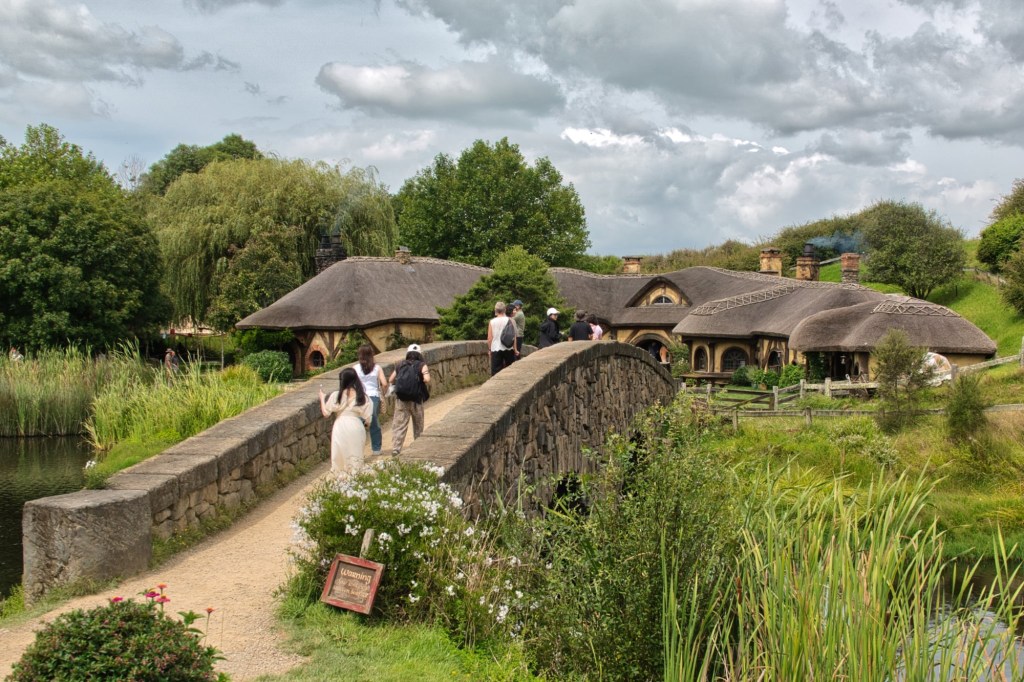
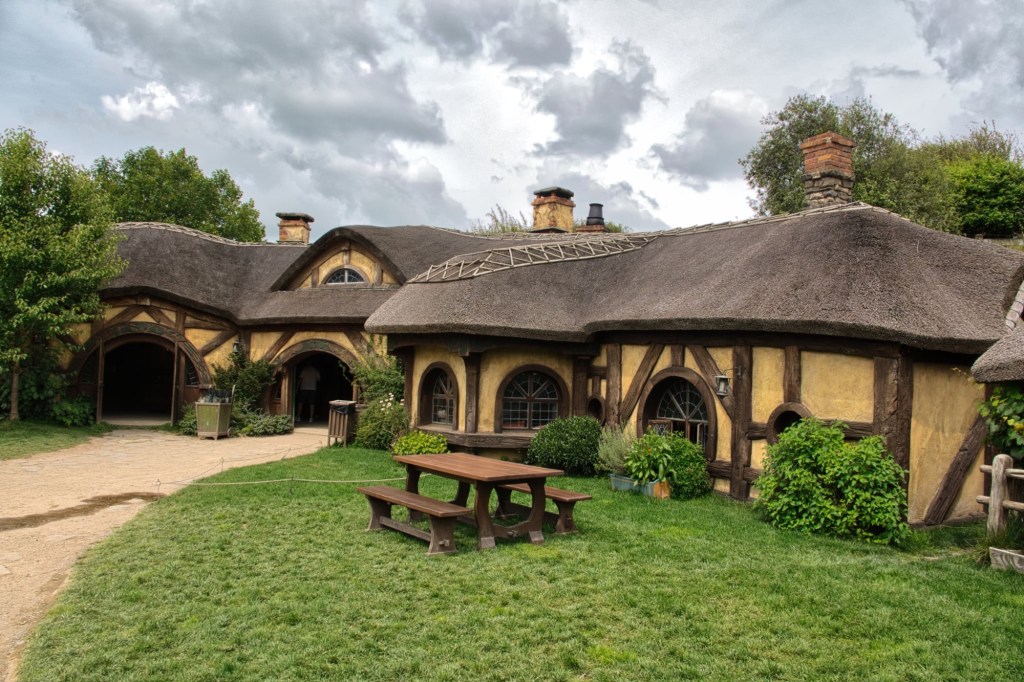
We were treated to a cup or two of cold ale, which was very refreshing on a hot day, but sadly no one offered or even hinted at second breakfast, elevenses, luncheon, afternoon tea, dinner, or supper.
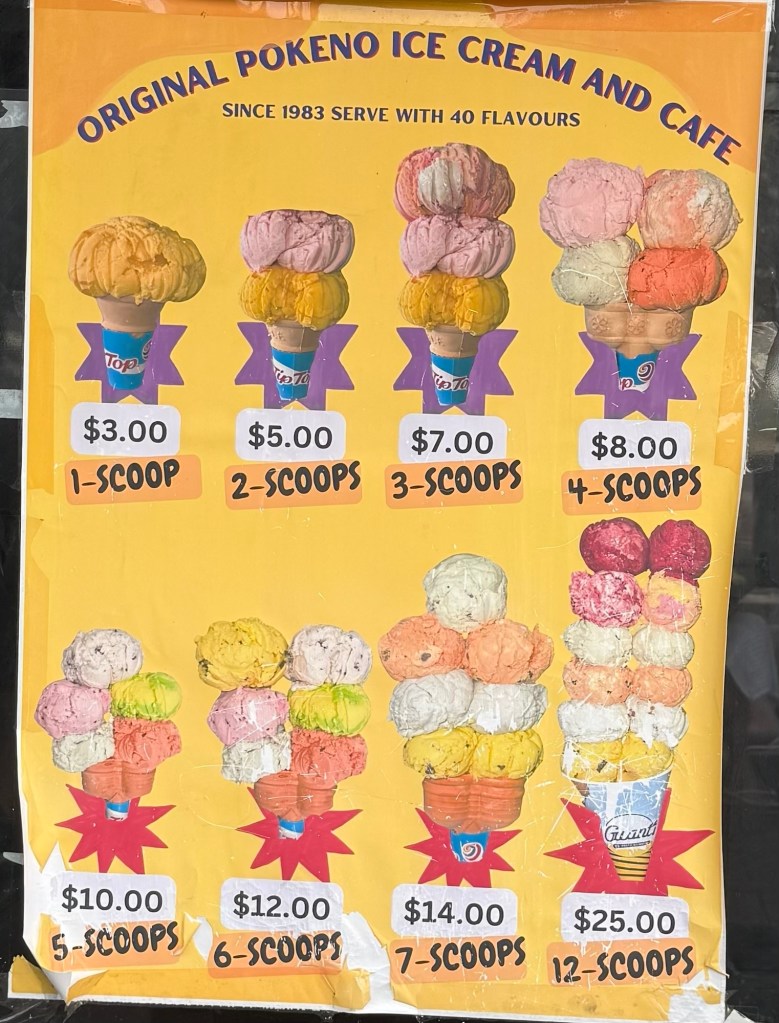
Fortunately, on the way back to Auckland there was an ice cream stop.
What a day! The Tolkien fan in me is pretty happy, and even Ted (who has shockingly never read the books, but has watched the movies more than once) had fun.
 Rose and Ted’s Excellent Adventure
So I’m way behind in reading your blog, but this has to be one of my favorite entries. From the descriptions of your childhood – especially Britannica Encyclopeadia (we could only afford World Book, which I often snuck to bed under my pillow for late night reading) – to your introduction to LOTR and its impact on you which continues today! Your description (especially the Andersons’ entrepreneurial spirit) and Ted’s pictures from Hobbiton rival any others I’ve previously seen.
I’m looking forward to catching up soon on your DIY RTW adventure!
LikeLiked by 1 person
Thank you!!!
LikeLike
As a fellow LOTR book (and movie) geek, I thoroughly enjoyed this post on Hobbiton. What an amazing and fun day! I still have my paperback copies of the trilogy, and they are the same as your photo of the 1965 version! What fantastic covers on each book, they introduced me to a whole new world.
LikeLiked by 1 person
Rose, I really appreciate learning more about you, your family and how you grew up.
I was sad to miss an expedition to Hobbiton when we didn’t have enough time on the 24-25 world cruise due to a port change. Hobbito is much larger than I thought. Bruce and I will definitely have to return to New Zealand.
I wonder if anyone ever orders a 12-scoop cone, and if so, how they manage to eat it without it falling to the ground.
LikeLiked by 1 person
Well, we did see one very fit looking young Māori man order a 5 scoop! (I can’t imagine 12…. It would start melting by the time they finished scooping it!)
LikeLike
We loved Hobbiton as well! It’s been great reliving our New Zealand memories through your blog and pictures! (And I didn’t know you grew up in Burlington, as we did!)
Get Outlook for iOShttps://aka.ms/o0ukef ________________________________
LikeLiked by 1 person
Those coincidences are fun, aren’t they? Are you also Nelson alum? I was the class of 74.
LikeLike
Class of ‘71
MM Robinson
Burlington was so small at that time that we probably know people in common
‘Six degrees of separation’ lol
Get Outlook for iOShttps://aka.ms/o0ukef
LikeLiked by 1 person
Oh, Rose, what a magical day! I have not read or seen any (as you, of course, know!), but I would surely have enjoyed that day. And, year by year, I’m getting closer/shorter to being able to fit into even the smallest Hobbit hole!
The background story was beautifully done, Rose. A testament to pride of family and importance of education regardless of circumstance. You are, in part, because of who your elders were, and I know you are always grateful for how your life was shaped by them.
Such a fun read – and what a lovely place to visit. The Andersen family had a vision…. Happy yesterday, my friend! Barbie
LikeLiked by 1 person