Ah, the option just to do not much of anything.
We have 9 days in Auckland, with our only formal plan being a tour to Hobbiton half way through our stay. Otherwise, it’s aimless strolls through parks and along thoroughfares, lunches out, window shopping, and potentially a couple of museums.
DAY ONE
After sleeping in (the neighbourhood isn’t actually particularly loud at night) and a couple of cups of coffee, we decided that since we had nothing stocked yet in the way of breakfast food, we’d go out. By the time I was done dealing with an unexpected flight change (more about that in a few days), it was after noon and I was starting to feel shaky. Low blood sugar maybe, since my system is used to constant feeding. A quick bit of research using our favourite AI tool found us half a dozen mid-priced well-reviewed eateries within walking distance.
It’s been ages since we’ve had a burger, so…
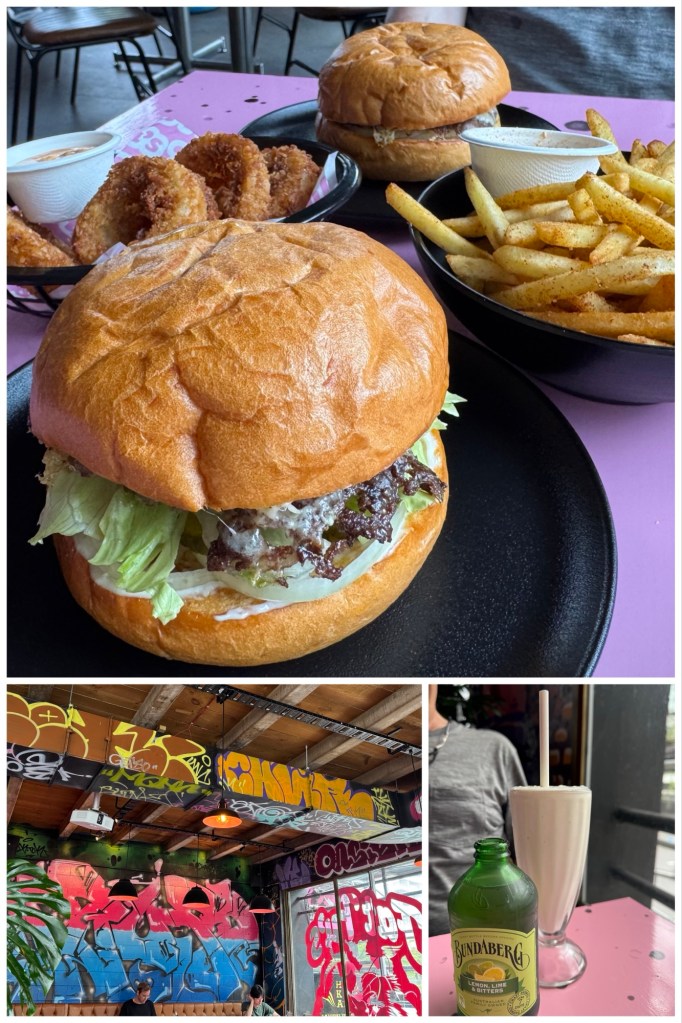
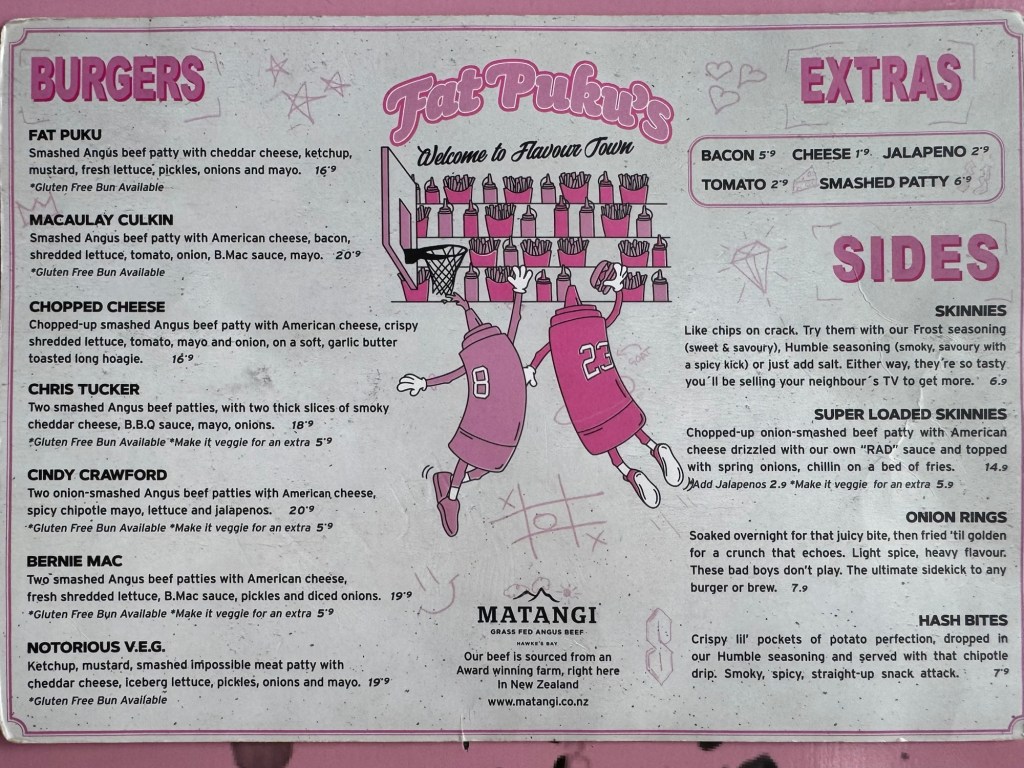
Suitably fed, we took a short walk to a small grocer where we grabbed breakfast foods and a couple of meat pies for a late dinner (we’ve seen and eaten more meat pies here in New Zealand than anywhere we’ve ever been).
I got sidetracked by an Op Shop (what charity shops are called in New Zealand and Australia) and picked up a cute Italian-made red sundress for $18NZD/15.69CAD/$11.50USD. It’s a silky fabric that folds up into the suitcase space equivalent of a scarf, and it is in fact a scarf I’ll be leaving behind to make the required space.
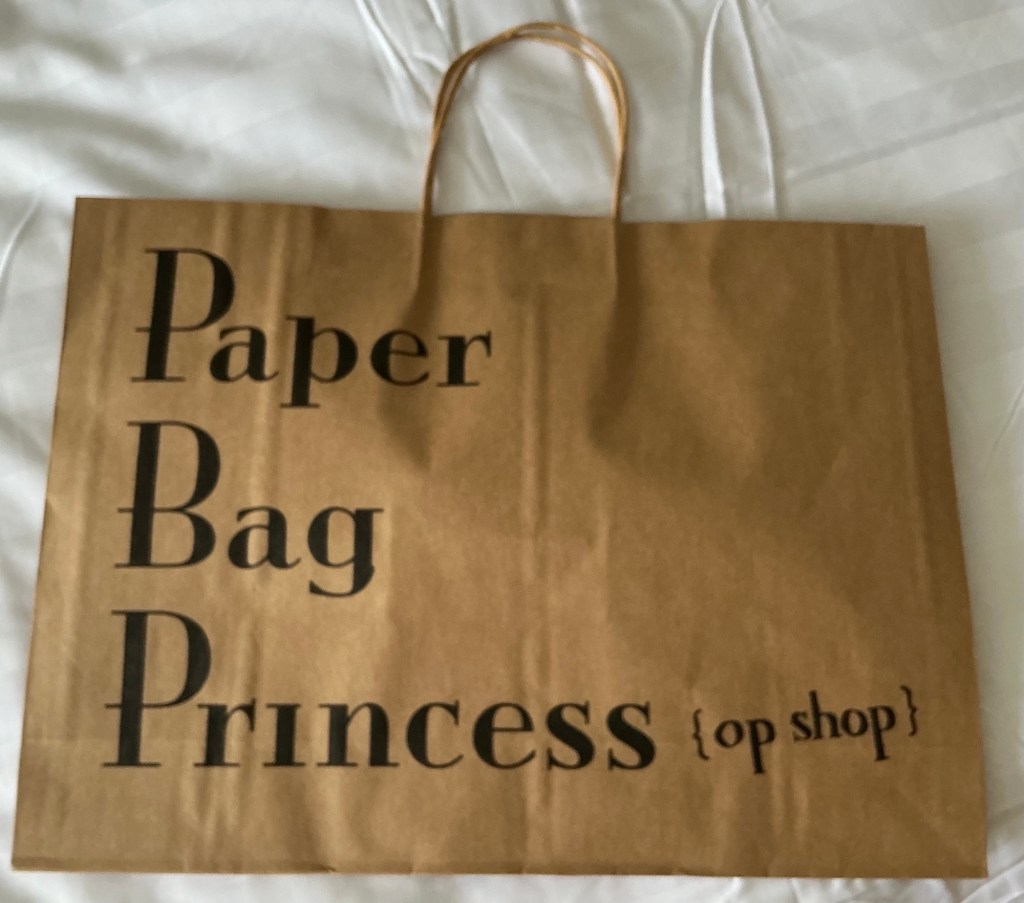
Exhausted from the effort of resisting all the other bargains, I spent the rest of the afternoon in a comfy chair, with the balcony doors open to allow in the sunshine and breeze, reading Lisa Wingate’s novel Before We Were Yours.
DAY TWO
Slept in.
Lovely.
Completely unplanned, we’re here for Waitangi Day weekend.
Like all treaties between the British and people who had no written language or understanding of the nuances of English law, the Treaty (the link leads to Wikipedia) has been hotly debated since its original signing, but from what we’ve seen during our time here New Zealand is much further along the path of shared understanding than most other countries.
Unlike statutory holidays in Canada, there is no expectation here that businesses close. Even though Waitangi Day is not a “restricted‑trading” day like Good Friday, Easter Sunday, Christmas Day, or the morning of ANZAC Day, it is a “public holiday”, which means that staff who work that day must be paid time‑and‑a‑half, and they must receive an alternative holiday (a day in lieu) if it’s a day they normally work.
Interestingly, because of those higher wage costs, restaurants, cafés, and bars are legally allowed to add a public‑holiday surcharge, typically 10–15%, which has to be clearly disclosed on the menu, at the counter, or verbally before ordering. Other retailers don’t get to add a surcharge. When I looked into the “why”, what I found out was that:
Because retail pricing is governed by normal consumer law, prices must be clearly displayed, but there’s no mechanism or tradition for adding a temporary surcharge to offset wage costs. They simply absorb the higher labour cost into their normal operating model. Hospitality (cafés, restaurants, bars) can add a surcharge because their pricing is per‑transaction and flexible. The law only requires that surcharges be clearly disclosed, and it’s an accepted industry practice to offset time‑and‑a‑half wage. (Paraphrased from source: Consumer .org.nz)
Lots of restaurants simply choose to close and give their staff a day off, so instead of our relatively new routine of our heavier main meal at noon and a light dinner in our studio apartment, today we had lunch alfresco at the art gallery’s café overlooking Albert Park, before spending the afternoon in the park itself.
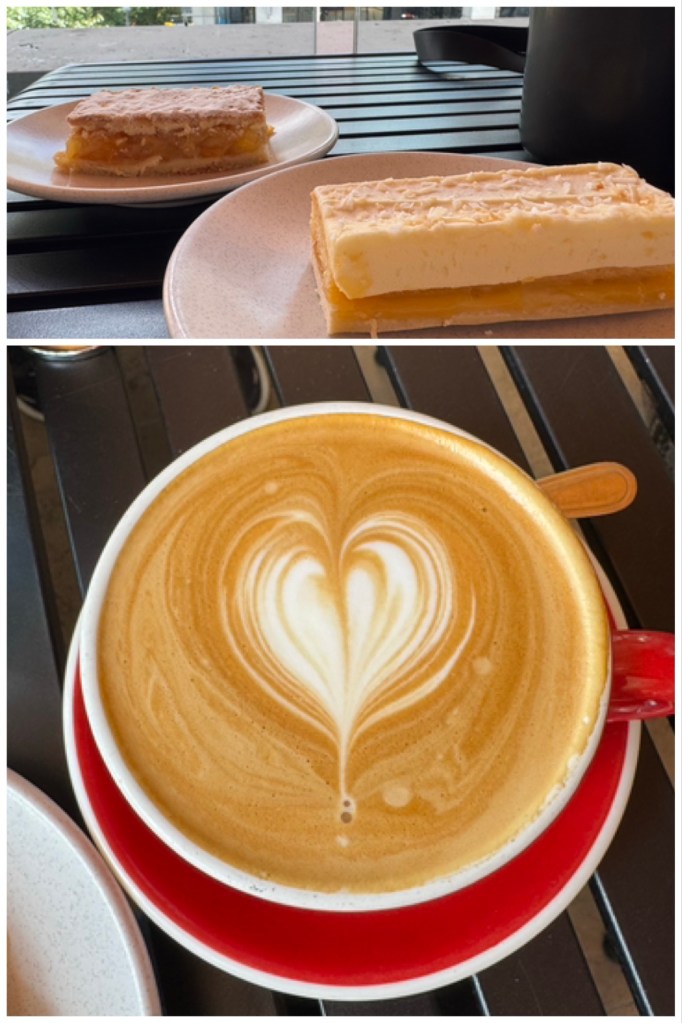
It wasn’t quite like the George Seurat painting that inspired the Sondheim/Lapine musical – and it was Friday instead of Sunday afternoon – but it was still lovely.
Think “Friday Afternoon in the Park with Ted”.
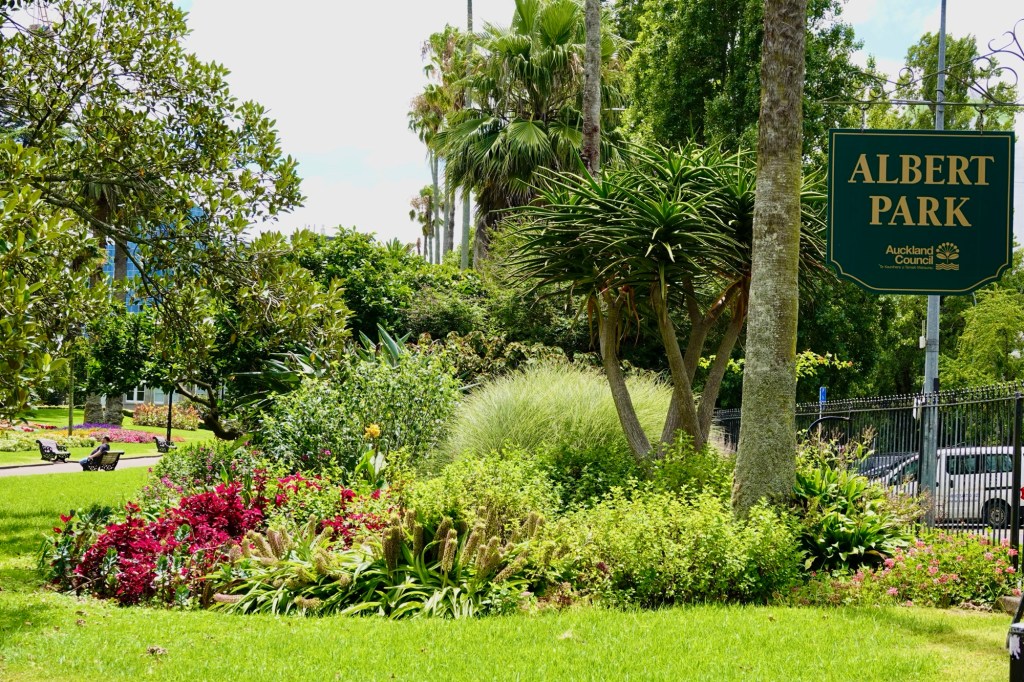
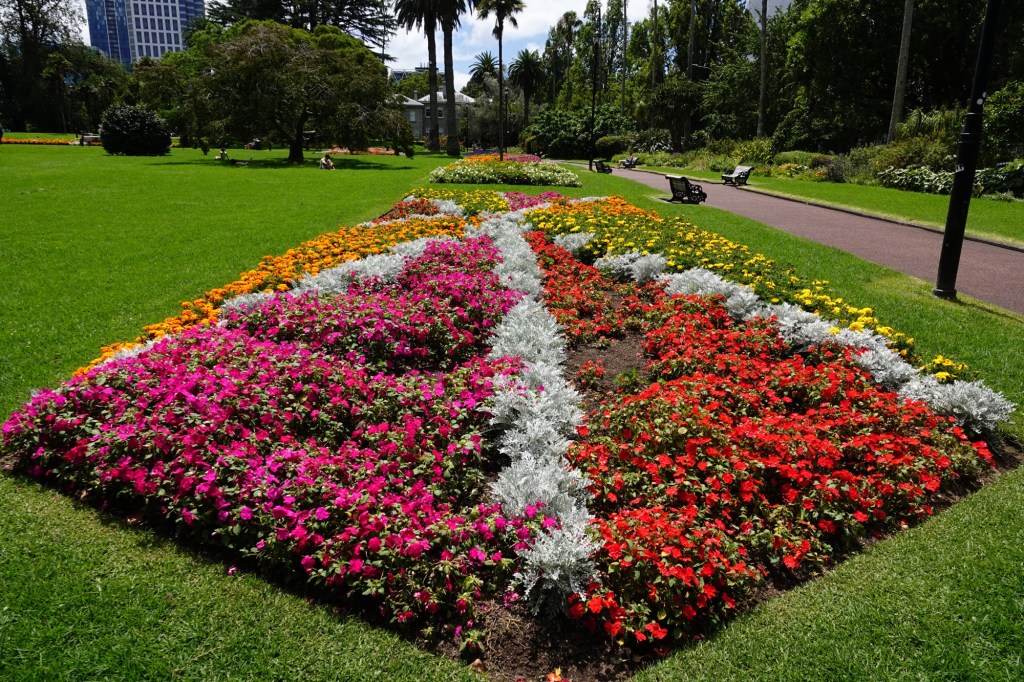
Albert Park, just a couple of short blocks from the intersection of Victoria and Albert Streets, is an oasis of green lawns, huge trees, flowerbeds, statues, and a fountain, all right in the middle of the city.
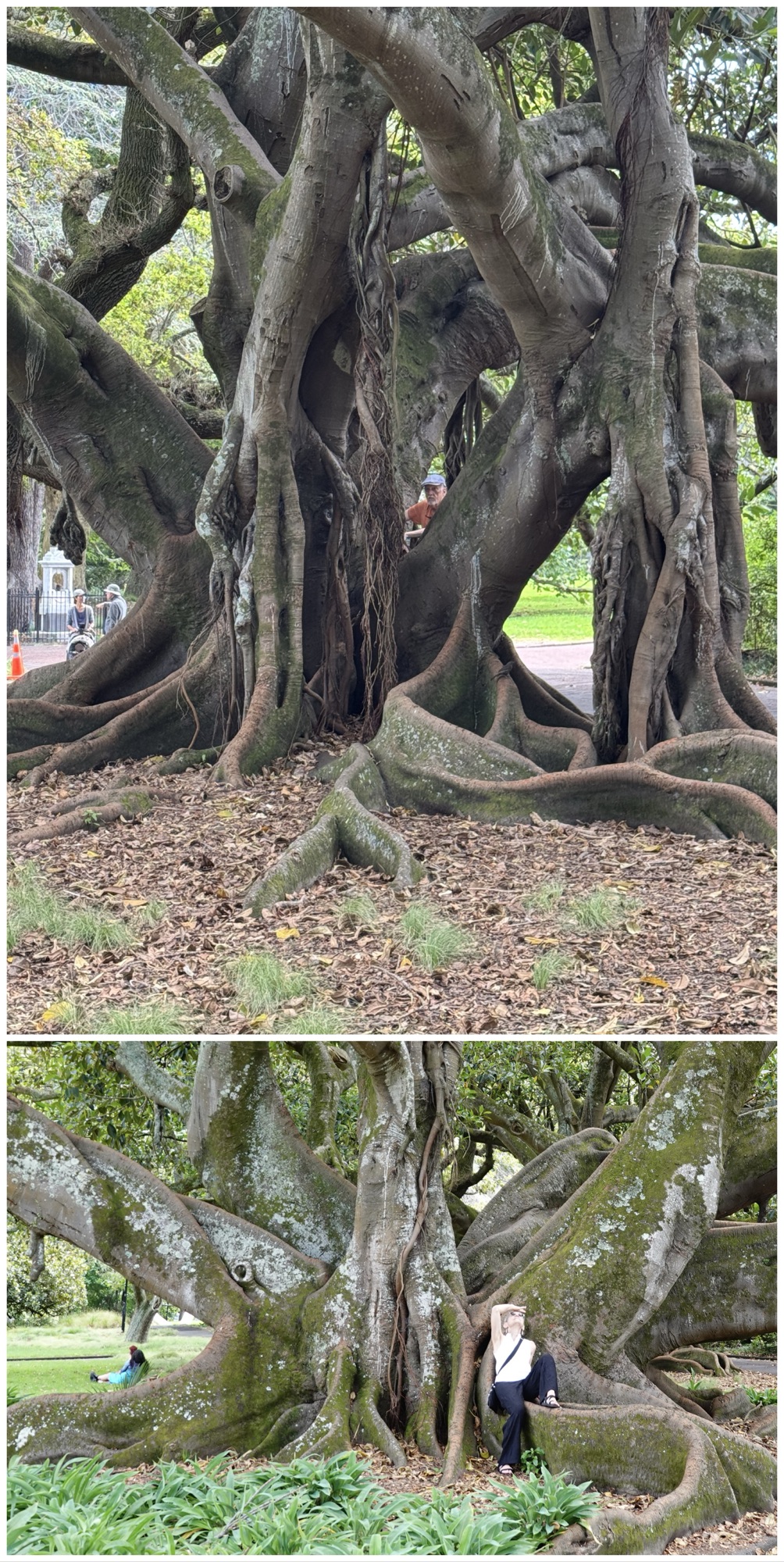
Playing hide and seek with Ted in the giant London plane trees was clearly exhausting.
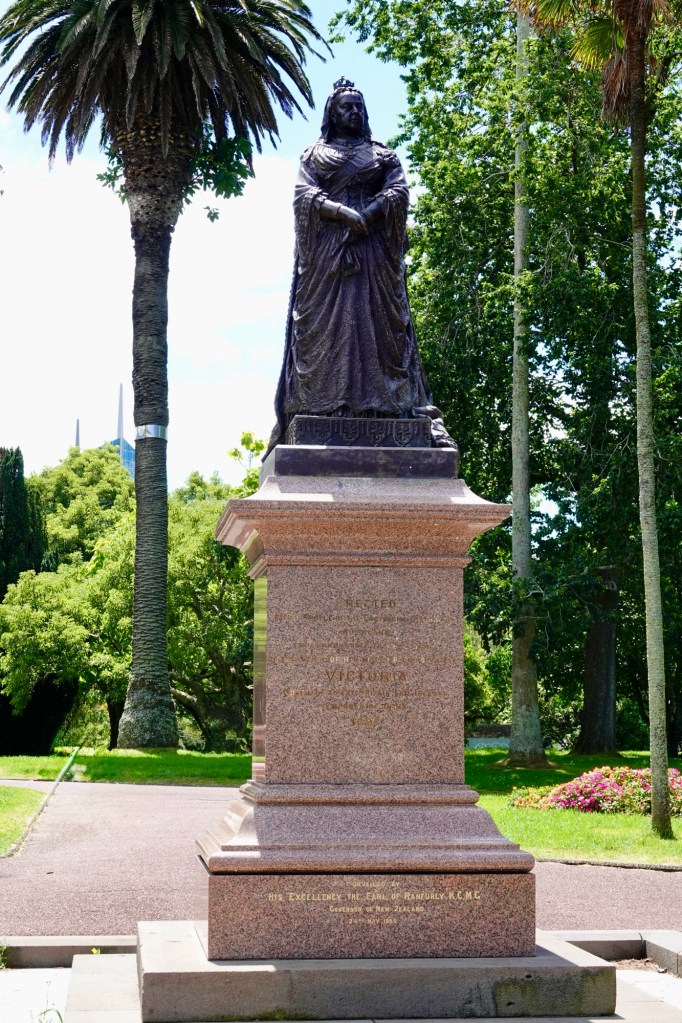
I don’t think we’ve ever seen a statue with this kind of inscription before:
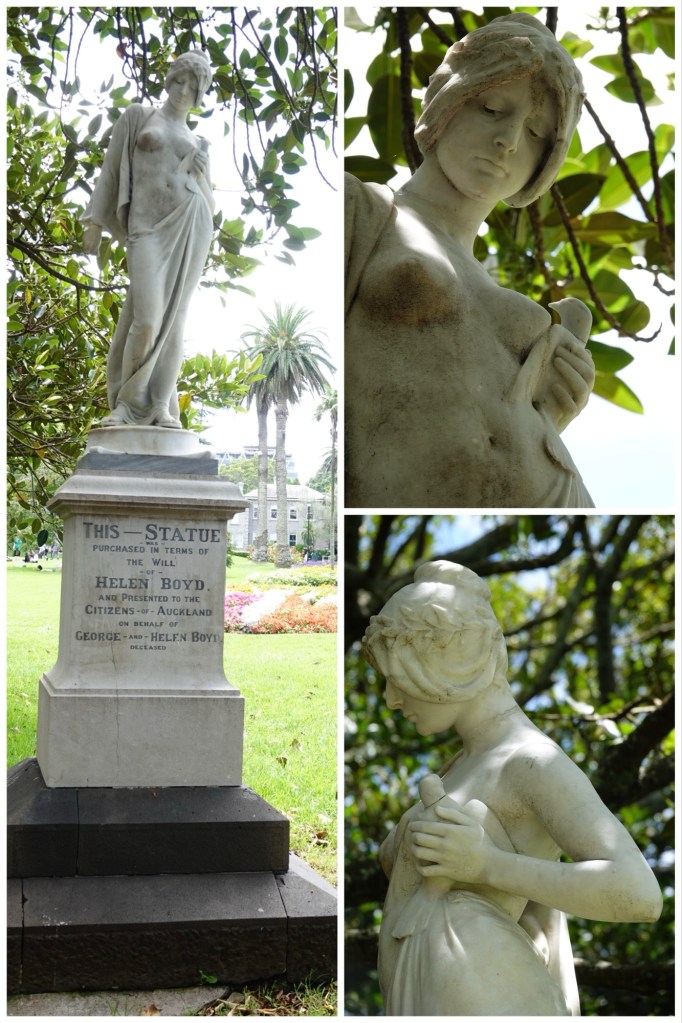
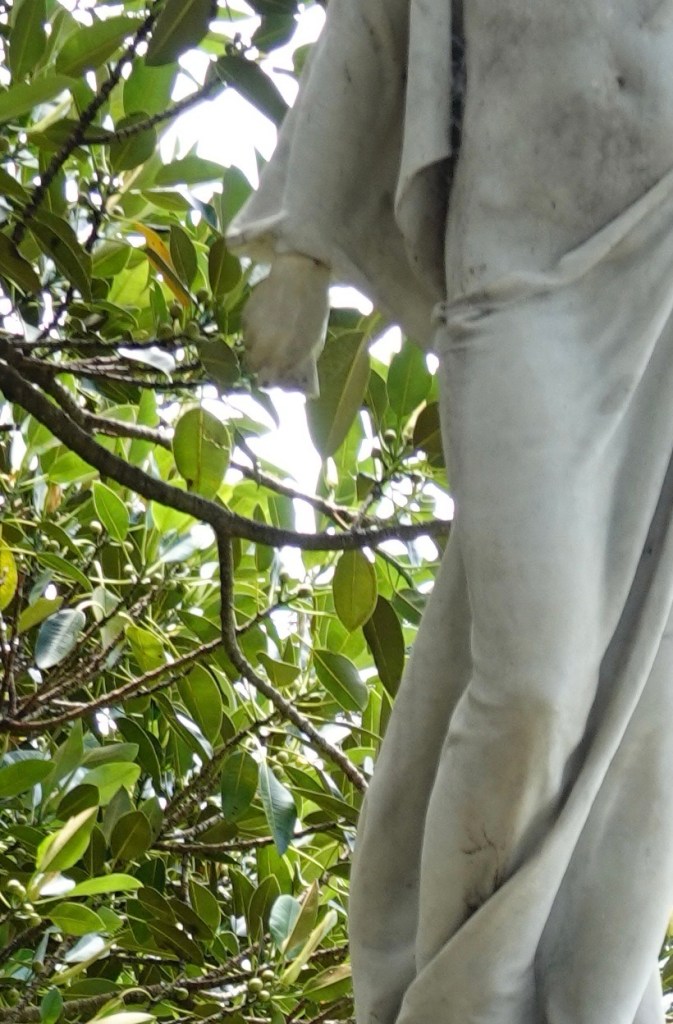
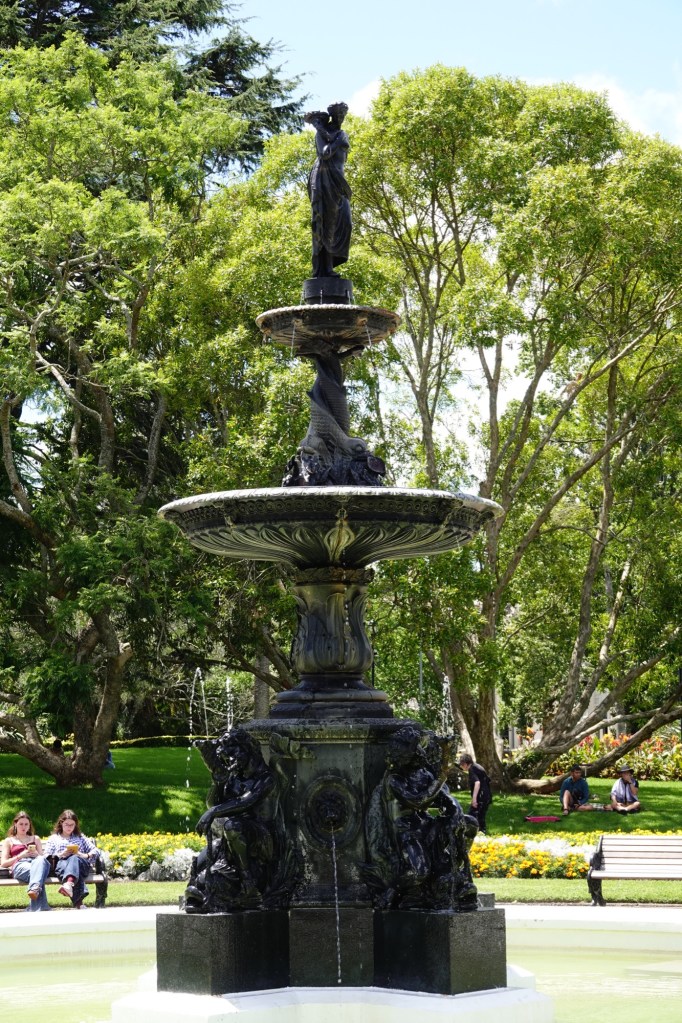
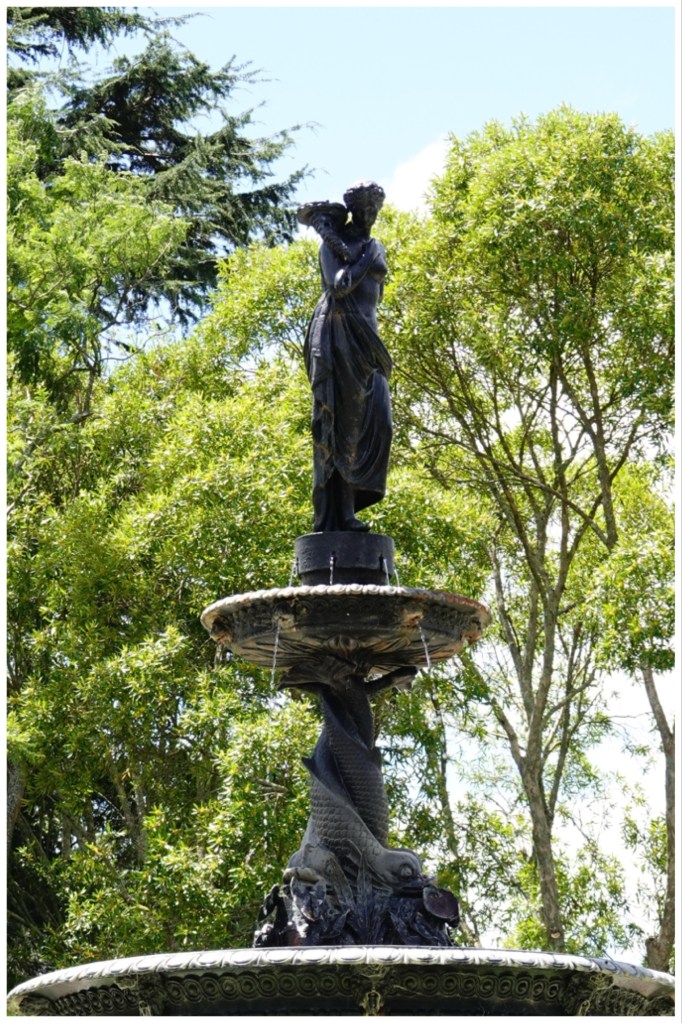
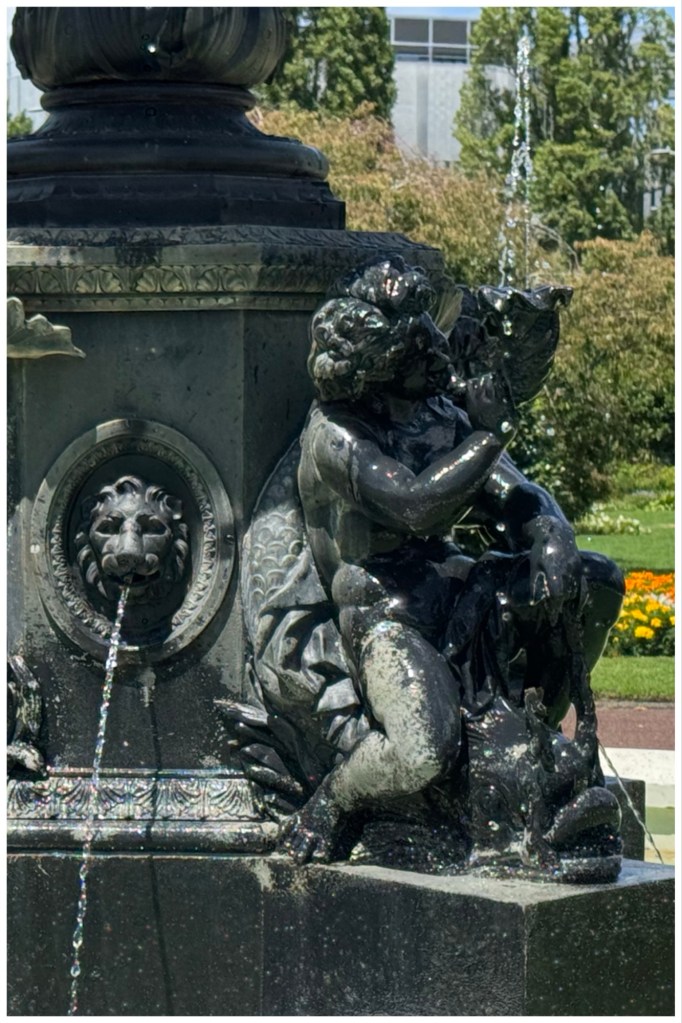
The Aphrodite fountain has pride of place in the centre of the park.
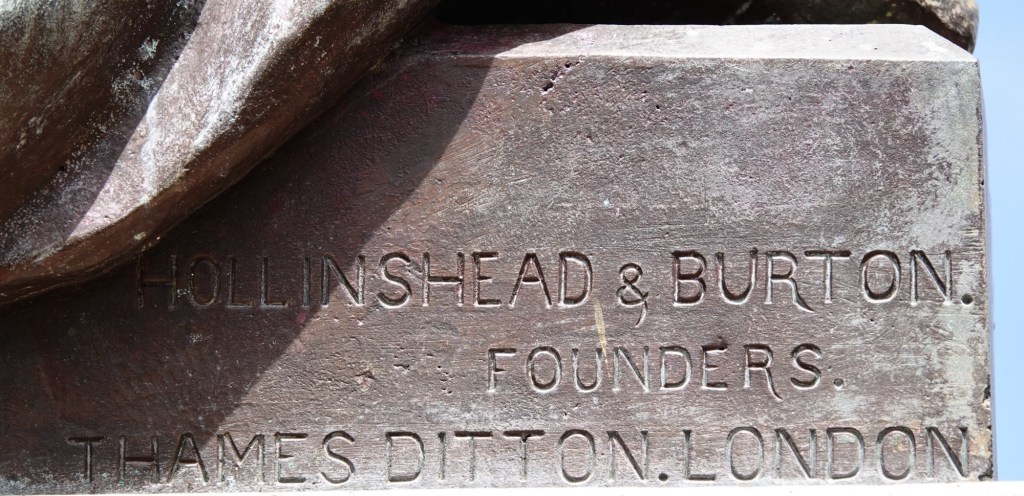
The statue of Queen Victoria was erected to celebrate the 60th anniversary of her reign. I can’t remember that we’ve ever noticed the name of the casting foundry on a bronze statue before.
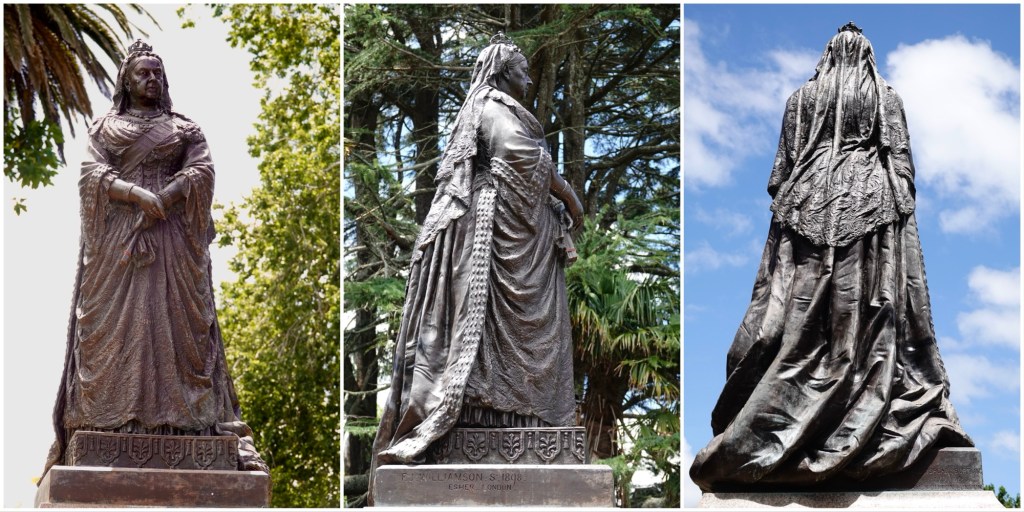
Given that it’s called Albert Park, there are statues of everyone except Albert.
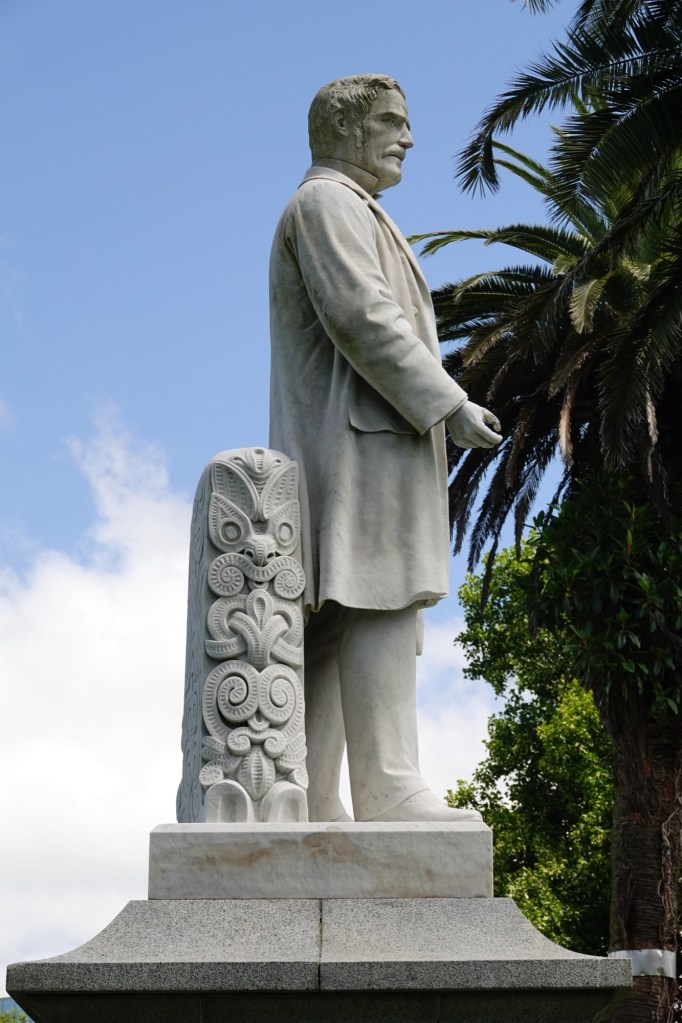
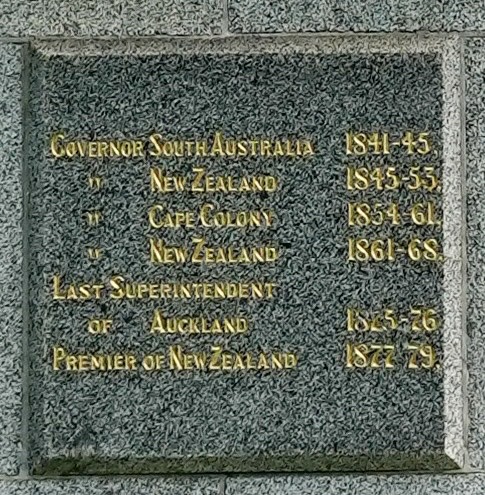
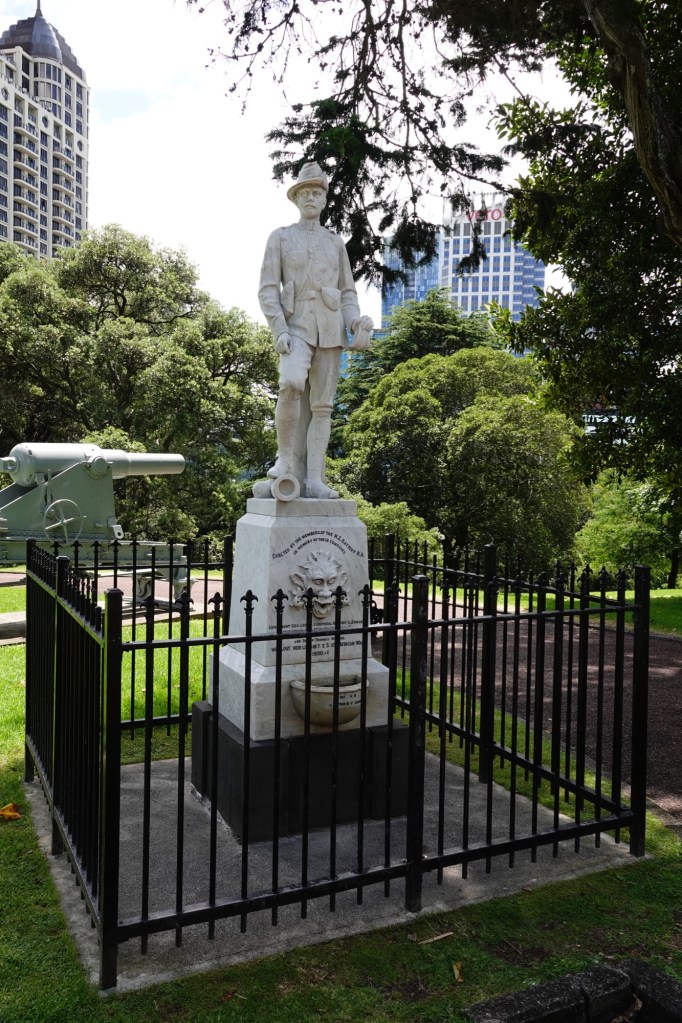
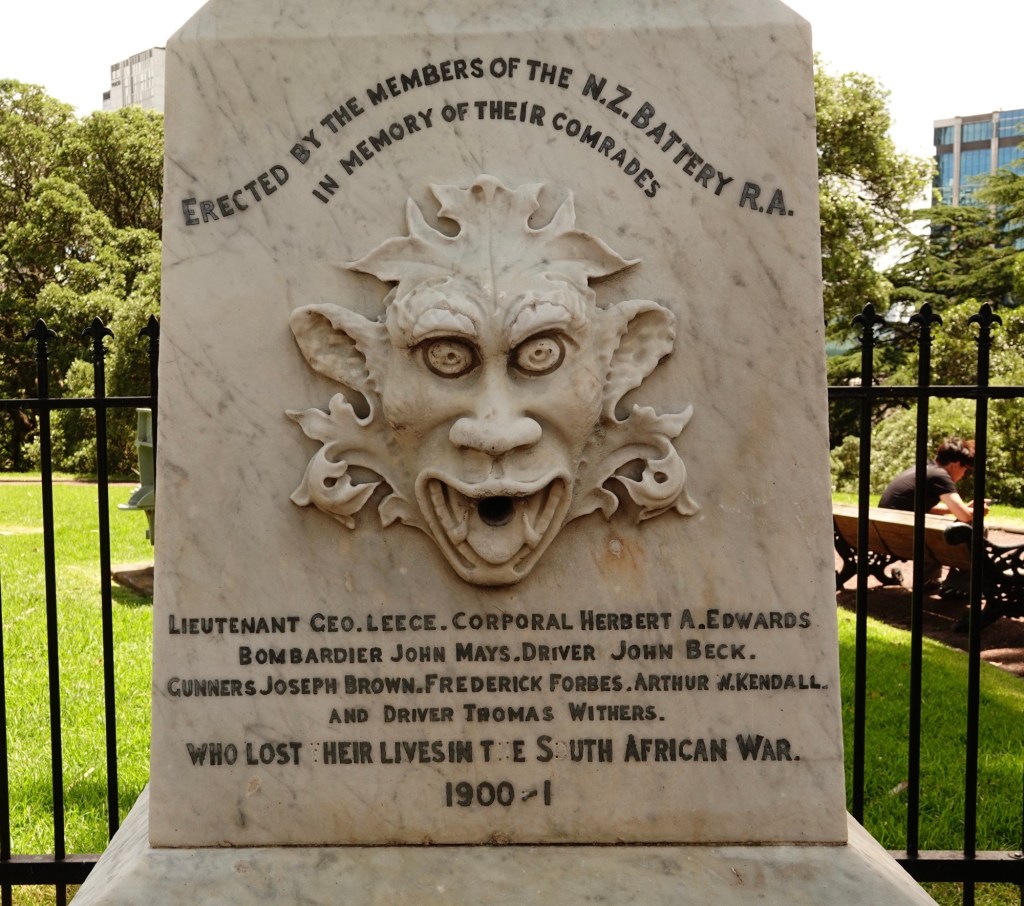
There’s even a Victorian era gazebo in the park.
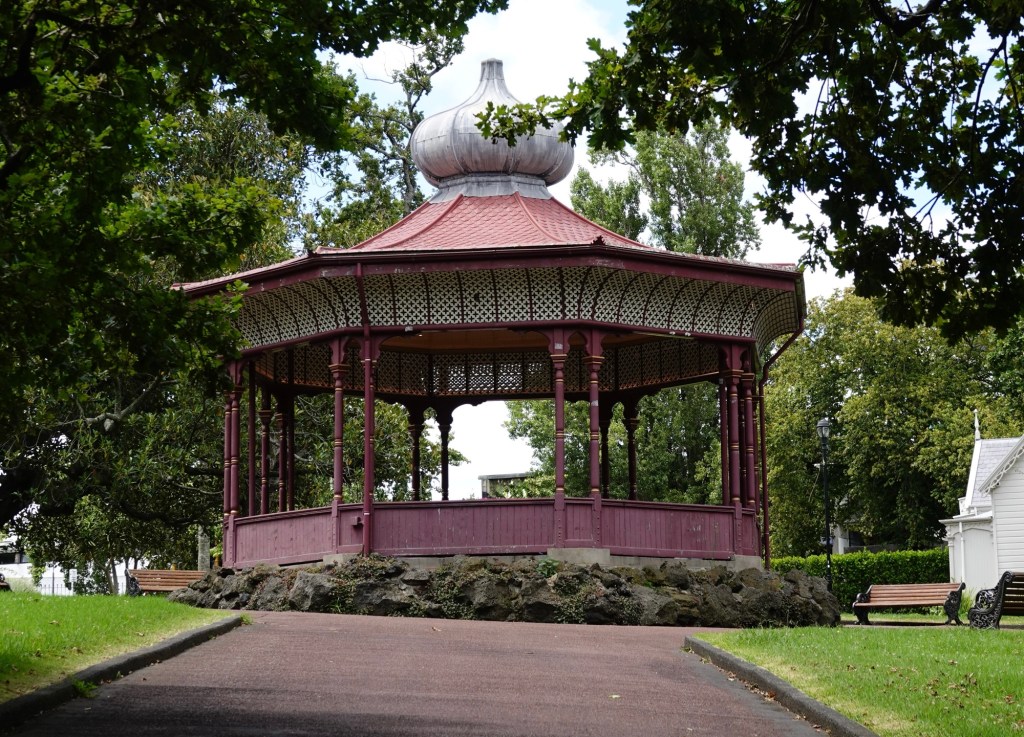
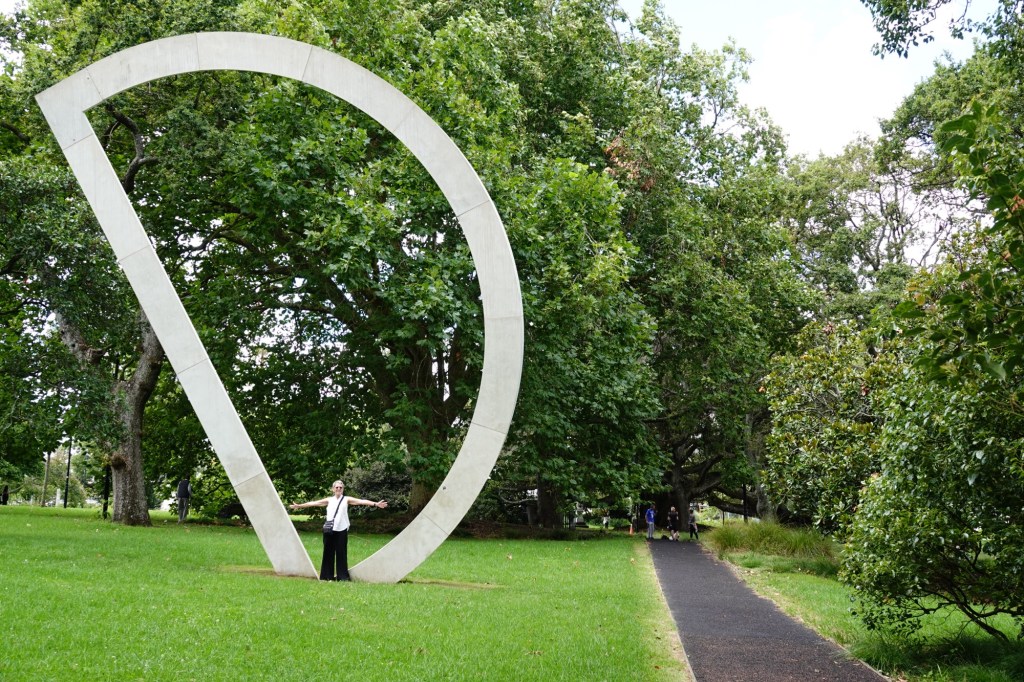
There was also a piece of modern art: a steel reinforced concrete sculpture titled Throwback, by New Zealand artist Neil Dawson.
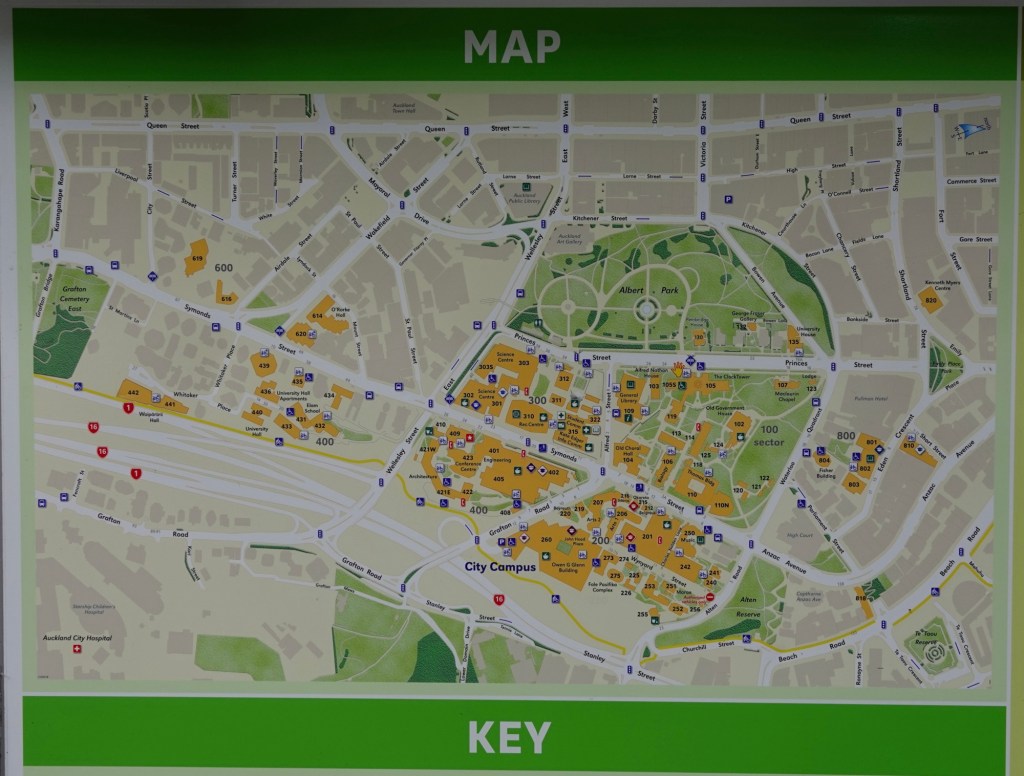
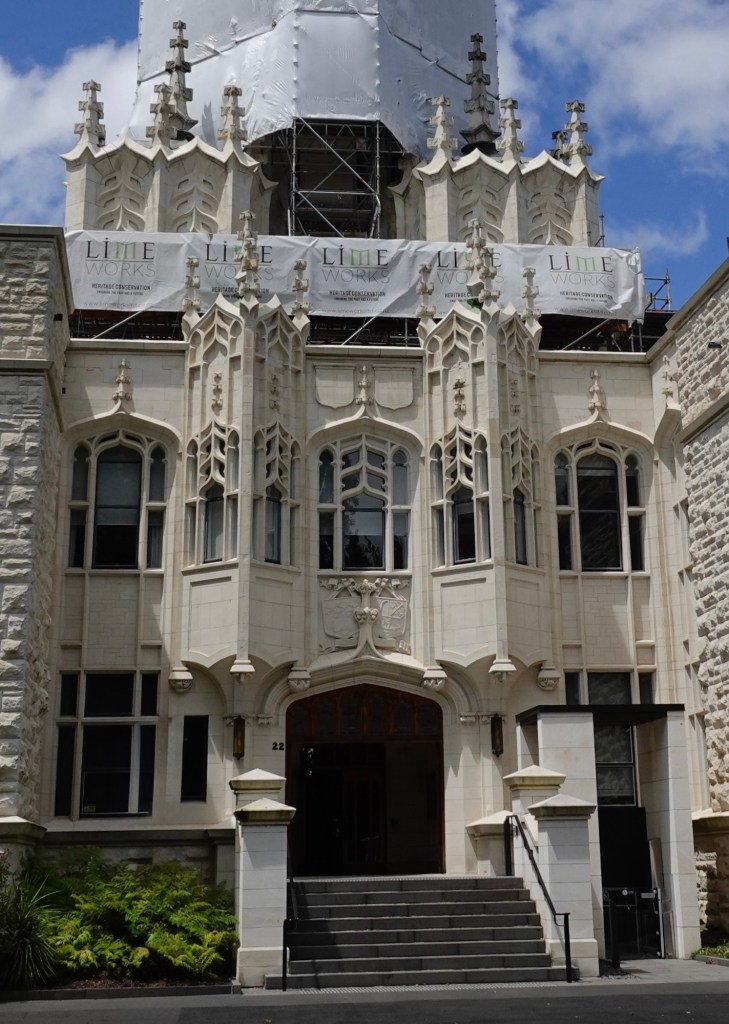
Walking through the park took us onto the University of Auckland’s City Centre Campus, with its mix of heritage and modern buildings that reminded me at times of the University of Toronto’s Queen’s Park Campus. The campus size is also similar.
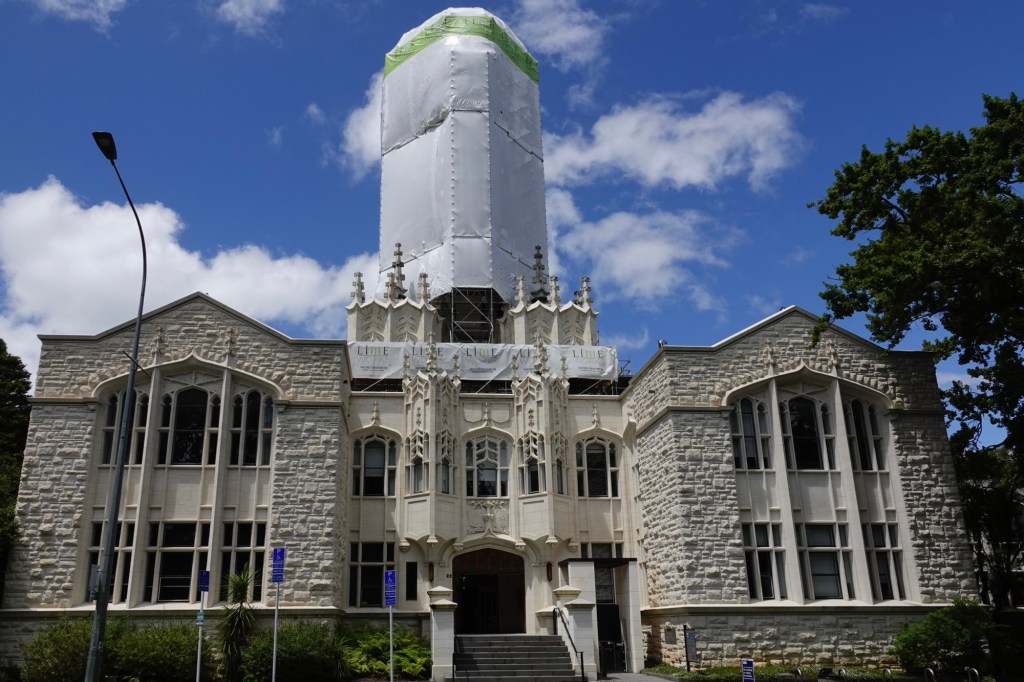
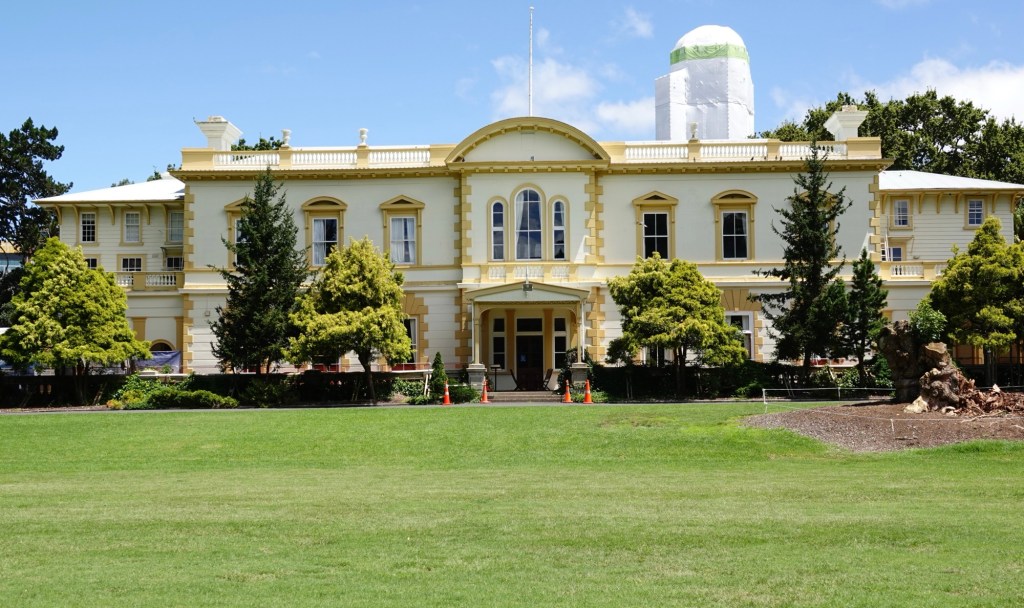
We stood on Old Government House Lawn and admired the symmetry of the Georgian style building which now houses the university’s Staff Common Room and event venues. A nearby plaque told us that this building was built in 1855/56 on the site of New Zealand Governor Hobson’s original house destroyed by fire in 1848.
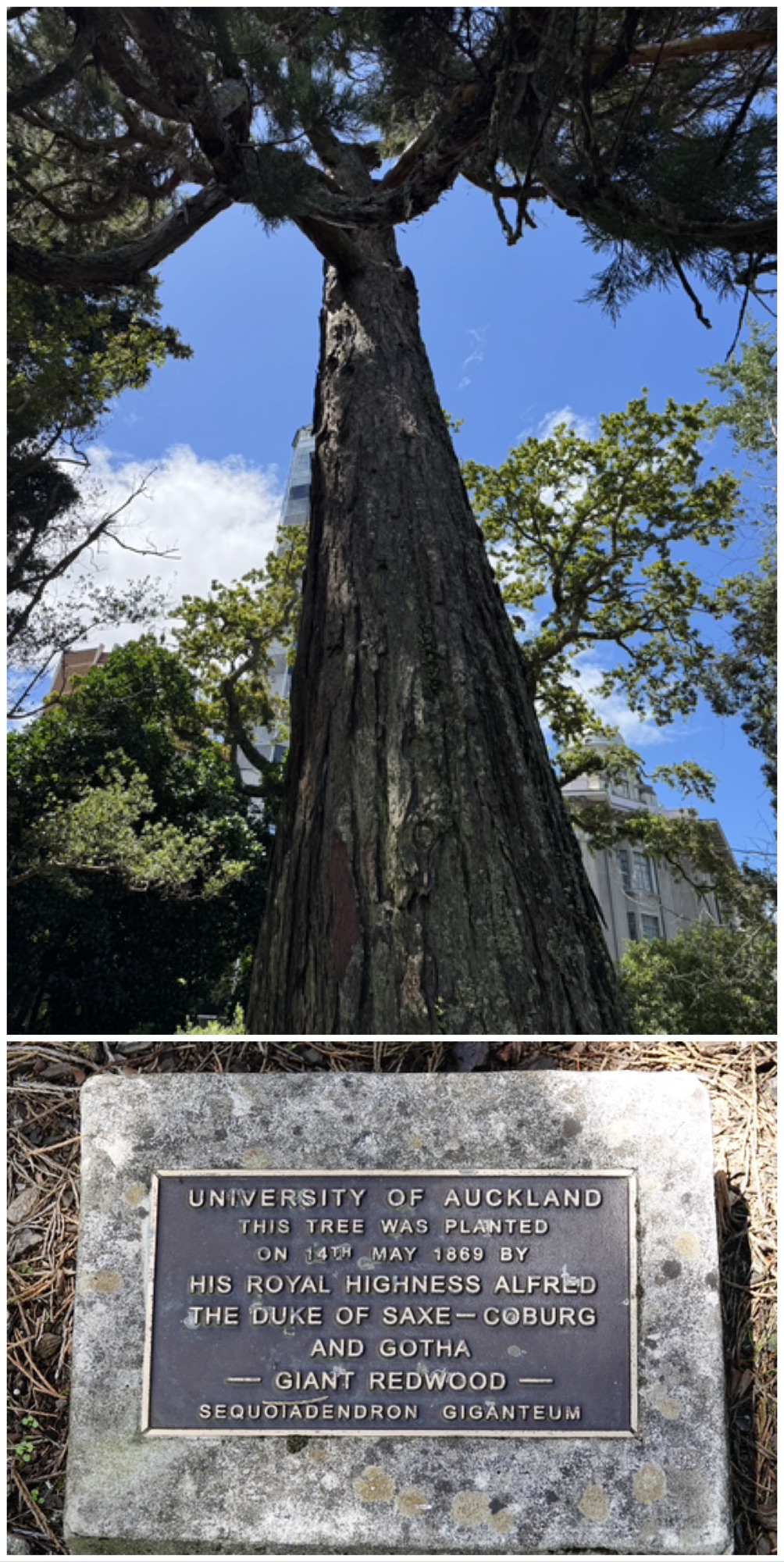
On the campus grounds, we noticed this evidence of the visit of Prince Alfred, second son of Queen Victoria and Prince Albert, and the first British royal to circumnavigate the globe. Neither Victoria nor Albert ever visited New Zealand (Queen Elizabeth II was the first reigning monarch to do so).
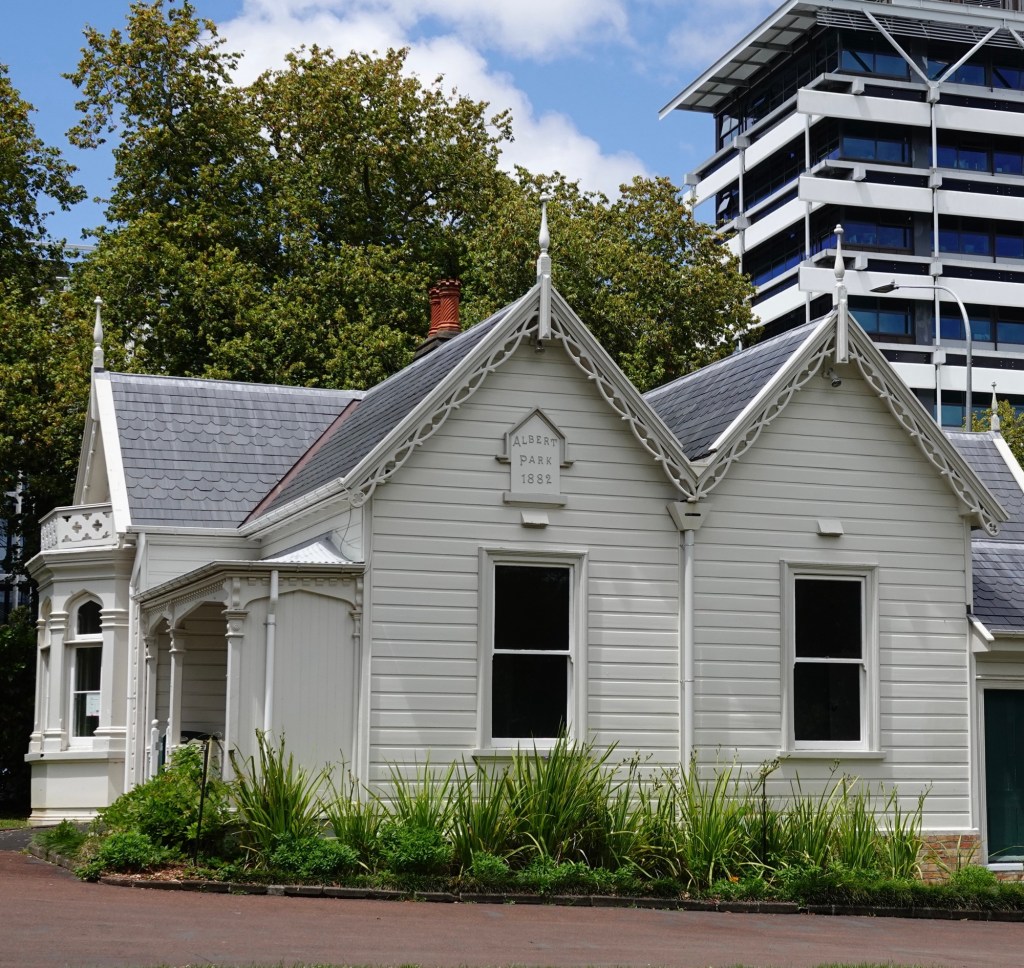
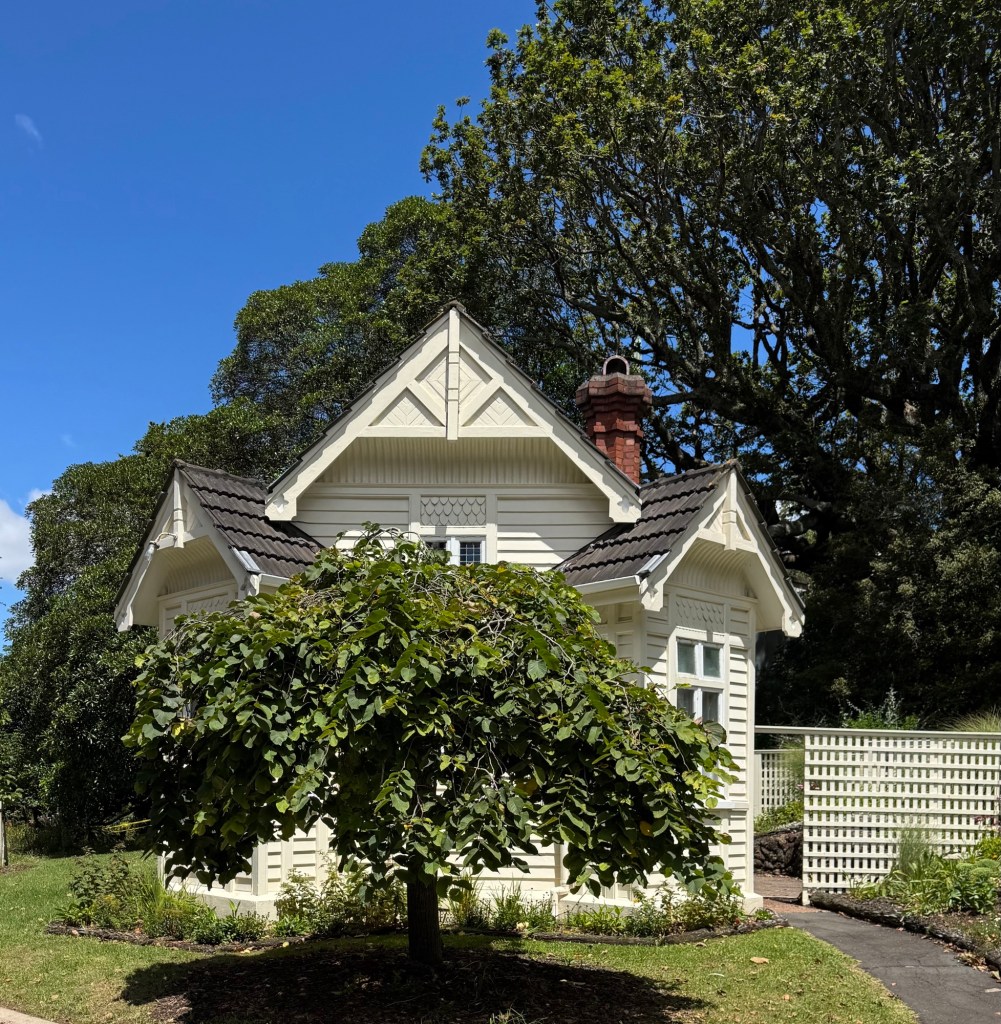
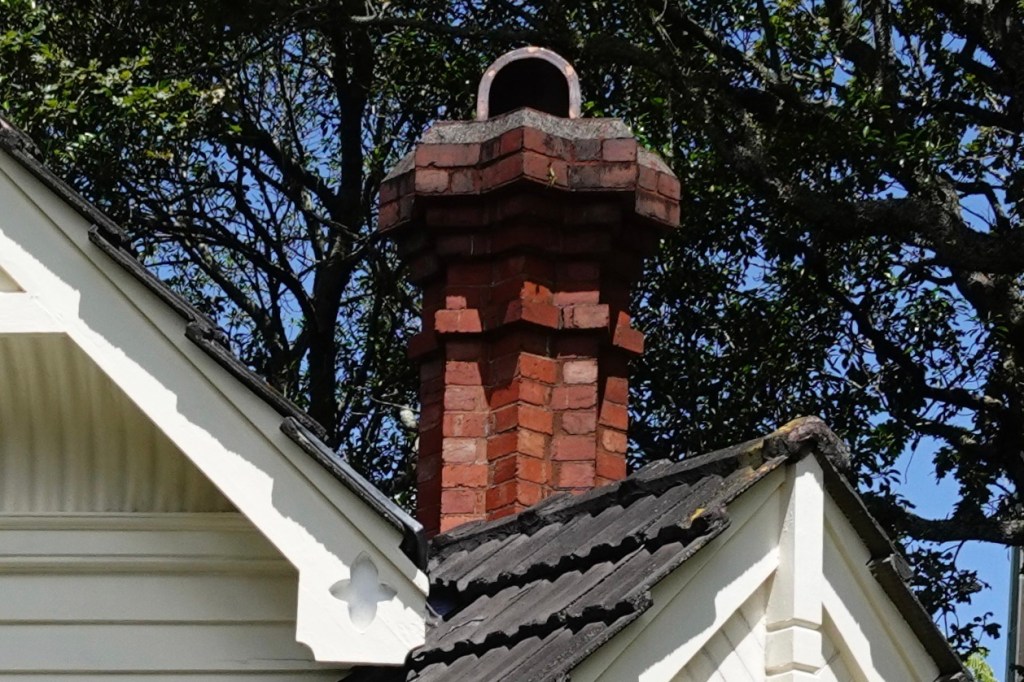
I was enchanted by the chimney on the Gatekeeper’s Cottage/Porter’s Lodge. The cottage has been kept as a historical building, but isn’t in use – although the exterior was beautifully maintained.
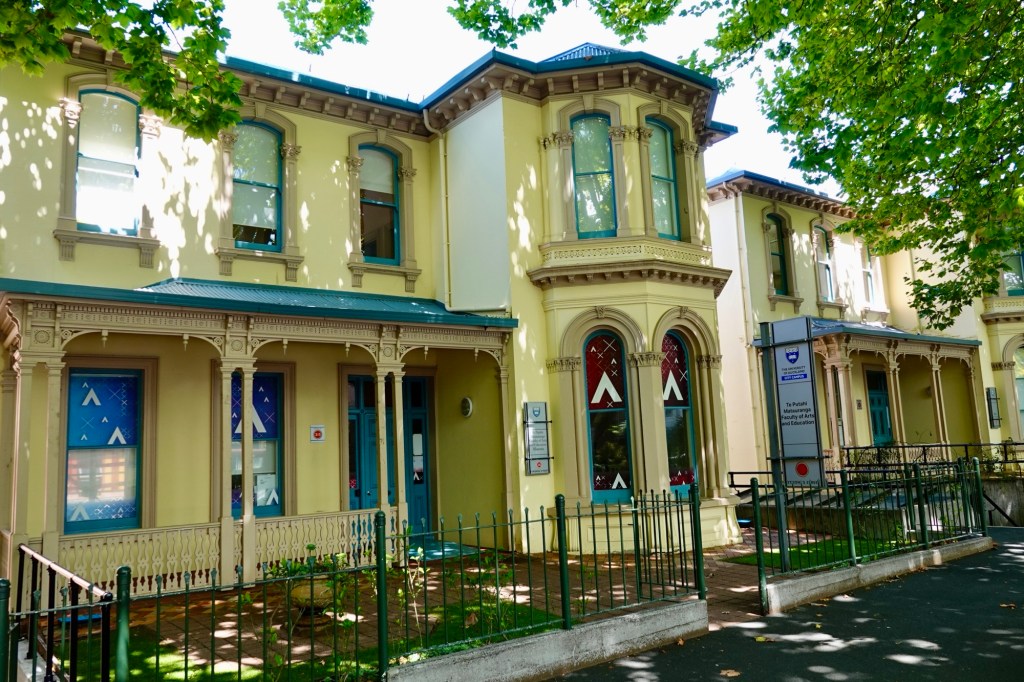
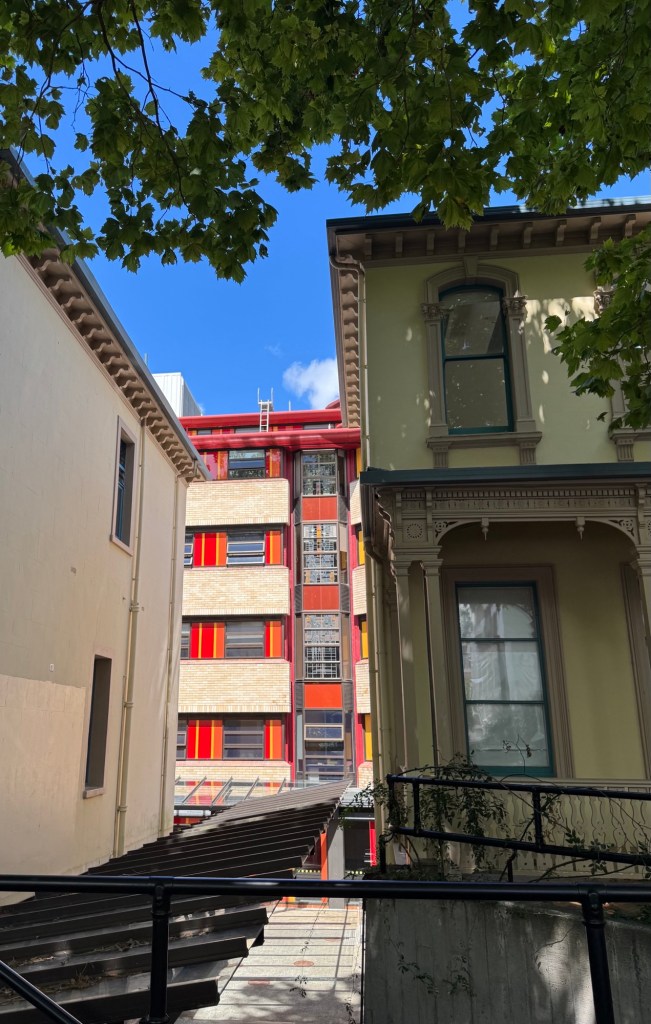
Symonds Street was the place that reminded me most of U of T, with its mix of Victorian homes turned into faculty offices juxtaposed with very modern faculties and student residences.
Our stroll along the perimeter of the campus also took us to the two-toned brick Gothic Revival style High Court buildings, dating to 1865.
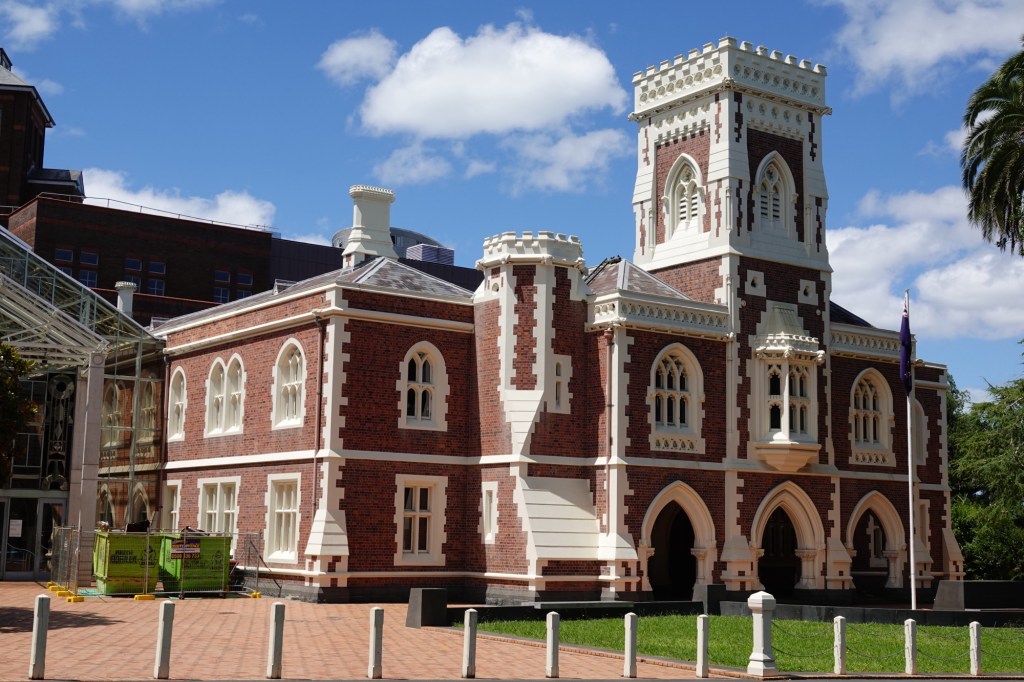
The heritage portion features a crenellated central tower.
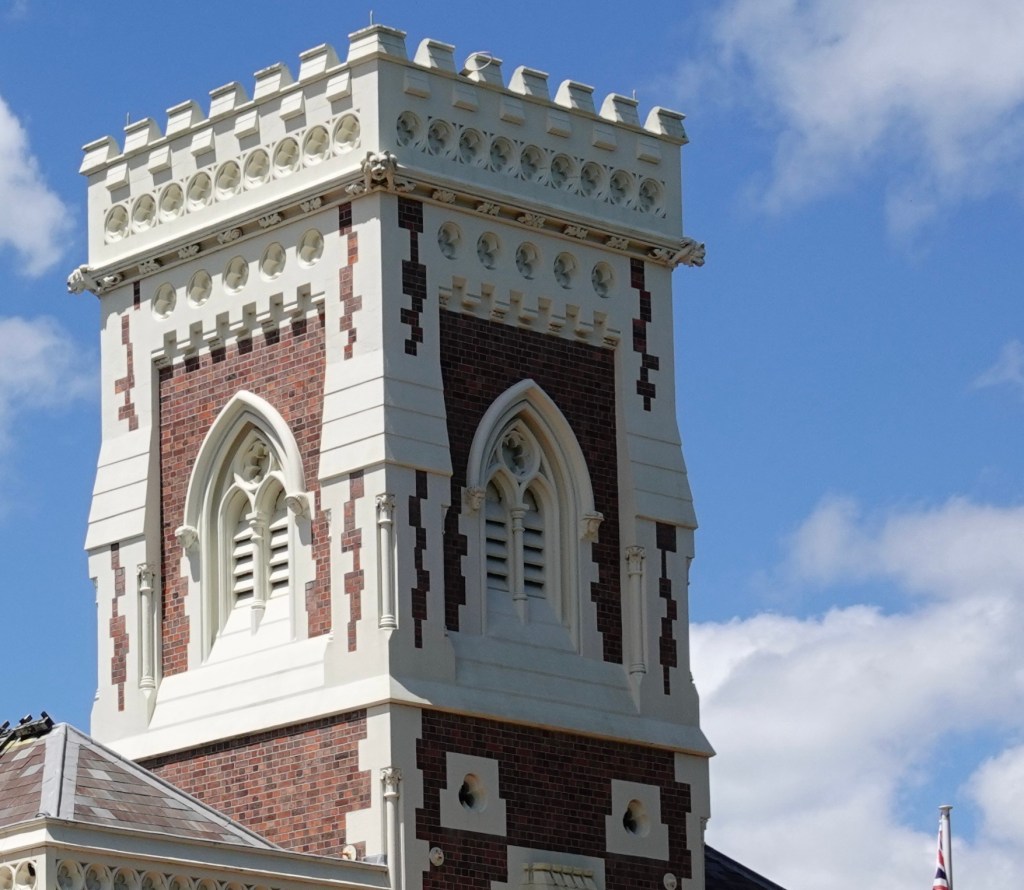
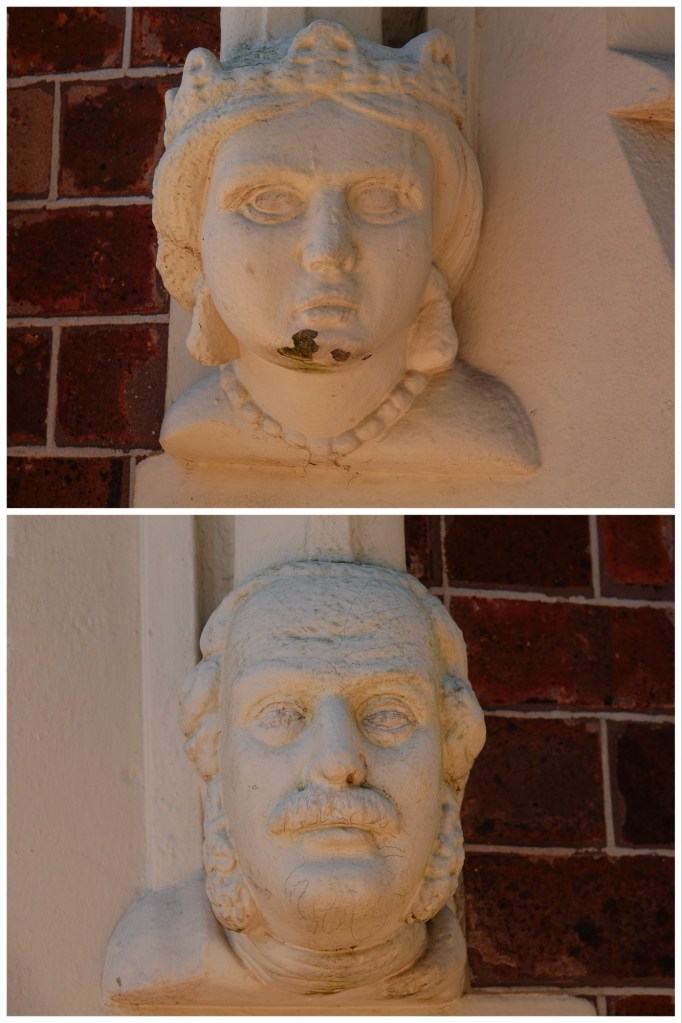
Architect Edward Rumsey apparently designed many buildings in that same Gothic Revival style, and often featured gargoyles. We didn’t notice any gargoyles in the traditional sense of grotesque creatures, but there were six faces on the front entry’s pillars: a youthful Queen Victoria and a less youthful Prince Albert facing each other in the centre (photo below), two generic judges on the right wearing powdered wigs, and a male and female on the left that likely represent lawgiving and either allegorical Truth or Mercy. More sculpted faces apparently exist elsewhere on the building, including the face of a Māori chief.
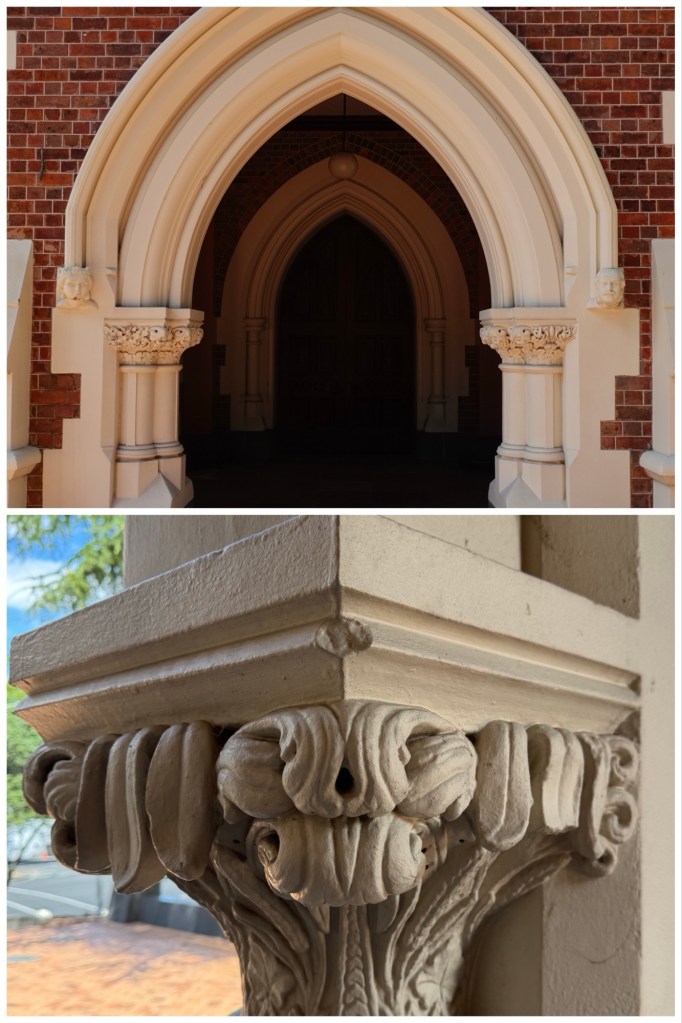
The interior is apparently made of timber and is also Gothic in style, although it was not open on Waitangi Day. Guided tours are not offered, but the building is normally open to the public.
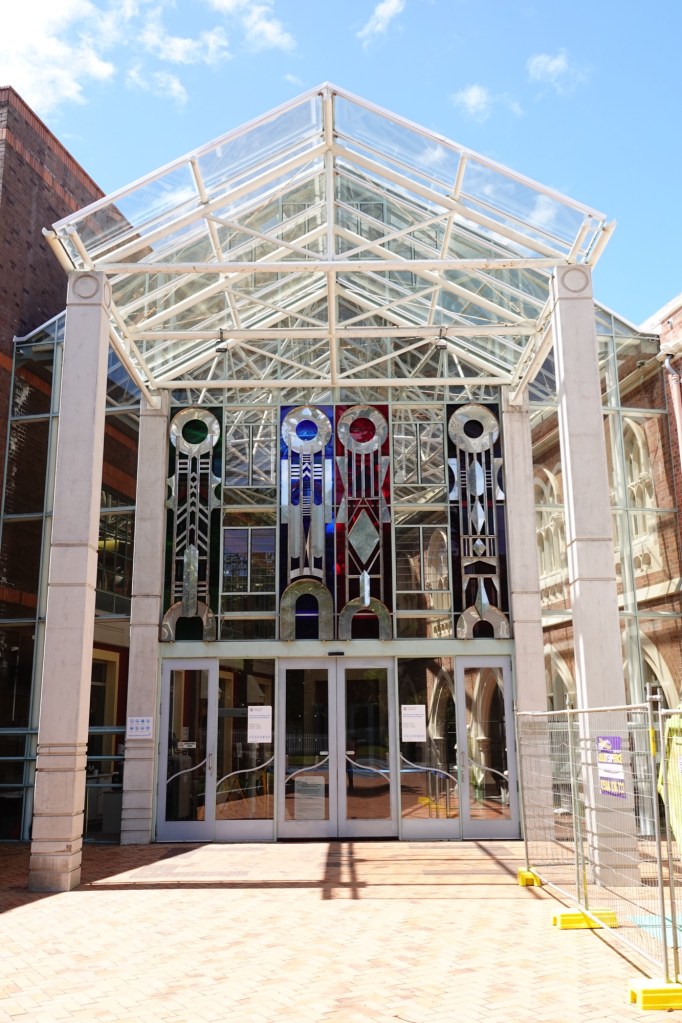
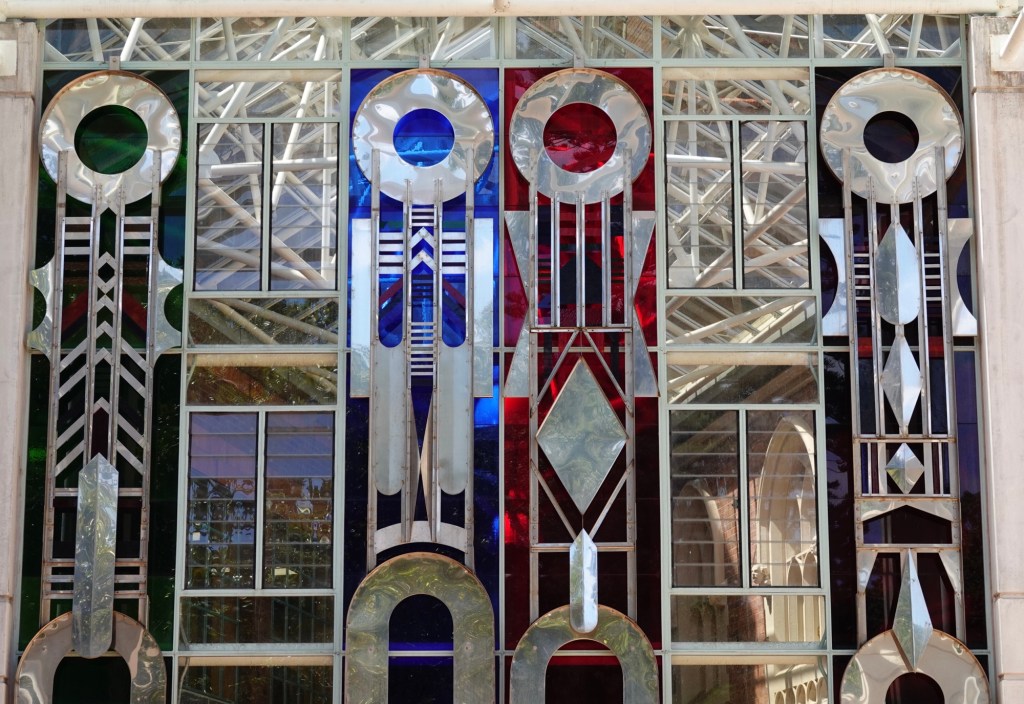
The glass and steel structure connecting the old and new portions of the court was added in 1990. From a distance, the hammered metal portions look like pāua shell. The coloured glass panels represent different groups (iwi/tribes) within the area: Ngāti Whātua (purple), Tainui (green), Māori people in general (red), and Pākehā (Christian colonists, blue). It’s quite striking. In total, it was designed to represent the shared guardianship and partnership of all the peoples of this land.
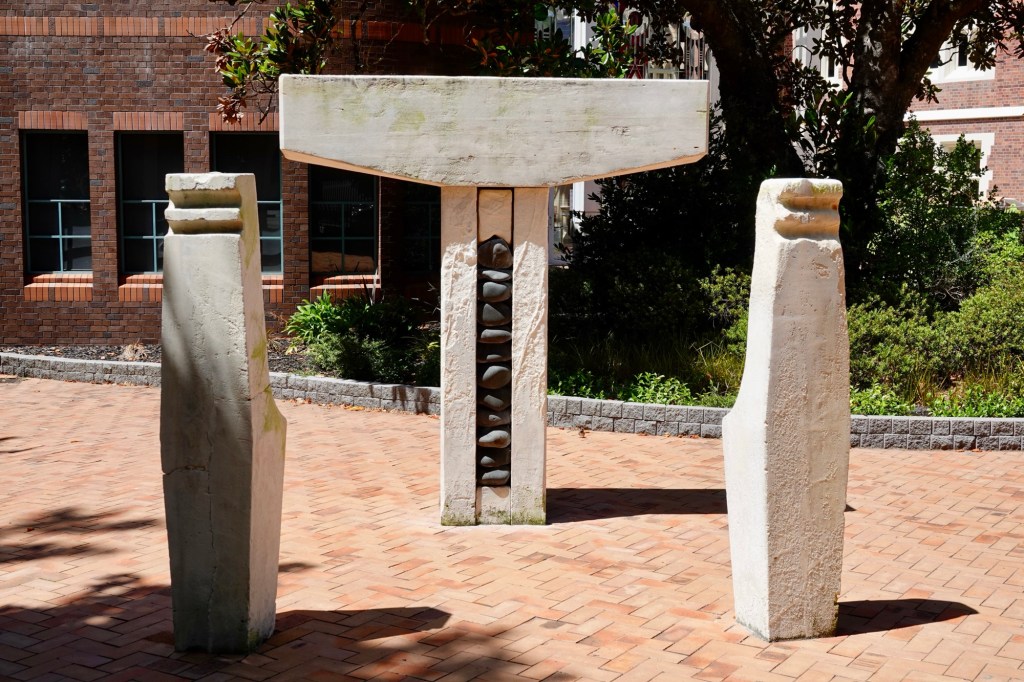
In 1999, a sculpture called Justice was added to the courtyard. The sculpture consists of three Oamaru limestone pillars, which represent the scales of justice and those involved in court processes. The sculpture’s twelve pieces of wood, respresent the story of Tāne obtaining the three baskets of knowledge; twelve river stones represent the members of a jury.
Auckland has lots of interesting, and sometimes just weird, public art. On a corner just at the edge of the university campus are three hemispheric (the artist called them “vessel shaped” concrete plinths with bronze figures on them.
The bronze sculptures atop them are called Loafers, and were commissioned from Francis Upritchard, one of New Zealand’s most internationally recognised contemporary sculptors, by Auckland City Council in 2013.
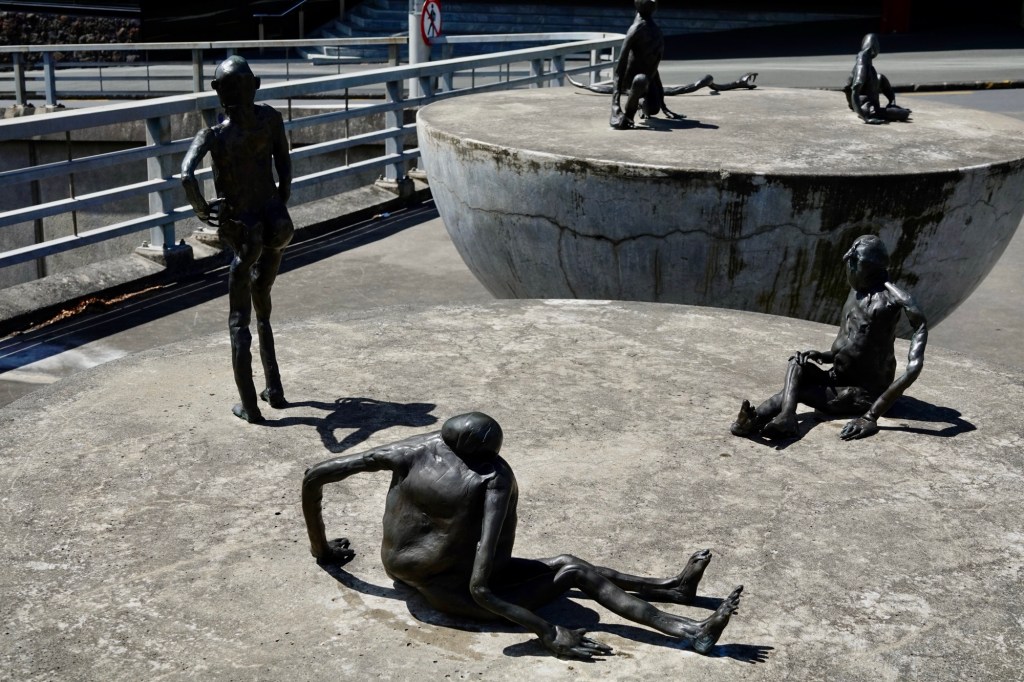
Researching the art uncovered descriptions in media write-ups at the time of its installation like “humorous and disquieting”. The fanged snakes seeming to slither between the figures(in the background on the other plinth) and in one case wrapped around a figure, definitely didn’t seem humorous to me, but art is a very subjective thing.
After our stroll, the route back to our hotel took us through Aotea Park at the Civic Centre, where there was day-long live music and a selection of food trucks (including the wonderful fresh fruit ice cream that I enjoyed) … but virtually no people! I asked the ice cream vendor whether that would change as evening approached, and she said no, because on any long weekend Aucklanders all leave the city for their “baches” (seaside cottages), and the university students go home. Maybe we’ve just discovered the biggest cultural difference between city-dwelling Kiwis and Canucks: a free multi-day outdoor festival like this in Vancouver, Toronto, Ottawa, or Montreal would be packed with people.
DAY THREE
It seems that Auckland is our “Viking reconnection” city.
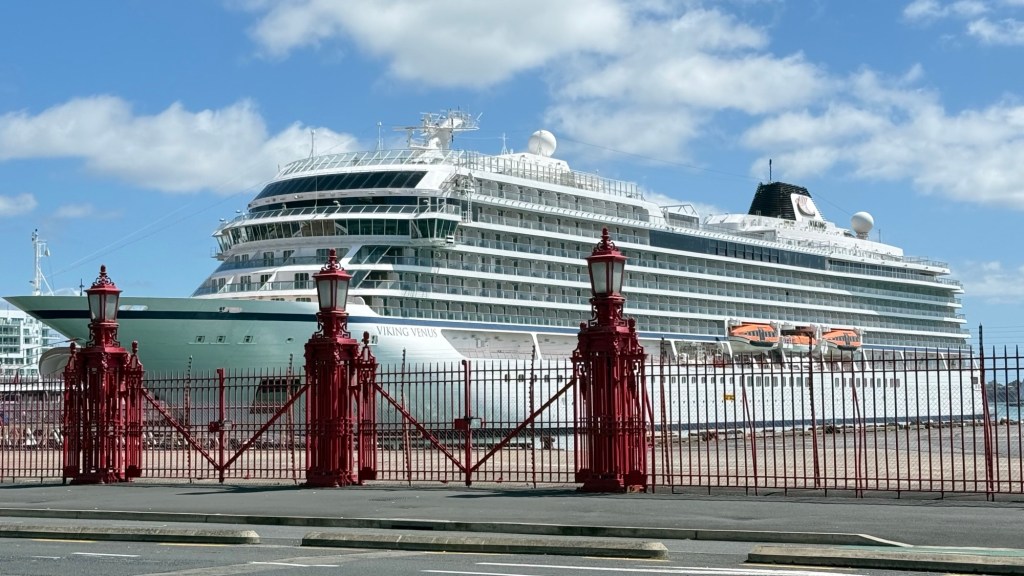
Last month while we were here we were able to briefly touch base with Damian Sollesse, the amazing Cruise Director from our 21/22 World Cruise. Today, with the Viking Venus back in port, we were able to connect with Matthew Morgan, the CD for most of our 24/25 World Cruise. His nightly introduction on the cruise, referring to himself as “the best Cruise Director in his price range!”, always made me grin.
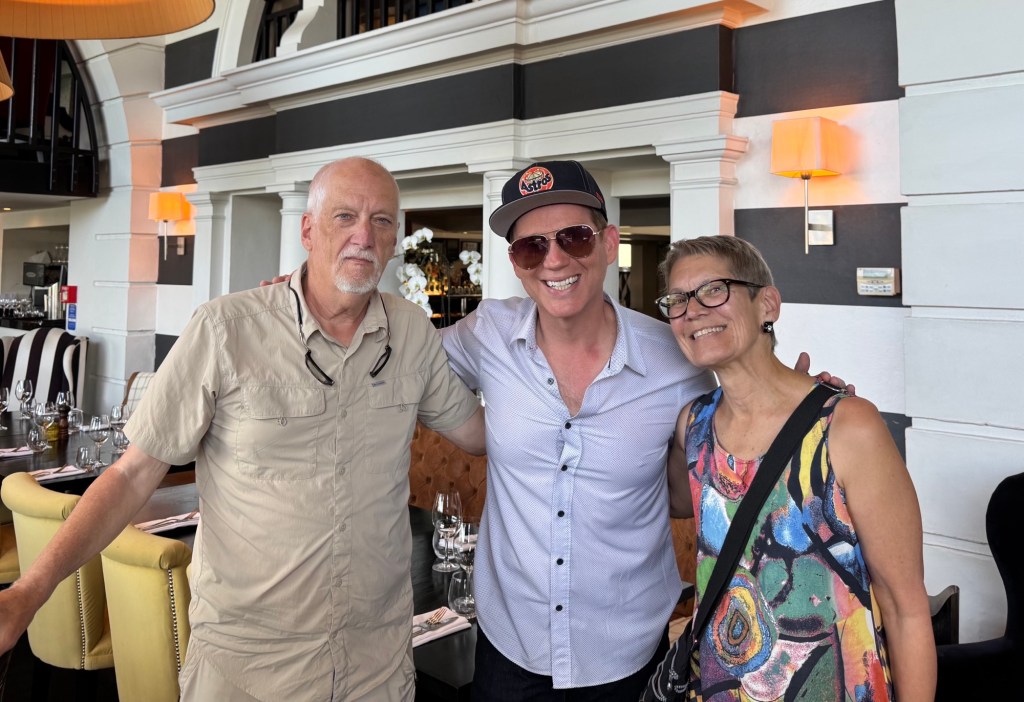
We were pleased and honoured that he was willing to give us a couple of hours of his precious off-duty time. Getting to share lunch and conversation off ship as friends (as opposed to “passengers” waiting to be entertained) really highlighted what a funny, sincere, and interesting individual Matt is. Of course, we’d figured that out already on the World Cruise when we watched him juggling multiple demands and still taking the time to support and mentor his team – all while maintaining his characteristic positivity.
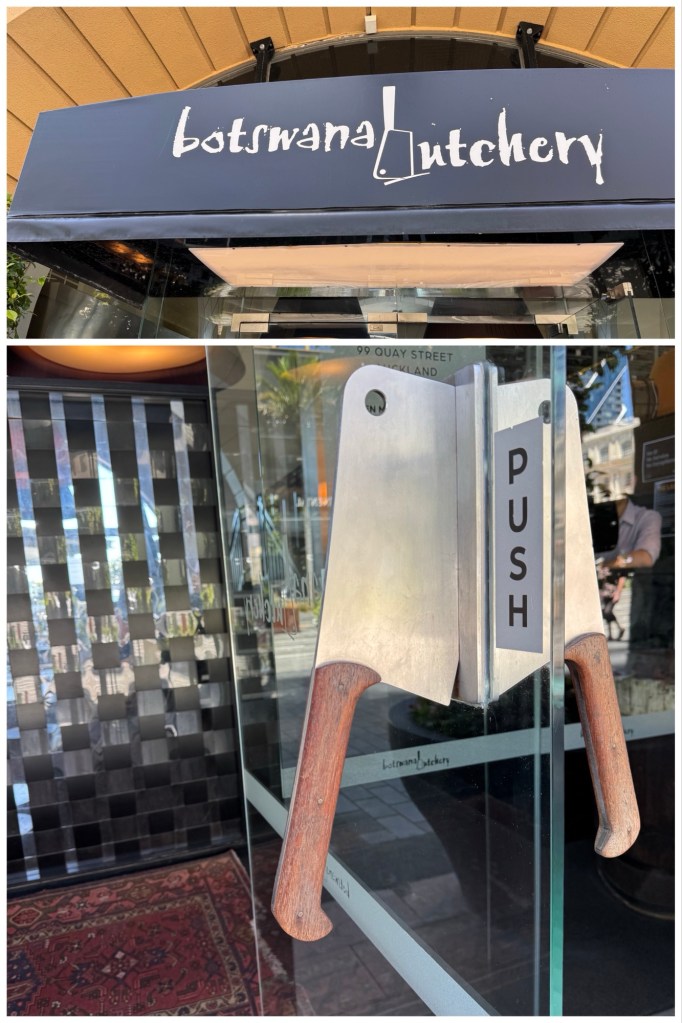
We ate at the disturbingly named (only to North Americans, who use “butcher shop” as opposed to “butchery” for a meat store) but very tasty Botswana Butchery on Quay Street, almost right beside Queens Wharf.
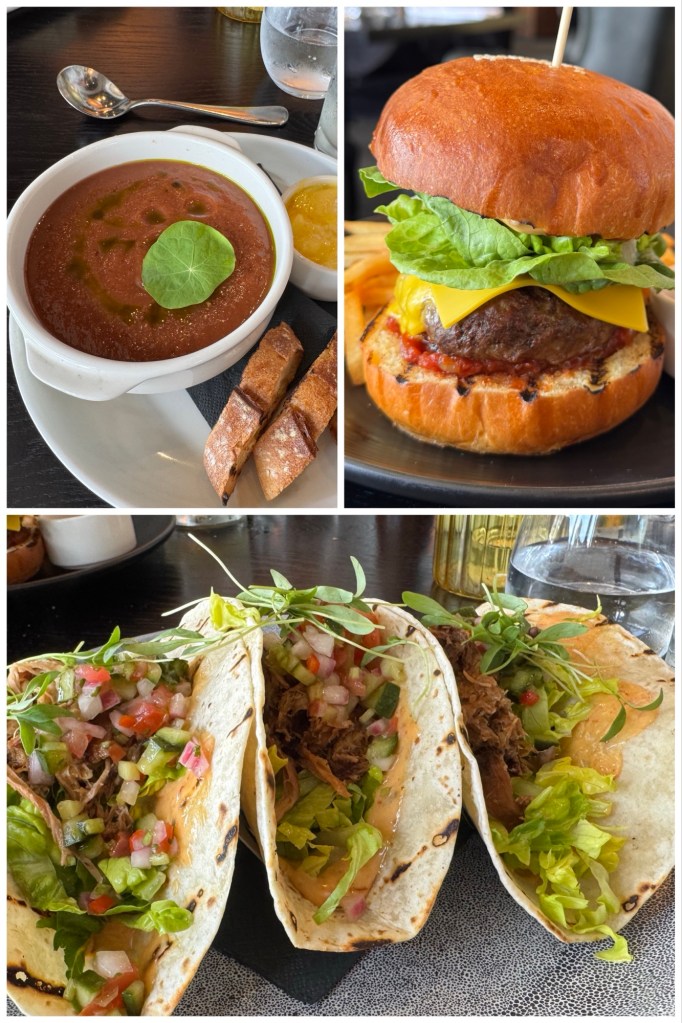
Brioche bun, with pickles, tomato chutney, chipotle mayonnaise, and fries.
I opted for the Botswana pulled pork tacos garnished with
Cos (what romaine is called here and in the UK) lettuce, chipotle mayonnaise, and tomato & cucumber chilli salsa.
After lunch and hugs, Matt went off to run his afternoon errands, and Ted and I wandered slowly back to our hotel, detouring first through the Saturday vendors’ market in Britomart, and then into several of the retail alleys leading behind Queen Street.
We spent a quiet evening just enjoying the glorious breezes and a bit of live jazz in Aotea Square before calling it a day.
Tomorrow we set aside “lazy” and explore the Auckland Domain.
 Rose and Ted’s Excellent Adventure
I recommend a tasty Middle Eastern restaurant Ima Cuisine on Fort Street near Gore. We had lunch there a few years ago
LikeLiked by 1 person
Thank you! We still have some dinners out to do!
LikeLike
How wonderful to have so much breathing space to enjoy Aukland. We only had 8am-6pm last year on the world cruise, and much of that was taken up by the excursion to Wēta Workshop. I’ll be coming back to your blog posts to plan a future trip to New Zealand and Australia, maybe in 2027.
How wonderful that you were able to have lunch with Matt Morgan. We really missed him when he left the Sky partway through the 24-25 world cruise. I wish there were a listing of which cruise directors were on which ships as we plan our future cruises.
If you were a knitter or crocheter, I would send you to Prosper Yarns, a wonderful local yarn shop in Aukland where I bought a good bit of yarn, including some made from the brushtail possum that New Zealanders consider a pest and want to eradicate.
LikeLiked by 1 person
I don’t knit, but if we spent more time in cold climates I’d be really tempted by the beautiful possum merino clothes in the shops here!
LikeLike