Today completed our full immersion into all things Wētā that began in Auckland (Episode 771), continued with the Pounamu Pathway in Greymouth (Episode 775), and touched us so deeply at the Gallipoli exhibit at the Te Papa Museum (Episode 778).
Wellington’s Wētā Workshop is where the magic actually happens.
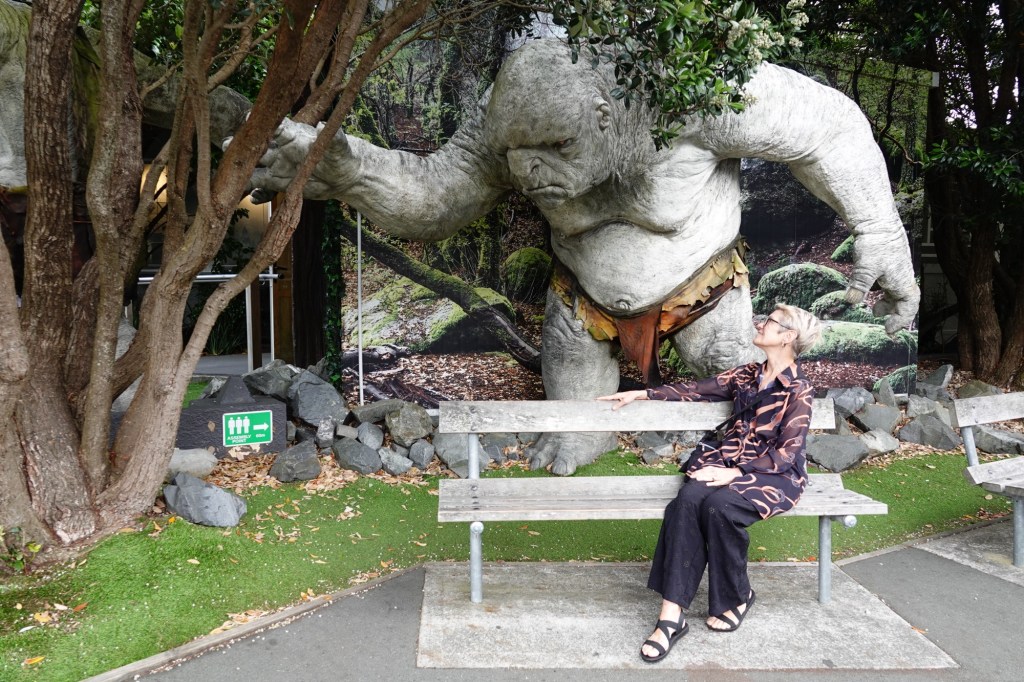
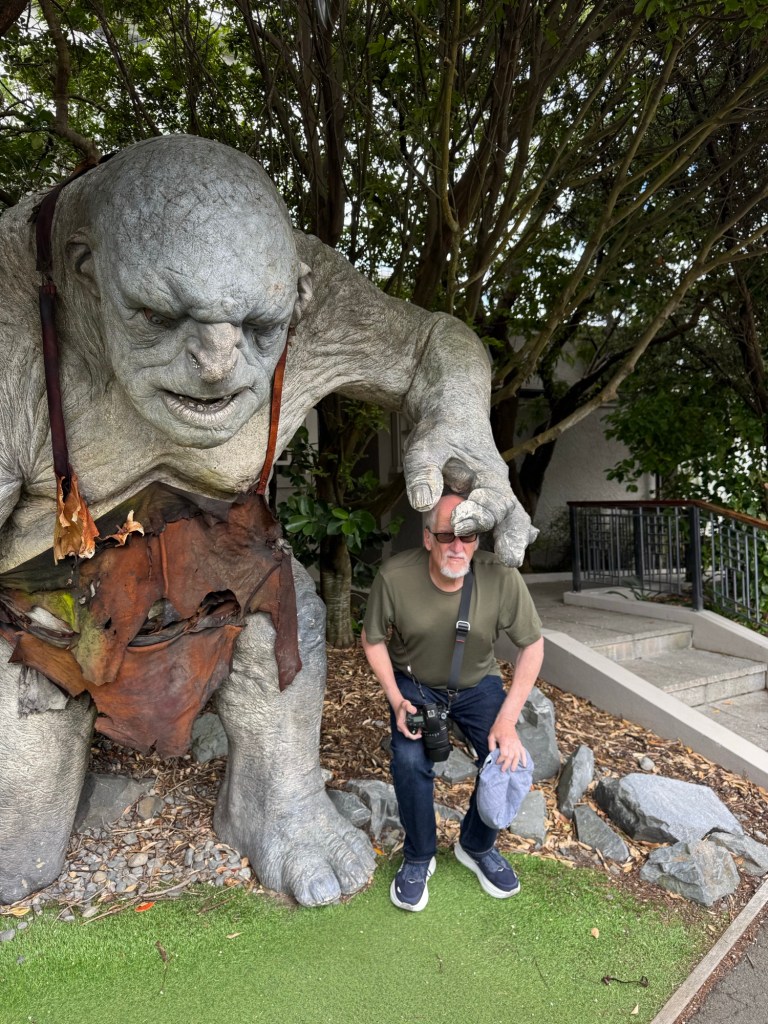
There was no photography allowed during almost the entirety of the tour, due to copyright and the fact that artists are actively working, but outside the workshop itself there were opportunities to be silly with a Middle Earth troll or two, and take photos of some of the larger-than-life creatures.
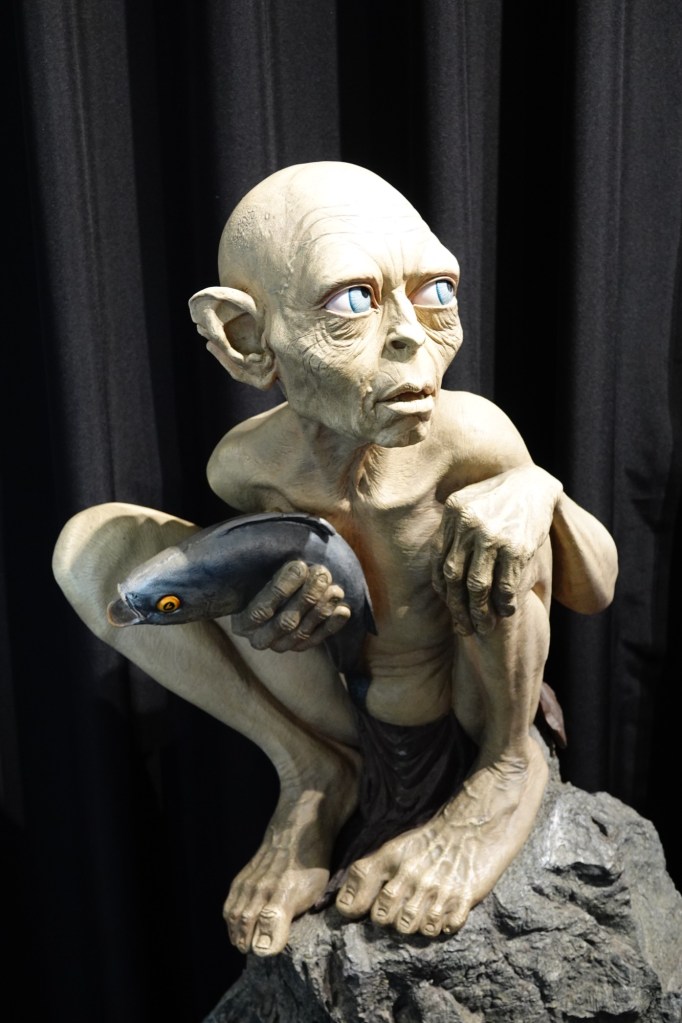
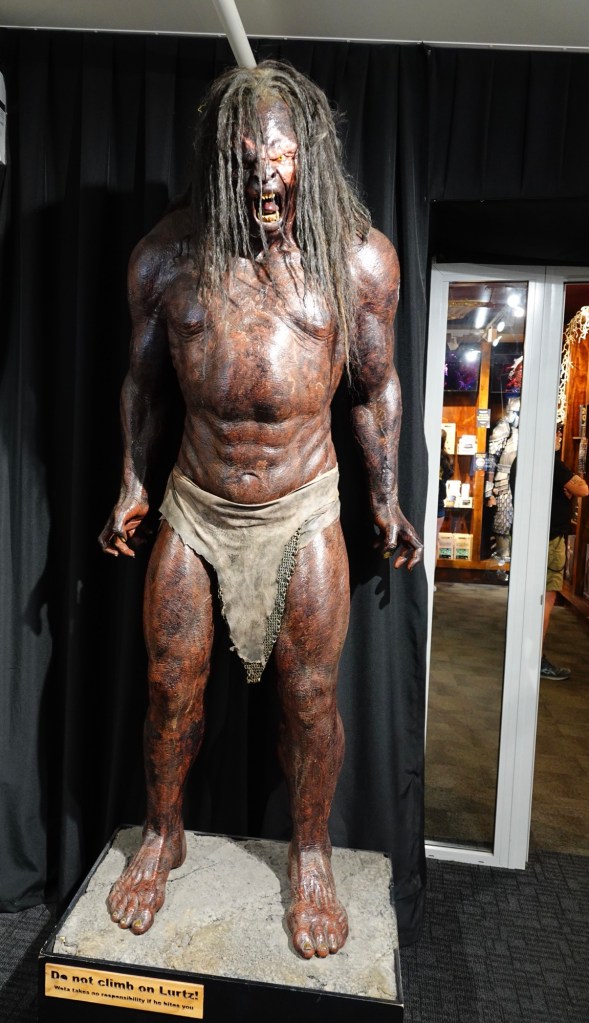
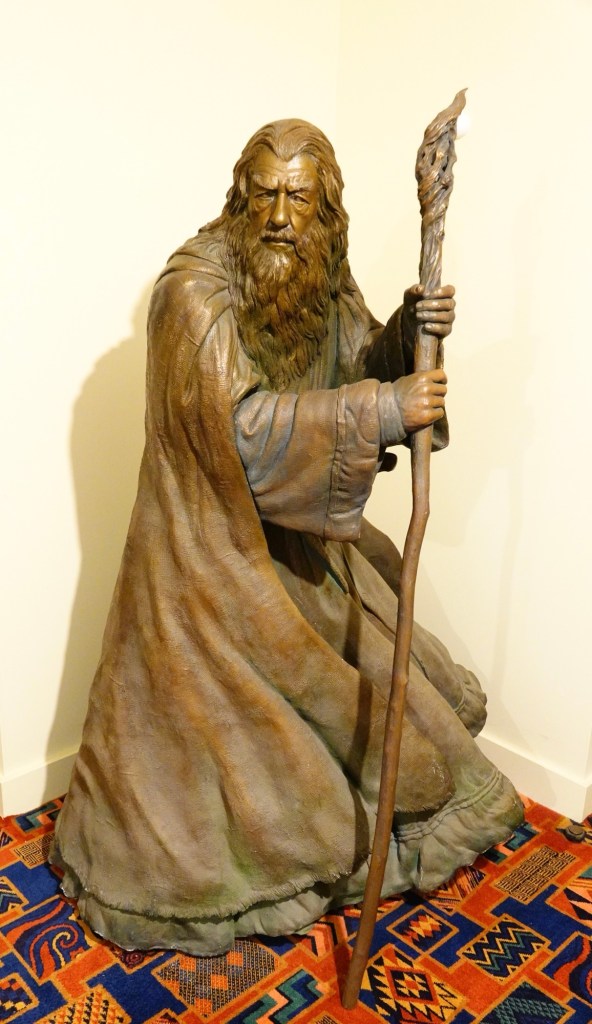
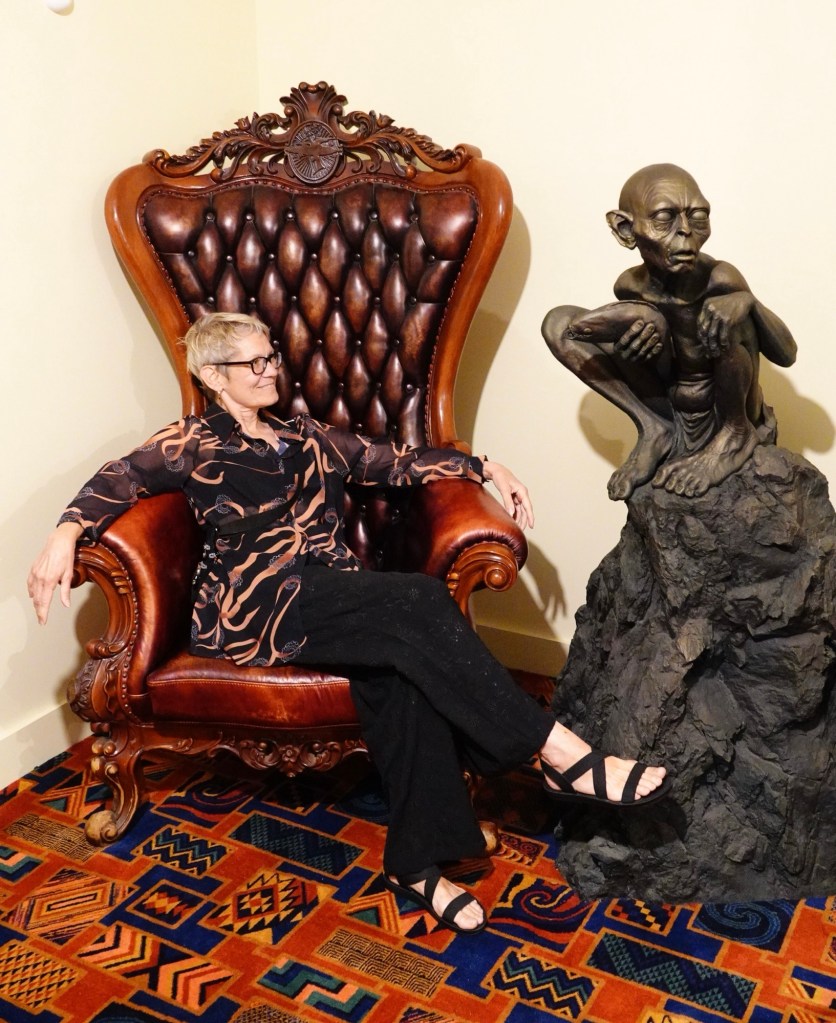
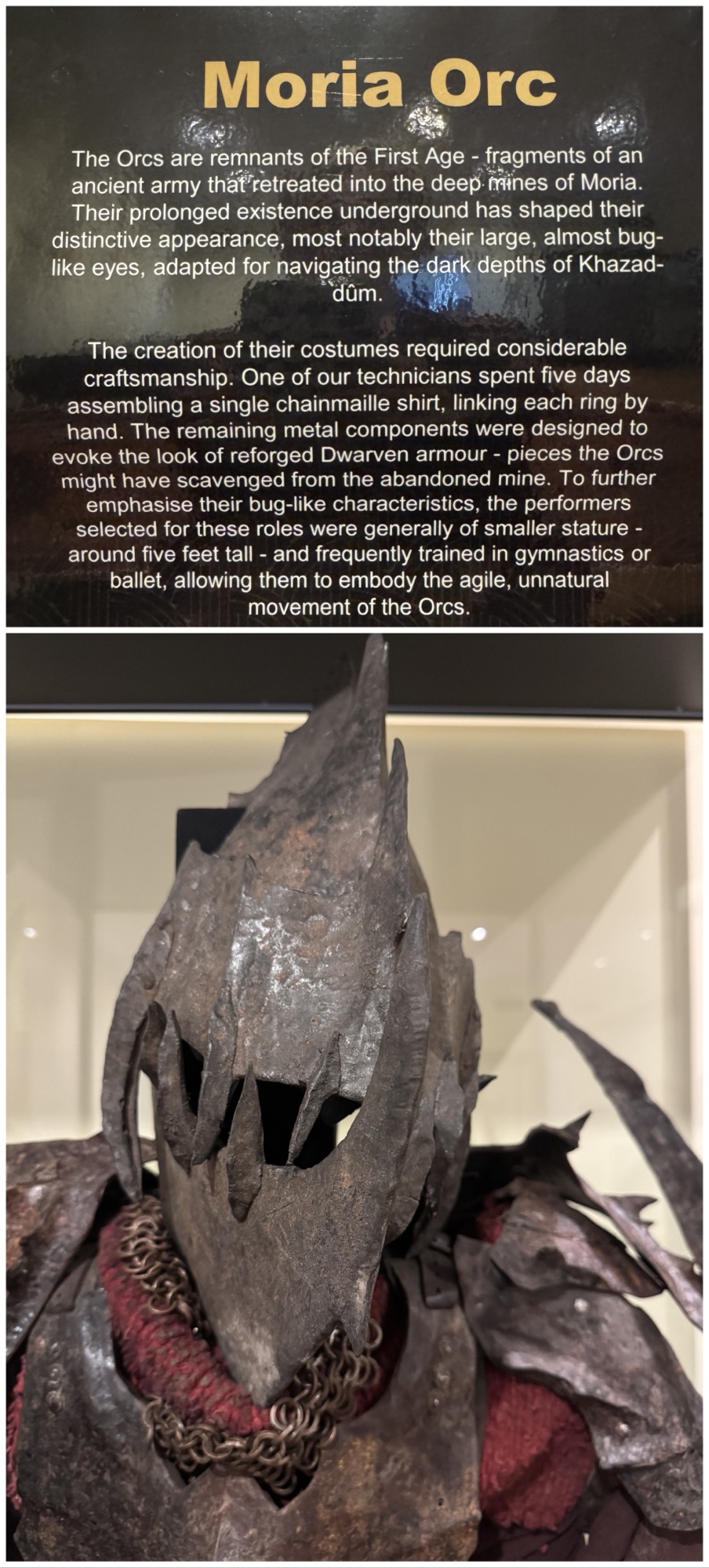
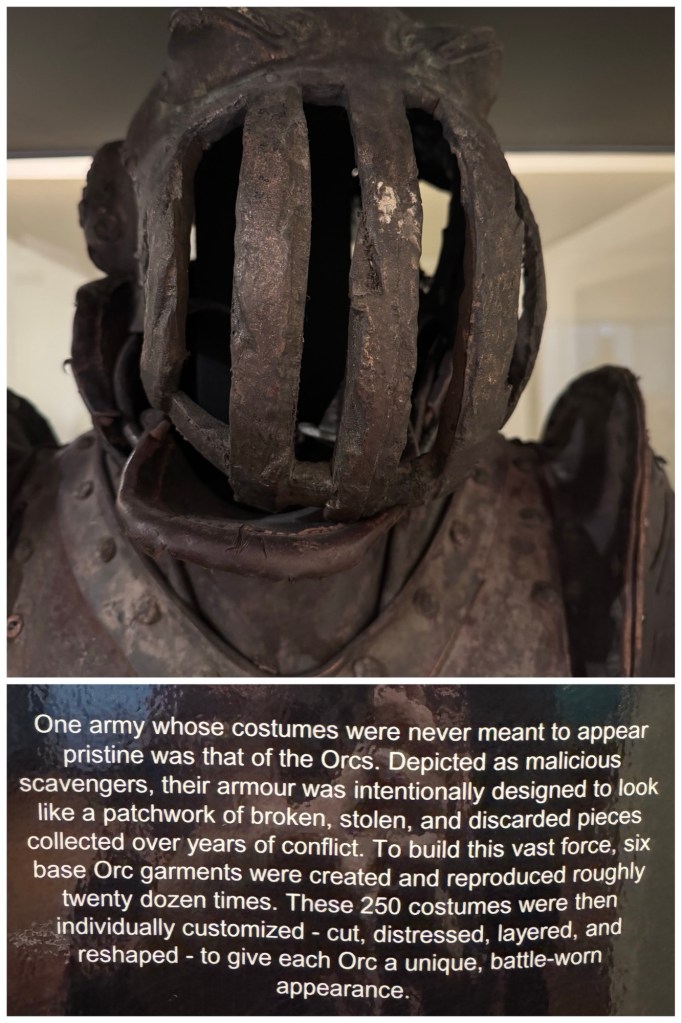
In the foyer/gift shop were displays of costumes along with brief explanations about their design and construction.
Our tour guide, Mac (short for Mackenzie), was actually a Wētā creator herself, specializing in horror special effects. When there is not a project in which artists are actively engaged, they can choose “guide duty”. She was able to share stories and unique insights to supplement the videos that led us through the tour.
The introductory video, featuring Wētā’s founders Sir Richard Taylor and his wife Tania Rodger, demonstrated just how down-to-earth and enthusiastic the couple is about their company. Our guide confirmed that the duo remain just as creative and “nerdy” as they seem on film. Wētā Workshop is a distinct company from Wētā FX (formerly Weta Digital), which is 60% owned by Sir Peter Jackson and Dame Fran Walsh, and apparently the owners hate to say no to any project – which is how they’ve managed to become experts in so many specialties.
As we moved through the various Workshop rooms, learning about how things as varied as prosthetics, animatronics, and forged steel swords are made, I was surprised to learn just how many television shows and movies over the past 30 years of the Workshop’s existence have involved world-building, costumes, props, make-up, and creatures made by Wētā. There’s a massive complete list here: https://www.wetaworkshop.com/projects.
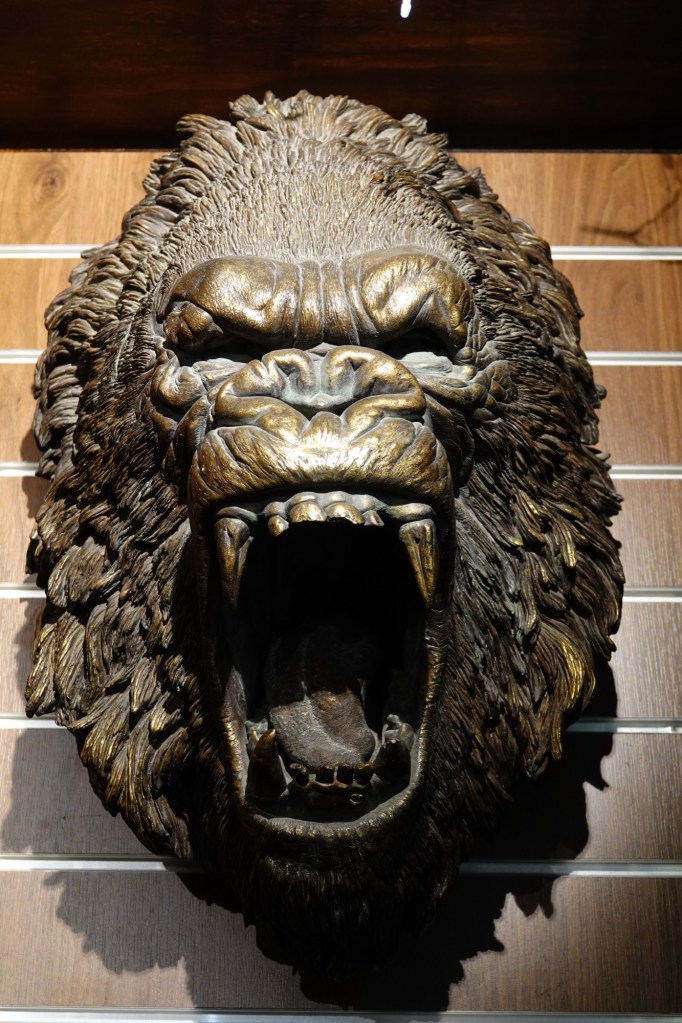
The company is about much more than just Lord of the Rings, although that trilogy was what made them a household word.
We got to see examples of everything from chain-mail and swords, to painstakingly crafted hair and prosthetic noses, to video-game inspired weaponry, to huge creatures, to miniature collectibles, and more.
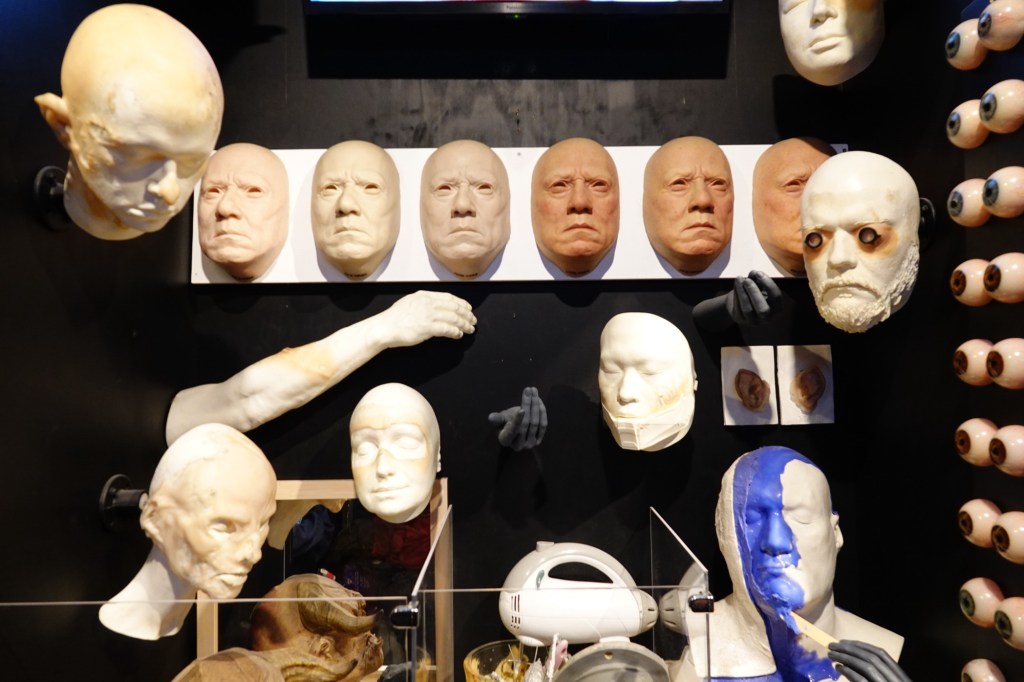
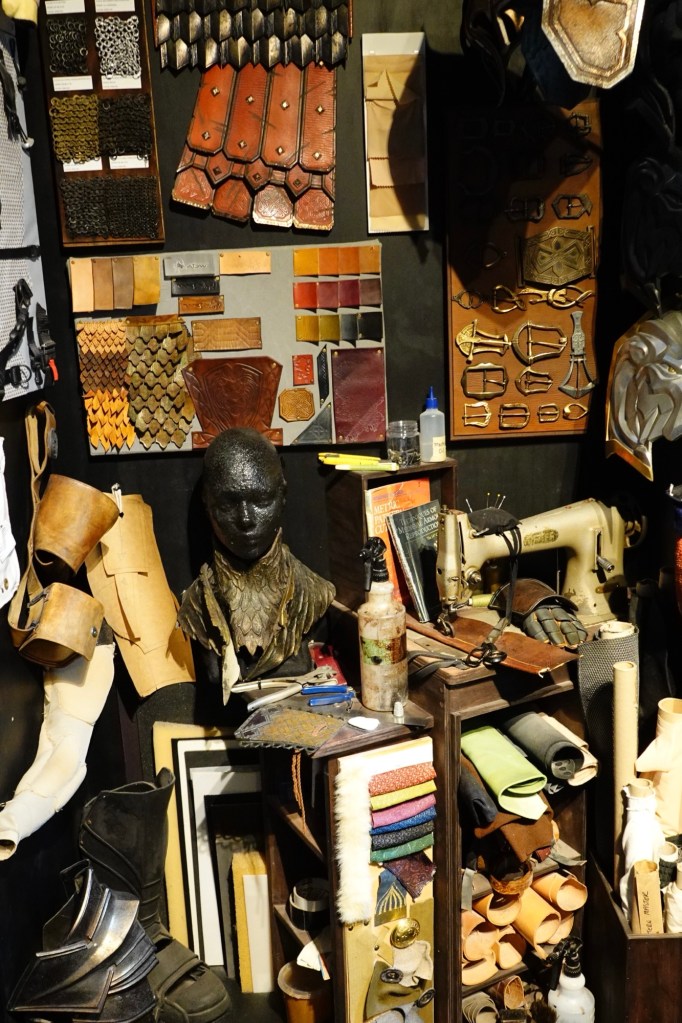
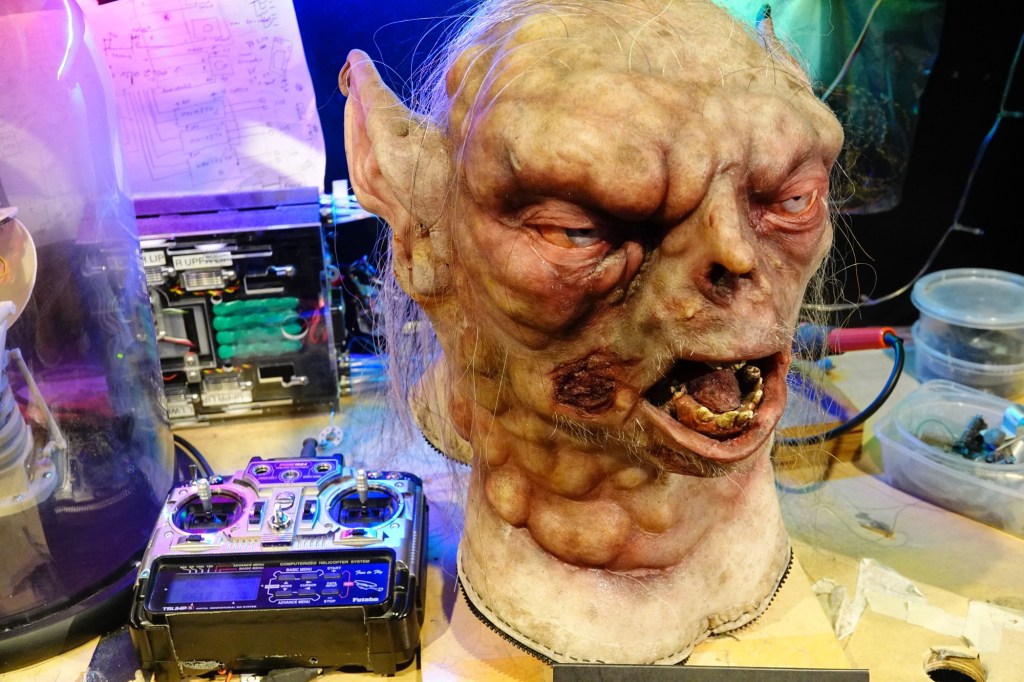
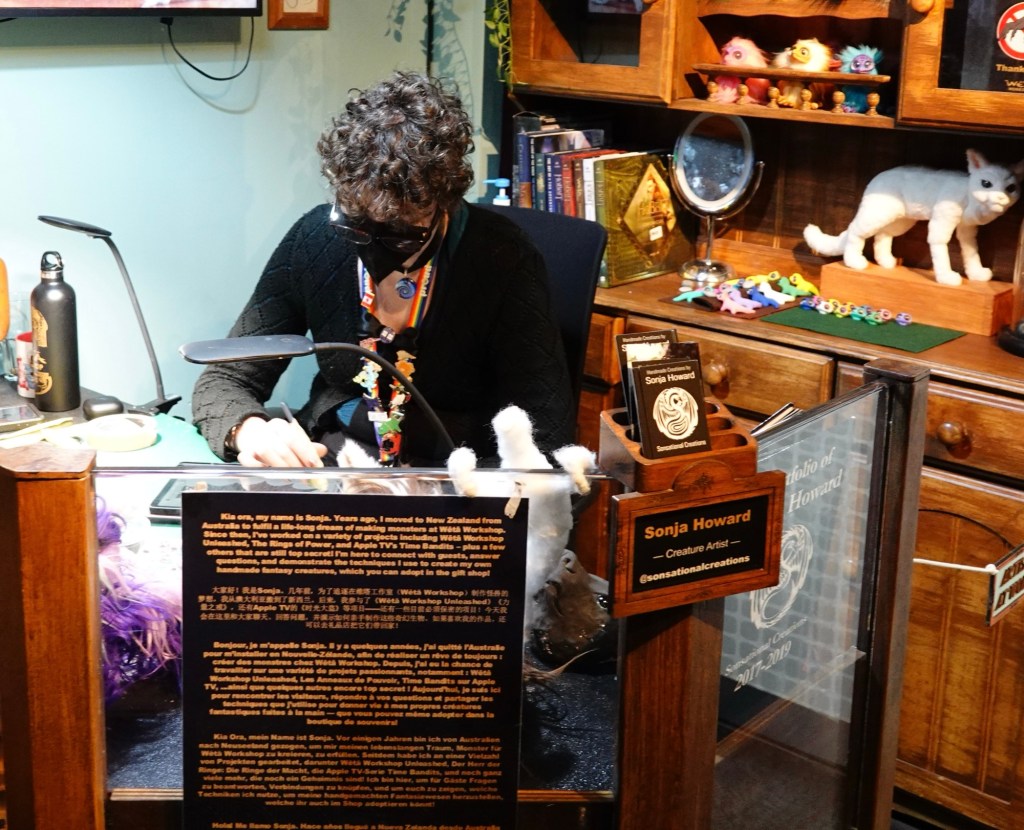
We met Sonja Howard, a young neurodivergent (she shared that information with our group) creator who specializes in deceptively cute monsters.
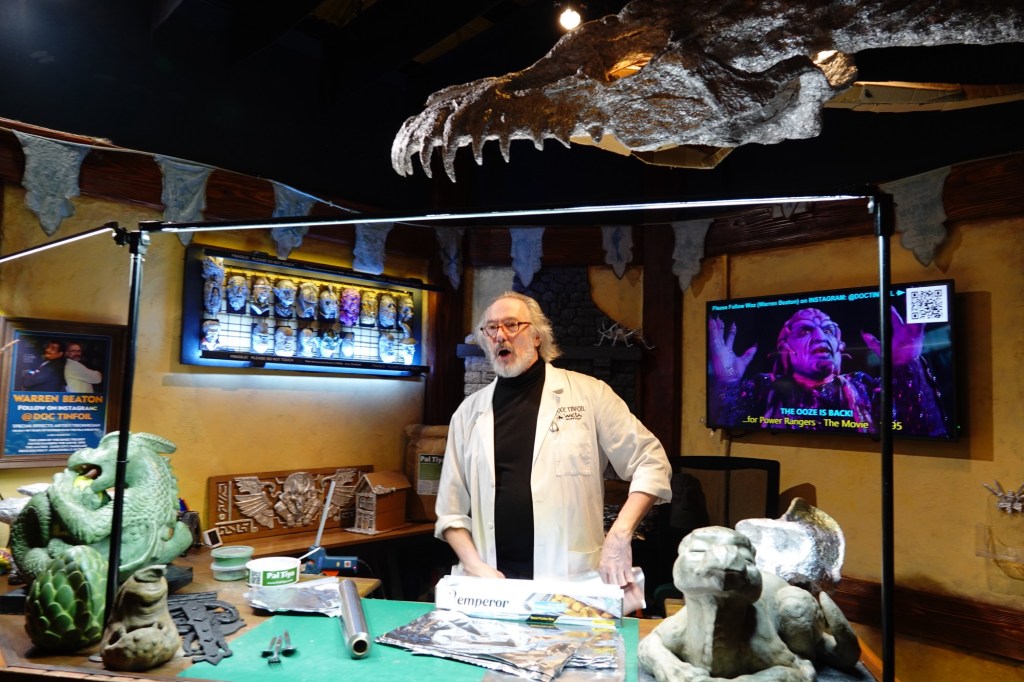
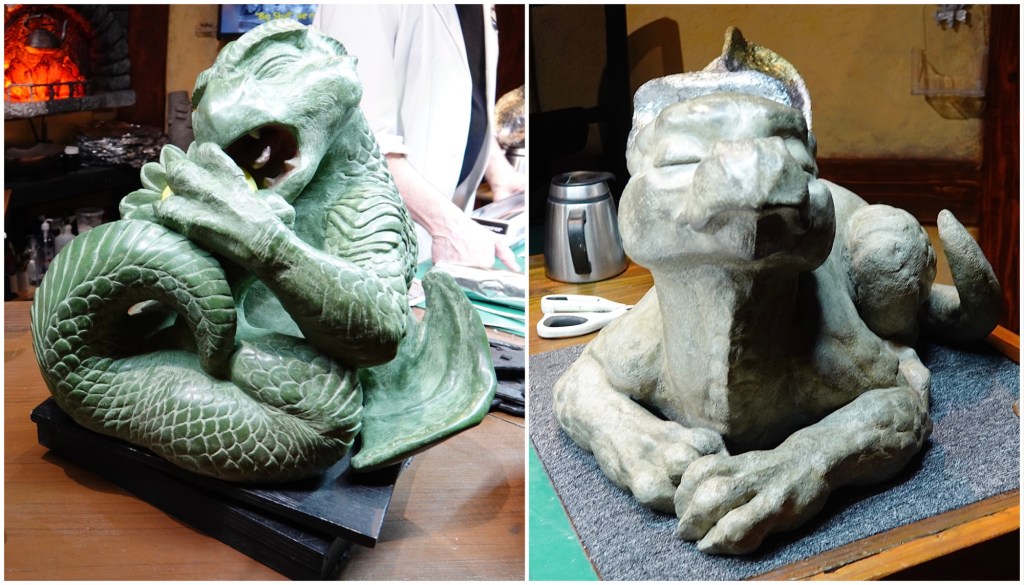
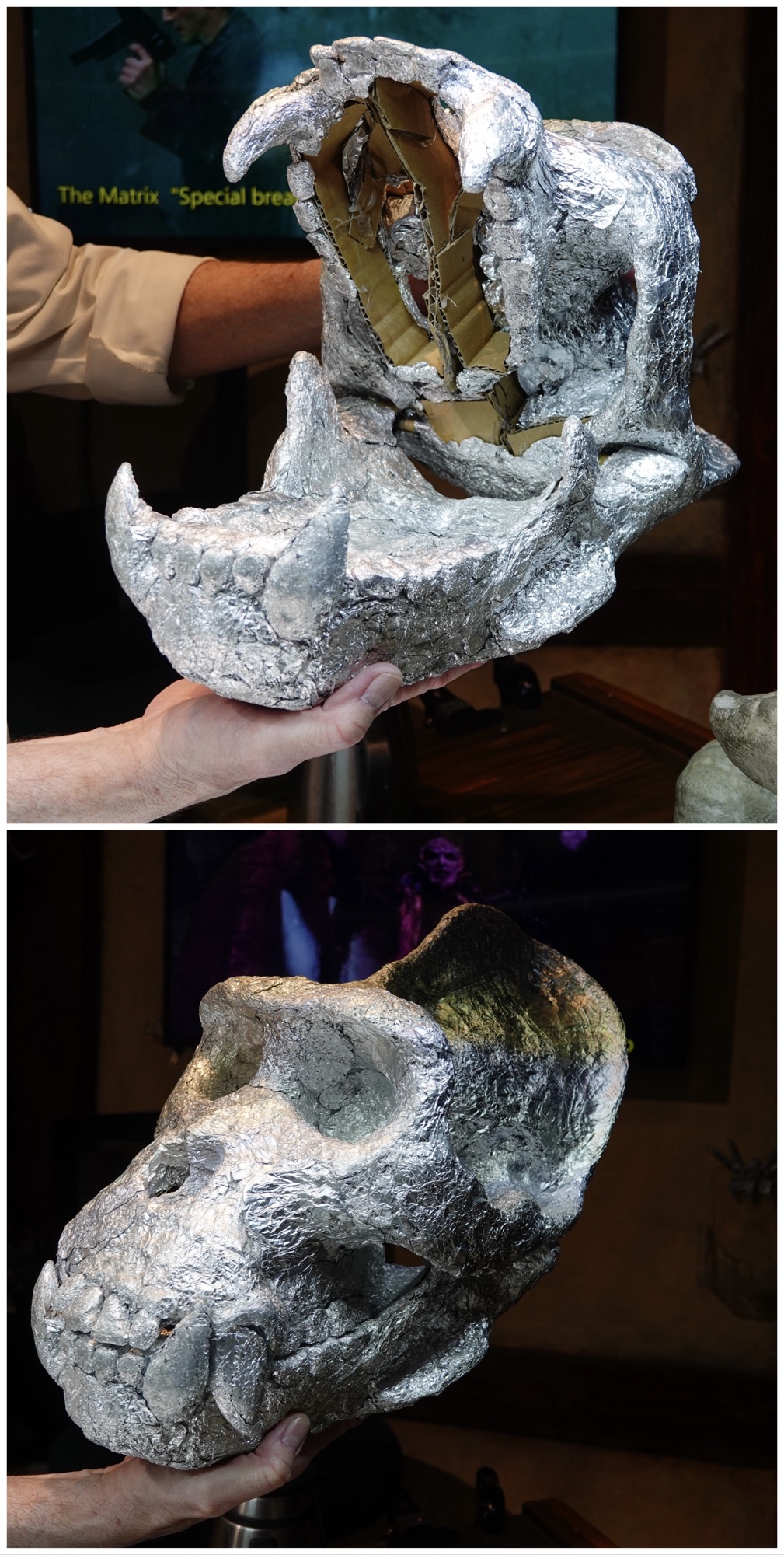
We also met Warren Beaton, aka Doc Tinfoil, who showed us how sculptures can be created from foil on cardboard frames, and then covered with a special plaster (he’s a chemist!) that hardens into weatherproof “rock” .
While Ted would have absolutely loved to have photos of all the amazing things we saw, we’ll just have to remember them the old-fashioned way.
It certainly was a neat insight into the creative processes involved in what Wētā Workshop does.
While today may have been the last of our “official” Wētā plans, when we get to Auckland we have a day in Hobbiton booked. Even though the set we’ll visit was rebuilt as a permanent tourist attraction by the film’s art department (not Wētā), the visual language, textures, and detailing come directly from Wētā’s design work.
 Rose and Ted’s Excellent Adventure
I look forward to sharing this episode with young relatives who are both studying to become media artists — creating animations the new fashioned way. It amazes me that the Weta artists continue to do such painstaking work in the real, 3D world and I hope they always will. Encouraging in this ever more AI dominated world. I saw the first part of Lord of the Rings recently and it’s as fresh as ever — there is something very reall and alive about it. Thanks for the tour.
LikeLiked by 1 person
State of the art 3D printers are being used by Weta to create some of their pieces, but the vision and design is all human – as are the women who knit chainmail and the sword smiths, makeup artists, the people who hairs into creatures one by one for hours, and the molders of prosthetics. Art and craftsmanship live on!
LikeLiked by 1 person