It’s our official Day 1 in Wellington, and of course, like Ko-Ko, the Lord High Executioner of Titipu in Gilbert and Sullivan’s Mikado, “I’ve got a little list.” How much we’ll actually accomplish over the next 9 days remains to be seen.
- Te Papa,
- Zealandia Ecosanctuary,
- Wellington Cablecar,
- Botanic Gardens,
- Old Saint Paul’s,
- The Beehive & Government Buildings/Supreme Court tours,
- Wētā Workshop,
- Mount Victoria Lookout,
- getting distracted by all the interesting architecture, and
- maybe greeting the Viking Star when she docks here as part of her 25/26 World Cruise
First, a quick note about our accommodation at the Gilmer Apartment Hotel. It’s exactly like the photos in Expedia that we used to do our booking (the only exception being the lack of blue paint on the wall) and right in the heart of the Central Business District and Lambton Quay shopping area.
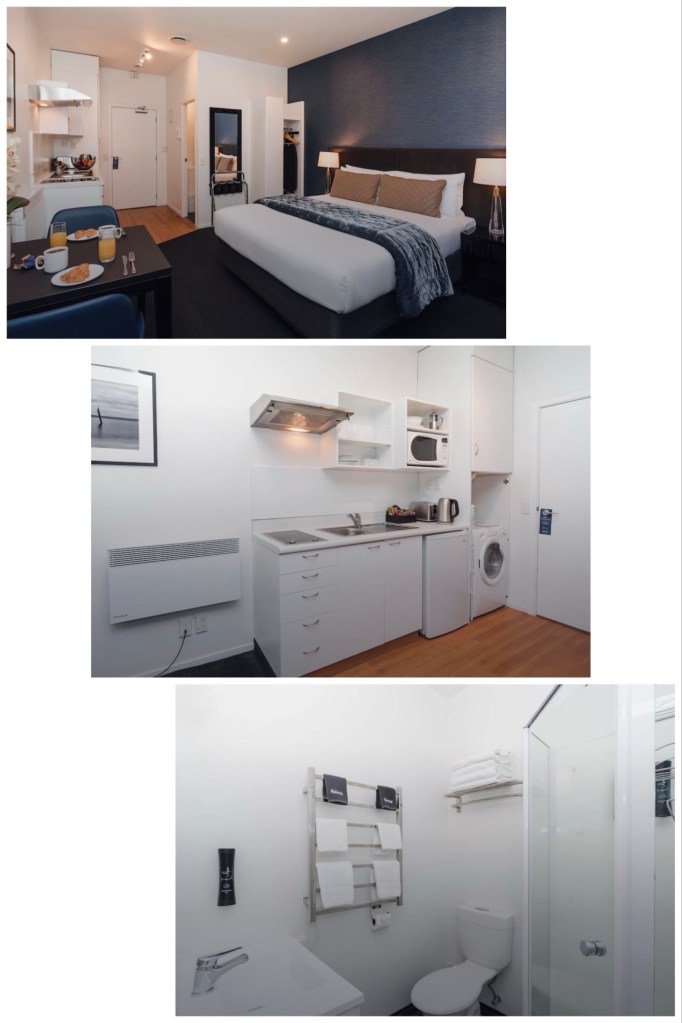
What the description didn’t tell us was that it is up on a hill that makes getting luggage to the hotel on foot a cardio exercise, or that the receptionist Mia would be such a delight and so helpful. The space is small, but that’s encouragement to get out and do things. The kitchen is perfect for making the kinds of non-cooked breakfasts that we generally eat (toasted bakery items, yogurt, juice & coffee), and the compact washer/dryer is great for small loads, with a larger commercial dryer available in the shared facilities area. Staying here gives us access to a nearby fitness club but, honestly, with all the hills and walking everywhere, that’s not a feature we’ll use.
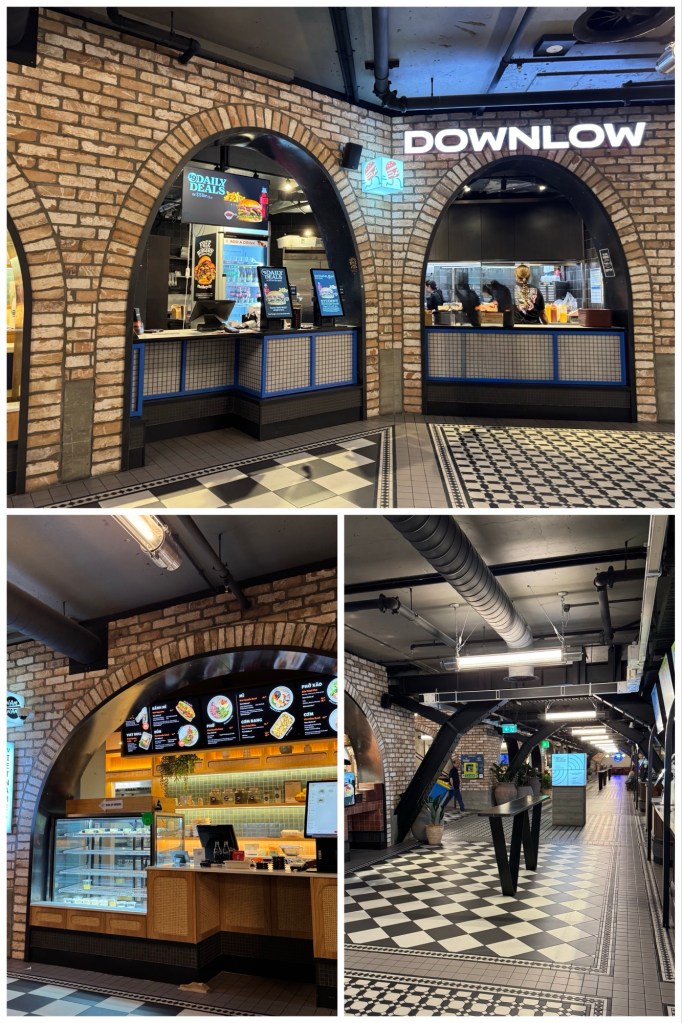
We spent yesterday afternoon settling in, refreshing some clothing, and visiting a charming underground food court at Willis Lane for a late lunch.
Today… the Museum of New Zealand Te Papa Tongarewa, first of the attractions on my little Wellington list.
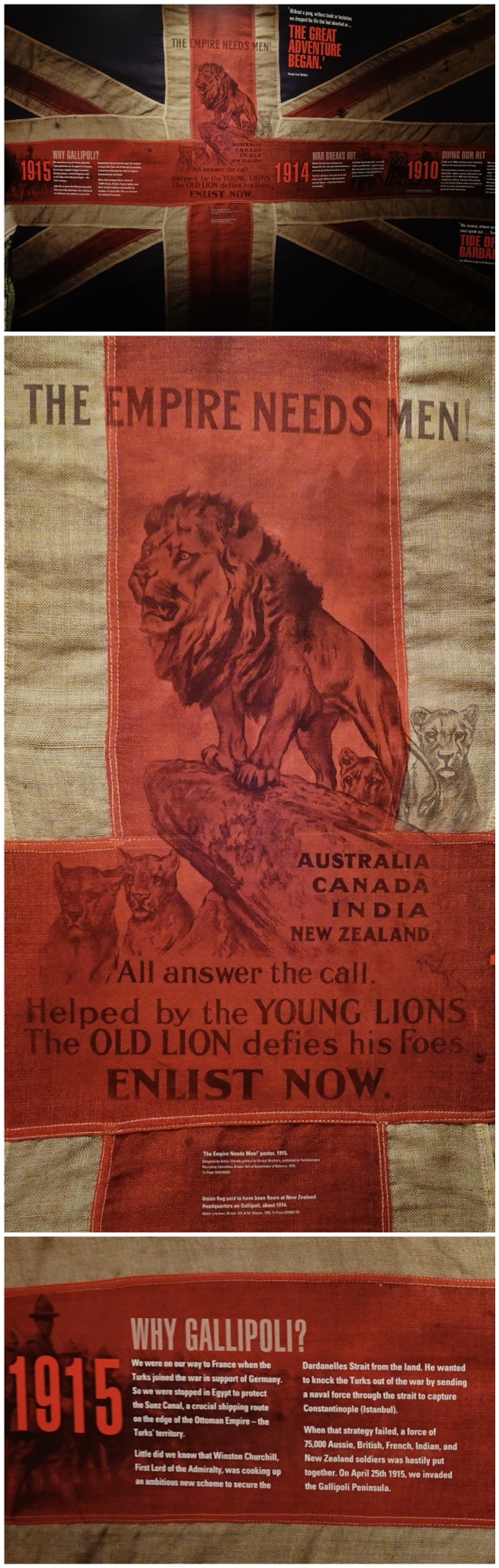
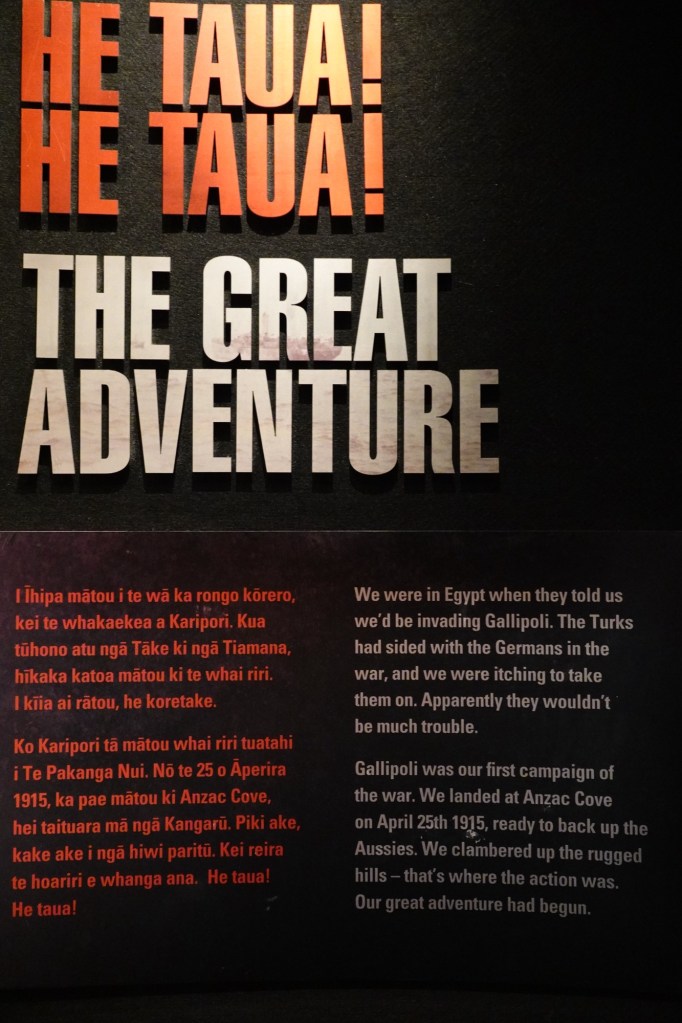
Although the museum also has wonderful areas focussed on the history of Polynesian migration to New Zealand, to Māori culture, to the country’s unique environment, and to the impact people have had on this land, for me the two highlights are the Māori waka (canoes), and the area dedicated to the battles of Gallipoli during WWI, in which the newly formed ANZAC (Australian and New Zealand Army Corps) forces fought so bravely and incurred such huge losses.
Our first stop was the huge exhibit called Gallipoli: The Scale of Our War. While I agreed with Ted that no museum exhibit could be as impactful as our in-person visits to Vimy Ridge (Episode 350) or Flanders and Ypres (Episode 351), this installation had me in tears more than once.
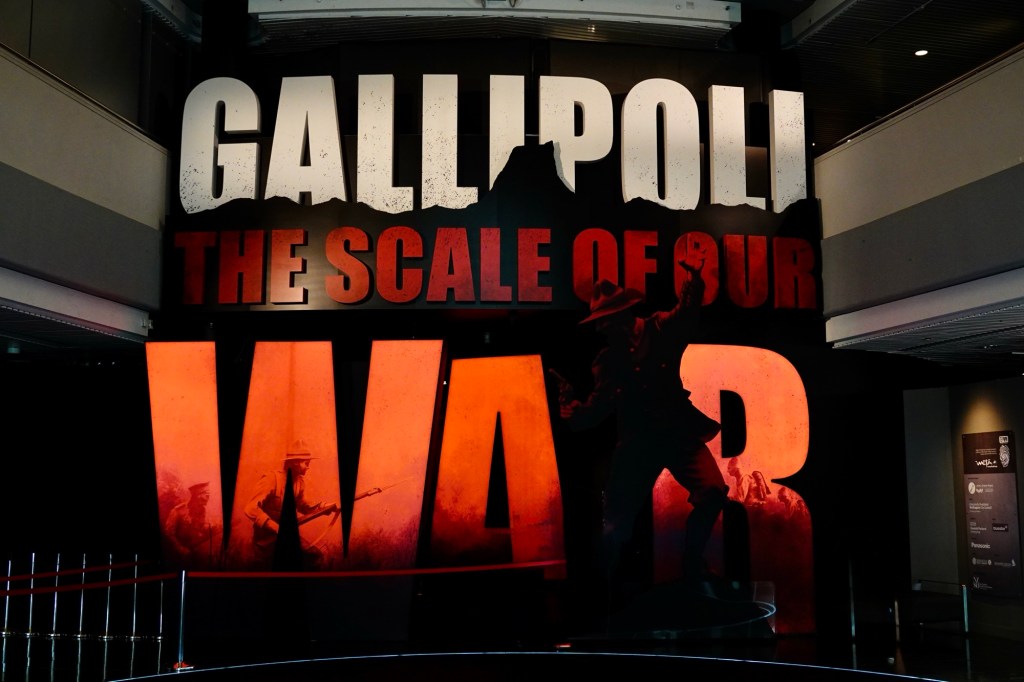
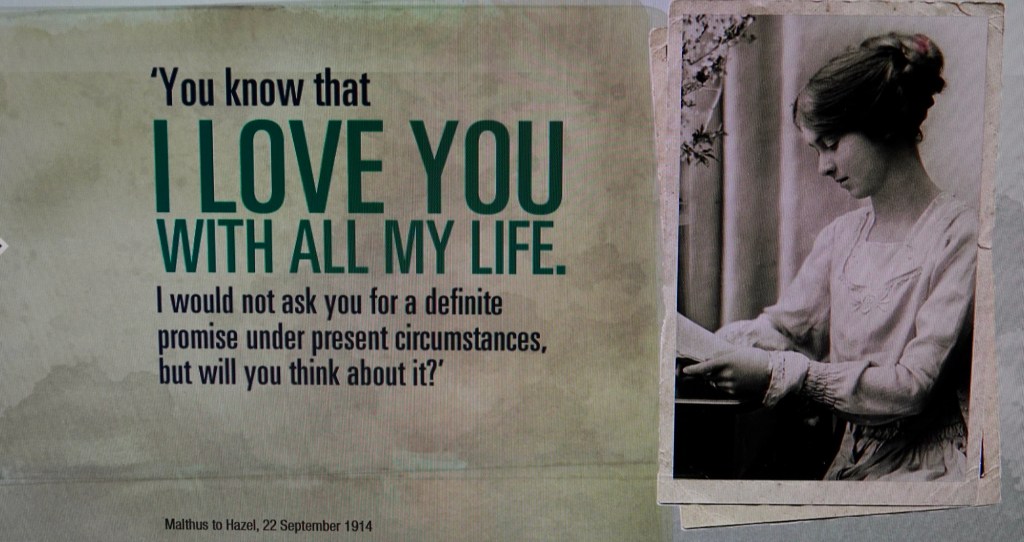
The exhibit takes visitors along a timeline of the Gallipoli campaign, using the stories of individual soldiers and volunteers. There is narration and somber music supplementing photographs and excerpts from actual letters sent to loved ones from the front.
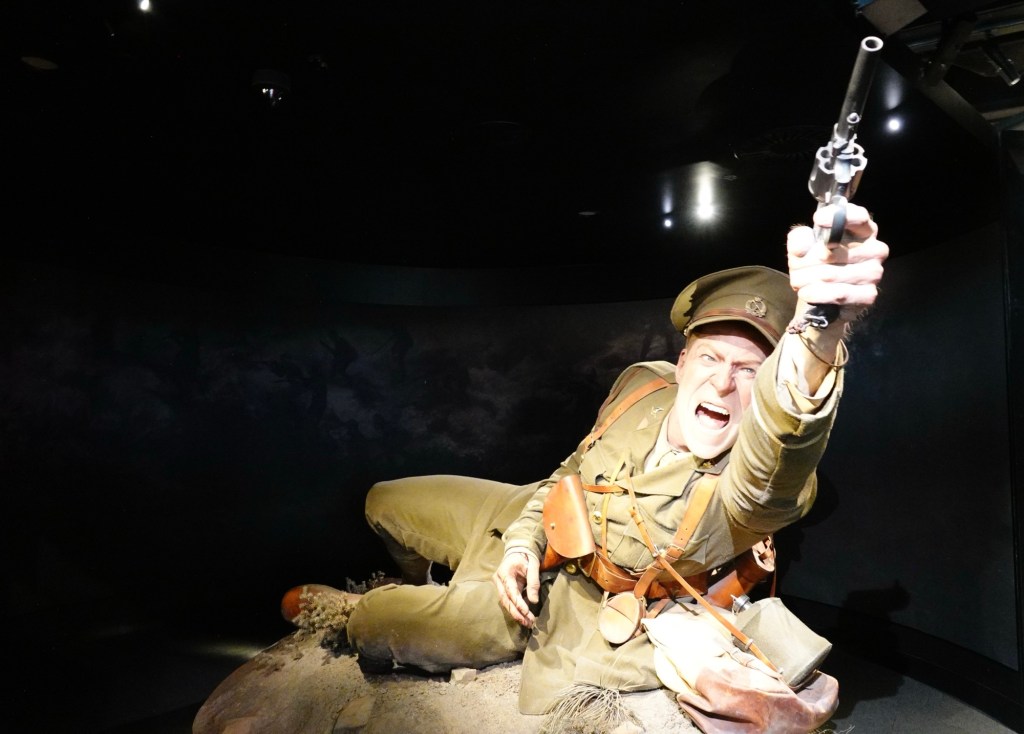
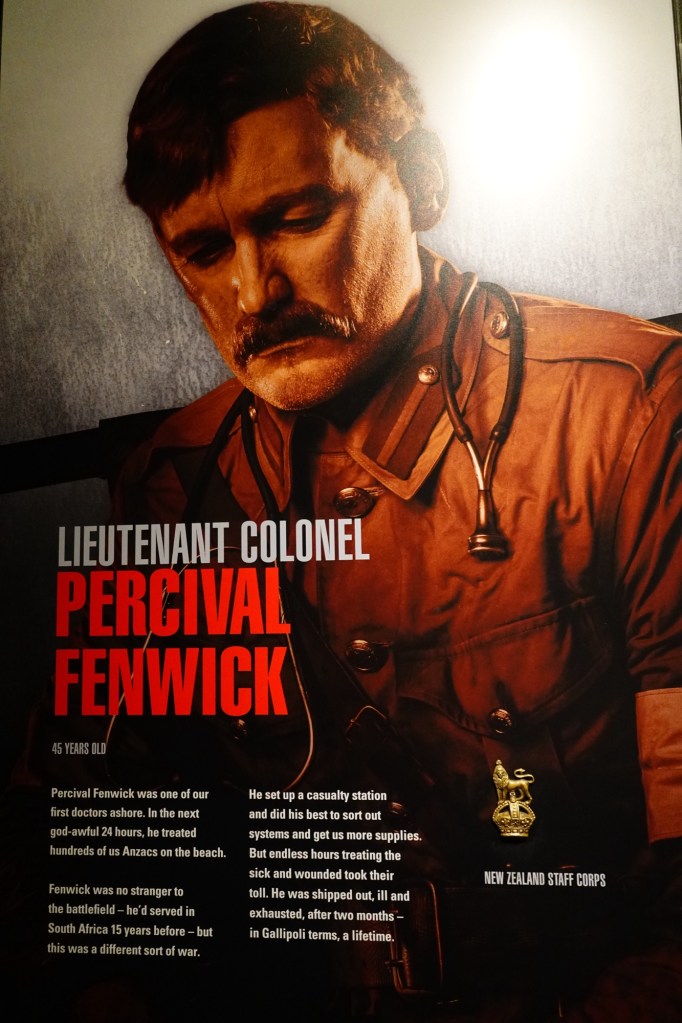
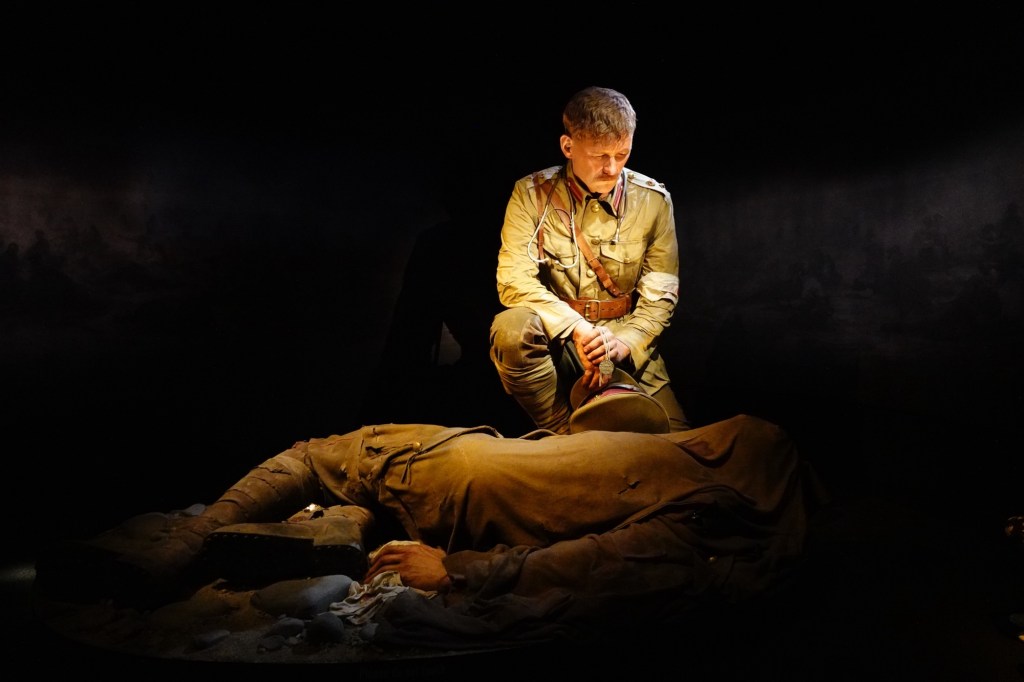
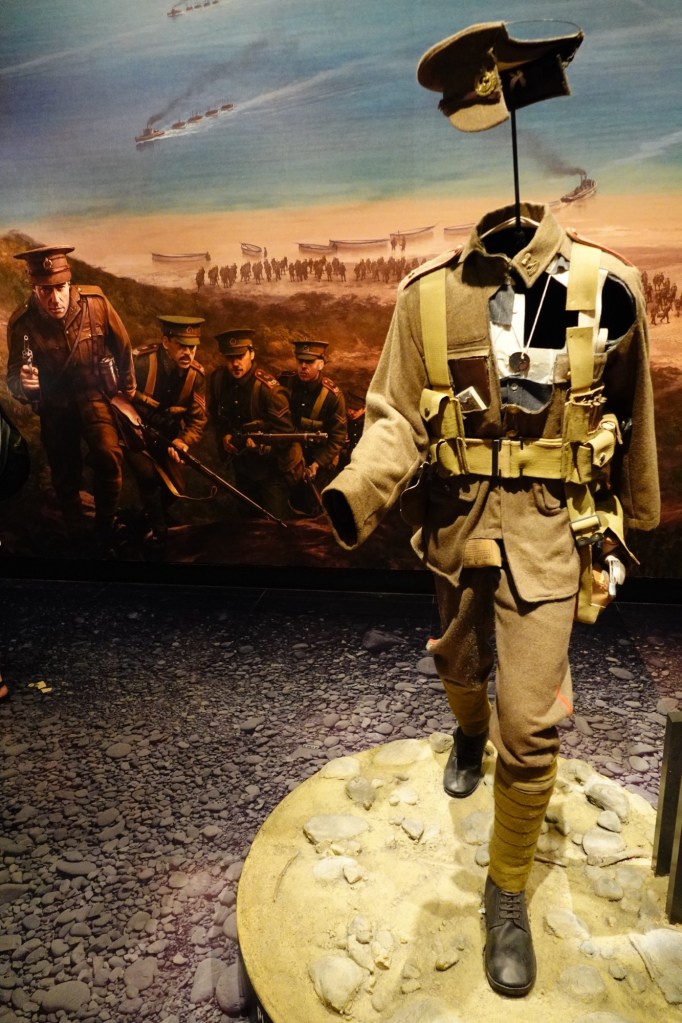
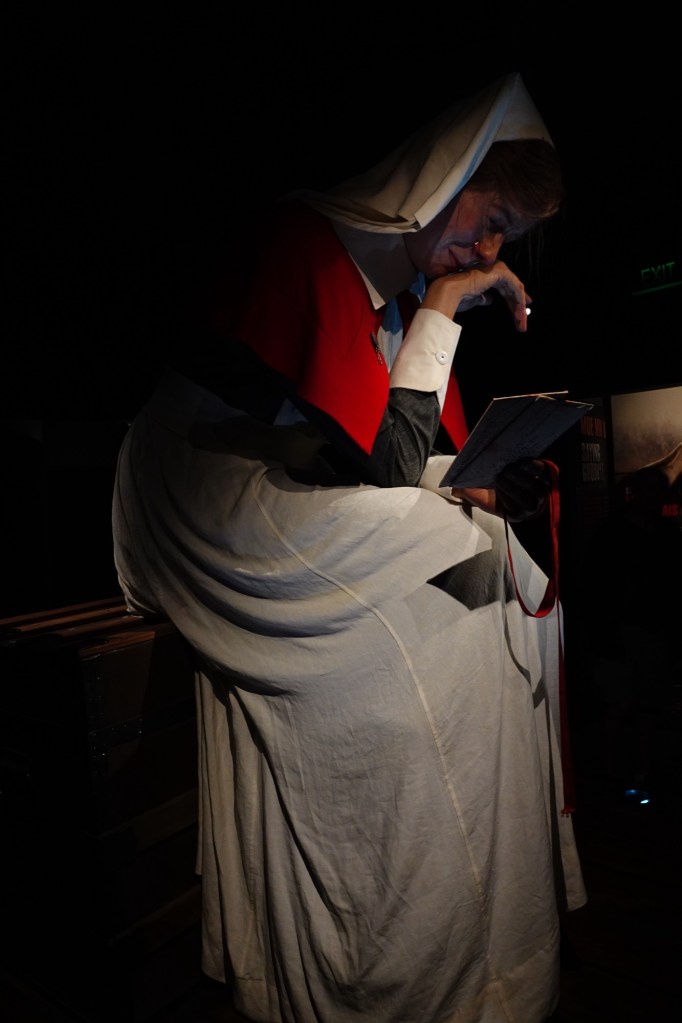
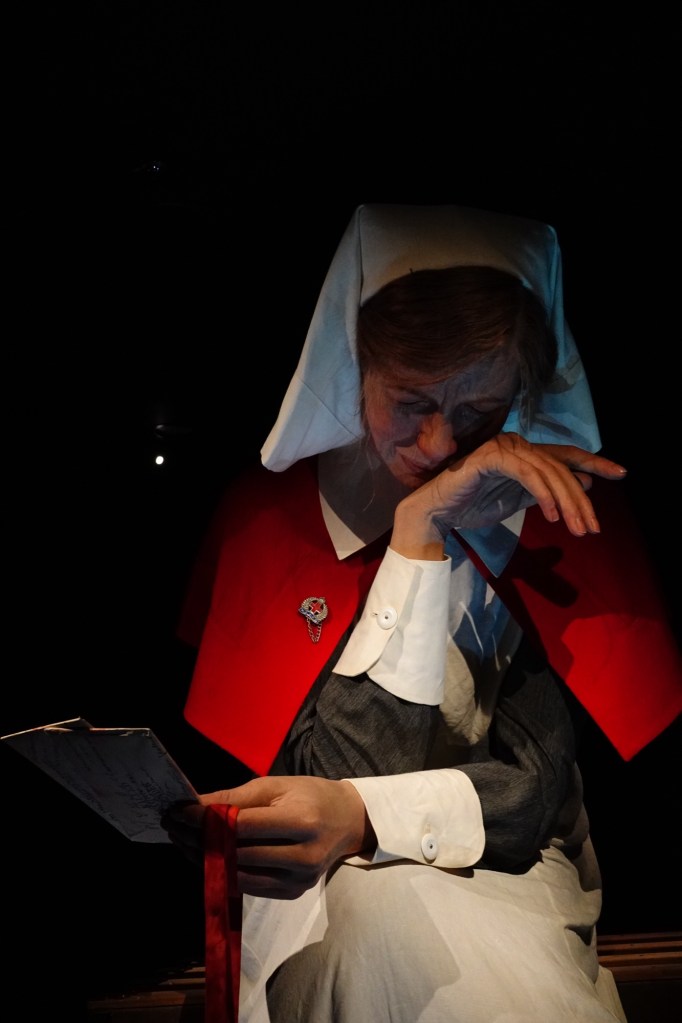
There were also historical artefacts like uniforms and weapons, but it was the incredible lifelike figures that tore at the heart.
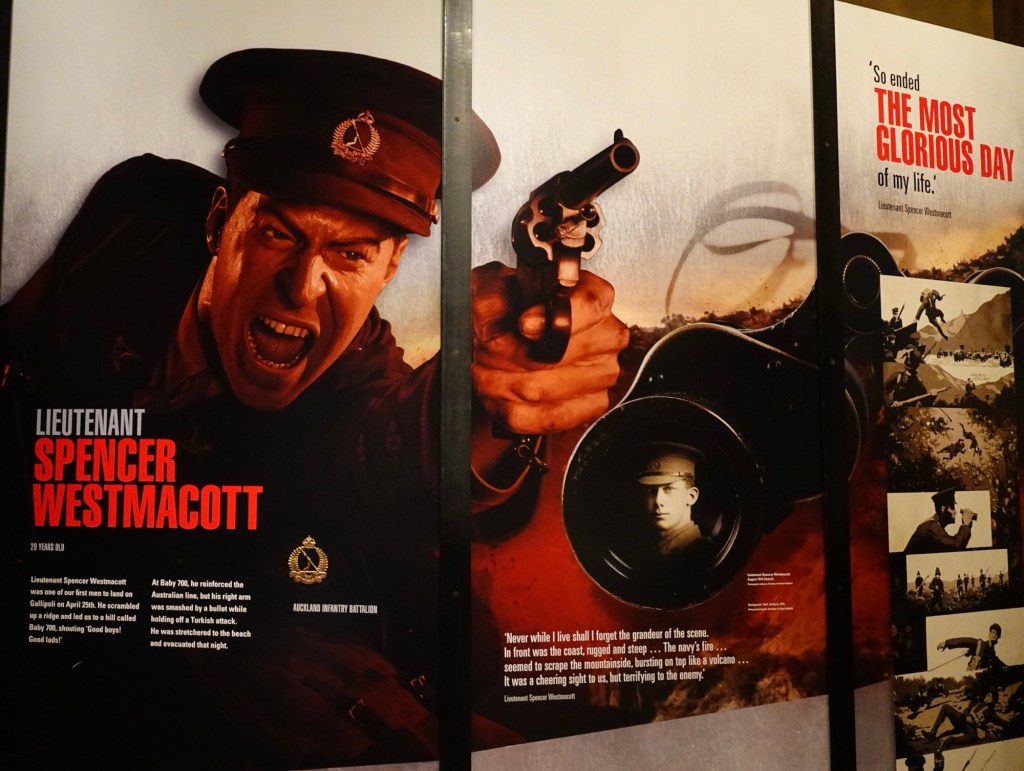
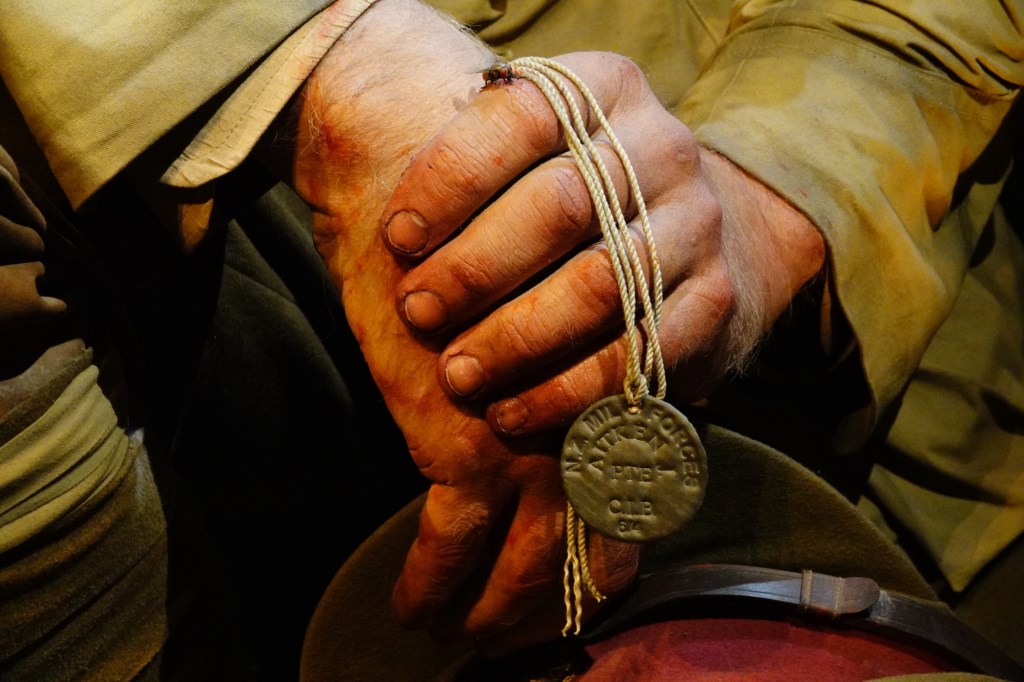
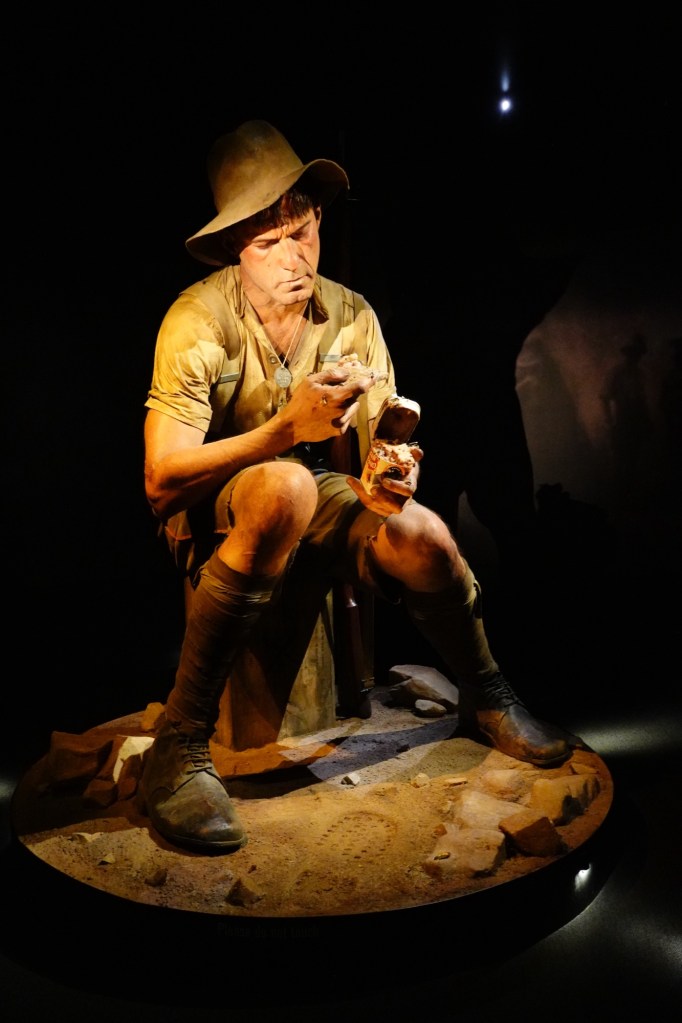
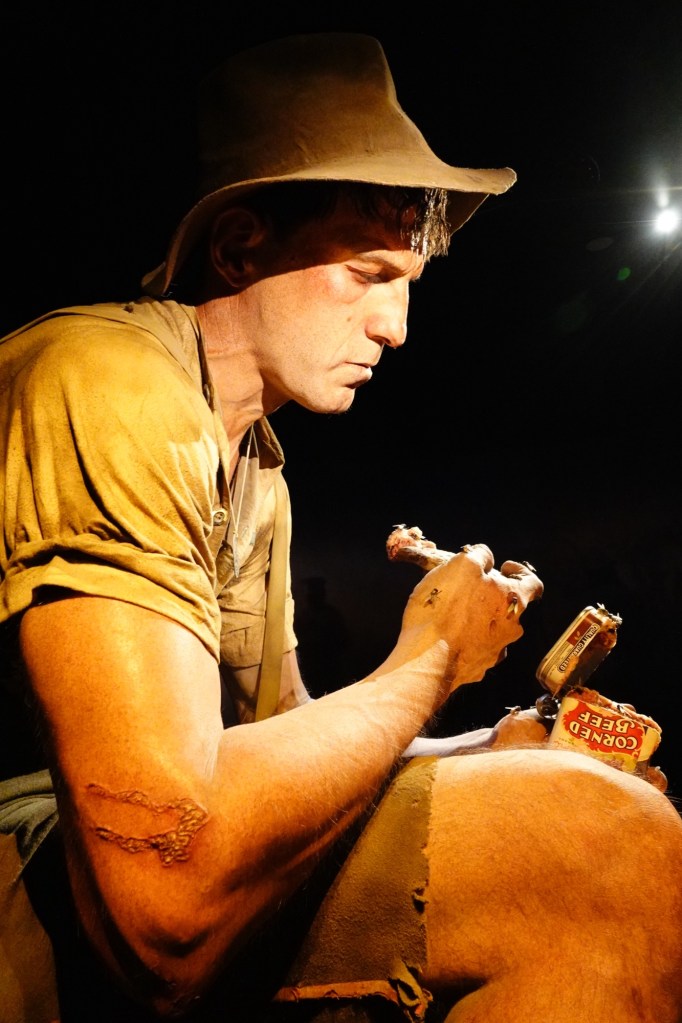
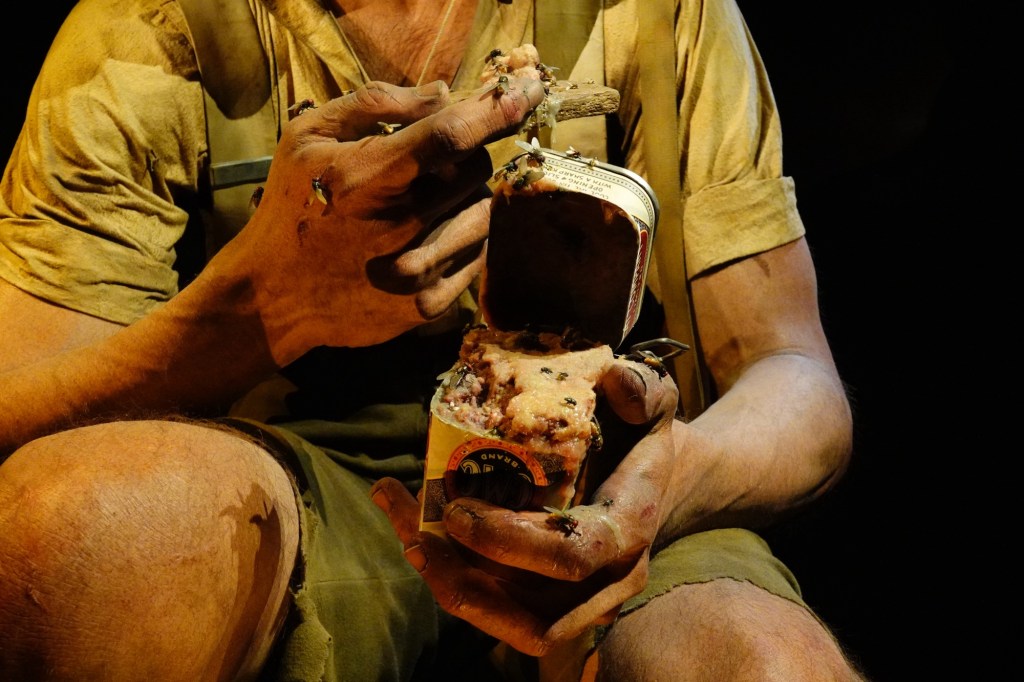
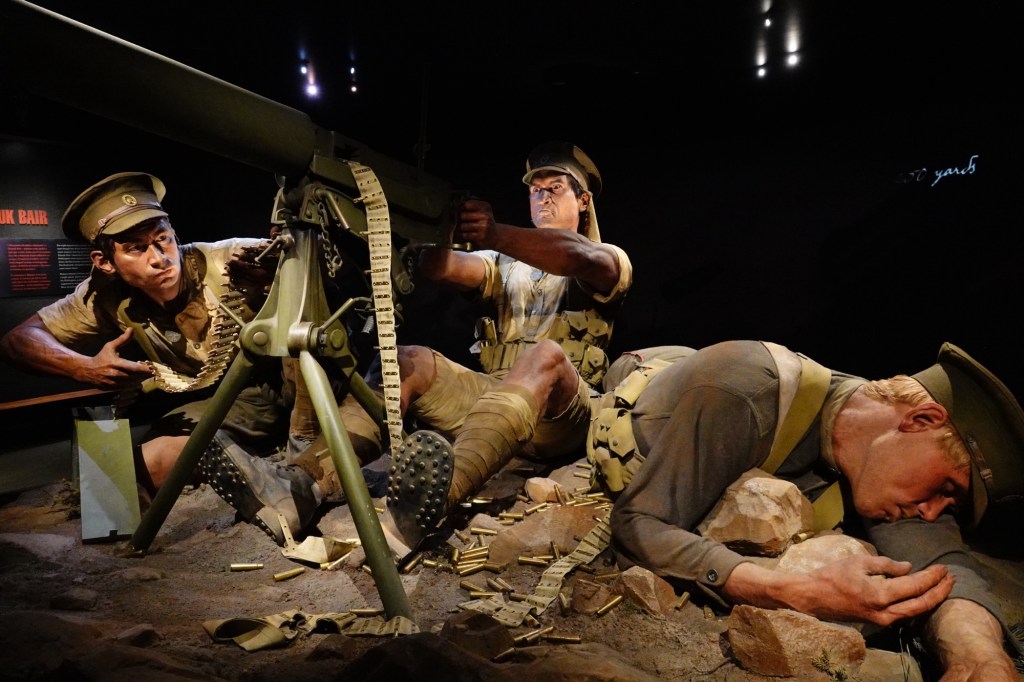
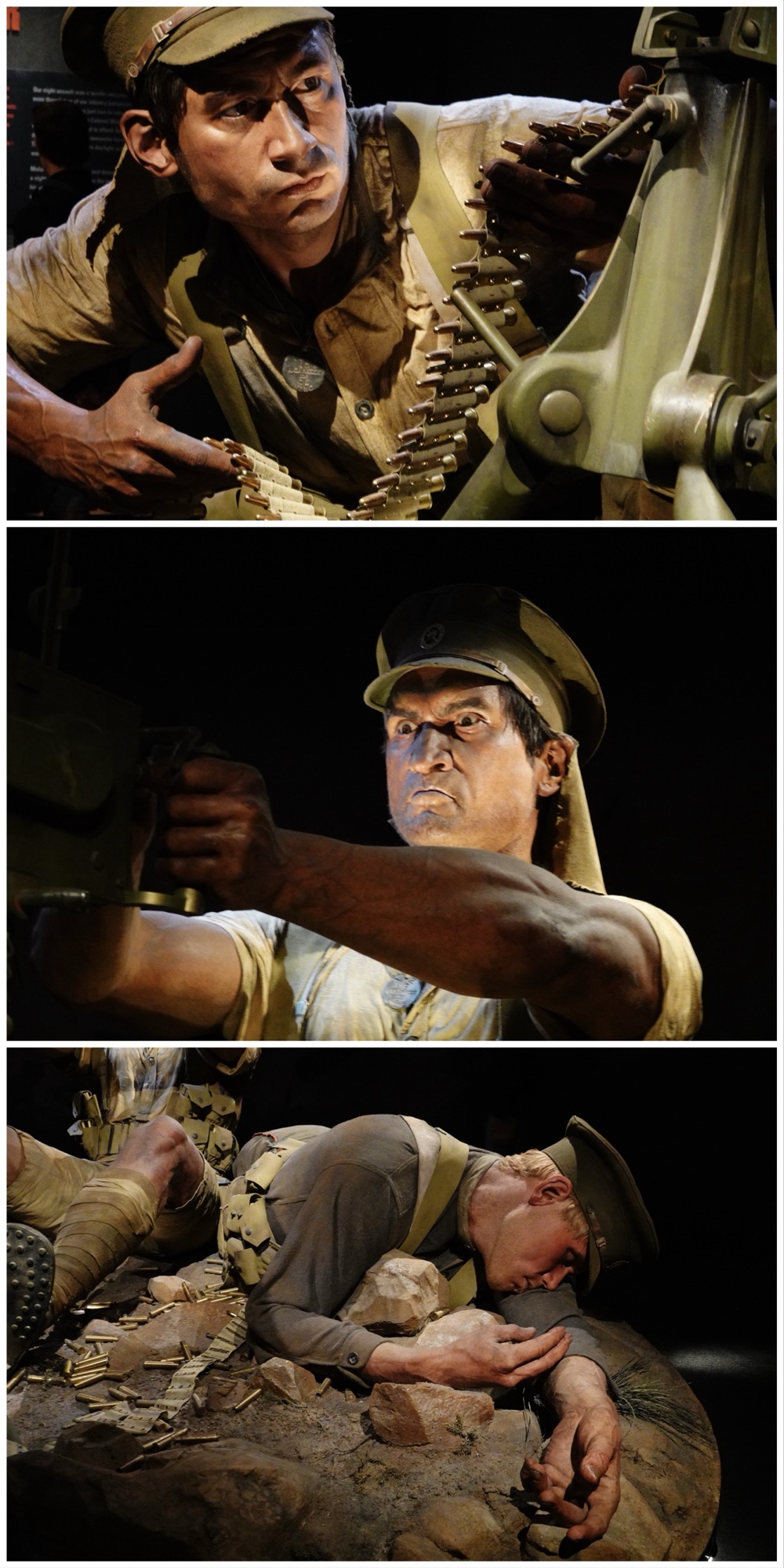
The eight monumental sculptures (at 2.4 times life-size) created by Wētā Workshop are hyper-realistic, and their magnified size really emphasizes the human cost of war. Each person depicted was a real New Zealander. Each was crafted to look like their photographs taken at the time of the Gallipoli campaign. Each displays raw humanity: physically in things like scars, body hair, sweat, and tears – and viscerally in facial expressions and glistening eyes.
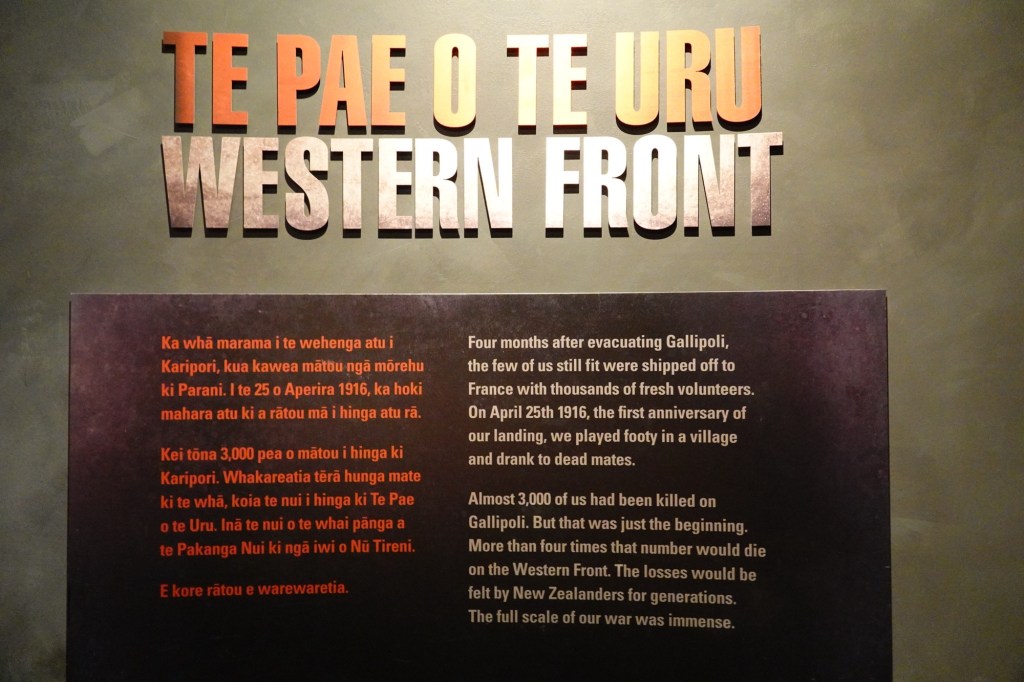
That these men and women could have gone through what they did, and some survived to go on to fight at the Somme, is almost unbelievable.
I’ll let Ted’s photos become our memories, although even the best photos cannot capture the effect of standing beside a 14ft/4.4m tall figure where every hair follicle is visible. These truly are – and were – giants of men.
LIEUTENANT SPENCER WESTMACOTT
LIEUTENANT COLONEL PERCIVAL FENWICK
PRIVATE JACK DUNN
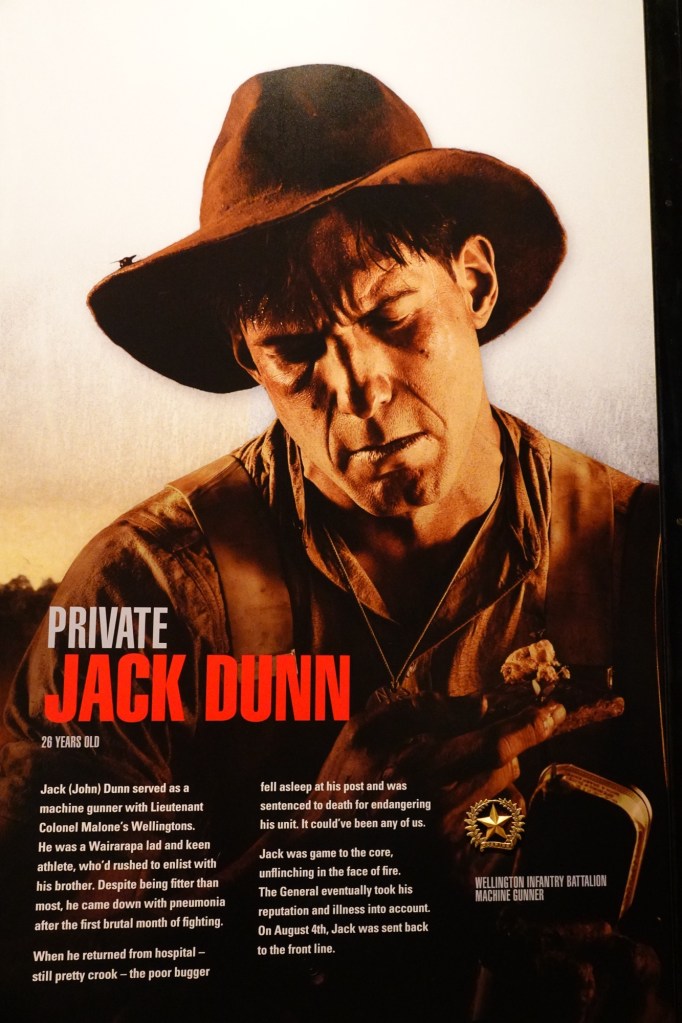
I found Jack Dunn’s story particularly heart-wrenching for its relatability.
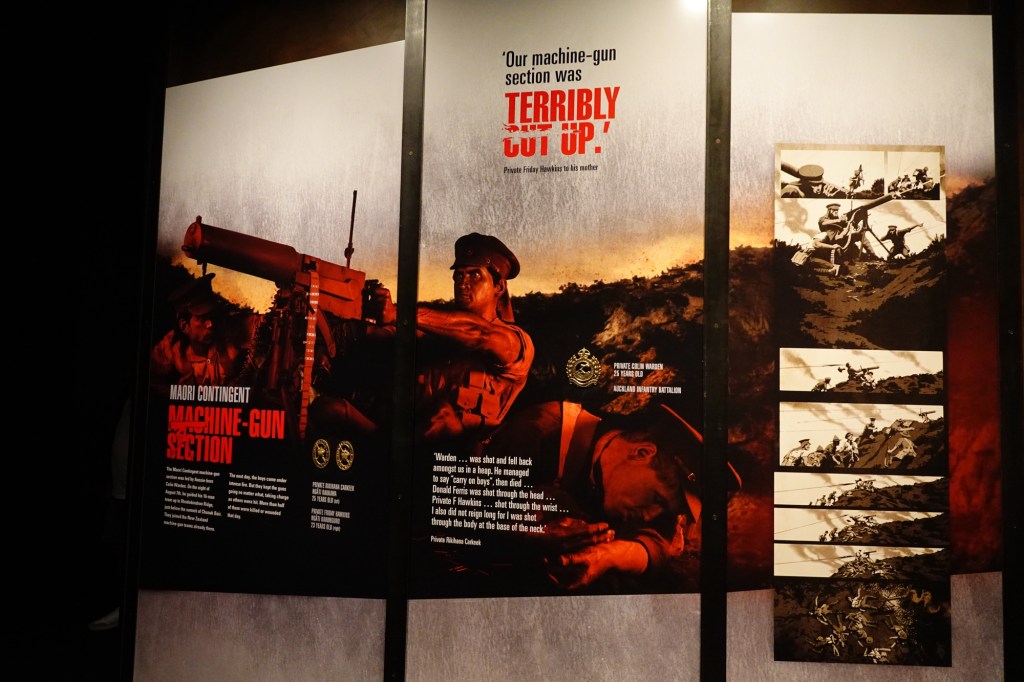
THE MĀORI CONTINGENT: L to R: PRIVATE RIKIHANA CARKEEK (NATI RAUKAWA) 25 years old, PRIVATE FRIDAY HAWKINS (NGATI KAHUNGURU) 23 years old, PRIVATE COLIN WARDEN, 25 years old.
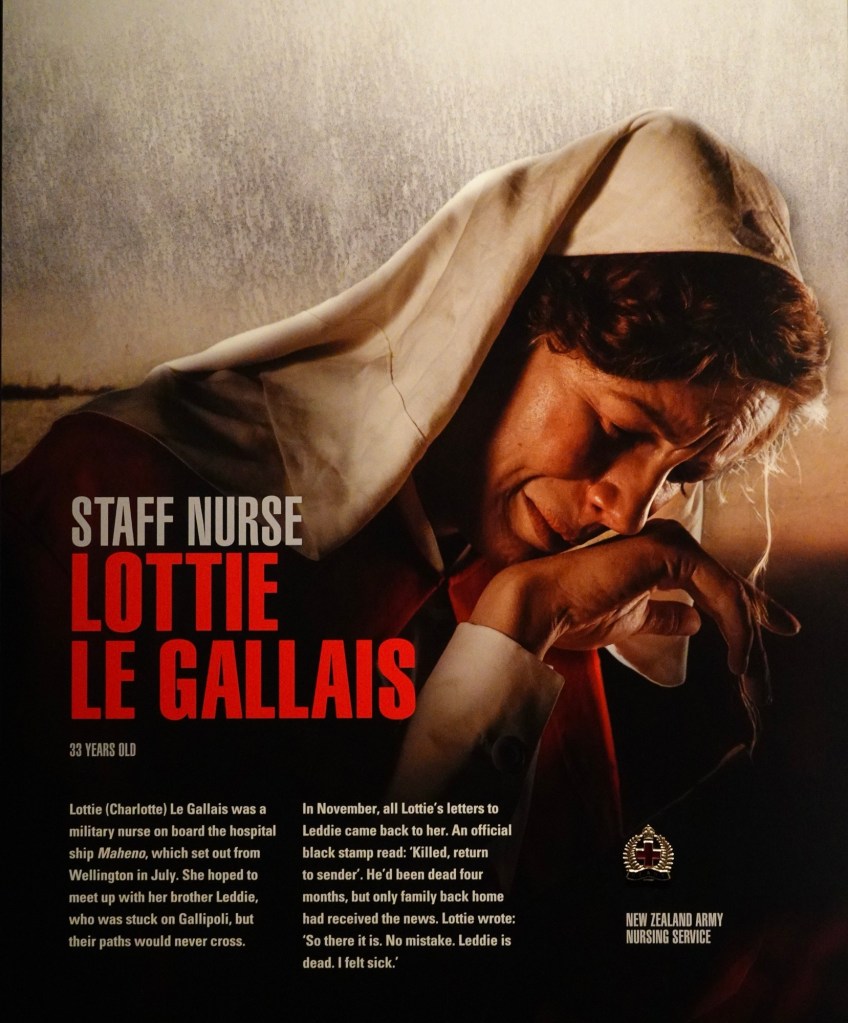
STAFF NURSE LOTTIE LE GALLAIS

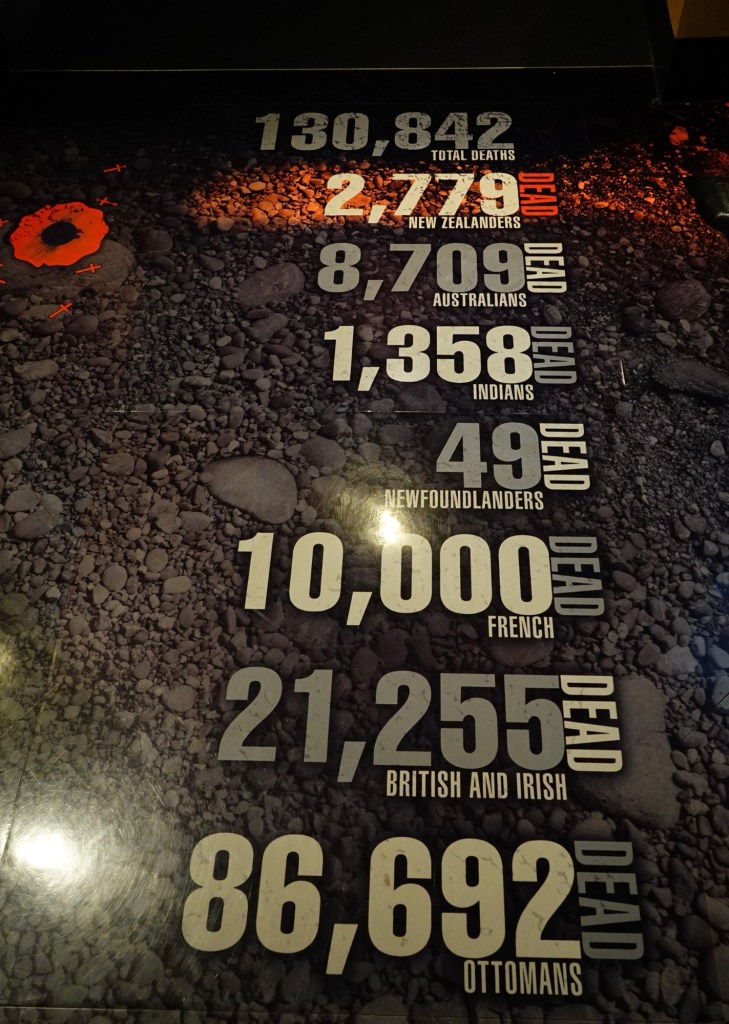
Below: the cost in human lives at Gallipoli. We noted the Newfoundlanders – Newfoundland was not yet part of Canada in 1915.
At the end of the exhibit each visitor was invited to lay a poppy at the feet of Cecil Malthus, the soldier who survived to marry his Hazel.
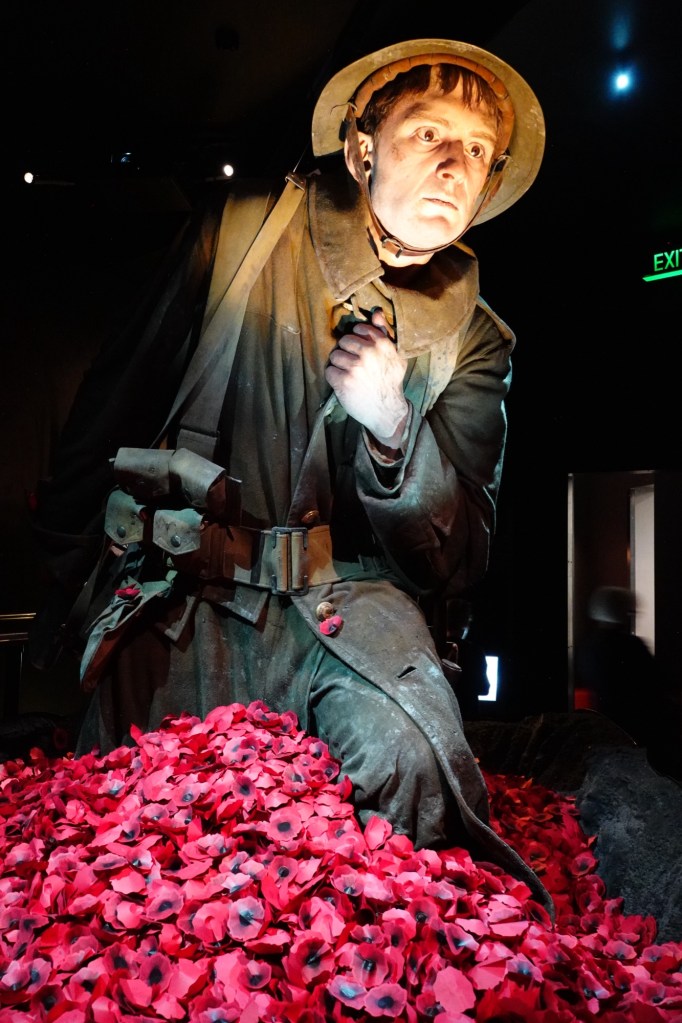
Eric Bogle’s recording of “And the Band Played Waltzing Mathilda” perfectly describes what we saw.
At the exit from the exhibit…
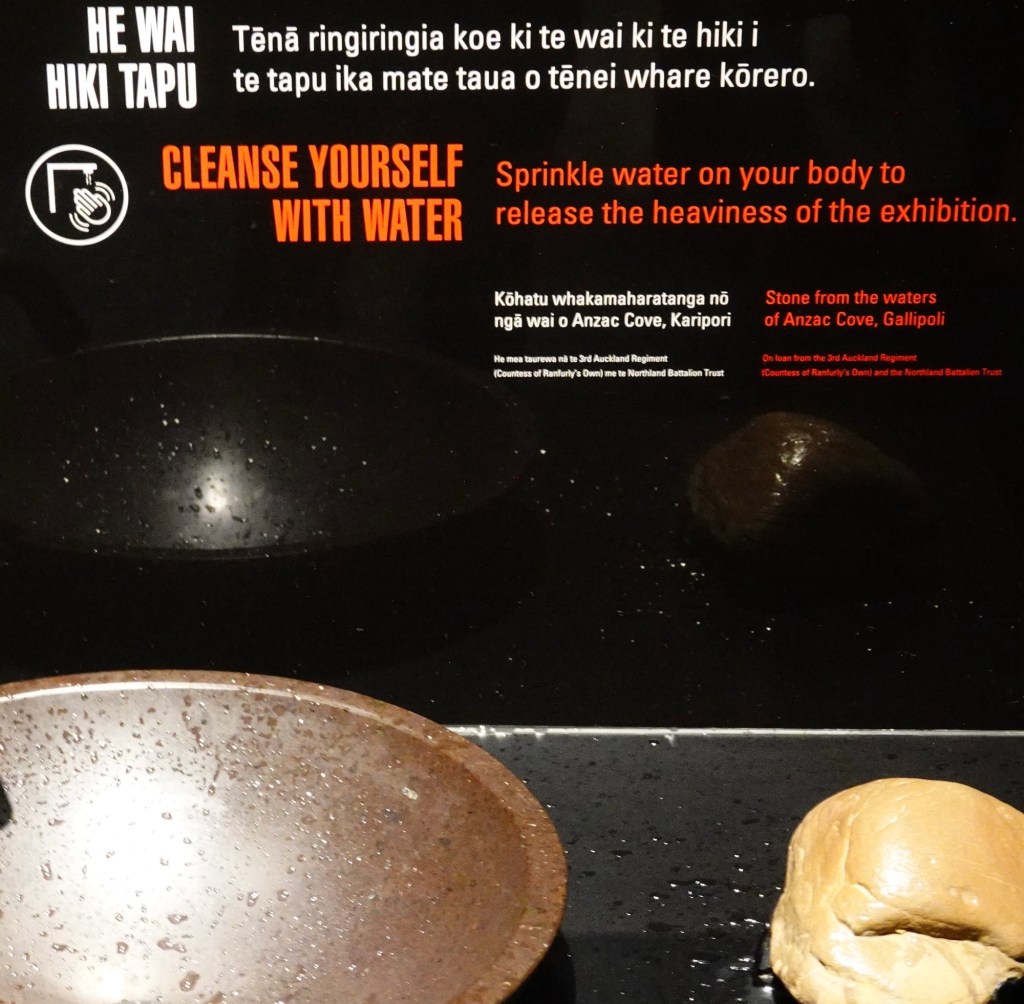
I needed more than water to clear the heaviness – I needed an actual break. We stopped in one of the museum’s cafés for a bit before moving on to other areas.
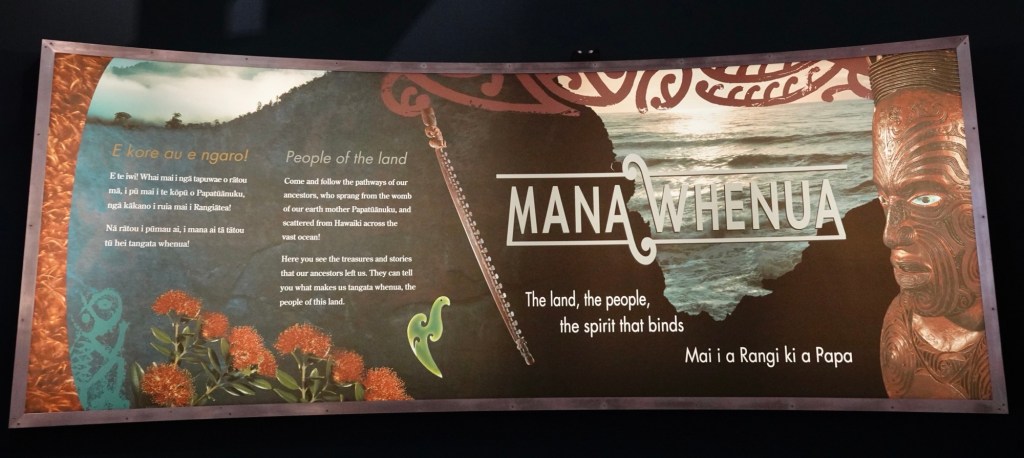
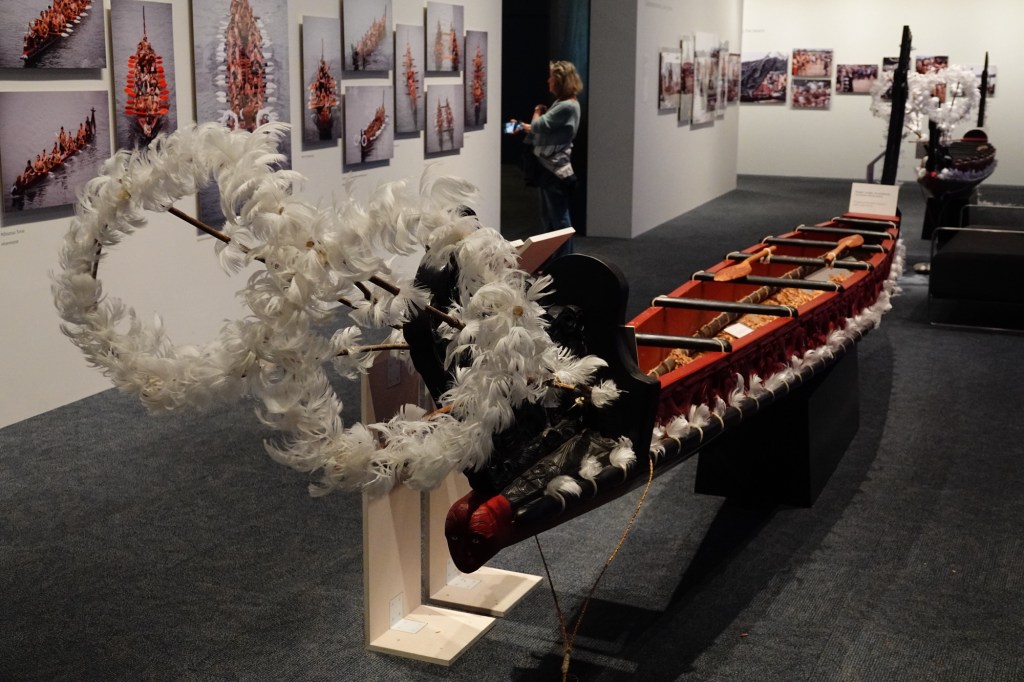
We were impressed by the huge waka taua (war canoe), decorated with carvings and albatross feathers.
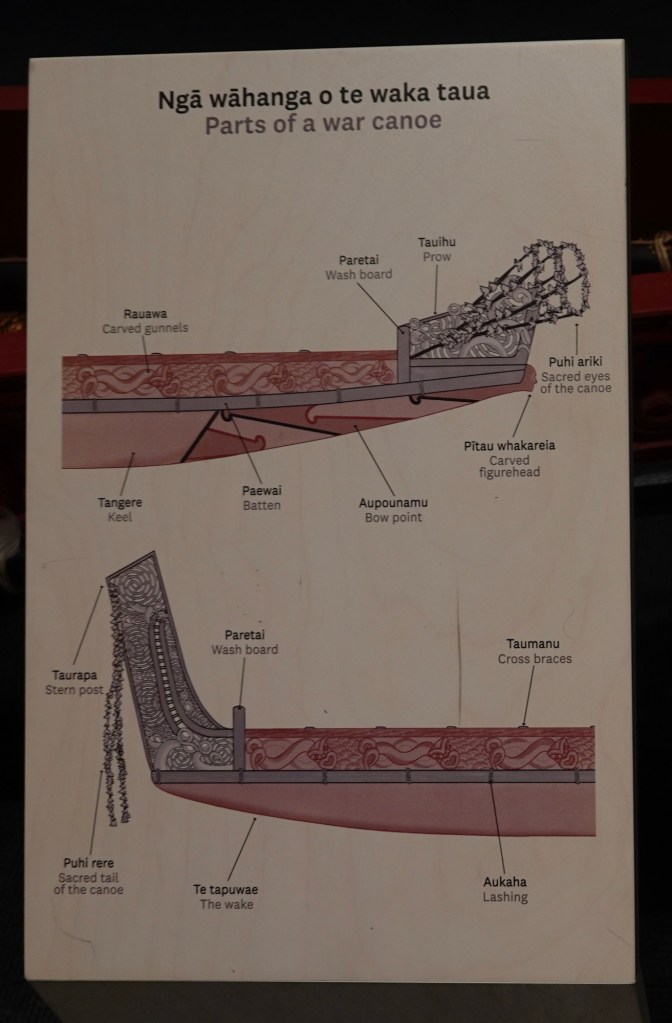
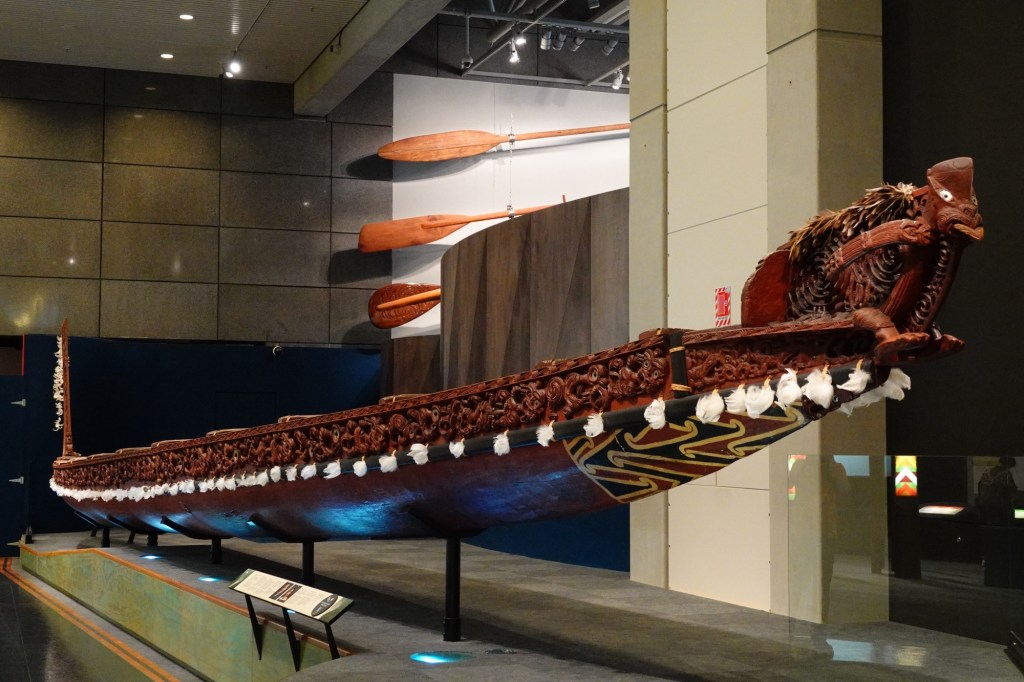

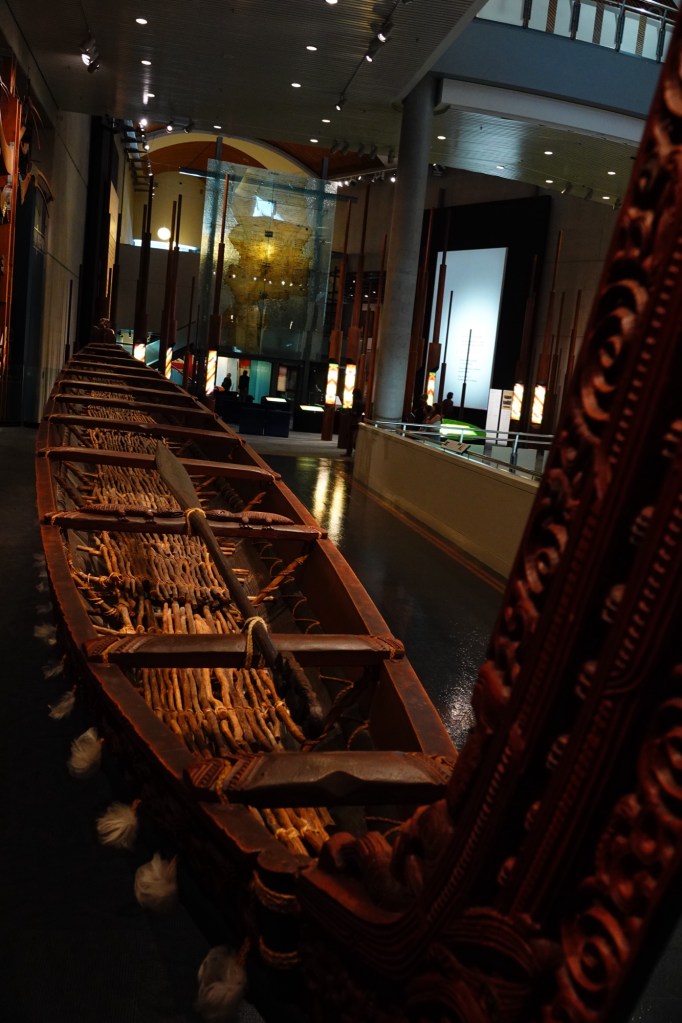
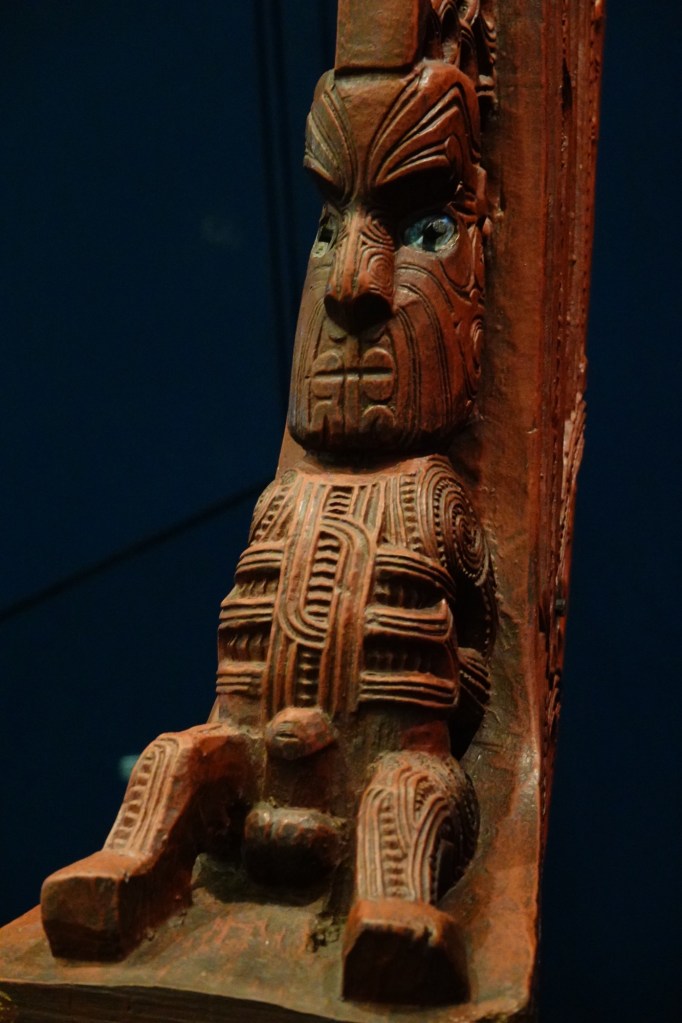
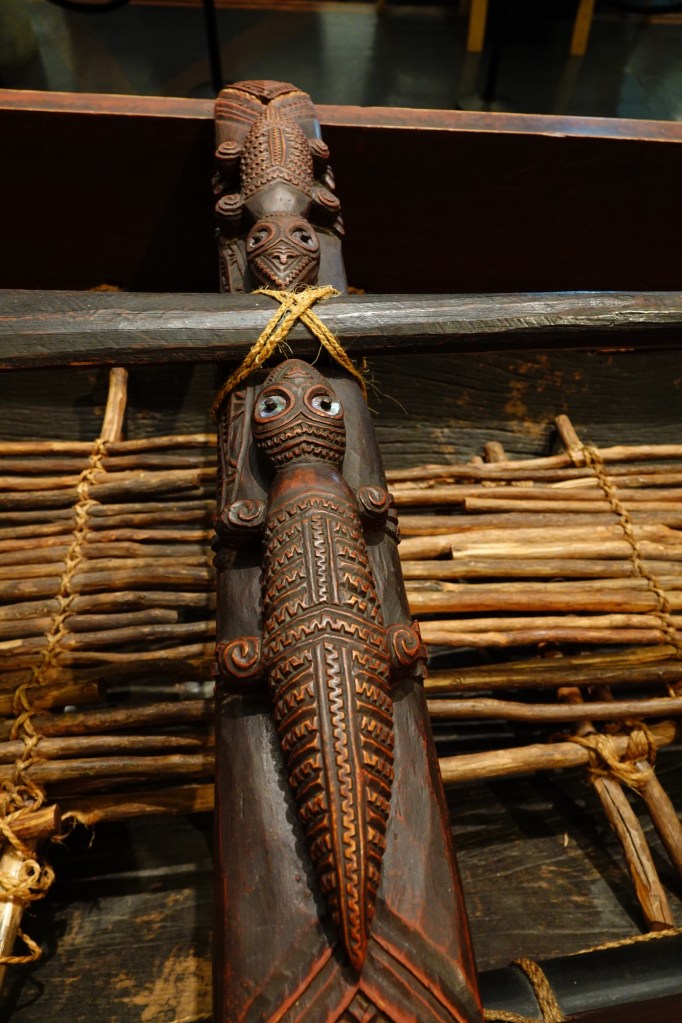
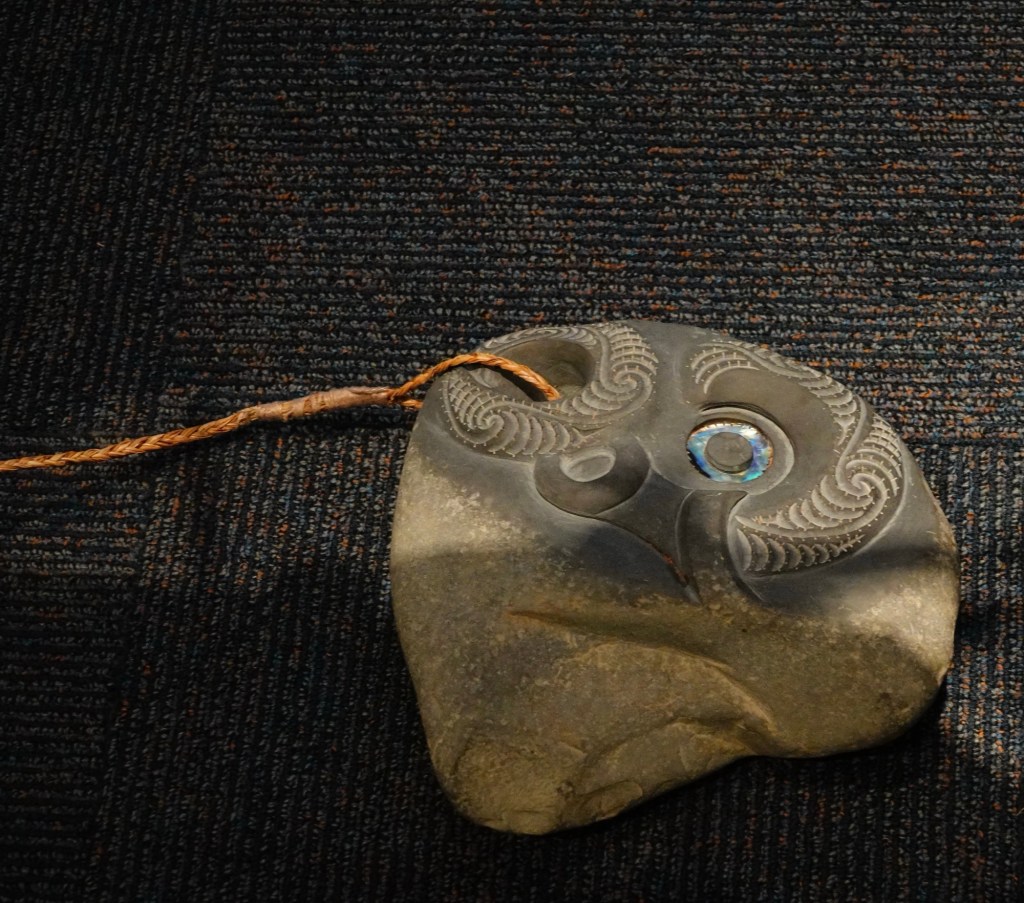
A second waka, with albatross feather “sacred eyes”…
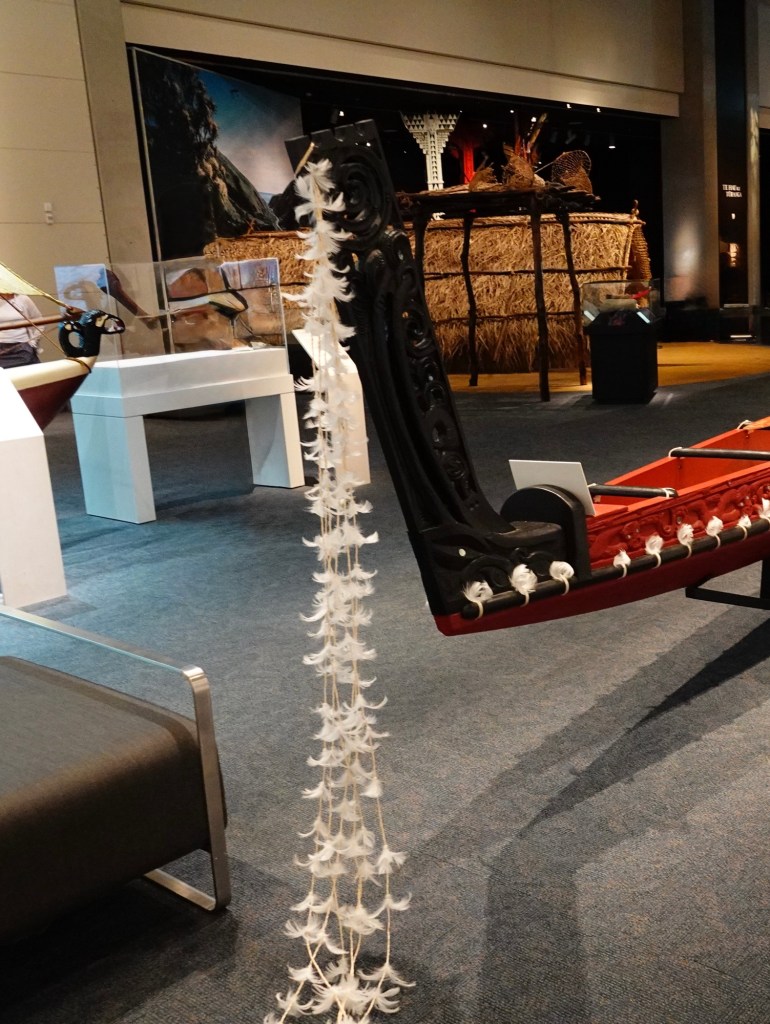
… and sacred tail.
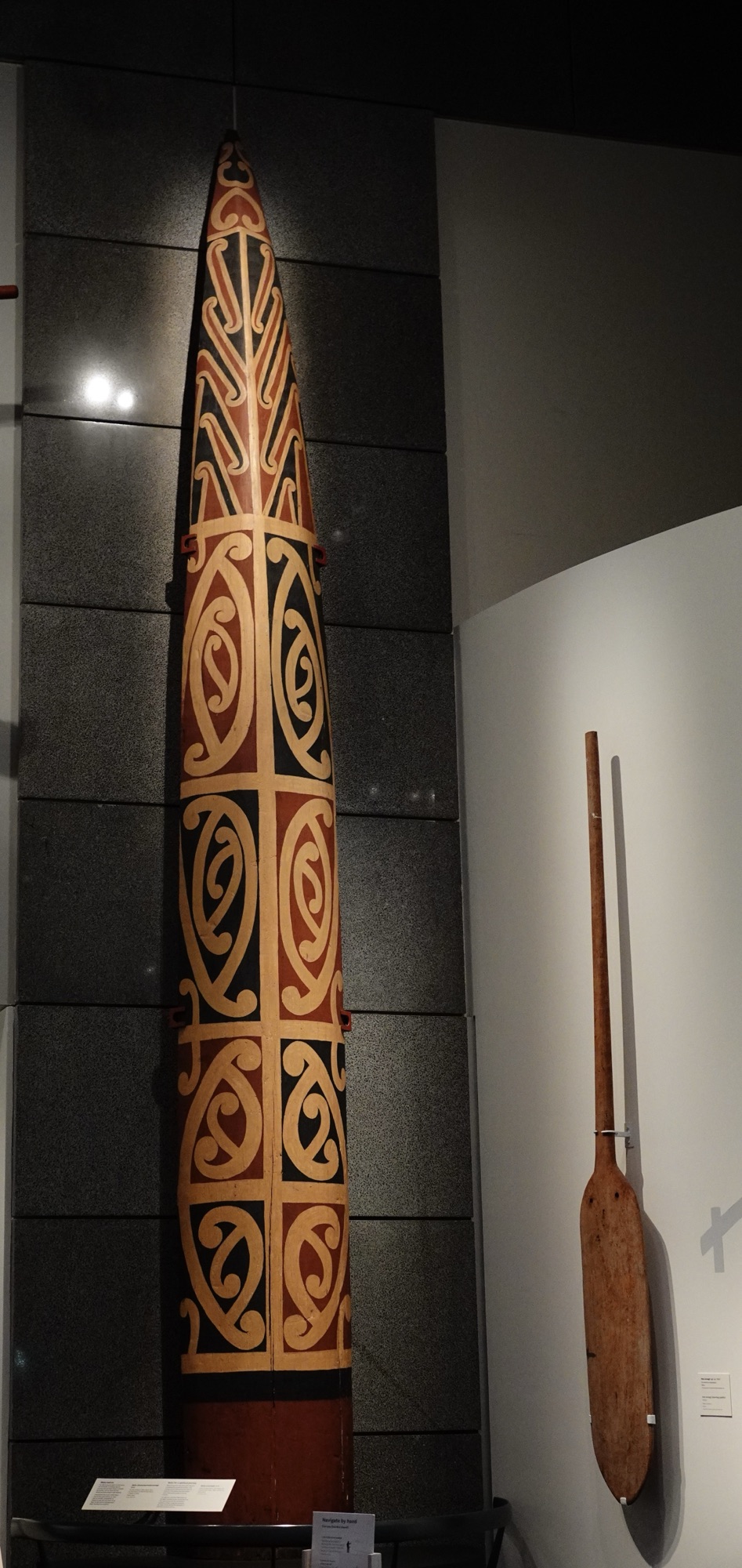
There was more, but I’m stopping with what I know I’ll want to look back at and revisit.
Tomorrow there’ll be more to see and do in Wellington.
 Rose and Ted’s Excellent Adventure
Agree with your thoughts
LikeLiked by 1 person