Episode 773 – A Quick Stop in Christchurch NZ: Food, Trip Orientation, & Wildlife
Summer has arrived on the South Island. The day’s predicted high was 30°C/86°F, with a strong winds watch.
As we arrived at Auckland airport, the public address system was warning travellers to Christchurch of potential flight interruptions/scheduling changes based on wind conditions.
Luckily, we had an uneventful (with the exception of a bit of “massage chair” action in the 10 minutes leading up to landing) hour-and-a-quarter flight from Auckland to Christchurch. The flight was only partially full, had decent legroom, and we got a non-alcoholic beverage, the choice of cookies or chips, and even a few NZAir branded hard candies.
The chips had a lot going on.
As we exited the terminal, we got our first taste of the South Island’s quirky weather: 29°C/84°F, a light breeze, bright sunshine, completely cloudless blue skies – and yet, somehow, raining.
We expected we’d be arriving too early to check into our hotel, but were hopeful that they would store our suitcases so that we could visit the nearby Willowbank Wildlife Reserve.
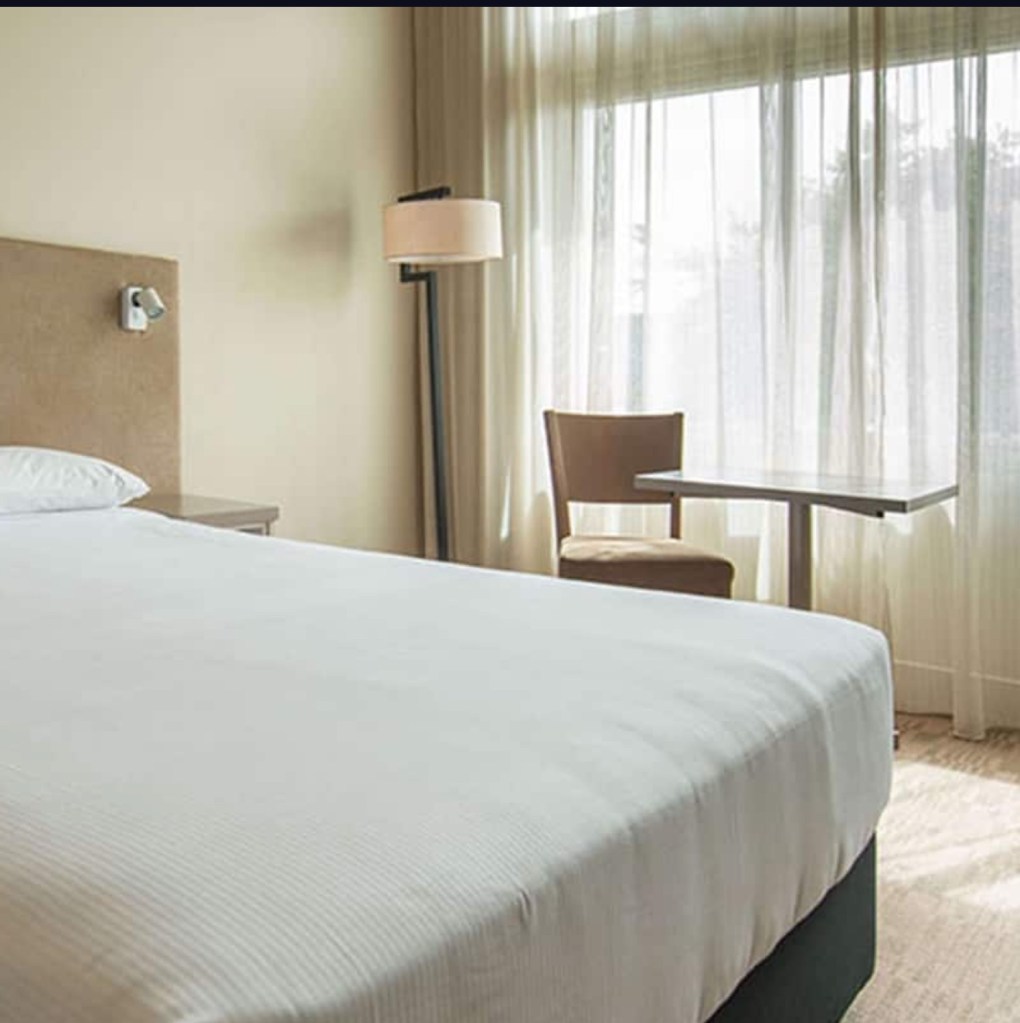
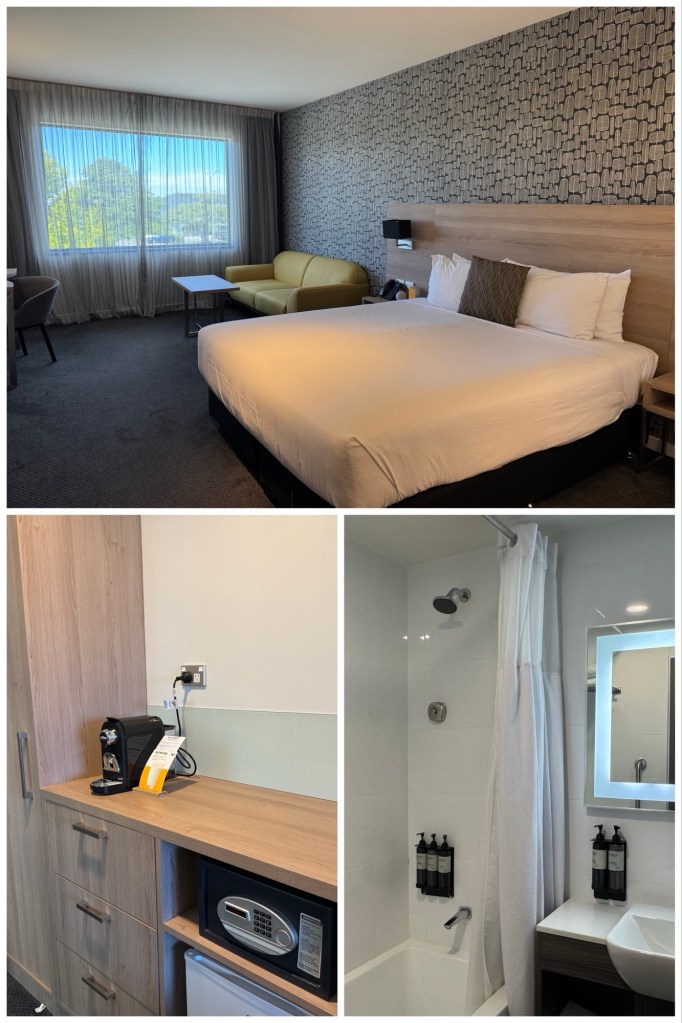
As it turned out, we ended up not having to store our cases. In fact, we were upgraded to a ready deluxe king room instead of the classic queen (the hotel’s cheapest option) that I had booked.
Here’s the room I booked (Expedia photo) at the Sudima Christchurch Airport:
Here’s what we actually got:
No complaints, plus being able to check in just before noon meant we had ample time to grab lunch and head to Willowbank.
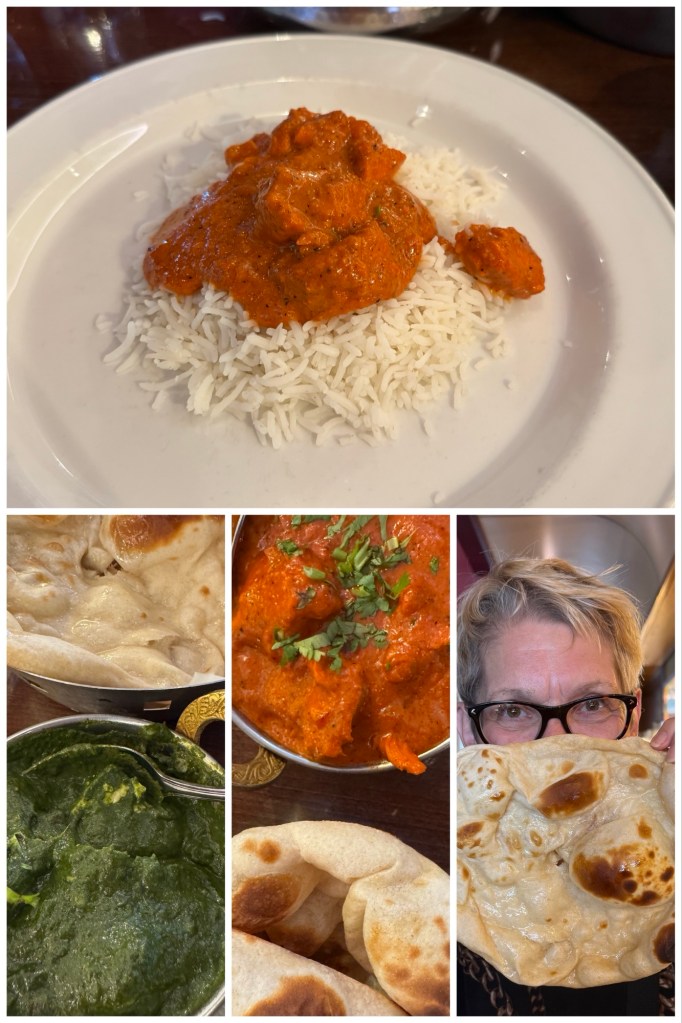
Our hotel is right beside a plaza with myriad food options, and yet we chose once again to eat Indian. At Little India we got to watch our naan being shaped, tossed, baked in a proper cylindrical oven, and slathered with butter. Is there anything better than fresh hot naan with huge crunchy blisters in a stretchy soft dough?
Chicken tikka masala, palak paneer, basmati rice… and that fabulous naan!
Then it was into an Uber and off to see some wildlife!
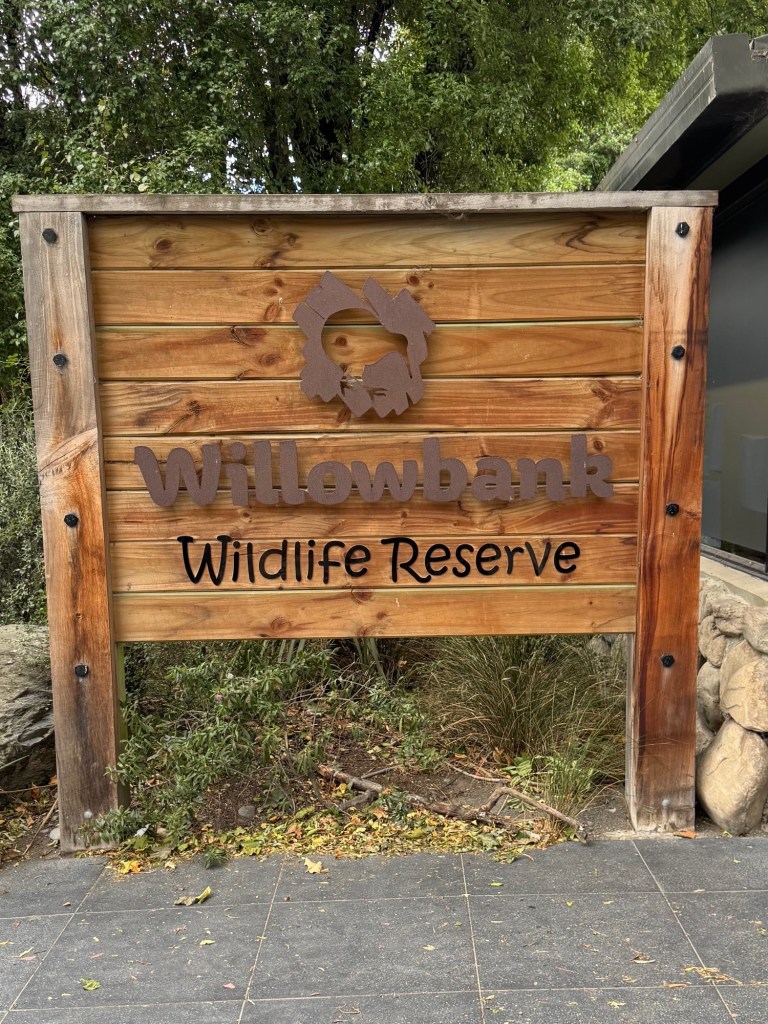
The reserve’s layout was set up as a long winding boardwalk through three areas:
Wild New Zealand showcased animals that live here now but were imported, mostly during British colonial times, some of who now cause the kinds of problems associated with invasive species.
Muscovy duck, brought by Europeans
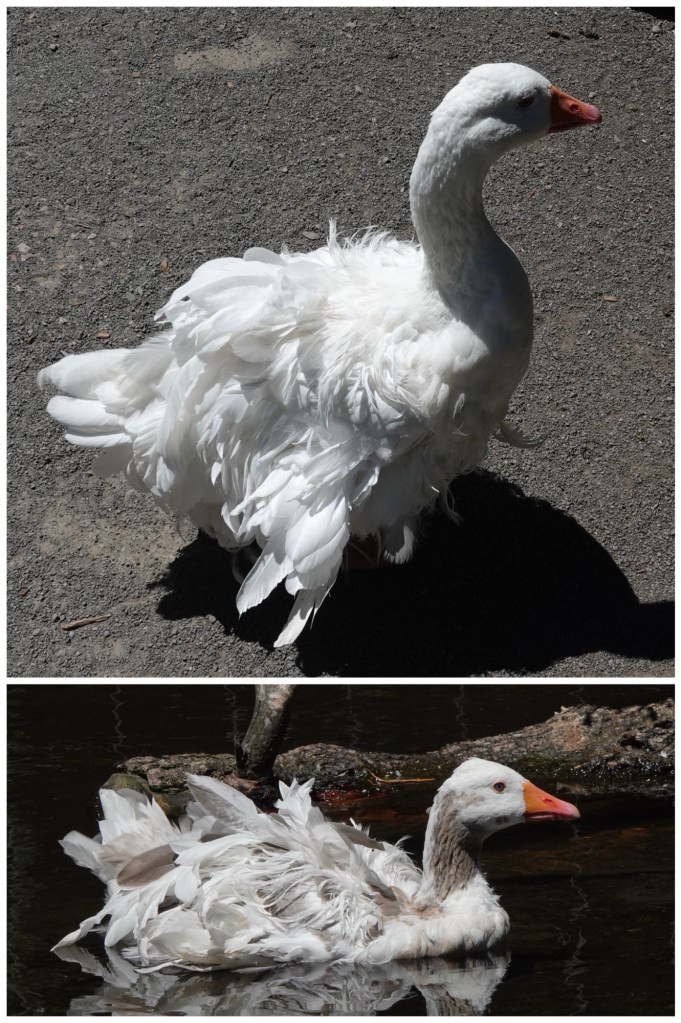
Sebastopol geese, brought by Europeans. There was something quite enchanting about their perpetually ruffled feathers.
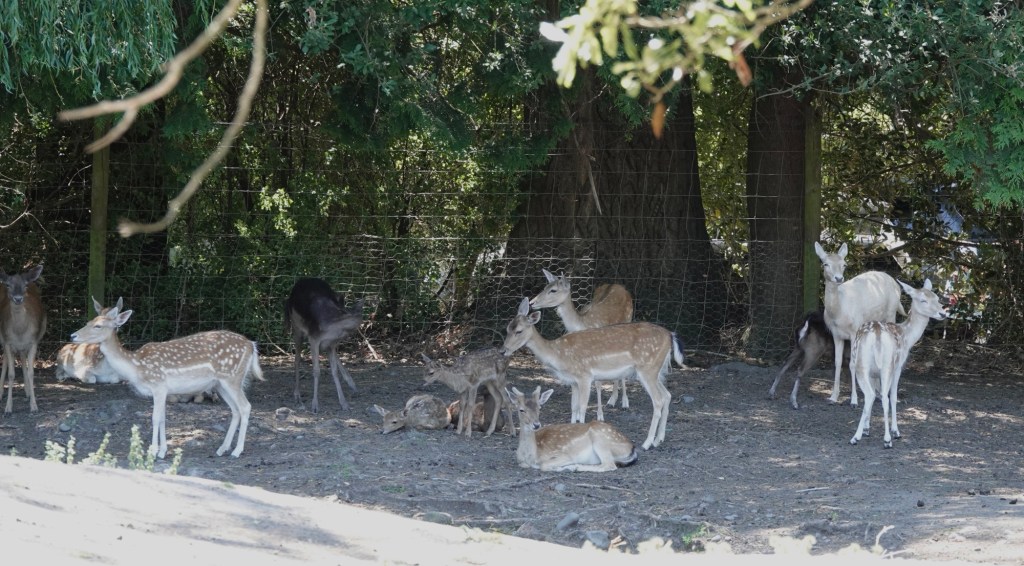
Fallow deer, brought by the British
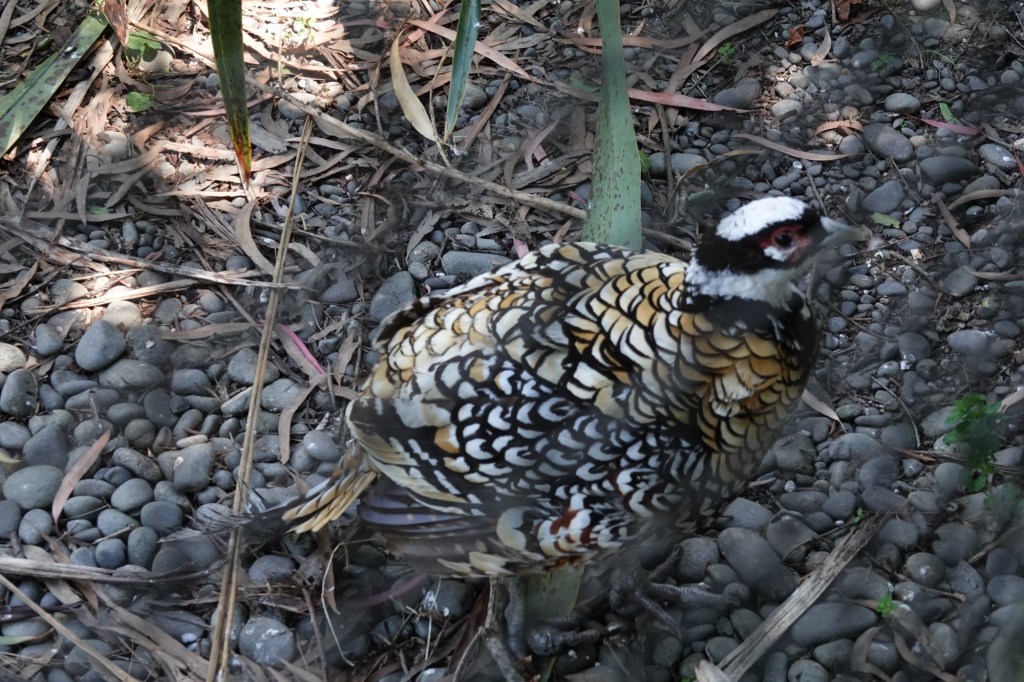
Reeves pheasant (female), originally endemic to China, brought to England and then to NZ
Crested pigeon, introduced from Australia
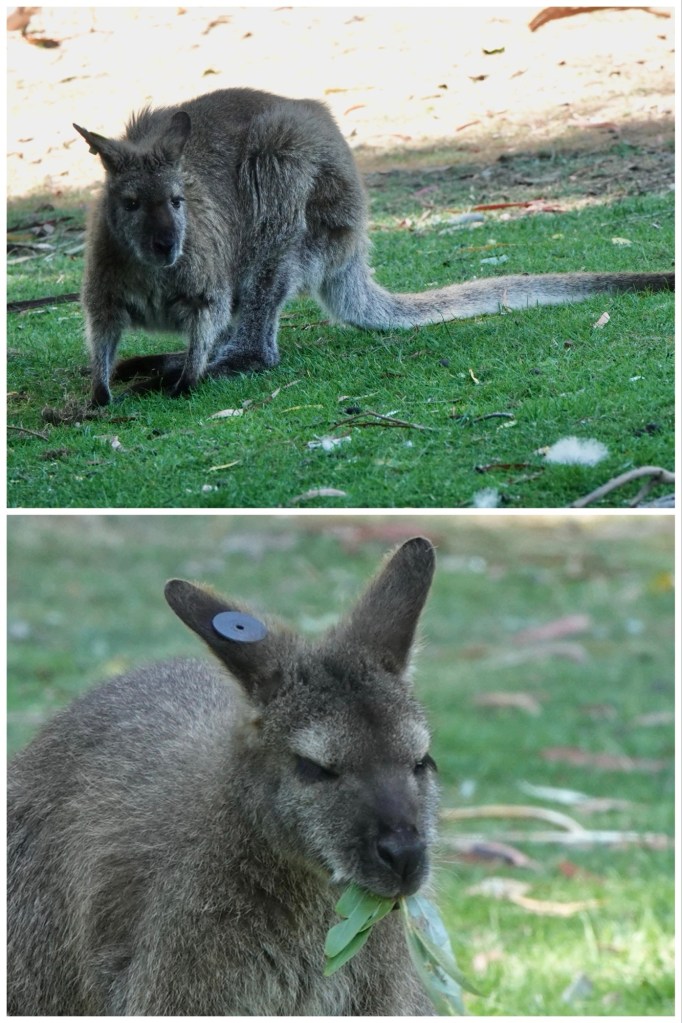
Bennett’s wallabies – as cute as can be, but imported from Australia and considered a major “pest” in NZ. Wallabies pose a risk to New Zealand as they forage on native grasses, roots, tree leaves and weeds, which reduces food availability for native species. This species is held at Willowbank for exhibit under a permit from the Ministry for Primary Industries.
Rainbow lorikeets, originating in Australia, were illegally released in NZ where small wild populations have formed
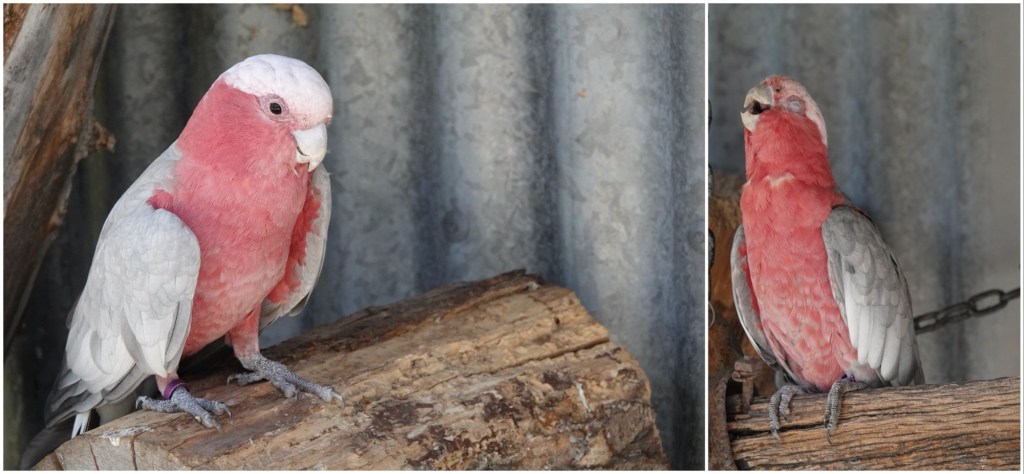
Rose-breasted cockatoos, introduced from Australia.
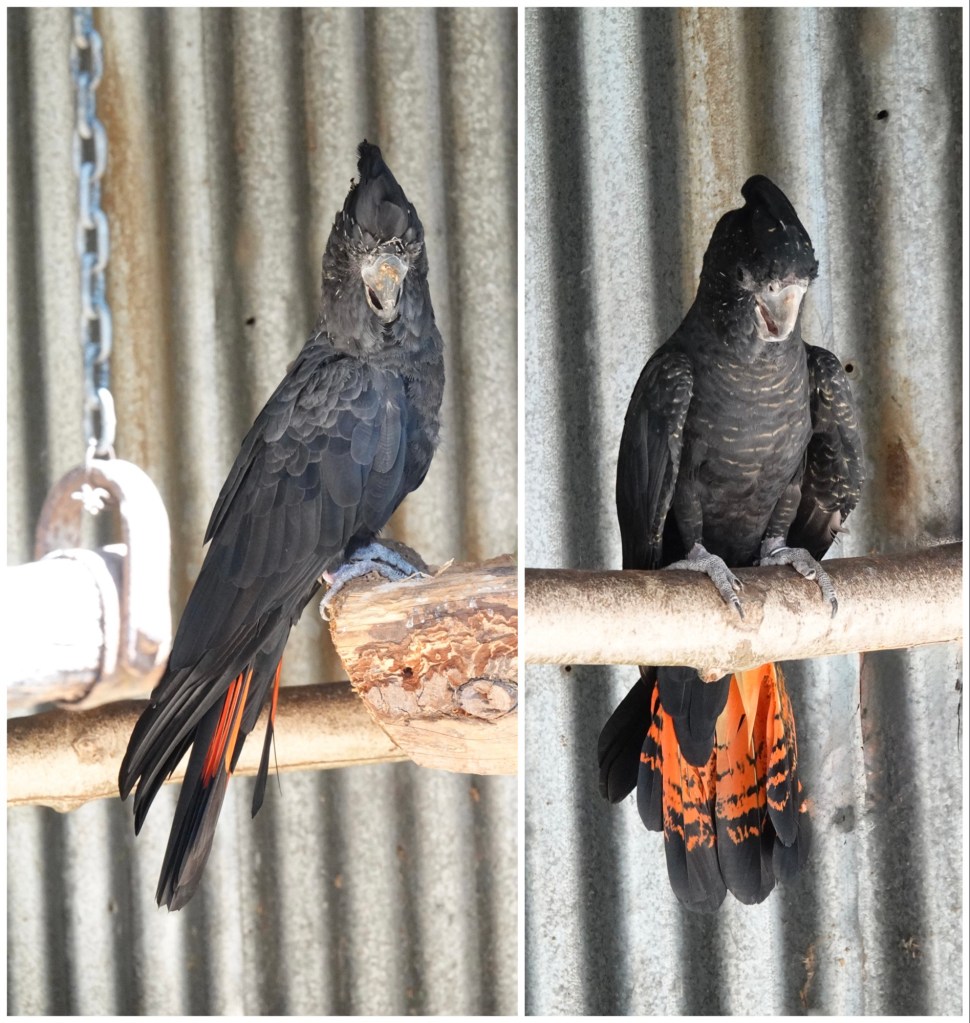
Red-tailed black cockatoos, native to Australia, illegally released into the wild as unwanted or escaped pets.
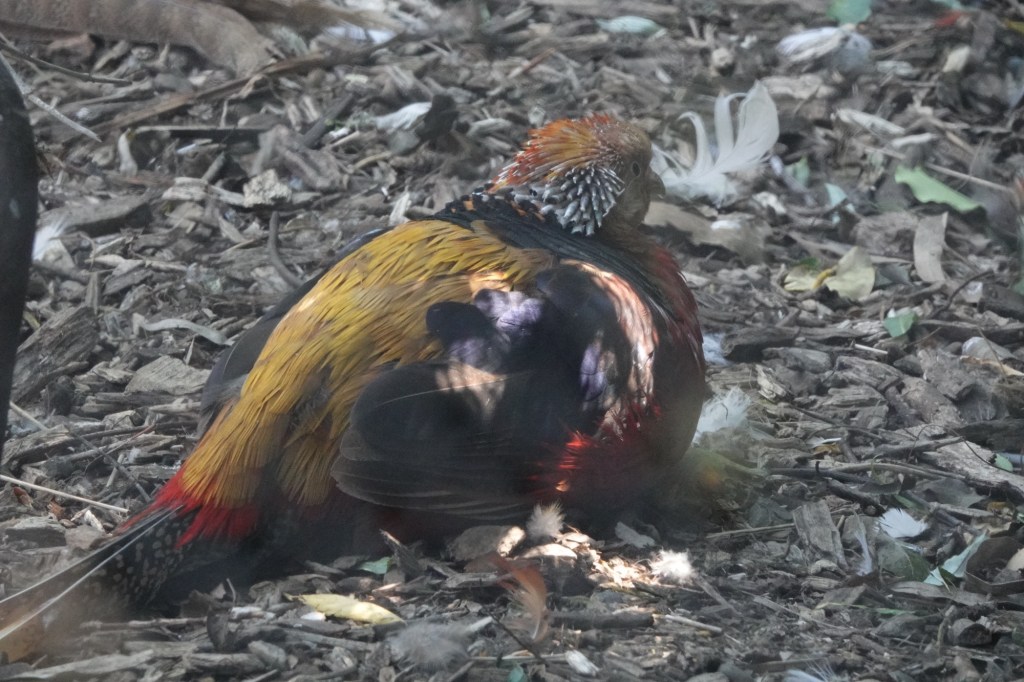
Male golden pheasant, native to the mountainous areas of central China, a popular species kept in captivity and imported by colonial settlers.
A Cape Barren goose. There have been many attempts to introduce these geese from Australia but fortunately they have not become common in NZ.
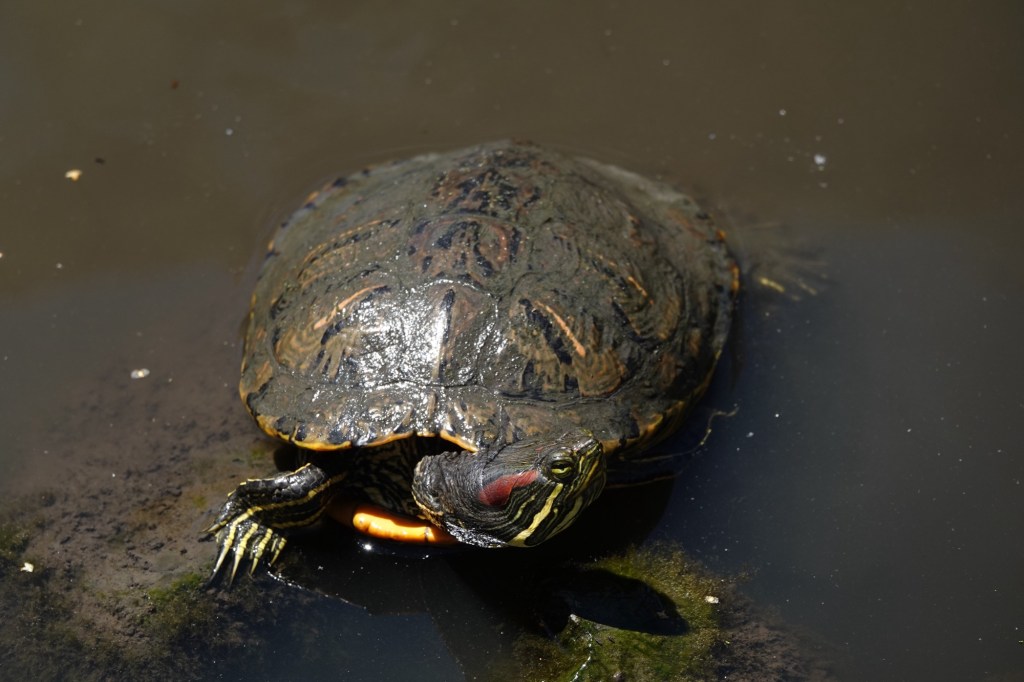
A red-eared slider turtle, native to the southern United States and northern Mexico, but which has been introduced worldwide due to its popularity as a pet.
Emus are only native to Australia, and can no longer be legally imported into NZ, although the offspring of animals brought in before strict bio security rules are here – now held in reserves like this one. This particular emu was having quite a test of wills with the garden sprinkler – following the stream of water, tugging at the hose, and generally “arguing” with it.
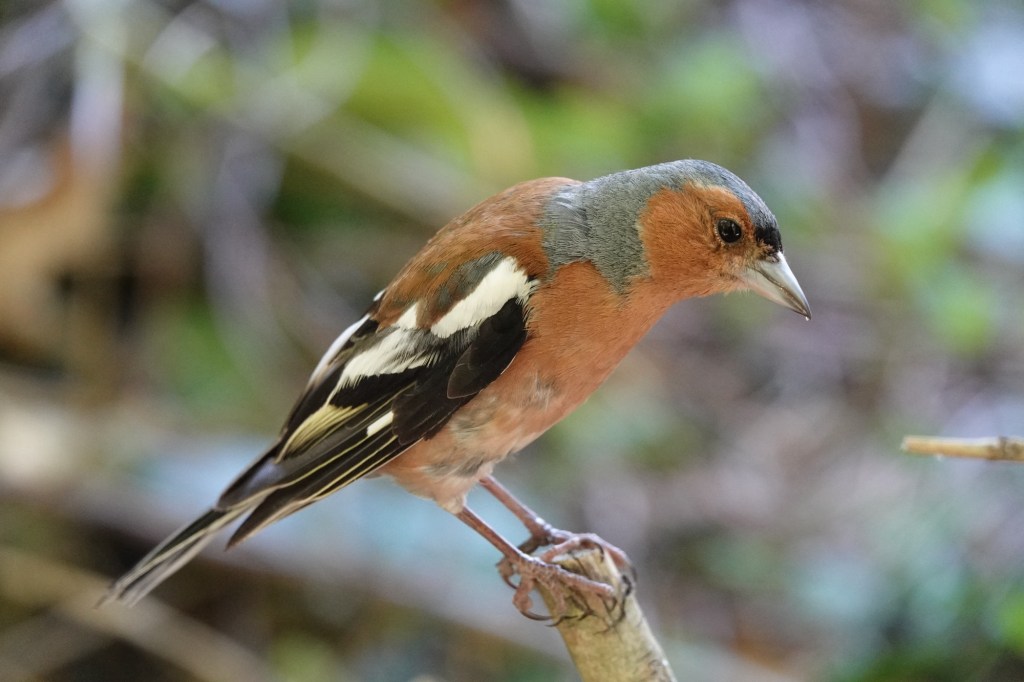
The very pretty but (in my opinion) insultingly named “Common” chaffinch was imported from Eurasia.
Sun Conures (aka Sun Parakeets) are native to northeastern South America. They were so popular in the pet trade that the wild population is considered endangered due to habitat loss and trapping, and yet these “pets” were likely illegally released into the wild.
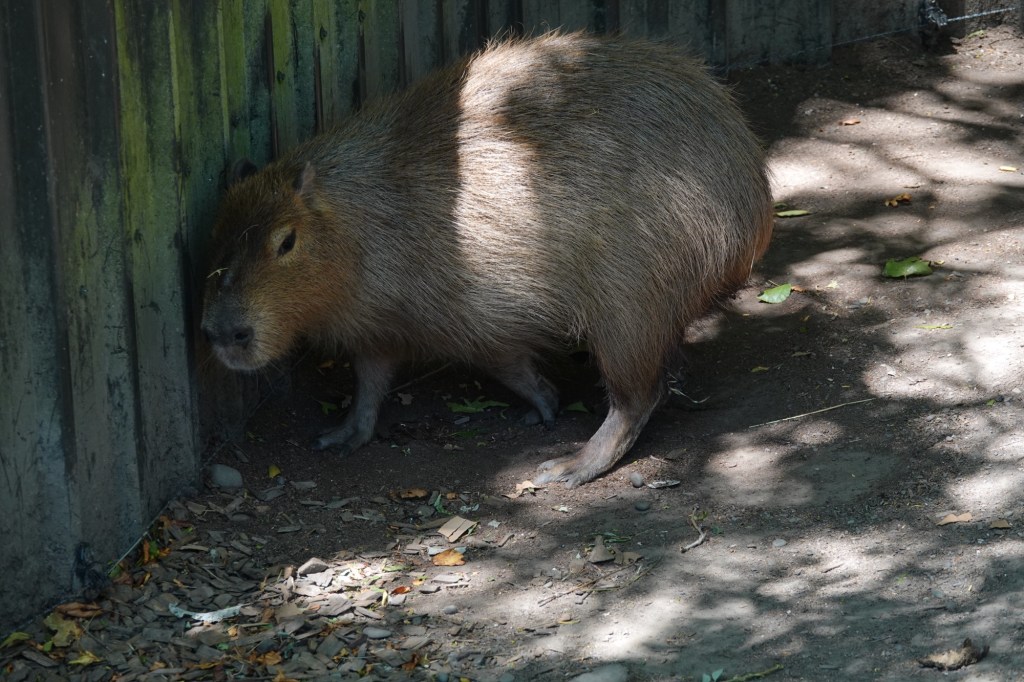
Capybara are definitely not native to NZ.
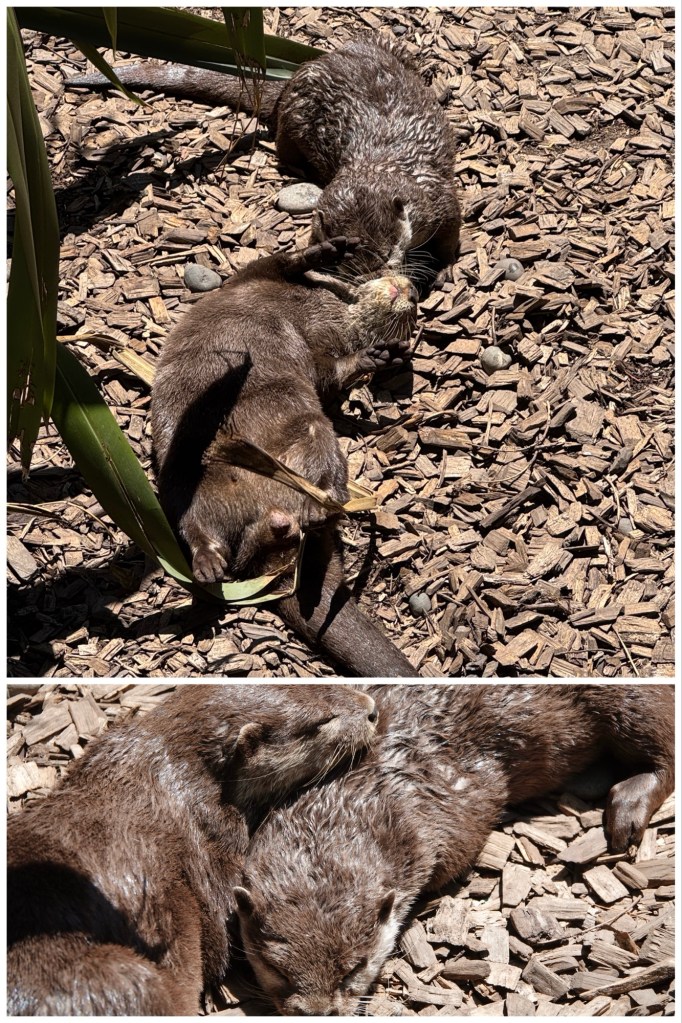
These cuties are small-clawed otters, native to South and Southeast Asia, and removed from a zoo. If left to live and procreate in the wild they would cause great disruption to the food balance in NZ waterways.
A black swan, native to Australia and introduced to New Zealand in the 1860s, where it is now a protected species. It’s frills of black feathers with smooth snowy white ones peaking out underneath makes it look as if it is constantly dressed for a formal event.
Heritage New Zealand featured animals imported specifically to domesticate and farm. Of those, a few were unfamiliar to us:
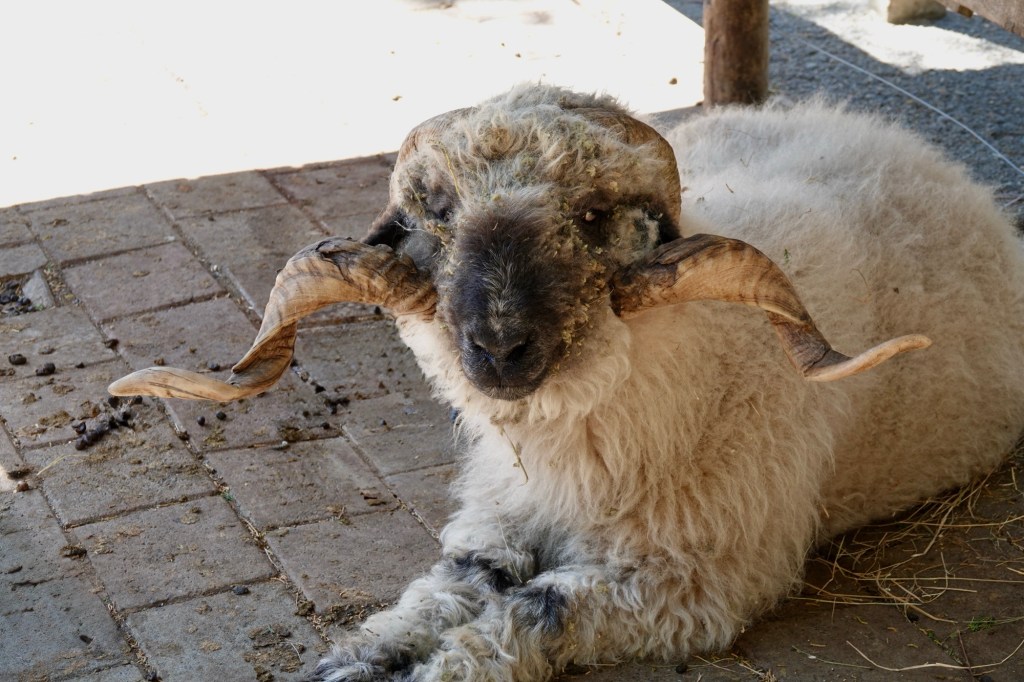
The sign on the sheep pen told us that Blacknose Valais sheep with their horns that twist around their ears originate from mountainous regions of Switzerland, making them well adapted to grazing on stony pastures. They were originally bred in New Zealand by artificially implanting imported embryos into donor ewes. Both males and females grow horns.
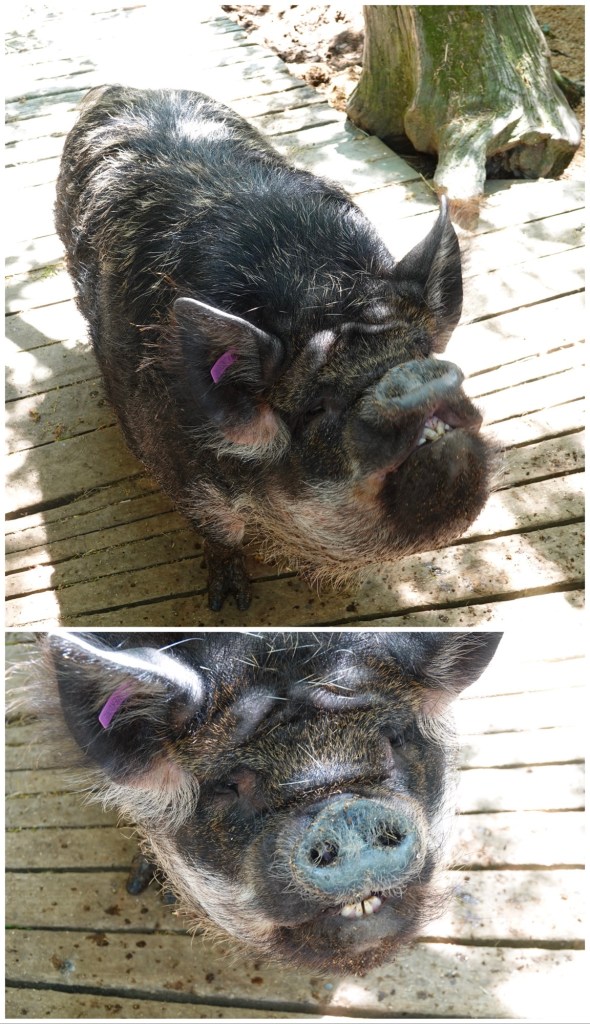
The rare Kunekune pig breed was revived from near extinction in the 1970’s by Willowbank & Staglands Wildlife Reserve. Scotland may have its “hairy coo”, but New Zealand has a hairy pig!
Arapawa goats are thought to be descendants of animals brought on the first ships to New Zealand. They are found on Arapawa Island in Marlborough. We also learned that one Māori word for goat is “nanekoti”, which makes it easy to remember by thinking of a nanny goat!
Natural New Zealand featured animals considered “native”.
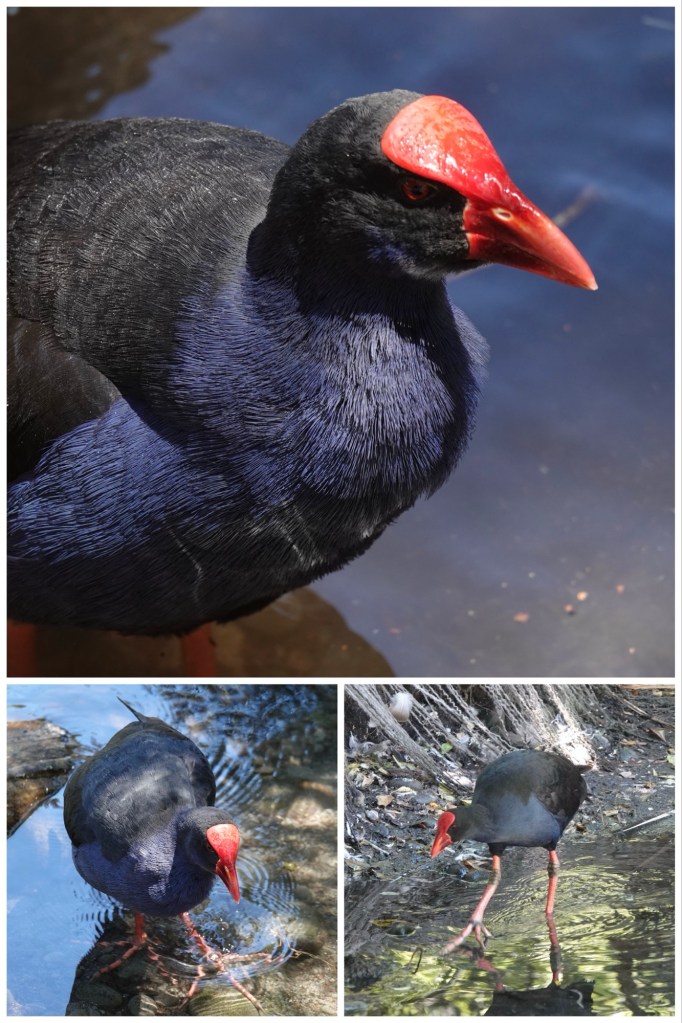
Pūkake (swamp hen)
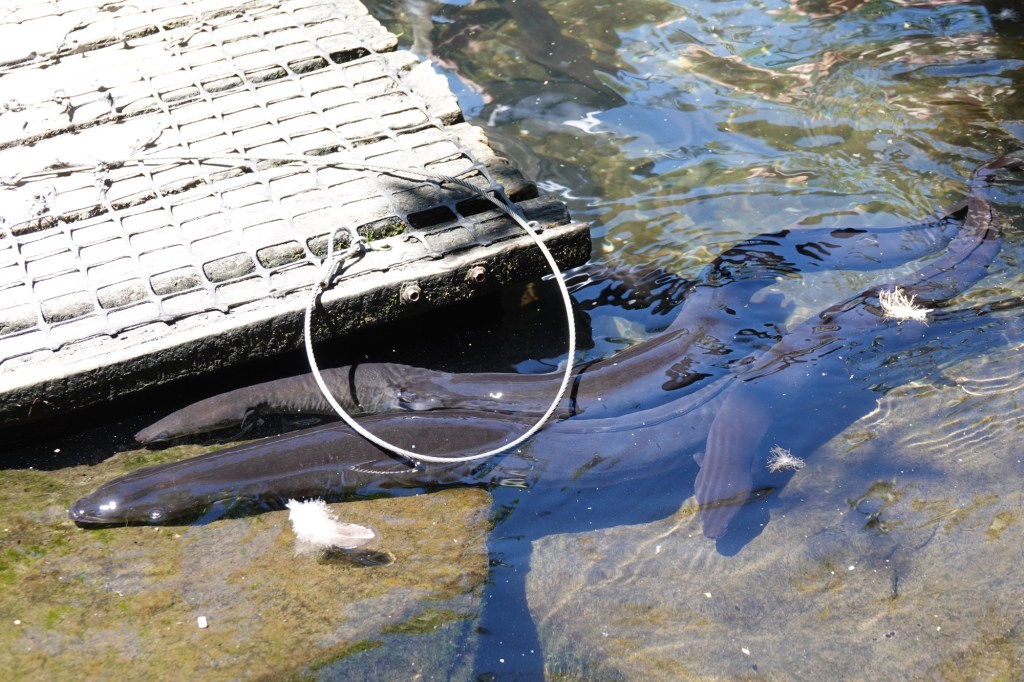
Short-finned eels
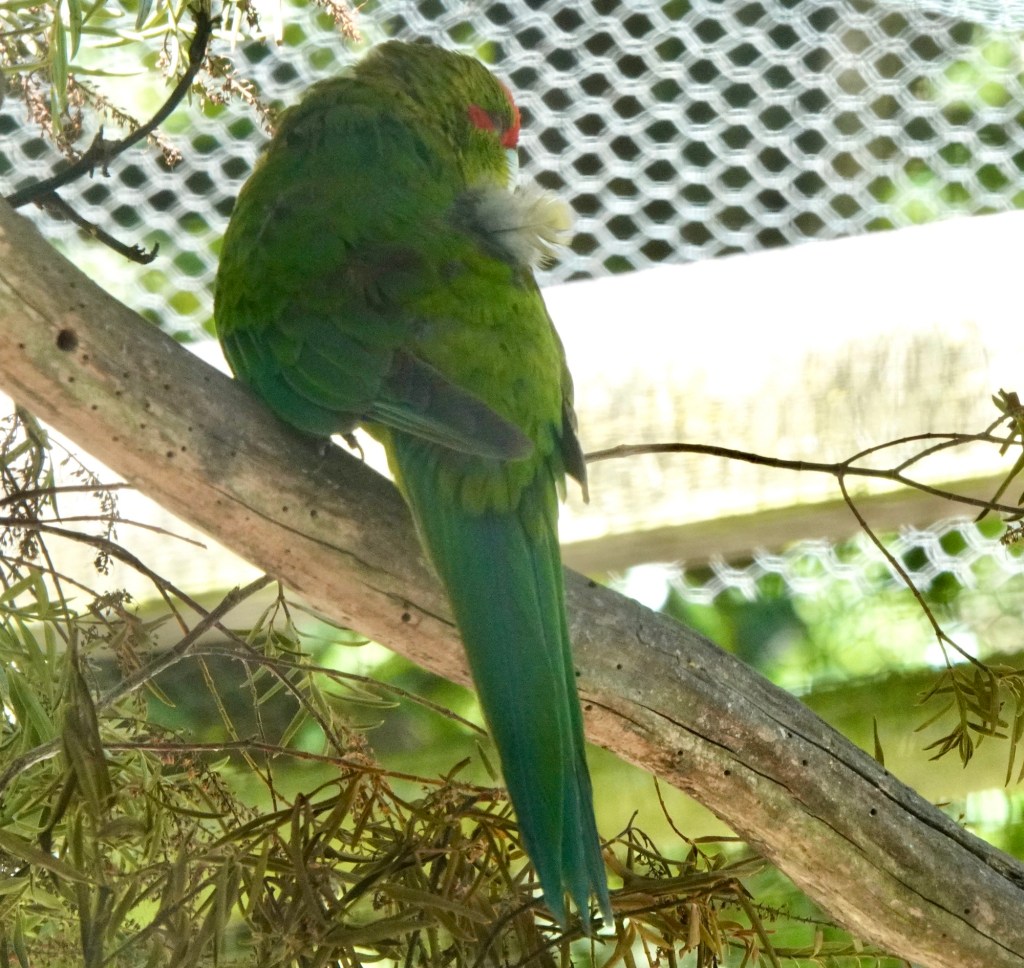
A Kakariki (Cyanoramphus novaezelandiae), a native green parrot.
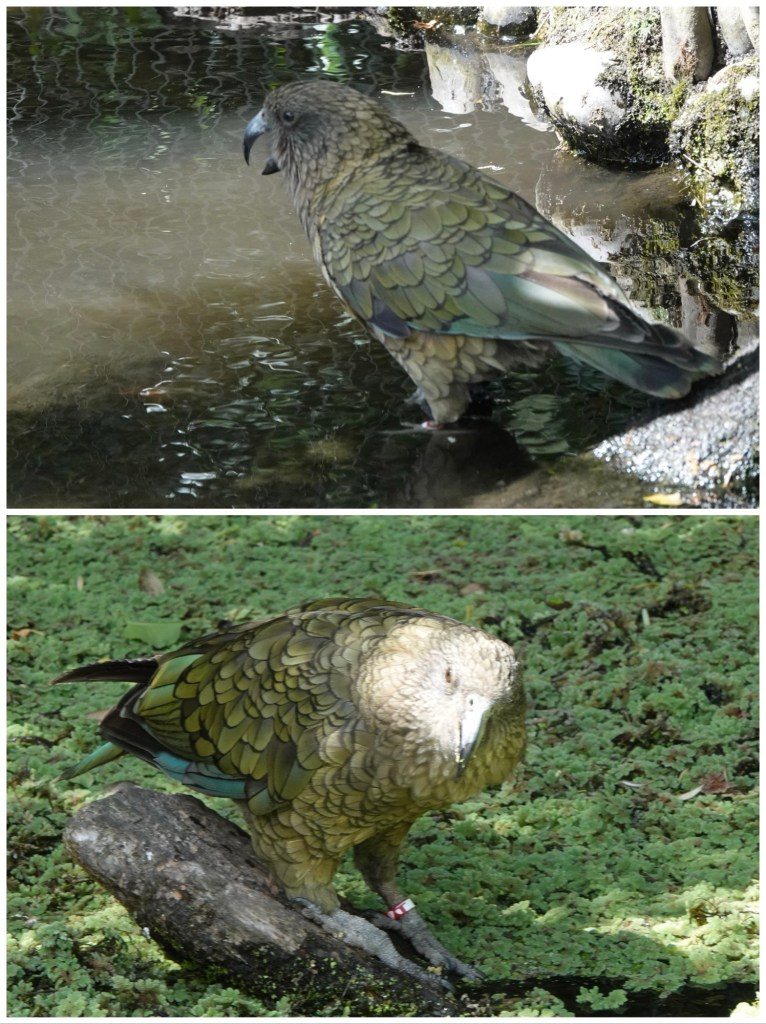
Kea, a large, intelligent species of parrot endemic to New Zealand’s South Island. We watched them open and close food hoppers specifically designed to keep out rats and smaller birds. One of the Kea had been injured and was missing the entire top of its beak, but had adapted to using the edge of the metal hopper – and sometimes small pebbles – to effectively crack seeds.
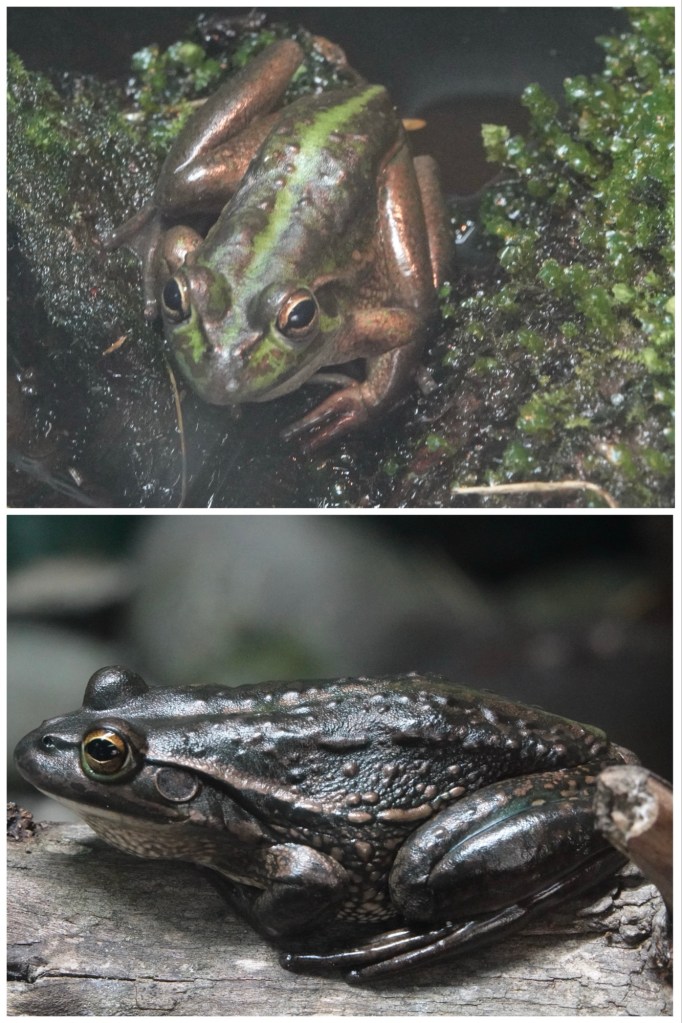
The Southern Bell Frog (also known as the growling grass frog in Australia) from two angles, which show off its green and bronze colours. It is a species that was introduced to New Zealand from Tasmania in the late 1860s but is now considered “native” as opposed to invasive.
There was a large kiwi enclosure at the reserve, kept permanently “night”, through which the reserve’s kiwi were rotated. We walked through, but saw no kiwi. To be honest, at our age our night vision is so poor we could barely navigate the path!
We came away from the whole experience appreciating the work the reserve has done since its inception in 1974, especially the interpretive signage, which reinforced why New Zealand (and Australia) now have such strict rules about bringing in foods, plants, seeds … and animals.
After a hot and sunny couple of hours at Willowbank, clouds suddenly appeared overhead and it absolutely poured with rain – for about 45 minutes. Fortunately by then we were already in another Uber headed back to the hotel for an evening of curating the day’s photos.
Dinner, eaten late while watching television in our room, was scrummy deli sandwiches, German beer, and New Zealand white wine, all picked up at Woolworths next door.
Tomorrow we’ll meet our tour leader from Pounamu Tourism.











 Rose and Ted’s Excellent Adventure
No Puteketeke?ð¢With a boost from John Oliver, pÅ«teketeke soars to first
LikeLike
No…. But believe me, we’ll be looking!!
LikeLike
Enjoy! Envious here. Loved NZClayFollow and keep up with our retirement adventuresInstagram: @ClaynMike
LikeLiked by 1 person