It’s fun to meet fellow travellers on our journeys. We “met” Andy and Danice via a couple of Facebook groups: Senior Nomads and GoWithLess. Their travels happened to dovetail with ours yesterday in Auckland, so we got to really meet.
They were interested in our Round-The-World airline ticket, and we are interested in where and how everyone else travels (and they’ve travelled a ton in their first year as home-free nomads), so there was lots to chat about over lunch and drinks at the Chill & Grill, a casual pizza/burger/kebab place on Victoria Street West. Because this is summer holiday week for most of the downtown corporate offices, everything is unusually quiet, so we could linger as long as we wanted. It’s a phenomenon we certainly have never seen in Vancouver or Toronto in the summer.

It’s pretty amazing when three hours go by in a flash. Hopefully our paths will cross again.
After our long lunch, it was time to explore. We headed to Viaduct Harbour and Silo Park.
The harbour area is surrounded by waterfront eateries of every description, is host to some of the biggest sailboats I’ve ever seen, and the lift bridge across the harbour is the perfect vantage point from which to get a photo of Auckland’s skyline.

On the Wynyard Quarter side of the harbour is a lovely public swimming area. We were surprised – maybe even shocked – that the harbour waters are clean enough for swimming, but the availability of change-rooms and the presence of lifeguards convinced us.

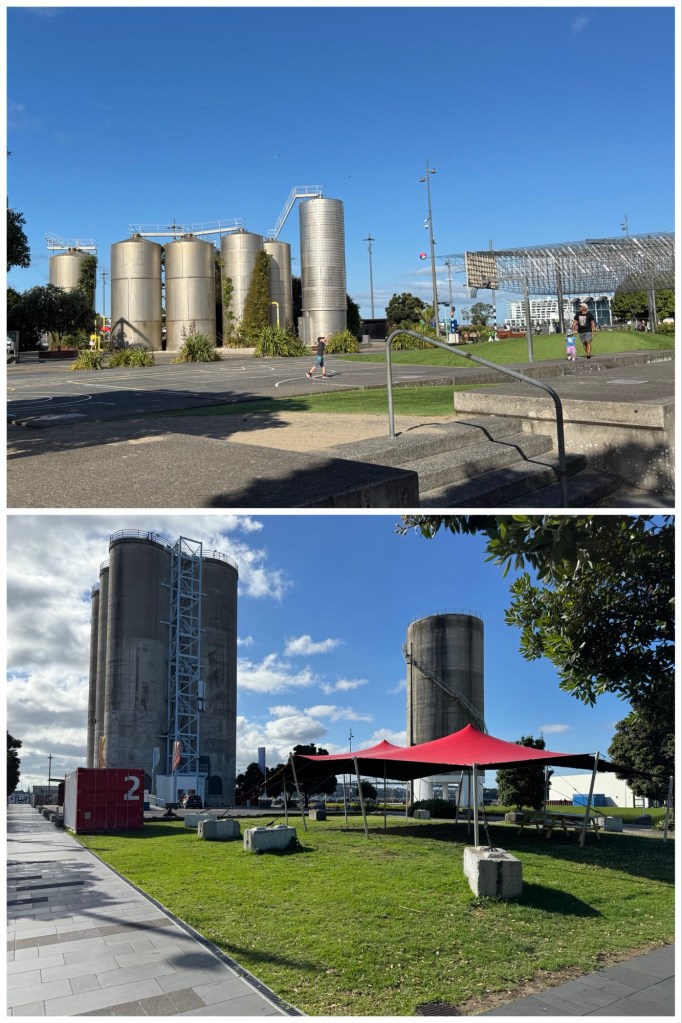
Silo Park is just what it sounds like: a park created in what used to be an industrial harbour area, with the former grain silos cleaned up and, in some cases, covered with greenery. They’ve not been repurposed into retail and hotel space like the ones in Capetown South Africa, but instead it’s simply a nice green public space.
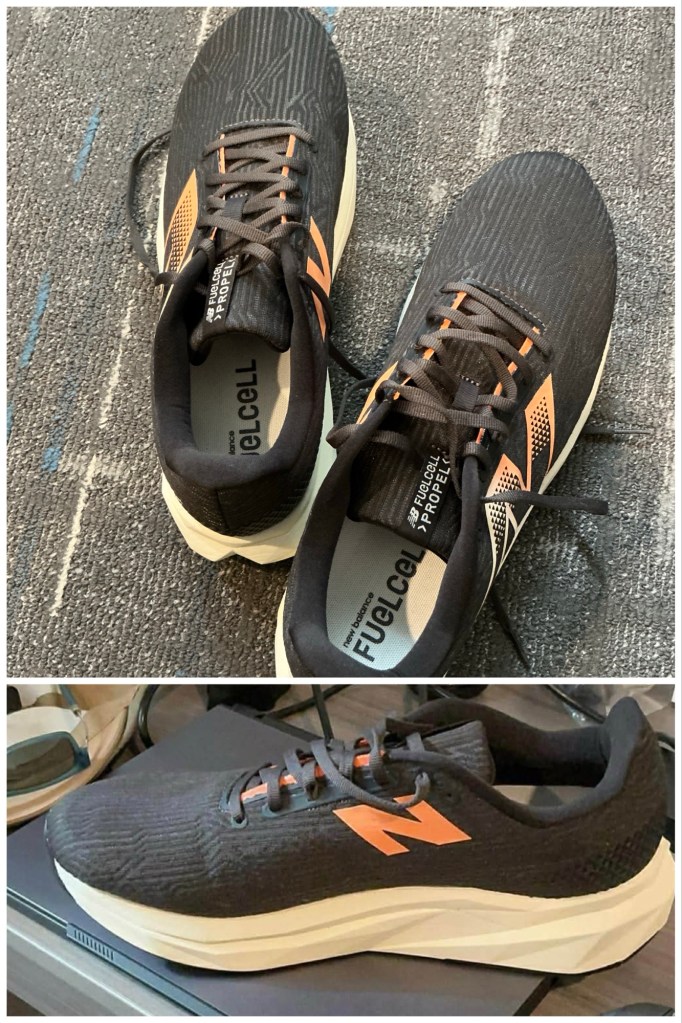
Just wandering means serendipity can happen. Ted has been searching for a particular shoe that mitigates his neuropathy, and we happened on a randomly located New Balance Outlet Store that had a suitable pair on sale at a crazily good price. They’re the thick foam soles that he needs, which also means they’re bulky. We’ll be leaving his 2-year old Rieker slip-ons behind (“one in, one out” being our rule when travelling) and I’ll be doing some creative re-packing.
Friday night’s dinner was our takeaway from the previous night’s Indian feast, supplemented with some basmati rice, and eaten in our little studio. That might be the best hint as to how this round-the-world trip will differ from our Viking cruises, or even from our previous Mexican and European long-stays. We’ve got far fewer activities planned (with the notable exception being our South Island train tour), and far more simple meals. Ted says he’s just hoping for a relaxing 5 months in good weather and nice surroundings.
We realized when reviewing our time here that the Viking Venus was going to be in port, along with its amazing Cruise Director Damian Sollesse (who arranged our vow renewal ceremony on the Viking Star in 2022 (Episode 245). Today is the last day of his current contract before he heads off on vacation, which means an incredibly busy transition day for him.
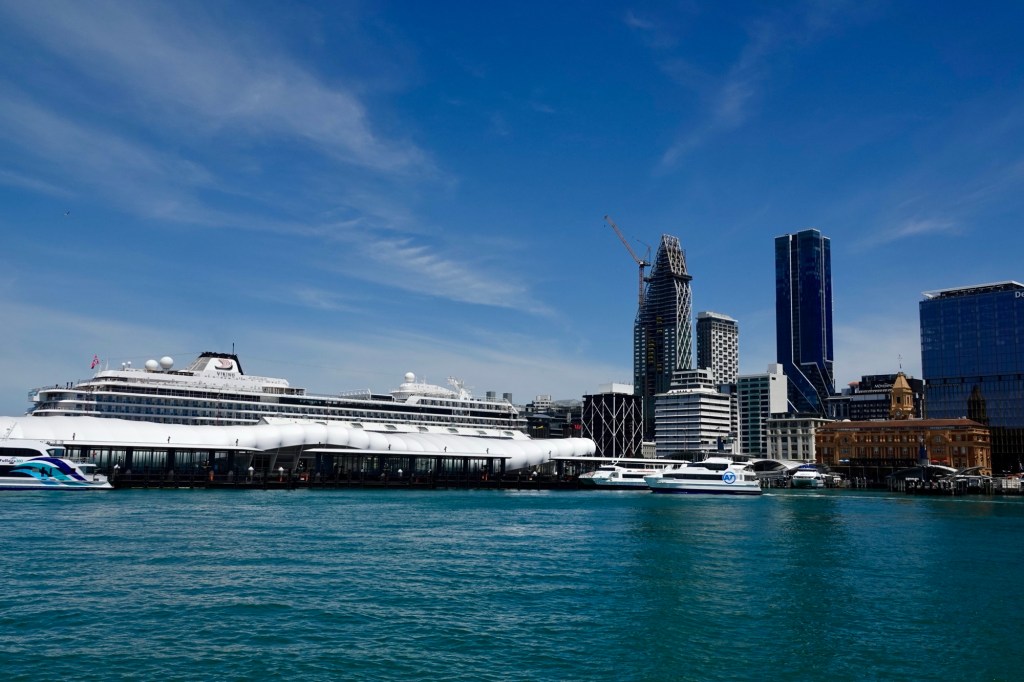
While waiting to see whether we’d be able to connect, Ted and I grabbed coffee and lunch at Chuffed, a lovely courtyard café on High Street not far from Queens Wharf, where the Venus was docked.
(Note for son#2 who is a coffee aficionado: Chuffed uses Rocket Coffee, which many consider to be the best that New Zealand produces, and this particular café has a reputation for the best flat whites in Auckland).

After lunch, we walked to the Auckland Art Gallery, which we were surprised to learn was free admission, with the exception of any special exhibits.
The art starts outside the gallery, with Reuben Paterson’s waka (a Māori vessel) made from hundreds of shimmering crystals and soaring up into the sky.

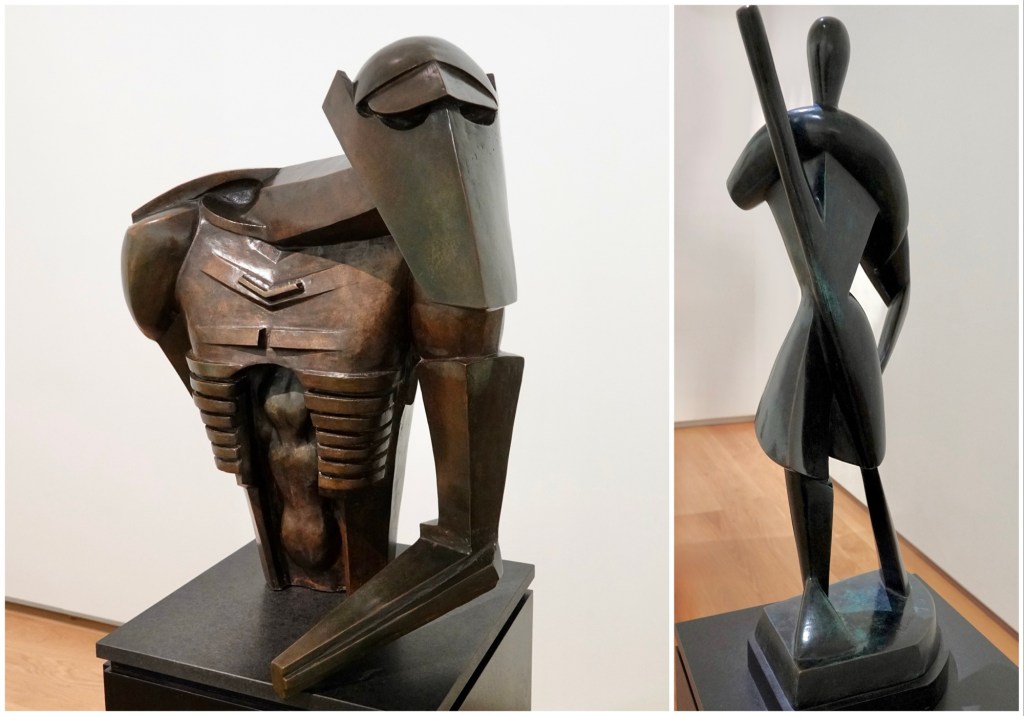
Inside, the gallery was full of treasures. Ted and I particularly like art galleries that showcase national art. While it’s interesting to see the works of the great masters and internationally famous artists, those don’t help us learn about local culture.
The Auckland gallery had a wonderful exhibit of art that was gifted by U.S. collectors and philanthropists Julian and Josie Robertson, who loved New Zealand so much that they split their time between the U.S. and New Zealand and left their world-class collection to the gallery.
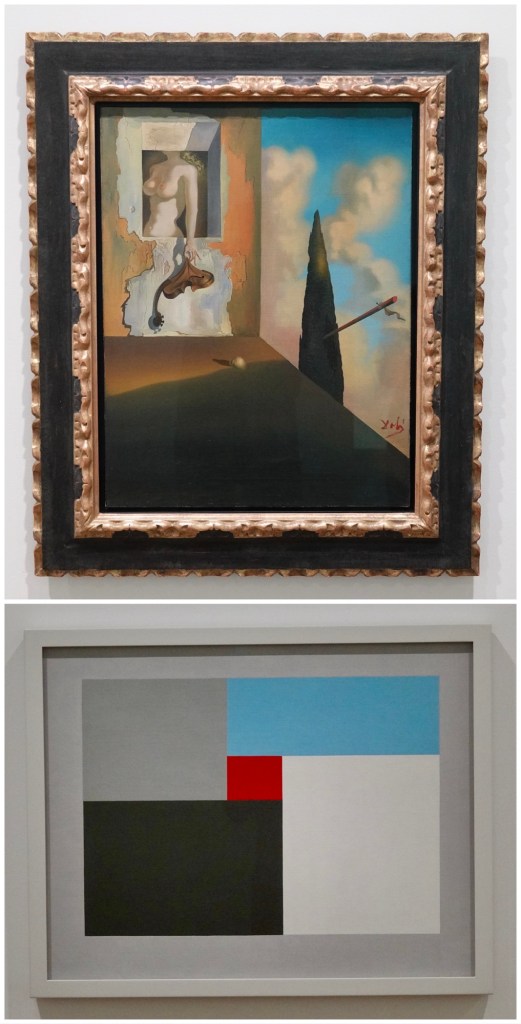
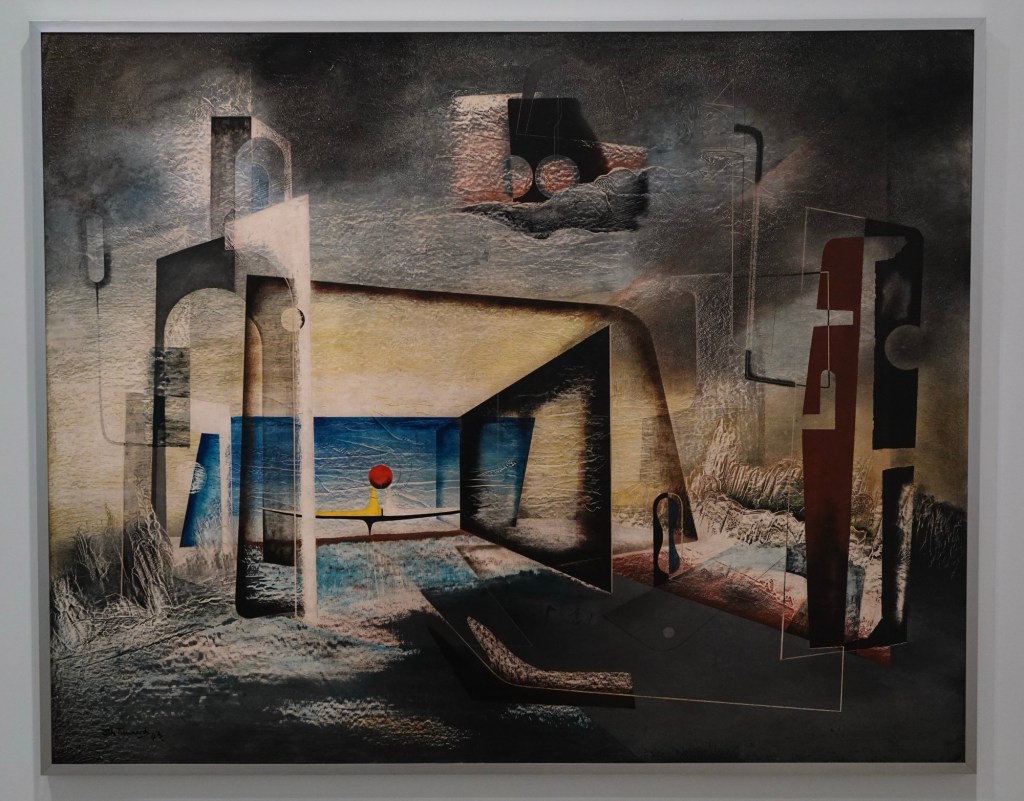
A second collection was curated under the title Threads of Time:Travel, Trade, and Textiles. The collection was beautifully displayed; instead of distracting plaques on the walls, there were boards that we could pick up that described what was hanging on each wall.

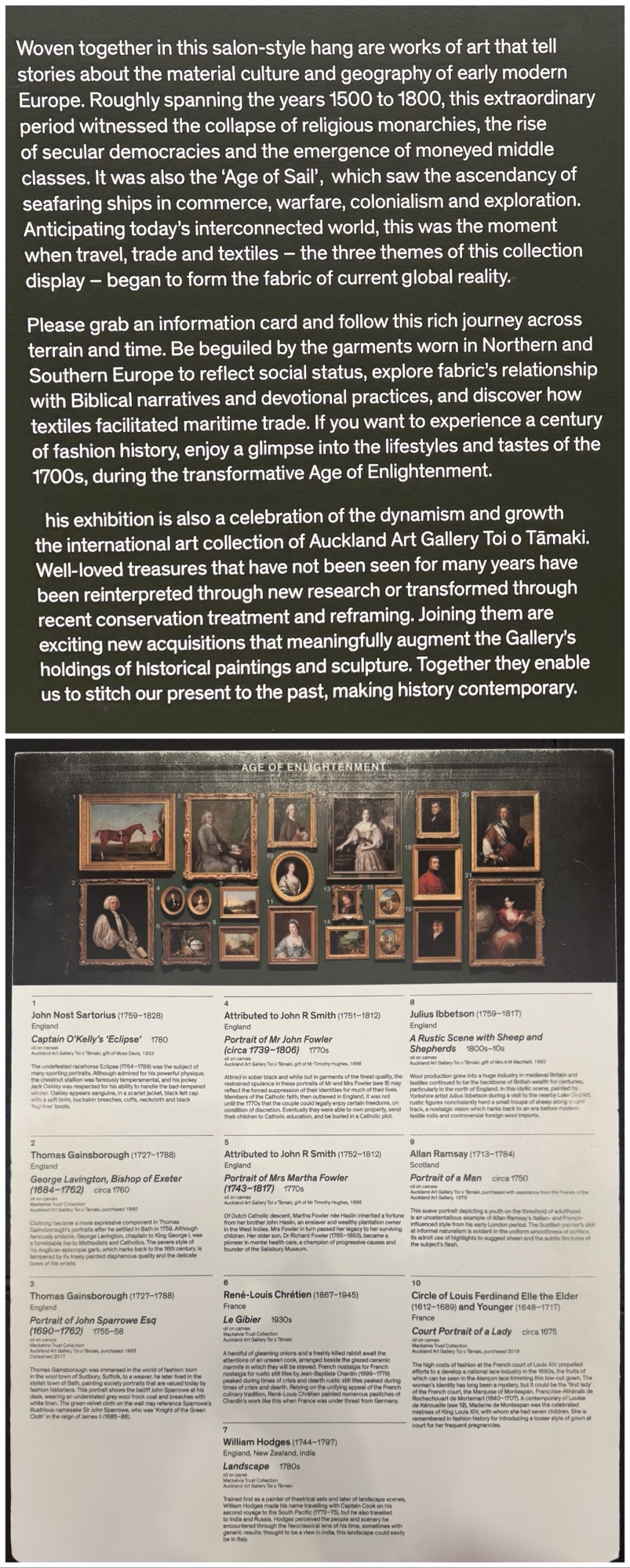
While we certainly had a few favourite pieces from both of those collections, Ted and I were much more interested in works depicting New Zealand and by New Zealanders.
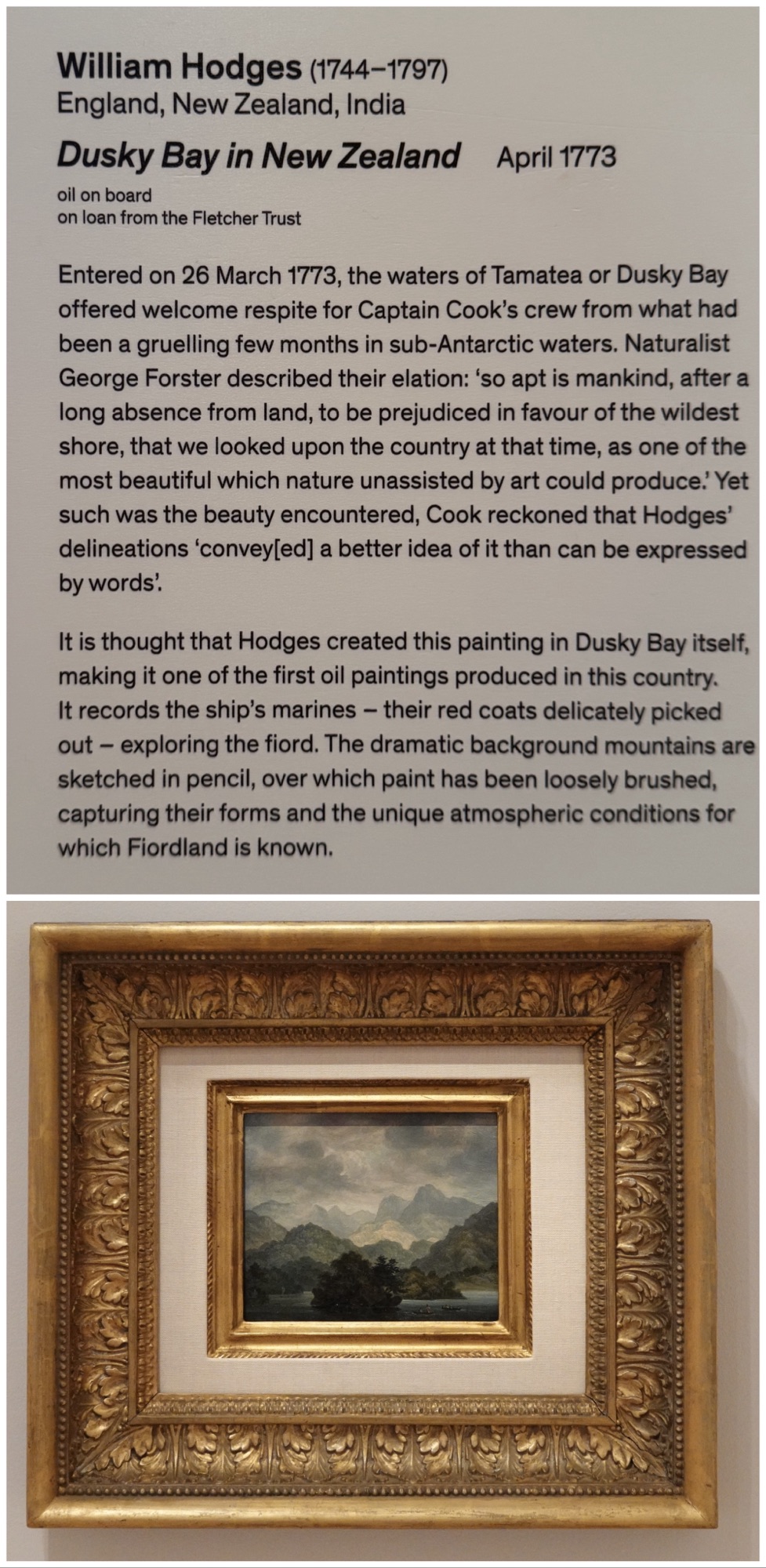
Taimoana/Coastlines: Art in Aotearoa featured art inspired by New Zealand’s shore.
If we weren’t particularly looking for European painters, these two paintings were interesting because of when and by whom they were done.
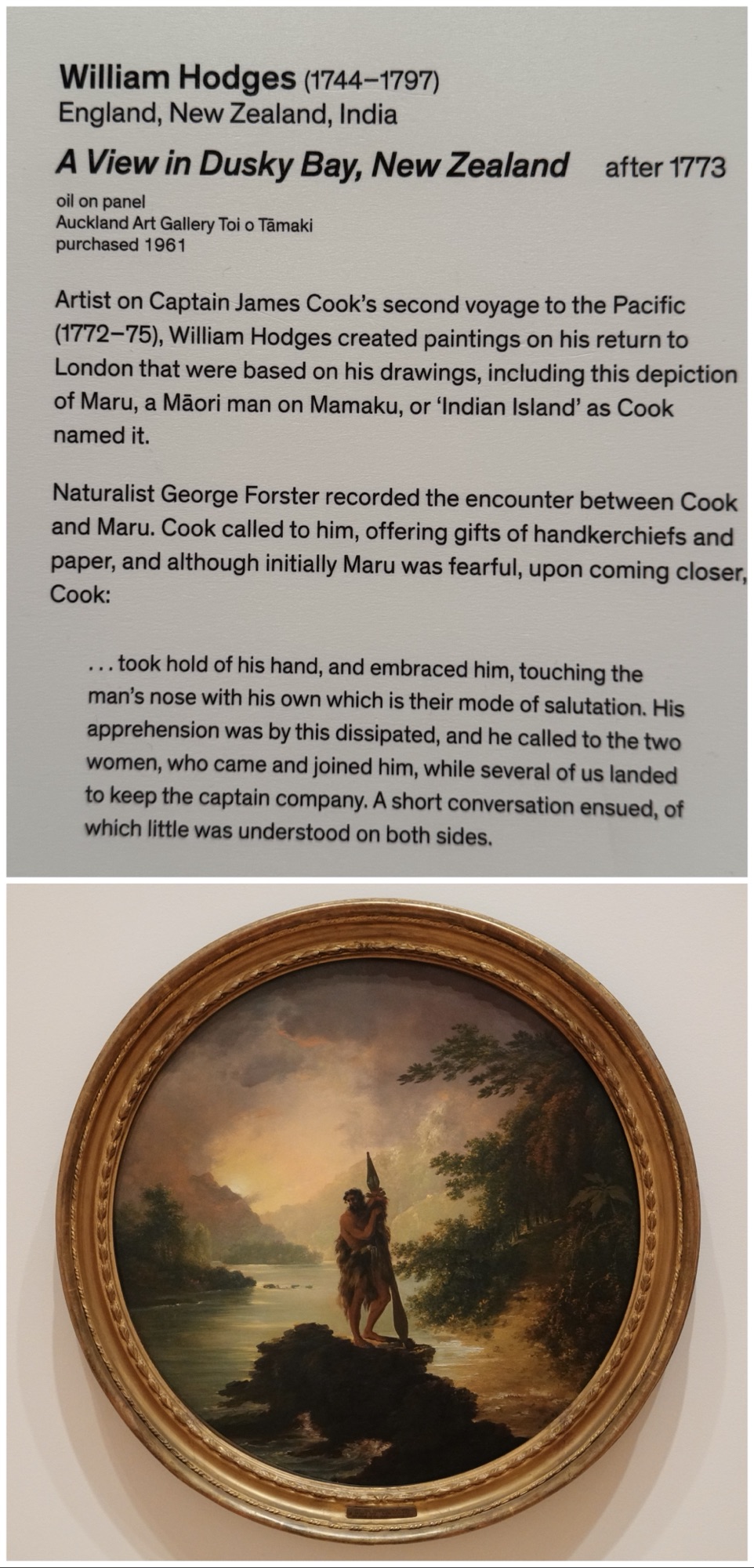
Taking a completely different perspective on the significance of coastlines were these modern pieces.
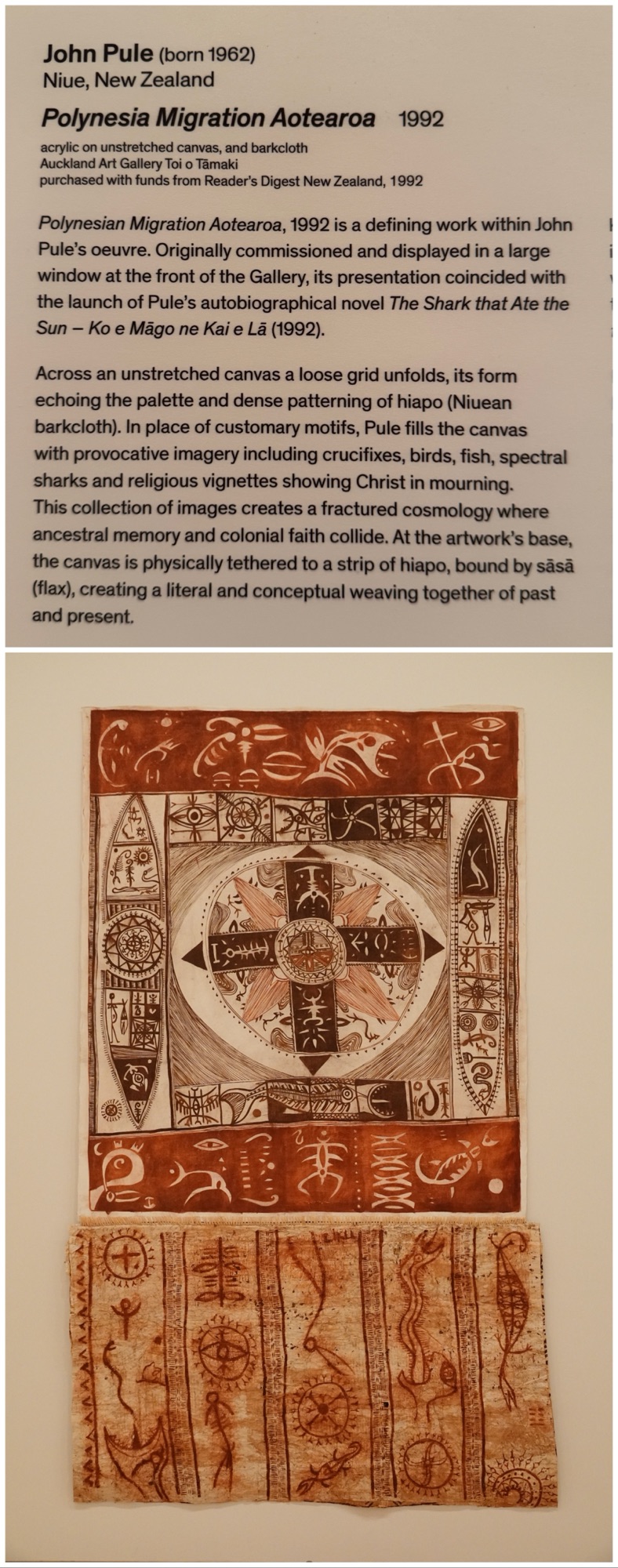
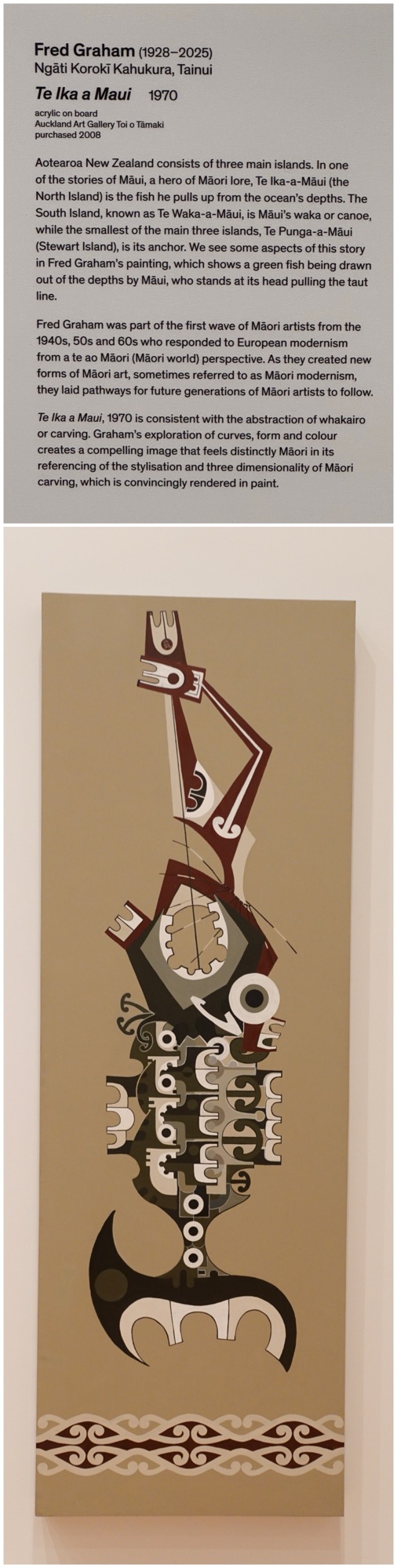
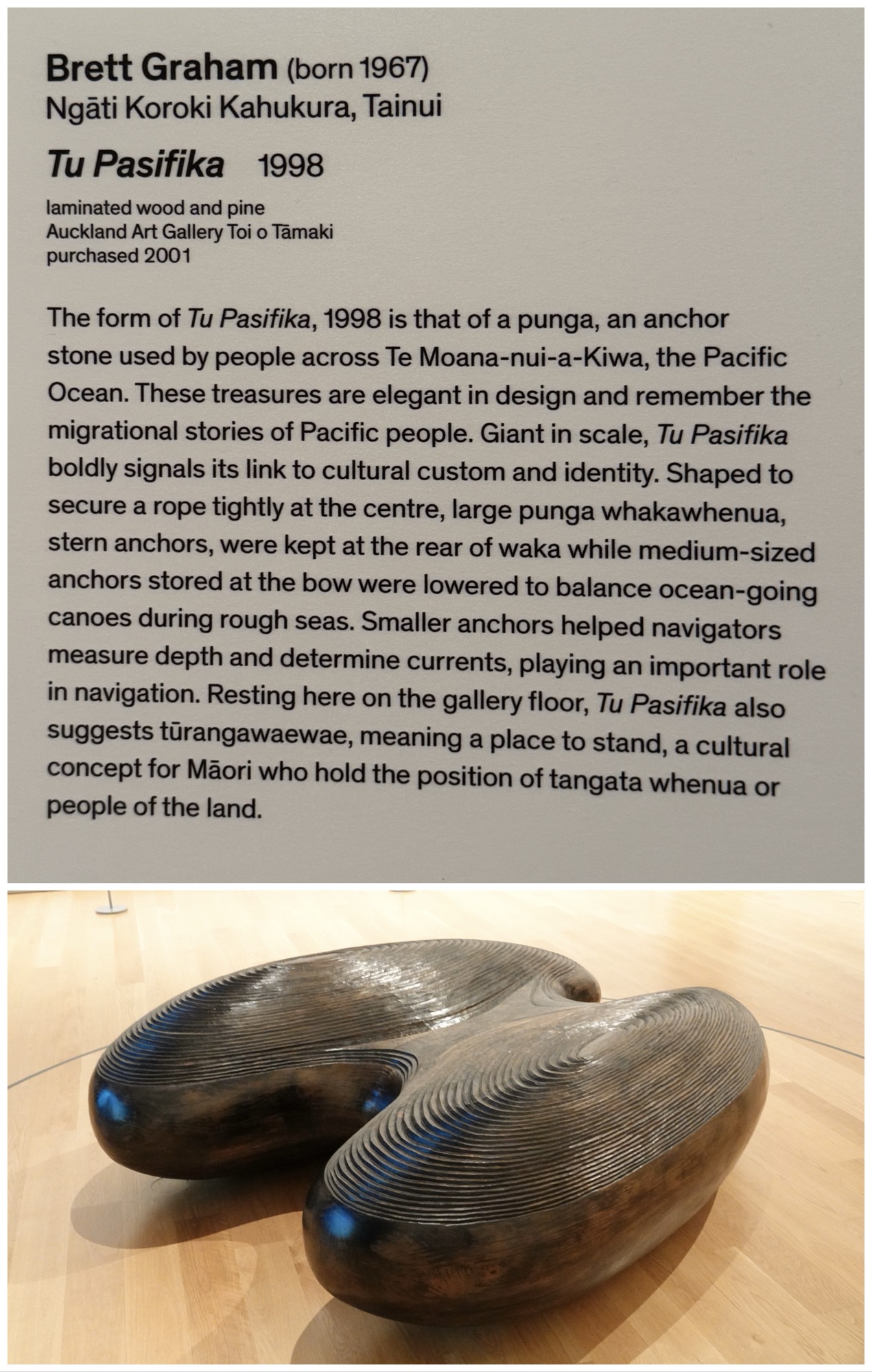
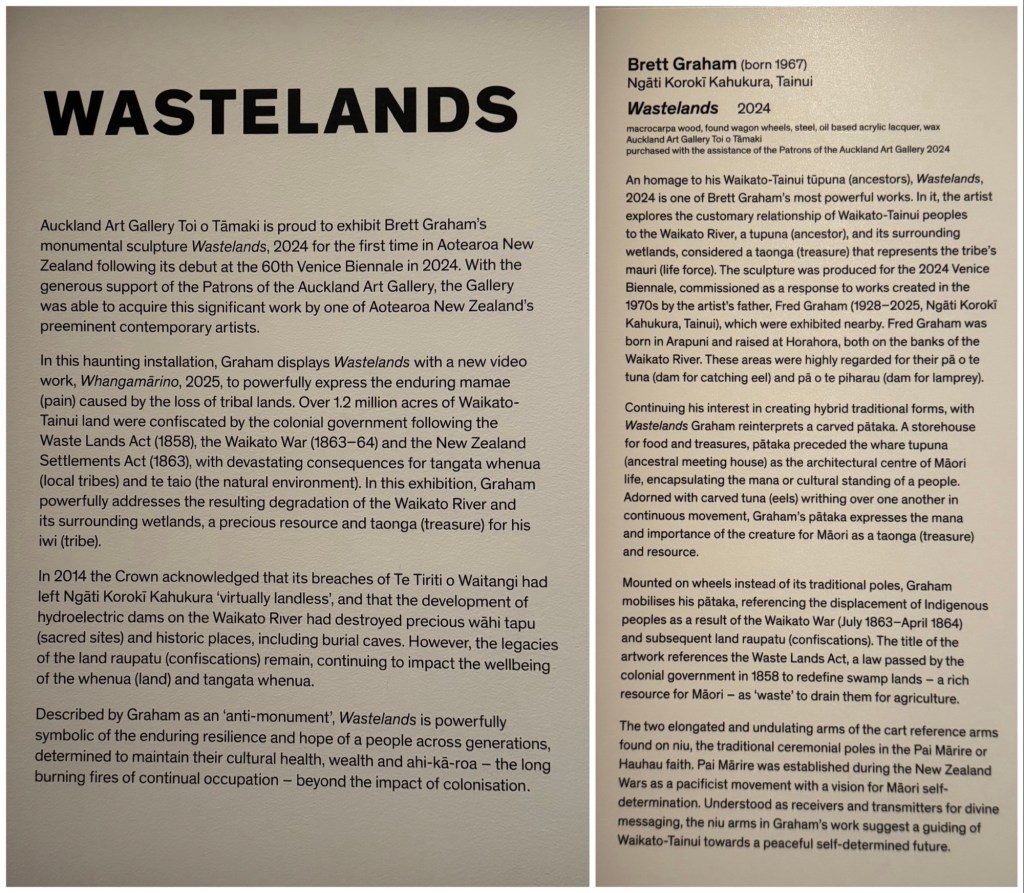
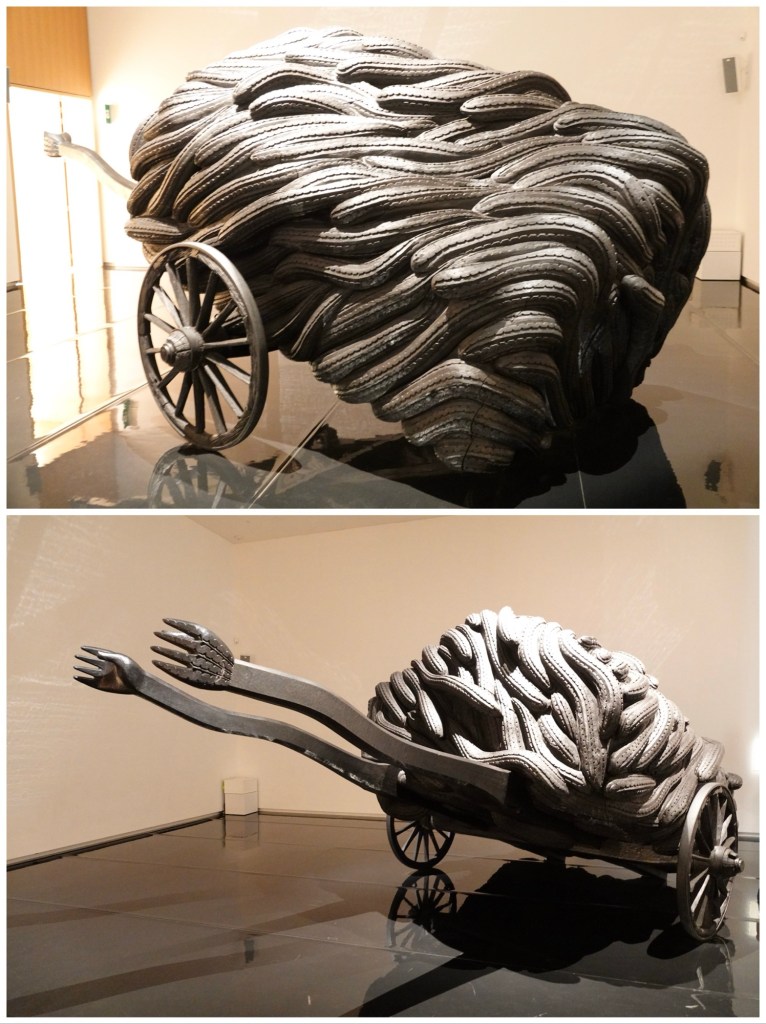
Trying to summarize Brett Graham’s Wastelands in my own words wouldn’t do the issue with which it deals justice.I’ve included the gallery’s signage so that we’ll be able to look back at it when we re-read this episode in the future.
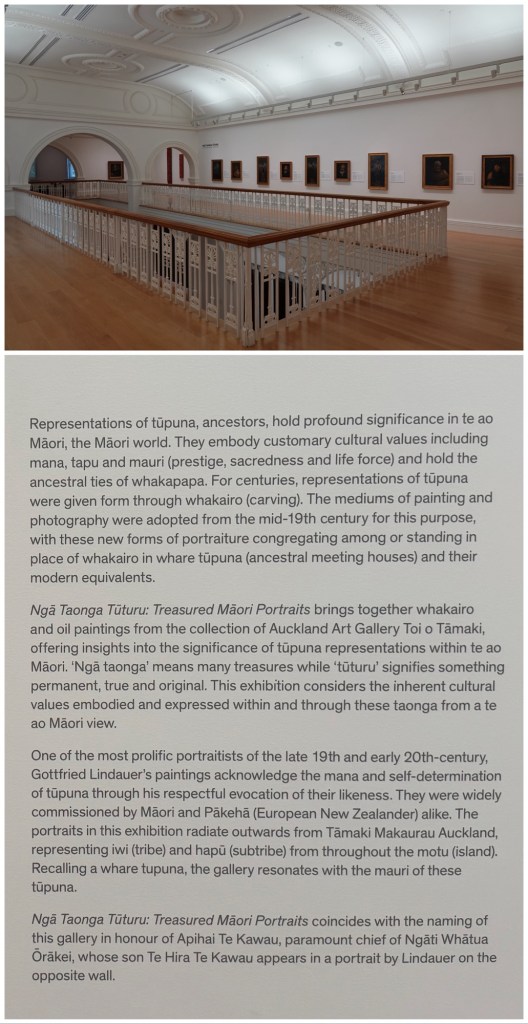
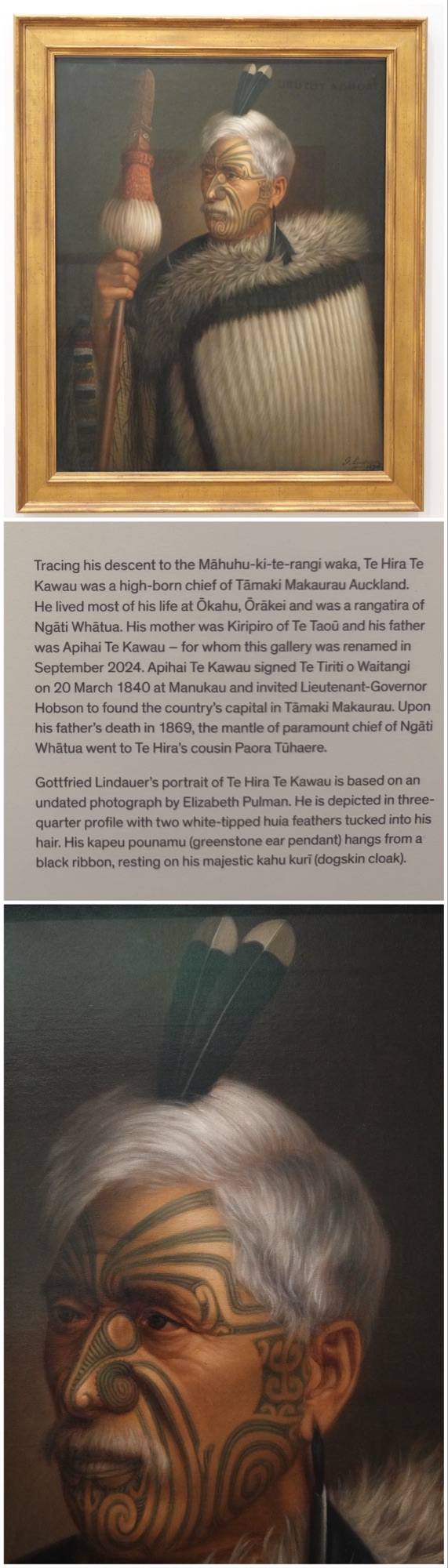
My favourite exhibit was definitely Ngā Taonga Tūturu: Treasured Māori Portraits. The exhibit invited us to “experience the mana (prestige) and mauri (life force) embodied in the precious carvings and portraits of the Māori tūpuna (ancestors).”
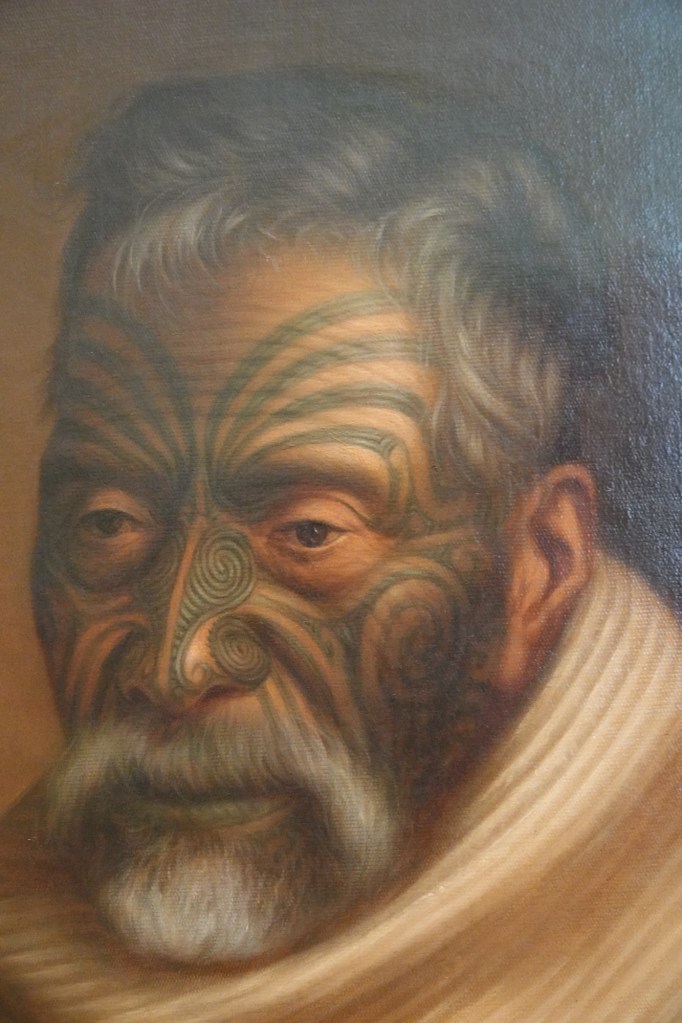
On 10 June 1886, nearby Mt Tarawera erupted: Te Tarata were destroyed and the village of Te Wairoa completely devastated, with approximately 120 people losing their lives. Four days later rescuers dug Tühoto Ariki from his ruined whare (house). He was treated at a hospital in Rotorua but died two weeks later.
In the painting, Tühoto Ariki is clad in a kaitaka (finely woven muka cloak). Befitting his status as a powerful tohunga, he is adorned with a rangi paruhi (full-face tattoo) extending from his chin to his forehead, where tiwhanawhana (sweeping lines) radiate upwards and out from the bridge of his heavily tattooed nose.
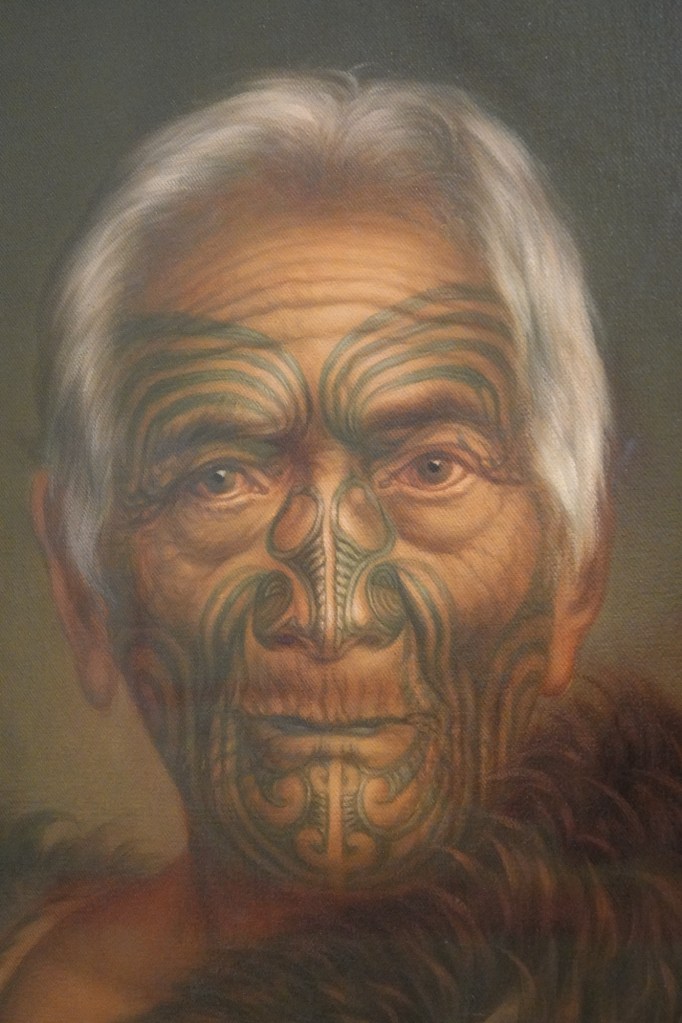
I was also impressed with the strong female Māori leaders.
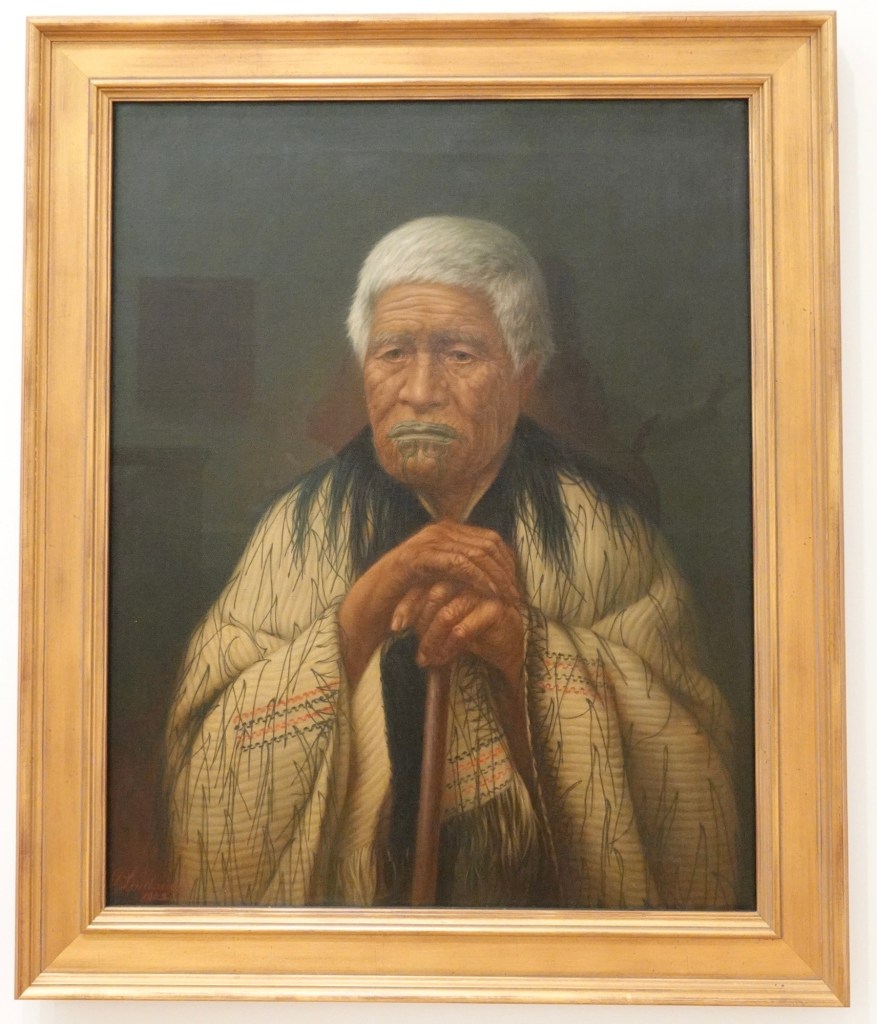
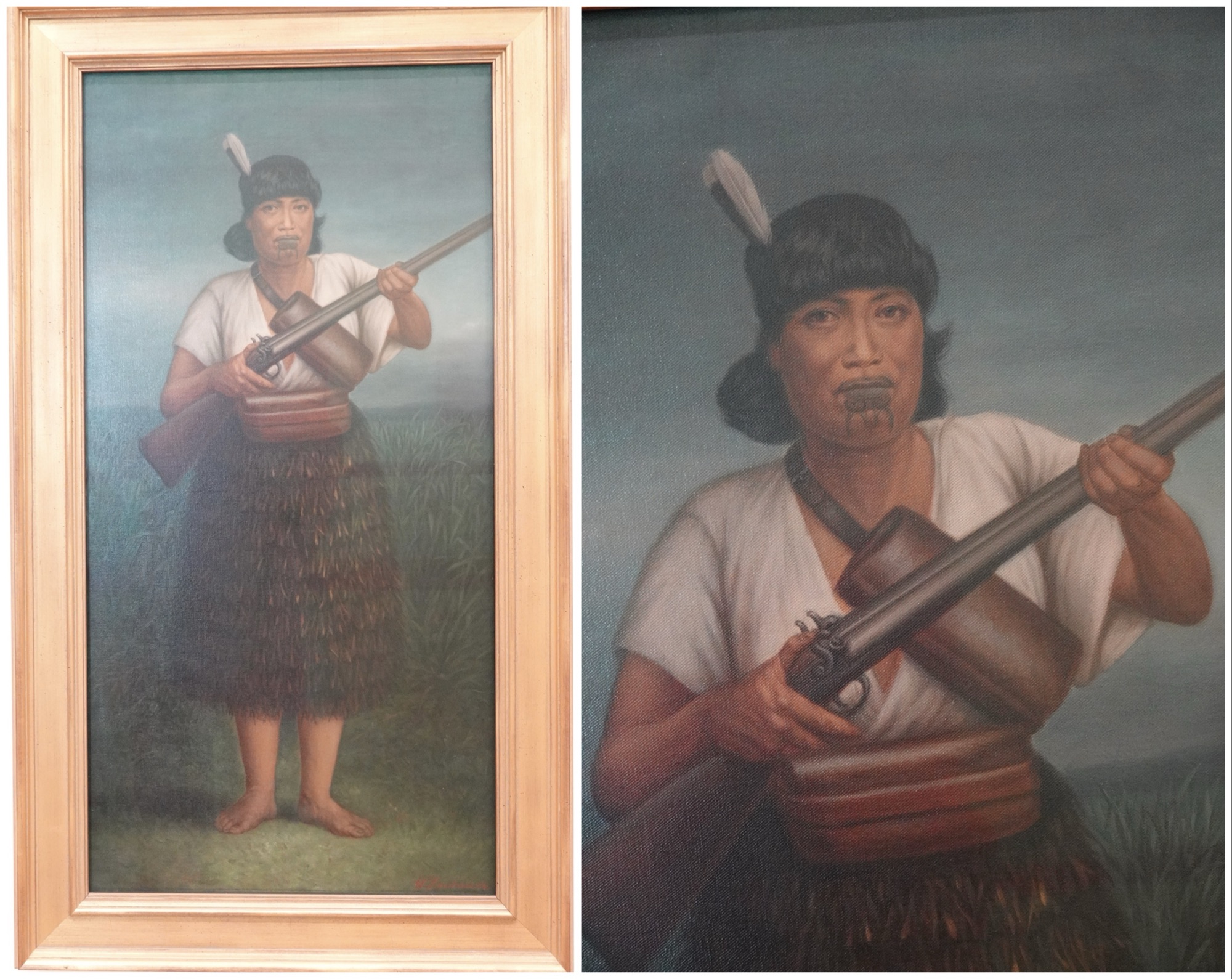
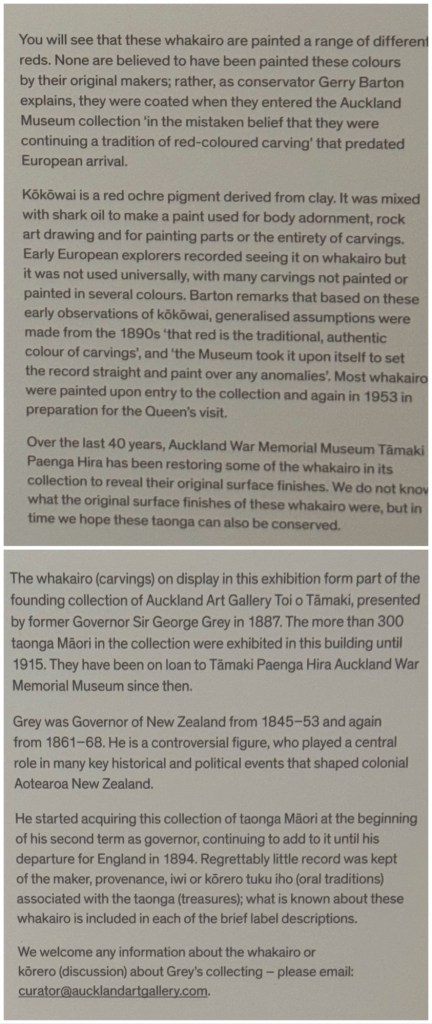
On our previous visit to New Zealand we saw many, many reconstructed Māori meeting houses, carved poles, waka (boats), and masks, all painted red. No one ever talked about the significance of the colour, but today at the art gallery we got a surprise:

Damian was still busy, so Ted and I walked to the harbour and found a waterfront pub in which to enjoy a couple of cold happy hour lagers.
And then…

As brief as our hello had to be, it was wonderful to get a quick hug and an update.
Tomorrow morning we fly to Christchurch, where we’ll spend just one day before joining our South Island tour.
 Rose and Ted’s Excellent Adventure
Tattoos!!! Thank god you said that! I was envisioning makeup every day!Loved your comments about wanting to get THEIR culture!Now thank you – aga
LikeLiked by 1 person
I enjoy reading about your travels. Due to my health problem (diabetes), it is difficult to travel for the length of time that you are going. We too typically travel with only carry-ons, backpacks, and CPAPs. So, I read and imagine that I’m along for the trip.
My wife has neuropathy also. Do those New Balance shoes have a number or name so we can look for them?
LikeLike
It was model 1080 that was recommended, but they may have been phased out (which means you may find them on clearance sale if you’re lucky). Ted’s are actually model MGCPRCB5 “Propel” Fuelcell. It’s the Freshfoam/FreshfoamX sole that seams to make them work.
LikeLike