Our ship docked in Ilok Croatia this morning, on a nice quiet Sunday. The only excursion offered here was a winery tour, which appealed to neither of us as a morning activity.
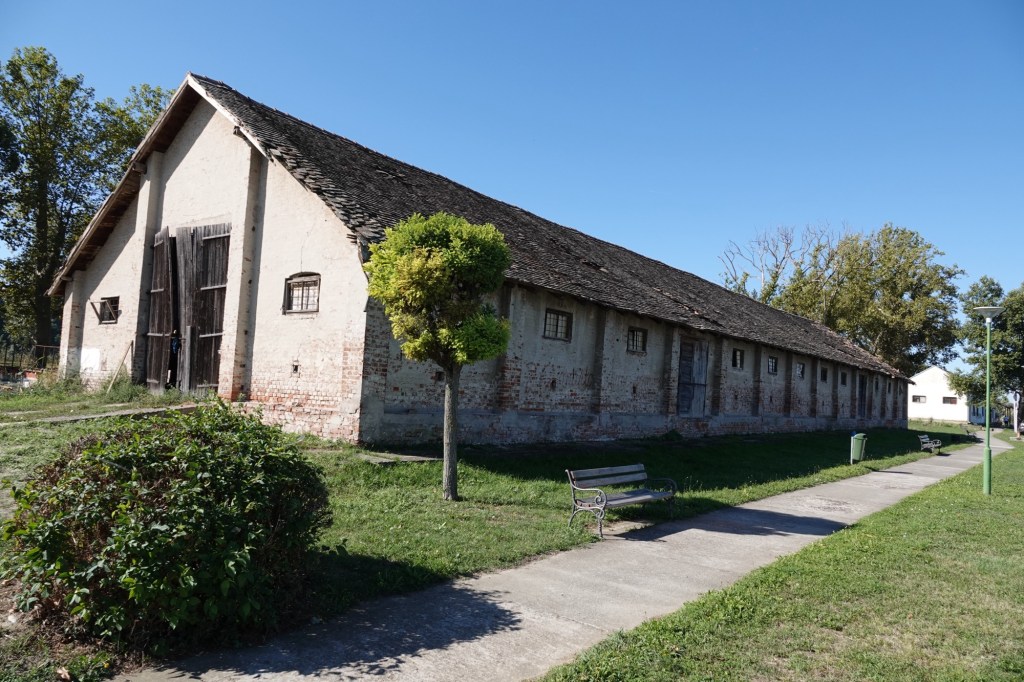
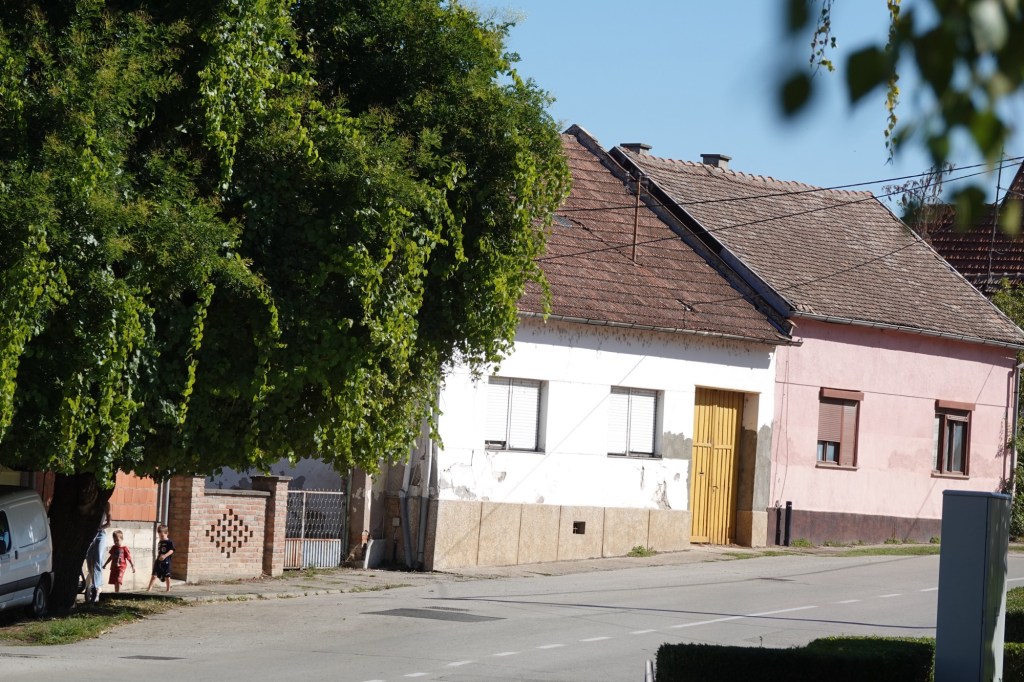
Instead, we simply strolled the Danube shore and part-way into the very small town, which features lots of closed shops and damaged properties dating to the most recent war here in 1995.
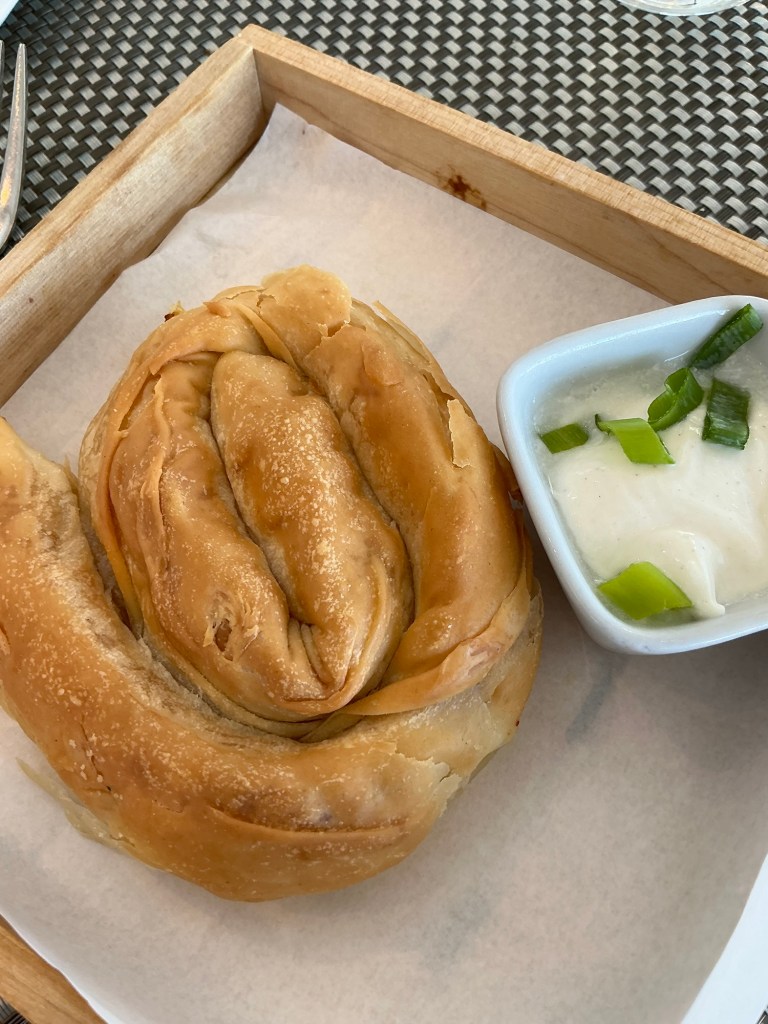
But first, Krompiruša, a traditional Croatian potato pastry, served with a sour cream and leek dip.
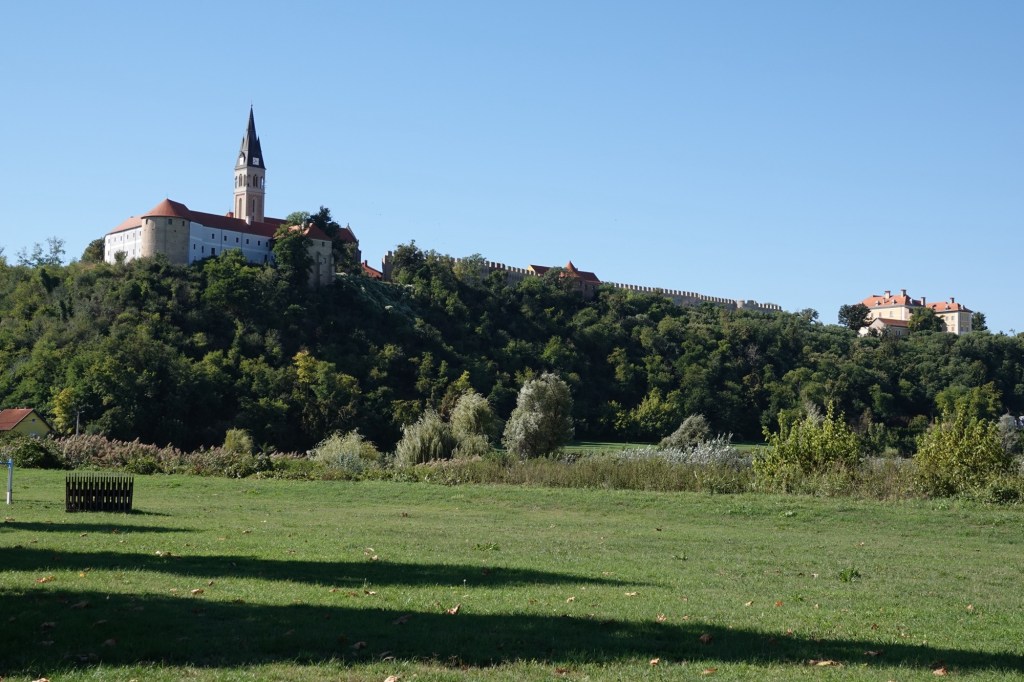
Our walk took us through a small town located below a fortress. Many of the shops and homes were damaged and deserted, a lingering legacy of the war that ended not quite 30 years ago.


At 11:15 a.m. we sailed for Vukovar, arriving around 2:00 p.m. Our transit along the river was absolutely gorgeous. We couldn’t ask for better weather than this glorious sunshine and summer temperatures.

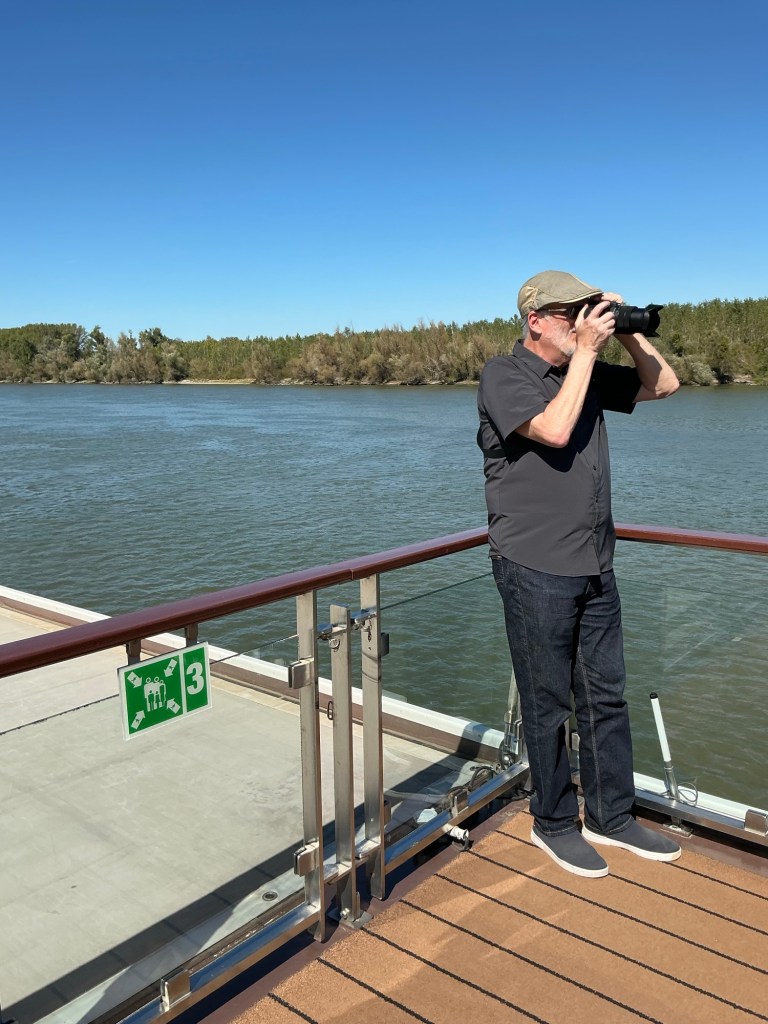
This is the first river cruise we’ve taken where we were really able to take advantage of the sun deck.

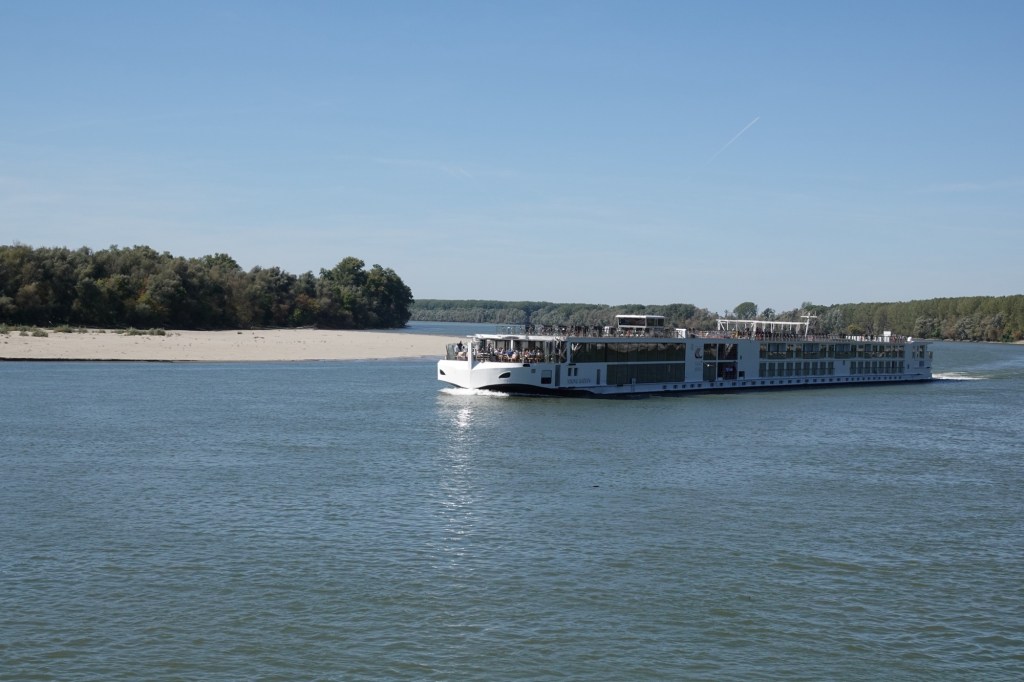
We crossed paths with our sister ship doing this itinerary in the opposite direction.
Our included 4 hour excursion was focussed on Vukovar’s Eltz Manor Museum & the citadel city of Osijek.
We started our tour in Vukovar; known as “The Hero City.” It was heavily destroyed during the Croatian War of Independence.
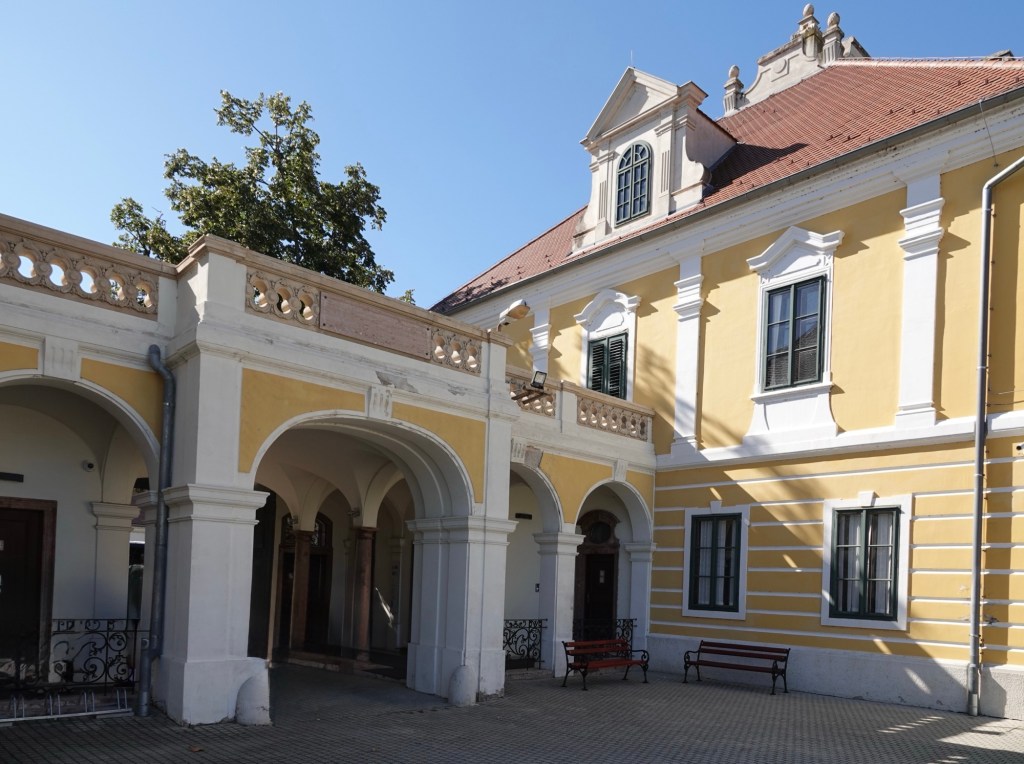
Eltz manor, built by the German Eltz family in 1751 is not technically a castle because it has no keep walls. It was built in a very familiar Habsburg style and even the Habsburg yellow colour after the Ottomans were defeated by the Austro-Hungarian Empire. The castle is still privately owned, but now houses the Vukovar museum.
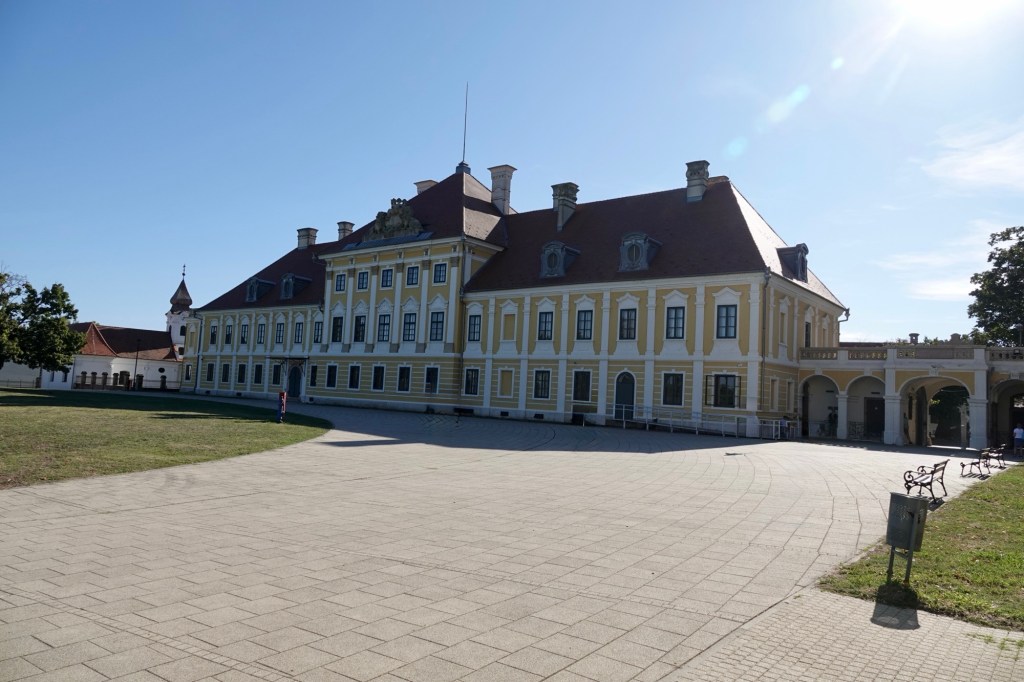
The building is really quite beautiful. It’s amazing to think that it is a 2011 restoration; the manor was completely destroyed in 1991 during the homelands war.

The museum’s displays begin with the archeology of the area back to the Ice Age and Neolithic eras. One of the artefacts in the museum we were told was an early form of physical calendar, but our guide admitted that some archeologists disagree and think it was actually used for drugs – in effect a very ancient version of a bong.
We learned that the Celts were here until at least the 3rd century BCE, and that the Roman’s created a colony called Valkov here.
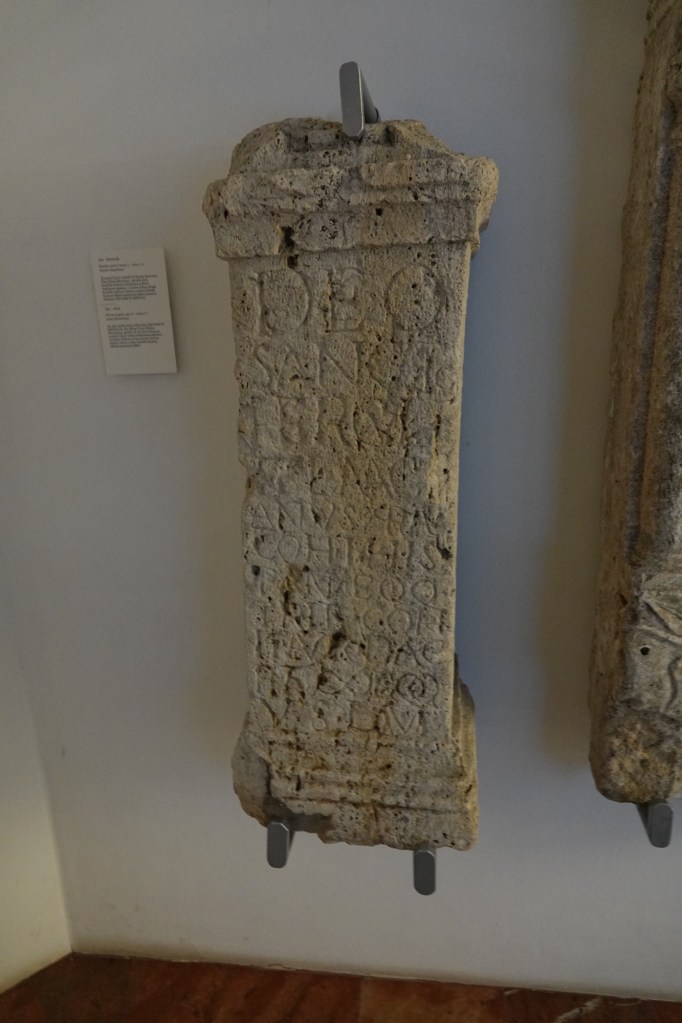
From around that Roman era is an altar dedicated to Hercules with pride of place in the museum.
There was one room completely dedicated to the Habsburgs. In this region it was the Habsburgs who defeated the Ottomans, and Maria Theresia of Austria was instrumental in “organizing” city structure in the area, with common laws and rules that helped to create stability. The era of the Habsburg rule is, by many, considered Croatia’s “golden age”, resulting in that monarchy being very fondly remembered by the Croatians.

There was another room dedicated to Croatian newspaper media…

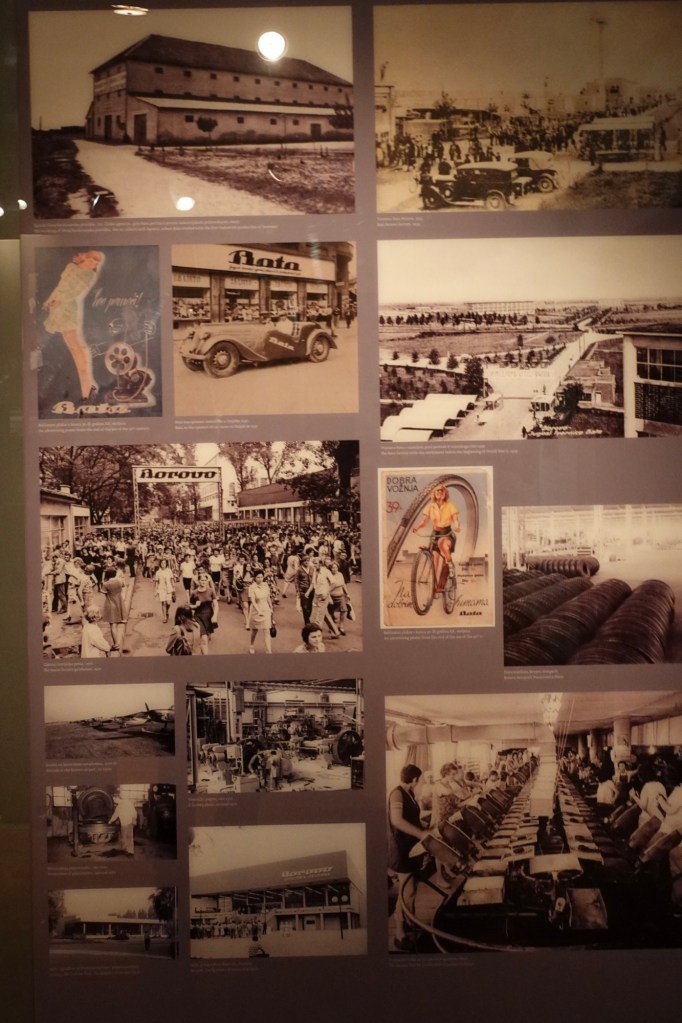
…and one dedicated to the local shoe factory, the city’s biggest employer, a division of Bata, that was a major industry here. The founder of Bata shoes emigrated to Canada (the Bata Shoe Museum is in Toronto).
But it is impossible to really understand Croatia without delving into the darker parts of its history.
From 1941-45, Croatia was a Nazi puppet state, until Tito’s partisans prevailed against that regime in 1945 and converted the country from fascism to communism. It is interesting that people here are almost nostalgic for the communist period when they had jobs, homes, and food. Tito was almost universally respected for saying no to Stalin. The story that gets told over and over is that Stalin tried many times to have Tito assassinated, and eventually – out of frustration – Tito sent a rather cheeky letter to Stalin, which supposedly read “Stop sending people to kill me. We’ve already captured five of them, one of them with a bomb and another with a rifle (…) If you don’t stop sending killers, I’ll send one to Moscow, and I won’t have to send a second.” It’s a great legend, but there’s no actual proof such a letter existed.
Back on the bus our guide spent some time telling us about the Croatian “homeland war” of 1991 to 1998. That war between Serbia and Croatia was largely caused by Slobodan Milosevic’s desire to absorb Croatia’s Adriatic ports into Serbia.
The film strip related to the war that we saw in the museum was heartbreaking; the exodus of people from Croatia is reminiscent of people being exiled from Germany. It is hard for anyone in North America to fully understand living inside a war zone. The reflection our guide read to us was heartbreaking, and can be found here: A Story About A City
In 1995 military operations Storm and Flash set the scene for Croatian independence, but that hard-fought independence was followed by a period of economic challenges and government corruption. In 2013 the country finally qualified for entry into the EU. It is now also in the Schengen Zone and uses the EU common currency.
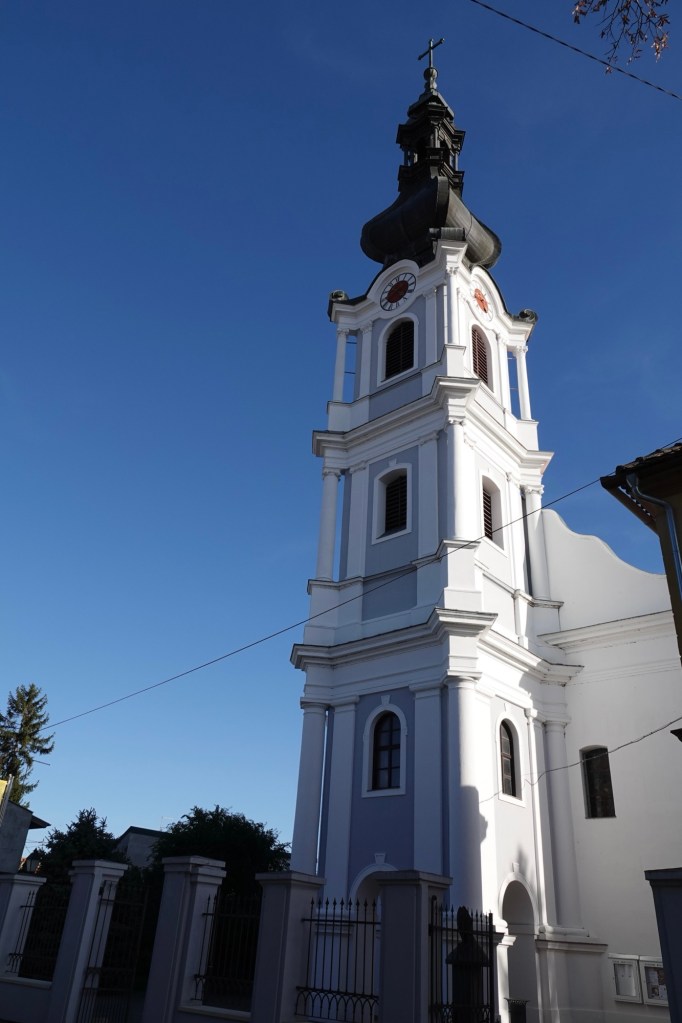
From Vukovar we drove to Osijek where we toured a local Roman Catholic church celebrating its 300th anniversary this year.

The large central altar is dedicated to the Virgin Mary.

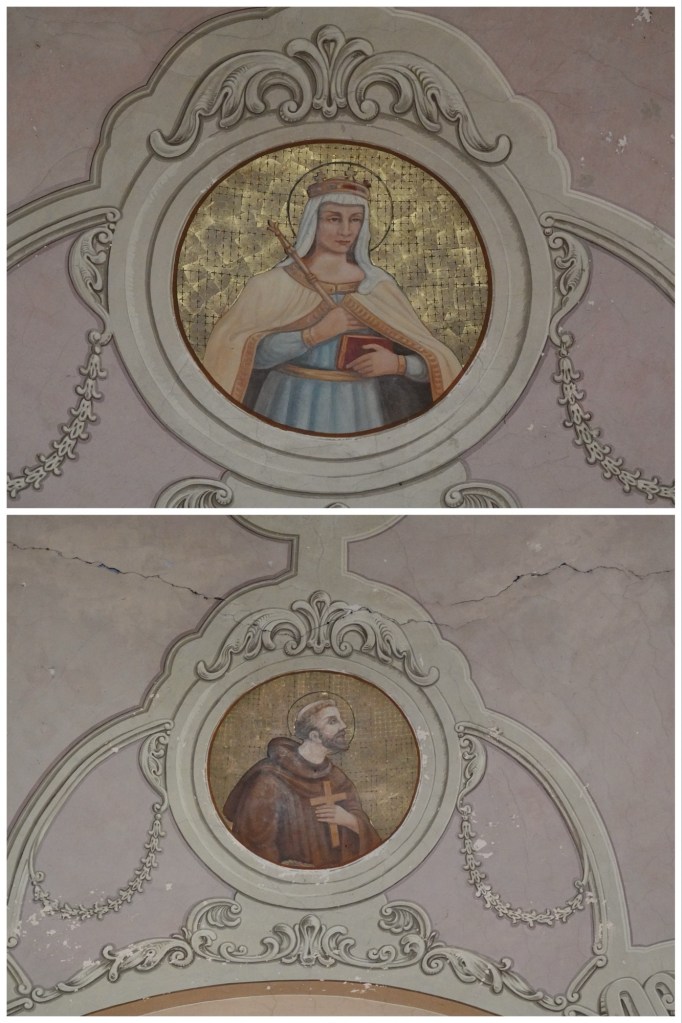
The ceiling is not carved, it is actually trompe l’oeil painting. The cracks in the ceiling are remnants of the 1991 bombing, although the church survived both world wars.
After our church visit we were offered (finally – I’ve been waiting since we got to Yugoslavia!) a shot of slivovitz, the strong plum brandy that was a favourite of my father. Cherry and walnut brandies were available for the fainter of heart.
Then it was a short drive to the old town centre.
We were told that Osijek’s citadel is home to the best-preserved and largest ensemble of 18th-century baroque buildings in Croatia, but much of what we saw still bore the scars of war. Interestingly, the the fortress’ design is actually inspired by the Dutch lowlands and the building was done in a floor plan shaped like a star.
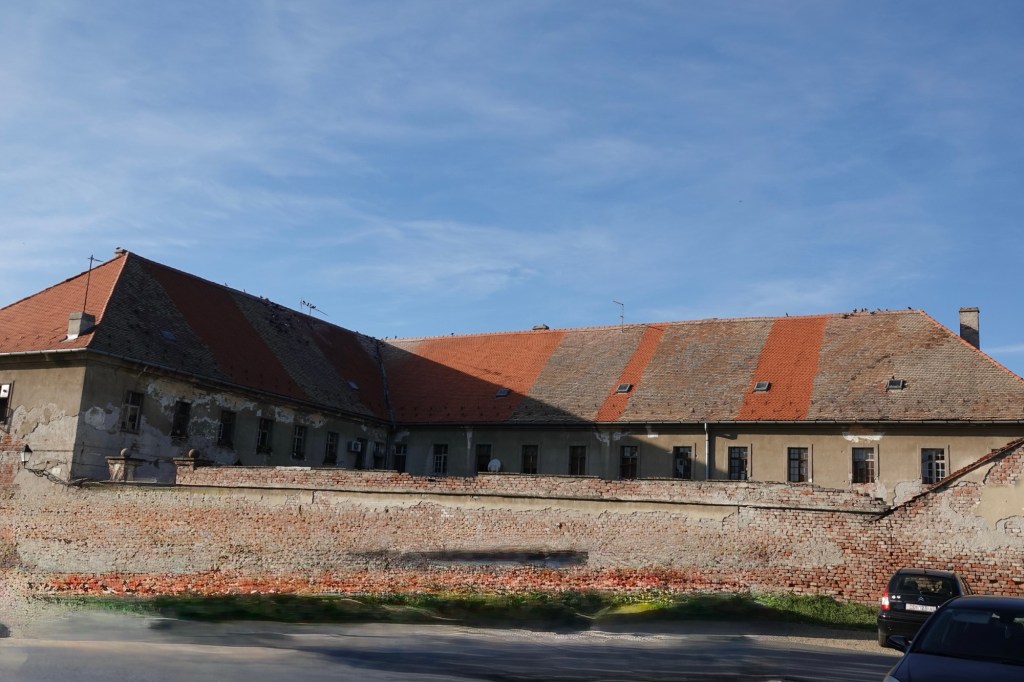
This town is where the very first street car in Croatia ran.
The town buildings show lots of damage from bullet holes, shrapnel , etc., from the wars fought here. These damaged homes are in fact still residential homes.
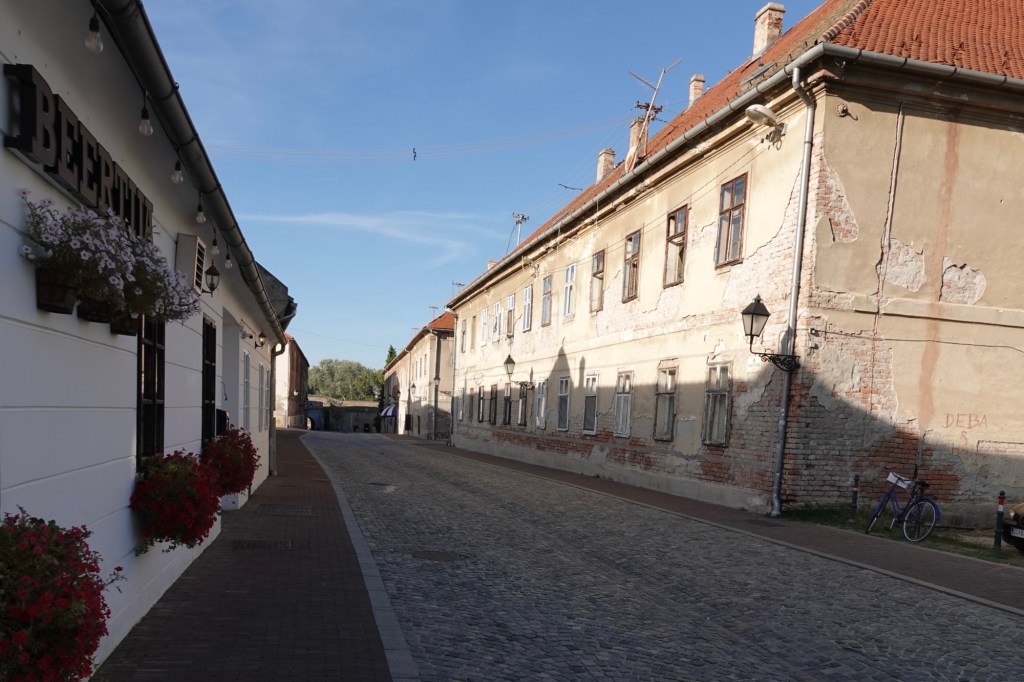

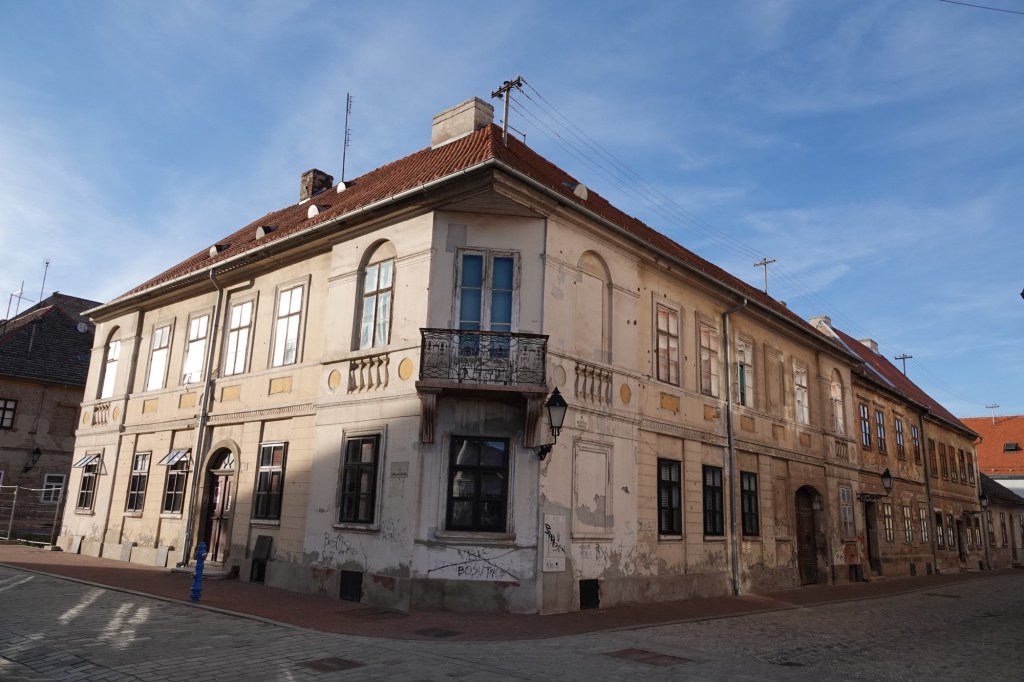
Although it was Sunday and some shops were closed, the cafés and restaurants were full of Croatians, enjoying the amazing weather, and thecall-important gelato shop was open, serving huge scoops for just €1.50.
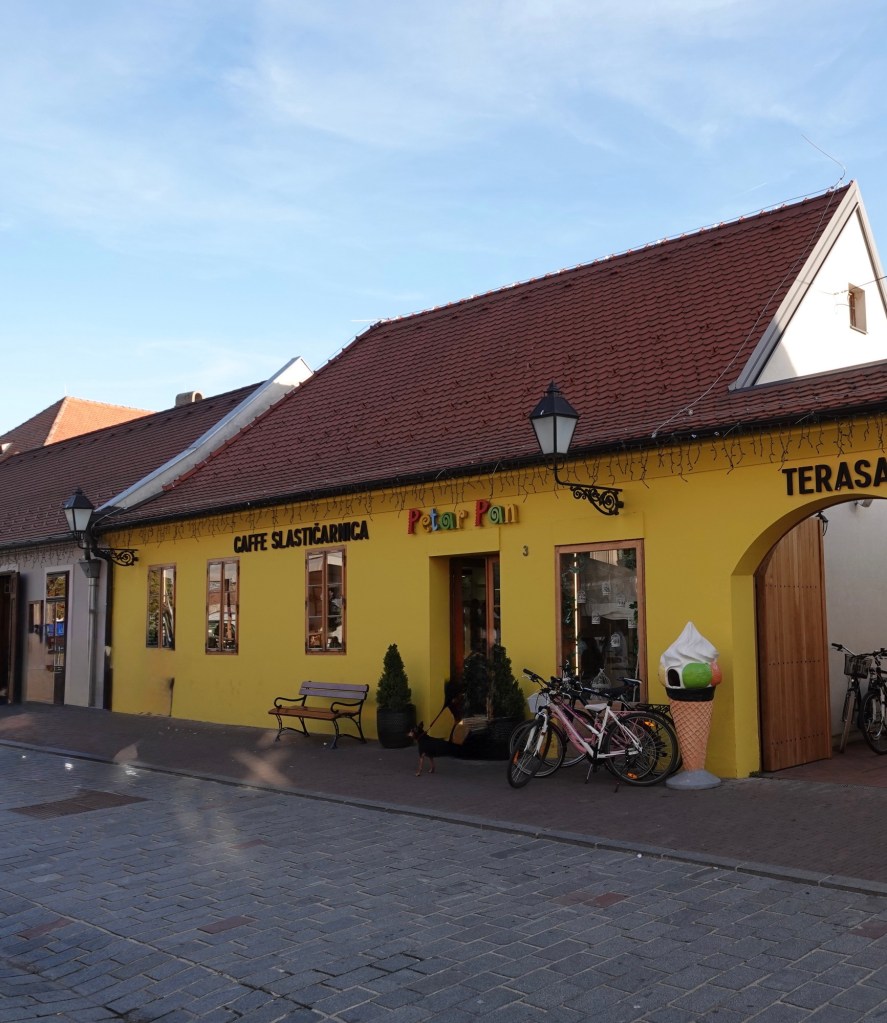
The neatly aligned cobblestones that we walked on that looked to be in such good shape date to the Austro-Hungarian era, but we’re completely ruined during the war and have been relaid.
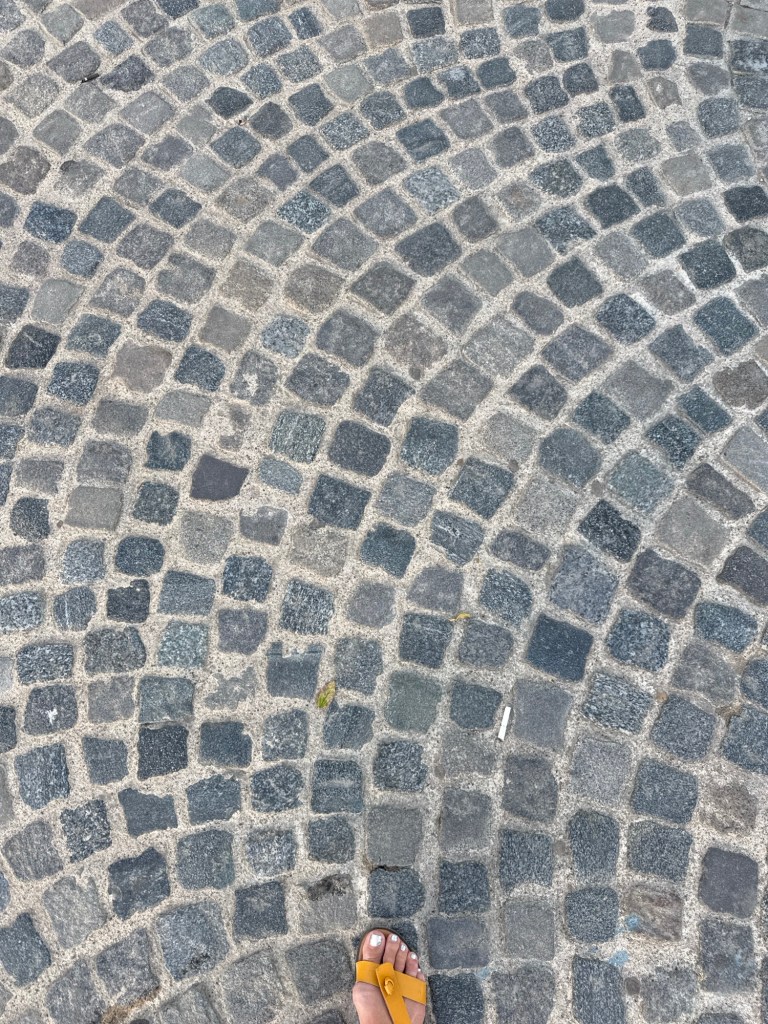
The second street that we walked on had cobblestones that were much more of a random pattern; they are believed to date to the Ottoman era.

The third cobblestone pattern was modern.

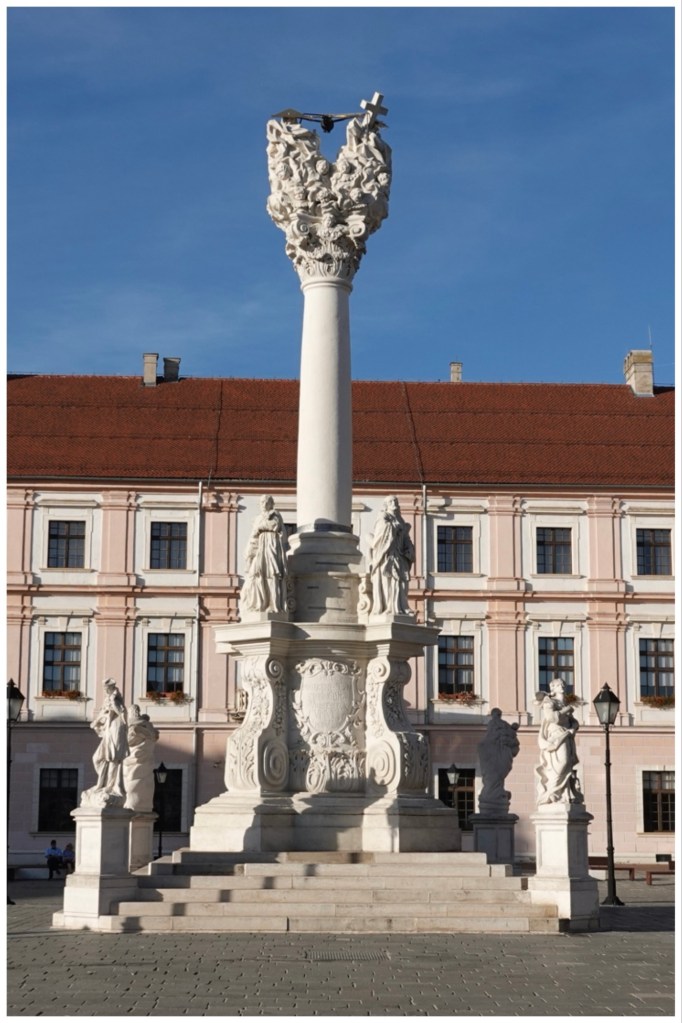
The Roman Catholic Church of Saint Michael the square of the holy Trinity, which is the main square of the city, has onion domes, which we usually associate with Islam.

The central statue in Trinity Square is something we will apparently also see in Pecș Hungary tomorrow, related to the same Trinity and the same plague period.

Our experience today in Croatia was certainly much different than our experiences in 2022 visiting the big coastal Adriatic cities of Split (Episode 223) or Dubrovnik (http://Episode 226 and 228 ), or even Zadar and Šibenik (Episode 225). Our docking area in Ilok this morning was perhaps a bit reminiscent of Croatia’s rural Dalmatia region (Episode 227). The advantage of having been in Croatia both via river and ocean is exactly that it has given us different perspectives. Perhaps a land trip is next!
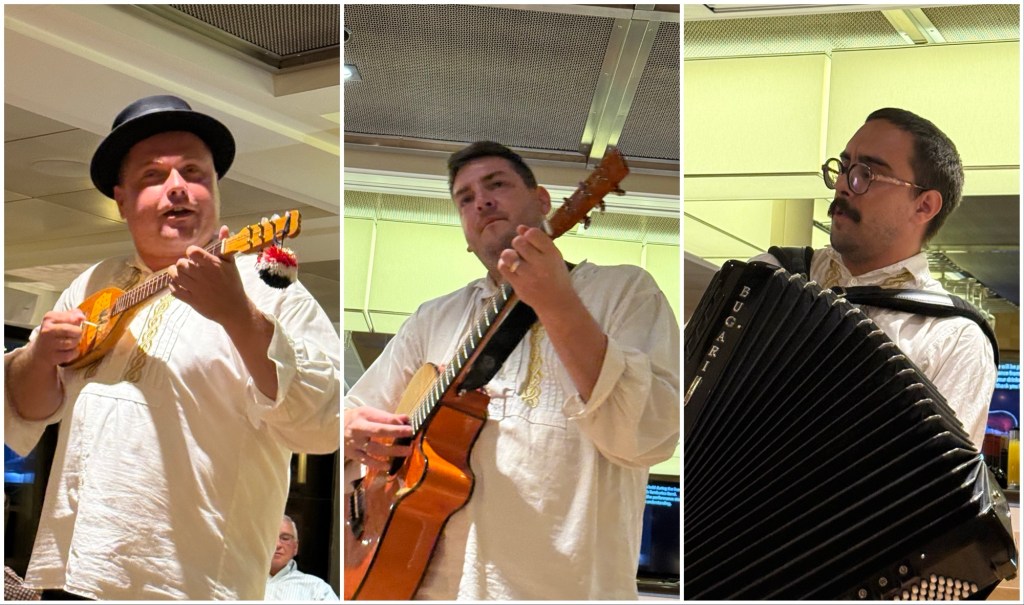
After dinner, Viking treated us to a performance by a local Tamburica Band trio. They were energetic and entertaining, but I’m not at all sure they were the best ambassadors for this Croatian folk music genre.
Tomorrow we get to Hungary.
 Rose and Ted’s Excellent Adventure