We see son#1 and his family all too rarely now that we live on opposite sides of the country.
In fact, it’s been almost 14 months since the last time we were together (Episode 542). Video chatting is all fine and good, but we’re long overdue for in-person hugs. I think that our new routine needs to be a few days here any time we’re flying through – that should at least increase the frequency of visits to twice a year!
But first, a glitch.
Way back in February, while we were still on our world cruise, we booked our Toronto accommodation. I used our Expedia app, which has become our go-to place for hotel bookings now that so many big cities are cracking down on short-term rentals like Airbnb. Expedia bought the VRBO platform, which means that legal VRBO short-term rentals can often now be found in Expedia, much the same way that Airbnbs can sometimes be found in Booking.com. We rented one of the several suites available at what I thought was an aparthotel in downtown Toronto.
Three days before our flight, we got a notification through Expedia that our reservation had been cancelled, at OUR request! Since that was absolutely not our request, we contacted Expedia, who contacted the property, who told them that we had requested a date change and not wanted to pay the revised price. Again, absolutely untrue. Our only communication had been the request for the online check-in form so that we could send copies of our travel documents (a requirement of the venue). That request was clearly visible in the communications area of the Expedia app. Ted and I surmise that the “aparthotel” (which by now we suspect was probably a private condo rental, despite not being flagged as a VRBO property) simply wanted to rent to someone willing to pay this week’s significantly higher rates during the Toronto International Film Festival.
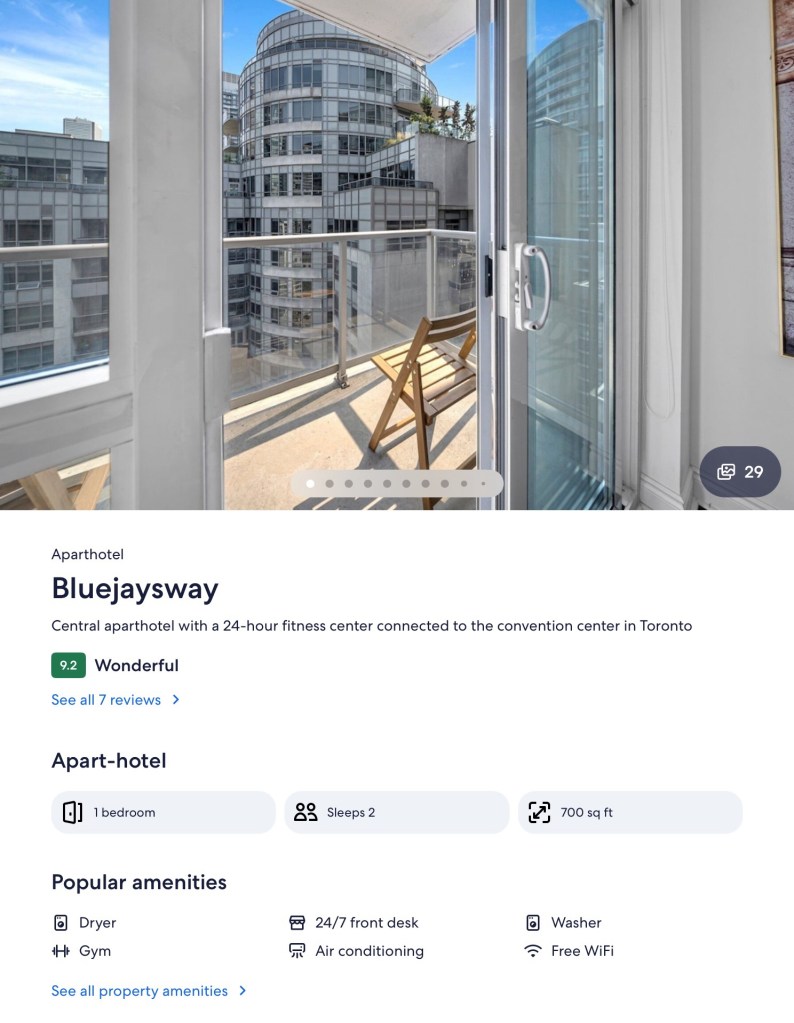
We got our refund, of course, but that did not change the fact that we were now scrambling for available – and 150-200% more expensive – accommodation. We asked Expedia to compensate us with the price difference in points, although we’ve had to go off-platform to Airbnb to find anything available. After following up with a manager, we were given a $100CAD coupon in our account – not the $350 premium we ended up paying, but better than nothing. We’ve also asked them to remove the property from their listings; whether they will or not remains to be seen.
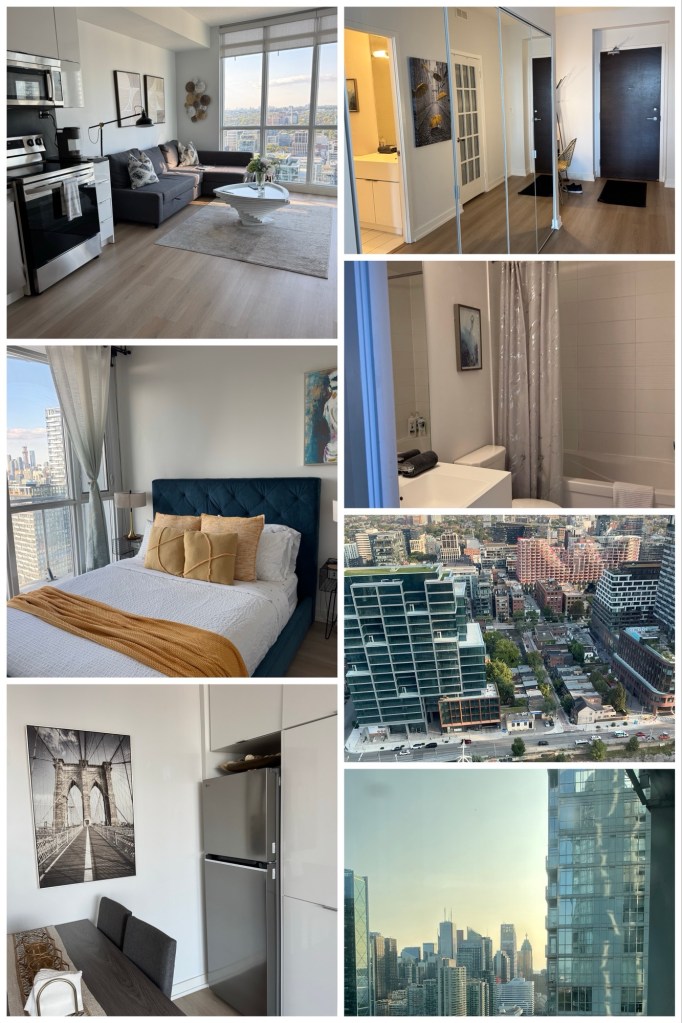
In the end, although there were very few Airbnbs from which to choose in downtown on our required dates, we were able to secure a lovely condo in CityPlace, very near where son#1 used to live in the condo we originally thought would be our retirement home. Who knew back when we bought that place that we wouldn’t want a permanent home anywhere?
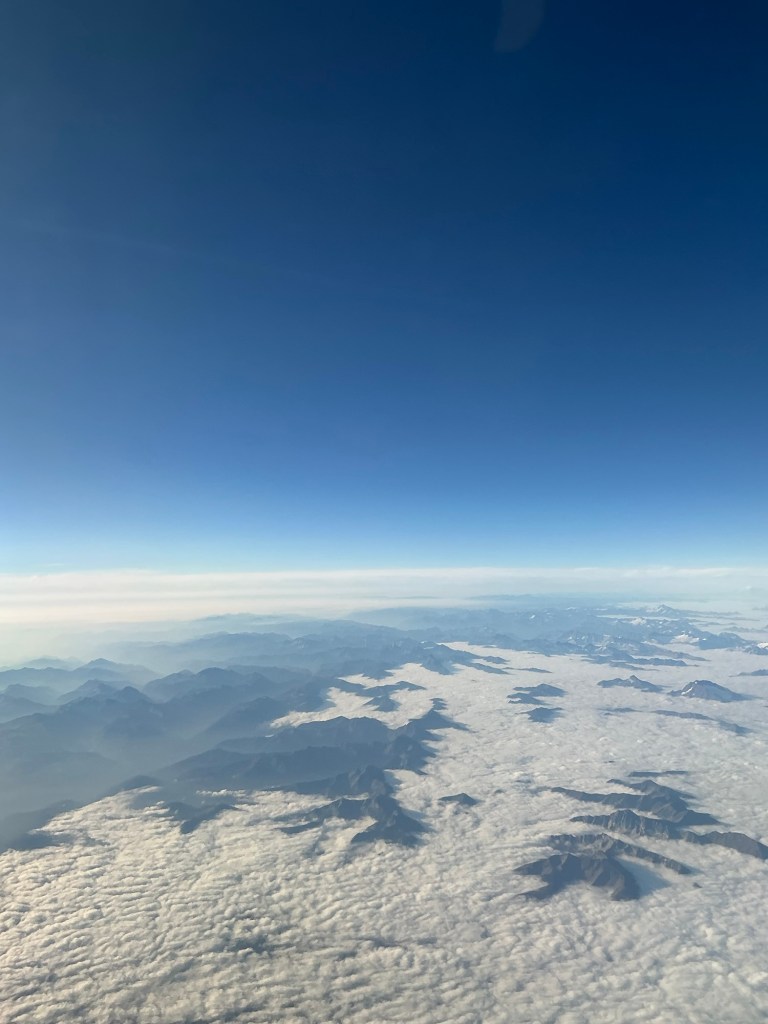
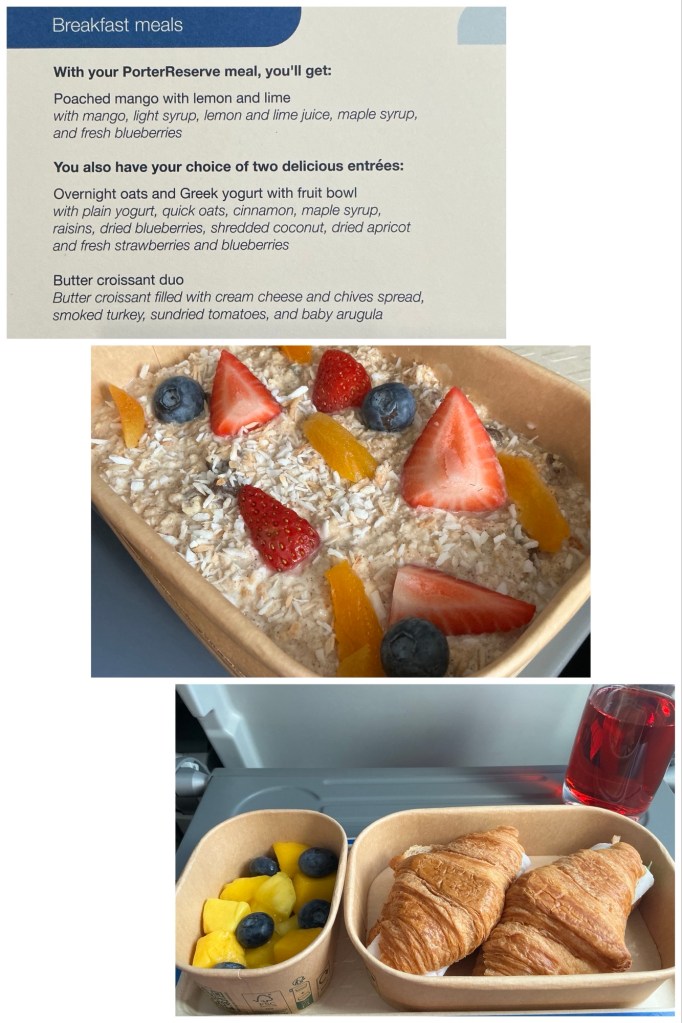
Before actually arriving in “The Big Smoke” we had a lovely flight from Vancouver on Porter Airlines. Their Embraer E195 planes may be fairly small, and without inflight entertainment systems or a true Business Class, but their front-of-plane Porter Reserve seats are reasonably priced, have great legroom, good free wifi, and include a meal – with beer, wine, or specialty cocktails if you want them. Ted and I chose coffee and cranberry juice, respectively, with our breakfasts and while the meals were being prepped enjoyed the view out our window of the tops of the Rockies peeking out from the clouds.
We did a quick settle into our accommodation, a run to the grocery store for breakfast provisions, and then headed to see “the kids”. I completely miscalculated our required transit time to cross the city, which meant they held dinner for us for a whole hour past our anticipated time. The salmon with butter sauce, roasted potatoes, and broccoli was delicious – but the hugs were the best part of my day!!
Our next and only full day with them was spent at the AGO (Art Gallery of Ontario), where we also had lunch, followed by an exploration of Toronto’s new Biidaasige Park, named for “sunlight shining toward us” in the Anishinaabemowin language. The name was gifted by an Indigenous Advisory Circle to honor the land, water, and sun and to signify hope, renewal, and a step toward reconciliation. The park is located on a new island in Toronto’s Port Lands called Ookwemin Minising, which means “place of the black cherry trees”.
I’m almost embarrassed to admit that in all our years living in the GTA, Ted and I had never visited the AGO. Son #1 would say “when you’re in the soup, you don’t see the soup”. I can imagine applying that expression to multiple situations, so I’m stealing it.
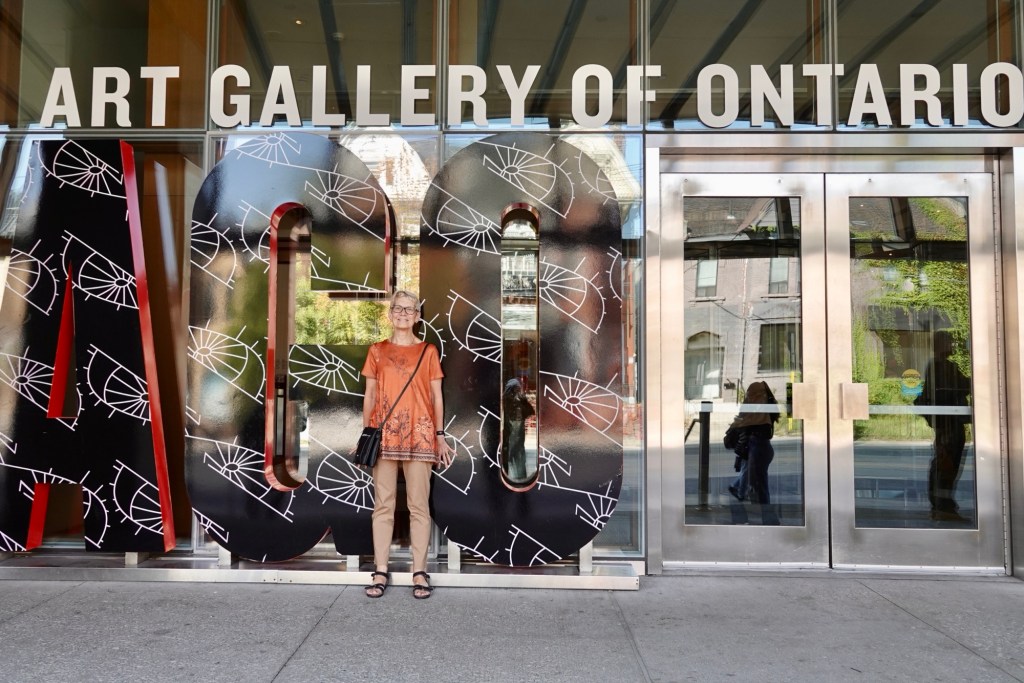
In the three hours, exclusive of lunch, that we’d allotted for the AGO we certainly didn’t see it all. In fact, we didn’t even fully complete the first of four floors of wonderful exhibits. The gallery has photography, sculpture, model ships, textiles, and immersive experiences, but for me it’s always mostly about the incredible paintings and drawings.
I was impressed by how much local art was on display,interspersed among more traditional European masters. The pictures below, with only a couple of exceptions, are all of art by artists either born in or resettled in Canada (many in close proximity to Toronto.)
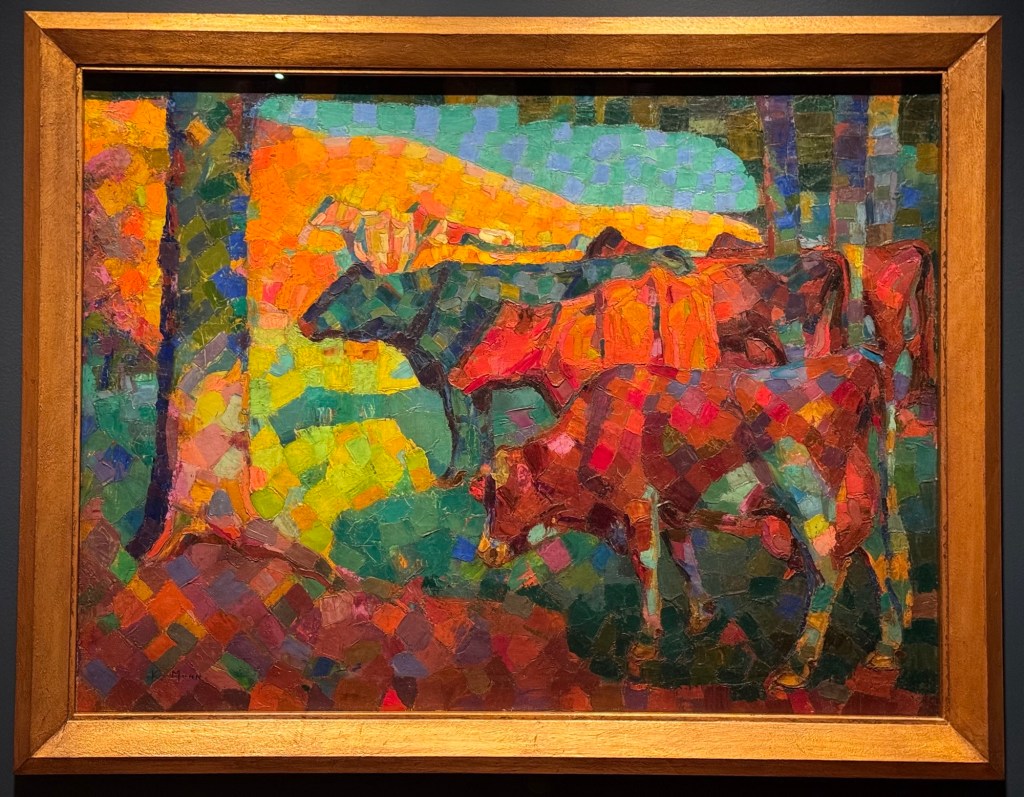
(born and died Toronto, Ontario, Canada, 1887-1974) made me think of the old-style red/green colour-blindness tests. It actually took me a moment to see cows grazing beside a tree.
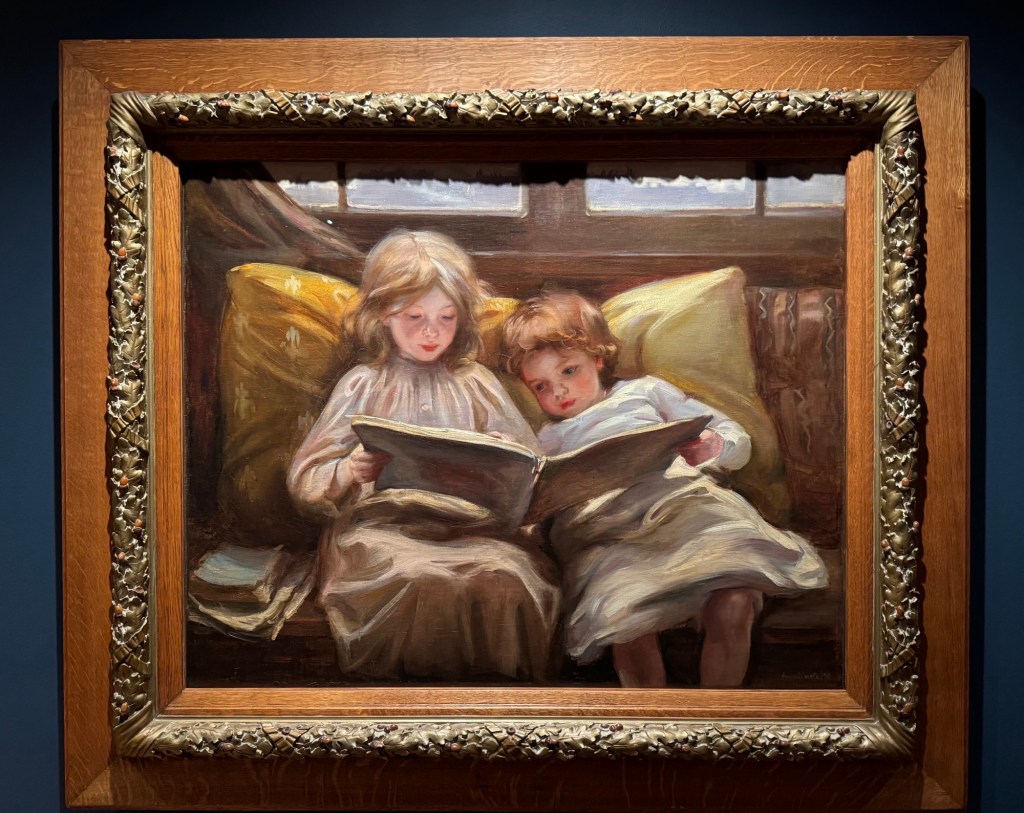
born Radford (now Radford Semele), Warwickshire, England, 1860
died Toronto, Ontario, Canada, 1930
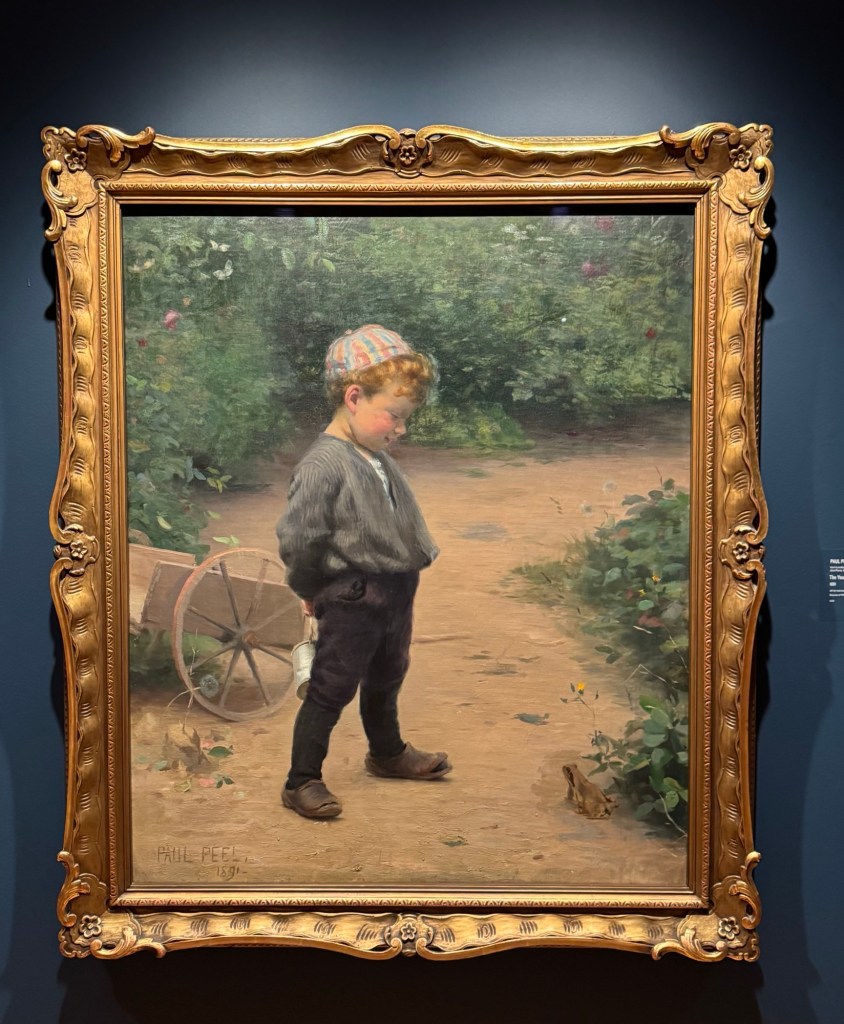
born London, Ontario, Canada, 1860, died Paris, France, 1892
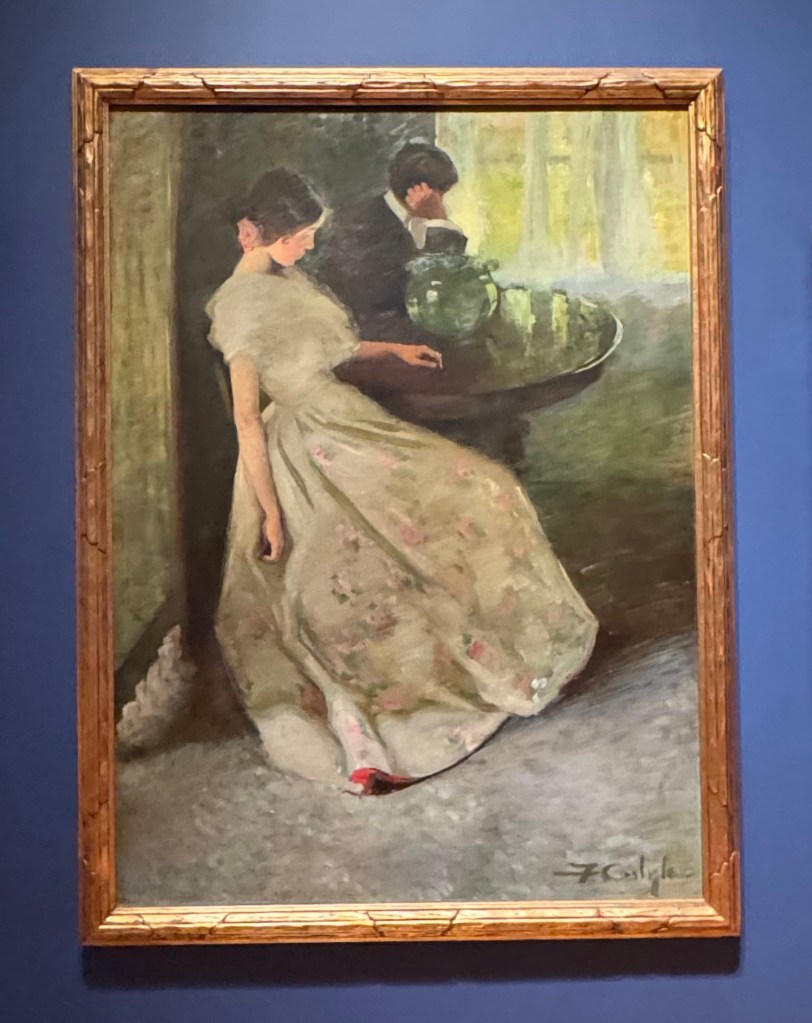
born Galt, Ontario, Canada, 1864, died Crowborough, England, 1923. The couple is very eloquently NOT speaking to each other.
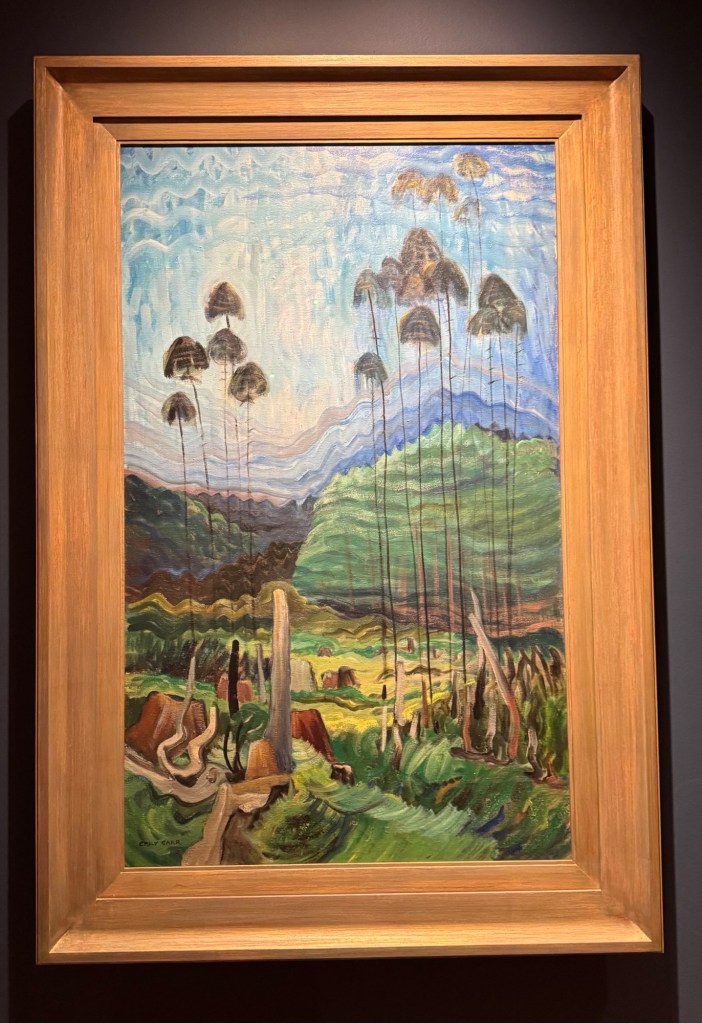
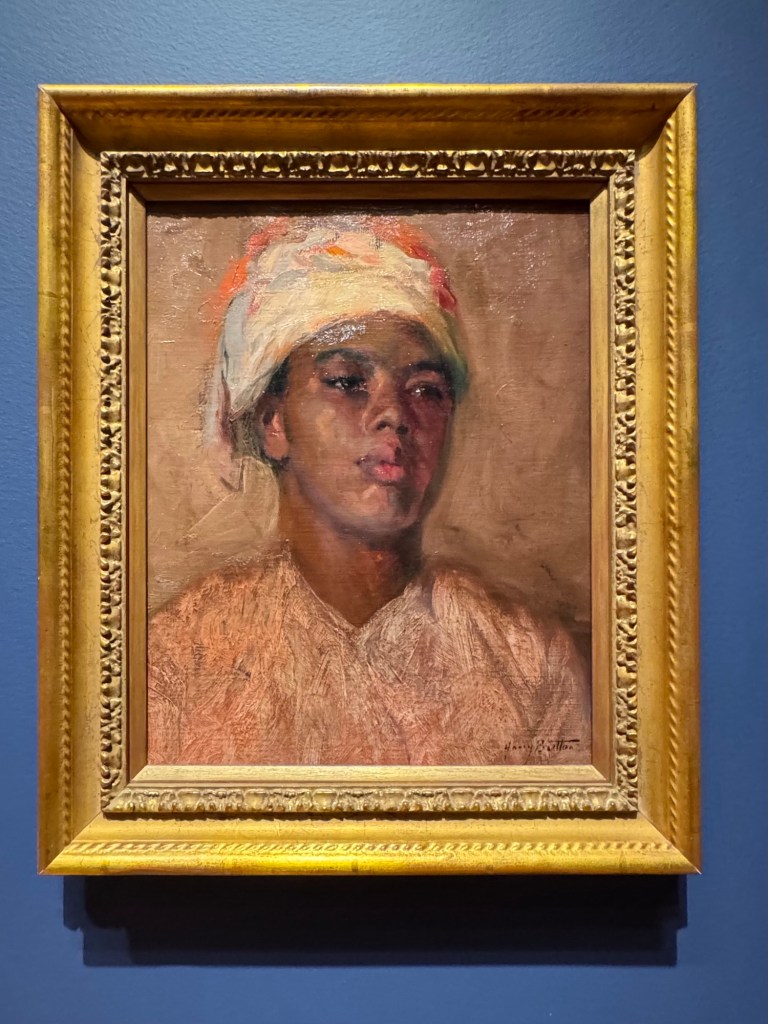
born Cambridge, England, 1878, died Toronto, Ontario, Canada, 1958
I found the story of these two paintings, done by a husband and wife, particularly interesting, since so often the stories we hear (like Diego Rivera and Frida Kahlo) are of artistic couples where one subsumes – or is expected to subsume – their talent to support the other. That was very much not the case here.
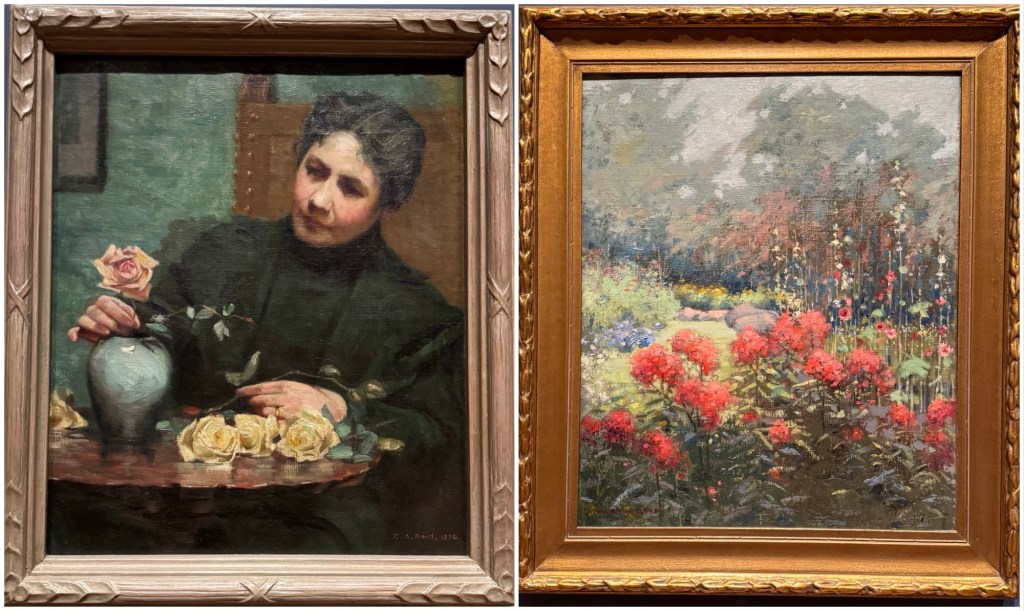
Right: MARY HIESTER REID’s (born Reading, Pennsylvania, United States, 1854
died Toronto, Ontario, Canada, 1921) painting “Garden in September”
There was a fabulous collection of Indigenous artist works, both traditional and more modern.
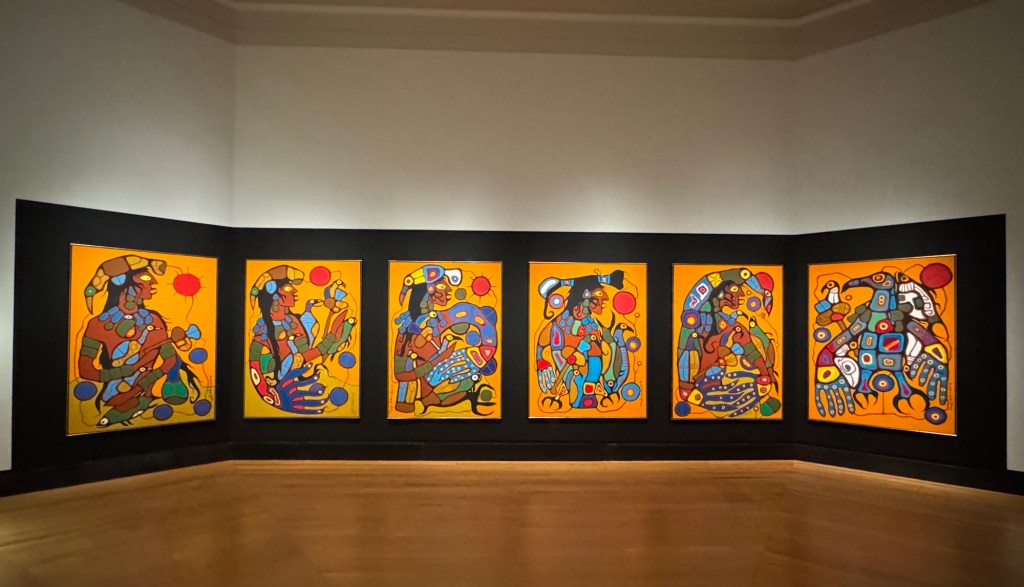
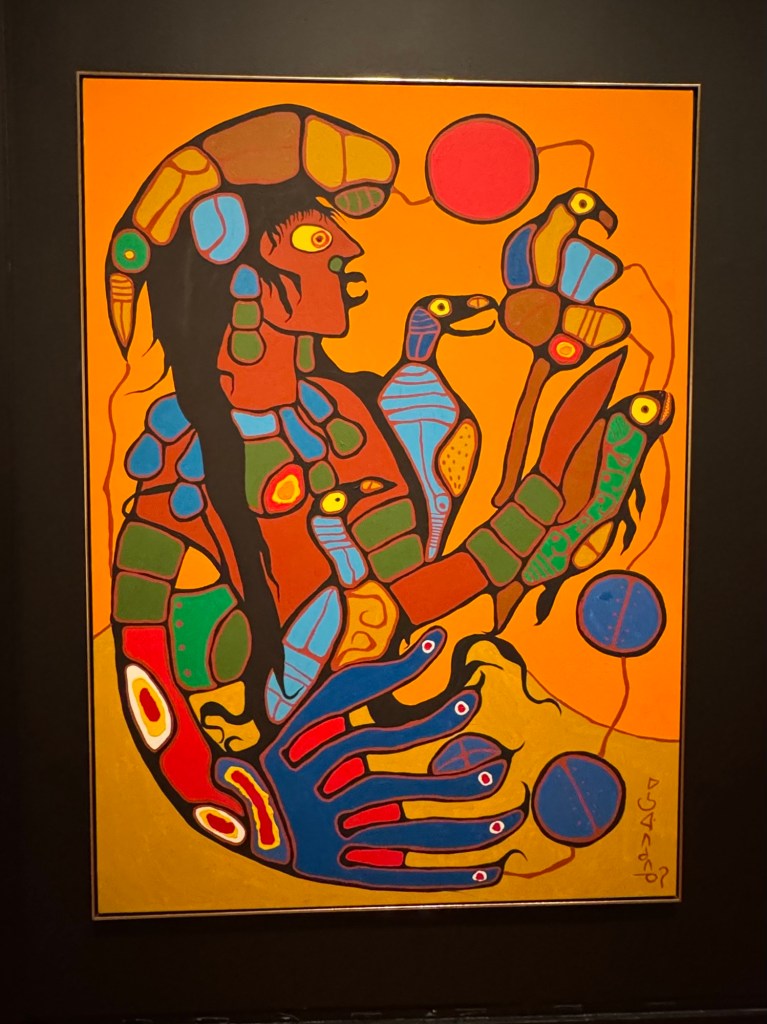
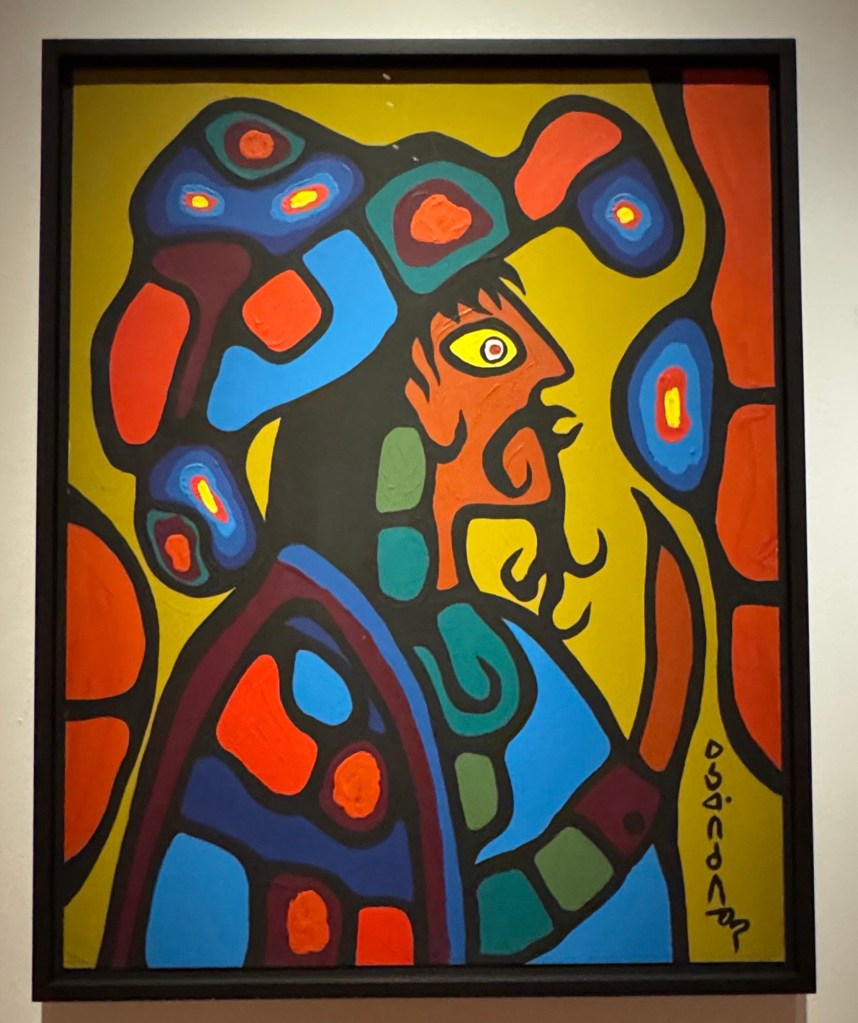
born Sand Point First Nation Reserve, Greenstone, Ontario, Canada, 1932
died Toronto, Ontario, Canada, 2007. Morrisseau merged Anishinaabe culture, political messages, and spiritual themes into his canvases.
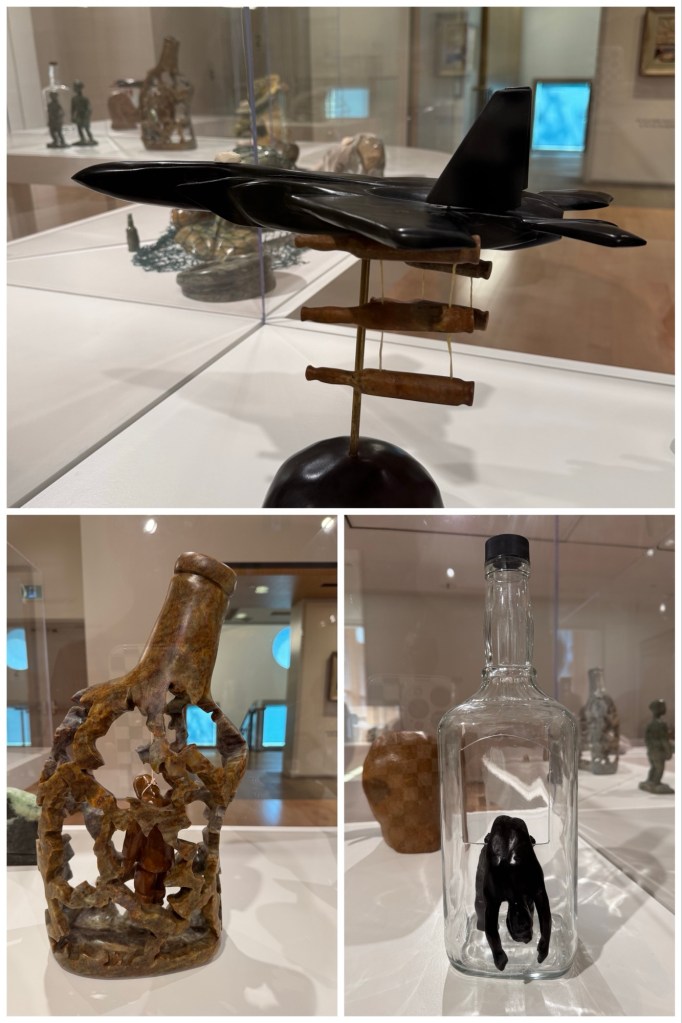
Rather less “comfortable” were the works of Inuit sculptor Bill Nasogaluak, born in Tuktoyaktuk, Northwest Territories in 1953. Nasogaluak grew up during a time when traditional Inuit life was colliding with southern Canadian culture,which heavily influenced the themes of his work. With a clear and unwavering vision, he expresses the pain and consequences of colonialism in the North, addressing suicide, alcoholism in extraction industry workers, and the devastation of climate change for Inuit and the animals that surround them.
DAVID RUBEN PIQTOUKUN’s two back-to-back faces on the sculpture shown below represent the Indigenous peoples of the circumpolar north. The roughly 150,000 Inuit living on the lands that span Siberia to Greenland-and other global circumpolar communities-experience the phenomenon of 24-hour daylight throughout the summer season. Framing the faces is a brilliant red hoop that evokes the midnight sun of the arctic summer months. The steel stands are painted blue to recall the Arctic Ocean and inland lakes that remain ice-cold year-round. People of the Midnight Sun is Piqtoukun’s tribute to circumpolar Indigenous communities and the stories and experiences many have in common.
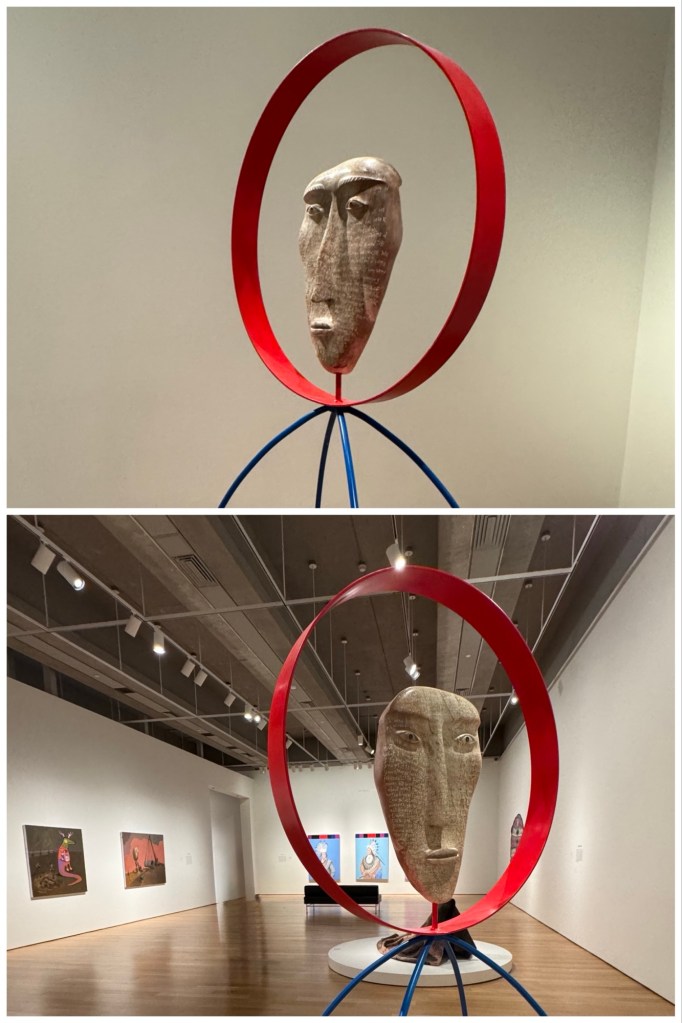
born Denesuline, Cold Lake First Nation, Treaty 6 Territory, 1935
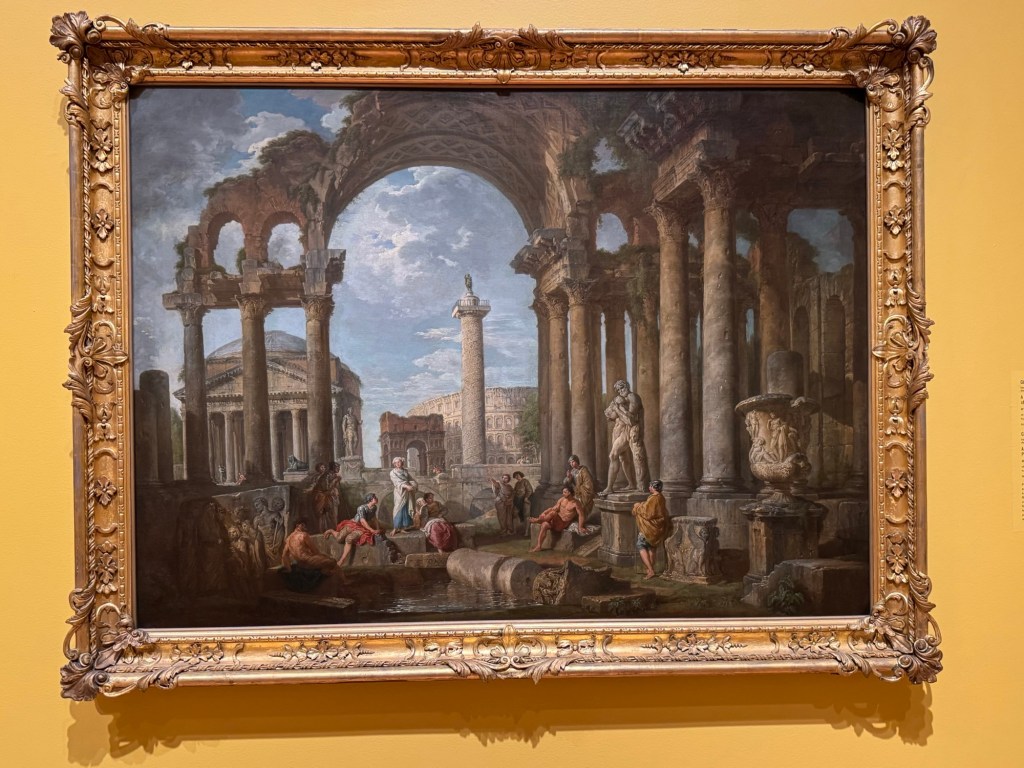
One of the two European paintings that I just couldn’t resist was “A Capriccio of Roman Ruins with the Arch of Constantine” by GIOVANNI PAOLO PANINI (born Piacenza, Italy, 1691, died Rome, Italy, 1765). What captured my interest was the fact that Ted and I had been RIGHT THERE in the ruins adjacent to the Colosseum in Rome! (Episode 527)
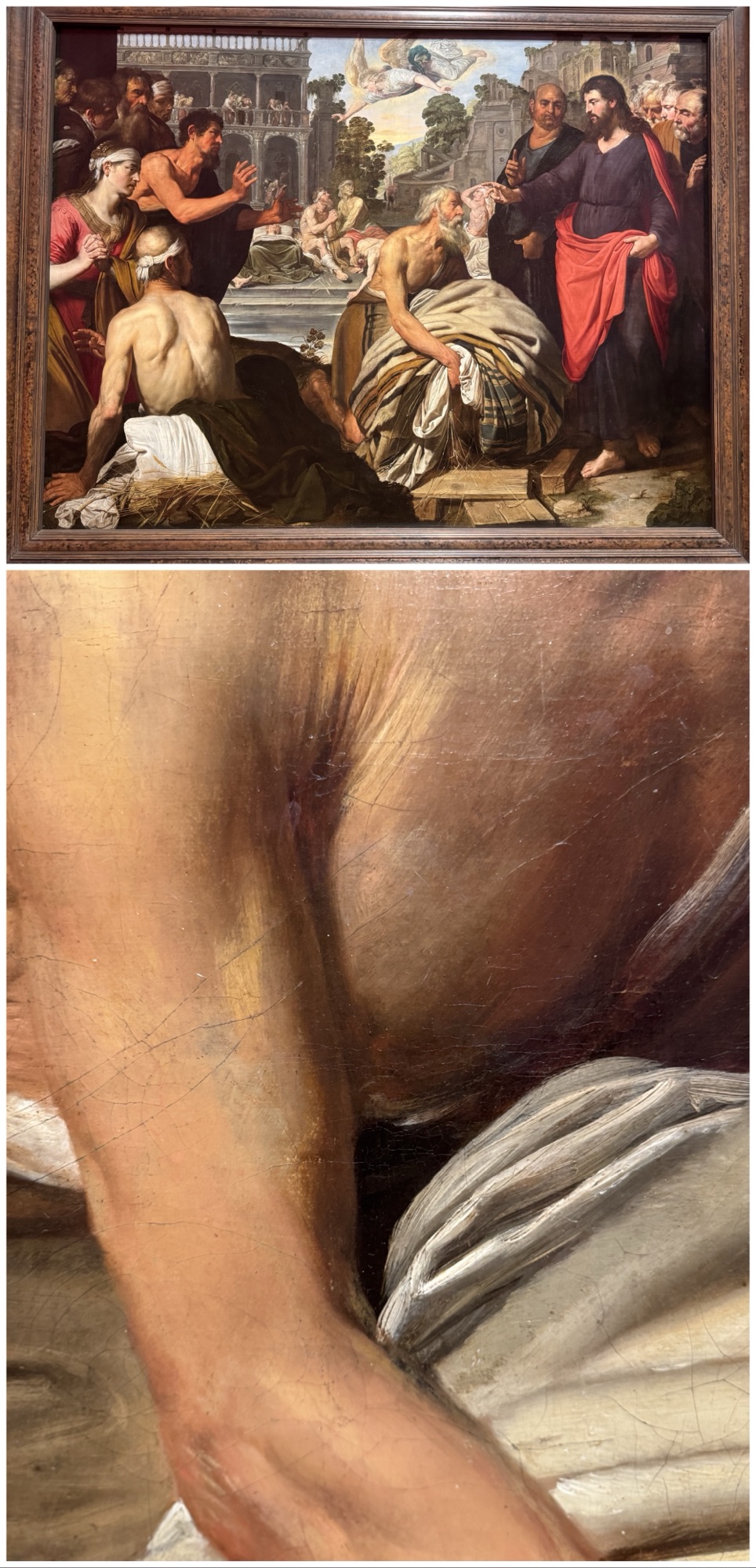
The other painting that I couldn’t resist was “Jesus at the Pool of Bethesda, by ARTUS WOLFAERTS (born and died Antwerp, Spanish Netherlands/Belgium, 1581-1641). The skin tones and texture, even getting as close as possible to the canvas, were so incredibly lifelike that the painting almost exuded human warmth.
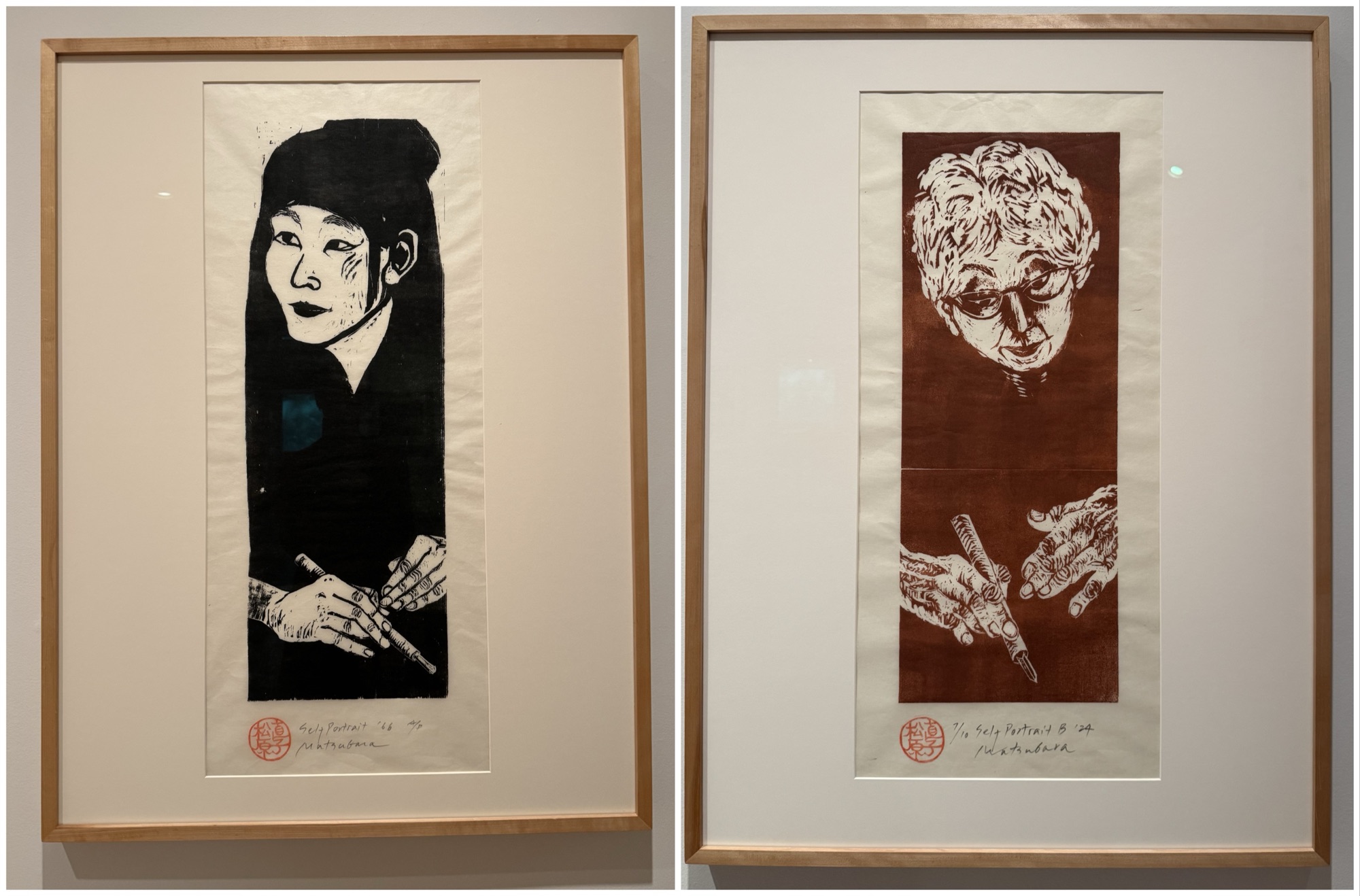
There were some wonderful woodcuts by Japanese-born NAOKO MATSUBARA, who in the mid 1960s had just accepted a teaching position at the Pratt Institute in Brooklyn, New York. This was a notable achievement, as very few Japanese women artists at the time received this type of recognition in the United States.
The 1966 self-portrait woodcut on Japanese paper, was done at age 29, while living in New York. The self-portrait on the right was done in 2024, at age 87, in her new home and studio in Oakville, Ontario.
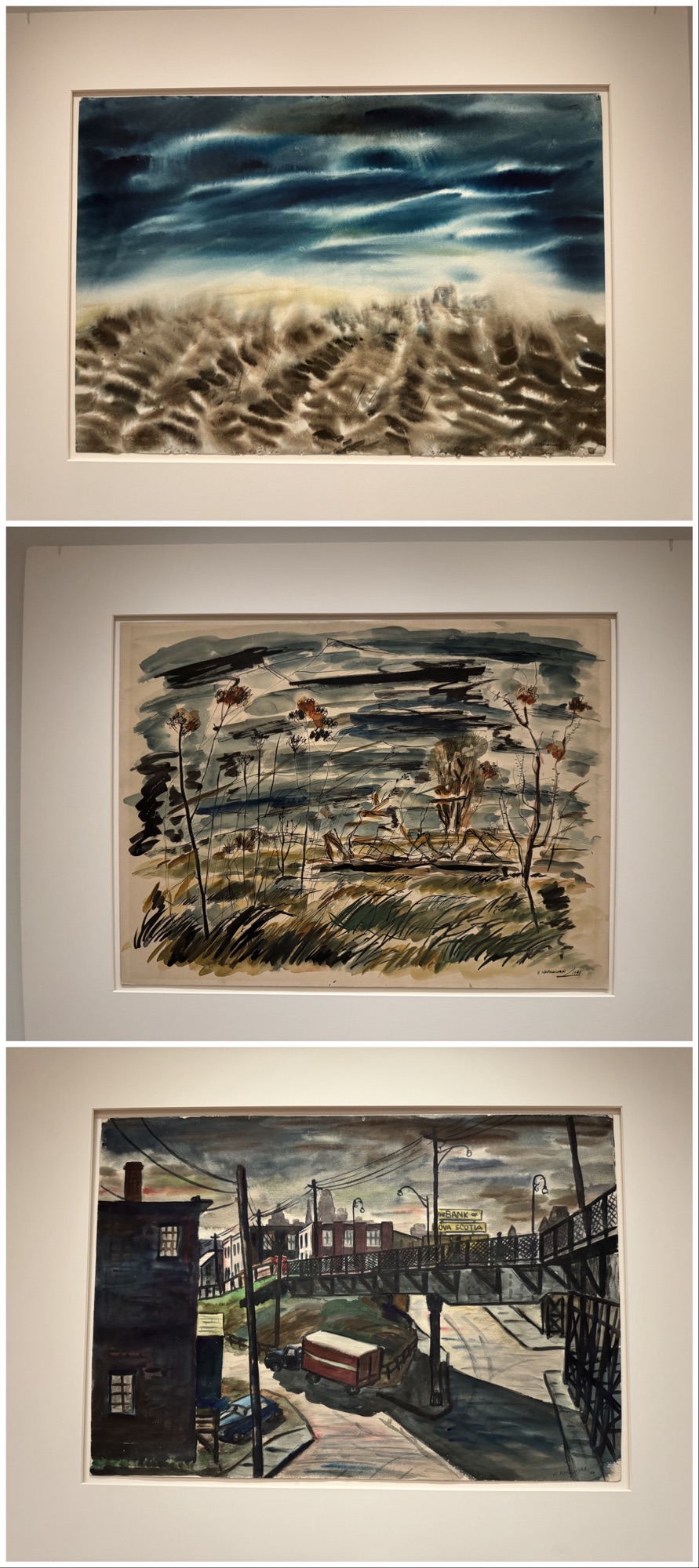
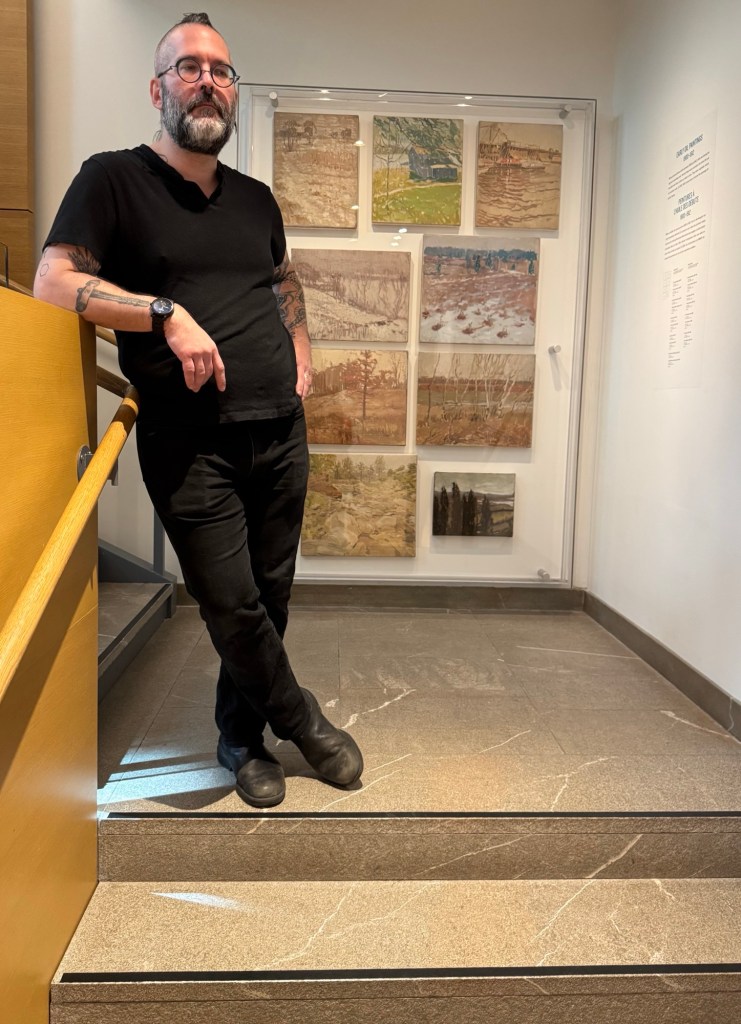
Japanese Canadian artist Kazuo Nakamura (1926-2002) explored the invisible systems that shaped his world through painting and sculpture. Largely self-taught, he was interested in “the fundamental universal pattern in all art and nature.” Nakamura studied art at Vancouver Technical Secondary School, but his tutelage was cut short in 1942 when the Canadian government branded 22,000 Japanese Canadians as “enemy aliens” and incarcerated them at internment sites.
Nakamura continued to paint while detained with his family in Tashme near Hope, British Columbia. Following their release in 1944 and relocation to Ontario, Nakamura began a series of watercolours, below, that charted a pivotal period in his life and artistic development.
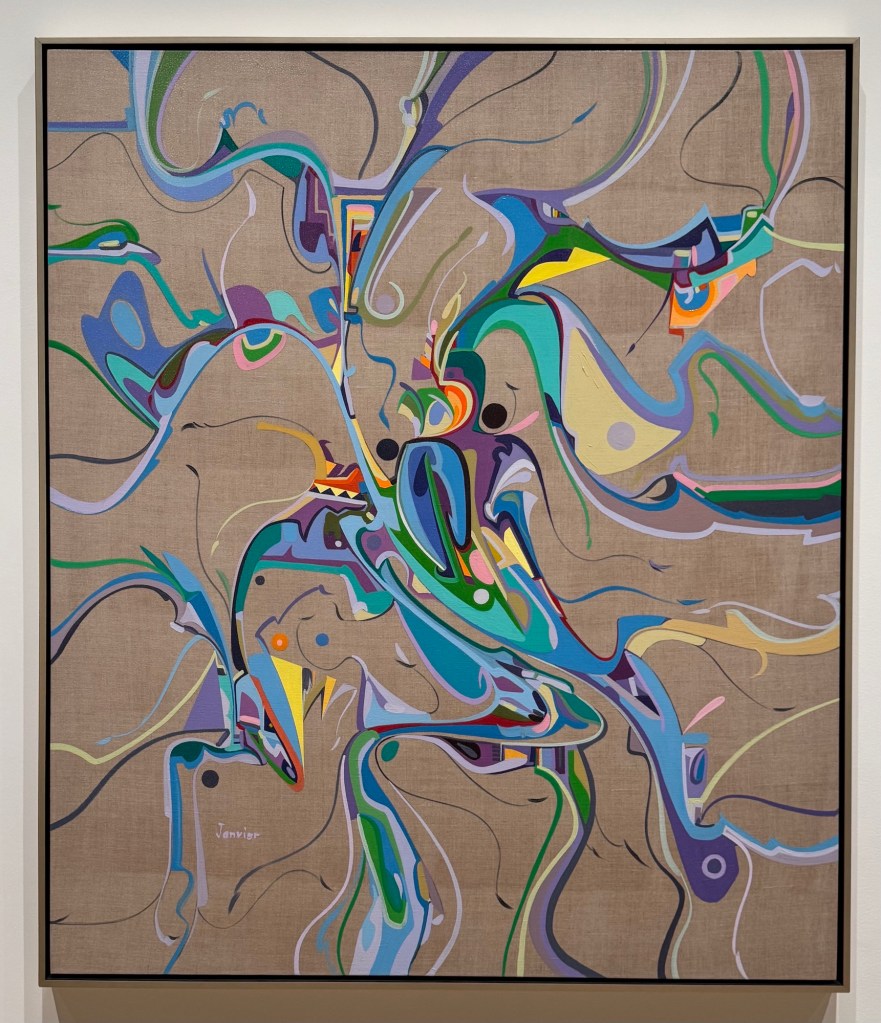
There were two paintings in particular that had such intriguing textures that they were almost irresistible. It’s no wonder there were perimeter lines and “do not touch” signs.
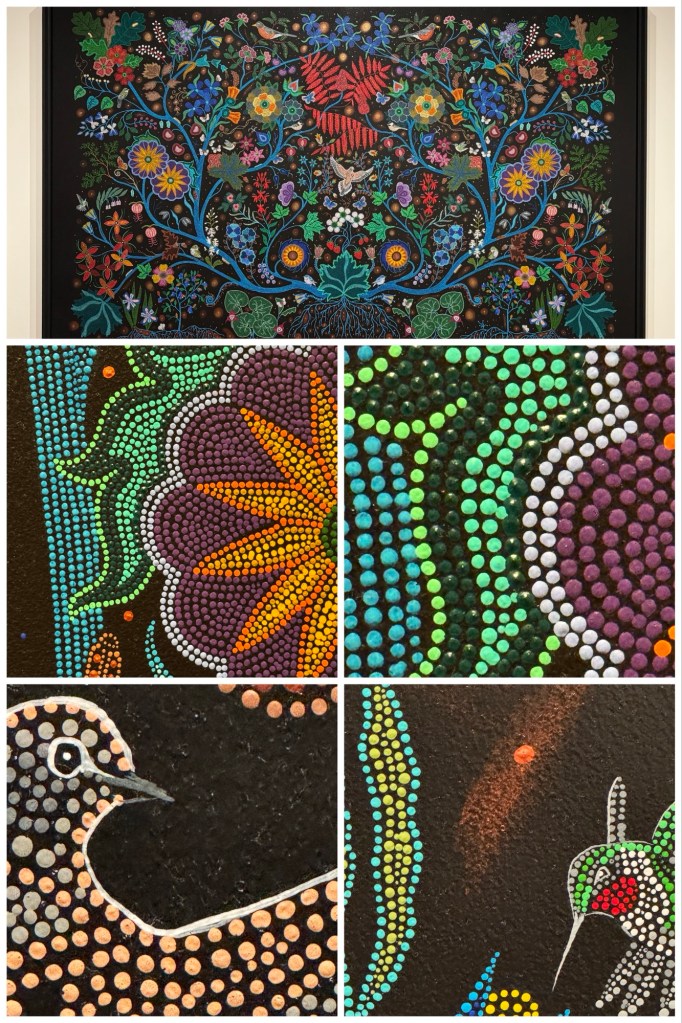
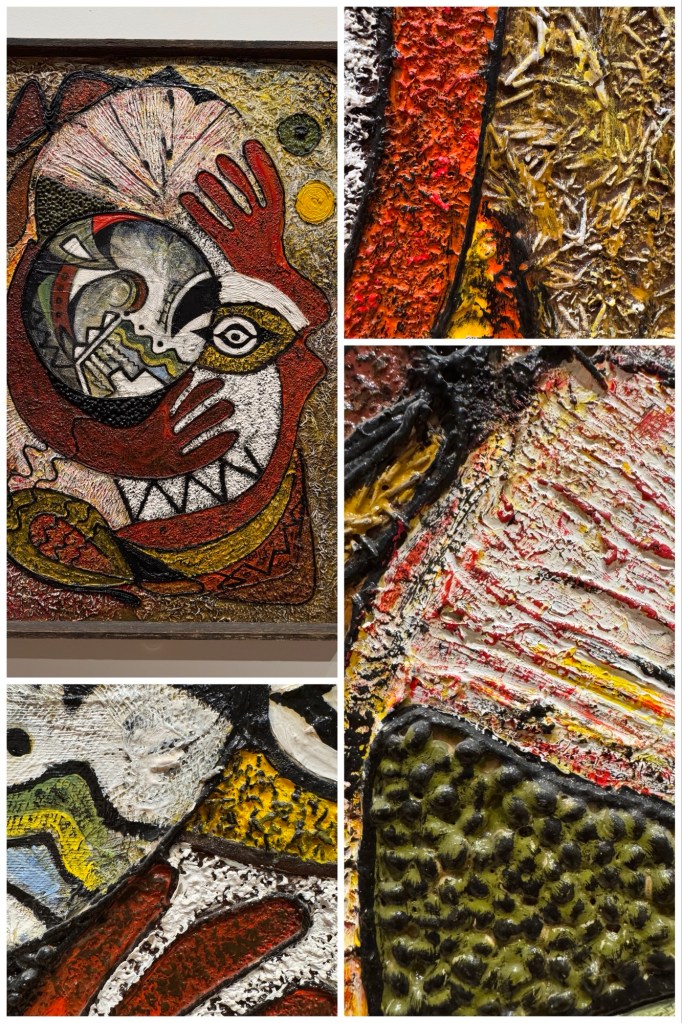
Odjig was a co-founder of the Professional Native Artists Incorporation (a loose network of artists united through shared values and group exhibitions), as well as the only woman in the coalition. Through both her practice and her activism, Odjig was instrumental in establishing Indigenous art within the international contemporary art world.
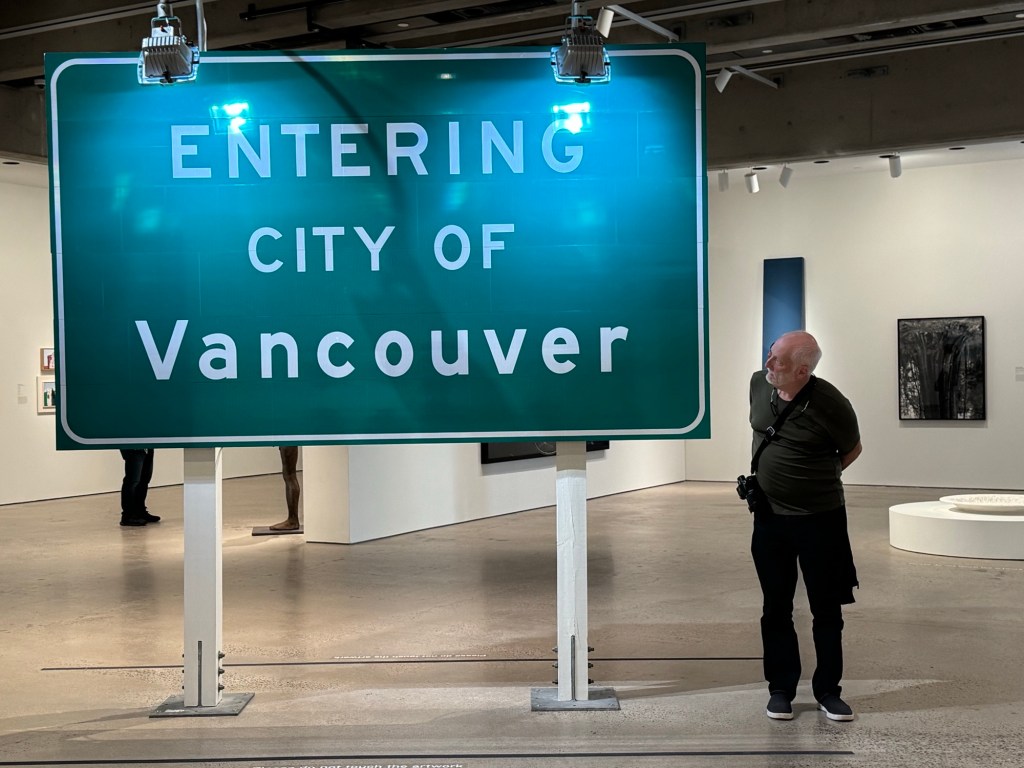
We got a kick out of coming to the AGO and discovering an exhibit featuring Vancouver artists.
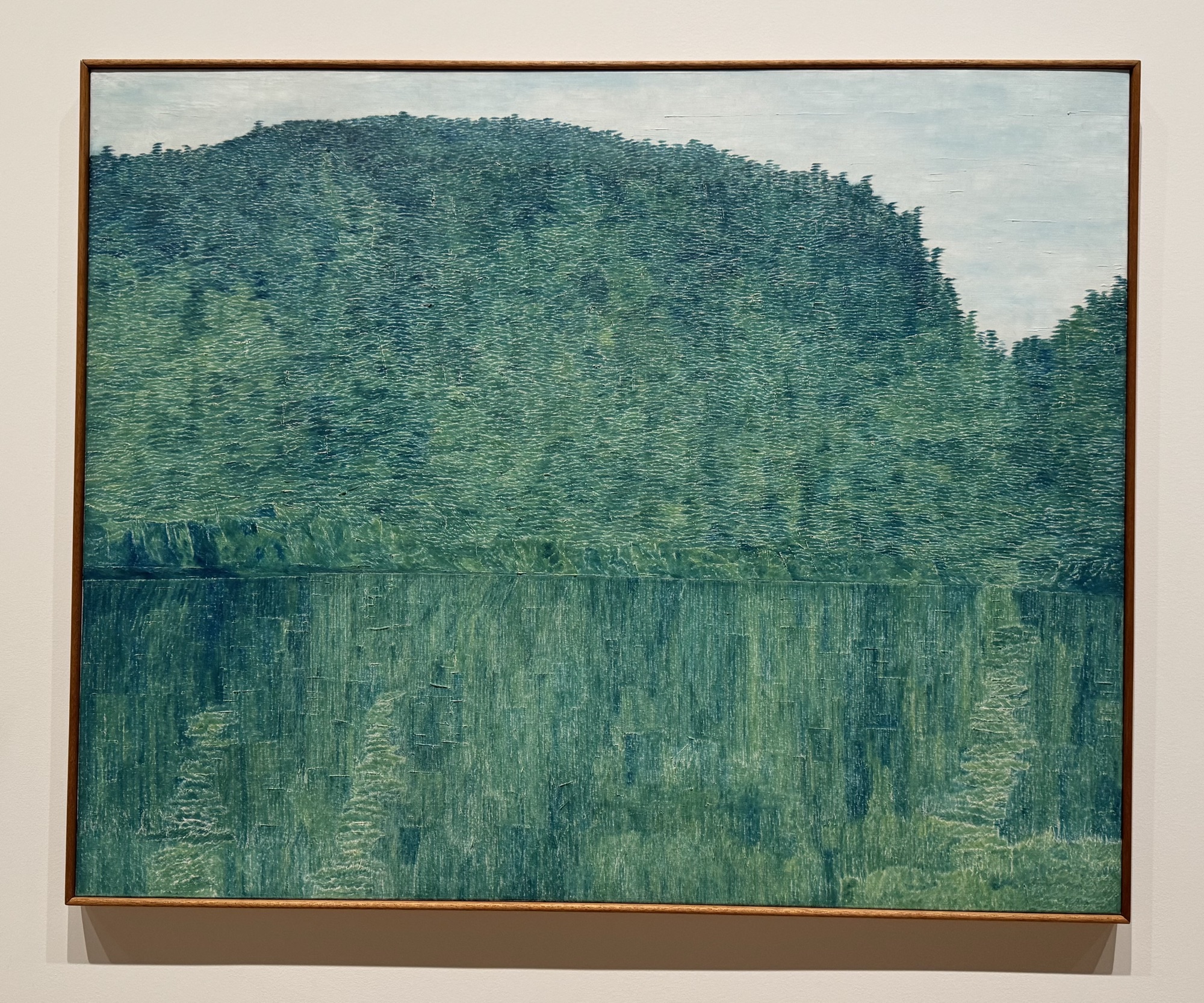
One of son#1’s favourite paintings was “Blue Reflections”, an oil on canvas by KAZUO NAKAMURA, born Vancouver, British Columbia, Canada, 1926, died Toronto, Ontario, Canada, 2002.
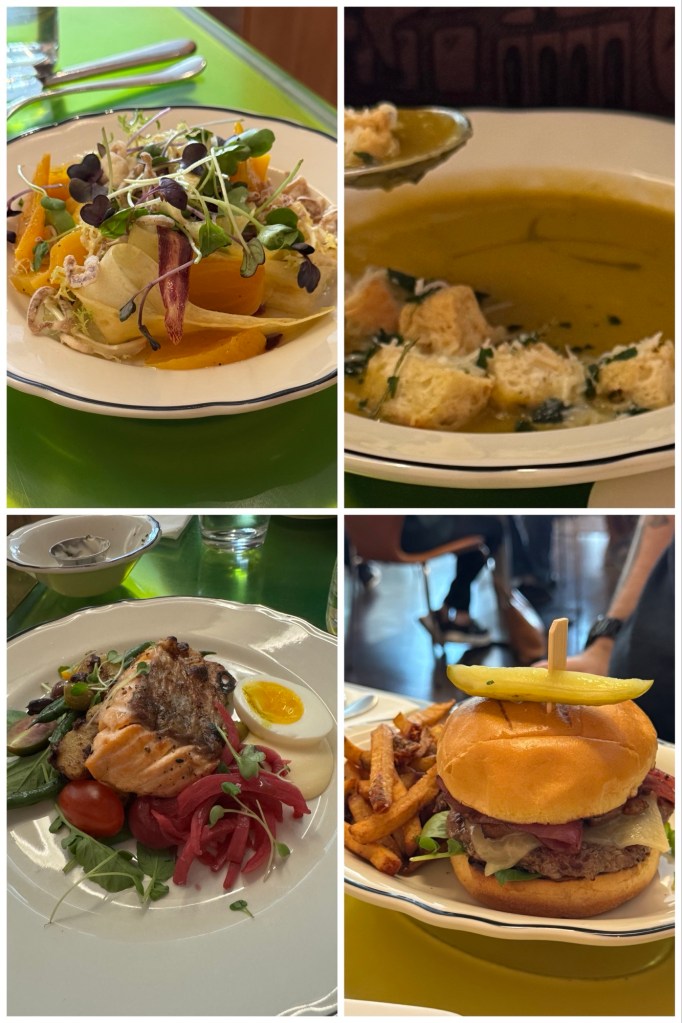
After all that visual stimulation, we needed lunch, which we enjoyed in the gallery’s Bistro.
Despite there still being so much more art to discover, including a Henry Moore sculpture gallery, we wanted to spend the afternoon in the park.
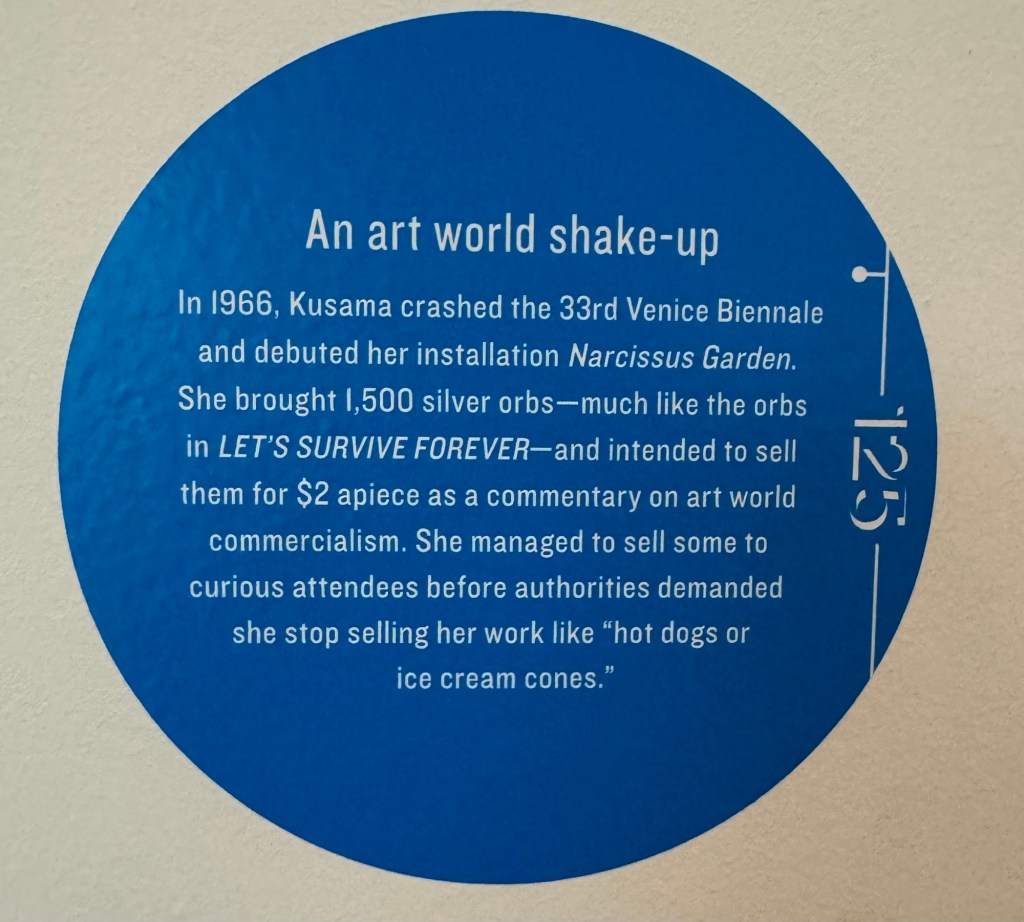
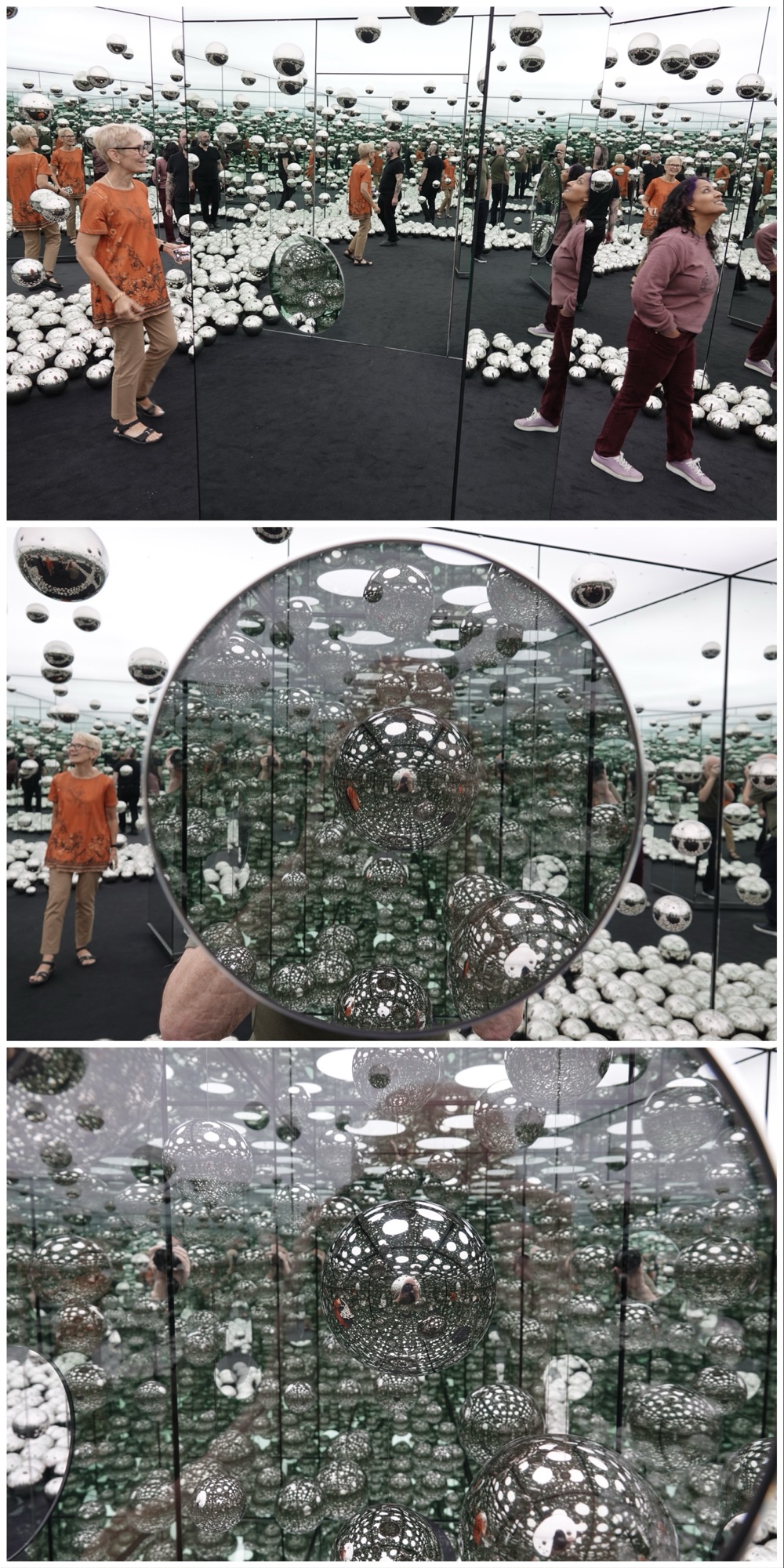
Nonetheless, there was one art installation I absolutely did not want to miss experiencing: YAYOI KUSAMA’s “Let’s Survive Forever”.
Throughout her 70-plus-year career, internationally acclaimed Japanese artist Yayoi Kusama (b. 1929) has captivated audiences with her groundbreaking visions of infinity. She has become an art-world icon who continues to present her experiential work in major sites across the globe. Ted and I have only experienced one of her other installations, Infinity Mirrored Room – A Wish for Human Happiness Calling from Beyond the Universe, at the Guggenheim in Bilbao Spain(Episode 517), but it gave me so much joy that I couldn’t wait to enter this one.
The description read: “LET’S SURVIVE FOREVER (2017) invites visitors to step into a room of kaleidoscopic mirrors and stainless-steel orbs that replicate and distort their reflections. Kusama casts the participant as the protagonist in this boundless environment of her imagination, challenging us to reflect on how we see ourselves in this world and beyond.”
This work did not affect me as much as the first one we saw, but nonetheless I couldn’t stop grinning while I was inside it, and our allotted 60 second visit was over in an all-too-quick flash.
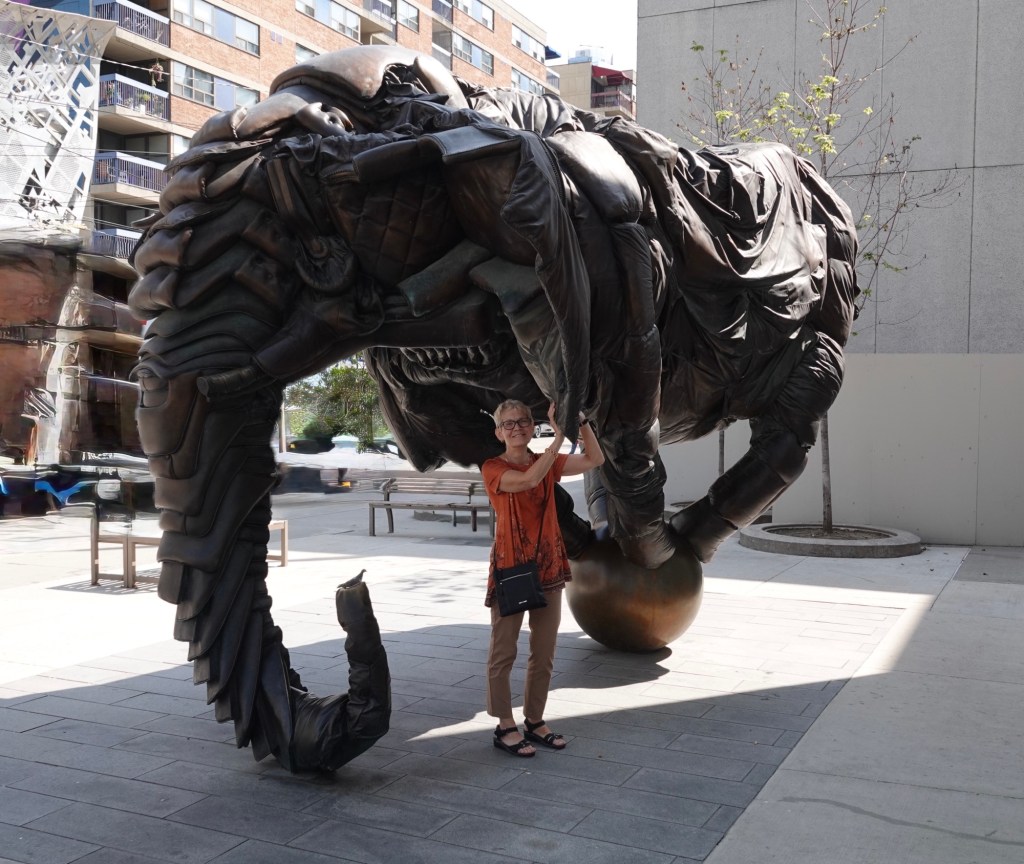
En route to pick up #1’s car for our drive to the park, more public art. In the world of whimsy, what better than a upholstery elephant balancing on a ball?
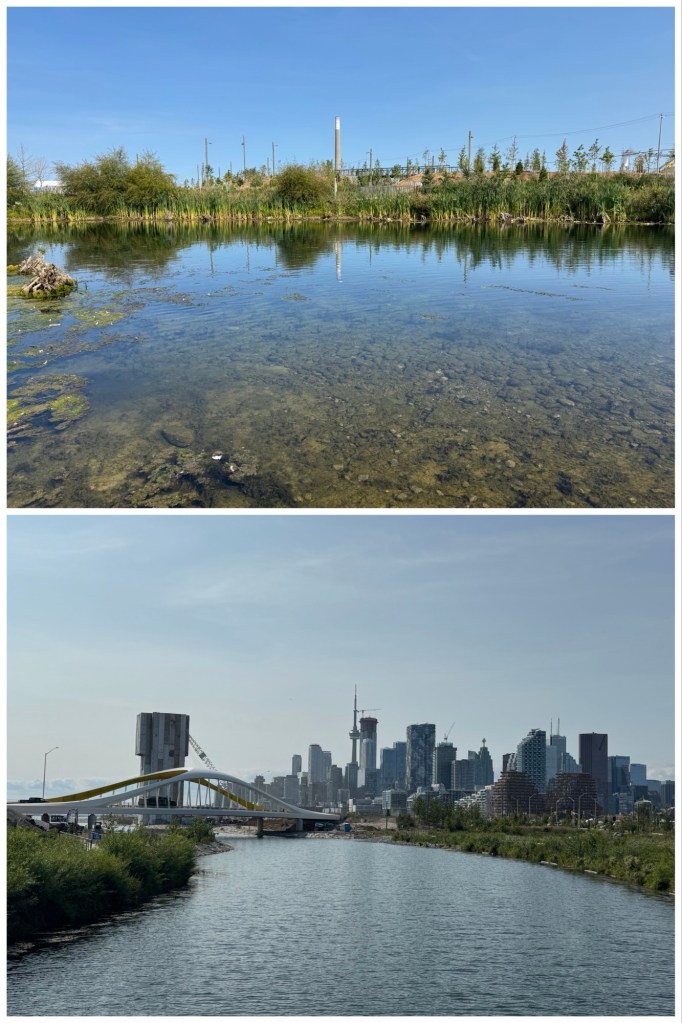
Ted and I have been following the news about the creation of Biidaasige Park on Toronto’s waterfront at the formerly industrial portlands/docklands area at the mouth of the Don River, and were very curious about the results of the redevelopment.
While still not complete, the walking and bike paths, kayak launches, and multiple interactive playgrounds, picnic/grilling areas, and children’s water play areas have created an inviting space for families of all configurations. We had a lovely walk amid wildflowers growing along the banks of a revitalized Don River.
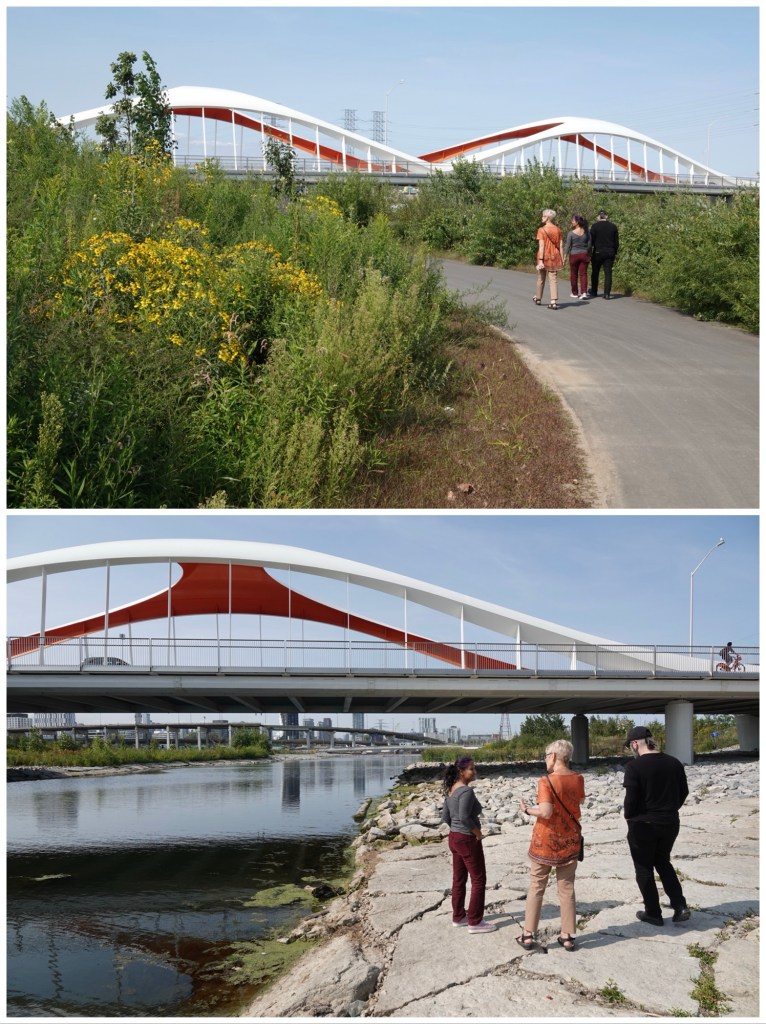
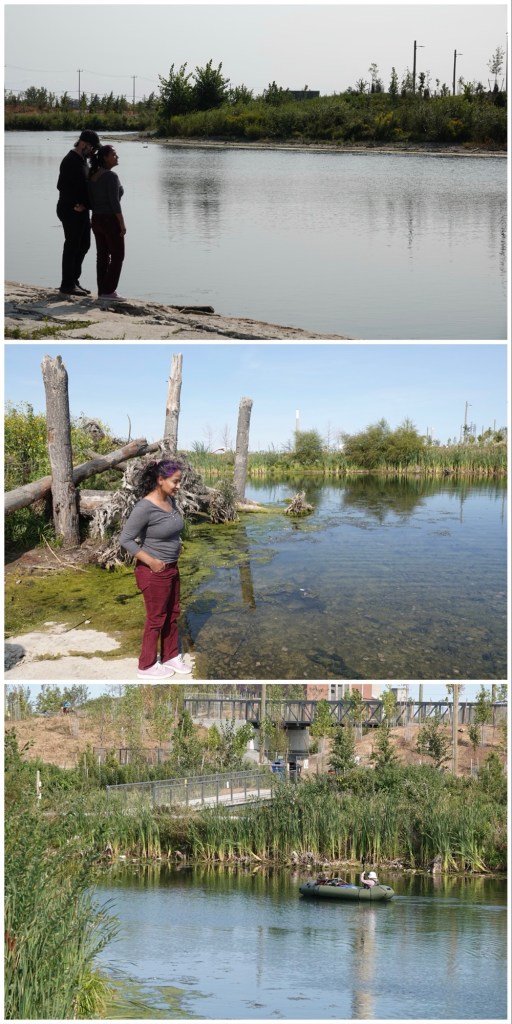
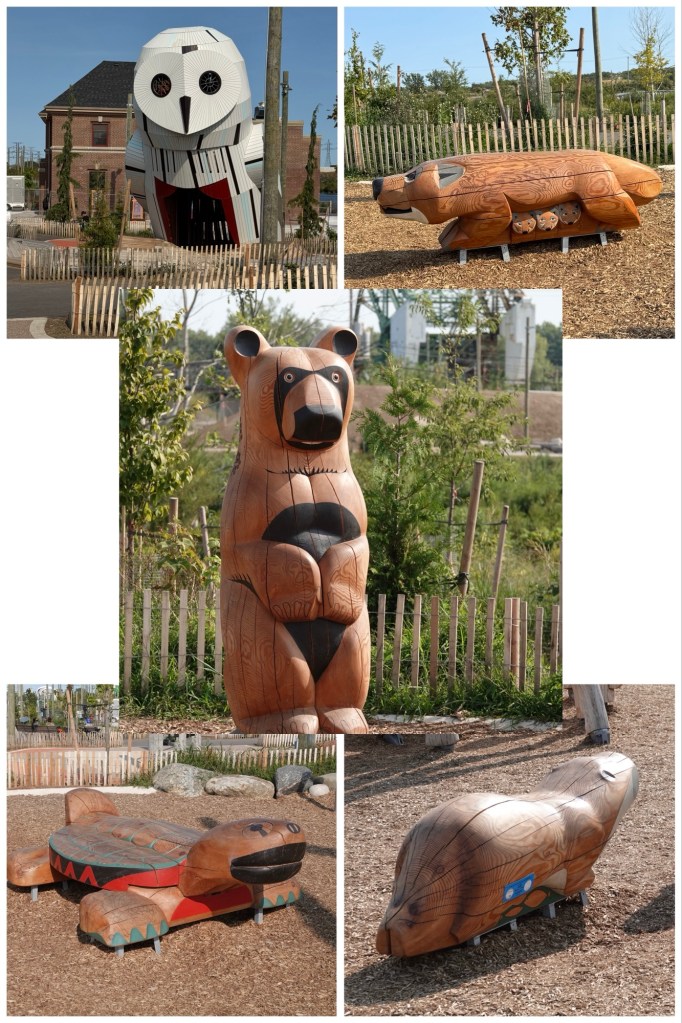
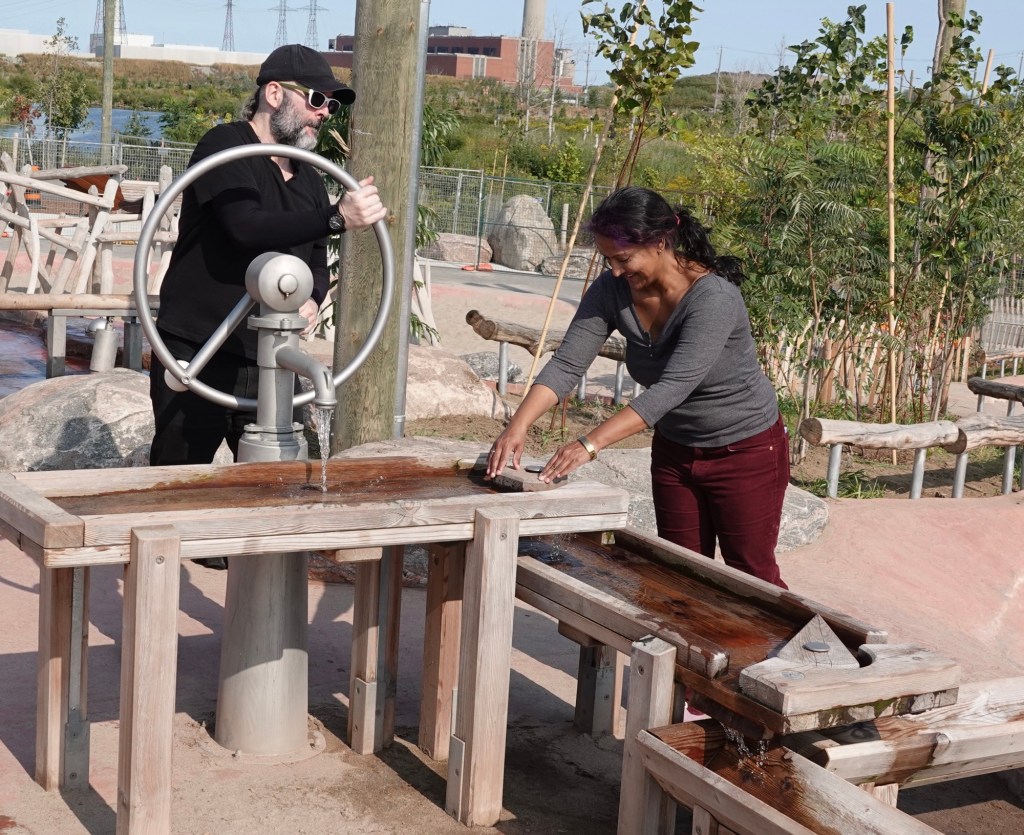
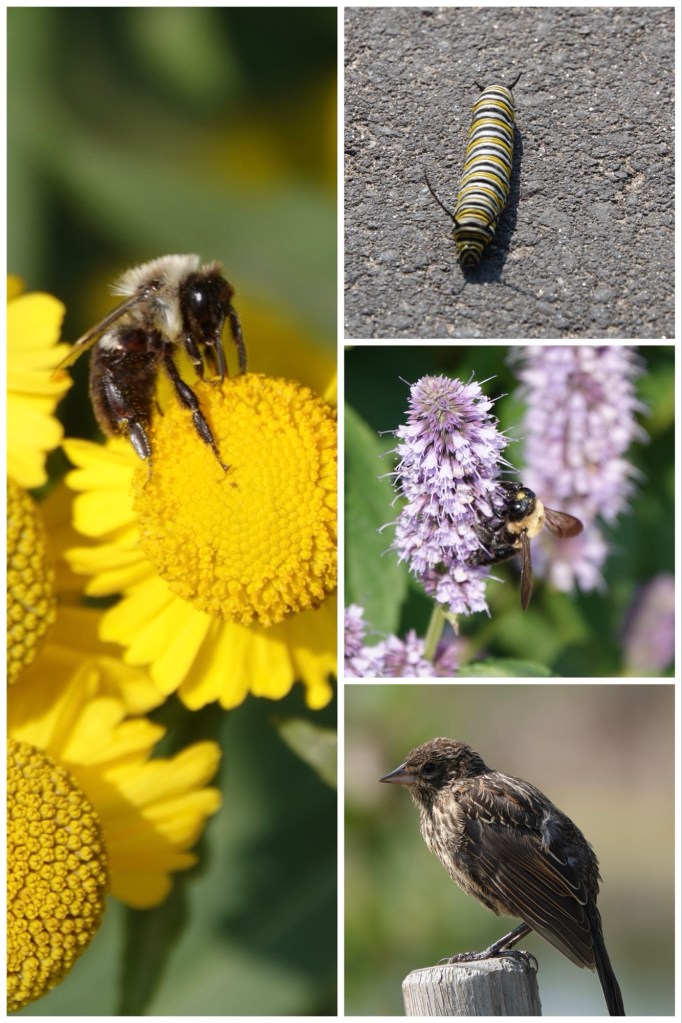
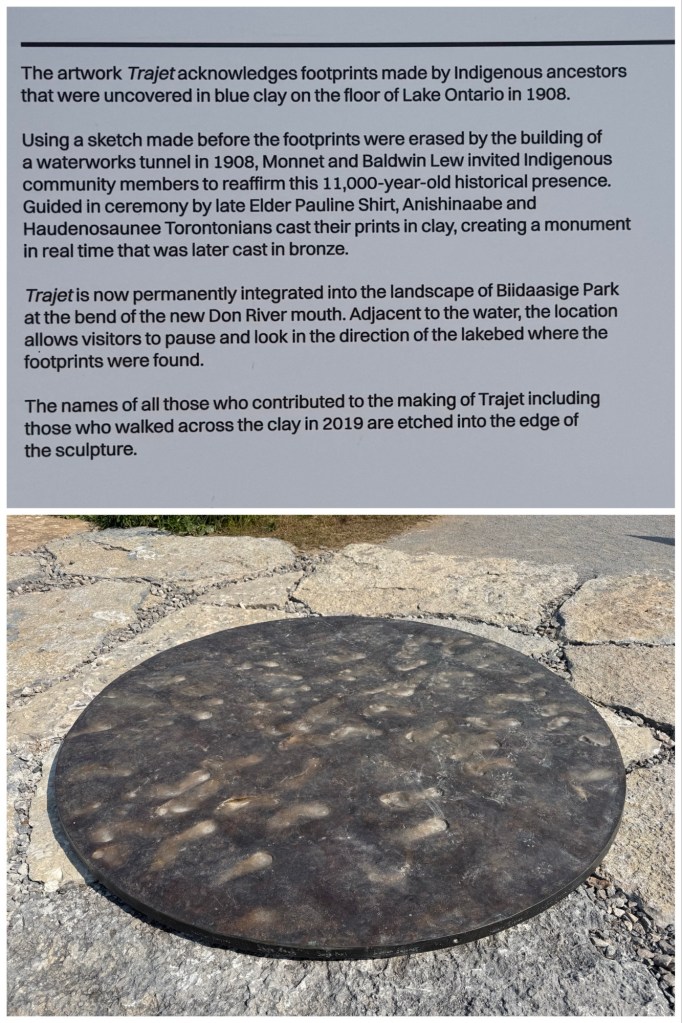
It was a truly wonderful day, capped off by naps for some (Ted and our daughter-in-law) and ice cream for others (son#1 and I), plus a delicious home-cooked meal.
The best part of the day, though, was simply the fact that we were all together as a family.
Tomorrow they all go back to work, and we’ll spend the day reconnecting with friends, but we’ll get one more family dinner before flying to Europe – feeling very grateful for our interlude here.


Thank you! I’ve been meaning to return to the AGO, especially to see the Joyce Wieland exhibit, and I too have enthusiastically followed the development of the new park. However, I’ve been putting them off. You have given me an extra incentive to do both.
LikeLiked by 1 person
What a gorgeous museum collection! Thanks for sharing it and the captions. Toronto looks much more appealing than it used to be. We need to start visiting the big interesting northern cities one of these days.
LikeLiked by 1 person
We were very pleasantly surprised by progress in the area where we used to own a condo. It has grown – A LOT – but has also become younger demographically and added lots of family-friendly spaces.
LikeLike