It’s already our last day here!
My plan was for us to visit Berlin’s famous Museum Island, and the Rotes Rathaus (red city hall), and stop at one of Berlin’s famous currywurst stands for lunch. We’d also do anything else for which we had run out of time in the past two days, which since the weather was not our friend yesterday meant the Tiergarten and the Victory Tower.
The highlight was to be the opening night of an evening light mapping show on the west façade of the Reichstag Building. The show commemorates one of the most important events in the building’s recent cultural history; this year is the 30th anniversary of the Wrapped Reichstag, the project created by Christo and Jeanne-Claude that transformed the German parliament building into a temporary sculpture of monumental scale in 1995.
By 4:30 p.m. we had done 25,000 steps.
En route to the Museum Island, we walked by long sections of cement walls pockmarked with shell shots from WWII, in stark contrast to the bridge to the island whose ironwork survived and whose statues have been completely restored.


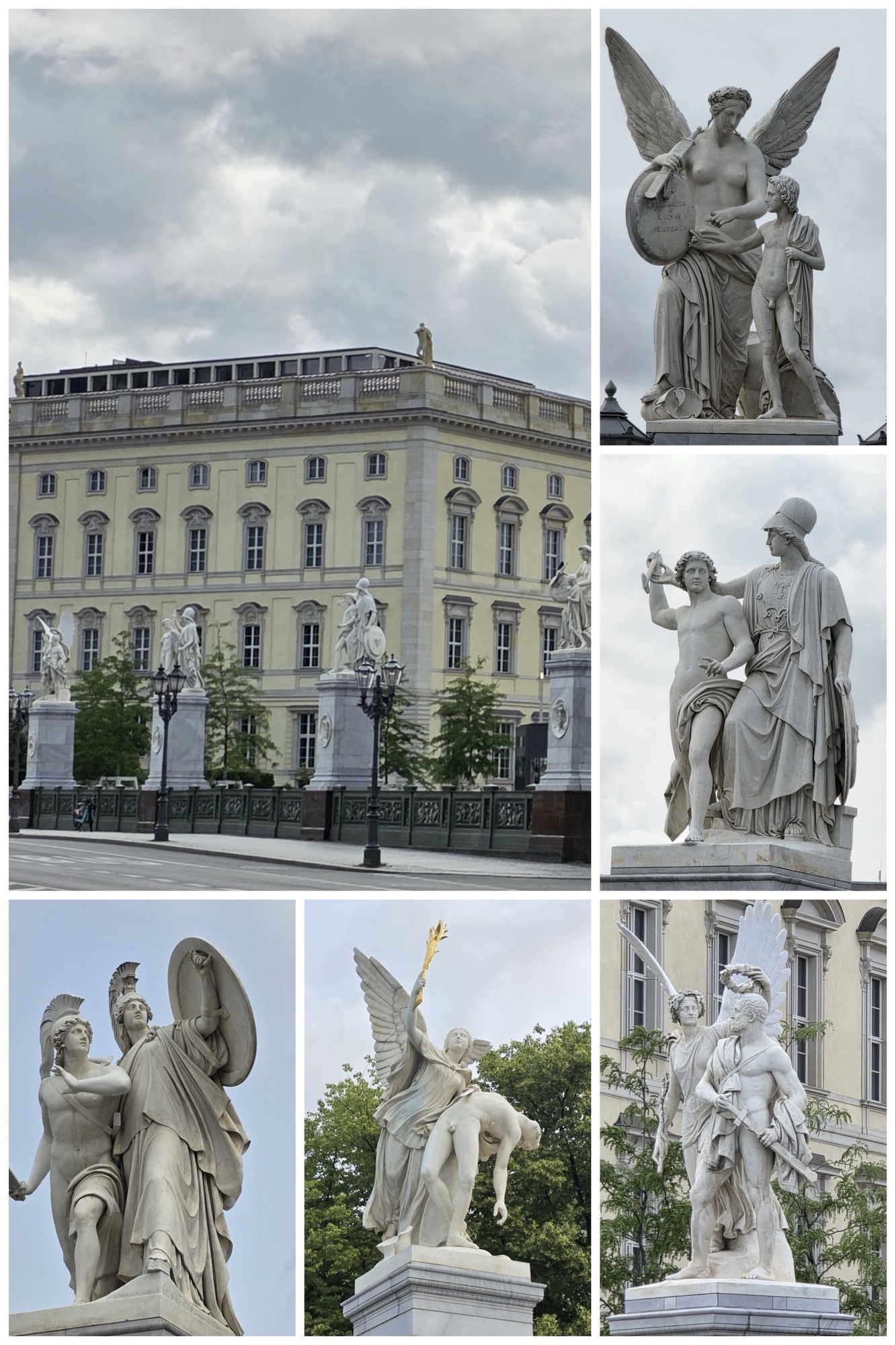
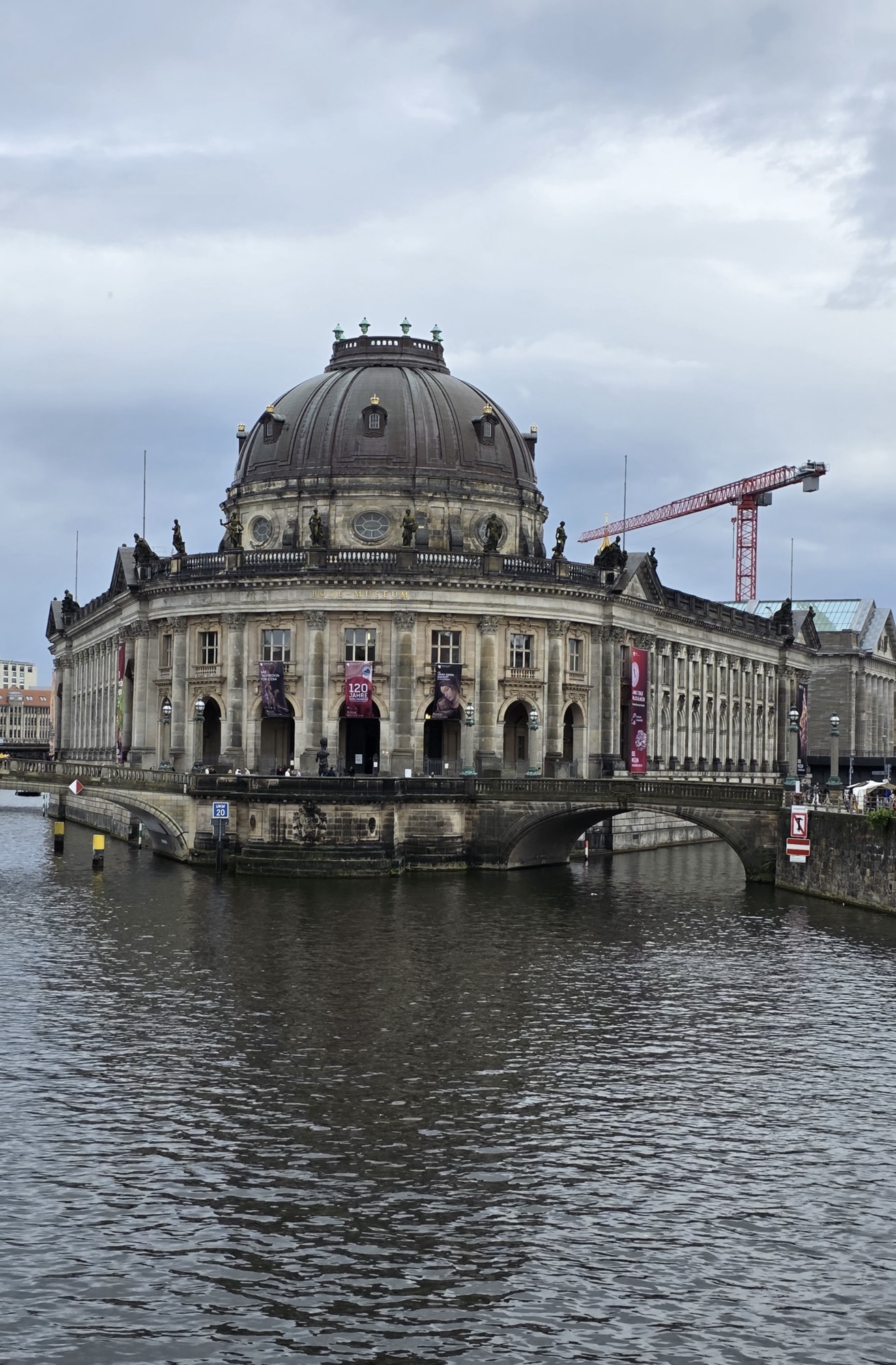
Berlin’s Museum Island is absolutely incredible: the various buildings housing the antiquities museum, national art museum, and German history museum are surrounded by imperial eta chapels and palaces dating back in some cases to the mid 18th century.


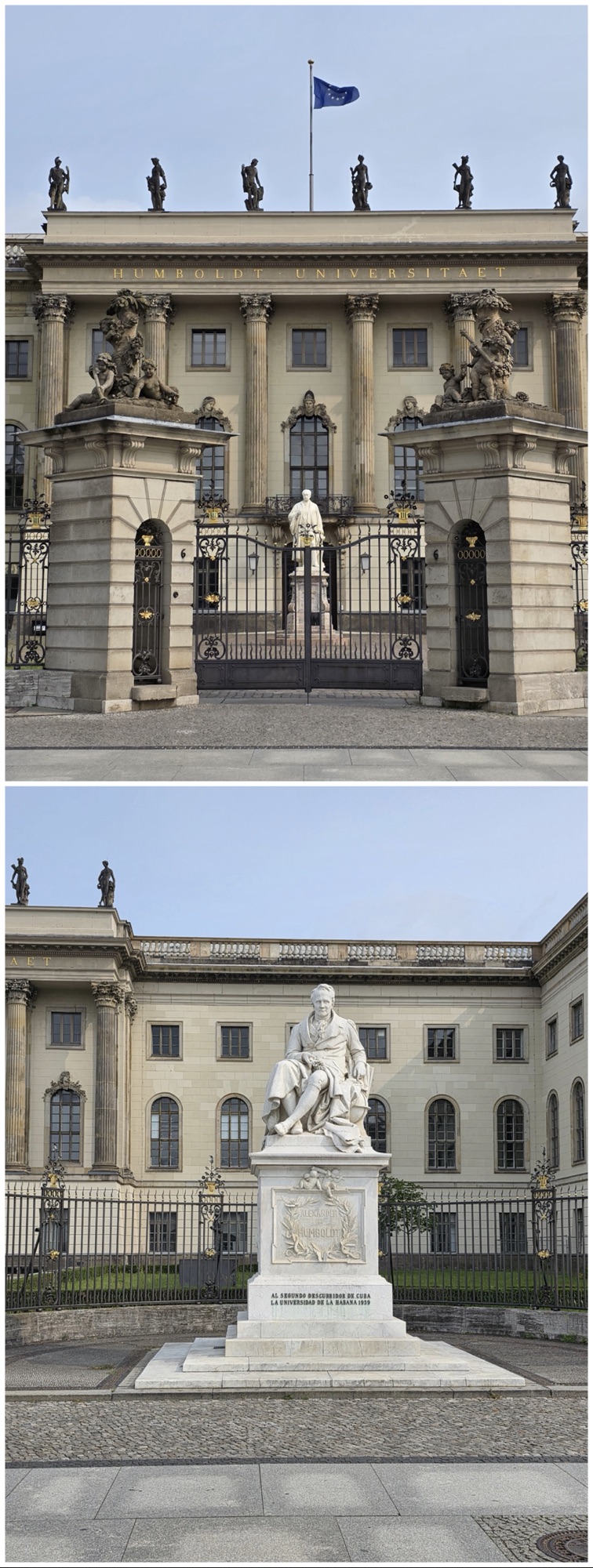
At one side of the island it connects via another bridge to Unter den Linden, where the Humboldt University is just one of the stunning architectural complexes eventually leading to statues, embassy buildings, and the Brandenburg Gate.


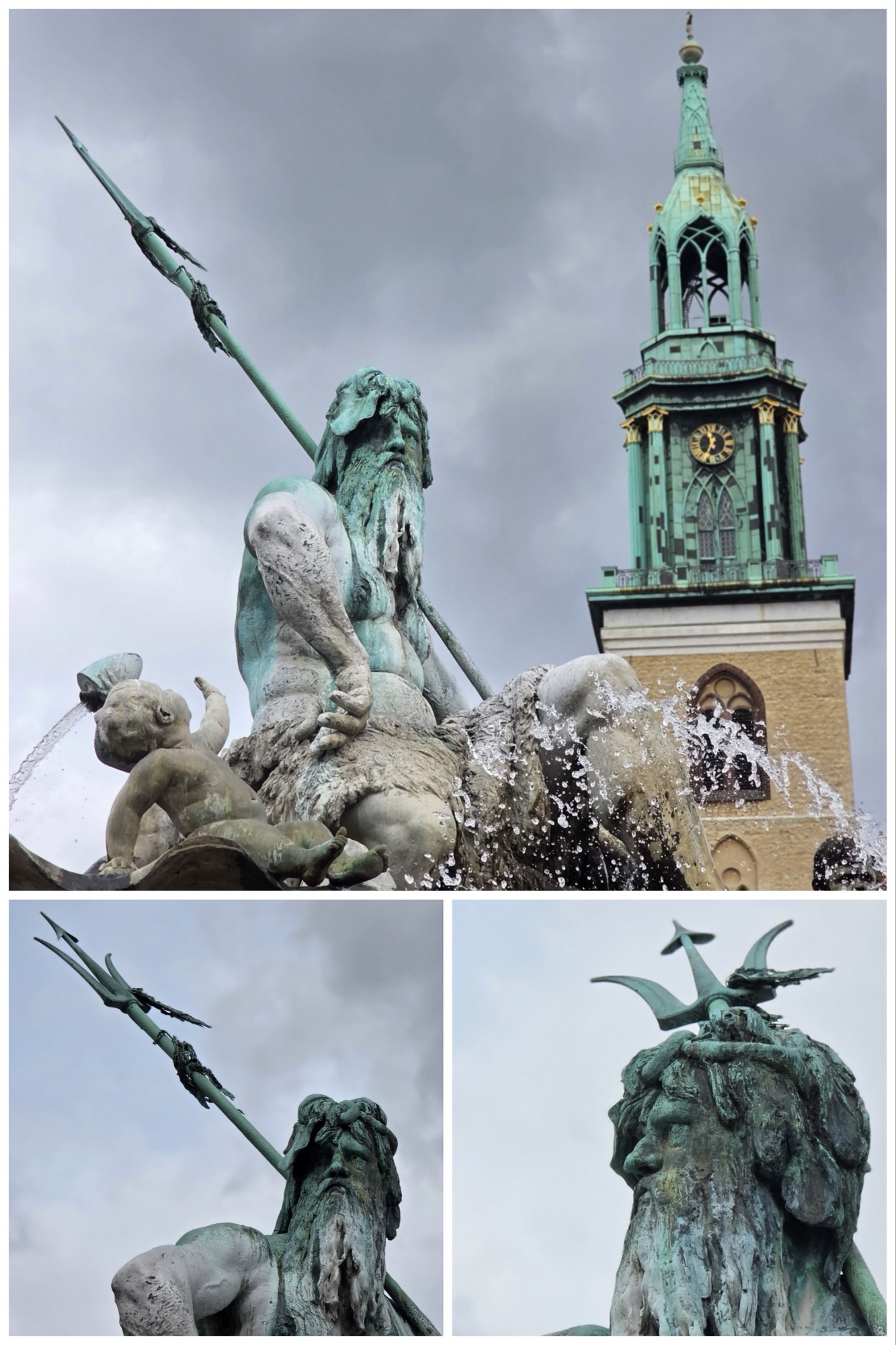
We’d gotten an early start, which meant that the Berlin Cathedral was not yet open to tourists. Church services continued until 11:30 this morning, so we took the opportunity to walk to the Marienviertel (Marian Quarter) to visit the neo-gothic Marienkirche.


The church is on one side of a square that is home to one of Berlin’s most beautiful fountains, the Neptune Fountain.

The Neptune Fountain was built in 1891 The four women around Neptune represent the four main rivers of Prussia at the time the fountain was constructed: the Elbe (with the allegorical figure holding fruits and ears of corn), Rhein (fishnet and grapes), Vistula (the river on which my Dad grew up, symbolized by wooden blocks for forestry), and the Oder (goats and animal skins). The Vistula is now entirely in Poland, while the Oder forms the border between Germany and Poland.


On the other side of the square is Berlin’s famous red stone city hall. It was closed, since today was a statutory holiday, so unfortunately son #2 could not see the unique stained glass windows with state shields that Ted and I saw in 2022 (Episode 294)
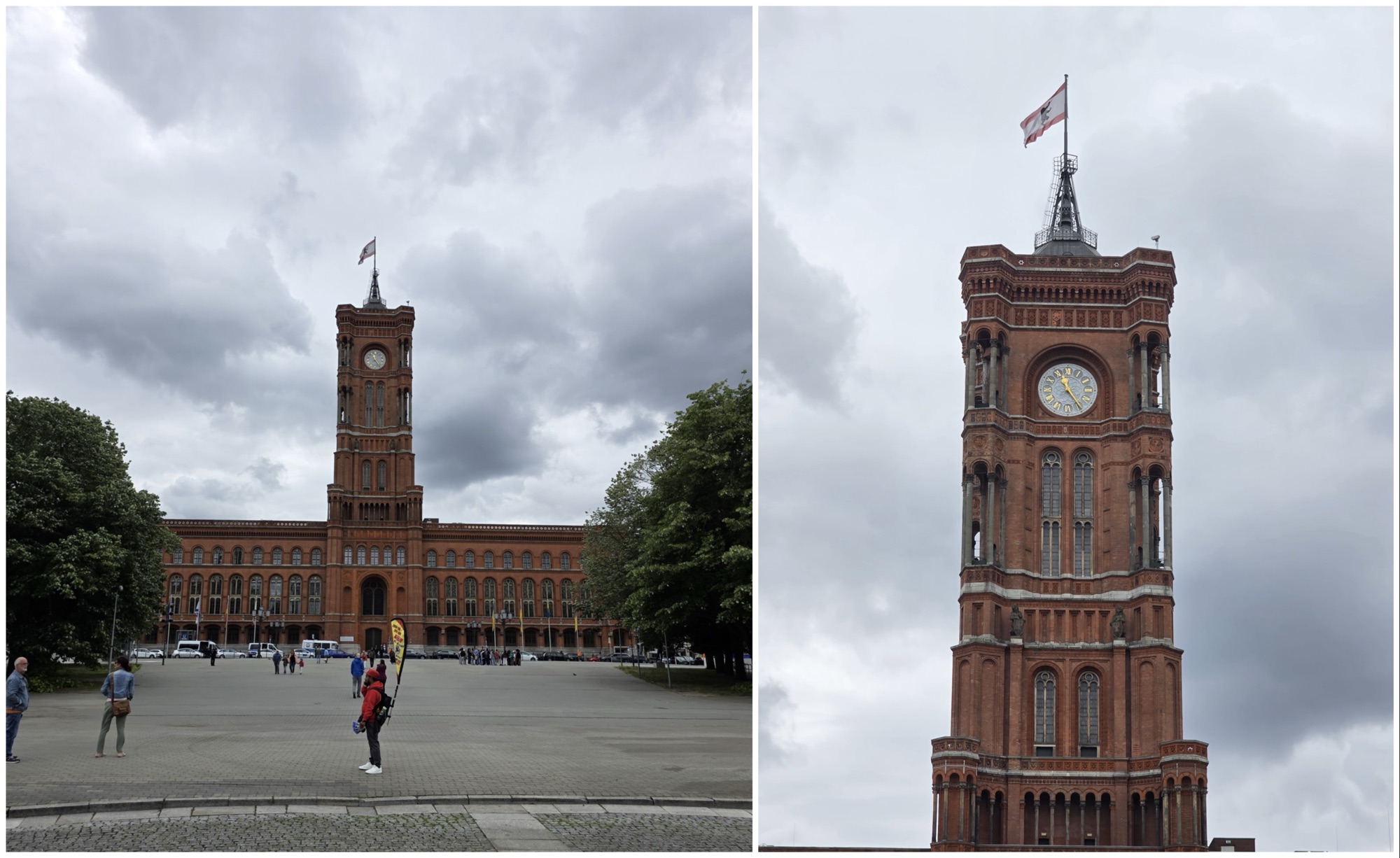
By then it was time to return to the Berliner Dom.


Inside, the Dom is quite spectacular – an excellent example of the Baroque period..


As his dad and I had done (Episode 300) son #2 and I also climbed the 270 stairs to the level of the angels, and admired the ornate crypts of the Prussian kings and queens.
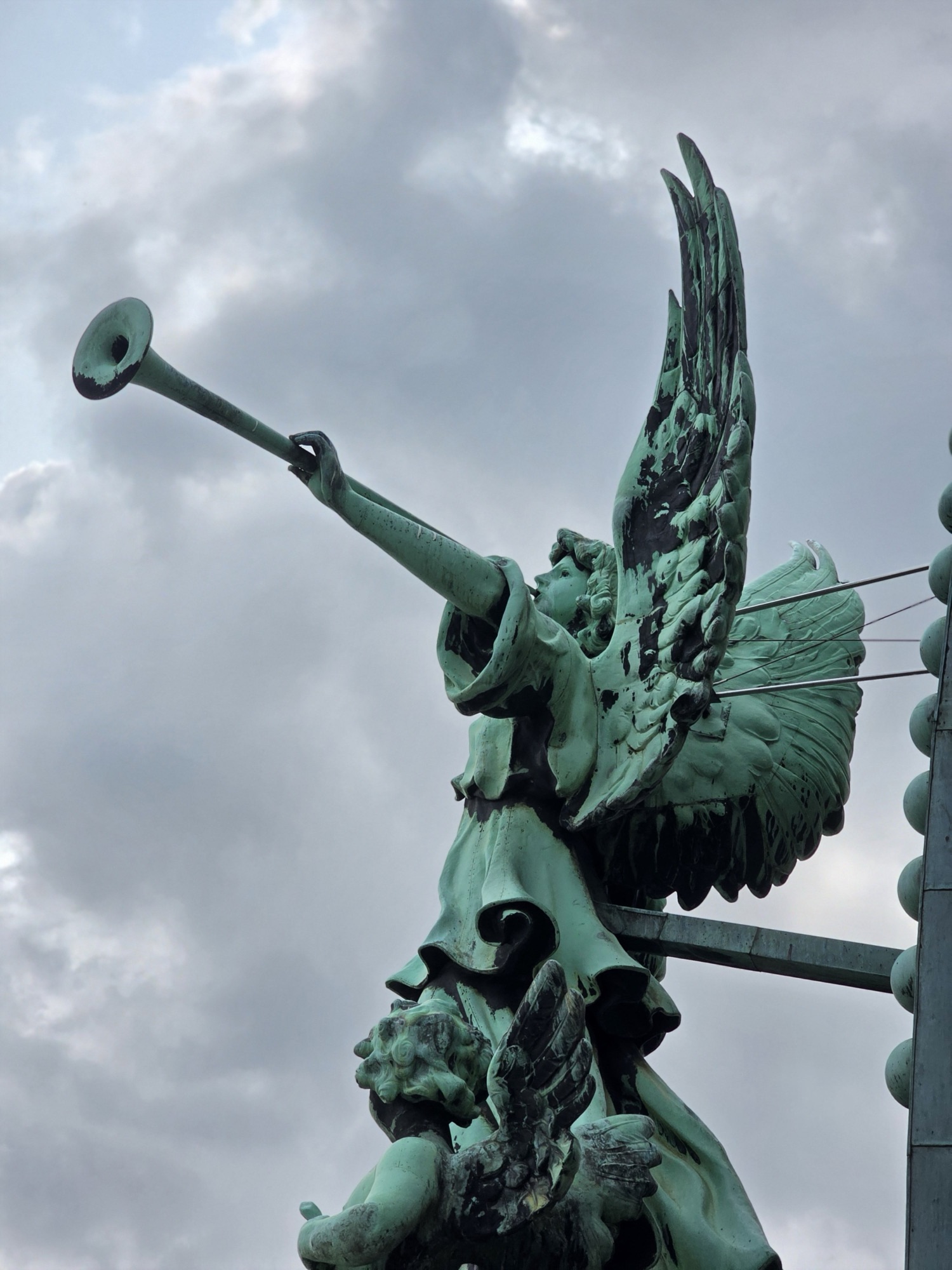
From the Dom we walked west again toward the Tiergarten, first stopping for lunch at Berlin’s #1 döner restaurant. It seems odd, but it’s a fact that the 2 most popular “street foods” in Germany are currywurst and döners. We can attest that both are delicious.

On our way along Wilhelmstraße, saw the biggest grouping of Stolpersteine we’ve seen yet. On a somewhat positive note, while all the people were forcibly removed from their homes, most of them lived to emigrate to, other countries. The sheer number of doctors and business owners in the group attested to the short-sightedness of deporting people who have contributed so much to their country.

Next we strolled through the Tiergarten, whose name means “animal garden” but in which there are no longer animals being stocked fur hinting parties. In fact, that ended with the reign of Friedrich I, and Friedrich II gave the huge tract of land to the people of Berlin as a pleasure garden.
The park still has statues, gardens, and thousands of trees, but none of the trees currently here are more than 70 years old. Those that were not destroyed in WWII were cut down in the bitterly cold winters after the war and used for firewood. There was so little food available in those same years that the park was planted with potatoes and root vegetables.
The paths through the park led us to the Luiseninsel (Luisa Island, named after the incredibly popular Queen of Prussia who was married to King Friedrich (Frederick) III.

We eventually ended up at Berlin’s “great star” intersection and the gleaming victory column erected in 1873 to commemorate the Prussian victory in 1864 in the Second Schleswig War.
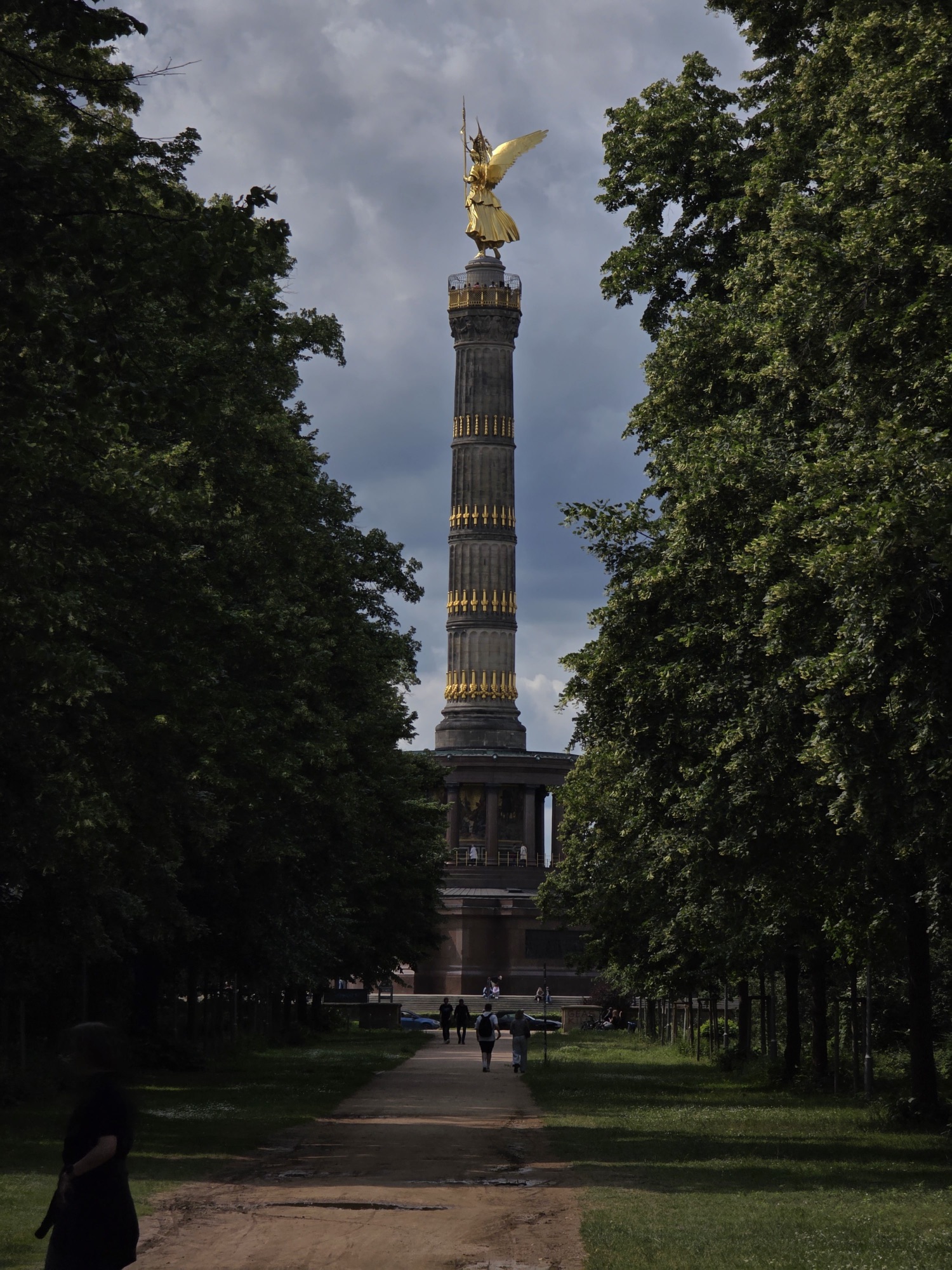
What I hadn’t remembered, and still find so incredible, is that this 67m tall monument with its 8.3m (27ft) tall bronze sculpture of Victoria, the Roman goddess of victory, was MOVED here by the Nazis in 1938/39 from its original location on the Königsplatz across from the Reichstag.


By this time our feet were, frankly, burning. Time for a couple of hours of rest before venturing back out for dinner and the light show.
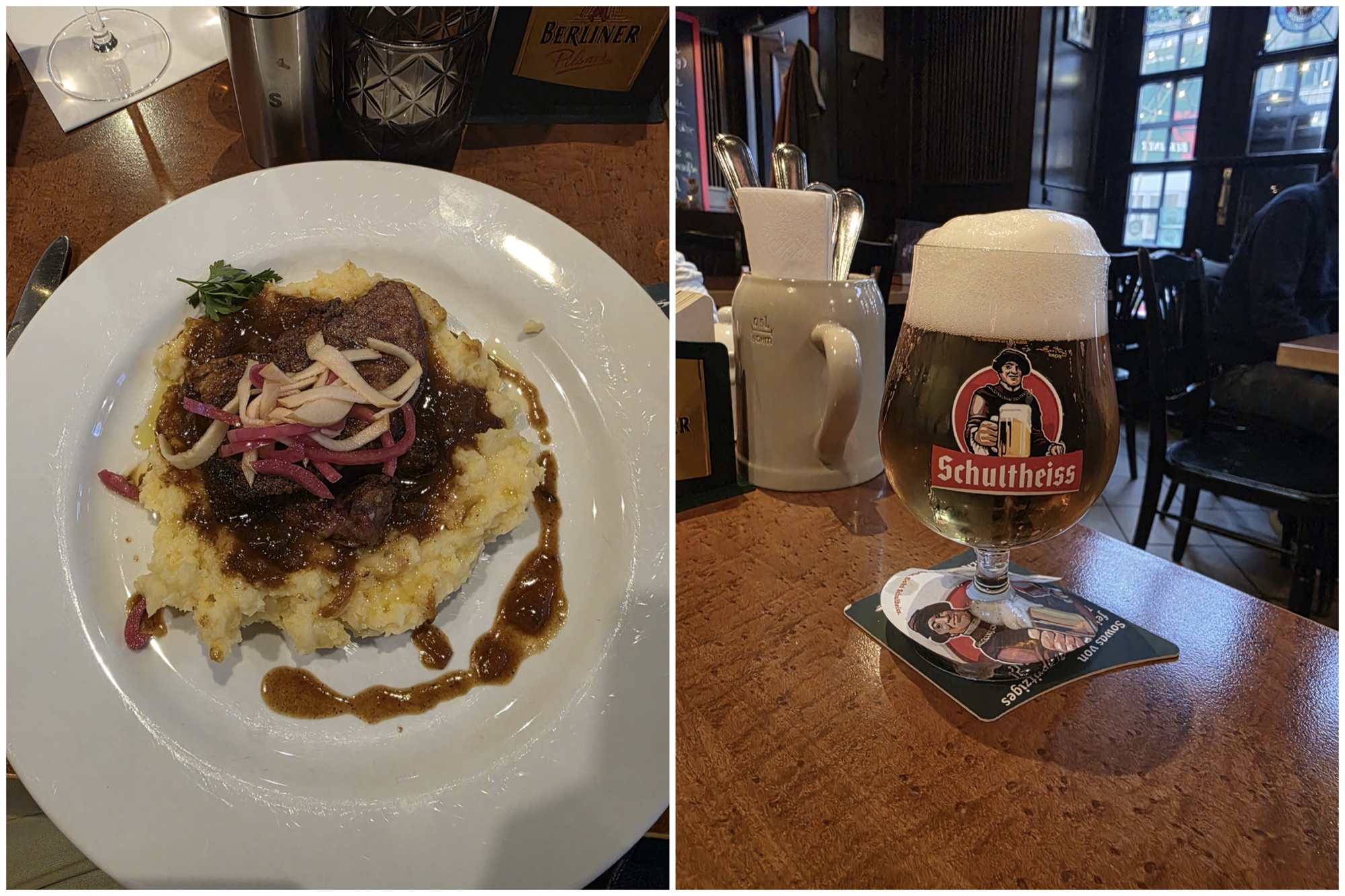
Dinner was at a typical little Berlin pub. Son #2 had Berlin style calves’ liver and a beer; I had knackwurst and white wine.
As we were waiting for the “wrapping” of the Reichstag, we were approached by a media crew filming the event, and I was interviewed!

The actual event was simply a “mapping and wrapping” – not quite what we’d expected as a celebration of the original event, but nonetheless interesting. Ted and I saw several much smaller scale light wraps in Mérida in 2023; the scope of unfurling “sheets” of light on something this big is definitely impressive.
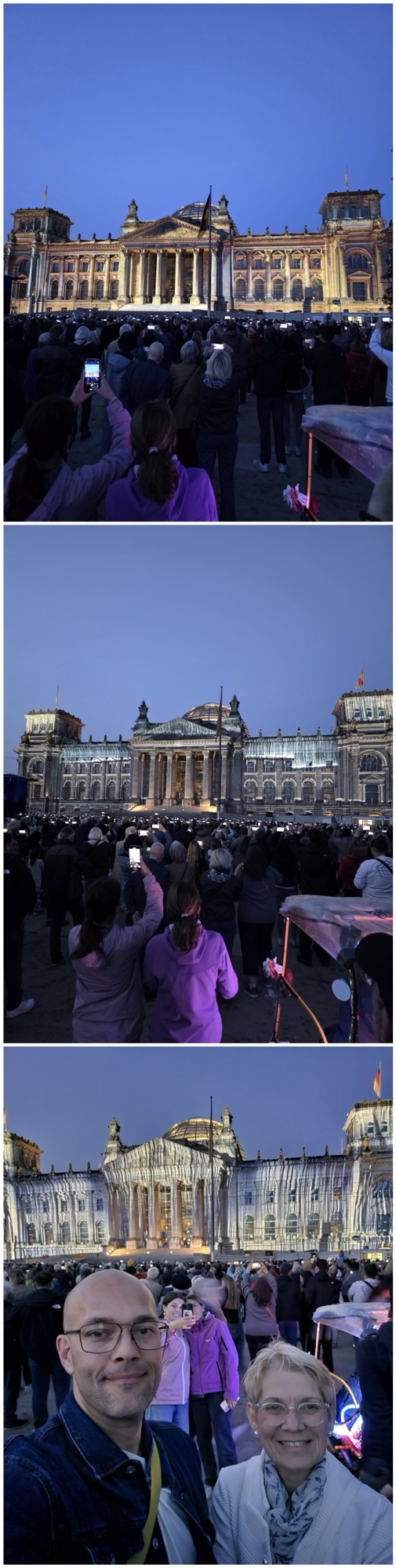
#2 said his two favourite things today were the Neptune Fountain and the Victory Tower. It’s hard to argue, although I’d be hard pressed to choose just two things in this city that has so much to offer.
I personally suspect his favourite thing was the döners, since just before midnight he headed across the street to a 24-hour döner shop and joined the 20 or so people lined up for a late night snack.

Next up: Munich, which from Ted’s and my experiences there I expect to really wow our son.
30,000 steps today. I expect we’ll sleep well.
 Rose and Ted’s Excellent Adventure
Just returned from London last night — very jetlagged. Your 30K steps in Berlin made me tireder just thinking about it! We thoroughly enjoyed our Viking Sobek cruise on the Nile — I’ll try to write it up for Cruise Critic in the next couple of weeks. My head is stuffed with images… I’ll enjoy catching up with your travels meanwhile…
Thanks for sharing your amazing day in Berlin.
LikeLiked by 1 person
Looking forward to hearing about your trip. We’ll be on the Viking Ra end of November. Would love a link to your write-up!
LikeLike
First reacti
LikeLike
Cut-off comments again. Sigh.
LikeLike
I had never heard of the stolpersteine. Thank you for bringing these to our attention.
How wonderful that you were interviewed by a media crew. Is there anywhere we can view the video? Did you do the interview in German?
Safe travels,
Barbara
LikeLiked by 1 person
In English. The crew, I think, was Bulgarian (which os where Christo was born), so not sure where/if I’ll actually get to find out if it airs. #2 gave them his contact info.
LikeLike