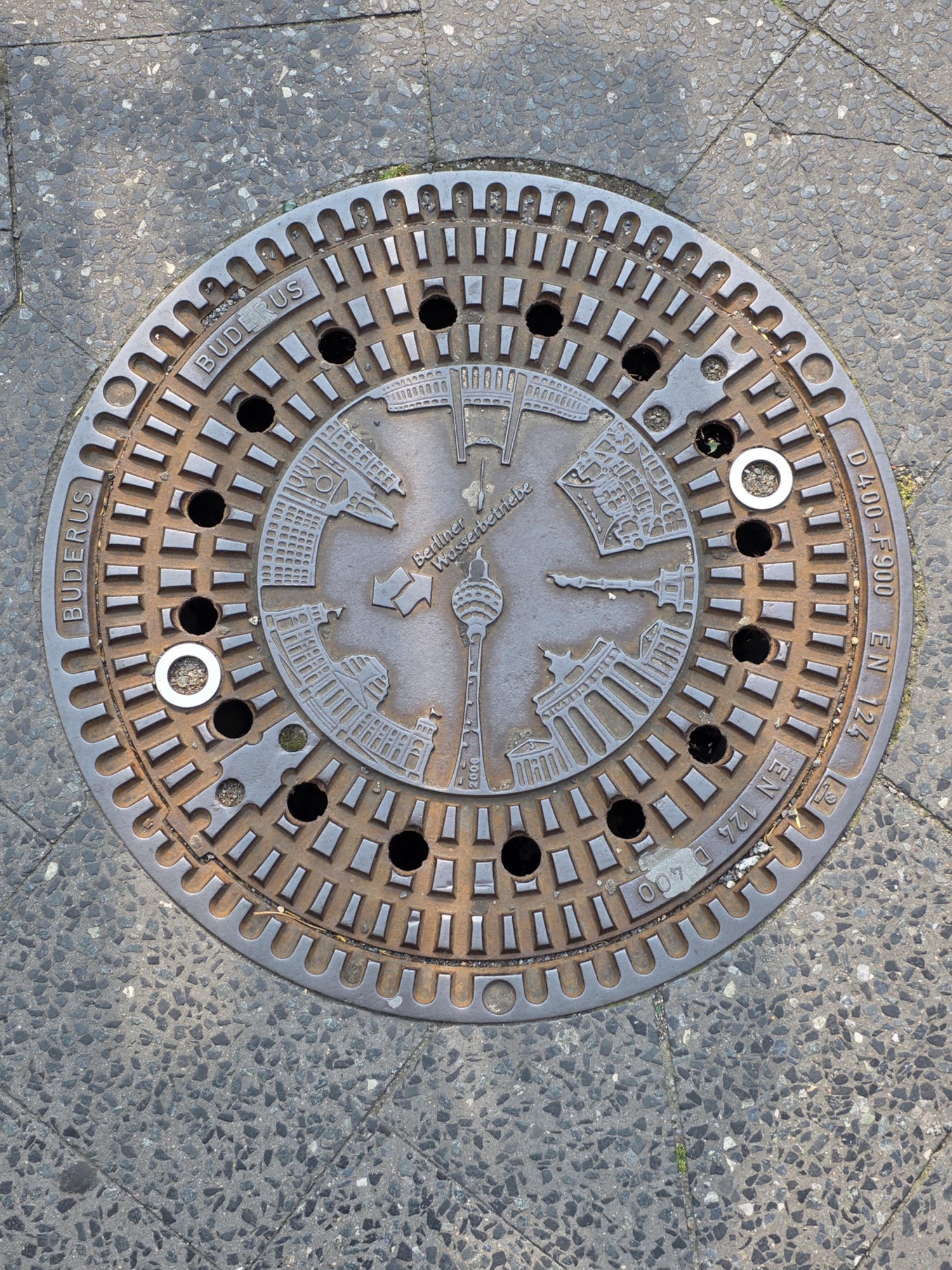
Son #2 and I walked over ourvshare of Berlin manhole covers today.
When Ted and I lived in Berlin for a month in 2022, we got the chance to take a narrated tour of the German Parliament Building, the Reichstag (Episode 290). I’ve linked that day’s blog here because unfortunately son #2 and I won’t be able to do that tour; we’re only here for 2 days and no public tours are being offered. It’s a holiday weekend here, “Pfingsten” (Pentecost, and Whit Monday). Stores and offices are closed today and tomorrow, Sunday and Monday – Sundays being normal closures anyway – but restaurants are open and transit runs as always, since long weekends are times when most families celebrate together.
Interestingly, shops in train stations are allowed to be open, in recognition of holiday travellers’ needs. Our hotel’s staff will get an additional premium, between 50% and 150% of their regular pay, if they are scheduled to work on Monday (determined by the industry and the specific holiday). Some employers might offer a compensatory day off instead of extra pay. In Germany, those who work a 5 day work week start with a legally mandated minimum 20 vacation days (24 for those with a 6 day work week), climbing to as many as 72! There’s a really interesting summary and calculator here: German Vacation.
We made reservations for aperitivo at Käfer, the restaurant at the Reichstag, which will get us into the building’s famous dome, although without an interpretive guide.
But before our culinary adventure, there were things to do and places to see!
My itinerary for today, after a lovely breakfast at our hotel, was: the Tränenpalast, the Gendarmenmarkt, Checkpoint Charlie (and coffee at The Barn), the Memorial to the Murdered Jews of Europe, and the Brandenburg Gate. That would bring us to the Reichstag/Bundestag for aperitivo, after which we’d continue our day by strolling through the Tiergarten to the Victory Column before turning around to return to our hotel.
Did we accomplish it all? Almost. Thunderstorms and gale force (really) winds prevented the activities after aperitivo, but otherwise we got quite a lot done.
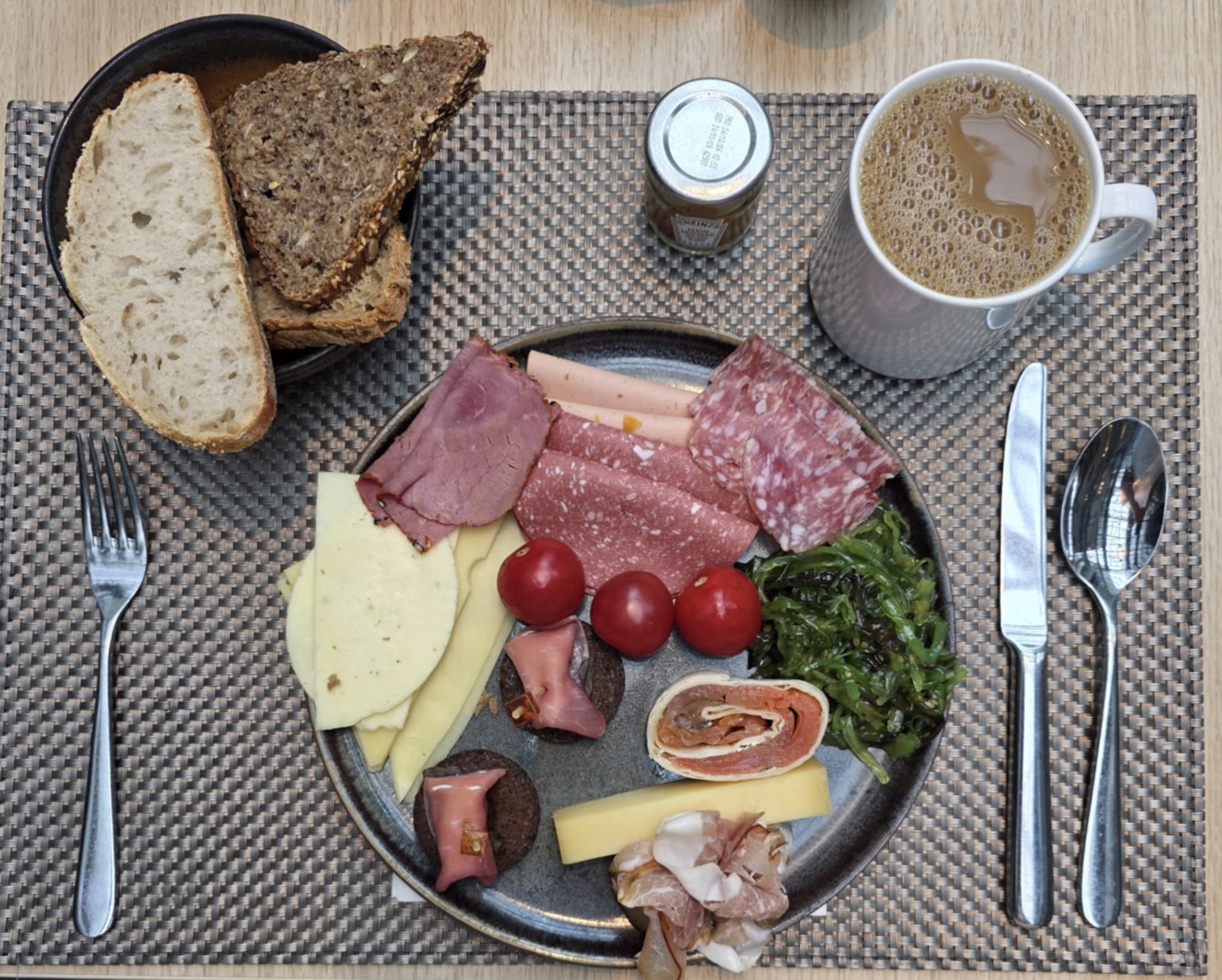
Our morning started with a wonderful German buffet breakfast. We’re both very pleased with the nh hotel chain so far: lovely rooms, outstanding customer responsiveness, and excellent food.
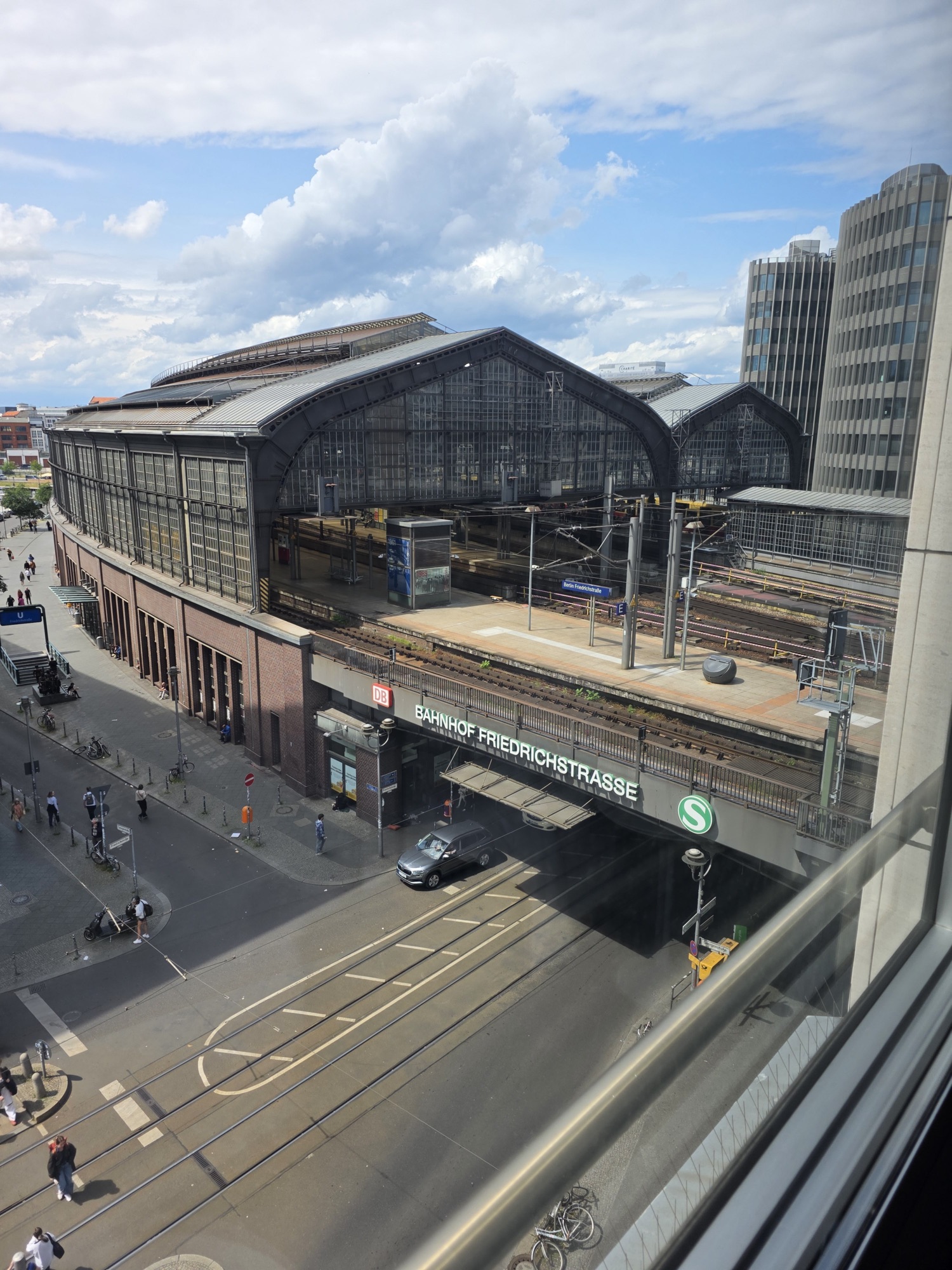
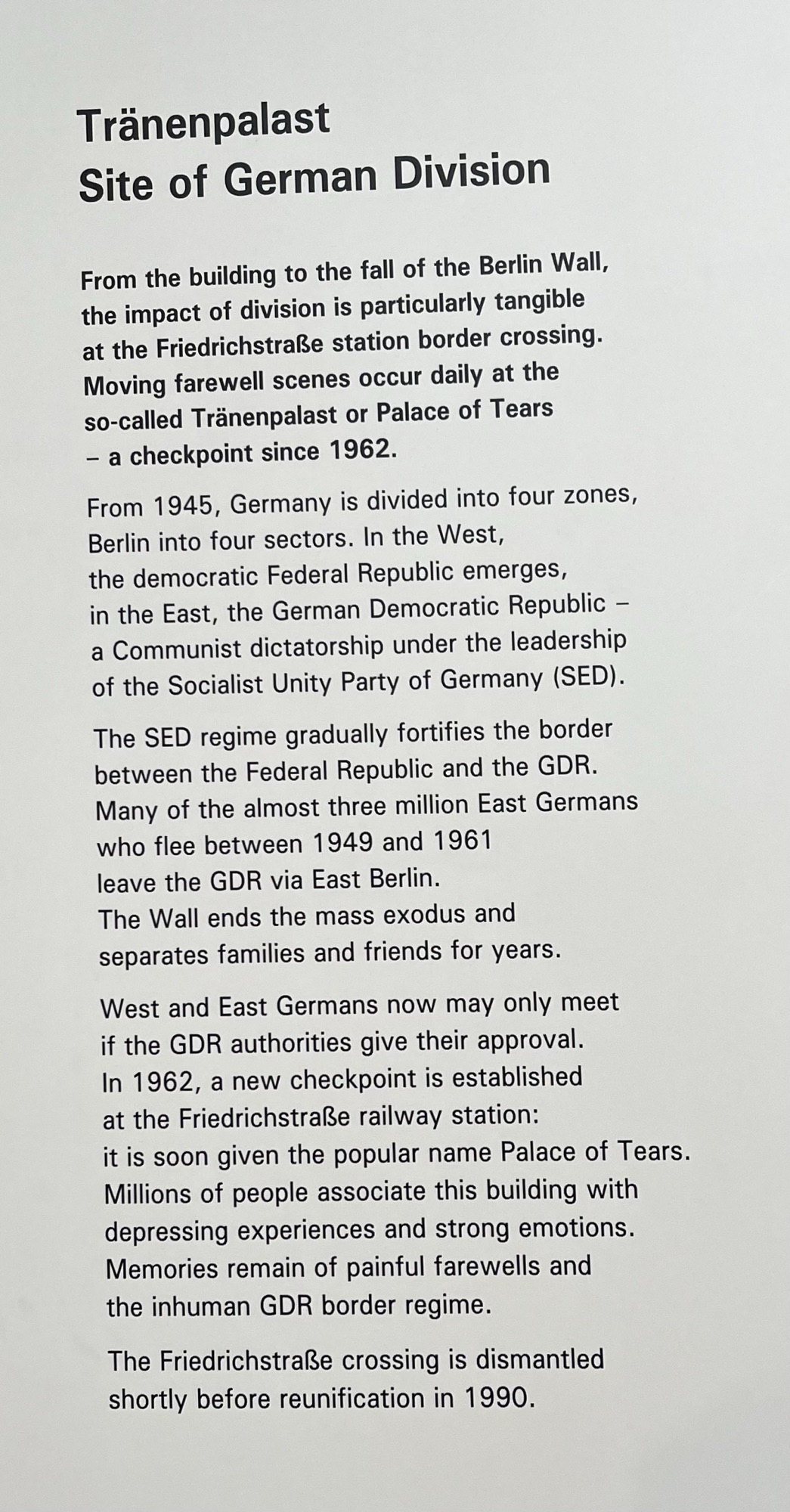
Since we’re so close to,the Friedrichstrasse train station, we began our day there and at the Tränenpalast next door. The station, built in 1882 during the German Empire under Kaiser Wilhelm I and Chancellor Otto von Bismarck, has a complicated history. During WWII it was the station from which thousands of children were sent to the relative safety of the countryside, and many more thousands of people transported to concentration camps.
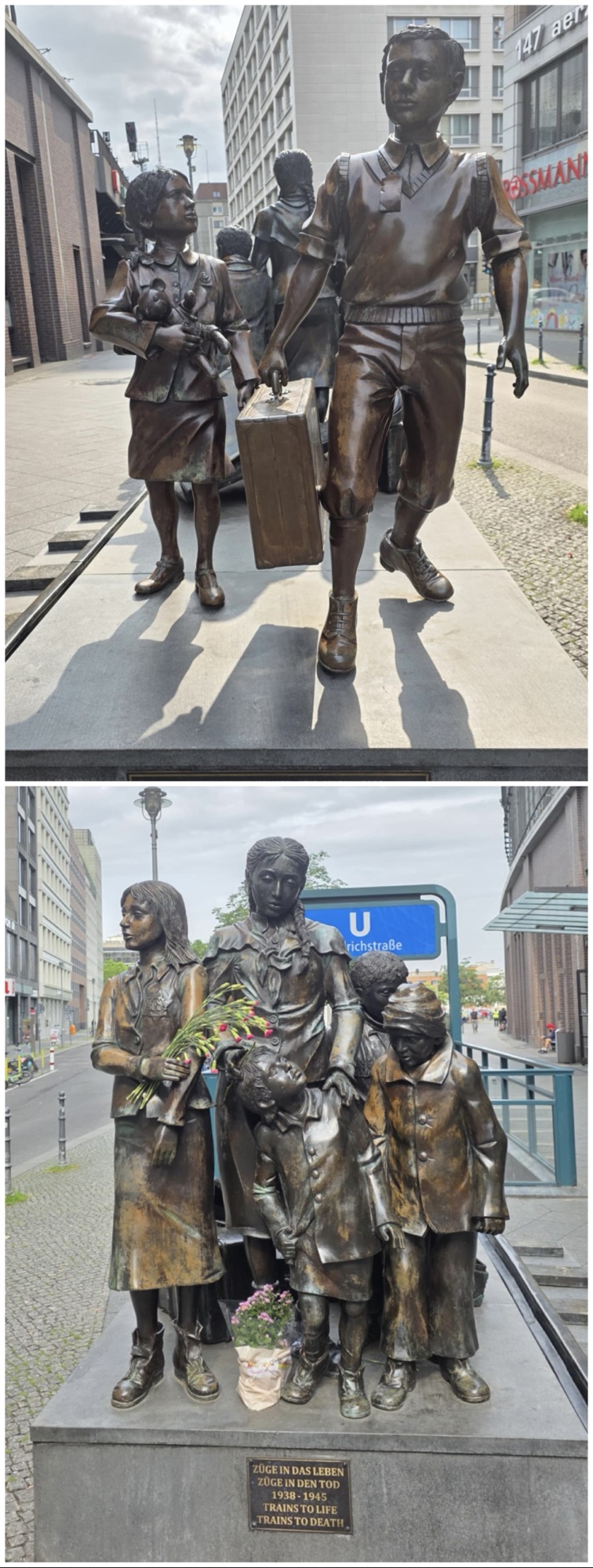
After WWII, during the years of a divided Berlin, this was the closest station to the Berlin Wall: the place through which everyone from the west visiting relatives in the east passed, and the place everyone escaping from the east wanted to reach.
As we headed toward our next destination, the Gendarmenmarkt, lightning flashed, thunder rolled, and rain poured down. When it subsided enough to escape into a café, we stopped at a Berlin institution, Café Einstein. I enjoyed my coffee; son #1 not so much. Clearly we were going to need to find him a proper barista somewhere.
As soon as some sun peeked out we continued on to the Gendarmenmarkt, ostensibly the most beautiful square in Berlin, and home to the Berlin Concert Hall, the German Church, and the French Church.
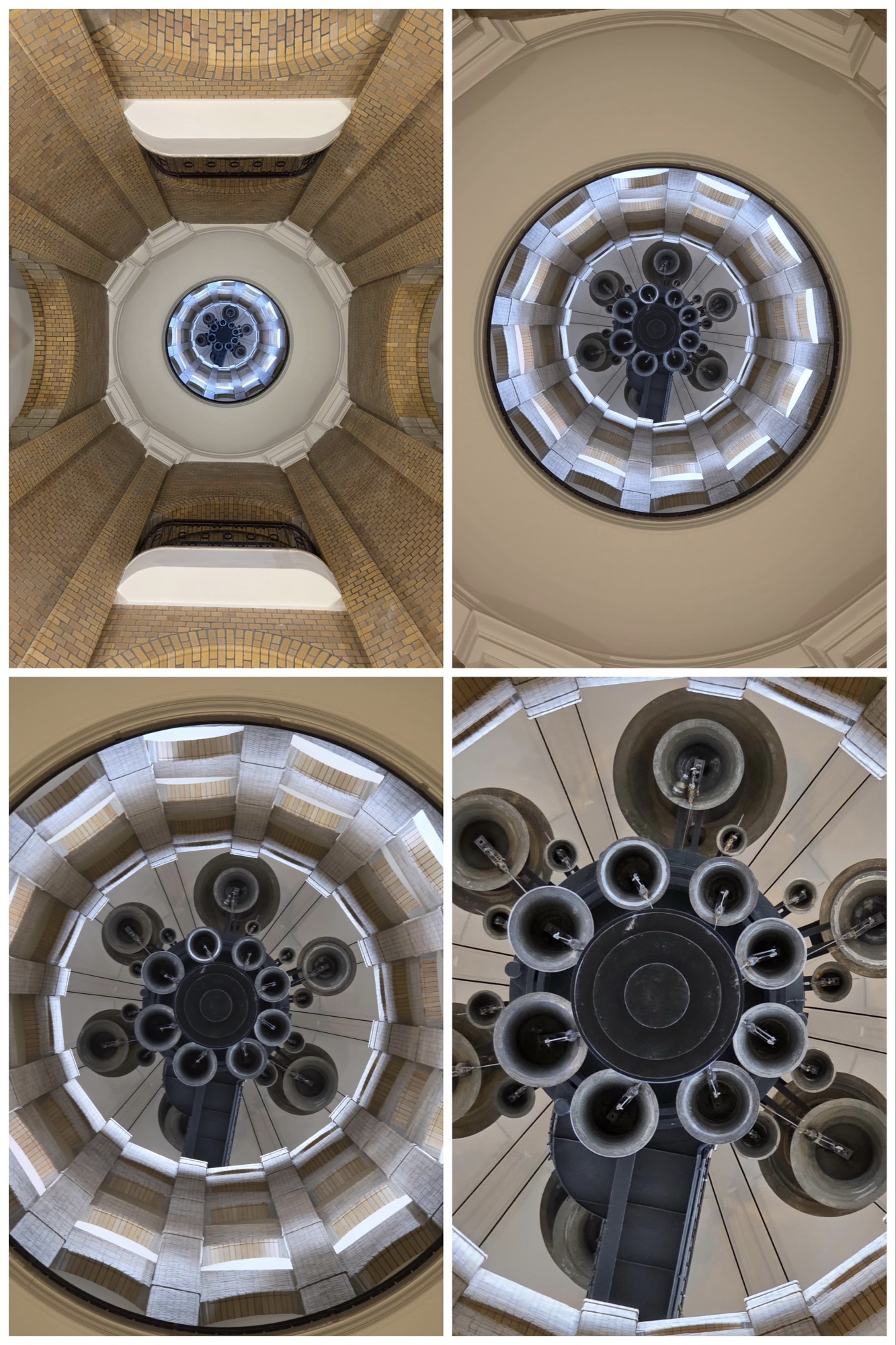
The French Church was built by Kaiser Friedrich I for the large Huguenot population that settled here in the late 18th century. It is comprised of a carillon tower and a place of worship. We climbed to the top almost to the level of the bells (as far as we were allowed)



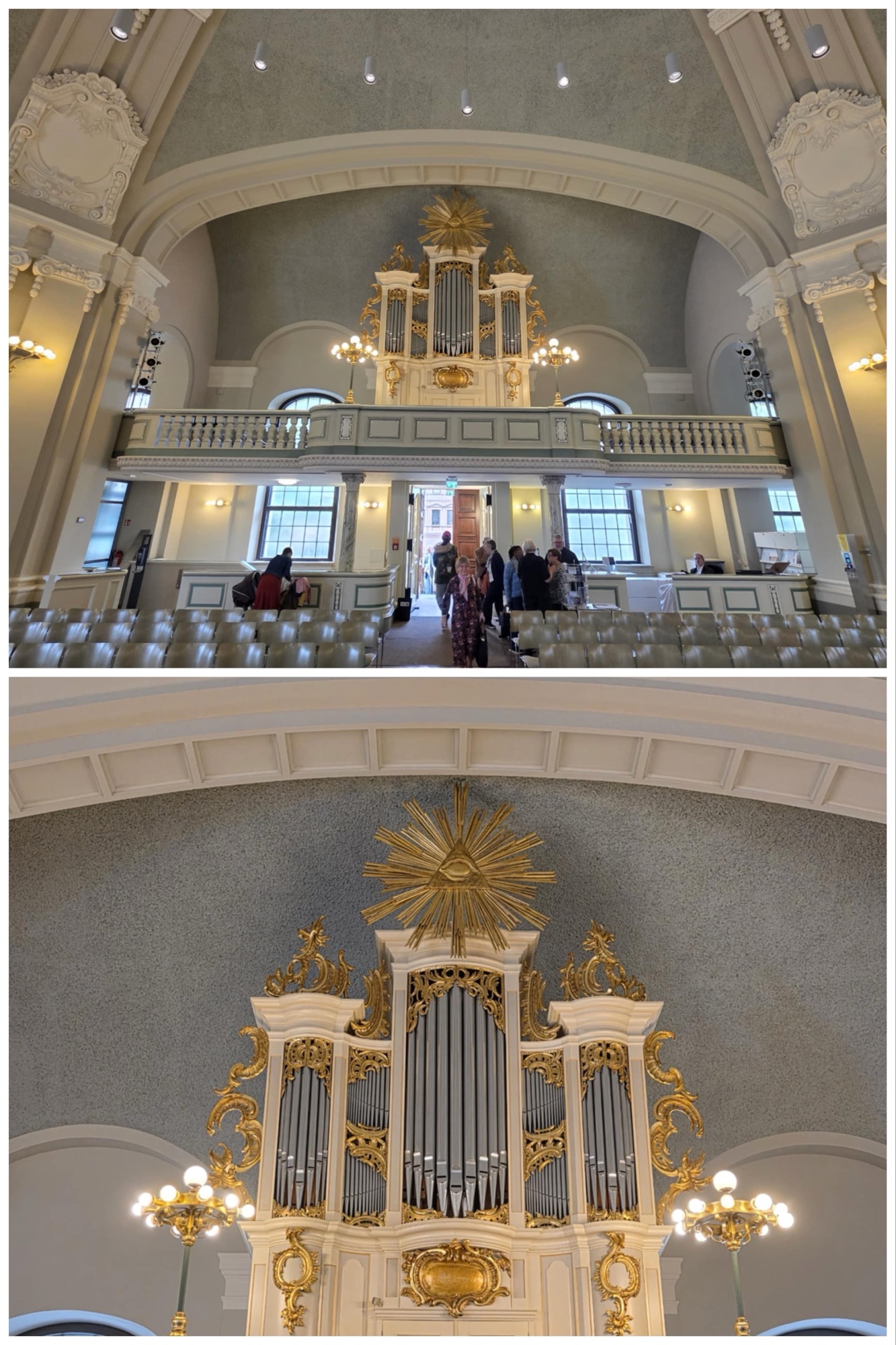
We walked around to go inside the French church, where the morning service had just ended. Like most evangelical/protestant churches of its time, it was quite plain inside, with the exception of the beautiful pipe organ.
The German Church never really served as a church. It was simply a symbol to Berlin’s citizens that they also deserved an impressive do,ed edifice.


On one wall pf the church, an inscription indicating that while the original church dates to 1780-85, built during the reign of Friedrich II, it was restored during the reign of Kaiser Wilhelm I in the mid 1800s. It was almost completely destroyed in WWII and only rebuilt between 1983 and 1996.

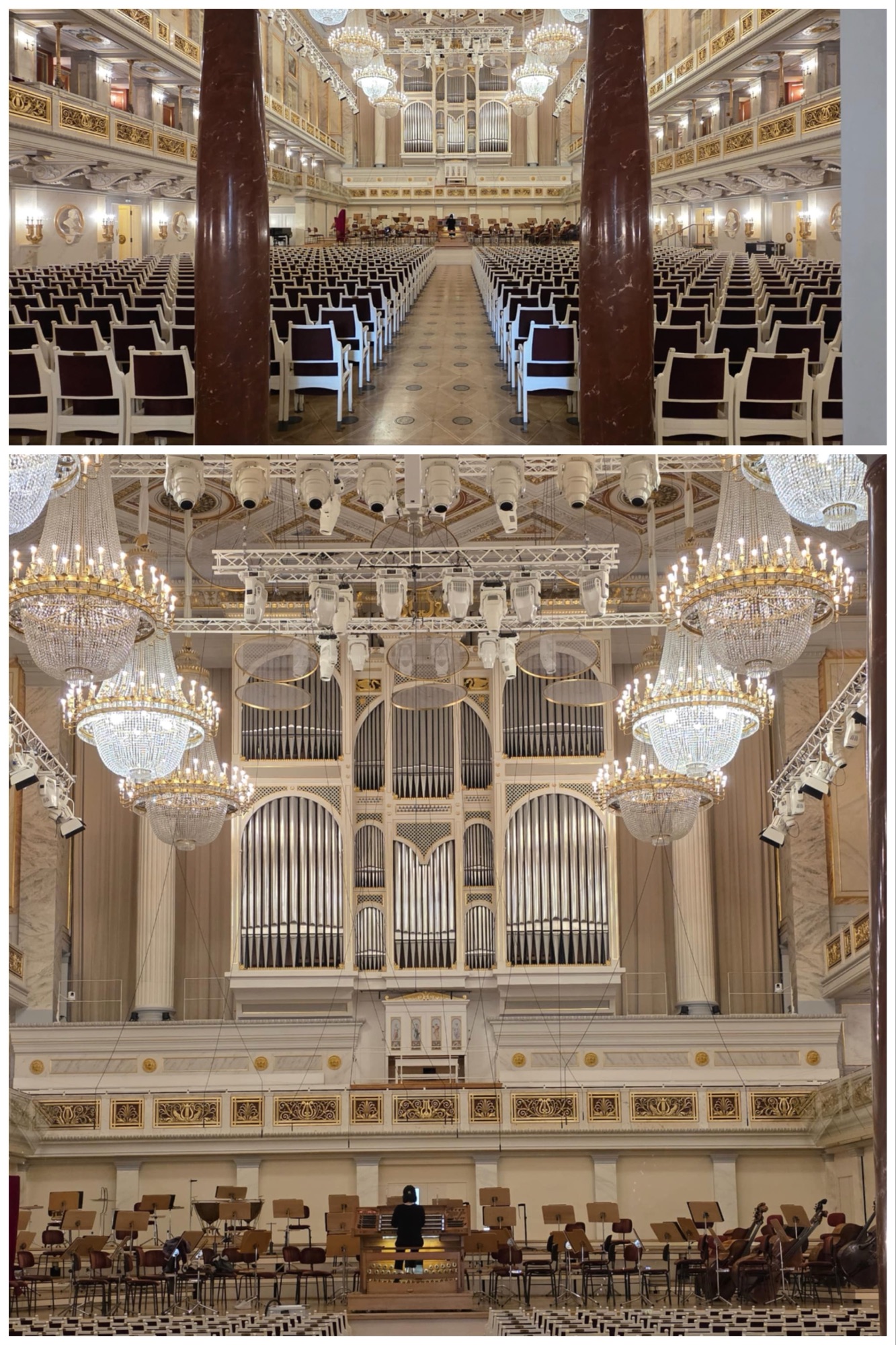
Between the two churches is Berlin’s magnificent concert hall.
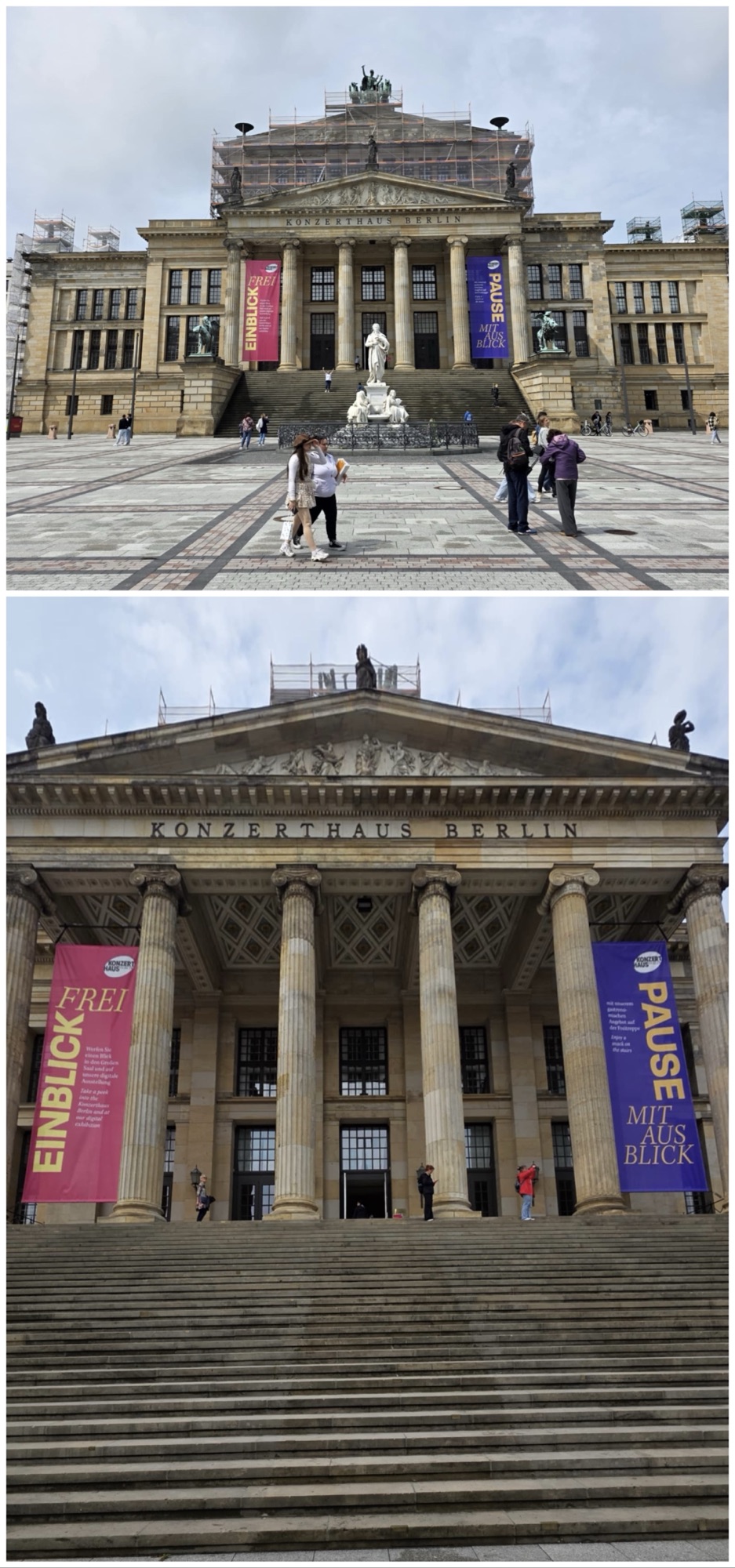
The statue in front of the concert house is of Schiller, and is stunning both front and back.
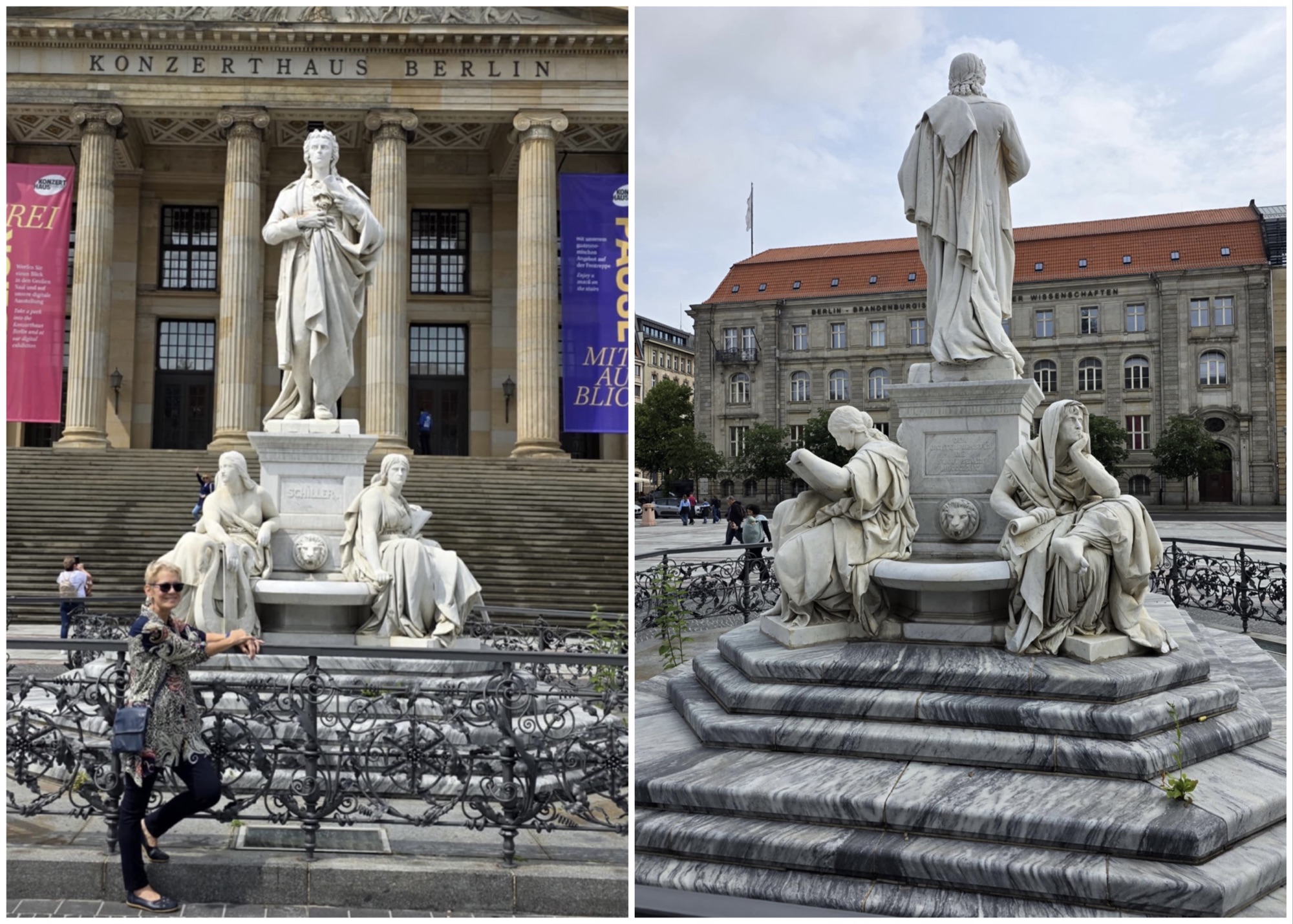
On either side of the staircase are lions, one male and one female, and on the roof a chariot drawn by mythological gryphons.

The building was not open for non-concertgoers when we were here in 2022; today we were allowed to look into the large hall through the glass doors.
Before heading to Checkpoint Charlie, where those crossing between the west (then the American zone) and the east (Soviet zone) were processed, we “needed” “real” lattes. The Barn roastery was able to satisfy son #2.

Then on to Checkpoint Charlie. We decided not to wait in the long line to take our own photo here. We also skipped the museum, since I knew that much of it would be a repeat of the Wall Memorial and Tränenpalast. #2 already had a good handle on what went on here. He dud, however, buy a small souvenir piece of the wall.

From Checkpoint Charlie we walked to the Memorial to the Murdered Jews of Europe. I recalled how moved I was by this memorial when Ted and I visited it, and son#2 immediately felt it too. The idea of entering a space together, and then not only losing sight of each other but also of everything in the outside world is a powerful symbol of the segregation and isolation experienced by those taken by force from their homes and families.

Very close to the memorial is the famous Brandenburg Tor. Analogous to the Arc de Triomphe in Paris, this huge classical gate leads to the broad Unter den Linden allee. During the Soviet era, it was right at the border of east and west Berlin.

By this point it was time for us to head to the Reichstag to go through the passport verification and security check required for everyone entering the parliament buildings – even when parliament is not sitting.
Our first glimpses of the Reichstag approaching from the street behind:
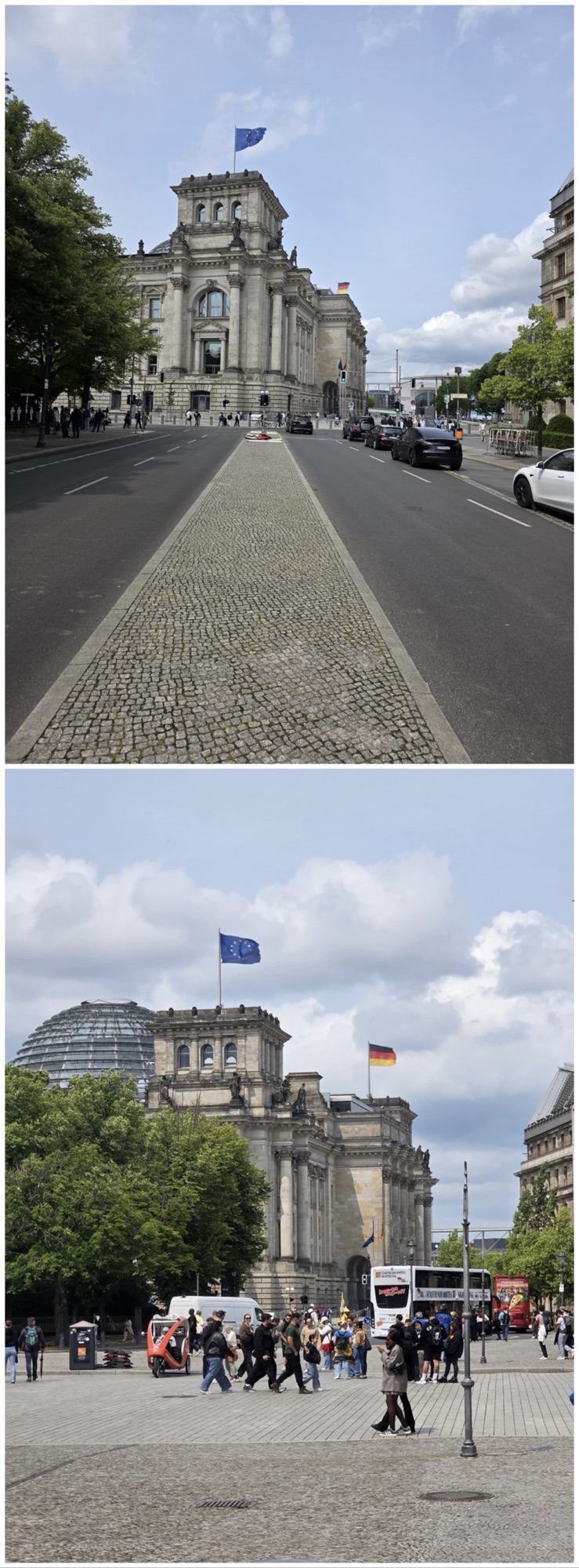
The back of the building:

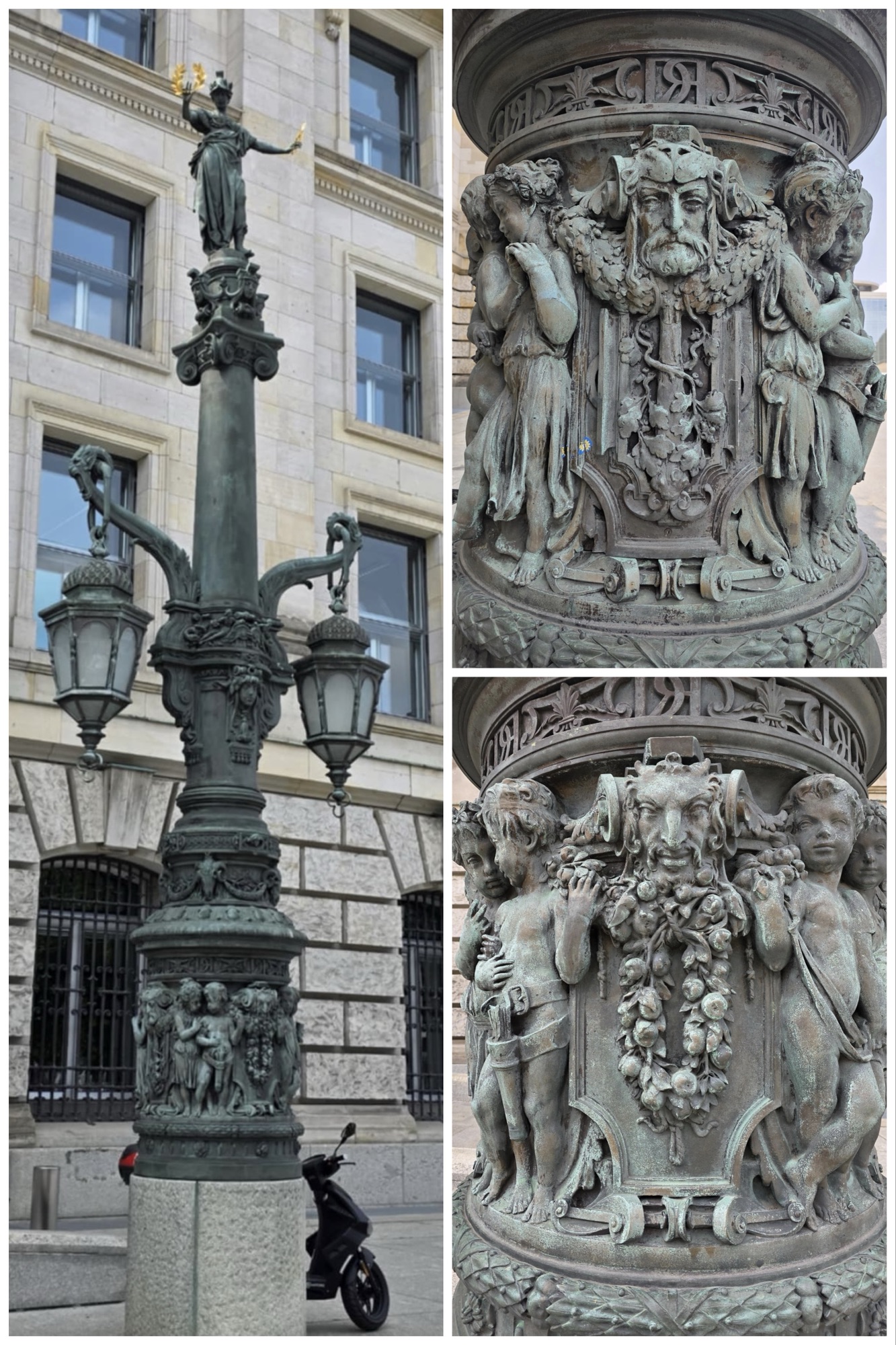
Gorgeous light standards:
The front of the building, with the prominent inscription “To/Of the German People”
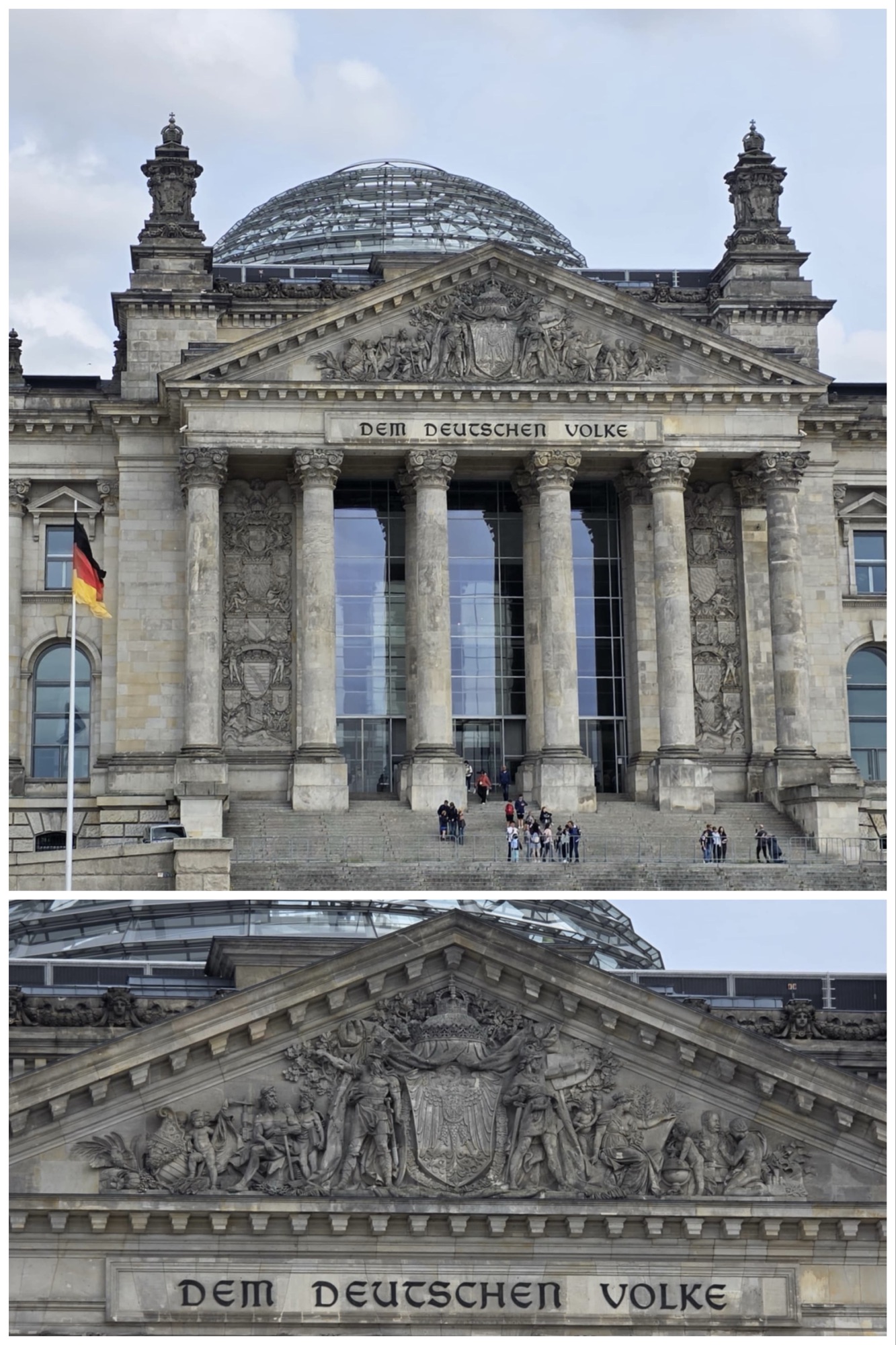
We waited in a group to go into the building, first entering an outer vestibule – the bulletproof glass door closed behind us before those in front of us were opened – and then ushered into an elevator to take us to the public areas.

We were able to take in the history exhibits and walk to the top of the glass dome for not only panoramic views of the city, but also up-close views of some of the gorgeous statuary.
Unfortunately, the wind was so strong that we couldn’t stay out on the open deck for long – but all the flags were certainly flying proudly!
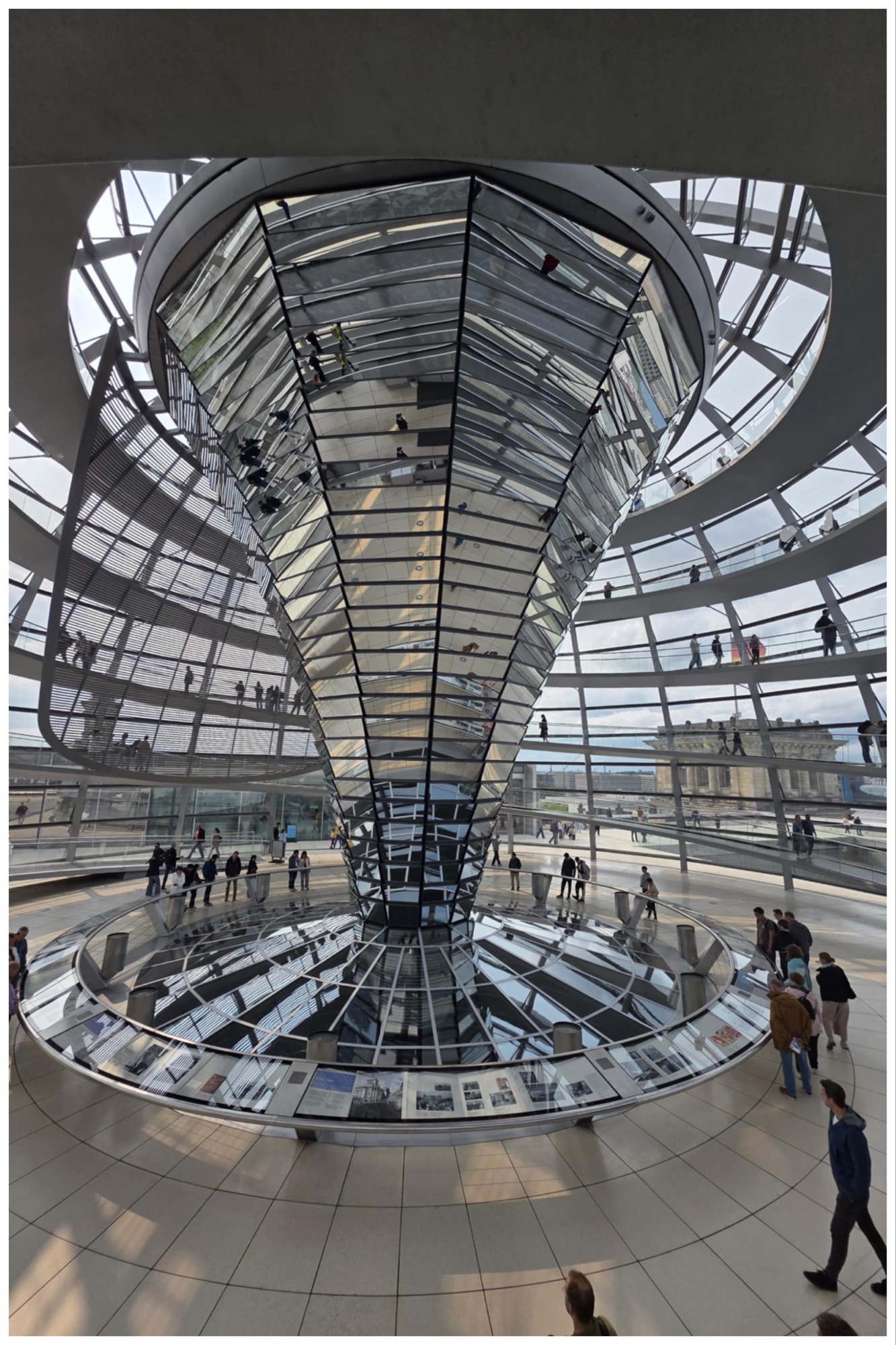
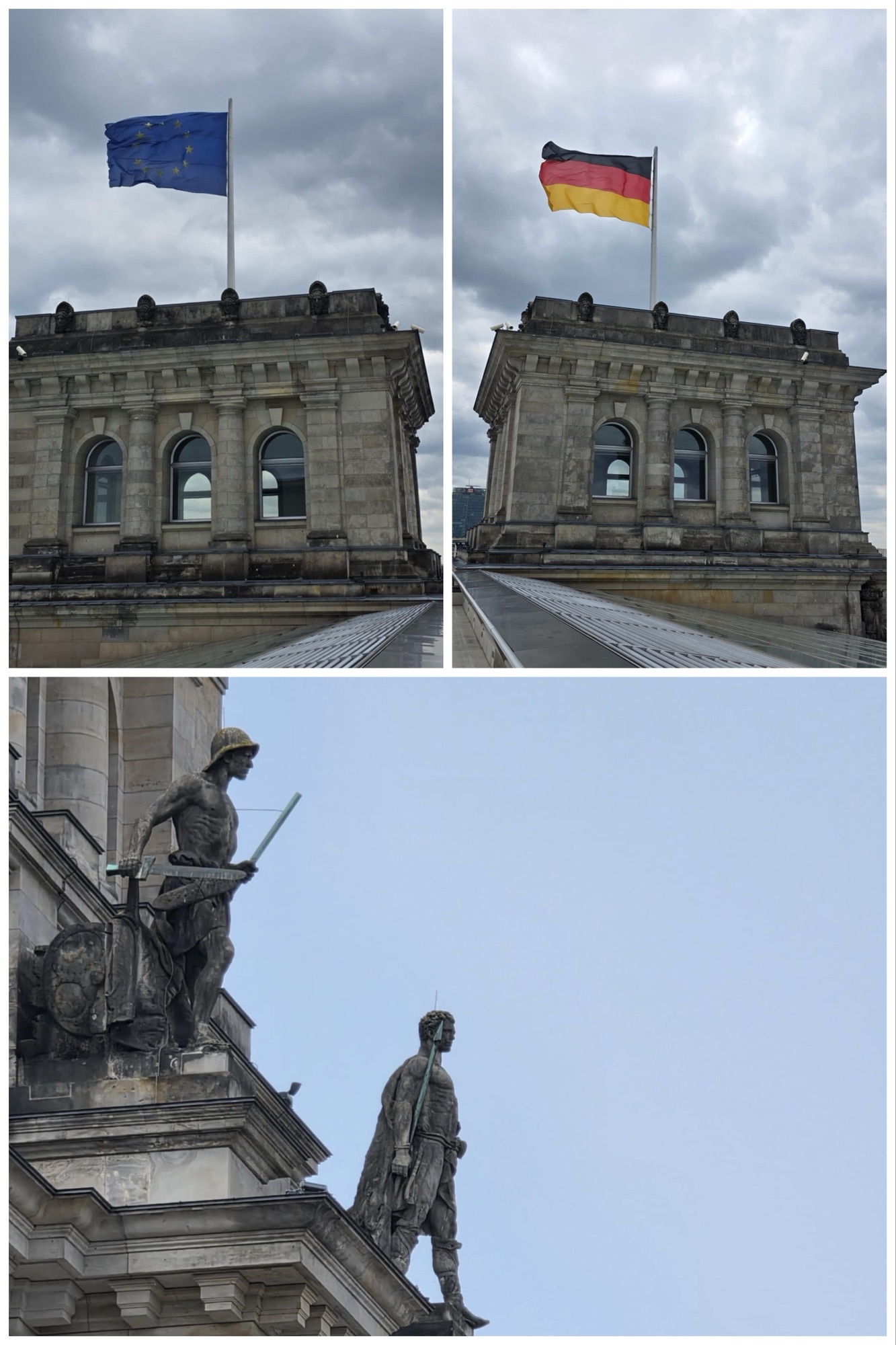
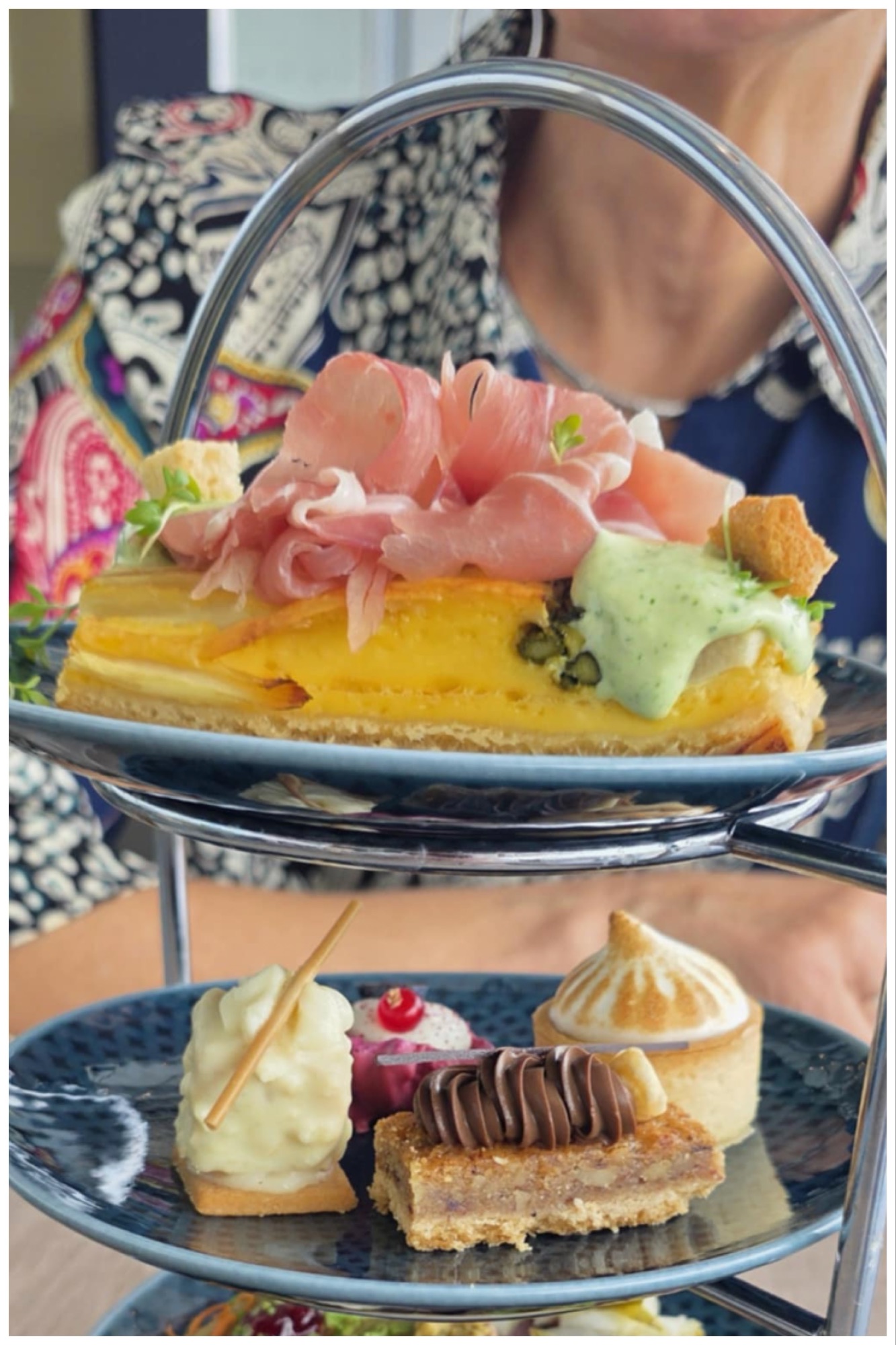
From the dome level outdoor platform we entered Käfer (ladybug) rooftop restaurant, where the afternoon “apero” was more like a champagne tea, with stunning desserts accompanied by sparkling wine and spectacular views.
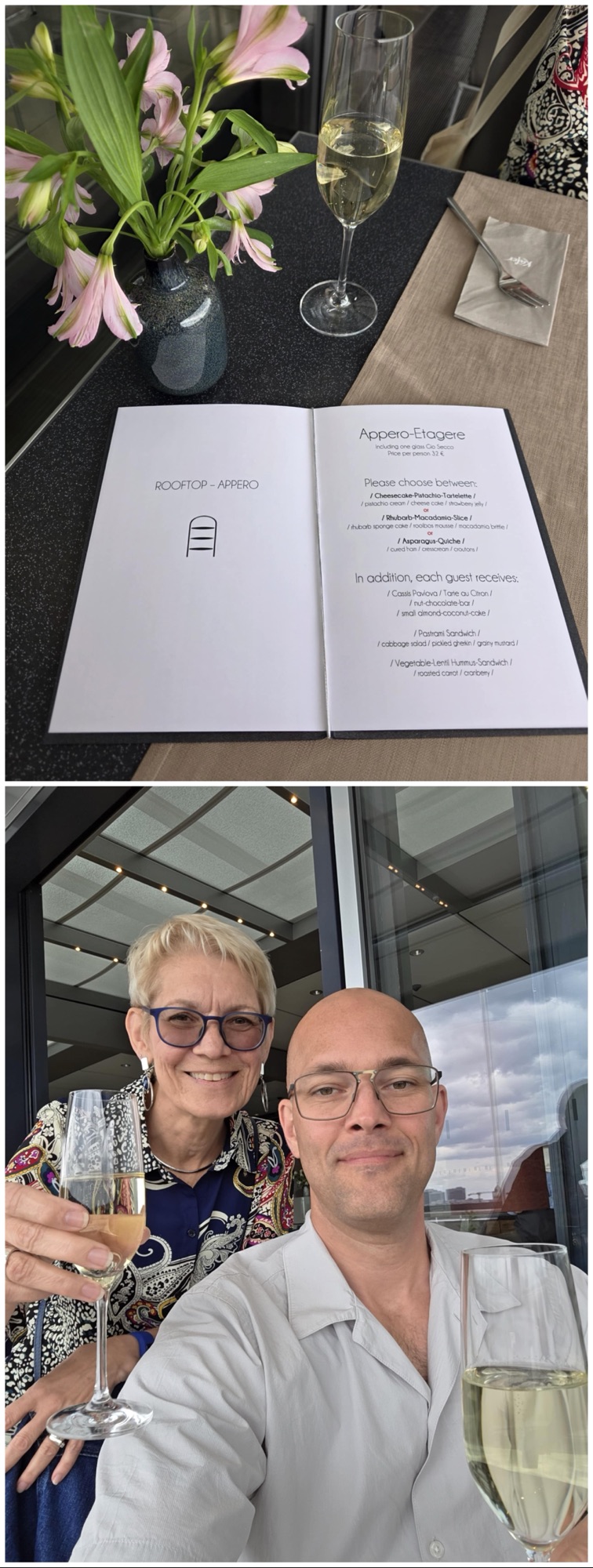

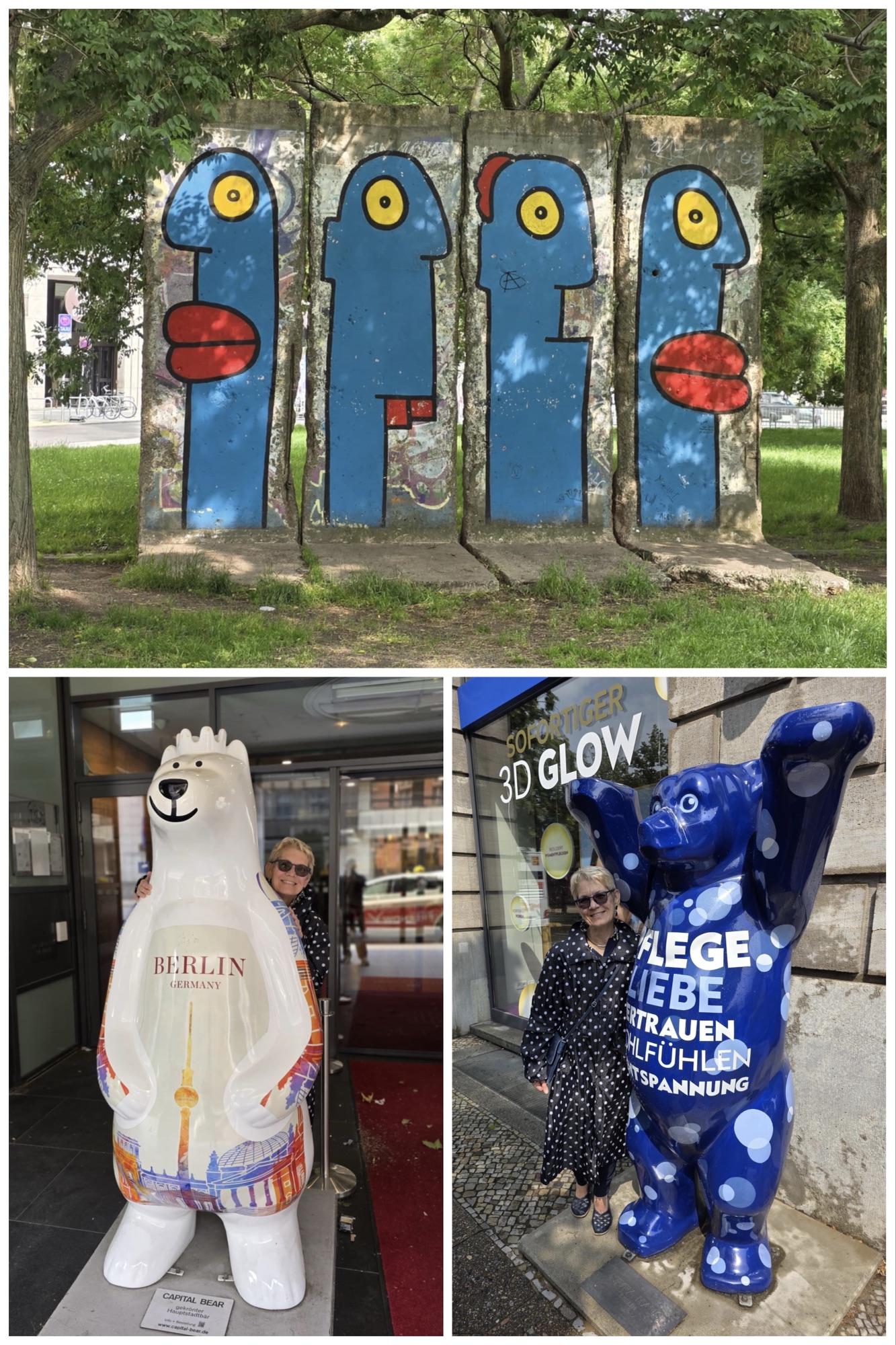
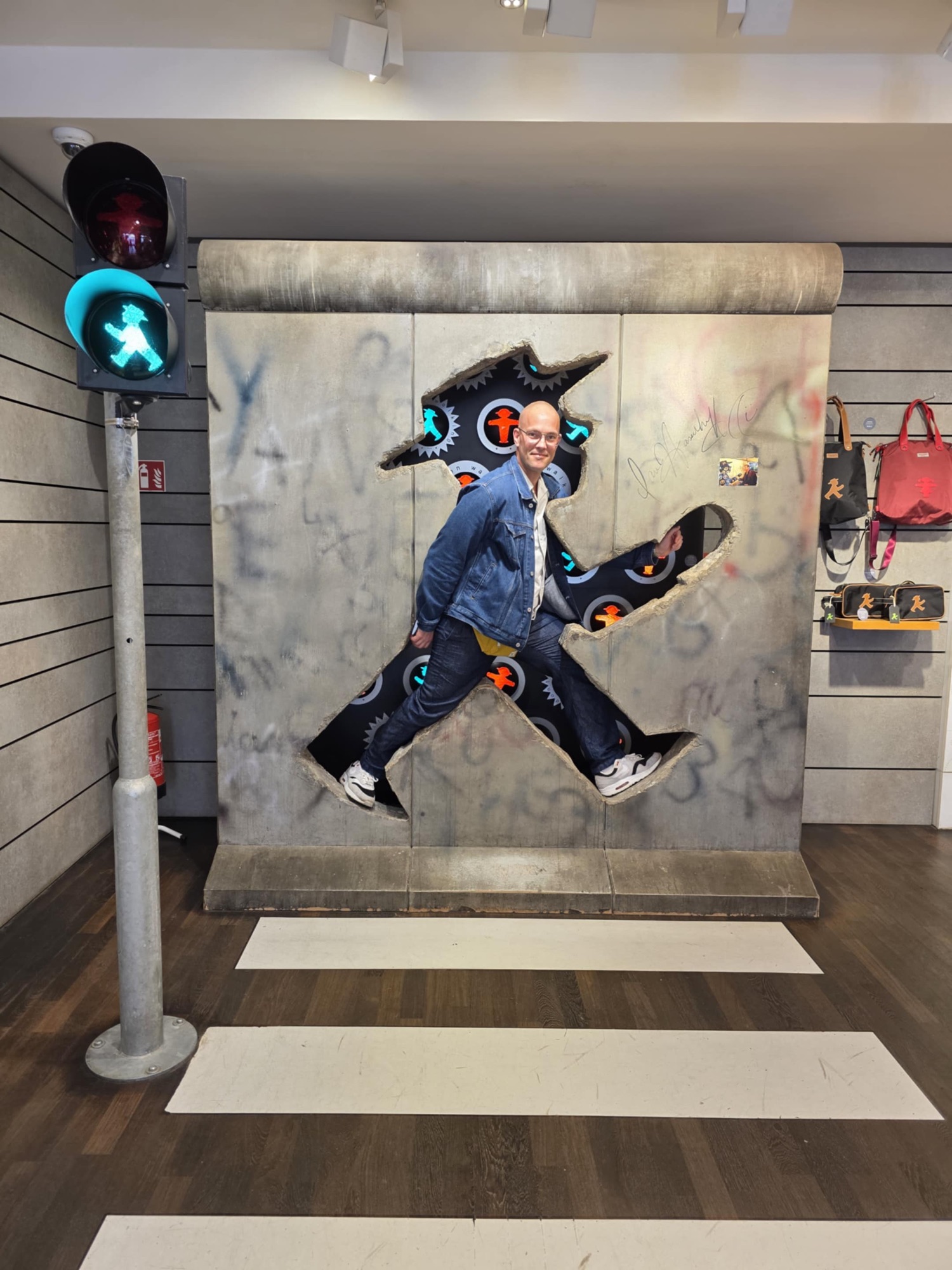
We waddled back to our hotel, detouring past remnants of the Berlin wall, the Berlin “Ampelman” (the crossing guard symbol thatbappears on street lights) store and several versions of the Berlin bear. The “Berlin Bear” refers to both the traditional heraldic symbol of Berlin that appears on the city’s coat of arms, and the more modern “Buddy Bears”. The Buddy Bears are life-size, painted fiberglass bear sculptures that have since 2001 become a landmark of Berlin and unofficial ambassadors of the city. They promote tolerance and cosmopolitanism.
That took us to about 20,000 steps, so it was time for a pre-dinner rest back at the hotel. I sorted photos and began today’s journal, while #2 rested his knees and searched out a place for dinner. His choice, La Via del Muro, provided incredible pizza and wine.

It was the perfect ending to our day.
 Rose and Ted’s Excellent Adventure
It is wonderful and informative following your journey. Great photos.
LikeLiked by 1 person
Thank you! Son#2 takes after Ted in his interest in photography.
LikeLike