It was not in my plans to go to Hamburg, but somehow we ended up with an extra day with my cousin before our scheduled departure to Berlin.
As they say here, “oopsie”.
With no predetermined plans, Helga suggested that we take the train to Hamburg for the day. Doris, who loves Hamburg, joined us.
I’d never been here before, but Doris repeatedly assured me that it was much better than Bremen. I’m not sure I’d agree (they are two very different cities), but a short day in Hamburg definitely convinced me that it was a place that Ted and I could explore for a month, the way we did Berlin in 2022.
As is always the case when travelling with #2, our first priority when getting off the train in Hamburg was to find a coffee shop that met his high standards.
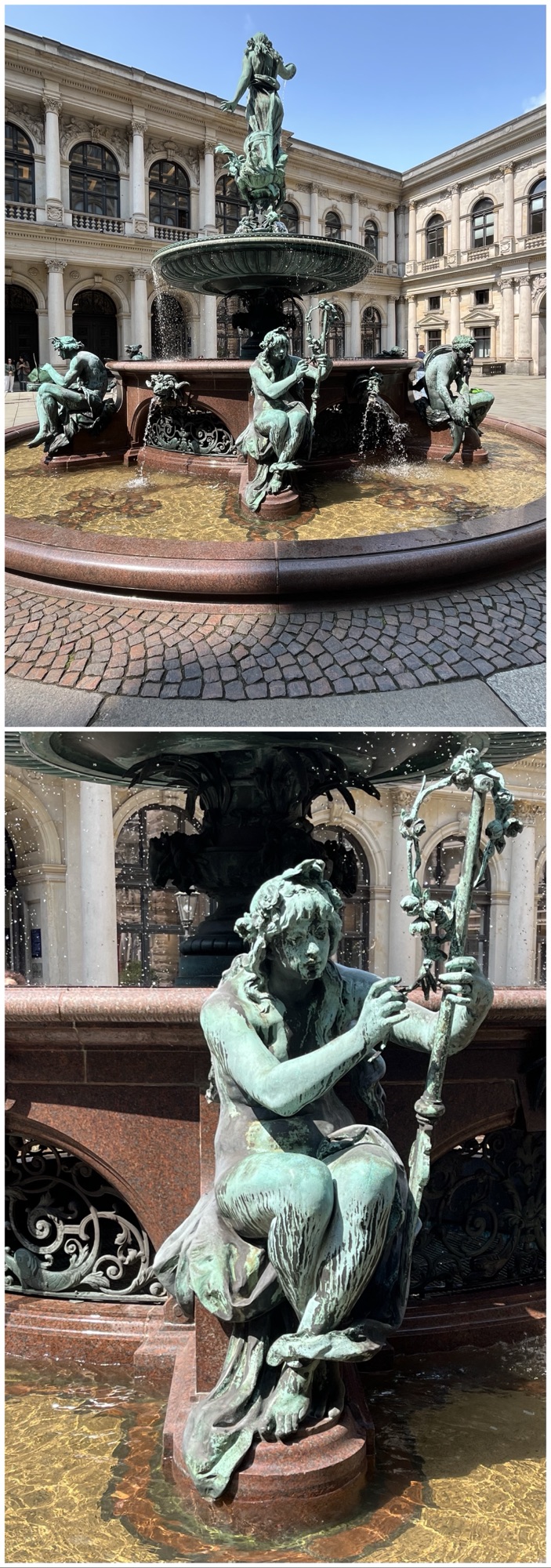
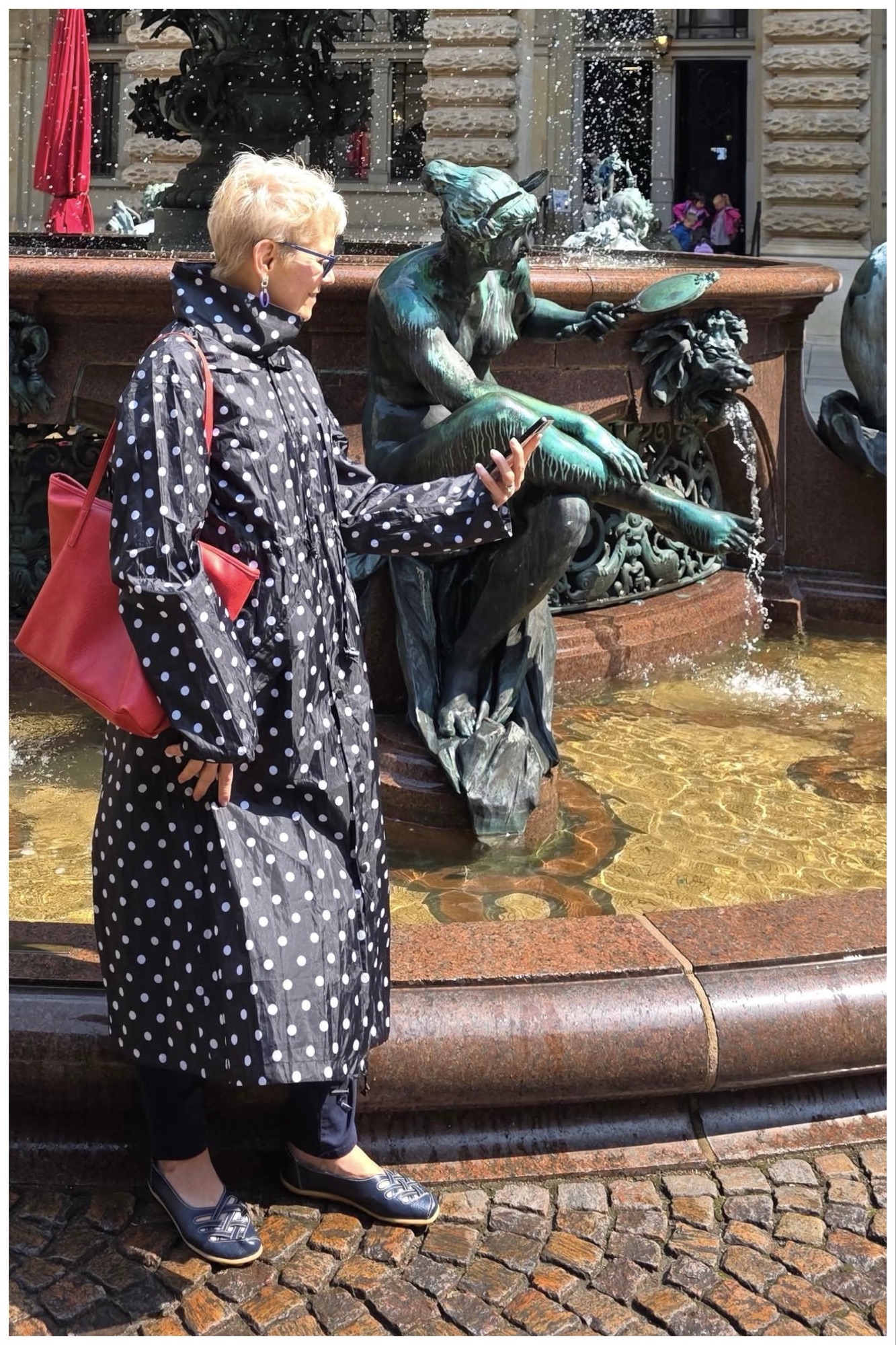
Along our walking route we passed the first of several beautiful fountains, where I took the opportunity to strike a pose.

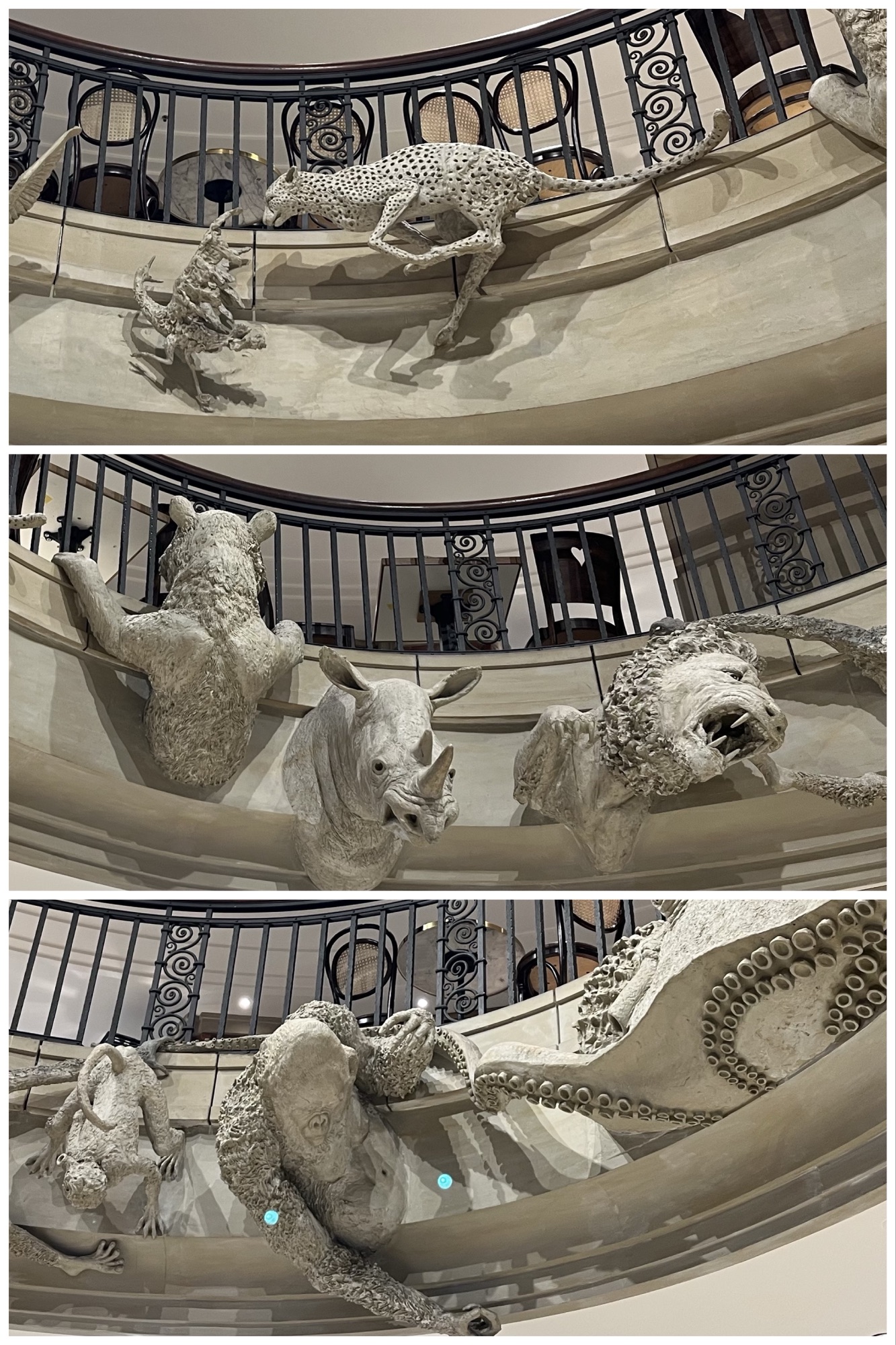
We also detoured briefly into a high end shopping mall called the Levantehaus (Levant House), and were absolutely amazed by the sculptures and murals. Intrigued by the huge animal sculptures above the entrance, we headed in. It’s not just the old buildings that are beautiful, but also the new ones.

#2 was very pleased to find a Steiff store – the famous “button in the ear” iconic German stuffed animals whose trademark dates all the way back to 1880.

That is NOT what he’s bringing back to Canada.
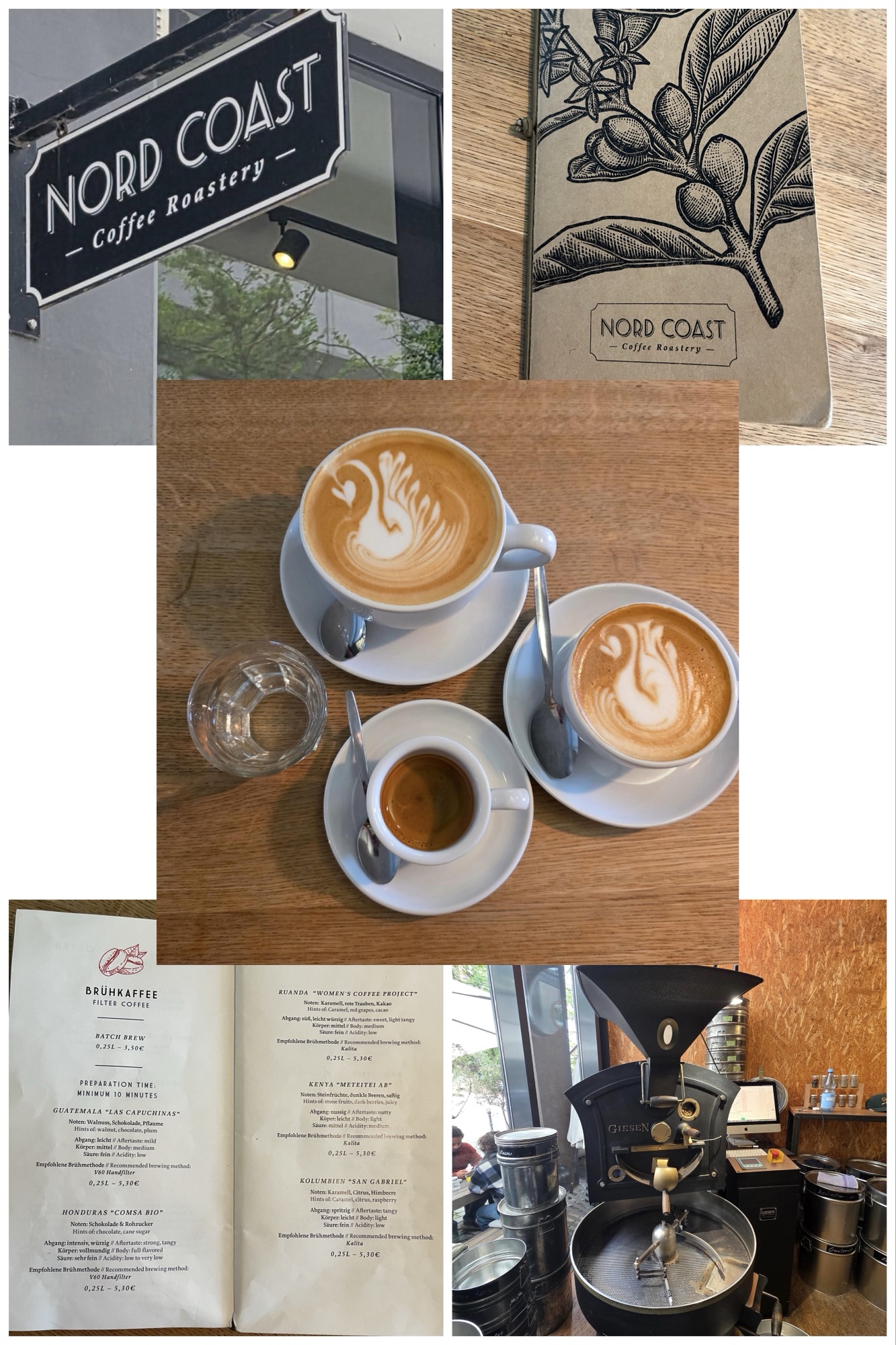
Nord Coast Roastery fit the coffee quality criteria.
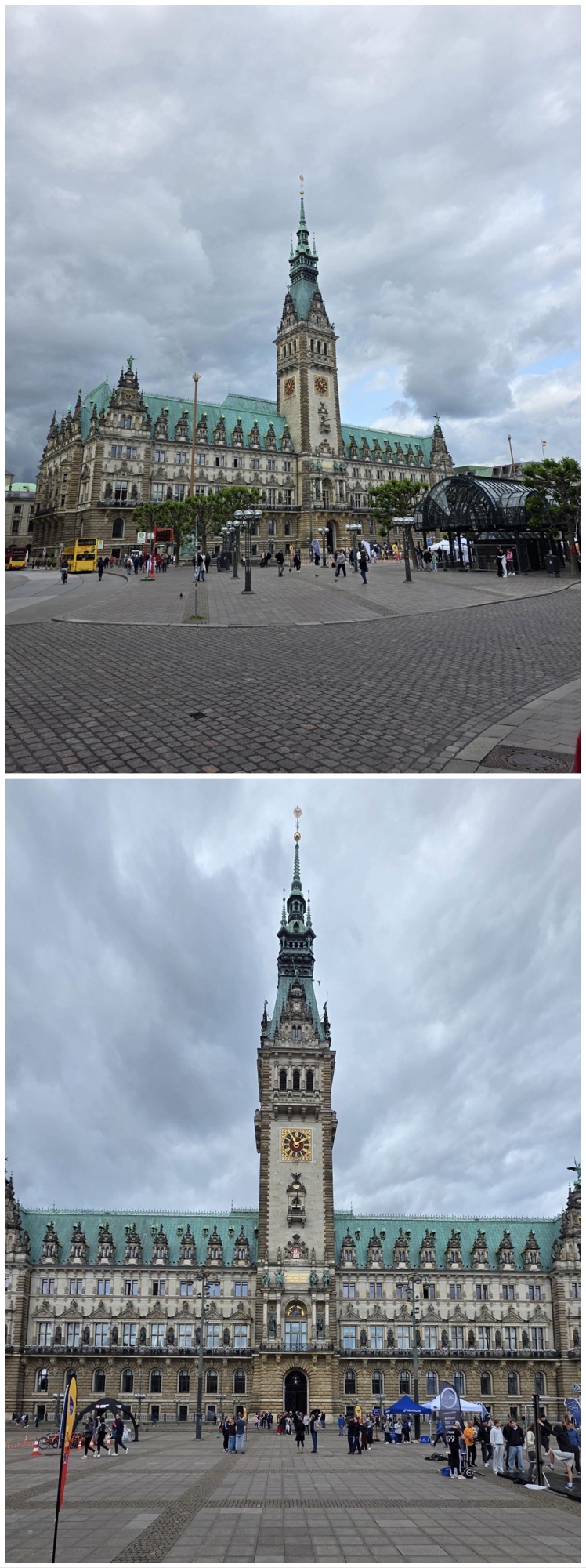
With only one day in such a big city, Helga suggested that we take the 90 minute long hop on/hop off bus tour in order to see the highlights of the city, so after coffee, met our bus in front of the Hamburg Town Hall. Helga and Doris both pronounced it the most beautiful in Germany, but they’ve never been to Munich, whose town hall I think surpasses this one.

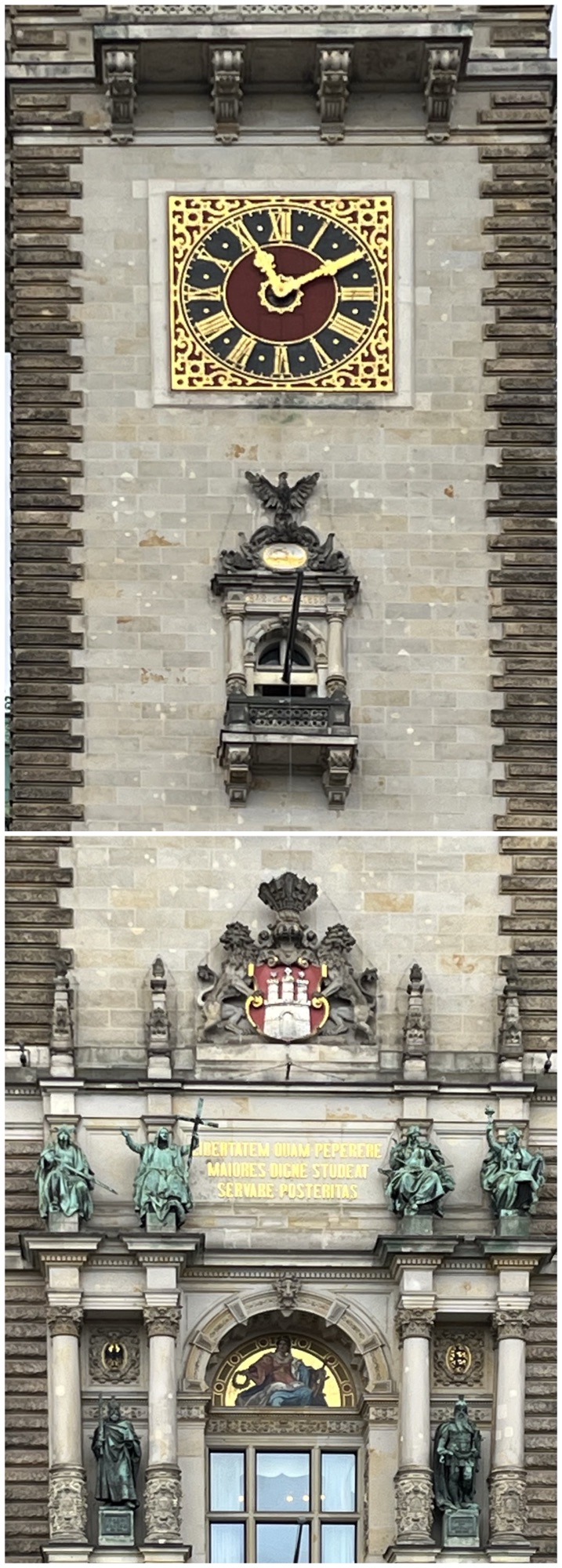
I will say, though, that the inner courtyard of the Hamburg Town Hall is stunning,

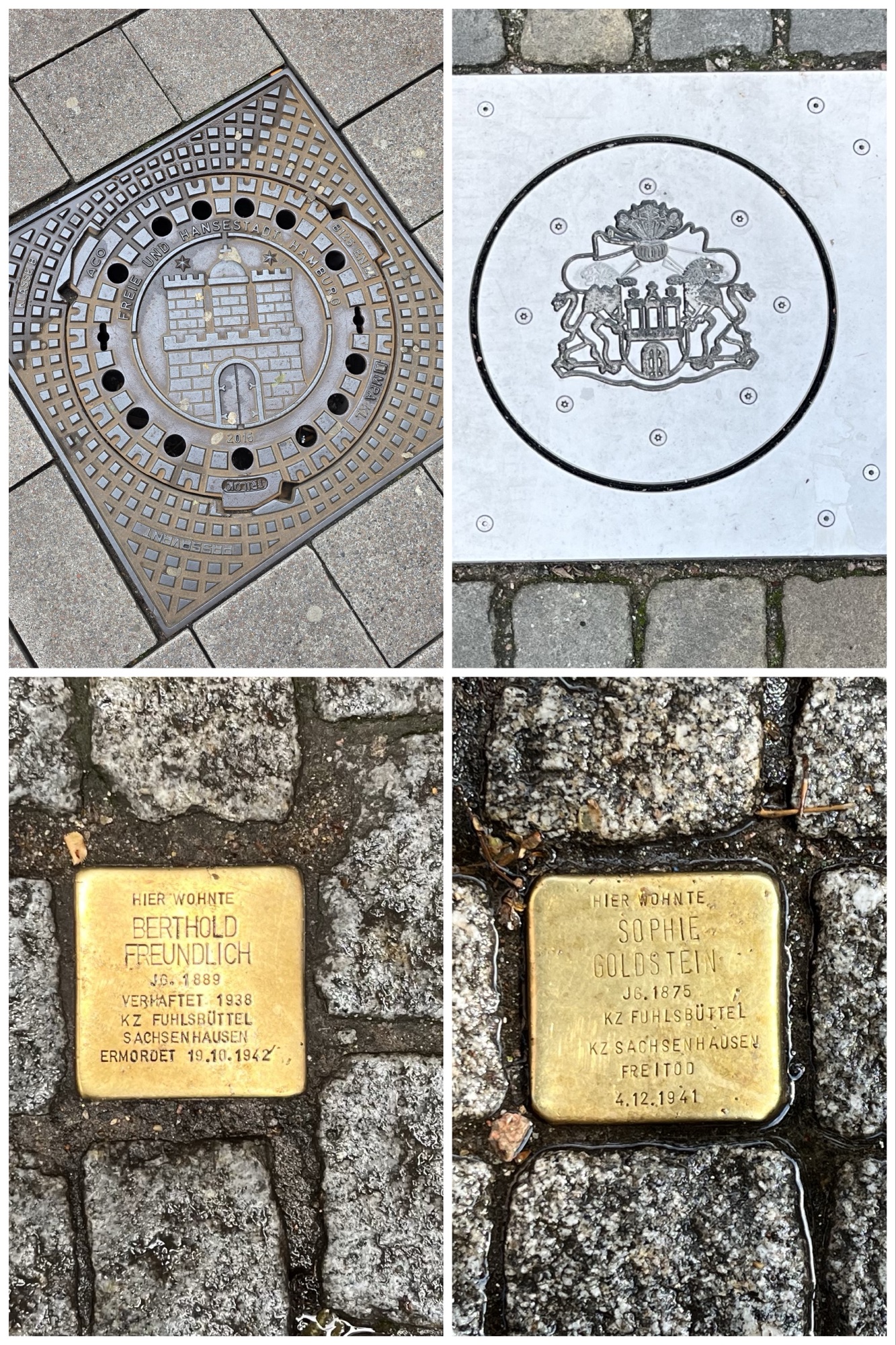
On any European street, you need to look down. It’s not only about remaining sure-footed on cobblestones, but there are also storiesbeing told underfoot.
Once boarded on the City Tour double-decker bus, we had a wonderful and enthusiastic young German guide, plus the option of headphones for almost simultaneous English commentary. I put in one earphone, and listened to the guide’s anecdotes with my other ear. I know Ted would have been astounded that I was actually listening for over an hour instead of talking.
There was frankly too much information to take in too quickly for note taking, but I do remember that Hamburg is Germany’s greenest city, and that it has almost 2500 bridges – more than Amsterdam, London, and Venice combined – and an amazing number of canals. Son #2 took lots of pictures, both through the window of our bus and on our walk around the city…. at least when it wasn’t pouring with rain!
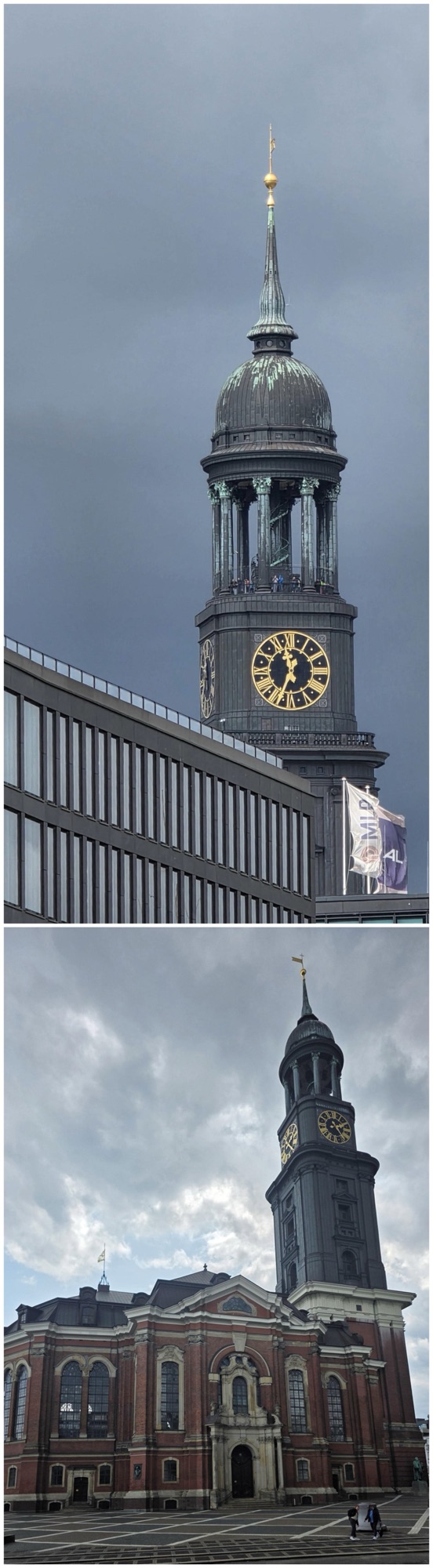
Hamburg is home to many, many beautiful churches, four of which are in especially close proximity to downtown.

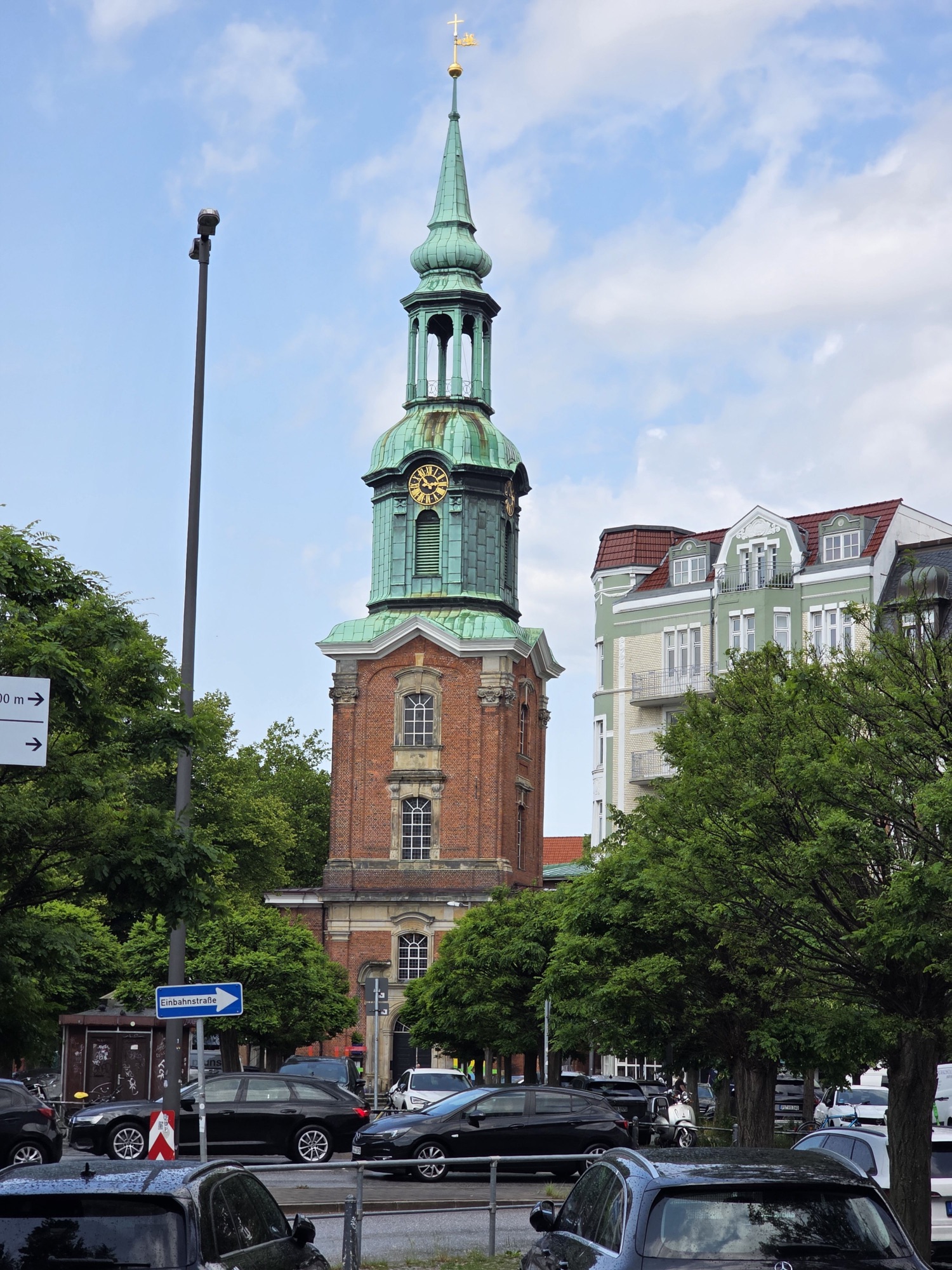
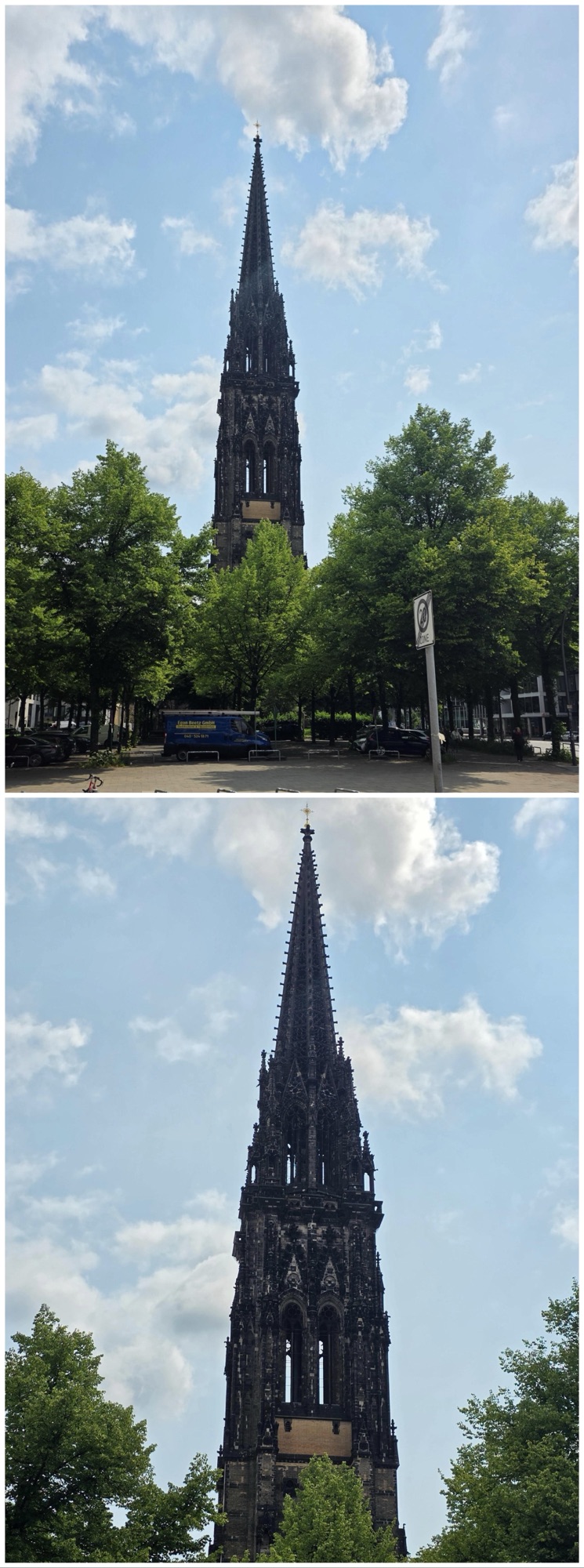
We saw much, much more on our bus tour that #2 didn’t capture in photos: the main train station, and the train station built especially to receive Kaisers, Emperors, and visiting royalty; the infamous Reelerbahn with its music venues, strip clubs, and peep shows; the mansion-lined Bellevue district; the Gänsemarkt (“goose market”, where there never were geese); canals, bridges, and lots of stunning architecture. Ted and I could definitely spend a month here the way we did in Berlin in 2022.
The stunning homes of the Bellevue district are arranged around Hamburg’s inner city lake, which we were surprised to learn is only 3 metres deep.


By the time our bus tour was over we were all hungry. Our guide had highly recommended Frau Möller’s.
It had been raining sporadically all day, but since we had a sunny break we took the opportunity to walk to the restaurant. Frau Möller (named after the owner’s dog, not his wife) is a typical “kneipe”, which translates roughly to pub, or barrel house. It certainly had a rustic down-to-earth vibe – even the menu with its worn wooden cover … and some really good food and beer.


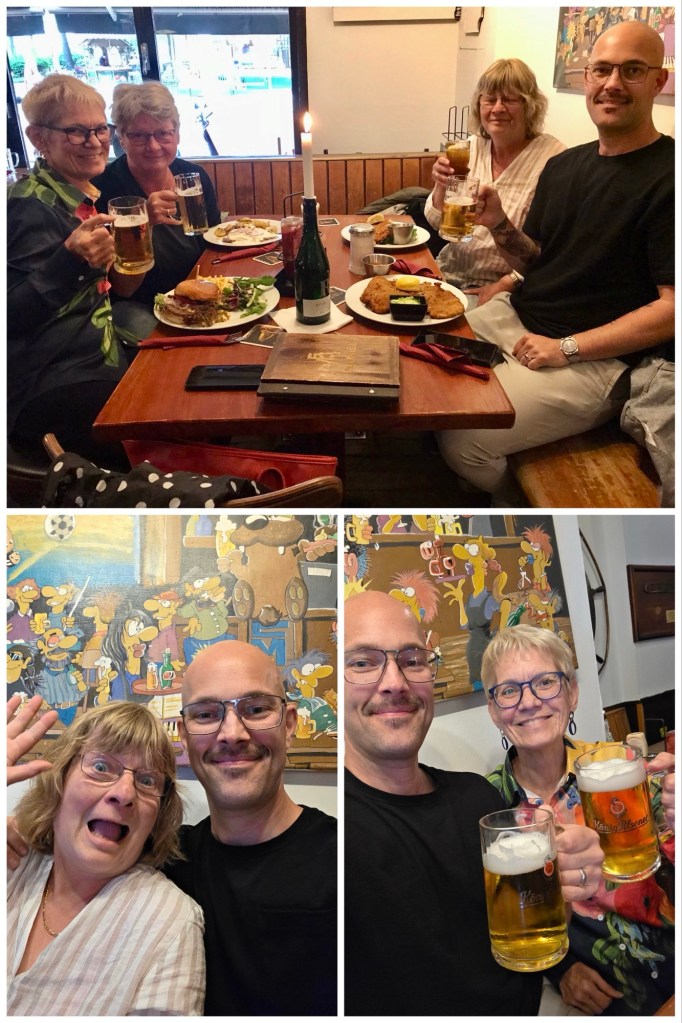
Our time in the pub luckily coincided with some of the heavier rain; we simply ordered more beer until the downpour subsided.
Our daily train passes at €49 for our entire foursome covered our return hour long trips from Rothenburg to Hamburg, and also gave us access to all the Hamburg city transit options. We hopped on a bus tour the “Speicherstadt” (warehouse district)l
Here the riverfront streets are lined with stunningly beautiful multi-storey red brick buildings – absolutely nothing like modern warehouses.
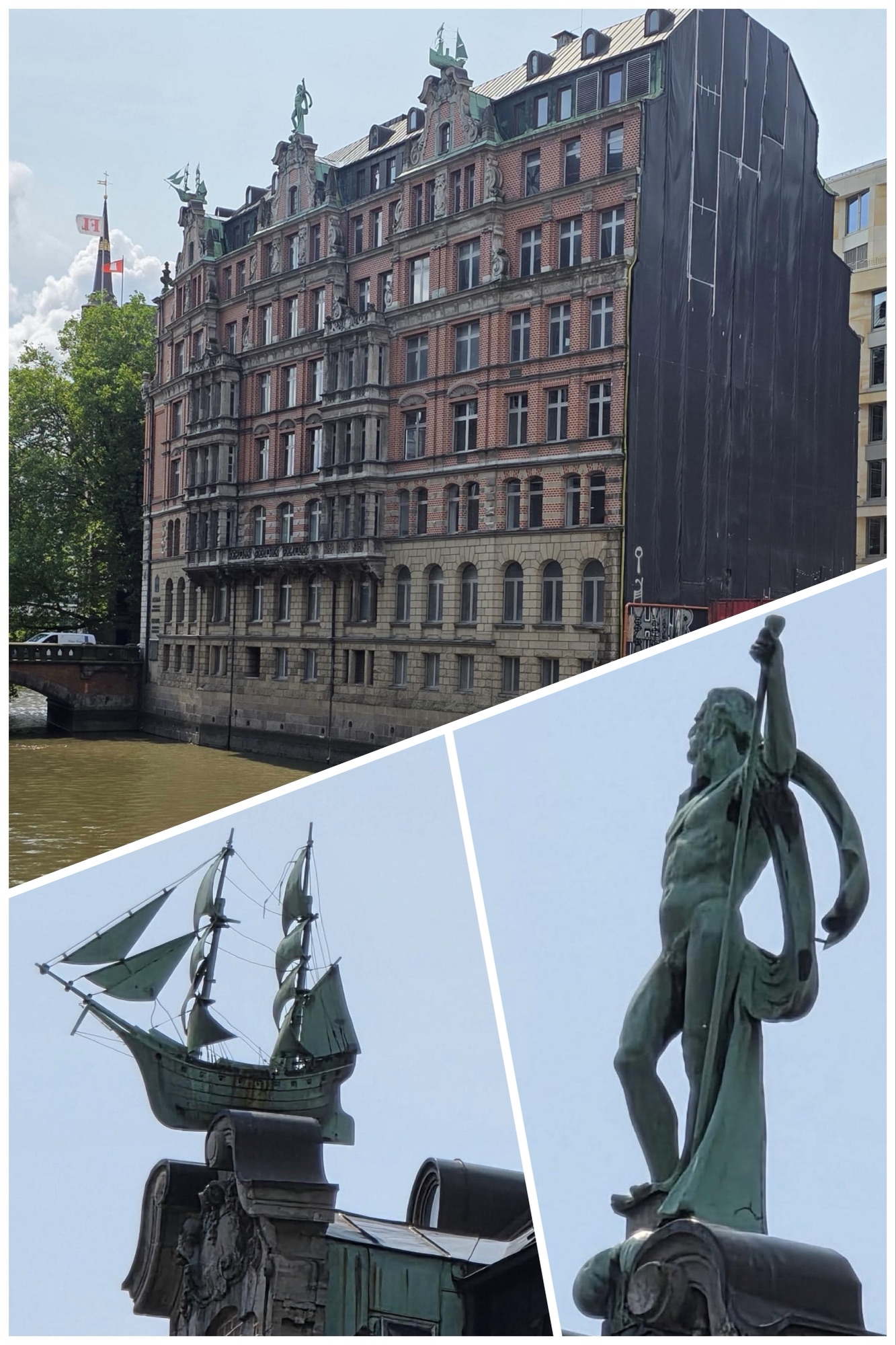
The Port of Hamburg was founded on 7 May 1189 by Frederick I at a strategic location near the mouth of the Elbe, 110 kilometres from its mouth on the North Sea. It has been Central Europe’s main port for centuries and enabled Hamburg to develop early into a leading city of trade. Known as Germany’s “Gateway to the World”, it remains the country’s largest seaport by volume, the third-busiest port in Europe, and 15th-largest worldwide.
Walking through it was easy to imagine traders from exotic locales bringing in tea from China, silk from India, carpets from Turkey, coffee from South America, cotton from India and America, spices from the far east.
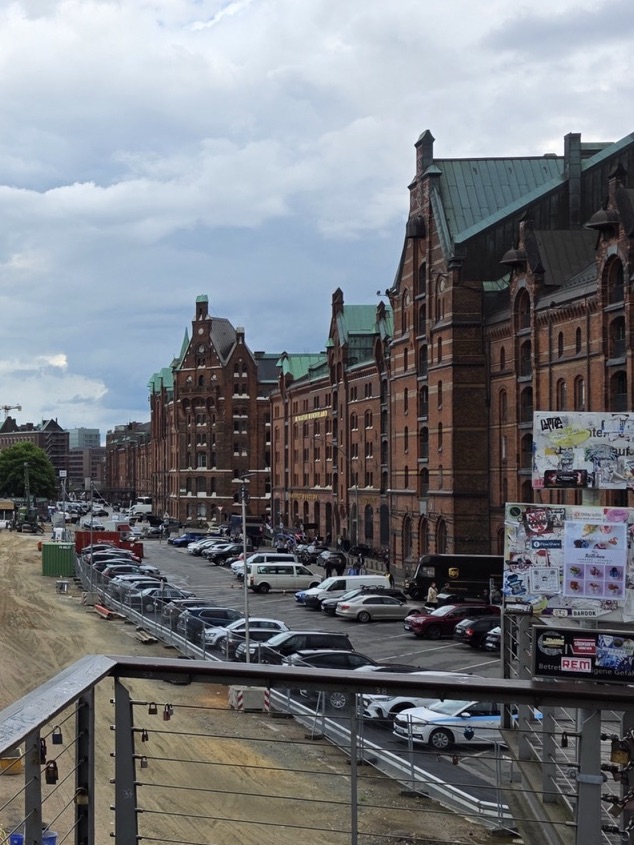
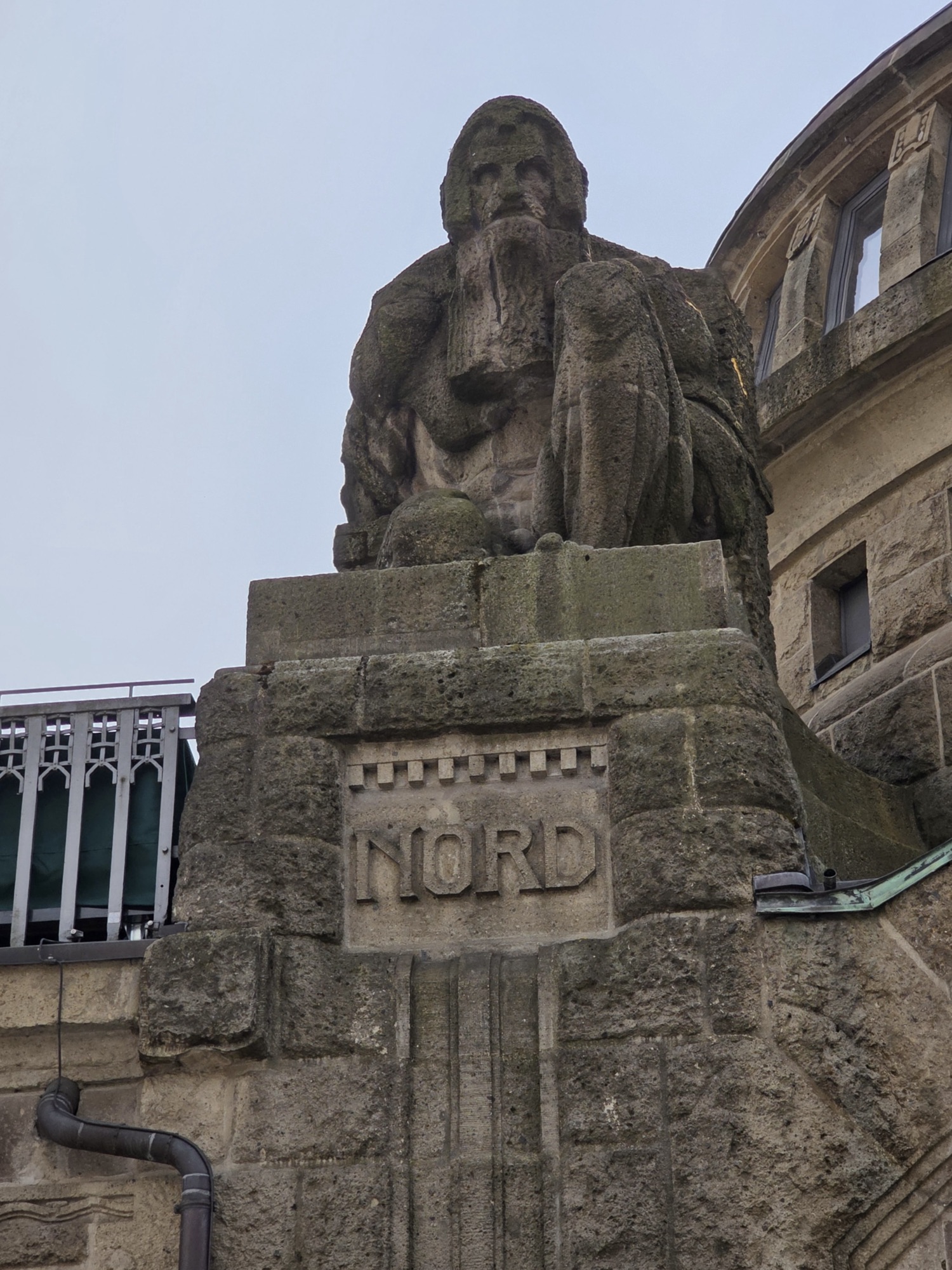
There is a long stretch of picturesque arched wall – each arch with its own berth number – called the “Landingsbrücken” (landing bridges). The marker below indicates that we were on the north side of the Elbe river. There is a tunnel access here should we want to walk under the river to the south bank. At one time the elevator into the tunnel took horse-drawn wagons. Later, dock workers could drive their cars into the elevator. Today, only pedestrians and cyclists are allowed.
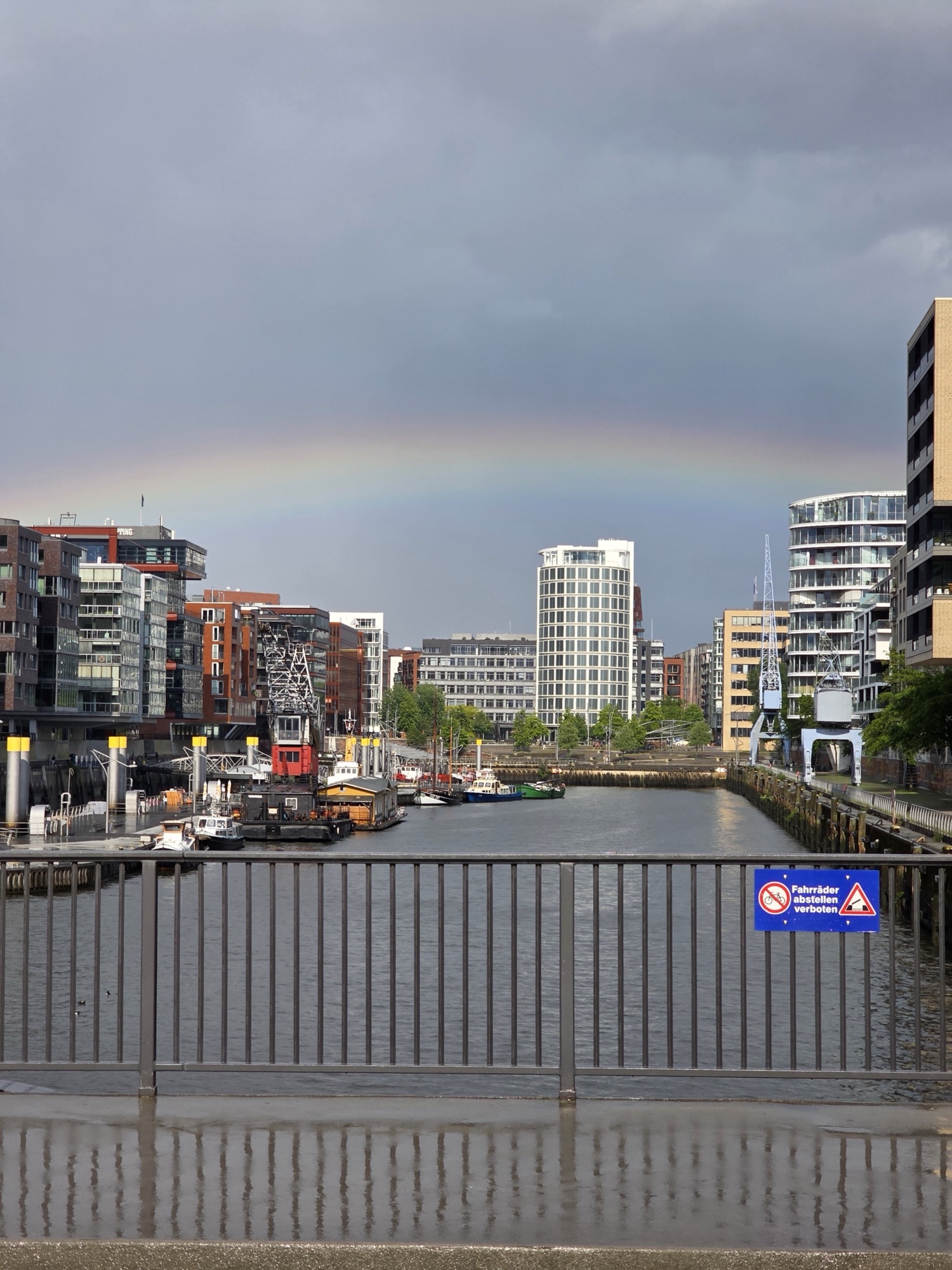
From the north side of the river we crossed one of 5he city’s 2498 bridges to get to the south side, and another to get to the island where the famous Elbphilharmonie concert hall is located.
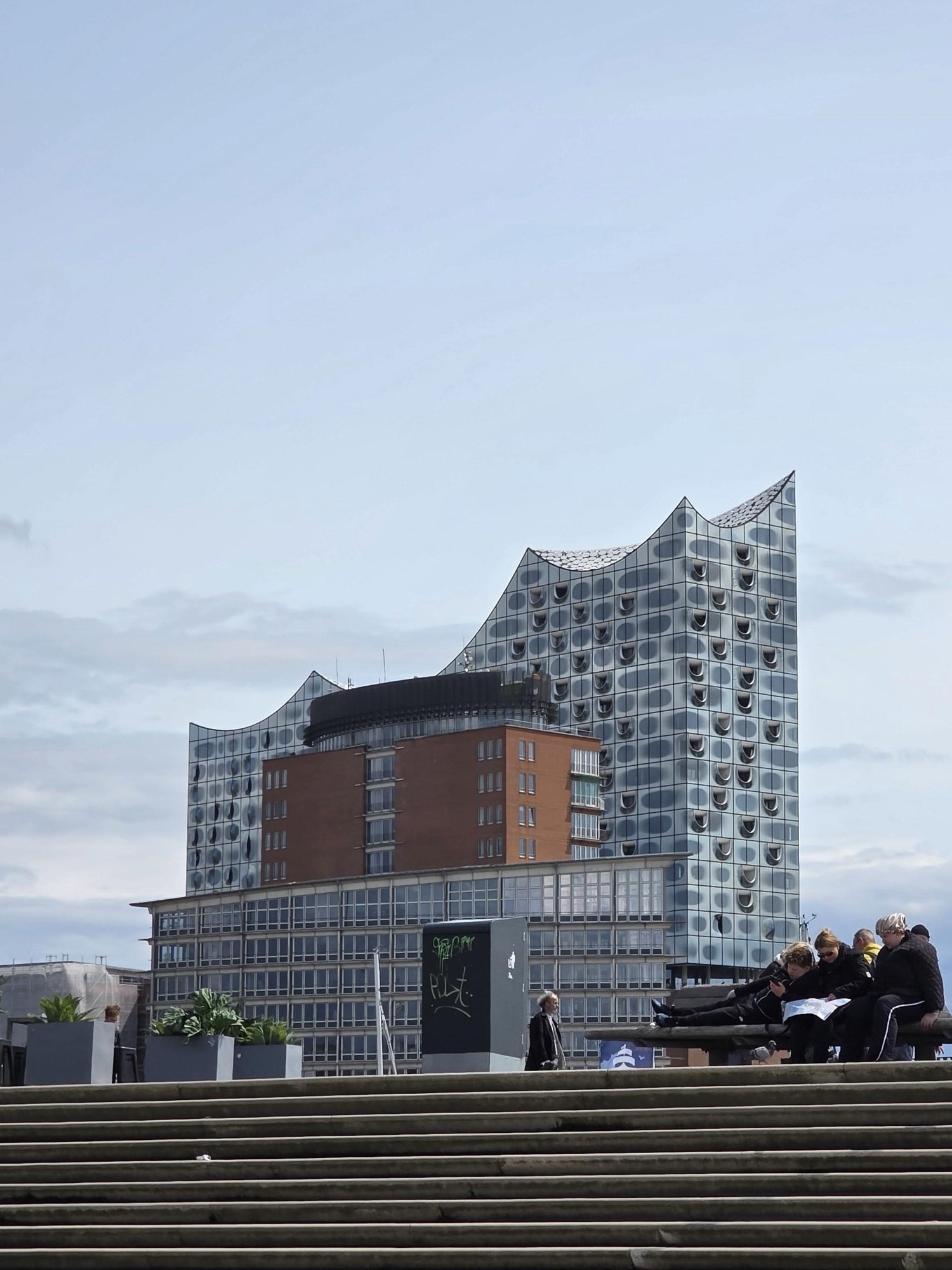
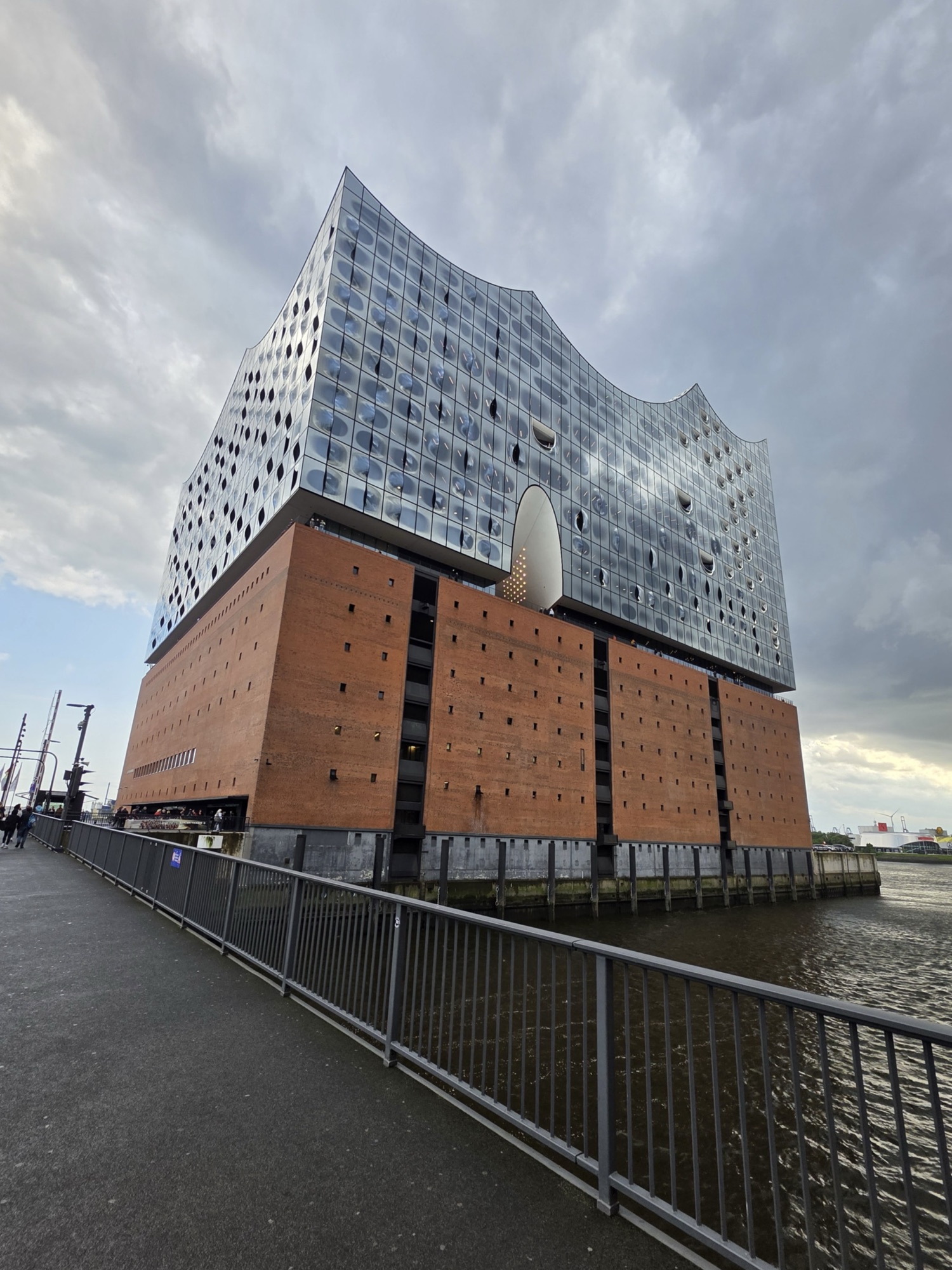
Described as Hamburg’s “castle in the air”, the spectacular Elbphilharmonie ended up costing 860 MILLION Euros by the time it was completed, over 10 times its original unrealistically low projected cost of €76 million.
Concerts here can be pricey, but there is no charge to ascend the long sloping escalator to the exterior wraparound balcony from which the city and harbour views are spectacular.
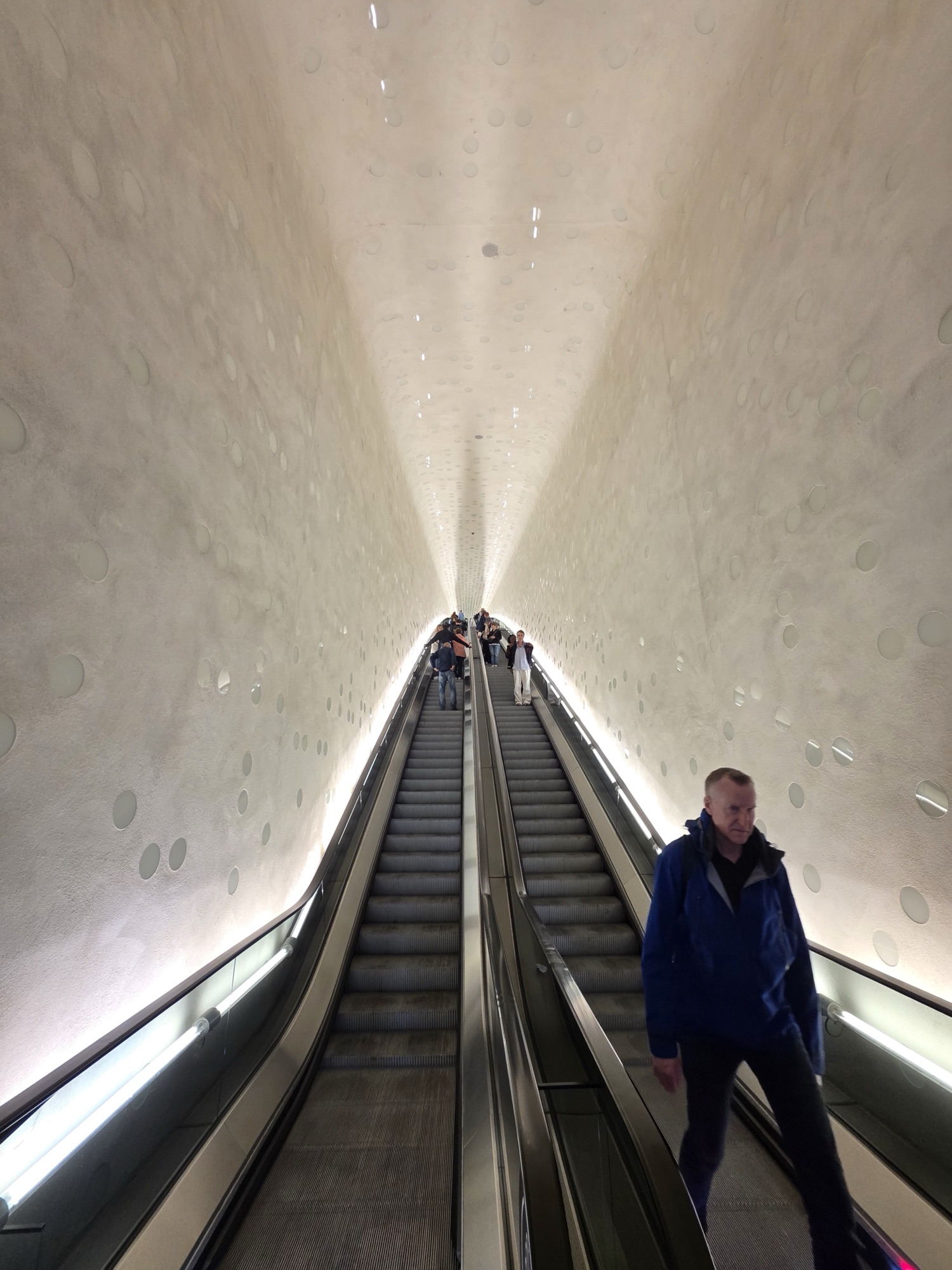
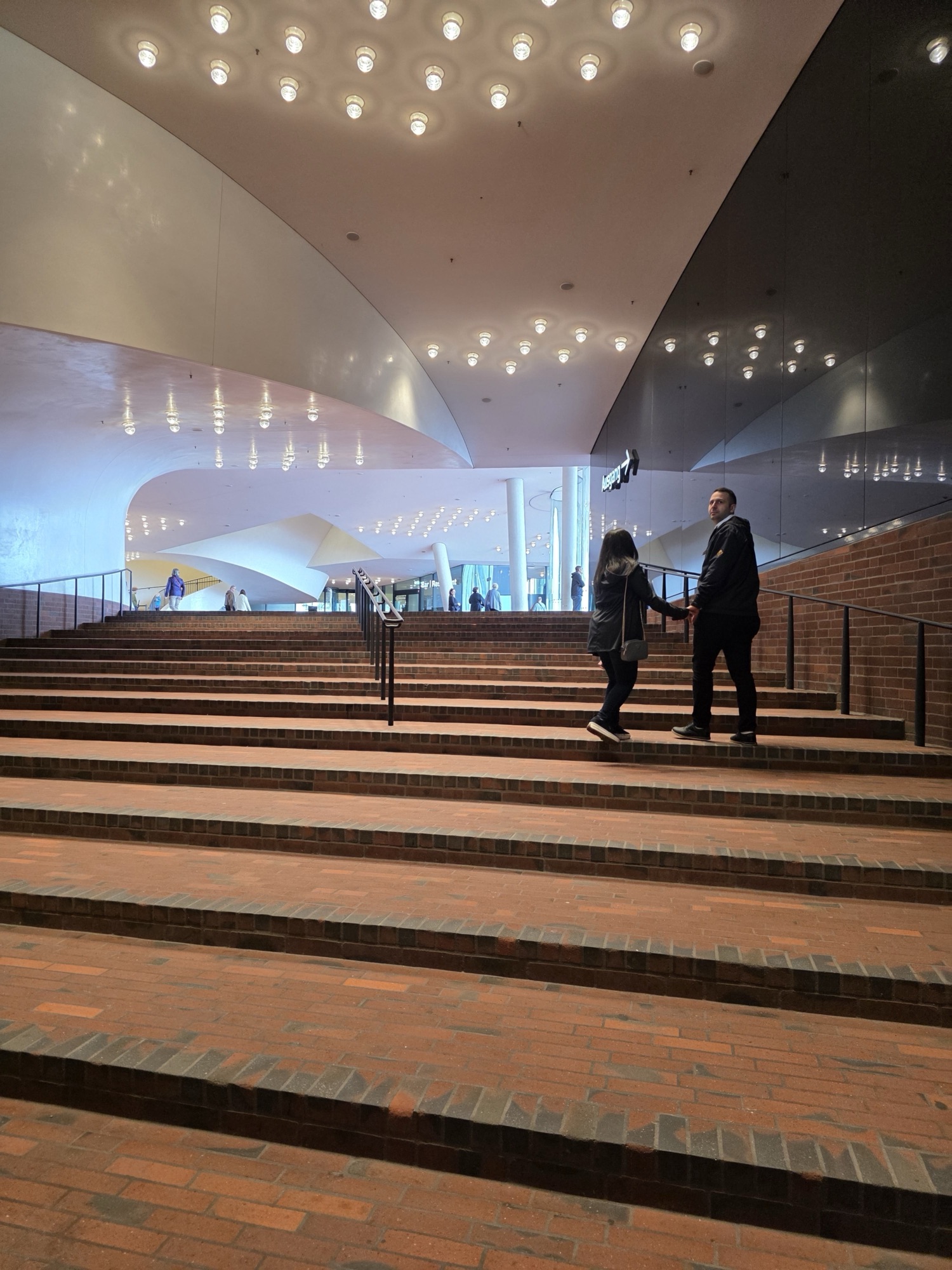
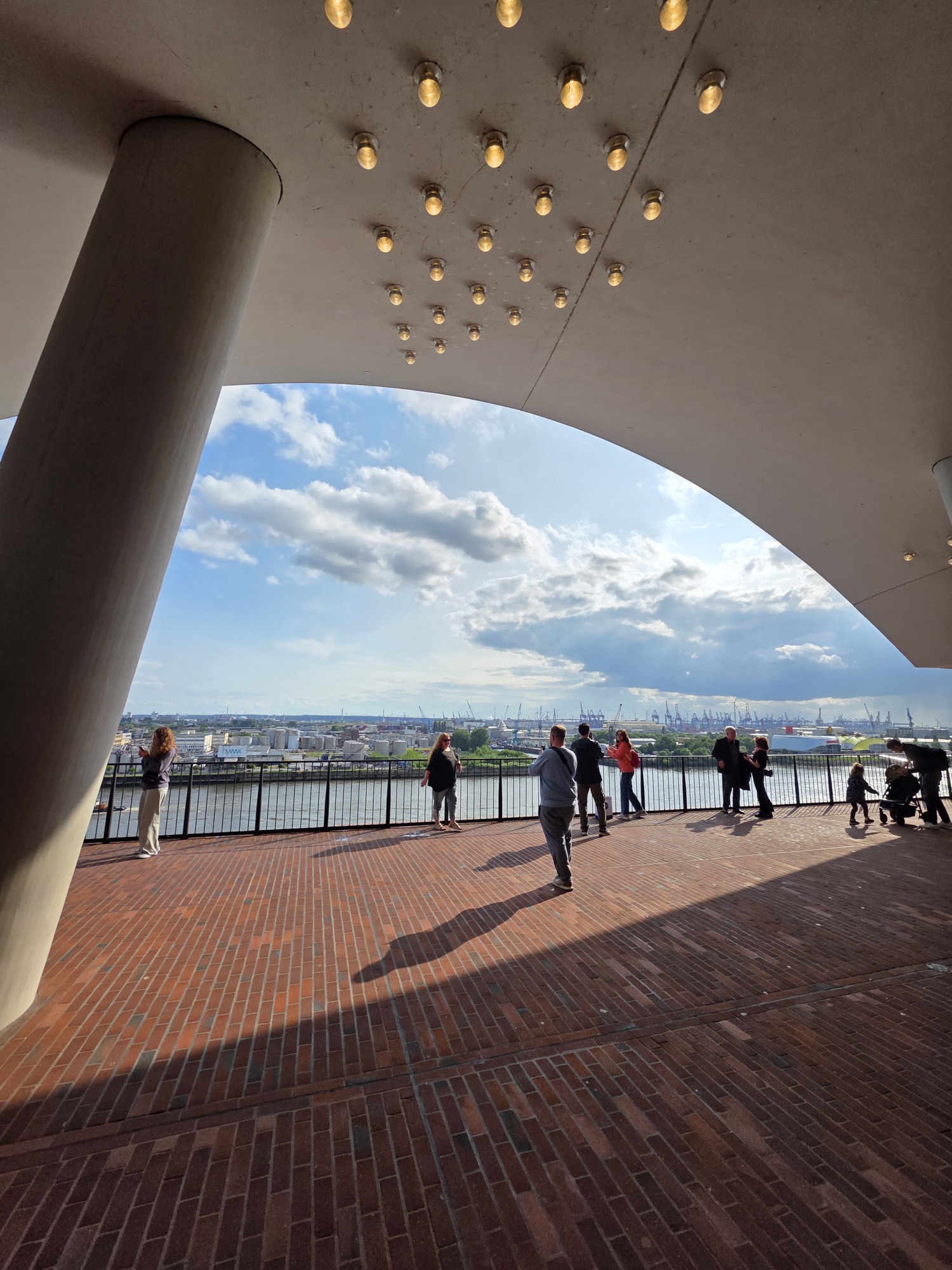
The open arch in the photo below is the open balcony level.
Here are the views with which we were rewarded:
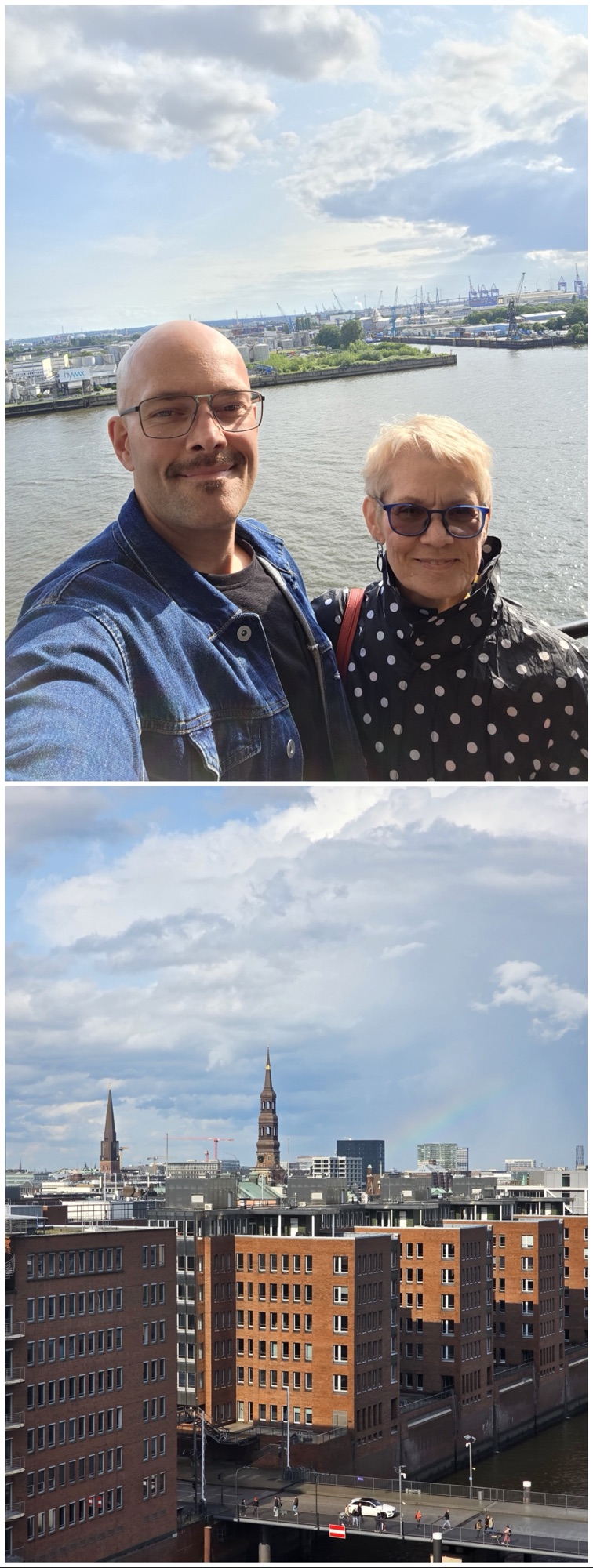
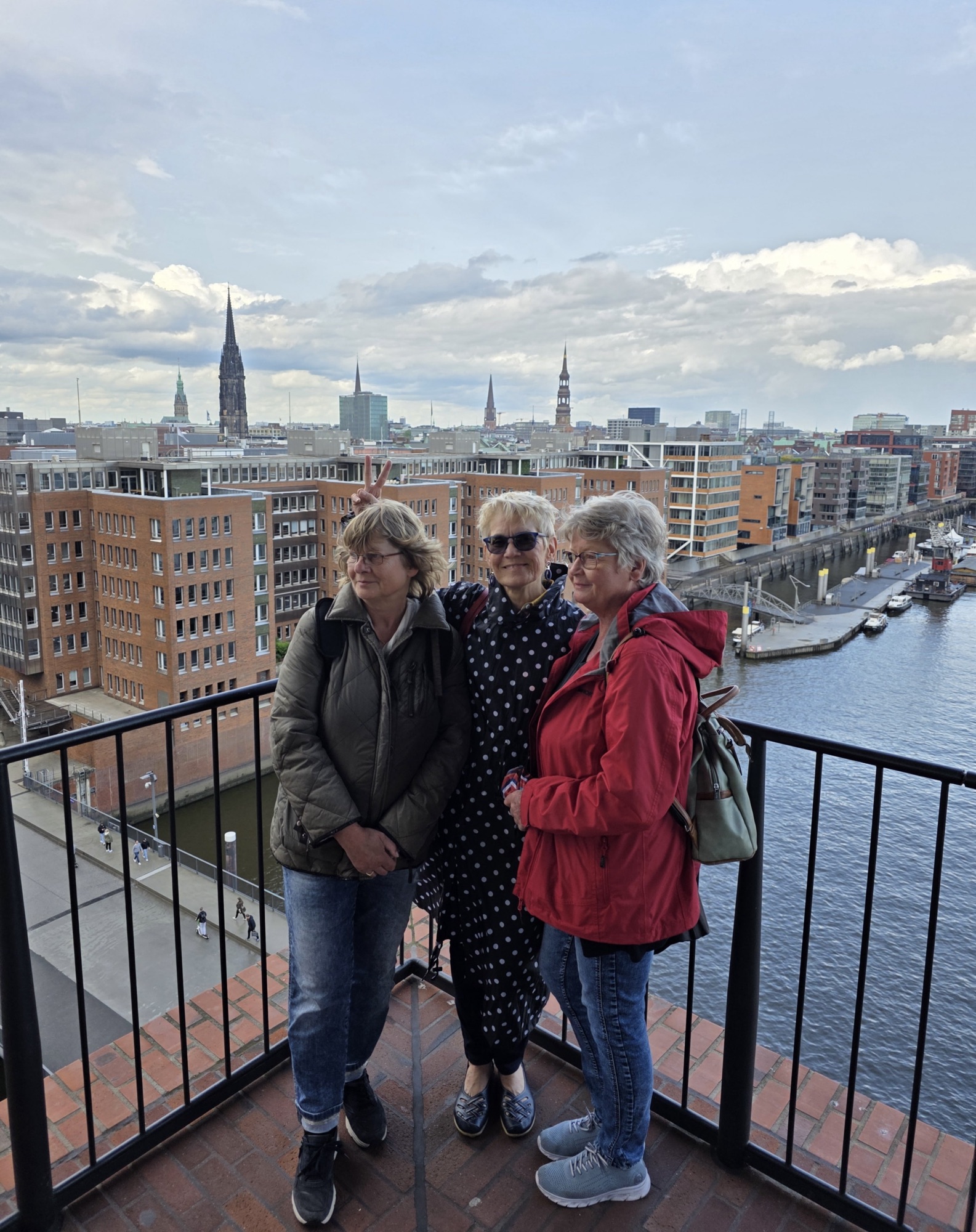
By early evening we’d seen all we could in one short day, so headed back to Holtum.
My evening ended with Helga and her best friend, another Helga, drinking Sekt with fresh raspberries. Son #2 headed almost straight to bed.
Tomorrow we say our thank you’s and goodbyes and head to Berlin.
 Rose and Ted’s Excellent Adventure
Rose, love your blog.
We spent a few days in lovely Hamburg after one of our cruises finished there. We especially loved the amazing Miniatur Wunderland in a warehouse on the docks. Homepage | Miniatur Wunderland Hamburg
This was one of our best experiences ever.
Brian
LikeLiked by 1 person
We saw the miniature land signs….next visit we’ll have to actually go in!
LikeLike