Today is day one of TEN straight port days!
After two rough sea days, we were all pretty excited to reach land.

Yesterday, Laura Lovelock gave a talk about the Guanches People of Tenerife.
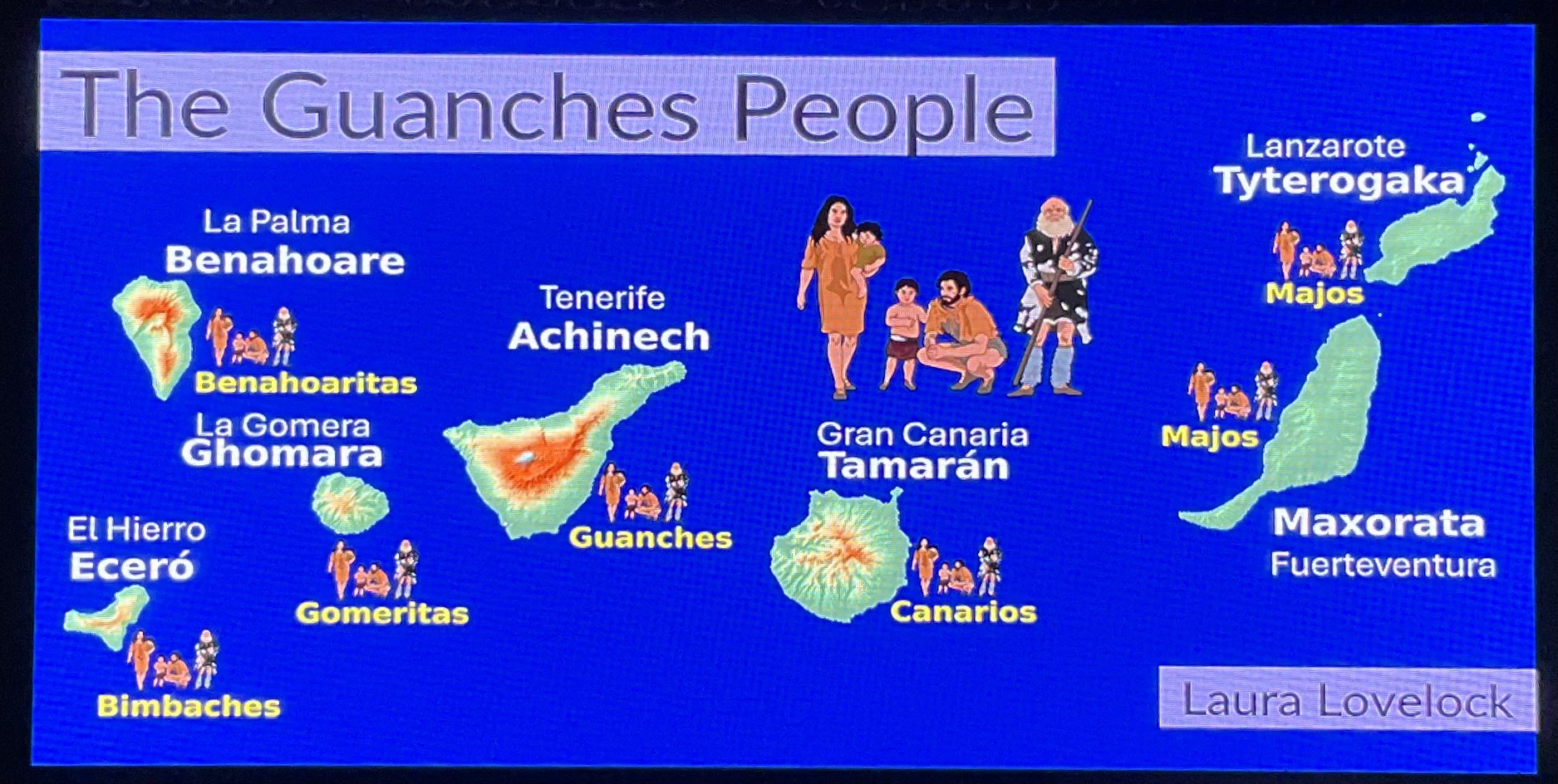
Laura started by talking about the concepts of “nation” and “country”, both artificial constructs based on language, race, and borders – and concepts which often ignore the living patterns of the 5000+ groups of indigenous people who inhabited the lands originally.
She moved on to the fact that the Canary Islands, unlike Cabo Verde, had people already living on it for hundreds of years before Europeans arrived – probably since about 1000 BCE. Unfortunately, the only information we have about the native peoples comes to us from the Spanish, so is inherently biased – and varies widely as to how the people are described.
Who knew? In 1765, hundreds of mummies were found in a cave on Tenerife. A few years ago, one of the mummies was CAT-scanned, determining that the mummification process was completely different than that used in Egypt, in that internal organs were left intact; that has allowed DNA research. That research links the Guanches people of Tenerife to the Berbers (the Amazigh) of Morocco, although nothing so far is definitive.
As small as it is, Tenerife was originally divided into 9 kingdoms. Statues of the 9 kings have been erected in Candelaria, not far from where we are docked. There has been a revival of interest in pre-colonial history in the Canary Islands. The Spanish fought from 1402-1496 against the Guanches on Tenerife; there is no pure Guanches line today – the Spanish brought weapons, smallpox, and slavery, all of which eventually wiped out the culture.
Our port talk later in the afternoon got us quite excited about visiting this volcanic island, which has become a vaunted tourist destination. Unfortunately, its popularity has encouraged a huge Airbnb industry on the island, leading to a relatively new homelessness problem, with some people who have been priced out of rental units reverting to living in the island’s many caves – the way the indigenous peoples did.
Our tour today did not include caves, mummies, or statues. We chose a 4-1/2 hour excursion called “Tenerife Wine Tasting & Tapas”.
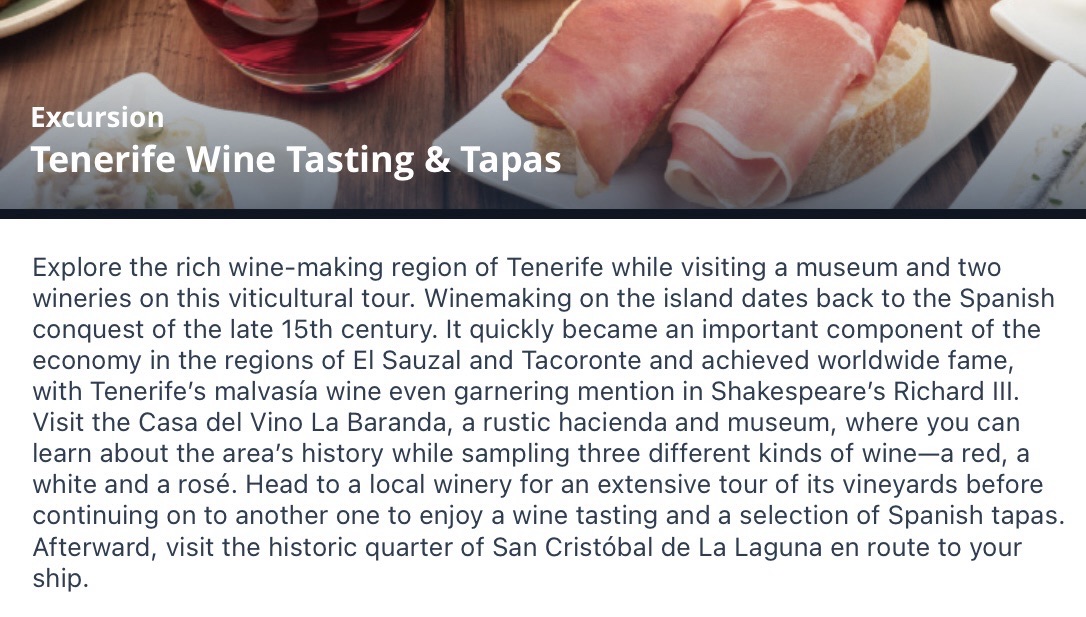
The tour itself was less than wonderful, but the city of San Cristóbal de la Laguna completely charmed us – so much so in fact that Ted and I both agreed that Tenerife needed to be on next year’s 6-month travel itinerary. (Tentatively, that now looks like New Zealand, Australia, Penang Malaysia, Krakow & Warsaw Poland, Dresden Germany, Tenerife, and back to Vancouver.) The city was clean, had great infrastructure, lots of history, and – a big priority for me – a terrific fresh food market with great selection and reasonable prices.

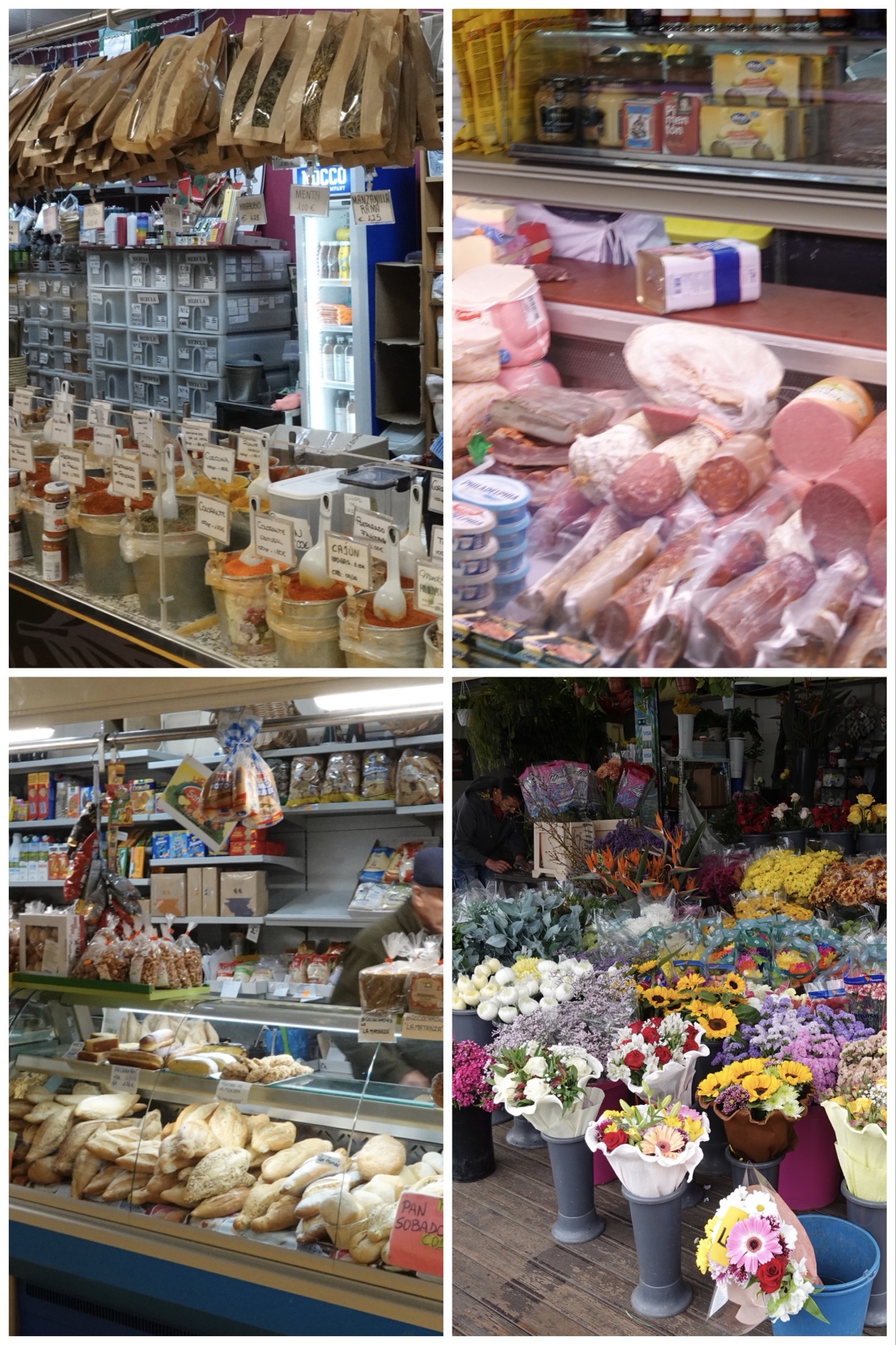
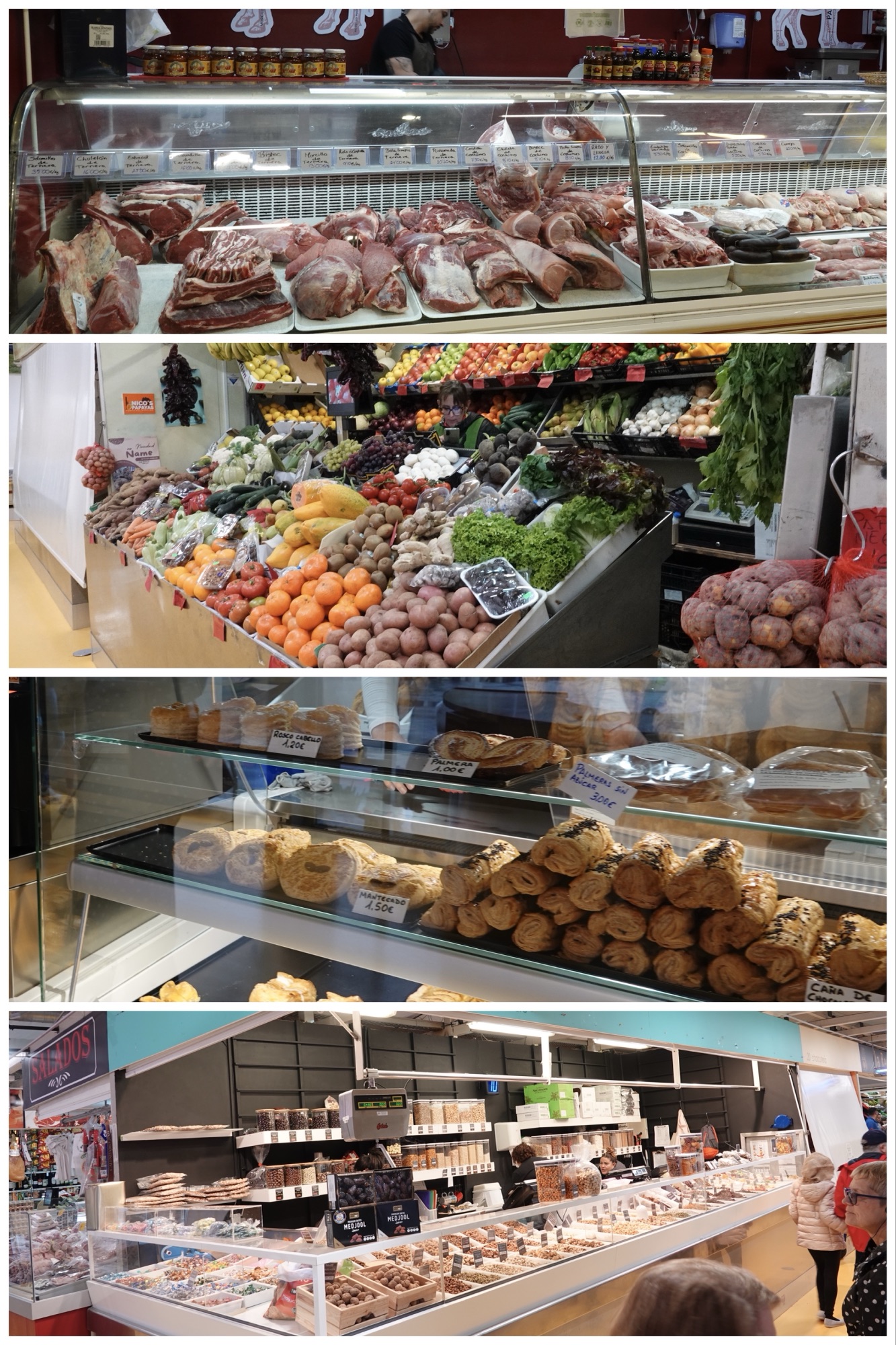
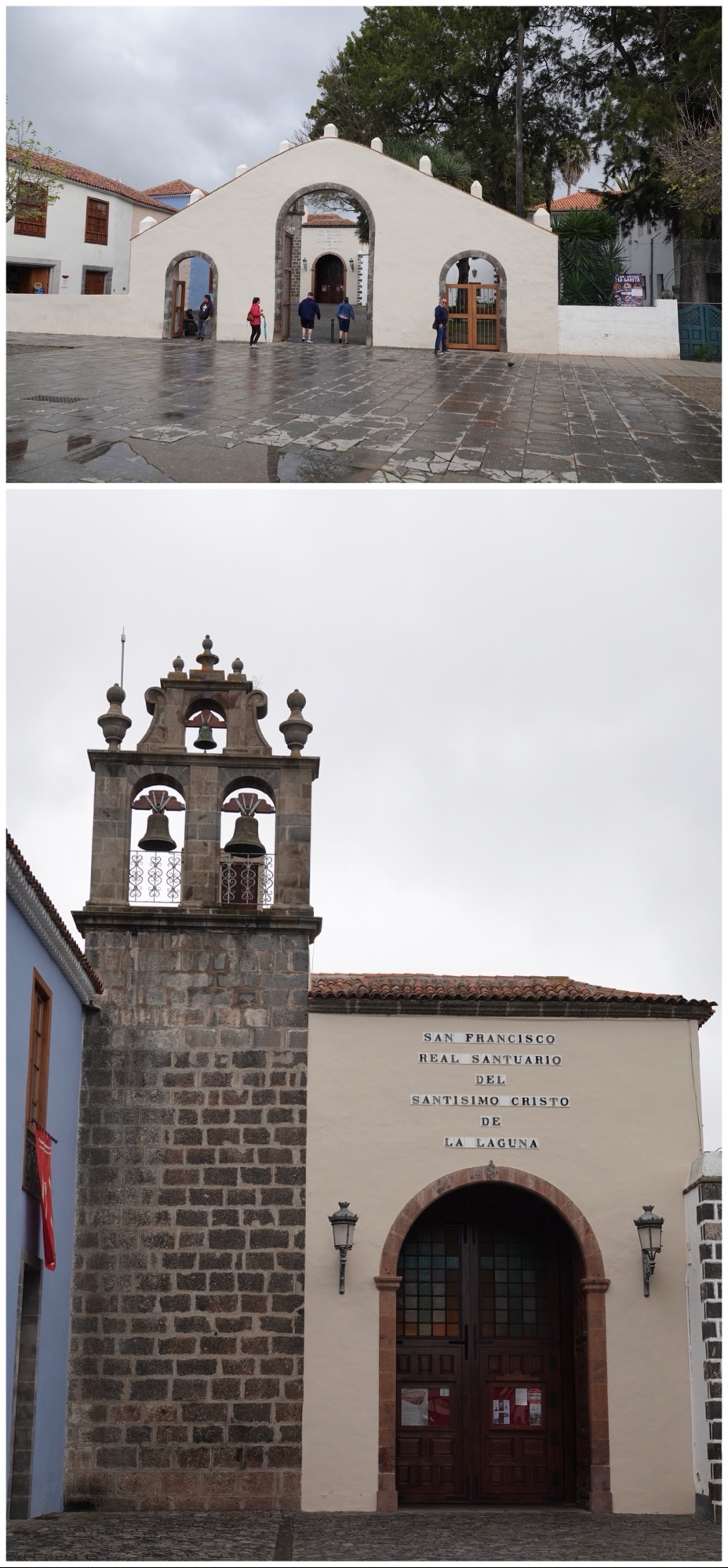
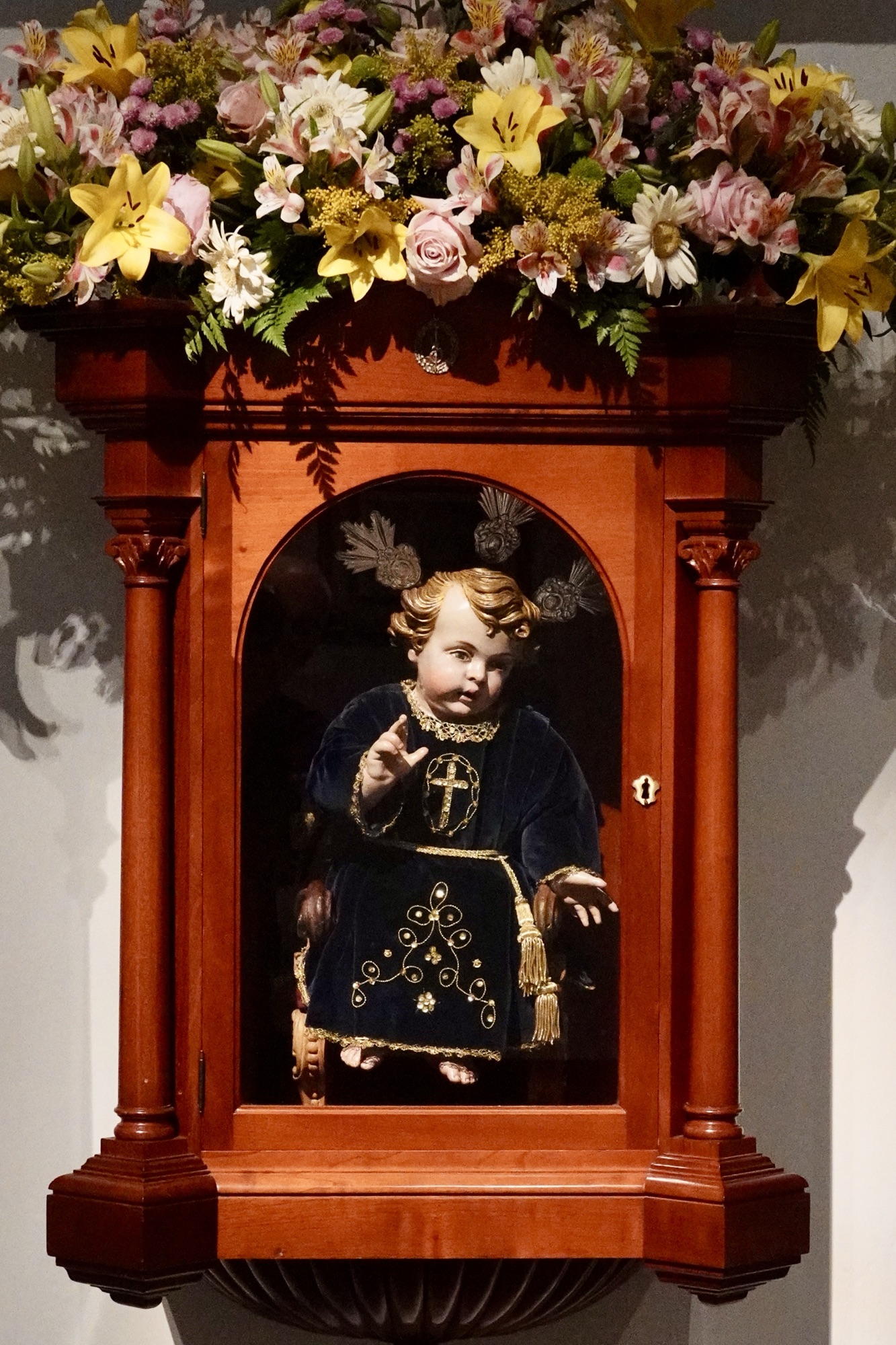
Our tour started with a panoramic drive to that market that impressed us so much, where we had a bit of free time to wander both it and the neighbouring chapel, which featured an incredibly ornate chased silver baroque altar backdrop. We were told the silver likely came from Mexico.

The ornately velvet-clothed baby Jesus is apparently identical to one in the Prado in Madrid.
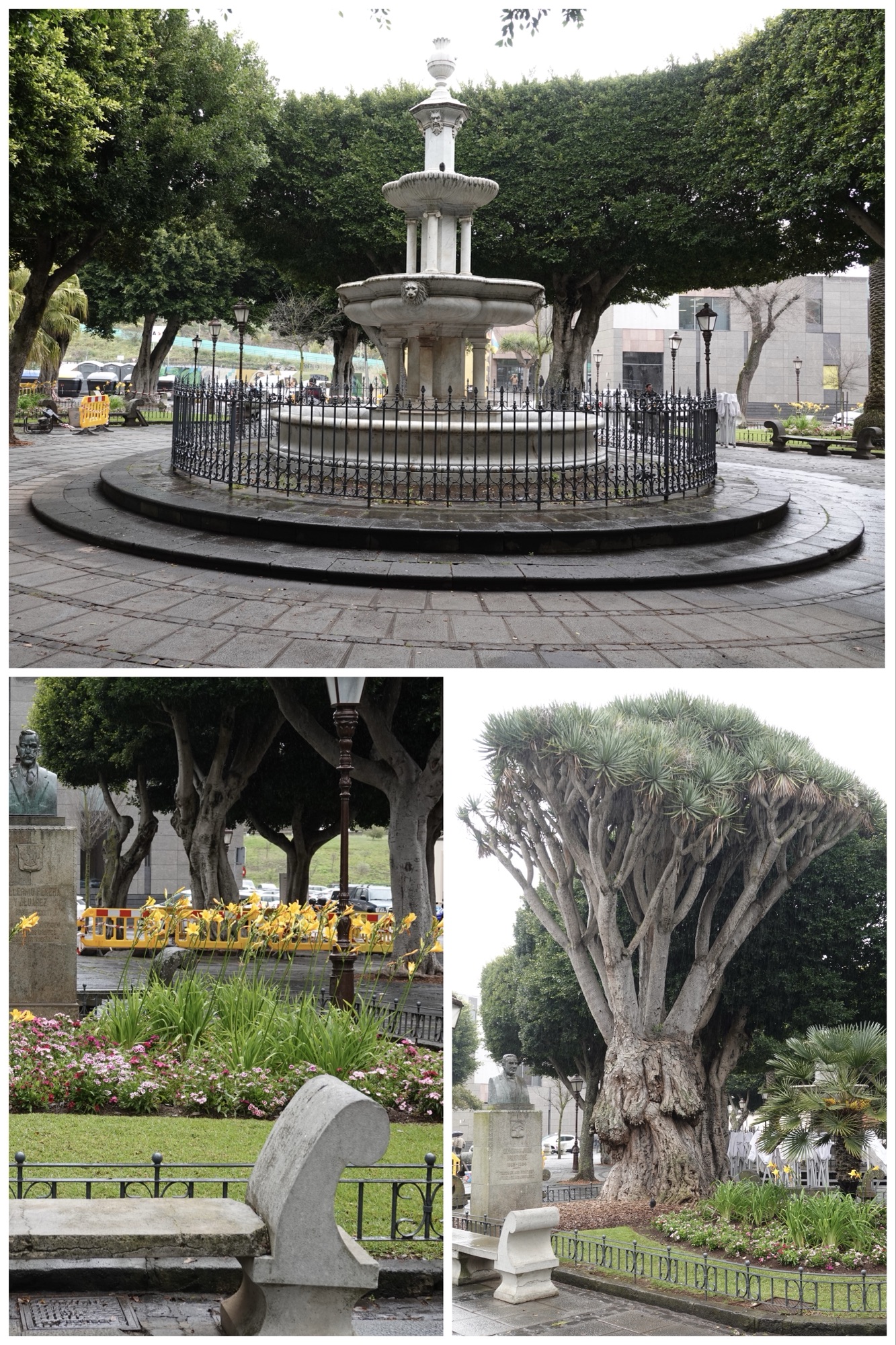
From there we transferred into the centre of San Cristóbal de la Laguna for a walk highlighting some of the gorgeous old buildings. Both Spanish and Portuguese influences are evident in the architecture.
Our guide had a tragic romance and a ghost story to share with us.

The Naval Palace (above) is beside the Dominican Convent of Santa Catalina de Sena. In 1651, aristocrat Jerónimo Grimon y Royas who lived in the palacio fell in love with a young nun, Ursula of San Pedro, from the convent. Their romance was, of course, forbidden by the church, but they nonetheless planned to elope by boarding an English ship to Viscaya. Unfortunately, the abbess revealed their plans and they were captured. Ursula was locked in a cell in the convent overlooking the market square, and given only bread and water. Jerónimo, however, was beheaded and his head placed on a pike in the square. Legend has it that the novice’s cries could be heard all across the city, but the rest is fact, not legend. Their reason we know it really happened is that there is a written document of complaint in the city’s archives from a merchant complaining that the stench of the rotting head was driving his customers away.
The square today is quite lovely, and is home to several of Tenerife’s iconic dragon trees.
We walked through rainy streets paved in basalt, volcanic rock, and cobblestone…
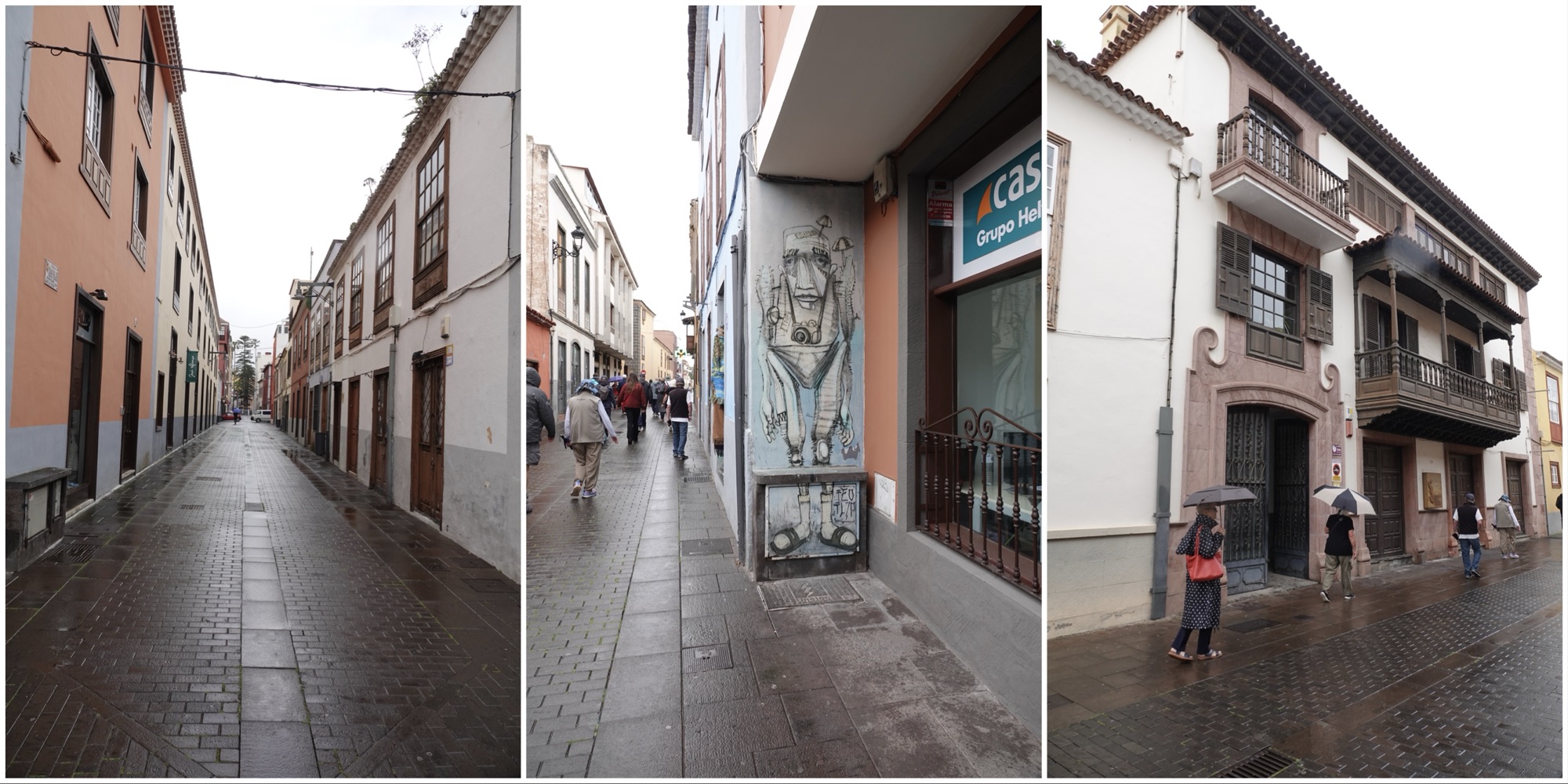
…eventually reaching the Casa Lercaro, now the Museum of the History of Tenerife.
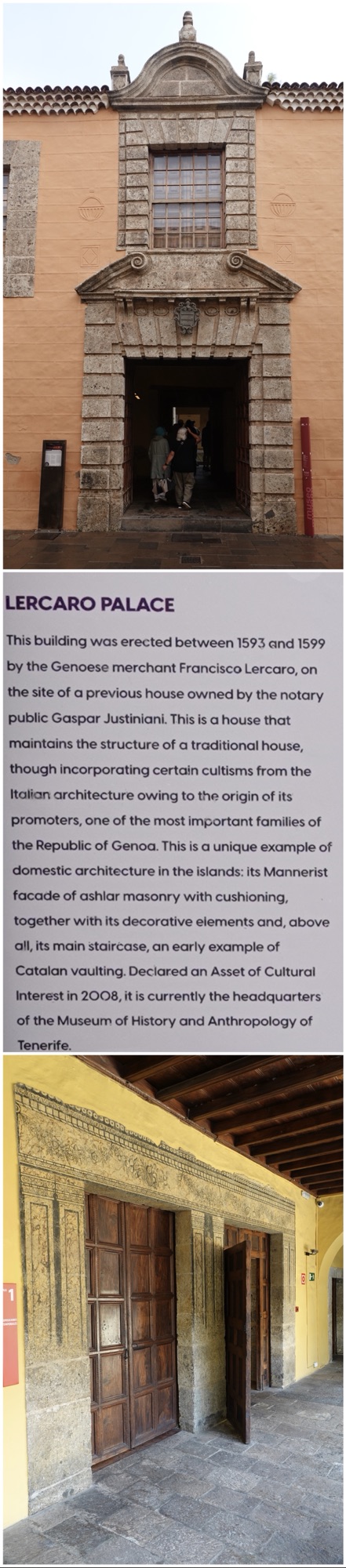
This is where Catalina Lercaro, the daughter of the owner, was so distraught at being forced into an arranged marriage with a much older, and much reviled – but rich – slave trader, that on her wedding day she flung herself from her bedroom window to a pit in the palazzo’s courtyard.

Because she committed suicide, she was denied burial in a consecrated cemetery and was interred at the mansion. It is said that her wedding dress clad ghost roams the halls of what was her father’s house.
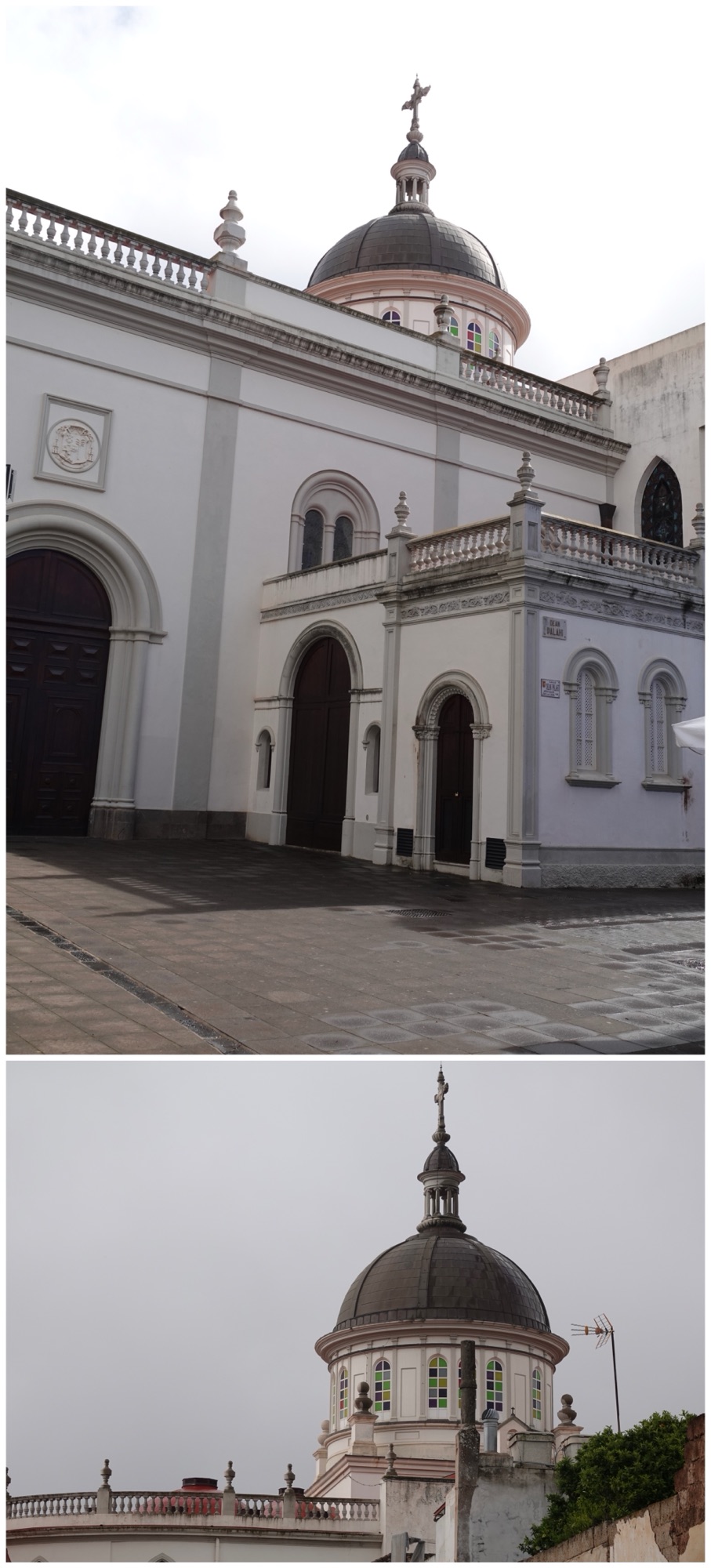
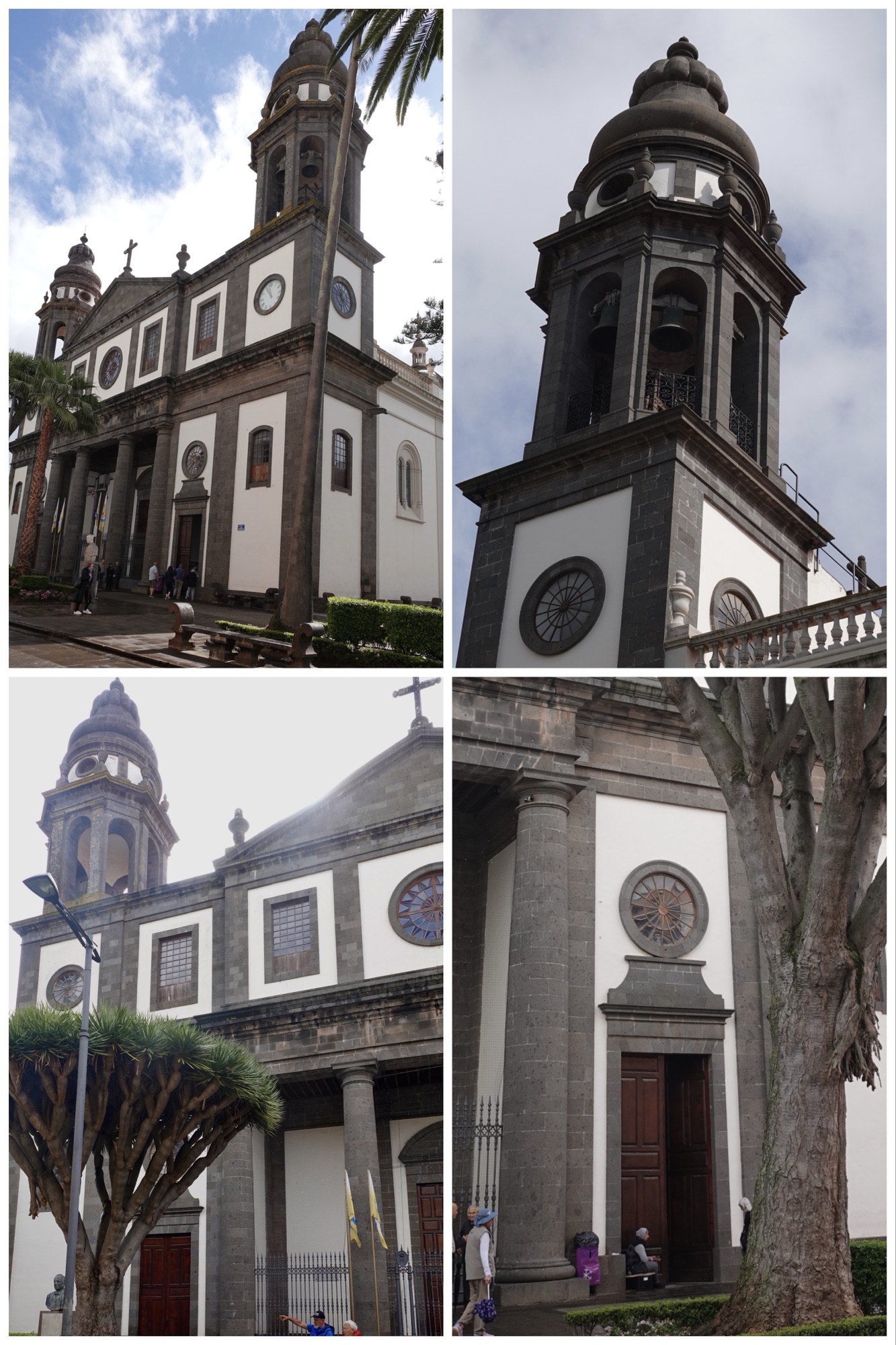
We walked around two sides of the city’s magnificent Catedral de Nuestra Señora de los Remedios, but going inside was not included in our tour schedule.
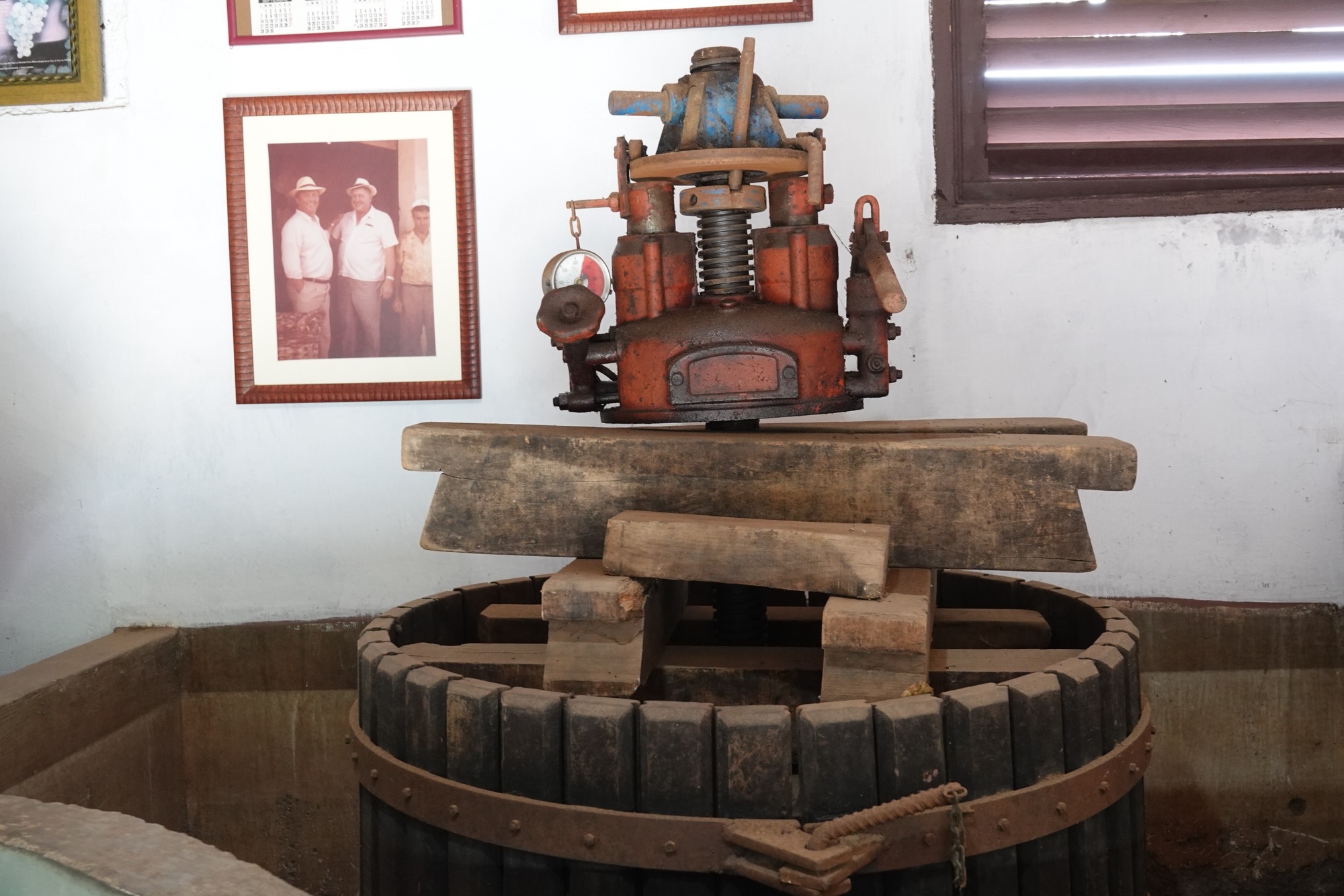
Our first wine tasting was at the Casa de Viño del Baranda, located on a stunning hillside overlooking the ocean.
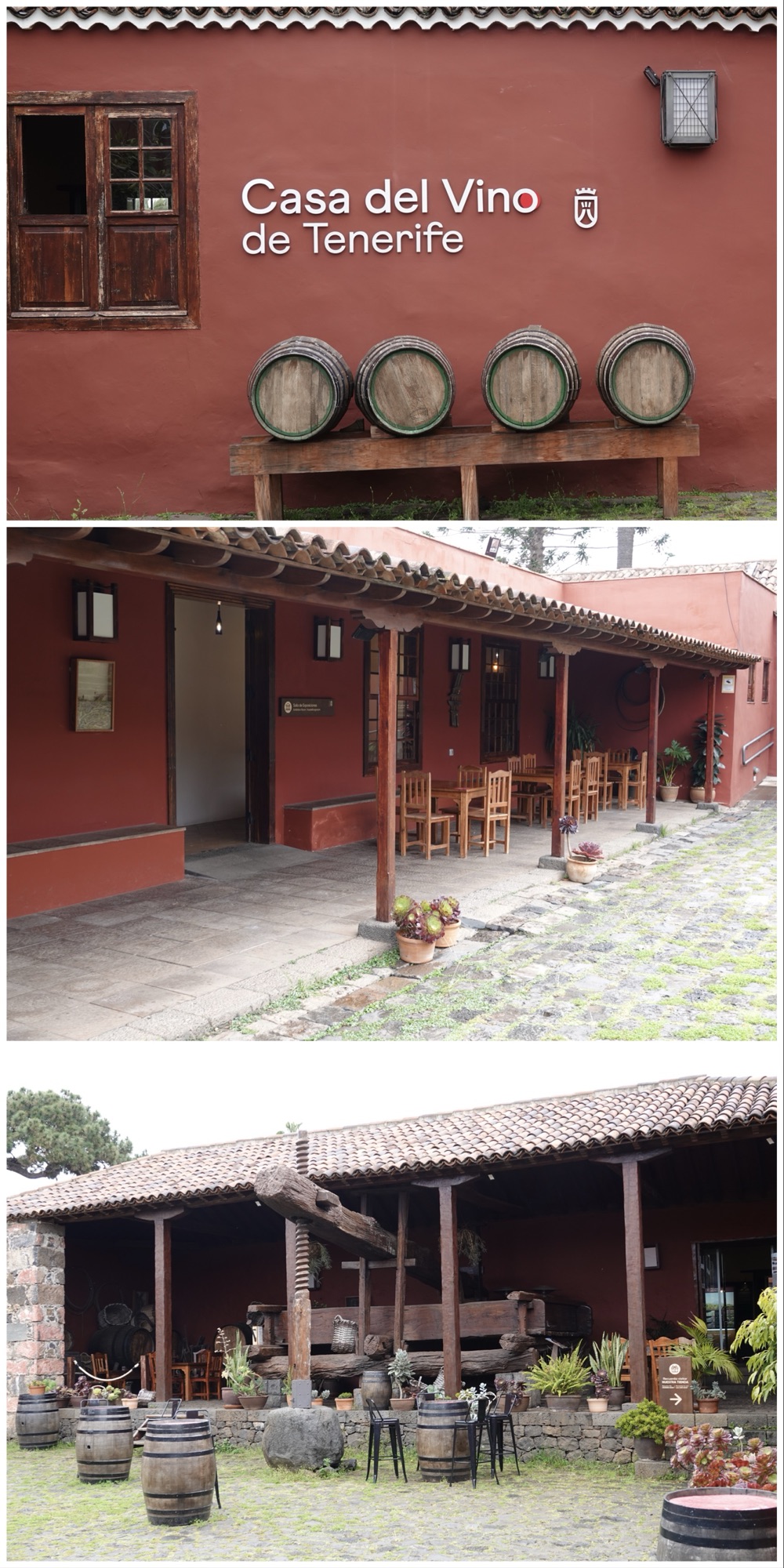
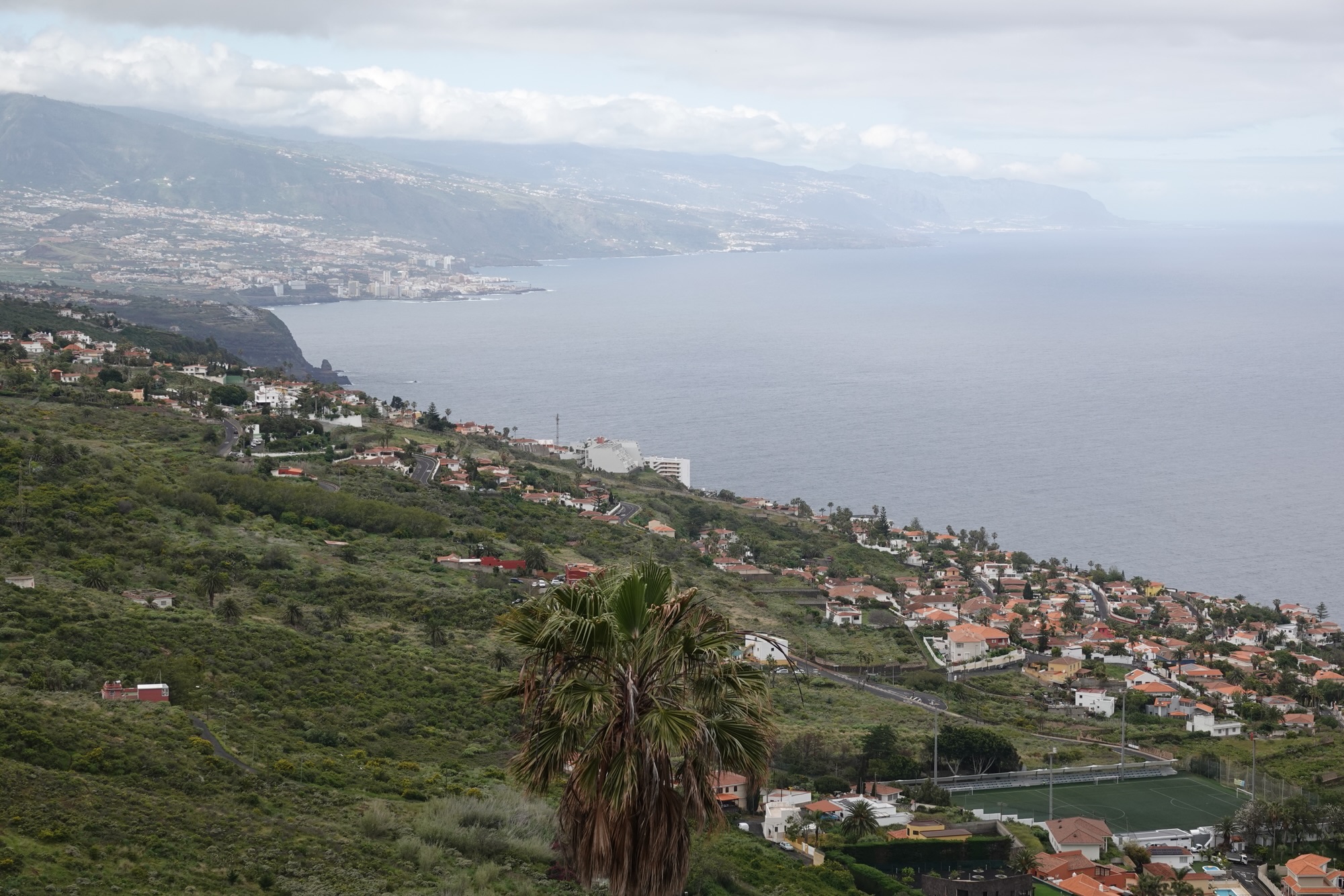
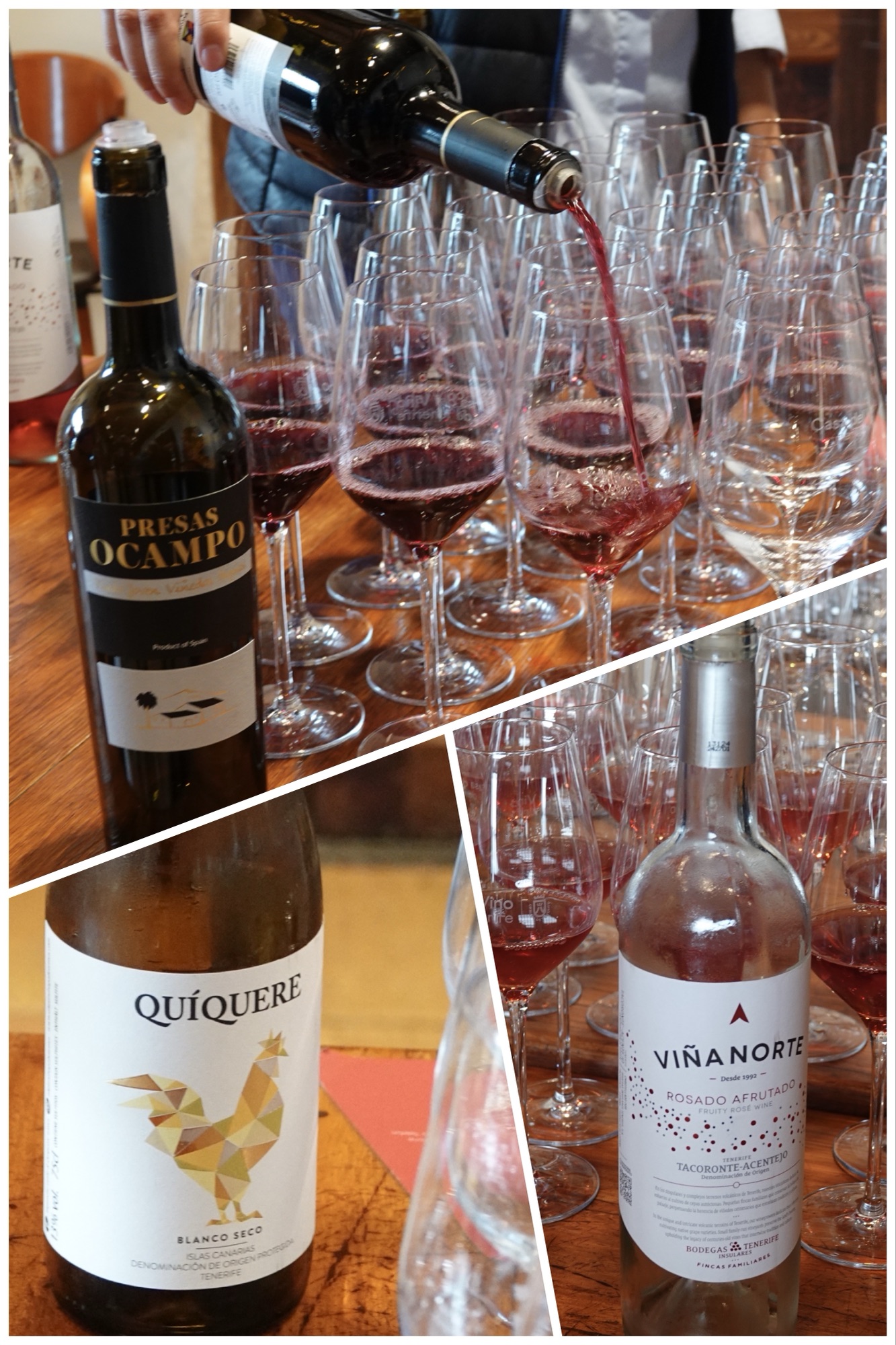
The property includes vineyards, a winery, a viticulture history museum, a gift shop, a restaurant, and a tasting room. We watched a short film about wine-making history in the Canary Islands, and tried a white wine, a sweet rosé, and a red wine. With no tasting notes given, it was up to us to decide which to pair with the little wedges of basil-crusted, black pepper-crusted, or paprika-crusted goat cheese. The rosé was by far my favourite.
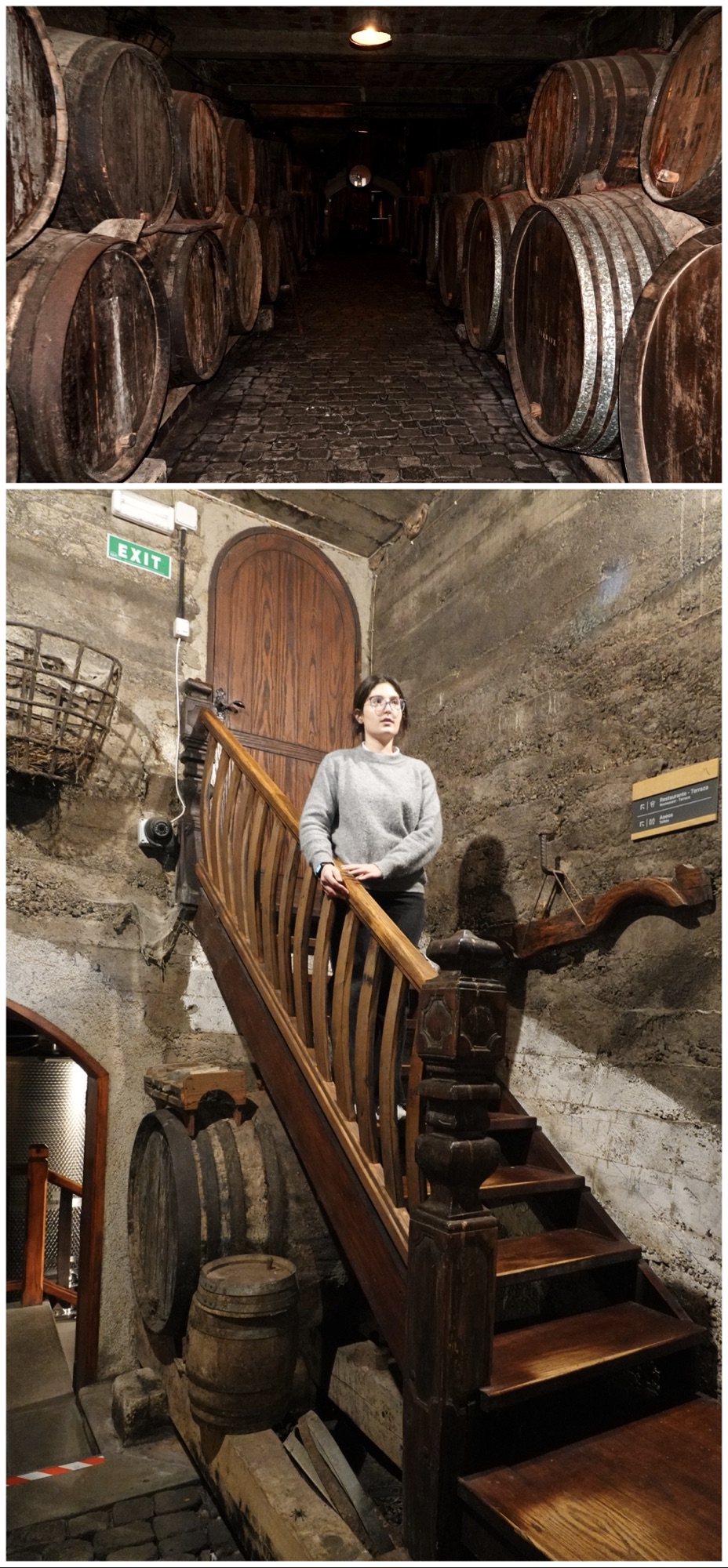
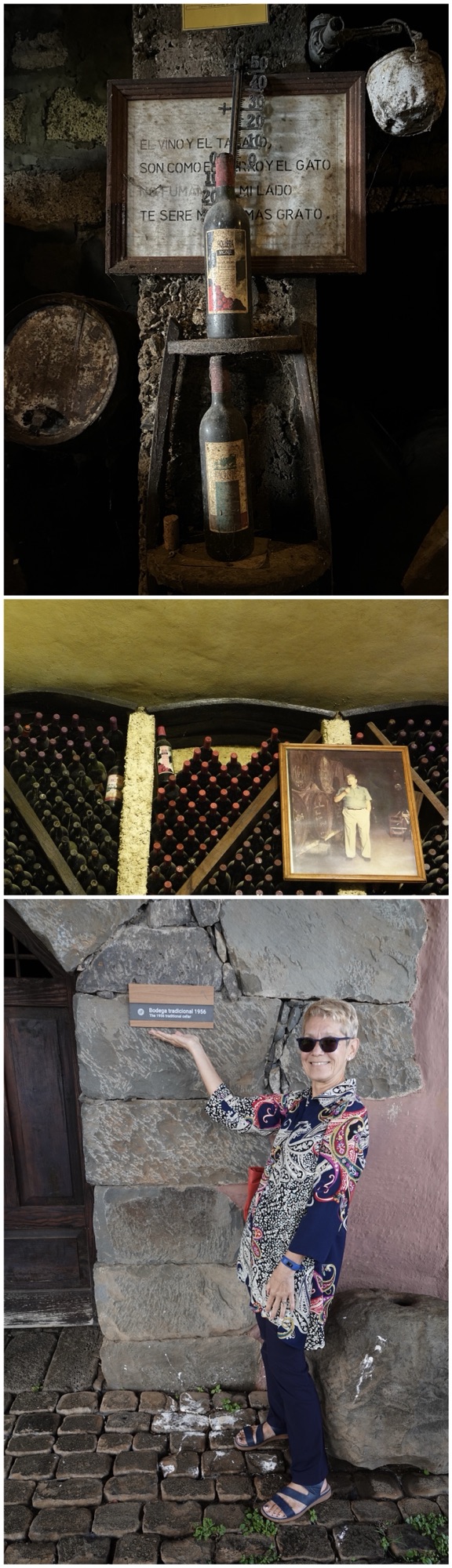
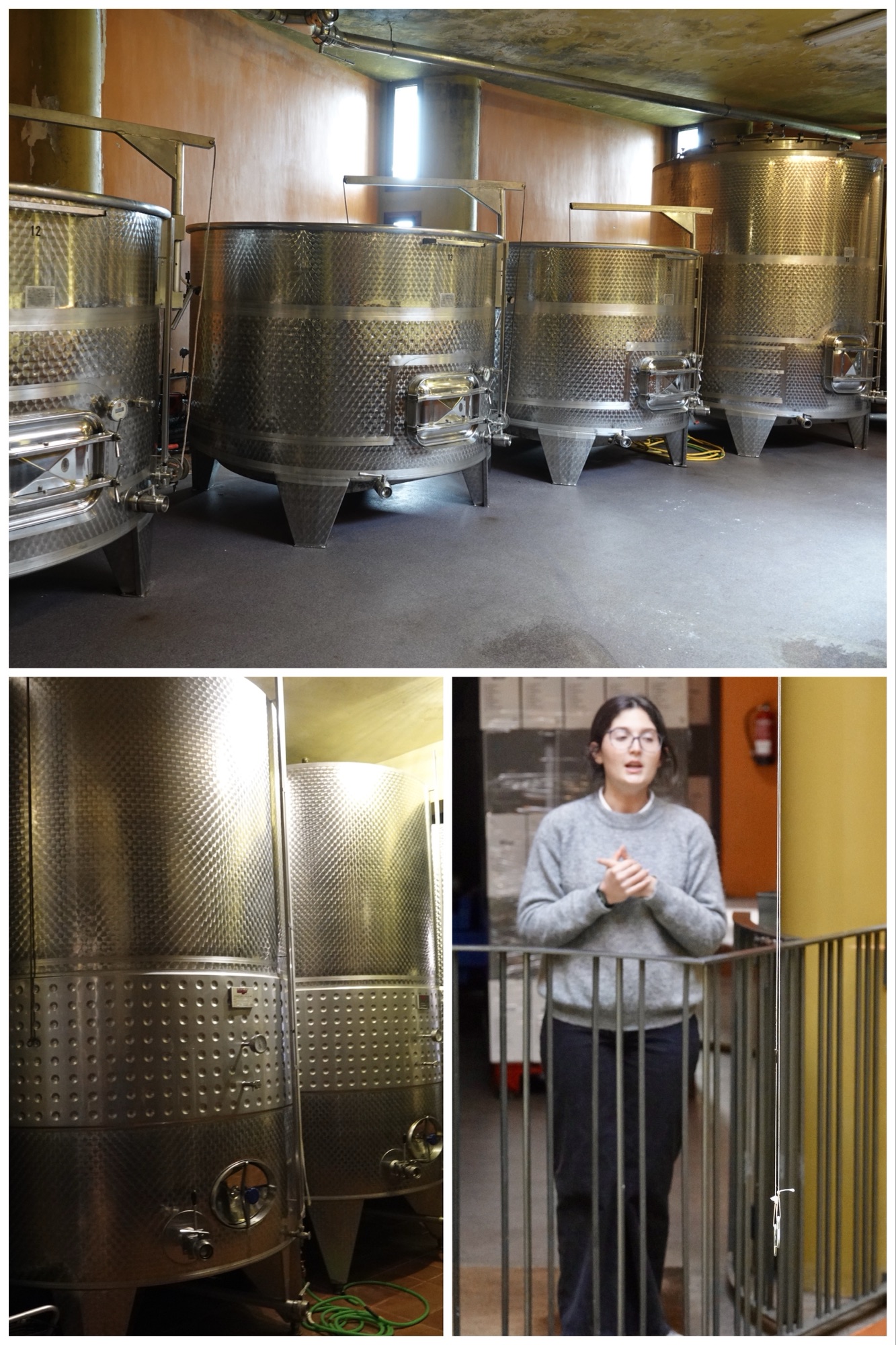
Our second winery stop was at Monje vineyards for a very informative tour of how Canarian wine is made, both using traditional wooden barrels and by the more modern steel tank method. This was by far the best stop of the day, with a knowledgeable and enthusiastic guide. Unfortunately, after an excellent tour that really whetted our desire to try some of their wines, this was not a tasting stop.



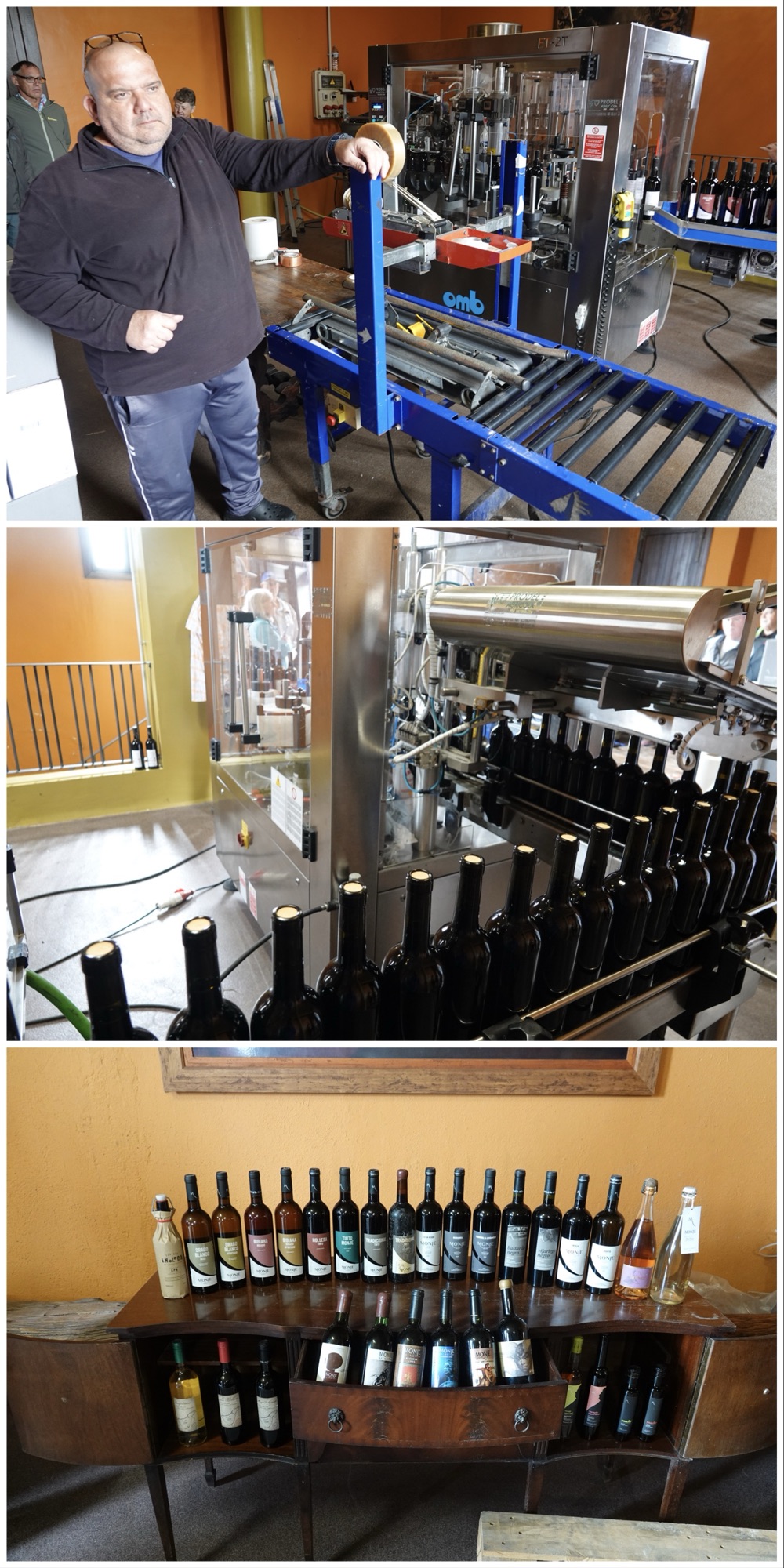
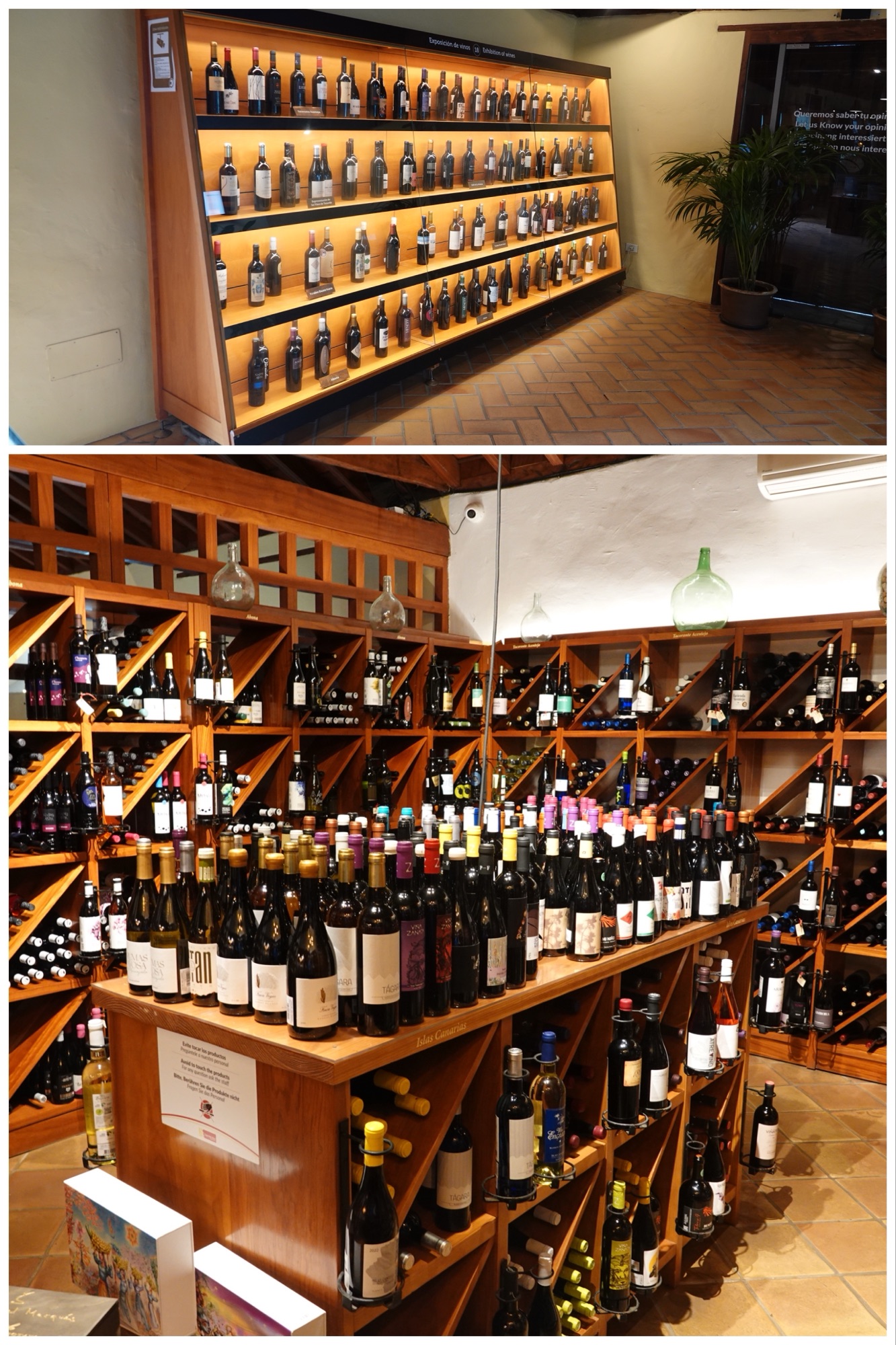
Where we actually did our second “tasting” was at Alvaro Bodegas where Spanish wines are bottled, but no wine is actually made.
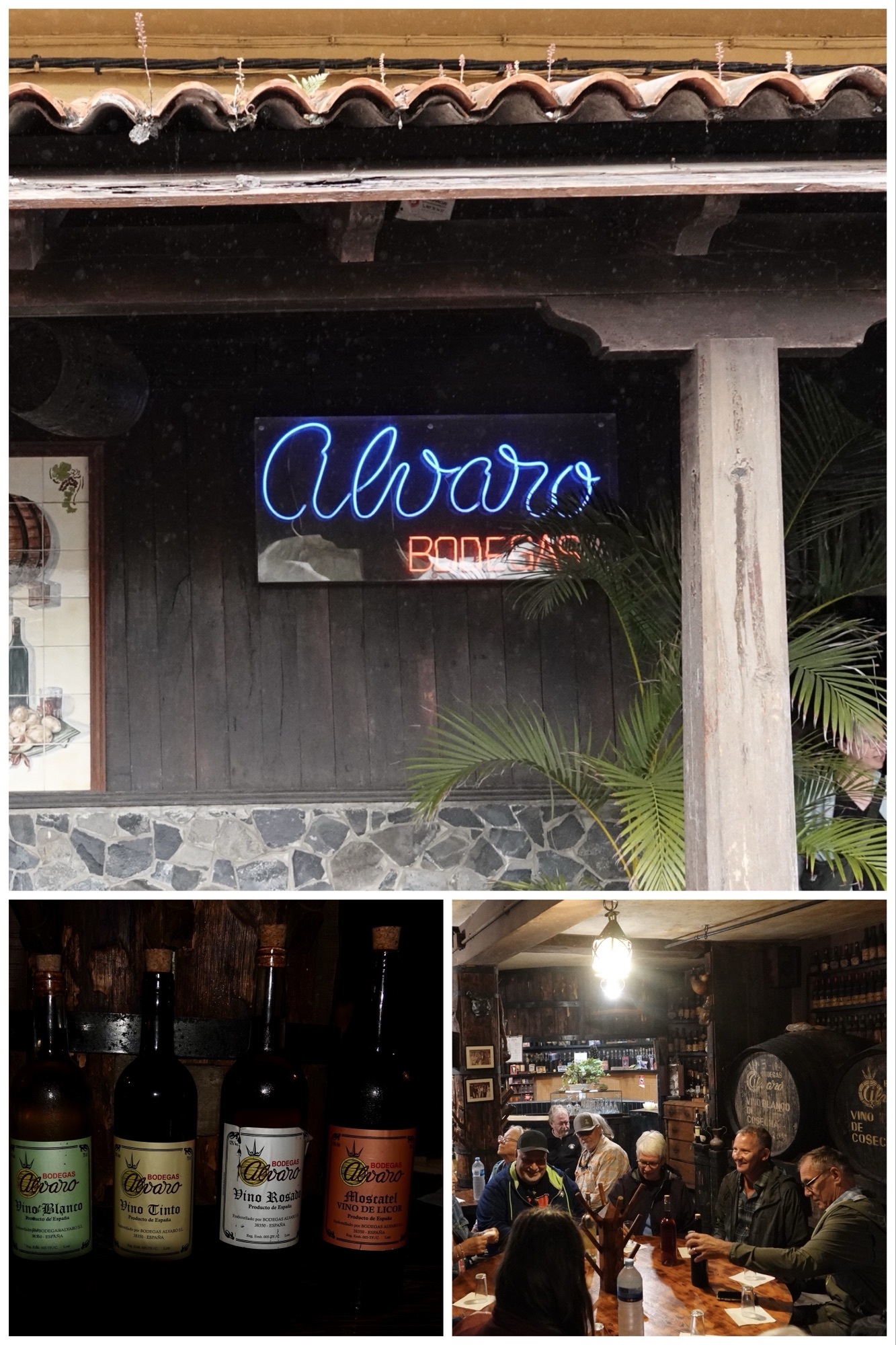
It was a picturesque interior, lined floor to ceiling with bottles and barrels.

Unfortunately there was no attempt at explaining the wines offered; four 750ml bottles were simply placed on each table where 8-10 people sat, with juice glasses, and our drinking order suggested: white, rosé, red, and muscatel. None were great, but the muscatel was a nice dessert wine. We’d expected tapas. What we each got was 2 slices of crostini with goat cheese spread on them. One of our group complained, after which Manchego cheese wedges sliced Iberico ham appeared – just as we were supposed to leave. It’s unusual for a Viking excursion to be chintzy when it comes to food. On our return to the ship I spoke to the Excursions Manager, Victoria, who confirmed that Viking had contracted actual tapas. Maybe future stops here will modify this tour, eliminating the bodega and adding a tasting at Monje.
On our return to the ship Ted was exhausted, so I disappeared to the Explorers Lounge to write while he napped. We had a lovely late dinner with New Zealanders Marilyn and Keith in the restaurant, and then took in one guitar set with Alan before crashing for the night.
Tomorrow evening we’ll reach Morocco, where we have nothing planned until the next morning in Agadir.
 Rose and Ted’s Excellent Adventure
After 7 Viking Cruises, my husband and I are considering Holland America for a cruise to Alaska. I searched for a comparison of Viking and Holland America, and was fortunate to find your blog! Now you have me thinking about a World Cruise!
LikeLiked by 1 person
If you can, we’d highly recommend it!
LikeLike
Coincidentally we’re in Morocco as well. We’ve been on our own for a few days touring Rabat and Tangier and now join our tour group tonight for 2 weeks touring around the country. Too bad our itineraries don’t allow us to meet.
LikeLike
Hope you love it as much as we did. Marrakech and Essouaria were favourites.
LikeLike